
Article

Mechanical Behavior and Modeling of Flax Fiber-Reinforced Geopolymers in Comparison with Other Natural Fiber Composites

Department of Engineering, University of Palermo, Viale delle Scienze, Bd 8, 90128 Palermo, Italy
*
Author to whom correspondence should be addressed.
Fibers 2026, 14(2), 27; https://doi.org/10.3390/fib14020027
Submission received: 25 November 2025 / Revised: 29 January 2026 / Accepted: 11 February 2026 / Published: 14 February 2026

Highlights

What are the main findings?
  • Flax fiber as reinforcement in metakaolin-based geopolymers sustained compressive strength, while improving ductility and post-peak response under flexural and indirect tensile loading.
  • Stress–strain-based concrete damaged plasticity (CDP) modeling reproduced the key experimental trends, with the fracture-energy-based model formulation providing a closer representation of post-peak behavior.
What are the implications of the main findings?
  • Flax fibers can contribute to enhanced damage tolerance and toughness of geopolymer composites at the material scale.
  • The combined experimental–numerical approach supports trend-level calibration of the CDP material model and can provide reference information for further sustainable studies, with additional validation required before structural applications.

Abstract

The rising environmental concerns over cement-based construction materials have led to the development of sustainable alternatives. Among these, geopolymers represent a promising class of low-carbon binders offering environmental benefits and competitive mechanical properties; however, their intrinsic brittleness limits their tensile and post-cracking performance. This study investigates the adoption of flax fibers as natural reinforcement to enhance ductility and post-peak behavior of metakaolin-based geopolymers. The performance of metakaolin-based geopolymers with flax fibers (MKFLAX) was experimentally evaluated in terms of strength, stiffness, toughness, and failure behavior. The addition of flax fibers enhanced ductility, toughness, and post-peak load-carrying capacity while slightly improving stiffness due to the bridging of cracks and the fiber pull-out mechanism. In comparison with the available literature on sisal, flax, and jute fibers, flax fibers showed improved performance due to the better dispersion within the matrix and higher tensile modulus. These findings highlight that flax fiber-reinforced metakaolin geopolymers show enhanced post-cracking behavior at the laboratory scale and could be of interest for sustainable cementitious materials, subject to further validation at the structural scale. Furthermore, a nonlinear finite element model was adopted based on damage mechanics to simulate the damage localization, stress–strain response and post-peak behavior of geopolymer composites. The numerical results showed a reasonable agreement with the experimental trends, particularly in the elastic and early softening phases. The findings are limited to the studied material system, fiber content, and small-scale samples and should be viewed as trend-level observations rather than generalized performance claims.

1. Introduction

Natural resource scarcity, industrial waste, and CO2 emissions create major global environmental challenges, particularly in the construction sector, where rising populations and living standards drive increasing demand for infrastructure. Concrete dominates the construction sector globally (>30 billion tons annually) and consumes an enormous amount of cement, leading to the depletion of limestone reserves, CO2 emissions (almost 7% globally), and high energy (4.8 GJ/t) consumption [1]. Due to market confidence, the availability of raw materials, and the optimization process, cement-based concrete will dominate the future. As per statistical trends, production is estimated to increase from 4.3 billion metric tons in 2015 to 6.1 billion metric tons in 2050 [2]. The lack of fossil fuels, an upsurge in energy demand, and environmental issues created a key motive to develop environmentally friendly materials and sustainable construction methods [3,4,5,6,7,8,9,10,11].
In this regard, alkali-activated mortars (geopolymer mortar) have been introduced as a sustainable alternative to Portland cement since they can be produced from waste materials or aluminosilicate source materials such as volcanic ash (VA), rice husk ash (RHA), metakaolin (MK), and fly ash (FA) with alkali activators such as sodium hydroxide (NaOH), sodium silicate (Na2SiO3), potassium hydroxide (KOH), and potassium silicate (K2SiO3) [12,13,14]. The alkali activators leach out alumina and silica from the source materials and develop binding gels due to geo-polymerization, therefore showing improved properties in the fresh and hardened stages [15], durability in aggressive environments [16], low environmental impact [17], and structural retrofitting of existing structures [18,19,20,21].
Geopolymers exhibit brittle behavior [21,22,23,24], like cement-based concrete. Other issues are workability loss due to viscosity [25] and concrete spalling due to reinforcement corrosion resulting in serviceability loss [19]. To enhance tensile performance and ductility, many studies have been devoted to the characterization, development, and application of fiber-reinforced geopolymers for a broader range of structural and non-structural applications [21,26,27,28]. The performance of fiber-reinforced geopolymer is more dependent on the fiber’s material rather than binders; therefore, the compatibility of fibers with the material needs careful consideration, specifically for reinforcement application [29]. Similarly, for structural applications, it should achieve effective fiber–matrix interaction and a best aspect ratio to improve stress transmission and post-cracking behavior [30,31,32]. Additionally, the fiber geometry (length and cross section), surface area, and cross-sectional area of fibers in composites are the main aspects to be considered in the assessment of fiber performance [33,34]. For example, mono fibers like carbon and steel fibers are often mixed with precursors in dry form, while polypropylene fibers are mixed with alkali activator solution and then with dry fillers and aluminosilicate source materials [31,34]. Increasing the content and aspect ratio of fiber decreases workability due to the increase in viscosity and yield stress, which is due to the firm network between fibers in the matrix [35]. The addition of steel and polypropylene fibers in 0.5% vol reduced the drying shrinkage, and steel fibers up to 2% vol and above show no shrinkage [34].
The synthetic and artificial fibers have been widely used to reinforce geopolymers due to their higher mechanical performance [36,37]. However, due to limitations of petroleum-based products (epoxies, carbon, etc.), environmental issues, and the need for energy efficient materials, such as sisal, jute, hemp, kenaf, and flax fibers, plant-sourced materials can be an interesting, more cost-effective, light, eco-friendly, and sustainable alternative [38].
Natural fibers have several problems when incorporated into geopolymer binders. The low flowability due to the high-water absorption capacity and smooth surface areas of natural fibers can lead to poor adhesion with geopolymers. These can be overcome by pretreating the fibers through washing with deionized water and alkali treatment in a NaOH solution, which creates a roughened surface and improves mechanical interlocking and adhesion [39,40,41,42]. For example, sisal fibers treated in 10 wt.% NaHCO3 solution, when used in metakaolin-based geopolymers, show better mechanical and structural properties compared to untreated fibers [20,43]. Coconut fibers treated with sodium hydroxide (NaOH) had reduced tensile strength; however, they had improved fiber–matrix bond strength when treated with calcium chloride and sodium alginate [44]. Similarly, NaOH-treated hemp fibers had improved bonding due to the removal of surface impurities, while wet-preserved hemp fibers had improved bond properties and reduced treatment costs due to a higher cellulose content [45]. The durability of sisal and flax fibers can also be improved through chemical treatment through NaOH treatment and acetylation, which improved fiber–matrix interactions; however, NaOH solutions with a concentration exceeding 20% can cause surface damage to the fiber [46].
For all the above reasons, many authors have put their efforts towards the use of natural fibers as reinforcement of geopolymer-based materials. Although the use of natural plant fibers in geopolymers has been widely reported, the novelty of the current study lies in the specific metakaolin–alkali activator–flax fiber system assessed, the selected fiber content and preparation method, and the combined experimental–numerical modeling to assess post-cracking behavior. The study examines two regularization strategies within a concrete damaged plasticity model (CDP) framework to qualitatively replicate damage localization and stress–strain trends.
In the last Section 5 of this study, the results of flax fiber-reinforced metakaolin-based geopolymers are compared in the context of the recent literature with the aim to emphasize similarities and variations in the mechanical response of natural fiber-reinforced geopolymers.

2. Natural Fibers

Plant fibers as reinforcement in geopolymers have been introduced as a new composite material that improves bending, ductility, and better acoustic and thermal insulation. In comparison with synthetic fibers, plant fibers reduce not only dependence on fossil resources but also carbon dioxide emissions [47].
Due to its rapid growth, wide cultivation, and chemical compatibility with geopolymers, sisal fibers (SF) are commonly used as reinforcement in geopolymers; however, its chemical composition varies with plant origin and age, requiring pre-treatment for enhanced performance [48,49]. The low lignin (8%) and hemicellulose (10%) content and higher cellulose (78%) content of sisal fibers than in other plant fibers, except cotton fibers, increase the stiffness due to more frictional hindrance affects at the micro study level. Similarly, the plant fiber content needed in the GP matrix is 0.5–3%, of which sisal fiber has a content of up to 2.5% in comparison with other plant fibers [50].
Flax (Linum usitatissimum) is a plant-based fiber derived from the seeds and stems of the plant. Due to its high annual global production (830 × 103 tons) and long fiber length, it shows enhanced mechanical properties in terms of density, strength, and toughness. It consists of approximately 70 wt.% cellulose, 19 wt.% hemicellulose, 2.5 wt.% lignin, and 2 wt.% wax; however, most of the cellulose lies within the elementary fiber [51]. Flax fibers can also be treated, depending on their applications, to be used in geopolymers, like sisal fibers, which can be treated chemically and physically for better performance and compatibility with geopolymer composites. Flax fibers in NaOH solution (5%) and under ultrasonic treatment (22 kHz, 500 W) in an alkaline environment shows improvement in the microstructure and mechanical properties of geopolymer composites [52]. Flax fiber-reinforced geopolymers (4.1 wt.%) show higher toughness and flexural strength (23 MPa) in comparison with plain geopolymer matrixes (4.5 MPa) due to the bridging of cracks and resisting the frictional debonding failure in the matrixes, as well as improved density and microstructure when used with nanomaterials (2.0 wt.%) [53].
Natural fibers can enhance the material, thermal, and acoustic insulation properties of cementitious composites; for example, the thermal conductivity of a plain geopolymer matrix was reduced from 0.77 W/m.K to 0.55 W/m.K with added bagasse fibers due to the formation of more voids at the fiber–matrix interaction [51]. Natural fiber-fabricated composites with four layers reinforced by fiberglass bars showed a 40% reduction in thermal conductivity (from 1.36 to 0.8 W/m.K), which can lead to energy saving and low-carbon construction in the future [54].
Overall, among natural fibers, flax fibers have higher strength, long fiber length, and compatibility with geopolymers, which highlights its potential use as an effective reinforcement in geopolymer composites.

3. Materials and Methods

The geopolymer composite was developed by adopting metakaolin (MK) as an aluminosilicate precursor with a silicon-to-aluminum molar ratio of 1.3:1, a particle size varying between 1 and 100 µm, and a density equal to 2600 kg/m3. The alkaline activator with 7 M was prepared by mixing 99% pure potassium hydroxide (KOH) pellets and potassium silicate (K2SiO3) with deionized water. The resulting alkaline activator and precursor (MK) were then mixed in a ratio of 1:1 for the later experimental study. The supplier of commercial reagents, potassium hydroxide (KOH) pellets and potassium silicate (K2SiO3), was Carlo Werba Reagents S.r.l. (Milan, Italy), and a fine aggregate (sand) of maximum 2 mm diameter was used.
The geopolymer composite was developed by mixing metakaolin with potassium silicate and sand in dry form with a weight ratio of 1:0.5:2. The dry components were carefully mixed for 2–3 min to achieve a better composite. Alkaline activator solution was gradually added into the dry mix under continuous stirring to allow the dissolution of alumina (Al) and silica (Si), leading to the formation of an aluminosilicate material by the geo-polymerization process. The fresh paste was then cast into molds and set on a vibration table to reduce void formation and improve workability. The molds were then kept in an oven at 50 °C for 24 h, and after demolding, the samples continued to be cured at room temperature for 28 days.
The performance of geopolymer composites is highly dependent on the replacement percentage of natural fibers [21]. In this study, we also implemented flax fiber (25 mm in length) as a sand replacement of 2% by weight content into the geopolymer mortar based on our previous work [20,43,55] with the help of a mechanical mixer for 5–10 min, as higher fiber content and length lead to increased porosity and reduced dispersion in the composite.
The chemical composition of metakaolin is reported in Table 1.
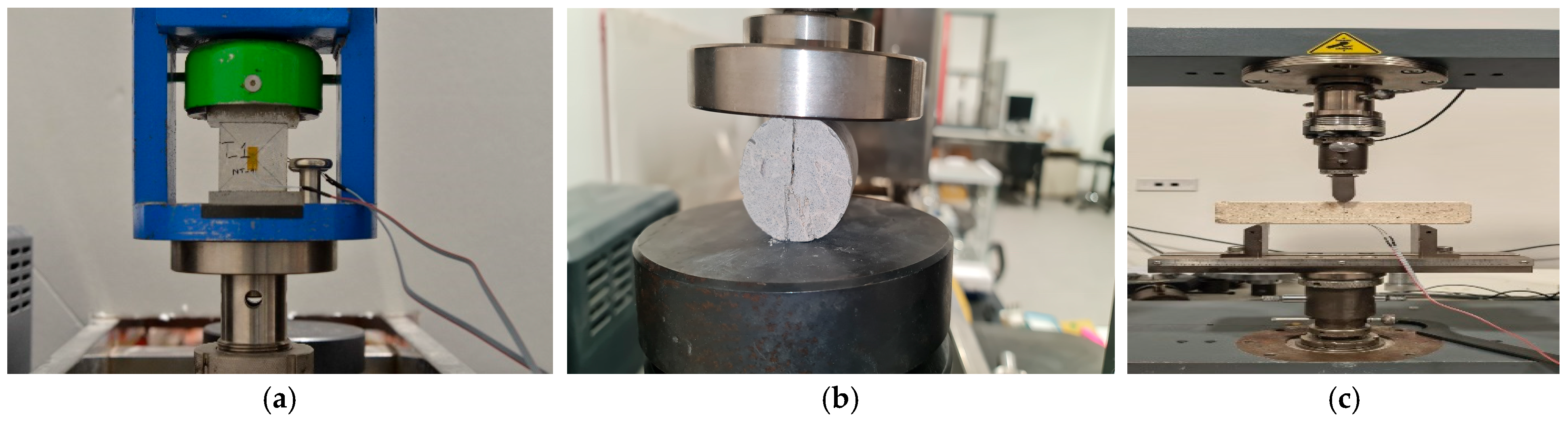
The mechanical performance was assessed using compression (EN 1015-11) [56], splitting tensile using a Brazilian indirect tensile configuration inspired by ASTM D3967 with a modified loading arrangement, and three-point bending tests (EN 1015-11). The tensile samples were placed directly between the testing machine steel platens without intermediate bearing strips; therefore, the test aims to provide comparative data for material modeling purposes. The cube specimens with a side length of 40 mm were adopted for compression tests, which were obtained by cutting the wrecked half parts at the end of the bending test as shown in Figure 1a. The cylindrical samples (Figure 1b) with a thickness and diameter of 50 mm were adopted for the splitting tensile test, while bending specimens had dimensions of 160 mm × 40 mm × 40 mm (Figure 1c).
The samples were cured at room temperature for 28 days and then assessed for the three-point bending test by fixing the length of span equal to 100 mm (Figure 1c). The universal testing machine (UTM model ETM-C WANCE, Shenzhen, China) was used for the assessment of bending and compression tests, which was equipped with a pre-loading of 10 N and a 50 kN load cell before the recording of data. The flexural tests were performed under displacement control conditions at a loading rate of 1 mm/min, while compression tests were performed at a rate of 0.5 mm/min. A stress control loading rate of 0.05 MPa/s was adopted for the splitting tensile test. For each batch, three specimens were cast and assessed for each batch and mechanical property. Strain measurements were obtained by attaching HBK strain gauges (K-CLY4, 120 Ohm, 6 mm gauge length) to the samples. The applied load and strain were recorded using an HBK MGC Plus data acquisition system run by MGC Plus Assistant software version 4.1.0.42. Three samples were assessed for each mechanical test; the experimental test setups are shown in Figure 1.
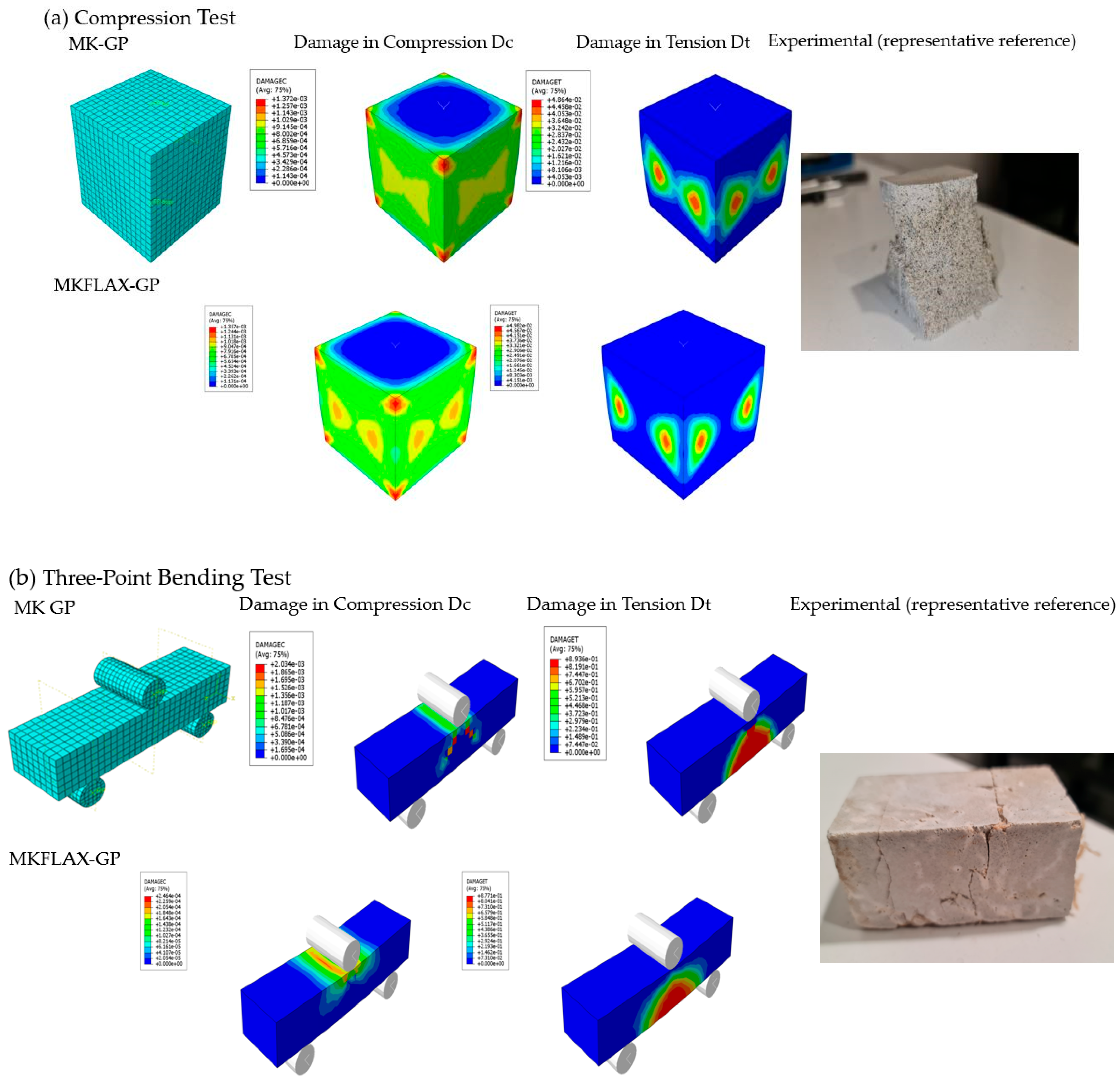
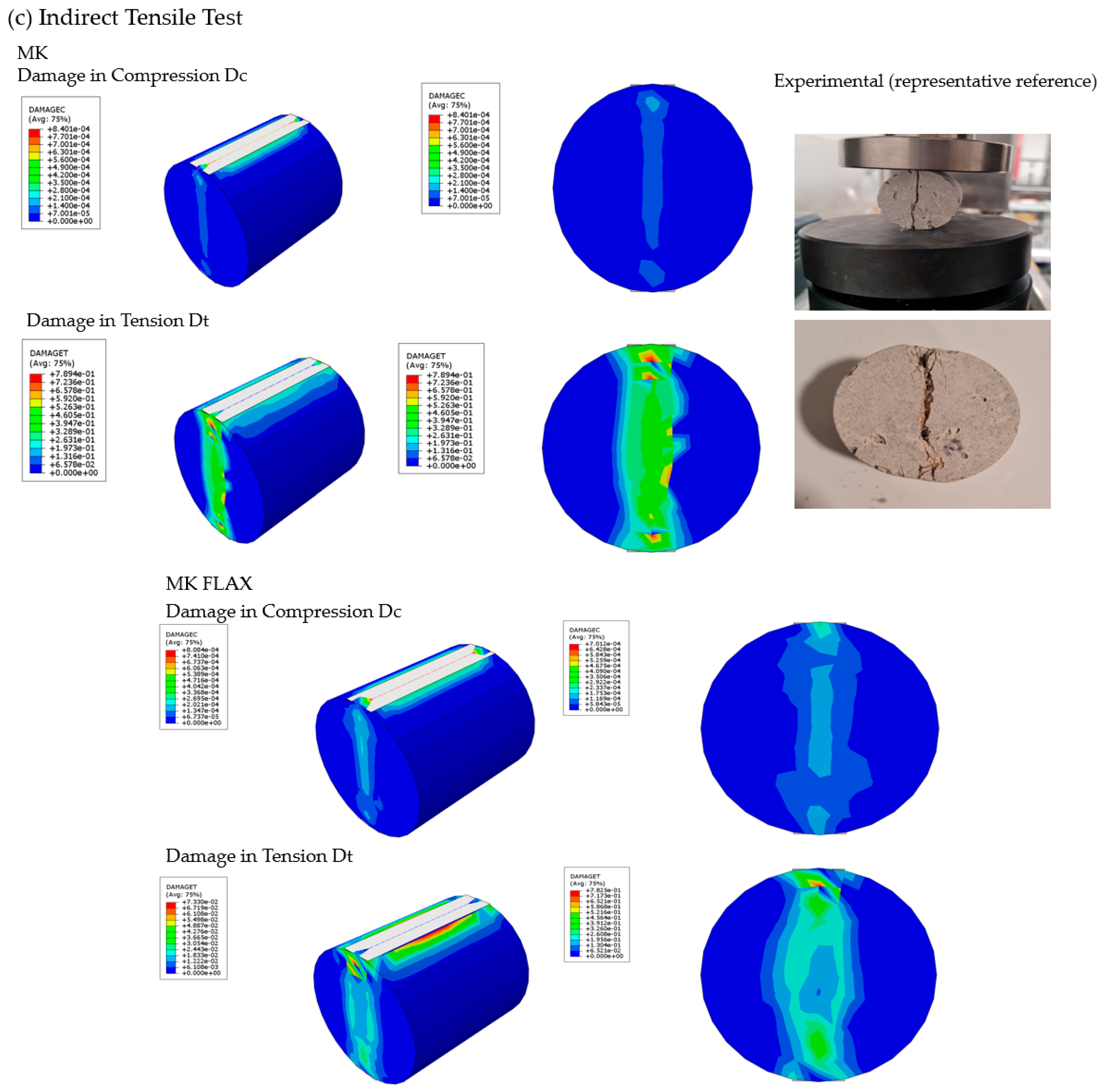
The experimental results of the stress–strain curve from compression and flexural tests were used as input data to define the material behavior in ABAQUS. These results were implemented through the concrete damaged plasticity (CDP) model using the ABAQUS CDP Generator tool [57]. Two stress–strain-based CDP modeling approaches were adopted to simulate the tensile response of the geopolymer composites. The approaches differ, with one based on (dmax) aggregate size dependent regularization (Model 1) and the other on (Gf) fracture-energy-based regularization (Model 2). In Model 1, post-peak softening is controlled through the maximum aggregate size (dmax), while in Model 2, the softening behavior is captured by adopting fractured energy (Gf) calculated from experimental data. The models employed C3D8R elements for the geopolymer specimens, with 1040 elements and 1333 nodes (indirect tensile), 8000 elements and 9263 nodes (compression), and 2904 elements and 3270 nodes (flexural), while rigid platens and supports were modeled using R3D3/R3D4 elements and reference nodes. The experimental tests were reproduced numerically using Abaqus (2017) by adopting the same specimen geometry and boundary condition as in the experimental setup. The contact between steel loading patterns and geopolymer samples was defined using a penalty friction formulation with a 0.12 friction coefficient and a mesh size ranging from 1 to 2 mm, and the loading protocol was applied to replicate the experimental testing procedure. Figure 2 shows a qualitative overview of the simulated damage mechanisms of geopolymer samples; quantitative stress–strain response is discussed in Section 4. The representative experimental images are shown for qualitative reference only and are not associated with specific material systems. The parameters adopted in the concrete damage plasticity (CDP) model in the simulations are summarized in Table 2, which are selected based on standard recommendations from the CDP literature for concrete and quasi-brittle material to ensure real material behavior while ensuring numerical stability [58,59,60]. These values are widely accepted for concrete-like materials when exact experimental calibrations are not available. In general, the dilation angle and yield surface parameters were selected to reproduce the experimental peak strength, elastic stiffness, and post-peak softening trends of geopolymer specimens. This approach provides a representation of the compressive, tensile and flexural responses, and the numerical results can be reproduced in future studies. The adoption of the CDP model aims to assess its capability to qualitatively reproduce the experimentally observed stress–strain trends and damage localization in flax fiber-reinforced geopolymer composite at the material scale. The experimental and numerical results are compared and reported in Figure 3, Figure 4, Figure 5, Figure 6 and Figure 7.

4. Results

4.1. Experimental–Numerical Correlation of Damage and Failure Modes

The concrete damaged plasticity model (CDP) model adopted in Abaqus was based on two formulations, maximum aggregate size (dmax) and a fracture-energy-based model (Gf). Although these two models use different definitions of post-peak softening, both resulted in nearly similar crack initiation zones, damage localization, and failure modes in all three loading conditions. It is important to note that the CDP model adopted is based on continuum-based formulations and does not show discrete mechanisms such as fiber pull-out, fracture bridging or interfacial debonding. Therefore, the post-peak response is replicated in an averaged context, and the numerical simulations should be considered as qualitative and comparative rather than fully predictive.
In compression, both simulations and experiments show damage to localization near the specimen corners and along with inclined shear bands (Figure 2a). The damage contours show progressive crushing and tensile splitting, leading to an hourglass-shaped failure mode, which agrees well with the experimentally seen diagonal cracking and spalling. This confirms that the CDP model can capture the combined compressive plasticity and tensile cracking mechanisms, which leads to compressive failure.
In three-point bending test, the CDP model foresees tensile damage at the bottom mid-span, where bending is maximum. The crack initiates at the tensile face and continues upward toward the loading point, like the experimentally seen vertical flexural crack, suggesting that the CDP model captures the main features of tensile softening and fracture localization under bending (Figure 2b). Similarly, in the indirect tensile test, the model predicts a narrow vertical band of tensile damage along the sample diameter, leading to the central splitting crack, matching the Brazilian test failure pattern seen experimentally (Figure 2c).
The close correlation of simulated damage behavior with the experimentally seen cracking patterns shows that the concrete damaged plasticity model (CDP) provides a physically consistent representation of the material fracture behavior under different stress levels.

4.2. Compression Tests

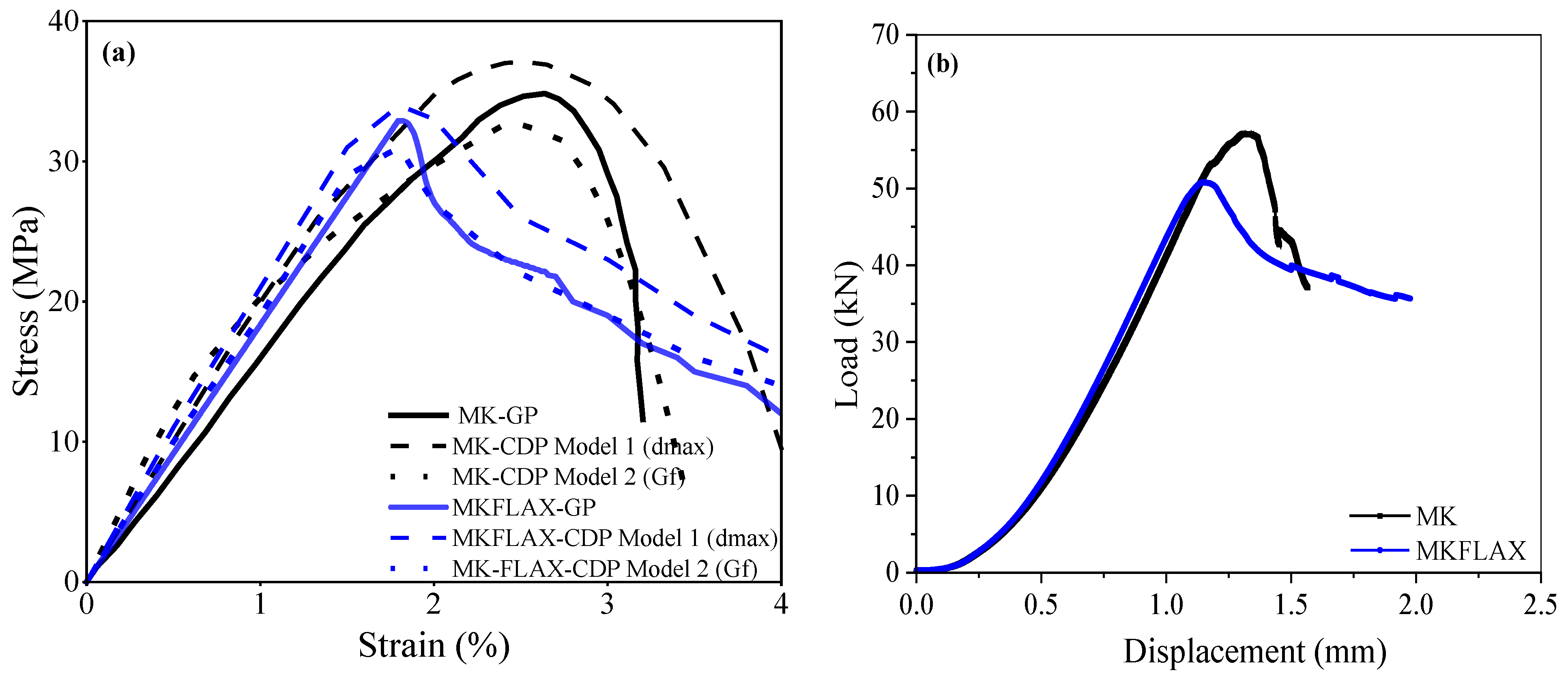
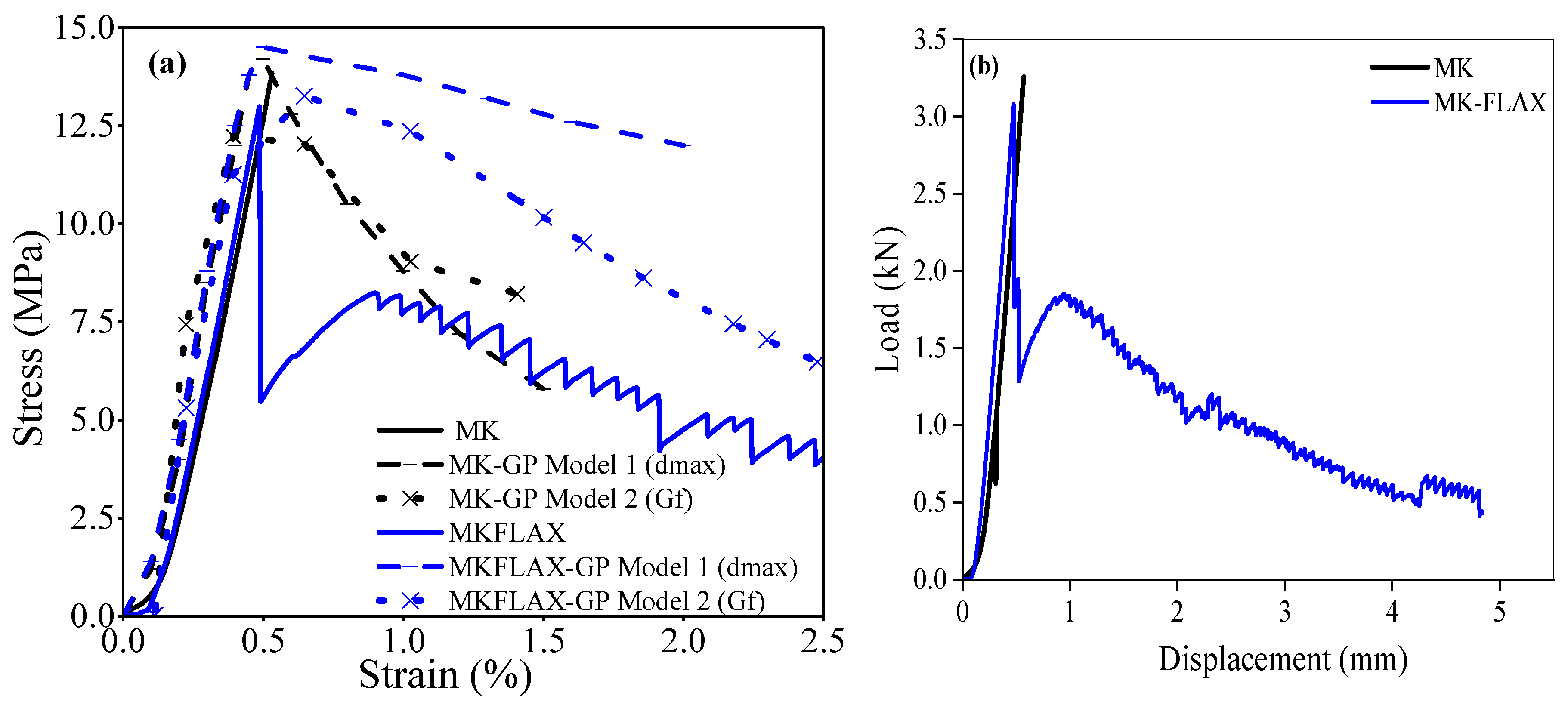
Metakaolin-based geopolymer and flax fiber-reinforced geopolymer composites were evaluated experimentally and numerically under compression. Figure 3a compares the experimental stress–strain response of MK- and MKFLAX-based geopolymers with numerical predication derived by using two stress–strain-based CDP formulations (Model 1 and 2). Results show reasonable consistency between experimental responses and CDP simulations, supporting their use for the trend-level analysis of geopolymer composites. The dmax-based formulations (Model 1) show reasonable agreement with the peak stress at failure, while the Gf-based formulations (Model 2) significantly capture the post-peak softening behavior. Experimental results show a similar initial slope of stress–strain response, showing comparable elastic stiffness. Metakaolin (MK) shows higher peak stress (35 MPa) but lower strain at failure (3%), showing a brittle response, while flax fiber-reinforced composite shows slightly lower peak strength (33 MPa) but a higher strain at failure (3.8%), reflecting enhanced ductility. The adoption of flax fiber shows a more gradual post-peak softening response (Figure 3b), enhancing post-peak stability and toughness when compared to MK-based geopolymer.
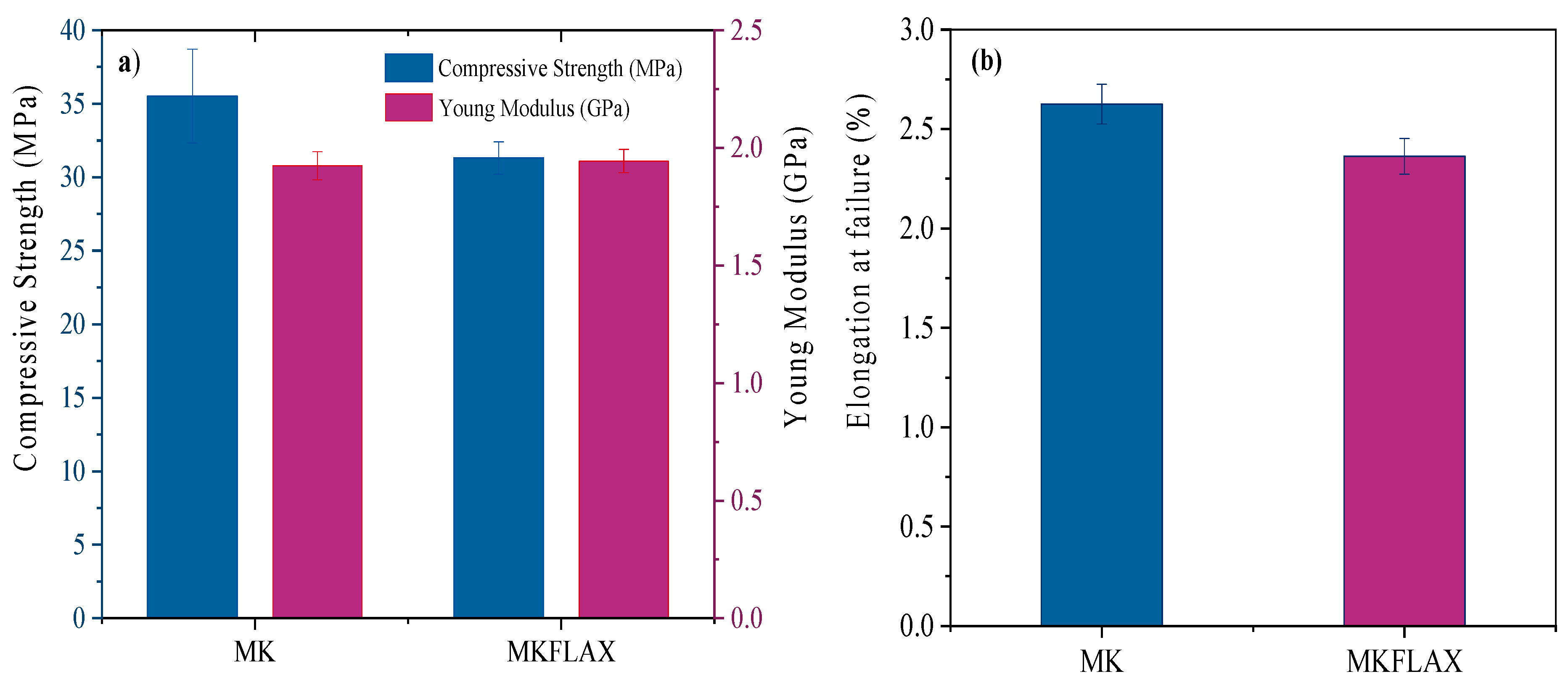
Figure 4 shows that metakaolin–flax fiber geopolymers show lower compressive strength than metakaolin-based geopolymers, which may be associated with fiber inclusions and weak matrix–fiber interfacial bonding; however, detailed microstructure studies are needed to confirm the mechanism. Metakaolin–flax-based geopolymers show a slightly higher Young’ modulus than plain metakaolin composites, as determined from the initial linear portion of the stress–strain response. Similarly, the reduction in elongation assumes that flax fiber composites restrict excessive deformation (MKFLAX (2.3%) compared to MK (2.6%) before failure. These results show that natural fibers can improve the toughness and damage tolerance of geopolymer composites at laboratory-scale samples.

4.3. Flexural Strength Test (Three-Point Bending Tests)

Metakaolin-based geopolymers with flax fibers were assessed both experimentally and numerically under a three-point bending test. The reported strain in three-point bending tests corresponds to an equivalent flexural strain calculated from the mid-span deflection based on classical beam theory assumptions. This is used as a comparative parameter, rather than a true local material strain.
Metakaolin-based geopolymers exhibited a brittle flexural response and a sharp drop after first cracking. However, flax-reinforced geopolymers show lower stress than the MK sample but an enhanced post-cracking response, keeping load over large displacements (Figure 5a). The Concrete Damage Plasticity (CDP) models (dmax and Gf) reproduced the softening trend and peak stress of geopolymer composites, showing reasonable consistency with the experimental results. The fracture-energy-based CDP model (Gf Model 2) captures pre-and post-peak behavior more effectively with experimental results than the aggregate size-based model (dmax Model 2). The superiority of the fracture-energy-based model (Gf) becomes more pronounced for the MKFLAX-based geopolymer, where fiber-induced energy dissipation plays a dominant role. Overall, CDP shows considerable agreement up to the peak stress, supporting its further use for simulating geopolymer composites. The load displacement curve (Figure 5b) also shows that the initial elastic slopes are almost similar for MK and MKFLAX, indicating that flax fiber did not contribute to pre-cracking flexural stiffness or serviceability, but enhanced post-peak response, which is consistently reproduced by numerical models.
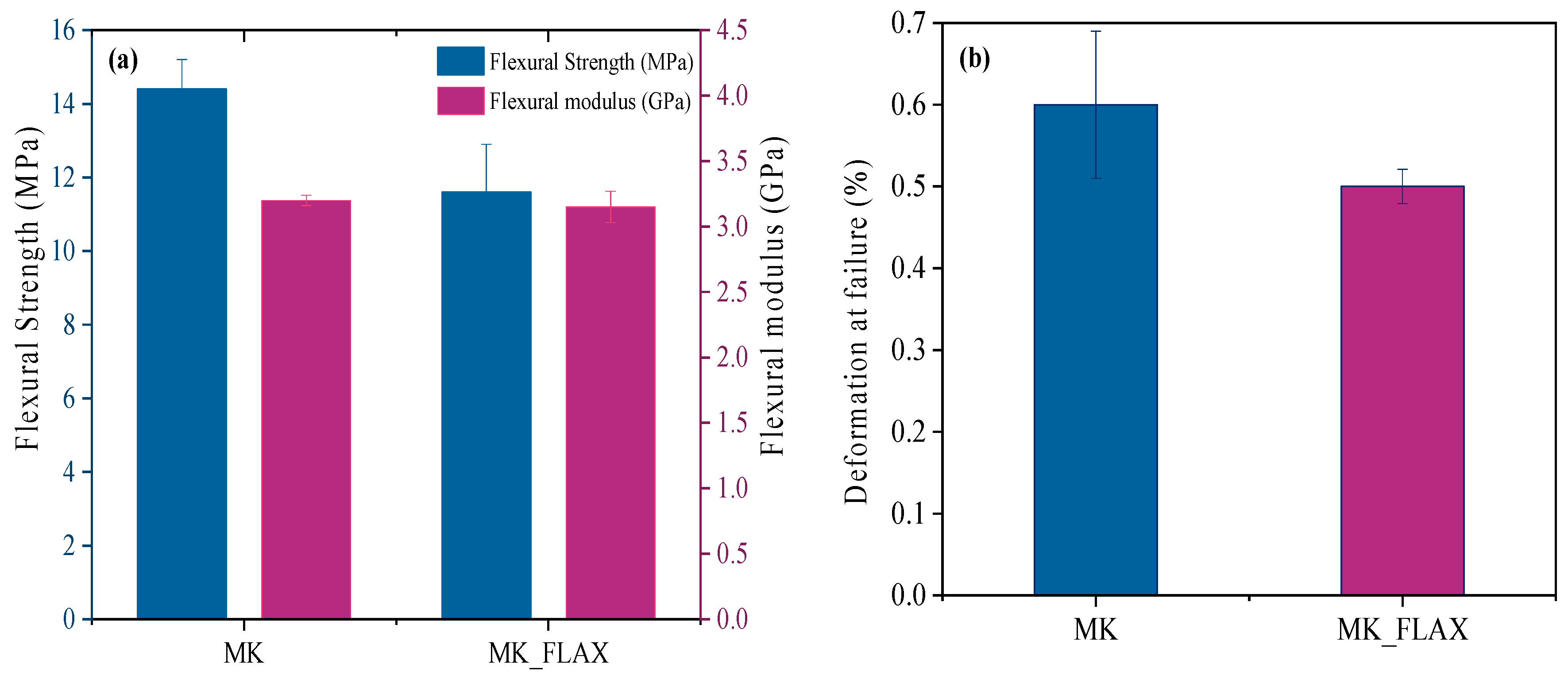
Figure 6 compares the strength, modulus, and elongation of the metakaolin-based geopolymer with flax fibers as reinforcement, which shows that the plain metakaolin-based geopolymer exhibited higher flexural strength than the MKFLAX composite, which may be due to the lower fiber–matrix interfacial bond; however, detailed microstructure is required to know about the underlying mechanism. However, despite lower strength and strain at break, MKFLAX kept significant post-cracking residual load and deformation, showing enhanced energy absorption and post-cracking toughness compared to the brittle behavior of the plain geopolymer sample.

4.4. Indirect Tensile Tests

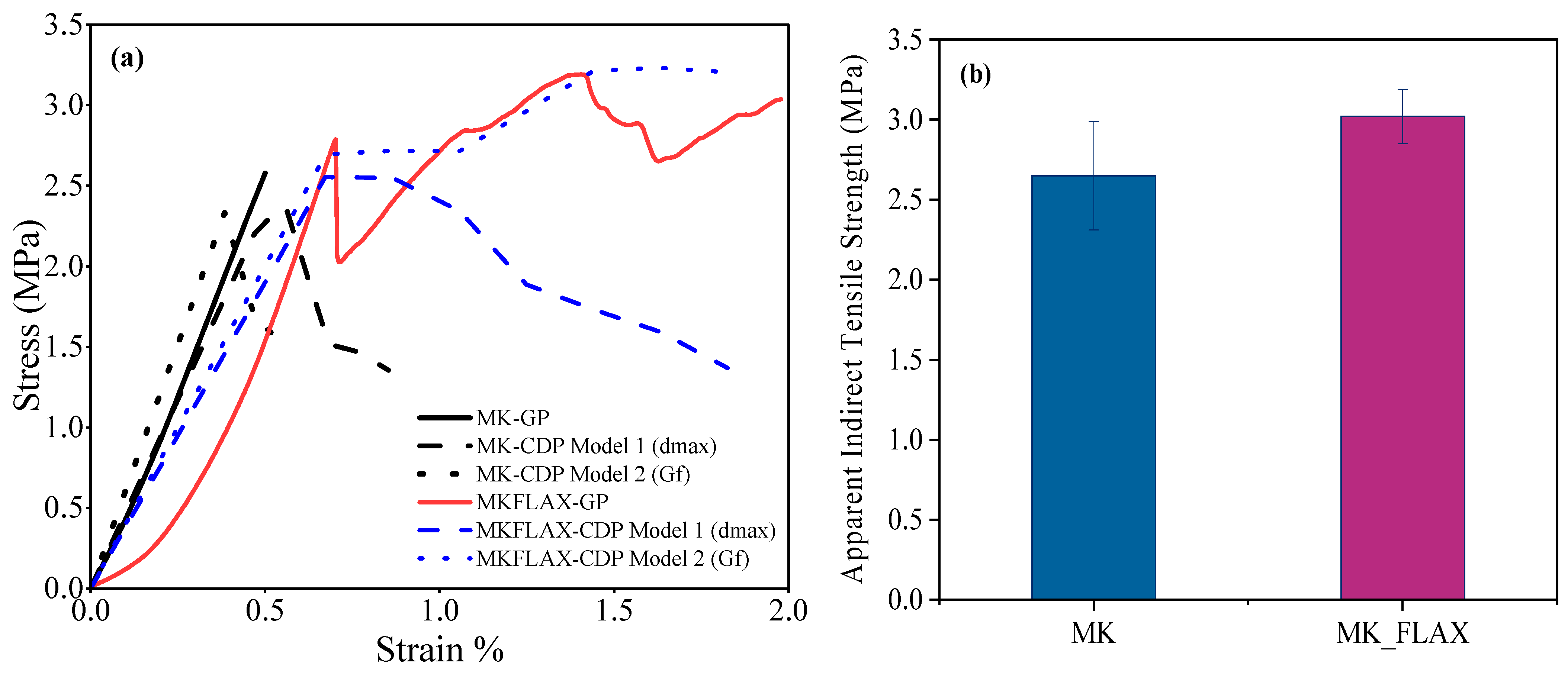
The experimental stress–strain responses of MK- and MKFLAX-based geopolymer composites are compared with Abaqus CDP simulations using two damage models (dmax and Gf) in Figure 7a. Both models capture the initial linear elastic behavior and peak stress with reasonable agreement compared to experimental response. The dmax-based CDP approach (Model 1) predicts the peak stress more accurately while the Gf-based model (Model 2) shows a better representation of post-peak softening and damage evolution. The experimental strain (Figure 7a) represents an apparent strain derived from measured displacement normalized by sample dimension rather than a true tensile material strain. The Brazilian test formulation was followed, and the reported values show apparent tensile resistance under the adopted testing conditions rather than standard tensile strength values as defined in ASTM D3967. Flax fiber-reinforced composites showed a higher apparent indirect tensile stress (3.0 MPa) compared to the plain metakaolin geopolymers (2.6–2.7 MPa), highlighting the role of flax fibers in crack bridging and stabilizing tensile cracks (Figure 7b). These results are consistent with the post-cracking behavior observed in flexure, where the MKFLAX geopolymer maintained load-carrying capacity after the first crack.

5. Discussion and Comparison of Sisal- and Flax Fiber-Reinforced Composites

This section compares the mechanical performance of metakaolin-based geopolymer composites reinforced with natural fibers. The references cited were selected based on the precursor material, mixed design, and fiber type. Geopolymers are known to be sensitive to variation in precursor and mix design, and even small variations can significantly affect their properties. Therefore, this discussion focuses on highlighting qualitative trends and comparative behavior while acknowledging variations in precursor materials, fiber, and testing configurations.
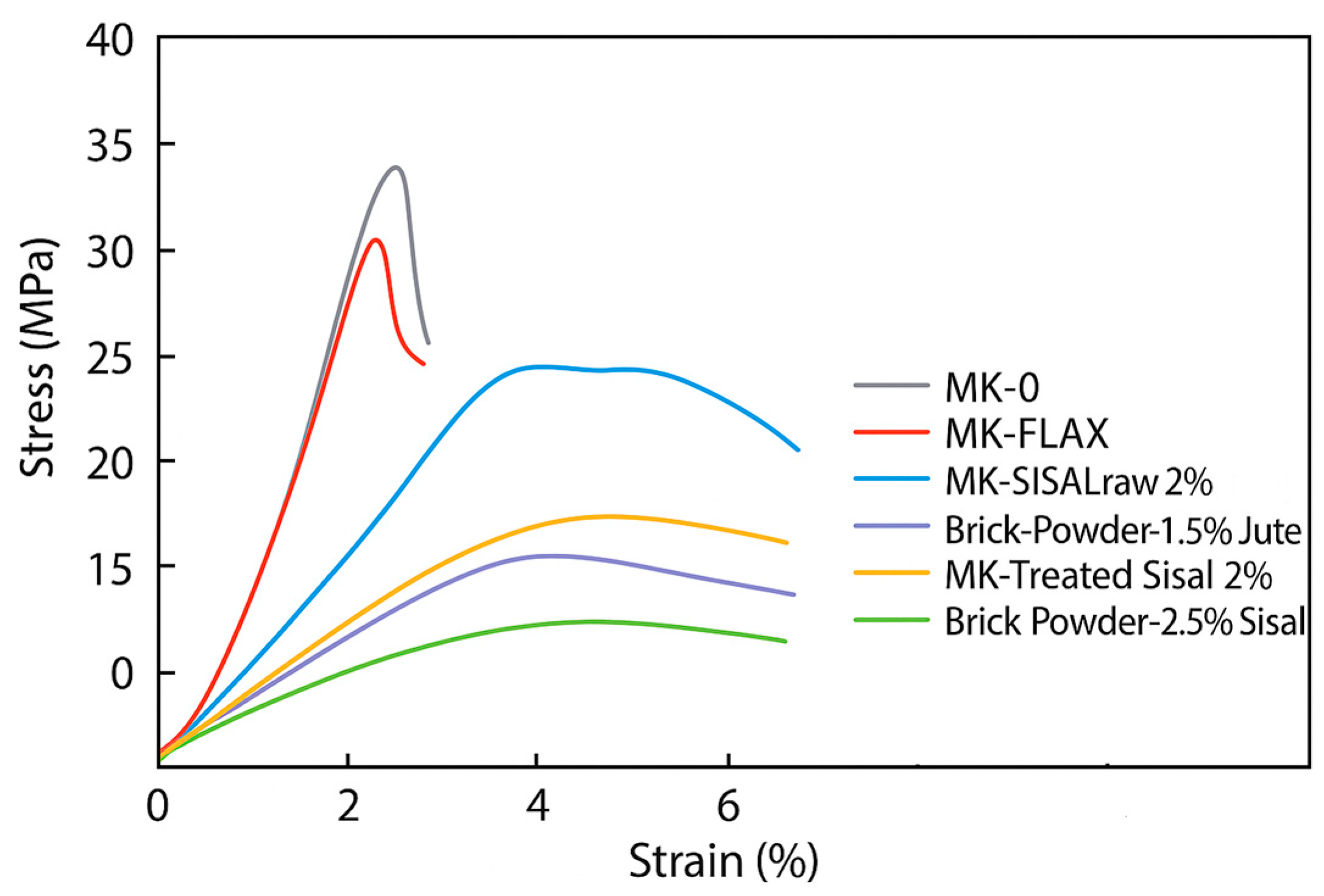
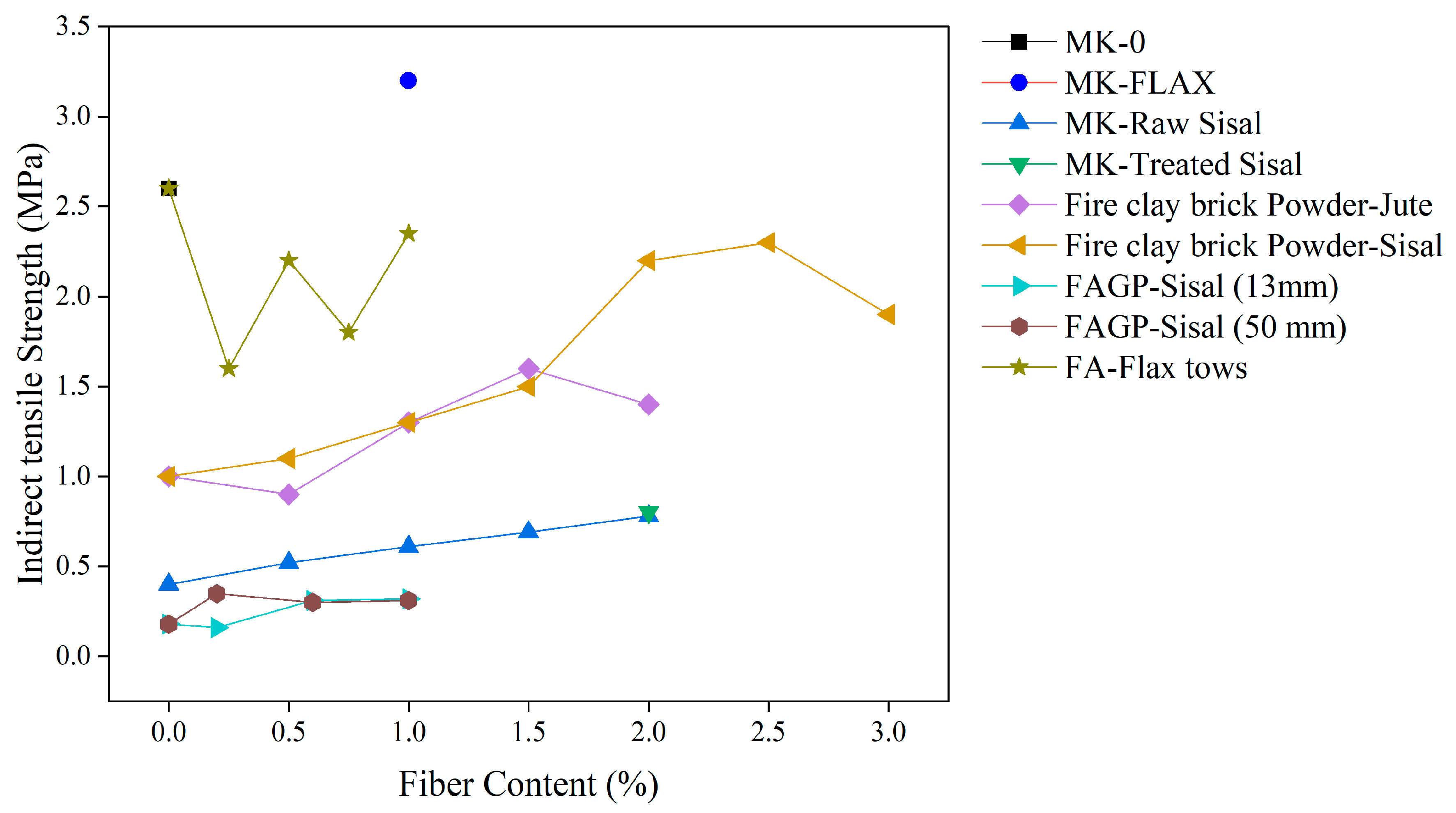
Comparisons of the results of the current experimental study and the available literature are presented in Figure 8, Figure 9, Figure 10, Figure 11 and Figure 12. Specifically, Figure 8 shows and compares the results of the metakaolin- and flax-based geopolymers with the results available in [20,43,61], which indicates that fibers as reinforcement can reduce peak compressive strength, while improving a more gradual post-peak response. The plain metakaolin and flax fiber-based geopolymer exhibited higher strength (34–32 MPa) but lower strain (2–3%) with an abrupt post-stress drop. In contrast, the geopolymer mixes with other natural fibers such as jute, raw sisal and treated sisal fibers (2 wt.%) content) showed lower strength but developed and kept load at larger strains (4–7%). This comparison suggests that flax fibers tend to preserve compressive strength, whereas sisal and jute fibers are often associated with lower peak strength and increased deformability, as reported in the literature.
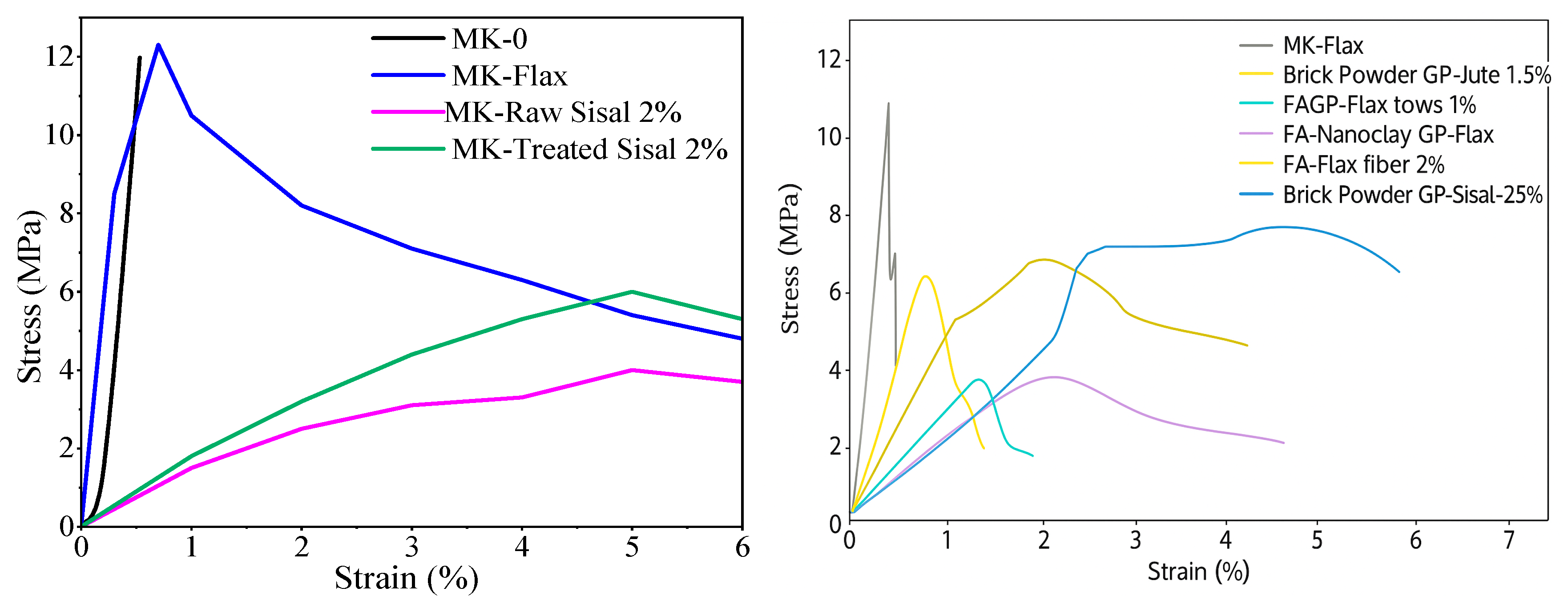
The aim of fiber reinforcement in geopolymers is to improve the flexural performance and crack resistance of the geopolymer sample. Figure 9 shows and compares the bending performance of metakaolin- and flax-based geopolymers, with the results available in [43,61,62,63], which highlights the effect of composition and fiber types on flexural strength and ductility. Metakaolin-based composites show higher peak strength (12 MPa), but lower strain capacity (<1%) versus flax fiber (4–5%) composites, which is associated with an improved post-cracking response, commonly attributed in the literature to fiber-related mechanisms such as crack bridging and pull-out. Similarly, raw sisal fibers (2 wt.%) content), in comparison, developed lower strength (2–3 MPa) but sustained more strain (3–4%); however, treated sisal fibers showed more strength (4 MPa) and softened slowly with more strain (5%).
The brick powder geopolymer with sisal fibers has more strength (7–8 MPa), with a high strain (6%), indicating more ductile response. The same results were seen for fly ash-based geopolymer with flax tows (1%). From these results, it can be observed that MK-Flax shows a moderate flexural strength combined with an enhanced post-cracking response compared to MK-based geopolymer. The comparison of energy absorption and ductility with the existing literature should be interpreted carefully due to the variation in material, testing procedure, and configuration.
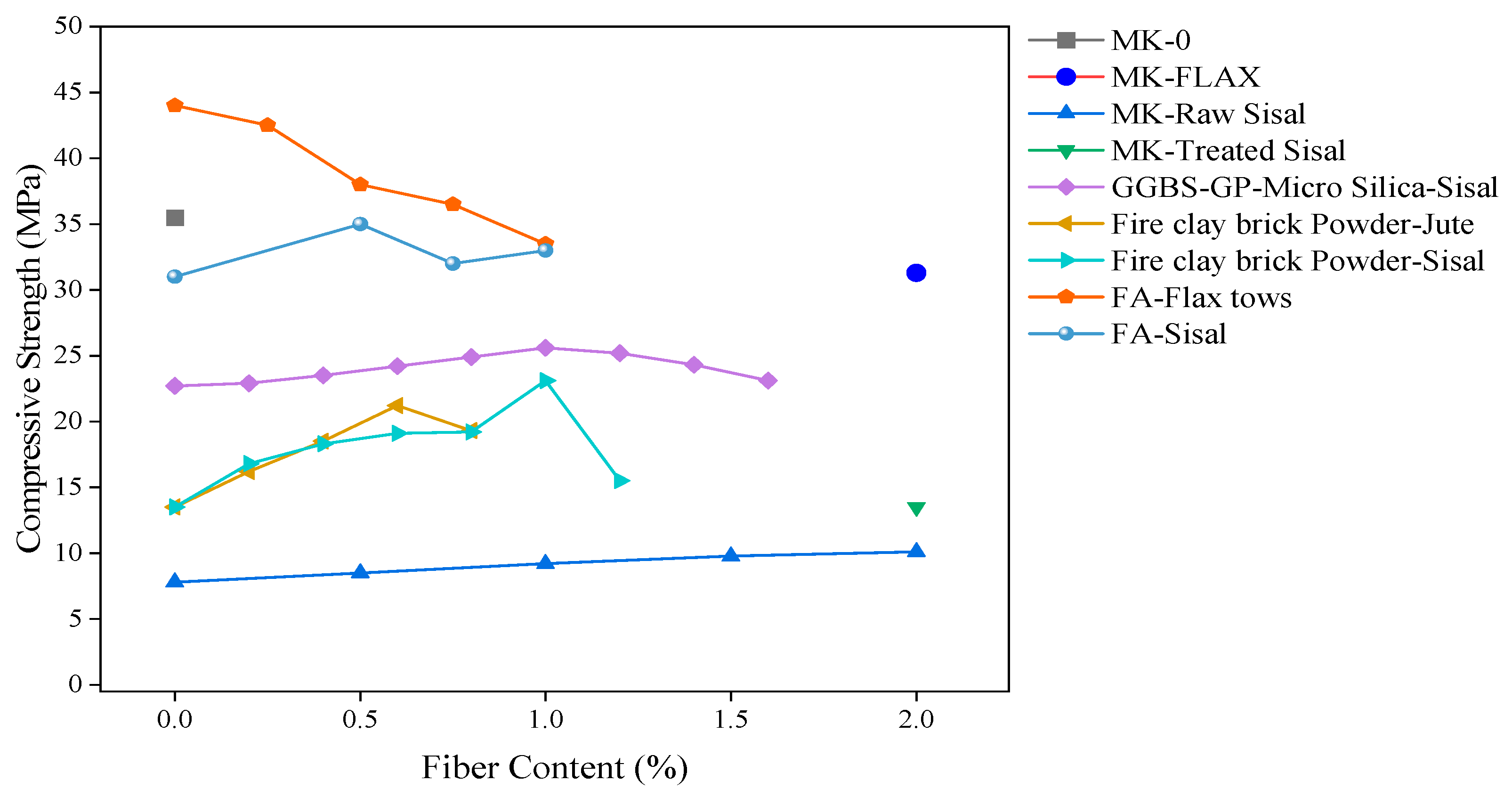
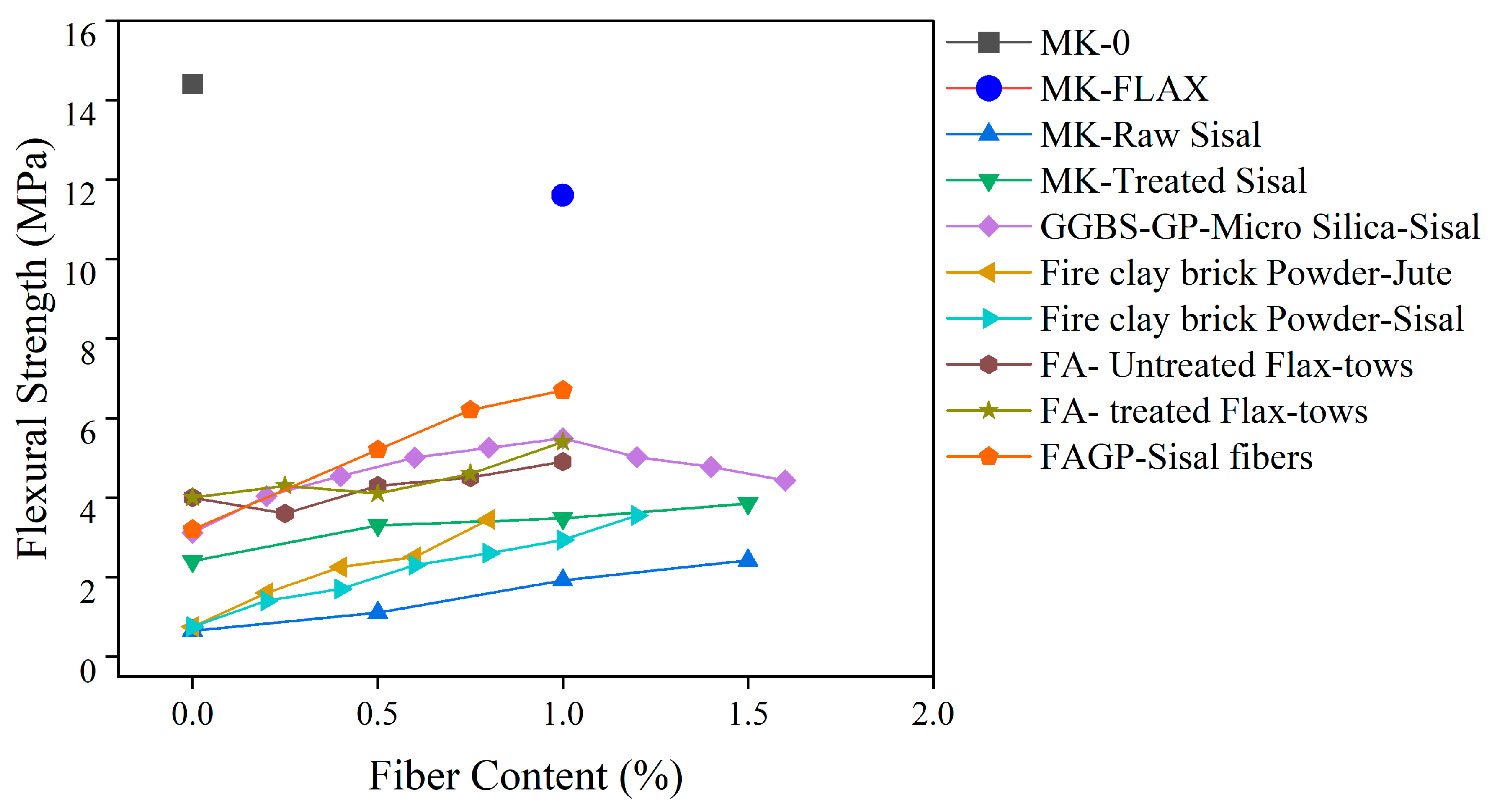
Figure 10, Figure 11 and Figure 12 show and compare the compressive, flexural, and tensile strength of metakaolin and flax fiber geopolymers with the data available in the literature, illustrating that fiber reinforcement can influence the mechanical response of geopolymer composites as reported across various studies. For example, flax fibers show mechanical performance trends that vary from those reported for sisal fibers, which may be due to the differences in tensile properties, aspect ratio and fiber–matrix interaction. Raw and untreated fibers result in lower strength than treated fibers, showing the importance of surface treatment. Treated fibers are commonly reported to enhance load transfer and interfacial adhesion, which may contribute to reduced pull-out behavior. The addition of ground granulated blast furnace slag (GGBS) and silica can enhance matrix integrity while excessive fiber content can enhance tensile and flexural properties but reduces compressive strength, depending on the precursor and mix design of the geopolymer composite.
In [43], the compressive strength of the metakaolin-based geopolymer increased linearly with the increase in sisal fibers; 2 wt.% of raw sisal fibers enhanced compression, flexural, and indirect tensile strength values by 36%, 83%, and 260%, respectively, which were higher than in reference geopolymer sample. Similarly, when treated with sisal fibers in sodium bicarbonate solution (2–10 wt.%), enhanced results were observed for 10 wt.% solutions, with increases of 30%, 36%, and 64% in the compression, split tensile strength, and flexural strength, respectively, in comparison with the reference sample.
In [61], the best percentage of sisal fiber content was seen at 2.5% (wt.%) in brick clay-based geopolymer, increasing the compressive, flexural, and tensile strength values to be 76%, 112%, and 270% higher than in the reference sample, respectively. Similarly, 1.5% of the jute fibers showed an increase in strength values of 64%, 45%, and 222% higher than in the reference sample, respectively, confirming the change in failure mode from brittle to ductile for both geopolymer-based fibers.
In [64], when added in GGBS-based geopolymers, sisal fibers treated with styrene acrylic copolymers (5%) and with micro silica (3%) improved compressive strength by 12.8% and flexural strength with a significant increase of 76.5%, higher than that of the reference sample. The best percentage of sisal fiber content was 1.0%, as observed. In [63], flax tows (FTs) with 0.25–1 wt.% as reinforcement in fly ash-based geopolymer enhanced flexural strength value by 22% higher than the reference sample at 1% (FTs) best content. However, a decrease in compressive and split tensile strength was seen as shown in Figure 9, which may be due to poor fiber adhesion and air void formation in the geopolymer matrix. These limitations can be tackled by pre-treatment and (FTs) modification to enhance the fiber binding with the geopolymer matrix as reported in [52].
Many studies reported strength and toughness improvements for natural fiber-reinforced geopolymer within a fiber content range of 0.5–1%, although the optimal content varies across studies. In this study, the MK-FLAX composite showed a compressive strength of about 31 MPa at 2 wt.% fiber, and enhanced flexural and post-cracking response when compared to the plain metakaolin geopolymer. Comparisons with the literature data are qualitative, as the reported values significantly depend on the precursor type, mix design, specimen geometry and testing methods. These results show that addition of natural fiber can enhance the toughness and damage tolerance of geopolymer composites at the laboratory scale.
The improvement in tensile strength may be influenced by fiber pull-out resistance, as commonly reported in the literature of fiber-reinforced composites. Flax fibers are observed to have different mechanical response versus sisal fibers, which may be due to the variation in tensile modulus, fiber form and dispersion in geopolymer matrixes. In [65], sisal fibers with two lengths (13 and 50 mm), added in fly ash-based geopolymers, improved tensile strength with increase in fiber content. The longer fibers (50 mm) contribute more to load resistance, showing that fiber length can play a key role in tensile load resistance, as short fibers can cause premature failure, possibly due to insufficient bridging behavior in geopolymer composites.
These results concluded that natural fiber geopolymers show an indirect tensile strength of (2–2.3 MPa at 2–2.5% fiber content) with fly ash- and brick-based samples. In comparison with metakaolin geopolymers, the MK-FLAX composite shows more strength (3–3.2 MPa) and a better post-cracking response. However, the comparison of crack bridging and energy absorption across various studies should be interpreted carefully due to the differences in testing procedures and evaluation criteria.

6. Conclusions

This study assessed metakaolin- and flax fiber-based geopolymer composites through compression, indirect tension, and flexure, complemented by numerical modeling using a stress–strain-based concrete damage plasticity (CDP) approach in the ABAQAUS environment. The experimental campaign was limited to laboratory-scale samples; however, variations in strength and post-cracking response were observed across fibers and binders, and the following conclusions and recommendations are drawn within this scope:
  • Flax fiber as reinforcement kept compressive strength (32 MPa) close to that of plain metakaolin-based geopolymers (33–34 MPa) and resulted in a more gradual post-peak response under flexural and indirect tensile loading versus plain metakaolin-based geopolymers.
  • The CDP model reproduces the main experimental trends in compressive, flexure and indirect tensile responses, with reasonable effectiveness in capturing damage localization patterns.
  • Adoption of the stress–strain-based CDP models (dmax and Gf) in ABAQAUS for modeling of experimental results showed reasonable agreement with experimental results in the elastic stage and slight overestimates of stiffness in the inelastic stage and is therefore suitable for trend-level material-scale simulations.
  • For both MK- and MKFLAX-based geopolymers, the fracture-energy-based CDP model (Gf) showed a closer representation of the experimental post-peak response than the aggregate-size-based model (dmax).
  • The literature data indicates that binder type influences geopolymer performance, with metakaolin- and GGBS-based material showing better strength than FA-/brick-based powder at similar fiber content, although direct comparisons are limited.
  • Sisal fibers/jute fibers with brick powder and fly ash mixes showed lower strength, but a more gradual post-peak response in the literature, while fiber surface treatment is reported to enhance fiber–matrix interaction.
  • Overall, natural fiber reinforcing was found to enhance the post-cracking response and damage tolerance of geopolymer composites in the investigated material system and under laboratory-scale testing conditions. Further studies on structural scale aspects are required before extending these findings to structural applications.

Author Contributions

Conceptualization, S.B. and S.U.; methodology, S.B., C.S. and S.U.; software, S.B. and S.U.; validation, S.B.; L.P. and S.U.; formal analysis, S.B. and S.U.; investigation, S.B., C.S. and S.U.; writing—original draft preparation, S.B. and S.U.; writing—review and editing, S.B. and S.U.; visualization, S.B. and S.U.; supervision, S.B. and L.P. All authors have read and agreed to the published version of the manuscript.

Funding

This research received no external funding.

Data Availability Statement

The original contributions presented in the study are included in the article, further inquiries can be directed at the corresponding author.

Conflicts of Interest

The authors declare no conflicts of interest.

References

  1. Guo, R.; Wang, J.; Bing, L.; Tong, D.; Ciais, P.; Davis, S.J.; Andrew, R.M.; Xi, F.; Liu, Z. Global CO2 uptake by Cement from 1930 to 2019. Earth Syst. Sci. Data 2021, 13, 1791–1805. [Google Scholar] [CrossRef]
  2. Scrivener, K.L.; John, V.M.; Gartner, E.M. Eco-Efficient Cements: Potential Economically Viable Solutions for a Low-CO2 Cement-Based Materials Industry. Cem. Concr. Res. 2018, 114, 2–26. [Google Scholar] [CrossRef]
  3. Ahmad, J.; Kontoleon, K.J.; Majdi, A.; Naqash, M.T.; Deifalla, A.F.; Ben Kahla, N.; Isleem, H.F.; Qaidi, S.M.A. A Comprehensive Review on the Ground Granulated Blast Furnace Slag (GGBS) in Concrete Production. Sustainability 2022, 14, 8783. [Google Scholar] [CrossRef]
  4. Giergiczny, Z. Fly Ash and Slag. Cem. Concr. Res. 2019, 124, 105826. [Google Scholar] [CrossRef]
  5. Poloju, K.K.; Annadurai, S.; Manchiryal, R.K.; Goriparthi, M.R.; Baskar, P.; Prabakaran, M.; Kim, J. Analysis of Rheological Characteristic Studies of Fly-Ash-Based Geopolymer Concrete. Buildings 2023, 13, 811. [Google Scholar] [CrossRef]
  6. Mustakim, S.M.; Das, S.K.; Mishra, J.; Aftab, A.; Alomayri, T.S.; Assaedi, H.S.; Kaze, C.R. Improvement in Fresh, Mechanical and Microstructural Properties of Fly Ash- Blast Furnace Slag Based Geopolymer Concrete by Addition of Nano and Micro Silica. Silicon 2021, 13, 2415–2428. [Google Scholar] [CrossRef]
  7. Mudgal, M.; Singh, A.; Chouhan, R.K.; Acharya, A.; Srivastava, A.K. Fly Ash Red Mud Geopolymer with Improved Mechanical Strength. Clean. Eng. Technol. 2021, 4, 100215. [Google Scholar] [CrossRef]
  8. Zhao, Y.; Chen, B.; Duan, H. Effect of Rice Husk Ash on Properties of Slag Based Geopolymer Pastes. J. Build. Eng. 2023, 76, 107035. [Google Scholar] [CrossRef]
  9. He, J.; Zhang, J.; Yu, Y.; Zhang, G. The Strength and Microstructure of Two Geopolymers Derived from Metakaolin and Red Mud-Fly Ash Admixture: A Comparative Study. Constr. Build. Mater. 2012, 30, 80–91. [Google Scholar] [CrossRef]
  10. Ullah, S.; Alam, M.; Faisal, S.; Hayat, S. Study of recycled aggregate as a partial replacement of virgin aggregate in concrete. In Proceedings of the 3rd International Conference on Emerging Trends in Engineering, Management and Sciences, Peshawar, Pakistan, 18–20 October 2018. ICETEMS-2018. [Google Scholar]
  11. Faisal, S.; Hayat, S.; Pakistan, P.; Ullah, S.; Khan, B. Effect of nano silica on the durability of concrete. In Proceedings of the 3rd International Conference on Emerging Trends in Engineering, Management and Sciences, Peshawar, Pakistan, 18–20 October 2018. ICETEMS-2018. [Google Scholar]
  12. Mahmood, A.; Noman, M.T.; Pechočiaková, M.; Amor, N.; Petrů, M.; Abdelkader, M.; Militký, J.; Sozcu, S.; Ul Hassan, S.Z. Geopolymers and Fiber-reinforced Concrete Composites in Civil Engineering. Polymers 2021, 13, 2099. [Google Scholar] [CrossRef]
  13. Ullah, S.; Ullah, E.S. Use of Pet Bottles (Fibers) as a Partial Replacement of Fine Aggregates in Concrete. In Proceedings of the 2nd International Conference on Emerging Trends in Engineering, Management and Sciences, Peshawar, Pakistan, 28–29 December 2016. ICETEMS-2016. [Google Scholar]
  14. Mokhtari, P.; Ozer, A.; de Sá Ribeiro, R.A.; Samuel, D.; Kriven, W.M. Investigation of Geopolymer Efflorescence Durability Problems: Causes and Possible Solutions. J. Am. Ceram. Soc. 2024, 107, 5364–5382. [Google Scholar] [CrossRef]
  15. Jang, J.G.; Lee, N.K.; Lee, H.K. Fresh and Hardened Properties of Alkali-Activated Fly Ash/Slag Pastes with Superplasticizers. Constr. Build. Mater. 2014, 50, 169–176. [Google Scholar] [CrossRef]
  16. Shahrajabian, F.; Behfarnia, K. The Effects of Nano Particles on Freeze and Thaw Resistance of Alkali-Activated Slag Concrete. Constr. Build. Mater. 2018, 176, 172–178. [Google Scholar] [CrossRef]
  17. Coppola, L.; Coffetti, D.; Crotti, E.; Gazzaniga, G.; Pastore, T. An Empathetic Added Sustainability Index (EASI) for Cementitious Based Construction Materials. J. Clean. Prod. 2019, 220, 475–482. [Google Scholar] [CrossRef]
  18. Coppola, L.; Coffetti, D.; Crotti, E. Pre-Packed Alkali Activated Cement-Free Mortars for Repair of Existing Masonry Buildings and Concrete Structures. Constr. Build. Mater. 2018, 173, 111–117. [Google Scholar] [CrossRef]
  19. Zinkaah, O.H.; Ashour, A. Load Capacity Predictions of Continuous Concrete Deep Beams Reinforced with GFRP Bars. Structures 2019, 19, 449–462. [Google Scholar] [CrossRef]
  20. Palizzolo, L.; Sanfilippo, C.; Ullah, S.; Benfratello, S. Strengthening of Masonry Structures by Sisal-Reinforced Geopolymers. Sustainability 2024, 16, 9181. [Google Scholar] [CrossRef]
  21. Benfratello, S.; Palizzolo, L.; Sanfilippo, C.; Valenza, A.; Ullah, S. The Structural Performance of Fiber-Reinforced Geopolymers: A Review. Eng 2025, 6, 159. [Google Scholar] [CrossRef]
  22. Sa Ribeiro, R.A.; Sa Ribeiro, M.G.; Samuel, D.M.; Ozer, A.; Numkiatsakul, P.; Kriven, W.M. Metakaolin-Based Geopolymer Mineral Particulate Composite Design for Higher Strength and Thermal Stability. Int. J. Appl. Ceram. Technol. 2025, 22, e15155. [Google Scholar] [CrossRef]
  23. Dwibedy, S.; Panigrahi, S.K. Factors Affecting the Structural Performance of Geopolymer Concrete Beam Composites. Constr. Build. Mater. 2023, 409, 134129. [Google Scholar] [CrossRef]
  24. Akduman, S.; Aktepe, R.; Aldemir, A.; Ozcelikci, E.; Yildirim, G.; Sahmaran, M.; Ashour, A. Structural Performance of Construction and Demolition Waste-Based Geopolymer Concrete Columns under Combined Axial and Lateral Cyclic Loading. Eng. Struct. 2023, 297, 116973. [Google Scholar] [CrossRef]
  25. Marvila, M.T.; de Azevedo, A.R.G.; de Oliveira, L.B.; de Castro Xavier, G.; Vieira, C.M.F. Mechanical, Physical and Durability Properties of Activated Alkali Cement Based on Blast Furnace Slag as a Function of %Na2O. Case Stud. Constr. Mater. 2021, 15, e00723. [Google Scholar] [CrossRef]
  26. Guo, X.; Pan, X. Mechanical Properties and Mechanisms of Fiber Reinforced Fly Ash–Steel Slag Based Geopolymer Mortar. Constr. Build. Mater. 2018, 179, 633–641. [Google Scholar] [CrossRef]
  27. Longo, F.; Lassandro, P.; Moshiri, A.; Phatak, T.; Aiello, M.A.; Krakowiak, K.J. Lightweight Geopolymer-Based Mortars for the Structural and Energy Retrofit of Buildings. Energy Build 2020, 225, 110352. [Google Scholar] [CrossRef]
  28. Abulencia, A.B.; Villoria, M.B.D.; Libre, R.G.D.; Quiatchon, P.R.J.; Dollente, I.J.R.; Guades, E.J.; Promentilla, M.A.B.; Garciano, L.E.O.; Ongpeng, J.M.C. Geopolymers as Sustainable Material for Strengthening and Restoring Unreinforced Masonry Structures: A Review. Buildings 2021, 11, 532. [Google Scholar] [CrossRef]
  29. Ranjbar, N.; Zhang, M. Fiber-Reinforced Geopolymer Composites: A Review. Cem. Concr. Compos. 2020, 107, 103498. [Google Scholar] [CrossRef]
  30. Mo, K.H.; Alengaram, U.J.; Jumaat, M.Z. Structural Performance of Reinforced Geopolymer Concrete Members: A Review. Constr. Build. Mater. 2016, 120, 251–264. [Google Scholar] [CrossRef]
  31. Sukontasukkul, P.; Pongsopha, P.; Chindaprasirt, P.; Songpiriyakij, S. Flexural performance and toughness of hybrid steel and polypropylene fibre reinforced geopolymer. Constr. Build. Mater. 2018, 161, 37–44. [Google Scholar] [CrossRef]
  32. Muhammad, F.; Bhutta, A.; Banthia, N. Tensile performance of eco-friendly ductile geopolymer composites (EDGC) incorporating different micro-fibers. Cem. Concr. Compos. 2019, 103, 183–192. [Google Scholar] [CrossRef]
  33. Asil, M.B.; Ranjbar, M.M. Hybrid Effect of Carbon Nanotubes and Basalt Fibers on Mechanical, Durability, and Microstructure Properties of Lightweight Geopolymer Concretes. Constr. Build. Mater. 2022, 357, 129352. [Google Scholar] [CrossRef]
  34. Navid, R.; Talebian, S.; Mehrali, M.; Kuenzel, C.; Metselaar, H.S.C.; Jumaat, M.Z. Mechanisms of interfacial bond in steel and polypropylene fiber reinforced geopolymer composites. Compos. Sci. Technol. 2016, 122, 73–81. [Google Scholar] [CrossRef]
  35. Laetitia, M.; Rossi, P.; Roussel, N. Rheology of fiber reinforced cementitious materials: Classification and prediction. Cem. Concr. Res. 2010, 40, 226–234. [Google Scholar] [CrossRef]
  36. Noushini, A.; Hastings, M.; Castel, A.; Aslani, F. Mechanical and Flexural Performance of Synthetic Fibre Reinforced Geopolymer Concrete. Constr. Build. Mater. 2018, 186, 454–475. [Google Scholar] [CrossRef]
  37. Farhan, K.Z.; Johari, M.A.M.; Demirboğa, R. Impact of Fiber Reinforcements on Properties of Geopolymer Composites: A Review. J. Build. Eng. 2021, 44, 102628. [Google Scholar] [CrossRef]
  38. Corradi, M.; Mustafaraj, E.; Speranzini, E. Sustainability Considerations in Remediation, Retrofit, and Seismic Upgrading of Historic Masonry Structures. Environ. Sci. Pollut. Res. 2023, 30, 25274–25286. [Google Scholar] [CrossRef]
  39. Huang, Y.; Tan, J.; Xuan, X.; Liu, L.; Xie, M.; Liu, H.; Yu, S.; Zheng, G. Study on Untreated and Alkali Treated Rice Straw Reinforced Geopolymer Composites. Mater. Chem. Phys. 2021, 262, 124304. [Google Scholar] [CrossRef]
  40. Malenab, R.A.J.; Ngo, J.P.S.; Promentilla, M.A.B. Chemical Treatment of Waste Abaca for Natural Fiber-Reinforced Geopolymer Composite. Materials 2017, 10, 579. [Google Scholar] [CrossRef] [PubMed]
  41. Jabbar, A.; Militký, J.; Wiener, J.; Usman Javaid, M.; Rwawiire, S. Tensile, Surface and Thermal Characterization of Jute Fibres after Novel Treatments. Indian J. Fibre Text. Res. 2016, 41, 249–254. [Google Scholar]
  42. Majumder, A.; Stochino, F.; Frattolillo, A.; Valdes, M.; Gatto, G.; Martinelli, E. Sustainable Retrofitting Solutions: Evaluating the Performance of Jute Fiber Nets and Composite Mortar in Natural Fiber Textile Reinforced Mortars. Sustainability 2024, 16, 1175. [Google Scholar] [CrossRef]
  43. Sanfilippo, C.; Fiore, V.; Calabrese, L.; Megna, B.; Valenza, A. Impact of Surface Treatment on the Strengthening of Geopolymer Composites Reinforced with Short Sisal Fibers. JOM 2024, 76, 4514–4525. [Google Scholar] [CrossRef]
  44. Gu, H. Tensile Behaviours of the Coir Fibre and Related Composites after NaOH Treatment. Mater. Des. 2009, 30, 3931–3934. [Google Scholar] [CrossRef]
  45. Awwad, E.; Mabsout, M.; Hamad, B.; Farran, M.T.; Khatib, H. Studies on Fiber-Reinforced Concrete Using Industrial Hemp Fibers. Constr. Build. Mater. 2012, 35, 710–717. [Google Scholar] [CrossRef]
  46. Abdalla, J.A.; Hawileh, R.A.; Bahurudeen, A.; Jyothsna, G.; Sofi, A.; Shanmugam, V.; Thomas, B.S. A Comprehensive Review on the Use of Natural Fibers in Cement/Geopolymer Concrete: A Step towards Sustainability. Case Stud. Constr. Mater. 2023, 19, e02244. [Google Scholar] [CrossRef]
  47. Ye, H.; Zhang, Y.; Yu, Z.; Mu, J. Effects of Cellulose, Hemicellulose, and Lignin on the Morphology and Mechanical Properties of Metakaolin-Based Geopolymer. Constr. Build. Mater. 2018, 173, 10–16. [Google Scholar] [CrossRef]
  48. Joseph, K.; Thomast, S.; Pavithran, C. Effect of Chemical Treatment on the Tensile Properties of Short Sisal Fibre-Reinforced Polyethylene Composites. Polymer 1996, 37, 5139–5149. [Google Scholar] [CrossRef]
  49. Serna, P.; Llano-Torre, A.; Martí-Vargas, J.R.; Navarro-Gregori, J. (Eds.) RILEM Bookseries Fibre Reinforced Concrete: Improvements and Innovations II X RILEM-Fib International Symposium on Fibre Reinforced Concrete (BEFIB) 2021; Springer Nature: Berlin/Heidelberg, Germany, 2021. [Google Scholar]
  50. Qu, W.; Niu, B.; Lv, C.; Liu, J. A Review of Sisal Fiber-Reinforced Geopolymers: Preparation, Microstructure, and Mechanical Properties. Molecules 2024, 29, 2401. [Google Scholar] [CrossRef] [PubMed]
  51. Elfaleh, I.; Abbassi, F.; Habibi, M.; Ahmad, F.; Guedri, M.; Nasri, M.; Garnier, C. A Comprehensive Review of Natural Fibers and Their Composites: An Eco-Friendly Alternative to Conventional Materials. Results Eng. 2023, 19, 101271. [Google Scholar] [CrossRef]
  52. Lazorenko, G.; Kasprzhitskii, A.; Yavna, V.; Mischinenko, V.; Kukharskii, A.; Kruglikov, A.; Kolodina, A.; Yalovega, G. Effect of Pre-Treatment of Flax Tows on Mechanical Properties and Microstructure of Natural Fiber Reinforced Geopolymer Composites. Environ. Technol. Innov. 2020, 20, 101105. [Google Scholar] [CrossRef]
  53. Assaedi, H.; Shaikh, F.U.A.; Low, I.M. Characterizations of Flax Fabric Reinforced Nanoclay-Geopolymer Composites. Compos. B Eng. 2016, 95, 412–422. [Google Scholar] [CrossRef]
  54. Bąk, A.; Mikuła, J.; Oliinyk, I.; Łach, M. Basic Research on Layered Geopolymer Composites with Insulating Materials of Natural Origin. Sci. Rep. 2024, 14, 12576. [Google Scholar] [CrossRef]
  55. Benfratello, S.; Cirello, A.; Palizzolo, L.; Sanfilippo, C.; Valenza, A. Experimental Analysis and Numerical Modelling of the Mechanical Behavior of a Sisal-Fiber-Reinforced Geopolymer. Appl. Sci. 2024, 14, 5216. [Google Scholar] [CrossRef]
  56. EN 1015-11:2019; Methods of Test for Mortar for Masonry—Part 11: Determination of Flexural and Compressive Strength of Hardened Mortar. European Committee for Standardization: Brussels, Belgium, 2019.
  57. Elkady, A. ABAQUS_CDP_Generator: A Tool for Generating Concrete Damage Parameters for ABAQUS; Version v23 4; Zenodo: Geneva, Switzerland, 2023. [Google Scholar]
  58. Lei, B.; Qi, T.; Li, Y.; Jin, Z.; Qian, W. An Enhanced Damaged Plasticity Model for Concrete under Cyclic and Monotonic Triaxial Compression. Eur. J. Mech. A/Solids 2023, 100, 104999. [Google Scholar] [CrossRef]
  59. Fakeh, M.; Jawdhari, A.; Fam, A. Recommended Concrete Damage Plasticity Parameters and Constitutive Models for UHPC in ABAQUS. Eng. Struct. 2025, 333, 120154. [Google Scholar] [CrossRef]
  60. Le Minh, H.; Khatir, S.; Abdel Wahab, M.; Cuong-Le, T. A Concrete Damage Plasticity Model for Predicting the Effects of Compressive High-Strength Concrete under Static and Dynamic Loads. J. Build. Eng. 2021, 44, 103239. [Google Scholar] [CrossRef]
  61. Silva, G.; Kim, S.; Bertolotti, B.; Nakamatsu, J.; Aguilar, R. Optimization of a Reinforced Geopolymer Composite Using Natural Fibers and Construction Wastes. Constr. Build. Mater. 2020, 258, 119697. [Google Scholar] [CrossRef]
  62. Wongsa, A.; Kunthawatwong, R.; Naenudon, S.; Sata, V.; Chindaprasirt, P. Natural Fiber Reinforced High Calcium Fly Ash Geopolymer Mortar. Constr. Build. Mater. 2020, 241, 118143. [Google Scholar] [CrossRef]
  63. Lazorenko, G.; Kasprzhitskii, A.; Kruglikov, A.; Mischinenko, V.; Yavna, V. Sustainable Geopolymer Composites Reinforced with Flax Tows. Ceram. Int. 2020, 46, 12870–12875. [Google Scholar] [CrossRef]
  64. Shcherban’, E.M.; Stel’makh, S.A.; Beskopylny, A.N.; Meskhi, B.; Efremenko, I.; Shilov, A.A.; Vialikov, I.; Ananova, O.; Chernil’nik, A.; Elshaeva, D. Composition, Structure and Properties of Geopolymer Concrete Dispersedly Reinforced with Sisal Fiber. Buildings 2024, 14, 2810. [Google Scholar] [CrossRef]
  65. Almeida, F.; Cunha, V.M.C.F.; Miranda, T.; Cristelo, N. Indirect Tensile Behaviour of Fibre Reinforced Alkali-Activated Composites. Fibers 2018, 6, 30. [Google Scholar] [CrossRef]
Figure 1. Experimental setup: (a) compression test; (b) splitting test; (c) three-point bending test.
Fibers 14 00027 g001
Figure 2. Simulated damage patterns for MK geopolymers and MKFlax-based geopolymers under (a) compression, (b) flexural, and (c) tensile loading. Representative experimental failure images are shown for qualitative reference.
Fibers 14 00027 g002aFibers 14 00027 g002b
Figure 3. (a) Experimental and numerical compressive stress–strain responses of MK and MKFLAX geopolymers following two CDP regularization strategies: aggregate-size-based (Model 1) and fracture-energy-based (Model 2). (b) Load displacement response of MK- and MKFLAX-based geopolymers.
Fibers 14 00027 g003
Figure 4. (a) Compressive strength and Young’s Modulus of MK and MKFLAX-GP. (b) Elongation at break %.
Fibers 14 00027 g004
Figure 5. (a) Experimental and numerical flexural stress–strain responses of MK and MKFLAX geopolymers following two CDP regularization strategies: aggregate-size-based (Model 1) and fracture-energy-based (Model 2). (b) Load displacement response of MK- and MKFLAX-based geopolymers.
Fibers 14 00027 g005
Figure 6. (a) Flexural strength and flexural modulus of MK and MKFLAX-GP; (b) deformation at break %.
Fibers 14 00027 g006
Figure 7. (a) Experimental and numerical apparent indirect tensile stress–strain responses of MK and MKFLAX geopolymers following two CDP regularization strategies: aggregate-size-based (Model 1) and fracture-energy-based (Model 2). (b) Apparent indirect tensile strength of MK and MK-Flax GP.
Fibers 14 00027 g007
Figure 8. Comparison between the compressive stress and strain of the present study and available data in the literature [20,43,61].
Fibers 14 00027 g008
Figure 9. Comparison between the flexural stress and strain of the present study and available data in the literature [43,61,62,63].
Fibers 14 00027 g009
Figure 10. Comparison between the compressive strength of the present study and available data in the literature [20,43,61,62,63,64].
Fibers 14 00027 g010
Figure 11. Comparison between the flexural strength of the present study and available data in the literature [20,43,61,63,64].
Fibers 14 00027 g011
Figure 12. Comparison between the indirect tensile strength of the present study and available data in the literature [20,43,61,63,65].
Fibers 14 00027 g012
Table 1. Chemical composition of metakaolin.
ElementSymbolWeight (%)
CarbonC K2.20
OxygenO K39.53
AluminumAl K27.22
SiliconSi K29.71
TitaniumTi K1.34
Table 2. Adopted constitutive parameters of the Concrete Damage Plasticity (CDP) model.
ParameterValueDescription/Justification
Dilation angle (ψ)15°Controls the volumetric expansion during plastic deformation, a value of 10–40° is recommended for quasi-brittle materials and concrete.
Eccentricity (ε)0.1Defines the shape of the plastic potential function; standard value from literature, controlling the ratio of biaxial to uniaxial plastic strain increments.
fb0/fbc01.16Ratio of biaxial to uniaxial compressive strength, typical for concrete and quasi-brittle materials, adopted to produce stable stress–strain behavior.
K0.666Defining the shape of the yield surface in the CDP model, influencing post-peak softening and plastic flow, adjusted value to match experimental softening trends without causing numerical instability.
Viscosity Parameter0.001Small damping value to improve numerical convergence of the nonlinear solutions without affecting stress–strain response.
Disclaimer/Publisher’s Note: The statements, opinions and data contained in all publications are solely those of the individual author(s) and contributor(s) and not of MDPI and/or the editor(s). MDPI and/or the editor(s) disclaim responsibility for any injury to people or property resulting from any ideas, methods, instructions or products referred to in the content.