


Abstract
Laser slicing of 4H-SiC wafers offers high efficiency and minimal material loss. While nanosecond lasers are the preferred light source, simultaneously achieving high output power, excellent beam quality (M2 < 1.3), and broad operational tunability remains an outstanding challenge. This study developed a highly efficient nanosecond laser source using hybrid fiber and solid-state multi-stage amplification architecture. With excellent beam quality (M2 < 1.3), it achieves the highest output power, widest continuously tunable pulse width range, and broadest repetition rate range currently reported for 4H-SiC laser slicing. This advancement is poised to advance the continued development of 4H-SiC slicing technology.
1. Introduction
4H-SiC is a high-performance semiconductor characterized by its wide band gap, high breakdown electric field, and exceptional thermal stability, making it indispensable for high-power electronic devices and applications in extreme environments [1,2]. However, the high hardness of SiC (9 on the Mohs scale [2]) renders the slicing of SiC wafers exceptionally challenging through mechanical processing [3]. Traditional mechanical methods, such as loose-abrasive wire sawing, suffer from prolonged processing cycles, low throughput, and high production costs, with material losses reaching approximately 50% [4]. Laser slicing technology has emerged as a prominent research focus in 4H-SiC wafer processing [5,6,7,8,9] due to its high efficiency and minimal material loss [3]. The laser source is the most critical component of this technology, and its selection significantly influences processing outcomes.
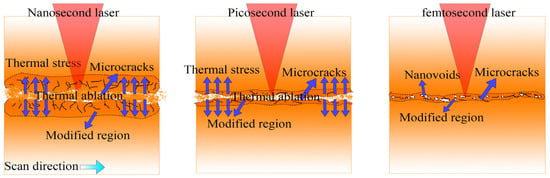
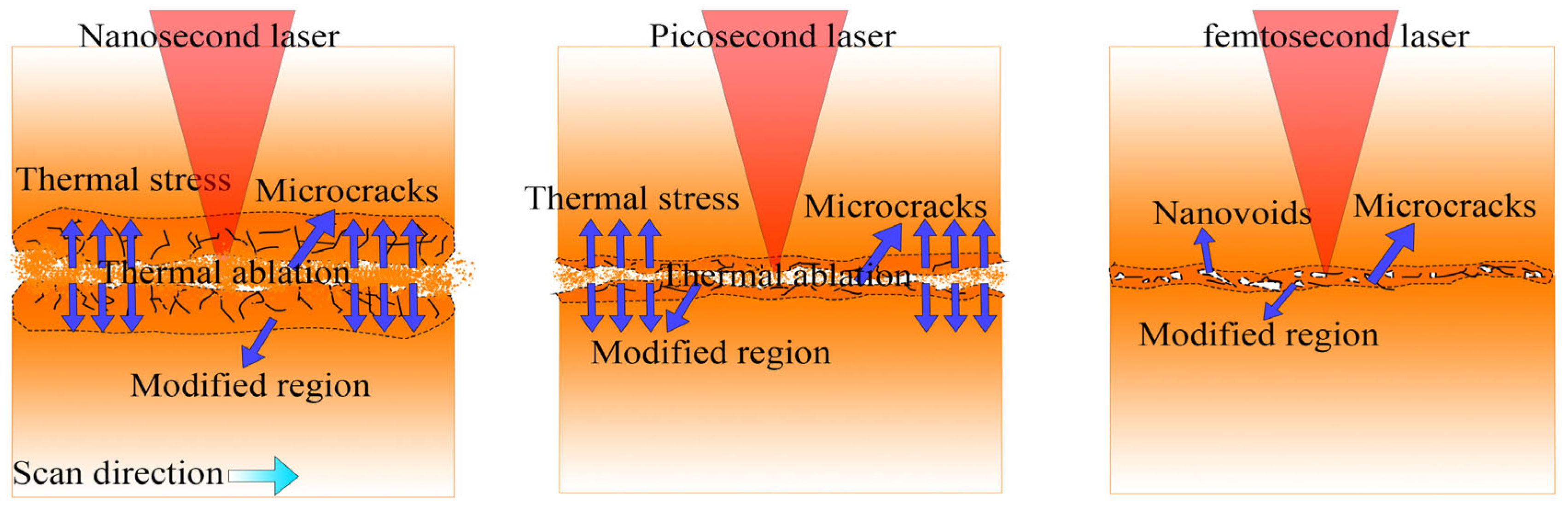
Currently, laser sources employed for slicing primarily include nanosecond [1,4,7,8,9,10,11,12], picosecond [3,6,13,14,15], and femtosecond pulses [3,5,13,16,17], each exhibiting distinct characteristics as shown in Figure 1. Picosecond and femtosecond laser irradiation induces multiphoton ionization and avalanche ionization in SiC, leading to material phase transformation and the formation of a micro-explosive layer (modified layer). This process decomposes 4H-SiC into Si and C, resulting in amorphous transformation within the single-crystal structure and the generation of horizontal cracks [4]. High-pressure Si vapor further promotes crack propagation [18]. Femtosecond lasers offer superior processing precision due to their minimal thermal effects, with induced defects primarily consisting of nanovoids and micro-cracks. In contrast, defects generated by picosecond lasers are mainly attributed to thermal ablation. While picosecond lasers provide higher processing efficiency at equivalent laser energy densities, this advantage comes at the expense of reduced processing precision [13].
Figure 1.
Schematic illustration of the principles of 4H-SiC wafer slicing using nanosecond, picosecond, and femtosecond lasers.
Despite the precision of ultrafast laser “cold” processing, its low ablation efficiency restricts lateral crack propagation lengths to typically less than 50 μm, severely limiting processing throughput for SiC wafer slicing. Furthermore, the high cost of ultrafast lasers hinders their widespread industrial adoption. Nanosecond lasers (with pulse widths ranging from 1 to 300 ns), as a short-pulse laser technology, offer a combination of high energy density and low cost and have found extensive applications in semiconductor material processing.
As shown in Figure 1, nanosecond lasers can deliver high energy to an extremely localized region near the focal point within a very short duration, inducing multiphoton absorption in the material, while photothermal effects govern the formation of the modified layer [1]. However, the substantial thermal effects associated with nanosecond laser irradiation can induce significant volumetric and thermal expansion in the modified layer, consequently contributing to the development of extended cracks within the 4H-SiC material [4].
Current nanosecond lasers applied to 4H-SiC slicing must meet extremely stringent specifications, as summarized in Table 1. Most systems require pulse durations below 10 ns, repetition rates under 100 kHz, average power levels of only a few watts, and a demanding beam quality factor of M2 < 1.3. To enhance the efficiency of 4H-SiC laser slicing and expand the accessible process window (e.g., usable laser power and repetition rate ranges), this study developed a highly efficient and stable nanosecond laser source based on a hybrid fiber and solid-state multi-stage amplification architecture. The developed laser source achieves the highest reported average power for nanosecond lasers applied to 4H-SiC slicing, while simultaneously offering the widest continuous tuning ranges for both pulse width and repetition rate, all while maintaining a beam quality of M2 < 1.3. This advancement is poised to advance the continued development of 4H-SiC slicing technology.
Table 1.
The nanosecond laser parameters for 4H-SiC slicing.
2. Experimental Setup
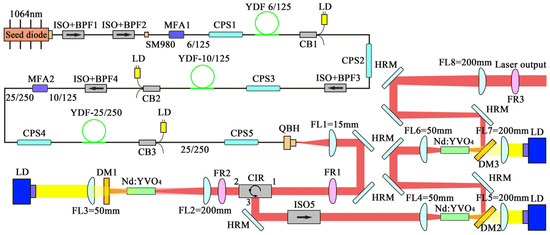
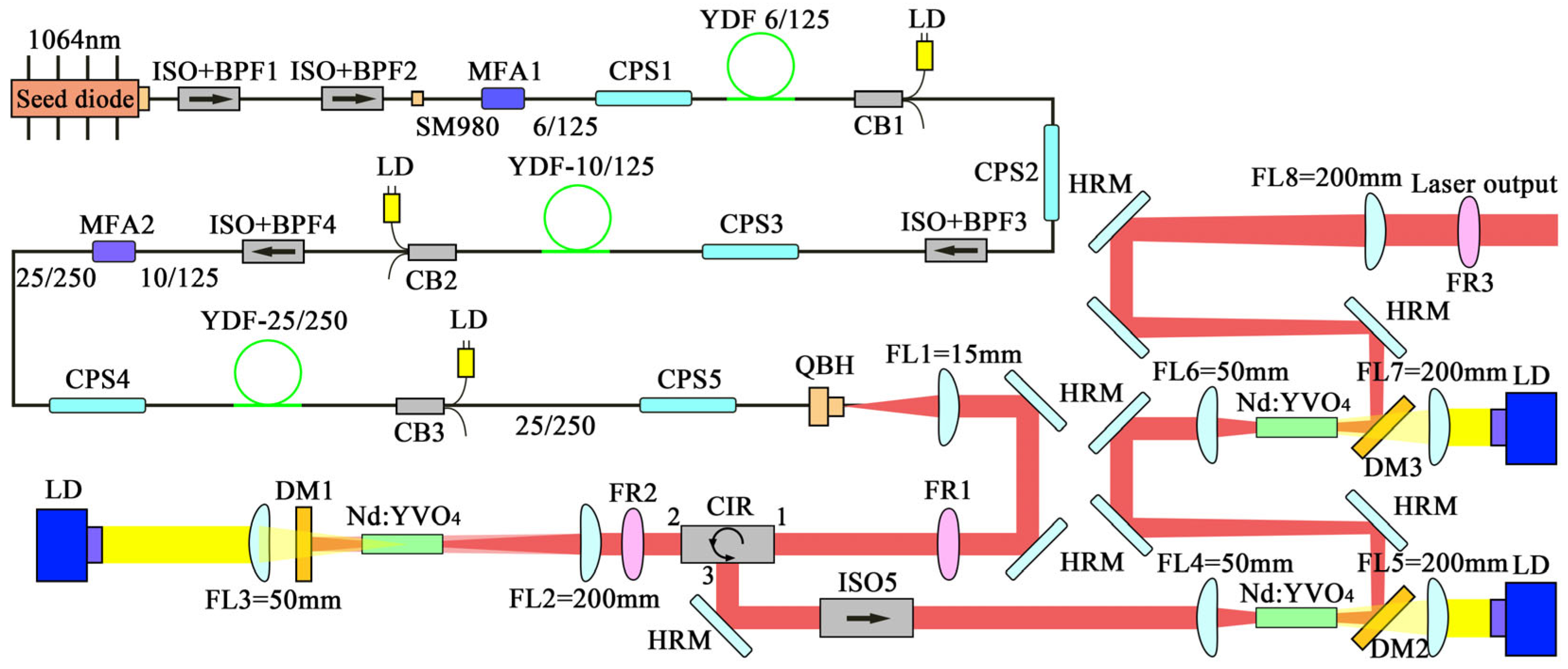
As illustrated in Figure 2, a hybrid fiber-solid-state amplification master oscillator power amplifier (MOPA) laser system is employed (Coherent, US), comprising three polarization-maintaining Yb-doped fiber (PM-YDF) pre-amplifier stages and one multi-stage solid-state main amplifier. The seed diode generates 1064 nm polarization-maintained pulses with a repetition rate ranging from 100 kHz to 1 MHz and a pulse duration continuously tunable from 1 to 10 ns. The first pre-amplifier stage (PA1) incorporates a 9.5 m-long panda fiber (core NA 0.11) with core/cladding diameters of 6/125 μm. A 9 W laser diode (LD) operating at 960 nm is utilized for backward pumping of the gain fiber through a (2 + 1) × 1 signal/pump combiner (CB1). The backward pumping configuration effectively suppresses amplified spontaneous emission (ASE) [19]. The second pre-amplifier stage (PA2) employs a 2.7 m-long panda fiber (core NA 0.075) with core/cladding diameters of 10/125 μm, backward-pumped by a 9 W LD at 976 nm via a (2 + 1) × 1 fiber combiner (CB2). The third pre-amplifier stage (PA3) utilizes a 2.7 m-long panda fiber (core NA 0.06) with core/cladding diameters of 25/250 μm, backward-pumped by a 27 W LD at 976 nm through a (2 + 1) × 1 fiber combiner (CB3).
Figure 2.
Schematic diagram of the nanosecond laser system.
Polarization-maintaining bandpass filters (BPF1–4) are incorporated to suppress ASE and stimulated Raman scattering (SRS) within the pre-amplifier stages, while polarization-maintaining isolators (ISO1–4) are strategically positioned between stages to prevent backward-propagating radiation. Mode field adaptors (MFA1–2) are employed to minimize splice losses and preserve beam quality [20], and cladding mode strippers (CPS1–5) eliminate residual pump light. The amplified laser output is delivered through a quartz block head (QBH) with a 25 μm core diameter. The QBH is coated with a 1064 nm anti-reflection film to minimize back reflections and ensure stable long-term operation at high power levels. All active fibers and optical components are mounted on water-cooled plates to facilitate effective thermal management and enhanced heat dissipation. An infrared thermal imaging system continuously monitors the operating temperature, ensuring that both fibers and components remain within safe operational limits.
The main amplifier stage comprises three solid-state amplifiers, as depicted in Figure 2. The output from the QBH is focused through a 15 mm focal length lens (FL1) and directed into a circulator (CIR). Subsequently, the pulses are amplified by a dual-pass solid-state amplifier system incorporating a doping percentage of 0.3% Nd: YVO4 crystal with dimensions of 3 mm × 3 mm × 20 mm, end-pumped by an 880 nm, 100 W continuous-wave (CW) laser diode array. A Faraday rotator (FR) is employed to rotate the polarization direction of the beam to match the circulator configuration. Two additional solid-state amplifier systems are implemented to further enhance the output power, each utilizing identical 880 nm, 100 W CW laser diode arrays. Notably, the lateral faces of all crystals are cut at a 2° angle to suppress parasitic oscillations and are coated with high-transmission films optimized for both 1064 nm and 880 nm wavelengths. The solid-state stage reduces sensitivity to fiber nonlinearities (e.g., SBS/SRS, self-phase modulation), mitigates undesired spectral broadening and pulse distortion. As a result, the chosen architecture provides a robust route to higher energy while maintaining stable beam quality suitable for tight focusing. Following amplification through the three fiber pre-amplifier stages and the multi-stage solid-state amplifier, the laser beam is collimated by a convex lens (FL8) before output delivery.
3. Results and Discussion
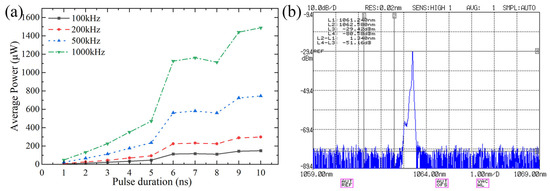
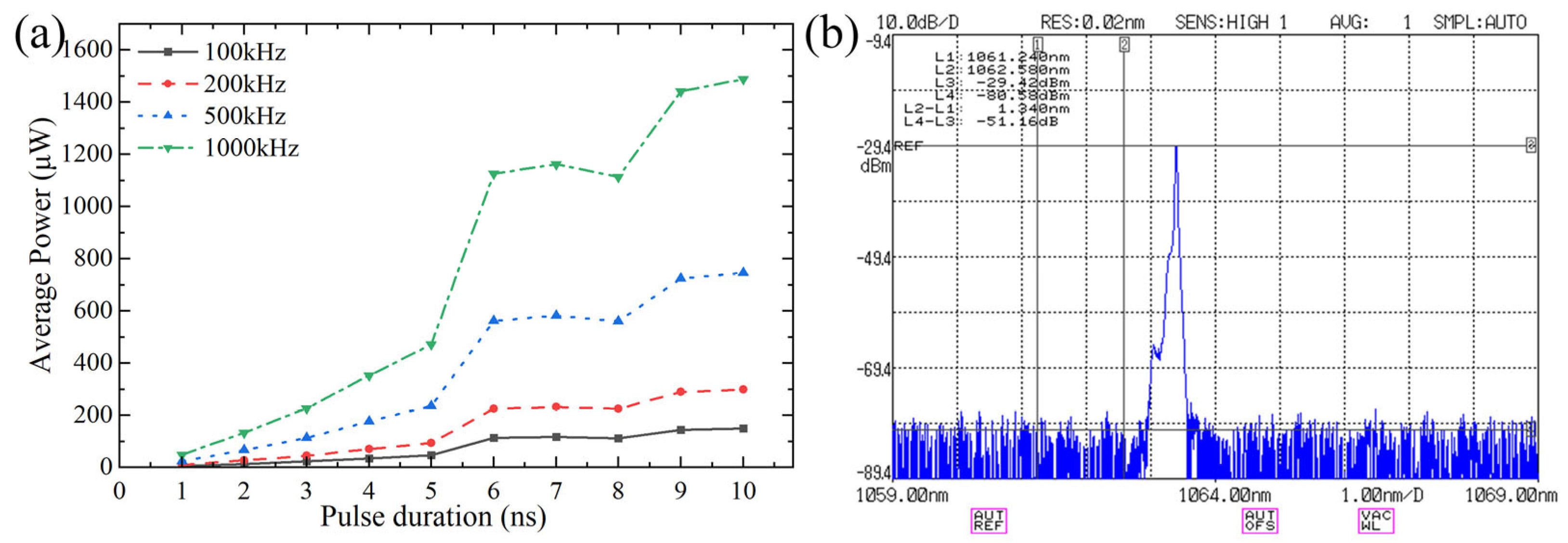
The output power (average laser power) of the seed diode exhibited dependence on both pulse duration and repetition rate, as shown in Figure 3a. The electrically driven diode generated laser pulses with durations ranging from 1 ns to 10 ns and repetition rates spanning 100 kHz to 1 MHz. The minimum output power of approximately 5 μW was observed at 1 ns pulse duration and 100 kHz repetition rate, while the maximum output power of approximately 1.5 mW was achieved at 10 ns and 1 MHz. Notably, the output power exhibited a nonlinear relationship with pulse duration, particularly at higher repetition rates. Figure 3b presents the laser output spectrum, featuring a central wavelength of 1063.4 nm and a spectral width of 0.22 nm at the 10 dB level. The seed source demonstrated an excellent spectral signal-to-noise ratio (SNR) of approximately 50 dB, which is highly favorable for subsequent amplifier stages.
Figure 3.
Characteristics of the seed diode. (a) output power as a function of pulse duration and repetition rate, (b) laser output spectrum.
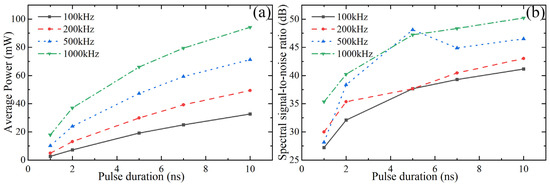
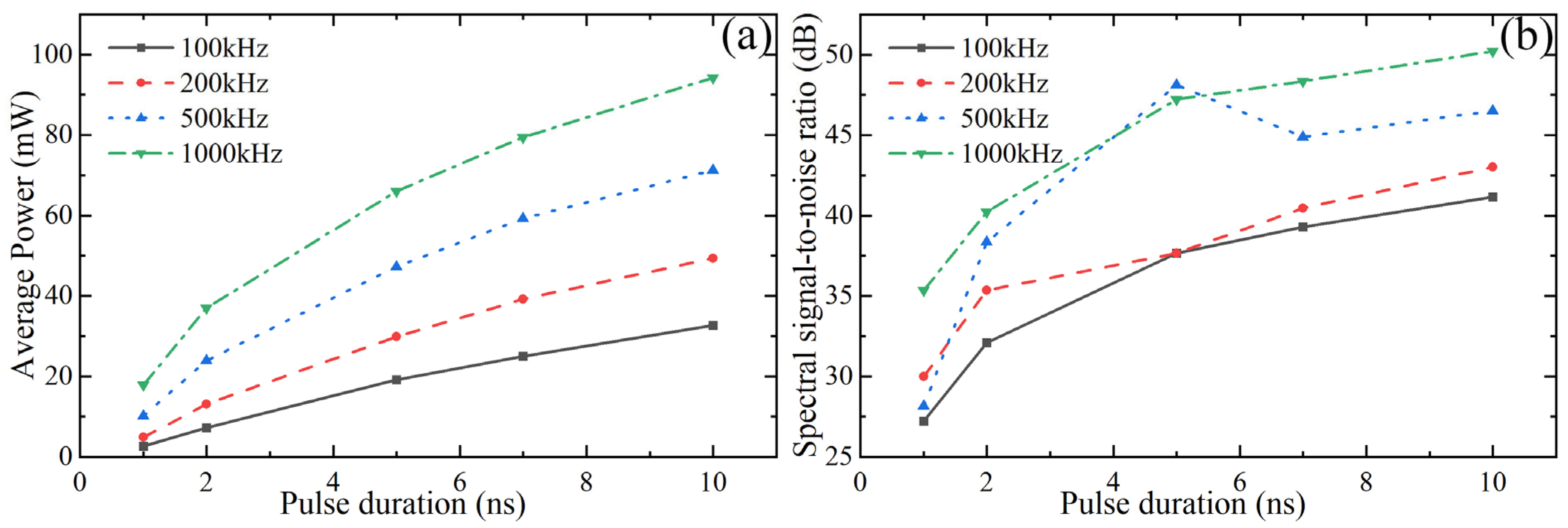
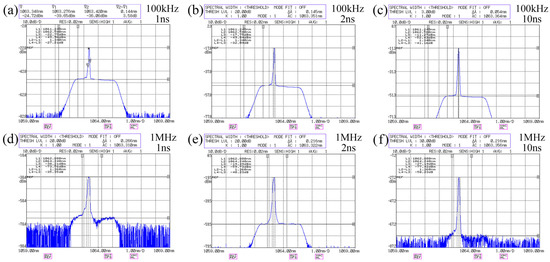
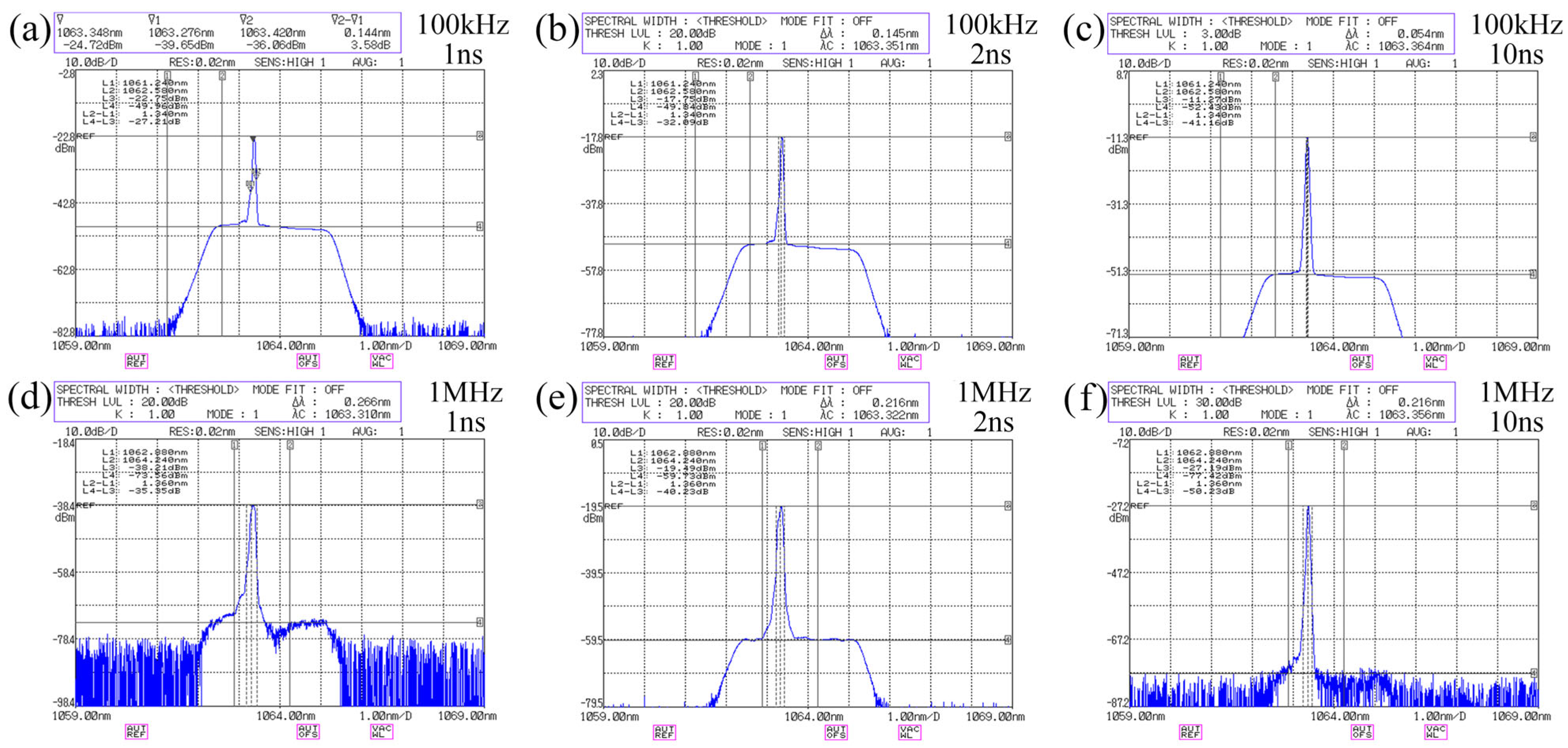
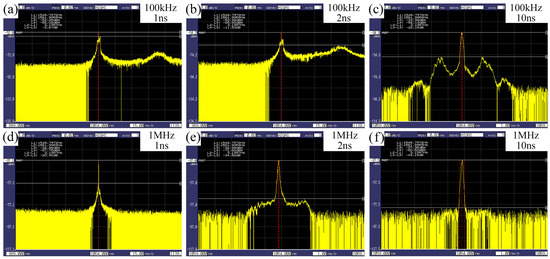
The seed laser was amplified by the first pre-amplifier (PA1), yielding an average output power ranging from 2.7 to 94 μW, as shown in Figure 4a. The output power increased nonlinearly with both pulse duration and repetition rate. Operating conditions featuring longer pulse durations and higher repetition rates were beneficial for fiber-based laser amplification, as they facilitated enhanced pump absorption and reduced ASE generation [19,21,22,23]. Figure 4b illustrates the variation in SNR with pulse duration and repetition rate, demonstrating that the SNR exceeded 27 dB across all operating conditions. The maximum SNR of 50 dB was achieved at a pulse duration of 10 ns and repetition rate of 1 MHz. Notably, this non-linear behavior at 500 kHz is intrinsically related to experimental and instrumental factors, including the spectral resolution of the measurement device (which directly affects SNR estimation) and the laser-spectrometer coupling efficiency (which governs signal collection efficiency and thus the measured SNR). Figure 5a–f present the output spectra corresponding to different pulse durations and repetition rates. The spectra exhibited consistent characteristics across all six cases, with a central wavelength of approximately 1063 nm and a spectral width of approximately 0.2 nm at the 20 dB level.
Figure 4.
Characteristics of the first pre-amplifier (PA1). (a) average output power versus pulse duration and repetition rate, (b) spectral SNR versus pulse duration and repetition rate.
Figure 5.
Output spectra of PA1 at different operating conditions: (a) 100 kHz, 1 ns, (b) 100 kHz, 2 ns, (c) 100 kHz, 10 ns, (d) 1 MHz, 1 ns, (e) 1 MHz, 2 ns, and (f) 1 MHz, 10 ns.
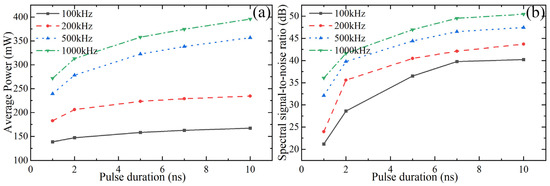
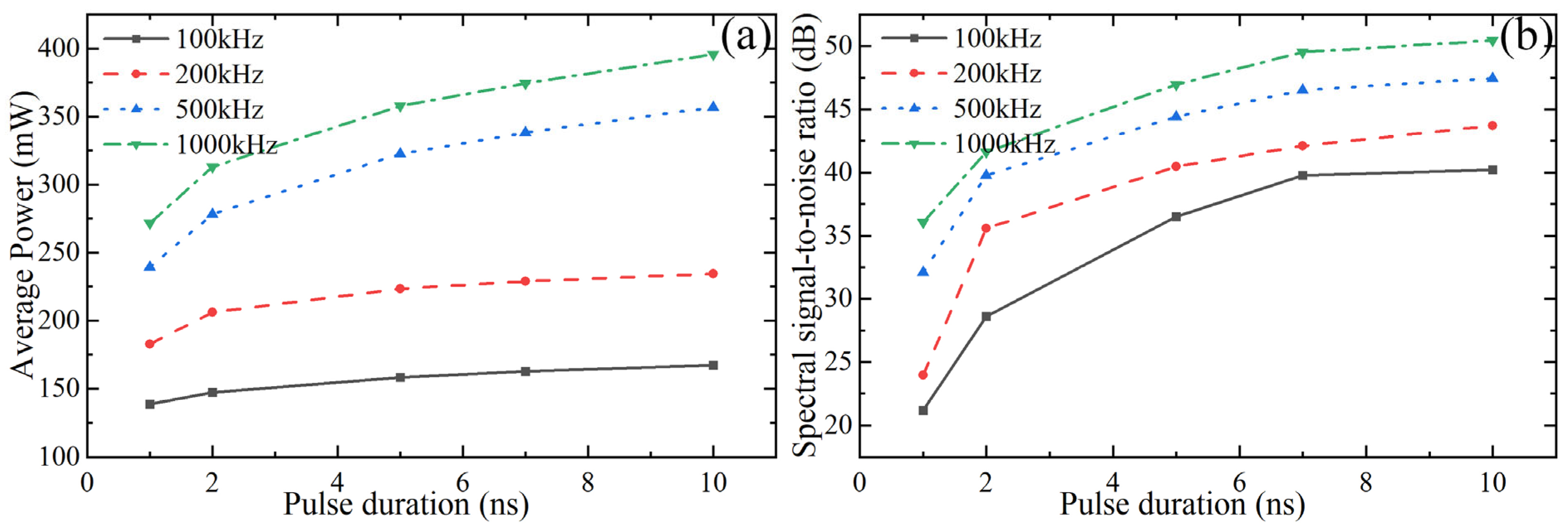
As illustrated in Figure 6a, PA2 amplified the average output power from 138.6 mW to 395.6 mW for pulse durations ranging from 1 to 10 ns and repetition rates ranging from 100 kHz to 1 MHz. The average power exhibited a sharp increase as the pulse duration increased from 1 to 2 ns, followed by a trend toward power saturation for pulse durations between 2 and 10 ns. Correspondingly, the SNR of the output spectrum shown in Figure 6b increased abruptly from 1 to 2 ns, after which the growth rate gradually decreased. The SNR in PA2 exceeded 20 dB but was lower than that achieved in PA1. The minimum SNR in PA2 was 25 dB, indicating that the laser energy gain in the second amplification stage approached saturation, particularly at shorter pulse durations and lower repetition rates. The maximum SNR of over 50 dB was obtained at a pulse duration of 10 ns and repetition rate of 1 MHz. As shown in Figure 7a–f, the output spectra from PA2 were clean and free from stimulated Raman scattering (SRS), similar to those from PA1. However, in Figure 7b–e, two characteristic peaks appeared symmetrically on either side of the central wavelength. This phenomenon was attributed to narrowband spectral filtering by BPF4. Additionally, self-phase modulation (SPM) significantly contributed to spectral broadening, as demonstrated in Figure 7 [20,24].
Figure 6.
Characteristics of the second pre-amplifier (PA2). (a) average output power versus pulse duration and repetition rate, (b) spectral SNR versus pulse duration and repetition rate.
Figure 7.
Output spectra of PA2 at different operating conditions: (a) 100 kHz, 1 ns, (b) 100 kHz, 2 ns, (c) 100 kHz, 10 ns, (d) 1 MHz, 1 ns, (e) 1 MHz, 2 ns, and (f) 1 MHz, 10 ns.
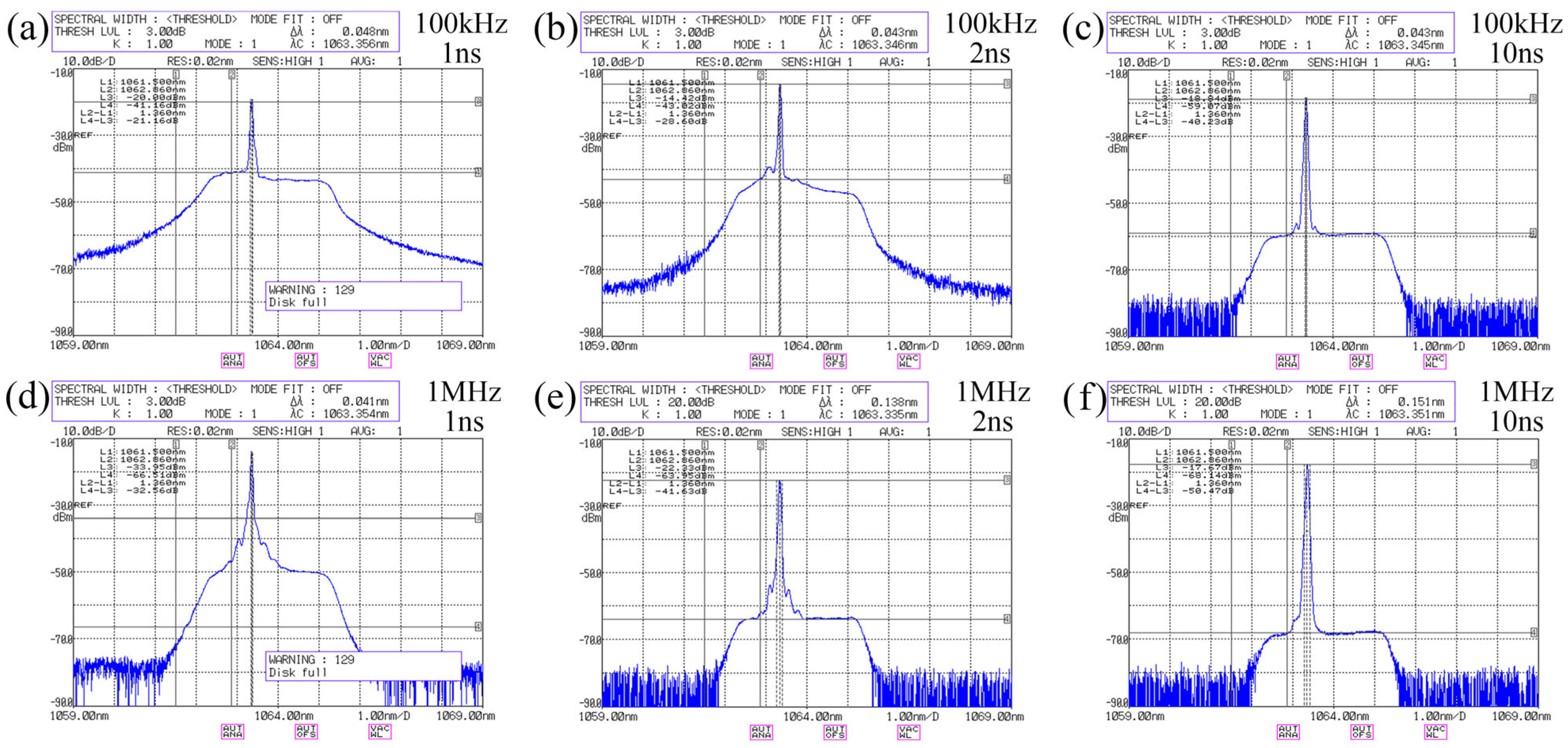
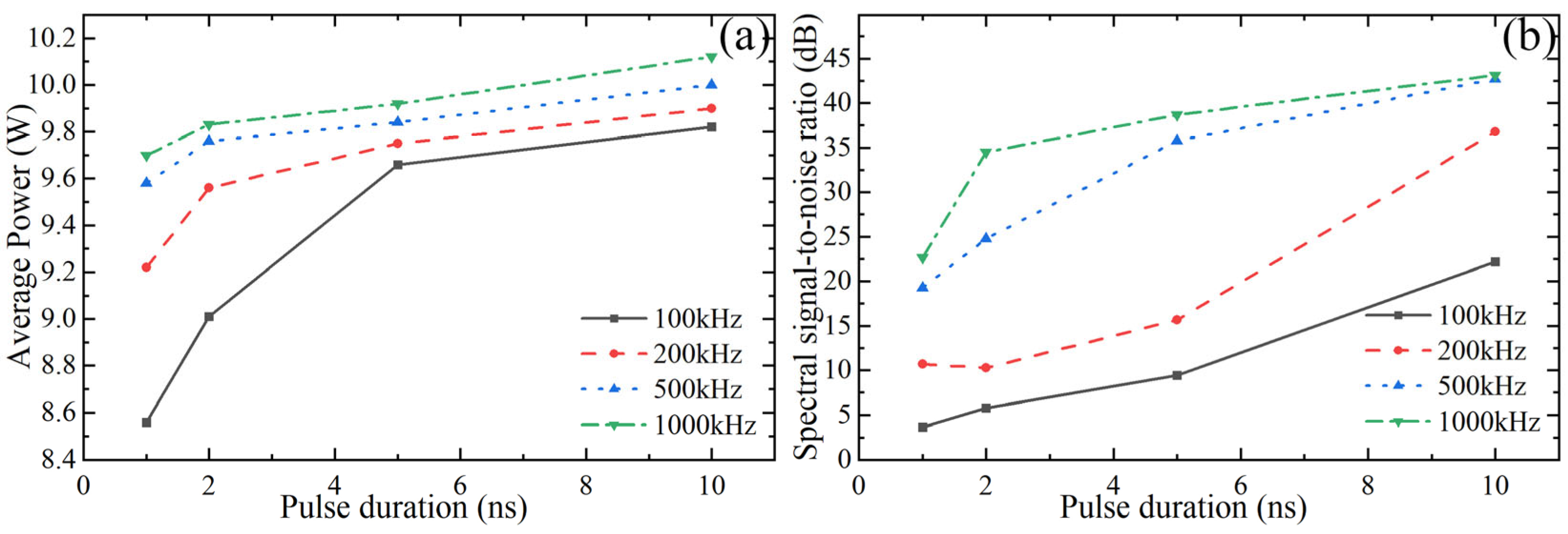
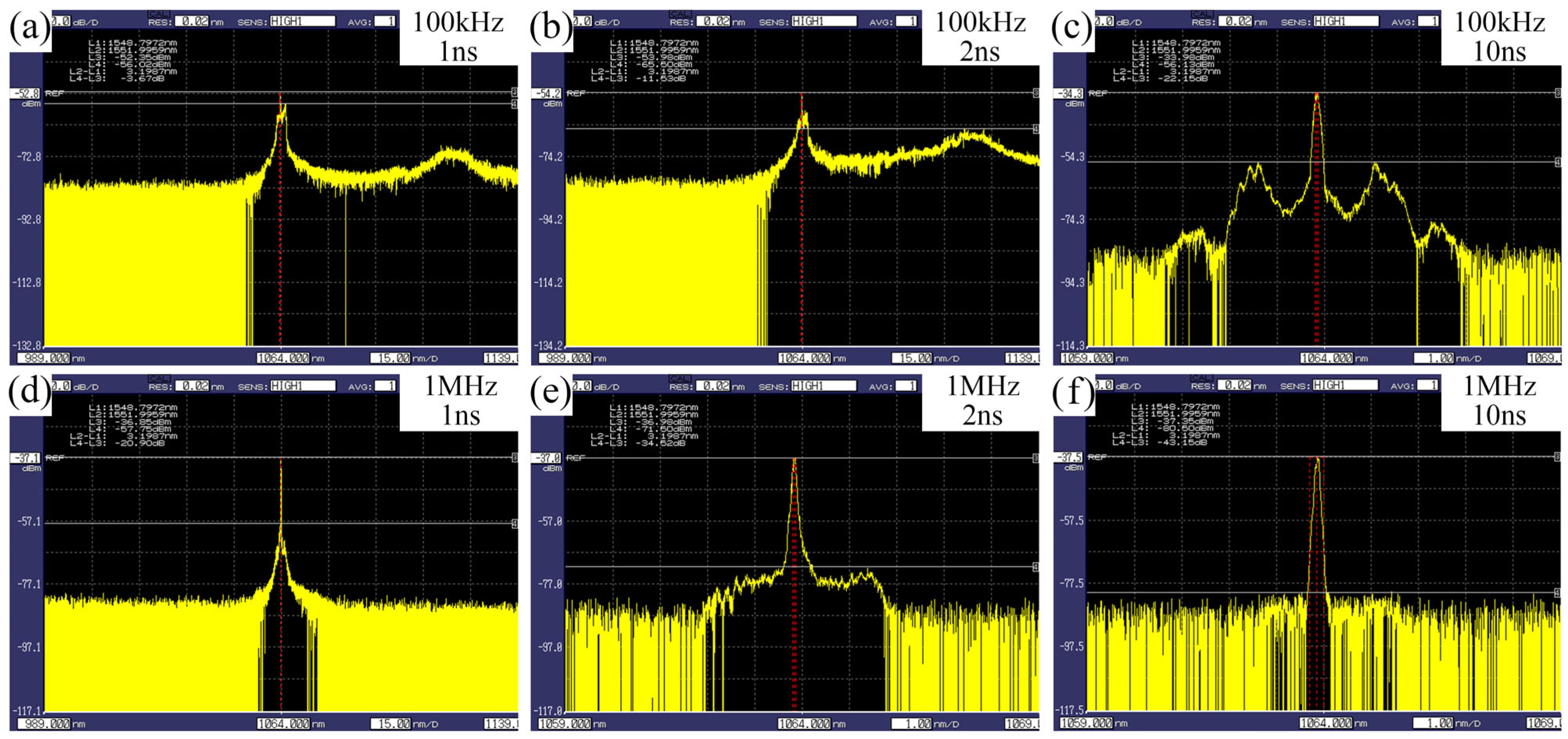
The output pulsed laser underwent further power amplification through PA3, resulting in an increase in laser power from 8.55 W to 10.1 W, as illustrated in Figure 8a. The increase in laser power did not correlate with longer pulse durations but exhibited a saturation trend at higher repetition rates. The maximum output power of 10.1 W was achieved at a pulse duration of 10 ns and a repetition rate of 1000 kHz. Figure 8b depicts the SNR of the output spectrum from PA3. At 100 kHz, the spectral SNR remained below 20 dB, indicating poor signal-to-noise performance. The laser exhibited stimulated Raman scattering (SRS), as evidenced by the spectral profiles shown in Figure 9a,b. Under the operating conditions of 100 kHz and 10 ns (Figure 9c), multiple spectral peaks were observed, a phenomenon attributed to intermode four-wave mixing (IM-FWM) [25]. This indicates that at 100 kHz, the output power was primarily limited by SRS and IM-FWM effects. In contrast, at 1000 kHz, the SNR of the output spectrum was significantly improved, reaching approximately 40 dB, with substantial suppression of both SRS and IM-FWM. Correspondingly, the spectral profiles in Figure 9d–f were notably optimized.
Figure 8.
Characteristics of the third pre-amplifier (PA3). (a) average output power versus pulse duration and repetition rate, (b) spectral SNR versus pulse duration and repetition rate.
Figure 9.
Output spectra of PA3 at different operating conditions: (a) 100 kHz, 1 ns, (b) 100 kHz, 2 ns, (c) 100 kHz, 10 ns, (d) 1 MHz, 1 ns, (e) 1 MHz, 2 ns, and (f) 1 MHz, 10 ns.
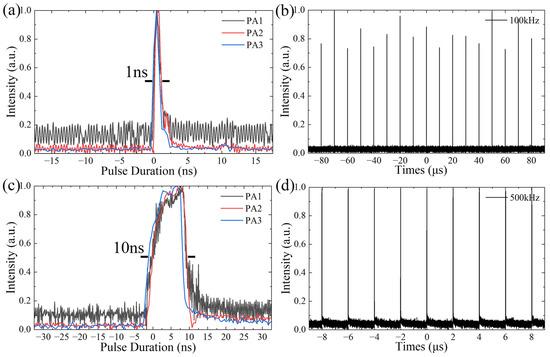
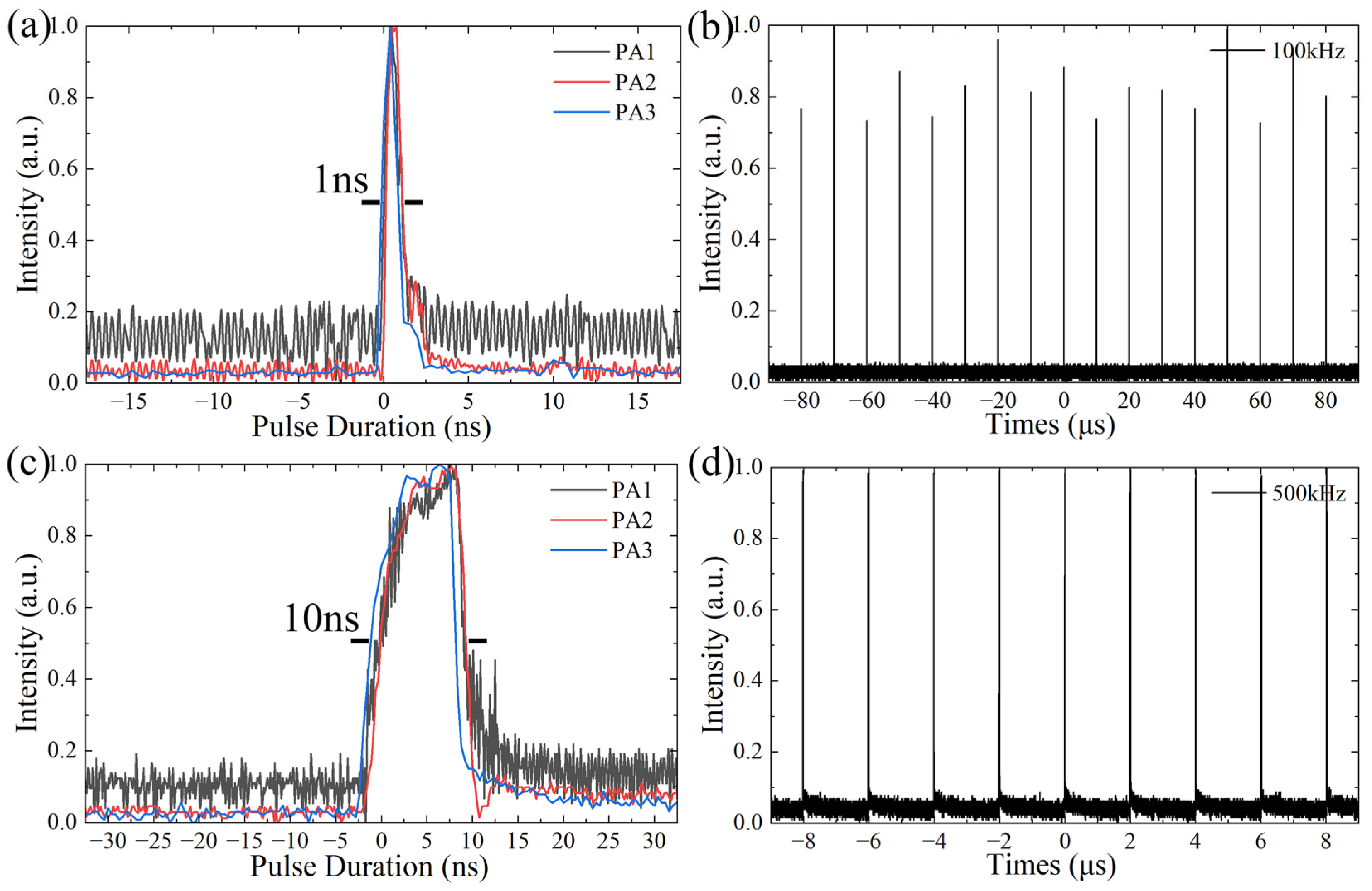
As observed from the output pulses of the amplification systems PA1 to PA3 (Figure 10a,c), after normalizing the pulse intensity, the pulse durations at 1 ns and 10 ns exhibited no significant change after passing through different fiber pre-amplification stages, maintaining strong consistency. Figure 10b,d indicate that the pulse repetition rates remained stable at 100 and 500 kHz, respectively, with no occurrence of self-pulsing phenomena.
Figure 10.
(a) The 1 ns pulse shapes from PA1, PA2 and PA3, (b) a typical laser trace at 100 kHz, (c) the 10 ns pulse shapes from PA1, PA2 and PA3, and (d) a typical laser trace at 500 kHz.
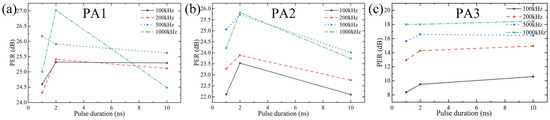
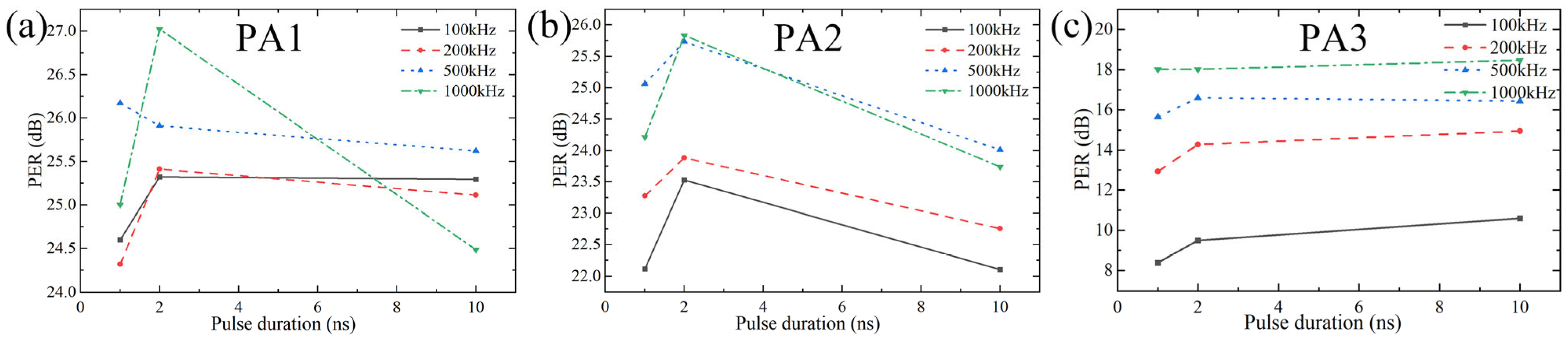
To further investigate the polarization extinction ratio (PER) of the output laser from PA1 to PA3, measurements were conducted using a rotating polarizer. The results for the laser PER are presented in Figure 11. The output lasers from PA1 and PA2 exhibited favorable polarization characteristics, with PER values generally exceeding 20 dB. Higher repetition rates corresponded to improved PER performance. In contrast, the output laser from PA3 demonstrated a PER of only approximately 10 dB at 100 kHz. At repetition rates above 100 kHz, the PER ranged between 12 dB and 18 dB, indicating a noticeable degradation in polarization performance compared to PA1 and PA2. This degradation may be attributed to the use of 25/250 μm fiber in PA3, which potentially supports multiple modes, leading to deterioration of the polarization characteristics.
Figure 11.
The polarization extinction ratio at different pulse durations and repetition rates: (a) PA1, 1–10 ns, 100–1000 kHz, (b) PA2, 1–10 ns, 100–1000 kHz, and (c) PA3, 1–10 ns, 100–1000 kHz.
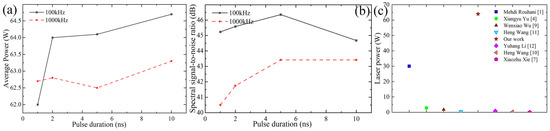
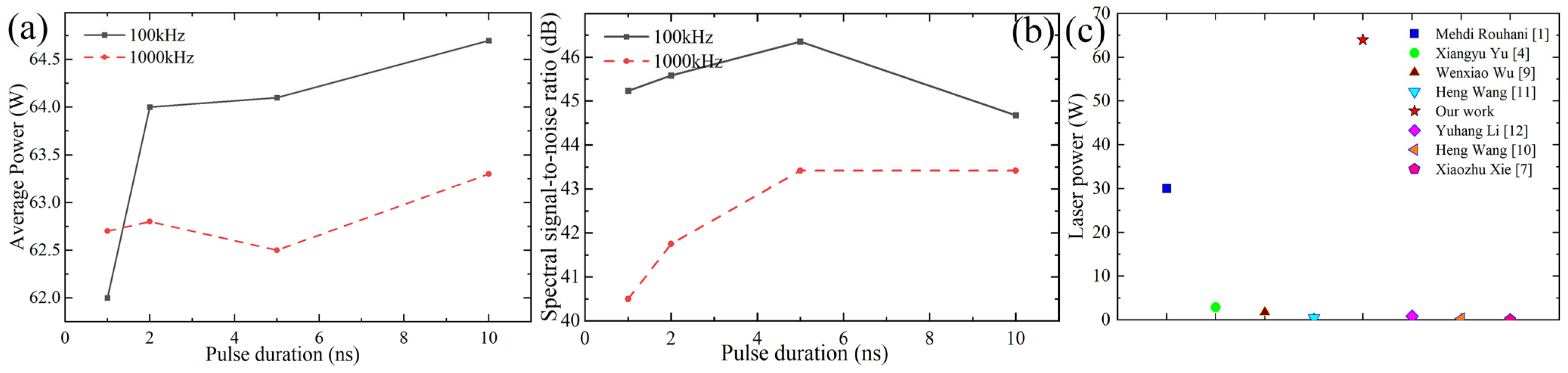
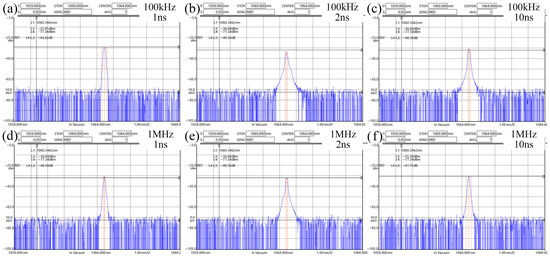
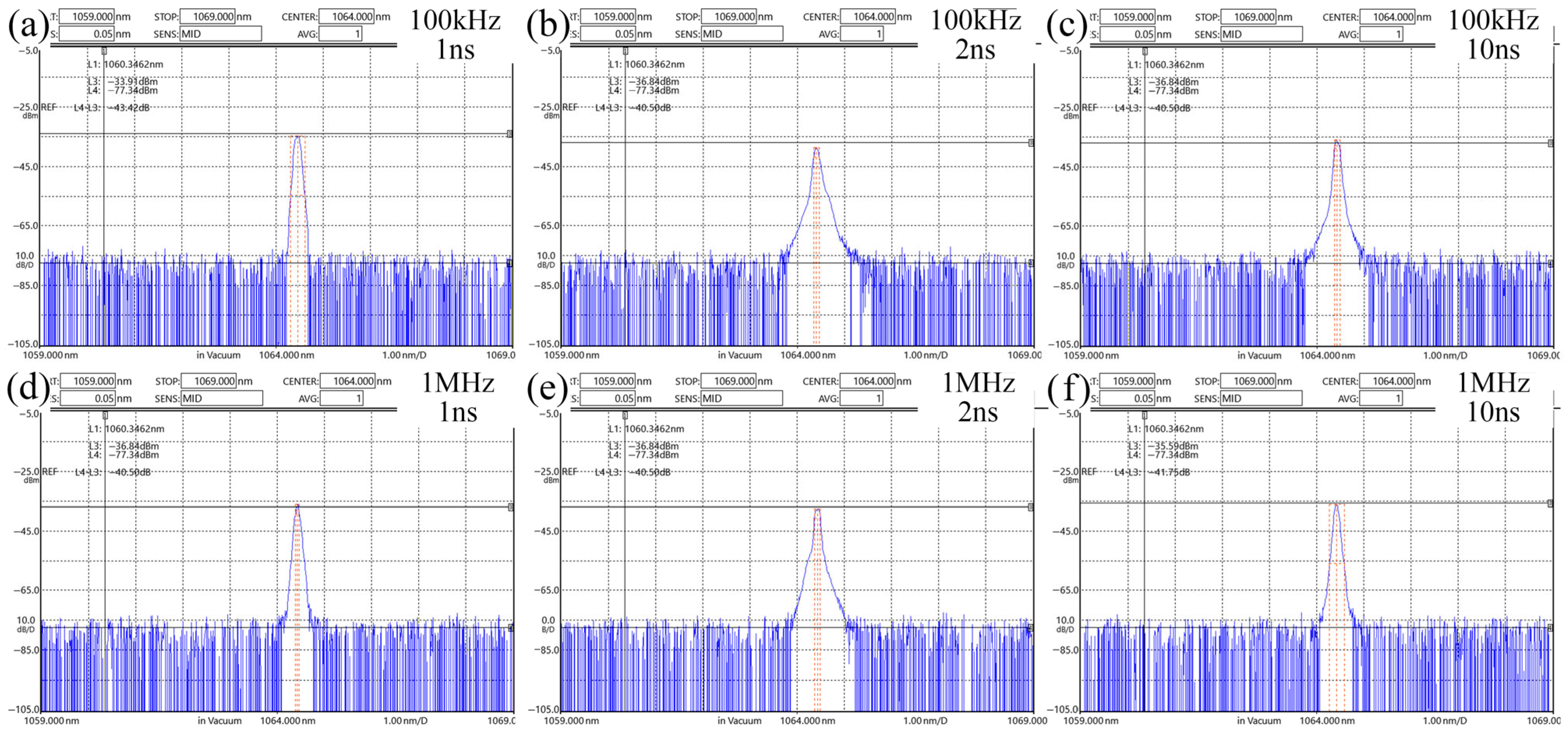
Following PA1-PA3, the output laser is directed into the solid-state main amplifier system, which comprises a three-stage solid-state amplification architecture (see Figure 2). As shown in Figure 12a, the output power ranged from 62 W to 64 W at repetition rates between 100 kHz and 1000 kHz. The output power of the solid-state main amplifier exhibited negligible dependence on variations in pulse width and repetition rate, being primarily limited by the available pump laser power and the overall thermal management capacity of the solid-state amplifier system. Figure 12b presents the SNR of the output spectrum from the main amplifier. While the spectral SNR at 1000 kHz was superior to that at 100 kHz, both exceeded 40 dB, indicating excellent spectral signal-to-noise performance. Compared with the lasers reported in the literature for 4H-SiC wafer slicing (Figure 12c, Table 1), our system delivers the highest average output power, which significantly broadens the processable parameter window and is beneficial for improving the machining efficiency. The spectral profile in Figure 13 revealed a central wavelength of 1064 nm, with a spectral width of merely 0.3 nm at the 20 dB level.
Figure 12.
(a) Output power and (b) spectral SNR of the main amplifier stage at different pulse durations and repetition rates, and (c) the laser power distribution for 4H-SiC wafers slicing in the existing literature [1,4,7,9,10,11,12].
Figure 13.
The output spectrum of the main amplifier stage at: (a) 100 kHz, 1 ns, (b) 100 kHz, 2 ns, (c) 100 kHz, 10 ns, (d) 1 MHz, 1 ns, (e) 1 MHz, 2 ns, and (f) 1 MHz, 10 ns.
Compared with the PA3 output spectrum (Figure 9), the SRS and IM-FWM present after pre-amplification were effectively suppressed in the main amplifier. This suppression was attributed to the exceptionally narrow gain bandwidth of the Nd:YVO4 solid-state gain medium [26,27]. The Nd:YVO4 crystal provided effective gain primarily for wavelengths around 1064 nm, while other wavelengths were absorbed and converted into heat, thereby efficiently filtering out the nonlinear spectral components responsible for SRS and IM-FWM.
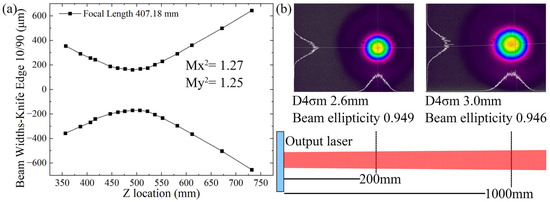
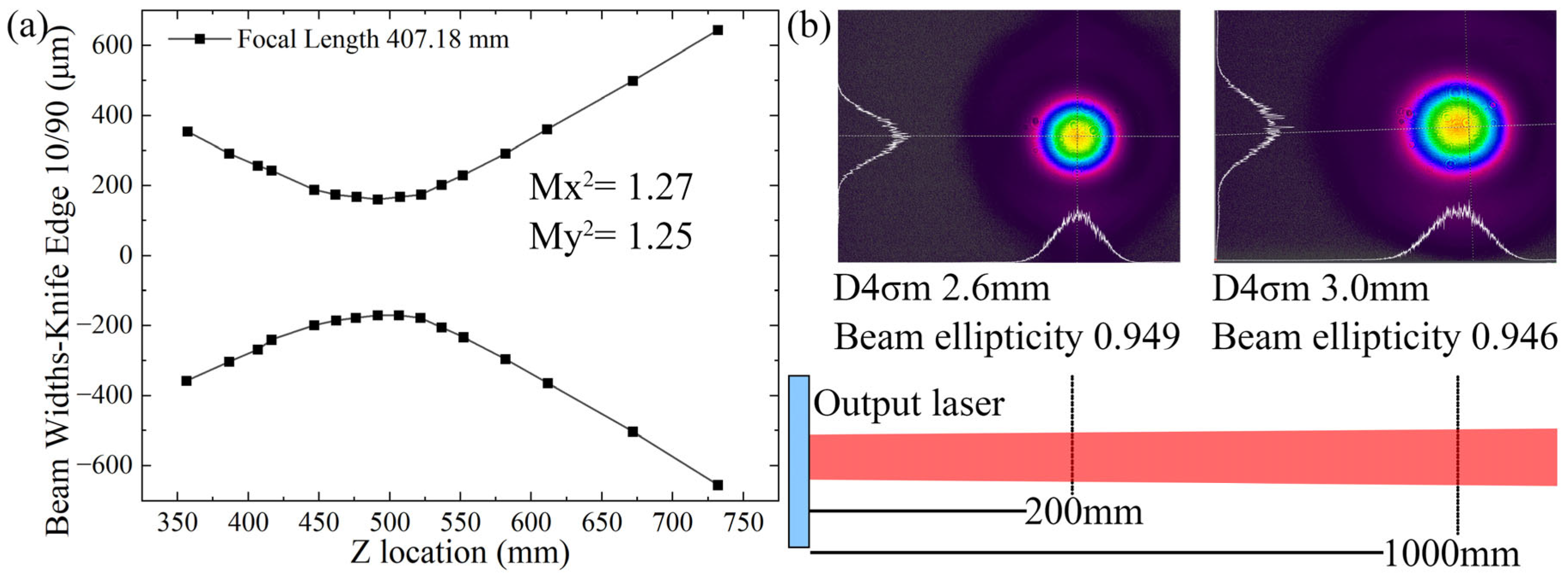
Beam quality measurements of the output laser, shown in Figure 14a, yielded M2 values of Mx2 = 1.27 and My2 = 1.25 at the maximum output power of 64 W. These results confirmed that the output from the main amplifier system possessed excellent beam quality, ensuring near-fundamental-mode propagation. Measurements of the beam profile at different distances, depicted in Figure 14b, showed ellipticities of 0.949 and 0.946 at 200 mm and 1000 mm from the laser output port, respectively, with corresponding beam diameters of 2.6 mm and 3.0 mm. These results demonstrated the high circularity of the output beam, which met the stringent requirements for beam ellipticity in the 4H-SiC slicing process [5,9].
Figure 14.
(a) Laser beam quality at 60 W output power, (b) laser beam diameter and ellipticity at 200 mm and 1000 mm from the laser output port.
4. Conclusions
In summary, to address the challenge of low laser power at narrow pulse durations and low repetition rates and to develop a high-performance laser suitable for 4H-SiC slicing, a fiber-solid hybrid multi-stage MOPA laser system was implemented. This system achieved an output average power of 62–64 W, with a continuously adjustable repetition rate from 100 kHz to 1 MHz and a pulse width tunable from 1 ns to 10 ns. The output laser exhibited a central wavelength of 1064 ± 0.3 nm and a spectral signal-to-noise ratio greater than 40 dB. At the maximum output power of 64 W, the beam quality factors were measured as Mx2 = 1.27 and My2 = 1.25, while the beam ellipticity remained above 0.946 within a 1 m propagation distance, demonstrating excellent beam characteristics. These combined attributes are crucial for ensuring processing uniformity and stability in 4H-SiC slicing applications. Furthermore, the application of this laser source is expected to significantly enhance the efficiency of 4H-SiC wafer slicing and substantially broaden the available process window. This advancement will facilitate more effective optimization of processing parameters and thereby accelerate the development of laser-based 4H-SiC slicing technology.
Author Contributions
Conceptualization, C.H.; Methodology, L.Z.; Validation, J.W. and H.L.; Formal analysis, L.W. and H.L.; Data curation, C.H. and L.Z.; Writing—original draft, L.Z.; Writing—review and editing, C.H.; Supervision, X.M. All authors have read and agreed to the published version of the manuscript.
Funding
This research was funded by National Key R&D Program of China (2023YFB4606300).
Data Availability Statement
The original contributions presented in this study are included in the article. Further inquiries can be directed to the corresponding author.
Conflicts of Interest
The authors declare no conflicts of interest.
References
- Rouhani, M.; Metla, S.B.S.; Hobley, J.; Karnam, D.; Hung, C.-H.; Lo, Y.-L.; Jeng, Y.-R. A complete phase distribution map of the laser affected zone and ablation debris formed by nanosecond laser-cutting of SiC. J. Mater. Process. Technol. 2025, 338, 118782. [Google Scholar] [CrossRef] [Scilit]
- Kling, R.; Washio, K.; Klotzbach, U.; Hirata, K. New laser slicing technology named KABRA process enables high speed and high efficiency SiC slicing. In Laser-Based Micro- and Nanoprocessing XII; SPIE: Bellingham, WA, USA, 2018; Volume 10520, p. 1052003. [Google Scholar] [CrossRef] [Scilit]
- Zhang, Y.; Xie, X.; Huang, Y.; Hu, W.; Long, J. Internal modified structure of silicon carbide prepared by ultrafast laser for wafer slicing. Ceram. Int. 2023, 49, 5249–5260. [Google Scholar] [CrossRef] [Scilit]
- Yu, X.; Wu, W.; Li, B.; Xiu, X.; Zheng, Y.; Zhang, R. Crack control for efficient nanosecond-laser slicing of large-size 4H-SiC crystals. Appl. Surf. Sci. 2025, 697, 163014. [Google Scholar] [CrossRef] [Scilit]
- Youn, H.; Kang, D.H.; Lim, J.; Han, S.; Lee, J.-H.; Jeong, J.; Kim, S. Scanning direction dependence on crystal orientations of a femtosecond laser-assisted 4H-SiC wafer slicing. Manuf. Lett. 2025, 44, 466–472. [Google Scholar] [CrossRef] [Scilit]
- Yao, Y.; Chen, Q.; Li, B.; Zhang, J.; Wang, R.; Bai, M.; Liang, R.; Ma, L.; Ma, T.; Zhang, J.; et al. Influence of crystal orientation and incident plane on n-type 4H-SiC wafer slicing by using picosecond laser. Opt. Laser Technol. 2025, 182, 112174. [Google Scholar] [CrossRef] [Scilit]
- Xie, X.; Xiong, H.; Lv, K.; He, Z.; Zeng, H.; Huang, Y. Low-damage precision slicing of SiC by simultaneous dual-beam laser-driven crack expansion of silicon carbide. Opt. Laser Technol. 2025, 192, 113960. [Google Scholar] [CrossRef] [Scilit]
- Liu, X.; Hong, M. Micro-cracks generation and growth manipulation by all-laser processing for low kerf-loss and high surface quality SiC slicing. Opt. Express 2024, 32, 38758–38767. [Google Scholar] [CrossRef] [Scilit]
- Wu, W.; Yu, X.; Li, B.; Xiu, X.; Zheng, Y.; Zhang, R. Stress and crack dynamics in nanosecond laser slicing of silicon carbide. Appl. Surf. Sci. 2025, 697, 163052. [Google Scholar] [CrossRef] [Scilit]
- Wang, H.; Cao, Q.; Wu, T.; Yu, L.; Wang, Z.; Peng, S.; Wang, D. Crack propagation mechanisms in laser slicing of 4° off-axis 4H-SiC and separation strength regulation via multi-beam processing. Mater. Sci. Semicond. Process. 2026, 201, 110100. [Google Scholar] [CrossRef] [Scilit]
- Wang, H.; Cao, Q.; Wu, T.; Wang, Z.; Hou, Y.; Peng, S.; Wang, D. Experimental investigation on crack evolution and separation strength in 4H-SiC slicing by sub-nanosecond laser. Opt. Laser Technol. 2025, 187, 112826. [Google Scholar] [CrossRef] [Scilit]
- Li, Y.; Zhang, Z.; Song, Q.; Shi, H.; Hou, Y.; Yue, S.; Wang, R.; Cai, S.; Zhang, Z. Surface micromorphology and nanostructures evolution in hybrid laser processes of slicing and polishing single crystal 4H-SiC. J. Mater. Sci. Technol. 2024, 184, 235–244. [Google Scholar] [CrossRef] [Scilit]
- Wang, L.; Zhang, C.; Liu, F.; Zheng, H.; Cheng, G.J. Ultrafast pulsed laser stealth dicing of 4H-SiC wafer: Structure evolution and defect generation. J. Manuf. Process. 2022, 81, 562–570. [Google Scholar] [CrossRef] [Scilit]
- Du, J.; Lu, X.; Jiang, L.; Han, S.; Li, X.; Yu, H.; Zhao, S.; Lin, X. Suppressing kerf loss based on multi-focal approach for 4H-SiC laser slicing. Opt. Express 2025, 33, 34267–34280. [Google Scholar] [CrossRef] [Scilit] [PubMed]
- Jiang, L.; Zhao, S.; Han, S.; Liang, H.; Du, J.; Yu, H.; Lin, X. CW laser-assisted splitting of SiC wafer based on modified layer by picosecond laser. Opt. Laser Technol. 2024, 174, 110700. [Google Scholar] [CrossRef] [Scilit]
- Wang, H.; Chen, Q.; Yao, Y.; Che, L.; Zhang, B.; Nie, H.; Wang, R. Influence of Surface Preprocessing on 4H-SiC Wafer Slicing by Using Ultrafast Laser. Crystals 2022, 13, 15. [Google Scholar] [CrossRef] [Scilit]
- Kim, E.; Shimotsuma, Y.; Sakakura, M.; Miura, K. 4H-SiC wafer slicing by using femtosecond laser double-pulses. Opt. Mater. Express 2017, 7, 2450–2460. [Google Scholar] [CrossRef] [Scilit]
- Han, S.; Yu, H.; He, C.; Zhao, S.; Ning, C.; Jiang, L.; Lin, X. Laser slicing of 4H-SiC wafers based on picosecond laser-induced micro-explosion via multiphoton processes. Opt. Laser Technol. 2022, 154, 108323. [Google Scholar] [CrossRef] [Scilit]
- Desurvire, E. Analysis of gain difference between forward-and backward-pumped erbium-doped fiber amplifiers in the saturation regime. IEEE Photonics Technol. Lett. 1992, 4, 711–714. [Google Scholar] [CrossRef] [Scilit]
- Cai, Y.; Zhu, Q.; Shi, J.; Li, C.; Yan, D.; Li, J.; Xing, Y. High-Power Yb-Doped and All Fiber-Based Nanosecond MOPA Laser. IEEE Photonics J. 2022, 14, 1533705. [Google Scholar] [CrossRef] [Scilit]
- Limpert, J.; Roser, F.; Schimpf, D.N.; Seise, E.; Eidam, T.; Hadrich, S.; Rothhardt, J.; Misas, C.J.; Tunnermann, A. High Repetition Rate Gigawatt Peak Power Fiber Laser Systems: Challenges, Design, and Experiment. IEEE J. Sel. Top. Quantum Electron. 2009, 15, 159–169. [Google Scholar] [CrossRef] [Scilit]
- Sun, Q.; Mao, Q.H.; Chen, X.D.; Feng, S.J.; Liu, W.Q.; Lit, J.W.Y. Influences of ASE on the performances of Q-switched ytterbium-doped fiber lasers. Laser Phys. 2010, 20, 1438–1448. [Google Scholar] [CrossRef] [Scilit]
- Glick, Y.; Sintov, Y.; Zuitlin, R.; Pearl, S.; Shamir, Y.; Feldman, R.; Horvitz, Z.; Shafir, N. Single-mode 230 W output power 1018 nm fiber laser and ASE competition suppression. J. Opt. Soc. Am. B 2016, 33, 1392–1398. [Google Scholar] [CrossRef] [Scilit]
- Geng, J.; Wang, Q.; Jiang, Z.; Luo, T.; Jiang, S.; Czarnecki, G. Kilowatt-peak-power, single-frequency, pulsed fiber laser near 2 μm. Opt. Lett. 2011, 36, 2293–2295. [Google Scholar] [CrossRef] [Scilit]
- Chu, Q.; Shu, Q.; Chen, Z.; Li, F.; Yan, D.; Guo, C.; Lin, H.; Wang, J.; Jing, F.; Tang, C.; et al. Experimental study of mode distortion induced by stimulated Raman scattering in high-power fiber amplifiers. Photonics Res. 2020, 8, 595–600. [Google Scholar] [CrossRef] [Scilit]
- Li, C.; Song, J.; Shen, D.; Xu, J.; Ueda, K. Diode-pumped CW and passively Q-switched solid-state lasers with an ultra-thin Nd: YVO4 crystal as the gain medium. Opt. Commun. 2000, 186, 245–250. [Google Scholar] [CrossRef] [Scilit]
- Dipold, J.; Kassab, L.R.P.; Wetter, N.U. Nd:YVO4 Random Laser with Preferential Emission at 1340 nm over 1064 nm. Photonics 2024, 11, 898. [Google Scholar] [CrossRef] [Scilit]

Disclaimer/Publisher’s Note: The statements, opinions and data contained in all publications are solely those of the individual author(s) and contributor(s) and not of MDPI and/or the editor(s). MDPI and/or the editor(s) disclaim responsibility for any injury to people or property resulting from any ideas, methods, instructions or products referred to in the content. |
© 2026 by the authors. Licensee MDPI, Basel, Switzerland. This article is an open access article distributed under the terms and conditions of the Creative Commons Attribution (CC BY) license.