1. Introduction
The conservation of heritage architectural surfaces requires coatings capable of reducing the action of environmental agents without significantly altering the appearance or properties of the substrate; this requirement is particularly complex when surfaces contain pigmented layers whose chromatic reading forms part of the historical value of the asset. Recent research on heritage coatings has developed polymeric, hybrid, fluorinated, silicate-based and nanomaterial-based systems, but their effectiveness continues to depend on the nature of the substrate, coating composition, application conditions and exposure environment [
1,
2,
3,
4]. The available results show that no protective system is universally applicable to heritage materials of different natures.
On pigmented architectural surfaces, the combined action of ultraviolet radiation, moisture, precipitation, wetting–drying cycles and thermal variations may manifest as color loss, cracking, detachment and alterations of the pictorial film; the response depends both on environmental conditions and on the intrinsic properties of the paint and its interaction with the substrate [
5,
6,
7,
8]. Studies conducted on outdoor-exposed mural paintings show that chromatic loss and loss of pictorial material do not necessarily evolve in parallel because different environmental and material mechanisms are involved. This consideration is particularly relevant to heritage surfaces in Cusco, where visual stability and physical integrity should be analyzed jointly.
The characterization of pigments used on historical surfaces requires the combination of compositional, morphological and chromatic information. Recent archeometric research has used SEM/EDS, Raman spectroscopy, FTIR, visible spectroscopy and imaging techniques to identify pigment phases and establish relationships between composition and appearance. In Andean mural painting, SEM/EDS analysis has enabled the identification of minerals and the study of their distribution within pictorial layers, while recent optical methodologies have shown that chromatic descriptors can be used to discriminate historical pigments when measurement conditions are controlled [
9,
10,
11]. These precedents support the combined use of elemental characterization and instrumental color recording in studies of heritage pigment materials.
The evaluation of these systems has shifted toward methodologies that combine initial characterization with monitoring during aging, with studies considering surface properties such as water absorption, morphology, chemical composition and changes produced by artificial or natural exposure [
8,
12,
13]. Coatings applied to terracotta have been evaluated through aging tests and complementary characterization techniques, demonstrating significant differences in effectiveness and durability between formulations, while the review in [
14] confirms that application and exposure conditions are determining variables for correctly interpreting the performance of a heritage coating.
Color stability represents another fundamental variable because any perceptible transformation may affect the aesthetic and historical reading of an treated surface, and its instrumental evaluation makes it possible to quantify changes that are not always identifiable by visual observation. Ref. [
11] demonstrated that pigmented materials intended for construction and restoration may undergo significant chromatic variations during drying and hardening related to changes in lightness and saturation. This result shows that chromatic characterization should be incorporated as an independent indicator within the evaluation of pigmented materials and not considered merely a secondary aesthetic property.
In conservation studies, colorimetry has progressively been integrated with compositional and mineralogical characterization techniques to establish relationships between material and visual response. This approach is particularly relevant when pigments differ in composition, particle size or degree of processing. Research on historical surfaces shows that instrumental identification of components enables the interpretation of chromatic modifications associated with material transformations, while studies on pigments and coatings subjected to aging reveal differentiated responses under equivalent environmental conditions [
11,
12,
13]. The simultaneous evaluation of composition and color therefore provides a more robust basis for assessing the stability of pigmented coatings.
An aspect that remains insufficiently resolved is the relationship between the prior processing of natural mineral pigments and the subsequent performance of coatings intended for heritage surfaces. Although the literature has examined treatment composition, binder properties and response to aging, there is less experimental evidence directly comparing different preparation procedures for the same pigment material and following their effects on the optical response and surface deterioration of coatings. Studies on pigment formulation and dispersion show that particle distribution and its interaction with the binder can modify the structure and properties of the film, so processing should be considered jointly with coating formulation [
14,
15,
16]. This issue is particularly relevant when processing modifies the particle distribution that subsequently interacts with a polymer matrix.
In this context, the present study addresses the influence of mineral pigment processing on the colorimetric and weathering performance of coatings intended for potential applications in heritage architecture. Polyvinyl acetate (PVAc) was selected as an experimental binder because it provides a defined waterborne polymer matrix in which the effect of pigment processing can be compared systematically at three binder concentrations (20%, 40% and 60%). PVAc has also been historically used in artists’ paints and in conservation-related applications, making it a documented material for comparative studies of painted surfaces [
17,
18].
However, its known physicochemical behavior and conservation-related limitations, including sensitivity to polar solvent systems and concerns regarding its interaction with heritage materials, mean that its use should not be interpreted as an assumption of compatibility with historic substrates [
19,
20]. Accordingly, PVAc is used here as a controlled formulation component for comparative experimental evaluation rather than as a conservation material recommended for direct application to historic architectural surfaces. The study compares pigments obtained by sedimentation and ball milling and integrates colorimetric characterization using the NCS system with the evaluation of deterioration manifestations produced during environmental exposure.
The originality of the study lies in comparing two mineral pigment preparation procedures (sedimentation and ball milling) and following their response in coatings formulated with three PVAc concentrations. This strategy makes it possible to relate the initial characteristics of the pigment fraction to two differentiated dimensions of coating performance: the stability of chromatic attributes recorded using NCS and the evolution of surface deterioration during natural exposure. The study does not assume that one procedure is universally superior, but rather examines whether the observed differences depend on the pigment and formulation.
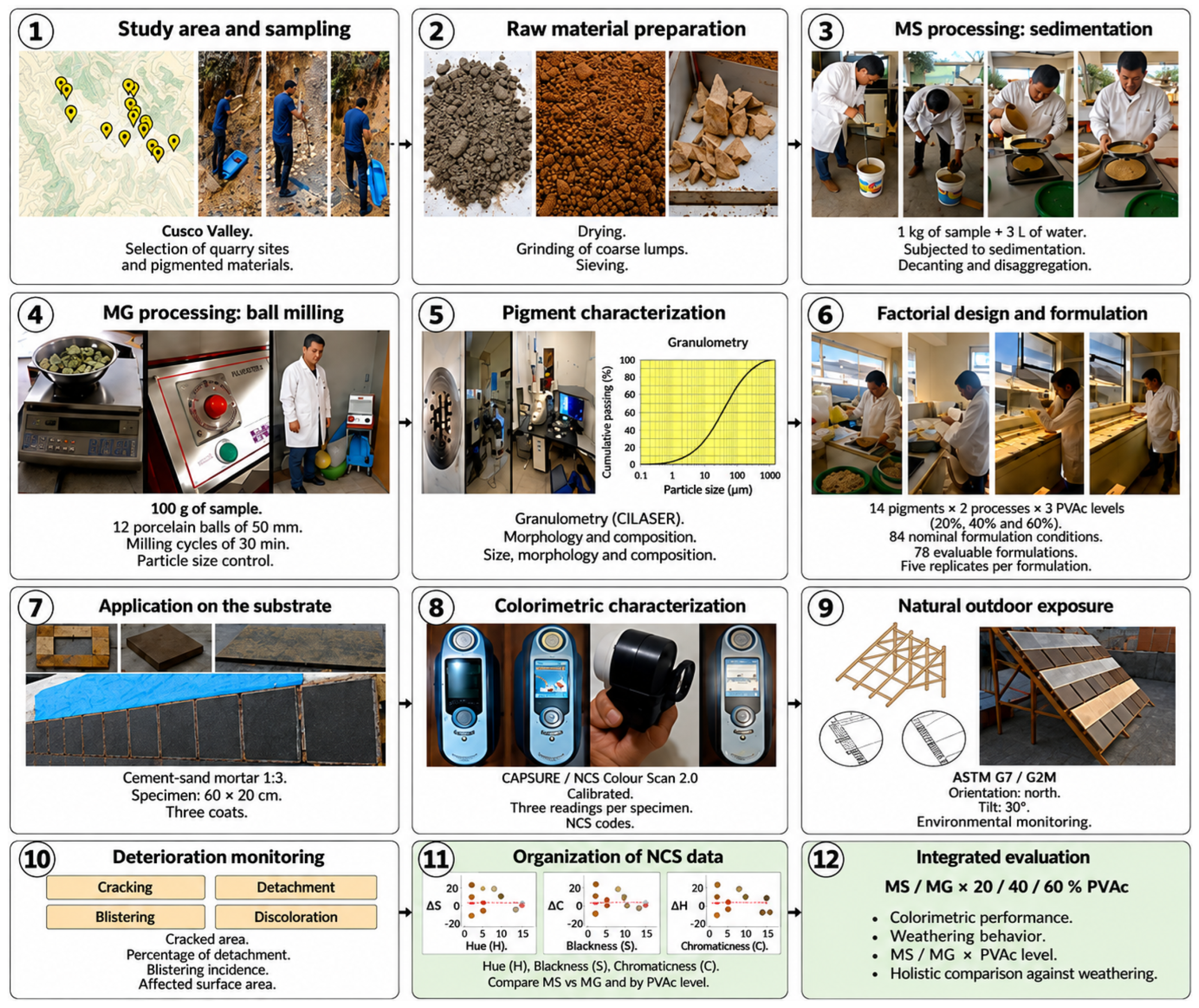
The main scientific contributions of the study are: (i) establishing the relationship between the mineral pigment processing method and the colorimetric response of the coatings; (ii) determining differences in behavior with respect to cracking, blistering, detachment and discoloration during environmental exposure; (iii) integrating the analysis of processing, chromatic characteristics and surface deterioration within the same experimental assessment; and (iv) providing criteria for the selection of local mineral pigments in future formulations intended for architectural conservation. The article initially presents the materials and methods; it subsequently develops the results and their discussion, and finally presents the conclusions derived from the study, see
Figure 1.
2. Materials and Methods
For clarity, two coding systems were used throughout the study. The T-series (e.g., T-01-X and T-02-X) identifies the mineral pigment samples obtained from the selected raw materials and used for pigment characterization. The M-series (e.g., M-01 and M-02) identifies the formulated paint/coating specimens. Within the M-series, MS denotes coatings formulated with pigments obtained by sedimentation, whereas MG denotes coatings formulated with pigments obtained by ball milling; the numerical PVAc suffix indicates the binder concentration (20%, 40% or 60%).
The research consisted of a quantitative experimental study with a comparative scope aimed at evaluating the behavior of coatings prepared from mineral pigments processed by sedimentation (MS) and ball milling (MG). The study comprised 14 mineral pigment samples identified using the T-series coding system; five representative pigment samples, T-02-X, T-06-X, T-07-X, T-11-X and T-12-X, were selected for scanning electron microscopy and energy-dispersive X-ray spectroscopy (SEM/EDS). According to the characterization records of the research, the coating specimens were subsequently identified using the M-series coding system, while MS and MG denote coatings formulated with pigments obtained by sedimentation and ball milling, respectively. The coating formulations were prepared with PVAc at concentrations of 20%, 40% and 60%, and their response was evaluated using the blackness, chromaticness and hue attributes of the NCS system, complemented by monitoring surface deterioration during natural weathering exposure.
From the 14 pigment samples produced, each sample was considered for processing by sedimentation (MS) and ball milling (MG) and combination with three PVAc concentrations (20%, 40% and 60%), resulting in 84 nominal formulation conditions; sample M-09 did not yield a coating formulation under the evaluated conditions and was therefore excluded from the comparative analysis, leaving 78 evaluable coating formulations and 39 paired MS-MG comparisons across the three PVAc concentrations, see
Table 1.
The SEM/EDS characterization was performed using a ZEISS ULTRA 55 field-emission scanning electron microscope (FESEM) equipped with an Oxford Instruments energy-dispersive X-ray spectroscopy (EDS) detector. The equipment was used through the Electron Microscopy Service of the Universitat Politècnica de València (UPV), Valencia, Spain. The FESEM was manufactured by ZEISS (Oberkochen, Germany), while the EDS system was supplied by Oxford Instruments (Abingdon, UK).
Of the 14 mineral pigment samples identified using the T-series coding system, five were selected as representative for characterization by scanning electron microscopy and energy-dispersive X-ray spectroscopy (SEM/EDS). The selected pigment samples were [T-XX-X, T-XX-X, T-XX-X, T-XX-X and T-XX-X]. The selection allowed morphology and elemental composition to be characterized in a representative subset of the pigment materials; therefore, the SEM/EDS results correspond exclusively to these five pigment samples and are not extrapolated to the complete set of 14 samples.
The pigment materials originated from quarries in the Cusco Valley. The initial selection was performed through preliminary pigment-potential tests, in which crushed samples were dispersed in water and applied to cardboard to visually assess their ability to generate a pigmented surface after solar exposure. These preliminary applications, shown in
Figure 1, were used exclusively for screening the pigmenting potential of the raw materials and were not included in the subsequent colorimetric or weathering measurements; the visible irregularities observed in these exploratory applications were therefore not treated as experimental deterioration or colorimetric results. After pigment selection and processing, the coating specimens used for the quantitative evaluation were prepared under standardized formulation and application conditions, using the same mortar substrate and application procedure for all formulations; thus, the specimens used for quantitative characterization were distinct from the preliminary application tests illustrated in
Figure 1.
For the MS procedure, the crushed material was dispersed in water and subjected to sedimentation to separate the pigment fraction. For MG, 100 g of sample and 12 porcelain balls were used, applying successive 20 min milling cycles and controlling fineness by sieving. After each procedure, the material and processing elements were cleaned to reduce cross-contamination between samples. Subsequent characterization included particle-size distribution, scanning electron microscopy and energy-dispersive X-ray spectroscopy (SEM/EDS), with the purpose of comparing the physical and compositional characteristics of the fractions obtained. The inclusion of particle distribution and dispersion state is relevant because of their potential influence on pigment organization within waterborne coatings, see
Table 2 [
14,
15,
17].
The formulations were prepared using mineral pigment, water and an aqueous PVAc TEKNO (TEKNOQUIMICA S.A., Lima, Peru) emulsion. The pigment dispersion was homogenized for 10 min using a helical mixer and subsequently agitated with a cap disk at 1500 rpm for 15 min. PVAc was gradually incorporated under agitation at 500 rpm for 15 min. Viscosity was verified using a Ford cup, and adjustments with water were made when necessary to reach the recorded range of 14–16 s. The finished formulations were stored in individual 500 mL containers until application. The nomenclature used for the coating specimens, M-01, M-02, etc., identifies the formulated paint samples, whereas the prefixes MS and MG identify coatings containing pigments obtained by sedimentation and ball milling, respectively.
For each pigment × processing procedure × PVAc concentration combination, five independent coating specimens were prepared from independent formulation batches (n = 5). Each specimen was considered an independent experimental unit. Repeated measurements performed on the same specimen were treated as repeated observations and were not considered additional independent replicates.
The coatings were applied to cement-and-sand mortar substrates at a 1:5 ratio, molded in wooden frames reinforced with an internal metal mesh and measuring 30 × 50 cm. The applications were performed after mortar curing and were limited to a maximum of three coats. The mortar composition was selected to reproduce the proportion used in plastering work on masonry walls in Cusco. Before exposure, the surface conditions of the coatings were documented by photographic recording and microscopic characterization, maintaining the same application conditions between formulations.
The colorimetric characterization was performed using a CAPSURE/NCS Colour Scan 2.0 on dry, clean surfaces. The instrument was calibrated before measurements, and the comparison booth was stabilized for 5 min under D65 illumination. Three colorimetric readings were taken from each coating specimen at different locations on the coated surface, avoiding the specimen edges and areas with visible surface defects or evident application irregularities. The three readings obtained from the same specimen were treated as repeated observations within the same experimental unit and were not considered independent replicates. Each reading was performed directly on the coating surface and the instrument assigned the corresponding NCS system code.
The specimen-level colorimetric response was established from the three recorded NCS readings by considering the modal NCS notation for the specimen, thereby avoiding the treatment of repeated measurements as additional independent observations. The analyzed attributes were blackness (S), chromaticness (C) and hue (H), obtained from the NCS notation recorded for each measurement; differences between MS and MG were expressed as discrete variations in these attributes; ΔE was not calculated because the corresponding CIELAB values were unavailable, see
Table 3 [
11,
12].
Natural exposure was conducted using ASTM G7/G7M as a reference for the arrangement of non-metallic materials. The specimens were installed, avoiding direct contact with the ground and contamination between rows, with a northern orientation and an inclination of 70° relative to the horizontal. A metal gutter was incorporated to control runoff, and shading of the surfaces was avoided under the established exposure conditions. Monitoring was conducted at the documented time intervals for each formulation, recording available environmental conditions and the evolution of surface pathologies. This type of exposure makes it possible to evaluate coating behavior under the combined action of real environmental conditions, whose influence should be interpreted considering the substrate, formulation and characteristics of the protective system [
13,
16].
Surface deterioration was determined through visual observation, photographic documentation and microscopic analysis, considering cracking, detachment, blistering and discoloration. The affected area was obtained by vectorizing zones differentiated by contrast between the preserved coating and the exposed substrate, with results expressed as a percentage. For the colorimetric comparison, NCS codes were organized according to pigment, processing method and PVAc concentration; for weathering, the maximum percentage of affected surface and the corresponding week were recorded.
Data were organized according to pigment, processing procedure and PVAc concentration. For each formulation, five independent coating specimens were considered (
n = 5). Colorimetric data were summarized using the NCS attributes of blackness (S), chromaticness (C) and hue (H), and comparisons between MS and MG were expressed as frequencies of coincidence and discrete attribute displacement. For weathering performance, the affected surface area was quantified for each replicate at each monitoring time, and the maximum documented percentage was determined for each replicate. The values reported for each formulation correspond to the mean of the five replicate values, together with the monitoring week associated with the reported maximum. No inferential statistical test was applied to the NCS comparison because the analysis was based on categorical coincidence and discrete displacement of NCS attributes see
Figure 2.
3. Results
3.1. Initial Characterization of Pigments Processed by MS and MG
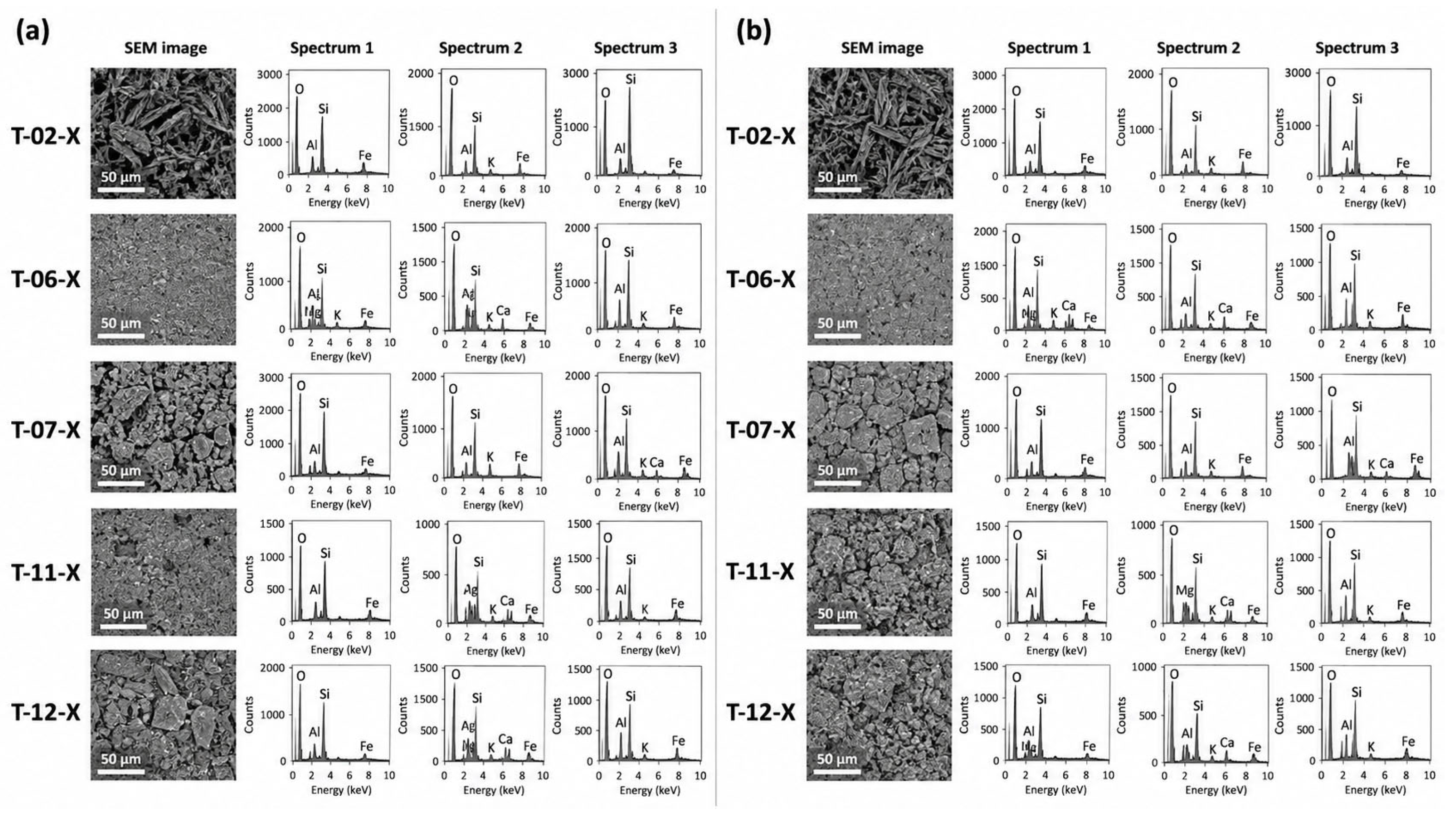
The initial characterization described the physical and morphological characteristics of the mineral pigment samples before their incorporation into the coatings. Particle-size analysis showed variations in particle-size distribution among the T-series pigment samples, while scanning electron microscopy coupled with energy-dispersive X-ray spectroscopy (SEM/EDS) provided morphological and elemental information for five selected representative pigment samples: T-02-X, T-06-X, T-07-X, T-11-X and T-12-X; the subsequent coating specimens were identified using the M-series coding system, with MS denoting coatings formulated with pigments obtained by sedimentation and MG denoting coatings formulated with pigments obtained by ball milling, see
Figure 3.
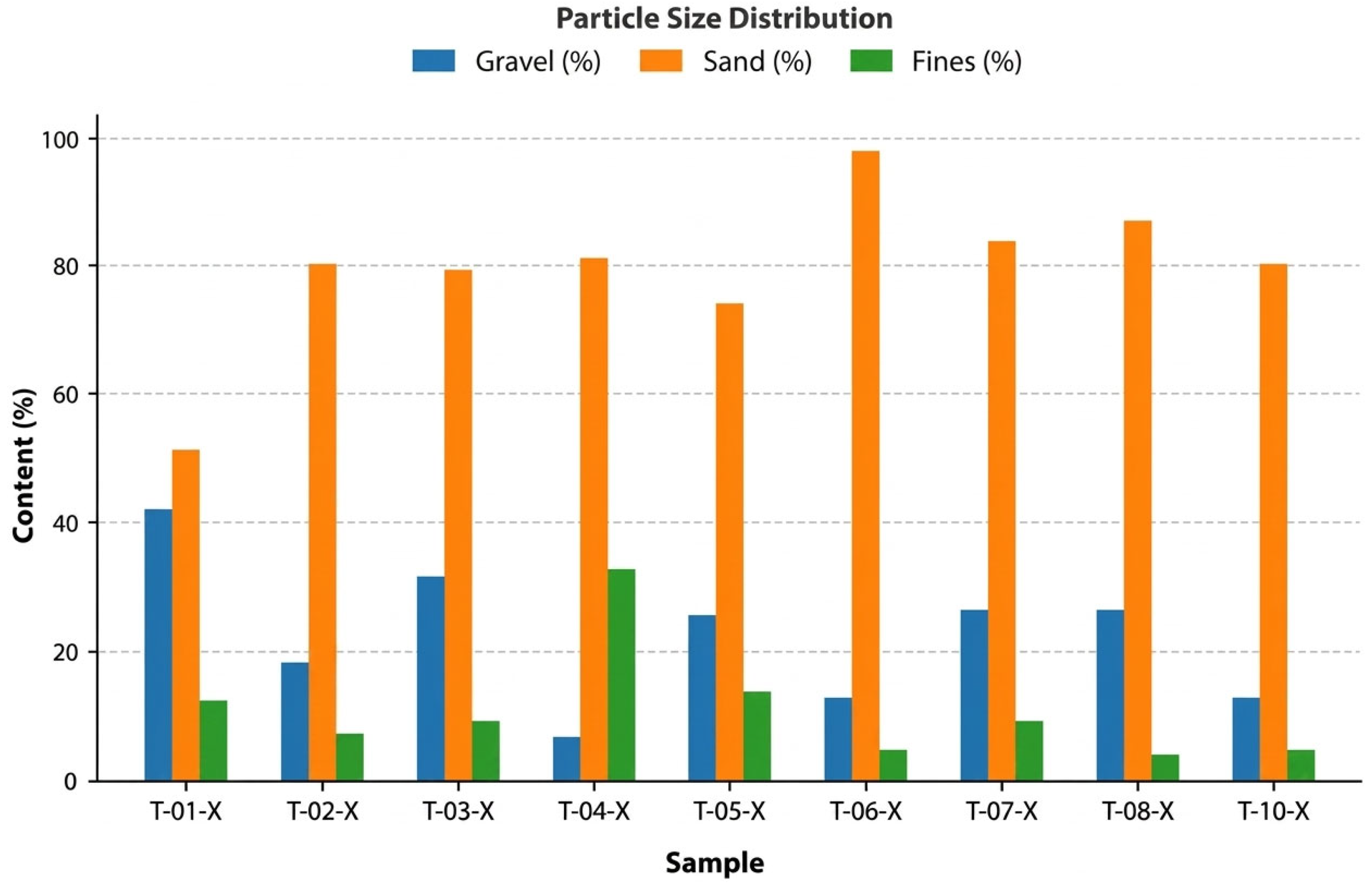
Particle-size fractions were determined by sieve analysis following the particle-size distribution procedure described in ASTM D6913/D6913M. The terms gravel, sand and fines were adopted from the particle-size framework used in ASTM D2487 for mineral materials, although the present application is descriptive and does not classify the pigment materials as soils; ASTM D6913/D6913M defines sieve-based particle-size distributions using specified sieve openings, including the No. 4 (4.75 mm) and No. 200 (75 μm) boundaries, while ASTM D2487 uses these size fractions within its Unified Soil Classification System. In the present study, the terms are therefore used only to report the relative mass fractions of the processed mineral pigment material retained within the corresponding size ranges, see
Table 4 [
19,
20].
The initial characterization described the particle-size variability of the raw materials used to produce the pigments; scanning electron microscopy and energy-dispersive X-ray spectroscopy (SEM/EDS) provided complementary information on the morphology and elemental composition of the selected representative samples.
The differences observed between the SEM/EDS measurement areas in
Figure 4 indicate local heterogeneity within the analyzed pigment materials. Because EDS measurements represent localized analytical areas, variations in the detected elemental signals may reflect differences in the mineral particles intercepted by each analyzed region rather than differences in the bulk composition of the pigment. These variations are therefore interpreted as evidence of heterogeneity at the observed scale and not as evidence of distinct bulk formulations. The SEM/EDS observations are consequently used as complementary morphological and elemental evidence, while definitive identification of mineral phases would require bulk or phase-specific techniques such as XRD or Raman spectroscopy, see
Figure 4.
3.2. Colorimetric Differences Between MS and MG Coatings
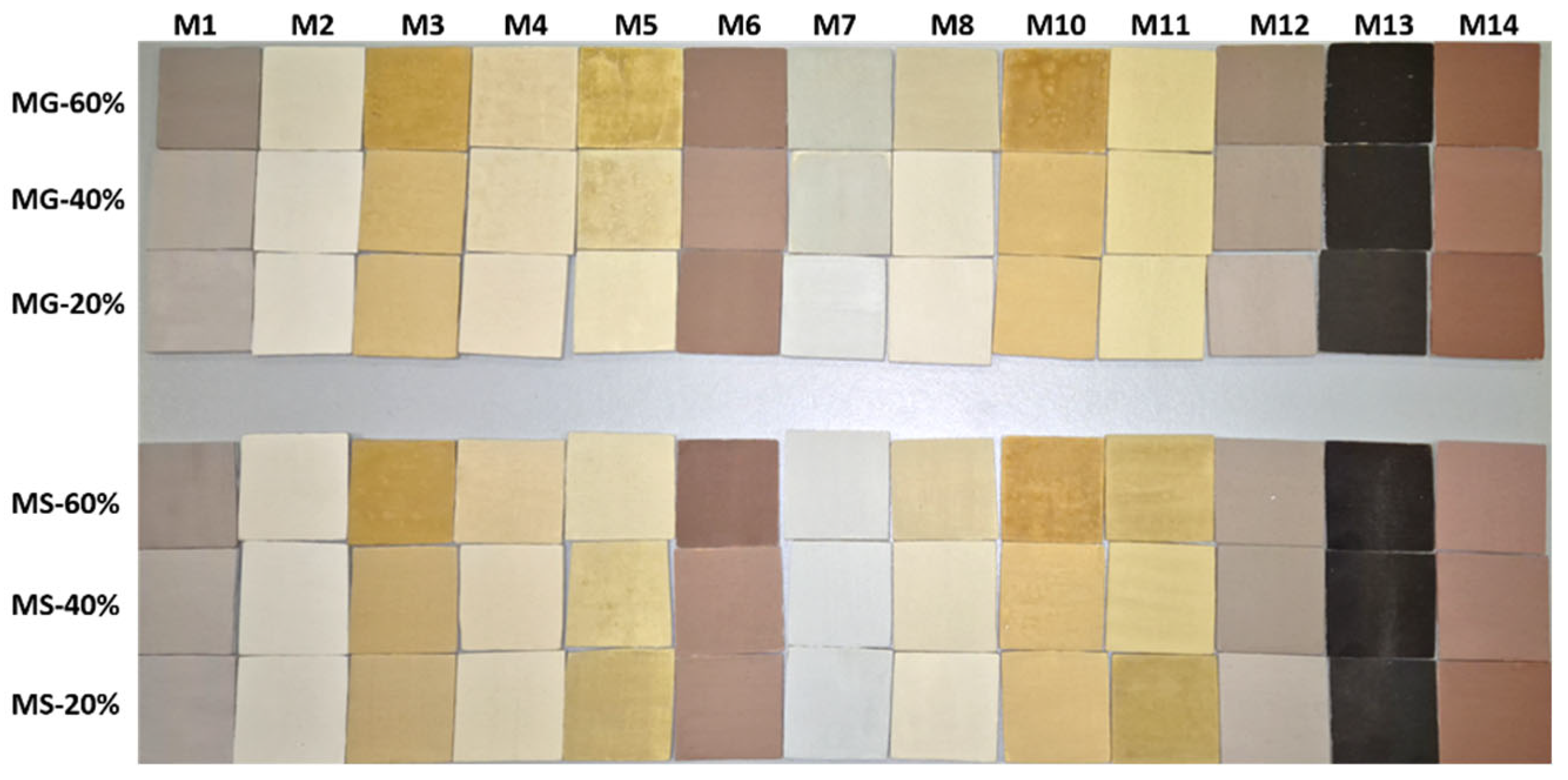
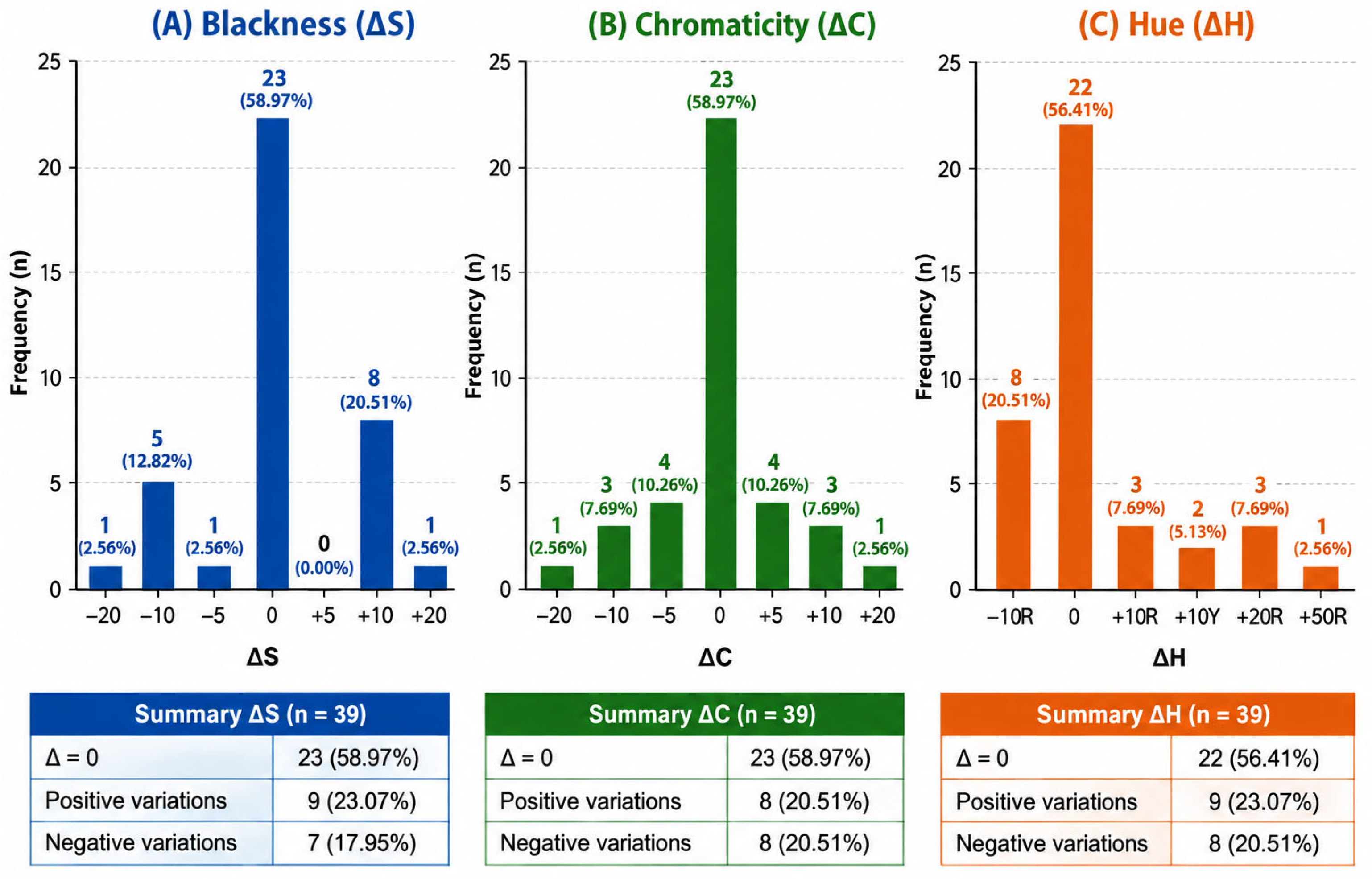
Comparison of the formulated coating specimens showed discrete colorimetric differences between coatings containing pigments obtained by sedimentation (MS) and ball milling (MG) within the NCS system. The coating matrix comprised 13 M-series paint samples with valid colorimetric information, evaluated at three PVAc concentrations (20%, 40% and 60%). M-09 had no valid formulation and was therefore excluded from the comparative matrix; the M-series identifies the formulated paint samples, whereas MS and MG distinguish the pigment-processing procedure used to obtain the pigments incorporated into the corresponding coatings. Differences between MS and MG were analyzed for each M-series pigment formulation and PVAc concentration combination using blackness (ΔS), chromaticness (ΔC) and hue (ΔH).
Hue showed an equally variable behavior among formulations. The frequency of coincidence and the displacements observed between MS and MG were determined from the complete matrix of NCS codes, considering only formulations with valid colorimetric records. Differences were expressed through the discrete hue shifts established by NCS notation. This procedure made it possible to identify whether processing produced consistent changes or whether variations were conditioned by the particular combination of pigment and PVAc concentration.
The largest differences were concentrated in a small group of samples; M-01, M-04, M-05 and M-07 were identified in the research as the formulations with the most pronounced changes between MS and MG. In M-01, MG showed greater blackness, lower chromaticness and a lower red content than MS at all three PVAc concentrations; M-04 showed the opposite pattern and maintained differences at all binder levels. In M-05, the relationship between the two procedures changed with PVAc concentration, whereas M-07 showed differences in blackness and chromaticness mainly at 40% and 60%. These results show that the colorimetric response depended on the sample and did not follow a uniform shift associated with processing, see
Figure 5 and
Table 5.
3.3. Effect of PVAc Concentration on NCS Attributes
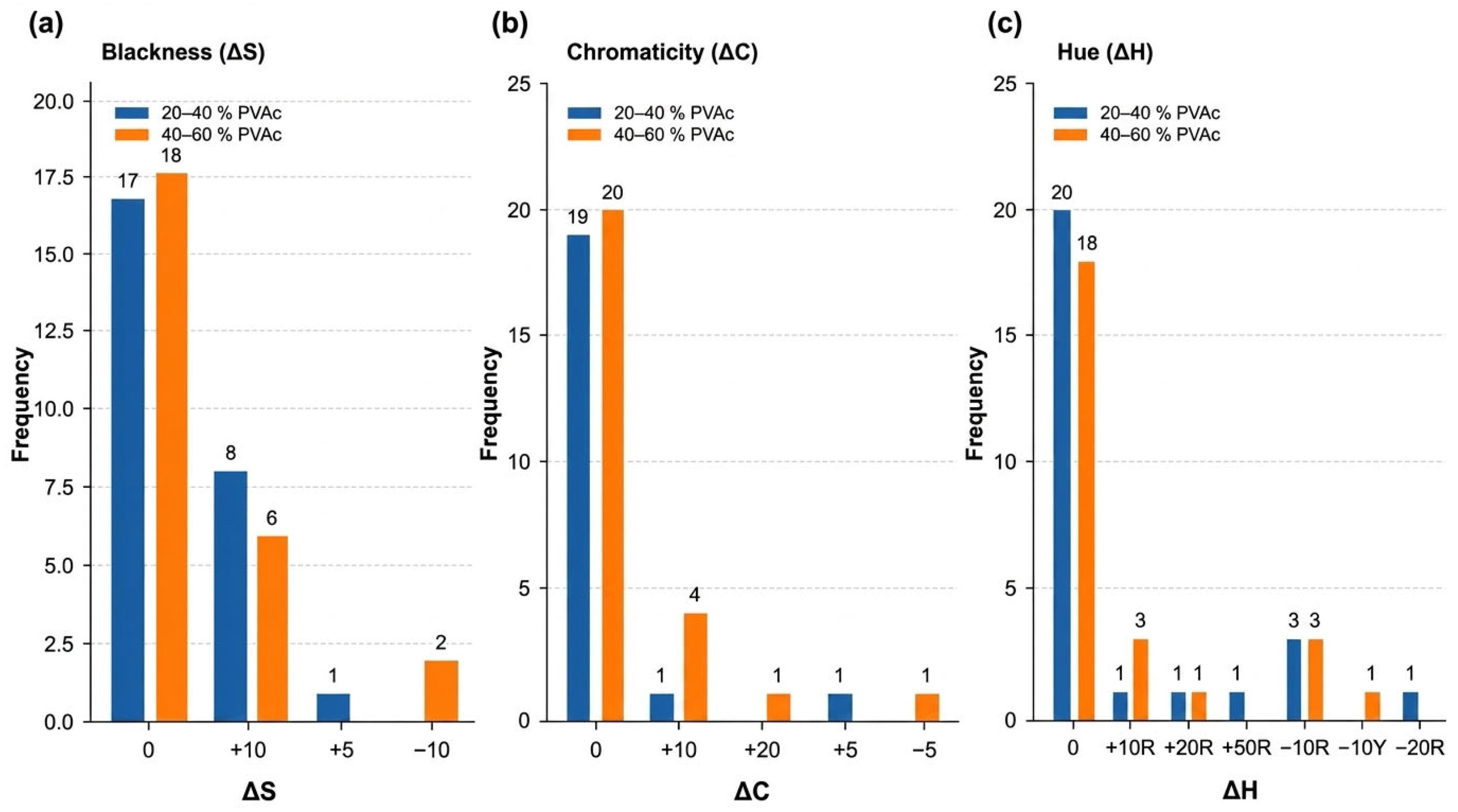
Increasing the concentration of polyvinyl acetate (PVAc) from 20% to 40% and 60% produced localized modifications in the chromatic attributes recorded by the NCS system, although preservation of the initial values predominated. The research documents 52 observations for comparisons between successive PVAc concentrations, corresponding to the 20%–40% and 40%–60% intervals; within this set, blackness remained unchanged in more than half of the observations, chromaticness remained stable in 75% and hue in 73%. These results correspond to the descriptive effect of concentration change and should not be confused with comparisons between MS and MG.
The blackness response did not follow a linear trend with increasing binder content; some formulations retained the same S level, whereas others showed variations between successive concentrations. This behavior depended on the sample and the processing procedure used. In MS-derived formulations, changes in blackness were observed for certain pigments when moving from 20% to 40% or from 40% to 60% PVAc, whereas others remained stable; MG formulations likewise showed localized modifications, without evidence of a uniform shift toward higher or lower blackness values.
Chromaticness showed greater relative stability than blackness; the research reports that approximately 75% of comparisons showed no variation in C when PVAc concentration was modified. The recorded changes were specific to certain formulations and were expressed as discrete shifts within the NCS coding. Hue showed a comparable behavior, with stability in 73% of comparisons between successive concentrations. The results indicate that increasing PVAc did not produce a systematic modification of the chromatic position of the coatings, although certain combinations of pigment and concentration did experience changes in one or more attributes.
Overall, the results show that PVAc concentration had a limited and formulation-specific effect on chromatic stability recorded by the NCS system. Most formulations maintained their blackness, chromaticness and hue attributes as the binder content increased, whereas the observed modifications were restricted to specific combinations of pigment, processing procedure and PVAc concentration (
Figure 6). These results indicate that changes associated with binder concentration should be interpreted as formulation-specific responses rather than as a uniform chromatic effect of increasing PVAc content, see
Figure 6.
3.4. Performance Under Natural Weathering
Natural weathering was evaluated using cracking, detachment, blistering and discoloration as surface deterioration indicators. The affected surface area was quantified from photographic and microscopic records and expressed as a percentage of the evaluated surface. For each formulation, the monitoring week at which the maximum documented affected area occurred was also recorded.
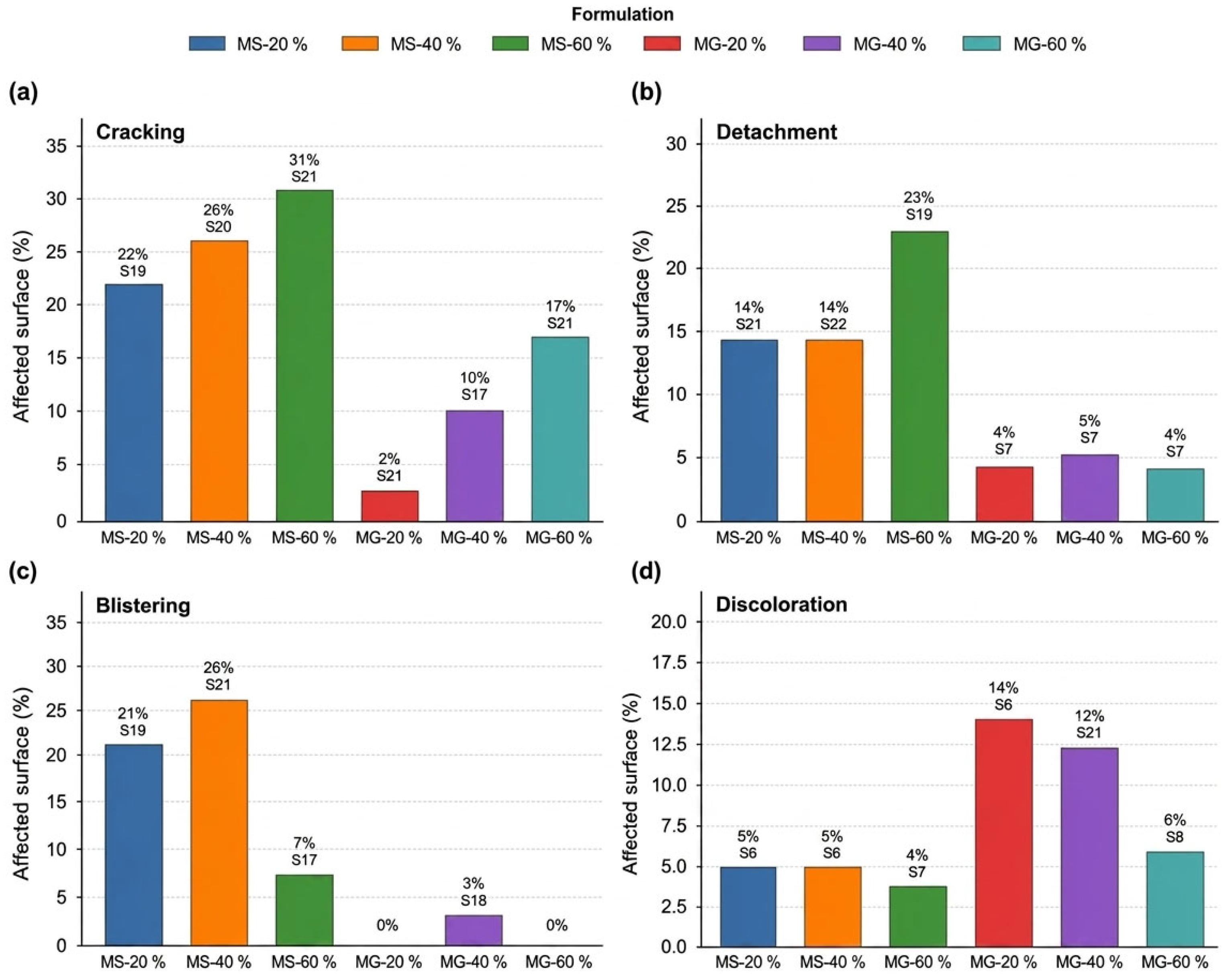
Figure 7 summarizes the maximum affected surface area for the four deterioration indicators, while the corresponding monitoring times are reported in the text to facilitate interpretation of the temporal behavior.
Cracking showed the highest percentages in the MS formulations. MS-20% reached 22% in week 19, MS-40% recorded 26% in week 20 and MS-60% reached 31% in week 21. In the MG formulations, the values were lower: MG-20% presented 2% in week 21, MG-40% reached 10% in week 17 and MG-60% recorded 17% in week 21. The difference was particularly marked between MS-20% and MG-20%, while the increase in PVAc within MS coincided with a progressive increase in the area affected by cracking.
Detachment showed a similar pattern, although with a lower magnitude in the MG formulations; MS-20% and MS-40% reached 14% of affected surface, recorded in weeks 21 and 22, respectively, while MS-60% presented 23% in week 19. In MG, values remained between 4 and 5%: MG-20% recorded 4% in week 7, MG-40% 5% in week 7 and MG-60% 4% also in week 7. These results show a smaller detached surface area in the MG formulations under the exposure conditions studied, without by themselves establishing a causal relationship between the processing procedure and the detachment mechanism.
Discoloration showed a different temporal pattern from the other deterioration indicators. The maximum recorded values for MS-20%, MS-40% and MS-60% were 5%, 5% and 4%, occurring at weeks 6, 6 and 7, respectively; for MG, the maximum values were 14% for MG-20% at week 6, 12% for MG-40% at week 21 and 6% for MG-60% at week 8. The early occurrence of the maximum recorded discoloration in MS-20%, MS-40%, MS-60% and MG-20% should be interpreted cautiously because the monitoring protocol did not include a separate curing-control stage designed to distinguish early changes associated with film drying or maturation from discoloration produced during subsequent atmospheric exposure; therefore, these values represent the maximum affected surface areas documented during the monitoring period and should not be interpreted as mechanistically defined weathering peaks. The different timings of the maxima indicate that discoloration did not follow a uniform temporal pattern between formulations.
The different timings of the maximum recorded discoloration indicate that this response did not evolve synchronously with cracking, detachment or blistering. The week associated with each maximum should therefore be considered descriptive temporal information, whereas comparisons between formulations should primarily consider the magnitude of the affected surface area. This distinction is particularly relevant for the early discoloration values, which cannot be attributed exclusively to atmospheric weathering on the basis of the available observations.
The results in
Figure 7 show that the response to weathering varied according to the pathology evaluated. The MG formulations recorded lower maximum values of cracking, detachment and blistering than the corresponding MS formulations; cracking reached 2%–17% in MG versus 22%–31% in MS, detachment 4%–5% versus 14%–23% and blistering 0%–3% versus 7%–26%. Discoloration showed a different pattern, with 14% in MG-20% and 12% in MG-40%, compared with 5% in the corresponding MS formulations.
Under the recorded exposure conditions, the MG-processed formulations showed lower maximum percentages of cracking, detachment and blistering than the equivalent MS formulations, whereas discoloration showed a different response and reached higher values in MG-20% and MG-40%. Increasing PVAc also did not produce a uniform response: in MS-60%, cracking and detachment increased relative to the lower concentrations, whereas blistering decreased; in MG, variations between concentrations were smaller for several pathologies. These results justify analyzing chromatic stability and surface deterioration separately in the final performance integration.
3.5. Integration of Colorimetric and Surface Behavior
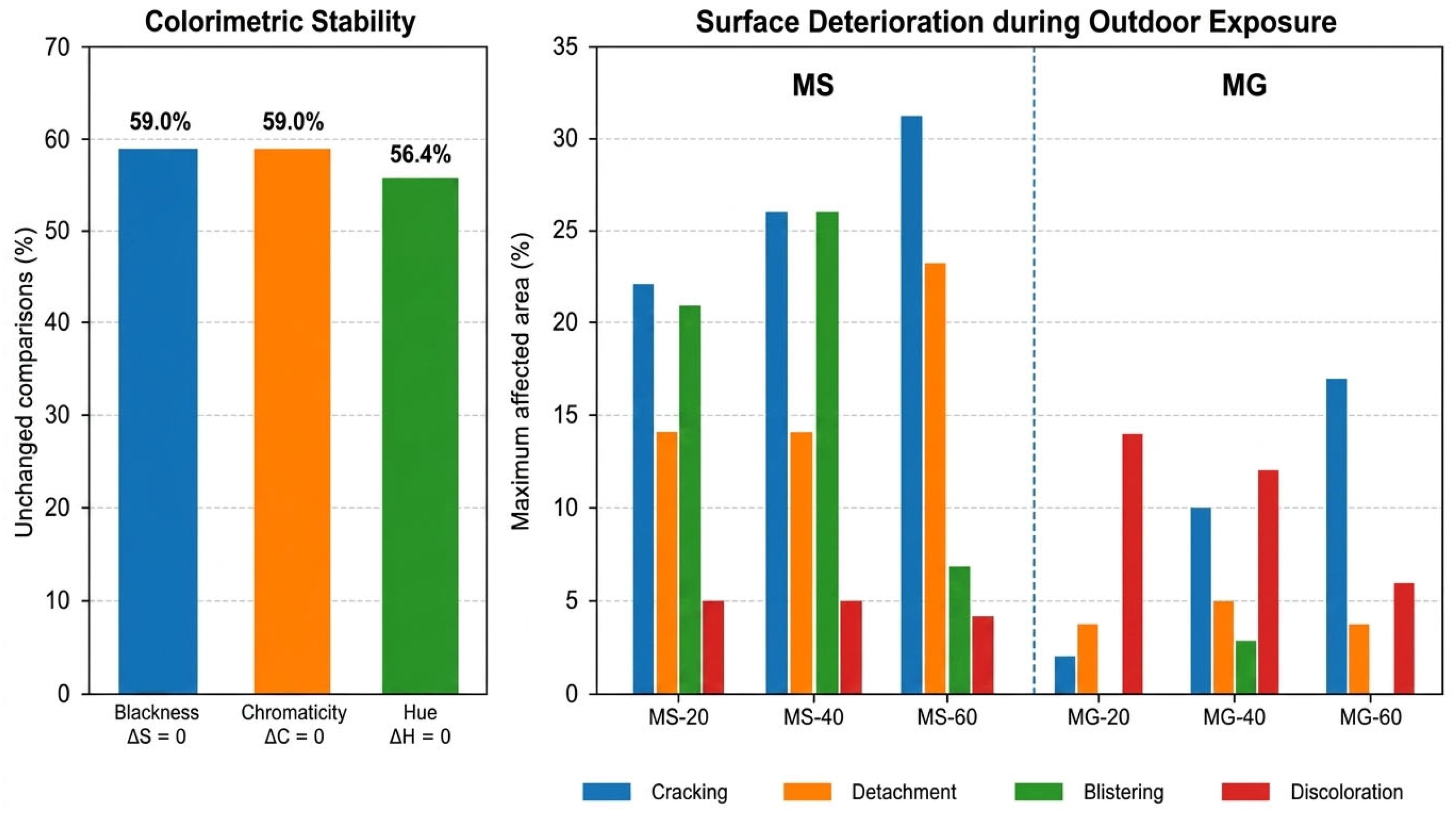
The integrated analysis indicates that colorimetric stability and surface deterioration represent differentiated dimensions of coating performance. The MS-MG comparison showed predominant coincidence in the NCS attributes, with localized differences associated with particular pigment formulations and PVAc concentrations, whereas natural weathering produced clearer differences in cracking, detachment and blistering. Discoloration followed a distinct pattern, particularly in MG-20% and MG-40%, indicating that lower physical deterioration was not necessarily accompanied by lower visual alteration. The colorimetric and weathering results therefore provide complementary information but should not be interpreted as equivalent measures of coating performance.
PVAc concentration also produced formulation-specific responses rather than a uniform trend across all evaluated indicators. The integrated results show that the effect of pigment processing cannot be characterized through a single performance variable because the relative response of chromatic attributes and surface deterioration differed between formulations. Under the experimental conditions studied, the comparison between MS- and MG-based coatings therefore supports a multidimensional assessment in which colorimetric stability and physical surface integrity are considered separately before an overall formulation is considered for further compatibility evaluation in heritage applications.
The integrated results indicate that colorimetric stability and surface deterioration represent complementary but differentiated dimensions of coating performance. The patterns summarized in
Table 6 show that chromatic stability did not necessarily correspond to lower physical deterioration during natural exposure, particularly because discoloration and the physical deterioration indicators did not follow the same response pattern; therefore, coating performance should be interpreted using separate colorimetric and surface-integrity criteria rather than through a single overall indicator.
The integrated colorimetric and surface deterioration responses of the MS- and MG-formulated coatings according to PVAc concentration are summarized in
Figure 8.
Overall, the integrated assessment does not support the selection of a universally superior formulation across all evaluated criteria. The comparison demonstrates that the response of the coatings depends on the performance dimension considered, reinforcing the need to evaluate chromatic stability and surface integrity separately when screening mineral pigment-based coatings for potential heritage applications.
4. Discussion
Processing the mineral pigments by sedimentation (MS) and ball milling (MG) was associated with differences in particle-size and morphological characteristics, although their magnitude depended on the pigment sample. These processing conditions provided the basis for comparing the corresponding M-series coating formulations under colorimetric and natural weathering evaluation. Previous studies on inorganic pigments in waterborne coatings have reported that particle morphology, surface treatment and dispersion state may influence film structure and properties, although the response depends on the pigment–binder system [
14,
15,
16]. In the present study, the observed differences do not support a general advantage of MG, and the specific contribution of particle distribution or aggregation state to the coating response was not directly determined.
The particle-size distribution observed before formulation should be interpreted together with the subsequent coating dispersion stage. Differences in particle-size distribution may influence particle packing, binder demand and film continuity, as reported in studies of pigment dispersion and waterborne coatings [
14,
16]; however, these variables were not directly determined in the present study. The homogenization applied during formulation may have reduced some of the initial differences between MS and MG, but its specific effect on pigment dispersion and coating structure was not quantified; consequently, mechanisms involving specific surface area, aggregation state or dispersibility should be considered possible explanations of the observed differences rather than experimentally demonstrated mechanisms.
The colorimetric response showed no systematic shift associated with the processing procedure. Among the 39 valid MS-MG comparisons, 23 retained the same blackness, 23 the same chromaticness and 22 the same hue; the remaining differences were concentrated mainly in M-01, M-04, M-05 and M-07, indicating that the magnitude and direction of the observed NCS differences varied between pigment formulations and PVAc concentrations rather than following a consistent response attributable to MS or MG. This pattern is compatible with previous research showing that pigment characteristics and formulation conditions can influence the optical response of pigmented coating systems [
14,
16,
17]; however, the present data establish these differences as experimental observations and do not demonstrate a specific mechanism linking pigment processing to the observed chromatic changes.
Increasing PVAc concentration did not produce a uniform chromatic trend. Approximately 75% of comparisons retained chromaticness and 73% retained hue, while blackness remained stable in more than half of the comparisons. The observed changes therefore varied between pigment and processing combinations rather than defining a common response to increasing binder content. Previous studies indicate that formulation conditions can modify pigment distribution within coating films [
16]; in the present study, however, particle redistribution during dispersion and its interaction with PVAc were not directly measured. The results should consequently be interpreted as formulation-specific descriptive patterns rather than as evidence of a demonstrated mechanistic interaction between pigment processing and PVAc concentration.
During natural exposure, the contrast between MS and MG was more evident for physical surface deterioration than for the initial colorimetric response, as summarized in
Figure 7. MG formulations exhibited lower maximum affected areas for cracking, detachment and blistering under the experimental exposure conditions. This differentiated response suggests that pigment-processing procedure may be associated with the subsequent surface behavior of the coatings, although the result remains specific to the substrate, formulation and environmental conditions evaluated [
13,
16]; it does not by itself establish that ball milling is responsible for a particular deterioration mechanism.
Discoloration showed a different response from the physical deterioration indicators, both in magnitude and in the timing of the maximum recorded values. MG-20% and MG-40% reached 14% and 12% of affected surface area, respectively, whereas the corresponding MS formulations reached 5%. MG-60% presented 6%. The maxima for several formulations occurred during the early stages of monitoring, while MG-40% reached its maximum at week 21. Because the experimental design did not include a separate curing-control sequence, these early maxima cannot be attributed specifically to atmospheric exposure or excluded as possible effects associated with film maturation. The results therefore support the observation of formulation-dependent discoloration but do not establish a common temporal mechanism for this response. The divergence between discoloration and cracking, detachment and blistering nevertheless indicates that visual alteration and physical surface deterioration should be evaluated as complementary but non-equivalent performance variables.
The mechanisms that could explain the observed differences should be considered working hypotheses. A different particle-size distribution may modify pigment-PVAc packing and dispersion, while environmental exposure may simultaneously affect the polymer matrix and the surface of the mineral particles. The literature on pigment formulation and dispersion indicates that particle characteristics can influence their distribution within the film and coating properties, although the magnitude of these effects depends on the pigment–binder system [
14,
18]. However, the study did not directly determine specific surface area, dispersion stability, vapor permeability, leaching or chemical transformations produced during exposure; therefore it is not possible to attribute the lower deterioration of MG to a single mechanism. The available evidence establishes an experimental association between the processing procedure and the recorded deterioration indicators [
16].
An additional limitation concerns the absence of pigment-free PVAc control specimens at the three binder concentrations. Such controls would have allowed the contribution of the binder matrix itself to the observed color changes to be distinguished from the contribution of the mineral pigments and their processing condition. The present experimental design was intended primarily to compare MS- and MG-processed pigment coatings at defined PVAc concentrations and therefore does not permit independent attribution of the observed chromatic changes to PVAc alone. The colorimetric results should consequently be interpreted as responses of the complete pigment–binder formulations rather than as isolated effects of the binder.
The results show that MG presented the most favorable surface behavior for cracking, detachment and blistering under the conditions studied, but this response was not accompanied by equivalent superiority with respect to discoloration; initial chromatic stability also did not directly predict the evolution of surface deterioration. This decoupling is consistent with the need identified in conservation studies to evaluate coatings using multiple indicators and under representative exposure conditions, avoiding selection of a formulation based on a single property [
13,
16]; therefore, the results identify the combination of processing and PVAc concentration as a relevant performance variable but do not support the selection of a universally superior formulation for heritage applications.
5. Conclusions
The comparison between sedimentation (MS) and ball milling (MG) showed that mineral pigment processing was associated with differences in the particle-size and morphological characteristics of the pigment materials. SEM/EDS provided complementary morphological and localized elemental information for a selected subset of pigment samples. These observations should not be interpreted as a complete mineralogical characterization of the pigment set.
The colorimetric assessment showed predominantly stable NCS attributes between MS- and MG-based coatings, while the observed differences were formulation-specific and varied according to pigment and PVAc concentration. Increasing PVAc concentration likewise did not produce a uniform chromatic trend, indicating that the optical response should be interpreted at the formulation level rather than as a generalized effect of binder concentration.
Natural weathering produced clearer differences in physical surface deterioration than in the initial colorimetric response. Under the experimental exposure conditions, MG-based coatings showed a more favorable response for cracking, detachment and blistering, whereas discoloration followed a differentiated pattern. The different timings of the recorded maxima also indicate that visual alteration and physical surface deterioration should be evaluated as separate performance dimensions.
Overall, the findings do not establish a universally superior pigment-processing procedure for heritage applications. Ball milling showed advantages for several physical deterioration indicators under the specific conditions evaluated, but these advantages were not accompanied by equivalent chromatic performance. The possible roles of pigment dispersion, pigment–binder organization and film structure remain hypotheses because they were not directly characterized. The findings therefore support comparative formulation screening and further compatibility studies rather than direct application of the tested PVAc coatings to historic substrates.