Article

Crack Suppression and Performance Analysis of Novel Ni60 Alloy Hardbanding on Drillpipes via Laser Cladding


1
School of Mechanical Engineering, Xi’an University of Technology, Xi’an 710048, China
2
School of Aeronautical Manufacturing Engineering, Xi’an Aeronautical Polytechnic Institute, Xi’an 710089, China
*
Author to whom correspondence should be addressed.
Coatings 2026, 16(6), 728; https://doi.org/10.3390/coatings16060728 (registering DOI)
Submission received: 12 May 2026 / Revised: 14 June 2026 / Accepted: 15 June 2026 / Published: 18 June 2026
(This article belongs to the Section Surface Characterization, Deposition and Modification)

Abstract

With the continuous advancement of drilling technologies for deep and ultra-deep well operations, drillpipes are subjected to increasingly severe wear and corrosion conditions. To enhance the wear and corrosion resistance of drillpipe surfaces, this study developed a novel Ni60 alloy hardbanding via laser cladding technology. To solve the problem of crack sensitivity, the cracking mechanism of Ni60 coatings directly deposited on 4137H steel substrates was systematically investigated and a crack suppression strategy was proposed. By employing a 316L translation layer between the 4137H substrate and the Ni60 alloy coating, the interfacial thermal stress induced by the mismatch of thermal expansion coefficients between dissimilar materials was relieved. Therefore, crack-free 316L-Ni60 gradient coatings were obtained. The microstructure, phase composition, and mechanical properties of the coatings were characterized using scanning electron microscopy (SEM), X-ray diffraction (XRD), and microhardness testing. The experimental results demonstrate that the 316L-Ni60 gradient coating exhibits a homogeneous microstructure and forms a dense metallurgical bond with the 4137H steel. The microhardness of the coating is 2.2 times that of the 4137H steel, while its wear rate is reduced by nearly half. Furthermore, the Ni60 coating possesses higher corrosion resistance compared with 4137H steel. This study promotes the potential application of the Ni60 alloy coating as a new type of hardbanding on drillpipes.

1. Introduction

AISI 4137H is a medium-carbon alloy steel with outstanding strength, toughness, fatigue life and impact resistance. It is extensively used for mechanical parts in petroleum, chemical, shipbuilding and automotive sectors. In particular, 4137H steel serves as the primary material for drill pipes, a critical component in oil drilling operations [1]. With the advancement of drilling technologies, deep wells, ultra-deep wells and horizontal wells have been increasingly deployed. During service, drill pipes continuously rub against soil, rock and casings, resulting in severe friction and wear [2]. Additionally, downhole environments containing drilling fluid, formation water and other corrosive agents also induce material degradation via corrosion [3]. These combined issues pose great challenges to the service life and operational safety of drillpipes.
To enhance the wear-corrosion resistance of drill pipes, alloy hardbanding is commonly deposited on tool joints [4,5]. As a high-performance protective coating on tool joint surfaces, hardbanding is designed with an outer diameter larger than the maximum outer diameter of the tool joint. During drilling operations, this structure enables hardbanding to make contact with formations and casings first, thereby shielding the main pipe body from friction and wear. Currently, the mainstream fabrication technologies for hardbandings include arc welding, spray welding and plasma welding. Ma et al. [6] adopted arc welding to repair non-magnetic load-bearing drill pipes. Their experimental results revealed that the weld-deposited hardbanding achieved an average tensile strength of 550 MPa at room temperature. Liu et al. [7] prepared WC-10Co4Cr composite coatings and bimodal coatings on 35CrMo steel using HVOF spraying. It was found that the bimodal coating showed improved mechanical performance, reduced porosity and enhanced slurry erosion resistance. And Liu et al. [8] adopted plasma electrolytic oxidation spraying to prepare ceramic wear-resistant hardbandings on Ti6Al4V alloy drill pipes, with graphene nanosheets successfully embedded in the coatings. The graphene-modified coatings exhibited smoother surfaces and fewer structural pores.
However, conventional manufacturing techniques suffer from inherent drawbacks. Arc welding has high heat input, which leads to a broad heat-affected zone, substrate deformation and coarse microstructures of the coating. Spray welding imposes strict limitations on the particle size and morphology of raw powders, and the resulting coatings exhibit inadequate interfacial bonding strength with the substrate, which may cause peeling failure for thick coatings. Plasma welding is susceptible to undercut defects and relatively low processing efficiency. In comparison, laser cladding is a promising green remanufacturing technique with high performance and low cost [9,10,11]. It has significant advantages such as high energy density, low dilution rate, high forming quality and metallurgical bonding with the substrate, widely used in aerospace, automotive, energy, nuclear and other industries [12,13,14,15]. Li et al. [16] evaluated hardbandings on titanium alloy tool joints prepared by arc welding and laser cladding, and confirmed that laser cladding yields higher-quality coatings. Li et al. [17] deposited biomimetic structured hardbandings on aluminum alloy drillpipes to reduce wear and prolong service life. Yu et al. [18] adopted high-speed laser cladding to prepare graphene-reinforced CoCrFeMo0.5 high-entropy alloy composite coatings for tool joint remediation.
The inner wall of a hollow drillpipe is machined with threads. During surface hardbanding treatment, excessive heat input will cause thread deformation, so the heat-affected zone needs to be strictly controlled. To overcome the deficiencies of conventional processes, laser cladding has become the potential technology for hardbanding deposition. Drillpipe hardbandings are required to possess high hardness, superior wear resistance, a low friction coefficient and good process adaptability to withstand complex underground service conditions. Ni60 is a typical Ni-Cr-B-Si self-fluxing alloy powder, which exhibits excellent hardness, corrosion resistance, oxidation resistance, thermal stability and impact toughness [19,20], making it an ideal candidate material for drillpipe hardbanding. Nevertheless, its high chromium and boron contents lead to high cracking susceptibility and large residual stress during laser cladding [21,22]. Meanwhile, 4137H steel is a medium-carbon quenched and tempered structural alloy steel with high hardenability and low ductility, which hinders its sound metallurgical bonding with dissimilar materials. Consequently, depositing crack-free Ni60 alloy coatings on 4137H steel via laser cladding remains a considerable challenge.
Aiming to suppress cracks generated in Ni60 coatings directly deposited on 4137H steel, a novel laser cladding strategy is proposed in this work. Based on a comprehensive analysis of the cracking mechanism, a 316L transition layer was employed to alleviate the mismatch caused by thermal property differences between Ni60 alloy and 4137H steel. Based on this method, crack-free Ni60 alloy coatings were obtained under different process parameters. Meanwhile, to illustrate the performance of the Ni60 alloy coating, the microstructure and phase composition of the coatings were characterized, and their properties, including microhardness, friction and wear resistance, as well as electrochemical corrosion resistance, were tested. This research can provide a technical basis for the engineering application of Ni60 alloy coatings as novel drillpipe hardbanding materials.

2. Experiments

2.1. Materials

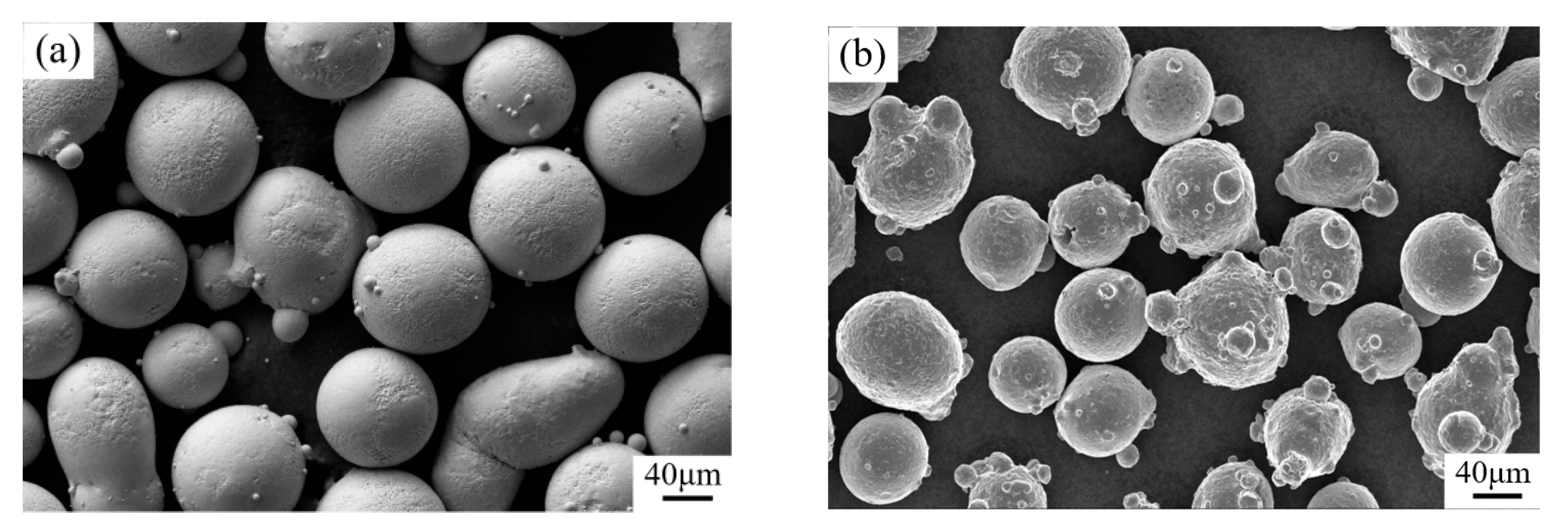
In this experiment, AISI 4137H steel was selected as the substrate material owing to its widespread application in drillpipes. Two types of powders were used for laser cladding: Ni60 alloy powder (particle size: 45–110 μm) and 316L powder (particle size: 50–150 μm); these are presented in Figure 1. The chemical compositions of 4137H steel, 316L and Ni60 alloy are listed in Table 1. Before experiments, the substrate surface was thoroughly sanded with sandpaper to remove oxides and contaminations, then cleaned with anhydrous ethanol to eliminate oil stains and impurities. The powders were pre-dried in an electric vacuum oven before use.

2.2. Coating Preparation

The coaxial powder feeding laser cladding system is used to prepare coatings. The system comprises mainly a KUKA six axis robot, water cooler, synchronous powder feeder, LDF-3000-60 semiconductor laser and coaxial fiber laser head, (Laserline Laser Technology Co., Ltd., Shanghai, China). The protective gas and the powder feeding gas are both high-purity argon gas. In the experiment, the protective gas flow rate was 20 L/min, the powder feeding gas flow rate was 6 L/min, and the laser spot was 3 mm. In addition, the overlap rate was 50% to smooth the coating surface.
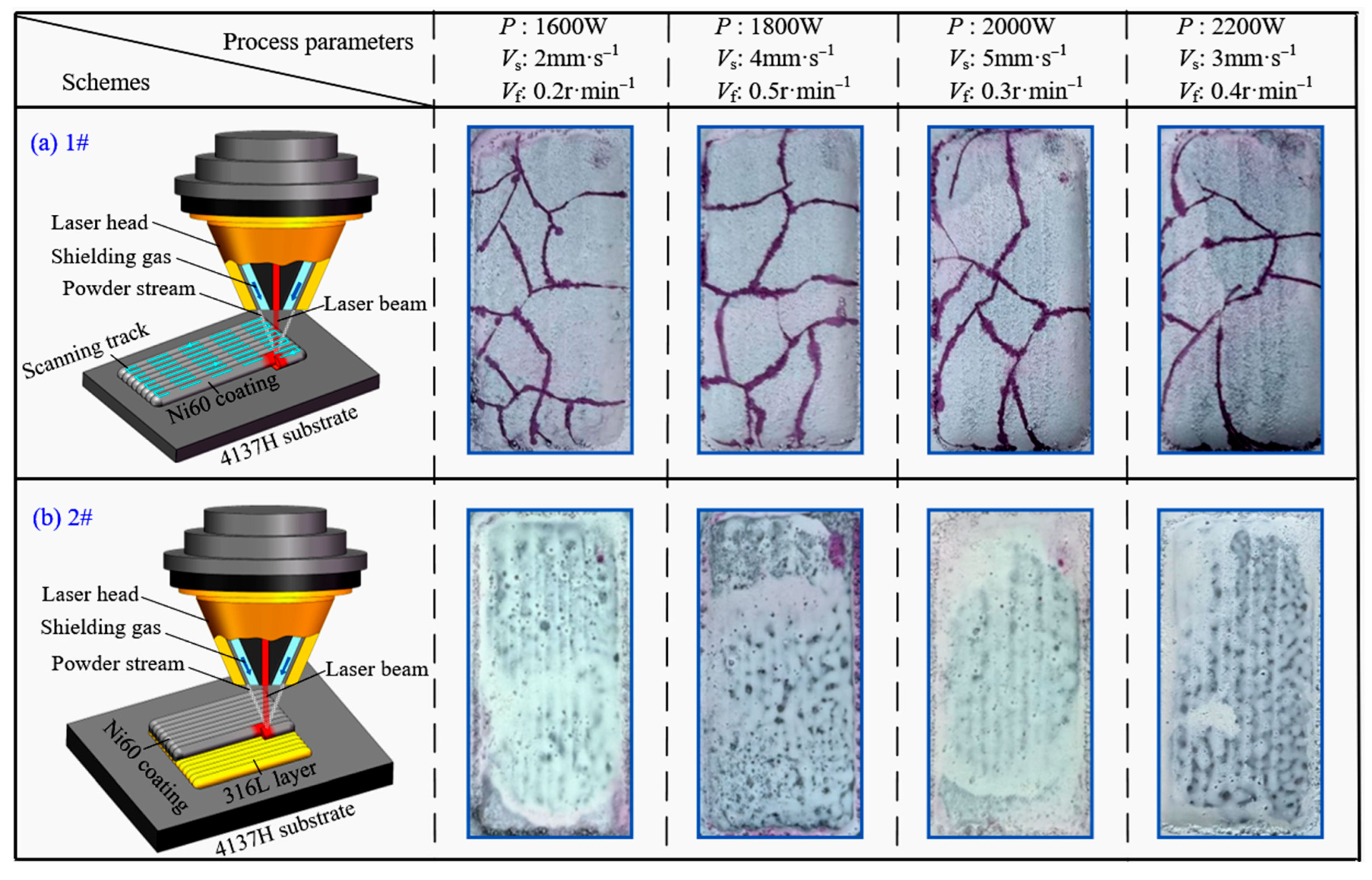
For comparison, two laser cladding schemes are designed. Scheme 1# is to directly deposit the Ni60 coating on 4137H steel, and Scheme 2# is to prepare Ni60 coating on the top of a 316L transition layer which deposit on 4137H steel. The laser power, powder feed rate and scanning speed are the primary factors which have significant effects on the forming quality of coatings. In each scheme, L16(43) orthogonal experiments were respectively conducted under different process parameters, and all the prepared coatings were detected using the dye penetrant. The detection results show that cracks appeared almost in all coatings prepared via Scheme 1#, whereas no cracks were observed for coatings obtained using Scheme 2#. To consider space saving and ensure the generality of the results, four coatings prepared with varied laser energy fields in each scheme were selected for comparative presentation, as shown in Figure 2. It can be seen that under the same process parameters, the Ni60 alloy coatings directly deposited on the 4137H steel exhibit obvious cracks, whereas the Ni60 coating deposited on the 316L transition layer is crack free.

2.3. Property Tests

Specimens of coatings and substrates were cut by a wire electrical discharge machining, then ground and polished for subsequent tests.

2.3.1. Microstructure and Phase

The surface morphology was observed using a TESCAN MIRA4 scanning electron microscope (SEM, TESCAN Trading Co., Ltd., Shanghai, China). The microstructure of the specimens was observed using the LWD300LCS inverted metallographic microscope (IMM, Cewei Optoelectronic Technology Co., Ltd., Xi’an, China) after etching a mixed solution of 4% nitric acid and alcohol. And the phase composition and element distribution of the coatings were characterized by the DX-2700BH X-ray diffractometer (Haoyuan Instrument Co., Ltd., Dandong, China) and the energy dispersive spectrometer (EDS, TESCAN Trading Co., Ltd., Shanghai, China).

2.3.2. Microhardness

The microhardness of the coating was measured by the HV-1000STA micro-Vickers hardness tester (Cewei Optoelectronic Technology Co., Ltd., Xi’an, China), and the test load was 0.5 kgf with holding time of 10 s. The interval between each measurement position was 0.1 mm, and the microhardness of 3 points at each position was measured horizontally. Then, the average was taken as the measurement result to reduce errors.

2.3.3. Friction and Wear

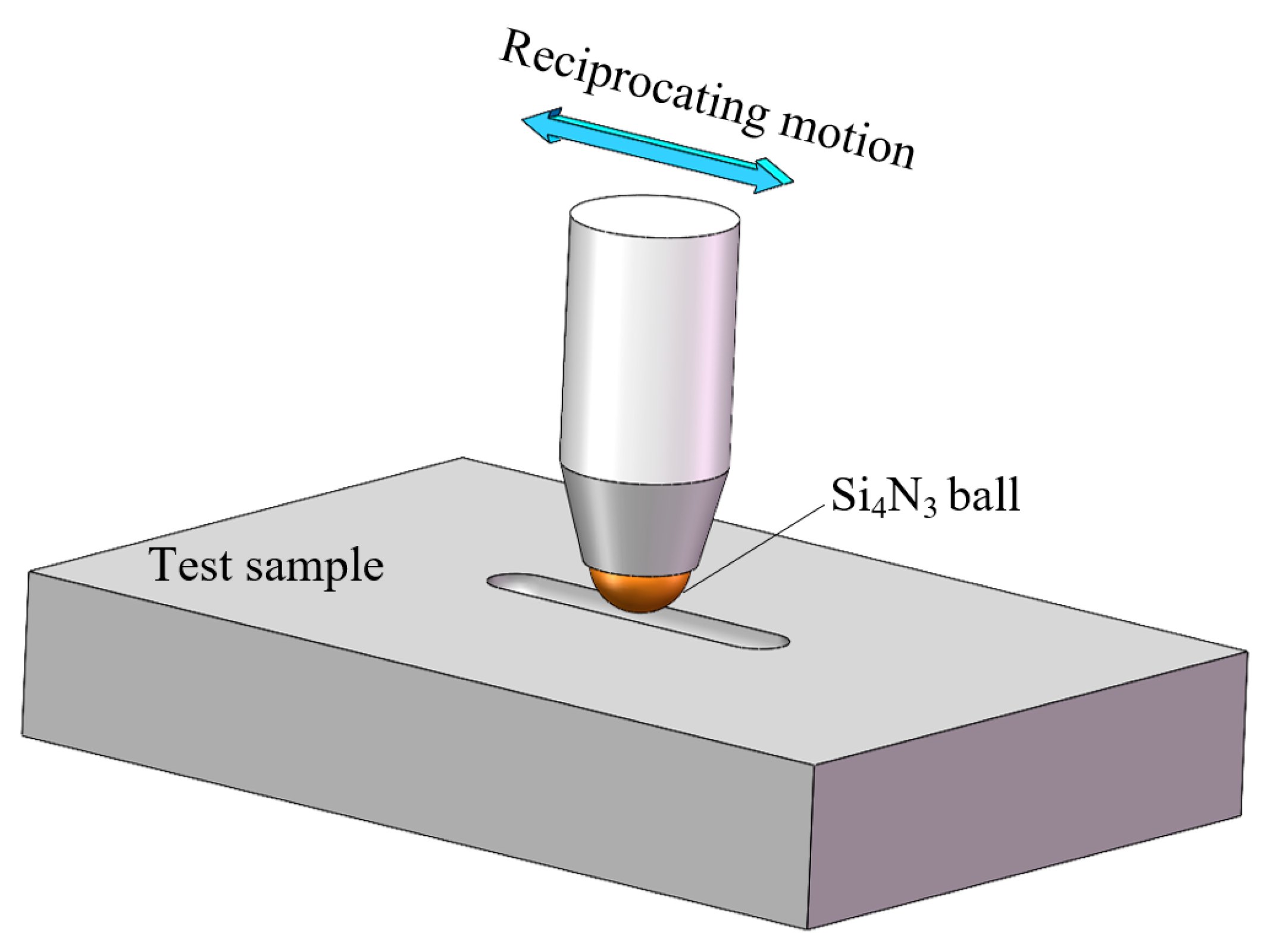
Dry sliding friction tests were carried out on an Rtec MFT-5000 reciprocating wear tester (Aitec Instrument Technology Co., Ltd., Nanjing, China) to acquire the coefficient of friction (CoF) and wear rate. As illustrated in Figure 3, a 6 mm Si3N4 ball served as the friction pair. The grinding ball is made of Si3N4 with diameter of 6 mm. During the test, the grinding ball moved at a frequency of 2 Hz, with a one-way sliding distance of 6 mm. The load was 50 N and the loading time was 20 min. In addition, the three-dimensional (3D) morphology and the wear volume of the wear track were acquired by online 3D topography technology. The CoF data were collected, and the wear rate was calculated using the equation as follows [23]:
ω = Δ V F z S
where ω is the wear rate, Δ V is the wear volume, Fz is the applied load, and S is the total sliding distance. For each material, three parallel specimens were repeatedly tested and their average values taken.

2.3.4. Corrosion

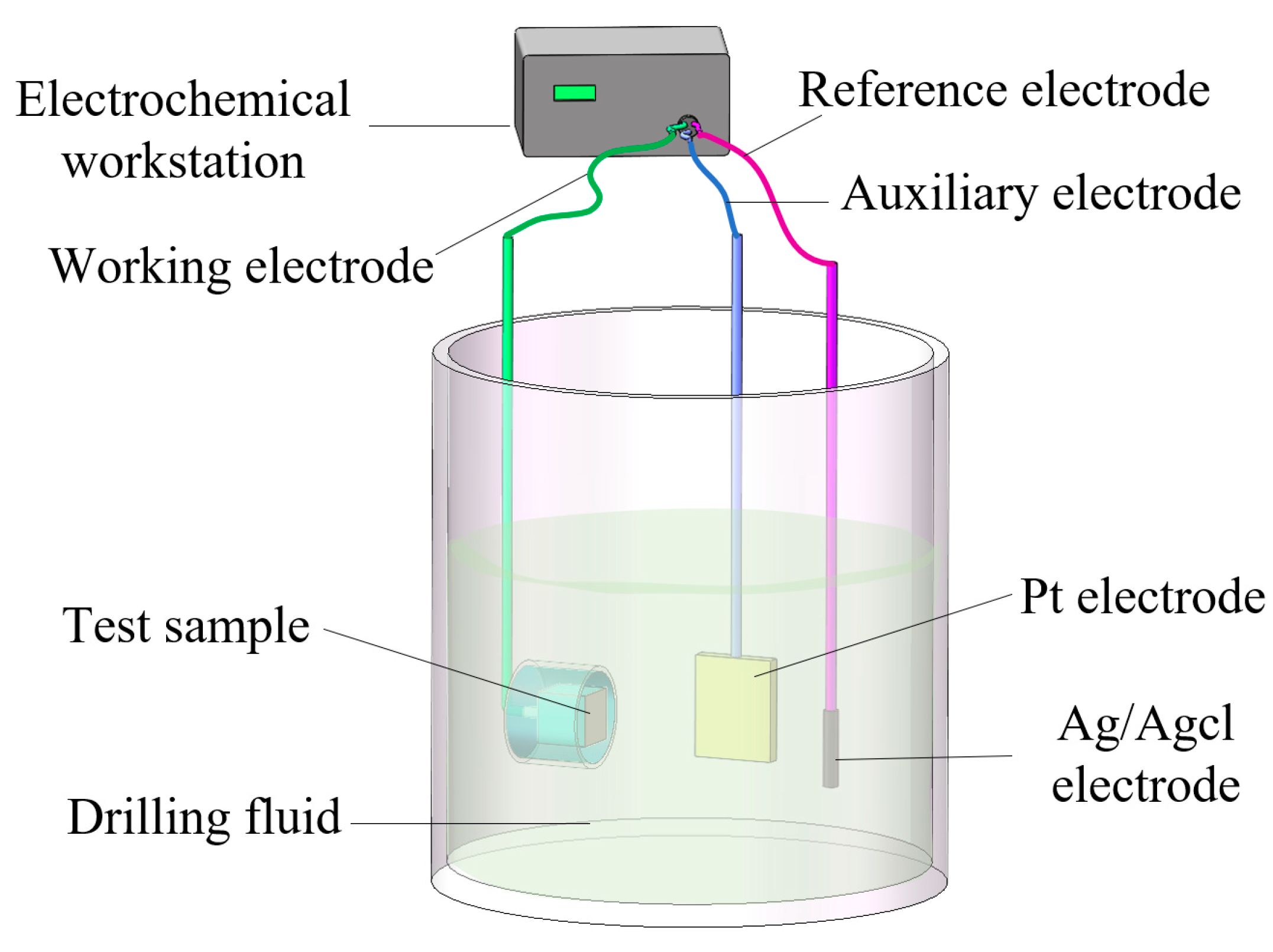
The electrochemical corrosion test was conducted for the 4137H substrate and the Ni60 coating using the CS310M electrochemical workstation at room temperature. The test electrode system is a three electrode system, as shown in Figure 4. After opening the circuit, the open circuit potential for 3600 s was monitored until the open circuit potential value stabilized. The electrochemical impedance spectroscopy was measured with a sweep frequency range of 10 mHz–100 kHz and the amplitude of 10 mV. At the same time, the polarization curve was tested. The potential range was −0.5 V~+1.0 V, and the sweep rate is 0.1 mV/s. Each material had 3 specimens for testing to ensure the reliability of the results.
The tested corrosion environment was simulated saturated saltwater drilling fluid. The simulated saturated saltwater drilling fluid was prepared as follows: Distilled water was used as the base, and sodium chloride was added with continuous stirring to form saturated NaCl solution. Then 2 wt% salt-resistant bentonite and 2 wt% filtrate reducer were added in sequence, followed by high-speed stirring for 30 min for thorough dispersion. Finally, the pH was adjusted to 9.0 by dropwise addition of NaOH solution, and the fluid was stood by before use.

3. Results and Analysis

3.1. Crack Mechanism

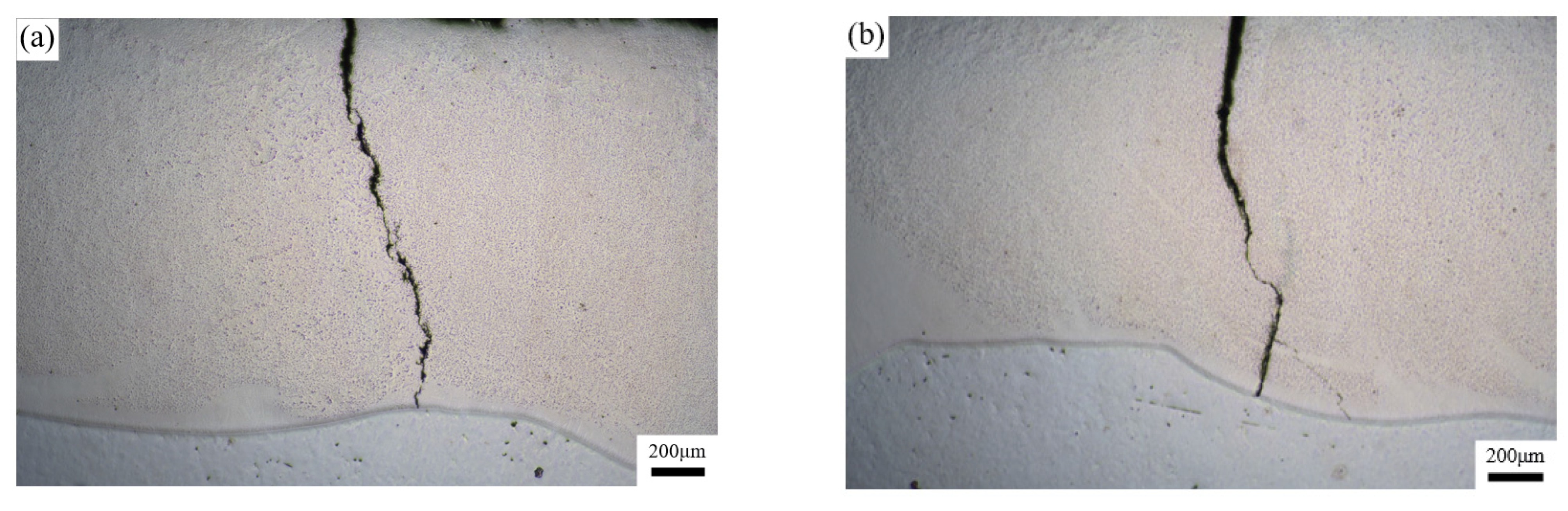
As shown in Figure 2a, obvious crack defects appear on the surface of the pure Ni60 coating directly cladded on 4137H steel. The macroscopic morphologies of these cracks obtained by sectioning the defective regions are displayed in Figure 5. The results indicate that most cracks initiate at the coating–substrate interface, classified as interfacial cracks. These cracks propagate perpendicularly to the bonding interface and eventually penetrate through the entire coating thickness.
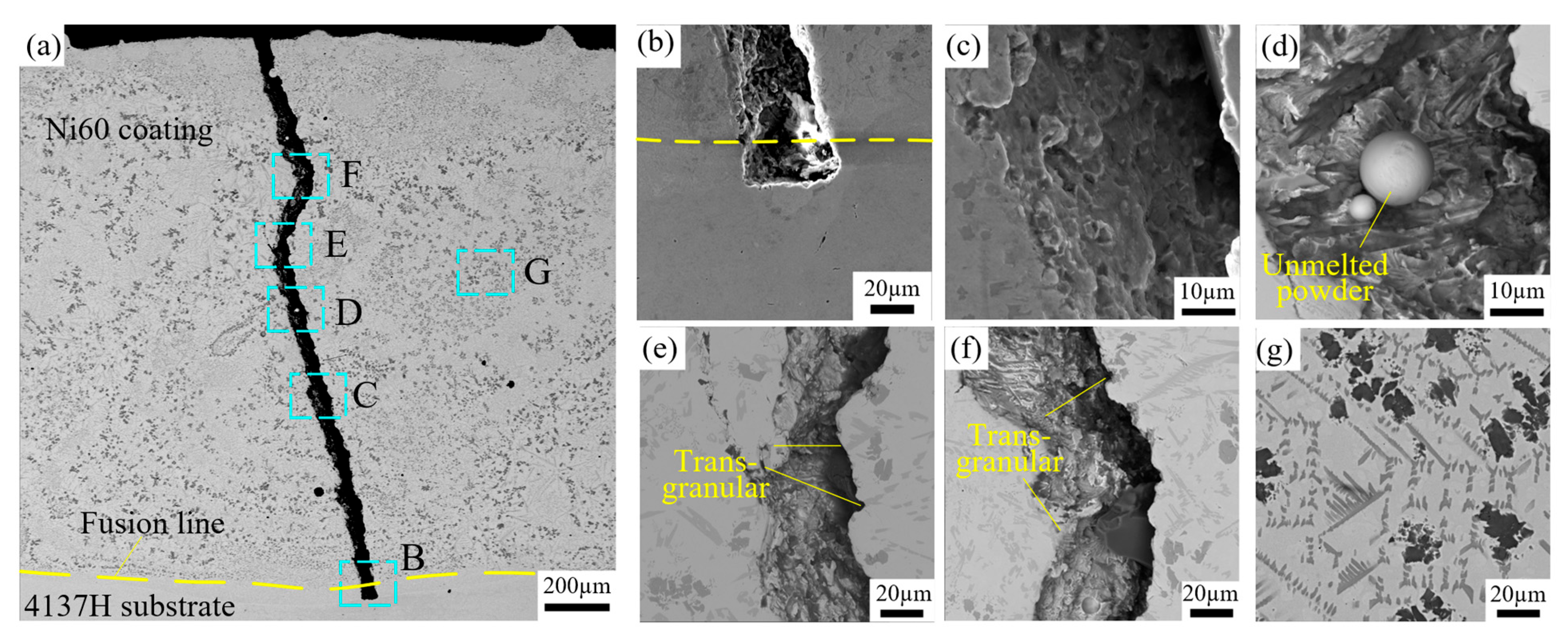
To further analyze the crack features, a cross-sectional specimen containing a major crack was polished and observed via SEM, as presented in Figure 6. Figure 6b–g show the magnified views of regions B, C, D, E, F and G marked in Figure 6a. As seen in Figure 6b, cracks initiate at the coating–substrate interface. Meanwhile, the fracture surface of the crack presents distinct ripple features, sharp edges and stepped structures, accompanied by metallic luster, as displayed in Figure 6c,d. The fracture surface is rough, characterized by ductile dimples and cleavage fractures. This phenomenon is usually a feature of cold crack, which is caused by the direct fracture of brittle crystals due to high-strength stress below the solidification temperature [24]. From Figure 6e,f, it can be observed that the crack propagates through the crystals and deviates from its original direction due to the influence of the lattice structure. In addition, it can be seen from Figure 6d that there is very little unmelted powder in the crack propagation path. Therefore, it can be concluded that the crack generates at the bonding interface and prefers to propagate along the coating impurities and the transgranular directions, ultimately penetrating and forming macroscopic cracks.
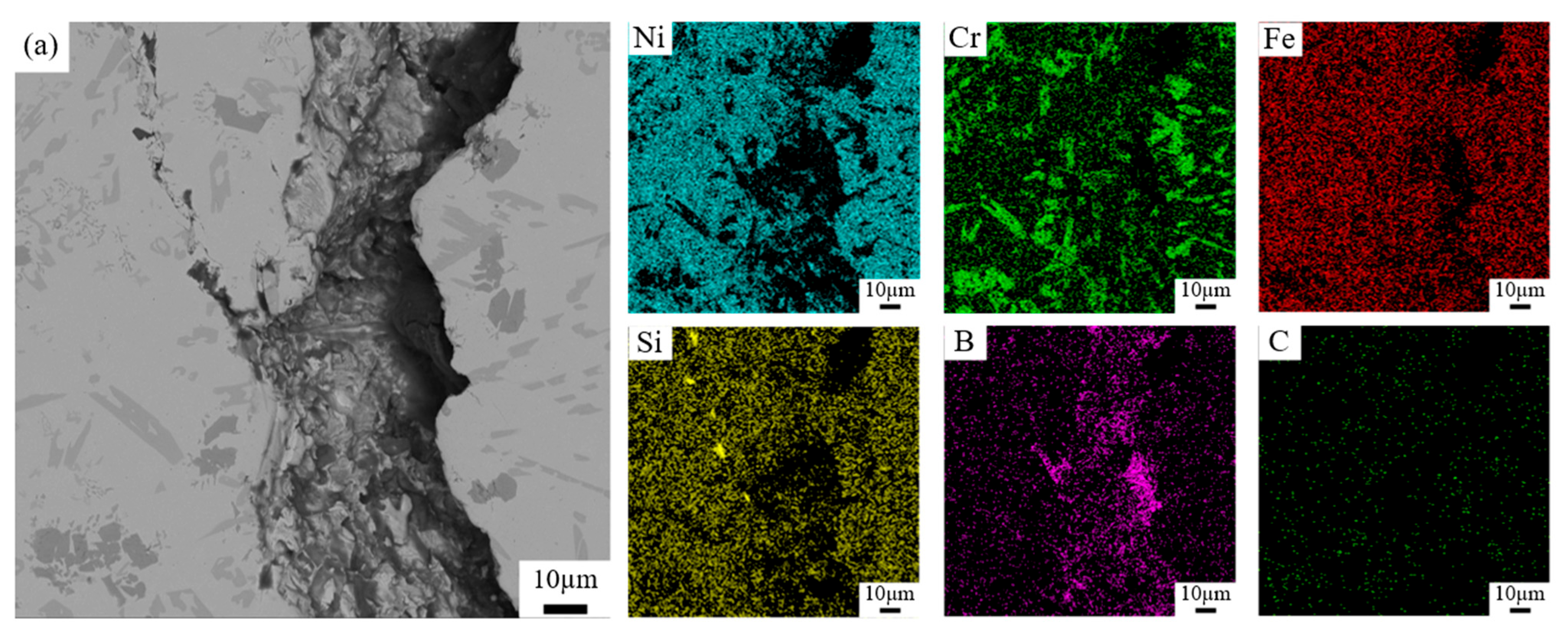
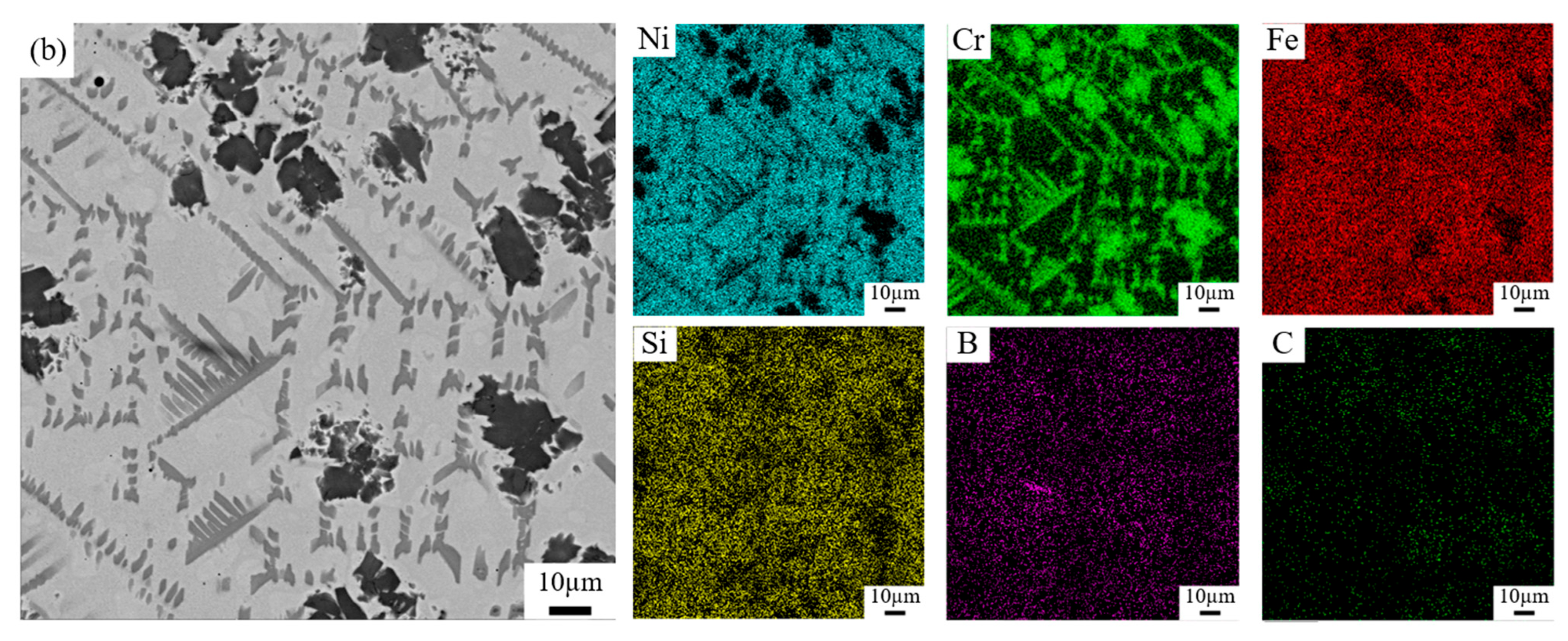
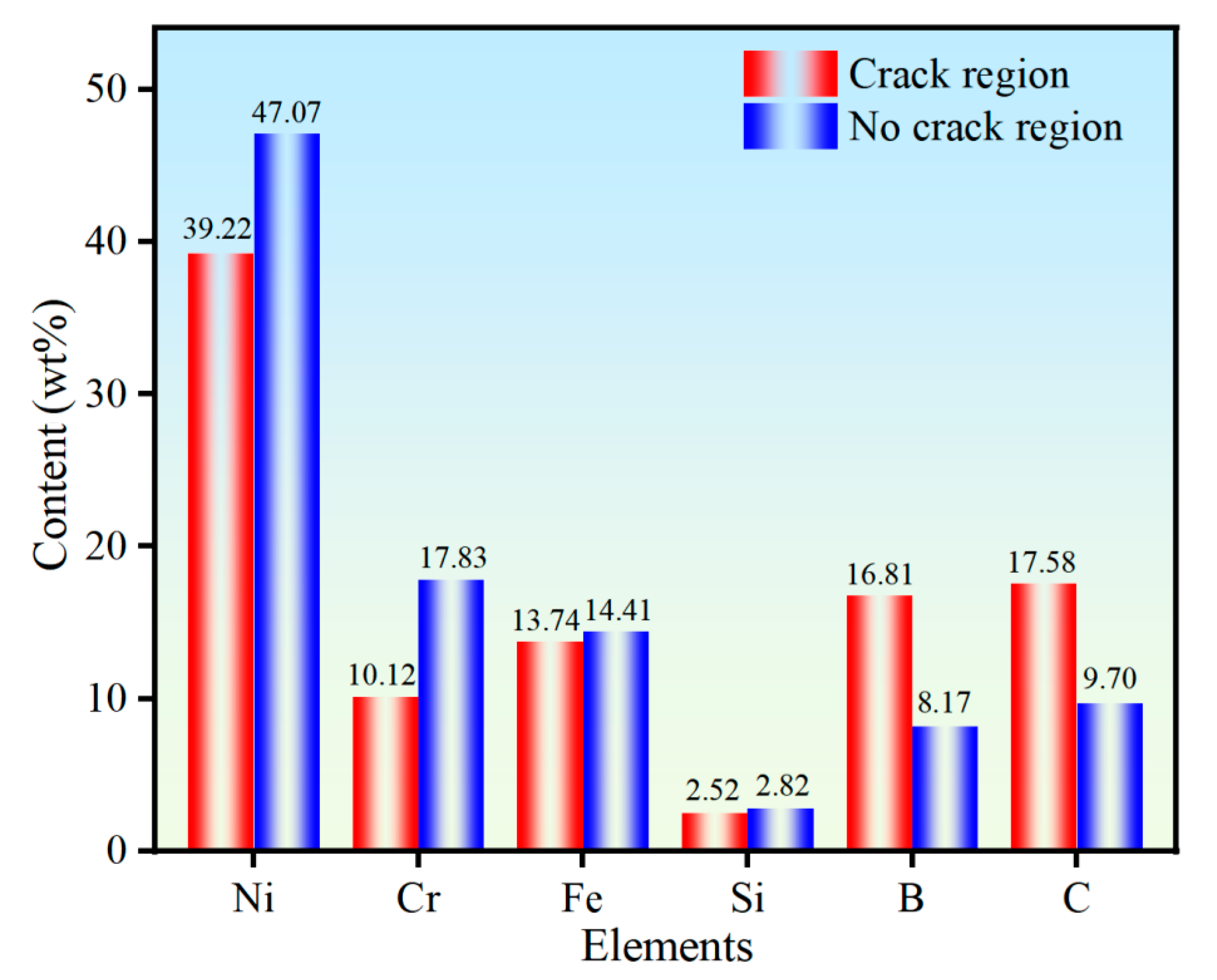
Figure 7 presents the EDS surface scanning results of the Ni60 coating, covering the cracked region in Figure 6e and the crack-free area in Figure 6g. The corresponding elemental contents are compared in Figure 8. As shown in Figure 7a, Ni and Cr are mainly distributed within grains and the gray–white microstructures around cracks, whereas B is highly enriched inside the cracks. According to Figure 8, the cracked region exhibits remarkably higher contents of B and C, along with lower Ni and Cr levels, compared with the crack-free area. The segregation of B and C tends to promote the formation of carbides and borides [25]. These hard phases can improve the wear resistance and macroscopic hardness of coatings. However, their high brittleness means local aggregation provides preferential routes for crack growth. In addition, cementite with poor ductility and toughness forms from C and Fe under laser irradiation [26], which further links up crack propagation paths.
Laser cladding is a rapid heating and cooling process with a large temperature gradient and high cooling rate. Cracks initiate and propagate once the induced thermal stress exceeds the tensile strength of the coating. The corresponding thermal stress can be quantified as follows [27]:
σ 1 = E c E s h s α c α s Δ T 1 υ E s h s + E c h c
where E c and E s are the Young’s modulus, α c and α s are the coefficients of thermal expansion, h c and h s are the thickness, and subscripts c and s represent the coating and the substrate, respectively. υ is the Poisson’s ratio, and Δ T is the difference between the coating temperature after solidification and the room temperature.
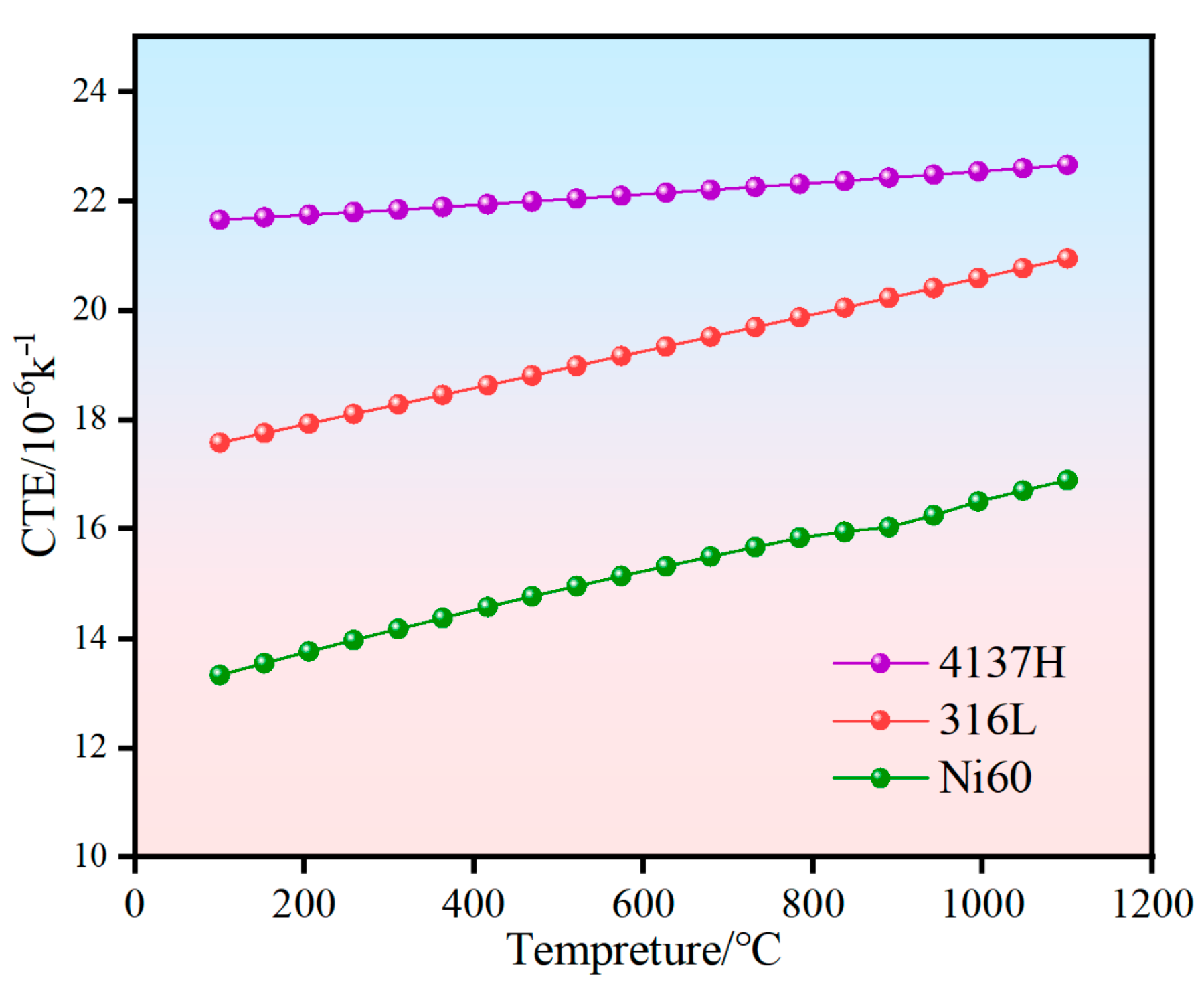
As indicated by Equation (2), with identical laser cladding parameters and thus similar temperature gradients, the stress arising from metallurgical bonding between dissimilar materials is primarily governed by their coefficient of thermal expansion (CTE). During laser cladding, differences in volume and CTE between the coating and substrate lead to mismatched thermal expansion and shrinkage behaviors. This produces internal stress, which serves as a major cause of crack formation. Figure 9 presents the CTE of 4137H steel and Ni60 alloy calculated by JmatPro 7.0.0 software over the temperature range of 100–1100 °C. An obvious mismatch exists between their CTE values. The CTE range of 4137H is 21.6 to 22.7 × 10⁻⁶ K−1, while that of Ni60 is 13.3–16.9 × 10⁻⁶ K−1. The higher CTE of 4137H steel leads to larger shrinkage during cooling, producing tensile stress at the coating–substrate interface. Therefore, tensile stress is generated at the interface between the 4137H substrate and the Ni60 coating. When this stress exceeds the tensile strength of the material, interfacial cracks initiate. Afterwards, the internal phases of the coating slip along the direction of maximum shear stress and the weak direction with a more liquid phase, resulting in a local tensile stress concentration at crystal boundaries, hard and brittle phases or defects, leading to the crack propagation.

3.2. Crack Suppression

As analyzed above, the mismatch in CTEs mainly accounts for cracks formed during direct deposition of Ni60 on 4137H steel. The CTE of a material is directly related to its chemical composition. Therefore, 316L is found to narrow this difference. As listed in Table 1, it can be seen that the Cr content of 316L is almost the same as that of Ni60, the Fe content is close to that of 4137H, and the Ni content is between the two materials. The similar chemical composition allows 316L to fuse with both of them well. In addition, Mo element can significantly enhance the strength, hardness, and high-temperature wear resistance of powder metallurgy materials through solid solution strengthening and the formation of hard carbides. The Si element can form a dense oxide film or molybdenum disilicide phase, thereby enhancing the material’s high-temperature oxidation resistance. Figure 9 also presents the CTE curve of 316L steel. Its CTE falls between those of Ni60 alloy and 4137H steel. Moreover, 316L powder is economically affordable and mass-produced. Therefore, in order to reduce the CTE mismatch and suppress the thermal stress, the 316L steel was adopted to prepare a transition layer between the 4137H steel substrate and the Ni60 alloy coating.
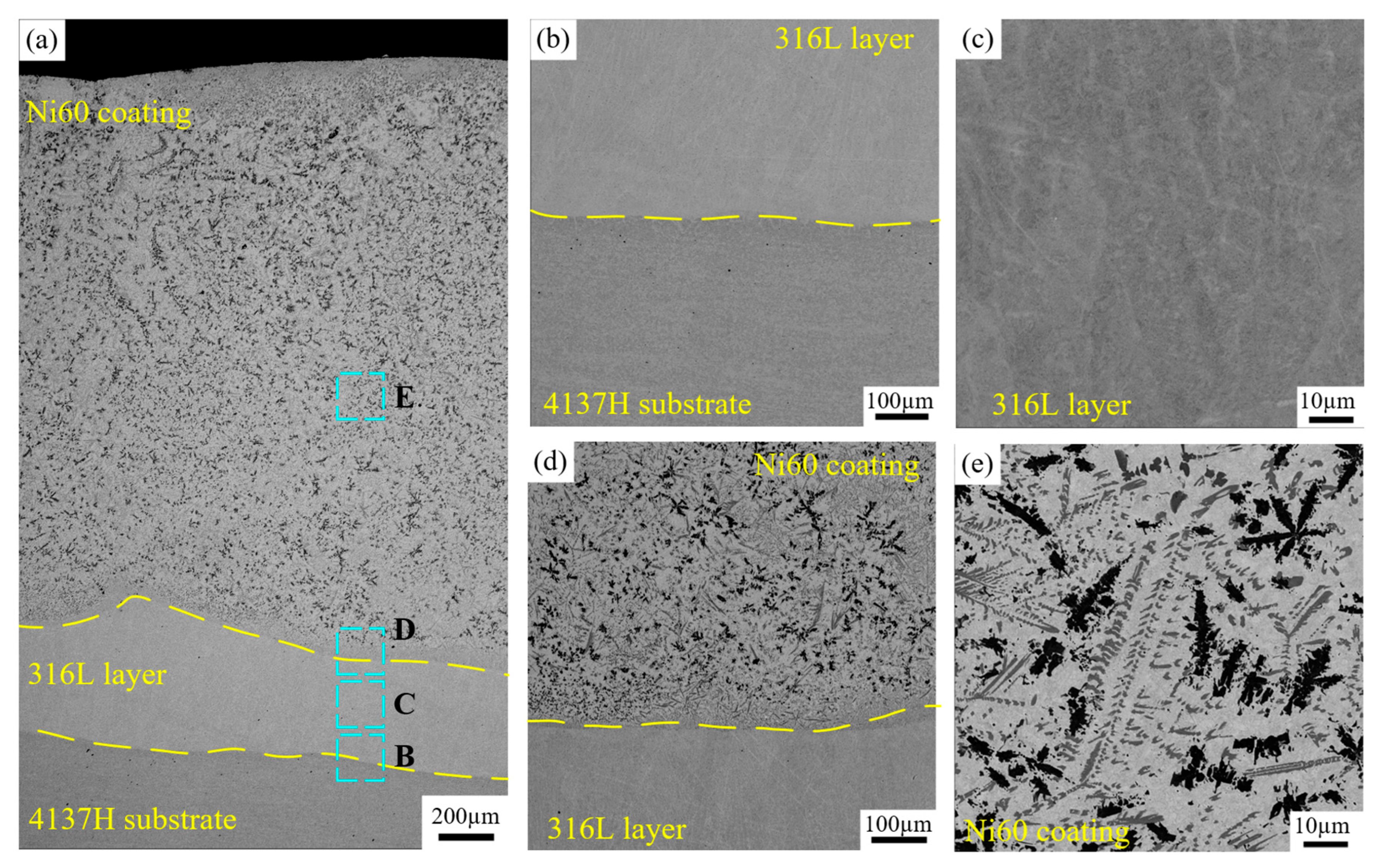
Using the same laser cladding parameters applied for directly depositing Ni60 coating on 4137H steel (Figure 2a), 316L-Ni60 gradient coatings were prepared. The surface crack penetration of the as-fabricated coatings is presented in Figure 2b. It can be seen that the Ni60 alloy coating on the 316L transition layer has a smooth surface and no crack defects. Figure 10 gives the SEM images of the 316L-Ni60 gradient coating from 4137H substrate to the top Ni60 layer and its magnified views of Position B, C, D and E in detail. Sound metallurgical bonding is achieved at both the 4137H/316L and 316L/Ni60 interfaces. The coating exhibits a dense structure with no cracks or visible pores, and the hard phases uniformly dispersed within the Ni60 layer. These results demonstrate that introducing a 316L transition layer can effectively inhibit crack formation. It is confirmed that the 316L transition layer plays a positive role in crack suppression.
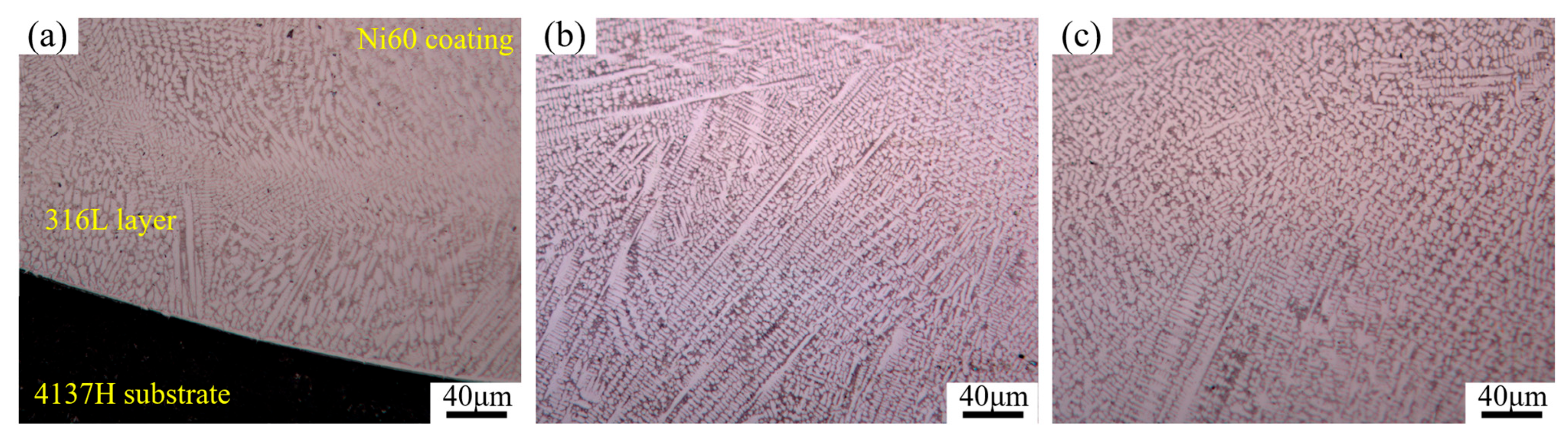
To further evaluate the overall quality of the 316L-Ni60 gradient coating, Figure 11 shows the cross-sectional microstructures at the bottom, middle and top regions of the coating. The microstructure undergoes a rational evolution from planar grains to cellular, columnar, dendritic and finally equiaxed grains. As shown in Figure 11a, a thin bright band of planar grains forms at the interface between the 4137H and 316L, confirming the formation of sound metallurgical bonding. Subsequently, cellular and columnar grains, which are perpendicular to the bonding interface, grow epitaxially on the planar grain layer. Due to the large temperature gradient near the substrate, the grains prefer reverse growth along the direction of maximum heat dissipation. The Ni60 alloy also achieves favorable metallurgical bonding with 316L. During laser cladding of the Ni60 alloy coating on the 316L translation layer, laser remelting induces recrystallization of the 316L microstructure, which contributes to significant grain refinement. Accordingly, the fusion zone between 316L and Ni60 is composed of abundant fine grains.
Figure 11b is the middle area of the Ni60 alloy coating, where the microstructure is mainly composed of dendrites due to the decrease in the heat dissipation rate and the temperature gradient in the molten pool. The top of the Ni60 alloy coating is mainly composed of equiaxed grains and small dendrites, as shown in Figure 11c. As solidification proceeds, the difference in growth rate in various directions inside the molten pool decreases, and a transition from dendritic to equiaxed grains occurs.
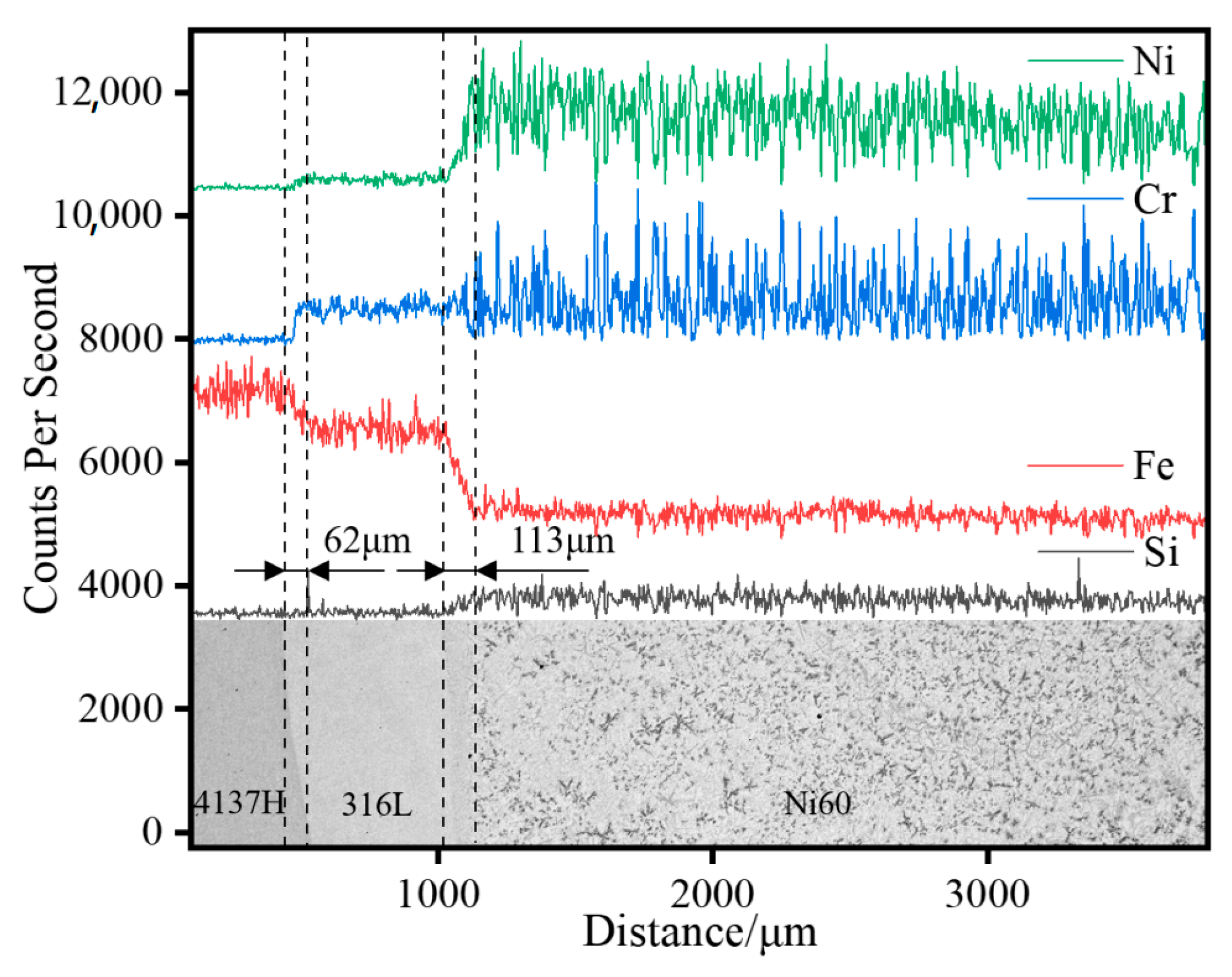
Figure 12 presents the EDS line scanning results of the main chemical elements in the 316L-Ni60 gradient coating. As can be seen from Figure 12, beginning from the 4137H substrate to the top of the Ni60 alloy coating, the content of Ni, Cr and Si gradually increases in a stepwise manner, while Fe content gradually decreases. This trend is consistent with the chemical compositions of 4137H, 316L and Ni60 listed in Table 1. In addition, the fusion zone widths at the 4137H/316L and 316L/Ni60 interfaces are 62 μm and 113 μm, respectively. Such narrow regions prove that the 316L transition well bridges the different materials and barely disturbs the properties of the Ni60 alloy coating.
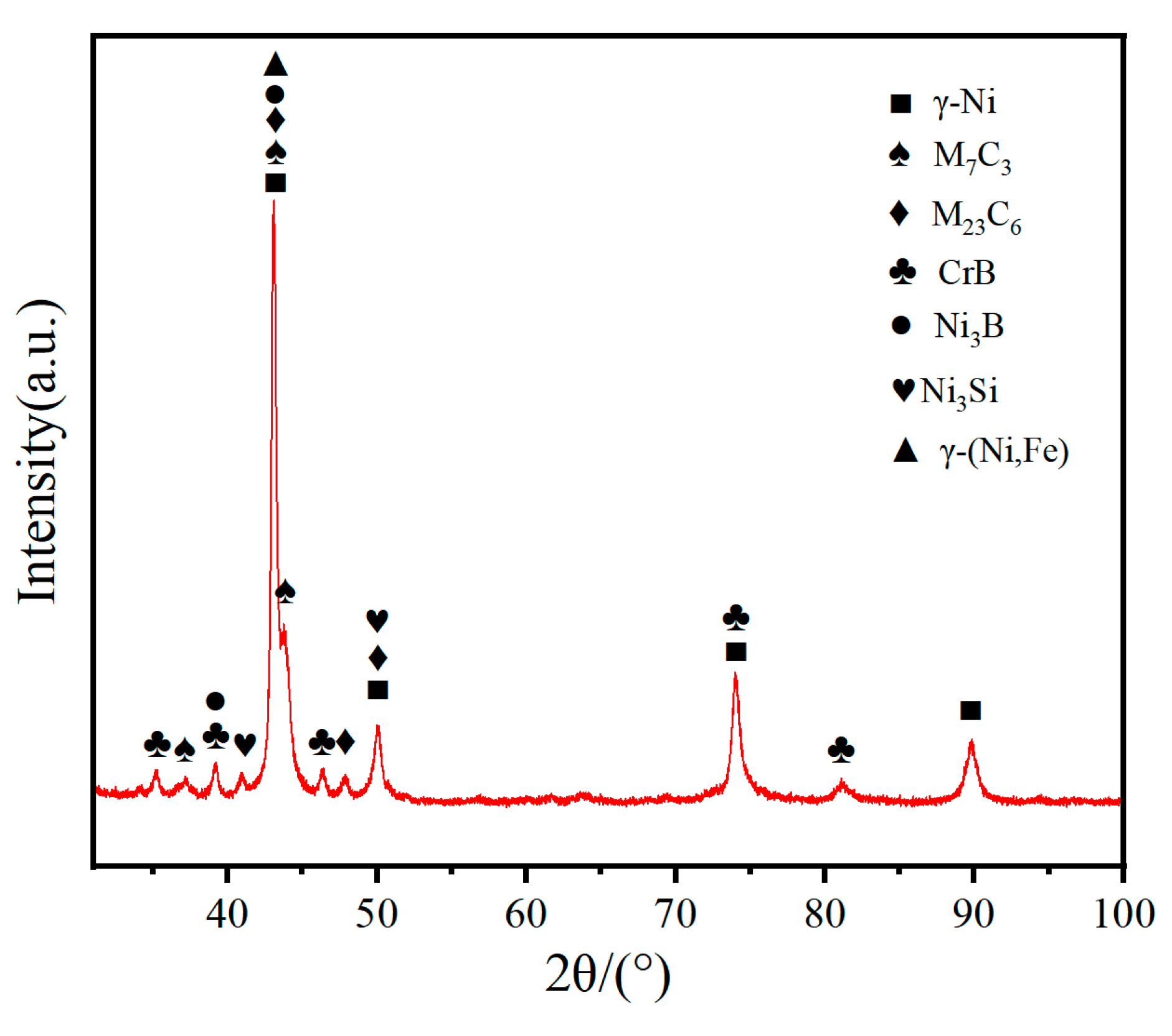
Figure 13 shows the XRD pattern of the Ni60 coating. The phases mainly include γ-Ni, γ-(Ni, Fe), Ni3Si, carbides including M23C6 and M7C3 (M = Cr, Fe, Ni), and borides such as CrB and Ni3B, etc. Among them, the diffraction peaks of γ-Ni and the γ-(Ni, Fe) are the strongest. The C element reacts with Fe and Cr elements to form carbides, which have high hardness. At the same time, Cr and Ni react with B and Si to form borides and silicides. These hard phases play a positive effect in particle strengthening and dispersion strengthening in Ni60 coatings.
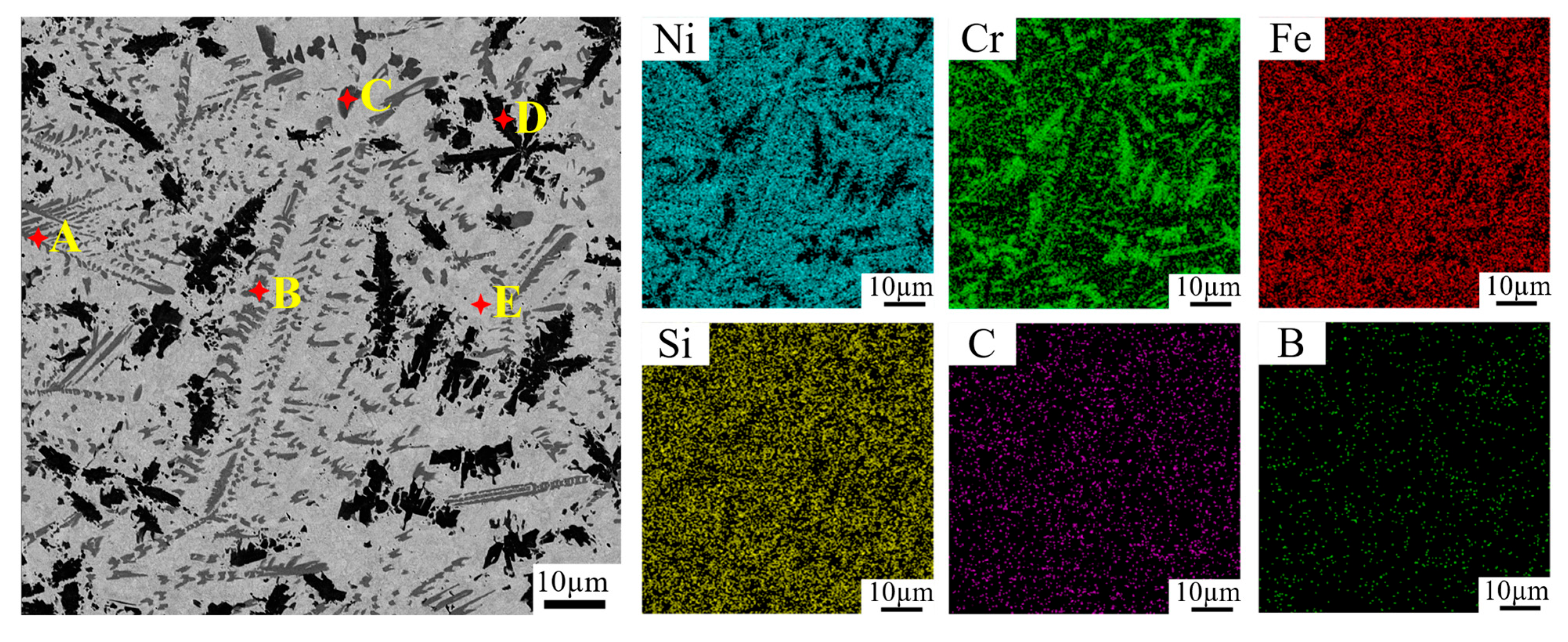
In order to further observe the phase distribution of the Ni60 alloy coating, EDS surface scanning was performed on the area of Figure 10e, and the results are shown in Figure 14. The coating structure consists of a gray slender dendritic phase (Position A), gray-band phase (Position B), gray-block phase (Position C), dark coarse dendritic phase (Position D), and light-gray substrate phase (Position E). Meanwhile, the element contends on Positions A, B, C, D and E are listed Table 2. Based on Table 2 and Figure 14, it can be seen that Position E enriches with Ni, Fe, and Si elements, while C and Cr contents are relatively low. The corresponding phases in the light-gray area are mainly γ-Ni, γ-(Ni, Fe) and Ni3Si. Position D is rich in Cr and B, and it is inferred that CrB is the main component. Cr, C and Fe elements are rich in Position B, mainly consisting of M23C6 and M7C3 (M = Cr, Fe). Compared with Position B, Position A shows a decrease in Cr and an increase in Ni, Si, and B. It is indicated that its composition includes not only M23C6 and M7C3, but also Ni3Si, Ni3B and γ-Ni, and forms a dendritic morphology under the influence of γ-Ni. In addition, Position C contains more Cr and B elements than Position B, and has a slightly darker color. It is speculated that this area is mainly composed of M23C6, M7C3 and CrB.
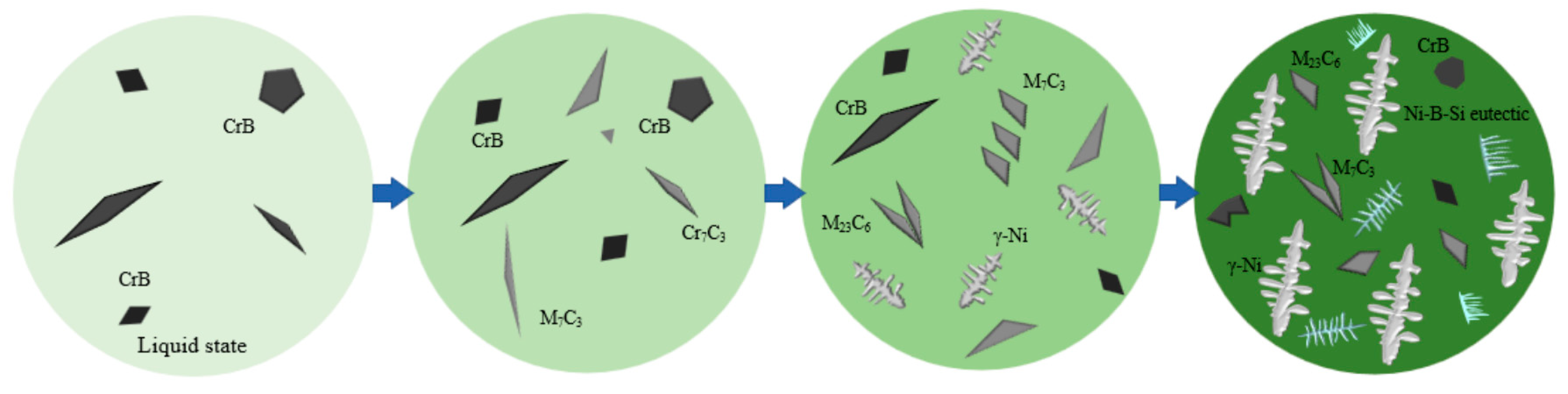
Figure 15 shows a schematic diagram of the solidification behavior of the Ni60 coating. During solidification, high-melting-point CrB phases preferentially precipitate from the molten pool [28]. Owing to the strong affinity of Cr for both C and B, the precipitated CrB provides ideal heterogeneous nucleation sites. As the molten pool temperature gradually decreases, Cr7C3 nucleates and grows, forming an irregular strip-like shape. Then, the elements Ni, Cr and Fe undergo substitution because of their similar atomic radii (0.352 nm, 0.288 nm, and 0.287 nm, respectively), leading to the formation of M7C3-type carbides dominated by Cr, Fe and Ni. Subsequently, some metastable M7C3 phases transform into more stable M23C6-type carbides [29]. The abundant nucleation sites promote the growth of Ni grains in an equiaxed manner. After the formation of γ-Ni solid solution in the molten pool, the system generates two eutectic products through eutectic reactions, i.e., Ni-Ni3Si and Ni-Ni3B. The Ni-Cr-B eutectic structure fills the gaps between precipitates and dendrites.

3.3. Coating Performance

3.3.1. Microhardness

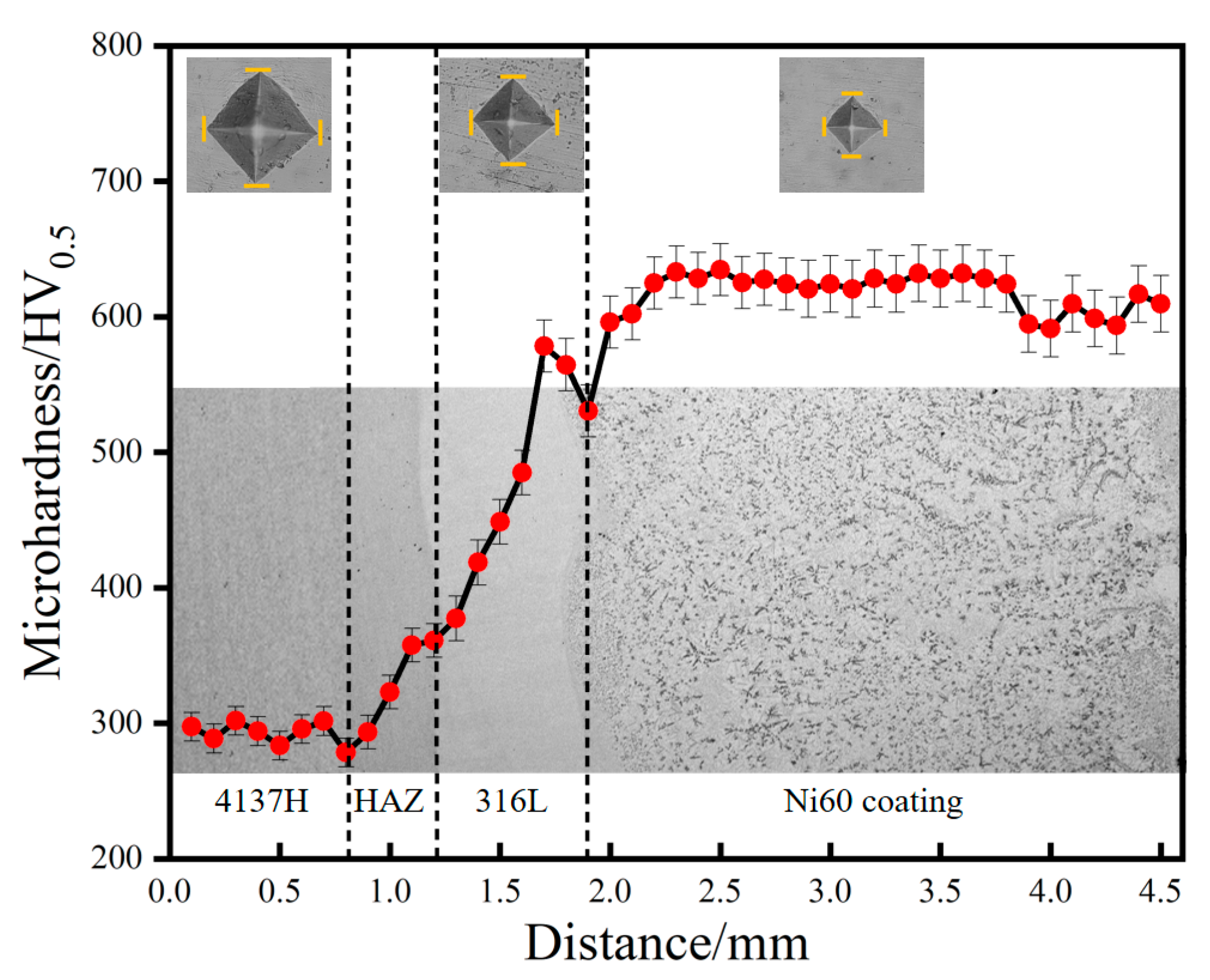
Figure 16 shows the cross-section microhardness distribution of the 316L-Ni60 gradient coating. The average microhardness of 4137H steel is 291.9 HV0.5 (approximately 28.7 HRC), and it increases to about 350HV0.5 in the heat-affected zone (HAZ) after metallurgical combination with 316L steel. The microhardness of the 316L transition layer exceeds 400 HV0.5 due to the laser remelting effect caused by the subsequent deposition of the Ni60 coating. The top Ni60 coating exhibits an average microhardness of 649.3 HV0.5 (approximately 59.8 HRC), which is more than twice that of the 4137H substrate. The high hardness of Ni60 coating is primarily attributed to the formation of hard precipitates, such as CrB, M7C3, and M23C6, etc. These uniformly dispersed borides and carbides provide dispersion strengthening within the coating. Meanwhile, partial substitution of Ni atoms by Cr atoms in the γ-Ni solid solution further enhances the solid-solution strengthening of the coating material.
In addition, the surface region of the Ni60 coating exhibits slightly lower microhardness compared with the internal coating region. Although a faster cooling rate at the surface generally leads to finer grains and thus higher hardness, the observed decrease in surface hardness in Figure 16 is mainly attributed to other factors. During laser cladding, the coating surface is directly exposed to the ambient atmosphere, which induces slight surface decarburization and oxidation and consequently reduces surface microhardness. Furthermore, deoxidation products and slag inclusions tend to float and accumulate on the coating surface, which also accounts for the slight degradation in surface hardness.

3.3.2. Tribology Characteristics

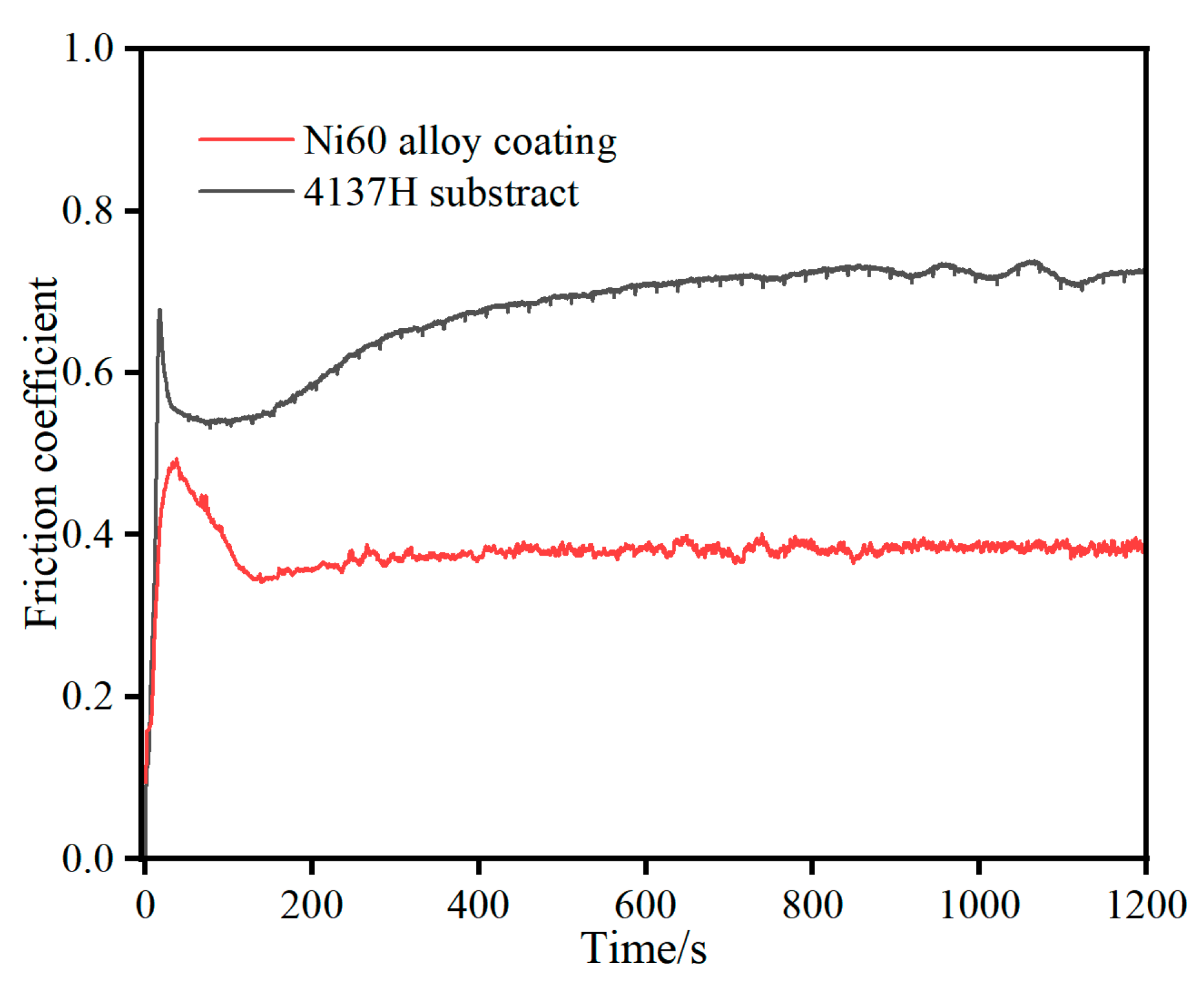
The CoF test curves of the 4137H steel and the Ni60 coating are shown in Figure 17. Both of them have a running in stage and a stable wear stage. The CoF curve of the 4137H substrate fluctuates obviously. This may because that during grinding, many abrasive particles generate due to their poor hardness. The abrasive particles cause work hardening in the reciprocating motion of the grinding pair. Additionally, it causes severe grinding effects on the substrate, and thereby leads to an increase and fluctuation in the CoF curve. Relatively, the CoF curve of the Ni60 coating remains stable after transition stage due to its high hardness. Excluding the first 400 data in unstable stage, the average CoFs of the Ni60 alloy and 4137H steel are approximately 0.38 and 0.71, respectively.
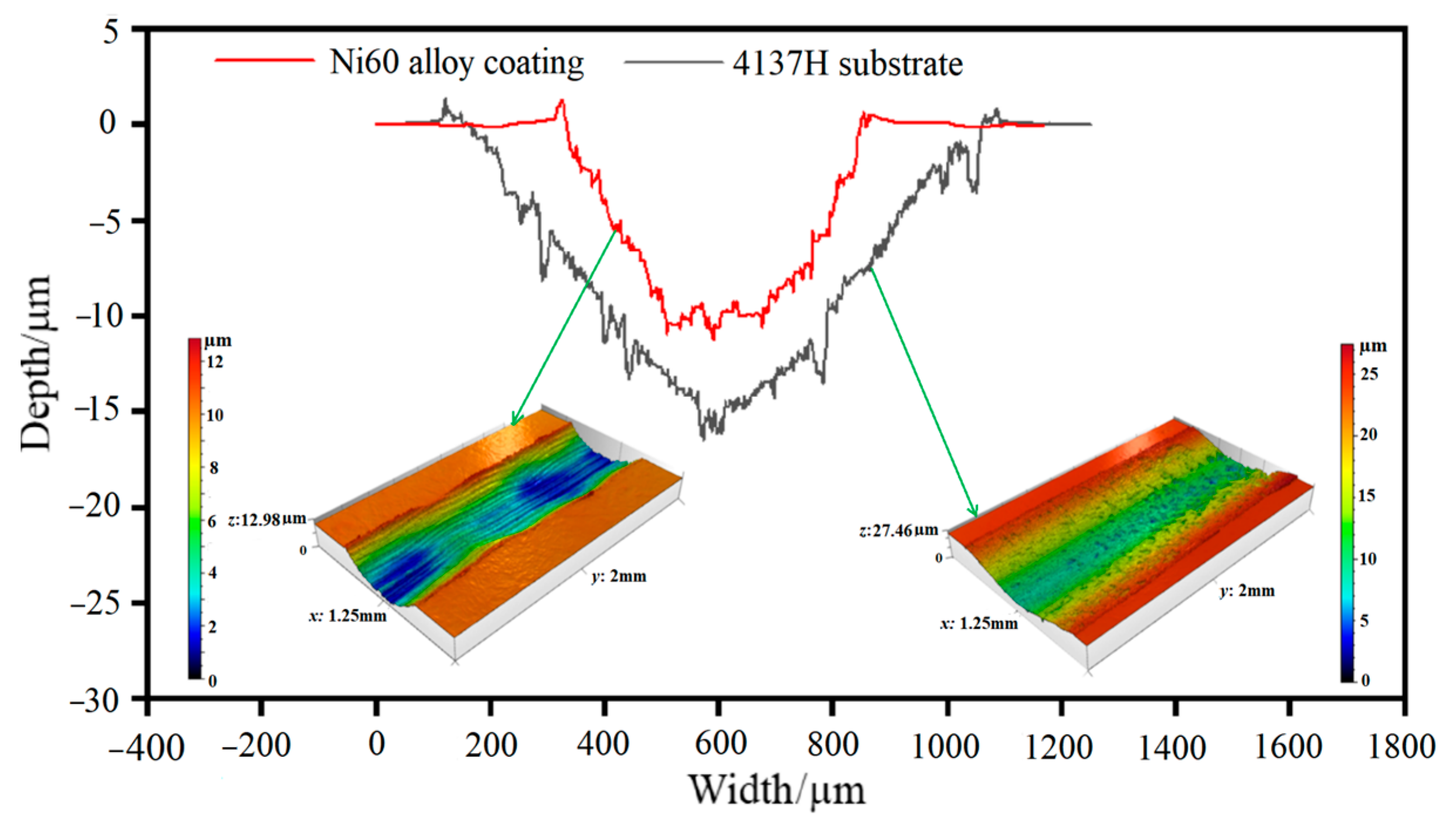
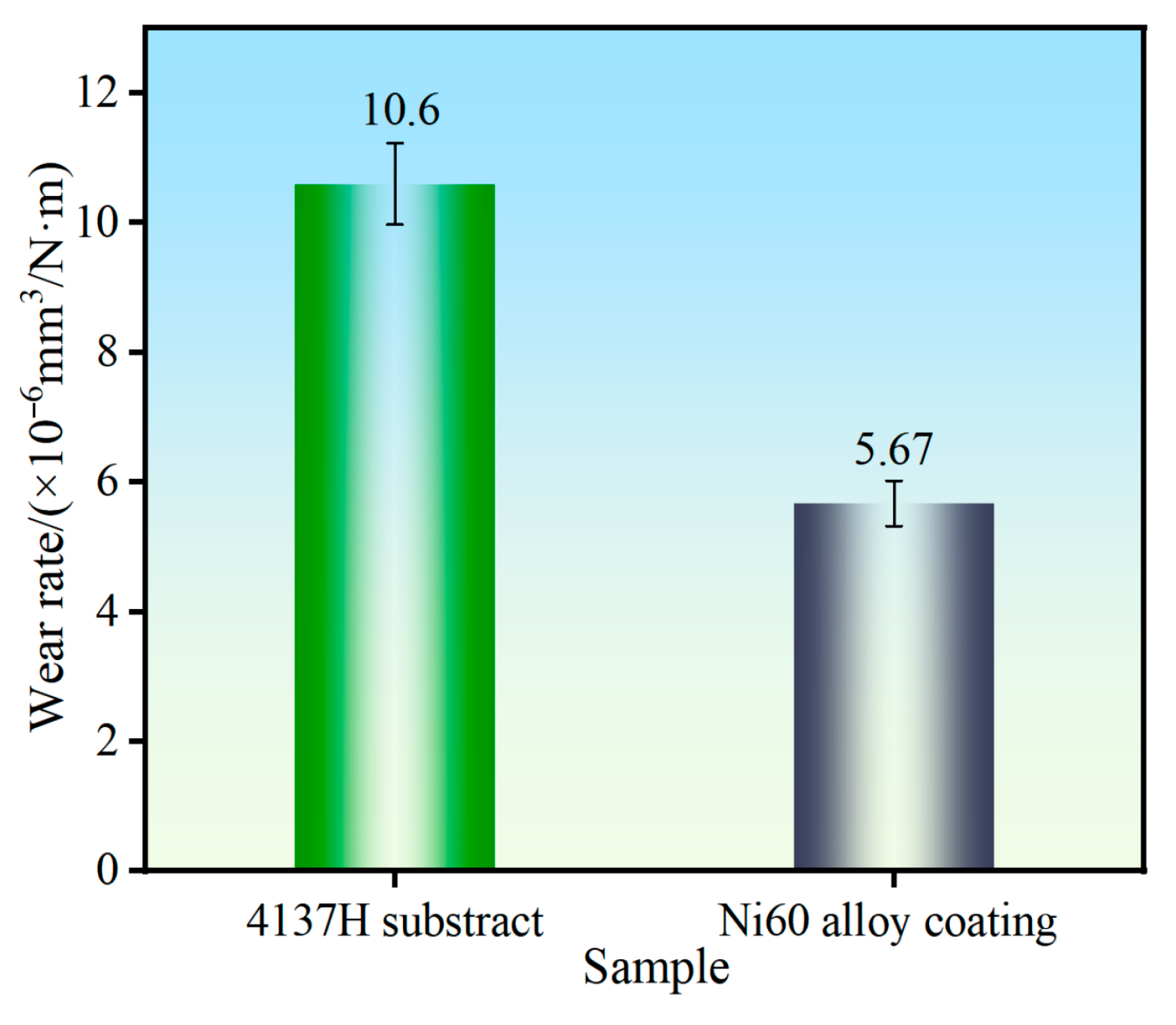
Figure 18 shows the cross-section curves of the wear trace, in which the wear depth of the Ni60 coating is significantly shallower than that of the 4137H substrate. The wear rates of the 4137H steel and Ni60 coating are shown in Figure 19. The wear rates of the 4137H substrate and the Ni60 coating are 1.06 ± 0.063 × 10⁻⁵ and 5.67 ± 0.35 × 10⁻⁶ mm3∙N−1∙m−1, respectively. Comparably, the wear amount of the Ni60 coating is less than half of the 4137H steel. The uniformly distributed hard phases in the coating have a significant promoting effect on the improvement of the coating’s wear resistance.
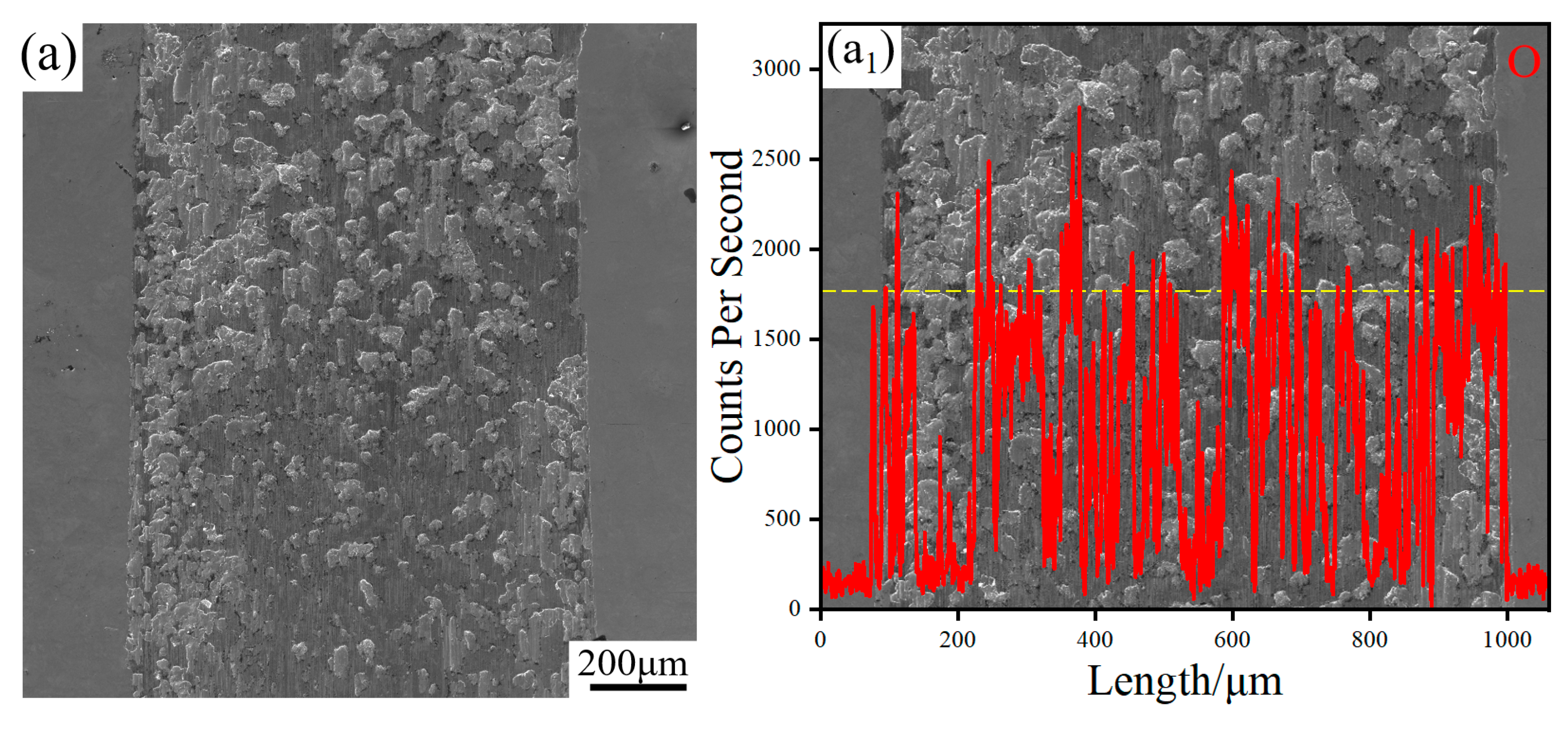
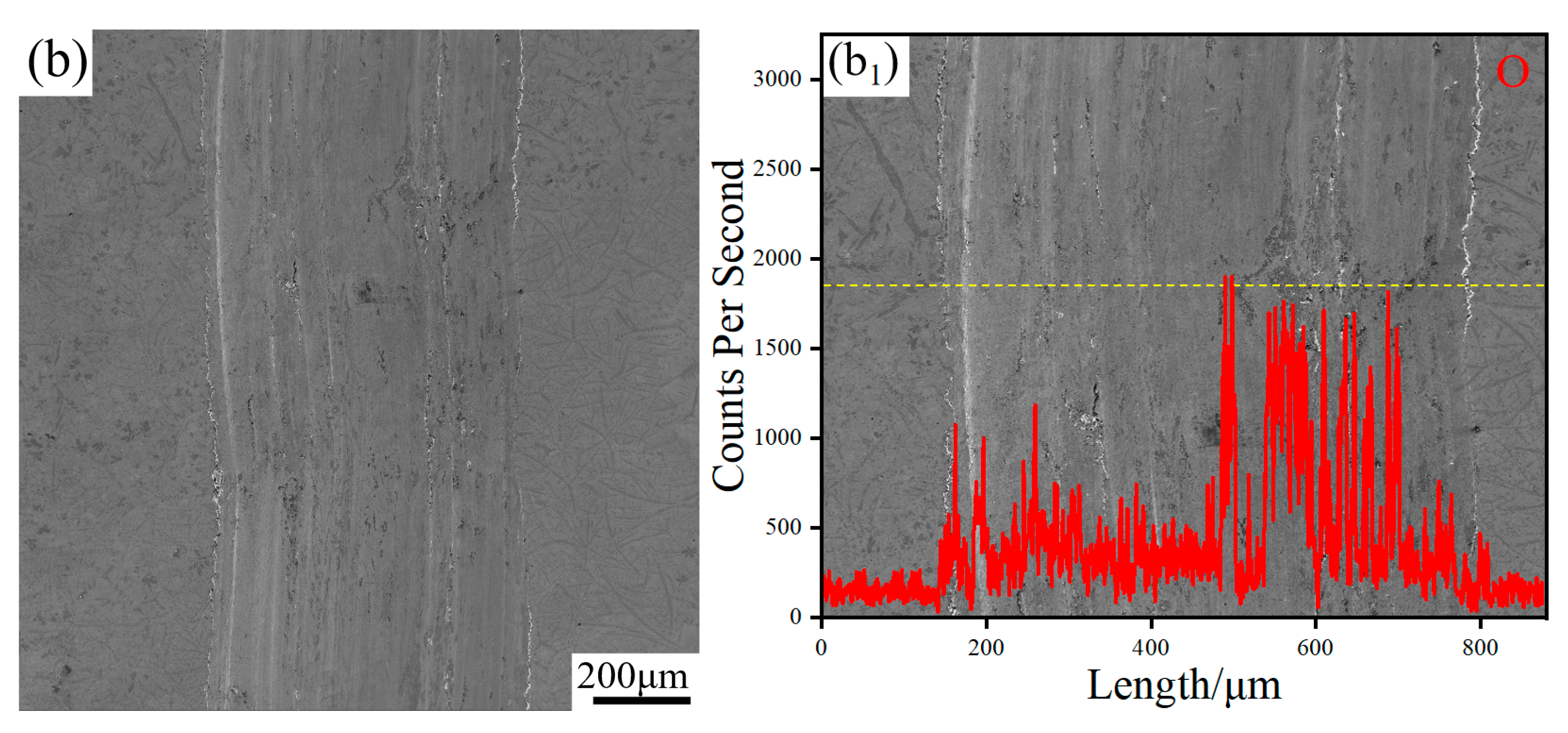
Figure 20 displays SEM images of worn surfaces and oxygen distribution of 4137H steel and Ni60 coating. The worn surface of 4137H steel is rough, with discontinuous grooves, plenty of pits and obvious adhesive delamination (Figure 20a). In the early stage of wear, the low hardness of the substrate allows the grinding ball to indent the surface under normal load and induce deformation. Micro-cutting takes place at the contact interface [30] and produces grooves during sliding. As wear proceeds, localized high temperature causes interfacial adhesion and adhesive wear. The resultant adhesive delamination tends to peel off under shear stress. In addition, a high oxygen content is observed in Figure 20a1. This reveals that elements on the worn surface of 4137H steel reacted with atmospheric oxygen, generating substantial oxides. By contrast, the Ni60 coating exhibits outstanding wear resistance, as evidenced by only sparse pits, slight scratches and shallow furrows in Figure 20b. This is attributed to the presence of hard phases including CrB, M7C3 (M = Fe, Ni, Cr) and M23C6 within the coating. These phases offer stable load-bearing performance and inhibit the embedding of abrasive particles as well as furrow formation. Moreover, Figure 20b1 shows a considerably lower oxygen content on the coating surface compared with 4137H steel, which demonstrates that the coating suffers only mild oxidation.

3.3.3. Corrosion Characteristics

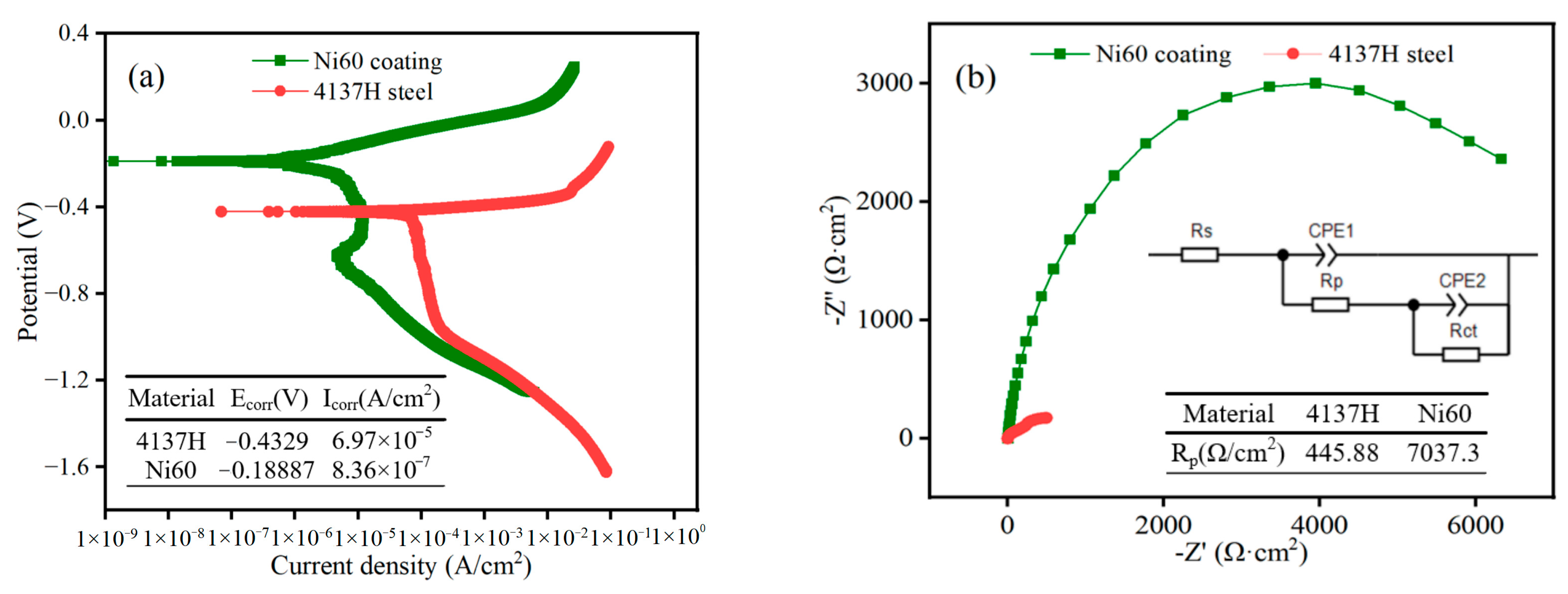
Figure 21 gives the polarization curves and the Nyquist plot of the 4137H steel and the Ni60 alloy coating. Figure 21a indicates that the self-corrosion potential (Ecorr) of the 4137H steel is −0.4329 V, while that of the Ni60 coating increases to −0.18887 V. A higher Ecorr indicates better thermodynamic stability against corrosion and reduced corrosion tendency of the Ni60 coating. The self-corrosion current density (Icorr) of the 4137H steel is 6.97 × 10⁻⁵ A/cm2, while that of the Ni60 alloy coating drops markedly to 8.36 × 10⁻⁷ A/cm2. A lower Icorr corresponds to a slower corrosion rate, demonstrating that the Ni60 coating exhibits higher resistance to the used fluid. Figure 21b presents the electrochemical impedance spectra (EIS). Fitting the EIS data to an equivalent circuit model yields polarization resistance (Rp) values of 445.88 Ω·cm2 for 4137H steel and 7037.3 Ω·cm2 for the Ni60 coating, respectively. The latter value is higher than the former, indicating that the Ni60 coating has better corrosion resistance in the simulated saturated saltwater drilling fluid used.
Overall, laser cladding a Ni60 coating on the 4137H steel surface effectively enhances its corrosion resistance in simulated drilling fluid. As 4137H steel is predominantly iron-based, it readily undergoes anodic dissolution in saturated saltwater. The porous Fe-containing corrosion products formed on the steel surface lead to a high self-corrosion current density and low polarization resistance. The Ni60 coating consists of γ-Ni, γ-(Ni,Fe) solid solutions, as well as Cr-rich carbides/borides. Ni suppresses active dissolution, and Cr generates a dense Cr2O3/Cr(OH)3 passive film upon corrosion [31]. Meanwhile, Ni may also form NiO and Ni(OH)2 to further reinforce the protective film [32]. These composite passive layers effectively block the inward diffusion of Cl, H2O and O2. Accordingly, the Ni60 coating exhibits markedly improved thermodynamic corrosion stability and interfacial charge transfer resistance. Hence, the Ni60 coating possesses good thermodynamic corrosion stability and interfacial charge transfer impedance.

4. Conclusions

This study developed a high-performance crack-free coating for drillpipe hardbandings and validated its basic microstructure, mechanical properties, and wear-corrosion performance via laboratory tests. The main conclusions are as follows:
(1)
Direct laser cladding of a Ni60 alloy coating on 4137H steel tends to induce interfacial cracks. The mismatch of CTEs between the 4137H steel and the Ni60 alloy generates severe thermal stress, which serves as a dominant cause of interfacial cracking. These cracks generally propagate perpendicular to the fusion line and preferentially extend along impurity defects and transgranular paths. Additionally, segregated borides and carbides further provide favorable routes for crack propagation.
(2)
The CTE of the 316L steel lies between the 4137H steel and the Ni60 alloy, and its chemical composition can be compatible with both materials. It can form stable metallurgical bonds with both 4137H steel and the Ni60 alloy. Accordingly, introducing a 316L translation layer via laser cladding can inhibit crack formation in the 316L-Ni60 gradient coating.
(3)
From bottom to top, the 316L-Ni60 gradient coating presents a microstructural transition of planar, cellular, columnar, dendritic and equiaxed grains. The coating possesses a dense microstructure with rational morphological evolution during solidification. The primary phases of the Ni60 coating are γ-Ni, γ-(Ni, Fe), Ni3Si, M23C6, M7C3 (M = Cr, Fe, Ni), as well as CrB and Ni3B. These boride and carbide particles are uniformly precipitated and dispersed in the γ-Ni matrix.
(4)
The average microhardness of the Ni60 coating is 649.3 HV0.5, roughly two times that of the 4137H steel (291.9 HV0.5). The average CoFs are 0.38 for the Ni60 coating and 0.71 for 4137H steel. Their corresponding wear rates are 5.67 × 10⁻⁶ and 1.06 × 10⁻⁵ mm3·N−1·m−1, respectively. When tested in simulated saturated saltwater drilling fluid, the Ni60 coating delivers a higher corrosion potential, lower corrosion current density and larger polarization resistance. Overall, the Ni60 coating possesses evidently superior wear and corrosion resistance compared with 4137H steel.
Despite the crack-free structure and promising performance of the laser-cladded Ni60 alloy hardbanding obtained in this work, several limitations still exist. First, this study is limited to laboratory-scale experiments. The feasibility and practical applicability of this coating for large-scale laser cladding on drill pipes have not yet been validated. In addition, its service performance under actual drilling conditions, including fluctuating temperatures, alternating loads and impact erosion, remains unexamined. Second, the present tests mainly focus on the macroscopic tribological and mechanical properties of the coating, while the evolution of internal stress, long-term fatigue degradation and dynamic failure mechanisms are not investigated in this work.
To address the above limitations and further explore the engineering potential of the Ni60 coating, systematic follow-up research will be conducted. On the one hand, a dedicated experimental platform will be built to simulate real drilling environments by coupling drilling fluid corrosion, sand particle erosion, temperature variation and load fluctuation. This setup will enable an evaluation of the coating’s dynamic wear-corrosion behavior under simulated service conditions. On the other hand, we will carry out quantitative analyses of residual stress, impact resistance and fatigue life to reveal the intrinsic failure mechanisms of the coating. These supplementary experimental verifications and mechanistic studies are expected to provide a solid theoretical and experimental foundation for subsequent industrial trials and facilitate the gradual translation of this Ni60 alloy hardbanding into practical engineering applications.

Author Contributions

L.L.: supervision, methodology, writing—original draft, review and editing. S.W.: investigation, methodology, data curation. Y.Q.: formal analysis, data curation. B.G.: investigation, visualization. Z.W.: conceptualization, supervision. F.H.: validation, resources. All authors have read and agreed to the published version of the manuscript.

Funding

This research was founded by National Natural Science Foundation of China, grant number 42472381, and Key Science and Technology Program of Shaanxi Province, grant number 2025CY-YBXM-089. And the APC was funded by National Natural Science Foundation of China.

Data Availability Statement

Data will be made available on request.

Conflicts of Interest

The authors declare no conflicts of interest.

References

  1. Wan, F.; Zhao, J.; Cao, Q.; Wang, F.; Cao, J.; Han, X. Research on the technology of repairing threads on oil drill pipes. Mach. Tool Hydraul. 2017, 45, 15–19. [Google Scholar] [CrossRef]
  2. Li, Y.; Hu, Y.; Wei, Y.; Xiang, D.; You, Z.; Wang, X. Analysis of the application of nondestructive testing technology in petroleum drilling tools. China Plant Eng. 2025, 22, 172–174. [Google Scholar] [CrossRef]
  3. Wu, D.; Qiao, M.; Liang, C.; Kong, L.; Wang, Y.; Zhang, K. Research on the wear-resistant and antifriction dual-protection mechanism of drill pipe joints for ultra-deep wells. Drill. Eng. 2025, 52, 42–51. [Google Scholar]
  4. Li, H.; Liu, C.; Ma, W.; Wang, X.; Zhang, W. Wear-resistant band welding process control for drill pipe joints. Plant Maint. Eng. 2025, 18, 102–104. [Google Scholar] [CrossRef]
  5. Mussa, A.; Krakhmalev, P.; Bergström, J. Failure analyses and wear mechanisms of rock drill rods, a case study. Eng. Fail. Anal. 2019, 102, 69–78. [Google Scholar] [CrossRef]
  6. Ma, G. Surfacing repair of non-magnetic pressure-bearing drill pipe joints. Electr. Weld. Mach. 2023, 53, 125–130. [Google Scholar] [CrossRef]
  7. Liu, X.-B.; Kang, J.-J.; Yue, W.; Fu, Z.-Q.; Zhu, L.-N.; She, D.-S.; Liang, J.; Wang, C.-B. Performance evaluation of HVOF sprayed WC-10Co4Cr coatings under slurry erosion. Surf. Eng. 2019, 35, 816–825. [Google Scholar] [CrossRef]
  8. Liu, W.; Blawert, C.; Zheludkevich, M.L.; Lin, Y.; Talha, M.; Shi, Y.; Chen, L. Effects of graphene nanosheets on the ceramic coatings formed on Ti6Al4V alloy drill pipe by plasma electrolytic oxidation. J. Alloys Compd. 2019, 789, 996–1007. [Google Scholar] [CrossRef]
  9. Guo, B.; Li, J.; Liu, S.; Lin, Y.; Chen, X.; Jiang, F.; Li, X.; Xu, Z. Research on the influence of segmented surface pretreatment of rolls on the interfacial bonding and crack inhibition of Ni60A repair layer by laser cladding. J. Mater. Res. Technol. 2025, 41, 1012–1027. [Google Scholar] [CrossRef]
  10. Ni, S.; Yan, J.; Ma, L.; Wei, T.; Wu, J.; Yang, H. Tailoring microstructure and tribological properties of laser-clad CoCrFeNiMo high-entropy alloy coatings via B4C addition. Surf. Coat. Technol. 2025, 520, 133031. [Google Scholar] [CrossRef]
  11. Zhang, H.; Huang, Y.; Zhang, C.; Su, C.; Guo, S. Enhancing the Tribological Performance of Titanium Alloy with Laser-Cladded Cu-containing Coating. J. Mater. Res. Technol. 2025, 41, 324–334. [Google Scholar] [CrossRef]
  12. Morais, E.; Silva, S.; Siqueira, R.; Carvalho, S.; Lima, M. Laser-induced diffusion of an aluminum clad in an aerospace aluminum alloy for enhanced bonding. Results Surf. Interfaces 2025, 19, 100521. [Google Scholar] [CrossRef]
  13. Rajaei, H.; Menapace, C.; Straffelini, G.; Gialanella, S. Characterization, wear and emission properties of MnS containing laser cladded brake disc. Wear 2022, 504, 204405. [Google Scholar] [CrossRef]
  14. Wang, X.; Ren, X.; Xue, Y.; Luan, B. Investigation on microstructure and high-temperature wear properties of high-speed laser cladding Inconel 625 alloy. J. Mater. Res. Technol. 2024, 30, 626–639. [Google Scholar] [CrossRef]
  15. Fu, J.; Gui, W.; Qin, J.; Lin, J.; Ren, X.; Luan, B. High-speed laser-clad 3533-00 Fe-based cemented carbide coatings on nuclear power valve sealing surface to enhanced wear and corrosion resistance. Surf. Coat. Technol. 2024, 480, 130594. [Google Scholar] [CrossRef]
  16. Li, D.; Feng, C.; Ji, H.; Zuo, B.; Wang, X.; Zhao, B.; Min, X. Experimental study on wear-resistant band of titanium alloy drill pipe joint. Steel Pipe 2025, 54, 20–25. [Google Scholar] [CrossRef]
  17. Li, X.; Gao, K.; Zhao, Y.; Xie, X.; Lü, X.; Zhang, C.; Ai, H. Wear resistance study of bionic pitted Ni cladding layer on 7075 aluminum alloy drill pipe surface. Coatings 2023, 13, 1768. [Google Scholar] [CrossRef]
  18. Yu, J.; Sun, W.; Xie, L.; Huang, Y.; Huang, H. Effect of graphene content on the tribological and corrosion behavior of high-speed-laser-clad high-entropy-alloy composite coatings. Tribol. Int. 2025, 201, 110197. [Google Scholar] [CrossRef]
  19. Pei, J.; Nong, Z.; Li, L.; Cui, X.; Zhang, H.; Akhmad, A. Enhanced of friction and wear properties for TiC/TC4 coating based on the precipitation of the lubricating and strengthening phases through laser cladding of Cr-WS2-Ni60 powder. J. Mater. Res. Technol. 2025, 39, 8758–8772. [Google Scholar] [CrossRef]
  20. Sun, M.; Song, S.; Zhang, J.; Lu, B. Laser cladding of Ni60 alloy on 1Cr18Ni9 stainless steel: Crack suppression, micrstucture evolution, and property. Mater. Today Commun. 2025, 43, 111731. [Google Scholar] [CrossRef]
  21. Cao, L.; Qian, Y.; Shao, Y.; Ren, Y.; Li, Y.; Cui, H.; Li, Y.; Wu, Y. Microstructure and properties of CeO2 and WC synergistically enhanced laser cladding Ni60 coatings. J. Mater. Res. Technol. 2025, 37, 646–658. [Google Scholar] [CrossRef]
  22. Liu, H.; Zhang, Q.; Chen, J.; Zeng, Z.; Tang, J. Analysis and control of cracks in Ni60 coating of 7050 aluminum alloy by electron beam cladding. Coatings 2022, 12, 602. [Google Scholar] [CrossRef]
  23. Lin, G.; Cai, Z.; Lu, B.; Gu, L.; Wang, Y.; Yan, X.; Qiu, H.; Guo, J.; Dong, Z.; Li, F. Enhanced wear resistance of laser cladded WC-Ni composite coatings by picosecond laser surface texturing. Tribol. Int. 2025, 204, 110517. [Google Scholar] [CrossRef]
  24. Li, M.; Huang, K.; Yi, X. Crack formation mechanisms and control methods of laser cladding coatings: A review. Coatings 2023, 13, 1117. [Google Scholar] [CrossRef]
  25. Bi, W.; Sun, Q.; Yao, S.; Zhu, W.; Ma, W.; Hu, B.; Bao, C.; Zhang, Y.; Niu, F. Crack suppression and microstructural evolution of laser cladding Ni60B coating under preheating–gradient transition hybrid regulation method. Surf. Coat. Technol. 2025, 513, 132540. [Google Scholar] [CrossRef]
  26. Zhang, J.; Li, M.; Cheng, Z.; Wu, D.; Zheng, C.; Huang, K.; Yi, X. Numerical simulation and experimental research on the effects of substrate preheated on the cracks, microstructure, and properties of laser cladding WC-Ni60AA coatings. Mater. Today Commun. 2025, 48, 113469. [Google Scholar] [CrossRef]
  27. Liu, L.; Li, S.; Dou, W.; Han, F.; Lin, K. Process optimization and performance study of laser cladding Ni60 alloy coating on 316L stainless steel surface. Chin. J. Lasers 2024, 51, 118–131. [Google Scholar] [CrossRef]
  28. Wang, X.; He, D.; Wei, S.; Zhou, Z.; Wu, X.; Zhang, T. Effect of boron content on high- temperature oxidation resistance of NiCrB surfacing alloy. Surf. Technol. 2023, 52, 247–254+300. [Google Scholar] [CrossRef]
  29. Lei, S.; Zhang, H.; Li, X.; Hu, S.; Wang, H.; Hu, Z. Effect of WC content on properties of laser cladding Fe-based composite coatings. Ordnance Mater. Sci. Eng. 2025, 48, 45–53. [Google Scholar] [CrossRef]
  30. Wang, F.; Li, X.; Peng, J.; Feng, X.; Liu, Z. Study on the Effect of Overlap Rate on the Microstructure and Properties of Laser Clad Ni60 Coating. Appl. Laser 2025, 45, 48–57. [Google Scholar] [CrossRef]
  31. Huang, L.; Xie, Y.; Sieradzkeand, K.; Rondinelli, J.M. Elemental partitioning and corrosion resistance of Ni-Cr alloys revealed by accurate ab-initio thermodynamic and electrochemical calculations. npj Mater. Degrad. 2023, 7, 94. [Google Scholar] [CrossRef]
  32. Orson, K.; Romanovskaia, E.; Costine, A.; Han, J.; Ogle, K.; Scully, J.R.; Reinke, P. Corrosion resistance, composition, and stratification of passive films: Ni-22Cr and Ni-22Cr-6Mo alloys passivated and exposure aged in acidic chloride solutions. J. Electrochem. Soc. 2024, 171, 011505. [Google Scholar] [CrossRef]
Figure 1. SEM images of metal powders: (a) Ni60; (b) 316L.
Coatings 16 00728 g001
Figure 2. Coating crack detection results of: (a) Scheme 1#; (b) Scheme 2#.
Coatings 16 00728 g002
Figure 3. Schematic of friction and wear test.
Coatings 16 00728 g003
Figure 4. Schematic of electrochemical corrosion test.
Coatings 16 00728 g004
Figure 5. Cross-sectional crack morphology of Ni60 coatings. (a) specimen 1; (b) specimen 2.
Coatings 16 00728 g005
Figure 6. SEM images of (a) overall crack; (b) Position B; (c) Position C; (d) Position D; (e) Position E; (f) Position F; (g) Position G.
Coatings 16 00728 g006
Figure 7. Morphologies and EDS results: (a) crack area and (b) crack-free area.
Coatings 16 00728 g007aCoatings 16 00728 g007b
Figure 8. Comparison of element contents.
Coatings 16 00728 g008
Figure 9. Coefficients of thermal expansion of materials.
Coatings 16 00728 g009
Figure 10. SEM images of gradient coating. (a) Overall view; (b) Position B; (c) Position C; (d) Position D; (e) Position E.
Coatings 16 00728 g010
Figure 11. Metallographic structure of gradient coating: (a) bottom area; (b) middle area; (c) top area.
Coatings 16 00728 g011
Figure 12. EDS line scanning results of gradient coating.
Coatings 16 00728 g012
Figure 13. XRD pattern of Ni60 alloy coating.
Coatings 16 00728 g013
Figure 14. Phase and element distributions of Ni60 alloy coating.
Coatings 16 00728 g014
Figure 15. Schematic diagram of Ni60 solidification behavior.
Coatings 16 00728 g015
Figure 16. Microhardness of 316L-Ni60 gradient coating.
Coatings 16 00728 g016
Figure 17. Friction coefficients of substrate and coating.
Coatings 16 00728 g017
Figure 18. Wear traces of substrate and coating.
Coatings 16 00728 g018
Figure 19. Wear rates of substrate and coating.
Coatings 16 00728 g019
Figure 20. (a) Wear morphology of 4137H substrate, (a1) O element distribution of 4137H substrate; (b) Wear morphology of Ni60 coating, (b1) O element distribution of Ni60 coating.
Coatings 16 00728 g020aCoatings 16 00728 g020b
Figure 21. Corrosion behavior of two materials. (a) Polarization curves; (b) Nyquist plots.
Coatings 16 00728 g021
Table 1. Chemical composition of 4137H, Ni60 and 316L powders (wt%).
ElementsCSiMnBMoSPCuCrFeNi
4137H0.370.280.77-0.190.0120.0150.111.04Bal0.17
316L0.031.001.87-3.00---16Bal14
Ni600.804.00-3.50----15.515Bal
Table 2. Element contents at each position in Figure 14 (wt%).
ElementsNiFeCrSiCB
Position A36.0315.4925.803.179.2410.26
Position B18.3117.3147.260.5312.054.53
Position C9.7813.1052.360.5612.7911.40
Position D1.826.0570.470.054.6216.99
Position E68.8016.422.965.273.822.73
Disclaimer/Publisher’s Note: The statements, opinions and data contained in all publications are solely those of the individual author(s) and contributor(s) and not of MDPI and/or the editor(s). MDPI and/or the editor(s) disclaim responsibility for any injury to people or property resulting from any ideas, methods, instructions or products referred to in the content.