Article

Microstructure and Mechanical Properties of YSZ Coating in TBCs on Rotating Curved Substrates Deposited at Different Standoff Distances

School of Materials Science and Engineering, Xi’an Shiyou University, No. 18, Dianzi 2nd Road, Xi’an 710065, China
*
Author to whom correspondence should be addressed.
Coatings 2026, 16(6), 727; https://doi.org/10.3390/coatings16060727 (registering DOI)
Submission received: 7 May 2026 / Revised: 9 June 2026 / Accepted: 16 June 2026 / Published: 18 June 2026

Highlights

What are the main findings?
  • Compared with static planar substrates, rotating curved surfaces increases the unbonded interfaces and particle agglomeration in YSZ coatings, resulting in the deterioration of mechanical properties.
  • The microstructure and properties of YSZ coating deposited on rotating curved substrates are primarily governed by centrifugal force and accelerated cooling rate.
  • Extensive agglomeration of fine particles occurs in YSZ coating when the standoff distance reaches 120 mm, deteriorating mechanical properties.
What are the implications of the main findings?
  • The influence of centrifugal force and a curved surface on plasma-sprayed YSZ coating in TBCs is elucidated.
  • Guidance is provided for the selection of appropriate standoff distances when depositing YSZ coatings on rotating curved hot-end components.

Abstract

To address the issue of depositing thermal barrier coatings (TBCs) on rotating curved surfaces, atmospheric plasma spraying (APS) was employed to prepare yttria partially stabilized zirconia (YSZ) coatings on a rotating curved substrate. Three standoff distances of 80 mm, 100 mm and 120 mm were selected. The microstructure, microhardness, elastic modulus and fracture toughness of three YSZ coatings were tested. The results indicate that as the standoff distance increased from 80 mm to 120 mm, porosity increased from 11.27% to 13.29%, microhardness decreased from 760.8 HV0.3 to 713.2 HV0.3, elastic modulus decreased from 24.0 GPa to 22.6 GPa, and fracture toughness decreased from 1.14 MPa·m1/2 to 1.04 MPa·m1/2. The properties of the YSZ coating in the case, such as elastic modulus and fracture toughness, were significantly lower than those of the YSZ coating deposited on stationary planar substrates. Solidification of the molten particles impacted on rotating curved substrates was accelerated and splat spreading was constrained because of the coupled effect of centrifugal force and elevated cooling rate. Therefore, under identical spraying parameters, the process parameters optimized for planar substrates cannot be directly transferred to rotating curved components.

1. Introduction

As hot-end components in gas turbines are subjected to ultra-high operating conditions characterized by elevated temperatures and oxidative erosion [1,2], their reliability directly pertains to the durability of the equipment [3,4]. TBCs, as a pivotal technology for ensuring the long-term [5], stable functionality of hot-end components [6], effectively reduce the substrate temperature and mitigate high-temperature degradation of the underlying material [7].
With the development of aeroengine technology and the progressive enhancement of thrust-to-weight ratios, increasingly stringent requirements are imposed on the performance of hot-end components. Current combustion chamber inlet temperatures have surpassed 1700 °C [8]; thermal barrier coatings naturally not only endure severe thermal loads but also accommodate complex mechanical stresses and oxidative erosion [9]. Consequently, unprecedented demands have been placed on the high-temperature phase stability, mechanical integrity and thermophysical characteristics of TBCs [10,11,12]. High-temperature phase stability determines the capacity of the coating, thereby circumventing volumetric changes and performance deterioration associated with phase transformations [13,14].
In response to these challenges, 8 wt% yttria partially stabilized zirconia (YSZ) has emerged as the most extensively employed ceramic top coat material for thermal barrier coatings, owing to its intrinsically low thermal conductivity, favorable thermal expansion compatibility with metallic substrates, and commendable fracture toughness [15]. YSZ exhibits exceptionally low thermal conductivity, typically ranging from 1 to 3 W/(m·K) at 1100 °C, which effectively attenuates heat transfer from the high-temperature combustion gases to the underlying metallic substrate [16]. Consequently, during aeroengine operation, the YSZ coating can reduce the metallic substrate temperature by approximately 100–300 °C, thereby substantially mitigating the thermal degradation of the superalloy [17]. Regarding thermal expansion compatibility, the CTE of YSZ is approximately 10.5 × 10⁻⁶/°C, a value comparable to that of the employed substrate alloy [18].
Among available coating methods, APS is preferred for industrial TBC fabrication due to its high deposition efficiency, cost-effectiveness, and excellent adaptability to complex geometries. Compared to vacuum-based or vapor-phase alternatives such as EB-PVD or LPPS, APS offers superior operational flexibility and mature process control for thick ceramic coatings, making it the pragmatic choice for this study. APS is the one of the predominant techniques for the deposition of YSZ coatings, wherein the processing parameters exert a decisive influence on the resultant coating porosity, microcrack morphology and mechanical property [19]. The spraying parameters directly modulates the thermal and kinetic behavior of feedstock particles within the plasma jet, thereby governing the spreading characteristics of molten droplets and the quality of interlamellar bonding, which ultimately dictate the in-service performance of the YSZ coating [20]. Nevertheless, the preponderance of contemporary investigations concerning the influence of standoff distance on the properties of YSZ coatings primarily utilized planar substrates [20,21,22], a configuration that deviates substantially from authentic engineering application scenarios [3,4]. In critical sectors, such as aerospace and gas turbine technology, hot-end core components (e.g., turbine blades, combustor liners) frequently exhibit intricate curved geometries.
The deposition angle upon impingement with the substrate and the subsequent spreading and flattening phenomena are not solely governed by the spraying parameters but are concurrently constrained by the spatial attributes of the surface topography under the realistic service-relevant conditions [23,24]. In terms of the coatings deposited on stationary planar substrates, the spray gun performs reciprocating linear scanning with the substrate normal consistently perpendicular to the gun axis. Molten particles impinge along a uniform direction with stable normal components of impact velocity, which exerts a notable influence on the flattening behavior of splats upon deposition [25,26]. In comparison, workpiece rotation enables each infinitesimal surface element of the curved part to cyclically align with or deviate from the core of the plasma jet, in terms of coatings fabricated on rotating curved substrates. The substrate sequentially undergoes thermal impingement, ambient cooling and repeated spray deposition cycles. Moreover, continuous variation of local surface normal induced by surface curvature dynamically changes the incident angle of incoming particles as a function of curvature radius. Meanwhile, when the plasma jet impacts the convex curved surface, the probability of local turbulence increases significantly, which exacerbates fluctuations in jet temperature and velocity, leading to non-uniform heating of the particles. In addition, the rotating substrate increases the gas flow velocity around the components, resulting in an elevated convective heat transfer coefficient. Therefore, divergences in particle deposition mechanisms between the two processing conditions govern distinct coating microstructures and further lead to measurable differences in critical coating properties including porosity, bonding strength, hardness and fracture toughness. Consequently, standoff distance parameters optimized through planar substrate investigations are seldom directly transferable to the deposition of complex geometry hot-end components, often engendering inhomogeneities in coating performance and an elevated incidence of structural defects.
Real-world failures highlight this gap. A General Electric Frame 9 blade failed after 66,000 h due to overheating-induced TGO growth and TBC delamination [26]. More critically, the lack of systematic research on rotating curved substrates has led to batch coating failures when flat-substrate-optimized parameters are directly transferred. Relevant studies have shown that the uneven distribution of impact angles on planar substrates can lead to more unbonded interfaces and pores within the coating, thereby causing premature debonding and spallation [25]. Compared with planar substrates, rotating curved substrates involve more complex factors that affect coating quality. Consequently, parameters optimized for planar substrates may not be fully applicable to rotating curved substrates.
To date, the influence of standoff distance on the microstructural evolution and properties of YSZ coatings deposited onto curved substrates undergoing rotational motion is not clear yet. This has become a critical bottleneck restricting the fabrication of high-performance YSZ coatings for complex curved hot-end components and their service reliability.
Air plasma spraying (APS) was selected in this study due to its cost-effectiveness, high deposition rate, and well-established scalability for industrial applications; to indicate the effect of rotating curved substrate on the microstructure and mechanical properties of YSZ coatings, three standoff distances were selected to deposit YSZ coatings on rotating curved substrates. The coupled effect of particle thermal state, spreading dynamics and rotation-induced particle spreading behavior were addressed.

2. Materials and Methods

2.1. Materials

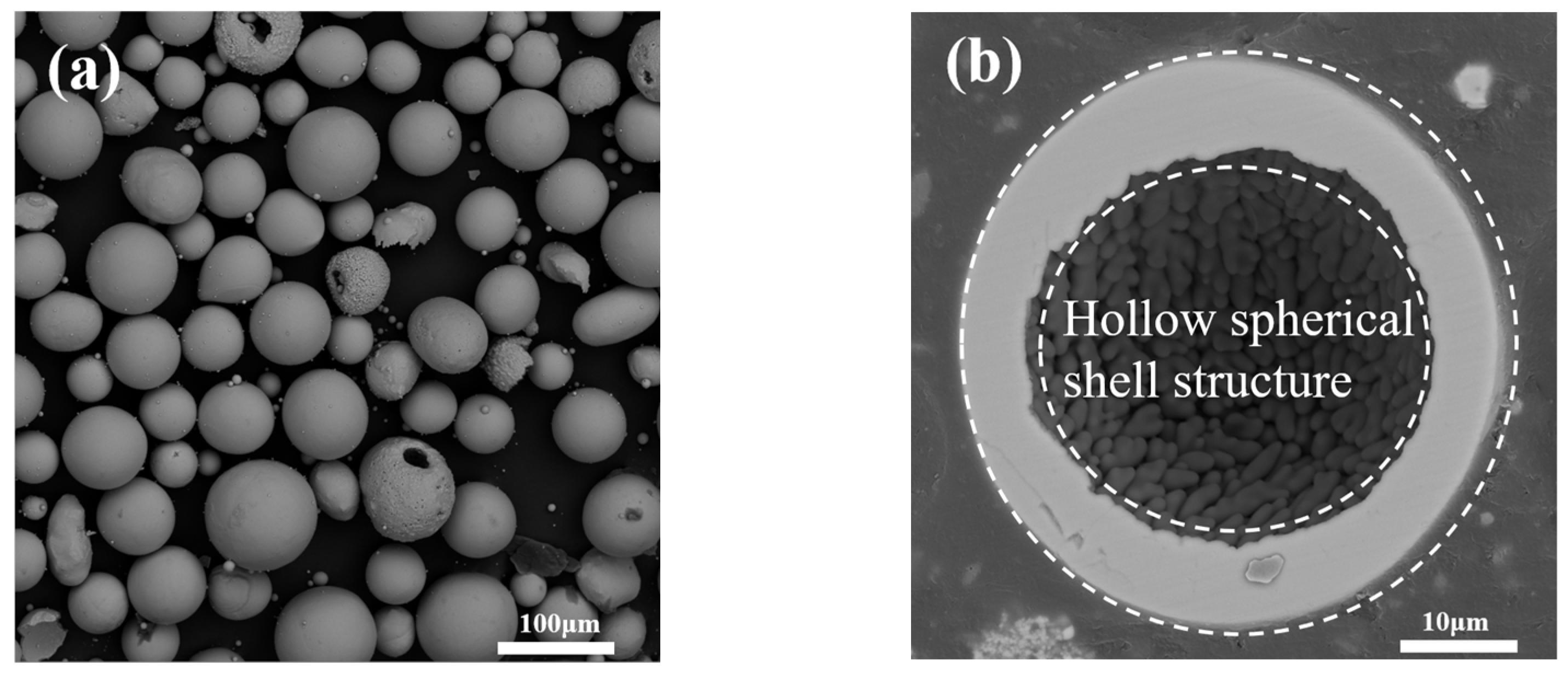
A curved stainless steel substrate was employed, wherein the outer arc served as the deposition surface. The outer radius of the substrate was 100 mm with a thickness of 20 mm, and the axial length was 400 mm. Metco Amdry 995 (CoNiCrAlY, Oerlikon Metco, Winterthur, Switzerland) was utilized as the bond coat material and 8 wt.% yttria-stabilized zirconia (YSZ, 204B-NS, Oerlikon Metco, Winterthur, Switzerland) was selected as the ceramic top coat material. Figure 1 illustrates the morphology of the YSZ feedstock powder. Figure 1 shows the typical morphology of the feedstock powder, with particle sizes in the range of 39–72 μm. A cross-sectional view in Figure 1b reveals that YSZ powder exhibits a hollow spherical architecture, which enhances both the flowability and flame fusibility characteristics of the powder, thereby satisfying the requirements of the plasma spraying process.

2.2. Coating Deposition Procedure

Prior to spraying, the curved stainless steel substrate was subjected to grit blasting (Al2O3, 80 mesh, 0.4 MPa) to augment surface roughness. Following grit blasting, the surface roughness was measured using a surface profilometer, yielding an average roughness of about Ra = 5 μm. The substrate was maintained under continuous rotation to ensure uniform thickening across the entire working surface. The curved substrate was rotated at a linear speed of 800 mm/s (measured at the outer arc surface), corresponding to an angular velocity of 76 rpm.
The centrifugal force acting on a molten droplet upon impact can be expressed as follows [27]:
F c = m ω 2 r
where m is the droplet mass, ω is the angular velocity, and r is the substrate radius. This force acts radially outward, potentially hindering droplet spreading and promoting premature solidification, thereby affecting interlamellar bonding.
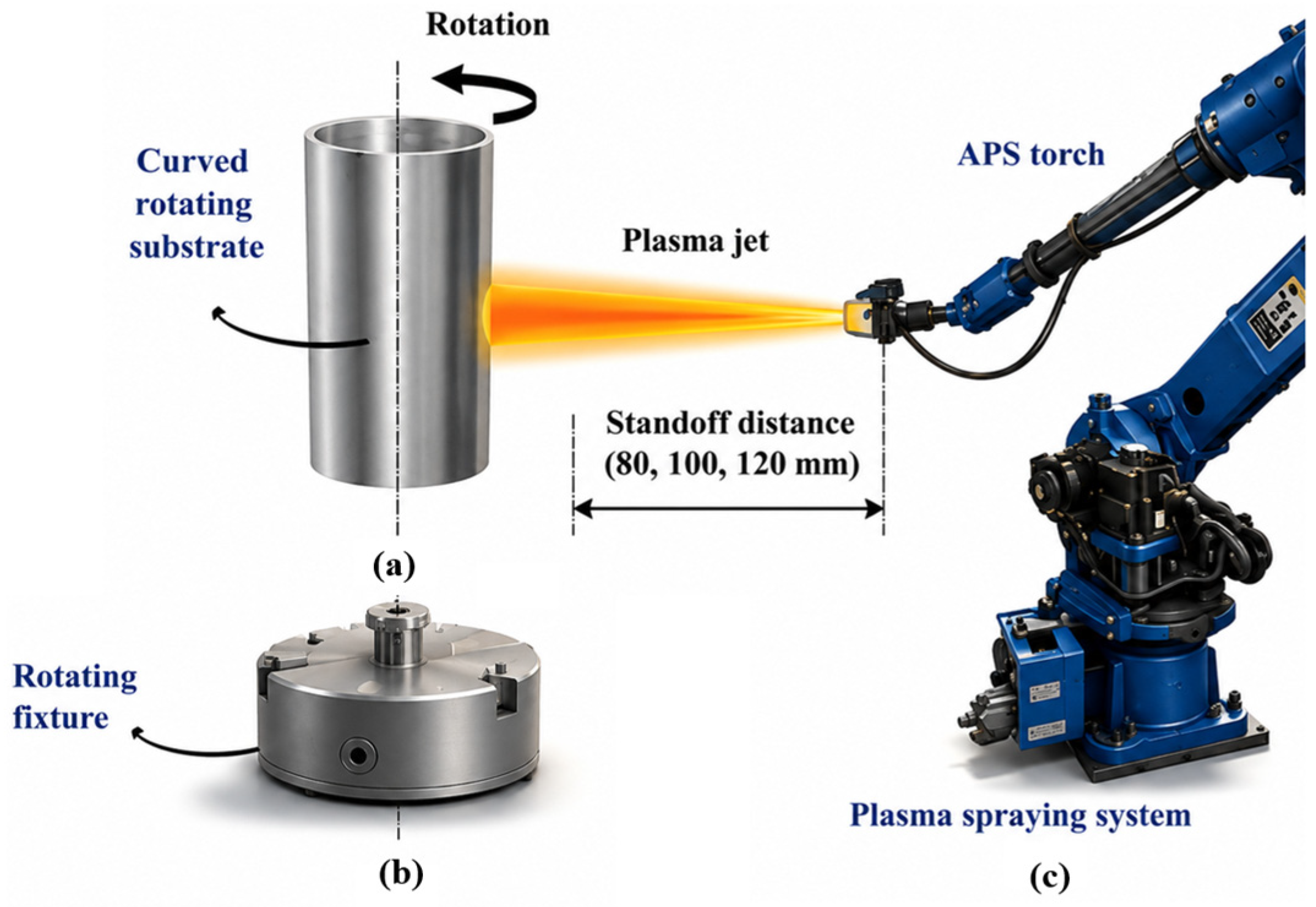
The YSZ feedstock powder was dried at 100 °C for 2 h to improve its flowability. An Oerlikon Metco UniCoat Pro plasma spraying system equipped with an F4 spray gun was employed to deposit a CoNiCrAlY bond coat, followed by a YSZ top coat. The spraying parameters adopted for the bond coat and ceramic top coat are summarized in Table 1 and Table 2, respectively. Three standoff distances of 80 mm, 100 mm and 120 mm in the case were designed to deposit YSZ coatings. The experimental workflow is schematically illustrated in Figure 2.

2.3. Characterization

Phase composition analysis of the powders and as-sprayed coatings was performed using an XRD-6000 X-ray diffractometer (Shimadzu, Kyoto, Japan) using Cu Kα radiation (λ = 0.15406 nm) operated at 40 kV and 30 mA. Diffraction patterns were acquired over a 2θ angular range of 10–90° at a scanning rate of 5° min−1. For cross-sectional microstructural examination, the coated specimens were sectioned, sequentially ground with SiC abrasive papers from 500 to 2000 grit, and subsequently polished using diamond paste. The test samples were mounted with an epoxy adhesive by infiltration before cutting to avoid any artifact cracks. The polished cross-sections were examined utilizing a scanning electron microscope (SEM). The pore area fraction was quantitatively determined using ImageJ (v1.54g, NIH, USA) image analysis software, and the arithmetic mean of the ten measurements was reported as the coating porosity.

2.4. Coating Property Testing

It is well recognized that indentation-derived mechanical properties of coatings can be influenced by substrate effects, particularly for metallic substrates, as shown in the report [28]. Therefore, in this study, the indentation positions were carefully selected within the coating thickness to minimize substrate influence.
The Vickers microhardness of the coatings was measured using a microhardness tester under an applied load of 0.3 kgf with a dwell time of 15 s. For each specimen, nine indentations were performed at randomly selected locations across coating cross-sections, and the arithmetic mean was reported as the representative hardness value. The Vickers hardness was calculated from the dimensions of the diamond-shaped indentation according to the following expression [29]:
H V = 1.8544 P d 2
where P represents the applied indentation load in kilograms-force (kgf) and d signifies the arithmetic mean of the two indentation diagonals, d1 and d2, expressed in millimeters (mm).
The elastic modulus of the coatings was evaluated using the Knoop indentation method under an applied load of 0.3 kgf with dwell time of 15 s. The elastic modulus E was derived from the Knoop hardness measurements, which inherently capture the elastic recovery behavior of the material. This recovery is correlated with the ratio of hardness to elastic modulus, HV/E, according to the following expression [30]:
b a = b a a H V E
where a′ and b′ denote the long and short diagonal lengths of the Knoop indentation after elastic recovery (in m), respectively; HV represents the Vickers hardness of the material; E corresponds to the elastic modulus (in GPa); and α is a dimensionless constant equal to 0.45. The geometric parameters a and b in the Knoop indentation test are dictated by the indenter geometry, whereas the HV value is obtained independently using a Vickers hardness tester. Accordingly, once the recovered diagonal lengths a′ and b′ have been measured, the elastic modulus E of the coating can be directly computed from the above expression.
The fracture toughness of the YSZ coatings was evaluated using the indentation method under an applied load of 1.0 kgf with a dwell time of 15 s. The fracture toughness KIC was calculated from the dimensions of the indentation and the associated crack lengths. For each specimen, nine indentations were performed at randomly selected locations, and the arithmetic mean was reported as the representative fracture toughness value. Under conditions where c/a ≥ 2.5 and the crack morphology is crescent-shaped, the fracture toughness KIC is expressed as follows [31]:
K I C = 0.0711 H v d 1 2 E H v 2 5 c d 3 2
where Hv denotes the Vickers hardness of the material, a corresponds to the half-diagonal length of the indentation (i.e., a = d/2), E represents the elastic modulus, and c signifies the crack half-length (radius) measured from the indentation center.
To improve the accuracy of test results, a total of 10 testing points were adopted for hardness, elastic modulus and fracture toughness measurements. The standard deviation was calculated to represent the dispersion of experimental data.

3. Results

3.1. Microstructure of YSZ Coating

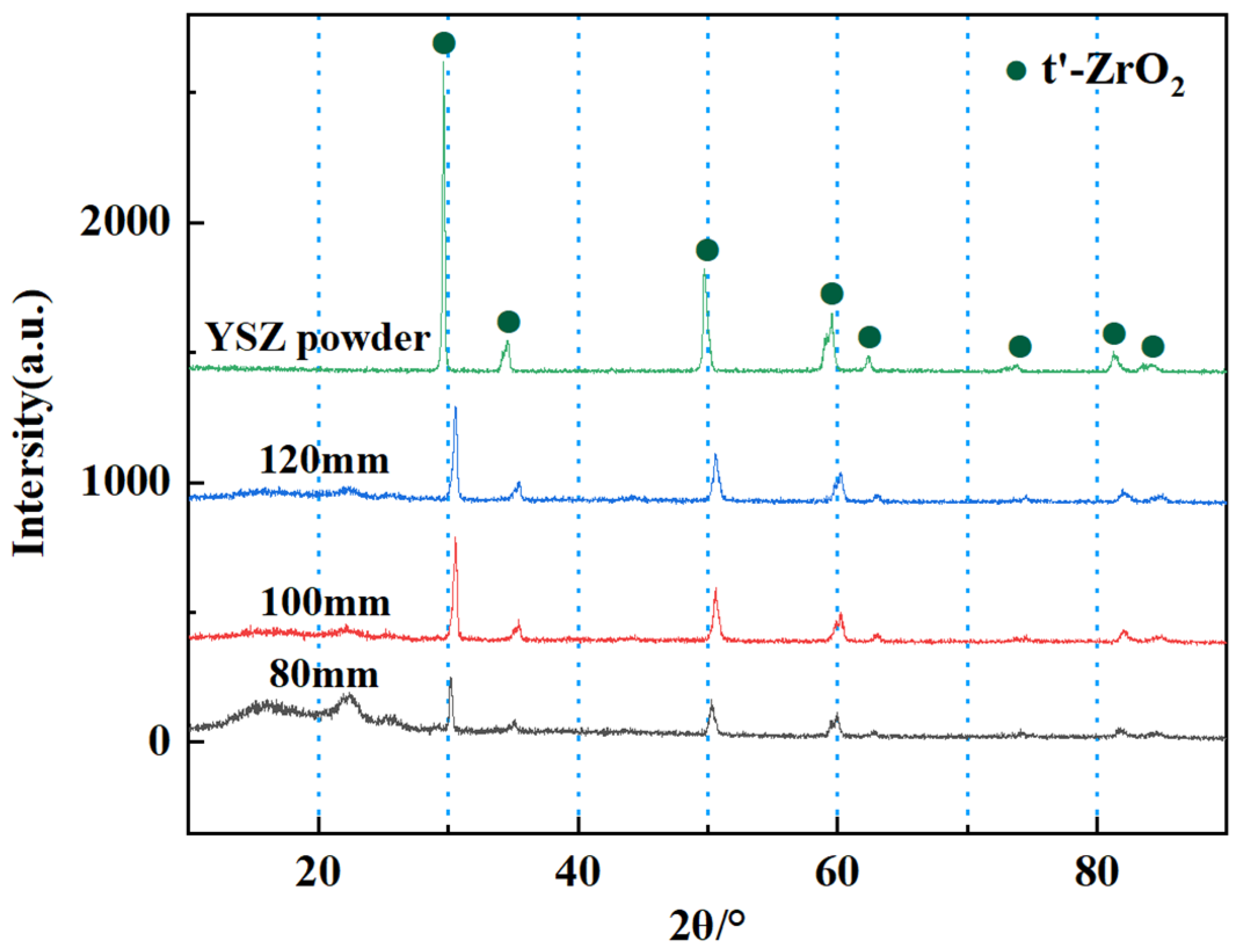
Figure 3 presents the X-ray diffraction (XRD) patterns of YSZ feedstock powder and the YSZ coatings deposited at standoff distances of 80 mm, 100 mm and 120 mm. The diffraction patterns reveal that the sharp diffraction peaks exhibited by all coating specimens correspond closely to the characteristic reflections of the metastable tetragonal p primarily governed by phase (t′-ZrO2) identified in the original YSZ powder [32]. No characteristic peaks of the monoclinic phase (m-ZrO2) were detected.
The coatings deposited at standoff distances of 100 mm and 120 mm were devoid of any discernible impurity phases. In comparison, the diffraction peaks of the specimen remained consistent with the characteristic reflections of t′-ZrO2, signifying that the chemical phase composition was preserved. However, two broadened diffuse scattering features were evident in the low-angle region spanning 10° to 28°. The low-angle broad hump observed in the 80 mm specimen in the case was dominated by two factors: superheat droplets and accelerated cooling rate. An accelerated cooling rate can inhibit nucleation and crystal growth, ultimately inducing amorphous formation [33]. In the case, rapid quenching of molten droplets yielded an abundant amorphous phase predominantly distributed on the splat surface because surface amorphous phases generally produce diffuse diffraction signals at low diffraction angles. In contrast, no such amorphous phase is observed in the YSZ coating deposited on a planar stationary substrate [34]. Increasing standoff distance to 100 mm lowers droplet temperature and cooling rate, facilitating crystallization and eliminating low-angle amorphous humps in the XRD spectrum.
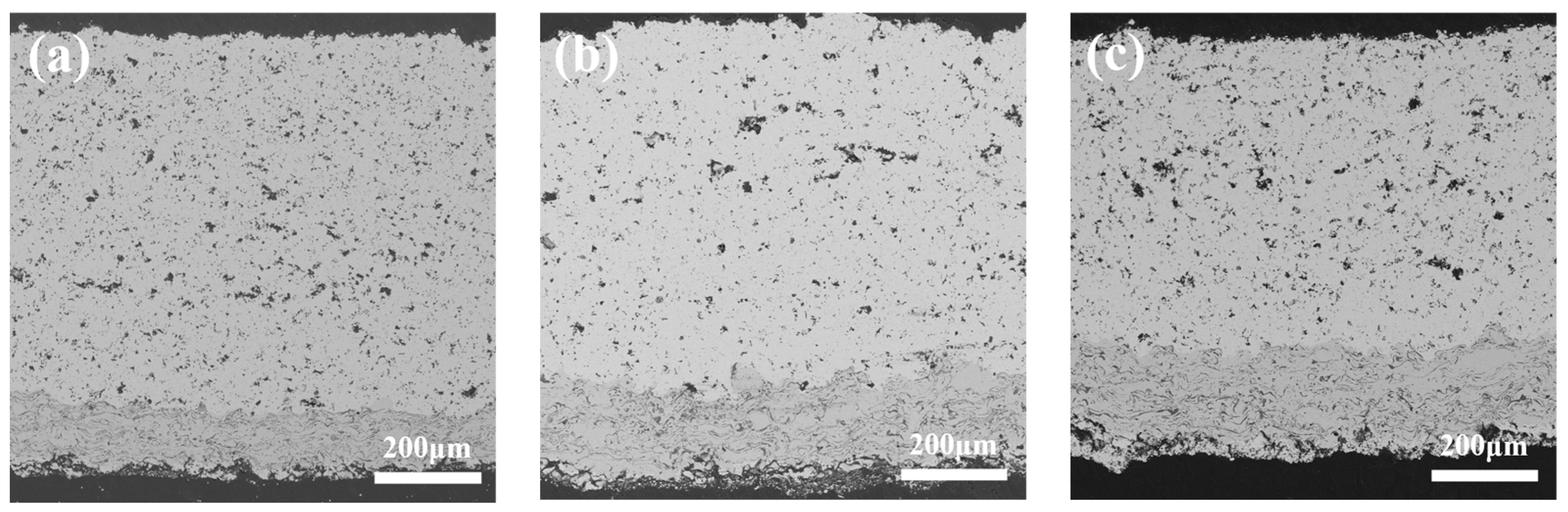
Figure 4 presents the cross-sectional morphology of TBCs deposited at three different standoff distances. The YSZ coating thicknesses were 632 μm, 611 μm, and 523 μm as the standoff distance increased from 80 mm to 120 mm, corresponding to an approximate 17% reduction in deposition efficiency. As the standoff distance increased, the flight time of the molten particles was progressively prolonged, resulting in a corresponding decrease in particle velocity.
Quantitative image analysis of the cross-sectional micrographs revealed that the average porosity of the YSZ coatings increased with standoff distance, ranging from 11.27% at 80 mm to 12.83% at 100 mm, and further to 13.29% at 120 mm. For comparison, previous studies on planar substrates reported slightly lower porosity values, approximately 10.2% at 80 mm and 12.2% at 100 mm [35,36]. The observed differences can be attributed to the deposition on a rotating curved substrate, where the combined effects of centrifugal force and rapid cooling accelerate droplet solidification and influence the spreading of molten splats. This mechanism tends to reduce the filling of inter-splat gaps and promotes pore clustering; however, the enhanced cooling also limits pore growth, which may result in overall porosity being lower than that of coatings deposited on stationary planar substrates.
Moreover, a greater standoff distance promotes enhanced heat exchange between the molten droplets and the surrounding atmosphere, thereby reducing the particle surface temperature. In addition, the rotating curved substrate further accelerates droplet cooling upon impact, which suppresses the spreading behavior of molten splats. Owing to the combined influence of these factors, the deposition efficiency of YSZ diminished with increasing standoff distance, leading to a gradual reduction in coating thickness.
The light gray continuous phase corresponds to the YSZ ceramic top coat, whereas the irregular black regions represent pores within the coating. It should be noted that these features were carefully distinguished from possible polishing-induced pull-out artifacts based on their morphology and spatial distribution. As the standoff distance increased, the coating porosity exhibited a progressive rising trend. The observed pores generally display rounded or irregular morphologies embedded within splat boundaries, which is characteristic of intrinsic porosity in plasma-sprayed coatings, rather than sharp-edged cavities typically associated with preparation-induced damage. The results deviate substantially from the microstructural characteristics reported for YSZ coatings deposited on stationary planar substrates [37]. In addition, the pores in the YSZ coating in the present case exhibited a tendency to agglomerate and coarsen. Due to the centrifugal force, splats distributed non-uniformly along the surface, resulting in local regions with insufficient material to fill inter-splat gaps, thereby promoting the spatial clustering of pores. Meanwhile, the improved cooling rate of the molten droplets induced an adequate spreading of splats, forming shadow pores. Ultimately, under the coupled influence of centrifugal force and cooling rate, the pores in the coating in present case exhibited a tendency to agglomerate and coarsen.
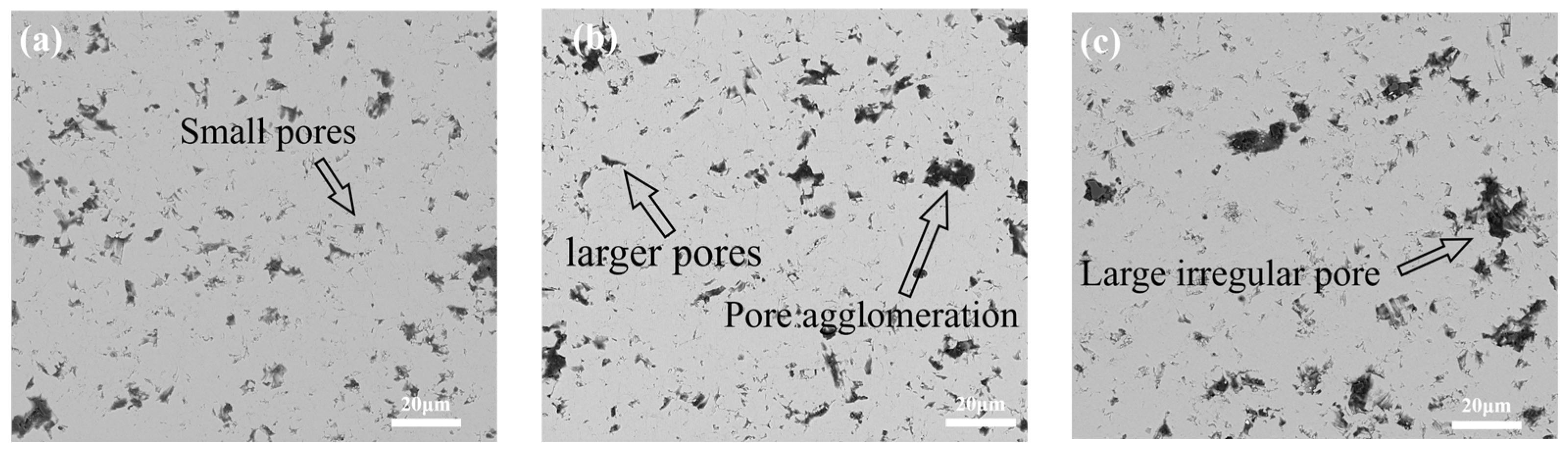
Figure 5 illustrates the microstructure of the YSZ coatings deposited at different standoff distances. In the coating deposited at a standoff distance of 80 mm, the pores were relatively small in dimension and uniformly distributed, with no evidence of extensive pore agglomeration. Both the size and population of the pores in the coating prepared at a standoff distance of 100 mm increased appreciably, and a fraction of larger agglomerated pores became discernible. At a standoff distance of 120 mm, a substantial quantity of irregular, large-scale pores emerged, accompanied by pronounced pore agglomeration. This trend was consistently observed across multiple regions of the coating cross-sections, indicating that it is not attributable to localized preparation artifacts.
During the spraying process, an abbreviated flight duration of the molten particles restricts heat exchange with the surrounding atmosphere [38]. In the present case, owing to the comparatively short standoff distance, the molten particles undergo extensive spreading upon impingement with the substrate surface, thereby yielding a coating with reduced porosity. As the standoff distance is extended, the flight time of the molten particles becomes progressively prolonged, and the thermal exchange with the ambient environment is correspondingly enhanced. Furthermore, the accelerated cooling induced by the rotating curved substrate further impedes the complete spreading of the molten droplets across the substrate surface, thereby promoting the formation and retention of inter-splat pores and contributing to the overall increase in coating porosity.
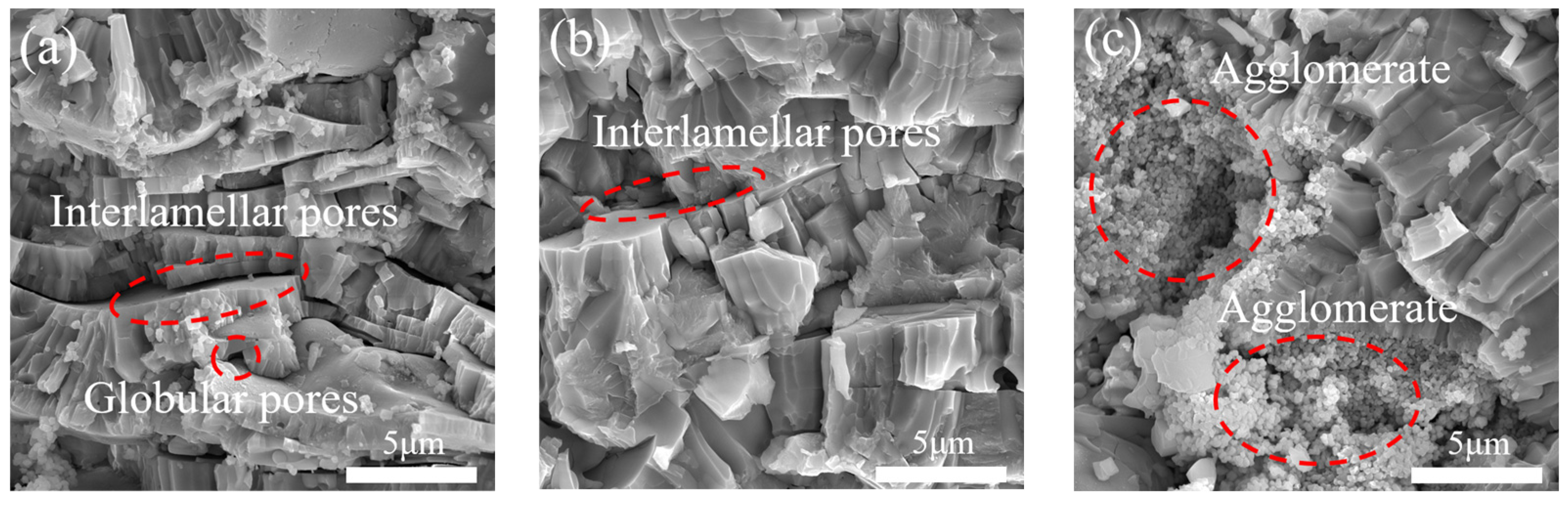
Figure 6 shows cross-sectional microstructures of the YSZ coatings deposited at different standoff distances. All three coatings (80, 100, and 120 mm) exhibit a layered structure, indicating that a continuous lamellar coating can still form on a rotating curved substrate. However, the standoff distance significantly affects the coating density, defect type, and interlamellar bonding.
In-flight agglomeration occurs when partially melted particles collide and stick in the plasma jet before reaching the substrate, which is mainly influenced by powder size distribution, plasma temperature and standoff distance [39]. The particle size of YSZ powder in the case was in the range of 39–72 μm, which is harder to fully melt than finer powders, making it prone to sticking during flight. Longer standoff distances increase flight time and thus the chance of in-flight agglomeration, but the overall fraction of such agglomerates was limited in the standoff distance range (80–120 mm) according to Ref. [40].
In terms of the rotating curved surface, two factors affected the article agglomeration: the rapid movement of the substrate through the plasma and the centrifugal force. The rapid movement accelerated cooling rate of the molten droplets; meanwhile, the centrifugal force prevented the droplets from spreading. As a result, molten particles piled up into irregular agglomerates. This effect was more pronounced at longer distances (e.g., 120 mm), where the particles arrived at lower temperature and velocity, further weakening their ability to spread.
At a standoff distance of 80 mm, the coating exhibits, in addition to the lamellar architecture, considerable interlamellar cracks and unbonded interfaces, along with a small number of agglomerated particles dispersed across various regions. This phenomenon might be attributed to the excessively short standoff distance, wherein the particles are intensely heated within the plasma jet, yielding molten droplets at substantially elevated temperatures. However, the inherently high cooling rate prevalent on the surface of the rotating curved substrate induces rapid solidification of a fraction of the molten particles, which consequently appear as agglomerated features distributed throughout the coating. Moreover, the accelerated cooling promotes the formation of prominent interlamellar cracks. In addition, centrifugal forces reduce the probability of effective particle adhesion to the curved substrate surface. A fraction of molten or semi-molten droplets experienced splashing or partial detachment after impact.
At 100 mm, the coating exhibits fewer interlamellar cracks and unbonded interfaces, with no obvious agglomerates or pores, and a well-organized structure. This distance is moderate: high-temperature particles cool slightly during flight by exchanging heat with the surrounding environment, so their temperature matches the high cooling rate of the rotating curved substrate, allowing for full flattening and a good microstructure.
At 120 mm, the coating still has few interlamellar cracks and unbonded interfaces, but it contains many agglomerates and a more disordered structure. The excessively large standoff distance results in prolonged particle flight time, leading to significant heat loss to the surrounding environment and consequently lower particle temperatures upon impact: particles fly too long, lose excessive heat to the environment, and arrive at a low temperature, making flattening difficult. At the same time, centrifugal forces cause droplet splashing and fine particle agglomeration [41]. Together, these effects lead to large, agglomerated pores.
It should be clarified that the role of centrifugal force is not to physically move or merge already-formed pores, but to alter the spreading dynamics of molten or semi-molten droplets upon impact. Under centrifugal force, the liquid splats experience tangential flow, leading to non-uniform redistribution of molten material across the surface. This results in local regions with insufficient material to fill inter-splat gaps, thereby promoting the spatial clustering of pores. At the same time, the reduced spreading efficiency under these conditions further limits the ability of molten material to infiltrate and seal adjacent voids, reinforcing pore retention and coarsening. Combined with rapid solidification, this non-uniform distribution is retained in the final coating, giving rise to the observed pore agglomeration and coarsening.

3.2. Mechanical Properties of YSZ Coatings

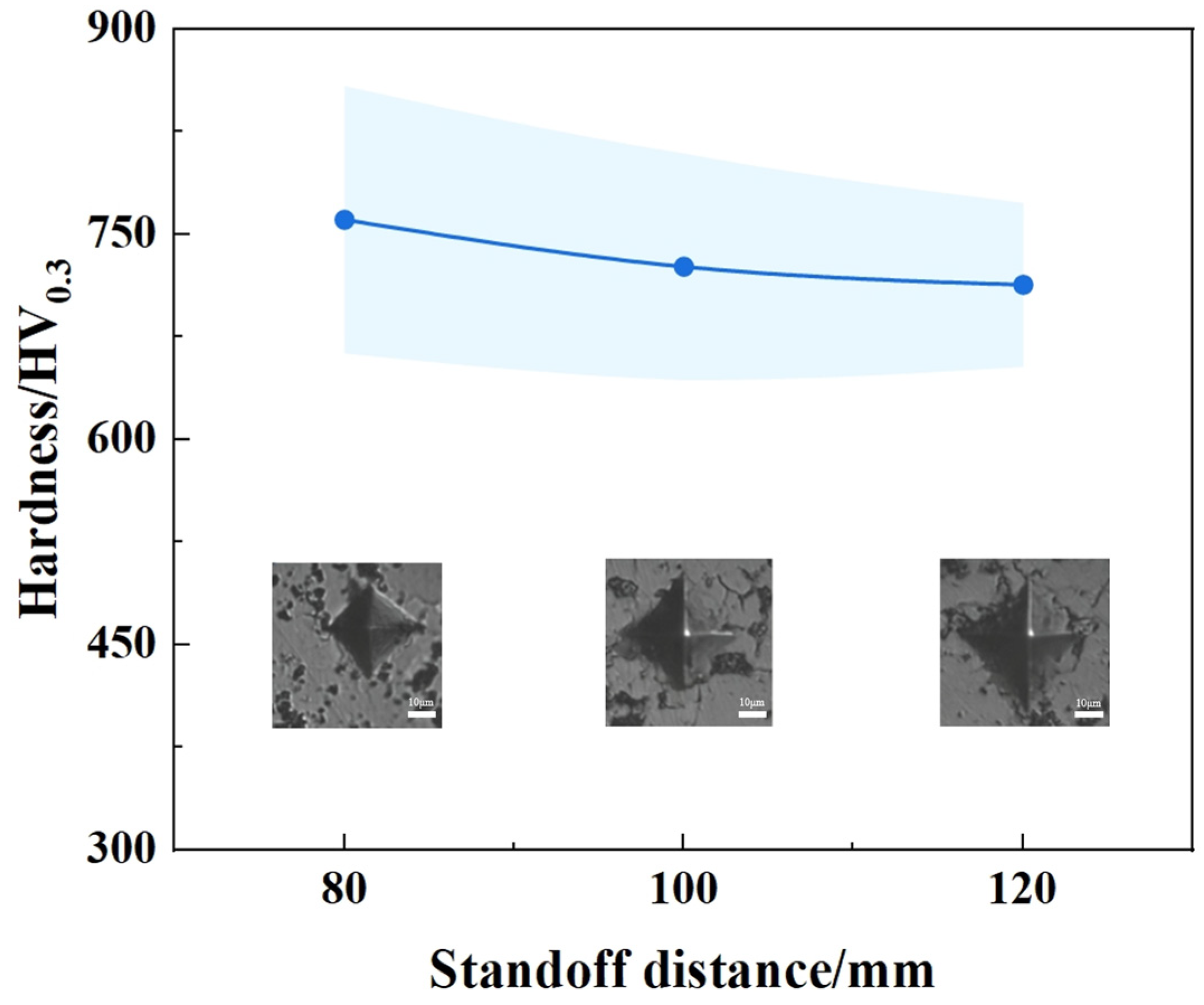
Figure 7 presents the indentation morphology and the corresponding microhardness variation as a function of standoff distance for the YSZ coatings. The microhardness declined monotonically from 760.8 ± 97.8 HV0.3 to 713.2 ± 60.0 HV0.3 when the standoff distance was increased from 80 mm to 120 mm. A greater standoff distance leaded to insufficient particle melting and diminished kinetic energy upon impact. Furthermore, the high cooling velocity impaired the capacity of the molten particles to spread and effectively fill surface irregularities [42], causing a decrease in porosity. Simultaneously, the centrifugal force generated by the substrate rotating intensified tangential particle splattering and interfacial delamination, resulting in an increased population of defects, such as micropores and non-bonded interfaces, ultimately manifesting as a decrease in hardness.
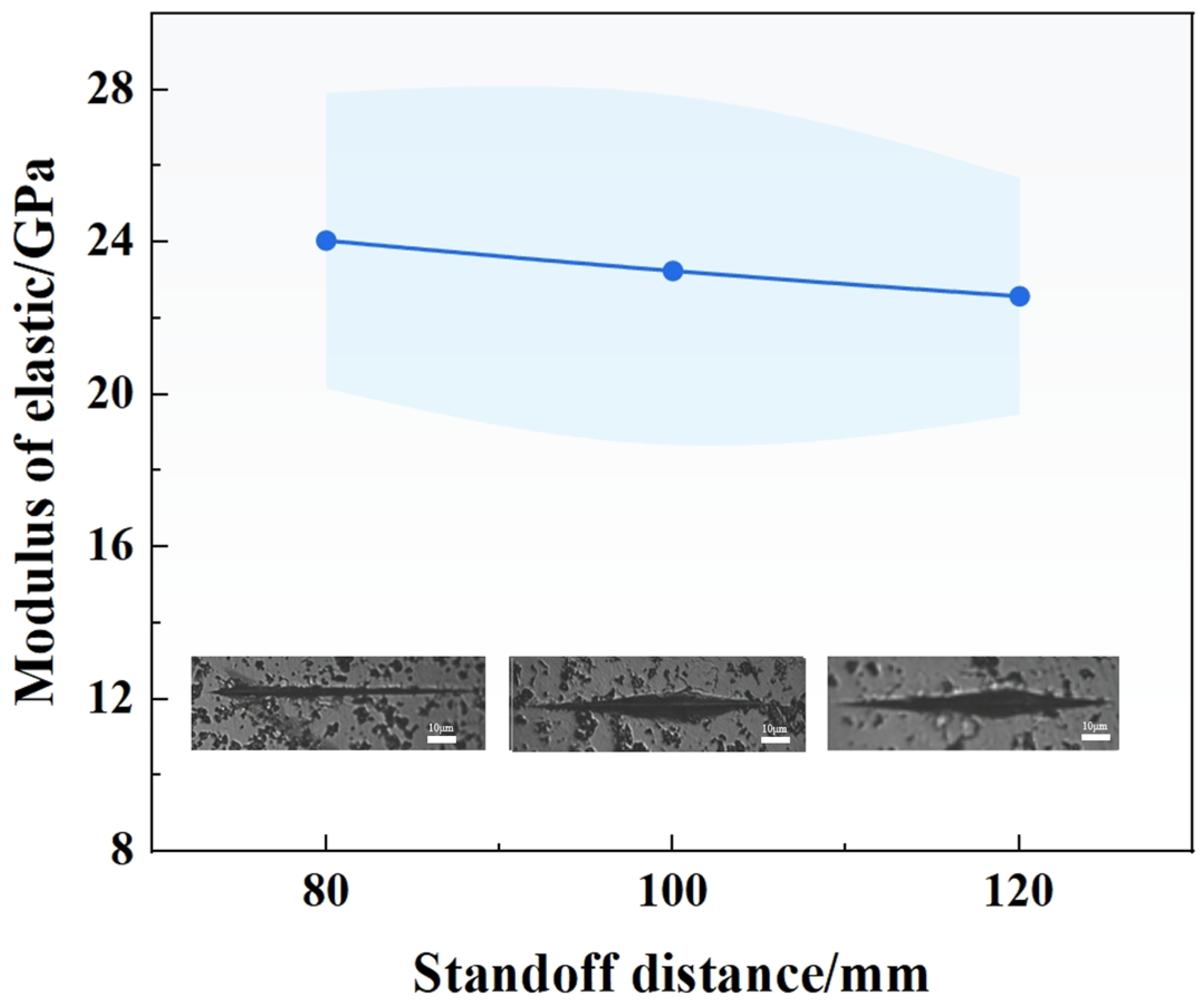
Figure 8 illustrates the relationship between the standoff distance and the elastic modulus. As standoff distances increased from 80 mm to 120 mm, the measured elastic moduli of the YSZ coatings showed a decreasing trend, from 24.0 ± 3.9 GPa to 22.6 ± 3.1 GPa. The elastic modulus constitutes a key parameter that characterizes the resistance of a material to elastic deformation. In terms of thermally sprayed coatings, the macroscopic measured values are collectively governed by the characteristic of the coating, such as the pore characteristics (including porosity, pore morphology and spatial distribution) and the interlamellar interfaces.
As the standoff distance was increased from 80 mm to 100 mm, the heating and acceleration imparted to the droplets by the plasma jet diminished. Moreover, owing to enhanced heat exchange between droplets and ambient atmosphere, coupled with the elevated cooling rate inherent to the rotating curved substrate, the coating porosity increased [43], which is expected to reduce the effective elastic modulus. Upon further extending the standoff distance to 120 mm, the droplet temperature declined more substantially. Consequently, the particles arrived at the substrate with insufficient energy to undergo effective spreading. Additionally, the centrifugal force generated by the rotating substrate modified the spreading behavior of the molten droplets. The particle deposition trajectory deviated from the ideal perpendicular orientation under the influence of this force, instead adopting a non-vertical incidence driven by tangential forces. The synergistic contribution of these two factors promoted the formation of a profusion of agglomerated particles in YSZ coating, culminating in a further decrease in the elastic modulus. These factors contribute to increased defect density and reduced interlamellar bonding, which are generally associated with lower elastic modulus values.
Therefore, although the variation in elastic modulus is subject to experimental scatter, the overall decreasing trend remains consistent with the observed microstructural evolution.
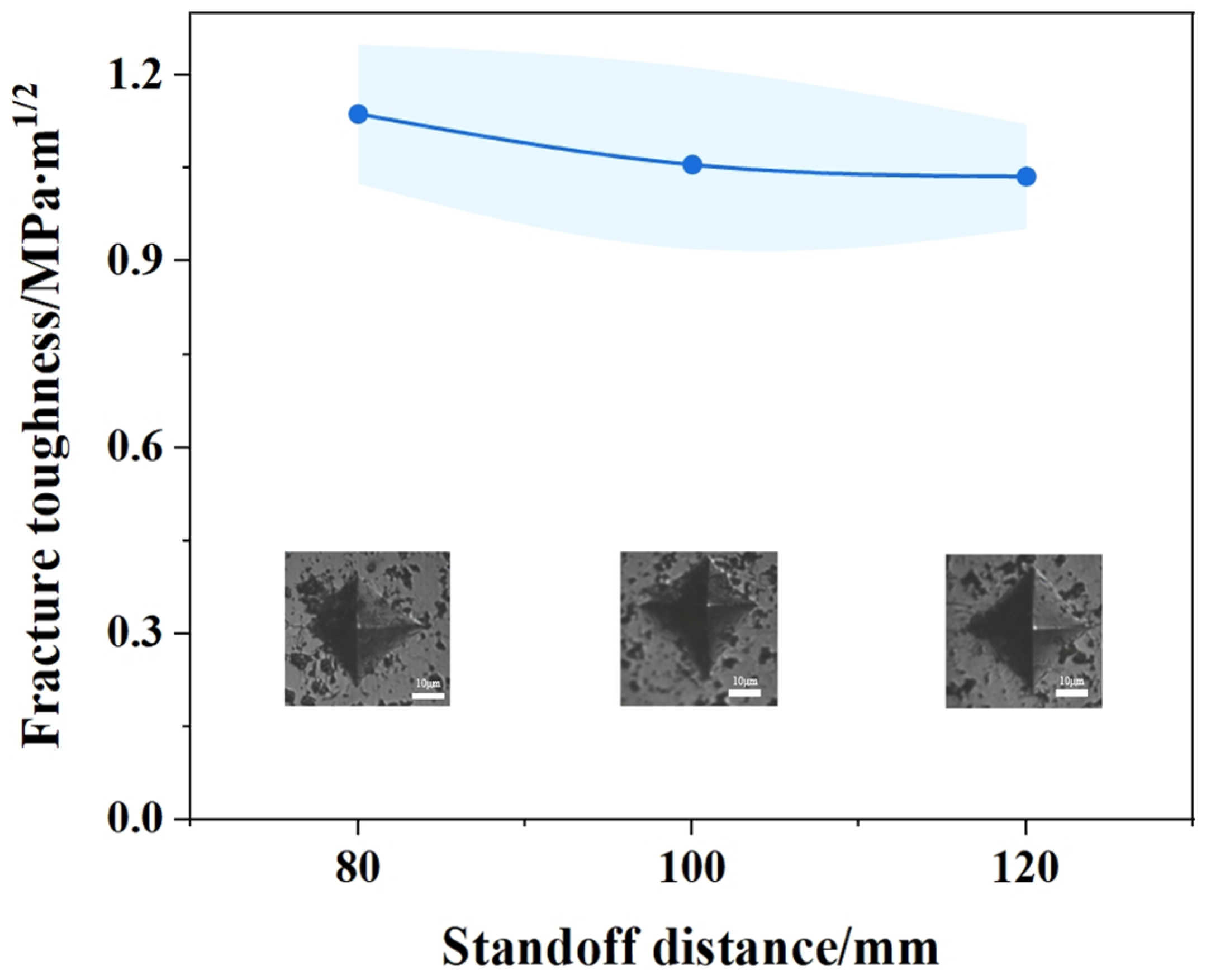
Figure 9 illustrates the relationship between the standoff distance and the fracture toughness of the YSZ coatings. As the standoff distance increased, the fracture toughness exhibited a monotonic decline from 1.14 ± 0.11 MPa·m1/2 to 1.04 ± 0.08 MPa·m1/2. With increasing standoff distance, both the degree of particle melting and the associated kinetic energy diminished, leading to an elevated porosity content within the coating. The resultant pores acted as potent stress concentrators, providing low-resistance pathways that facilitate crack propagation [44]. Concurrently, the centrifugal force imposed by the rotating substrate can induce tangential slippage of the molten droplets upon impingement, thereby compromising the mechanical interlocking and metallurgical bonding. The synergistic contribution of these two factors accounted for a continuous degradation in fracture toughness.
The coating deposited at a 100 mm standoff distance on the rotating curved substrate achieved a good balance of structural integrity and mechanical performance, with intact lamellae and uniform porosity.
In contrast, when the spraying distance is 80 mm, interlayer cracks and unbound interfaces are more obvious in the coating. When the spraying distance increases to 120 mm, a large number of agglomerates can be seen. Both of these defects can damage the structural integrity of the coating, further confirming the suitability of a 100 mm spraying distance on a rotating curved substrate.
This makes it suitable for industrial components with curved or rotating geometries, such as turbine blades, shafts, and other rotating parts, where conventional planar substrate parameters may not apply.
Although slightly lower in hardness and fracture toughness than coatings on static planar substrates, the optimized 100 mm condition still provides sufficient mechanical performance for thermal barrier, wear-resistant, and protective coatings. These results highlight the need to tailor plasma spraying parameters to realistic rotating geometries to achieve reliable coating performance.
The coating produced under this standoff condition displayed a microhardness of 726.4 HV0.3, an elastic modulus of 23.2 GPa and a fracture toughness of 1.06 MPa·m1/2. These values were generally lower than those reported for YSZ coatings deposited onto stationary planar substrates under comparable standoff distances [45,46], as summarized in Table 3.
The representative literature data for APS-YSZ coatings deposited on stationary planar substrates are summarized in Table 3 for qualitative comparison. Although differences in spray parameters and characterization methods among studies prevent strict quantitative comparison, the literature generally reports denser splat structures and higher mechanical properties for stationary planar substrates under comparable spray distances.
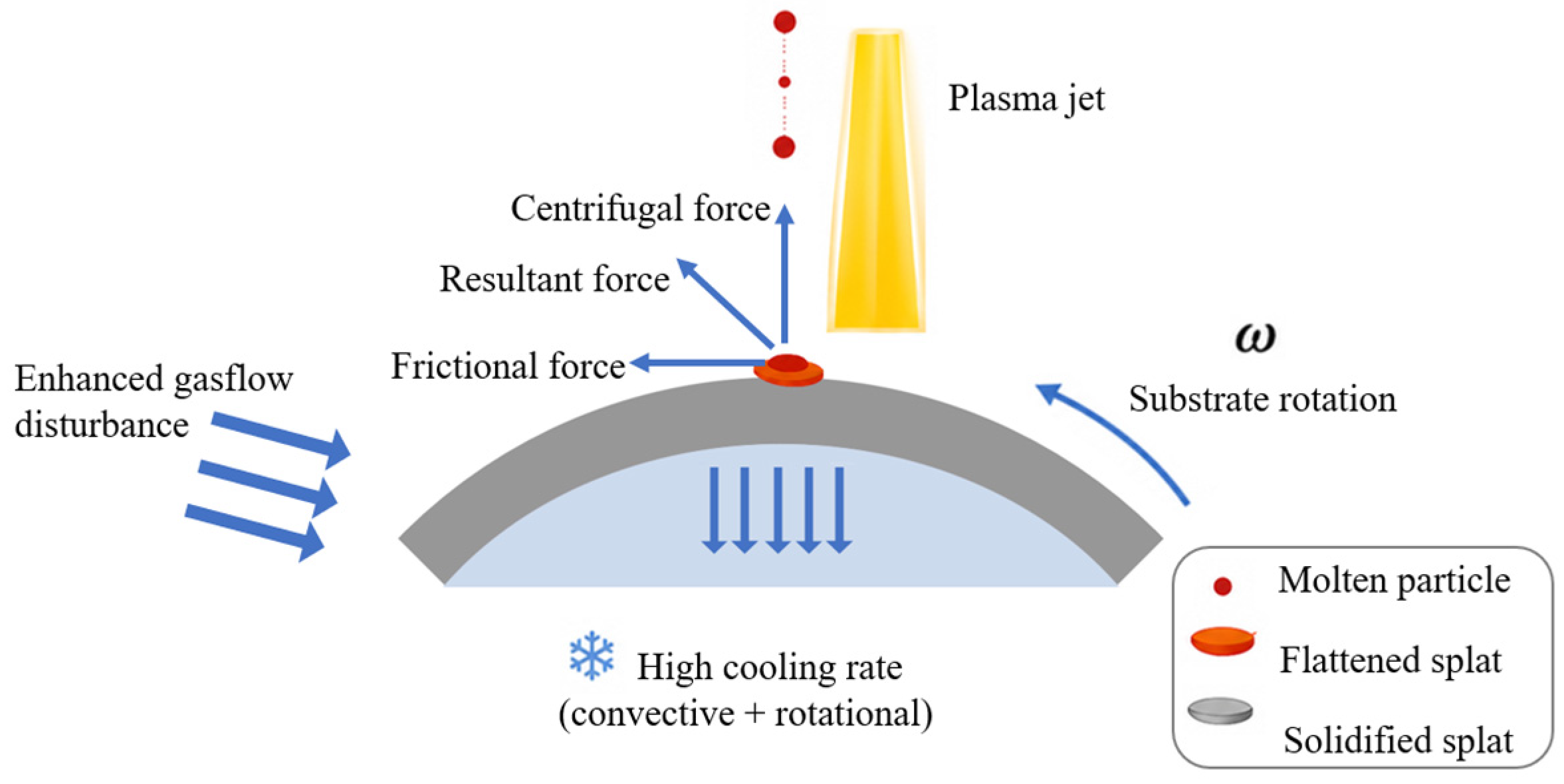
The schematic diagram of the behavior of the underlying particles is shown in Figure 10 to analyze the individual effects of standoff distance and substrate rotation on coating performance.
Under a constant substrate rotation speed, the temperature and velocity of molten particles prior to impact reduced with increasing the standoff distance, leading to higher porosity and lower mechanical properties. In the present study, as the distance increased, porosity rose from 11.27% to 13.29%, and microhardness decreased from 760.8 HV0.3 to 713.2 HV0.3. This monotonic trend was independent of substrate motion and follows the conventional behavior of atmospheric plasma spraying.
Compared with the coatings deposited on the static planar substrate, substrate rotation introduced two factors, namely accelerated cooling of the substrate and centrifugal force acting on molten droplets during spreading, which blocked droplets flattening, induced particle agglomeration and increased the porosity. The hardness was 726.4 HV0.3 and the porosity was 12.8% in terms of the coating deposited at standoff distance of 100 mm on rotating curved substrate. In comparison, a static planar substrate under typical optimized conditions can generally achieve lower porosity and higher hardness (>750 HV0.3) [45]. This indicated that substrate rotation could cause significant degradation of coating densification.
The centrifugal effect intensifies and the cooling rate of molten droplets rises if coatings are deposited at a higher rotation speed substrate. Higher centrifugal force drives droplets away from the substrate surface and induces particle splashing, raising the fraction of unbonded interfaces and porosity in the coating. Meanwhile, improved convection accelerates heat dissipation of molten droplets, shortening their solidification and spreading durations. As a result, droplets solidify before adequate spreading, readily forming bridging structures that induce shadow pores. Ultimately, more microcracks and agglomerates emerge in coatings, accompanied by further degradation in properties such as hardness and bonding strength.
Consequently, the performance metrics derived from coatings deposited onto static planar substrates cannot be directly extrapolated to comprehensively characterize the behavior of coatings applied to rotating curved surfaces. This discrepancy is attributed to the additional influence of centrifugal force and the elevated cooling rate inherent to the rotating curved substrate, which remain absent in the stationary planar configuration [47]. The microstructure and properties of YSZ coatings on static planar substrates are governed by multiple processing variables, including standoff distance, arc power, and powder feed rate [48]. In contrast, the coating deposited onto the rotating curved substrate in the present investigation is not only influenced by the aforementioned factors but also undergoes further performance degradation owing to the substantially higher cooling rate associated with high-speed rotation. Furthermore, owing to the distinct kinematic state of the substrate, the molten particles are subjected to centrifugal forces during spreading across the rotating substrate surface, which promotes non-uniform particle distribution and consequently contributes to the deterioration of coating performance. It is therefore recommended that the performance benchmarks established under static planar conditions not be directly applied to rotating curved surface scenarios.

4. Conclusions

Atmospheric plasma spraying (APS) was employed to deposit YSZ thermal barrier coatings on rotating curved surfaces. The influence of standoff distances on the microstructure and mechanical properties of the coatings was systematically investigated. It should be noted that the substrate rotation speed was kept constant in this study; therefore, the conclusions are limited to this specific rotation condition. The principal conclusions are briefly summarized as follows:
(1)
The microstructure of YSZ coatings deposited on rotating curved substrates is significantly different from coatings prepared on fixed planar substrates. The rotating surface accelerates the cooling of YSZ molten droplets, hinders effective particle diffusion, promotes particle aggregation, and collectively leads to mechanical properties inferior to coatings deposited on static planar substrates. Therefore, the optimized process parameters on a flat substrate are not directly transferable to rotating curved components.
(2)
The porosity of YSZ coating increased monotonically from 11.27% to 13.29%, with spacing ranging from 80 mm to 120 mm and thickness gradually decreasing from 632 mm to 523 mm. Under the same spraying time, the deposition efficiency decreased by about 17%.
(3)
The microhardness decreased from 760.8 HV0.3 to 713.2 HV0.3, fracture toughness decreased from 1.14 MPa·m1/2 to 1.04 MPa·m1/2, and elastic modulus decreased from 24.0 GPa to 22.6 GPa. Considering the dispersion of the experiment, this trend should be qualitatively explained. In terms of properties, a standoff distance of 100 mm was identified as the optimal condition in this study. This optimum is valid under the present fixed rotation condition and may vary with rotation speed.

Author Contributions

Conceptualization, P.L. and H.D.; methodology, P.L., Y.F. and L.W.; formal analysis, P.L.; investigation, P.L., Y.F. and L.W.; writing—original draft preparation, P.L.; writing—review and editing, H.D. and Y.Z.; supervision, H.D.; project administration, H.D. and Y.Z.; resources, H.D. and L.W.; funding acquisition, H.D. All authors have read and agreed to the published version of the manuscript.

Funding

This research was funded by the National Natural Science Foundation of China (Grant No. 52474081), the Shaanxi Province Key Research and Development Projects (Grant No. 2024CY-GJHX-39), and the Xi’an Innovation Ecology Optimization Special Program Project (Scientists + Engineers Workforce Building Program, Grant No. 24KGDW0039).

Institutional Review Board Statement

Not applicable.

Informed Consent Statement

Not applicable.

Data Availability Statement

The raw data supporting the conclusions of this article will be made available by the authors on request.

Conflicts of Interest

The authors declare no conflicts of interest.

Abbreviations

APSAtmospheric Plasma Spraying
TBCsThermal Barrier Coatings
CTECoefficient of Thermal Expansion
TGOThermally Grown Oxide
YSZYttria-Stabilized Zirconia
EB-PVDElectron Beam–Physical Vapor Deposition
LPPSLow-Pressure Plasma Spraying

References

  1. Tang, Y.; Yi, X.; Luo, S.; Li, Y.; Huang, Y.; Wang, X.; Jiang, K. Ultra-high temperature t’-YSZ/NiCrAlY graded thick TBCs enabled by spherical thin-walled hollow-shell T’-YSZ powder engineering. Surf. Coat. Technol. 2025, 514, 132591. [Google Scholar]
  2. Yang, Y.F.; Ren, S.X.; Ren, P.; Wang, Q.W.; Bao, Z.B.; Li, W.; Zhu, S.L.; Wang, F.H. Hot corrosion and cyclic oxidation performance of a PtAl2-dispersed (Ni,Pt)Al coating prepared by low-activity high-temperature aluminizing. J. Alloys Compd. 2022, 911, 164978. [Google Scholar]
  3. Raytpour, M.; Mehdizadeh, M. Failure analysis of the first stage vane of the gas turbine. Eng. Fail. Anal. 2025, 170, 109281. [Google Scholar] [CrossRef]
  4. Kwon, H.; Choi, J.; Kim, J.; Jung, Y.-G.; Yang, S.; Lee, J.; Park, H. Effect of degradation of the thermal barrier coating on the cooling performance of vane in gas turbine. Int. J. Therm. Sci. 2023, 193, 108506. [Google Scholar] [CrossRef]
  5. Tang, S.; Zhang, C.; Luo, X.; Li, C. Suppressing formation of spinel mixed oxides on HVOF MCrAlY bond coat via a low-power pulsed-laser remelting treatment. Corros. Commun. 2026; in press.
  6. Padture, N.P.; Gell, M.; Jordan, E.H. Thermal barrier coatings for gas-turbine engine applications. Science 2002, 296, 280–284. [Google Scholar] [CrossRef] [PubMed]
  7. Reed, R.C. The Super Alloys: Fundamentals and Applications; Cambridge University Press: Cambridge, UK, 2006. [Google Scholar]
  8. Du, K.; Pei, X.; Liu, C.; Sunden, B. Influence of hole blockage caused by thermal barrier coatings on the turbine vane endwall film cooling performance. Int. J. Therm. Sci. 2025, 208, 109491. [Google Scholar] [CrossRef]
  9. Roy, P.; Parthiban, K.; Ghosh, S. Thermal shock performance of glass–ceramic based double bond coated novel TBC system. Therm. Sci. Eng. Prog. 2025, 58, 103176. [Google Scholar]
  10. He, Z.; Shen, Z.; Shen, Y.; Tao, J.; Xiong, W. Uncovering the thermo-mechanical-chemical coupling damage mechanisms of calcia-stabilized zirconia thermal barrier coatings in molten sulfate mixture. Ceram. Int. 2025, 51, 29690–29706. [Google Scholar] [CrossRef]
  11. Mao, W.; Ye, W.; Fan, X.; Zhou, Z.; Dai, C.; Wu, N. Investigation of Yb2SiO5/BSAS/Si coating on Cf/SiC composites: Processing and steam corrosion behavior. Surf. Sci. Technol. 2024, 2, 10. [Google Scholar] [CrossRef]
  12. Liu, Y.; Liu, Z.; Fei, Y.; Wang, C.; Yang, H. Study on the effect of multi-rare-earth-doping on thermal barrier coatings’ thermophysical and fluorescence properties. Surf. Sci. Technol. 2025, 3, 40. [Google Scholar] [CrossRef]
  13. Levi, C.G. Emerging materials and processes for thermal barrier coating systems. Curr. Opin. Solid State Mater. Sci. 2004, 8, 77–91. [Google Scholar] [CrossRef]
  14. Mehboob, G.; Liu, M.J.; Xu, T.; Hussain, S.; Mehboob, G.; Tahir, A. A review on failure mechanism of thermal barrier coatings and strategies to extend their lifetime. Ceram. Int. 2020, 46, 8497–8521. [Google Scholar] [CrossRef]
  15. Morelli, S.; Bursich, S.; Bolelli, G.; Puddu, P.; Rossi, E.; Mecca, F.G.; Bortolotti, L.; Lusvarghi, L. Thermal conductivity and micromechanical properties of plasma-sprayed yttria-stabilized zirconia thermal barrier coatings. Surf. Coat. Technol. 2025, 513, 132498. [Google Scholar]
  16. Gao, P.-H.; Zeng, S.-C.; Jin, C.; Zhang, B.; Chen, B.-Y.; Yang, Z.; Guo, Y.-C.; Liang, M.-X.; Li, J.-P.; Li, Q.-P.; et al. Thermal Conductivity of Multi-Sized Porous Thermal Barrier Coatings at Micro and Nano Scales after Long-Term Service at High Temperatures. Coatings 2021, 11, 1183. [Google Scholar]
  17. Yu, C.T.; Liu, H.; Zhang, J.; Ullah, A.; Bao, Z.B.; Jiang, C.Y.; Zhu, S.L.; Wang, F.H. Gradient thermal cycling behavior of a thermal barrier coating system constituted by NiCoCrAlY bond coat and pure metastable tetragonal nano-4YSZ top coat. Ceram. Int. 2019, 45, 15281–15289. [Google Scholar]
  18. Radovic, M.; Lara-Curzio, E.; Trejo, R.M.; Wang, H.; Porter, W.D. Thermophysical properties of YSZ and Ni-YSZ as a function of temperature and porosity. In Advances in Solid Oxide Fuel Cells II; Wiley: Hoboken, NJ, USA, 2006. [Google Scholar]
  19. Zhou, F.; Wang, Y.; Liu, M.; Deng, C.; Zhang, X. Thermo-physical and thermal insulation properties of multi-scale nanostructured thermal barrier coatings using as-prepared t′-8YSZ feedstocks. Ceram. Int. 2019, 45, 24096–24103. [Google Scholar] [CrossRef]
  20. Wang, W.; Li, W.; Guo, Y.; Qin, J.; Xie, L.; Wu, G.; Jia, Z.; Ye, W.; Guo, X. Innovative process optimization of 8YSZ coatings via supersonic atmospheric plasma spraying: Unraveling the complex interplay of deposition behavior and microstructure. Surf. Coat. Technol. 2025, 513, 132274. [Google Scholar]
  21. Khiabani, A.; Seyedraoufi, Z.-S.; Shajari, Y.; Rostami, A.; Ayati, H.; Ebrahimi, M. Optimizing YSZ top-coat thickness for enhanced erosion, adhesion, and hot-corrosion resistance in plasma-sprayed thermal barrier coatings: Finite element predictions and experimental validation. Results Surf. Interfaces 2026, 22, 10070. [Google Scholar]
  22. Xue, Z.; Zhou, L.; Shi, M.; Zhang, Z.; Byon, E.; Zhang, S. Preparation and sintering behavior of GdYb-YSZ nanostructured thermal barrier coating. J. Mater. Res. Technol. 2023, 26, 7237–7247. [Google Scholar]
  23. Seng, D.H.L.; Zhang, Z.; Zhang, Z.-Q.; Meng, T.L.; Teo, S.L.; Tan, B.H.; Loi, Q.; Pan, J.; Ba, T. Impact of spray angle and particle velocity in cold sprayed IN718 coatings. Surf. Coat. Technol. 2023, 466, 129623. [Google Scholar] [CrossRef]
  24. Tang, Z.; Yang, T.; Zhang, C.; Wang, W.; Liu, S.; Liu, W.; Liu, C. Influence of Spray Angle on Particle Deposition and Thermal Shock Lifetime of Embedded Micro-Agglomerated Particle Coatings. Coatings 2024, 14, 199. [Google Scholar] [CrossRef]
  25. Kadam, N.; Karthikeyan, G.; Kulkarni, D.; Jagtap, P. Microstructural Characterization, Residual Stress, and Mechanical Properties of Plasma Sprayed 8YSZ Thermal Barrier Coatings. Tribol. Ind. 2022, 44, 230–243. [Google Scholar] [CrossRef]
  26. Ziegelheim, J.; Lombardi, L.; Cesanek, Z.; Houdkova, S.; Schubert, J.; Jech, D.; Celko, L.; Pala, Z. Abradable coatings for small turboprop engines: A case study of nickel-graphite coating. J. Therm. Spray Technol. 2019, 28, 794–802. [Google Scholar] [CrossRef]
  27. Urone, P.P.; Hinrichs, R. Physics; OpenStax: Houston, TX, USA, 2020. [Google Scholar]
  28. Karamimoghadam, M.; Aghayar, Y.; Forooghi, F.; Denora, V.; Mohammadi, M.; Contuzzi, N.; Casalino, G. Wire arc additive manufacturing of low-alloyed steels, copper-aluminum alloys, and their bimetals. Int. J. Adv. Manuf. Technol. 2025, 140, 2177–2194. [Google Scholar] [CrossRef]
  29. Fereidooni, D.; Ghasemi, F. Development of a mandrel indentation test to evaluate surface hardness of dimensional building stones and comparison to Vickers hardness. Int. J. Rock Mech. Min. Sci. 2023, 170, 105491. [Google Scholar] [CrossRef]
  30. Khor, K.A.; Gu, Y.W.; Quek, C.H.; Cheang, P. Plasma spraying of functionally graded hydroxyapatite/Ti–6Al–4V coatings. Surf. Coat. Technol. 2003, 168, 195–201. [Google Scholar]
  31. Costa Oliveira, F.A.; Cruz Fernandes, J. Mechanical and thermal behaviour of cordierite–zirconia composites. Ceram. Int. 2002, 28, 79–91. [Google Scholar] [CrossRef]
  32. Zhou, F.F.; Deng, C.M.; Wang, Y.; Liu, M.; Zhang, X.; Wang, Y. Build-up of the splat with columnar nanocrystalline for thermal barrier coatings derived from nanostructured t′-8YSZ feedstocks. Ceram. Int. 2020, 46, 3989–3993. [Google Scholar] [CrossRef]
  33. Di Girolamo, G.; Marra, F.; Blasi, C.; Serra, E.; Valente, T. Microstructure, mechanical properties and thermal shock resistance of plasma sprayed nanostructured zirconia coatings. Ceram. Int. 2011, 37, 2711–2717. [Google Scholar] [CrossRef]
  34. Yang, E.-J.; Luo, X.-T.; Yang, G.-J.; Li, C.-X.; Li, C.-J.; Takahashi, M. Epitaxial grain growth during 8YSZ splat formation on polycrystalline YSZ substrates by plasma spraying. Surf. Coat. Technol. 2015, 274, 37–43. [Google Scholar] [CrossRef]
  35. Dong, H.; Yao, J.-T.; Li, X.; Zhou, Y.; Li, Y.-B. The sintering behavior of plasma-sprayed YSZ coating over the delamination crack in low-temperature environment. Ceram. Int. 2018, 44, 3326–3332. [Google Scholar] [CrossRef]
  36. Di Girolamo, G.; Blasi, C.; Brentari, A.; Schioppa, M. Microstructure and thermal properties of plasma-sprayed ceramic thermal barrier coatings. Energ. Ambiente Innov. 2013, 1–2, 69–76. [Google Scholar]
  37. Shahien, M.; Suzuki, M.; Tsutai, Y. Controlling the coating microstructure on axial suspension plasma spray process. Surf. Coat. Technol. 2018, 356, 96–107. [Google Scholar] [CrossRef]
  38. Zhou, J.; Guo, W.; He, D.; Huang, Y.; Cai, Z.; Zhou, L.; Xing, Z.; Wang, H. Study on preparation and wear resistance of NiCrBSi-WC/Co composite coatings by pulsed magnetic field assisted supersonic plasma spraying. Surf. Coat. Technol. 2022, 448, 128897. [Google Scholar] [CrossRef]
  39. Tahir, M.; Qasim, M.; Ahmed, N.; Satti, A.N.; Malik, A.E.; Khan, Z.S.; Anwar, M. Impact of atmospheric plasma spraying parameters on microstructure, mechanical properties and thermal cycling performance of YSZ coatings. Ceram. Int. 2024, 50, 53976–53986. [Google Scholar] [CrossRef]
  40. Sobhanverdi, R.; Akbari, A. Porosity and microstructural features of plasma-sprayed yttria-stabilized zirconia thermal barrier coatings. Ceram. Int. 2015, 41, 11921–11932. [Google Scholar] [CrossRef]
  41. Friis, M.; Persson, C.; Wigren, J. Influence of particle in-flight characteristics on the microstructure of atmospheric plasma sprayed yttria stabilized ZrO2. Surf. Coat. Technol. 2001, 141, 115–127. [Google Scholar] [CrossRef]
  42. Mauer, G.; Vaßen, R.; Stöver, D. Atmospheric plasma spraying of yttria-stabilized zirconia coatings with specific porosity. Surf. Coat. Technol. 2009, 204, 172–179. [Google Scholar] [CrossRef]
  43. Ma, K.; Zhu, J.; Xie, H.; Wang, H. Effect of porous microstructure on the elastic modulus of plasma-sprayed thermal barrier coatings: Experiment and numerical analysis. Surf. Coat. Technol. 2013, 235, 589–595. [Google Scholar] [CrossRef]
  44. Qiao, X.; Wang, Y.M.; Weng, W.X.; Liu, B.L.; Li, Q. Influence of pores on mechanical properties of plasma-sprayed coatings: Case study of YSZ thermal barrier coatings. Ceram. Int. 2018, 44, 21564–21577. [Google Scholar] [CrossRef]
  45. Li, H.; Wang, W.; Yang, Z.; Liu, Y.; Wang, Y.; Liu, W. Internal diameter atmospheric-plasma-sprayed high-performance YSZ-based thermal barrier coatings. Coatings 2023, 13, 1868. [Google Scholar] [CrossRef]
  46. Li, C.C.; Wang, T.; Liu, X.J.; Zheng, Z.H.; Li, Q. Evolution of mechanical properties of thermal barrier coatings subjected to thermal exposure by instrumented indentation testing. Ceram. Int. 2016, 42, 10242–10250. [Google Scholar] [CrossRef]
  47. Kang, C.W.; Ng, H.W. Splat morphology and spreading behavior due to oblique impact of droplets onto substrates in plasma spray coating process. Surf. Coat. Technol. 2006, 200, 5462–5477. [Google Scholar] [CrossRef]
  48. Bagathi, M.R.; Vaßen, R.; Guillon, O.; Mauer, G. Coating Characteristics of Plasma-Sprayed Ceramic Thermal Barrier Coatings on Internal Diameter (ID) Surfaces. J. Therm. Spray Technol. 2025, 34, 2918–2938. [Google Scholar] [CrossRef]
Figure 1. Morphology of the YSZ feedstock powder: (a) powder morphology; (b) cross-sectional view.
Coatings 16 00727 g001
Figure 2. Schematic diagram of the experimental workflow: (a) curved substrate; (b) rotating fixture; (c) plasma spraying system.
Coatings 16 00727 g002
Figure 3. XRD patterns of the YSZ coatings deposited at different standoff distances.
Coatings 16 00727 g003
Figure 4. Cross-sectional micrographs of the TBCs deposited at different standoff distances: (a) 80 mm, (b) 100 mm and (c) 120 mm.
Coatings 16 00727 g004
Figure 5. Cross-sectional microstructure of the YSZ coatings deposited at different standoff distances. (a) 80 mm, (b) 100 mm and (c) 120 mm.
Coatings 16 00727 g005
Figure 6. Cross-sectional micrographs of the YSZ coatings deposited at different standoff distances: (a) 80 mm, (b) 100 mm and (c) 120 mm.
Coatings 16 00727 g006
Figure 7. Microhardness of the YSZ coatings as a function of standoff distance. (The blue line represents the mean value, and the blue shaded area indicates the standard deviation.)
Coatings 16 00727 g007
Figure 8. Elastic modulus of the YSZ coatings as a function of standoff distance. (The blue line represents the mean value, and the blue shaded area indicates the standard deviation.)
Coatings 16 00727 g008
Figure 9. Fracture toughness of the YSZ coatings as a function of standoff distance. (The blue line represents the mean value, and the blue shaded area indicates the standard deviation.)
Coatings 16 00727 g009
Figure 10. Schematic diagram of substrate rotation effect.
Coatings 16 00727 g010
Table 1. Deposition parameters for the CoNiCrAlY bond coat.
Process ParameterValue
Power (kW)30
Primary gas (Ar) flow rate (L/min)40–45
Standoff distance (mm)120–150
Traverse speed (mm/min)800
Powder feed rate (g/min)3.5
Table 2. Process parameters for the YSZ top coat.
Process ParameterValue
Power (kW)39
Ar flow rate (L/min)60
Standoff distance (mm)80, 100, 120
Traverse speed (mm/min)800
Powder feed rate (g/min)5
Table 3. Qualitative comparison and literature-based supporting evidence for APS-YSZ coatings.
Results in This Work (Rotating)Literature (Static)
Hardness726.41 HV0.3791 ± 150 HV HV0.3 [45]
Elastic Modulus23.2 GPaAbout 63 GPa [46]
Fracture Toughness1.06 MPa·m1/21.48 MPa·m1/2 [46]
Disclaimer/Publisher’s Note: The statements, opinions and data contained in all publications are solely those of the individual author(s) and contributor(s) and not of MDPI and/or the editor(s). MDPI and/or the editor(s) disclaim responsibility for any injury to people or property resulting from any ideas, methods, instructions or products referred to in the content.