Article

Microstructural Evolution and Thermal Transport in APS SrZrO3 Coatings: An EBSD-Focused Study
1
The State Key Lab of High Performance Ceramics and Superfine Microstructure, Shanghai Institute of Ceramics, Chinese Academy of Sciences, Shanghai 200050, China
2
Department of Physics, Kohat University of Science and Technology (KUST), Kohat 26000, Pakistan
*
Author to whom correspondence should be addressed.
Coatings 2026, 16(6), 729; https://doi.org/10.3390/coatings16060729 (registering DOI)
Submission received: 19 May 2026 / Revised: 8 June 2026 / Accepted: 13 June 2026 / Published: 18 June 2026

Highlights

  • The SrZrO3 is prepared with atmospheric plasma spray technique,
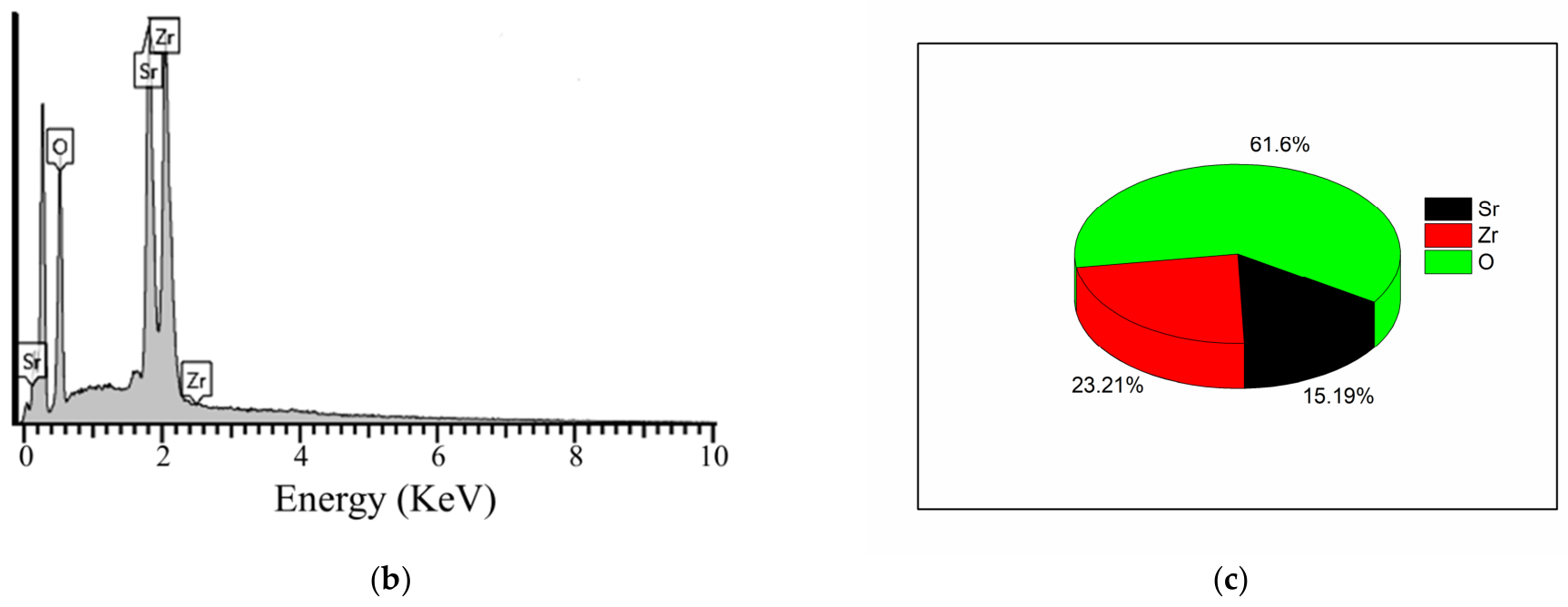
  • The EDS confirmed Zr = 23.21 at. %, Sr =15.19 at. % and O = 61.60 at. %
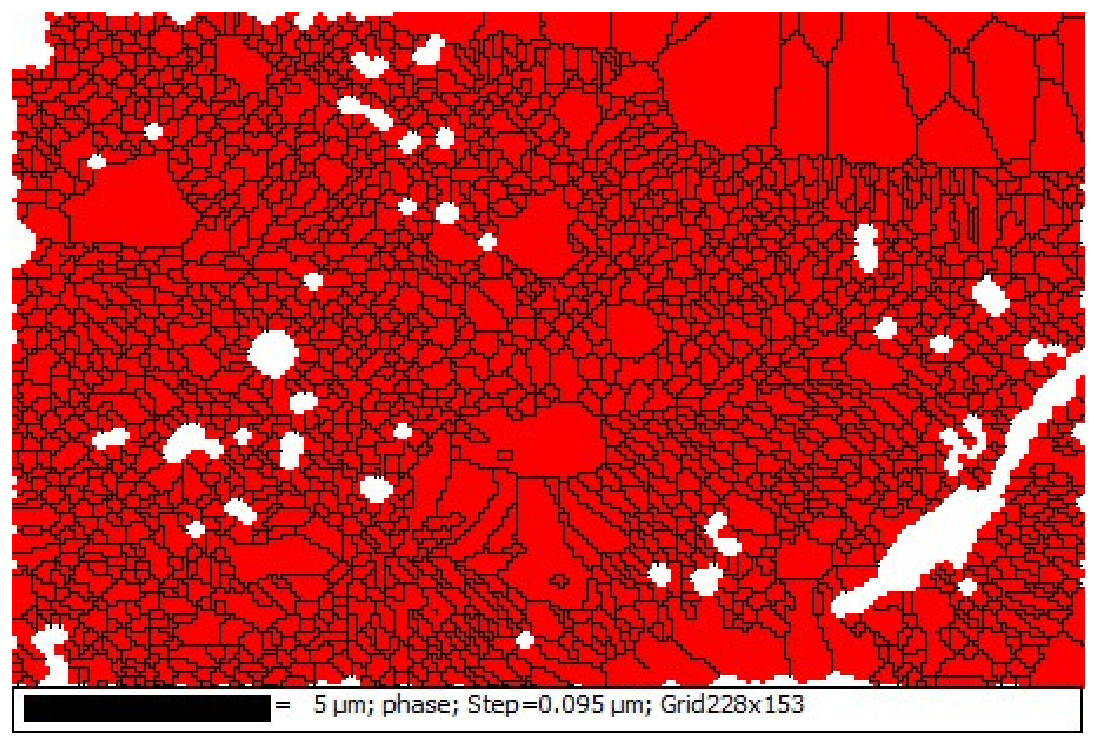
  • The EBSD clarified that 94.5% of the sample is made from SrZrO3.
  • Lowest thermal conductivity is achieved at 800 °C.

Abstract

This work reports the combination of pentagonal grain morphology, high phase purity, and non-monotonic thermal conductivity behavior over a wide temperature range (25–1200 °C). The SrZrO3 coatings with different processing parameters are deposited using atmospheric plasma spraying (APS). Unlike conventional atmospheric plasma-sprayed oxide coatings, distinct pentagonal-shaped grains with multi-directional orientation suggest a unique solidification pathway and anisotropic growth mechanism. The pentagonal morphology may come from the impingement of five radially columnar grain sectors during rapid solidification of a highly undercooled melt splat, constrained by local thermal gradients. This atypical morphology, not commonly reported for SrZrO3 coatings, is further supported by electron backscatter diffraction (EBSD) results, which confirm a remarkably high phase fraction (~94.5%) of SrZrO3 despite rapid quenching inherent to APS processing. The combination of high phase purity and unusual grain geometry represents a significant advancement in tailoring the microstructures of environmental barrier materials. Moreover, the non-linear thermal conductivity response with temperature shows a pronounced decrease up to ~800 °C (0.737 W·m−1·K−1) stabilization between 800 and 900 °C, and a subsequent increase at higher temperatures. This behavior indicates a complex interplay between phonon scattering, defect structures, and possible radiative heat transfer contributions at elevated temperatures.

1. Introduction

Long-term operational stability and reliability of gas turbine engines are significantly enhanced through the application of thermal barrier coatings (TBCs). These multilayer coating systems serve as protective barriers against aggressive combustion environments, wherein the ceramic topcoat is directly subjected to elevated temperatures and severe thermal cycling conditions [1,2,3,4]. Thermal shock phenomena critically affect coating integrity and engine performance; therefore, the selection of ceramic materials with intrinsically low thermal conductivity and superior thermal shock resistance is essential for the effective design of the topcoat layer [5,6].
The yttria-stabilized zirconia (YSZ) is commonly utilized for the ceramic top coat of the thermal barrier coating; however it undergoes phase transitions along with accelerated sintering, influencing its performance [7]. Perovskite ABO3 compounds are suitable alternatives for high-temperature applications [8,9,10]. The excellent properties of SrZrO3 including high melting point, good thermal stability, low oxygen-ion diffusivity, and strong resistance to corrosive environments, make it a promising candidate for the thermal barrier coating top coat [8,9,10,11]. Moreover, the larger unit-cell asymmetry and multi-atom basis effectively scatter phonons, thereby lowering the thermal conductivity. The chemical stability against alkali salts, moisture-containing atmospheres, and reactive combustion species further widens the application spectrum of SrZrO3 [12,13]. However, the neutron powder diffraction analysis of SrZrO3 indicates the orthorhombic-to-tetragonal phase transformation at 750 °C. Moreover, another transformation in the form of tetragonal-to-cubic is achieved at around 1130 °C [14,15,16]. The orthorhombic-to-tetragonal and then tetragonal-to-cubic phase transformations are undesirable, negatively influencing the smooth operation of the SrZrO3 coatings [14,15,16]. Ma et al. [17] prepared SrZrO3 coatings with solution precursor plasma spray (SPPS) having an aqueous solution precursor. The phase transition of SrZrO3 along with the influence of aging time (at 1400 °C) on the microstructure, phase stability, thermal expansion coefficient, and thermal conductivity of the coating is investigated. The obtained products possess interpass boundary (IPB) structures, nano- and micrometer porosity, through-thickness vertical cracks, and good phase stability upon heat treatment. However, the thermal expansion measurement revealed three phase transitions in SrZrO3 coatings [17]. Yb/Gd co-doped SrZrO3 (SZYG) coatings synthesized via SPPS exhibit a stable dual-phase structure (SrZrO3 and t-ZrO2) with hierarchical porosity and vertical cracks, maintaining phase stability after prolonged heat treatment at 1400 °C. The SZYG/YSZ double-layer coating demonstrates ~40% improved thermal cyclic lifetime and significantly reduced thermal conductivity (~0.83 W·m−1·K−1), attributed to the synergistic effect of rare-earth co-doping [18].
Optimized SPPS-fabricated Yb–Y co-doped ZrO2 (YYSZ) coatings exhibit superior phase stability, sintering resistance, and ~60% lower thermal conductivity compared to the conventional 8YSZ, demonstrating strong potential for ultrahigh-temperature TBC applications [19]. The high-temperature stability of atmospheric plasma spray-prepared coatings is still not investigated. Advanced microstructural characterization is essential for correlating processing–structure–property relationships in thermal barrier coatings, particularly through techniques such as electron backscattered diffraction (EBSD).
In this study, SrZrO3 coatings were, for the first time, systematically synthesized via atmospheric plasma spraying (APS) under varied processing parameters to identify compositions with optimized thermophysical performance. Phase constitution was analyzed using X-ray diffraction (XRD), while detailed microstructural features were examined by scanning electron microscopy (SEM). Crystallographic orientation, grain boundary characteristics, and phase distribution were further resolved using EBSD. Additionally, thermal diffusivity and thermal conductivity were quantitatively evaluated to establish performance benchmarks and determine the suitability of SrZrO3 coatings for high-temperature applications.

2. Experiments

SrZrO3 coatings were deposited using an atmospheric plasma spraying (APS) system (Metco A-2000) equipped with an F4-MB plasma torch (Sulzer Metco AG, Wohlen, Switzerland) under systematically varied processing parameters to investigate their influence on the coating microstructure and thermophysical properties. Commercial SrZrO3 feedstock powder was employed as the starting material. Prior to deposition, nickel superalloy substrates were subjected to grit blasting to achieve a controlled surface roughness. The substrates were subsequently preheated (≈200–300 °C) to minimize thermal gradients, relieve residual stresses, and enhance coating adhesion. During spraying, compressed air jets were applied symmetrically on both sides of the substrate to maintain a uniform temperature distribution and avoid excessive thermal distortion.
The plasma spraying process was carried out under three distinct parameter sets (denoted as SrZrO3-1, SrZrO3-2, and SrZrO3-3), as shown in Table 1. These parameters were optimized to control particle melting behavior, splat formation, and interlamellar bonding. The resulting coatings exhibited thicknesses in the range of ~200–400 µm. Phase identification of the as-sprayed coatings was performed using X-ray diffraction (XRD) (HZG41B, DMAX-RB) operated at 40 kV and 30 mA with Cu Kα radiation “(λ = 1.5406 Å)”. Surface and cross-sectional microstructures, including splat morphology and interpass boundaries, were examined using a field-emission scanning electron microscope (FE-SEM). Scanning electron microscopy (SEM) was performed using VeriosG4 and Scios 2 equipped with an energy-dispersive X-ray spectrometer (EDS, Oxford, UK) that was used for energy-dispersive X-ray spectroscopy. The electron backscatter diffraction (EBSD, developed in-house) is utilized to investigate the crystallographic orientation, grain size distribution, and phase mapping. For thermophysical characterization, thermal diffusivity (α) of the coatings was measured using commercial laser flash equipment (TD-79A) technique over a temperature range of 25–1200 °C. The specific heat is calculated using a PerkinElmer Diamond DSC instrument [20]. Above 500 °C, the specific heat (Cp) values are evaluated using Neumann–Kopp law [21]. To calculate the thermal conductivity (λ) of the obtained samples, the values of thermal diffusivity (α), density (ρ), and specific heat (Cp) are utilized in Equation (1).
λ = αρCp
To evaluate high-temperature stability and thermal transport behavior, the coatings were subjected to controlled heating and cooling cycles. The thermal profile consisted of heating from room temperature to 1200 °C at a rate of 10 °C/min, followed by an isothermal hold for 1–2 h to ensure thermal equilibrium. Subsequently, the samples were furnace-cooled or air-cooled to room temperature, depending on the test condition.

3. Results and Discussion

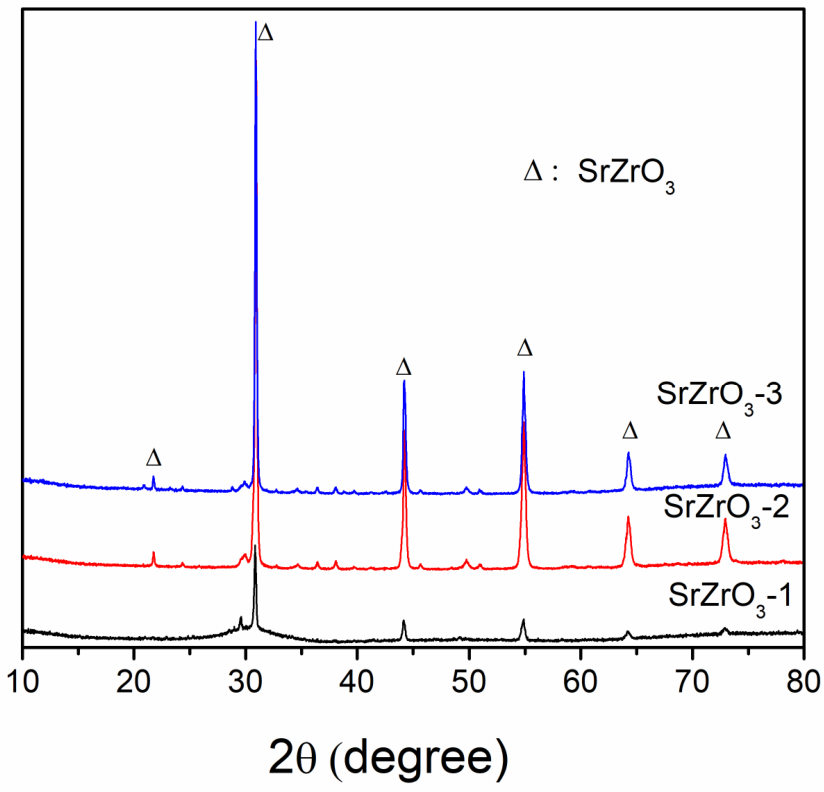
The X-ray diffraction (XRD) patterns of the as-sprayed SrZrO3 coatings (Figure 1) confirm that all samples predominantly consist of orthorhombic SrZrO3 (PDF# 44-0161, space group: Pnma). Quantitative phase analysis indicates that SrZrO3 is the major phase (>95 wt%), with no significant secondary phases detected within the instrumental resolution. Notably, the (100) reflection is absent in the SrZrO3-1 sample, while it is distinctly observed in SrZrO3-2 and SrZrO3-3, suggesting differences in crystallographic texture or preferred orientation induced by varying processing parameters. Peak intensity and full width at half maximum (FWHM) analysis reveal that SrZrO3-2 exhibits comparatively sharper diffraction peaks with reduced FWHM values, indicative of improved crystallinity and larger coherent crystallite size. In contrast, SrZrO3-1 shows relatively broader peaks, implying finer crystallite domains and/or higher microstrain. The variation in relative peak intensities among the samples further suggests changes in grain orientation and phase distribution, which can be attributed to differences in plasma spray conditions influencing the particle melting and solidification behavior.
With the Vickers microhardness having ~300 gf load and 10–15 s dwell time, the hardness values are calculated. Hardness values of the SrZrO3-1, SrZrO3-2 and SrZrO3-3 are 296.3, 325.3 and 309.6 Kg/mm2, respectively. As reported elsewhere [22,23], the hardness values are affected by the porosity and powder composition.
The hardness values were determined by averaging three independent indentations for each sample. Among the investigated coatings, the SrZrO3-2 sample exhibited the highest hardness. The measured hardness values are comparatively higher than those reported for Sr(Zr0.9Yb0.1)O2.95 and Sr(Zr0.8Gd0.2)O2.9 [24], which can be attributed to variations in the processing parameters, resulting microstructural features, and compositional differences influencing densification and mechanical response [25,26]. The grain sizes strongly influence the hardness of the samples. Decreasing the grain size leads to grain boundary strengthening, thereby increasing the hardness of the materials.
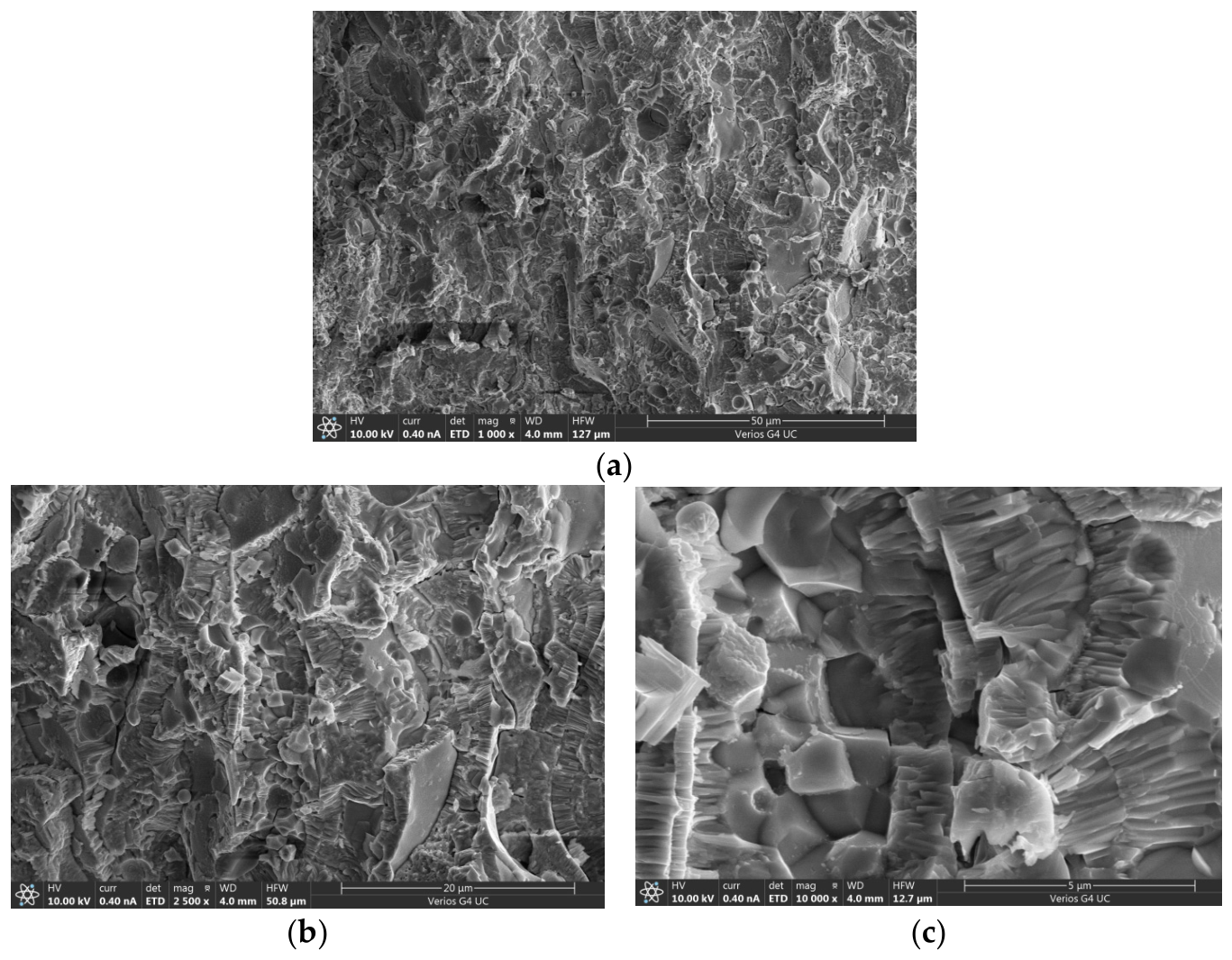
Figure 2 presents the SEM micrographs of the as-sprayed coatings, revealing the presence of pentagonally faceted features distributed with random orientations across the microstructure. The pentagonal morphological features may come from the impingement of five radially columnar grain sectors during rapid solidification of a highly undercooled melt splat, constrained by local thermal gradients. As seen in Figure 2, lamellar splats, inter-splat boundaries, and distributed porosity are found in the microstructure. The obtained microstructure governs the coating’s thermal insulation capability, mechanical strength, and durability for high-temperature applications.
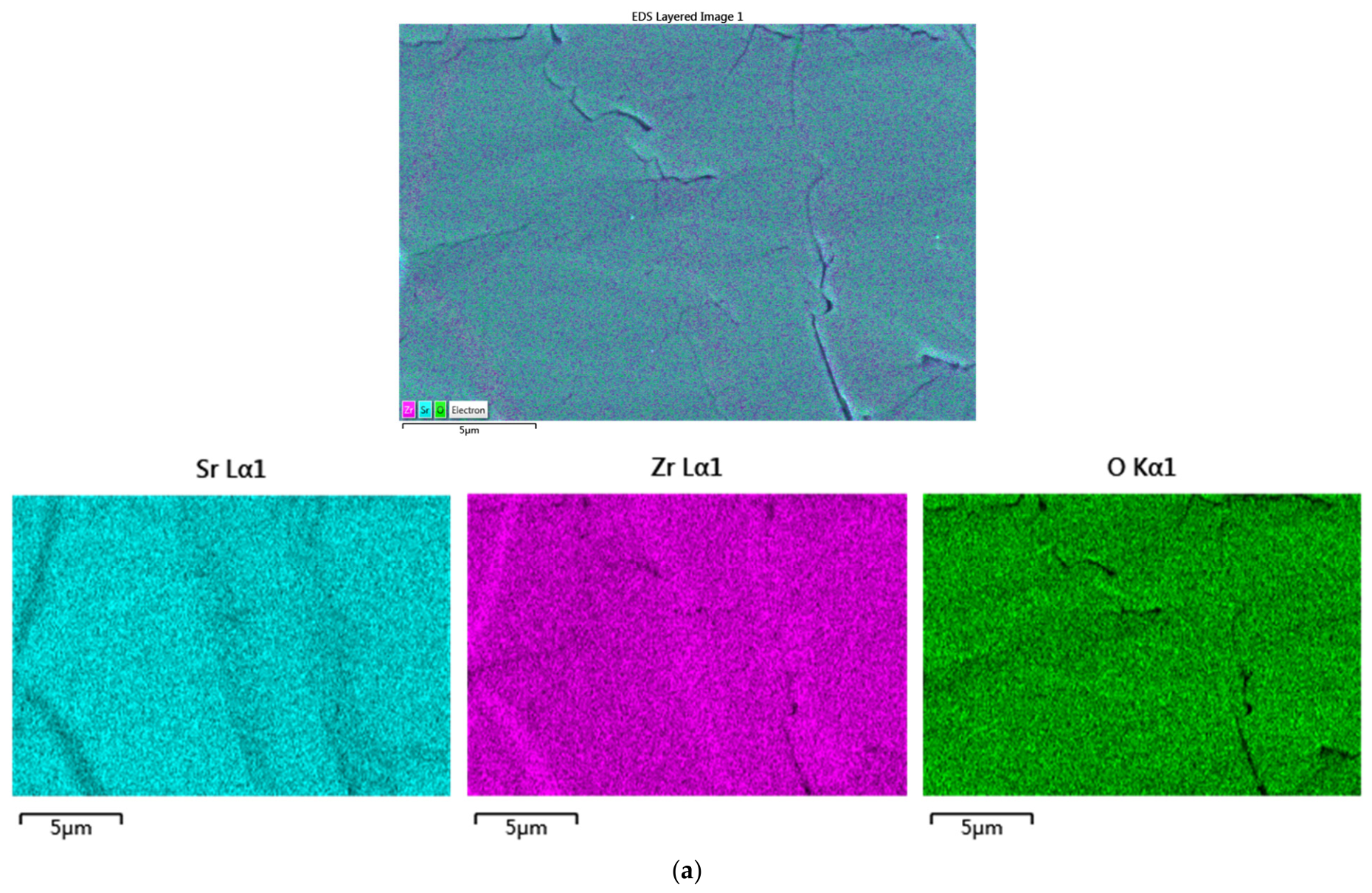
Figure 3 illustrates the corresponding energy-dispersive X-ray spectroscopy (EDS) elemental mapping acquired in conjunction with SEM, where the spatial distribution of constituent elements is represented by distinct color contrasts, confirming the compositional homogeneity within the coatings.
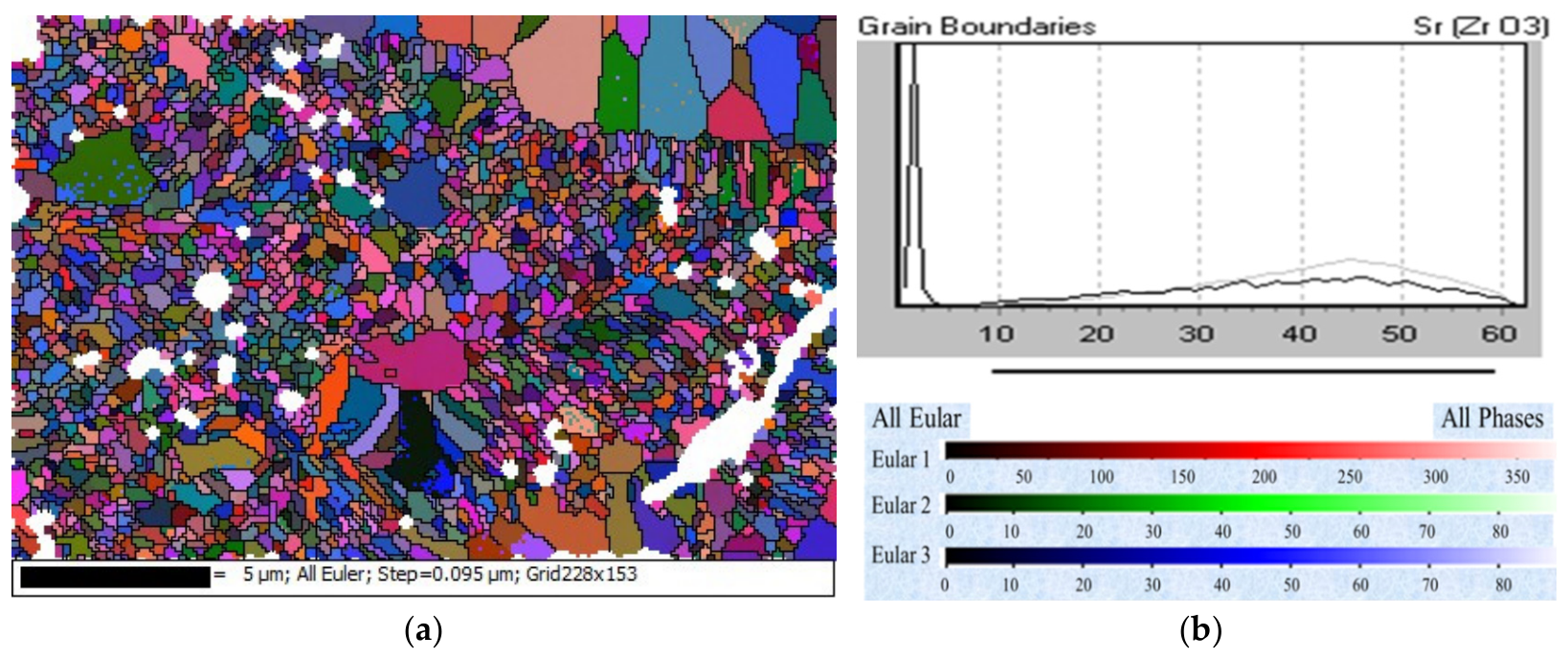
For the composition analysis, the prepared samples were analyzed via energy-dispersive X-ray spectrometry (EDS), and the obtained results are displayed in Figure 3b,c. The atomic percentages of Zr, Sr, and O are 23.21, 15.19, and 61.60%, respectively. Electron backscattered diffraction analysis showed a fine-grained, heterogeneous microstructure with a wide distribution of grain sizes. The grains appear polygonal and equiaxed, indicating recrystallized or well-solidified splat structures typical of plasma-sprayed coatings. Moreover, it is found that most grains are in the submicron to a few microns range, confirming a refined microstructure. In Figure 4a, each color represents crystallographic orientation data that belongs to the Inverse Pole Figure (IPF) map in Figure 4. In addition, the random distribution of colors represents no strong global texture. The random grain orientations in SrZrO3-2 represent rapid solidification. Moreover, the regions with similar colors suggest orientation clusters or weak texture development.
The EBSD image provides technical knowledge about the grain boundary distributions. In Figure 4a, the boundaries between different colored regions correspond to grain boundaries. As visible from the figure, the high-angle grain boundaries (HAGBs) domination is shown by sharp color contrasts. The grain boundaries significantly affect the phonon scattering, thereby reducing the thermal conductivity. Moreover, the crack deflection improves the thermal shock resistance of the SrZrO3 coatings. The irregular grain indicated in the image corresponds to the non-uniform solidification.
The EBSD analysis also provides comprehensive knowledge about the crystal defects. Referring to Figure 4a, the white or black un-indexed regions show the pores, voids, and micro-cracks. The pores and cracks directly affect the mechanical properties and thermal insulation performance. The microstructure analysis from EBSD reflects rapid quenching and splat-based deposition, which leads to fine grains, random orientations, and inter-splat boundaries. Furthermore, grain clustering is also shown in some regions corresponding to partially melted or re-solidified particles.
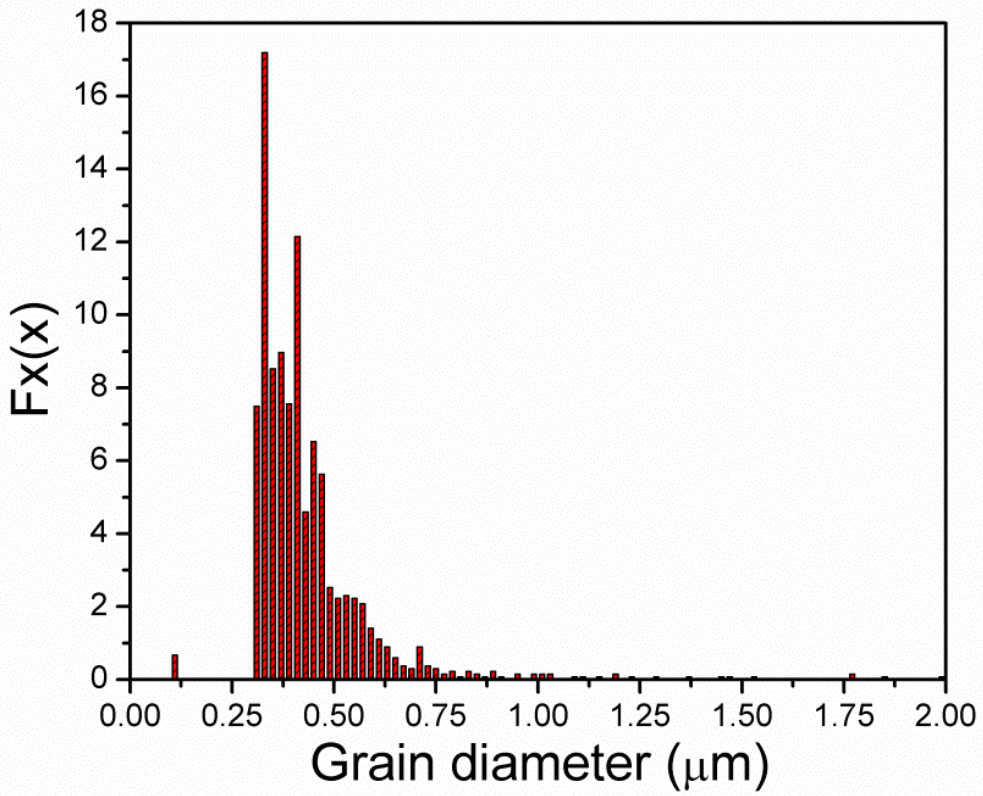
Figure 5 depicts the data regarding the grain sizes received from EBSD analysis. The majority of the grains come in the range of 0.31–0.75 µm. Very few grains are of the order of 0.11 µm, while some grain sizes are larger (0.75–1.80 µm).
Phase composition of the SrZrO3-2 coatings evaluated by the EBSD technique is displayed in Figure 6. The red color represents the Sr(ZrO3) having phase contents of 94.5%, and pores are displayed by the white color.
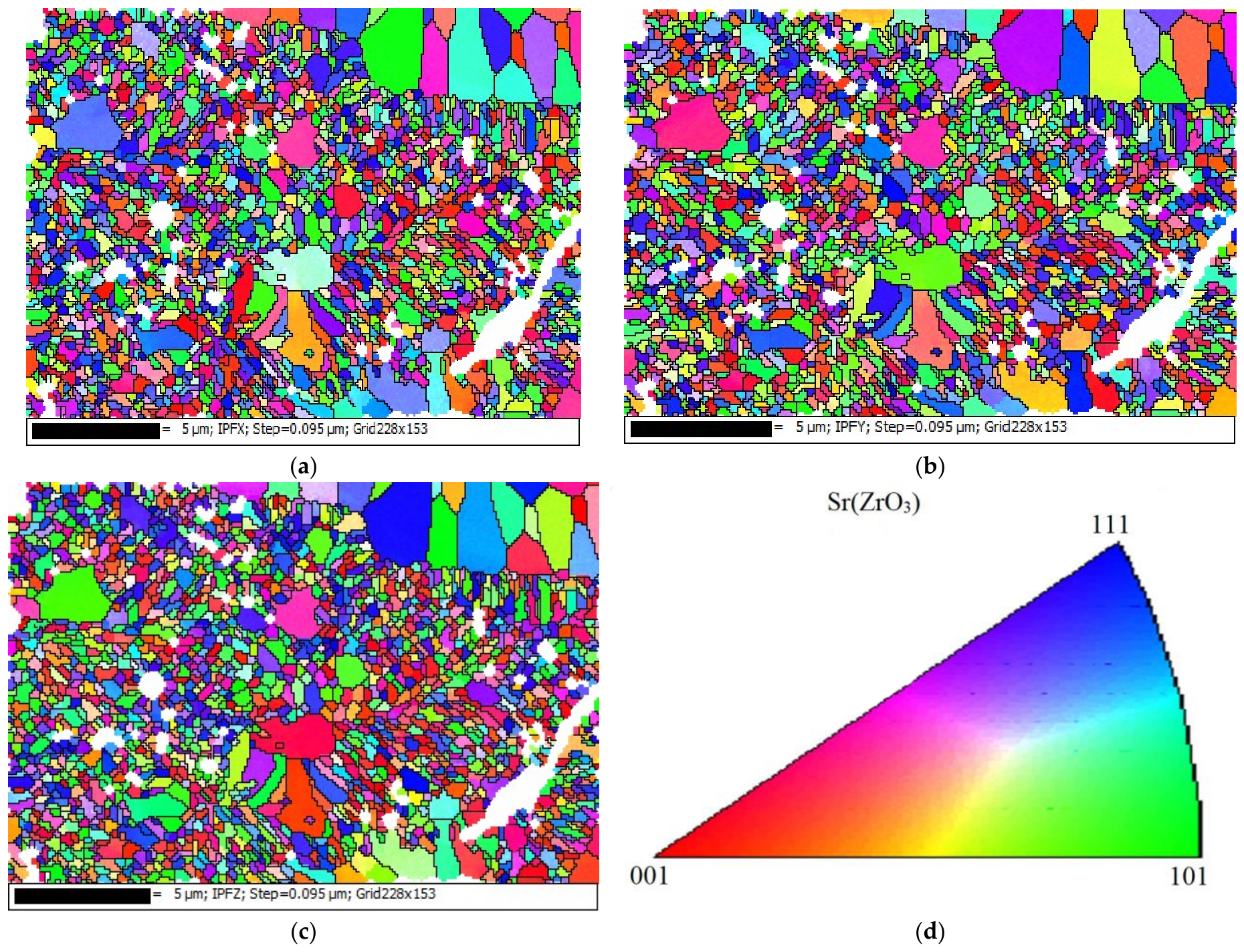
Grain orientations along different axes are evaluated through the EBSD technology. Figure 7 displays the grain orientations along the X-, Y- and Z-axes. The inverse polar figure (IPF) of the Sr(ZrO3)-2 coating is drawn corresponding to the IPF coloring.
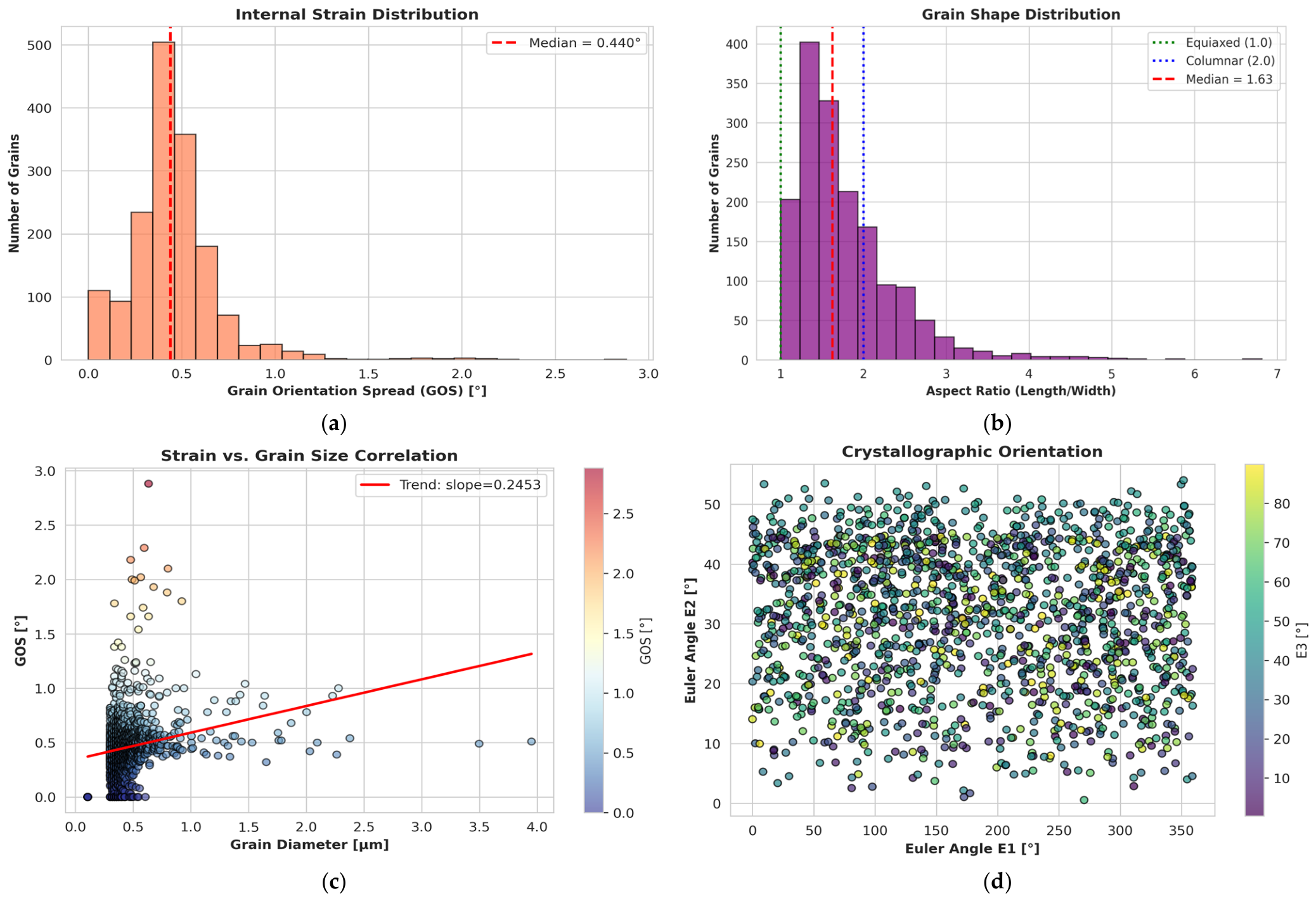
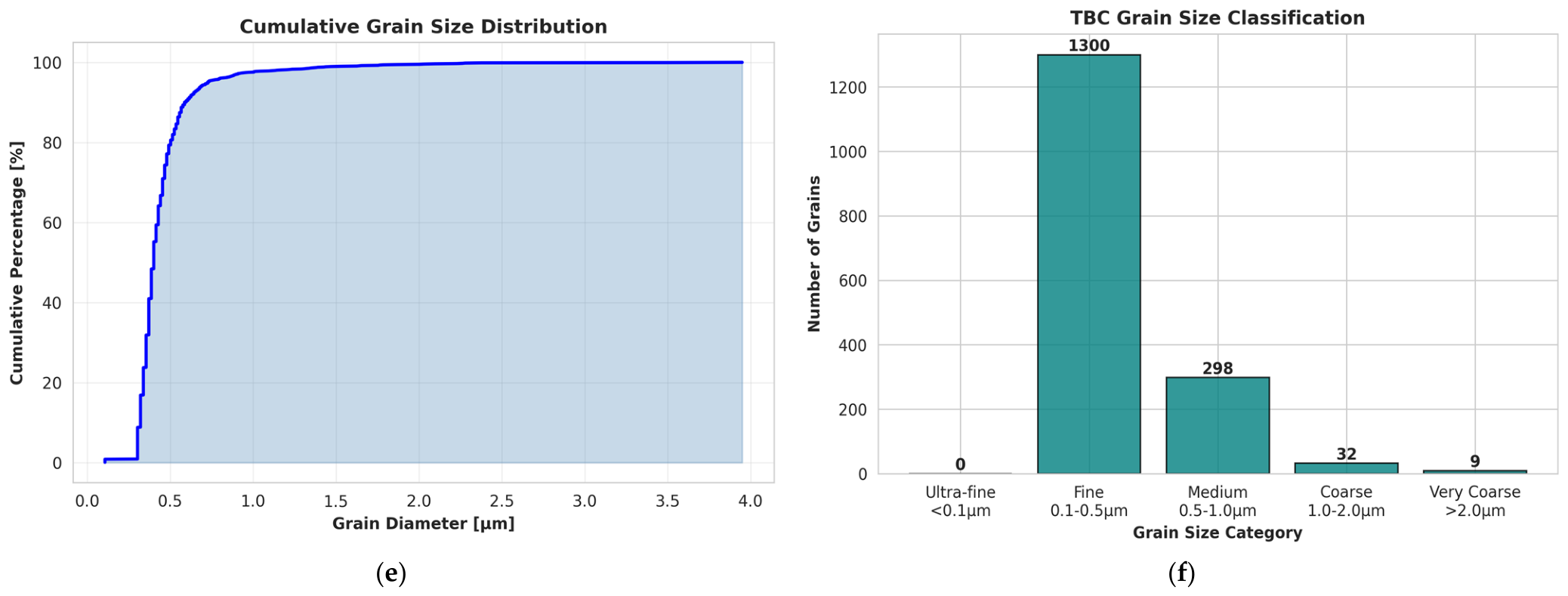
Figure 8 displays the electron backscatter diffraction analysis of SrZrO3-2 coatings. As evident from Figure 8a, the low median Grain Orientation Spread (GOS) of 0.440° shows that most grains are free of intra-granular defects and stored dislocations, demonstrating a well-recrystallized and strain-free structure. The lower strain state minimizes the lattice thermal resistance due to less phonon scattering. The median aspect ratio of 1.63 shown in Figure 8b indicates a mixed morphology, and the equiaxed grains produce high-angle and tortuous grain boundaries, promoting phonon scattering, thereby reducing the thermal conductivity. Moreover, the existence of grains trending toward columnar (2.0) creates less interfacial area for phonon scattering and the broad distribution suggests microstructural heterogeneity that induces localized variations in heat transport. The 0.2453 slope of strain versus grain size correlation suggests that the larger grains accumulated higher internal strain (GOS). The larger grains reduce the density of grain boundaries that are a source of phonon scattering, and the strain heterogeneity may come from the non-uniform sintering behavior across the coating thickness. The crystallographic orientation distribution shown in Figure 8d demonstrates the crystallographic texture. Normally, the low-indexed directed grains align with the heat flux, demonstrating the anisotropic thermal conductivity. The random orientation of grains provides weak texture, leading to improved phonon scattering at grain boundaries, and in contrast, the strong preferred texture develops conduction pathways along low-resistance crystallographic directions. The grain size summary displays that 80–90% of the grains are below 1.0 µm, showing a fine-grained microstructure. The fine-grain microstructure provides high grain boundary density that scatters phonons, thereby reducing the thermal conductivity. Similar grain size classifications (Figure 8f) demonstrate a majority ultra-fine (<0.1 µm, ~1300 grains) along with fine (0.1–0.5 µm, ~298 grains) and a few coarse grains (>2.0 µm, only nine grains).
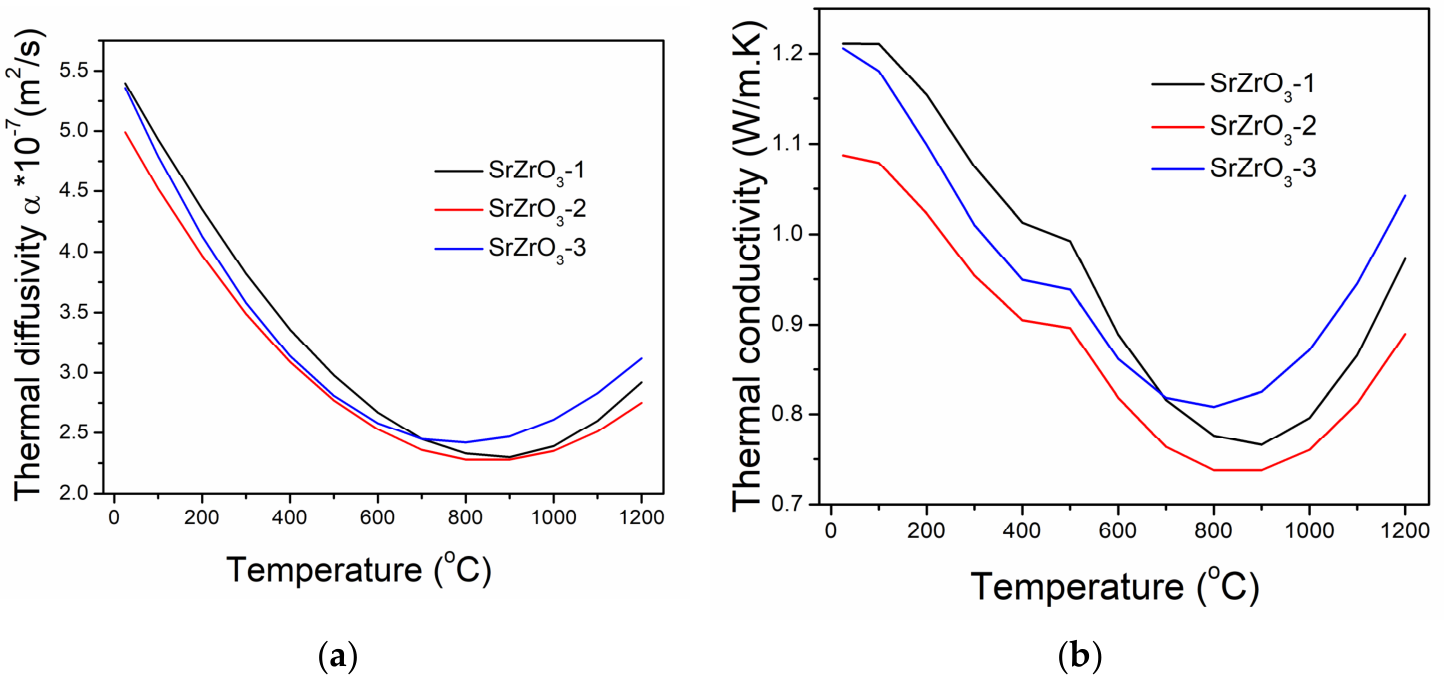
The thermal conductivity of the SrZrO3 coatings exhibits a non-monotonic dependence on temperature, decreasing up to ~800–900 °C due to intensified phonon scattering, followed by an increase at higher temperatures attributed to radiative heat transfer. As shown in Figure 9, initially, the thermal conductivity values decrease with the increasing temperatures. The minimum thermal conductivity is achieved around 800 °C (0.737 W·m−1·K−1), which is found to be lower than the reported values [27,28]. With the suspension plasma spray, coatings of Yb- and Y-modified SrZrO3 are produced, which provides a 0.88–1.43 W·m−1·K−1 thermal conductivity value around 100–1400 °C [29]. In the case of Figure 9, a further rise in temperature induced an increase in the thermal conductivity values. The increase in thermal conductivity of SrZrO3 after 900 °C may be attributed to the phase transition. The higher symmetry reduces phonon scattering, leading to increased thermal conductivity. The other possible reason may be in situ sintering and radiative heat transfer. Among the prepared coatings, the SrZrO3-2 coatings provided the minimum thermal conductivity in the entire range of temperature. The low thermal conductivity values are attributed to the optimal processing parameters of the coatings.

4. Conclusions

  • SrZrO3 coatings were successfully deposited using atmospheric plasma spraying (APS) under varying processing parameters.
  • XRD and EBSD analyses confirm SrZrO3 as the dominant phase, with ~94.5% phase fraction, while crystallinity varies among samples.
  • EBSD analysis reveals a fine-grained, randomly oriented polycrystalline microstructure with dominant high-angle grain boundaries and localized porosity.
  • The obtained microstructural configuration of SrZrO3-2 is highly beneficial for thermal barrier applications, promoting phonon scattering and thermal stability while also influencing mechanical performance.
  • SEM observations reveal a characteristic pentagonally faceted microstructure, lamellar splats, and inter-splat boundaries.
  • The SrZrO3-2 sample (Ar: 35 L/min; H2: 7 L/min) exhibits the lowest thermal conductivity over the temperature range of 25–1200 °C.
  • A minimum thermal conductivity of 0.737 W·m−1·K−1 is achieved at 800 °C and remains nearly constant up to 900 °C.
  • The reduced thermal conductivity is attributed to optimized processing conditions leading to favorable microstructural features.
  • The temperature range of 800–900 °C is identified as optimal for the application of SrZrO3 coatings in high-temperature environments.

Author Contributions

Conceptualization, M.K.; Methodology, M.K.; Software, Y.Z.; Validation, Y.Z.; Supervision, Y.Z. All authors have read and agreed to the published version of the manuscript.

Funding

This study was supported by Chinese Academy of Sciences President’s International Fellowship initiative (2026PVB0064) and the National Key Research and Development Program of China (2023YFF0719800).

Data Availability Statement

Data will be made available upon request.

Acknowledgments

The authors are thankful to the Chinese Academy of Sciences President’s International Fellowship initiative (2026PVB0064). Moreover, the support from the National Key Research and Development Program of China (2023YFF0719800) is highly acknowledged.

Conflicts of Interest

The authors declare that there are no conflicts of interest.

References

  1. Qiu, Z.; Liu, Q.; Dong, S.; Linghu, X.; Huang, Y.; Jiang, J.; Deng, L.; Chen, W.; Cao, X. Proportional optimization and performance evaluation of YbTaO4-Ta2O5 composite coatings for integrated thermal environmental barrier coatings (TEBCs) on SiCf/SiC composites. Appl. Surf. Sci. 2026, 729, 166136. [Google Scholar] [CrossRef]
  2. Zan, Y.-X.; Huang, L.; Gu, W.-Z.; Yue, P.-S.; Dong, L.; Liu, M.-J.; Yang, G.-J. A nacre formation-inspired dynamic self-generating barrier for environmental deposit-resistant thermal barrier coatings. J. Adv. Ceram. 2026, 15, 9221218. [Google Scholar] [CrossRef]
  3. Zhang, P.; Song, Y.; Hu, L.; Ma, W.; Xu, S.; Yao, M. Tuning thermal conductivity of thermal barrier ceramic SrZrO3 via La doping: Computational study using machine learning potential. Comput. Mater. Sci. 2026, 269, 114681. [Google Scholar] [CrossRef]
  4. Zhu, X.; He, W.; Guo, Y.; Wei, L.; Liu, D.; Guo, H.; Peng, H. Molten CMAS resistance of PS-PVD (Gd0.2Y0.8)3Al5O12/YSZ thermal barrier coating with high adherence. J. Eur. Ceram. Soc. 2026, 46, 117846. [Google Scholar] [CrossRef]
  5. Odabas, O.; Binal, G.; Ozgurluk, Y.; Alptekin, F.; Karaoglanli, A.C. Investigation and kinetic study of TGO growth behavior in high-entropy alloy coating systems. Surf. Coat. Technol. 2025, 512, 132381. [Google Scholar] [CrossRef]
  6. Ozkan, D.; Gulec, A.; Oge, M.; Ozgurluk, Y.; Binal, G.; Calis, I.; Sunbul, S.E.; Kaplan, M.; Gok, M.S.; Ozbek, Y.Y.; et al. Comparison of Wear Behavior of Basic Oxygen Furnace Slag and WC-CoCr Coating. J. Mater. Eng. Perform. 2025, 34, 5652–5662. [Google Scholar] [CrossRef]
  7. Karaoglanli, A.C.; Doleker, K.M.; Ozgurluk, Y. Interface failure behavior of yttria stabilized zirconia (YSZ), La2Zr2O7, Gd2Zr2O7, YSZ/La2Zr2O7 and YSZ/Gd2Zr2O7 thermal barrier coatings (TBCs) in thermal cyclic exposure. Mater. Charact. 2020, 159, 110072. [Google Scholar] [CrossRef]
  8. Li, X.; Ma, W.; Wen, J.; Bai, Y.; Sun, L.; Chen, B.; Dong, H.; Shuang, Y. Preparation of SrZrO3 Thermal Barrier Coating by Solution Precursor Plasma Spray. J. Therm. Spray. Technol. 2017, 26, 371–377. [Google Scholar] [CrossRef]
  9. Ma, W.; Meng, X.; Li, X.; Xue, Y.; Bai, Y.; Guo, F.; Dong, H. Deposition Characteristics of SrZrO3 Thermal Barrier Coating Prepared by Solution Precursor Plasma Spray Process. J. Therm. Spray. Technol. 2019, 28, 189–197. [Google Scholar] [CrossRef]
  10. Zhang, Y.; Mack, D.E.; Jarligo, M.O.; Cao, X.; Vaßen, R.; Stöver, D. Partial Evaporation of Strontium Zirconate During Atmospheric Plasma Spraying. J. Therm. Spray. Technol. 2009, 18, 694–701. [Google Scholar] [CrossRef]
  11. Noguchi, T.; Ōkubo, T.; Yonemochi, O. Reactions in the System ZrO2-SrO. J. Am. Ceram. Soc. 1969, 52, 178–181. [Google Scholar] [CrossRef]
  12. Kashif, M.; Khan, A.A.; Khan, I.H.; Habib, M.S.; Rafiq, M.A.; Maqbool, A.; Jan, F.U.; Bibi, S.; Nasimullah; Blazek, V.; et al. Enhanced structural and electrical properties of furnace-cooled SrZrO3-modified BFBT lead-free piezoceramics for high-temperature applications. Sci. Rep. 2025, 15, 40220. [Google Scholar] [CrossRef] [PubMed]
  13. Eglitis, R.I.; Purans, J.; Gabrusenoks, J.; Popov, A.I.; Jia, R. Comparative Ab Initio Calculations of ReO3, SrZrO3, BaZrO3, PbZrO3 and CaZrO3 (001) Surfaces. Crystals 2020, 10, 745. [Google Scholar] [CrossRef]
  14. Howard, C.J.; Knight, K.S.; Kennedy, B.J.; Kisi, E.H. The structural phase transitions in strontium zirconate revisited. J. Phys. Condens. Matter 2000, 12, L677–L683. [Google Scholar] [CrossRef]
  15. Zhao, Y.; Weidner, D.J.; Ko, J.; Leinenweber, K.; Liu, X.; Li, B.; Meng, Y.; Pacalo, R.E.G.; Vaughan, M.T.; Wang, Y.; et al. Perovskite at high P-T conditions: An in situ synchrotron X ray diffraction study of NaMgF3 perovskite. J. Geophys. Res. Solid Earth 1994, 99, 2871–2885. [Google Scholar] [CrossRef]
  16. Ma, W.; Meng, X.; Wen, J.; Li, E.; Bai, Y.; Chen, W.; Dong, H. Aging effect on microstructure and property of strontium zirconate coating co-doped with double rare-earth oxides. J. Am. Ceram. Soc. 2019, 102, 2143–2153. [Google Scholar] [CrossRef]
  17. Ma, W.; Li, X.; Meng, X.; Xue, Y.; Bai, Y.; Chen, W.; Dong, H. Microstructure and Thermophysical Properties of SrZrO3 Thermal Barrier Coating Prepared by Solution Precursor Plasma Spray. J. Therm. Spray. Technol. 2018, 27, 1056–1063. [Google Scholar] [CrossRef]
  18. Meng, X.; Ma, W.; Yang, T.; Huang, W.; Li, E.; Bai, Y.; Liu, C.; Dong, H. Microstructure and Thermal Properties of Double Rare-Earth Co-doped SrZrO3 Coating by the Solution Precursor Plasma Spray. J. Therm. Spray. Technol. 2020, 29, 125–133. [Google Scholar] [CrossRef]
  19. Han, Z.; Yin, Y.; Bai, Y.; Dong, H.; Yang, T.; Ma, W. Optimized ZrO2-based thermal barrier coatings via solution precursor plasma spraying with enhanced phase stability. Surf. Coat. Technol. 2025, 513, 132455. [Google Scholar] [CrossRef]
  20. Fox, E.B.; Visser, A.E.; Bridges, N.J.; Gray, J.R.; Garcia-Diaz, B.L. Nanoparticle Enhanced Ionic Liquid Heat Transfer Fluids. U.S. Patent US8801957B2, 12 August 2014. [Google Scholar]
  21. Touloukian, Y.S. Specific Heat-Nonmetallic Solids (Thermophysical Properties of Matter-The TPRC Data Series); Springer: New York, NY, USA, 1970; Volume 5. [Google Scholar]
  22. Sharafat, S.; Kobayashi, A.; Chen, Y.; Ghoniem, N.M. Plasma spraying of micro-composite thermal barrier coatings. Vacuum 2002, 65, 415–425. [Google Scholar] [CrossRef]
  23. Karthikeyan, S.; Balasubramanian, V.; Rajendran, R. Developing empirical relationships to estimate porosity and microhardness of plasma-sprayed YSZ coatings. Ceram. Int. 2014, 40, 3171–3183. [Google Scholar] [CrossRef]
  24. Khan, M.; Zeng, Y. Achieving low thermal conductivity in Sr(Zr0.9Yb0.05Gd0.05)O2.95: A suitable material for high temperature applications. Ceram. Int. 2020, 46, 28778–28784. [Google Scholar] [CrossRef]
  25. Ma, W.; Mack, D.E.; Vaßen, R.; Stöver, D. Perovskite-Type Strontium Zirconate as a New Material for Thermal Barrier Coatings. J. Am. Ceram. Soc. 2008, 91, 2630–2635. [Google Scholar] [CrossRef]
  26. Ma, W.; Mack, D.; Malzbender, J.; Vaßen, R.; Stöver, D. Yb2O3 and Gd2O3 doped strontium zirconate for thermal barrier coatings. J. Eur. Ceram. Soc. 2008, 28, 3071–3081. [Google Scholar] [CrossRef]
  27. Yamanaka, S.; Kurosaki, K.; Oyama, T.; Muta, H.; Uno, M.; Matsuda, T.; Kobayashi, S.-I. Thermophysical Properties of Perovskite-Type Strontium Cerate and Zirconate. J. Am. Ceram. Soc. 2005, 88, 1496–1499. [Google Scholar] [CrossRef]
  28. Zhang, T.; He, W.; Ma, Y.; Guo, H. High-temperature microwave absorption of SrZrO3-based coatings: Mechanisms and enhanced absorption by high-impedance surface. Surf. Coat. Technol. 2025, 498, 131793. [Google Scholar] [CrossRef]
  29. Gao, Y.; Bai, Y.; Zhang, P.; Sun, L.; Liu, C.; Dong, H.; Geng, Q.; Wang, W.; Ma, W. Phase composition and thermophysical properties of Yb–Y Co-doped SrZrO3 coating prepared by suspension plasma spray. Mater. Chem. Phys. 2022, 290, 126499. [Google Scholar] [CrossRef]
Figure 1. XRD patterns of the APS prepared coatings.
Coatings 16 00729 g001
Figure 2. SEM images of SrZrO3-2; (a) 50 µm, (b) 20 µm, and (c) 5 µm.
Coatings 16 00729 g002
Figure 3. Energy-dispersive X-ray spectrometry (EDS) measurements of the SrZrO3-2 coatings; (a) elemental EDS mapping, (b) atomic percentage, and (c) elemental atomic % of Sr, Zr, and O.
Coatings 16 00729 g003aCoatings 16 00729 g003b
Figure 4. EBSD report of SrZrO3-2 coatings: (a) Euler analysis (step size of ~0.095 µm represents the high-resolution scan suitable for fine grains; grid size of 228 × 153 shows adequate statistical representation of microstructure); and (b) grain boundaries of SrZrO3.
Coatings 16 00729 g004
Figure 5. Grain size distributions in the SrZrO3-2 coatings.
Coatings 16 00729 g005
Figure 6. The phase analysis of SrZrO3 coating; the red color represents the Sr(ZrO3) having phase contents of 94.5%.
Coatings 16 00729 g006
Figure 7. Inverse polar figures (IPF) of SrZrO3-2 coatings: (a) X orientation; (b) Y orientation; (c) Z orientation; and (d) Inverse Pole Figure (IPF) color orientation code/contour scale.
Coatings 16 00729 g007
Figure 8. SrZrO3-2 coatings from an EBSD prospective: (a) internal stress distribution; (b) grain shape distribution; (c) strain versus grain size correlation; (d) crystallographic orientations; (e) cumulative grain size distribution; and (f) TBC grain size classification.
Coatings 16 00729 g008aCoatings 16 00729 g008b
Figure 9. (a) Thermal diffusivity and (b) thermal conductivity of the coatings.
Coatings 16 00729 g009
Table 1. Spray parameters for the processing of coatings.
SamplesCurrent (A)Ar (L/min)H2 (L/min)Particle Velocity (m/s)Temperature (°C)
SrZrO3-15503572012893
SrZrO3-26003572062835
SrZrO3-360040102133007
Disclaimer/Publisher’s Note: The statements, opinions and data contained in all publications are solely those of the individual author(s) and contributor(s) and not of MDPI and/or the editor(s). MDPI and/or the editor(s) disclaim responsibility for any injury to people or property resulting from any ideas, methods, instructions or products referred to in the content.