Article

Surface Evolution of an FDM-Printed PLA Component with Multiple Geometries During Centrifugal Disc Finishing


by
Jackson William Chadwick
*,
Andrew Naylor
,
Tahsin Tecelli Öpöz
,
Juan Ignacio Ahuir-Torres
and
Xiaoxiao Liu
*
School of Engineering, Liverpool John Moores University, Byrom Street, Liverpool L3 3AF, UK
*
Authors to whom correspondence should be addressed.
Coatings 2026, 16(6), 722; https://doi.org/10.3390/coatings16060722
Submission received: 16 April 2026 / Revised: 11 June 2026 / Accepted: 12 June 2026 / Published: 17 June 2026
(This article belongs to the Topic Engineered Surfaces and Tribological Performance)

Abstract

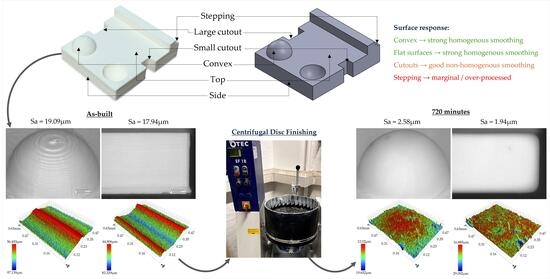
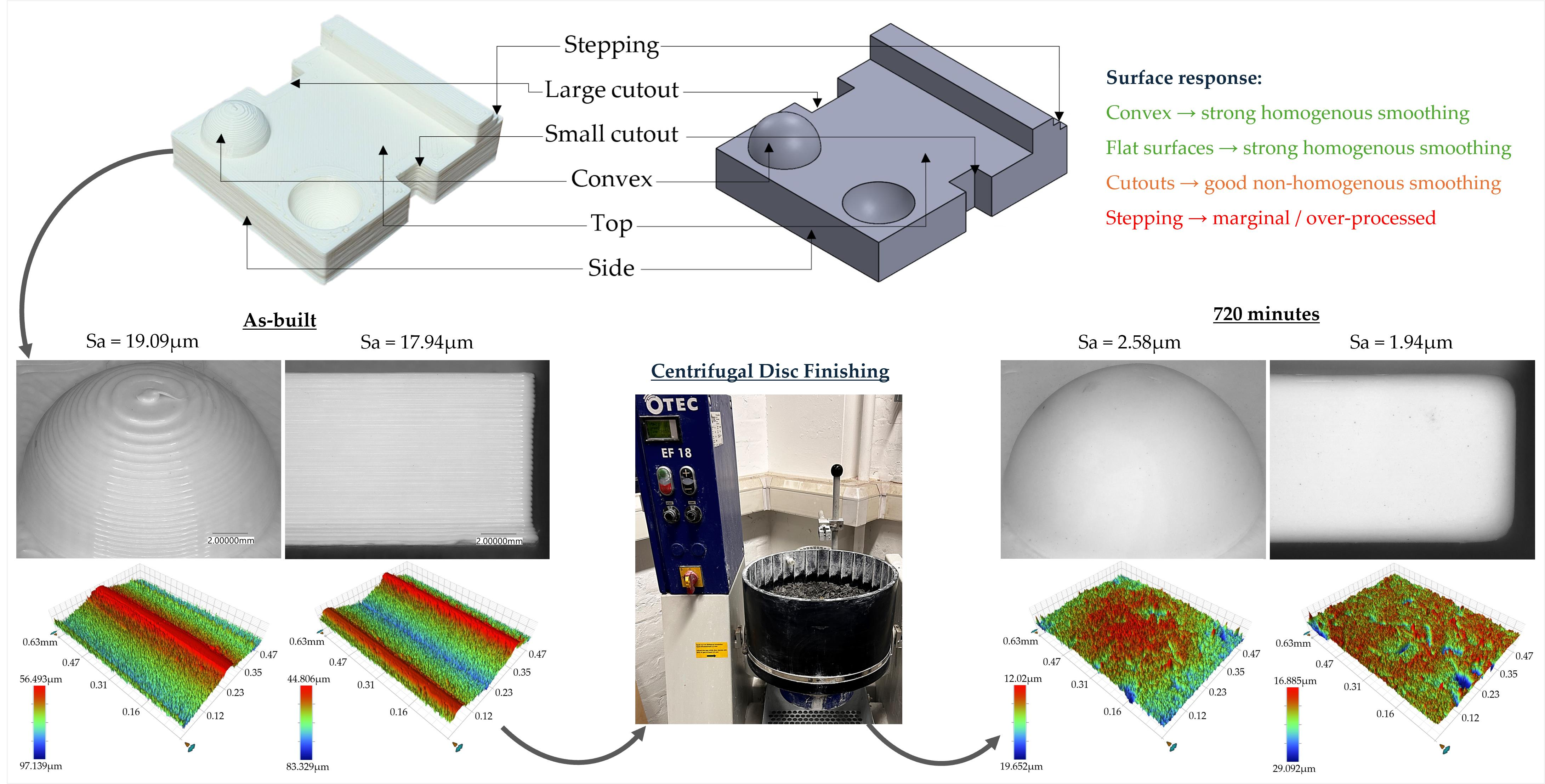
Additive manufacturing (AM) enables the fabrication of complex, customisable components from metals, composites and polymers such as polylactic acid (PLA); however, the process commonly produces poor surface finishes and inherent defects. Centrifugal disc finishing (CDF) is an established mass finishing technique in conventional manufacturing but remains insufficiently characterised for additively manufactured polymers. This exploratory study investigates the influence of CDF on fused deposition modelling (FDM)-fabricated PLA components with varying geometrical features, focusing on three-dimensional surface parameters including average areal surface roughness, skewness and kurtosis. Samples were processed up to 720 min with analysis at predetermined intervals to capture transient and steady-state-like behaviour. Surface characterisation was conducted using non-contact optical interferometry to obtain quantitative roughness data and three-dimensional topographical maps, supported by digital optical microscopy and gravimetric analysis to quantify material removal rates. Analysis of the experimental data indicated apparent relationships between processing time, geometry and surface response. Results indicate that material removal behaviour and roughness evolution may be geometry-dependent. Flat and convex surfaces appeared to follow expected transient-like and steady-state-like behaviour, whereas restricted geometries and intricate features exhibited distinct responses with characteristic transition times. Surface roughness reductions ranged from 36% to 89% depending on geometry. These findings provide preliminary quantitative insight into geometry-specific mass finishing behaviour, supporting improved process understanding and informing future optimisation of post-processing strategies for additively manufactured polymer components.

Graphical Abstract

1. Introduction

1.1. Additive Manufacturing

Additive manufacturing (AM) is a transformative technology central to Industry 4.0. It is widely applied across industries including automotive, aerospace, energy, industrial machinery, medical, architectural, consumer products, and electronics, and supports materials such as polymers, metals, ceramics, and composites [1,2,3,4,5,6]. AM enables direct layer- by-layer fabrication of complex and customisable parts with improved material utilisation, part consolidation, and enabling fabrication of tailored lattice structures [1,2,3,4,5,6]. However, AM technologies exhibit inherent limitations, including defects, poor surface finish, and geometric inaccuracies which are commonly addressed through optimisation of printing process parameters and post-processing to improve overall applicability [5,6]. For example, fused deposition modelling (FDM) often exhibits a stair-stepping effect associated with high surface roughness, along with defects such as under and over-extrusion, anisotropy, warping, shrinkage, stringing, delamination, void formation, curling, and other surface anomalies [5,7,8,9]. Defects and poor surface finishes on parts produced via AM can affect mechanical performance, tribological behaviour, dimensional accuracy and aesthetics, thereby limiting its application.

1.2. Fused Deposition Modelling and Centrifugal Disc Finishing

FDM or fused filament fabrication (FFF), developed by Stratasys in the 1990s, builds parts by extruding successive layers of thermoplastic guided by G-code from a Standard Tessellation Language (STL) model [10,11,12,13]. FDM offers wide material diversity, low cost-effective ratio, and requires relatively low capital investment compared with other AM technologies, contributing to its widespread adoption [10,11,12,14]. Polymers and their composites have been extensively employed in AM owing to their inherently low density, free of corrosion, and the broad range of mechanical, thermal, electrical, and biocompatible properties that can be achieved, with acrylonitrile butadiene styrene (ABS) most utilised followed by polylactic acid (PLA) [14]. PLA, a widely used biodegradable polymer, has similar hardness to ABS but higher strength, lower ductility, low cost, and ease of printing, making it suitable for medical, automotive, electrical, and prototyping applications [10,11,12].
FDM inherently produces stair-stepping and rough surfaces, especially on inclined or curved features, requiring post-processing for acceptable surface quality [5,15]. Mass finishing (MF) has gained attention for its batch-processing capability, reduced time and costs, lower labour requirements, and consistent results. It is used for polishing, deburring, descaling, edge-breaking, radius forming, coating preparation, and general surface refinement through controlled media part collisions [16,17,18]. Centrifugal disc finishing (CDF), a fixtureless high-intensity MF process, drives media in a toroidal flow via a rotating disc, removing material through ploughing, micro-cutting, rolling, and impingement [19,20]. Media type, size, and shape influence the removal mechanisms, alongside key parameters such as rotational speed, processing time, coolant flow, and part material and geometry, which affect media interaction and accessibility [16,21,22].

1.3. Current State

Previous research has examined FDM-fabricated metallic, polymer, and PLA specimens, including those produced in a variety of geometries. A substantial portion of this work has focused on chemical treatments, such as vapour finishing, which have demonstrated favourable outcomes for FDM components such as ABS [23]. Acetone is an effective option for chemical polishing ABS printed parts; however, it has no effect on PLA and therefore provides no polishing benefit, making it unsuitable for polishing PLA [9]. In addition, other methods reported in the existing literature include laser-based techniques, continuous-wave and nanosecond pulsed laser, and mechanical processes such as barrel finishing and blasting [24,25,26,27]. Another major area of research focuses on printing parameters and their optimisation to reduce surface roughness in FDM as-printed part. Although some studies have examined the finishing of FDM parts using CDF, the available literature remains sparse, especially applied to PLA [9,28,29]. CDF has been successfully applied to polymer components, demonstrating substantial reductions in roughness and waviness, for example, up to a 98% decrease in surface waviness for FDM PEEK using design-of-experiments approaches that vary media type and quantity, processing time, rotational speed, and coolant volume [28]. Another study investigated CDF for evaluating the surface and subsurface characteristics of FDM ABS components using theoretical and experimental approaches. The theoretical analysis approximated surface profiles, while experiments assessed different finishing conditions, including dry processing and 25% and 50% solution concentrations. Analysis included root-mean-square (RMS) roughness measurements, layer damage evaluation using scanning electron microscopy, and hardness testing [9]. A study applying drag finishing to FDM ABS reduced 2D average roughness (Ra) from 8.8 to 2.3 µm (0.13 mm layer thickness) and from 25.5 to 2.2 µm (0.33 mm layer thickness) after 30 min of processing with aluminium oxide media [30]. However, the time-dependent evolution of different FDM PLA features and surfaces during CDF remains novel, particularly for PLA FDM components.
CDF and other mass finishing techniques are more widely applied to metal AM components. One study used laser microscopy with image processing to analyse workpiece–media contact mechanisms on laser powder bed fusion Ti-6Al-4V samples during CDF, reporting 35%–55% reductions in average areal surface roughness (Sa) surface roughness across top, side, sloped, and domed surfaces [16]. Another study evaluated various selective laser melted (SLM) stainless steel 316 surfaces, measuring 2D and 3D roughness under drag finishing, stream finishing, high-energy centrifugal finishing, and CDF, demonstrating reductions in most cases across all processes [17]. Further, the study analyses the visual impact of CDF on SLM stainless steel 316 L, geometrical features and complex geometries, utilising lacquer and image-processing methods [18]. CDF on direct metal laser sintered Inconel 718 reduced average areal surface roughness from 4.39 to 1.15 µm using a combination of large and small media for 75 min, and from 5.25 to 0.79 µm using small media for 135 min [31]. Research indicates that CDF is effective for processing AM surfaces, with its effectiveness governed by the removal of initial surface asperities. Surface roughness reduction is primarily driven by the volume of removable surface peaks [20].
Previous studies have explored chemical, thermal, and mechanical finishing techniques for FDM components. One study applied hot chemical vapour polishing of FDM PLA using tetrahydrofuran, achieving a 94.2% improvement in surface finish. The authors noted its potential for diverse industries and complex component geometries [32]. Another study employs chemical vapour treatment on FFF-printed PLA cubic samples, reporting a maximum surface roughness reduction of 90% [23]. Studies on PLA FDM samples have reported Ra reductions of 97% using chloroform, 94% using dichloromethane, 80% using tetrahydrofuran, and 35% using ethyl acetate [33]. A mechanically based finishing study applies corundum blasting a mechanical abrasion method to FFF/FDM PLA cuboid specimens. The authors reported a 77% reduction in Ra and a 70% reduction in the maximum peak to valley (Rt), with no adverse effects on the workpiece [24]. Another study investigated laser polishing on PLA FDM parts, finding that it removes peaks, valleys, and other surface defects. Using optimised parameters of a 3 W laser with a 200 µm spot size, average areal surface roughness improved by 90.4% compared with as-printed parts, along with increased tensile strength, Young’s modulus, and stiffness [34]. One study investigated ironing to reduce roughness on FDM PLA flat surfaces, achieving 86.4% reduction via contact measurements and 81.2% via non-contact methods. However, ironing is limited by long processing times and applicability only to flat geometries [35]. Processing methods such as chemical, laser, and abrasive blasting each offer distinct advantages; however, compared to CDF, they typically require higher labour input, stricter safety precautions, and may exhibit limited scalability [15].
Despite the widespread use of FDM PLA, surface evolution during CDF remains poorly understood, particularly for complex geometries. Additionally, feature-dependent behaviour and quantitative surface characterisation during CDF remain limited. This study systematically investigates an exploratory single FDM PLA specimen with multiple surfaces under varying CDF time intervals, quantifying 3D roughness, skewness, kurtosis, and peak-to-valley height, alongside visual inspection and time-resolved tracking, to inform geometry-specific finishing strategies.

2. Materials and Methods

The experimental methodology and specimen design used in this study were specifically developed for the present investigation due to the absence of a standardised testing procedure for this configuration. The approach was informed by previously reported methodologies in related studies; however, modifications were introduced to accommodate the different equipment, sample geometry, and analysis requirements adopted in this work.

2.1. PLA-AM FDM Fabrication

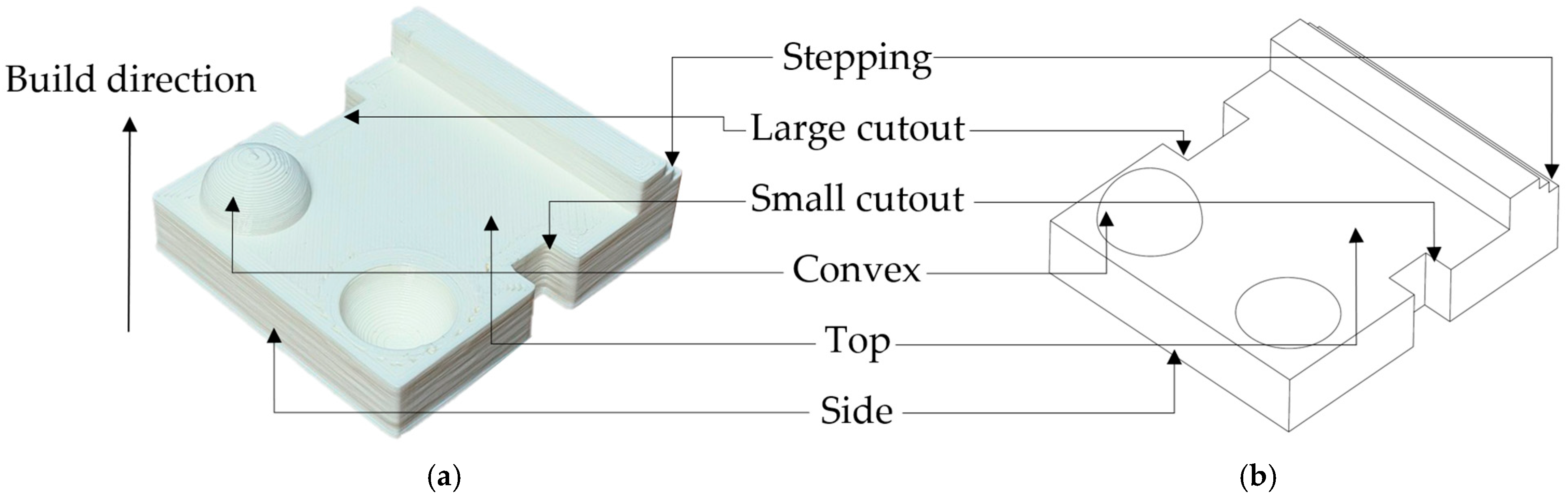
The Prusa i3 is a widely used FDM 3D printer that fabricates components by extruding thermoplastic filament layer by layer from a digital model. To examine and capture various FDM features, a test sample with nominal dimensions of 55 mm × 47.5 mm × 10 mm was fabricated, and printing parameters are provided in Table 1. The sample incorporated eight distinct geometric features, including convex and concave surfaces, top and side steps, large and small cutouts, and flat top and side surfaces. Due to limitations of the characterisation methods, the concave feature was only partially analysed using basic microscopy-based feature tracking.
The printed specimen and the corresponding CAD model, created using SolidWorks 2025 SP4.1, are illustrated in Figure 1, with the build direction and key geometric features annotated. The sample has an overall width of 47.5 mm and a length of 55 mm, with a base height of 10 mm and a raised section of 16 mm. The stepped features measure 2 × 2 mm. Both cut-out sections are 5 mm deep, 10 mm high, and have widths of 7.5 mm and 12.5 mm, respectively. The convex and concave features each have a radius of 7.5 mm and are separated by a centre-to-centre distance of 27.5 mm. Further geometrical information and specimen configuration is provided (Appendix A, Figure A1, Figure A2, Figure A3, Figure A4, Figure A5, Figure A6 and Figure A7).

2.2. CDF Post-Processing

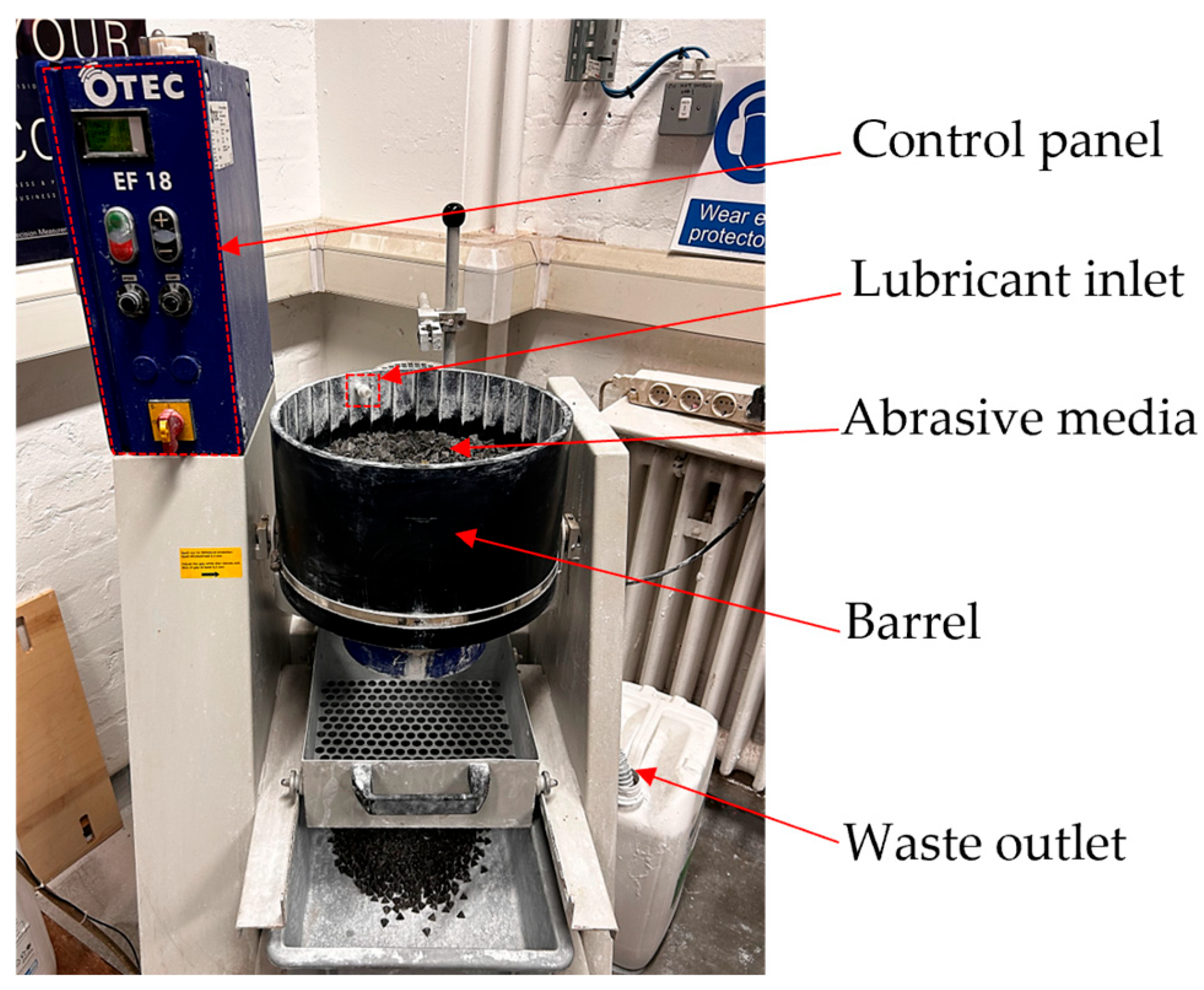
The sample was processed using an OTEC EF-18 CDF machine (OTEC, Straubenhardt, Germany) (Figure 2). The abrasive media, 10 mm plastic tetrahedral high-cut media (Sharmic HC10T), was selected to accommodate the various surface types (Sharmic HC10T, Sharmic, Worcestershire, UK). The media and specimen occupied approximately 70% of the bowl working volume. A speed setting of 230 RPM was chosen based on machine limitations, and the coolant flow rate was not directly calibrated by the machine scale; therefore, it was experimentally determined using a volumetric collection method. At a machine setting of 5, the flow rate was measured as approximately 0.105 L/min. The coolant used was deionised water and the sample in the bowl was free to move with no constraints. Media wear was evaluated by comparing the initial condition (0 min) and the final condition after 720 min of processing. A selection of media was cleaned, dried, and weighed before and after testing to determine cumulative mass loss over the test duration. The results indicate an average mass loss of 0.0917 g, corresponding to an average wear of approximately 14%. Some variability between individual media elements was observed, likely due to differences in local contact conditions within the finishing chamber.
The sample was subjected to a broad range of processing times (0, 15, 30, 45, 60, 120, 180, 300, 480, and 720 min), designed to capture both the initial and later stages of surface evolution, with analysis conducted at each interval. Prior to analysis, the sample taken from each post-processing interval was cleaned using an ultrasonic bath (Shesto, Watford, UK). The sample was placed in a beaker filled with isopropanol (RS components, London, UK) and subjected to the degas function for 10 min at 20 °C temperature. After ultrasonic cleaning, the sample was dried using an element heater and subsequently air-dried.

2.3. AM-Feature Surface Characterisation

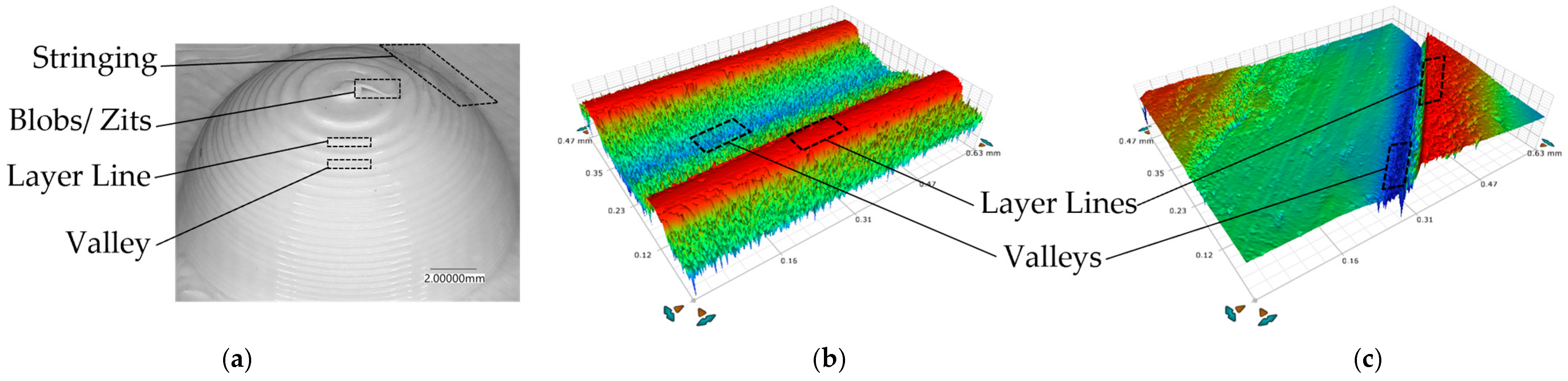
Surface roughness measurements of the as-built and CDF-processed samples were performed using a Bruker Contour GT (Bruker, Billerica, MA, USA) equipped with Vision64. Vertical scanning interferometry with green illumination was employed using a 10× objective and a 1× field of view (0.63 × 0.47 mm). Due to weaker signal intensity from the measured surfaces, a threshold value of 3 was applied, with the illumination intensity maintained at 38% to ensure measurement consistency. The z-scan length was determined through visual fringe detection to facilitate repeated measurement of the same surface regions throughout processing, regions of interest (ROIs) were relocated using the instrument coordinate system and motorised X–Y stage positioning. The nominal measurement coordinates were recorded and revisited at each inspection interval. Alignment was further refined through visual comparison of persistent surface features prior to data extraction, including characteristic defects and geometry-specific topographical landmarks visible in the optical and interferometric data. Although this procedure enabled consistent ROI relocation throughout the study, a quantitative assessment of relocation uncertainty was not performed. While minor spatial deviation is expected, care was taken to maintain consistency across intervals. Within Vision64, data restoration (100 iterations) was applied prior to extracting the surface parameters Sa, Sz (peak-to-valley), Ssk (skewness), and Sku (kurtosis) for every measurement. The application of data restore was to fill minor voids in data with no further form removal or filtering applied. Topographic maps and optical microscopy images were also generated to identify and visualise surface defects (Figure 3).
Topographic maps and microscopy reveal distinct layer lines and the valleys between them, which constitute the inherent staircase effect characteristic of FDM-produced parts. In addition, the microscopy images show instances of stringing/oozing and small surface defects such as blobs or zits, which are also present on other geometrical features, including the cutouts [36]. Both the optical interferometry and optical microscopy was used to track the topography, surface, defects, and feature evolution throughout CDF processing.

2.4. ROI Selection

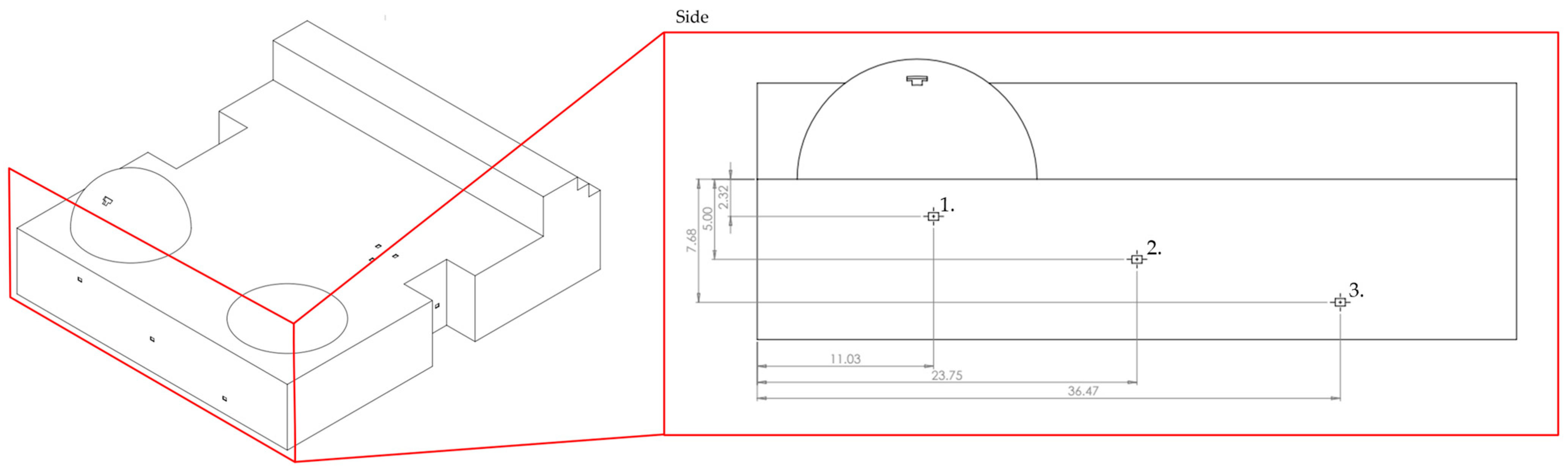
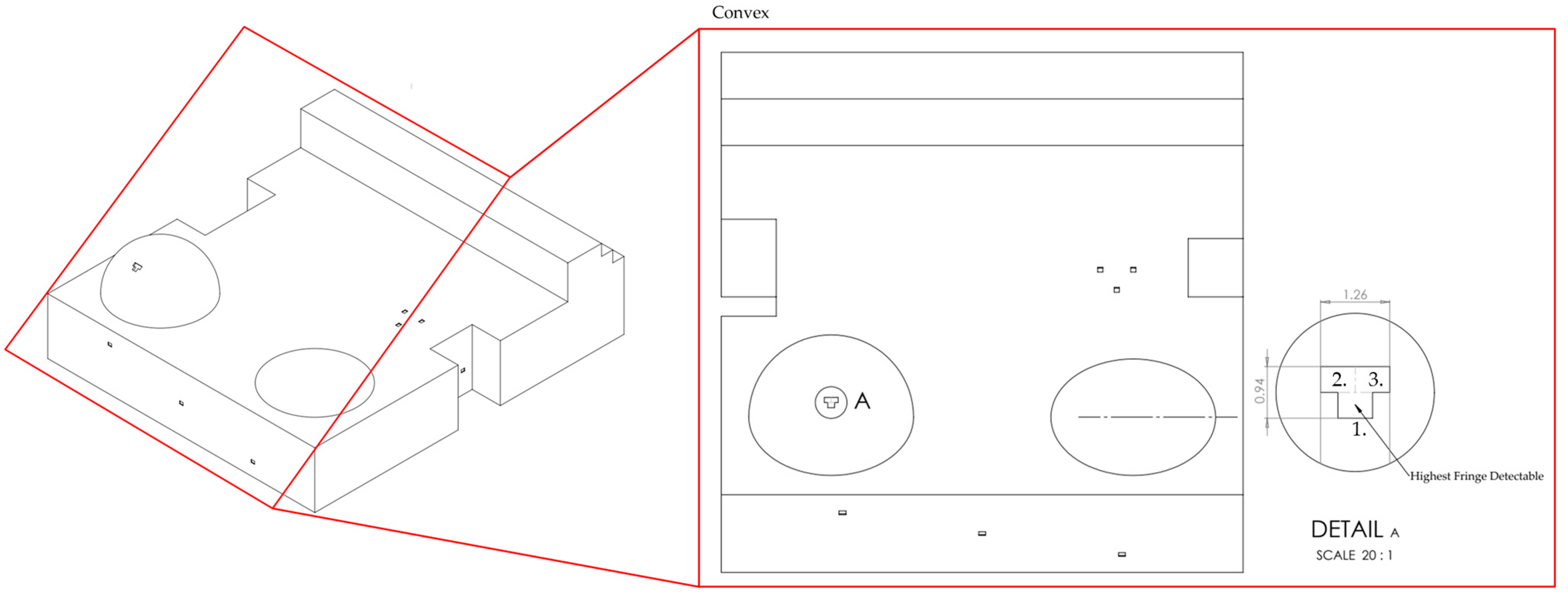
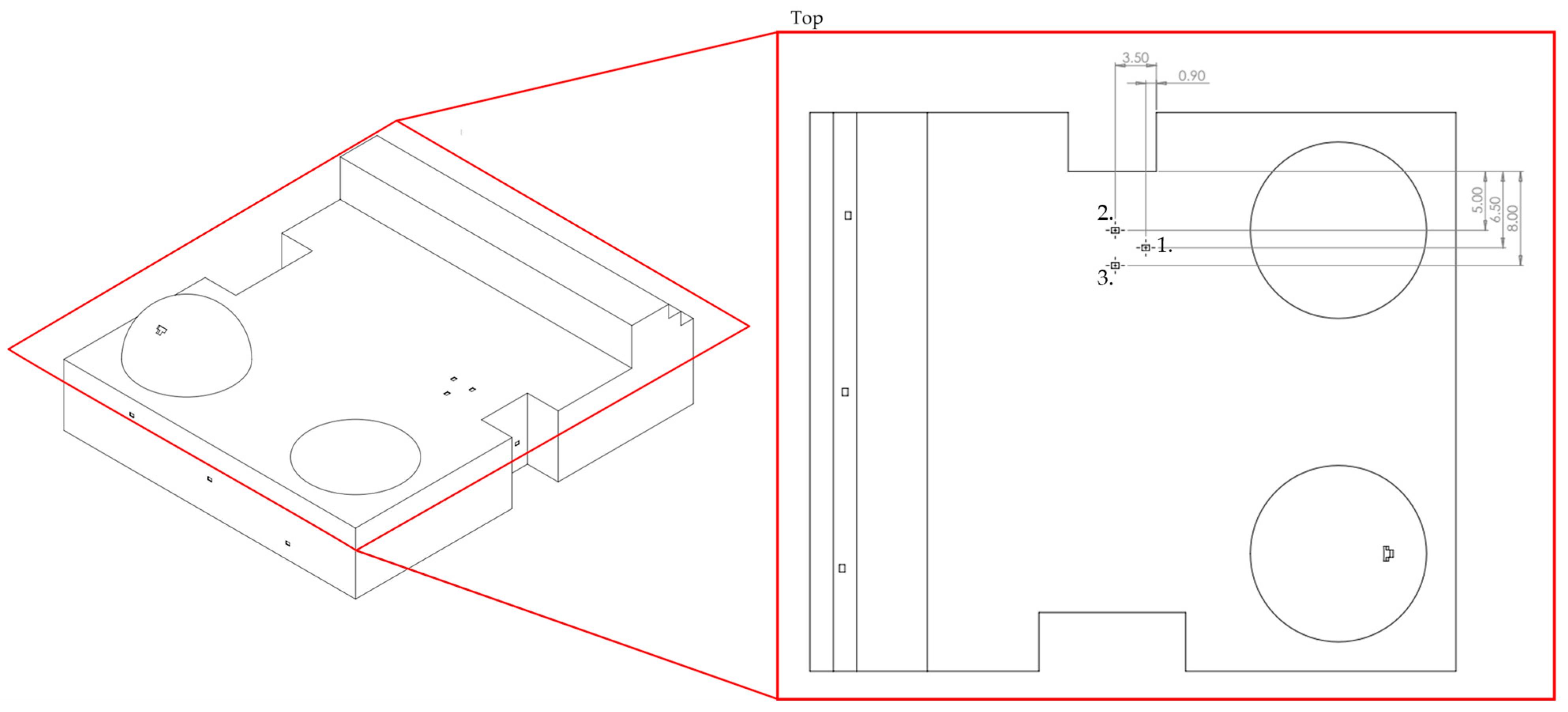
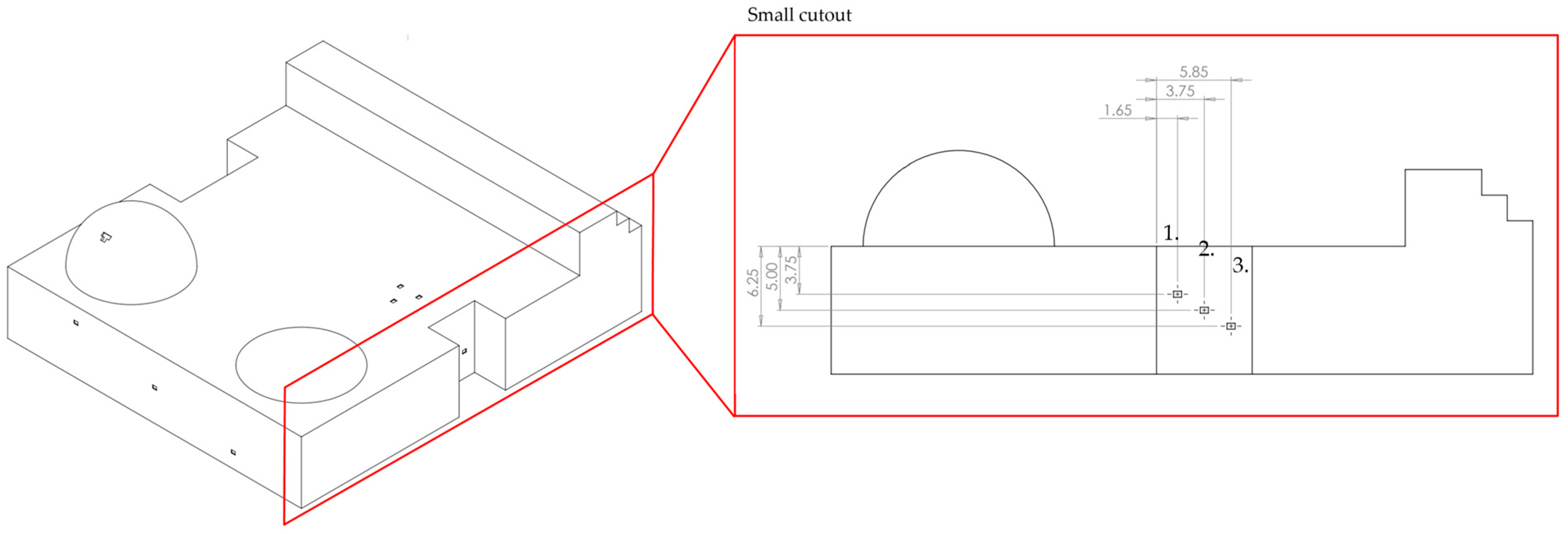
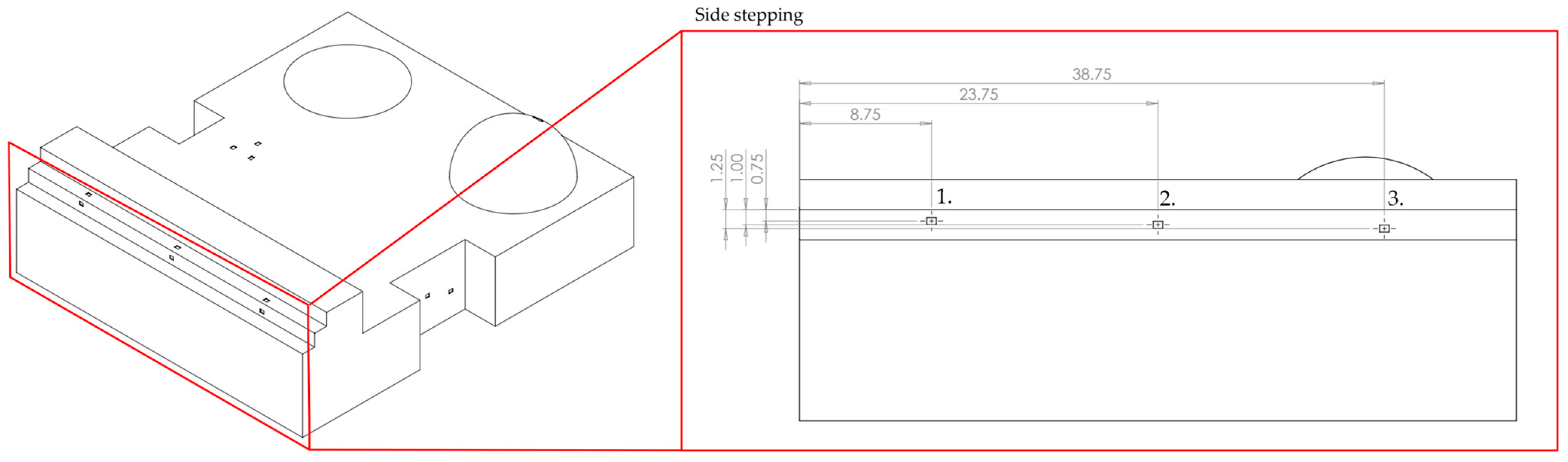
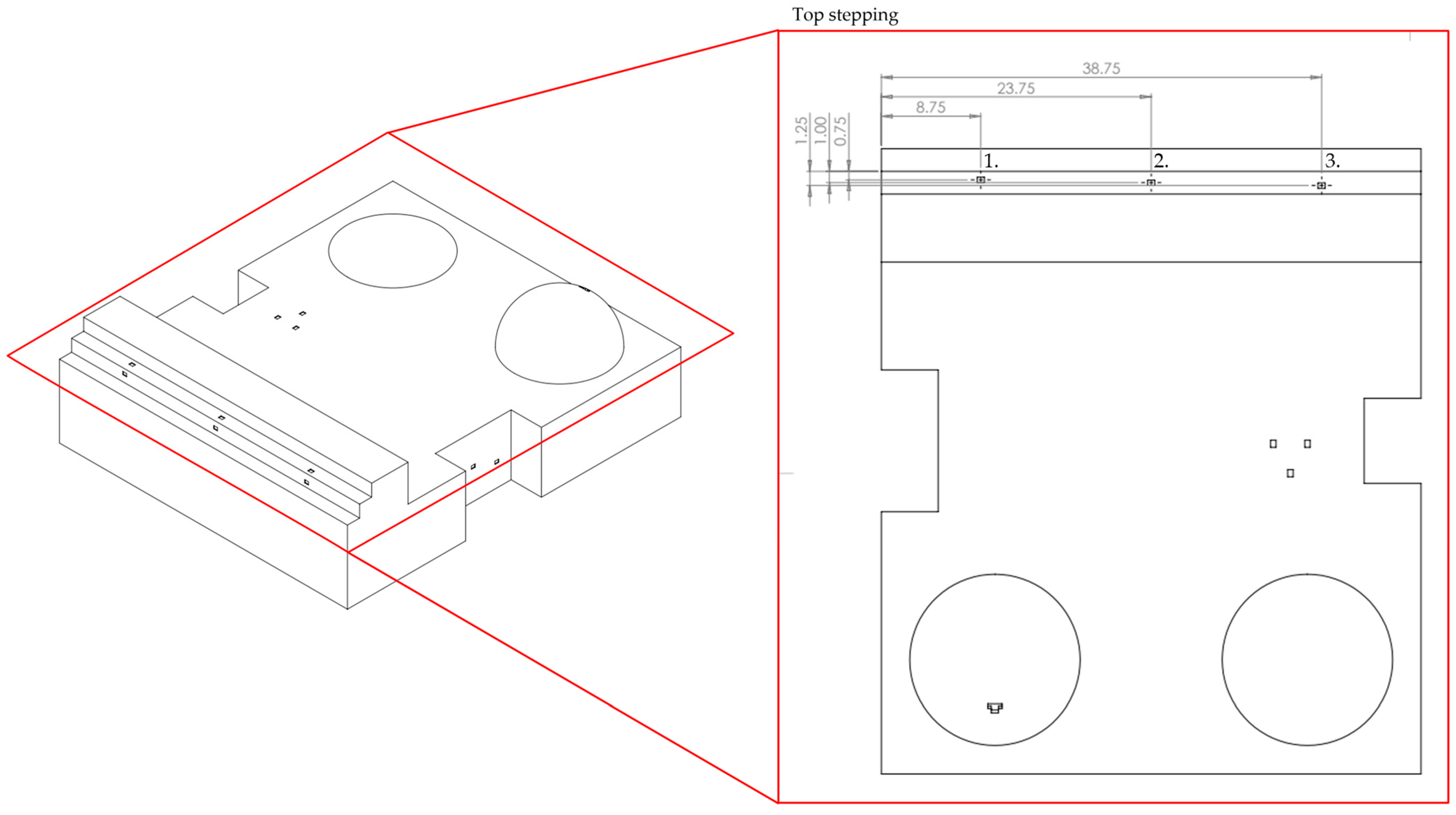
Each ROI was assigned precise coordinates based on feature-specific reference points to ensure reproducibility and accurate spatial mapping, schematics shown in (Appendix A: Figure A1, Figure A2, Figure A3, Figure A4, Figure A5, Figure A6 and Figure A7). ROIs were arranged systematically, using triangular or diagonal patterns to provide comprehensive spatial coverage while avoiding overlap. For the convex feature, the initial CV-ROI1 was located at mid-curvature, representing the characteristic surface profile from base to apex. The sample was mounted at a 45° inclination in the jig to optimise interferometric exposure, with CV-ROI2 and CV-ROI3 arranged in a triangular pattern to capture smaller-scale surface variations. The top flat surface employed a similar triangular configuration (T-ROI1-3), constrained by lens accessibility and potential collisions, ensuring adequate coverage without overlap.
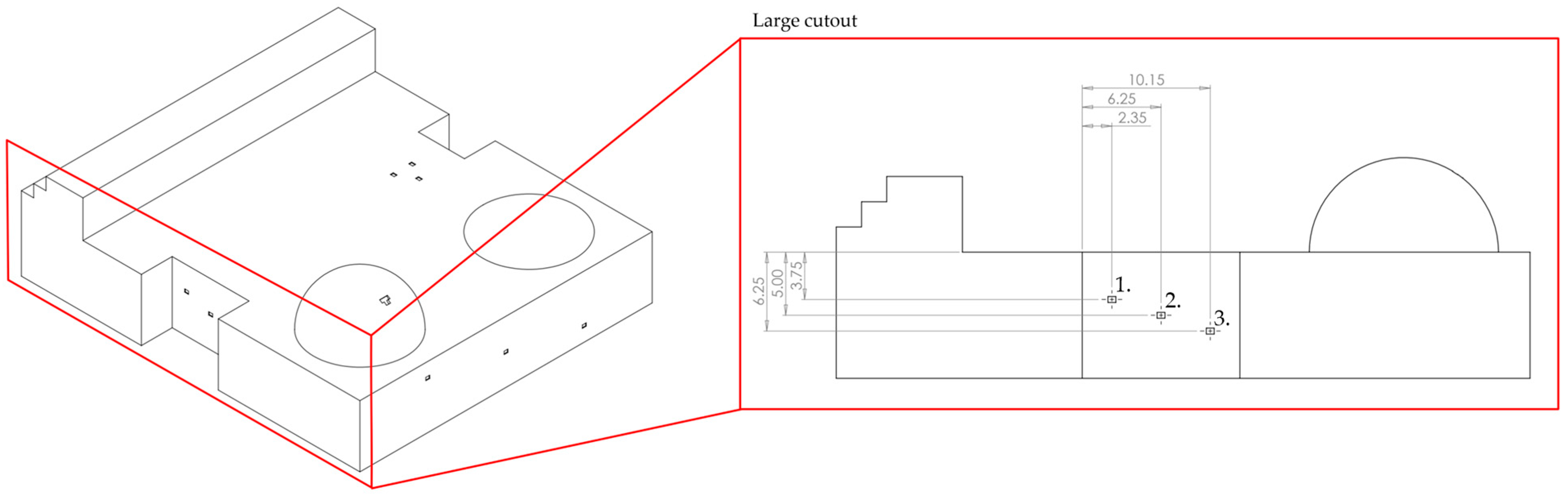
The large and small cut-out features were each characterised using three ROIs (LC-ROI1-3 and SC-ROI1-3 respectively), positioned to target regions likely to present challenges during post-processing due to perpendicular walls restricting media accessibility. ROIs were distributed diagonally across the mid-region, with LC/SC-ROI1 and LC/SC-ROI3 adjacent to perpendicular walls and LC/SC-ROI2 located centrally. The side flat surface was analysed using three widely spaced ROIs (S-ROI1-3), covering the broader surface without geometric constraints. For the top and side step features, three ROIs were mirrored to reflect feature symmetry, with TS/SS-ROI1 near the open edge, TS/SS-ROI2 at the centre, and TS/SS-ROI3 adjacent to the perpendicular wall, providing representative coverage across the surfaces. Overall, the ROI selection strategy was designed to balance representative surface characterisation with geometrical constraints, media accessibility, and lens limitations. Systematic triangular and diagonal arrangements ensured sufficient spatial coverage, non-overlapping measurements, and reliable topographic data across all analysed features.

2.5. Microscopy Feature Tracking and Gravimetric Analysis

Each feature was documented throughout the processing sequence, and feature evolution was tracked using a Keyence VHX optical microscope (Keyence, Osaka, Japan). Fine-depth composition was employed to obtain detailed, layered images at 20× magnification for feature-level observations and 100× at illumination ranges of 90–140 dependant on the feature.
Sample mass was measured using an A&D BM-252 semi-micro balance (A&D, Tokyo, Japan) (±0.001 g accuracy). The measurements were taken around 24 h post-cleaning. These measurements were used to determine material removal rates, evaluate mass-loss trends during processing, and obtain absolute mass values, forming the basis for subsequent gravimetric analysis.

3. Results and Discussion

This study presents an exploratory, single specimen investigation of geometry-dependent surface evolution during CDF. While multiple regions of interest ROIs measured across progressive processing time intervals provide detailed spatial and temporal resolution, the absence of replicate samples limits statistical generalisation. Therefore, results are interpreted as indicative trends rather than definitive relationships.

3.1. Surface Features

Feature/surface microscopy and interferometry results are shown at intervals of 0, 60, 180, and 720 min, for the convex, cutouts, stepping, top flat, side flat and concave respectively.

3.1.1. Convex Feature

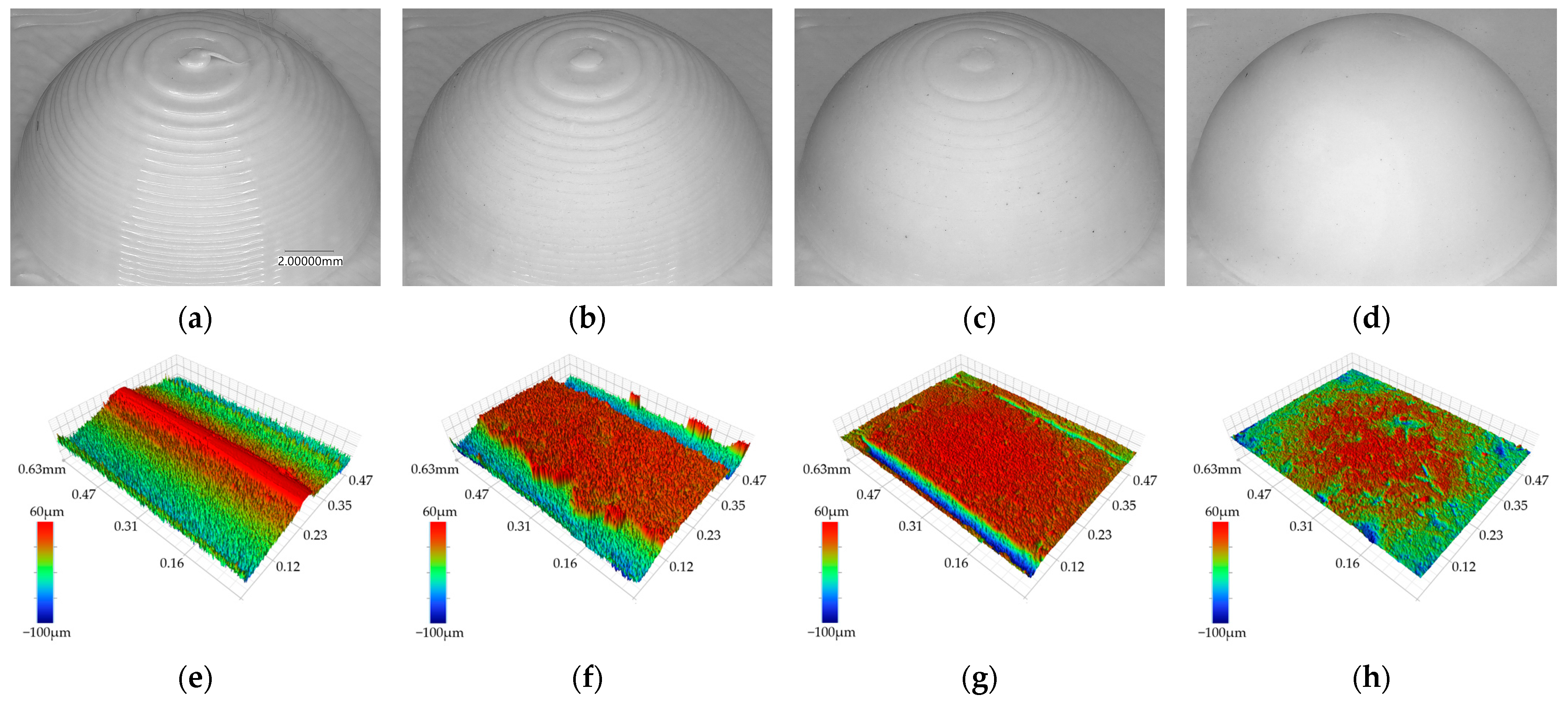
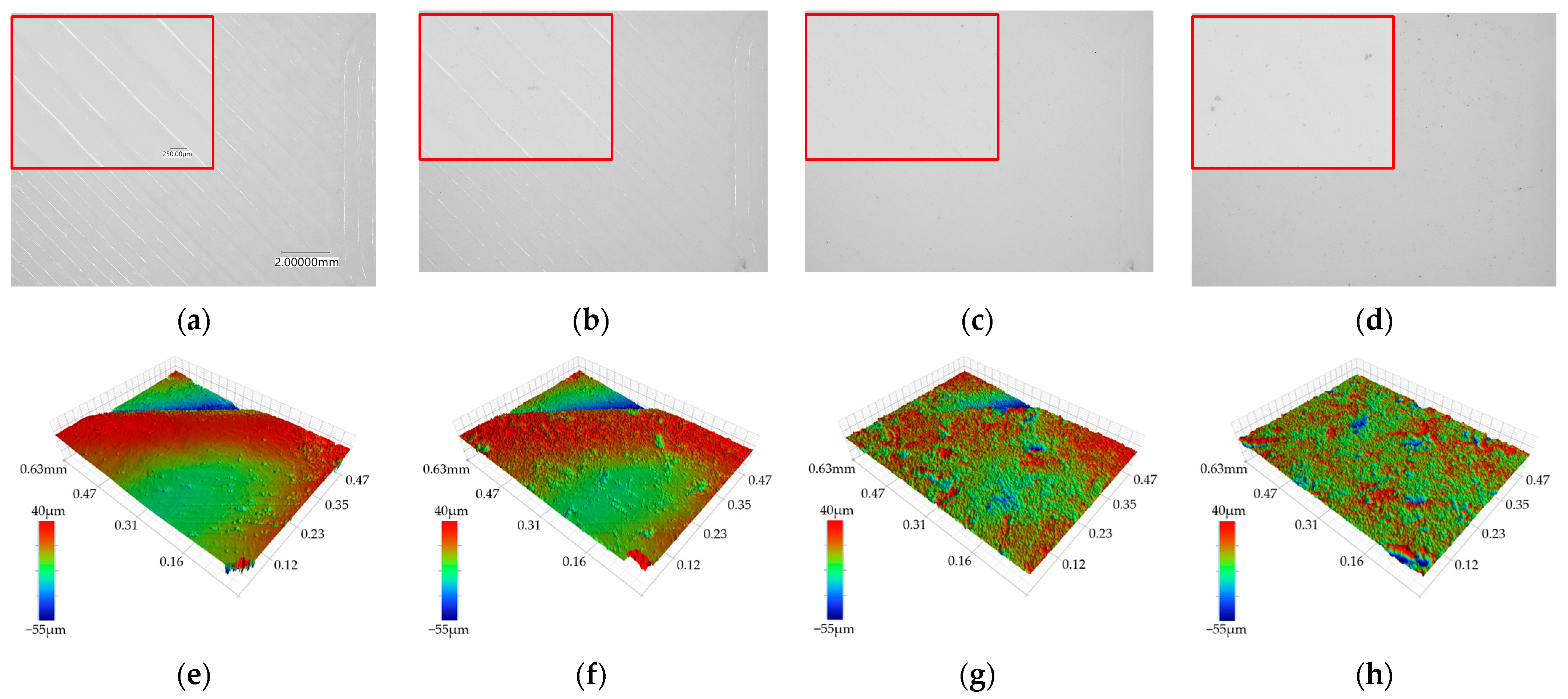
As shown in Figure 4, in the as-built condition, prominent surface defects are present, including staircase-effect layer lines particularly pronounced on curved geometries together with valleys and surface protrusions (zits). These features generate strong surface anisotropy and significant height variation, consistent with previous observations [5,6,7,9].
During the early stages of processing, interferometric maps show rapid attenuation of asperity peaks, indicating preferential removal of elevated regions. Optical microscopy simultaneously reveals partial redistribution and flattening of the layer-line morphology [17].
As processing progresses, directional texture and height variation decrease, producing a progressively more uniform surface. At intermediate stages, continued removal of residual peaks and valley structures occurs. The convex geometry promotes uninterrupted media contact, enabling relatively uniform abrasive interaction and efficient material removal across the surface.
At later stages, the surface stabilises, forming a well-defined convex profile with comparatively homogeneous topography. The feature exhibits classical mass-finishing behaviour, characterised by rapid initial improvement followed by asymptotic plateauing. This trend corresponds with the evolution of roughness, skewness, and kurtosis parameters, indicating a transition from peak-dominated removal to a stabilised surface condition.

3.1.2. Cut-Out Features

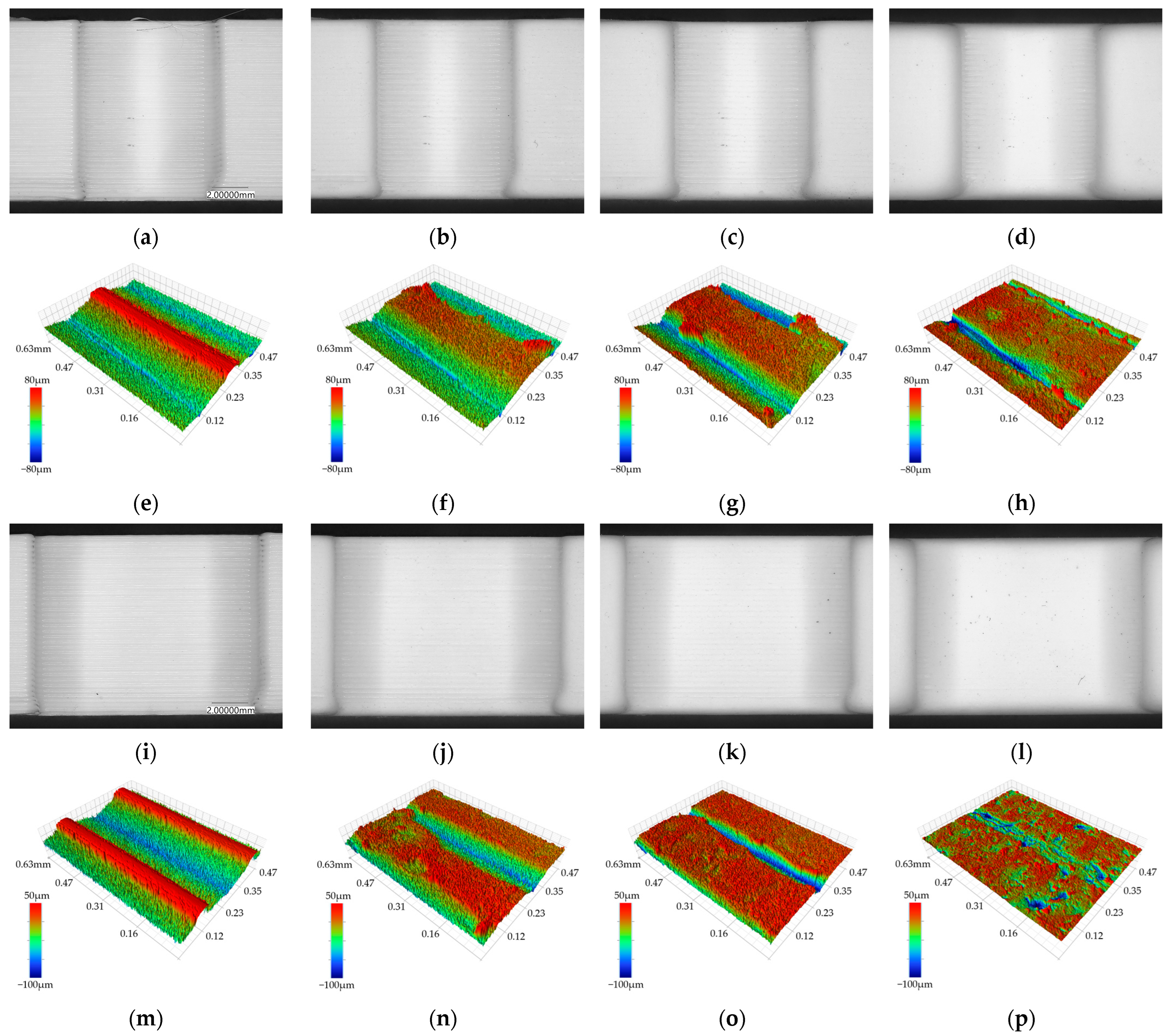
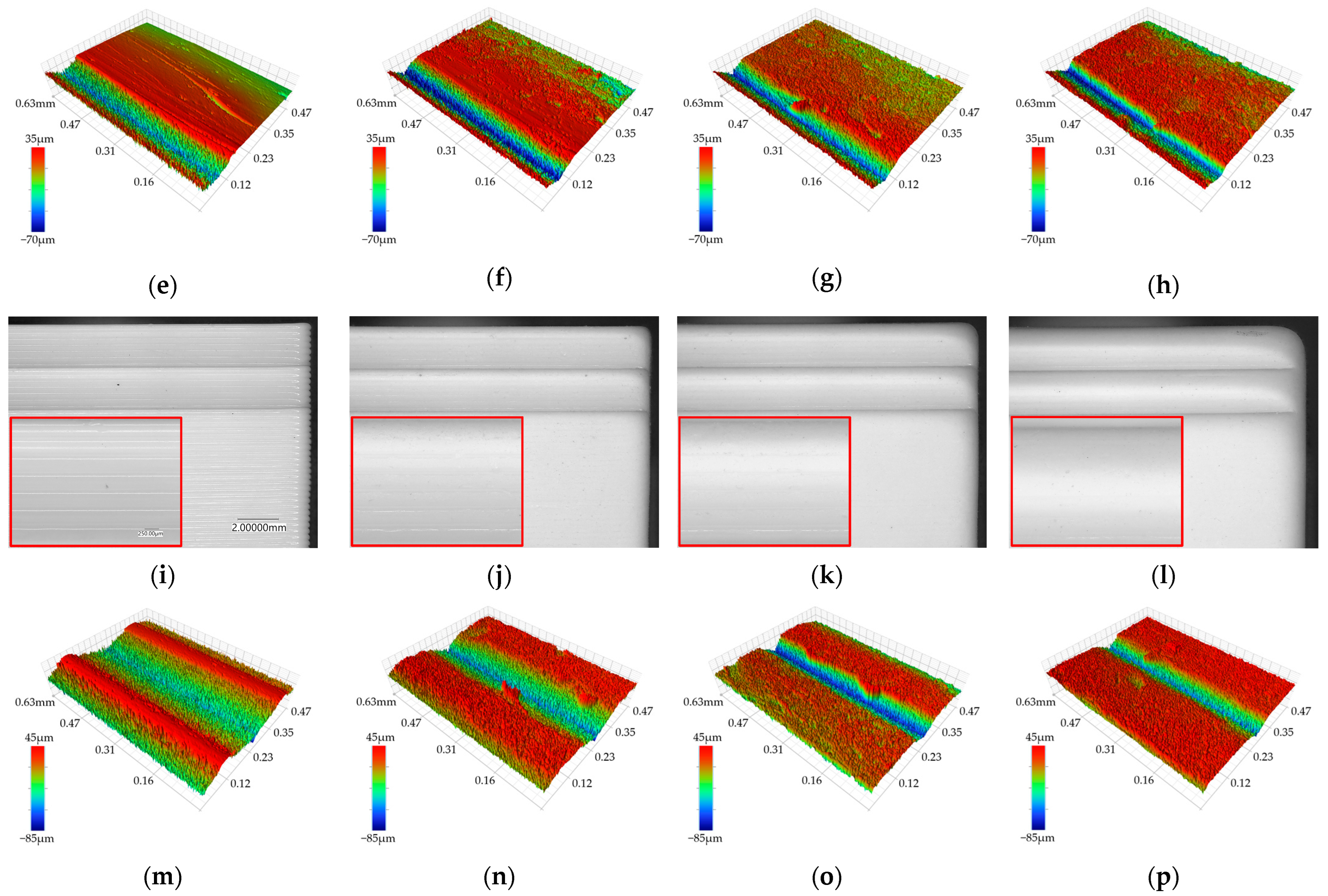
The surface evolution of the small and large cut-out features during processing was evaluated using interferometric topography mapping and optical microscopy (Figure 5). In the as-built condition, both features exhibit directional layer-line morphology producing pronounced height variation and surface anisotropy, similar to that observed on other vertically oriented features.
Initial processing produces only limited material removal relative to fully exposed or convex surfaces. The wider opening of the large cutout allows greater interaction with the abrasive media, resulting in the removal of a larger proportion of the layer-line structures. Consequently, the large cutout exhibits reduced topographic variation and less severe geometric confinement when compared to the smaller cutout.
As processing continues, smoothing occurs within regions accessible to abrasive media. However, the recessed geometry bounded by perpendicular walls restricts media ingress and limits uniform abrasive contact [17]. Material removal therefore remains geometry-dependent, producing localised smoothing while ridge valley structures persist within recessed areas.
At advanced stages, additional smoothing is observed but complete homogenisation is not achieved. Residual layer lines and inter-layer valley remain in localised regions of both cutouts, predominantly aligned parallel to the bounding walls. These features are more pronounced in the small cutout.
This behaviour results in comparatively slow reductions in roughness parameters and the absence of a clear plateau in roughness and kurtosis metrics, indicating geometry-limited mass finishing [18]. The large cutout nevertheless exhibits greater reductions in Sa and Sz owing to reduced geometric constraint. Use of smaller abrasive media would likely improve accessibility and promote more uniform material removal within these confined regions.

3.1.3. Stepping Top Feature

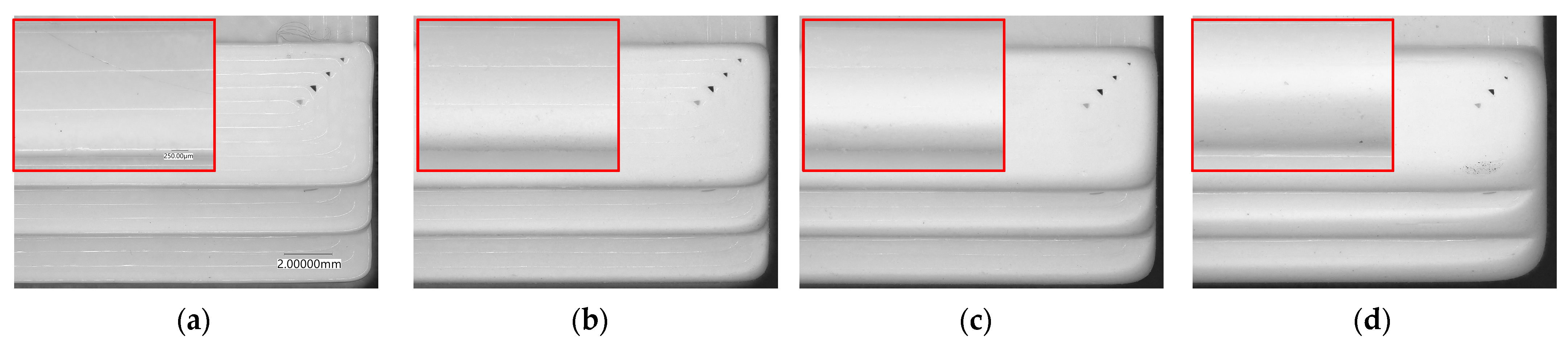
The evolution of the stepping top and side surfaces was analysed through interferometric topography mapping and optical microscopy (Figure 6). The two surfaces exhibit distinct morphologies in the as-built condition as a result of their differing build orientations.
The top stepping surface does not display the classical staircase effect associated with layer-wise additive manufacturing; however, measurable height variation and directional anisotropy are present. Due to the limited width of the stepping feature, surface texture aligns parallel to the step edge rather than diagonally as observed on wider flat surfaces. This behaviour suggests a geometry-dependent extrusion solidification pattern influenced by spatial confinement.
In contrast, the side-stepping surface exhibits layer-line morphology comparable to that observed in the cut-out features due to its vertical build orientation [20,37,38,39]. During early processing stages, material removal progresses gradually on both surfaces, with preferential abrasion at exposed edges. Localised edge rounding and slight chamfer formation develop at the step corners, indicating increased contact stresses and abrasive interaction at geometric discontinuities. On the side surface, layer-line asperity peaks are removed while inter-layer valleys persist. On the top surface, abrasive interaction partially flattens valley structures. With extended processing, valley width on the top surface decreases until subsurface valleys are no longer resolved in interferometric maps, indicating significant surface re-profiling. However, this is accompanied by extensive chamfering and geometric degradation of the step feature [9,40].
Similarly, prolonged processing of the side-stepping surface attenuates ridge structures until predominantly void features remain. Microscopy images reveal significant over-chamfering, although this appears less pronounced in interferometric measurements. Optical microscopy measurements of the middle-step edge (side-on view) reveal significant dimensional evolution of the examined feature during mass finishing, with the mean characteristic length increasing from 648.56 µm at 0 min to 2139.91 µm after 720 min, corresponding to an increase of approximately 230%. This indicates substantial material removal, over-processing and progressive geometric modification of the stepped feature.
Excessive material removal results in increased skewness and elevated height parameters, reducing the reliability of surface characterisation metrics. These results indicate that extended processing at the applied rotational speed promotes aggressive edge-dominated removal mechanisms unsuitable for small, geometrically constrained features. Reduced processing speed would likely improve dimensional preservation and enable more controlled surface modification [18].

3.1.4. Top Surface Feature

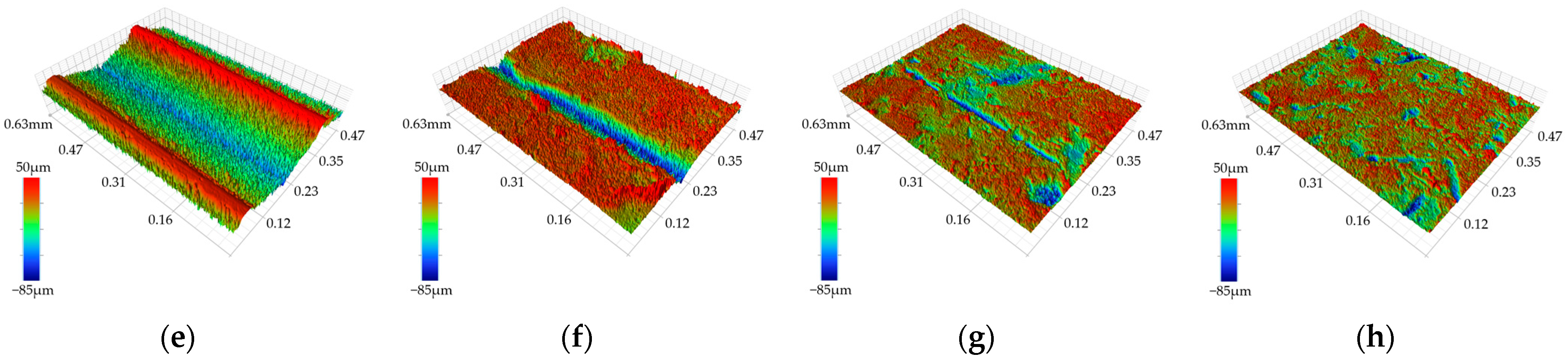
The top flat surface was analysed using interferometric topography mapping and optical microscopy to assess morphological changes during processing (Figure 7). Although the as-built surface shares similarities with the stepping top feature, the greater lateral extent of the flat surface results in layer lines that traverse the surface diagonally rather than aligning parallel to a geometric edge.
For surfaces oriented parallel to the build bed, layer-line morphology occurs at a smaller scale with less pronounced peak-to-valley structures and reduced void dimensions. Consequently, the as-built surface exhibits lower roughness values than vertically oriented or geometrically constrained features [20,37,38,39].
During processing, interferometric maps show progressive reduction in void width and valley depth, indicating preferential removal of elevated regions followed by gradual elimination of valley structures. At later stages, valleys are completely removed, indicating that cumulative material removal exceeds the depth of the deepest as-built features.
The final surface is substantially smoother and free of observable defects. Owing to its planar and geometrically unconstrained configuration, the top flat surface responds favourably to mass finishing compared with more complex features. Optical and interferometric measurements indicate the development of a uniform surface texture.

3.1.5. Side Surface Feature

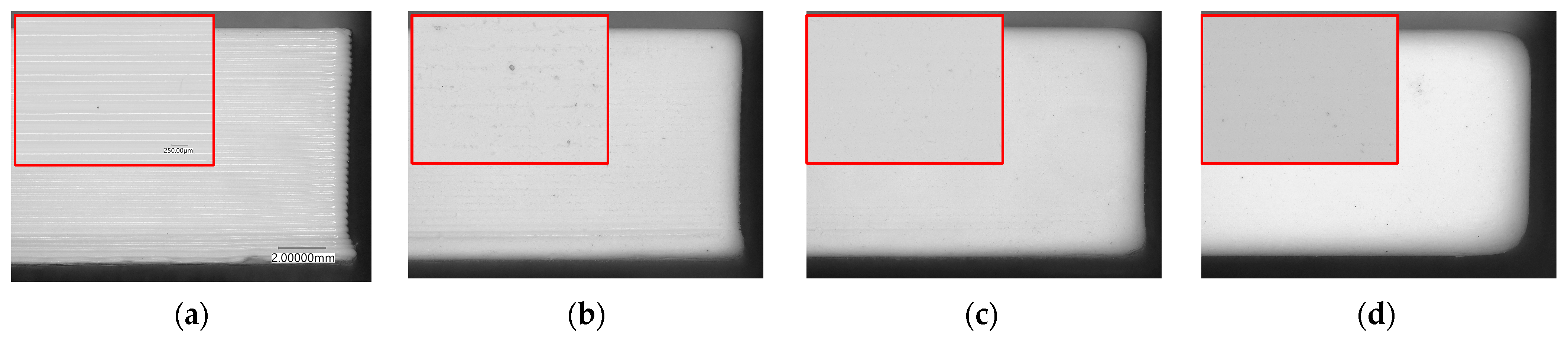
The side flat surface was examined using interferometric topography mapping and optical microscopy to characterise the progression of surface modification during processing (Figure 8). In the as-built state, the surface exhibits pronounced directional layer-line structures similar to those observed in the cut-out and side-stepping features. These features produce significant height variation and a high degree of surface anisotropy [20,37,38].
Once fully engaged by abrasive media, layer-line asperities are removed rapidly, leaving predominantly inter-layer valley structures. With continued processing, these valleys progressively decrease in depth until eliminated, indicating that cumulative material removal exceeds the depth of the deepest as-built valleys. Although the initial morphology differs from that of the top flat surface, the overall surface evolution is comparable.
The final surface exhibits substantially reduced roughness and no observable defects. As with the top flat surface, the planar and unconstrained geometry promotes favourable mass-finishing behaviour compared with recessed or stepped features. Microscopy, interferometric maps, and quantitative measurements indicate the development of a uniform and homogenised surface texture.

3.1.6. Concave Feature

The concave feature was assessed using optical microscopy to evaluate surface changes during processing (Figure 9). The absence of interferometric topography data and high-resolution imaging limits detailed quantitative analysis of the surface morphology.
Nevertheless, microscopy observations indicate minimal visible modification to the curved walls and internal regions of the concave geometry throughout the processing cycle. In contrast, the most significant changes occur at the junction between the concave feature and the surrounding bulk surface. Progressive chamfering and edge rounding of the initially sharp interface are evident from the early stages and continue through to the later stages of processing. This behaviour suggests restricted abrasive media access within the recessed concave region, resulting in limited direct material removal from the internal surfaces, while exposed external edges experience preferential abrasion.

3.2. Roughness Parameters

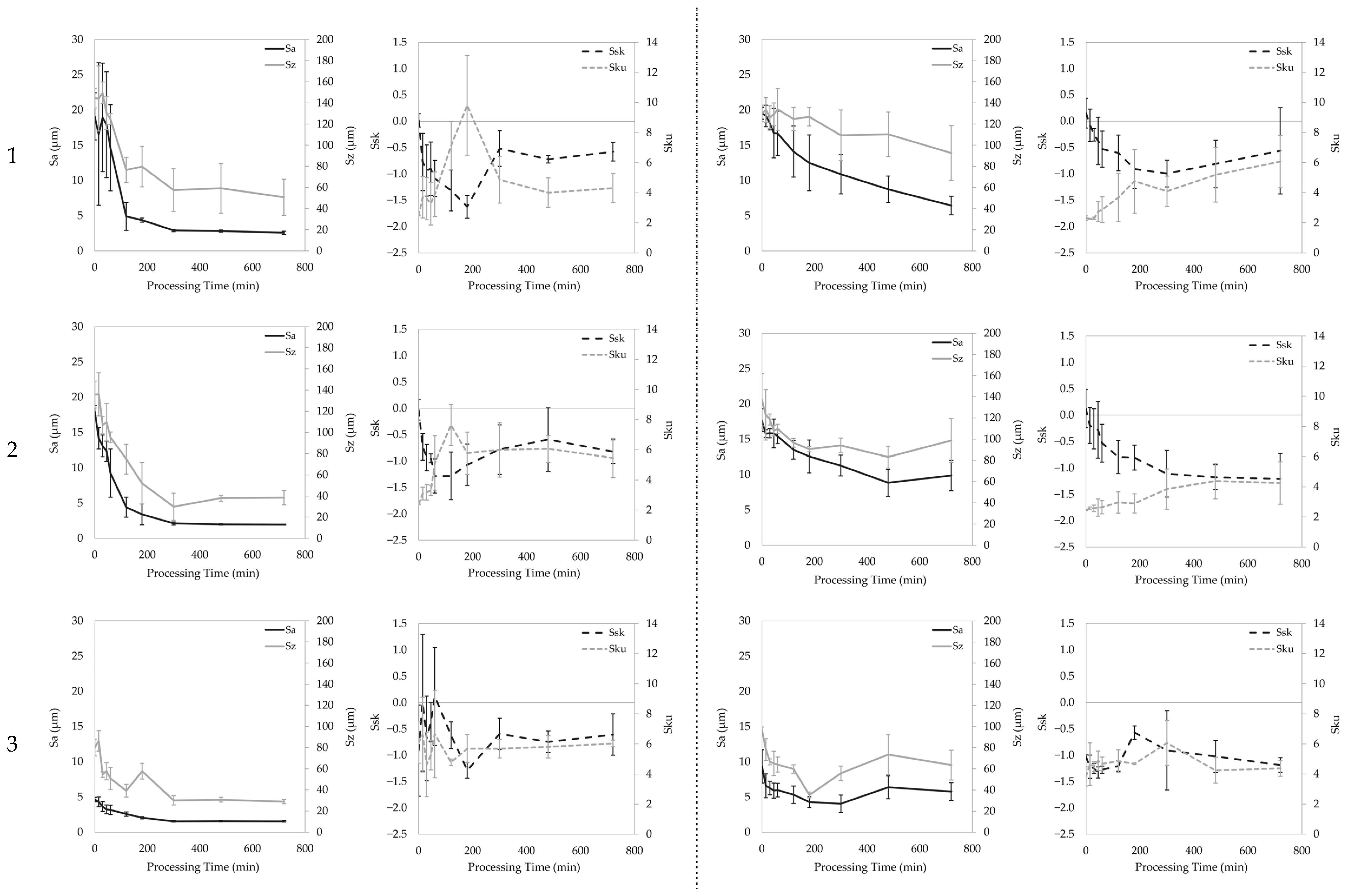
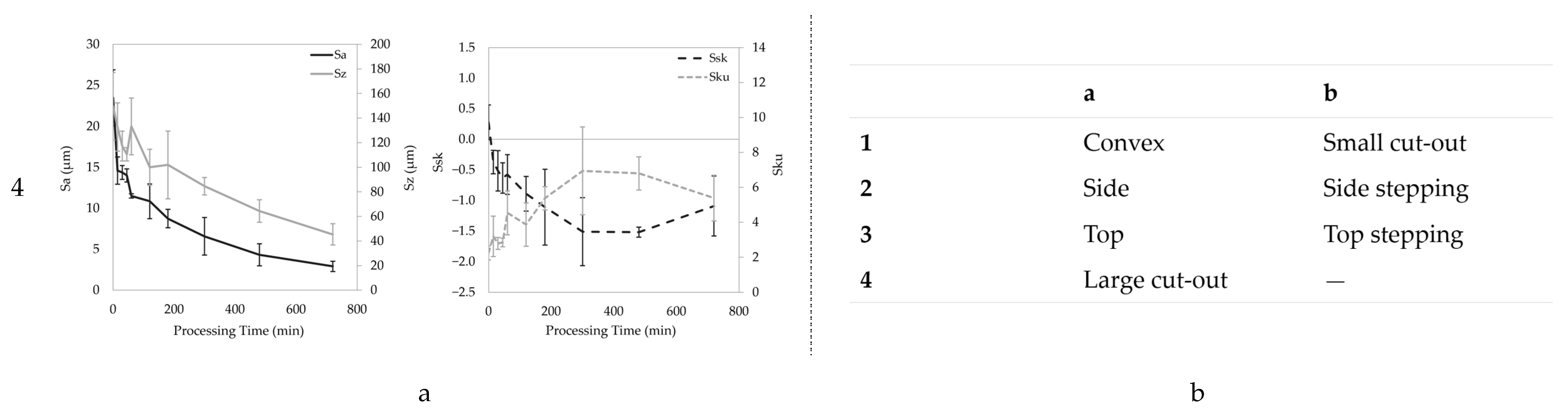
The evolution of these parameters exhibits behaviour characteristic of MF, consisting of an initial transient stage followed by a steadier regime in which surface parameters stabilise or approach a plateau [16,27]. Because this study is based on a one specimen, any conclusions or trends identified should be interpreted with caution; however, the results from the tests still reveal realistic patterns that appear to align with well-established behaviour in the literature. The transient stage begins immediately at the onset of processing for all geometries; its duration varies considerably depending on feature geometry. For the convex and side flat surfaces (Figure 10: 1a, 2a), the transition to the steadier stage occurs at approximately 120 min, while the top flat surface (Figure 10: 3a) reaches this transition at around 45 min. In contrast, the stepped and cut-out geometries (Figure 10: 4a, 1b, 2b, 3b) do not display a clearly defined transient like stage, and no plateau was observed within the investigated processing time [18].
Plateau behaviour also varies between geometries. Clear plateau formation is observed on the top flat, side flat, and convex surfaces, with stabilisation occurring at approximately 300 min for the convex feature. In contrast, no clear plateau is observed for the cut-out or stepped surfaces within the investigated processing time. The absence of plateauing for cut-out features is attributed to restricted media access and non-uniform material removal caused by the perpendicular bounding walls. Similarly, the stepped surfaces exhibit incomplete plateau formation and an increase in roughness at later stages, attributed to over-processing and excessive chamfering of the feature edges [9,40]. This occurs at approximately 480 min for the side step surface and 300 min for the top step surface. Sz follows trends consistent with Sa for all features.
In the as-built condition, skewness values for most surfaces lie close to zero, indicating a near-symmetrical distribution of surface peaks and valleys. As centrifugal disc finishing is a peak-dominated removal process, the early stages preferentially remove surface peaks, producing increasingly negative skewness as the surface becomes valley-dominated. With continued processing, valley rounding and widening progressively restore symmetry in the height distribution, causing skewness values to increase towards zero shifting towards symmetry [25].
This behaviour is most evident for the exposed flat surfaces (Figure 10: 2a, 3a) and the convex feature (Figure 10: 1a), where skewness decreases rapidly during the initial stages before recovering towards zero and eventually stabilising. The top stepped surface (Figure 10: 3b) initially follows a similar trend but subsequently shows further reductions in skewness due to over-processing and excessive chamfering. The side-stepped surface (Figure 10: 2b) shows a monotonic reduction in skewness followed by stabilisation. Both cut-out features (Figure 10: 4a, 1b) exhibit slower reductions in skewness and do not display clear plateau behaviour, reflecting restricted media accessibility, slower surface modification and residual valleys still remaining.
Most surfaces initially exhibit kurtosis values within the near-normal distribution range of approximately 3–4. Several features show an initial increase in kurtosis, indicating sharper peaks or deeper valleys and a more extreme surface height distribution [39,41]. With continued processing, preferential peak removal and valley smoothing reduce kurtosis as the surface texture becomes more uniform.
For the two flat surfaces, this evolution is characterised by a short increase in kurtosis followed by a reduction and plateauing, indicating the formation of rounded asperity peaks, and stable surface texture. The convex feature shows a similar trend, although the increase in kurtosis is more pronounced prior to stabilisation, potentially due to curved geometry and measurement orientation [39]. The cut-out features show similar behaviour but with slower evolution, reflecting limited media accessibility and slower surface modification. Kurtosis trends for the stepped surfaces are less clearly defined due to the combined effects of restricted media access and over-processing.
Surface orientation relative to the build bed also influences the measured parameters. Top surfaces, oriented parallel to the build bed, exhibit smaller-scale layer-line structures compared with side surfaces where layer lines are oriented perpendicular to the build direction. Consequently, side surfaces display more pronounced staircase features and greater peak heights, producing stronger effects on skewness and kurtosis [39,41,42]. Features with vertically oriented layer lines including the side flat, side step, convex region, and cut-out features exhibit similar parameter trends, as shown in Figure 10. The error bars represent the standard deviation of the ROI measurements for each surface at each processing time interval, calculated from three measurements acquired per surface.

3.3. Spearman’s Surface Characterisation Trends

Utilising the interferometry surface characterisation data, statistical analysis was performed to understand relationships with different FDM PLA features during CDF. Spearman’s coefficients (ρ) and p-values presented in (Table 2). The aim is to evaluate the monotonicity of roughness evolution with respect to the surface characterisation parameters Sa and Sz, by assessing the strength and monotonic trends for each feature. The correlation analysis is presented as descriptive due to the use of repeated measurements on a single specimen, ρ and p-values should not be interpreted as inferential statistical significance. The p-values are descriptive outputs only due to the previously described sample limitations in this study. Each feature was assessed using three measurements per interval over ten intervals, providing a total of 30 data points for the calculation of each ρ coefficient and associated p-value.
Spearman’s correlation analysis of the areal roughness parameter Sa indicates a strong negative monotonic trend with processing time for most features; the only exception is the top stepping feature, which shows a weaker monotonic trend and a comparatively weaker correlation [20]. Although weaker, a negative trend for the top step remains evident. The reduced statistical significance may be influenced by increased variability in the Sa measurements observed for this feature under extended processing. Overall, the results indicate a moderate to strong inverse trend between processing time and Sa, whereby Sa decreases as processing progresses. Both cutouts and the side surface exhibit a very strong negative trend (ρ = −1), whilst the top and convex surfaces (ρ = −0.964) and the side-stepping feature (ρ = −0.952) indicate slightly different but strong negative trends. The top stepping feature (ρ = −0.642) exhibits a moderate negative trend.
A similar trend is observed for Sz. Most features exhibit a strong negative trend, with the exception of the top step [20]. This behaviour mirrors the trend observed for Sa and is likely related to the previously discussed processing response of the top stepping geometry. Across all features, Sz generally decreases as processing time increases, indicating the progressive reduction in surface height variation. For both Sa and Sz, the comparatively weaker correlation and reduced monotonic trend observed for the top stepping feature, relative to the side-stepping feature, despite both exhibiting evidence of over-processing, is likely attributable to the lower initial Sa and Sz values of the top stepping feature and its subsequently smaller absolute reduction with increasing processing time.
The correlation behaviour differs considerably for the skewness parameter. Strong negative monotonic trends are observed only for the side-stepping feature and the two cut-out geometries. In contrast, the convex surface, top step, and both flat surfaces show weak or negligible correlations with limited monotonicity. Most features initially exhibit skewness values close to zero due to the presence of layer-line structures typical of FDM fabrication [42]. As processing progresses, Ssk generally shifts towards negative values, reflecting the preferential removal of surface peaks while valley structures persist. Most features reach a minimum negative skewness value before increasing towards zero, as further processing removes valleys and reduces depth variation and negative skewness. The combined effects of initial layer lines, their subsequent removal, and the eventual reduction in valleys result in non-linear and non-monotonic skewness behaviour. This provides a plausible explanation for the deviations observed in the associated p and ρ values for certain features.
For Sku, several features display positive monotonic trend and correlations with processing time. In contrast, the top step and top surface exhibit weak or negligible correlations with little to no significance. However, based on the mechanical response of these features and the sample geometry, a linear or monotonic relationship is not necessarily expected for either Ssk or Sku across all features. Both Ssk and Sku are inherently non-monotonic parameters; therefore, their correlation behaviour cannot be interpreted in the same manner as the monotonic reductions observed in Sa and Sz.
Consequently, the redistribution and progressive removal of peaks and valleys produce the observed trends in both skewness and kurtosis. These behaviours are specific to FDM samples subjected to centrifugal disc finishing or similar post-processing methods.

3.4. Gravimetric Analysis

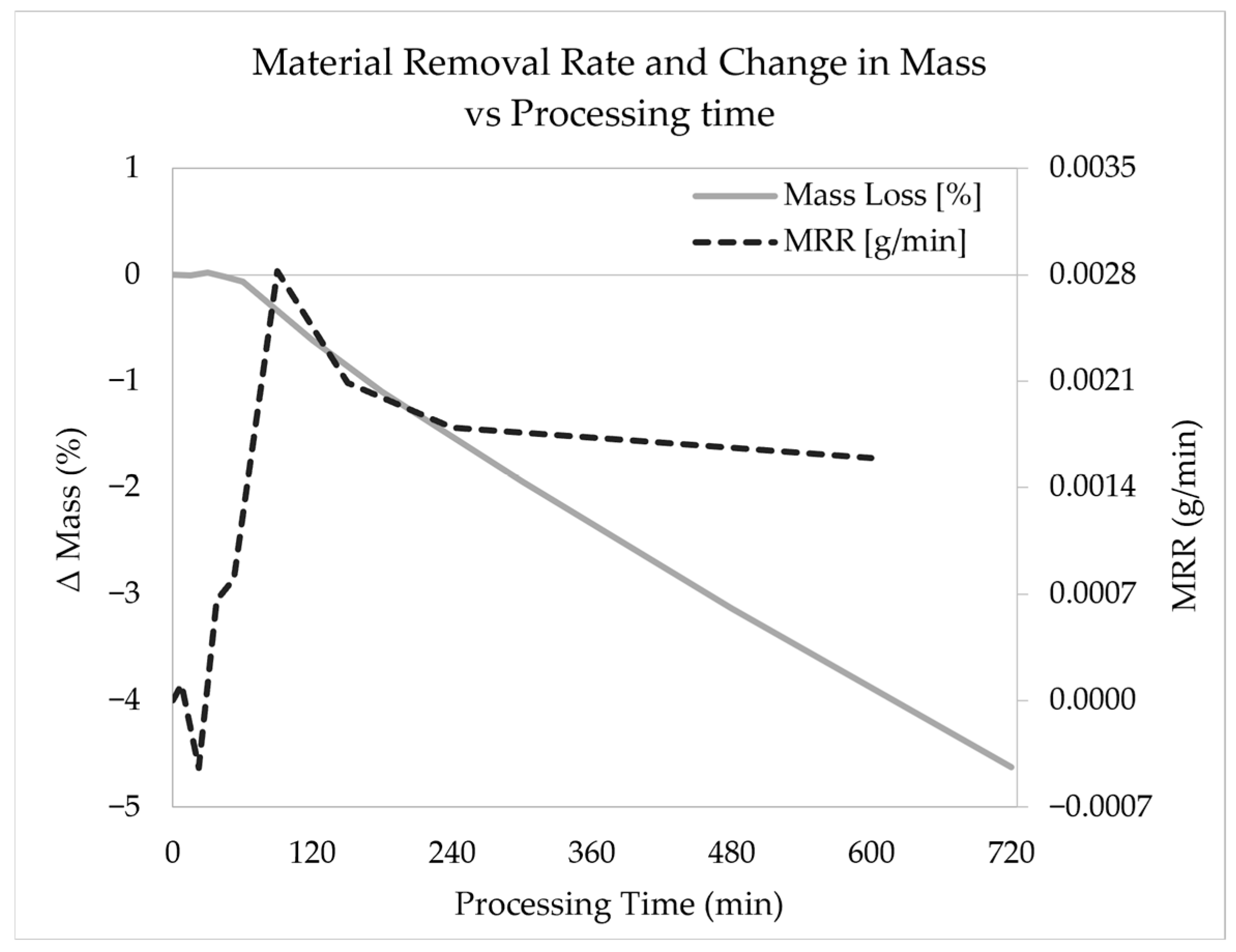
As the study was conducted using a single specimen with a single measurement recorded for each condition, the results should be interpreted as indicative rather than statistically representative. The material removal rate was plotted at the mid-points, as it does not belong to either interval or more accurately represents the behaviour between them. It was therefore determined that the midpoint provided the most appropriate location for evaluating the slope. The weight change as a percentage and MRR are shown (Figure 11).
Both MRR and change in mass are presented. During the initial phase, an increase in mass was observed, which may be attributable to retention of coolant and/or cleaning solution within surface valleys and defect features (e.g., delamination zones and inter-layer gaps), as well as possible moisture uptake, surface contamination, and balance resolution. Specimens were weighed post-cleaning after 24 h. Following interferometry and microscopy, specimens were re-weighed to verify mass stability; if the post-analysis measurement value deviated from the 24 h measurement by more than ±0.005 g, the most recent measurement was adopted for analysis. This procedure provided a practical check for mass stability; however, neither a full uncertainty propagation nor a replicate weighing study was conducted.
The mass decreased during almost every processing interval, with the exception of the 30 min interval, where the specimen mass increased by 0.0066 g relative to the 15 min measurement. However, from 45 min onwards, no further increase in mass was observed.
Cleaning and drying procedures were performed consistently at each processing interval, and the elapsed time of 24 h between drying and mass measurement was maintained. Consequently, any variation in the recorded mass is likely attributable to factors other than differences in specimen preparation or measurement timing. As the mass measurements were obtained from a single specimen, the results should be interpreted with consideration of potential balance calibration uncertainties and specimen-related variability. The specimen mass was 25.6881 g in the as-printed condition and decreased to 24.4996 g following 720 min of processing. The absolute reduction in mass at each interval was 0.0016, −0.0066, 0.0099, 0.0120, 0.1411, 0.1252, 0.2151, 0.3079, and 0.3823 g.
The MRR exhibited initial fluctuations during the first 60 min of processing. The MRR reached a peak between 90 and 120 min, attaining approximately 0.0028 g/min, which can be attributed to the removal of layer lines. These layer lines contribute to the overall specimen mass and are more readily removed in bulk than material from flatter surface regions, resulting in an elevated MRR. Between 240 and 600 min, the MRR decreased gradually. Once the majority of the layer lines had been removed, the MRR began to plateau and stabilised at approximately 0.0014–0.0016 g/min, as material removal became predominantly associated with flatter surface regions, resulting in a lower MRR. At approximately the same processing interval at which the MRR reached its maximum value, the majority of the layer lines on the exposed surfaces had been removed, supporting this interpretation.

3.5. Limitations

This study is subject to several limitations. Limitations include the limited fringe detection on highly rough as-printed surfaces, which reduced early-stage topographical resolution. The use of a single specimen limits statistical generalisation, and as such, findings should be interpreted as indicative trends rather than definitive relationships. ROI-based measurements provide spatial resolution but do not replace independent experimental replication. Certain geometries, such as concave features, could not be fully characterised using interferometry due to accessibility limitations, restricting quantitative comparison which also limited this study. Additionally, features such as thin walls, small channels, and lattice structures were not included, which limits the representation of the full complexity of fine-scale features in AM components. This study was deliberately designed using a controlled and repeatable geometry to enable systematic assessment of finishing behaviour. The methodological approach adopted in this study restricted the extent of quantitative analysis that could be conducted for specific geometries, such as the concave feature.

4. Conclusions

This study provides the first exploratory single specimen assessment of the effect of CDF processing time on an FDM-fabricated PLA component with varied geometries, surface types, and build orientations, focusing on surface evolution and topographical behaviour. Multiple ROIs evaluated across successive processing intervals enabled high spatial and temporal resolution; however, the lack of replicate specimens constrains statistical generalisation. Accordingly, the findings are presented as indicative trends rather than definitive relationships.
Surface evolution during CDF was observed to be associated with geometric accessibility and initial topographical amplitude, which appeared to influence transient duration, attainment of a steady-state plateau, and material removal behaviour. Surfaces fabricated parallel to the build platform (perpendicular to build orientation) exhibited lower initial roughness compared with surfaces oriented perpendicular to the build platform. Consequently, side surfaces demonstrated greater absolute reductions in Sa during processing compared top surfaces.
Distinct transient-like and steady-state-like behaviours were observed, suggesting a dependence on surface geometry for the specimen investigated. The transient-like stage was characterised by the progressive removal of layer lines and reduction in valley depths, while steady plateauing was reached once surfaces approached a near-Gaussian height distribution and pronounced surface extremities were eliminated. Flat and convex surfaces achieved the most effective finishing outcomes, primarily due to improved media accessibility. In contrast, stepped and cut-out features exhibited restricted media access. Convex and flat surfaces followed typical apparent transient-to-steady-state behaviour, whereas stepped features were susceptible to over-processing due to geometric scale and complexity. Cut-out features remained in prolonged transient-like stages and did not reach any steadier state or plateauing, with microscopy revealing non-uniform surface conditions.
Convex, top-flat, and side-flat surfaces responded favourably to CDF processing, with 300 min sufficient to remove visible defects and significantly reduce surface roughness. Conversely, cut-out features did not achieve uniform finishes even after 720 min, highlighting the importance of media accessibility in determining finishing efficiency. Stepped features exhibited roughness reduction up to 180 min; however, excessive chamfering was observed with extended processing, indicating a trade-off between surface improvement and dimensional fidelity.
Strong monotonic relationships were identified between Sa and Sz, while skewness and kurtosis showed less consistent relationships with mechanical surface response. The combined use of interferometric topography and optical microscopy enabled detailed monitoring of surface evolution across different geometries. Material removal was deemed to be primarily driven by the progressive elimination of layer lines and valley features.
Overall, these findings indicate the potential of CDF as a cost-effective and low-labour post-processing technique for improving the surface quality of FDM-fabricated PLA components. However, the effectiveness of the process is strongly dependent on feature geometry and media accessibility.
While quantitative dimensional metrology was not performed, optical observations indicate progressive edge rounding and feature attenuation, particularly in stepped geometries. However, it should be noted that the primary objective of this study was to investigate surface roughness evolution rather than dimensional accuracy. Nevertheless, quantitative dimensional analysis would provide valuable insight into geometric changes during processing. Consequently, dimensional changes were assessed primarily through qualitative observations, with the exception of a single measurement taken across the stepped feature. As such, geometric deviation was not systematically quantified. These observations suggest a trade-off between surface roughness improvement and geometric fidelity during extended processing, which warrants further investigation in future work. Additionally, the thermal effects of CDF were neglected in this study; however, thermal effects generated during CFD can influence materials properties, cause defects, and effect removal mechanisms. These effects therefore warrant further investigation in future work. Additional future work should investigate alternative media types, media sizes, and rotational speeds, as well as a wider range of geometric configurations such as thin walls, small channels, and lattice structures, to further optimise finishing performance for complex geometries.

Author Contributions

Conceptualisation, J.W.C. and A.N.; methodology, J.W.C. and A.N.; formal analysis, J.W.C. and A.N.; investigation, J.W.C. and A.N.; resources, J.W.C., A.N., X.L. and T.T.Ö.; data curation, J.W.C. and J.I.A.-T.; writing—original draft preparation, J.W.C., A.N., X.L., and T.T.Ö.; writing—review and editing, J.W.C., A.N., X.L., J.I.A.-T. and T.T.Ö. All authors have read and agreed to the published version of the manuscript.

Funding

This research received no external funding.

Data Availability Statement

The data are included in the manuscript and are available from the corresponding author upon reasonable request.

Conflicts of Interest

The authors declare no conflicts of interest.

Appendix A

Figure A1. Isometric and front-on views of the side surface illustrating the coordinate system and the locations of the three regions of interest (S-ROI1–3, labelled 1–3). All geometries are shown to scale.
Coatings 16 00722 g0a1
Figure A2. Isometric and front-on views of the convex surface illustrating the coordinate system and the locations of the three regions of interest (CV-ROI1–3, labelled 1–3). All geometries are shown to scale.
Coatings 16 00722 g0a2
Figure A3. Isometric and front-on views of the top surface illustrating the coordinate system and the locations of the three regions of interest (T-ROI1–3, labelled 1–3). All geometries are shown to scale.
Coatings 16 00722 g0a3
Figure A4. Isometric and front-on views of the large cut-out surface illustrating the coordinate system and the locations of the three regions of interest (LC-ROI1–3, labelled 1–3). All geometries are shown to scale.
Coatings 16 00722 g0a4
Figure A5. Isometric and front-on views of the small cut-out surface illustrating the coordinate system and the locations of the three regions of interest (SC-ROI1–3, labelled 1–3). All geometries are shown to scale.
Coatings 16 00722 g0a5
Figure A6. Isometric and front-on views of the side-stepping surface illustrating the coordinate system and the locations of the three regions of interest (SS-ROI1–3, labelled 1–3). All geometries are shown to scale.
Coatings 16 00722 g0a6
Figure A7. Isometric and front-on views of the top-stepping surface illustrating the coordinate system and the locations of the three regions of interest (TS-ROI1–3, labelled 1–3). All geometries are shown to scale.
Coatings 16 00722 g0a7

References

  1. Rasiya, G.; Shukla, A.; Saran, K. Additive manufacturing: A review. Mater. Today Proc. 2021, 47, 6896–6901. [Google Scholar] [CrossRef]
  2. Abdulhameed, O.; Al-Ahmari, A.; Ameen, W.; Mian, S.H. Additive manufacturing: Challenges, trends, and applications. Adv. Mech. Eng. 2019, 11, 1687814018822880. [Google Scholar] [CrossRef]
  3. Dilberoglu, U.M.; Gharehpapagh, B.; Yaman, U.; Dolen, M. The role of additive manufacturing in the era of Industry 4.0. Procedia Manuf. 2017, 11, 545–554. [Google Scholar] [CrossRef]
  4. Zhou, L.; Miller, J.; Vezza, J.; Mayster, M.; Raffay, M.; Justice, Q.; Al Tamimi, Z.; Hansotte, G.; Sunkara, L.D.; Bernat, J. Additive manufacturing: A comprehensive review. Sensors 2024, 24, 2668. [Google Scholar] [CrossRef] [PubMed]
  5. Tamburrino, F.; Barone, S.; Paoli, A.; Razionale, A.V. Post-processing treatments to enhance additively manufactured polymeric parts: A review. Virtual Phys. Prototyp. 2021, 16, 221–254. [Google Scholar] [CrossRef]
  6. Ben Said, L.; Ayadi, B.; Alharbi, S.; Dammak, F. Recent advances in additive manufacturing: A review of Current Developments and Future Directions. Machines 2025, 13, 813. [Google Scholar] [CrossRef]
  7. Goh, G.D.; Hamzah, N.M.B.; Yeong, W.Y. Anomaly detection in fused filament fabrication using machine learning. 3D Print. Addit. Manuf. 2023, 10, 428–437. [Google Scholar] [CrossRef] [PubMed]
  8. Erokhin, K.S.; Naumov, S.A.; Ananikov, V.P. Analysis, classification and remediation of defects in material extrusion 3D printing. Russ. Chem. Rev. 2023, 92, RCR5103. [Google Scholar] [CrossRef]
  9. Barzegar, A.; Hamed, A.; Pakravan, M.J. The surface and subsurface integrity in coupled operation of fused deposited modeling and centrifugal disk finishing. Rapid Prototyp. J. 2022, 28, 1731–1749. [Google Scholar] [CrossRef]
  10. Penumakala, P.K.; Santo, J.; Thomas, A. A critical review on fused deposition modelling of polymer composites. Compos. Part B Eng. 2020, 201, 108336. [Google Scholar] [CrossRef]
  11. Brovina, S.D.; Guivan, M.Y.; Mastalygina, E.E.; Olkhov, A.A. Polymer materials for 3D printing (Fused Deposition Modelling). Polym. Sci. Ser. D 2024, 17, 450–454. [Google Scholar] [CrossRef]
  12. Mogan, J.; Harun, W.S.W.; Kadirgama, K.; Ramasamy, D.; Foudzi, F.M.; Sulong, A.B.; Tarlochan, F.; Ahmad, F. Fused deposition modelling of polymer composites: A progress. Polymers 2022, 15, 28. [Google Scholar] [CrossRef] [PubMed]
  13. Chacón, J.M.; Caminero, M.A.; García-Plaza, E.; Núñez, P.J. Additive manufacturing of PLA structures using fused deposition modelling: Effect of process parameters on mechanical properties and their optimal selection. Mater. Des. 2017, 124, 143–157. [Google Scholar] [CrossRef]
  14. Tan, L.J.; Zhu, W.; Zhou, K. Recent Progress on Polymer Materials for Additive Manufacturing. Adv. Funct. Mater. 2020, 30, 2003062. [Google Scholar] [CrossRef]
  15. Syrlybayev, D.; Seisekulova, A.; Talamona, D.; Perveen, A. Post-processing of additive manufactured polymeric and metallic parts. J. Manuf. Mater. Process. 2022, 6, 116. [Google Scholar] [CrossRef]
  16. Fan, F.; Jalui, S.; Shahed, K.; Mullany, B.; Manogharan, G. Mass finishing for additive manufacturing: Tribological analysis, surface topology, image processing, predictive model, and processing recommendations. Tribol. Int. 2024, 204, 110486. [Google Scholar] [CrossRef]
  17. Jamal, M.; Morgan, M.N. Design Process Control for Improved Surface Finish of Metal Additive Manufactured Parts of Complex Build Geometry. Inventions 2017, 2, 36. [Google Scholar] [CrossRef]
  18. Lussenburg, K.; van Starkenburg, R.; Bruins, M.; Sakes, A.; Breedveld, P. Polishing of metal 3D printed parts with complex geometry: Visualizing the influence on geometrical features using centrifugal disk finishing. PLoS ONE 2023, 18, e0289730. [Google Scholar] [CrossRef] [PubMed]
  19. Kopp, M.; Uhlmann, E.; Kneider, C. Experimental investigations of the workpiece-media-interaction and the surface topography formation in centrifugal disc finishing. Procedia CIRP 2022, 115, 24–29. [Google Scholar] [CrossRef]
  20. Fan, F.; Jalui, S.; Manogharan, G. Mass finishing of additively manufactured Ti6Al4V parts: An investigation of surface finish dependency on build orientation and processing conditions. Manuf. Lett. 2023, 35, 439–449. [Google Scholar] [CrossRef]
  21. Cariapa, V.; Park, H.; Kim, J.; Cheng, C.; Evaristo, A. Development of a metal removal model using spherical ceramic media in a centrifugal disk mass finishing machine. Int. J. Adv. Manuf. Technol. 2007, 39, 92–106. [Google Scholar] [CrossRef]
  22. Uhlmann, E.; Dethlefs, A.; Eulitz, A. Investigation of Material Removal and Surface Topography Formation in Vibratory Finishing. Procedia CIRP 2014, 14, 25–30. [Google Scholar] [CrossRef]
  23. Mathew, A.; Kishore, S.R.; Tomy, A.T.; Sugavaneswaran, M.; Scholz, S.G.; Elkaseer, A.; Wilson, V.H.; Rajan, A.J. Vapour polishing of fused deposition modelling (FDM) parts: A critical review of different techniques, and subsequent surface finish and mechanical properties of the post-processed 3D-printed parts. Prog. Addit. Manuf. 2023, 8, 1161–1178. [Google Scholar] [CrossRef]
  24. Puerta, A.P.V.; Lopez-Castro, J.; Ojeda-López, A.; Vidal, S.R.F. On improving the surface finish of 3D printing polylactic acid parts by corundum blasting. Rapid Prototyp. J. 2021, 27, 1398–1407. [Google Scholar] [CrossRef]
  25. Ozer, M. Surface roughness prediction of laser-polished 3D-printed polylactic acid parts: A combined experimental and machine learning approach A: Physicochemical and Engineering Aspects. Colloids Surf. A 2026, 729, 138916. [Google Scholar] [CrossRef]
  26. Chen, L.; Zhang, X.; Wang, Y.; Osswald, T.A. Laser polishing of Cu/PLA composite parts fabricated by fused deposition modeling: Analysis of surface finish and mechanical properties. Polym. Compos. 2019, 41, 1356–1368. [Google Scholar] [CrossRef]
  27. Taufik, M.; Jain, P. KLaser assisted finishing process for improved surface finish of fused deposition modelled parts. J. Manuf. Process. 2017, 30, 161–177. [Google Scholar] [CrossRef]
  28. Zentgraf, J.; Nützel, F.; Mühlbauer, N.; Schultheiss, U.; Grad, M.; Schratzenstaller, T. Surface Treatment of Additively Manufactured Polyetheretherketone (PEEK) by Centrifugal Disc Finishing Process: Identification of the Key Parameters. Polymers 2024, 16, 2348. [Google Scholar] [CrossRef] [PubMed]
  29. Singh, R. Trivedi, Experimental Investigations for Surface Roughness and Dimensional Accuracy of FDM Components with Barrel Finishing. Proc. Natl. Acad. Sci. India 2017, 87, 455–463. [Google Scholar] [CrossRef]
  30. Pätoprstý, B.; Morovič, L.; Buranský, I.; Dubnička, M.; Vozár, M. Surface modification of parts manufactured by fused deposition modelling. J. Phys. Conf. Ser. 2024, 2931, 012020. [Google Scholar] [CrossRef]
  31. Rifat, M.; DeMeter, E.; Basu, S. Evolution of Surface Roughness of Wrought and Additively Manufactured Inconel 718 During Centrifugal Disc Finishing. JOM 2024, 76, 2835–2848. [Google Scholar] [CrossRef]
  32. Kishore, S.R.; Mathew, A.; Tomy, A.T.; Sugavaneswaran, M.; Rajan, A.J. Design and Development of Hot Vapour Polishing System and Optimization of It’s Process Parameters for FDM Printed Parts. Tribol. Ind. 2022, 44, 551–567. [Google Scholar] [CrossRef]
  33. Valerga, A.P.; Batista, M.; Fernandez-Vidal, S.R.; Gamez, A.J. Impact of Chemical Post-Processing in Fused Deposition Modelling (FDM) on Polylactic Acid (PLA) Surface Quality and Structure. Polymers 2019, 11, 566. [Google Scholar] [CrossRef] [PubMed]
  34. Chen, L.; Zhang, X.; Gan, S. Effects of laser polishing on surface quality and mechanical properties of PLA parts built by fused deposition modeling. J. Appl. Polym. Sci. 2019, 137, 48288. [Google Scholar] [CrossRef]
  35. Alzyod, H.; Takacs, J.; Ficzere, P. Improving surface smoothness in FDM parts through ironing post-processing. J. Reinf. Plast. Compos. 2023, 43, 671–681. [Google Scholar] [CrossRef]
  36. He, H.; Zhang, Y.; Zhang, Z.; Famakinwa, T.; Yang, R. Machine condition monitoring for defect detection in fused deposition modelling process: A review. Int. J. Adv. Manuf. Technol. 2024, 132, 3149–3178. [Google Scholar] [CrossRef]
  37. Delfs, P.; Töws, M.; Schmid, H.-J. Optimized build orientation of additive manufactured parts for improved surface quality and build time. Addit. Manuf. 2016, 12, 314–320. [Google Scholar] [CrossRef]
  38. Szczygieł, P.; Radoń-Kobus, K. Influence of Printing Orientation on Tensile Strength and Surface Characterization of a Steel-Powder-Reinforced Thermoplastic Composite Manufactured by FDM Technology. Materials 2025, 18, 5656. [Google Scholar] [CrossRef] [PubMed]
  39. Buj-Corral, I.; Domínguez-Fernández, A.; Durán-Llucià, R. Influence of Print Orientation on Surface Roughness in Fused Deposition Modeling (FDM) Processes. Materials 2019, 12, 3834. [Google Scholar] [CrossRef] [PubMed]
  40. Kopp, M.; Uhlmann, E. Prediction of the Roughness Reduction in Centrifugal Disc Finishing of Additive Manufactured Parts Based on Discrete Element Method. Machines 2022, 10, 1151. [Google Scholar] [CrossRef]
  41. Buj-Corral, I.; Sánchez-Casas, X.; Luis-Pérez, C.J. Analysis of AM Parameters on Surface Roughness Obtained in PLA Parts Printed with FFF Technology. Polymers 2021, 13, 2384. [Google Scholar] [CrossRef] [PubMed]
  42. Taufik, M.; Jain, P.K. Characterization, modeling and simulation of fused deposition modeling fabricated part surfaces. Surf. Topogr. Metrol. Prop. 2017, 5, 045003. [Google Scholar] [CrossRef]
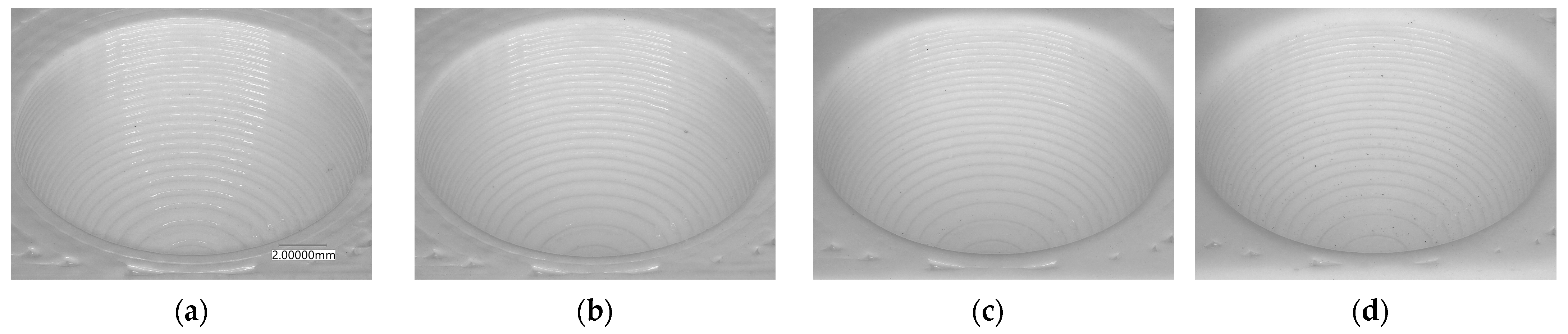
Figure 1. AM sample design with different geometrical surfaces. (a) as-built model; (b) CAD model.
Coatings 16 00722 g001
Figure 2. OTEC EF 18 CDF machine.
Coatings 16 00722 g002
Figure 3. Convex feature image captured at 20× magnification and enhanced with 25% sharpening and 25% contrast to enhance defect visibility in as-built condition (a); 3D topographic maps, on two differently oriented surfaces: (b) convex surface parallel to the build direction; (c) flat top surface perpendicular to the build direction.
Coatings 16 00722 g003
Figure 4. Optical microscopy images (ad) and corresponding Bruker interferometer topographic maps from CV-ROI1 (eh) of the convex surface after processing for 0 min (a,e), 60 min (b,f), 180 min (c,g), and 720 min (d,h).
Coatings 16 00722 g004
Figure 5. Optical microscopy images in the first row (ad) and corresponding topographic maps from SC-ROI1 in the second row (eh) of the small cut-out surface after processing for 0 min (a,e), 60 min (b,f), 180 min (c,g), and 720 min (d,h). Optical microscopy images in the third row (il) and corresponding topographic maps from LC-ROI3 in the fourth row (mp) of the large cut-out surface after processing for 0 min (i,m), 60 min (j,n), 180 min (k,o), and 720 min (l,p).
Coatings 16 00722 g005
Figure 6. Optical microscopy images in the first row (ad) and corresponding Bruker interferometer topographic maps in the second row from TS-ROI2 (eh) of the stepped top surface after processing for 0 min (a,e), 60 min (b,f), 180 min (c,g), and 720 min (d,h). Optical microscopy images in the third row (il) and corresponding Bruker interferometer topographic maps in the fourth row from SS-ROI2 (mp) of the stepped side surface after processing for 0 min (i,m), 60 min (j,n), 180 min (k,o), and 720 min (l,p).
Coatings 16 00722 g006aCoatings 16 00722 g006b
Figure 7. Optical microscopy images (ad) and corresponding Bruker interferometer topographic maps from T-ROI1 (eh) of the top surface after processing for 0 min (a,e), 60 min (b,f), 180 min (c,g), and 720 min (d,h).
Coatings 16 00722 g007
Figure 8. Optical microscopy images (ad) and corresponding Bruker interferometer topographic maps from S-ROI1 (eh) of the side surface after processing for 0 min (a,e), 60 min (b,f), 180 min (c,g), and 720 min (d,h).
Coatings 16 00722 g008aCoatings 16 00722 g008b
Figure 9. Optical microscopy images (ad) of the concave surface after processing for 0 min (a), 60 min (b), 180 min (c), and 720 min (d).
Coatings 16 00722 g009
Figure 10. Sa, Sz, Ssk, and Sku data plots for each feature and legend.
Coatings 16 00722 g010aCoatings 16 00722 g010b
Figure 11. Processing time vs. change in mass as percentage and MRR in gram per minute.
Coatings 16 00722 g011
Table 1. Printing parameters and settings used in FDM for PLA sample.
Parameter/SettingSpecification/Value
MaterialBASF ULTRAFUSE PLA WHITE
PrinterPRUSA i3 MK3s
Fill density [%]15
Fill patternRectilinear
Fill pattern (top/ bottom)Monotonic
Fill angle [°]45
Layer height [mm]0.3
First layer height [mm]0.2
Filament diameter [mm]1.75
Filament density [g/cm3]1.24
Nozzle temperature [°C]215
Bed temperature [°C]60
Wall thickness [mm]3
Table 2. Spearman’s coefficients (ρ) and p-values (p) for roughness parameters: Sa (µm); Sz (µm); Ssk; and Sku relative to polishing time.
FeatureSa (μm)SskSkuSz (μm)
ρpρpρpρp
Convex−0.964<0.0010.0060.9870.7330.016−0.939<0.001
Small Cutout−1<0.001−0.8430.0020.952<0.001−0.7820.008
Large Cutout−1<0.001−0.915<0.0010.903<0.001−0.915<0.001
Top Step−0.6420.05370.4790.1620.1390.701−0.6420.054
Side Step−0.952<0.001−1<0.0010.964<0.001−0.8550.002
Top Surface−0.964<0.001−0.1030.777−0.1030.777−0.8420.002
Side Surface−1<0.001−0.1270.7260.8060.005−0.927<0.001
Disclaimer/Publisher’s Note: The statements, opinions and data contained in all publications are solely those of the individual author(s) and contributor(s) and not of MDPI and/or the editor(s). MDPI and/or the editor(s) disclaim responsibility for any injury to people or property resulting from any ideas, methods, instructions or products referred to in the content.