Strength–Conductivity Synergy in LPBF-Fabricated CuCrZr Alloy: The Role of Nanoscale Semi-Coherent Precipitates and Retained Dislocations
 ,
,  ,
, 
 and
and
Highlights
- •
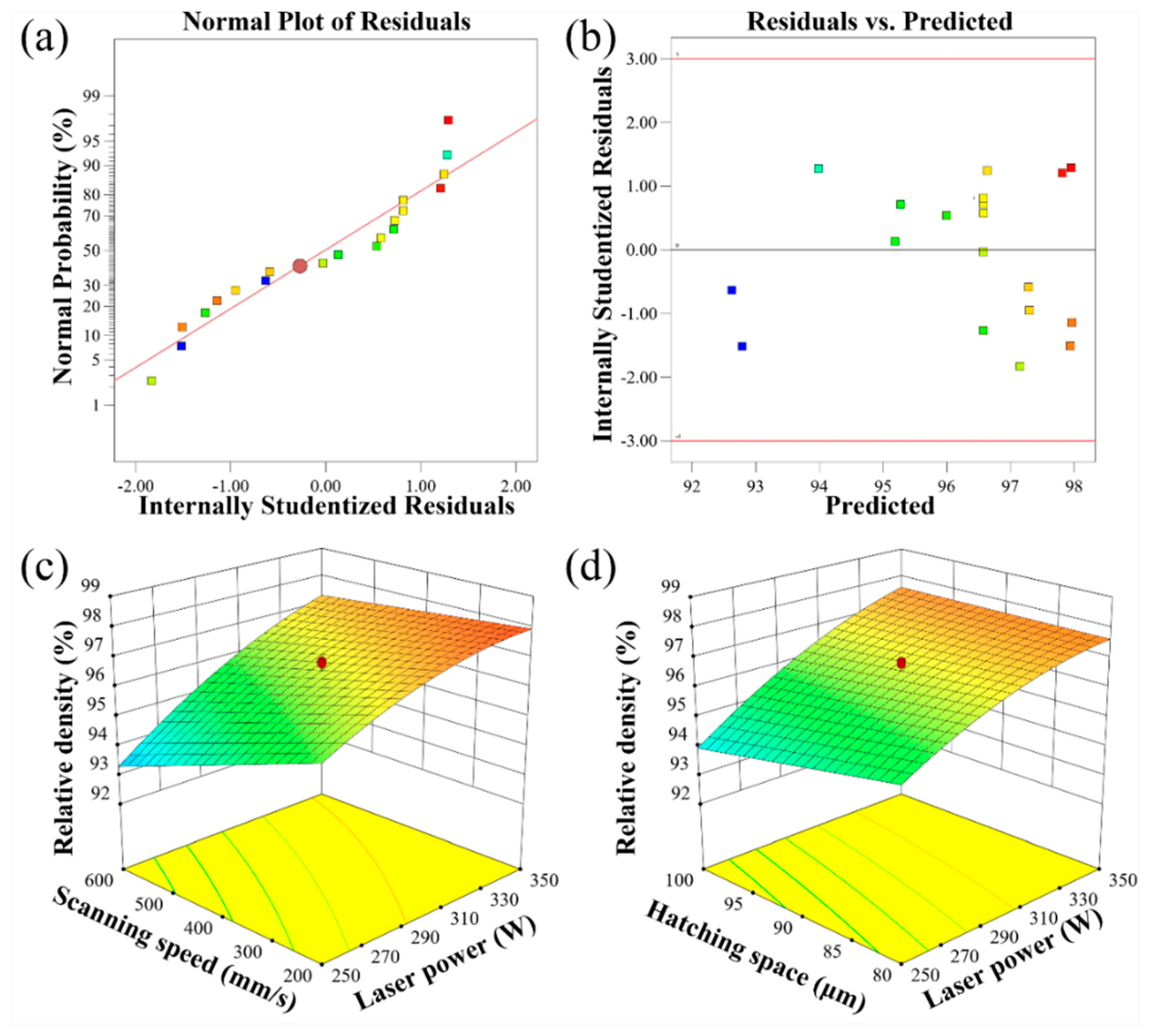
- RSM optimization yields a highly dense (99.25%) LPBF-fabricated CuCrZr alloy.
- •
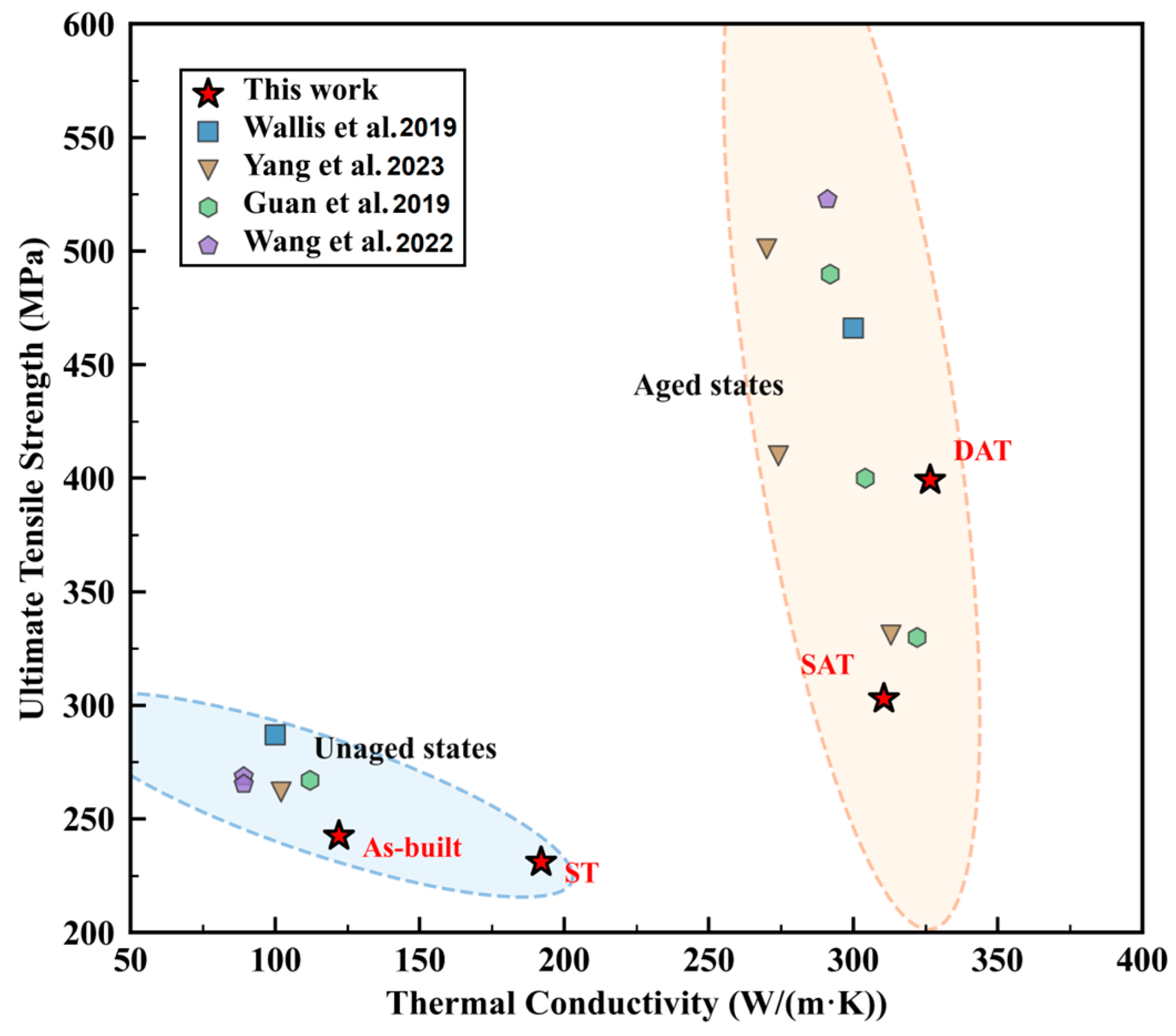
- Direct ageing achieves 399 MPa UTS and 326 W/(m·K) thermal conductivity.
- •
- Solute precipitation reduces lattice distortion to restore thermal transport.
- •
- Provide an effective process for additively manufacturing high-quality copper alloys.
- •
- Promote the application potential of additive manufacturing of copper heat sinks.
- •
- Improve the thermal conductivity of additively manufactured copper alloys.
Abstract
1. Introduction
2. Experiments and Calculations
2.1. Materials and Sample Preparation
2.2. Microstructural, Mechanical, and Thermal Characterization
2.3. Statistical Experimental Design and Optimization
3. Results
3.1. Process Optimization
3.2. Microstructure and Phase Characterization
3.3. Mechanical and Thermal Properties
3.4. Nanoscale Precipitation and Interface Characteristics
4. Discussions
4.1. Mechanism of Thermal Conductivity Enhancement
4.2. Quantitative Analysis of Strengthening Mechanisms

| Parameters | Value | Unit | Reference | |
|---|---|---|---|---|
| Peierls-Nabarro stress | 25 | MPa | [51] | |
| Shear modulus of the matrix | 45.5 | GPa | [52] | |
| Hall–Petch slope | 180 | MPa·μm1/2 | [23] | |
| Taylor factor | 3.06 | – | [53] | |
| Burgers vector | 0.256 | nm | [54] | |
| – | 0.23 | – | [23] | |
| Misfit strain | 0.015 | – | [22] | |
| Poisson’s ratio | 0.34 | – | [52] |
| Specimen | (μm) | (nm) | (10−3) | (1014 m−2) | (wt.%) | (nm) | (%) | (nm) |
|---|---|---|---|---|---|---|---|---|
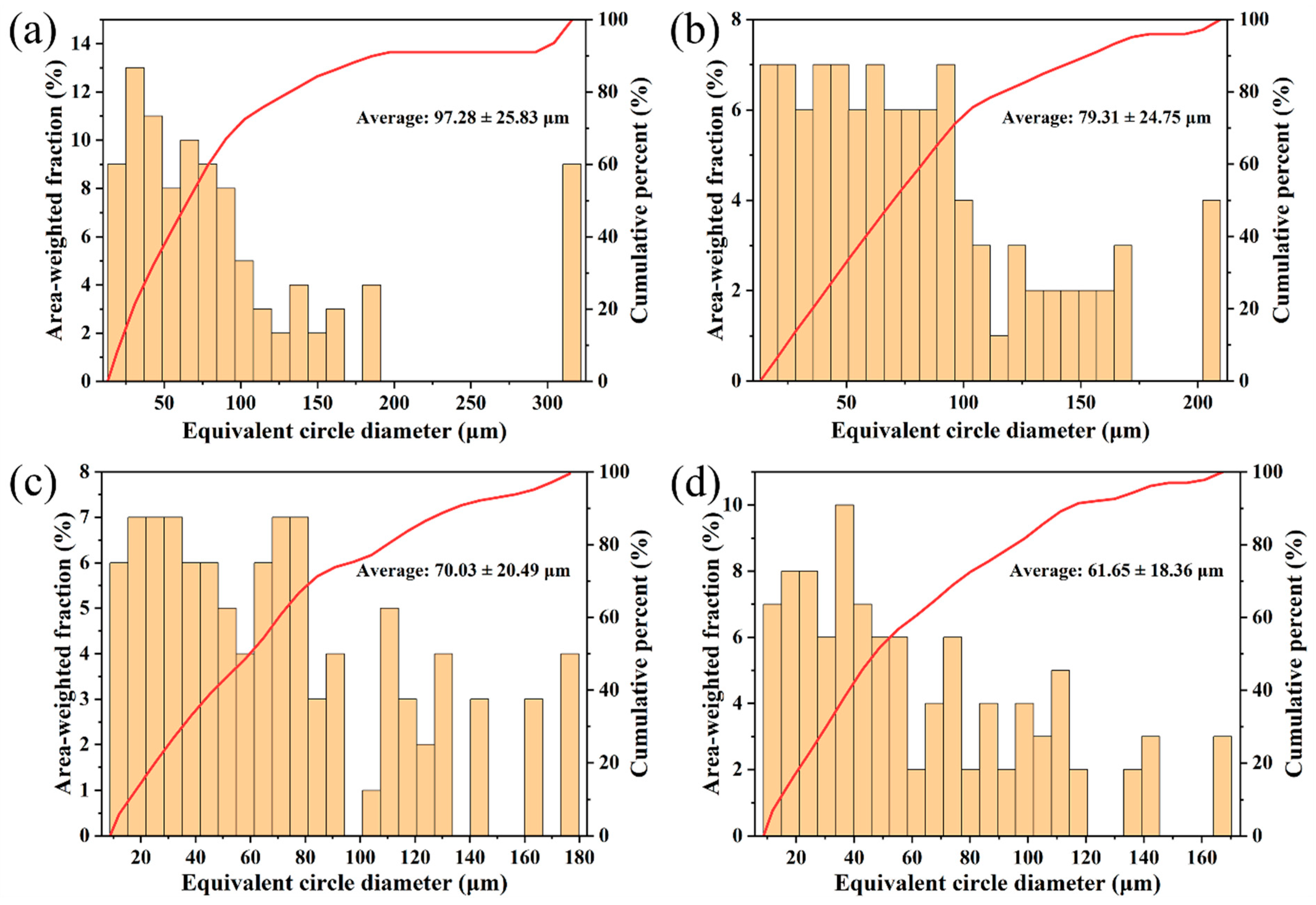
| AB | 97.28 | 75.44 | 1.50 | 2.69 | 0.62 | – | – | – |
| DAT | 61.65 | 568.91 | 4.15 | 0.99 | 1.49 | 0.23 | 67.09 |
4.2.1. Grain Boundary Strengthening
4.2.2. Solid Solution Strengthening
4.2.3. Dislocation Strengthening
4.2.4. Precipitation Strengthening
4.2.5. Synergy of Strengthening Mechanisms
5. Conclusions
- (1)
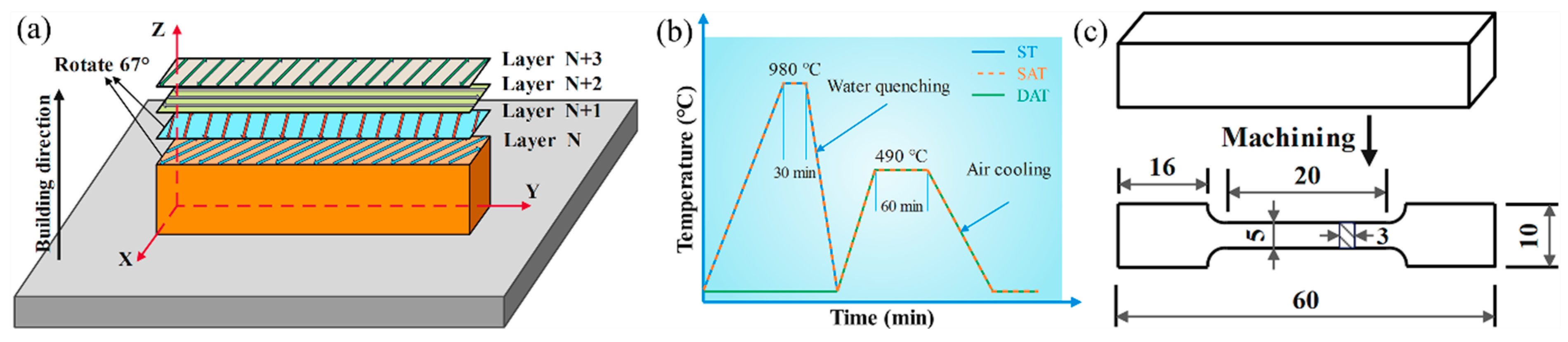
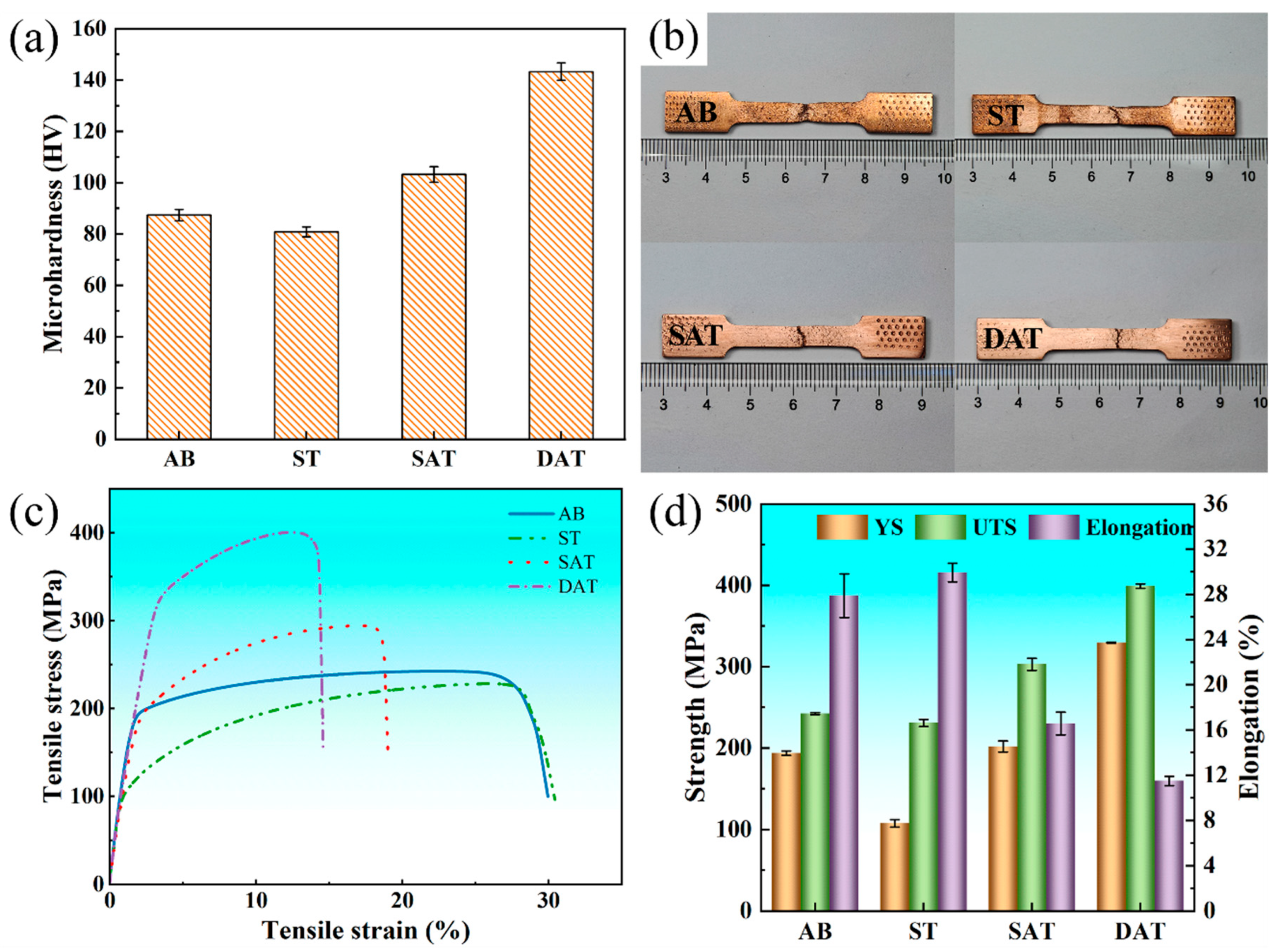
- Based on the process parameters optimized by the response surface methodology (RSM), a CuCrZr alloy with near-fully densification (99.25%) was successfully fabricated, providing a sound microstructural foundation for the subsequent direct ageing treatment (DAT, 490 °C for 60 min). This enables the material to achieve a notable ultimate tensile strength of 399.31 ± 2.85 MPa and a thermal conductivity of 326.53 ± 0.40 W/(m·K).
- (2)
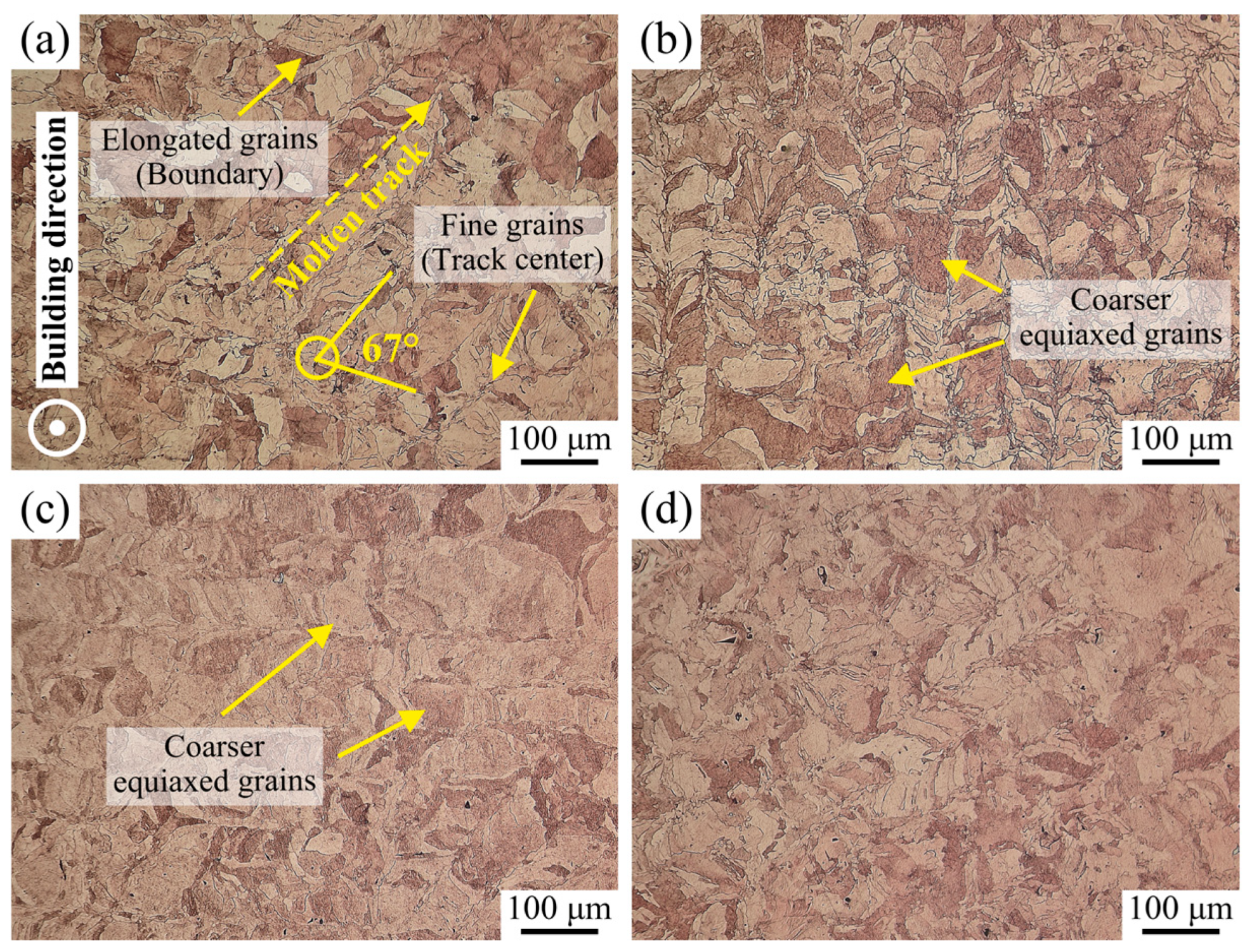
- Compared with the high-temperature solution treatment, where recrystallization and grain coarsening may occur, the low-temperature direct ageing treatment preserves high-density dislocation structures by bypassing this high-temperature process. Meanwhile, the precipitation of supersaturated Cr atoms substantially reduces lattice distortion, reducing electron scattering and restoring the thermal transport capability of the alloy.
- (3)
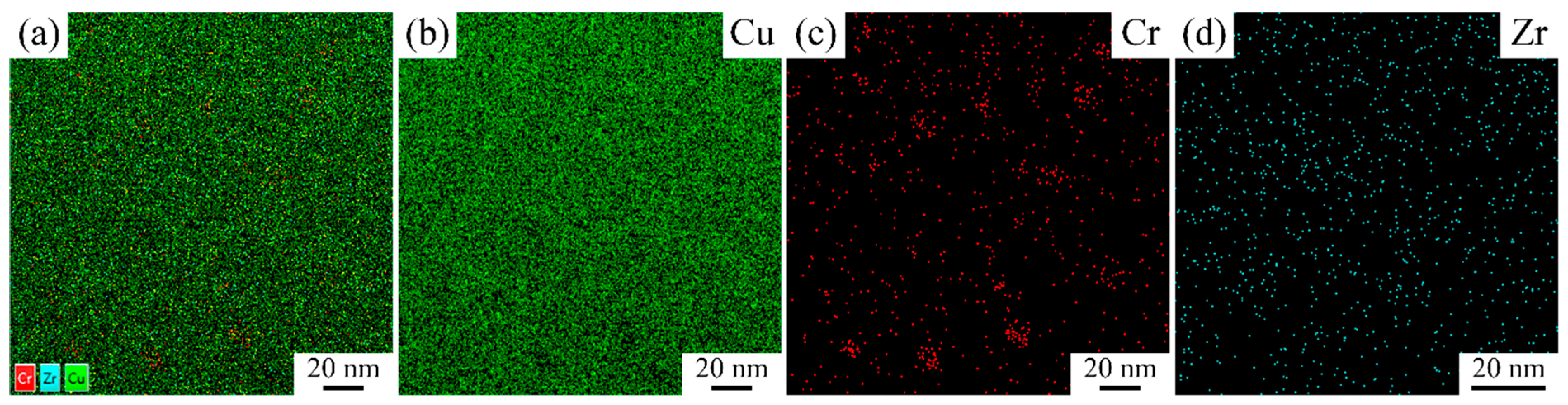
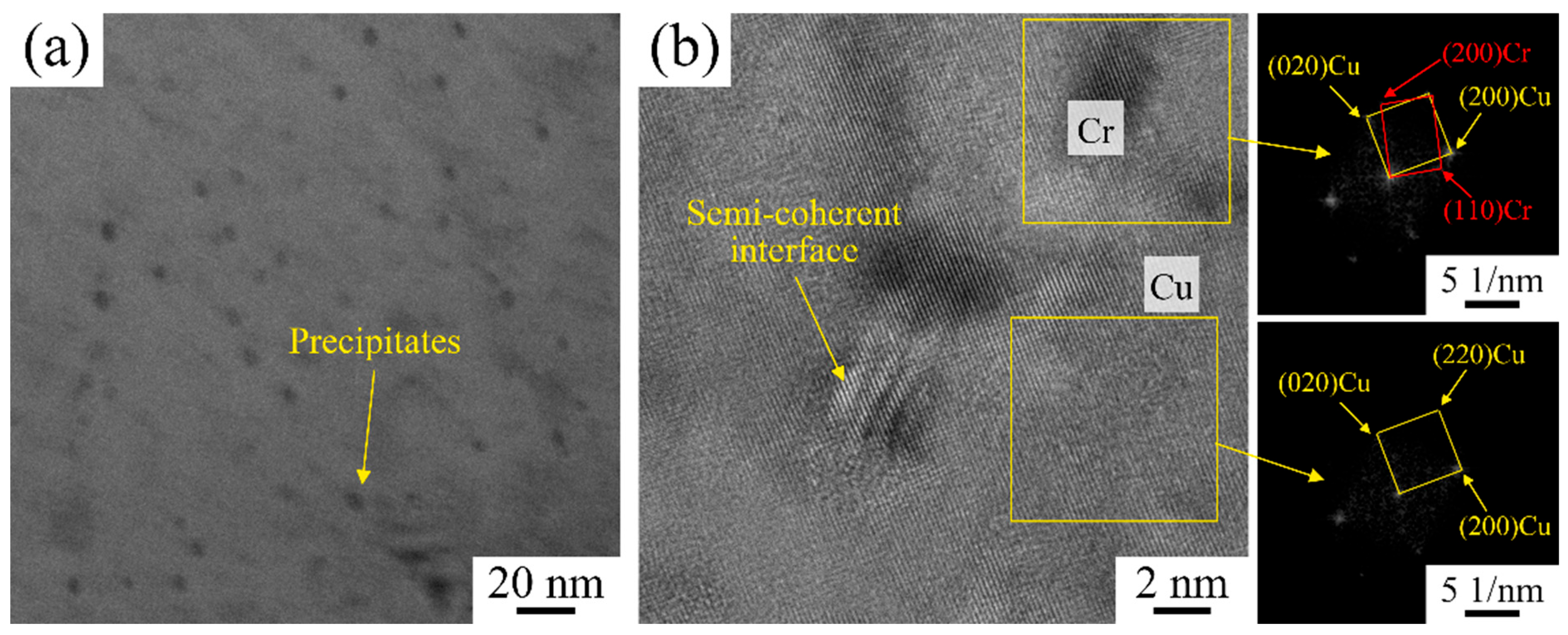
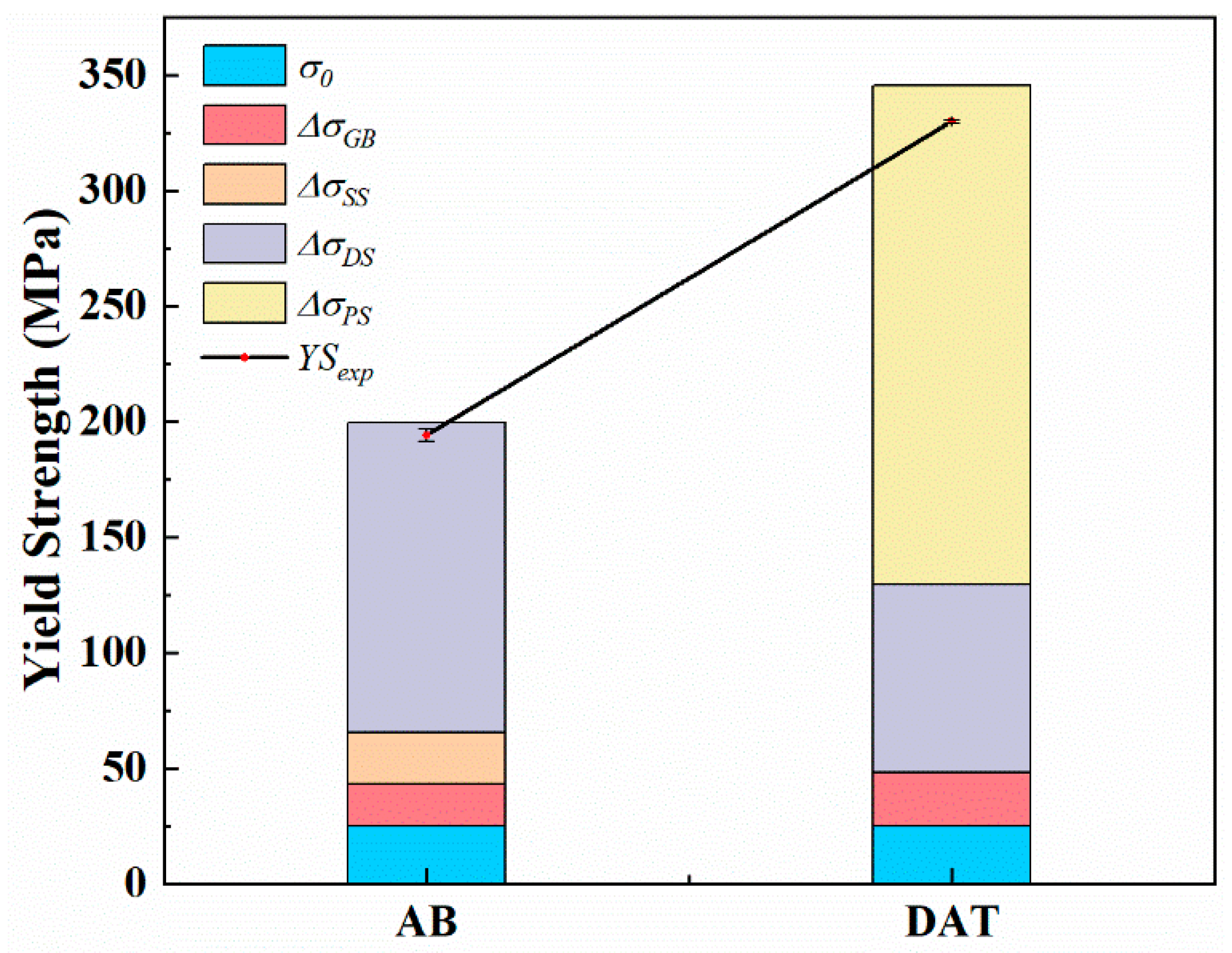
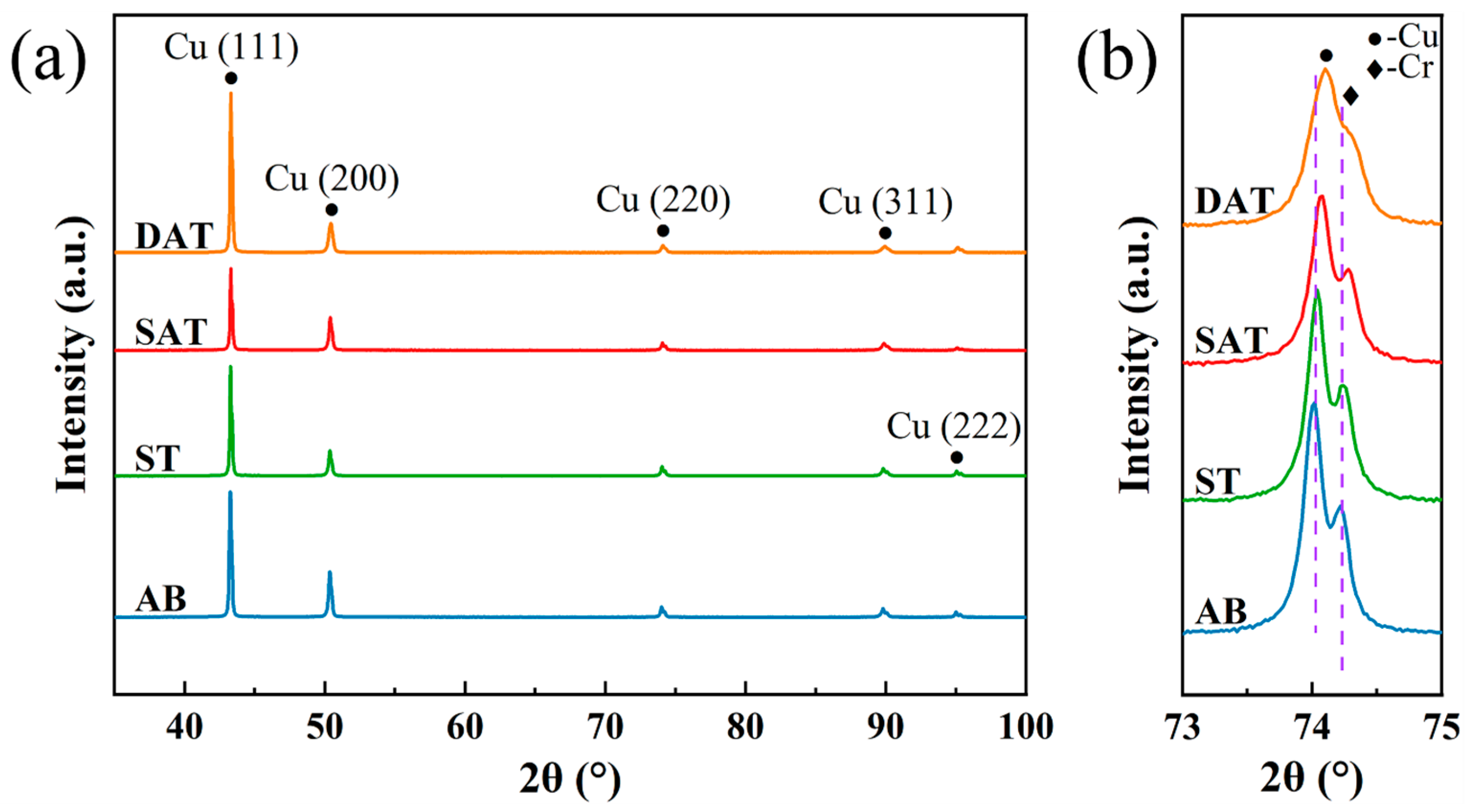
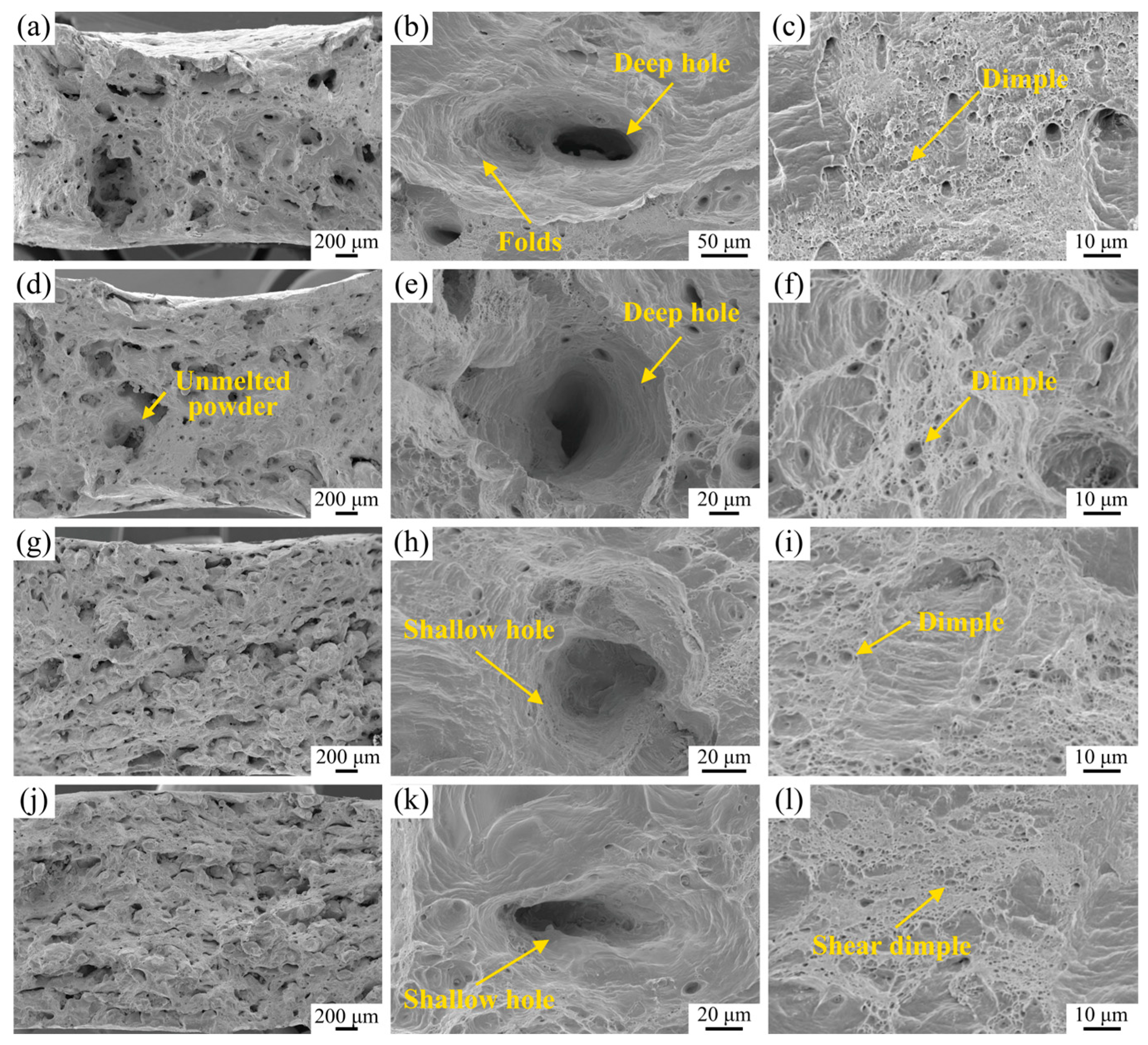
- Quantitative analysis indicates that the high yield strength of the DAT specimens is achieved through a synergistic strengthening mechanism. Within this mechanism, nanoscale BCC Cr precipitates form semi-coherent interfaces with a crystallographic misorientation of approximately 10.5° relative to the FCC Cu matrix. The local elastic strain fields exerted by these semi-coherent interfaces likely act as pinning obstacles to the movement of retained dislocations. This synergy combines the notable Orowan precipitation strengthening (~216.10 MPa) and partially retained dislocation strengthening (~81.36 MPa), preserving roughly 60% of the original dislocation-strengthening contribution from the as-built state.
Author Contributions
Funding
Institutional Review Board Statement
Informed Consent Statement
Data Availability Statement
Conflicts of Interest
References
- Shoukr, D.; Morcos, P.; Sundermann, T.; Dobrowolski, T.; Yates, C.; Jain, J.R.; Arróyave, R.; Karaman, I.; Elwany, A. Influence of layer thickness on the printability of nickel alloy 718:A systematic process optimization framework. Addit. Manuf. 2023, 73, 103646. [Google Scholar] [CrossRef]
- Thompson, S.M.; Bian, L.; Shamsaei, N.; Yadollahi, A. An overview of Direct Laser Deposition for additive manufacturing; Part I: Transport phenomena, modeling and diagnostics. Addit. Manuf. 2015, 8, 36–62. [Google Scholar] [CrossRef]
- Gu, D.D.; Meiners, W.; Wissenbach, K.; Poprawe, R. Laser additive manufacturing of metallic components: Materials, processes and mechanisms. Int. Mater. Rev. 2012, 57, 133–164. [Google Scholar] [CrossRef]
- Song, J.; Tang, Q.; Feng, Q.; Ma, S.; Setchi, R.; Liu, Y.; Han, Q.; Fan, X.; Zhang, M. Effect of heat treatment on microstructure and mechanical behaviours of 18Ni-300 maraging steel manufactured by selective laser melting. Opt. Laser Technol. 2019, 120, 105725. [Google Scholar] [CrossRef]
- Wang, Z.; Jiang, B.; Wu, S.; Liu, W. Anisotropic tension-compression asymmetry in SLM 316L stainless steel. Int. J. Mech. Sci. 2023, 246, 108139. [Google Scholar] [CrossRef]
- Tang, M.; Zhang, L.; Zhang, N. Microstructural evolution, mechanical and tribological properties of TiC/Ti6Al4V composites with unique microstructure prepared by SLM. Mater. Sci. Eng. A 2021, 814, 141187. [Google Scholar] [CrossRef]
- Wu, H.; Ren, Y.; Ren, J.; Liang, L.; Li, R.; Fang, Q.; Cai, A.; Shan, Q.; Tian, Y.; Baker, I. Selective laser melted AlSi10Mg alloy under melting mode transition: Microstructure evolution, nanomechanical behaviors and tensile properties. J. Alloys Compd. 2021, 873, 159823. [Google Scholar] [CrossRef]
- Li, J.; Liu, Z.; Zhou, H.; Ye, S.; Zhang, Y.; Liu, T.; Jiang, D.; Chen, L.; Zhou, R. Effect of Process Parameters on the Microstructure and Properties of Cu–Cr–Nb–Ti Alloy Manufactured by Selective Laser Melting. Materials 2023, 16, 2912. [Google Scholar] [CrossRef]
- Zhao, C.; Bai, Y.; Yan, Q.; Guo, Y.; Liu, Y.; Li, B. Microstructure evolution and enhanced corrosion resistance of additively manufactured 316L/18Ni300 multi-material parts by process optimization and heat treatment. J. Mater. Res. Technol. 2026, 40, 1882–1895. [Google Scholar] [CrossRef]
- Qin, Z.; Kang, N.; Mansori, M.E. Enhanced fatigue resistance through preheating control of additively manufactured H13 steel. Addit. Manuf. Front. 2025, 4, 200231. [Google Scholar] [CrossRef]
- Ordás, N.; Portolés, L.; Azpeleta, M.; Gómez, A.; Blasco, J.R.; Martinez, M.; Ureña, J.; Iturriza, I. Development of CuCrZr via Electron Beam Powder Bed Fusion (EB-PBF). J. Nucl. Mater. 2021, 548, 152841. [Google Scholar] [CrossRef]
- Wang, X.; Yao, P.; Li, Y.; Zhou, H.; Xiao, Y.; Deng, M.; Kang, L.; Zhou, P. Effects of material transfer evolution on tribological behavior in CuCrZr alloy paired with 7075 Al alloy under current-carrying. Tribol. Int. 2023, 179, 107960. [Google Scholar] [CrossRef]
- Zhang, Q.; Tang, X.; Liu, B.; Li, Z.; Bi, J.; Li, Y.; Huo, W.; Wei, M.; Yang, H.; Bai, P. Effect of heat treatment on mechanical properties of CuCrZr triply periodic minimal surface structures fabricated by selective laser melting. J. Mater. Res. Technol. 2023, 27, 7839–7851. [Google Scholar] [CrossRef]
- Mao, Q.; Liu, Y.; Zhao, Y. A review on copper alloys with high strength and high electrical conductivity. J. Alloys Compd. 2024, 990, 174456. [Google Scholar] [CrossRef]
- Kuai, Z.; Li, Z.; Liu, B.; Chen, Y.; Lu, S.; Tang, X.; Liu, T. Selective laser melting of CuCrZr alloy: Processing optimisation, microstructure and mechanical properties. J. Mater. Res. Technol. 2022, 19, 4915–4931. [Google Scholar] [CrossRef]
- Li, R.; Guo, E.; Chen, Z.; Kang, H.; Wang, W.; Zou, C.; Li, T.; Wang, T. Optimization of the balance between high strength and high electrical conductivity in CuCrZr alloys through two-step cryorolling and aging. J. Alloys Compd. 2019, 771, 1044–1051. [Google Scholar] [CrossRef]
- Sun, F.; Liu, P.; Chen, X.; Zhou, H.; Guan, P.; Zhu, B. Mechanical Properties of High-Strength Cu–Cr–Zr Alloy Fabricated by Selective Laser Melting. Materials 2020, 13, 5028. [Google Scholar] [CrossRef] [PubMed]
- Li, S.; Fu, G.; Li, H.; Ren, Z.; Li, S.; Xiao, H.; Peng, Q. Effect of layer thickness on the melt pool behavior and pore defects evolution of selective laser melting CuCrZr alloy. J. Alloys Compd. 2023, 967, 171778. [Google Scholar] [CrossRef]
- Kuai, Z.; Zhang, P.; Wu, H.; Li, Z.; Liu, B.; Suo, C.; Yang, Z.; Ren, J. Effect of plasma electrolytic polishing on the surface morphology and mechanical properties of CuCrZr porous structure fabricated by selective laser melting. J. Mater. Res. Technol. 2025, 35, 4315–4326. [Google Scholar] [CrossRef]
- Lassègue, P.; Salvan, C.; De Vito, E.; Soulas, R.; Herbin, M.; Hemberg, A.; Godfroid, T.; Baffie, T.; Roux, G. Laser powder bed fusion (L-PBF) of Cu and CuCrZr parts: Influence of an absorptive physical vapor deposition (PVD) coating on the printing process. Addit. Manuf. 2021, 39, 101888. [Google Scholar] [CrossRef]
- Ma, Z.; Zhang, K.; Ren, Z.; Zhang, D.Z.; Tao, G.; Xu, H. Selective laser melting of Cu–Cr–Zr copper alloy: Parameter optimization, microstructure and mechanical properties. J. Alloys Compd. 2020, 828, 154350. [Google Scholar] [CrossRef]
- Guan, P.; Chen, X.; Liu, P.; Sun, F.; Zhu, C.; Zhou, H.; Fu, S.; Wu, Z.; Zhu, Y. Effect of selective laser melting process parameters and aging heat treatment on properties of CuCrZr alloy. Mater. Res. Express 2019, 6, 1165c1. [Google Scholar] [CrossRef]
- Salvan, C.; Briottet, L.; Baffie, T.; Guetaz, L.; Flament, C. CuCrZr alloy produced by laser powder bed fusion: Microstructure, nanoscale strengthening mechanisms, electrical and mechanical properties. Mater. Sci. Eng. A 2021, 826, 141915. [Google Scholar] [CrossRef]
- Tang, X.; Chen, X.; Sun, F.; Li, L.; Liu, P.; Zhou, H.; Fu, S.; Li, A. A study on the mechanical and electrical properties of high-strength CuCrZr alloy fabricated using laser powder bed fusion. J. Alloys Compd. 2022, 924, 166627. [Google Scholar] [CrossRef]
- Wang, Q.; Zhang, Y.; Wang, K.; Liu, S.; Zhang, X.; Shao, H. Effect of process parameters and heat treatment on the microstructure and properties of CuCrZr alloy by selective laser melting. Mater. Sci. Eng. A 2022, 857, 144054. [Google Scholar] [CrossRef]
- Shamsaei, N.; Yadollahi, A.; Bian, L.; Thompson, S.M. An overview of Direct Laser Deposition for additive manufacturing; Part II: Mechanical behavior, process parameter optimization and control. Addit. Manuf. 2015, 8, 12–35. [Google Scholar] [CrossRef]
- Chia, H.Y.; Wu, J.; Wang, X.; Yan, W. Process parameter optimization of metal additive manufacturing: A review and outlook. J. Mater. Inform. 2022, 2, 16. [Google Scholar] [CrossRef]
- Elsayed, M.; Ghazy, M.; Youssef, Y.; Essa, K. Optimization of SLM process parameters for Ti6Al4V medical implants. Rapid Prototyp. J. 2019, 25, 433–447. [Google Scholar] [CrossRef]
- Oyesola, M.; Mpofu, K.; Mathe, N.; Fatoba, S.; Hoosain, S.; Daniyan, I. Optimization of selective laser melting process parameters for surface quality performance of the fabricated Ti6Al4V. Int. J. Adv. Manuf. Technol. 2021, 114, 1585–1599. [Google Scholar] [CrossRef]
- Wallis, C.; Buchmayr, B. Effect of heat treatments on microstructure and properties of CuCrZr produced by laser-powder bed fusion. Mater. Sci. Eng. A 2019, 744, 215–223. [Google Scholar] [CrossRef]
- Wang, Q.; Song, J.; Wang, W.; Zhang, Y.; Wang, K.; Du, Z. The Influence of Heat Treatment on Microstructure and Properties of Selective Laser Melting CuCrZr Alloy. Adv. Eng. Mater. 2024, 26, 2301680. [Google Scholar] [CrossRef]
- Bai, Y.; Zhao, C.; Zhang, Y.; Chen, J.; Wang, H. Additively manufactured CuCrZr alloy: Microstructure, mechanical properties and machinability. Mater. Sci. Eng. A 2021, 819, 141528. [Google Scholar] [CrossRef]
- Parker, W.J.; Jenkins, R.J.; Butler, C.P.; Abbott, G.L. Flash Method of Determining Thermal Diffusivity, Heat Capacity, and Thermal Conductivity. J. Appl. Phys. 1961, 32, 1679–1684. [Google Scholar] [CrossRef]
- Cavazzuti, M. Optimization Methods: From Theory to Design Scientific and Technological Aspects in Mechanics; Springer: Berlin/Heidelberg, Germany, 2013. [Google Scholar]
- Myers, R.H.; Montgomery, D.C.; Anderson-Cook, C. Response Surface Methodology: Process and Product Optimization Using Designed Experiments; John Wiley & Sons: Hoboken, NJ, USA, 2016; Volume 705. [Google Scholar]
- Tang, X.; Chen, X.; Sun, F.; Liu, P.; Zhou, H.; Fu, S. The current state of CuCrZr and CuCrNb alloys manufactured by additive manufacturing: A review. Mater. Des. 2022, 224, 111419. [Google Scholar] [CrossRef]
- Fang, X.; Xia, W.; Wei, Q.; Wu, Y.; Lv, W.; Guo, W. Preparation of Cu-Cr-Zr Alloy by Laser Powder Bed Fusion: Parameter Optimization, Microstructure, Mechanical and Thermal Properties for Microelectronic Applications. Metals 2021, 11, 1410. [Google Scholar] [CrossRef]
- Schröder, J.; Evans, A.; Mishurova, T.; Ulbricht, A.; Sprengel, M.; Serrano-Munoz, I.; Fritsch, T.; Kromm, A.; Kannengießer, T.; Bruno, G. Diffraction-Based Residual Stress Characterization in Laser Additive Manufacturing of Metals. Metals 2021, 11, 1830. [Google Scholar] [CrossRef]
- Zhang, S.; Zhu, H.; Zhang, L.; Zhang, W.; Yang, H.; Zeng, X. Microstructure and properties of high strength and high conductivity Cu-Cr alloy components fabricated by high power selective laser melting. Mater. Lett. 2019, 237, 306–309. [Google Scholar] [CrossRef]
- Zhang, Z.Y.; Sun, L.X.; Tao, N.R. Nanostructures and nanoprecipitates induce high strength and high electrical conductivity in a CuCrZr alloy. J. Mater. Sci. Technol. 2020, 48, 18–22. [Google Scholar] [CrossRef]
- Yang, H.; Li, K.; Bu, Y.; Wu, J.; Fang, Y.; Meng, L.; Liu, J.; Wang, H. Nanoprecipitates induced dislocation pinning and multiplication strategy for designing high strength, plasticity and conductivity Cu alloys. Scr. Mater. 2021, 195, 113741. [Google Scholar] [CrossRef]
- Siu, M.C.I.; Carroll, W.L.; Watson, T.W. Thermal Conductivity and Electrical Resistivity of Six Copper-Base Alloys; NBS IR 76-1003; National Bureau of Standards: Gaithersburg, MD, USA, 1976. [Google Scholar]
- Oh, W.-J.; Son, Y.; Kim, D.-H.; Kim, C.-S. High-power laser powder bed fusion of pure copper for simultaneous achievement of high density and electrical conductivity. Sci. Rep. 2025, 16, 2372. [Google Scholar] [CrossRef] [PubMed]
- Yang, X.; Qi, Y.; Zhang, W.; Wang, Y.; Zhu, H. Laser powder bed fusion of C18150 copper alloy with excellent comprehensive properties. Mater. Sci. Eng. A 2023, 862, 144512. [Google Scholar] [CrossRef]
- Chbihi, A.; Sauvage, X.; Blavette, D. Atomic scale investigation of Cr precipitation in copper. Acta Mater. 2012, 60, 4575–4585. [Google Scholar] [CrossRef]
- Fujii, T.; Nakazawa, H.; Kato, M.; Dahmen, U. Crystallography and morphology of nanosized Cr particles in a Cu–0.2% Cr alloy. Acta Mater. 2000, 48, 1033–1045. [Google Scholar] [CrossRef]
- Dahmen, U. Orientation relationships in precipitation systems. Acta Metall. 1982, 30, 63–73. [Google Scholar] [CrossRef]
- Zeng, C.; Wen, H.; Bernard, B.C.; Raush, J.R.; Gradl, P.R.; Khonsari, M.; Guo, S.M. Effect of temperature history on thermal properties of additively manufactured C-18150 alloy samples. Manuf. Lett. 2021, 28, 25–29. [Google Scholar] [CrossRef]
- Ye, S.; Liu, Z.; Feng, X.; Zhang, Y.; Jiang, D.; Liu, T.; Zhou, R. Heterostructure and multiple nano-phases achieve superior strength-ductility-conductivity synergy of laser additive manufacturing copper alloy. Virtual Phys. Prototyp. 2025, 20, e2437467. [Google Scholar] [CrossRef]
- Starink, M.J.; Wang, S.C. A model for the yield strength of overaged Al–Zn–Mg–Cu alloys. Acta Mater. 2003, 51, 5131–5150. [Google Scholar] [CrossRef]
- Zhang, S.; Zhu, H.; Zhang, L.; Zhang, W.; Yang, H.; Zeng, X. Microstructure and properties in QCr0.8 alloy produced by selective laser melting with different heat treatment. J. Alloys Compd. 2019, 800, 286–293. [Google Scholar] [CrossRef]
- Liu, Y.; Li, Z.; Jiang, Y.; Zhang, Y.; Zhou, Z.; Lei, Q. The microstructure evolution and properties of a Cu–Cr–Ag alloy during thermal-mechanical treatment. J. Mater. Res. 2017, 32, 1324–1332. [Google Scholar] [CrossRef]
- Huang, S.; Huang, W.; Xie, W.; Chen, H.; Wang, H.; Yang, B. Microstructure and strengthening mechanisms of CuCrZr alloy by two-step thermomechanical treatment. J. Mater. Sci. Mater. Electron. 2020, 31, 17798–17809. [Google Scholar] [CrossRef]
- Lei, Q.; Li, Z.; Zhu, A.; Qiu, W.; Liang, S. The transformation behavior of Cu–8.0Ni–1.8Si–0.6Sn–0.15Mg alloy during isothermal heat treatment. Mater. Charact. 2011, 62, 904–911. [Google Scholar] [CrossRef]
- Hansen, N. Hall–Petch relation and boundary strengthening. Scr. Mater. 2004, 51, 801–806. [Google Scholar] [CrossRef]
- Zisman, A.A.; Zolotorevsky, N.Y.; Petrov, S.N.; Ganin, S.V.; Ushanova, E.A.; Fedoseev, M.L. EBSD with fine steps versus XRD in evaluating the density of statistically stored dislocations: Comparison on cold rolled and annealed copper states. Lett. Mater. 2025, 15, 3–7. [Google Scholar] [CrossRef]
- Ungár, T. Microstructural parameters from X-ray diffraction peak broadening. Scr. Mater. 2004, 51, 777–781. [Google Scholar] [CrossRef]
- Gallet, J.; Perez, M.; Guillou, R.; Ernould, C.; Le Bourlot, C.; Langlois, C.; Beausir, B.; Bouzy, E.; Chaise, T.; Cazottes, S. Experimental measurement of dislocation density in metallic materials: A quantitative comparison between measurements techniques (XRD, R-ECCI, HR-EBSD, TEM). Mater. Charact. 2023, 199, 112842. [Google Scholar] [CrossRef]
- Takaki, S.; Jiang, F.; Masumura, T.; Tsuchiyama, T. Correction of Elastic Anisotropy in Williamson-Hall Plots by Diffraction Young’s Modulus and Direct Fitting Method. ISIJ Int. 2018, 58, 769–775. [Google Scholar] [CrossRef]
- Fu, S.; Liu, P.; Chen, X.; Zhou, H.; Ma, F.; Li, W.; Zhang, K. Effect of aging process on the microstructure and properties of Cu–Cr–Ti alloy. Mater. Sci. Eng. A 2021, 802, 140598. [Google Scholar] [CrossRef]
- Raabe, D. Recovery and Recrystallization: Phenomena, Physics, Models, Simulation. In Physical Metallurgy; Elsevier: Amsterdam, The Netherlands, 2014; pp. 2291–2397. [Google Scholar]
- Salman, O.O.; Gammer, C.; Chaubey, A.K.; Eckert, J.; Scudino, S. Effect of heat treatment on microstructure and mechanical properties of 316L steel synthesized by selective laser melting. Mater. Sci. Eng. A 2019, 748, 205–212. [Google Scholar] [CrossRef]
- Wu, Y.; Li, Y.; Lu, J.; Tan, S.; Jiang, F.; Sun, J. Correlations between microstructures and properties of Cu-Ni-Si-Cr alloy. Mater. Sci. Eng. A 2018, 731, 403–412. [Google Scholar] [CrossRef]
- Li, Z.a.; Zhou, M.; Jing, K.; Liu, Y.; Xin, G.a.; Hu, H.; Zou, J.; Tian, B.; Zhang, Y.; Li, X.; et al. Effects of different Cr contents on microstructure, mechanical and electrical properties of Cu-Zr-Cr alloy. Mater. Today Commun. 2024, 38, 108408. [Google Scholar] [CrossRef]
- Peng, L.; Xie, H.; Huang, G.; Xu, G.; Yin, X.; Feng, X.; Mi, X.; Yang, Z. The phase transformation and strengthening of a Cu-0.71 wt% Cr alloy. J. Alloys Compd. 2017, 708, 1096–1102. [Google Scholar] [CrossRef]
- Mabuchi, M.; Higashi, K. Strengthening mechanisms of Mg Si alloys. Acta Mater. 1996, 44, 4611–4618. [Google Scholar] [CrossRef]
- Ardell, A.J. Precipitation hardening. Metall. Trans. A 1985, 16, 2131–2165. [Google Scholar] [CrossRef]
- Schimbäck, D.; Kaserer, L.; Mair, P.; Mohebbi, M.S.; Staron, P.; Maier-Kiener, V.; Letofsky-Papst, I.; Kremmer, T.; Palm, F.; Montes, I.; et al. Advancements in metal additive manufacturing: In-situ heat treatment of aluminium alloys during the laser powder bed fusion process. Mater. Sci. Eng. A 2024, 905, 146102. [Google Scholar] [CrossRef]







| Influencing Factors | Level | ||||
|---|---|---|---|---|---|
| −1.68 | −1 | 0 | 1 | 1.68 | |
| Laser power (W) | 215.91 | 250 | 300 | 350 | 384.09 |
| Scanning speed (mm/s) | 63.64 | 200 | 400 | 600 | 736.36 |
| Hatch spacing (μm) | 73.18 | 80 | 90 | 100 | 106.82 |
| Experiment Number | Laser Power (W) | Scanning Speed (mm/s) | Hatch Spacing (μm) | Relative Density (%) |
|---|---|---|---|---|
| 1 | 250 | 200 | 80 | 96.98 |
| 2 | 250 | 600 | 80 | 94.34 |
| 3 | 350 | 200 | 80 | 98.31 |
| 4 | 350 | 600 | 80 | 97.03 |
| 5 | 250 | 200 | 100 | 95.47 |
| 6 | 250 | 600 | 100 | 92.45 |
| 7 | 350 | 200 | 100 | 97.52 |
| 8 | 350 | 600 | 100 | 97.12 |
| 9 | 300 | 63.64 | 90 | 97.57 |
| 10 | 300 | 736.36 | 90 | 95.23 |
| 11 | 215.91 | 400 | 90 | 92.39 |
| 12 | 384.09 | 400 | 90 | 98.13 |
| 13 | 300 | 400 | 73.18 | 96.53 |
| 14 | 300 | 400 | 106.82 | 96.18 |
| 15 | 300 | 400 | 90 | 96.89 |
| 16 | 300 | 400 | 90 | 96.85 |
| 17 | 300 | 400 | 90 | 96.08 |
| 18 | 300 | 400 | 90 | 96.56 |
| 19 | 300 | 400 | 90 | 96.89 |
| 20 | 300 | 400 | 90 | 96.80 |
| Source | Sum of Squares | df | Mean Square | F-Value | p-Value | |
|---|---|---|---|---|---|---|
| Model | 47.27 | 6 | 7.88 | 48.43 | <0.0001 | significant |
| P | 30.48 | 1 | 30.48 | 187.35 | <0.0001 | |
| v | 9.30 | 1 | 9.30 | 57.20 | <0.0001 | |
| h | 1.61 | 1 | 1.61 | 9.87 | 0.0078 | |
| P × v | 1.99 | 1 | 1.99 | 12.25 | 0.0039 | |
| P × h | 0.9044 | 1 | 0.9044 | 5.56 | 0.0347 | |
| P2 | 2.98 | 1 | 2.98 | 18.33 | 0.0009 | |
| Residual | 2.11 | 13 | 0.1627 | |||
| Lack-of-fit | 1.62 | 8 | 0.2019 | 2.02 | 0.2271 | not significant |
| Pure Error | 0.4992 | 5 | 0.0998 | |||
| Total | 49.38 | 19 |
| Sample | Thermal Conductivity [W/(m·K)] | Calculated Electrical Conductivity (% IACS) |
|---|---|---|
| AB | 122.01 ± 2.44 | 27.7 |
| ST | 192.03 ± 1.58 | 44.6 |
| SAT | 310.58 ± 2.39 | 73.3 |
| DAT | 326.53 ± 0.40 | 77.2 |
| Specimen | (MPa) | (MPa) | (MPa) | (MPa) | Calculated YS (MPa) | Average Experimental YS (MPa) | Error (%) |
|---|---|---|---|---|---|---|---|
| AB | 18.25 | 22.25 | 134.14 | 0 | 199.64 | 193.95 | 2.9 |
| DAT | 22.92 | 0 | 81.36 | 216.10 | 345.39 | 329.68 | 4.8 |
Disclaimer/Publisher’s Note: The statements, opinions and data contained in all publications are solely those of the individual author(s) and contributor(s) and not of MDPI and/or the editor(s). MDPI and/or the editor(s) disclaim responsibility for any injury to people or property resulting from any ideas, methods, instructions or products referred to in the content. |
© 2026 by the authors. Licensee MDPI, Basel, Switzerland. This article is an open access article distributed under the terms and conditions of the Creative Commons Attribution (CC BY) license.
Share and Cite
Zheng, Z.; Yan, Q.; Zhao, C.; Deng, D.; Bai, Y.; Peng, F. Strength–Conductivity Synergy in LPBF-Fabricated CuCrZr Alloy: The Role of Nanoscale Semi-Coherent Precipitates and Retained Dislocations. Coatings 2026, 16, 705. https://doi.org/10.3390/coatings16060705
Zheng Z, Yan Q, Zhao C, Deng D, Bai Y, Peng F. Strength–Conductivity Synergy in LPBF-Fabricated CuCrZr Alloy: The Role of Nanoscale Semi-Coherent Precipitates and Retained Dislocations. Coatings. 2026; 16(6):705. https://doi.org/10.3390/coatings16060705
Chicago/Turabian StyleZheng, Zihong, Qi Yan, Cuiling Zhao, Daxiang Deng, Yuchao Bai, and Fujun Peng. 2026. "Strength–Conductivity Synergy in LPBF-Fabricated CuCrZr Alloy: The Role of Nanoscale Semi-Coherent Precipitates and Retained Dislocations" Coatings 16, no. 6: 705. https://doi.org/10.3390/coatings16060705
APA StyleZheng, Z., Yan, Q., Zhao, C., Deng, D., Bai, Y., & Peng, F. (2026). Strength–Conductivity Synergy in LPBF-Fabricated CuCrZr Alloy: The Role of Nanoscale Semi-Coherent Precipitates and Retained Dislocations. Coatings, 16(6), 705. https://doi.org/10.3390/coatings16060705