1. Introduction
With the rapid development of transportation infrastructure, a large number of tunnels have been constructed in mountainous regions to shorten travel distances and improve transportation efficiency. However, due to the complex geological and hydrological environments surrounding tunnel lining structures, durability problems such as cracking, water leakage, and material spalling frequently occur during construction or shortly after operation [
1]. These issues significantly threaten the long-term performance and safety of tunnel structures. Therefore, enhancing the durability of tunnel lining materials, particularly their resistance to sulfate attack, is of critical importance.
In recent years, increasing attention has been directed toward the development of sustainable and durable cement-based materials in response to global climate and environmental challenges [
2]. The cement and construction industries are recognized as major contributors to carbon emissions and resource consumption, while premature deterioration of concrete infrastructure further increases maintenance demand, material consumption, and environmental burden. Therefore, improving the durability and service life of tunnel lining structures while promoting the utilization of industrial solid wastes has become an important research direction for sustainable underground engineering.
Steel slag powder, as a typical industrial by-product, possesses considerable potential for resource reutilization in cement-based materials [
3,
4]. Its incorporation not only reduces the consumption of natural resources and cement clinker, but also contributes to lowering the environmental impact associated with industrial waste disposal. Meanwhile, enhancing sulfate resistance and crack resistance of tunnel lining concrete can effectively reduce long-term repair frequency and improve the sustainability of tunnel infrastructure in aggressive environments.
Sulfate attack is one of the key factors leading to the deterioration of tunnel lining concrete during service. Sulfate ions react with cement hydration products to form expansive phases, generating internal stresses and resulting in the degradation of mechanical properties [
5]. Previous studies have investigated the evolution of sulfate corrosion and its impact on tunnel structures. Liu et al. [
6] revealed the spatiotemporal evolution characteristics of sulfate ions through long-term erosion tests, while Yuan et al. [
7] demonstrated that structural damage under sulfate attack is strongly influenced by external loads and flowing water conditions. These findings highlight the complexity of sulfate-induced deterioration in tunnel environments.
Improving material performance is an effective approach to enhancing the durability of tunnel lining structures. Fiber-reinforced concrete has been widely studied due to its ability to inhibit crack propagation and improve impermeability. Chen et al. [
8] demonstrated that fiber incorporation can effectively reduce ion permeability, while Xiao et al. [
9] showed that polyvinyl alcohol fibers can enhance the mechanical performance and durability of concrete through synergistic effects. In addition, composite materials incorporating multiple components have attracted increasing attention. Zhang et al. [
3] reported improved sulfate resistance in hybrid fiber-reinforced cementitious composites. Cui et al. [
4] and Gu et al. [
10] found that steel slag powder can enhance both the strength and pore structure of cement-based materials. Furthermore, ferroaluminate cement has been proven to exhibit excellent impermeability and sulfate resistance under aggressive environments [
11]. Zhao et al. [
12] also demonstrated that mineral admixtures such as fly ash and bentonite can significantly improve durability under coupled sulfate attack and dry–wet cycles.
Although fiber-reinforced concrete, steel slag-modified cementitious materials, and ferroaluminate cement systems have individually demonstrated enhanced sulfate resistance, existing studies rarely address their combined effect in tunnel lining applications. In particular, the synergistic influence of steel slag powder and polyvinyl alcohol fibers in a ferroaluminate cement matrix on long-term durability under dry–wet sulfate cycles remains largely unexplored.
The central hypothesis of this study is that incorporating an optimal content of PVA fibers into steel slag-modified ferroaluminate cement concrete can significantly enhance resistance to sulfate attack, reduce micro-crack initiation and propagation, and improve the structural performance of tunnel linings compared with conventional systems. This research aims to validate this hypothesis through a combination of laboratory experiments and numerical simulations, providing both mechanistic understanding and practical guidance for durable tunnel lining design.
2. Materials and Methods
2.1. Raw Materials
2.1.1. Cement
Ferroaluminate cement and ordinary Portland cement were used in this study. The ferroaluminate cement (AC) and ordinary Portland cement (SC) were sourced from Zibo City, Shandong Province, China. The ferroaluminate cement is characterized by high early strength and superior resistance to aggressive environments. The chemical compositions and physical properties of the two cements are summarized in
Table 1 and
Table 2, respectively.
2.1.2. Steel Slag Powder
Steel slag powder was used as a mineral admixture in this study. The material was supplied by Shijiazhuang Xuhan New Materials Technology Co., Ltd., Shijiazhuang, China. It has a density of 4.2 g/cm
3 and a fineness of 200 mesh. The activity index reaches ≥75% at 7 days and ≥95% at 28 days, indicating good pozzolanic reactivity. The chemical composition of the steel slag powder is presented in
Table 3. The material complies with the requirements of the Chinese standard Steel Slag Powder in Cement and Concrete (GB/T 20491-2017) [
13] and is certified under the ISO 9001 quality management system.
2.1.3. Polyvinyl Alcohol Fiber
Polyvinyl alcohol (PVA) fiber was used as the reinforcing material in this study. The fibers were supplied by Shandong Senhong Engineering Materials Co., Ltd., Zibo, China. PVA fibers are characterized by high tensile strength, excellent resistance to acid and alkali environments, and good resistance to biological and chemical degradation. In addition, their high elastic modulus and low plastic deformation capacity make them effective in controlling crack propagation in cement-based materials. The physical and mechanical properties of the PVA fibers are listed in
Table 4.
2.2. Mix Proportion Design
The mix proportions were designed in accordance with the Code for Mix Proportion Design of Ordinary Concrete (JGJ 55–2011) [
14] and the Technical Code for Application of Fiber-Reinforced Concrete (JGJ/T 221–2010) [
15]. Steel slag powder was used as a supplementary cementitious material, with a constant replacement ratio of 10% by mass of the binder. The ratio of water to cementitious material is 0.40, and the sand content is set at 38% [
16]. Polyvinyl alcohol fibers with different volume fractions relative to the mass of dry soil into both ordinary Portland cement-based and ferroaluminate cement-based matrices at different volume fractions (0%, 0.2%, and 0.4%) to evaluate their influence on sulfate resistance. The detailed mix proportions are summarized in
Table 5. According to the mix design groups specified in
Table 5, natural river sand meeting the requirements of the Standard for Quality and Testing Methods of Sand and Stone for Ordinary Concrete (JGJ52-2006) [
17], was selected as the fine aggregate, while limestone crushed stone with a gradation curve compliant with the Class II aggregate specifications in Building Gravel and Crushed Stone (GB/T 14685-2011) [
18], was used as the coarse aggregate. In accordance with the Concrete Formwork Code (JG/T 237-2008) [
19], cubic specimens measuring 100 mm × 100 mm × 100 mm and prismatic specimens measuring 100 mm × 100 mm × 400 mm were prepared. These specimens were cured under conditions of 20 ± 2 °C temperature and relative humidity ≥ 95%, as stipulated in the Standard for Test Methods of Physical and Mechanical Properties of Concrete (GB/T 50081-2019) [
20], for a period of 28 days before being subjected to subsequent tests.
In this study, to ensure the accuracy and reliability of the experimental results, three parallel samples were established for each experimental group, and the mean value of these three samples was adopted as the final experimental outcome [
21].
2.3. Experimental Procedures
Based on previous studies [
22], a sulfate attack test under dry–wet cycles was conducted to evaluate the durability of the prepared concrete specimens. This study continues to employ a 5% Na
2SO
4 solution as the accelerated sulfate exposure condition. Previous research [
23,
24] has demonstrated that laboratory studies typically utilize sulfate concentrations ranging from 3% to 10% to accelerate the deterioration of cement-based materials and simulate long-term erosion environments within reasonable experimental timeframes. Furthermore, wet-dry cycles significantly promote sulfate crystallization and ion migration, thereby accelerating crack initiation and internal damage development. Consequently, this study combines a 5% Na
2SO
4 solution with wet-dry cycle testing to replicate severe sulfate erosion conditions and evaluate the long-term durability of tunnel lining materials under accelerated laboratory exposure conditions.
Each dry–wet cycle consisted of two stages. During the wet stage, the specimens were fully immersed in the sulfate solution for 24 h. During the subsequent dry stage, the specimens were removed from the solution, surface moisture was wiped off, and the specimens were naturally dried in air for another 24 h, resulting in a dry–wet cycle ratio of 1:1.
Five exposure durations, namely 30, 60, 90, 120, and 150 days, were considered to investigate the time-dependent deterioration behavior of the specimens under sulfate attack. After each exposure period, the specimens were subjected to mechanical and durability tests, including mass variation, compressive strength, splitting tensile strength, and dynamic elastic modulus.
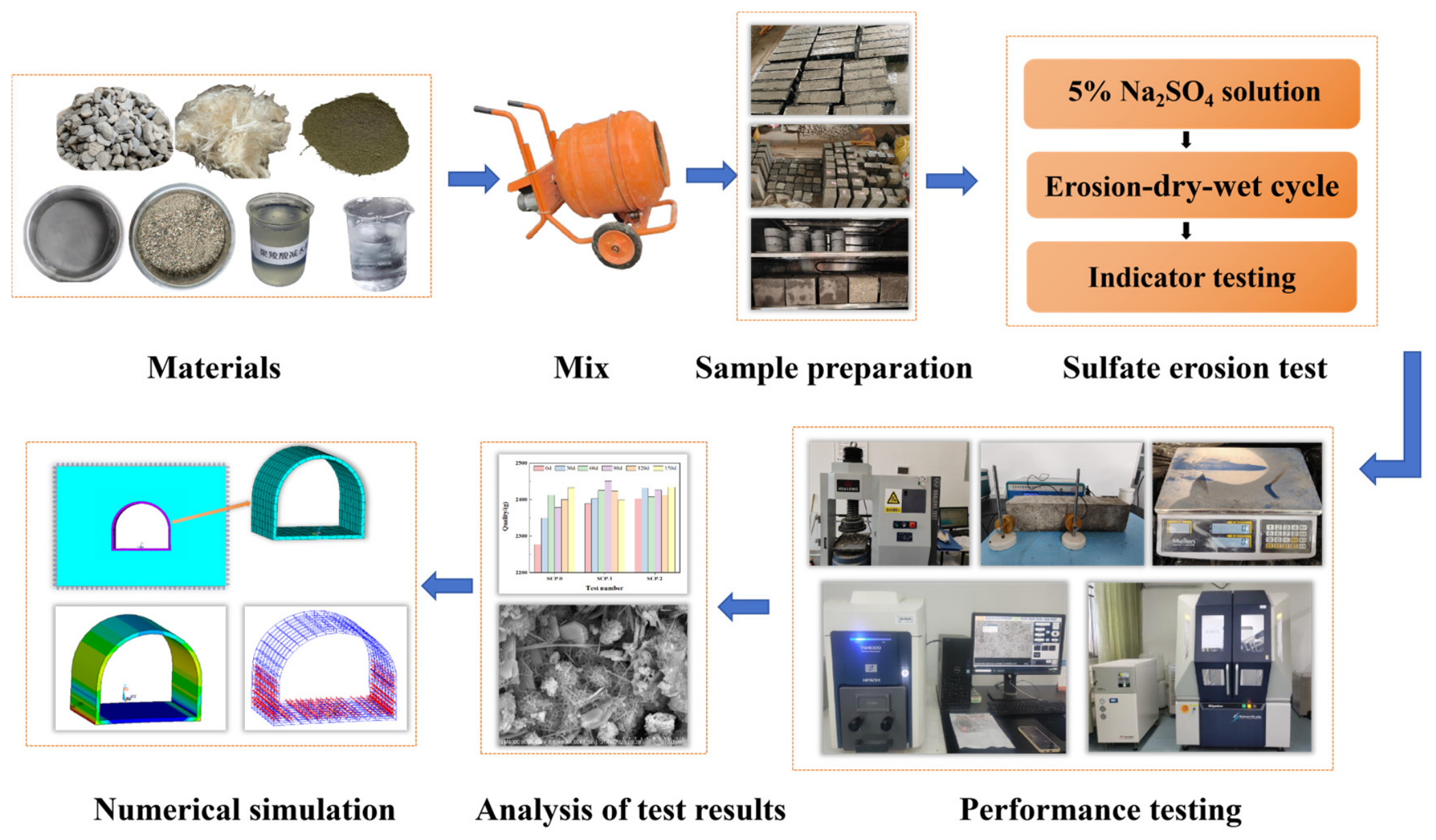
The experimentally obtained mechanical parameters were further used as input for the subsequent numerical simulation of tunnel lining structures, enabling a comprehensive evaluation of material performance from both experimental and numerical perspectives. The overall experimental procedure and its linkage to numerical simulation are illustrated in
Figure 1.
3. Sulfate Resistance Behavior of Fiber-Reinforced Concrete
3.1. Mass Variation
Mass variation is an important indicator for evaluating the deterioration behavior and durability of concrete under aggressive environments [
25].
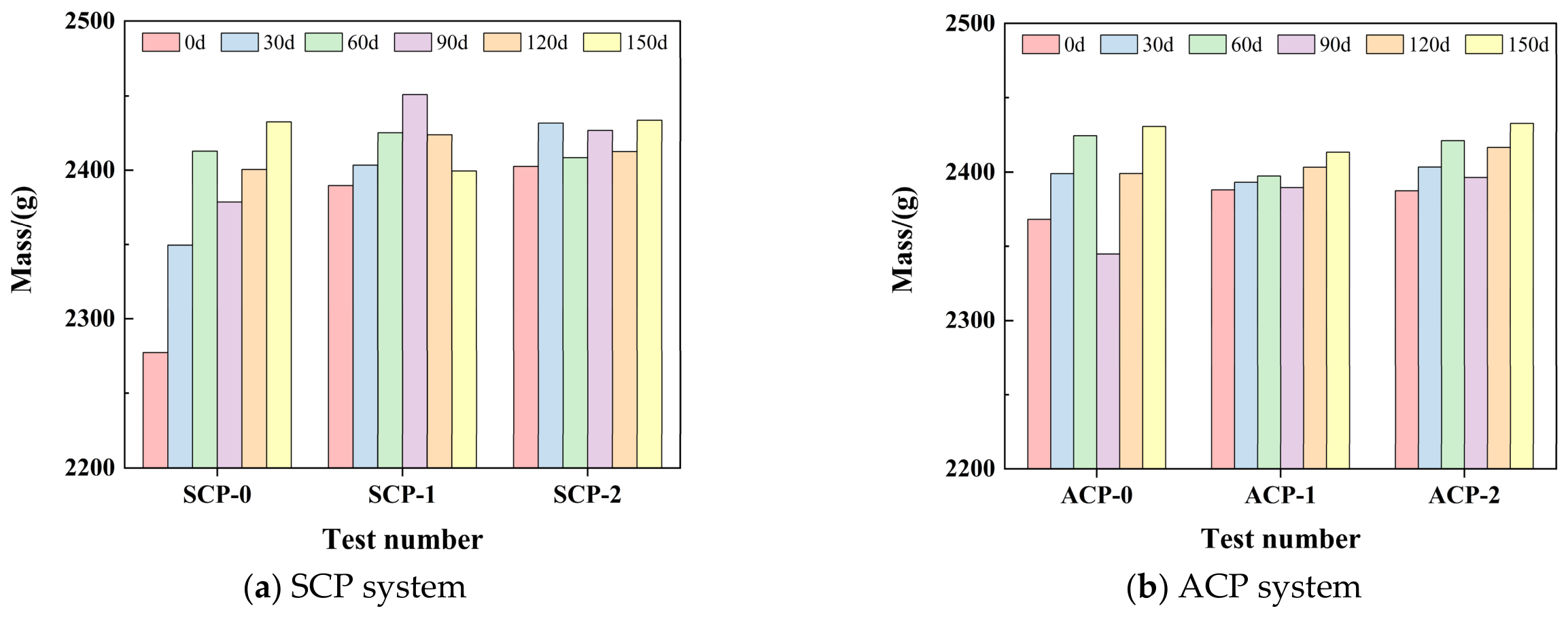
As shown in
Figure 2, the mass of specimens in both the SCP and ACP systems (
Table 5) generally increases at the initial stage and then tends to stabilize with increasing exposure time. In the SCP system (
Figure 2a), the SCP-0 group without fiber exhibits more pronounced mass variation compared to the fiber-reinforced groups. The SCP-1 group shows an initial increase followed by a slight decrease, while the SCP-2 group maintains relatively stable mass values throughout the test period. In the ACP system (
Figure 2b), all groups exhibit relatively small mass fluctuations. Among them, the ACP-1 group shows the lowest variation and maintains a more stable trend compared to ACP-0 and ACP-2.
Overall, the incorporation of fibers leads to reduced and more stable mass variation in both systems. In addition, the ACP system exhibits better resistance to mass change than the SCP system under sulfate dry–wet cycling conditions. These results indicate that an appropriate fiber content can effectively improve the resistance of concrete to mass variation in sulfate environments, and ferroaluminate cement-based concrete shows superior performance.
3.2. Compressive Strength
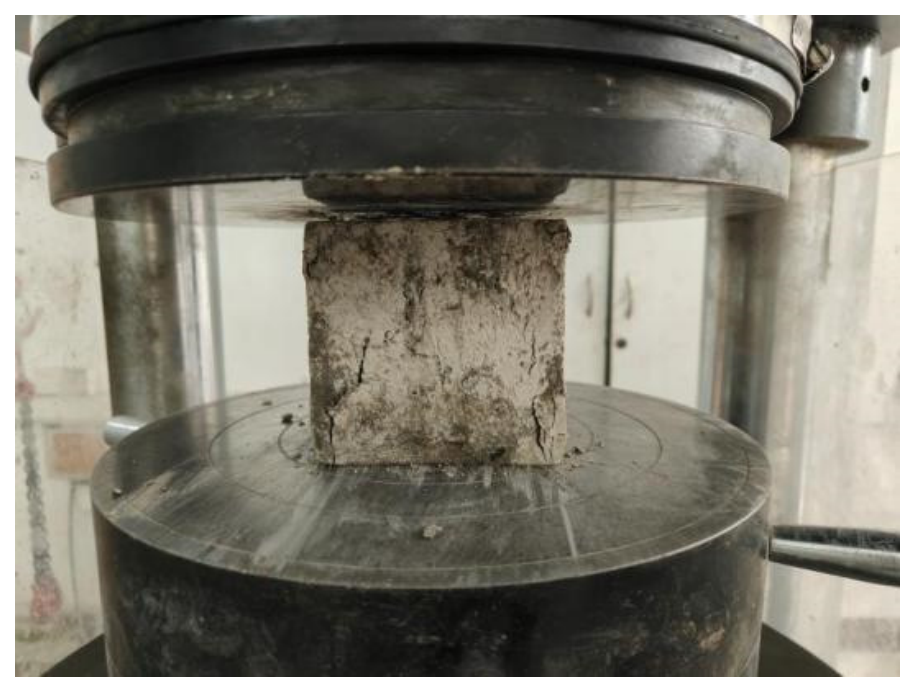
The compressive strength of the specimens under sulfate dry–wet cycles was determined in accordance with the Standard Test Methods for Mechanical Properties of Ordinary Concrete (GB/T 50081-2002) [
26], as shown in
Figure 3.
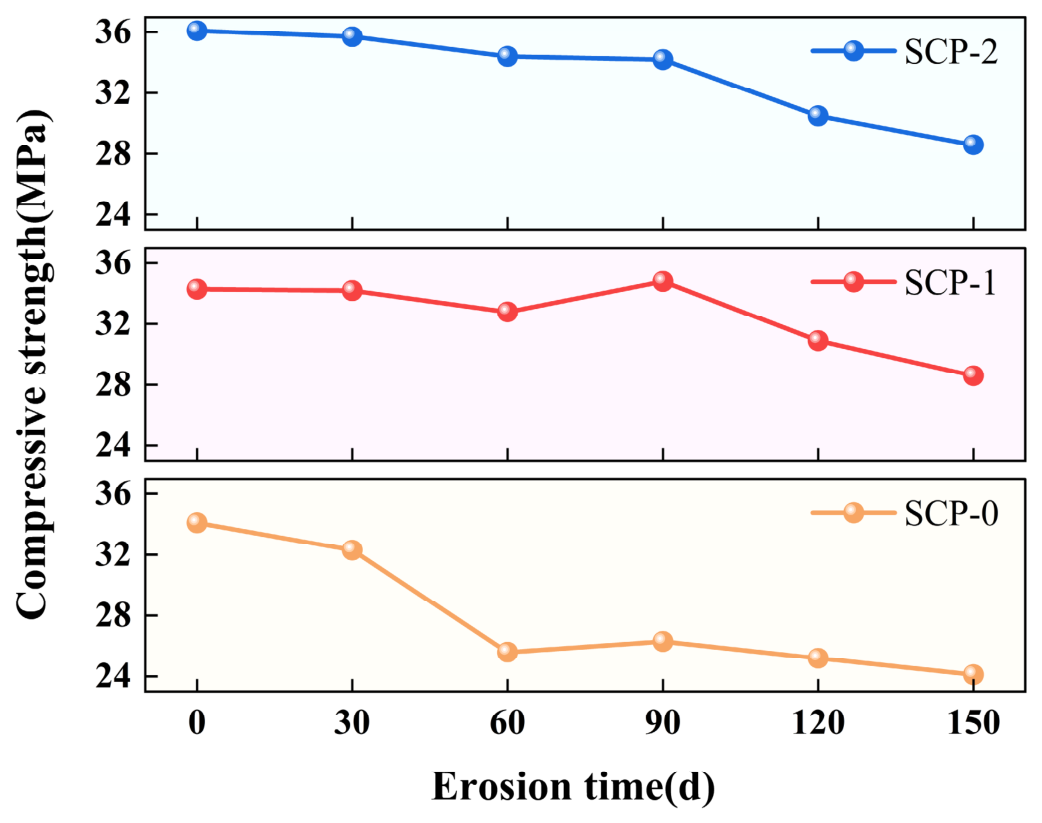
As shown in
Figure 4, the compressive strength of the ordinary Portland cement-based system (SCP) generally decreases with increasing exposure time. The SCP-0 group exhibits a significant reduction, with a decrease of approximately 10 MPa after 150 days, indicating a pronounced deterioration under sulfate dry–wet cycles. In contrast, the SCP-1 and SCP-2 groups show relatively smaller reductions of 5.7 MPa and 7.5 MPa, respectively. Among them, the SCP-1 group maintains a more stable strength development with less fluctuation throughout the exposure period, suggesting that an appropriate fiber content can mitigate strength degradation. Further comparison of the results at 0 days and 150 days confirmed the intensity attenuation phenomenon in the SCP system. All groups exhibited a decline in strength after prolonged exposure, with the SCP-0 group showing the most significant decrease; in contrast, the fiber-reinforced group demonstrated superior resistance to strength loss.
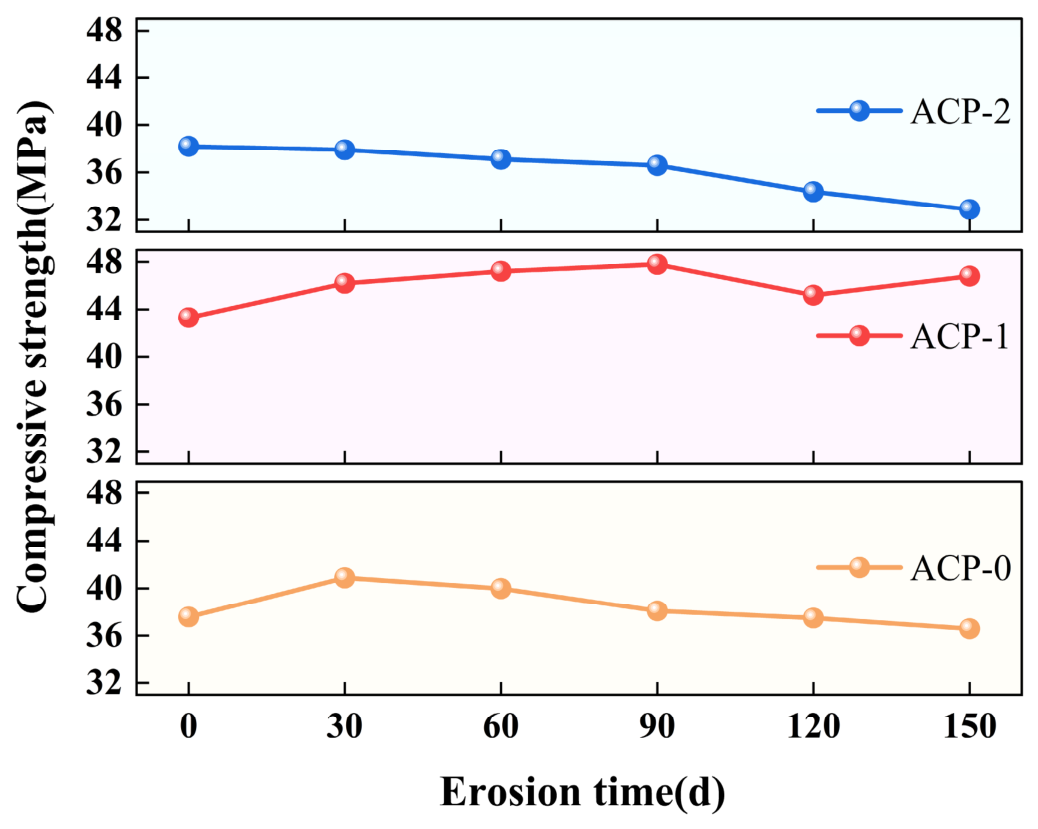
As shown in
Figure 5, the compressive strength evolution of the ferroaluminate cement-based system (ACP) exhibits different characteristics. The ACP-0 group shows an initial increase followed by a slight decrease, with an overall reduction of about 1.0 MPa after 150 days. The ACP-2 group exhibits a continuous decrease, with a reduction of 5.3 MPa. In contrast, the ACP-1 group shows an initial increase followed by minor fluctuations and ultimately presents a net increase in compressive strength. The comparison results at 0 and 150 days indicate that the ACP system maintains higher strength levels and smaller variations compared with the SCP system. In particular, the ACP-1 group shows a slight increase in compressive strength, while the other groups exhibit different degrees of reduction.
The results indicate that fiber incorporation contributes to improved stability of compressive strength under sulfate dry–wet cycles, with the 0.2% fiber content (SCP-1 and ACP-1) exhibiting the most favorable performance. In addition, the ACP system shows better resistance to strength degradation compared with the SCP system under the same exposure conditions.
3.3. Splitting Tensile Strength
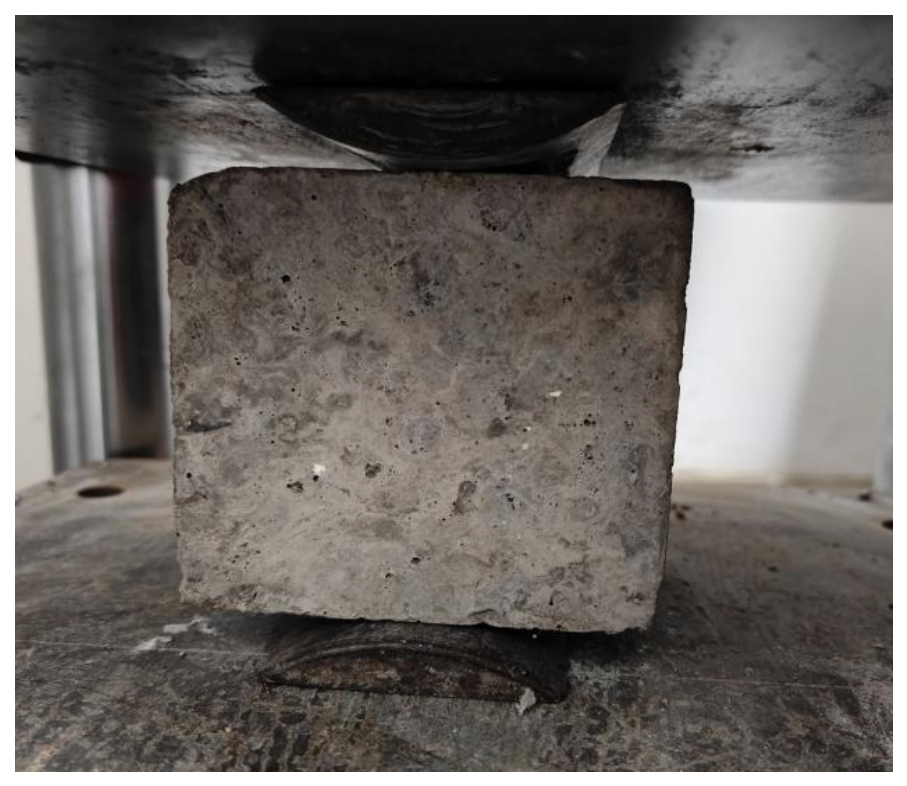
The splitting tensile strength of the specimens under sulfate dry–wet cycles was measured using a microcomputer-controlled testing machine (model WHY-2000), as shown in
Figure 6.
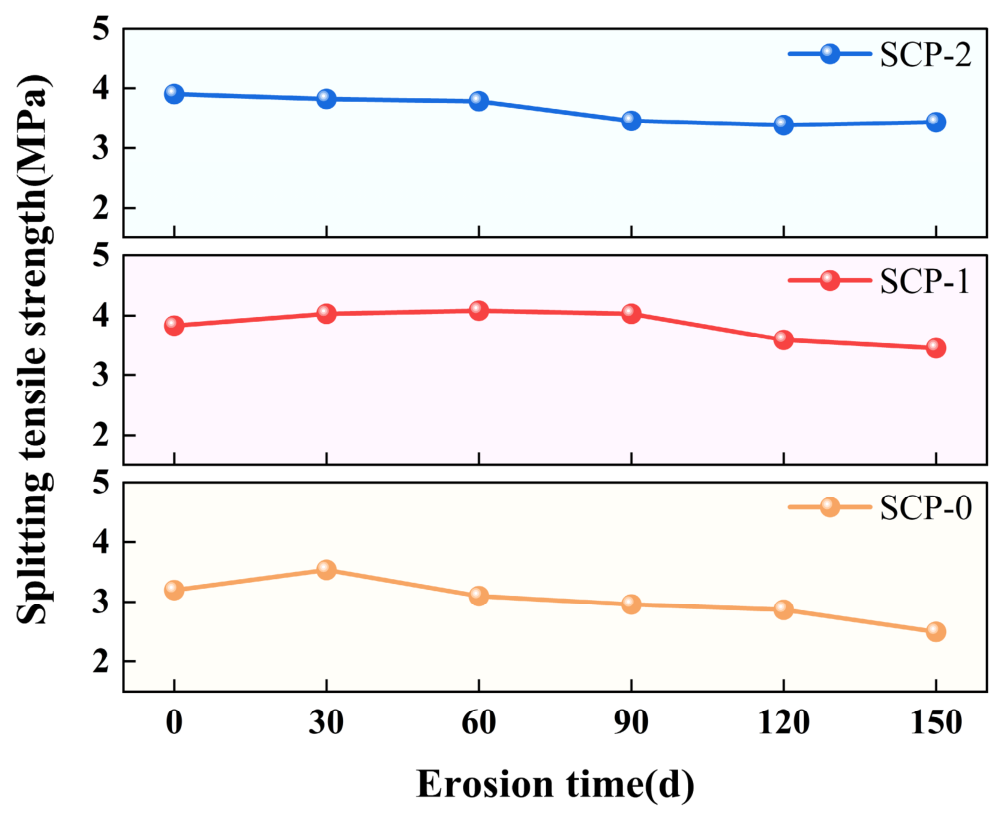
As shown in
Figure 7, the splitting tensile strength of the ordinary Portland cement-based system (SCP) exhibits different trends with increasing exposure time. The SCP-0 group shows an initial increase followed by a gradual decrease. In contrast, the SCP-1 and SCP-2 groups exhibit relatively stable variations, with smaller fluctuations throughout the exposure period. Among them, the SCP-1 group shows the most stable behavior. Comparison of results at 0 days and 150 days demonstrated that all SCP groups exhibited a decrease in fracture tensile strength after long-term exposure. The decline was most pronounced in the SCP-0 group, whereas the fiber-reinforced groups showed improved stability.
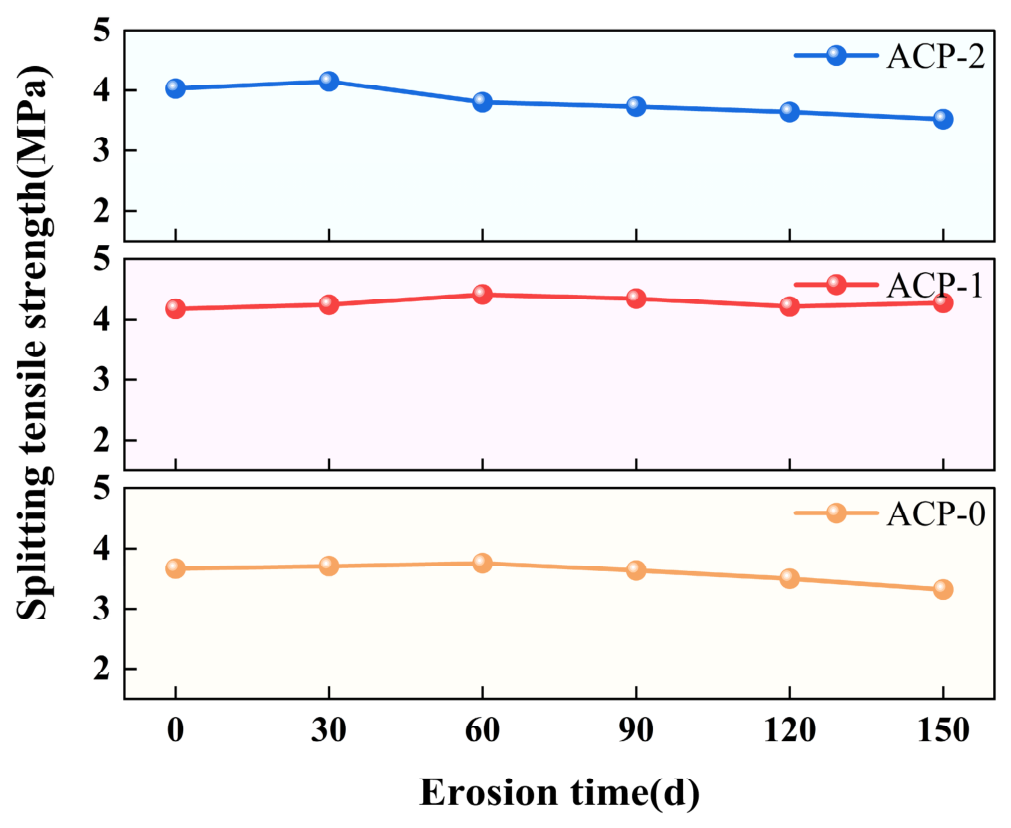
As shown in
Figure 8, the splitting tensile strength evolution of the ferroaluminate cement-based system (ACP) shows different characteristics. The ACP-0 group exhibits a slight increase followed by a decrease, with an overall reduction of 0.35 MPa. The ACP-2 group shows a continuous decrease, with a total reduction of 0.51 MPa. In contrast, the ACP-1 group shows a relatively stable trend, with a slight increase of about 0.1 MPa after 150 days. The comparison results at 0 and 150 days further demonstrate that the ACP system maintains higher stability than the SCP system. In particular, the ACP-1 group shows a slight increase in strength, whereas the other groups exhibit varying degrees of reduction.
These results indicate that fiber incorporation improves the stability of splitting tensile strength under sulfate dry–wet cycles, with the 0.2% fiber content (SCP-1 and ACP-1) showing the most favorable performance. Compared with the SCP system, the ACP system exhibits smaller strength variations and better retention of splitting tensile strength after long-term exposure. This suggests that ferroaluminate cement-based concrete has superior resistance to strength degradation under sulfate conditions.
3.4. Dynamic Elastic Modulus
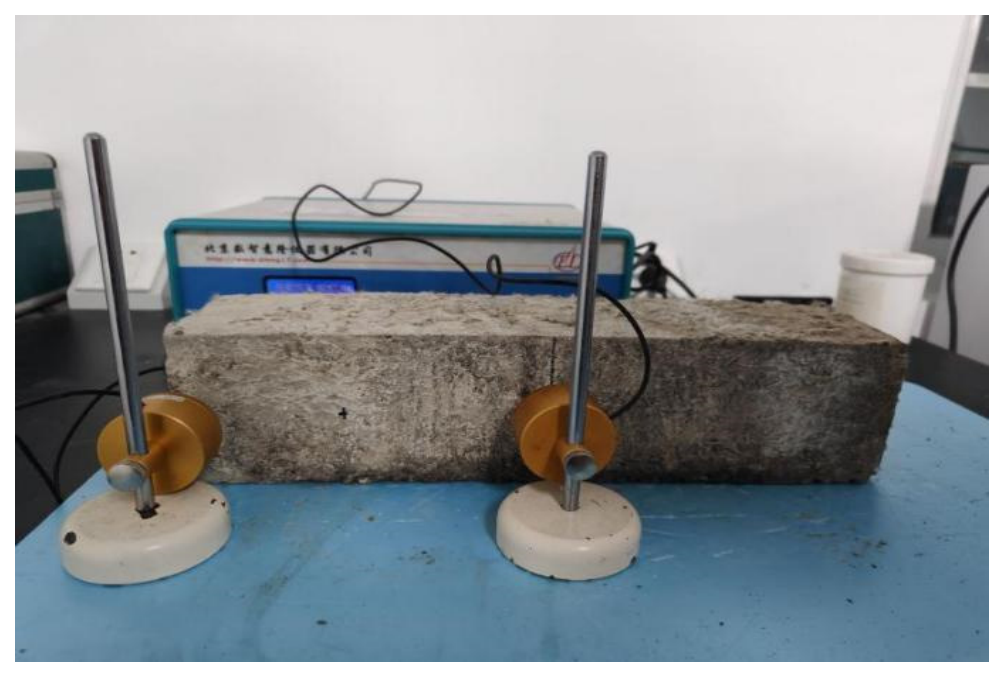
The dynamic elastic modulus of the specimens under sulfate dry–wet cycles was measured in accordance with the Test Code for Cement and Cement Concrete in Highway Engineering (JTG E30–2005) [
27], as shown in
Figure 9.
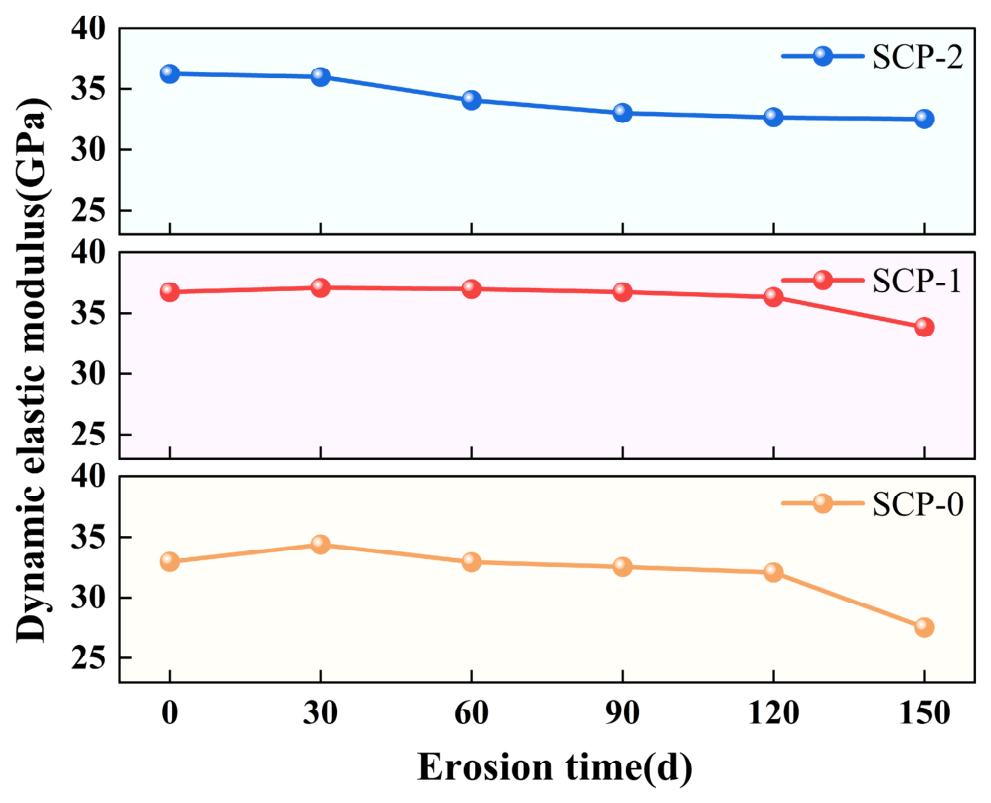
As shown in
Figure 10, the dynamic elastic modulus of the ordinary Portland cement-based system (SCP) generally decreases with increasing exposure time, with different degrees of fluctuation among groups. The SCP-0 group shows the most significant reduction, with a decrease from 32.97 GPa to 27.53 GPa, corresponding to a reduction of 5.44 GPa. The SCP-1 group exhibits a relatively stable trend, with a smaller decrease of 2.88 GPa (from 36.74 to 33.86 GPa). The SCP-2 group shows a continuous decrease, with a reduction of 3.72 GPa. Among these groups, SCP-1 demonstrates the smallest variation and the best stability. The comparison results at 0 and 150 days further confirm that all SCP groups experience a decrease in dynamic elastic modulus, with the SCP-0 group showing the largest reduction, while the fiber-reinforced groups maintain higher modulus values after long-term exposure.
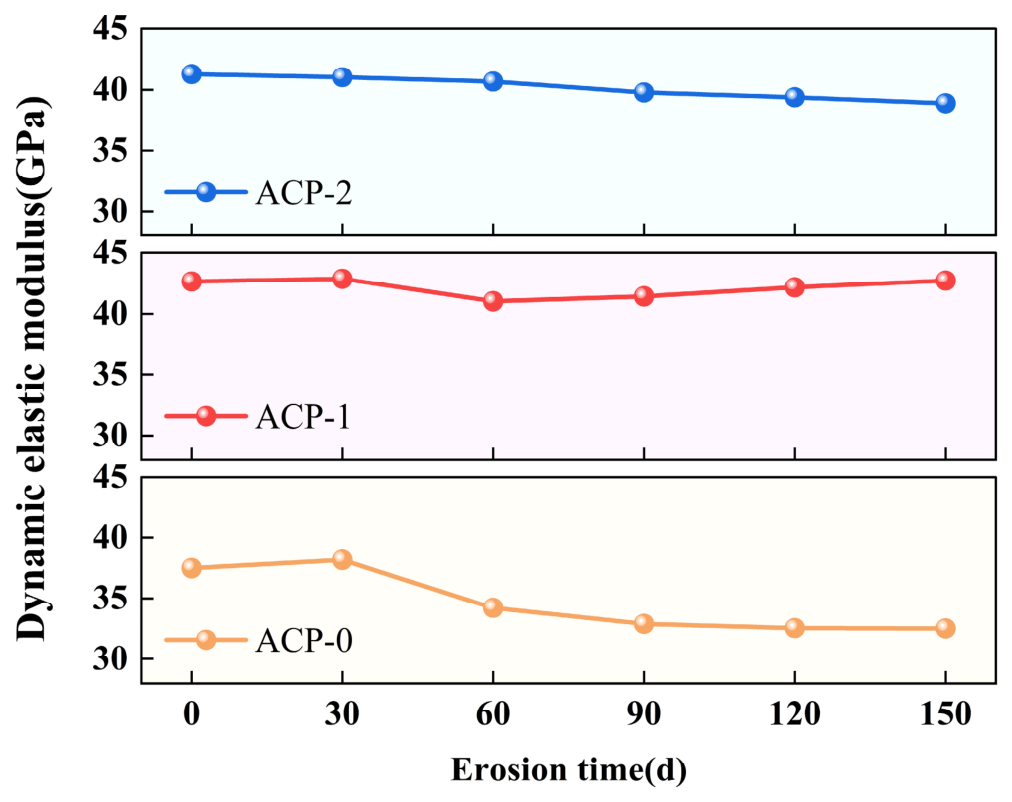
As shown in
Figure 11, the ferroaluminate cement-based system (ACP) exhibits relatively smaller variations in dynamic elastic modulus. The ACP-0 group decreases from 37.47 GPa to 32.52 GPa, with a reduction of 4.95 GPa. The ACP-1 group shows the smallest change, decreasing slightly from 42.63 GPa to 42.71 GPa, indicating almost no loss in modulus. The ACP-2 group shows a moderate reduction from 41.30 GPa to 38.88 GPa, corresponding to a decrease of 2.42 GPa. The comparison results at 0 and 150 days indicate that the ACP system maintains higher dynamic elastic modulus values and smaller variations than the SCP system. In particular, the ACP-1 group shows almost unchanged modulus values before and after exposure, while the SCP groups exhibit more noticeable reductions.
The results demonstrate that incorporating fibers helps maintain the dynamic elastic modulus under sulfate dry–wet cycles, with the 0.2% fiber content (SCP-1 and ACP-1) providing the most stable performance. Moreover, compared with the SCP system, the ACP system shows a smaller reduction in modulus and better retention of stiffness under the same exposure conditions.
4. Microstructural Characterization and Mechanisms
A comprehensive analysis of the mechanical results indicates that the SCP-1 and ACP-1 groups exhibit superior long-term resistance to sulfate attack. To further examine the phase composition after erosion, X-ray diffraction (XRD) tests were conducted on SCP-0, SCP-1, and ACP-1 specimens after 150 days of exposure.
4.1. XRD Analysis
The phase composition and relative crystallinity of the samples were analyzed using the DMAX-1400 X-ray diffractometer affiliated with the State Key Laboratory of Environment-Friendly Energy Materials at Southwest University of Science and Technology [
28]. The diffraction patterns were processed with MDI Jade 6.0 software, and the identified peaks were matched with the ICDD/PDF database.
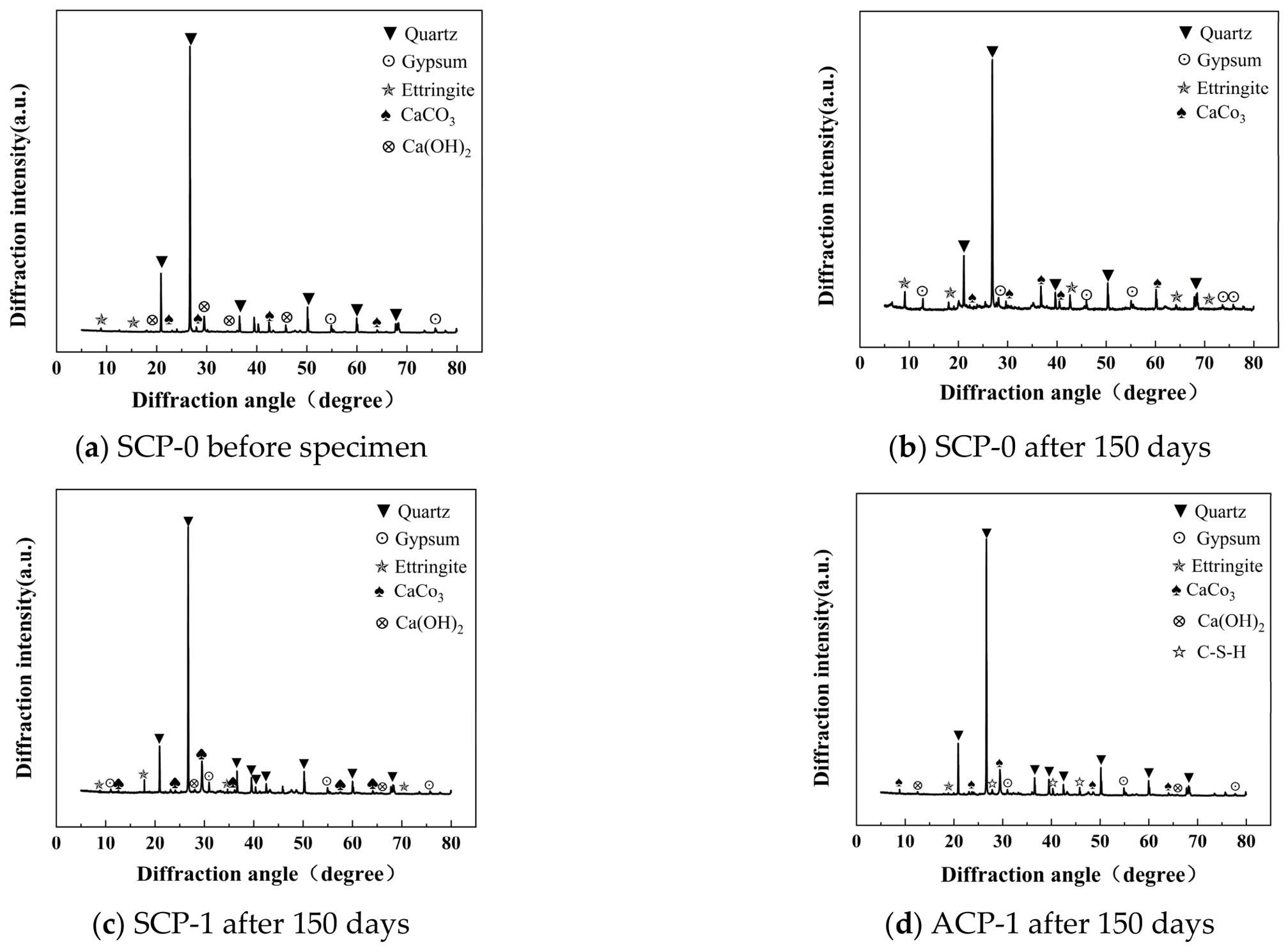
Figure 12 shows the XRD patterns of the three groups. The main crystalline phases observed in all specimens include quartz, gypsum, ettringite, and calcium carbonate. In addition, Ca(OH)
2 is clearly detected in SCP-1, while in ACP-1, C–S–H gel is identified.
As shown in
Figure 12a, after 28 days of curing under standard conditions, the microstructure analysis of the SCP-0 specimen reveals the presence of Ca(OH)
2, trace amounts of alunite and calcite formed during hydration, likely attributable to minor carbonation during the curing process. From
Figure 12b,c, the SCP system shows pronounced diffraction peaks corresponding to quartz (around 26°) and multiple peaks of ettringite and gypsum distributed mainly within the 10°–40° range. Compared with SCP-0, the SCP-1 specimen exhibits similar phase composition but slightly more dispersed peak distribution, indicating a relatively modified microstructure.
In
Figure 12d, the ACP-1 specimen also presents quartz as the dominant crystalline phase, with noticeable peaks of ettringite and gypsum. Meanwhile, the appearance of C–S–H gel-related features suggests the presence of additional hydration products compared with the SCP system. The diffraction peaks of Ca(OH)
2 are less prominent in ACP-1 than in SCP-1, indicating differences in hydration characteristics between the two systems. Overall, while the main crystalline phases are similar among the three groups, the ACP system exhibits additional hydration products and differences in peak characteristics, which are consistent with its improved mechanical performance observed in previous sections.
4.2. SEM Observations
Scanning electron microscopy (SEM) was used to examine the microstructural characteristics of SCP-0, SCP-1, and ACP-1 specimens after 150 days of sulfate dry–wet cycles, following the methods reported in previous studies [
21]. The TM-4000 Zeiss scanning electron microscope, housed in the State Key Laboratory of Environment-friendly Energy Materials, Southwest University of Science and Technology, was adopted for the qualitative analysis of morphological characteristics, distribution density and growth state of the products at magnifications of 500, 2000 and 4000 times.
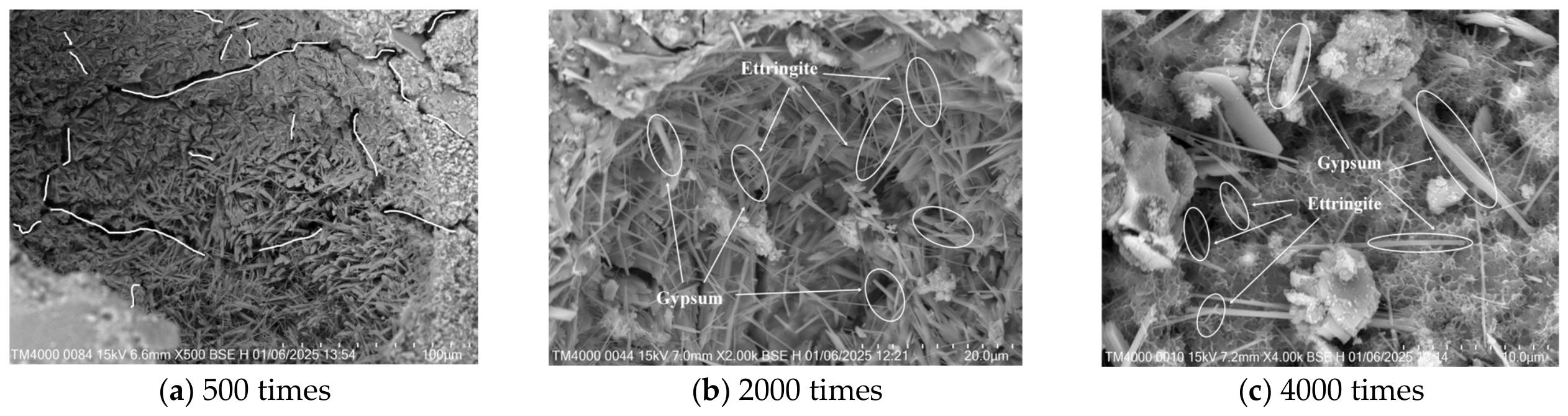
Figure 13 shows the electron microscope scanning results of specimen SCP-0. The specimen was magnified 500 times as shown in
Figure 13a. When PVA fibers were not added to the normal silicate cement-based concrete, the cracks in the specimen developed severely, spreading from one point to all directions, presenting a spider-web-like structure.
Figure 13b,c show the magnified images of the specimens at 2000 times and 4000 times respectively. Under the influence of sulfate erosion and dry-wet cycles, the specimens have poor resistance to erosion, generating a large amount of needle-like ettringite. The accumulation of precipitated crystals causes expansion stress, leading to the formation of cracks and a decline in various performance indicators of the structure [
29]. The sample also contains plate-like or prismatic crystals-Gypsum, whose volume expansion also leads to the development of cracks, thereby reducing various performance indicators of the structure.
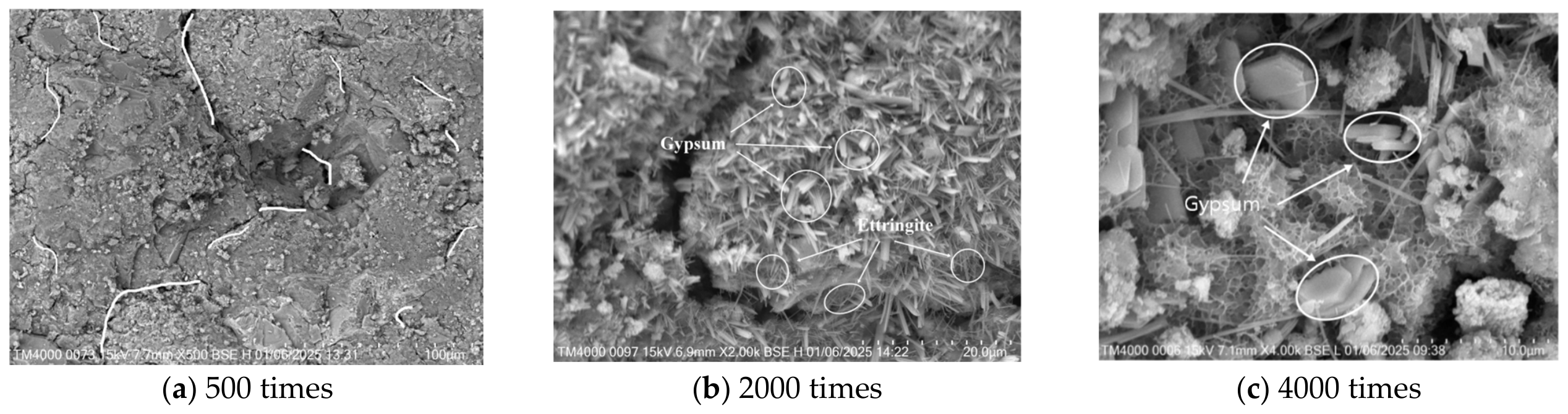
The electron microscope scanning results of specimen SCP-1 are shown in
Figure 14. When magnified 500 times after sulfate erosion and dry-wet cycling, cracks were found on the surface of the specimen. When the magnification was further increased to 2000 times and 4000 times, prismatic gypsum crystals and needle-like ettringite were clearly observed on the surface of the specimens. It is precisely because of the volume expansion caused by the accumulation of gypsum that cracks are triggered, forcing the performance indicators of the specimens to decline.
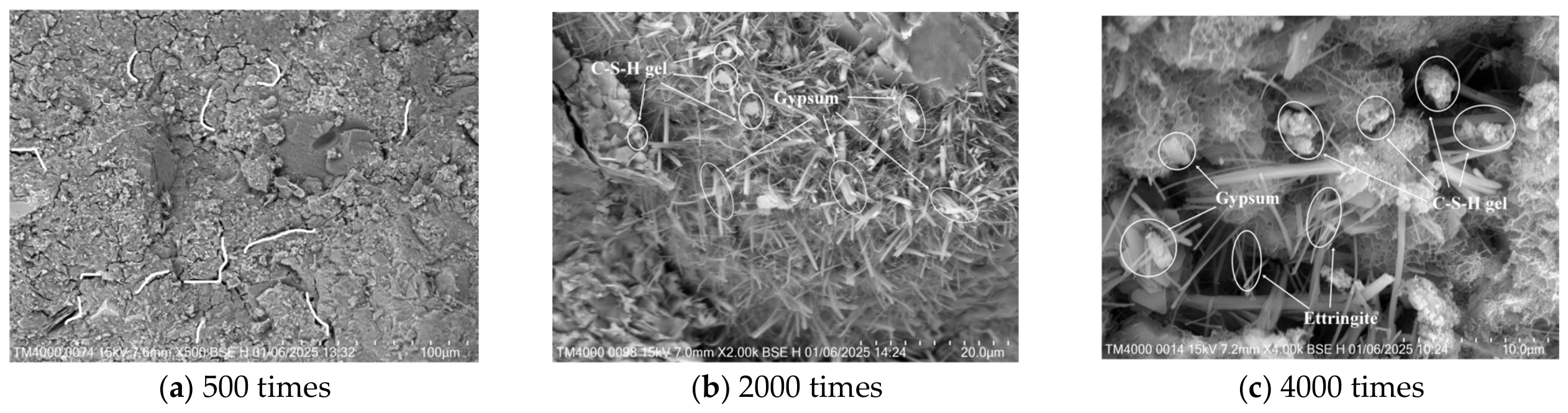
The electron microscopy scanning results of specimen ACP-1 are shown in
Figure 15. When magnified 500 times, it was observed that the surface structure was intact, the fibers were tightly wrapped, and a few cracks were found. When further magnified to 2000 times and 4000 times, it was observed that a small amount of gypsum and ettringite were formed on the surface of the specimens. Compared with the electron microscope results of specimens SCP-0 and SCP-1, no obvious cracks are observed, and there is a large amount of C-S-H gel inside the structure. The structure is relatively stable and had good sulfate erosion resistance.
Based on the above analysis results, it can be known that in the SCP-0 group, due to the accumulation of the expansive substance ettringite and gypsum generated by the absence of fiber addition, the cracks development are severe [
30], accelerating the process of sulfate entering the internal structure and eroding the specimens. The SCP-1 group, due to the addition of fibers, has a certain inhibitory effect on the cracking of the specimens, but it is not sufficient to counteract the deterioration effect caused by the accumulation of ettringite and gypsum. Sulfate ions can still enter the interior of the structure and cause erosion to the specimens. The ACP-1 group structure contains a large amount of C-S-H gel to fill the pores, has a complete structure, and the internal substances are tightly wrapped. There are almost no signs of crack expansion, and its resistance to sulfate erosion is the best [
31].
In general, the SCP-0 specimen shows the most severe cracking and the highest density of expansive products, while SCP-1 exhibits moderate improvement due to fiber incorporation. In contrast, the ACP-1 specimen presents fewer cracks and a more compact microstructure. These observations indicate that the ACP system has better resistance to sulfate-induced deterioration, which is consistent with the mechanical results.
5. Engineering Application and Numerical Analysis
5.1. Engineering Background
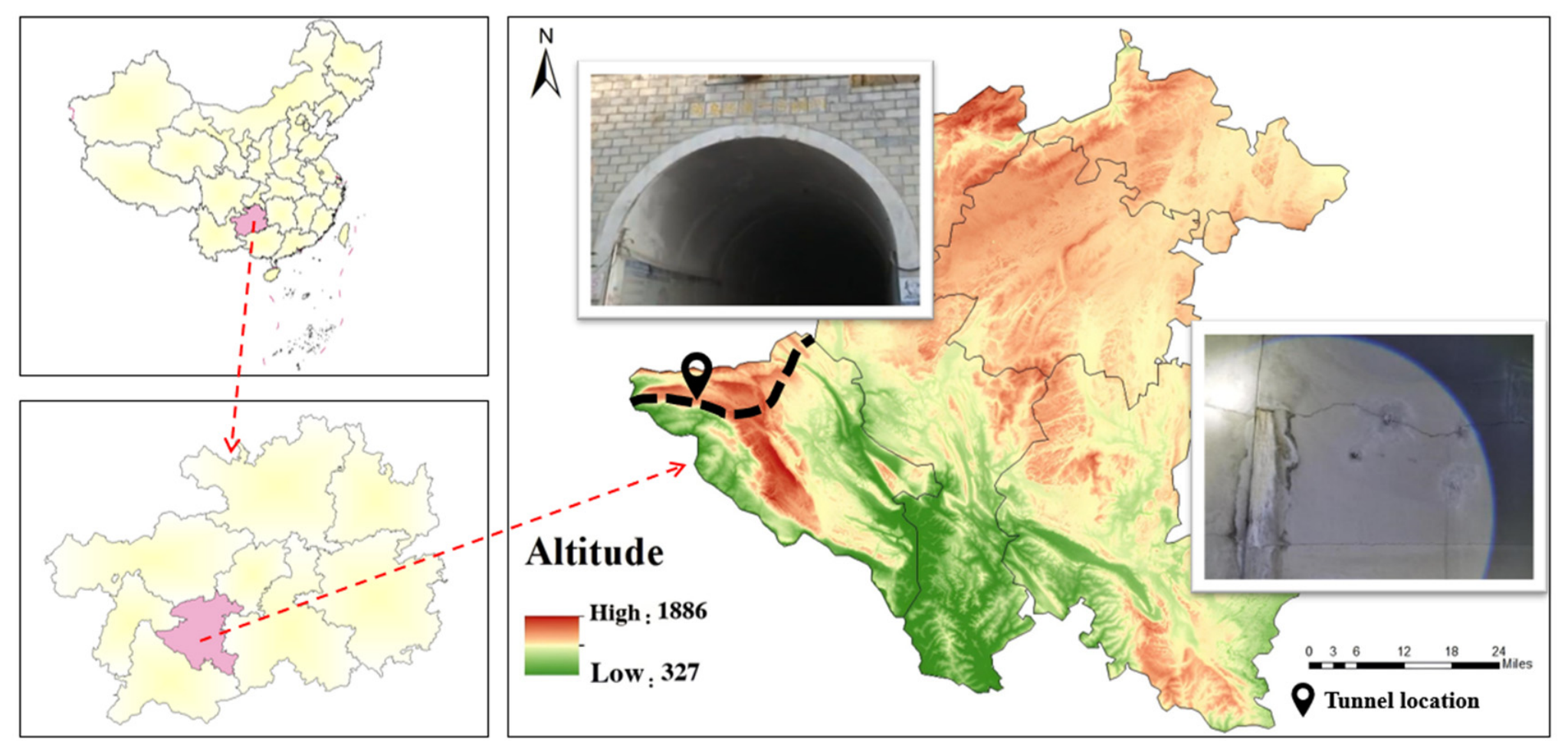
The Gangwu Tunnel is located in the low-mountain erosion zone of the Yunnan–Guizhou Plateau, in Guanling Buyi and Miao Autonomous County, Guizhou Province, China. The region is characterized by steep terrain with high mountains and deep valleys, and the overall topography gradually descends from north to south. The tunnel alignment is generally consistent with the mountain range and passes through the slope at the mountain foot.
At the K1960+121 section, significant lining damage was observed. A transverse crack approximately 23 m long and 4 mm wide developed on the left sidewall at a height of 3.8 m. In addition, a longitudinal crack of about 37 m in length and 2 mm in width was identified approximately 2 m above the base of the sidewall. Water seepage accompanied by white precipitates was observed at the crack locations, as shown in
Figure 16. Geological investigation indicates that the surrounding strata mainly consist of mudstone, argillaceous dolomite interbedded with limestone and marl, with the presence of gypsum. The groundwater in this section exhibits sulfate aggressiveness.
Laboratory tests demonstrated that in this tunnel design with a service life of 100 years, the compressive strength of the lining concrete decreased from an initial value of 28.6 MPa to 14.6 MPa. The sulfate ion concentration in groundwater is 1.27%. The mineral composition of the deposits is dominated by calcite (43%), followed by dolomite (15%), calcined gypsum (17%), anhydrite (10%), ettringite (8%), gypsum (5%), and quartz (1%).
5.2. Numerical Modelling and Input Parameters
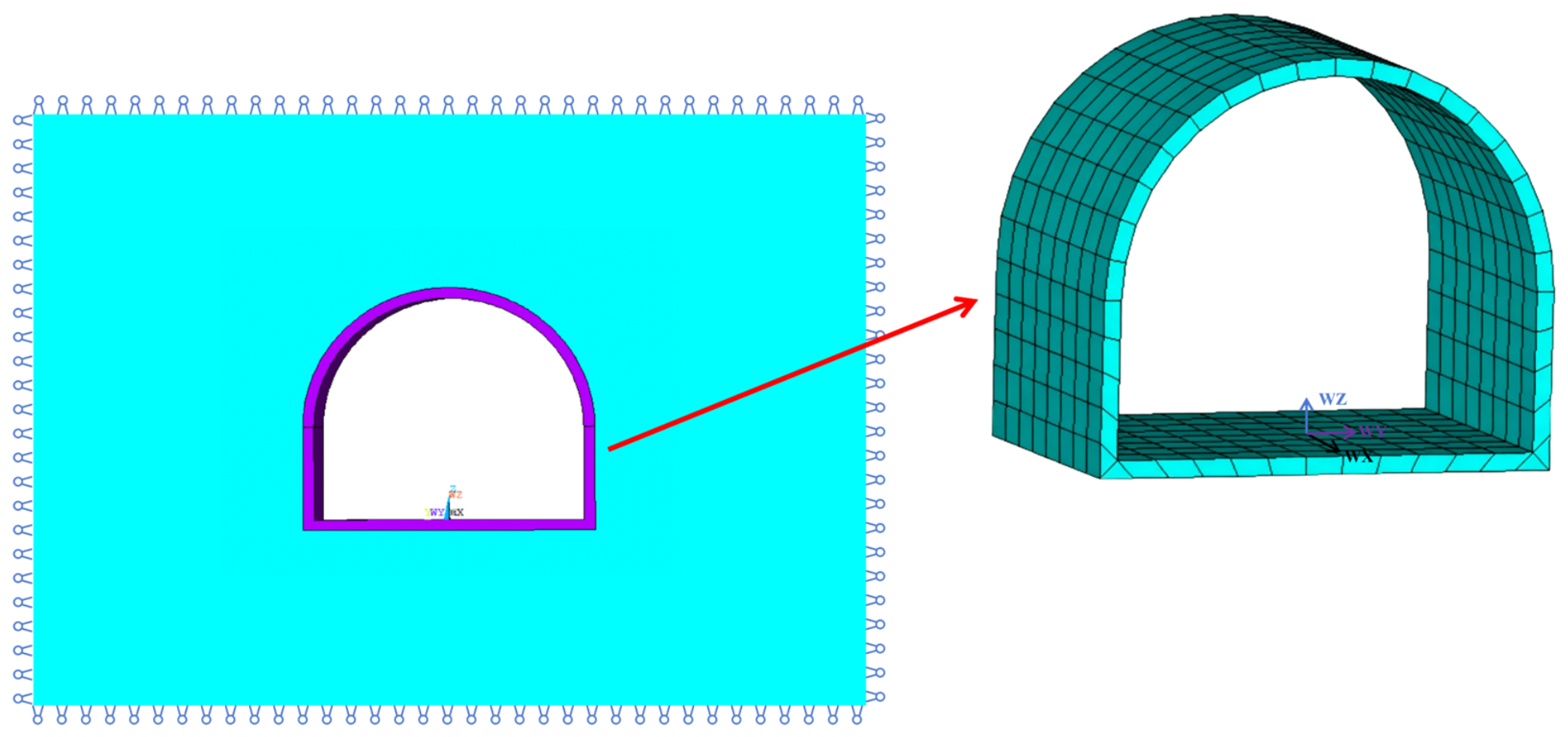
To investigate the structural response of tunnel linings under sulfate-induced deterioration, a three-dimensional numerical model was developed using ABAQUS Version 2022. The three-dimensional tunnel lining model used eight-node reduced integration solid elements for the surrounding rock and concrete lining, while reinforcement bars were simulated using truss elements embedded in the concrete matrix. The average mesh size of the lining was 0.15 m, with local refinement applied in stress concentration regions. The bottom boundary of the surrounding rock was fixed, and the lateral boundaries were constrained in the normal direction. Geostatic stress was generated through gravity loading.
The model represents the tunnel–surrounding rock system, in which the lining is modeled as a reinforced concrete structure composed of concrete and embedded reinforcement (rebar).
The surrounding rock was simulated using the Mohr–Coulomb constitutive model to describe its elastoplastic behavior. The reinforcement (rebar) was modeled as a linear elastic material and embedded within the concrete matrix to reflect the actual structural configuration. The contact between the lining and surrounding rock was defined using a surface-to-surface interaction. The normal behavior was specified as hard contact, and the tangential behavior followed a frictional formulation with a friction coefficient of 0.35. The material parameters of the surrounding rock and reinforcement used in the model are listed in
Table 6.
To simulate the influence of material degradation, a two-step analysis procedure was adopted. In the initial step, the lining was assigned the mechanical properties corresponding to its intact state to establish the equilibrium condition of the tunnel–surrounding rock system. For the in situ lining, the initial properties correspond to C30 ordinary silicate concrete, with parameters determined according to relevant design specifications. For the alternative material scenarios, the initial properties correspond to the pre-erosion experimental values obtained in the preceding sections. In the subsequent step, the concrete properties of the lining were updated to represent degraded conditions, which induces stress redistribution, deformation, and crack development.
Based on this modelling framework, four scenarios were considered. Condition 1 represents the in situ deteriorated lining at the K1960+121 section obtained from field investigation. Conditions 2–4 correspond to the lining structures using SCP-0, SCP-1, and ACP-1 materials (
Table 5), respectively, where the concrete properties after 150 days of sulfate erosion obtained from laboratory tests were adopted, as shown in
Table 7.
A three-dimensional model was established with the tunnel axis defined as the X-direction, the transverse direction as the
Y-axis, and the depth as the
Z-axis. The surrounding rock domain was set to 100 m × 100 m × 8 m. The lining thickness was 0.45 m, with a span of 11 m and a height of 9.5 m, as shown in
Figure 17.
5.3. Structural Response Analysis
5.3.1. Equivalent Stress
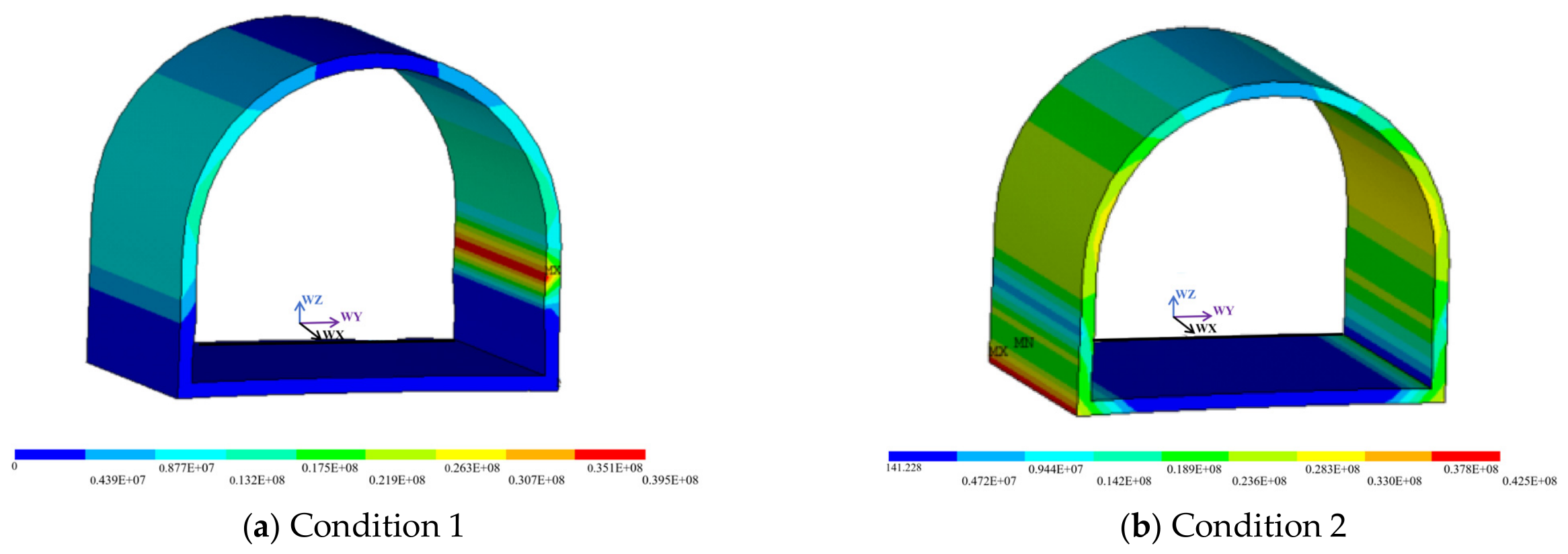
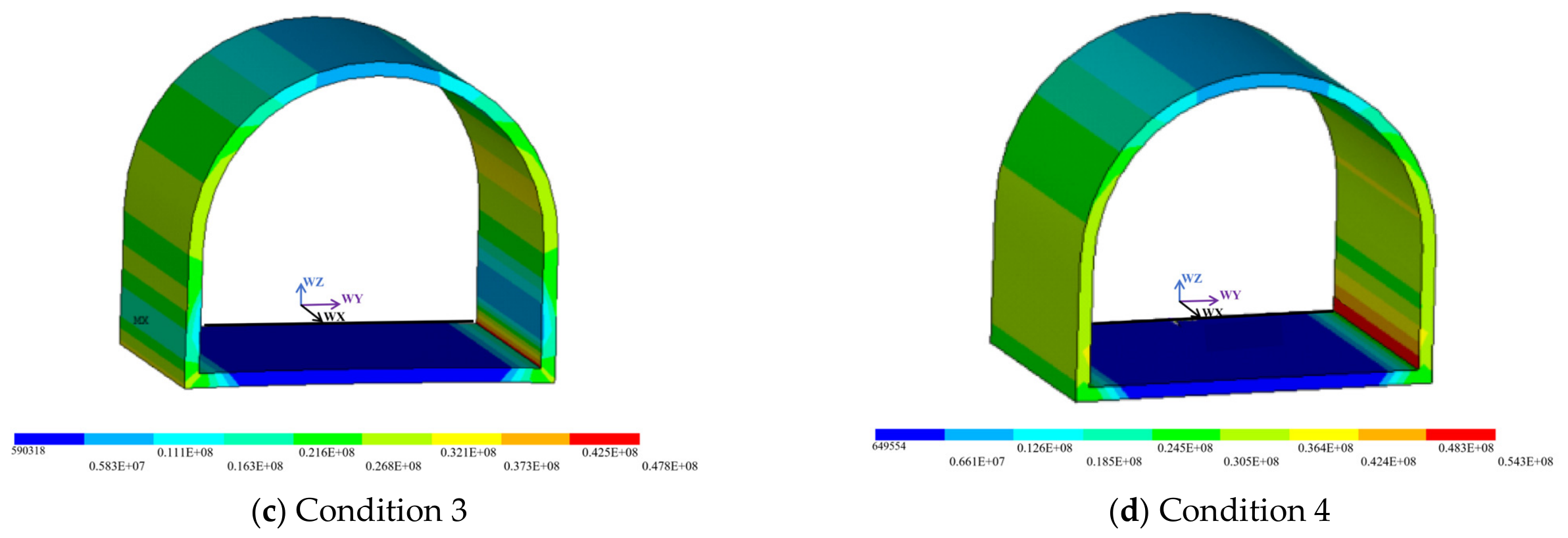
Figure 18 presents the equivalent stress distribution of the tunnel lining under different conditions. As shown in
Figure 18a, for Condition 1, the stress is mainly concentrated in the middle region of the side wall, while the stress at the vault remains relatively low. This indicates that the side wall is the primary location affected by deterioration. In
Figure 18b, for Condition 2, the stress at the bottom of the lining is relatively small, whereas a localized stress concentration appears at the lower right side of the lining structure. The stress at the vault remains low, and the distribution along both sides of the lining is relatively uniform. From the side walls toward the invert, the stress gradually increases.
Figure 18c,d illustrate the stress distributions for Conditions 3 and 4. In both cases, the stress distribution becomes more uniform compared with Condition 2. The stress levels at the vault and bottom remain relatively low, while the stress gradually increases from the arch crown toward the side walls and further to the bottom. Localized stress concentration is observed near the wall–invert junction, particularly at the corner regions. Overall, compared with Condition 1, the optimized material conditions (Conditions 2–4) exhibit a more uniform stress distribution, with reduced concentration intensity at critical locations.
5.3.2. Displacement Cloud Map
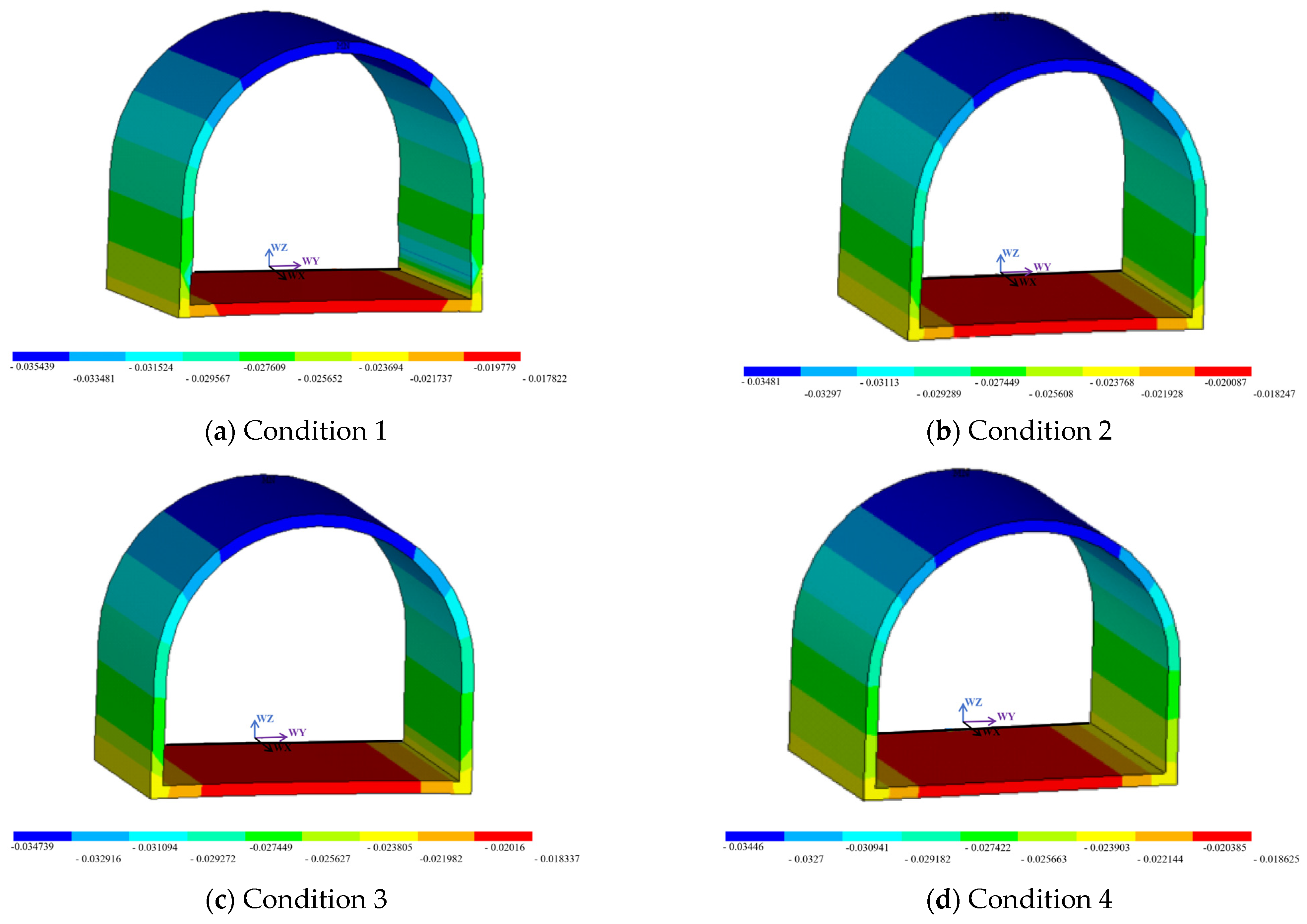
Figure 19 shows the displacement distribution of the tunnel lining under different conditions. By comparing the displacement contours with the stress distributions, it can be observed that regions with higher displacement values typically correspond to stress concentration zones.
Among the four conditions, the displacement at the arch crown remains relatively significant. The displacement gradually decreases from the crown toward the lateral walls, indicating that the upper lining region constitutes the primary deformation zone. Condition 4 demonstrates the lowest maximum displacement value and highest structural stability, suggesting that the ferraluminate cement-based concrete used in this condition—modified with fiber reinforcement—effectively mitigates structural displacement to some extent.
5.3.3. Crack Propagation Analysis
By simulating and analyzing the crack development of each group of tunnel lining structures, the severity of crack development was explored, and the deterioration of tunnel lining structures was quantified [
32,
33].
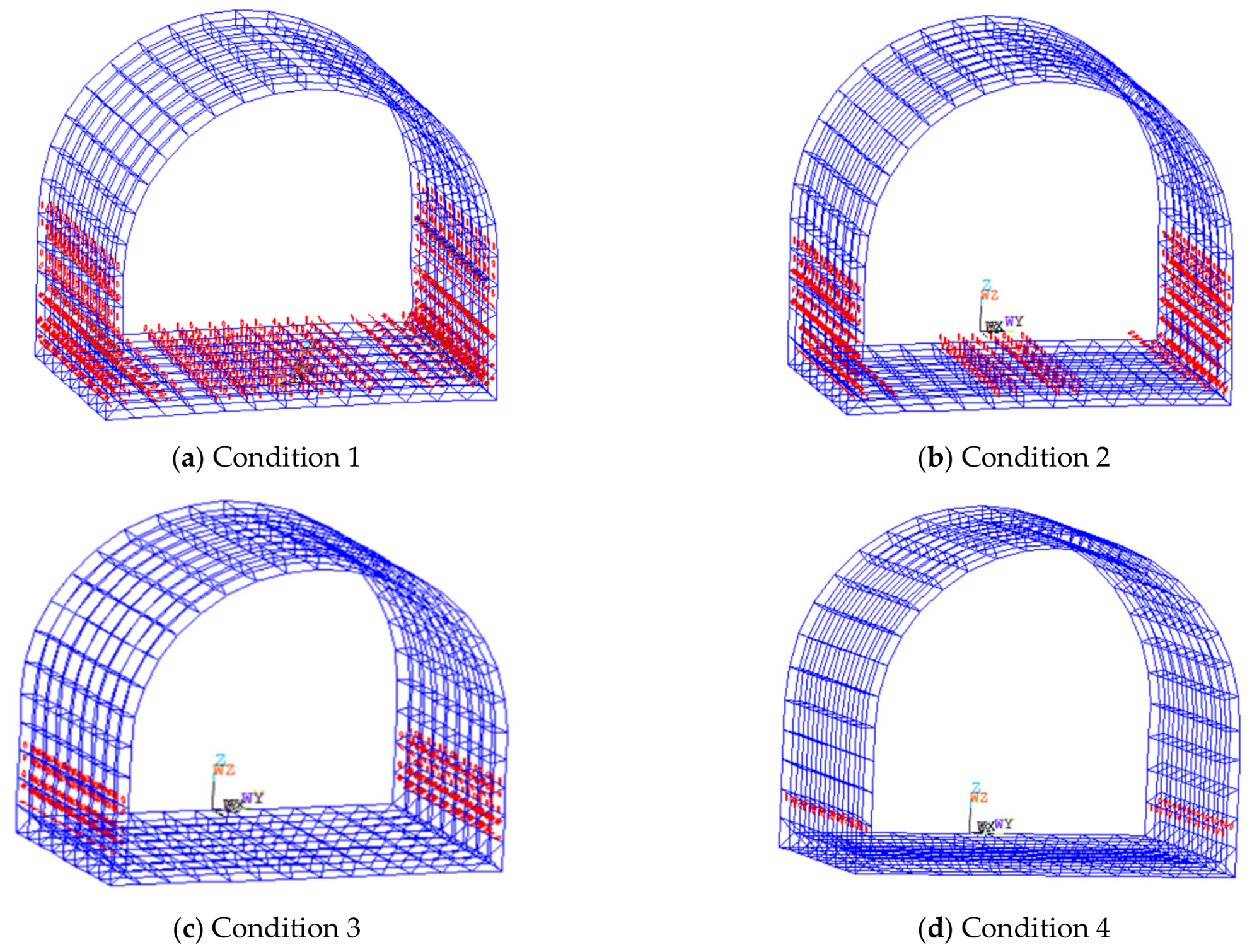
Figure 20a shows the crack development in working Condition 1. The crack distribution is relatively uniform, mainly occurring at the lower part of the side walls on both sides of the tunnel and the junction area between the wall base and the foundation. The cracks are densely developed and extend from the corners at both ends of the tunnel towards the middle of the base plate. On the side walls on both sides, cracks emerged from half the height of the wall and expanded upward along the
Z-axis. The cracks in the tunnel floor are distributed along the
Z-axis as a whole, and the structure as a whole shows a failure pattern of depression towards the middle of the arch ring. The results show that under Condition 1, cracks develop densely, structural damage is significant, and it is severely eroded by sulfate.
Figure 20b shows the crack development pattern under Condition 2. The cracks are mainly distributed in the lower part of the side walls on both sides of the tunnel and the junction area between the wall base and the foundation. About one-third of the middle part of the floor slab is the concentrated development area of the cracks. On the left and right side walls, the cracks extend from the upper part of the
Z-axis along the
Z-axis direction and gradually expand downward towards the
Y-axis direction. As the depth increases, the cracks extend in all directions. By the time they reach the bottom of the wall, they gradually tend to develop along the
Y-axis and eventually align with it. In the middle one-third section of the tunnel floor, the cracks develop as a whole along the
Z-axis direction.
Figure 20c shows the development of cracks under Condition 3. The structural cracks are distributed relatively evenly, mainly concentrated in the lower one-third area of the side walls on both sides of the tunnel. In the upper part of the
Z-axis direction, the first layer of cracks expands along the
Z-axis direction, the second and third layers of cracks gradually shift 45° towards the
Y-axis direction, and the fourth layer of cracks shows a distinct tendency to spread in all directions. Compared with working Condition 2, the crack area in Condition 3 is smaller, and both the expansion range and the degree of damage are relatively milder.
Figure 20d shows the development of cracks under Condition 4. The structural cracks are evenly distributed, mainly occurring in the lower one-third area of the side walls on both sides, and the cracks extend along the
Z-axis as a whole. Under the long-term effect of an erosive environment, the crack development degree of this lining structure is extremely light. Only one layer of crack appears at the lower part of the wall, and no obvious cracking is observed in the other areas. Compared with the other three working conditions, Condition 4 has the best inhibitory effect on crack development, the least degree of structural deterioration, and the smallest overall failure and crack development.
These results indicate that although crack development is mainly concentrated in the lower regions of the lining under all conditions, the extent and severity of cracking decrease progressively from Condition 1 to Condition 4. This demonstrates that the optimized materials are effective in mitigating crack propagation and improving the durability of the tunnel lining.
6. Conclusions
This study investigated the sulfate resistance of fiber-reinforced concrete incorporating steel slag powder in both ordinary Portland cement and ferroaluminate cement systems through combined experimental and numerical approaches. The main conclusions are summarized as follows:
In both the SCP and ACP systems, the incorporation of PVA fibers improves the resistance to sulfate attack under dry–wet cycles. Among the investigated fiber contents, 0.2% provides the most stable performance. Compared with the SCP system, the ACP system exhibits smaller variations in mass, higher retention of mechanical strength, and more stable dynamic elastic modulus, indicating superior durability in sulfate environments.
Microstructural analysis reveals that ferroaluminate cement-based materials generate additional hydration products, which contribute to a denser internal structure. Meanwhile, PVA fibers effectively restrain micro-crack initiation and propagation. The combined effect enhances structural integrity and reduces deterioration under sulfate attack, with the ACP-1 group showing the best overall performance.
Numerical simulation results demonstrate that the use of optimized materials leads to a more uniform stress distribution, slightly improved deformation, and significantly mitigated crack development in tunnel lining structures. In particular, the ACP-1 condition shows the lowest crack intensity and the most stable structural response, confirming its effectiveness in practical engineering scenarios.
The proposed fiber-reinforced ferroaluminate cement concrete incorporating steel slag powder shows strong potential for improving the durability of tunnel linings in sulfate-rich environments and provides a feasible material solution for mitigating deterioration and enhancing long-term performance.
This study mainly considers sulfate dry–wet cycles under controlled laboratory conditions, and more complex service environments, such as coupled mechanical loading, groundwater flow, and long-term field exposure, were not fully addressed. Future work should further investigate multi-factor coupled deterioration mechanisms and validate the long-term performance of the proposed materials under real engineering conditions.