1. Introduction
Asphalt pavement has become the primary paving form for high-grade highways due to its advantages of driving comfort, low noise, and convenient construction. However, as an organic polymer material, asphalt inevitably undergoes aging during service due to the combined effects of heat, oxygen, ultraviolet radiation, and loading [
1,
2,
3]. Aging has become a key factor restricting the durability of asphalt pavement, especially in high-altitude areas such as the Qinghai–Tibet Plateau, where the coupling effect of strong ultraviolet radiation and large temperature differentials poses a more severe challenge to asphalt materials [
4,
5,
6,
7]. Therefore, an in-depth investigation into the performance evolution laws of asphalt under different aging conditions holds significant theoretical and engineering importance for extending pavement service life and reducing maintenance costs.
Styrene-butadiene-styrene block copolymer (SBS), as the most widely used modifier, can significantly improve the high- and low-temperature performance of asphalt [
8]. However, relevant studies indicate that the main chain of SBS molecules is rich in highly reactive unsaturated carbon–carbon double bonds, which are prone to free radical oxidative chain scission and cross-linking reactions under thermal-oxidative and ultraviolet excitation, leading to a substantial degradation of the aging resistance of the modified asphalt over service time [
9,
10,
11,
12]. In contrast, plastic polymers represented by LDPE, whose molecular backbone consists of high-bond-energy saturated carbon–carbon single bonds, exhibit excellent chemical inertness and resistance to thermal-oxidative aging; however, limited by density differences and weak interfacial interactions, LDPE is prone to phase separation and crystalline segregation in asphalt, and also suffers from poor low-temperature crack resistance [
13,
14,
15,
16]. To overcome the inherent limitations of single polymers, Xie et al. [
17] and Ma et al. [
18] proposed a rubber–plastic composite modification strategy, finding that the introduction of flexible elastomers such as LMMR can effectively improve the interfacial compatibility between polyethylene and asphalt. The thermoplastic elastomer (TPE) prepared by their blending can effectively balance the high-temperature rigidity and low-temperature flexibility of asphalt.
Although rubber–plastic composite-modified asphalt exhibits excellent initial physical and mechanical properties, elucidating its long-term structural stability and resistance to performance decay under complex service environments is even more critical. Current research on modified asphalt aging mostly focuses on single thermo-oxidative aging or single modification systems [
19]. In reality, the actual pavement service environment is a complex process involving the multi-field coupling of heat, oxygen, stress, and ultraviolet light; a single aging condition is insufficient to comprehensively evaluate the true durability of materials. Sun et al. [
20] and Nisar et al. [
21] pointed out that ultraviolet aging has a particularly severe damaging effect on the microscopic phase morphology of the surface layer of polymer-modified asphalt. Furthermore, relying solely on macroscopic conventional physical indices is insufficient to explore the intrinsic mechanisms of aging. Therefore, employing multi-scale testing methods combining dynamic shear rheology, Fourier transform infrared spectroscopy, and atomic force microscopy to achieve a comprehensive quantitative characterization from the dimensions of “macroscopic rheology—microscopic functional groups—spatial morphology” has become a frontier trend in analyzing the evolution laws of asphalt aging [
22,
23,
24,
25].
Based on the above background, the novelty of this study lies in three aspects. First, a rubber–plastic thermoplastic elastomer based on LMMR and LDPE was fabricated by twin-screw extrusion and then used as a unified composite modifier, rather than evaluating only single modifiers. Second, the aging evolution of this composite system was systematically compared with SBS-, LMMR-, and LDPE-modified asphalts under three representative aging pathways, namely RTFOT, PAV, and UV aging. Third, the anti-aging mechanism was interpreted from a cross-scale perspective by combining rheological response, FTIR-derived oxidation characteristics, and AFM-observed micromorphology. Therefore, this work not only compares the aging resistance of different modifier systems, but also clarifies how the LMMR-LDPE composite mitigates oxidation, colloidal destabilization, and surface phase separation under complex aging environments.
4. Results and Analysis
4.1. Softening Point Increment
The increase in softening point serves as a key macroscopic indicator for assessing the extent of hardening in asphalt materials due to aging. A higher value reflects a more advanced stage of aging-induced degradation in the asphalt.
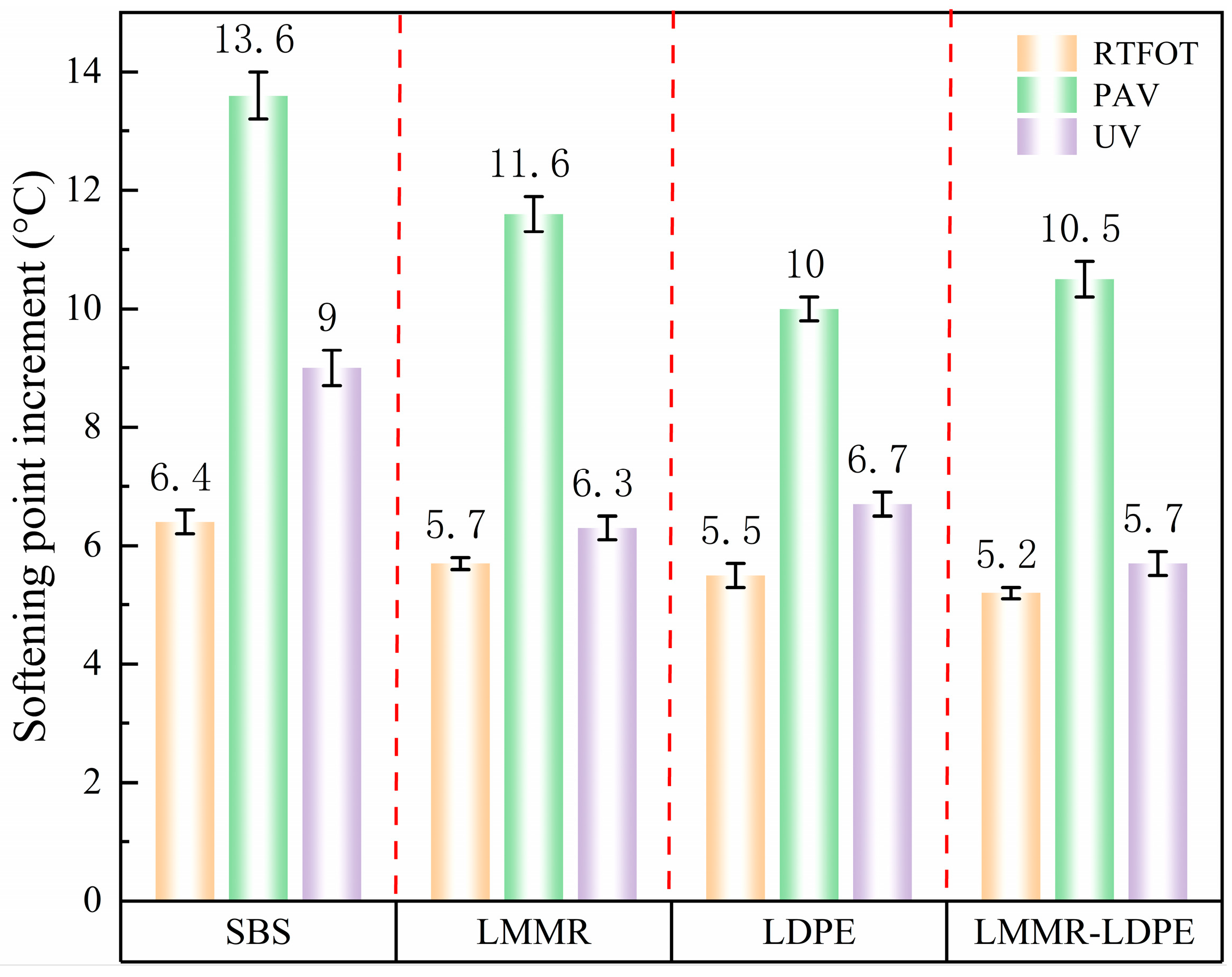
Figure 1 displays the test results regarding the rise in softening point for four types of modified asphalt—namely, control SBS, single-doped LMMR, single-doped LDPE, and a composite blend of LMMR and LDPE—under three accelerated aging conditions: short-term thermal-oxidative aging, long-term pressure aging, and ultraviolet (UV) photo-oxidative aging. As shown in
Figure 1, as the aging process intensifies, the softening point increments of the four asphalt samples generally follow a consistent trend. Among the three aging conditions, long-term pressure aging results in the most significant increase, followed by UV photo-oxidative aging, while short-term thermal-oxidative aging leads to the smallest rise. This pattern can be attributed to the fact that long-term pressure aging not only builds upon the thermal-oxidative effects of earlier stages, but also induces deep oxidation reactions under sustained high-pressure conditions. This leads to extensive evaporation of lighter components and a marked increase in the proportion of heavier fractions within the asphalt. Meanwhile, the intense ultraviolet radiation involved in UV photo-oxidative aging not only accelerates the photo-oxidative aging of the asphalt matrix, but also promotes chain scission and degradation of the polymer modifiers within the material. As a result, its contribution to material hardening is considerably stronger than that of standard short-term thermal-oxidative aging.
When comparing the aging resistance of the different modification systems horizontally, it is evident that the conventional SBS-modified asphalt exhibits softening point increments of 6.4 °C, 13.6 °C, and 9.0 °C under short-term thermal-oxidative aging, long-term pressure aging, and UV photo-oxidative aging, respectively. These values represent the highest among all experimental groups, indicating that this system is particularly susceptible to thermal, oxidative, and ultraviolet environments, making it highly prone to hardening. In contrast, the rubber–plastic composite modification systems demonstrate superior aging resistance. Specifically, under short-term thermal-oxidative and UV photo-oxidative aging conditions, the softening point increments of the LMMR-LDPE composite-modified asphalt drop to 5.2 °C and 5.7 °C, respectively, which are the lowest among the four groups. Notably, under UV photo-oxidative aging, the softening point increment of the LMMR-LDPE composite was not only lower than that of the control SBS system, but also lower than the corresponding values of the single LMMR and single LDPE systems at the same dosage. This trend suggests a more favorable anti-aging response of the combined modifier under the tested conditions. Moreover, under long-term pressure aging, the softening point increment of the composite system was maintained at 10.5 °C, representing a reduction of 22.8% compared with the control SBS system. This result further supports the comparatively better long-term stability of the LMMR-LDPE system within the present experimental framework. The error bars shown in
Figure 1 indicate acceptable repeatability of the softening point measurements, and the lower mean softening point increment of the LMMR-LDPE system remains observable under the tested aging conditions.
The aforementioned differences in macroscopic performance evolution are primarily attributed to the microstructural attributes of each polymer modifier and their interactions with the asphalt matrix. The molecular chains of traditional SBS contain numerous unsaturated double bonds that are vulnerable to heat, oxygen, and UV attacks. During the aging process, chain scission and degradation easily occur, causing the asphalt to rapidly lose the cross-linking constraints of the polymer’s three-dimensional network and subsequently harden. In contrast, LDPE easily forms a crystalline physical barrier with a certain strength in the asphalt, which can effectively retard the diffusion of oxygen molecules and the volatilization of light components. Meanwhile, due to its special saturated main-chain structure, LMMR possesses stronger chemical tolerance to UV radiation and deep oxidation. When the two are incorporated together, LMMR and LDPE form a more stable rubber–plastic interpenetrating network and continuous phase structure within the asphalt matrix. This structure not only compensates for the anti-aging shortcomings of single modifiers but also effectively blocks the disruption of the asphalt colloidal system by multiple severe environmental factors, thereby exhibiting the characteristics of a relatively low softening point increment and favorable anti-aging performance in the macroscopic indicators considered in this study.
Figure 1.
Softening point increment (ΔT) of different modified asphalts under RTFOT, PAV, and UV aging conditions.
Figure 1.
Softening point increment (ΔT) of different modified asphalts under RTFOT, PAV, and UV aging conditions.
4.2. Rutting Factor Aging Index
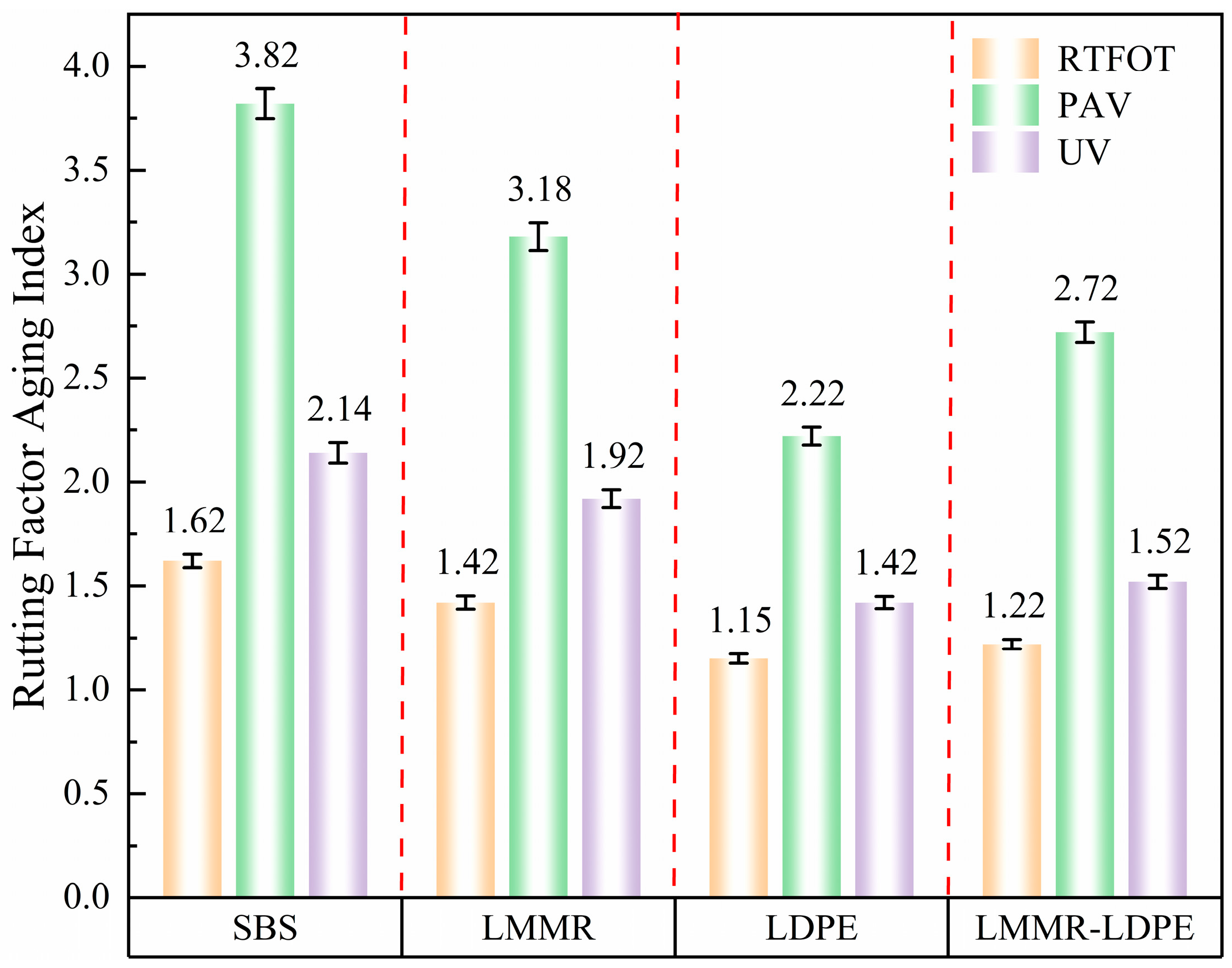
To evaluate the impact of different aging effects on the high-temperature rheological properties of modified asphalts, based on the dynamic shear rheometer (DSR) test results, the rutting factor aging indexes of various modified asphalts under different aging conditions were extracted and calculated in this study, as shown in
Figure 2. The rutting factor is an important parameter characterizing the ability of asphalt to resist high-temperature permanent deformation, and its aging index intuitively reflects the hardening degree of the rheological properties of asphalt materials before and after aging. As can be seen from the figure, under all three aging paths, the rutting factor aging indexes of all modified asphalts are greater than 1, indicating that the aging effect generally leads to an increase in asphalt modulus and a passive enhancement of high-temperature deformation resistance. Longitudinally comparing the three aging environments, long-term pressure aging (PAV) causes the most drastic changes in rheological properties, with the aging indexes of all sample groups reaching their peak ranges; UV photo-oxidative aging takes the second place; and the impact of short-term thermo-oxidative aging (STOA) is relatively minor. This is primarily attributed to the fact that the long-term high-temperature and high-pressure environment greatly exacerbates the volatilization and reorganization of light components within the asphalt, promoting the transformation of the colloidal structure towards a gel-like structure, thereby resulting in significant macroscopic mechanical hardening.
A horizontal comparison of different types of modified asphalts reveals that the type of polymer modifier has a decisive influence on the aging rheological behavior of the system. The traditional SBS-modified asphalt ranks first in the rutting factor aging index among all groups under all aging conditions. This macroscopic rheological result is highly consistent with its microscopic chemical analysis, further confirming that the large number of unsaturated carbon–carbon double bonds in the SBS molecular chains are highly susceptible to thermo-oxidative and photo-oxidative attacks and subsequent chain scission, leading to extreme instability of its high-temperature rheological properties in complex environments. Conversely, the LDPE-modified asphalt maintains its rutting factor aging index at extremely low levels under all aging conditions due to the high saturation and strong chemical inertness of the polyethylene main chain. In addition, the rutting factor aging index of the single-doped LMMR modification system after aging remains higher than that of the LDPE system, indicating that the single rubber network faces a non-negligible risk of degradation under long-term severe environments.
Focusing on the LMMR-LDPE-modified asphalt, its rutting factor aging indexes under STOA, PAV, and UV aging were 1.22, 2.72, and 1.52, respectively. Compared with the SBS system, the corresponding reductions were 24.2%, 28.8%, and 29.0%, respectively, indicating that the composite modifier maintained a comparatively more stable rheological response under the tested aging conditions. This behavior may be attributed to the complementary roles of LDPE and LMMR in the asphalt matrix. Specifically, LDPE provides chemical stability and a physical restriction effect during aging, whereas LMMR contributes flexibility and helps alleviate excessive embrittlement of the aged system. Therefore, within the scope of the present comparative study, the lower rutting factor aging indexes of the LMMR-LDPE system support a likely complementary anti-aging effect of the combined modifier in terms of rheological stability. The error bars shown in
Figure 2 suggest that the repeated rheological measurements exhibit acceptable variability, and the comparatively lower mean rutting factor aging index of the LMMR-LDPE system remains evident across the tested aging conditions.
Figure 2.
Rutting factor aging index of different modified asphalts under RTFOT, PAV, and UV aging conditions.
Figure 2.
Rutting factor aging index of different modified asphalts under RTFOT, PAV, and UV aging conditions.
4.3. Functional Group Aging Index
To investigate the influence of different aging environments on the chemical components of modified asphalts, this study extracted the carbonyl indexes of various asphalt samples based on Fourier Transform Infrared (FTIR) spectroscopy tests, with the specific data presented in
Table 7. In the unaged state, there are certain differences in the initial carbonyl indexes among the four modified asphalts, with the SBS-modified asphalt being the highest and the LDPE-modified asphalt being the lowest. This primarily depends on the inherent chemical attributes of the polymer modifiers and their compatibility with the base asphalt. As the aging process advances, the carbonyl indexes of all four modified asphalts exhibit a consistent upward trend. Especially under the long-term pressure aging effect, the carbonyl content of each sample group increases sharply, and the carbonyl index of the SBS-modified asphalt surges to 0.1347. This macroscopic evolution pattern indicates that under the coupling effect of heat, oxygen, and long-term pressure, light components in the asphalt, such as aromatics and resins, undergo intense oxidation reactions to generate a massive amount of carbonyl (C=O) compounds. This is also the microscopic chemical root cause leading to the macroscopic hardening and embrittlement of asphalt materials after aging.
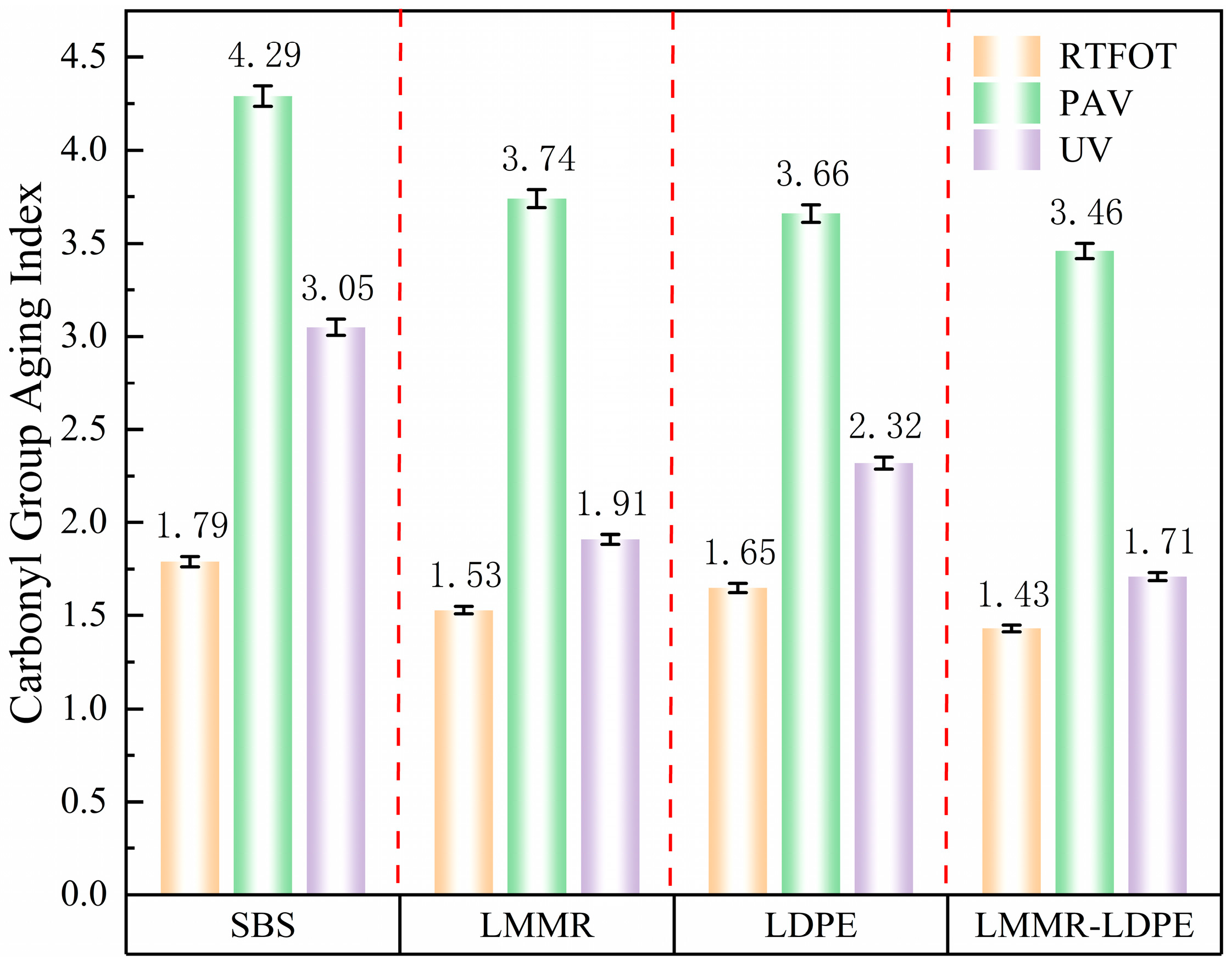
To further quantitatively evaluate the sensitivity of different modified asphalts to aging effects and eliminate initial state differences, this study presents a comparison chart of the carbonyl functional group aging index. As shown in
Figure 3, comparing different aging conditions, long-term pressure aging causes the most severe damage to the internal chemical structure of the materials, with its aging index reaching a peak value between 3.46 and 4.29 across all groups. In contrast, the impact of short-term thermo-oxidative aging is relatively minor, with aging indices ranging from 1.43 to 1.79. Among all tested asphalts, the SBS-modified asphalt exhibited the highest aging index under all three aging environments, with its short-term thermo-oxidative, long-term pressure, and ultraviolet aging indices reaching 1.79, 4.29, and 3.05, respectively. This indicates that the conventional SBS-modified system is highly susceptible to environmental factors, particularly long-term thermal oxidation and ultraviolet radiation, with its polymer backbone being prone to oxidative scission [
28]. Furthermore, under ultraviolet aging conditions, the carbonyl aging indices of the LMMR and LMMR-LDPE systems were significantly lower than those of the SBS system, demonstrating their excellent resistance to ultraviolet photo-oxidative degradation.
Figure 3.
Carbonyl aging index of different modified asphalts under RTFOT, PAV, and UV aging conditions.
Figure 3.
Carbonyl aging index of different modified asphalts under RTFOT, PAV, and UV aging conditions.
Based on the carbonyl aging index calculated from
Table 7, the LMMR-LDPE system exhibited values of 1.43, 3.46, and 1.71 under RTFOT, PAV, and UV aging, respectively. Compared with the SBS system, these values were lower by 20.0%, 19.4%, and 44.0%, respectively. In addition, compared with the single LMMR system, the corresponding reductions were 6.5%, 7.5%, and 10.6%, while compared with the single LDPE system, the reductions were 13.3%, 5.5%, and 26.4%, respectively. These quantitative differences indicate that the combined use of LMMR and LDPE was associated with a lower degree of oxidative evolution than the single-modifier systems under the tested conditions. From a mechanistic perspective, this trend may be related to the combined effects of LDPE in reducing oxygen-related aging sensitivity and LMMR in improving the structural adaptability of the polymer phase. Accordingly, the present results support a likely complementary anti-aging effect of the LMMR-LDPE system in terms of chemical oxidation resistance, although a formal kinetic model was beyond the scope of this study. These results also provide comparative support for linking the oxidative evolution revealed by FTIR with the rheological hardening behavior discussed in
Section 4.2, while the corresponding changes in colloidal stability and surface morphology are further discussed in the subsequent sections. As indicated by the error bars in
Figure 3, the repeated FTIR-based measurements show a relatively consistent trend, supporting the lower mean carbonyl aging index of the LMMR-LDPE system compared with the SBS system under the tested aging conditions.
4.4. Aging Index of Four Components
The macroscopic performance of asphalt depends on the relative content of its internal chemical components and the colloidal structure they form. Under severe aging environments, complex oxidative condensation reactions occur within the asphalt, leading to the directional migration and differentiation of chemical components.
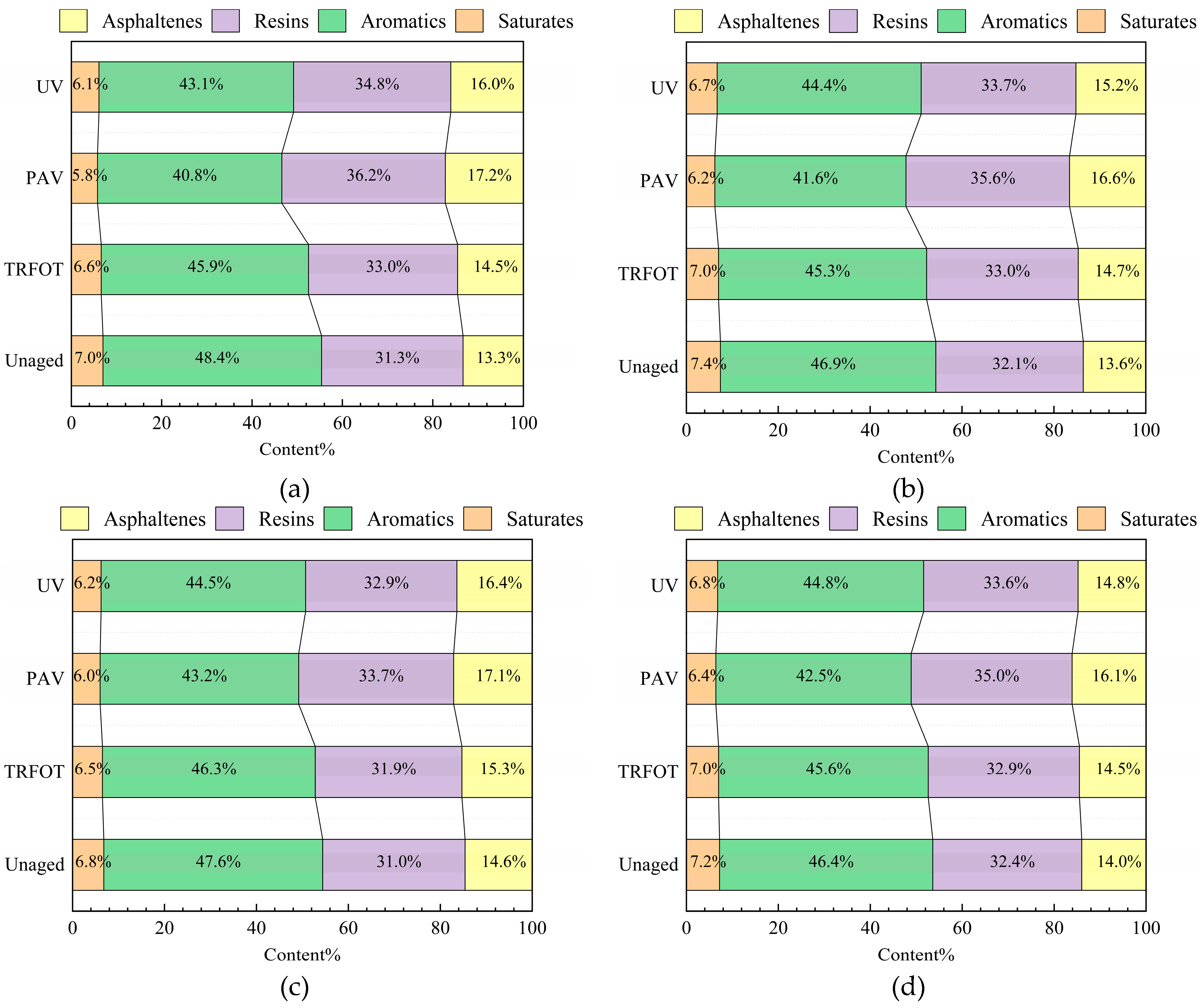
Figure 4 illustrates the evolution of the absolute proportions of the four components for four modified asphalts—control SBS, single-doped LDPE, single-doped LMMR, and composite LMMR-LDPE—under unaged conditions and three aging conditions: short-term thermo-oxidative aging, long-term pressure aging, and ultraviolet (UV) photo-oxidative aging. All asphalt systems exhibit a general trend of a significant decrease in the proportion of aromatics and a substantial increase in the proportion of asphaltenes during the aging process. Taking the traditional SBS-modified asphalt as an example, after long-term pressure aging, its aromatic proportion plummets from the original 31.8% to 22.6%, while the asphaltene proportion surges from 15.2% to 21.3%. In stark contrast, the single-doped LDPE system exhibits the most stable component structure; the attenuation amplitude of its aromatics after long-term pressure aging is only 44% of that in the SBS system, and its asphaltenes only slightly increase to 17.6%, demonstrating an extremely low aging sensitivity of the components. The LMMR-LDPE composite modified system displays excellent balancing ability. The migration amplitude of its aromatics and asphaltenes is far lower than those of the single-doped LMMR system and the control SBS system. After long-term pressure aging, the proportion of asphaltenes merely climbs to 18.5%, showing good durability of the chemical structure. This indicates that the stable network formed by LDPE curbs the transformation process of light components into heavy components within the asphalt to a certain extent.
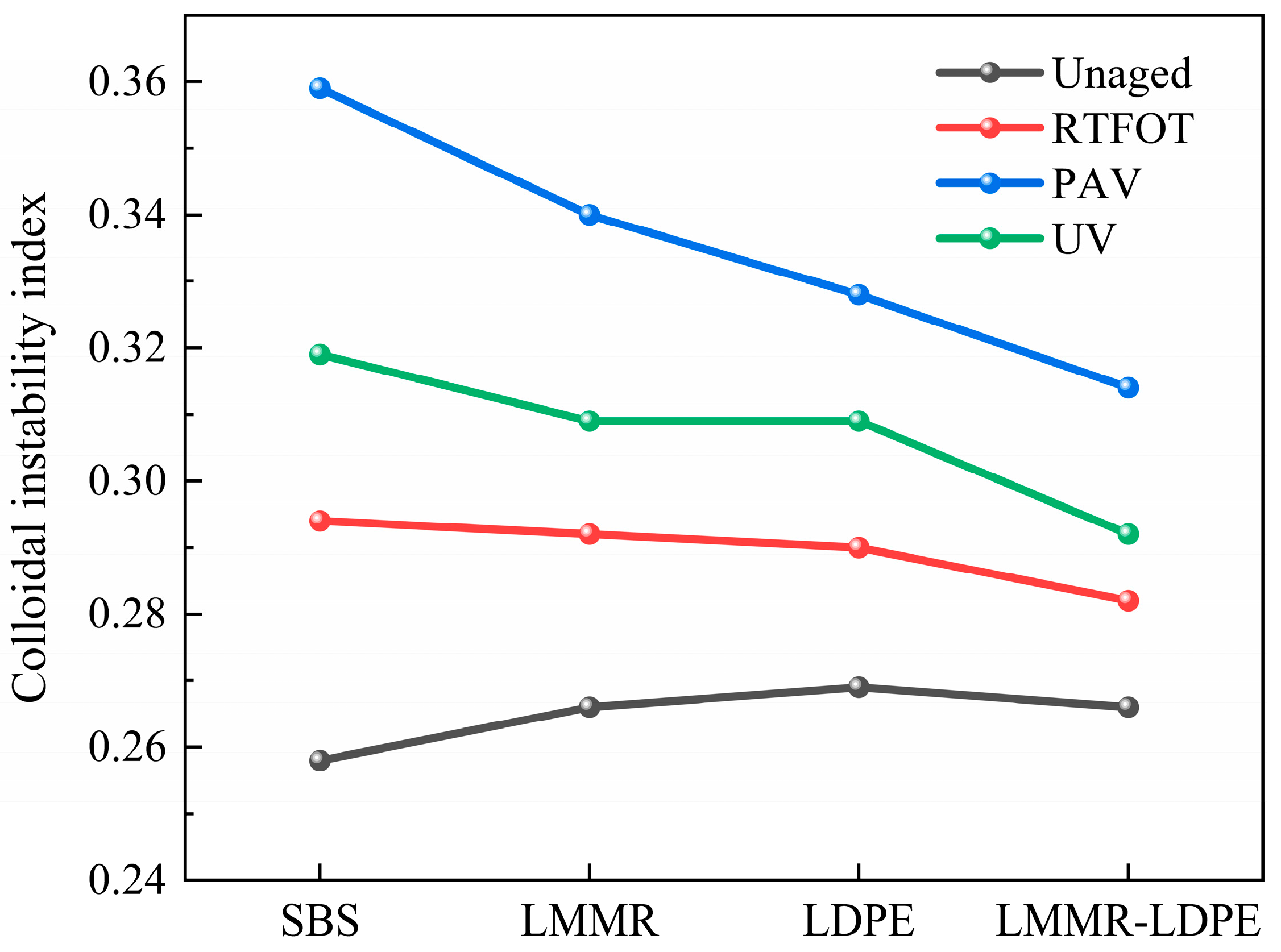
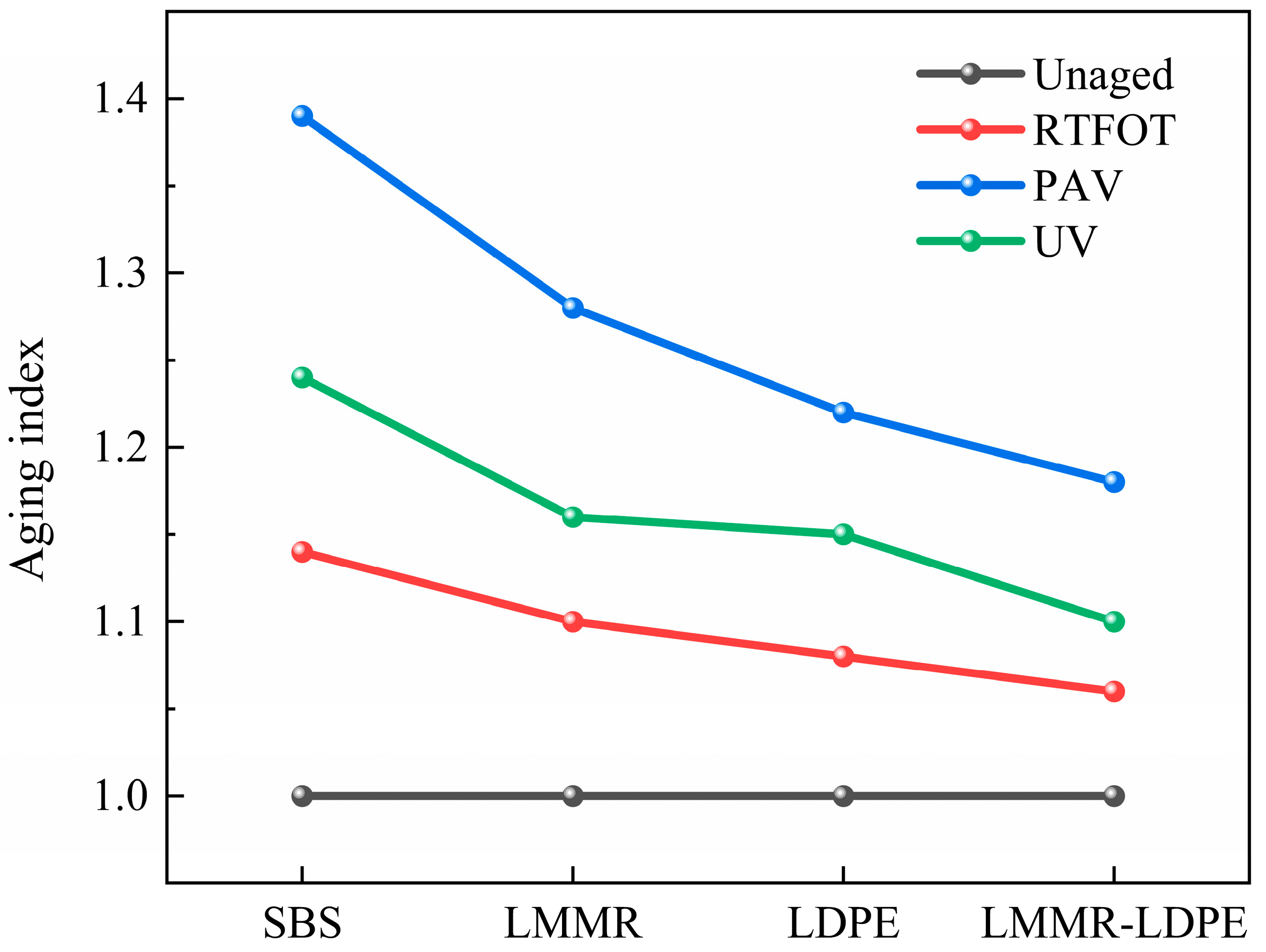
To intuitively quantify the impact of chemical component migration on the stability of the asphalt colloidal structure, the colloidal instability index (CII), defined as the ratio of the sum of saturates and asphaltenes to the sum of aromatics and resins, is introduced for evaluation in this paper. As shown in
Figure 5, which presents the CII values of various modified systems under different aging conditions, the CII values of all asphalt systems generally increase with the deepening of the aging degree. This indicates that the aging effect disrupts the original colloidal balance, leading to an enhanced tendency for asphaltene agglomeration, and making the system tend to harden and embrittle. Among the different aging paths, long-term pressure aging exerts the most significant promoting effect on the CII value, followed by UV photo-oxidative aging. A horizontal comparison reveals that the traditional SBS-modified asphalt exhibits the most prominent aging instability, with its CII values climbing to 0.592 and 0.648 under UV photo-oxidative aging and long-term pressure aging, respectively. Conversely, the single-doped LDPE system displays the optimal colloidal stability. Notably, the LMMR-LDPE composite-modified system substantially curbs the hardening trend of the colloidal structure through the topological structural complementarity of the rubber–plastic interpenetrating network. Although its CII values under the three aging conditions are slightly higher than those of the pure LDPE system, they achieve a substantial reduction of 21.6% compared to the control SBS system, reflecting an outstanding advantage in anti-aging stability.
Figure 6, which shows the four-component aging index calculated based on the increment of the asphaltene proportion, further corroborates this viewpoint. The aging rate of the composite system is far lower than those of the single-doped LMMR and traditional SBS systems, constructing a solid anti-aging barrier at the chemical composition level.
By integrating the dynamic evolution patterns of the absolute proportions of the four components and the colloidal instability index, the anti-aging mechanism of the rubber–plastic composite modification system can be deeply elucidated. Fundamentally, the aging process involves asphaltene agglomeration and the gradual transition of the system from a viscous fluid to a brittle solid. The unsaturated structure of traditional SBS molecular chains is vulnerable to photo-oxidative erosion and chain scission, leading to a rapid loss of its binding capacity against asphaltene agglomeration, which macroscopically manifests as a sharp increase in the softening point and rutting factor after aging. In contrast, the single-doped LDPE system, relying on the chemical inertness of its saturated segments and the dense physical shielding phase formed by a high degree of crystallization, effectively retards the diffusion of oxygen molecules and the volatilization of light components. This comprehensively curbs the heavy-component transformation process, endowing the system with ultimate anti-hardening capability. For the LMMR-LDPE composite system, the introduction of LMMR moderately softens the crystalline network and provides the necessary viscoelastic ductility, while the continuous shielding phase formed by LDPE still plays a dominant light-blocking and oxygen-barrier role. The combined action of the two components helps maintain a comparatively stable microstructural balance, enabling the composite system to retain favorable chemical anti-aging stability while preserving overall rheological performance. This cross-scale consistency supports the interpretation of a likely complementary anti-aging effect under the tested conditions.
4.5. Roughness Aging Index
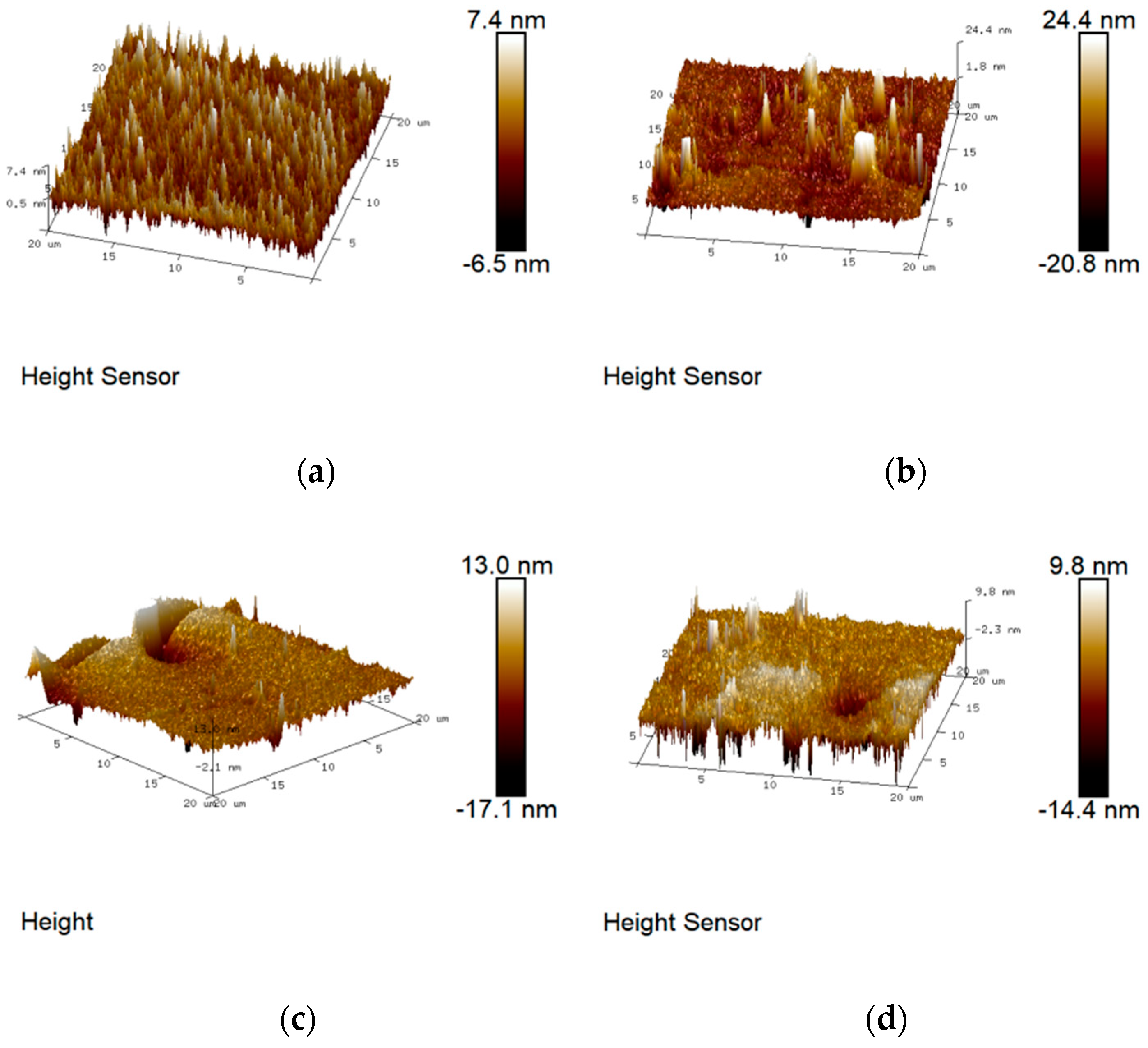
To further elucidate the evolution of the surface micromorphology of modified asphalt at different aging stages, this study takes LMMR-LDPE-modified asphalt as an example and employs the Nanoscope Analysis 3.0 software to systematically process and analyze AFM images. Initially, a flattening procedure was applied to eliminate background interferences such as substrate tilt and low-frequency noise, and the image baseline was corrected to restore the true micromorphology of the sample. Subsequently, three-dimensional rendering was conducted to convert the two-dimensional planar images into a stereoscopic representation, allowing an intuitive visualization of the surface’s elevation variations. Finally, roughness parameters were extracted from the optimized images to ensure that the obtained data accurately reflect the surface flatness. The processed AFM images are presented in
Figure 7. In the unaged state, the surface morphology of LMMR-LDPE is relatively flat with minor microscopic undulations. After short-term thermal oxidative aging, slight surface undulations appear, accompanied by a modest increase in roughness. Under long-term pressure aging and ultraviolet aging, the surface micromorphology deteriorates markedly, characterized by pronounced peak-and-valley structures. Among these, the sample subjected to long-term pressure aging exhibits the most severe surface fluctuations, followed by that under ultraviolet aging. These image analysis results are in strong agreement with the statistical trends in roughness, further confirming that long-term pressure aging exerts the most detrimental effect on the micromorphology of asphalt, with ultraviolet aging having the secondary impact, while short-term thermal oxidative aging shows a relatively minor influence.
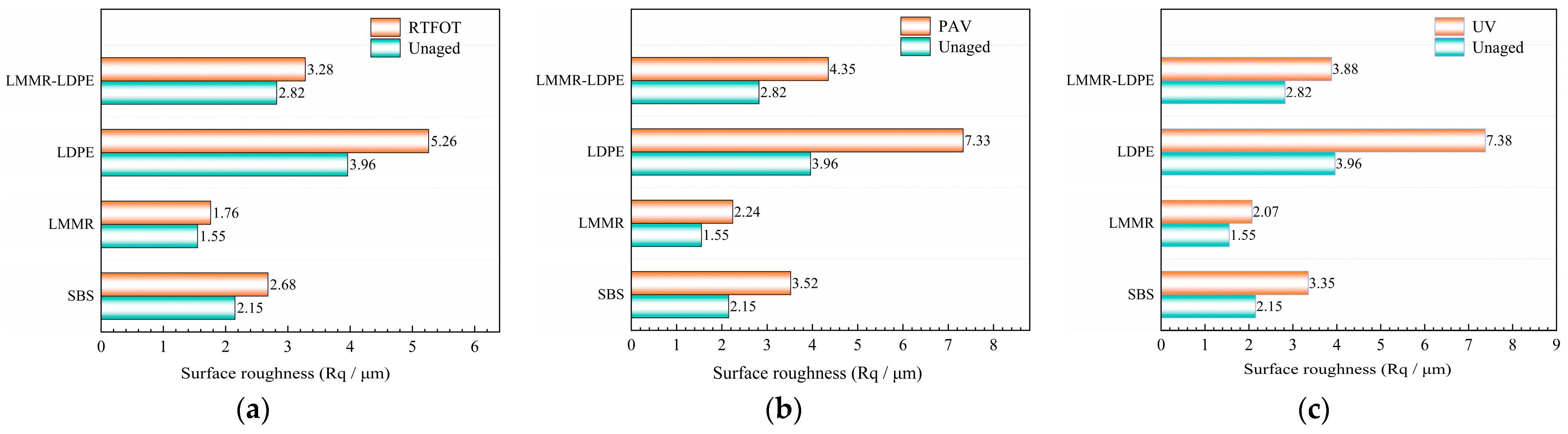
To investigate the extent of damage caused by aging to the microscopic surface morphology of modified asphalt, this study extracted the surface roughness indices of each asphalt sample at different aging stages. As shown in
Figure 8, under unaged conditions, significant differences existed in the initial roughness of the four modified asphalts. Among them, the LDPE-modified asphalt exhibited the highest roughness, the LMMR-modified asphalt the lowest, while the SBS and LMMR-LDPE composite-modified asphalts fell within the range of 2.15–2.82. These differences in initial morphology primarily stem from the varying dispersion states and crystallization characteristics of the different polymer modifiers within the base asphalt. As the aging degree intensified, regardless of whether it was short-term thermo-oxidative, long-term pressure, or ultraviolet aging, the surface roughness of all asphalt types exhibited an absolute increasing trend. For instance, after long-term pressure aging, the roughness of the LDPE-modified asphalt surged to 7.33, while that of the LMMR-LDPE-modified asphalt correspondingly increased to 4.35. This general increase in macroscopic data indicates that multiple aging actions lead to a decline in asphalt surface smoothness, with the microscopic morphology becoming more rugged and rough.
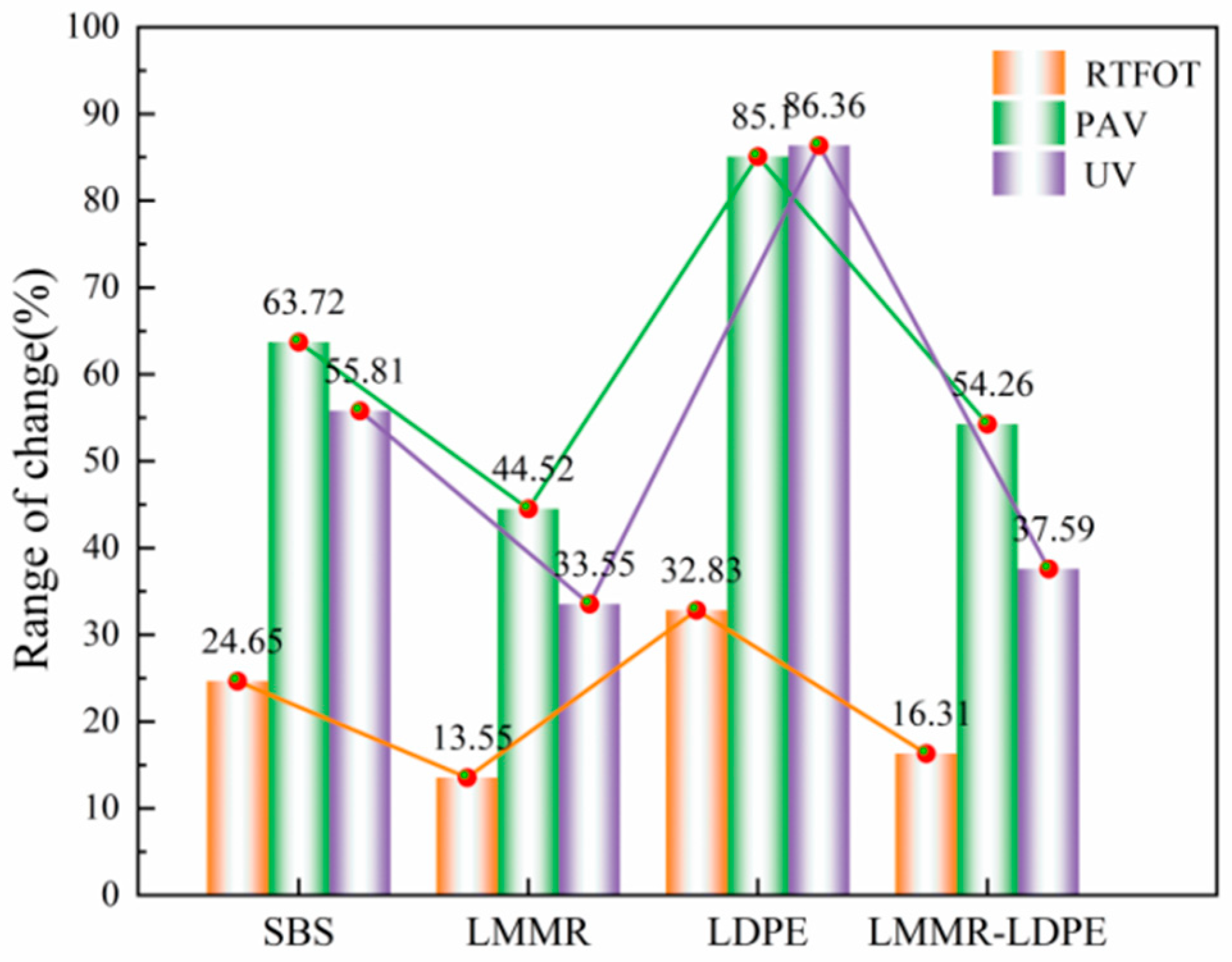
To eliminate the interference caused by differing initial roughness and accurately assess the anti-aging morphological stability of each system, this study further compared the amplitude of roughness variation for each component. As shown in
Figure 9, from the perspective of aging conditions, long-term pressure aging and ultraviolet aging caused particularly severe damage to asphalt surface morphology, inducing a much greater increase in roughness than short-term thermo-oxidative aging. From the perspective of material type, the neat LDPE-modified asphalt exhibited the strongest morphological instability, with its roughness increasing under long-term pressure and ultraviolet aging reaching as high as 85.1% and 86.36%, respectively, the highest among all groups. The conventional SBS-modified asphalt also demonstrated relatively high sensitivity, with corresponding increases of 63.72% and 55.81%. Notably, the LMMR system exhibited the best single-component stability, with variation amplitudes ranging from 13.55% to 44.52%. When LMMR was combined with LDPE, the roughness increase in the LMMR-LDPE-modified system under short-term thermo-oxidative, long-term pressure, and ultraviolet aging was effectively controlled at 16.31%, 54.26%, and 37.59%, respectively, representing a substantial reduction compared to the neat LDPE and SBS systems.
The evolution patterns of the microscopic morphology described above profoundly reflect the degradation mechanism of the internal colloidal structure of asphalt. The increase in asphalt surface roughness is essentially attributed to the substantial volatilization and oxidation of light components, such as aromatics, in the asphalt under the erosion of heat, oxygen, and ultraviolet rays. This leads to the relative aggregation of heavy components like asphaltenes, causing the colloidal structure to transition from a “sol-type” to a “gel-type” and resulting in a drastic reorganization of the microscopic phase distribution on the surface. Neat LDPE, due to its limited compatibility with the base asphalt, is highly prone to phase separation after deep aging, leading to severe surface undulations. In contrast, in the LMMR-LDPE composite system, the excellent elastic network of LMMR effectively encapsulates and restricts the phase slip and crystalline aggregation of LDPE under high-temperature and photo-oxidative conditions. The stable interpenetrating network structure formed by the two components within the asphalt exerts a powerful “skeletal” support function. This physical spatial confinement effect greatly buffers the component migration induced by aging, thereby maintaining a relatively smooth and stable surface morphology at the microscopic level, further corroborating the microscopic advantages of rubber–plastic composite modification technology in enhancing the long-term durability of pavement materials.
5. Conclusions
This study investigated the aging behavior of rubber–plastic TPE-modified asphalt under short-term thermo-oxidative aging, long-term pressure aging, and ultraviolet (UV) aging using multi-scale characterization from rheological, chemical, and morphological perspectives.
Macroscopic physical and rheological tests indicate that the LMMR-LDPE composite system achieves a good balance between anti-aging properties and rheological performance. Compared to SBS and single-doped LDPE-modified asphalts, this composite effectively mitigates the severe hardening and elastic degradation caused by aging. After experiencing different aging conditions, the softening point increment and the rutting factor aging index decreased by up to 22.8% and 28.8%, respectively, compared to the baseline SBS system. This suggests that the composite system is capable of maintaining relatively good viscoelasticity while resisting environmental aging within the present experimental framework.
Regarding chemical composition and colloidal structure, the rubber–plastic composite modifier slows down the internal oxidation and component transformation processes of the asphalt. Specifically, under UV photo-oxidative aging, the carbonyl aging index of the composite system was 1.71, which was 43.9% lower than that of the SBS system. This trend may be related to the physical oxygen-barrier effect of the LDPE crystalline phase, together with the structural flexibility provided by LMMR. Within the present experimental framework, these results support a likely complementary anti-aging effect of the combined modifier in terms of chemical oxidation resistance.
Micromorphological observations reveal that the cross-linked network formed within the composite system inhibits the aging-induced agglomeration and micro-phase separation of the polymers. Under the effects of UV and long-term pressure, the surface roughness of the single-doped LDPE system increased by more than 85% after aging. In contrast, the LMMR-LDPE system avoids excessive coarsening of the plastic crystalline phase due to the confinement of the rubber phase’s flexible network, allowing the modified asphalt to maintain a relatively smooth and stable micromorphology even after deep aging.
Compared with several advanced modifier systems reported in recent studies, the present LMMR-LDPE composite system shows a relatively balanced performance in terms of rheological stability, oxidation resistance, and morphological stability under RTFOT, PAV, and UV aging conditions. Although direct one-to-one comparison among different studies should be made with caution because of differences in materials and test protocols, this result helps position the present work within the broader context of recent anti-aging modification strategies.
It should also be noted that the present conclusions are based on comparative laboratory-scale observations under controlled aging conditions. Repeated measurements and the associated variability analysis were incorporated in the present study, and the corresponding error bars are provided in the relevant figures to reflect measurement uncertainty. However, the laboratory aging protocols still cannot fully reproduce the complexity of actual pavement service environments. In addition, the scalability, economic feasibility, and field applicability of the proposed system have not yet been systematically validated. Future work should therefore focus on more rigorous statistical evaluation, pilot-scale preparation, economic assessment, and validation at mixture and field scales under more realistic coupled aging conditions.