1. Introduction
Throughout history, and until the advent of industrialised materials and techniques in the 20th century, earthen architecture has been found across most of the Iberian Peninsula [
1]. Earthen construction techniques, ranging from monolithic solutions such as rammed earth walls to adobe-based masonry solutions, have been part of the peninsular building tradition, adapting over the centuries to natural conditions and the needs of society. The use of earth in construction has been favoured due to its almost global availability, so that transport is rarely a consideration, and due to its ease of application, since it requires no truly complex transformations, knowledge, or technical means.
Among the wide variety of earthen construction techniques found throughout Spain, adobe is particularly prominent; it is also widely used in other European locations, with names such as the French ‘
brique crue’, the English ‘mudbrick’, and the German ‘
lehmziegel’ [
2]. Adobe is used to define generally prismatic solid blocks of unfired earth, which, although cut directly from the ground, was more commonly produced by filling wooden moulds known as
adoberas. Traditionally, production began by creating a mixture of earth, aggregates, and water, which was left to settle for some time and suitably covered so that the clay particles could hydrate properly in a trough or
pisadero [
3]. However, when it came to use, excess water in these mixtures was best avoided in order to guarantee that the adobe pieces maintained their shape after demoulding. It was also advisable to moisten the mould beforehand to facilitate extraction. Furthermore, in order to prevent the appearance of voids in the final adobe piece, the mould had to be filled to ensure that the mixture reached all spaces and corners correctly. After these pieces had been removed from the mould, they were left to dry. Depending on their characteristics, they remained in the open air, though protected from the elements for varying lengths of time, and turned occasionally to ensure they dried evenly.
The moulds used vary according to local tradition, as do the resulting pieces [
1], although they tend to be rectangular parallelepipeds that can be arranged in a variety of ways. However, current regulations stipulate a ratio with a length approximately double the width, and a minimum thickness of 8 cm, maintaining a ratio of close to 1:4 in relation to the length [
4]. The quantities of individual components in the mixture (made up of earth, aggregates, and water) are also conditioned by specific circumstances. In order to ensure the workability of the mortar, the proportion of water varies depending on whether the earth is clayey or lean. The addition of plant or animal fibres to the mixture reduces the probability of cracks forming during the drying process, while aggregates of different sizes or stabilisers, such as lime and gypsum, also increase strength and durability.
Earth-based building materials, such as adobe, are highly hydrophilic, which increases their ability to absorb and retain water. This property influences how they respond to various degradation processes, as the presence of moisture alters their physical and mechanical characteristics, reducing their durability. Many adobe structures must therefore be periodically protected with mortar coatings, which are potentially aesthetic features that limit the direct action of water on the nucleus of the wall. However, lack of monitoring and regular maintenance in vernacular buildings leads to the progressive accumulation and worsening of existing damage and defects. This situation, combined with constant exposure to natural and anthropogenic degradation agents, increases the vulnerability of the weakest areas or points of buildings, seriously compromising stability and ultimately leading to ruin or collapse.
Moisture through capillary action, condensation, or seepage is the most common agent of degradation in adobe walls and can affect all three levels: the base, the crown, and the surface of a wall [
5,
6]. The action of water is frequently intensified by interaction with other atmospheric agents, such as wind and precipitation [
7]. The impact of raindrops, combined with the action of the wind, generates processes of surface erosion and material washout, particularly in exposed areas [
8]. This phenomenon intensifies on irregular, discontinuous, or concave surfaces, which facilitate water accumulation and the concentration of stress. Water ingress through filtration can cause leaks, as well as the formation of a crack along the axis of the wall, allowing water to penetrate. In an advanced state of deterioration, this condition tends to split the wall section in two, causing potential collapse.
Recent studies have highlighted that increasingly frequent extreme climate events linked to climate change, such as torrential rainfall and flooding, pose a growing threat to earthen architecture, as they intensify erosion processes, loss of cohesion, and the degradation of materials particularly sensitive to moisture, such as adobe [
9]. Other alterations frequently identified at the base of earth walls are linked to the rise in water by capillary action, with moisture rising from the ground into the porous material. This can be several tens of centimetres high, depending on the pore distribution and physicochemical properties of the material [
10]. During wetting cycles, clay particles undergo processes of structural reorganisation and expansion, modifying the microstructure of the material and affecting its mechanical behaviour [
11]. Moreover, the rising water acts as a vehicle, transporting soluble salts present in the soil and promoting crystallisation and recrystallisation processes that induce internal stresses within the material, potentially causing cracking [
12].
Prolonged contact between adobe walls and water significantly reduces mechanical strength due to the hydration and saturation processes of the material [
13]. This process, in turn, decreases stiffness and internal cohesion due to the restructuring of interparticle forces, directly impacting the load-bearing capacity and structural stability of walls [
14]. This behaviour can be interpreted within the framework of Atterberg limits, where an increase in water content shifts the material within the plastic range towards the liquid limit, entailing a progressive loss of stiffness and load-bearing capacity [
11]. In cases of prolonged saturation, this loss of stiffness can lead to excessive deformation at the base of the wall, triggering structural failure [
11,
15,
16]. The vulnerability of adobe walls to prolonged exposure to moisture, particularly in the event of flooding, can be characterised through capillary analysis and the suction of the material, quantifying the extent of degradation [
17]. The effects of flooding can be correlated with parameters such as the water table height reached, the kinetic energy of the flow, the solid load carried, the salinity of the surroundings, and their cumulative effects on the masonry [
8,
18]. The complexity of these deterioration mechanisms and the high variability inherent to earthen materials have been identified as major challenges to assessing their characterisation and durability [
19].
In response to these phenomena, some experimental studies have proposed external and physical mitigation strategies, such as adding raised parapets above the predicted maximum flood level, which has been shown to affect durability favourably [
20]. At the same time, other proposals have focused on developing improvement strategies by modifying the composition of the material. The use of additives and stabilisation techniques in particular aims to enhance both mechanical properties and weather resistance [
15,
21,
22]. These additives include those of plant origin (straw, rice husks), animal origin (fibres, manure), or mineral origin (sand, aggregates, ash, hydraulic binders such as cement), modifying the microstructure and hygromechanical behaviour of the material [
23,
24].
Based on these premises, maintenance and conservation strategies for earthen architecture should focus primarily on mitigating and eliminating the causes of degradation, prioritising the preservation of elements which have historically protected the material from the action of water, such as plinths, cladding, parapets, and coping. This approach helps to slow down natural deterioration processes and ensure the long-term stability and durability of earthen structures. Although structural protection and regular maintenance are essential, on their own they cannot explain the varying degrees of vulnerability of certain adobe structures compared to others. In addition to external exposure factors, it is necessary to consider the intrinsic characteristics of the material, since variables such as particle size distribution or the incorporation of fibres can greatly influence the behaviour of adobe in response to water and wetting–drying cycles.
Despite the substantial body of scientific literature focusing on earthen architecture and adobe degradation mechanisms [
25,
26,
27], there are still relatively few experimental studies jointly analysing the influence of particle size distribution, the incorporation of plant fibres, and the progressive action of wetting–drying cycles on the long-term physical–mechanical and hygric behaviour of the material. As previously noted, earlier research has mainly addressed isolated parameters, specific stabilisation techniques, or particular degradation mechanisms. In this context, the present study provides a comparative assessment of the physical–mechanical, hygric, and surface responses of three representative adobe formulations with distinct particle size distributions, including one variant reinforced with plant fibres, when subjected to controlled wetting–drying cycles and accelerated climatic ageing. This approach aims to improve the understanding of adobe degradation mechanisms, identify formulations with greater response capacity, and provide useful criteria for conservation.
2. Objectives
This research is part of a broader project studying the vulnerability and resilience of earthen architecture to natural, social, and anthropogenic risks in Spain [
28]. It is developed within the phase focused on the climatic behaviour and vulnerability of earthen building materials. Of all the climatic factors that can affect this type of traditional architecture, it is particularly worth noting the action of water in the form of torrential rain, capillary rise, flooding, or repeated cycles of wetting and drying. These phenomena are exacerbated by interactions with wind, extreme temperature variations, and surface erosion mechanisms, which progressively compromise the structural integrity of the material.
The study therefore aims to quantify the physical and mechanical changes observed in adobe bricks of different grain sizes when exposed to extreme environmental conditions. It examines how climate change exacerbates the frequency and intensity of these conditions, which pose a growing threat to the conservation of the traditional architectural heritage built from raw earth in the Iberian Peninsula. Thus, three representative types of adobe are subjected to accelerated climate exposure tests, thoroughly evaluating critical parameters such as compressive strength, modulus of elasticity, ultrasonic velocity, surface abrasion, water erosion, and capillary absorption. The study compares three adobe formulations with distinct particle size distributions: a coarse mixture, characterised by a higher proportion of gravel-sized particles (>2 mm); a fine mixture, dominated by silt–clay fractions (<0.063 mm); and a fine mixture reinforced with plant fibres. The ultimate aim is to establish the exact degree of alteration observed in the intrinsic properties of each formulation following controlled exposure, establishing direct statistically significant correlations between the initial particle size distribution and the differential response capacity with the characteristic degradation mechanisms of the Mediterranean climate.
While adobe architecture is a global building technique widely found in numerous geographical and cultural contexts, the formulations used in this research are based on the results obtained in a national research project in which 21 adobe samples from different regions of the Iberian Peninsula were characterised, analysing their particle size and compositional features [
29,
30]. Therefore, the references used in this study focus on the Iberian context, the framework adopted for the experimental design, and the selection of the analysed mix proportions. The observations and comparisons featured in this work should thus be understood in relation to the adobe typologies documented in the Iberian Peninsula, since they do not aim to represent the full range of earthen construction variants found worldwide.
The main contribution of the study lies in the integrated evaluation of mechanical, hygric, and durability-related properties at progressive stages of degradation. This allows the identification of differential response patterns associated with both particle size distribution and the incorporation of plant fibres. Accordingly, the research is based on the definition and experimental reproduction of three representative adobe typologies, identified from the previous results of the research project mentioned earlier: fine-grained mixtures, coarse-grained mixtures, and mixtures reinforced with plant fibres.
This experimental approach made it possible to isolate the influence of two key variables on adobe behaviour: particle size distribution and the incorporation of plant fibres. Firstly, the comparison between two mix proportions allowed the effect of particle size distribution to be assessed in materials with equivalent composition. Secondly, the comparison between a base grain-size composition and another formulation incorporating fibres allowed the specific contribution of plant reinforcement to be analysed, since the two mixtures differed only in the addition of 1% straw with respect to the total dry weight.
Furthermore, all the samples reproduced lacked renders or surface protection elements in order to reproduce a situation of direct exposure to deterioration agents. Therefore, from a conservation perspective, the tests represent the most unfavourable scenario, so that the intrinsic behaviour of the material could be evaluated and the observed differences attributed exclusively to its compositional characteristics, without the influence of external protective layers. Consequently, the variations recorded in mechanical, hygric, and durability-related behaviour can be directly related to the influence of particle size distribution and plant fibres when subjected to the same processes of hygric alteration and climatic ageing. The results thus contribute to a better understanding of the degradation mechanisms of earthen materials and provide useful criteria for preventive conservation, heritage intervention, and the development of more resilient earthen construction solutions in the face of adverse climatic scenarios.
3. Methodology
3.1. General Research Methodology
The experimental programme was created to reproduce degradation processes associated with climatic variability under controlled laboratory conditions. Special attention was paid to two induced alteration mechanisms: exposure to flooding conditions through immersion–drying cycles; and the action of accelerated climatic agents through the controlled variation in temperature, humidity, and partial exposure to ultraviolet radiation. A methodology was then developed to characterise the physical–mechanical and hydraulic behaviour of the earth material in different states of weathering.
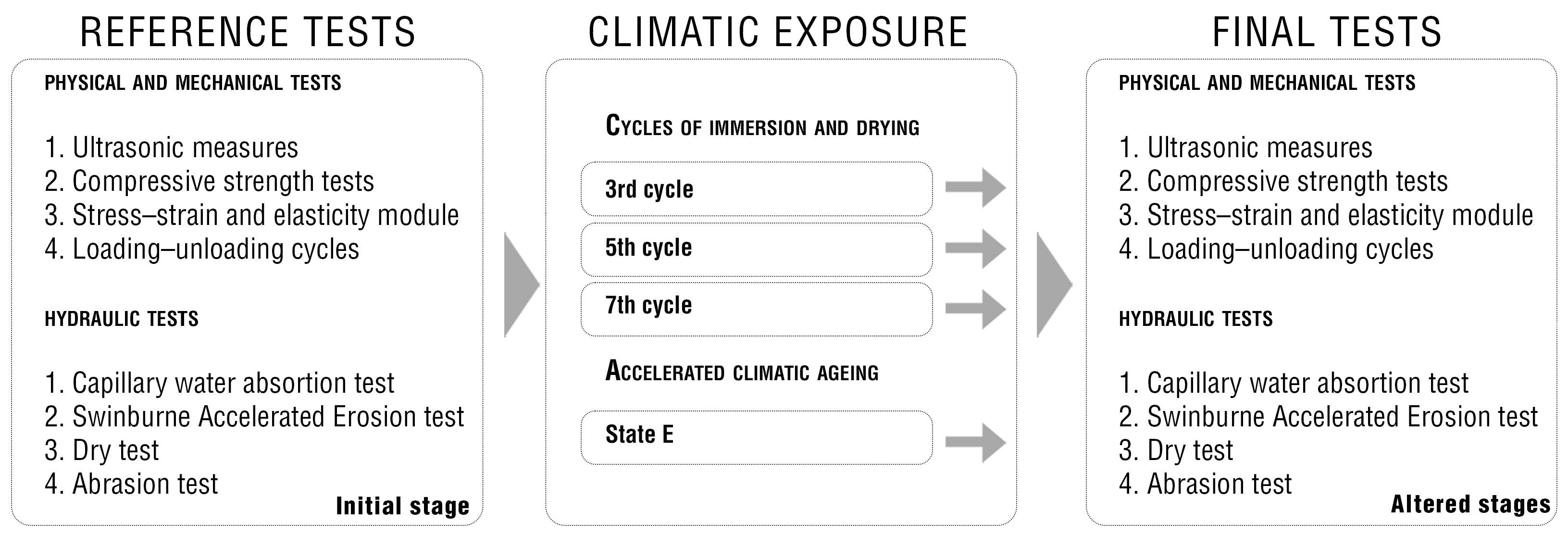
The experimental phase consisted of three main stages: an initial reference characterisation, a weathering phase involving climate exposure tests, and subsequent re-evaluation of the properties of the material (
Figure 1).
The reference tests were designed to establish the initial properties of the different mix proportions in an unaltered state, forming the basis for the subsequent comparative analysis [
31]. The physical–mechanical studies conducted at this stage included compressive strength tests, stress–strain analysis to determine the elasticity modulus, loading–unloading cycles, and ultrasonic measurements. Further studies were carried out to assess hydraulic behaviour, including the capillary water absorption test, the Swinburne Accelerated Erosion Test (SAET) and the dry test, also known as the Geelong or Yttrup test.
The climatic exposure tests simulated severe environmental conditions using two complementary procedures. Firstly, the Ogunye method, based on controlled immersion and drying cycles [
32], was applied to reproduce flooding scenarios and evaluate the response of the material to recurrent saturation processes. Secondly, an accelerated climatic ageing test was carried out in a simulation chamber, using the climatic conditions of the Campus de Vera of the Polytechnic University of Valencia (Spain) as reference, in order to estimate natural degradation mechanisms in a controlled environment. The aim of this phase is to subject the samples to controlled adverse conditions, using alternating wet and dry cycles and extreme temperature variations to induce significant hygrothermal contrasts. The test also included partial exposure of the samples to ultraviolet radiation, incorporating an additional factor of environmental degradation. These cycles are not intended to directly reproduce actual exposure conditions but rather to induce alteration processes to characterise the response of the material. The cycles were scheduled at two-week intervals over a total period of two months, following the sequence indicated in
Table 1.
After exposure, material properties were reassessed by repeating the characterisation tests on the altered samples. Physical–mechanical and hydraulic tests were thus carried out at different test stages, with an initial reference state (state 0), and intermediate states following the third (3rd), fifth (5th), and seventh (7th) wetting–drying cycles, as well as a final state corresponding to the samples subjected to accelerated climatic ageing (E). This approach was used to analyse the evolution of the properties and to establish the influence of the various degradation mechanisms in relation to the initial values. The results presented show the mean value obtained from testing six specimens for each dosage.
3.2. Study of Experimental Dosages
Although adobe is a building technique widely distributed worldwide and present in highly diverse geographical, climatic, and cultural contexts, the literature review in this research focuses on examples and studies developed in the Iberian Peninsula. This limitation is due to the fact that the mix proportions analysed are based on representative formulations from the Iberian context and are supported by the results obtained in previous research projects [
29,
30], which provided a systematic characterisation of earthen materials and construction techniques within this territorial framework. The project analysed the particle size composition of adobe samples extracted from vernacular buildings in different regions of the Iberian Peninsula, comprising a total of 21 adobe samples in accordance with the reference standard [
33,
34], allowing the identification of characteristic patterns in their particle size composition (
Table 2). These references were then used to establish a more homogeneous comparative framework, directly related to the objectives of the research.
Based on the results obtained, three granulometric types were defined according to the predominant fraction: compositions with a predominance of coarse aggregate, compositions dominated by the sandy fraction, and compositions with a higher proportion of fine aggregates. This classification formed the basis for the selection and formulation of the mixtures used in this experimental programme, evaluating the influence of particle size distribution on physical–mechanical behaviour and the response to degradation agents. The analysis also showed that, although a significant proportion of the samples incorporated fibres (mainly of plant origin) as part of the matrix, this type of additive was not found in 38% of the samples. This was the basis for the selection and formulation of the mixtures used in the experimental programme, allowing the influence of particle size distribution and the presence of fibres on the physical–mechanical behaviour and response to degradation agents to be assessed.
In most cases, the particle size analysis of the samples reveals a predominance of the sandy fraction (
Table 1), making sand the main component of the matrix in practically all the mixtures studied. This behaviour reflects a tendency towards the balanced composition typical of earth materials used in traditional construction, where sand acts as the dominant granular skeleton. Two main trends are identified in particle size distribution based on this predominant fraction. In one distribution, the proportion of fine fractions (silt and clay) is increased in order to improve the cohesion and plasticity of the material, while in another, a higher proportion of coarse fraction (gravel) is incorporated to counteract the excess of fine aggregates and to promote a more granular behaviour. This variation in particle size distribution is particularly important, covering a wide range of representative particle size distributions and, in turn, a more comprehensive assessment of the influence of composition on the physical–mechanical behaviour of the material. Based on the above, it was initially established that three types of mix designs needed to be tested in the experimental programme to compare representative configurations and to analyse the effect of particle size distribution and the presence of fibres on the properties of the adobe:
Coarse adobe (AG), with a higher proportion of coarse fraction (gravel);
Fine adobe (AF), with a predominance of fine fractions (clay);
Adobe with fibres (AP), a variant of the fine mix reinforced with plant fibres.
A screening process following criteria of particle size consistency was carried out to identify the representative mix designs for each of these types, discarding samples which exhibited extreme or non-comparable configurations. Compositions such as M2 were excluded, as maximum particle sizes were significantly larger than the rest of the analysed set, introducing a bias in mechanical behaviour and hindering direct comparison between mixes. Similarly, M19, characterised by an excessive predominance of fine fractions, associated with responses highly influenced by plasticity and less representative of standard construction solutions, was excluded. Likewise, the selection of poorly defined intermediate distributions was avoided to ensure a clear contrast of particle size distributions.
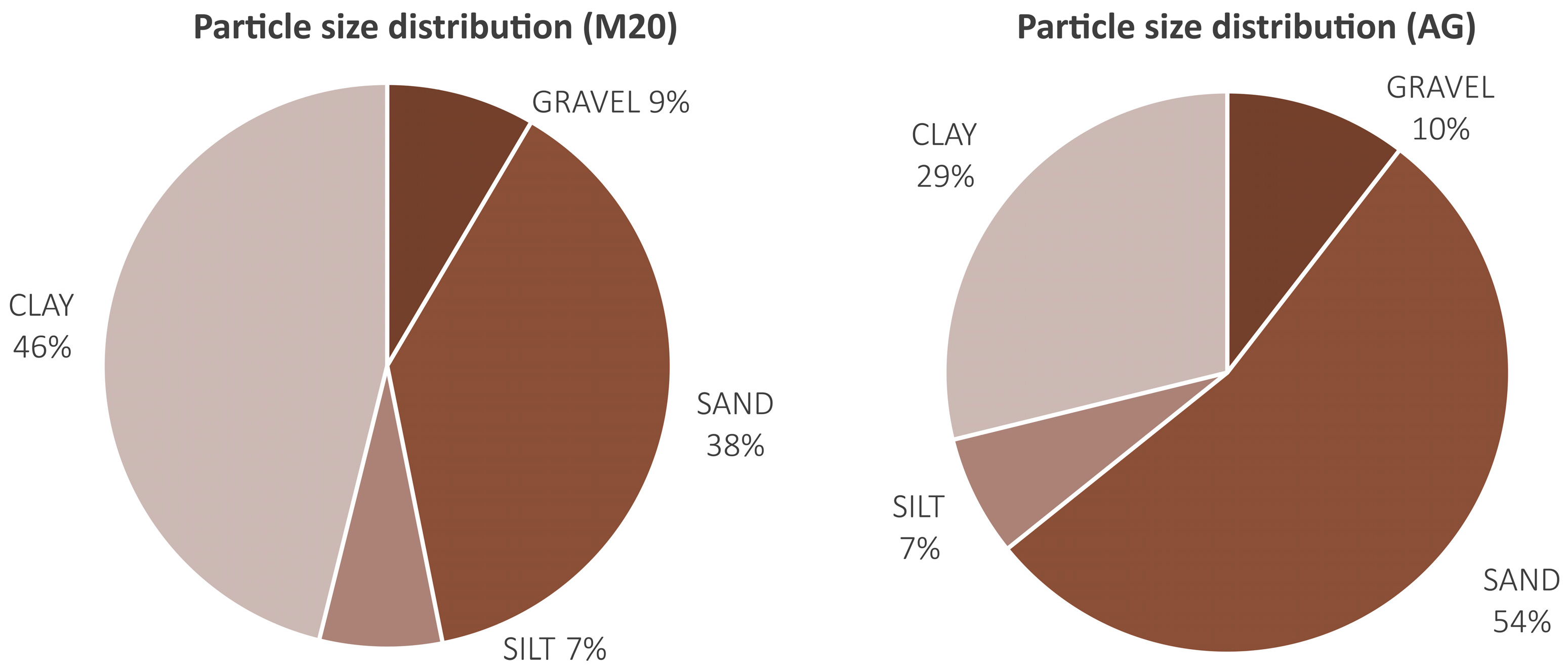
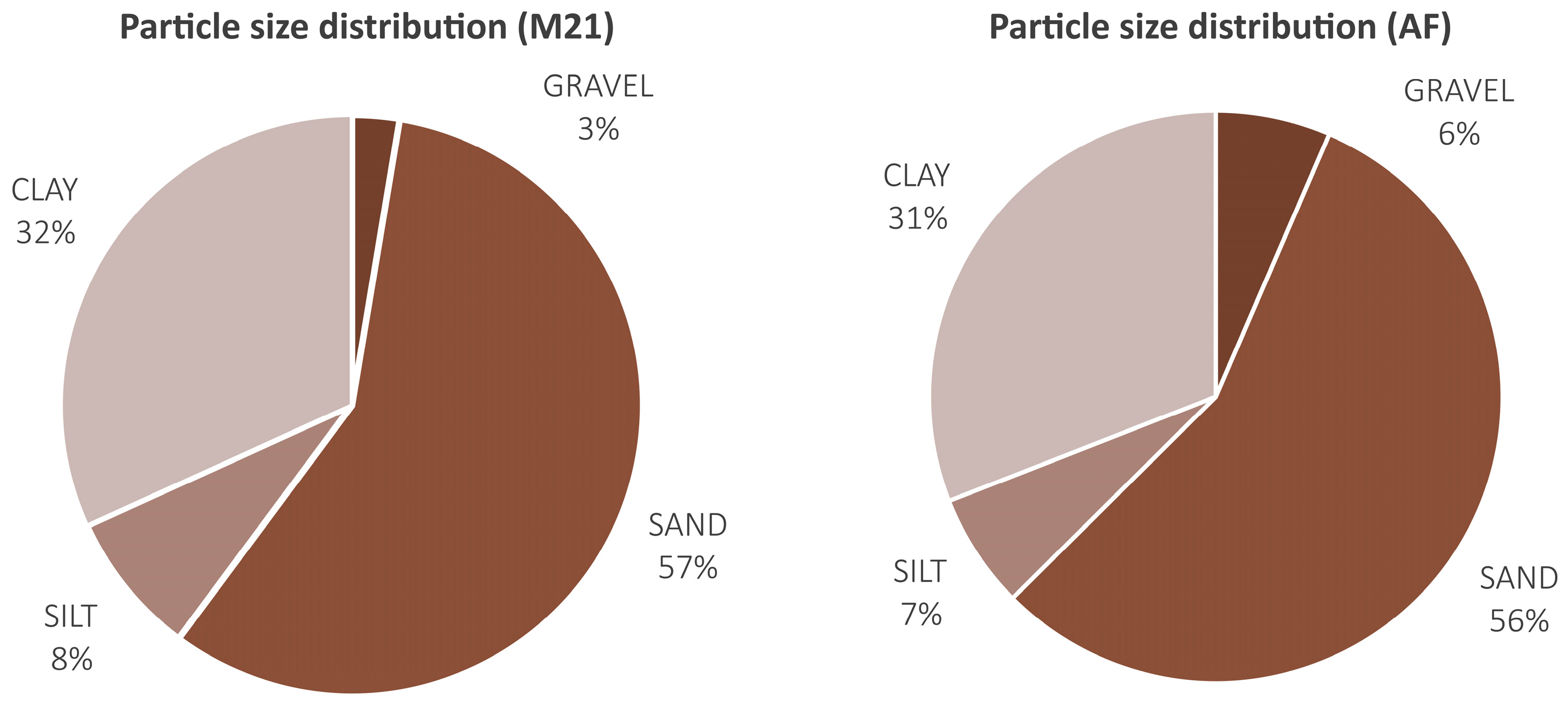
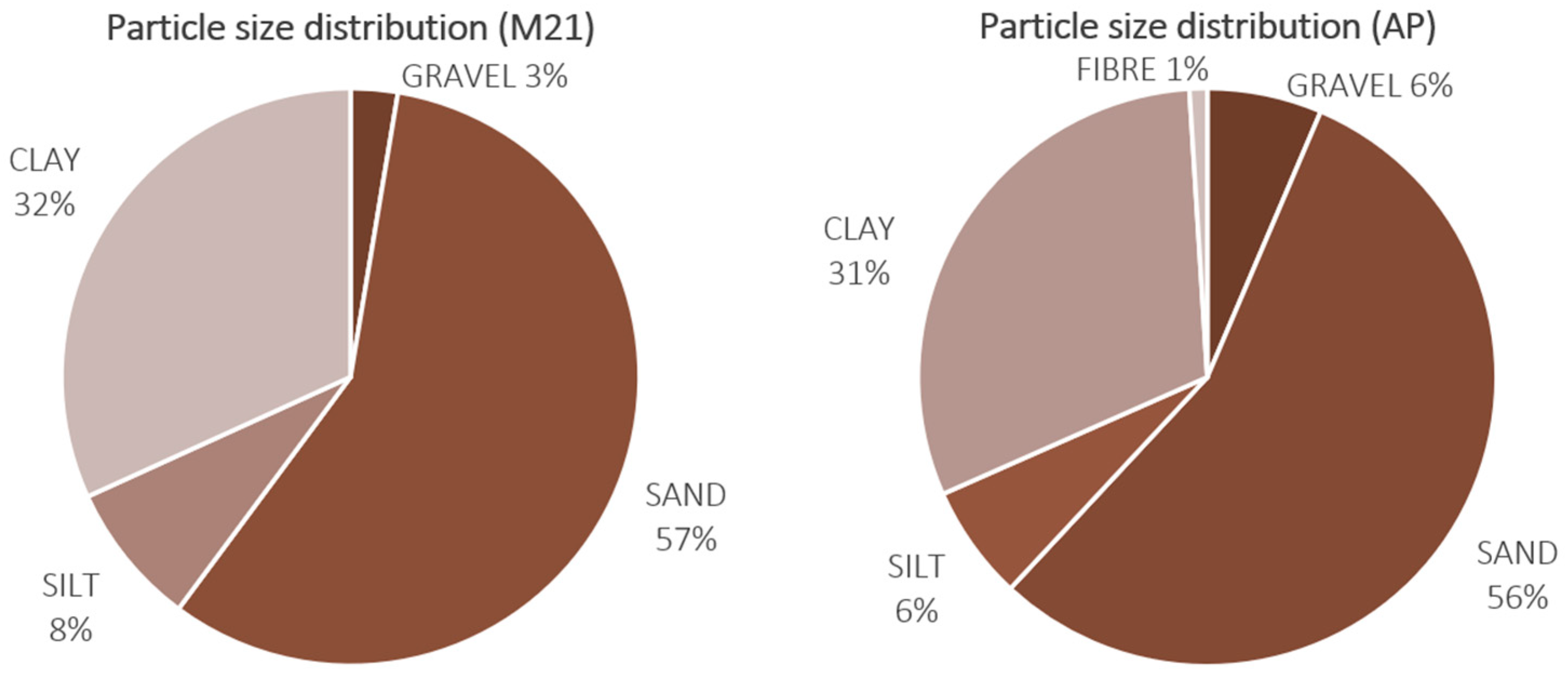
Based on these criteria, mix designs M21 (fine-grained) and M20 (coarse-grained) were identified as the optimal references for conducting the tests. M21, used as the basis for the subsequent fine adobe (AF) mix design, is characterised by a predominantly sandy matrix, with sand accounting for 57% of its composition, combined with a high content of fine clay fractions (32%), and a minimal presence of coarse aggregate. This sets an example for mixtures aimed at maximising cohesion and plasticity predominantly using smaller particles. The M20 mix, the basis of coarse adobe (AG), is notable for its higher coarse fraction, with 9% gravel, although it had been specifically adjusted by carefully increasing the proportion of sand to optimise the overall granular balance, confirming its role as the dominant structural component and maintaining its representative character as a more volumetrically stable composition.
Finally, a third experimental variant was incorporated, fibre-reinforced adobe (AP), obtained by adding plant fibres to the AF mix, explicitly designed to evaluate the stabilising effect of this type of traditional organic reinforcement on the physical–mechanical properties and on the response of the material to conditions of accelerated climatic degradation.
3.3. Preliminary Characterisation of the Material
In order to document the exact composition of the mixes selected to establish their initial characterisation, a detailed particle size analysis was carried out for each of these in accordance with the relevant European standards [
33,
34].
The coarse adobe mix (AG), based on M20 and characterised by a predominantly sandy matrix (71%), presents a coarser particle size distribution (
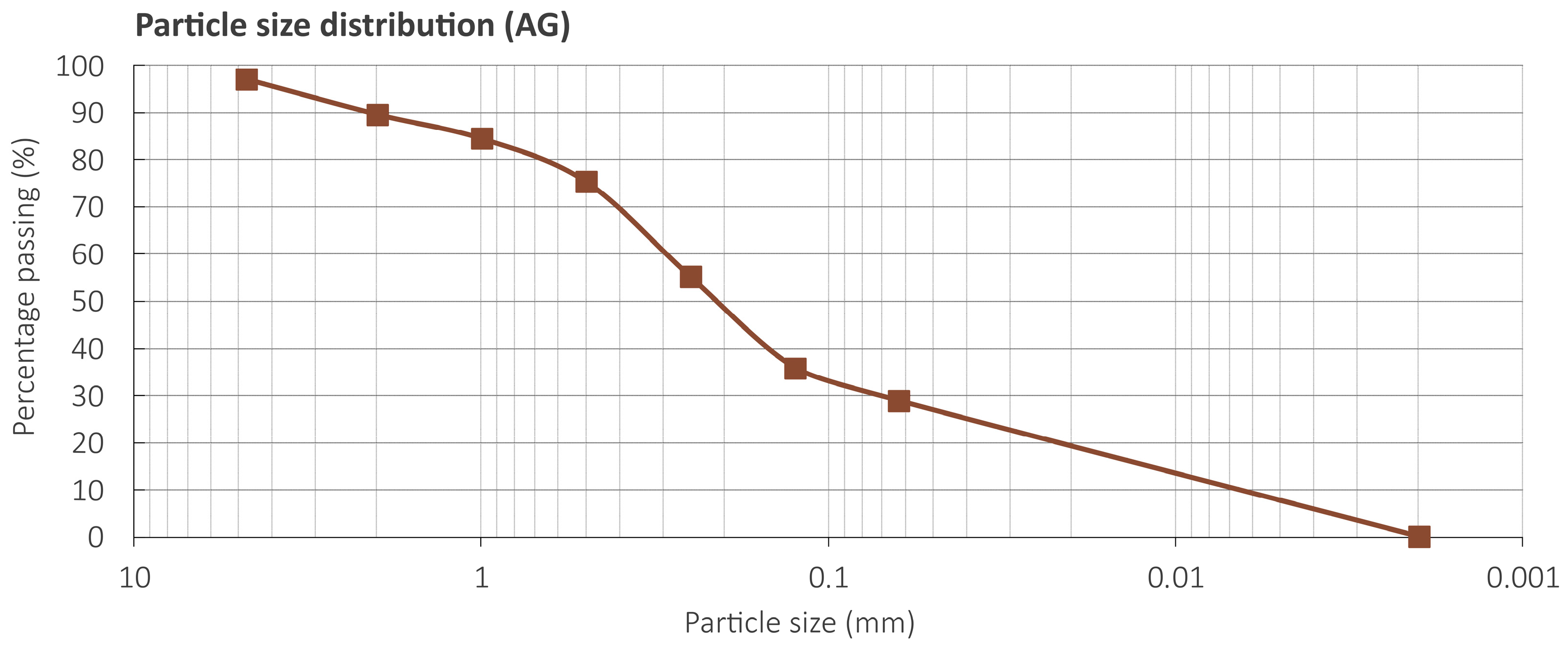
Figure 2). Gravel-sized particles (>2 mm) account for approximately 10.4% according to the weight of the aggregate analysed. The most abundant fractions correspond to particle sizes between 0.125 and 0.25 mm, with the 0.25 mm fraction standing out at 20.2% by weight, followed by the 0.125 mm fraction at 19.3%. The silt–clay fraction (<0.063 mm) accounts for 28.8% of the material. This distribution indicates a greater presence of medium and coarse particles, resulting in a more open and granular structure than that of fine-grained mixes. The complete particle size distribution curve confirms this balanced composition (
Figure 3).
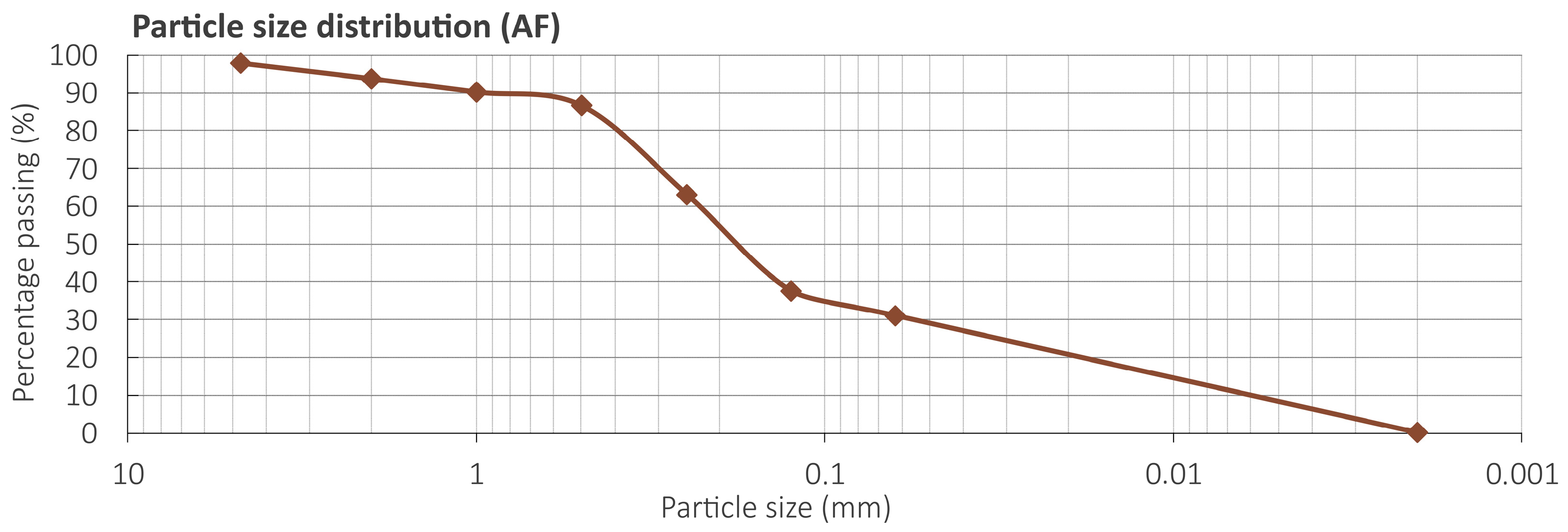
The fine adobe mix (AF), based on M21, retains a predominantly sandy matrix (57%) and is characterised by a mainly fine particle size distribution, with a limited presence of gravel-sized particles (>2 mm), accounting for approximately 6.4% according to the weight of the aggregate analysed. The most abundant fractions correspond to particles smaller than 0.125 mm, with a particularly significant silt–clay fraction (<0.063 mm) of 30.9%, according to weight, followed by the 0.125 mm fraction, which represents 25.6%. This distribution indicates a clear predominance of fine and very fine particles, forming a compact matrix with a high content of particles capable of acting as a cohesive component within the adobe. The particle size distribution of the mix can be observed in the transition from the original sample (
Figure 4) and is detailed in its final curve (
Figure 5).
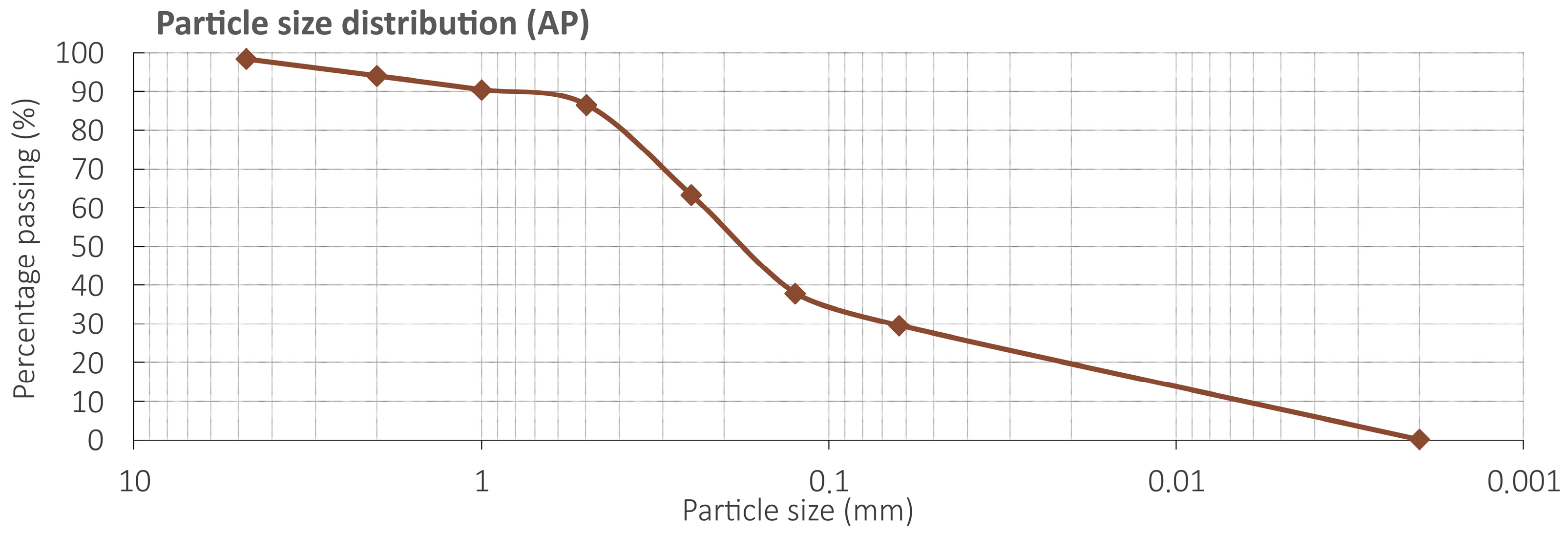
In the case of the fine adobe with fibres mix (AP), the formulation was based on the same particle size matrix as AF and reinforced with 1% plant fibres with respect to the total dry weight of the mixture, equivalent to 20 g of plant fibres per 2 kg of dry mix. Consequently, it retains a predominantly fine particle size distribution. The rice straw plant fibre was selected given its availability in the Mediterranean context, its compatibility with traditional construction techniques, and its capacity to improve internal cohesion, limit shrinkage cracking, and modify the surface and hygric response of the material. Prior to incorporation, the plant fibres were manually cut to a length compatible with the dimensions of the specimens, with a maximum length of 7 cm. This operation improved fibre dispersion within the mixture, ensuring a more uniform distribution throughout the adobe. The addition of plant fibres does not alter the proportions expressed in the granulometric distribution (
Figure 6) or in the particle size distribution curve (
Figure 7), which maintain the predominance of fine and very fine particles characteristic of the AF mix. However, the incorporation of plant fibres introduces an internal reinforcement capable of modifying the cohesion, mechanical response, and connectivity of the adobe pore network.
The initial physical characterisation of the three experimental formulations concluded by testing true density and bulk density, objectively quantifying the inherent baseline porosity of individual formulations [
35]. This is of particular interest for establishing the reference state for the comparative monitoring of the structural and volumetric changes induced by the controlled wetting–drying cycles and subsequent accelerated climatic ageing in a simulation chamber.
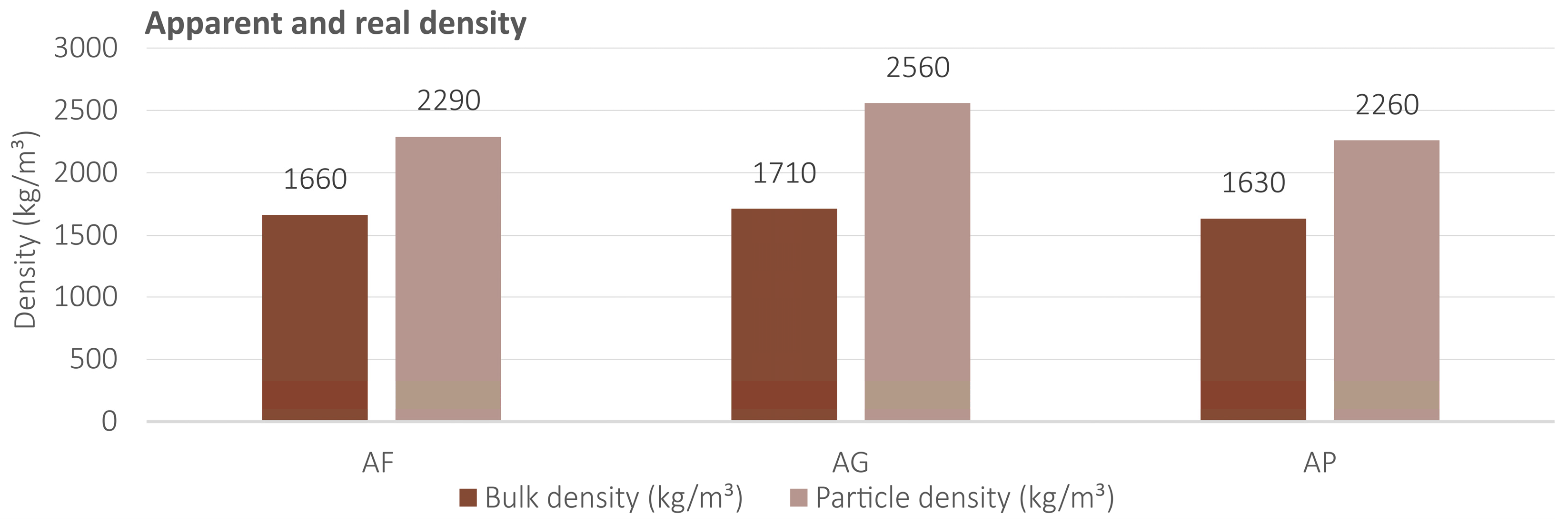
To ensure representative results and to minimise the potential variability inherent in the manual production of test specimens, three samples were analysed for each formulation, making a total of nine samples. The values for true density and bulk density were calculated as the arithmetic mean of the three samples corresponding to each mix (
Figure 8), while the percentage difference between the two parameters exactly corresponds to the porous volume of the material system.
The results obtained from the real and apparent density tests reveal differences in the porous structure between the mix designs analysed. The coarse adobe (hereafter AG) exhibits the highest porosity of all the mix designs, reaching an average value of 33.21%. This value indicates a particularly open internal structure characterised by the abundant presence of voids between particles, consistent with a high coarse-grained fraction content limiting the capacity for fine compaction. This favours the creation of voids between the larger particles during the forming and drying process. In contrast, both the fine adobe (hereafter AF) and the adobe with added fibres (hereafter AP) show porosity values very close together at 27.52% and 27.88%, respectively. This similarity suggests comparable behaviour in terms of void distribution, associated with a higher proportion of fine particles facilitating the filling of voids and the densification of the matrix.
3.4. Specific Test Methodology
3.4.1. Design and Geometry of Test Specimens
A base soil supplied by a company located in Sagunto, Valencia, Spain, was used for the preparation of the specimens. The particle size distribution was determined in accordance with the reference standard [
33], identifying 9.5% fine gravel, 55.6% sand, and approximately 34.9% fine fraction, corresponding to silts and clays. According to the European soil classification system [
36], this soil can be classified as either silty sand or clayey sand. The SEM-EDS analysis carried out on the fine soil fraction shows a composition dominated by Si and Al, characteristic of aluminosilicate materials. The presence of K, together with reduced Mg contents, suggests that the clay fraction may be associated with minerals of the illite group. However, since EDS provides only elemental rather than structural information, this assumption should be considered indicative and would require complementary mineralogical analyses, such as XRD, for confirmation.
In any case, the results should be interpreted as a comparative assessment of formulations prepared with the same base soil, in which the main controlled variables are particle size distribution and the incorporation of plant fibres. The same company supplied fine sand and gravel, with average particle sizes ranging from 0.02 to 0.5 mm and from 2 to 12 mm, respectively. These additional granular fractions were subsequently incorporated into the base soil in controlled proportions in order to adjust particle size distribution and achieve the target grading curves defined for each of the experimental adobe mixes.
The size and geometry of the specimens were defined following a preliminary phase analysing the suitability of different manufacturing methods. Initially, it was proposed to obtain specimens by cutting pieces moulded in a standard adobe mould [
4]. This aimed to produce cubic specimens, with dimensions as similar as possible on all sides, and to reproduce the pore distribution achieved by the process of throwing the clay into the adobe mould as faithfully as possible. However, for a number of practical reasons, this was not viable. Firstly, it was extremely difficult to cut through the full thickness of the adobe bricks to obtain clean and precise cross-sections. Secondly, given the high levels of dust generated during the process, specific technical equipment and safety measures were required. These factors compromised both the integrity of the samples and suitable working conditions.
Consequently, it was decided to manufacture the test specimens using individual moulds, with the final dimensions to be tested in the laboratory. The traditional proportions of the adobe block—where the length is approximately twice the width and the height is a quarter of the length, with minimum dimensions exceeding 8 cm—were therefore taken as reference. A test specimen geometry was defined based on these proportions to maintain the proportion and representativeness of the material, and to adapt it to a more regular format suitable for testing.
Multiple tests were then carried out using cubic moulds of different dimensions, ranging from 8 cm to 10 cm, in order to assess their influence on the manufacture and handling of the test specimens. Finally, the 10 cm × 10 cm × 10 cm geometry was selected as it exhibited more suitable behaviour during demoulding. This resulted in a more regular final geometry with well-defined cut planes, facilitating the performance of mechanical tests.
3.4.2. Scheduling of Physical and Mechanical Tests
The first test carried out within this group was the non-destructive ultrasonic test, which assesses the internal condition of the test specimens without compromising their integrity [
37]. This approach makes it possible to use the same samples in subsequent tests, thus optimising the number of test specimens and ensuring consistency between the results obtained. This test, which assesses internal continuity and detects any structural discontinuities in the material, was carried out in accordance with the reference standard for concrete UNE-EN 12504-4:2021 [
38]. It was adapted to the specific characteristics of earth materials in accordance with methodologies previously applied to this type of material [
39,
40]. Transversal measurements were taken using equipment of different frequencies in order to analyse the influence of the measurement system on the results obtained. The STEINKAMP Ultrasonic Tester BP5, with an ultrasonic pulse frequency of 50 kHz, and the CONTROL UPV E48 Ultrasonic Pulse Velocity Tester, with an ultrasonic pulse frequency of 54 kHz, were used.
Subsequently, a compressive strength test was carried out in accordance with the reference standard for masonry walls UNE-EN 772-1:2011 [
41]. An increasing axial load was applied to the specimen until failure in order to establish the maximum stress withstood by the material. The specimens were first oven-dried for 24 h at 100 °C to ensure uniform moisture conditions across all samples prior to testing. The test was carried out using an IBERTEST STIB hydraulic press, with a maximum capacity of 400 kN, equipped with a computerised measurement system using WINTEST 32 software and adjustable compression plates with adapters suited to the dimensions of the samples under study. During the procedure, a continuous compressive load of 0.03 MPa/s was applied to the specimen until failure, thus establishing maximum compressive strength.
This machine simultaneously recorded the applied load and the deformation undergone by the specimen until failure was reached. It could also determine the modulus of elasticity based on the stress–strain curve obtained during the test following the reference standard UNE-EN 772-1:2011 [
41]. This modulus was calculated from the slope of the initial section of the curve, which corresponded to the most representative interval of the elastic behaviour.
In addition, the mechanical response of the material was evaluated through successive loading and unloading cycles, following the same reference standard UNE-EN 772-1:2011 [
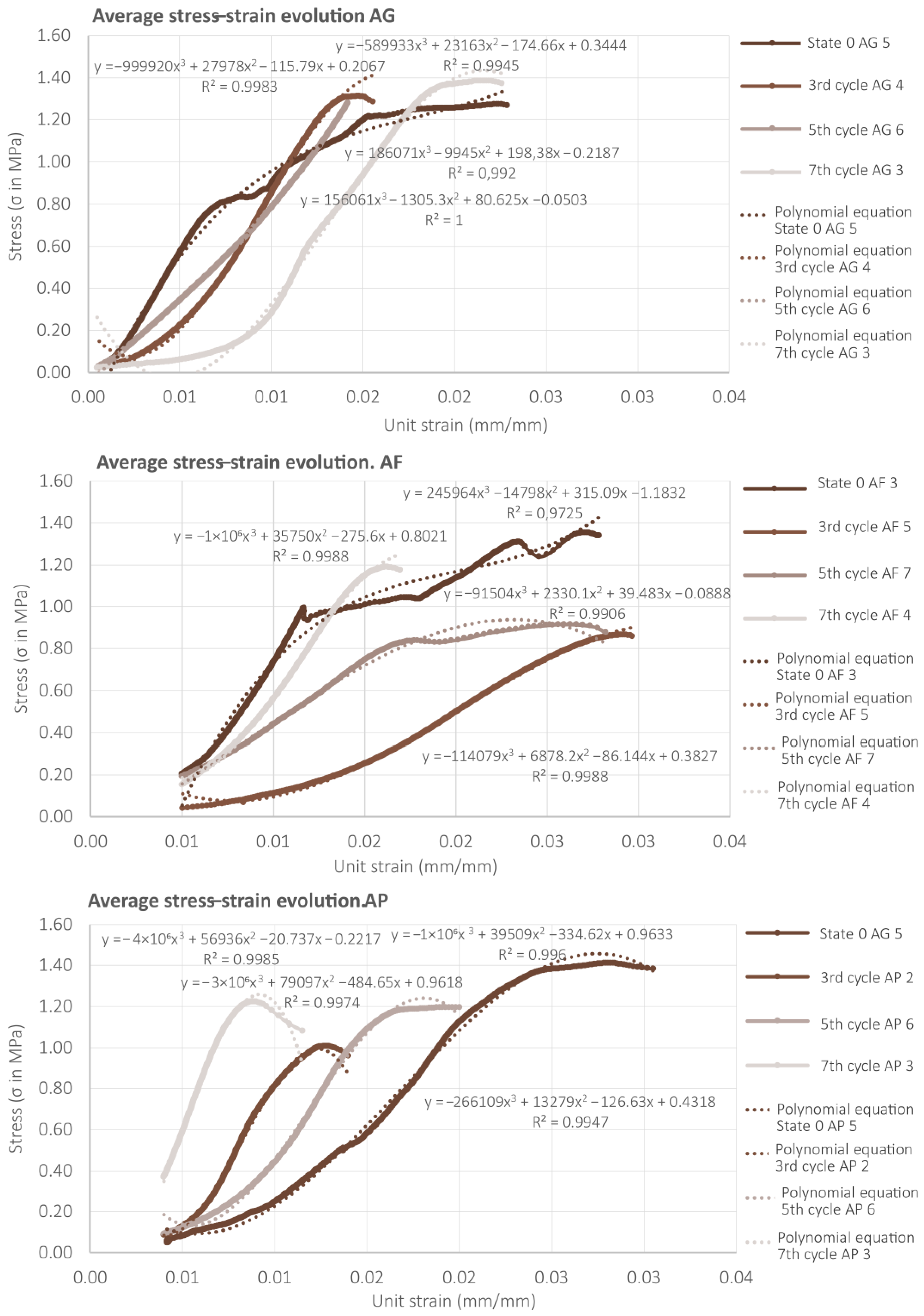
41]. For this, three cycles of increasing load were applied up to a certain level, followed by the corresponding unloading. Repeating this procedure allowed the analysis of the evolution of the stress–strain behaviour, as well as that of the capacity for recovery from deformations and possible variations in stiffness under repeated loads. The results were represented by the stress–strain curves corresponding to each specimen. Trend lines calculated using a third-degree polynomial equation were incorporated to facilitate interpretation. The equations associated with each trend line are indicated separately outside the results table.
3.4.3. Scheduling of Hydraulic Tests
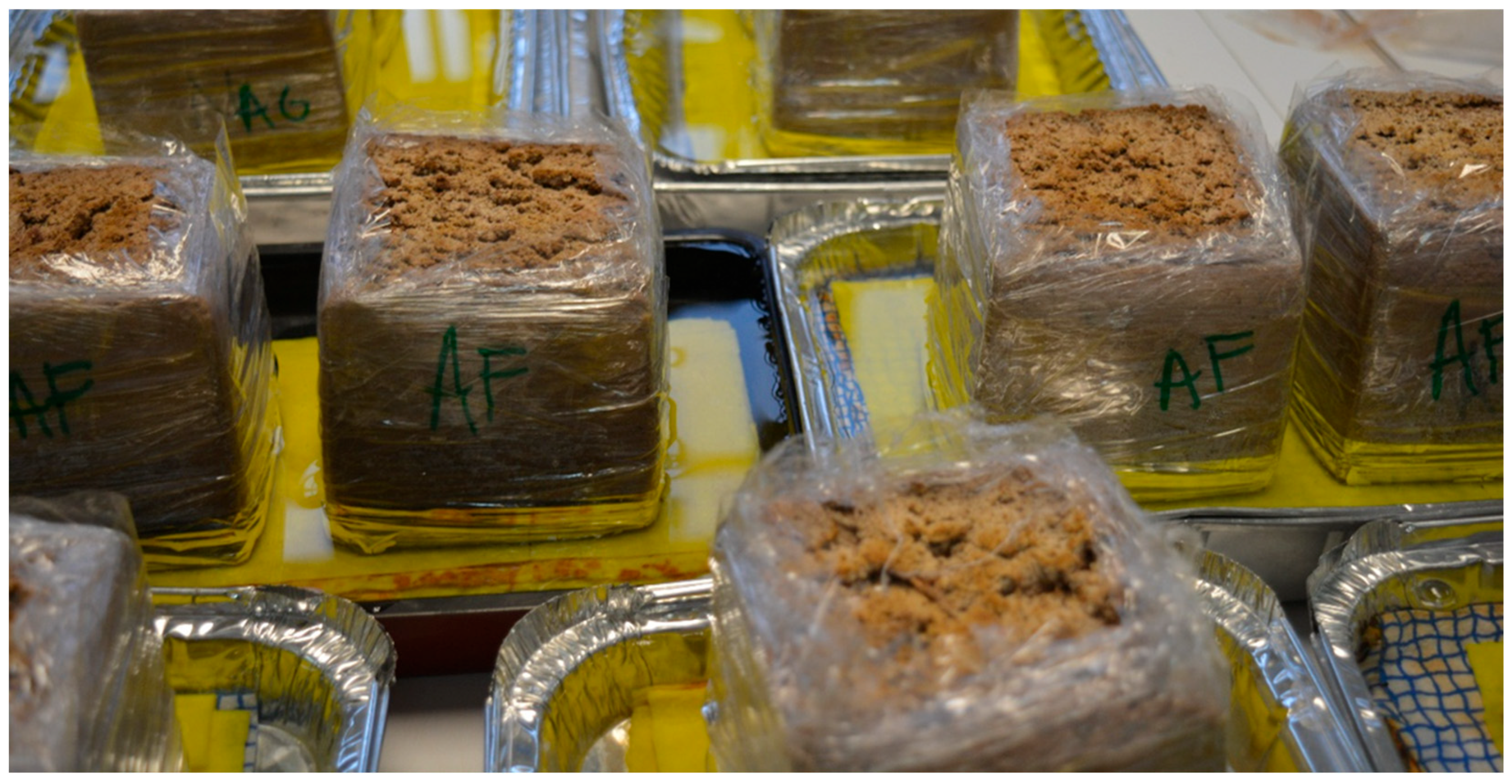
Similarly, the water-related tests were organised depending on the type of damage caused to the test specimens and the possibility of reusing the samples. Firstly, the capillary absorption test was carried out on a particular set of test specimens (
Figure 9), intended exclusively for this procedure, as the destructive nature of the test prevents the samples from being subsequently reused. The surface water erosion tests were carried out separately on another group of specimens, beginning with the Swinburne Accelerated Erosion Test (SAET), which has a greater impact on the surface of the material. This was followed by the dry test, which is considered to be less aggressive. The specimens that remained intact following the surface water erosion tests were subsequently used in the abrasion test in order to optimise the use of the samples. To do so, the geometry of the specimens was used, applying the water erosion tests on one face and the abrasion test on the opposite face. As both procedures primarily affect the surface of the material, this strategy enabled the assessment of different degradation mechanisms of the same specimen with no major interference between the results.
The capillary water absorption test was carried out following the procedure described in the reference standard UNE-EN 772-1:2011 [
41]. The base of the specimen was placed in contact with a sheet of water, recording the amount of water in terms of time, in order to determine the capillary suction capacity of the material. In order to characterise the initial absorption phase, and given the nature of the test material, its behaviour was analysed in short time intervals. For this, measurements were carried out at 30 s, 1 min, 3 min, 5 min, 10 min, 20 min, 30 min, 45 min, 1 h, 2 h, 3 h, and 48 h, which allowed greater precision in tracking the evolution of the absorption process.
For the Swinburne Accelerated Erosion Test (SAET), the procedure described in the reference standard UNE-EN 41410:2023 was followed [
42]. As set out in
Section 3, this test aims to replicate moderate water exposure conditions in order to assess the material’s surface erosion under the action of water. This requires a continuous flow of water to be directed onto the exposed face of the test specimen for 10 min through a 5 mm diameter nozzle from a height of one metre, at an angle of 27° in relation to the horizontal plane. The maximum depth of the cavity formed (D) is then measured, classifying the material according to suitability for construction as excellent if D ≤ 10 mm; good if 10 < D ≤ 20 mm; acceptable but needing coating if 20 < D ≤ 30 mm; and poor if D ≥ 30 mm. This last one is not suitable for construction.
The dry test aims to study water erosion caused by the kinetic energy of water droplets. This procedure, set out in Zimbabwean international standard SAZS 724 [
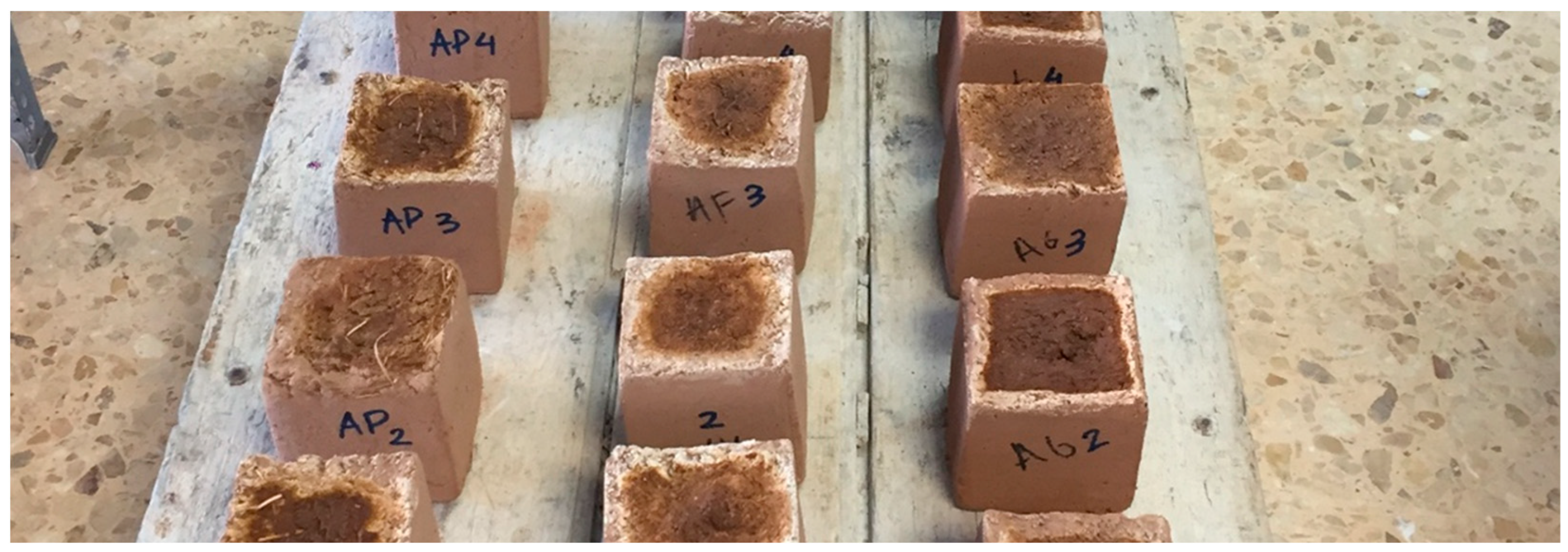
43], is also known as the Geelong test or the Yttrup test. This test exposes the surface of the specimen to controlled water dripping onto its face, at a 27° incline, from a height of one metre, for 10 min (
Figure 10). The results are interpreted according to the average penetration depth (D) in millimetres, and test specimens are classified as suitable when D ≤ 10 mm and unsuitable when D > 10 mm.
Finally, in the absence of a specific standard for unstabilised earthen materials, the abrasion test was carried out following the methodology proposed by Ogunye [
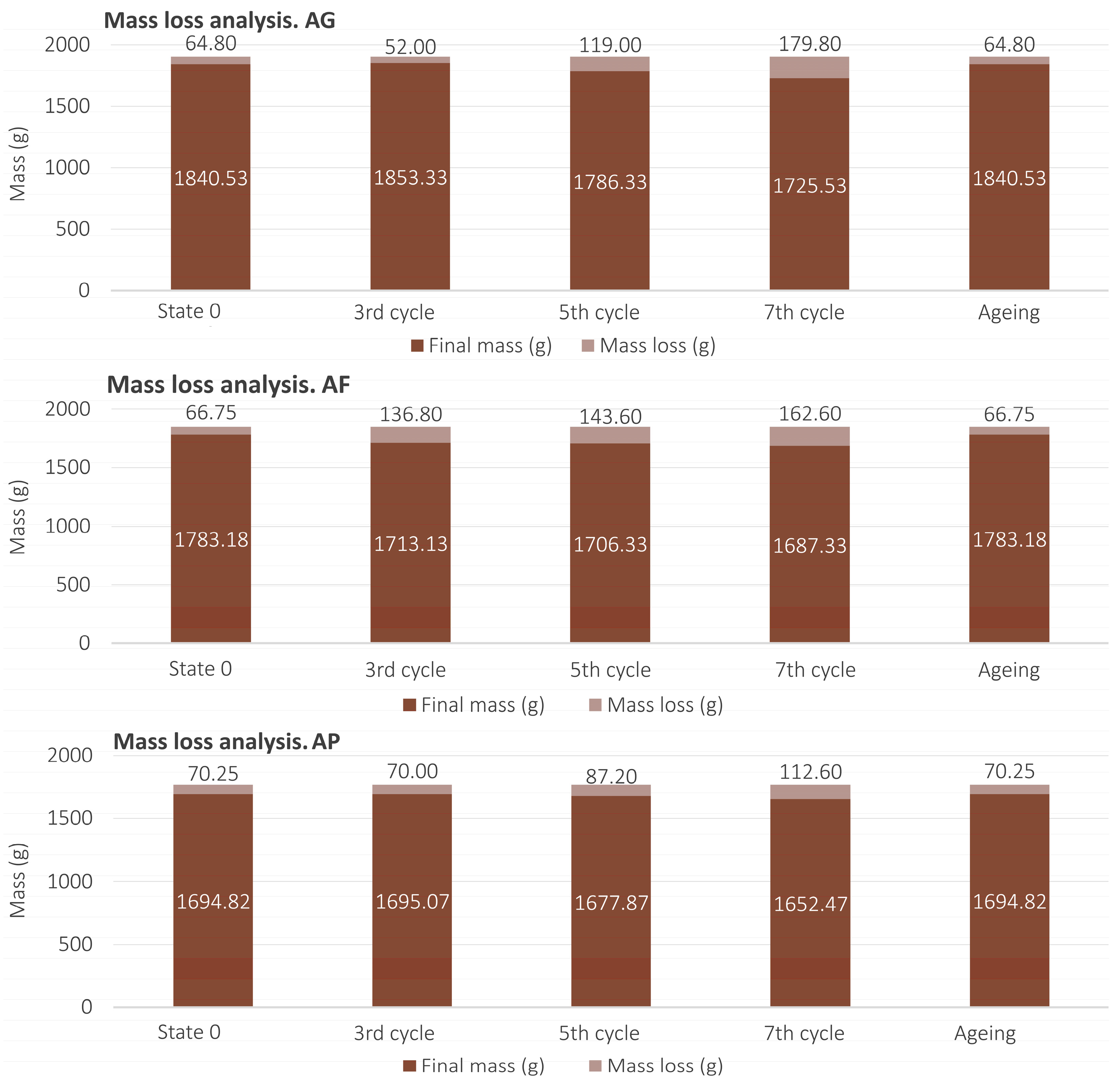
32] and adapted to the characteristics of the adobe specimens used in this research. The specimen surface was subjected to a controlled wear action through the repeated movement of an abrasive element under a constant load of 6 kg. This system generates a surface shear action that causes the progressive loss of material, allowing the surface resistance and susceptibility to wear of each mix to be assessed. During the test, the abrasive device moved linearly across the surface of the specimen for a defined number of cycles, while both the applied load and the contact path were kept constant. Once the procedure was completed, material loss was determined by the difference in mass between the initial and final states of the specimen. This method makes it possible to accelerate the reproduction of surface wear processes associated with mechanical and erosive actions occurring under real exposure conditions.
4. Results and Discussion
4.1. Compressive Strength Test
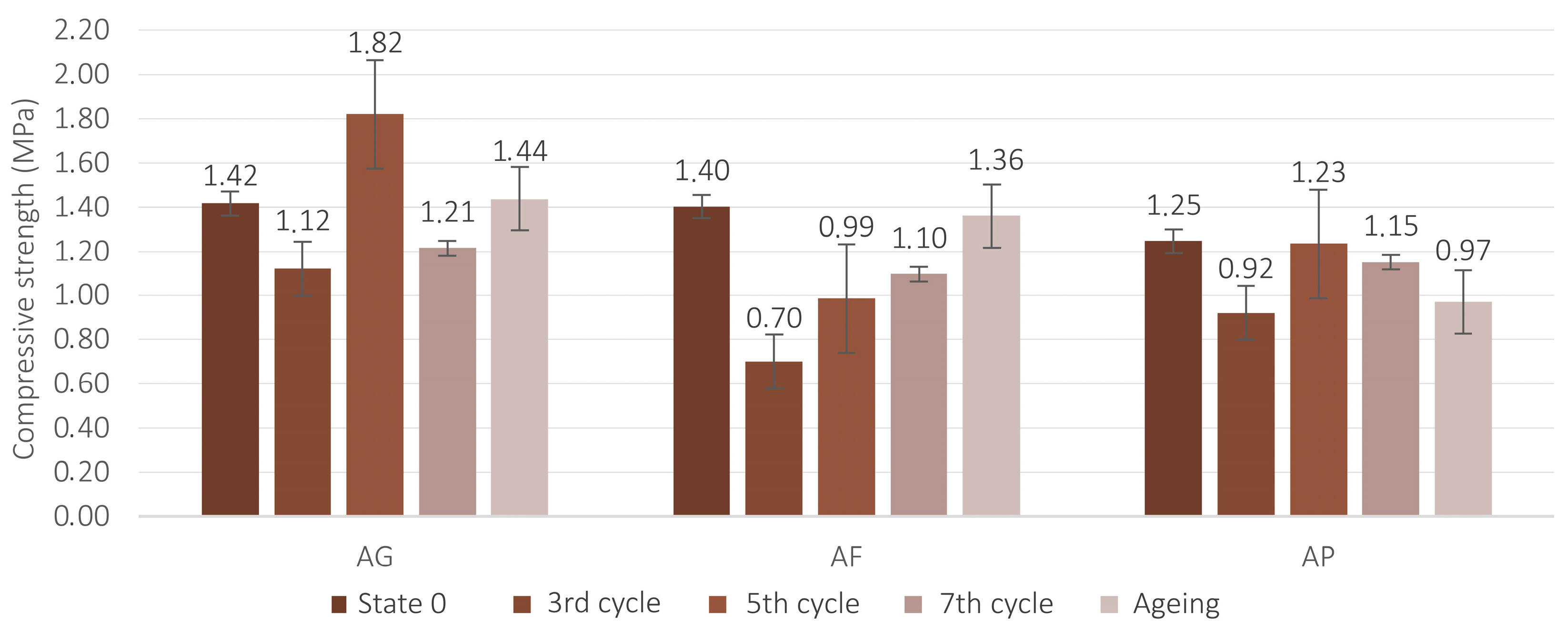
The results obtained show a generally comparable trend across the different mix patterns analysed (
Figure 11). In the initial state (0 cycles), all three composition types exhibit high compressive strength values, with a significant decrease observed after the third wetting–drying cycle. In comparative terms, this reduction is most pronounced in the AF mix (50.12%), followed by AP (26.05%) and AG (20.77%).
After five cycles, general recovery in strength is observed in all mixtures. This increase is particularly significant in the case of AG, which shows a 62.32% increase compared to the third cycle, exceeding the initial value by 40.08%. Meanwhile, AF and AP also show a recovery in strength, with increases of 20.40% and 0.91%, respectively, although in both cases, these remain below the initial values.
The results for the seventh cycle show mixed performance. In the AG and AP mixes, a further decrease in strength is observed compared to the values reached in the fifth cycle. In contrast, AF, the only mix design to increase in strength at this stage, continues to show an upward trend, without reaching the initial values.
Finally, the specimens subjected to the accelerated climatic ageing test generally show values close to the initial ones in the AG and AF mixes, indicating relative stability under this type of stress. However, the fibre-reinforced mix (AP) shows a more marked reduction in strength, suggesting that this material is more sensitive to accelerated ageing conditions.
The increase in load-bearing capacity after the immersion tests is similar to the results reported in other studies [
44], which have shown that certain earthen materials subjected to wetting–drying cycles may maintain or even increase their mechanical strength as a result of internal reorganisation and densification processes.
The statistical analysis based on the Weibull distribution made it possible to assess the homogeneity and dispersion of mechanical strength across the different mix formulations and alteration states (
Table 3). Overall, the fibre-reinforced samples (AP) showed the highest Weibull modulus values, exceeding 12 in several states, which indicates lower dispersion and a more uniform mechanical behaviour. This performance may be associated with the stabilising effect of the fibrous reinforcement, which is able to redistribute internal stresses and limit the propagation of local discontinuities. In contrast, the coarse mix formulation (AG) showed the lowest initial Weibull modulus values, reflecting greater internal heterogeneity in terms of granular distribution and the presence of interparticle voids. However, after successive wetting–drying cycles, this formulation exhibited a progressive increase in the modulus, suggesting a possible process of internal reorganisation and compaction favouring a more homogeneous mechanical response. The fine mix formulation (AF) showed an intermediate behaviour, with progressive improvement during the wetting–drying cycles followed by a subsequent reduction after accelerated climatic ageing. This behaviour suggests greater sensitivity of the fine matrix to prolonged degradation processes, associated with expansion–contraction phenomena and changes in internal cohesion.
Overall, the results show that the Weibull distribution is a useful tool for characterising the evolution of the mechanical homogeneity of adobe under hygric and climatic alteration processes, complementing the interpretation obtained from conventional physical–mechanical tests. The variations observed can be explained by internal reorganisation mechanisms induced by wetting–drying cycles. During the initial wetting stages, water causes clay particles to hydrate and expand, temporarily reducing internal cohesion. However, successive drying processes may promote partial redistribution and compaction of the particles, particularly in formulations with a higher granular content. This could explain the partial recovery or even increase in strength and homogeneity observed in certain alteration states.
4.2. Stress–Strain Test
The stress–strain curves show the evolution of mechanical behaviour in relation to the number of wetting–drying cycles for the AG mix (
Figure 12). In the initial state, the material exhibits a response with a progressive increase in stress until a maximum value is reached, followed by a phase of moderate softening, indicating relatively ductile behaviour. After the first few cycles, there is a decrease in initial stiffness, as seen from a less pronounced slope in the region of elasticity, along with a slight reduction in maximum strength, suggesting initial degradation of the internal structure.
However, after five cycles, a recovery in strength capacity can be seen, reaching values similar to or greater than the initial ones. This could be linked to particle reorganisation and redistribution processes within the granular matrix. In subsequent stages, the curve shifts towards greater deformation, indicating a progressive loss of stiffness and an increase in material deformation. Overall, these results demonstrate that the coarse-grained mixture exhibits good mechanical stability under wetting–drying cycles and is less susceptible to degradation than materials with a higher fine particle content.
The stress–strain curves corresponding to the fine mix (AF) show a marked evolution in mechanical behaviour as a function of wetting–drying cycles (
Figure 12), demonstrating greater sensitivity to the action of water than that of the coarse mix.
In the initial state, the response of the material is relatively ductile, with significant deformation before reaching the stress peak. After the first cycles, a notable decrease in initial stiffness is observed, reflected in a less pronounced curve in the region of elasticity and a reduction in strength, indicating a degradation of the internal structure associated with the hydration of the fine fractions.
A slight recovery in strength is observed in intermediate stages, although this does not reach the initial values. However, after more advanced cycles, the material shows an increase in strength and a stiffer response, suggesting fine particle reorganisation and redistribution processes. Overall, these results indicate that the behaviour of the fine aggregate mix is more dependent on hydration cycles, with an initial loss of properties followed by some capacity for material restructuring.
The stress–strain curves corresponding to the formulation with added fibres (AP) show a significant evolution in mechanical behaviour as a function of wetting–drying cycles (
Figure 12), demonstrating different behaviour from that of the other formulations. In the initial state, the material exhibits lower strength and greater deformation, indicating lower initial stiffness associated with the presence of fibres in the matrix.
Following the initial cycles, a marked reduction is observed in strength and stiffness, suggesting an initial degradation of the material, possibly due to the interaction of fibres under moist conditions. However, in subsequent stages, a gradual recovery in strength and an increase in strain associated with stress are observed. This behaviour indicates greater ductility of the material and can be attributed to the fibre reinforcement, which helps to control crack propagation and maintain structural integrity.
Overall, the results show that the addition of fibres significantly modifies the mechanical response of the material, favouring stronger and more elastic behaviour, especially following wetting–drying cycles.
The evolution of the stress–strain curves suggests a progressive modification of the internal structure. The initial loss of stiffness may be linked to the alteration of capillary and electrostatic bonds between clay particles due to the presence of water. Subsequently, drying processes promote a new internal configuration of the matrix, leading to greater stability in certain formulations. In the case of fibre-reinforced samples, the plant reinforcement acts as a crack-bridging mechanism, limiting the propagation of discontinuities and promoting a more ductile response under increasing deformation.
4.3. Modulus of Elasticity
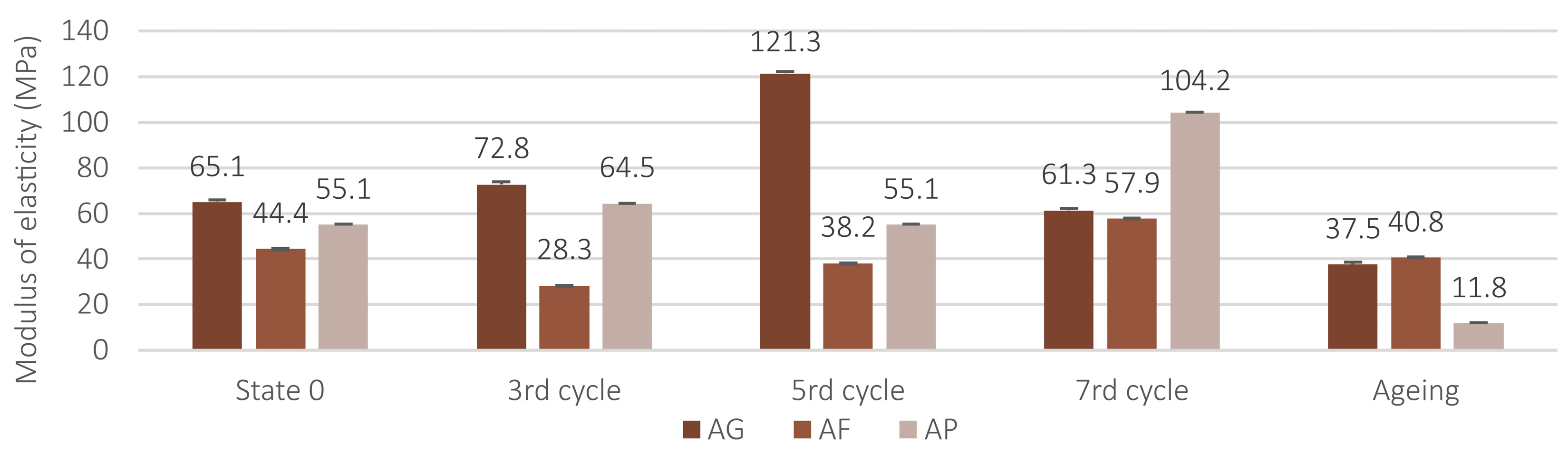
The results for the modulus of elasticity show a distinct evolution according to the dosage and the number of wetting–drying cycles (
Figure 13). In the initial state, the coarse mix (AG) shows the highest stiffness values, followed by the fibre-reinforced mix (AP) and, finally, the fine mix (AF). This highlights the influence of particle size on the material’s elastic response. After the first few cycles, a significant decrease in the modulus is observed in AF, indicating that the fine matrix is highly sensitive to the action of water, while AG and AP maintain or even slightly increase stiffness.
In intermediate stages, the coarse mix achieves the maximum values of the modulus of elasticity, possibly associated with internal reorganisation and compaction processes. Meanwhile, the fibre-reinforced mix shows a considerable increase in advanced cycles, reflecting the contribution of the fibre reinforcement to improving the stiffness of the material. However, following the ageing test, there is a marked reduction in the elastic modulus of the AP mix, suggesting a higher sensitivity of fibres to prolonged exposure conditions.
Overall, the results indicate that the stiffness of the materials is strongly influenced by the particle size distribution and the presence of fibres, as well as by the evolution of their internal structures in hydrological cycles. The variation in the modulus of elasticity reflects the direct relationship with the evolution of the internal stiffness of the granular system. The initial reductions observed in the finer formulations may be associated with the loss of capillary suction and the weakening of cohesive forces between particles. The partial recovery of the modulus at later alteration stages is more evident in formulations with a more granular character and may be related to internal rearrangement phenomena in which aggregate size can play an influential role.
4.4. Ultrasonic Testing
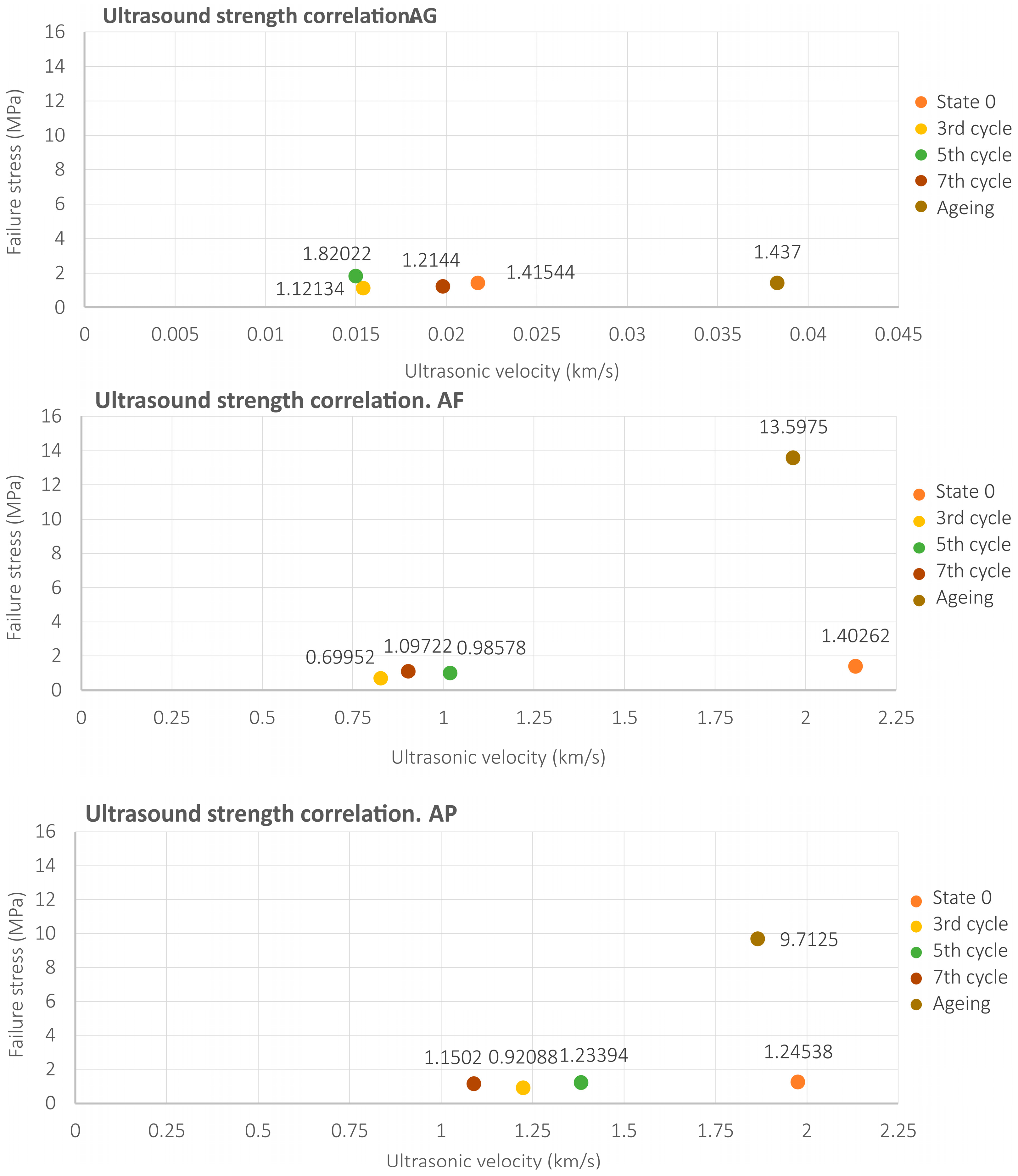
The results of this test relate the propagation velocity of ultrasonic waves to the modulus of elasticity (E), Poisson’s ratio (ν), and material density (ρ). It is therefore understood that a higher ultrasonic propagation velocity results in greater compressive strength.
In the analysis of the evolution of ultrasonic velocity in relation to compressive strength, a divergence can be observed between both parameters throughout the wetting–drying cycles (
Figure 14). In the initial state, the material shows high ultrasonic velocity values, indicating greater internal continuity and compactness. However, as the cycles progress, velocity gradually decreases, reaching minimum values in more advanced states. This suggests the emergence of internal discontinuities, such as microcracking or the possible formation of interlaminar voids in the clay fraction.
This trend does not correspond directly to the compressive strength values, which remain relatively stable or even increase in certain states. This behaviour can be interpreted by considering the hydration processes of the clay fraction, where particles are reorganised into laminar structures, generating interlaminar spaces. These discontinuities, connected with the presence of air and variations in phase distribution, affect the propagation of ultrasonic waves, reducing their velocity, while the strength capacity remains unchanged.
In the case of ageing, the combination of higher strength values with lower ultrasonic velocities suggests the coexistence of a more internally heterogeneous structure which maintains or even improves strength capacity. This highlights the complexity of the behaviour of these materials when faced with degradation processes.
From a physical perspective, the reduction in ultrasonic velocity may be associated with the development of internal microcracking and the generation of discontinuities within the adobe matrix. The presence of water, in combination with the expansion–contraction processes of the clay fractions, favours the formation of internal interfaces and interlaminar voids which hinder the transmission of mechanical waves. This behaviour is consistent with observations reported by other researchers [
45], who identified a progressive decrease in ultrasonic velocity in fibre-reinforced earthen materials subjected to wetting–drying cycles, linking this phenomenon to internal degradation processes and moisture-induced microcracking.
However, these discontinuities do not necessarily involve an immediate loss of compressive strength since, rather than opening, pre-existing microcracks tend to remain closed or confined under this type of loading. Therefore, their effect may be more evident in properties governed by crack opening, particle detachment, and surface delamination, such as tensile strength, abrasion resistance, or erosion resistance. At the same time, granular reorganisation and increased particle-to-particle contact may partially compensate for the internal degradation detected by ultrasound, thus explaining the coexistence of lower ultrasonic velocities with stable or even higher compressive strength values.
4.5. Abrasion Test
The abrasion test can be related to shear strength or surface strength. The results of the abrasion test can identify clear differences in the stability of the formulations under wetting–drying cycles (
Figure 15).
In relative terms, the fibre-reinforced formulation (AP) exhibits the most stable behaviour, maintaining virtually constant values in the third cycle (−0.4%) while showing a moderate increase in material loss in the fifth cycle (+24.1%), indicating greater resistance to surface degradation in intermediate stages. In contrast, the fine formulation (AF) is the most sensitive, with significant increases in material loss from the earliest cycles, reaching values in excess of 100% as early as the third cycle and exceeding 140% in more advanced stages, thus highlighting that it is highly unstable when exposed to water.
The coarse fraction (AG) exhibits intermediate behaviour, with a slight initial reduction (−19.8%) followed by a marked increase in material loss from the fifth cycle onwards (+83.6%), indicating a more delayed progressive degradation. Overall, these results show that the incorporation of fibres improves the surface stability of the material in intermediate stages, whilst compositions with a higher fine particle content are more susceptible to wear.
4.6. Dry Test (Geelong or Yttrup Test, International Standard SAZS 724 (Zimbabwe))
The results are interpreted according to the average penetration depth (D) in millimetres, with specimens classified as suitable when D ≤ 10 mm and unsuitable when D > 10 mm. In this case, this value is calculated as the average of the six specimens analysed for each particle size distribution and for each time point analysed.
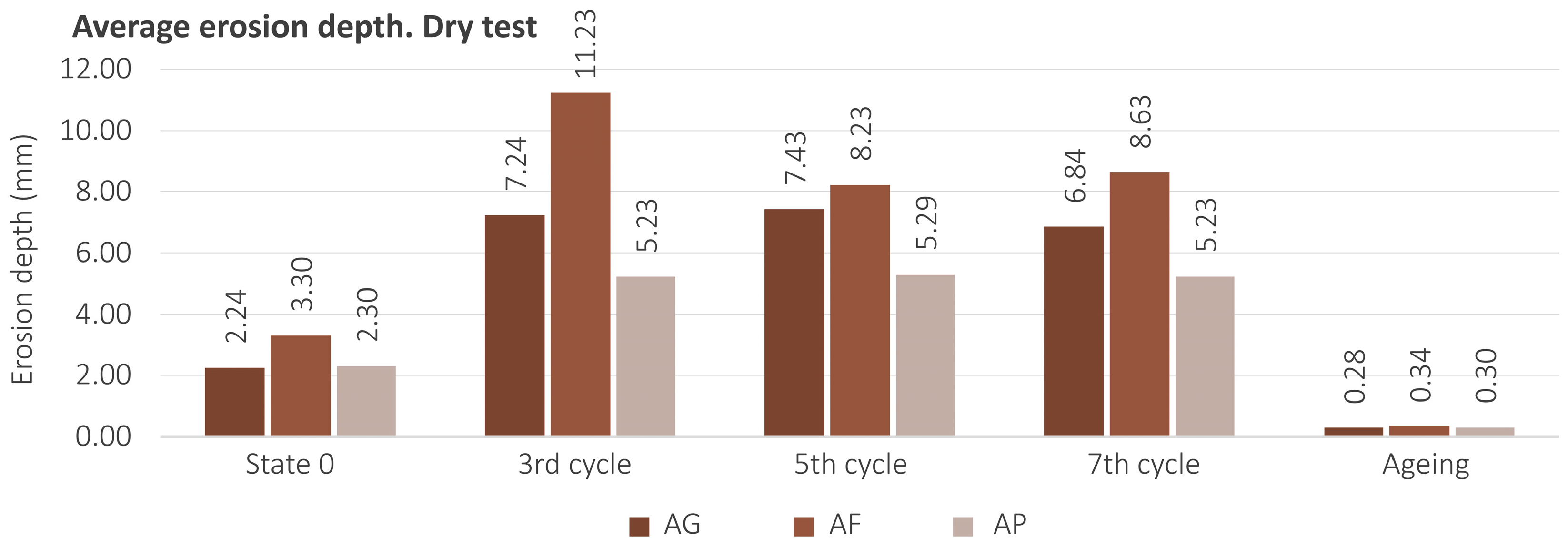
The results of the dry test show increased erosion depth following the first wetting–drying cycles, with behaviour varying according to the fineness fraction (
Figure 16). The fine mix (AF) shows the greatest relative increase (+240%), exceeding the regulatory limit established by SAZS 724 in the third cycle (11.23 mm), indicating high susceptibility to surface degradation. In contrast, the fibre-modified mix (AP) shows the lowest erosion values in all states, with more moderate increases (+127%), indicating greater stability faced with the action of water. The coarse mix (AG) exhibits intermediate behaviour, with increases exceeding 200%, although these remain within the range considered acceptable.
In subsequent cycles, the values tend to stabilise for all three mixes, suggesting a reduction in the rate of degradation following initial exposure. Overall, the results highlight the influence of the fine fraction on the loss of surface strength and the positive effect of incorporating fibres in improving performance when faced with water erosion.
4.7. SAET
In this test, the maximum depth of the cavity formed (D) is measured, classifying the material according to construction suitability criteria as excellent if D ≤ 10 mm; good if 10 < D ≤ 20 mm; acceptable but requiring coating if 20 < D ≤ 30 mm; and poor if D ≥ 30 mm. The latter is not suitable for construction.
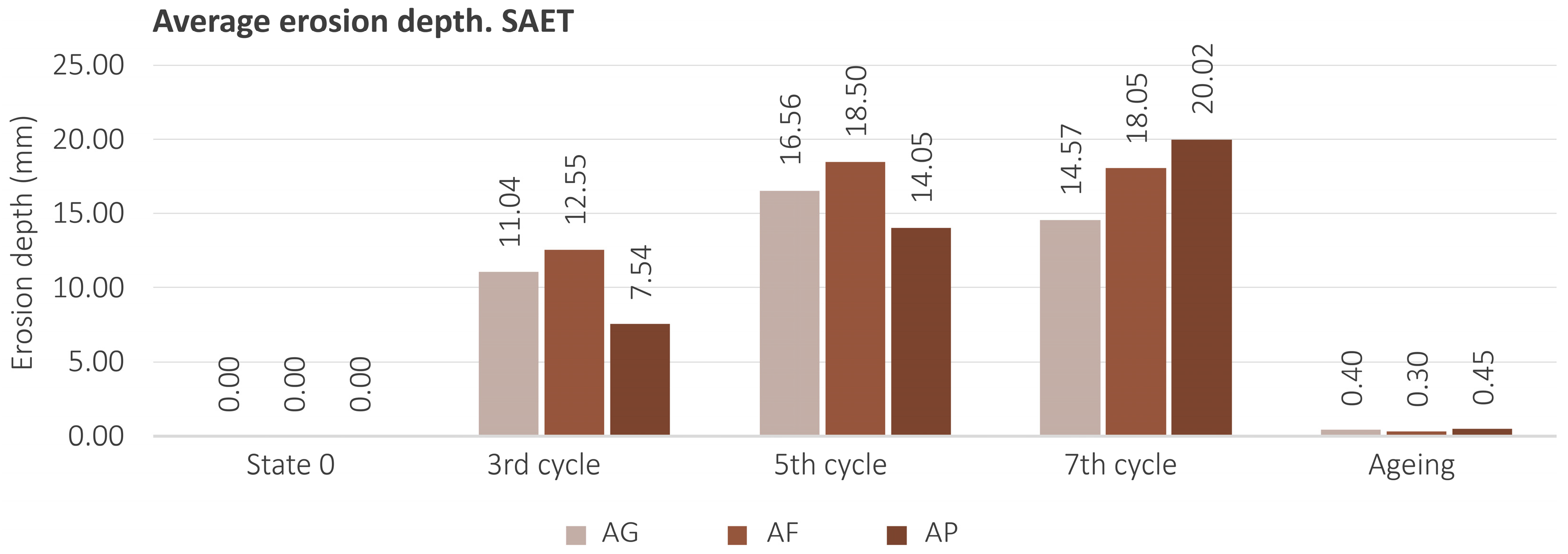
The results of the SAET for water erosion show a progressive evolution of degradation as a function of the wetting–drying cycles (
Figure 17), with differences in the behaviour of the mixes depending on the indentation depth values. In the initial state, all samples show zero values below 10 mm. After the first cycles, the coarse mix (AG) maintains values below this threshold (7.54 mm), whilst the fine mix (AF) and fibre-reinforced mix (AP) exceed 10 mm (12.55 mm and 11.04 mm, respectively).
In intermediate stages, all three mix types show values of 10–20 mm, with AF consistently showing the greatest rutting depths. In advanced cycles, a different behaviour is observed, as AG is the only mix to reach values slightly above 20 mm (20.02 mm), while AF and AP remain within the 10–20 mm range. Overall, the results show that all three mixtures perform satisfactorily against water erosion, although long-term behaviour is influenced by particle size distribution and the presence of fibres.
The increase in surface erosion may be related to the progressive washing out of fine particles and the loss of surface cohesion as a result of the repeated action of water and the intrinsically hydrophilic nature of the material. Mixes with a higher fine particle content are more susceptible to this phenomenon due to the alteration of the clay matrix during wetting cycles. In contrast, the presence of plant fibres contributes to partially maintaining the surface integrity of the material through an internal stitching effect that limits particle detachment.
4.8. Capillary Absorption
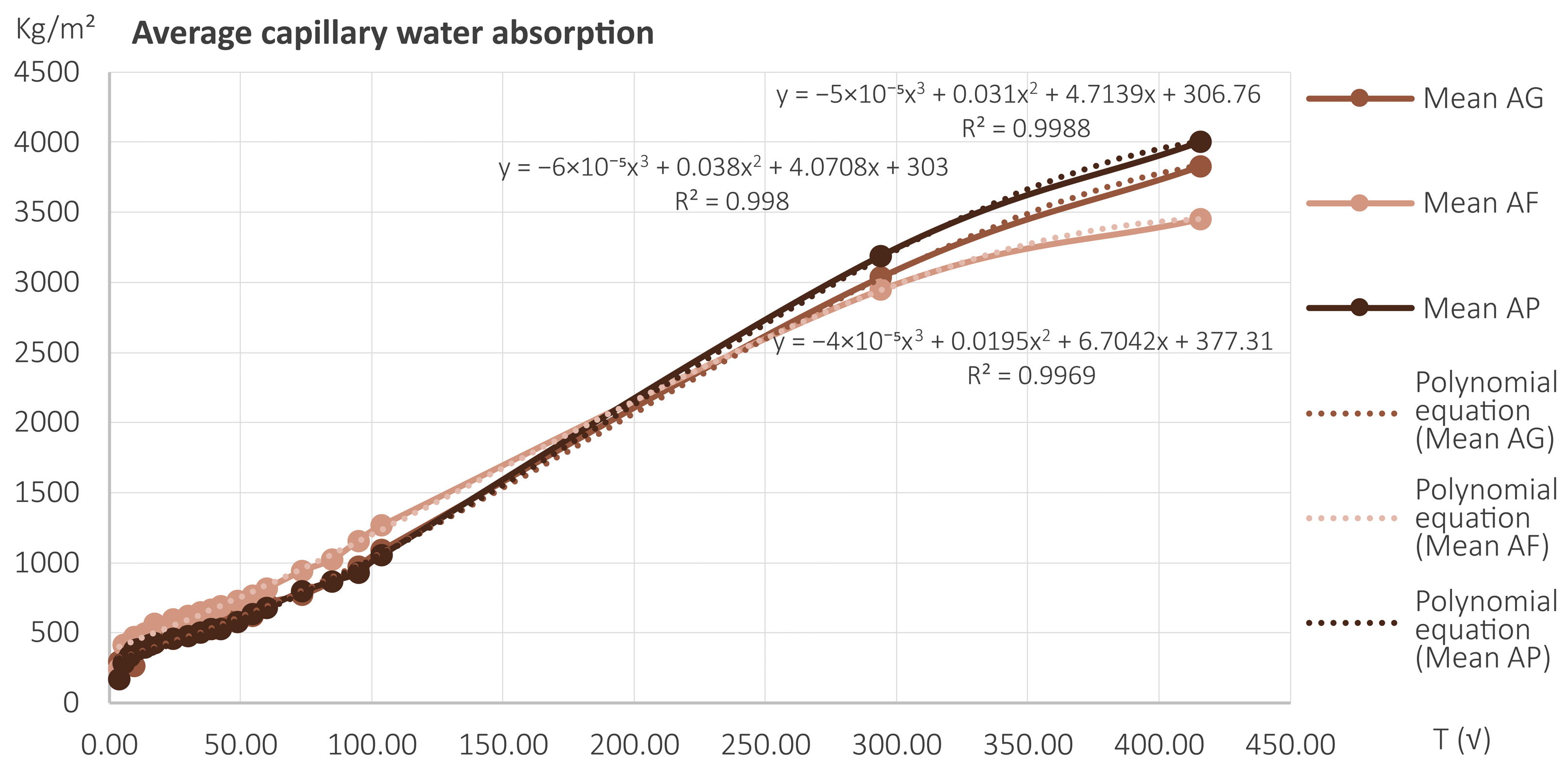
The capillary absorption results show similar behaviour across the three mix categories, characterised by rapid initial absorption followed by a progressive decrease in the absorption rate until values close to saturation are reached (
Figure 18). However, differences in the scale of absorption are observed, with the formulation with added fibres (AP) displaying the highest values across the entire time range, suggesting greater connectivity of the porous network and easier water penetration. Meanwhile, the coarse mix (AG) shows intermediate behaviour, while the fine mix (AF) presents the lowest values, indicating a more compact structure with reduced pore accessibility.
This behaviour can be linked to the porous structure of the material, previously characterised through tests of bulk and apparent density. Although the coarse mix (AG) displays the highest pore volume, it does not achieve the highest absorption values. This highlights how water retention capacity does not depend solely on total porosity, but also on the connectivity and morphology of the porous network. In this regard, although the fibre-reinforced mix (AP) has a porosity similar to that of the fine adobe (AF), it exhibits greater capillary absorption, attributable to the formation of a more interconnected pore network associated with the presence of fibres. Taken together, these results demonstrate that the distribution and connectivity of the pores play a decisive role in the water behaviour of material, irrespective of the total volume of voids.
The differences observed in capillary absorption appear to be related to the total pore volume, pore size distribution, and degree of connectivity of the porous network. Matrices with a higher fine particle content present a more compact structure, which may hinder water movement despite the presence of micropores. In contrast, formulations containing coarse fractions or plant fibres promote the formation of interconnected pores and preferential pathways for water movement, in turn increasing the capillary absorption observed experimentally.
5. Conclusions
The various tests carried out highlight the influence of particle size distribution and the incorporation of fibres on the physical and mechanical behaviour and durability of earth-based materials when subjected to cyclic hydrodynamic loading. The results throughout the loading process reveal a response characterised by phases of initial degradation followed by phases of internal reorganisation processes.
Mechanical analysis reveals significant differences between types of mix, with the coarse mix (AG) exhibiting greater overall stability, maintaining relatively constant strength values and even exceeding initial values at intermediate stages. This is associated with redistribution processes and improved particle contact. In contrast, the fine mix (AF) shows high sensitivity to the action of water, with initial losses in stiffness and strength, although it retains a certain capacity for recovery in advanced stages. The lower initial strength but greater ductility observed in the fibre-reinforced mix (AP) highlights the role of fibre reinforcement in controlling cracking and improving deformation behaviour.
The results of the modulus of elasticity and ultrasonic tests confirm the evolution of the internal structure of the material, showing a decrease in ultrasonic velocity with immersion cycles, associated with the appearance of internal discontinuities such as microcracking or interlaminar voids in the matrix. However, this evolution does not directly result in a loss of strength, showing that mechanical capacity also depends on the reorganisation and effectiveness of particle-to-particle contacts. In this regard, ultrasonic velocity proves to be an indicator of internal continuity, but this cannot be directly correlated with strength.
In terms of surface durability, abrasion and water erosion tests show an increase in degradation after the first few cycles, with significant differences depending on the composition. The fine-graded mixture (AF) is the most susceptible to material loss, while degradation in the coarse-graded mixture (AG) is more gradual. Meanwhile, the fibre-reinforced mixture (AP) is more stable in intermediate states, particularly when faced with erosion, although with certain limitations under prolonged conditions. From a hydraulic perspective, capillary absorption tests show that absorption capacity is determined by the connectivity of the porous network. The fibre-reinforced mix shows the highest absorption values, associated with greater pore interconnection, whilst the fine mix displays a more compact behaviour.
Overall, the results show that the response to erosive hygric actions depends on the interaction between mechanical properties, porous structure, and the microstructural evolution of the material. The coarse mix formulation (AG) showed the best overall performance, standing out for its greater mechanical stability, the preservation of high compressive strength values, and lower initial susceptibility to erosion, although it exhibited a progressive loss of internal continuity associated with the alteration cycles. In contrast, the fine mix formulation (AF) was the most vulnerable to water action, showing more pronounced initial degradation, although it retained some capacity for internal reorganisation at advanced stages. Finally, the fibre-reinforced mix formulation (AP) showed the most balanced behaviour in terms of surface durability, as the incorporation of plant fibres improved resistance to abrasion and water erosion, providing greater ductility and stability at intermediate stages of degradation. However, this improvement was associated with greater pore connectivity and increased sensitivity to prolonged ageing processes.
Consequently, the results demonstrate that both particle size distribution and the incorporation of plant fibres play a decisive role in conditioning the response of adobe to hygric and climatic degradation scenarios, providing relevant criteria for the design, conservation, and intervention of earthen architecture exposed to variable environmental conditions.






 ,
,