1. Introduction
Everyday heritage comprises objects, materials, spaces, and practices associated with ordinary life, including domestic artefacts, tools, educational objects, small-scale urban elements, and items connected with local or community memory [
1,
2]. Although these assets may lack the monumental character traditionally associated with cultural heritage, they provide valuable evidence of social practices, technological habits, material culture, and lived experience. Their conservation and interpretation are therefore important not only for historical documentation, but also for education, public engagement, and the preservation of collective identity [
3,
4,
5].
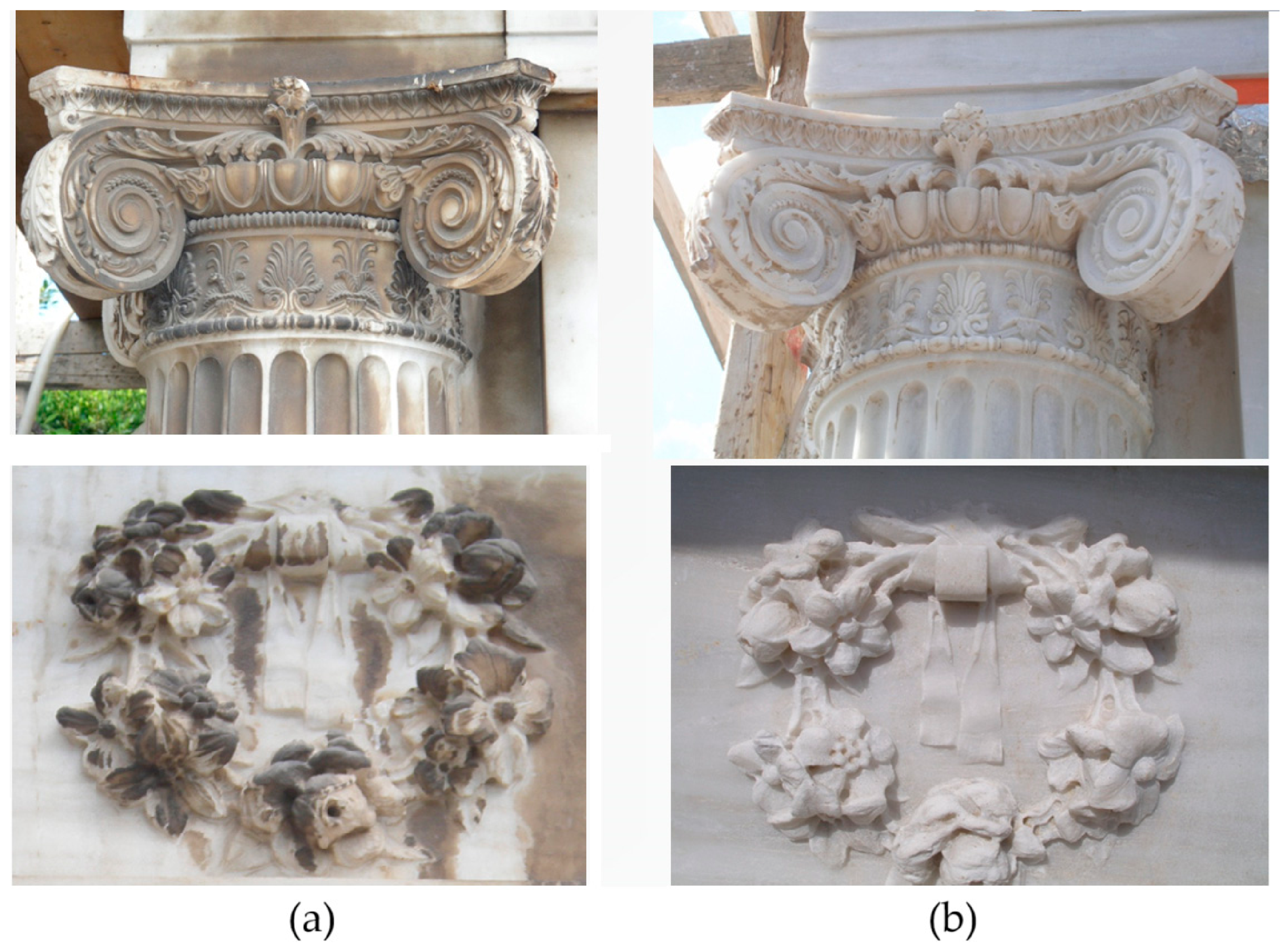
A central challenge in the preservation of everyday heritage is the progressive alteration of material surfaces. Surface degradation may result from mechanical wear, environmental exposure, pollution, humidity fluctuations, salt crystallization, corrosion, biological growth, or inappropriate handling [
6]. These processes affect the visible, tactile, and structural properties of heritage objects and may compromise both their physical stability and their interpretative value [
7]. For this reason, surface characterization has become an essential component of cultural heritage research, particularly through non-destructive or minimally invasive methods such as Raman spectroscopy, X-ray fluorescence, Fourier-transform infrared spectroscopy, hyperspectral imaging, optical microscopy, and surface profilometry [
8,
9].
Conventional conservation approaches remain fundamental, especially when direct stabilization, cleaning, consolidation, or protective treatment of original materials is required [
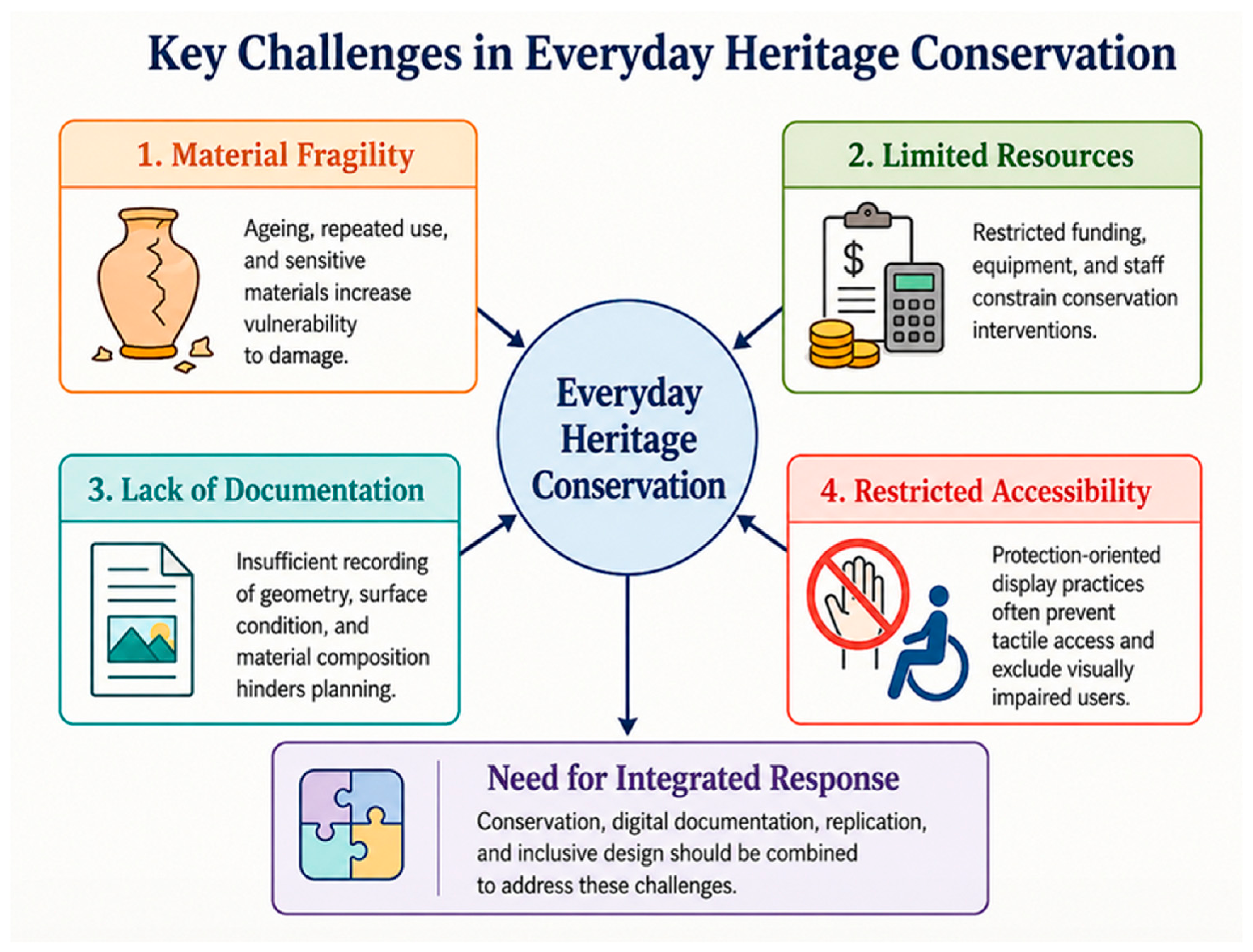
10]. However, their application to everyday heritage is not always straightforward. Many such objects are dispersed, poorly documented, stored outside specialized collections, or considered of secondary importance compared with monumental or high-value artefacts. In addition, conservation interventions may require significant financial resources, technical expertise, and long-term maintenance planning [
11]. These limitations highlight the need for complementary approaches that can document, analyze, reproduce, and disseminate heritage objects without increasing the risk of damage to the originals.
Digital documentation technologies have therefore become increasingly relevant in cultural heritage practice [
12,
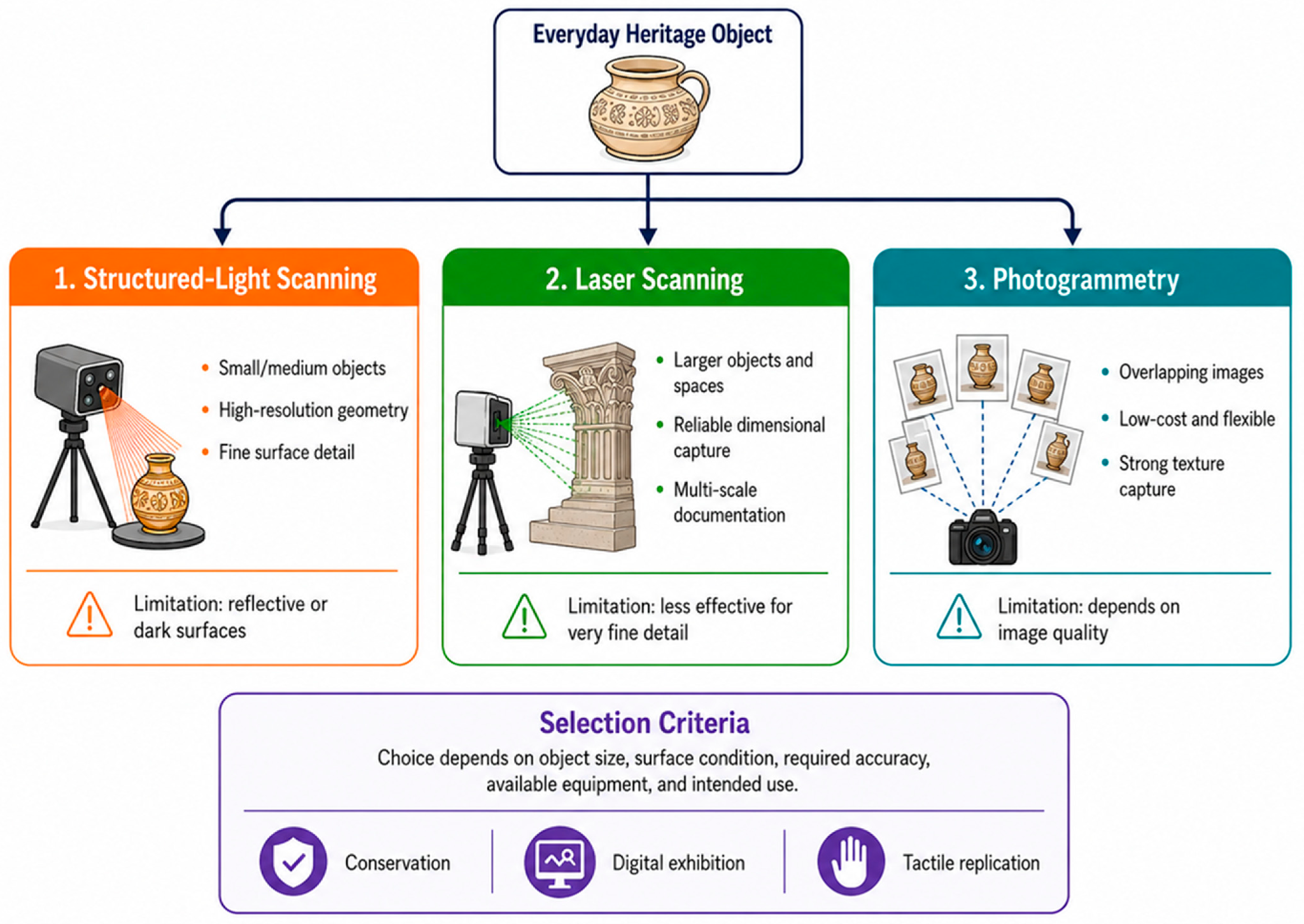
13]. Three-dimensional scanning, structured-light scanning, laser scanning, and photogrammetry allow the creation of accurate digital representations of objects and surfaces, supporting documentation, condition assessment, digital archiving, and monitoring over time [
14]. When combined with surface characterization data, these methods can provide a more complete understanding of both the geometry and material condition of heritage assets. This integration is particularly important for objects whose significance is closely linked to surface features, such as inscriptions, tool marks, decorative layers, patina, wear traces, or evidence of use.
The value of digital documentation is further expanded when it is connected with additive manufacturing and extended reality technologies. Additive manufacturing enables the production of physical replicas that can support conservation, education, exhibition design, and outreach activities, while reducing the need for repeated handling of original objects [
15]. At the same time, extended reality technologies, including virtual and augmented reality, provide additional possibilities for interpretation, remote access, and interactive learning [
16,
17]. These tools do not replace conservation practice; rather, they extend its impact by linking documentation, preservation, communication, and user engagement.
An important issue that remains insufficiently addressed in many heritage contexts is accessibility. Cultural heritage interpretation continues to rely heavily on visual engagement, which can limit the participation of visually impaired users and other audiences who benefit from multisensory forms of learning [
18]. In this regard, the production of tactile replicas from digitally documented objects represents a meaningful contribution to inclusive heritage practice. Three-dimensional printed replicas, when appropriately designed, can allow users to explore form, scale, texture, and surface features through touch, while complementary tools such as Braille labels, audio descriptions, QR codes, and augmented reality interfaces can further support interpretation [
19].
Within this context, the present review aims to examine the integration of surface characterization, digital documentation, additive manufacturing, and extended reality technologies in the study and dissemination of everyday heritage. The discussion follows a structured approach, beginning with surface degradation processes and analytical methods, and progressing to digital capture techniques that enable the recording of geometry and surface condition. Particular attention is given to the translation of these data into physical replicas through additive manufacturing, with emphasis on surface fidelity and material considerations. Finally, the review addresses issues of accessibility and inclusive interpretation, focusing on tactile heritage and the use of multisensory approaches to support visually impaired users. By linking surface analysis to digital and physical reproduction workflows, the paper aims to highlight potential courses toward more accessible and sustainable heritage practices.
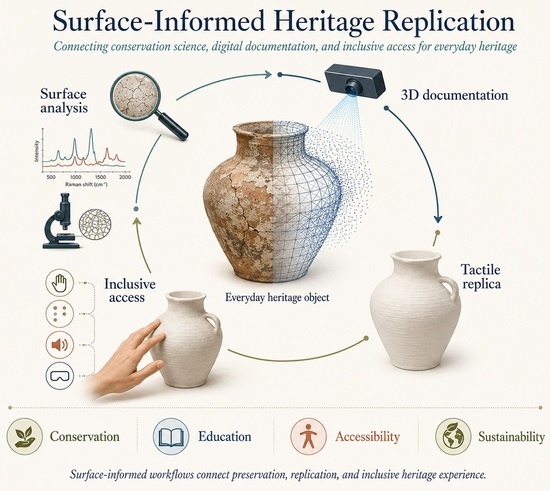
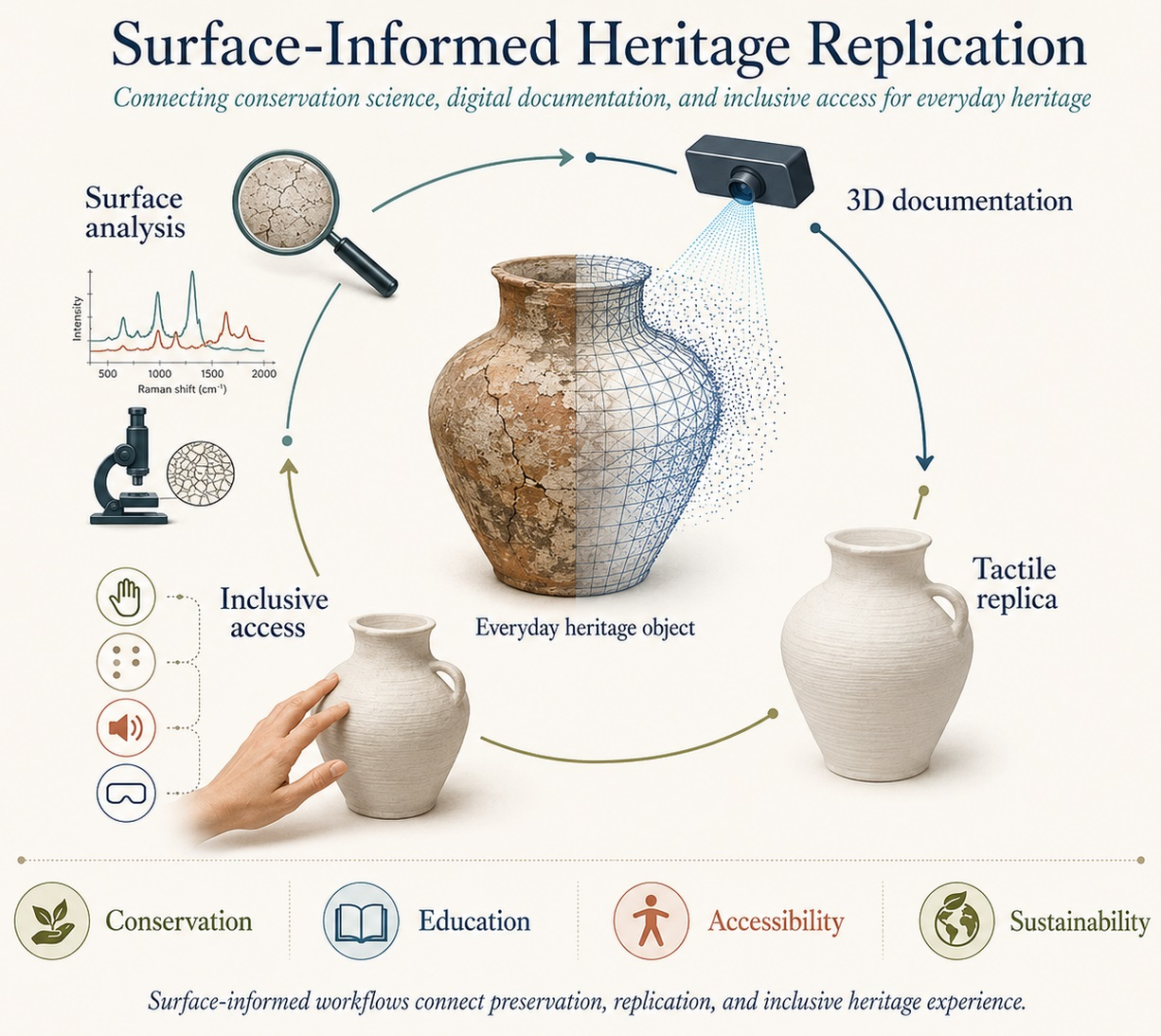
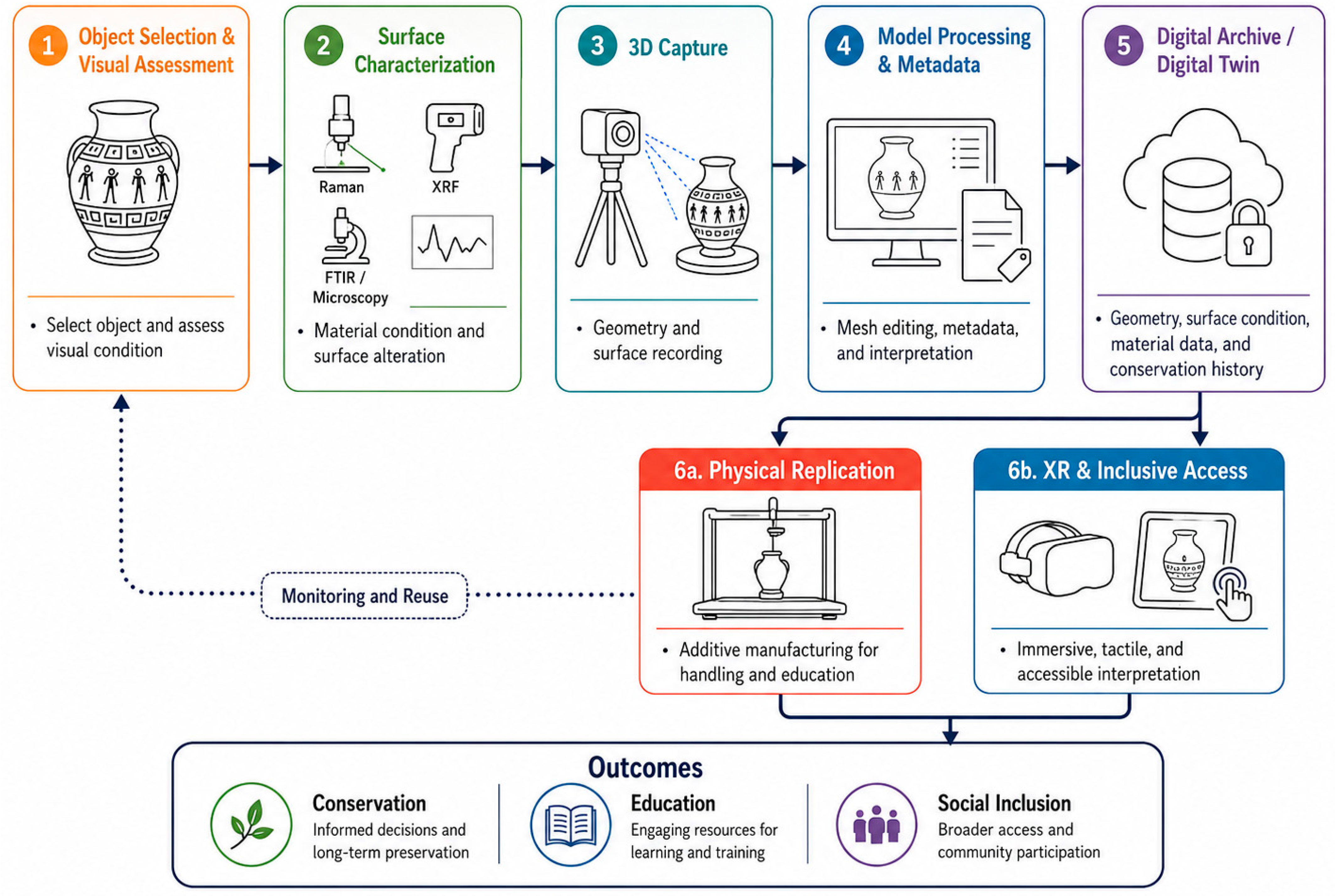
The central argument of this review is that surface characterization, digital documentation, additive manufacturing, XR technologies, and accessibility should not be treated as independent or sequentially disconnected topics. Instead, they can be understood as parts of a single surface-informed heritage workflow. In this workflow, surface characterization identifies material composition, degradation phenomena, treatment needs, and surface features of interpretative value. Digital documentation then records these features through 3D capture, imaging, metadata, and archiving, creating structured digital assets that contain both geometric and material information. Additive manufacturing translates selected aspects of these digital records into physical replicas, where decisions concerning scale, surface fidelity, material choice, and post-processing are informed by both conservation requirements and user needs. XR technologies provide an additional interpretative layer, enabling contextualization, remote access, and multimodal explanation. Finally, accessibility considerations, particularly for visually impaired users, influence how replicas and XR tools are designed, tested, and used. The review therefore follows the logic: surface analysis → digital capture → surface-informed replication → XR-supported interpretation → inclusive access. This framework is used throughout the manuscript to connect the technical, conservation-oriented, and social dimensions of everyday heritage.
Review Scope and Approach
This work is structured as a critical narrative review rather than a systematic review or meta-analysis. Its purpose is not to quantify publication trends or exhaustively assess all available studies through a PRISMA-type protocol, but to synthesize interconnected developments across surface characterization, conservation treatments, digital documentation, additive manufacturing, extended reality, and inclusive heritage access. This approach was considered appropriate because the topic spans several technical and interpretative domains, where a strictly systematic protocol could limit the broader conceptual integration required for the present review.
The literature was selected through targeted searches in major academic databases and publisher platforms, including Scopus, Web of Science, Google Scholar, ScienceDirect, SpringerLink, MDPI, Taylor & Francis, and relevant cultural heritage and conservation journals. The search strategy combined keyword groups related to: (i) everyday heritage and cultural heritage conservation; (ii) surface degradation, coatings, protective treatments, consolidants, nanocoatings, and anti-corrosion strategies; (iii) non-destructive characterization techniques, including Raman spectroscopy, XRF, FTIR, microscopy, profilometry, and hyperspectral imaging; (iv) 3D scanning, photogrammetry, digital documentation, and digital twins; (v) additive manufacturing, 3D-printed replicas, tactile models, and heritage replication; and (vi) XR technologies, accessibility, visually impaired users, multisensory interpretation, and inclusive museum practice.
Priority was given to peer-reviewed journal articles, review papers, and case-based studies published mainly from 2022 onward, in order to reflect recent developments in surface science, digital heritage, additive manufacturing, XR technologies, and accessibility-oriented heritage practice. Earlier publications were included selectively when they provided foundational concepts, widely accepted definitions, or methodological background directly relevant to the review. Studies were included when they addressed at least one of the following aspects: heritage surface analysis or treatment; documentation of material condition; digital capture or archiving of heritage objects; fabrication of physical replicas; tactile or multisensory interpretation; or inclusive access for visually impaired users. Studies were excluded when they referred to digital fabrication, XR, or surface engineering without a clear connection to cultural heritage, conservation, accessibility, or heritage interpretation.
Given the interdisciplinary nature of the topic, the review did not aim to produce a statistically exhaustive mapping of the literature. Instead, selected sources were critically interpreted in relation to the central argument of the paper: that surface condition should inform not only conservation decisions, but also digital documentation, replica design, XR-based interpretation, and inclusive access. This methodological framing allows the review to connect surface science with digital and physical dissemination workflows, while acknowledging the need for further systematic and user-centered studies in future research.
4. Surface Treatment, Restoration and Digital Support
Surface treatment and restoration practices occupy a central position in the conservation of everyday heritage, particularly when surface alteration affects stability, readability, or safe handling. In the context of this review, surface treatment is not approached only as a material intervention, but also as part of a broader documentation and decision-making workflow. The selection of a treatment depends on the object’s material composition, degradation state, intended use, and conservation ethics, especially the principles of compatibility, reversibility, minimal intervention, and long-term stability. Digital tools can support this process by documenting the pre-treatment condition, assisting in restoration planning, and enabling post-treatment monitoring.
4.1. Surface Treatment Technologies
Surface treatment technologies aim to stabilize, protect, or improve the durability of heritage materials while preserving their historical and aesthetic value [
68]. Protective coatings are commonly used to reduce the impact of humidity, pollutants, ultraviolet radiation, abrasion, and biological colonization [
69]. Depending on the substrate and conservation objective, these coatings may be organic, inorganic, hybrid, or bio-based. Their effectiveness, however, must always be assessed in relation to permeability, optical appearance, ageing behavior, and compatibility with the original surface [
70].
Consolidants represent another important category of surface treatment, particularly for porous, friable, or mechanically weakened materials such as stone, plaster, ceramics, wood, and painted layers [
71]. Their role is to restore cohesion without creating excessive stiffness, gloss, discoloration, or harmful residues. In this context, the depth of penetration, solvent system, curing behavior, and long-term response to environmental stress are critical parameters. Poorly selected consolidants may stabilize the surface temporarily while creating future conservation problems.
Nanocoatings and nanostructured treatments have attracted increasing interest in heritage conservation because they can offer tailored properties at relatively low application thicknesses [
72]. Examples include hydrophobic, photocatalytic, antimicrobial, anti-soiling, or corrosion-inhibiting surfaces. Their potential is significant, but their use in heritage contexts requires careful evaluation, since high performance under laboratory conditions does not always guarantee long-term suitability on aged, heterogeneous, or historically sensitive substrates [
73].
Anti-corrosion treatments are especially relevant for metallic everyday heritage objects, including tools, domestic items, industrial artefacts, and urban elements [
74]. These treatments may involve corrosion inhibitors, protective films, conversion layers, or controlled environmental strategies [
75]. As with all surface interventions, the main challenge is to balance protection with material authenticity, avoiding treatments that alter surface appearance, obscure use-related traces, or complicate future analysis.
Table 5 contains the prominent surface treatment technologies for everyday heritage materials.
4.2. Surface Restoration Practices
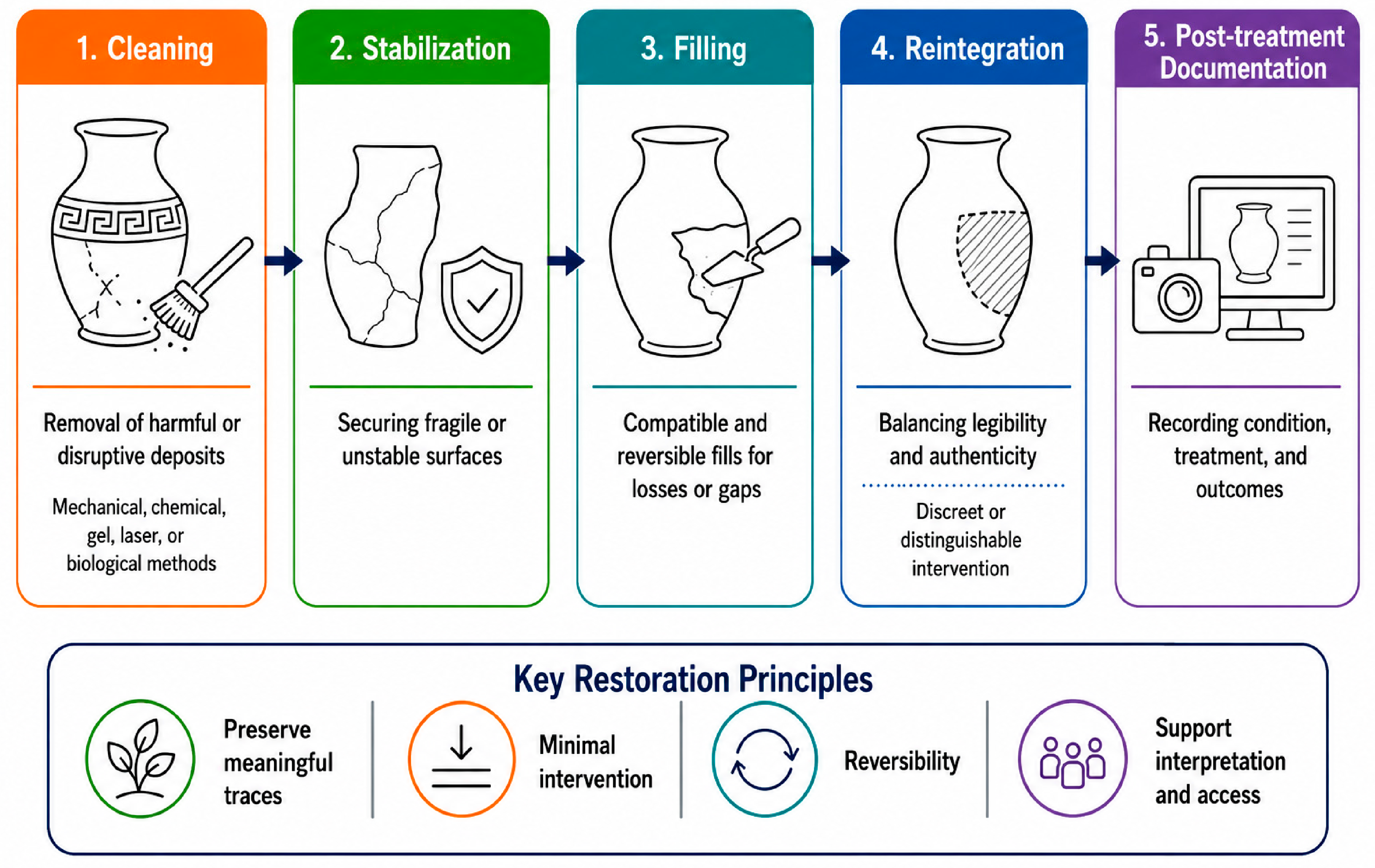
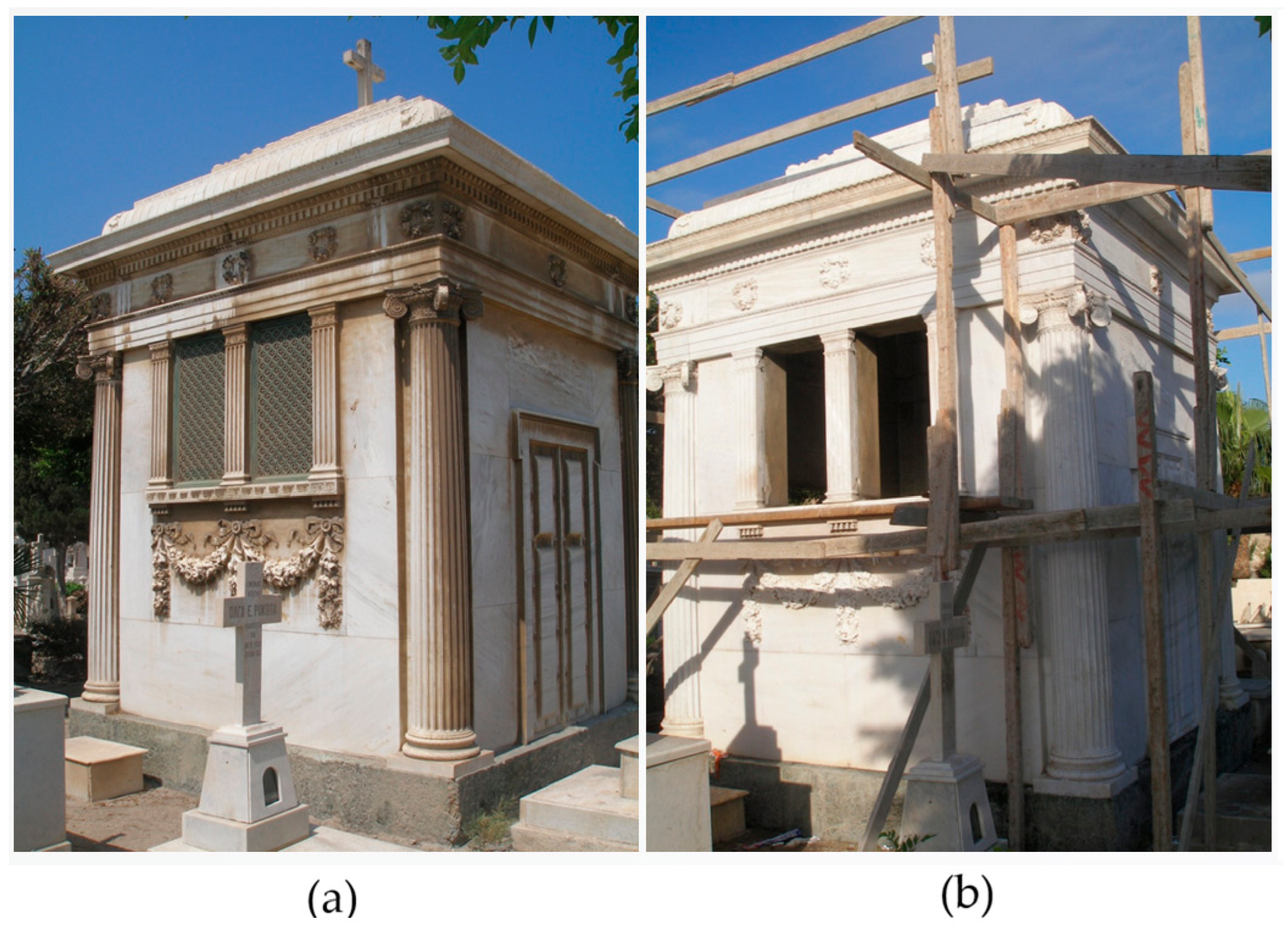
Surface restoration practices are applied when degradation, contamination, or material loss affects the readability, stability, or interpretation of an object. Cleaning is one of the most common interventions, but also one of the most sensitive. Mechanical, chemical, gel-based, laser, or biological cleaning methods may be used depending on the nature of the deposit and the substrate [
76]. The objective is not necessarily to return the object to an idealized original state, but to remove harmful or visually disruptive material while preserving historically meaningful traces such as patina, tool marks, wear, and previous use.
Filling and reintegration are used when cracks, losses, gaps, or missing surface areas compromise structural integrity or interpretation [
77,
78]. These practices may involve compatible mortars, resins, reversible fills, retouching materials, or detachable inserts. In everyday heritage, such decisions require particular care, since traces of use and repair may themselves form part of the object’s value. The restoration strategy should therefore distinguish between damage that threatens preservation and surface evidence that contributes to meaning.
Surface reintegration also raises questions of legibility and authenticity. In some cases, visually discreet reintegration may be appropriate; in others, a clearly distinguishable intervention is preferable [
79]. For objects intended for educational display or tactile interpretation, the restoration logic may differ further, since replicas can be used to communicate missing forms or surface details without altering the original. This distinction between conserving the original and reconstructing an interpretable version is especially important when digital and additive manufacturing tools are available.
Figure 6 depicts the aforementioned main surface restoration practices.
4.3. Digital Support in Conservation
Digital tools can support surface treatment and restoration at several stages of the conservation process. Before intervention, 3D models, high-resolution imaging, and surface characterization data can help assess damage, identify treatment priorities, and test possible restoration scenarios. Digital simulation may be used to evaluate missing volumes, reconstruct fragmented forms, or visualize alternative reintegration approaches without physically altering the original object.
During and after treatment, digital documentation provides an objective record of conservation decisions. Pre- and post-treatment scans, calibrated photographs, microscopy images, and analytical maps can document cleaning results, coating performance, surface stabilization, or changes in colour and texture [
80,
81]. This documentation is particularly useful for fragile everyday heritage objects, where future access to the original may be limited or where long-term monitoring is required [
82].
Repeated digital capture also supports monitoring over time. By comparing successive datasets, conservators can detect surface loss, deformation, coating failure, renewed corrosion, biological recolonization, or changes in roughness and texture. When these records are connected with metadata on materials, treatments, environmental conditions, and handling history, they can form part of a structured conservation archive or simplified digital twin.
In this sense, digital support does not replace surface treatment or restoration expertise. Rather, it strengthens decision-making by making interventions more traceable, comparable, and reversible in planning. It also creates a link with the broader aims of this review: once surface condition and treatment history are digitally documented, the same data can inform replica fabrication, tactile interpretation, XR visualization, and inclusive access strategies without increasing risks to the original heritage object.
Table 6 contains the aforementioned digital tools supporting surface treatment and restoration workflows.
4.4. Coating Technologies Within Surface-Informed Digital Heritage Workflows
Coating technologies contribute to heritage preservation not only by acting as protective barriers, but also by becoming part of a broader surface-informed conservation workflow. In everyday heritage objects, coatings and related surface treatments may be used to reduce moisture ingress, pollutant deposition, ultraviolet-induced alteration, biological colonization, abrasion, or corrosion. Their role is therefore preventive as well as remedial: they can slow further deterioration, stabilize vulnerable surfaces, and extend the safe display or handling life of objects. However, their application requires careful evaluation of substrate compatibility, optical changes, reversibility, ageing behaviour, retreatability, and possible interactions with previous conservation materials [
85].
Recent advances in coating science are particularly relevant to heritage applications because they allow surface functionality to be tailored more precisely. Hydrophobic and superhydrophobic coatings can reduce water uptake and salt-related deterioration in porous materials; anti-soiling and self-cleaning coatings may limit the accumulation of pollutants on exposed surfaces; antimicrobial and antibiofouling coatings can reduce biological colonization; and corrosion-inhibiting treatments can improve the stability of metallic objects. Nanostructured and hybrid organic–inorganic coatings are especially promising because they may provide protective effects at low thicknesses, minimizing visual alteration. Nevertheless, their long-term performance on aged, heterogeneous, and historically sensitive substrates remains a critical issue, and laboratory efficiency should not be assumed to translate directly into conservation suitability.
Coatings also interact with digital documentation and replication processes in several ways. Before treatment, high-resolution imaging, colorimetric documentation, profilometry, spectral analysis, and 3D scanning can establish a baseline record of surface condition. After treatment, the same methods can be used to assess changes in gloss, colour, roughness, wettability, morphology, coating uniformity, or the emergence of coating failure [
86]. Repeated digital capture can therefore support monitoring by comparing pre- and post-treatment surface states. In addition, digital and additive manufacturing workflows may assist coating research by enabling the production of test replicas or mock-ups on which coating behaviour, visual impact, cleaning response, or tactile qualities can be evaluated before interventions are applied to original heritage objects. This connection is particularly important when treated replicas are intended for handling, education, or tactile access, since protective finishes must preserve both durability and surface readability.
In this sense, coatings should not be viewed as a separate topic within the conservation workflow. They connect material stabilization, surface characterization, digital monitoring, replica fabrication, and inclusive interpretation. Their contribution becomes strongest when coating selection and evaluation are informed by the same surface data used for documentation and replication. This approach strengthens the link between coating science and digital heritage practice and supports a more integrated framework for preserving, studying, and disseminating everyday heritage objects.
6. Inclusive and Tactile Heritage Access for Visually Impaired Users
Inclusive access is a central issue in the contemporary interpretation of cultural heritage. Although digital documentation and physical replication are often discussed in relation to conservation and education, their social value becomes particularly evident when they are used to reduce barriers for users who cannot fully engage with visually oriented exhibitions. For visually impaired users, access to heritage is frequently limited by “look but do not touch” museum practices, the absence of tactile material, and interpretative tools that prioritize images, labels, and visual displays. In this context, 3D scanning and additive manufacturing can support the creation of tactile, durable, and interpretable replicas, while multisensory tools can enrich the experience through audio, Braille, and digital guidance [
105]. The aim is not simply to reproduce objects, but to design meaningful encounters with heritage through touch, sound, scale, texture, and guided interpretation.
6.1. Accessibility Challenges in Heritage
Cultural heritage interpretation has traditionally been shaped by visual engagement. Museum displays, exhibition panels, digital catalogues, and virtual environments often assume that the visitor can observe colour, form, surface condition, and spatial arrangement visually. This visual dominance creates a structural limitation for visually impaired users, who may be physically present in heritage spaces but excluded from a full interpretative experience [
108].
The issue is particularly relevant for everyday heritage objects, whose meaning is often connected to use, materiality, wear, texture, and handling. A domestic tool, a small urban artefact, an educational object, or a crafted item may communicate much of its significance through scale, weight, edge profiles, surface roughness, or traces of use. When direct handling is prohibited to protect the original object, these dimensions become inaccessible unless alternative forms of engagement are provided [
109].
Accessibility should therefore be understood as more than physical entry into a museum or cultural site. It also includes intellectual, sensory, and emotional access to cultural content. For visually impaired users, this requires interpretative strategies that move beyond visual substitution and support tactile and auditory understanding. Digital documentation and additive manufacturing offer a practical route toward this goal, provided that replicas are designed with accessibility requirements in mind from the beginning [
110].
6.2. Tactile Replication via 3D Printing
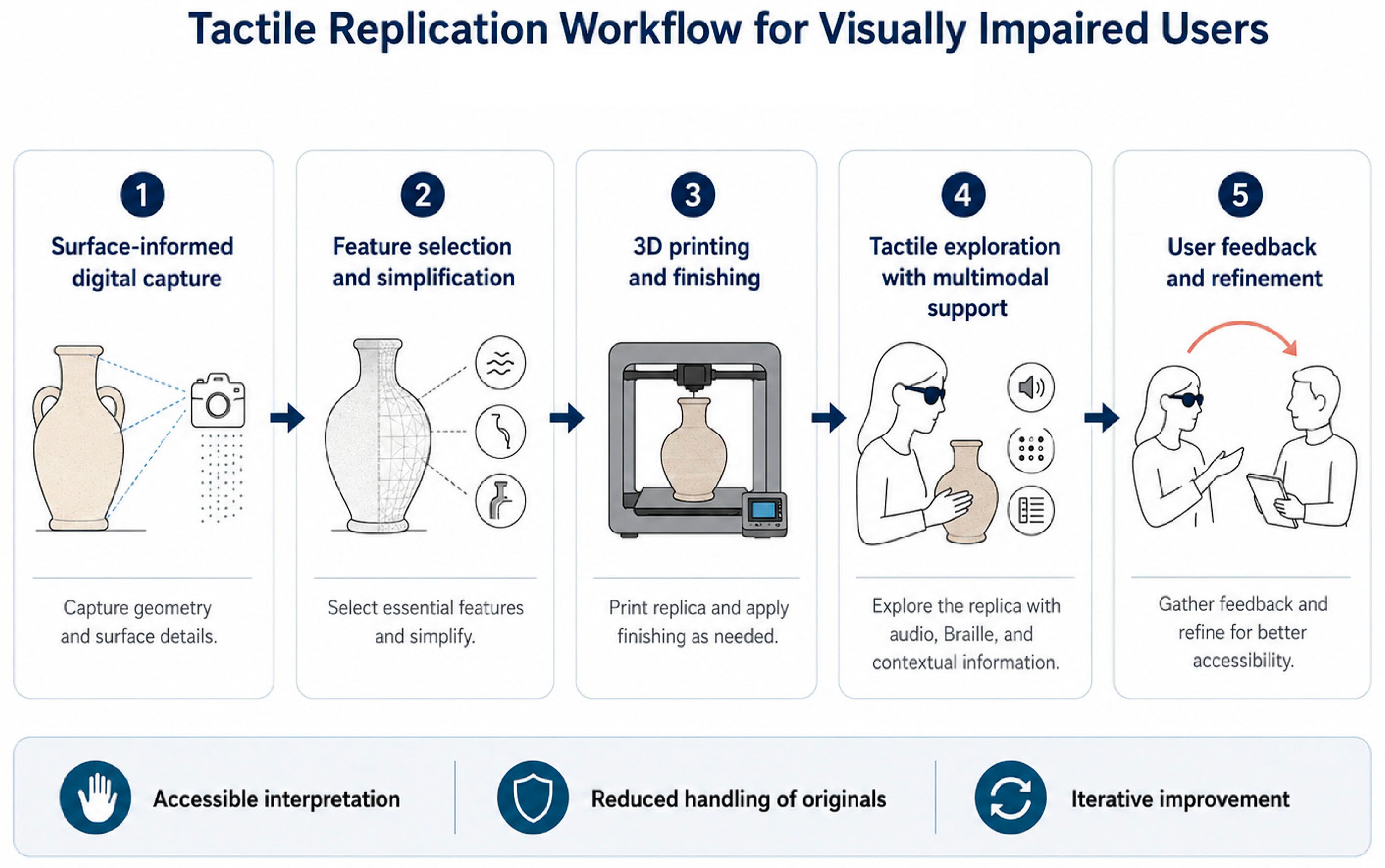
Tactile replication through 3D printing enables heritage objects to be explored without exposing the original artefacts to repeated handling. This is especially valuable for fragile, rare, contaminated, or unstable objects, where direct touch would be inappropriate from a conservation perspective. A printed replica can preserve the general form of the object while allowing users to examine its shape, proportions, relief, and selected surface features through touch.
The use of scaled models is particularly important. Very large objects, such as architectural fragments or urban elements, can be reduced to a manageable size, while very small objects or fine details can be enlarged to improve tactile legibility. Scale adjustment should not be treated as a distortion, but as an interpretative design decision, especially when the aim is to communicate spatial relationships, decorative patterns, inscriptions, or surface damage.
In some cases, surface features may need to be enhanced. Slightly raised relief, clearer boundaries between forms, simplified textures, or reinforced fragile elements can make a replica more understandable for tactile exploration. This is where the connection between surface documentation and inclusive design becomes critical. The objective is not always to produce the most visually accurate replica, but to create a physical object that communicates the relevant heritage information effectively through touch (
Figure 7).
6.3. Multisensory Interpretation
Tactile replicas are most effective when integrated into a broader multisensory interpretation strategy. Touch can communicate form, scale, relief, and texture, but additional information is often required to explain material history, function, cultural context, and conservation condition [
105]. Braille labels [
111], raised-line diagrams [
112], audio descriptions [
113], QR codes [
114], NFC tags [
115], and mobile applications [
116] can all support this process.
Braille and raised labels provide direct access to basic identification and orientation information. Audio description can offer richer contextual interpretation, explaining object function, historical background, surface alterations, and the reasoning behind any modifications made to the replica. QR and NFC technologies can connect the physical replica to layered digital content, including narrated descriptions, 3D models, conservation notes, or multilingual resources.
This multimodal approach is particularly suitable for educational and museum environments, where users may differ widely in age, sensory ability, prior knowledge, and learning preferences. Importantly, multisensory interpretation should not be treated as a separate accessibility add-on. When designed well, it benefits all visitors by making heritage objects more understandable, memorable, and engaging.
Table 9 contains the aforementioned multisensory interpretation tools for accessible heritage experiences.
6.4. Design Considerations
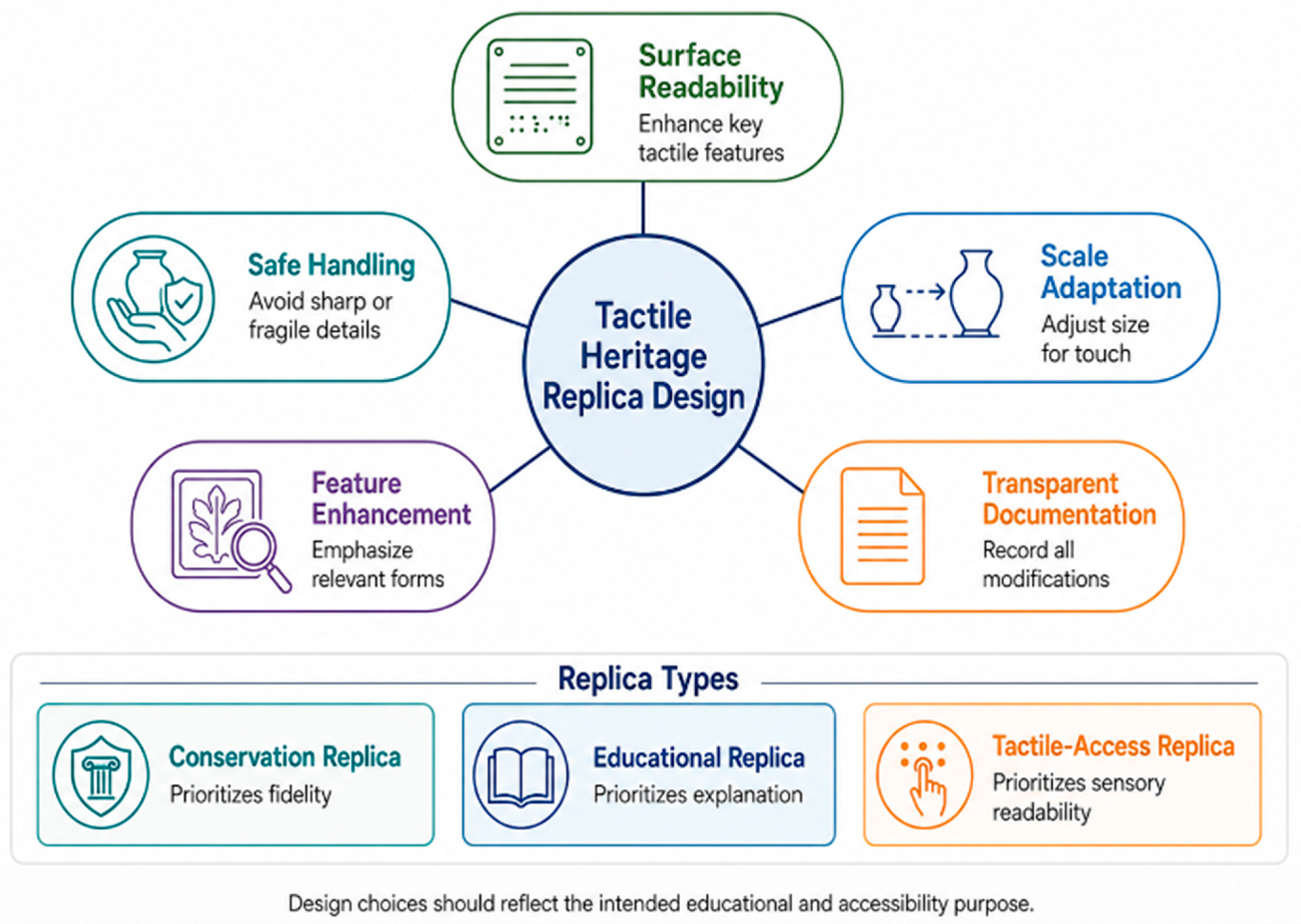
The design of tactile heritage replicas requires a careful balance between surface fidelity, interpretative clarity, safety, and durability. A replica that is visually accurate may not necessarily be effective for tactile exploration [
117]. Fine surface details may be too small to perceive by touch, while highly complex textures may create confusion rather than understanding. For this reason, tactile replicas often require selective simplification or enhancement.
Surface readability is a key criterion [
118]. Important features such as inscriptions, relief patterns, cracks, tool marks, or decorative boundaries may need to be slightly enlarged or sharpened in the printed model. Conversely, surface noise, scanning artefacts, or irrelevant damage may need to be reduced. These decisions should be guided by the educational or interpretative purpose of the replica and, where possible, by consultation with visually impaired users or accessibility specialists.
Safety is equally important [
119]. Replicas intended for handling should avoid sharp edges, brittle details, unstable parts, toxic materials, or fragile finishes. They should also be easy to clean, especially in public or educational settings where repeated handling is expected [
120]. Material selection, print orientation, layer adhesion, and post-processing therefore become accessibility considerations as much as fabrication choices [
121].
A final issue concerns the relationship between simplification and accuracy. In conservation contexts, accuracy is often treated as a primary objective [
122]. In tactile interpretation, however, strict accuracy may sometimes need to give way to usability. This does not reduce the scholarly value of the replica, provided that all modifications are documented transparently [
122]. A useful approach is to distinguish between three replica types: conservation replicas, which prioritize fidelity; educational replicas, which prioritize explanation; and tactile-access replicas, which prioritize sensory readability and inclusive interaction.
Figure 8 depicts the aforementioned design principles for tactile heritage replicas while
Table 10 contains the discussed design criteria for tactile replicas intended for visually impaired users.
6.5. User-Centered Evaluation and Evidence Gaps
The effectiveness of tactile replicas and XR-based heritage tools cannot be assessed only through technical quality or visual appearance. For visually impaired users, evaluation should consider whether the replica supports independent exploration, whether surface features are tactilely readable, whether scale and simplification choices improve understanding, and whether complementary audio, Braille, QR/NFC, or AR elements provide useful contextual information. User-centered evaluation may therefore include direct handling sessions, structured interviews, task-based usability testing, observation of tactile exploration strategies, and feedback from visually impaired participants, accessibility specialists, educators, and museum professionals.
Available studies indicate that tactile replicas can support engagement, spatial understanding, and object-based learning when they are designed with user needs in mind [
123]. However, the evidence remains uneven. Many reported applications are based on small-scale case studies, prototype demonstrations, or short-term museum/educational interventions. In several cases, evaluation focuses on general visitor impressions rather than measurable learning outcomes, long-term retention, independent use, or comparative performance between different tactile design strategies. Evidence is also limited regarding how users interpret different surface textures, how much detail is optimal, and when simplification or enlargement improves rather than distorts understanding.
XR tools present similar challenges. Although VR and AR can add context, narrative, and remote access, many applications remain visually oriented and are not fully tested with visually impaired users. Accessibility features such as spatial audio, voice guidance, screen-reader compatibility, simplified navigation, haptic feedback, or tactile reference objects are often discussed as design possibilities, but less frequently evaluated in real exhibition settings [
124]. Practical barriers also remain, including device cost, maintenance, staff training, user fatigue, motion discomfort, software obsolescence, and the risk of cognitive overload.
For these reasons, future work should move toward co-design and iterative evaluation rather than technology-led development. Testing with visually impaired users should inform feature selection, scale adaptation, tactile readability, interpretative clarity, and long-term usability. This is particularly important for everyday heritage, where meaning is often communicated through material traces, surface wear, scale, and evidence of use.
7. XR Technologies and Multimodal Heritage Interpretation
Extended reality (XR) technologies, including virtual reality (VR), augmented reality (AR), and related immersive interfaces, can expand the interpretation of everyday heritage beyond the limits of conventional display. In the context of this review, XR is not treated as a substitute for conservation or physical replication, but as a complementary layer that can support remote access, contextual understanding, and multimodal engagement. When connected with surface documentation and 3D models, XR tools can help users explore heritage objects, visualize their original context, understand degradation processes, and interact with reconstructed environments. However, their value depends on careful design, especially when accessibility and inclusive interpretation are considered.
7.1. VR for Remote Exploration
Virtual reality enables users to access heritage objects, collections, or environments without being physically present at the site or institution. This is particularly useful for objects that are fragile, stored in restricted collections, geographically distant, or difficult to display [
125]. Through VR environments, users can examine reconstructed spaces, interact with digitized artefacts, and experience interpretative narratives that combine visual, spatial, and auditory information.
For everyday heritage, VR can be especially valuable when objects need to be understood within their original social or functional context. A domestic object, workshop tool, classroom artefact, or urban element may gain interpretative meaning when placed within a reconstructed environment. In such cases, VR can support contextual learning by showing how objects were used, where they were located, and how they related to broader cultural practices [
125].
Nevertheless, VR should be applied with care. Immersive environments require appropriate hardware, technical expertise, and user-friendly interaction design. They may also introduce barriers for users who experience motion discomfort, have limited digital familiarity, or require non-visual modes of interaction. For this reason, VR applications in heritage should ideally include adjustable levels of immersion, clear navigation, audio description, and alternative access formats.
7.2. AR for On-Site Interpretation
Augmented reality can enrich physical heritage experiences by overlaying digital information onto real objects, replicas, or exhibition spaces. Unlike VR, which creates a fully virtual environment, AR can support interpretation while maintaining the user’s connection with the physical setting. This makes it particularly suitable for museums, educational spaces, archaeological sites, and community heritage exhibitions [
126].
In everyday heritage contexts, AR can be used to display object histories, material information, surface degradation maps, restoration stages, or reconstructions of missing elements. For example, a visitor examining a 3D-printed replica could use a mobile device to access annotations explaining surface wear, manufacturing traces, or conservation treatments. AR can also support layered interpretation, allowing different users to access different levels of information according to their needs, age, language, or prior knowledge [
127].
The main limitation of AR is that many applications remain heavily visual. If information is presented only through screen-based overlays, visually impaired users may still be excluded. Therefore, AR systems intended for inclusive heritage interpretation should be designed with audio output, tactile references, voice guidance, screen-reader compatibility, and simple interaction pathways. In this sense, AR should be understood as part of a multimodal system rather than a purely visual enhancement.
7.3. Complementarity with Physical Replicas
XR technologies and physical replicas serve different but complementary interpretative functions. Physical replicas provide tactile and spatial access, allowing users to understand scale, form, relief, texture, and handling qualities. XR environments, by contrast, can provide context, narrative, reconstruction, and dynamic information that cannot be easily embedded in the object itself. When used together, they can create richer heritage experiences than either approach alone.
This complementarity is particularly important for visually impaired users. A tactile replica can support direct exploration through touch, while an audio-enhanced XR or AR layer can explain what the user is touching, identify key features, and provide historical or conservation context [
128]. For example, a replica of a degraded surface could be accompanied by audio cues describing areas of corrosion, missing material, or restoration, while a digital model could present alternative reconstructions or original-use scenarios.
The combined use of replicas and XR also supports different learning preferences. Some users may benefit from physical manipulation, others from spatial immersion, and others from guided auditory explanation [
129]. In educational settings, this layered approach can support active learning, group discussion, and differentiated instruction. In museum contexts, it can reduce dependence on the original object while increasing interpretative depth and accessibility.
Table 11 contains the aforementioned complementary roles of XR technologies and physical replicas in heritage interpretation.
7.4. Opportunities and Limitations for Accessibility
XR technologies can support accessibility by enabling remote access, adaptive interpretation, multilingual content, guided exploration, and audio or haptic feedback. However, they also introduce new design responsibilities. When combined with digital models and tactile replicas, XR can broaden heritage interpretation beyond visual observation.
For visually impaired users, the most promising XR applications are those that combine spatial audio, voice guidance, tactile reference points, simplified navigation, and compatibility with assistive technologies. Haptic interfaces, although still not widely available in everyday museum practice, may also become relevant for communicating shape, resistance, or surface features in virtual environments. However, such systems must be evaluated carefully, since technical novelty alone does not guarantee accessibility or usability [
130].
Practical limitations also remain. XR development can be costly, and many cultural institutions lack the infrastructure or staff training required for long-term maintenance. Devices may become obsolete, software requires updates, and digital experiences may lose functionality without sustained support. Poorly designed XR applications may also create cognitive overload, exclude users with disabilities, or distract from the heritage object itself [
131].
For these reasons, XR should be integrated selectively and purposefully. Its strongest role in the framework proposed here is not to replace physical engagement, but to enrich it. When XR is combined with surface-informed replicas, clear audio interpretation, and accessible interaction design, it can become a meaningful component of inclusive heritage practice.
8. Challenges, Sustainability and Future Directions
The integration of surface characterization, digital documentation, additive manufacturing, XR technologies, and inclusive interpretation offers substantial opportunities for everyday heritage. It also introduces practical and methodological challenges. These concern not only technology selection, but also surface-data reliability, digital-asset management, long-term replica use, institutional skills, and the environmental impact of digital and manufacturing workflows.
Although the technologies discussed in this review offer considerable potential, their maturity and evidential basis differ substantially. Surface characterization methods such as Raman spectroscopy, XRF, FTIR, microscopy, profilometry, and hyperspectral imaging are relatively well established in conservation science, but their integration with 3D documentation and replica design remains less standardized. Similarly, 3D scanning and photogrammetry are widely used for documentation, yet the degree to which they can reliably capture fine surface degradation, tactilely meaningful texture, or treatment-related changes depends strongly on resolution, lighting, calibration, processing parameters, and validation procedures. Additive manufacturing is increasingly applied to heritage replication, but evidence remains uneven regarding long-term durability, cleaning resistance, tactile readability, and the interpretation of post-processed surfaces. XR technologies offer promising possibilities for contextual and remote interpretation, but many applications remain prototype-based and visually oriented, with limited validation involving visually impaired users. Therefore, the practical value of these approaches should be assessed not only in terms of technical feasibility, but also in relation to conservation reliability, user evaluation, institutional capacity, and long-term maintenance. To clarify these differences,
Table 12 summarizes the relative maturity, main limitations, and evidence gaps associated with the principal technologies and approaches discussed in this review.
8.1. Technical Challenges
One of the most immediate technical challenges concerns equipment cost and accessibility. High-resolution scanners, spectroscopic instruments, hyperspectral imaging systems, professional AM equipment, and XR development tools can significantly exceed the budgets of smaller museums, schools, archives, or community heritage organizations. Although low-cost photogrammetry and desktop 3D printing have lowered the entry barrier, they do not always provide the accuracy, repeatability, or surface fidelity required for conservation-oriented applications [
132].
Data handling represents another major limitation. Surface characterization and 3D documentation workflows generate large and heterogeneous datasets, including point clouds, meshes, texture maps, spectral data, microscopy images, metadata, and treatment records [
133]. Without clear protocols for file naming, metadata structure, storage, version control, and long-term archiving, these datasets may become difficult to reuse or verify. This is particularly problematic when digital records are intended to support monitoring, replication, or future conservation decisions.
Fidelity also remains a central concern. A digital model may appear visually convincing but still fail to capture relevant surface information, such as microcracks, subtle erosion, patina, tool marks, or contamination layers [
134]. Similarly, a 3D-printed replica may reproduce overall geometry while losing fine texture or material appearance. The issue becomes more complex when replicas are designed for tactile access, since some features may need to be enhanced or simplified. Therefore, fidelity should not be treated as a single metric, but as a function of intended use: conservation documentation, visual display, education, or tactile interpretation may each require different levels and types of accuracy.
Table 13 contains the aforementioned main technical challenges in digital and surface-informed heritage workflows.
8.2. Organizational Challenges and Training Needs
Beyond equipment and software, the successful adoption of these technologies depends heavily on institutional capacity. Many cultural and educational organizations lack personnel trained in both conservation principles and digital technologies. A 3D model, a surface map, or a printed replica may be technically impressive, but its value is reduced if staff cannot interpret, maintain, update, or integrate it into educational and curatorial practice.
The skills gap is particularly evident at the intersection of disciplines [
135]. Surface characterization requires knowledge of materials and degradation processes. 3D documentation depends on competence in acquisition, mesh processing, and validation, while additive manufacturing requires expertise in design preparation, materials, and post-processing. Inclusive interpretation adds further requirements, including accessibility standards, tactile design, and user-centered evaluation [
136]. In many institutions, these competences are distributed across different professionals or are absent altogether.
Training is therefore a structural requirement, not an optional supplement. Short-term workshops may introduce tools, but sustainable implementation requires continuous professional development, technical support, and collaboration between conservators, educators, engineers, designers, accessibility experts, and user communities [
137]. For visually impaired users in particular, co-design should be considered essential. Replicas and multisensory tools should not be developed only “for” users, but where possible “with” them, so that design decisions reflect real tactile, cognitive, and interpretative needs.
8.3. Sustainability Considerations
Sustainability in digital and replicated heritage should be considered from both environmental and social perspectives, but related claims must be treated with caution [
138]. Although additive manufacturing, digital archiving, and local production may reduce the need for transporting fragile objects, repeated handling of originals, or conventional exhibition fabrication, these benefits cannot be assumed without life-cycle assessment, energy measurements, material flow analysis, or durability data. The environmental performance of a replica depends on multiple factors, including printing technology, build time, failed prints, support structures, post-processing, material type, cleaning requirements, transport distance, reuse frequency, and service life. For this reason, sustainability in this field should be understood as a context-dependent design objective rather than an inherent property of additive manufacturing or digital production.
Additive manufacturing may reduce the need for transporting fragile objects, repeated handling of originals, or production of conventional exhibition materials. However, it also introduces material consumption, energy use, failed prints, support waste, post-processing residues, and hardware maintenance requirements. These factors should be assessed realistically, especially when replicas are produced at scale for education, outreach, or travelling exhibitions [
139].
Material selection is a key issue. PLA, recycled filaments, bio-based polymers, and durable thermoplastics may offer different environmental and functional advantages, but no material is universally sustainable in all contexts [
140]. A low-impact material that breaks easily and requires frequent replacement may be less sustainable than a more durable material with a longer service life [
141]. Similarly, resin-based printing may offer excellent surface detail, but its environmental and safety implications must be considered, especially in institutions without specialized facilities [
142].
Energy consumption also depends on technology, build time, printer settings, post-processing, and the number of iterations required to achieve an acceptable result [
143]. Good design preparation, efficient orientation, print validation, and reuse of digital files can reduce waste. Circular approaches may include recycled materials, modular exhibition components, repairable replicas, shared digital repositories, and local production to reduce transport needs [
144].
The social dimension of sustainability is equally important [
145]. A heritage workflow that improves accessibility, supports education, enables tactile engagement, and extends cultural participation has broader value than one focused solely on object preservation. Inclusive design, particularly for visually impaired users, should therefore be considered part of sustainable heritage practice, because it contributes to long-term cultural relevance, public engagement, and social equity. Accordingly, future work should include comparative life-cycle assessments, energy-use measurements, and material durability studies for heritage replica production. Such evidence is necessary before strong claims can be made regarding the environmental advantages of recycled filaments, local production, or digitally mediated fabrication workflows.
Table 14 contains the aforementioned sustainability considerations in additive and digital heritage workflows.
8.4. Future Research
Future research should focus on improving the reliability, accessibility, and sustainability of surface-informed digital heritage workflows. Artificial intelligence can play a useful role in surface analysis, particularly in the automated detection of cracks, erosion, staining, corrosion, biological growth, and other degradation patterns. Similar image-based approaches combining texture descriptors and deep learning features have already shown potential in particle and surface-pattern recognition tasks, suggesting possible transferability to heritage surface analysis workflows [
146]. Machine learning approaches may also support classification of surface condition, comparison of repeated scans, and prioritization of conservation interventions. However, such methods must be trained on reliable datasets and remain interpretable for conservation professionals.
Smart replicas represent another promising direction. Replicas could incorporate embedded sensors, NFC tags, audio triggers, or interactive elements that provide information on object function, material history, surface degradation, or conservation treatments. For educational and inclusive contexts, such replicas could support guided tactile exploration, personalized learning, and multilingual interpretation. Care must be taken, however, to keep the technology robust, maintainable, and appropriate to the heritage context.
Haptic XR also deserves further investigation. While VR and AR can provide visual and auditory interpretation, haptic interfaces may allow users to experience shape, resistance, texture, or spatial relationships in digital environments. This could be especially valuable for visually impaired users and for remote access to fragile or inaccessible heritage objects. At present, however, many haptic systems remain expensive, technically demanding, or insufficiently validated in real museum and educational settings.
Finally, more consistent inclusive design frameworks are needed. Current practices for tactile replicas, accessible XR, Braille integration, audio description, and surface adaptation are often developed case by case. Future work should define practical criteria for selecting surface features, adjusting scale, simplifying complex forms, documenting modifications, and evaluating tactile readability with visually impaired users. Statistical shape modelling approaches from interactive design and biomedical modelling may offer useful analogies for generating adaptive or parameter-driven replica geometries from limited morphological or functional inputs [
147,
148].
9. Conclusions
One of the most crucial applications for bringing together conservation, documentation, education, and accessibility is everyday heritage. Even though these objects could be considered minor compared to monumental heritage, they serve as a source of significant information about the practice of everyday life, cultural identity, material culture, and social memory. The surfaces of such objects usually contain a considerable amount of this information through such things as abrasions, tooling, patinas, decoration, contamination, or aging. Thus, the field of surface science plays a key role in interpreting and preserving them.
This work has shown that surface characterization and digital documentation can operate as complementary approaches in the study and preservation of everyday heritage objects. Techniques such as Raman spectroscopy, X-ray fluorescence (XRF), Fourier-transform infrared spectroscopy (FTIR), microscopy, profilometry, and hyperspectral imaging provide valuable information on material composition and degradation processes, while 3D scanning and photogrammetry capture geometry, morphology, and visible surface features. When integrated into a coherent workflow, these data can support conservation planning, treatment documentation, monitoring, digital archiving, and future reuse.
Additive manufacturing extends this workflow by transforming digital records into physical replicas. Such replicas can reduce handling of fragile originals, support teaching and exhibitions, and enable tactile interpretation. However, replication requires careful decisions regarding scale, material, surface fidelity, post-processing, and feature enhancement, depending on whether the intended use is conservation, education, display, or accessibility.
A key conclusion is that inclusive access should be embedded from the beginning of the heritage workflow. For visually impaired users, tactile replicas, Braille, audio description, QR/NFC-supported content, and accessible XR tools can provide forms of engagement that visual displays alone cannot offer. In this context, replicas become interpretative objects that communicate heritage through touch, sound, scale, and guided exploration.
Overall, integrating surface science, digital documentation, additive manufacturing, and multimodal interpretation offers a promising framework for everyday heritage. Its implementation requires collaboration among conservators, material scientists, engineers, designers, educators, museum professionals, accessibility experts, and user communities. Future work should prioritize clearer standards, sustainable materials, stronger user evaluation, and the systematic involvement of visually impaired audiences in design and assessment.