


Abstract
The expired drug Detralex (90% diosmin and 10% hesperidin), known as an effective corrosion inhibitor, was adsorbed onto mesoporous silica and incorporated into an epoxy matrix to enhance the coating’s corrosion protection in a highly corrosive 3 wt% NaCl solution. It was found that this treatment, by improving adhesion, modifying the hydrophilic properties, and enabling inhibitor release, increased the coating’s resistance over time. Based on an SEM-EDX analysis, even after 24 h of immersion, the epoxy coating with mesoporous nanosilica adsorbed with diosmin and hesperidin retained the incorporated inhibitors. This resulted in a slight increase in the samples’ polarization resistance during longer exposure.
1. Introduction
The gradual degradation of metals under harsh environmental conditions compromises their structure and certain mechanical and electrical properties, posing a significant challenge across numerous sectors. In industrial production, corrosion causes machinery failures and expensive repairs. Buildings and utilities are susceptible to structural weakening from corrosion. Transportation infrastructure, such as vehicles, bridges, and pipelines, also suffers damage, compromising safety and necessitating costly replacements. Finally, this results in significant economic losses and contamination of the natural environment [1,2]. Zinc (Zn) is used in several fields (e.g., galvanized coatings, batteries) and has gained significant importance in preventing corrosion as a sacrificial metal. Galvanized coatings, which account for nearly half of global Zn consumption, mitigate corrosion on steel substrates. The protection of the sacrificial metal is also of interest because its dissolution is considered an economic loss. So, inhibiting Zn corrosion is critically important from a practical perspective [3].
One method used to protect metals against oxidation is the active participation of inhibitors, inorganic or organic chemical substances that mitigate degradation. The main criteria for classifying inhibitors are their mechanism of action, which can be anodic, cathodic, or mixed type [4]. Anodic inhibitors reduce or block metal ionization, promoting the formation of protective layers at anodic sites, thereby inducing passivation, and shift the corrosion potential to more positive values. Cathodic inhibitors slow reduction reactions and form protective films or limit oxygen diffusion [5]. The most effective organic corrosion inhibitors are compounds containing heteroatoms (N, P, S, As, and O) that possess lone-pair electrons or π electrons in aromatic rings or multiple bonds [6]. Legislative restrictions on toxic substances have shifted corrosion inhibitor research toward environmentally friendly alternatives, leading to the development of green corrosion inhibitors. These include natural or nature-inspired compounds that comply with regulations on toxicity, biodegradability, and bioaccumulation [7]. Notable examples include natural plant extracts, such as Tilia platyphyllos leaf extract, which demonstrated effective corrosion inhibition of mild steel in 0.5 M HCl [8]. Similarly, adding a fruit extract from Terminalia bellerica enhanced corrosion inhibition, achieving 91.79% effectiveness for steel immersed in H2SO4 [9]. Active substances derived from drugs have also shown promise as green corrosion inhibitors. For instance, Cephapirin achieved a maximum inhibition efficiency (IE) of 83% at 600 ppm for carbon steel in 2 M HCl [10]. Expired Carbamazepine and Paracetamol were effective for carbon steel in 0.1 mol/L H2SO4 and 0.25 mol/L acetic acid, with Carbamazepine achieving ~90% IE in strong acid and Paracetamol achieving ~85% IE in weak acid solutions [11]. Antibacterial drugs, such as Doxycycline (68.5% IE at 200 ppm), Streptomycin (58.07% IE at 200 ppm), Ciprofloxacin (56.6% IE at 2000 ppm), and Amoxicillin (28.8% IE at 800 ppm), have shown varying inhibition efficiencies for bronze in simulated acid rain (pH 4) [12]. Additionally, Chloramphenicol provided an IE of 85.3% for A315 mild steel in 0.1 M HCl at a 10% inhibitor concentration [13]. Moreover, antihypertensives [14], anti-inflammatory agents [15,16], and analgesics [17] have been tested as corrosion inhibitors. Recent reviews have provided valuable insights into the development, effectiveness, and sustainability of green corrosion inhibitors, including plant extracts and bio-based compounds [18,19,20].
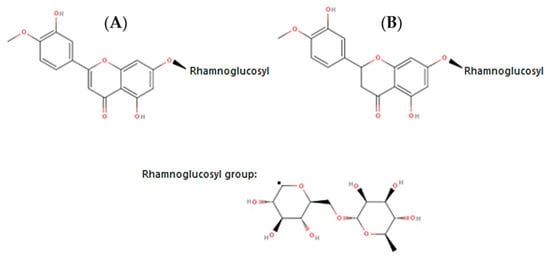
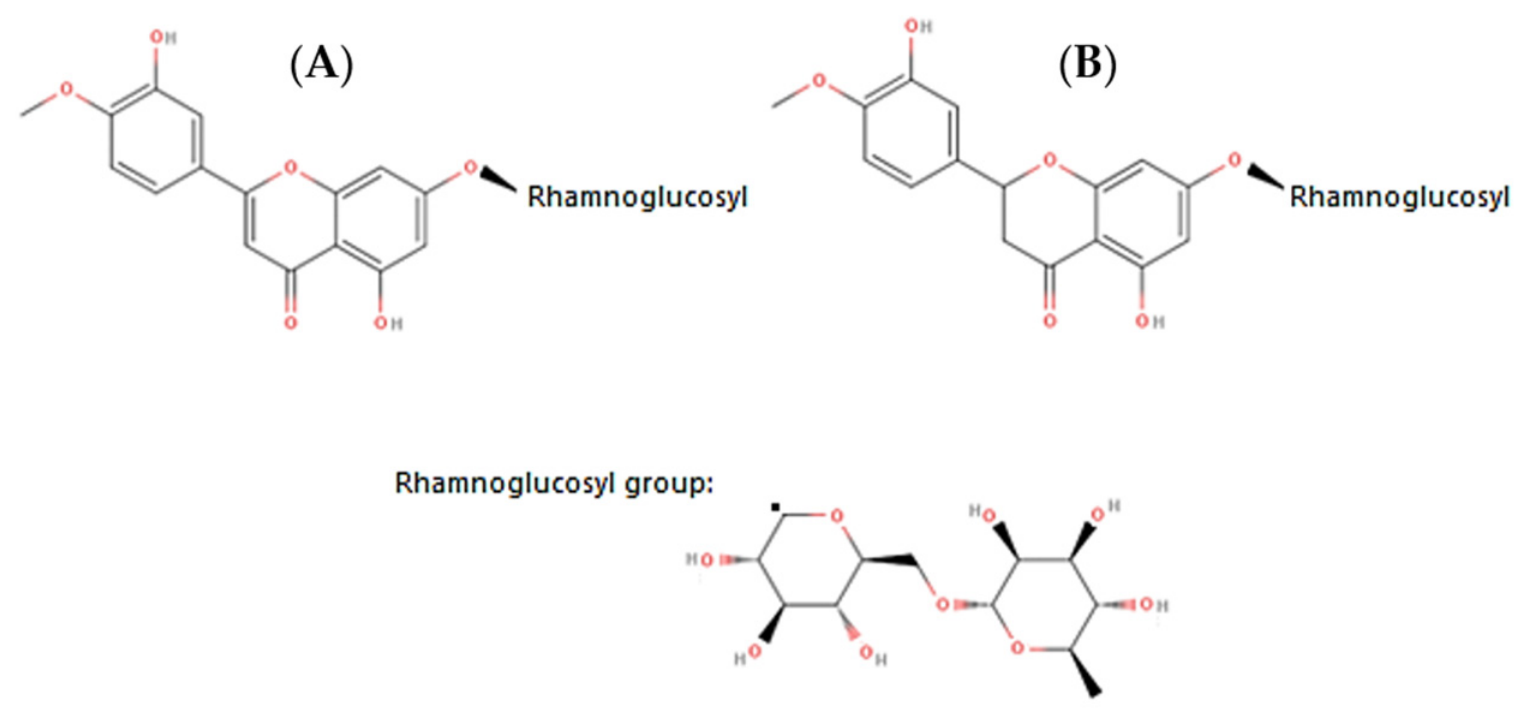
Detralex (or Daflon) is an oral medication that combines diosmin and hesperidin in a 9:1 ratio and is widely used to treat blood vessel disorders. Structurally, diosmin differs from hesperidin in that it has a double bond between two carbon atoms in the C-ring (Figure 1). Diosmin, a flavone glycoside derived from hesperidin, is a flavonoid found in citrus fruits [21]. Our recent study proved that expired Detralex is a good, mixed-type corrosion inhibitor for Zn substrates in 3 wt% NaCl solution, with an IE above 90% [22]. Using expired medication as a corrosion inhibitor offers two main benefits. First, it reduces the environmental impact by preventing pharmaceutical waste and minimizing pollution. Second, it repurposes expensive medications, extending their value beyond their original therapeutic scope [11].
Figure 1.
The structures of diosmin (A) and hesperidin (B).
Another important form of metal protection is through coatings. Their application to a metal surface provides a barrier against an aggressive environment. Although several high-performing organic, inorganic, and biopolymer-derived coatings that provide passive anti-corrosion protection have been developed over the last few decades, there remains a need to address their shortcomings. Epoxy resin-based layers are widely used because of their several benefits, such as their high corrosion and thermal resistance and good adhesion [23]. However, their barrier performance may be compromised by environmentally induced coating failure, resulting from poor mechanical properties and moisture diffusion into the layers. This limitation can be addressed through active protection by incorporating nanofillers, such as graphene oxide (GO) and functionalized GO [24,25,26,27,28], functionalized hydroxyapatite platelets [29], polydopamine-modified polytetrafluoroethylene nanoparticles [30], Ce–montmorillonite/ZIF [31] and others, in a coating’s matrix.
Although there are many possibilities for incorporating corrosion inhibitors into a coating matrix, such as directly in the precursor sol [32] or by impregnation into the pores, their introduction into carriers, or encapsulation, is a promising possibility [33]. These versatile nanocontainers, because of their ability to release incorporated inhibitors in a controlled manner, are an innovative solution for developing self-healing coatings [34]. Mesoporous silica nanoparticles (MSNs) have been extensively studied as smart containers for the gradual release of corrosion inhibitors and for enhancing metal protection. MSNs have unique properties, including a tunable surface and pore structure, high thermal and chemical stability, large pore volume and size, low toxicity, and water solubility. These properties enable MSNs to encapsulate large volumes of corrosion inhibitors and release the inhibitor at a controlled rate by adding a suitable gatekeeper to enhance the durability and effectiveness of coatings when one is incorporated [35].
Continuing our research on the inhibiting properties of Detralex, the main objective of this study was to incorporate expired Detralex via adsorption onto mesoporous silica nanoparticles and to introduce these nanoparticles into an epoxy (EP) coating to enhance its anti-corrosion performance [22]. This approach provides an eco-friendly solution by combining effective corrosion protection with pharmaceutical waste recycling. Fourier-Transform Infrared spectroscopy (FT-IR) and Raman spectroscopy confirmed the incorporation of the drug into the MSNs and epoxy matrix, while the drug’s release was studied using UV-Vis spectroscopy. The efficacy of the so-obtained system was demonstrated through electrochemical measurements. An adhesion test and contact angle determination focused on the changes in the coating’s properties.
2. Experimental Section
2.1. Materials
The materials used in this work were the drug Detralex, 1000 mg, expired for 3 months (Les Laboratoires Servier, Suresnes, France); acetone, isopropanol, and ethanol (EtOH) were purchased from CHEMICAL Company (Iasi, Romania); potassium chloride (KCl) was sourced from Primexchim (Bucharest, Romania); and sodium chloride (NaCl) was obtained from Chempur (Karlsruhe, Germany). The zinc plates, with 99% purity and reduced Ti and Cu contents, were procured from Altdepozit (Galati, Romania); and Primer FM epoxy resin (component A) and hardener (component B) were procured from MAPEI Romania (Bucharest, Romania).
The MSNs were produced using a mixture of tetraethyl orthosilicate (TEOS) (SIGMA ALDRICH, Darmstadt, Germany), absolute ethanol 99.9% (SIGMA ALDRICH), cetyltrimethylammonium bromide (CTAB) ≥98% (SIGMA ALDRICH), and sodium hydroxide (NaOH) 97% (ACS REAGENT, Darmstadt, Germany).
2.2. Preparation of the EP Precursors
The EP (bisphenol A epoxy resin) precursor had two components: component A—the epoxy itself, and component B—the hardener (a mixture of amine-containing monomers and oligomers). They were mixed at a 3:1 ratio by mechanical stirring. After 90 min, the EP attained a gel-like form, where it was only partially cured but had already lost its workability. To achieve the final cure, the samples were left at room temperature for 4 days.
2.3. Synthesis of the Mesoporous Silica Nanocontainers
To obtain the MSNs, 0.5 mL of 2 M NaOH was added to a mixture of 0.5 g of CTAB and 70 mL of water. The mixture was then heated to 80 °C, and 4 mL of TEOS was introduced with continuous stirring. After 2 h of stirring at 80 °C, an opaque, milky solution emerged. The resulting precipitate was filtered, and the filtrate underwent rinsing with distilled water (2 × 5 mL) and ethanol (2 × 5 mL). After approximately 24 h of drying in an oven, the precipitate was sintered at 600 °C for 5 h, yielding mesoporous silica nanoparticles [33].
To achieve the adsorption of the Detralex inhibitor (INH) onto the MSNs, the nanocontainers were added to an aqueous INH solution. They were kept for 1 h at a concentration of 7.82 × 10⁻³ M Detralex solution before being filtered. The so-obtained Detralex-adsorbed nanocontainers (INH@MSNs) were characterized and incorporated into the EP matrix at a concentration of 1% (EP-INH@MSNs).
2.4. Preparation of the Samples
The pre-treatment process for the Zn metal substrates involved multiple steps. First, the substrates were sanded and then degreased. The Zn plates were polished using emery paper of varying grits (P800, P2000, and P5000), followed by degreasing in a 0.1 M hydrochloric acid (HCl) solution. They were then rinsed with distilled water, sonicated in 2-propanol, and finally dried.
The prepared Zn substrates were coated with EP, MSN-incorporated EP (EP-MSNs), and EP-INH@MSNs using the dip-coating technique, with a withdrawal speed of 5 cm min−1.
2.5. Characterization of MSNs and INH@MSNs
To indicate the adsorption of INH onto the mesoporous silica, FT-IR spectra were acquired. A JASCO FT/IR-6800 spectrometer (JASCO Corporation, Tokyo, Japan) was utilized within the 500–4000 cm−1 range. The FT-IR measurements were conducted in a solid state.
Transmission electron microscopy (TEM) measurements were conducted on the MSNs using an H-9500, 100–300 kV HITACHI HIGH-TECH GLOBAL (Tokyo, Japan) measuring instrument. The TEM analysis aimed to determine the diameter of the MSNs.
UV-Vis spectroscopy (Cary 50, Varian Inc., Palo Alto, CA, USA) was employed to determine the release time of the INH. Zn samples coated with EP-MSNs and EP-INH@MSNs were immersed in distilled water, and the INH release was monitored by measuring its concentration from time to time over 180 min. The EP-coated sample containing only MSNs, analyzed under identical conditions, was considered the reference.
2.6. Morpho-Structural Characterization of Coated Samples
A Hitachi SU8230 ultra-high Scanning Electron Microscope (SEM) (Hitachi High-Tech Corporation, Tokyo, Japan) coupled with Energy-Dispersive X-ray spectroscopy (EDX) was used to study the morphological and structural characteristics of the coated samples.
Raman spectroscopy was carried out on a Renishaw inVia Reflex Raman spectrometer (Renishaw plc, Wotton-under-Edge, Gloucestershire, UK) coupled to an NT-MDT Ntegra Spectra SPM microscope (NT-MDT, Moscow, Russia). For the total spectral image (main image), a 785 nm Renishaw high-power NIR diode laser (Renishaw plc, Wotton-under-Edge, Gloucestershire, UK) (air cooled and plasma filtered) was employed with an integration time of 10 s and a laser power of 100 mW over the Raman shift range of 1–3500 cm−1. For the other two spectral regions (1–1800 cm−1 and 2300–3600 cm−1), a 532 nm Renishaw high-power NIR diode laser (air cooled and plasma filtered) was used under the same acquisition conditions, namely an integration time of 10 s and a laser power of 100 mW.
The coating adherence was evaluated using a cross-hatch adhesion test with an Elcometer Cross Hatch Adhesion Tester, following the ASTM D3359 classification standards, specifically Method B (cross-cut) [36]. The percentage of adhesion was calculated using the Lattice–Notch formula, based on the ratio of intact squares remaining on the surface to those removed with the tape, as per standard tables. The affected squares were identified using the kit’s magnifying glass.
The layer thickness was measured using an ELMATRONIC F/NF-1250 μm instrument, which can assess coatings on metallic and non-metallic surfaces using magnetic induction or eddy-current methods. The instrument was positioned perpendicular to the coated metal surface, and the thickness values were recorded for each coating type. The thickness was measured at multiple points across the surface, and the average value was then calculated. The instrument’s accuracy was 0.1 μm.
Wettability measurements were performed using the sessile drop method on all specified substrates and coatings. A 20 μL droplet of 3 wt% NaCl electrolyte solution (pH ~7) was deposited onto the samples in a saturated NaCl vapor atmosphere. The resulting droplet images were captured and analyzed, and the contact angles were determined using ImageJ (developed by Wayne Rasband), with an uncertainty of ±0.1 degrees.
2.7. Electrochemical Investigation
The corrosion-resistant properties of the coatings were evaluated using a PARSTAT-2273 single-channel potentiostat (Princeton Applied Research, Oak Ridge, TN, USA) in a three-electrode cell configuration. The Zn substrate coated with the test material served as the working electrode, with an active area of 2 cm2. An Ag/AgCl electrode with saturated KCl was used as the reference electrode, and a platinum wire acted as the counter electrode. The electrolyte solution was 3 wt% NaCl. The open-circuit potentials (OCPs) were recorded for 30 min post-immersion to ensure stable OCP values across all systems. The Electrochemical Impedance spectroscopy (EIS) spectra were obtained at OCPs with a 10 mV potential perturbation across the frequency range of 0.01 Hz to 10 kHz. The measurements were repeated after 48 h of immersion in the electrolyte solution as well. The data were analyzed using the ZsimpWin program to fit the electrical circuit model. All measurements were conducted in triplicate to guarantee reproducibility and reliability.
3. Results and Discussion
3.1. Characterization of MSNs
3.1.1. TEM Characterization of the Synthesized MSNs
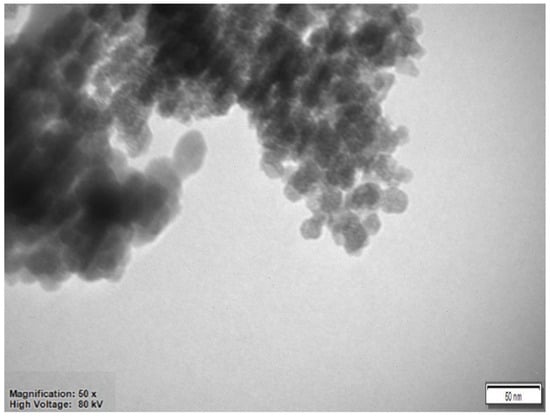
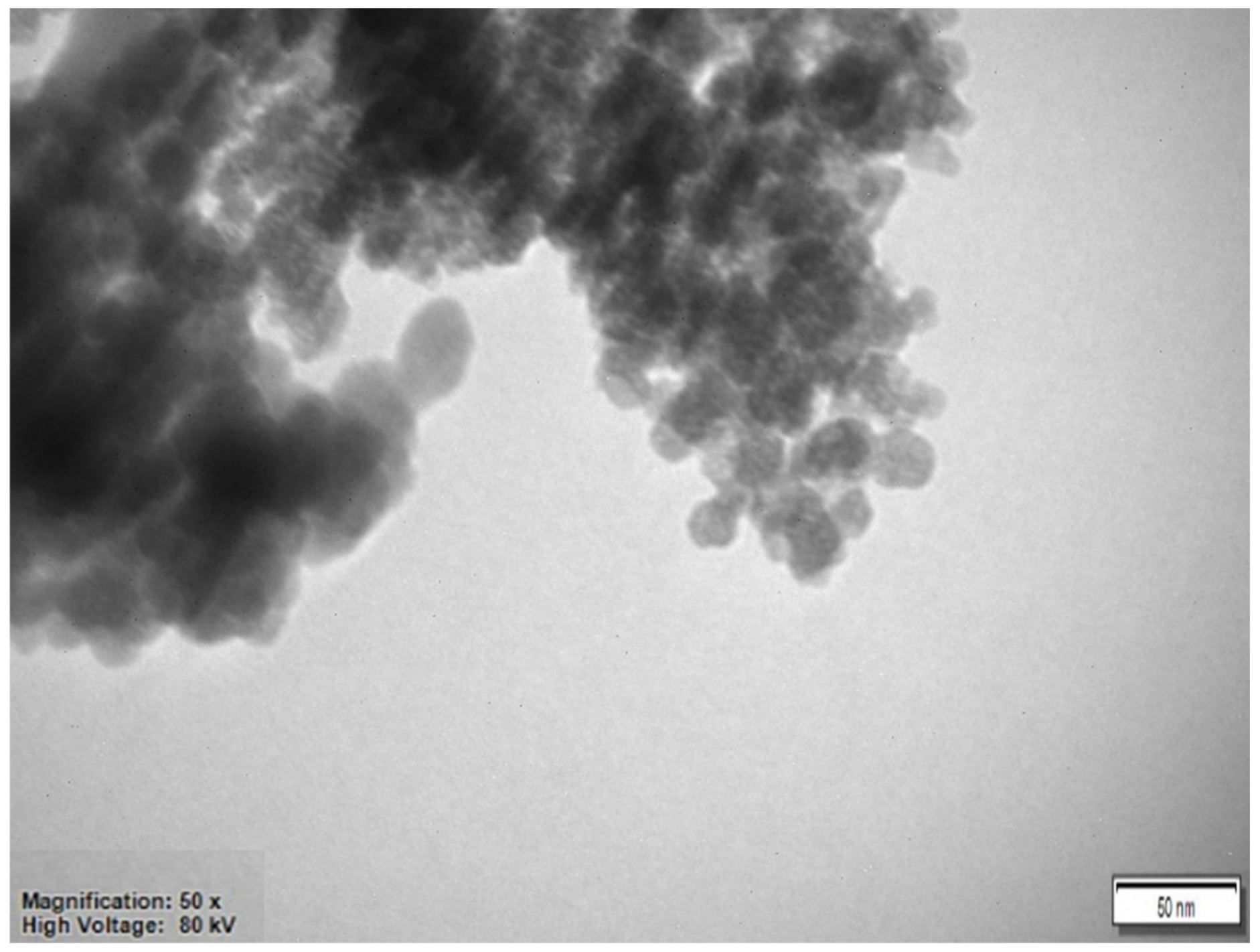
The prepared MSNs, as previously described, were analyzed using TEM; a resulting image is presented in Figure 2. This analysis aimed to assess the degree of agglomeration, evaluate the particles’ sizes, and confirm whether the particles were within the nanoscale range. The TEM image shows that the particles are in the nanometer range, with sizes between 20 and 50 nm. Compared to commercially purchased SiO2 nanoparticles [25], the synthesized particles exhibit reduced agglomeration. Consequently, a more uniform distribution of the particles within the coating matrix was expected.
Figure 2.
TEM image reflecting a cluster of synthesized MSNs at a scale of 50 nm.
3.1.2. FT-IR Characterization of the Synthesized MSNs
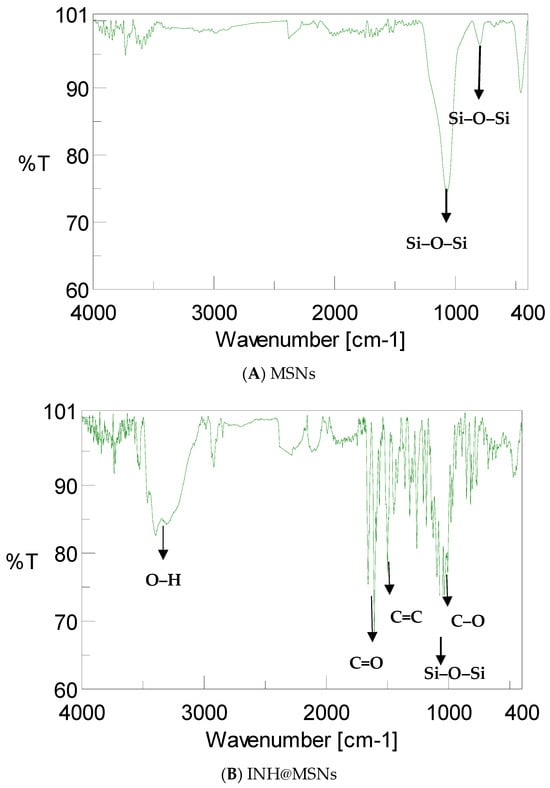
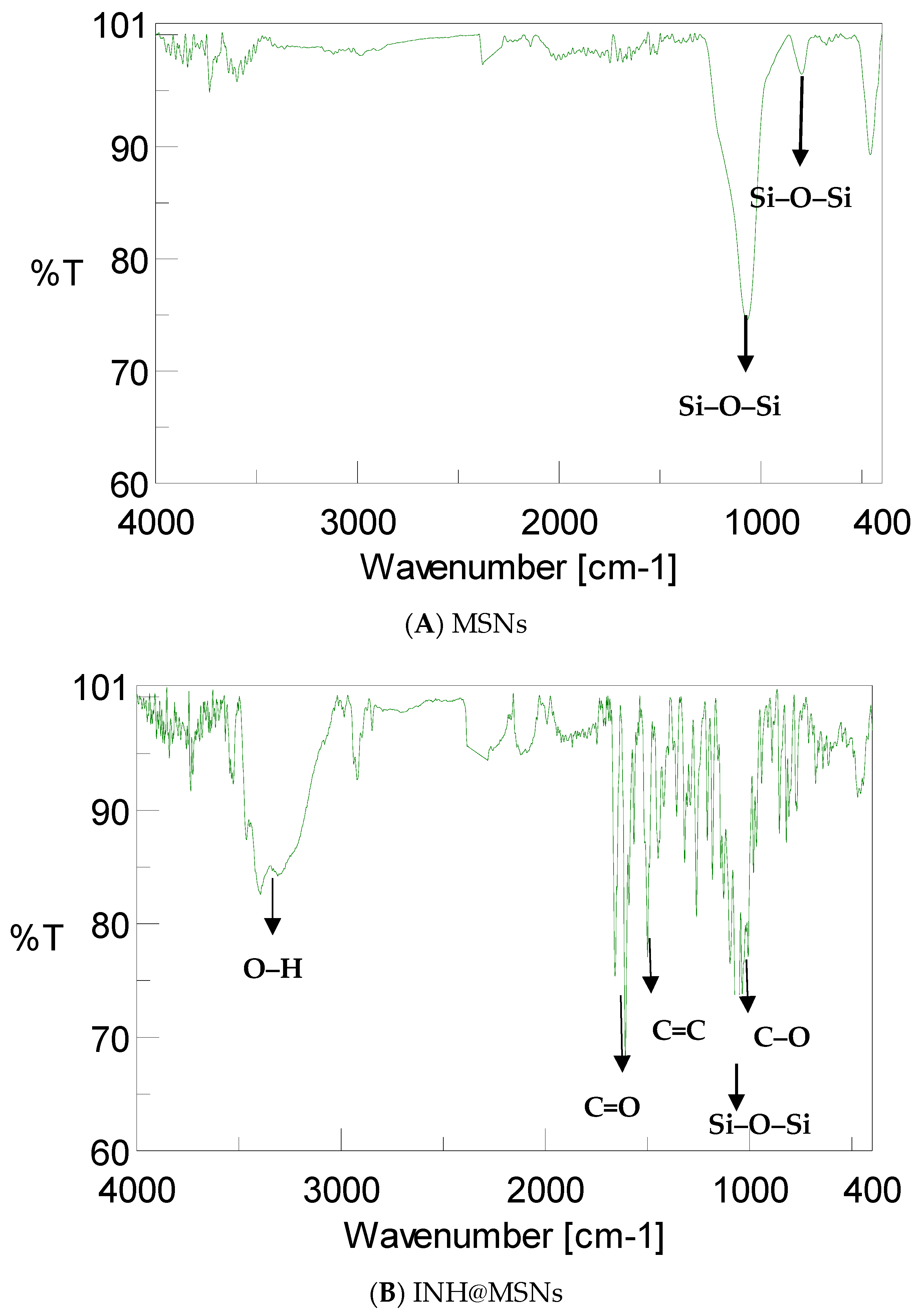
FT-IR spectroscopy was used to characterize the chemical structure of mesoporous SiO2 nanocontainers and to verify their successful loading and interaction with the INH. In the FT-IR spectra (Figure 3A,B), the characteristic bands of Si–O–Si stretching and bending are observed at 470, ~800, and 1100 nm−1, associated with the SiO2 MSNs [37,38]. In the interval of 3200–3500 cm−1, the –OH of silanol can be found [25]. The FT-IR spectrum of INH was previously reported in [22]. In the case of the used INH, which contained the active components diosmin and hesperidin, the broad band at 3200–3400 cm−1 can be attributed to the O–H stretching vibrations associated with the hydroxyl groups present in the flavonoid structure. In the range of 1000–1700 cm−1, a series of peaks are observed, ascribed to C=O, C=C, and C–O stretching vibrations. Because both diosmin and hesperidin share a common flavonoid backbone, their spectra display many overlapping bands. However, distinct differences allow them to be identified. Hesperidin exhibits additional absorption bands in the 900–1200 cm−1 region, due to its glycoside structure, while diosmin shows slight shifts in the carbonyl (C=O) stretching region and presents characteristic bands in the 2800–3000 cm−1 range, corresponding to C–H stretching vibrations of methoxy groups, which are absent in hesperidin [22]. The obtained spectra of the inhibitor-loaded nanocontainers showed the characteristic absorption bands of both MSNs and the INH, with the spectra appearing overlapped. No additional peaks or significant band shifts were observed after loading. This suggests that the inhibitor was physically adsorbed onto the silica nanocontainers without forming new chemical bonds.
Figure 3.
The FT-IR spectra of MSNs (A) and INH@MSNs (B).
3.1.3. UV-Vis Spectroscopy for the Determination of Detralex Inhibitor Release
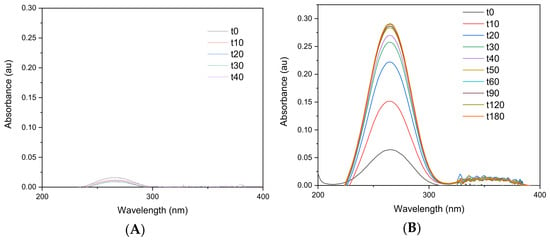
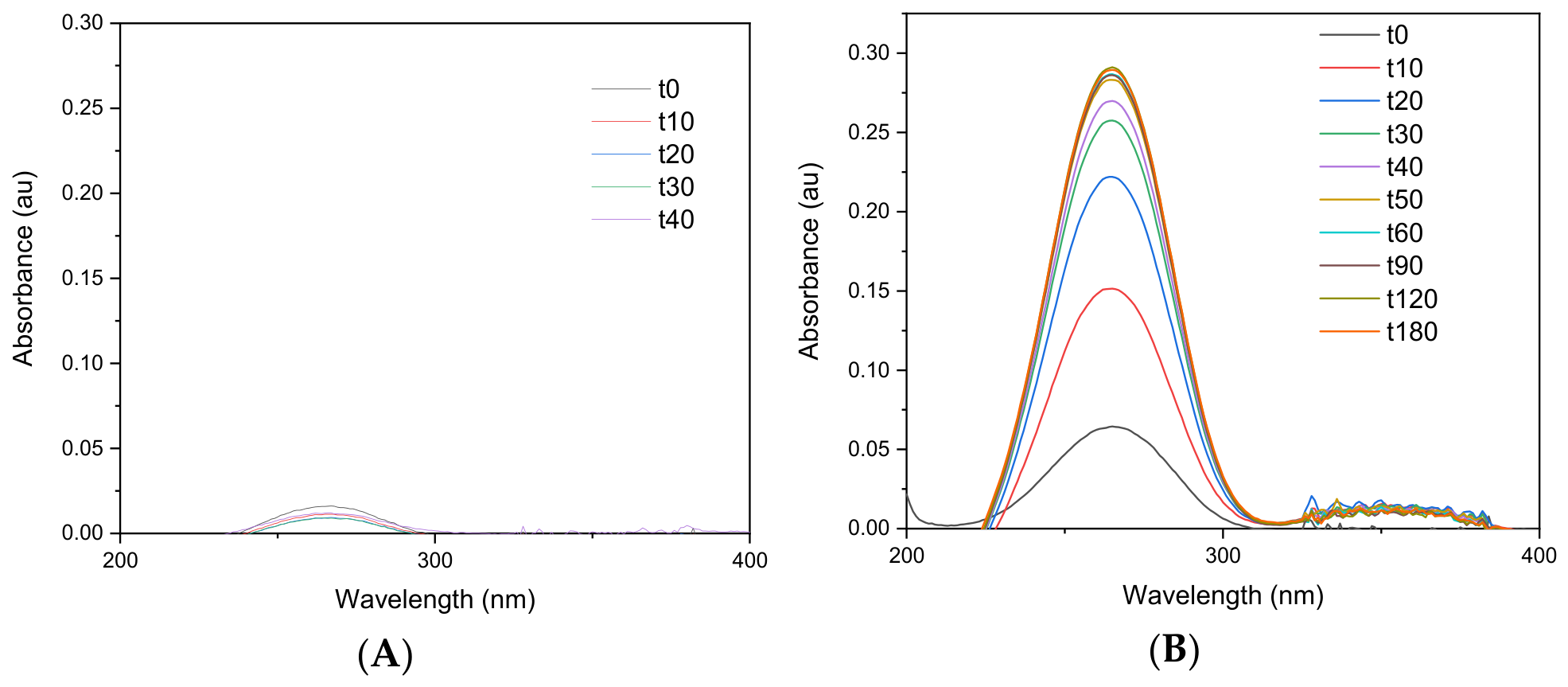
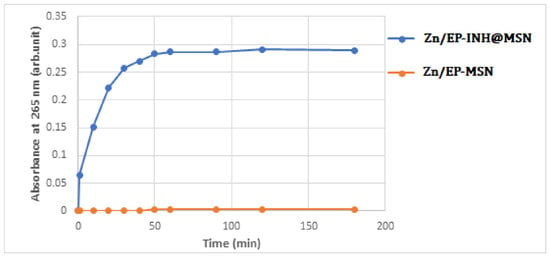
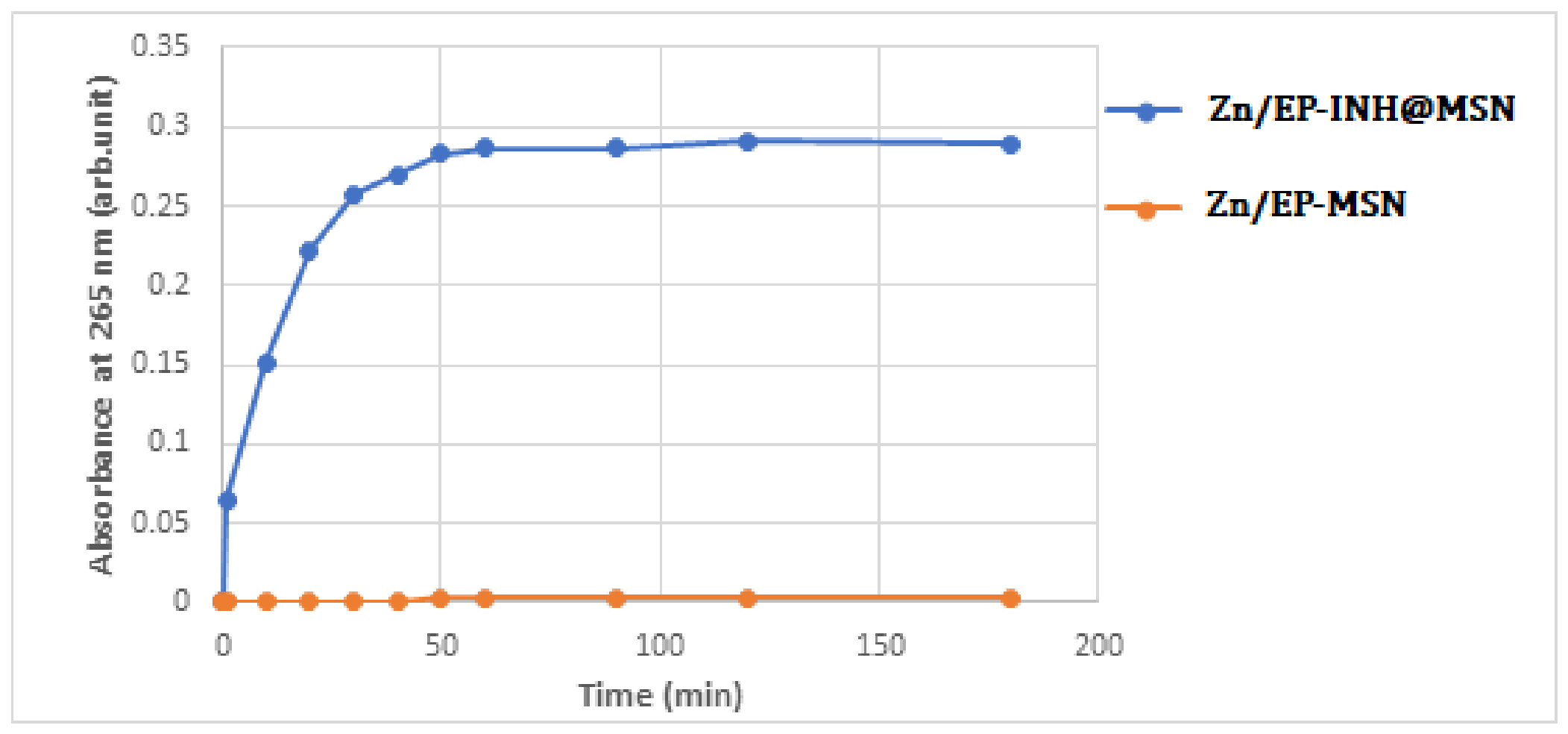
Analyzing the UV-Vis spectra of the distilled water resulting from the immersion of the EP-MSNs sample (Figure 4A), one can conclude that practically no dissolution from the sample occurred during the immersion time. To follow up on the release of the drug from the inhibitor-adsorbed nanocontainers incorporated into the coating (Figure 4B), absorption spectra were recorded at different time intervals over 180 min. It is well known that diosmin has two absorption maxima at 264 and 360 nm [39]. At first, the absorbance increased substantially, reaching a plateau after approximately 50–60 min, suggesting that the release process approached equilibrium.
Figure 4.
UV-Vis spectra of distilled water obtained after different immersion times (minutes) of (A) Zn/EP-MSNs coated sample and (B) Zn/EP-INH@MSNs coated sample (surface 17 cm2).
The comparison of results for the samples with and without the inhibitor is shown in Figure 5. In the first 50 min, the release rate of INH was notably high, indicating a rapid initial release of the inhibitor from the mesoporous silica nanocontainers.
Figure 5.
The release process of the INH from the Zn/EP-INH@MSNs sample.
This behavior can be attributed to the INH molecules adsorbed near or on the outer surface of the pores, which were more readily accessible and therefore diffused rapidly into the surrounding medium. As time progressed, the release rate naturally decreased, possibly reflecting the slower diffusion of INH molecules located deeper within the pore structure.
3.2. Characterization of Coated Samples
3.2.1. SEM-EDX Analysis of the EP-MSNs and EP-INH@MSNs Coatings
The coated samples were analyzed using an SEM coupled with EDX spectroscopy. EDX was used to analyze the elemental composition of epoxy coatings containing MSNs, both with and without the INH.
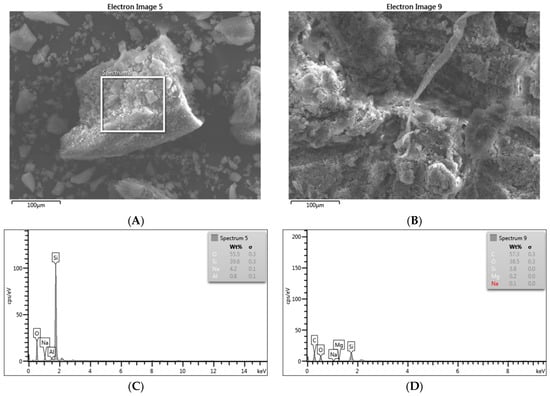
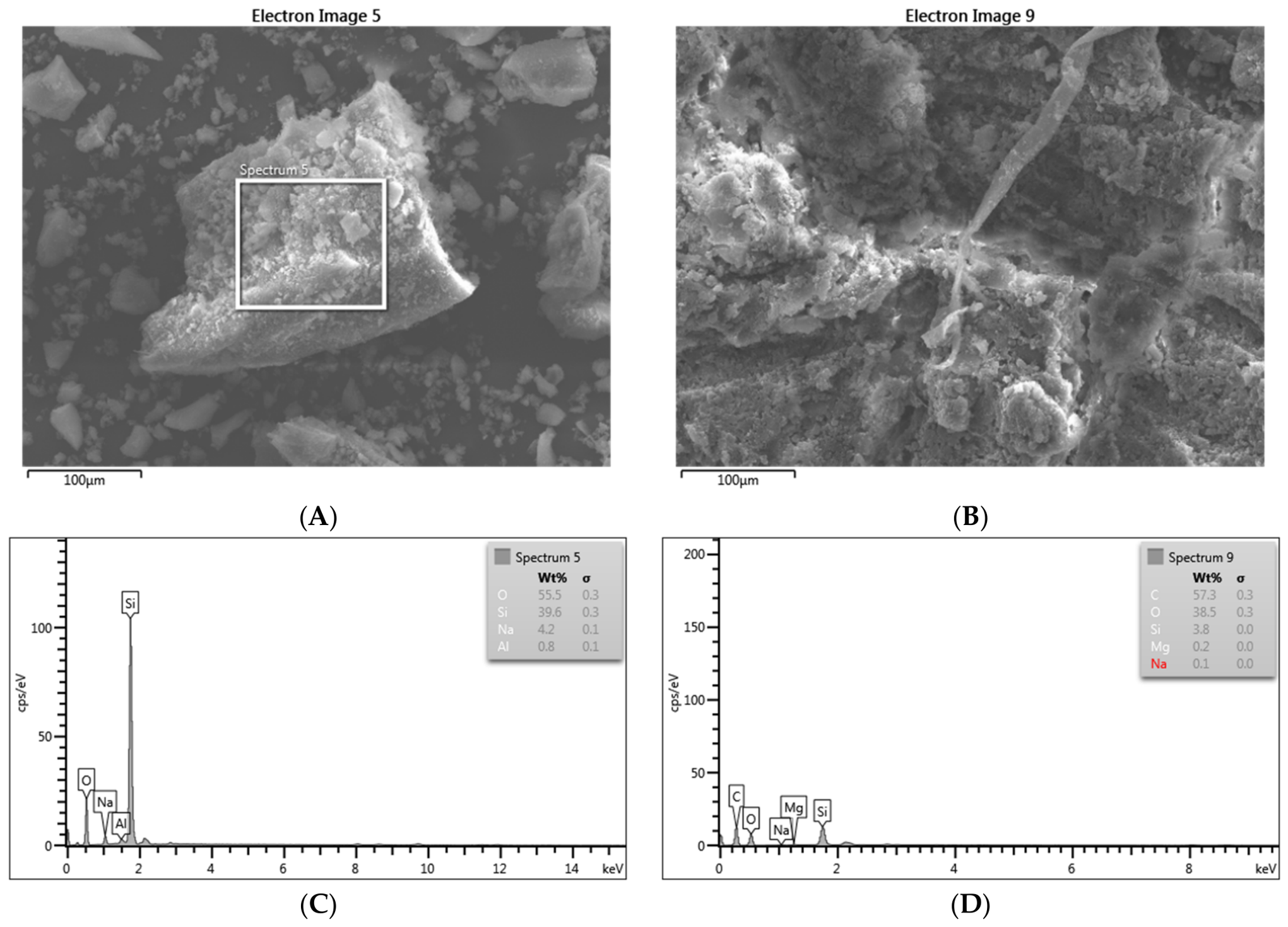
Figure 6A corresponds to the EP matrix containing MSNs. The EDX spectrum shows dominant peaks of oxygen (O) and silicon (Si), confirming the presence of silica nanoparticles within the coating. Smaller amounts of sodium (Na) and aluminum (Al) are also detected, which may be impurities remaining from the synthesis of mesoporous silica.
Figure 6.
SEM micrographs and corresponding EDX spectra of the samples: (A) Zn/EP-MSNs, (B) Zn/EP-INH@MSNs surface morphology, (C) EDX spectrum of the Zn/EP-MSNs sample, and (D) EDX spectrum of the Zn/EP-INH@MSNs sample.
Figure 6B corresponds to the EP matrix containing INH-loaded MSNs. In this spectrum, the carbon (C) peak becomes dominant, reflecting the presence of the organic inhibitor molecules in addition to the EP matrix. Peaks of oxygen (O) and silicon (Si) are still observed, indicating that the MSNs remain. Overall, the EDX results confirm the successful incorporation of MSNs into the epoxy coating and the presence of the INH on the MSNs, supporting the effectiveness of the loading process.
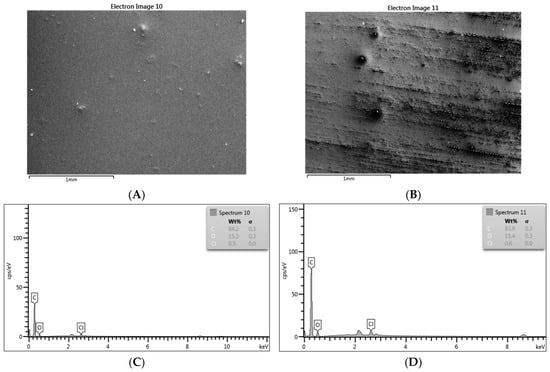
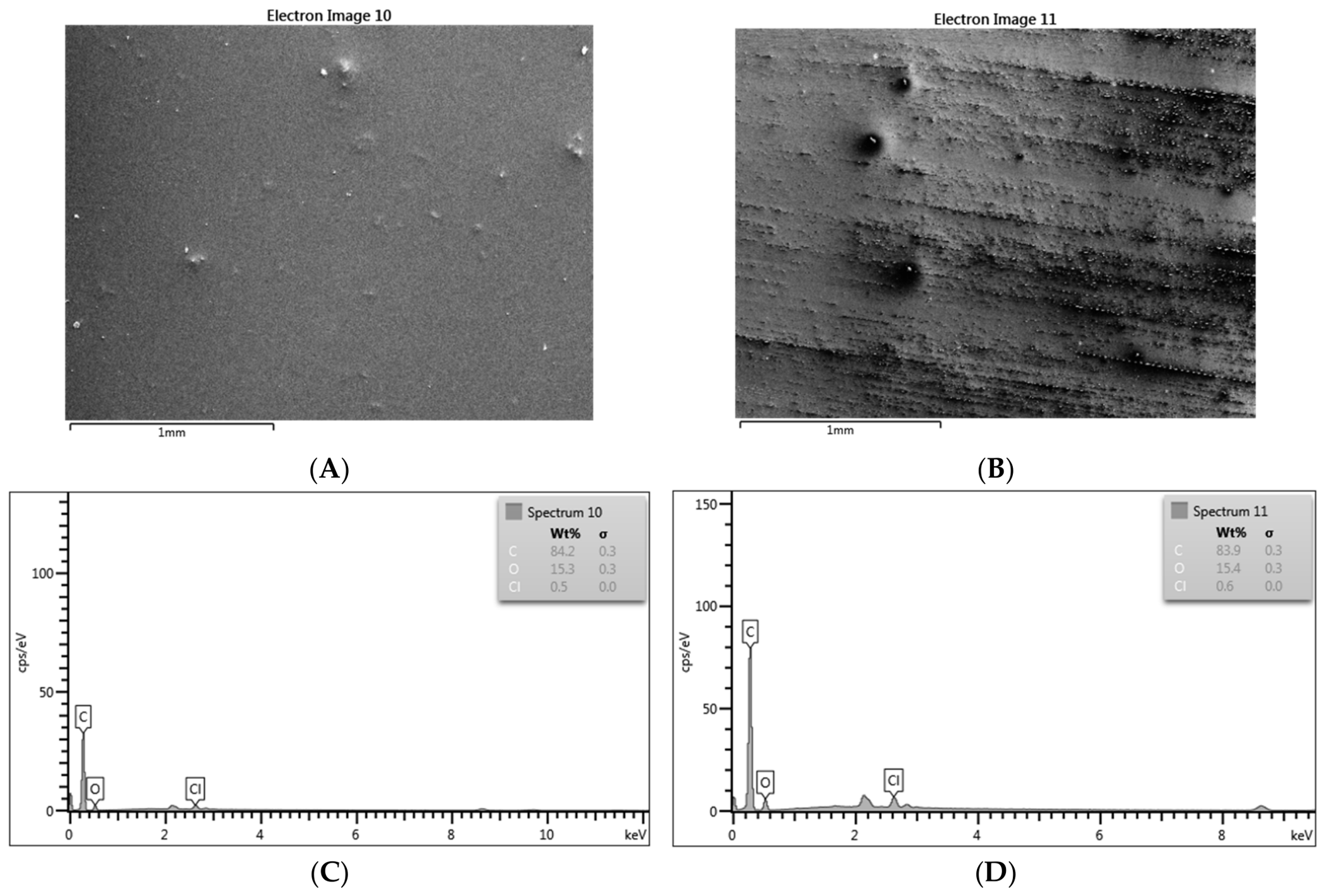
Furthermore, an SEM-EDX analysis was conducted on the samples to determine whether, after 24 h of release, the EP-INH@MSNs coating still retained the INH. In Figure 7C,D, it is evident that the reduction in C content due to the inhibitor is negligible after immersion. Under a neutral pH, the epoxy forms amide bonds, while it can form ether bonds only under alkaline conditions (pH > 10) [40]. The inhibitor employed, characterized by a substantial number of hydroxyl groups in its molecular structure, did not form chemical bonds with the epoxy. Consequently, the inhibitor retained in the epoxy structure is presumed to be physically adhered.
Figure 7.
The SEM images of the Zn/EP-INH@MSNs before (A) and after (B) 24 h immersion in 3 wt% NaCl electrolyte. EDX analysis of the Zn/EP-INH@MSNs before (C) and after (D) 24 h immersion in the same solution.
3.2.2. Raman Spectroscopy of the EP-MSNs and EP-INH@MSNs
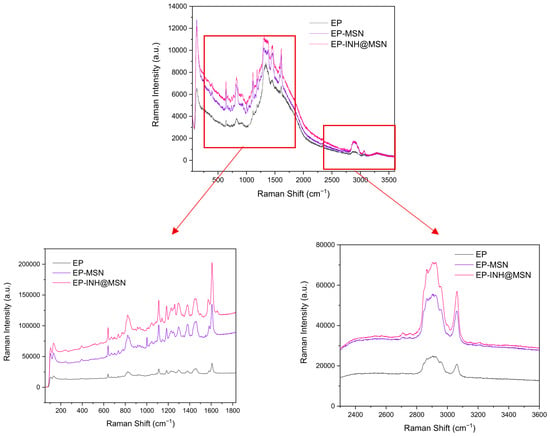
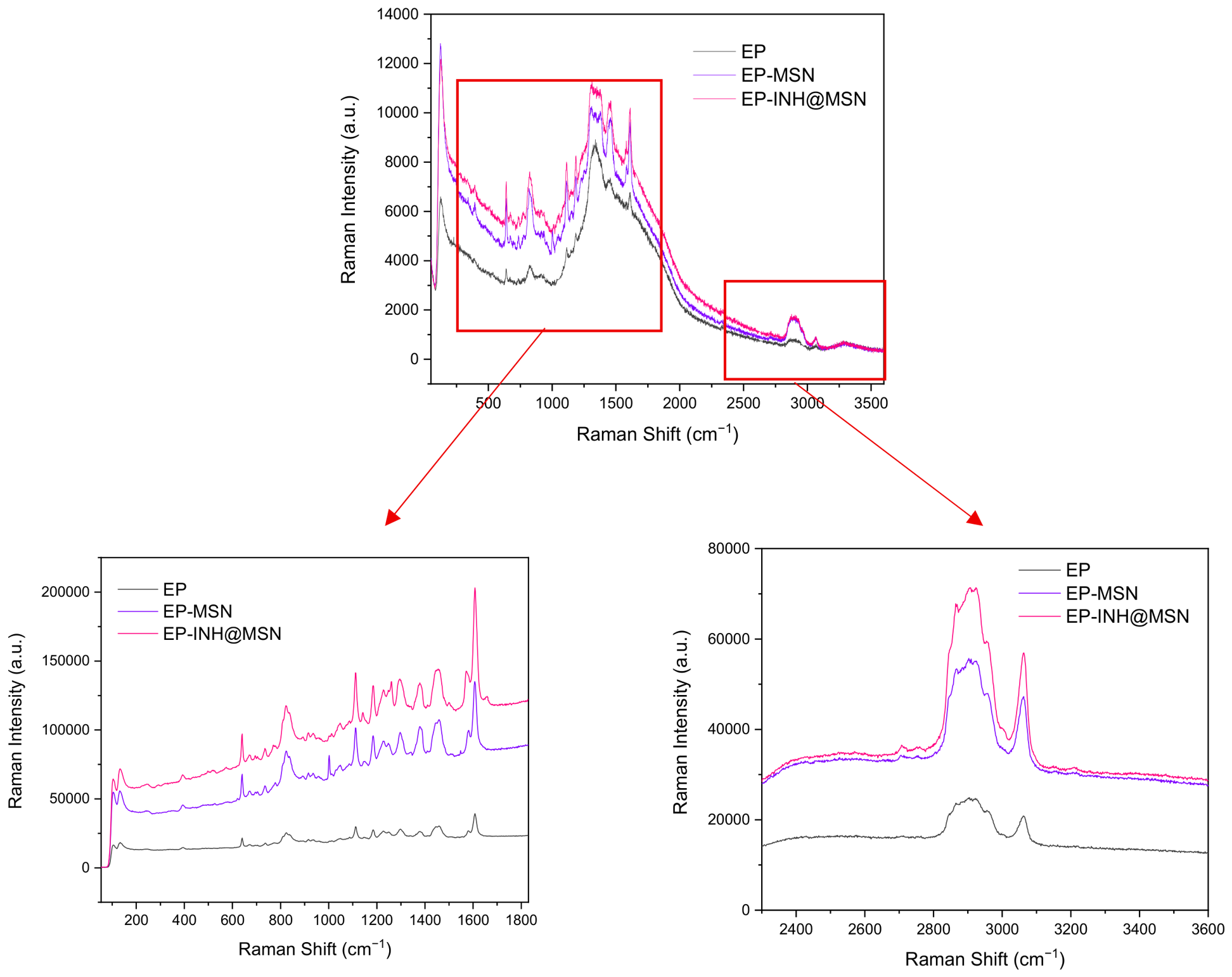
Furthermore, Raman spectroscopy was performed on the produced coatings to determine the molecular interactions between the INH and the EP matrix. To this end, we compared the spectra of the EP coating, the EP coating containing MSNs, and the EP coating with MSNs loaded with INH (Figure 8). Using this technique, we gained insights into the chemical bonding and structural changes resulting from incorporating expired Detralex into the EP matrix, as well as the coatings’ overall behaviors and performances. Based on the literature, the following Raman bands are attributed to the EP resin spectrum (black curve): C–H out-of-plane bending of the phenyl group at 638 and 830 cm−1; phenyl group vibrations at 1112 and 1608 cm−1; epoxy and ether groups at 1250–1300 cm−1; symmetric CH2 stretching at 2875 cm−1; symmetric terminal epoxide =CH2 stretching at 3010 cm−1; and aromatic C–H stretching overlapping with epoxide vibrations at 3065 cm−1 [41]. Moreover, the typical features associated with the aromatic C=C stretching characteristic of the epoxy resin backbone are observed at 1600 cm−1.
Figure 8.
Raman spectra of the EP, EP-MSNs, and EP-INH@MSNs coatings.
The Raman spectra of MSNs revealed characteristic vibrational bands at specific Raman shifts (violet curve). The band at 410 cm−1 corresponds to the bending motion of oxygen atoms in n-atom rings, while the band at 490 cm−1 is attributed to the “breathing” relaxation motion of 4-atom rings. Similarly, the 605 cm−1 band represents the “breathing” relaxation motion of 3-atom rings. Compared with neat epoxy, the prominent band at 800 cm−1 is associated with the symmetric stretching of the Si-O–Si system, and the 1080–1100 cm−1 band is associated with the asymmetric stretching of the Si-O–Si system, being a key marker for the silica network. The signal observed at 980 cm−1 corresponds to the vibration of the OH− group bonded to silicon within the lattice [42]. Due to the interaction between the epoxy matrix and the silica surface, slight intensity changes in the epoxy bands can be observed.
The spectrum of EP-INH@MSNs (pink curve) exhibits features of EP, MSNs, and INH. The INH characteristic features are at ~1610 cm−1 for the aromatic C=C, at ~1570–1580 cm−1 for ring stretching, and at 1500–1515 cm−1 for the conjugated aromatic system [43]. The increased intensity and additional shoulders in the 1500–1650 cm−1 region indicate contributions from the aromatic and heterocyclic vibrations of INH molecules. Furthermore, the more complex band structure in the 1000–1300 cm−1 region indicates the overlap of epoxy C-O-C, silica Si-O-Si, and INH functional groups. And in conclusion, the presence of the characteristic bands in the ~1080–800 cm−1 region provides evidence for the incorporation of the INH-loaded MSNs into the coating’s matrix. The increased complexity in the 1000–1650 cm−1 region is attributed to the INH molecules attached to the MSNs, which result in additional heterocyclic vibrational contributions. The band broadenings are due to the molecular interactions.
3.2.3. Physical Characterization of the Coated Samples
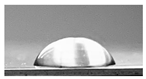
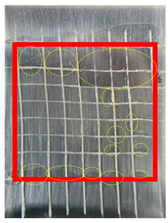
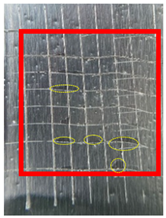
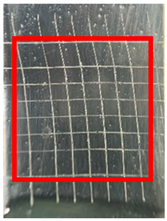
The thickness, the adhesion to the substrate, and the wettability of the coatings were also investigated (Table 1). The coatings’ thicknesses remained consistent, with a slight reduction noticeable in the presence of the inhibitor. Adhesion was enhanced in the presence of mesoporous silica due to the abundance of hydroxyl (–OH) groups that reacted with the hydroxyl groups found on the metal surface [44]. An additional enhancement was achieved by the presence of the inhibitor, which contained a higher concentration of these groups. Some of the more visible defects are highlighted in Table 1.
Table 1.
Data for the coated samples, regarding coating thickness, contact angle, and adhesion (percentages and ASTM D3359 classification).
Moreover, the hydrophobic properties of diosmin/hesperidin [45] led to an increased contact angle of 83° for the Zn/EP-INH@MSNs samples, compared to the bare EP coating with a contact angle of 70°.
3.3. Electrochemical Impedance Measurements of Coated Samples
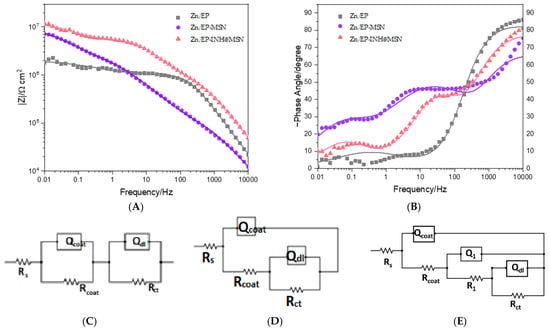
The coated samples were subjected to EIS measurements, and their Bode spectra were compared. The Bode representation of the EIS spectra shows the barrier properties of the coatings, which are associated with the absolute impedance at 0.01 Hz (∣Z∣0.01 Hz) (Figure 9A) and the phase angle modulus at 10 kHz (θ10kHz) (Figure 9B). Considering that ∣Z∣0.01 Hz values above 108 Ω·cm2 indicate excellent protection, while values below 106 Ω·cm2 correspond to poor protection, it can be concluded that all systems exhibit good anti-corrosion performance. The phase angle at a high frequency, measured at 10 kHz (−θ10kHz), ranges from 0° for uncoated metal to 90° for an ideal, defect-free coating [46]. Lower values indicate reduced barrier properties, allowing electrolyte penetration throughout a coating.
Figure 9.
Bode impedance modulus (A) and phase angle (B) plots for Zn/EP, Zn/EP-MSNs, and Zn/EP-INH@MSNs-coated Zn substrates; equivalent circuits used for fitting EIS spectra for Zn/EP system (C), Zn/EP-MSNs (D), and Zn/EP-INH@MSNs (E).
From Figure 9 it can be observed that, in all cases, the phase angle modulus is high, and the best value, almost 90°, is achieved for the EP-INH@MSNs.
The equivalent circuits (ECs) from Figure 9C–E were fitted to the EIS spectra. For the Zn/EP system, the fitting included the solution resistance (Rs), two pairs of constant phase elements (Qs) connected in parallel with ohmic resistances (Rs), and their combination connected in series. One combination comprised a non-ideal capacitance (Qcoat) and resistance (Rcoat) due to the deposited EP organic layer (Figure 9C), and a double-layer non-ideal capacitance (Qdl) in parallel with a charge transfer resistance (Rct) at the substrate–electrolyte interface. The resulting parameters are detailed in Table 2. The polarization resistance obtained for the EP sample is in good agreement with the values reported elsewhere [25,26,47].
Table 2.
Electrochemical parameter values for Zn/EP, Zn/EP-MSNs and Zn/EP-INH@MSNs immersed in 3 wt% NaCl; obtained from fitting equivalent electrical circuits shown in Figure 9.
In the case of Zn/EP-MNSs, the electrical equivalent circuit best fitting the EIS diagram consisted of the electrolyte resistance (Rs), one constant phase element Qcoat in parallel with the ohmic resistance of the coating (Rcoat), and a charge transfer resistance (Rct) in parallel with a pseudo capacitance of the double layer at the interface (Qdl). The change in the electric circuit indicates a modification of the corrosion mechanism due to a change in the coating’s composition, namely, the presence of the MSNs. Moreover, the adsorption of Detralex onto the nanocontainers altered the coating’s behavior, hindering charge transfer at the coating/metal interface.
As shown in Table 2, the highest polarization resistance, calculated as the sum of the resistances in the circuit, was observed for the Zn/EP-INH@MSNs. In this case, the electric equivalent circuit consisted of three Q-R pairs connected in parallel, with a supplementary couple, R1-Q1, attributed to the presence of the inhibitor adsorbed onto the silica nanoparticles, which slowed the corrosion reaction rate.
3.4. Influence of the Immersion Time
Immersion of the EP coatings in a 3 wt% NaCl electrolyte is an aggressive corrosion test that provides information on the changes in the coatings’ corrosion resistance after prolonged exposure.
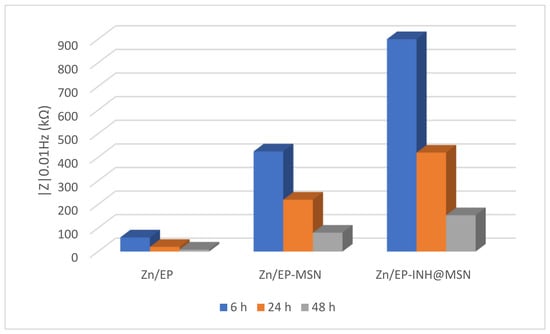
The impedance modulus ∣Z∣0.01 Hz from the Bode diagrams (Figure 9A) was used as a measure of corrosion resistance and was plotted as a function of immersion time for all investigated samples (Figure 10).
Figure 10.
Variation with time in the absolute impedance values |Z|0.01 Hz extracted from the EIS diagrams for Zn/EP, Zn/EP-MSNs and Zn/EP-INH@MSNs.
As expected, the absolute impedance decreased over time for all samples, but the absolute values remained higher for the modified coatings. Moreover, after 48 h, the |Z|0.01 Hz values for these samples remained higher than the initial value for the Zn samples protected only by an EP coating.
4. Conclusions
Expired Detralex, previously shown to be an effective inhibitor of Zn corrosion in 3 wt% NaCl solution, was investigated after its immobilization on silica nanoparticles as a component of an EP composite layer applied to Zn via dip coating. After examination of the results, some conclusions can be drawn:
The adsorption of Detralex onto the silica nanoparticles was evidenced by the FT-IR measurements. The obtained spectra of the INH-loaded MSNs showed the characteristic absorption bands of both the MSNs and the INH, with the spectra appearing overlapped. As no additional peaks or significant band shifts were observed after loading, it was concluded that the inhibitor was physically adsorbed onto the silica nanoparticles without forming new chemical bonds. This explains the rapid initial release of the inhibitor from the mesoporous silica nanocontainers after immersion in the NaCl solution. However, the release, as measured by UV-Vis spectroscopy, decreased substantially, with the curve reaching a plateau after ~50–60 min, suggesting that the release process approached equilibrium. The molecular interactions between the INH used and the EP matrix were evidenced by Raman spectroscopy.
Adhesion of the epoxy coating on the zinc substrate was enhanced in the presence of mesoporous silica due to the abundance of hydroxyl (–OH) groups (Figure 1) that reacted with the hydroxyl groups on the metal surface. Additional enhancement was achieved by the presence of the inhibitor, which contained a high concentration of these groups, which acted as anchors on the surface.
The wettability of coatings containing Detralex decreased relative to the bare EP coating, as evidenced by a higher contact angle of 83°.
The electrochemical investigations based on the EIS measurements allowed for the determination of the equivalent electric circuits corresponding to the Zn corrosion process. The most complex circuit, explaining the hindering of the corrosion process, belonged to the Zn/EP-INH@MSNs coating. This result could be attributed to the presence of the inhibitor adsorbed onto the silica nanoparticles incorporated into the epoxy coating.
Author Contributions
Conceptualization, T.-R.O. and G.S.S.; methodology, T.-R.O. and G.S.S.; investigation, T.-R.O.; writing—original draft preparation, T.-R.O.; writing—review and editing, G.S.S., L.M.M. and G.K. All authors have read and agreed to the published version of the manuscript.
Funding
This research received no external funding.
Institutional Review Board Statement
Not applicable.
Informed Consent Statement
Not applicable.
Data Availability Statement
The data that support the findings of this study are available upon request from the authors.
Conflicts of Interest
The authors declare no conflicts of interest.
References
- Umoren, S.A.; Solomon, M.M.J. Protective polymeric films for industrial substrates: A critical review on past and recent applications with conducting polymers and polymer composites/nanocomposites. Prog. Mater. Sci. 2019, 104, 380–450. [Google Scholar] [CrossRef] [Scilit]
- Yin, H.; Li, H.; Li, Z.; Guo, F.J. Silica-based materials in metal anticorrosion coatings: Progress in design, functionalization and applications. Prog. Org. Coat. 2026, 214, 110071. [Google Scholar] [CrossRef] [Scilit]
- Yu, Y.; Wei, Y.; Guo, Y.; Li, Z.; Lin, Z.; Qiu, R.; Ouyang, Y.J. Electrodeposition of nanotubes for corrosion inhibition: Dual role as superhydrophobic matrix and nanocontainer for storing-releasing corrosion inhibitor. Appl. Surf. Sci. 2023, 640, 158377. [Google Scholar] [CrossRef] [Scilit]
- Vaszilcsin, N.; Kellenberger, A.; Dan, M.L.; Duca, D.A.; Ordodi, V.L.J. Efficiency of expired drugs used as corrosion inhibitors: A review. Materials 2023, 16, 5555. [Google Scholar] [CrossRef] [Scilit]
- Pedeferri, P.; Ormellese, M. Corrosion Science and Engineering; Springer: Berlin/Heidelberg, Germany, 2018. [Google Scholar]
- Assad, H.; Kumar, A.J. Understanding functional group effect on corrosion inhibition efficiency of selected organic compounds. J. Mol. Liq. 2021, 344, 117755. [Google Scholar] [CrossRef] [Scilit]
- Popoola, L.T.J. Organic green corrosion inhibitors (OGCIs): A critical review. Corros. Rev. 2019, 37, 71–102. [Google Scholar] [CrossRef] [Scilit]
- Kahkesh, H.; Yeganeh, M.; Heidari, M.; Kahvazizadeh, M.; Khorasanian, M. Superior green corrosion protection of mild steel in acidic medium using Tilia platyphyllos extract: Electrochemical and surface studies. J. Ind. Eng. Chem. 2025, 157, 191–209. [Google Scholar] [CrossRef] [Scilit]
- Abuelela, A.M.; Kaur, J.; Saxena, A.; Bedair, M.A.; Verma, D.K.; Berdimurodov, E.J. Electrochemical and DFT studies of Terminalia bellerica fruit extract as an eco-friendly inhibitor for the corrosion of steel. Sci. Rep. 2023, 13, 19367. [Google Scholar] [CrossRef] [Scilit]
- El-Haddad, M.N.; Fouda, A.; Hassan, A.J. Data from chemical, electrochemical and quantum chemical studies for interaction between Cephapirin drug as an eco-friendly corrosion inhibitor and carbon steel surface in acidic medium. Chem. Data Collect. 2019, 22, 100251. [Google Scholar] [CrossRef] [Scilit]
- Vaszilcsin, N.; Ordodi, V.; Borza, A.J. Corrosion inhibitors from expired drugs. Int. J. Pharm. 2012, 431, 241–244. [Google Scholar] [CrossRef] [Scilit] [PubMed]
- Rotaru, I.; Varvara, S.; Gaina, L.; Muresan, L.M.J. Antibacterial drugs as corrosion inhibitors for bronze surfaces in acidic solutions. Appl. Surf. Sci. 2014, 321, 188–196. [Google Scholar] [CrossRef] [Scilit]
- Ayoola, A.; Fayomi, O.; Ogunkanmbi, S.J. Data on inhibitive performance of chloraphenicol drug on A315 mild steel in acidic medium. Data Brief 2018, 19, 804–809. [Google Scholar] [CrossRef] [Scilit]
- Wang, X.; Guo, H.; Cai, S.; Xu, X.J. Expired antihypertensive drugs as eco-friendly and efficient corrosion inhibitors for carbon steel in CO2-saturated oilfield water: Experimental and theoretical approaches. J. Mol. Struct. 2023, 1294, 136555. [Google Scholar] [CrossRef] [Scilit]
- Oubahou, M.; Benzbiria, N.; El Harrari, S.; Takky, D.; Naimi, Y.; Zeroual, A.; Wang, S.; Syed, A.; Belghiti, M.J. Electrochemical, thermodynamic and computational investigation of the use of an expired drug as a sustainable corrosion inhibitor for copper in 0.5 M H2SO4. Mater. Chem. Phys. 2024, 323, 129642. [Google Scholar] [CrossRef] [Scilit]
- Merimi, C.; Hammouti, B.; Zaidi, K.; Hafez, B.; Elmsellem, H.; Touzani, R.; Kaya, S.J. Acetylsalicylic acid as an environmentally friendly corrosion inhibitor for carbon steel XC48 in chloride environment. J. Mol. Struct. 2023, 1278, 134883. [Google Scholar] [CrossRef] [Scilit]
- Njoku, C.N.; Ekerenam, O.O.; Obika, I.C.; Emori, W.; Ikeuba, A.I.; Nkuzinna, O.C.; Maduoma, T.U.; Nnaukwu, I.J.; Obike, A.I.; Abeng, F.E.J. A survey of the anticorrosion performances of expired analgesic drugs for metal protection. Next Res. 2024, 1, 100007. [Google Scholar] [CrossRef] [Scilit]
- Zakeri, A.; Bahmani, E.; Aghdam, A.S.R.J. Plant extracts as sustainable and green corrosion inhibitors for protection of ferrous metals in corrosive media: A mini review. Corros. Commun. 2022, 5, 25–38. [Google Scholar] [CrossRef] [Scilit]
- Tanwer, S.; Shukla, S.K.J. Recent advances in the applicability of drugs as corrosion inhibitor on metal surface: A review. Curr. Res. Green Sustain. Chem. 2022, 5, 100227. [Google Scholar] [CrossRef] [Scilit]
- Salleh, S.Z.; Yusoff, A.H.; Zakaria, S.K.; Taib, M.A.A.; Seman, A.A.; Masri, M.N.; Mohamad, M.; Mamat, S.; Sobri, S.A.; Ali, A.J. Plant extracts as green corrosion inhibitor for ferrous metal alloys: A review. J. Clean. Prod. 2021, 304, 127030. [Google Scholar] [CrossRef] [Scilit]
- Gerges, S.H.; Wahdan, S.A.; Elsherbiny, D.A.; El-Demerdash, E.J. Pharmacology of diosmin, a citrus flavone glycoside: An updated review. Eur. J. Drug Metab. Pharmacokinet. 2022, 47, 1–18. [Google Scholar] [CrossRef] [Scilit]
- Ovari, T.-R.; Brânzanic, A.M.; Katona, G.; Szabo, G.S.; Muresan, L.M.J. New eco-friendly corrosion inhibitor for zinc based on expired Detralex drug. Adsorption, electrochemical and computational studies. Mater. Today Commun. 2025, 46, 112739. [Google Scholar] [CrossRef] [Scilit]
- Liu, X.; Xiong, J.; Lv, Y.; Zuo, Y. Study on corrosion electrochemical behavior of several different coating systems by EIS. Prog. Org. Coat. 2009, 64, 497–503. [Google Scholar] [CrossRef] [Scilit]
- Wan, Y.-J.; Tang, L.-C.; Gong, L.-X.; Yan, D.; Li, Y.-B.; Wu, L.-B.; Jiang, J.-X.; Lai, G.-Q. Grafting of epoxy chains onto graphene oxide for epoxy composites with improved mechanical and thermal properties. Carbon 2014, 69, 467–480. [Google Scholar] [CrossRef] [Scilit]
- Ovari, T.-R.; Toth, T.; Katona, G.; Szabó, G.S.; Muresan, L.M.J. Epoxy Coatings Doped with (3-Aminopropyl) triethoxysilane-Modified Silica Nanoparticles for Anti-Corrosion Protection of Zinc. Coatings 2023, 13, 1844. [Google Scholar] [CrossRef] [Scilit]
- Ovari, T.-R.; Trufán, B.; Katona, G.; Szabó, G.; Muresan, L.M.J. Correlations between the anti-corrosion properties and the photocatalytic behavior of epoxy coatings incorporating modified graphene oxide deposited on a zinc substrate. RSC Adv. 2024, 14, 10826–10841. [Google Scholar] [CrossRef] [Scilit] [PubMed]
- Wang, S.; Liu, W.; Shi, H.; Zhang, F.; Liu, C.; Liang, L.; Pi, K.J. Co-modification of nano-silica and lysine on graphene oxide nanosheets to enhance the corrosion resistance of waterborne epoxy coatings in 3.5% NaCl solution. Polymer 2021, 222, 123665. [Google Scholar] [CrossRef] [Scilit]
- Sari, M.G.; Ramezanzadeh, B. Epoxy composite coating corrosion protection properties reinforcement through the addition of hydroxyl-terminated hyperbranched polyamide non-covalently assembled graphene oxide platforms. Constr. Build. Mater. 2020, 234, 117421. [Google Scholar] [CrossRef] [Scilit]
- Zhao, C.; Huang, H.; Zheng, X.J. Design a new type of composite coating of functionalized hydroxyapatite platelets-composite benzotriazole/epoxy resin with excellent anti-corrosion performance. Prog. Org. Coat. 2026, 214, 110061. [Google Scholar] [CrossRef] [Scilit]
- Zhang, Q.; Zhang, W.; Xia, Y.; Ji, Y.; Yu, X.; Zhang, Y.J. Polydopamine activation of hydrophobic particles to enhance anti-corrosion and anti-fouling of epoxy coatings. Prog. Org. Coat. 2026, 213, 109998. [Google Scholar] [CrossRef] [Scilit]
- Su, J.; Zhang, Y.; Huang, P.; Wen, H.J.C.; Physicochemical, S.A.; Aspects, E. Construction of a mixed epoxy composite anti-corrosion coating of cerium ion-modified montmorillonite as “brick” and ZIF as “mortar”. Colloids Surf. A Physicochem. Eng. Asp. 2025, 728, 138596. [Google Scholar] [CrossRef] [Scilit]
- Ovari, T.-R.; Katona, G.; Coros, M.; Szabó, G.; Muresan, L.M.J. Corrosion behaviour of zinc coated with composite silica layers incorporating poly (amidoamine)-modified graphene oxide. J. Solid State Electrochem. 2023, 27, 1795–1811. [Google Scholar] [CrossRef] [Scilit]
- Both, J.; Szabo, G.S.; Katona, G.; Mureșan, L.M.J. Anticorrosive polystyrene coatings modified with tannic acid on zinc and steel substrates. J. Electrochem. Sci. Eng. 2022, 12, 721–730. [Google Scholar] [CrossRef] [Scilit]
- Zhao, Y.; Zhang, W.; Liao, L.; Wang, H.; Li, J. The self-healing composite anticorrosion coating. Phys. Procedia 2011, 18, 216–221. [Google Scholar] [CrossRef] [Scilit]
- Usman, P.; Duru, I.A.; Akalezi, C.O.; Njoku, C.; Kovo, A.; Oguzie, E.E.J. Research, Mesoporous silica-based smart nanocontainers for corrosion inhibition: A mini-review. J. Coat. Technol. 2025, 22, 1–15. [Google Scholar] [CrossRef] [Scilit]
- ASTM D3359; Standard Test Methods for Rating Adhesion by Tape Test1. ASTM International: West Conshohocken, PA, USA, 2024.
- Yang, B.; Dong, J.; Bian, H.; Lu, H.; Bin, D.; Tang, S.; Song, Y.; Lu, H.J. Expired Cefalexin loaded into mesoporous nanosilica for self-healing epoxy coating on 304 stainless steel. Nanomaterials 2022, 12, 2406. [Google Scholar] [CrossRef] [Scilit]
- Bunaciu, A.A.; Udristioiu, G.E.; Ruţă, L.L.; Fleschin, Ş.; Aboul-Enein, H.Y.J. Determination of diosmin in pharmaceutical formulations using Fourier transform infrared spectrophotometry. Saudi Pharm. J. 2009, 17, 303–306. [Google Scholar] [CrossRef] [Scilit]
- Moldovan, Z.; Bunaciu, A.A.; Al-Omar, M.A.; Aboul-Enein, H.Y.J. A spectrophotometric method for diosmin determination. Open Chem. Biomed. Methods J. 2010, 3, 123–127. [Google Scholar] [CrossRef] [Scilit]
- Leach, J.B.; Wolinsky, J.B.; Stone, P.J.; Wong, J.Y.J. Crosslinked α-elastin biomaterials: Towards a processable elastin mimetic scaffold. Acta Biomater. 2005, 1, 155–164. [Google Scholar] [CrossRef] [Scilit]
- Al Soud, A.; Daradkeh, S.I.; Knápek, A.; Holcman, V.; Sobola, D.J. Electrical characteristics of different concentration of silica nanoparticles embedded in epoxy resin. Phys. Scr. 2023, 98, 125520. [Google Scholar] [CrossRef] [Scilit]
- Cordoba, A.; Rivera-Muñoz, E.M.; Velázquez-Castillo, R.; Esquivel, K.J. PDMS/TiO2 and PDMS/SiO2 nanocomposites: Mechanical properties’ evaluation for Improved Insulating Coatings. Nanomaterials 2023, 13, 1699. [Google Scholar] [CrossRef] [Scilit]
- Pielorz, S.; Węglińska, M.; Mazurek, S.; Szostak, R.J. Quantitative determination of Diosmin in tablets by Infrared and Raman Spectroscopy. Molecules 2022, 27, 8276. [Google Scholar] [CrossRef] [Scilit] [PubMed]
- Sacher, E. The Present State of Metallized Polyimide; ACS Publications: Washington, DC, USA, 1990. [Google Scholar]
- Berga, M.; Logviss, K.; Lauberte, L.; Paulausks, A.; Mohylyuk, V.J. Flavonoids in the spotlight: Bridging the gap between physicochemical properties and formulation strategies. Pharmaceuticals 2023, 16, 1407. [Google Scholar] [CrossRef] [Scilit]
- Razin, A.A.; Ramezanzadeh, B.; Yari, H.J. Detecting and estimating the extent of automotive coating delamination and damage indexes after stone chipping using electrochemical impedance spectroscopy. Prog. Org. Coat. 2016, 92, 95–109. [Google Scholar] [CrossRef] [Scilit]
- Ovari, T.-R.; Szőke, Á.F.; Katona, G.; Szabó, G.S.; Muresan, L.M.J. Temporary Anti-Corrosive Double Layer on Zinc Substrate Based on Chitosan Hydrogel and Epoxy Resin. Gels 2023, 9, 361. [Google Scholar] [CrossRef] [Scilit] [PubMed]



Disclaimer/Publisher’s Note: The statements, opinions and data contained in all publications are solely those of the individual author(s) and contributor(s) and not of MDPI and/or the editor(s). MDPI and/or the editor(s) disclaim responsibility for any injury to people or property resulting from any ideas, methods, instructions or products referred to in the content. |
© 2026 by the authors. Licensee MDPI, Basel, Switzerland. This article is an open access article distributed under the terms and conditions of the Creative Commons Attribution (CC BY) license.