Article

Machine Learning-Based Prediction of Multi-Year Cumulative Atmospheric Corrosion Loss in Low-Alloy Steels with SHAP Analysis


1
School of Materials Science and Engineering, Yeungnam University, Gyeongsan 38541, Republic of Korea
2
Institute of Materials Technology, Yeungnam University, Gyeongsan 38541, Republic of Korea
*
Authors to whom correspondence should be addressed.
Coatings 2026, 16(4), 488; https://doi.org/10.3390/coatings16040488

Submission received: 25 March 2026 / Revised: 6 April 2026 / Accepted: 15 April 2026 / Published: 17 April 2026

Abstract

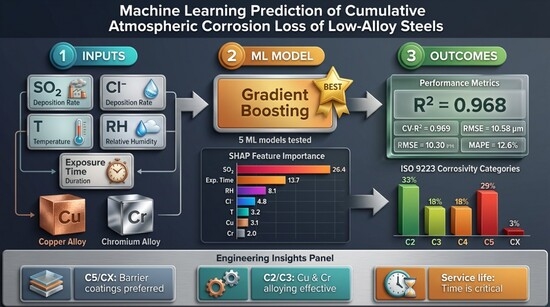
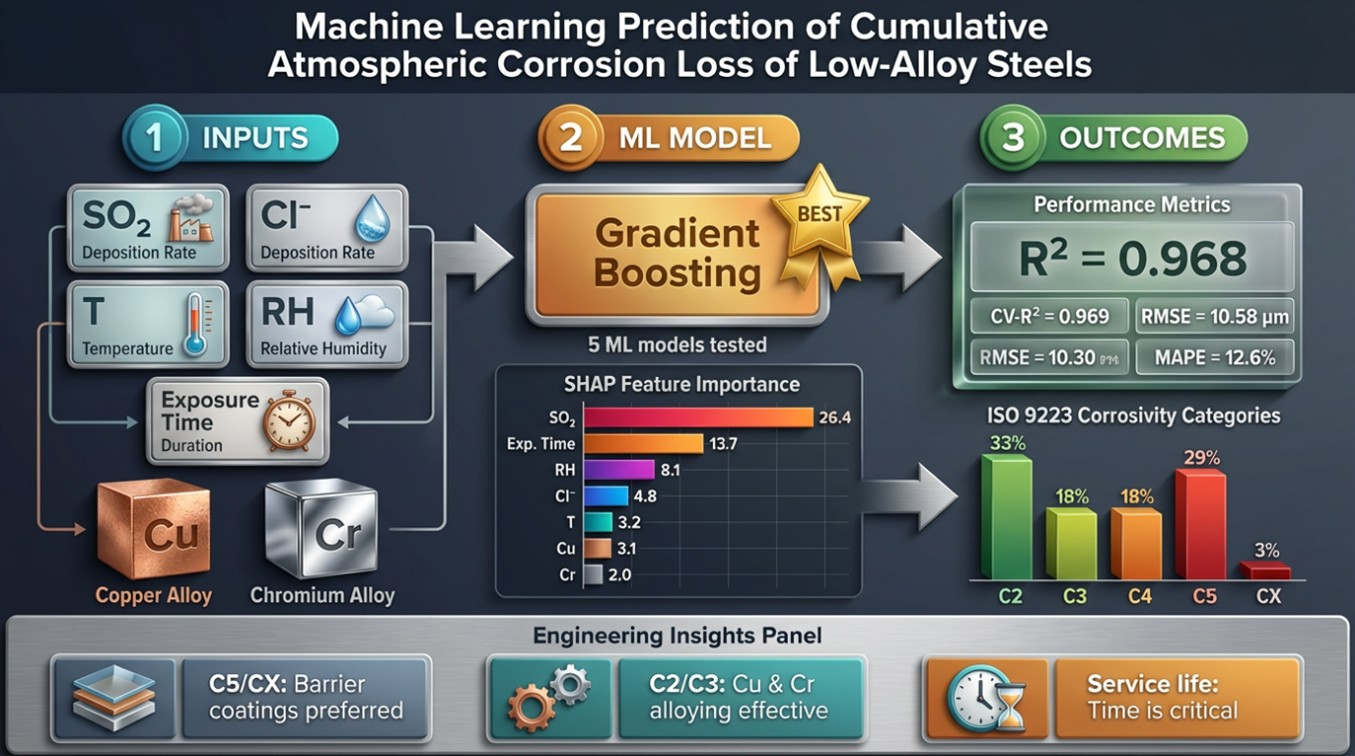
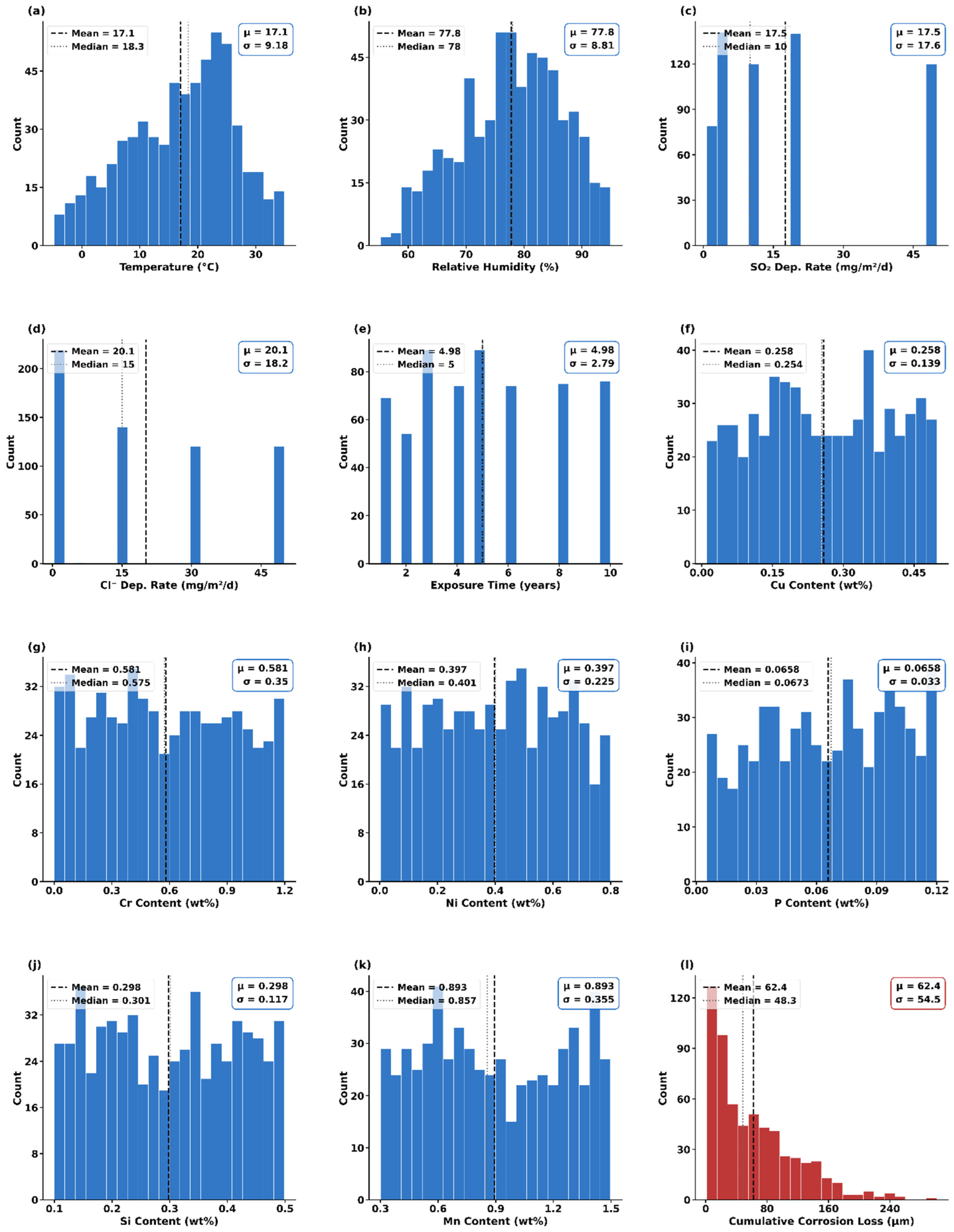
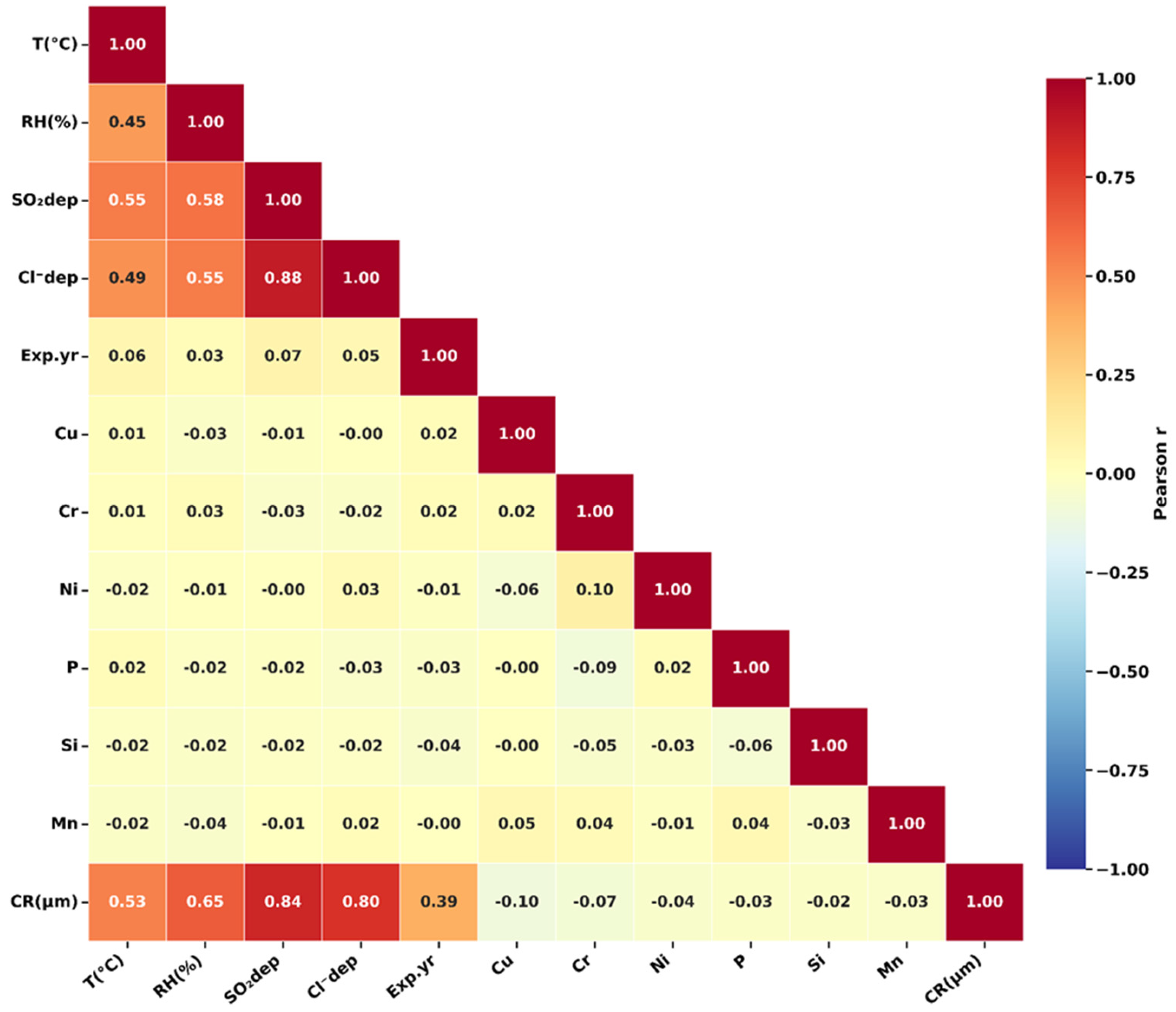
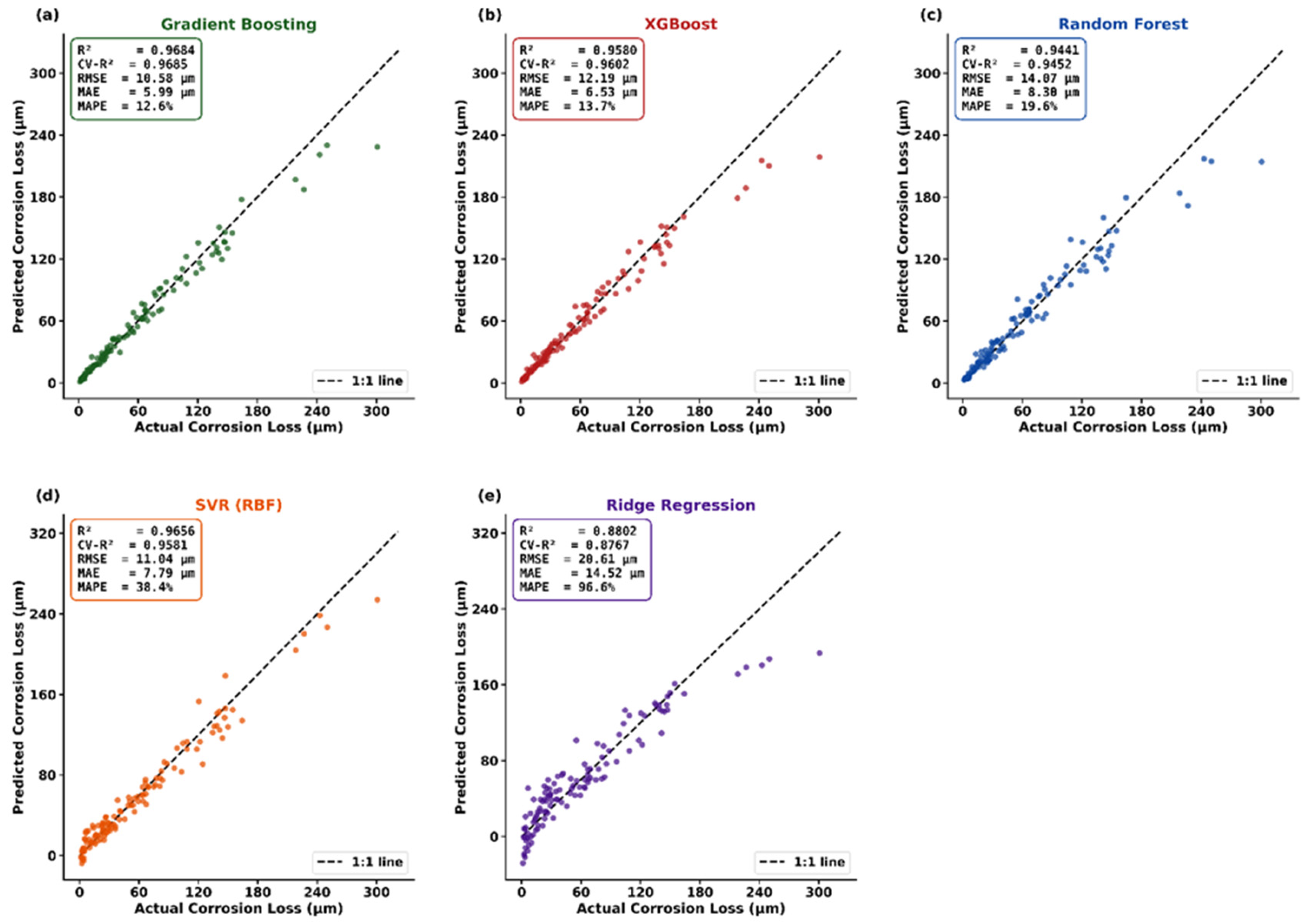
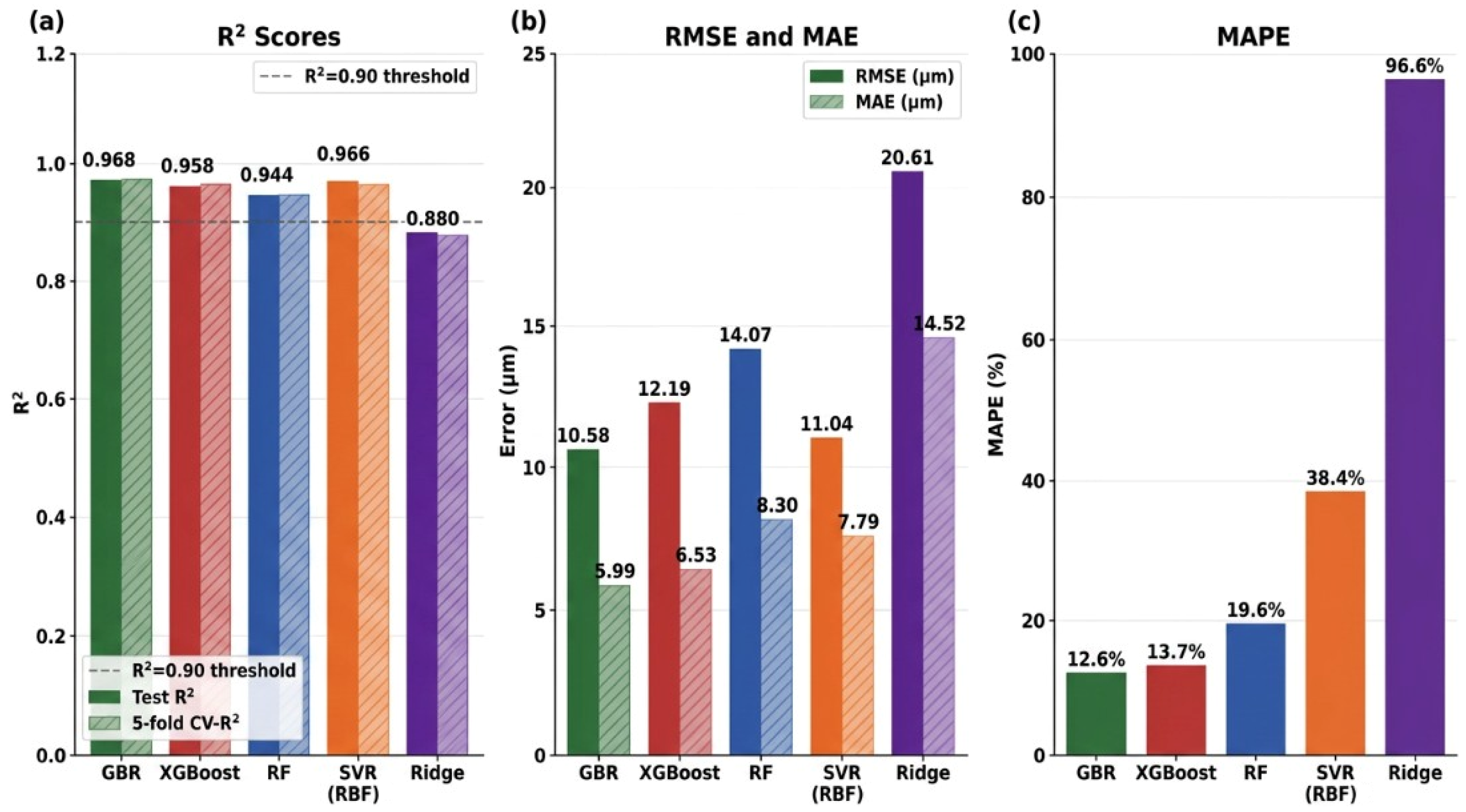
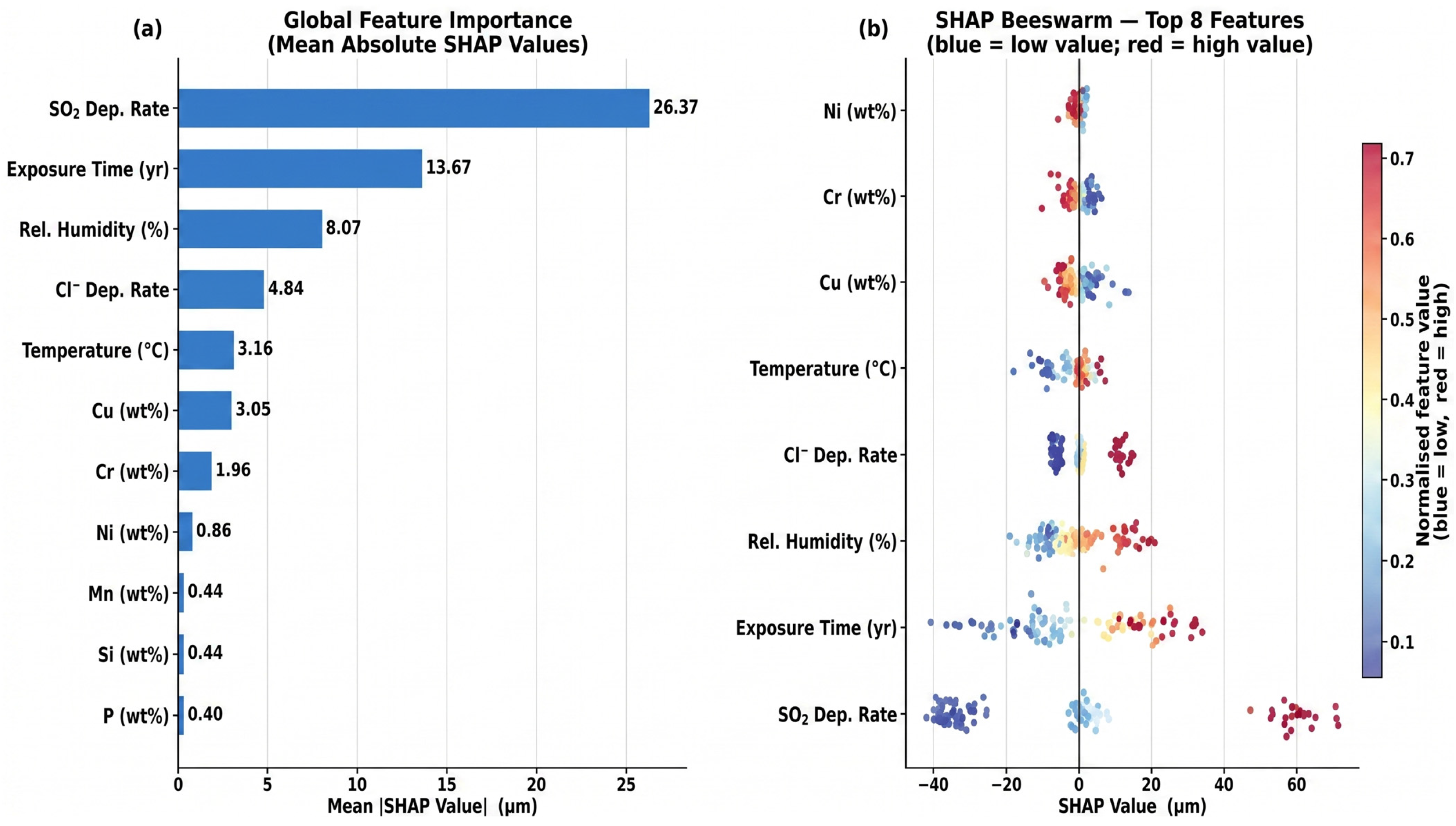
Atmospheric corrosion of carbon and low-alloy steels causes direct economic losses that are estimated at around 3.4% of the global GDP, and its accurate multi-year prediction is essential for protective coating selection, service-life estimation, and infrastructure maintenance scheduling. In this study, machine learning (ML) algorithms, including gradient boosting regressor (GBR), eXtreme gradient boosting (XGBoost), random forest (RF), support vector regression (SVR), and ridge regression, were trained on a 600-sample physics-grounded dataset to predict the cumulative atmospheric corrosion loss (µm) of low-alloy steels over 1–10 years of exposure. The dataset was constructed using the exact ISO 9223:2012 dose–response function (DRF) for a first-year corrosion rate and the ISO 9224:2012 power-law multi-year kinetic model (C(t) = C1·t0.5), spanning ISO 9223 corrosivity categories C2–CX across 11 environmental and material input features. All models were evaluated on the original (untransformed) corrosion scale under an 80/20 train/test split and five-fold cross-validation. Gradient boosting achieved the best overall performance with test set R2 = 0.968, CV-R2 = 0.969, RMSE = 10.58 µm, MAE = 5.99 µm, and MAPE = 12.6%. XGBoost was a close second (R2 = 0.958, CV-R2 = 0.960). RF achieved an R2 of 0.944. SHAP (SHapley Additive exPlanations) analysis identified SO2 deposition rate, exposure time, relative humidity, Cl deposition rate, and temperature as the five most influential predictors. The dominance of the SO2 deposition rate (mean |SHAP| = 26.37 µm) and the high second-place ranking of exposure time (13.67 µm) are fully consistent with the ISO 9223:2012 dose–response function and ISO 9224:2012 power-law kinetics, respectively, while among the material features, Cu and Cr contents showed the strongest negative SHAP contributions, confirming their corrosion-inhibiting roles in weathering steels. These results establish a physics-consistent, interpretable ML benchmark exceeding R2 = 0.90 for multi-year cumulative corrosion loss prediction and provide a quantitative tool for alloy screening, coating selection in aggressive atmospheric environments, and service-life planning.
Keywords: atmospheric corrosion; low-alloy steel; cumulative corrosion loss; machine learning; gradient boosting; XGBoost; SHAP interpretability; ISO 9223; ISO 9224 atmospheric corrosion; low-alloy steel; cumulative corrosion loss; machine learning; gradient boosting; XGBoost; SHAP interpretability; ISO 9223; ISO 9224
Graphical Abstract