Article

Mg Doping Gradient Engineering by MOCVD for Threshold Voltage Enhancement in Si-Based p-GaN E-Mode HEMTs

Institute of Next Generation Semiconductor Materials, Southeast University, Suzhou 215123, China
*
Authors to whom correspondence should be addressed.
Coatings 2026, 16(4), 476; https://doi.org/10.3390/coatings16040476
Submission received: 23 March 2026 / Revised: 10 April 2026 / Accepted: 15 April 2026 / Published: 16 April 2026

Abstract

The threshold voltage (Vth) of p-GaN gate enhancement-mode (E-mode) high electron mobility transistors (HEMTs) on silicon substrates grown by metal–organic chemical vapor deposition (MOCVD) is often limited to 1.0–1.5 V. Apart from the low Mg acceptor activation rate, the non-uniform vertical Mg distribution in thin p-GaN layers is also a key bottleneck limiting Vth. This work reveals that the vertical distribution (not only magnitude) of Mg doping fundamentally influences Vth by modulating the charge centroid and electric field coupling to the heterointerface. Through bis(cyclopentadienyl)magnesium (Cp2Mg) flow modulation, surfactant-assisted growth, and growth rate adjustment, the vertical Mg doping uniformity within the 80 nm p-GaN layer was improved while effectively suppressing Mg out-diffusion. A short-cycle gate-first self-aligned process was used to fabricate the devices, and the results showed that the improved Mg vertical distribution led to a significant Vth enhancement by 0.75 V. Technology Computer-Aided Design (TCAD) simulations further demonstrated that the uniform doping profile builds a stronger negative space charge field beneath the gate, raising the energy band and increasing Vth. This work not only presents practical strategies, but also establishes a direct physical link between vertical Mg doping distribution and Vth in Si-based E-mode HEMTs.

1. Introduction

In recent years, AlGaN/GaN enhancement-mode (E-mode) high electron mobility transistors (HEMTs) with p-GaN gates have been one of the commercially viable solutions for fast and efficient power devices [1]. However, the threshold voltage (Vth) of p-GaN E-mode HEMTs with Schottky metal gates is typically constrained to 1.0–1.5 V [2]. Such a low turn-on voltage limits the robustness against voltage oscillations induced by parasitic inductance and gate crosstalk in power circuits [3,4].
In p-GaN HEMTs, Mg doping is used to introduce acceptor states and deplete the 2DEG under the gate [5]. Existing efforts to enhance Vth have mainly focused on increasing Mg concentration or improving activation efficiency [6,7,8]. During the initial stages of p-GaN epitaxy, the bis(cyclopentadienyl)magnesium (Cp2Mg) precursor suffers from severe parasitic adsorption on the reactor walls and gas delivery pipelines. Consequently, a significant portion of the injected Mg is consumed before reaching the substrate, resulting in a drastically reduced effective Mg flux at the growth front. As the adsorption sites on the reactor walls gradually saturate over time, the Mg incorporation rate slowly recovers to its preset equilibrium level. Macroscopically, this dynamic “doping lag” appears in secondary ion mass spectrometry (SIMS) depth profiles as a gradual Mg concentration rise from the heterointerface to the p-GaN surface, inducing a strong vertical doping gradient in the p-GaN layer [9,10,11]. Even though non-uniform atom distributions could be used to enhance materials or device performance [12,13], the vertical Mg doping non-uniformity in GaN is undesirable. Such Mg non-uniformity naturally results in a spatial distribution of ionized acceptors within the p-GaN layer beneath the gate [14,15], thereby a change in electrostatic potential distribution and modulation of the energy band structure, which ultimately impacts Vth. While such Mg doping non-uniformity is widely observed, a systematic understanding linking Mg distribution to electrostatic behavior and Vth is still lacking.
At the same time, the incorporated Mg atoms will diffuse towards the AlGaN/GaN interface and channel region during MOCVD growth due to high temperature and concentration difference, resulting in degradation of device performance [16]. Therefore, simultaneously achieving high Mg doping concentration, precise profile control, suppressed back-diffusion depth [17,18,19,20], and satisfactory crystal quality remains challenging, and has not been systematically studied [21].
In this work, the vertical Mg doping profile in an 80 nm p-GaN layer has been engineered through a combination of MOCVD growth strategies, including Cp2Mg flow modulation, surfactant-assisted growth, and growth rate adjustment, aiming to homogenize the vertical Mg concentration profile in an 80 nm thin p-GaN layer. Besides improving uniformity, we also introduce the concept of charge centroid to quantitatively describe the spatial distribution of ionized acceptors. Through a combination of SIMS characterization, HEMT device fabrication and measurement, and Technology Computer-Aided Design (TCAD) simulations, we demonstrate that a more uniform vertical Mg profile shifts the charge centroid toward the AlGaN/GaN heterointerface, and significantly enhances Vth, shifting from 1.30 V to 2.05 V. This study elucidates the role of vertical doping uniformity in enhancing Vth and improving the subthreshold swing (SS).

2. Materials and Methods

The epitaxial layers of the E-mode p-GaN HEMT were grown on 8-inch Si (111) substrates (supplied by Zhongxin Wafer Ltd., Hangzhou, China) in a planetary Aixtron G5 + C MOCVD system. The full epitaxial stack, from bottom to top, comprises a 1150 μm thick boron-doped p-type conductive Si substrate, a 200 nm thick AlN nucleation layer, a 1.7 μm thick AlN/AlGaN superlattice buffer layer with a carbon doping concentration of 8 × 1018 cm−3, a 350 nm thick unintentionally doped (UID) GaN channel layer, a 13 nm thick Al0.25Ga0.75N barrier layer, and an 80 nm thick Mg-doped p-GaN cap layer with a target Mg concentration of 2 × 1019 cm−3. The precursors employed for Ga, Al, N, Mg, and C sources were trimethylgallium (TMGa), trimethylaluminum (TMAl), ammonia (NH3), bis(cyclopentadienyl)magnesium (Cp2Mg), and ethylene (C2H4). Prior to epitaxial growth, the Si substrate was subjected to thermal annealing at 1000 °C for 10 min under H2 ambient within the MOCVD chamber to remove surface contaminants. The AlN nucleation layer and all subsequent layers were then deposited sequentially. Growth conditions for all layers except the p-GaN cap layer were kept identical across all epitaxial samples.
To study the relationship between vertical Mg doping profile and Vth, four groups of epitaxial wafers were grown with different in-situ p-GaN doping schemes. These wafers are labeled Wafer-A through Wafer-D. All four wafers share the same underlying epitaxial structure described above, so that any observed differences in device performance can be attributed mainly to variations in the p-GaN layer. The detailed process parameters are listed in Table 1. Wafer-A was used as the baseline. After the growth of the 13 nm thick AlGaN barrier layer, the metal–organic sources were switched directly to begin the 80 nm p-GaN growth. The Cp2Mg flow rate was kept constant at 330 sccm, with a TMGa flow rate of 350 μmol/min, a NH3 flow rate of 0.67 mol/min, a reactor pressure of 200 mbar, and a total growth time of 310 s. For Wafer-B, the Cp2Mg flow rate was raised to 1200 sccm at the beginning of p-GaN growth and then linearly ramped down to the baseline value of 330 sccm over the first 20 nm. This creates a graded Mg flow modulation near the p-GaN/AlGaN interface. Wafer-C followed the same graded Cp2Mg flow strategy as Wafer-B, but an additional TMIn co-flow of 400 sccm was introduced as a surfactant to assist the growth process. As reported in previous studies, Indium has been proven to be an effective surfactant during GaN growth. The introduction of TMIn can effectively lower the surface migration energy barriers for Ga and Mg adatoms [22], thereby enhancing surface kinetics. Wafer-D also adopted the same Cp2Mg flow modulation as Wafer-B, but both the TMGa and Cp2Mg flow rates were reduced to 50% of their standard values. The purpose was to intentionally lower the p-GaN growth rate. To keep the target p-GaN thickness at 80 nm, the growth duration was doubled to 620 s accordingly.
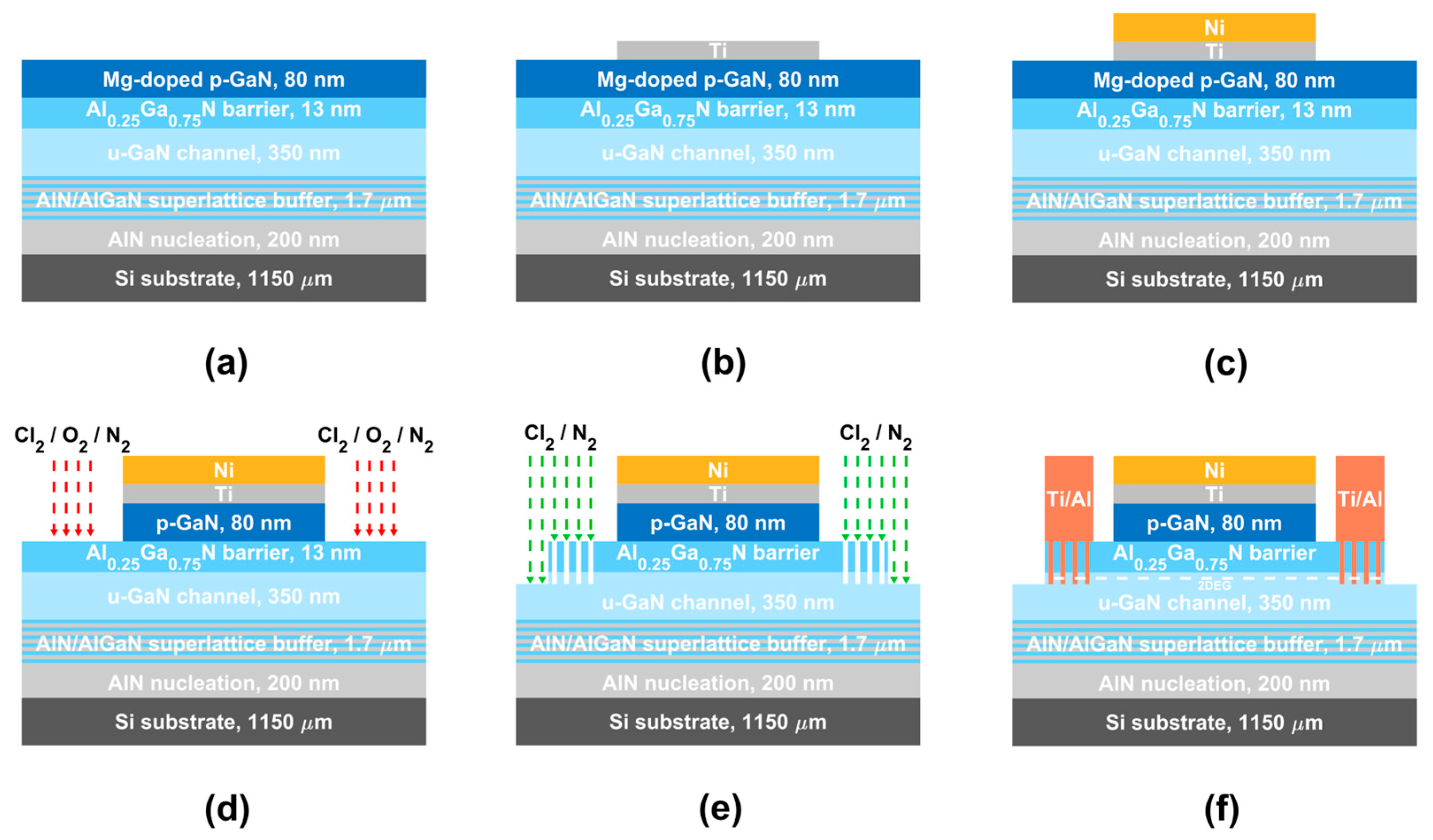
To quickly evaluate device performance under different doping profiles, a short-cycle gate-first self-aligned process was used to fabricate Schottky-type p-GaN gate devices without a metal-insulator-semiconductor structure [23]. This process allows effective extraction of key turn-on parameters such as Vth and SS. At the same time, it avoids the high-temperature ohmic contact annealing step that comes after Mg activation annealing step in the later process flow. This is important because such annealing could disturb the Mg doping distribution established during epitaxial growth. Figure 1 illustrates the critical process steps.
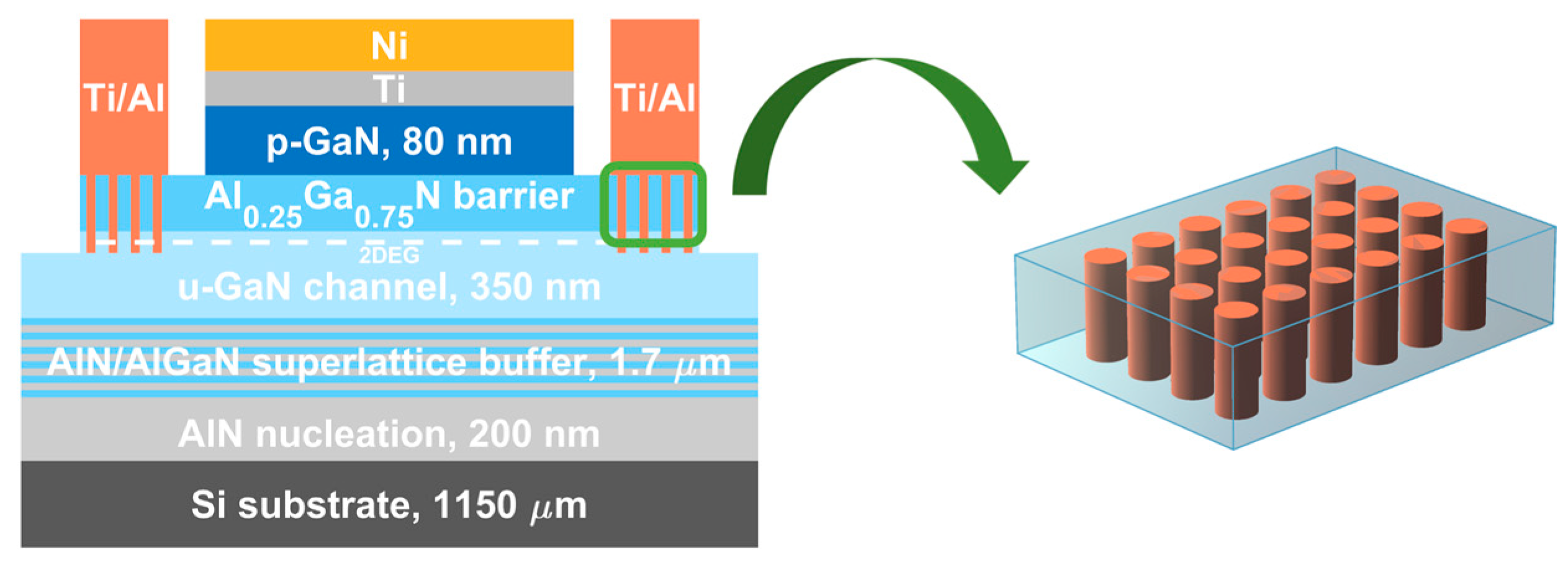
Before device fabrication, the wafers were dipped in a buffered oxide etch (BOE) solution (NH4F: HF = 6:1 by volume) for 60 s. This BOE treatment effectively removes the native oxide and repairs superficial surface damage, ensuring a pristine interface for subsequent steps. Then, the wafers were ultrasonically cleaned in acetone and isopropanol for 5 min each to remove organic residues. A N2 plasma treatment was then applied for fine surface cleaning and surface activation, which can enhance subsequent metal adhesion. The gate structure was subsequently fabricated by photolithographic patterning, electron-beam evaporation of a 5 nm thick Ti layer and a 100 nm thick Ni layer, and a lift-off process to form the Schottky gate electrode, where the thin Ti acts as an adhesion layer and the Ni forms the Schottky barrier. The Ti/Ni gate stack simultaneously served as a hard mask for the subsequent p-GaN dry etching. Inductively coupled plasma (ICP) etching was then performed using a Cl2/N2/O2 gas mixture at flow rates of 35/15/5 sccm, with an ICP power of 150 W, a bias power of 40 W, and a chamber pressure of 15 mTorr. An etching duration of 4 min achieved a depth of 80 nm to selectively remove the p-GaN layer outside the gate region. Mesa isolation was carried out by ICP etching with a Cl2/N2 gas mixture at flow rates of 50/25 sccm for 1 min, reaching a depth of 110 nm. This mesa isolation step simultaneously defined the ohmic contact regions. The plasma-induced nitrogen vacancies acted as donor-type defects, facilitating ohmic contact formation without the need for high-temperature annealing and thereby significantly simplifying the overall process flow to enable short-cycle device fabrication. Finally, a Ti/Al metal stack (10/500 nm) was deposited by electron-beam evaporation and patterned through lift-off to form the ohmic contact electrodes directly connected to the 2DEG channel. The electron-beam evaporation was performed under a base pressure of 5 × 10⁻⁵ Torr with a fixed accelerating voltage of 8 kV. The deposition rates were dynamically controlled at 1.0 Å/s for Ti, 2.0 Å/s for Ni and 5.0 Å/s for Al. Figure 2 presents the morphology of the ohmic contact regions, the deposited metals can directly connect with 2DEG, thereby enabling the transport of electric current. It should be noted that, due to the absence of optimized high-temperature ohmic annealing, the contact resistance (Rc) of the fabricated devices is 81.41 Ω·mm, as evaluated via the transmission line method (TLM). Although the elevated contact resistance may affect the absolute current level and on-state resistance, the identical fabrication flow for all samples and the clear switching behavior make this platform suitable for comparative evaluation of Vth characteristics.
Secondary ion mass spectrometry (SIMS) was employed to analyze the vertical depth distribution of Mg. High-resolution X-ray diffraction (HR-XRD) and photoluminescence (PL) spectroscopy (with laser wavelength at 266 nm) characterized the epitaxial growth quality, and atomic force microscopy (AFM) evaluated the surface morphology. The electrical properties of the fabricated devices were measured using a Keithley 4200 semiconductor parameter analyzer to obtain transfer and output characteristics. The threshold voltage was extracted by the linear extrapolation method. To gain deeper insight into the physical mechanisms through which the doping profile influences device performance, TCAD Sentaurus simulations were performed.

3. Results

3.1. Epitaxial Growth Quality

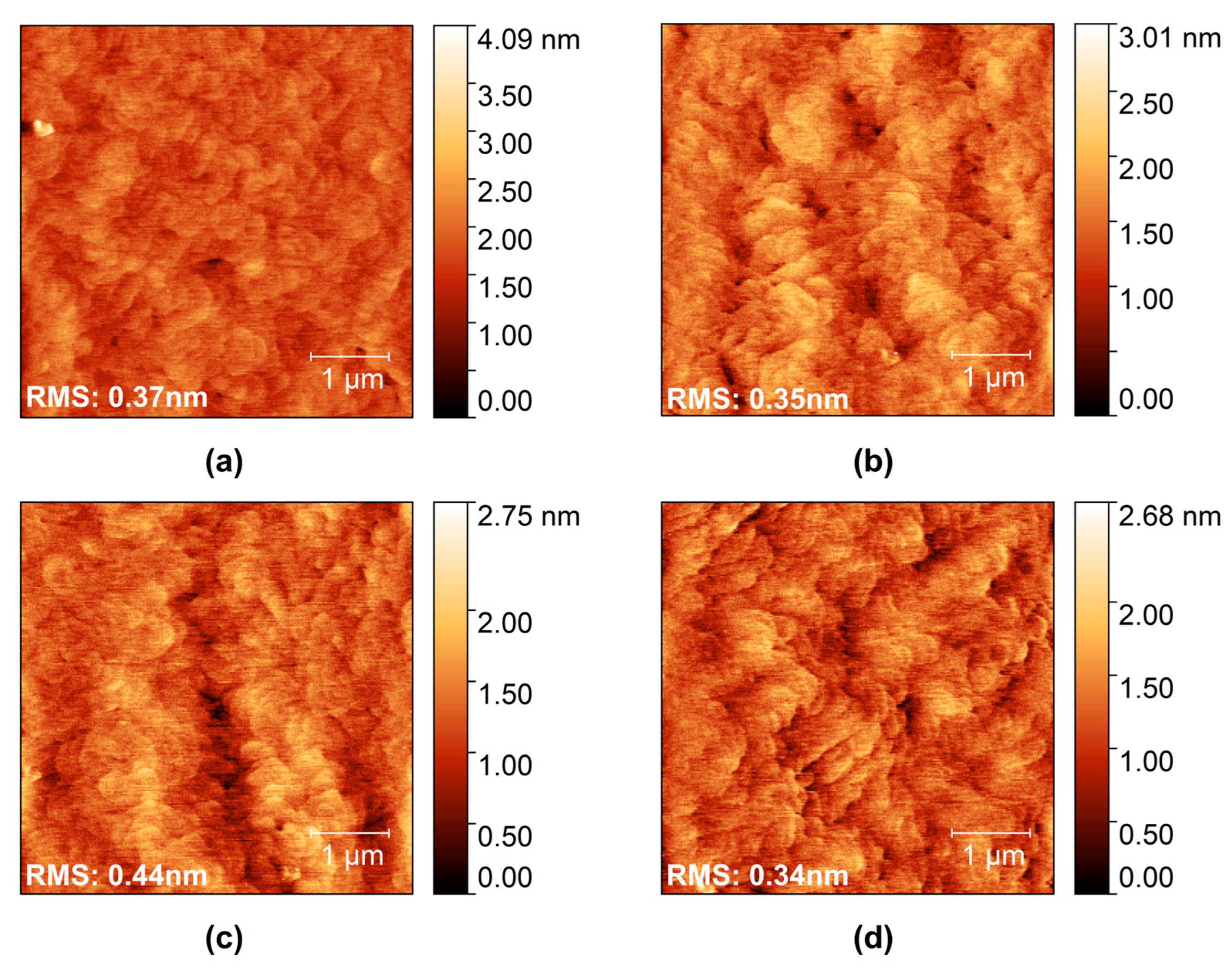
Figure 3 shows the AFM surface morphology images of the four epitaxial samples. The root-mean-square (RMS) roughness values of Wafer-B, Wafer-C, and Wafer-D range from 0.34 nm to 0.44 nm, which are close to the 0.37 nm measured on the baseline Wafer-A.
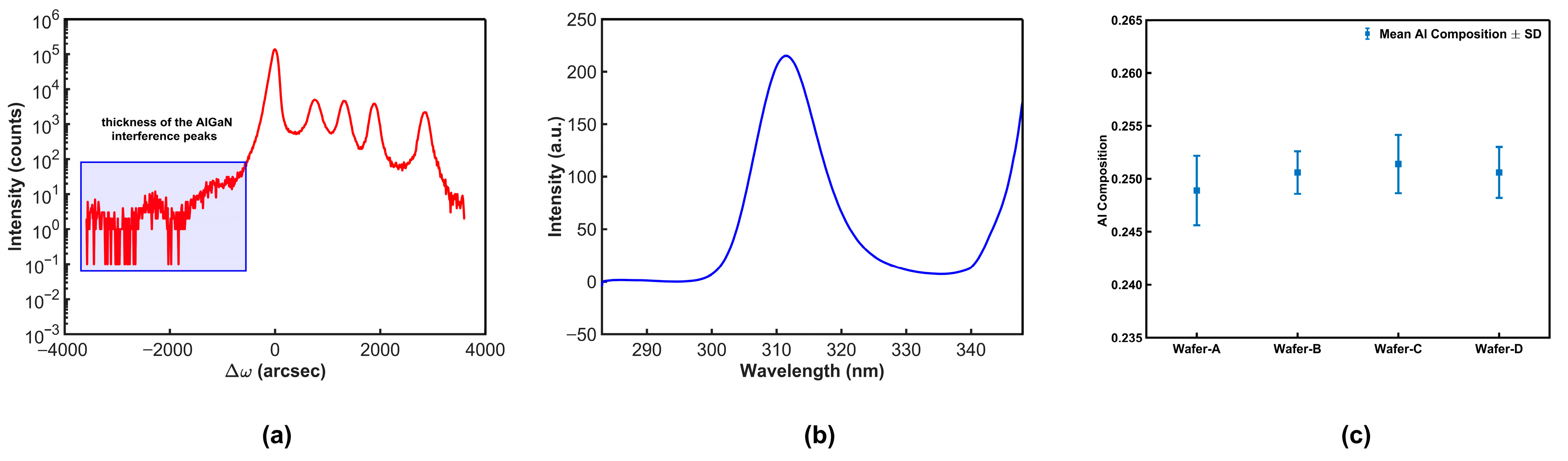
To verify that the thickness and composition of the as-grown AlGaN layer meet the design specifications, Figure 4 presents the cross-calibration results obtained from HR-XRD ω-2θ scans and PL measurements. The XRD pattern reveals multiple sharp and well-defined interference fringes on both sides of the AlGaN barrier diffraction peak. The AlGaN layer thickness was determined to be 13 nm from the angular spacing formula, and the Al composition was calculated to be 25% using Vegard’s law combined with a strain model [24]. The Al composition was also independently confirmed by substituting the PL emission peak energy into the Vegard empirical relation between the AlGaN bandgap and composition [25]. In particular, the bowing parameter was determined to be 0.77 eV. The error bars shown in Figure 4c indicate the mean and standard deviation of the fitted Al content. The AFM, HR-XRD, and PL results do not indicate obvious degradation in the measured surface, structural, or optical quality of the epitaxial layers.
Following the epitaxial growth and characterizations, all samples went through an identical Mg activation anneal at 950 °C for 90 s in a N2 ambient before device fabrication.

3.2. Characterization of the Vertical Mg Doping Profile

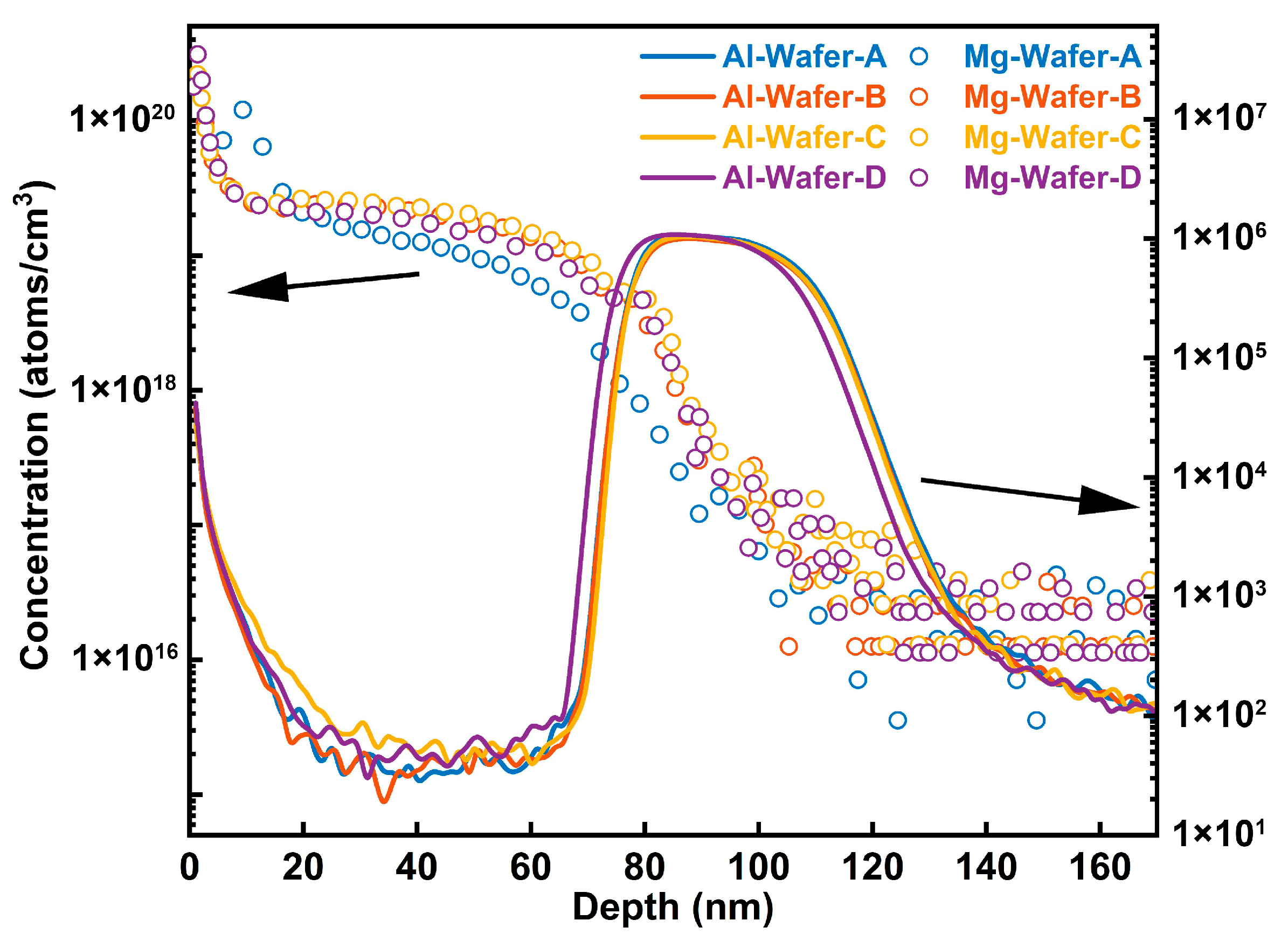
Parameters such as Mg doping onset timing, flow variations, surfactant introduction, and growth rate are crucial for tailoring the Mg profile within the p-GaN layer. Figure 5 presents the SIMS-measured vertical Mg concentration profiles for the four wafers, with the x-axis being the depth from the p-GaN surface. Compared to the optimized samples, the baseline Wafer-A exhibits a substantially lower Mg concentration both near the p-GaN/AlGaN interface and across the bulk p-GaN layer. The results confirm that the optimized MOCVD growth schemes effectively homogenize the vertical Mg distribution.
For more precise comparison, linear interpolation was applied to the raw SIMS data to extract Mg concentrations at specific depths. The extracted values for the four wafers are summarized in Table 2. To quantify the improvement in Mg doping uniformity, a vertical uniformity ratio is defined as UR = [Mg]@20 nm/[Mg]@80 nm. [Mg]@20 nm and [Mg]@80 nm represent the Mg concentrations at depths of 20 nm and 80 nm from the p-GaN surface. When the UR value is closer to 1, the Mg distribution over this depth range is more uniform.
It should be noted that SIMS measures the total chemical concentration of Mg. In this study, all samples underwent identical growth temperatures and the same rapid thermal activation anneal; it is therefore assumed that their Mg activation efficiencies are comparable. Thus, the total Mg profiles directly reflect the relative uniformity of the electrically active dopant distribution.
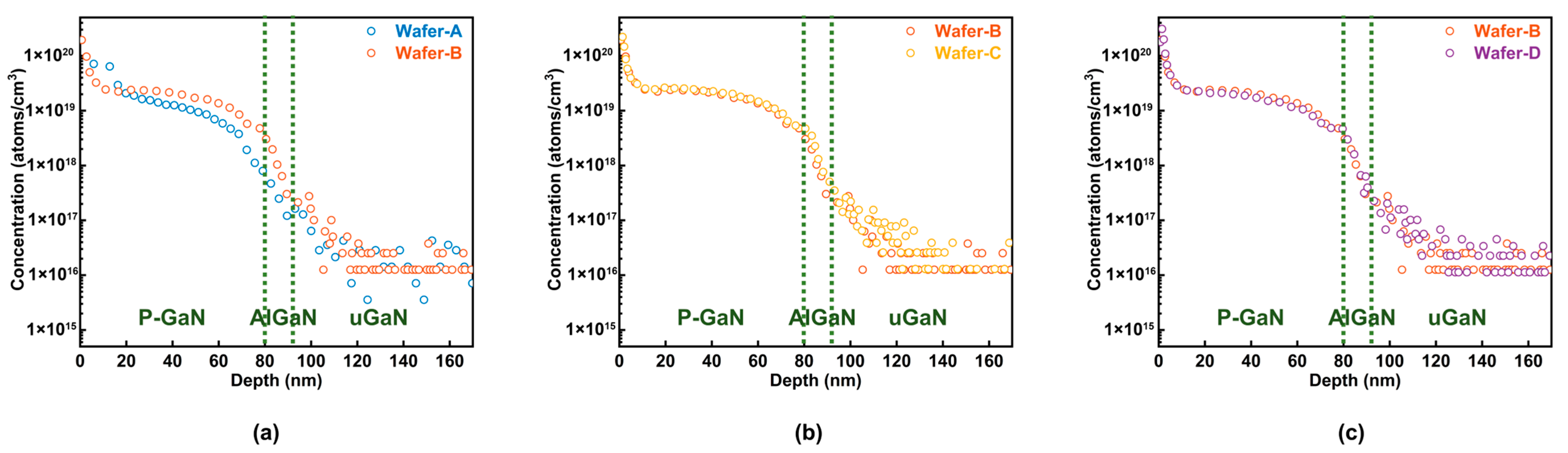
Figure 6a compares Wafer-B with the baseline Wafer-A. Wafer-B exhibits a peak Mg concentration of 2.29 × 1019 cm−3 and a concentration of 1.71 × 1019 cm−3 at a 20 nm depth, both slightly higher than those of Wafer-A. The Mg concentration at a 60 nm depth reaches 1.36 × 1019 cm−3, approximately one order of magnitude higher than the baseline. The UR value decreases significantly from 29.9 in Wafer-A to 4.0 in Wafer-B, showing that the vertical concentration decay is greatly suppressed. This improvement is attributed to the high-initial-flow graded doping strategy. Due to the strong parasitic adsorption of the Mg precursor on the reactor walls, the Mg flux actually reaching the substrate surface is lower than expected during the early stage of growth. Increasing the initial Cp2Mg flow rate accelerates this wall adsorption–desorption process toward dynamic equilibrium. The effective Mg flux at the growth surface stabilizes rapidly, saturating surface adsorption sites and optimizing the competitive kinetics between Mg migration and incorporation. This approach compensates for the adsorption-induced doping lag, elevating the overall Mg concentration across the 80 nm p-GaN layer and yielding a highly uniform vertical doping profile.
Figure 6b illustrates the impact of TMIn co-injection on surface chemistry by comparing Wafer-C and Wafer-B. The peak Mg concentration in Wafer-C reaches 2.63 × 1019 cm−3. The Mg concentrations at 20 nm, 60 nm, and 80 nm depth are 1.91 × 1019 cm−3, 1.46 × 1019 cm−3, and 5.00 × 1018 cm−3, which are higher than those of Wafer-B. The UR also decreases slightly from 4.0 to 3.8. These results suggest that TMIn acts as a surfactant and provides a further improvement in the flatness of the doping profile when combined with the flow modulation strategy. During p-GaN growth, the In-N bond energy is significantly lower than that of the Ga-N bond. At elevated growth temperatures, In atoms tend to segregate at the growth surface rather than incorporating into the crystal lattice. These surface In atoms lower the migration energy barrier for Ga and Mg adatoms, accelerating their surface migration. This enhanced migration enables Mg atoms to rapidly occupy substitutional lattice sites before being buried by subsequent GaN layers. The accelerated incorporation minimizes the Mg doping lag along the growth direction, yielding a more uniform vertical Mg distribution.
Figure 6c shows that Wafer-D exhibits a Mg concentration of 2.20 × 1019 cm−3 at 20 nm depth, significantly higher than the 1.71 × 1019 cm−3 of Wafer-B, and the concentration at 80 nm depth is slightly higher. Previous studies have reported that reducing the growth rate extends the residence time of Mg adatoms, allowing them more time for thermal equilibration and surface migration [26]. This extended window provides Mg atoms with a higher probability of migrating to energetically favorable substitutional sites before being buried by the advancing growth front. Consequently, the incorporation lag is mitigated, driving the doping process closer to thermodynamic equilibrium and enhancing the vertical incorporation efficiency without the need for surfactants.
However, Wafer-D shows a slightly lower Mg concentration at 60 nm depth than Wafer-B, a degraded UR of 4.8, and a 40 nm increase in Mg back-diffusion length. The extended growth duration prolongs the exposure of the epitaxial layer to the high-temperature reactor environment. As Mg solid-phase thermal diffusion depends on time and temperature, this prolonged exposure drives Mg back-diffusion toward the channel layer. Furthermore, under the reduced growth rate and corresponding lower precursor supply, the inherently high migration barrier and segregation tendency of Mg atoms dominate. This insufficient atomic flux exacerbates local doping non-uniformity, ultimately accounting for the degraded UR in Wafer-D.
In conventional high-concentration doping processes, the Mg back-diffusion tail typically extends beyond 100 nm from the heterointerface before decaying to the SIMS background detection limit of 1.00 × 1016 cm−3 [27]. In contrast, the SIMS profiles for the four evaluated wafers demonstrate that the Mg concentration decays to this background level within a significantly shorter distance of 40–80 nm beyond the p-GaN/AlGaN interface. These findings confirm that combining graded flow modulation, surfactant assistance, and a reduced growth rate successfully yields a high-concentration, uniform Mg distribution in the p-GaN layer while effectively suppressing unwanted back-diffusion.

3.3. Electrical Performance of Devices

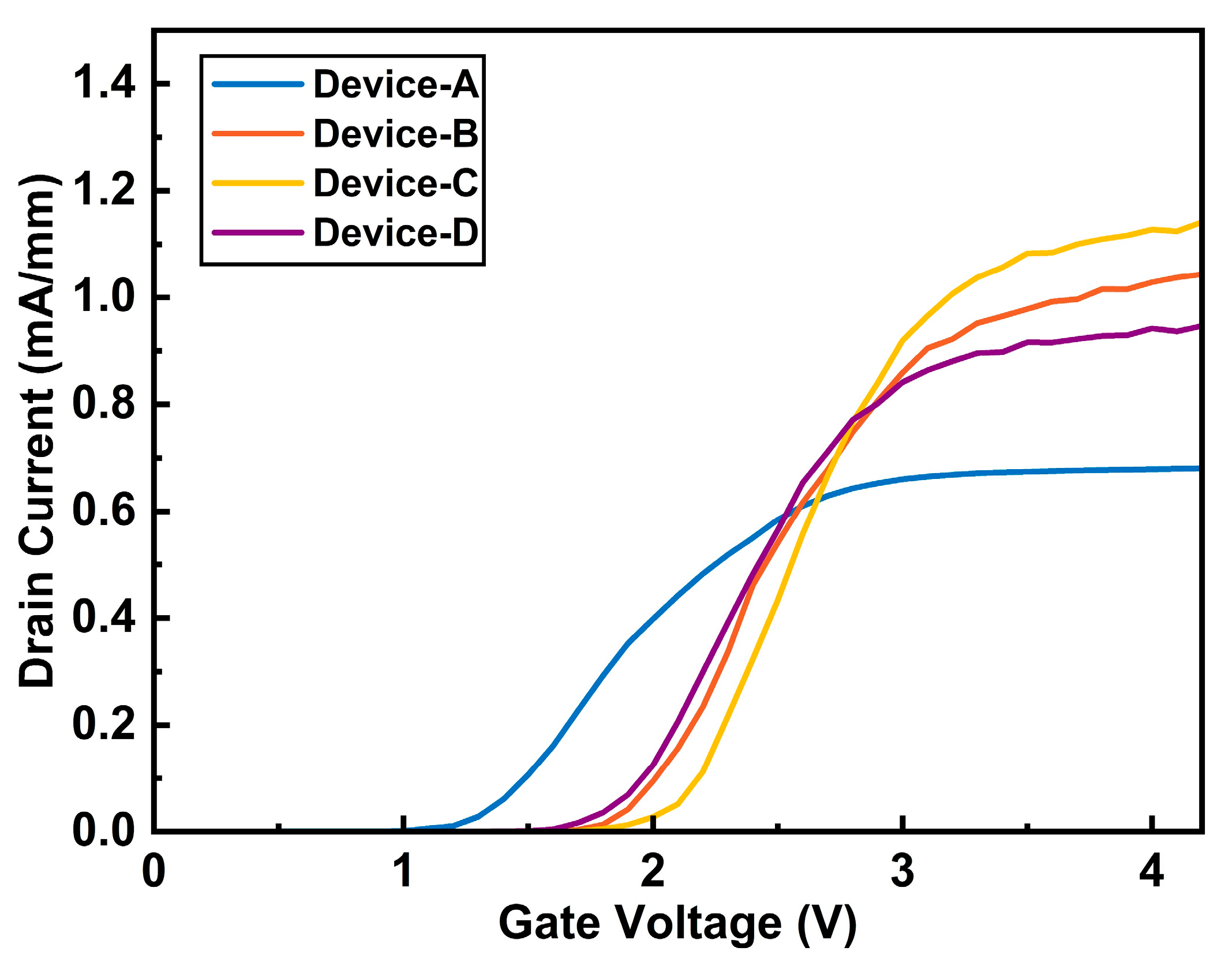
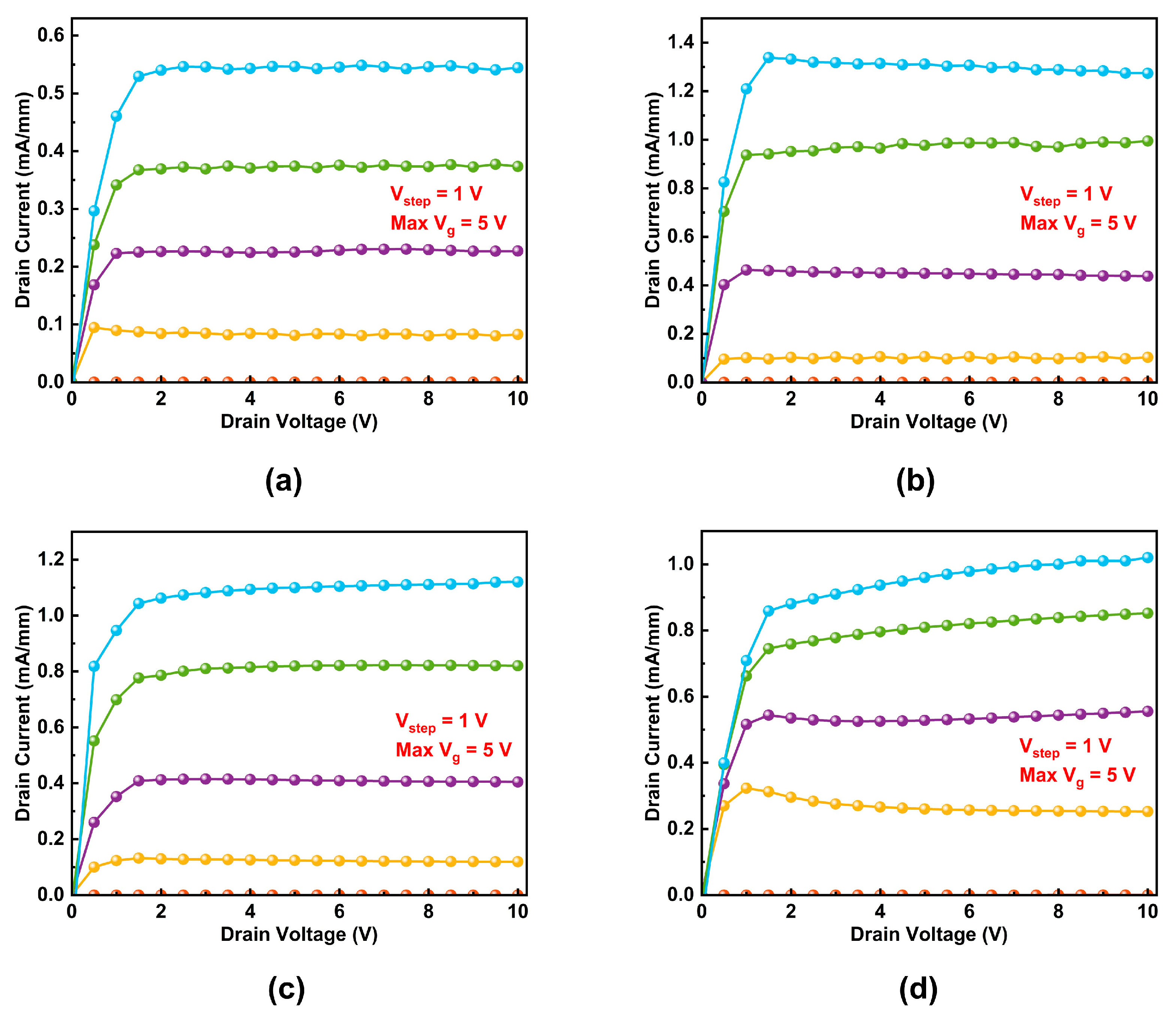
p-GaN HEMT devices were fabricated utilizing a short-cycle, gate-first self-aligned process. Figure 7 shows the transfer characteristics of Device-A, Device-B, Device-C, and Device-D in linear scales, and Figure 8 shows the output characteristics. The devices feature a gate width of 100 μm, a gate length of 2 μm, a source-to-gate spacing of 2 μm, and a gate-to-drain spacing of 11 μm. Vth was extracted using the linear extrapolation method.
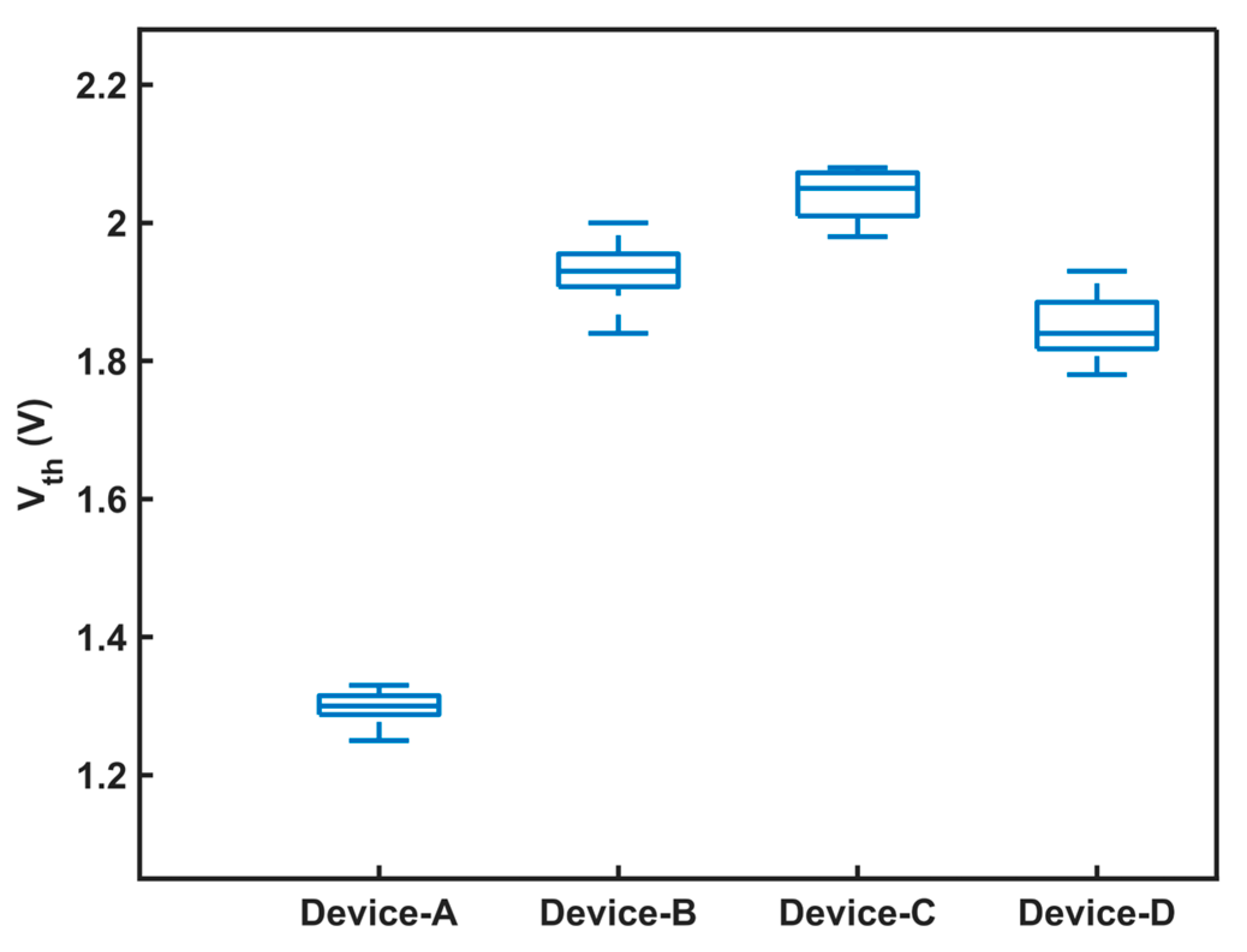
Table 3 summarizes the key electrical parameters of the p-GaN HEMT devices. Compared with the baseline Device-A, which has a Vth of 1.30 V, the Vth values of Device-B, C, and D increase to 1.93 V, 2.05 V, and 1.85 V, respectively. Meanwhile, the UR values improve from 29.9 to 4.0, 3.8, and 4.8. These two sets of data show a clear positive correlation. This direct correlation demonstrates that optimizing the MOCVD growth strategies to homogenize the vertical Mg doping profile systematically enhances the Vth of E-mode devices.
Previous studies have reported that the presence of In atoms can catalyze the dissociation of Mg–H complexes by lowering the acceptor activation energy [28]. This may be an additional factor, beyond the UR improvement, that contributes to the higher overall Mg concentration in Wafer-C. The subthreshold swing can be defined as
S S = d V G S d log 10 I D
which represents the amount of change in gate voltage required to change the drain current by one order of magnitude. The baseline device has an SS of 176.06 mV/dec. Device-B, Device-C, and Device-D show reduced SS values of 149.52 mV/dec, 141.91 mV/dec, and 133.51 mV/dec, respectively. Since SS is closely related to the interface trap state density at the heterojunction, the consistent SS reduction across all optimized devices suggests that the doping processes used here do not introduce additional interface states. In addition, all devices fabricated with the optimized processes maintain on/off current ratios in the range of 106 to 107, showing good normally-off characteristics and gate controllability.
Figure 9 shows the box plots of Vth measured from five randomly selected devices on each wafer. The Vth values on each wafer are narrowly distributed with compact interquartile ranges. It indicates high within-wafer Vth uniformity for all four process conditions.
To quantitively establish the physical link between vertical Mg distribution profile and Vth, we will employ TCAD simulations below to calculate the band structures of the devices.

3.4. TCAD Simulation Verification and Mechanism Interpretation

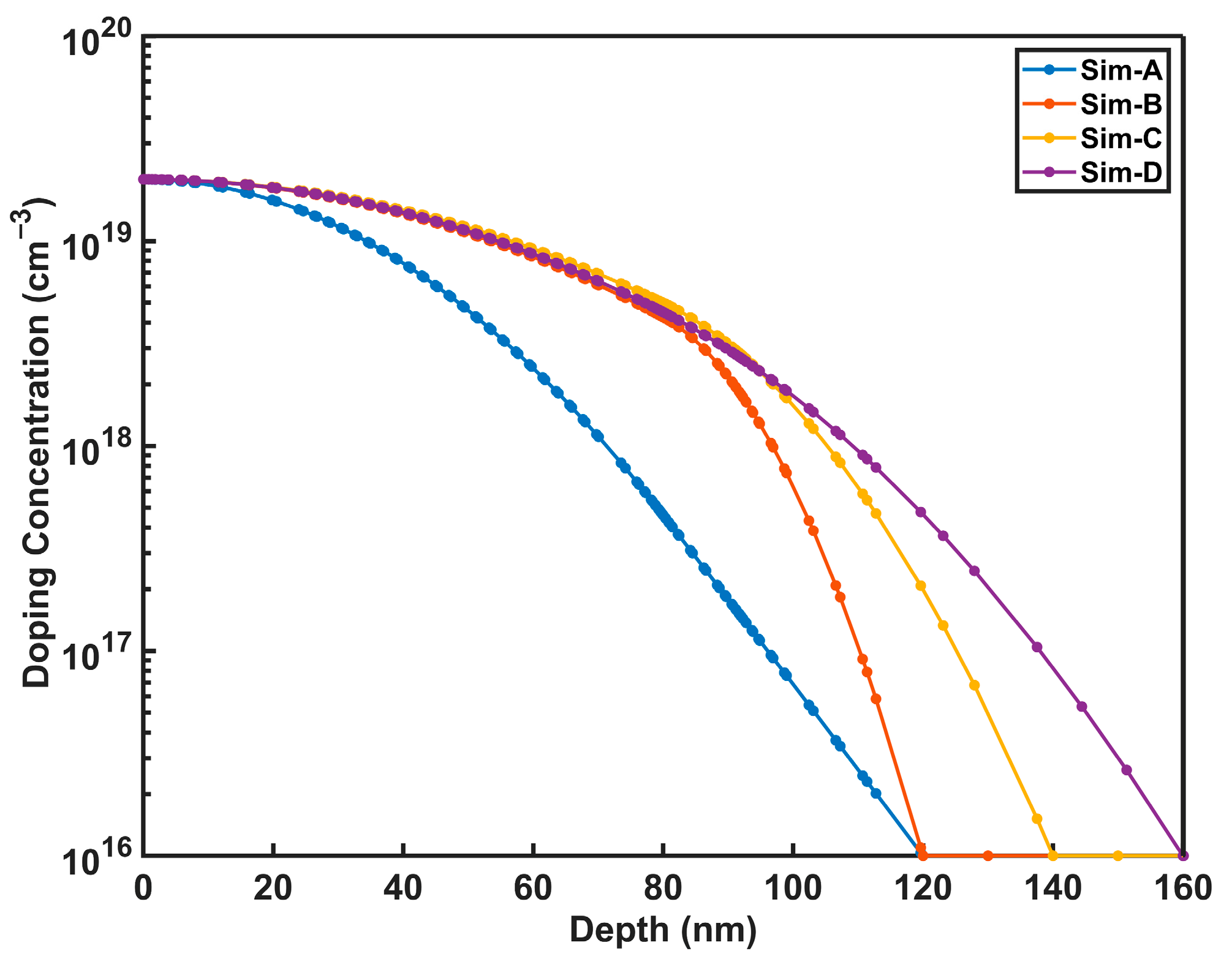
The TCAD model was calibrated using the experimental transfer characteristics of a standard device with the same epitaxial structure as Wafer-A. Key parameters, such as the gate work function, Schottky barrier height, and Mg ionization rate, were adjusted to match the measured curve. Additional parametric simulations of the AlGaN barrier thickness and Al composition reproduced the expected Vth trends, supporting the physical validity of the model. The Mg doping concentration profiles were set up in TCAD (as shown in Figure 10) to emulate the measured SIMS data in Figure 5. Four simulated devices, Simulated Device A (Sim-A), Simulated Device B (Sim-B), Simulated Device C (Sim-C), and Simulated Device D (Sim-D), were then constructed accordingly. Specifically, two Gaussian doping segments were introduced in the simulation. The first segment spans from 0 to 80 nm, and the second extends from 80 nm to the depth at which the Mg concentration decays to the background doping level. The model incorporates Fermi–Dirac statistics, doping-dependent and high-field saturation mobility models, Shockley–Read–Hall (SRH) recombination, Auger recombination, incomplete ionization, and piezoelectric polarization models.
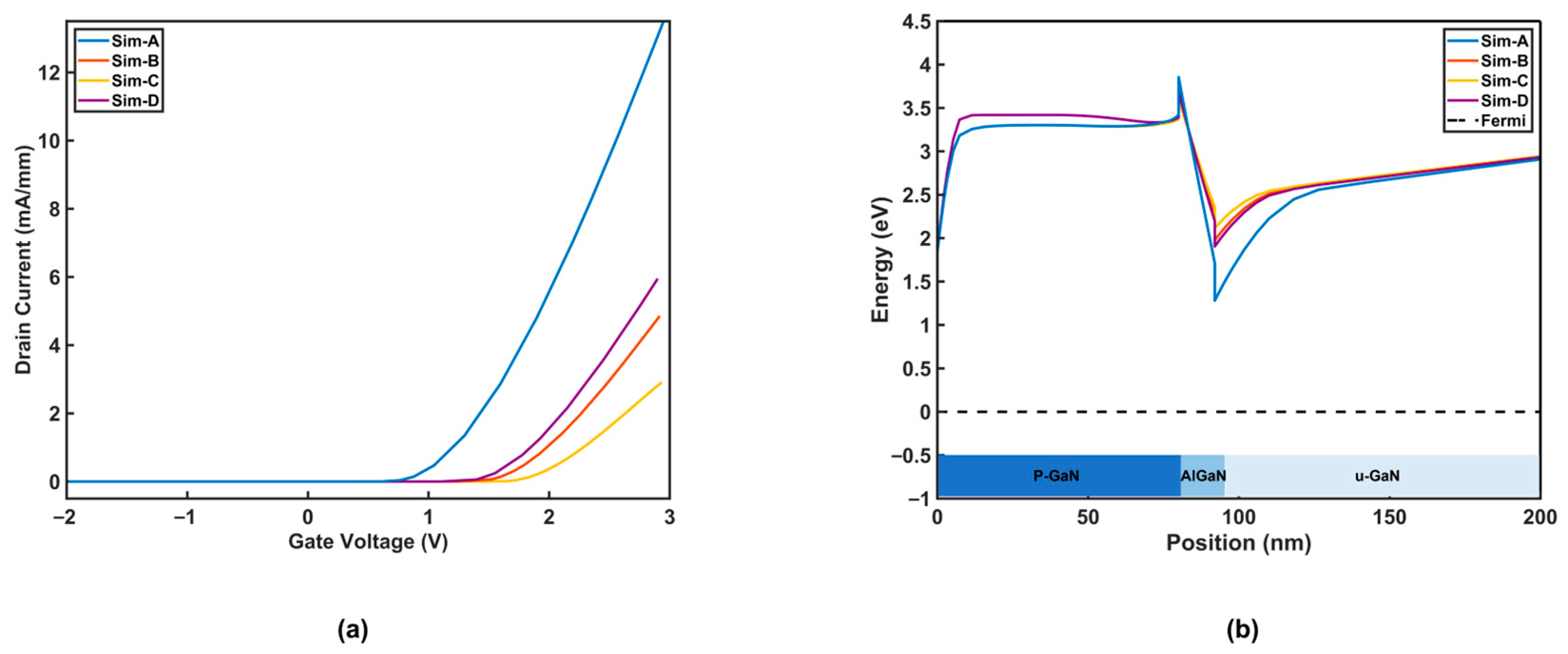
The simulated results show strong agreement with the experimentally observed Vth evolution trend, as presented in Figure 11a. The extracted transfer characteristics indicate that a smaller vertical Mg doping uniformity ratio corresponds to a positive shift in device Vth. The simulated Vth values of Sim-A, Sim-B, Sim-C, and Sim-D are 1.25 V, 1.9 V, 2.0 V, and 1.75 V, which are nearly consistent with the experimental values of Device-A, Device-B, Device-C, and Device-D within an acceptable margin of error.
The differences arising from the various Mg distribution profiles can be observed by extracting the energy band diagrams beneath the gate. Figure 11b shows the energy band structure at Vd = 0 V. Under zero-bias conditions, the conduction band minimum relative to the Fermi level decreases in the order of Sim-C, Sim-B, Sim-D, and Sim-A.
This variation in macroscopic characteristics originates from the microscopic modulation of the energy band structure beneath the gate. According to the Poisson equation,
d 2 ϕ x d x 2 = q ε p x N A x + σ p o l q N A x ε
where N A ( x ) is the ionized acceptor concentration, the second derivative of the potential φ is proportional to the electric field strength, which is directly determined by the negative space-charge distribution N A ( x ) . Based on the principle of electric field superposition, the vertical electric field at the heterointerface is modulated by the space-charge distribution within the p-GaN layer [29]. The centroid depth of the negative space charge, Xc, is defined as
X c = 0 t p G a N x N A x d x 0 t p G a N N A x d x
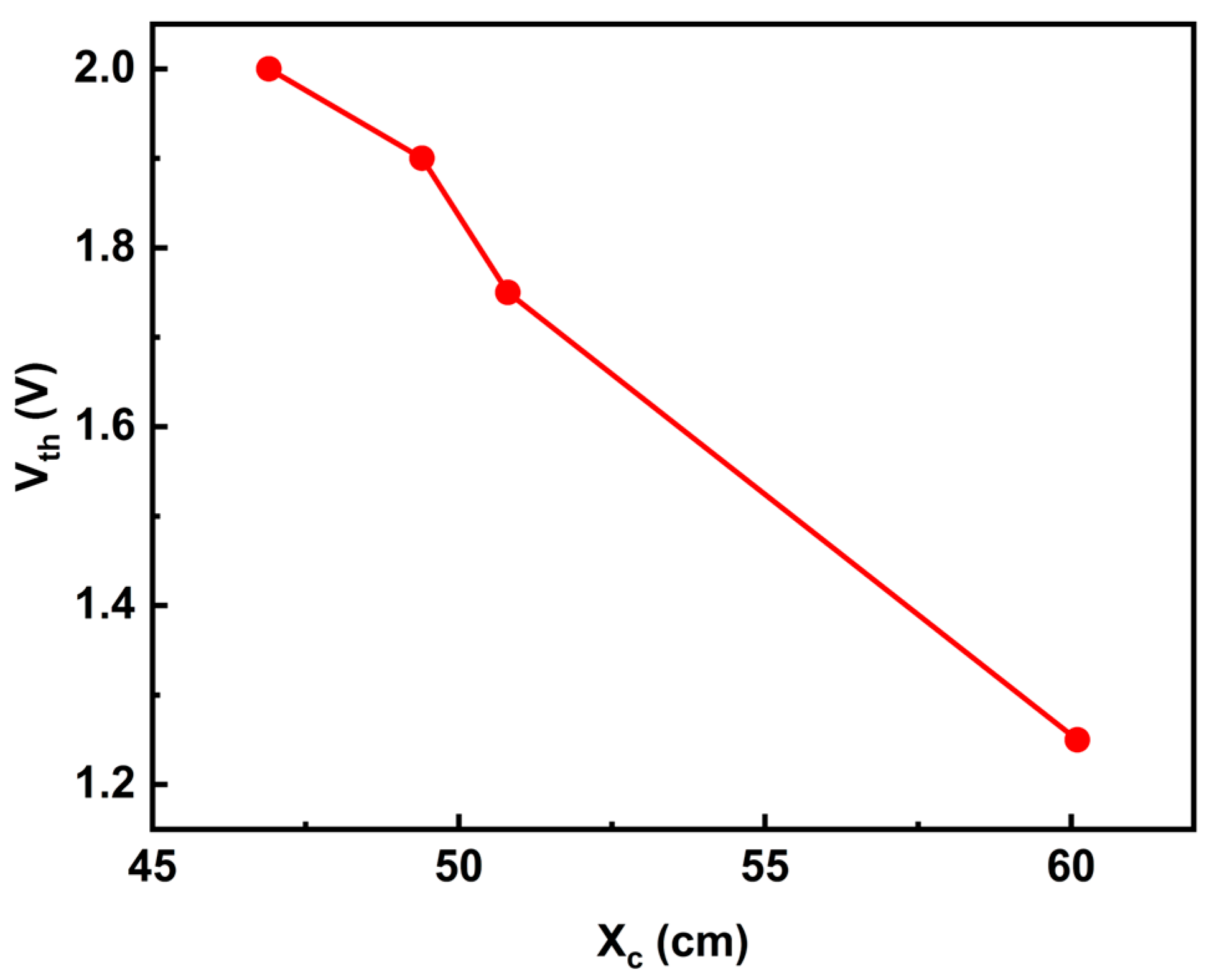
The zero point of Xc is set at the p-GaN/AlGaN interface. The calculated Xc values for Sim-A, Sim-B, Sim-C, and Sim-D are 60.1 nm, 49.4 nm, 46.9 nm, and 50.8 nm. Conceptually identical to the center of mass in classical mechanics, Xc acts as the physical barycenter of the negative space charge. These calculated values naturally fall within the 80 nm physical boundary of the p-GaN layer, and their proximity to the interface intuitively reflects the electrostatic control capability over the 2DEG channel. In contrast, the Mg concentration at the AlGaN/GaN interface reflects only the local dopant density at a single depth and cannot fully capture how the distributed ionized acceptors collectively modulate the vertical electric field and band bending beneath the gate. Since the Vth is determined by the integral electrostatic effect of the whole negative space-charge distribution, two structures with similar interfacial Mg concentration may still exhibit different Vth if their vertical Mg profiles are different. Figure 12 demonstrates the approximately linear relationship between Xc and Vth. As Xc increases, Vth shows a monotonically decreasing trend. In Sim-A, due to the severe vertical concentration gradient, the negative space charge formed by ionized Mg acceptors is predominantly concentrated near the surface region of the p-GaN layer, while the charge density in the critical region adjacent to the AlGaN/GaN heterointerface remains extremely low. This distribution, with the charge centroid located far from the interface, results in a weak built-in electric field at the interface, providing limited elevation of the conduction band minimum.
For Sim-B, Sim-C, and Sim-D, the negative space charge is distributed nearly evenly across the entire p-GaN layer, forming a high and flat charge plateau. This moves the charge centroid closer to the heterointerface and builds a stronger, more uniform vertical electric field near the interface. This enhanced vertical electric field effectively modulates the overall electrostatic potential distribution across the gate stack. As a result, the conduction band at the heterointerface is raised significantly relative to the Fermi level. This creates a higher potential barrier that fully depletes the 2DEG and leads to a clear Vth increase. Therefore, under the premise of a given initial doping concentration, a lower homogenization ratio of vertical doping in MOCVD implies a shallower depth of negative space charge centers, which also implies a higher Vth of p-GaN E-mode HEMT.
Figure 11b also shows that uniform doping produces smoother energy band edges. In Sim-A, the non-uniform doping distorts the internal electric field. Part of the gate voltage is then consumed by the non-uniform depletion region instead of effectively modulating the channel potential. In contrast, the smoother band edges in Sim-B, Sim-C, and Sim-D indicate that the gate has stronger control over the channel barrier and that charge transfer is more efficient. This provides a physical explanation for the SS reduction observed in the experiments.
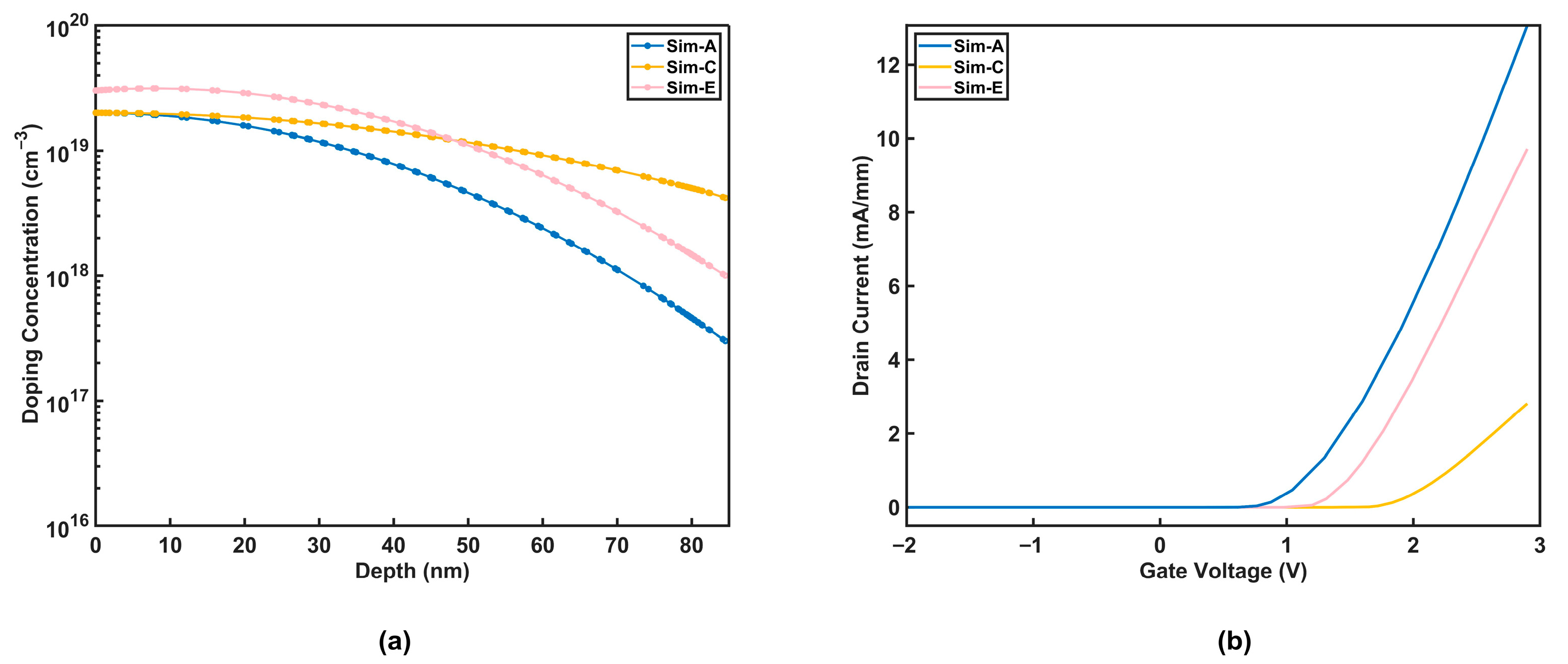
It is worth noting that Sim-C (the group with the highest Vth) has improvements in both Xc and Mg doping dose (i.e., the integral of Mg concentration over depth) compared to Sim-A: Xc is reduced from 60.1 nm (Sim-A) to 46.9 nm (Sim-C), while Mg doping dose is improved from 7.26 × 1013 cm−2 (Sim-A) to 1.09 × 1014 cm−2 (Sim-C). To separate the effect of the changes in Xc and Mg doping dose on Vth, an additional simulation Sim-E was conducted. For Sim-E, Xc is same as Sim-A, while its Mg doping dose is same as that of Sim-C.
Figure 13 shows the simulated magnesium concentration distribution and device transfer characteristic curves. The Vth of Sim-E reaches 1.45 V. By increasing the doping dose, Vth can only be raised from 1.25 V (Sim-A) to 1.45 V (Sim-E), while further reducing Xc can increase Vth from 1.45 V (Sim-E) to 2.0 V (Sim-C). This shows that Xc is the more sensitive factor than Mg doping dose to shift Vth. This result also indicates that, within the present TCAD simulation, the effect of Xc on Vth can be quantitatively evaluated.

4. Discussion

This work demonstrates that the threshold voltage of p-GaN gate HEMTs is fundamentally governed by the spatial distribution of Mg dopants rather than solely their concentration. By engineering the vertical Mg profile through MOCVD process optimization, a significant Vth enhancement of 0.75 V is achieved. Through Cp2Mg flow modulation, TMIn surfactant introduction, and growth rate adjustment, the parasitic adsorption effect and incorporation delay of Mg atoms during GaN epitaxial growth were mitigated, significantly improving the vertical Mg doping uniformity. TCAD simulations directly confirm that the more uniform doping profile establishes a stronger negative space-charge electric field beneath the gate, significantly elevating the conduction band at the heterointerface. More importantly, the introduction of the charge centroid concept provides a quantitative correlation between doping distribution and Vth value. A more uniform Mg profile shifts the centroid of ionized acceptors toward the AlGaN/GaN heterointerface, strengthens the vertical electric field, and enhances channel depletion, leading to higher Vth. These findings establish a new design paradigm for GaN power devices, where electrostatic engineering of dopant distribution plays a central role in achieving high Vth, offering guidance beyond conventional doping strategies.

Author Contributions

Conceptualization, C.C., X.N., Q.F., S.Z. and X.G.; methodology, C.C. and X.N.; formal analysis, C.C. and X.N.; investigation, C.C. and X.N.; resources, X.N., Q.F., and X.G.; data curation, C.C., X.N., and S.Z.; writing—original draft preparation, C.C.; writing—review and editing, C.C., X.N., Q.F., and X.G.; visualization, C.C., X.N. and S.Z.; supervision, X.N. and X.G.; project administration, X.N. and X.G.; funding acquisition, X.N. and X.G. All authors have read and agreed to the published version of the manuscript.

Funding

This research received no external funding.

Institutional Review Board Statement

Not applicable.

Informed Consent Statement

Not applicable.

Data Availability Statement

The original contributions presented in this study are included in the article. Further inquiries can be directed to the corresponding author.

Conflicts of Interest

The authors declare no conflicts of interest.

References

  1. Pu, T.; Wang, X.; Huang, Q.; Zhang, T.; Li, X.; Li, L.; Ao, J.-P. Normally-Off AlGaN/GaN Heterojunction Metal-Insulator-Semiconductor Field-Effect Transistors With Gate-First Process. IEEE Electron Device Lett. 2019, 40, 185–188. [Google Scholar] [CrossRef]
  2. Haziq, M.; Falina, S.; Manaf, A.A.; Kawarada, H.; Syamsul, M. Challenges and Opportunities for High-Power and High-Frequency AlGaN/GaN High-Electron-Mobility Transistor (HEMT) Applications: A Review. Micromachines 2022, 13, 2133. [Google Scholar] [CrossRef]
  3. Hu, Q.; Hu, B.; Gu, C.; Li, T.; Li, S.; Li, S.; Li, X.; Wu, Y. Improved Current Collapse in Recessed AlGaN/GaN MOS-HEMTs by Interface and Structure Engineering. IEEE Trans. Electron Devices 2019, 66, 4591–4596. [Google Scholar] [CrossRef]
  4. Cai, Y.; Zhou, Y.; Chen, K.J.; Lau, K.M. High-performance enhancement-mode AlGaN/GaN HEMTs using fluoride-based plasma treatment. IEEE Electron Device Lett. 2005, 26, 435–437. [Google Scholar] [CrossRef]
  5. Bhat, Z.; Aamir Ahsan, S. Physics-based Analytical Modeling of p-GaN/AlGaN/GaN HEMTs. In Proceedings of the 2022 IEEE 19th India Council International Conference (INDICON), Kochi, India, 24–26 November 2022; pp. 1–6. [Google Scholar]
  6. Zhou, G.; Zeng, F.; Gao, R.; Wang, Q.; Cheng, K.; Li, L.; Xiang, P.; Du, F.; Xia, G.; Yu, H. p-GaN Gate HEMTs With 10.6 V Maximum Gate Drive Voltages by Mg Doping Engineering. IEEE Trans. Electron Devices 2022, 69, 2282–2286. [Google Scholar] [CrossRef]
  7. Wei, S.; Wang, J.; Wang, X.; Gao, X.; Chen, J.; Mao, H.; Zeng, X.; Xu, K. Influence of Polarities of GaN Substrates on Surface Morphologies and Physical Properties of Epitaxial Mg-Doped GaN Films Grown by MOCVD. Phys. Status Solidi 2022, 219, 2200033. [Google Scholar] [CrossRef]
  8. Han, Z.; Li, X.; Ji, J.; Zhang, T.; Jiang, X.; Yuan, S.; Chen, Y.; Xia, H.; Li, C.; Chen, L.; et al. Balancing Threshold Voltage and On-Resistance of p-GaN Gate HEMTs via Mg Doping Engineering. IEEE Trans. Electron Devices 2025, 72, 5336–5341. [Google Scholar] [CrossRef]
  9. Chen, K.; Zhao, J.; Ding, Y.; Hu, W.; Liu, B.; Tao, T.; Zhuang, Z.; Yan, Y.; Xie, Z.; Chang, J.; et al. Effects of Mg-doping temperature on the structural and electrical properties of nonpolar a-plane p-type GaN films. Chin. Phys. B 2023, 33, 016801. [Google Scholar] [CrossRef]
  10. Lu, S.; Deki, M.; Wang, J.; Ohnishi, K.; Ando, Y.; Kumabe, T.; Watanabe, H.; Nitta, S.; Honda, Y.; Amano, H. Ohmic contact on low-doping-density p-type GaN with nitrogen-annealed Mg. Appl. Phys. Lett. 2021, 119, 242104. [Google Scholar] [CrossRef]
  11. Wu, W.; Shu, Z.; Wang, X.; Wang, Y.; Pan, Y.; Sun, J.; Gao, X.; Zheng, S.; Wang, M.; Zeng, X.; et al. Luminescence properties of homoepitaxial Mg-doped GaN under different doping concentrations and annealing atmospheres. J. Lumin. 2025, 284, 121294. [Google Scholar] [CrossRef]
  12. Ishibe, T.; Yamamoto, A.; Sasaki, W.; Kobayashi, E.; Nakamura, Y. Ultrahigh moisture electric output of oxidation-controlled and ion-intercalated graphene oxide films in the low humidity range. J. Mater. Chem. A 2025, 13, 37520–37527. [Google Scholar] [CrossRef]
  13. Yazdi, S.; Agrawal, A.; Singh, A.; Milliron, D.J.; Ringe, E. Impact of Non-Uniform Doping on the Plasmonic Properties of In2O3 Nanoparticles: A Study by Electron Energy Loss Spectroscopy. Microsc. Microanal. 2018, 24, 1684–1685. [Google Scholar] [CrossRef]
  14. Gunning, B.P.; Fabien, C.A.M.; Merola, J.J.; Clinton, E.A.; Doolittle, W.A.; Wang, S.; Fischer, A.M.; Ponce, F.A. Comprehensive study of the electronic and optical behavior of highly degenerate p-type Mg-doped GaN and AlGaN. J. Appl. Phys. 2015, 117, 045710. [Google Scholar] [CrossRef]
  15. Jana, D.; Chatterjee, A.; Sharma, T.K. Confirmation of the compensation of unintentional donors in AlGaN/GaN HEMT structures by Mg-doping during initial growth of GaN buffer layer. J. Lumin. 2020, 219, 116904. [Google Scholar] [CrossRef]
  16. Lanjani, A.; Garg, P.; McEwen, B.; Meyers, V.; Rocco, E.; Das, S.; Hill, D.; Chan, W.K.; Mazumder, B.; Shahedipour-Sandvik, F. Nanoscale analysis of MOCVD-grown Mg-doped AlxGa1−xN/GaN quantum well infrared photodetector (QWIP): Insights into dopant distribution and device performance. J. Appl. Phys. 2026, 139, 095305. [Google Scholar] [CrossRef]
  17. Ahmed, N.; Dutta, G. Modeling the Impact of Mg Out-Diffusion on Threshold Voltage of p-GaN/AlGaN/GaN HEMT. IEEE Trans. Electron Devices 2025, 72, 135–141. [Google Scholar] [CrossRef]
  18. Fu, B.; Liu, N.; Zhang, N.; Si, Z.; Wei, X.; Wang, X.; Lu, H.; Liu, Z.; Wei, T.; Yi, X.; et al. The Effect of Growth Pressure and Growth Rate on the Properties of Mg-Doped GaN. J. Electron. Mater. 2014, 43, 1244–1248. [Google Scholar] [CrossRef]
  19. Agarwal, A.; Tahhan, M.; Mates, T.; Keller, S.; Mishra, U. Suppression of Mg propagation into subsequent layers grown by MOCVD. J. Appl. Phys. 2017, 121, 025106. [Google Scholar] [CrossRef]
  20. Huang, S.; Ikeda, M.; Zhang, F.; Zhang, M.; Zhu, J.; Zhang, S.; Liu, J. Achievable hole concentration at room temperature as a function of Mg concentration for MOCVD-grown p-GaN after sufficient annealing. J. Semicond. 2024, 45, 082501. [Google Scholar] [CrossRef]
  21. Rao, G.P.; Saritha, B.; Lenka, A.; Lenka, T.R.; Nguyen, H.P.T. A review on the evolution and outlook of E-mode III-nitride HEMTs: Comparative Insights into Architectures and performance. Micro Nanostructures 2026, 209, 208412. [Google Scholar] [CrossRef]
  22. Won, D.; Weng, X.; Redwing, J.M. Metalorganic chemical vapor deposition of N-polar GaN films on vicinal SiC substrates using indium surfactants. Appl. Phys. Lett. 2012, 100, 021913. [Google Scholar] [CrossRef]
  23. Yin, Y.; Fan, Q.; Ni, X.; Guo, C.; Gu, X. Normally Off AlGaN/GaN MIS-HEMTs with Self-Aligned p-GaN Gate and Non-Annealed Ohmic Contacts via Gate-First Fabrication. Micromachines 2025, 16, 473. [Google Scholar] [CrossRef]
  24. Wei, W.; Yang, Y.; Peng, Y.; Maraj, M.; Sun, W. Optical and Electrical Properties of AlxGa1−xN/GaN Epilayers Modulated by Aluminum Content. Molecules 2024, 29, 1152. [Google Scholar] [CrossRef]
  25. Alam, S.N.; Zubialevich, V.Z.; Ghafary, B.; Parbrook, P.J. Bandgap and refractive index estimates of InAlN and related nitrides across their full composition ranges. Sci. Rep. 2020, 10, 16205. [Google Scholar] [CrossRef]
  26. Serban, E.A.; Prabaswara, A.; Palisaitis, J.; Persson, P.O.Å; Hultman, L.; Birch, J.; Hsiao, C.-L. High-Selectivity Growth of GaN Nanorod Arrays by Liquid-Target Magnetron Sputter Epitaxy. Coatings 2020, 10, 719. [Google Scholar] [CrossRef]
  27. Tetsuo, N.; Nobuyuki, I.; Kazuyoshi, T.; Keita, K.; Tetsu, K. Wide range doping control and defect characterization of GaN layers with various Mg concentrations. J. Appl. Phys. 2018, 124, 165706. [Google Scholar] [CrossRef]
  28. Huang, H.-W.; Kao, C.C.; Chu, J.T.; Liang, W.D.; Kuo, H.C.; Wang, S.C.; Yu, C.C. Improvement of InGaN/GaN light emitting diode performance with a nano-roughened p-GaN surface by excimer laser-irradiation. Mater. Chem. Phys. 2006, 99, 414–417. [Google Scholar] [CrossRef]
  29. Syed, B.; Maurya, P.; Lenka, S.; Padmanabham, G.; Shariff, S.M. Analysis of high strength composite structure developed for low-carbon-low-manganese steel sheet by laser surface treatment. Opt. Laser Technol. 2021, 143, 107285. [Google Scholar] [CrossRef]
Figure 1. Fabrication process of the short-loop device for fast Vth evaluation. (a) The completed external structure after MOCVD growth and cleaning; (b) Metal Ti is selectively deposited through photolithography; (c) Metal Ni is selectively deposited after metal Ti; (d) Using metal as a hard mask to etch the excess p-GaN through Cl2/O2/N2; (e) The surface isolation and the definition of the ohmic contact areas are accomplished through Cl2/N2 etching; (f) The deposited metal Ti/Al forms an ohmic contact to complete the device fabrication.
Coatings 16 00476 g001
Figure 2. Detailed view of the Ohmic contact region.
Coatings 16 00476 g002
Figure 3. AFM images of p-GaN HEMT epitaxial samples after MOCVD growth: (a) Wafer-A; (b) Wafer-B; (c) Wafer-C; (d) Wafer-D.
Coatings 16 00476 g003
Figure 4. Structural and optical characterization of the samples: (a) HR-XRD scanning curves; (b) photoluminescence (PL) spectra; (c) Statistical distribution of the extracted Al composition across four independent wafers based on PL measurements, with error bars representing the standard deviation (SD).
Coatings 16 00476 g004
Figure 5. SIMS depth profiles of Mg concentration for different samples under four doping processes.
Coatings 16 00476 g005
Figure 6. Comparison of Mg SIMS depth profiles between different samples: (a) Wafer-A vs. Wafer-B; (b) Wafer-B vs. Wafer-C; (c) Wafer-B vs. Wafer-D.
Coatings 16 00476 g006
Figure 7. Transfer characteristics of the p-GaN HEMT for Device-A, Device-B, Device-C, and Device-D.
Coatings 16 00476 g007
Figure 8. Output characteristics of the p-GaN HEMT devices: (a) Device-A; (b) Device-B; (c) Device-C; (d) Device-D.
Coatings 16 00476 g008
Figure 9. Statistical distribution of Vth for the four fabricated devices.
Coatings 16 00476 g009
Figure 10. Simulated Mg concentration gradient profiles for devices Sim-A, Sim-B, Sim-C, and Sim-D.
Coatings 16 00476 g010
Figure 11. TCAD simulation results for Sim-A, Sim-B, Sim-C, and Sim-D: (a) transfer characteristics; (b) Conduction band diagrams.
Coatings 16 00476 g011
Figure 12. The relationship between Xc and Vth.
Coatings 16 00476 g012
Figure 13. TCAD simulation results for Sim-A, Sim-C, and Sim-E: (a) Mg concentration gradient profiles; (b) transfer characteristics.
Coatings 16 00476 g013
Table 1. MOCVD growth parameters for different p-GaN epitaxial samples.
SampleTMGaCp2MgTMInTemperatureTime
Wafer-A350 μmol/min0–80 nm: 330 sccm0 sccm950 °C310 s
Wafer-B350 μmol/min0–20 nm: 1200 sccm linearly decreased
20–80 nm: 330 sccm
0 sccm950 °C310 s
Wafer-C350 μmol/min0–20 nm: 1200 sccm linearly decreased
20–80 nm: 330 sccm
400 sccm950 °C310 s
Wafer-D175 μmol/min0–20 nm: 600 sccm linearly decreased
20–80 nm: 165 sccm
0 sccm950 °C620 s
Table 2. Key parameters of Mg doping profiles derived from SIMS data.
SamplePeak Concentration (cm−3)[Mg]@20 nm (cm−3)[Mg]@60 nm (cm−3)[Mg]@80 nm (cm−3)Depth at which the Concentration Decreases to 1 × 1016 cm−3 (μm)Uniformity Ratio (UR)
Wafer-A1.88 × 10191.40 × 10195.98 × 10184.69 × 10170.1229.9
Wafer-B2.29 × 10191.71 × 10191.36 × 10194.28 × 10180.124.0
Wafer-C2.63 × 10191.91 × 10191.46 × 10195.00 × 10180.143.8
Wafer-D2.27 × 10192.20 × 10191.17 × 10194.54 × 10180.164.8
Table 3. Electrical parameters of the four fabricated devices.
SampleCorresponding WaferURVth (V)SS (mV/dec)Ion/Ioff
Device-AWafer-A29.91.3176.066.28 × 105
Device-BWafer-B4.01.93149.522.51 × 106
Device-CWafer-C3.82.05141.914.31 × 107
Device-DWafer-D4.81.85133.518.10 × 106
Disclaimer/Publisher’s Note: The statements, opinions and data contained in all publications are solely those of the individual author(s) and contributor(s) and not of MDPI and/or the editor(s). MDPI and/or the editor(s) disclaim responsibility for any injury to people or property resulting from any ideas, methods, instructions or products referred to in the content.