Review

From Passive Filling to Active Energy Dissipation: Evolution, Mechanisms, and Application Prospects of Impact Absorption and Damping Coatings in Modern Sports Protective Gear

1
Department of Research on Physical Education, Xinjiang University, Urumqi 830049, China
2
School of Physical Education, Sichuan University, Chengdu 610207, China
*
Author to whom correspondence should be addressed.
Coatings 2026, 16(4), 420; https://doi.org/10.3390/coatings16040420

Submission received: 9 March 2026 / Revised: 21 March 2026 / Accepted: 26 March 2026 / Published: 1 April 2026

Abstract

The rapid development of modern sports has placed higher demands on athlete protection. Traditional protective gear relying on passive energy dissipation through bulk materials such as foam and gel suffers from limitations like large volume and poor adaptability, driving the evolution of protection technology toward active and intelligent solutions. Impact absorption and damping coating technology, which integrates advanced functional materials in thin-film form onto the surface of protective gear, has achieved a paradigm shift in protective performance and is advancing toward lightweight, intelligent, and customizable designs. This review first systematically elaborates on the working principles and performance regulation mechanisms of novel coating systems centered on shear-thickening fluids, polymer gels, microstructural biomimetics, and phase-change materials. Secondly, it deeply analyzes the application modes and protective efficacy improvements of these technologies in specific scenarios such as helmets, joint protectors, and smart clothing. Furthermore, it explores the complex interaction mechanisms between coatings and human tissues under dynamic impact. Finally, we discuss the challenges and future trends in the evolution of this technology toward multifunctional integration, dynamic adaptability, and precise personalized design, aiming to provide a systematic reference for interdisciplinary innovation in fields such as materials science, biomechanics, and sports medicine.

1. Introduction

Modern sports, particularly competitive sports and extreme sports, place unprecedentedly high demands on human body protection. Impact loads exhibit complex characteristics, having a high-frequency, multi-angle, repetitive, and composite nature, and pose serious threats to muscles, bones, joints, and even brain tissues, including concussions, soft tissue contusions, and chronic strain [1]. In American football, for instance, players experience an average of 400–1500 head impacts per season, with peak linear accelerations exceeding 100 g, leading to a high incidence of concussions and chronic traumatic encephalopathy (CTE). Similarly, in alpine skiing, fall-induced impacts often involve combined linear and rotational accelerations at velocities exceeding 100 km/h, where the risk of traumatic brain injury remains alarmingly high despite the use of traditional helmets. In mixed martial arts (MMA), athletes face repetitive high-intensity strikes to the head and torso, with cumulative impact loads reaching hundreds of kilonewtons per match, yet existing protective gear offers limited mitigation due to its rigid, one-size-fits-all design. These real-world scenarios underscore the urgent need for next-generation protection strategies capable of adapting to diverse and dynamic impact conditions. For example, in simulation studies of vehicle–pedestrian collisions, different gait postures significantly affect the risk of injury to the lower and upper limbs of pedestrians, highlighting the complexity of impact loads and the critical influence of individual movement patterns on protective effectiveness [2]. Additionally, extreme environmental conditions (such as extreme heat caused by climate change) have become a major public health challenge for athletes, staff, and spectators in large-scale sports events, further exacerbating the risk of sports injuries [3]. The core of traditional protective gear relies on the plastic deformation or pore collapse of bulk materials such as foam and gel to dissipate energy. This “passive filling” model presents a fundamental contradiction between protective efficacy, wearing comfort, and movement flexibility. Its “one-size-fits-all” design struggles to adapt to differences in individual anatomical structures and movement patterns, and its performance is prone to degradation in complex environments such as humidity and extreme temperatures [4]. For instance, all-weather aging tests of asphalt binders in different climatic regions show that the coupled effects of multiple factors such as ultraviolet light, temperature, humidity, and salt significantly accelerate material performance degradation, revealing the limitations of traditional bulk materials in variable environments [5]. Beyond material degradation, the practical limitations of traditional protective gear are vividly illustrated in elite sports. In professional ice hockey, players wearing full protective equipment exhibit significant reductions in upper limb mobility and sagittal plane range of motion, compromising both performance and the ability to evade collisions [6]. In women’s contact football, surveys reveal that over 60% of athletes decline to use specialized breast protection due to discomfort, poor fit, and overheating, thereby exposing themselves to avoidable injury risks [7]. These examples highlight that protection cannot be achieved at the expense of comfort and functionality—a critical insight that motivates the development of lightweight, conformal coating technologies. Similarly, polymer-based protective materials like epoxy-based powder coatings undergo dynamic evolution in their barrier properties during long-term service due to parameters such as hydration, temperature changes, and the concentration of corrosive substances, leading to protective failure [5]. To overcome these bottlenecks, the concept of “surface/interface engineering” has emerged, giving rise to the emerging field of “impact absorption and damping coatings.” This technology applies functional materials in the form of coatings to substrate surfaces or between fabric layers, dissipating energy through active, interface-dominated mechanisms. This represents a paradigm shift from “bulk material filling” to “interface functionalization,” offering significant potential for lightweight, customizable, and intelligent responsiveness [8]. For example, bio-inspired designs inspired by nacre integrate a rigid porous ceramic skeleton with a flexible polyurethane buffer layer to construct hierarchical composite films, achieving approximately 20 times higher normalized absorbed energy under quasi-static compression compared to traditional polyurethane foam, providing excellent impact protection for structural materials [8]. In terms of intelligent responsiveness, stretchable transparent dielectric heaters based on ionic gel electrodes demonstrate the potential for stable operation in extreme environments, offering new ideas for wearable thermal management platforms [9]. Furthermore, two-dimensional open-framework materials, due to their tunable chemical functionalities, provide broad prospects for designing novel functional coatings [10]. Data-driven methods such as materials informatics are accelerating the discovery and optimization of new functional materials, offering systematic innovation pathways for customized protective coatings [11]. The practical significance of this paradigm shift is already being explored in several high-risk sports. In BMX cycling, where crash impacts frequently involve oblique and rotational components that conventional foam liners cannot adequately address, prototype coatings integrating shear-thickening fluids have demonstrated the ability to reduce peak transmitted force by over 40% while maintaining helmet ventilation. In rock climbing, ultra-thin damping coatings applied to harness attachment points and knee pads have shown promise in attenuating repeated low-energy impacts that contribute to chronic overuse injuries among elite climbers. These emerging applications illustrate that coating technologies are not merely a theoretical advancement but a tangible solution to long-standing protection challenges in real-world sports settings.
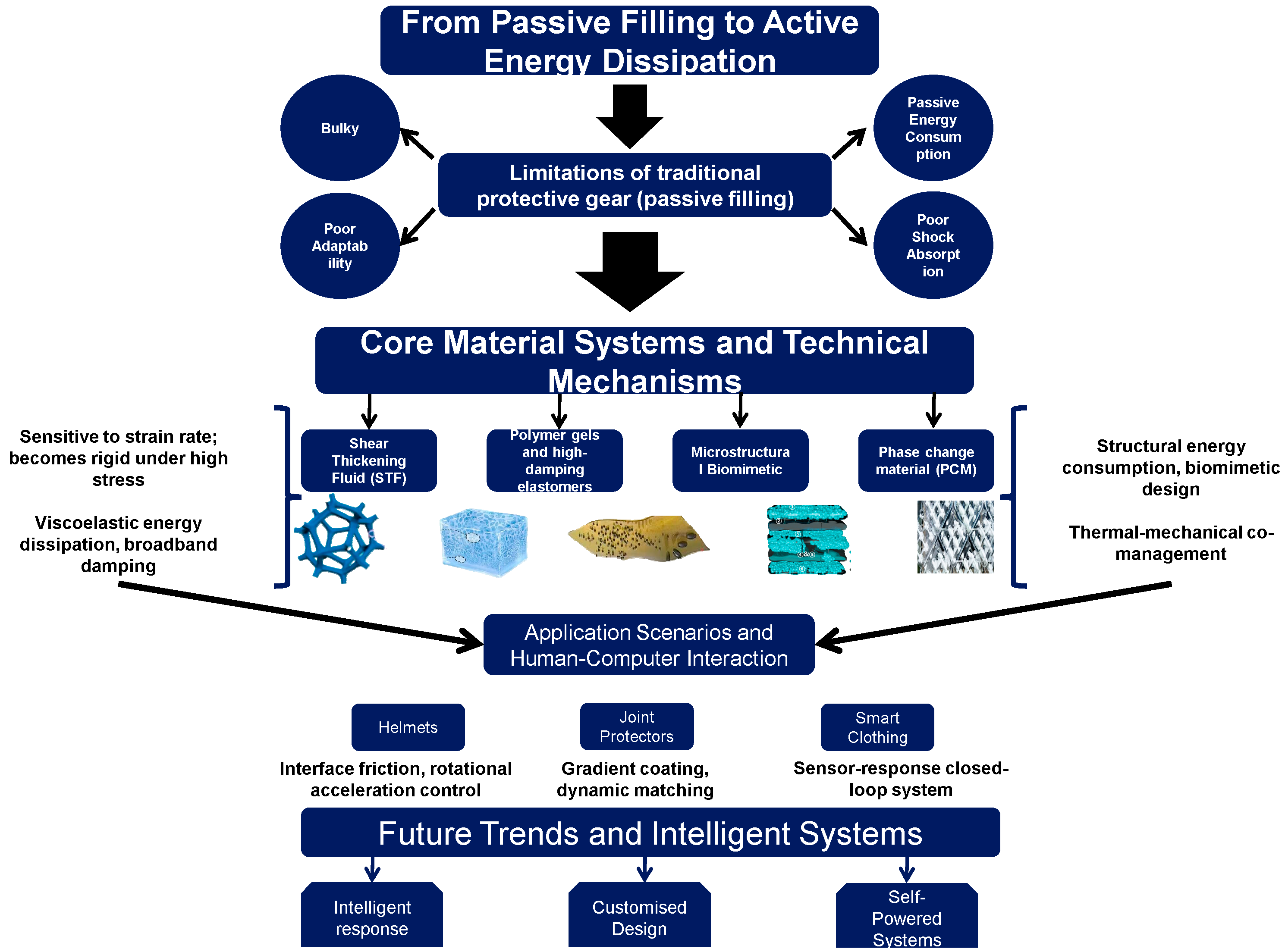
This review first systematically elaborates on the working principles and performance regulation mechanisms of novel coating systems centered on shear-thickening fluids, polymer gels, microstructural biomimetics, and phase-change materials. Secondly, it deeply analyzes the application modes and protective efficacy improvements of these technologies in specific scenarios such as helmets, joint protectors, and smart clothing. Furthermore, it explores the complex interaction mechanisms between coatings and human tissues under dynamic impact. Finally, we discuss the challenges and future trends in the evolution of this technology toward multifunctional integration, dynamic adaptability, and precise personalized design, aiming to provide a systematic reference for interdisciplinary innovation in fields such as materials science, biomechanics, and sports medicine. The overall structure of this review is illustrated in Figure 1, providing readers with a clear roadmap to navigate the subsequent sections.

2. The Evolution of Protective Paradigms in Sports Gear and Core Material Systems

2.1. Limitations of Traditional Protection and Modern Demands

2.1.1. Principles and Limitations of Traditional Passive Protective Materials

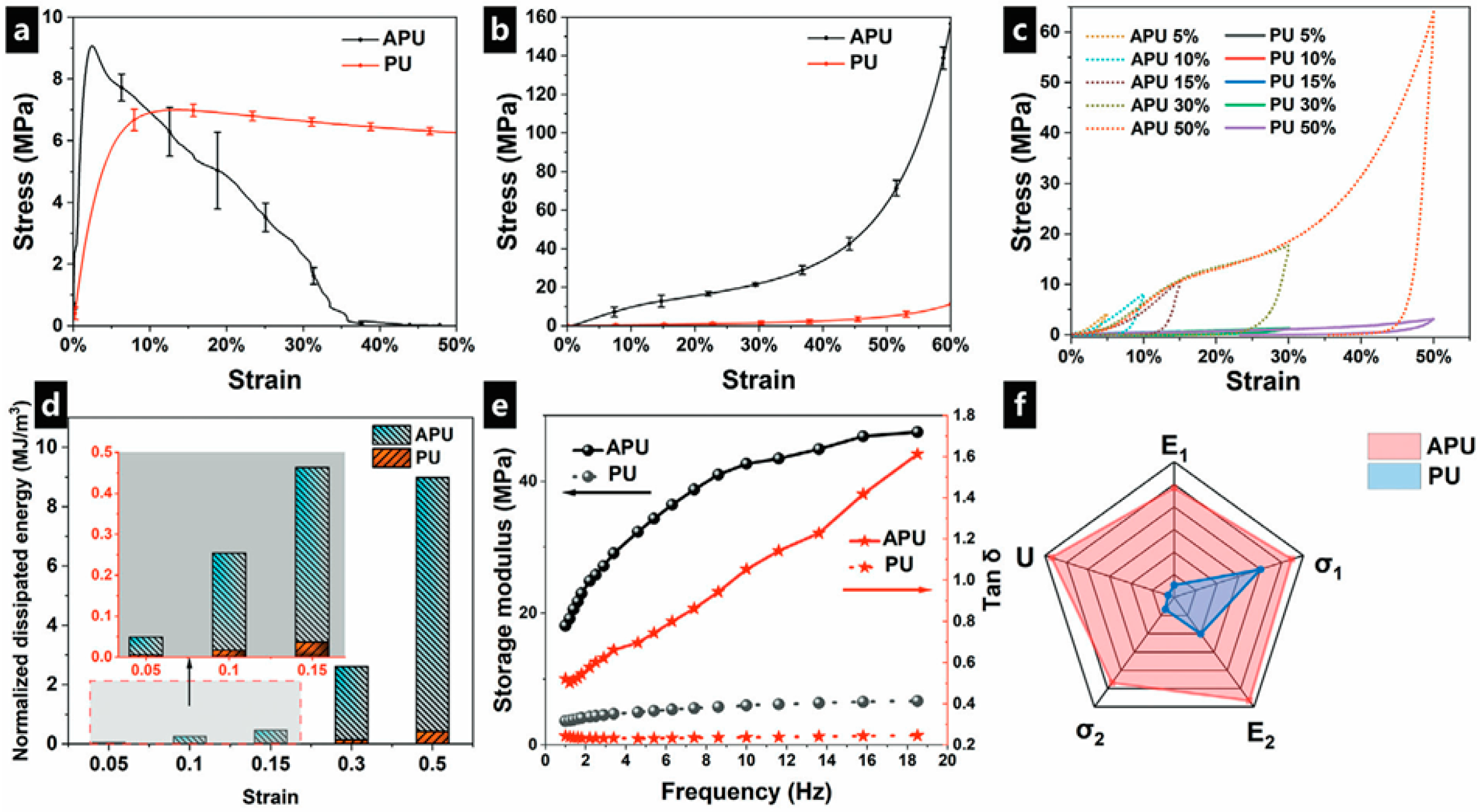
The protective capability of traditional sports gear primarily relies on the passive energy dissipation of materials such as polyurethane foam, ethylene-vinyl acetate (EVA) foam, and silicone gel. Upon impact, these materials absorb and disperse energy through irreversible deformation of their internal structures (e.g., collapse of closed-cell foam) or viscoelastic flow (e.g., friction between molecular chains in silicone) [12,13,14]. The effectiveness of this mechanism depends on the material’s inherent static mechanical properties (such as hardness, density, and resilience), which are fixed during manufacturing, thus constituting an inherently “passive” form of protection [15]. However, this passive mode presents multiple limitations. First, to achieve sufficient protection levels, it often requires increasing material thickness or density, resulting in gear that is bulky and cumbersome, significantly restricting athletes’ freedom of movement and wearing comfort [16]. Second, material performance is prone to degradation under repeated impacts. The mechanical performance curves of traditional protective materials and new materials under different compression ratios, as well as the mechanical performance curves in compression-recovery tests, are shown in Figure 1. Foam structures may undergo fatigue-induced permanent collapse under multiple loads, while viscoelastic materials like silicone may gradually lose energy dissipation efficiency due to molecular chain breakage or reorganization [17]. Furthermore, traditional materials are highly sensitive to environmental temperature. At low temperatures, hindered polymer chain movement often causes materials to become stiff and brittle (increased modulus, decreased toughness), drastically reducing their cushioning capacity; at high temperatures, softening (decreased modulus) may occur, leading to insufficient support and structural stability [16]. These factors collectively affect the long-term reliability and performance consistency of protective gear. The aforementioned limitations are rooted in the “passive” nature of the materials—their mechanical response cannot dynamically adjust based on the intensity, angle, or frequency of external impacts [15]. For example, rigid gear designed for high-intensity collisions may hinder movement during daily low-intensity activities due to excessive stiffness; conversely, soft gear may fail to provide effective protection under severe impacts due to insufficient modulus [17]. This “one-size-fits-all” static protection strategy struggles to meet the dynamic demands of modern sports for differentiated and intelligent protection [14]. Therefore, although traditional materials form the foundation of sports gear development, their inherent limitations are profoundly driving the evolution of protection technology toward the intelligent and adaptive direction of “active energy dissipation.”

2.1.2. The Diversified Demands of Modern Sports for Protective Performance

The diversification and high-intensity development of modern sports have placed complex, multidimensional, and refined demands on the performance of protective gear. First, the diversity of impact loads necessitates targeted protection. The impact load spectra generated by different sports are fundamentally different, directly determining the core design of protective gear. For example, high-contact sports like American football primarily involve high-energy, high-frequency linear collisions, characterized by high-amplitude, short-duration linear acceleration [18]. Bicycle crash accidents often trigger complex multi-angle, multi-directional impacts, such as sideswipes and rollovers, whose load spectra require protective gear to effectively handle localized impact forces and shear forces [19]. Sports like boxing and martial arts, on the other hand, need to withstand high-frequency, medium-energy repetitive strikes, with the focus of protection being on efficiently absorbing and dispersing repeated impact energy while balancing the gear’s flexibility and necessary antibacterial properties [20]. These differentiated mechanical environments require that the materials and structures of protective gear possess targeted energy management mechanisms, such as optimizing their response at specific strain rates through biomimetic or lattice structure designs [18]. Second, the deepening understanding of protection has expanded the dimensions of protection. In addition to linear impact protection, mitigating rotational acceleration has become a core challenge in the design of modern protective gear, especially headgear. Research confirms that rotational acceleration is a key biomechanical factor inducing traumatic brain injuries such as concussions, and the shear strain it generates in brain tissue is far greater than that from linear impacts [21]. However, traditional helmets are primarily designed to prevent skull fractures and are insufficiently effective in reducing brain rotational acceleration [21]. Collisions in high-speed sports like ice hockey are often accompanied by severe head rotation, and existing protective gear has significant shortcomings in this aspect of protection. Therefore, the focus of next-generation protective technology development has shifted from passively resisting linear impacts to actively dissipating rotational energy, such as by incorporating shear-thickening layers or intelligent damping systems to reduce head angular velocity. This marks a fundamental evolution in impact absorption technology from simple “material filling” to active “energy management” [21]. Finally, user experience and functional integration have become key considerations. Modern sports protective gear must also meet a series of comprehensive requirements that go beyond basic protection. Comfort and wear experience are crucial; gear with poor breathability, excessive weight, or inadequate fit can significantly affect athlete performance and reduce compliance with wearing it [6]. Studies show that ice hockey players experience significant limitations in their athletic performance (especially in upper limb and sagittal plane mobility) when wearing full protective equipment [6]. In female contact sports, many athletes refuse to use specialized breast protection equipment due to discomfort, overheating, or poor fit [7]. Therefore, protective gear design must integrate breathability, sweat-wicking, lightweight construction, ergonomic fit, and esthetic design [22]. Simultaneously, functional integration with modern electronic technology has become a clear trend. By integrating nanomaterials, flexible electronics, and sensors into protective gear, real-time monitoring of athletes’ physiological parameters, movement mechanics, and impact data can be achieved, enabling a leap from passive protection to active health management [23,24]. Such “smart protective gear” not only provides real-time training feedback and precise protection but also offers data support for injury prevention and rehabilitation planning, representing an important direction for the development of sports protective gear toward intelligence and systematization [23].

2.2. Material Systems and Mechanisms for Impact Absorption and Damping Coatings

2.2.1. Shear-Thickening Fluid Coatings: Strain-Rate-Sensitive Intelligent Protection

Shear-Thickening Fluid (STF) coatings, with their unique strain-rate-sensitive properties, have brought about a paradigm shift in the impact absorption design of sports protective gear. The core advantage of STF lies in its dynamic dual rheological behavior: under low shear rates or during daily wear, it behaves as a low-viscosity fluid, imparting excellent flexibility and conformity to the coated substrate, ensuring wearing comfort and freedom of movement [24]. However, when subjected to high-speed impacts (such as severe collisions), STF can undergo a rapid transition from a fluid-like state to a solid-like state within milliseconds, with a sharp increase in viscosity and a significant enhancement in macroscopic modulus, thereby effectively resisting penetration by impact objects and dissipating energy [24]. This intelligent “stiffening under strong impact” response, triggered by strain rate, enables STF-coated protective gear to dynamically balance normal flexibility with high protection during impacts, marking a significant evolution in protective materials from passive filling to active adaptation. The exceptional energy dissipation capability of STF coatings is rooted in the reversible reorganization of their microstructure. A typical STF consists of nano/micron-sized rigid particles (such as silica) dispersed in a polar liquid medium (such as polyethylene glycol) [24]. Under static or low-shear conditions, the particles are separated by lubricating layers of the medium, and the system exhibits Newtonian fluid behavior. Once subjected to high-shear impacts, the hydrodynamic balance between particles is disrupted, causing them to instantaneously form tightly packed temporary clusters or hydrodynamic aggregates. These clusters significantly impede fluid flow, manifesting macroscopically as a pronounced shear-thickening effect. Impact kinetic energy is dissipated during this process primarily through two pathways: first, the work done to overcome interparticle forces to form and deform clusters; second, the conversion into heat through intense friction between particles and the medium, as well as between particles themselves [24]. This mechanism of dissipating macroscopic impact energy through reversible microstructural reorganization is highly efficient and reversible, allowing the material to revert to its fluid state after the impact, enabling the cyclic use of its intelligent protective function. To precisely match the protective performance of STF coatings with the specific demands of various sports, a series of key performance modulation strategies have been developed. The core of these strategies lies in the fine-tuning of STF composition and structure to control the critical strain rate for shear thickening, the magnitude of thickening, and the response dynamics. First, filler characteristics are decisive factors. The type, particle size, morphology, and concentration of fillers directly influence interparticle interactions and the ease of cluster formation. For example, increasing filler concentration typically lowers the critical shear rate and enhances the thickening effect but may come at the cost of reduced normal fluidity [24]. Second, the choice of dispersion medium is crucial. The polarity, viscosity, and molecular weight of the medium determine the dispersion stability, initial viscosity, and resistance to particle motion, thereby synergizing with the filler to “customize” a rheological curve that matches the target impact strain rate range [24]. Additionally, composite processing and interface engineering cannot be overlooked. When STF is combined with high-performance fiber fabrics, impregnation processes must be optimized to ensure coating uniformity and to strengthen the interfacial bonding between STF and fibers, thereby achieving efficient transfer and synergistic dissipation of impact energy between the fluid phase and the fiber phase. These multi-level modulation strategies collectively form a solid foundation for the transition of STF coating technology from the laboratory to diverse applications in sports protective gear.
However, the practical application of STF coatings must contend with a critical trade-off between protective efficacy and added mass. The incorporation of high-density ceramic particles (e.g., silica, with densities of 2.0–2.6 g/cm3) necessary for achieving the shear-thickening effect inevitably increases the overall weight of the protective equipment. Depending on the particle volume fraction and coating thickness, STF-treated fabric composites can exhibit areal density increases of 20%–50% compared to untreated substrates. In sports such as cycling, skiing, or motorsports where every gram contributes to inertial loads and neck muscle strain, this weight penalty may accelerate muscle fatigue and potentially compromise athletic performance over prolonged use. Strategies to mitigate this limitation include the development of lightweight filler alternatives (e.g., hollow silica or polymer microspheres), gradient coating architectures that concentrate STF only in high-impact zones, and hybrid systems that combine STF with low-density foam substrates to achieve favorable protection-to-weight ratios.

2.2.2. Polymer Gels and High-Damping Elastomer Coatings: Exemplars of Viscoelastic Energy Dissipation

Polymer gels and high-damping elastomers are typical representatives that rely on the intrinsic viscoelasticity of materials to achieve energy dissipation. Their core mechanism lies in the internal friction (hysteresis effect) and molecular chain rearrangement of polymer segments under dynamic loads, thereby irreversibly converting impact mechanical energy into thermal energy [25]. For example, nematic liquid crystal elastomers (LCEs) exhibit a high loss factor (tanδ) close to 1 over a wide temperature range and frequency spectrum due to their unique “soft elasticity,” making them excellent damping materials [26]. In contrast, the damping performance of traditional silicone rubber primarily relies on the glass transition region, with a narrow effective damping window that is difficult to regulate [25]. However, through advanced material design, such as constructing polymer–fluid–gel composite systems, precise control of relaxation behavior can be achieved, enabling ultra-high-energy dissipation capabilities over an extremely wide frequency range (10−2 to 108 Hz), far surpassing the performance of commercial damping materials [25]. Hydrogel coatings, as an important class of soft energy-dissipating materials, rely on dynamic reversible crosslinked networks (such as ionic bonds, hydrogen bonds) that break and recombine during deformation [27]. For instance, lactose-modified chitosan double-crosslinked gels contain both dynamic boronate ester bonds and permanent genipin crosslinks, contributing to rapid energy dissipation and network skeleton strength, respectively [27]. The viscoelasticity of alginate hydrogels can be finely tuned through polymer molecular weight, crosslinking type (ionic/covalent), and PEG grafting [28]. Additionally, fully bio-based organic hydrogels developed based on multi-catalytic strategies integrate dual dynamic networks of covalent and ionic bonds, creating intelligent systems with both energy dissipation and storage functions [29]. These high-water-content materials not only exhibit good biocompatibility but also provide auxiliary heat dissipation for protective gear through water evaporation effects. Through filler composites and structural design, the damping performance of traditional elastomers can be significantly enhanced. For example, by compounding three-dimensional graphene oxide (GO) foam with polydimethylsiloxane (PDMS), the addition of GO significantly alters the microstructure of the composite material, enabling it to maintain a high loss factor over a wider temperature range, with substantial improvements in both storage modulus and loss modulus [30]. Smart responsive damping materials further demonstrate the potential for active regulation. Encapsulating magnetorheological fluid in magnetorheological elastomers (MREs) to form MRE-F hybrid systems enhances magnetic field responsiveness, achieving superior vibration isolation performance [31]. Magnetic active elastomers (MAEs) based on brush-like polymer networks, filled with carbonyl iron particles, enable non-contact regulation of shear modulus by three orders of magnitude via a magnetic field, switching between viscoelastic and high-elastic states [32]. These materials efficiently dissipate energy over a wide frequency range through mechanisms such as filler-matrix interface friction, filler network destruction/reconstruction, and external field response, providing high-performance and potentially intelligent passive/active protective solutions for sports gear.
Polymer gel and high-damping elastomer coatings excel in scenarios demanding consistent energy dissipation across a broad frequency range, making them ideal for vibration attenuation and repetitive low-to-medium impact absorption, as encountered in running, cycling, and racquet sports.

2.2.3. Microstructural Biomimetic Coatings: Energy Management of Structured Interfaces

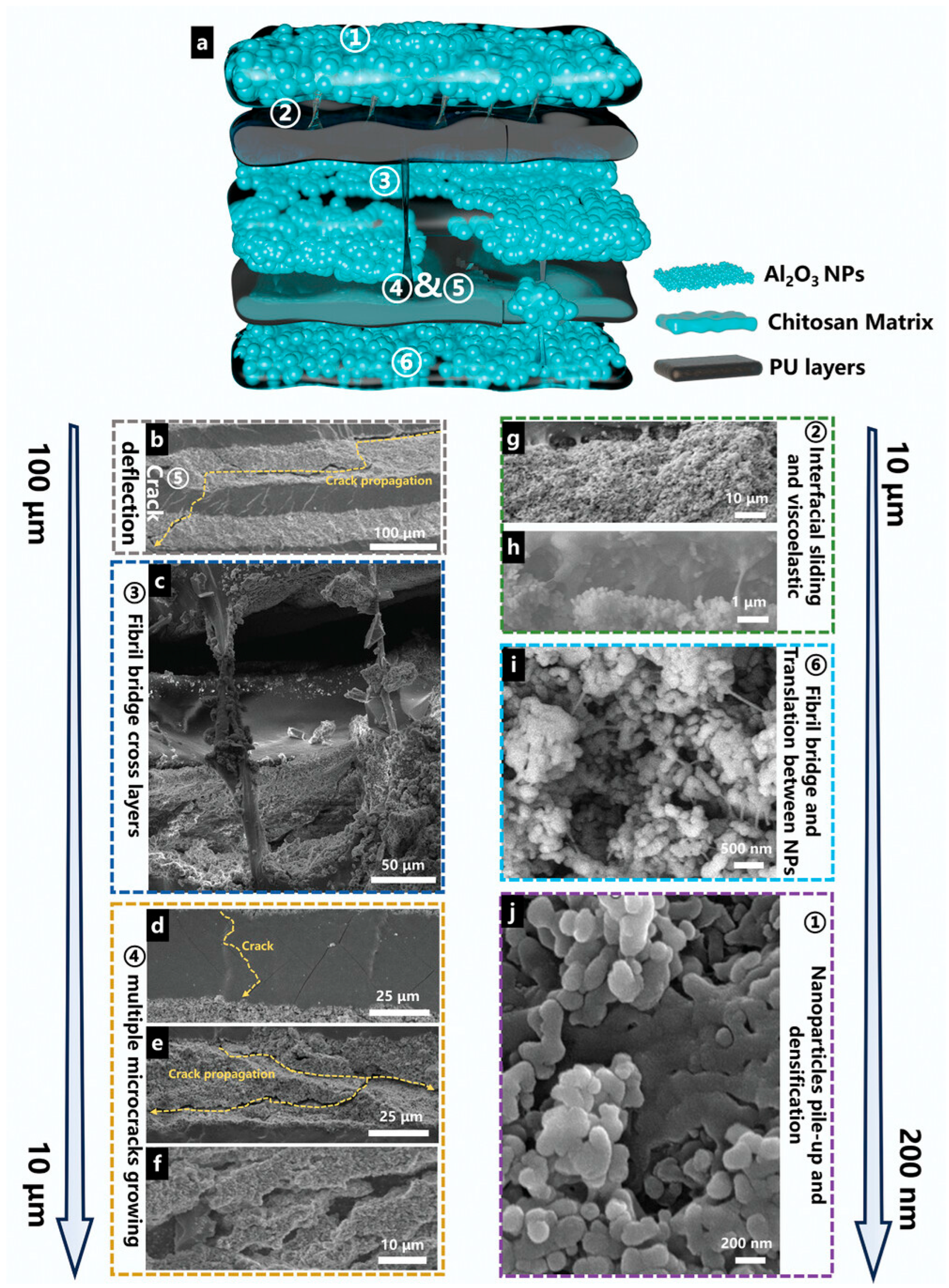
Microstructure biomimetic coatings abandon the approach of solely relying on the intrinsic properties of materials, shifting instead to actively managing impact energy through the design of fine topological structures on surfaces and interfaces, representing a paradigm shift from “material energy dissipation” to “structural energy dissipation.” This concept is deeply rooted in biomimetics. For example, the helical structure of a woodpecker’s hyoid bone, the fluffy morphology of kapok seeds, and the gradient porous structure of animal articular cartilage all provide inspiration for designing micro–nano structures capable of regulating shockwave propagation [33]. The core idea lies in constructing specific surface geometries to guide and decompose macroscopic impact loads into the coordinated deformation and failure processes of microstructural units, thereby achieving precise control over the transmission path, rate, and intensity of impact energy. Different microstructural topologies achieve efficient energy dissipation through unique mechanical behaviors. Mushroom-shaped micropillar arrays undergo sequential elastic deformation of the umbrella-shaped heads and buckling instability of the slender stems under impact, converting kinetic energy into recoverable deformation energy and dissipative energy. Arch-shaped microstructures utilize their geometric characteristics to transform vertical impact forces into compressive/tensile stresses on the arch surface, dissipating energy through material plastic deformation or microcrack propagation in stress concentration zones. The energy dissipation mechanisms of multi-level porous structures (especially three-dimensional biomimetic gradient structures) are more diverse: shockwaves undergo repeated reflection, refraction, and interference at solid–gas interfaces, leading to fragmentation and dispersion; air within the pores is rapidly compressed, generating viscous dissipation; pore walls of different scales undergo progressive elastoplastic deformation or even collapse, absorbing massive impact energy in stages [33]. These mechanisms often work synergistically, enabling structured coatings to far surpass homogeneous materials in terms of energy absorption efficiency and controllability. The multi-scale energy absorption mechanisms and microscopic structural changes of composite materials are illustrated in Figure 2 and Figure 3. The foundation for realizing such high-performance coatings lies in advanced micro–nano manufacturing technologies, which make “programmable structural design” possible. Lithography technology can define surface micropillar or pore arrays with extremely high precision. Template methods can be used to replicate ordered porous structures. High-resolution three-dimensional printing (such as digital light processing, two-photon polymerization) provides unparalleled freedom for manufacturing complex three-dimensional biomimetic gradient structures, such as precisely simulating the continuous stiffness variation in articular cartilage from the surface to the deep layer [33]. Utilizing these technologies, the quantitative relationship between structural parameters (characteristic dimensions, porosity, number of levels) and macroscopic mechanical properties (stiffness, damping, energy absorption) can be systematically studied, establishing a “structure–property” database. Ultimately, combining computational simulation and optimization algorithms enables the reverse design of intelligent coatings with optimal customized mechanical responses to specific motion impact spectra, laying the material and manufacturing foundation for developing the next generation of personalized, high-performance sports protective gear.
Microstructural biomimetic coatings offer unparalleled design flexibility for tailoring impact response through structural architecture. Their primary advantage lies in achieving high-energy absorption with minimal material usage, making them particularly attractive for weight-sensitive applications such as helmet liners and high-performance athletic footwear.

2.2.4. Phase-Change Material Coatings: Dual Functionality in Thermal Energy Management

Phase-change material (PCM) coatings introduce a unique thermal energy management dimension to sports protective gear, expanding their functionality from mere mechanical protection to mechanical–thermal synergistic management. These coatings typically use paraffin, fatty acids, and their microcapsules as the core, with their energy absorption mechanism based on the material absorbing or releasing a large amount of latent heat during solid–liquid phase transitions at specific temperatures [34]. When the impacted area of the protective gear experiences an instantaneous temperature rise exceeding the PCM phase transition point, the material undergoes a phase change and absorbs latent heat. This process not only buffers the local temperature peak, reducing the risk of thermal discomfort or burns, but the phase change itself also consumes part of the impact mechanical energy, achieving dual management of thermal and mechanical energy [35]. Microencapsulation technology encapsulates PCM within a robust shell layer, effectively preventing leakage and enhancing thermal cycling stability and response speed [36]. Molecular simulation studies further reveal the microscopic mechanisms for enhancing the thermal conductivity of PCM composites by constructing interfacial coatings (such as polypyrrole) [37]. Therefore, PCM coatings provide a complementary energy absorption pathway for coping with high-intensity, high-frequency impacts, particularly highlighting their value in scenarios requiring simultaneous management of impact and thermal loads. The core advantage of PCM coatings in sports protective gear lies in their active and intelligent regulation of the microclimate during human movement. Metabolic residual heat generated during intense exercise tends to accumulate within the protective gear, leading to increased temperature and humidity, causing discomfort or even heat stress [38]. PCM coatings can actively absorb and store this residual heat through latent heat of phase change, delaying the temperature rise in the micro-environment and creating a more stable and comfortable sensory experience [39]. For example, PCM fiber membranes with triple-mode thermal regulation can effectively buffer temperature fluctuations inside clothing [38]; transparent phase-change composites based on polyethylene glycol demonstrate the potential for non-intrusive thermal management in visual equipment such as goggles [40]. Furthermore, by endowing PCM composites with photothermal or electrothermal conversion capabilities, they can actively generate heat in cold environments, thereby achieving intelligent bidirectional temperature control and greatly expanding the environmental adaptability of protective gear [41]. PCM coatings thereby upgrade protective gear into intelligent systems capable of dynamically responding to the body’s thermal state, enhancing overall athletic performance and safety. To achieve the aforementioned functions, PCM microcapsules must be compounded with a polymer matrix (such as polyurethane or silicone rubber) to balance phase-change performance, mechanical strength, and durability [36,40]. First, the matrix provides mechanical support and protection for the microcapsules. Second, improving the interfacial compatibility between PCM and the matrix is crucial. For example, using polydopamine biomimetic modification on the microcapsule surface can enhance the interface through both mechanical interlocking and chemical bonding, improving the overall mechanical properties of the composite material [36]. Third, to address the inherent low thermal conductivity of PCM, high thermal conductivity fillers (such as graphene, carbon nanotubes, or liquid metals) must be introduced to construct efficient thermal pathways [42,43]. For instance, loading PCM onto an expanded graphite network supplemented with a metal coating can simultaneously achieve high thermal conductivity (27.1 W/m·K) and high compressive strength (39.4 MPa) [42]. Additionally, advanced encapsulation technologies (such as microfluidic preparation of core–shell phase-change fibers) can optimize thermal management performance and mechanical reliability at the microscopic scale [44]. For extreme environments, metal matrix composites with protective coatings can even be employed to ensure dimensional stability [45]. Through these meticulous composite material designs and manufacturing processes, PCM coatings can stably and reliably perform their dual functions of thermal storage management and auxiliary buffering under the complex mechanical and thermal conditions of actual sports activities.
Phase-change material coatings provide a unique dual functionality by combining impact mitigation with active thermal regulation. They are especially valuable in sports where both mechanical protection and thermoregulation are critical, such as motorsports, alpine skiing, and military applications, as well as in protective gear used under extreme environmental conditions.

3. Coating Preparation Processes and Wear Performance

3.1. Coating Preparation Processes

3.1.1. Key Technologies for Coating Application and Forming

Coating preparation technology serves as the bridge connecting material design with the final product’s performance, directly determining the functional realization, protective reliability, and wear adaptability of the coating. A variety of coating techniques are applicable to sports protective gear, including blade coating, spray coating, dip-coating, and screen printing, with the selection depending on the characteristics of the substrate (textile, foam, plastic) and the requirements of the coating system (solution, colloid, slurry) [46]. For instance, to endow fabric-based protective gear with multiple functionalities, sol–gel technology can be employed to achieve one-step deposition and curing of the coating through dipping or spraying [47]. For coatings requiring precise microstructures to regulate energy dissipation, more refined patterning techniques such as imprinting, photolithography, or photopolymerization molding are necessary [46]. Precise control of process parameters is key to achieving the desired performance. Coating thickness and its uniformity affect the consistency of energy absorption, with non-uniformity potentially leading to localized stress concentrations. Curing conditions (temperature, time, atmosphere) determine the cross-linking density, final mechanical properties (modulus, damping), and interfacial bonding strength between the coating and the substrate, the latter being crucial for long-term durability [48]. For example, plasma pretreatment can significantly improve the adhesion of coatings on substrates such as polyester fibers [49]. At the material preparation level, regulating the emulsion polymerization process through “particle design” to form core–shell structures and constructing “transition layers” can optimize the damping characteristics and mechanical strength of the coating film, which itself constitutes a sophisticated chemical process [50]. Therefore, from macroscopic coating application to microscopic structure formation, the process parameters at each stage require systematic optimization. For complex three-dimensional structures such as helmet interiors and curved surfaces of joint protectors, achieving uniform and conformal coating application poses a significant challenge for traditional processes. Additive manufacturing (3D printing) technology offers a transformative solution to this challenge. By layering materials, it not only achieves perfect conformity with complex curved surfaces but also enables the free design and fabrication of coatings with gradients in composition, density, and structure in three-dimensional space, thereby programming their mechanical properties [46]. For instance, damping layers with biomimetic porous or lattice structures can be printed to achieve customized energy absorption pathways. Although direct application in damping coatings for sports protective gear is still in the exploratory stage, the capabilities of 3D printing in manufacturing complex functional components already indicate its immense potential [51]. Combined with emerging surface technologies such as cold spraying, the future holds promise for more efficient and diverse preparation of high-performance coatings, driving the manufacturing of personalized protective gear.

3.1.2. Testing and Evaluation Methods and Industry Standard Development

Existing standards for sports protective gear (such as NOCSAE for helmets and EN 1621 for limb protectors) exhibit significant limitations when evaluating novel thin-film/coating protective systems [52]. These standards primarily assess the performance of the overall structure under simplified impact scenarios (e.g., single angle, direction), making it difficult to reflect the multi-angle, composite injury mechanisms present in real sports activities [52]. More importantly, the key protective efficacy of coatings—such as their in-plane/out-of-plane dynamic mechanical response, microscopic energy dissipation efficiency, and interfacial bonding strength—cannot be effectively isolated and quantified by existing macroscopic tests. The lag in standard development is widespread; for example, kendo helmets lack third-party validation for anti-trauma performance [53], and commercial chest protectors for preventing commotio cordis have not been proven effective [54]. Therefore, relying on traditional standards to evaluate coated protective gear neither accurately predicts their protective performance under complex working conditions nor effectively guides the refined design of coatings. To precisely assess coating protective systems, there is an urgent need to develop a new scientific paradigm for testing. First, material-level micro–nano-scale impact testing methods should be established to characterize the dynamic hardness, elastoplastic recovery, damage initiation, and propagation of coatings under high-speed, localized impacts [55].
Second, it is necessary to develop biomechanical impact testing platforms capable of reproducing multi-mode sports injuries. Clinical data indicate that head injuries in sports such as skiing vary significantly in mechanism depending on the impact angle (e.g., occipital region) [52]. Testing devices must be able to simulate impacts from multiple angles (frontal/lateral/oblique) and in various forms (blunt objects, edges). Finally, and most importantly, is the construction of an evaluation system that deeply integrates computation and experimentation. By establishing a “digital twin” containing detailed biological tissue models and inputting dynamic parameters of coatings, the entire process of energy transfer and dissipation can be simulated in virtual space, serving as mutual verification and complement to physical experiments [56]. This paradigm of “simulation-driven design, experimental validation of performance” can efficiently reveal mechanisms, predict effects, and optimize designs [55]. With the emergence of intelligent/adaptive coating protective gear (integrating sensors, microfluidics, and variable-stiffness materials), establishing new evaluation standards that match them has become particularly urgent [56]. Existing static standards are completely inadequate for assessing the effectiveness of their dynamic responses. For example, computational studies show that liquid shock-absorbing helmets can significantly reduce brain strain, but new standards are needed for verification [56]. Future standards must cover multidimensional indicators such as the sensing accuracy of intelligent systems, response delay, functional adjustment range, cycling stability, and energy efficiency. The lack of scientific and unified standards will lead to market chaos, safety risks, and hindered technological development [22]. Therefore, it is imperative for industry regulatory bodies, research institutions, and manufacturers to collaborate, based on in-depth research on injury biomechanics [52], to jointly develop specialized testing protocols and certification systems for intelligent coating protective gear. This is not only necessary for regulating the market and protecting athletes but also serves as the cornerstone for guiding the healthy development of this field toward greater safety and efficiency.
Antibacterial Properties of Protective Coatings
Antibacterial functionality represents a critical yet often overlooked dimension of protective coatings for sports gear. Athletes are particularly susceptible to skin infections due to prolonged contact with protective equipment, which creates a warm, moist microenvironment conducive to bacterial proliferation. Sweat accumulation, friction-induced microabrasions, and shared equipment use further elevate the risk of conditions such as folliculitis, impetigo, and methicillin-resistant Staphylococcus aureus (MRSA) colonization. In contact sports like wrestling, rugby, and martial arts, the incidence of cutaneous infections is notably higher, underscoring the urgent need for protective gear with intrinsic antimicrobial properties.
Advanced coating technologies offer multiple strategies to impart antibacterial activity without compromising mechanical performance. The most widely explored approach involves the incorporation of biocidal agents into the coating matrix. Silver nanoparticles (AgNPs) are particularly effective due to their broad-spectrum antimicrobial activity, low cytotoxicity at optimized concentrations, and multi-modal mechanisms of action—including disruption of bacterial cell membranes, generation of reactive oxygen species (ROS), and interference with DNA replication. Copper nanoparticles and zinc oxide (ZnO) nanostructures have also demonstrated potent antibacterial effects and can be integrated into polymer-based damping coatings. A second strategy employs contact-killing surfaces functionalized with quaternary ammonium compounds (QACs) or cationic polymers, which disrupt negatively charged bacterial membranes upon direct contact. These functional groups can be covalently grafted onto coating surfaces or blended into the polymer matrix, providing durable antimicrobial activity without continuous release of biocidal agents.
Emerging approaches focus on stimulus-responsive and biofilm-resistant coatings that address the dynamic challenges of sports environments. Photoactive coatings incorporating titanium dioxide (TiO2) or graphitic carbon nitride (g-C3N4) generate ROS upon UV or visible light exposure, offering on-demand disinfection that can be activated after training sessions. Anti-adhesive surfaces, engineered through superhydrophobic or zwitterionic polymer coatings, prevent initial bacterial attachment—a critical first step in biofilm formation [57]. Biofilm formation within the porous structures of foam-based protective gear is particularly problematic, as it not only poses infection risks but also accelerates material degradation. Coating strategies that combine passive anti-adhesive properties with active biocidal capabilities (dual-function coatings) represent a particularly promising direction for sports protective gear.
The integration of antibacterial functionality into impact-absorbing coatings presents both opportunities and engineering challenges. From a materials compatibility perspective, antimicrobial additives must not interfere with the strain-rate-sensitive mechanisms of shear-thickening fluids or the viscoelastic damping of polymer gels. Nano-scale fillers such as AgNPs can, when properly dispersed, serve dual roles—contributing to both antibacterial efficacy and mechanical reinforcement through nanoparticle-matrix interfacial interactions. Durability is another critical consideration: antibacterial coatings must withstand repeated mechanical deformation, sweat exposure, abrasion, and washing cycles without losing efficacy. Encapsulation strategies and controlled-release mechanisms can prolong biocidal activity while minimizing potential cytotoxicity. Furthermore, the safety profile of antibacterial coatings requires rigorous evaluation, as athletes may have prolonged dermal exposure to leached nanoparticles or degradation products.
In summary, antibacterial functionality should be considered an integral design parameter rather than an ancillary feature in next-generation protective coatings. As sports protective gear evolves toward intelligent, personalized systems, the convergence of impact absorption, thermal–moisture management, biocompatibility, and antimicrobial protection will define the benchmark for holistic athlete safety. Future research should prioritize the development of multifunctional coatings that synergistically combine these attributes, along with standardized testing protocols that evaluate antibacterial efficacy under sport-relevant conditions (e.g., after sweat exposure, mechanical cycling, and simulated wear). Such integrated approaches will be essential for protecting athletes not only from acute impact injuries but also from the chronic infection risks associated with prolonged equipment use.

3.2. Thermal and Moisture Comfort, Biocompatibility, and Environmental Stability

3.2.1. Thermal and Moisture Comfort and Biocompatibility

Thermal and moisture comfort, along with biocompatibility, are the core evaluation dimensions that determine whether coated protective gear can be accepted by users and safely worn over the long term. First, the coating must ensure basic thermal and moisture comfort. Although traditional dense coatings offer good protection, they often severely hinder skin heat dissipation and sweat evaporation, leading to stuffiness, dampness, and discomfort. To address this, researchers have turned to developing porous structure coatings. For example, three-dimensional porous hydrogel coatings combine excellent mechanical properties with interconnected pores, not only providing channels for moisture and heat transfer but also actively adsorbing and conducting sweat due to their hydrophilic properties, thereby maintaining a dry skin microclimate [58]. This type of breathable and moisture-permeable coating is key to balancing protection and comfort. Second, coatings in long-term contact with the skin must possess excellent biocompatibility, meaning they should be non-cytotoxic, non-sensitizing, non-irritating, and resistant to sweat corrosion and microbial action [58]. This requirement is extremely stringent, as even high-performance materials (such as medical-grade nickel–titanium alloys) may face long-term safety issues like corrosion in complex biological environments [59]. Therefore, systematic biosafety assessments are essential for coatings that come into direct contact with the skin. Enhancing biocompatibility can be achieved through material functionalization modifications, such as incorporating natural polymers or applying hydrophilic surface treatments. Developing coatings that combine high mechanical performance with comprehensive biosafety is one of the core challenges in current material design. Additionally, phase-change material (PCM) coatings offer an innovative approach to active thermal management. By absorbing or releasing heat through latent heat of phase change, they dynamically regulate body surface temperature, which is crucial for coping with high-intensity exercise or extreme environments. However, the inherent leakage risk of solid–liquid phase-change materials is a bottleneck for their application. Microencapsulation technology (encapsulating PCM within robust microshells) is currently the mainstream solution, effectively preventing leakage while preserving thermal functionality [58]. In the future, combining more advanced encapsulation and surface engineering technologies holds promise for developing efficient, stable, and biocompatible intelligent temperature-regulating coatings. In summary, thermal and moisture comfort, biocompatibility, and active thermal management capabilities together form the “golden triangle” of coating wear experience and safety, representing a comprehensive test that coating technology must pass to move from the laboratory to the field.

3.2.2. Long-Term Durability and Environmental Stability of Coatings

The long-term durability of coatings is the cornerstone for maintaining their protective efficacy in practical sports applications. Under repeated mechanical loads such as stretching, compression, and friction, coatings undergo fatigue, leading to a gradual decline in performance. This is closely related to the integrity of their microstructure. For instance, in waste rubber powder composite coatings, increasing the binder content can enhance cohesion and tensile strength, but the porous structure introduced by the rubber powder can become stress concentration points, compromising toughness. While adding inorganic fillers can fill voids and stabilize dimensions, it may disrupt the continuity of polymer chains and accelerate fatigue [60]. This indicates that the mechanical durability of coatings results from the combined effects of matrix material aging, interface failure, and structural defects, necessitating a trade-off between instantaneous protective performance and long-term fatigue resistance during design. The harsh usage environment of sports protective gear also requires coatings to possess excellent environmental stability to withstand erosion from washing, UV radiation, and temperature-humidity cycles. Washing causes physical wear and chemical erosion, UV radiation triggers photo-oxidative degradation, making coatings brittle, and temperature fluctuations generate internal stresses that induce microcracks. To enhance stability, applying a functional protective top layer is an effective strategy. For example, covering with a rice husk-reinforced acrylic resin top layer can significantly improve the wear resistance and UV aging resistance of composite coating systems, albeit with a slight sacrifice in adhesion, thereby extending the overall service life [60]. This provides an idea for protective gear coatings: by adding a wear-resistant and weather-resistant “sacrificial protective layer,” the integrity and stability of the underlying functional coatings can be preserved. Looking to the future, self-healing coating technology offers a revolutionary approach to fundamentally address the issue of damage accumulation. Based on dynamic covalent bonds or supramolecular interactions, it can autonomously or stimulus-triggered repair after damage, restoring performance and greatly enhancing product lifespan and sustainability. However, its application in sports protective gear faces multiple challenges: first, performance challenges, as the repair speed, efficiency, and strength recovery after repair often struggle to meet immediate protective needs; second, integration challenges, as introducing self-healing mechanisms into multifunctional composite systems like STF involves issues of component compatibility and functional interference; third, engineering challenges, including cost, complexity in large-scale production processes, and repair stability under long-term environmental conditions. Nevertheless, developing efficient, reliable, and integrable self-healing smart coatings remains an important research direction for breaking through the durability bottleneck of protective gear. Durability, environmental stability, and self-healing potential together constitute the core criteria for evaluating the full lifecycle applicability of coating technologies. Overcoming these bottlenecks is key to transforming coated protective gear from “high-performance prototypes” to “durable and reliable products.”
The integration of sensing and actuation functionalities into smart protective clothing introduces additional durability considerations beyond those of passive coatings. Flexible electronic components—including conductive networks, sensors, and interconnects—must withstand repeated mechanical deformation (stretching, bending, twisting) associated with normal athletic movement, as well as the cyclic compressive loads encountered during impacts. Furthermore, these garments require regular washing to maintain hygiene, exposing embedded electronics to moisture, detergents, and mechanical agitation. Current testing protocols for smart textiles rarely simulate the full lifecycle of sports equipment, leaving critical gaps in understanding long-term reliability. Preliminary studies indicate that conductive silver-based inks may delaminate after 20–50 washing cycles, while encapsulated microelectronics can fail under repeated high-strain deformations exceeding 10%–20% elongation. Addressing these challenges demands the development of robust encapsulation strategies, stretchable circuit architectures, and standardized durability testing protocols that reflect real-world usage patterns.

4. Application of Coating Technology in Protective Gear and Human Interaction Mechanisms

4.1. Innovations in Applications for Helmets, Joints, and Smart Clothing

4.1.1. Innovation in Helmet Protection Systems: From Uniform Liners to Functionalized Interfaces

The protective philosophy of helmets is undergoing a paradigm shift from passive energy absorption to active impact management. Traditional homogeneous foam liners primarily rely on material compression to dissipate linear impact energy, offering insufficient protection against rotational acceleration and shear forces, which are critical factors in causing brain injuries [21,61]. To address this shortcoming, the core of functional interface design involves coating the liner surface or incorporating interlayers with smart materials such as shear-thickening fluids and high-damping gels in patterned configurations [61]. This design can directionally dissipate impact energy from specific directions without significantly increasing weight and volume. Research indicates that optimizing the friction characteristics of the head-helmet interface can effectively regulate post-impact head dynamics, reducing the risk of brain tissue strain [62]. Furthermore, new helmets integrated with rotational protective padding can even reduce peak principal strain by up to 85% [61]. This signifies a shift in protective strategy from “uniform filling” to the refined regulation of impact dynamics (both linear and rotational components). The protective performance of the helmet shell can also be synergistically enhanced through coating technology. Applying a high-damping polymer coating reinforced with strengthening fibers (such as aramid) to the inner side of the shell can form a composite protective layer. This layer not only improves the overall stiffness and penetration resistance of the shell but also effectively attenuates the transmission of impact stress waves and reduces the peak impulse transmitted to the head by leveraging the properties of the damping material [63]. This is particularly important for maintaining protective stability in extreme environments (such as firefighting) [48]. Additionally, biomimetics provides trans-generational insights for shell design. Biomimetic metamaterial designs based on the reaction-diffusion mechanism of walnut shell textures or mimicking the scale structure of moth wings demonstrate potential for excellent energy absorption, sound insulation, and thermal insulation performance, opening new pathways for developing next-generation lightweight, multifunctional helmet shell coatings [64,65]. Facial protection is an indispensable component of the helmet system. Visors or goggle frames integrated with microstructured energy-dissipating coatings can specifically absorb impacts from lateral or oblique directions, protecting facial bones and eyes [66]. This is highly significant in sports with a high risk of facial injury, such as hockey and polo [66,67]. Furthermore, the integration of smart sensing technology is pushing protection toward intelligence. For example, integrating flexible sensor matrices based on semiconducting polymer composites into padding can monitor and locate head impacts in real-time, providing crucial data for injury risk assessment and protective design optimization [68]. These facial protection components, integrated with advanced coatings and sensing technologies, collectively build a comprehensive, intelligent impact management system from the top of the head to the face.

4.1.2. Lightweighting and Precision Protection for Joint and Limb Guards

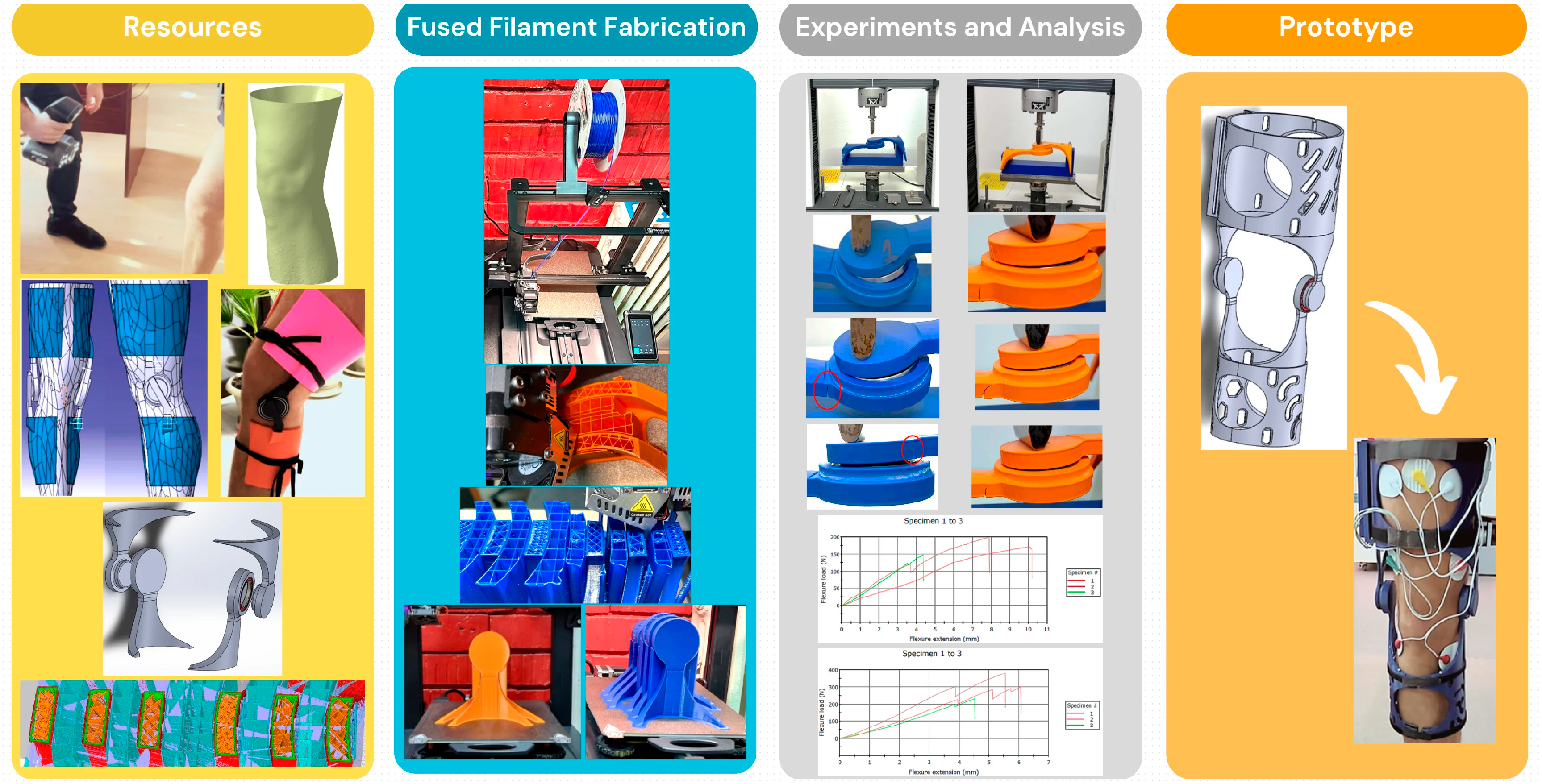
In the field of joint and limb protective gear, coating technology has driven a shift in design philosophy from rigid constraints to intelligent adaptation. A key manifestation of this shift is the substantial reduction in areal density. For instance, aramid polyurethane (APU) composite coatings achieve equivalent impact energy absorption to conventional ethylene-vinyl acetate (EVA) foams while reducing thickness by over 50% and areal weight by approximately 40%–60%, as demonstrated in comparative performance assessments [8]. Even more strikingly, carbon nanotube-based nanofoam coatings exhibit densities as low as 0.01–0.05 g/cm3, combining ultra-lightweight construction with superior damping and recovery characteristics [69]. These quantitative advantages underscore that lightweighting is not merely a secondary benefit but a primary design outcome enabled by the transition from bulk material filling to interface-dominated energy dissipation. The application of flexible shear-thickening fluid (STF)-fabric composites or smart elastomer coatings to substrates such as knee and elbow pads allows the protective gear to remain soft and breathable during daily activities, ensuring comfort and flexibility. However, upon sudden impact, the material’s internal microstructure undergoes drastic changes, with its modulus instantly increasing, hardening to form an efficient energy-dissipating layer [69]. This intelligent “hardening under force” response mechanism enables the protective gear to provide dynamic protection that traditional rigid gear cannot achieve, all without hindering movement. Related fundamental research (such as adhesion contact regulation based on CNT foam) has revealed the principles of achieving both high recovery and high dissipation in ultra-lightweight systems, offering important insights for the design of next-generation flexible, high-damping protective coatings [69]. To achieve the optimal balance between protection and flexibility, the concept of gradient coating design has been widely adopted. Based on biomechanical analysis, this design applies thicker or higher-damping coatings in anticipated high-impact areas (such as the center of the patella), while gradually reducing coating performance in low-stress or high-mobility areas. This precise spatial distribution of mechanical properties ensures maximum protection for critical areas while avoiding the stiffness and restriction caused by uniform thickening. Its essence lies in regulating macroscopic mechanical responses through gradient variations in structural parameters [69]. This “protection on demand” strategy serves as a key engineering bridge connecting material intelligence with final wearable performance. For large-area protective gear such as shin guards and impact-resistant shorts, coating solutions focus on constructing distributed flexible cushioning systems to replace or improve traditional rigid plates. Typically, high-damping smart coatings are combined with elastic textile padding/foam: the coating is responsible for instant hardening and energy dissipation at the impact point, while the padding disperses the impact force over a larger surface area and enhances fit and comfort. In this field, additive manufacturing (3D printing) technology has brought revolutionary tools for personalization. It enables the rapid production of complex structures tailored to individual anatomical forms, offering possibilities for lightweight, functional protective gear substrates [70]. For example, additively manufactured lattice structures can reduce component weight by 50%–70% compared to solid counterparts while maintaining or even enhancing energy absorption capacity [18]. Patient-specific ankle orthoses fabricated via 3D printing have demonstrated a weight reduction of 30%–50% relative to conventionally manufactured devices, with concurrent improvements in fit and user compliance [70]. For example, personalized orthoses printed based on 3D scans of a patient’s knee joint have demonstrated potential in the field of rehabilitation [70]. In the future, the deep integration of personalized 3D-printed structures with functional gradient coating technology is expected to give rise to the next generation of intelligent limb protective gear that is truly “tailor-made,” offering both superior protection and comfort.

4.1.3. Intelligent Impact-Resistant Clothing and Integrated Wearable Systems

Smart impact-resistant clothing aims to integrate energy dissipation and information sensing functions on a flexible fabric platform, achieving a leap from passive barriers to active interaction. Among these, smart damping coatings (such as shear-thickening materials) are the core of energy management. For example, composites based on boronic ester covalent adaptive networks (CANs) and incorporating a secondary network of tungsten powder not only significantly enhance modulus and energy absorption capabilities but also possess self-healing and recyclable properties, laying the foundation for durable systems [71]. At the same time, the integration of sensing functions is shifting from “superposition” to “fusion.” Constructing conductive filler networks (such as tungsten powder) directly within the damping polymer matrix enables the material itself to possess both impact resistance and strain-rate-sensitive sensing capabilities, achieving a two-in-one damping-sensing function. This approach avoids the volume and interface reliability issues associated with traditional discrete integration [71]. This integrated design is the cornerstone for building lightweight, comfortable, and highly functional smart protective clothing. Establishing a “perception–response” closed loop represents an advanced form of smart clothing evolution. This system collects impact data in real-time through an embedded flexible sensor network. After analysis by a microprocessor, it can provide warnings to the wearer [72] and, more importantly, proactively regulate local protective performance. The latter requires the integration of variable stiffness components (such as magnetorheological units, shape memory alloys SMA). When the system predicts or detects a high-energy impact, it can command these components to change local stiffness, achieving dynamic reinforcement of protection. Research shows that by designing controlled mechanical metamaterials, their force-displacement relationship can be pre-programmed [73]; introducing SMA as an active unit enables rapid in situ switching of mechanical responses [73]. This provides a theoretical prototype for creating a “living” protective layer that can adaptively adjust based on real-time impact information, allowing the clothing to dynamically match different motion scenarios and risk levels. The key to achieving long-term autonomous operation of such smart systems lies in solving their energy autonomy. Combining energy harvesting functions with damping/sensing structures and utilizing human motion or environmental energy to power microelectronic systems is an ideal solution. Triboelectric nanogenerators (TENG) demonstrate unique advantages in this regard: for example, a TENG assembled from Kevlar fibers and conductive shear-hardening gel can dissipate impact force (reduced from 2880 N to 1460 N) while simultaneously outputting sensing signals and harvesting energy, perfectly integrating three functions [72]. Furthermore, technologies that broaden the energy harvesting bandwidth (such as impact-type electrostatic harvesters based on frequency up-conversion [74]) and ionic thermoelectric technologies that utilize temperature/humidity gradients between the body surface and the environment [75] also provide diverse options for continuous power supply. In the future, through ingenious structural design, embedding such energy harvesting units (e.g., TENG) into damping coatings or placing them in locations with significant thermal/humidity gradients is expected to drive the entire smart protective system toward truly “self-sustaining” operation, completing the final closed loop from functional integration to system autonomy.

4.2. Coating-Human Body Interaction Mechanisms Under Dynamic Impact

4.2.1. Transmission and Attenuation of Shock Waves in Multilayered Media

The transmission of impact loads from protective gear to human tissues is essentially a complex process of stress wave propagation and attenuation through multi-layered heterogeneous media (shell-coating-soft tissue-bone) [76]. Each layer of medium possesses unique density, elastic modulus, and wave impedance. The differences in wave impedance determine the reflection and transmission behavior of stress waves at interfaces: when transitioning from a high-impedance medium to a low-impedance medium, part of the energy is reflected, and the waveform and amplitude of the transmitted wave also change. Therefore, a deep understanding of the propagation laws of stress waves in this layered biomechanical system serves as the physical foundation for designing high-performance protective coatings. Modeling methods for dynamic responses in layered structures provide key tools for simulating wave propagation within human tissues [76]. In this multi-layered system, functional coatings play a dual role as “impedance gradient and energy dissipation layers.” First, their wave impedance values are designed to lie between the rigid shell and soft tissue, forming a gradual transition zone to avoid harmful stress concentrations at interfaces due to abrupt impedance changes [77]. More importantly, the high damping characteristics of the coating can irreversibly convert impact mechanical energy into thermal energy. This energy dissipation process not only directly reduces the peak stress transmitted to deep tissues but also significantly extends the duration of the impact force through viscoelastic deformation. According to the impulse-momentum theorem (impulse = force × time), under the condition of a constant total impulse (change in momentum), extending the duration can effectively “blunt” the impact pulse—transforming it from a high-intensity, short-duration peak load into a low-intensity, long-duration gentle load—thereby significantly reducing the risk of tissue damage. Even at deep sub-wavelength scales, adjusting interlayer parameters can significantly regulate wave transmission behavior, which fundamentally supports the effectiveness of coating design [77]. To accurately quantify and optimize coating design, computational biomechanical simulations, particularly finite element analysis (FEA), have become indispensable tools. By establishing refined models that include detailed anatomical structures (skin, fat, muscle, bone) and protective gear materials (shell, coating), the propagation process of stress waves can be systematically simulated [76]. The core of the research lies in establishing quantitative relationships between coating parameters (thickness, elastic modulus, density, damping coefficient) and protective efficacy (peak tissue stress, strain energy density). For example, increasing coating thickness can extend the energy dissipation path but may affect flexibility; increasing the damping coefficient can enhance energy dissipation efficiency but must be matched with the modulus of adjacent layers to avoid adverse wave reflections. FEA-supported “virtual experiments” allow for large-scale parametric studies and optimization designs, enabling the screening of coating solutions that achieve the best balance between protective performance, weight, and wear experience before manufacturing physical prototypes. This enables the active design and precise prediction of protective performance, greatly accelerating the research and development process.

4.2.2. Dynamic Mechanical Matching and Biomechanical Optimization

“Dynamic Mechanical Matching” is the core principle of synergistic protection in the coating-human body system. It refers to the optimal coupling of the coating’s dynamic mechanical properties, such as dynamic modulus and damping, with the viscoelastic behavior of the protected human target tissues (e.g., brain tissue, cartilage) within the time/frequency domain of impact loading [78]. Ideal matching aims to maximize the in vivo dissipation of impact energy while avoiding stress concentration or stress shielding on the tissues. For instance, brain-protective coatings need to simulate the viscoelasticity of brain tissue to attenuate intracranial energy [79]; joint-protective coatings must match the characteristics of cartilage and ligaments to cushion impacts and maintain stability [80]. Since the mechanical behavior of biological tissues exhibits significant rate sensitivity (i.e., properties change with loading rate), advanced coating materials must also possess similar dynamic viscoelasticity to adapt to impacts of varying intensities [78]. By constructing finite element models that incorporate specific tissue properties, this matching process can be finely simulated, providing theoretical guidance for design [81]. Dynamic mechanical matching is the scientific foundation for achieving the leap of protective gear from “passive filler” to “active biomechanical adapter.” Failure to match will directly lead to protection failure or even cause secondary injuries. A coating that is too stiff (excessively high modulus) can cause “stress shielding,” where impact loads cannot be effectively dispersed through coating deformation, leading to stress concentration in the underlying tissues and increasing the risk of bone contusions and cartilage damage [82]—this principle is analogous to the issues caused by rigid materials in orthopedic implants [82]. Conversely, a coating that is too soft (excessively low modulus), due to insufficient stiffness and damping, allows most of the impact energy to “penetrate” the coating and act directly on deeper tissues [78]. In the brain, this manifests as insufficient attenuation of linear/rotational acceleration, increasing the risk of concussion [79]; in joints, it manifests as inadequate support, potentially leading to ligament overstretching or joint instability [80]. Studies have shown that mismatched mechanical environments significantly alter joint contact force distribution and movement patterns, quantifying their hazards [80]. Therefore, precisely regulating coating properties to fall within the “biomechanical tolerance window” of human tissues is key to protective design. The ultimate path to achieving precise matching lies in personalized customization based on individual biomechanical characteristics. Significant individual differences exist in human tissue parameters (thickness, density, modulus), necessitating that protective solutions must be “tailored to the individual” [83]. First, multimodal data acquisition technologies make this possible: Magnetic Resonance Imaging (MRI) can obtain deep anatomical structures like the brain [79]; techniques such as ultrasound speckle tracking can measure the dynamic stiffness of ligaments and tendons in real-time in vivo [84]; combined with three-dimensional motion capture and force plate data, personalized kinetic models can be constructed to estimate impact load spectra under specific movements [80,81]. Second, based on these individualized parameters, using computational biomechanics (e.g., finite element analysis) for reverse engineering can derive the coating structure (gradient, zoning) and material formulation that optimally match a specific athlete in a target scenario [81,85]. The rehabilitation field has already demonstrated that personalized ankle orthoses are more effective than standard products [86]. This marks a shift in sports protective gear R&D from “standardized production” to “data-driven precision protection,” ultimately maximizing protective efficacy by achieving dynamic mechanical matching at the individual level.

5. Cutting-Edge Trends and Personalized Design of Intelligent Protection Systems

5.1. Field-Responsive Adaptive Coatings and Smart Skins

Externally responsive adaptive damping coatings represent the cutting edge of intelligent protective materials. Their core feature lies in the ability to rapidly, significantly, and reversibly tune the coating’s rheological and mechanical properties (such as viscosity and shear modulus) within milliseconds via external physical fields (e.g., magnetic or electric fields). This instantaneous switching capability establishes the physical foundation for achieving dynamic “on-demand protection.” Although research on magnetorheological/electrorheological coatings specifically for sports protective gear is limited, existing work provides crucial insights into their implementation mechanisms. For instance, polymer/clay composite coatings constructed via dip-coating achieve enhanced damping through coating-mediated microscopic friction and stick-slip effects [87]. Meanwhile, nacre-inspired rigid-flexible hierarchical composite structures demonstrate pathways for optimizing energy dissipation through multi-scale structural design [8]. These studies suggest that by actively manipulating the alignment of “hard-phase” units (e.g., magnetic particles) or the state of “soft–hard” phase interfaces within the coating via external fields, it is possible to achieve intelligent switching of macroscopic properties between a “high-energy-dissipation soft state” and a “high modulus hard state.” In future adaptive protective gear systems, such coatings will serve as the key actuators within the “sensing-decision-execution” closed loop. The envisioned scenario is as follows: an embedded sensor network monitors motion states and environmental information in real-time, while intelligent algorithms predict high-risk impacts. Moments before a collision occurs, the control system applies a specific external field to the coating at critical locations on the gear, causing it to instantaneously switch from a normal high-damping state to a “hardened” state with high stiffness and support, thereby reinforcing localized protection. This “predictive protection” paradigm fundamentally overturns the traditional “always-on” static protection strategy of conventional gear, achieving a dynamic balance between protective efficacy (maximized during impact) and user experience (optimized during non-impact periods). In nature, the efficient environmental buffering achieved by the multi-layered porous structure of the castor silkworm cocoon [88] also inspires the potential for creating more intelligent, dynamically adaptive systems by combining passive structural optimization with active external field control. However, translating this technology from the laboratory to practical application faces multiple significant challenges. First, system integration challenges. Integrating external field generators, sensors, controllers, and power sources will significantly increase the gear’s volume, weight, and complexity, potentially affecting athletic performance. Developing miniaturized, low-power, or even passive integration solutions is crucial. Second, the long-term reliability of the material itself. The stability of coating performance, as well as the retention of response speed and magnitude under complex service conditions involving repeated field stimulation, mechanical fatigue, sweat erosion, and temperature/humidity cycles, requires long-term validation. Third, engineering implementation difficulties. Achieving uniform and precise application of external fields on three-dimensional curved protective gear is a major hurdle, placing extremely high demands on the design and layout of field generators. Fourth, industrialization barriers. These include cost control and the translation of laboratory-scale precision fabrication processes (e.g., rapid spray self-assembly [89]) into large-scale, stable production technologies suitable for complex gear. Finally, fundamental scientific understanding needs deepening. The damping performance of a material is not simply positively correlated with its modulus [90]. Therefore, the design of externally responsive coatings cannot solely pursue high modulus switching; it must systematically investigate their energy absorption efficiency, recovery characteristics, and dynamic matching laws with human tissues across different states. Addressing these challenges requires deep interdisciplinary integration of materials science, flexible electronics, biomechanics, and industrial design.
“Smart Skin” represents the ultimate vision for the surface system of sports protective gear—a closed-loop sensing-response system that integrates sensing, actuation, communication, power supply, and computing, capable of intelligent interaction with the human body and the environment. It goes beyond mere impact absorption, aiming to actively perceive multimodal information such as pressure, temperature, and strain and to provide adaptive responses. For example, multifunctional electronic skin can already simultaneously sense contact force, position, and temperature [91] and operate stably under stretching [92]; bio-inspired artificial muscle units, mimicking biological muscle-tendon structures, can even integrate actuation and sensing functions into a single unit [93]. Meanwhile, advancements in self-powered technology [94] and flexible communication modules are freeing such systems from the constraints of external cables, evolving toward truly wearable autonomous intelligent systems. This marks the transformation of protective gear from passive equipment into an active human–machine interaction platform. The key to realizing “Smart Skin” lies in solving the high-density, high-reliability integration of various heterogeneous functional materials and components on flexible substrates. The technical pathways are diverse and converging: (1) Flexible micro/nano-fabrication and printed electronics technologies allow sensors, circuits, etc., to be directly “written” or assembled onto substrates or coatings, enabling conformal integration [95]. (2) Bio-inspired structural and material designs, such as sensor layouts mimicking the discrete receptor distribution of skin [96], or utilizing “neutral surface” structures to achieve decoupled integration of multi-physical sensing [97]. (3) Novel smart materials, such as chiral nanogels with stimulus-responsive luminescent properties, capable of simultaneously sensing and visualizing environmental changes [98]. (4) The concepts of mechanical metamaterials and reconfigurable structures provide disruptive architectural ideas for embedding sensing, actuation, and computing functions within the protective gear itself [99]. The common goal of these technologies is to achieve mechanical compliance, functional richness, signal fidelity, and long-term robustness akin to biological skin. In the field of sports, “Smart Skin” will trigger a paradigm revolution in training, protection, and health management. Its core application value lies in the following: First, enabling full-dimensional sports biomechanics monitoring. Distributed sensor arrays can unobtrusively and real-time capture surface pressure and strain distribution, accurately analyzing technical movements and force exertion patterns [100], and even assessing the softness/hardness of contacted objects [101]. Second, empowering localized intelligence and injury warning. By integrating neuromorphic computing units, low-power real-time pattern recognition (e.g., identifying abnormal impact patterns [102]) can be achieved on the device side, or combined with machine learning algorithms to extract features from massive data for early prediction of injury risks [103]. Ultimately, completing the full “perception–analysis–intervention” closed loop. The system can not only warn of risks but also actively adjust the mechanical properties of the protective gear in real-time through integrated actuation units (e.g., variable stiffness materials) for active protection, or visualize data and transmit it to coaches and medical teams via human–machine interfaces, enabling scientific training and personalized health management [104,105]. Therefore, “Smart Skin” is not merely a technological integration but a core enabling platform for advancing sports science from experience-driven to data-driven, and from passive protection to proactive health safeguarding.

5.2. Personalized Protection Modeling and Customized Manufacturing Based on Biomechanics

5.2.1. Protection Requirement Modeling Based on Individual Characteristics

The cornerstone of achieving personalized and precise protection is the construction of a “human-protective gear digital twin” model that reflects individual characteristics. This requires the comprehensive collection and integration of an individual’s anatomical, functional, and movement data. Drawing from other fields (such as disease risk assessment based on multidimensional health data [106]), sports science can utilize technologies like 3D scanning, dynamic motion capture, and force plates to obtain precise geometric forms, kinematic, and kinetic parameters of athletes. Research shows that integrating multi-source biometric data can effectively enhance the accuracy of individual identification and classification [107], validating the approach of multidimensional data modeling. Furthermore, integrating Finite Element Analysis (FEA) into this framework can transform an individual’s anatomical geometry and tissue material properties (such as the mechanical parameters of bones and muscles) into a computable model, enabling the precise simulation of impact events in virtual space and predicting stress/strain distributions in different body parts as well as potential high-risk injury areas [108]. The shift from a generic model to an individualized digital twin is the first step toward precision in protective gear design and serves as the computational foundation for achieving dynamic mechanical matching (Chapter 4).
Based on the digital twin model, revolutionary coating design optimization can be implemented. Traditional designs rely on average dimensions and standard scenarios, whereas digital twins allow for unlimited “on-demand protection” testing and iterations on virtual prototypes. In terms of process, the first step involves simulating impacts under typical and extreme movement postures in the model to identify “critical protection zones” with high mechanical load or energy absorption requirements [109]. Subsequently, focusing on these zones, the spatial design parameters of the coating are optimized, including but not limited to local thickness gradients, distribution of damping material formulations, and geometric configurations of microstructural patterns. For example, for ankle protection, referencing biomechanical analyses of external support (such as taping) [109], the stiffness and damping distribution of the coating on the medial and lateral sides of the ankle can be purposefully optimized in the model to provide differentiated dynamic support. The optimization process itself can be viewed as an engineering optimization problem under constraints, aiming to maximize energy absorption or minimize peak tissue stress while meeting limitations such as weight and flexibility, thereby deriving the optimal coating design solution [110]. This concept of “performance-oriented spatial functional allocation” can significantly enhance the protective efficiency of materials and avoid redundancy.
To achieve more forward-looking preventive protection, it is also necessary to integrate athletes’ biomedical history and real-time status data into the design loop. An individual’s injury risk depends not only on their immediate biomechanical state but is also deeply related to their unique injury history, muscle imbalances, neuromuscular control patterns, and recovery status. This requires protective designs to possess “historical awareness” and “state perception.” Machine learning models show great potential in processing such multi-source, heterogeneous data and outputting personalized decisions, as validated in personalized medical treatment recommendations [111]. Similarly, intelligent models can be constructed to integrate athletes’ past injury records, periodic muscle strength tests, daily training loads, and physiological fatigue indicators, providing personalized protection priorities and coating performance adjustment recommendations. For example, for athletes with a history of hamstring strains, the coating design in the posterior thigh muscle group area can focus on incorporating viscoelastic materials that provide auxiliary eccentric damping under high strain rates. Research indicates that generic protection strategies are less effective for specific populations (such as frail elderly individuals) [112], further underscoring the necessity of individualized solutions. In the future, through the deep integration of biomedical data streams, intelligent design systems will enable coated protective gear not only to be “tailor-made” but also to “identify and address weaknesses,” achieving a smart leap from “post-injury protection” to “pre-injury prevention.”

5.2.2. Digital Manufacturing Process for Customized Coating Protective Gear

The digital manufacturing process for customized coated protective gear serves as the core technological artery for transforming personalized designs into physical products. The process from individual data collection to the printing of customized 3D-coated protective gear is illustrated in Figure 4 and Figure 5. This process begins with a high-precision 3D digital model that incorporates individual protection requirements. This model not only defines the form of the protective gear’s substrate but also digitally and precisely plans the composition, structure, and performance distribution of functional coatings in three-dimensional space. Subsequently, through additive manufacturing (such as multi-material 3D printing) or robot-assisted precision coating systems, digital instructions are directly converted into physical entities. These devices can deposit materials with different properties on-demand, point-by-point, or layer-by-layer over complex curved surfaces, thereby manufacturing protective gear components in a single step where the substrate and coating are integrated, and mechanical properties exhibit spatial gradients. This “design for manufacturing” approach truly achieves precise coupling between coating topology, material properties, and local biomechanical requirements—for example, printing high-damping gradient structures at the edges of the patella while maintaining flexibility in the popliteal fossa. This model completely overturns the paradigm of large-scale standardized production based on molds. Traditional models sacrifice individual differences in exchange for efficiency and cost advantages, whereas digital customization can precisely serve: (1) professional athletes pursuing peak performance, with tailored solutions for specific joints (e.g., pitcher’s elbow, soccer ankle); (2) individuals with special body types not accommodated by standard sizes (e.g., children, obese individuals); (3) patients at different stages of rehabilitation who require orthopedic braces with dynamically adjustable support. This marks a shift in the core value of protective gear from mass-manufactured products to user data-driven personalized solutions, achieving a fundamental transformation from “passive adaptation” to “active generation.” However, scaling this vision to the market still faces multiple challenges. The primary challenge is economic viability and timeliness: high-precision scanning, personalized design, small-batch production, and specialized materials result in costs and delivery times far exceeding those of standard products. The second challenge is technological maturity: the interfacial strength of multi-material printing, long-term durability of functional coatings, and batch consistency still require extensive validation. To bridge the gap from “niche customization” to “scalable customization,” a multi-pronged approach is necessary: developing efficient, low-cost automated scanning and intelligent design software to lower entry barriers; establishing modular material and process databases to seek standardized components within personalization; leveraging AI and simulation technologies to optimize designs in the virtual domain, reducing physical trial and error; and building regional distributed manufacturing networks to shorten supply chains by staying close to users. As technology costs decline, the industrial chain matures, and market awareness deepens, digitally manufactured customized coated protective gear is expected to expand from high-end applications, ultimately reshaping the ecosystem of the entire high-performance sports protection industry.
Beyond the general framework of digital manufacturing, additive manufacturing (AM) offers particularly compelling opportunities for specific high-risk sports where conventional protective solutions fall short. In combat sports such as boxing, mixed martial arts, and kickboxing, athletes face concentrated, repetitive impacts to the craniofacial region that demand protection combining high-energy absorption with precise anatomical conformity. AM enables the fabrication of custom-fit facial masks and mouthguards that integrate directly with damping coating systems—a synergy that traditional molding and machining cannot achieve. For instance, mandibular protection masks can be additively manufactured with patient-specific facial geometry, incorporating internal lattice structures optimized for impact energy management and surface channels for subsequent application of shear-thickening or viscoelastic coatings. Similarly, additively manufactured mouthguards can be designed with graded stiffness, offering rigid support in occlusal areas while maintaining compliance in palatal regions to enhance retention and breathing comfort. Beyond combat sports, this approach extends to soccer, where facial masks are increasingly used to protect players recovering from orbital or nasal fractures, and to field hockey and lacrosse, where facial protection is mandatory. The convergence of AM, biomechanical simulation, and functional coating technologies thus promises to transform facial and dental protective gear from one-size-fits-all devices into precisely personalized, functionally graded protective systems that maximize both safety and performance.

6. Interdisciplinary Integration and Industrialization Challenges

6.1. Core Disciplinary Synergy Driving Innovation

The paradigm shift in sports protective gear technology is fundamentally a systemic innovation driven by deep interdisciplinary collaboration. In this process, various disciplines do not contribute in isolation but form a tightly interconnected innovation chain. Materials science sits at the beginning of the chain, dedicated to creating novel intelligent energy-dissipating materials, such as designing ultra-lightweight, high-dissipation foams by manipulating nanoscale adhesive contacts [69], providing the material foundation for adaptive protection systems. Mechanical engineering and biomechanics constitute the core theoretical and methodological pillars: the former establishes dynamic models of the gear–human body system, while the latter reveals tissue injury mechanisms under impact. The integration of these two disciplines quantitatively links the microscopic properties of materials with macroscopic protective performance, enabling a leap in gear structure design from “empirical design” to “mechanics-driven design.” Sports medicine and rehabilitation engineering play a crucial bridging role in defining requirements and validating outcomes. Sports medicine identifies core protection targets at the clinical level (e.g., reducing rotational acceleration in hockey-related concussions [21]), while rehabilitation engineering translates these targets into measurable engineering parameters and evaluation criteria. Together, they ensure that innovative technologies address real-world problems and can be effectively validated in clinical settings. Data science and artificial intelligence are becoming indispensable “enabling multipliers.” As smart protective gear generates vast amounts of multimodal data (impact, physiological, and motion data), data science methods are responsible for mining information, while AI algorithms can establish predictive models, achieving a qualitative leap from “passive response to impact” to “active prediction and prevention of risks” [21]. Ultimately, efficiently linking the above stages relies on interdisciplinary joint research platforms and a robust industry–academia–research ecosystem. Only through close collaboration among materials scientists, engineers, physicians, data scientists, and industry experts under shared goals can we ensure that foundational discoveries rapidly progress toward engineering prototyping, biomechanical validation, and final product transformation, collectively tackling industrialization challenges such as reliability, lightweight design, and user experience [21]. The quantitative targets for lightweighting are increasingly ambitious: for protective gear used in elite cycling and motorsports, reducing mass by 100–200 g can yield measurable improvements in athlete endurance and neck strain mitigation, as every gram of mass atop the head multiplies the inertial load during rotational acceleration. Coating-based protection systems, with their ability to localize energy dissipation at interfaces rather than relying on thick, uniform padding, are uniquely positioned to meet these stringent weight targets.

6.2. Global Challenges and Opportunities in Technological Development

The future development of impact absorption and damping coating technology presents both opportunities and challenges, and its large-scale application must navigate through a “valley of death” of core contradictions. First, there is the conflict between high performance and low cost. Many advanced materials (such as 3D-printed lattices and ultra-lightweight nanofoams [18,69]) offer exceptional performance but come with high costs and complex preparation processes, posing challenges for mass production [57]. Second, there is the tension between superior protection and wearer comfort. Protective gear often sacrifices athletic performance for safety, restricting movement [6], or is abandoned due to discomfort [7]. This necessitates designs that go beyond mere mechanical performance and delve deeply into human factor engineering. Third, there is the contradiction between intelligent responsiveness and system reliability. Intelligent systems integrated with sensors and AI [23] still require rigorous validation for long-term stability, environmental robustness, and data accuracy. Finally, there is the conflict between technological innovation and standards and regulations. Existing protective standards are slow to update, making it difficult to evaluate designs based on new biomechanical mechanisms (such as brain strain [113]), creating barriers to market entry. Despite these formidable challenges, the technology is fostering a vast blue ocean market that extends beyond professional sports. In the realm of public health, it can be applied to fall-prevention products for the elderly [69] or health-monitoring insoles for the general public [23]. In occupational and specialized protection, it can offer superior solutions for industrial and military applications [18]. In the sports niche market, it enables the development of specialized protective equipment tailored to the physiological characteristics of women [114]. Research indicates that the correct use of protective gear (such as mouthguards and helmets) can effectively reduce sports injuries [115,116], providing a clear market demand and social value orientation for technological innovation. Looking ahead, through sustained deepening of fundamental research and interdisciplinary collaborative efforts, this technology has the potential to fundamentally reshape the concept of personal protection. Fundamental research needs to delve deeper into the microscopic mechanisms of dynamic energy dissipation in materials and develop new material systems that combine high dissipation, high recovery, lightweight properties, and durability [58]. Interdisciplinary collaboration (involving materials science, engineering, medicine, data science, and design) is the only way to resolve the aforementioned contradictions and advance the implementation of “personalized active protection systems.” Such systems will no longer be mere “impact fillers” but will function as “second skins” or “digital personal coaches” capable of real-time sensing, intelligent decision-making, and dynamic adaptation. They will provide protection during peak moments while optimizing daily athletic performance and preventing injury risks. From passive filling to active energy dissipation, from uniform protection to precise matching, from bulky equipment to intelligent systems—the evolution of impact absorption and damping coating technology not only represents progress in materials and engineering but also reflects an increasingly profound concern for the athletic safety and health of athletes and the broader population. Ultimately, it will provide a solid and intelligent foundation for humanity to explore its physical limits more safely, healthily, and efficiently.
Software engineering and artificial intelligence constitute the computational backbone that transforms advanced coating materials from passive protective layers into intelligent, adaptive systems. The realization of smart protective gear—capable of real-time sensing, impact prediction, and dynamic response—relies fundamentally on robust software infrastructure. At the embedded level, firmware architectures must manage multi-modal sensor arrays (accelerometers, gyroscopes, pressure sensors, temperature sensors) with microsecond-level timing to capture impact events with sufficient fidelity for accurate injury risk assessment [68]. Edge computing algorithms, implemented on low-power microcontrollers or neuromorphic processors, enable on-device signal processing and feature extraction, reducing latency and bandwidth requirements for wireless communication [102].
Machine learning models are increasingly central to extracting actionable insights from the high-dimensional data streams generated by smart protective systems. Supervised learning approaches, such as convolutional neural networks (CNNs) and support vector machines (SVMs), have been successfully deployed for impact event classification—distinguishing between benign contacts, sub-concussive impacts, and high-risk collisions with accuracy exceeding 90% in laboratory validation studies [103]. Unsupervised and self-supervised learning methods offer particular promise for personalized protection, as they can establish athlete-specific baselines and detect anomalous movement or impact patterns without requiring labeled injury data [21]. Furthermore, reinforcement learning frameworks are being explored for adaptive protection strategies, where the system learns to optimize the timing and magnitude of magnetorheological or shape-memory actuator responses based on real-time sensor feedback [31].
Beyond data processing, software engineering enables the digital integration of protective gear into broader athlete monitoring ecosystems. Cloud-based platforms aggregate data from multiple athletes across training sessions and competitions, supporting longitudinal injury risk modeling and population-level epidemiological studies [23]. Application programming interfaces (APIs) facilitate interoperability with existing sports science software (e.g., motion capture systems, athlete management platforms), allowing coaches, trainers, and medical staff to access unified dashboards that correlate impact exposure with physiological metrics and performance indicators [106]. Secure data architectures and encryption protocols are essential for protecting athlete privacy, particularly as protective gear becomes increasingly connected and personal health data are transmitted wirelessly [23].
Looking forward, the convergence of foundation models, digital twins, and edge AI promises to revolutionize protective gear design and operation. Large language models and multimodal foundation models can synthesize knowledge from disparate sources—biomechanical simulations, material databases, clinical injury reports, and individual athlete histories—to generate personalized protection recommendations [111]. Digital twin frameworks, which maintain real-time virtual representations of both the athlete and the protective gear, enable predictive maintenance (alerting users to coating degradation before failure) and scenario-based training simulations where athletes can safely experience high-risk situations in virtual environments [56]. These capabilities, however, introduce significant software engineering challenges: ensuring real-time performance under resource constraints, maintaining model accuracy across diverse populations and environments, achieving certification for safety-critical systems, and managing the complexity of long-term software lifecycle maintenance for wearable devices.
The successful integration of software engineering and AI with advanced coating materials therefore demands a new interdisciplinary synthesis. Materials scientists, biomechanical engineers, software developers, and data scientists must collaborate from the earliest design stages, treating software and AI not as add-on features but as integral components of the protective system architecture. This shift requires the development of standardized data formats, open-source benchmarking datasets for impact events, and validation protocols that assess both hardware performance and algorithmic reliability. Addressing these challenges will be essential for translating the vision of intelligent, adaptive protective gear from research prototypes to clinically validated, commercially viable products that genuinely enhance athlete safety.

7. Conclusions and Outlook

7.1. Research Conclusions

When critically examining the current landscape of impact absorption and damping coatings for sports protective gear, a fundamental paradox emerges: despite remarkable advancements in material innovation at the laboratory scale, the translation of these technologies into field-ready applications remains conspicuously limited. The literature is replete with reports of shear-thickening fluids achieving exceptional strain-rate sensitivity, polymer gels exhibiting unprecedented damping ratios, and biomimetic structures demonstrating superior energy absorption—yet the majority of commercially available protective gear still relies on the same foam-based, passive dissipation paradigms that have dominated the field for decades. This disconnect between scientific promise and practical adoption reveals a systemic oversight in the research community: an overemphasis on isolated material performance metrics at the expense of holistic system integration.
From my perspective, the field has been unduly captivated by the pursuit of singular performance champions—materials that excel in one dimension (e.g., energy absorption) while neglecting the equally critical dimensions of wearability, durability, manufacturability, and biomechanical compatibility. The prevailing research paradigm treats these attributes as secondary considerations to be addressed after material discovery, rather than as core design constraints from the outset. This fragmented approach has produced a collection of impressive but ultimately non-integratable material solutions that fail to satisfy the multifaceted demands of real-world sports applications.
A more constructive paradigm, as I argue throughout this review, is to reconceptualize protective gear not as a material container but as a dynamic interface system. The coating, in this framework, serves as the critical nexus where mechanical, thermal, and biological requirements converge. The true measure of success lies not in maximizing any single property but in achieving optimal compromise across the performance spectrum—balancing impact mitigation with breathability, stiffness with flexibility, durability with biocompatibility, and innovation with economic viability. This systems-level perspective demands that we abandon the reductionist pursuit of “best-in-class” materials in favor of integrated design strategies that prioritize the dynamic interactions between materials, structures, users, and environments.
Evaluating the body of work synthesized in this review, several critical gaps become evident. First, the biomechanical validation of novel coating systems remains woefully inadequate; the majority of studies rely on simplified impact tests or synthetic surrogates that poorly represent the complex, multi-axial, and often unpredictable nature of real-world sports impacts. Second, the human factor dimension—how coatings affect proprioception, movement kinematics, thermal comfort, and user compliance—is systematically underinvestigated, despite its decisive influence on whether protective gear is actually worn and effectively utilized. Third, the durability and environmental stability of advanced coatings under realistic service conditions (repeated impacts, sweat exposure, UV radiation, temperature cycling, washing) remain poorly characterized, with most studies reporting only initial performance. Fourth, the absence of standardized, biomechanically relevant testing protocols specifically designed for coating-based protection systems creates a validation vacuum that hinders both regulatory approval and market adoption.
Looking forward, I contend that the trajectory of this field will be defined not by the discovery of yet another novel material but by the development of integrated frameworks that bridge the chasm between materials science, biomechanics, manufacturing engineering, and human factor research. The most promising direction lies in the convergence of data-driven design, personalized biomechanical modeling, and scalable additive manufacturing—a triad that can transform protective gear from mass-produced commodities into individually optimized, functionally graded systems that adapt to the unique anatomical and movement characteristics of each athlete. This vision, while technologically ambitious, is increasingly feasible given advances in computational modeling, 3D printing, and wearable sensing technologies.
In conclusion, this review has systematically mapped the evolution of impact absorption and damping coatings from their origins in passive energy dissipation to their current status as platforms for active, intelligent protection. The synthesis presented here reveals that the field stands at a critical inflection point: the foundational materials science has matured sufficiently to enable application, yet the translation to practice remains obstructed by fragmented research approaches, inadequate validation methodologies, and the absence of integrated design frameworks. Addressing these systemic barriers will require a fundamental shift in how we conceive, develop, and evaluate protective systems—moving from material-centric to system-centric thinking, from static to dynamic performance metrics, and from generalized to personalized solutions. This transition, though challenging, holds the promise of delivering protective gear that not only prevents injury but actively enhances athletic performance—a transformation that would fundamentally redefine the relationship between protection and human movement.

7.2. Future Outlook

Looking ahead, the trajectory of technological development clearly points toward intelligence and personalization. The integration of multiple functions, adaptive responses to external fields, and precision protective design based on digital twins outline the vision for the next generation of protective gear. However, transitioning from forward-looking concepts to large-scale applications still requires navigating a formidable industrialization canyon, including the long-term durability of coatings in complex environments, compatibility with traditional processes and cost control, as well as the corresponding testing evaluation standards and safety regulations. These systemic challenges cannot be overcome by any single discipline working in isolation. Therefore, achieving the ultimate leap from “high-performance materials” to “trustworthy protective systems” urgently requires deep interdisciplinary collaborative innovation spanning basic research, engineering development, and clinical validation. Only by uniting materials scientists, biomechanical engineers, textile experts, electronic information researchers, and sports medicine specialists to jointly build a full-chain innovation ecosystem—from molecular design and structural innovation to intelligent feedback and clinical translation—can cutting-edge energy dissipation concepts be transformed into stable, comfortable, intelligent, and accessible solutions. This endeavor is not only to safeguard the peak dreams of elite athletes but also to ensure that every sports enthusiast can fully enjoy the joy and vitality of sports in a safe environment. Ultimately, this will propel the entire field of sports protection into a new era that is safer, more efficient, and more personalized.

Author Contributions

Y.H.: methodology, writing—original draft preparation; Y.Z.: Investigation, resources, supervision. All authors have read and agreed to the published version of the manuscript.

Funding

This research received no external funding.

Institutional Review Board Statement

Not applicable.

Informed Consent Statement

Not applicable.

Data Availability Statement

The data for this article are available.

Conflicts of Interest

The authors declare no conflicts of interest.

References

  1. Martínez-Pernía, D.; Cea, I.; Troncoso, A.; Blanco, K.; Calderón Vergara, J.; Baquedano, C.; Araya-Veliz, C.; Useros-Olmo, A.; Huepe, D.; Carrera, V.; et al. “I am feeling tension in my whole body”: An experimental phenomenological study of empathy for pain. Front. Psychol. 2023, 13, 999227. [Google Scholar] [CrossRef]
  2. Pak, W.; Grindle, D.; Untaroiu, C. The Influence of Gait Stance and Vehicle Type on Pedestrian Kinematics and Injury Risk. In Proceedings of the Volume 4: 22nd International Conference on Advanced Vehicle Technologies (AVT); American Society of Mechanical Engineers: New York, NY, USA, 2020. [Google Scholar]
  3. Mason, H.M.; King, J.C.; Peden, A.E.; Leicht, A.S.; Franklin, R.C. The impact of extreme heat on mass-gathering sporting events: Implications for Australia and other countries. J. Sci. Med. Sport 2024, 27, 515–524. [Google Scholar] [CrossRef]
  4. Guo, M.; Dong, Y.; Yin, X.; Guan, M.; Liang, M.; Wang, X.; Du, X. Analysis of Regional Differences in Asphalt Binder Under All-Weather Aging Based on Rheological and Chemical Properties. Materials 2025, 18, 2829. [Google Scholar] [CrossRef]
  5. Zargarnezhad, H.; Asselin, E.; Wong, D.; Lam, C.N.C. A Critical Review of the Time-Dependent Performance of Polymeric Pipeline Coatings: Focus on Hydration of Epoxy-Based Coatings. Polymers 2021, 13, 1517. [Google Scholar] [CrossRef]
  6. Lennartz, R.; Khassetarash, A.; Nigg, S.R.; Eskofier, B.M.; Nigg, B.M. Neural network and layer-wise relevance propagation reveal how ice hockey protective equipment restricts players’ motion. PLoS ONE 2024, 19, e0312268. [Google Scholar] [CrossRef]
  7. Brisbine, B.R.; Steele, J.R.; Phillips, E.J.; McGhee, D.E. Use and perception of breast protective equipment by female contact football players. J. Sci. Med. Sport 2020, 23, 820–825. [Google Scholar] [CrossRef] [PubMed]
  8. Zhong, J.; Wen, Z.; Wu, Y.; Luo, H.; Liu, G.; Hu, J.; Song, H.; Wang, T.; Liang, X.; Zhou, H.; et al. A Bioinspired Design of Protective Al2O3/Polyurethane Hierarchical Composite Film Through Layer-By-Layer Deposition. Adv. Sci. 2024, 11, e2402940. [Google Scholar] [CrossRef]
  9. Choi, S.E.; Oh, S.J.; Yoon, J.M.; Bae, J.W. A Non-Volatile, Low-Voltage, Stretchable Transparent Dielectric Heater for Real-World Autonomous Thermal Management Platform. Small 2025, 22, e10593. [Google Scholar] [CrossRef] [PubMed]
  10. Ji, C.; Shao, H.; Pu, Y.; Zhang, H.; Li, H.; Li, W.H.; Zhu, N.; Zhao, W.; Jiang, D.; Zhao, D. 2D Open Framework Materials: Chemistry, Materials, and Applications. Adv. Mater. 2025, 37, e13499. [Google Scholar] [CrossRef] [PubMed]
  11. Horton, M.K.; Huck, P.; Yang, R.X.; Munro, J.M.; Dwaraknath, S.; Ganose, A.M.; Kingsbury, R.S.; Wen, M.; Shen, J.X.; Mathis, T.S.; et al. Accelerated data-driven materials science with the Materials Project. Nat. Mater. 2025, 24, 1522–1532. [Google Scholar] [CrossRef]
  12. Li, J.; Chen, Z.; Li, Q.; Jin, L.; Zhao, Z. Harnessing Friction in Intertwined Structures for High-Capacity Reusable Energy-Absorbing Architected Materials. Adv. Sci. 2022, 9, e2105769. [Google Scholar] [CrossRef]
  13. Jhou, S.-Y.; Hsu, C.-C.; Yeh, J.-C. The Dynamic Impact Response of 3D-Printed Polymeric Sandwich Structures with Lattice Cores: Numerical and Experimental Investigation. Polymers 2021, 13, 4032. [Google Scholar] [CrossRef]
  14. Cheng, J.; Fu, S.; Ma, S.; Zhang, Z.; Ma, C.; Zhang, G. Sterically Hindered Organogels with Self-Healing, Impact Response, and High Damping Properties. Adv. Mater. 2024, 36, e2411700. [Google Scholar] [CrossRef] [PubMed]
  15. Willwacher, S.; Bruder, A.; Robbin, J.; Kruppa, J.; Mai, P. A Multidimensional Assessment of a Novel Adaptive Versus Traditional Passive Ankle Sprain Protection Systems. Am. J. Sports Med. 2023, 51, 715–722. [Google Scholar] [CrossRef]
  16. Gunnarshaug, A.; Metallinou, M.-M.; Log, T. Industrial Thermal Insulation Properties above Sintering Temperatures. Materials 2021, 14, 4721. [Google Scholar] [CrossRef]
  17. Box, F.; Peng, G.G.; Pihler-Puzović, D.; Juel, A. Flow-induced choking of a compliant Hele-Shaw cell. Proc. Natl. Acad. Sci. USA 2020, 117, 30228–30233. [Google Scholar] [CrossRef]
  18. Chan, M.-k.; Hung, S.-c.; Yick, K.-l.; Sun, Y.; Yip, J.; Ng, S.-p. Impact Absorption Behaviour of 3D-Printed Lattice Structures for Sportswear Applications. Polymers 2025, 17, 2611. [Google Scholar] [CrossRef] [PubMed]
  19. Grillo, R.; da Silva, Y.S.; Tavares, M.G.; Borba, A.M.; Samieirad, S.; Naclério-Homem, M.d.G. Which sports have a higher risk of maxillofacial injuries? J. Stomatol. Oral Maxillofac. Surg. 2023, 124, 101341. [Google Scholar] [CrossRef]
  20. Lu, Y.; Zhao, Y.; Wu, J.; Chen, X.; Zhang, Q. Mathematical simulation of damage detection for fighting athletes and equipment based on conjugated polymer development. Front. Chem. 2024, 11, 1286290. [Google Scholar] [CrossRef]
  21. Gråstén, A. Smart technologies and the future of concussion prevention in ice hockey. Front. Sports Act. Living 2025, 7, 1646119. [Google Scholar] [CrossRef] [PubMed]
  22. Liu, J.; Ren, T. Research on the protection of athletes from injury by flexible conjugated materials in sports events. Front. Chem. 2023, 11, 1313139. [Google Scholar] [CrossRef]
  23. Li, M.-y.; Peng, H. Revolutionizing Sports with Nanotechnology: Better Protection and Stronger Support. ACS Biomater. Sci. Eng. 2024, 11, 135–155. [Google Scholar] [CrossRef]
  24. Panneke, N.; Ehrmann, A. Stab-Resistant Polymers—Recent Developments in Materials and Structures. Polymers 2023, 15, 983. [Google Scholar] [CrossRef] [PubMed]
  25. Huang, J.; Xu, Y.; Qi, S.; Zhou, J.; Shi, W.; Zhao, T.; Liu, M. Ultrahigh energy-dissipation elastomers by precisely tailoring the relaxation of confined polymer fluids. Nat. Commun. 2021, 12, 3610. [Google Scholar] [CrossRef]
  26. Saed, M.O.; Elmadih, W.; Terentjev, A.; Chronopoulos, D.; Williamson, D.; Terentjev, E.M. Impact damping and vibration attenuation in nematic liquid crystal elastomers. Nat. Commun. 2021, 12, 6676. [Google Scholar] [CrossRef]
  27. Sacco, P.; Furlani, F.; Marfoglia, A.; Cok, M.; Pizzolitto, C.; Marsich, E.; Donati, I. Temporary/Permanent Dual Cross-Link Gels Formed of a Bioactive Lactose-Modified Chitosan. Macromol. Biosci. 2020, 20, e2000236. [Google Scholar] [CrossRef] [PubMed]
  28. Charbonier, F.; Indana, D.; Chaudhuri, O. Tuning Viscoelasticity in Alginate Hydrogels for 3D Cell Culture Studies. Curr. Protoc. 2021, 1, e124. [Google Scholar] [CrossRef]
  29. Afewerki, S.; Edlund, U. Unlocking the Power of Multicatalytic Synergistic Transformation: Toward Environmentally Adaptable Organohydrogel. Adv. Mater. 2023, 36, e2306657. [Google Scholar] [CrossRef]
  30. Li, T.; Du, J.; Xu, M.; Song, Z.; Ren, M. Lightweight and Flexible Graphene Foam Composite with Improved Damping Properties. Nanomaterials 2022, 12, 1260. [Google Scholar] [CrossRef]
  31. Ali, A.; Salem, A.M.H.; Muthalif, A.G.A.; Ramli, R.B.; Julai, S. Development of a Performance-Enhanced Hybrid Magnetorheological Elastomer-Fluid for Semi-Active Vibration Isolation: Static and Dynamic Experimental Characterization. Materials 2022, 15, 3238. [Google Scholar] [CrossRef] [PubMed]
  32. Kostrov, S.A.; Dashtimoghadam, E.; Keith, A.N.; Sheiko, S.S.; Kramarenko, E.Y. Regulating Tissue-Mimetic Mechanical Properties of Bottlebrush Elastomers by Magnetic Field. ACS Appl. Mater. Interfaces 2021, 13, 38783–38791. [Google Scholar] [CrossRef]
  33. Kim, C.; Shin, D.; Baitha, M.N.; Ryu, Y.; Urbas, A.M.; Park, W.; Kim, K. High-Efficiency Solar Vapor Generation Boosted by a Solar-Induced Updraft with Biomimetic 3D Structures. ACS Appl. Mater. Interfaces 2021, 13, 29602–29611. [Google Scholar] [CrossRef] [PubMed]
  34. Liu, X.; Hou, X.; Yan, L.; Zhang, Y.; Wang, J.-J. ZnO functionalized paraffin/diatomite phase change material and its thermal management mechanism in PDMS coatings. RSC Adv. 2025, 15, 6032–6042. [Google Scholar] [CrossRef]
  35. Wang, J.X.; Mao, Y.; Miljkovic, N. Nano-Enhanced Graphite/Phase Change Material/Graphene Composite for Sustainable and Efficient Passive Thermal Management. Adv. Sci. 2024, 11, 2402190. [Google Scholar] [CrossRef] [PubMed]
  36. Fredi, G.; Simon, F.; Sychev, D.; Melnyk, I.; Janke, A.; Scheffler, C.; Zimmerer, C. Bioinspired Polydopamine Coating as an Adhesion Enhancer Between Paraffin Microcapsules and an Epoxy Matrix. ACS Omega 2020, 5, 19639–19653. [Google Scholar] [CrossRef]
  37. Tao, Z.; Zou, H.; Li, M.; Ren, S.; Xu, J.; Lin, J.; Yang, M.; Feng, Y.; Wang, G. Polypyrrole coated carbon nanotube aerogel composite phase change materials with enhanced thermal conductivity, high solar-/electro- thermal energy conversion and storage. J. Colloid Interface Sci. 2023, 629, 632–643. [Google Scholar] [CrossRef]
  38. Wu, J.; Wang, M.; Dong, L.; Shi, J.; Ohyama, M.; Kohsaka, Y.; Zhu, C.; Morikawa, H. A Trimode Thermoregulatory Flexible Fibrous Membrane Designed with Hierarchical Core–Sheath Fiber Structure for Wearable Personal Thermal Management. ACS Nano 2022, 16, 12801–12812. [Google Scholar] [CrossRef]
  39. Yin, C.; Sun, J.; Cui, C.; Yang, K.K.; Shi, L.Y.; Li, Y. Chaotropic Ions Mediated Polymer Gelation for Thermal Management. Adv. Sci. 2024, 11, e2405077. [Google Scholar] [CrossRef]
  40. Zhang, Y.; Wang, K.; Sun, Y.; Xu, M.; Cheng, Z. Novel Biphasically and Reversibly Transparent Phase Change Material to Solve the Thermal Issues in Transparent Electronics. ACS Appl. Mater. Interfaces 2022, 14, 31245–31256. [Google Scholar] [CrossRef]
  41. He, Y.-j.; Shao, Y.-w.; Xiao, Y.-y.; Yang, J.-h.; Qi, X.-d.; Wang, Y. Multifunctional Phase Change Composites Based on Elastic MXene/Silver Nanowire Sponges for Excellent Thermal/Solar/Electric Energy Storage, Shape Memory, and Adjustable Electromagnetic Interference Shielding Functions. ACS Appl. Mater. Interfaces 2022, 14, 6057–6070. [Google Scholar] [CrossRef] [PubMed]
  42. Güler, O.; Yazıcı, M.Y. Electrolytic Ni-P and Ni-P-Cu Coatings on PCM-Loaded Expanded Graphite for Enhanced Battery Thermal Management with Mechanical Properties. Materials 2025, 18, 213. [Google Scholar] [CrossRef]
  43. Wang, J.X.; Lai, H.; Zhong, M.; Liu, X.; Chen, Y.; Yao, S. Design and Scalable Fabrication of Liquid Metal and Nano-Sheet Graphene Hybrid Phase Change Materials for Thermal Management (Small Methods 9/2023). Small Methods 2023, 7, 2370048. [Google Scholar] [CrossRef]
  44. Hao, G.; Lyu, L.; Gao, W.; Chang, Y.; Liu, X.; Chen, Y. Microfluidic-Encapsulated Phase Change Fibers with Graphene Coating for Passive Thermal Management. Small 2025, 21, e2500839. [Google Scholar] [CrossRef]
  45. Buchanan, K.E.; Sgobba, S.; Celuch, M.D.; Perez Gomez, F.; Onnela, A.; Rose, P.; Postema, H.; Pentella, M.; Lacombe, G.; Thomas, B.; et al. Assessment of Two Advanced Aluminium-Based Metal Matrix Composites for Application to High Energy Physics Detectors. Materials 2022, 16, 268. [Google Scholar] [CrossRef]
  46. Sun, H.; Song, B.; Sun, X.; Cui, X.; Liu, Z.; Cong, M.; Sun, M.; Zhu, Z.; Tian, Y.; Liu, S.; et al. Recent Representative Progress of Surface Coating Technology. Chem. Rec. 2025, 25, e202500054. [Google Scholar] [CrossRef]
  47. Periyasamy, A.P.; Venkataraman, M.; Kremenakova, D.; Militky, J.; Zhou, Y. Progress in Sol-Gel Technology for the Coatings of Fabrics. Materials 2020, 13, 1838. [Google Scholar] [CrossRef] [PubMed]
  48. Seo, K.-S.; Bajracharya, R.; Lee, S.H.; Han, H.-K. Pharmaceutical Application of Tablet Film Coating. Pharmaceutics 2020, 12, 853. [Google Scholar] [CrossRef] [PubMed]
  49. Kim, M.L.; Otal, E.H.; Sinatra, N.R.; Dobson, K.; Kimura, M. Washable PEDOT:PSS Coated Polyester with Submicron Sized Fibers for Wearable Technologies. ACS Omega 2023, 8, 3971–3980. [Google Scholar] [CrossRef]
  50. Chen, D.; Ding, M.; Huang, Z.; Wang, Y. Styrene–Acrylic Emulsion with “Transition Layer” for Damping Coating: Synthesis and Characterization. Polymers 2021, 13, 1406. [Google Scholar] [CrossRef]
  51. Qu, Q.; Fu, L.; Liu, L.; Kondratiev, V.; Holze, R. Functional Graphene Coatings in Electrochemical Energy Technology—Beyond Corrosion Protection. Molecules 2025, 30, 1436. [Google Scholar] [CrossRef] [PubMed]
  52. Stuart, C.A.; Brubacher, J.R.; Yau, L.; Yip, R.; Cripton, P.A. Skiing and snowboarding head injury: A retrospective centre-based study and implications for helmet test standards. Clin. Biomech. 2020, 73, 122–129. [Google Scholar] [CrossRef]
  53. Ta, A.P.D.; Hsu, M.D.; Chu, H.; San Pedro, A.; Chu, H.; Leo, A.; Iwamoto, S.; Chen, H.; Chu, G. Striking Differences in Kendo Headgear. Cureus 2024, 16, e61723. [Google Scholar] [CrossRef]
  54. Dau, N.; Bir, C.; McCalley, E.; Halstead, D.; Link, M.S. Development of the NOCSAE Standard to Reduce the Risk of Commotio Cordis. Circ. Arrhythmia Electrophysiol. 2024, 17, e011966. [Google Scholar] [CrossRef]
  55. Mantecón, R.; Valverde-Marcos, B.; Rubio, I.; Youssef, G.; Loya, J.A.; Díaz-Álvarez, J.; Miguélez, M.H. Additive Manufacturing of Head Surrogates for Evaluation of Protection in Sports. Polymers 2024, 16, 1753. [Google Scholar] [CrossRef]
  56. Vahid Alizadeh, H.; Fanton, M.G.; Domel, A.G.; Grant, G.; Camarillo, D.B. A Computational Study of Liquid Shock Absorption for Prevention of Traumatic Brain Injury. J. Biomech. Eng. 2021, 143, 041008. [Google Scholar] [CrossRef]
  57. Huang, G.; Guo, Y.; Lee, B.; Chen, H.; Mao, A. Research Advances and Future Perspectives of Superhydrophobic Coatings in Sports Equipment Applications. Molecules 2025, 30, 644. [Google Scholar] [CrossRef] [PubMed]
  58. Shen, P.; Wu, J.; Han, H.; Bai, Y.; Zhang, X.; Shao, R. Recent progress of hydrogels as sports medical materials: Characteristics, modification strategies and application prospects in sports. J. Biomater. Sci. Polym. Ed. 2025, 37, 732–760. [Google Scholar] [CrossRef] [PubMed]
  59. Alipour, S.; Taromian, F.; Ghomi, E.R.; Zare, M.; Singh, S.; Ramakrishna, S. Nitinol: From historical milestones to functional properties and biomedical applications. Proc. Inst. Mech. Eng. Part H J. Eng. Med. 2022, 236, 1595–1612. [Google Scholar] [CrossRef] [PubMed]
  60. Morsi, S.M.M.; Khalil, A.M.; Kamel, S. Sustainable court surfaces using emulsion-waste rubber cushions and acrylic-rice husk top coatings. Sci. Rep. 2025, 15, 25437. [Google Scholar] [CrossRef]
  61. Singh, A.; Kumar, D.; Ganpule, S. Biomechanical Response of Head Surrogate with and Without the Helmet. J. Biomech. Eng. 2024, 146, 031001. [Google Scholar] [CrossRef]
  62. York, S.; Edwards, E.D.; Jesunathadas, M.; Landry, T.; Piland, S.G.; Plaisted, T.A.; Kleinberger, M.; Gould, T.E. Influence of Friction at the Head–Helmet Interface on Advanced Combat Helmet (ACH) Blunt Impact Kinematic Performance. Mil. Med. 2022, 188, e1918–e1925. [Google Scholar] [CrossRef] [PubMed]
  63. Pieniak, D.; Walczak, A.; Oszust, M.; Przystupa, K.; Kamocka-Bronisz, R.; Piec, R.; Dzień, G.; Selech, J.; Ulbrich, D. Influence of Thermal Shocks on Residual Static Strength, Impact Strength and Elasticity of Polymer-Composite Materials Used in Firefighting Helmets. Materials 2021, 15, 57. [Google Scholar] [CrossRef]
  64. Chou, N.; Lin, S.; Fang, X.; Du, Z.; Zhong, J.; Li, G.; Bao, D.; Wang, G.; Xie, Y.M. Impact-absorbing helmet design inspired by walnut texture reaction-diffusion mechanisms. Acta Biomater. 2025, 196, 244–256. [Google Scholar] [CrossRef]
  65. Pei, H.; Yang, H.; Zhang, N.; Li, T.; Wang, X.; Zhao, M.; Ding, S.; Wang, X.; Lv, Q.; Xu, Z.; et al. Moth-Wing-Inspired Multifunctional Metamaterials. Adv. Mater. 2025, 38, e15350. [Google Scholar] [CrossRef]
  66. Ken-Dror, G.; Chua, V.; Sharma, P. Traumatic injuries in polo players. Postgrad. Med. J. 2025, qgaf200. [Google Scholar] [CrossRef]
  67. Comstock, R.D.; Arakkal, A.T.; Pierpoint, L.A.; Fields, S.K. Are high school girls’ lacrosse players at increased risk of concussion because they are not allowed to wear the same helmet boys’ lacrosse players are required to wear? Inj. Epidemiol. 2020, 7, 18. [Google Scholar] [CrossRef]
  68. Saikia, M.J.; Alkhader, A.S. Smart Textile Impact Sensor for e-Helmet to Measure Head Injury. Sensors 2024, 24, 2919. [Google Scholar] [CrossRef]
  69. Park, S.J.; Shin, J.; Magagnosc, D.J.; Kim, S.; Cao, C.; Turner, K.T.; Purohit, P.K.; Gianola, D.S.; Hart, A.J. Strong, Ultralight Nanofoams with Extreme Recovery and Dissipation by Manipulation of Internal Adhesive Contacts. ACS Nano 2020, 14, 8383–8391. [Google Scholar] [CrossRef] [PubMed]
  70. Popișter, F.; Dragomir, M.; Ciudin, P.; Goia, H.Ș. Empowering Rehabilitation: Design and Structural Analysis of a Low-Cost 3D-Printed Smart Orthosis. Polymers 2024, 16, 1303. [Google Scholar] [CrossRef] [PubMed]
  71. Wang, C.; Lei, G.; Zhang, R.; Zhou, X.; Cui, J.; Shen, Q.; Luo, G.; Zhang, L. Shear-Thickening Covalent Adaptive Networks for Bifunctional Impact-Protective and Post-Tunable Tactile Sensors. ACS Appl. Mater. Interfaces 2022, 15, 2267–2276. [Google Scholar] [CrossRef]
  72. Zhou, J.; Wang, S.; Yuan, F.; Zhang, J.; Liu, S.; Zhao, C.; Wang, Y.; Gong, X. Functional Kevlar-Based Triboelectric Nanogenerator with Impact Energy-Harvesting Property for Power Source and Personal Safeguard. ACS Appl. Mater. Interfaces 2021, 13, 6575–6584. [Google Scholar] [CrossRef]
  73. Li, H.; Li, W.; Yang, H.; Gattas, J.M.; Chen, Q.; Li, Y. One-Degree-of-Freedom Mechanical Metamaterials with Arbitrary Prescribability and Rapid Reprogrammability of Force–Displacement Curves. Research 2025, 8, 0715. [Google Scholar] [CrossRef]
  74. Li, J.; Ouro-Koura, H.; Arnow, H.; Nowbahari, A.; Galarza, M.; Obispo, M.; Tong, X.; Azadmehr, M.; Halvorsen, E.; Hella, M.M.; et al. Broadband Vibration-Based Energy Harvesting for Wireless Sensor Applications Using Frequency Upconversion. Sensors 2023, 23, 5296. [Google Scholar] [CrossRef]
  75. Zhao, C.; Wu, Y.; Song, D.; Zhang, X.; Ma, W. Moisture-gradient-enhanced ionic thermoelectrics. Nat. Commun. 2025, 16, 11099. [Google Scholar] [CrossRef]
  76. Lyapin, A.; Beskopylny, A.; Meskhi, B. Structural Monitoring of Underground Structures in Multi-Layer Media by Dynamic Methods. Sensors 2020, 20, 5241. [Google Scholar] [CrossRef]
  77. Sun, C.; Liu, H.; Qi, P.; Zhu, L.; Guo, L.; Lin, L.; Liu, W. Anomalous transmission and Anderson localization for alternating propagated and evanescent waves at the deep-subwavelength scale. Nanoscale 2023, 15, 12907–12914. [Google Scholar] [CrossRef] [PubMed]
  78. Shi, D. Revisiting the Mechanical Work–Energy Framework in Dynamic Biomechanical Systems. Bioengineering 2025, 12, 977. [Google Scholar] [CrossRef]
  79. Masood, Z.; Luke, D.; Kenny, R.; Bondi, D.; Clansey, A.; Wu, L.C. Head impact biomechanics across men’s and women’s contact sports: A comparative and clustering analysis. Sci. Rep. 2025, 16, 1660. [Google Scholar] [CrossRef] [PubMed]
  80. Bjornsen, E.; Blackburn, J.T.; Franz, J.R.; Horton, W.Z.; Padua, D.A.; Shultz, S.J.; Tayne, S.; Pietrosimone, B.G. Tibiofemoral Joint Contact Force Profiles of Pediatric Patients After Anterior Cruciate Ligament Reconstruction. Am. J. Sports Med. 2025, 53, 3124–3134. [Google Scholar] [CrossRef]
  81. Guo, W.; Yang, W.; Yang, J.; Zhao, X.; Zhang, H.; Wang, Z.; Wang, S.; Ma, R.; Ge, Z. Establishment and validation of a three-dimensional finite element model for degenerative lumbar scoliosis. Front. Bioeng. Biotechnol. 2025, 13, 1669961. [Google Scholar] [CrossRef] [PubMed]
  82. Liu, C.; Xie, Y.; Wu, X.; Wang, Y.; Xue, Y.; Li, P.; Duan, W.; Wei, X.; Chen, W.; Yin, J.; et al. Biomechanical design of titanium-PEEK combined fusion cage based on PLIF surgical model. Front. Bioeng. Biotechnol. 2025, 13, 1671068. [Google Scholar] [CrossRef] [PubMed]
  83. Zhu, C.; Bi, Z.; Liu, B.; Xia, M.; Yan, W.; Sun, L.; Li, D.; Cai, B.; Li, D.; Bi, Z. Adhesive Hydrogels in Orthopedic Therapy: Design Strategies, Functional Innovations, and Clinical Translation. Tissue Eng. Part B Rev. 2025. [Google Scholar] [CrossRef]
  84. Kuder, I.M.; Rock, M.; Jones, G.G.; Amis, A.A.; Cegla, F.B.; van Arkel, R.J. An Optimization Approach for Creating Application-specific Ultrasound Speckle Tracking Algorithms. Ultrasound Med. Biol. 2024, 50, 1108–1121. [Google Scholar] [CrossRef]
  85. Merema, B.B.J.; Spijkervet, F.K.L.; Kraeima, J.; Witjes, M.J.H. A non-metallic PEEK topology optimization reconstruction implant for large mandibular continuity defects, validated using the MANDYBILATOR apparatus. Sci. Rep. 2025, 15, 644. [Google Scholar] [CrossRef]
  86. Koller, C.; Reisman, D.; Richards, J.; Arch, E. Understanding the effects of quantitatively prescribing passive-dynamic ankle-foot orthosis bending stiffness for individuals after stroke. Prosthet. Orthot. Int. 2021, 45, 313–321. [Google Scholar] [CrossRef] [PubMed]
  87. Ji, W.; Zhang, Q.; van Duijneveldt, J.S.; Briscoe, W.H.; Scarpa, F. Giant Cushioning Effect in Facile Polymer/Nanoclay-Coated Flexible Polyurethane Foams. ACS Appl. Polym. Mater. 2024, 6, 10322–10333. [Google Scholar] [CrossRef]
  88. Zhou, B.; Wang, H. Structure and Functions of Cocoons Constructed by Eri Silkworm. Polymers 2020, 12, 2701. [Google Scholar] [CrossRef]
  89. Li, Z.; Ma, T.; Li, S.; Gu, W.; Lu, L.; Yang, H.; Dai, Y.; Wang, R. High-Efficiency, Mass-Producible, and Colored Solar Photovoltaics Enabled by Self-Assembled Photonic Glass. ACS Nano 2022, 16, 11473–11482. [Google Scholar] [CrossRef]
  90. Pabón-Carrasco, M.; Reina-Bueno, M.; Vilar-Palomo, S.; Palomo-Toucedo, I.C.; Ramos-Ortega, J.; Juárez-Jiménez, J.M. Analysis and Assessment through Mechanical Static Compression Tests of Damping Capacity in a Series of Orthosis Plantar Materials Used as Supports. Int. J. Environ. Res. Public Health 2020, 18, 115. [Google Scholar] [CrossRef] [PubMed]
  91. Li, G.; Liu, S.; Mao, Q.; Zhu, R. Multifunctional Electronic Skins Enable Robots to Safely and Dexterously Interact with Human. Adv. Sci. 2022, 9, 2104969. [Google Scholar] [CrossRef]
  92. Li, Y.; Wang, R.; Wang, G.-E.; Feng, S.; Shi, W.; Cheng, Y.; Shi, L.; Fu, K.; Sun, J. Mutually Noninterfering Flexible Pressure–Temperature Dual-Modal Sensors Based on Conductive Metal–Organic Framework for Electronic Skin. ACS Nano 2021, 16, 473–484. [Google Scholar] [CrossRef]
  93. Cho, J.; Lee, M.; Park, T.; Wang, Y.; Lee, H.; Cai, S.; Park, Y.L. Bio-Inspired Artificial Muscle-Tendon Complex of Liquid Crystal Elastomer for Bidirectional Afferent-Efferent Signaling (Adv. Mater. 2/2026). Adv. Mater. 2026, 38, e71898. [Google Scholar] [CrossRef]
  94. Fu, X.; Zhuang, Z.; Zhao, Y.; Liu, B.; Liao, Y.; Yu, Z.; Yang, P.; Liu, K. Stretchable and Self-Powered Temperature–Pressure Dual Sensing Ionic Skins Based on Thermogalvanic Hydrogels. ACS Appl. Mater. Interfaces 2022, 14, 44792–44798. [Google Scholar] [CrossRef]
  95. Chen, W.; Ma, J.; Li, B.; Feng, L.; Ji, X.; Li, N. Skin-Inspired Piezoresistive Sensor Based on Hierarchical Structures and Lignocellulosic Bioplastic Electrodes with Ultrahigh Sensitivity. ACS Appl. Mater. Interfaces 2025, 17, 65835–65847. [Google Scholar] [CrossRef] [PubMed]
  96. Zeng, X.; Hu, Y. Sensation and Perception of a Bioinspired Flexible Smart Sensor System. ACS Nano 2021, 15, 9238–9243. [Google Scholar] [CrossRef]
  97. Li, S.; Yang, M.; Wu, Y.; Asghar, W.; Lu, X.; Zhang, H.; Cui, E.; Fang, Z.; Shang, J.; Liu, Y.; et al. A flexible dual-mode sensor with decoupled strain and temperature sensing for smart robots. Mater. Horiz. 2024, 11, 6361–6370. [Google Scholar] [CrossRef] [PubMed]
  98. Wu, M.; Liu, H.; Ju, M.; Yue, M.; Hou, A.; Xie, K.; Gao, A. Tunable Chiral Luminescent Nanogels with Multiresponses by Supramolecular Chirality Transfer and Their Applications as Artificial Smart Eyes. ACS Nano 2025, 19, 39507–39519. [Google Scholar] [CrossRef] [PubMed]
  99. Zheng, X.; Jiang, Y.; Mete, M.; Li, J.; Watanabe, I.; Yamada, T.; Paik, J. Metamaterial robotics. Sci. Robot. 2025, 10, eadx1519. [Google Scholar] [CrossRef]
  100. Hu, Q.; Lin, H.; Hu, C.; Lin, W.; Li, M.; Zhang, M.; Tao, W. A Review of Flexible Mechanics Mapping: The Sensing, Transmission, Computation, and Integration Paradigm. ACS Appl. Mater. Interfaces 2026, 18, 7755–7788. [Google Scholar] [CrossRef] [PubMed]
  101. Wang, S.; Fan, X.; Zhang, Z.; Su, Z.; Ding, Y.; Yang, H.; Zhang, X.; Wang, J.; Zhang, J.; Hu, P. A Skin-Inspired High-Performance Tactile Sensor for Accurate Recognition of Object Softness. ACS Nano 2024, 18, 17175–17184. [Google Scholar] [CrossRef]
  102. Jiang, C.; Liu, J.; Yang, L.; Gong, J.; Wei, H.; Xu, W. A Flexible Artificial Sensory Nerve Enabled by Nanoparticle-Assembled Synaptic Devices for Neuromorphic Tactile Recognition. Adv. Sci. 2022, 9, e2106124. [Google Scholar] [CrossRef]
  103. Luo, Y.; Xiao, X.; Chen, J.; Li, Q.; Fu, H. Machine-Learning-Assisted Recognition on Bioinspired Soft Sensor Arrays. ACS Nano 2022, 16, 6734–6743. [Google Scholar] [CrossRef]
  104. Ji, T.; Liu, Y.; Zhang, C.; Gong, W.; Tian, Y.; Gu, J.; Zhao, W.; Li, K.; Zhang, Q.; Li, Y.; et al. Bioinspired Electronic Skin with Low-Threshold OECTs for Direct Processing of Multimodal Sensing Signals. ACS Appl. Mater. Interfaces 2025, 17, 69765–69775. [Google Scholar] [CrossRef]
  105. Wang, Z.; Lin, J.; Zhu, Y.; Sun, R.; Lin, Q.; Hu, X.; Sun, J.; Jiang, Y.; You, K.; Fu, H.; et al. Bioinspired flexible sensing-processing-visualizing integrated system towards tactile-visual signal recognition. Nat. Commun. 2026, 17, 603. [Google Scholar] [CrossRef] [PubMed]
  106. Harries, M.; Jaeger, V.K.; Rodiah, I.; Hassenstein, M.J.; Ortmann, J.; Dreier, M.; von Holt, I.; Brinkmann, M.; Dulovic, A.; Gornyk, D.; et al. Bridging the gap—Estimation of 2022/2023 SARS-CoV-2 healthcare burden in Germany based on multidimensional data from a rapid epidemic panel. Int. J. Infect. Dis. 2022, 139, 50–58. [Google Scholar] [CrossRef] [PubMed]
  107. Bisogni, C.; Cascone, L.; Narducci, F. Periocular Data Fusion for Age and Gender Classification. J. Imaging 2022, 8, 307. [Google Scholar] [CrossRef]
  108. Liu, K.; Feng, Y.; Kang, B.; Song, J.; Li, Z.; Wu, Z.; Zhang, W. Strain-Rate-Dependent Tensile Behaviour and Viscoelastic Modelling of Kevlar® 29 Plain-Woven Fabric for Ballistic Applications. Polymers 2025, 17, 2097. [Google Scholar] [CrossRef]
  109. Utku, B.; Bähr, G.; Knoke, H.; Mai, P.; Paganini, F.; Hipper, M.; Braun, L.; Denis, Y.; Helwig, J.; Willwacher, S. The effect of fresh and used ankle taping on lower limb biomechanics in sports specific movements. J. Sci. Med. Sport 2024, 27, 772–778. [Google Scholar] [CrossRef]
  110. Wang, Y.; Fang, Q.; Dissanayake, S.T.M.; Önal, H. Optimizing conservation planning for multiple cohabiting species. PLoS ONE 2020, 15, e0234968. [Google Scholar] [CrossRef]
  111. Bolton, W.J.; Wilson, R.; Gilchrist, M.; Georgiou, P.; Holmes, A.; Rawson, T.M. Personalising intravenous to oral antibiotic switch decision making through fair interpretable machine learning. Nat. Commun. 2024, 15, 506. [Google Scholar] [CrossRef] [PubMed]
  112. Mutter, P.; Romem, A. Association between influenza vaccine effectiveness and chronic diseases among older adults with dementia. Sci. Rep. 2025, 15, 24702. [Google Scholar] [CrossRef]
  113. Rowson, B.; Duma, S.M. A Review of Head Injury Metrics Used in Automotive Safety and Sports Protective Equipment. J. Biomech. Eng. 2022, 144, 110801. [Google Scholar] [CrossRef]
  114. Brisbine, B.R.; Steele, J.R.; Phillips, E.J.; McGhee, D.E. Breast and torso characteristics of female contact football players: Implications for the design of sports bras and breast protection. Ergonomics 2020, 63, 850–863. [Google Scholar] [CrossRef] [PubMed]
  115. Štyriak, R.; Hadža, R.; Arriaza, R.; Augustovičová, D.; Zemková, E. Effectiveness of Protective Measures and Rules in Reducing the Incidence of Injuries in Combat Sports: A Scoping Review. J. Funct. Morphol. Kinesiol. 2023, 8, 150. [Google Scholar] [CrossRef] [PubMed]
  116. Patel, K.; Moore, R. Incidence of maxillofacial trauma related to kickboxing and the efficacy of protective equipment. Br. Dent. J. 2025, 238, 178–182. [Google Scholar] [CrossRef] [PubMed]
Figure 1. Structural framework of this review.
Coatings 16 00420 g001
Figure 2. Study on the mechanical properties of traditional passive protective materials and new protective materials. (a) Tensile stress–strain curve. (b) Compressive stress–strain curve. (c) Stress–strain curves from compression-recovery experiments at different compression ratios. (d) Normalized dissipated energy in compression-recovery tests. (e) Plot of storage modulus and tan δ as a function of dynamic frequency. (f) Radar chart comparing the performance of APU (aramid polyurethane) composites and PU (polyurethane) [8].
Coatings 16 00420 g002
Figure 3. Multiscale energy absorption mechanisms of composite materials. (a) Schematic diagram of structural changes after impact. (b) SEM image of crack deflection between soft and hard layers. (c) SEM image of cross-layer fiber bridging. (df) SEM images of multiple microcrack propagation. (g,h) SEM images of interfacial slip between adjacent layers, with viscous resistance limiting excessive movement of adjacent layers. (i) SEM image of fiber bridging and nanoparticle translation. (j) SEM image of nanoparticle packing and densification [8].
Coatings 16 00420 g003
Figure 4. Schematic diagram of the structure of smart skin [91].
Coatings 16 00420 g004
Figure 5. From individual data collection to personalized 3D printed protective gear process [70].
Coatings 16 00420 g005
Disclaimer/Publisher’s Note: The statements, opinions and data contained in all publications are solely those of the individual author(s) and contributor(s) and not of MDPI and/or the editor(s). MDPI and/or the editor(s) disclaim responsibility for any injury to people or property resulting from any ideas, methods, instructions or products referred to in the content.