Article

Electrochemical Corrosion Performance of TiN, TiCN and TiBN Multilayer Coatings on Hardmetal Substrates


1
Department of Polytechnics, Dr. Franjo Tuđman Defense and Security University (SOIS FT), Ilica 256 b, 10000 Zagreb, Croatia
2
Faculty of Mechanical Engineering and Naval Architecture, University of Zagreb, Ivana Lučića 5, 10000 Zagreb, Croatia
*
Author to whom correspondence should be addressed.
These authors contributed equally to this work.
Coatings 2026, 16(3), 353; https://doi.org/10.3390/coatings16030353

Submission received: 5 February 2026 / Revised: 2 March 2026 / Accepted: 9 March 2026 / Published: 11 March 2026

Abstract

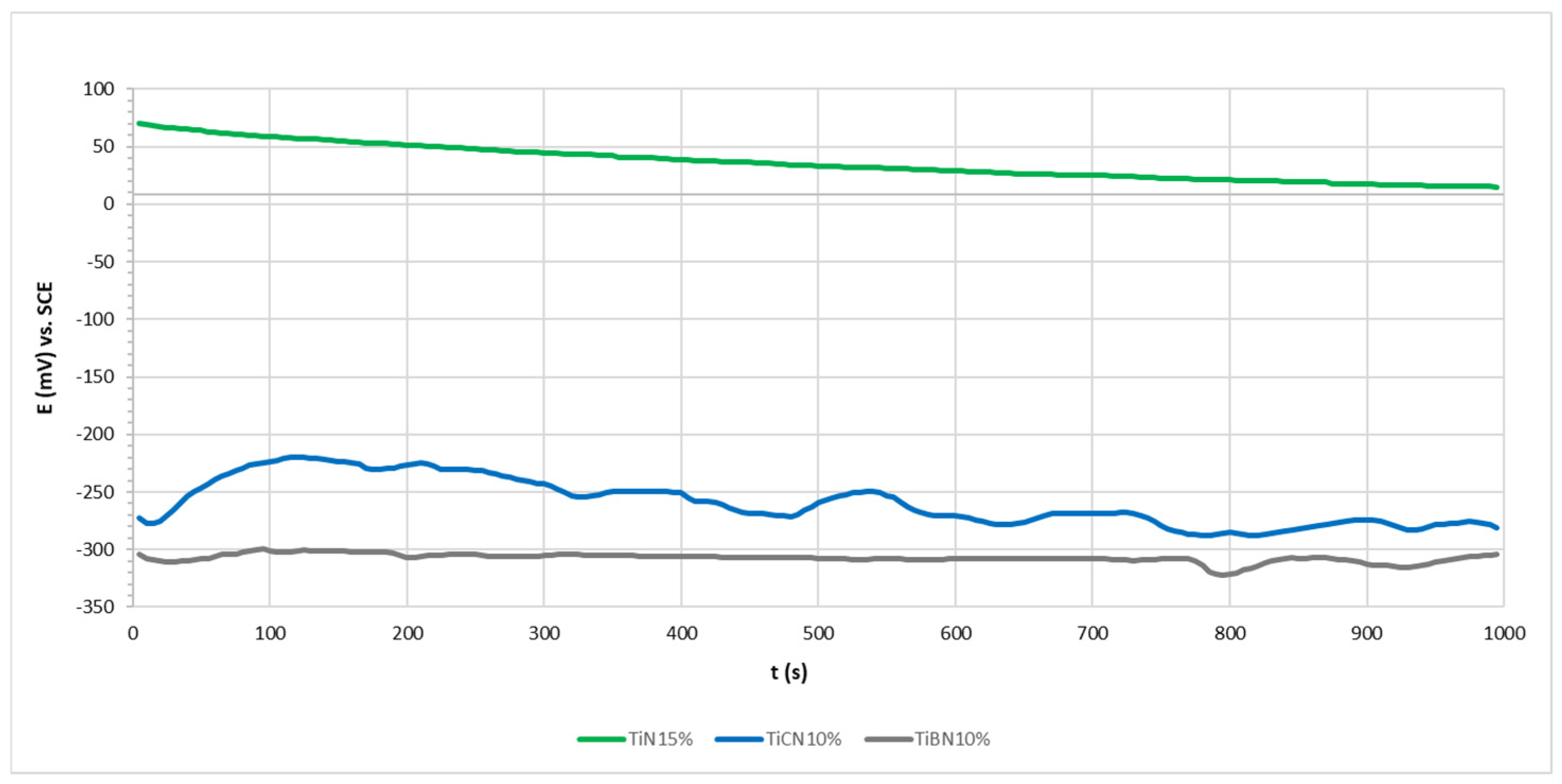
Three types of gradient plasma-assisted chemical vapour deposition (PACVD) coatings were produced on WC-Co hardmetal substrates: a TiN coating, a gradient TiCN coating with alternating TiN/TiCN layers and a multilayer TiBN system of TiN/TiB2 layers. Their corrosion behaviour in a chloride environment was compared using direct current and alternating current electrochemical techniques. Potentiodynamic polarization, linear polarization and electrochemical impedance spectroscopy were carried out in 3.5 wt.% NaCl at temperature 20 ± 2 °C in a three-electrode cell with a saturated calomel electrode (SCE) reference. After 1000 s open circuit stabilization, TiN coating showed superior corrosion resistance with Ecorr = 15 mV vs. SCE, versus TiCN (Ecorr = −281 mV) and TiBN (Ecorr = −304 mV). Linear polarization resistance/Tafel analysis showed significantly higher polarization resistance of TiN (Rp = 1559 kΩ∙cm2) than TiCN (195.4 kΩ∙cm2) and TiBN (243.6 kΩ∙cm2), with the lowest corrosion current density, jcorr = 10.97 nA∙cm−2 and corrosion rate vcorr = 117.2 × 10⁻⁶ mm∙y−1. TiCN showed the highest jcorr (360.8 nA∙cm−2) and vcorr (3.32 × 10⁻³ mm∙y−1). Electrochemical impedance spectroscopy fitting with a R(QR) circuit confirmed this, with the highest charge transfer resistance at the substrate–electrolyte interface (Rct) for TiN (8.198 × 10⁴ Ω∙cm2), lower for TiBN (7.929 × 10⁴ Ω∙cm2) and lowest for TiCN (1.435 × 10⁴ Ω∙cm2), indicating TiN as the best barrier and TiCN as the most permeable.

1. Introduction

Tungsten carbide–cobalt (WC-Co) hardmetals are the most widely used type of hardmetals, intended for applications such as cutting and mining tools, forming and similar components where high hardness, mechanical strength and wear resistance are needed [1,2,3]. Their superior properties result from very hard WC grains embedded in a tougher Co binder phase which ensures toughness [4,5,6]. Despite their superior mechanical properties, WC-Co hardmetals have been shown to be susceptible to corrosion, especially in chloride-containing environments, where selective dissolution of Co binder may occur [7,8,9,10,11]. Such corrosion-induced degradation can significantly reduce service life by accelerating wear, impairing parts’ integrity and promoting premature failure.
To address this, different surface modification techniques for hard coating deposition have become a dominant strategy of extending WC-Co components’ functional lifetime [12,13,14]. Among the available coating technologies, plasma-assisted chemical vapour deposition (PACVD) has attracted increased interest, predominantly due to its ability to produce dense, adherent coatings at relatively low temperatures [15,16,17,18,19]. This feature is especially important for coating nanostructured hardmetal substrates, as high-temperature technologies could induce grain coarsening, η-phase formation and decarburization, all of which lead to the deterioration of mechanical properties and chemical stability [20,21,22]. PACVD technology enables the deposition of hard nitride, carbonitride and boride-based coatings while preserving the desirable microstructural properties of the substrate [15,16,23,24].
Titanium-based coatings such as titanium nitride (TiN), titanium carbonitride (TiCN) and titanium boron nitride (TiBN) are among the most applied PACVD coatings on WC-Co hardmetal substrates. Their influence on hardness, wear resistance, adhesion and general tribological performance has been extensively studied [25,26,27]. Complex multilayer and gradient coating architectures have been shown to significantly improve adhesion, reduce residual stresses and limit crack propagation. Previous studies have demonstrated superior properties of complex TiCN and TiBN coatings in demanding wear and cutting applications compared to TiN coatings under the same conditions [18,28,29].
While the mechanical and tribological behaviour of PACVD-coated WC-Co substrates has been widely reported, their corrosion behaviour has yet to be fully investigated. The WC-Co components’ corrosion resistance is of great importance, since they are often exposed to aggressive environments during service, including humid atmospheres, saline solutions and lubricants. During operation, corrosion and wear often act simultaneously, thus leading to accelerated material degradation [30,31]. Therefore, understanding the corrosion mechanisms of coated WC-Co systems is essential for the reliable design of surface-modified components.
The corrosion behaviour of coated WC-Co materials is not only governed by the chemical stability of the coating itself, but also by its thickness, adhesion to the substrate material, microstructural characteristics, and the presence of localized defects. These defects, in the form of microcracks, pores or weak interfaces between layers, can become pathways for aggressive media penetration, therefore leading to corrosion at the substrate/coating interface [32,33]. In the case of complex multilayer coatings, internal interfaces between individual layers can additionally influence corrosion due to potential lateral diffusion of corrosive media [30].
Recent studies have already described the mechanical, physical and tribological behaviour of WC-Co systems that contain TiN, TiCN, and TiBN layers, the results of which suggest a strong influence of coating architecture on coatings’ mechanical integrity and adhesion [15,16,17,18]. However, the corrosion behaviour of these different types of coating systems has not yet been systematically investigated. This study addresses this gap by evaluating the corrosion behaviour using standardized electrochemical methods. The electrochemical results are interpreted in relation to the already available data on structural and mechanical properties, allowing correlations between coating integrity, defect influence and resulting electrochemical response. The conducted research is aimed at clarifying how coating architecture and properties influence corrosion mechanisms in the case of multilayer gradient PACVD-coated WC-Co hardmetals. By comparing coatings under the same electrochemical conditions, a new insight into the role of coating design on corrosion protection is provided, in particular monolithic vs. multilayer coating design. The conclusions of this study will contribute to our understanding of surface-engineered WC-Co materials and support further development of corrosion-resistant coating systems with a prolonged lifetime. In addition, the results obtained in this study make a significant contribution to future comparisons of how different coating deposition techniques influence the electrochemical and corrosion performance of protective coatings.

2. Materials and Methods

2.1. Sample Consolidation and Coating

For the present study, nanostructured WC-Co hardmetals with 10 wt.% Co were examined. Tungsten carbide (mean particle size 0.095 µm and specific surface area 3.92 m2/g, H.C. Starck, Goslar, Germany) was mixed with cobalt powder (mean particle size 0.640 µm, specific surface area 2.96 m2/g, Umicore, Markham, ON, Canada). Vanadium carbide (0.5 wt.% VC) and chromium carbide (0.75 wt.% Cr2C3) were used as grain-growth inhibitors with carbon balance tailored to suppress the formation of free carbon and η-phase during sintering. Powders were dry mixed in a horizontal ball mill with the addition of paraffin. Sample consolidation was conducted via the sinter-HIP technique in an FCT Anlagenbau furnace (type FPW 280/600-3-2200-100-PS, Sonnenberg, Germany). Consolidation comprising a debining/pre-sintering step was conducted under a controlled H2/Ar atmosphere, followed by two-step densification (vacuum sintering at 1350 ˚C and hot isostatic pressing at the same temperature under an argon pressure of 100 bar [15]. Earlier investigations confirmed that the described sintering route resulted in fully dense nanostructured substrates without unbound carbon or η-phase, as verified by magnetic saturation and coercivity measurements, microstructural analysis, and XRD [15,16,17,18].
All samples were prepared before coating using standard procedures for WC-Co substrates (grinding and polishing) to ensure comparable surface conditions across different sample groups.
Coating was conducted via a PACVD process at 530 °C using the Rübig PC 70/90 system (Rübig GmbH and Co KG, Marchtrenk, Austria). The coatings studied in this paper are the following architectures: a monolithic TiN coating (TiN sample), a multilayer TiN/TiCN coating (TiCN sample) and a gradient multilayer TiN/TiB2/TiBN coating (TiBN sample) [15,16,17,18]. The measured TiN coating thickness was of ~3 µm, while the coating thicknesses were ~5 µm and ~1 µm for TiCN and TiBN, respectively. Surface roughness was measured for all samples and showed submicron arithmetic mean roughness values, which were important for discarding the influence of macroscopic roughness effects on the corrosion behaviour studied here. Detailed mechanical characterization of coated samples including instrumented nanoindentation, microhardness testing, Rockwell adhesion testing and scratch testing was previously conducted, with results reported [15]. Quantitative depth profile (QDP) analysis was performed to determine elemental distribution along the coating cross-section anngs was analyzed by XRD using an XRD6000 diffractometer (Shimadzu, Tokyo, Japan) with Cu Kα radiation (λ = 1.5406 Å). Phase identification was performed using standard reference databases. Coating thickness was measured by the Calotest method in accordance with EN 1071-2:2002 [34] using a TRIBOtechnik Calotester (TRIBOtechnik GmbH, Bad Düben, Germany) with 25 mm steel ball, under 500 rpm for 45 s [15].
TiN coating exhibited lower hardness and elastic modulus compared to TiCN and TiBN coating and inferior adhesion behaviour (HF-5 in Rockwell indentation tests), followed by low critical scratch loads [15,18]. The obtained characteristics of the TiN coating indicate limited resistance to residual and external stresses, which could promote microcrack formation and localized coating failures when exposed to corrosive media.
The results of the previous characterization of TiCN coating show higher hardness and elastic modulus along with superior adhesion compared to TiN coating. The complex multilayer architecture of the numerous TiN/TiCN interfaces was identified as a potential source of defect propagation channels, which may facilitate the transport of the electrolyte in a lateral or transversal direction [15,18].
The TiBN coating gradient multilayer architecture with a gradual transition from the TiN to the TiB2/TiBN layers has been confirmed. This type of coating showed the highest adhesion quality and scratch resistance, indicating enhanced coating/substrate bonding and improved resistance to crack initiation and propagation, which should be crucial for preserving coating integrity under corrosion conditions.
These previously determined and reported structural and mechanical characteristics (summarized in Table 1 and Table 2) provide the necessary background for interpreting the electrochemical corrosion behaviour presented in this study [15,18].

2.2. Electrochemical Characterization

The corrosion resistance of samples TiN (WC-10 wt.% Co + TiN coating), TiCN (WC-10 wt.% Co + TiCN coating), and TiBN (WC-10 wt.% Co + TiBN coating) was evaluated using both direct current (DC) and alternating current (AC) electrochemical techniques. DC methods provide the data of corrosion potential, corrosion current density and polarization resistance, which are used to describe corrosion kinetics [35,36]. For the characterization of barrier properties and interfacial processes, AC methods are used, electrochemical impedance spectroscopy (EIS) being the most common [37]. By combining both AC and DC methods, a comprehensive insight into the corrosion performance of the coatings and present corrosion mechanisms is obtained [7,38,39]. Potentiodynamic polarization and EIS measurements were performed using a VersaSTAT 3 potentiostat/galvanostat (AMETEK Scientific Instruments, Princeton Applied Research, Berwyn, PA, USA) controlled by VersaStudio software (version 2.6; Princeton Applied Research, AMETEK Scientific Instruments, Oak Ridge, TN, USA). All experiments were conducted in accordance with EN ISO 17475:2019 [40]. The measurements were performed in a conventional three-electrode electrochemical cell, consisting of the sample as the working electrode, an Ag/AgCl or saturated calomel electrode (SCE) as the reference electrode, and a graphite rod as the auxiliary electrode. A 3.5 wt.% NaCl aqueous solution was used as the electrolyte, and the room temperature (ϑs) was maintained at 20 ± 2 °C. Representative micrographs of the surface condition before and after electrochemical testing are provided for the sample exhibiting the highest corrosion rate. Surface analysis was performed using an optical microscope (GX51F, Olympus, Tokyo, Japan) and scanning electron microscope (VEGA, TESCAN, Brno, Czech Republic).

3. Results

3.1. Results of Electrochemical DC Measurements

At the beginning of the polarization measurements, the electrochemical system was allowed to stabilize after immersion of the samples in a 3.5 wt.% NaCl aqueous solution, with the electrical circuit between the working and counter electrodes kept open.
The potential difference between the working and reference electrodes was continuously recorded as a function of time. The open circuit potential (Ecorr) was determined after a stabilization period of 1000 s. In addition to the open circuit potential measurements, the polarization resistance (Rp) and corrosion rate (vcorr) were evaluated using linear polarization resistance and Tafel polarization techniques. Anodic and cathodic polarization curves were recorded over a potential range of (E = Ecorr ± 0.25 V). The corrosion current density jcorr was determined by extrapolating the linear regions of the anodic and cathodic Tafel plots. All measurements were carried out at a scan rate of 0.167 mV·s−1, and the polarization data are presented graphically in logarithmic form (Elog j). The corrosion rate was calculated from corrosion current density values using the equivalent weight (EW) and density ρ (g·cm−3) of the material. The obtained numerical values of open circuit potentials, linear polarization resistance and corrosion rate of uncoated substrate [7] and coated samples are summarized in Table 3, while the corresponding graphical representations are shown in Figure 1, Figure 2 and Figure 3.
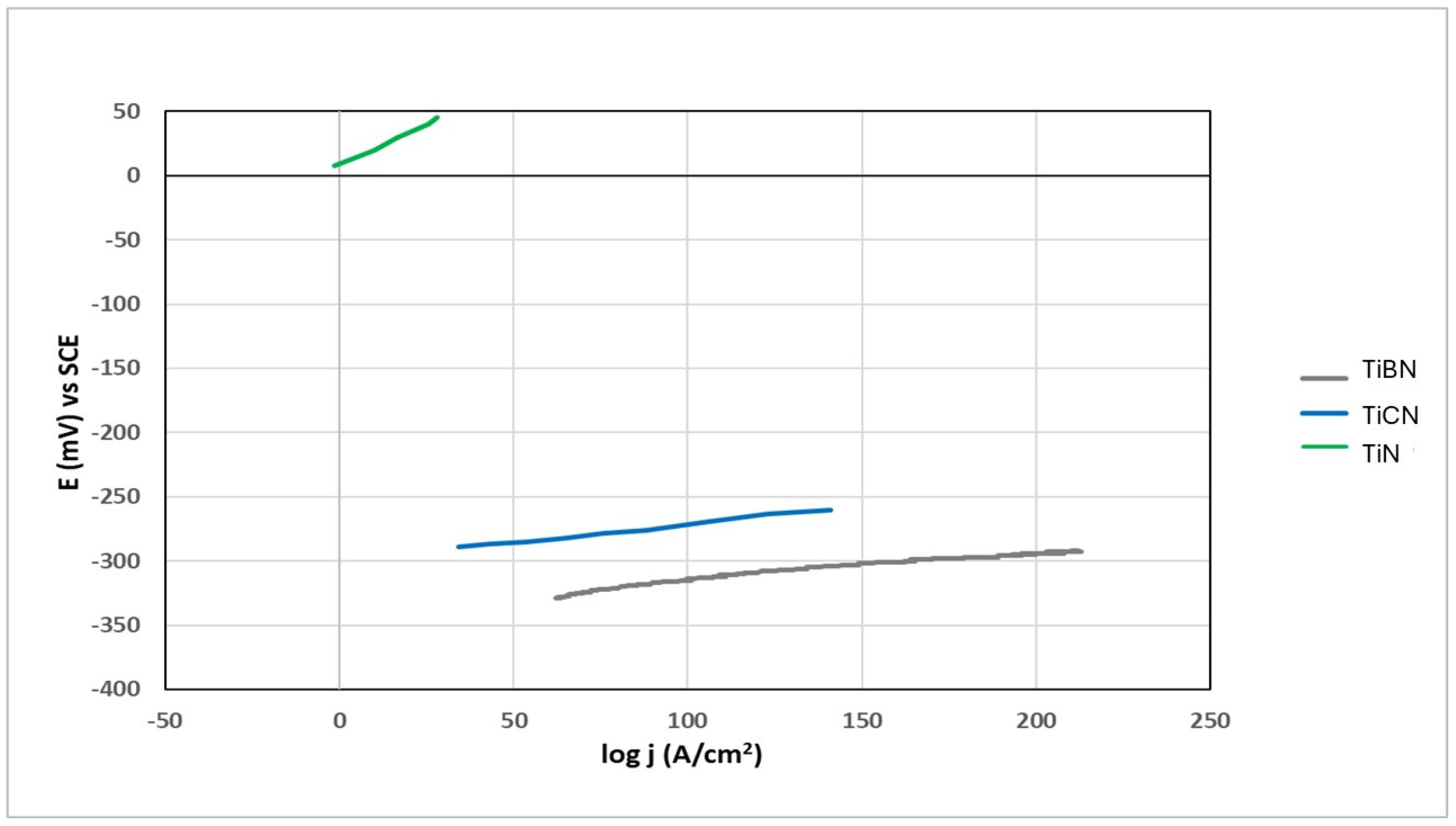
The linear polarization resistance curves, which characterize the electrochemical response of the samples in the vicinity of the open circuit potential (E = Ecorr ± 20 mV), are shown in Figure 2.
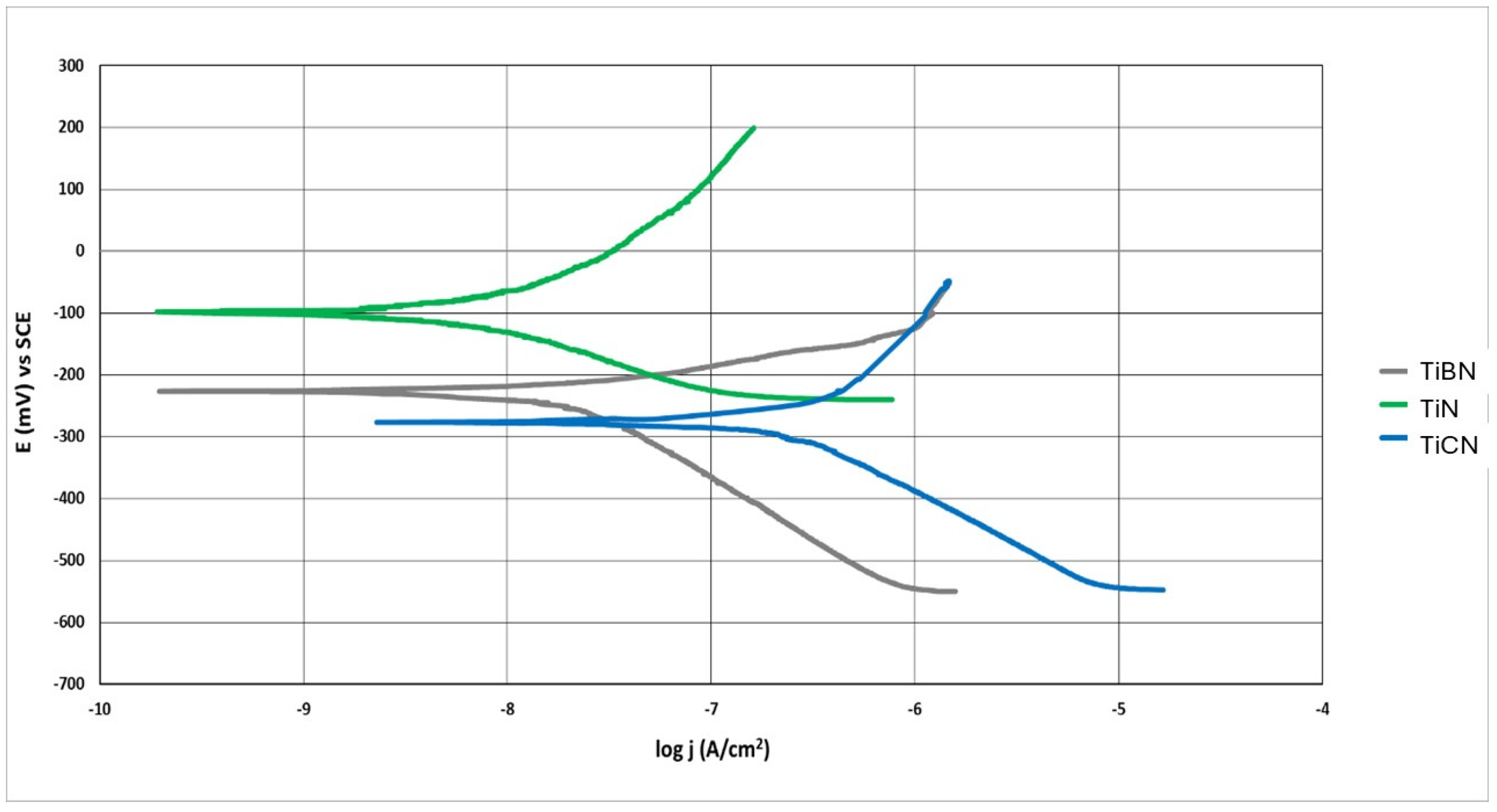
The potentiodynamic polarization curves, presented as Tafel extrapolation plots, used to determine the corrosion rate are shown in Figure 3.

3.2. Results of Electrochemical AC Measurements

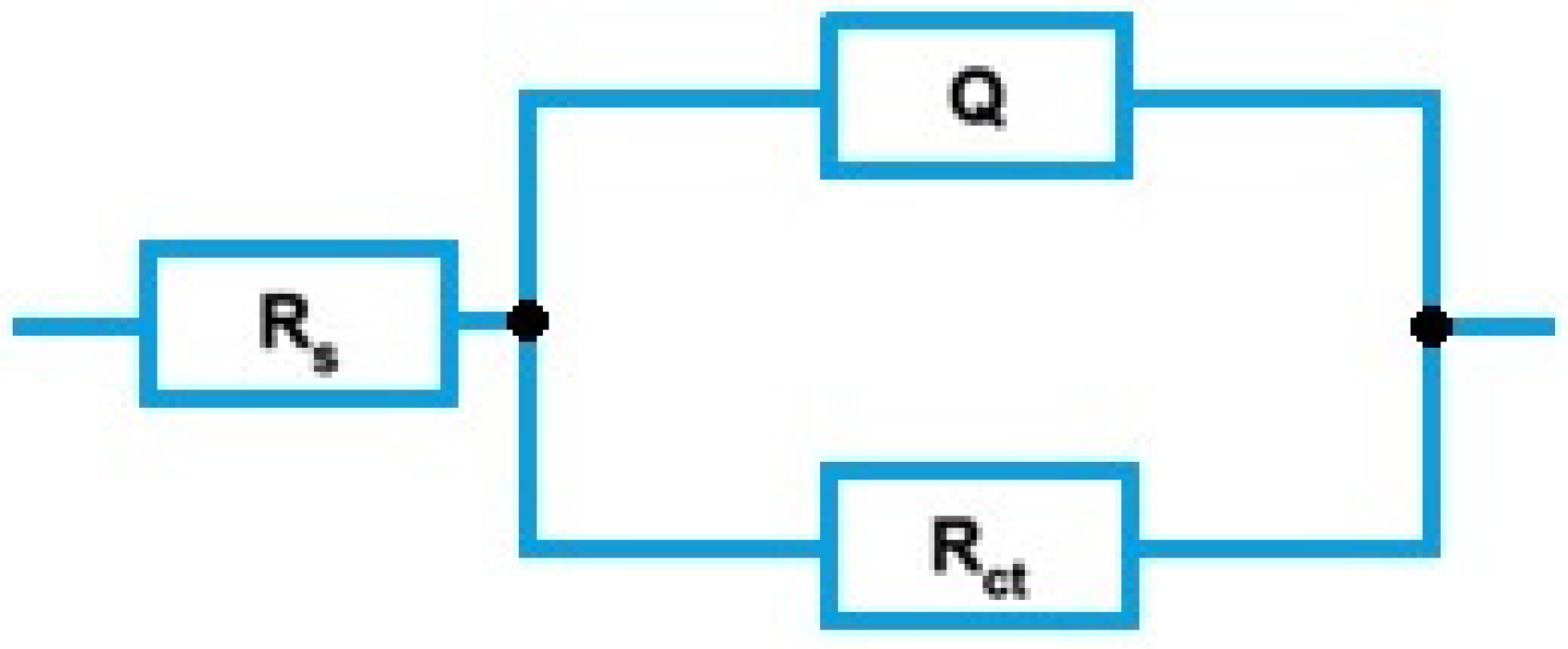
The EIS method was employed to evaluate the corrosion resistance and protective performance of the investigated samples. The use of an AC technique enabled the determination of surface layer resistance and the identification of corrosion mechanisms without inducing damage to the tested surfaces. To facilitate faster and more practical data interpretation, several simplified EIS spectrum analysis methods reported in the literature were also applied. The resistance of both the substrate and the protective barrier layers is predominantly reflected in variations in resistance and capacitance parameters. Accordingly, degradation of the surface layers was inferred from changes in these parameters, which manifested as variations in the overall impedance response. To accurately describe the electrochemical reactions occurring at the interface between the working electrode and the electrolyte, an appropriate equivalent electrical circuit composed of resistive and capacitive elements was selected. This modelling approach enables a precise interpretation of the corrosion mechanism. A metal–electrolyte interface undergoing simple oxidation or reduction reactions can be appropriately represented by the equivalent circuit R(QR), as shown in Figure 4. The circuit consists of the solution (ohmic) resistance of the electrolyte (Rs), the charge transfer (polarization) resistance at the substrate–electrolyte interface (Rct), and a constant phase element (CPE) characterized by the parameter Q.
The constant phase element is incorporated into the equivalent electrical circuit to compensate for system inhomogeneities associated with surface roughness, inhibitor adsorption, and the porosity of the newly formed film. The impedance of the CPE (ZCPE) is described by the following equations [42]:
Z C P E =   Q 1 ( j ω ) n ,
C = Q ω m a x n 1 ,
in which Q denotes the proportionality constant (CPE), n the empirical exponent or phase shift (−1 ≤ n ≤ 1), ω the angular frequency, j the root of −1 (imaginary unit), C the capacity, and ωmax the angular frequency at which the imaginary component impedance Z″ reaches the maximum of the time constant. In this way, the impedance spectrum of a distributed system is explained, which cannot be interpreted by a finite number of ideal electrical elements. In the case when 0.8 < n ≤ 1, CPE represents a capacitor of capacity Q, for n = 1, CPE represents an ideal coil Q = L, and for n = 0.5, CPE represents Warburg impedance Q = W, while for values of n = 0, CPE represents an ideal resistor Q = R.
The measurements were performed at room temperature (20 ± 2) °C using a 3.5 wt.% NaCl aqueous solution as the electrolyte. Impedance spectra were recorded at the open circuit potential with a sinusoidal voltage amplitude of 10 mV over a frequency range of 100 kHz to 10 mHz. Data fitting, i.e., matching the measured responses to the elements of the equivalent circuit, was carried out using ZSimpWin software (Version 3.2).
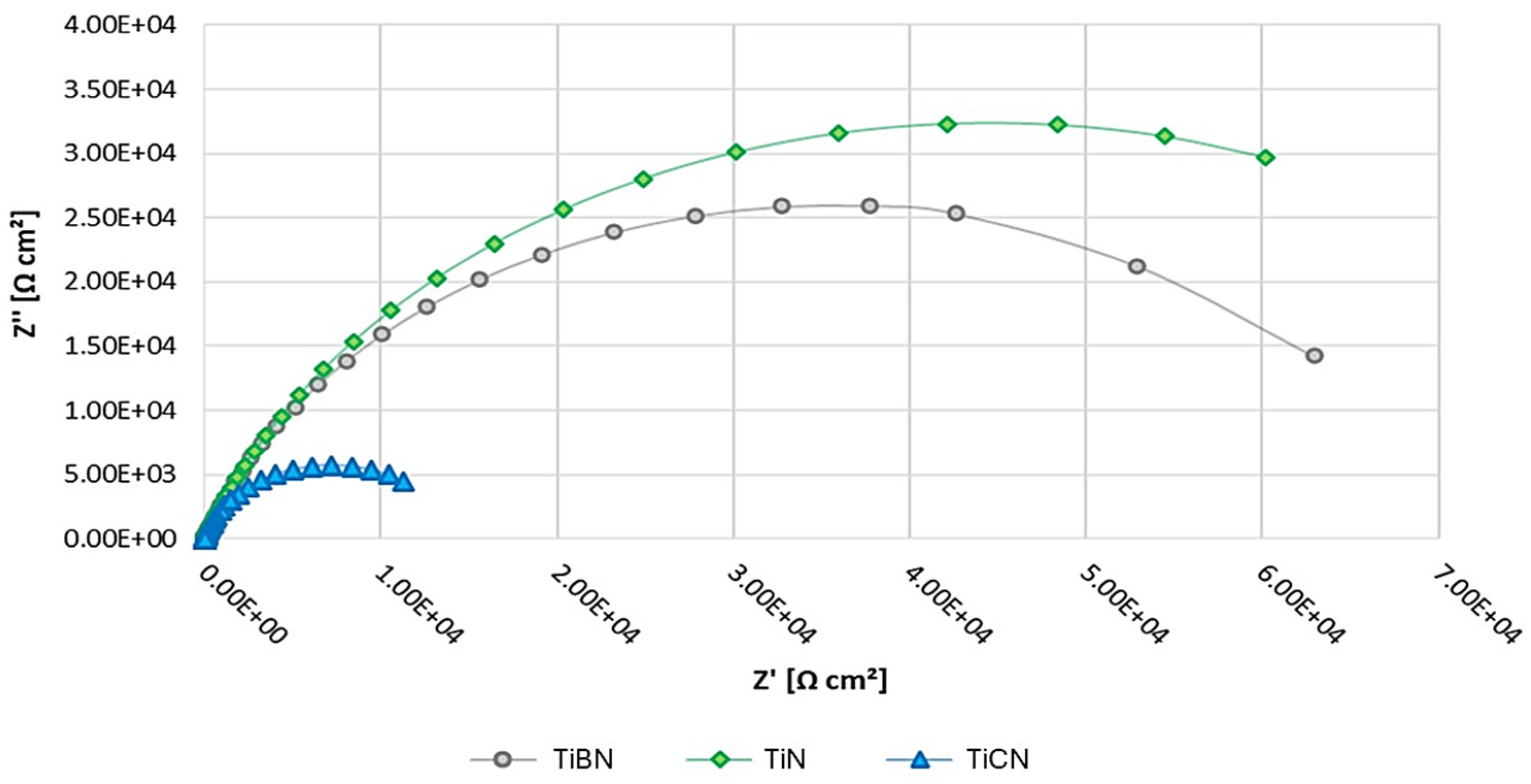
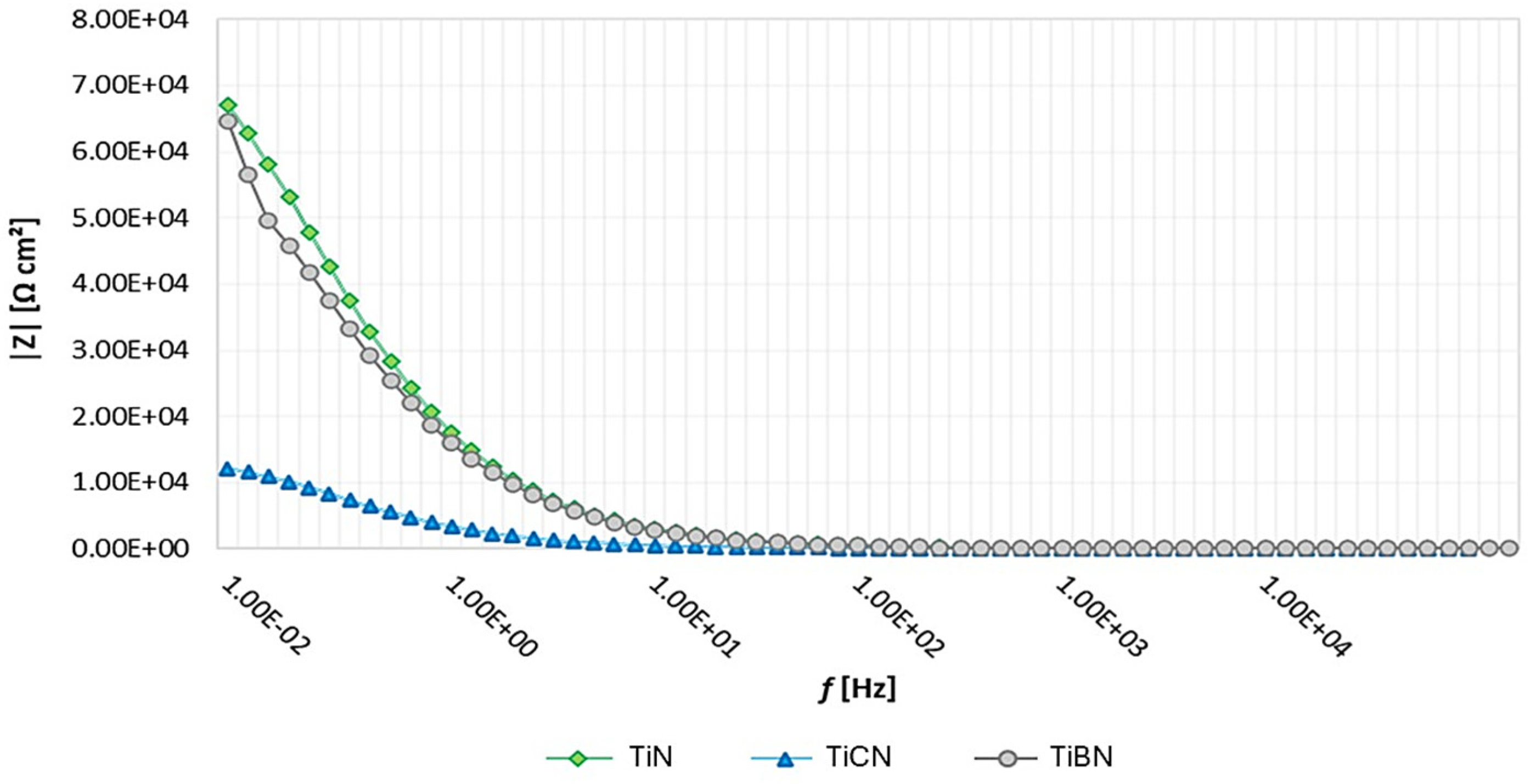
The Nyquist and Bode plots of the tested samples, along with the corresponding equivalent circuit model employed to simulate the EIS results, are presented in Figure 5 and Figure 6. These diagrams provide a comprehensive representation of the impedance behaviour of the samples over the applied frequency range. The Nyquist plots illustrate the relationship between the real and imaginary components of the impedance, highlighting the capacitive and resistive characteristics of both the substrate and the protective surface layers.
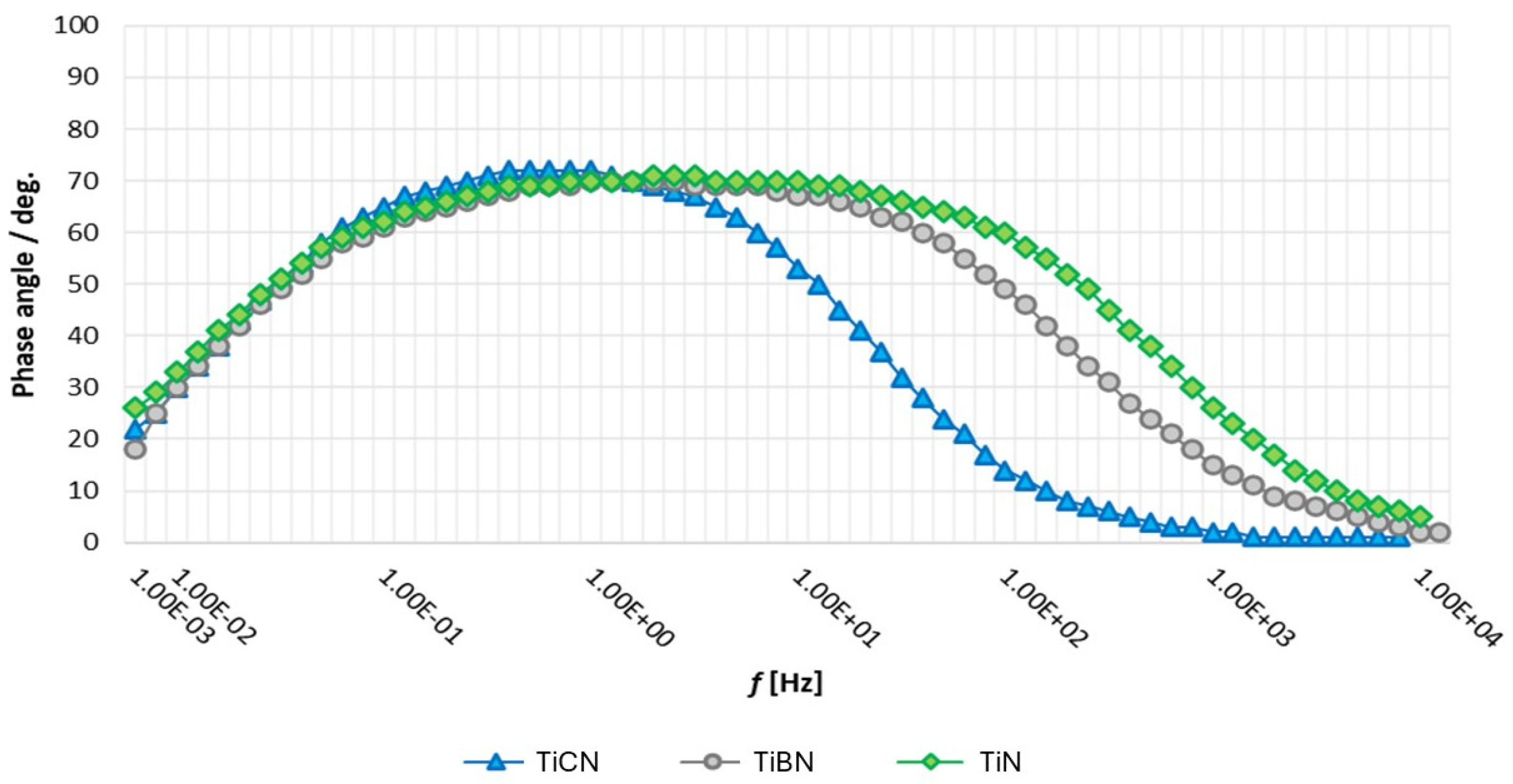
The Bode plots, on the other hand, show the frequency-dependent behaviour of the impedance magnitude and phase angle, which allows for the identification of processes occurring at different time scales, such as charge transfer, diffusion, and barrier layer effects. Figure 7 further details the EIS response across high, medium, and low frequencies, emphasizing how different frequency regions correspond to distinct electrochemical phenomena. High-frequency responses are generally dominated by solution resistance and surface roughness effects and medium frequencies primarily reflect charge transfer and interfacial reactions, while low-frequency behaviour provides insight into diffusion-controlled processes and the integrity of the protective layers. Together, these figures offer a complete overview of the electrochemical performance of the samples and validate the applicability of the selected equivalent circuit model for accurately interpreting the corrosion mechanisms.
In electrochemical impedance spectroscopy (EIS), the chi-square (χ2) factor is a statistical parameter that quantifies the goodness of fit between the experimental data and the equivalent electrical circuit (EEC) model. χ2 ≤ 10−3 in this work indicates that the selected equivalent circuit properly represents the electrochemical behaviour of the coating system. The results of the electrochemical impedance spectroscopy measurements of coated samples and substrate WC-Co material [7] are presented in Table 4.
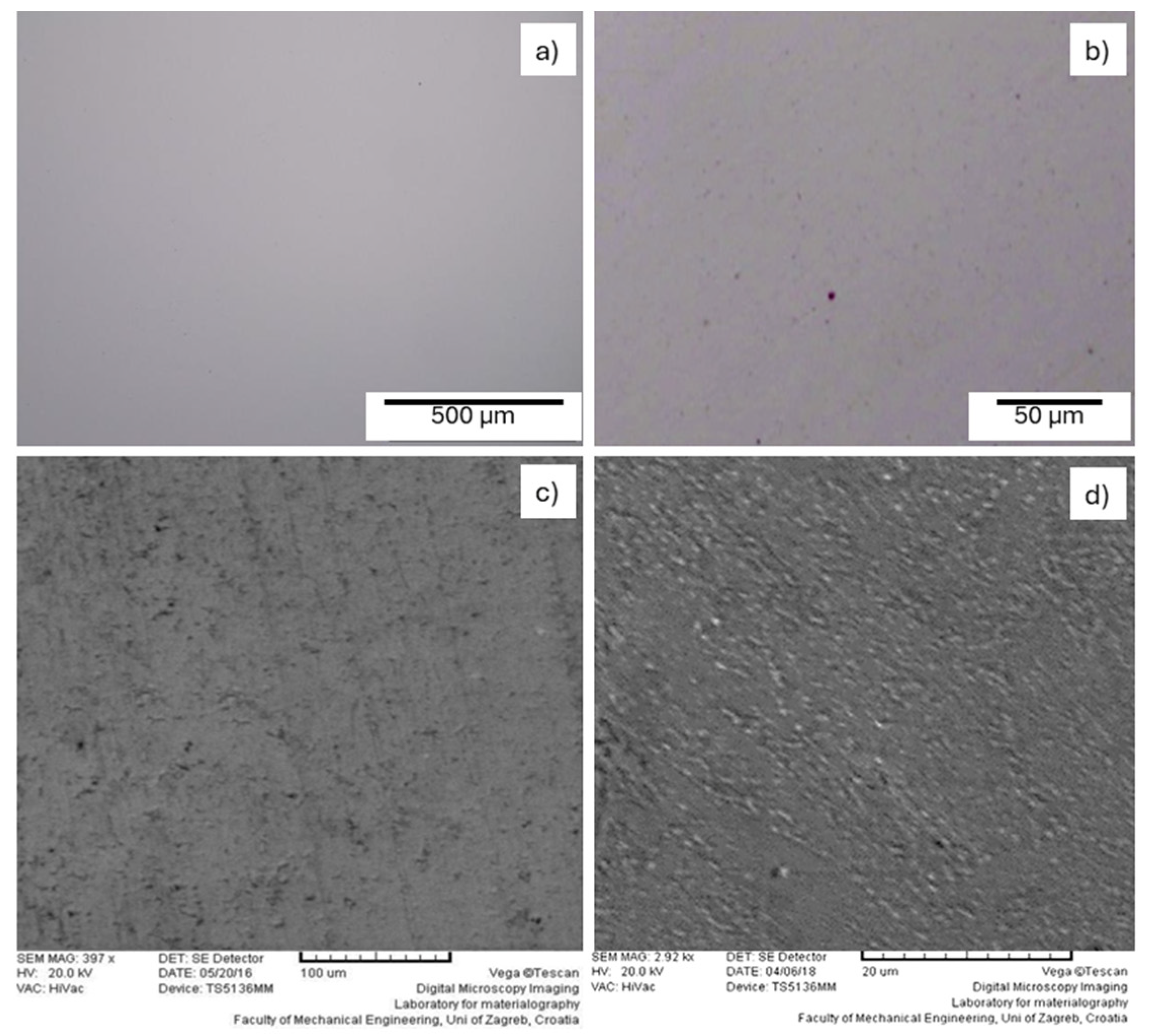
Figure 8 shows optical and SEM micrographs obtained for the sample with the highest measured corrosion rate during the electrochemical corrosion tests, the TiCN-coated WC-Co sample. No significant morphological changes, such as surface degradation or the accumulation of corrosion products, are observed. The electrochemical tests performed in this study are short-term experiments performed in 3.5 wc. % NaCl solution. The corrosion current densities obtained for the coated samples are in the nanoampere range, indicating very low corrosion rates of ~10−4 to 10−6 mm/year. Under such low corrosion rates and short exposure time, the total amount of dissolved material is extremely low, so visible corrosion damage or corrosion products detectable by SEM or optical microscope imaging was not expected.

4. Discussion

From the measured numerical values of the open circuit potential shown in Table 3 and graphically interpreted in Figure 1, information on the corrosion behaviour of the working electrodes in the test electrolyte was obtained. After an approximately established stationary state (t = 1000 s), when the test samples are in equilibrium with the environment (anodic and cathodic currents are equal in magnitude, but in opposite directions), it is visible that sample TiN (15 mV vs. SCE) has a more positive Ecorr than sample TiCN (−281 mV vs. SCE) and TiBN (−304 mV vs. SCE), i.e., it is more resistant to corrosion for the same test solution and temperature. It can also be seen that, for measurements in 3.5 wt.% NaCl aqueous solution, the potentials of sample TiN to samples TiCN and TiBN slightly shift in the negative direction. Such potential oscillation can be correlated with corrosion activity (instability on the surfaces and material dissolution) of the samples. All measurements exhibited excellent repeatability, confirming the reliability of the experimental setup and the stability of the electrochemical system during testing.
Polarization resistance measurements offer a rapid and reliable method for evaluating the corrosion behaviour of materials, typically requiring less than ten minutes to complete. This technique is particularly advantageous because it allows for the direct estimation of corrosion rates and has been shown to correlate well with conventional long-term methods, such as weight loss determinations, providing a practical alternative for comparative studies of different substrates. In the present study, the polarization resistance was determined by analyzing the slope of the linear region of the anodic and cathodic branches of the polarization curves, as illustrated in Figure 2. This slope corresponds to the resistance to charge transfer at the electrode–electrolyte interface, which is inversely proportional to the corrosion rate according to the Stern–Geary relationship.
The results indicate that sample TiN (1559 kΩ cm2) exhibits a significantly higher polarization resistance compared to samples TiCN (195.4 kΩ cm2) and TiBN (243.6 kΩ cm2). Quantitatively, the Rp of sample TiN is approximately seven times greater than that of the other two samples, reflecting a substantially enhanced ability of the surface to resist electrochemical attack. This higher resistance can be attributed to the formation of a more stable and uniform barrier layer on the surface of the TiN sample, which effectively limits both anodic dissolution and cathodic reactions. In contrast, the lower Rp values observed for samples TiCN and TiBN suggest less effective surface coverage, which facilitates the penetration of the electrolyte and accelerates corrosion processes.
Furthermore, the polarization curves provide additional insight into the electrochemical behaviour of the surface layer. The linearity and slope of the curves in the vicinity of the open circuit potential reflect the efficiency of the protective layer in impeding electron transfer. In the TiN sample, the broader and more distinct linear region indicates a more stable passive behaviour, while the steeper slopes for samples TiCN and TiBN correspond to faster corrosion kinetics. These findings are consistent with the observed trends in open circuit potential measurements and confirm the superior corrosion protection under the tested conditions. Polarization resistance measurements demonstrate both the quantitative and qualitative differences in the corrosion performance, highlighting the critical influence of composition and structure on the electrochemical stability of the samples. From the numerical values of the corrosion current density jcorr (Table 3), obtained from the Tafel plot by extrapolating the linear portion of the curve to Ecorr, as shown in Figure 3, it can be concluded that sample TiN (117.2 × 10⁻⁶ mm/y), compared to samples TiCN (3.32 × 10⁻³ mm/y) and TiBN (322.8 × 10⁻⁶ mm/y), has a lower corrosion rate, which unambiguously indicates a higher resistance of the surface layers, caused by the chemical composition and surface condition. Also, sample TiN has the lowest corrosion current density of 10.97 nA/cm2 and sample TiBN has the average corrosion current density value of 21.43 nA/cm2, while the highest corrosion current density of 360.8 nA/cm2 was measured for sample TiCN with a different microstructure and grain size.
From the numerical values of the corrosion current density, j corr (Table 3), obtained from Tafel plots by extrapolating the linear portion of the curves to the corrosion potential, E corr (Figure 3), it is evident that the corrosion behaviour of the investigated samples differs significantly. The uncoated WC-Co substrate shows active corrosion behaviour, with a corrosion rate of 388.8 × 10⁻³ mm/y, whereas the coated samples show a substantial improvement in corrosion resistance. The TiN sample exhibits a corrosion rate of 117.2 × 10⁻⁶ mm/y, which is moderately lower than that of sample TiBN (322.8 × 10⁻⁶ mm/y) and significantly lower than that of sample TiCN (3.32 × 10⁻³ mm/y). This indicates that the surface layer of the TiN sample provides the highest corrosion resistance, likely due to its specific chemical composition, surface structure, and favourable microstructural features that inhibit the electrochemical degradation process.
When examining the corrosion current densities, further insights into the electrochemical stability are obtained. The TiN sample exhibits the lowest corrosion current density of 10.97 nA/cm2, indicating its exceptional ability to resist charge transfer reactions that lead to corrosion. The TiBN sample shows an intermediate corrosion current density of 21.43 nA/cm2, suggesting moderate resistance, whereas TiCN exhibits a significantly higher corrosion current density of 360.8 nA/cm2. The high current density in the TiCN sample is consistent with its higher corrosion rate and can be attributed to differences in microstructure, grain size, and potentially less dense or more defective surface layers that facilitate the ingress of corrosive species.
These results highlight that the corrosion resistance of the surface is strongly affected not only by its chemical composition but also by microstructural characteristics and surface conditions. The combination of low corrosion current density and low corrosion rate in the TiN sample demonstrates that the sample surface can provide effective protective performance, making it suitable for applications requiring enhanced durability in corrosive environments. Comparatively, the higher corrosion activity observed in samples TiCN and TiBN underscores the importance of optimizing both composition and microstructure to achieve improved surface protection.
Based on the electrochemical impedance spectroscopy results, the corrosion resistance of samples TiN, TiCN and TiBN samples in 3.5 wt.% NaCl aqueous solution can be quantitatively evaluated and unambiguously compared. EIS provides insight into the electrochemical processes occurring at the interface between the substrate and the electrolyte by representing the system with an equivalent electric circuit. This circuit typically consists of resistive and capacitive elements that model charge transfer, double-layer capacitance, and other interfacial phenomena. By fitting the measured impedance data to this equivalent circuit, it is possible to extract numerical values that reflect the electrochemical behaviour and stability of each sample, allowing for a detailed interpretation of the corrosion mechanisms.
The results, summarized in Table 4, show a clear correlation with the previously obtained DC measurements, reinforcing the statement that TiN exhibits the highest corrosion resistance. This is confirmed by the significantly higher resistance to charge transfer, Rct = 8.918 × 10⁴ Ω cm2 at the substrate–electrolyte interface. In comparison, TiBN shows a moderately lower Rct = 7.929 × 10⁴ Ω cm2, while TiCN has the lowest value of Rct = 1.435 × 10⁴ Ω cm2, reflecting a much higher susceptibility to corrosion. These differences highlight the influence of both chemical composition and surface condition on the electrochemical stability of the samples. When comparing the results of the coated samples with those obtained for the substrate WC-Co sample [7], a significant improvement in corrosion resistance was achieved by coating regardless of the coating type. The uncoated substrate exhibits very low charge transfer resistance (Rct = 8.068 × 10⁻² Ω cm2), indicating strong electrochemical activity and poor corrosion resistance. In contrast, all coated samples show that Rct values increase by several orders of magnitude, confirming a significant reduction in corrosion rate.
The Nyquist diagrams presented in Figure 5 illustrate these observations. Each sample shows a capacitive semicircle whose radius corresponds to the charge transfer resistance. The TiN sample exhibits the largest semicircle diameter, indicating the most efficient barrier to electron transfer and, therefore, the highest corrosion resistance. The TiBN sample presents a smaller semicircle, suggesting intermediate protection, whereas TiCN exhibits the smallest semicircle, consistent with its significantly lower resistance to charge transfer. The progressive decrease in the diameter of the semicircle from samples TiN and TiBN to TiCN demonstrates a direct relationship between the size of the capacitive loop and the effectiveness of the protective surface layer.
Overall, the EIS analysis confirms that TiN provides superior protection in chloride-containing environments due to a combination of high interfacial resistance and stable surface characteristics. TiBN offers moderate protection, while TiCN, with its comparatively low Rct and small semicircle radius, is the least resistant to corrosion. These results emphasize the importance of optimizing both the material composition and microstructural properties to enhance the long-term performance of the surface in aggressive aqueous environments. The detailed EIS interpretation also provides a deeper understanding of the electrochemical interactions occurring at the phase boundary, which is critical for predicting durability and designing more corrosion-resistant materials.
The electrochemical impedance data further illustrate the superior corrosion resistance of the TiN coating. In particular, the higher charge transfer resistance, Rct = 8.918 × 10⁴ Ω cm2, combined with the lower double-layer capacitance, Q = 9173 × 10−5 F cm2, is a clear indication of the limited penetration of the electrolyte into the surface layer. A high Rct implies that the electron transfer reactions necessary for corrosion are significantly hindered, while a low capacitance value indicates that the surface layer is dense and uniform, minimizing localized electrolyte accumulation at the interface.
The Bode plot analysis provides additional confirmation of these observations. In the frequency-dependent impedance representation, TiN exhibits the highest impedance modulus at low frequencies and a relatively low phase angle deviation, suggesting minimal degradation of the surface layer over the measured frequency range. Specifically, in Figure 6, the plateau observed at low frequency (10 mHz) for the TiN sample is elevated compared to the TiCN and TiBN samples, which directly correlates with its higher Rct and lower Q values. The slope of the Bode curves for the TiN and TiBN samples remains nearly constant across the intermediate frequency range, indicating stable capacitive behaviour and consistent electrochemical performance of the surface layers. In contrast, TiCN shows lower R ct values and higher capacitances, corresponding to more pronounced electrolyte absorption and less effective surface protection. The elevated capacitance indicates increased interfacial charge storage, which is typically associated with a partially degraded surface layer that allows the electrolyte to penetrate more easily, facilitating corrosion processes. Consequently, this sample demonstrates lower overall impedance and a reduced ability to resist electrochemical degradation in chloride-containing environments. Overall, the combination of high charge transfer resistance, low capacitance, and the characteristic Bode plot profile of sample TiN confirms that it maintains the structural and electrochemical integrity of the surface layer most effectively. These findings highlight the importance of both surface composition and microstructural uniformity in achieving long-lasting corrosion resistance and emphasize that EIS, particularly the analysis of Rct, Q, and frequency-dependent impedance behaviour, is a powerful tool for quantitatively assessing the protective performance of the surface layer in aggressive aqueous environments.
The phase angle analysis and its corresponding frequencies, presented in Figure 7, provide additional insight into the electrochemical behaviour and protective performance of the coated samples. Phase angles close to 90° are characteristic of ideal capacitors. All samples exhibit relatively high phase angles, approaching 75°, which demonstrates a predominantly capacitive response and suggests the presence of well-formed surface layers that act as barriers to charge transfer. A high phase angle over a broad frequency range is typically associated with a stable and dense surface layer that effectively hinders electrolyte penetration, reinforcing the observations obtained from the Nyquist and Bode plots. A closer examination of the phase angle maxima reveals differences in the frequency at which these peaks occur. For samples TiN and TiBN, the maximum phase angles are observed at medium frequencies around 5 Hz, whereas for sample TiCN, the maximum occurs at lower frequencies. This indicates that the dominant time constant of the system is in the mid-frequency region, which is generally associated with the coating layer itself. Such behaviour suggests a compact coating structure, a relatively low electrolyte permeability and a stable coating/electrolyte interface, and is directly correlated with an increase in capacitance and pore resistance, reflecting a greater ability of the surface layer to store charge, indicating good protective performance. In practical terms, a lower frequency peak suggests that the surface layer is less resistive and more prone to electrolyte infiltration, which aligns with the lower charge transfer resistance observed for this sample in the EIS measurements. For TiN coating, the medium-frequency maximum, combined with a high phase angle, indicates an optimal balance between capacitive behaviour and resistance to charge transfer. This confirms that the TiN layer provides a dense and protective barrier at the electrolyte–substrate interface. The TiBN coating, while also showing a peak at medium frequencies, has slightly lower impedance values than TiN, suggesting moderate protection. In contrast, the shift in the phase angle peak to lower frequencies for TiCN indicates a less compact surface layer with increased electrolyte absorption, consistent with its higher capacitance and lower Rct. Overall, the phase angle analysis complements the Nyquist and Bode plot data by providing frequency-dependent information about the capacitive behaviour of the surface layers.
The location and magnitude of the phase angle peaks serve as indicators of surface layer integrity, electrolyte penetration, and charge transfer characteristics, confirming that the TiN layer exhibits the highest electrochemical stability, followed by TiBN, with TiCN being the least resistant to corrosion in 3.5 wt.% NaCl solution.
Despite the higher hardness and elastic modulus of TiCN and TiBN coating compared to single-layer TiN coating [15], corrosion resistance is not governed solely by mechanical properties. It is predominantly influenced by coating compactness, chemical composition, defects density and electrochemical stability. The multilayer structure of TiN/TiCN and TiN/TiB2/TiBN coating contains numerous interfaces, which may act as pathways for electrolyte penetration, especially in the case of long exposure to the corrosive medium. Also, higher stiffness, i.e., the elastic modulus of the multilayer TiCN and TiBN coatings, may be connected to the development of residual stresses during deposition and cooling, arising from differences in the thermal expansion of individual TiN/TiCN and TiN/TiB2/TiBN layers. Such stresses can lead to the formation of microdefects that are not necessarily detectable by standard mechanical characterization but do influence electrochemical behaviour. Also, the presence of carbon in the TiCN could modify local electrochemical response and increase interfacial capacitance, as indicated by higher Q values and lower Rct values obtained from EIS analysis.
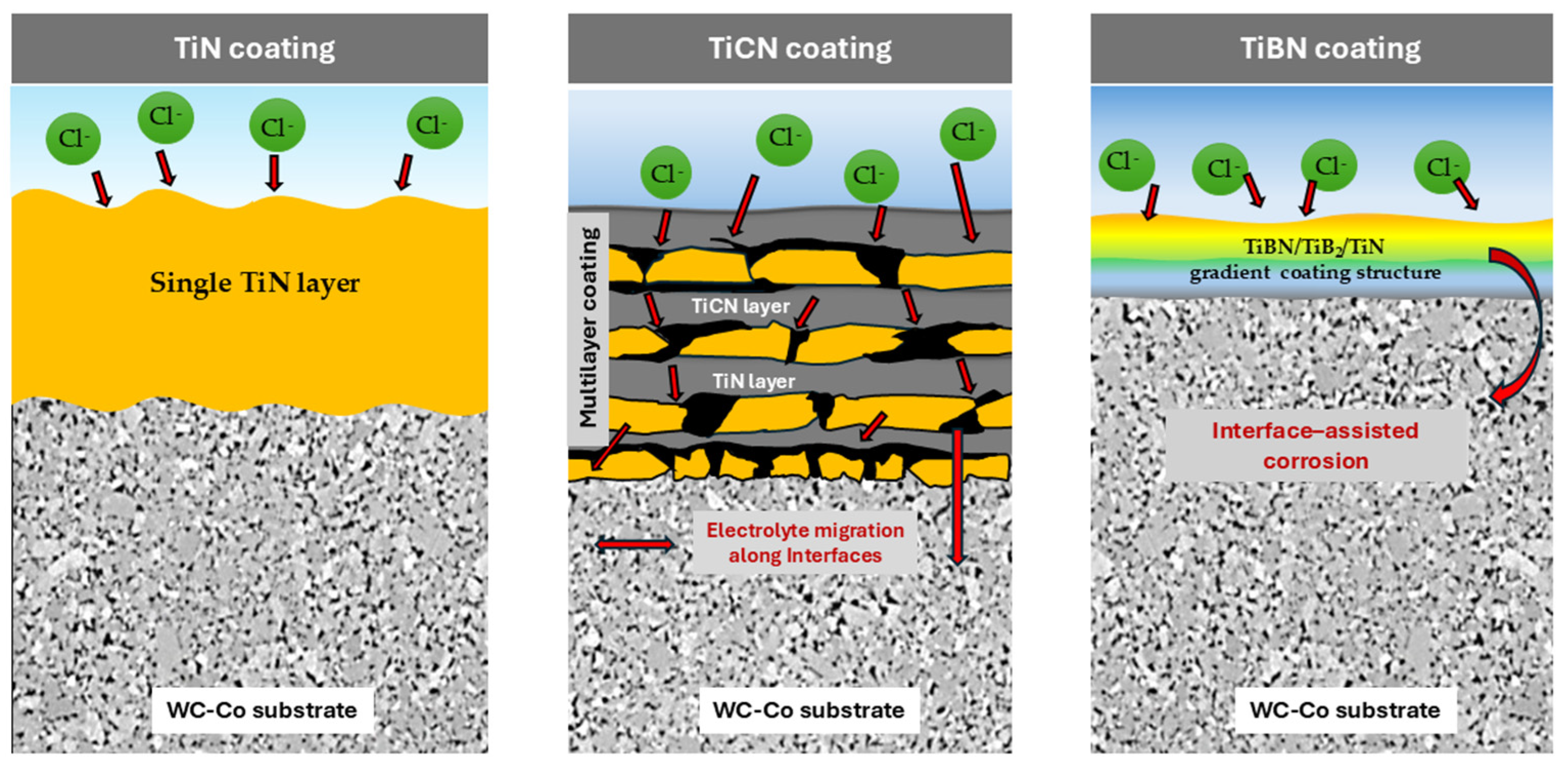
Furthermore, TiN coatings predominantly form a thin TiO2 passive layer in NaCl solution, while TiBN coatings may additionally generate boron-containing oxides, contributing to enhanced barrier properties and improved resistance to chloride-induced degradation. In NaCl solution, TiCN coatings predominantly form a TiO2 passive layer as the principal corrosion product, while localized degradation may occur at locations of coating defects, allowing chloride-induced corrosion processes at the coating/substrate interface (Figure 9). TiCN may exhibit a slightly higher defect density depending on deposition parameters, and carbon presence could influence the microstructure and electrical conductivity.
The corrosion performance of the TiN coating obtained in this study exhibited a very low corrosion current density, high polarization resistance and high charge transfer resistance, all indicating excellent barrier behaviour in NaCl solution. In a similar study, Chayuski et al. [43] reported significantly higher corrosion current densities in 3% NaCl for TiN coating deposited on a WC-Co substrate via arc-PVD with icorr in the µA/cm2 range. This suggests that the protective efficiency of the TiN coating strongly depends on the deposition method. In case of arc-PVD coating process, the presence of higher defect densities is often reported, as well as microdroplets occurrence. These defect locations could therefore act as a preferential location for electrolyte penetration and intensified corrosion. Matei et al. [44], who studied TiN, TiCN and TiAlN coatings on WC-Co substrates in identical electrolytes, also report the best corrosion resistance for TiN coating.
Nevertheless, the TiN coating in the present study demonstrates significantly lower corrosion current density (~0.011 µA/cm2), placing it at the lower end of reported values for TiN on hardmetals in NaCl environments. The obtained polarization and charge transfer resistances are also significantly higher, confirming stronger barrier behaviour.
The superior performance of the TiN coating studied in this paper can therefore be attributed to the synergy of different factors, such as: moderate thickness (sufficient to act as good barrier), low surface roughness (which minimizes the potential of microscopic defect-induced corrosion), PACVD coating route (able to produce uniform, pore-less coating at low processing temperatures) and uniform single-layer architecture (which reduces the number of internal interfaces along which diffusion paths could form). Despite TiN coating showing lower adhesion quality compared to TiBN, its dense microstructure and lower permeability are crucial in governing corrosion response in NaCl environments.

5. Conclusions

While previous studies have extensively investigated the mechanical, tribological and structural properties of TiN, TiCN, and TiBN PACVD coatings on WC-Co substrates, a schematic comparison of their corrosion behaviour under the same conditions has not yet been reported. In particular, the influence of coating architecture and the deposition method on corrosion mechanisms and barrier performance in NaCl environments has not yet been reported. The corrosion behaviour of the investigated PACVD coatings in 3.5 wt.% NaCl solution is shown to be strongly influenced by coating architecture, structural integrity and composition. Distinct differences were observed for single-layer TiN coating and multilayer TiCN and TiBN coating:
  • The single-layer TiN coating exhibited the most noble corrosion potential, the highest polarization and charge transfer resistance and the lowest corrosion current density, all indicating the best corrosion resistance among the tested coating types. This can be attributed to the dense and chemically stable TiN layer that acts as a barrier for the electrolyte penetration and interfacial charge transfer, despite having lower hardness and adhesion in comparison to other coatings tested.
  • The TiBN gradient multilayer coating demonstrated intermediate corrosion resistance. Previous research showed this type of multilayer coating to have the highest hardness and excellent adhesion. Nevertheless, the increased number of internal interfaces arising from its specific architecture promotes moderate electrolyte penetration and interfacial charge transfer.
  • The multilayer TiCN coating showed the lowest corrosion resistance, characterized by the most negative corrosion potential, lowest polarization and charge transfer resistance and the highest corrosion current density. The interchanging TiN/TiCN layer architecture and higher carbon content lead to a less compact microstructure, causing increased interfacial capacitance. This creates conditions for electrolyte penetration and accelerated corrosion.
  • The obtained results show that the optimization of layer density and microstructural uniformity is essential for long-term corrosion resistance in the chloride-containing environments, despite complex coating architectures that exhibit superior mechanical and adhesion properties.
  • The PACVD TiN coating presented in this study has been shown to have superior corrosion resistance when compared to TiN coatings obtained by other deposition techniques reported in the literature, suggesting that using PACVD, a low-temperature coating method, significantly contributes to higher coating density and lower residual stresses and defects, which have been identified as crucial factors in the electrochemical resistance of the studied coatings.

Author Contributions

Conceptualization, M.Š. and M.K.; methodology, M.K., M.Š., M.S. and D.Ć.; formal analysis, M.Š., M.K. and D.Ć.; data curation, M.K., M.S. and M.Š.; writing—original draft preparation, M.Š., M.K. and D.Ć.; writing—review and editing, D.Ć., M.K. and M.Š. All authors have read and agreed to the published version of the manuscript.

Funding

This research received no external funding.

Institutional Review Board Statement

Not applicable.

Informed Consent Statement

Not applicable.

Data Availability Statement

The original contributions presented in this study are included in the article. Further inquiries can be directed to the corresponding author.

Conflicts of Interest

The authors declare no conflicts of interest.

Abbreviations

The following abbreviations are used in this manuscript:
PACVDPlasma-Assisted Chemical Vapour Deposition 
SCESaturated Calomel Electrode
EISElectrochemical Impedance Spectroscopy 
LPRLinear Polarization Resistance
HIPHot Isostatic Pressing
CPEConstant Phase Element 
ACAlternating Current
DCDirect Current
QDPQuantitative Depth Profile
EECEquivalent Electrical Circuit

References

  1. Acchar, W.; Gomes, U.U.; Kaysser, W.A.; Goring, J. Strength degradation of a tungsten carbide–cobalt composite at elevated temperatures. Mater. Charact. 1999, 43, 27–32. [Google Scholar] [CrossRef]
  2. Wachowicz, J.; Bałaga, Z.; Podziewski, P. Wear characteristics of WC–Co cutting tools obtained by the U-FAST method during particleboard milling. Materials 2025, 18, 3907. [Google Scholar] [CrossRef]
  3. Ren, X.; Zou, H.; Diao, Q.; Wang, C.; Wang, Y.; Li, H.; Sui, T.; Lin, B.; Yan, S. Surface modification technologies for enhancing the tribological properties of cemented carbides: A review. Tribol. Int. 2023, 180, 108257. [Google Scholar] [CrossRef]
  4. Serra, M.; Batista, R.; Cinca, N.; Tarrés, E.; Jiménez-Piqué, E.; Moreno, P.; Llanes, L. Evaluation of fracture toughness of γ-phase-containing cemented carbides using through-thickness micronotches shaped by ultrashort pulsed laser ablation. Crystals 2025, 15, 279. [Google Scholar] [CrossRef]
  5. Sheremet, I.; Akimov, G.; Andreiev, I.; Besarabets, Y.; Studenets, S.; Trosnikova, I.; Loboda, P. Phase and microstructure formation in WC–Co cemented carbide tools via cold isostatic pressing. Materials 2026, 29, 100865. [Google Scholar] [CrossRef]
  6. Straumal, B.B.; Konyashin, I. Faceting/roughening of WC/binder interfaces in cemented carbides: A review. Materials 2023, 16, 3696. [Google Scholar] [CrossRef]
  7. Fabijanić, T.A.; Kirin, T.; Šijaković, M.; Muminović, M.Š. Influence of Co content and chemical nature of the Co binder on the corrosion resistance of nanostructured WC–Co hardmetals in acidic solution. Metals 2021, 11, 1135. [Google Scholar] [CrossRef]
  8. Da Silva, F.S.; Benedetti, A.V.; Dosta, S.; Garcia-Cano, I.; Guilemany, J.M. Corrosion behavior of WC–Co coatings deposited by cold gas spray onto AA 7075-T6. Corros. Sci. 2018, 136, 231–243. [Google Scholar] [CrossRef]
  9. Potgieter, J.H.; Whitefield, D.; Motsumi, V. Electrochemical corrosion behaviour of different grades of WC–Co, high-Cr white cast irons, and Hadfield steel in 1 M sulphuric acid. Materials 2021, 14, 6130. [Google Scholar] [CrossRef]
  10. Human, A.M.; Exner, H.E. The relationship between electrochemical behaviour and in-service corrosion of WC-based cemented carbides. Int. J. Refract. Met. Hard Mater. 1997, 15, 65–71. [Google Scholar] [CrossRef]
  11. Zheng, Y.; Huang, T.; Yao, J.; Fargas Ribas, G.; Armelín Diggroc, E.A.; Llanes Pitarch, L.M.; Xie, C.; Crespo Artiaga, D.; Bruna Escuer, P.; Lavigne, O. Electrochemical corrosion behavior of WC–Co and WC–Ni cemented carbides: Effect of chloride and sulfate ions. Int. J. Refract. Met. Hard Mater. 2025, 132, 107224. [Google Scholar] [CrossRef]
  12. Schalk, N.; Tkadletz, M.; Mitterer, C. Hard coatings for cutting applications: Physical vs. chemical vapor deposition and future challenges for the coatings community. Surf. Coat. Technol. 2022, 429, 127949. [Google Scholar] [CrossRef]
  13. Kazlauskas, D.; Jankauskas, V.; Tučkutė, S. Research on tribological characteristics of hard metal WC–Co tools with TiAlN and CrN PVD coatings for processing solid oak wood. Coatings 2020, 10, 632. [Google Scholar] [CrossRef]
  14. Dabees, S.; Mirzaei, S.; Kaspar, P.; Holcman, V.; Sobola, D. Characterization and evaluation of engineered coating techniques for different cutting tools: A review. Materials 2022, 15, 5633. [Google Scholar] [CrossRef]
  15. Ćorić, D.; Šnajdar Musa, M.; Sakoman, M.; Alar, Ž. Analysis of different complex multilayer PACVD coatings on nanostructured WC–Co cemented carbide. Coatings 2021, 11, 823. [Google Scholar] [CrossRef]
  16. Sakoman, M.; Ćorić, D.; Šnajdar Musa, M. Plasma-assisted chemical vapor deposition of TiBN coatings on nanostructured cemented WC–Co. Metals 2020, 10, 1680. [Google Scholar] [CrossRef]
  17. Šnajdar, M.; Ćorić, D.; Sakoman, M. Comparative study of multilayer hard coatings deposited on WC–Co hardmetals. Coatings 2024, 14, 674. [Google Scholar] [CrossRef]
  18. Musa, M.Š.; Sakoman, M.; Ćorić, D.; Aleksandrov Fabijanić, T. Exploitation and wear properties of nanostructured WC–Co tool modified with plasma-assisted chemical vapor deposition TiBN coating. Metals 2021, 11, 333. [Google Scholar] [CrossRef]
  19. Täschner, C.; Ljungberg, B.; Alfredsson, V.; Endler, I.; Leonhardt, A. Deposition of hard crystalline Al2O3 coatings by bipolar pulsed d.c. PACVD. Surf. Coat. Technol. 1998, 108–109, 257–264. [Google Scholar] [CrossRef]
  20. Lamelas, V.; Bonvalet Rolland, M.; Walbrühl, M.; Borgenstam, A. Modelling the formation of detrimental phases in cemented carbides. Mater. Des. 2023, 228, 111823. [Google Scholar] [CrossRef]
  21. Yuan, J.; Zhan, Q.; Huang, J.; Ding, S.; Li, H. Decarburization mechanisms of WC–Co during thermal spraying: Insights from controlled carbon loss and microstructure characterization. Mater. Chem. Phys. 2013, 142, 165–171. [Google Scholar] [CrossRef]
  22. Formisano, A.; Capece Minutolo, F.; Caraviello, A.; Carrino, L.; Durante, M.; Langella, A. Influence of eta-phase on wear behaviour of WC–Co carbides. Adv. Tribol. 2016, 2016, 5063274. [Google Scholar] [CrossRef]
  23. Movassagh-Alanagh, F.; Abdollah-Zadeh, A.; Alizadeh Zolbin, M.; Nemati, N.; Aghababaei, R. Plasma-enhanced chemical vapor deposition of TiB2 and TiBN hard coatings using BBr3. Tribol. Int. 2023, 179, 108137. [Google Scholar] [CrossRef]
  24. Larsson, A.; Ruppi, S. Microstructure and properties of Ti(C,N) coatings produced by moderate temperature chemical vapour deposition. Thin Solid Film. 2002, 402, 203–210. [Google Scholar] [CrossRef]
  25. Sakoman, M.; Ćorić, D.; Aleksandrov Fabijanić, T.; Kovačić, S. Tribological properties of coatings applied on near-nano and nanostructured WC–Co hardmetals by using plasma-assisted chemical vapour deposition technique. Trans. FAMENA 2020, 44, 29–42. [Google Scholar] [CrossRef]
  26. Su, Y.L.; Kao, W.H. Tribological behavior and wear mechanisms of TiN/TiCN/TiN multilayer coatings. J. Mater. Eng. Perform. 1998, 7, 461–468. [Google Scholar] [CrossRef]
  27. Laugier, M.T. Adhesion of TiC and TiN coatings prepared by chemical vapour deposition on WC–Co-based cemented carbides. J. Mater. Sci. 1986, 21, 1507–1514. [Google Scholar] [CrossRef]
  28. Ruan, H.; Wang, Z.; Wang, L.; Sun, L.; Peng, H.; Ke, P.; Wang, A. Designed Ti/TiN sub-layers suppressing the crack and erosion of TiAlN coatings. Surf. Coat. Technol. 2022, 438, 128419. [Google Scholar] [CrossRef]
  29. Ali, R.; Sebastiani, M.; Bemporad, E. Influence of Ti–TiN multilayer PVD-coatings design on residual stresses and adhesion. Surf. Coat. Technol. 2015, 276, 380–389. [Google Scholar] [CrossRef]
  30. García, J.A.; Claver, A.; Marques, M.; Almandoz, E.; Fernández de Ara, J.; Palacio, J.F.; Azkona, I. Improvement of the tribocorrosion properties of cemented carbide (WC–TiC–Co) samples with PVD coating. Coatings 2022, 12, 1884. [Google Scholar] [CrossRef]
  31. Wagner, A.; Übleis, C.; Krawinkler, M.; Dipolt, C.; Strobl, V. Corrosion resistance and tribological behavior of PACVD coated and gas nitrided surfaces as alternative to hard chromium for piston rod coatings. BHM Berg- Hüttenmänn. Monatsh. 2021, 166, 458–471. [Google Scholar] [CrossRef]
  32. Han, B.; Dong, W.; Fan, B.; Zhu, S. Comparison on the immersion corrosion and electrochemical corrosion resistance of WC–Al2O3 composites and WC–Co cemented carbide in NaCl solution. RSC Adv. 2021, 11, 22495–22507. [Google Scholar] [CrossRef]
  33. Ismail, A.; Aziz, N. Corrosion behavior of WC–Co and WC–Ni in 3.5% NaCl at increasing temperature. Appl. Mech. Mater. 2014, 660, 135–139. [Google Scholar] [CrossRef]
  34. EN 1071-2:2002; Advanced Technical Ceramics—Methods of Test for Ceramic Coatings—Part 2: Determination of Coating Thickness by the Crater Grinding Method. iTeh: Newark, DE, USA, 2002.
  35. Belhamra, N.; Chala, A. Corrosion behavior of TiN-coated cutting carbide tools. Main Group Chem. 2014, 13, 65–71. [Google Scholar] [CrossRef]
  36. López-Ortega, A.; Arana, J.L.; Bayón, R. Tribocorrosion of passive materials: A review on test procedures and standards. Int. J. Corros. 2018, 2018, 7345346. [Google Scholar] [CrossRef]
  37. Yuan, X.; Yu, R.; Du, Y.; Lei, B. EIS study on the barrier properties of silicone–epoxy coatings enhanced by different PDA-BN@ZnO nano-pigment contents. Corros. Sci. 2024, 228, 111810. [Google Scholar] [CrossRef]
  38. Bozzini, B.; Tavola, F.; Travella, A.; Alleva, A.; Mele, C.; Emanuele, E.; Tedeschi, S.; De Gaudenzi, G.P. In-depth understanding of hardmetal corrosion performance reveals a path to the electrochemical demolition of scrap. Metals 2023, 13, 1376. [Google Scholar] [CrossRef]
  39. Balbino, N.A.N.; Corrêa, E.O.; Huanca, D.R.; de Freitas Matos, F.A.; de Carvalho Valeriano, L. Comparative study of corrosion behaviors of WC–NiMo and WC–Co cemented carbides. Materials 2023, 16, 4480. [Google Scholar] [CrossRef] [PubMed]
  40. EN ISO 17475:2019; Corrosion of Metals and Alloys—Electrochemical Test Methods—Guidelines for Conducting Potentiostatic and Potentiodynamic Polarization Measurements. ISO: Geneva, Switzerland, 2019.
  41. Aleksandrov Fabijanić, T.; Šnajdar, M.; Kurtela, M.; Šimunović, V.; Marciuš, M.; Klaić, M. Corrosion Resistance of Nanostructured Cemented Carbides with Alternative FeNi and FeNiCo Binders. Nanomaterials 2023, 13, 1407. [Google Scholar] [CrossRef]
  42. Macdonald, J.R. (Ed.) Impedance Spectroscopy; John Wiley & Sons: New York, NY, USA, 1987. [Google Scholar]
  43. Chayeuski, V.; Zhylinski, V.; Kazachenko, V.; Tarasevich, A.; Taleb, A. Structural and Mechanical Properties of DLC/TiN Coatings on Carbide for Wood-Cutting Applications. Coatings 2023, 13, 1192. [Google Scholar] [CrossRef]
  44. Matei, A.; Pencea, I.; Branzei, M.; Trancă, D.E.; Ţepeş, G.; Sfăt, C.E.; Ciovica (Coman), E.; Gherghilescu, A.I.; Stanciu, G.A. Corrosion resistance appraisal of TiN, TiCN and TiAlN coatings deposited by CAE-PVD method on WC–Co cutting tools exposed to artificial sea water. Appl. Surf. Sci. 2015, 358, 572–578. [Google Scholar] [CrossRef]
Figure 1. Open circuit potential versus time curves.
Coatings 16 00353 g001
Figure 2. Linear polarization curves.
Coatings 16 00353 g002
Figure 3. Potentiodynamic polarization curves (Tafel extrapolation diagram).
Coatings 16 00353 g003
Figure 4. Model of R(QR) equivalent electrical circuit. Reprinted from Ref. [41].
Coatings 16 00353 g004
Figure 5. Nyquist plot of coated samples.
Coatings 16 00353 g005
Figure 6. Bode plot of coated samples.
Coatings 16 00353 g006
Figure 7. Phase angle as a function of frequency.
Coatings 16 00353 g007
Figure 8. Optical and SEM micrographs of sample WC-10 wt.% Co + TiCN coating: (a) optical micrograph before electrochemical testing; (b) optical micrograph after electrochemical testing; (c) SEM micrograph before testing; (d) SEM micrograph after testing.
Coatings 16 00353 g008
Figure 9. Schematic representation of corrosion mechanisms of different PACVD coatings on WC-10 wt.% Co substrate in 3.5 wt.% NaCl solution.
Coatings 16 00353 g009
Table 1. Structural and mechanical sample properties of samples used for electrochemical testing [15,18].
SampleCoating
Architecture
Thickness
[µm]
Surface Roughness, Ra [µm]Microhardness HV 0.005Elastic
Modulus, EIT [GPa]
Adhesion Quality
(Rockwell HF)
Scratch Test Critical Load Lc2 [N] 1
WC-10 wt.% Co-TiNsingle-layer
TiN
3.10 ± 0.230.150 ± 0.0092184 ± 61336 ± 35HF-5~27.11 ± 5.30
WC-10 wt.% Co-TiCNmultilayer
TiN/TiCN
(TiCN top)
5.33 ± 0.250.154 ± 0.0213220 ± 36398 ± 15HF-335.52 ± 7.18
WC-10 wt.% Co-TiBNgradient
multilayer TiN/TiB2/TiBN
1.63 ± 0.230.146 ± 0.0033672 ± 135466 ± 25HF-1no
delamination
observed
1 Lc2—critical delamination load [N] associated with the onset of adhesive coating failure.
Table 2. Coating architecture and composition analysis results [15].
Coating TypeQDP Analysis CharacteristicsXRD Detected PhasesLayer Function
TiN
-
Ti and N dominant up to 3 µm where sharp transition to W, C, Co occurs
-
no gradient region
-
cubic TiN
-
WC substrate peaks (hexagonal)
-
adhesion layer and protective coating
-
residual stress reduction
TiCN
-
Ti, N, C present up to 5.2 µm
-
higher N near substrate (TiN base layer)
-
higher C near surface (TiCN top layer)
-
gradient N → C transition
-
TiN (cubic)
-
TiC/TiC0.7N0.3 (cubic)
-
WC substrate with possible overlapping TiCN
-
TiN: adhesion and stress absorber
-
gradient TiN/TiCN: stress relaxation
-
top TiCN: hardness and wear resistance
TiBN
-
B content highest at surface (TiB2 top layer)
-
N peak detected at ~0.3 µm (TiN base layer)
-
gradual TiN → TiB2 transition
-
interface reached at ~2 µm
-
TiB2 (hexagonal)
-
TiN (cubic)
-
TiN: adhesion and thermal
-
expansion match
-
gradient TiN/TiB2: improved cohesion
-
top TiB2: highest hardness and modulus
Table 3. The results of electrochemical DC techniques.
Sampleϑs [°C]Ecorr vs. SCE [mV]Rp
[kΩ∙cm2]
βa *
[mV/dec]
βc **
[mV/dec]
jcorr
[nA∙cm−2]
vcorr
[mm∙y−1]
substrate WC-Co20 ± 2−308452.898.3497.736.6 × 103388.8 × 10−3
TiN20 ± 2151559237119.510.97117.2 × 10−6
TiCN20 ± 2−281195.4223201360.83.32 × 10−3
TiBN20 ± 2−304243.660.4201.921.43322.8 × 10−6
* βa—anodic Tafel slope, describes anodic reaction kinetics. ** βc—cathodic Tafel slope, describes cathodic reaction kinetics.
Table 4. The results of the EIS technique.
Sampleϑs [°C]Rs
[Ω cm2]
Q
[F cm2]
n1Rct
[Ω cm2]
substrate WC-Co20 ± 24.5042.213 × 10−30.738.068 × 10−2
TiN20 ± 23.978 × 1039.173 × 10−50.808.918 × 104
TiCN20 ± 23.978 × 1035.704 × 10−50.861.435 × 104
TiBN20 ± 23.978 × 1031.956 × 10−50.797.929 × 104
Disclaimer/Publisher’s Note: The statements, opinions and data contained in all publications are solely those of the individual author(s) and contributor(s) and not of MDPI and/or the editor(s). MDPI and/or the editor(s) disclaim responsibility for any injury to people or property resulting from any ideas, methods, instructions or products referred to in the content.