


Abstract
This study investigates the effects of fiber hybrid types, synthetic fiber types, and synthetic fiber replacement rate on the compressive and tensile properties of ultra-high-strength high-ductility concrete (UHSDC) at elevated temperatures. For the this, two types of synthetic fibers, i.e., polyethylene (PE) and polypropylene (PP), and single straight steel fiber (SF), were considered. The test results showed that the PP fiber was most effective in improving the high-temperature spalling resistance and compressive and tensile performance of UHSDC under its low dosage. The steel fiber also exhibited effectiveness in enhancing the high-temperature spalling resistance, whereas PE fiber was ineffective in improving the spalling resistance. The hybridization type with PP fiber (PP + SF, PP + PE + SF) significantly improved residual compressive and tensile properties specifically; the specimens exhibited positive synergy after exposure to 150 °C and approximately over 98 units of synergy value after exposure to 450 °C. Thus, the ternary fiber hybrid method (PP + PE + SF) can significantly improve the tensile strain capacity and explosive spalling resistance, which provides the possibility for developing refractory UHSDC.
1. Introduction
In the past two decades, much research has focused on advanced concrete materials with greater strength, toughness, and ductility than normal concrete, which can be used as strengthening materials in existing structures. The applications of ultra-high-performance concrete (UHPC) [1,2] and strain-hardening concrete (SHC, including engineering cementitious composites) [3,4] have been extensively studied for their superior structural performance and enhanced load-bearing characteristics relative to normal concrete. The excellent flowability in the fresh state, high compressive strength (≥120 MPa), and high toughness of UHPC, along with the high tensile ductility (≥3% tensile strain capacity) of SHC, have been extensively verified in previous studies [5,6,7,8,9,10]. Consequently, the mechanical properties of these advanced materials have been evaluated under both ambient conditions and high-temperature exposure.
Lin et al. [6] reported the mechanical properties of steel fiber (SF)-reinforced UHPC containing different synthetic fibers, polyester (PET) fiber, polypropylene (PP) fiber, Nylon (NY) fiber, polyvinyl alcohol (PVA) fiber, and polyacrylonitrile (PAN) fiber, under both ambient conditions and elevated temperatures. The compressive and flexural strength of steel fiber-reinforced UHPC decreased with the hybridization with synthetic fibers. This reduction is attributed to the synthetic fiber distribution and its entrapped air in the matrix, which led to increased porosity [6]. As is well known, UHPC with synthetic fibers can effectively enhance resistance to high-temperature spalling, but there are notable differences among fiber types and dosages [4,5,6]. The high-temperature spalling resistance from best to worst is SF-PP fiber > SF-NY fiber > SF-PVA fiber > SF-PAN fiber > SF-PET fiber. Upon heating to approximately 200 °C, PP and PVA fibers undergo melting, resulting in the formation of interconnected porosity within the concrete matrix. These pores help to alleviate the buildup of internal vapor pressure during heating, thereby reducing the risk of explosive spalling and fire-induced damage. Even though steel fibers have high thermal conductivity and exhibit more uniform heat transfer, reducing thermal incompatibility and improving crack-inhibition capability, using steel fibers alone still has limitations in preventing explosive spalling [4,5,11]. Park et al. [11] mentioned that the SF-PP and SF-NY fibers have no clear effect on the residual mechanical properties; however, they obviously enhanced the residual toughness. Additionally, there was no clear effect of the SF–polyethene (PE) fiber on the improved resistance to high-temperature spalling. Liu et al. [7] also provided an overview of how different fiber hybridizations perform in reducing explosive spalling; moreover, they found that only SF-PE showed no synergistic effect. The literature research [8,9] reported that similar mechanisms were observed in strain-hardening concrete (SHC).
However, the mechanical advantages of UHPC and SHC have been proven to be limitations. Although UHPC is reinforced with fibers, it is highly brittle because of its ultra-high strength and low tensile strain capacity (≤0.5%) [10]. In contrast, SHC usually has a compressive strength 3–6 times lower than that of UHPC due to the low matrix toughness in its design [8,9]. Hence, it is extremely significant to concurrently attain ultra-high strength and high tensile ductility within one concrete type; as a result, this can effectively widen its application range. The concrete with these properties is called ultra-high-strength high ductility concrete (UHSDC). Notably, it integrates both ultra-high strength and high tensile strain capacity, thereby manifesting strain-hardening and multiple cracking characteristics when subjected to direct tensile loading [12,13,14,15,16]. The ultra-high strength predominantly stems from the hydration products of cement, silica fume, and fly ash, specifically the C-S-H gel. Significantly, the formation and characteristics of the C-S-H gel are intimately associated with the type of cementitious materials utilized and the water-to-binder ratio (w/b) [12]. High ductility is predominantly attained via the inhibitory influence of fibers on matrix cracking [13]. Therefore, the types of combinations of materials and fibers are crucial factors influencing the high-strength and high-ductility properties of UHSDC. Based on the literature research [12,13,14,15], the fiber-reinforcement method of UHSDC uses a hybrid of high-strength steel fibers and PE fibers, regardless of the type of binding materials. Existing research has primarily concentrated on the evaluation of mechanical properties at ambient temperature. In contrast, comparatively less attention has been paid to the methods for improving resistance to high-temperature spalling.
Accordingly, in this study, the compressive and tensile properties of UHSDC reinforced with various fiber hybrids (SF, PE, and PP) before and after exposure to ambient (20 °C) and high temperatures (150, 250, 350, 450 °C) were investigated. Additionally, the synergy of the fiber hybrids was assessed to ensure an effective hybrid method. Therefore, this study provides basic data to improve the high-temperature spalling resistance of UHSDC.
2. Materials and Methods
2.1. Materials and Mixture Proportion
The detailed mix proportion of the ultra-high-strength high-ductility concrete (UHSDC) is presented in Table 1, whose basis mix proportion is self-developed [12,13]. The UHSDC matrix consisted of Type I Portland cement, silica fume (specific surface area of 200,000 cm2/g and density of 2.20 g/cm3), filler composed of SiO2 (99%) (specific surface area of 30,000 cm2/g and density of 2.65 g/cm3), and silica sand (diameter ranging from 0.08 to 0.30 mm); the chemical and physical properties are given in Table 2. Tap water was used, and the water-to-binder ratio was 0.172.
Table 1.
Mixture proportions (by cement weight ratio).
Table 2.
Chemical and physical properties of binder materials.
To investigate the effectiveness of different fiber combinations on high-temperature spalling prevention of UHSDC, high-strength straight steel fiber (SF), polyethylene fiber (PE), and polypropylene fiber (PP) were hybridized and used in the UHSDC matrix. The details of fiber volume fraction and fiber combinations are given in Table 3. Based on previous test results [12,13], hybrid using 1.0 vol% of SF (a diameter of 0.2 mm and a length (Lf) of 19.5 mm) and 0.5 vol.% of short PE (Lf of 12 mm), and hybrid using 1.0 vol.% of long PE (Lf of 18 mm) and short PE, led to the best mechanical performance at room temperature. Park et al. [11] noted that the hybrid using SF and PP in UHPC mixtures effectively improved spalling prevention under high temperatures; hence, four different fiber combinations with PP were considered. The details of the geometrical and physical properties of the fibers used are given in Table 4.
Table 3.
Details the various fiber hybridizations of the mixture.
Table 4.
Properties of fibers.
The mixing method and procedure were adopted from previous research [12,13]. All UHSDC mixtures were fabricated using a Hobart-type mixer (Hobart, Troy, OH, USA). First, all solid components, including cement, silica fume, filler, and silica sand, were mixed for approximately 5 min to achieve uniform dispersion. Then, water and polycarboxylate superplasticizer (a density of 1.01 g/cm3) were premixed and added to the mixture until the fresh matrix attained adequate viscosity. After 10 min of mixing, fibers were carefully added and mixed for an additional 5 min, followed by high-speed mixing for 3–5 min to improve fiber dispersion. Slump flow tests were conducted according to ASTM C1437 [17], confirming a slump value of 650 ± 50 mm. All test specimens were fabricated, covered with plastic films, and cured at room temperature for 24 h. Subsequently, the specimens were demolded and cured in a controlled environment with a constant temperature (20 ± 1 °C) and relative humidity (60 ± 5%) until the testing date.
2.2. Test Method and Setup
2.2.1. Heating Method
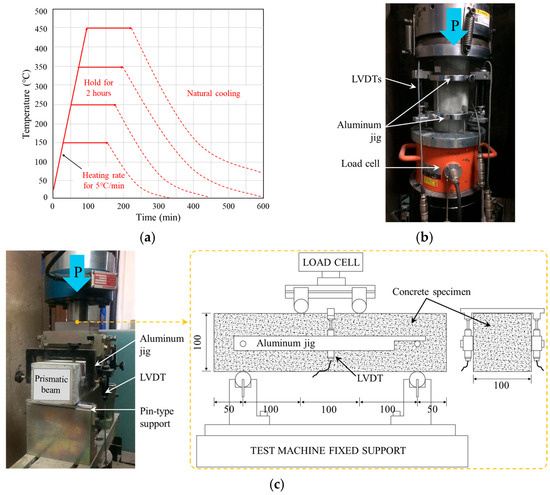
The test specimens were exposed to high temperatures in a digitally controlled electric furnace at 150 °C, 250 °C, 350 °C, and 450 °C. The heating rate of 5 °C/min was adopted according to ASTM E 831-06 [18], and the desired high constant temperature was maintained for 2 h to ensure uniform heating after reaching the target temperature, then naturally cooled to room temperature, and experiments were carried out, as shown in Figure 1. At least three variable specimens for different tests were exposed at each temperature level. However, the specimens were excluded from subsequent high-temperature exposure and mechanical tests if they spalled during the electric furnace heating.
Figure 1.
Test methods: (a) heating regime; (b) compressive strength test; (c) flexural test.
2.2.2. Compressive Strength Test
To evaluate the compressive strength of specimens with different fiber combinations before and after heating, three cylindrical specimens (diameter of 100 mm and length of 200 mm) for each mixture were prepared and tested according to ASTM C39 [19]. Before the test, the cylindrical specimen was subjected to surface treatment using a grinding machine (DYF—105, HANYOUNG, Seoul, Republic of Korea) to ensure that the top and bottom surfaces were parallel to each other. A universal testing machine (UTM) with a maximum load capacity of 3000 kN was employed, and a displacement loading rate of 0.2 mm/min was adopted. A compressometer equipped with three linear variable differential transformers (LVDTs) was mounted on the cylindrical specimens to measure compressive strain and determine the elastic modulus. The details are presented in Figure 1b.
2.2.3. Flexural Test
The four-point flexural test was performed based on ASTM C1609 [20]. To do this, three prismatic specimens with a cross-sectional area of 100 × 100 mm2 and a length of 400 mm from each mixture were fabricated. The fresh mixtures were cast parallel to the longitudinal direction of the mold to achieve consistent and good fiber distribution. The specialized steel frame with two LVDTs was set to the side of the prismatic specimen to measure pure deflection, as shown in Figure 1c. A uniaxial load was applied monotonically using a UTM with a maximum load capacity of 250 kN at a displacement loading rate of 0.3 mm/min.
3. Experimental Results and Discussion
3.1. Matrix Spalling
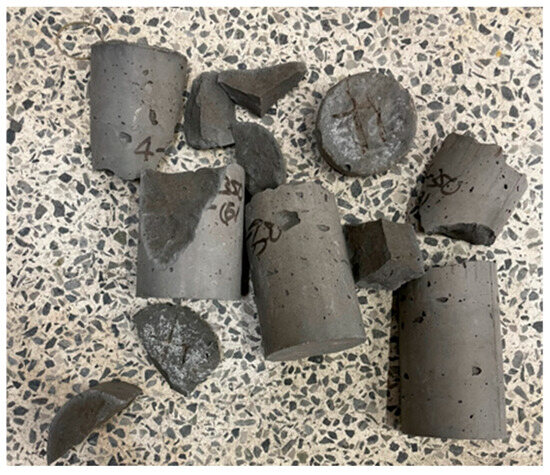
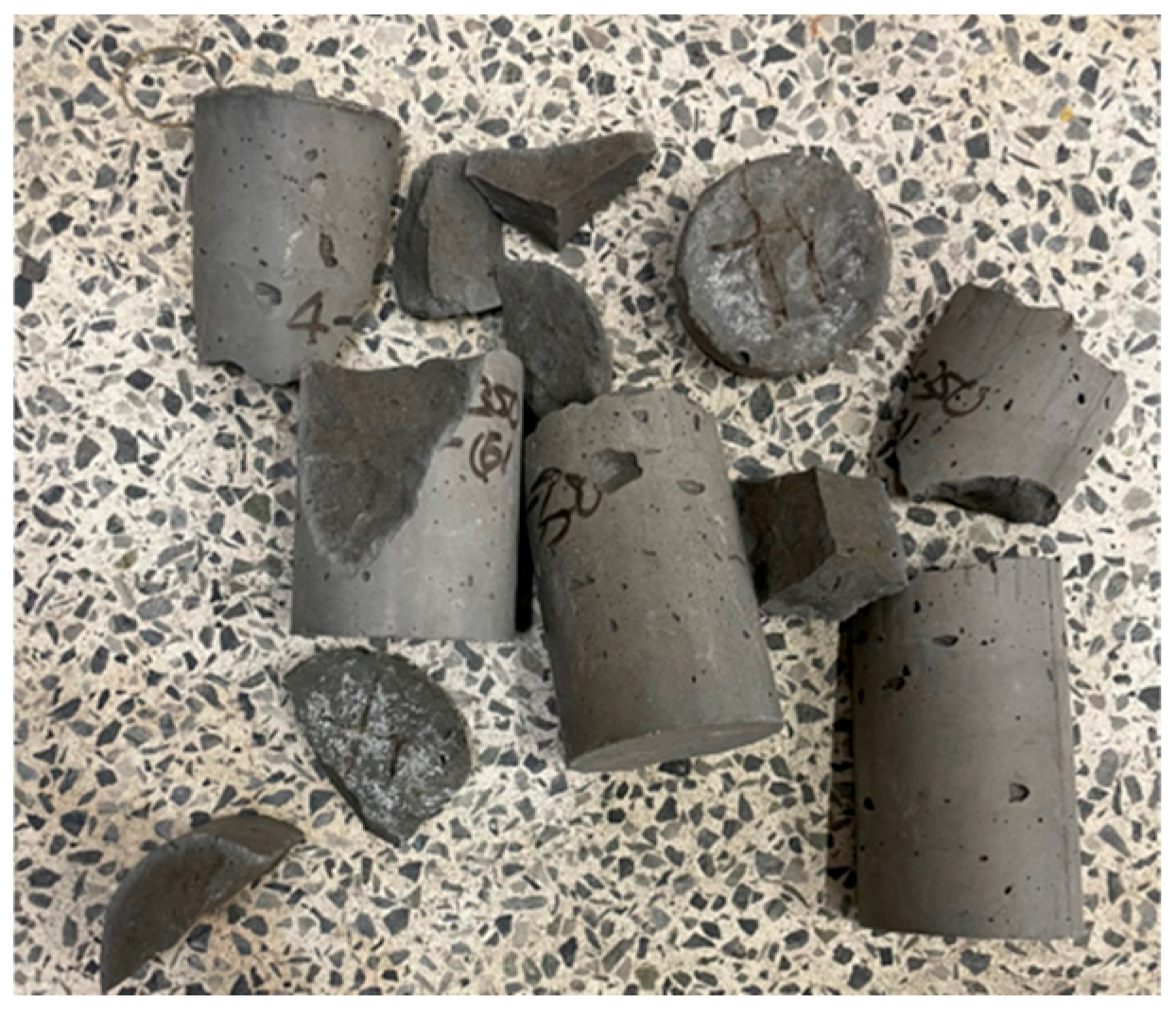
The types of fiber hybridization influenced the explosive spalling resistance of UHSDC, with the hybrid containing different lengths of PP fiber (12PP) and PP fiber hybrid with SF (12PS) being most effective in preventing spalling, followed by the PP fiber hybrid with PE fiber (18EP), SF hybrid with PE fiber (12ES), and hybrid with different lengths of PE fiber (12EE). That is, 12ES and 12EE exhibit explosive spalling at 300 °C (Figure 2), and the explosive spalling resistance of specimens with PP fibers is over 350 °C. Notably, 12PP, 12PS, and 12EPS exhibit excellent resistance to explosive spalling at 450 °C. It was obvious that the addition of PP fiber significantly inhibited the explosive spalling of test specimens. As shown in previous research [21,22], the melting of PP fibers at 164.6 °C results in pore formation in the matrix microstructure; consequently, these pores resist pore pressure growth, leading to reduced risk of explosive spalling. Interestingly, PE fiber can significantly enhance the tensile strain of test specimens, but it is ineffective in preventing spalling, even though it has a similar melt temperature to PP fiber (12PP, 18EP, 12PS). This is caused by the obstruction of water vapor escape due to the higher-viscosity PE fibers adhering to the formed microcracks; additionally, PE fibers have a lower coefficient of thermal expansion than PP fibers, resulting in lower tensile stress across the fiber–matrix interface [21,22,23].
Figure 2.
Explosive spalling of specimens 12ES and 12EE at 300 °C.
3.2. Compressive Strength
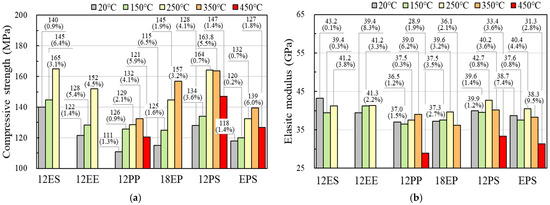
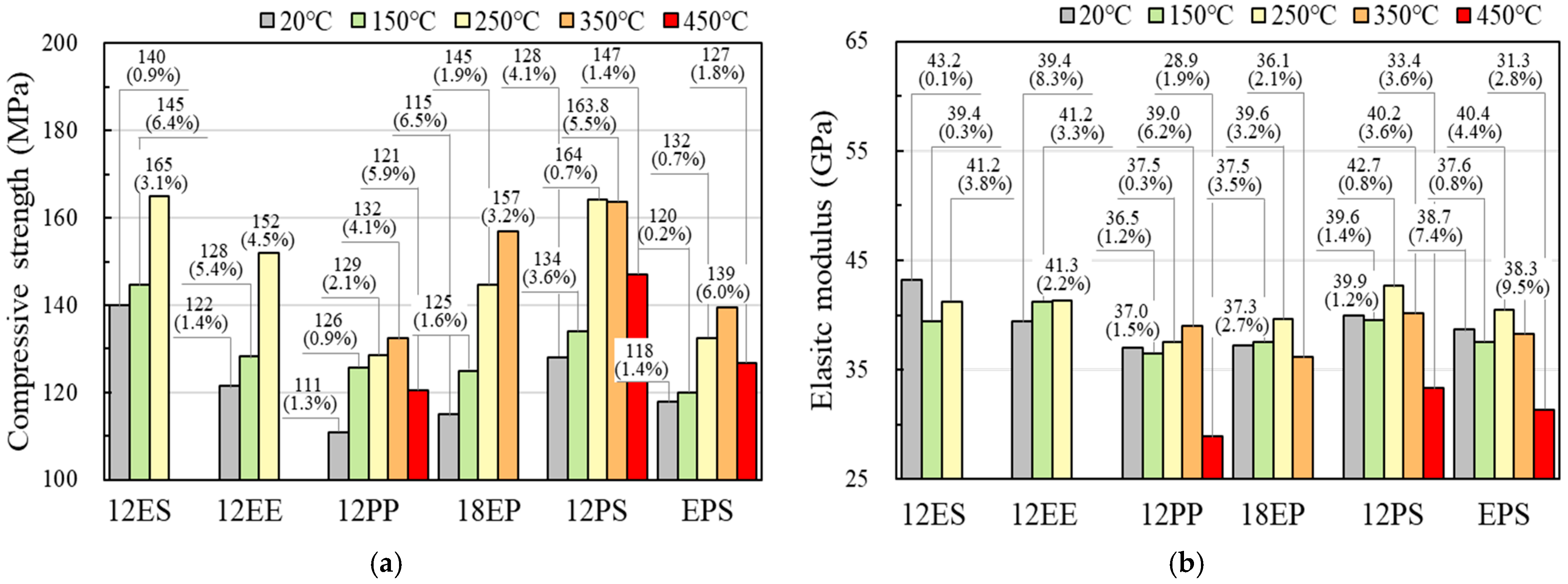
Figure 3 summarizes the compressive strengths and elastic modulus of specimens reinforced with different fiber hybridizations. It is clear that the compressive strength of the test specimens generally declined as the amount and content of synthetic fibers, especially PP fibers, increased. For example, the compressive strength of 12ES was 139.9 MPa, which is approximately 9%, 15%, 22%, and 26% higher than those of 12PS, 12EE, 18EP, and 12PP, respectively. Using PP fiber instead of PE fiber significantly decreased the compressive strength. For example, the compressive strength of 12PS and 18EP is roughly 8% and 5% lower than that of 12ES and 12EE, respectively. This might be because PE fiber has better mechanical properties than PP fiber and can effectively bridge the crack formation and propagation of the high-strength concrete matrix [11]. Furthermore, the increasing fiber content in hybrid reinforcement systems adversely affects the compressive strength of test specimens, as the EPS specimen has a compressive strength approximately 19% lower than that of the 12ES specimen. Interestingly, when it comes to improving the specimens’ resistance to explosive spalling, the hybrid use of PP fiber, short PE fiber (12 mm), and steel fiber proves to be more effective than that of PP fiber and long PE fiber (18 mm). It could be because steel fibers with high thermal conductivity exhibit more uniform heat transfer, reducing thermal incompatibility and improving crack inhibition capability [4,5].
Figure 3.
Summary of compressive parameters of test specimens (item in parentheses () is a coefficient of variation): (a) compressive strength, (b) elastic modulus.
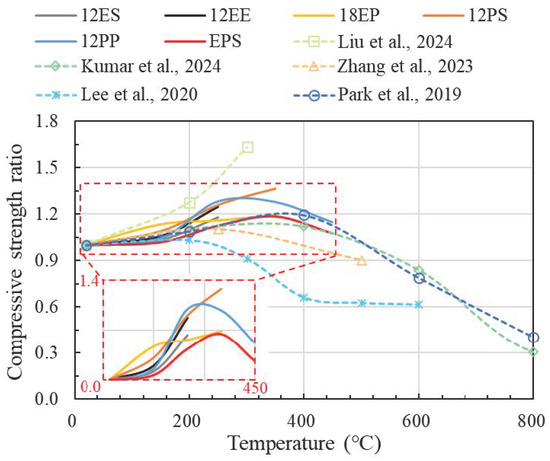
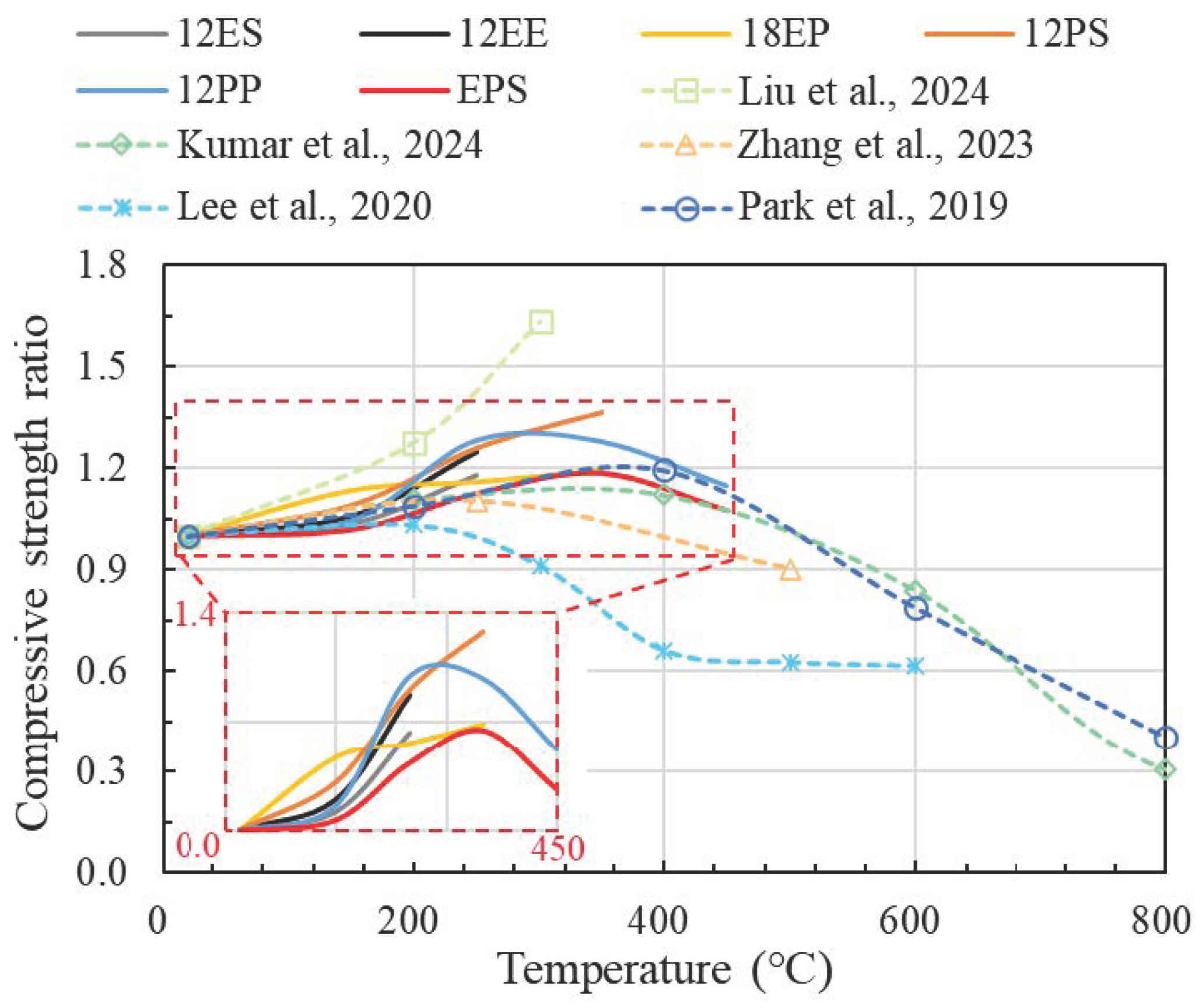
The test results show that the compressive strength of test specimens increases with increasing temperature heated up to 350 °C and is considerably reduced at 450 °C, as shown in Figure 4. It is similar to the literature research [5,6,24], which reports that the compressive strength of UHPC exhibits an initial enhancement when exposed to temperatures up to 400 °C, followed by significant deterioration as the temperature continues to increase. The increase in compressive strength from ambient temperature to 350 °C was attributed to “steam curing (high temperature and moisture)”, which promotes hydration of unhydrated mineral particles by the moisture available at elevated temperatures [6,21]. That is, the gradual temperature rise caused more C-S-H gel to form between 100 °C and 400 °C; however, calcium hydroxide and calcium carbonate started to decompose from 400 °C, leading to the formation of many pores and micro-cracks due to the evaporation of free water and gel water. Hence, at 450 °C, the compressive strength of 12PP, 12PS, and EPS decreased by 9.9%, 11.3%, and 10.0%, respectively, compared to the values after 350 °C. The compressive strength at 350 °C was superior to that at other elevated temperatures. Interestingly, the compressive strength at 450 °C remained higher than that at ambient temperature by 8.7% (12PP), 14.8% (12PS), and 7.6% (EPS), respectively. Due to the suppression of high-temperature spalling by PP fibers, the type of fiber combination and the dosage of PP fibers had a relatively strong influence on the residual compressive strength of test specimens at high temperatures; however, fiber combinations containing PE fiber showed a significant decrease in compressive strength after high-temperature exposure.
Figure 4.
Compressive strength ratio of ambient condition to elevated temperature [7,8,9,10,11].
Furthermore, the trends in the behavior of the elastic modulus and compressive strength of the test specimens after elevated-temperature exposure were very similar, as shown in Figure 3b. The specimen 12ES retained the highest elastic modulus at elevated temperatures, while the modulus decreased with increasing synthetic fiber content. This can be attributed to the fact that synthetic fibers introduce “defects” into the matrix [13,25,26]. Generally, the factors affecting the elastic modulus and compressive strength of the concrete matrix after high temperatures are the same [27].
3.3. Direct Tensile Behavior
3.3.1. Effect of Fiber Hybridization Types
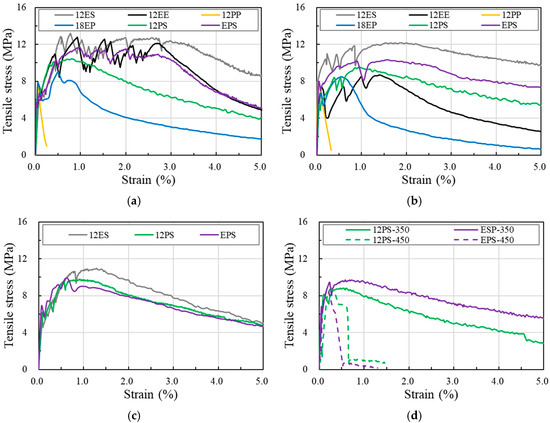
Figure 5 shows the tensile stress versus strain curves (valid up to the peak point), and average tensile strength and strain capacity at different high temperatures are summarized in Table 5. The tensile stress gradually increased even after the first crack occurred in the test specimens, which is typical behavior of strain-hardening. However, the tensile load of the specimen 12PP decreased to almost zero immediately after cracking. Due to its low tensile strength, PP fiber cannot effectively provide fiber bridging. That is, it is mainly influenced by the rupture failure mode of the PP fiber in the matrix, whose effectiveness in improving the strain capacity of the matrix is limited [28]. Additionally, the types of fiber hybridization significantly influenced the ultimate tensile stress and strain capacity of the strain-hardening matrix. Regarding the improvement of mechanical properties, the hybrid containing steel fiber and short PE fiber performed the best, followed by the hybridization with different lengths of PE fiber, then the SF hybrid with short PP fiber, and finally the long PE fiber hybrid with short PP fiber. Although the ternary hybrid specimen exhibited slightly lower strength than those with different lengths of PE fibers, this can be attributed to its higher synthetic fiber volume fraction and a total fiber content of 2.0%. The literature [13,28] shows that when a cementitious composite contains 1.0 vol.% synthetic fiber and ≤0.5 vol.% steel fiber, the fiber dispersion begins to deteriorate. This poor dispersion is likely due to the high volume of synthetic fibers, which reduces the mixture’s fluidity and consequently disrupts the dispersion and orientation of the steel fibers. For instance, at ambient temperature, specimens 12ES, 12EP, and EPS achieved tensile strengths of 13.2 MPa, 12.8 MPa, and 11.7 MPa, with corresponding strain capacities of 2.97%, 2.68%, and 2.76%, respectively. These values represent an increase of approximately 13%–47% in strength and a remarkable 235%–271% in strain capacity compared to specimens 18EP and 12PS. In contrast, specimen 12PP exhibited the lowest tensile stress (7.5 MPa) and strain capacity (0.04%). This minimal performance is consistent with the inherently low tensile strength of PP fibers, indicating they contribute very little to reinforcing the matrix.
Figure 5.
Summary of tensile stress versus strain curves: (a) 20 °C, (b) 150 °C, (c) 250 °C, (d) 350 °C and 450 °C.
Table 5.
Summary of tensile test results.
3.3.2. Energy Absorption Capacity
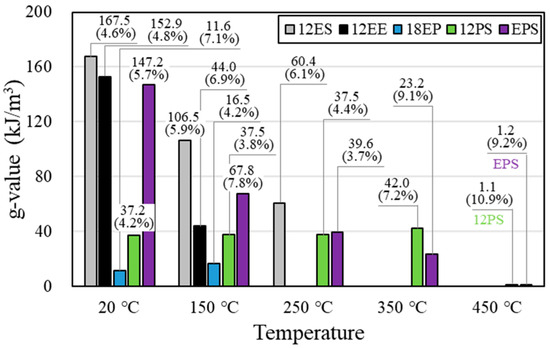
Figure 6 shows the effect of the fiber hybridization method on the g-value of specimens, which is the unit volume energy absorption capacity (called g-value) based on the tensile stress–strain curve [29]. The lowest g-value was observed in the hybrid using PP fiber at the test temperature, approximately lower than 0.5 kJ/m3. The use of PE fibers increased both the quantity and width of microcracks in the matrix. These effects stem from the high tensile strength and low elastic modulus of PE fibers, ultimately enhancing strain capacity within the strain-hardening zone [13,28]. Hence, the specimens with PE fibers had higher g-values than those with PP fibers. For instance, specimens 12ES and 12EE had g-values of 167.5 kJ/m3 and 152.9 kJ/m3, respectively, which were approximately 12.1–13.4 times and 3.1–3.5 times higher than those of 18EP and 12PS. Specimens reinforced with a hybrid of steel fiber and PP fiber did not fail after exposure to 450 °C. Other specimens underwent severe explosive spalling failure due to thermo-mechanical and thermo-hydraulic processes [5]. Between 20 °C and 250 °C, the hybrid using steel and short PE fiber achieved a higher g-value, while the ternary fiber system maintained great energy absorption across all test temperatures. However, the PE fiber degraded the matrix at high temperatures (over 250 °C), causing the EPS specimen to retain less tensile strength and strain capacity than the 12PS specimen, resulting in lower energy absorption capacity. As the g-value was calculated based on the tensile stress–strain curve up to the peak point, its behavior was consistent with the steel fiber content. It was found that from 250 °C, the g-value—obtained from the pre-peak region of the tensile stress–strain curve—is mainly influenced by the hybridization of fibers, particularly by the inclusion or exclusion of steel fibers. Additionally, a significant decrease in the g-value was observed at 450 °C, which can be attributed to the deterioration of the bond strength between the steel fiber and the matrix at elevated temperatures [4,30].
Figure 6.
Summary of energy absorption capacity (item in parentheses () is a coefficient of variation).
From what has been discussed above, fiber types and fiber hybridization significantly influenced the tensile properties after different temperature exposure. The increase in strain capacity of the hybrid is primarily due to the contribution of the PE fiber, which exhibits a slip-hardening response and a lower elastic modulus. The slip-softening behavior of the steel fiber results from its stiff surface and leads to a decrease in pullout load after full debonding. Consequently, the hybrid system containing polyethylene fibers exhibits sustained pullout load capacity at significantly higher slip levels, inducing pseudo-strain-hardening behavior in the composite [11,13]. Additionally, the hybrid system using PE fibers results in greater strain values in the strain-hardening zone. This is because PE fibers, which have a lower elastic modulus than steel fibers, allow increased microcrack widths in the matrix. Unfortunately, the improvement in explosive spalling resistance achieved by adding PE fibers was limited. However, the hybrid system incorporating PP fibers showed limited effectiveness in enhancing the matrix’s strain capacity due to their rupture failure mode, whereas it significantly improved the resistance to explosive spalling.
3.3.3. Synergy Assessment
It is important to quantitatively and objectively evaluate the synergy effect of hybrid fiber-reinforced concrete to make sure that hybridization was indeed successful. Given that neither the fracture mechanisms nor the fiber interactions are uniform in hybrid fiber-reinforced concrete, simplistic methods should not be used to predict the effect of hybridization [31]. For the purpose of this study, the synergy assessment of hybridization was evaluated based on the following equation [31]:
where denotes the post-cracking factor for hybrid fiber reinforced concrete; , , and denote the post-cracking factor for mono-fiber reinforced concrete.
For direct tension, the post-cracking factor is given by the g-value, calculated from the tensile stress–strain curve up to the defined point. The idea behind this approach is that a synergy value greater than zero is defined as positive synergy, which occurs when a hybrid fiber reinforcement yields a property that exceeds the sum of the properties of the mono-fiber reinforcements. Otherwise, a negative value (negative synergy) indicates that the hybridization is not very significant, as the hybrid product it yields performs poorly compared to the sum of the mono-fibers. A synergy value equal to zero means that the synergy is absent.
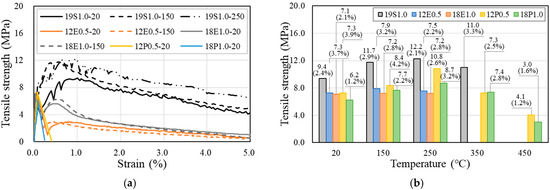
In order to assess the synergy of hybridization, it is necessary to evaluate each mono-fiber-reinforced matrix. The direct tensile stress–strain curves for mono-fiber-reinforced specimens are shown in Figure 7. The specimen naming included four parts: (1) the first number denoted fiber length, (2) the letters S, E, and P indicated steel fiber, polyethene fiber, and polypropylene fiber, respectively, (3) the third part denoted fiber volume fractions, and (4) the last part number denoted exposure temperature. For example, the designation “12S1.0-250” denotes a specimen containing 1.0 vol.% of 19.5 mm steel fibers that was treated at 250 °C. Similar to the hybridization behavior, post-cracking strength and toughness generally increase with higher fiber volume fraction in the matrix, except for PP fibers, which exhibit low tensile strength. Owing to the high stiffness and long length of the steel fibers, the corresponding specimens demonstrated superior ductility and post-cracking strength compared to those reinforced with PE or PP fibers. A comparative analysis revealed that steel fiber-reinforced specimens offered superior resistance to explosive spalling over those containing only individual PE fibers, proof again that high-thermal-conductivity steel fibers exhibit more uniform heat transfer, reducing thermal incompatibility and improving crack-inhibition capability [5].
Figure 7.
Direct tensile test results of mono-fiber-reinforced matrix: (a) tensile stress–strain curves, (b) ultimate tensile stress at different temperature exposure (item in parentheses () is a coefficient of variation).
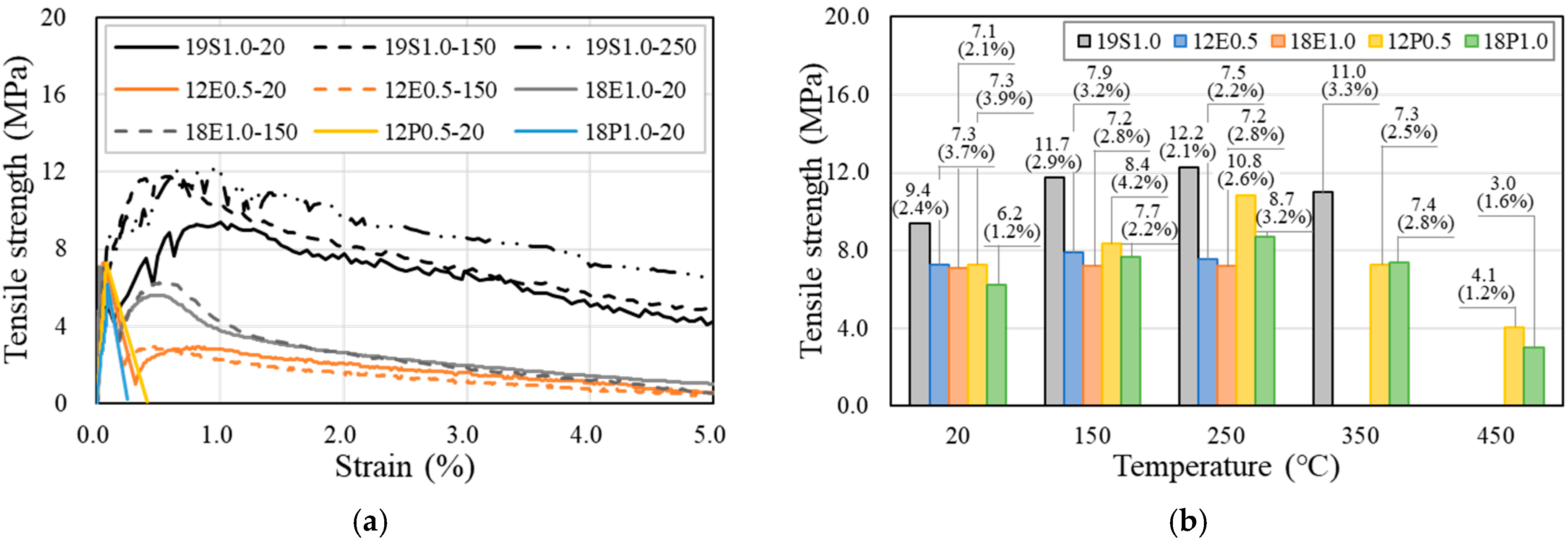
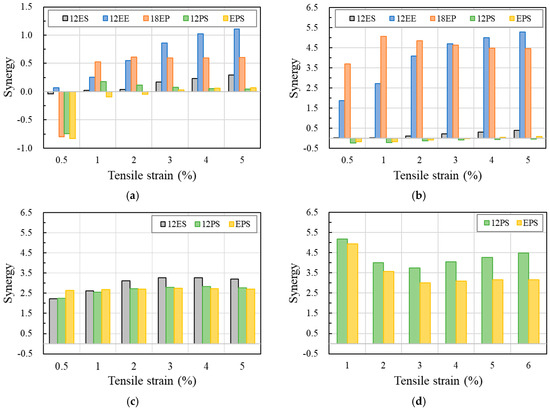
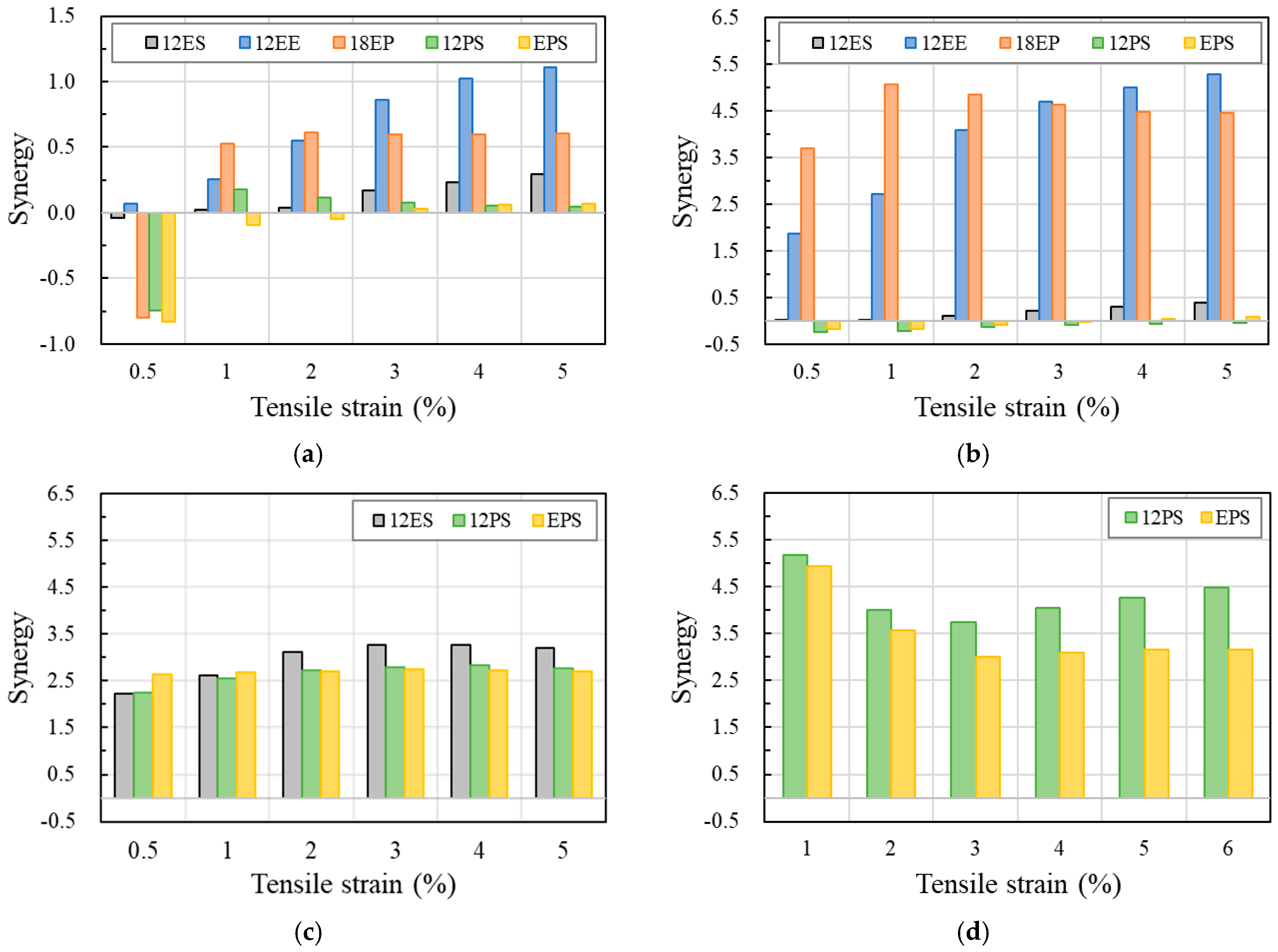
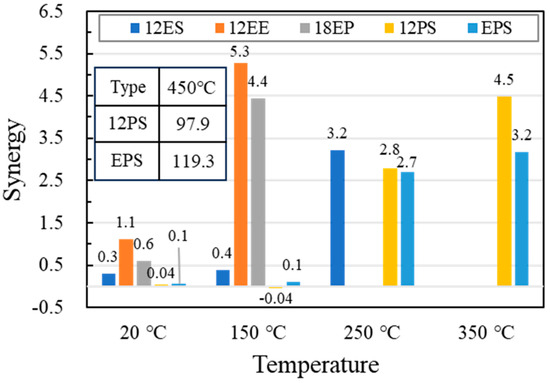
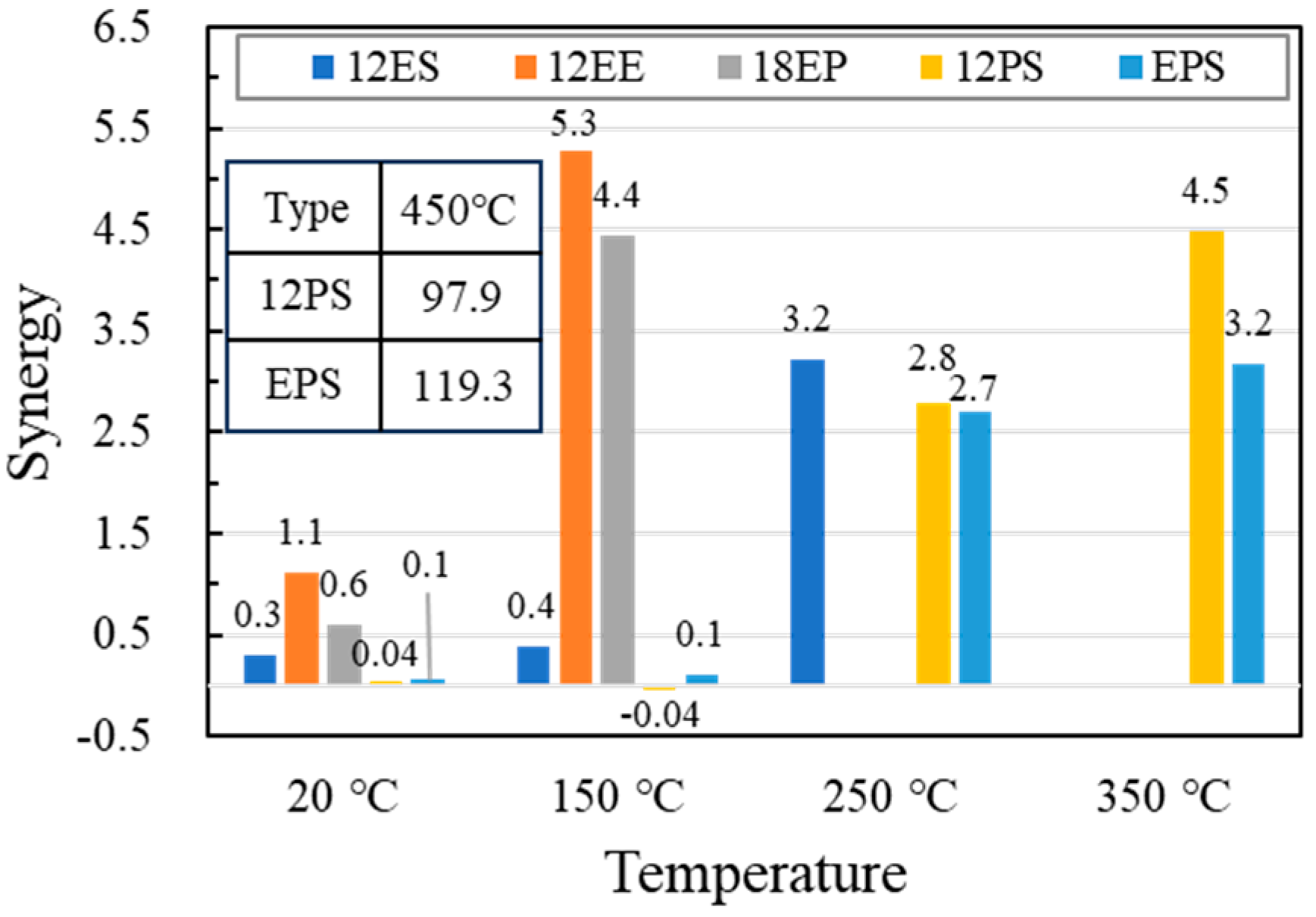
Figure 8 depicts the quantified synergy assessment derived from direct tensile testing. As shown in Figure 8a, the PE fiber-reinforced specimen (12EE) displayed positive synergy between 0 and 5% strain, with its lower elastic modulus contributing to a slip-hardening response. Other binary hybrid compositions exhibit positive synergy after 1% strain, and the ternary hybrid composition exhibits negative synergy below 2% strain. However, specimen 12PS exhibits a decrease in synergy value starting at 1% strain, which may be attributed to the lack of PE fibers in macro-crack bridging and reduced efficiency of post-cracking toughness [13,32]. The specimens without steel fiber (12EE and 18EP) exhibited high positive synergy values ranging from 1.86 to 5.28 after exposure to 150 °C, and specimens with steel fibers (12ES, 12PS, and EPS) showed significantly increasing synergy values as the exposure temperature increased, as shown in Figure 8b–d. The interesting thing is that the specimens hybridized with synthetic fiber and steel fiber (12ES, 12PS, and EPS) exhibited significantly improved synergy values (>2.7) when the synthetic fiber exceeded its melting temperature (from 250 °C), as shown in Figure 9. Additionally, the synergy values of the ternary fiber hybrid specimen (EPS) were lower than those of other specimens from ambient temperature to 350 °C, while the synergy values can achieve the highest value (119.3 synergy) after exposure to 450 °C.
Figure 8.
Synergy in direct tensile test: (a) 20 °C, (b) 150 °C, (c) 250 °C, (d) 350 °C.
Figure 9.
Synergy was quantified using the measured value at 5% strain.
4. Conclusions
This study investigates the effects of fiber hybrid types (binary or ternary), synthetic fiber type (PP and PE), and synthetic fiber replacement rate on the compressive and tensile properties of ultra-high-strength high-ductility concrete (UHSDC) at elevated temperatures. Additionally, a synergy assessment was performed for each hybrid fiber type to confirm the success of the hybridization process. The chief findings are outlined below:
- (1)
- The compressive strength and elastic modulus of test specimens decreased with increasing dosage of synthetic fibers and fiber volume fractions under ambient conditions.
- (2)
- The residual compressive strength of test specimens after high-temperature exposure increased with decreases in the amount of PE fiber and/or increases in the amount of PP fiber, and the addition of steel fiber led to slightly improved residual performance. Specimens with PE fibers experienced explosive spalling at or below 350 °C, whereas those without PE fibers exhibited resistance to explosive spalling at temperatures above 450 °C.
- (3)
- The fiber hybridization types containing high volume fractions of synthetic fibers negatively influenced the tensile strength of UHSDC under ambient conditions. The steel–PE hybrid fibers were effective in enhancing the energy absorption capacity. Conversely, the steel–PP and PE-PP hybrid fibers exhibited a decrease in capacity, mainly because the PP fibers failed by rupture.
- (4)
- PP fibers significantly enhanced the high-temperature spalling resistance and residual tensile properties of UHSDC, whereas PE fibers showed a negative influence on spalling resistance. Therefore, fiber hybridization types with PP fibers (12PS and EPS) retained approximately 55.6% and 48.5% of their residual tensile strength after exposure to 450 °C.
- (5)
- The synergy is not always positive in all fiber types and hybridizations. The change in tensile strength and the calculated synergy follow a similar trend. However, specimen EPS showed lower synergy performance than other specimens before being exposed to 350 °C. Nevertheless, its synergy performance reached the highest value (119.3) after exposure to 450 °C.
Therefore, the ternary fiber hybrid method can significantly improve the tensile strain capacity and explosive spalling resistance, which provides the possibility for developing refractory UHSDC. However, further research is required to determine the optimal hybrid combination and dosage of ternary fibers needed to effectively prevent high-temperature spalling in ultra-high-strength high-ductility concrete.
Author Contributions
T.-F.Y.: Conceptualization, Formal Analysis, Investigation, Methodology, Validation, Writing—Original Draft, Writing—Review and Editing, Supervision. P.L., Z.L., Q.Z. and L.S.: Formal Analysis, Investigation, Methodology, Validation. K.Y.: Formal Analysis, Investigation, Validation, Writing—Original Draft, Writing—Review and Editing. All authors have read and agreed to the published version of the manuscript.
Funding
This research received no external founding.
Institutional Review Board Statement
Not applicable.
Informed Consent Statement
Not applicable.
Data Availability Statement
The data will be made available upon request.
Acknowledgments
This research was supported by the National Natural Science Foundation of China (No. 52378520), Shandong Province Natural Science Foundation (ZR2025QC515), and the Taishan Scholars Program (tsqn202211181).
Conflicts of Interest
The authors declare no conflicts of interest.
Abbreviations
The following abbreviations are used in this manuscript:
| Df | Fiber diameter |
| Ef | Elastic modulus of fiber |
| εt | Strain capacity |
| ftf | Tensile strength of fiber |
| g-value | the unit volume energy absorption capacity |
| Lf | Fiber length |
| LVDTs | Linear variable differential transformers |
| NY | Nylon |
| PAN | Polyacrylonitrile |
| PCFa, PCFb, PCFc | The post-cracking factor for mono-fiber reinforced concrete |
| PCFhybrid,a+b+c | The post-cracking factor for hybrid fiber reinforced concrete |
| PE | Polyethene |
| PET | Polyester |
| PP | Polypropylene |
| PVA | Polyvinyl alcohol |
| SF | Steel fiber |
| SHC | Strain-hardening concrete |
| Tm | Melting temperature of fiber (°C) |
| UHPC | Ultra-high performance concrete |
| UHSDC | Ultra-high-strength high-ductility concrete |
| UTM | Universal testing machine |
| Vf | Total fiber volume fraction (%) |
| w/b | Water-to-binder ratio |
References
- ACI Committee 239. Ultra-High Performance Concrete; ACI Fall Convention: Toronto, ON, Canada, 2018. [Google Scholar]
- AFGC. Ultra High Performance Fibre-Reinforced Concretes; Interim Recommendations; AFGC Publication: Bagneux, France, 2013. [Google Scholar]
- Liu, X.S.; Karaghool, O.; Thermou, G.E.; Yu, J. Experimental investigation on shear strengthening of RC beams using advanced fibre-reinforced cementitious composites. Case Stud. Constr. Mater. 2025, 23, e05032. [Google Scholar] [CrossRef] [Scilit]
- Alrekabi, T.K.; Cunha, V.M.C.F.; Barros, J.A.O. Reactive powder concrete reinforced with steel fibers exposed to high temperatures. Mater. Sci. Eng. 2020, 246, 012020. [Google Scholar]
- Abid, M.; Hou, X.; Zheng, W.; Hussain, R.R. High temperature and residual properties of reactive powder concrete—A review. Constr. Build. Mater. 2017, 147, 339–351. [Google Scholar] [CrossRef] [Scilit]
- Lin, J.; Zhang, Y.; Huang, S.; Du, H.; Jiang, K. Influence of synthetic fibers on the performance of ultra-high performance concrete (UHPC) at elevated temperatures. J. Build. Eng. 2024, 97, 110735. [Google Scholar] [CrossRef] [Scilit]
- Liu, J.C.; Du, L.P.; Yao, Y.; Beaucour, A.L.; Qang, J.Q.; Zhao, X. A close look at fire-induced explosive spalling of ultra-high performance concrete: From materials to structures. Arch. Civ. Mech. Eng. 2024, 24, 124. [Google Scholar] [CrossRef] [Scilit]
- Kumar, D.; Soliman, A.A.; Ranade, R. Influence of cooling methods on high-temperature residual mechanical characterization of strain-hardening cementitious composites. Fire Mater. 2024, 48, 338–352. [Google Scholar] [CrossRef] [Scilit]
- Zhang, M.; Erdem, S. Strain hardening green cementitious composites reinforced with nanoparticles: Mechanical and microstructural properties and high temperature effect. Case Stud. Constr. Mater. 2023, 18, e02033. [Google Scholar] [CrossRef] [Scilit]
- Lee, J.Y.; Yuan, T.F.; Shin, H.O.; Yoon, Y.S. Strategic use of steel fibers and stirrups on enhancing impact resistance of ultra-high-performance fiber-reinforced concrete beams. Cem. Concr. Compos. 2020, 107, 103499. [Google Scholar] [CrossRef] [Scilit]
- Park, J.J.; Yoo, D.Y.; Kim, S.; Kim, S.W. Benefits of synthetic fibers on the residual mechanical performance of UHPFRC after exposure to ISO standard fire. Cem. Concr. Comps. 2019, 104, 103410. [Google Scholar] [CrossRef] [Scilit]
- Yuan, T.F.; Lee, J.Y.; Min, K.H.; Yoon, Y.S. Experimental investigation on mechanical properties of hybrid steel and polyethylene fiber-reinforced no-lump high strength concrete. Int. J. Plym. Sci. 2019, 219, 4737384. [Google Scholar]
- Yuan, T.F.; Lee, J.Y.; Yoon, Y.S. Enhancing the tensile capacity of no-lump high-strength high-ductility concrete. Cem. Concr. Compos. 2020, 106, 103458. [Google Scholar] [CrossRef] [Scilit]
- Yang, J.; Deng, M.; Wang, Y.; Zhang, Y. Uniaxial tensile test of high-strength high-ductility concrete (HSDC): Mechanical response and toughness evaluation. J. Buid. Eng. 2024, 89, 109332. [Google Scholar]
- Ranade, R.; Li, V.C.; Heard, W.F.; Willianms, B.A. Impact resistance of high strength-high ductility concrete. Cem. Concr. Res. 2017, 98, 24–35. [Google Scholar] [CrossRef] [Scilit]
- Yuan, T.F.; Hong, S.H.; Shin, H.O.; Yoon, Y.S. Bond strength and flexural capacity of normal concrete beams strengthened with no-slump high-strength, high-ductility concrete. Materials 2020, 13, 4218. [Google Scholar] [CrossRef] [Scilit] [PubMed]
- ASTM C1437; Standard Test Method for Flow of Hydraulic Cement Mortar. ASTM International: West Conshohocken, PA, USA, 2013; pp. 1–2.
- ASTM E831; Standard Test Method for Linear Thermal Expansion of Solid Materials by Thermomechanical Analysis. ASTM International: West Conshohocken, PA, USA, 2006; pp. 1–5.
- ASTM C39/C39M; Standard Test Method for Compressive Strength of Cylindrical Concrete Specimens. ASTM International: West Conshohocken, PA, USA, 2014; pp. 1–7.
- ASTM C1609/C1609M; Standard Test Method for Flexural Performance of Fiber-Reinforced Concrete (Using Beam with Third-Point Loading). ASTM International: West Conshohocken, PA, USA, 2012; pp. 1–9.
- Sajid, H.U.; Kiran, R. Effect of fiber reinforcement, mineral admixtures, and air entrainment on the fire performance of concrete in bridges: A review. Constr. Build. Mater. 2024, 430, 136420. [Google Scholar] [CrossRef] [Scilit]
- Müller, P.; Nov’ak, J.; Holan, J. Destructive and non-destructive experimental investigation of polypropylene fiber reinforced concrete subjected to high temperature. J. Build. Eng. 2019, 26, 100906. [Google Scholar] [CrossRef] [Scilit]
- Li, Y.; Yang, E.H.; Tan, K.H. Flexural behavior of ultra-high performance hybrid fiber reinforced concrete at the ambient and elevated temperature. Constr. Build. Mater. 2020, 250, 118487. [Google Scholar] [CrossRef] [Scilit]
- Hung, C.C.; Yulianti, E.; Agrawal, S. Microstructures, durability, and mechanical behavior of hybrid steel and PP fiber reinforced UHPC at elevated temperature. Constr. Build. Mater. 2024, 447, 138208. [Google Scholar] [CrossRef] [Scilit]
- Agrawal, S.; Yulianti, E.; Amran, M.; Hung, C.C. Behavior of unconfined steel-fiber reinforced UHPC post high-temperature exposure. Case Stud. Constr. Mater. 2025, 22, e04173. [Google Scholar] [CrossRef] [Scilit]
- Ramezanianpour, A.A.; Esmaeili, M.; Ghahari, S.A.; Najafi, M.H. Laboratory study on the effect of polypropylene fiber on durability, and physical and mechanical characteristic of concrete for application in sleepers. Concr. Build. Mater. 2013, 44, 411–418. [Google Scholar] [CrossRef] [Scilit]
- Sideris, K.K. Mechanical characteristics of self-consolidating concretes exposed to elevated temperatures. J. Mater. Civ. Eng. 2007, 19, 648–654. [Google Scholar] [CrossRef] [Scilit]
- Kim, M.J.; Yoo, D.Y.; Yoon, Y.S. Effects of geometry and hybrid ratio of steel and polyethylene fibers on the mechanical performance of ultra-high-performance fiber-reinforced cementitious composites. J. Mater. Res. Technol. 2019, 8, 1835–1848. [Google Scholar] [CrossRef] [Scilit]
- Wille, K.; El-Tawil, S.; Naaman, A.E. Properties of strain-hardening ultra-high performance fiber reinforced concrete (UHP-FRC) under direct tensile loading. Cem. Concr. Compos. 2014, 48, 53–66. [Google Scholar] [CrossRef] [Scilit]
- Abdallah, S.; Fan, M.; Cashell, K.A. Bond-slip behaviour of steel fibres in concrete after exposure to elevated temperatures. Constr. Build. Mater. 2017, 140, 542–551. [Google Scholar] [CrossRef] [Scilit]
- Banthia, N.; Majdzadeh, F.; Wu, J.; Bindiganavile, V. Fiber synergy in hybrid fiber reinforced concrete in flexure and direct shear. Cem. Concr. Compos. 2014, 48, 91–97. [Google Scholar] [CrossRef] [Scilit]
- Ahmed, S.F.U.; Maalej, M. Tensile strain hardening behavior of hybrid steel-polyethylene fiber reinforced cementitious composites. Constr. Build. Mater. 2009, 23, 96–106. [Google Scholar] [CrossRef] [Scilit]

Disclaimer/Publisher’s Note: The statements, opinions and data contained in all publications are solely those of the individual author(s) and contributor(s) and not of MDPI and/or the editor(s). MDPI and/or the editor(s) disclaim responsibility for any injury to people or property resulting from any ideas, methods, instructions or products referred to in the content. |
© 2026 by the authors. Licensee MDPI, Basel, Switzerland. This article is an open access article distributed under the terms and conditions of the Creative Commons Attribution (CC BY) license.