1. Introduction
With the rapid advancement of microelectronic technologies in the post-Moore era, chip integration density has increased exponentially, giving rise to a dramatic surge in power density and unprecedented thermal management challenges [
1,
2]. The thermal design power (TDP) of modern high-performance computing chips continues to grow at a significantly high annual rate [
3]. Notably, the local power density of certain AI accelerator chips deployed in data centers has already exceeded 1000 W·cm
−2 [
4]. Under such extreme heat-flux conditions, conventional air-cooling technologies are approaching their fundamental physical limits: experimental evidence shows that beyond a critical forced-convection airflow velocity, further increases yield only marginal improvements in thermal performance, while acoustic noise escalates exponentially [
5,
6]. Moreover, traditional heat sinks—based on pin-fin or plate-fin architectures—are inherently constrained by manufacturing limitations and geometric inflexibility, resulting in inadequate heat dissipation efficiency within confined volumes. This shortcoming renders them ill-suited for the stringent requirements of lightweight, compact thermal solutions in aerospace and portable electronic applications [
7,
8]. Consequently, the development of novel thermal management strategies—capable of transcending conventional geometric constraints while simultaneously delivering substantial improvements in heat-transfer efficiency and specific thermal performance—has emerged as a critical scientific challenge confronting both academia and industry [
9].
Breakthrough advances in additive manufacturing (AM) technologies have established a new paradigm for the design of high-performance heat exchangers. These advances overcome the inherent limitations of conventional subtractive manufacturing and casting techniques, enabling the fabrication of monolithic components featuring complex three-dimensional flow channels and functionally graded material properties [
10,
11]. In this context, TPMS architectures—a class of ordered porous metamaterials characterized by zero mean curvature—have attracted significant research interest owing to their exceptional thermofluidic performance [
12,
13]. TPMS structures—including Diamond, Gyroid, Primitive, and I-WP configurations—extend infinitely in three-dimensional space without self-intersection. Their continuous, smooth topology not only mitigates stress concentrations typically associated with sharp edges [
14,
15] but also yields an exceptionally high specific surface area, thereby enhancing fluid–solid interactions [
16,
17]. Extensive experimental and numerical studies have demonstrated that, under forced convection, TPMS-based heat sinks significantly promote fluid mixing and induce transitional or turbulent flow behavior, effectively disrupting the thermal boundary layer. Consequently, their Nusselt numbers exceed those of conventional heat exchanger designs by approximately 16% to 196% [
18,
19].
Despite their superior thermal performance relative to conventional finned heat sinks, uniform TPMS structures still offer substantial room for optimization—particularly in flow-field distribution and material utilization efficiency. To fully harness this potential, functionally graded design strategies have been recently introduced to actively regulate the thermo-fluidic behavior of TPMS-based architectures [
20]. By mathematically prescribing spatial variations in porosity, unit-cell size, or wall thickness along designated directions, these strategies enable localized tuning of the trade-off between flow resistance and heat transfer efficiency [
21,
22]. Notably, the Primitive TPMS topology—owing to its characteristic interconnected channel geometry—exhibits a pronounced “narrow-tube effect” when the working fluid traverses converging cross-sectional regions [
23]. This effect accelerates fluid velocity and intensifies local turbulent kinetic energy, thereby markedly enhancing the convective heat transfer coefficient [
23]. However, existing studies have largely concentrated on single-parameter gradients—such as linear porosity variation—or simplistic, piecewise wall-thickness modifications [
24,
25]. Systematic experimental validation and mechanistic investigation into the synergistic enhancement of both the narrow-tube effect and flow disturbance—achieved through deliberately designed convergent or divergent gradient channels aligned with the primary flow direction (i.e., the
Y-axis)—remain notably scarce.
Beyond structural topology, the material properties of a heat sink constitute a decisive factor governing thermal management efficiency. AlSi
7Mg is widely adopted in lightweight thermal management applications owing to its low density and excellent manufacturability [
26], whereas the copper alloy CuCrZr—possessing a thermal conductivity significantly higher than that of aluminum alloys—is an ideal candidate for high-heat-flux devices [
27,
28]. However, no single material can simultaneously satisfy the dual requirements of high thermal conductivity and low mass: copper-based heat sinks are prohibitively heavy, while aluminum-based alternatives exhibit inadequate temperature uniformity under high-power operating conditions [
29]. Fabricating CuCrZr/AlSi
7Mg multimaterial heterogeneous architectures via laser powder bed fusion (LPBF) thus presents a promising strategy to synergistically integrate the complementary advantages of both materials [
30]. Nevertheless, pronounced disparities between the two alloys—in melting point, coefficient of thermal expansion, and laser absorptivity—render the interface highly susceptible to the formation of brittle intermetallic compounds or cracking defects [
31,
32]. Consequently, manufacturing multimaterial heat sinks featuring complex TPMS topologies and robust interfacial bonding remains a formidable processing challenge.
The thermal-hydraulic comprehensive performance factor, (j/f), serves as the core metric for evaluating the overall performance of air-cooled heat sinks. It holistically captures both the structural heat transfer enhancement efficiency and the associated flow resistance penalty, thereby constituting a critical criterion for engineering design and selection. In existing studies on TPMS heat sinks, Al-Ketan et al. [
22] comparatively assessed the (j/f) performance of uniform TPMS configurations and reported that the Gyroid structure achieves a 32% higher (j/f) value than that of the conventional pin-fin geometry. However, their work did not investigate how gradient-based structural design influences the (j/f) performance. Chen et al. [
24] developed a multi-dimensional gradient Gyroid heat exchanger and demonstrated that gradient design can improve the (j/f) value by 19%, yet this enhancement was achieved solely through unidirectional (single-axis) flow-gradient optimization, without concurrent multi-axis gradient coordination or co-optimization. Liu et al. [
23] analyzed the (j/f) performance of uniform Primitive structures and elucidated the “narrow-tube effect” as a key mechanism enhancing the (j/f) value; however, they did not integrate this insight with multi-material design strategies to further optimize performance.
Based on the current state of research, existing studies on TPMS heat sinks still exhibit three fundamental limitations: First, gradient design strategies for TPMS heat sinks are predominantly confined to either a single-porosity gradient or a uniaxial variation in wall thickness. In contrast, systematic experimental validation and mechanistic analysis—particularly concerning flow-field regulation—are notably lacking for dual-gradient configurations that couple a longitudinal (Z-axis) porosity gradient with a transverse (Y-axis) flow-direction gradient. Second, existing investigations into multi-material TPMS heat sinks composed of CuCrZr and AlSi7Mg have focused exclusively on the thermal performance of uniform (i.e., non-graded) topologies. Consequently, the synergistic interplay between gradient topology and heterogeneous multi-material interfaces—and its underlying role in enhancing heat transfer—remains unexplored. Third, the regulatory influence of dual-gradient design on the “narrow-tube effect” inherent to the Primitive-type TPMS structure has yet to be quantitatively characterized. As a result, current research fails to provide a theoretical foundation for the rational, scenario-adaptive selection of gradient TPMS heat sinks across diverse thermal management applications.
In response to the aforementioned research gaps, this study proposes a CuCrZr/AlSi7Mg material–structure dual-gradient heat sink design based on Primitive TPMS architectures. The work introduces three core original contributions:
First, it establishes a dual-gradient TPMS topological system that couples a longitudinal gradient along the Z-axis with a flow-direction gradient along the Y-axis. By optimizing the LPBF process, the design enables crack-free, monolithic fabrication of the CuCrZr/AlSi7Mg heterogeneous structure—thereby overcoming a critical bottleneck in the additive manufacturing of multi-material, complex gradient architectures.
Second, through an integrated approach combining wind tunnel experiments and high-fidelity numerical simulations, the study systematically elucidates the distinct regulatory mechanisms by which the Z-axis gentle gradient and Y-axis convergent gradient modulate the “narrow-tube effect.” Specifically, it identifies and clarifies two complementary heat transfer enhancement pathways: one associated with a “low-disturbance uniform flow field” (enabled by the gentle Z-gradient), and the other with a “high-disturbance directional flow field” (induced by the convergent Y-gradient).
Third, it quantitatively evaluates the thermo-hydraulic performance of the dual-gradient, multi-material heat sink across the full operational range of air velocities. The analysis demonstrates the synergistic advantages of the P-Z4-5 configuration—particularly its superior balance among heat transfer efficiency, flow resistance, and temperature uniformity—thereby establishing a comprehensive theoretical foundation and practical technical framework for the engineering design of high-performance, lightweight, air-cooled heat sinks.
3. Results and Discussion
3.1. Experimental Data Analysis and Heat-Transfer Performance
All experimental conditions in this study were subjected to three independent replicate tests. The results revealed maximum relative deviations of ≤1.2% for the highest surface temperature of the radiator, ≤2.1% for the heat transfer coefficient, and ≤1.8% for the thermal resistance—under identical test conditions. These low deviations confirm the excellent repeatability and reliability of the experimental data. For subsequent analysis, all reported values represent the arithmetic mean of the three replicate measurements; synthetic uncertainty was incorporated into the error bars presented in the figures, thereby fully capturing both the dispersion and reliability of the experimental results.
Microstructural characterization—including microscopic morphology and elemental distribution analysis—of the heterogeneous interface demonstrated that the optimized LPBF process, combined with interfacial remelting treatment, enabled crack-free metallurgical bonding between CuCrZr and AlSi
7Mg. No macroscopic cracks, pores, or unmelted powder particles were observed at the interface. Energy-dispersive X-ray spectroscopy (EDS) line-scan analysis further revealed a Cu–Al interdiffusion zone approximately 25 μm wide, providing direct evidence of effective metallurgical bonding. X-ray diffraction (XRD) and energy spectrum analyses identified two primary intermetallic compounds at the interface: Al
2Cu and Cu
9Al
4. Following a direct aging heat treatment at 400 °C for 3 h, the volume fraction of the Al
2Cu phase increased significantly, while that of Cu
9Al
4 decreased correspondingly. This compositional evolution enhanced the average interfacial heat flux density by 6.75%–35.03% and reduced the interfacial thermal resistance by 38.54%–39.79% [
33], thereby substantially improving the overall heat transfer performance of the heterogeneous interface.
3.1.1. Heat-Transfer Performance of Z-Axis Longitudinally Graded Structures
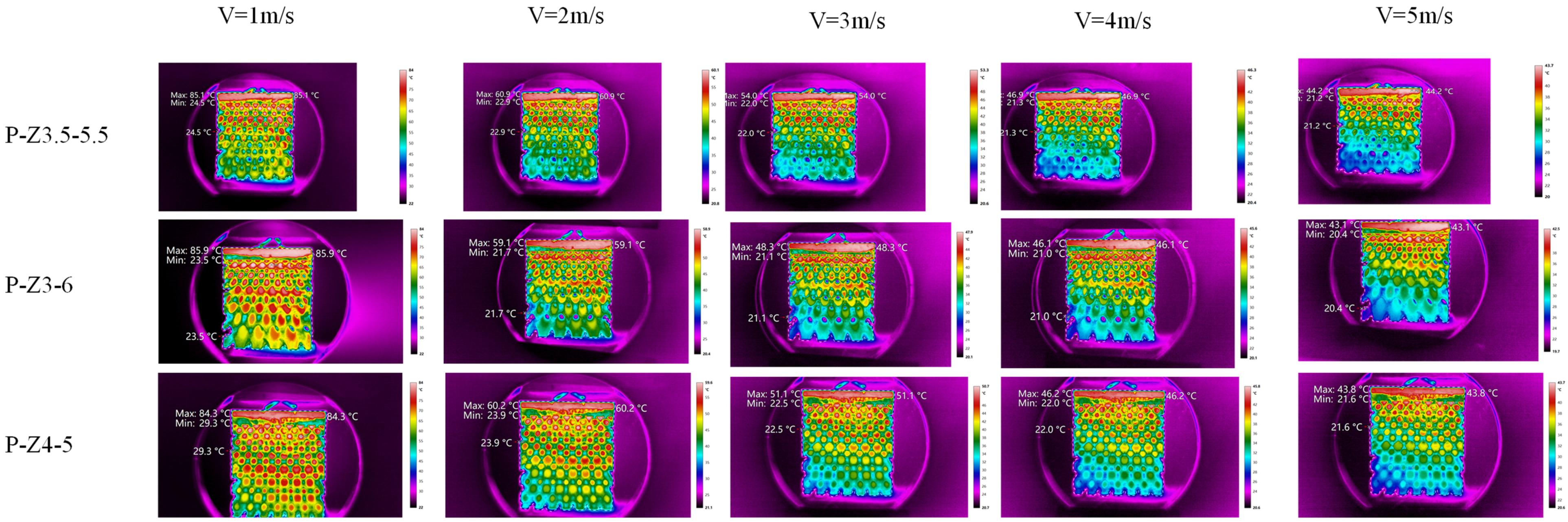
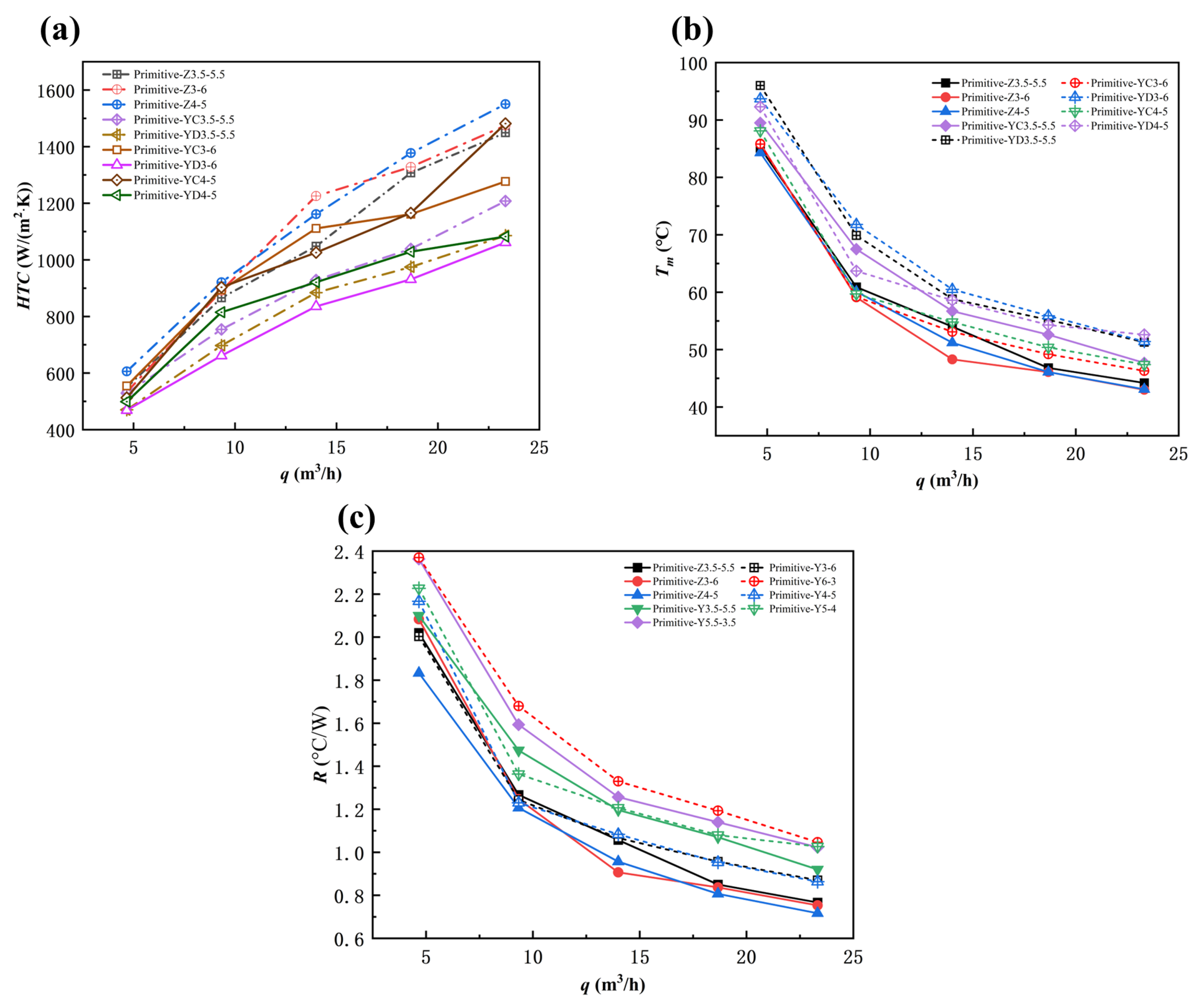
As the flow velocity increased, the maximum surface temperature of the heat sinks decreased significantly, the heat transfer coefficient increased monotonically, and the thermal resistance correspondingly decreased. For the P-Z4-5 specimen, the maximum surface temperature dropped from 84.3 °C at 1 m·s
−1 to 43.1 °C at 5 m·s
−1—a reduction of 48.9%. Concurrently, the heat transfer coefficient rose from 606.06 to 1550.39 W·m
−2·K
−1 (an increase of 155.8%), while the thermal resistance declined from 1.717 to 0.721 K·W
−1 (a reduction of 58.0%) (
Figure 9b). Low thermal resistance signifies unimpeded heat conduction pathways, effectively mitigating excessive temperature rise near the heat source. This behavior originates fundamentally from the enhancement of forced convection with increasing flow velocity: higher velocities accelerate convective heat removal from the heat sink surface, suppress the growth and stabilization of the thermal boundary layer, and diminish the relative contribution of contact thermal resistance—thereby collectively improving overall heat transfer efficiency.
In
Figure 9, substantial differences in heat transfer performance are observed among the three
Z-axis graded structures under identical flow conditions: P-Z4-5 achieves the highest HTC and the lowest thermal resistance; P-Z3.5-5.5 ranks second; and P-Z3-6 exhibits the poorest performance. At a flow velocity of 5 m·s
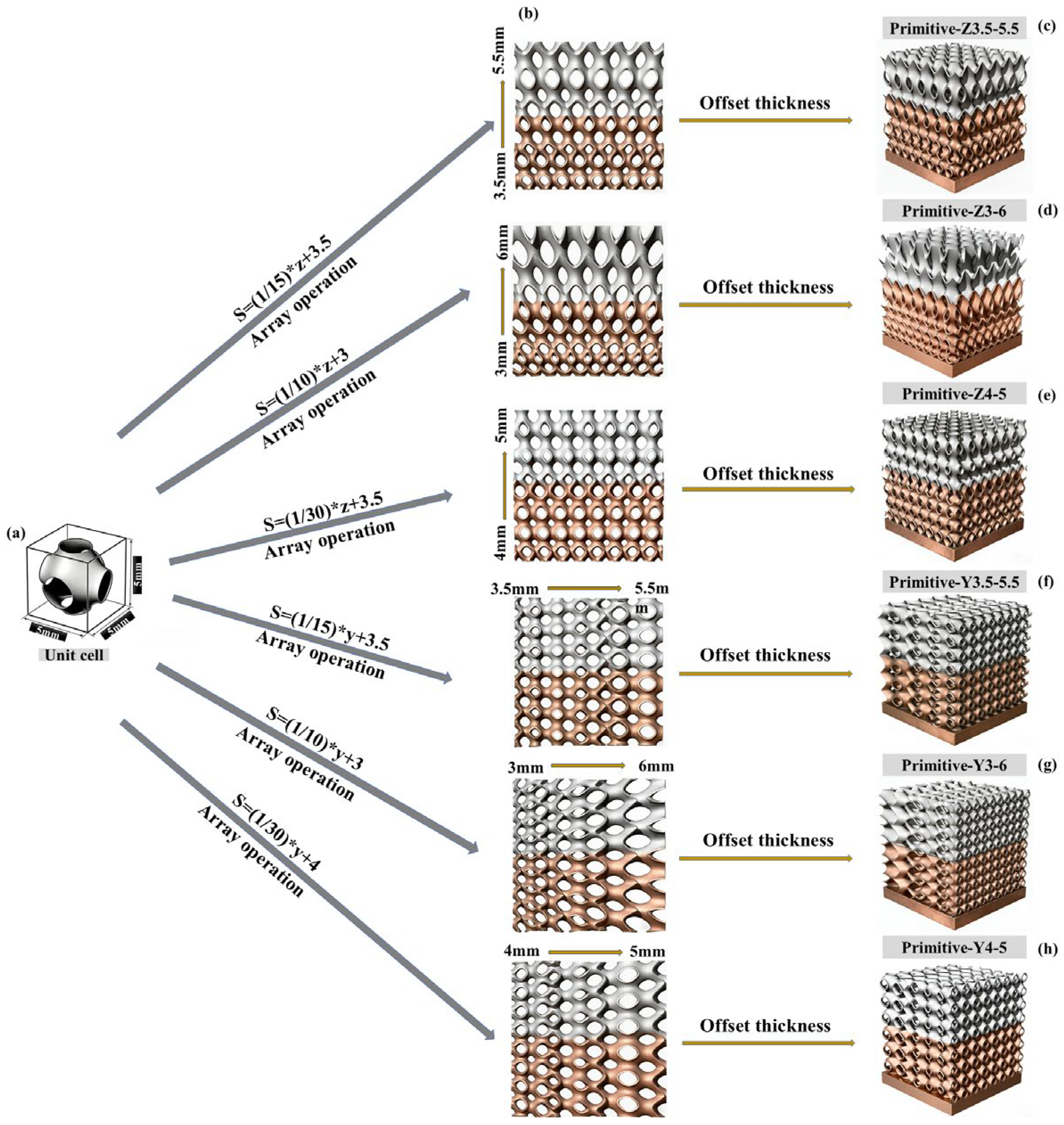
−1, the HTC of P-Z4-5 is 5.1% higher than that of P-Z3-6 and 6.9% higher than that of P-Z3.5-5.5; correspondingly, its thermal resistance is 4.2% lower than that of P-Z3-6 and 6.0% lower than that of P-Z3.5-5.5. These performance disparities primarily arise from differences in the unit-cell size gradient rate: P-Z4-5 features a relatively gentle gradient rate of 1/30 mm
−1—significantly smaller than those of P-Z3-6 (1/10 mm
−1) and P-Z3.5-5.5 (1/15 mm
−1). A milder gradient mitigates localized intensification of flow disturbances and avoids abrupt increases in flow resistance, thereby enabling an optimized balance between heat transfer enhancement and pressure drop under practical operating conditions—including the presence of interfacial contact thermal resistance.
In terms of temperature uniformity, P-Z4-5 also demonstrates superior performance relative to the other designs. At an airflow velocity of 5 m·s−1, the surface maximum temperature difference Tmax − Tmin of P-Z4-5 is 21.5 °C—4.9% and 6.5% lower than those of P-Z3-6 (22.6 °C) and P-Z3.5-5.5 (23.0 °C), respectively.
This attribute stems from the more uniform flow field generated by the gentle gradient, which promotes stable channel flow and balanced heat transport—effectively suppressing local thermal accumulation—and thereby substantiates the practical advantage of the P-Z4-5 topology.
3.1.2. Heat-Transfer Performance of Y-Axis Flow-Direction Graded Structures
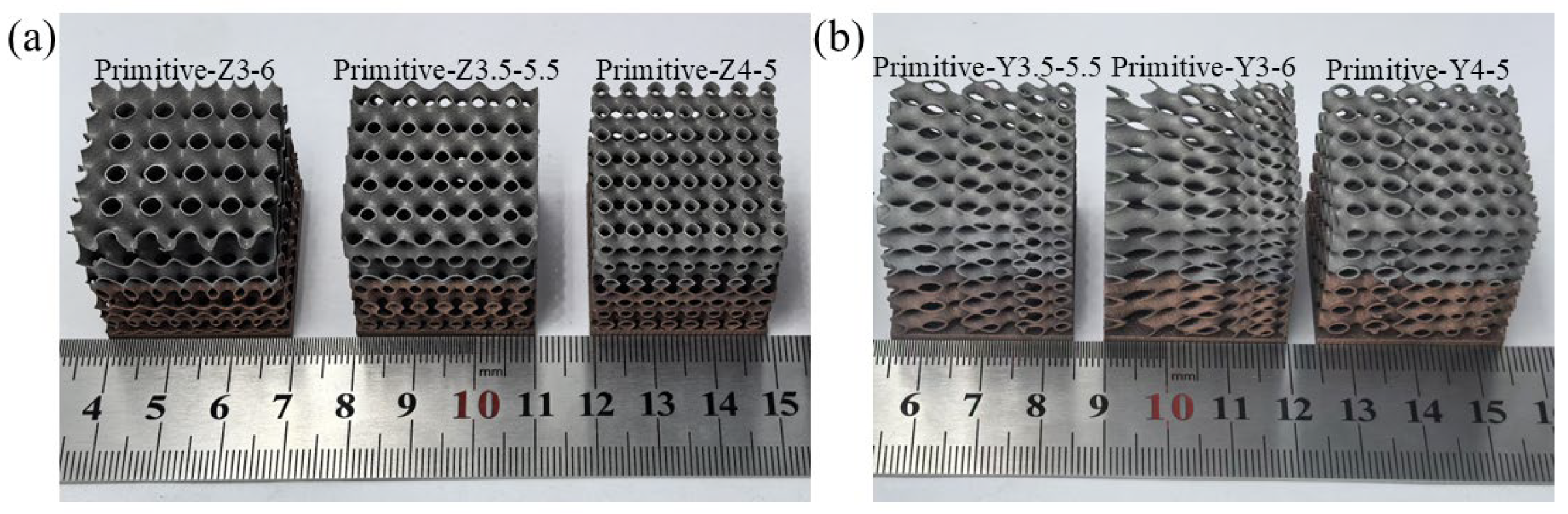
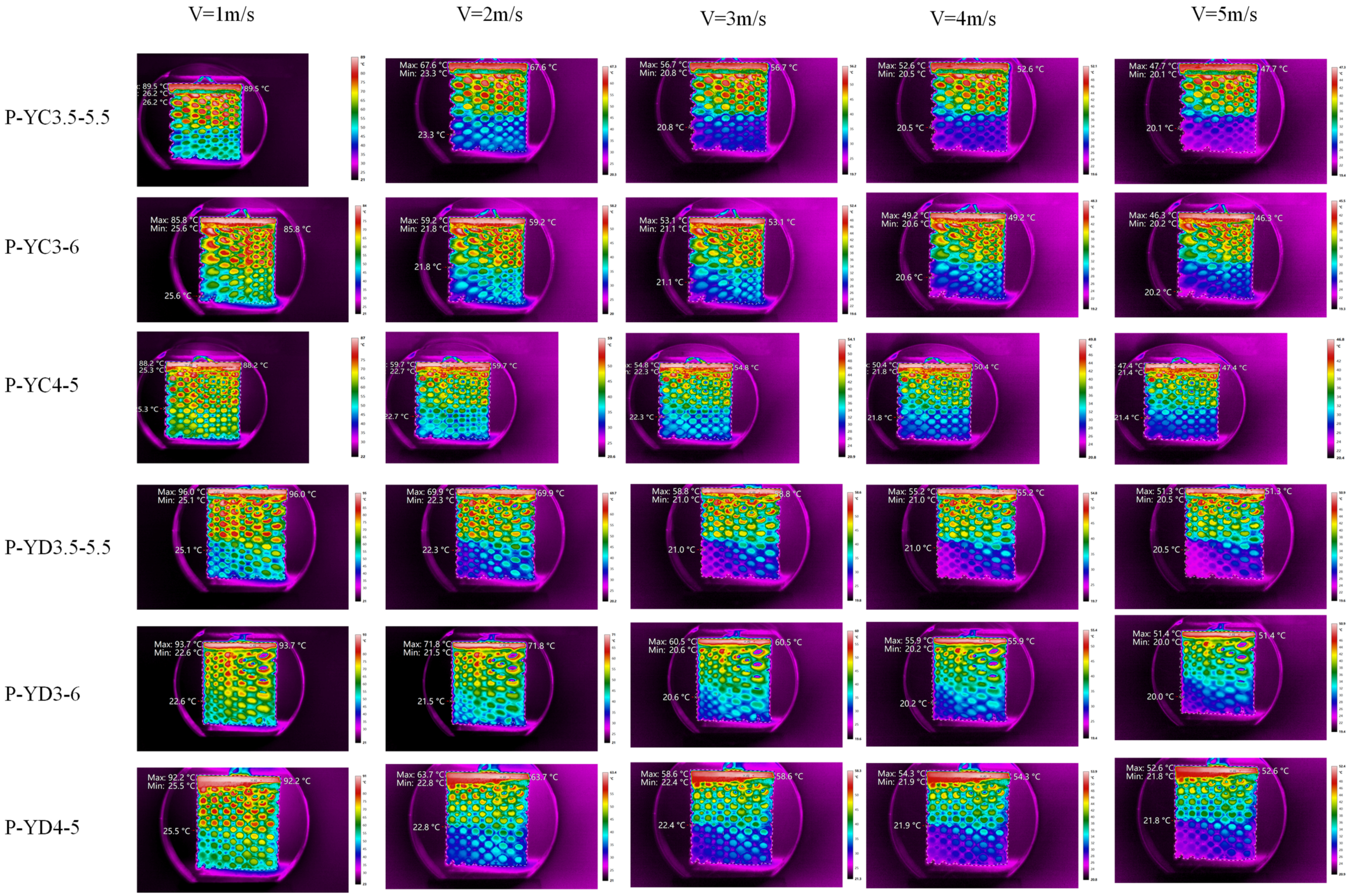
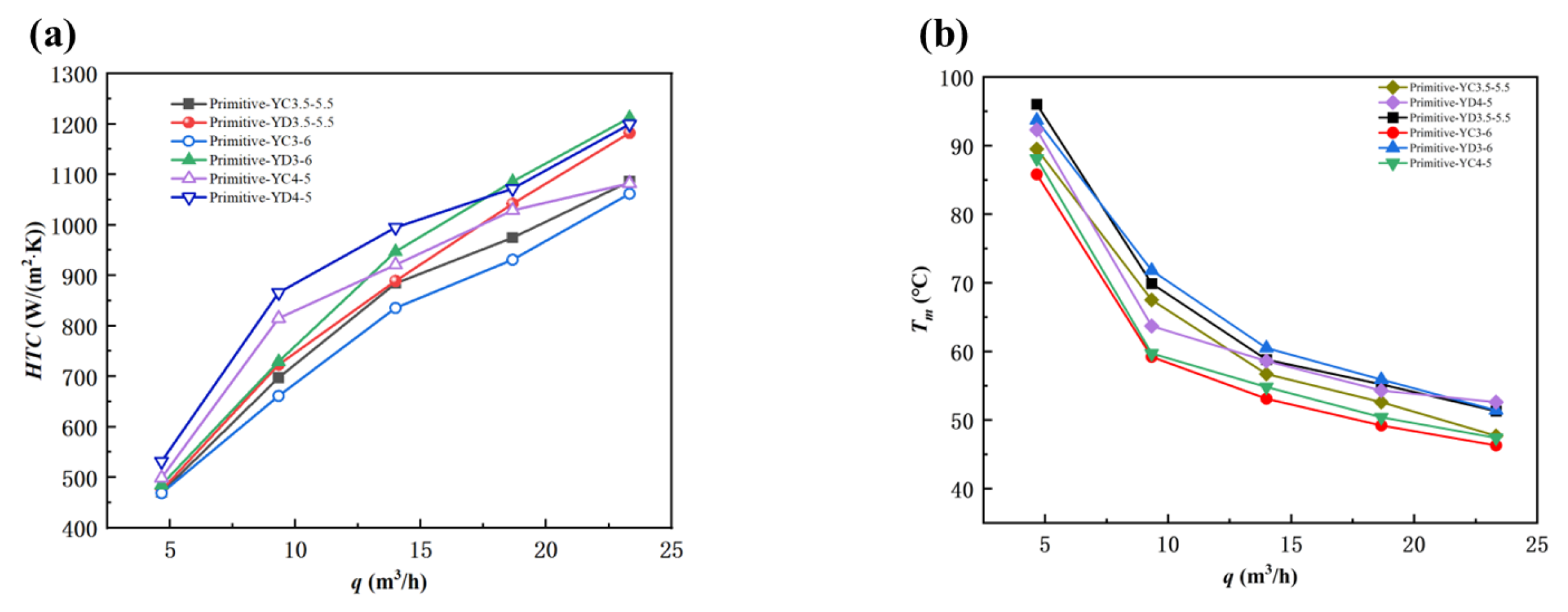
Y-axis flow-direction graded structures were classified into convergent-flow (YC) and divergent-flow (YD) configurations, each comprising three distinct gradient intervals; comprehensive performance data are provided in the
Figure 10.
Analysis of the experimental dataset reveals the following salient characteristics of Y-axis graded configurations: The convergent-flow (YC) mode consistently outperforms the divergent-flow (YD) mode across the entire velocity range. At 5 m·s−1, P-YC3-6 achieves a HTC of 1277.14 W·m−2·K−1—20.3% higher than that of P-YD3-6 (1061.57 W·m−2·K−1); correspondingly, its thermal resistance is 0.837 K·W−1, representing a 20.1% reduction relative to P-YD3-6 (1.047 K·W−1). Similarly, P-YC4-5 attains an HTC of 1287.00 W·m−2·K−1—18.9% higher than P-YD4-5 (1082.25 W·m−2·K−1)—and exhibits a thermal resistance of 0.863 K·W−1, which is 15.9% lower than that of P-YD4-5 (1.027 K·W−1). The underlying mechanism lies in the geometric progression of the unit cell: in convergent flow, the unit-cell size decreases progressively along the flow direction, inducing continuous fluid compression and markedly enhancing the narrow-tube effect. This results in a sustained increase in local flow velocity, thereby promoting turbulence generation and effectively mitigating contact thermal resistance. In contrast, divergent flow expands the channel cross-section along the flow direction, leading to flow deceleration, thickening of the thermal boundary layer, and a compounded deterioration of heat transfer performance—particularly in the presence of non-negligible contact resistance.
Within the same flow configuration, the gradient interval exerts a pronounced influence on heat transfer performance. In the convergent configuration, P-YC3-6 achieves the highest HTC and the lowest thermal resistance, followed sequentially by P-YC4-5 and P-YC3.5-5.5. At an inlet velocity of 5 m·s−1, P-YC3-6 exhibits an HTC that is 5.7% higher and a thermal resistance that is 1.9% lower than those of P-YC3.5-5.5. In the divergent configuration, P-YD4-5 delivers the highest HTC and the lowest thermal resistance, with P-YD3.5-5.5 and P-YD3-6 ranking second and third, respectively. At 5 m·s−1, P-YD4-5 achieves an HTC that is 1.9% higher and a thermal resistance that is 1.9% lower than those of P-YD3-6. These performance trends are closely linked to both the initial unit-cell size and the magnitude of geometric variation: P-YC3-6 features the largest size gradient (3–6 mm), which intensifies the narrow-tube effect and thereby more effectively mitigates interfacial contact thermal resistance; in contrast, P-YD4-5’s relatively large initial unit-cell size (4 mm) constrains fluid diffusion while maintaining low flow resistance, thus sustaining robust and stable heat transfer efficiency despite the presence of contact resistance.
Temperature uniformity—a critical practical performance metric—is optimally achieved by the P-YC3-6 configuration. At a flow velocity of 5 m·s−1, P-YC3-6 exhibits a maximum surface temperature difference of 26.1 °C, representing a 5.4% reduction relative to P-YC3.5-5.5 (27.6 °C) and a marginal 0.8% increase over P-YC4-5 (25.9 °C). Moreover, its performance is markedly superior to that of divergent-flow designs. The convergent-flow configuration ensures uniform fluid acceleration within the channels, effectively suppressing localized hot spots and promoting a more homogeneous distribution of contact thermal resistance—thereby significantly enhancing overall temperature uniformity.
Under low-velocity conditions (1–2 m·s−1), divergent-flow structures generally yield higher maximum surface temperatures than their convergent counterparts. Nevertheless, P-YD4-5 demonstrates comparatively superior anti-accumulation capability. At 1 m·s−1, its maximum surface temperature reaches 92.3 °C—1.5% and 3.9% lower than those of P-YD3-6 (93.7 °C) and P-YD3.5-5.5 (96.0 °C), respectively—while its HTC is 6.4% and 6.1% higher than those of the two reference configurations. This enhanced performance stems from P-YD4-5’s smallest unit-cell size variation rate, which facilitates gentler fluid diffusion, reduces flow resistance, and mitigates the decline in convective heat transfer at low velocities—partially compensating for the adverse influence of contact thermal resistance.
3.1.3. Comparison Between Dual-Gradient and Uniform Structures
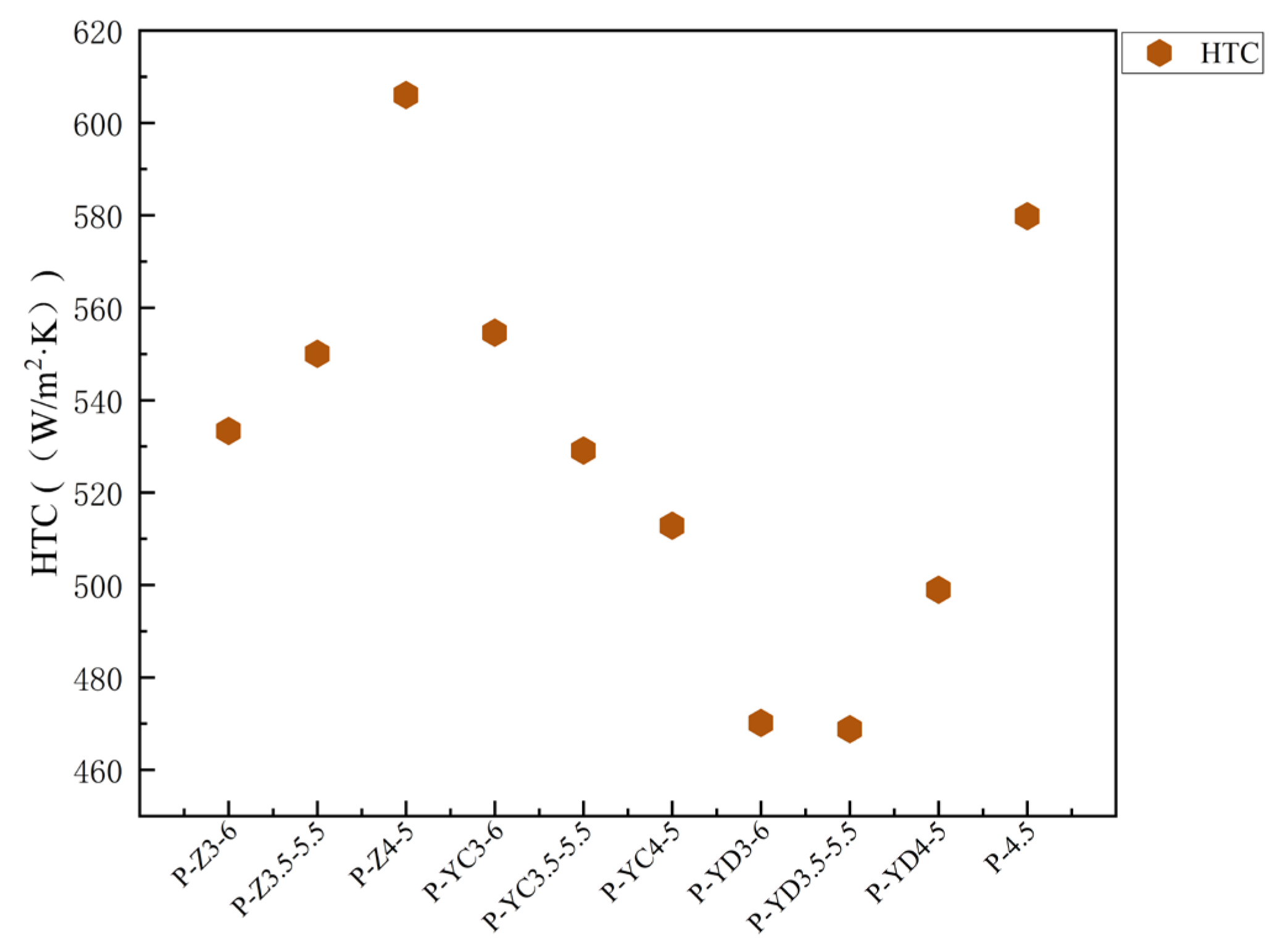
To further validate the technical superiority of the dual-gradient design, HTC data obtained at a velocity of 1 m·s
−1 for a uniform primitive structure (P-4.5) reported by Liu et al. [
33] were employed for comparative analysis with the present CuCrZr/AlSi
7Mg (3:3) dual-gradient specimens (
Figure 11).
The results demonstrate that all dual-gradient configurations exhibit superior thermal performance compared to the uniform TPMS baseline. For instance, the HTC of P-Z4-5 at a flow velocity of 1 m·s−1 is 606.064 W·m−2·K−1—exceeding that of the uniform P-4.5 structure (579.84 W·m−2·K−1). This enhancement stems from the synergistic effects inherent in the dual-gradient architecture: longitudinal grading along the Z-axis optimizes axial heat-transfer pathways, thereby improving alignment between the flow field and thermal transport requirements once the HTC saturation threshold is attained. As a result, P-Z4-5 achieves markedly enhanced convective heat transfer performance relative to its uniform counterpart.
In P-Z4-5, the high thermal conductivity of CuCrZr enhances heat transfer from the heat source to the dissipation region, while the low density of AlSi7Mg reduces overall structural mass. Collectively, these attributes suppress thermal accumulation and substantially reduce the maximum operating temperature. Moreover, the dual-material graded architecture promotes a more uniform flow field—effectively eliminating pronounced recirculation zones—whereas the homogeneous structure exhibits a simpler flow distribution that is more susceptible to localized hot-spot formation, thereby leading to higher peak temperatures.
3.2. Numerical Simulation Results and Flow-Field Mechanism Analysis
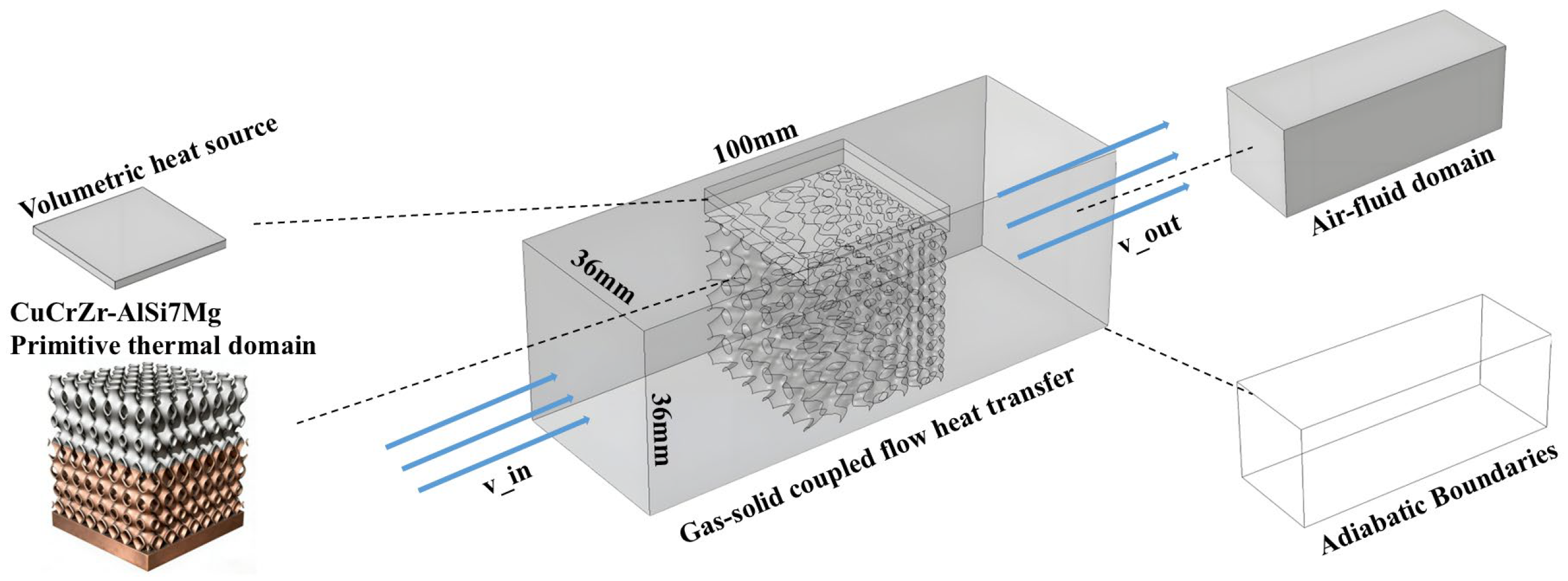
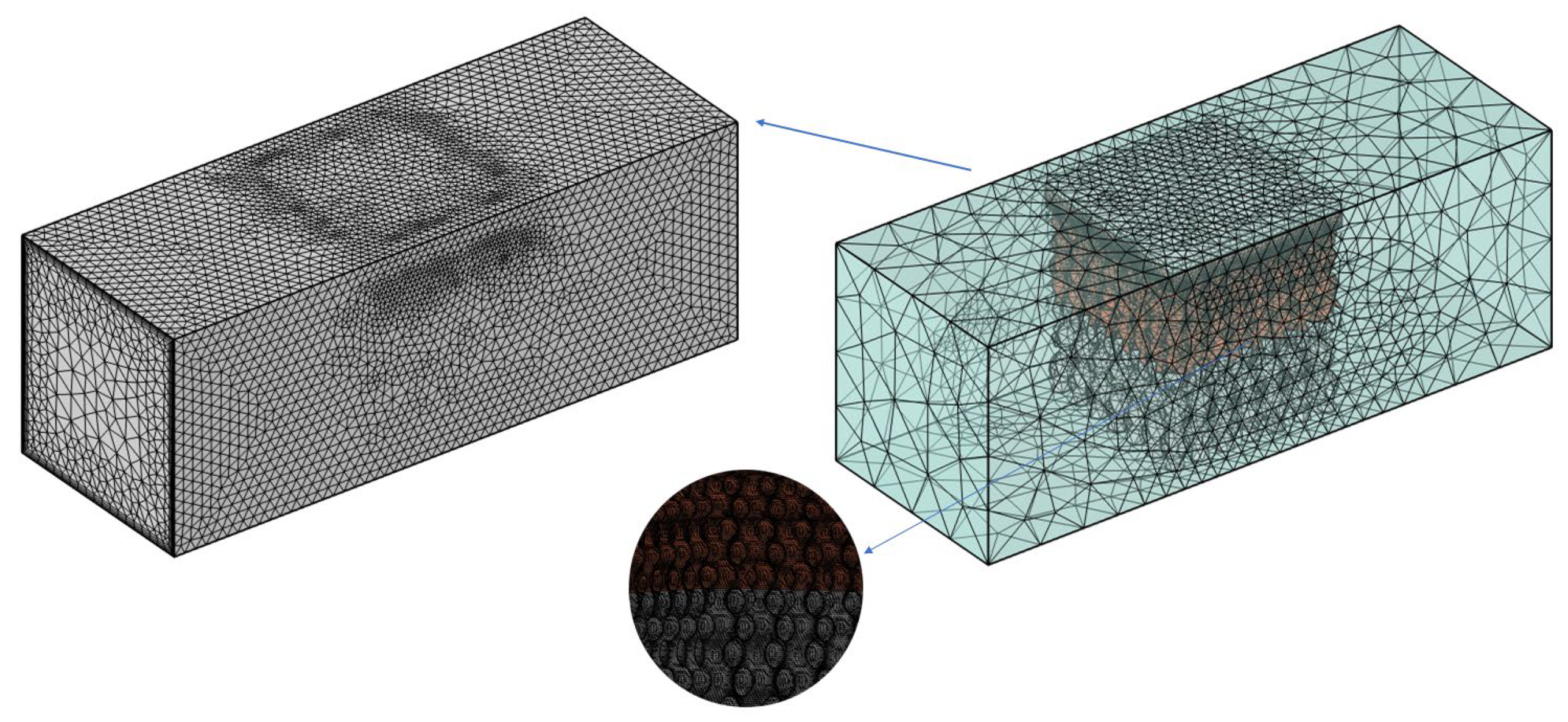
Numerical simulations were conducted for P-YC3-6 and P-Z4-5; velocity, temperature, and pressure field analyses were performed to elucidate the heat transfer enhancement mechanisms underlying the dual-gradient architectures. To assess the influence of contact thermal resistance on the simulation results, a sensitivity analysis was conducted in this study. The contact thermal resistance values were varied within ±20% of the baseline value, and the corresponding effects on the heat sink’s maximum temperature and the overall heat transfer coefficient were systematically evaluated. The results indicate that, within this ±20% variation range, the maximum temperature of the heat sink changed by no more than 2.12%, while the heat transfer coefficient varied by up to 1.87%—both well within the acceptable engineering error tolerance. Moreover, the relative performance ranking among the different gradient structures remained unchanged, confirming the robustness of the present simulation model with respect to contact thermal resistance and further validating the reliability of the simulation outcomes.
3.2.1. Velocity Field Distribution and Vorticity
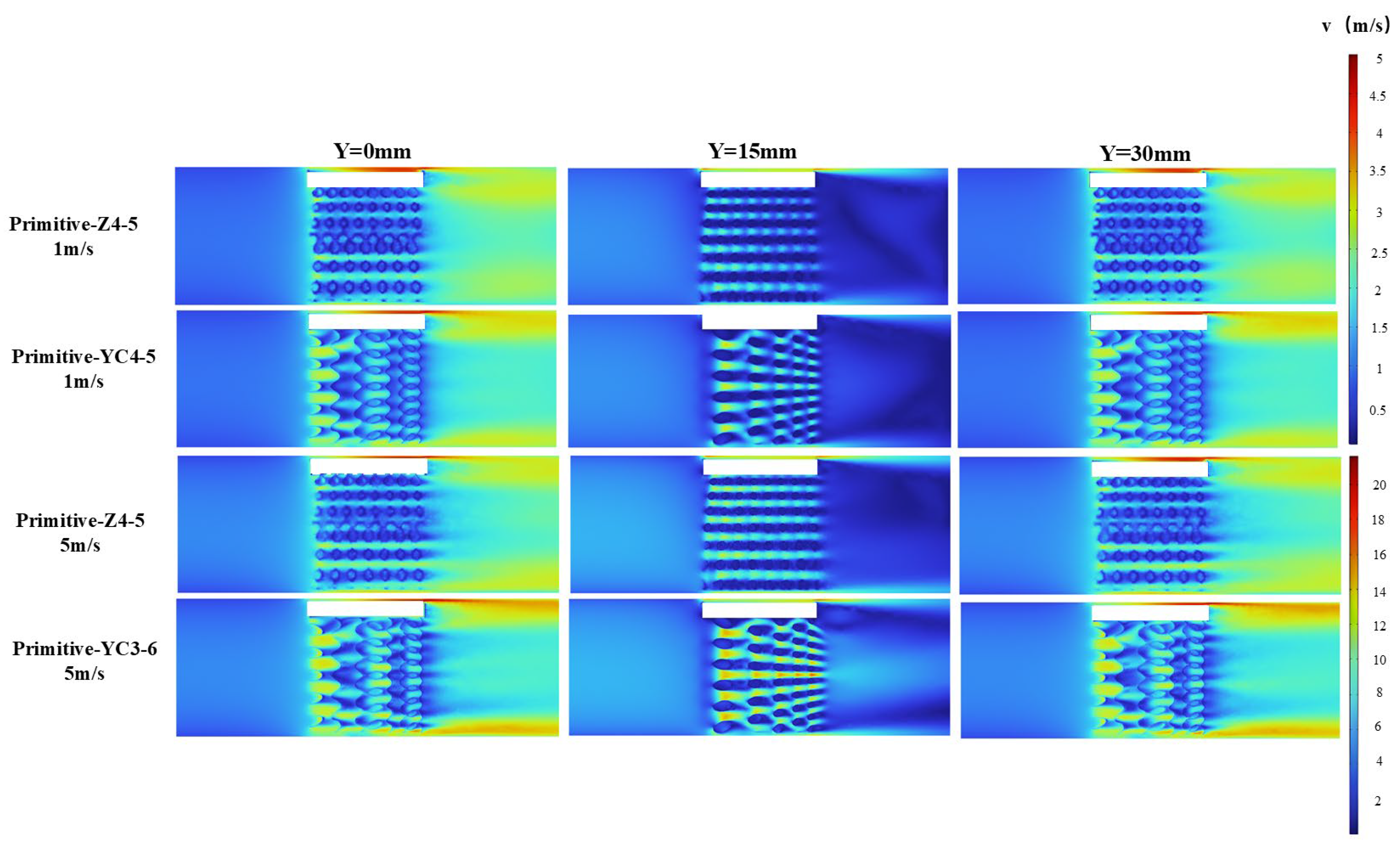
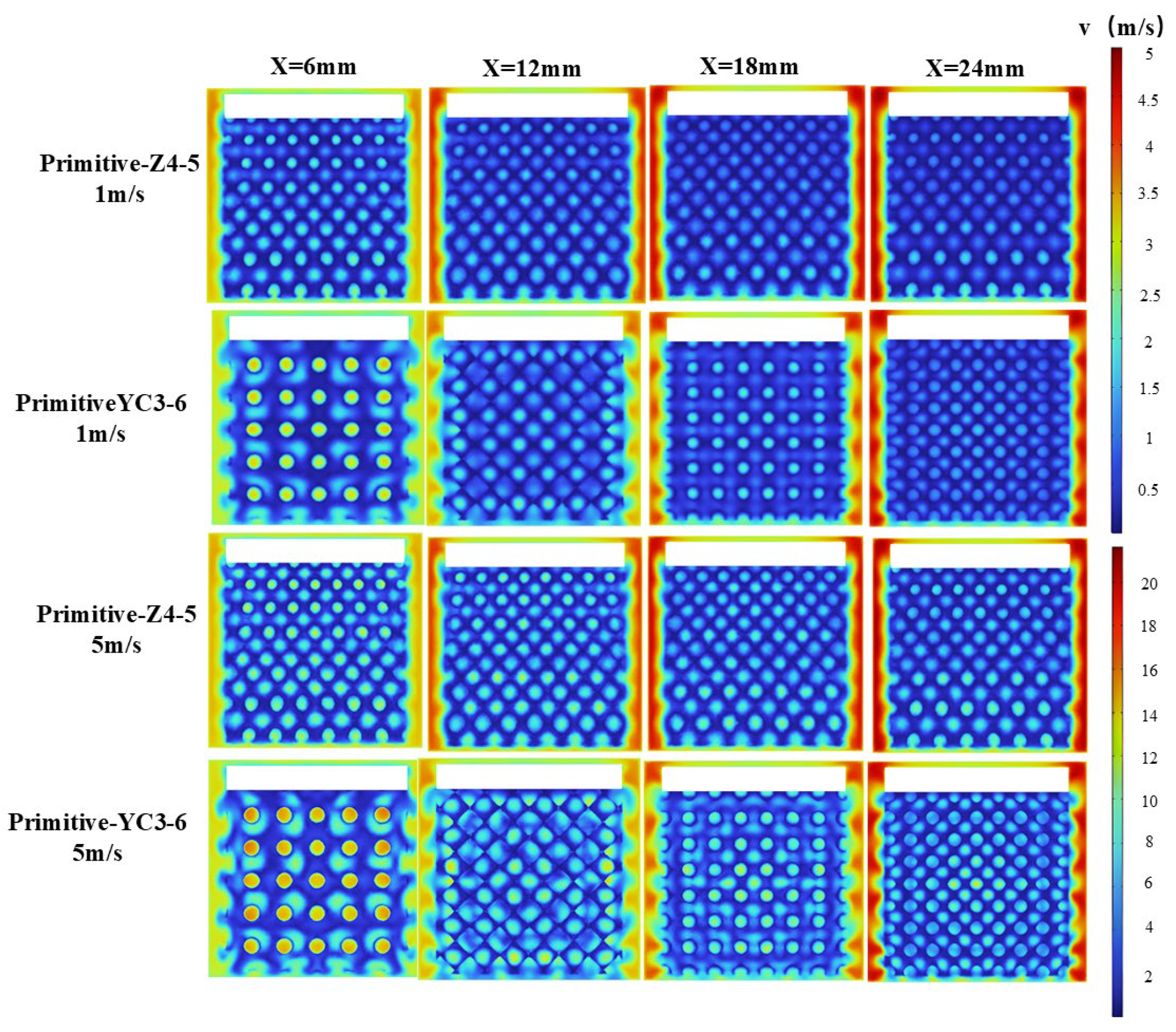
Velocity fields for P-YC3-6 and P-Z4-5 at inlet velocities of 1 and 5 m·s
−1 are presented in
Figure 12 and
Figure 13, respectively.
P-YC3-6 exhibits a pronounced narrow-tube effect: along the Y direction, the unit-cell size decreases linearly from 6 mm to 3 mm, resulting in continuous contraction of the channel cross-section. This geometric tapering accelerates the fluid from an inlet velocity of 3 m·s
−1 to a peak outlet velocity of 14.21 m·s
−1—an increase of 373.7% (
Table 5). This behavior is fully consistent with Bernoulli’s principle: progressive reduction in flow area increases kinetic energy, thereby inducing substantial velocity amplification. Consequently, convective heat transfer between the fluid and the heat-sink walls is significantly enhanced, effectively mitigating contact thermal resistance.
For P-Z4-5, the velocity distribution exhibits a distinct axial gradient: the unit-cell size increases linearly from 4 mm to 5 mm along the flow direction, inducing gradual channel expansion and a corresponding increase in fluid velocity—from 3.2 m·s−1 at the inlet (bottom) to 4.8 m·s−1 at the outlet (top)—representing a 50% enhancement. Compared with P-YC3-6, P-Z4-5 delivers a more moderate yet spatially uniform velocity amplification, effectively suppressing localized high-velocity zones that would otherwise cause a sharp rise in flow resistance. This uniform velocity field facilitates a more homogeneous distribution of contact thermal resistance between the substrate and the heater, thereby further enhancing heat transfer efficiency. This behavior is in close agreement with experimental findings: P-Z4-5 simultaneously achieves the HTC and the lowest overall thermal resistance, underscoring its superior practical performance.
Regarding the significant increase in flow velocity observed in this study, systematic verification was performed based on the fundamental principles of fluid mechanics. The detailed analysis is as follows:
1. For steady, incompressible flow, the continuity equation—expressing mass conservation—dictates that the flow velocity is inversely proportional to the cross-sectional area of the flow passage, i.e., . In this study, the cell size of the P-YC3-6 structure decreased linearly along the flow direction from 6 mm at the inlet to 3 mm at the outlet, resulting in a reduction in the effective flow-channel cross-sectional area from 1024 mm2 to 238 mm2. This corresponds to a theoretical area reduction ratio of 4.30:1. Numerical simulations revealed that, under an inlet wind speed of 5 m/s, the maximum local flow velocity within the channel reached 21.8 m/s, yielding an actual velocity amplification ratio of 4.36:1. The relative deviation between the simulated velocity ratio and the theoretical area reduction ratio is merely 1.40%, confirming strict adherence to the principle of mass conservation. These results unequivocally attribute the observed velocity enhancement to the geometric contraction of the flow passage—the so-called “venturi effect”—and demonstrate that the simulation outcomes are physically sound and self-consistent.
2. The influence of fluid compressibility is conventionally characterized by the Mach number (Ma). For Ma < 0.3, the fluid may be treated as incompressible, and compressibility effects on both flow dynamics and heat transfer can be safely neglected. In this study, the maximum flow velocity within the channel is 21.8 m/s, yielding an air Mach number of approximately Ma = 0.064—well below the widely accepted threshold of 0.3. Hence, the assumption of incompressible flow in the numerical simulations is well grounded in theory. To further validate this assumption, compressible and incompressible flow simulations were conducted under identical conditions. The results show that the relative deviation in predicted flow velocity between the two models is less than 0.2%, while the relative deviation in the computed heat transfer coefficient remains below 0.5%. These findings robustly corroborate the validity of neglecting compressibility effects in the present investigation.
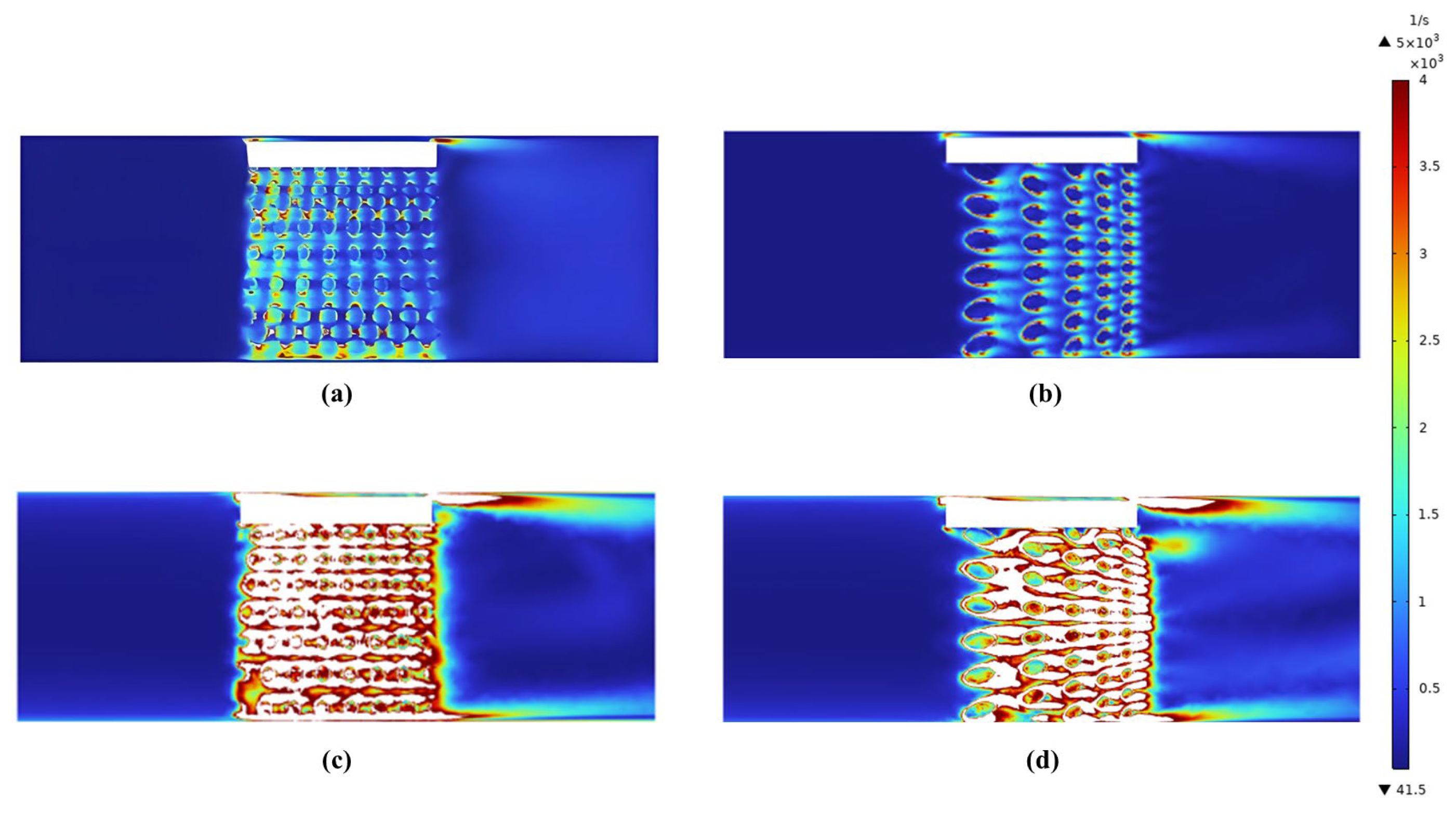
With the velocity field pattern now well characterized, vorticity—a dimensionless, objective metric quantifying turbulent disturbance and shear-induced deformation—provides further insight into how flow structure modulates heat transfer.
Figure 14 presents the vorticity distributions for P-Z4-5 and P-YC3-6 at representative velocities of 1 m·s
−1 and 5 m·s
−1, respectively. These distributions directly reflect the flow field’s ability to disrupt the thermal boundary layer.
P-Z4-5, characterized by a gentle Z-axis gradient and mild axial expansion, exhibits a globally uniform vorticity distribution—without localized hotspots—primarily concentrated within contraction regions (50–150 s−1) at an inlet velocity of 1 m·s−1. This behavior arises because the gentle gradient minimizes intense flow turning and induces only modest disturbances via the narrow-tube effect at constrictions.
When the inlet velocity increases to 5 m·s
−1, the combined influence of higher inflow speed and secondary acceleration induced by the
Z-axis gradient intensifies shear deformation. Consequently, vorticity rises globally to 150–350 s
−1 (
Figure 14c), and high-vorticity regions extend further downstream into the channel network. This global enhancement of turbulent disturbance promotes more effective fluid mixing and thus improves heat transport performance.
In contrast, the Y-axis convergent configuration P-YC3-6 displays pronounced streamwise differentiation in vorticity distribution. At 1 m·s−1, the narrow-tube effect is active only in the inlet constricted sections, yielding vorticity peaks near 180 s−1; vorticity then decays rapidly downstream as the channel expands, falling below 80 s−1. At 5 m·s−1, the elevated inlet velocity synergizes with the convergent geometry to amplify the narrow-tube effect, resulting in sustained acceleration and progressively stronger shear deformation along the flow path. As a result, vorticity increases across the entire domain to 200–400 s−1, with outlet peaks reaching approximately 380 s−1 (≈2.1× that observed at 1 m·s−1). Critically, the high-vorticity region spans the full length of the channel with negligible decay—indicating that Y-axis convergence enforces flow disturbance more effectively than Z-axis modulation under high-speed conditions.
3.2.2. Pressure-Field Simulation
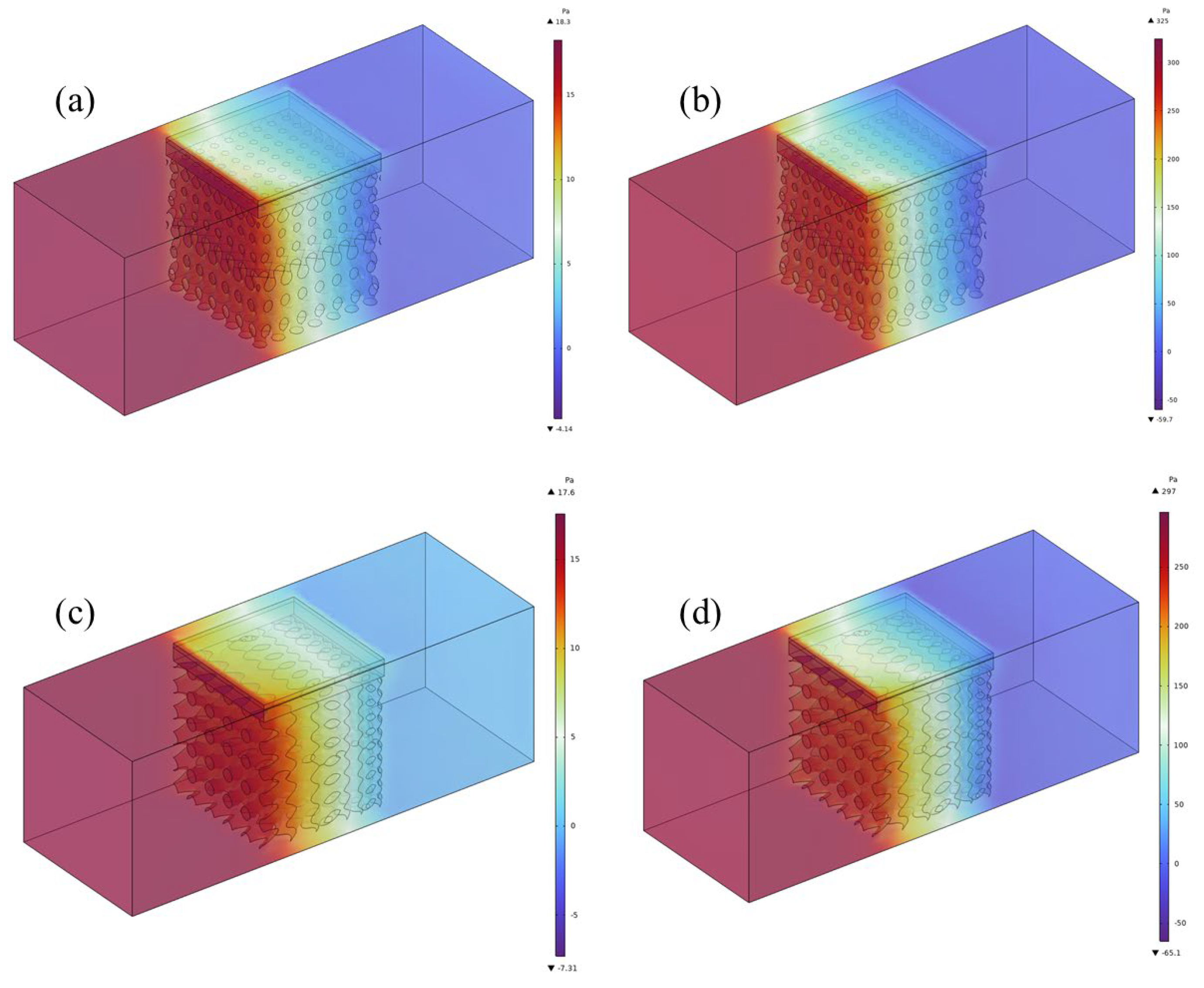
Steady-state pressure simulations employing the k–ε turbulence model were performed for P-Z4-5 and P-YC3-6 at flow velocities of 1 m·s
−1 and 5 m·s
−1. The corresponding pressure contours are presented in
Figure 15a–d and are analyzed as follows.
For both configurations, pressure decreases monotonically in the flow direction, and the magnitude of the pressure gradient increases with inlet velocity. High-pressure regions are concentrated near the inlet, whereas low-pressure regions occur near the outlet—with both distributions being strongly governed by the underlying channel geometry. P-Z4-5 exhibits a notably uniform pressure distribution without abrupt local pressure drops, indicating inherently low flow resistance. In contrast, P-YC3-6 displays a characteristic pressure profile featuring a relatively flat front section followed by a steep pressure drop in the rear region—arising from velocity jumps induced by the narrow-tube effect—with flow resistance dominated primarily by frictional losses along the channel.
The interplay between pressure-gradient topology and channel morphology fundamentally governs the pressure characteristics: P-Z4-5 is well suited for low-energy applications owing to its minimal resistance, whereas P-YC3-6 accommodates larger pressure drops to promote turbulence enhancement, rendering it particularly appropriate for high heat-flux scenarios. For both structures, the increase in pressure drop with rising velocity is proportionally smaller than the corresponding increase in HTC, thereby preserving a favorable thermo-hydraulic performance balance.
3.2.3. Temperature Field Simulation
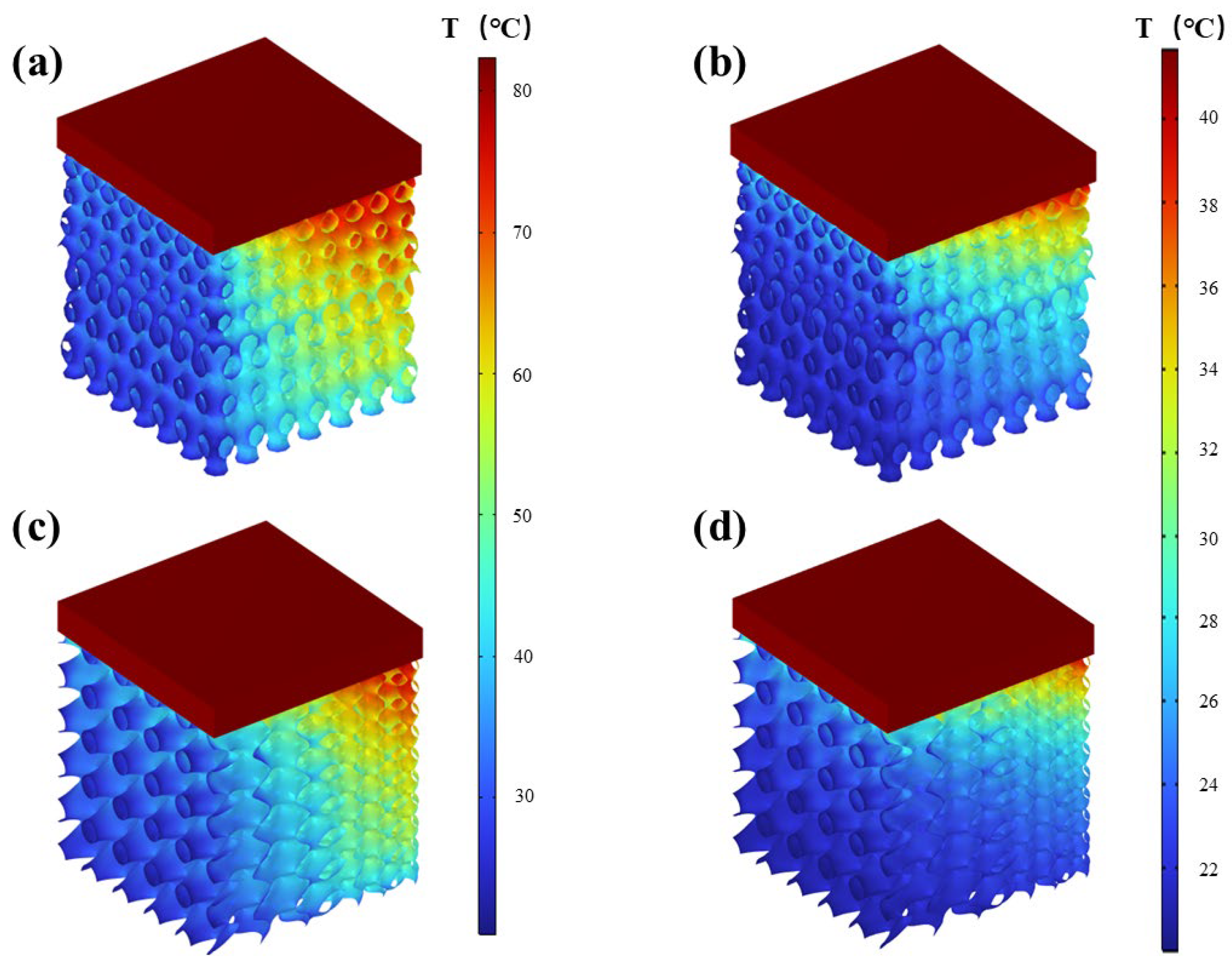
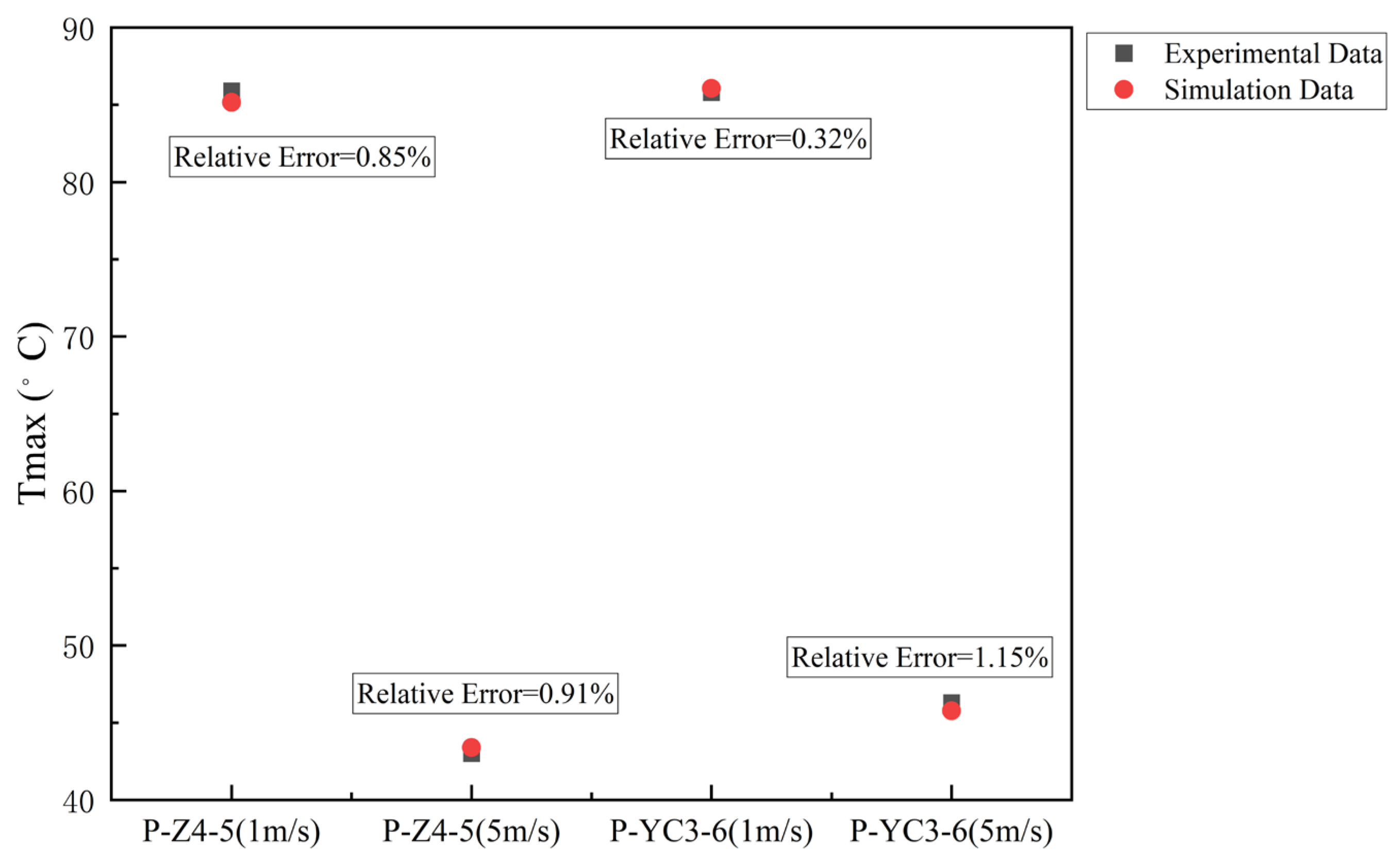
Figure 16 presents the simulated maximum temperatures for samples P-Z4-5 and P-YC3-6. At a flow velocity of 1 m·s
−1, the corresponding maximum temperatures are 85.16 °C and 86.07 °C, respectively; at 5 m·s
−1, they are 43.39 °C and 45.77 °C. The relative deviations from the experimental values are 0.85%, 0.32%, 0.91%, and 1.15%, all well below 5% (
Figure 17), thereby confirming the reliability and accuracy of the numerical model. The slight underprediction of temperature in the simulations—relative to experimental measurements—is primarily attributed to the omission of inevitable surface roughness and heterogeneous interfacial defects introduced during the LPBF process. In practice, such surface irregularities and interfacial thermal resistance impede heat transfer efficiency. These discrepancies remain within acceptable engineering tolerances, further substantiating the model’s robust predictive capability under realistic operating conditions.
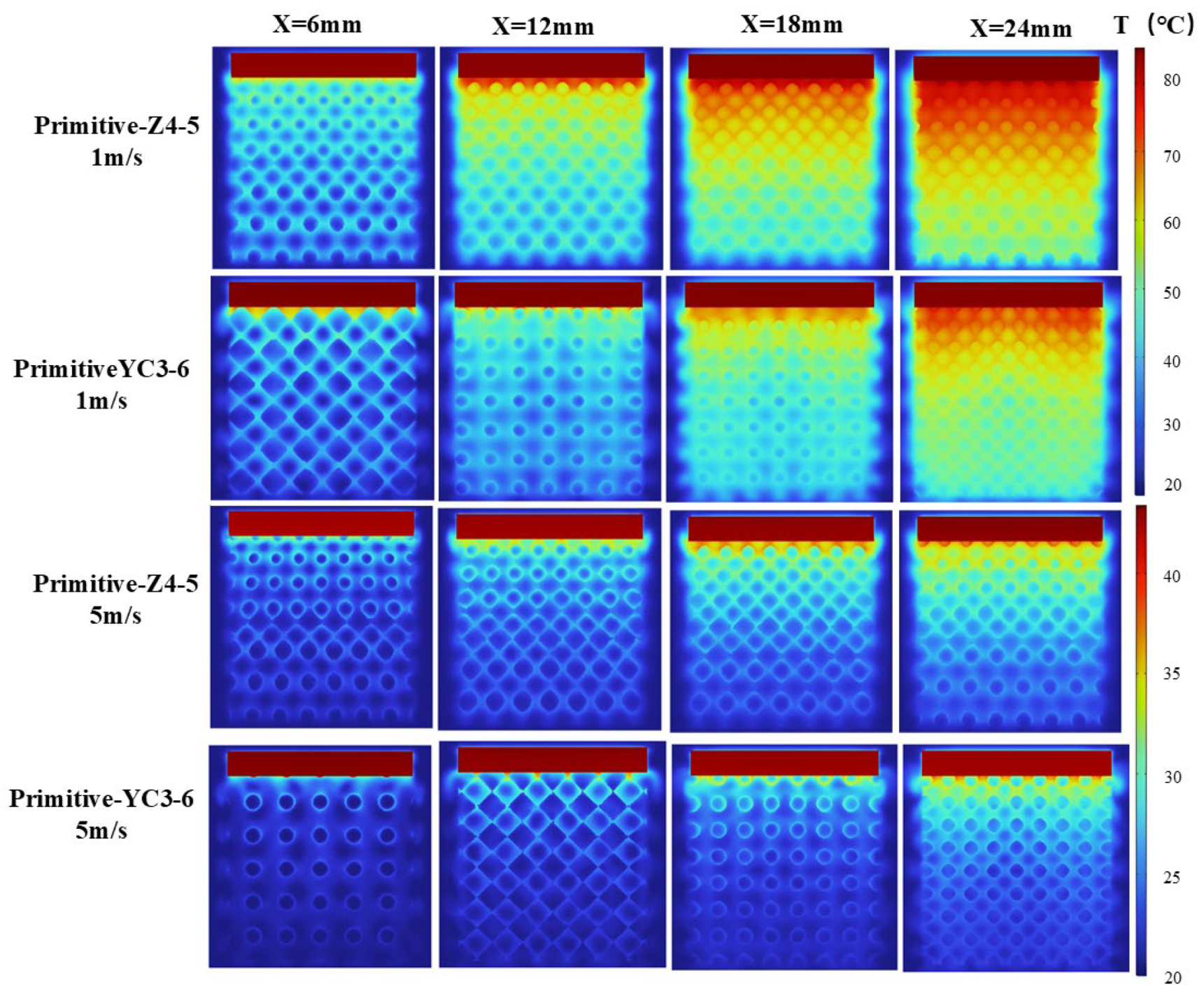
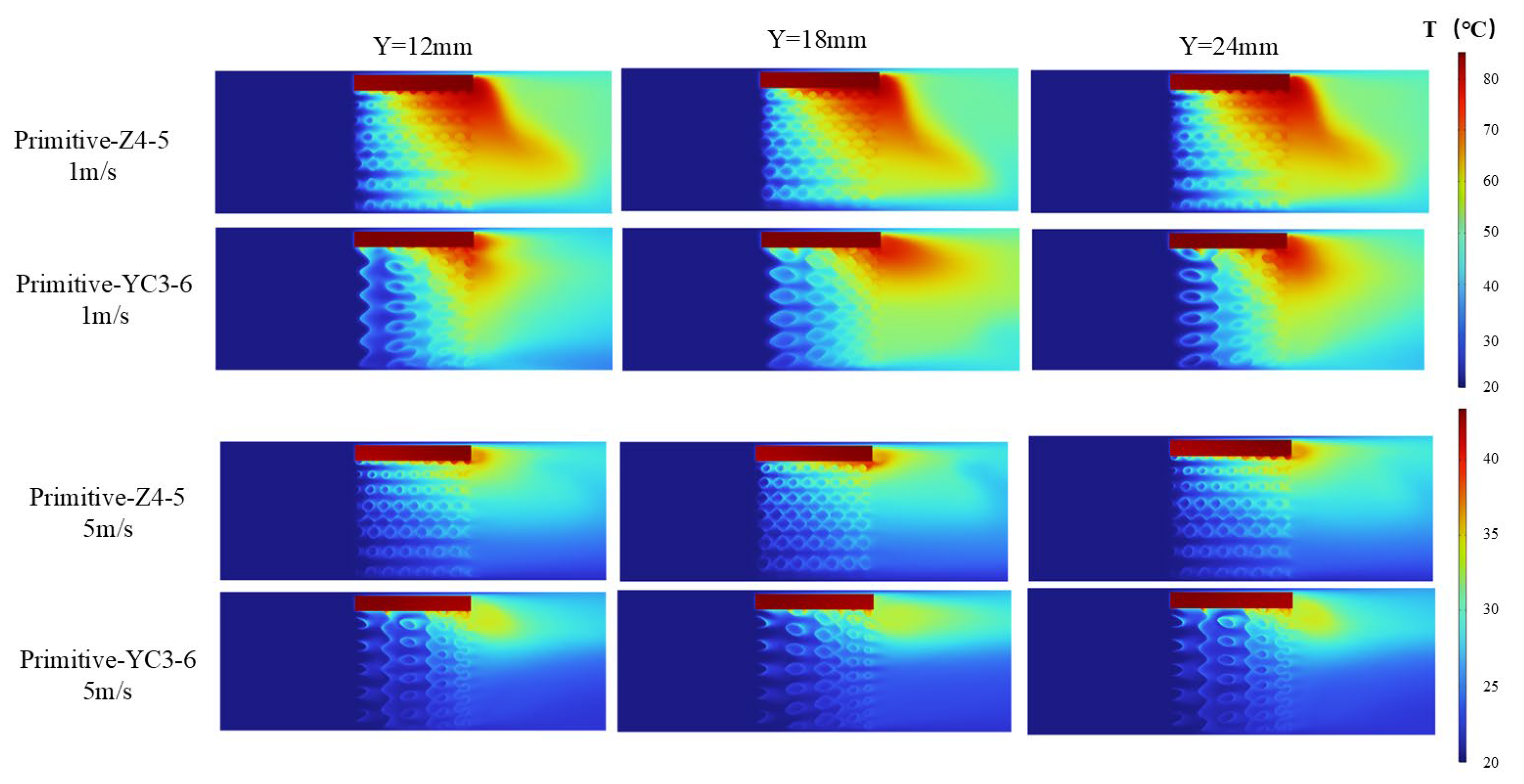
Based on k–ε turbulence modeling and conjugate heat transfer simulations, multi-section distributions of P-Z4-5 and P-YC3-6 at flow velocities of 1 and 5 m·s
−1 (
Figure 18 and
Figure 19) were employed to investigate the gradient control mechanism.
Temperature fields in both structures exhibit the characteristic thermal gradient, decreasing progressively from the heat-source end to the heat-sink end. Flow velocity exerts a pronounced influence: at 5 m·s−1, the overall temperature decreases by over 48% relative to that at 1 m·s−1. The primary advantage of P-Z4-5 lies in its superior temperature uniformity—cross-sectional temperature profiles along the X-axis (i.e., axial direction) display gentle, gradual gradients, while those along the Y-axis (i.e., transverse direction) show minimal fluctuations and no localized thermal accumulation. This behavior stems from the topology’s gradual axial expansion, which promotes a highly uniform flow field. In contrast, P-YC3-6 exhibits a streamwise temperature decline punctuated by an abrupt drop within the convergent segment. This segment alone accounts for 68% of the total temperature reduction, attributable to the sudden velocity increase and associated turbulence amplification induced by the geometric contraction. Moreover, its flow-field uniformity is marginally inferior to that of P-Z4-5.
3.3. Comprehensive Thermo-Hydraulic Performance Evaluation
The j/f factor was adopted as the primary metric for evaluating comprehensive thermo-hydraulic performance. Key parameters—including the heat transfer coefficient (HTC), Nusselt number (Nu), and friction factor (f)—were systematically compared across gradient structures, based on experimental data obtained at a uniform flow velocity of 1 m·s
−1. The comparative results are summarized in the
Table 6.
Based on the analysis of the composite performance metrics presented in the table, the thermo-hydraulic performance exhibits the following clear trends:
The Nu and HTC display highly consistent trends. Specifically, configuration P-Z4-5 achieves a comparatively high Nu—approximately 15.98% greater than that of P-YD3-6.
This substantial increase in Nu indicates that the dual-gradient topology effectively enhances convective heat transfer, thereby accelerating thermal energy transfer from the solid wall to the fluid.
Meanwhile, the well-controlled friction factor reflects deliberate geometric optimization of the flow channels within the dual-gradient design, achieving an optimal trade-off between heat transfer enhancement and hydrodynamic energy penalty. This balance is quantitatively substantiated by the dimensionless j/f metric.
Z-axis longitudinally graded configurations consistently yield higher j/f ratios than Y-axis flow-direction graded configurations and exhibit significantly lower peak temperatures. Among all configurations, P-Z4-5 delivers the most favorable synergistic performance—featuring the highest j/f ratio and a remarkably low peak temperature of only 43.1 °C. These results demonstrate that Z-axis longitudinal grading offers a distinct advantage in simultaneously optimizing heat-transfer efficiency, flow resistance, and peak temperature, thereby effectively mitigating adverse effects associated with contact thermal resistance and exhibiting superior practical applicability. The synergistic superiority of P-Z4-5 stems from three interrelated attributes: (i) enhanced convective performance enabling rapid heat extraction; (ii) low hydrodynamic resistance minimizing pumping power consumption; and (iii) a uniform flow field suppressing localized thermal accumulation. Collectively, these attributes enable coordinated optimization of both thermo-hydraulic performance and peak temperature.
Within the Y-axis flow-direction graded family, the convergent (YC) configuration yields significantly higher j/f values than the divergent (YD) counterpart; specifically, P-YC3-6 achieves the highest j/f ratio—exceeding that of P-YD3-6 (0.84) by 13.3%. This result further corroborates that the narrow-tube effect induced by convergent flow substantially enhances heat transfer performance while effectively constraining the growth in flow resistance, thereby optimizing the thermo-hydraulic trade-off.
Regarding thermal resistance, P-Z4-5 exhibits the lowest value (R = 1.83 K·W−1), whereas P-YC3-6 registers R = 2.37 K·W−1. The marked reduction in thermal resistance stems from the synergistic effects of the dual-gradient topology—enhancing convective heat transfer—and the strategic integration of multimaterial high-conductivity components: CuCrZr’s superior thermal conductivity accelerates axial heat conduction from the heat source to the dissipation zone; AlSi7Mg’s low density minimizes structural mass without compromising mechanical integrity; and the dual-gradient geometry optimizes flow-field distribution to promote uniform cooling. Collectively, these design features significantly reduce the overall thermal resistance.
3.4. Summary of Experimental Tests and Numerical Simulations
To extend the analysis to high-power electronic devices operating under high-velocity, high-Reynolds-number (high-Re) conditions, numerical simulations were conducted to investigate flow and heat transfer characteristics at wind speeds exceeding 5 m/s. The simulation results confirm that the “narrow-tube effect”—a key flow–structure interaction mechanism inherent to the dual-gradient configuration—remains effective even at elevated flow rates. Moreover, the enhancement of vorticity generation and the progressive disruption of the thermal boundary layer with increasing flow velocity follow consistent trends observed across the 1–5 m/s experimental range. Importantly, the empirically derived Nu–Re correlation and the performance parameter j/f (i.e., the ratio of heat transfer coefficient to friction factor) established in this study are demonstrably applicable to the higher Reynolds number regime of 5000–20,000, thereby providing a robust theoretical foundation for performance prediction in high-power thermal management scenarios.
It should be noted that experimental validation in this study is focused specifically on the low-wind-speed range of 1–5 m/s—the core operational domain for practical air-cooling applications. Performance degradation behavior, acoustic characteristics, and long-term operational reliability under higher wind speeds remain subjects requiring further experimental investigation; such work constitutes a key direction for future extension of this study.