Article

Microclimatic Effects and Durability of Surface Soil Materials in Fujian Tulou Rammed-Earth Wall


1
College of Arts, Shanghai Zhongqiao Vocational and Technical University, No. 3888 Caolang Road, Jinshan District, Shanghai 201514, China
2
College of Art and Design, Nanjing Forestry University, No. 159, Longpan Road, Nanjing 210037, China
*
Authors to whom correspondence should be addressed.
Coatings 2026, 16(3), 301; https://doi.org/10.3390/coatings16030301
Submission received: 3 February 2026 / Revised: 19 February 2026 / Accepted: 24 February 2026 / Published: 1 March 2026

Highlights

What are the main findings?
The particle size of rammed earth exhibits significant directional differences at two scales (300 nm and 2 μm), with solar radiation duration and wind speed positively correlated with the coefficient of variation in particle size.
Microclimatic conditions cause varying degradation on different orientations: southeast/north walls show loose clay with quartz enrichment (79.9%); west wall has microcracks; north wall exhibits slight salt crystallization (halite 0.3%); east wall surface is moist with moss.
Outdoor samples generally show higher quartz content (A2: 79.9% vs. A1: 69.0%) and lower clay mineral content than indoor samples, indicating looser outdoor structures.
Organic additives (bamboo strips, rice husks) form fibrous pore networks, resulting in higher illite/kaolinite content (28.2% vs. 10.2%) and 20%–30% higher aluminum content, effectively preventing clay loss.
Soil color is primarily determined by quartz; hematite and iron oxidation lead to soil property differences: high iron content (8.47%) produces reddish-brown color, while high Na/Cl ratios (12.27%/8.59%) result in salt spots.
What are the implications of the main findings?
A stable microclimate is crucial for in situ conservation and preservation of historical information.
Targeted protective measures should be implemented: southeast walls against wind/rain erosion, west walls against cracking, north walls for salt control, and east walls prevent sulfate loss.
Traditional organic–inorganic composite technology significantly enhances material durability, offering engineering value for modern earthen material improvement.
Soil color correlates with iron minerals, salts, and radiation exposure, serving as a non-destructive, rapid assessment tool for evaluating the degradation degree.

Abstract
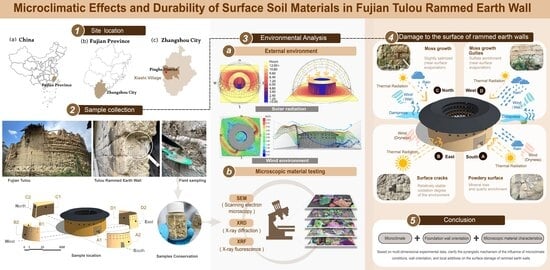
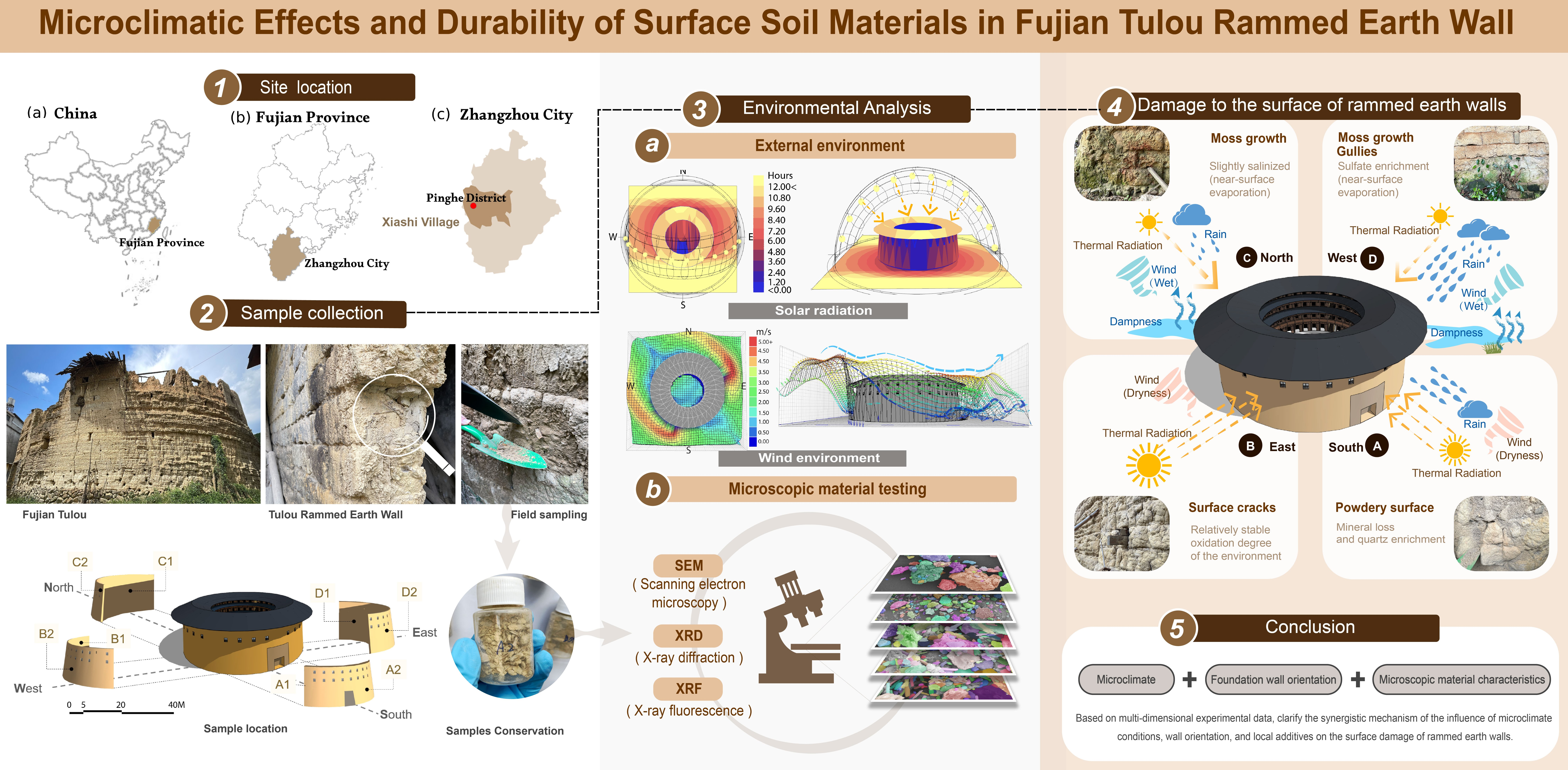
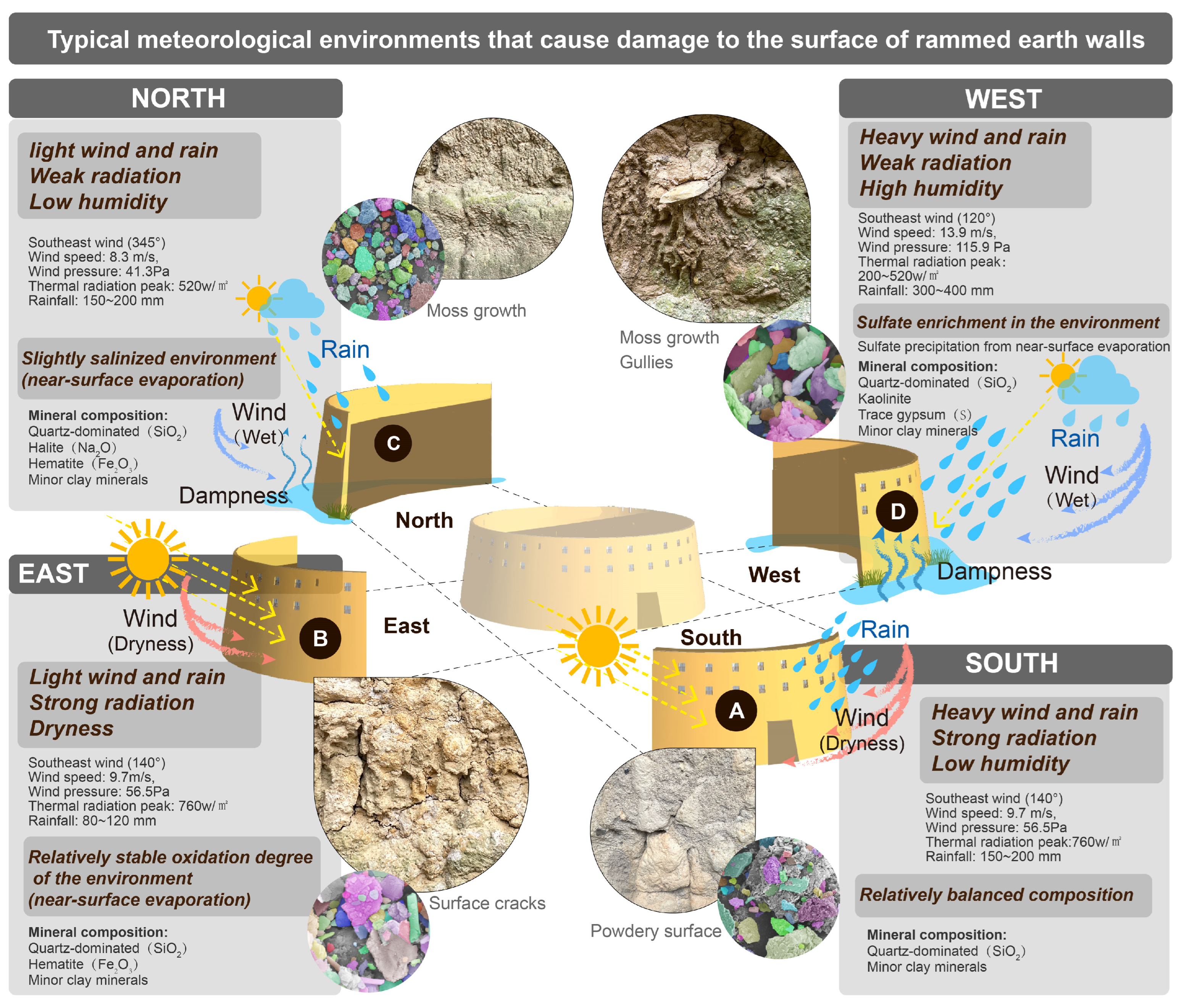
This study focuses on the surface materials of rammed-earth walls of Fujian Tulou in Xiaoshu Village, exploring the microscopic characteristics of rammed earth in different orientations and the microclimate adaptation mechanism and degradation law of the walls. Specimens were collected from the inner and outer surface soil layers of the four directional walls of a representative Tulou. SEM, XRD, and XRF analyses were performed to characterize the materials’ microstructure, mineral composition, and elemental distribution, with the test results correlated to the microclimatic conditions of each wall orientation. The conclusion is as follows: (1) The microscopic particle size of rammed earth exhibits significant directional differences at dual scales of 300 nm and 2 μm. Solar radiation duration and wind speed are positively correlated with the coefficient of variation in particle size. (2) The southeast and north walls were the most severely damaged (soil loss, quartz enrichment: 79.9%), the west wall had minor cracks, the north wall showed slight salt crystallization (Halite = 0.3%), and the east wall exhibited moisture-related moss growth. (3) Traditional organic additives (bamboo strips, rice husks) mitigate deterioration and enhance structural integrity. (4) The diversity of soil color (related to hematite and iron oxide) can serve as a simple indicator of deterioration. This study has proposed differentiated protection schemes for the “microclimate-compounds” on walls facing different directions on the rammed-earth surface of the Tulou. The findings provide a theoretical basis for orientation-specific conservation of Tulou heritage and offer scientific references for the modification of modern rammed-earth materials.

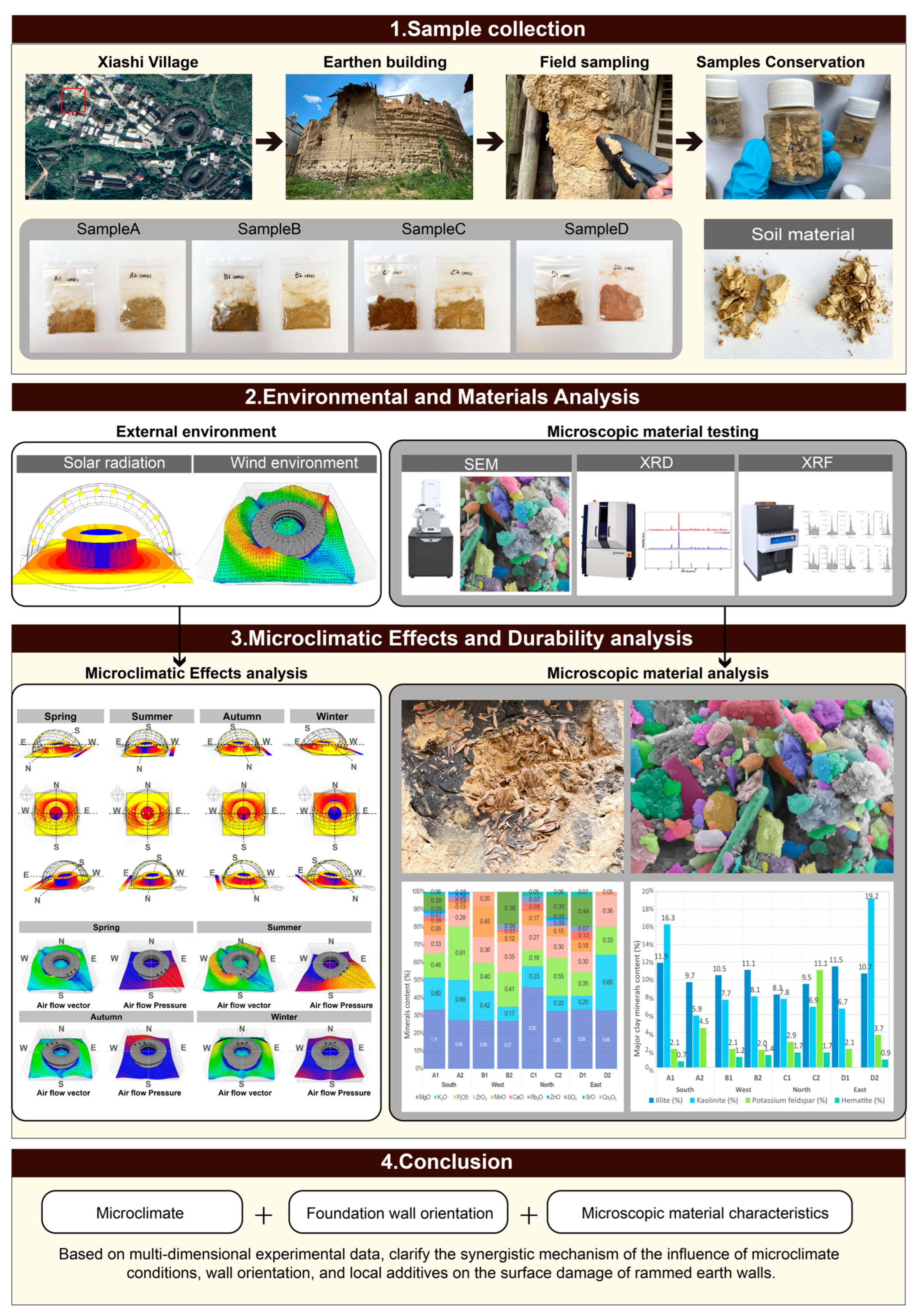
Graphical Abstract

1. Introduction

1.1. Background and Significance

Fujian Tulou are large-scale rammed-earth buildings in southeastern China. They are renowned for their unique circular or rectangular architectural forms, regular collective spatial layouts, and high adaptability to the subtropical monsoon climate [1,2]. Built between the 12th and 20th centuries, the Tulou not only fully demonstrate the cultural identity of local architecture [3,4], but also serve dual functions as both the settlement places for the Hakka and Minnan people and fortresses against external enemies. Meanwhile, their rammed-earth walls, typically over 1.5 m thick, act as excellent climate buffers, effectively regulating indoor temperature and humidity, providing passive thermal comfort, and resisting heavy rainfall and strong winds [5].
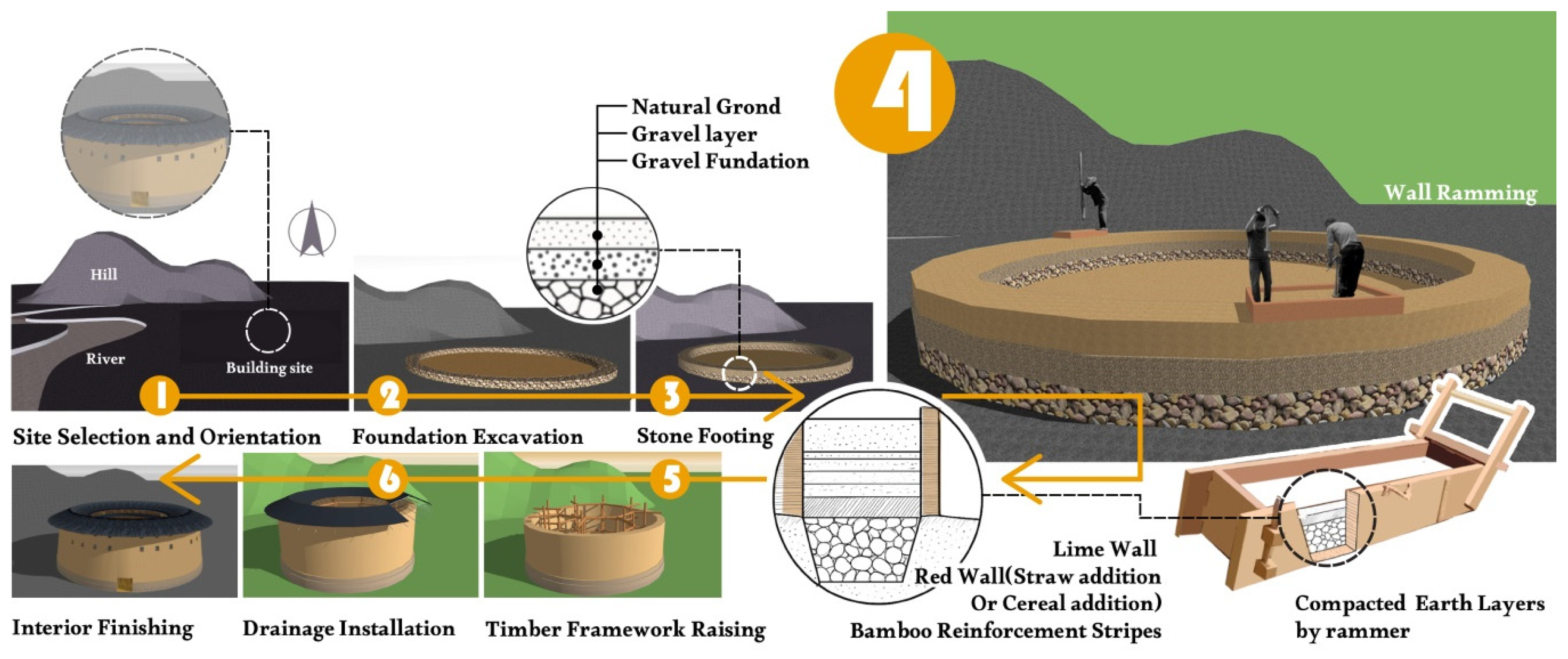
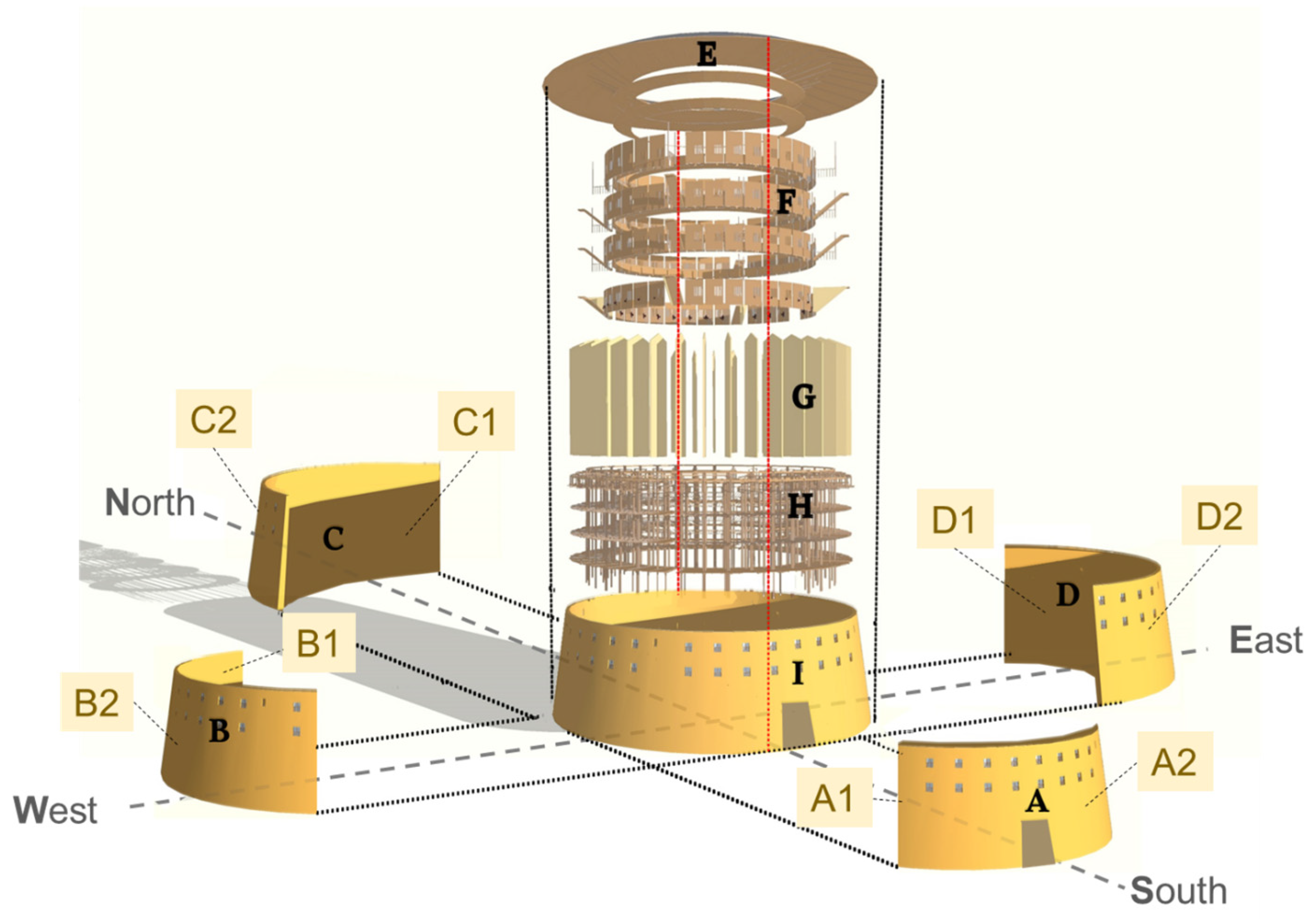
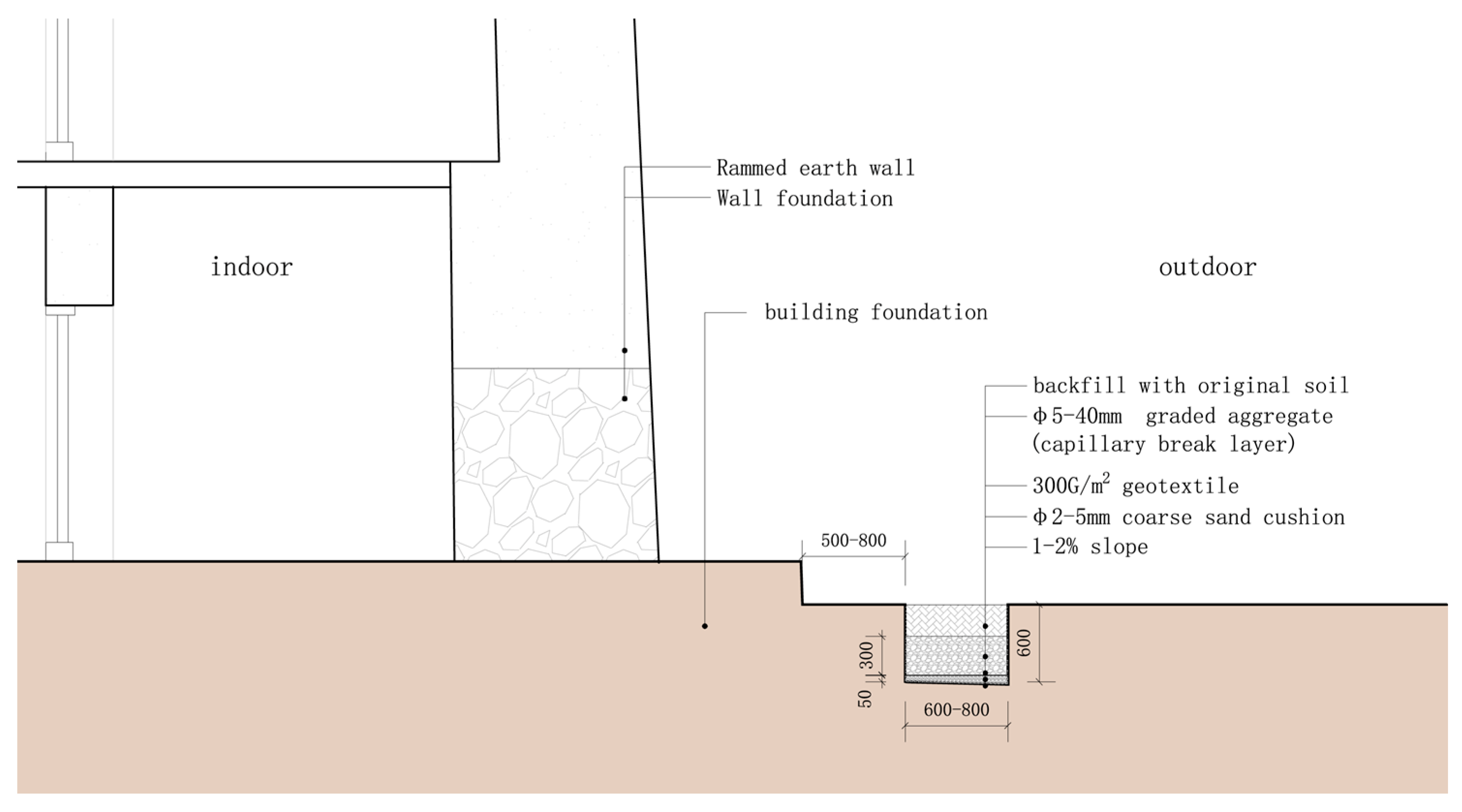
The core process of the folk construction of Fujian Tulou includes seven steps: site selection and orientation determination, foundation excavation, backfilling of block stone foundation, wall consolidation, wooden framework erection, installation of drainage system, and interior decoration. The process is extremely complex (Figure 1).
Among them, the manual earth compaction technique is the core of the entire construction process. It specifically covers soil selection, soil preparation, mixing with water and biological base stabilizers, layer-by-layer laying of the mixed material in wooden molds, and then layer-by-layer compacting with heavy hammers, ultimately forming a dense and complete wall structure [6,7]. Every step of the construction of the Tulou is based on the core premise of structural and environmental adaptability, which fully demonstrates the deep integration of material application, construction techniques, and regional environment.
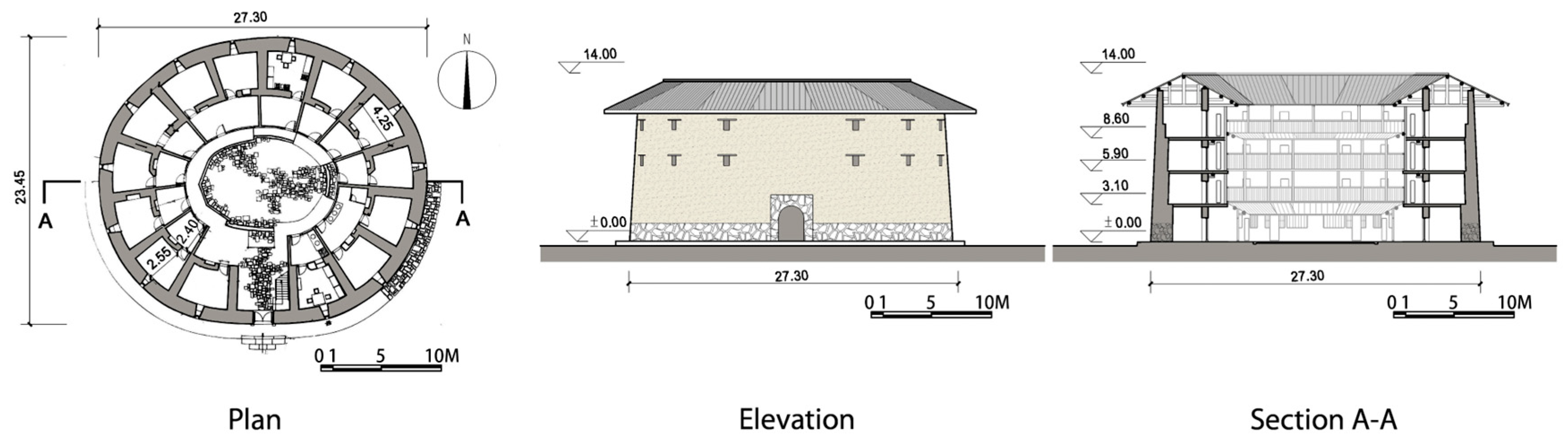
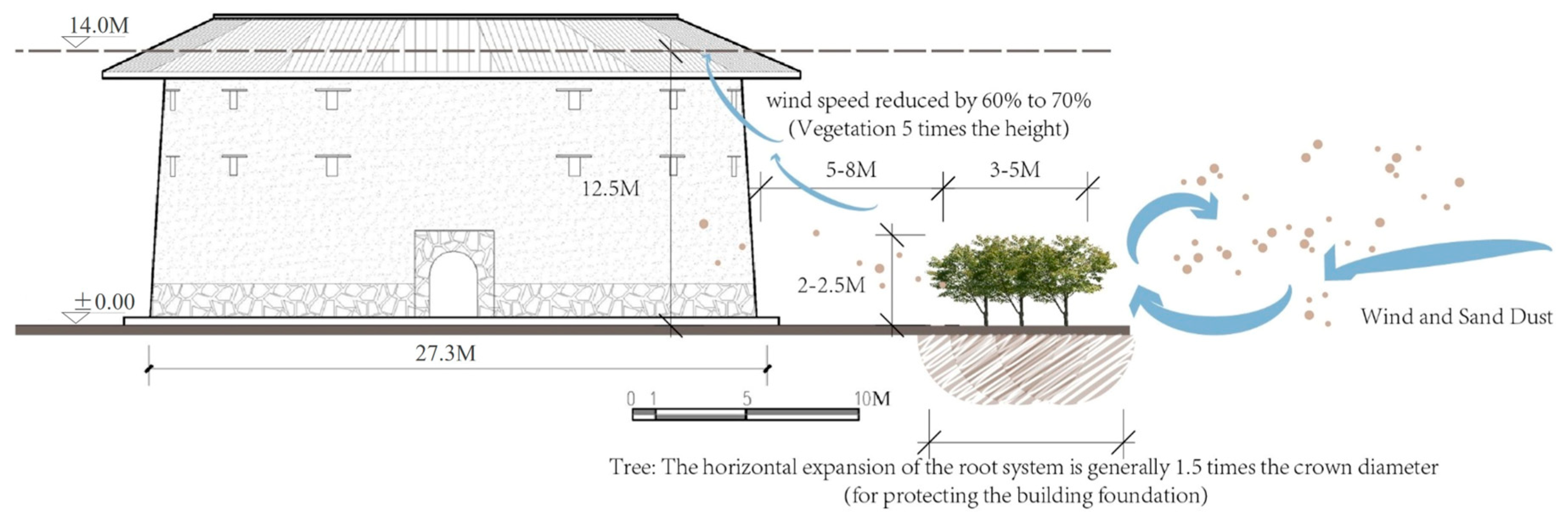
Although the Fujian Tulou has excellent traditional adaptability, it is increasingly threatened by climate factors such as wind erosion, soluble salt crystallization, dry–wet cycles, and acid rain. These problems accelerate the weathering decomposition, cracking and damage of the walls, and structural instability [8,9,10,11]. The Fujian Tulou is the largest and most intact group of earth-tamped buildings in existence, although its wall thickness exceeds 1.5 m (Figure 2).
In view of this, the exploration of the durability of Tulou not only requires research regarding the material, but also should be regarded as a comprehensive process of considering microclimate, wall orientation, and traditional admixtures working together.

1.2. Review of Durability Research

Currently, academic research on the durability of rammed-earth architecture has gradually expanded its perspective from the performance of a single material to a multi-dimensional level that encompasses the interaction between the building structure and the environment.
At the micro-level of materials, Rescic et al. (2021) and Guo (2024) demonstrated the role of plant fibers and biopolymers in enhancing the crack resistance and bonding strength of rammed earth [12,13]; Cervilla-Maldonado et al. (2025) further pointed out that agricultural fibers have potential value for improving the pore structure of rammed earth and enhancing structural stability [14]; while Luo et al. (2021)’s research revealed the impact of salt corrosion and dry–wet cycling environments on the deterioration of rammed earth, emphasizing the importance of material stabilization treatment [9]. These studies provided solid scientific evidence for clarifying the material basis of the durability of rammed earth.
At the architectural level, Porretta et al. (2022) and Lin and Wu (2023), from the perspective of spatial form and structure, revealed the thermal buffering effect formed by the thick walls and enclosed layout of Fujian’s earth buildings [1,3]. Chen et al. (2025) extended the research perspective to the settlement scale, revealing the dynamic adaptation mechanism between architectural form and climate response, highlighting the influence of the synergy between structure and environment on durability [4]. Lin et al. (2024) further compared the architectural types and regional structural strategies of different defensive rammed-earth dwellings, demonstrating regional differences in form adaptability and structural robustness [15].
Meanwhile, the research focus gradually extended to macro-ecological and sustainable dimensions: Arduin et al. (2022), through a coupled analysis of material life cycle and microstructure, pointed out that the environmental performance and long-term durability of rammed-earth materials are intrinsically related [16]; Wan et al. (2022) and Bredenoord and Kulshreshtha (2023) emphasized that sustainable construction strategies play a key role in extending the building’s lifespan and enhancing environmental adaptability [11,17].
The above three durability research dimensions are advanced through different yet complementary research approaches. The microstructure research mainly employs techniques such as scanning electron microscopy (SEM), X-ray diffraction (XRD), and accelerated weathering experiments to reveal the degradation pathways of materials [18]; the architectural-level research utilizes parametric modeling and structural analysis methods to explore the interaction mechanism between rammed-earth and wooden components [19]; the microclimate research combines energy simulation, life cycle assessment, and AI-driven environmental monitoring technologies to clarify the synergistic relationship between temperature and humidity fluctuations and material responses.
Although these studies have laid the foundation for the research on rammed-earth architecture, they all have three common limitations: (1) They focus on exploring the environmental adaptability by concentrating on a single climatic factor (such as solar radiation, ventilation, or rainfall), but ignore the intrinsic connection between this and material degradation; (2) although they pay attention to the reinforcing effect of natural fiber admixtures, they do not systematically reveal the mechanism of their association with the building environmental performance; and (3) when discussing architectural typology and orientation, they often regard them as static architectural attributes rather than variables dynamically coupled with climate processes and material performance. Therefore, the current academic community has not yet formed a comprehensive research framework integrating the three dimensions of “microclimate-orientation-local additives”, making it difficult to comprehensively explain the comprehensive durability mechanism of rammed-earth architecture.
In this context, the innovation of this study lies in integrating the aforementioned scattered research findings. Focusing on Fujian Tulou as the core research object, this study aims to construct a comprehensive analytical framework of “microclimate–orientation–microscopic material characteristics” to reveal the unique climate–material synergy. Its main contributions include:
(1)
Analyzing the microclimate adaptation mechanism of rammed-earth walls, and illustrating how monsoons, solar radiation, and humidity changes induce surface deterioration characteristics of rammed-earth walls;
(2)
Revealing the mineral and elemental composition of rammed-earth walls from a microscopic material perspective, and exploring the intrinsic causes of the distinct properties and formation mechanisms of wall surfaces in different orientations;
(3)
Proposing precise protection strategies for different environments based on orientation characteristics. By integrating microclimatic data and material performance parameters, it provides a reference for the scientific protection of Tulou buildings.
This study puts forward a novel, comprehensive analytical approach: the durability of rammed-earth building surfaces is not the result of a single material or climatic factor, but the product of the coevolution of climate and materials. This not only deepens our understanding of the durability mechanism of Fujian rammed-earth buildings but also provides a replicable and applicable research paradigm for the design and protection of contemporary sustainable rammed-earth buildings.

2. Materials and Methods

2.1. Study Area: Xiashi Village, Pinghe County, Zhangzhou City

2.1.1. Location

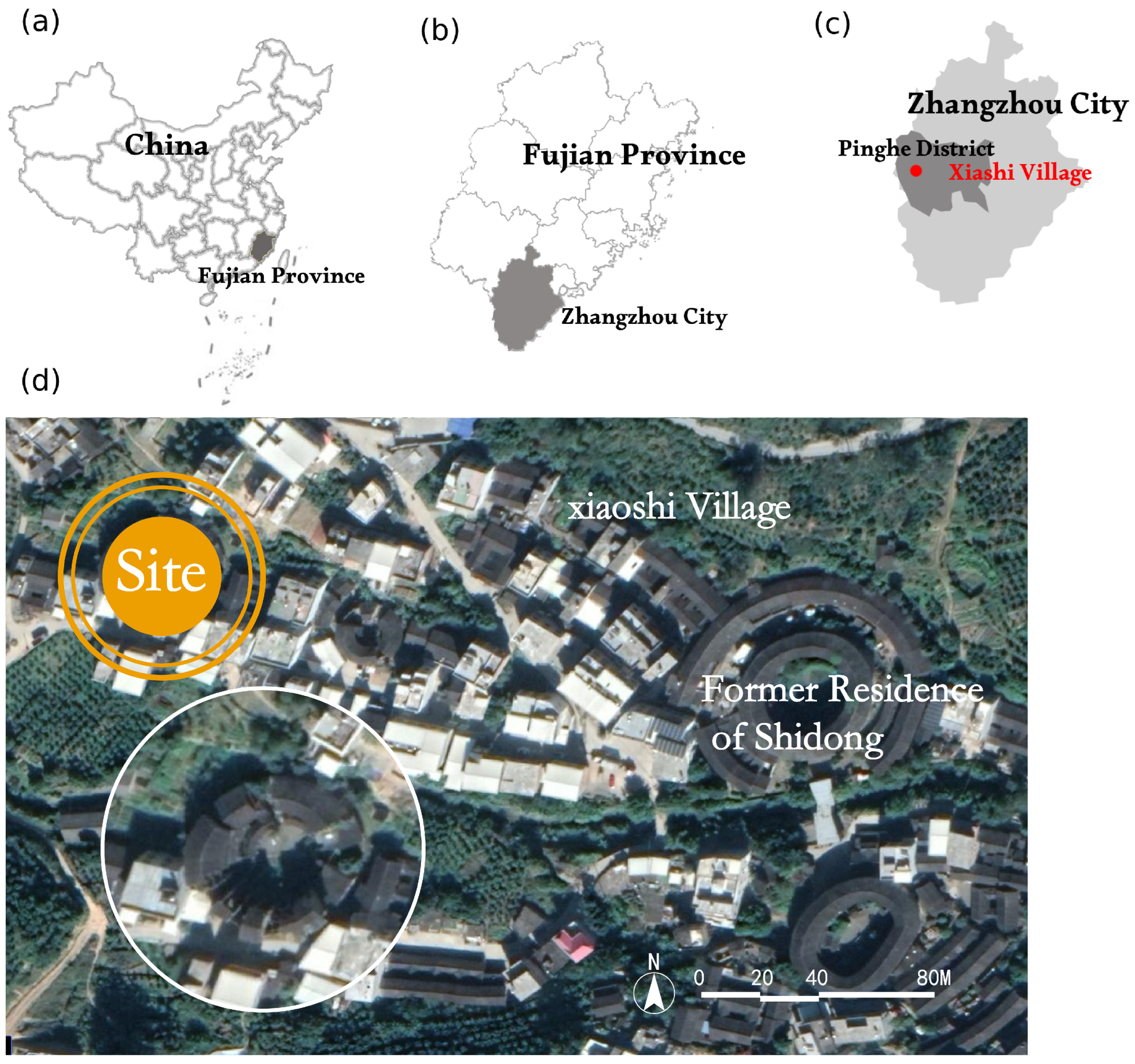
Xiaoshi Village is located in Pinghe County, Zhangzhou City, southern Fujian Province (approximately at 24°17′–24°25′ North latitude, 117°17′–117°24′ East longitude) (Figure 3). This settlement is situated within a semi-enclosed basin on the mountainous terrain, with terraced slopes intersecting and interweaving with low-lying river valleys and plains, forming a traditional landscape where agricultural land and settlements are alternately distributed. This landform pattern has shaped a unique local wind channel effect and micro-hollow area microclimate, which significantly regulates the movement of the near-ground air currents and the retention of humidity. Relevant studies on the selection of rural settlements also indicate that the terrain profoundly influences the orientation and construction methods of traditional buildings in the Hakka region [20].

2.1.2. Historical Background

The area around Xiaoshi Village, including Pinghe County, is densely populated with Hakka rammed-earth architectural complexes (earth houses). Their forms and construction techniques have gradually evolved, stabilized, and matured over hundreds of years of local practice. The earth houses in Xiaoshi Village are typically circular or square courtyards, and they also possess the complete functions of earth houses. This form vividly interprets the organic unity of social organizational structure and environmental response wisdom.

2.1.3. Current Status and Socio-Cultural Context

Today, Xiaoshi Village still retains a large number of traditional rammed-earth buildings and earth houses. Their preservation conditions cover various situations, such as intact structures, partial damage, and completed restoration, and the village is gradually being included in multiple development processes of heritage protection, tourism development, and rural revitalization. This trend not only creates opportunities for the protection of Fujian earth houses and earth architecture, but also brings pressure in terms of management and maintenance [21].
At the same time, relevant assessments on the life cycle and sustainability of rammed-earth buildings clearly indicate that the protection of architectural heritage, ecological restoration, and social renewal need to be advanced in a coordinated manner, and should be combined with the actual situation of these buildings, such as Xiaoshi Village in Pinghe County, Zhangzhou City, Fujian Province (Figure 4).

2.2. Field Investigation and Sample Collection

The sample was selected from the residence of Shi Dong. According to the records of the Xiaoshan Yuan Family Research Association in August 2012, in the third year of the Xianfeng era of the Qing Dynasty, Shi Dong was promoted to the position of supervisory official of Fujian and Zhejiang provinces. His residence was located here. The architectural layout of the residence adopted the typical closed circular layout of the Hakka style. The average thickness of the external rammed-earth walls was approximately 1.8–2.0 m.
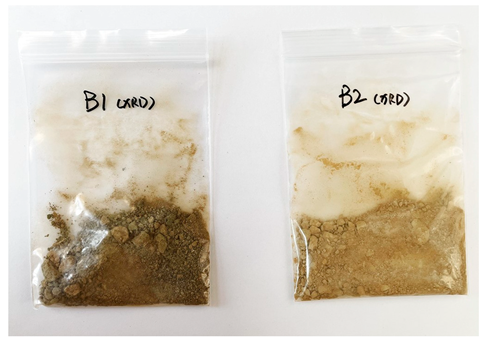
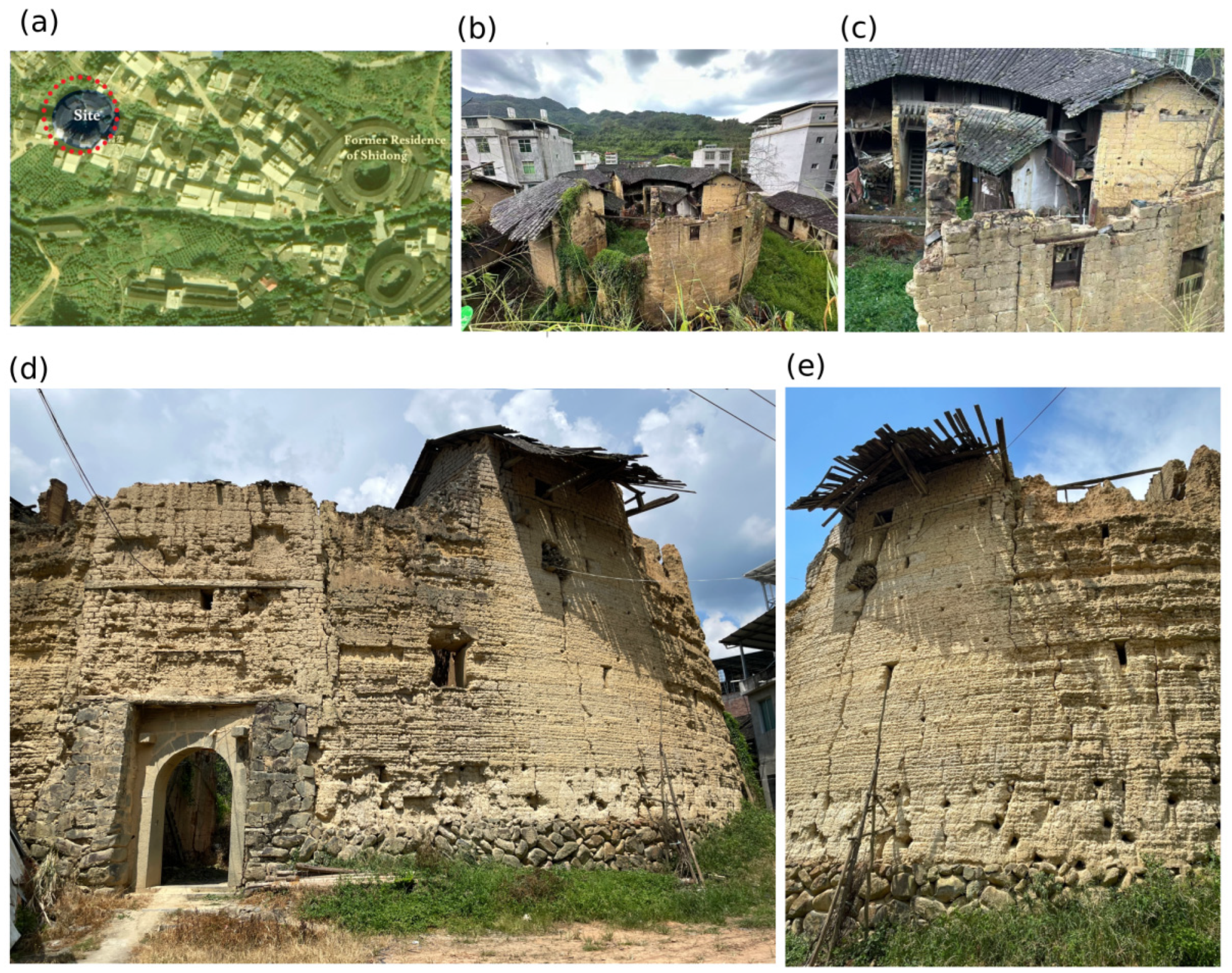
To quantitatively analyze the relationship between orientation, microclimate, and material composition, a systematic sampling plan was implemented in this study. Sampling points were selected on the four facades of Tokuji (east, west, south, and north) (Figure 5), and a set of samples was collected on the inner and outer surfaces of each facade. The researchers used tools to chisel the surface layer of the rammed-earth wall to collect powder. The sampling depth was controlled at 10 ± 0.5 mm [22], and the sample weight at each point was approximately 10 ± 0.2 g. After sample collection, they immediately sealed them in a 100 mm × 200 mm inert polyvinyl chloride bag to prevent contamination and humidity exchange, and all samples were encoded according to their location (e.g., A1: inner, A2: outer, B1: inner, and B2: outer).

2.3. Experiment Content

(1)
On-site sampling
Soil samples were collected from the ancient buildings in Xiaoshu Village and were sealed for preservation. This was done to ensure that the samples could truly reflect the original state of the materials under different directions and different levels of light shading, and to provide representative samples for subsequent experiments. This study collected powder samples from the indoor and outdoor surfaces of the rammed-earth walls in the east, south, west, and north directions of the tower. A total of 8 core samples were set up (A1/A2: indoor/outdoor on the south side, B1/B2: indoor/outdoor on the west side, C1/C2: indoor/outdoor on the north side, and D1/D2: indoor/outdoor on the east side) (Figure 6).
(2)
Environmental and Material Analysis
The microclimate research mainly focuses on two dimensions: thermal radiation (thermal radiation analysis/sunlight analysis) and wind environment (CFD simulation). The analysis combines on-site investigations, climate environment simulations, and microscopic material testing systems to explore the differences in the state of rammed earth under the influence of monsoon and sunlight at different orientations. The research mainly observes whether climatic factors cause deterioration phenomena such as cracking, loosening, weathering, and moisture absorption of the rammed-earth structure. Through thermal radiation simulation analysis of the differences in light duration for each orientation, and with the help of CFD wind environment simulation, it reveals the erosion degree of rammed-earth walls caused by wind pressure and wind–climate coupling effects throughout the four seasons. Finally, the corresponding relationship between microclimate parameters and the performance of rammed-earth materials is established, clearly defining the complete process of deterioration caused by environmental influences.
(3)
Durability Analysis of Rammed Earth
This study comprehensively employed three experimental methods: scanning electron microscopy (SEM), X-ray diffraction (XRD), and X-ray fluorescence (XRF). Through SEM, the microscopic structure of the samples (such as cracks and pores) was observed. Using XRD, the mineral composition and content were determined, and the enhancing effect of local additives, such as bamboo strips and wood strips, on the mineral stability was analyzed. XRF was used to analyze the composition and distribution of elements and oxides in the soil and samples. The above microscopic test data were coupled with microclimate parameters of the building and the relative wind intensity in different directions to establish the correlation between the microscopic structure, mineral, and oxide composition characteristics and the durability of the material. This study elucidates the internal mechanism of durability differences at different locations from a microscopic perspective. This comprehensive research approach aligns with the multi-scale environmental-material response analysis research direction advocated in the heritage protection field in recent years [23].
(4)
Summary of research results
The experimental data obtained will be combined with microclimate parameters, such as relative wind intensity in different directions, to explore the characteristics of microscopic element compositions, such as mineral type and oxide content. By integrating data from multiple dimensions of experiments, this study clarifies the synergistic mechanism of microclimate conditions, wall orientation, and local additives on the durability of rammed-earth surfaces.

3. Results

3.1. Microclimatic Effects Analysis

3.1.1. Climate Characteristics and Wind Exposure

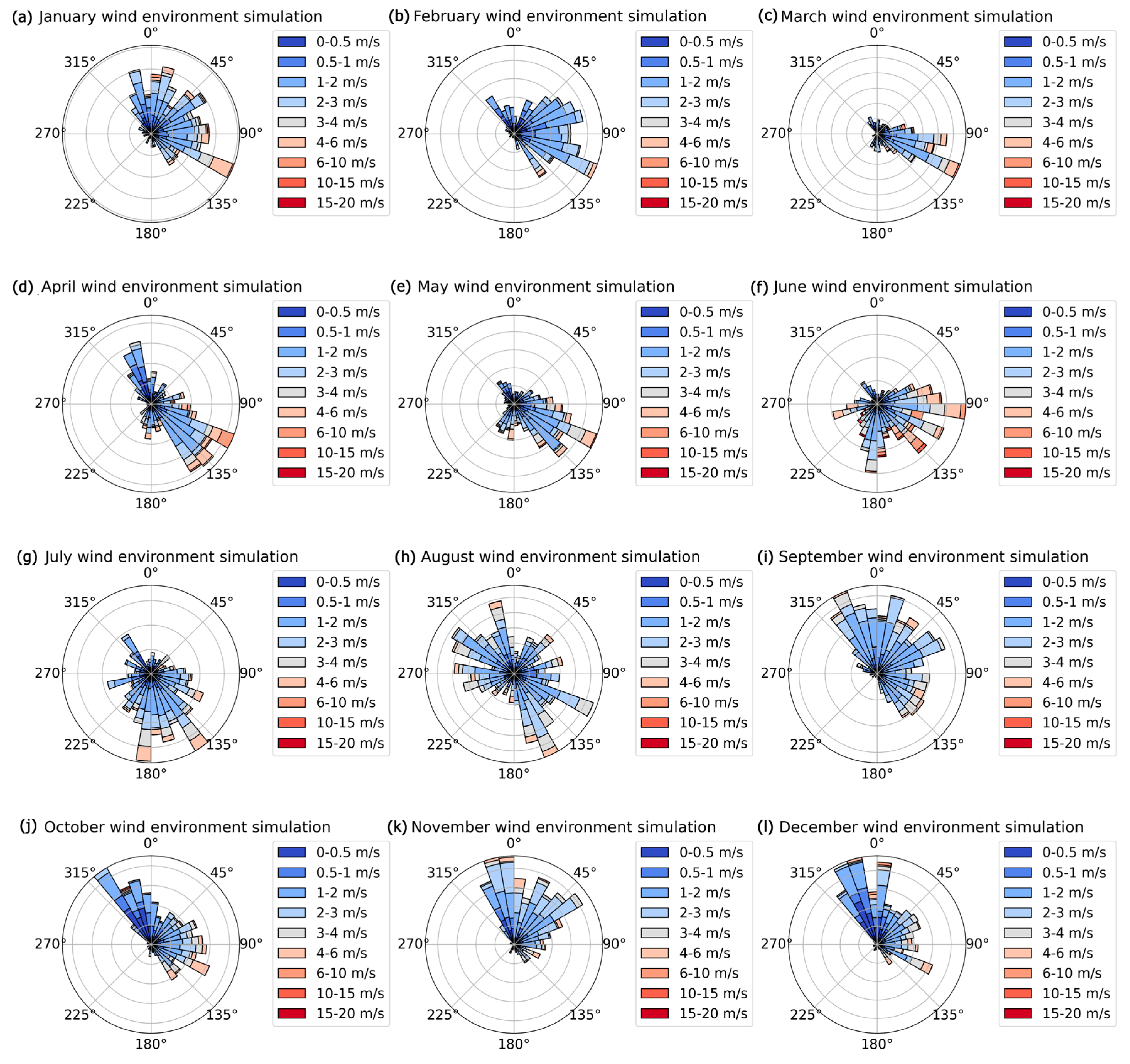
In terms of climate, Xiaoshan Village is under the influence of the South Asian Monsoon system and has typical characteristics of hot and humid summers and mild and humid winters. This directly affects the durability of the rammed-earth buildings [24,25]. Researchers downloaded meteorological data for the area where the earth buildings are located from the open professional meteorological analysis website (Energyplus) of the US Department of Energy (the microclimate analysis data in the following text all use this source). According to the meteorological data, from May to September each year, high temperatures (27–33 °C), intense solar radiation (600–800 Wh/m2), and frequent convective rainfall occur simultaneously with the prevailing south–southwest and southeast winds (wind speed approximately 2–14 m/s). Based on the meteorological data, researchers drew the annual wind direction rose diagram for Zhangzhou City, where the earth buildings are located (Figure 7).
As shown in the Figure, the southeast wind is the most significant during this period from May to September. In contrast, during the cool season from December to February of the following year, the north wind and northeast wind dominate, with an average lower wind speed (1–9 m/s). The seasonal shift in wind direction, combined with the distribution characteristics of regional rainfall and solar radiation, leads to the formation of dry–wet cycles on the wall surface, which further promotes the expansion of microcracks on the wall surface [26,27].

3.1.2. Wind Environment (CFD Test)

The influence of wind environment on buildings is mainly reflected in the wind pressure on the wind-exposed surfaces, and the synergistic effect of wind and rainfall is the core factor leading to the wetting of rammed-earth wall surfaces [28]. When rainwater carried by the wind comes into contact with the surface of the rammed-earth wall, it will cause the rammed-earth surface to get wet, and the unevaporated rainwater will form surface runoff along the curved surface of the circular Tulou, further enhancing the wetting effect on local wall areas. After repeated cycles of wetting and drying over a long period of time, the erosion and detachment of the surface layer of the rammed earth will accelerate. To further explore the specific effects of wind and rain on walls of different orientations, researchers used the WINAIR4 (CFD) fluid dynamics module of the Ecotect Analysis 2011 software for building environment simulation analysis to analyze the air flow simulation of the rammed-earth building. The Ecotect Analysis software is widely used in building performance analysis and simulation, and it can efficiently and intuitively view and analyze the calculation results. CFD is the abbreviation of Computational Fluid Dynamic, and nowadays, the wind fluid calculation technology has become very mature [29].
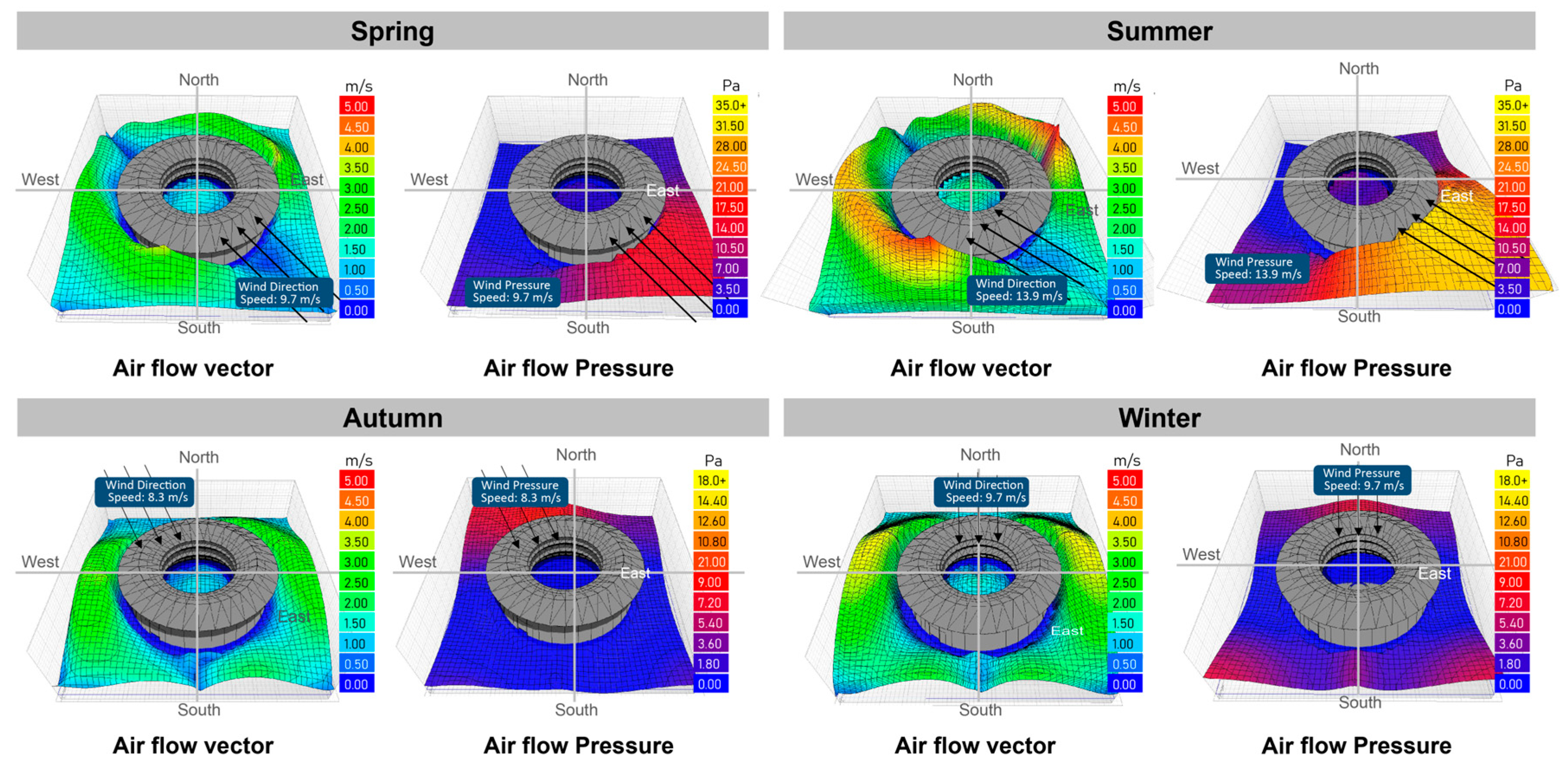
According to meteorological data, the southeastern coastal area where the terraced houses are located (23° N–28° N) is influenced by the subtropical monsoon climate. The wind patterns and rainfall distribution throughout the year are significant, and the synergy between wind and rain is a key factor affecting the durability of the earthen buildings. This is based on average wind speeds of typical climatic days in four seasons. Spring (21 March, 120° wind direction, and 9.7 m/s wind speed), summer (21 June, 140° wind direction, and 13.9 m/s wind speed), autumn (21 September, 345° wind direction, and 8.3 m/s wind speed), and winter (21 December, 0° wind direction, and 9.7 m/s wind speed), combined with the regional annual precipitation of 1200–1800 mm and the climate characteristic of 60% of the rainfall occurring in summer, the analysis is conducted from three aspects: wind-weather conditions, wind pressure distribution in different directions and rainfall distribution, and the comprehensive response of the buildings (Figure 8).
Spring/Summer: In spring, when the wind direction is 120° (southeastward with a slight eastward deviation), it corresponds to the rainy season (March to April), with an average monthly rainfall of 150–200 mm. This wind direction makes the southeast side of the earthen buildings the main windward side. At a wind speed of 9.7 m/s, a wind pressure of 56.5 Pa is formed. In spring, the outer surface of the rammed-earth walls is prone to erosion by the southeast wind direction and the rainfall during the rainy season, resulting in a “weak wind-driven rain” effect. The airflow flows along the curved wall surface of the circular earthen building, with uniform positive pressure distribution. In summer, when the wind direction is 140° (southeastward with a slight southward deviation) and the typhoon season (June to September) occurs, the average monthly rainfall is 300–400 mm. The southeast side of the earthen building becomes the core windward side. At a wind speed of 13.9 m/s, the wind pressure reaches 115.9 Pa (the maximum value in all four seasons). According to the direct proportion relationship between wind load and the square of wind speed, the wind pressure under this wind speed is significantly higher than that in other seasons. The 140° wind direction forms the best impact angle with the southeast wall surface, and the airflow carries a large number of raindrops, forming an impact angle of 15–30°. The combined action of high wind speed, large rainfall, and optimal impact angle makes the surface of the southeast wall the area with the highest erosion intensity caused by wind-driven rain and runoff throughout the year.
Autumn/Winter: In autumn, the 345° wind direction (northwest–northeast) corresponds to the dry and cold air current during the decline period of the summer wind. The monthly average rainfall is 80–120 mm. This wind direction makes the northwest side of the rammed-earth wall the windward side. At a low wind speed of 8.3 m/s, the wind pressure is only 41.3 Pa (the minimum value in all four seasons). At this time, the airflow is affected by the “negative pressure drainage” effect of the courtyard of the earth house, and most of the airflow flows to the backwind side. The wind-driven rain effect is weak, and raindrops fall vertically. The erosion effect of wind and rain on the rammed-earth wall is relatively mild. In winter, the 0° wind direction (north) is the dominant wind direction in winter, with a monthly average rainfall of 50–80 mm. The north side wall serves as the windward side. At a wind speed of 9.6 m/s, the wind pressure is 55.3 Pa. The circular flow structure of the circular earth house significantly reduces wind resistance and significantly weakens the impact of the north wind.
It can be seen that the rammed-earth walls facing different directions on the surface of the earth house produce surface differences due to the seasonal climate influence. In the wind and rain environment of the earth house throughout the year, the surface of the rammed-earth wall on the southeast side of the south side is the area most easily affected by wind and rain.

3.1.3. Thermal Radiation Analysis

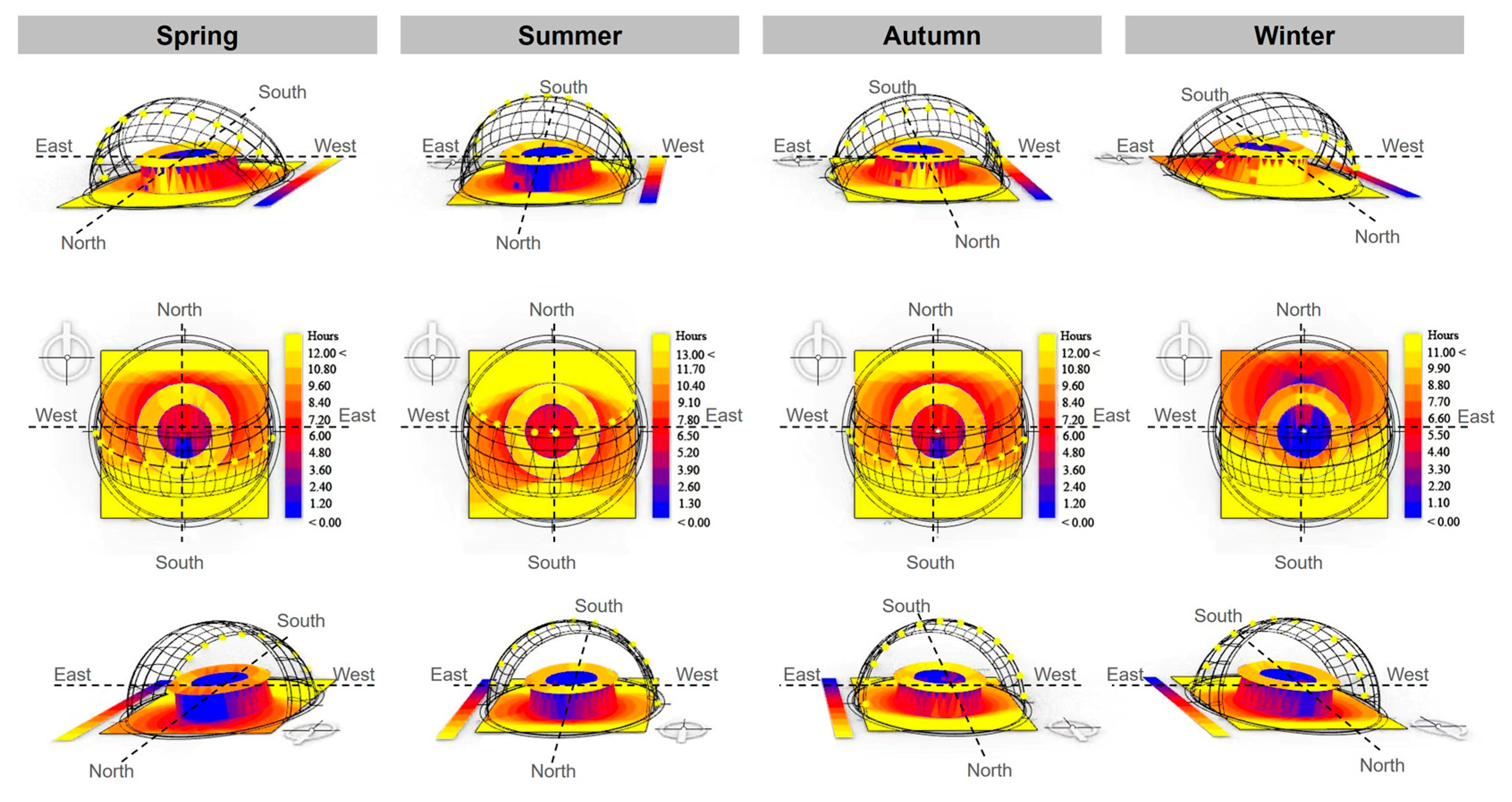
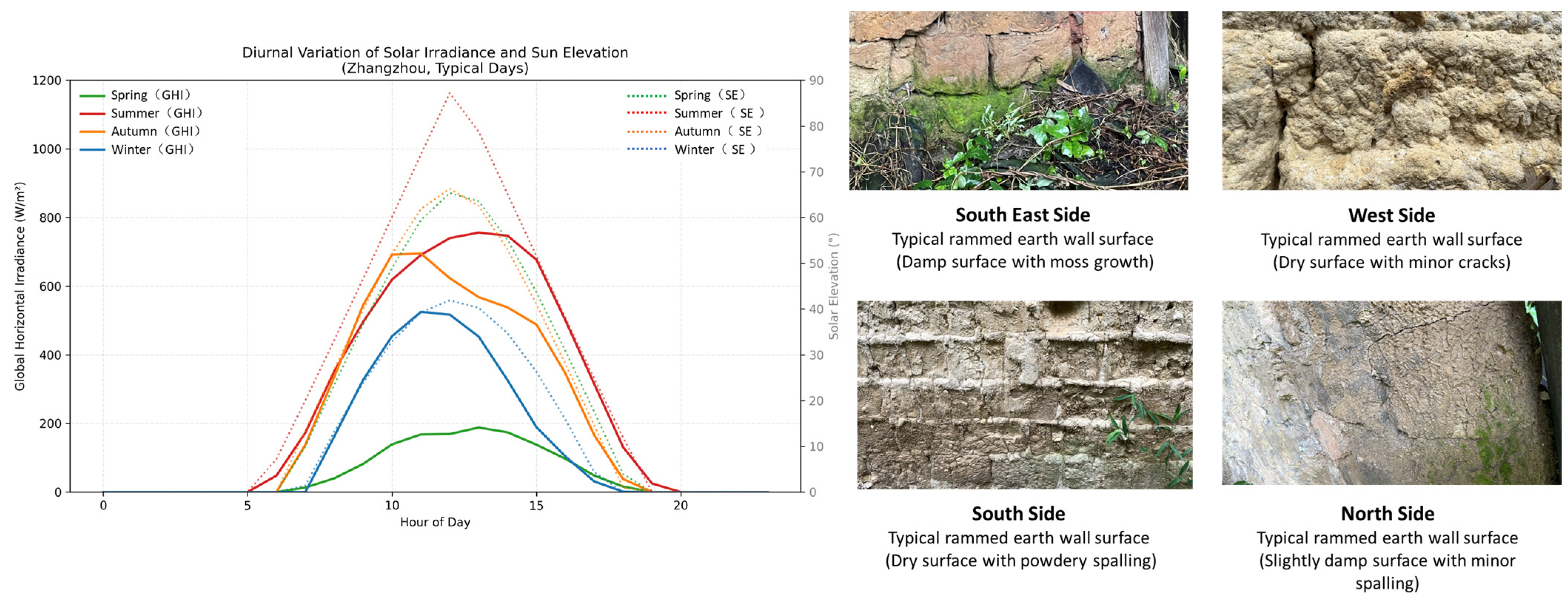
The sunlight changes the duration of light exposure and radiation intensity on the illuminated surface of the rammed-earth wall, affecting the rate of water evaporation from the wall and thereby causing defects such as drying shrinkage and particle detachment [30,31]. Researchers used the free open-source environment plugin Ladybug Tools of Rhino Grasshopper to simulate the sunlight environment of the earth house. Based on the meteorological data of the area where the earth house is located: spring (southern side ≥ 8 h, west side 6.5 h, east side 5 h, and north side 2 h), summer (northern side 7–8 h, east side 4–6 h, west side 3–5 h, and southern side 1–3 h), autumn (southern side ≈ 10 h, west side 7–8 h, east side 4–6 h, and north side 1–3 h), and winter (southern side ≈ 10 h, east side 7–8 h, west side 6–7 h, and north side 0–2 h) of the sunlight simulation data; combined with the previous wind-weather environment simulation results, the system analyzed the temporal and spatial distribution patterns of the sunlight environment and revealed the influence of sunlight on the wall surface (Figure 9).
The seasonal variations in solar altitude angle and day length in the region where the terraced houses are situated give rise to pronounced seasonal and orientation-dependent differences in sunlight duration and illuminated surfaces [32,33]. These variations exhibit a high degree of coordination with the local climatic characteristics.
In spring, the solar altitude angle gradually increases (ranging approximately from 30° to 50°), with peak solar radiation reaching around 200 W/m2 and an average relative humidity of 82.7%. The southern facade serves as the primary illuminated surface, with a sunlight duration of no less than 8 h, followed by the western (6.5 h) and eastern (5 h) facades, while the northern facade receives the least sunlight (2 h). Solar intensity remains relatively low during this season, and when combined with the high air humidity of the rainy season (average relative humidity 82.7%), an environment characterized by “low sunlight and high humidity” is readily formed. Zhangzhou is located on the southeastern coast of China. In spring, it is frequently influenced by “back-swept weather” or the precursor to the rainy season, resulting in thick cloud cover and a large proportion of diffuse radiation. Considering the monsoon influence mentioned earlier, the dominant wind direction in spring is from the southeast. Consequently, during spring, when the terraced houses are comprehensively affected by wind, rain, and sunlight, the outer surfaces on the southeast-facing side are most susceptible to moisture accumulation [34].
Summer: The solar altitude angle reaches its annual maximum (approximately 60–80°), with a peak solar radiation intensity of about 760 W/m2 and an average relative humidity of 81.5%. The northern facade is shaded by eaves, which mitigates direct solar radiation, resulting in a daylight exposure duration of 7–8 h for the rammed-earth wall. In contrast, the southern facade is subject to both intense direct radiation and eave shading, leading to a significantly shorter daylight exposure duration of only 1–3 h. The summer season is characterized by high solar radiation intensity, coupled with intermittent rainfall during the typhoon period, creating a “high solar radiation–high humidity humidity” environment. While high solar radiation accelerates water evaporation, frequent typhoon-associated rainfall causes repeated cycles of moisture absorption and desiccation in the wall, potentially loosening the internal structure of the rammed earth. Despite the shorter daylight exposure on the southern facade, the alternating and high-humidity conditions have, as observed on-site, induced surface softening and powdery peeling of the rammed earth.
Autumn: The solar altitude angle decreases to the range of 40–60°, with a peak solar radiation intensity of approximately 700 W/m2 and an average relative humidity of 76.3%. The southern facade serves as the primary daylight-receiving surface, with an exposure duration of about 10 h (the longest across all seasons), followed by the western (7–8 h) and eastern (4–6 h) facades, which also receive sufficient illumination. The northern facade remains a low-light area with only 1–3 h of exposure. A reduction in air humidity during autumn creates a “prolonged solar radiation–low humidity” environment. Prolonged radiation and low humidity maintain the wall in a dry state, reducing the moisture content of the rammed earth. On-site observations indicate that the southern and western facades exhibit the most pronounced drying and peeling phenomena, with the formation of some shallow cracks.
Winter: The solar altitude angle is at its annual minimum (approximately 20–40°), with a peak solar radiation intensity of about 520 W/m2 and an average relative humidity of 76.5%. The southern facade has the largest daylight-receiving area, with an exposure duration of approximately 10 h, while the eastern (7–8 h) and western (6–7 h) facades receive uniform illumination. The northern facade has essentially no effective daylight exposure (0–2 h). Prolonged radiation results in a moderate rate of water evaporation, keeping the southern facade relatively dry. The northern facade of the wall remains slightly moist, and its peeling condition is less severe compared to that of other facades.
This study reveals that sunlight induces the degradation of the physical and mechanical properties of rammed-earth walls by modulating the rate of water evaporation fluctuations within the walls. The underlying mechanism can be summarized as a “drying shrinkage–structural loosening–particle detachment” process. The south-facing walls (during autumn and winter) and west-facing walls (during spring and autumn) experience more concentrated solar radiation, leading to more pronounced drying, particle detachment, and cracking. In contrast, the north-facing walls, which are in a low-illumination and slightly humid environment, exhibit superior durability (Figure 10).
Field sampling and observations across different wall orientations further validate these findings.
The south-facing and southeast-facing facades, directly exposed to the prevailing monsoon and wind-driven rain, display distinct water erosion gullies on the surface, accompanied by moss growth. The west-facing rammed-earth surface shows chipping and minor cracks. The south-facing surface undergoes powdery peeling after prolonged exposure to intense solar radiation.

3.2. Analysis

3.2.1. SEM Microstructure Analysis

To investigate the influence of orientation on the microscopic particle size characteristics of rammed-earth materials, the study used a scanning electron microscope (SEM) to observe the microscopic particle size of rammed-earth samples in different orientations. The particle size is directly related to the adhesion force between particles. The higher the proportion of fine particles and the more uniform the particle size, the larger the contact area between particles, and the denser the rammed-earth structure [35]. Powder samples were collected separately from indoor and outdoor wall surfaces of the earthen building at four orientations (east, south, west, and north). Systematic and standardized microstructural characterization tests were performed, with 10 parallel samples prepared at each sampling position. Scanning electron microscopy (SEM) images were acquired at magnifications ranging from 2.00 to 50.00 KX, followed by particle size distribution analysis on sample surfaces [36,37].
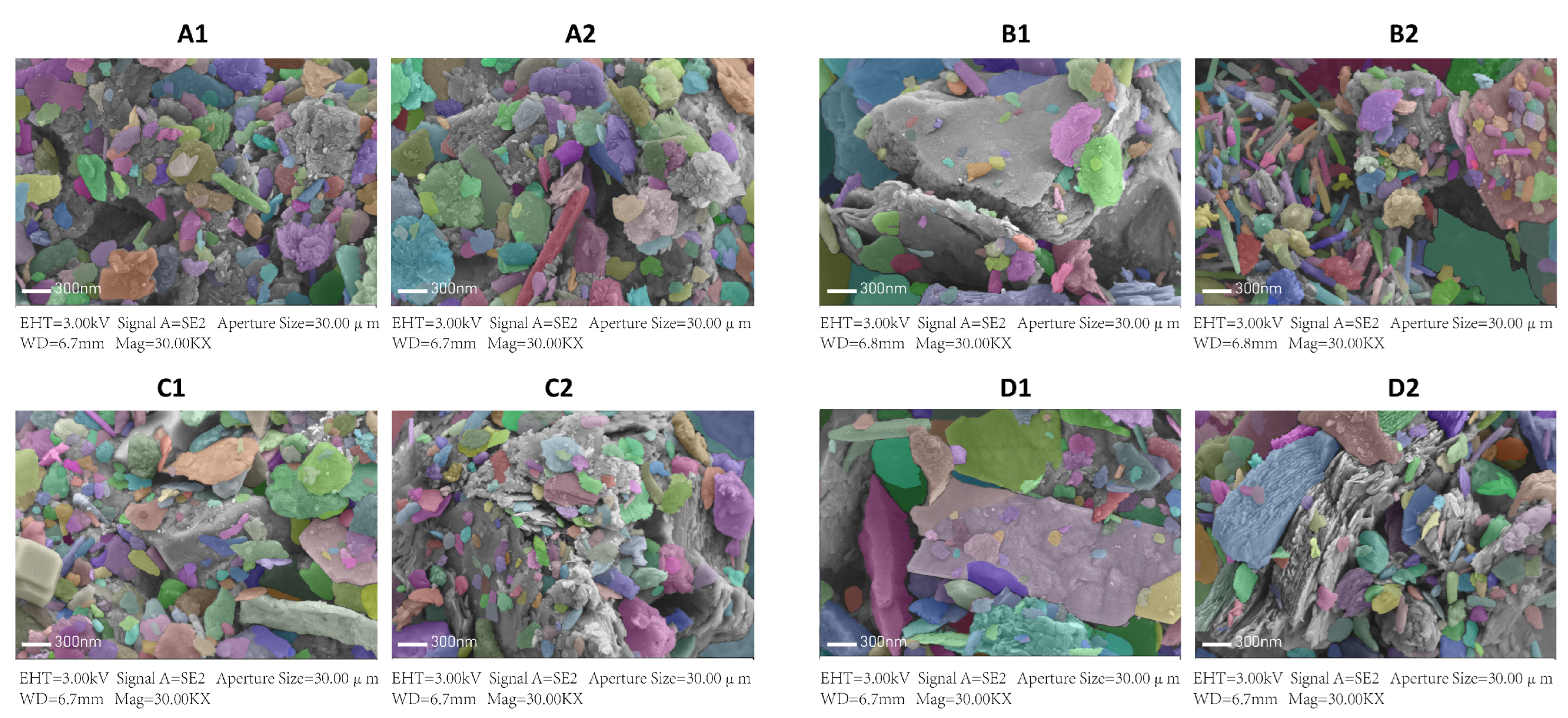
In this study, two observation scales of 300 nm (the scale of original particles) and 1 μm (the scale of particle aggregates) were selected. The core particle size parameters (average particle size, particle size standard deviation, and coefficient of variation (CV)) of each sample were statistically analyzed to reveal the intrinsic correlation with the particle size characteristics. The core detection results are as follows.
(1)
300 nm observation scale (characteristics of primary particles)
Based on the SEM imaging and particle size statistics data, it can be observed that there are significant differences in the particle size characteristics of samples in different orientations.
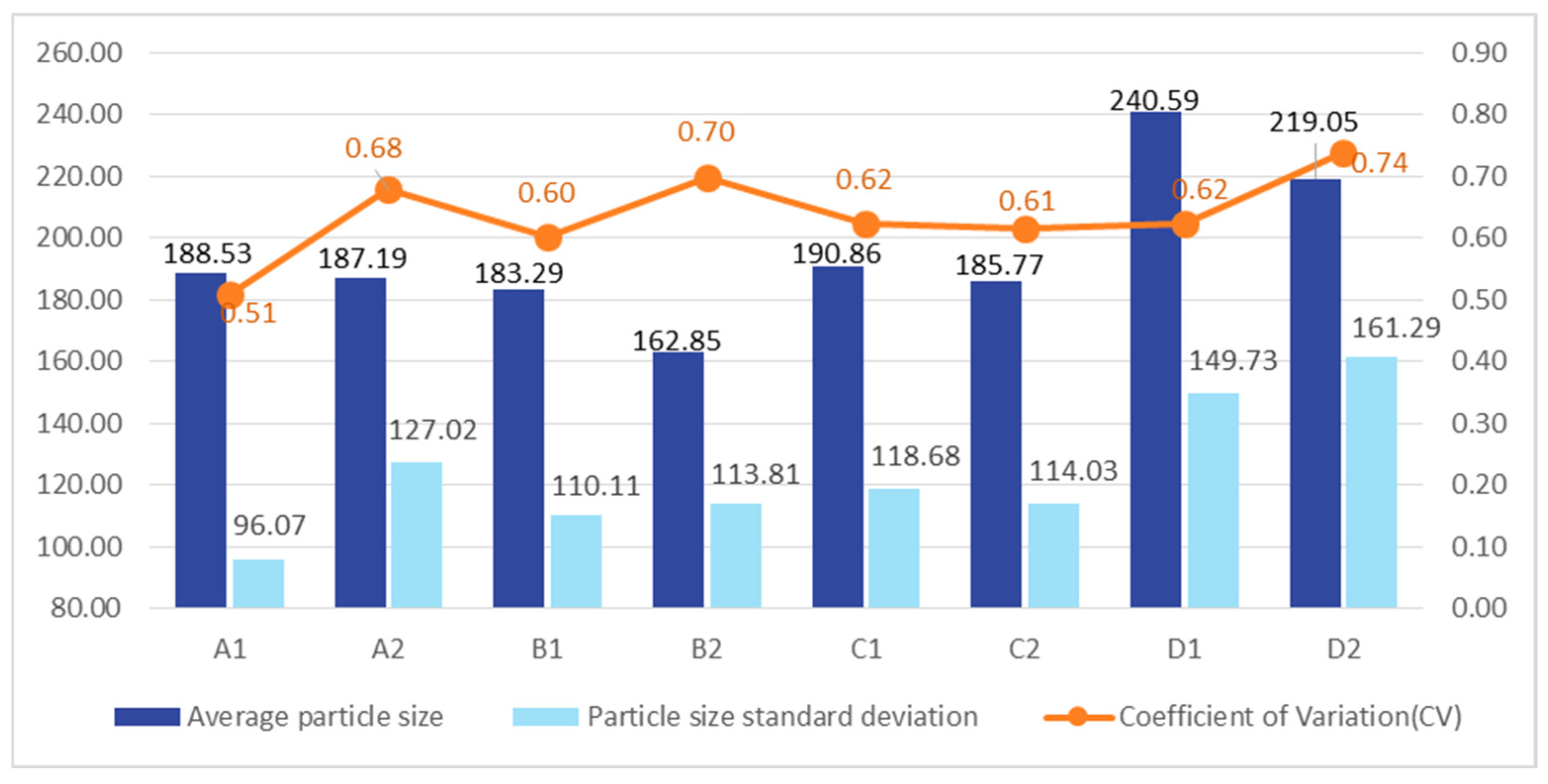
Regarding the average particle size of the samples: The average particle size of the samples facing east is the largest overall. Among them, the average particle size of the indoor sample D1 facing east is the largest (240.59 nm), and the average particle size of the outdoor sample D2 facing east is 219.05 nm. The indoor sample C1 on the north side has the second largest average particle size (190.86 nm). The average particle size of the south-facing samples (indoor A1: 188.53 nm, outdoor A2: 187.19 nm) is in the middle; the average particle size of the outdoor sample C2 on the north side is 185.77 nm. The average particle size of the indoor sample B1 on the west side is 183.29 nm, and the average particle size of the outdoor sample B2 on the west side is the smallest (162.85 nm) (Figure 11).
The standard deviation of particle size in the eastward samples is the largest. Among them, the outdoor sample D2 in the eastward direction (161.29) stands out the most. The data indicates that the particle size dispersion of the original particles in the eastward direction is the highest. The standard deviation of the indoor sample D1 in the eastward direction is 149.73. The standard deviation of the indoor sample C1 in the north side is 118.68, the standard deviation of the outdoor sample B2 in the westward direction is 113.81, the standard deviation of the outdoor sample C2 in the north side is 114.03, and the standard deviation of the indoor sample B1 in the westward direction is 110.11. The standard deviation of the samples in the south direction is relatively low. Among them, the indoor sample A1 in the south direction has the smallest standard deviation (96.07), and the particle size distribution is the most concentrated. The standard deviation of the outdoor sample A2 in the south direction is 127.02 (Figure 12).
Regarding the coefficient of variation (CV): A smaller CV value indicates that the data deviates less from the average value, and the data is more stable and has better repeatability. A larger CV value indicates a greater degree of data dispersion and poorer stability. The CV value of the samples from the east direction is the highest. Among them, the outdoor sample D2 from the east direction (CV = 0.74) has the least uniform particle size distribution. The outdoor sample B2 from the west direction (CV = 0.70) and the outdoor sample A2 from the south direction (CV = 0.68) follow. The outdoor sample C2 from the north direction (CV = 0.61) and the indoor sample B1 from the west direction (CV = 0.60, relatively low) show that the original particle size distribution of B1 and C1 is relatively uniform. The indoor and outdoor sample A1 from the south direction (CV = 0.51) has the lowest CV value, indicating the most uniform particle size distribution.
Furthermore, the CV difference between indoor and outdoor samples in the southward direction was 0.17, and in the eastward direction it was 0.12. The CV differences for other directions were all less than 0.08. This indicates that there is a significant difference in the indoor and outdoor particle size distribution for samples in the southward and eastward directions.
(2)
2 μm observation scale (characteristic of particle agglomerates)
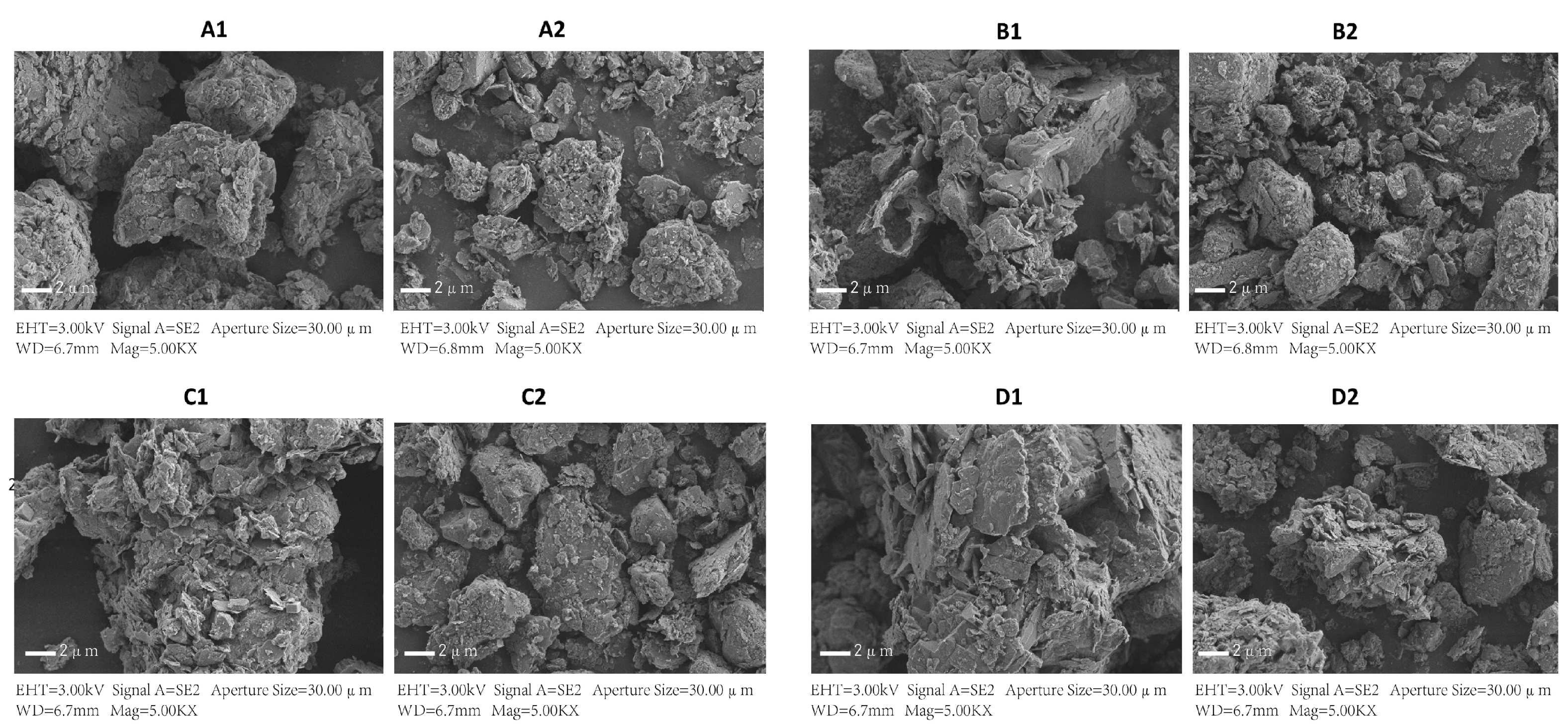
The 2 μm observation scale represents the spatial structure, aggregation form, and damage characteristics between individual particles, and it is a key indicator reflecting the integrity and deterioration degree of the earth-filled wall microstructure. The smaller and more dispersed the aggregates are, the weaker the adhesion force between the particles is, and the more prone they are to being damaged (Figure 13).
Combining SEM analysis with the original image data, the specific characteristics of the particle aggregates in the samples of different orientations of rammed earth are as follows.
Average aggregate particle size: At the same observation scale, from the SEM image pictures, it can be known that the overall indoor samples have a larger particle size than the outdoor samples. Among them, the south side (Group A) is the most obvious, and the west side (Group C) and the east side (Group D) are second. This indicates that for rammed-earth walls constructed with the same material, in different environments, the particle aggregate characteristics of the surface materials do indeed show differences in particle size (Figure 3). From the statistical data of the average aggregate particle size: the average particle size of the aggregates in the northward, south side indoor, and east side outdoor samples is larger.
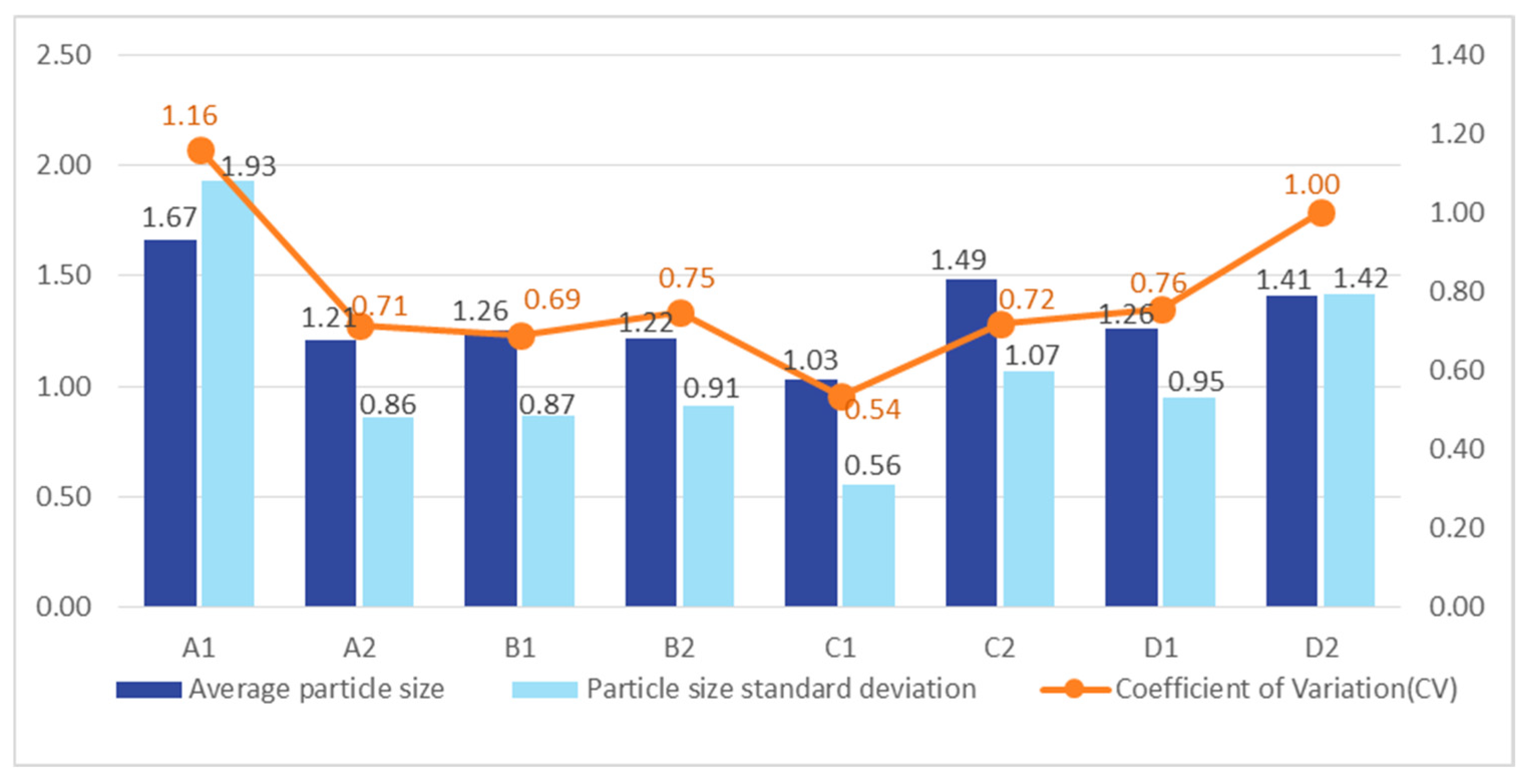
Among them, the southward indoor sample A1 (1.67 μm) is the largest, and the northward outdoor sample C2 (1.49 μm) and the eastward outdoor sample D2 (1.41 μm) are second. The particle sizes of the westward indoor sample B1 (1.26 μm) and the westward outdoor sample B2 (1.22 μm) are the same. The average particle size of C1 is the smallest (1.03 μm). The average particle size of D1 (1.26 μm) is in the middle. The average particle size of the southward outdoor sample A2 is 1.21 μm (Figure 14).
Particle size standard deviation: The standard deviation of the aggregate particle size in the south-facing indoor sample A1 is the largest (1.93), indicating that the dispersion of the aggregate particle size is extremely high. The west-facing indoor sample B1 (1.70) is second. The standard deviation of the east-facing outdoor sample D2 (1.42) and the east-facing indoor sample D1 (0.95) decreases successively. The standard deviation of the west-facing outdoor sample B2 (0.91) and the south-facing outdoor sample A2 (0.86) is relatively low, and the distribution of the aggregate particle size is relatively concentrated. The north-facing outdoor sample C2 (1.07) and the north-side indoor sample C1 (0.56) have the smallest standard deviation, among which the indoor sample C1 on the north side is the most concentrated.
Coefficient of variation (CV): The CV values of the aggregates in the outdoor samples on the east side (D2, CV = 1.00) and the indoor samples facing south (A1, CV = 1.16) are relatively high, indicating poor uniformity of particle distribution. The CV values of the indoor samples on the east side (D1, CV = 0.76), the outdoor samples on the west side (B2, CV = 0.75), the outdoor samples facing north (C2, CV = 0.72), and the outdoor samples facing south (A2, CV = 0.71) are similar, suggesting moderate uniformity of particle distribution. The indoor sample on the north side (C1) has the lowest CV value (CV = 0.54), indicating the most uniform distribution of aggregate particle sizes.
(3)
Correlation Analysis of Microclimate and Microscopic Particle Size Characteristics of Rammed Earth
By combining the microclimate characteristics (solar radiation, relative humidity, local wind speed, and local wind pressure) of the samples facing the outside (A2: south-facing, B2: west-facing, C2: north-facing, and D2: east-facing) with the SEM particle size detection data, the trend correlations between each microclimate factor and the microscopic particle size characteristics of the rammed earth can be observed. The core correlation patterns are as follows.
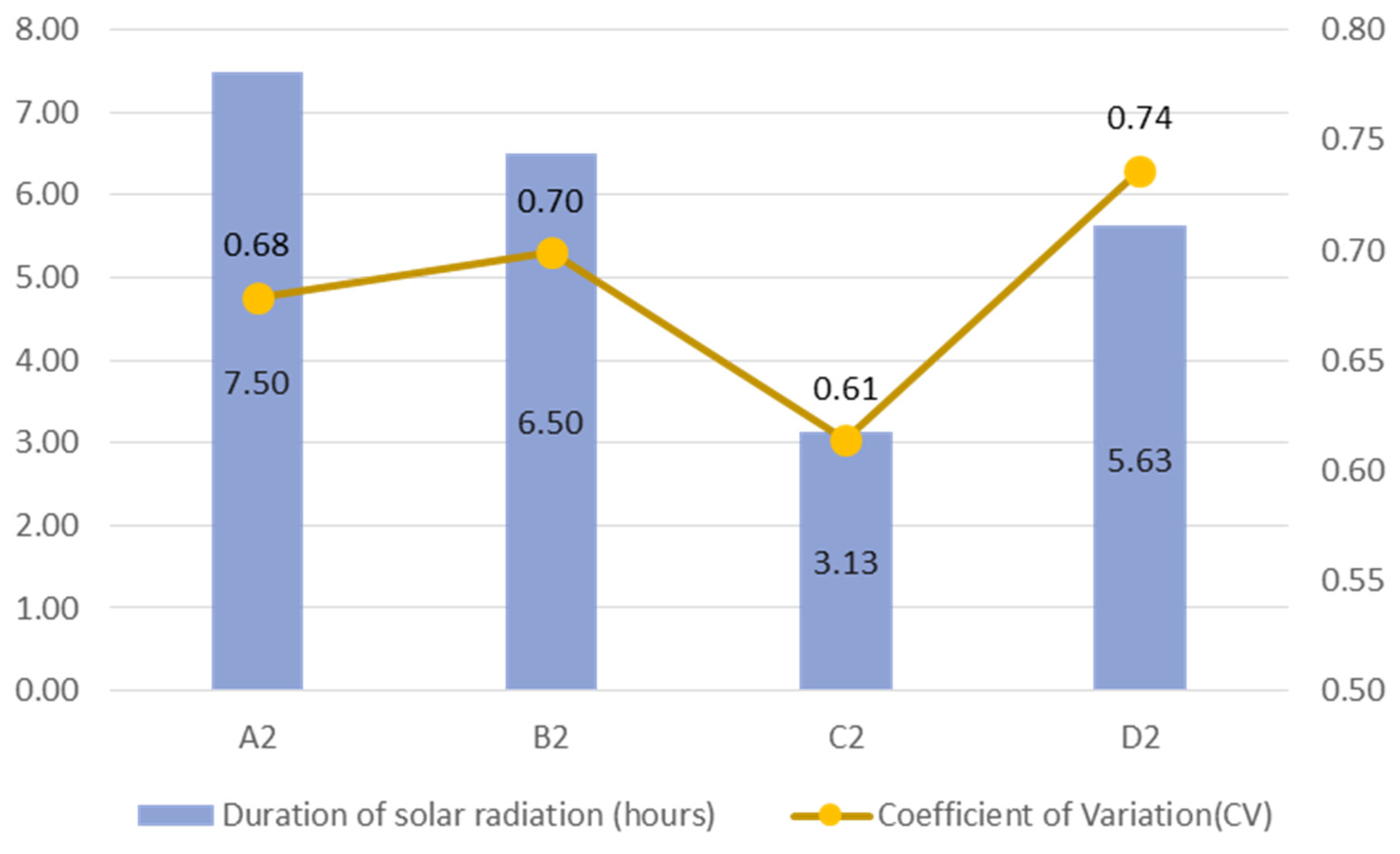
The duration and variation coefficient of solar radiation are mostly positively correlated: Based on the unified sample data and the latest 300 nm detection results, the longer the duration of solar radiation, the higher the overall CV (coefficient of variation) of the samples, and the worse the uniformity of the particle size distribution. Among them, the A2 sample facing south had the longest radiation duration (7.50 h), with a CV value of 0.68. The B2 sample facing west had a slightly shorter radiation duration (6.50 h), with a CV value of 0.70. The D2 sample facing east had a radiation duration (5.63 h) between the west and north directions, with a CV value of 0.74 (the highest among all outdoor samples). The C2 sample facing north had the shortest radiation duration (3.13 h), with a CV value maintained at 0.61 (the lowest among all outdoor samples), indicating the most uniform particle size distribution.
Overall, it conforms to the positive correlation trend between radiation duration and CV value (Figure 15).
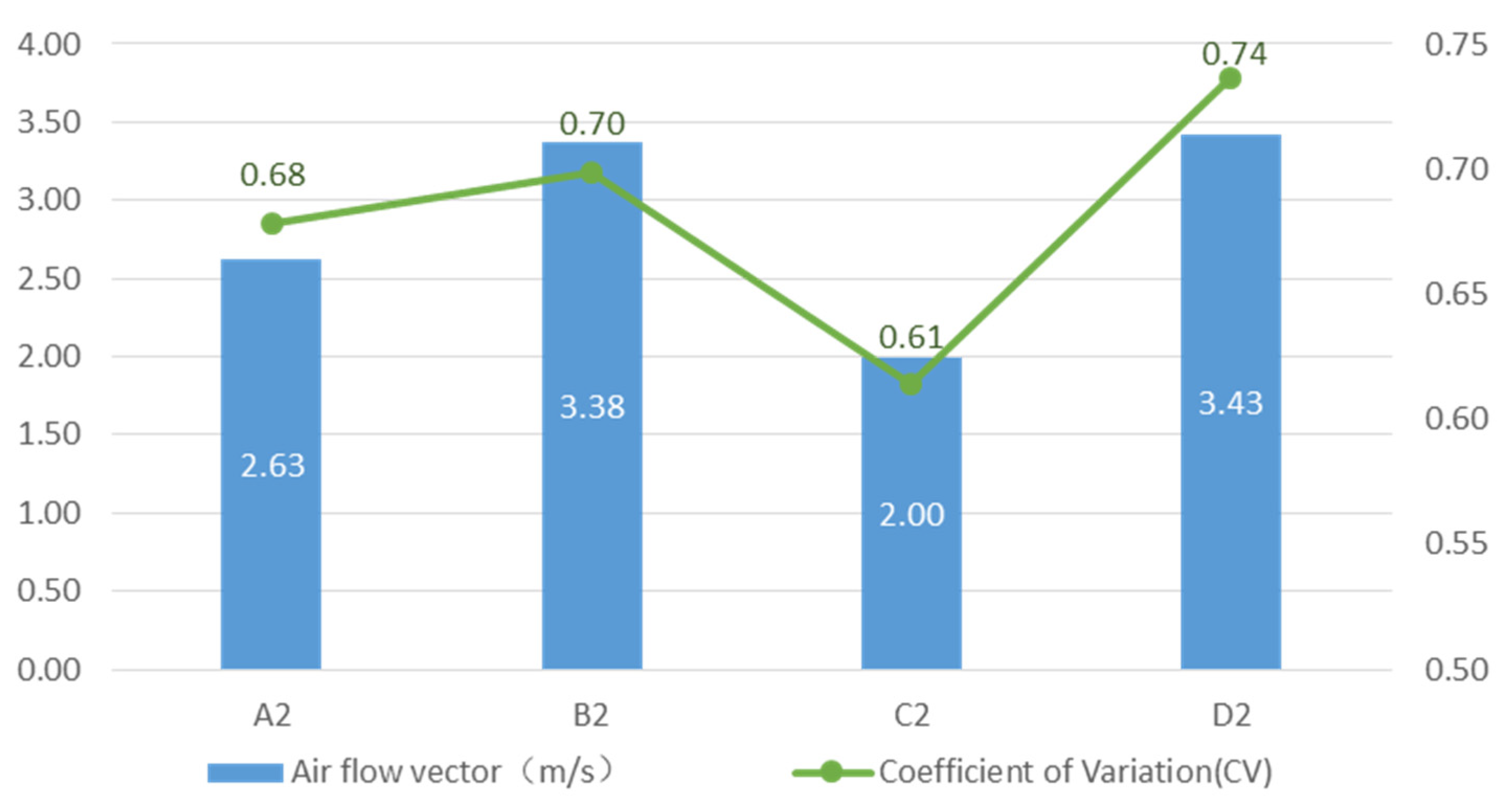
The local wind speed is positively correlated with the coefficient of variation in particle size: The greater the local wind speed and wind pressure, the higher the standard deviation and CV value of the sample particle size, and the greater the particle size dispersion. Combined with the 300 nm detection data, the local wind speed of the D2 sample in the east direction (3.43 m/s) is the highest, corresponding to a CV value of 0.74 and the highest dispersion. The local wind speed of the B2 sample in the west direction (3.38 m/s) is higher, with a CV value of 0.70 and the second-highest dispersion. The local wind speed of the A2 sample in the south direction (2.63 m/s) is the lowest, with a CV value of 0.68 and a medium-level dispersion. The local wind speed of the C2 sample in the north direction (2 m/s) is the lowest, with a CV value of 0.61 and the lowest dispersion.
In general, the trend of the data shows a positive relationship between wind speed and the coefficient of variation in particle size. This preliminary result indicates that the greater the wind speed, the greater the coefficient of variation in the surface material of the compacted soil, and the poorer the stability (Figure 16).
Based on the SEM detection results from both observation scales, the chart analysis, and the correlation patterns between microclimate and particle size characteristics, it can be concluded that the microscopic particle size characteristics of the rammed-earth materials in different orientations show significant differences, and these differences are related to the microclimate factors to some extent. The specific conclusions are as follows.
(1)
There are significant differences in the microscopic particle size of rammed earth in different orientations and with dual observation scales: The eastward direction has the highest dispersion at the 300 nm scale, the outdoor northward direction is the most uniform, and the indoor southward direction has the best uniformity; at the 2 μm scale, the indoor northward direction is the most uniform, while the south side is the worst; the outdoor eastward direction has a higher dispersion, and overall the indoor uniformity is better than some of the outdoor samples.
(2)
Positive correlation: The duration of solar radiation is positively correlated with the coefficient of variation (particle size uniformity) in most cases; local wind speed is completely positively correlated with particle size dispersion.
(3)
No obvious negative correlation: Under the same average relative humidity conditions, relative humidity has no significant differential impact on the homogeneity of aggregates.
(4)
Coupling correlation manifestation: The coupling effect of solar radiation duration and local wind speed may be the reason for the surface micro-scale differences in different orientations. For example, the long radiation and low humidity coupling on the south side in autumn leads to the deterioration and shedding of aggregates, while the low radiation and mild humidity coupling on the north side maintains the original particle structure stability.
It should be noted that this study only conducted a qualitative analysis of the correlation between microclimate factors and the microscopic particle size characteristics of rammed-earth surface materials, and the representation has certain limitations due to the small sample size (eight samples) and the inherent heterogeneity of rammed-earth raw materials. The observed differences are surface micro-scale responses rather than fundamental changes in the bulk material composition. Nevertheless, it can still provide microscopic data support for the protection and optimization of rammed-earth materials in different orientations in the future. Further research can expand the observation scale, increase the sample size, and combine more quantitative methods to further reveal the internal interaction mechanism between the two.

3.2.2. XRF Chemical Composition Analysis

The XRF analysis was conducted using the SHIMADZU XRF-1800 X-ray fluorescence spectrometer (Shimadzu Corporation, Kyoto, Japan). The experimental parameters were set as follows.
The sample was a powdered organic type of sample that was non-toxic and stable in the air. The sample preparation was carried out using the conventional pressing method without pre-grinding. The test results were output in the form of elements (and their oxide calculations for reference) [38]. The researchers will combine the indoor/outdoor samples from the four directions (A—south side, B—west side, C—north side, and D—east side) (A1/A2, B1/B2, C1/C2, and D1/D2), from a microscopic perspective, to reveal the correlation between the elemental composition of the rammed earth and the orientation direction, as well as its impact on durability.
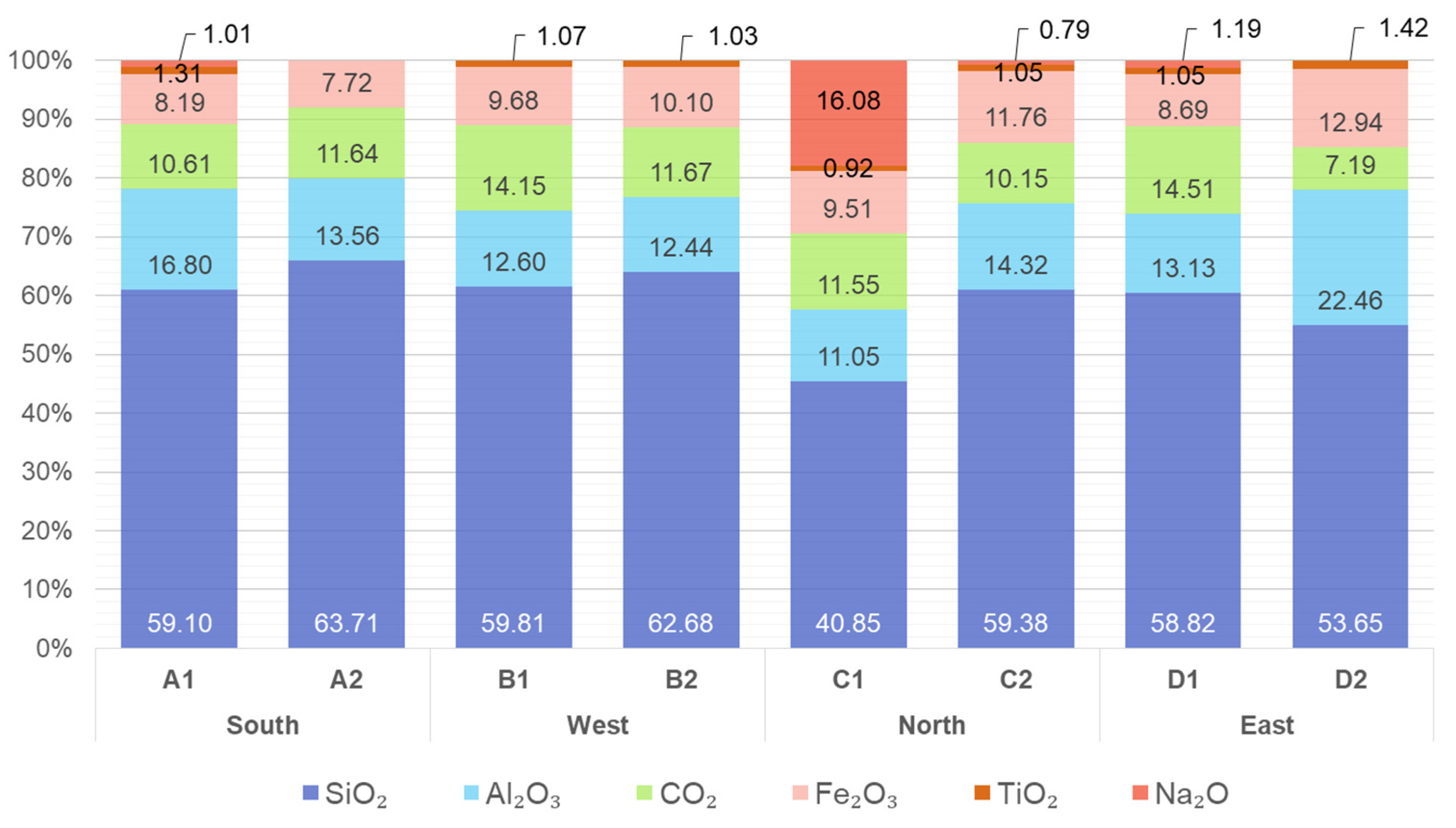
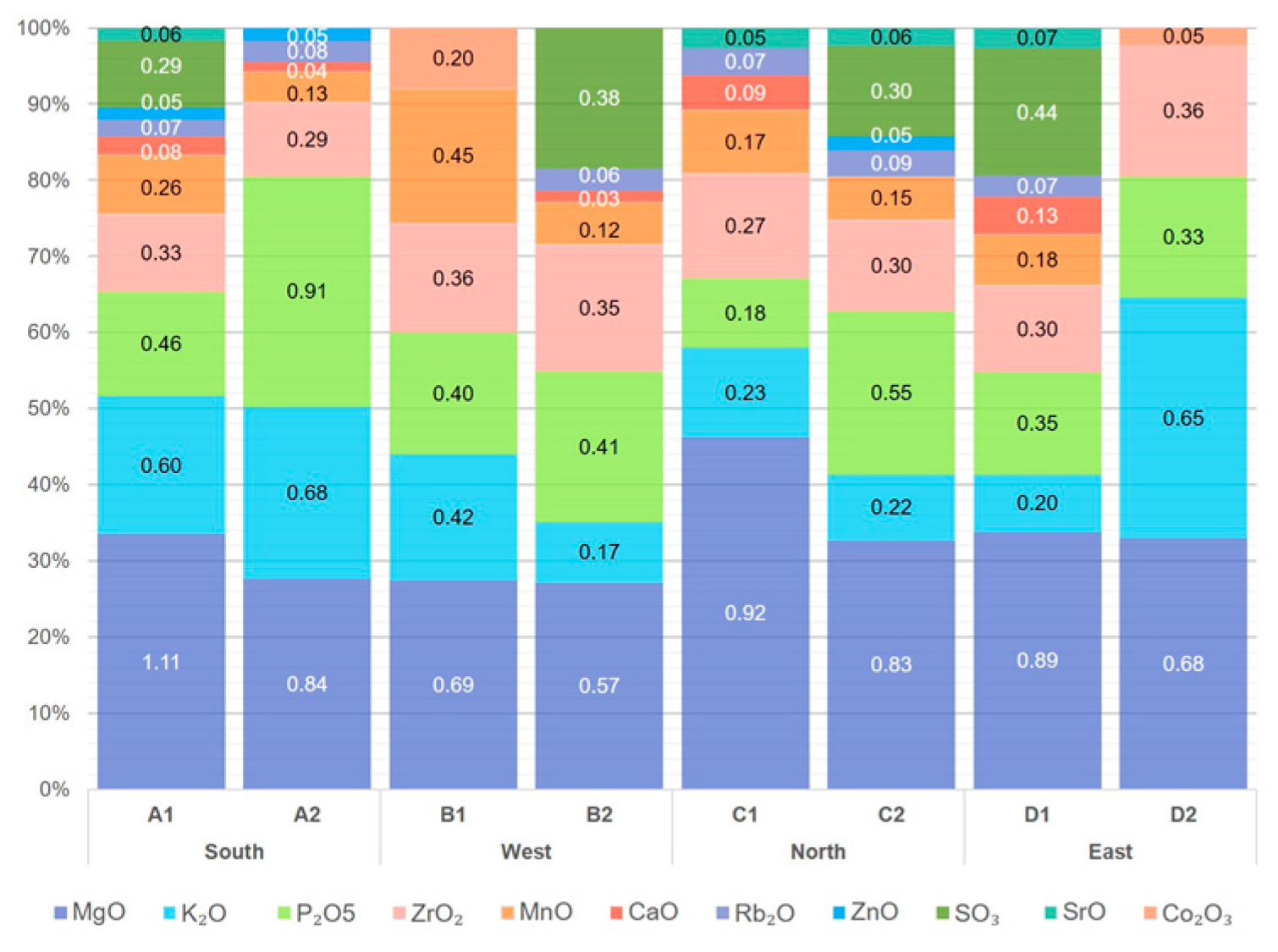
Based on the statistical analysis of XRF detection data, oxides calculated from elemental contents accounting for more than 90% of the total composition are categorized as the main structural oxide group (SiO2, Al2O3, CO2, Fe2O3, TiO2, and Na2O), which directly governs the mechanical strength and corrosion resistance of the rammed-earth structure. The remaining oxide calculations, constituting less than 10% of the total content, are defined as the secondary characteristic oxide group (MgO, K2O, P2O5, ZrO2, MnO, CaO, Rb2O, ZnO, SO3, SrO, Co2O3, and Cl). Despite their low mass fractions, these secondary oxide calculations exhibit high sensitivity to the intrinsic microstructural changes in the material. By integrating the orientation-dependent differentiation patterns of these two oxide groups with the microclimatic characteristics of each orientation, this section elucidates the wall deterioration mechanisms and potential risks induced by such surface compositional variations.
(1)
Main Structural Oxide Group
The overall compositional ratios of the main structural oxide group show relatively minor variations across the south, west, and east orientations, whereas a substantial discrepancy is observed on the north side (Table 1).
Among these components, silicon dioxide (SiO2) exhibits a content range spanning from 40.85% (in the indoor C1 setting) to 63.71% (in the outdoor A2 setting). Specifically, the outdoor A2 location registers the highest SiO2 content at 63.71%, while the indoor C1 location shows the lowest at 40.85%. Overall, SiO2 content is higher in outdoor environments than in indoor ones across 75% of the sampled locations. This observation may be associated with the deposition of particulate matter such as soil-derived dust and other airborne particles in outdoor settings (Figure 17).
Al2O3 (trioxide of aluminum): The content range is from 11.05% (in Room C1) to 22.46% (in Room D2). Room D2 shows surface abnormal enrichment, with the Al2O3 content reaching 22.46%, which is significantly higher than other locations, being 1.4 times the average value; and the Al2O3 content at all detection locations outside is higher than that inside, and the differences are consistent. CO2 (carbon dioxide): The content is between 7.19% (in Room D2) and 14.51% (in Room D1). The CO2 content in Room D1 is the highest, at 14.51%; the content in Room D2 outside is the lowest, at only 7.19%. It is worth noting that the CO2 content inside all locations is higher than that outside, which may be related to the relatively closed indoor environment, poor air circulation, and the accumulation of CO2 due to human activities.
Fe2O3 (trioxide of iron): The content distribution is 7.72% (in A2 outdoor)–12.94% (in D2 outdoor). The content of Fe2O3 in D2 outdoors is the highest, reaching 12.94%; the content in A2 outdoors is the lowest, at 7.72%. The content of Fe2O3 at the D2 location is significantly higher. TiO2 (titanium dioxide): The content at each location is relatively stable, fluctuating between 0.92% and 1.42%, with minor differences between indoor and outdoor, and it is not sensitive to environmental changes. MgO (magnesium oxide): The content range is 0.57% (in B2 outdoor)–1.11% (in A1 indoor), and the content at some locations is slightly higher indoors than outdoors, possibly related to the release of indoor decoration materials.
Na2O (sodium oxide): The content range spans from 0.79% (in the outdoor C2 setting) to 16.08% (in the indoor C1 setting). The indoor C1 location records an extraordinarily high Na2O content at 16.08%, which is the maximum value across all sampled sites, while the outdoor C2 location has the lowest content at merely 0.79%. Notably, Na2O exhibits extreme directional and indoor–outdoor differentiation, with high content only concentrated in the indoor north side (C1). In other sampling locations, the content of Na2O is extremely low and even undetectable in some areas, showing no obvious regular variation.
This distinctive distribution characteristic is a surface salt enrichment phenomenon, and XRD analysis confirms that the Na element in most samples is hosted in silicate mineral lattices (not free soluble salts); only C1 has trace soluble halite (NaCl) detected by XRD. This is likely associated with the closed and high-humidity microclimate of the indoor north side, which leads to the continuous enrichment of soluble sodium salts on the surface that cannot be effectively dissipated (Table 2).
(2)
Secondary Characteristic Oxide Group (calculated from elemental contents).
Although the proportions of the secondary characteristic oxide group are relatively low, the content varies significantly in different directions. These variations are all surface micro-scale responses to different microclimate conditions, based on the basically homogeneous raw materials (Figure 18).
Overall, the contents of MgO, K2O, and ZrO2 vary slightly. ZrO2 content is highly stable across all samples and can be used as a key indicator for the basic homogeneity of rammed-earth raw materials. The contents of P2O5, MnO, CaO, SO3, and SrO vary significantly. Among them, on the south side (A1/A2), the degree of CaO differentiation is the most significant, with A1 content (0.08%) being twice that of A2 (0.04%). The differentiation degree of P2O5 is second, with A1 (0.46%) being 3.75 times that of A2 (0.91%). SO3 and SrO only appear in A1, and the other contents are relatively consistent.
On the west side (B1/B2), the indoor content of MnO (0.45%) is 3.75 times that of the outdoor (0.12%). Co2O3 is only detected indoors (0.20%), indicating severe loss outdoors. MgO (0.69% vs. 0.57%) and Rb2O (0.08% vs. 0.06%) show a slight loss, presenting the “high manganese and cobalt loss” feature.
On the north side (C1/C2), Cl is the only component present, and it shows extreme differentiation. Only indoor C1 detects Cl (8.06%), and it is not detected in other directions. The loss rate of Na2O is 95.11% (16.08% vs. 0.79%), far exceeding other directions, presenting the “high indoor chlorine enrichment” feature.
On the east side (D1/D2), SO3 is the only component that is completely lost. Indoor D1 contains SO3 (0.44%), while outdoor D2 does not detect it at all; SrO (0.07% vs. 0.05%) and ZnO (0.05% vs. 0.04%) show slight loss, presenting the “high sulfur loss” feature.
Summary of core characteristics: Cl and Co2O3 are the unique components of each direction (Cl only in the indoor of the north side, and Co2O3 only in the indoor of the west side). The detection of SO3 is strongly related to the indoor environment. MgO and CaO generally show the “high indoors, low outdoors” feature. The differentiation of MnO is only concentrated on the west side.
When analyzed from different directions, the major elements in the samples from the four directions are mainly Si and Al. The relative content of the Si element is significantly positively correlated with the content of quartz (SiO2), further confirming that quartz is the dominant mineral in the rammed-earth wall. The Al element mainly comes from clay minerals such as illite and kaolinite, and its content distribution is consistent with the overall distribution pattern of clay minerals, reflecting the basic characteristics of the clay component in the raw materials (Appendix B).
It can be concluded that the surface mineralogical and elemental compositions of the rammed-earth walls in different orientations are different. These subtle compositional differences, in turn, exert divergent impacts on the wall’s durability, as evidenced by the following sample-specific analyses.
South-facing sample A1: Exhibits a well-distributed oxide profile with no extreme values and demonstrates favorable durability.
South-facing sample A2: Contains the highest SiO2 content (63.71%) coupled with significantly depleted Al2O3 (13.56%), a characteristic that may potentially enhance the brittleness of the rammed-earth matrix.
West-facing sample B1: Displays the most balanced and stable proportions of major structural oxides (with indoor–outdoor differences < 5%) and maintains good durability, despite being the sole location with detectable Co2O3 (0.20%).
North-facing sample C1: Shows a “high CaO content with balanced SiO2-Al2O3 ratios”—a compositional feature consistent with the bonding mechanism involving white lime particles. This sample achieves the optimal durability performance among indoor specimens.
East-facing sample D1: As the only sample in which SO3 was detected (at a concentration of 2.7%), it has a relatively balanced Al2O3 content (18.8%). However, the presence of sulfate introduces an elevated risk of salt expansion, which compromises its durability.

3.2.3. XRD Mineralogical Analysis

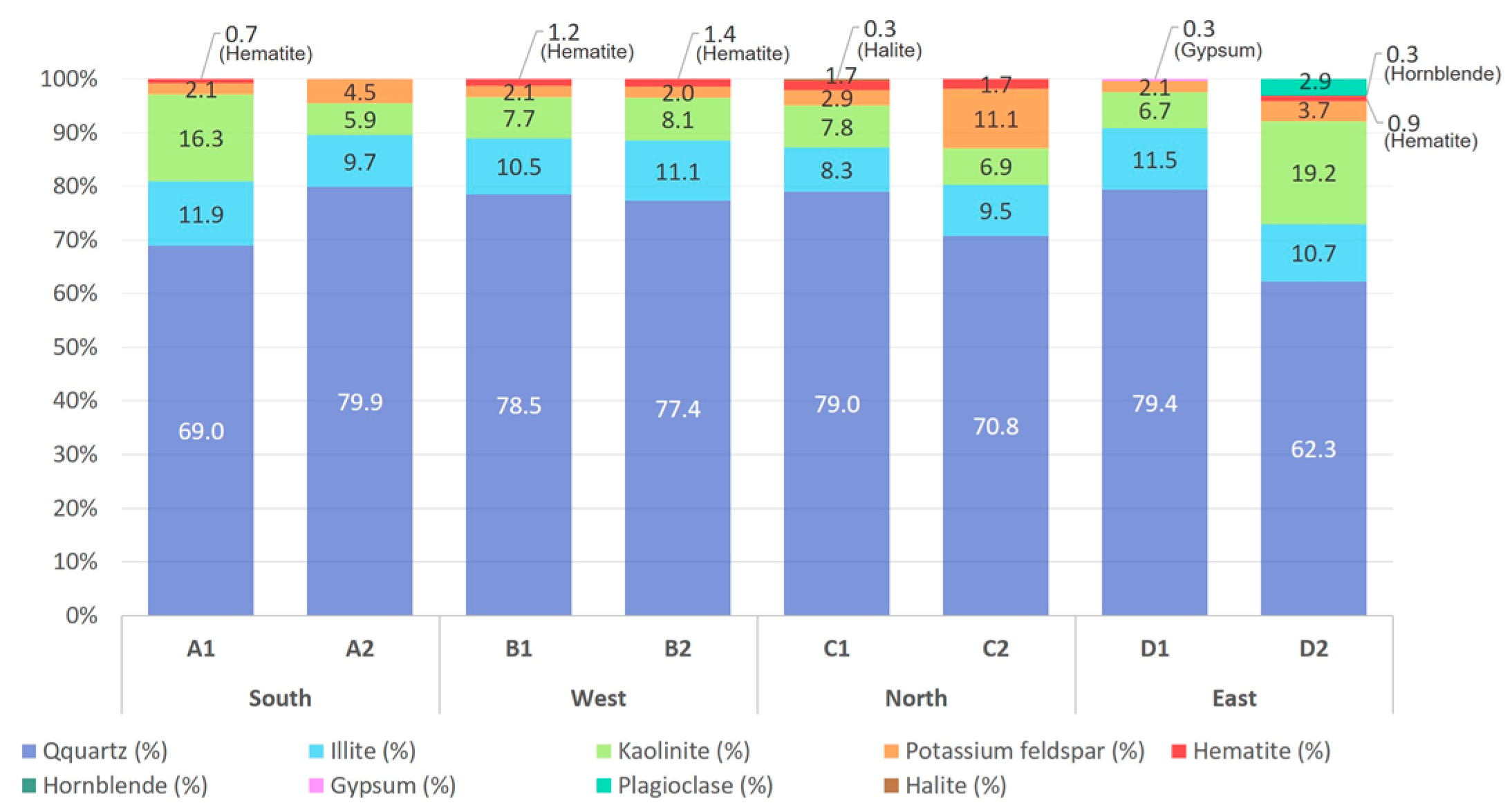
X-ray diffraction (XRD) analysis was systematically performed to characterize the mineralogical composition of surface samples collected from rammed-earth walls of Fujian earthen buildings [39,40]. The analytical results demonstrated that quartz (SiO2) was universally identified as the predominant mineral phase across all tested samples, with its mass fraction ranging from 69.0% to 79.9% and an average content of 74.5% (Figure 19). The characteristic diffraction peak of quartz was clearly observed at a diffraction angle (2θ) of approximately 26.6°, and the corresponding diffraction intensity was markedly higher than that of any other mineral phases detected. This pronounced predominance of quartz establishes the fundamental material basis for the mechanical strength and structural integrity of the rammed-earth walls (Appendix C).
The secondary mineral assemblage was primarily composed of clay minerals, specifically illite, kaolinite, and potassium feldspar, with average contents of 10.3%, 7.9%, and 3.9%, respectively. The cumulative content of these three major clay minerals varied between 15% and 30% in the samples. The layered crystalline structure inherent to these phyllosilicate minerals plays a crucial role in enhancing the interparticle bonding and cohesion within the soil matrix, which is highly consistent with the technical principles and material requirements of the traditional “soil-lime” composite formulation employed in historical rammed-earth construction (Table 3). Notably, the detection of potassium feldspar, plagioclase, and trace hornblende in specific samples indicates that alkali and alkaline earth metal elements (e.g., Na, K, and Ca) identified by XRF are primarily hosted within the crystal lattice of silicate minerals, rather than existing as free soluble oxides.
In addition to the major mineral phases, a suite of trace minerals was identified, including hematite (with a content range of 0%–1.7%), halite (NaCl), gypsum, and plagioclase. Notably, the distribution of these trace minerals exhibited a strong location-specific surface heterogeneity. Specifically, halite (a true soluble salt) was exclusively detected in the C1 surface sample at a concentration of 0.3%; gypsum (a sulfate-bearing mineral) was uniquely present in the D1 surface sample with a content of 0.3%; and plagioclase was identified only in the D2 surface sample, accounting for 7.1% of the mineral composition. This mineralogical evidence provides a more accurate basis for assessing salt-related deterioration risks compared to the sole interpretation of XRF elemental data, and all trace mineral heterogeneities are limited to the surface layer, not the bulk material.
The minerals in each sample are shown in the Table below.
As delineated in the Table, several key mineralogical characteristics can be derived for each group.
Group A exhibited the highest kaolinite content (11.1%) among all groups, which strongly suggests that the raw materials utilized for this section of the rammed earth possessed a relatively higher proportion of clay components. Furthermore, trace amounts of hematite (0.7%) were detected in sample A1, whereas no hematite was identified in sample A2. This discrepancy indicates a significant heterogeneity in the oxidation environment between the two sampling locations.
Group B was characterized by a relatively high quartz content (78.0%) and a consistently stable hematite content, indicative of a high degree of environmental homogeneity within the sampling area. The hematite concentrations in B1 (1.2%) and B2 (1.4%) were both higher than that in A1 (0.7%). Importantly, hematite was present in both B1 and B2 without a presence–absence dichotomy, signifying a more stable and uniform oxidation regime in the microenvironment of this group.
Group C displayed the highest potassium feldspar content (7.0%) and contained the sole sample (C1) with detectable halite (NaCl). This unique mineralogical signature may be attributed to specific source materials or distinct local environmental conditions. Unlike the Na bound in silicate minerals (e.g., plagioclase) in the raw material, the presence of trace halite (0.3%)—a highly soluble chloride salt—exclusively in C1 among the eight analyzed samples directly confirms that the sampling locale of C1 has a slightly salinized surface environment, potentially influenced by near-surface evaporation processes. Additionally, the potassium feldspar content in C2 (11.1%) was significantly elevated compared to C1 (2.9%), a variation likely induced by local compositional heterogeneities within the same geological or constructional unit.
Group D was distinguished by the highest quartz content (79.8%) and the lowest kaolinite content (3.4%) across all groups. Furthermore, this group uniquely contained the trace minerals gypsum and plagioclase, resulting in a raw material signature that is markedly distinct from the other groups. The identification of gypsum (0.3%) in D1, rather than just elemental S and Ca from XRF, confirms the presence of sulfate-bearing minerals in this sample. This is potentially associated with the enrichment and subsequent precipitation of sulfate salts in the local environment, a process commonly driven by near-surface evaporation (Figure 20).
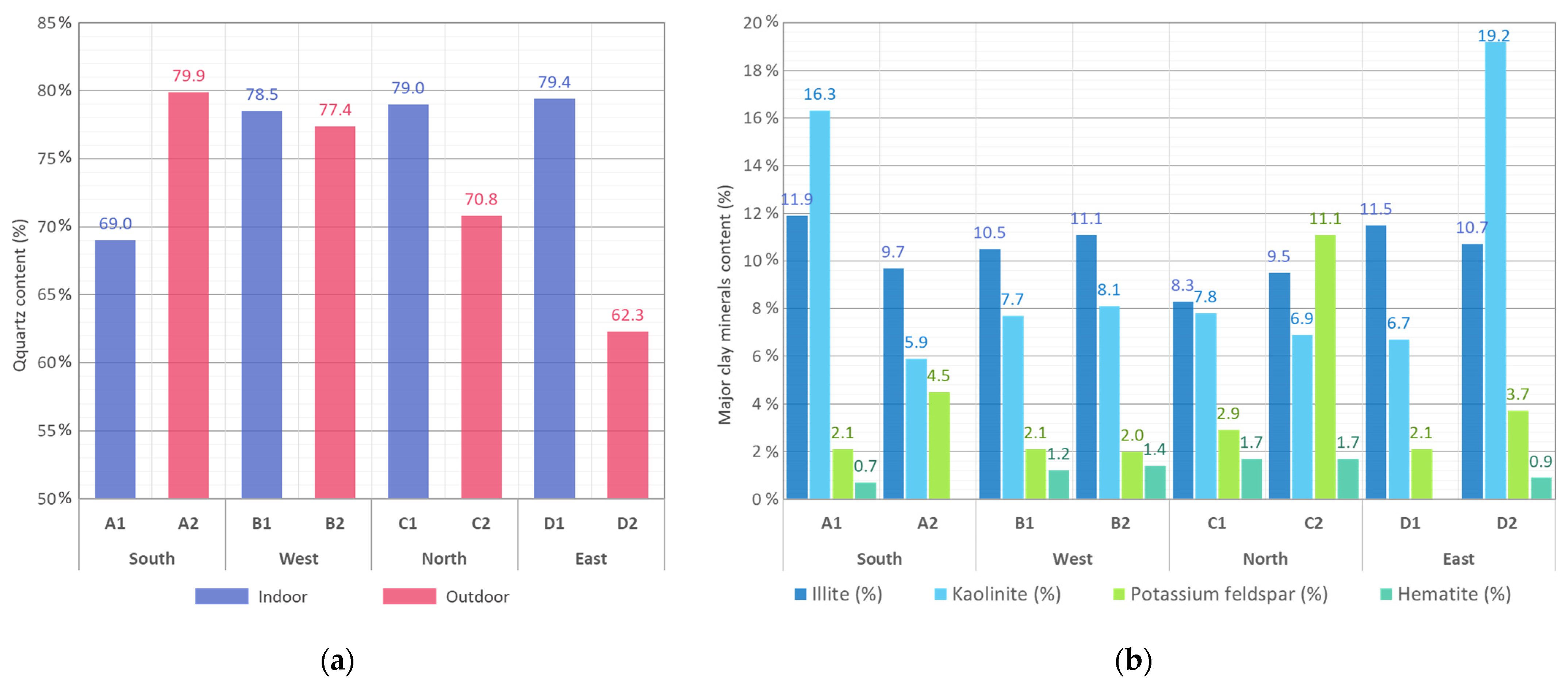
Figure 20a presents the quantitative distribution of quartz content for all individual samples. A distinct overall trend is evident, wherein outdoor surface samples consistently exhibited higher quartz contents than their indoor counterparts. Specifically, sample D2 possessed the maximum quartz content (80.2%), while sample A1 showed the minimum (69.0%). This trend reflects the surface deposition of quartz-rich particulate matter and the leaching of clay minerals in outdoor environments, not the difference in quartz content of the raw material. Figure 20b provides a comparative analysis of the average contents of major clay minerals among the different groups, clearly illustrating the significant variability in clay mineral assemblages between the groups.
Although XRD analysis failed to directly detect characteristic diffraction peaks corresponding to bamboo or wood fragments, as organic materials typically lack a well-defined crystalline structure, complementary X-ray fluorescence (XRF) analysis confirmed that the carbon content in all samples was ≤10%. In conjunction with the observation of “fibrous pore structures” via scanning electron microscopy (SEM), which corresponds to the residual traces of degraded bamboo fibers, it is postulated that the degradation products of organic additives (e.g., humic substances) have infiltrated and filled the interstitial spaces between mineral particles in the form of amorphous carbon. This process exerts an indirect influence on the measured relative mineral contents. A representative example is observed in sample A1, which contains rice husks and exhibits a quartz content of 69.0%, which is significantly lower than the 80.2% quartz content of sample D2, which shows no evidence of significant organic additions.
Field investigations conducted during the sampling campaign confirmed the presence of organic inclusions, such as bamboo and wood fragments, within the rammed earth matrix at specific locations. For instance, rice husks were identified in the indoor south-facing sample A1, and elongated wood strips were clearly visible as interspersed inclusions within the rammed earth of sample B1. In these sections containing organic fibers, the combined content of illite and kaolinite (28.2% for A1, 18.2% for B1) was universally higher than that in samples lacking obvious organic additives (e.g., 10.2% for D2). Rammed-earth walls incorporating such organic fibers demonstrate a substantial enhancement in crack resistance performance. This mineralogical evidence provides a scientific explanation for the rationality and effectiveness of the traditional “organic-inorganic composite” construction technique employed in historical rammed-earth buildings. Notably, this compositional difference is attributed to the intentional addition of organic inclusions during construction (a form of anthropogenic heterogeneity) rather than fundamental differences in the geological source of the rammed-earth soil.
Moreover, the quartz contents of the outdoor south-facing sample A2 (79.9%) and the outdoor west-facing sample B2 (77.4%) were both higher than those of their respective indoor counterparts (A1: 69.0%, B1: 78.5%). Concurrently, the hematite content in B2 (1.4%) was higher than in B1 (1.2%). These observations collectively reflect the preferential depletion and leaching of clay minerals due to enhanced oxidative weathering in the outdoor environment. Conversely, samples containing organic additives exhibited a markedly slower rate of clay mineral degradation. This finding substantiates that the incorporation of organic materials such as bamboo and wood fragments effectively improves the wall’s resistance and adaptability to harsh outdoor environmental conditions, thereby significantly enhancing the long-term durability of rammed-earth structures.

4. Discussion

4.1. The Correlation Between Microclimate and the Microscopic Properties of Materials

Based on microclimate simulation analysis (wind environment, solar radiation, and humidity) and microscopic characterization tests (SEM for microstructure, XRF, and XRD for mineralogical composition) of rammed-earth wall surface materials, a multi-dimensional correlation analysis was conducted. The evolution of microstructure, mineralogical element migration, and mineral composition of the rammed-earth wall surface showed significant directional correlations with the microclimate characteristics of different orientations, which collectively underpin the formulation of a unified degradation mechanism for rammed-earth walls.
Firstly, wind–rain synergy acts as the core direct driving factor of the unified degradation mechanism, directly regulating the particle structure and mineralogical element distribution of rammed-earth surface materials. CFD simulation revealed that the 140° southeast–south wind (13.9 m/s, 115.9 Pa), combined with summer monthly average rainfall of 300–400 mm, caused the strongest wind-driven rain erosion on southeast-side sample A2. XRF detection reveals that A2 has a higher Si content (30.82%) than A1 (27.04%), and XRD shows that A2 quartz (79.9%) is higher than A1 (69.0%). This verifies clay mineral loss and quartz enrichment in the sample, which is consistent with field observations of erosion gullies and moss adhesion on the southeast wall (Figure 21).
The north side (C-series samples) is influenced by weak north wind (9.6 m/s, 55.3 Pa) and the shortest winter solar radiation (0–2 h), leading to prolonged moisture retention and a low-radiation, weak-erosion environment. XRD uniquely detected 0.3% halite in C2 among all samples, confirming salt crystallization under such conditions. SEM shows severe weathering in B2, including microcracks, flake peeling, and the smallest average particle size with a high variation coefficient (CV = 0.75) among all outdoor samples. This microstructural deterioration correlates with B2’s higher Fe content (7.97%, XRF) and stable hematite (1.2%–1.4%, XRD), indicating that wind–sand erosion and mild oxidation deteriorated its microstructure. The east side (D series samples) is significantly affected by summer southeast wind-driven rain erosion. XRD analysis showed that D2 lost gypsum (due to sulfate leaching) but generated new plagioclase (7.1%), and SEM observed dissolution grooves on particle surfaces of D2. These features reflect moderate wind–rain erosion in the unified mechanism, with clay mineral reconfiguration as the typical degradation characteristic. Additionally, algae biofilms and salt crystallization layers on the southeast wall retain moisture and promote further salt crystallization under low wind pressure. This prolonged humid environment and enhanced salt crystallization form a secondary damage cycle, which further weakens the rammed-earth microstructure in the framework of the unified degradation mechanism.
Secondly, solar radiation and temperature–humidity conditions serve as key indirect driving factors of the unified degradation mechanism. They regulate the water evaporation rate and oxidation intensity of rammed-earth materials, thereby indirectly affecting the microstructure and mineral transformation of rammed-earth walls.
The solar radiation simulation shows that the south side receives ≥8 h of solar radiation in autumn and winter, with a peak intensity of 700 W/m2 in autumn. Corresponding SEM results: A1 (300 nm scale) has the lowest CV (0.51) with dense, concentrated particles; A2 (300 nm scale, CV = 0.68) has uneven particle size, and at the 2 μm scale (average 1.21 μm), shows obvious agglomeration and structural loosening. On the west side, the solar radiation is 6.5–8 h, and in SEM, B2 (300 nm scale) has the smallest average primary particle size (162.85 nm) and second-highest CV (0.70) among outdoor samples. At a 2 μm scale, B1 (1.26 μm) and B2 (1.22 μm) have similar agglomerate sizes, indicating severe radiation and wind erosion weathering. On the north side, due to the shortest solar radiation (winter 0–2 h), the radiation intensity is extremely low (peak 50–90 W/m2), leading to the weakest oxidation effect. At the same time, the low radiation and low evaporation environment slows the wall drying rate, resulting in a relatively stable rammed-earth surface—consistent with field observations of slight powdering and no obvious cracks on the north wall.
Finally, traditional organic additives (bamboo strips, wood strips, and rice husk) can alleviate the deterioration damage caused by the microclimate and form a “microclimate adaptation-material enhancement” synergy effect. Samples containing organic additives (such as A1 with rice husk, B1 with wood strips) have generally higher illite + kaolinite content (A1: 28.2%, B1: 18.2%) than those without obvious addition (such as D2: 10.2%), indicating that organic fibers effectively inhibit clay mineral loss. XRD shows that their quartz content is relatively lower (A1: 69.0% vs. D2: 80.2%). These results further confirm that organic additives enhance particle adhesion, alleviate microclimate-induced mineral loss and structural loosening, and improve the durability of rammed-earth walls.
In summary, the microscopic characteristics (particle structure, element distribution, and mineral composition) of the surface materials of the earth walls in the ancient buildings exhibit a clear directional correlation with the microclimate characteristics of each orientation:
(1)
The combined effect of strong wind and rain on the southeast side may lead to the loss of clay minerals;
(2)
The combined action of radiation from the west and wind–sand erosion may cause the material particles to weather and the formation of microcracks;
(3)
The strong radiation on the south side accelerated oxidation and mineral transformation of rammed-earth materials;
(4)
Due to the weak wind, weak radiation, and low humidity on the north side, salt crystallization is more likely to occur, but the rate of mineral loss is slower—this is the most gentle degradation process in the entire mechanism.
Based on the above analysis, an orientation-specific microclimate, particularly the synergistic effects of wind and rain, can be identified as the direct driving factor for material degradation. In contrast, solar radiation, temperature, and relative humidity act as indirect driving factors. Characterization results from SEM, XRD, and XRF demonstrate that microstructural and compositional evolution represent the intrinsic material response to external environmental stresses.
The coupling of external driving forces and intrinsic material responses indicates that microclimate effects promote microscopic evolution within the material, which further leads to the macroscopic surface deterioration of rammed earth. This provides a core theoretical basis for the orientation-specific protection of the rammed-earth walls of the ancient buildings. For example, the daily protection focus on the southeast side should strengthen measures against wind and rain erosion, while on the west side, anti-friction and anti-cracking protection should be strengthened, and on the north side, protective measures such as suppressing salt crystallization should be emphasized.

4.2. Comparison of Inner and Outer Rammed Earth

The surface samples of the earth buildings in Xiaoshi Village show significant differences both inside and outside. To further investigate the reasons for these differences, the researchers, taking into account the microclimate characteristics of the earth buildings, analyzed the surface features and the content of compounds from multiple aspects. Through this, they identified the patterns and causes of the differences in the surface of the earth buildings inside and outside, providing suggestions for the daily protection of heritage.
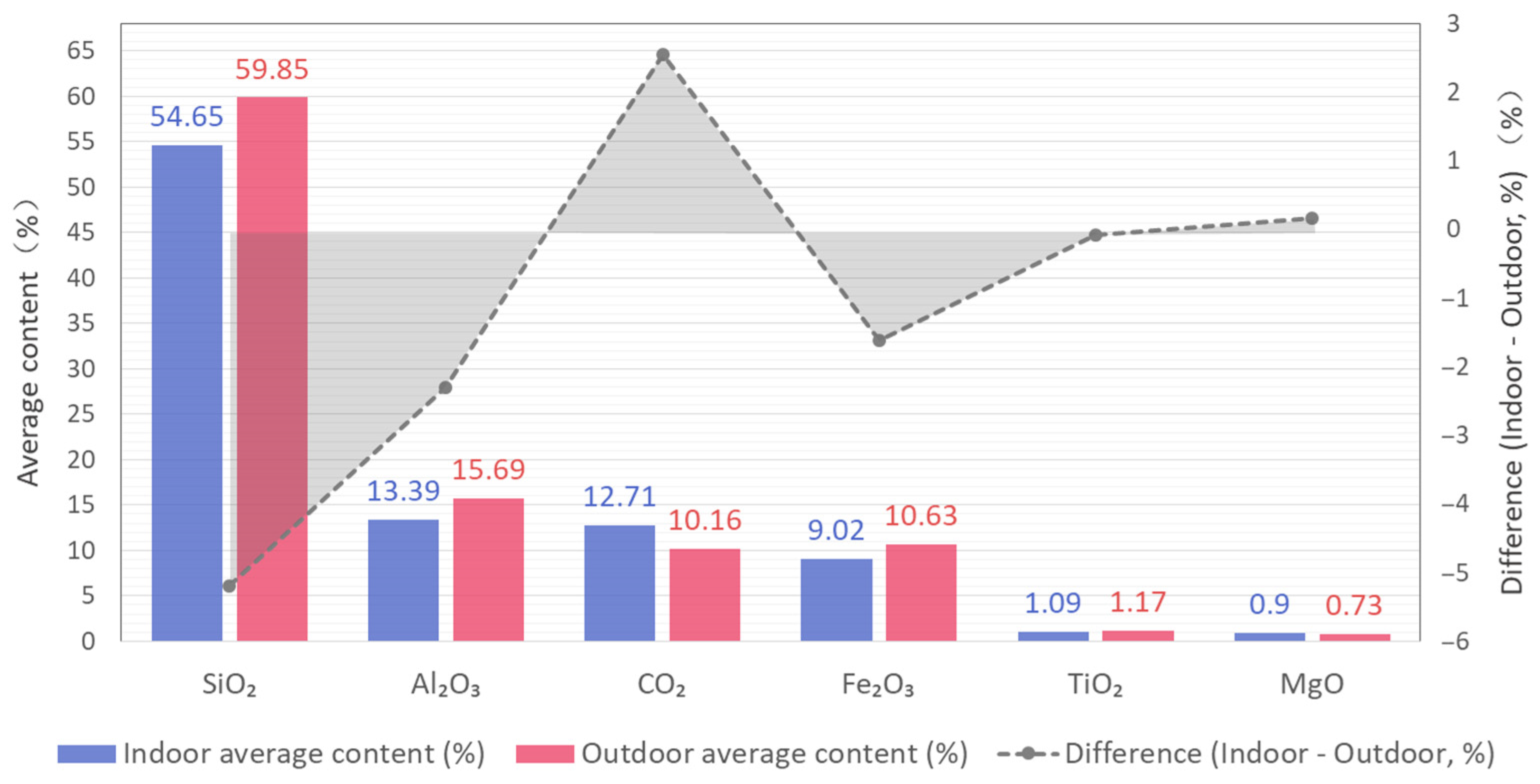
By calculating the average content and difference rate of indoor and outdoor compounds, the changing patterns of each compound under different environments were clarified. The specific data are as follows (Table 4).
The compounds with higher concentrations outdoors are SiO2, Al2O3, and Fe2O3. They show significant spatial differences due to the influence of local climate. The west side (B1, B2) experiences particle weathering and microcracks due to both radiation and wind–sand erosion. This leads to an increase in the release of silicon, aluminum, and iron elements in the soil and dust (the difference rates for Al2O3 and Fe2O3 are 14.66% and 15.15% respectively). The south side (A1, A2) has strong radiation, which accelerates oxidation and mineral transformation. SiO2 significantly accumulates outdoors, reaching 63.71% (A2 outdoors), with a difference rate of 8.69%. Due to the combined effect of strong wind and rain on the southeast side, a large amount of clay minerals may be lost. The content of these three compounds in some samples on the southeast side is slightly lower than that in other outdoor areas (Figure 22).
The compounds with higher concentrations indoors are CO2 and MgO. The indoor variation rate of CO2 is the largest (25.10%). Among them, the indoor areas on the east side (D1) and the south side (A1) may be affected by outdoor climate due to ventilation conditions (the strong wind on the east side leads to a low frequency of opening windows and closing doors on the south side, resulting in more accumulation of CO2). MgO has an indoor variation rate of 23.29%. On one hand, it may be related to the release of indoor decoration materials; on the other hand, the north side (C1, C2) has a weak wind and a slightly humid environment, and the air exchange between indoors and outdoors is slow, so MgO is more likely to remain indoors, and its content is higher than that of samples from other directions indoors.
It can be seen that differentiated protection measures can be formulated based on the characteristics of location and climate. For instance, in the D2 outdoor area, the concentrations of Al2O3 (22.46%) and Fe2O3 (12.94%) are abnormally high. Considering the wind feature on the west side, it is suggested to add wind barriers in this area to reduce the deposition of particles. In the C1 indoor area, the concentration of SiO2 (40.85%) is significantly low. On the north side, in combination with the weak wind and low-humidity environment, it is necessary to avoid local water seepage that may lead to mineral dilution. At the same time, the indoor ventilation in this area should be strengthened to prevent salt crystallization from affecting the peeling of the rammed-earth surface.
The southeastern and western sides should focus on observing the effects of wind, rain, and sand on the outdoor compounds. The southern and northern sides need to pay more attention to radiation, humidity, and the exchange patterns of compounds between indoors and outdoors. Based on the climatic characteristics of different directions and the compound properties of the rammed-earth materials, “climate-compound” correlation protection measures can be established to increase the accuracy of the protection of the rammed earth of the earth buildings.

4.3. Diversity of Soil Composition and Color

The soil samples from the Tulou buildings in Xiaoshi Village exhibit significant color diversity. According to the Munsell color system, they can be classified into six color tones: light yellow-brown, gray-white, yellow-green, dark yellow-brown, yellow-white, and red-brown. All of these belong to the yellow color family, but there are significant differences in lightness and chroma. This color difference is determined by the mineral composition and proportion [41]. Quartz (SiO2), clay minerals (such as illite), and iron oxides (hematite) constitute the main colors.
From the perspective of mineral content, all samples have quartz as the main mineral, presenting a white base tone. Except for samples A2 and D2, the rest of the samples all show a yellowish-brown color. For example, in sample A1, the quartz content is 69.0%, and it contains a trace of hematite of 0.7%, resulting in a light yellow-brown color. In sample B1, the quartz content is 78.5%, and it contains a trace of hematite of 1.2%, presenting a dull yellow-green color; in sample C1, the quartz content is 79.0%, and it contains 1.7% hematite, forming a deep yellow-brown color.
The A2 sample has the highest quartz content (79.9%), and no hematite is detected; thus, it appears grayish-white and is the lightest in color among all the samples. The D2 sample contains 80.2% quartz and 7.1% plagioclase, which causes the soil to be red-brown.
The XRF test results also indicate that the fluctuation in mineral element content is the key driving factor for the subtle color differentiation. The Fe element content in the D2 sample reached 8.47%, and the uniform distribution of hematite caused the hue to shift towards reddish-brown (8.8YR), making it the only sample with a tendency towards red-brown; the C1 sample formed a saline environment due to the abnormal enrichment of Na (12.27%) and Cl (8.59%), and trace amounts of gypsum (0.3%) were precipitated, presenting a yellowish-white characteristic.
Furthermore, considering the climatic characteristics, the outdoor samples (A2, B2, C2, and D2) were exposed to strong sunlight and rain leaching for a long time, which accelerated the oxidation rate of Fe2+. This led to a generally higher amount of hematite content. Rain leaching resulted in a lower CaO content in sample C2 compared to sample C1, and the content of white calcite decreased. The trace gypsum detected in sample D1 (0.3%) made the white gypsum affect the brightness of the soil, resulting in a lighter color (Appendix A).
From this, it can be seen that the diversity of soil colors is essentially the result of the combination of mineral composition, mineralogical composition, and climatic conditions. Quartz determines the base tone of the yellow color range. Hematite determines the red hue. Clay minerals (gypsum, quartz) affect the brightness of the soil. Additionally, the enrichment of Fe elements forms a red-brown color tone, while abnormal Na and Cl can cause saltation spots. At the same time, under the influence of different microclimates in different directions, the color differences between indoors and outdoors will increase (Table 5)

5. Conclusions and Expectation

5.1. Conclusions

Based on the comprehensive analysis of the microclimate simulation (wind environment, solar radiation) of the rammed-earth walls of the Tulou houses in Xiaoshu Village, Fujian Province, as well as the microscopic material experiments (XRF, XRD, and SEM), combined with the systematic test data of indoor and outdoor samples from four directions, the following core conclusions were drawn.
(1) The microscopic particle size of rammed earth varies significantly in different orientations and with dual observation scales.
At the dual scales of 300 nm and 2 μm, significant disparities in particle size and structural uniformity of rammed earth are observed across different orientations and between indoor and outdoor settings. The east outdoor sample exhibits the highest dispersion at the 300 nm scale (CV = 0.74). Solar radiation duration and wind speed are positively correlated with particle size CV and dispersion, respectively, which act as the key factors directly regulating the microscopic particle size distribution of rammed earth.
(2) Orientation-specific microclimate synergy drives the differential degradation of rammed earth.
Wind–rain coupling acts as the direct driving factor, while solar radiation serves as an indirect driver. The southeast/south side is subjected to 13.9 m/s southeasterly winds and 300–400 mm monthly rainfall, suffering the severest degradation characterized by clay mineral leaching and quartz enrichment (A2 quartz content: 79.9%). The west side develops microcracks due to wind–sand erosion and radiation-induced oxidation; the north side only experiences slight salt crystallization under low-stress conditions, and the east side undergoes moderate degradation. Orientation-dependent microclimate differences are the primary cause of the surface deterioration of rammed-earth materials.
(3) Significant indoor–outdoor differences in mineral composition and microstructure of rammed earth.
Outdoor rammed-earth samples, under long-term exposure to wind, rainfall, and solar radiation, show generally higher quartz content (e.g., 79.9% in A2 vs. 69.0% in A1) and lower clay mineral content compared with indoor samples, with a distinct spatial distribution of characteristic minerals such as hematite. Indoor samples maintain a dense and intact microstructure, whereas outdoor samples exhibit obvious structural loosening and cracking. Outdoor microclimate stress is confirmed as the core factor inducing the degradation of outdoor rammed-earth materials.
(4) Traditional organic additives mitigate rammed-earth degradation.
Bamboo strips and rice husks effectively inhibit clay mineral loss. Samples with organic additives have a much higher content of illite and kaolinite (A1: 28.2%, B1: 18.2%) than those without additives (D2: 10.2%), with an aluminum content 20% to 30% higher. The fibrous pore structure formed by additives constructs a reinforced network, and their degradation products fill interparticle gaps, which jointly enhance the structural integrity of rammed earth.
(5) The diversity of soil colors is the result of the combined effects of minerals, mineralogical components, and climatic conditions.
The soil is mainly in yellow tones, with quartz as the base color. Hematite and the degree of Fe oxidation are the core of color differentiation. D2 with high Fe (8.47%) shows a reddish-brown color, while C1 with high Na (12.27%) and Cl (8.59%) has salt precipitation spots. Outdoor radiation and rain accelerate Fe2 and oxidation, resulting in higher hematite content, which exacerbates the color difference between indoors and outdoors. Therefore, color can be used as an easy indicator for assessing deterioration. The deterioration of the rammed earth in the earth houses is influenced by the synergistic effect of the microclimate in a specific orientation. Its microscopic characteristics (particle size, mineral composition, and microstructure) have a significant directional correlation with environmental factors. Traditional organic additives can effectively alleviate the deterioration of rammed earth caused by the microclimate effect, providing a theoretical basis for differentiated protection of ancient rammed-earth walls according to their orientations. The southeast/north walls should strengthen protection against wind erosion and rain erosion. The west wall needs to implement reinforcement measures against wear and cracking. The north wall should prioritize the inhibition of salt crystallization and moisture drainage. The east wall should adopt mild erosion control and prevention measures against sulfate loss. Preserving the traditional organic–inorganic composite construction technology is of crucial significance for enhancing the long-term durability of the rammed-earth structure in historical buildings.

5.2. The Protection Plan for the Exterior of the Earth Buildings

The wind and sand erosion in the outdoor area of the west D2 section has led to abnormal increases in the content of alumina and iron oxide, and there is a coexistence of coarse particle abrasion and fine particle filling on the surface. The solution is to conduct regular sand removal at least once a month. Use soft brushes combined with low-pressure air blowing to remove the accumulated sand. Strictly prohibit water washing to prevent salt penetration. For the damaged parts with surface penetration problems, apply a curing agent coating for protection. Select high-modulus potassium silicate or nano-hydroxide calcium materials to ensure a penetration depth of more than 10 mm. At the same time, maintain good air permeability while enhancing the anti-erosion ability. Additionally, a 3 to 5 m-wide native deep-rooted vegetation buffer zone can be planted on the outside of the barrier to form a natural sand dust filtration and wind prevention system (Figure 23).
The southeastern area is significantly affected by the combined influence of typhoons and monsoons, with strong wind-driven rain erosion. There is an average annual damage situation. A micro-meteorological monitoring network should be deployed to collect real-time data on wind speed, wind direction, rainfall amount, and the pH value of rainwater, enabling dynamic erosion risk warning; for the erosion cracks, the same-source yellow soil–lime-moistened glutinous rice slurry mixture should be used for immediate repair, and after the repair, it should be covered with moisture-retaining maintenance within 24 h to ensure the compatibility and symbiosis of new and old materials; at the same time, an experimental spraying of silicone-modified acrylic emulsion for surface hydrophobic treatment should be carried out to reduce the water absorption rate to below 5% and maintain the water vapor permeability.
The southern wall has been exposed to intense solar radiation for a long time, and the large temperature difference between day and night has caused thermal stress cracking. To prevent the original texture of the wall from changing, in terms of physical protection, a variable bamboo-wood grille shading system that can be adjusted can be set 1.5 m away from the wall. The shading rate in summer should not be lower than 60%, which can, to some extent, reduce the thermal fatigue damage.
The indoor area on the north side of C1 is affected by gentle winds and moderate humidity. The relative humidity is high, and there is a risk of local leakage. Signs of reduced silica content have been observed. Before the rainy season, systematic leakage inspections should be carried out using infrared thermal imaging and resistivity methods to identify areas with abnormal humidity; a 30 cm-thick graded halite and geotextile capillary barrier layer should be excavated under the wall foundation to block the upward path of groundwater; for heritage buildings of cultural significance, a fan and window linkage system can be installed to ensure a ventilation frequency of more than twice per hour, and it should be driven by temperature and humidity sensor data to ensure that the humidity fluctuation is controlled within ±5%. To prevent the repeated crystallization and dissolution cycle of sodium sulfate and other salts, the paper pulp adsorption method can be used to remove salt deposits from the affected areas. After desalination, ethyl silicic acid sodium can be used for deep 5 to 8 mm hydrophobic sealing; a silaite base wet coating is applied to the wall surface to maintain a stable humidity within the range of 55% to 65% (Figure 24).
The monitoring system should reflect the differences in orientation: the west and southeast sides focus on three-dimensional laser scanning and particulate matter sampling analysis, tracking the dynamic impact of wind, rain, and sand on outdoor compounds; the south and north sides, on the other hand, mainly monitor changes in solar radiation and humidity, regulating the frequency of indoor and outdoor air exchange. Daily maintenance can attempt to establish a feedback mechanism based on X-ray fluorescence spectroscopy analysis. Every quarter, based on the dynamic data of material composition, parameters such as ventilation duration, shading angle, and sand-cleaning frequency can be adjusted specifically.

5.3. Expectation

5.3.1. Limitations

Although this study systematically revealed the core influencing mechanisms of the durability of the earth walls of the ancient buildings, it still has the following limitations.
(1)
The research focused on the correlation analysis of the current microclimate, material composition, and durability, and lacked long-term dynamic monitoring data. The long-term deterioration patterns of the earth walls under the cumulative effects of multiple climate cycles (especially extreme weather such as typhoons and heavy rains) have not been clearly identified. It is difficult to quantify the cumulative influence of climate factors on the XRF element content and XRD mineral composition.
(2)
The limitation of relying on Ladybug Tools simulations calibrated with regional meteorological data and softened definitive temperature-related descriptions to align with available data.
(3)
It did not deeply explore the collaborative adaptation mechanism of additives with microclimate and orientation. There is a lack of quantitative guidance for the targeted selection of additives for different orientations of walls, and it is difficult to directly provide technical parameters, such as XRF element ratios and XRD mineral composition control, for differentiated protection and restoration.

5.3.2. Prospects for Future Research

(1)
Establish a long-term monitoring and cross-regional comparison system. Expand the sample scope, compare the XRF element characteristics, XRD mineral composition, and durability differences in the terracotta houses in different regions, and enhance the universality of the research conclusions.
(2)
Build a multi-factor coupling numerical simulation and protection technology system. Combine finite element simulation to analyze the stress distribution and deterioration evolution of rammed earth under the combined effect of “microclimate-orientation-additives”.
(3)
Promote the integration and innovation of traditional craftsmanship and modern material science. Explore the combined application of local additives and modern environmentally friendly stabilizers, develop new types of rammed-earth materials that balance the inheritance of traditional craftsmanship and durability improvement, and achieve the dynamic inheritance and sustainable protection of the cultural heritage of terracotta houses.

5.3.3. Summary and Outlook

The surface conditions of the rammed earth in Fujian Tulou are the result of the synergistic effects of microclimate, orientation, and micro-material characteristics. Its traditional “organic-inorganic composite” technology embodies profound wisdom in environmental adaptation. In this study, microclimate analysis, XRF, XRD, and other microscopic experiments were conducted to reveal the patterns of surface durability of rammed earth at different orientations and the micro-material reinforcement mechanisms. In response to the climatic characteristics and compound properties of rammed-earth heritage buildings at various orientations, a differentiated protection scheme associated with the “climate-compound” relationship can be established for routine conservation.
Future research should break through the limitations of a single region, deepen investigations into multi-factor coupling mechanisms and quantitative technologies, and promote the deep integration of traditional crafts and modern science and technology. This will not only facilitate the establishment of a differentiated protection system for Tulou rammed-earth buildings and extend the service life of the heritage, but also provide a referable local experience for the conservation of sustainable rammed-earth buildings worldwide, and advance the inheritance and innovation of traditional construction wisdom.

Author Contributions

Conceptualization, L.Y. and X.J.; methodology, L.Y. and J.Y.; software, L.Y. and J.Y.; validation, L.Y., H.Z. and X.J.; formal analysis, Y.Z. and J.Y.; investigation, L.Y. and X.J.; resources, L.Y. and X.J.; data curation, L.Y., Y.Z., X.J. and J.Y.; writing—original draft preparation, X.J. and H.Z.; writing—review and editing, L.Y. and J.Y.; visualization, Y.Z. and H.Z.; supervision, Y.Z. and H.Z.; project administration, X.J. and J.Y.; funding acquisition, H.Z. and L.Y. All authors have read and agreed to the published version of the manuscript.

Funding

Research on the Synergistic Mechanism and Practice of Continuing Education in Higher Education Institutions Serving Rural Revitalization (grant number: GXJJYB25061S).

Institutional Review Board Statement

Not applicable.

Informed Consent Statement

Not applicable.

Data Availability Statement

The original contributions presented in this study are included in the article. Further inquiries can be directed to the corresponding authors.

Acknowledgments

The authors extend their gratitude to Yang Han, Wang Qi, and Wang Tintin (from Scientific Compass www.shiyanjia.com) for providing invaluable assistance with the SEM, XRF, and XRD analyses.

Conflicts of Interest

The authors declare no conflicts of interest.

Abbreviations

The following abbreviations are used in this manuscript:
A1South indoor sample
A2South outdoor sample
B1West indoor sample
B2West outdoor sample
C1North indoor sample
C2North outdoor sample
D1East indoor sample
D2East outdoor sample
SEMScanning electron microscope
XRDX-ray diffraction analysis
XRFX-ray fluorescence analysis

Appendix A

Pictures and color information of different color samples collected from different locations of Fujian Tulou. Pictures of samples used in different experiments (XRD, XRF, and SEM) in the research.
Table A1. Sample information summary Table.
S/NColor ValueCodeXRD-SampleXRF-SampleSEM-Sample
A13.1Y 6.5/3.60992Coatings 16 00301 i001Coatings 16 00301 i002Coatings 16 00301 i003
A23.8Y 7.5/2.40092
B12.5Y 5.5/3.20996Coatings 16 00301 i004Coatings 16 00301 i005Coatings 16 00301 i006
B23.1Y 6.5/4.40093
C11.9Y 5.5/4.40095Coatings 16 00301 i007Coatings 16 00301 i008Coatings 16 00301 i009
C23.1Y 6.5/3.60992
D12.5Y 5.5/3.20996Coatings 16 00301 i010Coatings 16 00301 i011Coatings 16 00301 i012
D28.8YR 6/4.80153

Appendix B

Table of element contents of samples collected from different positions of the earth walls of Fujian Tulou.
Table A2. Sample element content Table.
DirectionsSouthWestNorthEast
PositionA1A2B1B2C1C2D1D2
SiteIndoorOutdoorIndoorOutdoorIndoorOutdoorIndoorOutdoor
O0.52410.50570.51240.47820.40360.44420.52240.5189
Si0.27040.30820.28500.31610.20070.31070.27580.2399
Al0.08750.07370.06770.06990.06100.08290.06960.1149
Fe0.05540.05700.06980.07970.07200.09810.06110.0847
C0.02810.03340.03970.03550.03390.03240.03980.0185
Ti0.0076/0.00660.00690.00590.00740.00630.0080
Na0.0074///0.12270.00630.0088/
Mg0.00660.51660.00430.00360.00570.00550.00540.0040
K0.00490.00600.00360.0015/0.00210.00170.0051
Zr0.00240.00230.00280.00300.00220.00280.00220.0024
Mn0.00200.00100.00360.00100.00140.00140.00140.0012
P0.00190.00420.00180.00200.00080.00280.00150.0014
Rb0.00070.00080.00060.00060.00070.00100.00070.0008
Ca0.00050.00030.00060.00020.0007/0.0009/
Zn0.00040.0005///0.0005//
Sr/0.0005//0.00050.00060.0006/
S/0.0012/0.0017/0.00140.0018/
Co/0.0015/////0.0003
Cl////0.0860///
K////0.0021///

Appendix C

Table of component contents of samples collected from different sections of the walls of Fujian Tulou.
Table A3. Sample component content Table.
NO.A1A2B1B2C1C2D1D2
Illite11.99.710.511.18.39.511.510.7
Hornblende///////0.3
Gypsum//////0.3/
kaolinite16.35.97.78.17.86.96.719.2
Quartz69.079.978.577.479.070.879.462.3
Potassium feldspar2.14.52.12.02.911.12.13.7
Plagioclase///////2.9
Hematite0.7/1.21.41.71.7/0.9
Halite ////0.3///

References

  1. Porretta, P.; Pallottino, E.; Colafranceschi, E. Minnan and Hakka Tulou: Functional, Typological and Construction Features of the Rammed Earth Dwellings of Fujian (China). Int. J. Archit. Herit. 2022, 16, 899–922. [Google Scholar] [CrossRef]
  2. Sun, Y.; Wang, Z.; Zheng, Y. Environmental adaptations for achieving sustainable regeneration: A conceptual design analysis on built heritage Fujian Tulous. Sustainability 2022, 14, 11467. [Google Scholar] [CrossRef]
  3. Lin, X.; Wu, Y. Architectural Spatial Characteristics of Fujian Tubao from the Perspective of Chinese Traditional Ethical Culture. Buildings 2023, 13, 2360. [Google Scholar] [CrossRef]
  4. Chen, Y.; Peng, H.; Zheng, H.; Luo, Y.; Guan, R. Exploring the Spatial Distribution Characteristics and Formation Mechanisms of Hakka Folk Settlements: A Case Study of Hakka Traditional Architecture in Southeastern China. Humanit. Soc. Sci. Commun. 2025, 12, 380. [Google Scholar] [CrossRef]
  5. Zheng, W.; Li, B.; Cai, J.; Li, Y.; Qian, L. Microclimate Characteristics in the Famous Dwellings: A Case Study of the Hakka Tulou in Hezhou, China. Urban Clim. 2021, 37, 100824. [Google Scholar] [CrossRef]
  6. Yang, S.; Yang, Y.; Xu, C.; Huang, Z.; Lu, E.; Wu, L.; Gan, Q. Research on Vernacular Architecture—How Red Soil Affects Hakka Tulou from the Perspective of Shear Strength. Buildings 2025, 15, 790. [Google Scholar] [CrossRef]
  7. Bernardo, G.; Guida, A.; Pacente, G. The Sustainability of Raw Earth: An Ancient Technology to Be Rediscovered. J. Archit. Conserv. 2022, 28, 89–101. [Google Scholar] [CrossRef]
  8. Luo, Y.; Yin, B.; Peng, X.; Xu, Y.; Zhang, L. Wind–Rain Erosion of Fujian Tulou Hakka Earth Buildings. Sustain. Cities Soc. 2019, 50, 101666. [Google Scholar] [CrossRef]
  9. Luo, Y.; Zhou, P.; Ni, P.; Peng, X.; Ye, J. Degradation of Rammed Earth under Soluble Salts Attack and Drying–Wetting Cycles: The Case of Fujian Tulou, China. Appl. Clay Sci. 2021, 212, 106202. [Google Scholar] [CrossRef]
  10. Sobczyńska, E.; Terlikowski, W.; Garbacz, A. Evaluation of Durability of Earth-Based Mortars on the Example of Ancient Stone Structures in the Black Sea Basin. Int. J. Archit. Herit. 2025, 1–19. [Google Scholar] [CrossRef]
  11. Wan, L.; Ng, E.; Liu, X.; Zhou, L.; Tian, F.; Chi, X. Innovative Rammed Earth Construction Approach to Sustainable Rural Development in Southwest China. Sustainability 2022, 14, 16461. [Google Scholar] [CrossRef]
  12. Rescic, S.; Mattone, M.; Fratini, F.; Luvidi, L. Earthen Plasters Stabilized through Sustainable Additives: An Experimental Campaign. Sustainability 2021, 13, 1090. [Google Scholar] [CrossRef]
  13. Guo, J.; Wu, Z.; Zhang, W.; Cao, H. Experimental Study on the Mechanical Properties of Rammed Red Clay Reinforced with Straw Fibers. Sustainability 2024, 16, 7978. [Google Scholar] [CrossRef]
  14. Cervilla-Maldonado, A.; Valverde-Palacios, I.; Fuentes-García, R.; Martín-Villegas, F. Earth Composites as Construction Material Reinforced with Intensive Agricultural Fibres: Tomato, Pepper, Zucchini, Cucumber, Aubergine and Polypropylene Fibres. Constr. Build. Mater. 2025, 470, 140538. [Google Scholar] [CrossRef]
  15. Lin, X.; Zhang, Y.; Wu, Y.; Yang, Y. Assessment of Architectural Typologies and Comparative Analysis of Defensive Rammed Earth Dwellings in the Fujian Region, China. Buildings 2024, 14, 3652. [Google Scholar] [CrossRef]
  16. Bribián, I.Z.; Capilla, A.V.; Usón, A.A. Life cycle assessment of building materials: Comparative analysis of energy and environmental impacts and evaluation of the eco-efficiency improvement potential. Building and Environment 2011, 46, 1133–1140. [Google Scholar] [CrossRef]
  17. Bredenoord, J.; Kulshreshtha, Y. Compressed Stabilized Earthen Blocks and Their Use in Low-Cost Social Housing. Sustainability 2023, 15, 5295. [Google Scholar] [CrossRef]
  18. Kosiński, P.; Jabłoński, W.; Patyna, K. Parametric Analysis of Rammed Earth Walls in the Context of the Thermal Protection of Environmentally Friendly Buildings. Sustainability 2025, 17, 6886. [Google Scholar] [CrossRef]
  19. Wang, Y.; Song, J.; Zhang, J.; Huang, Y.; Yang, S. Analysis of Rammed Earth Wall Erosion in Traditional Village Dwellings in Zhuhai City. Coatings 2025, 15, 526. [Google Scholar] [CrossRef]
  20. Stival, C.A.; Berto, R.; Morano, P.; Rosato, P. Reuse of Vernacular Architecture in Minor Alpine Settlements: A Multi-Attribute Model for Sustainability Appraisal. Sustainability 2020, 12, 6562. [Google Scholar] [CrossRef]
  21. Liu, Y.; Wang, Y.; Dupre, K.; McIlwaine, C. The Impacts of World Cultural Heritage Site Designation and Heritage Tourism on Community Livelihoods: A Chinese Case Study. Tour. Manag. Perspect. 2022, 43, 100994. [Google Scholar] [CrossRef]
  22. Yang, J.; Wang, N.; Huang, Z.; Huang, Y.; Lv, W.; Yang, S. Anti-Erosion Mechanism of Biological Crusts and Eco-Protection Technology Using Composite Biofilms for Traditional Rammed Earth Dwellings in Songyang County. Coatings 2025, 15, 608. [Google Scholar] [CrossRef]
  23. Fan, J.; Chen, Y.; Zheng, L. Artificial Intelligence for Routine Heritage Monitoring and Sustainable Planning of the Conservation of Historic Districts: A Case Study on Fujian Earthen Houses (Tulou). Buildings 2024, 14, 1915. [Google Scholar] [CrossRef]
  24. Liu, S.; Wang, R.; Yu, J.; Cai, Y.; Peng, X. Physicochemical Characterization of the Render Layer of a Rammed Earth Wall in Fuyulou, China. J. Mater. Civ. Eng. 2023, 35, 04023125. [Google Scholar] [CrossRef]
  25. Aktürk, G.; Fluck, H. Vernacular Heritage as a Response to Climate: Lessons for Future Climate Resilience from Rize, Turkey. Land 2022, 11, 276. [Google Scholar] [CrossRef]
  26. Umubyeyi, C.; Wenger, K.; Dahmen, J.; Ochsendorf, J. Durability of Unstabilized Rammed Earth in Temperate Climates: A Long-Term Study. Constr. Build. Mater. 2023, 409, 133953. [Google Scholar] [CrossRef]
  27. Hart, S.; Raymond, K.; Williams, C.J.; Johnson, J. Precipitation impacts on earthen architecture for better implementation of cultural resource management in the US Southwest. Herit. Sci. 2021, 9, 143. [Google Scholar] [CrossRef]
  28. Abd Razak, A.; Hagishima, A.; Ikegaya, N.; Tanimoto, J. Analysis of airflow over building arrays for assessment of urban wind environment. Build. Environ. 2013, 59, 56–65. [Google Scholar] [CrossRef]
  29. Lauret, A.J.P.; Mara, T.A.; Boyer, H.; Adelard, L.; Garde, F. A validation methodology aid for improving a thermal building model: Case of diffuse radiation accounting in a tropical climate. Energy Build. 2001, 33, 711–718. [Google Scholar] [CrossRef]
  30. Fateh, A.; Borelli, D.; Spoladore, A.; Devia, F. A state-space analysis of a single zone building considering solar radiation, internal radiation, and PCM effects. Appl. Sci. 2019, 9, 832. [Google Scholar] [CrossRef]
  31. Taylor, P.; Luther, M.B. Evaluating rammed earth walls: A case study. Sol. Energy 2004, 76, 79–84. [Google Scholar] [CrossRef]
  32. Cappai, M.; Pia, G. Sustainable clay-based materials stabilised by low-temperature treatments: Salt degradation and chemomechanical approach. Results Eng. 2025, 27, 106222. [Google Scholar] [CrossRef]
  33. Yu, S.; Hao, S.; Mu, J.; Tian, D.; Zhao, M. Research on optimization of the thermal performance of composite rammed earth construction. Energies 2022, 15, 1519. [Google Scholar] [CrossRef]
  34. Soudani, L.; Woloszyn, M.; Fabbri, A.; Morel, J.C.; Grillet, A.C. Energy evaluation of rammed earth walls using long term in-situ measurements. Sol. Energy 2017, 141, 70–80. [Google Scholar] [CrossRef]
  35. Zheng, L.; Deng, Q.; Liang, J.; Guo, Z.; Zhu, Y.; Liu, W.; Chen, Y. Microchemical Analysis of Rammed Earth Residential Walls Surface in Xiaochikan Village, Guangdong. Coatings 2025, 15, 1351. [Google Scholar] [CrossRef]
  36. Raavi, S.S.D.; Tripura, D.D. Predicting and evaluating the engineering properties of unstabilized and cement stabilized fibre reinforced rammed earth blocks. Constr. Build. Mater. 2020, 262, 120845. [Google Scholar] [CrossRef]
  37. Hussaini, S.M.S.; Toufigh, V. Strength and fracture behavior of rammed-earth materials. J. Mater. Civ. Eng. 2019, 31, 04019228. [Google Scholar] [CrossRef]
  38. Zhai, Z.H.; Li, X.Y.; Ip, K.H. Comparative analysis of physical characteristics of traditional rammed earth dwellings in Macau. npj Herit. Sci. 2025, 13, 469. [Google Scholar] [CrossRef]
  39. Fouad, W.; Youssf, O.; Allam, R.Y.; Tahwia, A.M. Thermal insulation and mechanical performance of sustainable rammed earth walls incorporating construction and demolition waste and calcium oxide. Sci. Rep. 2025, 15, 43822. [Google Scholar] [CrossRef]
  40. Ghasemalizadeh, S.; Toufigh, V. Durability of rammed earth materials. Int. J. Geomech. 2020, 20, 04020201. [Google Scholar] [CrossRef]
  41. Yang, S.; Fang, X.; Li, J.; An, Z.; Chen, S.; Hitoshi, F. Transformation functions of soil color and climate. Sci. China Ser. D Earth Sci. 2001, 44, 218–226. [Google Scholar] [CrossRef]
Figure 1. Building processes of Fujian Tulou.
Coatings 16 00301 g001
Figure 2. Three-dimensional view of Fujian Tulou.
Coatings 16 00301 g002
Figure 3. Location analysis of Xiashi Village in Fujian (image source: drawn by the author). (a) The location of Fujian Province in China; (b) the location of Zhangzhou City in China; (c) the location of Xiashi Village in Zhangzhou City; (d) the geographical scope of Xiashi Village.
Coatings 16 00301 g003
Figure 4. Location analysis of the sample Tulou in Xiashi Village (image source: drawn by the author). (a) Site; (b) overview of the buildings; (c) the eastern side of Tulou has already been damaged; (d) the front view of Tulou; (e) the east-facing facade of Tulou.
Coatings 16 00301 g004
Figure 5. Explosion diagram of the sampling site model ((A). The rammed-earth wall on the north side; (B). The rammed-earth wall on the west side; (C). The rammed-earth wall on the south side; (D). The rammed-earth wall on the east side; (E). The roof and roof beam; (F). Wooden facade decorative components; (G). Interior space; (H). Beam column; (I). The rammed-earth wall).
Coatings 16 00301 g005
Figure 6. The specific research process and methods.
Coatings 16 00301 g006
Figure 7. Analysis of annual wind frequency rise in Zhangzhou, China (source of picture: authors, drawn using Python 3.7, and source of data: SRC-TYMx).
Coatings 16 00301 g007
Figure 8. Wind environment simulation of Tulou based on typical seasonal climate conditions.
Coatings 16 00301 g008
Figure 9. Sunlight environment simulation of Tulou based on typical seasonal climate conditions.
Coatings 16 00301 g009
Figure 10. Diurnal variation in solar irradiance and sun elevation of Tulou based on typical seasonal climate conditions.
Coatings 16 00301 g010
Figure 11. SEM images of soil samples oriented in different directions (at a scale of 300 nm).
Coatings 16 00301 g011
Figure 12. Comparison of the average particle size, particle size standard deviation, and coefficient of variation in the original particles (at a 300 nm scale) in samples of rammed earth with different orientations.
Coatings 16 00301 g012
Figure 13. SEM images of compacted soil samples (at a 2 μm scale) in different orientations.
Coatings 16 00301 g013
Figure 14. Comparison of the average particle size, particle size standard deviation, and coefficient of variation (CV) of soil aggregate samples with different orientations at a 2 μm scale.
Coatings 16 00301 g014
Figure 15. Comparison of the average duration of solar radiation throughout the year and the coefficient of particle size variation.
Coatings 16 00301 g015
Figure 16. Comparison of local wind speed, wind pressure, and particle size variation coefficient.
Coatings 16 00301 g016
Figure 17. Analysis of the proportion of main structural XRF oxides in indoor and outdoor samples.
Coatings 16 00301 g017
Figure 18. Analysis of the proportion of secondary structural XRF oxides in indoor and outdoor samples.
Coatings 16 00301 g018
Figure 19. The distribution of mineral components in each sample.
Coatings 16 00301 g019
Figure 20. (a) Quartz content distribution of each rammed-earth wall sample; (b) comparison of average contents of major clay minerals in each group of samples.
Coatings 16 00301 g020
Figure 21. Correlation between microscopic characteristics of surface materials and microclimate in different orientations.
Coatings 16 00301 g021
Figure 22. The indoor and outdoor concentrations of the core compound and their trend of difference.
Coatings 16 00301 g022
Figure 23. The vegetation buffer zone planted around the ancient buildings of the Tulou.
Coatings 16 00301 g023
Figure 24. Section of the capillary barrier layer made of graded sandstone and geotextile fabric.
Coatings 16 00301 g024
Table 1. Oxide content Table.
Oxide
(%)
SouthWestNorthEast
A1A2B1B2C1C2D1D2
SiO259.1063.7159.8162.6840.8559.3858.8253.65
Al2O316.8013.5612.6012.4411.0514.3213.1322.46
CO210.6111.6414.1511.6711.5510.1514.517.19
Fe2O38.197.729.6810.109.5111.768.6912.94
TiO21.31/1.071.030.921.051.051.42
Na2O1.01///16.080.791.19/
MgO1.110.840.690.570.920.830.890.68
K2O0.600.680.420.170.230.220.200.65
P2O50.460.910.400.410.180.550.350.33
ZrO20.330.290.360.350.270.300.300.36
MnO0.260.130.450.120.170.150.18/
CaO0.080.04/0.030.09/0.13/
Rb2O0.070.08/0.060.070.090.07/
ZnO0.050.05///0.05//
SO30.29//0.38/0.300.44/
SrO0.06///0.050.060.07/
Co2O3//0.20////0.05
Table 2. Sample core characteristics and surface abnormal indicators Table.
PositionCore FeatureAnomaly Index
A1 (South indoor)Compounds evenly distributed; no significant high/low valuesNa2O (1.01%)
A2 (South outdoor)Highest SiO2, lowest Fe2O3; overall stableNone
B1 (West indoor)Relatively high CO2, low Al2O3; small variationNone
B2 (West outdoor)Compound contents uniformly distributed; no significant anomaliesNone
C1 (North indoor)High Na2O, lowest SiO2, distinct difference from other sitesSiO2 (40.85%), Na2O (16.08%)
C2 (North outdoor)High Fe2O3; other compounds within normal rangeNone
D1 (East indoor)Highest CO2; most pronounced CO2 accumulation among all sitesCO2 (14.51%)
D2 (East outdoor)Abnormally high Al2O3 and Fe2O3; lowest CO2Al2O3 (22.46%), Fe2O3 (12.94%) Na2O (1.19%)
Table 3. Mineralogical composition of each sample (wt.%).
SiteQuartz (%)Illite (%)Kaolinite (%)Potassium Feldspar (%)Hematite (%)Hornblende (%)Gypsum (%)Plagioclase (%)Halite (NaCl) (%) (%)
A16911.916.32.10.7////
A279.99.75.94.5/////
B178.510.57.72.11.2////
B277.411.18.121.4////
C1798.37.82.91.7///0.3
C270.89.56.911.11.7////
D179.411.56.72.1//0.3//
D262.310.719.23.70.90.3/2.9/
Table 4. The main mineral content on the inner and outer sides of rammed earth.
CompoundIndoor Average Content (%)Outdoor Average Content (%)Difference
(Indoor–Outdoor, %)
Difference Rate (%)Difference Grade
SiO254.6559.85−5.2−8.69Moderate
Al2O313.3915.69−2.3−14.66Significant
CO212.7110.162.5525.1Significant
Fe2O39.0210.63−1.61−15.15Significant
TiO21.091.17−0.08−6.84Slight
MgO0.90.730.1723.29Significant
Table 5. The color of rammed earth and the reasons for its formation.
Sample
Number
Sample
Position
Munsell
Color NO.
SampleOxidation StrengthColor Causes
A1indoor3.1Y 6.5/3.6Coatings 16 00301 i0132Quartz 69.0%+ hematite 0.7% → light yellowish-brown
A2outdoor3.8Y 7.5/2.4Coatings 16 00301 i0145Quartz 79.9%+ no hematite → grayish white
B1indoor2.5Y 5.5/3.2Coatings 16 00301 i0152Quartz 78.5%+ hematite 1.2% → yellowish green
B2outdoor3.1Y 6.5/4.4Coatings 16 00301 i0165Quartz 77.4%+ hematite 1.4% → dark yellowish-brown
C1indoor1.9Y 5.5/4.4Coatings 16 00301 i0172Quartz 79.0%+ hematite 1.7%+ Halite 0.3% → yellowish-white
C2outdoor3.1Y 6.5/3.6Coatings 16 00301 i0185Quartz 70.8%+ hematite 1.7% → light yellowish-brown
D1indoor2.5Y 5.5/3.2Coatings 16 00301 i0192Quartz 79.4%+ gypsum → yellowish-brown
D2outdoor8.8YR 6/4.8Coatings 16 00301 i0205Quartz 80.2%+ amphibole 7.1% → red-brown
Disclaimer/Publisher’s Note: The statements, opinions and data contained in all publications are solely those of the individual author(s) and contributor(s) and not of MDPI and/or the editor(s). MDPI and/or the editor(s) disclaim responsibility for any injury to people or property resulting from any ideas, methods, instructions or products referred to in the content.