Electrospun Janus Fibrous Membranes: Property and Potential Biomedical Applications


Abstract
1. Introduction
2. Unidirectional Fluid Transport with Janus Membranes
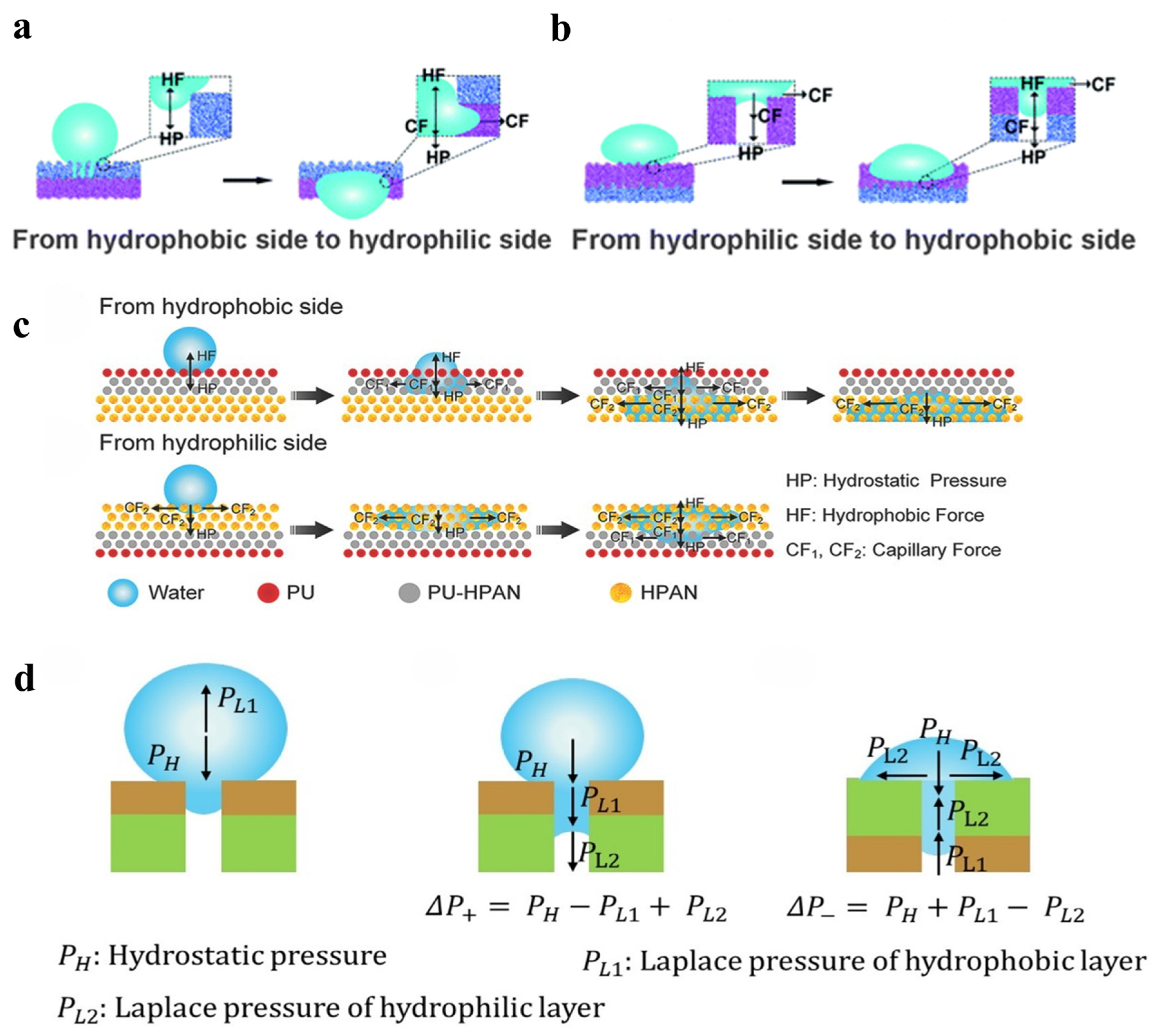
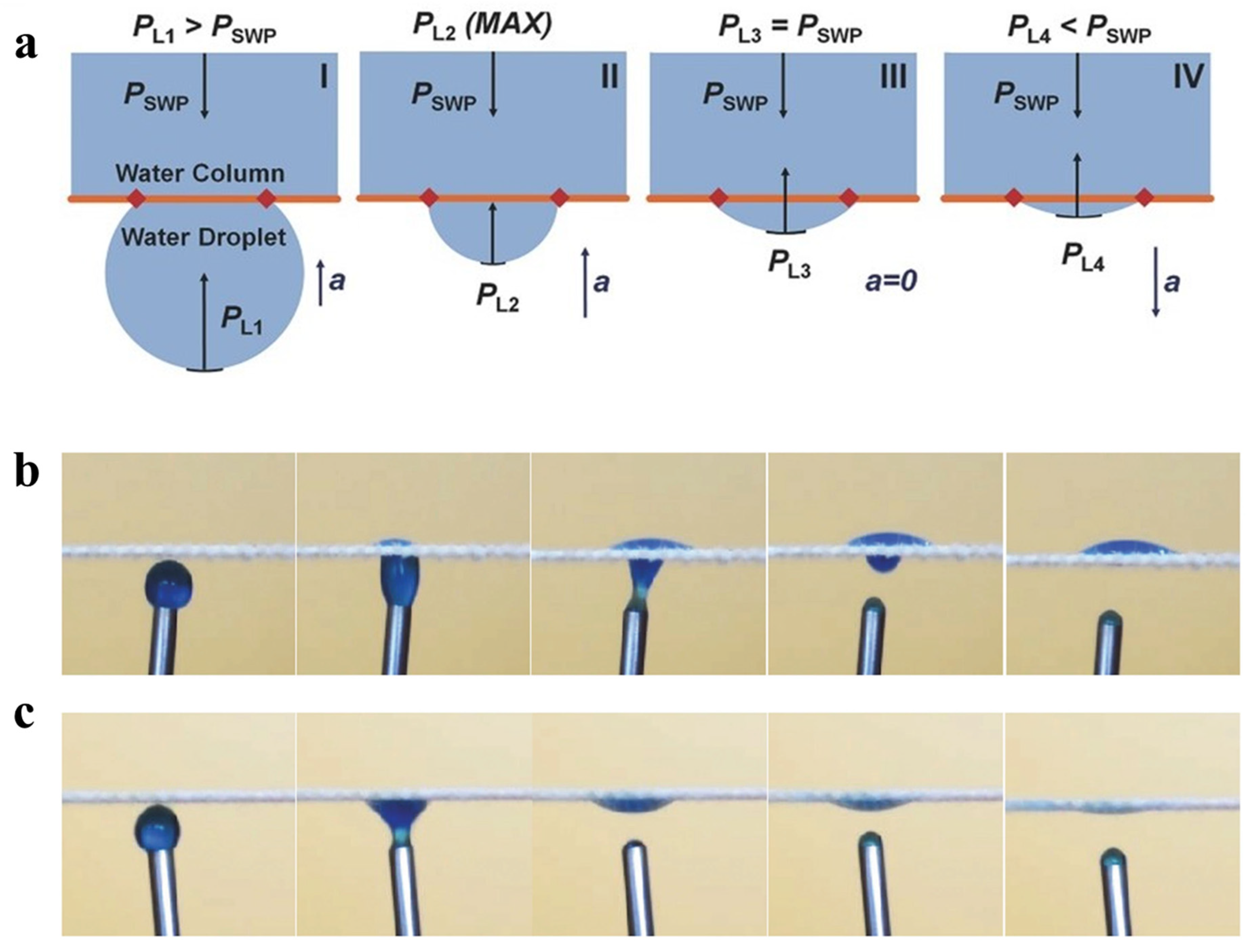
2.1. Mechanism of Unidirectional Fluid Transport of Janus Membranes
2.2. Key Influences on Unidirectional Fluid Transfer
2.2.1. Thickness
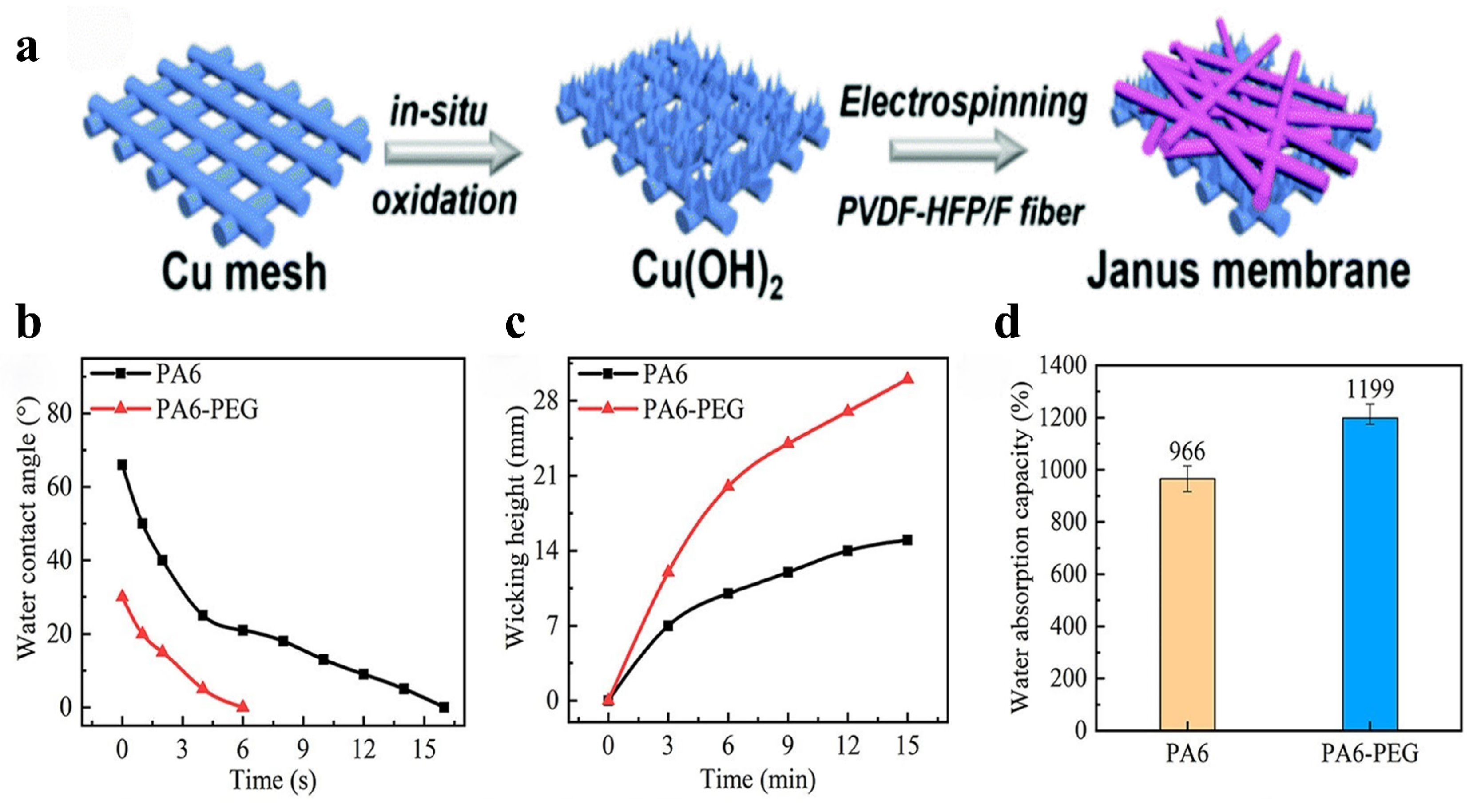
2.2.2. Wettability of the Materials Used to Construct the Membrane
2.2.3. Pore Structure of the Membrane
3. Janus-Structured Dressings Prepared by Electrostatic Spinning and Their Applications
3.1. Janus Dressing with Unidirectional Drainage Capability
3.2. Janus Dressings with Antimicrobial Effect
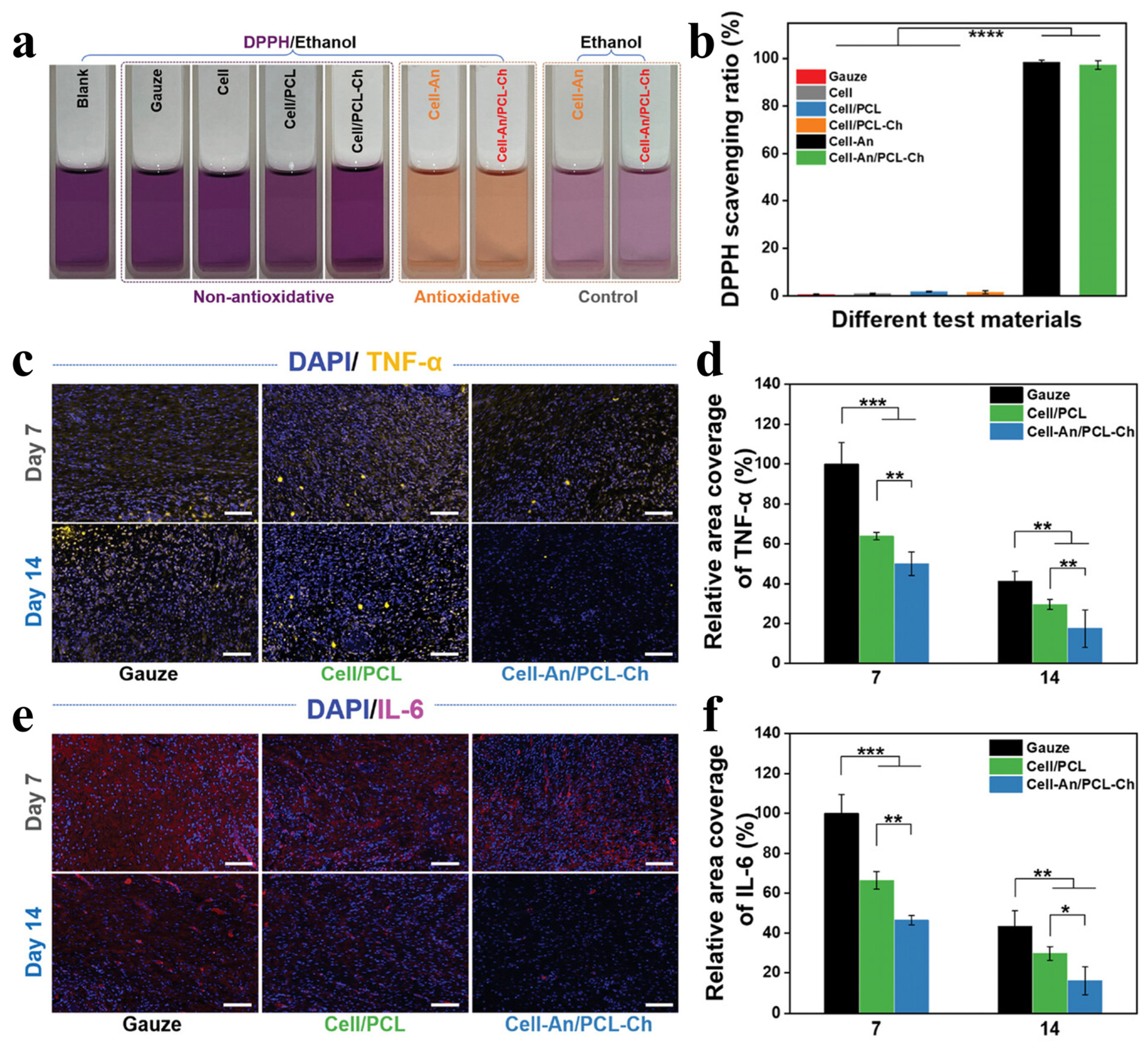
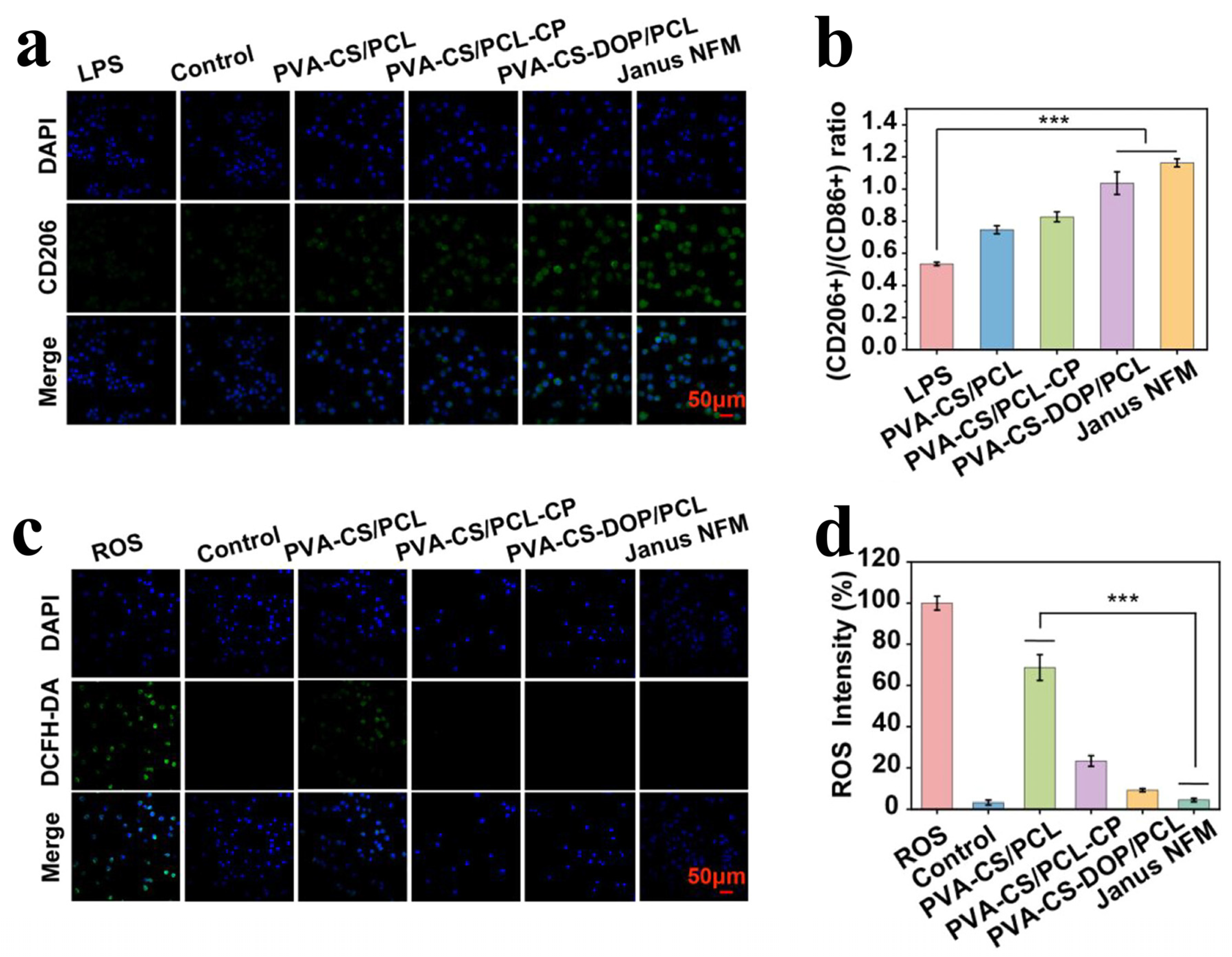
3.3. Anti-Inflammatory and Antioxidant Janus Dressing
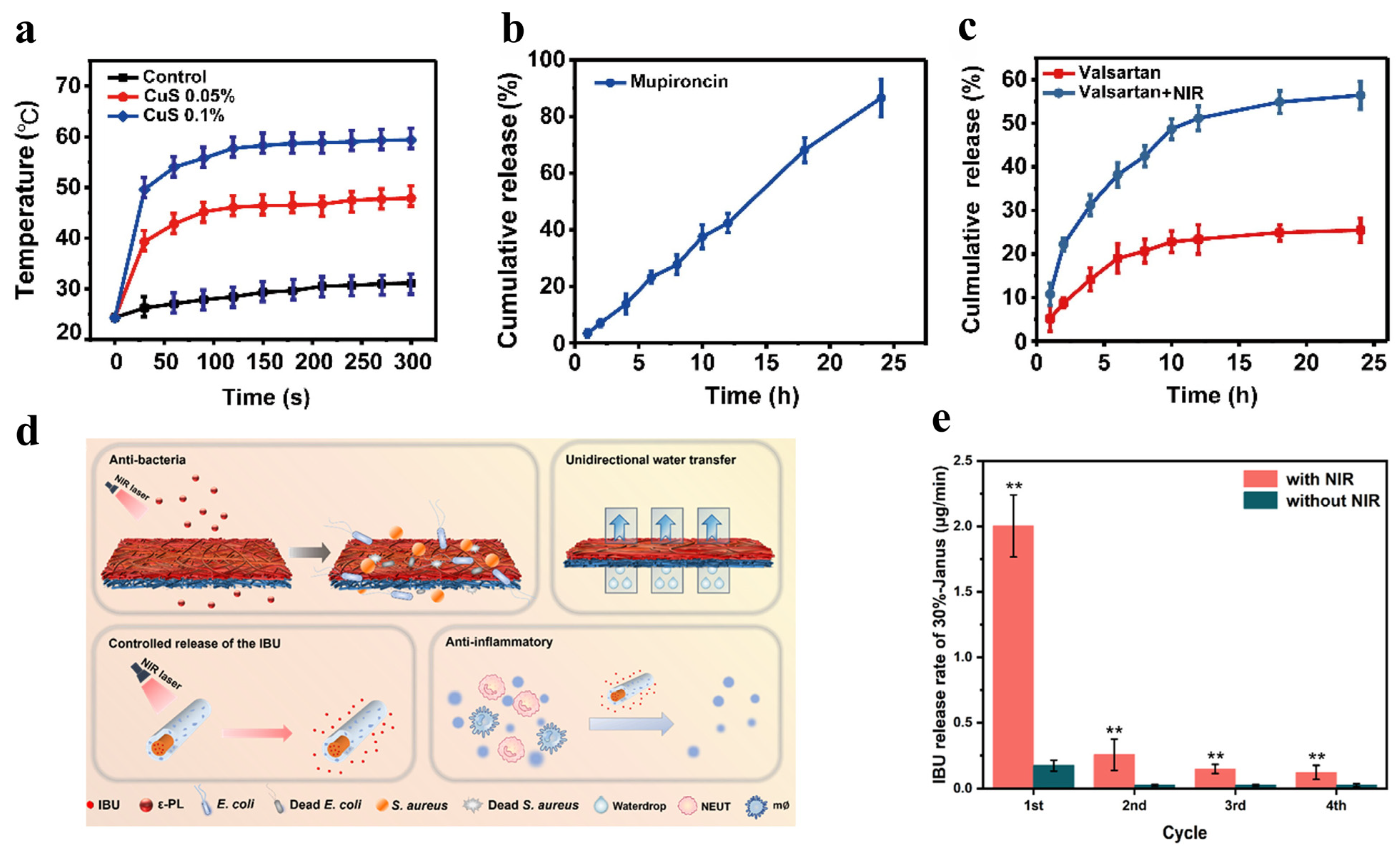
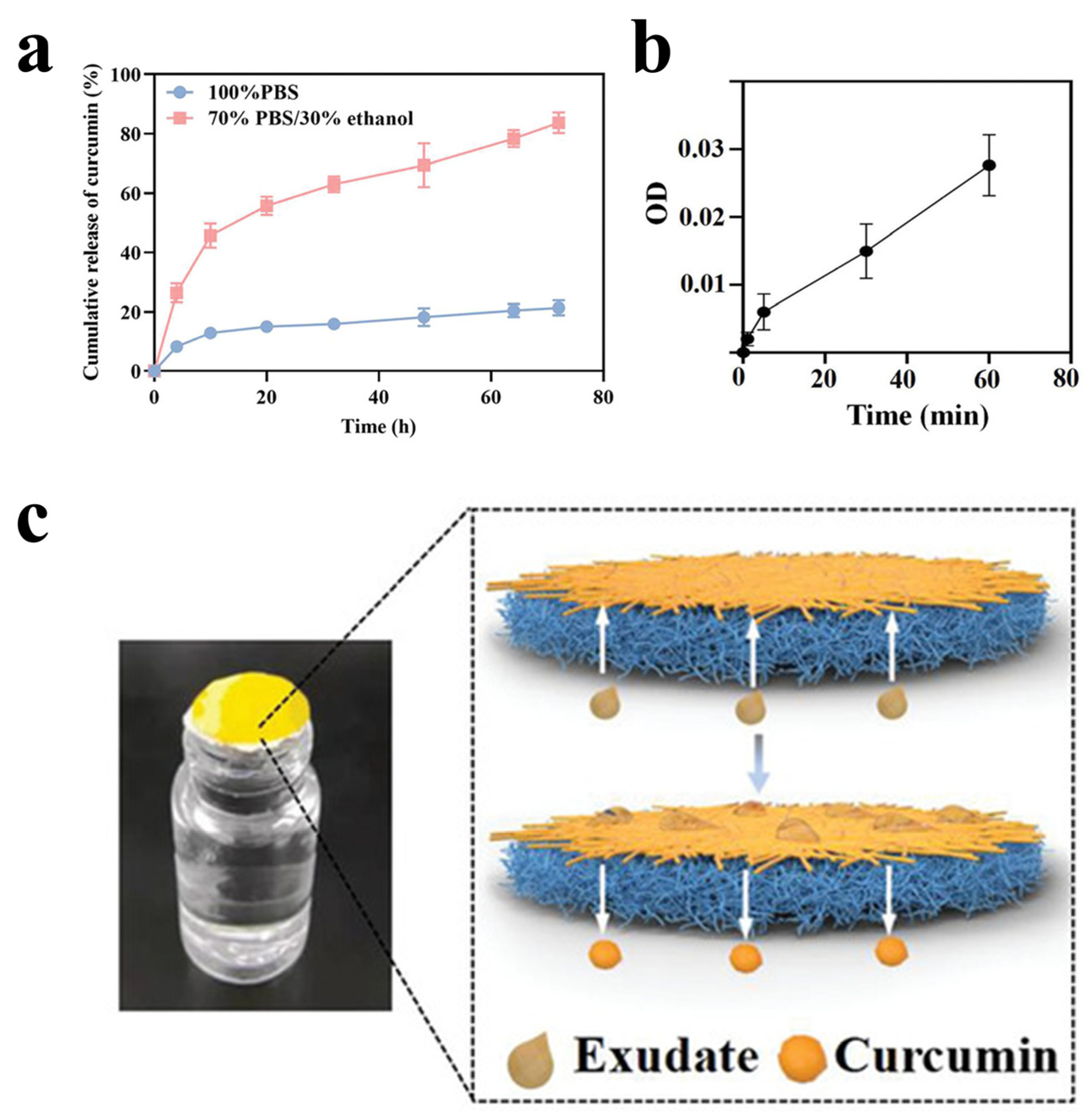
3.4. Drug Release Properties of Janus Dressings
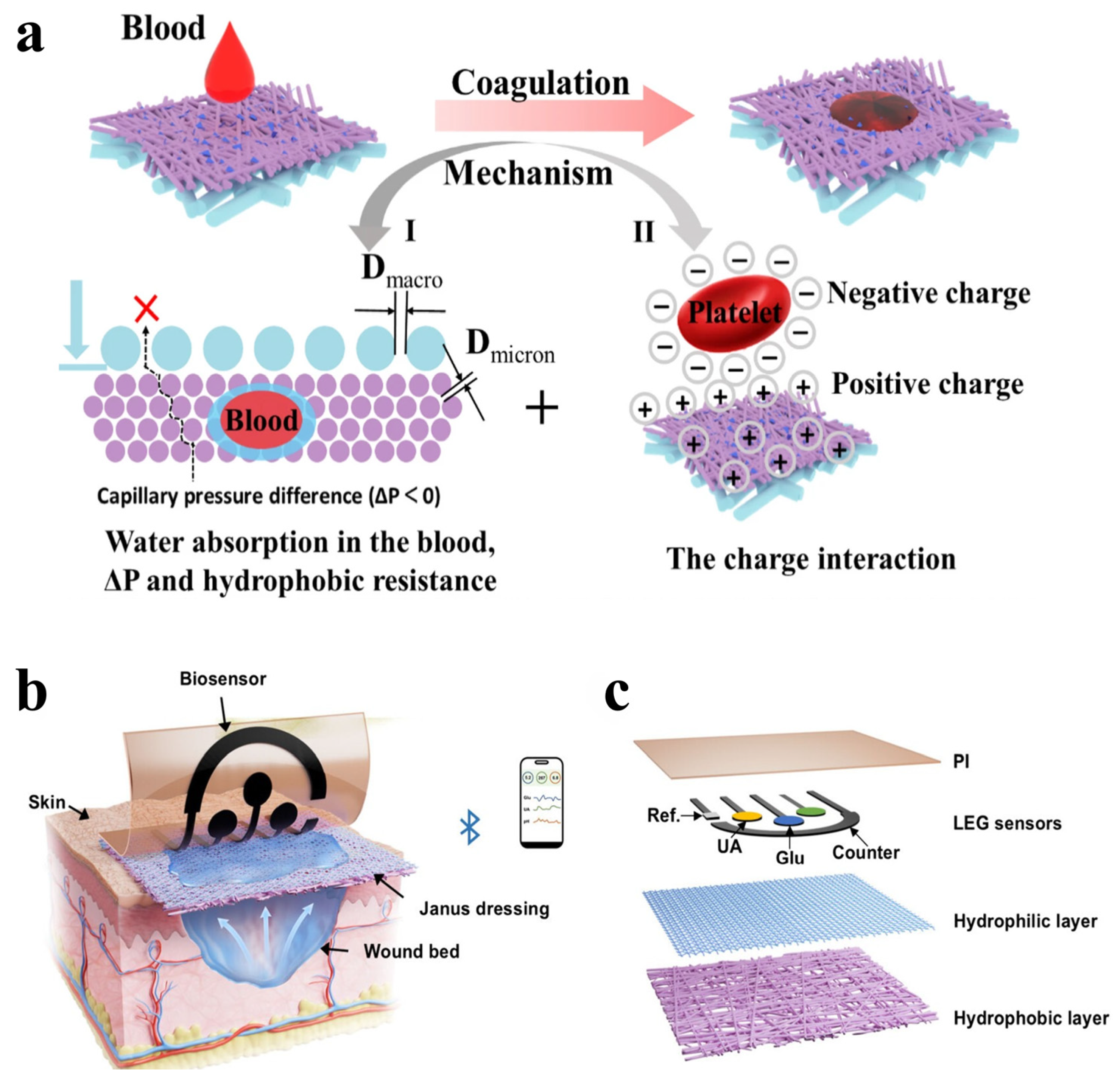
3.5. Hemostatic Janus Dressing
3.6. Janus Dressing for Wound Detection
4. Summary and Outlook
- (1)
- The mechanical durability and structural stability of Janus membranes require further enhancement. Due to disparities in the materials of the hydrophilic and hydrophobic layers, issues such as cotton-like tearing or damage of the hydrophilic layer, or its dissolution upon contact with water, may frequently occur. This may be solved in the future by introducing binders [103] and adding transition layers [50]. However, incorporating adhesives may compromise the biocompatibility of the fibrous membrane, while adding an intermediate layer can easily interfere with certain inherent functions of the dual-layer fibrous membrane. Generally, the hydrophobic layer exhibits better mechanical strength, whereas the hydrophilic layer tends to be mechanically weaker. To achieve unidirectional water transport, the hydrophilic layer is often exposed on the outer surface. Consequently, in practical applications of bilayer Janus membranes, the hydrophilic layer is prone to damage, compromising the integrity of the membrane. Therefore, enhancing the mechanical compatibility between the two layers is essential. Enhancing the mechanical properties of the hydrophilic layer is also a viable approach.
- (2)
- The production cost of Janus-structured wound dressings remains relatively high. For instance, fibrous membranes with photothermal effects offer excellent functionality, but photothermal materials such as black phosphorus and MXene are generally expensive or complex to prepare. The existing electrospinning technology has low production efficiency and high cost, and it is difficult to realize continuous and large-scale preparation of Janus membranes, which cannot meet the demand of clinical batch application. For large-scale production, optimize the material formula and spinning process to reduce the production cost while ensuring the membrane performance.
- (3)
- Electrospinning technology heavily relies on organic solvents, and the environmental release behavior and ecological toxicity of antimicrobial components (metal nanoparticles, antibiotics) in Janus membranes have not been systematically evaluated, which may lead to environmental pollution and challenges in large-scale production. For environmental safety issues, develop green antibacterial systems to replace traditional antibiotics and high-toxicity metal nanoparticles, such as natural antibacterial extracts and antibacterial peptides; explore green electrospinning processes with water as the solvent to reduce organic solvent pollution; and systematically evaluate the environmental degradation behavior and ecological risk of the materials throughout their life cycle.
- (4)
- In recent years, as the world becomes increasingly intelligent and digital, greater emphasis should be placed on the development of smart Janus dressings. Although certain achievements have been made in terms of intelligence, many issues remain to be addressed. For instance, whether the detection systems of Janus dressings can maintain accuracy in complex environments without being interfered with by unfavorable wound conditions; how to provide real-time feedback on detected fluctuations in various indicators to medical personnel for timely response to wound status; and how to achieve long-distance wireless transmission of the detected information.
Supplementary Materials
Author Contributions
Funding
Institutional Review Board Statement
Informed Consent Statement
Data Availability Statement
Conflicts of Interest
References
- Hoffman, B.M.; Lukoyanov, D.; Dean, D.R.; Seefeldt, L.C. Nitrogenase: A Draft Mechanism. Acc. Chem. Res. 2013, 46, 587–595. [Google Scholar] [CrossRef]
- Duan, Y.P.; Zhao, X.; Sun, M.M.; Hao, H. Research Advances in the Synthesis, Application, Assembly, and Calculation of Janus Materials. Ind. Eng. Chem. Res. 2021, 60, 1071–1095. [Google Scholar] [CrossRef]
- de Gennes, P.-G. Soft Matter (Nobel Lecture). Angew. Chem. Int. Ed. Engl. 1992, 31, 842–845. [Google Scholar] [CrossRef]
- Hu, Q.H.; Wan, X.Y.; Wang, S.B.; Huang, T.; Zhao, X.Y.; Tang, C.Y.; Zheng, M.J.; Wang, X.Y.; Li, L.L. Ultrathin, flexible, and piezoelectric Janus nanofibrous dressing for wound healing. Sci. China Mater. 2023, 66, 3347–3360. [Google Scholar] [CrossRef]
- Shi, L.X.; Liu, X.; Wang, W.S.; Jiang, L.; Wang, S.T. A Self-Pumping Dressing for Draining Excessive Biofluid around Wounds. Adv. Mater. 2018, 31, e1804187. [Google Scholar] [CrossRef]
- Hou, L.; Liu, X.; Ge, X.; Hu, R.; Cui, Z.; Wang, N.; Zhao, Y. Designing of anisotropic gradient surfaces for directional liquid transport: Fundamentals, construction, and applications. Innov. 2023, 4, 100508. [Google Scholar] [CrossRef]
- Fu, J.Y.; An, D.; Song, Y.L.; Wang, C.; Qiu, M.; Zhang, H. Janus nanoparticles for cellular delivery chemotherapy: Recent advances and challenges. Coord. Chem. Rev. 2020, 422, 213467. [Google Scholar] [CrossRef]
- Liu, Y.X.; Jia, J.; Li, Y.V.; Hao, J.; Pan, K. Novel ZnO/NiO Janus-like nanofibers for effective photocatalytic degradation. Nanotechnology 2018, 29, 435704. [Google Scholar] [CrossRef]
- Zheng, J.X.; Hou, Y.Y.; Duan, Y.D.; Song, X.H.; Wei, Y.; Liu, T.C.; Hu, J.T.; Guo, H.; Zhuo, Z.Q.; Liu, L.L.; et al. Janus Solid-Liquid Interface Enabling Ultrahigh Charging and Discharging Rate for Advanced Lithium-Ion Batteries. Nano Lett. 2015, 15, 6102–6109. [Google Scholar] [CrossRef] [PubMed]
- Li, X.Y.; Chen, W.C.; Qian, Q.R.; Huang, H.T.; Chen, Y.M.; Wang, Z.Q.; Chen, Q.H.; Yang, J.; Li, J.; Mai, Y.W. Electrospinning-Based Strategies for Battery Materials. Adv. Energy Mater. 2021, 11, 2000845. [Google Scholar] [CrossRef]
- Hou, L.L.; Liu, J.C.; Li, D.M.; Gao, Y.; Wang, Y.Q.; Hu, R.J.; Ren, W.; Xie, S.X.; Cui, Z.M.; Wang, N. Electrospinning Janus Nanofibrous Membrane for Unidirectional Liquid Penetration and Its Applications. Chem. Res. Chin. Univ. 2021, 37, 337–354. [Google Scholar] [CrossRef]
- Saini, S.; Kandasubramanian, B. Engineered Smart Textiles and Janus Microparticles for Diverse Functional Industrial Applications. Polym.-Plast. Technol. Mater. 2019, 58, 229–245. [Google Scholar] [CrossRef]
- Cao, M.Y.; Li, K.; Dong, Z.C.; Yu, C.M.; Yang, S.; Song, C.; Liu, K.S.; Jiang, L. Superhydrophobic “Pump”: Continuous and Spontaneous Antigravity Water Delivery. Adv. Funct. Mater. 2015, 25, 4114–4119. [Google Scholar] [CrossRef]
- Luo, H.; Yang, J.Y.; Xiang, Z.; Shi, R.; Chen, Y. Functional electrospinning Janus dressings with asymmetric surface wettability. Appl. Mater. Today 2024, 41, 102445. [Google Scholar] [CrossRef]
- Chen, J.W.; Low, Z.X.; Feng, S.S.; Zhong, Z.X.; Xing, W.H.; Wang, H.T. Nanoarchitectonics for Electrospun Membranes with Asymmetric Wettability. ACS Appl. Mater. Interfaces 2021, 13, 60763–60788. [Google Scholar] [CrossRef] [PubMed]
- Zhao, Y.; Wang, H.X.; Zhou, H.; Lin, T. Directional Fluid Transport in Thin Porous Materials and its Functional Applications. Small 2017, 13, 1601070. [Google Scholar] [CrossRef]
- Du, L.; Xu, Y.; Xu, H.Z.; Ye, X.Y.; Li, Y.G. Highly directional water transport membrane made from a hybrid manufacturing approach: Unleashing the power of melt electrowriting. Colloids Surf. A 2022, 641, 128486. [Google Scholar] [CrossRef]
- Zhang, G.; Liu, J.L.; Miao, Y.P.; Ge, S.B.; Rezakazemi, M.; Chang, R.H.; Zhang, X.L.; Li, Y.; Fan, W. Advances in Controllable Water Transport of Textile Porous Materials: Mechanism, Structure Design, Fabrication and Application. Adv. Fiber Mater. 2025, 7, 981–1009. [Google Scholar] [CrossRef]
- Wu, J.; Wang, N.; Wang, L.; Dong, H.; Zhao, Y.; Jiang, L. Unidirectional water-penetration composite fibrous film via electrospinning. Soft Matter 2012, 8, 5996. [Google Scholar] [CrossRef]
- Wu, Z.P.; Yin, K.; Wu, J.R.; Zhu, Z.; Duan, J.A.; He, J. Recent advances in femtosecond laser-structured Janus membranes with asymmetric surface wettability. Nanoscale 2021, 13, 2209–2226. [Google Scholar] [CrossRef]
- Tang, C.Y.; Fei, X.; Zhao, W.H.; Tian, J.; Xu, L.Q.; Wang, Y.; Li, Y. A Janus supramolecular hydrogel prepared by one-pot method for wound dressing. Int. J. Biol. Macromol. 2023, 249, 126112. [Google Scholar] [CrossRef] [PubMed]
- Prete, S.; Dattilo, M.; Patitucci, F.; Pezzi, G.; Parisi, O.I.; Puoci, F. Natural and Synthetic Polymeric Biomaterials for Application in Wound Management. J. Funct. Biomater. 2023, 14, 455. [Google Scholar] [CrossRef]
- Wang, M.L.; Yu, D.G.; Bligh, S.W.A. Progress in preparing electrospun Janus fibers and their applications. Appl. Mater. Today 2023, 31, 101766. [Google Scholar] [CrossRef]
- Ho, C.C.; Chen, W.S.; Shie, T.Y.; Lin, J.N.; Kuo, C. Novel fabrication of Janus particles from the surfaces of electrospun polymer fibers. Langmuir 2008, 24, 5663–5666. [Google Scholar] [CrossRef]
- Lim, H.S.; Park, S.H.; Koo, S.H.; Kwark, Y.J.; Thomas, E.L.; Jeong, Y.; Cho, J.H. Superamphiphilic Janus Fabric. Langmuir 2010, 26, 19159–19162. [Google Scholar] [CrossRef]
- Chen, G.Y.; Xu, Y.; Yu, D.G.; Zhang, D.F.; Chatterton, N.P.; White, K.N. Structure-tunable Janus fibers fabricated using spinnerets with varying port angles. Chem. Commun. 2015, 51, 4623–4626. [Google Scholar] [CrossRef]
- Tan, G.Z.; Zhou, Y.G. Electrospinning of biomimetic fibrous scaffolds for tissue engineering: A review. Int. J. Polym. Mater. Polym. Biomater. 2020, 69, 947–960. [Google Scholar] [CrossRef]
- Wu, W.; Li, X.; Liu, Y.; Liu, Z.; Wang, Y.; Jiao, T. Electrospun MXene-based nanofibrous membranes: Multifunctional integration, challenges, and emerging applications. Prog. Org. Coat. 2025, 208, 109480. [Google Scholar] [CrossRef]
- Li, K.; Zhu, Z.J.; Zhai, Y.L.; Chen, S.J. Recent Advances in Electrospun Nanofiber-Based Strategies for Diabetic Wound Healing Application. Pharmaceutics 2023, 15, 2285. [Google Scholar] [CrossRef] [PubMed]
- Zhang, Y.; Zhou, J.H.; Deng, H.L.; Fang, Y.; Qiao, N.; Ren, M.; Zhang, Y.F.; Zhang, D.S.; Lin, H.; Chen, Y.Y.; et al. Silk fibroin fibers-based shape memory membrane with Janus wettability for multitiered wearable protection. J. Mater. Res. 2023, 38, 633–643. [Google Scholar] [CrossRef] [PubMed]
- Pi, H.H.; Xi, Y.L.; Wu, J.; Hu, M.M.; Tian, B.Y.; Yang, Y.W.; Wang, R.; Zhang, X.Q. Janus fibrous membrane with directional liquid transport capacity for wound healing promotion. Chem. Eng. J. 2023, 455, 140853. [Google Scholar] [CrossRef]
- Guo, J.K.; Yan, S.Z.; Newton, M.A.A.; Xin, B.J.; Chen, Z.M. Preparation and characterization of pH-responsive Janus composite membranes with unidirectional moisture drainage and antioxidant resistance. Colloids Surf. A 2024, 701, 134916. [Google Scholar] [CrossRef]
- Zhao, X.; Li, Y.; Hua, T.; Jiang, P.; Yin, X.; Yu, J.; Ding, B. Cleanable air filter transferring moisture and effectively capturing PM2.5. Small 2017, 13, 1603306. [Google Scholar] [CrossRef]
- Shi, Y.P.; Zhou, M.Y.; Zhao, S.; Li, H.T.; Wang, W.H.; Cheng, J.L.; Jin, L.; Wang, Y.F. Janus amphiphilic nanofiber membranes synergistically drive antibacterial and anti-inflammatory strategies for skin wound healing. Mater. Des. 2023, 227, 111778. [Google Scholar] [CrossRef]
- Taymouri, S.; Hashemi, S.; Varshosaz, J.; Minaiyan, M.; Talebi, A. Fabrication and evaluation of hesperidin loaded polyacrylonitrile/polyethylene oxide nanofibers for wound dressing application. J. Biomater. Sci. Polym. Ed. 2021, 32, 1944–1965. [Google Scholar] [CrossRef]
- Ivanoska-Dacikj, A.; Makreski, P.; Geskovski, N.; Karbowniczek, J.; Stachewicz, U.; Novkovski, N.; Tanasic, J.; Ristic, I.; Bogoeva-Gaceva, G. Electrospun PEO/rGO Scaffolds: The Influence of the Concentration of rGO on Overall Properties and Cytotoxicity. Int. J. Mol. Sci. 2022, 23, 988. [Google Scholar] [CrossRef]
- Shi, Y.L.; Li, Y.; Wu, J.M.; Wang, W.G.; Dong, A.J.; Zhang, J.H. A novel transdermal drug delivery system based on self-adhesive Janus nanofibrous film with high breathability and monodirectional water-penetration. J. Biomater. Sci. Polym. Ed. 2014, 25, 713–728. [Google Scholar] [CrossRef]
- de la Mora-lopez, D.S.; Madera-Santana, T.J.; Olivera-Castillo, L.; Castillo-Ortega, M.M.; Lopez-Cervantes, J.; Sanchez-Machado, D.I.; Ayala-Zavala, J.F.; Soto-Valdez, H. Production and performance evaluation of chitosan/collagen/honey nanofibrous membranes for wound dressing applications. Int. J. Biol. Macromol. 2024, 275, 133809. [Google Scholar] [CrossRef]
- Li, J.; Zivanovic, S.; Davidson, P.M.; Kit, K. Characterization and comparison of chitosan/PVP and chitosan/PEO blend films. Carbohydr. Polym. 2010, 79, 786–791. [Google Scholar] [CrossRef]
- Chernonosova, V.S.; Kuzmin, I.E.; Shundrina, I.K.; Korobeynikov, M.V.; Golyshev, V.M.; Chelobanov, B.P.; Laktionov, P.P. Effect of Sterilization Methods on Electrospun Scaffolds Produced from Blend of Polyurethane with Gelatin. J. Funct. Biomater. 2023, 14, 70. [Google Scholar] [CrossRef]
- Li, R.; Cheng, Z.; Yu, X.; Wang, S.; Han, Z.; Kang, L. Preparation of antibacterial PCL/PVP-AgNP Janus nanofibers by uniaxial electrospinning. Mater. Lett. 2019, 254, 206–209. [Google Scholar] [CrossRef]
- Elaissaoui, I.; Sayeb, S.; Mekki, M.; Russo, F.; Figoli, A.; Horchani-Naifer, K.; Ennigrou, D.J. Nanostructured Cellulose Acetate Membranes Embedded with Al2O3 Nanoparticles for Sustainable Wastewater Treatment. Coatings 2025, 15, 823. [Google Scholar] [CrossRef]
- Zhou, H.; Guo, Z.G. Superwetting Janus membranes: Focusing on unidirectional transport behaviors and multiple applications. J. Mater. Chem. A 2019, 7, 12921–12950. [Google Scholar] [CrossRef]
- Si, Y.F.; Chen, L.W.; Yang, F.C.; Guo, F.; Guo, Z.G. Stable Janus superhydrophilic/hydrophobic nickel foam for directional water transport. J. Colloid Interface Sci. 2018, 509, 346–352. [Google Scholar] [CrossRef] [PubMed]
- Miao, D.Y.; Huang, Z.; Wang, X.F.; Yu, J.Y.; Ding, B. Continuous, Spontaneous, and Directional Water Transport in the Trilayered Fibrous Membranes for Functional Moisture Wicking Textiles. Small 2018, 14, e1801527. [Google Scholar] [CrossRef]
- Yang, J.; Li, H.N.; Chen, Z.X.; He, A.; Zhong, Q.Z.; Xu, Z.K. Janus membranes with controllable asymmetric configurations for highly efficient separation of oil-in-water emulsions. J. Mater. Chem. A 2019, 7, 7907–7917. [Google Scholar] [CrossRef]
- Zhou, H.; Wang, H.X.; Niu, H.T.; Lin, T. Superphobicity/philicity Janus Fabrics with Switchable, Spontaneous, Directional Transport Ability to Water and Oil Fluids. Sci. Rep. 2013, 3, 2964. [Google Scholar] [CrossRef]
- Li, H.N.; Yang, J.; Xu, Z.K. Asymmetric Surface Engineering for Janus Membranes. Adv. Mater. Interfaces 2020, 7, 1902064. [Google Scholar] [CrossRef]
- Zhao, J.C.; Xu, Z.B.; Liu, S.K.; Zhang, T.; Huang, L.P. Tailoring Unidirectional Water-Penetration Janus Fabric with Surface Electrospun Deposition. Macromol. Mater. Eng. 2021, 306, 2000578. [Google Scholar] [CrossRef]
- Li, L.L.; Mai, Y.L.; Wang, Y.F.; Chen, S.G. Stretchable unidirectional liquid-transporting membrane with antibacterial and biocompatible features based on chitosan derivative and composite nanofibers. Carbohydr. Polym. 2022, 276, 118703. [Google Scholar] [CrossRef]
- Shao, Z.G.; Chen, J.Y.; Ke, L.J.; Wang, Q.F.; Wang, X.; Li, W.W.; Zheng, G.F. Directional Transportation in a Self-Pumping Dressing Based on a Melt Electrospinning Hydrophobic Mesh. ACS Biomater. Sci. Eng. 2021, 7, 5918–5926. [Google Scholar] [CrossRef]
- Chen, L.; Ahmed Babar, A.; Huang, G.; Zhao, J.; Yan, W.; Yu, H.; Feng, Q.; Wang, X. Moisture wicking textiles with hydrophilic oriented polyacrylonitrile layer: Enabling ultrafast directional water transport. J. Colloid Interface Sci. 2023, 645, 200–209. [Google Scholar] [CrossRef]
- Zheng, S.J.; Li, W.Z.; Ren, Y.Y.; Liu, Z.Y.; Zou, X.Y.; Hu, Y.; Guo, J.N.; Sun, Z.; Yan, F. Moisture-Wicking, Breathable, and Intrinsically Antibacterial Electronic Skin Based on Dual-Gradient Poly(ionic liquid) Nanofiber Membranes. Adv. Mater. 2022, 34, 2106570. [Google Scholar] [CrossRef]
- Yan, W.A.; Miao, D.Y.; Babar, A.A.; Zhao, J.; Jia, Y.T.; Ding, B.; Wang, X.F. Multi-scaled interconnected inter- and intra-fiber porous janus membranes for enhanced directional moisture transport. J. Colloid Interface Sci. 2020, 565, 426–435. [Google Scholar] [CrossRef]
- Liang, Y.; Kim, S.; Kallem, P.; Choi, H. Capillary effect in Janus electrospun nanofiber membrane for oil/water emulsion separation. Chemosphere 2019, 221, 479–485. [Google Scholar] [CrossRef]
- Ren, B.N.; Pi, H.H.; Zhao, X.; Hu, M.M.; Zhang, X.Q.; Wang, R.; Wu, J. Janus membrane with novel directional water transport capacity for efficient atmospheric water capture. Nanoscale 2021, 13, 9354–9363. [Google Scholar] [CrossRef]
- Sun, L.Y.; Guo, J.H.; Chen, H.X.; Zhang, D.G.; Shang, L.R.; Zhang, B.; Zhao, Y.J. Tailoring Materials with Specific Wettability in Biomedical Engineering. Adv. Sci. 2021, 8, 2100126. [Google Scholar] [CrossRef]
- Hawker, M.J.; Pegalajar-Jurado, A.; Fisher, E.R. Innovative Applications of Surface Wettability Measurements for Plasma-Modified Three-Dimensional Porous Polymeric Materials: A Review. Plasma Processes Polym. 2015, 12, 846–863. [Google Scholar] [CrossRef]
- Wu, J.D.; Yan, Z.; Yan, Y.S.; Li, C.X.; Dai, J.D. Beetle-Inspired Dual-Directional Janus Pumps with Interfacial Asymmetric Wettability for Enhancing Fog Harvesting. ACS Appl. Mater. Interfaces 2022, 14, 49338–49351. [Google Scholar] [CrossRef]
- Li, K.; Yang, H.C.; Xu, Z.K. Designing Janus Two-Dimensional Porous Materials for Unidirectional Transport: Principles, Applications, and Challenges. ACS Appl. Polym. Mater. 2024, 6, 14190–14203. [Google Scholar] [CrossRef]
- Wu, J.; Zhou, H.; Wang, H.X.; Shao, H.; Yan, G.L.; Lin, T. Novel Water Harvesting Fibrous Membranes with Directional Water Transport Capability. Adv. Mater. Interfaces 2019, 6, 1801529. [Google Scholar] [CrossRef]
- Yalishev, V.S.; Abbasi, N.A.; Iqbal, M.; Alnaser, A.S. Comparing Water Transport Properties of Janus Membranes Fabricated from Copper Mesh and Foam Using a Femtosecond Laser. Langmuir 2023, 39, 1815–1825. [Google Scholar] [CrossRef]
- Wang, R.; Liu, Y.; Li, B.; Hsiao, B.S.; Chu, B. Electrospun nanofibrous membranes for high flux microfiltration. J. Membr. Sci. 2012, 392, 167–174. [Google Scholar] [CrossRef]
- Schuren, J.; Becker, A.; Sibbald, R.G. A liquid film-forming acrylate for peri-wound protection: A systematic review and meta-analysis (3M Cavilon no-sting barrier film). Int. Wound J. 2005, 2, 230–238. [Google Scholar] [CrossRef]
- Zhang, X.J.; Yu, N.; Ren, Q.; Niu, S.N.; Zhu, L.Q.; Hong, L.; Cui, K.L.; Wang, X.; Jiang, W.Z.; Wen, M.; et al. Janus Nanofiber Membranes with Photothermal-Enhanced Biofluid Drainage and Sterilization for Diabetic Wounds. Adv. Funct. Mater. 2024, 34, 2315020. [Google Scholar] [CrossRef]
- Bao, F.; Pei, G.; Wu, Z.C.; Zhuang, H.; Zhang, Z.W.B.; Huan, Z.G.; Wu, C.T.; Chang, J. Bioactive Self-Pumping Composite Wound Dressings with Micropore Array Modified Janus Membrane for Enhanced Diabetic Wound Healing. Adv. Funct. Mater. 2020, 30, 2005422. [Google Scholar] [CrossRef]
- Luo, Z.; Jiang, L.; Xu, C.F.; Kai, D.; Fan, X.S.; You, M.L.; Hui, C.M.; Wu, C.S.; Wu, Y.L.; Li, Z.B. Engineered Janus amphipathic polymeric fiber films with unidirectional drainage and anti-adhesion abilities to accelerate wound healing. Chem. Eng. J. 2021, 421, 127725. [Google Scholar] [CrossRef]
- Hou, C.; Newton, M.A.A.; Xin, B.; Li, T. Preparation and characterization of unidirectional water-transported bilayer PLA/ZnO-PAN/SPA nanofibrous membrane for wound healing. Colloids Surf. A 2023, 676, 132308. [Google Scholar] [CrossRef]
- Wu, H.; Gao, B.; Wu, H.; Song, J.; Zhu, L.; Zhou, M.; Linghu, X.; Huang, S.; Zhou, Z.; Wa, Q. A unidirectional water-transport antibacterial bilayer nanofibrous dressing based on chitosan for accelerating wound healing. Int. J. Biol. Macromol. 2024, 269, 131878. [Google Scholar] [CrossRef]
- Dai, T.; Wang, L.; Yao, J.; Zhu, G.; Guo, B.; Militk, J.; Kremenakova, D.; Zhang, M. Self-induced crystallization to form a shish-kebab structure on PLA-based Janus membrane to promote water transmission and interlayer binding force. Sep. Purif. Technol. 2024, 332, 125793. [Google Scholar] [CrossRef]
- Homaeigohar, S.; Boccaccini, A.R. Antibacterial biohybrid nanofibers for wound dressings. Acta Biomaterialia 2020, 107, 25–49. [Google Scholar] [CrossRef]
- Mihai, M.M.; Dima, M.B.; Dima, B.; Holban, A.M. Nanomaterials for Wound Healing and Infection Control. Materials 2019, 12, 2176. [Google Scholar] [CrossRef]
- Miguel, S.P.; Figueira, D.R.; Simoes, D.; Ribeiro, M.P.; Coutinho, P.; Ferreira, P.; Correia, I.J. Electrospun polymeric nanofibres as wound dressings: A review. Colloids Surf. B 2018, 169, 60–71. [Google Scholar] [CrossRef]
- Yang, J.K.; Wang, K.; Yu, D.G.; Yang, Y.Y.; Bligh, S.W.A.; Williams, G.R. Electrospun Janus nanofibers loaded with a drug and inorganic nanoparticles as an effective antibacterial wound dressing. Biomater. Adv. 2020, 111, 110805. [Google Scholar] [CrossRef]
- Ren, X.; Lin, X. Switchable hydrophilic/hydrophobic antibacterial fibrous composites for biomedical application. Compos. Commun. 2023, 43, 101728. [Google Scholar] [CrossRef]
- Zhang, H.; Sun, L.Y.; Guo, J.H.; Zhao, Y.J. Hierarchical Spinning of Janus Textiles with Anisotropic Wettability for Wound Healing. Research 2023, 6, 0029. [Google Scholar] [CrossRef] [PubMed]
- Zhao, X.; Jiao, J.J.; Ao, M.; Huang, L.; Xu, P.; Shi, Y.; Shao, J.J.; Guo, Y.L.; Xie, H.B.; Li, L.; et al. Mg-doped bioactive glass and tea polyphenols incorporated Janus wound dressing for antibacterial and promoting tissue repair. Colloids Surf B 2025, 253, 114796. [Google Scholar] [CrossRef] [PubMed]
- Liu, Y.R.; Huang, S.F.; Liang, S.Y.; Lin, P.R.; Lai, X.J.; Lan, X.Z.; Wang, H.; Tang, Y.D.; Gao, B.T. Phase Change Material-Embedded Multifunctional Janus Nanofiber Dressing with Directional Moisture Transport, Controlled Release of Anti-Inflammatory Drugs, and Synergistic Antibacterial Properties. ACS Appl. Mater. Interfaces 2023, 15, 52244–52261. [Google Scholar] [CrossRef]
- Chen, X.F.; Ren, X.D.; Wang, Y.; Meng, J.; Huang, Q.; Shen, J. Construction of a Multifunctional Janus Nanofiber Membrane Based on Tannic Acid-Fe Complexes for Photothermal/Drug Synergistic Antibacteria. ACS Appl. Polym. Mater. 2024, 6, 15345–15354. [Google Scholar] [CrossRef]
- Kim, H.S.; Sun, X.Y.; Lee, J.H.; Kim, H.W.; Fu, X.B.; Leong, K.W. Advanced drug delivery systems and artificial skin grafts for skin wound healing. Adv. Drug Deliv. Rev. 2019, 146, 209–239. [Google Scholar] [CrossRef]
- Eming, S.A.; Martin, P.; Tomic-Canic, M. Wound repair and regeneration: Mechanisms, signaling, and translation. Sci. Transl. Med. 2014, 6, 265sr6. [Google Scholar] [CrossRef]
- Verdolino, D.V.; Thomason, H.A.; Fotticchia, A.; Cartmell, S. Wound dressings: Curbing inflammation in chronic wound healing. Emerg. Top. Life Sci. 2021, 5, 523–537. [Google Scholar] [CrossRef] [PubMed]
- Liang, Y.P.; He, J.H.; Guo, B.L. Functional Hydrogels as Wound Dressing to Enhance Wound Healing. Acs Nano 2021, 15, 12687–12722. [Google Scholar] [CrossRef]
- Xu, Z.; Fan, J.L.; Tian, W.G.; Ji, X.; Cui, Y.Q.; Nan, Q.Y.; Sun, F.F.; Zhang, J. Cellulose-Based pH-Responsive Janus Dressing with Unidirectional Moisture Drainage for Exudate Management and Diabetic Wounds Healing. Adv. Funct. Mater. 2024, 34, 2307449. [Google Scholar] [CrossRef]
- Xiao, Y.; Li, D.B.; Sui, X.Y.; Shen, L.; Liu, T.T.; Han, C.Y.; Sun, J.Q.; Yuan, C. Oxygen-Releasing Janus Nanofiber Membrane Based on Dendrobium officinale Polysaccharide to Promote Diabetic Wound Healing. ACS Appl. Polym. Mater. 2025, 7, 9832–9848. [Google Scholar] [CrossRef]
- Qian, S.T.; Wang, J.; Liu, Z.M.; Mao, J.Y.; Zhao, B.F.; Mao, X.Y.; Zhang, L.C.; Cheng, L.Y.; Zhang, Y.G.; Sun, X.M.; et al. Secretory Fluid-Aggregated Janus Electrospun Short Fiber Scaffold for Wound Healing. Small 2022, 18, e2200799. [Google Scholar] [CrossRef]
- Zhao, K.; Hu, Z.; Rao, X.; Chen, Y.; Zhou, M.; Li, X.; Zhou, F.; Ding, Z.; Li, M.; Zhu, B. An EHDA Janus hybrids loaded with Bletilla striata polysaccharide and berberine for the treatment of diabetic ulcer. Eur. Polym. J. 2024, 212, 113085. [Google Scholar] [CrossRef]
- Wang, M.L.; Huang, C.; Chen, Y.Y.; Ji, Y.X.; Yu, D.G.; Bligh, S.W.A. Medicated tri-layer fibers based on cellulose acetate and polyvinylpyrrolidone for enhanced antibacterial and wound healing properties. Carbohydr. Polym. 2024, 348, 122856. [Google Scholar] [CrossRef]
- Zhu, Y.F.; Zhou, W.; Xiang, J.Y.; Wu, M.H.; Chen, Z.; Yang, Z.Q.; Wei, R.X.; Cai, L. Deferoxamine-loaded Janus electrospun nanofiber dressing with spatially designed structure for diabetic wound healing. Mater. Des. 2023, 233, 112166. [Google Scholar] [CrossRef]
- Song, Y.P.; Zhu, Y.; Wang, Q.H.; Chen, X.; Chen, Y.; Han, G.H.; Lu, W.P.; Guo, Y.C. One-step Preparation of Antibacterial Gelatin/Polycaprolactone Nanofibrous Janus Membranes for Efficient Hemostasis. ACS Appl. Polym. Mater. 2023, 5, 7364–7374. [Google Scholar] [CrossRef]
- Lin, J.; Yao, Z.; Xiong, M.M.; Lin, J.; Hu, F.; Wei, X.C.; Huang, S.Y. Directional transport of drug droplets based on structural and wettability gradients on antibacterial Janus wound plaster with hemostatic, antiextravasation, and prehealing properties. Adv. Compos. Hybrid Mater. 2023, 6, 193. [Google Scholar] [CrossRef]
- Hui, C.; Gao, Y.; Yan, B.-Y.; Ding, L.-Q.; Sun, T.-C.; Liu, Z.; Ramakrishna, S.; Long, Y.-Z.; Zhang, J. Collocalia birds inspired Janus-structured bandage with strong wet tissue adhesion for rapid hemostasis and wound healing. Chem. Eng. J. 2023, 464, 142458. [Google Scholar] [CrossRef]
- Kuddushi, M.; Malek, N.; Xu, B.B.; Wang, X.H.; Zheng, B.; Unsworth, L.D.; Xu, J.T.; Zhang, X.H. Transparent and Mechanically Robust Janus Nanofiber Membranes for Open Wound Healing and Monitoring. ACS Appl. Mater. Interfaces 2024, 16, 63389–63403. [Google Scholar] [CrossRef]
- Wang, J.; Ye, J.; Li, Z.; Li, X.; Luo, Y.; Zhou, Z.; Liu, C.; Xu, T.; Zhang, X. An Integrated Janus Bioelectronic Bandage for Unidirectional Pumping and Monitoring of Wound Exudate. Nano Lett. 2025, 25, 5156–5164. [Google Scholar] [CrossRef] [PubMed]
- Dargaville, T.R.; Farrugia, B.L.; Broadbent, J.A.; Pace, S.; Upton, Z.; Voelcker, N.H. Sensors and imaging for wound healing: A review. Biosens. Bioelectron. 2013, 41, 30–42. [Google Scholar] [CrossRef]
- Dini, V.; Janowska, A.; Oranges, T.; De Pascalis, A.; Iannone, M.; Romanelli, M. Surrounding skin management in venous leg ulcers: A systematic review. J. Tissue Viability 2020, 29, 169–175. [Google Scholar] [CrossRef]
- Mirani, B.; Pagan, E.; Currie, B.; Siddiqui, M.A.; Hosseinzadeh, R.; Mostafalu, P.; Zhang, Y.S.; Ghahary, A.; Akbari, M. An Advanced Multifunctional Hydrogel-Based Dressing for Wound Monitoring and Drug Delivery. Adv. Healthcare Mater. 2017, 6, 1700718. [Google Scholar] [CrossRef]
- Mostafalu, P.; Tamayol, A.; Rahimi, R.; Ochoa, M.; Khalilpour, A.; Kiaee, G.; Yazdi, I.K.; Bagherifard, S.; Dokmeci, M.R.; Ziaie, B.; et al. Smart Bandage for Monitoring and Treatment of Chronic Wounds. Small 2018, 14, e1703509. [Google Scholar] [CrossRef]
- Farahani, M.; Shafiee, A. Wound Healing: From Passive to Smart Dressings. Adv. Healthcare Mater. 2021, 10, 2100477. [Google Scholar] [CrossRef]
- Zhang, X.; Lv, R.; Chen, L.; Sun, R.; Zhang, Y.; Sheng, R.; Du, T.; Li, Y.; Qi, Y. A Multifunctional Janus Electrospun Nanofiber Dressing with Biofluid Draining, Monitoring, and Antibacterial Properties for Wound Healing. ACS Appl. Mater. Interfaces 2022, 14, 12984–13000. [Google Scholar] [CrossRef]
- Guo, K.; Ou, K.; Amin Newton, M.A.; Zhang, J.; Xu, H.; Li, J.; Xin, B.; Huang, Y. Multifunctional Janus nanofibrous membrane with unidirectional water transport and pH-responsive color-changing for wound dressing. J. Colloid Interface Sci. 2025, 679, 723–736. [Google Scholar] [CrossRef] [PubMed]
- Hu, J.; Chen, G.P.; Wang, G.F. A Trilayer Dressing with Self-Pumping and pH Monitoring Properties for Promoting Abdominal Wall Defect Repair. Nanomaterials 2022, 12, 2802. [Google Scholar] [CrossRef] [PubMed]
- Yang, X.Q.; Wang, S.Q.; Liu, M.Y.; Li, L.H.; Zhao, Y.Y.; Wang, Y.F.; Bai, Y.Y.; Lu, Q.F.; Xiong, Z.P.; Feng, S.M.; et al. All-Nanofiber-Based Janus Epidermal Electrode with Directional Sweat Permeability for Artifact-Free Biopotential Monitoring. Small 2022, 18, 2106477. [Google Scholar] [CrossRef] [PubMed]
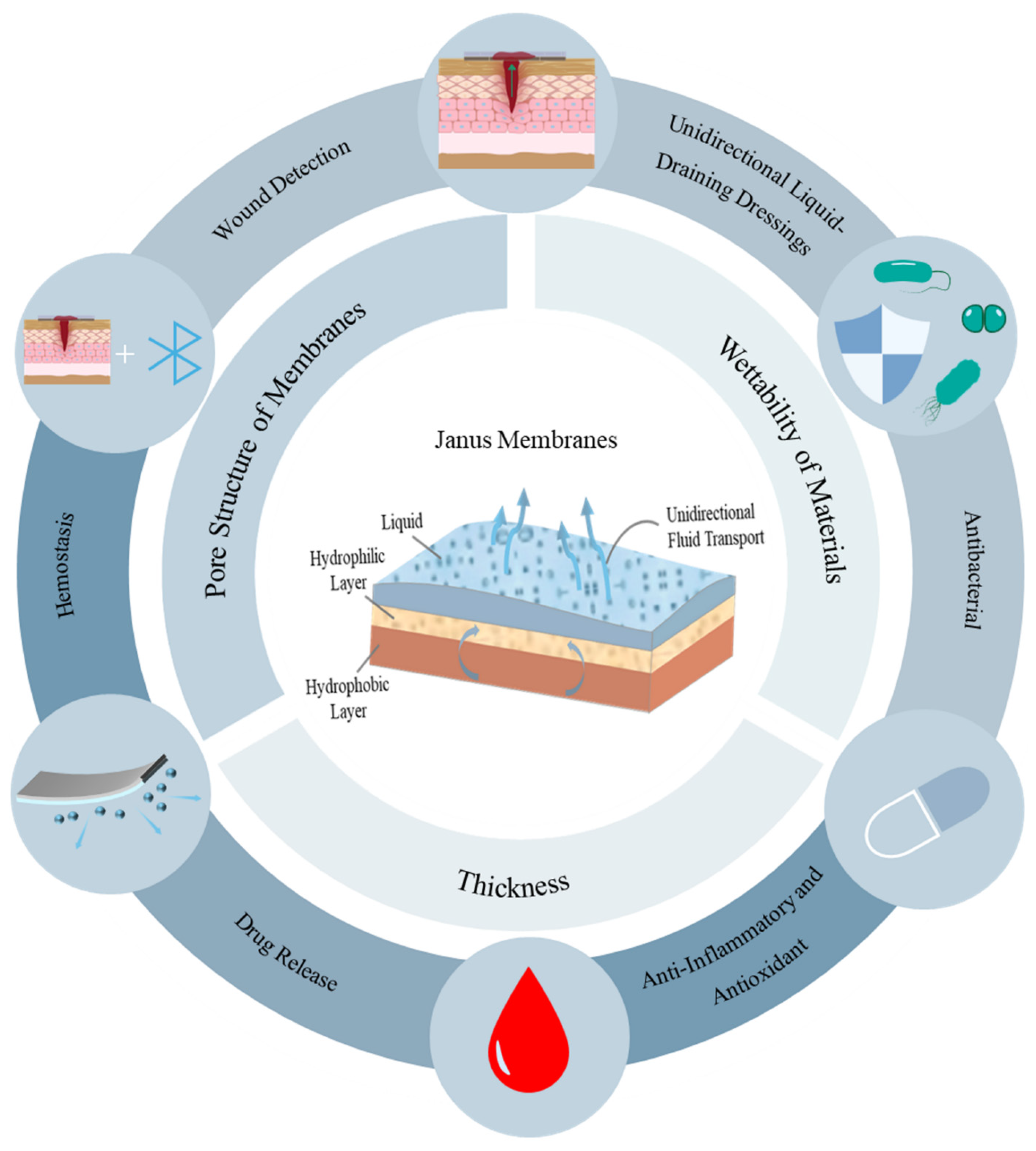





| Wettability | Material | WCA | Dominance | Ref. |
|---|---|---|---|---|
| Hydrophobic layer substrate | PU | 80~110° | Excellent mechanical properties, Controlled physicochemical properties, Biocompatibility, economy, Process suitability | [5,30] |
| PCL | 90~120° | Excellent mechanical properties, Biocompatibility, Process suitability, Long-term stability | [31] | |
| PLA | 100~130° | Excellent mechanical properties, Tunable degradability, Good spinnability, Biocompatibility | [32] | |
| PVDF | 110~140° | Chemical stability, Controlled physicochemical properties, Piezoelectric properties, process suitability | [33] | |
| PLGA | 90~120° | Excellent mechanical properties, Tunable degradability, Biocompatibility | [34] | |
| Hydrophilic layer substrate | PAN | 70~90° | Excellent mechanical properties, Good spinnability, Biocompatibility, | [35] |
| PEO | 40~60° | Biocompatible, Good spinnability | [36] | |
| PVA | 20~45° | Excellent mechanical properties, Excellent spinnability, Biocompatibility, Tunable degradability | [37] | |
| CS | 30~50° | Biocompatibility, Antimicrobial, Process suitability, Economics, Healing ability | [38,39] | |
| Gel | 45~65° | Biocompatibility, Efficient drug delivery, Degradability | [40] | |
| PVP | 35~55° | Excellent spinnability, Process suitability, biocompatibility, Efficient drug delivery | [41] | |
| CA | 50~70° | Biocompatible, Excellent spinnability, Efficient drug delivery, Flexible | [42] |
| Factor | Hydrophilic Layer | Hydrophobic Layer |
|---|---|---|
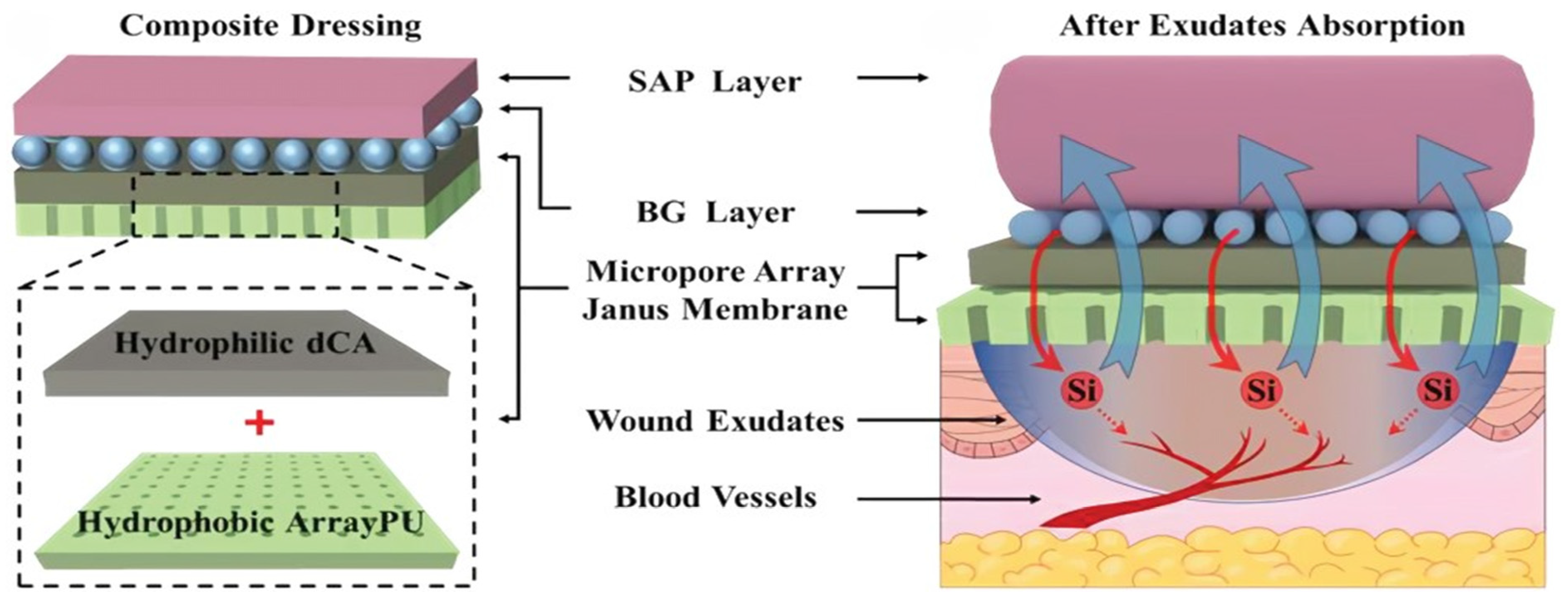
| Film thickness | Both excessively thick and thin morphologies can degrade the unidirectional water transport performance; the breakthrough pressure first decreases and then increases [16,19,48] | The breakthrough pressure is too small for water to penetrate from both sides of the membrane; the breakthrough pressure is too large for water to penetrate from either side of the membrane [43,48,49] |
| Membrane material wettability | Enhanced hydrophilicity, increased core-absorption of water [50,51], stronger membrane hydraulic conductivity | The hydrophobicity increases, and the breakthrough pressure increases. The breakthrough pressure is too high, water is not permeable from both sides of the membrane [50,51] |
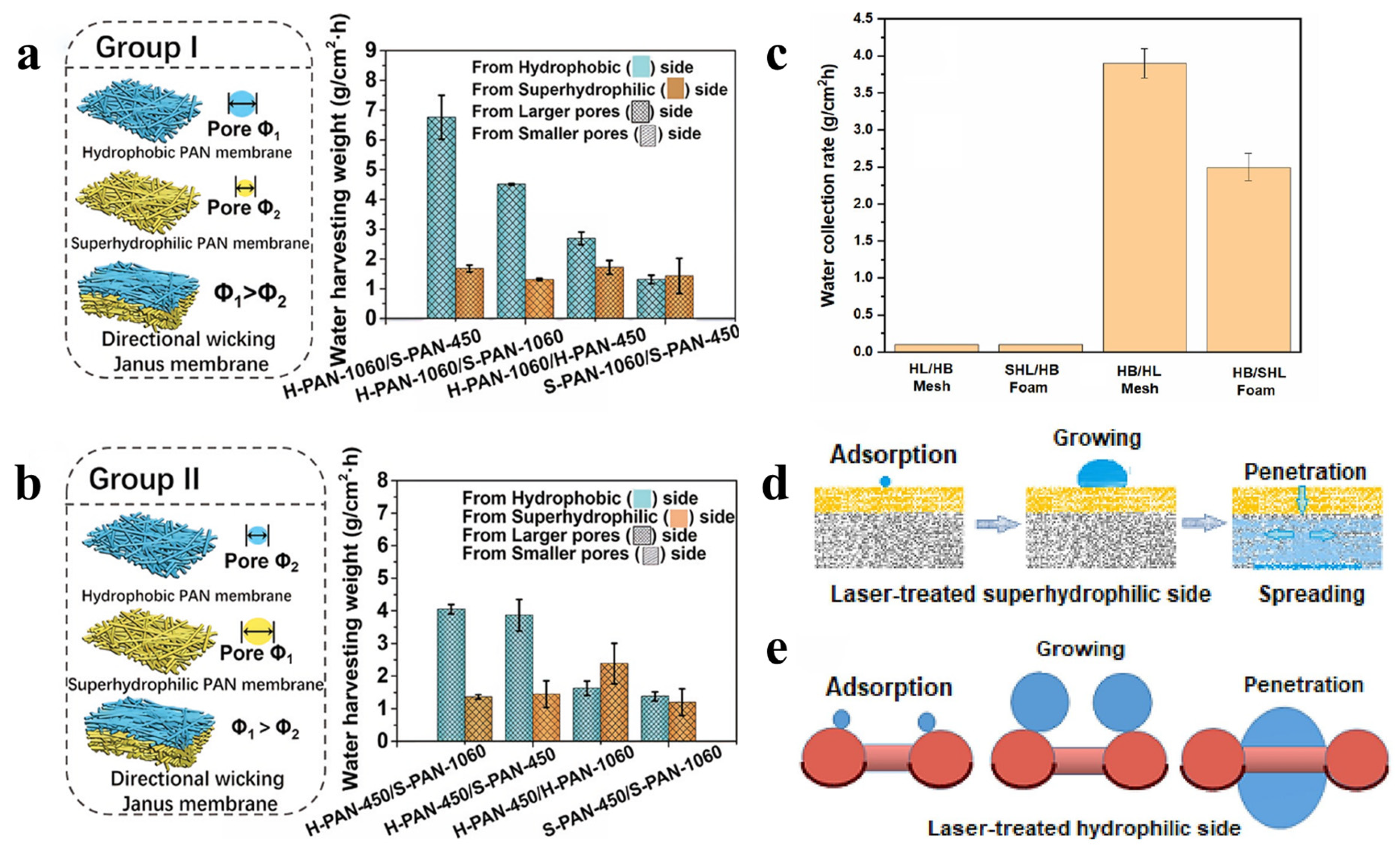
| Membrane pore size | A decrease in pore size leads to enhanced wicking capability and improved hydraulic conductivity is significantly superior to ) [52,53,54] | An increase in pore size results in a decreased breakthrough pressure and an enhanced hydraulic conductivity. is superior to ) [53,54,55] |
Disclaimer/Publisher’s Note: The statements, opinions and data contained in all publications are solely those of the individual author(s) and contributor(s) and not of MDPI and/or the editor(s). MDPI and/or the editor(s) disclaim responsibility for any injury to people or property resulting from any ideas, methods, instructions or products referred to in the content. |
© 2026 by the authors. Licensee MDPI, Basel, Switzerland. This article is an open access article distributed under the terms and conditions of the Creative Commons Attribution (CC BY) license.
Share and Cite
Chen, H.; Wu, W.; Li, X.; Gao, L.; Jiao, T. Electrospun Janus Fibrous Membranes: Property and Potential Biomedical Applications. Coatings 2026, 16, 281. https://doi.org/10.3390/coatings16030281
Chen H, Wu W, Li X, Gao L, Jiao T. Electrospun Janus Fibrous Membranes: Property and Potential Biomedical Applications. Coatings. 2026; 16(3):281. https://doi.org/10.3390/coatings16030281
Chicago/Turabian StyleChen, Haodong, Wenbo Wu, Xinyu Li, Lili Gao, and Tifeng Jiao. 2026. "Electrospun Janus Fibrous Membranes: Property and Potential Biomedical Applications" Coatings 16, no. 3: 281. https://doi.org/10.3390/coatings16030281
APA StyleChen, H., Wu, W., Li, X., Gao, L., & Jiao, T. (2026). Electrospun Janus Fibrous Membranes: Property and Potential Biomedical Applications. Coatings, 16(3), 281. https://doi.org/10.3390/coatings16030281