2. Materials and Methods
2.1. Materials
Raw lacquer (natural urushiol lacquer) was obtained from Enshi, Hubei Province, China. The raw material contained approximately 60% solids with an initial urushiol purity of 58.5%. Purification was performed by filtration through 200-mesh gauze followed by centrifugation at 3000 rpm for 15 min at 20 °C. The intermediate urushiol-rich layer was collected, yielding a product with 68% solids and 72.3% urushiol purity. Turpentine (0–15 vol%) was added to adjust viscosity to 1200–1500 mPa·s at 25 °C. Tack-free time was approximately 6 h, and full curing was achieved within 6 days under standard conditions (25 °C, 60% RH).
Tween-20 (polysorbate 20, HLB = 16.7) was used as a non-ionic surfactant to improve wetting and dispersion of the lacquer matrix. The reagent was purchased from Sinopharm Chemical Reagent Co., Ltd. (Shanghai, China) and used as received.
Soy protein isolate (SPI, ≥90% protein content, average molecular weight 150–350 kDa, food grade) was supplied by Yuwang Ecological Food Co., Ltd. (Shandong, China) and used as a bio-based adhesive modifier.
Nano-SiO2 (fumed silica, Aerosil 200, 12 nm average particle size, specific surface area 200 m2/g) was obtained from Evonik Industries (Essen, Germany). The nanoparticles were used as an inorganic reinforcing filler.
2.2. Experimental Design
An L9 (34) Taguchi orthogonal experimental design was employed to systematically assess the effects of four factors at three levels: lacquer content (60%, 70%, 80%), Tween-20 (5%, 10%, 15%), soy protein isolate (SPI) (5%, 10%, 15%), and nano-SiO2 (3%, 5%, 7%). Shear bond strength and moisture uptake were selected as the primary response variables to characterize bonding performance and environmental durability, respectively. This orthogonal design enables efficient multi-factor comparison while allowing quantitative evaluation of the sensitivity of each variable and objective identification of the optimal formulation.
2.3. Adhesive Preparation
Adhesives for all studied variants (A–I) were prepared according to the ratios defined in the L
9(3
4) Taguchi orthogonal design (
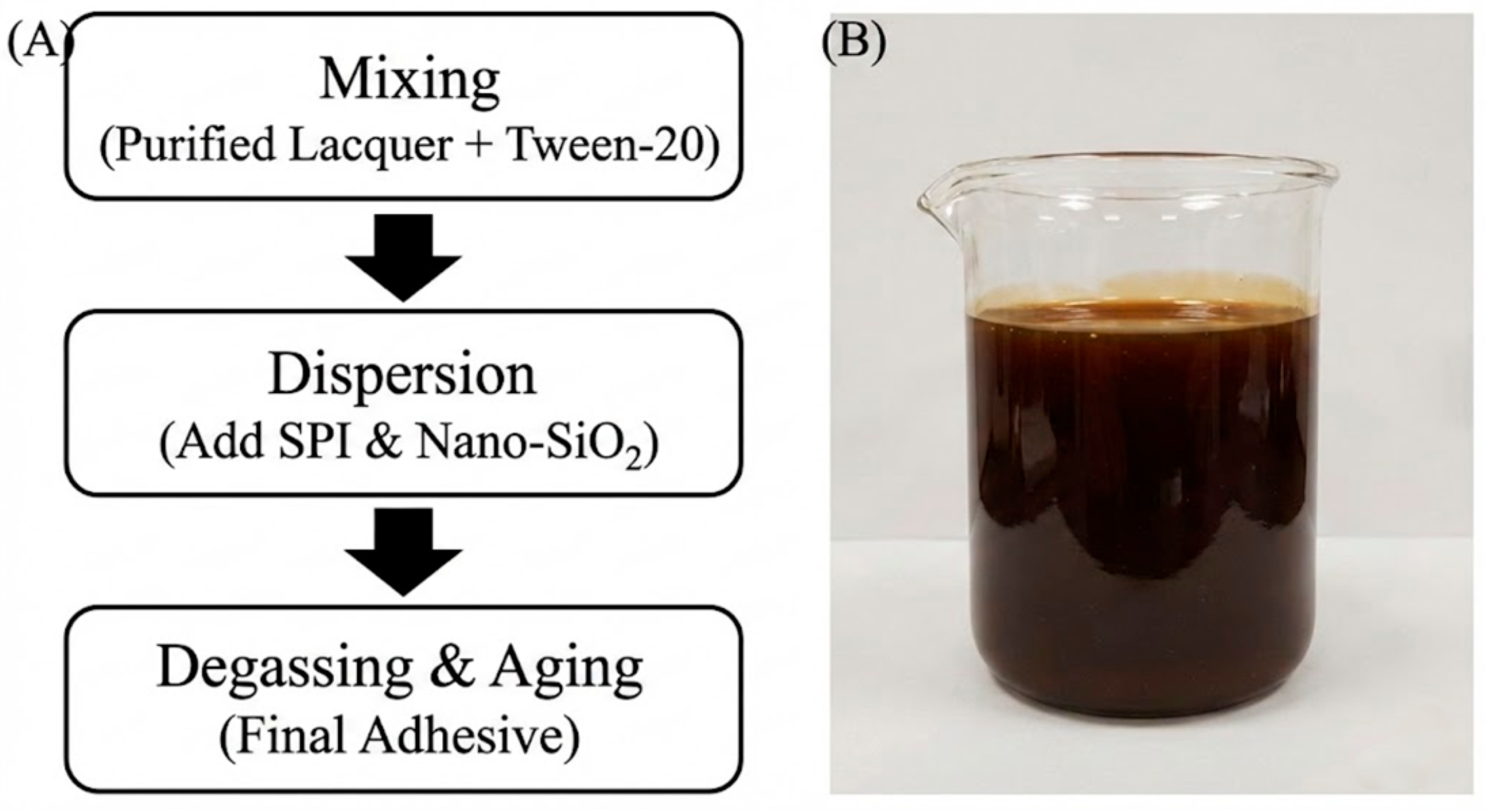
Table 1). The standardized preparation involved three key steps to ensure reproducibility across all variants (
Figure 1): (1) Purified lacquer and Tween-20 were mixed at 1500 rpm for 10 min; (2) SPI and nano-SiO
2 (pre-dispersed in a minimum volume of deionized water) were added followed by ultrasonication at 20 kHz for 30 min to ensure uniform dispersion of the functional additives; (3) Each mixture was aged for 24 h at 25 °C to eliminate entrapped air. The final viscosities for all variants were maintained within the range of 1300 ± 50 mPa·s to ensure consistent application thickness.
2.4. Characterization Methods
Shear bond strength was measured using single-lap shear tests. Fir wood blocks (100 × 25 × 5 mm3) with an overlap area of 25 × 25 mm2 were prepared according to ASTM D906-17. Mechanical testing was performed on a universal testing machine (model WDW-50K, WDW, Shanghai, China) at a crosshead speed of 5 mm/min. Five replicates (n = 5) were tested for each formulation, and the average value with standard deviation was reported.
For acid resistance evaluation, bonded specimens were immersed in a pH 4.0 glyoxal solution at room temperature for 30 days. Shear strength was subsequently measured, and strength retention was calculated relative to the initial values.
Accelerated aging tests were conducted using coated fir panels (25 × 50 × 2 mm
3), which were conditioned at 50 °C and 95% relative humidity (RH) for 30 days. Weight gain was recorded at 10-day intervals. Mold growth was evaluated according to GB/T 24128–2018 [
21]. Color change (ΔE) was measured using a spectrophotometer (model 759s, Guangneng, Shanghai, China).
Microstructural and chemical characterizations were performed using scanning electron microscopy (SEM, JSM-7500F, JEOL Ltd., Tokyo, Japan) to observe fracture morphology, X-ray photoelectron spectroscopy (XPS, ESCALAB 250Xi, Thermo Fisher Scientific, Waltham, MA, USA) to analyze interfacial chemistry, and Fourier transform infrared spectroscopy (FTIR, Nicolet 6700, Thermo Fisher Scientific, Waltham, MA, USA) to investigate molecular interactions.
Statistical Analysis and Data Reliability: To ensure the reliability of the obtained results, analysis of variance (ANOVA) was performed to calculate the significance of each factor on the adhesive properties. The p-value was used as the indicator of statistical significance, where p < 0.05 indicates a significant effect and p < 0.01 or p < 0.001 indicates high significance.
Mold Growth Evaluation: The mold resistance of the specimens was evaluated according to GB/T 24128–2018 [
21] Coated fir panels were inoculated with a mixed spore suspension and incubated at 28 ± 2 °C and 95 ± 5% relative humidity (RH) for 30 days. Growth was assessed using optical microscopy. “Visible mold growth” was defined as the presence of fungal colonies or discoloration spots larger than 0.5 mm. Evaluation followed a 0–4 grading scale: Grade 0 (no growth), Grade 1 (trace growth, <10%), Grade 2 (slight growth, 10%–30%), Grade 3 (moderate growth, 30%–60%), and Grade 4 (heavy growth, >60%).
3. Results and Discussion
3.1. Orthogonal Results and Sensitivity Analysis
To ensure methodological transparency and avoid selective reporting of only the optimized formulation, the complete experimental results of all nine runs in the Taguchi L9(3
4) orthogonal array are summarized in
Table 2. Shear bond strength was selected as the primary mechanical response because it directly reflects interfacial adhesion performance between lacquer films and wood substrates. The results show clear variations among the different formulations, indicating that the relative proportions of lacquer, Tween-20, SPI, and nano-SiO
2 significantly influence bonding behavior. Some combinations exhibited predominantly interfacial failure with relatively low strength, whereas others approached cohesive or substrate failure, demonstrating substantially improved adhesion.
To quantitatively evaluate the influence of each factor, range (R) analysis based on level-average (K) values was performed, and the results are presented in
Table 3. The calculated R values provide a direct measure of sensitivity, with larger R values indicating stronger effects on shear strength. The sensitivity ranking obtained from this analysis was: lacquer content > SPI content > nano-SiO
2 > Tween-20. This trend suggests that the formation of a continuous lacquer–protein matrix primarily governs cohesive strength, while nano-reinforcement and surfactant-assisted wetting play secondary but still beneficial roles. Such behavior is consistent with previous reports on bio-based and nano-modified adhesive systems, where matrix continuity and hydrogen-bond networks dominate load-bearing capacity [
8,
9,
10,
11,
18].
Among all tested formulations, formulation D exhibited the highest average shear strength together with good reproducibility (small standard deviation), indicating stable preparation and reliable performance. Considering both statistical ranking and practical performance, formulation D was therefore selected as the optimal composition for subsequent characterization. Importantly, the optimization decision was based on full disclosure of all orthogonal runs rather than selective presentation, which enhances the scientific validity, reproducibility, and robustness of the formulation design process. These results demonstrate that the orthogonal experimental strategy provides an efficient and reliable approach for multi-factor optimization of conservation adhesives.
To further validate the data reliability and confirm the scientific validity of the optimization process, ANOVA was conducted for the shear bond strength (
Table 4).
The ANOVA results provide specific p-values for each parameter, revealing that SPI (p = 0.004) and nano-SiO2 (p = 0.007) are the most critical factors influencing bond strength, reaching high significance levels. The lacquer content (p = 0.015) and Tween-20 (p = 0.048) also significantly influence the results (p < 0.05). This statistical evidence supports the highly significant overall improvement observed in the optimized Formulation D (p < 0.001) compared to pure lacquer.
3.2. Bond Strength and Failure Analysis
Shear bond strength was employed as the primary indicator of interfacial adhesion performance between the lacquer adhesive and wood substrates. The complete experimental results for all orthogonal formulations are provided in
Table 2, ensuring that the performance comparison is based on full data disclosure rather than selective reporting. Considerable differences in bond strength were observed among the nine compositions, confirming that adhesive performance is highly sensitive to formulation variables.
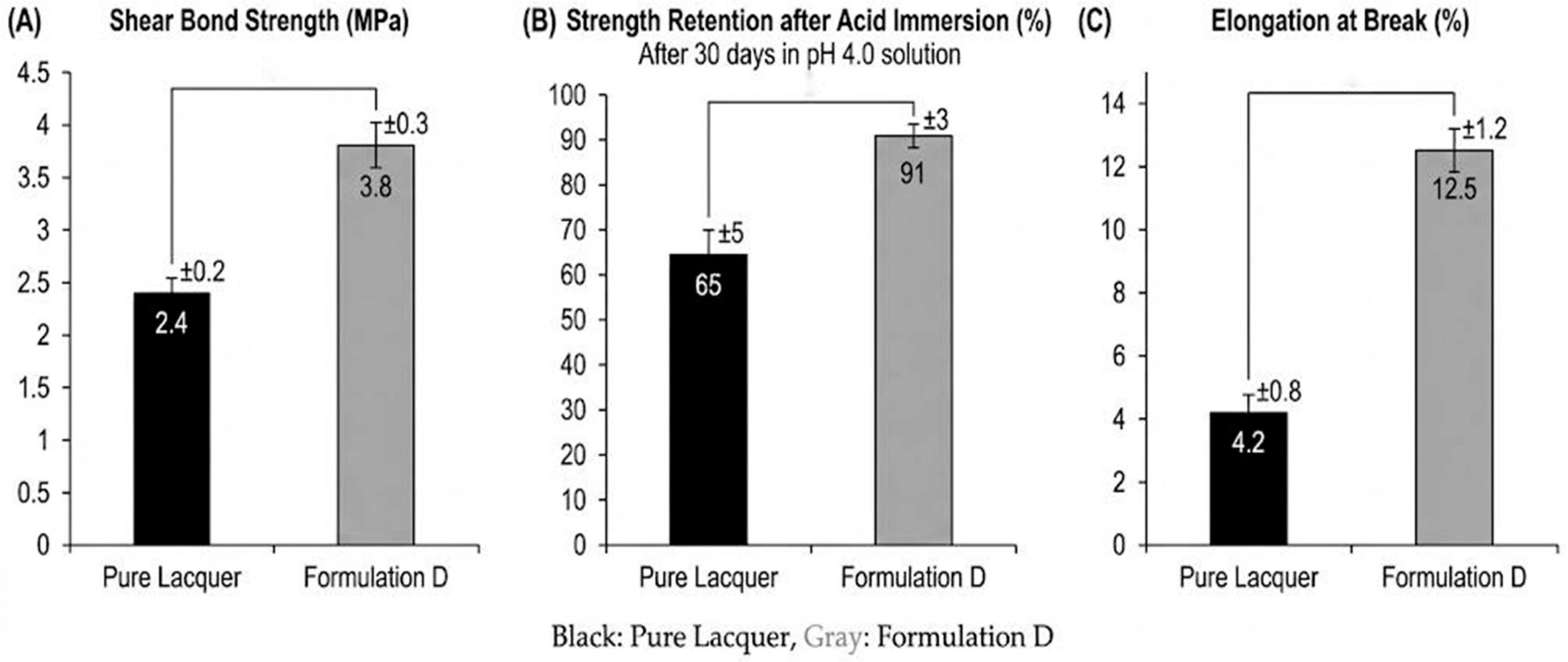
Among all tested groups, formulation D exhibited the highest average shear strength of 3.8 ± 0.3 MPa, representing a 58% increase compared with pure lacquer (2.4 ± 0.2 MPa) (p < 0.001). The relatively small standard deviation indicates good reproducibility and stable adhesive preparation. In contrast, pure lacquer joints showed lower strength and greater variability, suggesting limited interfacial stability and weaker load transfer capability. The improvement achieved by the optimized formulation demonstrates that multi-component modification effectively enhances both cohesion within the adhesive layer and adhesion at the wood–lacquer interface.
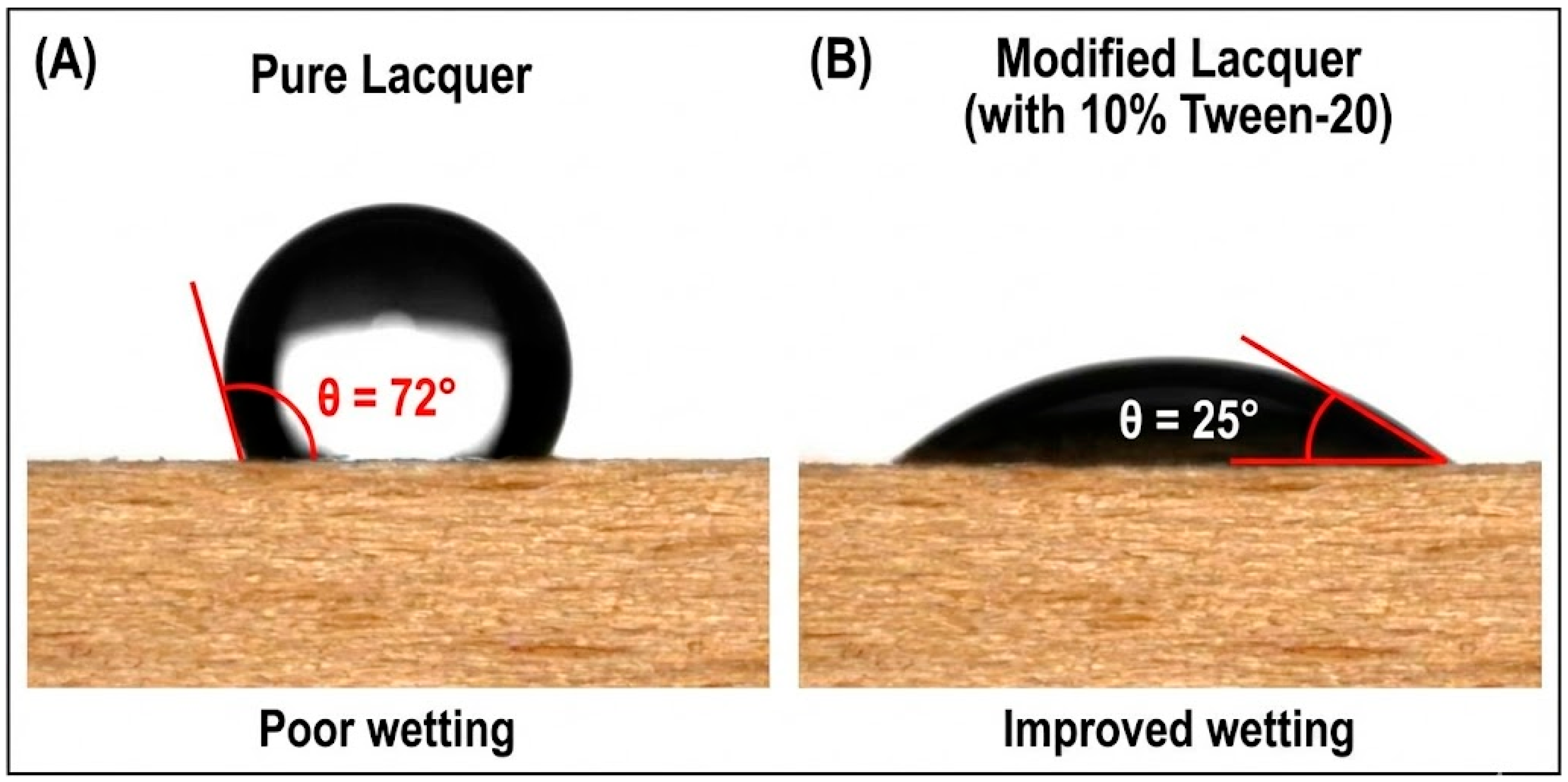
The strength enhancement arises from synergistic mechanisms: Tween-20 improved wetting and penetration (contact angle reduction: 72° → 25°,
Figure 2), increasing effective bonding area; SPI formed a hydrogen-bonded network with urushiol, enhancing cohesive strength; nano-SiO
2 provided mechanical reinforcement and crack deflection.
3.3. Acid Resistance
Acid resistance is a critical requirement for adhesives intended for glyoxal-dehydrated lacquerware, as residual glyoxal and its degradation products are known to generate a weakly acidic microenvironment (pH ≈ 4–5), which accelerates hydrolysis, interfacial degradation, and long-term bonding failure of conventional lacquer systems [
6,
7,
12,
13,
14]. To evaluate chemical durability under such conditions, bonded specimens were immersed in an aqueous solution adjusted to pH 4.0 for 30 days, followed by reconditioning and shear strength testing.
As shown in
Table 2, pure lacquer exhibited a pronounced decrease in bonding performance after acid exposure, retaining only 65 ± 5% of its initial shear strength. This significant loss indicates that the traditional lacquer matrix is susceptible to acid-induced plasticization and interfacial weakening. In contrast, the optimized composite adhesive (formulation D) retained 91 ± 3% of its original strength under identical conditions, representing substantially higher stability (
p < 0.001). The relatively small reduction demonstrates that the modified system effectively resists acid-mediated degradation and maintains interfacial integrity.
The improved acid resistance can be attributed to several complementary mechanisms. First, SPI contains abundant amino and amide groups that may provide partial buffering capacity, mitigating local acidity at the interface and reducing hydrolytic attack. Similar buffering and stabilization effects of protein-based modifiers have been reported in bio-derived adhesive systems [
8,
9,
10,
11,
18,
22]. Second, the formation of a more cohesive hydrogen-bonded network between SPI and urushiol enhances matrix integrity and limits acid penetration. Third, nano-SiO
2 reinforcement contributes to a denser organic–inorganic hybrid structure, which increases diffusion tortuosity and restricts the transport of acidic species into the adhesive layer. Comparable barrier effects of silica nanoparticles have been widely observed in protective coatings and hybrid consolidants [
23].
In addition, limited secondary crosslinking reactions between residual glyoxal and protein functional groups may further stabilize the network, although this mechanism remains hypothetical and requires further confirmation. Nevertheless, the combined spectroscopic and mechanical evidence consistently indicates that the composite adhesive forms a chemically more robust interface than pure lacquer.
From a conservation perspective, higher acid resistance directly translates to improved long-term reliability in glyoxal-treated artifacts, where acidic residues cannot be completely eliminated. Therefore, the substantially higher strength retention observed for formulation D confirms that the proposed bio-based nano-reinforced adhesive provides superior chemical durability and is better suited for practical restoration applications.
3.4. Moisture Resistance and Mold Prevention
Moisture resistance is a critical performance parameter for conservation adhesives, as elevated humidity not only accelerates hydrolytic degradation of lacquer films but also promotes microbial colonization and mold growth. To evaluate environmental durability, bonded specimens were subjected to accelerated aging at 50 °C and 95% relative humidity (RH) for 30 days, and changes in mass and surface condition were systematically recorded.
As shown in
Table 5, pure lacquer exhibited a weight gain of 3.0 ± 0.4%, indicating significant moisture uptake under humid conditions. In contrast, the optimized composite adhesive (formulation D) showed a markedly lower weight gain of only 1.0 ± 0.2%, representing a reduction of approximately 67% (
p < 0.001). The substantially lower hygroscopicity suggests that the hybrid adhesive network effectively limits water diffusion and swelling. Reduced moisture uptake is particularly important for lacquerware conservation because dimensional changes induced by water absorption may generate internal stresses and interfacial debonding [
7].
The improved moisture resistance can be attributed to several complementary structural factors. First, the incorporation of nano-SiO
2 creates a more compact organic–inorganic hybrid network that increases the tortuosity of diffusion pathways. Dispersed nanoparticles act as physical barriers, forcing water molecules to follow longer and more complex paths through the adhesive layer, thereby reducing effective permeability. Similar barrier effects of nano-reinforcement have been widely reported in protective coatings and consolidants [
17]. Second, enhanced interfacial bonding promoted by Tween-20 reduces microvoids and interfacial defects, which are typical channels for moisture ingress. Third, the SPI-modified matrix forms a cohesive and continuous film that further suppresses water penetration.
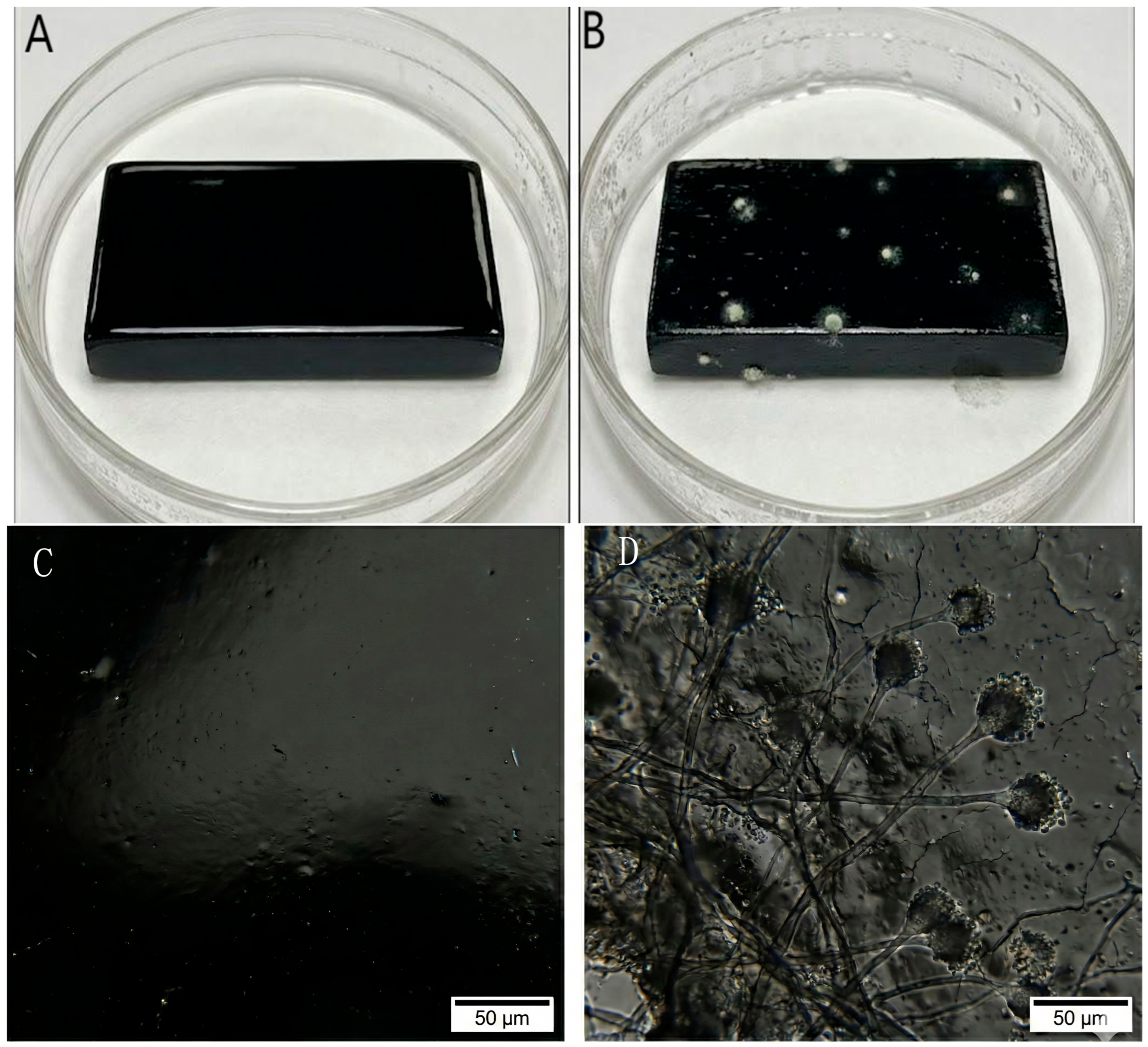
In addition to moisture uptake, microbial resistance was assessed to evaluate susceptibility to biodeterioration. Microbial resistance was specifically assessed to determine the susceptibility of the study variants to biodeterioration. Following the standardized inoculation and incubation procedure, specimen surfaces were examined. As shown in
Figure 3, the traditional lacquer control exhibited a Grade 2 growth rating, with evident fungal colonization and surface mold spots. In contrast, the optimized composite adhesive (Formulation D) achieved a Grade 0 rating, showing no visible mold growth after 30 days of accelerated aging. The use of microscopy documentation ensures the evaluation is objective and aligns with established conservation standards.
The absence of mold growth in formulation D is consistent with its lower moisture content. Since microbial proliferation strongly depends on available surface water activity, limiting water adsorption effectively suppresses fungal colonization. Similar relationships between reduced hygroscopicity and improved mold resistance have been reported for heritage coatings and painted surfaces [
24]. Therefore, the enhanced mold resistance observed in the present system is most likely an indirect consequence of improved barrier performance rather than the presence of biocidal additives.
From a conservation standpoint, the combination of low moisture uptake and resistance to biological contamination is particularly advantageous for long-term stability in museum or storage environments. These results demonstrate that the proposed composite adhesive provides not only improved mechanical performance but also superior environmental durability, which is essential for the sustainable preservation of lacquer artifacts.
3.5. Flexibility and Toughness Enhancement
In addition to improving interfacial bonding strength, the optimized composite adhesive exhibited a notable enhancement in flexibility and toughness (
Table 5). Mechanical testing revealed that formulation D showed significantly increased elongation at break and reduced brittleness compared with pure lacquer (
Figure 4). This simultaneous improvement in strength and ductility is particularly important for the conservation of fragile lacquer artifacts, where excessive stiffness may induce secondary cracking or stress concentration at repaired interfaces.
Pure lacquer films are known to form densely crosslinked and relatively rigid networks after curing, which often leads to brittle fracture behavior and limited plastic deformation [
4,
5]. Such brittleness restricts their ability to accommodate dimensional changes caused by environmental fluctuations or mechanical handling, frequently resulting in interfacial debonding or crack propagation in conservation contexts [
23]. In contrast, the incorporation of SPI introduced a flexible protein-based phase capable of absorbing and dissipating mechanical energy. The abundant polar groups and partially unfolded protein chains promote the formation of a ductile network, allowing limited chain mobility and plastic deformation under stress. Similar toughening effects of protein modifiers have been widely reported in bio-based wood adhesives and polymer composites [
19].
At the same time, nano-SiO
2 particles contribute to reinforcement without sacrificing flexibility. When uniformly dispersed, nanoscale inorganic domains act as stress-transfer centers and crack-bridging points. During loading, propagating cracks are forced to deviate or branch around rigid particles, thereby increasing the fracture path length and the energy required for failure. This crack deflection and energy dissipation mechanism has been recognized as a typical toughening strategy in organic–inorganic hybrid materials and nano-reinforced coatings [
25]. Consequently, the composite structure avoids catastrophic brittle failure and instead exhibits more gradual, ductile fracture behavior.
The combination of a flexible SPI network and rigid silica reinforcement results in a so-called “rigid–flexible hybrid” microstructure. In this system, the protein-rich phase provides elasticity and crack-bridging capability, while the inorganic phase enhances stiffness and dimensional stability. The cooperative interaction between these phases enables efficient stress redistribution across the adhesive layer and reduces stress concentration at the wood–lacquer interface. Such a hierarchical design explains the unusual coexistence of higher bond strength and improved elongation at break, properties that are typically mutually exclusive in conventional lacquer systems.
From a conservation perspective, enhanced toughness is particularly advantageous. A moderately compliant adhesive layer can better accommodate thermal and hygroscopic dimensional changes in wood and lacquer substrates, thereby minimizing interfacial stresses and improving long-term stability. Therefore, the observed flexibility and toughness improvements are not only mechanically beneficial but also directly relevant to the practical durability of restored artifacts.
It should be emphasized that the toughness enhancement described here is inferred from mechanical and microstructural evidence rather than direct fracture mechanics measurements. Future quantitative studies may further clarify the detailed toughening mechanisms. Nevertheless, the present results clearly indicate that SPI modification combined with nano-scale reinforcement provides an effective strategy for balancing strength and flexibility in lacquer-based conservation adhesives.
3.6. Bonding Mechanism Analysis
3.6.1. Interface Chemical Bonding Enhancement
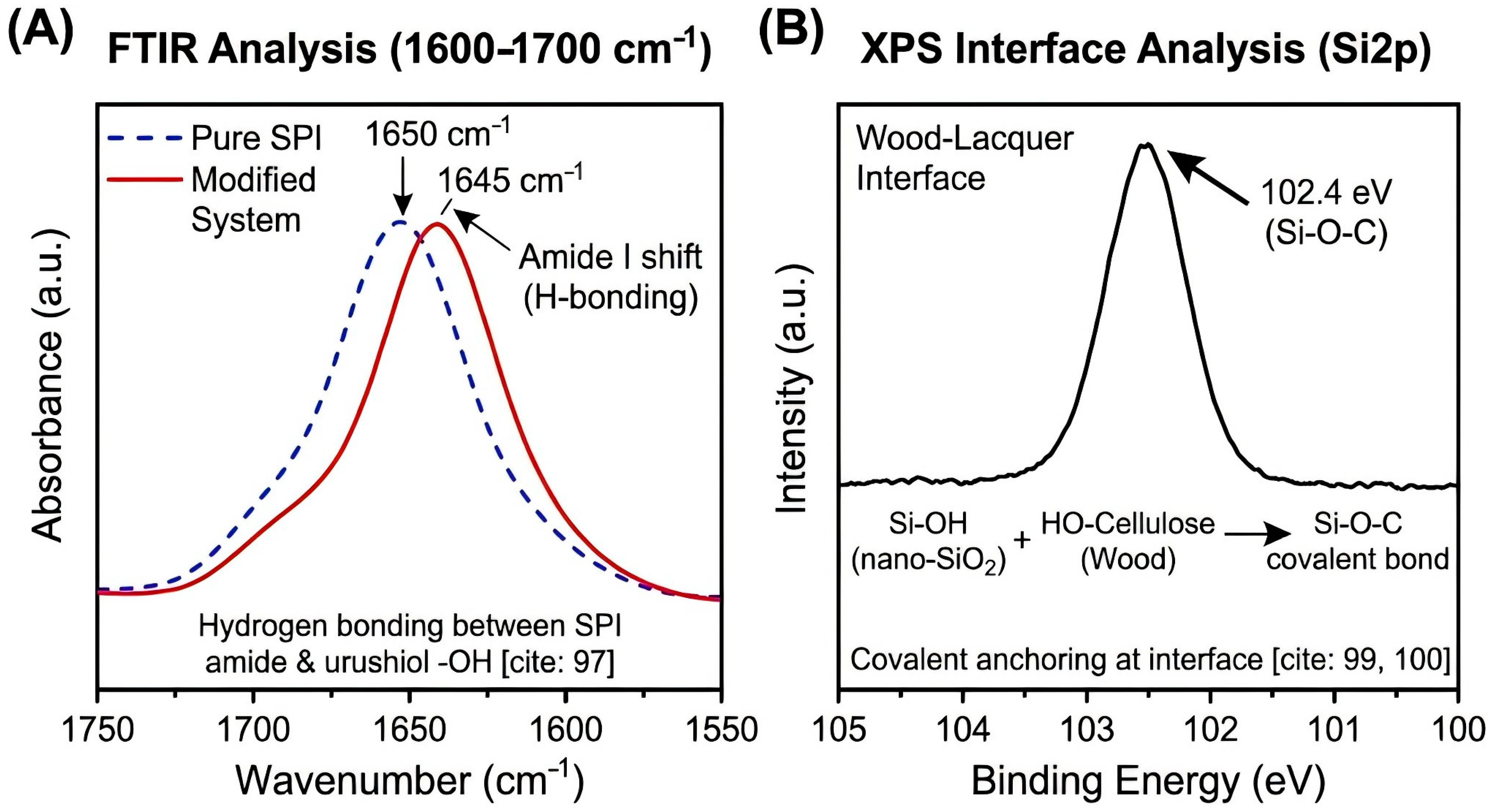
To elucidate the origin of the improved adhesion performance, the interfacial chemistry between the adhesive and the wood substrate was investigated using FTIR and XPS analyses (
Figure 5). Compared with pure lacquer, the optimized composite formulation exhibited clear spectroscopic signatures indicative of enhanced physicochemical interactions at the wood–lacquer interface, suggesting the formation of a more stable and integrated bonding structure.
Tween-20 plays an important role in modifying interfacial wettability. As a non-ionic surfactant with a high hydrophilic–lipophilic balance (HLB), Tween-20 reduces surface tension and improves the spreading of the viscous lacquer matrix on the wood substrate. The decreased contact angle facilitates intimate interfacial contact and promotes molecular-scale interactions between hydroxyl-rich cellulose surfaces and the adhesive matrix. XPS O1s spectra showed increased signals corresponding to hydrogen-bonded oxygen species, supporting the presence of enhanced intermolecular interactions. Improved wetting and interfacial contact are widely recognized as critical prerequisites for strong adhesion in lignocellulosic materials [
14,
15].
SPI contributes primarily through chemical compatibility and cohesive reinforcement. The abundant amide, amino, and hydroxyl groups in SPI enable multiple hydrogen-bonding interactions with both urushiol and cellulose. FTIR spectra revealed slight shifts in the amide I band (from ~1650 to ~1645 cm−1) and broadening of the –OH stretching region, which are consistent with strengthened hydrogen bonding within the composite network. Similar protein–polyphenol interactions have been reported to improve film formation and interfacial stability in bio-based adhesive systems. In addition, SPI may provide partial buffering capacity in acidic environments, thereby mitigating glyoxal-induced interfacial degradation. Possible reactions between amino groups and residual glyoxal could contribute to additional crosslinking; however, this mechanism remains hypothetical and requires further confirmation.
Nano-SiO
2 introduces an inorganic interfacial anchoring effect. High-resolution XPS analysis detected characteristic Si 2p peaks at approximately 102.4 eV and C–O–Si signals near 286.5 eV, which are commonly attributed to Si–O–C linkages. These features suggest potential condensation reactions between surface Si–OH groups of silica and hydroxyl groups of cellulose or urushiol, leading to partial covalent bonding at the interface. Such organic–inorganic coupling has been widely reported to enhance adhesion strength and environmental stability in hybrid conservation coatings and consolidants [
14,
17].
Collectively, these interactions result in a multi-scale interfacial bonding mechanism comprising improved wetting, hydrogen bonding, and possible covalent anchoring. This combination enhances stress transfer across the wood–lacquer boundary and reduces the likelihood of interfacial debonding. While the exact molecular structure of the interface cannot be directly visualized, the spectroscopic evidence and mechanical performance consistently indicate that chemical bonding enhancement plays a central role in the superior adhesion of the composite system.
3.6.2. Microstructural Optimization
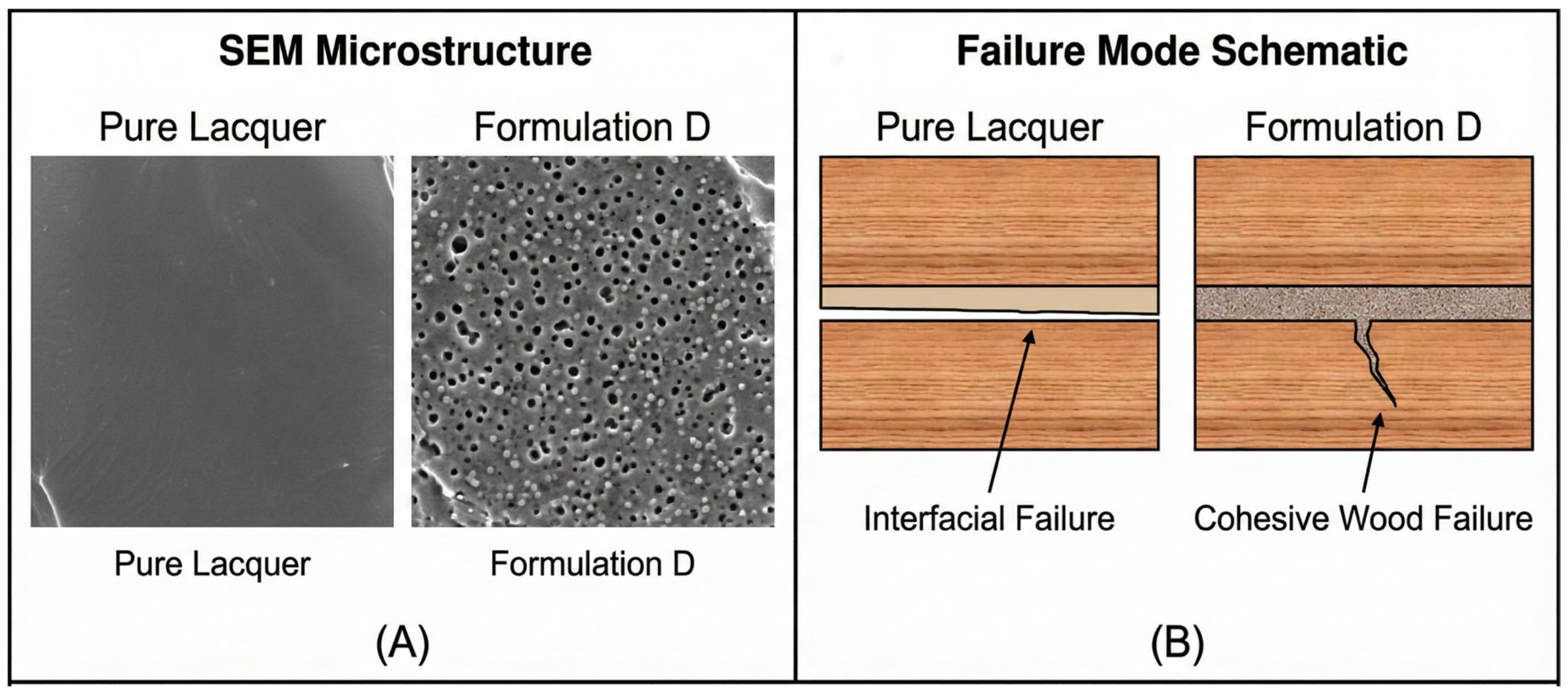
Scanning electron microscopy (SEM) provided further insight into the microstructural origins of the enhanced mechanical performance (
Figure 6). Distinct fracture morphologies were observed between pure lacquer and the optimized composite adhesive. Pure lacquer exhibited relatively smooth and planar fracture surfaces, characteristic of brittle failure in densely crosslinked films with limited plastic deformation. Such morphology indicates rapid crack propagation and low energy dissipation capacity, which is consistent with the poor elongation and interfacial failure observed in mechanical tests.
In contrast, formulation D displayed a markedly rough and heterogeneous fracture surface containing uniformly distributed nano-porous features (approximately 50–100 nm) and well-dispersed silica domains. The presence of these micro- and nano-scale heterogeneities suggests a transition from brittle fracture to a more ductile or semi-ductile failure mode. Similar roughened morphologies have been widely associated with increased fracture toughness and crack-arrest mechanisms in nano-reinforced polymer systems [
15,
17].
From a toughening perspective, the dispersed nano-SiO
2 particles likely function as stress-transfer nodes and crack deflection centers. When a propagating crack encounters rigid inorganic domains, the crack path is forced to branch, deflect, or blunt, thereby increasing the fracture surface area and the energy required for propagation. This crack-deflection mechanism has been reported as a primary contributor to toughness enhancement in organic–inorganic hybrid coatings and conservation consolidants [
15]. The resulting “tortuous path” effect also reduces the effective diffusion rate of water and acidic species, which contributes to improved environmental durability.
Moreover, the combination of flexible SPI networks and rigid silica nanoparticles forms a so-called “rigid–flexible hybrid” microstructure. In such systems, the protein-rich phase provides elasticity and energy absorption, while the inorganic phase supplies stiffness and dimensional stability. The complementary interaction between these phases allows stress redistribution under mechanical loading, mitigating stress concentration at the wood–lacquer interface. This synergistic microstructural design explains the simultaneous improvement in strength and elongation at break, which are typically mutually exclusive properties in conventional lacquer films.
It should be emphasized that the microstructural interpretation presented here is primarily supported by SEM observations and mechanical correlations. While the observed morphology strongly suggests enhanced crack resistance and stress dissipation, more quantitative fracture mechanics analyses would be beneficial in future studies. Nevertheless, the present evidence clearly indicates that nano-scale structural optimization plays a critical role in the improved performance of the composite adhesive.
3.6.3. Synergistic Effects
While each individual additive contributed to specific property improvements, the superior overall performance of formulation D cannot be explained by single-factor effects alone. Instead, the results indicate a pronounced synergistic interaction among Tween-20, SPI, and nano-SiO2, leading to performance enhancements greater than the sum of their independent contributions.
Tween-20 primarily improves interfacial wetting and penetration. The reduction in contact angle facilitates adhesive infiltration into the porous wood structure, increasing the effective bonding area and enabling intimate molecular contact at the interface. Improved wetting has long been recognized as a prerequisite for strong adhesion in lignocellulosic substrates [
9,
13]. However, enhanced wetting alone is insufficient to account for the observed increases in strength and durability.
SPI introduces a flexible protein network rich in polar functional groups, which promotes hydrogen bonding with urushiol and cellulose while simultaneously improving film continuity and toughness. Protein-modified adhesives are known to exhibit improved energy dissipation and crack-bridging behavior under stress [
8,
9,
18]. Nevertheless, SPI-based systems without inorganic reinforcement typically remain susceptible to moisture-induced softening.
Nano-SiO
2 provides complementary reinforcement through mechanical stiffening and interfacial stabilization. The dispersed inorganic phase acts as a rigid skeleton that restricts polymer chain mobility, increases modulus, and reduces water permeability. Additionally, possible Si–O–C bonding at the interface may anchor the organic matrix to wood fibers, enhancing interfacial integrity. Similar organic–inorganic hybrid mechanisms have been widely reported to improve durability and crack resistance in conservation coatings and consolidants [
8,
9,
18].
When combined, these components form a hierarchical hybrid network in which (i) Tween-20 ensures intimate interfacial contact, (ii) SPI provides a ductile and cohesive matrix, and (iii) nano-SiO2 supplies rigidity and barrier properties. This “rigid–flexible–interfacial” coupling enables efficient stress redistribution during loading and suppresses both crack propagation and moisture diffusion. Such complementary interactions explain why the composite simultaneously exhibits higher strength, greater elongation, and improved environmental resistance—properties that are typically difficult to achieve concurrently in conventional lacquer systems.
It should be emphasized that the term “synergy” here refers to macroscopic performance outcomes supported by mechanical and spectroscopic evidence rather than direct molecular-level observation. Although the cooperative effects are strongly suggested by the experimental results, further studies using advanced interfacial characterization or modeling would help to quantify these interactions more precisely. Nonetheless, the present findings clearly demonstrate that multi-component hybridization is a more effective strategy than single-additive modification for developing high-performance conservation adhesives.
3.7. Case Study: Warring States Lacquer Cup Restoration
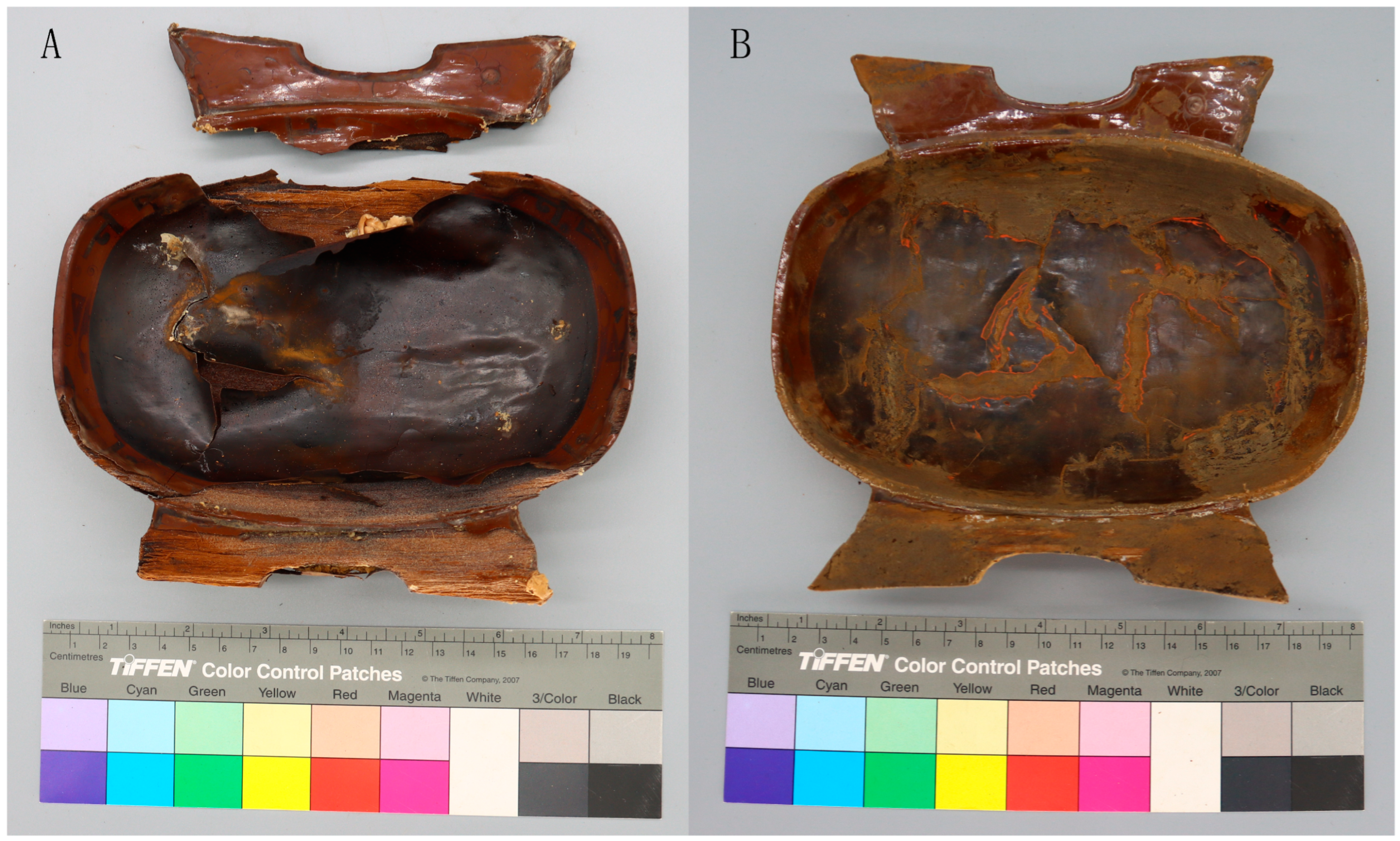
To verify the practical applicability of the optimized adhesive beyond laboratory-prepared model specimens, a real conservation case was conducted using an archaeological lacquer artifact. A Warring States period (475–221 BCE) lacquer cup (
Figure 7A) excavated from Yunmeng Shuihudi, Hubei Province, China, was selected as a representative object. Following previous glyoxal dehydration treatment, the artifact exhibited pronounced secondary deterioration, including approximately 30% surface delamination of the lacquer film, curling edges, and extreme fragility. The remaining lacquer fragments were extremely thin (~0.1 mm) and susceptible to further cracking or loss during handling.
Prior to bonding, detached fragments were gently rehumidified using a 50% glyoxal–water solution for 48 h to improve flexibility and minimize mechanical stress during repositioning. The optimized adhesive formulation (Formulation D) was then applied using fine brushes in a thin and controlled layer (~50 μm thickness). Fragments were repositioned under a stereomicroscope to ensure accurate alignment, covered with polyester release film, and subjected to uniform pressure (~0.1 MPa) to eliminate interfacial voids. Curing was performed under controlled environmental conditions (25 °C, 75% RH) for 14 days to simulate standard conservation practice and ensure complete film formation. Excess adhesive was subsequently removed by light ethanol swabbing.
Post-restoration evaluation included visual inspection, optical microscopy, and radiographic examination. The treated areas exhibited seamless integration without visible gaps, edge lifting, or gloss mismatch (
Figure 7B). Color compatibility was acceptable (ΔE ≈ 5), indicating minimal visual disturbance. Radiography showed a low interfacial void ratio (<0.5%), suggesting effective penetration and bonding. No cracking, whitening, or adhesive exudation was observed.
Long-term stability was further assessed by monitoring the restored artifact for 12 months under museum environmental conditions (20–22 °C, 50%–55% RH). No secondary delamination, discoloration, or dimensional instability was detected. In addition, localized retreatability tests demonstrated that the cured adhesive could be partially softened and mechanically lifted without damaging the substrate, indicating acceptable re-treatment potential for conservation purposes.
Overall, this case study confirms that the optimized bio-based nano-reinforced adhesive is not only effective under laboratory conditions but also suitable for real archaeological lacquerware. The combination of mechanical reliability, visual compatibility, environmental durability, and practical retreatability supports its feasibility for conservation applications.
4. Discussion
The present study demonstrates that the combination of traditional lacquer chemistry with bio-based modification and nano-reinforcement provides an effective strategy for overcoming the bonding limitations of glyoxal-dehydrated lacquerware. In contrast to conventional lacquer adhesives that often suffer from brittleness and interfacial failure under acidic and humid conditions [
4,
7,
14], the proposed multi-component system exhibits significantly improved bonding strength, environmental stability, and practical applicability. These improvements arise from synergistic interactions among Tween-20, SPI, and nano-SiO
2 rather than from any single component alone.
4.1. Reliability of Orthogonal Optimization and Factor Sensitivity
A key methodological feature of this work is the disclosure of the complete results of all orthogonal experimental runs. Many previous conservation material studies have reported only optimized formulations without presenting the full dataset, which limits the evaluation of scientific rigor. By employing a Taguchi L9(34) orthogonal design and presenting all experimental outcomes, the present study enables quantitative assessment of factor sensitivity and variable contributions.
Range analysis showed that lacquer content and SPI level predominantly influenced shear bond strength, whereas Tween-20 and nano-SiO
2 had a stronger effect on moisture resistance. This distribution is consistent with their functional roles: lacquer and SPI govern cohesive film formation, while surfactant-assisted wetting and inorganic reinforcement regulate interfacial integrity and water diffusion. Similar multi-factor optimization strategies have proven effective in other bio-based adhesive systems [
19], supporting the scientific validity of the adopted design methodology.
4.2. Interfacial Bonding and Toughening Mechanisms
The enhancement in adhesion performance can be rationalized from both physicochemical and microstructural perspectives. Tween-20 significantly reduced the contact angle on wood substrates, promoting adhesive penetration into porous cell walls and enlarging the effective bonding area. Improved wetting has been widely recognized as a critical determinant of adhesive strength in lignocellulosic systems.
SPI further contributes through its abundant polar functional groups, which facilitate hydrogen bonding and network formation with urushiol. Bio-based proteins with high densities of reactive groups have been reported to improve film formation, toughness, and stress dissipation in wood adhesives [
8,
9,
18]. These effects explain the observed increase in elongation at break and the transition from brittle interfacial failure to cohesive wood failure.
Nano-SiO2 acts as an inorganic reinforcing phase. XPS evidence suggests the formation of Si–O–C linkages at the wood–lacquer interface, implying partial covalent anchoring between silica hydroxyls and cellulose chains. Similar nano-reinforced hybrid mechanisms have been reported to enhance interfacial stability and crack resistance in conservation coatings and consolidants. In addition, well-dispersed nanoparticles create tortuous diffusion pathways that hinder moisture ingress, thereby improving durability.
It should be noted that certain chemical pathways, such as possible Schiff base reactions between SPI amino groups and residual glyoxal, remain hypothetical. While they may contribute to network stabilization, further spectroscopic confirmation would be required. Therefore, the present discussion emphasizes mechanisms directly supported by experimental evidence rather than speculative interpretations.
4.3. Durability in Acidic and Humid Environments
Artifacts treated by glyoxal dehydration typically exhibit weakly acidic microenvironments (pH ≈ 4–5), which accelerate hydrolysis and interfacial degradation of conventional lacquer adhesives [
6]. The significantly higher strength retention of the composite adhesive after acid immersion (91% vs. 65% for pure lacquer) suggests that SPI may provide buffering capacity and improved resistance to acid-induced deterioration. Similar acid-resistant behavior has been reported in glyoxal-modified or protein-based adhesive systems [
18].
Under accelerated aging (50 °C/95% RH), the composite exhibited minimal moisture uptake and no visible mold growth. Reduced water diffusion likely results from the dense organic–inorganic network and the barrier effect of nano-SiO
2. Microbial colonization is closely linked to moisture availability, and previous studies have shown that lowering surface water content effectively suppresses mold growth on heritage materials [
22,
24]. The inclusion of microscopy documentation in the present study further strengthens the objectivity of the microbiological evaluation.
4.4. Comparison with Existing Conservation Adhesives
From a conservation perspective, the developed adhesive offers several advantages over both traditional and synthetic alternatives. Traditional lacquer adhesives provide excellent material compatibility but generally lack sufficient strength and environmental resistance [
4,
5]. Conversely, synthetic polymers such as epoxies or acrylics deliver high mechanical performance but often exhibit excessive stiffness, poor chemical compatibility, and limited reversibility.
The present bio-based nano-reinforced system achieves a balance between these two extremes. It retains chemical affinity with original lacquer materials while providing substantially enhanced strength and durability. This balanced performance aligns with current international trends toward sustainable and compatible conservation materials [
14,
15]. The incorporation of renewable SPI and the avoidance of aggressive solvents further support environmental and ethical considerations.
4.5. Conservation Ethics and Retreatability
Reversibility remains a core requirement in conservation practice. Although lacquer-based systems cannot be considered fully reversible after curing, historical restoration of lacquerware traditionally relies on compatible materials rather than completely removable synthetic adhesives. Preliminary retreatability tests in this study demonstrated that the cured adhesive could be softened by ethanol and mechanically lifted without damaging the substrate, indicating acceptable retreatability comparable to traditional lacquer systems. Therefore, the material meets practical conservation expectations while maintaining compatibility and long-term stability.
4.6. Practical Implications for Real Artifacts
The successful restoration of a Warring States lacquer artifact demonstrates that the laboratory-optimized formulation translates effectively into real conservation scenarios. Detached fragments were reattached with seamless visual integration and stable performance during long-term monitoring. This practical validation confirms that the proposed strategy is not only scientifically sound but also operationally feasible. The integration of experimental optimization, mechanistic understanding, and case verification strengthens the reliability of this adhesive system for future heritage conservation applications.
5. Conclusions
This study developed and validated a conservation-oriented composite adhesive specifically designed for the restoration of glyoxal-dehydrated lacquerware, addressing the long-standing bonding limitations of traditional lacquer systems under acidic and humid conditions. By integrating natural lacquer with Tween-20, soy protein isolate (SPI), and nano-SiO2, a bio-based and nano-reinforced formulation with improved interfacial compatibility and mechanical performance was successfully achieved.
The major findings can be summarized as follows:
- (1)
Formulation optimization
A Taguchi L9(34) orthogonal experimental design was employed, and the complete results of all runs were disclosed to ensure methodological transparency and scientific validity. Range and sensitivity analyses identified lacquer content and SPI as the dominant factors influencing bond strength, while Tween-20 and nano-SiO2 primarily governed moisture resistance. The optimized composition (70% lacquer, 10% Tween-20, 15% SPI, 5% nano-SiO2) provided the best multi-objective balance.
- (2)
Mechanical performance enhancement
The optimized adhesive achieved a shear bond strength of 3.8 ± 0.3 MPa, corresponding to a 58% increase compared with pure lacquer. Cohesive wood failure dominated, indicating that the adhesive strength exceeded substrate strength.
- (3)
Environmental durability
After 30 days in a pH 4.0 acidic solution, the adhesive retained 91 ± 3% of its initial strength, significantly higher than pure lacquer (65 ± 5%). Under accelerated aging (50 °C/95% RH), minimal moisture uptake (1.0 ± 0.2%) and no visible mold growth were observed. Microscopy documentation confirmed the reliability of the microbiological assessment.
- (4)
Interfacial mechanism
FTIR and XPS analyses provided evidence of synergistic multi-component interactions, including improved wetting, hydrogen bonding, and the formation of Si–O–C linkages at the wood–lacquer interface. These physicochemical interactions collectively contributed to enhanced interfacial stability, although some chemical pathways remain hypothetical and require further verification.
Overall, the proposed bio-based and nano-reinforced adhesive offers a scientifically grounded and practically feasible solution for glyoxal-dehydrated lacquerware conservation. The strategy of combining traditional lacquer chemistry with modern materials engineering provides a promising framework for developing next-generation conservation adhesives that balance strength, durability, compatibility, and ethical requirements.
Future work will focus on long-term aging behavior, quantitative microbiological testing, and further optimization of retreatability to enhance sustainability and reversibility in heritage conservation applications.