3.1. Material Characterization and Basic Coating Properties
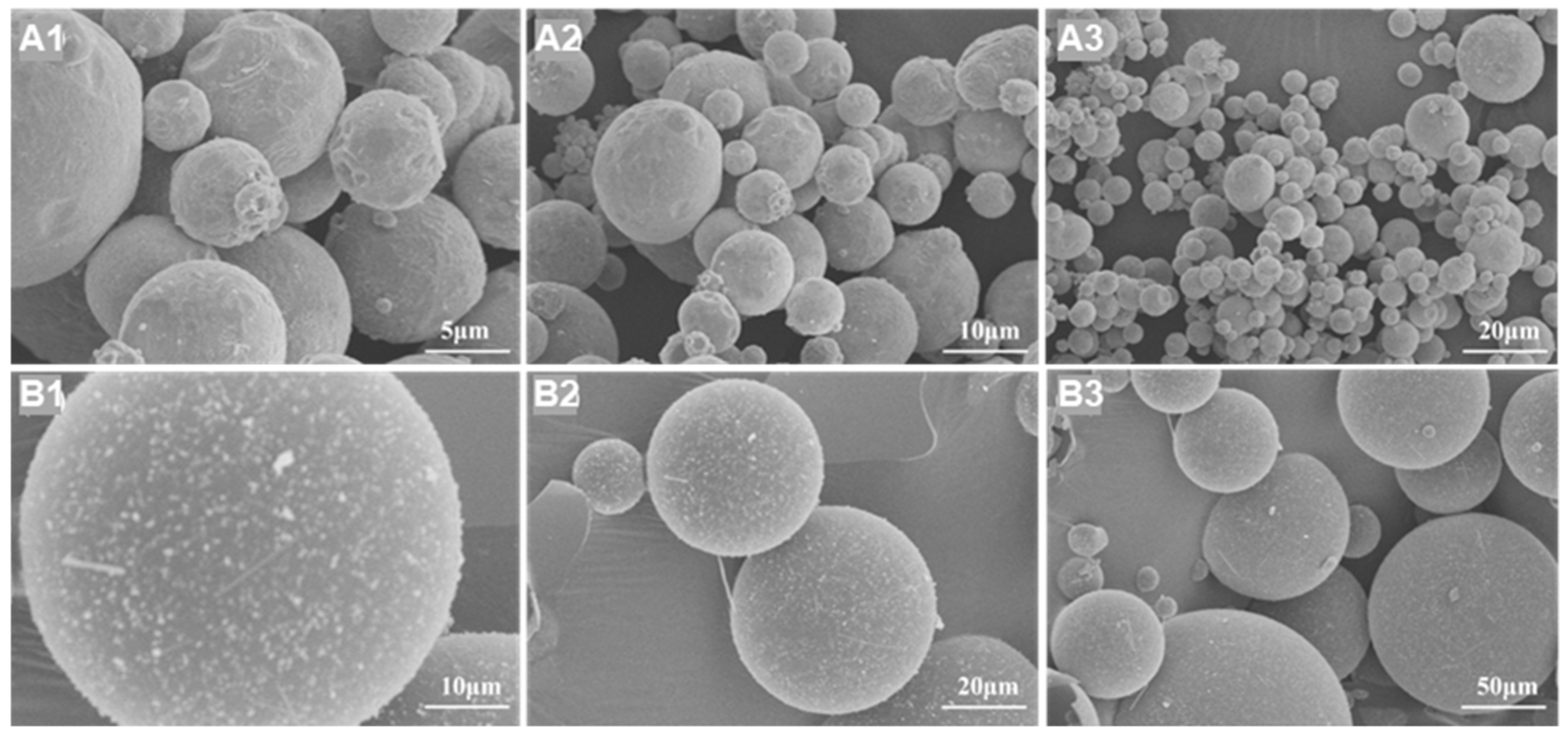
Figure 1 presents scanning electron microscopy (SEM) images of hollow glass microspheres (HGB) and zinc powder at different magnifications. The HGB particles (
Figure 1(A1–A3)) exhibit a relatively narrow particle size distribution, typically in the range of 5–20 μm, and display a near-Gaussian distribution profile. Their microstructure is characterized by highly regular, perfect spherical geometries with excellent sphericity and structural integrity. The external surface of the HGB wall is generally smooth, devoid of significant large-area wrinkles or irregular undulations, although localized regions show subtle nanoscale roughness with sporadic adherence of fine particulate matter. In contrast, the zinc powder (
Figure 1(B1–B3)) demonstrates a considerably broader particle size distribution, spanning approximately 10 to 100 μm, with a larger average particle size compared to HGB. Similarly, the zinc particles maintain a monodisperse, regularly spherical morphology under stacked conditions, but their surfaces appear noticeably smoother, with negligible wrinkling and only sporadic fine particle attachment. Collectively, HGB and zinc powder share fundamental similarities in their microstructural attributes, both belonging to the category of high-sphericity, continuously distributed particulate fillers. This structural commonality suggests potential interchangeability in certain composite formulations. The distinct advantages of HGB, namely its finer particle diameter and moderately rougher surface topology compared to zinc powder, are expected to promote stronger interfacial adhesion with matrix materials. This characteristic is likely to enhance dispersion stability within composite coatings and consequently improve overall application performance.
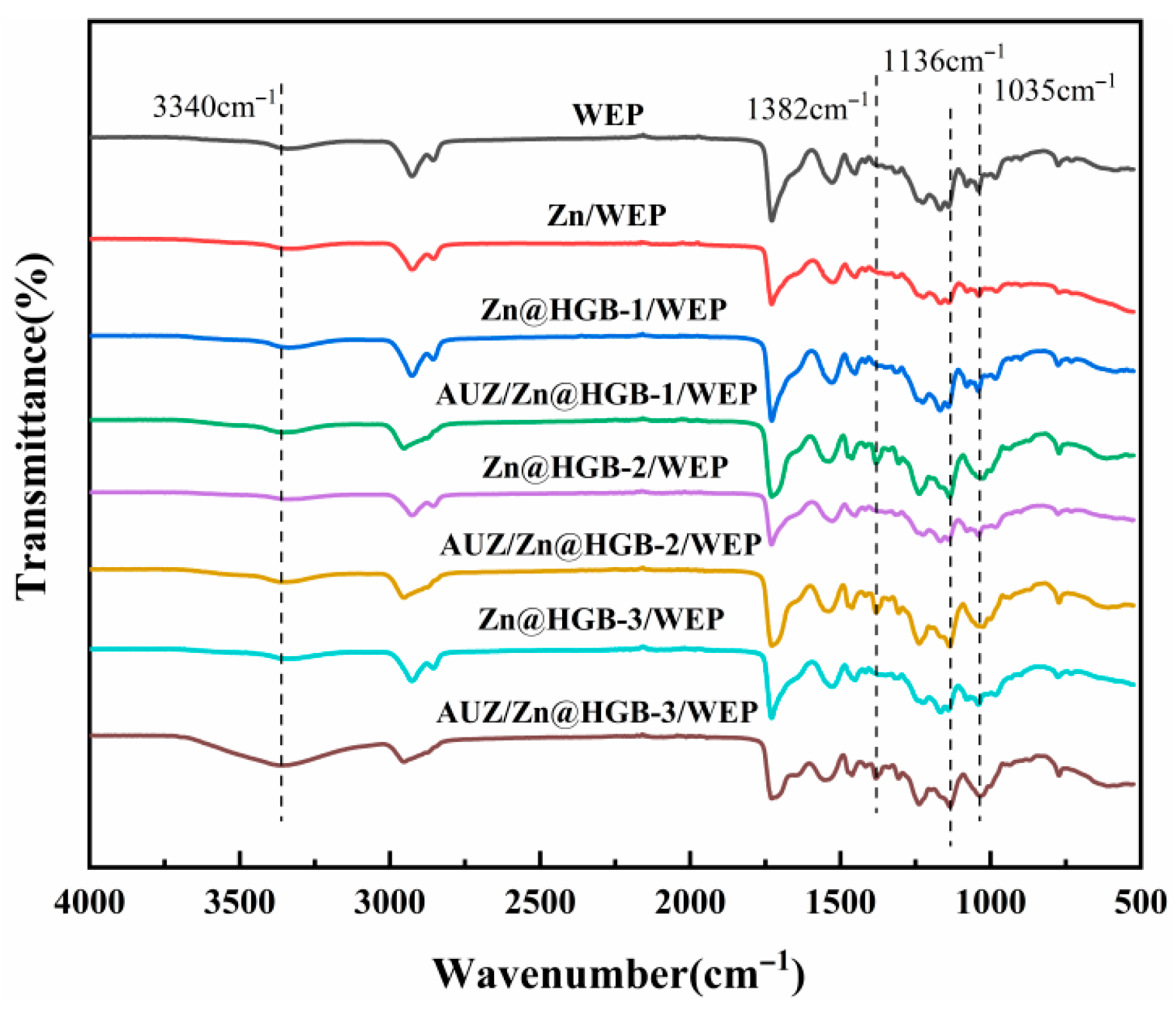
Figure 2 presents the Fourier-transform infrared (FT-IR) spectra of the waterborne composite coatings, with the baseline WEP spectrum (black line) exhibiting characteristic vibrational signatures of its molecular structure. The spectrum is dominated by the hydrophilic hydroxyl group stretching vibration at 3340 cm
−1, along with fingerprints of the epoxy resin backbone: symmetric and asymmetric C-H stretches of aliphatic groups at 2926 and 2856 cm
−1; aromatic -C=C- bending vibrations at 1728, 1528, and 1451 cm
−1; bending vibrations of the isopropylidene group -C(CH
3)
2- at 1317 cm
−1 coupled with the asymmetric stretching of the C-O-C ether linkage at 1226 cm
−1. The distinct absorption bands in the 1200–1000 cm
−1 region are assigned to C-O-C stretching vibrations of the epoxy rings, while the bending vibrations of the epoxy groups themselves appear between 950–800 cm
−1. Deformation vibrations of the epoxy rings are observed in the 870–750 cm
−1 range [
26]. Compared to the baseline, the matching coating system (e.g., green trace) exhibits a marked increase in the intensity of the hydroxyl band at 3340 cm
−1, which is attributed to the increased mass fraction of WEP in the topcoat formulation, which introduces a greater number of hydrophilic hydroxyl groups into the system. This interpretation is further supported by the enhanced intensity of characteristic epoxy signals at 1382, 1136, and 1035 cm
−1, consistent with the elevated WEP content in the final coating structure.
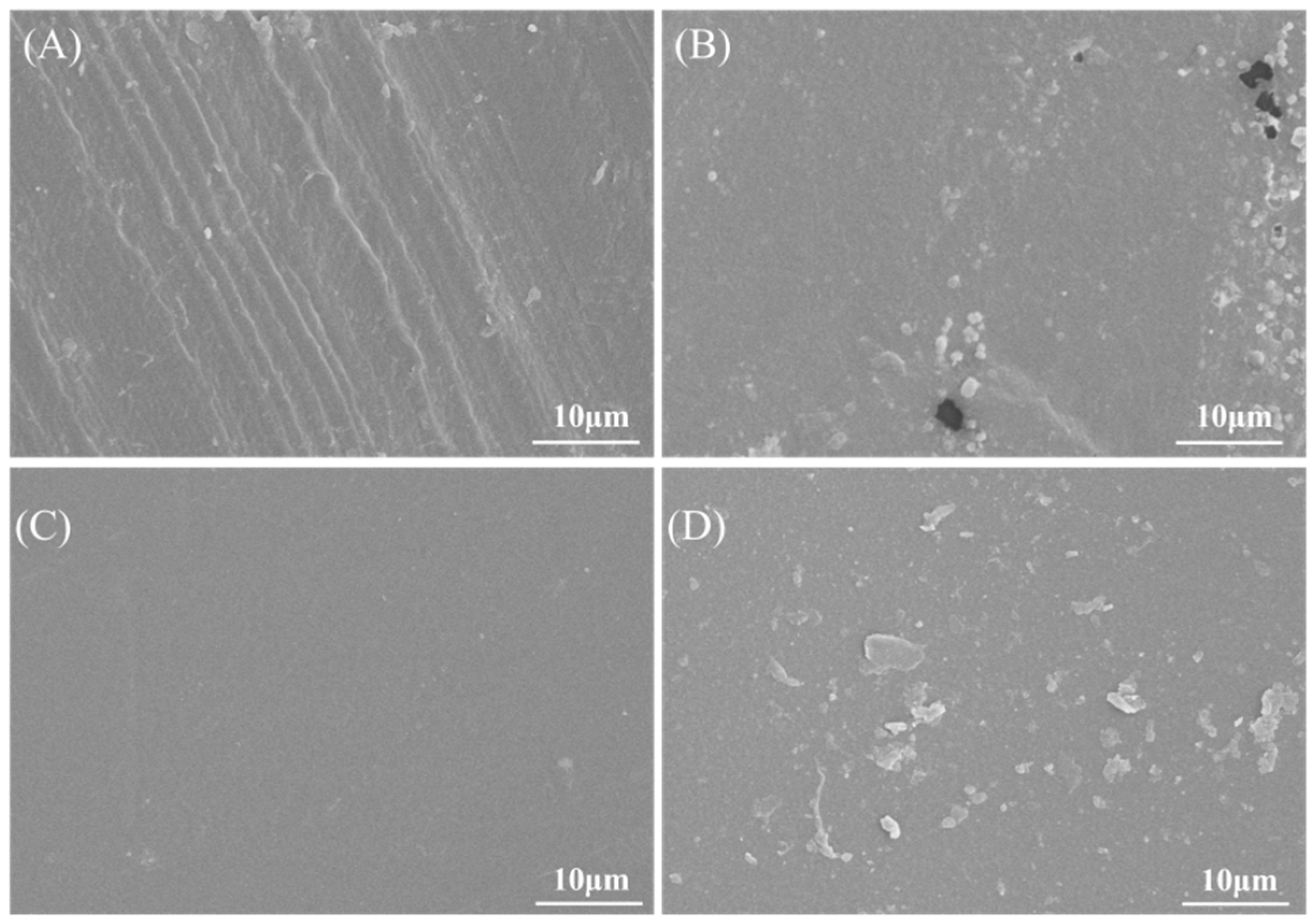
Figure 3 compares the surface morphology for coatings with varying HGB content. The pristine WEP coating (
Figure 3A) exhibits a porous and textured surface, with voids and irregular grooves formed during curing as water evaporates. Image analysis of SEM reveals that the porosity ratio of pristine WEP coating is approximately 12.3%, which compromises the coating compactness, potentially diminishing its corrosion resistance. The morphological differences observed are reproducible across multiple samples and are systematically linked to HGB content, not coincidental variations. Incorporation of zinc powder along with 1 wt% HGB (
Figure 3B) results in a noticeable improvement in surface quality, where partial pore filling and reduced crack formation are observed. Correspondingly, the porosity ratio of the coating decreases to 6.7%, indicating enhanced compactness compared to pristine WEP. However, residual voids indicate insufficient defect remediation, suggesting that the combined addition of zinc and HGB at this concentration does not fully address the morphological imperfections. In contrast, the coating modified with 2 wt% HGB (
Figure 3C) demonstrates a remarkably smooth and dense morphology, where the fine HGB particles effectively fill microcracks and eliminate most visible pores—yielding the best morphological integrity among the studied formulations, with its porosity ratio as low as 1.2% further confirming excellent compactness [
27]. This trend is quantitatively supported by surface roughness data (
Table 1), where the 2 wt% HGB formulation shows the lowest Ra value (0.624 μm), confirming its optimal compactness. Further increasing the HGB content to 3 wt% (
Figure 3D) leads to agglomeration of excess modifier on the surface, reintroducing roughness and likely impairing anticorrosion performance. The porosity ratio of the coating rebounds to 8.9% due to the formation of voids caused by HGB agglomeration. The results underscore the efficacy of HGB as functional filler in mitigating the morphological defects of WEP. Owing to its sub-micron particle size, HGB provides superior pore-filling capability and enhances coating uniformity. The formulation with 2 wt% HGB achieves the highest degree of compactness, which is anticipated to correlate with enhanced barrier properties and superior long-term anticorrosion performance.
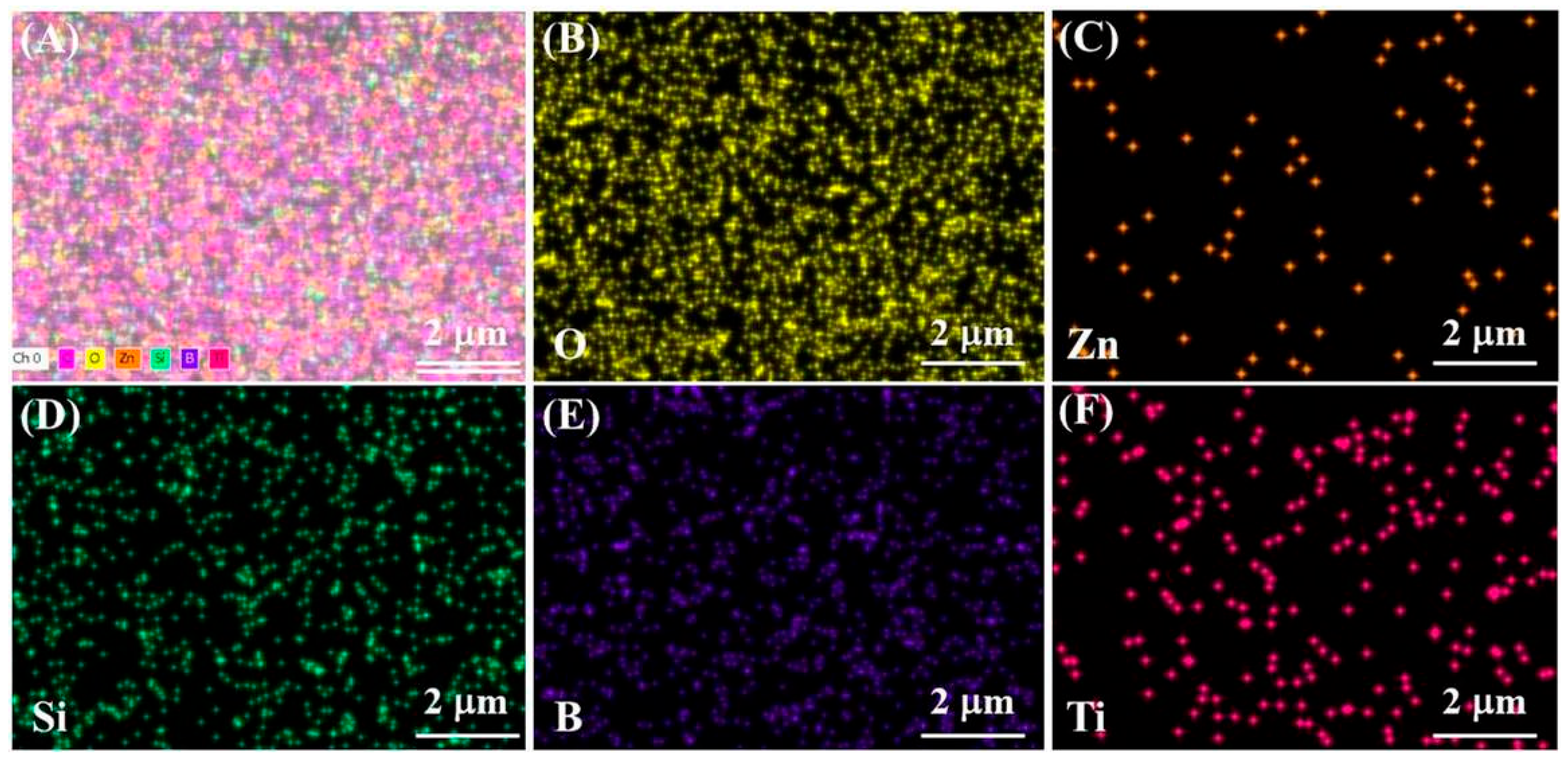
Figure 4 presents a systematic elemental distribution analysis of the AUZ/Zn@HGB-2/WEP composite coating obtained through EDS-Mapping technology. The spatially resolved elemental maps (
Figure 4A) reveal distinct distribution patterns of key constituents within the coating architecture. Carbon and oxygen elements (
Figure 4B), constituting the WEP matrix, demonstrate homogeneous distribution throughout the coating cross-section, confirming the formation of a continuous polymer phase that provides fundamental physical support and barrier properties. Zinc element (
Figure 4C) is localized in discrete regions corresponding to zinc powder particles within the primer layer, which provide cathodic protection. In contrast, silicon and boron (
Figure 4D,E), characteristic components of HGB, display a complementary spatial relationship with zinc distribution, regions enriched with Si and B show corresponding depletion of Zn, providing direct evidence for the partial replacement of zinc powder by HGB microspheres. Titanium element (
Figure 4F), indicative of the AUZ modifier, is evenly distributed, mainly in the near-surface region, suggesting its successful integration into the WEP matrix. This meticulously designed dual-layer coating architecture not only preserves the core sacrificial anode protection mechanism through zinc-rich regions but also optimizes the surface characteristics via HGB incorporation. The observed microstructural features demonstrate effective synergistic optimization among AUZ modifier, zinc powder, HGB carrier, and WEP matrix, establishing a structural foundation for enhanced comprehensive performance of the composite coating system.
3.2. Physical-Mechanical and Thermal Performance of Coatings
Table 1 summarizes the physical and mechanical properties of the various coating formulations. The pristine WEP exhibits excellent initial gloss (156.2%) and low surface roughness (0.136 μm), reflecting its good optical quality. The incorporation of zinc powder, however, significantly reduces the gloss to 5.8% and increases the roughness to 0.815 μm, which is attributed to the strong hiding power conferred by the inherent dark color of zinc particles. The subsequent introduction of HGB leads to a gradual recovery in gloss, from 6.9% for Zn@HGB-1/WEP to 27.4% for Zn@HGB-3/WEP, consistent with the light-colored nature of HGB. Notably, the coating containing 2 wt% HGB displays the lowest roughness (0.624 μm), which aligns with the smooth and dense morphology described in
Figure 3C where the porosity ratio was only 1.2%, confirming that the optimal HGB content effectively improves both surface smoothness and compactness. In contrast, the Zn@HGB-3/WEP coating shows a relatively higher roughness value, which is consistent with the surface agglomeration phenomenon and increased porosity ratio (8.9%) observed in its SEM image. The introduction of urushiol–titanium polymer (AUZ) reduces the gloss further, to 71.6% for AUZ/Zn@HGB-1/WEP and 51.2% for AUZ/Zn@HGB-3/WEP, due to the inherent dark coloration of AUZ. In terms of flexibility, all modified coatings show some degree of deterioration (flexibility values ranging from 1 to 4 mm) compared to pure WEP (0.5 mm), suggesting that both HGB and AUZ have a negative influence on this property. It should be noted that the flexibility test was conducted according to GB/T 6742–2007, which has an operational deviation of up to 10% compared with ISO 1519:2012. Nevertheless, all modified coatings maintain the highest pencil hardness (6H), excellent adhesion (grade 0), and undiminished impact resistance (95 cm), confirming that the primer modification and topcoat matching strategy successfully preserves the key mechanical and protective properties of the coating system.
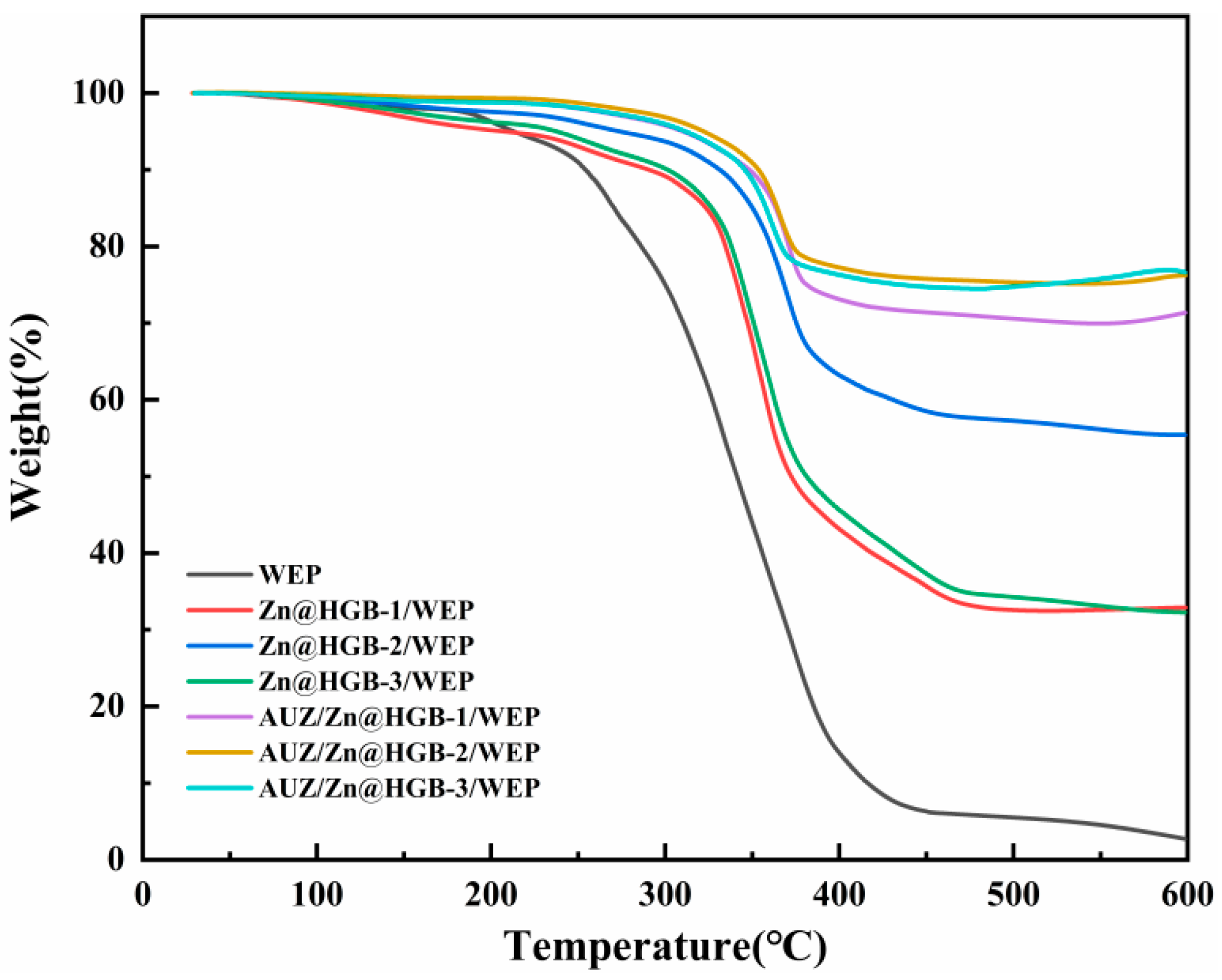
Thermogravimetric analysis was conducted to evaluate the effect of HGB incorporation on the thermal stability of the composite coatings. The thermal degradation process of the WEP-based coatings proceeds through three distinct stages (
Figure 5). The first stage (30–250 °C), involving a mass loss of about 10%, is attributed to the evaporation of residual water and solvent, along with decomposition of low-molecular-weight oligomers. In the second stage (250–350 °C), the rate of mass loss increases markedly, resulting from the degradation of hard segments in WEP, small-molecular additives, and oxygen-containing functional groups introduced by modifiers [
28]. Notable differences in mass loss are observed among the coatings in this temperature range, with the unmodified WEP exhibiting a substantial loss of about 50%, while the modified formulations demonstrate significantly suppressed degradation. The final stage, between 350 and 450 °C, is characterized by the complete decomposition of the hard segments followed by rapid degradation of the well-ordered soft segments, accompanied by the collapse of the polymer architecture. The decomposition process stabilizes beyond 500 °C. The residual mass percentages at the endpoint of the test for WEP, Zn@HGB-1/WEP, Zn@HGB-2/WEP, Zn@HGB-3/WEP, AUZ/Zn@HGB-1/WEP, AUZ/Zn@HGB-2/WEP, and AUZ/Zn@HGB-3/WEP are 2.7%, 32.9%, 55.4%, 32.3%, 71.4%, 76.2%, and 76.6%, respectively. These findings clearly demonstrate that partial replacement of zinc powder with HGB significantly improves the thermal stability of the coatings, which can be ascribed to the excellent thermal insulation properties of the hollow glass microspheres. The enhancement is most pronounced at HGB loadings ≥ 2 wt%, which effectively mitigates surface defects within the composite, as corroborated by prior morphological analyses. Furthermore, the application of the AUZ-modified topcoat leads to an additional improvement in thermal stability, consistent with the synergistic effects observed in earlier performance evaluations.
3.3. Electrochemical Anticorrosion Performance
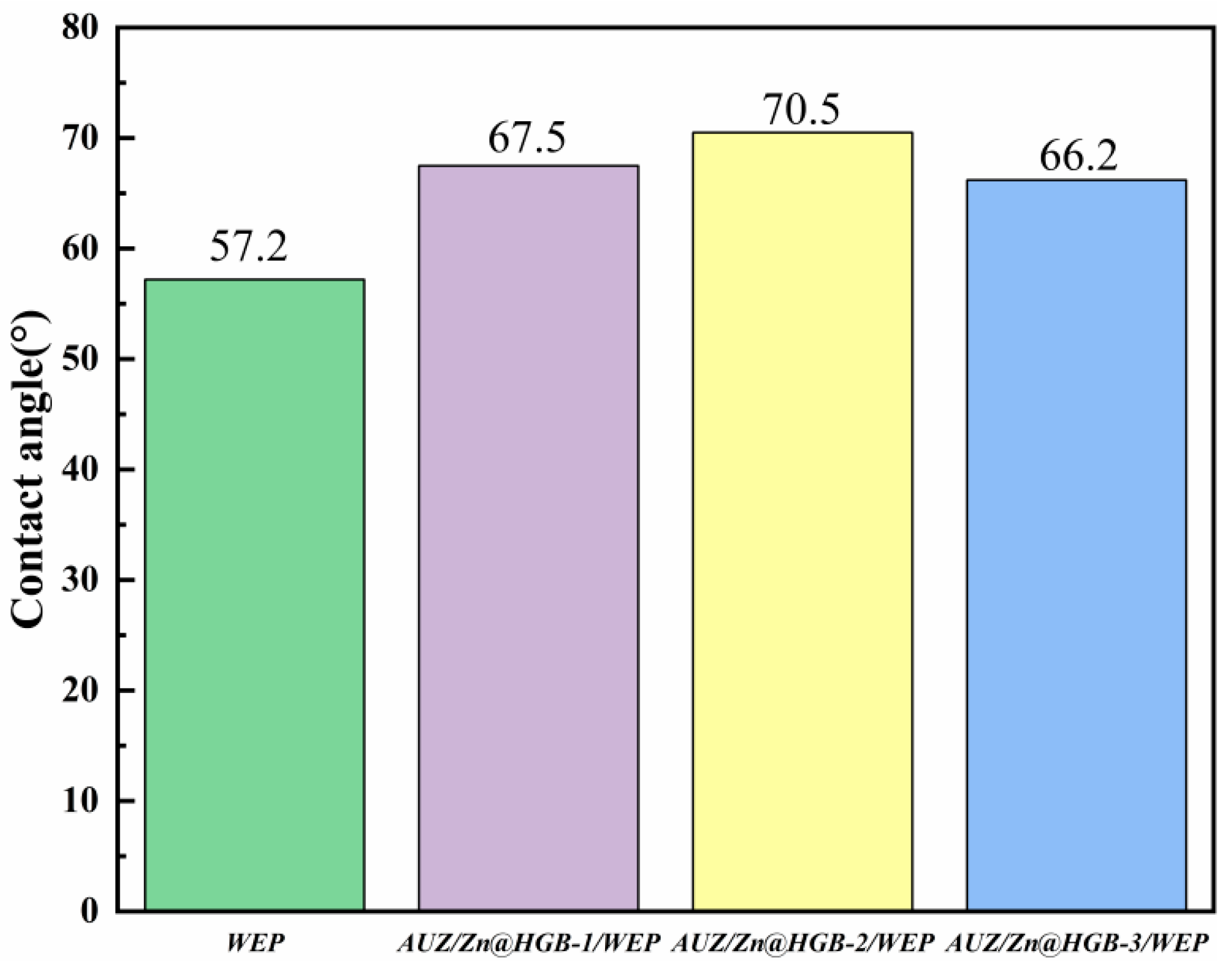
The surface wettability of the composite coatings was quantitatively assessed through water contact angle (CA) measurements (
Figure 6). The pristine WEP exhibits a CA of 57.2°, indicating pronounced hydrophilic character. All modified coatings maintained CAs below 90°, remaining within the hydrophilic range, yet a marked increase in hydrophobicity was observed. This enhancement is attributed to the incorporation of hydrophobic constituents, specifically the urushiol–titanium polymer and zirconium phosphate (ZrP). Among the modified formulations, the coating with 2 wt% HGB addition demonstrated the most significant improvement, achieving a CA of 70.5°. This substantial increase suggests that HGB, functioning as an oleophilic-hydrophobic material, contributes effectively to hindering water penetration by altering the surface energy and microstructure of the composite. The enhanced hydrophobicity contributes to a more effective barrier against corrosive species, supporting the overall improvement in anticorrosion performance.
The corrosion protection performance of the coating systems was evaluated through Tafel polarization measurements using a standard three-electrode configuration, where the coated sample served as the working electrode, a platinum plate as the counter electrode, and an Ag/AgCl electrode as the reference electrode. Each sample was immersed in a 3.5 wt% NaCl solution until the open-circuit potential (OCP) stabilized within the range of −0.4 V to −0.6 V. The polarization scan was then performed from OCP ± 0.25 V at a rate of 0.01 V/s to obtain the potential–current density curves. By analyzing these curves using the Tafel extrapolation method, key electrochemical parameters were derived, including corrosion potential (E
cor), corrosion current density (I
cor), polarization resistance (R
p), corrosion rate (CR), and protection efficiency (PE). The corresponding formulas are given as follows:
where γ
a and γ
c represent the anodic and cathodic Tafel slopes, respectively, and I
cor is the corrosion current density obtained from the intersection of the Tafel slopes.
where k is a constant, and M
m and
denote the atomic weight and density of the metal substrate, respectively.
where I
cor,0 refers to the corrosion current density of the bare metal substrate or the uncoated reference sample.
As illustrated in
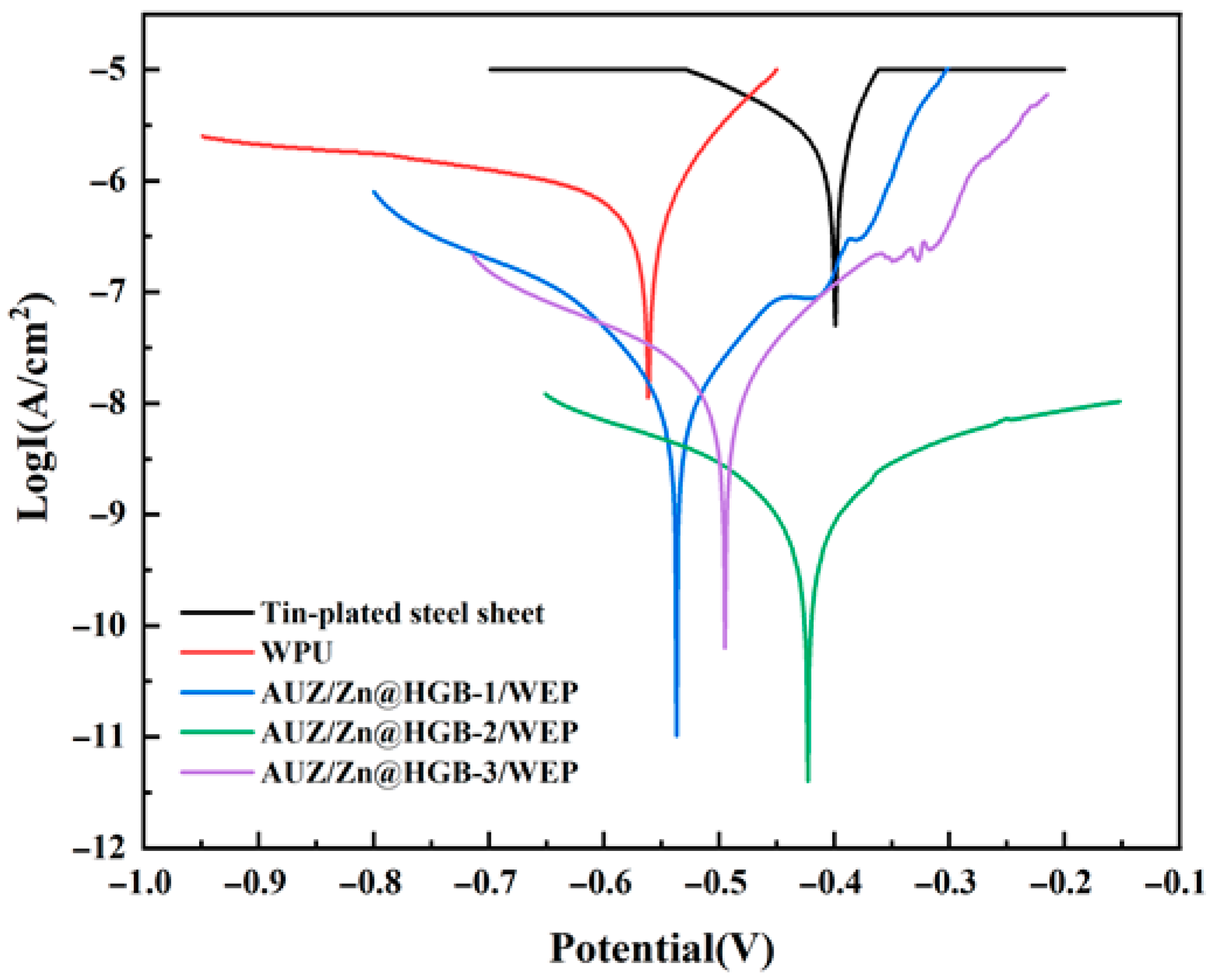
Figure 7, the Tafel curves of the different coatings exhibit clear differences in both shape and position, reflecting variations in their corrosion kinetics and protective properties. All Tafel curves were tested within a potential range of −1.0 V to −0.1 V, and the corrosion parameters were fitted within the standardized linear Tafel region of ±100 mV relative to the corrosion potential, with correlation coefficients (R
2) greater than 0.98 ensuring high fitting accuracy. Lower I
cor, higher R
p, and lower CR values generally indicate superior anticorrosion performance. The systematic inclusion of these parameters and their mathematical foundations allow for a rigorous comparison of the coating systems’ efficacy in inhibiting corrosion under aggressive chloride conditions.
Quantitative analysis of the derived parameters, summarized in
Table 2, reveals a remarkable enhancement in corrosion resistance afforded by the coatings. The tin-plated steel sheet shows the highest I
cor, consistent with its high susceptibility to corrosion. The pure WEP coating reduces I
cor by three to four orders of magnitude, confirming a significant level of protection. This performance is substantially superior in the matching coating systems, a phenomenon attributed to the synergistic effect of the zinc-rich primer, which provides cathodic protection, and the AUZ-modified topcoat, where the UTP and two-dimensional ZrP nanosheets create an efficient physical barrier via a “labyrinth effect” that markedly hinders the penetration of corrosive species. Notably, the AUZ/Zn@HGB-2/WEP coating exhibits the most outstanding anti-corrosion properties, characterized by the lowest I
cor (1.54 × 10
−9 A·cm
–2), the highest R
p (2.82 × 10
7 Ω), and the slowest CR (5.71 × 10
–6 mm/year). This superior performance demonstrates an effective synergistic protection mechanism, contrary to a merely porous system. The HGB-modified primer provides active cathodic protection at defects, as evidenced by the localized zinc distribution (
Figure 4C) and active corrosion potential, while simultaneously enhancing the physical barrier through defect filling. The maintained cathodic protection capability, despite the HGB addition, is confirmed by the active corrosion potential, indicating the zinc-steel microcells remain functional and work synergistically with the physical barrier improved by HGB. This optimal performance aligns perfectly with the dense, defect-free morphology observed by SEM, which facilitates an effective physical barrier. The coating achieves a protection efficiency of 99.98% relative to the bare substrate, corresponding to a 97.38% improvement over pure WEP, confirming the success of the synergistic design strategy.
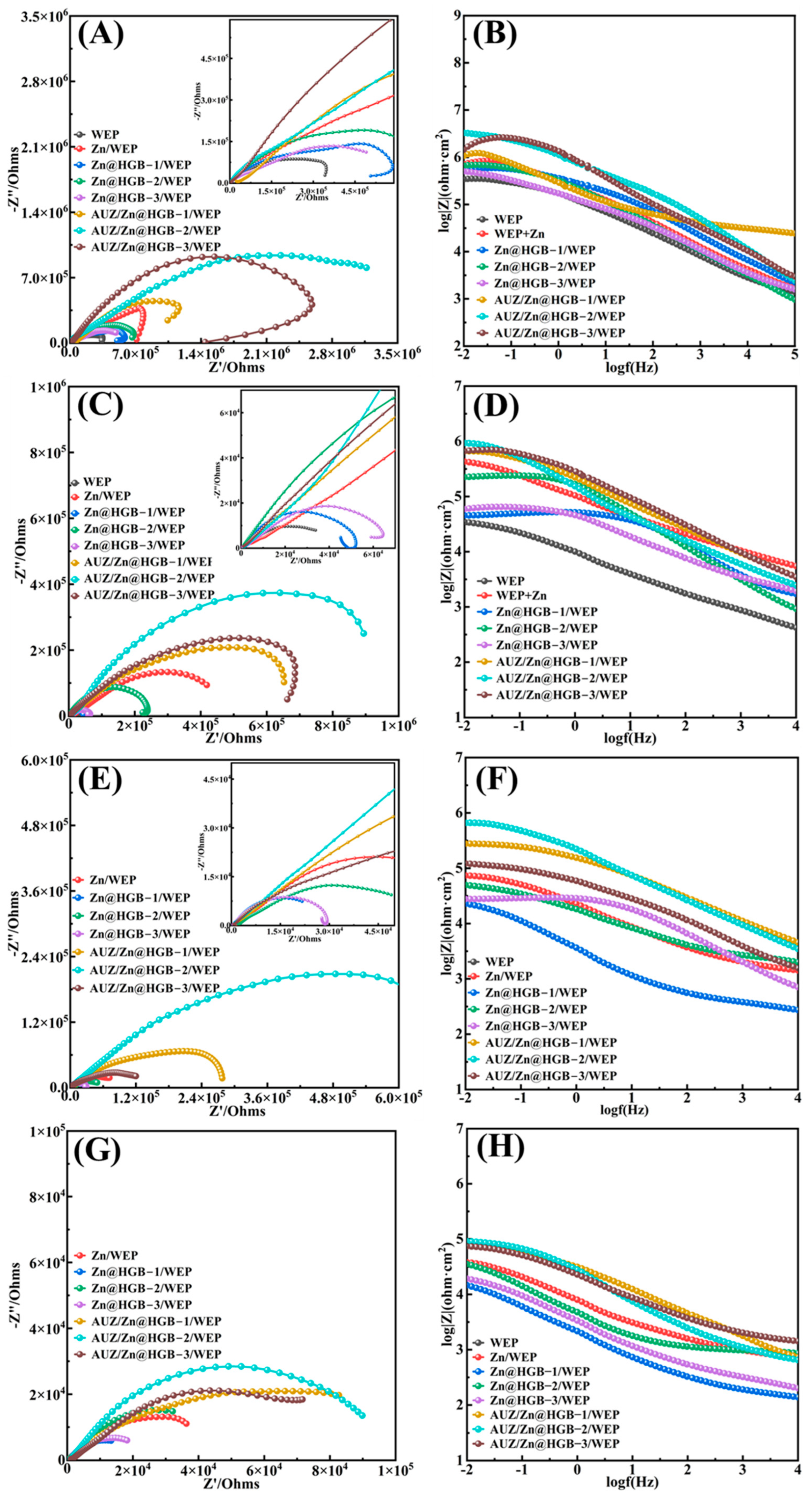
The corrosion protection performance of the coatings was evaluated by electrochemical impedance spectroscopy (EIS) in a 3.5 wt% NaCl aqueous solution. After 0.5–1 h of immersion, by which time the open-circuit potential (OCP) had stabilized, the EIS spectra of all coatings exhibited a single capacitive arc (
Figure 8A,B), indicating effective physical barrier protection at the initial stage. Partial substitution of zinc powder with HGB in the primer resulted in a slight decrease in corrosion resistance, attributable to the superior cathodic protection provided by zinc powder, which forms a sacrificial anode with the iron substrate. Among the HGB-modified primers, the formulation with 2 wt% HGB (Zn@HGB-2/WEP) exhibited the smallest impedance reduction, as the HGB particles helped fill microscopic defects and improve the structural integrity of the primer. The subsequent application of an AUZ-modified topcoat significantly enhanced the impedance of the coating system. Notably, the AUZ/Zn@HGB-2/WEP sample demonstrated the most pronounced enhancement in performance, exhibiting a remarkably high impedance value of 3.2 × 10
6 Ω. This value surpasses that of the primer-only system by two orders of magnitude, underscoring the profound efficacy of the composite design. With prolonged immersion, the protective performance evolution of the coatings became more distinct. After 2 days, the unmodified WEP coating showed obvious corrosion signs: a substantially reduced capacitive arc radius and phase angle changes in the Bode plot suggesting that corrosive media had penetrated to the substrate interface (
Figure 8C,D). In contrast, primers modified with zinc powder and HGB continued to effectively hinder electrolyte penetration. However, Zn@HGB-1/WEP and Zn@HGB-3/WEP experienced significant impedance drops, whereas Zn@HGB-2/WEP maintained relatively stable performance, underscoring that an optimal HGB content is critical; deviations increase surface roughness and defect density, accelerating coating failure. After 10 days of immersion, all coatings experienced some impedance decrease, yet the matching coating systems showed no evident corrosion (
Figure 8E,F). Notably, the AUZ/Zn@HGB-2/WEP coating still exhibited a higher impedance value than the initial value of the unmodified WEP after only 1 h of immersion, highlighting its potential for long-term protection. By day 25, the EIS spectrum of AUZ/Zn@HGB-3/WEP displayed two capacitive arcs, indicating that the electrolyte had reached the substrate (
Figure 8G,H). In contrast, both AUZ/Zn@HGB-1/WEP and AUZ/Zn@HGB-2/WEP systems remained largely intact, demonstrating outstanding durability. These results confirm that although partial replacement of zinc powder with HGB yields a modest reduction in initial impedance, the synergistic interaction between HGB and zinc powder, which reaches optimal performance at 2 wt% HGB loading, significantly enhances the overall stability of the coating. The additional AUZ topcoat further significantly boosts impedance by leveraging the “labyrinth effect” of ZrP and UTP [
29], which prolongs the diffusion path of corrosive species, enabling the dual-layer coating system to maintain excellent anti-corrosion performance even after 25 days of immersion [
30]. The AUZ-modified topcoat, leveraging the “labyrinth effect” of UTP and ZrP, significantly prolongs the diffusion path of corrosive species, resulting in a dramatic impedance increase by two orders of magnitude. This synergy creates a composite barrier that effectively isolates the substrate, as confirmed by the sustained single capacitive arc in EIS spectra even after 25 days of immersion, demonstrating long-term stability that surpasses the unmodified coating.
3.4. Chemical and Environmental Durability Assessment
The resistance of the waterborne epoxy composite coatings to liquid media was evaluated by immersing specimens in acid, alkali, and salt solutions of different concentrations, following national standards. After 16 days of immersion, the changes in coating surface morphology were examined to assess corrosion resistance, as summarized in
Table 3. In strongly alkaline environments (30 wt% and 10 wt% NaOH), all coated samples exhibited significant peeling, indicating poor alkali resistance and demonstrating that the primer–topcoat system used in this study did not substantially enhance performance under highly alkaline conditions. By contrast, in a 5 wt% NaCl solution, coatings without the topcoat showed noticeable detachment, revealing the limited salt resistance offered by zinc-rich primers alone. In contrast, the matching coating systems with an AUZ-modified topcoat remained intact throughout the 16-day immersion period. This improvement is attributed to the “labyrinth effect” resulting from the synergistic combination of ZrP and UTP within the AUZ modifier, which effectively impedes chloride ion penetration through enhanced physical barrier properties. Immersion tests in strong acid solutions revealed that coatings comprising only the zinc-rich primer exhibited limited resistance to acid corrosion in a 10 wt% H
2SO
4 solution. This is consistent with the high reactivity of zinc in acidic environments, as evidenced by the ‘-’ notations in
Table 3 for primer-only systems, which indicate observable changes such as discoloration or bubbling. In comparison, the matching composite coating systems remained largely intact after more than 16 days of immersion. When the acid concentration was increased to 30 wt% H
2SO
4, the matching systems displayed only slight discoloration after 16 days, with no severe corrosion damage. These results clearly indicate that the synergistic interaction between the AUZ modifier and the modified zinc-rich primer significantly enhances the acid resistance of the coating system. This improvement is primarily due to the inherent chemical stability of UTP in acidic environments, which imparts robust corrosion resistance. The synergistic combination of an AUZ-modified topcoat and an HGB-zinc-rich primer significantly enhances the coating system’s resistance to salt-rich and highly acidic media. The composite coating can withstand approximately 16 days of immersion in such aggressive environments while maintaining structural integrity and showing no significant signs of corrosion, which is attributed to the “labyrinth effect” resulting from the synergistic combination of ZrP and UTP within the AUZ modifier [
31,
32,
33].
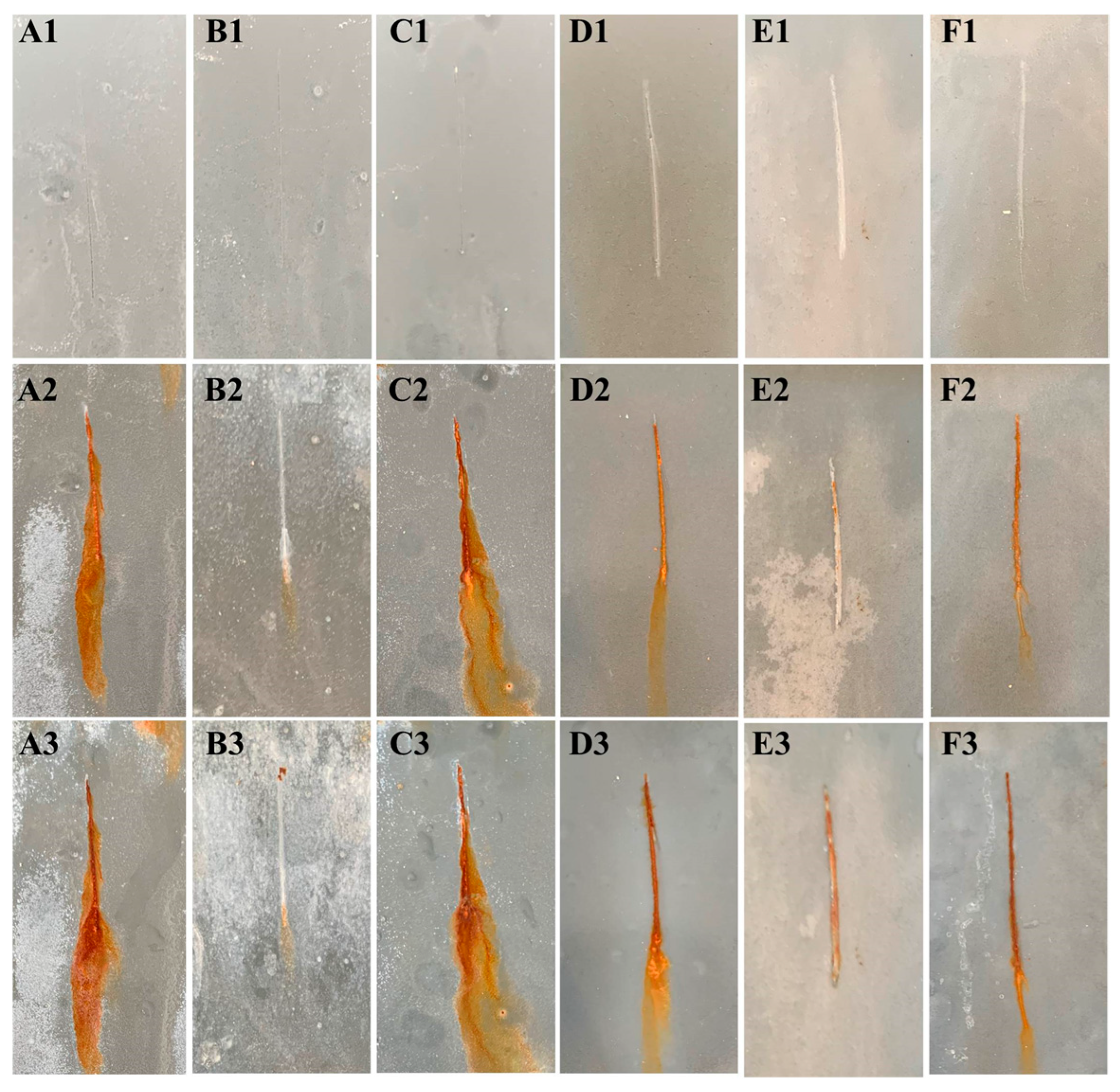
The corrosion resistance of the composite coatings was further evaluated through neutral salt spray testing using a 5 wt% NaCl solution, with continuous monitoring of corrosion progression along scribed areas and electrolyte penetration behavior. The initial states of each coating are shown in
Figure 9(A1–F1). After 360 h of exposure, the zinc-rich primer coatings exhibited noticeable leaching of HGB particles, attributed to coating thinning caused by saline corrosion, which led to the exposure and release of microspheres. Pronounced corrosion signs—including yellow oxidation products, substantial corrosion accumulation, coating delamination, and early-stage spread—were observed in both scribed and adjacent regions of the Zn@HGB-1/WEP (
Figure 9(A2)) and Zn@HGB-3/WEP (
Figure 9(C2)) coatings. In contrast, the Zn@HGB-2/WEP coating (
Figure 9(B2)) displayed only minimal yellow corrosion products within the scribe, with markedly reduced coating detachment, indicating that the corrosive medium had reached the tin-plated steel substrate, but its progression was effectively suppressed [
34]. When the test duration was extended to 720 h, the Zn@HGB-1/WEP (
Figure 9(A3)) and Zn@HGB-3/WEP (
Figure 9(C3)) coatings showed aggravated deterioration, characterized by abundant yellow–brown corrosion deposits and fine particulate accumulation at the metal-coating interface. Under prolonged exposure to high ion concentrations, corrosion intensified and spread laterally, reflecting inadequate protective performance. By comparison, the Zn@HGB-2/WEP coating (
Figure 9(B3)) demonstrated significantly delayed corrosion progression, effective suppression of oxidation products, and no visible spreading tendency, confirming that the 2 wt% HGB addition provides an optimal physical barrier that effectively isolates the tin-plated steel substrate from corrosive species. These results underscore the critical role of HGB concentration, as deviations from the optimal 2 wt% loading clearly compromised coating performance.
The matching coating systems with an AUZ-modified topcoat exhibited further enhanced durability under the same salt spray conditions. After 360 h, the AUZ/Zn@HGB-1/WEP (
Figure 9(D2)) and AUZ/Zn@HGB-3/WEP (
Figure 9(F2)) coatings displayed yellow corrosion products within the scribe, deposited at the substrate interface. Although these products could potentially initiate corrosion spread under ionic activity, the extent of damage and lateral propagation were substantially lower than in the primer-only systems, with no significant sideways diffusion observed. This improvement is ascribed to the capability of UTP and ZrP fillers to trap chloride ions and establish a labyrinth effect through their layered structure, thereby prolonging the diffusion path of corrosive media [
35]. The AUZ/Zn@HGB-2/WEP sample (
Figure 9(E2)) exhibited the best salt spray resistance, showing only minimal corrosion product formation and no diffusion along the coating-substrate interface. After 720 h, the AUZ/Zn@HGB-1/WEP and AUZ/Zn@HGB-3/WEP samples (
Figure 9(D3,F3)) exhibited increased corrosion deposits and mild delamination, indicating accelerated interfacial deterioration due to ion accumulation and autocatalytic corrosion. Still, their performance remained superior to that of the uncoated primers. The AUZ/Zn@HGB-2/WEP coating (
Figure 9(E3)) maintained excellent integrity with negligible corrosion spread and no delamination, demonstrating high surface smoothness and stability. This superior performance stems from the optimal HGB concentration and its synergy with the AUZ modifier, which together enhance the anticorrosion mechanism. In conclusion, the 2 wt% HGB-modified primer significantly improves the salt spray resistance of WEP, and the application of a 5 wt% AUZ topcoat further optimizes the protective performance, validating the designed dual-layer coating system as an effective strategy for long-term corrosion prevention.
3.5. Universality of the Coating Strategy in Other Resin Systems
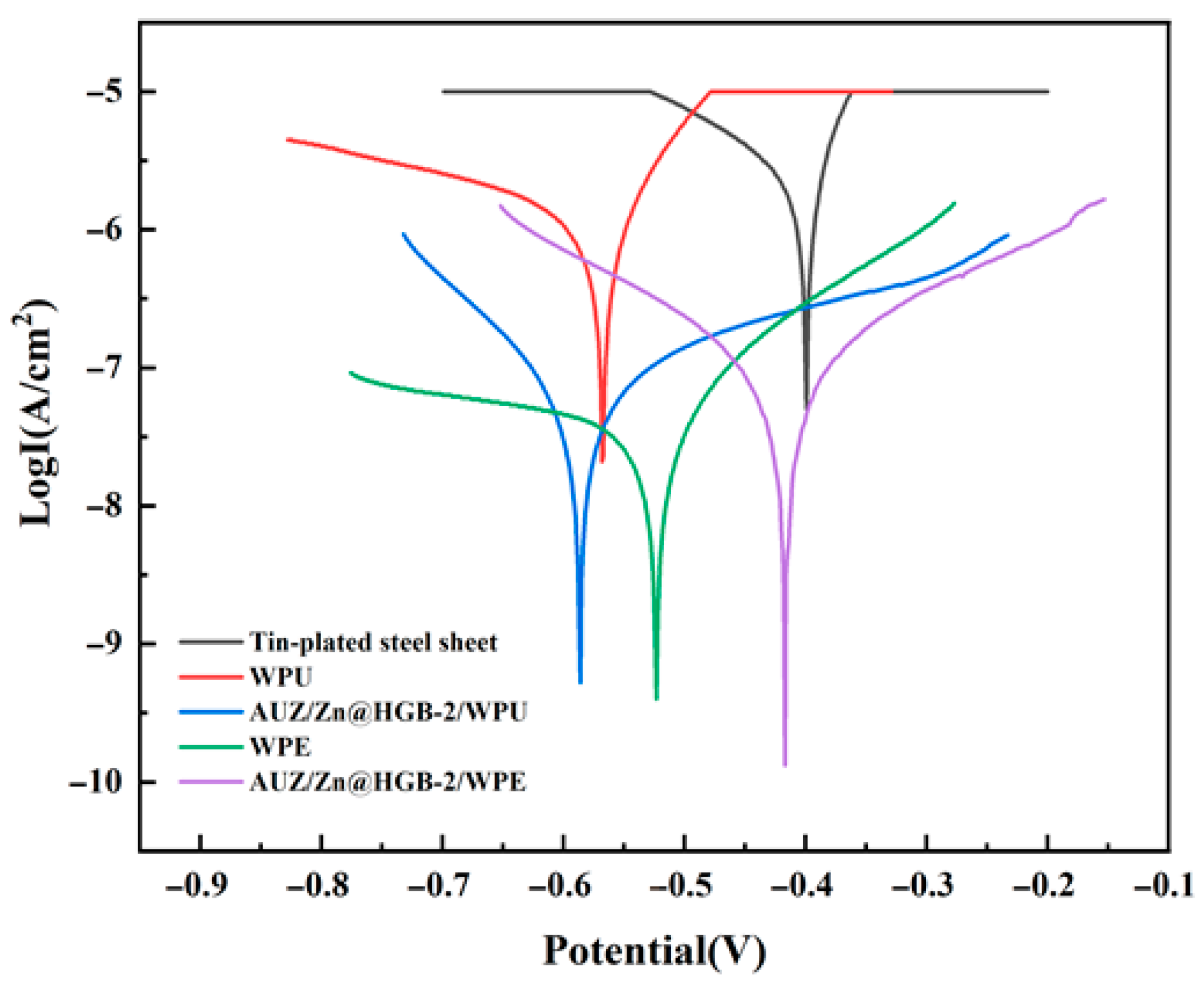
Building upon the confirmed efficacy of the proposed methodology in significantly enhancing the anti-corrosion performance of WEP systems, we further extended its application to assess universality across aqueous WPU and WPE systems [
36]. As illustrated by the Tafel polarization curves in
Figure 10 and the corresponding fitting data in
Table 4, both unmodified WPU and WPE coatings reduced the I
cor by one to two orders of magnitude relative to the bare tin-plated steel substrate. Given that a lower I
cor generally corresponds to improved corrosion resistance, this indicates that the base polymers themselves afford a basic degree of protection. More significantly, after modification with the AUZ/Zn@HGB composite system, the I
cor further decreased by an additional one to two orders of magnitude. Notably, the AUZ/Zn@HGB-2/WPE system exhibited the most pronounced improvement, with I
cor suppressed by two full orders of magnitude. These results strongly demonstrate that the integrated coating system—composed of an HGB-modified zinc-rich primer and an AUZ-modified topcoat—markedly enhances corrosion protection. The underlying mechanism can be attributed to the synergistic combination of a dense barrier effect, imparted by zirconium phosphate (ZrP) and urushiol–titanium polymer (UTP) within the AUZ component, together with mitigated internal stress and delayed permeation of corrosive species facilitated by HGB and zinc powder [
37]. These findings collectively verify the broad applicability of the proposed modification strategy beyond WEP to other aqueous coating systems.
Complementing the Icor results, the Rp and CR values followed consistent trends. After synergistic modification, the composite coatings exhibited markedly increased Rp alongside significantly reduced CR, corroborating the enhancements inferred from Icor. In terms of PE, all modified coatings exhibited values exceeding 90%, underscoring a substantial improvement over their unmodified counterparts. Notably, the AUZ/Zn@HGB-2/WPE demonstrated exceptional performance, achieving PE values over 99% relative to both the bare substrate and the pristine WPE coating, indicating nearly complete corrosion suppression and highlighting the robustness of the optimized composite design. The uniform enhancement across these key electrochemical parameters reaffirms the universality and effectiveness of the modification approach when applied to WPU and WPE systems, and underscores the essential role of the synergy between HGB and AUZ in enhancing the durability of waterborne protective coatings.
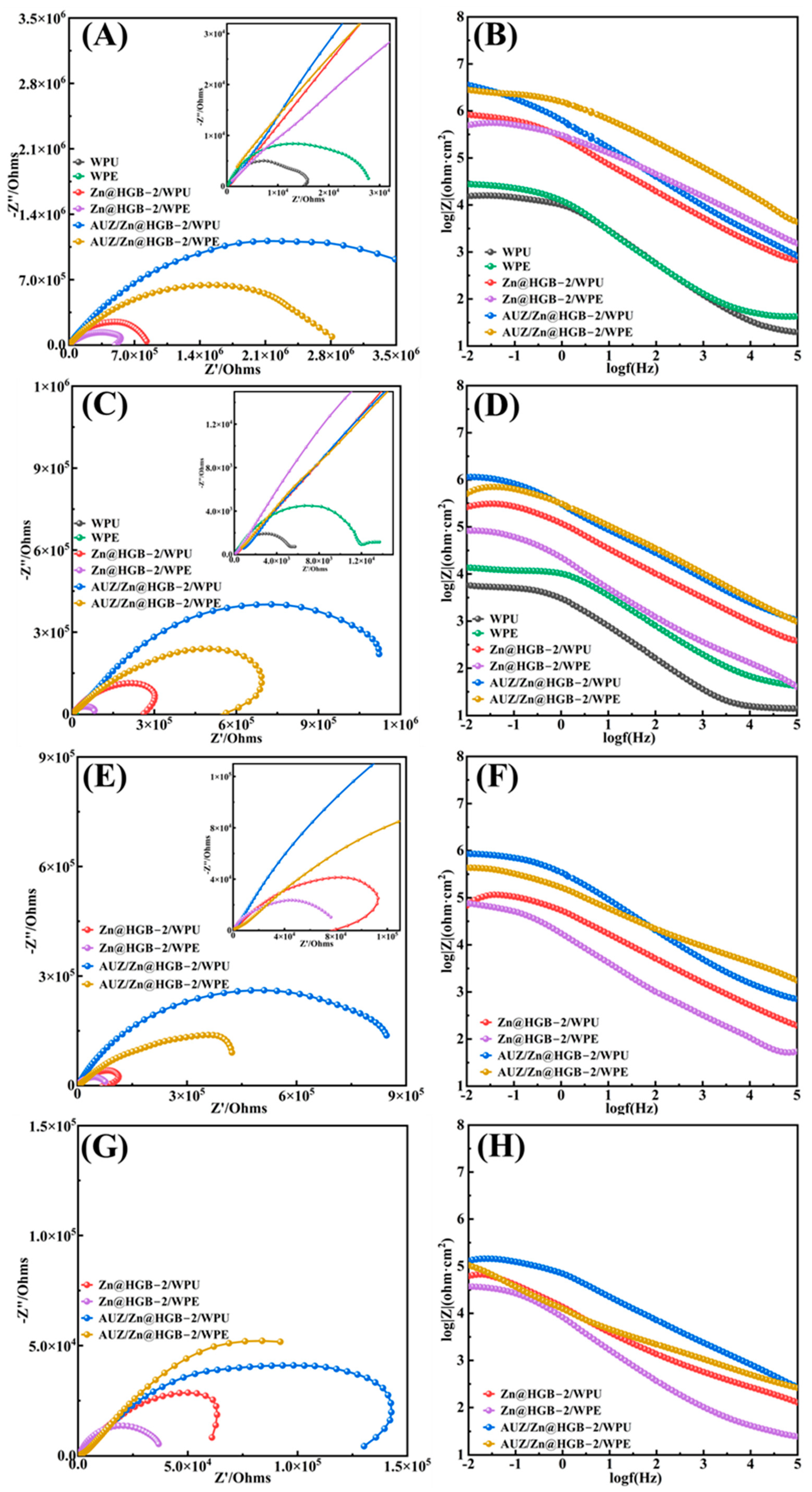
Figure 11 presents the EIS analysis of unmodified and HGB-based primer-modified WPU and WPE coatings after different immersion times. During the initial 1 h immersion, the Nyquist plots of all coating systems exhibited a single capacitive arc, indicative of an effective protective function over the tin-plated steel substrate (
Figure 11A,B) [
38]. Notably, modification with the HGB based primer resulted in a substantial increase in impedance by one to two orders of magnitude. The matching modified WPU and WPE systems achieved impedance values of 3.57 × 10
6 Ω and 2.7 × 10
6 Ω, respectively, representing a two order of magnitude enhancement. The corresponding Bode plots corroborated the trends observed in the Nyquist plots. After 2 days, the unmodified WPU and WPE coatings displayed a second capacitive arc in their Nyquist plots, suggesting that the corrosive medium had penetrated to the coating metal interface and initiated corrosion, which is attributed to inherent porosity and defects that facilitate electrolyte penetration (
Figure 11C,D) [
39]. In contrast, the modified composite coatings, particularly the matching primer topcoat systems, maintained significantly higher impedance values, by one to two orders of magnitude, confirming that the synergistic interaction between the primer and topcoat effectively hindered the corrosion process [
40]. Although the primer-only samples showed a relatively faster impedance decrease, they still outperformed the unmodified coatings. After 10 days of immersion, the modified composite coatings showed a slight reduction in the capacitive arc radius, yet the absence of a second capacitive arc in the Nyquist plots indicated that the coating metal interface remained largely intact without significant corrosive reaction, preserving the barrier function (
Figure 11E,F). Even after 25 days of immersion, all four modified coating systems maintained a single capacitive arc, providing further evidence of their sustained and effective protection of the substrate (
Figure 11G,H).
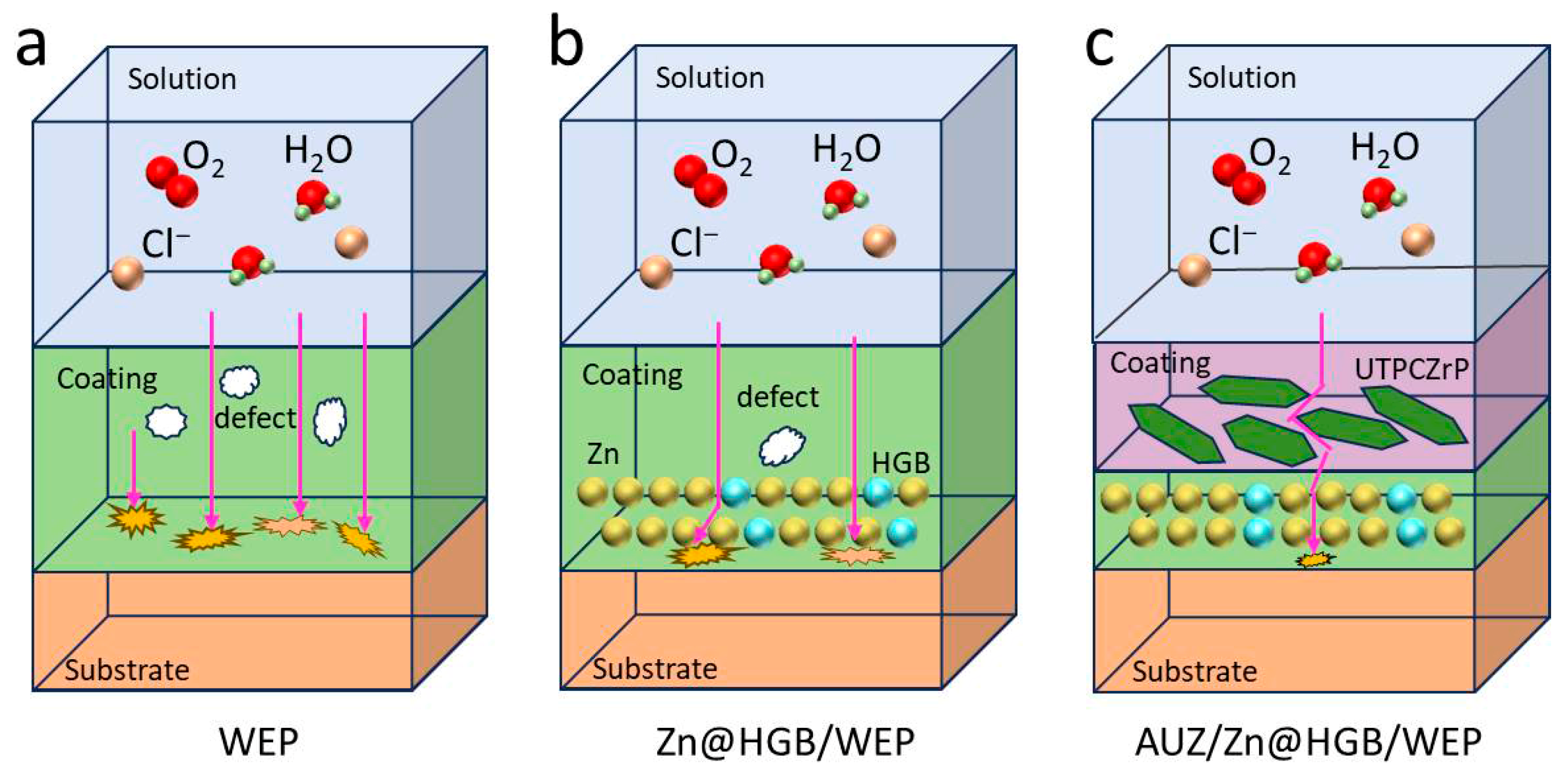
The proposed anti-corrosion mechanism is illustrated in
Figure 12. Initially, the unmodified waterborne epoxy coating exhibits inherent micro-defects such as pores and cracks, through which corrosive species (O
2, H
2O, Cl
−) penetrate directly toward the tin-plated steel substrate [
41,
42]. This is supported by the SEM observations of a porous WEP surface and the small capacitive arc in early EIS spectra, indicating limited barrier properties. The HGB-modified waterborne epoxy zinc-rich primer, formulated by replacing 20 wt% of zinc particles with HGB, retains residual zinc particles that provide initial cathodic protection; their subsequent corrosion products further seal micro-pores in the primer layer, reinforcing the barrier effect. Subsequently, the incorporation of UTPCZrP nanosheets into the topcoat induces a “maze effect”, forcing corrosive media to follow a tortuous diffusion path rather than a straight-line penetration [
43,
44]. The notable increase in impedance and the characteristic FTIR peaks confirm the effective introduction of UTPCZrP, while salt spray tests demonstrate suppressed corrosion spread. Ultimately, the synergistic action of HGB and UTPCZrP leads to the formation of a dense, three-dimensional barrier: HGB particles fill defects in the primer layer, mitigating stress concentration, while UTPCZrP nanosheets stack tightly in the topcoat, collectively blocking the permeation of corrosive media.




 ,
,