Article

The Catalytic Effect of Rice Husk Ash on Pine Pyrolysis Based on a Three-Component System

1
Co-Innovation Center of Efficient Processing and Utilization of Forest Resources, College of Materials Science and Engineering, Nanjing Forestry University, Nanjing 210037, China
2
School of Energy and Environment, Southeast University, Nanjing 210018, China
3
Nanjing Environm Grp Co., Ltd., Nanjing 210026, China
*
Author to whom correspondence should be addressed.
Coatings 2026, 16(2), 244; https://doi.org/10.3390/coatings16020244
Submission received: 20 January 2026 / Revised: 8 February 2026 / Accepted: 10 February 2026 / Published: 13 February 2026
(This article belongs to the Special Issue Multifunctional Thin Films from Hybrid Biopolymers and Nanomaterials)

Abstract

Biomass is characterized by its diversity and wide availability. Co-pyrolysis technology is considered a promising approach for high-quality conversion and high-value utilization of biomass, representing a critical pathway toward environmental sustainability. This study selected rice husk and pine as representative herbaceous and woody biomass materials. Using a thermogravimetric analyzer (TGA) and Py-GC/MS, we systematically investigated the synergistic effects during co-pyrolysis, examined their underlying mechanisms, and analyzed changes in product distribution. The results indicate that the blend containing 30% rice husk exhibited the most pronounced synergistic effect. Specifically, the experimental char yield and pyrolysis activation energy were 9.7% and 10.5% lower than the theoretically calculated values, respectively. Both the blending ratio and heating rate were found to significantly influence these synergistic interactions. The observed synergy is attributed to the migration of alkali metals from rice husk ash, which enhances reaction rates and promotes specific pathways such as cellulose ring-opening cleavage and hemicellulose deacetylation. Consequently, the product distribution shifts toward lighter compounds, including aldehydes, ketones, and alcohols. This study clarifies the central catalytic role of herbaceous biomass ash and highlights the critical function of alkali metal migration in regulating product selectivity, thereby providing theoretical support for efficient pyrolytic conversion.

1. Introduction

Biomass is widely regarded as the world’s fourth-largest energy source, following coal, petroleum, and natural gas, and is valued for its renewable nature, low carbon emissions, and environmental sustainability [1,2,3]. In China alone, annual biomass production exceeds 3 billion metric tons, primarily in the form of herbaceous agricultural residues and lignocellulosic forestry waste [4,5]. The inadequate utilization of these abundant agroforestry residues not only represents a significant waste of energy resources but also poses serious environmental challenges; for instance, the accumulation of forestry residues elevates the risk of wildfires [6,7,8]. Therefore, the efficient conversion and utilization of biomass hold substantial potential for reducing fossil fuel consumption and mitigating CO2 emissions [9,10].
Pyrolysis is a thermochemical conversion process that decomposes biomass at elevated temperatures under an oxygen-limited atmosphere, transforming it into condensable vapors (bio-oil), solid biochar, and small-molecule combustible gases [11,12,13]. This technology offers notable advantages, including high energy conversion efficiency, environmental compatibility, and versatile applications of its resulting products [14,15]. However, the inherent diversity of biomass species leads to significant variations in the physicochemical properties of different feedstocks [16,17]. Specifically, herbaceous biomass typically contains higher ash content enriched with alkali and alkaline earth metal (AAEM) salts, which can act as effective natural catalysts during pyrolysis [18,19]. In contrast, woody biomass generally possesses higher carbon and fixed carbon content, rendering it more suitable for biochar production and often resulting in favorable yields of volatile compounds [20,21].
The co-pyrolysis of herbaceous and woody biomass can achieve synergistic enhancement by leveraging their complementary advantages: woody biomass serves as a carbon-rich feedstock, while the AAEM-rich ash derived from herbaceous biomass acts as an inherent catalytic component to facilitate pyrolysis reactions [22,23]. This integrated strategy effectively combines the high calorific value of woody biomass with the intrinsic catalytic properties of herbaceous residues, thereby improving overall process efficiency and product distribution. The catalytic potential of AAEM-rich ash has been demonstrated across various co-pyrolysis systems. For example, Wang et al. [24] reported that co-pyrolysis of oily sludge with fly ash significantly reduced activation energy and increased oil yield. Similarly, Chen et al. [25] observed that blending biomass with coal fly ash enhanced the yield of artificial humic acid by approximately 200%, promoting lignin depolymerization and humification at lower temperatures. Further supporting this, Hu et al. [26] demonstrated that Ca-rich sludge ash catalyzed the pyrolysis of waste wood, effectively lowering activation energy and increasing the formation of valuable oxygenated compounds such as acids and ketones.
In addition to interactions mediated by inorganic ash components, synergistic effects during co-pyrolysis are also driven by interactions among the evolving volatiles. These gas-phase interactions can significantly alter the distribution and quality of pyrolysis products. For instance, Shao et al. [27] observed that interactions between cellulose and lignin-derived volatiles during sequential pyrolysis increased char yield and modified the composition of gaseous products. Li et al. [28] reported that volatile interactions during the co-pyrolysis of waste paper and tires promoted gas yields while also enhancing bio-oil production and improving char quality. Further exploring the influence of feedstock ratios, Li et al. [29] found that volatile interactions between low-rank coal and lignin maximized the yield of phenolic compounds and light tar. Beyond volatile–volatile interactions, the catalytic effects of ash components on the volatile phase are equally critical. Liu et al. [30] demonstrated that AAEMs in ash lowered primary pyrolysis temperatures and catalytically reduced the formation of undesirable halogenated hydrocarbons in the liquid products. Similarly, Li et al. [31] showed that minerals in red mud decreased the activation energy for biomass pyrolysis, enhanced volatile release, and improved the thermal stability of the resulting biochar.
The fundamental mechanisms underlying synergistic effects in co-pyrolysis remain incompletely understood, with several critical questions persisting in the literature. For instance, while Zhi et al. [32] identified that synergy is maximized at specific blending ratios, the underlying reasons why these particular ratios constitute the optimal condition remain unclear. Similarly, although studies have observed significant differences in catalytic effects among biomass components—for example, Ren et al. [33] found that cellulose and lignin induce opposing synergistic effects during co-catalytic hydropyrolysis, and Chen et al. [34] reported their distinct product spectra under catalytic pyrolysis—a unified mechanistic explanation for this component-specific “selectivity” is still lacking. Furthermore, there is no consensus on the primary driving force behind synergy. Some studies, such as that by Wei et al. [35], emphasize the key catalytic role of AAEM migration, whereas decoupling experiments by Zhang et al. [36] suggest the dominance of homogeneous interactions among evolving volatiles. Collectively, these unresolved mechanistic issues represent a significant knowledge gap in the current understanding of co-pyrolysis.
To directly address these knowledge gaps—particularly the ratio-dependent nature of synergistic effects—this study employs integrated kinetic analysis and multi-scale characterization with three primary objectives: (1) to discern whether the observed synergy is predominantly driven by in situ ash catalysis or by volatile-phase interactions; (2) to elucidate the dynamic migration and transformative behavior of catalytic AAEM species; and (3) to unravel the selective catalytic mechanisms through which these species regulate the distinct pyrolysis pathways of cellulose and hemicellulose.

2. Experimental Methods

2.1. Biomass Samples

Herbaceous rice husk, characterized by its high ash content, and woody pine were selected as the experimental feedstocks. Their ultimate and proximate analysis results are presented in Table 1. Proximate analysis (moisture, ash, and volatile matter content) was conducted following the Chinese standard method GB/T 28731-2012 [37]. Specifically, moisture content was determined by drying samples at 105 °C until a constant mass was achieved. Volatile matter content was measured by heating a precisely weighed sample in a covered porcelain crucible at 900 °C for 7 min under an oxygen-free atmosphere. Ash content was obtained by combusting the sample in a covered crucible at 550 °C until constant mass was achieved (mass change < 0.1%).
The cellulose, hemicellulose, and lignin contents of the pine samples are presented in Table 2. Cellulose was quantified using the anthrone-sulfuric acid colorimetric assay (620 nm) following acid hydrolysis; hemicellulose was determined via the 3,5-dinitrosalicylic acid (DNS) method (540 nm) after hydrochloric acid hydrolysis; and lignin was analyzed by an acetyl bromide-based UV spectrophotometric method (280 nm).

2.2. Biomass Pyrolysis Experiment

Thermogravimetric analysis of the biomass pyrolysis process was conducted using a Netzsch TGA 209 F3 analyzer (Netzsch-Gerätebau GmbH, Selb, Germany). The samples were ground in a mortar for 30 min, and approximately 5 mg of the resulting powder was precisely weighed for each test. The pyrolysis was performed under a carbon dioxide atmosphere (20 mL/min) with the temperature programmed to increase from room temperature (25 °C) to 500 °C at constant heating rates of 10, 15, and 20 °C/min. Upon reaching the final temperature, the purge gas was switched to nitrogen to facilitate cooling back to room temperature. A separate protective nitrogen flow (20 mL/min) was maintained over the thermogravimetric balance throughout the experiment. The derivative thermogravimetric (DTG) curves were obtained by mathematically differentiating the primary thermogravimetric (TG) data.
Catalytic pyrolysis of pine and its primary constituents—cellulose, hemicellulose, and lignin—was systematically investigated using pyrolysis–gas chromatography/mass spectrometry (Py-GC/MS) with a CDS-5200 pyrolyzer (CDS Analytical, LLC, Oxford, PA, USA) coupled to a Clarus SQ 8 GC/MS system (PerkinElmer, Inc., Waltham, MA, USA). For catalytic experiments, the biomass sample was uniformly mixed with the catalyst prior to pyrolysis to ensure intimate contact between the evolving volatiles and the catalytic active sites. The mixture was loaded into the center of a quartz tube and secured with quartz wool plugs at both ends. All pyrolyses were conducted under identical conditions: a final temperature of 500 °C, a rapid heating rate of 50 °C/s, and a helium carrier gas flow of 50 mL/min. The gas chromatograph was equipped with an RTX-5MS capillary column (Restek Corporation, Bellefonte, PA, USA), and the oven temperature was programmed from 40 °C (held for 2 min) to 300 °C at a rate of 15 °C/min. Mass spectrometric detection utilized an electron ionization (EI) source with a scan range of *m/z* 35–600. Compound identification was achieved by comparing the acquired mass spectra with reference spectra in the NIST mass-spectral library (National Institute of Standards and Technology, Gaithersburg, MD, USA).

2.3. Characterization

A muffle furnace (Lindberg/Blue M, Thermo Fisher Scientific, Waltham, MA, USA) was employed for proximate analysis and ash preparation. Ultimate analysis was carried out using an elemental analyzer (UNICUBE, Elementar Analysensysteme GmbH, Langenselbold, Germany). Biochar preparation was conducted in a tubular furnace (TL1200, Nanjing Boyuntong Instrument, Nanjing, China). The morphology and elemental distribution of biochar and ash samples were examined using a scanning electron microscope (SEM, Phenom XL-G2, Thermo Fisher Scientific, Waltham, MA, USA) equipped with an energy-dispersive X-ray spectroscopy (EDS) detector (X123 FAST SDD, IXRF Systems, Austin, TX, USA). Surface functional groups of the biochar were characterized by Fourier-transform infrared spectroscopy (FTIR, VERTEX 80V, Bruker Corporation, Billerica, MA, USA). CO2 temperature-programmed desorption (CO2-TPD) experiments were performed using an AutoChem II 2920 system (Micromeritics Instrument Corporation, Norcross, GA, USA) controlled by V4.02 software (Micromeritics Instrument Corporation, Norcross, GA, USA), with a heating rate of 10 °C·min−1.

2.4. Analysis of Interactions and Reaction Mechanisms

Five blending ratios of pine to rice husk (1:0, 7:3, 1:1, 3:7, 0:1) were designed and prepared. Based on the weight loss profiles of the individual components (rice husk and pine), the theoretical weight loss for each mixed sample was calculated using Equation (1).
T G C a l = X R i c e   h u s k T G R i c e   h u s k + X P i n e T G P i n e
where TGRice husk, TGPine, and TGCal denote the weight loss of rice husk, pine, and their calculated mixture, respectively; XRice husk and XPine represent the mass fractions of rice husk and pine in the blend. The experimental results were compared with the theoretical calculations to identify any synergistic effects between the two components.
The experimental conversion, α, was derived from the thermogravimetric mass loss data using the relationship defined in Equation (1) [38].
α = ω 0 ω t ω 0 ω
where ω 0 is the initial mass, ω t is the mass at time (t), ω is the final residual mass.
The thermal decomposition rate Equation can be expressed as:
d a d t = k f ( α )
where k is the rate constant described by the Arrhenius Equation: k = A e x p ( E / R T ) . A is the pre-exponential factor (min−1). E is the activation energy (kJ/mol). R is the gas constant (8.314 Jmol−1K−1). T is the absolute temperature (K). The function f ( α ) represents the reaction mechanism. Thus, Equation (3) becomes:
d α d t = k f α = A e x p E R T f ( α )
By substituting the heating rate β = d T / d t into Equation (4) and can be expressed as follows:
d a d T = A β e x p E R T f ( α )
The Distributed Activation Energy Model (DAEM), which is based on the concept of numerous independent parallel reactions, is widely employed for the kinetic analysis of biomass pyrolysis [39,40]. Accordingly, this model was adopted in the present study, with its mathematical formulation expressed by Equation (6):
1 V V * = 0 exp k β 0 T e E R T d t f E d E
where E is the activation energy, V is the volatile content at temperature T, V* is the total effective volatile content, f(E) represents the distribution of function of activation energies, k is the frequency factor, β is the heating rate and V/V* corresponds to the conversion rate α defined in Equation (2).
Applying the Miura–Maki integral method, Equation (6) transforms into:
ln β T 2 = ln k R E + 0.6073 E R T
According to Equation (7), the activation energy (E) and the frequency factor (K) can be determined from the slope and intercept of Equation (3). Constructing the corresponding Arrhenius plot of l n ( β / T 2 ) versus 1 / T at a fixed conversion α requires experimental data from a minimum of three different heating rates.

3. Results and Discussion

3.1. Co-Pyrolysis Performance

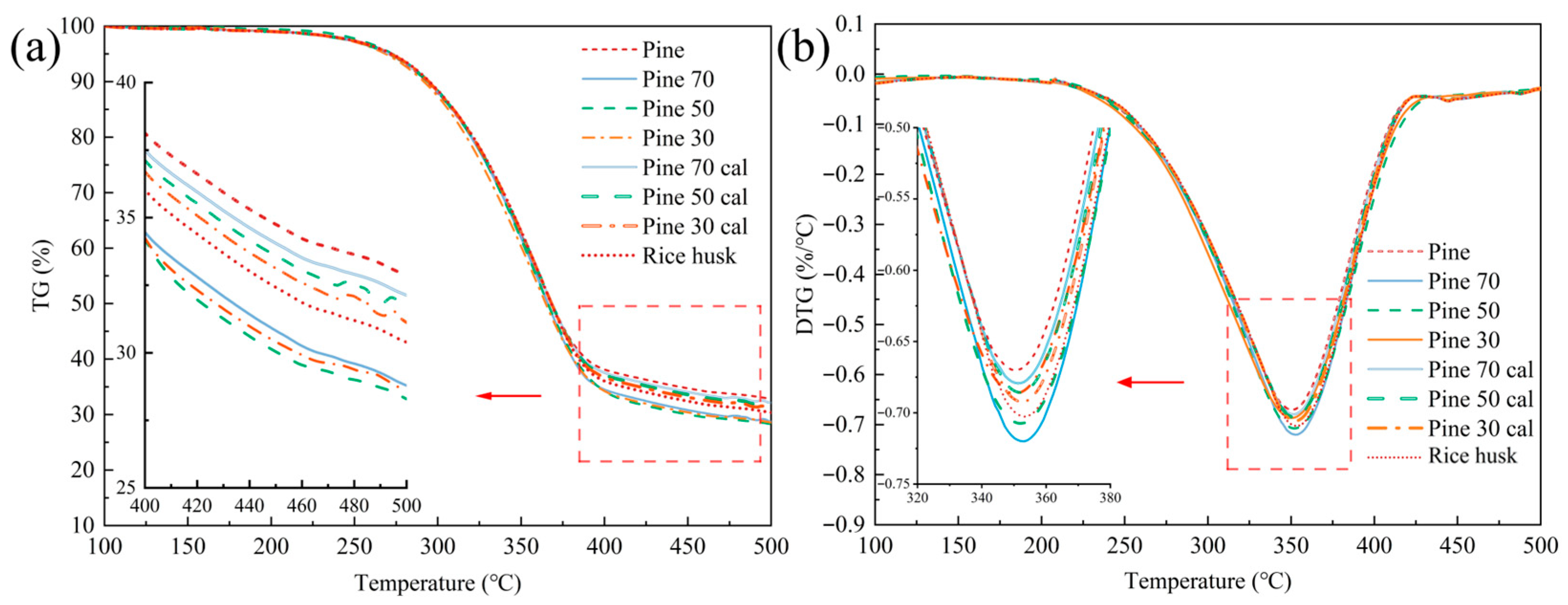
TGA of pine and rice husk blends at five mass ratios (1:0, 7:3, 1:1, 3:7, 0:1) was performed at heating rates of 10, 15, and 20 °C/min. As shown in Figure 1, the experimental TG and DTG curves for three representative blend ratios deviate from their theoretically calculated counterparts, with the corresponding char yields detailed in Table 3. The primary devolatilization stage, as indicated by the TG curves, occurred between 200 °C and 500 °C, resulting in a mass loss exceeding 60%. Notably, the theoretical char yields were consistently higher than the experimental values. For instance, at 500 °C, the char yield of the Pine 70 decreased from a calculated value of 31.6% to an experimental value of 28.8%. This indicates that interactions between rice husk and pine during co-pyrolysis altered both the reaction kinetics and the solid residue yield. Figure 1b further illustrates that the experimental DTG peak profiles differ from the calculated ones, particularly for the 70% pine blend. Additional data obtained at heating rates of 10 and 15 °C/min are provided in Figures S1 and S2 (Supporting Information).
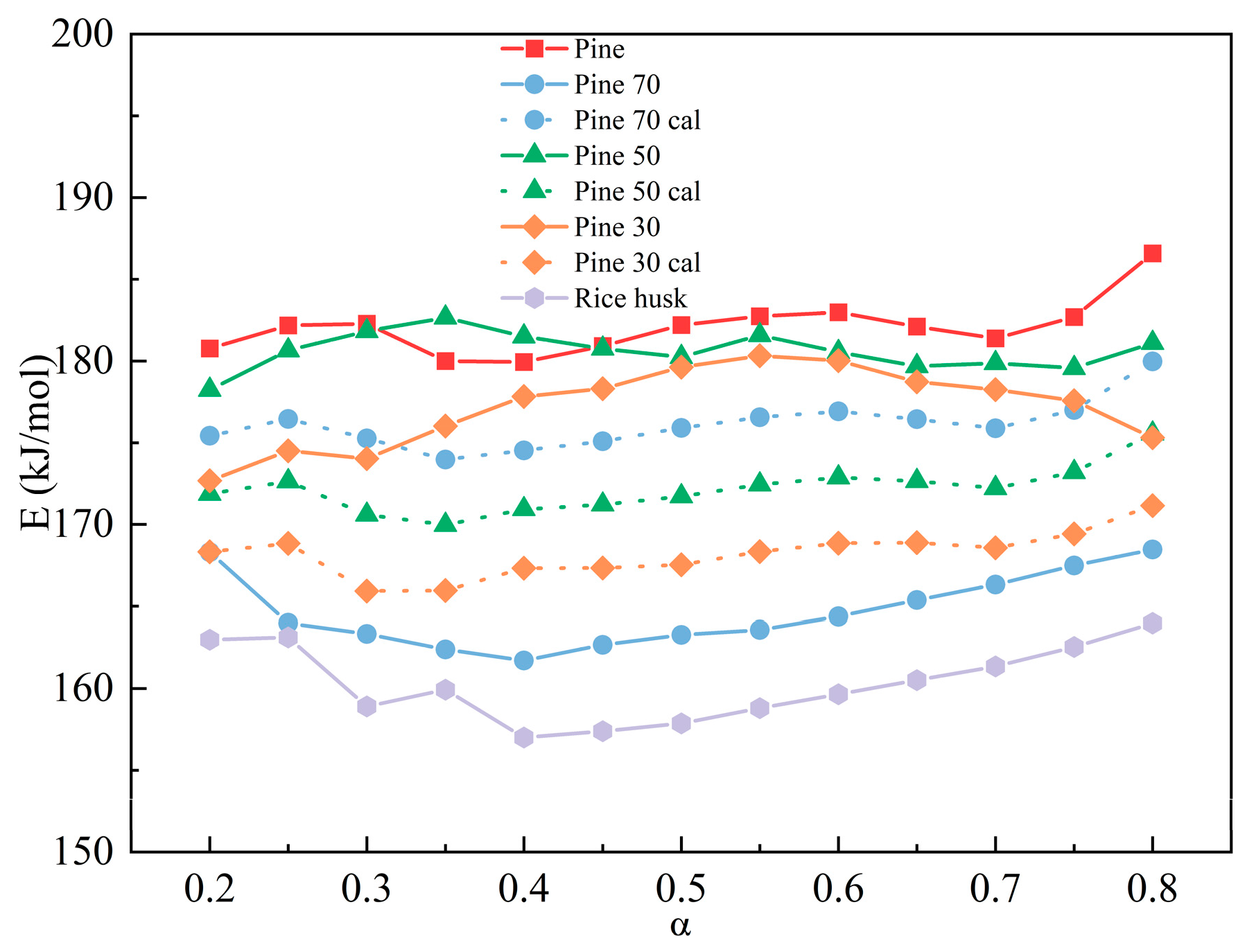
To elucidate the variation in char yield, a kinetic analysis of the biomass pyrolysis process (200–500 °C) was conducted based on the thermogravimetric data. The activation energy and pre-exponential factor for the five blends (Pine; Pine 70; Pine 50; Pine 30; Rice husk) were comparatively analyzed against their theoretically calculated values, with the results presented in Figure 2 and Table 4. For the Pine 70 sample, the experimental activation energy reached a minimum of 164.71 kJ·mol−1, which is 10.49% lower than the calculated value. This reduction indicates a pronounced synergistic interaction at this specific blending ratio, effectively lowering the apparent energy barrier for pyrolysis. Conversely, further increasing the rice husk proportion resulted in experimental activation energies higher than the theoretical predictions, suggesting an inhibitory effect between the two feedstocks.
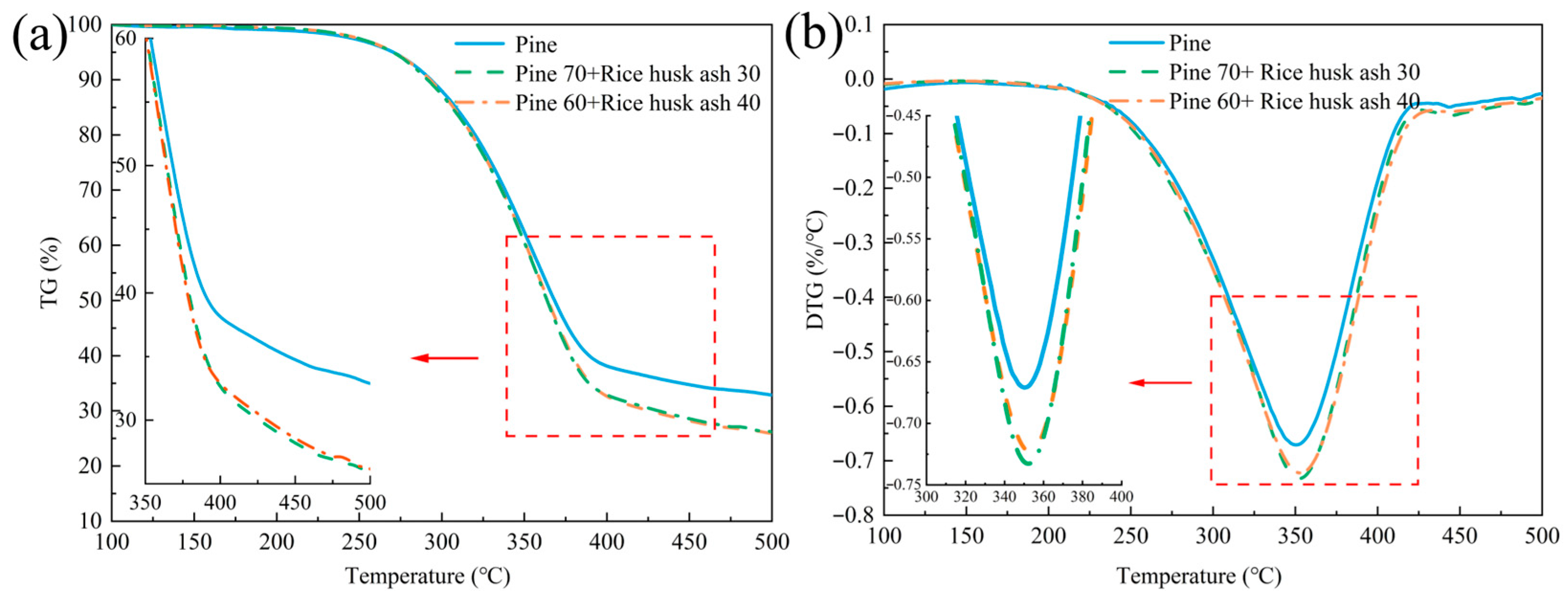
To elucidate the variation in activation energy during co-pyrolysis, catalytic experiments were conducted using mixtures of pine with rice husk ash. Figure 3a and Table 5 present the devolatilization profiles of pine at three different rice husk ash blending ratios, along with the corresponding final char yields. The incorporation of rice husk ash markedly enhanced the rate of mass loss during pine pyrolysis. At 500 °C, the char yields for pure pine, the blend with 30 wt% ash, and the blend with 40 wt% ash were 32.9%, 25.9%, and 26.3%, respectively. This pronounced reduction in char yield reflects a more complete progression of the primary devolatilization stage. Notably, the lowest char yield was achieved at the 30 wt% rice husk ash addition level. This observation is in direct agreement with the conclusion drawn from our earlier kinetic study on rice husk–pine co-pyrolysis. Taken together, the results demonstrate that a 30 wt% addition of rice husk ash constitutes an optimal proportion for effectively catalyzing pine pyrolysis.
The catalytic effect of rice husk ash is further evident from the perspective of reaction kinetics. As shown in Figure 3b, within the primary decomposition temperature range centered around 350 °C, the peak mass loss rate (DTGmax) for pine increased from approximately 0.68%·°C−1 to 0.73%·°C−1 upon ash addition. This demonstrates that rice husk ash effectively enhances the pyrolysis reaction rate at elevated temperatures. Supplementary data obtained at heating rates of 10 and 15 °C·min−1 are provided in Figures S3 and S4.
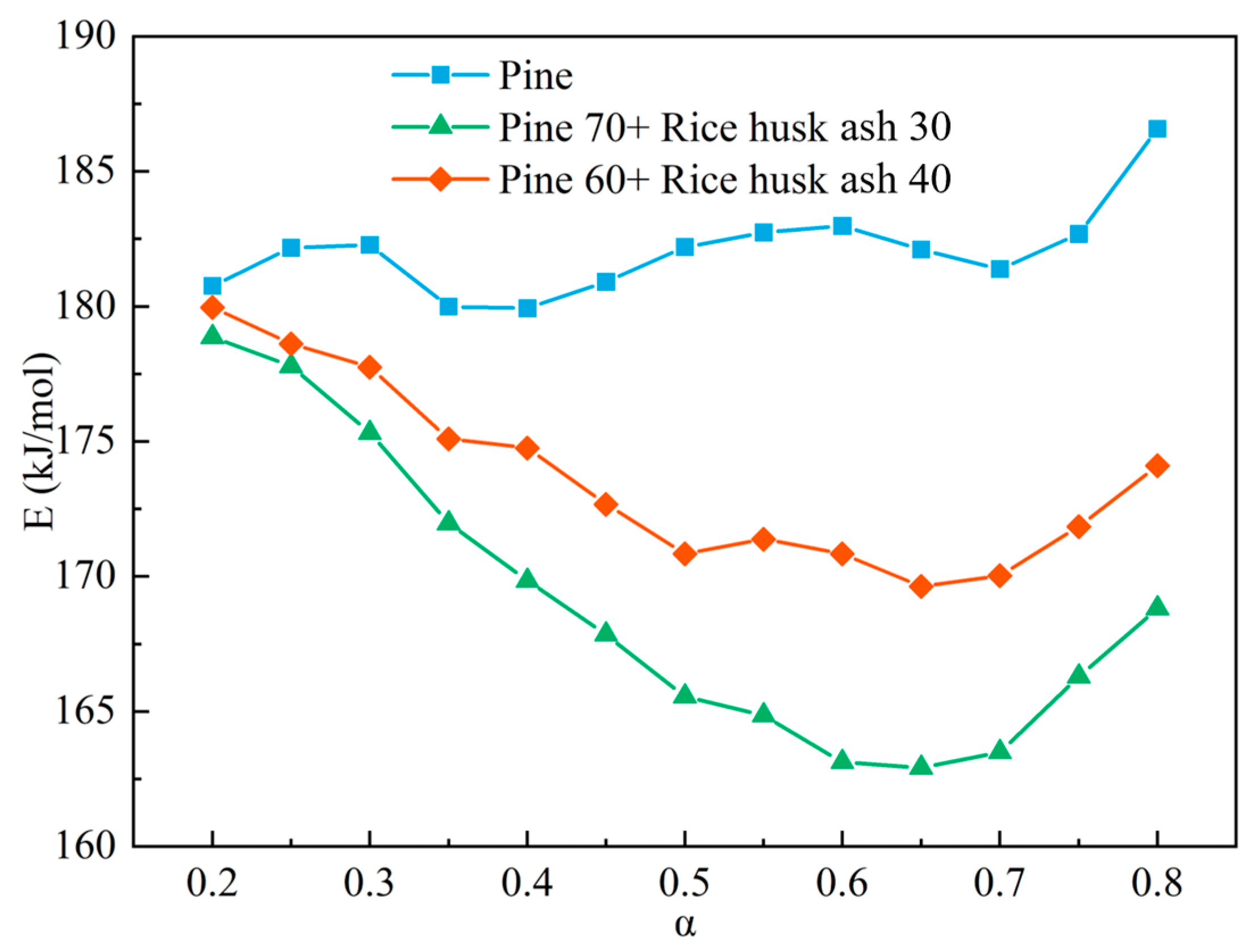
As shown in Figure 4 and Table 6, the DAEM analysis reveals that the catalytic effect of rice husk ash on pine pyrolysis is distinctly stage-dependent, with an optimal ash blending ratio of approximately 30 wt%. In the initial transition stage (α = 0.2–0.35), the 30 wt% ash blend most effectively lowered the apparent activation energy, indicating its early catalytic activity during the overlapping decomposition of hemicellulose and cellulose. Within the main cellulose reaction region (α = 0.35–0.7), this blend consistently exhibited the lowest activation energy, achieving a maximum reduction of about 38 kJ·mol−1 compared with pure pine, which confirms its pronounced catalytic effect on the primary cellulose decomposition stage. In the final stage (α > 0.7), the apparent activation energy of this system increased most gradually. Given that lignin decomposition spans the entire pyrolysis process, the kinetic behavior observed in this stage should be interpreted as resulting from rice husk ash’s overall modulation of the reaction system, rather than as a direct reflection of changes solely in the lignin component.
To elucidate the origin of the observed synergy, a comparative analysis of apparent activation energies was conducted between two systems: the co-pyrolysis of pine with rice husk at the optimal 30 wt% blend ratio, and the catalytic pyrolysis of pine with rice husk ash alone. The resulting values were 164.71 and 168.98 kJ/mol, respectively. These closely aligned values are both substantially lower than the theoretically calculated value of 183.67 kJ·mol−1. This result provides strong confirmation that in situ ash catalysis serves as the dominant mechanism responsible for the enhanced pyrolysis kinetics, while the contribution from volatile–volatile interactions is negligible. Consequently, the subsequent phase of this investigation focused on elucidating the intrinsic catalytic behavior of the ash.
Building upon the preceding analysis (Figure 4), which indicated that the catalytic effect of rice husk ash on pine pyrolysis demonstrates both stage specificity and component selectivity, this study aimed to directly verify this mechanism and decouple the specific roles of individual biomass components. Accordingly, cellulose, hemicellulose, and lignin were selected as model compounds for targeted investigation.
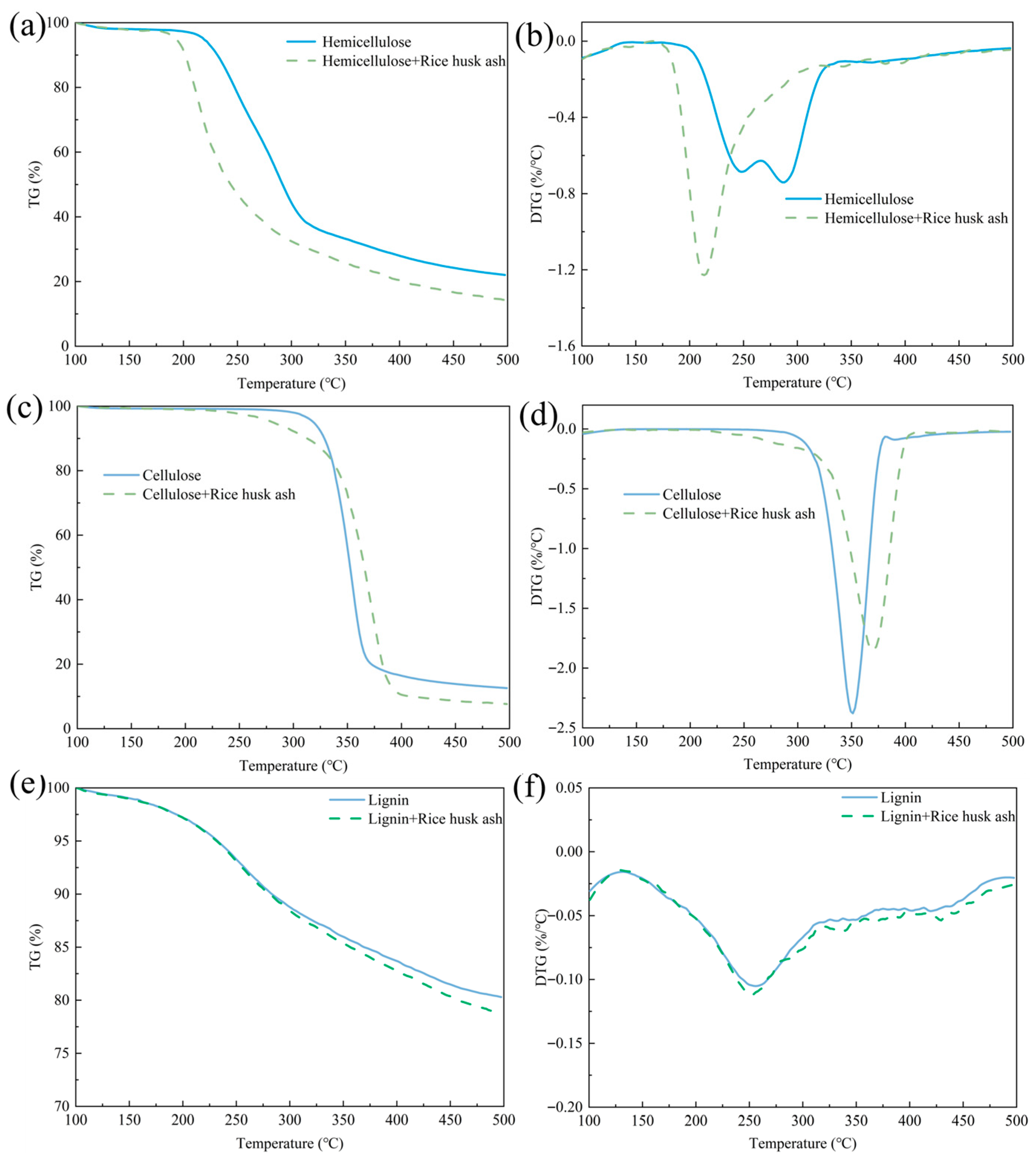
As shown in Figure 5, the catalytic effect of rice husk ash displays pronounced component selectivity. For hemicellulose, the ash demonstrates strong catalytic activity, substantially shifting the primary DTG peak to a lower temperature and reducing the solid residue yield. In the case of cellulose, however, the influence of rice husk ash on pyrolysis kinetics is more complex: although the final char yield is decreased, the main DTG peak is slightly shifted backward and its intensity is diminished. This indicates that rice husk ash catalyzes the depolymerization of β-1,4-glycosidic bonds [41]. In contrast, rice husk ash exhibits a negligible effect on lignin pyrolysis, which is attributed to the high structural stability of lignin and the insensitivity of its aromatic ether bonds to alkaline catalysis.
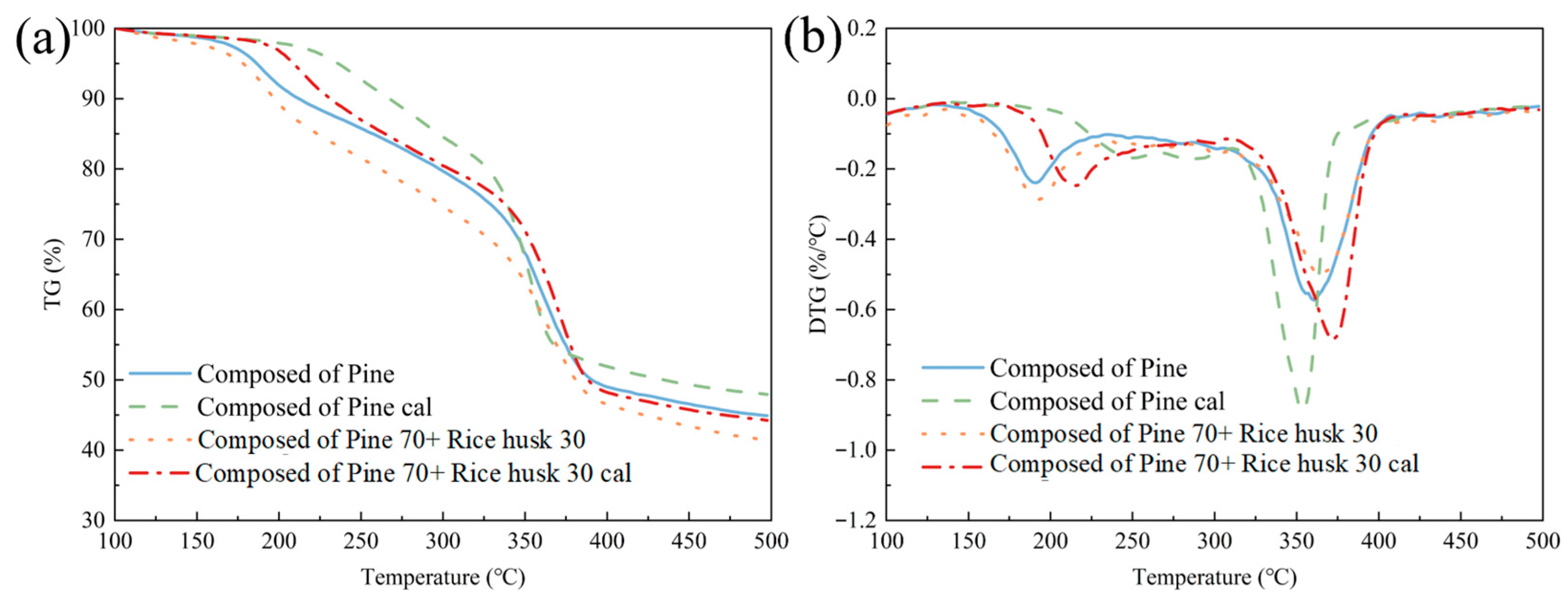
To decouple the intrinsic interactions among biomass components, a comparative analysis was conducted between the experimental pyrolysis profiles of pine, a physically blended model compound mixture, and the corresponding theoretical weighted-average curve.
As shown in Figure 6, the pyrolysis behavior of the mixture exhibits consistent deviations from the theoretical profile. The DTG curve demonstrates that the mixture accelerates mass loss within the 150–250 °C range, retards it between 300 and 400 °C, and ultimately attains a greater total mass loss. In comparison to the weighted-average prediction, the peak reaction temperature for the mixture of rice husk ash with the three model compounds shifts forward by approximately 25 °C. These pronounced deviations confirm the presence of strong non-additive interactions among the individual components within a simple physical mixture, underscoring the essential role of the native, integrated structure of biomass.
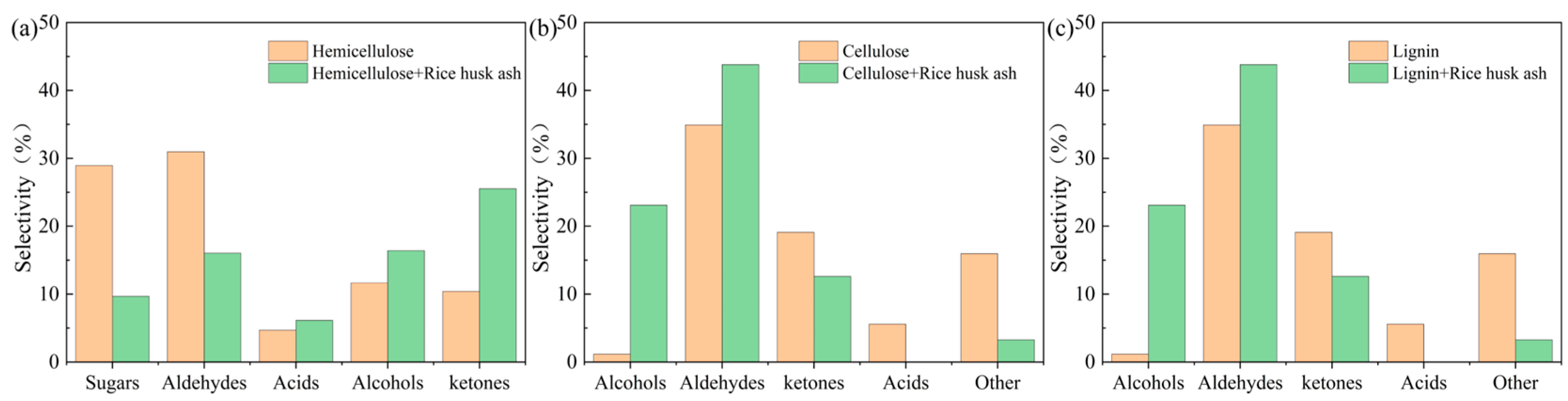
As shown in Figure 7, the catalytic influence of rice husk ash differs markedly across the primary biomass components. For cellulose, ash addition completely suppressed acetic acid formation while substantially increasing the yields of low-molecular-weight aldehydes and alcohols, accompanied by a reduction in characteristic cyclic ketones. This product shift indicates the promotion of ring-opening cleavage and subsequent reduction reactions. Regarding hemicellulose, the ash not only enhanced deacetylation—resulting in a pronounced increase in acetic acid yield—but also strongly promoted ketone formation while significantly suppressing characteristic anhydrosugars and furans, demonstrating a dual catalytic function in facilitating both deacetylation and ring-opening/rearrangement pathways. In contrast, lignin pyrolysis exhibited remarkable product resilience, with the distribution and yield of its characteristic phenolic compounds remaining largely unaffected by the addition of ash.

3.2. Analysis of Interaction

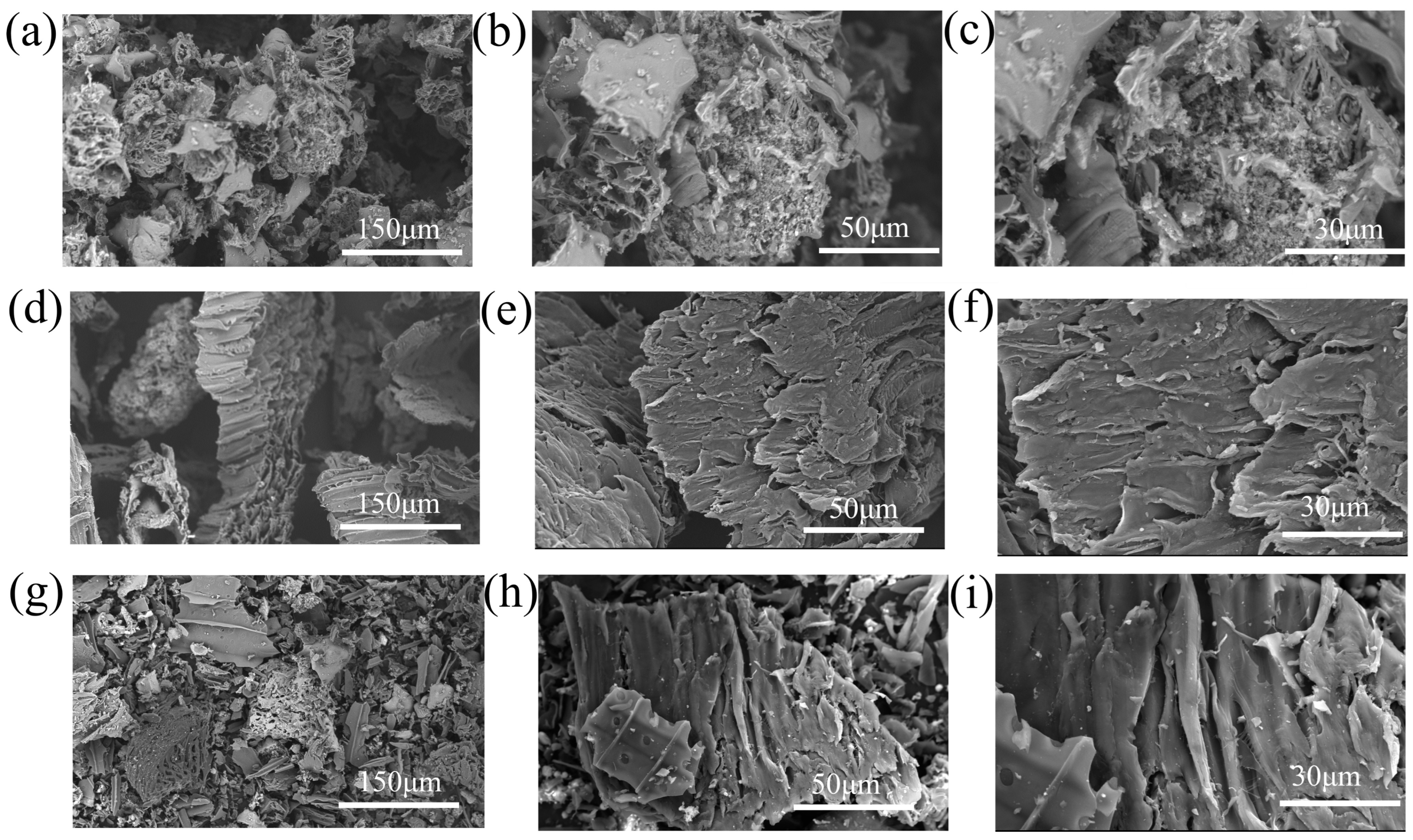
Figure 8 shows SEM images rice husk ash, pine char and solid produce of 70% pine char and 30% rice husk ash. Rice husk ash displays a bimodal particle size distribution, consisting of large particles approximately 50 µm in diameter and fine nanoparticles. The pine biochar retains the original wood’s hollow, three-dimensional flake morphology and possesses a relatively smooth surface. Following the addition of rice husk ash, an increase in fine particles can be observed in Figure 8g. However, higher-magnification examination reveals that the surface texture of the pine biochar remains smooth, showing no significant morphological alteration. Therefore, it can be concluded that the observed changes in pyrolysis performance are not attributable to physical modifications of the solid char structure.
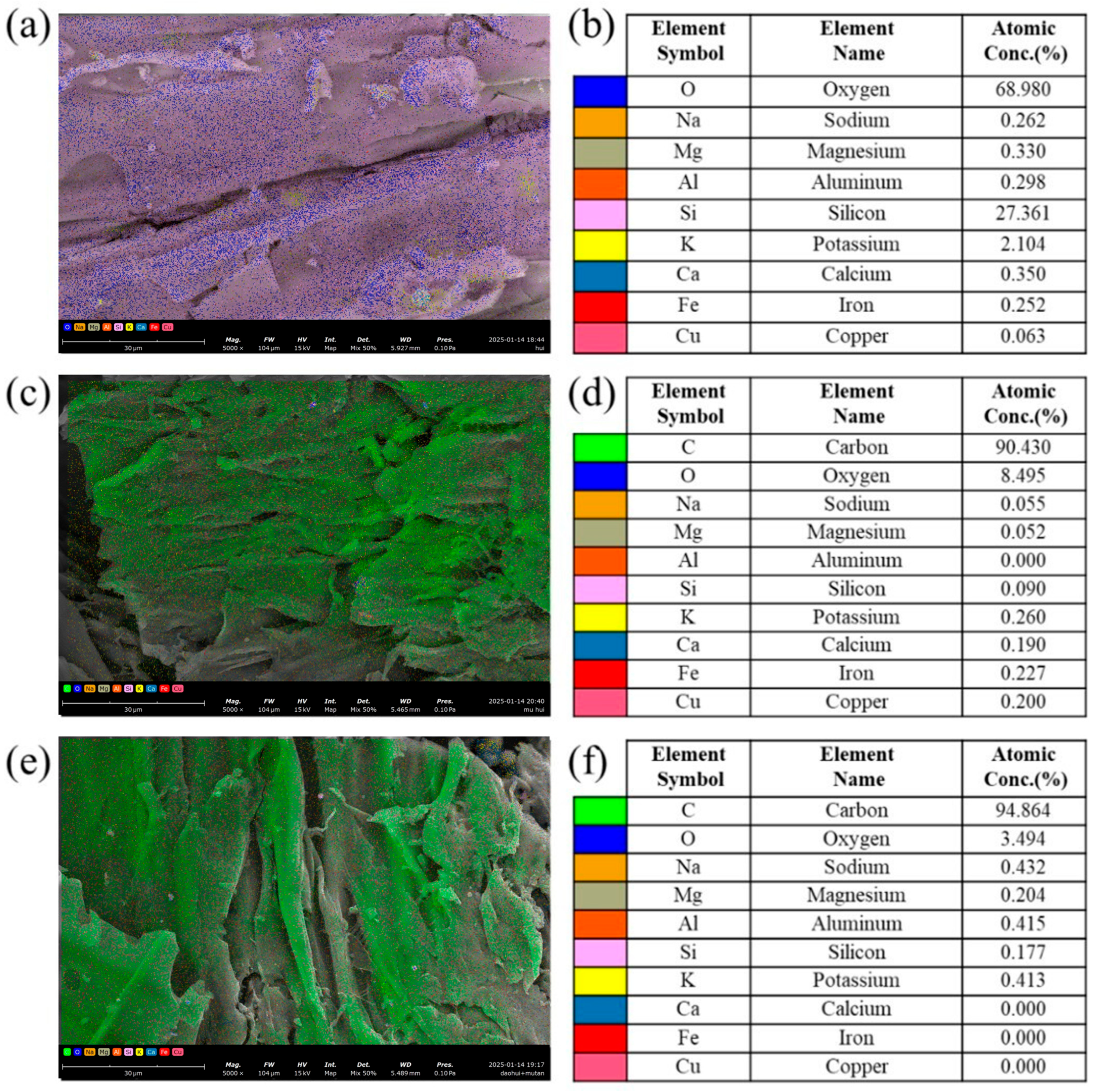
The catalytic performance of a material is intrinsically linked to its elemental composition. To investigate this relationship, the elemental distributions of the three samples were characterized using SEM-EDS, with the results presented in Figure 9. In rice husk ash, the predominant elements besides oxygen are silicon, potassium, calcium, magnesium, aluminum, and sodium. Among these, potassium and sodium are common alkali metals that typically exist as salts or oxides with relatively low melting and boiling points, facilitating their phase transition and migration under high-temperature pyrolysis conditions. Furthermore, alkali metal compounds are known to markedly increase the density of basic active sites on a catalyst, thereby enhancing its activity [42]. Consequently, it is hypothesized that the migration of these alkali metal elements is the primary driver of the altered catalytic activity. A comparison of the elemental maps for pine char before and after blending with rice husk ash reveals a significant increase in the surface concentrations of silicon, potassium, magnesium, aluminum, and sodium following ash addition. Notably, this enrichment occurred without observable surface agglomeration of these elements. These findings directly validate the alkali metal migration hypothesis.
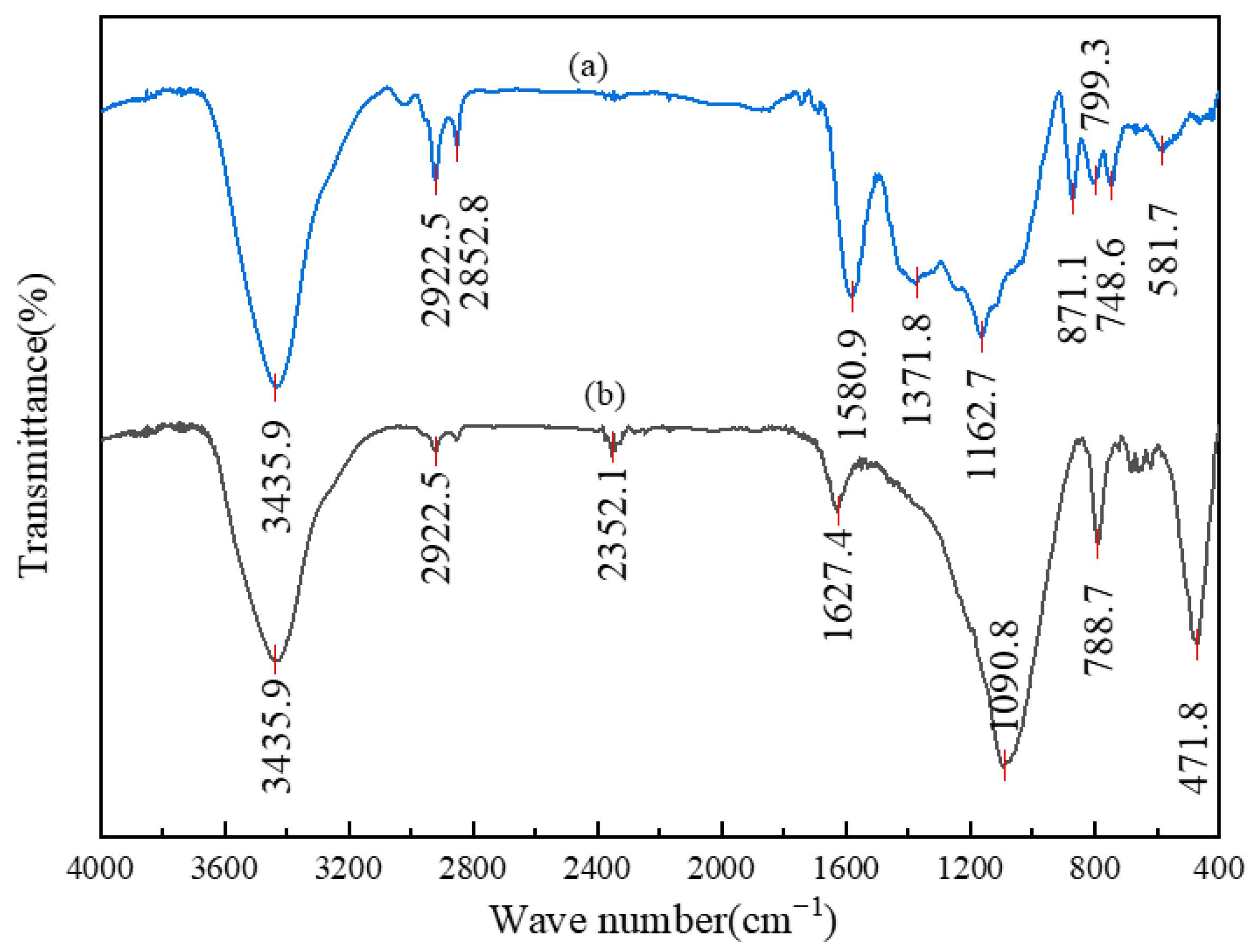
To explore the influence of alkali metals on catalytic activity, the surface functional groups of pine-derived biochar were analyzed using FTIR. Figure 10 presents the FTIR spectra of pine biochar both before and after the addition of rice husk ash. The spectrum of the ash-blended sample reveals three new absorption bands in the low-wavenumber region, located at 1090.8 cm−1, 788.7 cm−1, and 471.8 cm−1. The band at 1090.8 cm−1 is attributed to C–O stretching vibrations. The feature at 471.8 cm−1 is assigned to Al–OH bending modes within the octahedral sheets of layered double hydroxides [43]. while the band at 788.7 cm−1 is associated with interlayer carbonate groups [44]. All three bands involve oxygen-containing functional groups. These spectral changes suggest that the migrated alkali metals enhance the surface adsorption of small molecules such as carbon dioxide or water vapor. This process increases the concentration of oxygen-containing functional groups on the biochar surface, which in turn facilitates pyrolysis reactions and accounts for the altered mass loss rates observed in the thermogravimetric experiments.
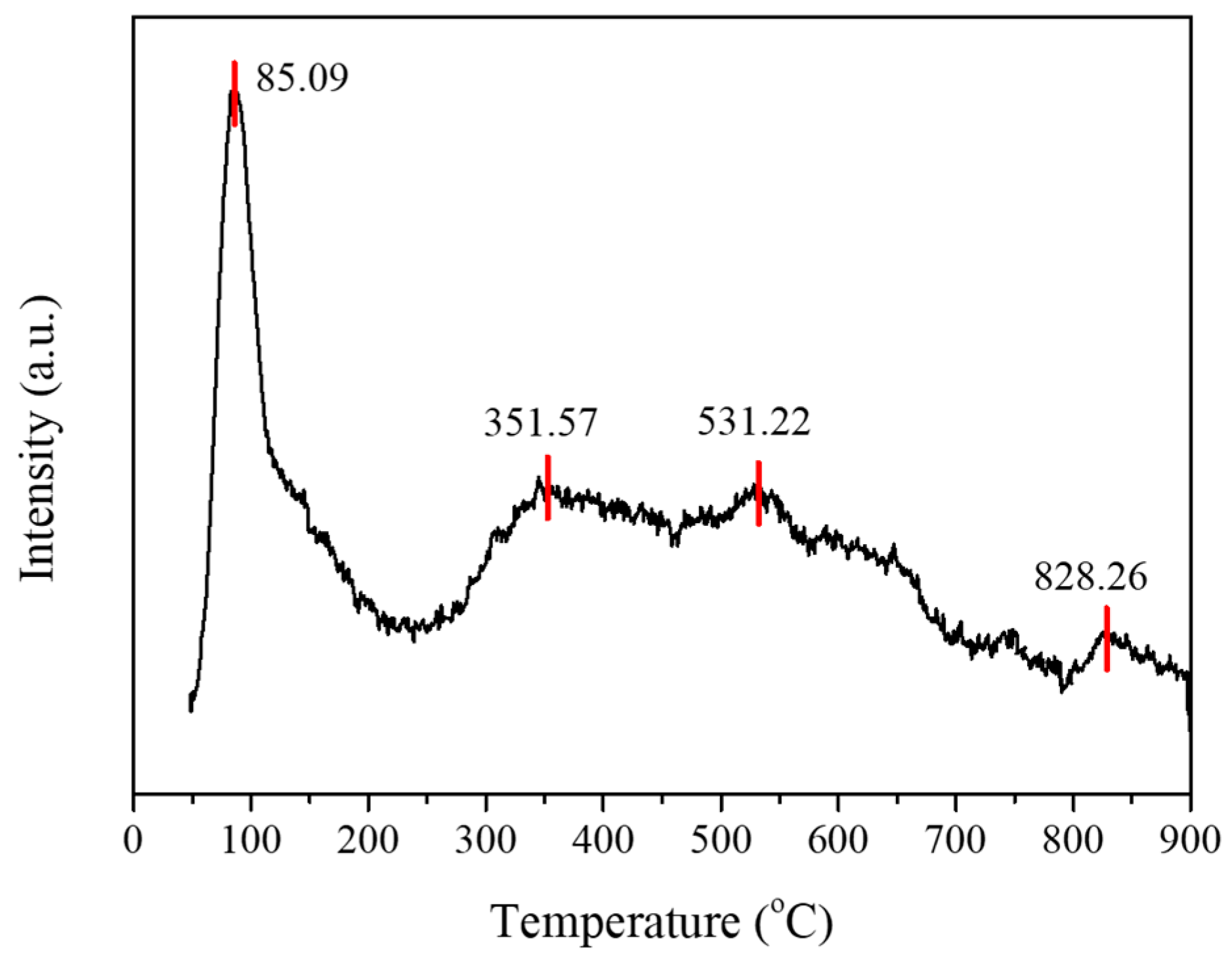
To elucidate the mechanisms underlying the variations in carbonate groups and C-O bond strength, CO2 temperature-programmed desorption (CO2-TPD) analysis was conducted on rice husk ash. The results, presented in Figure 11, show a profile with four distinct desorption peaks at 85.09 °C, 351.57 °C, 531.22 °C, and 828.26 °C. Based on their characteristic temperature ranges, these peaks are attributed to the desorption of physically adsorbed CO2, the decomposition of chemically adsorbed carbonate species on medium-strength basic sites, and the decomposition of more stable carbonate complexes on strong basic sites, respectively. Notably, the prominent desorption features in the 300–700 °C range are identified as the primary contributors to enhancing the medium-temperature pyrolysis of pine. These TPD findings are consistent with the trends observed in thermogravimetric and kinetic analyses, thereby providing a coherent mechanistic explanation for the catalytic performance.

4. Conclusions

This study demonstrates that the synergy observed in rice husk–pine co-pyrolysis is predominantly driven by the catalytic role of rice husk ash. The optimal synergistic effect was achieved at a 30 wt% rice husk blending ratio, which reduced the apparent pyrolysis activation energy to 164.71 kJ·mol−1, a decrease of 10.5% compared to the theoretical value. Beyond selectively promoting specific reactions such as the ring-opening cleavage of cellulose and the deacetylation of hemicellulose, the fundamental activity of the ash stems from the migration of its inherent alkali metals. The migrated alkali metals enhance the adsorption and activation of gases such as CO2 on the pyrolytic char, thereby increasing the density of reactive oxygen-containing functional groups and ultimately steering the pyrolysis reaction pathways. This proposed mechanism offers a consistent explanation for the altered mass loss profiles and reduced activation energies revealed by thermogravimetric analysis. In summary, the synergy arises primarily from alkali-metal-induced catalysis and pathway regulation, with the native integrated structure of the biomass playing a secondary, facilitative role. These findings provide a mechanistic basis for designing efficient biomass co-pyrolysis systems. It should be noted that the present conclusions are derived from thermogravimetric and analytical experiments; future work should therefore focus on validating the engineering feasibility of this process in continuous reactors and evaluating the long-term catalytic stability of rice husk ash.

Supplementary Materials

The following supporting information can be downloaded at https://www.mdpi.com/article/10.3390/coatings16020244/s1, Figure S1: Calculated and experimental (a) TG and (b) DTG curves of biomass co-pyrolysis under different mixing ratios, obtained at a heating rate of 10 °C/min; Figure S2: Calculated and experimental (a) TG and (b) DTG curves of biomass co-pyrolysis under different mixing ratios, obtained at a heating rate of 15 °C/min; Figure S3: (a) TG and (b) DTG curves of rice husk ash and pine gasification under different mixing ratios. obtained at a heating rate of 10 °C/min; Figure S4: (a) TG and (b) DTG curves of rice husk ash and pine gasification under different mixing ratios. obtained at a heating rate of 15 °C/min.

Author Contributions

Conceptualization, X.L. and X.H.; methodology, D.C.; formal analysis, X.L. and D.W.; investigation, X.L., X.H., D.W. and M.Y.; resources, X.H.; writing—original draft preparation, X.L. and D.C.; writing—review and editing, X.L., X.H., D.W., M.Y. and D.C.; supervision, D.C.; funding acquisition, D.C. All authors have read and agreed to the published version of the manuscript.

Funding

This work was partly supported by the Basic Research Program of Jiangsu (BK20250040).

Institutional Review Board Statement

Not applicable.

Informed Consent Statement

Not applicable.

Data Availability Statement

The raw data supporting the conclusions of this article will be made available by the authors on request.

Conflicts of Interest

The authors declare that the research was conducted in the absence of any commercial or financial relationships that could be construed as a potential conflict of interest, with the following exception: Mengzhu Yu is employed by Nanjing Environm Grp Co LTD. However, her contributions to this work and manuscript were made independently and without any requirement, guidance, or input from her employer, and she received no financial compensation from any source for these contributions. The other authors declare no conflict of interest.

References

  1. Chen, R.; Qian, H.; Khashan, M.K.; Abdulameer, K.I.; Balla, H.H.A.; Kareem, Z.S.; Ghandour, R.; Fouad, Y. Triple-objective optimization using ANN+NSGA-II for an innovative biomass gasification-heat recovery process, producing electricity, coolant, and liquefied hydrogen. Case Stud. Therm. Eng. 2024, 60, 104647. [Google Scholar] [CrossRef]
  2. Comendador, J.; Llanos, J.; Ramírez, Á.; Muñoz-Morales, M.; López-Fernández, E. Turning Polluted Biomass Waste into Sustainable Carbon-Based Catalysts for Hydrogen Production via Water Electrolysis. Energy Fuels 2025, 39, 15003. [Google Scholar] [CrossRef]
  3. Rusu, E.; Zhang, K. A Review of Biomass Energy: Comparison of Utilization Methods and Future Prospects. In Proceedings of the E3S Web of Conferences; EDP Sciences: Les Ulis, France, 2025; Volume 606. [Google Scholar] [CrossRef]
  4. Du, W.; Wang, J.; Feng, Y.; Duan, W.; Wang, Z.; Chen, Y.; Zhang, P.; Pan, B. Biomass as residential energy in China: Current status and future perspectives. Renew. Sustain. Energy Rev. 2023, 186, 113657. [Google Scholar] [CrossRef]
  5. Wang, Q.; Zhang, T.; Zhao, Y.; Zhang, W.; Yang, Z.; Zhang, Y. Converting corncob to caking materials via hydro-modification in a subcritical water and carbon monoxide (H2O–CO) system. J. Anal. Appl. Pyrolysis 2024, 183, 106841. [Google Scholar] [CrossRef]
  6. Guerra-Hernández, J.; Pereira, J.M.C.; Stovall, A.; Pascual, A. Impact of fire severity on forest structure and biomass stocks using NASA GEDI data. Insights from the 2020 and 2021 wildfire season in Spain and Portugal. Sci. Remote Sens. 2024, 9, 100134. [Google Scholar] [CrossRef]
  7. Mansoor, K.; Suraj, P.; Arun, P.; Muraleedharan, C. Unlocking the potential of corn husk through pyrolysis and gasification: Characterization, kinetics, and agglomeration analysis. Biomass Bioenergy 2025, 195, 107701. [Google Scholar] [CrossRef]
  8. Sharma, A.K.; Ghodke, P.K.; Goyal, N.; Bobde, P.; Kwon, E.E.; Lin, K.A.; Chen, W.H. A critical review on biochar production from pine wastes, upgradation techniques, environmental sustainability, and challenges. Bioresour. Technol. 2023, 387, 129632. [Google Scholar] [CrossRef]
  9. Ersoy, A.E.; Ugurlu, A. Bioenergy’s role in achieving a low-carbon electricity future: A case of Türkiye. Appl. Energy 2024, 372, 123799. [Google Scholar] [CrossRef]
  10. Millinger, M.; Hedenus, F.; Zeyen, E.; Neumann, F.; Reichenberg, L.; Berndes, G. Diversity of biomass usage pathways to achieve emissions targets in the European energy system. Nat. Energy 2025, 10, 226–242. [Google Scholar] [CrossRef]
  11. Rathi, N.; Das, T. Exploring biomass pyrolysis for sustainable hydrogen-rich gas production. Biomass Bioenergy 2025, 202, 108162. [Google Scholar] [CrossRef]
  12. Chen, R.; Guan, W.; Luo, Z.; Cao, Y.; Sun, M.; Zhu, X. Rethinking energy delivery in biomass pyrolysis: Comparative insights into conventional, microwave, and induction heating. Biomass Bioenergy 2025, 203, 108352. [Google Scholar] [CrossRef]
  13. Wang, D.; Yang, X.; Huang, H.; Wu, K.; Zheng, J.; Yao, Q.; Lin, J.; Huang, Y.; Liu, P.; Wang, D.; et al. Ex-situ combined with in-situ catalytic pyrolysis: A strategic approach to enhancing furans production from biomass. Renew Energy 2025, 244, 122697. [Google Scholar] [CrossRef]
  14. Zou, X.; Debiagi, P.; Amjed, M.A.; Zhai, M.; Faravelli, T. Impact of high-temperature biomass pyrolysis on biochar formation and composition. J. Anal. Appl. Pyrolysis 2024, 179, 106463. [Google Scholar] [CrossRef]
  15. Abou Rjeily, M.; Gennequin, C.; Randrianalisoa, J.H. Biomass pyrolysis to produce hydrogen, methane, carbon monoxide, carbon dioxide, oil and char: A review. Environ. Chem. Lett. 2025, 23, 1473–1541. [Google Scholar] [CrossRef]
  16. Joshua Abioye, K.; Rajamanickam, R.; Ogunjinmi, T.; Paul, S.; Selvasembian, R.; Ighalo, J.O. Advancements in biomass waste conversion to sustainable biofuels via gasification. Chem. Eng. J. 2025, 505, 159151. [Google Scholar] [CrossRef]
  17. Yang, Y.; Song, L.; Li, Y.; Shen, Y.; Yang, M.; Wang, Y.; Zheng, H.; Qi, W.; Lei, T. Effects of Different Biomass Types on Pellet Qualities and Processing Energy Consumption. Agriculture 2025, 15, 316. [Google Scholar] [CrossRef]
  18. Li, X.; Zhang, R.; Yao, Q.; Meng, X.; Sun, Z.; Li, Z.; Qiu, F.; Li, P.; Zhou, E. Catalytic effects of key compositions in biomass ashes on coal gasification reactivity and structural evolution characteristic during gasification process. J. Clean. Prod. 2025, 499, 145197. [Google Scholar] [CrossRef]
  19. Yu, J.; Guo, Q.; Gong, Y.; Ding, L.; Wang, J.; Yu, G. A review of the effects of alkali and alkaline earth metal species on biomass gasification. Fuel Process. Technol. 2021, 214, 106723. [Google Scholar] [CrossRef]
  20. Lin, J.; Liu, S.; Han, Z.; Ma, R.; Cui, C.; Sun, S. Scaled-up microwave pyrolysis of sludge for hydrogen-rich biogas and life cycle assessment: Parameters synergistic optimization, carbon footprint analysis and technology upgrade. Chem. Eng. J. 2023, 452, 139551. [Google Scholar] [CrossRef]
  21. Jadoon, U.K.; Díaz, I.; Rodríguez, M. Comparative analysis of aspen plus simulation strategies for woody biomass air gasification processes. Biomass Bioenergy 2025, 194, 107626. [Google Scholar] [CrossRef]
  22. Wang, W.; Lemaire, R.; Bensakhria, A.; Luart, D. Review on the catalytic effects of alkali and alkaline earth metals (AAEMs) including sodium, potassium, calcium and magnesium on the pyrolysis of lignocellulosic biomass and on the co-pyrolysis of coal with biomass. J. Anal. Appl. Pyrolysis 2022, 163, 105479. [Google Scholar] [CrossRef]
  23. Kumar, P.; Mohanty, K. Co-pyrolysis of Melocanna baccifera and Royal Poinciana: Integrated product characterization and synergistic effects on aqueous and organic phases. J. Anal. Appl. Pyrolysis 2025, 192, 107339. [Google Scholar] [CrossRef]
  24. Wang, Z.; Zheng, Z.; Yang, F.; Wang, D.; Liu, W.; Hanikai, D.; Liu, J.; Zhou, J.; Liu, D. Fly ash-catalysed pyrolysis of highly oily sludge: Kinetics and oil recovery. J. Environ. Chem. Eng. 2025, 13, 117313. [Google Scholar] [CrossRef]
  25. Chen, X.; Zhang, L.; Wang, G.; Zhao, X.; Sun, S.; Ren, Y.; Tian, Y.; Guo, Y.; Zhang, R.; Wang, Q.; et al. Catalytic pyrolysis of waste biomass via coal fly ash for synergistic production of cost-effective artificial humic acid. Bioresour. Technol. 2026, 442, 133682. [Google Scholar] [CrossRef] [PubMed]
  26. Hu, Y.; Luo, Z.; Jiao, L.; Yu, C.; Li, J.; Guo, Q.; Song, J. The catalytic activity of Ca/Fe-rich incineration ash in the pyrolysis of epidemic wood. Waste Dispos. Sustain. Energy 2025, 7, 259–272. [Google Scholar] [CrossRef]
  27. Shao, Y.; Li, C.; Fan, M.; Gao, G.; Inkoua, S.; Zhang, L.; Zhang, S.; Xiang, J.; Hu, S.; Hu, X. Sequential pyrolysis for understanding specific influence of cellulose- and lignin-derived volatiles on properties of counterpart char. Green Chem. Eng. 2024, 5, 222–235. [Google Scholar] [CrossRef]
  28. Li, C.; Sun, Y.; Zhang, S.; Tang, Y.; Wang, D.; Hu, X. Co-pyrolysis of waste paper and tyre: Exploration of interaction of volatiles of varied origin and the influence on product evolution. J. Anal. Appl. Pyrolysis 2024, 178, 106395. [Google Scholar] [CrossRef]
  29. Li, Y.; Wu, B.; Yu, Z.; Yang, H.; Jin, L.; Hu, H. Distribution of volatile composition from co-pyrolysis of NMH coal and dealkaline lignin. J. Fuel Chem. Technol. 2024, 52, 1594–1603. [Google Scholar] [CrossRef]
  30. Liu, N.; Huang, H.; Feng, J.; Li, R.; Huang, X.; Wu, Y. Effects of alkali and alkaline earth metals in biomass on co-pyrolysis characteristics and product distribution of coal and biomass. Fuel 2025, 389, 134551. [Google Scholar] [CrossRef]
  31. Li, X.; Li, L.; Huang, Z.; Chang, Z.; Tu, Z.; Tian, L.; Du, W.; Li, H.; Zhang, P.; Pan, B. Enhancing the stability and heavy metal immobilization of co-pyrolysis biochar through biomass and red mud co-pyrolysis: A synergistic mechanism. J. Environ. Manag. 2025, 376, 124422. [Google Scholar] [CrossRef]
  32. Zhi, Y.; Xu, D.; Sun, S.; Ma, M.; Liu, H.; Yang, L.; Zhao, J. Co-pyrolysis of low-rank coal and rice stalk: A comprehensive study on product distributions, product properties, and synergistic effects. J. Anal. Appl. Pyrolysis 2024, 178, 106434. [Google Scholar] [CrossRef]
  33. Ren, L.; Xu, Y.; Chen, W.; Zhang, C. Production of Aromatic Hydrocarbons from Co-Hydropyrolysis of Biomass Components and HDPE with Application of Modified HZSM-5 Catalyst. Chem. Biodivers. 2024, 21, e202400150. [Google Scholar] [CrossRef] [PubMed]
  34. Chen, L.; Wang, P.; Shen, Y.; Guo, M. Spent lithium-ion battery materials recycling for catalytic pyrolysis or gasification of biomass. Bioresour. Technol. 2021, 323, 124584. [Google Scholar] [CrossRef]
  35. Wei, J.; Guo, Q.; Ding, L.; Gong, Y.; Yu, J.; Yu, G. Understanding the Effect of Different Biomass Ash Additions on Pyrolysis Product Distribution, Char Physicochemical Characteristics, and Char Gasification Reactivity of Bituminous Coal. Energy Fuels 2019, 33, 3068–3076. [Google Scholar] [CrossRef]
  36. Zhang, Y.; Zhou, C.; Liu, Y.; Yao, B.; Chao, L.; Fan, D.; Yu, M.; Liu, C.; Dai, J. Synergistic interaction of char-volatile/volatile-volatile on PAHs formation during waste printed circuit boards pyrolysis: Evolution pathway and mechanisms. Chem. Eng. J. 2025, 503, 158377. [Google Scholar] [CrossRef]
  37. GB/T 28731-2012; Solid Biomass Fuel Industrial Analysis Methods. China Standard Press: Beijing, China, 2012.
  38. Song, G.; Huang, D.; Li, A.; Li, R.; Hu, S.; Xu, K.; Ren, Q.; Han, H.; Wang, Y.; Su, S.; et al. Quick measurement method of three components in lignocellulosic biomass based on kinetic mechanism analysis of PT-TGA. Fuel 2024, 367, 131521. [Google Scholar] [CrossRef]
  39. Liu, H.; Li, M.; Zhao, S.; Jiang, L.; Xu, Q.; Majlingová, A. Applications of distributed activation energy model on the pyrolysis of green renewable wood. Fuel 2024, 359, 130457. [Google Scholar] [CrossRef]
  40. Kumar, P.; Chaunsali, P.; Vinu, R. Pyrolysis of rice husk, bagasse and wood chips blends: Distributed activation energy modelling and pyrolysate composition analysis. Fuel 2026, 404, 136116. [Google Scholar] [CrossRef]
  41. Chen, D.; Cen, K.; Zhuang, X.; Gan, Z.; Zhou, J.; Zhang, Y.; Zhang, H. Insight into biomass pyrolysis mechanism based on cellulose, hemicellulose, and lignin: Evolution of volatiles and kinetics, elucidation of reaction pathways, and characterization of gas, biochar and bio-oil. Combust. Flame 2022, 242, 112142. [Google Scholar] [CrossRef]
  42. Cui, D.; Wu, S.; Yoon, S.J.; Bae, Y.-S.; Park, B.; Xiao, R. The influence mechanism of alkali metal salt potassium carbonate enrichment on NiO/YSZ anode of SOFC. Fuel Process. Technol. 2022, 227, 107123. [Google Scholar] [CrossRef]
  43. Behazin, E.; Ogunsona, E.; Rodriguez-Uribe, A.; Mohanty, A.K.; Misra, M.; Anyia, A.O. Mechanical, Chemical, and Physical Properties of Wood and Perennial Grass Biochars for Possible Composite Application. BioResources 2016, 11, 1334–1348. [Google Scholar] [CrossRef]
  44. Cardinale, A.M.; Carbone, C.; Consani, S.; Fortunato, M.; Parodi, N. Layered Double Hydroxides for Remediation of Industrial Wastewater from a Galvanic Plant. Crystals 2020, 10, 443. [Google Scholar] [CrossRef]
Figure 1. Calculated and experimental (a) TG and (b) DTG curves of biomass co-pyrolysis under different mixing ratios, obtained at a heating rate of 20 °C/min.
Coatings 16 00244 g001
Figure 2. Calculated and experimental activation energies for the co-pyrolysis region of pine and rice husk blend over a conversion range of 0.2–0.8.
Coatings 16 00244 g002
Figure 3. (a) TG and (b) DTG curves of rice husk ash and pine pyrolysis under different mixing ratios, obtained at a heating rate of 20 °C/min.
Coatings 16 00244 g003
Figure 4. Calculated and experimental activation energies for the co-pyrolysis region of pine and rice husk ash blend over a conversion range of 0.2–0.8.
Coatings 16 00244 g004
Figure 5. TG and DTG curves of Hemicellulose (a,b), Cellulose (c,d), Lignin (e,f) without and with rice husk ash addition, obtained at a heating rate of 20 °C/min.
Coatings 16 00244 g005
Figure 6. TG (a) and DTG (b) curves of Pine, Pine cal and composed of pine (31.66% cellulose + 15.55% hemicellulose + 47.04% lignin) obtained at a heating rate of 20 °C/min.
Coatings 16 00244 g006
Figure 7. Influence of Rice husk ash on the functional group distribution of pyrolysis products from Hemicellulose (a), Cellulose (b), and Lignin (c).
Coatings 16 00244 g007
Figure 8. SEM images of (ac) rice husk ash, (df) pine char and (gi) solid produce of 70% pine char and 30% rice husk ash.
Coatings 16 00244 g008
Figure 9. SEM-EDS mappings of (a) rice husk ash, (c) pine char and (e) solid produce of 70% pine char and 30% rice husk ash. (b): Atomic concentration of (a,d): atomic concentration of (c,f): atomic concentration of (e).
Coatings 16 00244 g009
Figure 10. FTIR spectrum of (a) pine char and (b) solid produce of 70% pine char and 30% rice husk ash.
Coatings 16 00244 g010
Figure 11. Temperature-programmed desorption intensity curve of CO2.
Coatings 16 00244 g011
Table 1. The ultimate analysis and proximate analysis results of two biomass.
SampleProximate Analysis (wt.%, db)Ultimate Analysis (wt.%, db)
AVFCCHON
Pine2.3381.5816.0953.696.0442.370.14
Rice husk18.2369.5712.2049.105.8644.880.16
O is calculated by difference; db: dry basis.
Table 2. Contents of cellulose, hemicellulose and lignin in pine samples.
SampleCellulose (%)Hemicellulose (%)Lignin (%)
Pine31.66%15.55%47.04%
Table 3. Char yield of the Pine and Rice husk mixture.
Pine:Rice HuskChar Yield (%)
1:0 (EV)32.9%
7:3 (EV)28.8%
7:3 (CV)31.6%
5:5 (EV)28.4%
5:5 (CV)31.63%
3:7 (EV)28.58%
3:7 (CV)31.13%
0:1 (EV) 30.4%
Table 4. Apparent activation energy for the co-pyrolysis of pine with rice husk at different blending ratios.
Pine:Rice HuskPyrolysis
TR (°C)E (kJ/mol)
1:0 (EV)200–500192.86
7:3 (EV)200–500164.71
7:3 (CV)200–500183.67
5:5 (EV)200–500180.63
5:5 (CV)200–500177.55
3:7 (EV)200–500177.17
3:7 (CV)200–500171.42
0:1 (EV)200–500162.24
TR: temperature range; EV: experimental value; CV: calculated value.
Table 5. Char yield of the Pine and Rice husk ash mixture.
Pine:Rice Husk AshChar Yield (%)
1:032.9%
7:325.9%
6:426.3%
Table 6. Apparent activation energy for the co-pyrolysis of pine with rice husk ash at different blending ratios.
Pine:Rice Husk AshPyrolysis
TR (°C)E (kJ·mol−1)
1:0200–500192.86
7:3200–500168.98
6:4200–500173.66
Disclaimer/Publisher’s Note: The statements, opinions and data contained in all publications are solely those of the individual author(s) and contributor(s) and not of MDPI and/or the editor(s). MDPI and/or the editor(s) disclaim responsibility for any injury to people or property resulting from any ideas, methods, instructions or products referred to in the content.