Article

Effect of Application Method and Amount of Expandable Graphite with Polyurea on Wood Thermal Resistance


by
Katarína Trojanová
1,
Elena Kmeťová
2,
Danica Kačíková
2,
Adriana Eštoková
3 and
František Kačík
1,*
1
Department of Chemistry and Chemical Technology, Faculty of Wood Sciences and Technology, Technical University in Zvolen, 96001 Zvolen, Slovakia
2
Department of Fire Protection, Faculty of Wood Sciences and Technology, Technical University in Zvolen, 96001 Zvolen, Slovakia
3
Institute for Sustainable and Circular Construction, Faculty of Civil Engineering, Technical University of Košice, Vysokoškolská 4, 04200 Košice, Slovakia
*
Author to whom correspondence should be addressed.
Coatings 2026, 16(2), 231; https://doi.org/10.3390/coatings16020231
Submission received: 28 December 2025 / Revised: 1 February 2026 / Accepted: 9 February 2026 / Published: 12 February 2026
(This article belongs to the Special Issue Innovative Flame-Retardant Coatings for High-Performance Materials)

Abstract

Wood, which is flammable, is commonly used as a building material and can be improved using a suitable surface treatment. A promising coating solution is polyurea, featuring properties like flexibility, mechanical resistance, resistance against water, etc., but it is also easily flammable. Expandable graphite (EG) is effective as a flame retardant and environmentally suitable. In this study, we studied the suitability of polyurea improved with EG. Spruce wood samples with dimensions of 50 mm × 40 mm × 10 mm were divided into eight groups, each including five samples. Each group was subjected to two applications of polyurea and EG in various combinations to examine the best combination with the lowest mass loss. The second component of the experiments aimed to examine the effectiveness of EG, which was applied in different weights. During the experiments, samples were thermally loaded in an apparatus for 10 min, where a heat flux of 30 kW·m−2 was applied to the sample surface and the mass loss was continuously recorded. Lastly, thermal analysis was performed. The best results were observed for the combination of NEOPROOF mixed with 0.3 g of EG covered with NEODUR. The thermal analysis results revealed substantial differences: NEOPROOF, a polyurea, had only one degradation step, while NEODUR, which also contained polyurethanes, decomposed in several steps.

1. Introduction

Wood remains one of the most important building materials in contemporary construction thanks to its renewability, excellent mechanical properties, ease of processing, and good weight-to-strength ratio. Despite its many advantages, wood also has some weaknesses. For example, it can be subject to biological damage caused by fungi and moulds, and is susceptible to wood-destroying insects. The limited biological resistance of wood can be significantly enhanced through chemical modification or heat treatment [1,2]. The thermal decomposition of individual wood components (extractives, cellulose, hemicelluloses, and lignin) produces flammable gases, such as hydrogen, carbon monoxide, and methane, which ignite at sufficient concentration and temperature, posing a significant hazard when using wood indoors and outdoors [3,4]. The flammability of wood limits its use in certain structural applications, leading to intensive research into effective, long-lasting fire protection systems. Mechanisms for increasing wood fire resistance include impregnations, coating systems, and composite treatments that specifically increase the formation of a non-combustible layer, reduce the rate of thermal decomposition, and delay ignition. The effectiveness of these approaches depends on the retardant itself, its application method, and its compatibility with the wood surface [5,6,7].
In addition to improving efficiency, the development and application of wood fire retardants aim to minimise the degradation of wood over a long period of use and the release of toxic gases in the event of a fire. The amount and toxicity of gases produced during wood combustion depend on the oxygen supply and type of combustion, such as flaming or smouldering. The presence of certain elements, such as nitrogen and halogens, can also lead to the emission of hydrogen cyanide and hydrogen halides, increasing the production of smoke and toxic substances. The primary smoke constituents produced by wood burning are carbon dioxide, water, and carbon monoxide; however, the different chemical composition of wood results in different product emissions. The dominant products of wood combustion are furfural and levoglucosan from cellulose, and eugenol, isoeugenol, vanillin, and guaiacol from lignin [8,9,10]. Moreover, nanoparticles appear to be a promising type of wood flame retardant that can be applied using various methods, such as vacuum-pressure impregnation, layer-by-layer technology, and spraying [11,12,13].
Current trends in flame-retardant technology involve the use of sustainable, ecologically friendly, and low-toxicity compounds, primarily derived from biomass. These compounds include phytic acid, chitosan, arabinogalactan, and vanillin. They are easily accessible, promote the formation of char, which effectively protects the wood surface, and suppress combustion. The optimal flame-retardant coating would be easy to apply, exhibit low flame spread, smoke, and toxic gas release, demonstrate good adhesion to the underlying surface, be durable, and be cost-effective [9,14]. However, modern trends are focused not only on bio-based raw materials but also on halogen-free synthetic compounds [15,16].
Expandable graphite (EG) is one such effective and environmentally suitable flame retardant, used to protect various materials from fire, including polyurethanes, steel, wood, and wooden materials. It is produced from natural graphite, most often under the influence of sulfuric or nitric acid. When the onset temperature is reached, it begins to swell dramatically, increasing its volume by between 100 and 400 times; this typically occurs at temperatures ranging from 140 °C to over 300 °C, depending heavily on its grade, flake size, and intercalating agents. The resulting layer insulates the material’s surface from the effects of fire. For EG to be effective in protecting wood, it must be uniformly distributed and adhere to the material’s surface. Wood has a porous, partially hydrophobic surface; moreover, natural EG is in the form of flaky particles that tend to aggregate in aqueous dispersions. Consequently, surfactants, dispersants, and surface-active agents are commonly employed in EG-based coatings or impregnation bath formulations to enhance wettability, particle dispersion, and suspension stability [11,12,13].
Due to the consistency of EG, which occurs in powder or flake form, a method for its application to wood is crucial. Due to synergistic effects, EG can be added to commercial flame retardants, e.g., HR Proof, Bochemit, and Flamgard, which have excellent adhesion to the wood surface. Other surfactants that can be used are water glass, flour, nanocellulose, cellulose ethers, etc. [5,17,18]. One of the most promising coatings used to protect various surfaces is polyurea, a two-component elastomeric resin produced by reacting an isocyanate with an amine. It produces an extremely durable and flexible coating that protects against water, chemicals, and mechanical damage. It has a short curing time and a long service life. For these reasons, the aforementioned coatings were chosen for this experiment over other commonly used systems, such as MDI (methylene di-isocyanate) and TDI (toluene di-isocyanate). However, we intend to investigate these systems in future research. However, it has limited fire resistance and can ignite, releasing flammable gases. This high flammability can be effectively eliminated by adding a suitable fire retardant; ammonium polyphosphate (APP) and expandable graphite are particularly effective [19,20,21]. APP is an effective flame retardant that slows combustion in two ways. Firstly, it releases non-flammable gases such as ammonia and water, which dilute the flammable gases and reduce the oxygen concentration in the combustion zone. Secondly, it forms a carbon layer that acts as a physical barrier, preventing heat and oxygen from reaching the surface of the material. EG is a typical intumescent flame retardant. It is a form of graphite with an intercalated structure that expands when heated. During preparation, sulfuric and/or nitric acids are inserted into the spaces between the carbon layers. When exposed to heat, EG expands and forms a bulky, insulating, worm-like layer that provides polymers with flame-retardant properties. EG is currently widely used as a blowing agent and smoke suppressant [21,22,23,24].
The retarding effect of EG depends on many factors (type, particle size, onset temperature, expansion rate, pH, carbon content, etc.). Another factor that needs to be taken into account is the method of its application to the wood surface. Although considerable research has already been conducted in this area, there are still possibilities to improve the combination of the appropriate type of EG and surfactant in terms of retardation efficiency, durability of the treated wood, toxicology in normal use and during combustion, aesthetic aspects of the surface treatment, and economic cost of the protective coating used.
Norway spruce (Picea abies L.) has a long tradition of use in wood construction, as well as for furniture and decorative materials. Thanks to its natural properties and good mechanical characteristics, as well as the high yield of the trunk, it is a valuable tree species with a wide distribution in central and north-eastern Europe. Spruce wood is also an important resource for the pulp and paper industry [25,26,27]. Spruce wood was used in this work due to its wide use in both exterior and interior applications.
This work aimed to find the optimal amount of EG in combination with two types of polyurea (NEOPROOF Polyurea R, NEODUR Fast Track) in protecting spruce wood against thermal degradation.

2. Materials and Methods

2.1. Materials

Norway spruce wood samples (Picea abies L.) measuring 50 mm × 40 mm × 10 mm were used for the experiments. The 95-year-old trunk was harvested in the middle part of Slovakia. Samples were divided into eight groups, plus reference samples, each group of 5 samples. For greater clarity, the samples are described in more detail in Table 1, Table 2, Table 3 and Table 4. The wood samples were conditioned in a climate chamber (temperature T = 20 °C and humidity φ = 65%), as specified in the ASTM D 143-94 standard [28]. The Equilibrium Moisture Content (EMC) was determined following the standard ISO13061-1:2014 [29], and density was determined in accordance with standard ISO13061-2:2014 [30]. All experiments (except for thermal analysis) were performed in five replicates, and the results are presented as the mean and standard deviation.

2.2. Sample Preparation

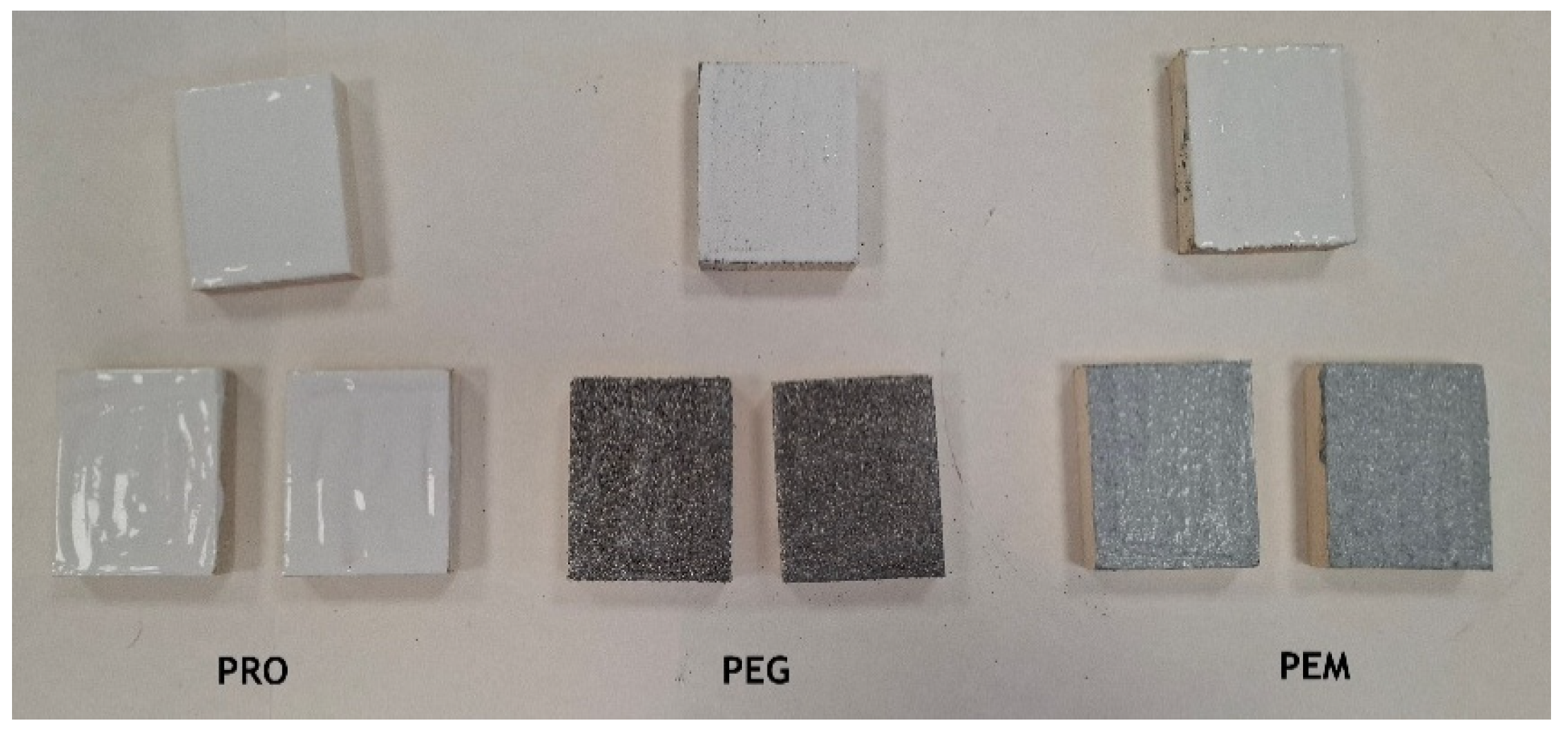
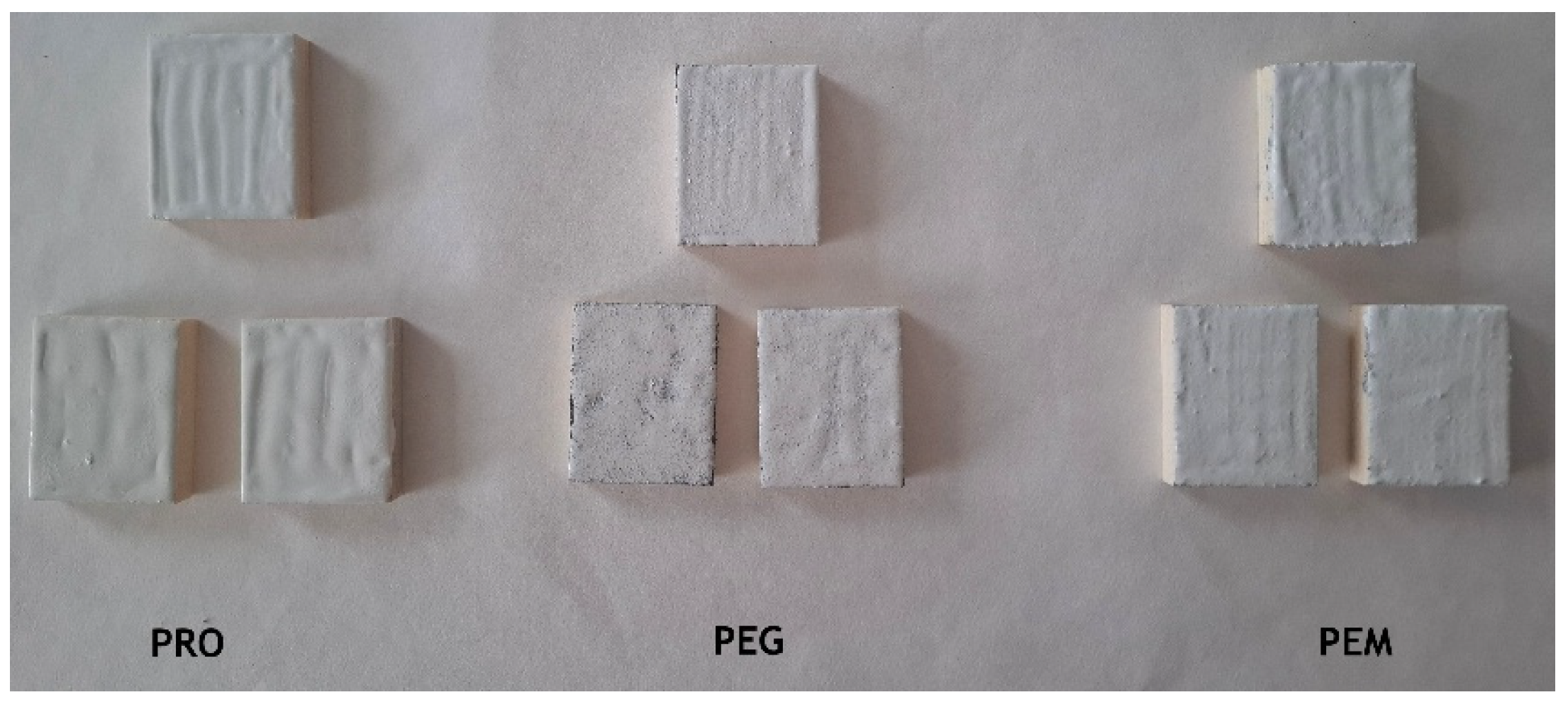
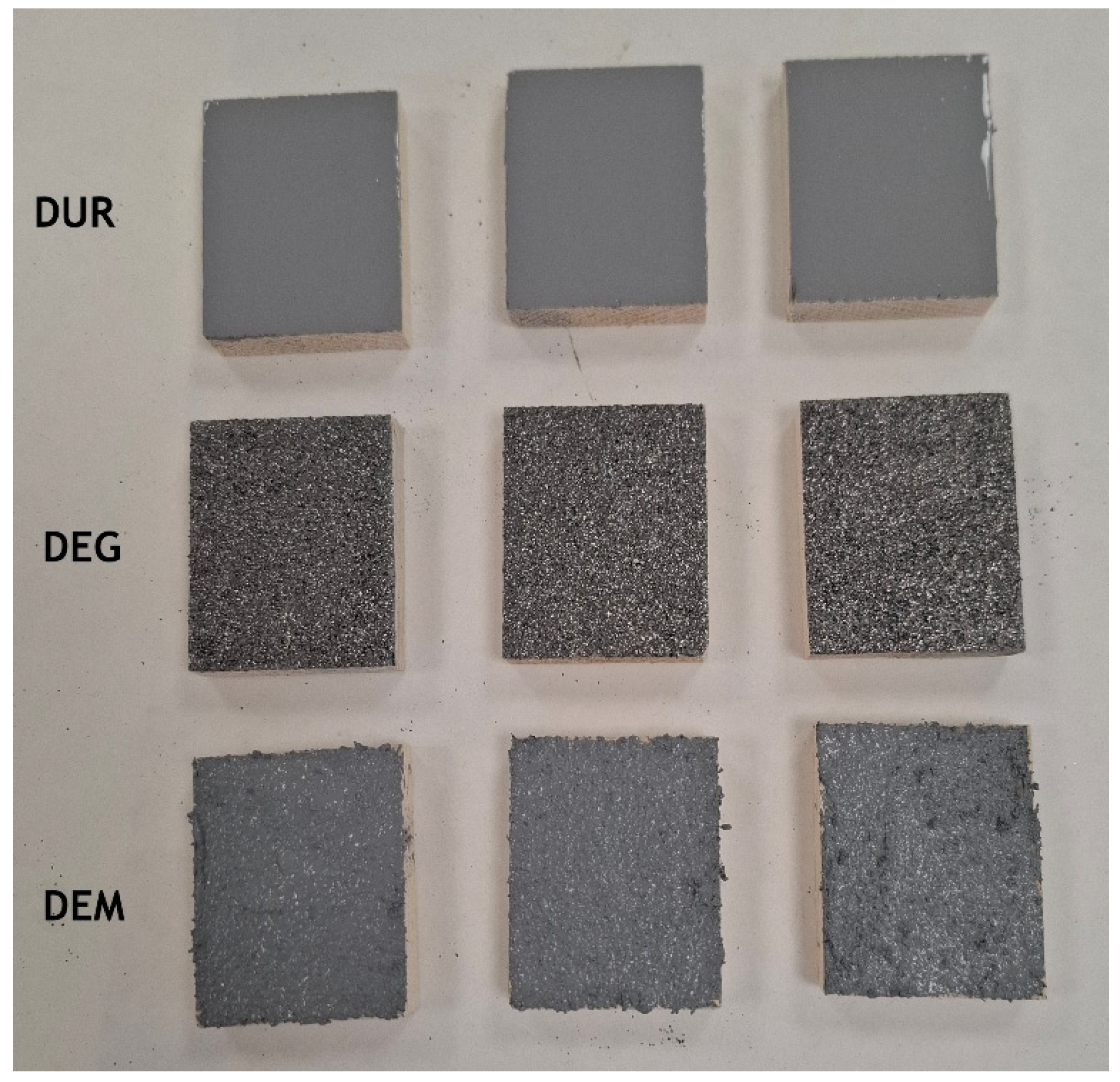
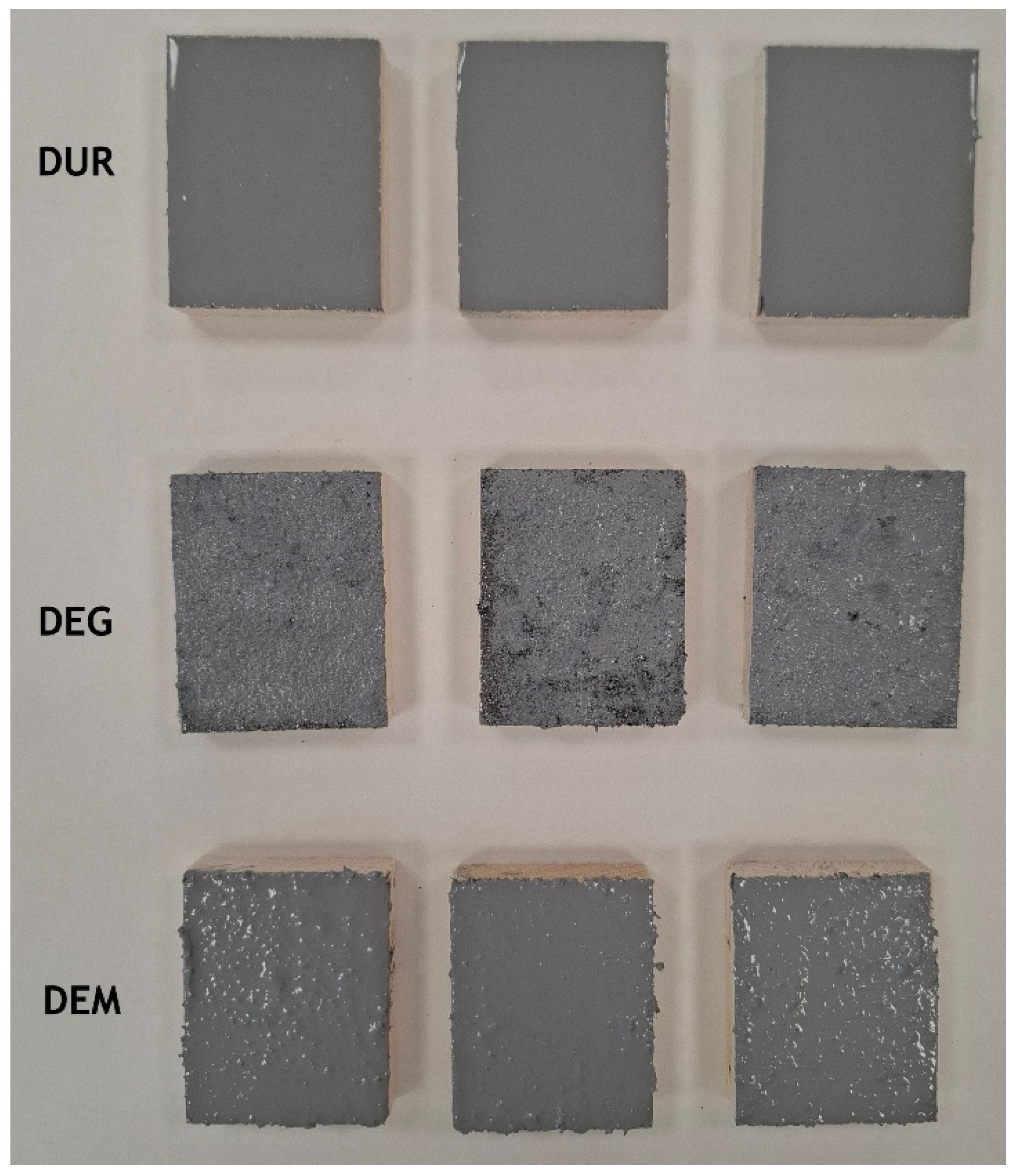
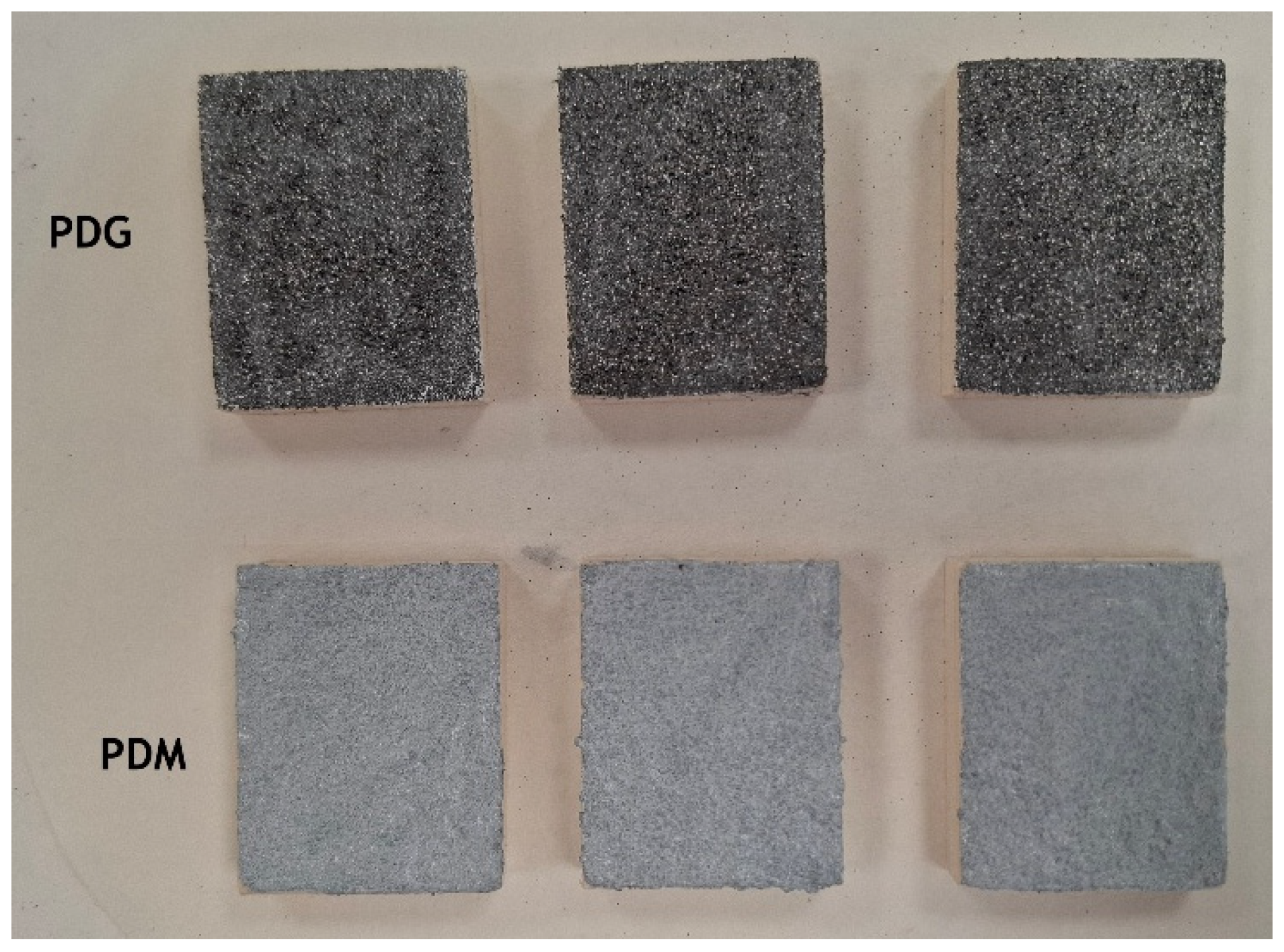
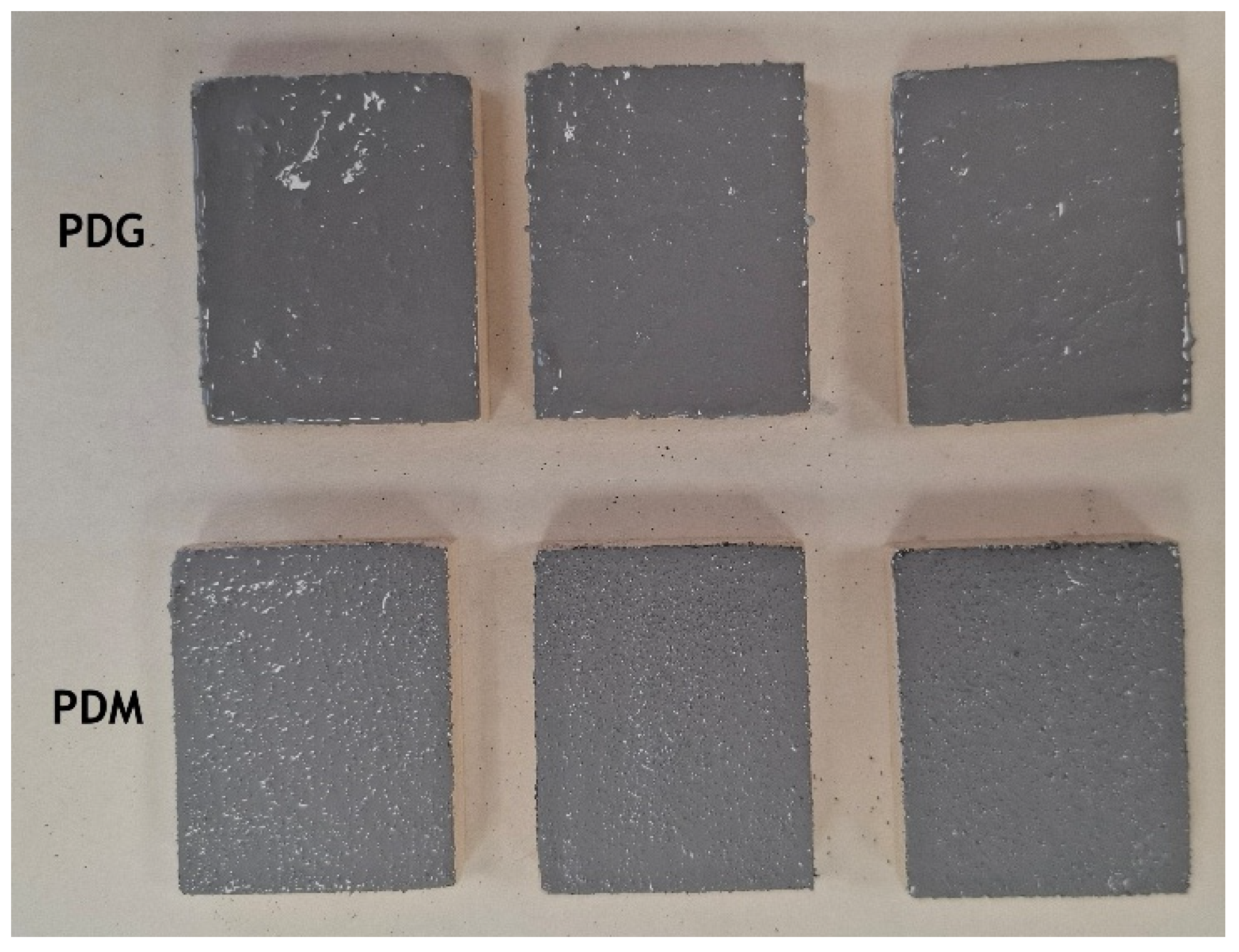
The first group (PRO) was treated with two layers of NEOPROOF Polyurea R (Neotex, Mandra, Greece), each of 1 g. The second group (PEG) was treated with two layers of NEOPROOF Polyurea R (Neotex, Mandra, Greece) (each of 1 g), and between the layers, 0.25 g of expandable graphite (EG) Thermographite 25 K + 180 was added. EG was obtained from a producer (Epinikon, Vodňany, Czech Republic), with 95% carbon content, an expansion rate of 250, particle size of ca 180 µm, pH = 5–9, and a starting temperature of 180–220 °C. The third group (PEM) was treated with 1 g of NEOPROOF Polyurea R, mixed with 0.25 g of EG, and then 1 g of NEOPROOF Polyurea R was applied (Figure 1 and Figure 2). The fourth (DUR), fifth (DEG), and sixth (DEM) groups of samples were treated under the same conditions, but 0.4 g of NEODUR Fast Track (Neotex, Mandra, Greece) was used instead of 1 g of NEOPROOF Polyurea R (Figure 3 and Figure 4). The seventh group (PDG) was treated with 1 g of NEOPROOF Polyurea R, 0.25 g of EG was then added, and the last layer was 0.4 g of NEODUR Fast Track. The last group (PDM) was treated with 1 g of NEOPROOF Polyurea R mixed with 0.25 g of EG, and then 0.4 g of NEODUR Fast Track was added (Figure 5 and Figure 6). Before the second layer of NEOPROOF Polyurea R or NEODUR Fast Track was applied, samples were left to dry for 24 h. Layers were applied in a thin layer with a brush. Before testing, samples with all layers of material were left to dry for one week.

2.3. Thermal Loading

Samples were thermally loaded into an apparatus for 10 min, where the heat flux on their surface was 30 kW·m−2, their distance from an infrared heater was 40 mm, and mass loss was continuously recorded. The apparatus consisted of a ceramic horizontal thermal infrared heater with a constant electrical power of 1000 W (Ceramicx, Cork, Ireland) and a PS 3500.R2 electronic balance (Radwag, Radom, Poland). A schematic showing the arrangement of the experimental equipment can be found in our previous work [31].
Spruce wood samples of the same dimensions were thermally loaded into the apparatus for 10 min, and their mass loss was recorded at the same time. These samples featured a layer of NEOPROOF Polyurea R 1 g mixed with EG, with weights of 0.4 g (PD4), 0.3 g (PD3), 0.25 g (PD25), 0.2 g (PD2), and 0.1 g (PD1) and one layer of NEODUR Fast Track 0.4 g, which was applied after 24 h, one sample group had no EG, and was left to dry for a week. One set of samples had only a combination of NEOPROOF Polyurea R 1 g with NEODUR Fast Track 0.4 g (PD0). For clarity, information about individual samples is provided in Table 1, Table 2, Table 3 and Table 4.

2.4. Thermal Analysis

Thermal analyses were carried out using a NETZSCH STA 449 F3 simultaneous thermal analyser (NETZSCH Gerätebau GmbH, Selb, Germany). Experiments were performed in an atmosphere within a temperature range of 25–600 °C, with a heating rate of 10 °C·min−1. Data were acquired and analysed using NETZSCH Proteus software, version 8.0.3.

3. Results and Discussion

The average measured density of the tested samples was 456 ± 95 kg·m−3, which is consistent with data from other authors [25,32], and the EMC was 11.83 ± 0.08%. The experiments were divided into two parts. The first one targeted the best combination of used surfactant with expendable graphite (EG) and the best method for its application. In our previous work, we found no correlation between particle size and mass loss or burning rate when using EG particles measuring between 90 and 500 μm. EG Thermographite 25 K + 180 with a particle size of 180 μm produced the best results; therefore, it was chosen for the experiments in this work [33].
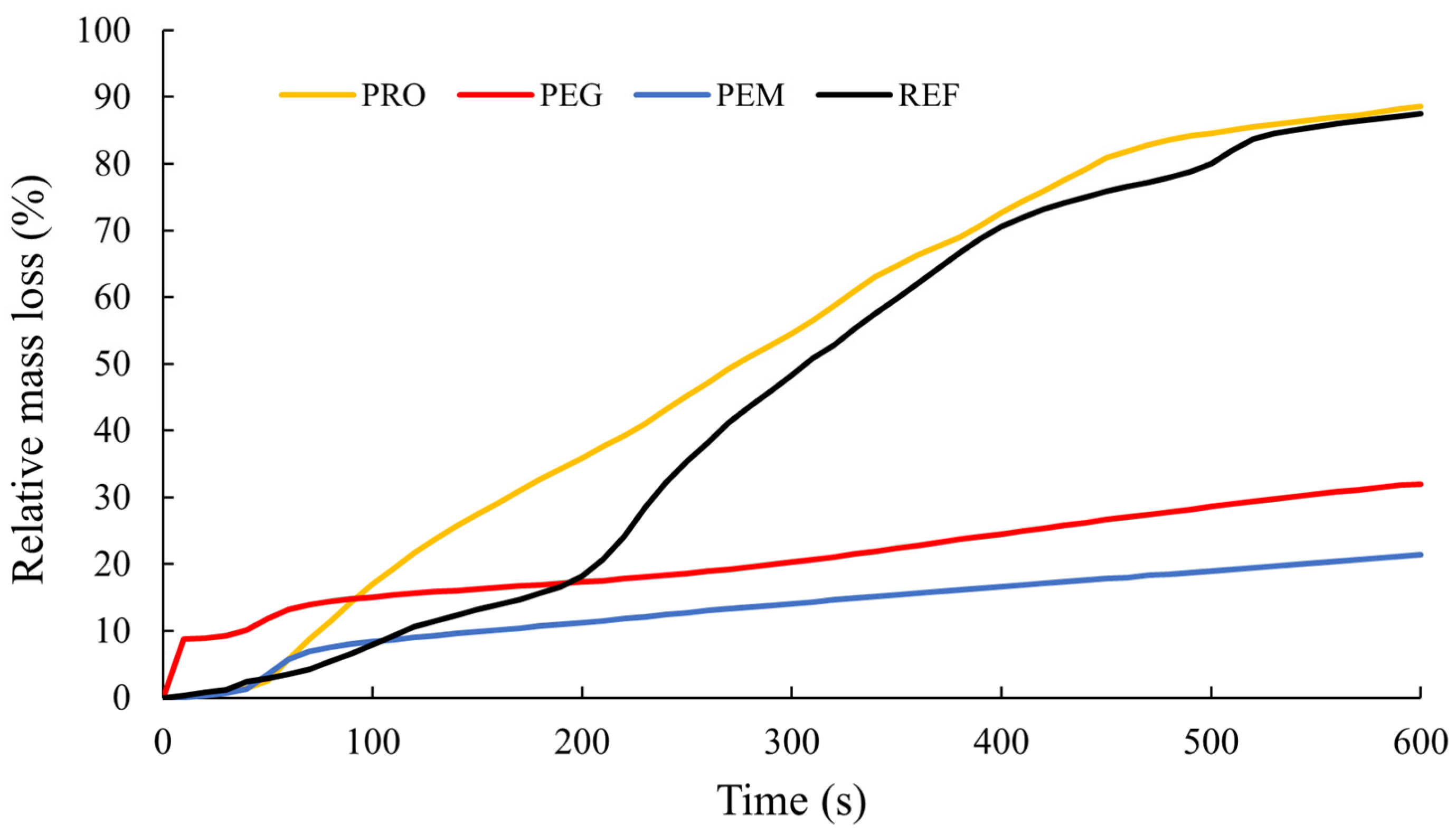
Samples with NEOPROOF Polyurea R and EG had the highest mass loss results, with mass loss reaching up to 88.57% in the case of PRO and only 21.37% in the case of PEM. Similar results were obtained by Dukarski et al. [34] and Rong et al. [35] in their studies on flame-retardants in combination with polyurea. It is necessary to highlight that the mass loss of PRO samples was even higher than that of the reference (REF) samples. During the experiments, PRO samples started burning, which lasted for approximately 7 min; on the contrary, REF samples burned only for approximately 4 min. Polyurea burning is caused by the presence of oxygen in its chain and due to its organic nature. PRO samples lost 88.57% of their initial mass (Figure 7), which is consistent with the assertion of Dukarski et al. [34].
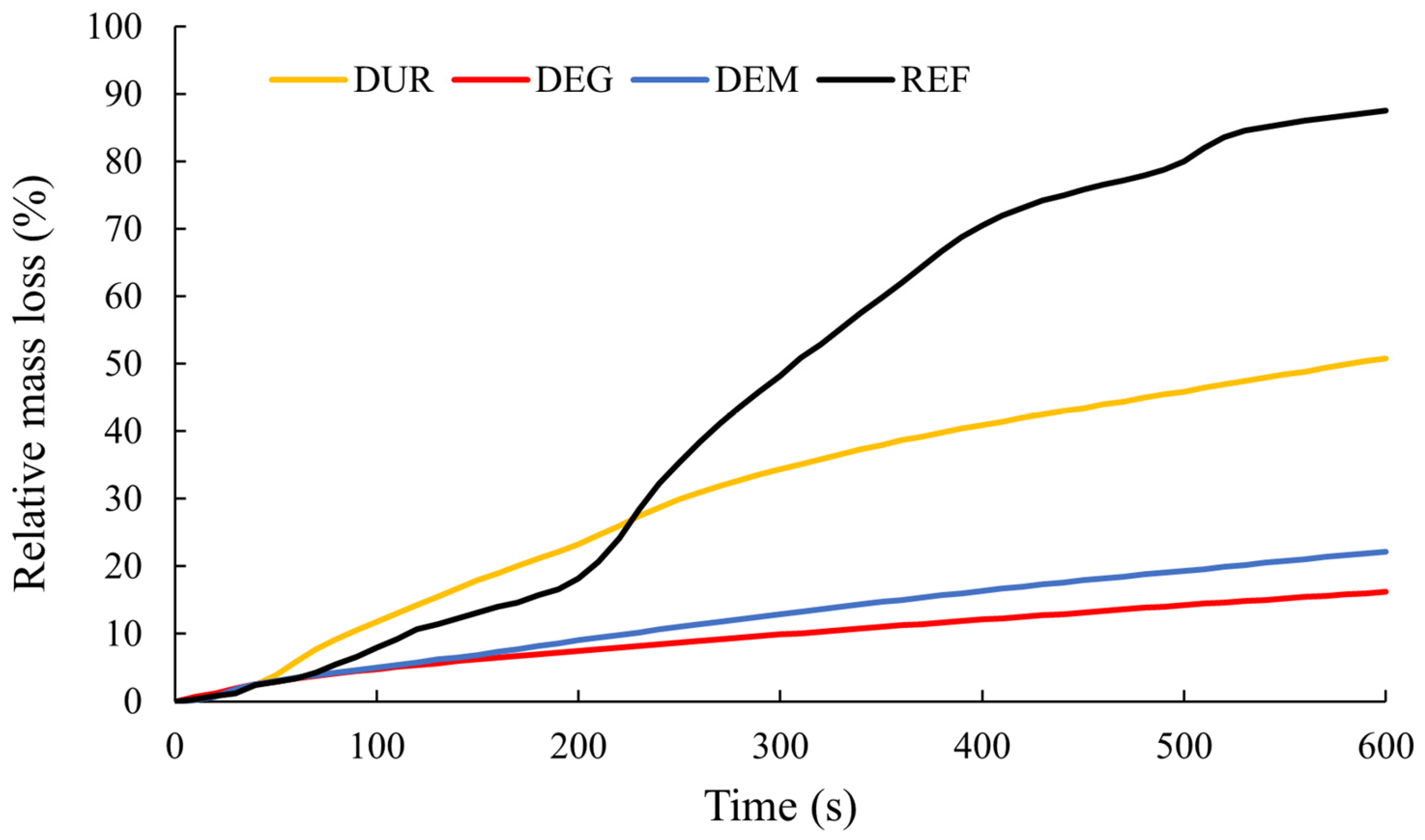
Better results were observed in the case of samples with NEODUR Fast Track and EG. Similarly to previous samples, where only NEODUR Fast Track was applied, the highest mass loss was obtained, reaching 50.83%. Conversely, DEG and DEM samples reached mass losses of only 21.37% and 22.21%, respectively. This indicates that the combination of EG with NEODUR Fast Track might have a positive effect on the fire resistance of wood (Figure 8). Note that polyurea on its own produces volatile flammable products when exposed to heat; thus, it has a short ignition time [36]. Moreover, even though NEODUR Fast Track and NEPROOF Polyurea R have different chemical compositions, their resistance rates to fire in combination with EG (samples PEM and DEG) are very similar to each other, and the difference between their mass losses is approximately 1%.
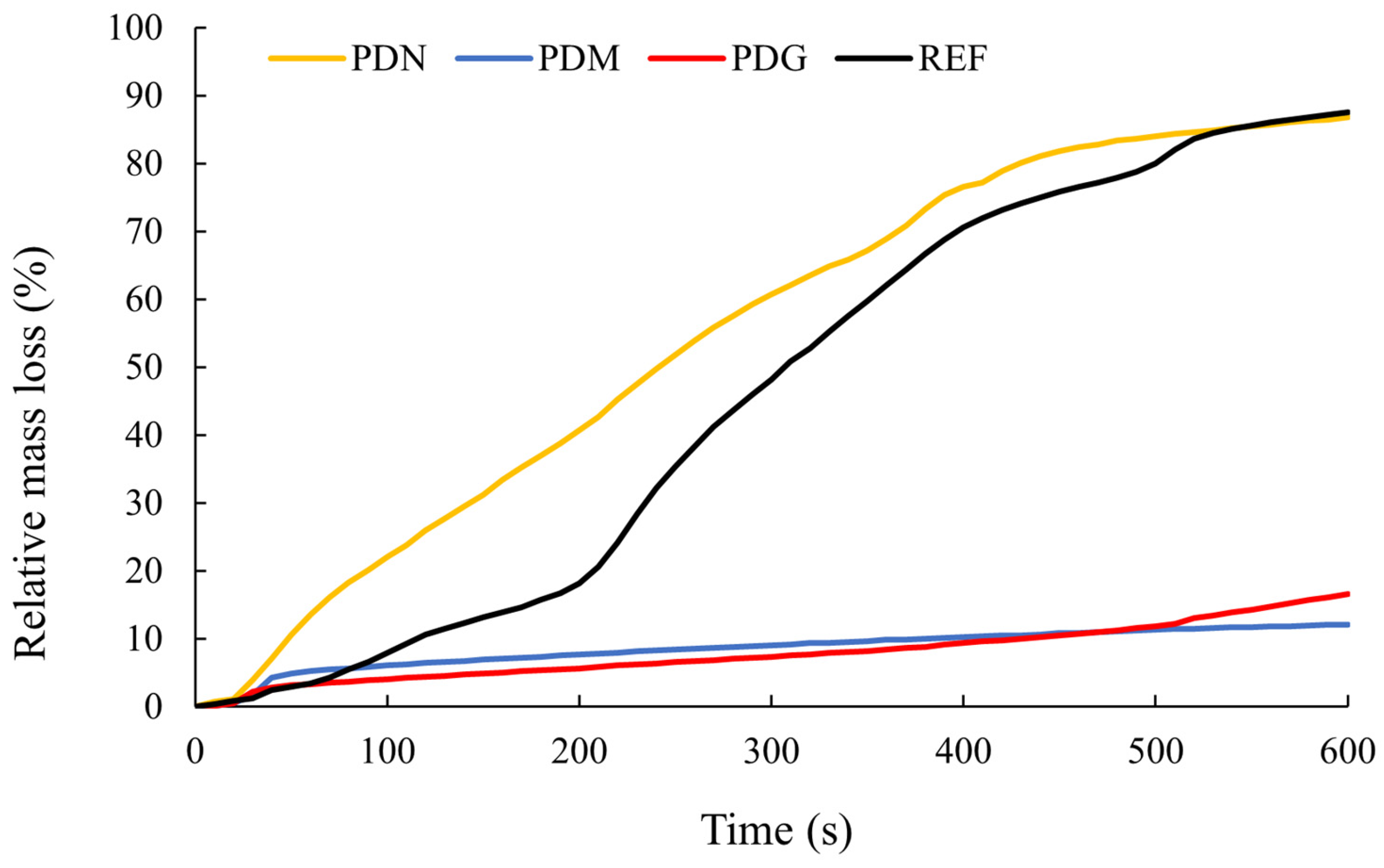
In taking into consideration the results of the PEM, DEG, and DEM samples, it is evident that the combination of NEODUR Fast Track and NEOPROOF Polyurea R with EG might be an eligible option for lowering mass loss and can be used in construction as a material with better fire resistance. The last samples were subjected to an application of NEOPROOF Polyurea combined with NEODUR Fast Track and EG. This combination with EG achieved the best results in terms of mass loss, which reached up to 12.13% and 16.61% in the cases of PDM and PDG samples, respectively (Figure 9). These findings are consistent with those of Underhill et al. [37], who studied the fire resistance of polyurea with added flame retardants, also with EG. They also suggest that the addition of EG can lower the peak of HRR, no matter the formulation of polyurea [37].
During the experiments where EG was applied, it did expand, meaning the mass loss was slowed thanks to the flame-retardant effect of EG. As can be seen in previous figures, the method in which EG was applied did not play a big role in mass loss. More importantly, it played a role in the application of NEOPROOF Polyurea R or NEODUR Fast Track to the top layer. It is necessary to find the best method for the application of EG, since it is in the form of fine flakes. Several studies have applied EG mainly with water glass and conducted tests with nanocellulose or polyurea material [21,22,23]. In our research, the best method, in terms of application, was to mix EG with NEOPROOF Polyurea R and cover it with a layer of NEODUR Fast Track.
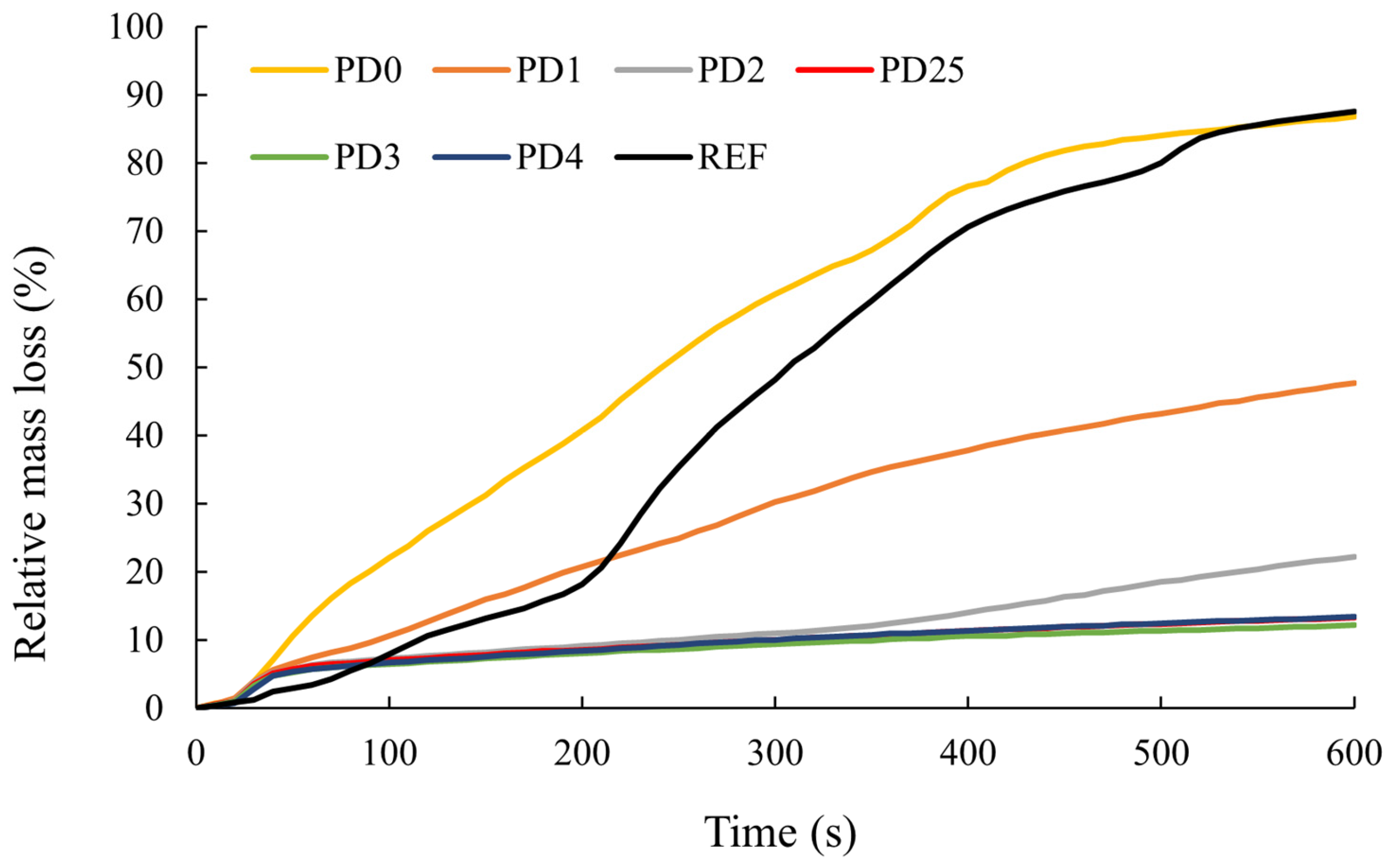
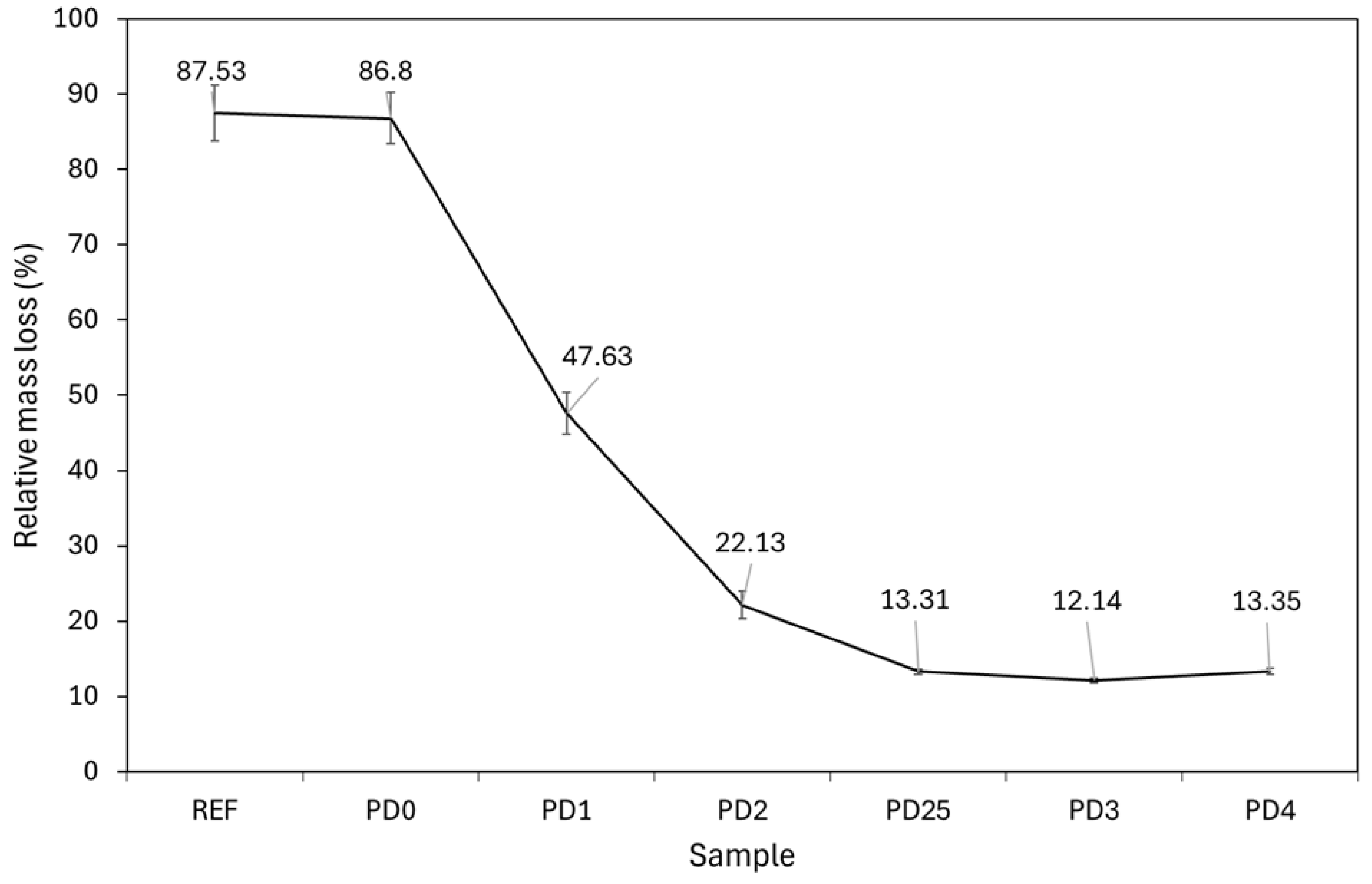
Considering the results from the first part of the research, the second part of the experiments was focused on lowering the amount of EG, while preserving its retardant properties. As shown in Figure 10, EG has a significant effect on fire resistance, which is in accordance with the observations of Mariappan and Wilkie [38], who studied the effect of different expansion temperatures and particle sizes of EG with polyurea [38]. The amount of EG plays a significant role—mass losses vary depending on the amount of EG used. Similar results were obtained by Focke et al. [39], who studied the effectiveness of 0, 5, 10, and 20 wt% of EG added to PVC, as well as Shafigullin et al. [40], who studied the effect of EG on rigid polyurethane foams. The best results were obtained from sample PD3, for which the mass loss was 12.14%. Interestingly, samples PD4 and PD25 have very similar results; their mass loss was 13.35% and 13.31%, respectively. These results show that the use of 0.25 g of EG might still be effective, and it is the lowest amount of EG that might be used for fire protection treatment. On the contrary, in comparing the differences between weights of EG, only 0.05 g of EG has a significant negative effect on the fire protection ability of EG. This can be seen in the difference in mass loss between samples PD25 and PD2, which in this case is 8.82%, and similarly in the difference between PD1 and PD2, with a difference of 25.5%. Evidently, the worst results were obtained with sample PD0—mass loss was only slightly lower than in the REF samples, meaning that at some point, polyurea can support burning due to its flammability [34]. These significant differences in mass loss between the samples are caused by EG; since it allows the formation of an isolation layer, volatile products may diffuse in a slow manner, and the mass loss is slowed as a result [40]. With only 0.1 g of EG, the mass loss is still slowed (47.63%), but in comparison with PD2, for which the mass loss is 22.13%, its effectiveness is not as high, but still applicable. From an economic perspective, it is appropriate to use 0.25 g of EG per 20 cm2 sample, which is equivalent to 125 g·m−2. Further additions of EG do not improve the fire resistance of spruce wood (Figure 11).
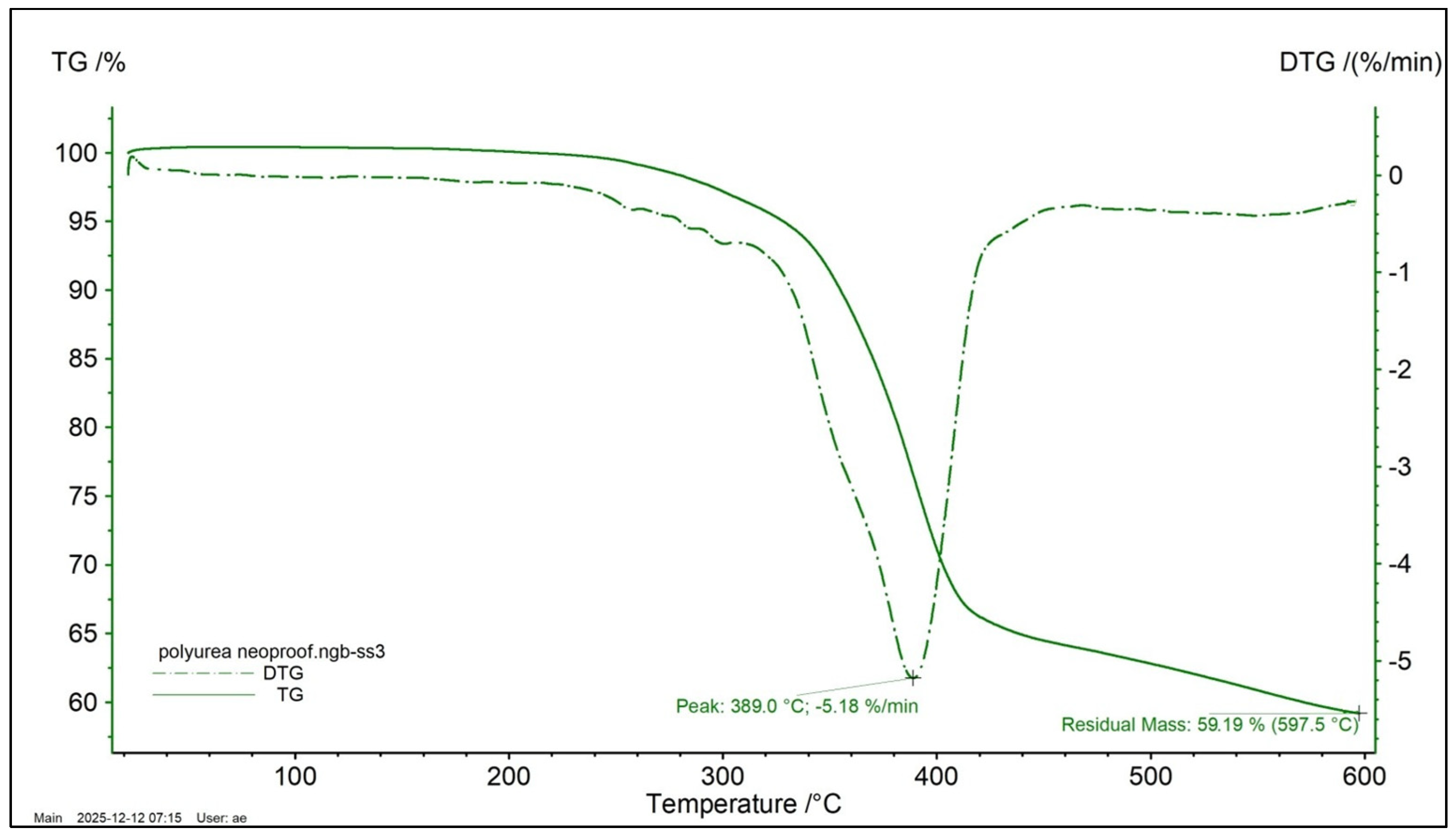
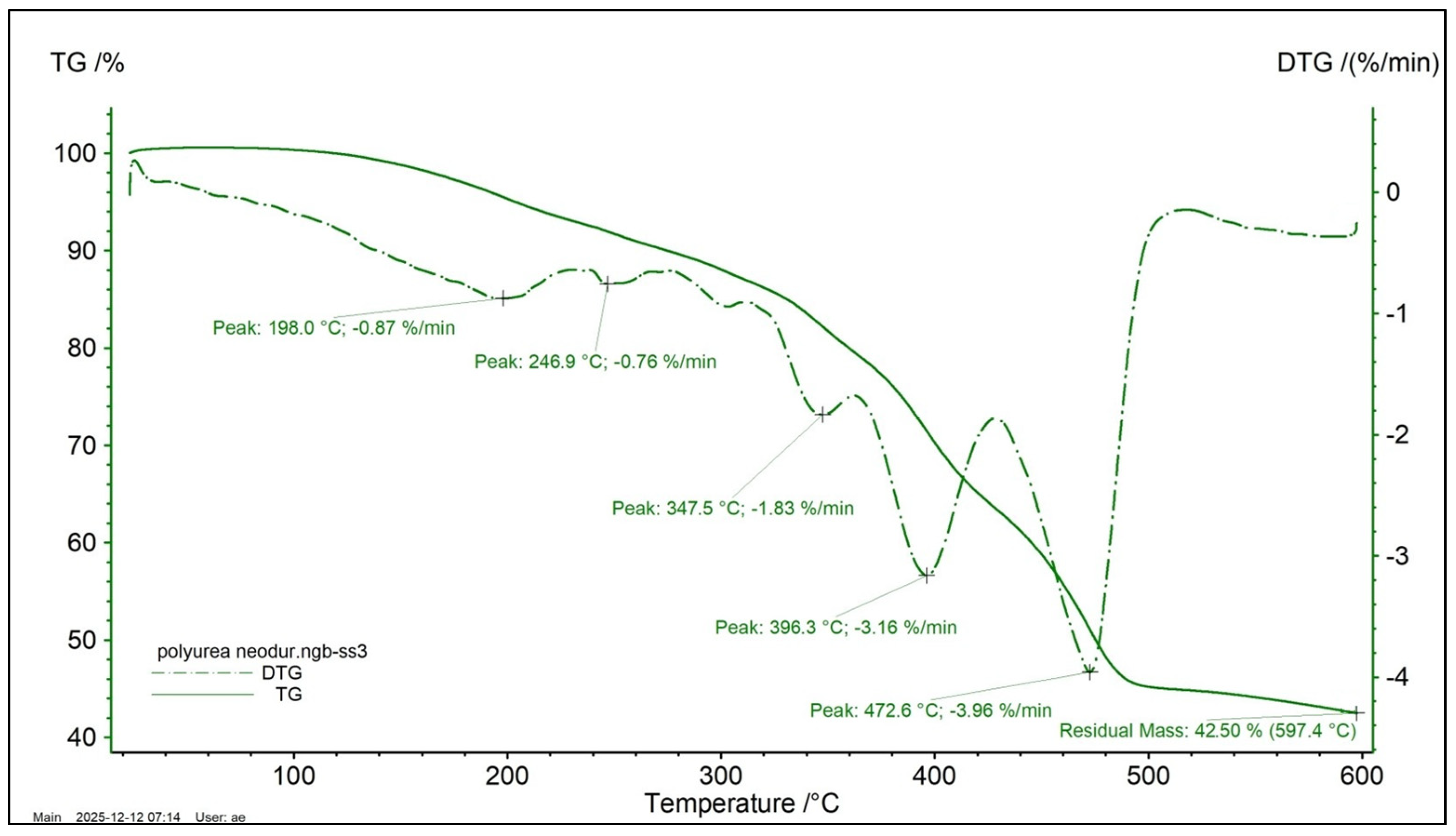
Polyurea coatings possess excellent physicochemical and mechanical properties, which vary depending on their chemical composition and determine their specific areas of application. Other properties that depend on the chemical composition include fire resistance. Although the two products used in our work (NEODUR Fast Track and NEOPROOF Polyurea R) have Euroclass F fire resistance, they have different thermal stabilities (Figure 7 and Figure 8). NEOPROOF Polyurea R, a polyurea, has significantly lower fire resistance than NEODUR Fast Track, a mixture of polyurea and polyurethane. Substantial differences are also evident in the thermogravimetry (TG) and differential thermogravimetry (DTG) curves of both products (Figure 12 and Figure 13). NEOPROOF Polyurea R shows only one degradation step, with the maximum weight loss rate occurring at 389 °C. Additionally, a single degradation step was observed in the thermal analysis of polyurea, with maximum weight loss occurring at 413 °C [41]. The difference in the observed temperatures is due to their different manufacturers.
NEODUR Fast Track, which contains polyurethanes, decomposes in several stages. The DTG thermogram shows five decomposition peaks, with the first occurring at 198 °C. The peak at 396 °C may correspond to polyurea, with the highest decomposition temperature observed at 472 °C. The greatest weight loss rate in a polyurea-polyurethane hybrid was observed at 354 °C and 411 °C, respectively [42,43].
Filip et al. [44] conducted thermal analysis of polyurethane in a nitrogen atmosphere and observed three stages of decomposition, with maximum losses occurring at temperatures of 260 °C, 346 °C, and 412 °C. During the thermal decomposition of the NEODUR Fast Track sample, gases are gradually released, reducing the oxygen concentration and slowing down combustion compared to the NEOPROOF Polyurea R sample, where decomposition only occurs at higher temperatures. Various gaseous products have been identified during the thermal degradation of polyurea and polyurethane, including carbon dioxide, hydrogen cyanide, propylene, n-butylene, tetrahydrofuran, carboxylic acids, aldehydes, and ketones [45,46].

4. Conclusions

This study examined the appropriate blend of two polyurea types (NEOPROOF Polyurea R and NEODUR Fast Track) and expandable graphite (EG) (Thermographite 25 K + 180) to enhance the fire resistance of spruce wood. The advantages of polyurea coatings, including durability, waterproofing, and chemical resistance, were combined with EG’s ability to create an intumescent layer, which significantly reduces wood burning. Thermogravimetry and derivative thermogravimetry revealed notable variations in the thermal resistance of the two polyurea coatings. NEOPROOF Polyurea R decomposes in a single stage, with a pronounced loss in resistivity; NEODUR Fast Track decomposes in multiple stages, with the resulting gases reducing oxygen concentration and thereby improving thermal resistance. Adding EG to both coatings significantly enhances the fire resistance of spruce wood, and the optimal amount to add was determined, as was the most suitable combination of the two polyurea coatings. The result is an effective, non-toxic, economical fire-retardant coating for wood. Further research is needed to identify other suitable coatings to be combined with expandable graphite to provide effective fire protection for wooden materials. The coating should be fast-curing and high-strength. It should be paintable and suitable for exterior and interior applications. It should be resistant to mechanical and chemical influences, and UV radiation. It is expected to also be economically acceptable and not produce toxic gases during thermal decomposition.

Author Contributions

Conceptualization, F.K. and K.T.; methodology, E.K. and K.T.; data curation, K.T., A.E. and F.K.; writing—original draft preparation, K.T., F.K. and D.K.; writing—review and editing, D.K. and K.T.; supervision, F.K. All authors have read and agreed to the published version of the manuscript.

Funding

This research was funded by IPA (Internal Project Agency) TUZVO, project number 13/2025. This work was supported by the Slovak Research and Development Agency under the Contract No. APVV-22-0030. This work was supported by the Scientific Grant Agency of the Ministry of Education, Research, Development and Youth of the Slovak Republic, and the Slovak Academy of Sciences (Grant No. 1/0677/26).

Institutional Review Board Statement

Not applicable.

Informed Consent Statement

Not applicable.

Data Availability Statement

The original contributions presented in this study are included in the article; further inquiries can be directed to the corresponding author.

Conflicts of Interest

The authors declare no conflicts of interest.

References

  1. Ioakeimidou, A.; Kamperidou, V.; Barboutis, I.; Ioakeimidou, A.; Kamperidou, V.; Barboutis, I. Heat Transmittance and Weathering Performance of Thermally Modified Fir Wood Exposed Outdoors. Forests 2025, 16, 945. [Google Scholar] [CrossRef]
  2. Kamperidou, V. The Biological Durability of Thermally- and Chemically-Modified Black Pine and Poplar Wood Against Basidiomycetes and Mold Action. Forests 2019, 10, 1111. [Google Scholar] [CrossRef]
  3. U.S. Department of Agriculture, Forest Service, Forest Products Laboratory. Wood Handbook, Wood as an Engineering Material; Ross, R.J., Ed.; U.S. Department of Agriculture, Forest Service, Forest Products Laboratory: Madison, WI, USA, 2010.
  4. Niemz, P.; Teischinger, A.; Sandberg, D. (Eds.) Springer Handbook of Wood Science and Technology; Springer Handbooks; Springer International Publishing: Cham, Switzerland, 2023; ISBN 978-3-030-81314-7. [Google Scholar]
  5. Chun, K.; Kim, J.; Rie, D.; Chun, K.; Kim, J.; Rie, D. Thermal Characteristics of Expandable Graphite–Wood Particle Composites. Materials 2020, 13, 2732. [Google Scholar] [CrossRef]
  6. Madyaratri, E.W.; Ridho, M.R.; Aristri, M.A.; Lubis, M.A.R.; Iswanto, A.H.; Nawawi, D.S.; Antov, P.; Kristak, L.; Majlingová, A.; Fatriasari, W.; et al. Recent Advances in the Development of Fire-Resistant Biocomposites—A Review. Polymers 2022, 14, 362. [Google Scholar] [CrossRef] [PubMed]
  7. Fan, Z.; Xue, Y.; Liu, H.; Yu, Y.; Liu, R. Durable Flame-Retardant Finishing of Cotton Fabric via Constructing Multiple Crosslinked Layers. Cellulose 2025, 32, 2649–2661. [Google Scholar] [CrossRef]
  8. Lowden, L.A.; Hull, T.R. Flammability Behaviour of Wood and a Review of the Methods for Its Reduction. Fire Sci. Rev. 2013, 2, 4. [Google Scholar] [CrossRef]
  9. Lee, Y.X.; Wang, W.; Lei, Y.; Xu, L.; Agarwal, V.; Wang, C.; Yeoh, G.H. Flame-Retardant Coatings for Wooden Structures. Progr. Org. Coat. 2025, 198, 108903. [Google Scholar] [CrossRef]
  10. Trojanová, K.; Veľková, V.; Kačík, F. Volatile Organic Compounds Arising from Wood Polymers on Thermal Loading of Spruce Wood. Polymers 2025, 17, 875. [Google Scholar] [CrossRef]
  11. Wang, S.; Yi, M.; Shen, Z. The Effect of Surfactants and Their Concentration on the Liquid Exfoliation of Graphene. RSC Adv. 2016, 6, 56705–56710. [Google Scholar] [CrossRef]
  12. Hejna, A. Expandable Graphite as Intumescent Flame Retardant for Polyurethane Foams: Mini Review and Application Guidelines. Environ. Chem. Saf. 2025, 1, 9600003. [Google Scholar] [CrossRef]
  13. Kim, T.Y.; Park, J.H.; Kim, O.Y.; Hwang, S.-H. The Effect of Chemically Modified Expandable Graphite on Flame-Retardant Properties of Waterborne Intumescent Flame-Retardant Coating. J. Ind. Eng. Chem. 2025, 149, 366–373. [Google Scholar] [CrossRef]
  14. Mariappan, T. Recent Developments of Intumescent Fire Protection Coatings for Structural Steel: A Review. J. Fire Sci. 2016, 34, 120–163. [Google Scholar] [CrossRef]
  15. Bornosuz, N.V.; Korotkov, R.F.; Kolenchenko, A.A.; Shapagin, A.V.; Orlov, A.V.; Gorbunova, I.Y.; Kireev, V.V.; Sirotin, I.S. The Influence of Substituents in Phosphazene Catalyst-Flame Retardant on the Thermochemistry of Benzoxazine Curing. Polymers 2021, 13, 3111. [Google Scholar] [CrossRef]
  16. Rybyan, A.A.; Bilichenko, J.V.; Kireev, V.V.; Kolenchenko, A.A.; Chistyakov, E.M.; Rybyan, A.A.; Bilichenko, J.V.; Kireev, V.V.; Kolenchenko, A.A.; Chistyakov, E.M. Curing of DER-331 Epoxy Resin with Arylaminocyclotriphosphazenes Based on o-, m-, and p-Methylanilines. Polymers 2022, 14, 5334. [Google Scholar] [CrossRef]
  17. Jurczyková, T.; Kmeťová, E.; Kačík, F.; Lexa, M.; Dědič, D.; Jurczyková, T.; Kmeťová, E.; Kačík, F.; Lexa, M.; Dědič, D. Evaluating the Effectiveness of Cellulose-Based Surfactants in Expandable Graphite Wood Coatings. Polymers 2024, 16, 2832. [Google Scholar] [CrossRef]
  18. Bekhta, P. Advances in Surface Modification and Coatings of Wood and Wood Composites. Coatings 2025, 15, 1402. [Google Scholar] [CrossRef]
  19. Liu, Q.; Chen, P.; Zhang, Y.; Li, Z. Compressive Behavior and Constitutive Model of Polyurea at High Strain Rates and High Temperatures. Mater. Today Commun. 2020, 22, 100834. [Google Scholar] [CrossRef]
  20. Yang, K.; Zhao, Y.; Shang, K.; Zhao, B.; Yang, K.; Zhao, Y.; Shang, K.; Zhao, B. Multifunctional Meta-Aramid Fabrics Enhanced with Inherent Flame-Retardant Polyurea Coatings: Integration of Mechanical Strength, Puncture Resistance, and Self-Healing Properties. Polymers 2025, 17, 1529. [Google Scholar] [CrossRef]
  21. Awad, W.H.; Wilkie, C.A. Investigation of the Thermal Degradation of Polyurea: The Effect of Ammonium Polyphosphate and Expandable Graphite. Polymer 2010, 51, 2277–2285. [Google Scholar] [CrossRef]
  22. Chung, D.D.L. A Review of Exfoliated Graphite. J. Mater. Sci. 2016, 51, 554–568. [Google Scholar] [CrossRef]
  23. Shao, Z.-B.; Deng, C.; Tan, Y.; Chen, M.-J.; Chen, L.; Wang, Y.-Z. Flame Retardation of Polypropylene via a Novel Intumescent Flame Retardant: Ethylenediamine-Modified Ammonium Polyphosphate. Polym. Degrad. Stab. 2014, 106, 88–96. [Google Scholar] [CrossRef]
  24. Zheng, Z.; Liu, Y.; Zhang, L.; Wang, H. Synergistic Effect of Expandable Graphite and Intumescent Flame Retardants on the Flame Retardancy and Thermal Stability of Polypropylene. J. Mater. Sci. 2016, 51, 5857–5871. [Google Scholar] [CrossRef]
  25. Zupanc, E.L.; Humar, M.; Fajdiga, G.; Zupanc, E.L.; Humar, M.; Fajdiga, G. The Effect of the Loading Frequency on the Dynamic Bending Strength of Spruce Wood. Materials 2024, 17, 4662. [Google Scholar] [CrossRef]
  26. Sansonetti, E.; Cirule, D.; Kuka, E.; Andersone, I.; Meile, K.; Vevere, L.; Andersons, B. Potentiality of Microwave Technology for Treatment of Norway Spruce Wood to Reduce Risk of Resin Exudation from Wood Materials. Eur. J. Wood Prod. 2025, 83, 141. [Google Scholar] [CrossRef]
  27. Nečemer, B.; Fakin, J.; Glodež, S.; Šraml, M.; Klemenc, J.; Fajdiga, G. Bending Quasi-Static and Fatigue Behaviour of Norway Spruce Wood Using Experimental Approach and FEM Analysis. Case Stud. Constr. Mater. 2025, 22, e04734. [Google Scholar] [CrossRef]
  28. ASTM D 143-94; Standard Test Methods for Small Specimens of Timber. ASTM International: West Conshohocken, PA, USA, 2000.
  29. ISO13061-1:2014; Physical and Mechanical Properties of Wood—Test Methods for Small Clear Wood Specimens—Part 1: Determination of Moisture Content for Physical and Mechanical Tests. ISO: Geneva, Switzerland, 2014.
  30. ISO13061-2:2014; Physical and Mechanical Properties of Wood—Test Methods for Small Clear Wood Specimens—Part 2: Determination of Density for Physical and Mechanical Tests. ISO: Geneva, Switzerland, 2014.
  31. Jurczyková, T.; Kmeťová, E.; Kačík, F.; Lexa, M.; Ťoupal, J. An Innovative Wood Fire-Retardant Coating Based on Biocompatible Nanocellulose Surfactant and Expandable Graphite. Coatings 2024, 14, 1036. [Google Scholar] [CrossRef]
  32. Gryc, V.; Horáček, P. Variability in Density of Spruce (Picea abies [L.] Karst.) Wood with the Presence of Reaction Wood. J. For. Sci. 2007, 53, 129–137. [Google Scholar] [CrossRef]
  33. Kmeťová, E.; Kačíková, D.; Jurczyková, T.; Kačík, F. The Influence of Different Types of Expandable Graphite on the Thermal Resistance of Spruce Wood. Coatings 2023, 13, 1181. [Google Scholar] [CrossRef]
  34. Dukarski, W.; Rykowska, I.; Krzyżanowski, P.; Gonsior, M. Flame Retardant Additives Used for Polyurea-Based Elastomers—A Review. Fire 2024, 7, 50. [Google Scholar] [CrossRef]
  35. Rong, Z.; Li, Y.; Lim, R.Z.; Wang, H.; Dong, Z.; Li, K.; Wang, X. Fire-Retardant Effect of Titania-Polyurea Coating and Additional Enhancement via Aromatic Diamine and Modified Melamine Polyphosphate. npj Mater. Degrad. 2022, 6, 38. [Google Scholar] [CrossRef]
  36. Li, Y.; Yang, H.; Chen, X.; Liu, D. Physicochemical Mechanism of Flame-Retardant Enhancement for Elastomeric Polyurea: A Mini-Review. J. Polym. Sci. 2025, 63, 358–371. [Google Scholar] [CrossRef]
  37. Underhill, R.S.; DiLoreto, S.; DiLoreto, B. Development of Polyureas with Improved Fire Resistance. J. Fire Sci. 2013, 31, 211–226. [Google Scholar] [CrossRef]
  38. Mariappan, T.; Wilkie, C.A. Thermal and Fire Retardant Properties of Polyurea. Polimery 2013, 58, 371–384. [Google Scholar] [CrossRef]
  39. Focke, W.W.; Muiambo, H.; Mhike, W.; Kruger, H.J.; Ofosu, O. Flexible PVC Flame Retarded with Expandable Graphite. Polym. Degrad. Stab. 2014, 100, 63–69. [Google Scholar] [CrossRef]
  40. Shafigullin, L.; Romanova, N.; Shafigullina, G.; Sokolova, Y. Influence of the Expandable Graphite on the Thermal Properties of a Rigid Polyurethane Foam for Construction. E3S Web Conf. 2021, 263, 01009. [Google Scholar] [CrossRef]
  41. Che, K.; Lyu, P.; Wan, F.; Ma, M. Investigations on Aging Behavior and Mechanism of Polyurea Coating in Marine Atmosphere. Materials 2019, 12, 3636. [Google Scholar] [CrossRef]
  42. Toader, G.; Diacon, A.; Rusen, E.; Rizea, F.; Teodorescu, M.; Stanescu, P.O.; Damian, C.; Rotariu, A.; Trana, E.; Bucur, F.; et al. A Facile Synthesis Route of Hybrid Polyurea-Polyurethane-MWCNTs Nanocomposite Coatings for Ballistic Protection and Experimental Testing in Dynamic Regime. Polymers 2021, 13, 1618. [Google Scholar] [CrossRef] [PubMed]
  43. Dukarski, W.; Rykowska, I.; Krzyżanowski, P.; Paciorek-Sadowska, J.; Isbrandt, M. Coating Composites Based on Polyurea Elastomers with Increased Fire Resistance and Their Use as Roofing Systems. Processes 2023, 11, 2421. [Google Scholar] [CrossRef]
  44. Filip, D.; Macocinschi, D.; Vlad, S. Thermogravimetric Study for Polyurethane Materials for Biomedical Applications. Compos. Part B Eng. 2011, 42, 1474–1479. [Google Scholar] [CrossRef]
  45. Sandten, C.S.; Kreyenschmidt, M.; Albach, R.; Fittschen, U.E.A. The Thermo-Oxidative Degradation of Polyurethane Open-Cell Soft Foam Investigated Through Gas Chromatography and Mass Spectrometry of Volatile Organic Compounds. Polymers 2024, 16, 3342. [Google Scholar] [CrossRef]
  46. Deng, H.; Guo, L.; Chen, K.; Zhang, P.; Xu, Y.; Song, N.; Tian, C.; Wang, J.; Liang, S. Highly Flame Retardant and Mechanical Strong Polyurea through Synergistic Effects of Aromatic Dianhydride and Ammonium Polyphosphate. Polymer 2025, 317, 127951. [Google Scholar] [CrossRef]
Figure 1. Samples PRO, PEG, PEM.
Coatings 16 00231 g001
Figure 2. Samples PRO, PEG, PEM with all layers.
Coatings 16 00231 g002
Figure 3. Samples DUR, DEG, DEM.
Coatings 16 00231 g003
Figure 4. Samples DUR, DEG, DEM with all layers.
Coatings 16 00231 g004
Figure 5. Samples PDG, PDM.
Coatings 16 00231 g005
Figure 6. Samples PDG, PDM with all layers.
Coatings 16 00231 g006
Figure 7. Relative mass loss of samples treated with NEOPROOF Polyurea R.
Coatings 16 00231 g007
Figure 8. Relative mass loss of samples treated with NEODUR Fast Track.
Coatings 16 00231 g008
Figure 9. Relative mass loss of samples PDN, PDG, and PDM.
Coatings 16 00231 g009
Figure 10. Mass loss at different amounts of EG.
Coatings 16 00231 g010
Figure 11. The comparison of mass loss at different amounts of EG. (Sample designations are in Table 4).
Coatings 16 00231 g011
Figure 12. TG and DTG thermograms of Polyurea NEOPROOF Polyurea R.
Coatings 16 00231 g012
Figure 13. TG and DTG thermograms of Polyurea NEODUR Fast Track.
Coatings 16 00231 g013
Table 1. Samples with NEOPROOF Polyurea R.
Sample1st Layer2nd Layer3rd Layer
PRO1 g NEOPROOF1 g NEOPROOF
PEG1 g NEOPROOF0.25 g EG1 g NEOPROOF
PEM1 g NEOPROOF + 0.25 g EG (mixed)1 g NEOPROOF
Table 2. Samples with NEODUR Fast Track.
Sample1st Layer2nd Layer3rd Layer
DUR0.4 g NEODUR0.4 g NEODUR
DEG0.4 g NEODUR0.25 g EG0.4 g NEODUR
DEM0.4 g NEODUR + 0.25 g EG (mixed)0.4 g NEODUR
Table 3. Samples with the combination NEOPROOF Polyurea R and NEODUR Fast Track.
Sample1st Layer2nd Layer3rd Layer
PDG1 g NEOPROOF0.25 g EG0.4 g NEODUR
PDM1 g NEOPROOF + 0.25 g EG (mixed)0.4 g NEODUR
PDN1 g NEOPROOF0.4 g NEODUR
Table 4. Samples with the combination NEOPROOF Polyurea R and NEODUR Fast Track with different weights of EG.
Sample1st Layer2nd Layer3rd Layer
PD01 g NEOPROOF0.4 g NEODUR
PD11 g NEOPROOF + 0.1 g EG (mixed)0.4 g NEODUR
PD21 g NEOPROOF + 0.2 g EG (mixed)0.4 g NEODUR
PD251 g NEOPROOF + 0.25 g EG (mixed)0.4 g NEODUR
PD31 g NEOPROOF + 0.3 g EG (mixed)0.4 g NEODUR
PD41 g NEOPROOF + 0.4 g EG (mixed)0.4 g NEODUR
Disclaimer/Publisher’s Note: The statements, opinions and data contained in all publications are solely those of the individual author(s) and contributor(s) and not of MDPI and/or the editor(s). MDPI and/or the editor(s) disclaim responsibility for any injury to people or property resulting from any ideas, methods, instructions or products referred to in the content.