
Article

WC-Reinforced Nickel–Aluminum Bronze Coatings: Tribological and Corrosion Behavior

1
Department of Material Science and Chemical Engineering, Institute of Surface/Interface Science and Technology, Harbin Engineering University, Harbin 150006, China
2
Shenyang Key Laboratory of Laser Repair and Remanufacturing for Electrical Equipment, School of Mechanical Engineering, Shenyang Institute of Engineering, Shenyang 110136, China
3
Department of Orthopaedics, The Seventh Affiliated Hospital of Sun Yat-sen University, Shenzhen 518107, China
*
Authors to whom correspondence should be addressed.
Coatings 2026, 16(2), 232; https://doi.org/10.3390/coatings16020232
Submission received: 4 January 2026 / Revised: 1 February 2026 / Accepted: 9 February 2026 / Published: 12 February 2026

Abstract

This study investigates the tribological and electrochemical corrosion behavior of laser-clad nickel–aluminum bronze (NAB) coatings reinforced with WC particles (0, 8, 16 wt.%). Through microstructural characterization and phase analysis, it was found that in the NAB coating containing 16% WC, the WC particles and carbides were uniformly distributed, serving as a reinforcing scaffold. During the friction and wear process, they effectively reduced the contact area between the counter ball and the NAB matrix to a certain extent, smoothing the wear process and resulting in a more stable friction coefficient. Electrochemical testing demonstrates that WC addition significantly enhances corrosion resistance: NAB + 8%WC exhibits a low corrosion current density (icorr), the highest polarization resistance, and the densest protective film. The dual mechanisms—grain boundary blocking and ion channel obstruction—reduce selective Al/Fe leaching and minimize Cl penetration. The 8% WC formulation optimizes the electrochemical performance, providing excellent corrosion resistance in a simulated marine environment.

1. Introduction

Nickel–aluminum bronze (NAB) has excellent mechanical properties and corrosion resistance [1,2]. It is widely used in marine industrial components as a protective coating material for applications such as ship propellers [1,3]. The long-term exposure of NAB alloys to harsh marine environments can lead to stress corrosion cracking. Once the protective surface film is damaged by external forces, selective phase corrosion is likely to occur [4,5]. These increasingly demanding service conditions require continuous improvements in the component performance [3]. To enhance the properties of NAB coatings, common approaches include surface treatments such as laser surface modification and electro-pulse assisted ultrasonic surface rolling [6], as well as heat treatment processes including quenching, annealing, tempering, and aging [7]. In addition to surface treatments, functional composite design—by incorporating reinforcing phases—offers another viable route to improve the NAB coating performance.
Ceramic particle-reinforced metal matrix composites represent a novel class of materials. These composites use a metal or alloy as the matrix and incorporate ceramic reinforcements in the form of fibers, particles, etc. They retain the high strength, plasticity, and toughness of the metal while introducing ceramic advantages such as high hardness, wear resistance, and corrosion resistance [8]. Commonly used ceramic reinforcements include WC, TiC, SiC, NbC, TaC, and B4C [9,10,11]. Among these, tungsten carbide (WC) is particularly valued in marine engineering coatings due to its low thermal expansion coefficient, excellent corrosion resistance, high hardness, and high elastic modulus [9,12,13,14]. For instance, Wang et al. produced Ni60A/WC composite coatings via laser cladding and investigated their microstructure, phase composition, interfacial evolution between the reinforcement and matrix, microhardness, and corrosion behavior. They observed that coating hardness increased with higher WC content, whereas corrosion resistance decreased [11]. Similarly, Zhang et al. fabricated WC and core–shell structured Co@WC-reinforced cemented carbide coatings using cold spray technology. Their analysis showed that the addition of WC particles reduced the coating porosity and improved both wear and corrosion resistance [15].
As evidenced above, incorporating WC as a reinforcement can effectively transfer its desirable properties to the metal matrix [7]. However, due to the inherent brittleness of WC and the significant difference in thermal expansion coefficients between WC and the NAB matrix, high thermal stresses can be induced during processing, leading to cracking and crazing in the cladding layer [16,17]. Therefore, the WC content should be carefully controlled to avoid excessive addition.
To address the practical scenario of protecting marine components and evaluate their protective performance in a relevant service scenario, the coatings were fabricated via laser cladding technology on a PH17-4 stainless steel substrate, a material that widely used in marine structures yet is easily damaged by stress corrosion cracking (SCC) due to the interaction of stress and the corrosive medium. In this study, Cu-9.8Al-4Ni-4Fe bronze alloy was selected as the substrate material. NAB coatings with varying weight percentages of WC particles as reinforcements were fabricated via laser cladding technology. The microstructure, wear resistance, and corrosion behavior of the coatings were systematically characterized and investigated.

2. Materials and Methods

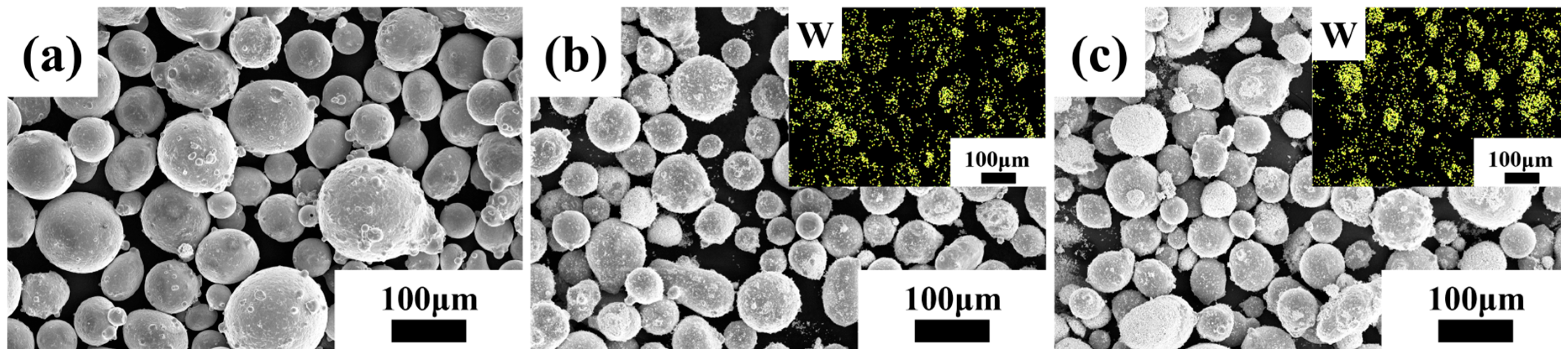
The NAB coatings were fabricated on a PH17-4 stainless steel substrate via laser cladding technology with a laser power of 2000 W, a beam diameter of 3.2 mm, and a scanning speed of 1000 mm/s. Their chemical compositions are shown in Table 1 and Table 2. The mixture of NAB and WC powders (Figure 1) was pre-placed on the substrate surface with a powder bed thickness of 2 mm.
Two types of coatings containing 8 wt.% and 16 wt.%WC reinforcements (particle sizes: 30–50 nm) were prepared, while a pure NAB coating without additives served as the control group to evaluate the influence of WC mass fractions on the corrosion behavior. Ultimately, three types of coatings—NAB, NAB + 8%WC, and NAB + 16%WC—were obtained for comparative analysis.
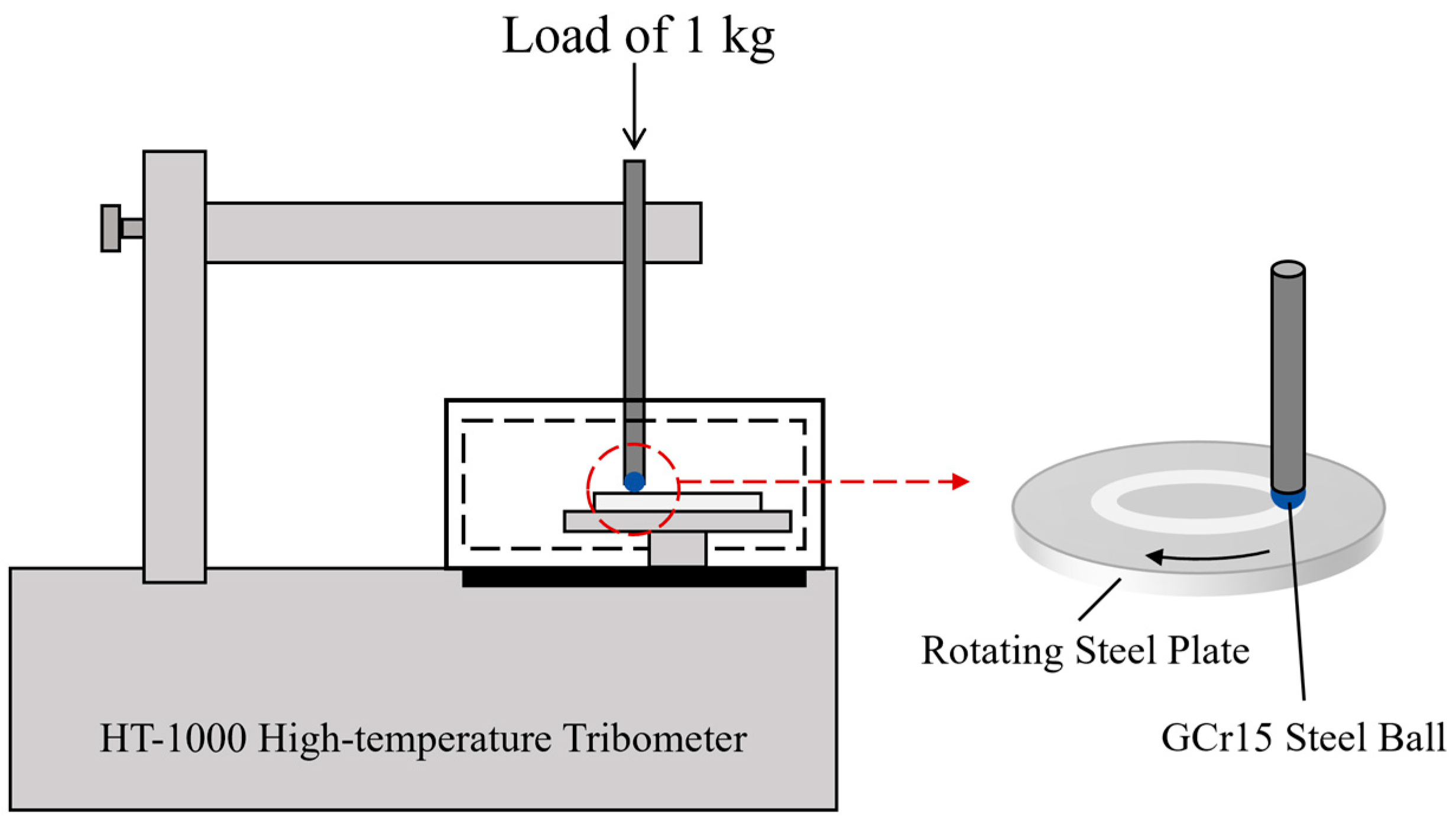
The phase analysis of the coating was performed using X-ray diffraction (XRD, Cu Kα radiation) with a 2θ range from 20° to 80° at a scanning rate of 5°/min. Microstructural characterization and elemental composition analysis were conducted through scanning electron microscopy (SEM, Thermo Scientific Apreo S, Thermo Fisher Scientific Inc., Waltham, MA, USA) coupled with energy dispersive spectroscopy (EDS). As shown in Figure 2, tribological tests were conducted using an HT-1000 high-temperature tribometer under a load of 1 kg for a duration of 30 min, at a rotational speed of 280 r/min, and with a wear track radius of 0.03 m, using a GCr15 steel ball with a radius of 0.02 m as the counter face material. The wear scars were characterized morphologically, and the wear volume and friction coefficient were recorded.
Electrochemical measurements were carried out in a 3.5 wt.% NaCl solution using a standard three-electrode cell setup connected to an electrochemical workstation. The working electrode (the specimen), a reference electrode, and a platinum counter electrode were immersed in the electrolyte within a beaker. After stabilizing the open circuit potential (OCP) (stabilization time = 400 s), electrochemical impedance spectroscopy (EIS) measurements were performed at the OCP with an AC amplitude of 10 mV over a frequency range from 0.1 Hz to 100,000 Hz. The impedance data were fitted using Zsimpwin software (Version 3.50). Potential dynamic polarization (PDP) curves were subsequently recorded by scanning the potential from −0.6 V to 0.2 V at a scan rate of 0.001 V/s. In order to figure out the changes in coatings after electrochemical tests, the evolution of the microstructure and elemental distribution after tests were presented in this study. All key experiments were performed with three independent replicates to ensure reliability and reproducibility.

3. Results and Discussion

3.1. Microstructure of NAB Coatings

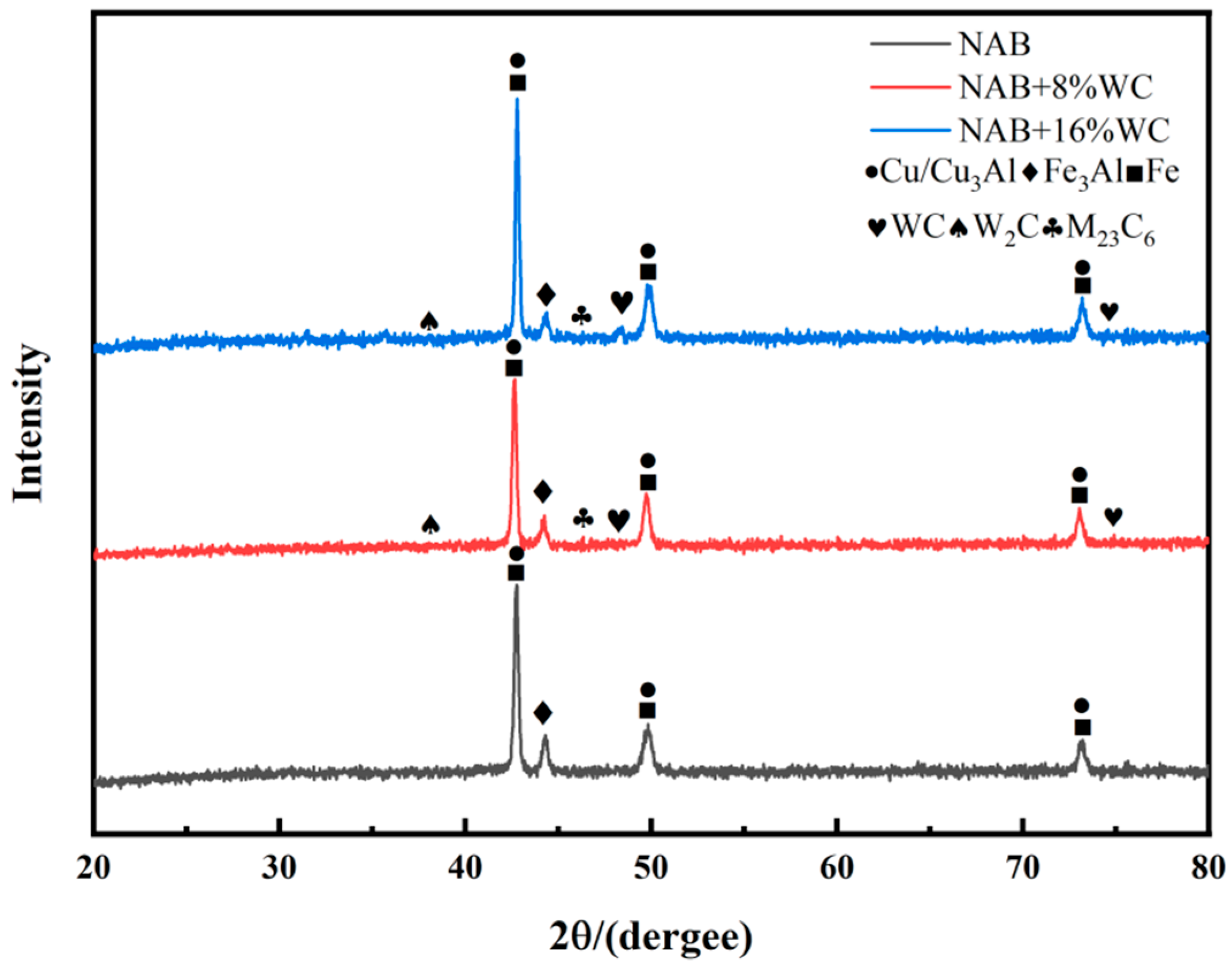
Figure 3 shows the XRD pattern results used to characterize the primary phase composition of the coating. The NAB coating primarily comprises the matrix α phase, martensitic β phase, primary κ phase, and Fe phase [18]. The α phase is a solid solution based on Cu. The β phase is a solid solution based on Cu3Al. The κ phase is mainly intermetallic compounds (such as Fe3Al) [19]. In the NAB coatings with WC reinforcements, phases including WC, W2C, and M23C6 (where M represents Fe, W, and/or Cr) were formed [20,21]. Moreover, the diffraction peak intensity of the WC phase exhibited a pronounced enhancement with increasing WC content.
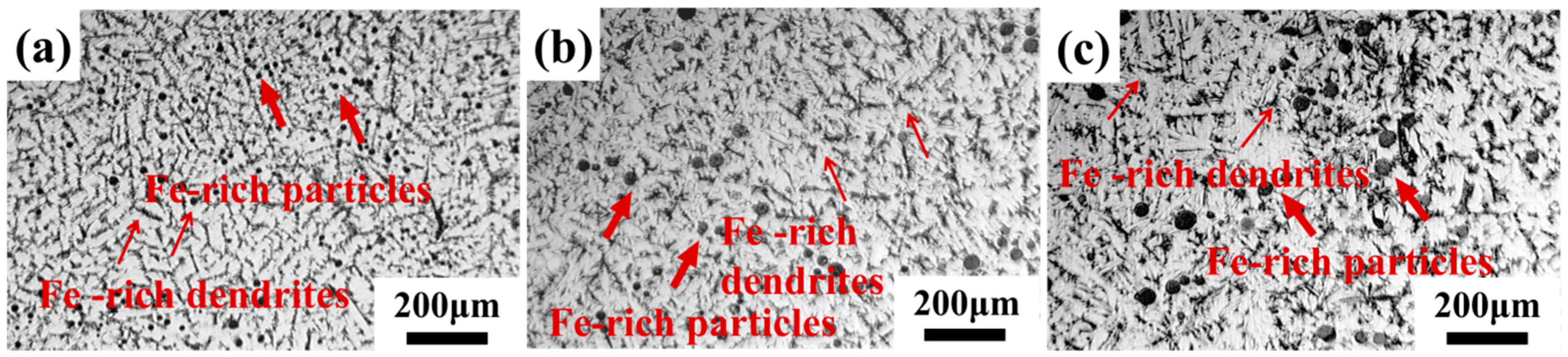
The microstructural characteristics of the coatings are comprehensively analyzed through multi-scale microscopy and elemental mapping. As shown in Figure 4a–c, the coating microstructure consists primarily of solid phases and dendritic phases, which are clearly revealed by metallographic microscopy at 100× magnification.
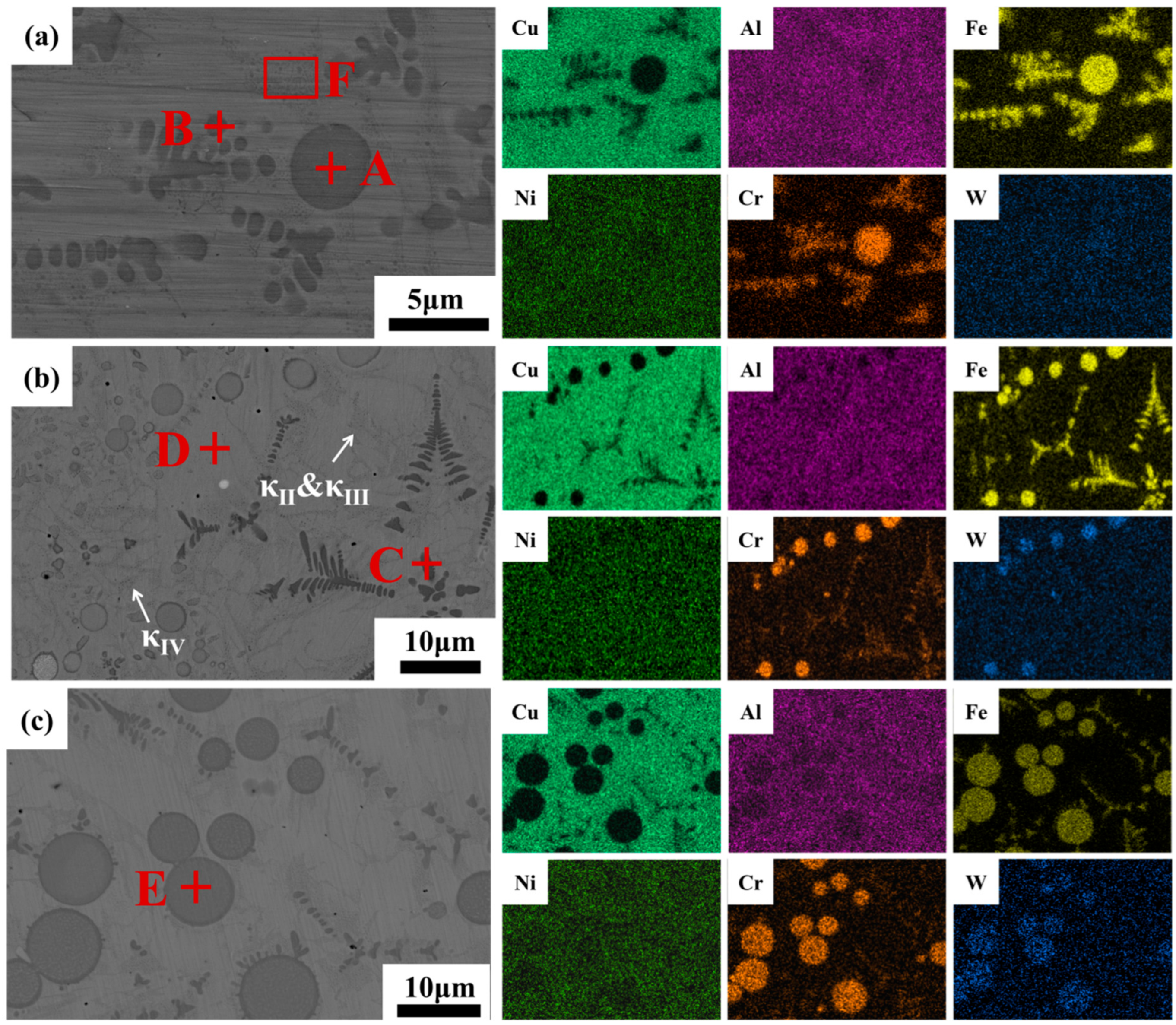
Complementary SEM images (Figure 5a–c) further resolve dark gray particles and dendrites distributed throughout the matrix. As shown in Figure 5a, regions B and C demonstrate distinct dendritic morphologies, while region F contains a black globular/rod-shaped κ-phase, with κII and κIII phases surrounding the dendritic phase and a κIV phase dispersed in the matrix. This microstructure is confirmed by works [18,19]. EDS analysis indicates Fe and Cr enrichment in both the solid phase and dendritic phase, while W is primarily concentrated in the solid phase. The corresponding quantitative EDS results are summarized in Table 3, which provides detailed elemental compositions (Al, Fe, Ni, Cu, Cr, W) for selected regions (A–E) in the coatings. Region D (Figure 5b) shows a notably low Fe content (4.29 wt.%) and high Cu content (74.11 wt.%), confirming that solid/dendritic phases constitute Fe-rich phases in the coating. Also, region D comprises a α + β phase [19], where WC dissolved and diffused into the Fe-rich solid phase [21]. This phenomenon can be attributed to a dissolution–diffusion mechanism during laser cladding. The dissolved W and C are then transported within the melt via convection and concentration gradients. Due to the high affinity between W, C and Fe/Cr, and under the non-equilibrium solidification conditions, they preferentially react to form thermodynamically favored carbides such as WC, W2C, and M23C6 phases (where M represents Fe, W, and/or Cr) in the last-to-solidify regions, which are predominantly the Fe-rich solid phases [22,23]. These microstructural features correlate with the laser cladding process: during solidification, the Fe-rich alloy in the coating forms dendritic structures, while concurrent liquid phase separation generates particulate structures [18,24].

3.2. Interface Characteristics

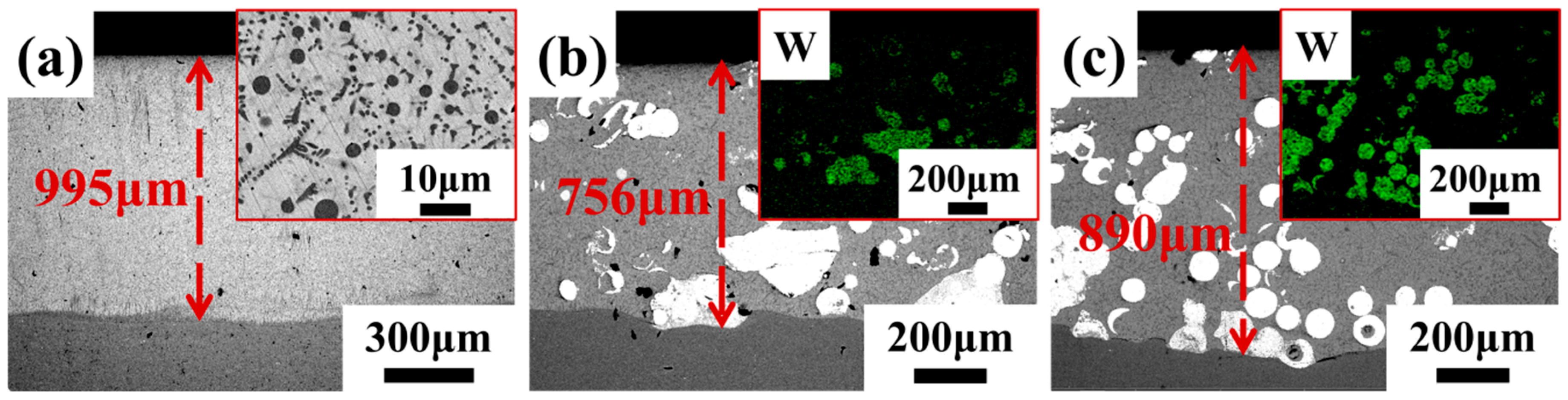
As shown in Figure 6a–c, the coating exhibits a distinct interface with the substrate, indicating metallurgical bonding integrity. Cross-sectional SEM images of WC-reinforced NAB coatings reveal predominantly white-contrast particulate phases, identified by framed EDS analysis as unmelted WC particles embedded in the coating [21]. In the NAB + 8%WC coating, unmelted WC exhibits heterogeneous distribution with pronounced agglomeration, where large clustered and irregularly shaped WC phases are observed. In contrast, the NAB + 16%WC coating demonstrates a higher WC content with denser yet uniformly dispersed particles and minimal agglomeration.

3.3. Tribological Behavior of NAB Coatings

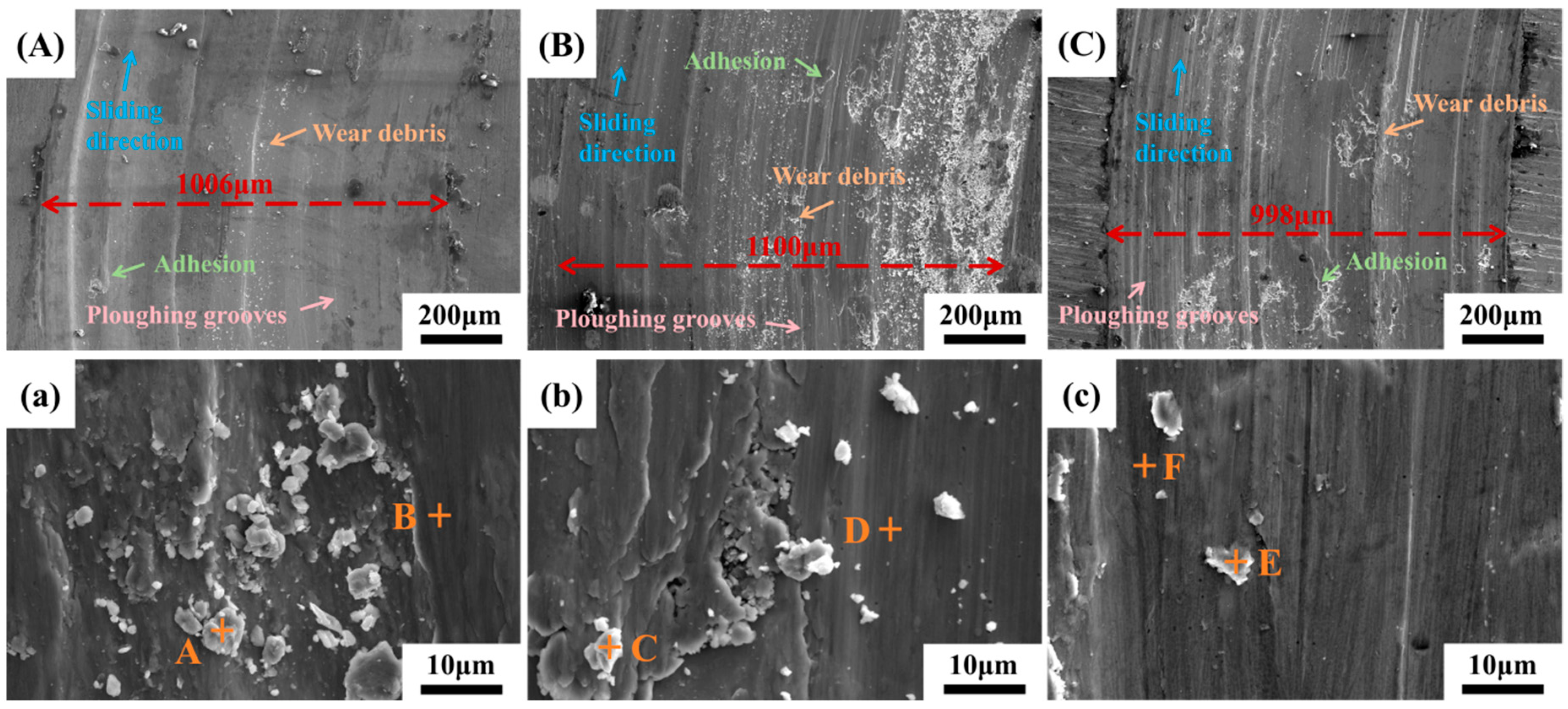
Figure 7A–C shows that adhered debris was observed on the wear scars of all coatings, with the NAB + 8%WC coating showing the most severe accumulation, consistent with the occurrence of adhesive wear. Grooves parallel to the sliding direction were also observed, suggesting the presence of abrasive wear during the friction process [25]. EDS analysis (Figure 7a–c and Table 4) showed a significant increase in the oxygen content within the wear debris across all three coatings. This indicates that oxidative wear also occurred, leading to the in situ formation of composite oxides, primarily Cu2O and Al2O3 [25].
To further validate the above analysis, quantitative assessments were performed on the NAB, NAB + 8%WC, and NAB + 16%WC coatings. The wear volume was calculated according to the following formula:
L = L 0 r 2 sin 1 d 2 r d 2 r 2 d 2 2
where L0 is the sliding distance or contact length; r denotes the radius of the abrasive particle (spherical particles were used in this experiment); and d represents the groove width formed during friction.
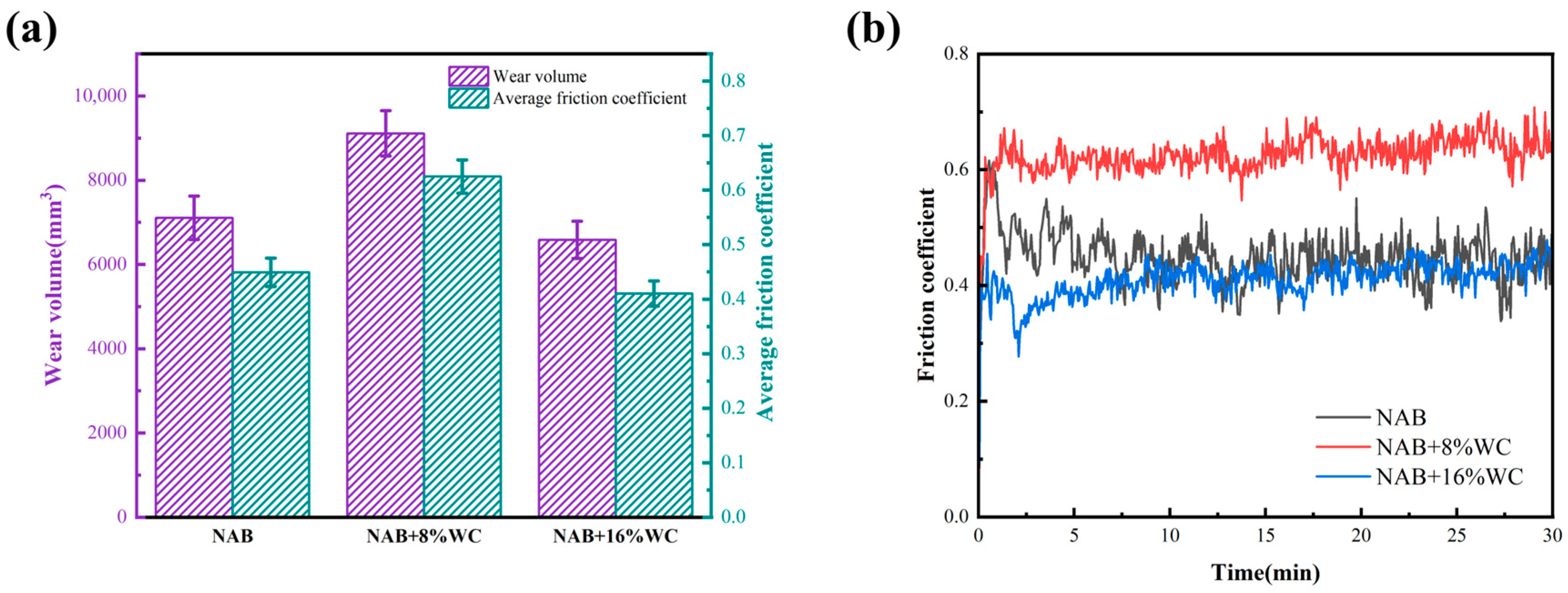
Based on the calculation, the wear volumes of the NAB, NAB + 8%WC, and NAB + 16%WC coatings were determined to be 7105.4 mm3, 9112.3 mm3, and 6584.8 mm3, respectively. As shown in Figure 8a, the NAB + 8%WC coating exhibited the most severe wear, while the wear of the NAB + 16%WC coating was slightly lower than that of the monolithic NAB coating. Figure 8b indicates that the steady-state friction coefficients were approximately 0.44, 0.62, and 0.41 for the NAB, NAB + 8%WC, and NAB + 16%WC coatings, respectively. Notably, the NAB + 16%WC coating showed the smallest fluctuation in friction coefficients, indicating superior tribological stability.
This phenomenon can be attributed to the dispersed distribution of WC particles and carbides within the NAB matrix, which form a reinforcing skeleton [24]. During the wear process, this skeletal structure effectively reduces the direct contact area between the counter ball and the NAB matrix, thereby smoothing the wear process. As a result, the NAB + 16%WC coating exhibited a more stable friction coefficient. The NAB + 8%WC coating exhibited noticeable WC agglomeration and a defective skeleton, which promoted particle detachment during sliding, thus forming new abrasive contacts. The wear mechanism is predominantly governed by three-body abrasion initiated by dislodged WC particles. Under load, these hard particles plow through the coating, creating extensive grooves and producing copious wear debris. This debris, along with the particles themselves, further abrades the counter ball surface. The resulting ball surface roughening increases the effective contact area and widens the wear track on the coating. This synergistic interaction ultimately leads to a significant increase in both wear volume and the friction coefficient.

3.4. Electrochemical Behavior of NAB Coatings

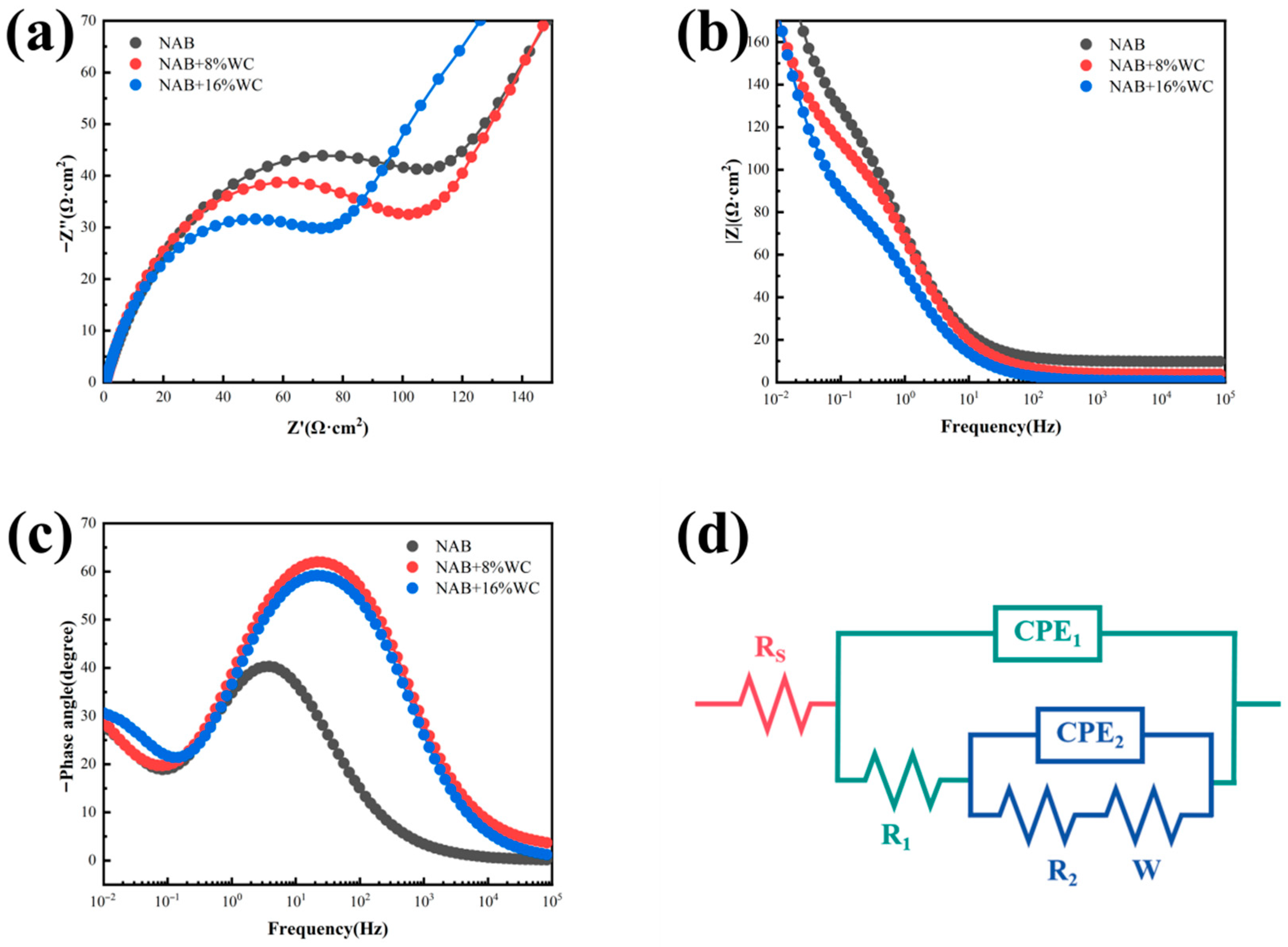
Figure 9a–c presents EIS curves of the three coatings immersed in 3.5% NaCl solution, with the corresponding equivalent circuit model shown in Figure 9d [1,26]. Fitted parameters are summarized in Table 5. The protective film thickness (proportional to 1/(CPE1-Y0) [1]) and porosity (inversely correlates with (CPE1-n) [1]) improved significantly in WC-reinforced coatings. Notably, the NAB + 8%WC coating exhibited the lowest (CPE1-Y0) and highest (CPE1-n) values, indicating maximum protective film thickness and optimal densification. This corresponds to its highest total resistance (R1 + R2), signifying superior corrosion resistance.
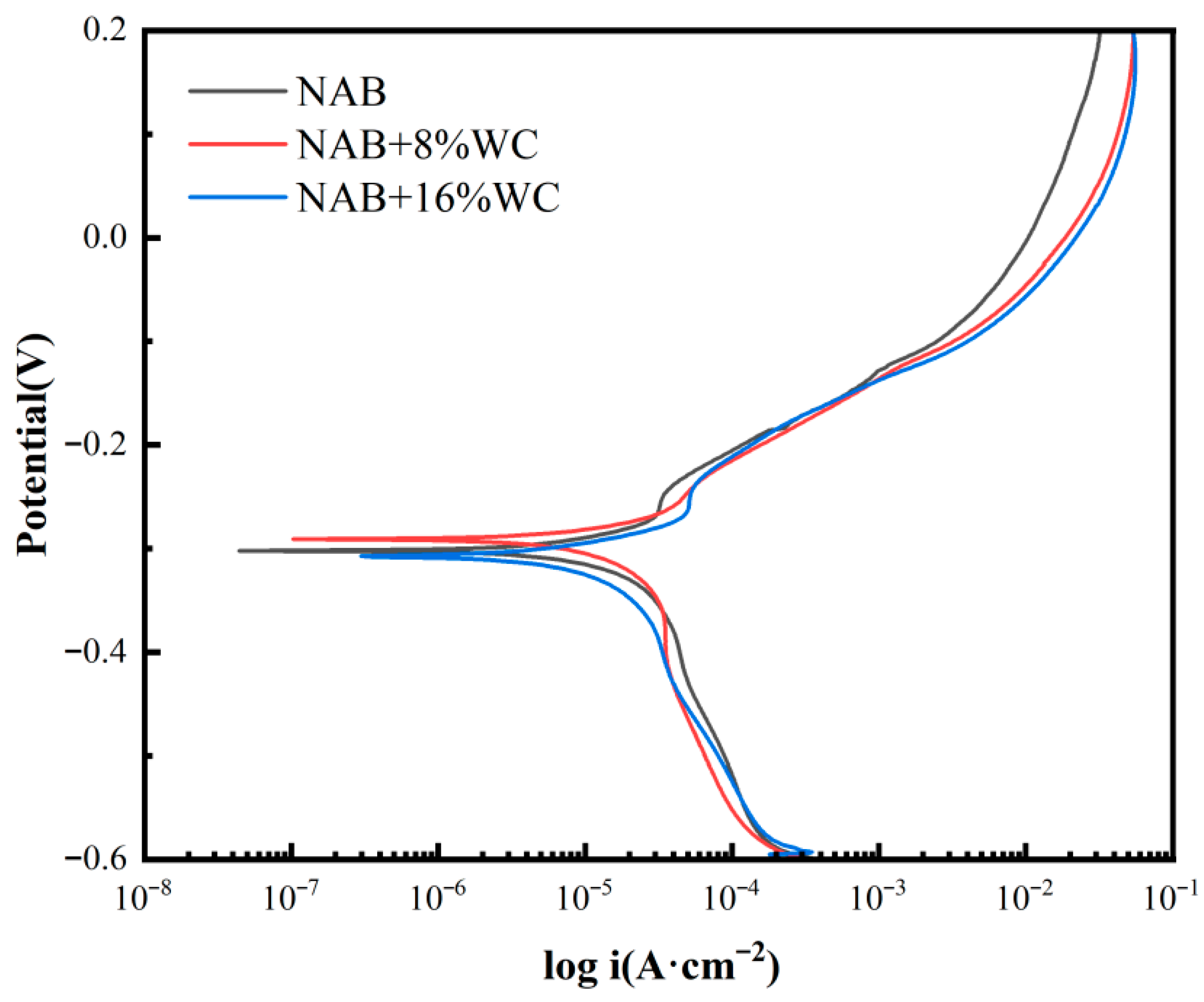
Figure 10 displays PDP curves for the three coatings. The fitted corrosion parameters in Table 5 revealed that the NAB + 8%WC coating exhibits the highest corrosion potential (Ecorr) (−0.291 V) and a comparatively low icorr (2.71 × 10⁻⁵ A·cm−2). These findings align well with its highest total film resistance (R1 + R2), maximum protective film thickness, and optimal densification observed in the EIS analysis, collectively indicating its superior corrosion resistance.
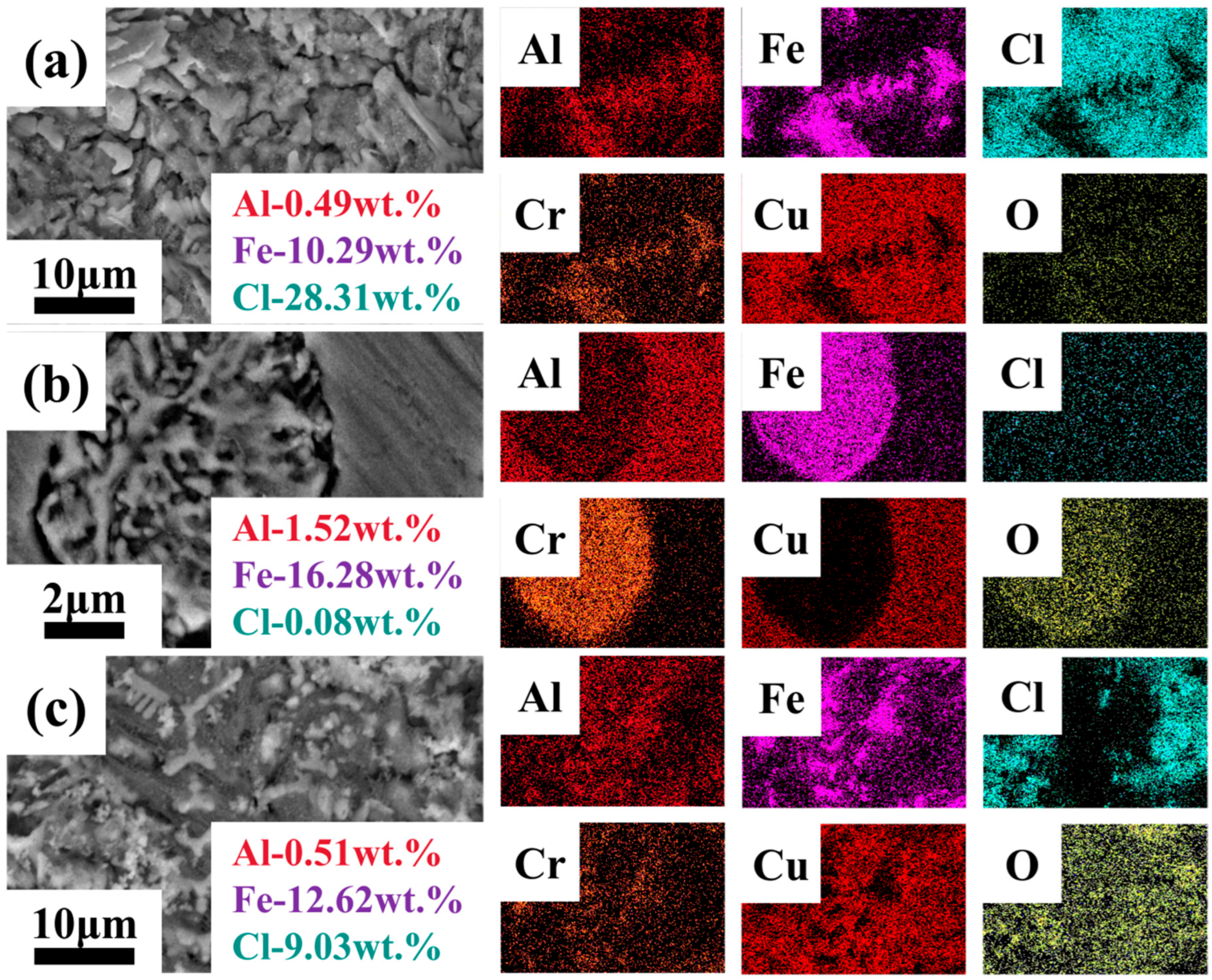
Post-corrosion SEM surface morphologies (Figure 11a–c) reveal preferential attack across constituent phases. EDS mapping indicates the obscured phase boundaries of the dendritic phase but distinct boundaries of the solid phase, confirming the lower corrosion severity in the latter. Quantitative EDS analysis demonstrated the depletion of Al and Fe in the NAB, NAB + 8%WC, and NAB + 16%WC coatings after corrosion. Crucially, Cl penetration correlates with WC content: NAB exhibits severe chloride ingress, while NAB + 8%WC shows minimal uptake. NAB + 16%WC registers intermediate Cl accumulation.
These findings confirm the dealloying corrosion (selective phase corrosion) in the coatings [19,27]. WC modification significantly reduces elemental leaching, with NAB + 8%WC coatings exhibiting the lowest Al/Fe depletion. This mitigation correlates with the dramatically reduced chloride retention, particularly in NAB + 8%WC. Chloride ions are notorious for penetrating passive films and initiating localized attack, including dealloying, in copper–nickel-based alloys. Among the coatings, NAB + 8%WC demonstrates the least Al/Fe depletion and minimal Cl content, signifying the most effective barrier against corrosive ingress and optimal corrosion resistance [28].
The enhanced corrosion resistance stems from the dual barrier effects of WC. The unmelted WC particles and the in situ formed carbides (W2C) act as heterogeneous nucleation sites and pin the grain boundaries during the rapid solidification of laser cladding. This process significantly inhibits grain growth, leading to a refined microstructure with increased grain boundary density and obstructing the ionic diffusion pathways [20,24,29]. Although the spherical Fe-rich solid phase and Fe-rich dendritic phase possess lower electrochemical potentials (Eκ) [27], they do not become the primary corrosion sites as traditionally expected. This anomaly occurs because dissolved W diffuses predominantly into the Fe-rich particulate solid phases, forming corrosion-inhibiting compounds (WC, W2C) that seal the ion transport channels [20], reduce porosity, and minimize Cl penetration.

4. Conclusions

This work systematically investigated the influence of WC additions (0, 8, and 16 wt.%) on the microstructure, tribological properties, and corrosion resistance of laser-clad nickel–aluminum bronze (NAB) coatings. The results demonstrate that WC incorporation significantly refined the coating microstructure.
Unmelted WC particles and in situ formed carbides (e.g., W2C) were uniformly distributed, with dissolved W preferentially segregating in the Fe-rich solid phase. Tribologically, the NAB + 16%WC coating exhibited the most stable friction behavior and the lowest average friction coefficient (0.41), attributed to the formation of a reinforcing skeleton that reduced direct matrix contact. In contrast, the NAB + 8%WC coating showed suboptimal wear resistance due to particle agglomeration and an incomplete reinforcement network. Electrochemically, the addition of WC notably enhanced the corrosion resistance in a 3.5 wt.% NaCl solution by promoting a denser and more protective passive film. The NAB + 8%WC formulation exhibited the optimal balance, demonstrating the highest polarization resistance and the most effective barrier against chloride ion penetration, thereby offering the best overall corrosion protection in a simulated marine environment.

Author Contributions

S.L.: Writing—original draft, Investigation, Data curation. Y.Y., X.C. and G.J.: Review and editing, Supervision. H.Y., P.L., J.Z. (Jingyu Zhang) and J.Z. (Jiaming Zheng): Investigation, Data curation. Y.Y., L.Z. and P.S.: Funding acquisition, Conceptualization. All authors have read and agreed to the published version of the manuscript.

Funding

This research was funded by the Natural Science Foundation of China (No. 52205189) and the Educational Department of Liaoning Province, China (No. LJ222411632022).

Data Availability Statement

The data presented in this study are available on request from the corresponding author.

Conflicts of Interest

The authors declare no conflict of interest.

References

  1. Luo, Q.; Qin, Z.; Wu, Z.; Shen, B.; Liu, L.; Hu, W. The corrosion behavior of Ni-Cu gradient layer on the nickel aluminum-bronze (NAB) alloy. Corros. Sci. 2018, 138, 8–19. [Google Scholar] [CrossRef]
  2. Sriraksasin, K.; Tareelap, N.; Srisukhumbowornchai, N. Corrosion characteristics of beta prime in nickel aluminum bronze. J. Alloys Compd. 2025, 1017, 179108. [Google Scholar] [CrossRef]
  3. Pidaparti, R.M.; Aghazadeh, B.S.; Whitfield, A.; Rao, A.S.; Mercier, G.P. Classification of corrosion defects in NiAl bronze through image analysis. Corros. Sci. 2010, 52, 3661–3666. [Google Scholar] [CrossRef]
  4. Deng, Q.; Zhang, P.; Li, X.; Shen, Z.; Mi, X.; Cai, Z.; Gu, L. Effect of seawater salinity on the fretting corrosion behavior of nickel-aluminum bronze (NAB) alloy. Tribol. Int. 2024, 193, 109357. [Google Scholar] [CrossRef]
  5. Dobson, T.; Larrosa, N.; Reid, M.; Rajamudili, K.; Ganguly, S.; Coules, H. Corrosion mechanisms of plasma welded Nickel aluminium bronze immersed in seawater. Corros. Sci. 2024, 232, 112004. [Google Scholar] [CrossRef]
  6. Li, Z.; Yan, H.; Zhang, P.; Guo, J.; Yu, Z.; Ringsberg, J.W. Improving surface resistance to wear and corrosion of nickel-aluminum bronze by laser-clad TaC/Co-based alloy composite coatings. Sur. Coat. Technol. 2021, 405, 126592. [Google Scholar] [CrossRef]
  7. Okoro, A.M.; Lephuthing, S.S.; Rasiwela, L.; Olubambi, P.A. Nondestructive measurement of the mechanical properties of graphene nanoplatelets reinforced nickel aluminium bronze composites. Heliyon 2021, 7, e07978. [Google Scholar] [CrossRef]
  8. Shi, W.; Wang, Y. Preparation and Application of Ceramic Particle Reinforced Metal Matrix Composites. Hot Work. Technol. 2024, 53, 17–21. [Google Scholar] [CrossRef]
  9. Lv, N.; Yue, H.; Guo, C.; Dai, W.; Zhang, J.; Li, Q.; Zhao, G.; Hao, G. A comparative investigation on the effects of reinforcement phase addition methods on laser melting deposited WC/Co coatings. J. Manuf. Process. 2024, 129, 134–146. [Google Scholar] [CrossRef]
  10. Zhang, H.; Zhang, Y. In-situ synthesized WC reinforcement phase on microstructural evolution, toughness and tribological properties of Mo2FeB2-based composite coatings fabricated by laser cladding. J. Mater. Res. Technol. 2025, 34, 677–690. [Google Scholar] [CrossRef]
  11. Wang, H.; Liu, K.; Li, J.; Geng, S.; Jing, L.; Skuratov, V. Reinforcements/matrix micro-interface evolution and properties of in-situ Ni60A/WC coatings prepared by laser cladding. Surf. Coat. Technol. 2024, 484, 130834. [Google Scholar] [CrossRef]
  12. Mahdi, M.S.; Sanjabi, S. Synthesis and characterization of Ni-based infiltration brazed coating reinforced with Co-P shell-coated WC. J. Alloys Compd. 2025, 1010, 177036. [Google Scholar] [CrossRef]
  13. Wang, J.; Zhang, M.; Dai, R.; Shao, L.; Tu, Z.; Zhu, D.; Xu, Z.; Dai, S.; Zhu, L. Wear and electrochemical corrosion behaviors of Cu matrix WC-Co reinforced composite coating prepared by cold spray. Surf. Coat. Technol. 2024, 488, 131001. [Google Scholar] [CrossRef]
  14. Tahaei, A.; Vanani, B.B.; Abbasi, M.; Arizmendi-Morquecho, A. The hardfacing properties of the nickel-based coating deposited by the PTA process with the addition of wc nano-particles: Wear investigation. Tribol. Int. 2024, 193, 109472. [Google Scholar] [CrossRef]
  15. Zhang, M.; Xu, Y.-C.; Wang, J.-F.; Peng, K.-R.; Dai, S.; Wu, J.-M.; Zhu, L. Cold-sprayed Cu matrix composite coatings with core-shell structured Co@WC reinforcements on Q235 steel. Surf. Interfaces 2025, 56, 105577. [Google Scholar] [CrossRef]
  16. Fan, Z.; Ren, W.; Zuo, W.; Wang, Y. Comparative study on the reinforcement effects of WC and TiC in the laser cladding layer of Ti-6Al-4V alloy. J. Manuf. Process. 2025, 134, 589–602. [Google Scholar] [CrossRef]
  17. Chen, H.; Li, S.; Zhao, H.; Liu, H.; Zhao, H.; Gong, X.; Wang, T.; Yang, J. Research on microstructure and properties of laser cladding Ti-Al-WC composite coating on TC4 surface. J. Phys. Conf. Ser. 2024, 2785, 012127. [Google Scholar] [CrossRef]
  18. Zhao, L.; Du, B.; Yao, J.; Chen, H.; Ding, R.; Li, K. Microstructure and Mechanical Properties of Nickel-Aluminum Bronze Coating on 17-4PH Stainless Steel by Laser Cladding. Chin. J. Mech. Eng. 2022, 35, 140. [Google Scholar] [CrossRef]
  19. Lu, Y.; Zhang, Q.; Li, W.; Li, Y.; Ma, B.; Feng, L.; Li, Z. Study of corrosion behavior of powder material of aluminum bronze coatings. Powder Metall. Technol. 2010, 28, 105–109. [Google Scholar] [CrossRef]
  20. Wang, Y.; Wu, Y.; Ye, H.; Chen, L.; Wu, X.; Liu, K.; Han, J. Effect of WC Particle Reinforced Nickel-Based Coatings on Corrosion Resistance and Wear Properties of Q345 Steel. Mater. Sci. 2025, 15, 9. [Google Scholar]
  21. Ren, M.; Li, R.; Zhang, X.; Gu, J.; Jiao, C. Effect of WC particles preparation method on microstructure and properties of laser cladded Ni60-WC coatings. J. Mater. Res. Technol. 2023, 22, 605–616. [Google Scholar] [CrossRef]
  22. Huang, K.; Zheng, C.; Chen, Z.; Wu, D.; Yi, X. Laser cladding Ni-based WC/MoS2 composite coatings: Particle competition mechanism and tribological performance. Mater. Des. 2025, 253, 113868. [Google Scholar] [CrossRef]
  23. Zhao, S.; Luo, G.; Yang, L.; Wang, M.; Zhang, J.; Feng, Y. Laser additive remanufacturing Ni-based multilayers reinforced with dual-scale tungsten carbides via a novel integrated strategy. Addit. Manuf. 2024, 84, 104146. [Google Scholar] [CrossRef]
  24. Chen, S.; Xia, Y.; Liu, X.; Lei, J.; Wang, T. Microstructure and Wear Resistance of Tungsten-Carbide-Reinforced Nickel Copper Alloy Deposited by Circular Oscillating Laser. Chin. J. Lasers 2023, 50, 45–55. [Google Scholar]
  25. Du, Y.; Dong, Y.; Ma, S.; Yang, X.; Ju, J.; Shen, Z.; Suo, Z.; Fu, L.; Shan, A. Insight into the tribological behavior of the dual-phase nickel aluminum bronze alloy by multiscale characterization. Wear 2024, 556–557, 205530. [Google Scholar] [CrossRef]
  26. Sabbaghzadeh, B.; Parvizi, R.; Davoodi, A.; Moayed, M.H. Corrosion evaluation of multi-pass welded nickel–aluminum bronze alloy in 3.5% sodium chloride solution: A restorative application of gas tungsten arc welding process. Mater. Des. 2014, 58, 346–356. [Google Scholar] [CrossRef]
  27. Liu, M.; Zhou, L.; Zuo, P.; Guo, L.; Zhang, Z.; He, S.; Wu, J.; Zhang, B. Preparation and Corrosion Behavior of Additive Manufactured Nickel-Aluminum Bronze Alloys. Copp. Eng. 2024, 54–66. [Google Scholar] [CrossRef]
  28. Liu, H.; Zhao, Q.; Dai, Y.; Deng, B.; Lin, J. Enhancing corrosion and wear resistance of Nickel–aluminum bronze through laser-cladded amorphous-crystalline composite coating. Smart Mater. Manuf. 2024, 2, 100046. [Google Scholar] [CrossRef]
  29. Gong, C.; Liu, Z.; Ma, X.; Jiao, Y.; Chen, R.; Liu, E. Research on Microstructure and Erosion Properties of Atomization Granulation and Laser Cladding Coating of Ni-65WC Powder. Coal Mine Mach. 2022, 43, 47–51. [Google Scholar] [CrossRef]
Figure 1. Powders micrographs (ac) of NAB, NAB + 8%WC, and NAB + 16%WC.
Coatings 16 00232 g001
Figure 2. Schematic of the tribological test.
Coatings 16 00232 g002
Figure 3. XRD patterns of NAB coatings with varying WC weight percentages.
Coatings 16 00232 g003
Figure 4. Surface metallographs (ac) of NAB, NAB + 8%WC, and NAB + 16%WC.
Coatings 16 00232 g004
Figure 5. SEM images with EDS analysis (ac) of NAB, NAB + 8%WC, and NAB + 16%WC.
Coatings 16 00232 g005
Figure 6. Cross-sectional micrographs (ac) of NAB, NAB + 8%WC, and NAB + 16%WC.
Coatings 16 00232 g006
Figure 7. Wear tracks micrographs: (A,a) NAB, (B,b) NAB + 8%WC, (C,c) and NAB + 16%WC.
Coatings 16 00232 g007
Figure 8. Wear volume and average friction coefficient (a) and friction coefficient (b) of NAB, NAB + 8%WC, and NAB + 16%WC.
Coatings 16 00232 g008
Figure 9. EIS curves (ac) and equivalent circuit (d).
Coatings 16 00232 g009
Figure 10. PDP curves.
Coatings 16 00232 g010
Figure 11. Corresponding EDS results of post-corrosion coating: (a) NAB, (b) NAB + 8%WC, (c) NAB + 16%WC.
Coatings 16 00232 g011
Table 1. Chemical composition of PH17-4 stainless steel.
ElementsCrNiCuMnSiMoFe
wt.%15~17.53~53~5110.5Bal.
Table 2. Chemical composition of NAB alloy.
ElementsAlNiFeMnCu
wt.%9.84.04.01.0~2.0Bal.
Table 3. EDS analysis (A–E) of NAB, NAB + 8%WC, and NAB + 16%WC (wt.%).
Element (wt.%)AlFeNiCuCrW
A5.0660.413.859.7215.910.35
B7.6350.134.7024.308.120.46
C7.9052.355.1323.865.320.48
D7.104.293.7274.110.310
E3.8963.542.837.2413.953.55
Table 4. EDS analysis (A–F) of NAB, NAB + 8%WC, and NAB + 16%WC.
Element (wt.%)NABNAB + 8%WCNAB + 16%WC
ABCDEF
O5.071.485.041.016.522.06
Table 5. Fitting results of EIS and PDP results.
NABNAB + 8%WCNAB + 16%WC
RS (Ω·cm2)0.65530.83070.6727
(CPE1-Y0) (F·cm−2)3.174 × 10−32.388 × 10−33.028 × 10⁻³
(CPE1-n)0.70560.76030.7556
R1 (Ω·cm2)109108.890.48
(CPE2-Y0) (F·cm−2)7.166 × 10−26.333 × 10−25.747 × 10⁻²
(CPE2-n)10.6460.8588
R2 (Ω·cm2)62.691183129.7
W (Ω·cm2)2.885 × 10−22.325 × 10−23.972 × 10⁻²
Ecorr (V)−0.302 −0.291 −0.307
icorr (A·cm−2)2.04 × 10−52.71 × 10−51.76 × 10⁻⁵
Disclaimer/Publisher’s Note: The statements, opinions and data contained in all publications are solely those of the individual author(s) and contributor(s) and not of MDPI and/or the editor(s). MDPI and/or the editor(s) disclaim responsibility for any injury to people or property resulting from any ideas, methods, instructions or products referred to in the content.