Numerical Modeling of the Relationship Between Mechanical Properties and Void Morphology in Porous Asphalt Mixtures


Highlights
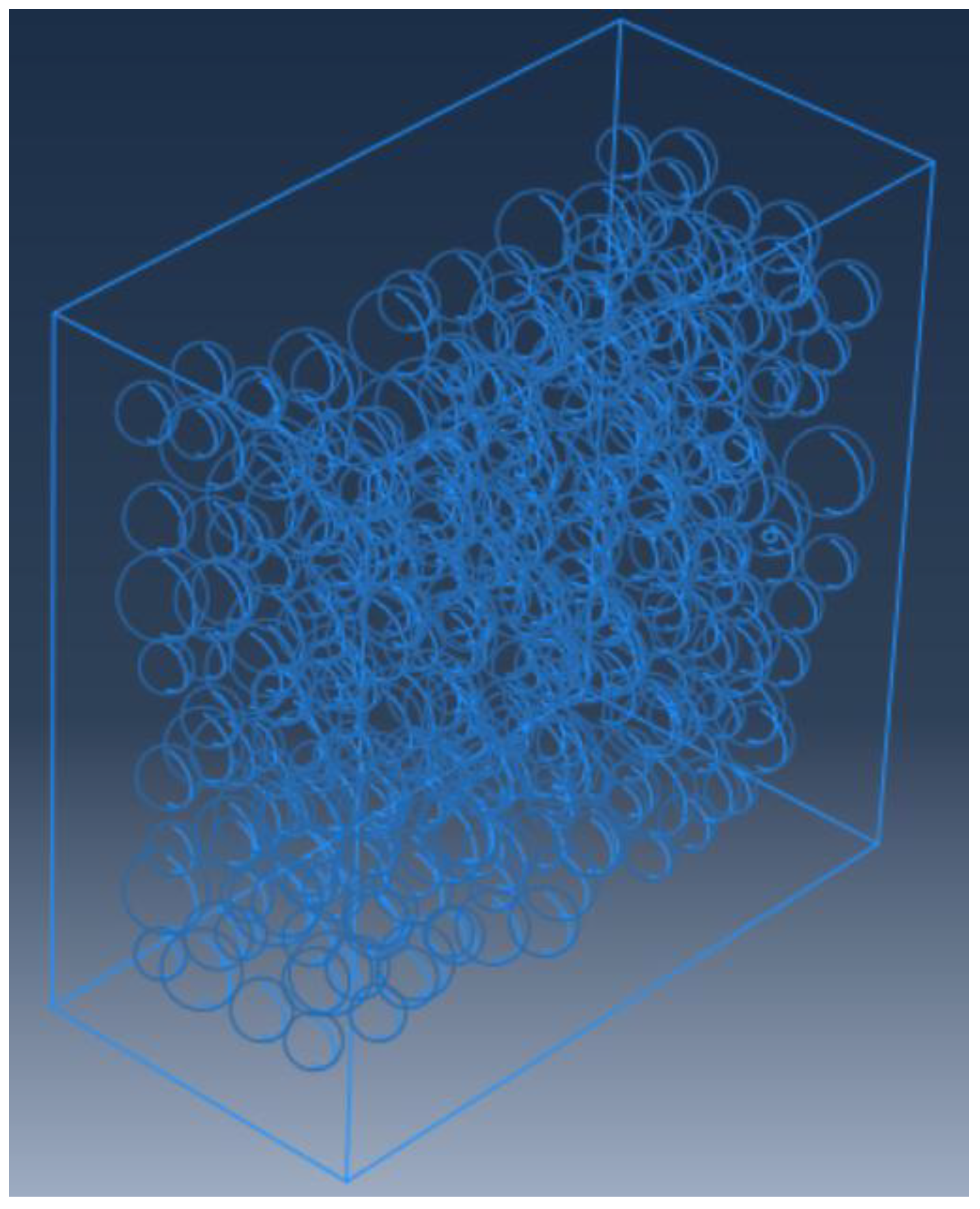
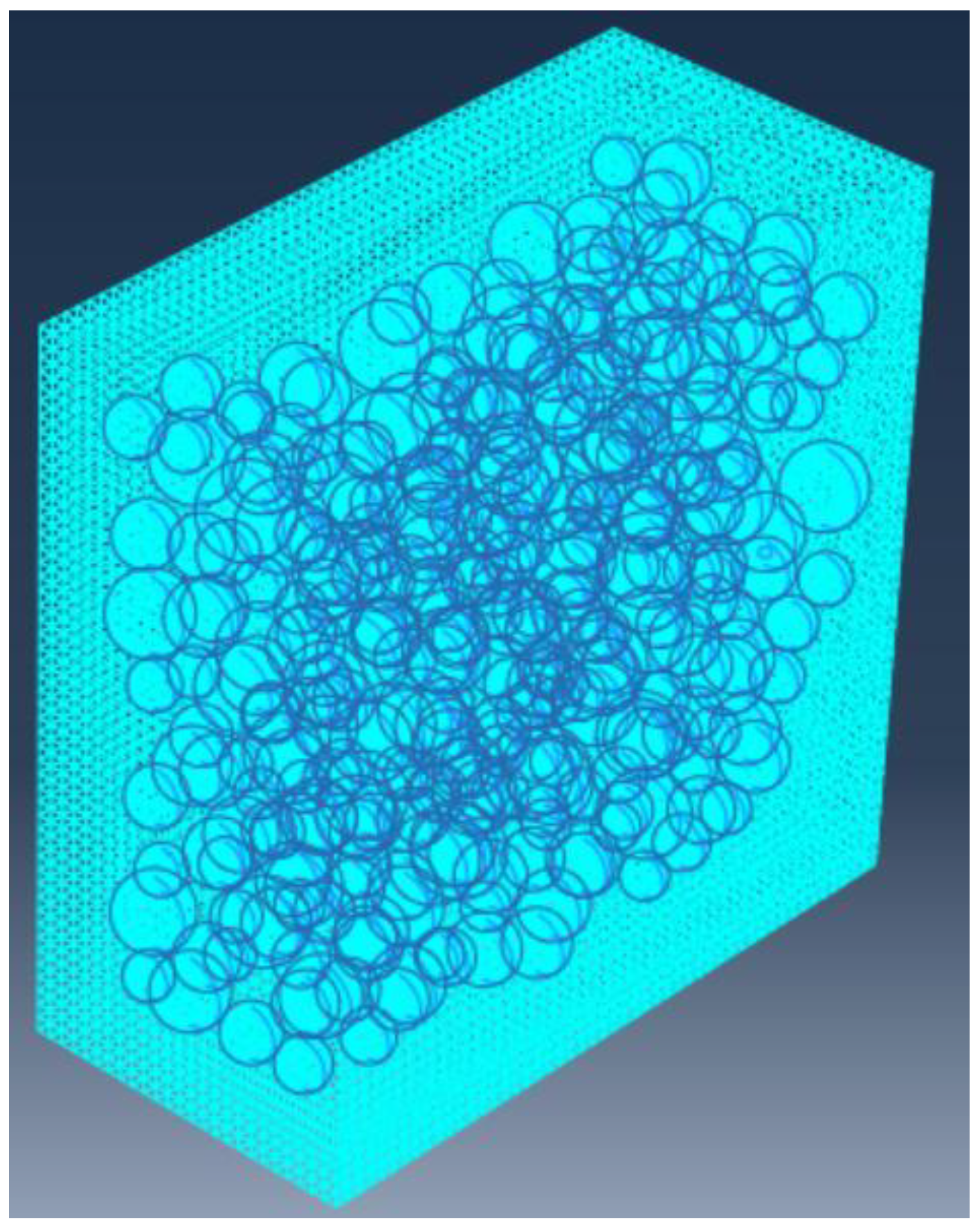
- The Monte Carlo method and ABAQUS finite element software are used to build a three-dimensional finite element model of voids, and the relationship between the pore morphology, distribution, and mechanical properties of the porous asphalt mixture is studied.
- The correlation between the stress–strain characteristics of the mesostructure and the void morphology was studied, and the stress characteristics of the aggregate in the porous asphalt mixture and the damaging trend in the mesostructure were summarized.
- The relationship between the strength of the porous asphalt mixture and the void ratio was studied.
- A microvoid model of porous asphalt mixture with optimal mechanical properties is proposed.
Abstract
1. Introduction
2. Materials and Methods
2.1. Model Conceptualization and Scale Definition
2.2. Numerical Modeling Framework
2.2.1. Stochastic Void Generation Using Monte Carlo Method
2.2.2. Finite Element Model Setup in ABAQUS
2.2.3. Model Variants and Simulation Plan
- (1)
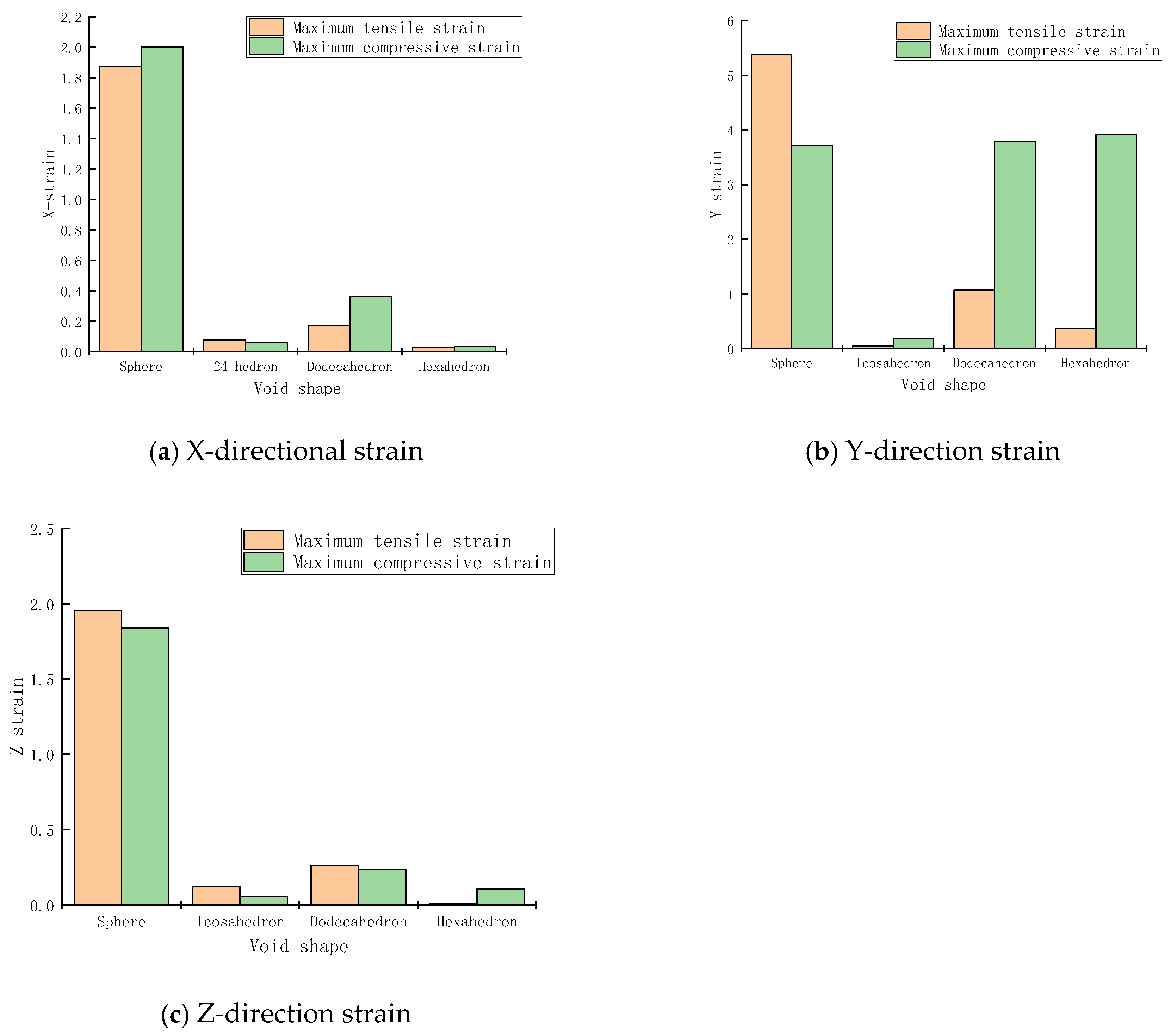
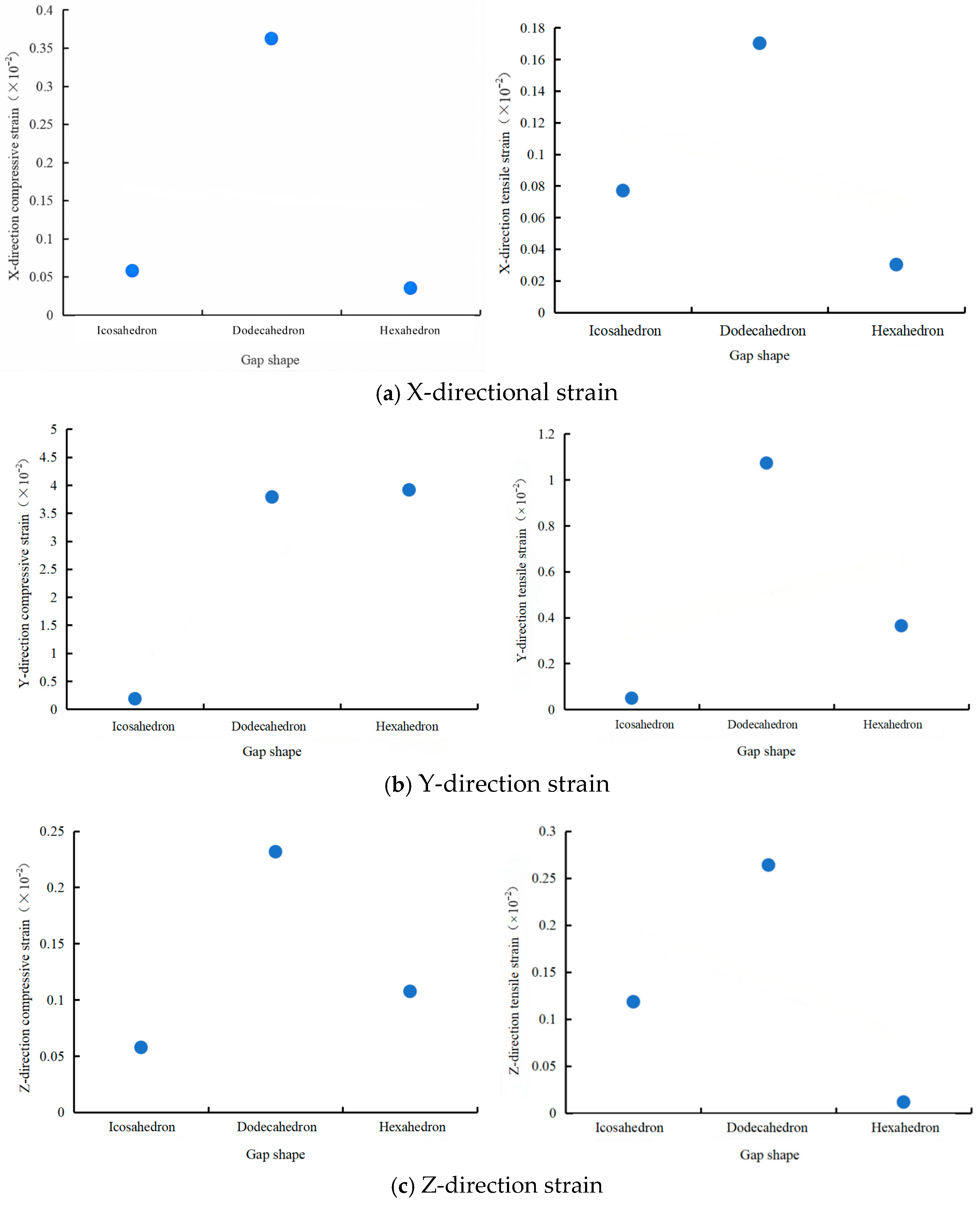
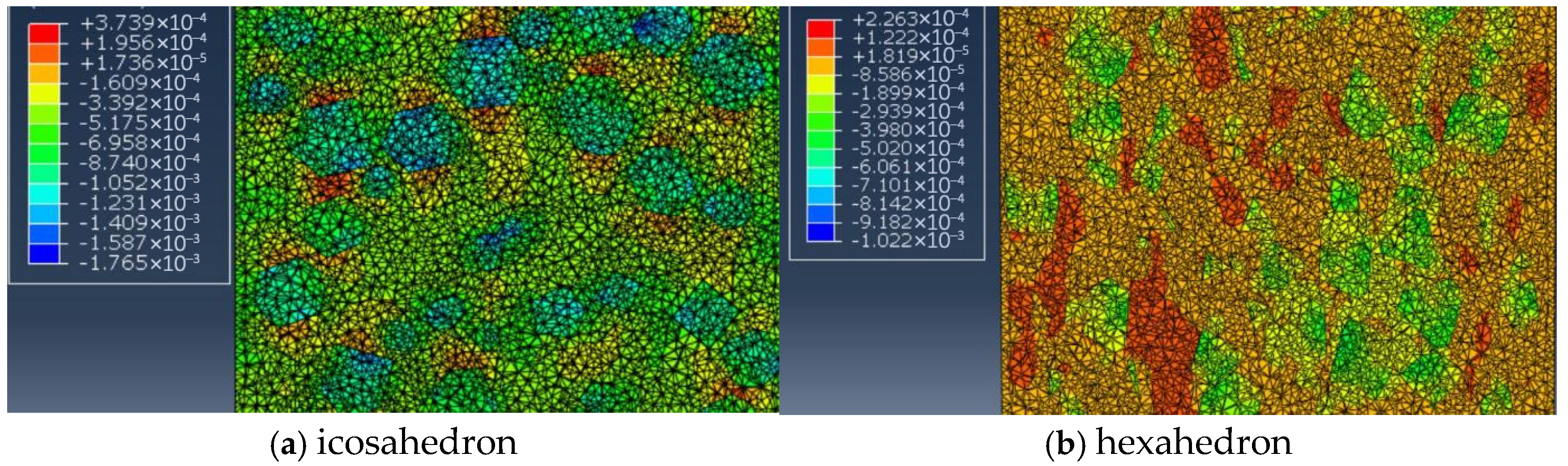
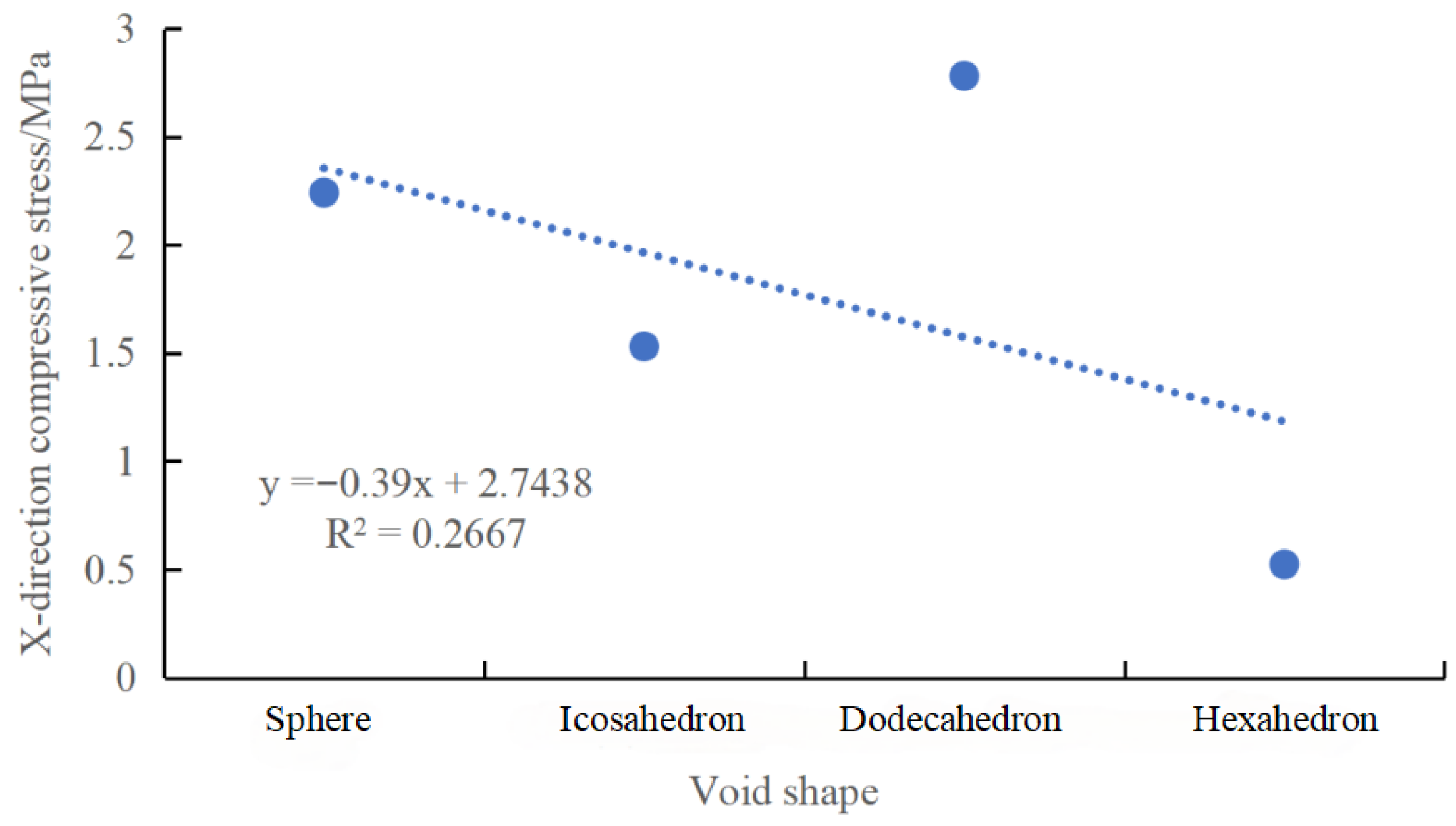
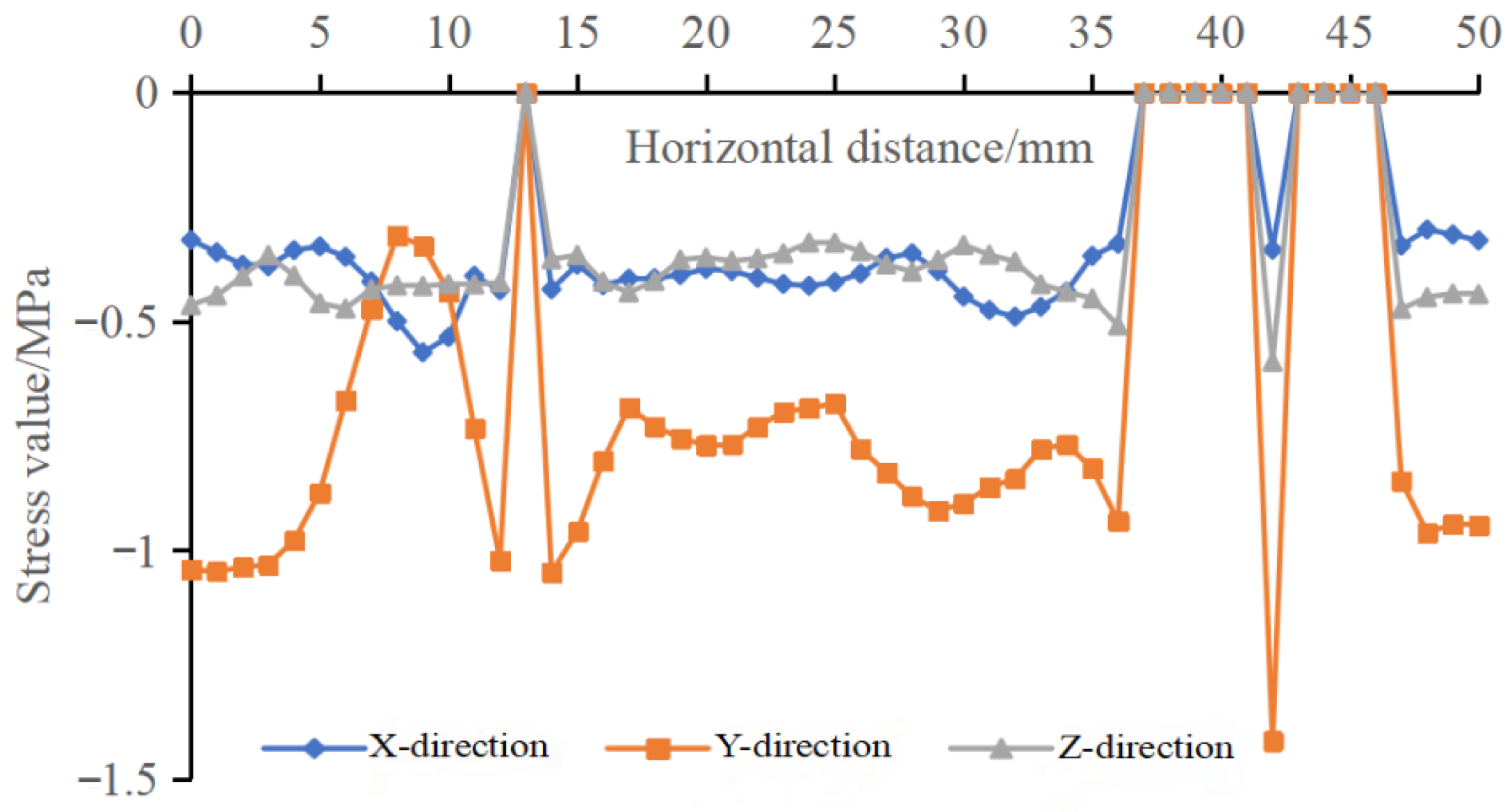
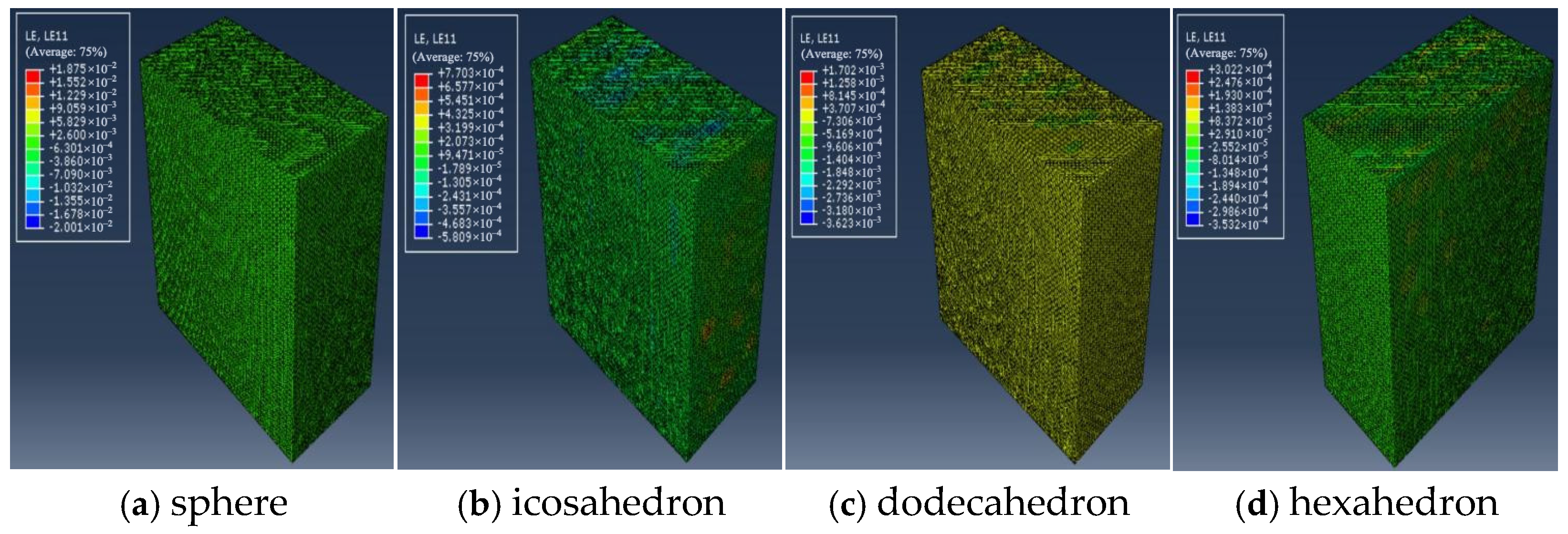
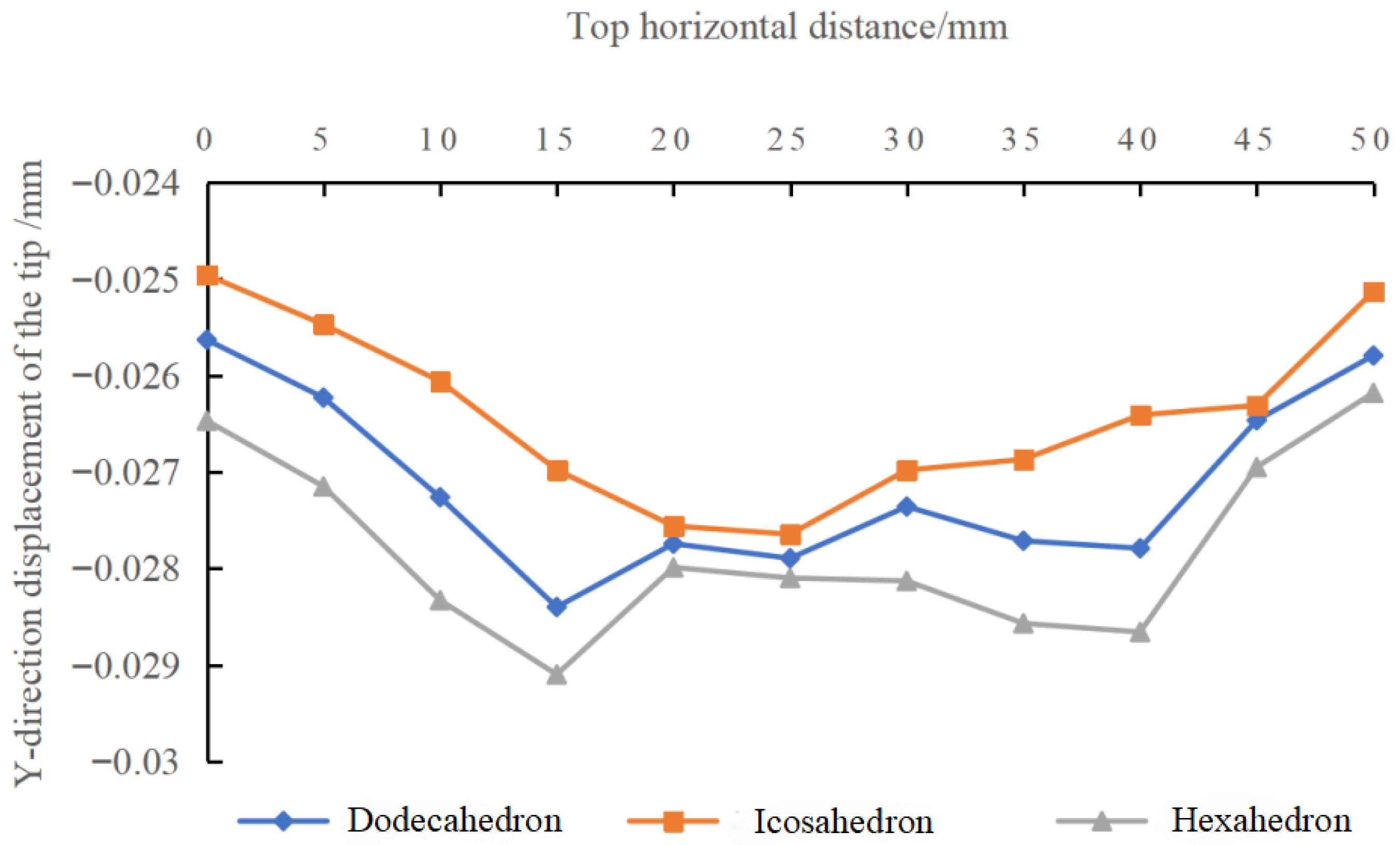
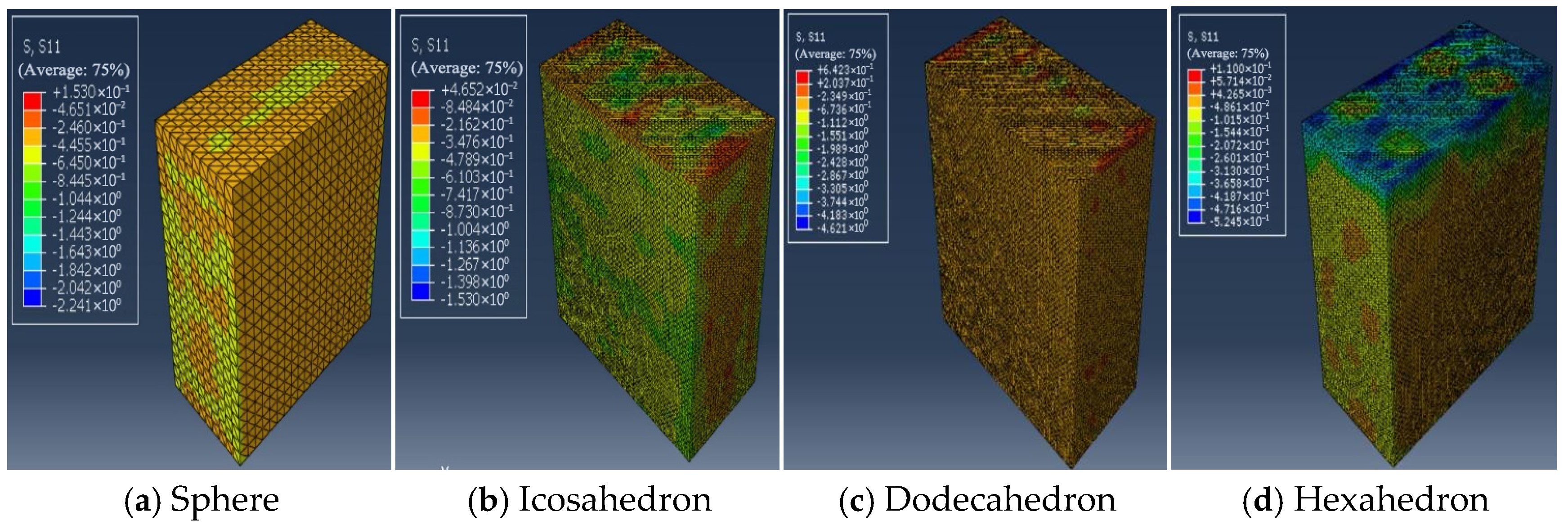
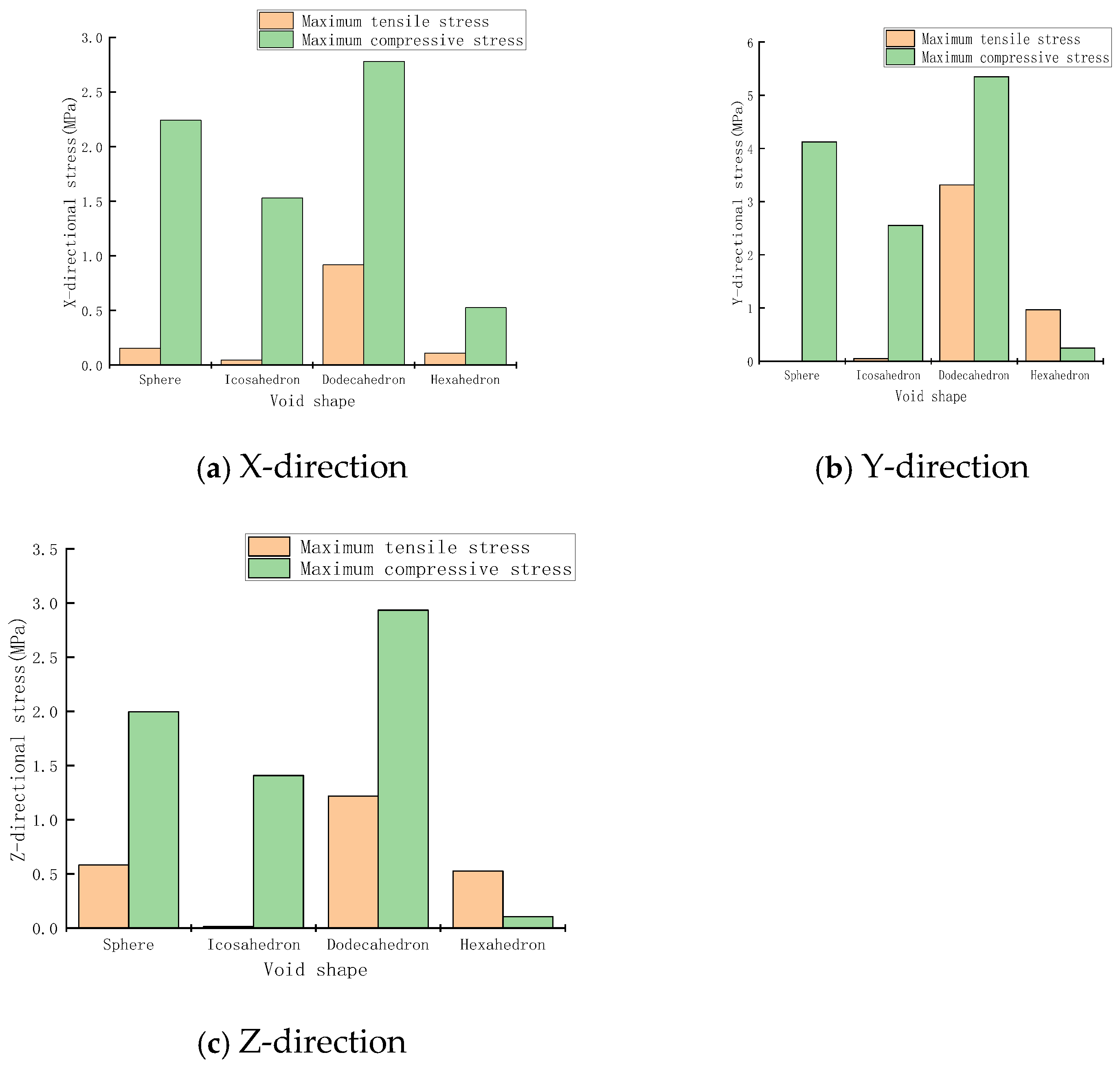
- Void shape: sphere, icosahedron, dodecahedron, hexahedron (constant void ratio ~20%, equivalent diameter range 4–6 mm).
- (2)
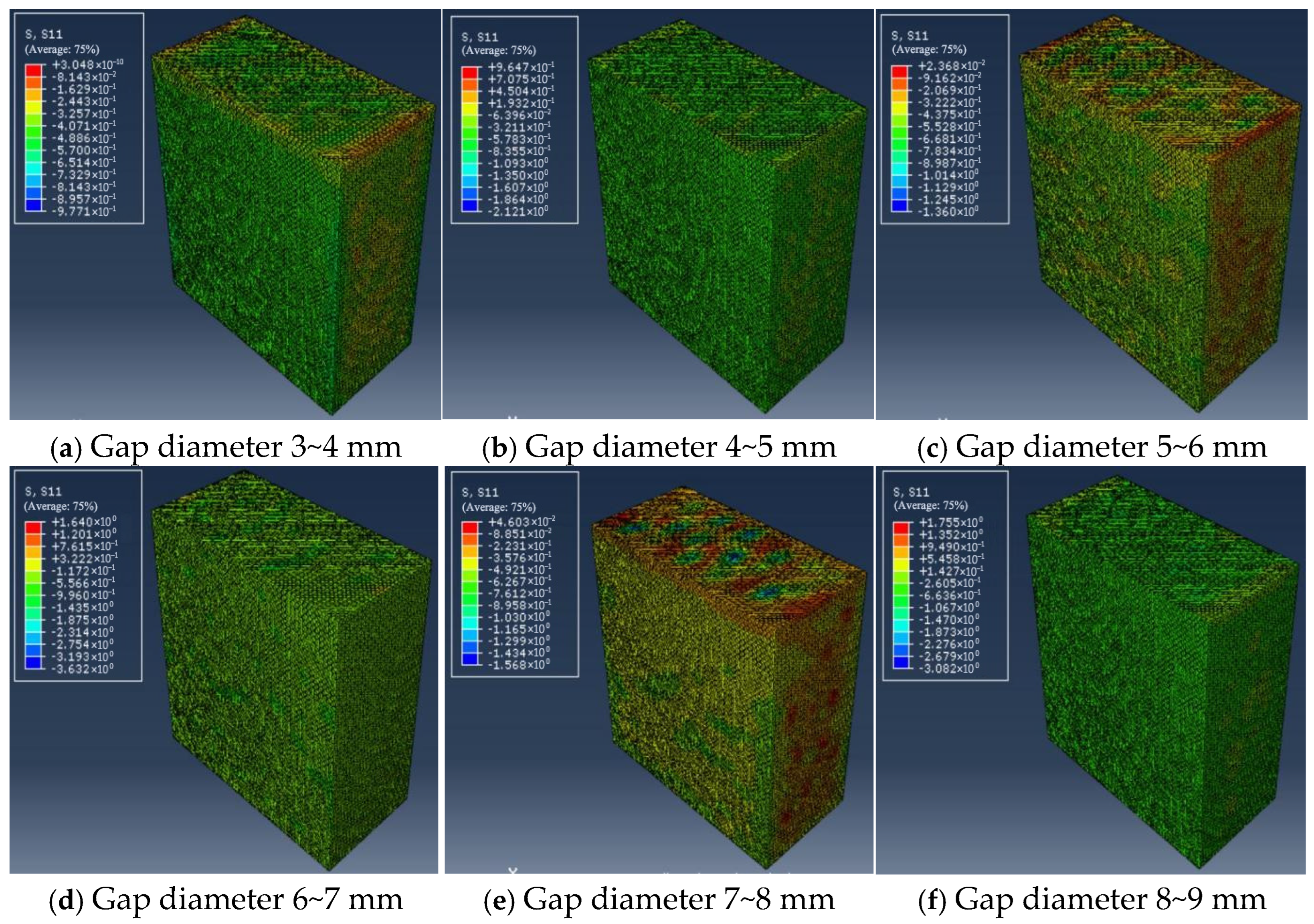
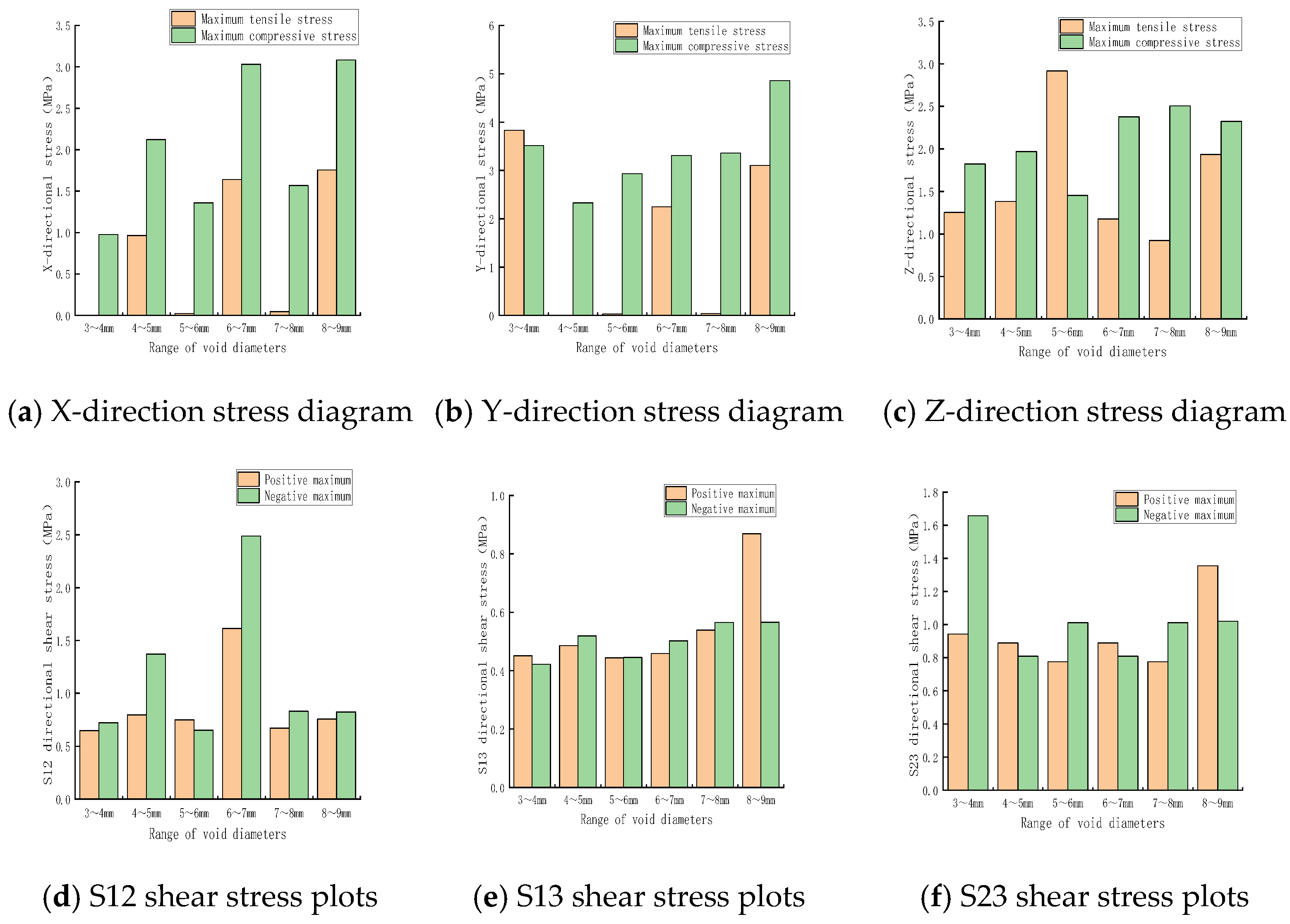
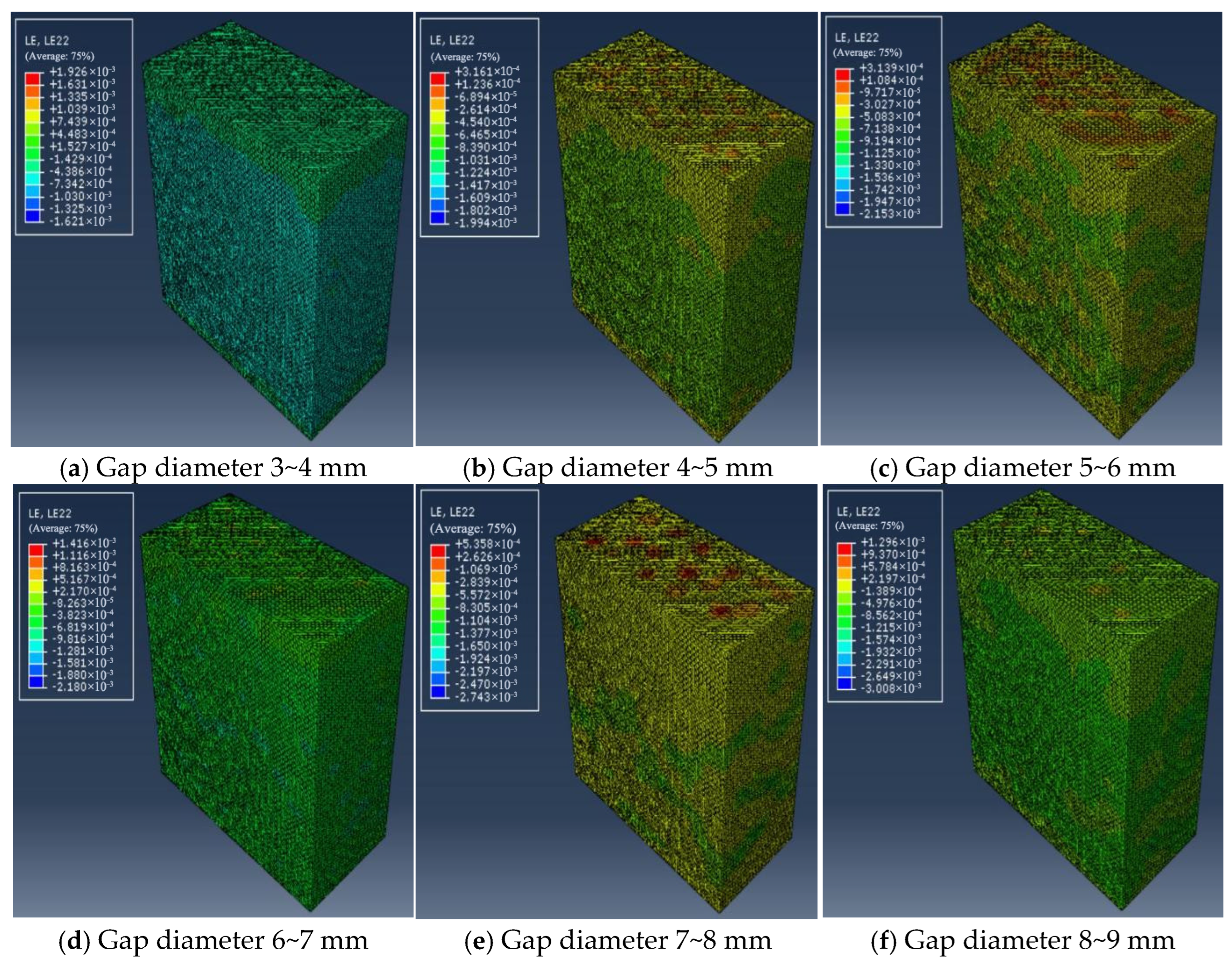
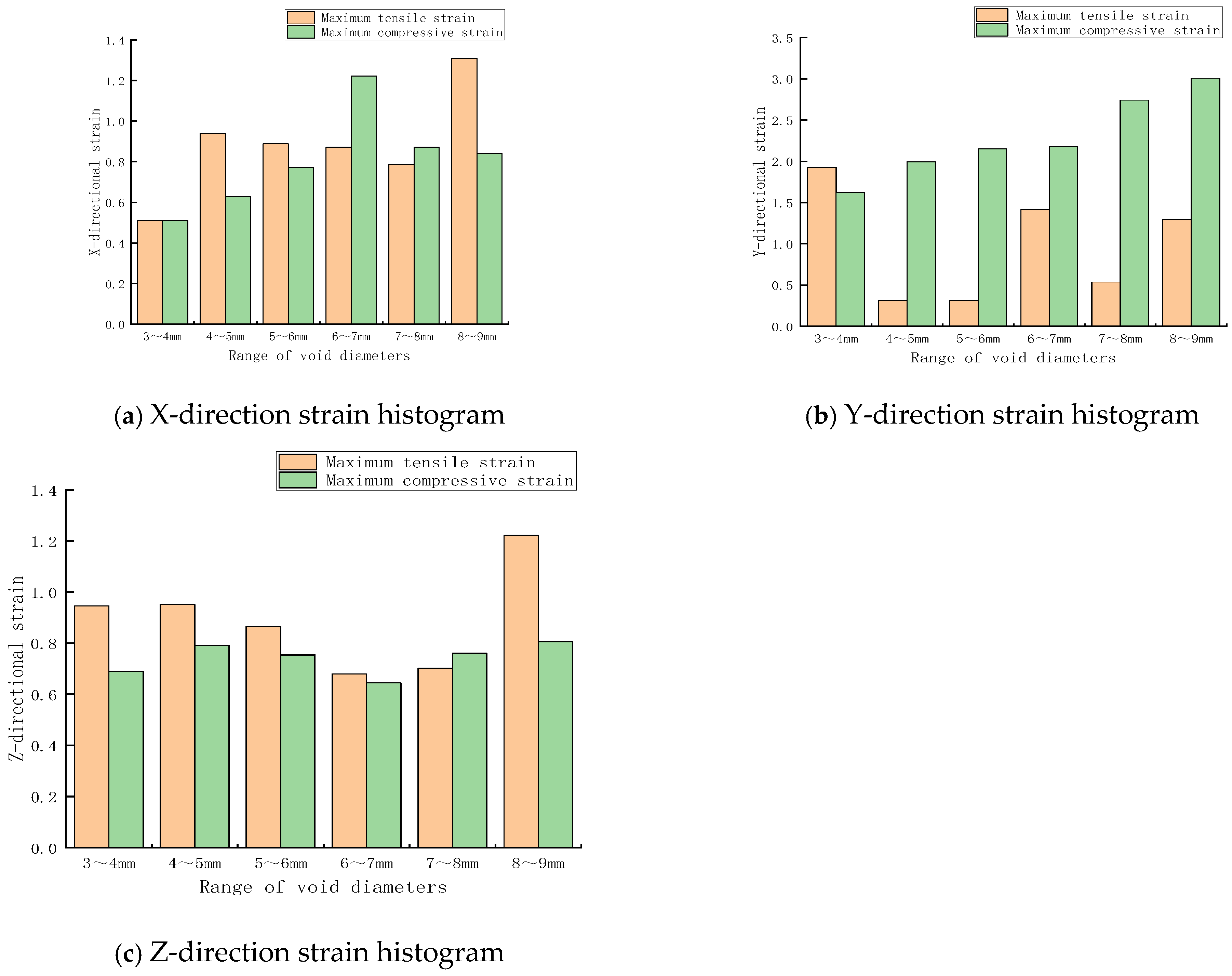
- Void size: diameter ranges 3–4, 4–5, 5–6, 6–7, 7–8, 8–9 mm (icosahedron shape, constant void ratio ~20%).
- (3)
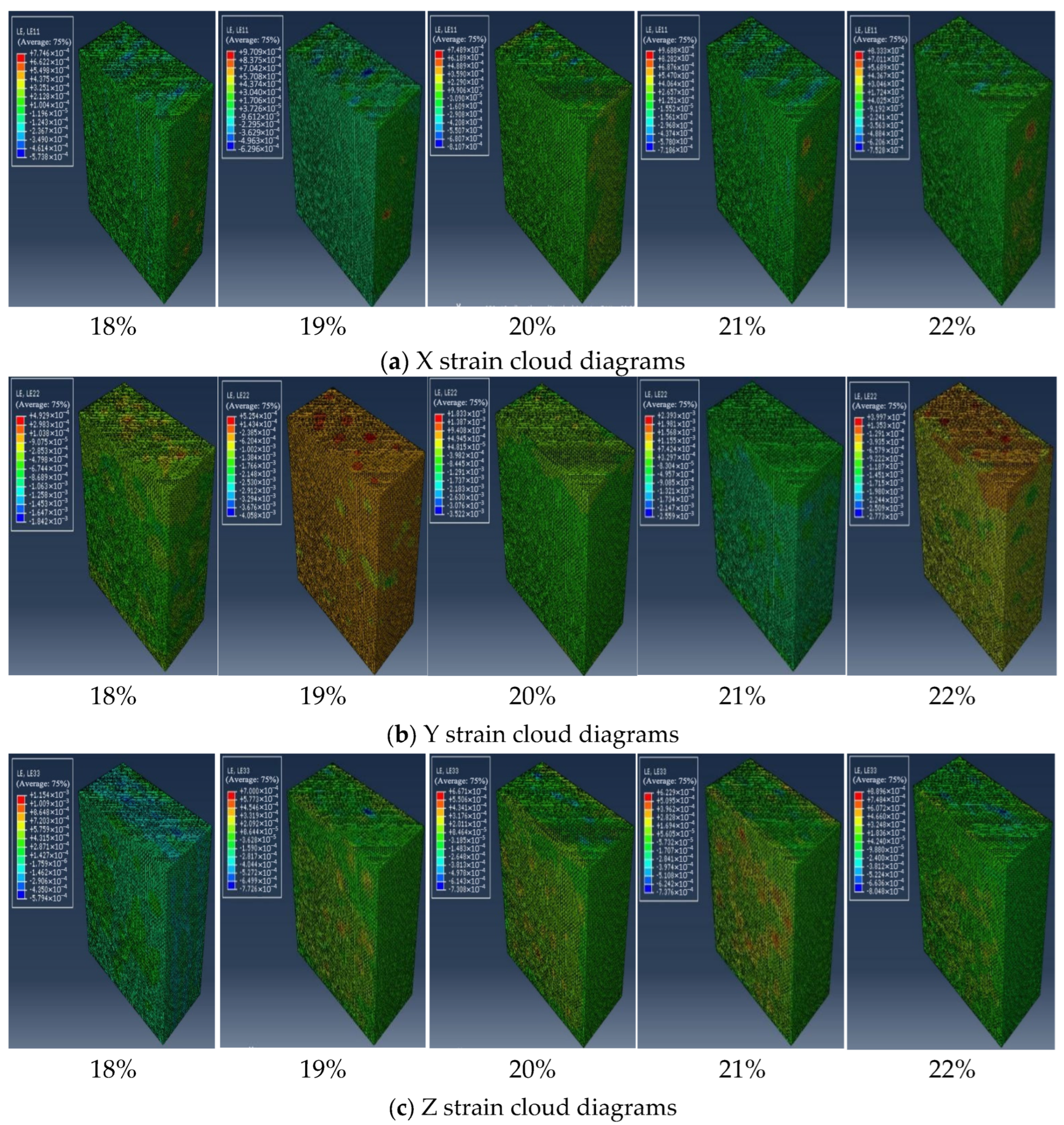
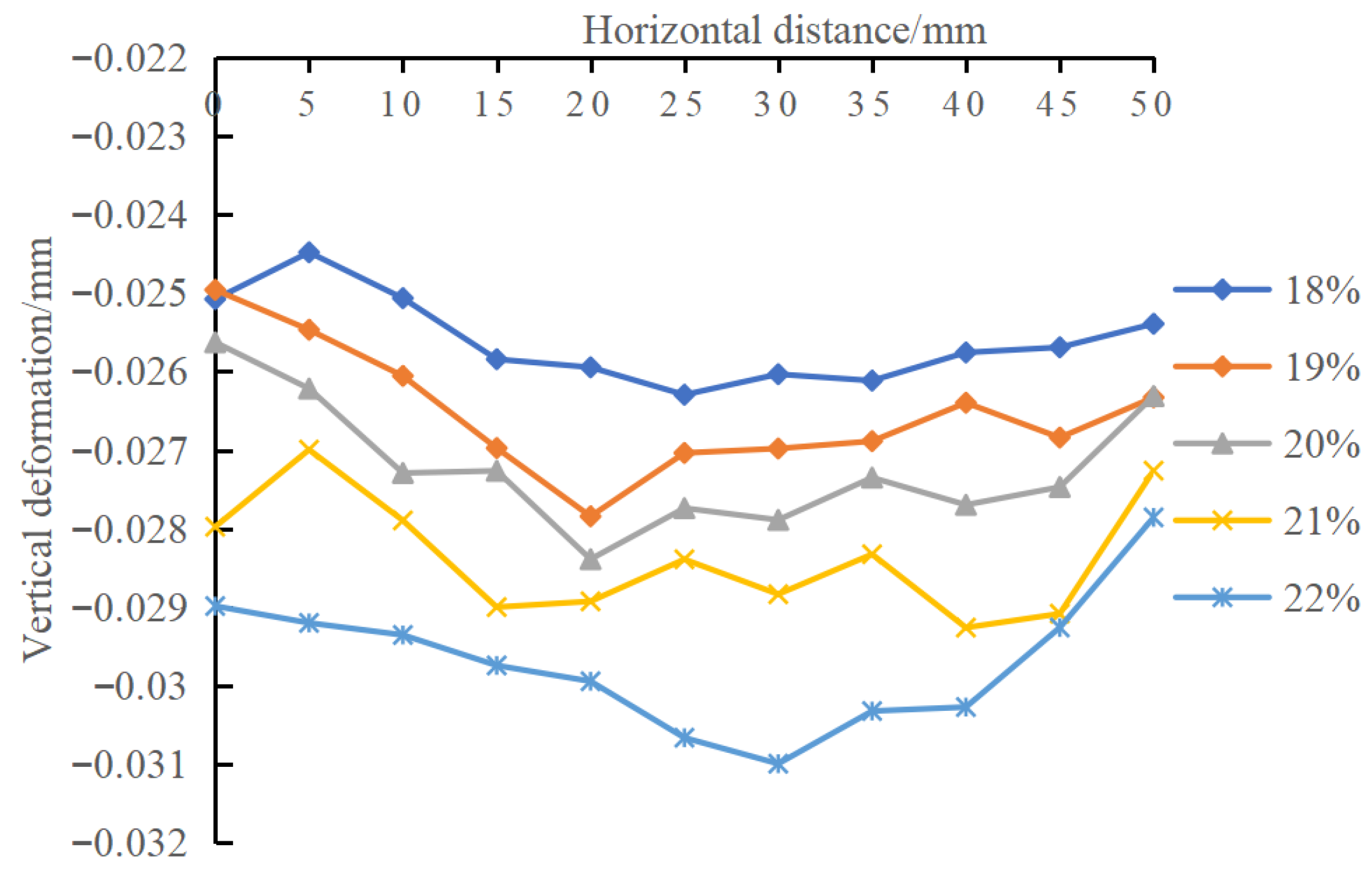
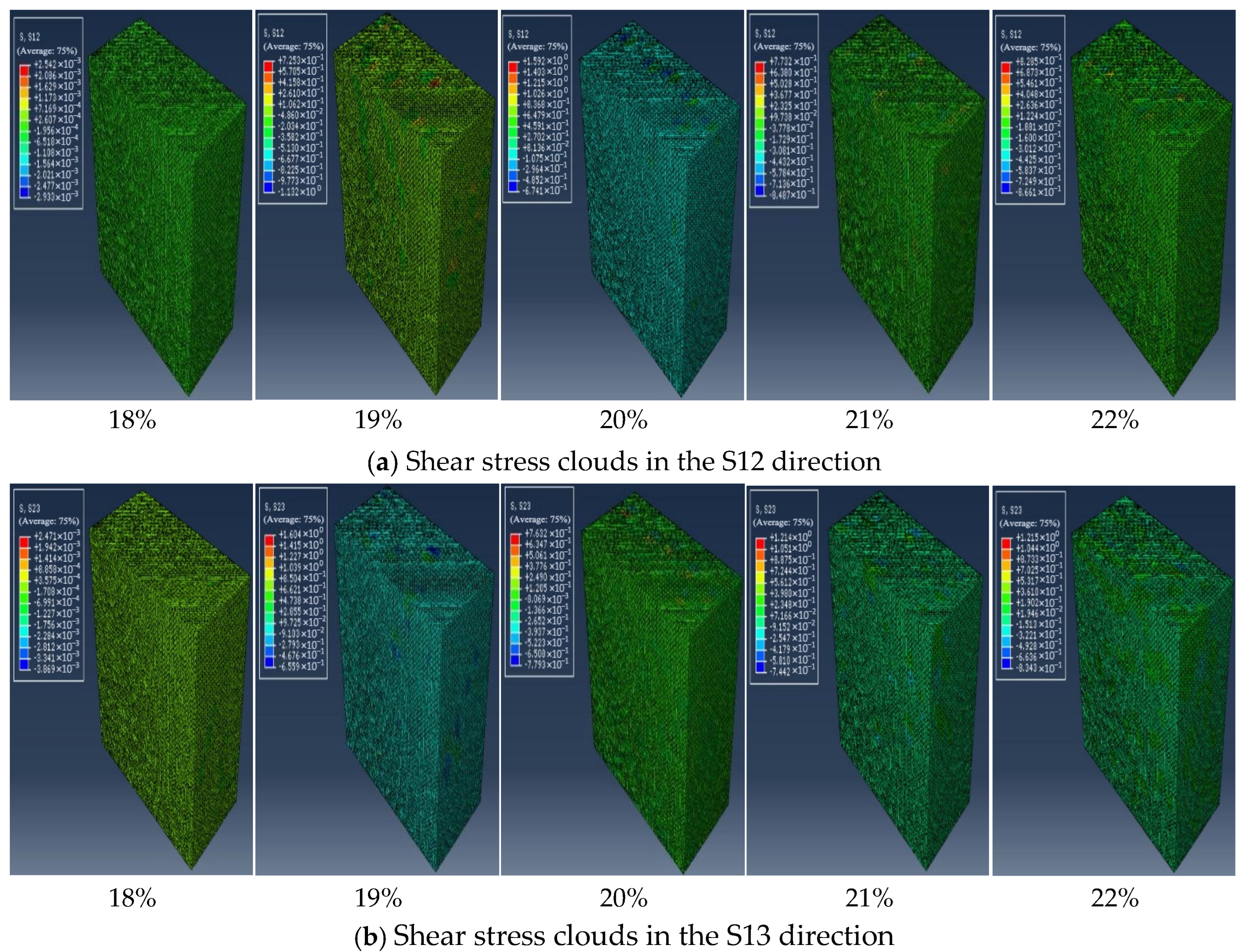
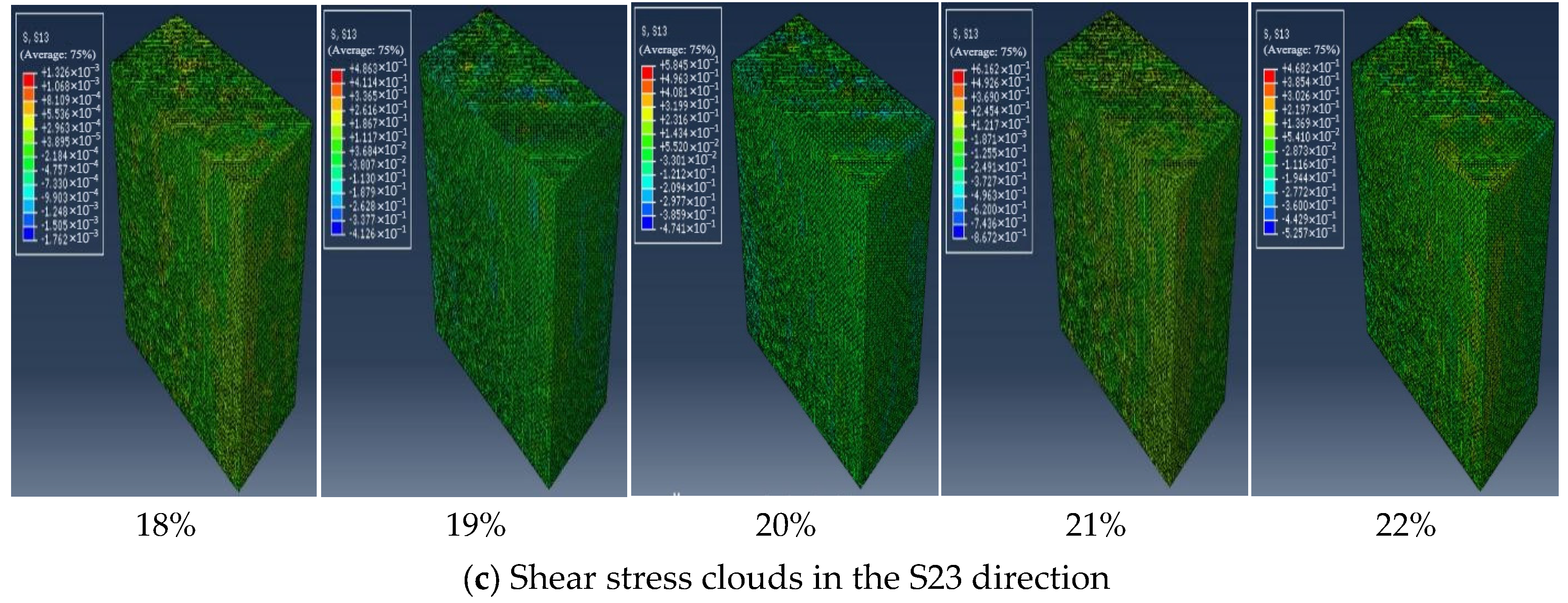
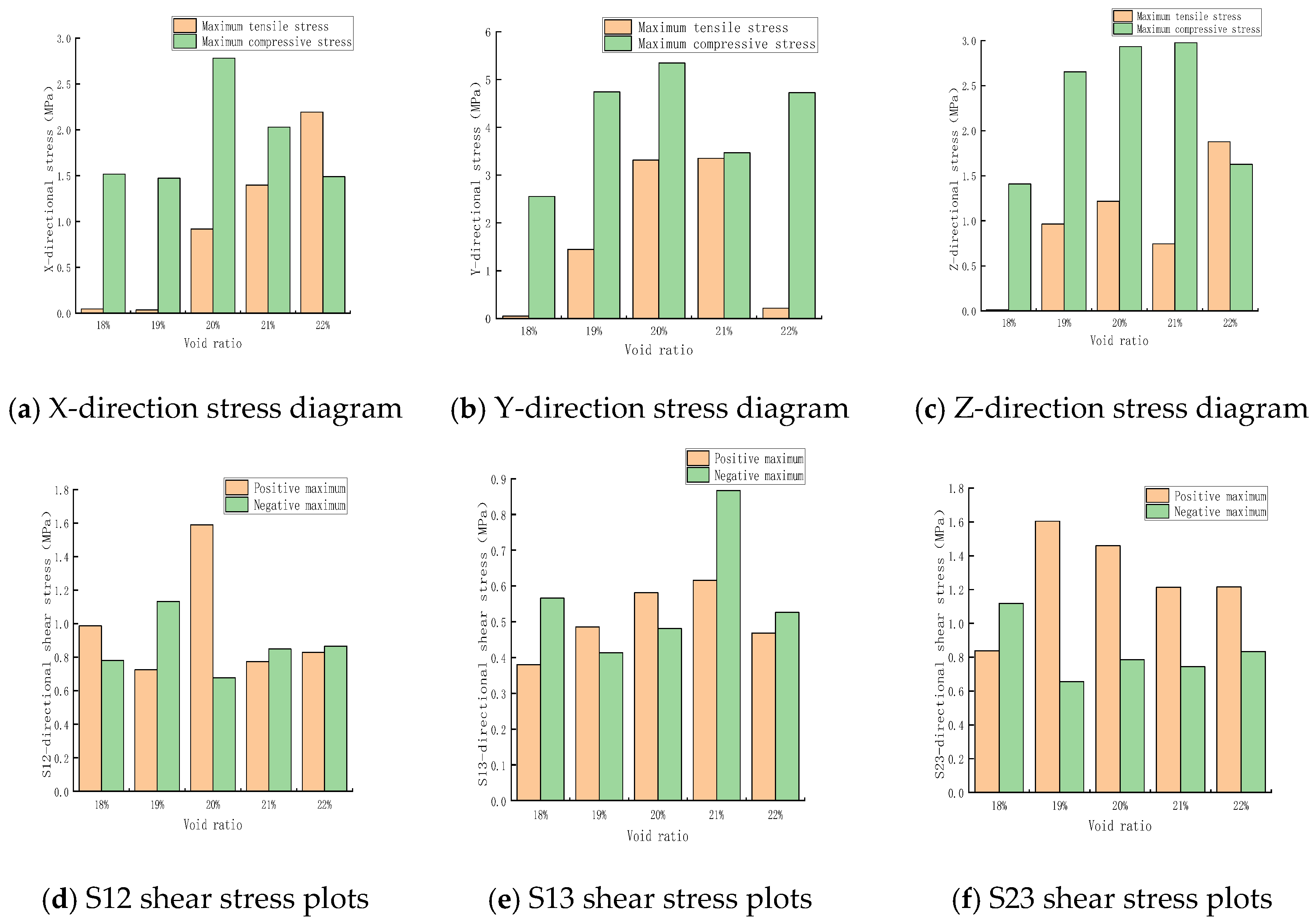
- Void ratio: 18%, 19%, 20%, 21%, 22% (icosahedron shape, diameter range 3–4 mm).
2.2.4. Validation of Modeling Approach
2.3. Image-Based Microstructure Characterization
3. Results: Deformation Analysis in Relation to Void Patterns
3.1. Effect of Void Shape on Deformation
3.2. Effect of Void Size on Deformation
3.3. Effect of Void Ratio on Deformation
4. Results: Mechanical Properties in Relation to Void Morphology
4.1. Effect of Void Shape on Mechanical Properties
4.2. Effect of Void Size on Mechanical Properties
4.3. Effect of Void Ratio on Mechanical Properties
5. Discussion
6. Conclusions
- (1)
- Among the four different void shapes modeled, the maximum strain values increased as the number of void edges decreased. Tensile strains were consistently lower than compressive strains. The compressive strain in the Y-direction increased notably with fewer edges, while tensile and compressive strains in the X- and Y-directions exhibited linear trends, aligned with stress concentration effects at sharper void corners. Reducing void sharpness (i.e., promoting more rounded, less angular void geometries) is beneficial for mechanical performance.
- (2)
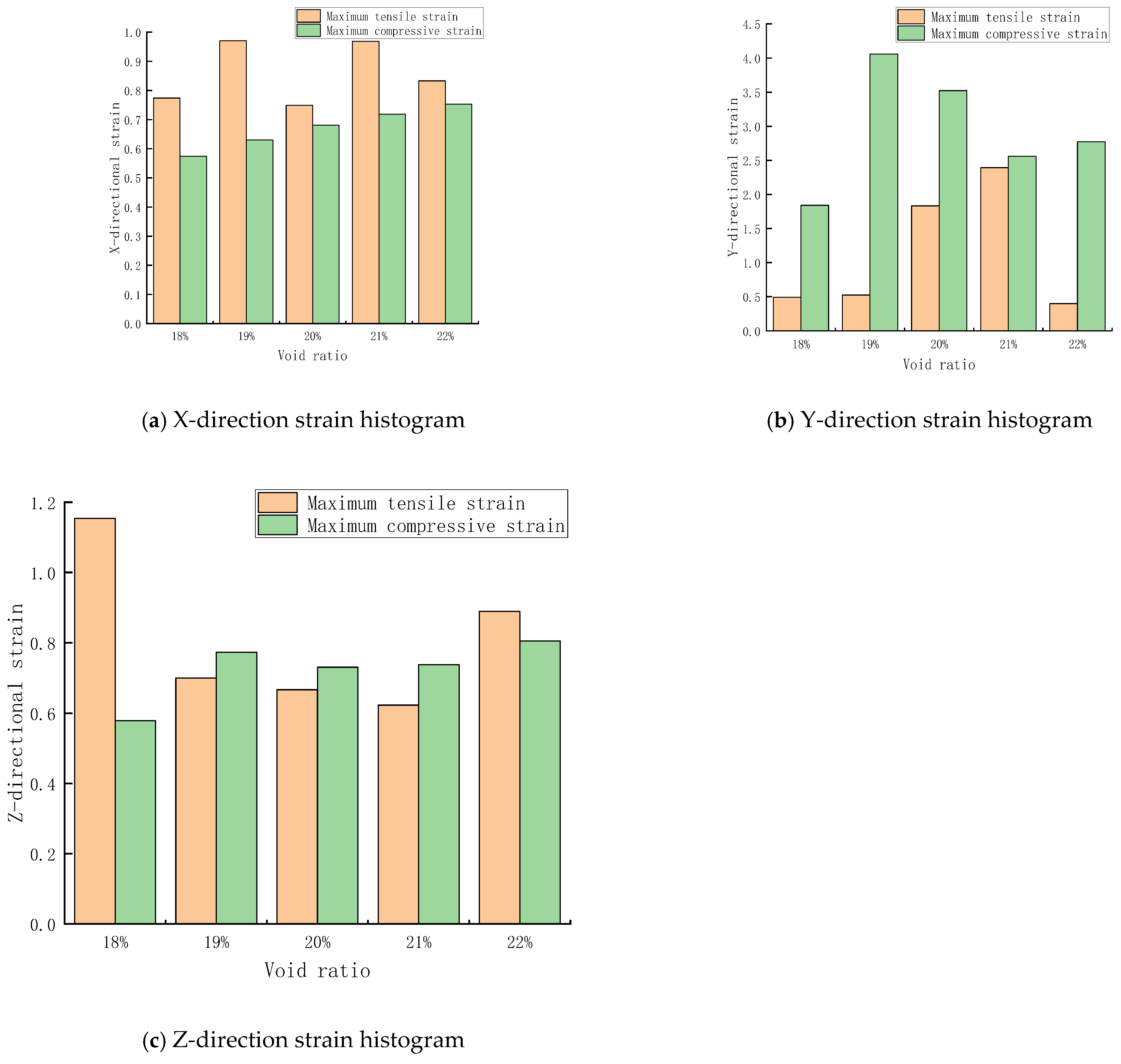
- Both tensile and compressive strains in the X-direction increased with void ratio. The compressive strain in the Y-direction also rose with void ratio, whereas the tensile strain in the Y-direction changed only slightly over the 18%–22% range, indicating a weaker sensitivity to void ratio.
- (3)
- The model with icosahedral voids, a void diameter range of 3–4 mm, and a void ratio of 18% exhibited the most favorable mechanical performance in terms of minimized stress concentration, lower overall deformation, and higher stiffness retention. This configuration represents a micromechanical design goal for enhancing the durability of porous asphalt mixtures.
Author Contributions
Funding
Institutional Review Board Statement
Informed Consent Statement
Data Availability Statement
Acknowledgments
Conflicts of Interest
References
- Ramadhansyah, P.J.; Masri, K.A.; Mangi, S.A.; Yusak, M.M.; Mashros, N.; Warid, M.M.; Satar, M.K.; Haziman, W.M. Strength and Porosity of Porous Concrete Pavement Containing Nano Black Rice Husk Ash. IOP Conf. Ser. Mater. Sci. Eng. 2020, 712, 012037. [Google Scholar] [CrossRef] [Scilit]
- Ma, X.; Li, Q.; Cui, Y.C.; Ni, A.Q. Performance of porous asphalt mixture with various additives. Int. J. Pavement Eng. 2018, 19, 355–361. [Google Scholar] [CrossRef] [Scilit]
- Wu, H.; Chu, Y.; Gu, X.; Tang, J. Multilevel Characterization of Bonding Strength of High Viscosity Modified Asphalt Mortar and Its Correlation with Failure Forms of Porous Mixtures. Build. Struct. 2023, 53, 1390–1398. [Google Scholar]
- Yan, B.; Yao, B. Research on Aggregate Skeleton Optimization of Porous Asphalt Mixture Based on Discrete Element Method. Highway 2025, 70, 14–21. [Google Scholar]
- Gu, H. Research on the Influence of Coarse Aggregate Texture on the Road Performance of Steel Slag Porous Asphalt Mixture. Hunan Commun. Sci. Technol. 2023, 49, 65–68+73. [Google Scholar]
- Ma, X.; Hu, X.Q.; Zhou, P.S. Internal structure changes within porous asphalt mixture with different saturation under vertical repeated load. Constr. Build. Mater. 2023, 372, 130727. [Google Scholar] [CrossRef] [Scilit]
- Li, J.; He, Z.; Guan, Z. Construction of a physical model for the void ratio of mineral aggregates in porous asphalt mixtures. J. Harbin Inst. Technol. 2022, 54, 139–147. [Google Scholar]
- Ji, X.; Wang, H. Microscopic Void Characteristics Laws of Porous Asphalt Mixture Based on Digital Image Processing Technology. J. China Foreign Highw. 2018, 38, 257–261. [Google Scholar]
- Radzi, N.A.; Masri, K.A.; Ramadhansyah, P.J.; Jasni, N.E.; Arshad, A.K.; Ahmad, J.; Mashros, N.; Yaacob, H. Stability and Resilient Modulus of Porous Asphalt Incorporating Steel Fiber. IOP Conf. Ser. Mater. Sci. Eng. 2020, 712, 012027. [Google Scholar] [CrossRef] [Scilit]
- Shahnewaz, S.M.; Masri, K.A.; Ghani, N.A.; Jaya, R.P.; Choo, C.S.; Giannakopoulou, P.P.; Rogkala, A.; Lampropoulou, P.; Petrounias, P. Porous asphalt mixtures enriched with bamboo fibers as a new approach for future sustainable construction. Constr. Build. Mater. 2023, 407, 133456. [Google Scholar] [CrossRef] [Scilit]
- Yang, X.; You, Z.; Wang, Z.; Dai, Q. Review on heterogeneous model reconstruction of stone-based composites in numerical simulation. Constr. Build. Mater. 2016, 117, 229–243. [Google Scholar] [CrossRef] [Scilit]
- Qian, N.; Wang, D.; Li, D.; Shi, L. Three-dimensional mesoscopic permeability of porous asphalt mixture. Constr. Build. Mater. 2020, 236, 117430. [Google Scholar] [CrossRef] [Scilit]
- Zhao, Y.; Wang, X.; Jiang, J.; Zhou, L. Characterization of interconnectivity, size distribution and uniformity of air voids in porous asphalt concrete using X-ray CT scanning images. Constr. Build. Mater. 2019, 213, 182–193. [Google Scholar] [CrossRef] [Scilit]
- Zhu, R.; Kang, A.; Zhang, Y.; Zhi, W.; Zhu, L. Feasibility Study of Discrete Element Numerical Simulation Technology-Based Microscopic Model for Asphalt Mixtures. Jiangsu Build. Mater. 2023, 6, 31–34. [Google Scholar]
- Xu, H.; Shi, H.; Tan, Y. Investigation and Characterization of 3DVoid Mesostructures in Asphalt Mixtures. China J. Highw. Transp. 2020, 33, 210–220. [Google Scholar]
- Xu, H.; Shi, H.; Tan, Y. Review on Genome Research on Microscopic Structural Characteristics of Asphalt Concrete. Chin. J. Nat. 2020, 42, 249–261. [Google Scholar]
- Kutuk-Sert, T.; Ozturk, M.; Kutuk, S. Digital image processing of warm mix asphalt enriched with nanocolemanite and nanoulexite minerals. Constr. Build. Mater. 2023, 399, 132542. [Google Scholar] [CrossRef] [Scilit]
- Kutuk, S.; Kutuk-Sert, T. An examination of nanoparticle colemanite mineral added warm mix asphalt. Constr. Build. Mater. 2020, 243, 118252. [Google Scholar] [CrossRef] [Scilit]
- Zhao, Y.; Jiang, L.; Jiang, J.; Ni, F. Accuracy Improvement for Two-Dimensional Finite-Element Modeling while Considering Asphalt Mixture Meso-Structure Characteristics in Indirect Tensile Test Simulation. J. Mater. Civ. Eng. 2020, 32, 04020275. [Google Scholar] [CrossRef] [Scilit]
- Wang, Z.; Xie, J.; Gao, L.; Liu, M.; Liu, Y. Improvement of acoustic model and structural optimization design of porous asphalt concrete based on meso-structure research. Constr. Build. Mater. 2020, 265, 120327. [Google Scholar] [CrossRef] [Scilit]
- Kollmann, J.; Lu, G.; Liu, P.; Xing, Q.; Wang, D.; Oeser, M.; Leischner, S. Parameter optimisation of a 2D finite element model to investigate the microstructural fracture behaviour of asphalt mixtures. Theor. Appl. Fract. Mech. 2019, 103, 102319. [Google Scholar] [CrossRef] [Scilit]
- Wang, D.; Liu, P.; Xu, H.; Kollmann, J.; Oeser, M. Evaluation of the polishing resistance characteristics of fine and coarse aggregate for asphalt pavement using Wehner/Schulze test. Constr. Build. Mater. 2018, 163, 742–750. [Google Scholar] [CrossRef] [Scilit]
- Yang, B.; Li, H.; Zhang, H.; Xie, N.; Zhou, H. Laboratorial investigation on effects of microscopic void characteristics on properties of porous asphalt mixture. Constr. Build. Mater. 2019, 213, 434–446. [Google Scholar] [CrossRef] [Scilit]
- Cao, P.; Jin, F.; Changjun, Z.; Feng, D. Investigation on statistical characteristics of asphalt concrete dynamic moduli with random aggregate distribution model. Constr. Build. Mater. 2017, 148, 723–733. [Google Scholar] [CrossRef] [Scilit]
- Ma, H.; Xu, W.; Li, Y. Random aggregate model for mesoscopic structures and mechanical analysis of fully-graded concrete. Comput. Struct. 2016, 177, 103–113. [Google Scholar] [CrossRef] [Scilit]
- Ma, H.; Song, L.; Xu, W. A novel numerical scheme for random parameterized convex aggregate models with a high-volume fraction of aggregates in concrete-like granular materials. Comput. Struct. 2018, 209, 57–64. [Google Scholar] [CrossRef] [Scilit]
- Wang, Z. Material Design and Performance Simulation Evaluationof UTAC-10 Based on Discrete Element Method. Master’s Thesis, South China University of Technology, Guangzhou, China, 2019. [Google Scholar]
- Chen, C.; Zhang, Q.; Keer, L.M.; Yao, Y.; Huang, Y. The multi-factor effect of tensile strength of concrete in numerical simulation based on the Monte Carlo random aggregate distribution. Constr. Build. Mater. 2018, 165, 585–595. [Google Scholar] [CrossRef] [Scilit]
- Zhang, F.; Teng, X.; Binbin, L. Meso mesoscopic model of asphalt concrete based on random aggregate placement. J. Railw. Sci. Eng. 2019, 16, 1216–1223. [Google Scholar]
- Yuan, P.; Wang, D. Monte Carlo Simulation Analysis of Variability of Mechanical Responses for Asphalt Pavement. J. South China Univ. Technol. (Nat. Sci. Ed.) 2008, 36, 55–63. [Google Scholar]
- Cao, P.; Jin, F.; Feng, D.; Zhou, C.; Hu, W. Prediction on dynamic modulus of asphalt concrete with random aggregate modeling methods and viscoelastic theory. Constr. Build. Mater. 2016, 125, 987–997. [Google Scholar] [CrossRef] [Scilit]
- Xu, Z.J. Monte Carlo Methodology; Shanghai Science & Technology Publishers: Shanghai, China, 1985. [Google Scholar]













| Material | Modulus of Elasticity (MPa) | Poisson’s Ratio |
|---|---|---|
| Matrix (Asphalt mastic) | 1400 | 0.35 |
| Voids (Numerical representation) | 1 × 10⁻⁶ | 0.01 |
Disclaimer/Publisher’s Note: The statements, opinions and data contained in all publications are solely those of the individual author(s) and contributor(s) and not of MDPI and/or the editor(s). MDPI and/or the editor(s) disclaim responsibility for any injury to people or property resulting from any ideas, methods, instructions or products referred to in the content. |
© 2026 by the authors. Licensee MDPI, Basel, Switzerland. This article is an open access article distributed under the terms and conditions of the Creative Commons Attribution (CC BY) license.
Share and Cite
Wang, H.; Wu, H.; Liu, C. Numerical Modeling of the Relationship Between Mechanical Properties and Void Morphology in Porous Asphalt Mixtures. Coatings 2026, 16, 214. https://doi.org/10.3390/coatings16020214
Wang H, Wu H, Liu C. Numerical Modeling of the Relationship Between Mechanical Properties and Void Morphology in Porous Asphalt Mixtures. Coatings. 2026; 16(2):214. https://doi.org/10.3390/coatings16020214
Chicago/Turabian StyleWang, Hongchang, Haozhe Wu, and Congying Liu. 2026. "Numerical Modeling of the Relationship Between Mechanical Properties and Void Morphology in Porous Asphalt Mixtures" Coatings 16, no. 2: 214. https://doi.org/10.3390/coatings16020214
APA StyleWang, H., Wu, H., & Liu, C. (2026). Numerical Modeling of the Relationship Between Mechanical Properties and Void Morphology in Porous Asphalt Mixtures. Coatings, 16(2), 214. https://doi.org/10.3390/coatings16020214