Effect of Hydrophobic Alkyl Chain Length on the Interfacial Adhesion Performance of Emulsified Asphalt–Aggregate Systems

 ,
,
Abstract
1. Introduction
2. Materials and Methods
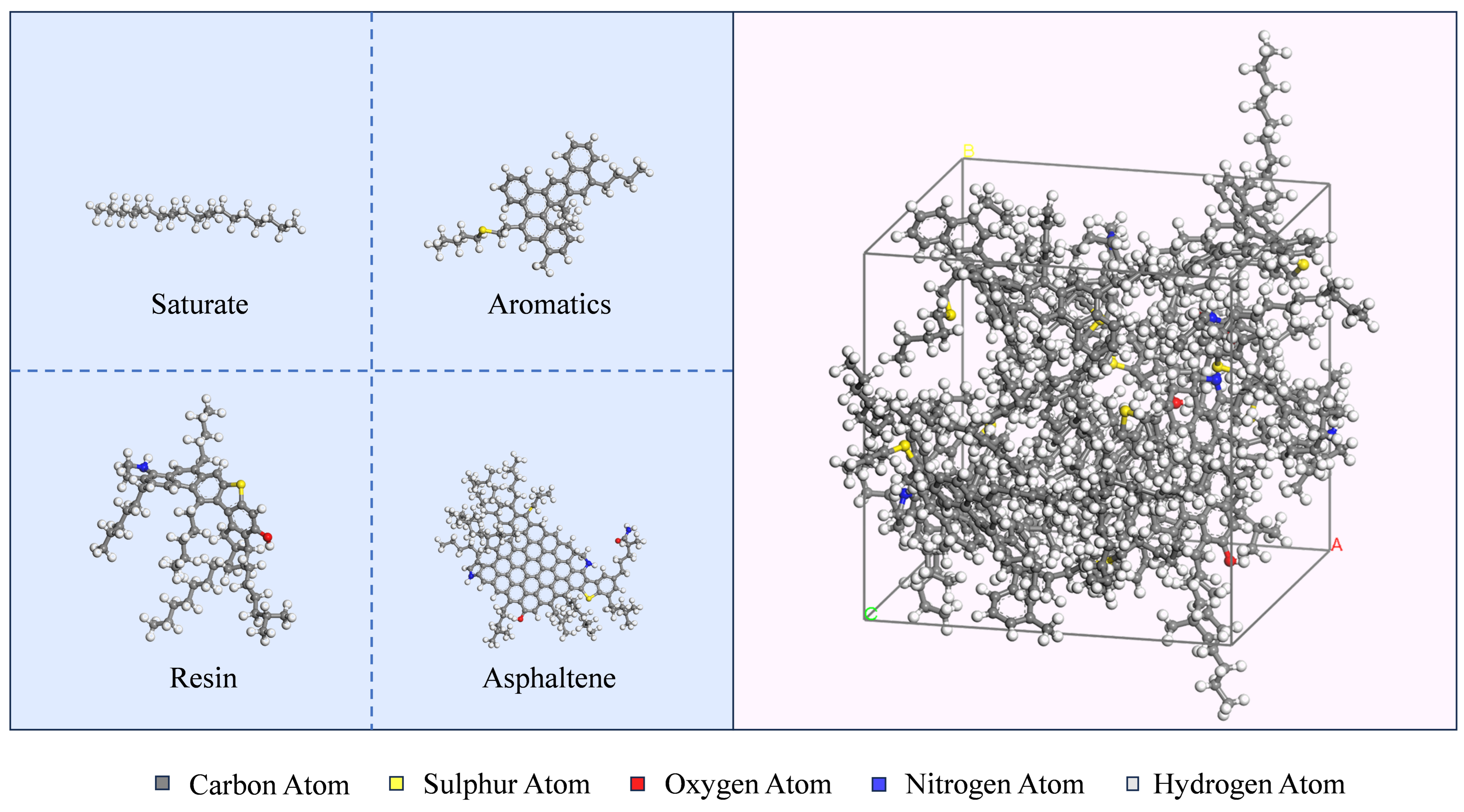
2.1. Base Asphalt Molecular Model
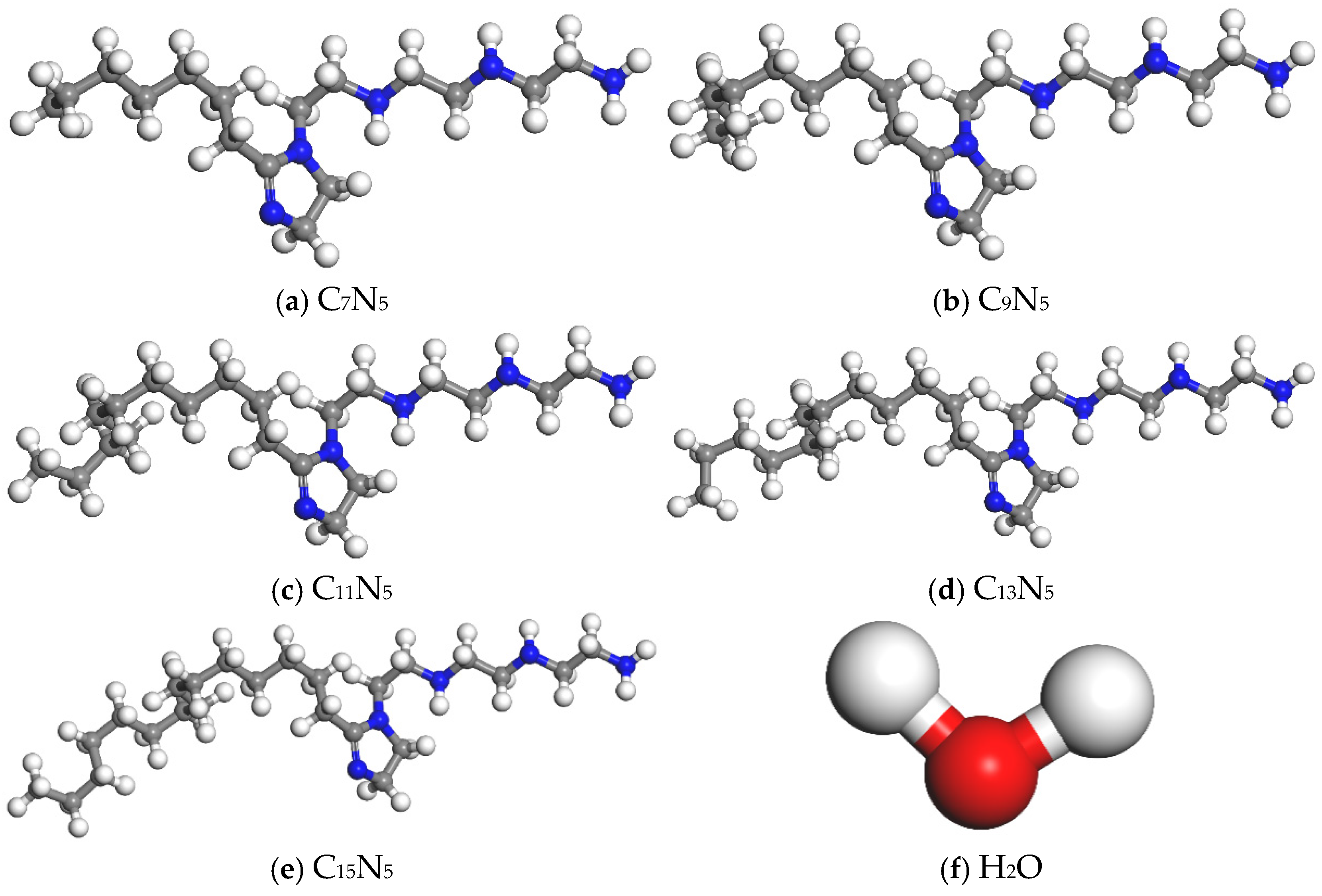
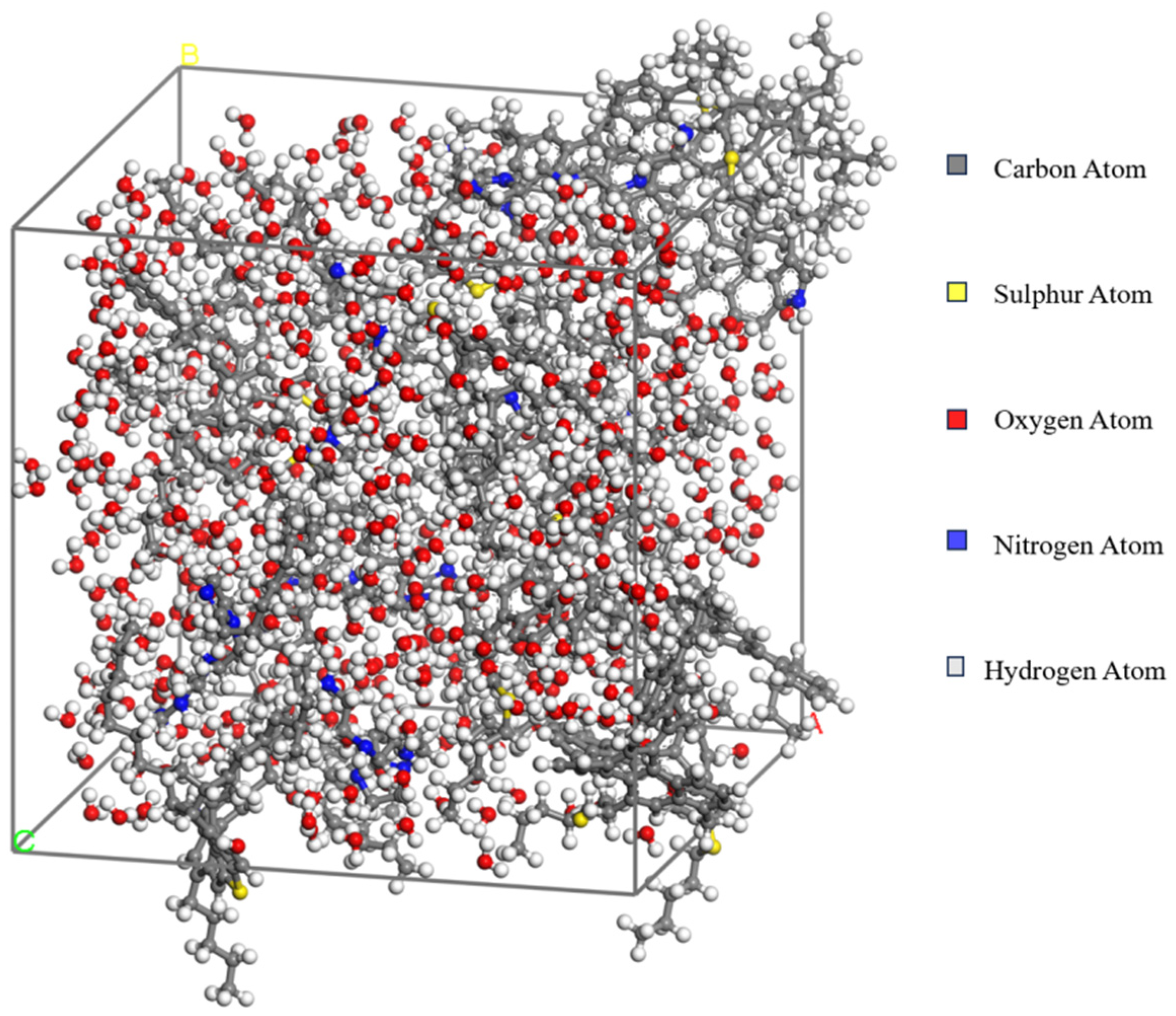
2.2. Emulsified Asphalt Molecular Model
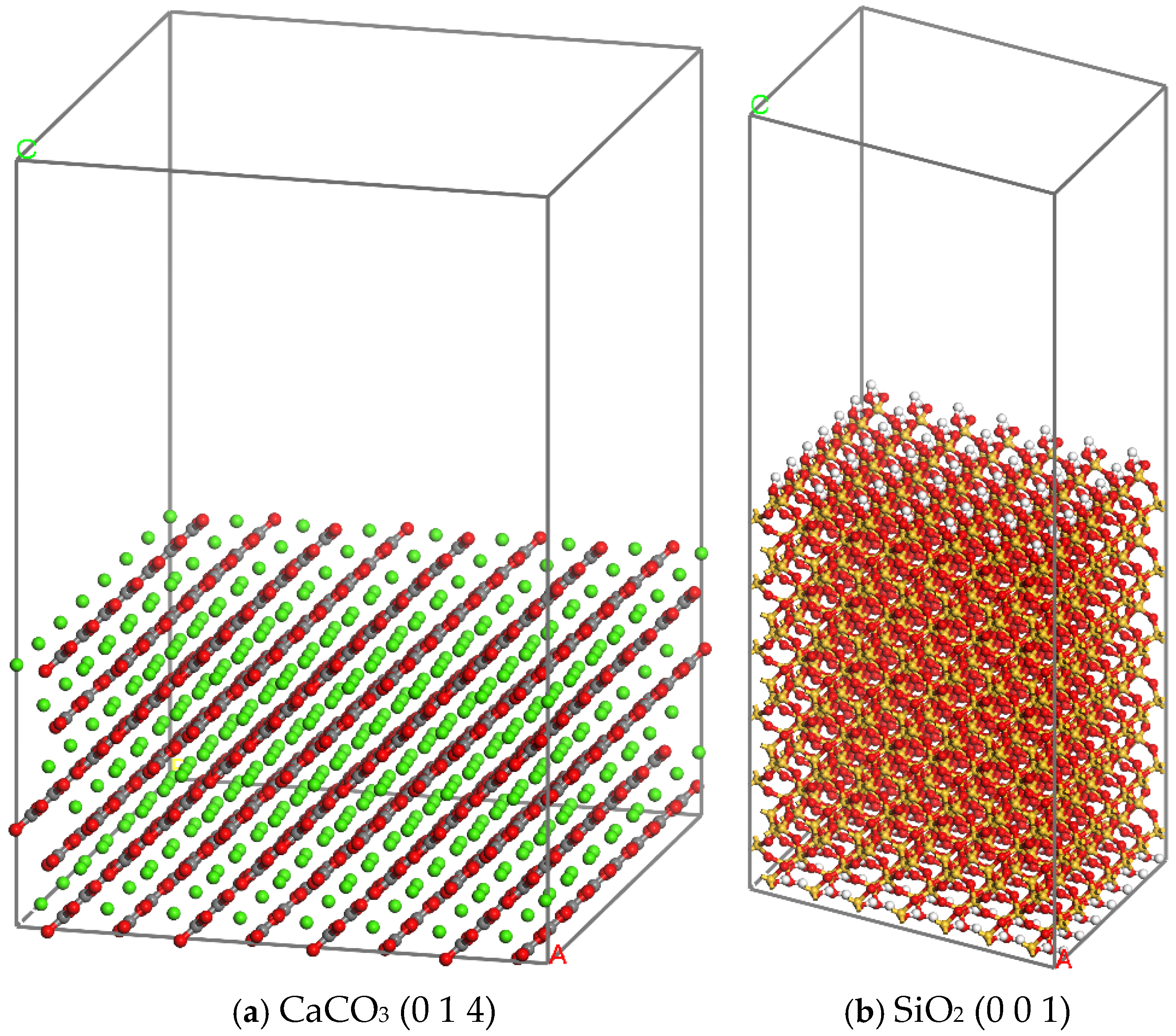
2.3. Aggregate Molecular Model
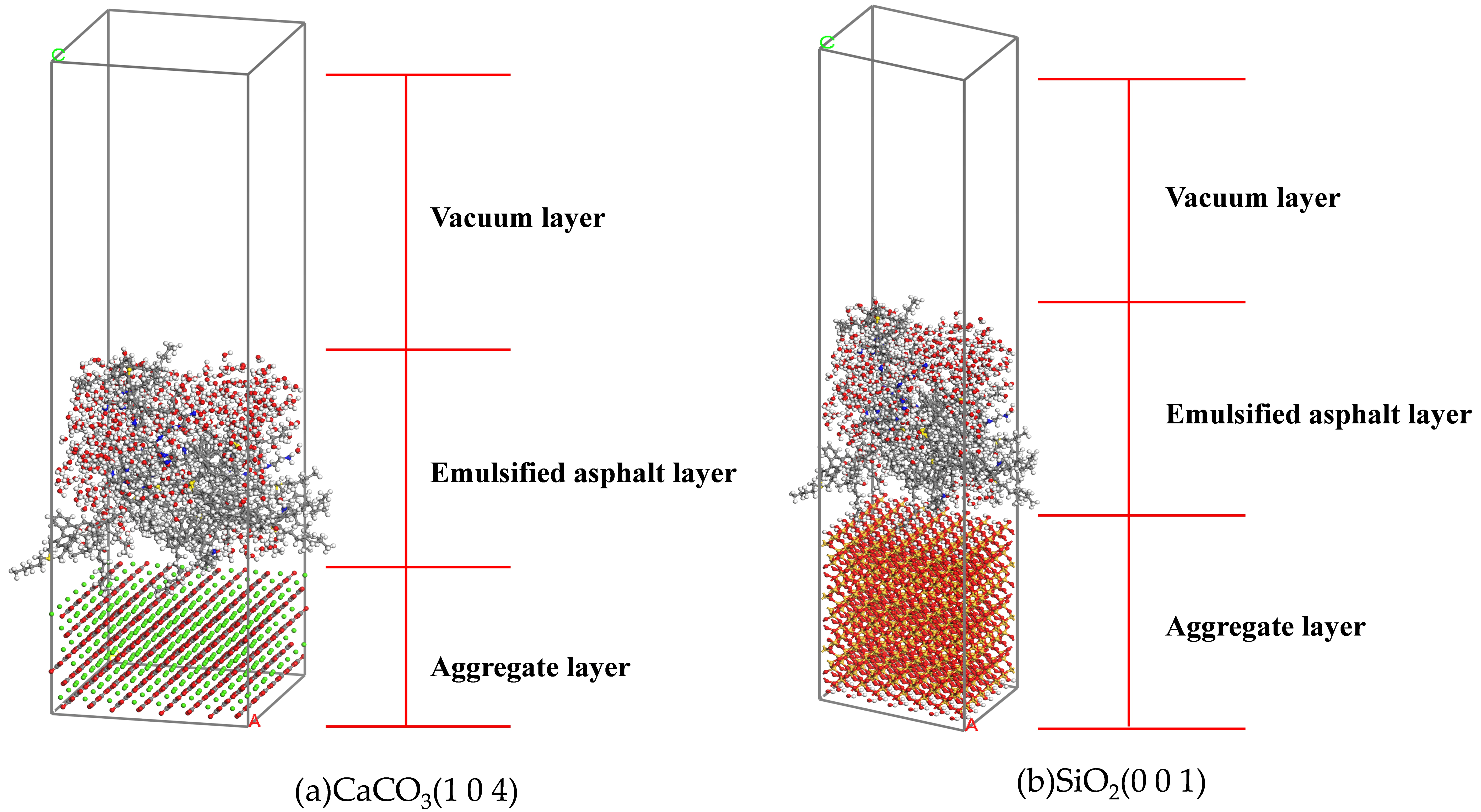
2.4. Emulsified Asphalt–Aggregate Interfacial Model
2.5. Simulation Parameters and Validation
2.5.1. Parameter Settings
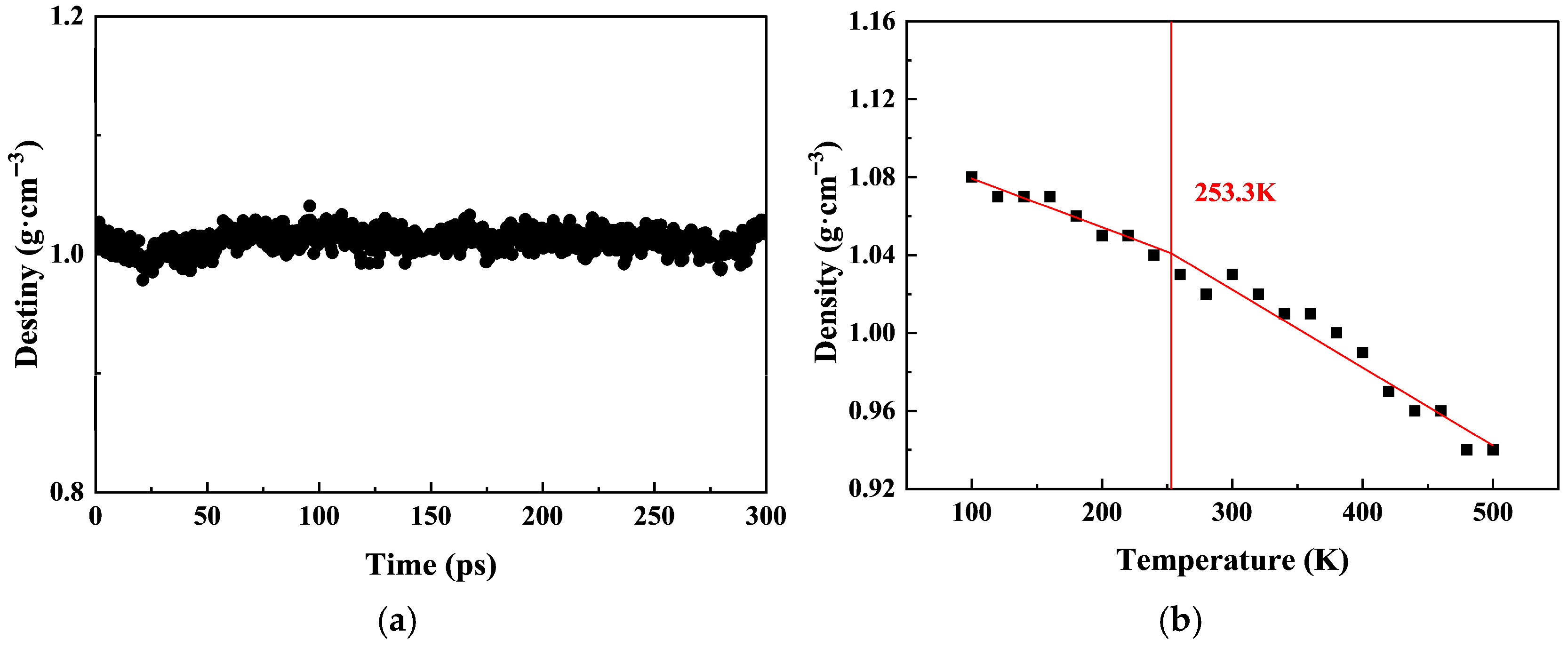
2.5.2. Model Validation
3. Results
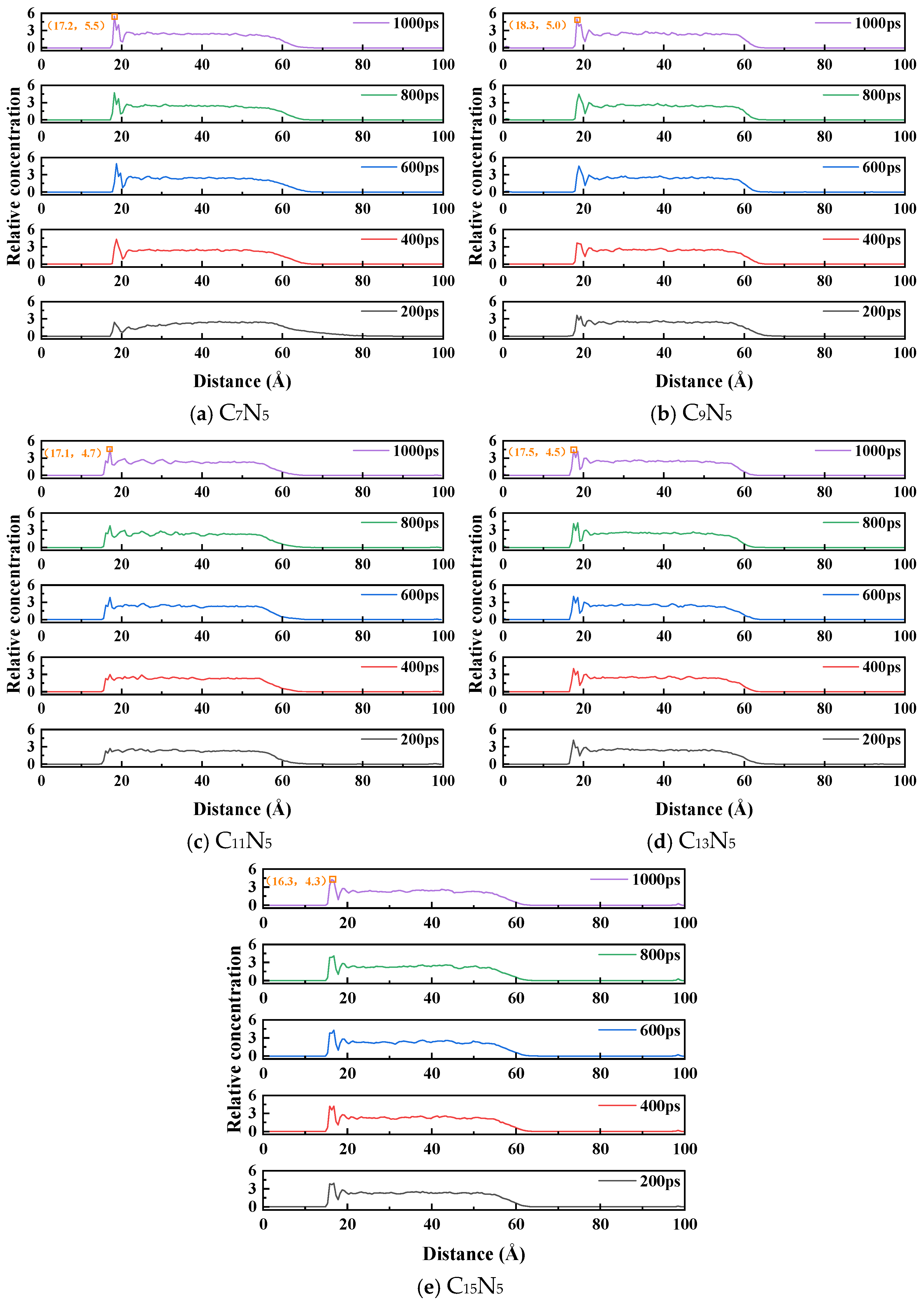
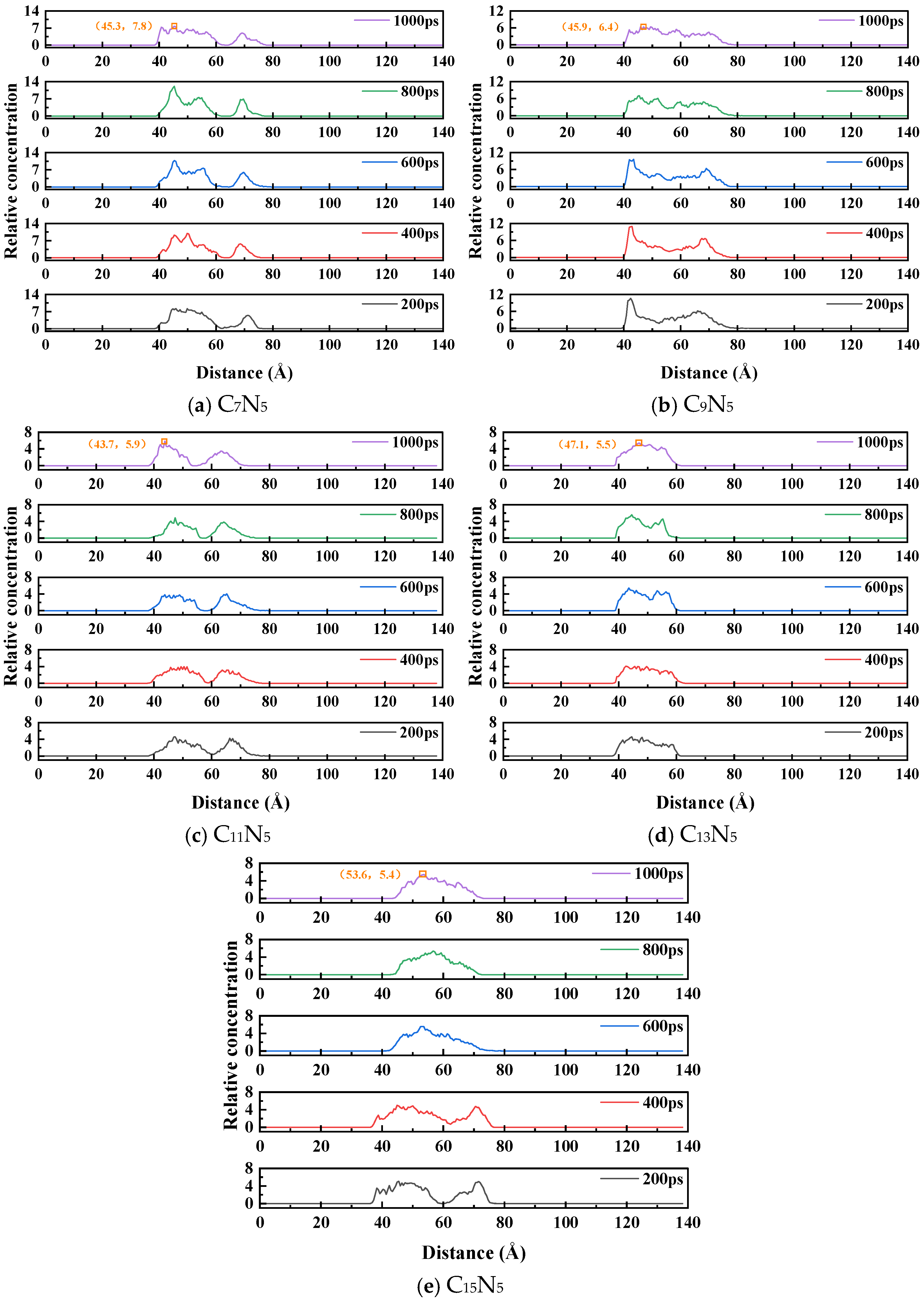
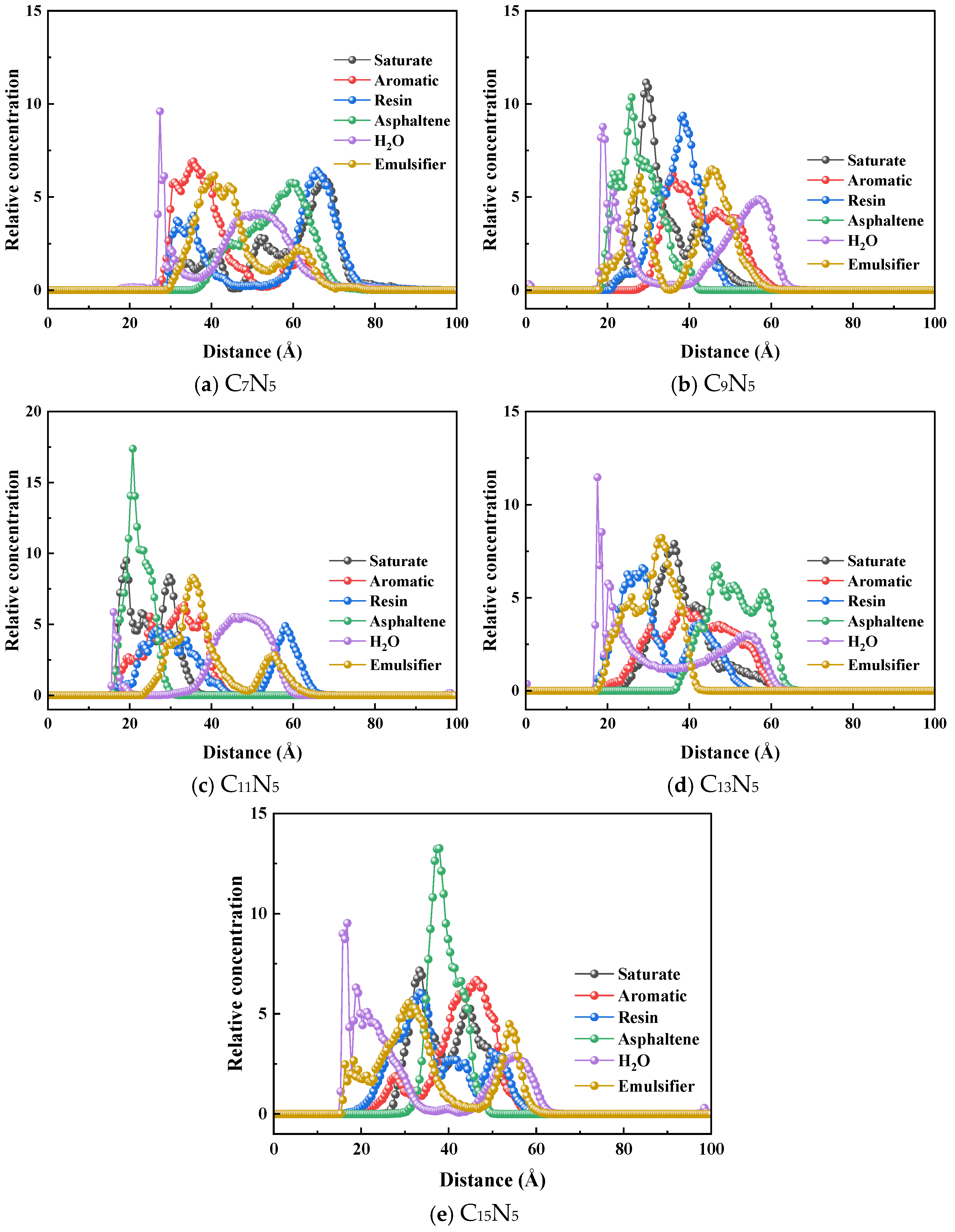
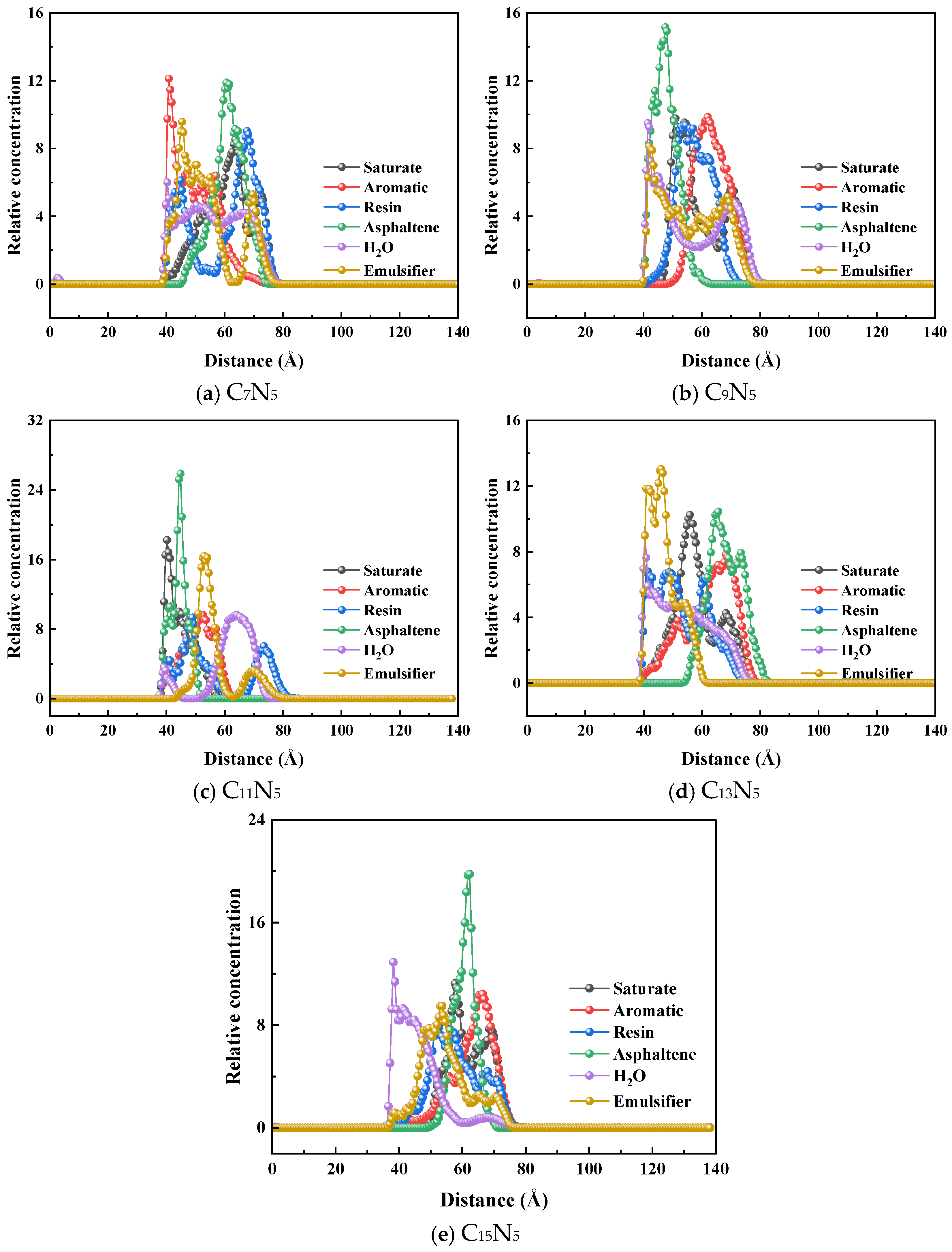
3.1. Effect of Hydrophobic Hydrocarbon Chain Length on the Interfacial Distribution of Emulsified Asphalt–Aggregate Systems
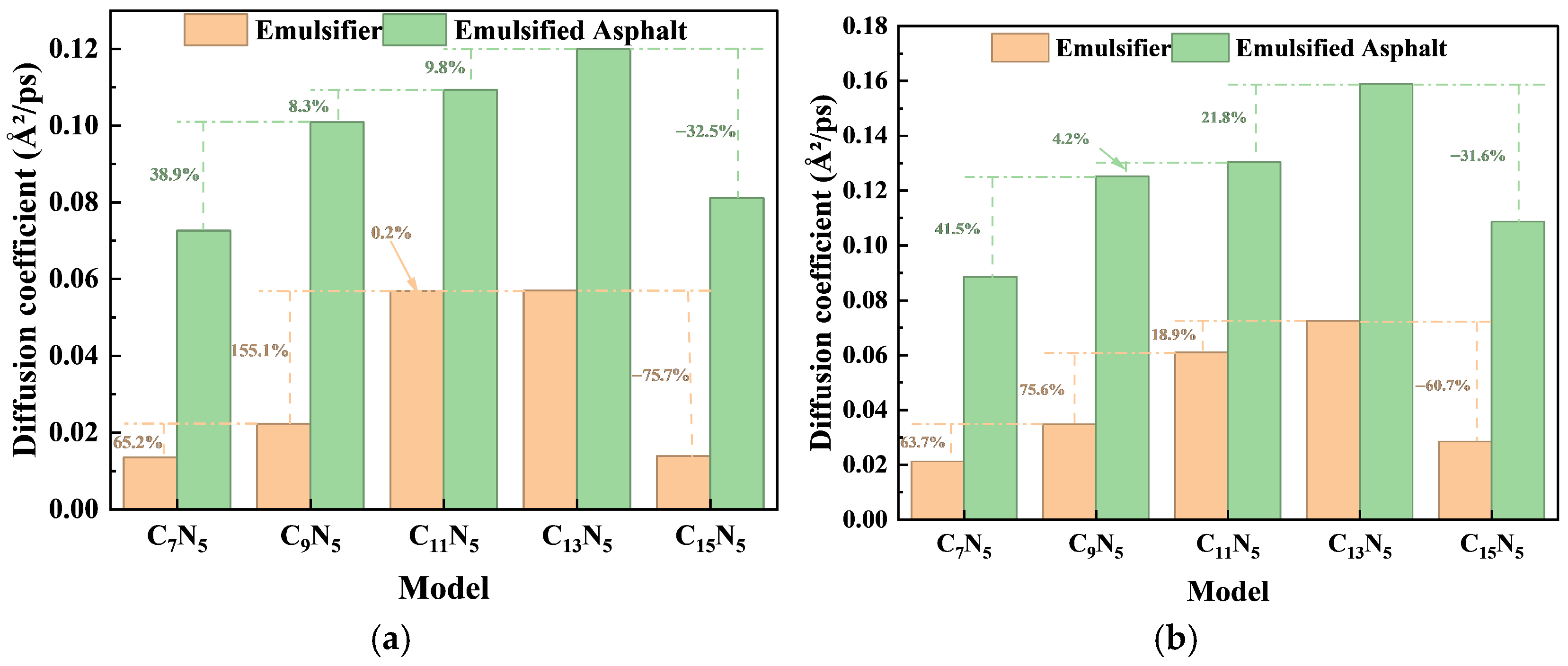
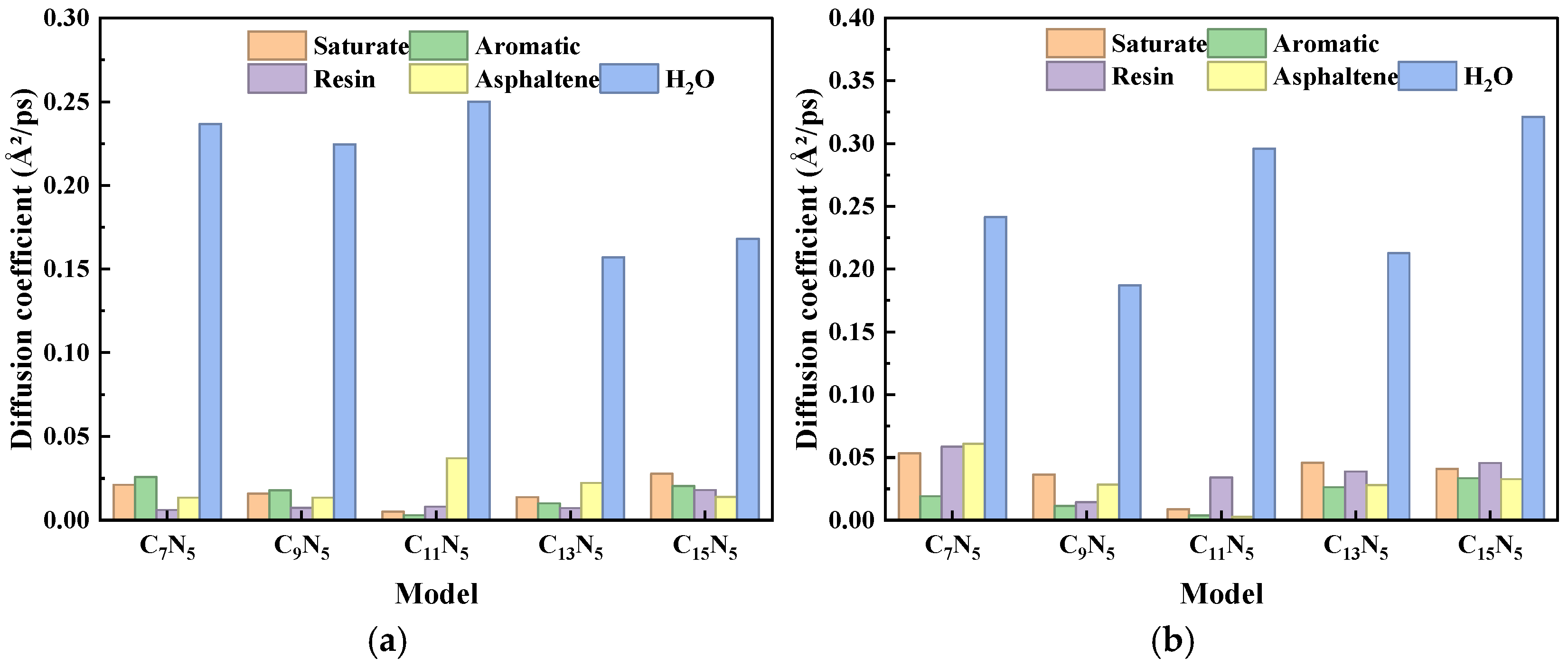
3.2. Effect of Hydrophobic Hydrocarbon Chain Length on the Interfacial Diffusion Behaviour of Emulsified Asphalt–Aggregate Systems
3.3. Effect of Hydrophobic Hydrocarbon Chain Length on the Interfacial Adhesion Performance of Emulsified Asphalt–Aggregate Systems
4. Discussion
5. Conclusions
- (1)
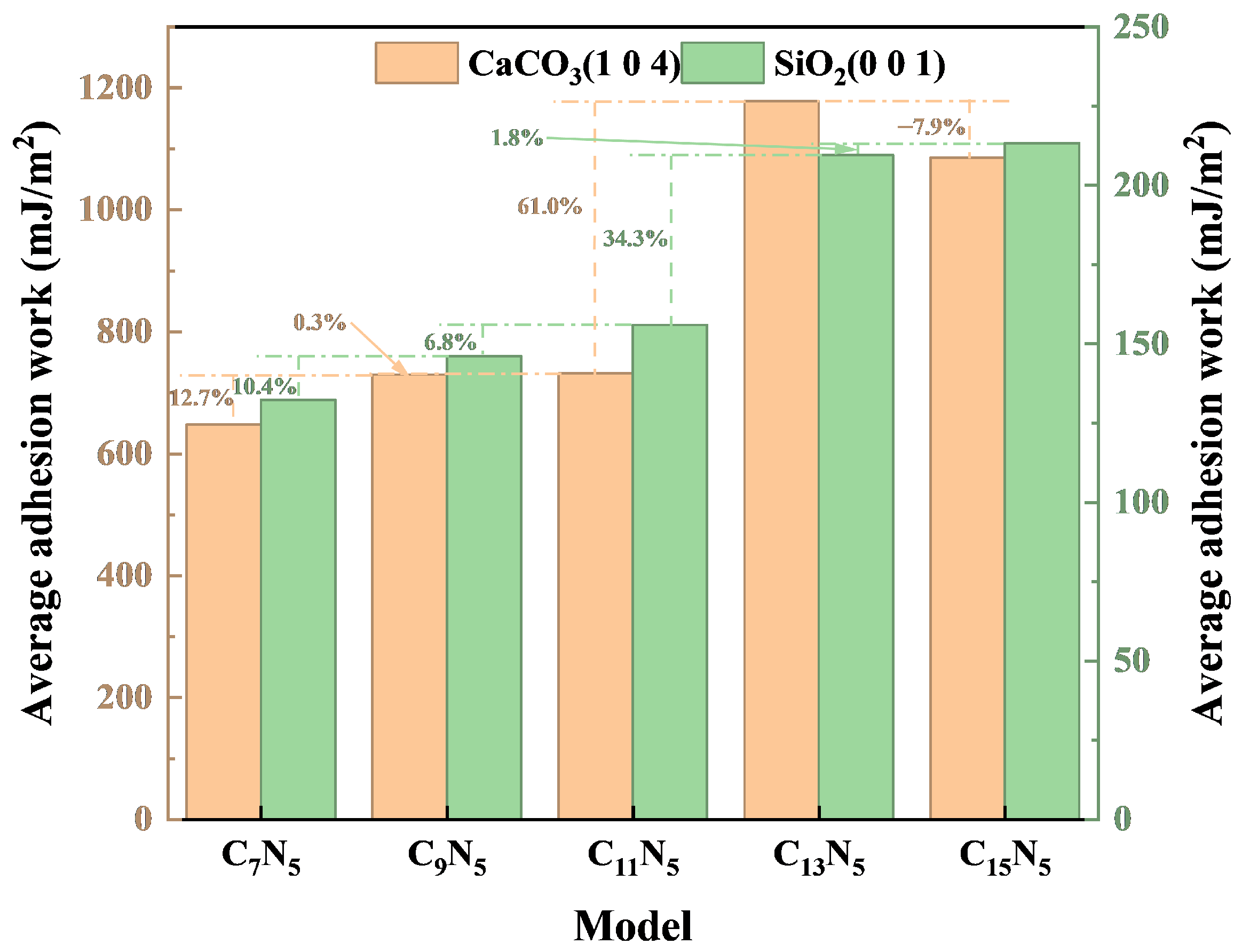
- The hydrophobic alkyl chain length of imidazoline-type emulsifiers exerts a significant regulatory effect on interfacial behavior: increasing the hydrophobic chain length suppresses the adsorption amount of emulsified asphalt at the interface. Hydrophobic chains of appropriate length enhance molecular mobility, thereby improving the interfacial adhesion performance between emulsified asphalt and aggregates. When the chain length exceeds the optimal value (C13), both molecular diffusion rates and interfacial adhesion performance are weakened. In addition, the diffusion behaviors of nonpolar components (aromatics and saturates) respond noticeably to changes in alkyl chain length. Based on the combined analysis of adsorption behaviour, diffusion coefficient, and adhesion work, the interfacial performance reaches the optimum at an alkyl chain length of C13.
- (2)
- The surface properties of aggregates significantly influence interfacial adhesion: compared with the acidic SiO2 (0 0 1) aggregate, the CaCO3 (1 0 4) basic aggregate exhibits overall lower relative concentration peaks of emulsified asphalt, with peak values less sensitive to variations in the hydrophobic alkyl chain length of the emulsifier. Molecular mobility is lower, adhesion work is higher, and interfacial adhesion performance is superior. These observations collectively indicate strong interactions between emulsified asphalt and the surface of basic aggregates.
- (3)
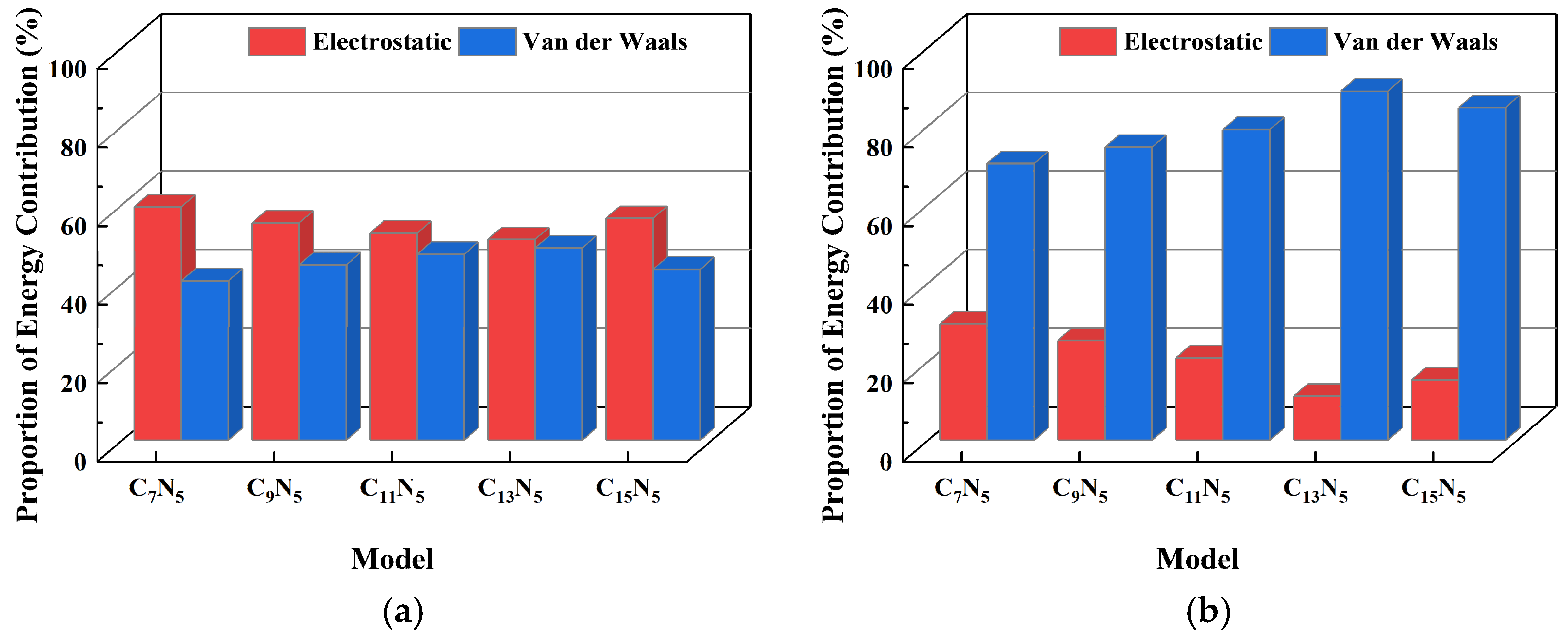
- The dominant energetic mechanism of interfacial adhesion depends on the type of aggregate: the adhesion of emulsified asphalt on the acidic SiO2 (0 0 1) aggregate is primarily governed by van der Waals interactions, whereas the interfacial adhesion on the basic CaCO3 (1 0 4) aggregate is dominated by strong electrostatic interactions.
Author Contributions
Funding
Institutional Review Board Statement
Informed Consent Statement
Data Availability Statement
Conflicts of Interest
References
- Blaauw, S.A.; Maina, J.W. Life Cycle Inventory for Pavements—A Case Study of South Africa. Transp. Eng. 2021, 3, 100049. [Google Scholar] [CrossRef] [Scilit]
- Zhao, P.H.; Liang, H.Y.; Wu, W.X.; Yang, Y.S.; Liu, Y.M.; Li, C.; Meng, W.K.; Zhang, R.; Song, X.Q.; Wang, C.L.; et al. Rheological properties of high-asphalt-content emulsified asphalt. Constr. Build. Mater. 2024, 419, 135511. [Google Scholar] [CrossRef] [Scilit]
- Zhang, H.; Wang, Z.; Wang, Q. Quantitative evaluation of cement emulsified asphalt mortar and aggregate adhesion performance with dynamic mechanical analysis. Constr. Build. Mater. 2020, 262, 120043. [Google Scholar] [CrossRef] [Scilit]
- Wang, Y.Y.; Leng, Z.; Li, X.; Hu, C.C. Cold recycling of reclaimed asphalt pavement towards improved engineering performance. J. Clean. Prod. 2018, 171, 1031–1038. [Google Scholar] [CrossRef] [Scilit]
- Liu, J.; Zheng, X.G.; Li, T.J.; Wang, C.P.; Yanxu, Z.; Ying, L.; Liangwei, L.; Wei, S.; Zheng, X.; Li, T.; et al. Mechanical properties and micromorphology of redispersible emulsified asphalt powder modified cement mortar. Chem. Ind. Eng. Prog. 2022, 41, 2015–2021. [Google Scholar] [CrossRef]
- Chu, F.S.; Li, Q.S.; Sun, C.J.; Luo, Y.; Li, J.C.; Feng, J.R.; Zhang, H.L. Investigation on the pavement performance and application of cold mix emulsified asphalt mixture in the surface layer. J. Clean. Prod. 2025, 507, 145542. [Google Scholar] [CrossRef] [Scilit]
- Huang, W.Q.; Cao, M.M.; Xiao, L.L.; Li, J.; Zhu, M. Experimental study on the fatigue performance of emulsified asphalt cold recycled mixtures. Constr. Build. Mater. 2023, 369, 130607. [Google Scholar] [CrossRef] [Scilit]
- Shi, C.Y.; Ge, J.G.; Yu, H.A.; Qian, G.P.; Zhou, H.Y.; Ma, Y.T.; Nian, T.F.; Yao, D.; Wang, Y.; Zhong, Y.X. Interfacial adhesion properties and debonding mechanisms in rejuvenated asphalt mixtures. Constr. Build. Mater. 2024, 425, 135973. [Google Scholar] [CrossRef] [Scilit]
- Tang, Y.J.; Fu, Z.; Raos, G.; Ma, F.; Zhao, P.; Hou, Y.J. Molecular dynamics simulation of adhesion at the asphalt-aggregate interface: A review. Surf. Interfaces 2024, 44, 103706. [Google Scholar] [CrossRef] [Scilit]
- Tan, W.; Zhu, S.X.; Kong, L.Y.; Peng, Y.; Xu, L.; Fu, Y.G. Influence of aggregate chemical composition on the demulsification rate of emulsified asphalt. Front. Mater. 2022, 9, 1079431. [Google Scholar] [CrossRef] [Scilit]
- Chen, L.X.; Li, J.L.; Xiang, H.; Zhang, J.; Feng, E.L.; Kong, L. Effect of Aggregate Type on Asphalt-Aggregate Adhesion and Its Quantitative Characterization. Materials 2025, 18, 3696. [Google Scholar] [CrossRef] [Scilit]
- Wang, H.N.; Xu, H.; Wang, J.F.; Ying, J.Z.; Shen, S.; Zhang, S. Influence of aggregate physicochemical properties on interfacialadhesion performance of asphalt-aggregate. J. Chang Univ. (Nat. Sci. Ed.) 2022, 42, 52–61. [Google Scholar]
- Yin, Y.P.; Chen, H.X.; Kuang, D.L.; Song, L.F.; Wang, L. Effect of chemical composition of aggregate on interfacial adhesion property between aggregate and asphalt. Constr. Build. Mater. 2017, 146, 231–237. [Google Scholar] [CrossRef] [Scilit]
- Zhu, S.X.; Kong, L.Y.; Peng, Y.; Chen, Y.; Zhao, T.H.; Jian, O.Y.; Zhao, P.H.; Sheng, X.; Li, Z. Mechanisms of interface electrostatic potential induced asphalt-aggregate adhesion. Constr. Build. Mater. 2024, 438, 137255. [Google Scholar] [CrossRef] [Scilit]
- Lin, M.; Lei, Y.; Li, P.; Zhang, Q. Interface adhesion performance and adhesion mechanism between graphene/rubber composite modified asphalt and aggregate. Chem. Ind. Eng. Prog. 2025, 44, 991–1002. [Google Scholar] [CrossRef]
- Cui, S.; Blackman, B.R.K.; Kinloch, A.J.; Taylor, A.C. Durability of asphalt mixtures: Effect of aggregate type and adhesion promoters. Int. J. Adhes. Adhes. 2014, 54, 100–111. [Google Scholar] [CrossRef] [Scilit]
- Yao, X.G.; Li, C.X.; Xu, T. Interfacial adhesive behaviors between SBS modified bitumen and aggregate using molecular dynamics simulation. Surf. Interfaces 2022, 33, 102245. [Google Scholar] [CrossRef] [Scilit]
- Chu, L.; Luo, L.; Fwa, T.F. Effects of aggregate mineral surface anisotropy on asphalt-aggregate interfacial bonding using molecular dynamics (MD) simulation. Constr. Build. Mater. 2019, 225, 1–12. [Google Scholar] [CrossRef] [Scilit]
- Qu, X.; Liu, Q.; Guo, M.; Wang, D.W.; Oeser, M. Study on the effect of aging on physical properties of asphalt binder from a microscale perspective. Constr. Build. Mater. 2018, 187, 718–729. [Google Scholar] [CrossRef] [Scilit]
- Liu, K.; Yang, Q.; Qiu, X.; Xu, W.; Xiao, S.; Gu, Y.; Ye, Y. An investigation toward adhesion characteristics of emulsified asphalt residue–aggregate interface through MD simulation. Constr. Build. Mater. 2024, 438, 137251. [Google Scholar] [CrossRef] [Scilit]
- Zhu, S.X.; Kong, L.Y.; Zhao, P.H.; Peng, Y.; Feng, B.; Zeng, Q.L.; Yang, M.Z.; Zhang, H. Effect of alkyl chain length on the demulsification process of cationic emulsified asphalt on a CaCO3 surface. Constr. Build. Mater. 2024, 417, 135154. [Google Scholar] [CrossRef] [Scilit]
- Kong, L.Y.; Zhu, S.X.; Peng, Y.; Zhao, P.H.; Ouyang, J.; Shao, Q.; Wang, W.N. Effect of phenyl functional groups on the adsorption behaviour of dodecyl anionic emulsifiers on oxides on the aggregate surface. Int. J. Pavement Eng. 2024, 25, 2303662. [Google Scholar] [CrossRef] [Scilit]
- Kong, L.Y.; Zhu, S.X.; Chen, Y.; Peng, Y.; Zhao, P.H.; Ouyang, J.; Feng, B. Quantifying the influence of lipophilic carbon chain length on adhesion between emulsified asphalt and acidic aggregates. Int. J. Pavement Eng. 2024, 25, 2376219. [Google Scholar] [CrossRef] [Scilit]
- Zhang, Z.; Zheng, X.G.; Li, J.Y.; Xu, G.; Tan, L.J. Mechanism of reinforced interfacial adhesion between steel slag and highly devulcanized waste rubber modified asphalt and its influence on the volume stability in steel slag asphalt mixture. Constr. Build. Mater. 2024, 447, 138129. [Google Scholar] [CrossRef] [Scilit]
- Meng, X.L.; Li, X.Y.; Yan, N.H.; Li, W.B. Research on Dynamic Adhesion and Failure Characteristics of Asphalt-AggregateInterface Based on Molecular Dynamics. Mater. Rep. 2025, 39, 97–104. [Google Scholar]
- Wang, S.H.; Chen, Y.; Wang, L.H.; Cui, N.X.; Li, C.F.; Sun, S.F. Study on Water Damage of Asphalt-Aggregate Based on Molecular Dynamics. Materials 2025, 18, 209. [Google Scholar] [CrossRef] [Scilit] [PubMed]
- Sun, W.; Wang, H. Moisture effect on nanostructure and adhesion energy of asphalt on aggregate surface: A molecular dynamics study. Appl. Surf. Sci. 2020, 510, 145435. [Google Scholar] [CrossRef] [Scilit]
- Artok, L.; Su, Y.; Hirose, Y.; Hosokawa, M.; Murata, S.; Nomura, M. Structure and Reactivity of Petroleum-Derived Asphaltene. Energy Fuels 1999, 13, 287–296. [Google Scholar] [CrossRef] [Scilit]
- Wiehe, I.A.; Liang, K.S. Asphaltenes, resins, and other petroleum macromolecules. Fluid Phase Equilibria 1996, 117, 201–210. [Google Scholar] [CrossRef] [Scilit]
- Zhang, L.Q.; Greenfield, M.L. Effects of polymer modification on properties and microstructure of model asphalt systems. Energy Fuels 2008, 22, 3363–3375. [Google Scholar] [CrossRef] [Scilit]
- Li, D.D.; Greenfield, M.L. Chemical compositions of improved model asphalt systems for molecular simulations. Fuel 2014, 115, 347–356. [Google Scholar] [CrossRef] [Scilit]
- Yao, H.; Dai, Q.L.; You, Z.P. Molecular dynamics simulation of physicochemical properties of the asphalt model. Fuel 2016, 164, 83–93. [Google Scholar] [CrossRef] [Scilit]
- Zhao, P.H.; Ren, R.B.; Zhou, H.; Ouyang, J.; Li, Z.G.; Sun, D.C. Preparation and properties of imidazoline surfactant as additive for warm mix asphalt. Constr. Build. Mater. 2021, 273, 121692. [Google Scholar] [CrossRef] [Scilit]
- Kong, L.Y.; Zhu, S.X.; Quan, X.J.; Peng, Y. Effect of phenyl functional group on the demulsification process of dodecyl anion emulsified asphalt. Constr. Build. Mater. 2022, 354, 129196. [Google Scholar] [CrossRef] [Scilit]
- Liao, R.J.; Li, B.F.; Cheng, L.; Yang, L.J.; Zhao, X.; Hao, J. Review on Numerical Simulation and Experimental Study of Gas Transport Mechanisms in Oil-paper Insulation. High Volt. Eng. 2025, 51, 3940–3957. [Google Scholar] [CrossRef]
- Liu, Y.Y.; Li, F.Q.; Liu, D.; Wang, J.T.; Luo, X. Molecular simulation study on the interfacial properties of recycled asphalt-aggregate at the nanoscale. Chem. Ind. Eng. Prog. 2025, 44, 4302–4310. [Google Scholar] [CrossRef]
- Zhang, L.Q.; Greenfield, M.L. Analyzing properties of model asphalts using molecular simulation. Energy Fuels 2007, 21, 1712–1716. [Google Scholar] [CrossRef] [Scilit]
- Lesueur, D. The colloidal structure of bitumen: Consequences on the rheology and on the mechanisms of bitumen modification. Adv. Colloid Interface Sci. 2009, 145, 42–82. [Google Scholar] [CrossRef] [Scilit]






| Molecular Name | Molecular Formula | Molar Mass (g/mol−1) | Number Added | Proportion (%) |
|---|---|---|---|---|
| Saturate | C22H46 | 310.61 | 5 | 7.3 |
| Aromatics | C46H50S | 634.966 | 7 | 20.8 |
| Resin | C59H85NOS | 856.395 | 3 | 12 |
| Asphaltene | C149H177N3O2S2 | 2106.19 | 1 | 9.9 |
| Composition | Molecular Name | Molecular Formula | Molar Mass (g/mol−1) | Number Added |
|---|---|---|---|---|
| C7N5 | Emulsifier | C16H35N5 | 297.491 | 5 |
| Water molecule | H2O | 18.015 | 502 | |
| C9N5 | Emulsifier | C18H39N5 | 325.545 | 5 |
| Water molecule | H2O | 18.015 | 502 | |
| C11N5 | Emulsifier | C20H43N5 | 353.599 | 5 |
| Water molecule | H2O | 18.015 | 502 | |
| C13N5 | Emulsifier | C22H47N5 | 381.653 | 4 |
| Water molecule | H2O | 18.015 | 502 | |
| C15N5 | Emulsifier | C24H51N5 | 409.707 | 4 |
| Water molecule | H2O | 18.015 | 502 |
| Aggregate | Lattice Constant | |||||
|---|---|---|---|---|---|---|
| a/Å | b/Å | c/Å | α/° | β/° | γ/° | |
| CaCO3 | 4.99 | 4.99 | 17.061 | 90 | 90 | 120 |
| SiO2 | 4.193 | 4.193 | 5.4052 | 90 | 90 | 120 |
Disclaimer/Publisher’s Note: The statements, opinions and data contained in all publications are solely those of the individual author(s) and contributor(s) and not of MDPI and/or the editor(s). MDPI and/or the editor(s) disclaim responsibility for any injury to people or property resulting from any ideas, methods, instructions or products referred to in the content. |
© 2026 by the authors. Licensee MDPI, Basel, Switzerland. This article is an open access article distributed under the terms and conditions of the Creative Commons Attribution (CC BY) license.
Share and Cite
Xu, H.; Zhao, P.; Wang, W.; Zhang, Z.; Shi, J.; Yu, D.; Cui, H.; Huang, D.; Su, J. Effect of Hydrophobic Alkyl Chain Length on the Interfacial Adhesion Performance of Emulsified Asphalt–Aggregate Systems. Coatings 2026, 16, 330. https://doi.org/10.3390/coatings16030330
Xu H, Zhao P, Wang W, Zhang Z, Shi J, Yu D, Cui H, Huang D, Su J. Effect of Hydrophobic Alkyl Chain Length on the Interfacial Adhesion Performance of Emulsified Asphalt–Aggregate Systems. Coatings. 2026; 16(3):330. https://doi.org/10.3390/coatings16030330
Chicago/Turabian StyleXu, Haijiao, Pinhui Zhao, Wenyu Wang, Zhiyu Zhang, Jingtao Shi, Dongqi Yu, Hongbo Cui, Deshang Huang, and Jiawei Su. 2026. "Effect of Hydrophobic Alkyl Chain Length on the Interfacial Adhesion Performance of Emulsified Asphalt–Aggregate Systems" Coatings 16, no. 3: 330. https://doi.org/10.3390/coatings16030330
APA StyleXu, H., Zhao, P., Wang, W., Zhang, Z., Shi, J., Yu, D., Cui, H., Huang, D., & Su, J. (2026). Effect of Hydrophobic Alkyl Chain Length on the Interfacial Adhesion Performance of Emulsified Asphalt–Aggregate Systems. Coatings, 16(3), 330. https://doi.org/10.3390/coatings16030330