Article

Temperature Distribution and Heat Dissipation Optimization of High-Power Thick-Film-Substrate LED Modules

1
School of Mechanical and Electrical Engineering, Guangdong University of Science and Technology, Dongguan 523083, China
2
School of Energy Science and Engineering, Central South University, Changsha 410083, China
3
Guangxi Engineering Consulting Group Company Limited, Nanning 530022, China
4
Department of Electrical and Computer Engineering, University of Macau, Macau 999078, China
*
Author to whom correspondence should be addressed.
Coatings 2026, 16(2), 173; https://doi.org/10.3390/coatings16020173
Submission received: 27 December 2025 / Revised: 24 January 2026 / Accepted: 26 January 2026 / Published: 30 January 2026
(This article belongs to the Collection Advanced Optical Films and Coatings)

Abstract

With the widespread application of high-power thick-film-substrate light-emitting diode (LED) packages, the performance of high-power LED modules has been continuously improved, making thermal management an increasingly critical issue. To enhance the heat dissipation performance of LED modules, this study investigates the effects of different heat dissipation structures on the temperature field using a finite element-based thermal simulation method, based on the thermal management enhancement characteristics of the LED. A thermal simulation model of the LED was established, and the thermal characteristics and temperature field characterization of its components were analyzed. Our results revealed significant temperature differences at various positions of the LED, particularly near the bottom surface of the heat sink and the contact surface with the LED chips, where the heat flux density exhibited notable variations. Properly adjusting the spacing between LEDs effectively reduced the maximum temperature of the module, with the optimal spacing determined to be approximately 19 mm. To further improve heat dissipation, pin-fin arrays were added to the heat sink, leading to a reduction of 8.79 K in the maximum temperature and 9.67 K in the minimum temperature of the LED module, which significantly enhanced the heat dissipation performance. The optimization measures effectively improved the temperature field characterization of the LED, contributing to enhanced performance and an extended lifespan of the LED module.

1. Introduction

LED technology has been widely applied in various fields such as lighting and displays due to its advantages of high efficiency and a long lifespan. However, one of the main challenges faced by LED devices is how to effectively manage the heat generated [1,2,3,4]. As high-power, high-thermal-density components, LED chips convert only 20%–30% of the input power into light, with the remaining power dissipated as heat [5]. Since the typical size of LED chips is 1 × 1 mm, their heat flux density is extremely high, often exceeding 106 W/m2 [6,7]. With the increase in power consumption and the widespread use of multi-chip LED modules in applications such as lighting and display backlighting, thermal management issues have become more severe.
The junction temperature of LED increases with rising power density, directly impacting the reliability and performance of LED devices [8,9]. Elevated junction temperatures lead to a reduction in LED lifespan, luminous efficacy, and chromatic stability, further exacerbating thermal accumulation [10]. Studies have indicated that for every 1 °C rise in junction temperature, LED reliability decreases by approximately 5%, resulting in a significant reduction in operational lifetime [11]. The increase in junction temperature also causes a decline in luminous flux, chromaticity shifts, and an overall decrease in optical output. Additionally, self-heating effects accelerate the degradation of materials, including the phosphor-containing composite layer, further compromising the thermal and optical performance of the LED module [12].
The thermal dissipation characteristics of LED modules are influenced by the materials used, structural design, and heat exchange mechanisms [13,14,15,16,17,18,19]. To tackle these thermal challenges, researchers have not only focused on the LED chip itself but have also explored the impact of chip spacing as a key research direction [20,21,22,23]. Ha and Graham [24] observed that when the chip spacing is small, the thermal resistance of the substrate decreases as the spacing increases. Once the spacing surpasses a certain threshold, further increases have little effect on substrate thermal resistance. While their study provided insights into the relationship between chip spacing and substrate thermal resistance, the influence of spacing on junction temperature remains insufficiently explored.
To bridge this gap, Wu et al. [25] investigated chip-on-board (COB) LED fixtures using infrared thermography and CFD simulations. Their findings revealed that smaller chip spacing results in higher junction temperatures and greater thermal resistance. The temperature difference between the smallest and largest chip spacing was recorded at 3.12 °C, with LEDs featuring larger spacing exhibiting better optical performance. Despite these contributions, most existing studies have examined LED modules from a system-level perspective rather than focusing on how individual LED thermal dissipation is affected by different spacing configurations. Since the spatial arrangement of LEDs plays a crucial role in thermal management, optimizing their distribution is essential for enhancing both localized and overall heat dissipation efficiency.
The inherent heat dissipation capacity of LEDs is limited. To significantly enhance their thermal efficiency, finned heat sinks serve as an effective means of improving heat dissipation, such as through optimized heat sink designs [9,26]. In the course of our literature review, scarce publications focus on the transient analysis of thermal issues associated with LED modules. In the early studies, Yu et al. [27] held that transient analysis is a suitable tool for the quality control of die attach, and they further pointed out that a complete transient analysis is required to consider the effect of die attach in the MCPCB model. Nisa Khan et al. [28] adopted the transient analysis method and found that shortening the time to reach thermal equilibrium can mitigate luminous flux attenuation, as well as improve light output and color stability. Meanwhile, they also found that an insufficient fin area of the heat sink, or the mounting of LEDs on multilayer circuit boards, will prolong the time to reach thermal equilibrium, thereby leading to luminous flux attenuation. These transient analysis studies all conclude that optimizing the design of key LED components such as heat sinks and circuit boards can shorten the time to reach thermal equilibrium, alleviate luminous flux attenuation, and enhance light output and color stability. Meanwhile, computational fluid dynamics (CFD) simulation has become a valuable tool for analyzing the thermal distribution of LED modules [29,30,31,32], providing support for the development of more efficient thermal management strategies.
Building upon the literature review in Section 1, Section 2 describes the establishment of the thermal simulation model. Two simulation cases are developed: one for the thermal simulation of LED and another for an improved LED module with an added finned heat sink. In Section 3, the results and discussion focus on the thermal analysis of LED, clarifying the temperature distribution characteristics and validating the accuracy of the simulation. The impact of different LED arrangements on the thermal dissipation of the LED module is analyzed in detail. Additionally, a temperature distribution cloud map of the LED module with the optimized heat sink is presented, and its characteristics are systematically discussed. Finally, Section 4 summarizes the key conclusions of this study.

2. Thermal Simulation Model

2.1. Thermal Simulation Model of LED

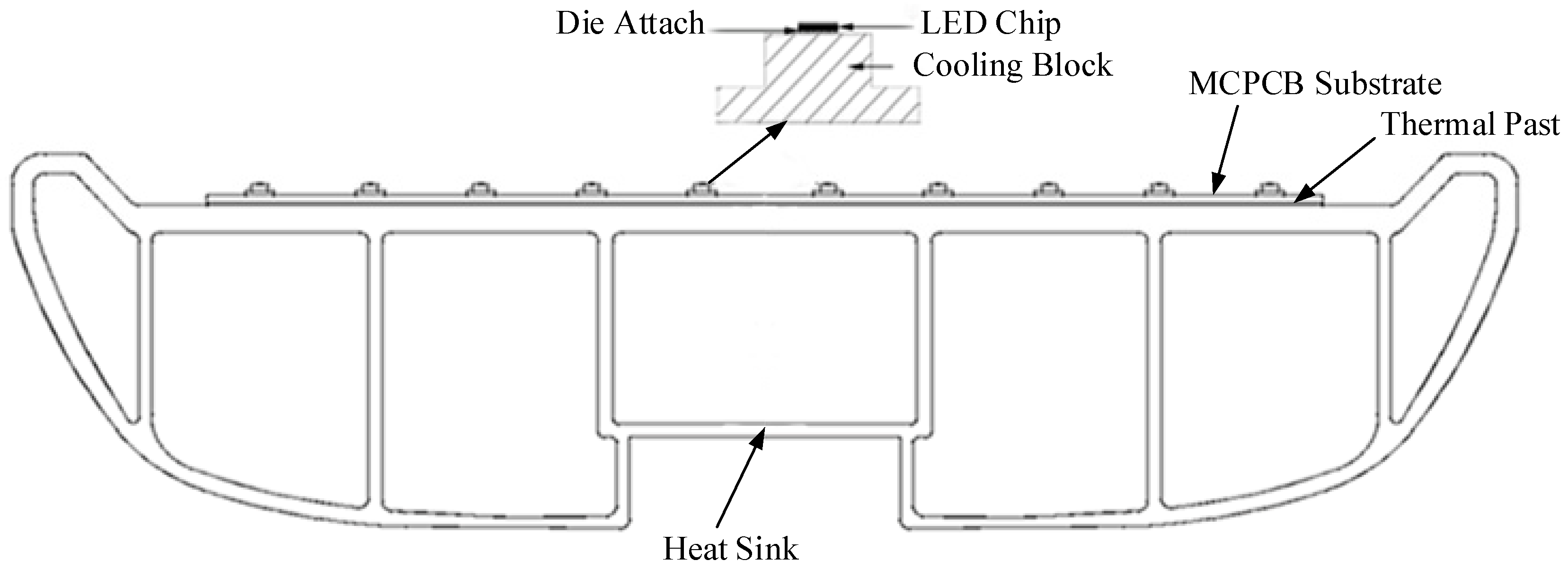
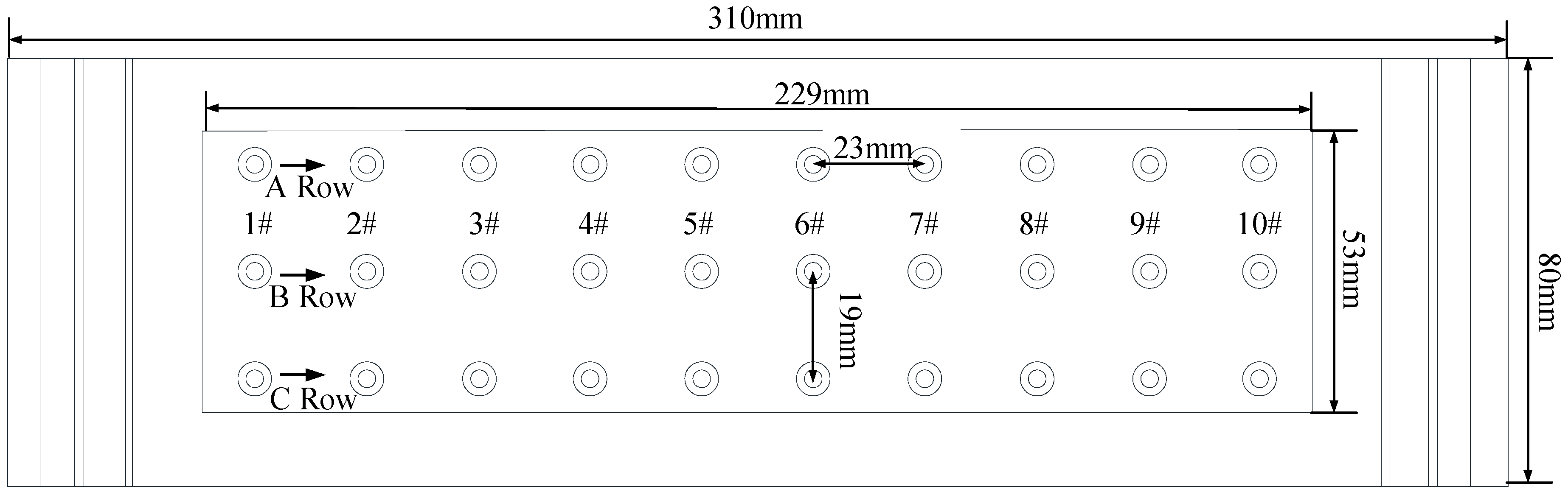
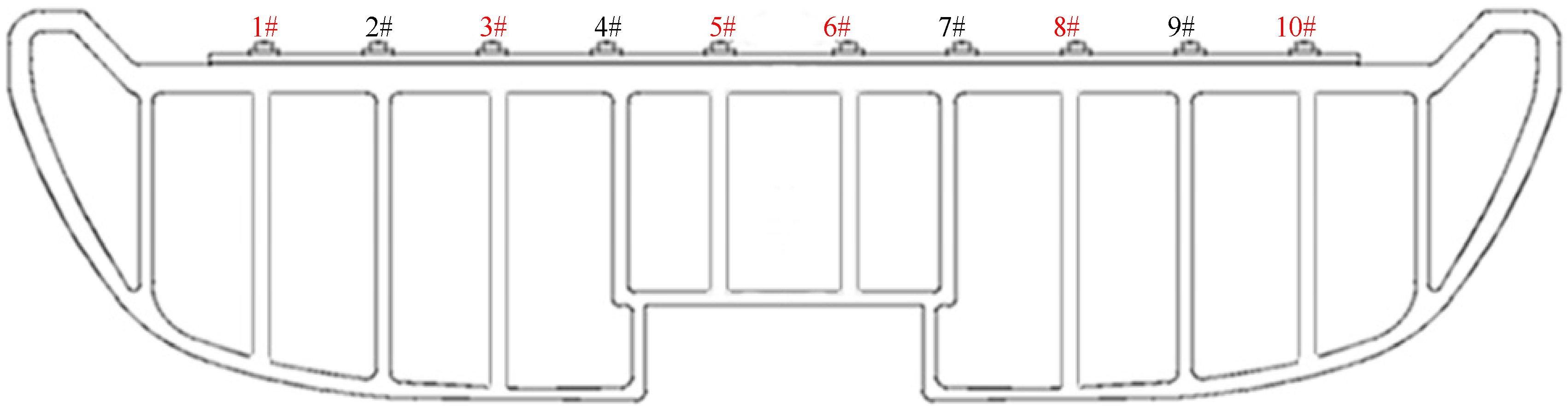
A structural diagram of a high-power LED module [29] is shown in Figure 1, while a simplified top view of the LED module cross-section is presented in Figure 2. The LED module consists of five series-connected strings, each containing six parallel-connected LED. Each LED has a rated power of 1 W, resulting in a total power of 30 W for the LED module.
The substrate material composition, geometric dimensions, and thermal properties are consistent with those of the experimental setup reported in Ref. [29]. with the detailed parameters listed in Table 1 of Ref. [29]. These parameters are directly adopted in the present numerical model to ensure the reproducibility of the modeling approach and the comparability of the results. As a result of design constraints associated with the wide range of LED module sizes, the MCPCB substrate of the LED module has a very thin copper layer. Additionally, the presence of an interface between the copper layer and the LED further increases the difficulty of mesh generation. The individual components of the LED are relatively small. If all 30 LED, along with their materials and dimensions, are considered in the LED module study, the mesh division becomes highly complex, significantly increasing computational difficulty. Within an acceptable error range, the excessive computational cost may outweigh the benefits. Since the LED serves as both the light-emitting and heat-generating center of the module, conducting an in-depth investigation into its performance and temperature distribution characteristics is crucial for optimizing the overall performance of the LED module.
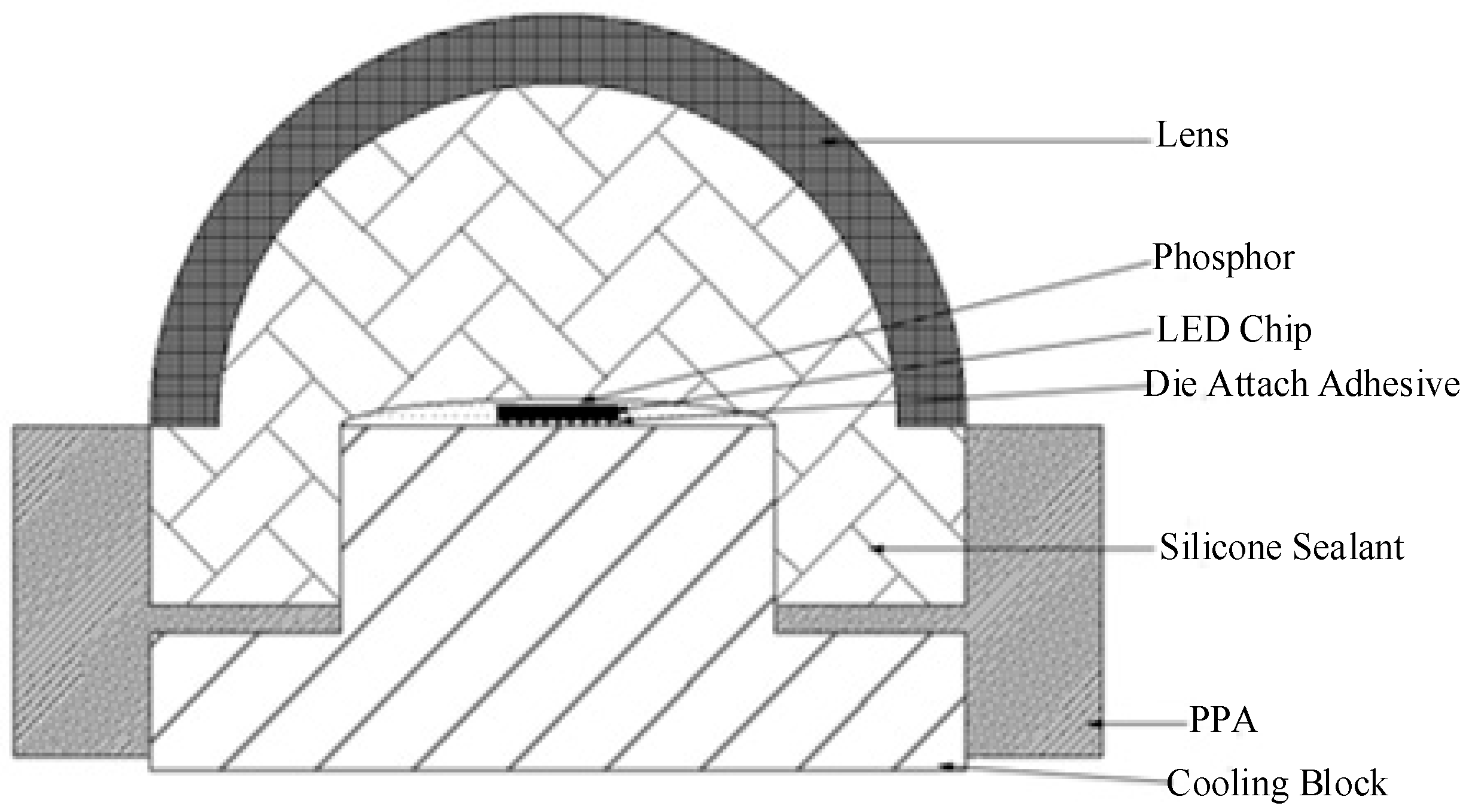
The cross-sectional view of a high-power LED is shown in Figure 3. The dimensions, materials, and thermal properties of the LED are listed in Table 1.
We adopt a simplified approach for the LED simulation model [29]. The main differences between the model and the actual structure are as follows: First, the impact of the bonding wires and electrodes on the temperature distribution of the LED is ignored. Second, when the convective heat transfer coefficient increases from 0 to 5 W/m2·K, the resulting temperature variation remains small. In particular, within the confined computational domain considered in this study, the difference in the maximum temperature between the cases with a convective heat transfer coefficient of 2 W/m2·K and with no air convection is only 0.41 K. Accordingly, in the numerical simulations, the convective heat transfer coefficient between the outer surface of the LED and the surrounding air is assumed to be 2 W/m2·K, and the ambient temperature is set to 315 K [29]. The LED, acting as the heat source, is modeled using a single thermal resistance model [29]. This study optimizes the LED module by analyzing its complete thermal path, which sequentially includes the chip, phosphor-silicone encapsulant, lens, and environment, modeled through a dual thermal resistance network. In our approach, in addition to the factors considered in the single thermal resistance model, the effects of phosphor, silicone, lens, and PPA are taken into account. However, the addition of these components does not affect the heat transfer from the substrate to the heat sink, meaning that the heat flux density at the bottom surface of the heat sink remains unchanged even with the inclusion of phosphor, silicone, lens, and PPA in the LED.
Based on the reference [24], during the process of heat conduction, a change in the heat flux area induces a thermal diffusion effect. At the edges of a sudden change in the heat flux area, the heat flux density is significantly higher than that at the center of the surface. The heat flux density exhibits an increasing trend along the radial direction, meaning that it is a function of the radius. In sufficiently small annular surfaces, the heat flux density remains constant. This phenomenon can be observed from both the heat flux density distribution diagram of the LED module’s heat dissipation block in reference [29] and the corresponding diagram in this study.
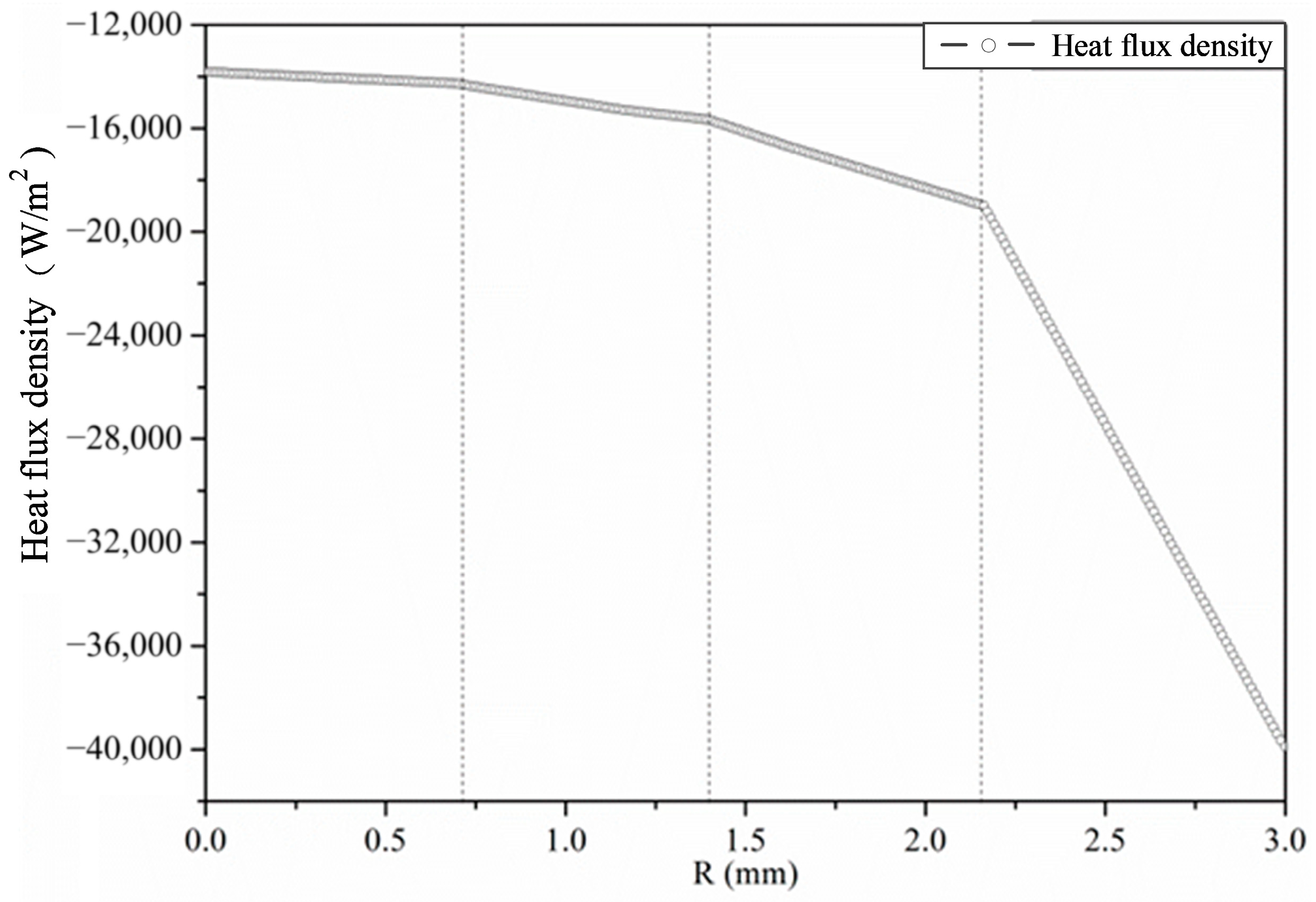
From the thermal analysis results under the rated operating conditions of the high-power LED module, the variation in heat flux density from the center to the periphery of the heat dissipation block’s bottom surface was obtained, as illustrated in Figure 4. As seen in Figure 4, the change in heat flux density near the center of the contact surface is relatively slow, while a rapid increase begins at approximately 2.16 mm from the center. The variation in heat flux density along the radial direction can be categorized into four distinct segments, each exhibiting an approximately linear trend.
When performing a standalone thermal analysis of an LED, the heat dissipation path from the heat sink substrate to the heat sink itself is absent compared to the actual scenario. To compensate for this missing heat dissipation pathway, an appropriate heat flux density is applied to the bottom surface of the LED’s heat dissipation block. The values of this heat flux density, varying with radius as shown in Figure 4, serve as the basis for further thermal analysis of the LED.
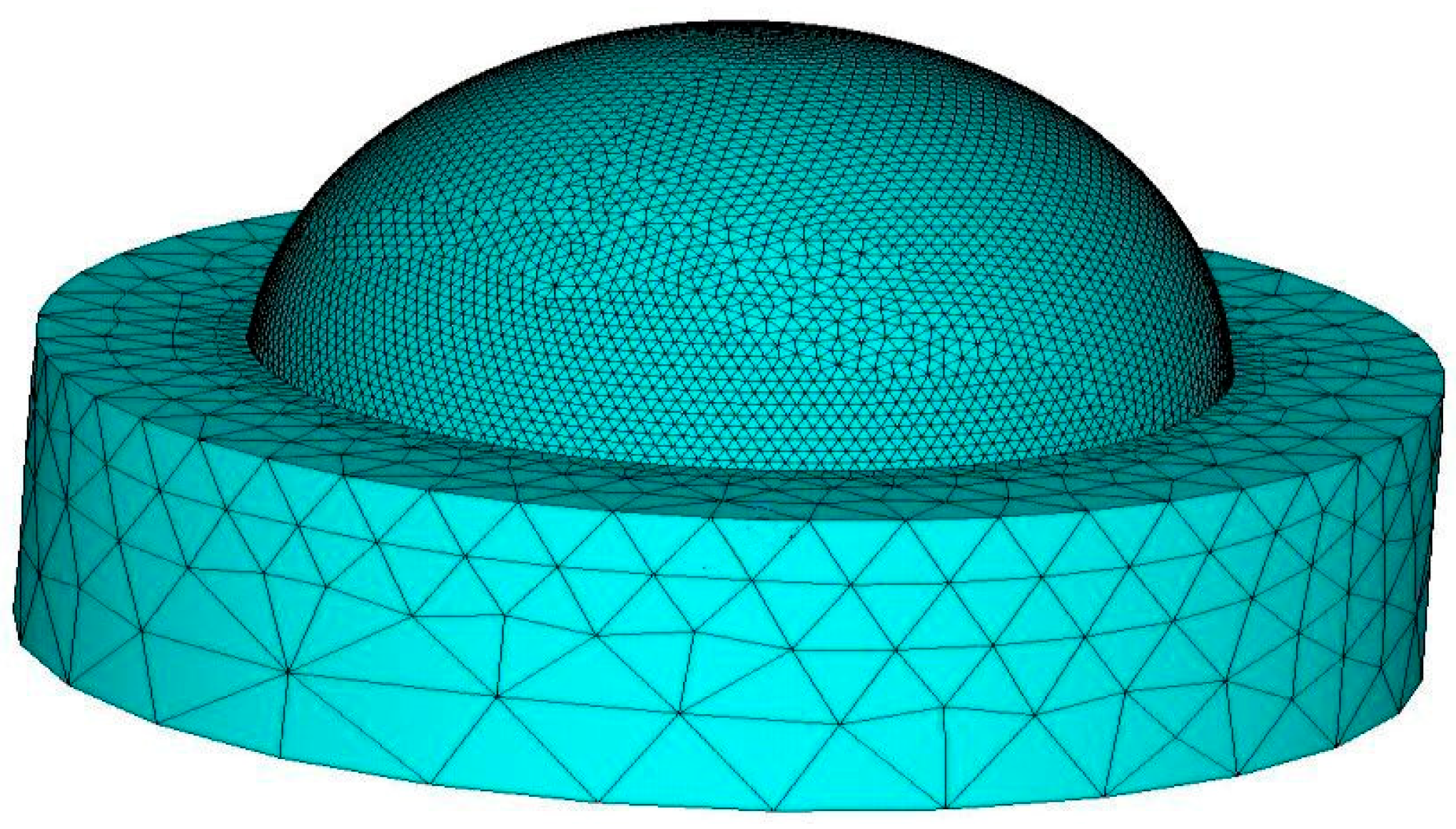
The components of the LED have irregular shapes. When performing mesh generation, appropriate meshing methods and mesh densities need to be chosen based on the shapes, sizes, and materials of the components. For irregular components, an unstructured mesh is typically used. We divided the LED model into three different mesh sizes: 268,000, 381,000, and 524,000 elements. Simulations were conducted for the models with each mesh size. After considering both computational time and accuracy, we selected the mesh size of 381,000 elements for the LED simulation. Figure 5 shows the mesh division of the LED.

2.2. Simulation Scheme of the 30 W LED Module

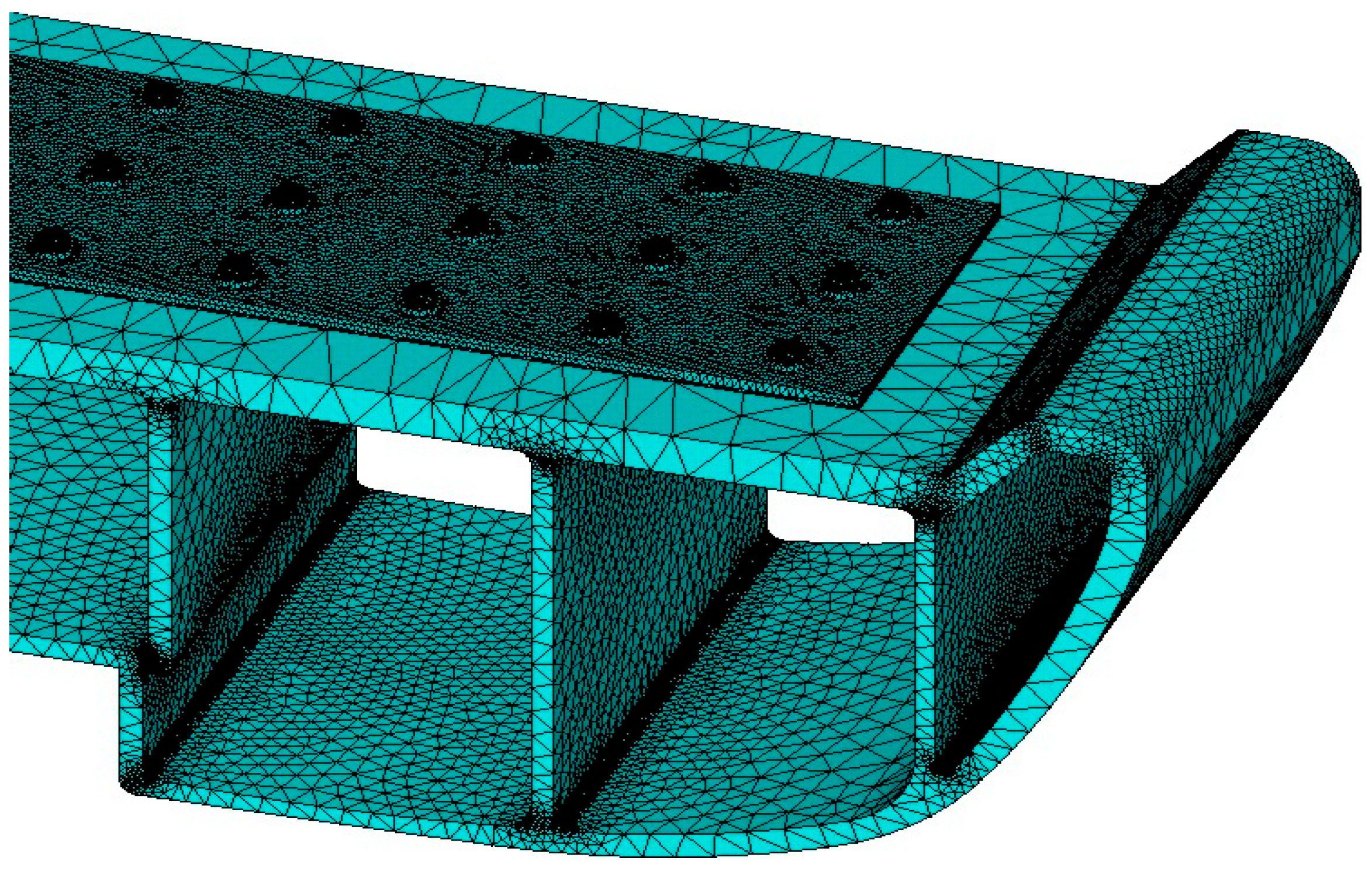
This study primarily meshes the LED module based on the significance and size of heat sources. Since the heat sources and heat dissipation pathways of the LED module mainly rely on the LED, die-attach adhesive, substrate, and thermal conductive silicone, finer mesh divisions were applied to the chip (the central heat source and luminous component of the LED), die-attach adhesive, substrate, and thermal conductive silicone, while coarser meshes were used for other regions.
A mesh independence analysis was first conducted by dividing the LED module model into different mesh levels: 1.389 million, 1.747 million, and 2.025 million elements. Simulation comparisons were performed for these different mesh densities. The temperature difference between the 1.389 million and 1.747 million mesh cases was found to be 0.66 K, while the difference between the 1.747 million and 2.025 million cases was only 0.06 K. Considering both computational efficiency and accuracy, 1.747 million elements were selected as the final mesh density for the LED module simulation. Figure 6 illustrates the meshing scheme of the LED module.

2.3. Thermal Optimization of 30 W LED Module Heat Sink

To further enhance heat dissipation performance, employing a heat sink is an effective approach to improving active cooling. It is essential to continuously optimize the structure and material parameters of the heat sink to achieve better thermal management of the LED module. The heat sink shown in Figure 1 consists of only six pin-fin arrays, whereas Figure 7 presents a new structure with a more reasonable arrangement of ten rows of LED.
After incorporating additional pin-fin arrays into the new heat sink, the thermal characteristics of the LED module were re-simulated, and the influencing factors were analyzed. Based on the structure in Figure 1, pin-fin arrays were added at positions 1#, 3#, 5#, 6#, 8#, and 10# beneath the corresponding LED to improve the heat dissipation performance of the heat sink. The modified LED module is shown in Figure 7.

3. Results and Discussion

3.1. Temperature Distribution of LED

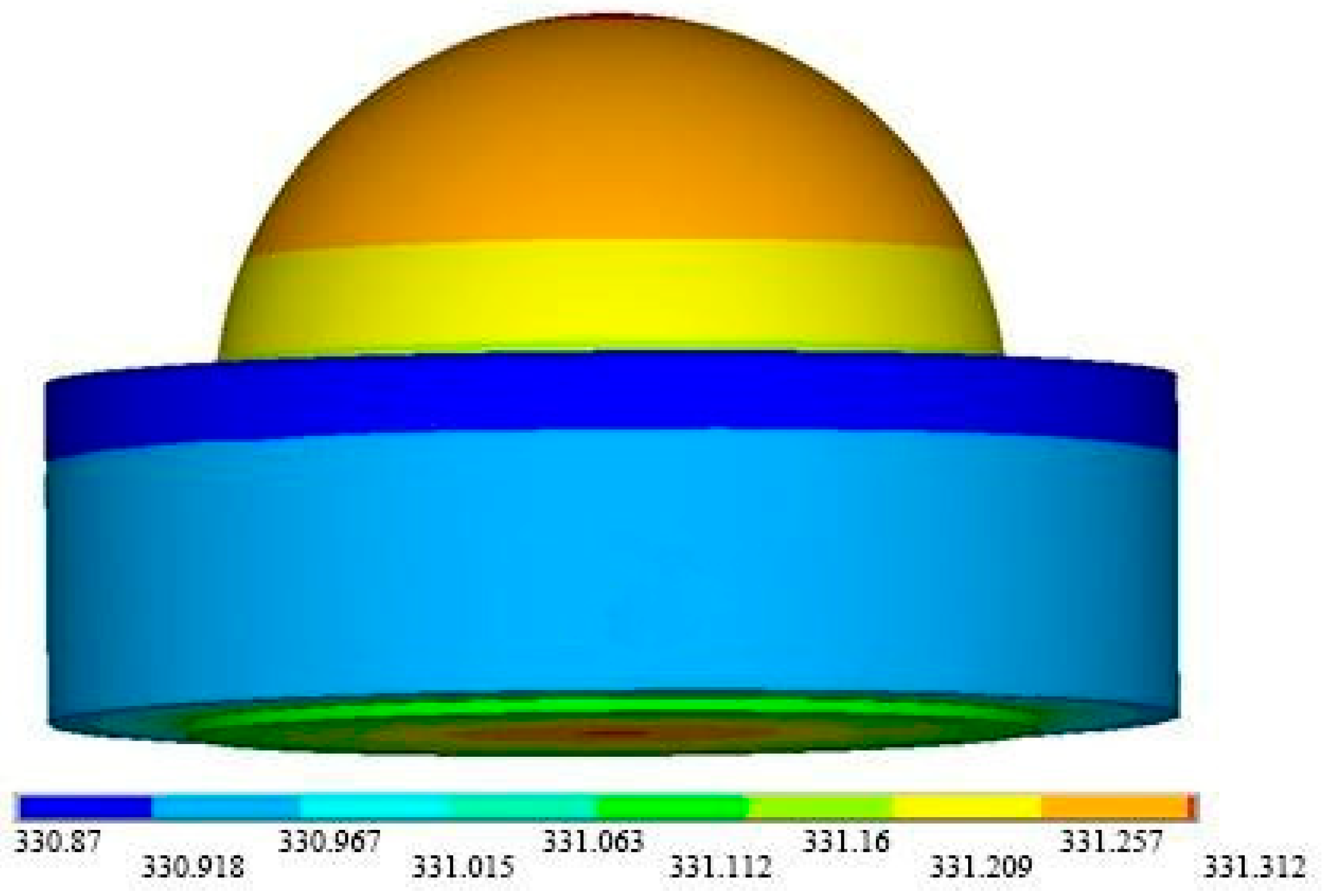
The LED serves as the central heat source. The temperature distribution contour of the LED obtained from the simulation is shown in Figure 8. To match the application scenario of the 30 W high-power LED module, a heat flux density varying with radius, as illustrated in Figure 3, was applied to the bottom surface of the LED’s cooling block. The external simulation parameters included a surface air convection coefficient of 2 W/m2·K and an ambient temperature set to 315 K.
The simulated temperature data of the LED was compared with experimental data, as shown in Table 2, and the error was found to be within the acceptable range. The temperature contour of the LED chip indicates that the highest temperature reached 333.64 K, which is very close to the maximum temperature of 334.02 K obtained from the LED module simulation in reference [29]. This discrepancy was primarily attributed to the addition of heat transfer paths, the inclusion of convection at the outer surface, and the applied heat flux density.
We extracted the heat dissipation distribution from the surface of the LED and found that the heat loss from the LED surface was only 0.0016 W. This result aligns with reference [24], which states that the upward heat dissipation from an LED account for less than 10% of the total heat, and with reference [13], which indicates that the heat loss through the lens accounts for only 2% of the total heat. These findings validate the accuracy of the LED model.
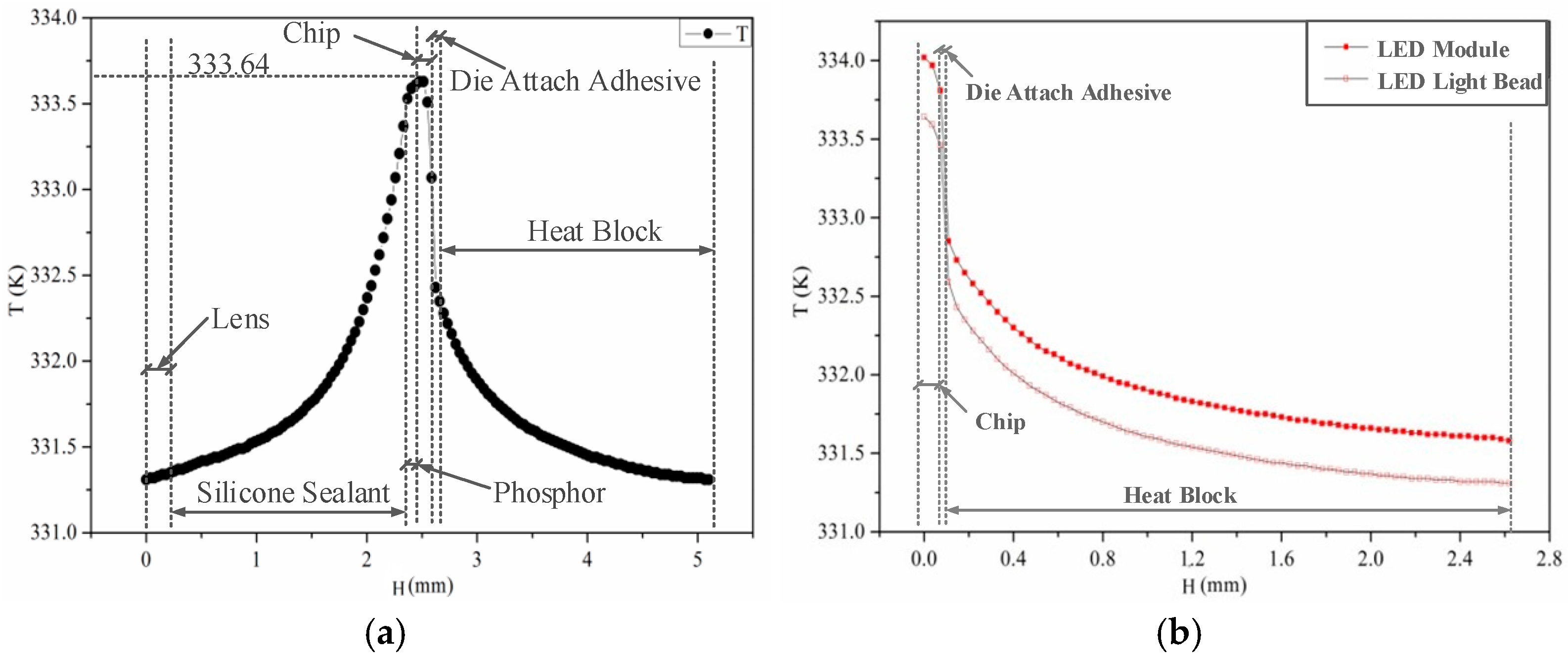
For the thermal path from the top node of the lens to the center node at the bottom of the cooling block, we obtained the longitudinal temperature distribution of the LED, as shown in Figure 9a. Additionally, we extracted the temperature distribution from the center node of the upper surface of the LED chip to the center node at the bottom of the cooling block and compared it with the corresponding temperature distribution in the LED module, resulting in the comparison shown in Figure 9b. As observed in Figure 9, the vertical temperature distribution curves from the LED chip to the heat dissipation block bottom exhibit a consistent trend for both the LED and the LED module, with the LED curve shifted downward by approximately 0.32 K.

3.2. Effect of LED Spacing on the Thermal Performance of the High-Power LED Module

As shown in Figure 2, the distribution of the LED along the length of the module substrate is relatively uniform, with a distance of 23 mm between two adjacent packages. The distance between the 1# and 10# LED and the edge of the substrate is 11 mm, nearly half of 23 mm, which aligns with the reasonable arrangement of the LED. In the width direction, the distance between two adjacent packages is 20 mm, and the distance from the LED in rows A and C to the edge of the substrate is 6.5 mm. This spacing causes the temperature at the edges in the width direction to be higher than that at the center [29].
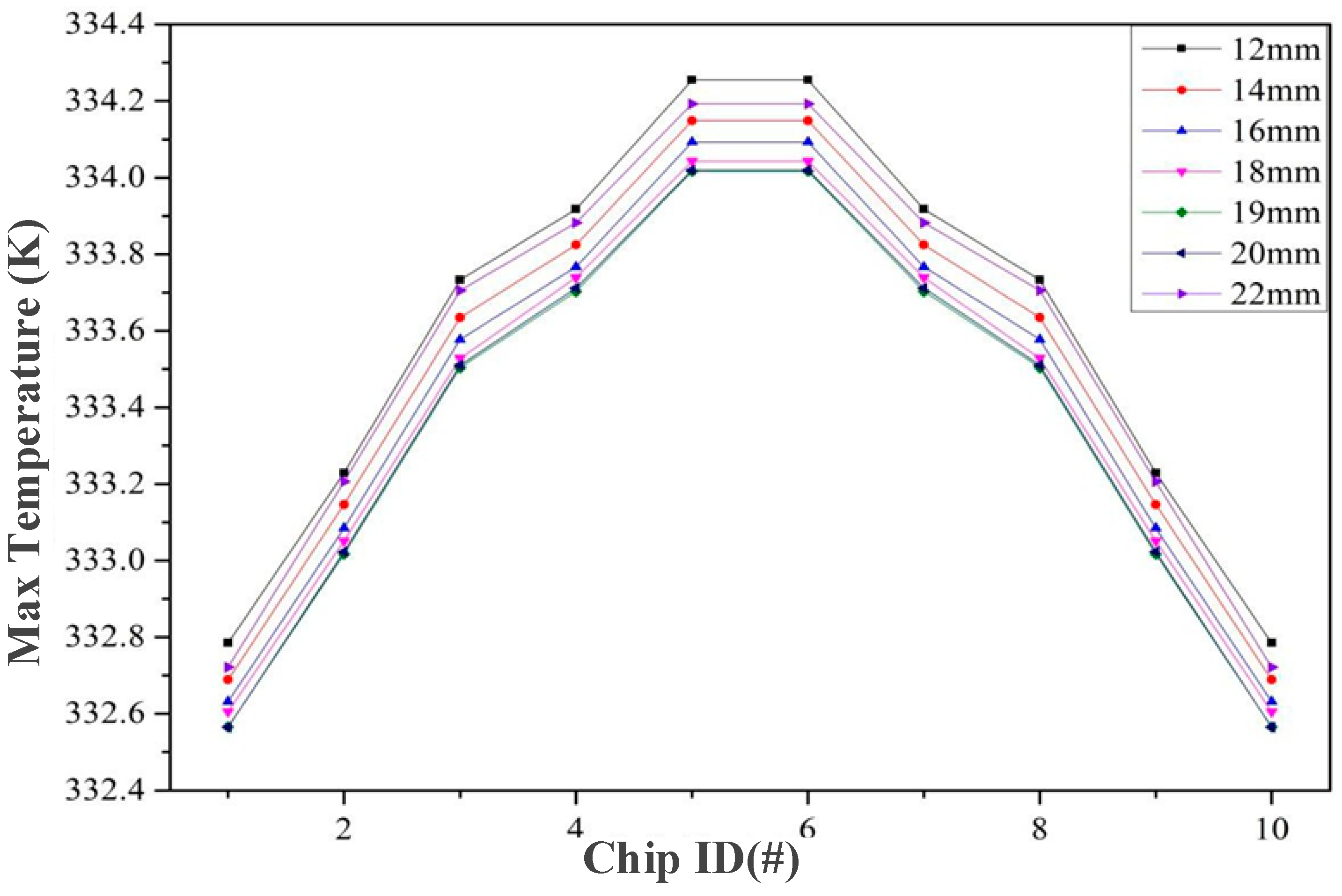
To optimize the distribution of the LED, under the condition of a fixed substrate width, we employed a single-factor analysis method by varying the spacing between the LED in the width direction while keeping other conditions unchanged. Layout diagrams were established for LED package spacing distances of 12 mm, 14 mm, 16 mm, 18 mm, 19 mm, 20 mm, and 22 mm in the width direction. The effect of different package spacing on the maximum temperature of the B-row LED shown in Figure 2 is presented in Figure 10.
The temperature distribution exhibits a symmetric pattern, with the maximum temperature difference between package 1# and 10# in the same row reaching 1.48 K. The highest temperature of the packages gradually decreases as the distance between packages in the width direction increases. When the package spacing in the width direction reaches 19 mm, the overall highest temperature is the lowest. Beyond 19 mm, the highest temperature of the LED module increases. This is mainly because, with a fixed substrate width, changing the spacing between the packages also alters the distance between the packages and the substrate’s edge. Decreasing the inter-package spacing increases the distance to the substrate edge, whereas increasing the spacing reduces this distance. Consequently, the optimal spacing is approximately 19 mm.

3.3. Temperature Distribution of the LED Module

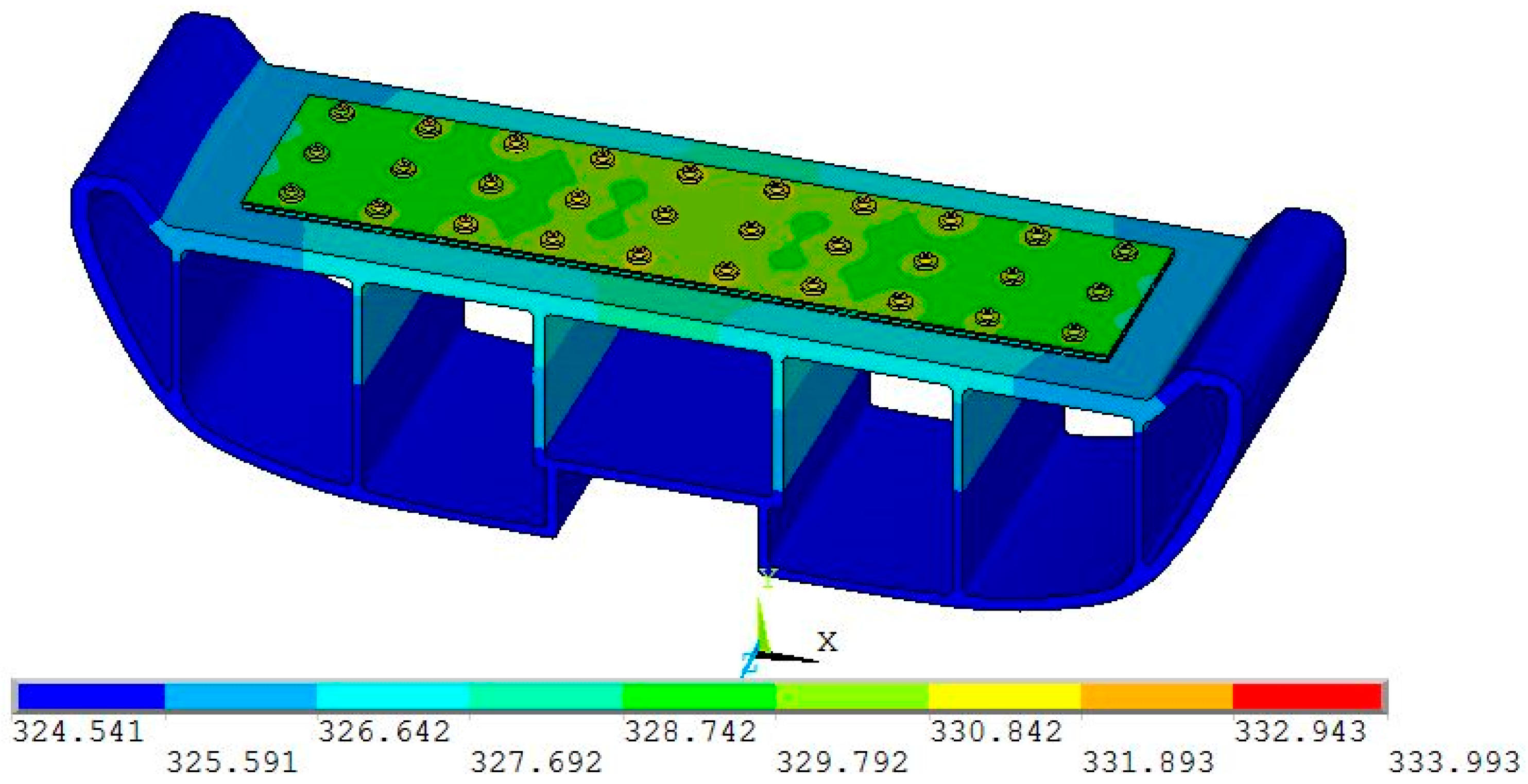
The performance and lifespan of high-power LED modules are significantly constrained by temperature. A temperature distribution contour map of the LED module is shown in Figure 11. The highest temperature, 333.99 K, appears at the chip located nearest to the center of the package, while the lowest temperature, 324.54 K, occurs at the bottom surface of the heat sink. The chips in the middle exhibit higher temperatures, which gradually decrease toward both sides, with the edge chips having the lowest temperatures.
The temperature of the LED module was measured in the laboratory using an infrared thermal imager (Fluke Ti32, Fluke Corporation, Everett, WA, USA). The LED module was cooled by natural convection under ambient conditions. After the module reached thermal steady state, the surface temperatures of the secondary optical lens, MCPCB substrate, packages, and heat sink were recorded. A comparison between the experimental and simulated temperature data of the LED module is shown in Table 2.
By comparing the simulated data with the experimentally measured temperature data of the MCPCB surface, the bottom of the heatsink, and the outer surface of the LED under rated operating conditions, it is found that the simulated values are approximately 2 K higher than the experimental ones, with a relative error of about 0.6%. According to previous studies, some components have minimal impact on temperature distribution [14,15,16,17]. For instance, the heat dissipation effect of electrodes and epoxy resin used for packaging can be neglected [14], and the heat loss through the lens is minimal [14,17], accounting for less than 2% of the total heat dissipation [17]. Additionally, the error is attributable to simplifications made in the modeling process, such as neglecting contact thermal resistance [14,25,29], variations in actual material properties, detailed environmental heat dissipation, and local heat source non-uniformity. Nevertheless, the error is within an acceptable range, validating the reliability of the LED module simulation model.
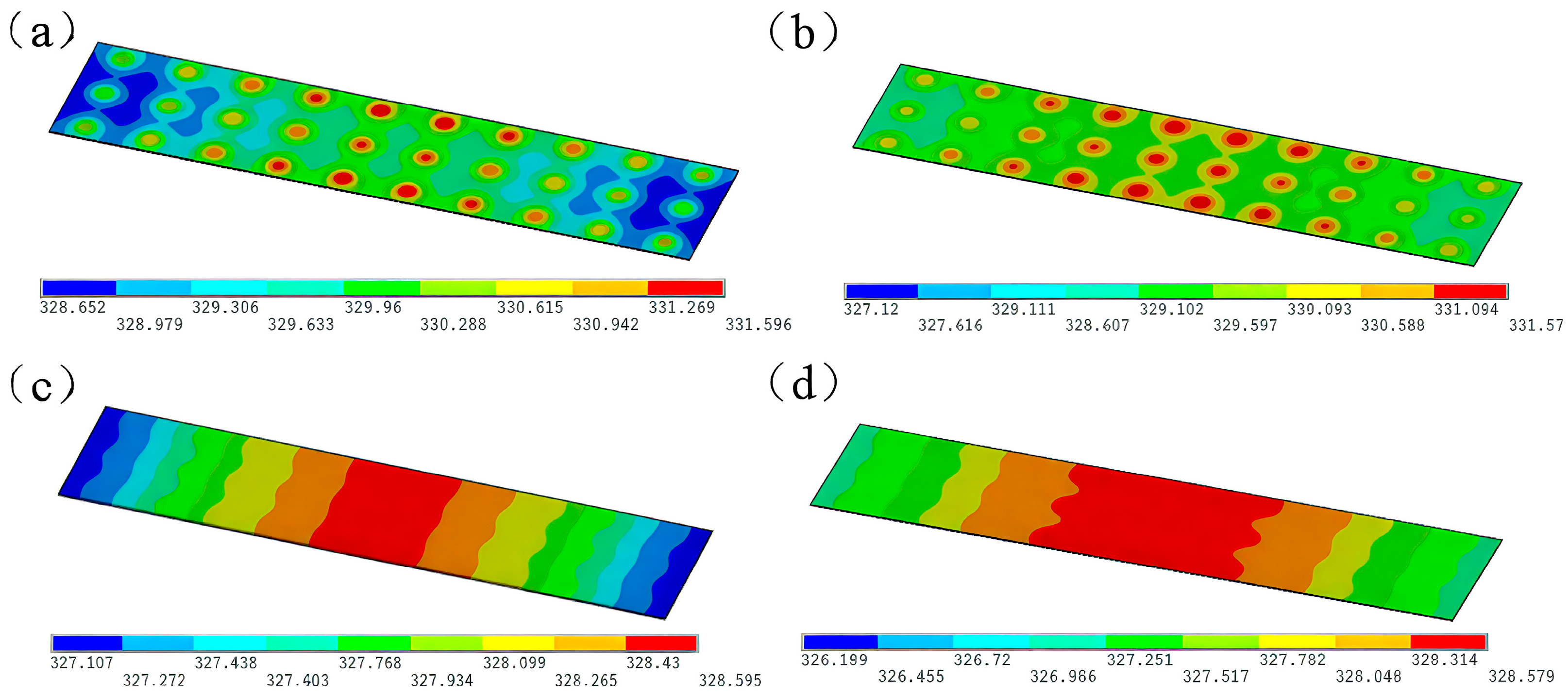
The temperature distribution contour maps of the copper layer, insulation layer, aluminum layer of the MCPCB substrate, and the thermal conductive silicone grease are shown in Figure 12. As illustrated in Figure 12a, which depicts the temperature distribution of the copper layer, there exists a heat spreading effect between the heat sink and the MCPCB substrate. When heat is transferred to the copper layer, due to copper’s excellent thermal conductivity, it enables strong lateral heat spreading. The heat flow area on the copper layer is significantly larger than that of the bottom surface of the heat sink, resulting in a smaller temperature gradient on the copper layer. Since the heat spreading area beneath the side rows of LED is smaller than that of the middle row, the substrate temperature beneath the side LEDs is higher than that beneath the middle LEDs, causing the chips in the central region of the side rows to reach the highest temperatures. The temperature distribution of the insulation layer is shown in Figure 12b. Although the thermal conductivity of the insulation layer is relatively low, its thinness and the significantly increased heat flow area-thanks to the copper layer-lead to a reduction in the local heat flux on the insulation layer. As a result, the temperature drops across the insulation layer is not substantial. When heat is transferred to the aluminum layer, the ring-shaped contour patterns disappear, as shown in Figure 12c. This is mainly because the heat has already been well spread through the previous layers. The temperature distribution of the thermal conductive silicone grease is shown in Figure 12d, which follows a pattern similar to that of Figure 12c. Compared with the results in the literature [29], the difference in thermal conductivity leads to different heat spreading effects, resulting in different ring-shaped contour maps. When the heat flow area reaches a certain threshold, such ring patterns no longer appear.
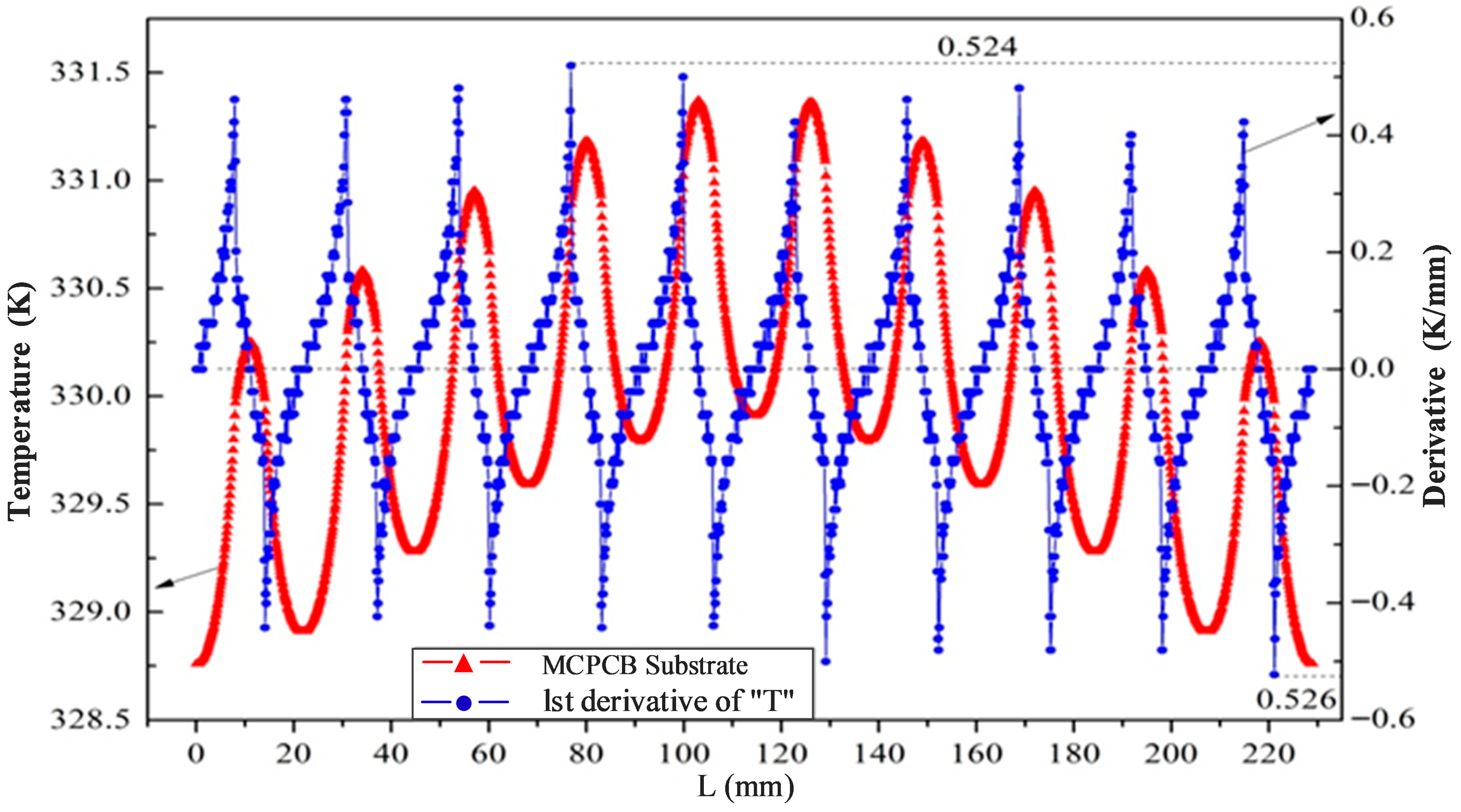
The temperature distribution along the centerline of a side-row LED and its corresponding temperature gradient are shown in Figure 13. The horizontal axis represented the spatial position along the centerline direction of the MCPCB substrate, while the vertical axes denoted the temperature value and the temperature gradient, respectively. It could be observed that the temperature of the copper layer in the MCPCB substrate exhibited a pronounced periodic fluctuation along the centerline. The peak positions of the temperature field corresponded to the locations of the LED packages, whereas the valleys were located between adjacent LED packages.
From the temperature field characterization results, the maximum temperature of the MCPCB copper layer was 331.60 K, while the minimum temperature was 328.65 K, resulting in an overall temperature difference of approximately 2.95 K. This indicated that the temperature distribution within the substrate was relatively uniform. Along the centerline direction, the temperature peaks at each LED package location were similar in magnitude, and no significant localized overheating was observed. This demonstrated that the side-row LED package arrangement provided effective lateral heat spreading capability within the MCPCB substrate, which was beneficial for thermal management enhancement.
Further analysis of the temperature gradient distribution revealed that the values were mainly confined within ±0.6 K/mm, indicating a small overall temperature gradient and a relatively smooth heat conduction process inside the substrate. The maximum temperature gradient primarily occurred near the edge regions of the contact interface between the MCPCB substrate and the heat sink, where material interfaces and variations in heat transfer paths led to locally increased heat flux density and temperature gradients. In contrast, at the midpoint between two adjacent LED packages, the temperature gradient approached 0 K/mm, corresponding to the local minimum in the temperature distribution curve, which suggested that this region was in a quasi-thermal equilibrium state.
These results indicated that, under the side-row LED package configuration, the temperature distribution of the MCPCB copper layer remained stable with relatively small gradients, and no pronounced heat concentration or abrupt temperature variations were formed. This provided a favorable thermal foundation for subsequent thermal management enhancement, heat dissipation structure optimization, and the long-term reliable operation of COB LED fixtures.

3.4. Temperature Distribution of 30 W LED Module with 10 Pin-Fin Heat Sink

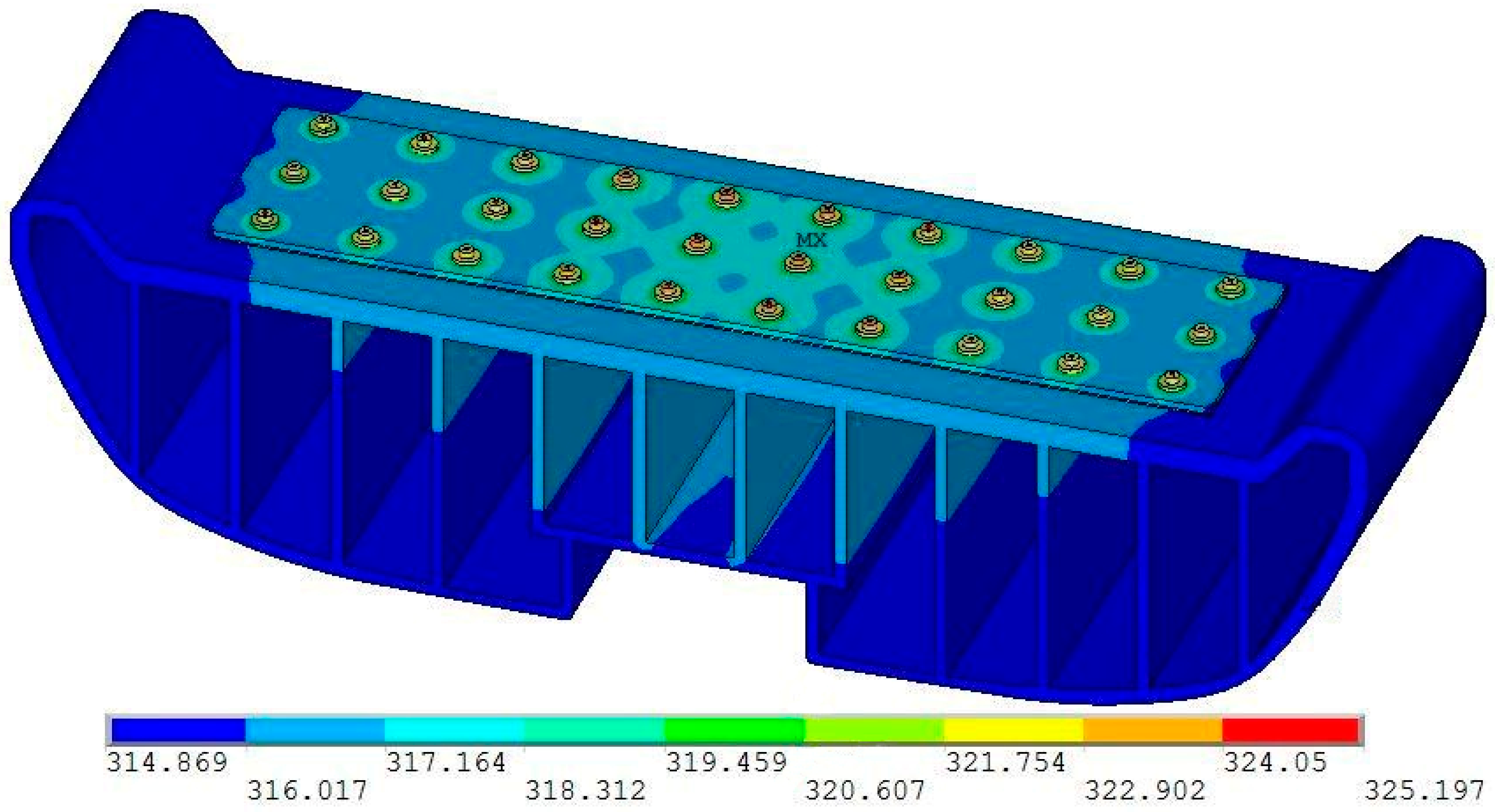
The LED spacing of 19 mm was selected, and the structure shown in Figure 7 replaced the structure in Figure 1. A new thermal simulation was conducted for the improved LED module under the same simulation scheme, and the resulting temperature contour map of the LED module is shown in Figure 14. By extracting and analyzing the temperature data, it was found that after increasing the number of pin-fin arrays in the heat sink, the maximum temperature of the LED module decreased to 325.20 K, which is 8.79 K lower than the temperature of the previous module structure. The minimum temperature was 314.87 K, which is 9.67 K lower than when no pin-fin arrays were added. Both the maximum and minimum temperatures of the heat sink with pin-fin arrays were nearly 10 K lower than those of the heat sink without pin-fin arrays.
Reliability theory tells us that a reduction in device temperature can significantly improve the performance and extend the lifespan of the device. Our preliminary research indicates that optimizing the heat sink structure can further enhance the temperature distribution of the LED module. By selecting LEDs with higher power, better luminous efficiency, and an improved heat sink structure, while considering the cost-performance ratio for practical applications, we will further design and optimize high-performance, high-power LED modules and matching high-power LED fixtures for real-world scenarios in the future.

4. Conclusions

A thermal simulation model for a 1 W LED based on the finite element method was established to analyze its temperature distribution characteristics. The heat is primarily concentrated in the chip region, with the maximum temperature of the high-power LED reaching 333.64 K. As the heat is conducted from the substrate to the heat sink, the temperature gradually decreases.
The simulation results on the effect of LED spacing on the thermal performance of the high-power LED module show that, for a fixed substrate width, the maximum temperature difference for different chip spacing distances is approximately 1.48 K. The maximum chip temperature decreases gradually as the spacing increases, reaching the lowest temperature at a spacing of approximately 19 mm. Beyond this value, the temperature increases, confirming that the optimal spacing is approximately 19 mm.
The simulation results for the 30 W LED module show a maximum temperature of 333.99 K and a minimum temperature of 324.54 K, with a temperature difference of 9.45 K. The temperature varies at different positions on the module, with the highest temperature at the center and a gradual decrease towards the sides. The simulated temperature values are 2 K higher than the experimental data, primarily due to the neglect of contact thermal resistance, actual material properties, environmental heat dissipation details, and the non-uniform nature of local heat sources in the simulation scheme.
The material and structure of the heat sink have a significant impact on temperature. The copper layer, with its high thermal conductivity and large heat dissipation area, reduces the temperature gradient. Increasing the thermal conductivity of the substrate’s first layer material enhances heat diffusion, reduces thermal resistance between layers, and improves thermal performance. After adding fin arrays to the heat sink, the maximum temperature of the module decreased to 325.20 K, a reduction of 8.79 K; the minimum temperature dropped to 314.87 K, a reduction of 9.67 K, significantly improving the heat dissipation performance.

Author Contributions

Conceptualization, J.Z. (Jicheng Zhou); Methodology, J.Z. (Jicheng Zhou); Formal analysis, X.Z.; Investigation, J.Z. (Jicheng Zhou) and J.H.; Resources, J.Z. (Jicheng Zhou); Data curation, J.H. and J.Z. (Jianyong Zhan); Writing—original draft, J.H. and X.Z.; Writing—review & editing, J.Z. (Jicheng Zhou), X.Z. and J.Z. (Jianyong Zhan); Supervision, J.Z. (Jicheng Zhou); Project administration, J.Z. (Jicheng Zhou); Funding acquisition, J.Z. (Jicheng Zhou). All authors have read and agreed to the published version of the manuscript.

Funding

This work was supported by Dongguan Science and Technology of Social Development Program (Grant no. 20231800940252) and by Natural Science Project of Guangdong University of Science and Technology (Grant no. GKY-2024KYZDK-4, XJ2024009601).

Institutional Review Board Statement

Not applicable.

Informed Consent Statement

Not applicable.

Data Availability Statement

The original contributions presented in this study are included in the article. Further inquiries can be directed to the corresponding author.

Conflicts of Interest

Author Jinhui Huang was employed by Guangxi Engineering Consulting Group Company Limited. The remaining authors declare that the research was conducted in the absence of any commercial or financial relationships that could be construed as a potential conflict of interest.

References

  1. Khandekar, S.; Sahu, G.; Muralidhar, K.; Gatapova, E.Y.; Kabov, O.A.; Hu, R.; Luo, X.; Zhao, L. Cooling of high-power LEDs by liquid sprays: Challenges and prospects. Appl. Therm. Eng. 2021, 184, 115640. [Google Scholar] [CrossRef]
  2. Saadouni, I.; Douass, O.; Samoudi, B.; Araoud, Z.; Charrada, K.; Asselman, A.; Canale, L. Optimal Thermal Management Using the Taguchi Method for LED Lighting Squared Heat Sink, Including Statistical Approaches. Sustainability 2025, 17, 1811. [Google Scholar] [CrossRef]
  3. Ye, J.; Lin, X.; Mo, S.; Jia, L.; Chen, Y.; Cheng, Z. Orthogonal study and analysis of variance on a thermal management system for high-power LED package. Microelectron. J. 2021, 108, 104969. [Google Scholar] [CrossRef]
  4. Xiang, J.; Deng, L.; Zhou, C.; Zhao, H.; Huang, J.; Tao, S. Heat Transfer Performance and Structural Optimization of a Novel Micro-channel Heat Sink. Chin. J. Mech. Eng. 2022, 35, 38. [Google Scholar] [CrossRef]
  5. Li, Z.; Tan, J.; Li, J.; Ding, X.; Tang, Y. A review on thermal management of light-emitting diodes: From package-level to system-level. Appl. Therm. Eng. 2024, 257, 124145. [Google Scholar] [CrossRef]
  6. Ben Hamida, M.B. Thermal management of square light emitting diode arrays: Modeling and parametric analysis. Multidiscip. Model. Mater. Struct. 2024, 20, 363–383. [Google Scholar] [CrossRef]
  7. Xiao, C.; Zheng, W.; Tian, Q.; Rao, X.; Zhang, H. An efficient Green’s function-based Bayesian optimization method for the thermal optimization of multi-chips on a silicon interposer. Int. Commun. Heat Mass Transf. 2024, 153, 107379. [Google Scholar] [CrossRef]
  8. Kumar, P.; Sahu, G.; Chatterjee, D.; Khandekar, S. Copper wick based loop heat pipe for thermal management of a high-power LED module. Appl. Therm. Eng. 2022, 211, 118459. [Google Scholar] [CrossRef]
  9. Meng, H.; Kong, F.; Li, K. Rapid calculation method to evaluate thermal management of LED systems based on an improved multi-layer model. Results Phys. 2022, 43, 106046. [Google Scholar] [CrossRef]
  10. Subramani, S.; Devarajan, M. Influence of extended surface area of heatsink on heat transfer: Design and analysis. Microelectron. Int. 2023, 41, 66–74. [Google Scholar] [CrossRef]
  11. Abuşka, M.; Şevik, S.; Özdilli, Ö. Experimental and numerical investigation on the thermal performance of linear LED housings under forced convection. Int. Commun. Heat Mass Transf. 2021, 128, 105616. [Google Scholar] [CrossRef]
  12. Hu, J.; Cui, R.; Zhang, J.; Linghu, P.; Shi, Y.; Guo, X. A novel thermally-stable single-phase phosphor Ca2InTaO6:Dy3+ for NUV-excited white LEDs. J. Rare Earths 2023, 42, 1855–1864. [Google Scholar] [CrossRef]
  13. Ben Hamida, M.B.; Hajlaoui, K.; Almeshaal, M.A. A 3D numerical analysis using phase change material for cooling circular light emitting diode. Case Stud. Therm. Eng. 2023, 43, 102792. [Google Scholar] [CrossRef]
  14. Tsai, M.; Chen, C.; Kang, C. Thermal measurements and analyses of low-cost high-power LED packages and their modules. Microelectron. Reliab. 2012, 52, 845–854. [Google Scholar] [CrossRef]
  15. Ben Abdelmlek, K.; Araoud, Z.; Amor, A.; Canale, L.; Charrada, K.; Zissis, G. Thermal management of honeycomb heat sink filled with phase change material for smart lighting applications. Numer. Heat Transf. Part A Appl. 2026, 87, 2316215. [Google Scholar] [CrossRef]
  16. Bahru, R.; Zamri, M.F.M.A.; Shamsuddin, A.H.; Mohamed, M.A. Simulation design for thermal model from various materials in electronic de-vices: A review. Numer. Heat Transf. Part A Appl. 2022, 82, 640–665. [Google Scholar] [CrossRef]
  17. Ekpu, M.; Ogbodo, E.A.; Ngobigha, F.; Njoku, J.E. Thermal Effect of Cylindrical Heat Sink on Heat Management in LED Applications. Energies 2022, 15, 7583. [Google Scholar] [CrossRef]
  18. Gatapova, E.Y.; Sahu, G.; Khandekar, S.; Hu, R. Thermal management of high-power LED module with single-phase liquid jet array. Appl. Therm. Eng. 2021, 184, 116270. [Google Scholar] [CrossRef]
  19. Tucker, R.; Khatamifar, M.; Lin, W.; McDonald, K. Experimental investigation of orientation and geometry effect on additive manufactured aluminium LED heat sinks under natural convection. Therm. Sci. Eng. Prog. 2021, 23, 100918. [Google Scholar] [CrossRef]
  20. Christensen, A.; Graham, S. Thermal effects in packaging high power light emitting diode arrays. Appl. Therm. Eng. 2009, 29, 364–371. [Google Scholar] [CrossRef]
  21. Masana, F.N. Thermal characterization of power modules. Microelectron. Reliab. 2000, 40, 155–161. [Google Scholar] [CrossRef]
  22. Tan, L.; Liu, P.; She, C.; Xu, P.; Yan, L.; Quan, H. Research on Heat Dissipation of Multi-Chip LED Filament Package. Micromachines 2021, 13, 77. [Google Scholar] [CrossRef] [PubMed]
  23. Sharma, M.; Pandey, D.; Khosla, D.; Goyal, S.; Pandey, B.K.; Gupta, A.K. Design of a GaN-Based Flip Chip Light Emitting Diode (FC-LED) with au Bumps & Thermal Analysis with Different Sizes and Adhesive Materials for Performance Considerations. Silicon 2021, 14, 7109–7120. [Google Scholar] [CrossRef]
  24. Ha, M.; Graham, S. Development of a thermal resistance model for chip-on-board packaging of high power LED arrays. Microelectron. Reliab. 2012, 52, 836–844. [Google Scholar] [CrossRef]
  25. Wu, H.-H.; Lin, K.-H.; Lin, S.-T. A study on the heat dissipation of high power multi-chip COB LEDs. Microelectron. J. 2012, 43, 280–287. [Google Scholar] [CrossRef]
  26. Huang, C.-H.; Chung, K.-J. Optimal design of perforated fins for LED radial heat sink module with varied hole numbers and sizes. Appl. Therm. Eng. 2024, 242, 122451. [Google Scholar] [CrossRef]
  27. Yu, J.-H.; Farkas, G.; van Voorst Vader, Q. Transient Thermal Analysis of Power Leds at Package & Board Level. In Proceedings of the THERMINIC 2005, Belgirate, Italy, 28–30 September 2005; pp. 244–248. [Google Scholar]
  28. Nisa Khan, M. Minimization of lumen depreciation in LED lamps using thermal transient behavior analysis and design optimizations. Appl. Opt. 2016, 55, 1170–1176. [Google Scholar] [CrossRef] [PubMed]
  29. Zhou, J.; Huang, J.; Wang, Y.; Zhou, Z. Thermal distribution of multiple LED module. Appl. Therm. Eng. 2016, 93, 122–130. [Google Scholar] [CrossRef]
  30. Xiang, L.; Cheng, Y.; Yu, X.; Fan, Y.; Yang, X.; Zhang, X.; Xie, B.; Luo, X. High-performance thermal management system for high-power LEDs based on double-nozzle spray cooling. Appl. Therm. Eng. 2023, 231, 121005. [Google Scholar] [CrossRef]
  31. Rongier, C.; Gilblas, R.; Le Maoult, Y.; Belkessam, S.; Schmidt, F. Infrared thermography applied to the validation of thermal simulation of high lumi-nance LED used in automotive front lighting. Infrared Phys. Technol. 2022, 120, 103980. [Google Scholar] [CrossRef]
  32. Liu, J.; Cheng, L.; Pan, D.; Wang, L. A general correlation for flat tube-and-fin radiator based on parametric CFD analysis. Numer. Heat Transf. Part A Appl. 2023, 85, 633–658. [Google Scholar] [CrossRef]
Figure 1. Simplified Cross-Sectional View of the LED Module.
Coatings 16 00173 g001
Figure 2. Top View of the LED Module [29].
Coatings 16 00173 g002
Figure 3. Cross-Sectional View of the Simplified high-power LED [29].
Coatings 16 00173 g003
Figure 4. Heat flux density variation from the center to the periphery of the cooling block bottom surface for the hottest LED in the module.
Coatings 16 00173 g004
Figure 5. Mesh division of the high-power LED.
Coatings 16 00173 g005
Figure 6. Mesh Partitioning Diagram of the high-power LED Module.
Coatings 16 00173 g006
Figure 7. Cross-sectional view of the improved high-power LED module.
Coatings 16 00173 g007
Figure 8. Temperature Contour of a high-power LED for Module Application.
Coatings 16 00173 g008
Figure 9. (a) Longitudinal temperature distribution of the LED. (b) Comparison of vertical temperature distribution from the chip to the cooling block.
Coatings 16 00173 g009
Figure 10. Effect of Chip Spacing on the Max Temperature of B-Row Chips.
Coatings 16 00173 g010
Figure 11. Temperature distribution of the high-power LED module.
Coatings 16 00173 g011
Figure 12. Temperature contour maps of the substrate: (a) copper layer, (b) insulation layer, (c) aluminum layer, and (d) thermal conductive silicone grease layer.
Coatings 16 00173 g012
Figure 13. Temperature Distribution of MCPCB Substrate and Corresponding Derivative of Temperature Distribution (Along the Center Line of Side-mounted LED).
Coatings 16 00173 g013
Figure 14. Temperature Contour of high-power LED Module with Pin-fin Heat Sink.
Coatings 16 00173 g014
Table 1. Dimensions, Materials, and Thermal Properties of the high-power LED.
MaterialThickness (mm)Dimensions
(mm)
Thermal Conductivity (W/m·K)
LensEpoxy resin1Annular ring (R3–R2.8 mm)0.2
EncapsulantSiliconeFills internal gaps, displaces air0.3
PhosphorYAG:CeCovers chip12
Die attachSilver epoxy0.020.889 mm × 0.889 mm20
ChipGaN0.090.889 mm × 0.889 mm126
PPAPPA2.4Annular ring (R4–R3 mm)0.3
Cooling BlockCu1.5R = 1.6 mm383
1R = 3 mm
Table 2. Experimental vs. Simulated Temperatures of the high-power LED Module.
ComponentExperimental Avg. Temperature (K)Simulated Avg. Temperature (K)
Secondary optical lens315.36/
Upper surface of MCPCB324.63326.74
Outer surface of LED328.91331.21
Bottom of heat sink320.15322.66
Disclaimer/Publisher’s Note: The statements, opinions and data contained in all publications are solely those of the individual author(s) and contributor(s) and not of MDPI and/or the editor(s). MDPI and/or the editor(s) disclaim responsibility for any injury to people or property resulting from any ideas, methods, instructions or products referred to in the content.