1. Introduction
With the ongoing global climate change and the increasing development of polar regions, the demand for human beings to utilize ice structure and break ice in polar activities is increasing; the study of the mechanical properties of ice has become increasingly significant [
1]. Ice, as a complex multiphase material, exhibits mechanical behaviors that are influenced by a multitude of factors, including temperature, strain rate, internal structure, and impurity content [
2]. In recent years, numerous scholars have conducted in-depth research on the mechanical properties of ice through experimental and numerical simulation methods, aiming to reveal the failure mechanisms of ice [
3].
Early studies established a foundation for theoretical development and uncovered ice behavior under various conditions. Määttänen concluded Finland’s 110-year winter navigation experience spurred multidisciplinary research in sea ice monitoring, mechanical testing, and numerical simulation [
4]. This enhanced sea ice understanding and supported Arctic offshore engineering. Kuhs’s ice microstructure research shows that ice macro-mechanical properties are determined by its microstructure [
5]. And Currier studied how the ice tensile strength correlates with grain size; as grain size increases, fracture strength decreases, following the Hall–Petch formula [
6]. Moreover, Schulson’s study shows under low-temperature conditions, ice mechanical behavior shifts from brittle to ductile [
7]. This transition is linked to the “critical grain size”. When grain size is about 1–5 mm, crack initiation stress equals crack propagation stress. In practical engineering, Cox’s work emphasized the importance of standardizing test procedures in the field of sea ice mechanics research [
8]. Notably, Sodhi field-tested large-scale first-year ice and multi-year ice samples, which show less than 30% difference in compressive strength compared to laboratory-tested small samples [
9]. Using rigid testing equipment, Chen had clarified the relationships between tensile and compressive strengths and factors like strain rate, temperature, and grain size [
10]. Additionally, ice’s viscoelastic behavior has drawn extensive attention. Wang described the rate-related model of the stress–strain relationship of sea ice and pointed out the behavior of ice as a viscoelastic material [
11]. On this basis, Sjölind proposed a 3
D theoretical model describing ice constitutive properties [
12]. It accounts for ice’s initial orthotropy and microcrack-induced damage effects. This model effectively explains ice’s brittle and viscoelastic behavior across a broad strain rate range and is easily applicable in finite element analysis. The above-mentioned early research explored the influence of microstructure, external conditions, etc., on the mechanical properties of ice; raised issues such as the ductile-brittle transition and viscoelasticity of ice; and laid the foundation for the modern ice constitutive model.
In recent years, in view of the mechanical and thermodynamic problems caused by the contact and combination of engineering structures and ice materials in various polar environments, some scholars have developed a variety of ice material properties. Wu established a numerical model to study the movement and damage of floating ice under high-pressure bubble load, providing theoretical support for ice-breaking technology [
13]. Hammer proposed an ice-induced vibration simulation method that combines replication modeling and kinematic preservation [
14]. The effectiveness of the method was verified through ice pool experiments, and the effects of structural shape and length-diameter ratio on ice-induced vibration were discussed. Hornnes studied the physical and mechanical properties of sea ice in the Nansen Basin during the freezing season through field measurements and found that there was significant spatial variability in the porosity and strength of sea ice [
15]. It can be seen that the study of the mechanics and thermodynamics of ice materials is of great significance to the development of environmental engineering, ocean engineering and ship engineering under polar conditions. In order to support the needs of polar engineering, some researchers have carried out experimental, simulation and theoretical research on the mechanical properties of ice materials. In terms of experimental research, Xiu conducted a three-point bending test on sea ice in the Bohai Sea and found that porosity is a key factor affecting the bending strength and effective elastic modulus of sea ice [
16]. Wang used the Hopkinson pressure bar experiment to reveal the significant effects of different physical cross-linked structures (PCS) on the microstructure and dynamic mechanical properties of ice, indicating that PCS can enhance the strength and toughness of ice [
17]. Shao studied the influence of bubbles on the mechanical properties of ice through splitting and stretching experiments and axial compression experiments and found that even bubbles with low volume fraction would significantly affect the mechanical properties of ice, providing methods and ideas for optimizing deicing technology and preparing ice materials [
18]. In numerical simulation, Han developed a numerical model based on the Cohesive Element Method (CEM) to simulate the interaction between sea ice and structures, considering the spatial heterogeneity of sea ice material properties, and found that the heterogeneity of sea ice significantly affects the numerical simulation results [
19]. Shen proposed a new fluid–structure coupling method—the Dual-Smoothing Particle Hydrodynamics (DS-SPH) method—experimentally determined the required micromechanical parameters for the DS-SPH model, and validated its effectiveness in simulating sea ice deformation and fracture [
20]. Cui investigated the interaction between high-speed projectiles and ice layers using the Coupled Eulerian-Lagrangian (CEL) method, analyzing the influence of ice layer thickness on the projectile’s water-entry process [
21]. In terms of theoretical research, Galadima studied the elastic behavior of polycrystalline ice using the Non-Ordinary State-Based Peridynamic (NOSBPD) framework and determined the grain number threshold required for effective isotropic response through Peridynamic Computational Homogenization Theory (PDCHT) [
22]. Meng optimized a Recurrent Neural Network (RNN) to develop a model predicting the bending and uniaxial compressive strength of sea ice, which can accurately predict the mechanical properties of sea ice based on its physical parameters, such as temperature, salinity, density, and loading rate [
23]. Savard and Tremblay introduced plastic damage parameterization into the standard viscoplastic (VP) sea ice model to study its impact on deformation statistics [
24]. Reeder proposed a method for passively inferring sea ice thickness by using naturally occurring compression wave resonance, providing a new way for remote monitoring of sea ice thickness [
25]. Based on the advancements in mechanical models, experimental techniques and numerical simulation technologies, the research on the mechanical properties of ice in recent years has become more microscopic and numerical and has paid more attention to the performance of ice materials at high strain rates.
The aforementioned studies have effectively provided direct observational data for understanding the mechanical properties and deformation and failure modes of ice, offered robust tools and methods for in-depth analysis of these properties, and provided new perspectives and theoretical support for comprehending and predicting ice mechanics. However, theoretical and numerical studies related to ice materials are highly dependent on accurate experimental data of ice mechanical properties. The mechanical properties of ice are influenced by multiple parameters, including salinity, formation temperature, and loading strain rate [
26,
27]. Additionally, the nature of ice materials makes it difficult to use conventional deformation measurement devices such as strain gauges and extensometers, posing technical difficulties in accurately measuring the mechanical properties of ice.
In view of the difficulty in using strain gauges and extensometers in the mechanical property experiments of ice materials, this study introduces the Digital Image Correlation (DIC) technique into the research of tensile and compressive mechanical properties of ice materials. A feasible and reliable test method was designed to study the tensile and compressive ultimate strength and elastic modulus of a certain ice. The elastic modulus of the ice material was corrected through the surface strain data obtained by DIC analysis, and the correction method was given. The advantages and limitations of introducing DIC technology into the study of the mechanical properties of ice materials were analyzed. These experimental methods and research approaches proposed in this study have substantial scientific value for correcting experimental data and enhancing the accuracy of calculated mechanical properties of ice materials.
2. Methodology of the Digital Image Correlation (DIC) Technique
Digital Image Correlation (DIC) is an optical measurement-based technique for full-field displacement and strain analysis, which has seen extensive application in the field of experimental mechanics in recent years. By tracking changes in the gray intensity distribution on an object’s surface, DIC calculates displacement and strain field information over the target region, offering the advantages of non-contact measurement, high precision, and full-field capability [
28]. Since its initial proposal by Sutton et al. in the 1980s, DIC technology has undergone rapid development. Driven particularly by advancements in computational power and optimization of image processing algorithms, its application scope has expanded from static measurements to dynamic analyses and is progressively being employed within complex industrial environments [
29].
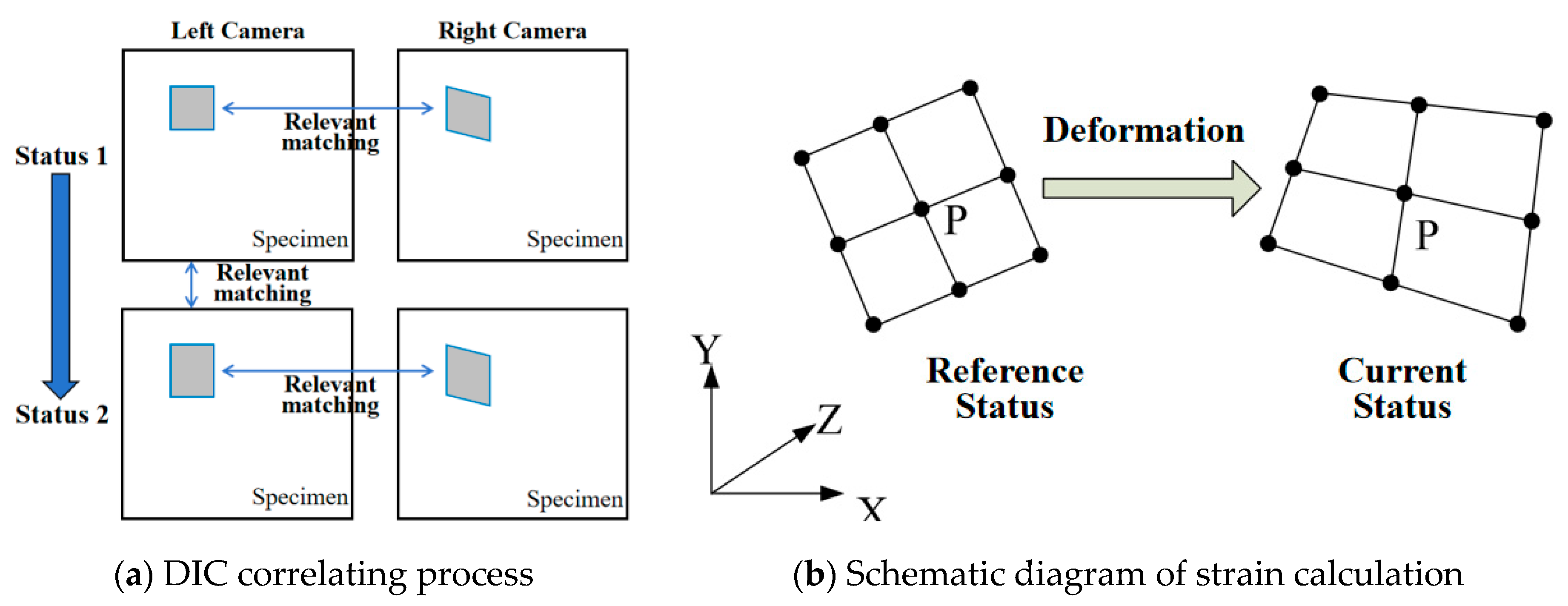
A representative DIC-based strain calculation method is presented below. During the deformation process, a dual-camera system captures 2
n images representing
n distinct states (where
n ≥ 2). Image correlation is then performed: all left-camera images are correlated using the left image from the initial state (State 1) as the reference. Subsequently, the right-camera image for each state is correlated using the corresponding left-camera image from the same state as the reference, as illustrated in
Figure 1a. Following correlation, the corresponding 3
D point coordinates are reconstructed via triangulation principles. The 3
D displacement field for all states is then determined relative to State 1 as the reference configuration. The above-mentioned method employs dual cameras for image association, thus enabling the processing of strain calculations on 3
D surfaces without affecting test accuracy.
As depicted in
Figure 1b, calculating the strain at an arbitrary point
P requires tensor computation utilizing the 3
D displacements of
P and its eight neighboring points. For the reference state, a 3
D tangent plane element is computed using point
P and its eight neighbors. This element is then projected onto a two-dimensional (2
D) coordinate system to obtain the coordinate vector
Pr. The identical procedure is repeated for the current state to derive the coordinate vector
Pc. The deformation gradient tensor matrix
F (a 2 × 2 matrix) is subsequently calculated, satisfying the relationship
where u represents the rigid body translation vector between
Pr and
Pc. The deformation gradient tensor
F is then decomposed according to the polar decomposition formula
F =
R·
U, yielding the selection matrix
R and the deformation tensor matrix
U. The definition of the deformation tensor matrix
U is as follows:
From this decomposition, the strain values
εx,
εy, and
εxy in various directions can be derived. Although DIC has yielded significant results in the study of metallic materials, composites, and other fields, its application to investigating the mechanical properties of ice materials remains in a nascent research stage [
30]. Looking ahead, with the ongoing development and refinement of DIC technology, it holds considerable promise for providing deeper insights into the microstructural evolution and macroscopic mechanical behavior of ice materials [
31].
4. Ice Specimen Preparation
The complexity of sea ice arises from its variable composition and mechanical properties influenced by environmental factors. This makes it extremely challenging to accurately simulate natural sea ice in laboratory settings. During sea ice growth, factors of solution properties such as salinity, temperature, ice crystal structure [
32,
33], and environmental factors like wind speed and air temperature [
34] can significantly impact the mechanical properties of sea ice, including its strength and elastic modulus.
Due to the limitation of resources, it is hard to obtain natural sea ice throughout the year. And the main object of this research is to explore the research method of mechanical properties of ice materials based on DIC technology, typical saline ice instead of sea ice was used in this research. In the laboratory environment; nature sea salt from the Bohai Sea was used to prepare saline water with a mass fraction of 0.4%. Laboratory-prepared saline ice differs from natural sea ice in terms of crystal structure, brine distribution, and mechanical properties. Natural sea ice typically exhibits columnar crystal structure due to directional freezing, while laboratory-prepared samples in molds tend to form granular structure, but the research method can be applied to the latter studies.
To ensure the stability of the mechanical properties of experimental samples, the following method was adopted. Due to the numerous factors influencing the formation of ice samples, this study strictly controls the preparation process of each batch of ice samples to ensure the consistency and stability of their mechanical properties. Since the temperature stability range of the ice maker is from −5 °C to −35 °C, in order to select two temperatures with significant differences in material properties and a stable molding process as the control group, −10 °C and −30 °C were chosen as the freezing temperatures for the experimental specimens. The specific preparation process consists of the following four steps:
- (1)
Solution Preparation: The base solution was prepared using filtered distilled water, which was boiled to remove bubbles and dissolved gases, and then cooled to room temperature. Research has shown that when the solution contains a low concentration of salt (NaCl), the crystallization process of the specimen is uneven due to the constraints of the mold, leading to localized stress concentration, which in turn causes localized bulging and cracking of the specimen. Conversely, when the solution has a high salt concentration, crystal precipitation occurs during the crystallization process, resulting in smaller crystals and a more porous material, which leads to a decrease in the mechanical properties of the ice material with increasing salinity [
35,
36]. The boiled distilled water was added and stirred until the crystals were completely dissolved.
- (2)
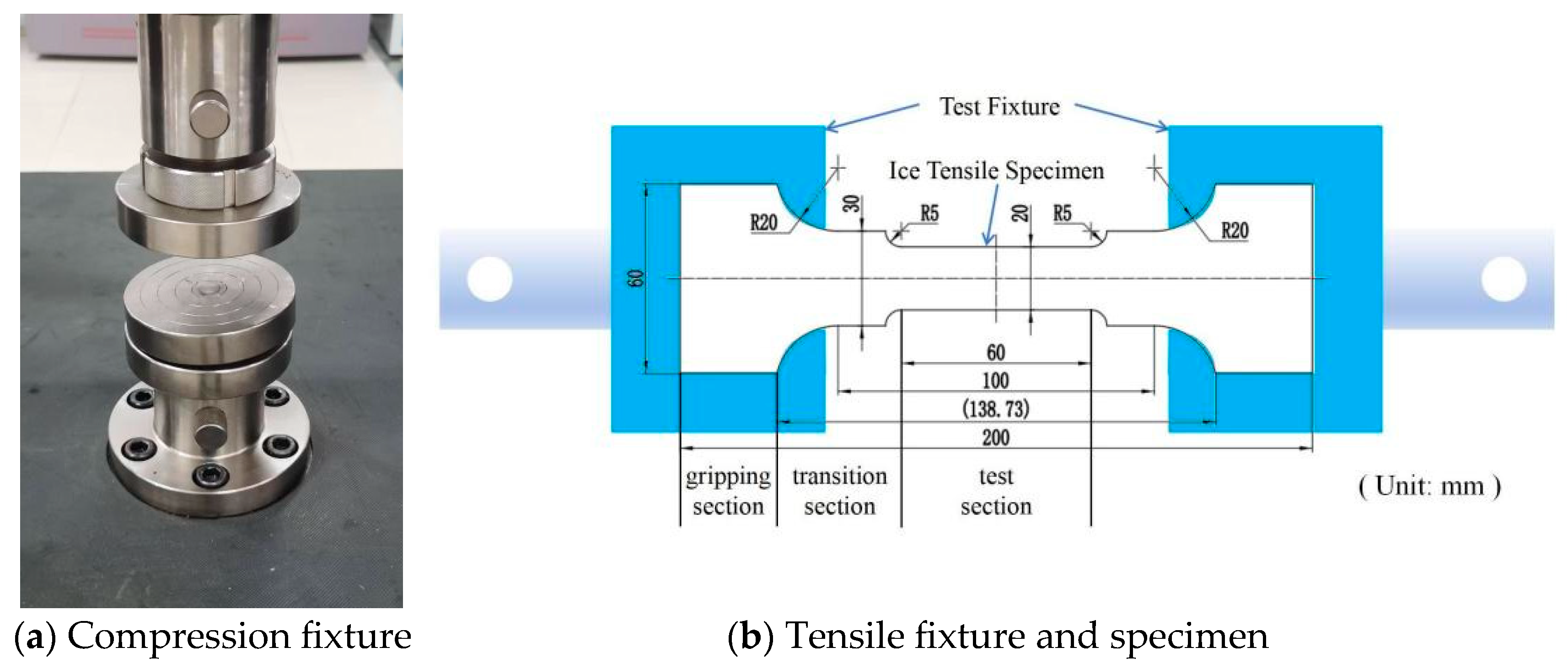
Molding and Freezing: In accordance with the experimental design, molds for tensile and compressive specimens were fabricated using steel and silicone rubber, respectively. Prior to pouring the solution, the molds were placed in the freezing chamber with their bases kept horizontal. To prevent bubble formation during solution injection, a syringe was used to draw a measured volume of solution, which was then slowly injected into the mold. To avoid cracking due to uneven freezing caused by excessive temperature differences, the freezing chamber was initially set to −10 °C, and the specimens were frozen for 24 h to ensure proper shaping.
- (3)
Demolding and Refreezing: After the specimens were formed, the ice specimens were carefully removed from the molds. The shape of the specimens was then adjusted by coarse grinding with sandpaper. Subsequently, the specimens were placed back into the freezing chamber. The temperature of the freezing chamber was adjusted to the experimental temperature for that batch of ice specimens (−10 °C or −30 °C) and maintained for 48 h.
- (4)
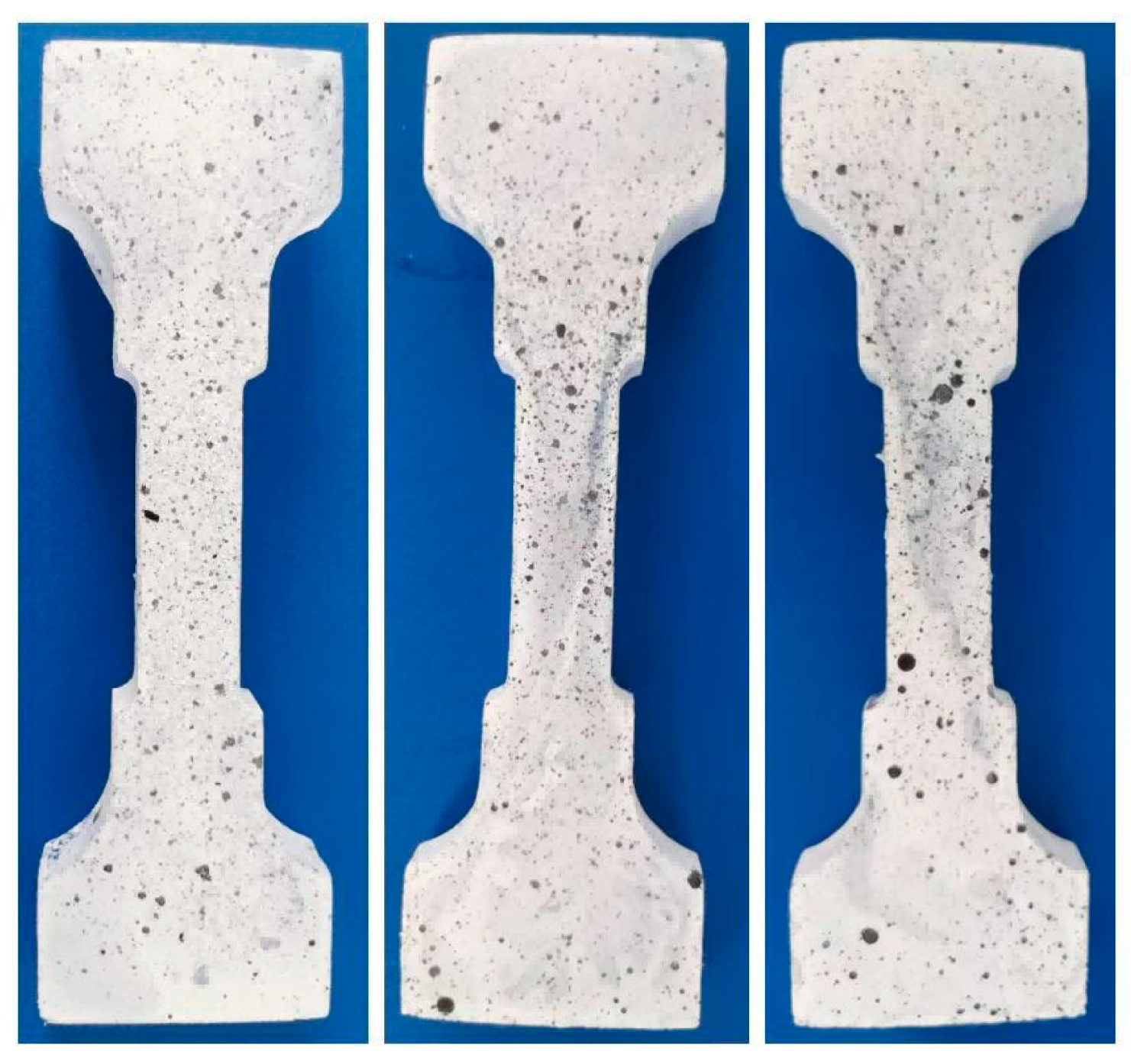
Speckle Spraying: For DIC imaging analysis, speckles need to be sprayed on the ice specimens after freezing is complete. To ensure success, oil-based spray paint is used to apply the speckles, preventing the paint from dissolving in the ice and causing unclear speckles. Immediately after spraying, the specimen must be returned to the freezing chamber to avoid condensation of moisture from the air on the specimen surface, which could obscure the speckles. During the test, it is also necessary to control the ambient temperature and humidity and appropriately increase the exposure in the imaging area to achieve better results. The picture of ice tensile specimens after speckle spraying is shown in
Figure 4.
The crystal grain size of the ice material prepared in this study is at the millimeter level, and the porosity is controlled within 1%. This material is highly suitable for studying the intrinsic mechanical properties of ice under an ideal and uniform state, providing a good basis for the reproducibility and comparability of experimental results.
5. Ice Tensile Test Results and DIC Data Analysis
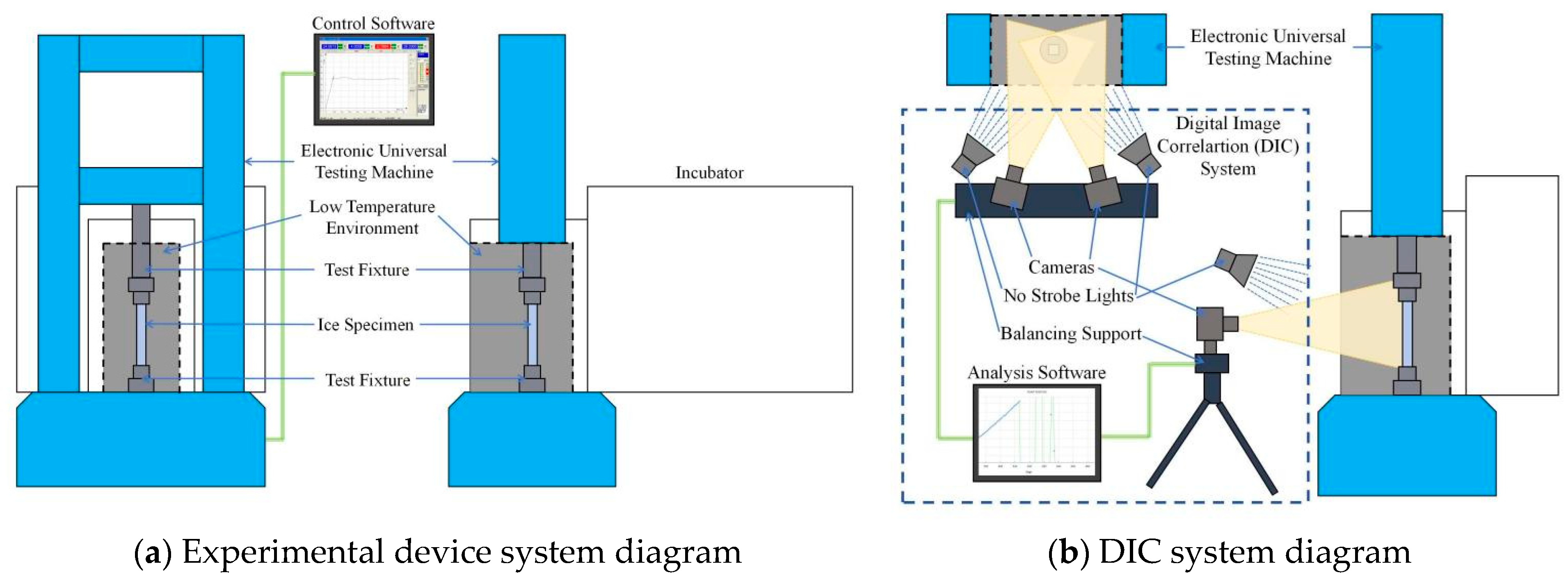
In the uniaxial tensile test, displacement-controlled loading is employed. To eliminate the possible initial clearance between the specimen and fixture before loading and ensure proper tensile loading, a preload of 5 N should be applied initially. After the specimen begins to experience the load, formal loading is carried out. During the test, load and displacement data are recorded, and the strain state is measured in real-time using the DIC system.
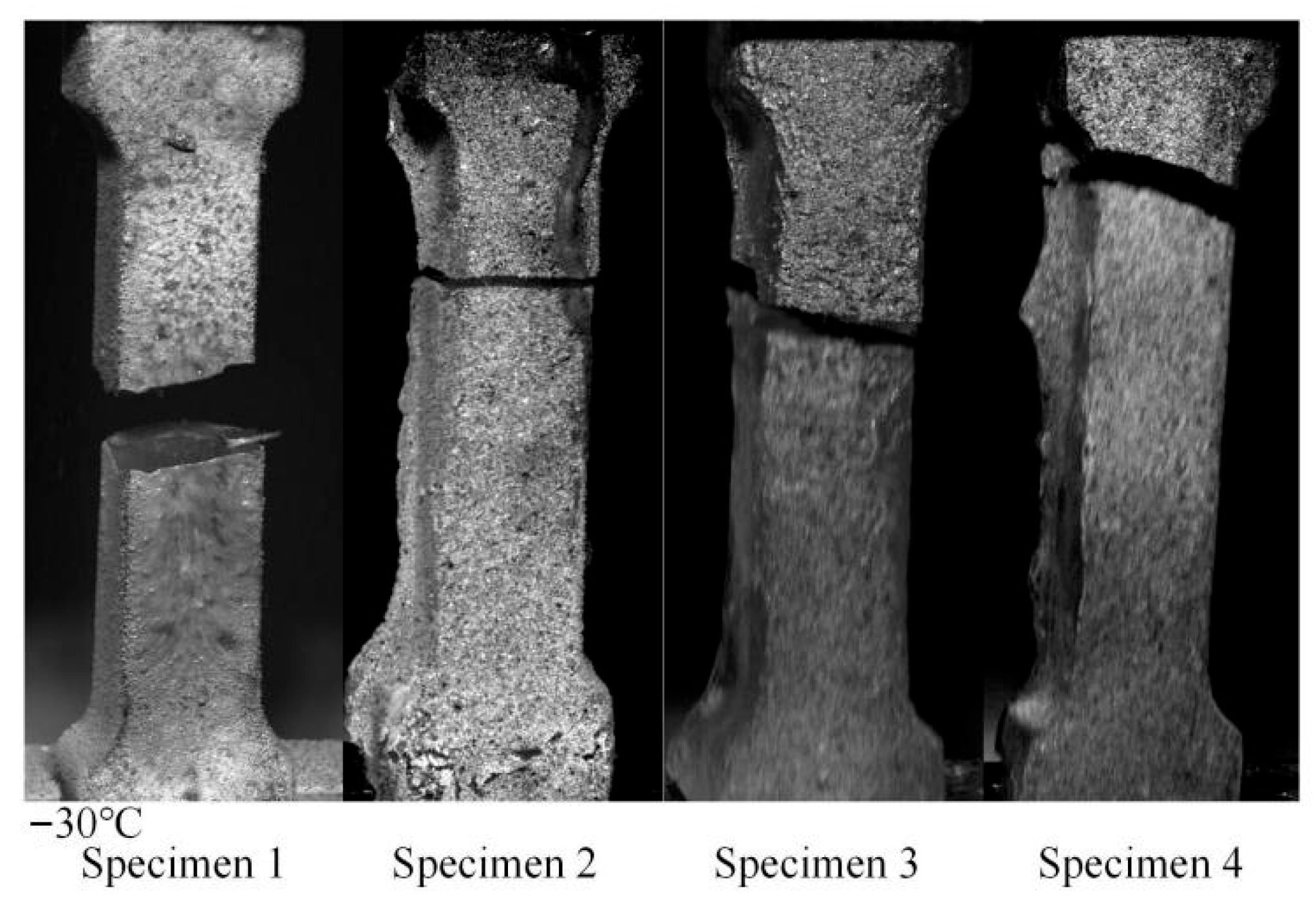
From the fracture phenomena observed, the freezing temperature of the specimens has a minimal influence on the failure behavior. Tensile failure shows the characteristics of brittle fracture. The fracture positions are all concentrated in the test section of the specimen, as expected in the design of the specimen’s shape, as shown in
Figure 5. The elongation of the test section was small, and no obvious plastic deformation was observed. It can be considered that under quasi-static conditions, ice materials exhibit brittle properties under axial tensile loads.
Given the low elastic modulus of ice materials, the gripping and transition sections of the ice specimens undergo significant deformation during the experiment. Additionally, the deformation of the test section of the ice specimens cannot be precisely measured. Therefore, the deformation data output by the equipment cannot be used to calculate the strain of the specimen, but only to provide a rough estimate of the elongation. Consequently, the calculated elastic modulus of the material based on this data is also inaccurate. This is the primary reason for incorporating DIC technology in this experiment. The load data
Fi and deformation data Δ
li collected by the testing equipment are processed to calculate the stress and elongation, respectively,
In the equations,
Fi, Δ
li,
σi, and
φi represent the load, deformation, stress, and elongation of the specimen at moment
i during the test, respectively.
a and
b are the lengths of the two sides of the cross-section of the tensile ice specimen in the test section, and
l is the original length of the test section of the specimen. Let
σbt and
φbt be the ultimate stress and elongation at break of a certain tensile specimen, respectively. Meanwhile, the slope
of the stress–elongation curve segment
ij is defined as
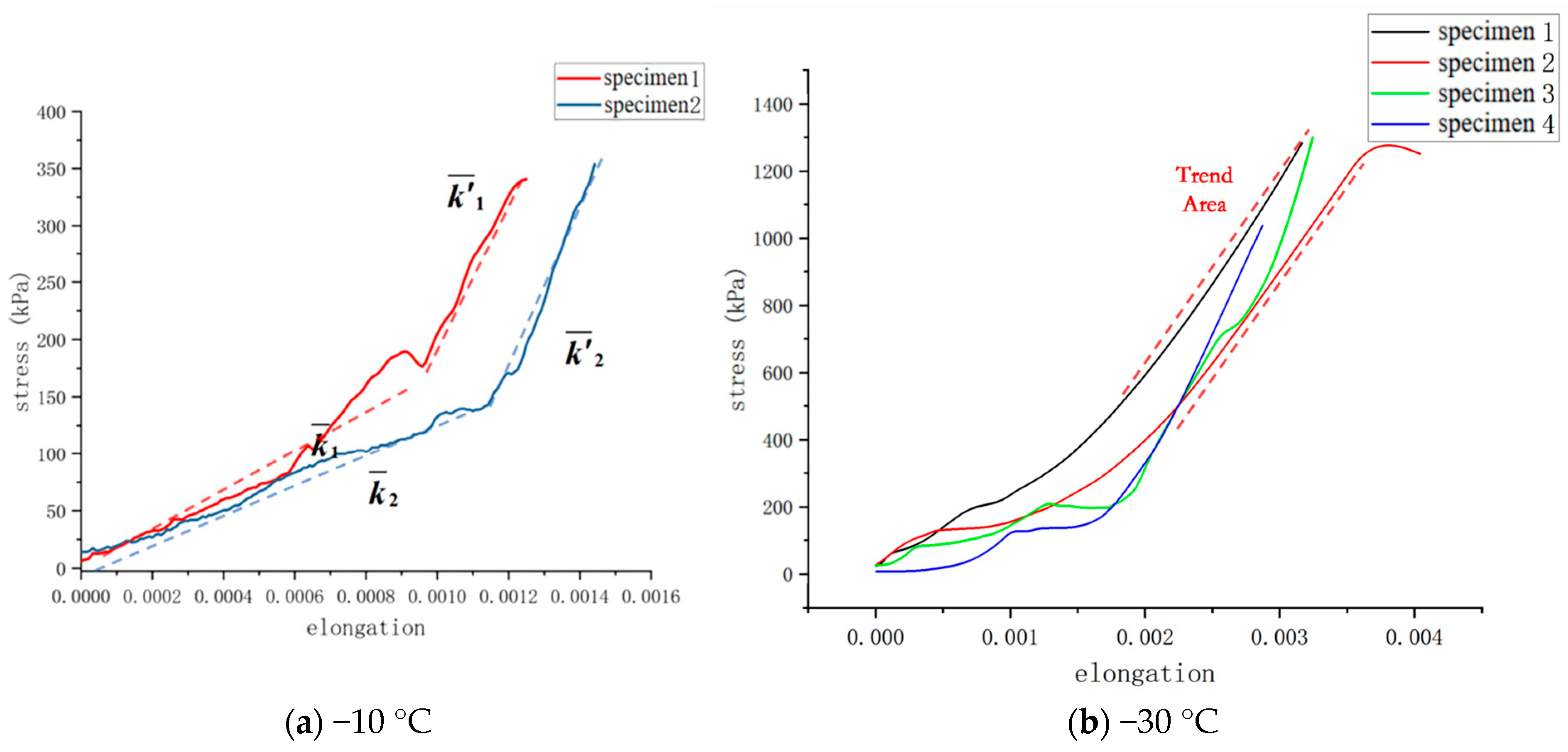
The stress–elongation relationship of the tensile ice specimens frozen at −10 °C is shown in
Figure 6a. The ultimate tensile stress that the two specimens can withstand is basically the same,
σbt = 360 kPa. When
σi < 150 kPa, the slopes of the curves are
= 132.8 MPa and
= 114.5 MPa. When
σi > 150 kPa, the specimens enter the tensile strengthening stage, with specimen 1 having
φ1 = 0.95% and specimen 2 having
φ2 = 1.22%, and the slopes of the curves are
= 458 MPa and
= 521 MPa. This indicates that in the early loading stage before entering the strengthening stage, the force is relatively small, and the measurement results of the ice specimens are significantly interfered by systematic errors. When
σi > 150 kPa, the experimental state tends to stabilize, and at this time, the ultimate tensile stress and the slope
of the stress–elongation curve in the strengthening stage obtained through the testing machine have a higher degree of confidence.
The stress–elongation curves of the tensile specimens frozen at −30 °C are shown in
Figure 6b. Similarly to the tensile experiment group at −10 °C, the tensile behavior of specimens at −30 °C can also be divided into two stages. Furthermore, examination of the experimental curves of each specimen reveals that the inflection points of the curves occur at a stress level of approximately 240 kPa. When
σi < 240 kPa, the average slope of the stress–elongation curves for the four groups of experiments is approximately
= 154.5 MPa. When
σi > 240 kPa, the elongation
φ of the specimens is around 0.15%, and the tensile process enters the strengthening stage, with the average slope of the stress–elongation curves for the four groups of experiments being approximately
= 583 MPa. The fracture elongation
φbt is about 0.33%, and the ultimate stress is within the range of 1.1 MPa <
σbt < 1.3 MPa. When
σi > 240 kPa, the slope
of the stress–elongation curve obtained has a higher degree of confidence.
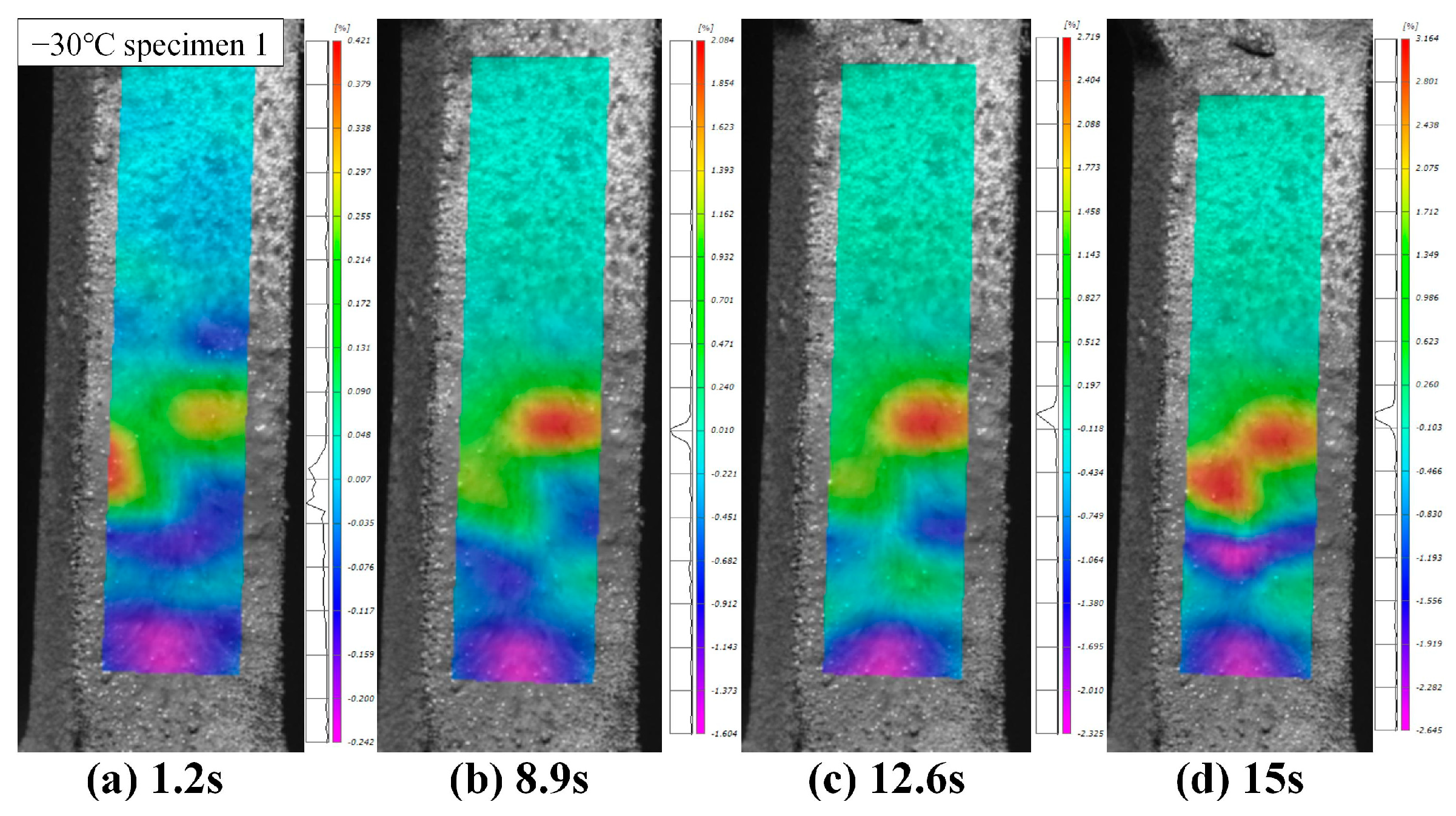
The tensile experiments of the two groups were analyzed using Digital Image Correlation (DIC) technology, with the analysis region selected as the test section of the specimen. The strain on specimen 1 in the −30 °C group was captured using a DIC device; the evolution of the strain field during the test is shown in
Figure 7. A distinct high-strain zone appeared in the lower middle of the test Section 1.2 s after the start of the experiment, as shown in
Figure 7a. From 8.9 s after the start, a distinct strain concentration zone appeared on the right side of the high-strain zone, and then the strain concentration zone continuously expanded to the lower left until 15 s, as shown in
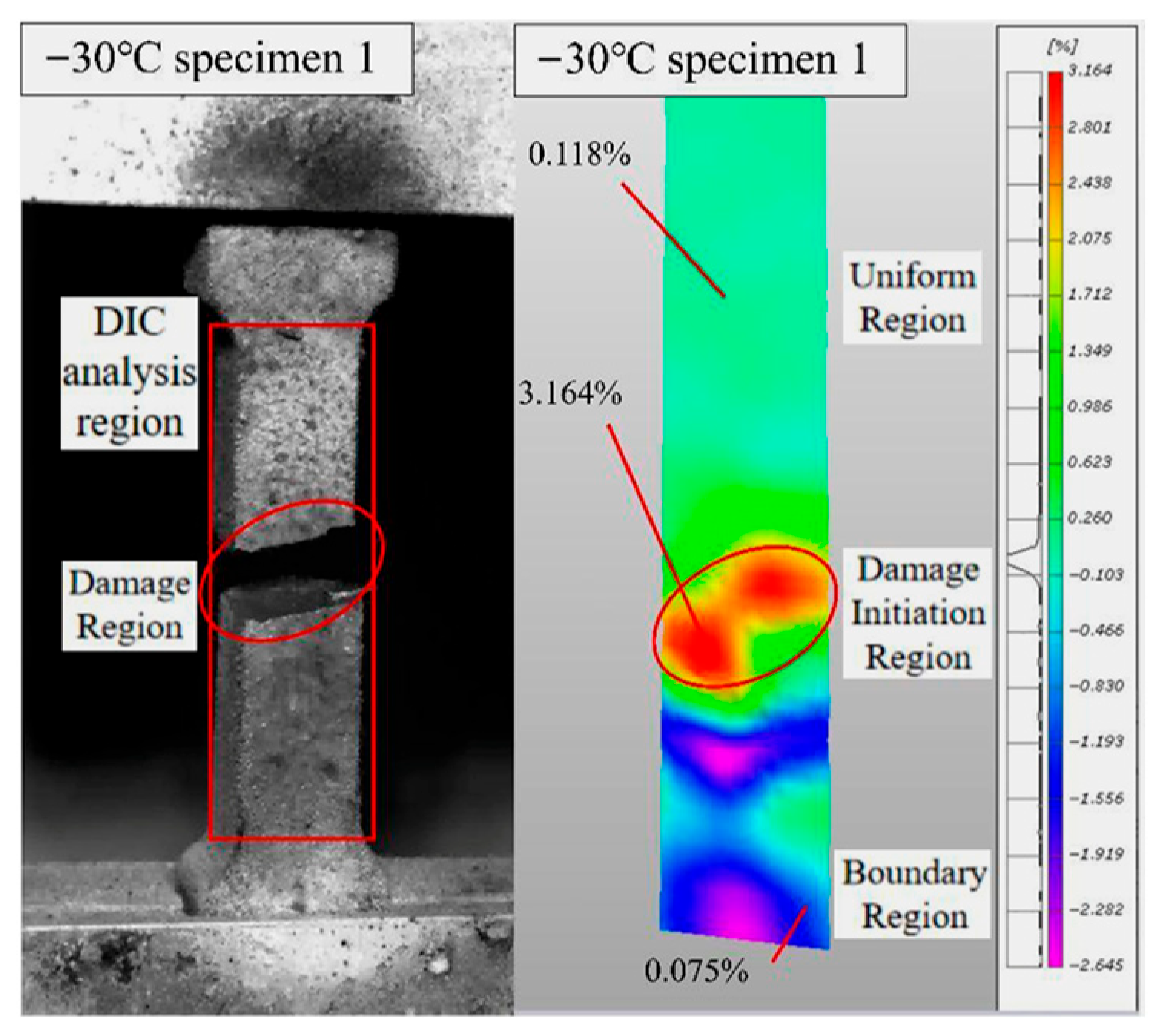
Figure 7b–d. After that, the specimen fractured, and the experiment was stopped. The state of this specimen at the moment of fracture and the strain map obtained from the DIC analysis are shown in
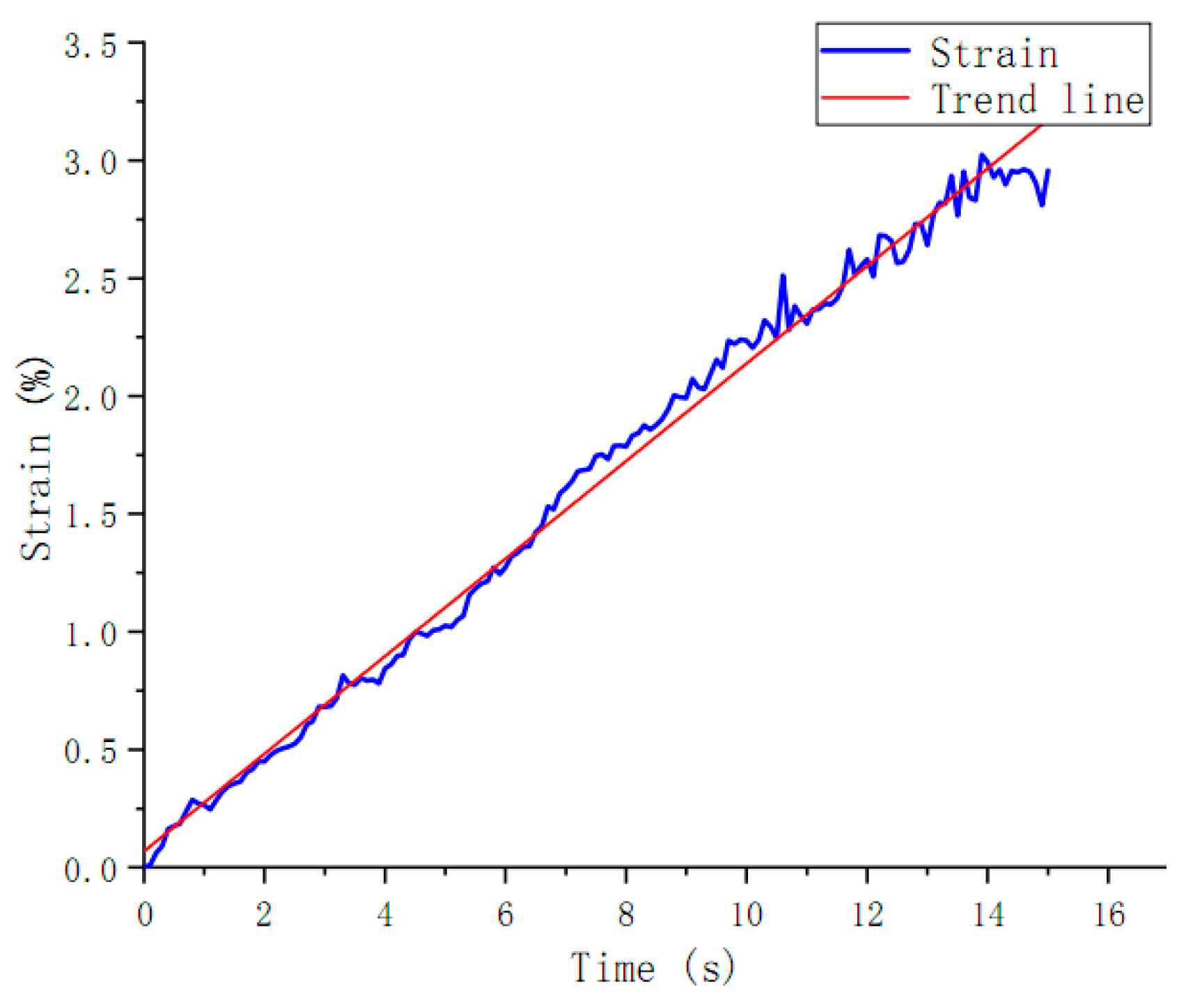
Figure 8. By analyzing the DIC strain cloud diagram, it can be seen that the average strain of the left end face of the specimen before the fracture was 0.1178%, the average strain of the right end face was 0.118%, and the error was 0.17%. It can be considered that the bending caused by eccentric tension during the experiment, which was due to the error of the experimental system, can be disregarded. The tensile fracture occurred in the middle of the specimen. Analysis of the DIC strain map on the specimen surface revealed that the region of maximum strain was distributed transversely in the middle of the specimen, consistent with the experimental observations. The region of maximum strain in the map corresponds to the initiation site of damage that led to specimen fracture. The strain–time history of a point in the middle of the damage initiation region, extracted from the DIC strain map, is shown in
Figure 9, indicating that the specimen underwent linear elastic deformation during the test. The DIC strain data of other points beside the damage initiation region all show a linear trend; the data group can be used in further analysis.
Comparison of the stress–elongation curve in
Figure 6b and the strain data obtained from the DIC system at fracture (
Figure 8) revealed significant differences. The strain data obtained from the universal testing machine were 0.32%, which is much lower than the local strain value of 2.922% measured by DIC in the damage region but significantly higher than the uniform region strain value of 0.118% and the boundary region strain value of 0.075% in the strain map of
Figure 8. This indicates that the tensile fracture of the specimen was caused by stress concentration due to local material inhomogeneity. Moreover, due to stress concentration, boundary effects, and experimental errors in tensile testing, the average elongation data collected by the electronic universal testing machine cannot accurately reflect the tensile strain of the ice specimen.
On the other hand, the DIC surface strain acquisition technique can accurately provide the strain distribution on the surface of the test section of the specimen. The obtained strain distribution is consistent with mechanical principles and experimental phenomena and is highly credible. The strain map in
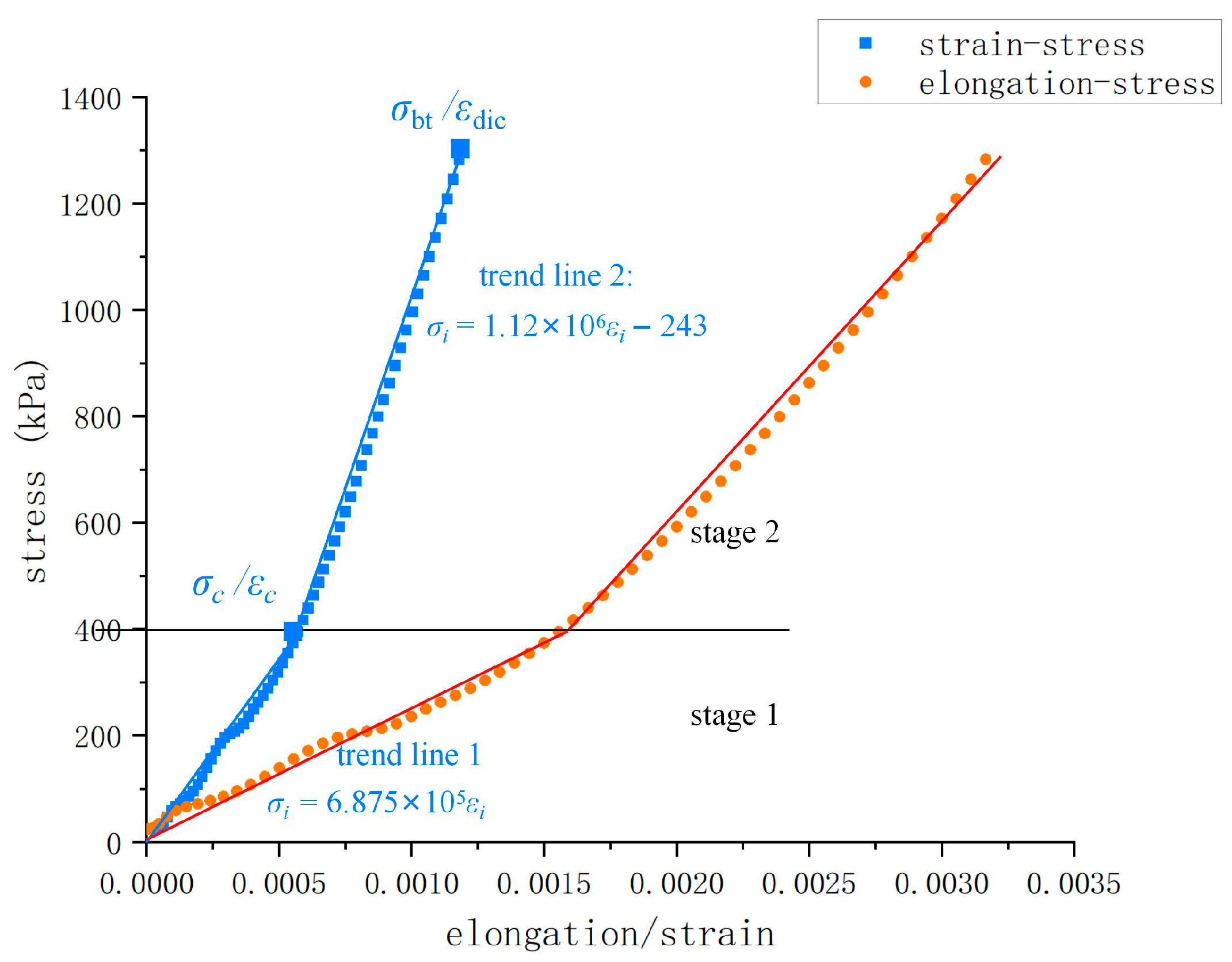
Figure 8 shows a large area of uniform strain on the specimen surface, with strain values close to the median of the strain map. Therefore, the uniform strain region can better reflect the overall strain state of the specimen. By using the strain value from the uniform region to correct the stress–elongation curve of the specimen, a more accurate stress–strain curve can be obtained, as shown in
Figure 9.
The strain–stress curve in
Figure 10 represents the corrected curve using DIC data, where the abscissa of the curve can be considered as the strain
εi. Similarly to the elongation-stress curve before correction, it is divided into two stages and exhibits a distinct bi-linear characteristic. A bi-linear breakpoint model with confidence intervals was used to fit the real strain–stress data, resulting in an initial modulus
= 687.50 MPa and a strengthening modulus
= 1.12 GPa. The inflection point was located at a strain of 0.000551 (stress of 378.5 kPa). The confidence intervals of the two linear fittings indicated that the model had high reliability (R
2 > 0.999). Sensitivity analysis showed that
was more sensitive to the selection of the inflection point position, while
exhibited good robustness in data preprocessing (filtering) and inflection point selection; the inflection point position itself had a coefficient of variation lower than 0.5% after filtering, indicating that the observed inflection point had good statistical stability. The results are similar to those of previous studies and have a high degree of credibility [
37].
The bi-linear stress–strain curves may be due to the crystal structure reconstruction of ice. In the first stage of the experiment, the crystal structure of the ice specimens was relatively loose. Under the action of load, dislocations and slippage occurred in the crystal structure, resulting in a low modulus of the material macroscopically. After the crystal structure became denser, it entered the second stage where the material presented a high modulus. Therefore, it is concluded that the bi-linear constitutive model for ice tensile behavior has four characteristic values: the elastic modulus
of the first linear stage, the inflection point stress
σc, the elastic modulus
of the second linear stage, and the fracture stress
σbt of the specimen. In
Figure 10, the stress and strain values corresponding to the starting point of the strain–stress curve are
σ0 and
ε0, respectively. The stress and strain values corresponding to the critical point between the two linear stages are
σc and
εc, respectively. The stress and strain values at the specimen’s fracture and damage point are
σbt and
εdic, respectively.
In summary, the stress–strain curve of ice materials under tensile loading exhibits a bi-linear pattern. In the first stage, both stress and strain values are relatively low, and the linearity is significantly affected by measurement errors. In contrast, the second stage shows better linearity. The stress behavior of ice materials under tensile loading can be effectively described using four characteristic values:
,
,
σc, and
σbt. By analyzing the difference between the DIC strain data and the elongation data from the regular test method in
Figure 10, the two data groups have a similar trend, and they are proportional to each other. So, the major error of the regular test method might originate from the deformation of the ice specimens outside the test section rather than the systematic error of the experiment equipment.
6. Ice Compression Test Results and DIC Data Analysis
The axial compression tests of ice were also conducted using displacement-controlled loading. Based on preliminary experiments, the mechanical properties of ice under compression were better than under tension, with higher ultimate loads and modulus. Therefore, the preloading force was increased compared to that used for tensile specimens. Similarly to the tensile tests, load and displacement data were recorded during the experiments, and DIC system imaging was performed in real-time.
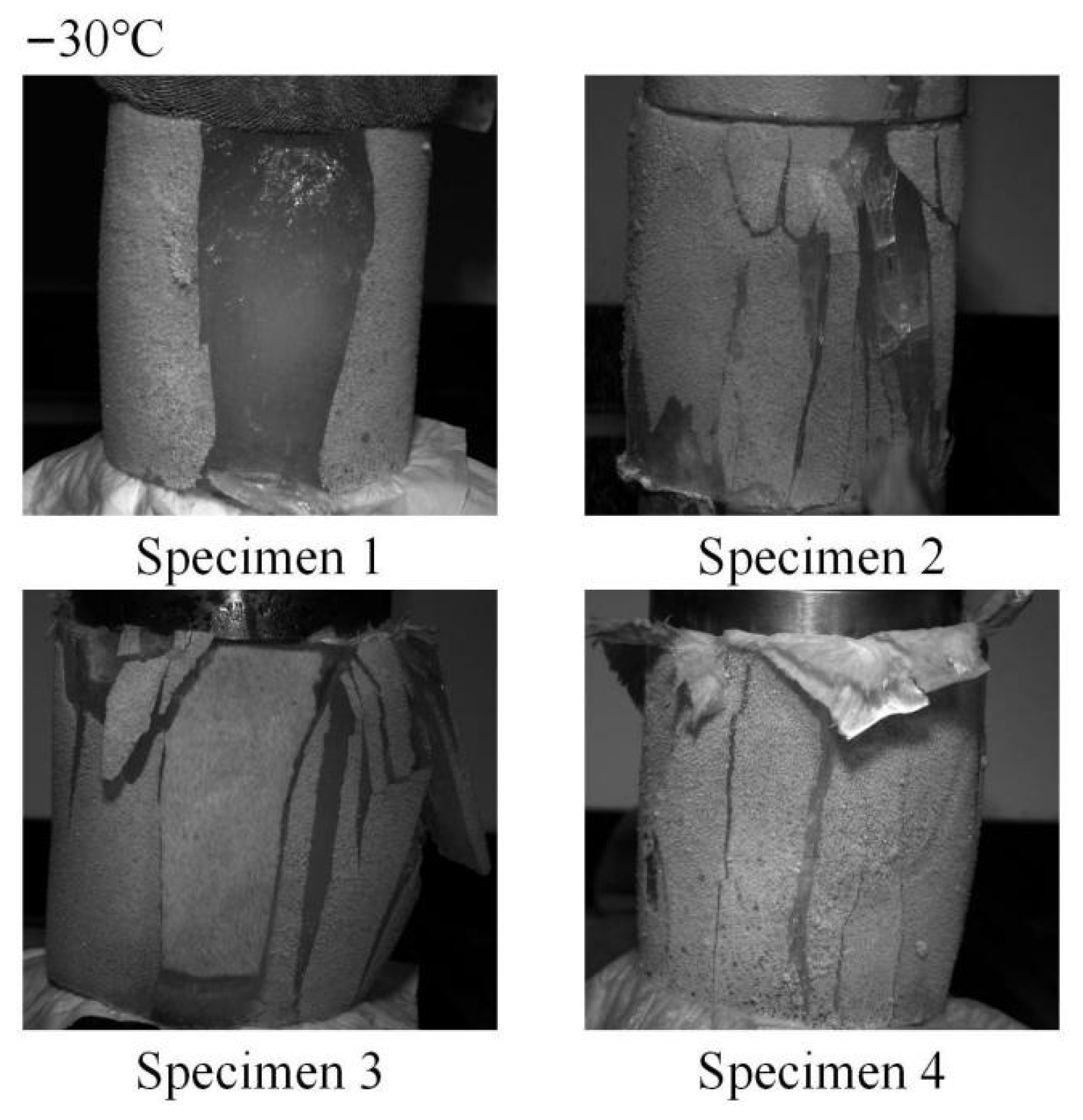
For both the −10 °C and −30 °C specimen groups, the experimental phenomena during the compression tests were essentially the same. In the early stage of the test, the specimens underwent uniform compressive deformation as a whole. Due to boundary effects, slight crushing occurred at the ends of the specimens in contact with the compression heads. As the compression increased, the specimens exhibited noticeable radial expansion until cracks appeared on the outer surface of the specimen sides, followed by fragmentation and a sharp decline in the specimens’ load-bearing capacity, as shown in
Figure 11.
After the experiment, the load data
Fm and deformation data Δ
lm collected by the universal testing machine were processed to calculate the stress, compression rate, and the slope of the stress–compression rate curve using the following formulas:
In the equations, Fm, Δlm, σm, and λm represent the load, deformation, stress, and compression rate of the specimen at moment m during the test, respectively. is the average slope of the stress–compression rate curve between moments m and n, calculated from the approximately linear segment of the curve after it stabilizes. d is the diameter of the cross-section of the compressive ice specimen in the test section, and l is the original length of the test section of the specimen.
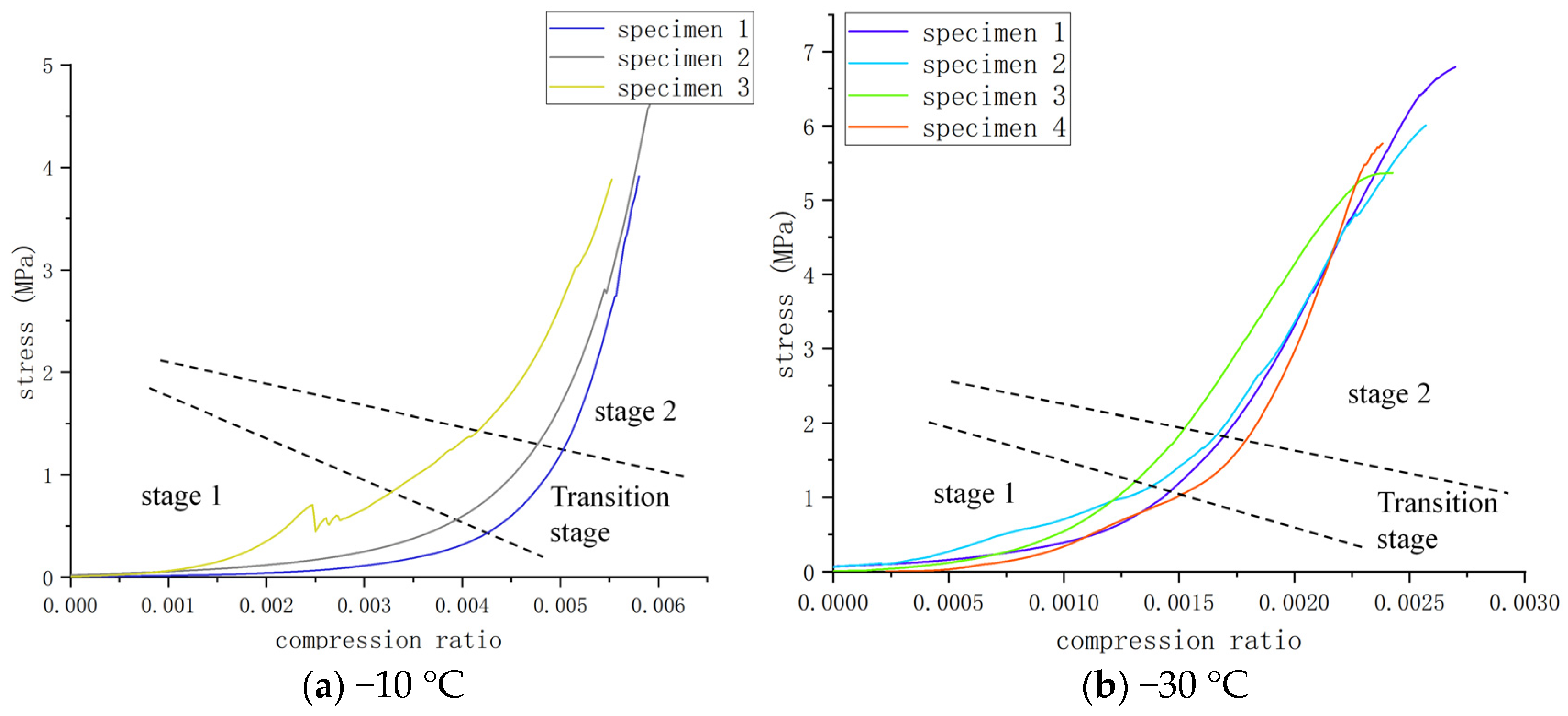
The stress–compression rate relationships of the ice compression specimens frozen at −10 °C and −30 °C are shown in
Figure 12a,b, respectively. For both groups of specimens, the overall slope of the stress–compression rate curve increases with the compression rate. The stress–compression ratio curve in the compression test also shows a significant upward trend. However, compared with the tensile curve of ice, which has obvious bi-linear characteristics and distinct inflection points, the change trend is smoother without obvious inflection points. This indicates that ice materials exhibit more pronounced viscoelastic behavior under compression.
In the compression test group at −10 °C, the ultimate stress σbc of the three specimens ranged between 3.88 MPa and 4.61 MPa, with the corresponding failure compression rate falling within 0.55% to 0.59%. The changing trends of the three curves in stage 1 and stage 2 are significantly different. Therefore, the compression curve can be divided into stage 1 and stage 2 with better linearity, as well as the transition stage that smoothly transitions between the above two stages. The value in stage 1 ranges from 71.7 Mpa to 296.3 MPa, and in stage 2 ranges from 2.0 GPa to 3.71 GPa. In conjunction with the data from the tensile test group at −10 °C, it can be concluded that when the freezing temperature is higher, the constitutive relationship of ice materials is less stable, but the regularity of the strength limit is still stronger.
For the compression test group of ice specimens frozen at −30 °C, the stress–compression rate curves are shown in
Figure 12b. Compared to the −10 °C group, the stress–compression rate curves of the four specimens exhibit a more stable trend and are similar to those of the −10 °C group, presenting a bi-linear trend with a smooth transition, reflecting viscoelasticity. The ultimate stress and ultimate compression rate of this group of specimens are also more concentrated, with the ultimate stress ranging from 5.36 MPa to 6.79 MPa and the ultimate compression rate ranging from 0.24% to 0.27%. The curves in
Figure 12b show good consistency in shape and trend. It can be concluded that the constitutive relationship of ice materials is more stable when the freezing temperature is lower. Same as the −10 °C curve, this compression curve can also be divided into stage 1 and stage 2 with better linearity; between these two stages is a smooth transition stage. The
value in stage 1 ranges from 611.5 Mpa to 868.1 MPa, and
in stage 2 ranges from 4.61 GPa to 8.28 GPa.
The images captured during the compression tests were analyzed using DIC technology; since the surface of the cylindrical specimen is curved, the 3
D graphics obtained by the dual cameras must be used for DIC analysis. For Specimen 4 in the −30 °C test group, the evolution of strain on the test section surface was processed by the DIC system, which is shown in
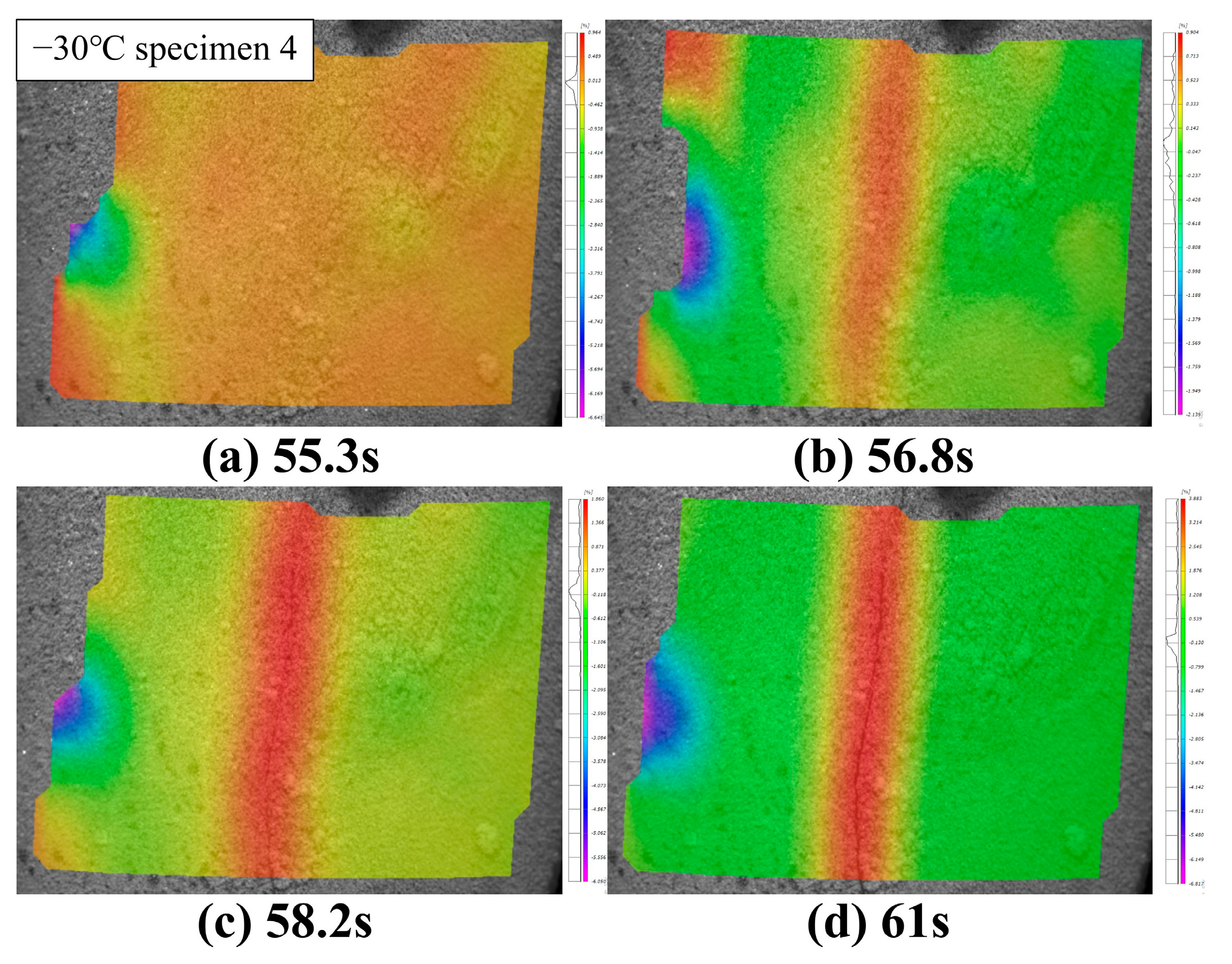
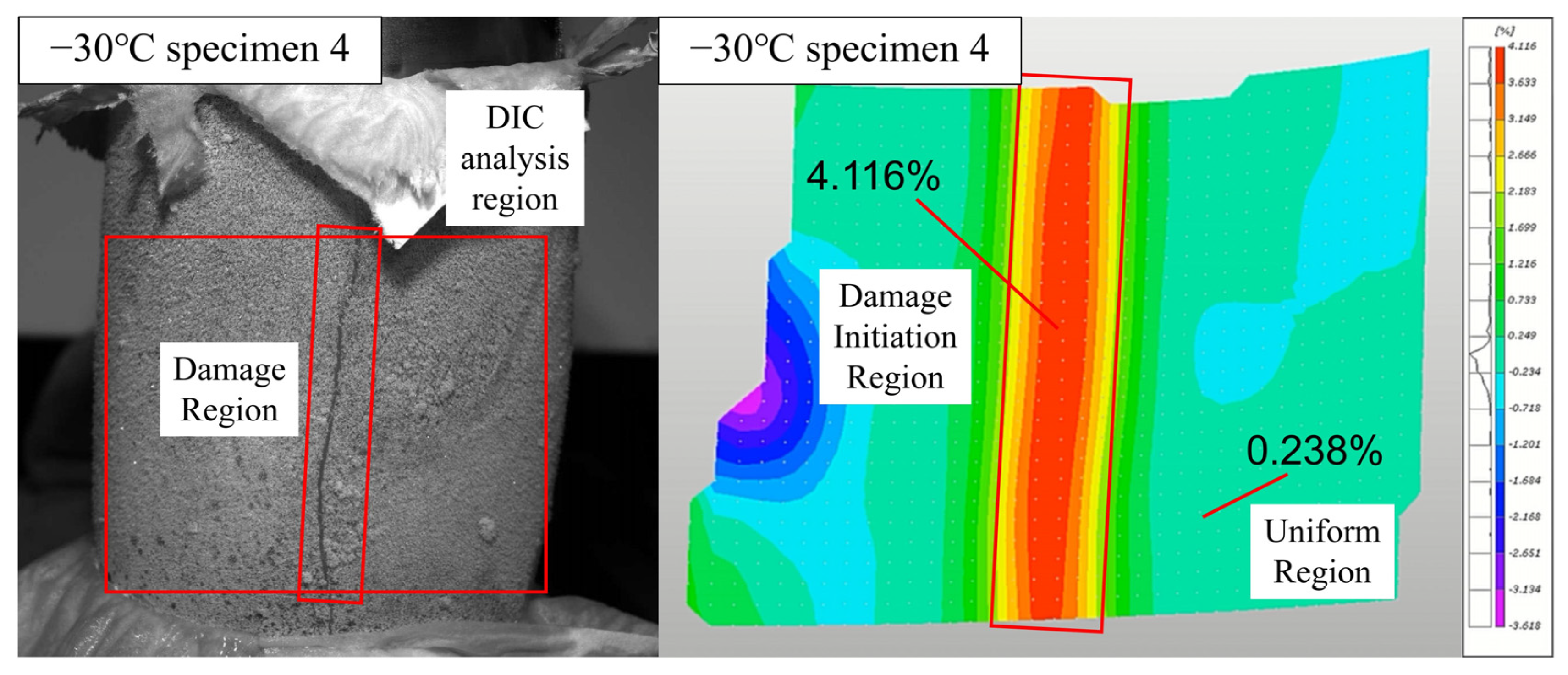
Figure 13a–d. From the beginning of the experiment to 55.3 s, the surface strain distribution of the specimen was relatively uniform. After 56.8 s, a vertical high-strain zone appeared in the middle of the specimen. Then, at 58.2 s, a relatively obvious through crack appeared in the high-strain zone of the specimen. Subsequently, the crack continued to expand in this area until it collapsed, and the experiment was stopped. The phenomenon at the moment of fracture and the strain map obtained from DIC analysis are shown in
Figure 14. The DIC analysis region was selected as the outer surface of the compression specimen, which exhibited fragmentation at the moment of specimen failure. Analysis of the surface strain in the DIC region revealed that the maximum strain occurred in the middle of the specimen, distributed longitudinally. The strain concentration region extended axially through the surface of the compression specimen and spread circumferentially to both sides until surface cracks appeared. Comparison of the specimen at the moment of compression failure and the DIC analysis image showed that the location and shape of the cracks were consistent with the strain concentration region in the DIC strain map, indicating that the DIC system can accurately simulate the generation of surface damage in the specimen, with the stress concentration region being the initiation site of damage.
From the strain data in
Figure 14, the maximum strain value in the damage initiation region measured by DIC was 4.116%, significantly higher than the ultimate compression rate measured by the universal testing machine. In contrast, the uniform strain region measured by DIC on the surface was 0.238%, which is essentially the same as the maximum compression rate measured by the universal testing machine at that moment. This suggests that in the compression tests of ice materials, the compression rate measured by the universal testing machine is close to the actual average surface strain, and the error in calculating the compressive modulus from the compression rate is relatively small. However, the universal testing machine cannot accurately capture the damage process and ultimate failure strain of ice materials under compression. The DIC system can more accurately reflect the progressive damage process and ultimate state of the specimen surface during compression, demonstrating a clear advantage in the application of DIC technology in compression tests of ice materials. During the experiment, the compression specimens exhibited significant lateral expansion, and the final failure initiated from the outer surface cracking. This indicates that under axial loading, the outer edge of the specimen experienced noticeable lateral deformation, which may be associated with local instability.
As shown in
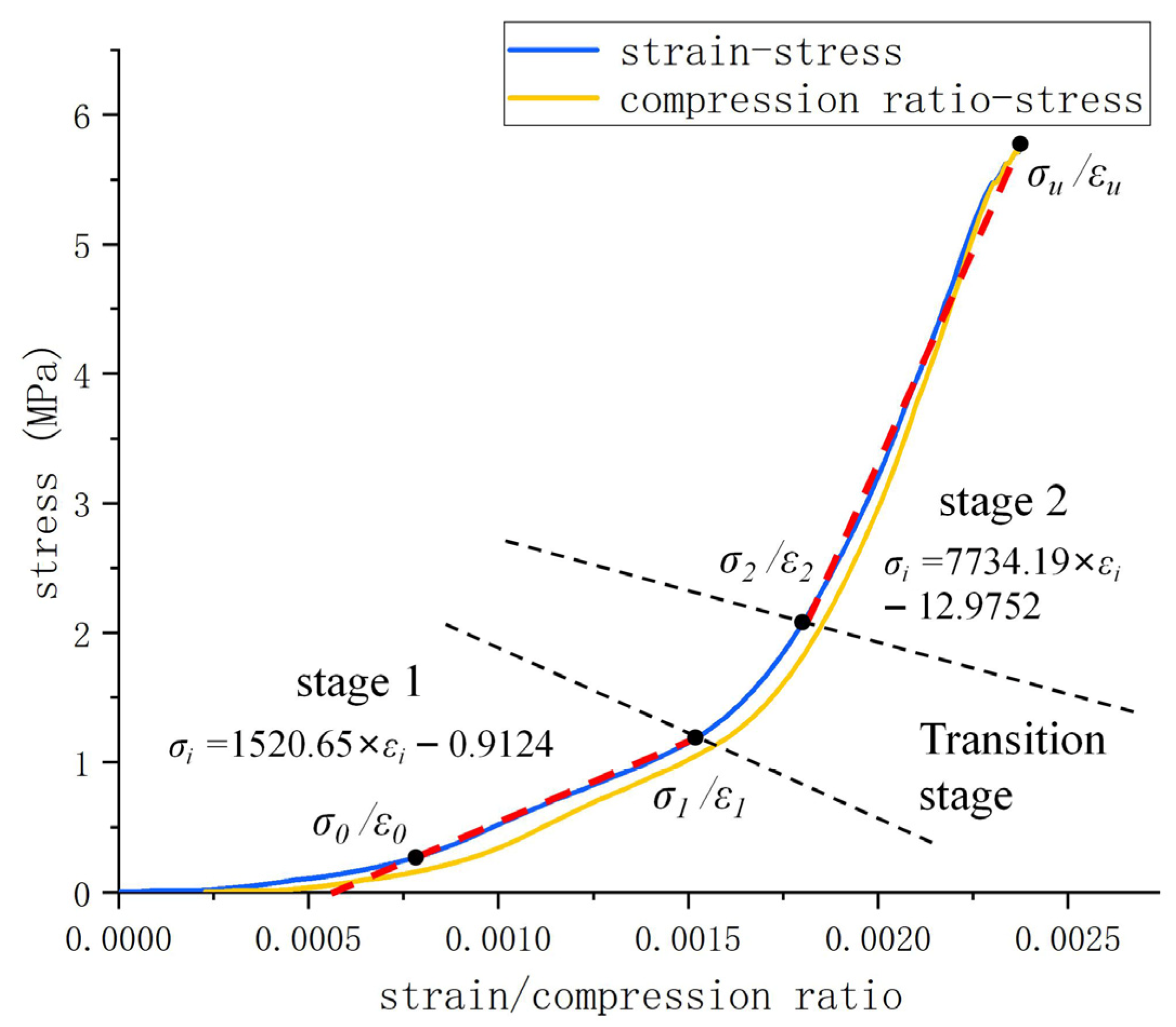
Figure 15, since the maximum uniform strain measured by DIC is essentially consistent with the ultimate compression rate measured by the universal testing machine, the correction to the compression rate–stress curve obtained from the universal testing machine using the uniform strain data from DIC does not result in significant changes. Compared with the tensile specimen, the compressive specimen has no part beside the test section, so the deformation is mainly from the test section, which verified that the error from the regular test method might originate from the deformation of the ice specimens outside the test section. Therefore, considering the advantage of accuracy, the stress–strain curve fitted with DIC uniform strain data can more accurately describe the mechanical behavior of ice materials under compression. Considering the obvious viscoelastic properties of ice during the compression process, the compression stress–strain curve should be described in three parts: stage 1, stage 2 and the transition stage.
In
Figure 15, after the experiment began loading, the stress and strain values are relatively low, and the linearity is significantly affected by measurement errors. Then, the stress–strain curve begins to enter linear stage 1 at a strain of 0.08% (
σ0/
ε0) and ends at a strain of 0.155% (
σ1/
ε1), entering the transition stage. The curve rises smoothly during the transition stage and enters the linear stage 2 at a strain of 0.18% (
σ2/
ε2), until the specimen failure and test stops at a strain of 0.238% (
σu/
εu). If it is believed that the smooth transition stage is caused by the viscoelasticity exhibited by ice materials during compression, then essentially, the compression constitutive relationship of ice can still be regarded as bi-linear. Through the bi-linear model fitting analysis, the two fitting functions as shown in
Figure 15 were obtained. The elastic modulus in the first linear stage
= 1.521 GPa, and the fitting equation has R
2 = 0.9987. The hardening modulus in the second linear stage
= 7.734 GPa, and the fitting equation has R
2 = 0.9994. The smooth transition between the two stages is achieved through cubic polynomial fitting to ensure the continuity of the first derivative of the function. The overall model fitting goodness is R
2 = 0.9996, the residual standard deviation is 1.55 × 10
5 GPa, and the coefficient of variation is 0.55%. The sensitivity analysis indicates that the change in the inflection point position has an impact of ±3.29% on
and ±0.72% on
, and the influence of data filtering processing is ±0.43% and ±0.19%, respectively, proving that the fitting results have good robustness. The results are similar to those of previous studies and have a high degree of credibility [
38]. Then this bi-linear constitutive relationship can be described by four characteristic values: the elastic modulus
of the first linear stage of the specimen, the stress
σ1 at the end point of the first stage, the elastic modulus
of the second linear stage, and the failure stress
σu. The elastic modulus
and
can be calculated using the test data defined in
Figure 15.
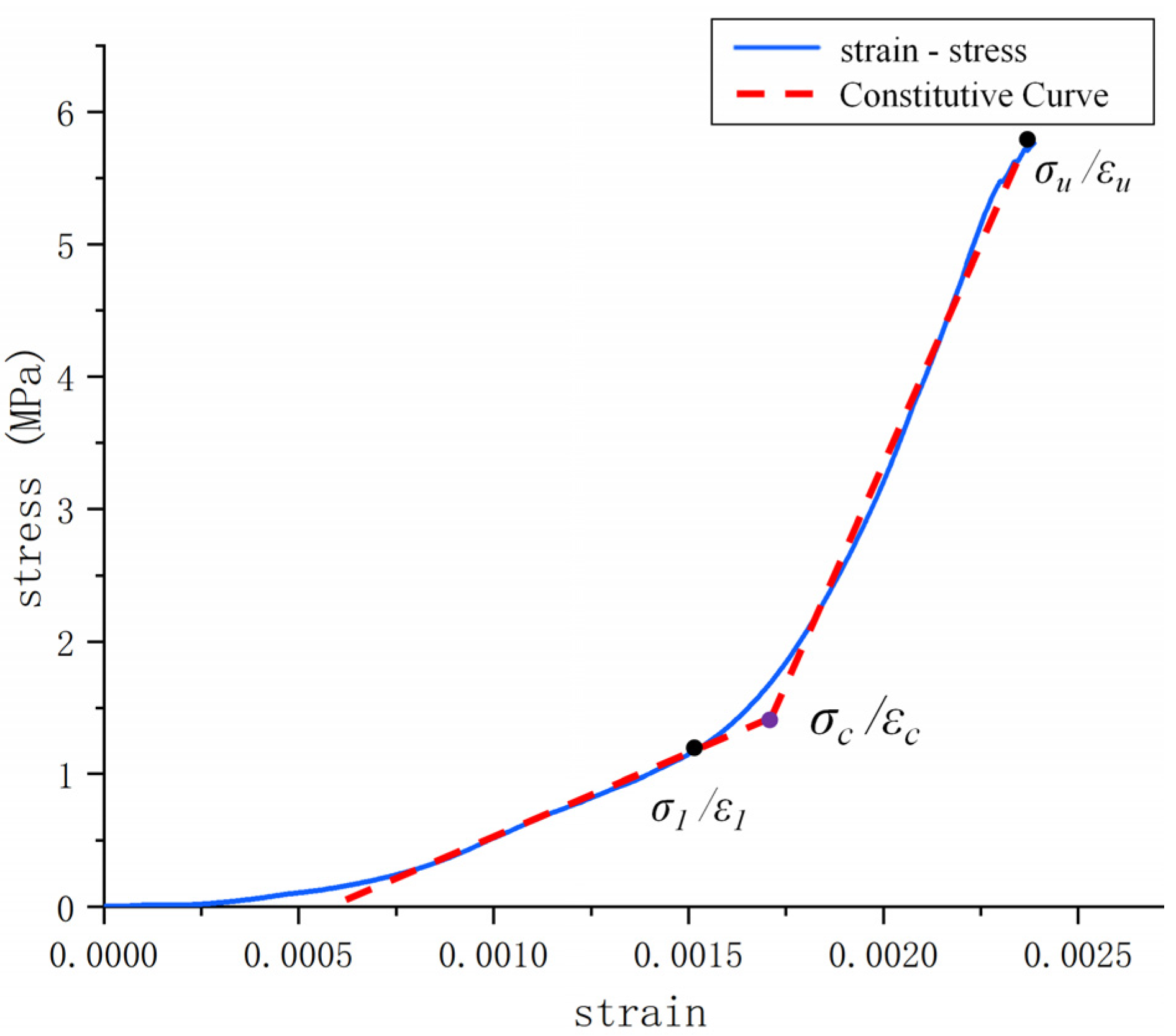
Therefore, the approximate bi-linear constitutive relationship graph of specimen 4 in the −30 °C compression test is shown by the dotted line in
Figure 16. The bi-linear constitutive relation graph has a high degree of overlap with the stress–strain curve of the specimen after DIC data correction, but there are certain errors in the beginning stage and the transition stage of the experiment. The maximum error occurs at the inflection point on the bi-linear constitutive relationship graph, as shown at the midpoint
σc/
εc in
Figure 16, with a maximum error of approximately 9.39%. It can be considered that this bi-linear constitutive relation curve can describe the stress–strain relationship of the specimen under compressive load relatively well. However, at the beginning of the experiment, the stress and strain values are relatively low, and the linearity is significantly affected by measurement errors. Meanwhile, when the ice specimen was subjected to a quasi-static compressive load, it showed viscosity, resulting in a smooth transition stage. These two issues, combined with the small number of experimental data samples, lead to a lack of regularity in the origin of the bi-linear graph and the inflection point positions on the bi-linear sample graph, making it difficult to summarize a bi-linear model defined by three parameters as in the ice tensile experiment data. Therefore, the constitutive relationship of this ice material under compressive load awaits further experimental research.
In summary, the stress–strain curve of ice materials under compressive loads is approximately bi-linear, but due to the viscoelasticity of the material, the transition stages between the bi-linear stages are smooth. According to theoretical analysis, the viscoelastic behavior exhibited by ice materials during compression may be attributed to the re-freezing of microcracks that occur at low temperatures. As the compression progresses and the crack size increases, the possibility of re-freezing decreases. The characterization of the experimental data conforms to this theory. However, due to the lack of relevant detection methods in this experiment, it is impossible to observe the changes in the crystal levels within the specimen during the experiment. Therefore, the “re-freezing” theory is merely a reasonable inference and requires further research for verification. As compression progresses and the crack size increases, re-freezing becomes less likely. This is reflected in Stage 2 of
Figure 12 and
Figure 15, where the viscoelastic characteristics disappear and the material exhibits linear elasticity. It is similar to the constitutive relationship of ice materials under tensile loads. In the first stage, both stress and strain values are relatively low, and the linearity is greatly affected by measurement errors. In contrast, the second stage demonstrated better linearity. The stress behavior of ice materials under tensile loads can be approximately described by four characteristic values:
,
,
σ1 and
σu. Compared with the results of the tensile test, the strain data collected by the DIC system in the compression test has a relatively small difference from the data of the universal testing machine. It can be considered that using the data of the universal testing machine as the strain data of the specimen has little impact on the analysis results of the mechanical properties of the material.
7. Conclusions
This study investigated the tensile and compressive mechanical properties of ice materials frozen at −10 °C and −30 °C through axial tensile and compression tests. Digital Image Correlation (DIC) surface strain measurement technology was introduced to further analyze and correct the experimental data. The following conclusions were drawn:
The mechanical properties of ice materials under tensile and compressive loads show certain differences. Ice exhibits typical brittle material characteristics under tensile action, while it shows obvious viscoelastic features under compressive action. Under axial tension and compression, the stress–strain curves of ice materials conform to the bi-linear constitutive model. However, when subjected to compression, due to the viscoelastic effect, a smooth transition stage occurs between the bi-linears. The ultimate stress and average modulus of ice materials under compression conditions are significantly higher than those under tensile conditions. During the stretching process, the ultimate stress of the specimen at −10 °C was 0.36 MPa, while the ultimate stress of the specimen at −30 °C ranged from 1.1 MPa to 1.3 MPa. After correcting the stress–strain curve of the first-stage specimens in the −30 °C group using the DIC data, the modulus of the first stage = 687.50 MPa, and the modulus of the second stage = 1.12 GPa. During compression, the ultimate stress of the −10 °C specimens ranged from 3.88 MPa to 4.61 MPa, while the ultimate stress of the −30 °C specimens was between 5.36 MPa and 6.79 MPa. After correcting the stress–strain curves of the specimens in the −30 °C group using the DIC data, the first-stage modulus was determined to be 1.521 GPa, and the second-stage modulus was 7.734 GPa.
The bi-linear stress–strain curves observed in ice materials under tension and compression, respectively, may be due to two reasons. First, the crystal structure reconstruction of ice. At the beginning of the experiment, the crystal structure of the ice specimens was relatively loose. Under the action of load, dislocations and slippage occurred in the crystal structure, resulting in a low modulus of the material macroscopically. After the crystal structure became denser, the material presented a high modulus. Second, the formation and re-freezing of microcracks within the material. At low internal temperatures, microcracks form under external loading, and the crystalline bonds break into a liquid state, which then refreezes to fill the microcracks under low-temperature conditions. This is macroscopically manifested as creep behavior, reflecting the material’s viscoelasticity. This above conclusion is based solely on theoretical analysis of the experimental phenomena and requires further experimental research for verification.
Analysis of experimental results from specimens at different temperatures indicates that, when other ice material formation parameters are controlled, the mechanical properties of ice materials significantly improve with decreasing freezing temperature. The distribution of stress–strain curves is more concentrated, and the variance of ultimate stress and strain is smaller. It can be concluded that as the freezing temperature decreases, the microstructure of ice materials becomes more stable and less affected by external environmental factors.
The damage in ice materials under tensile and compressive loading is caused by localized strain surges in weak regions of the material. This surface progressive damage process can be effectively captured and analyzed using DIC technology; the evolution of the strain field and the cause of damage can be observed clearly by DIC images shown in
Figure 7 and
Figure 13, providing important visual and data support for studying the causes, patterns and processes of ice material damage. Moreover, DIC technology is of significant importance for the study of damage progression and strain analysis in ice material mechanical property tests. The capture of strain in the damage region and the uniform strain region by DIC is significantly more precise and accurate than data obtained from mechanical measurements. It has substantial scientific value for correcting experimental data and enhancing the accuracy of calculated mechanical properties of ice materials. DIC technology has the value of large-scale promotion and application in related fields.
This research is conducted on ice materials prepared in the laboratory. The mechanical property parameters of the ice material obtained in this study only have strong reference value for the ice material produced by this manufacturing process. Further research is needed to study the mechanical properties of natural ice, especially polar sea ice, based on actual samples. In addition, field experiments on the mechanical properties of natural ice using DIC technology outside also need to be further investigated. For the broad sense of ice material, there is only verification value in terms of parameter order of magnitude. The sample size of this study is relatively small, but it is sufficient to verify the research method for studying the mechanical properties of ice materials based on DIC technology. When using DIC technology to study the natural river ice and sea ice that have been mined, targeted adjustments need to be made to the experimental plan.