Article

Comparison of Different Numbers of White Base Coat Layers on Metallized Cardboard for Obtaining High Print Quality After Rubbing


University of Zagreb Faculty of Graphic Arts, Getaldićeva 2, 10000 Zagreb, Croatia
*
Author to whom correspondence should be addressed.
Coatings 2026, 16(2), 158; https://doi.org/10.3390/coatings16020158
Submission received: 30 December 2025 / Revised: 16 January 2026 / Accepted: 20 January 2026 / Published: 25 January 2026
(This article belongs to the Section Environmental Aspects in Colloid and Interface Science)

Abstract

Metallized papers or cardboards, used when high barrier properties are required in packaging, are usually coated with white ink prior to printing to ensure accurate colors and high print quality. The coating provides well-controlled sorption properties at a certain thickness, allowing for better printability and reduced penetration of ink components into the substrate. The white ink used for coating ensures the dimensional stability of the substrate after the drying process is complete. This research compares how different numbers of white base coat layers affect the print quality of multicolor offset prints onto metallized cardboard after rubbing. A high print quality assessment after rubbing was obtained based on spectrophotometric and gloss measurements. A comparison of the number of white base coat layers on metallized cardboard indicated that multicolor prints with two base coat layers have lower reflectance, better color stability, and high print quality after rubbing. Gloss measurements showed that prints with one layer of white base coat exhibited higher gloss values, while rubbing led to a moderate increase in gloss for all samples. Ultimately, a thicker layer of white base coat enhances mechanical resistance while maintaining acceptable optical properties in multicolor prints on metallized cardboards.

1. Introduction

In today’s market-oriented world, packaging no longer serves only to protect the product and provide basic information; it also acts as a means of communication between a brand and its customers. Packaging design, color reproduction, and the overall visual experience play a crucial role in how end users perceive product quality. Besides color reproduction, surface gloss is also an important visual parameter that contributes to the overall appearance and perceived quality of packaging. This is especially important for products aiming to be seen as luxurious, and to attract customers. For this reason, metallized cardboard (cardboard coated with a reflective aluminum layer) is increasingly used in packaging, as its striking visual effect creates a sense of high quality for customers.
However, printing on metallized substrates presents challenges due to the optical properties of these materials. With transparent and semi-transparent inks, light can reflect off the metallized surface, resulting in color distortions, reduced contrast, and diminished legibility. To better control the optical properties of such substrates and achieve satisfactory print quality, a white base coat is typically applied. This base coat neutralizes reflectance from the metallized surface and enables higher print quality.
The number of white base coat layers can significantly affect the optical and visual properties of the final product. For example, surfaces covered with a solid white base coat behave similarly to conventional white paper, while unprinted areas can be used to achieve a metallic effect. This practice is already common in the packaging industry, and manufacturers of metallized paperboards report that varying the number of white base coat layers allows finer control of surface gloss and the combination of standard color prints with metallic effects [1]. Because the application of a white base coat layer significantly increases the total cost of printing [2], researching the optimal number of layers of white coating is very important for achieving a balance between the visual quality of the print and the economic profitability of the process [3].
Another important aspect of print quality is durability, specifically mechanical resistance (i.e., rub resistance). This property is crucial for packaging during transport, handling, and displaying at the point of sale. Printed packaging can be damaged by mechanical and environmental actions, leading to color loss, blurring, smudging, or scratches that spoil its appearance [4,5]. Research shows that a print’s resistance to rubbing depends on the internal cohesion of the layer, adhesion to the substrate, and the condition of the substrate surface, such as its roughness and porosity [6,7].
Research on paper and cardboard coatings primarily focuses on how coating composition affects print quality and durability, showing that print density depends on the interaction between the coating and paper substrate, with gloss decreasing as more coating penetrates the paper structure [8]. Other studies suggest that print quality, light scattering, surface energy, gloss, and roughness can be modified by varying the amount of binder in the coating [9,10]. Additionally, the type of coating nanoparticle (SiO2 or TiO2) can affect abrasion resistance, brightness, and the water contact angle [11]. Research on how the number of coating layers influences print is limited. Some findings provide insight into the effects of layering coatings of different compositions on the barrier and the mechanical properties of the paper surface, indicating slightly increased color changes with two layers of coating [12]. Other research suggests that adding up to three layers of coating can reduce the emission and retention of solvents in the ink [13]. Extensive research on how the base coat layer influences print stability was not found.
The novelty of this research is finding how many layers of white base coat ink on metallized cardboard are sufficient to improve the quality and stability of offset prints used for luxury product packaging, where these properties are extremely important.
In this work, the influence of one versus two layers of white base coat on the colorimetric components L*a*b* and their changes after rubbing on metallized cardboard are compared. Such analysis can provide insights to help the industry determine the appropriate number of white base coat layers to balance quality color reproduction and print resistance.

2. Materials and Methods

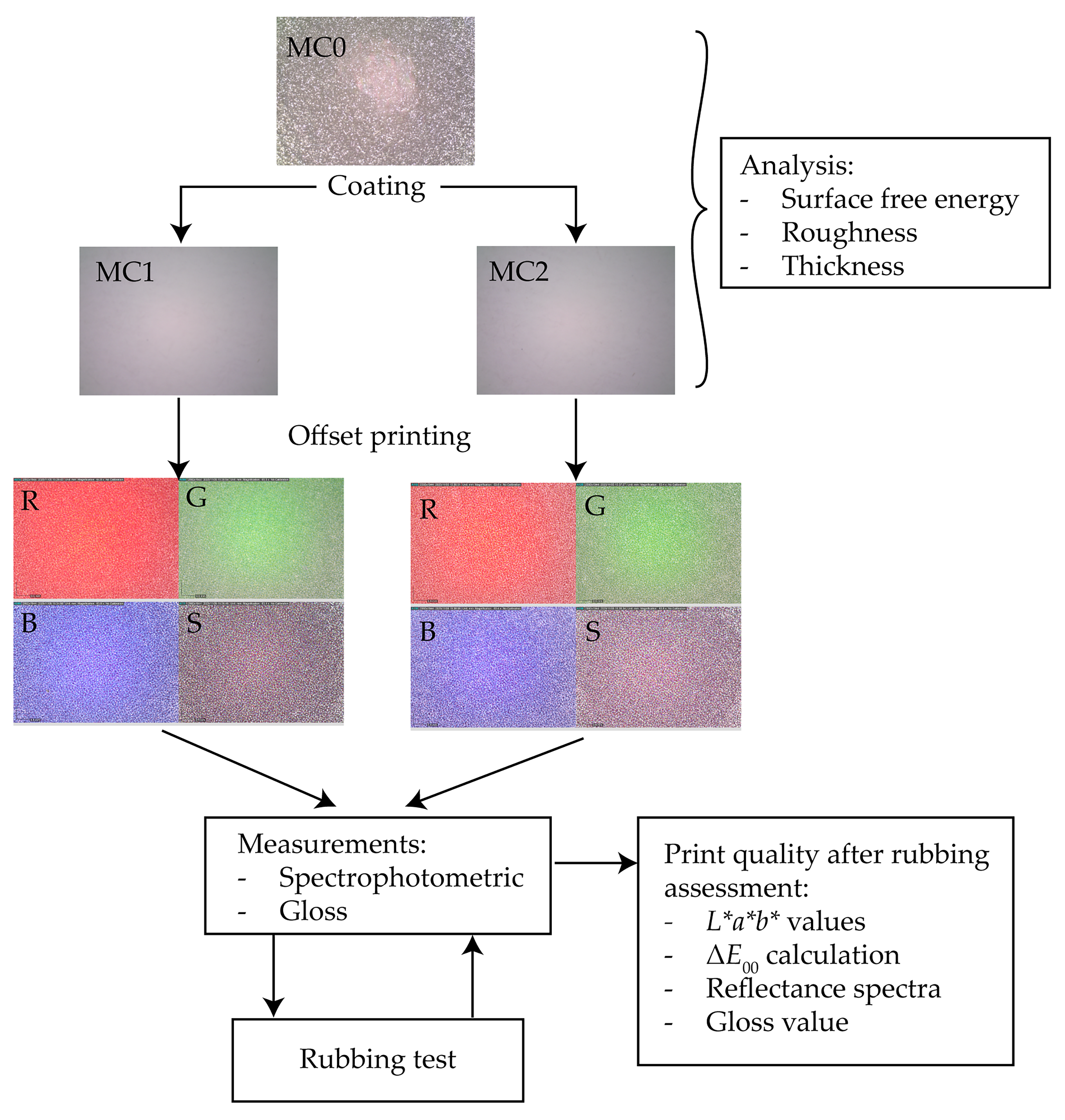
Figure 1 shows a schematic diagram of the research conducted.
TopFold GC2 paperboard (PT Riau Paperboard International, Riau, Indonesia) was metallized using Ultralen foil (Ultralen Film GmbH, Weil am Rhein, Germany) and the surface properties of the obtained metallized cardboards were characterized. The surface energies were determined using goniometer DataPhysics OCA 20 manufactured by DataPhysics Instruments GmbH (Filderstadt, Germany), and the geometric mean value of the dispersive and polar components of the surface tension of the test liquids were found according to the Owens, Wendt, Rabel, and Kaelble (OWRK) model [14]. As test liquids we used: glycerol (Mw = 92.10 g/mol, pro analysis, 99.5%) was supplied by Gram-Mol d.o.o. (Sveta Nedelja, Croatia), while diiodomethane (Mw = 267.84 g/mol, ≥99.4% stabilized, AnalaR NORMAPUR® analytical reagent, for mineralogy) and water (Mw = 18.02 g/mol, AnalaR NORMAPUR® ISO 3696 Grade 3, analytical reagent) were supplied by VWR BDH Prolabo (Vienna, Austria).
The roughness parameters (Ra) of the metallized cardboards’ surfaces were measured with a tactile MarSurf PS 10 profilometer manufactured by Mahr GmbH (Göttingen, Germany) by moving 4.0 mm (the evaluation length) across the surface with a measurement force of 7.5 × 10⁻⁴ N. This parameter represents the arithmetic average of the profile’s deviation.
The thickness measurements of the metallized cardboards were taken with Enrico Toniolo S.R.L. (Milano, Italy) digital electronic thickness gauge, where a cylindrical stainless steel weight creates a pressure of 0.5 kg/cm2 (49.03 kPa).
The prints on metallized cardboard with one or two base coat layers of UV-curable white ink, on which the test was carried out, were printed using the offset printing technique. FD LED EU S5 printing process inks and Flash Dry white ink as base coat, from the same manufacturer, Toyo ink SDN BHD (Toyo ink Europe, Oissel, France), were used. UV-curable white ink is mainly composed of UV-curable pigment, acrylic resin, photo-initiator, diluent, and additives [15]. Photo-initiators and other ink components cure very quickly under UV radiation in a very short time immediately after application [16]. Printing was performed on a KBA RA 106 X-7 + L RS press manufactured by Koenig & Bauer AG (Würzburg, Germany). By printing full tones of two or three process inks, the tones of red (R = M + Y), green (G = C + Y), blue (B = C + M), and brown (S = C + M + Y) were achieved. A list of the samples is shown in the Table 1.
After printing, the prints were subjected to L*a*b* value measurement using the Ocean SR Miniature Spectrometer spectrophotometer (D50/2°) manufactured by Ocean Insight (Orlando, FL, USA), followed by rubbing tests on the Hanatek Rub and Abrasion Tester manufactured by Rhopoint Instruments (St. Leonards-on-Sea, East Sussex, UK) at 60 revolutions using a 1-pound load. Re-measuring the L*a*b* values after performing the rubbing test was done to determine the colorimetric difference (ΔE00), which would provide insight into the change in print quality due to rubbing. At the same time, the reflectance spectra of the prints before and after rubbing were determined using the spherical spectrophotometer. ΔE00 was calculated using Equation (1):
Δ E 00 = Δ L k L S L 2 + Δ C k C S C 2 + Δ H k H S H 2 + R T Δ C k C S C Δ H k H S H
where ΔL′ represents the transformed lightness difference; ΔC′ represents the transformed chroma difference; ΔH′ represents the transformed hue difference; RT is the rotation function; kL, kC, and kH represent the factors for the variation in the experimental conditions; and SL, SC, and SH are the weighting functions.
Gloss values were additionally observed on prints before and after the rubbing test. The gloss of the prints was measured using an Elcometer 480 manufactured by Elcometer Limited (Manchester, UK) according to standards ISO 2813:2014 and DIN 67530 at a 60° angle, with an observation area of 8 mm × 16 mm and a repeatability of ±0.2 GU [17,18].

3. Results and Discussion

3.1. Metallized Cardboard Properties

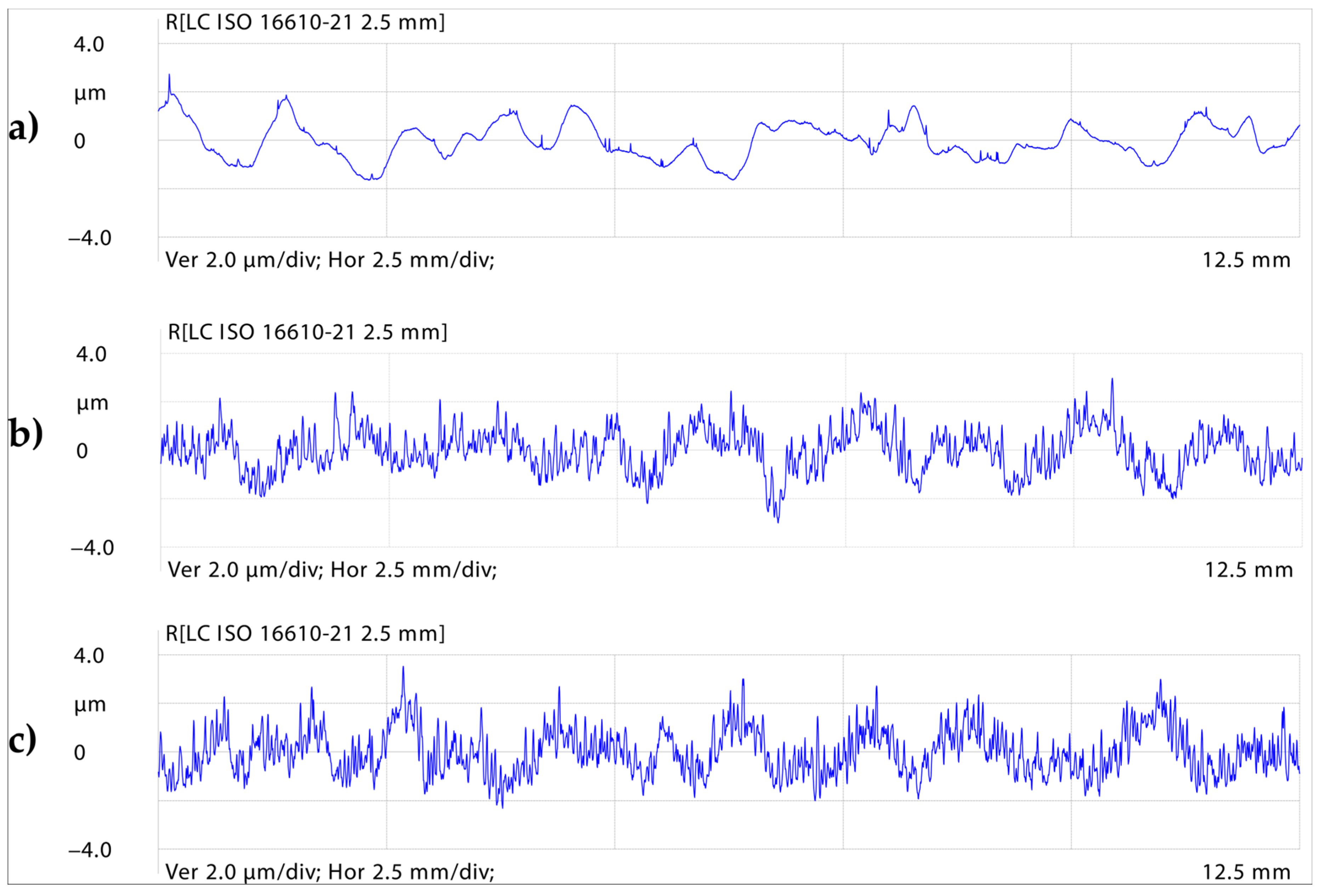
The metallized cardboard (MC) used in the research with one (MC1) and two coat layers (MC2) and without a coat layer of white ink (MC0) was characterized by its surface properties (surface free energy (σs) and surface roughness parameter Ra), the results of which are presented in Table 2. In samples with the addition of one or two white base coat layers, there is a slight increase in total surface free energy. The increase occurs in the dispersive components of the surface free energy. The sample with two layers of white base coat has the highest surface free energy (σs MC2 = 41.00 mNm−1), which is almost entirely (99.85%) due to the dispersive component. Additionally, adding white base coat layers increases roughness (14.52% for MC1 and 25.81% for MC2), so the sample with two layers of white base coat has the highest Ra value (RaMC2 = 0.777 μm).
The effect applying white ink as a base coat in one or two layers on the surface roughness of the MC0 substrate is presented in Figure 2.

3.2. L*a*b* Values Measurement

The values of colorimetric components L*a*b* were measured using a spherical spectrophotometer, and the results are shown in Figure 3, Figure 4 and Figure 5. The L*a*b* system describes color in three-dimensional space, where L* represents lightness, the a* axis shows the relationship between green and red, and b* between blue and yellow.
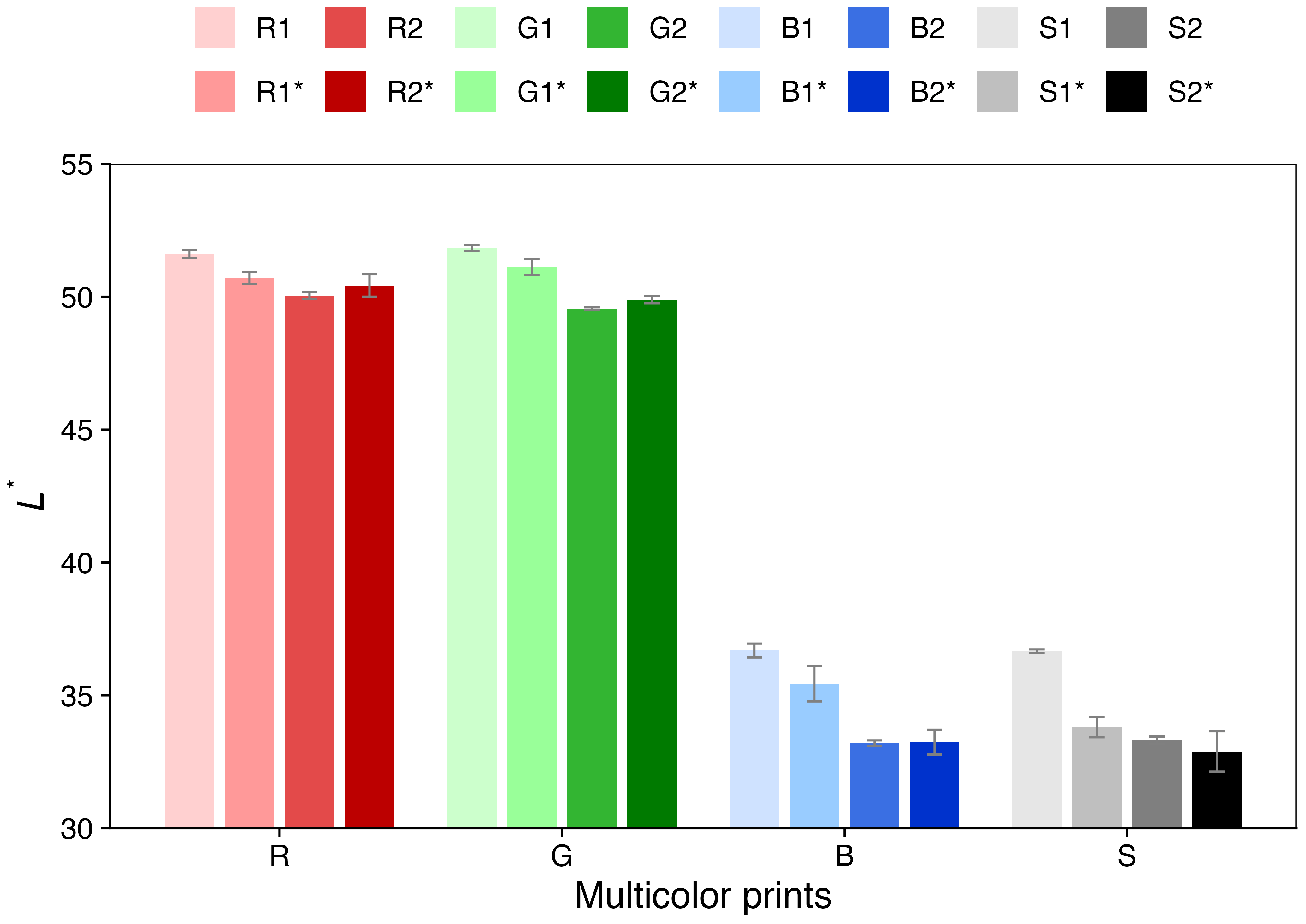
Figure 3 shows the L* values of all multicolor prints before and after performing the rubbing test. It is visible that the L* value is higher for samples printed on one white base coat layer regardless of whether the samples were subjected to the rubbing test or not. Samples printed on one white base coat layer have a drop in the L* component value after rubbing for all multicolor prints (1.76% for R, 1.39% for G, 3.43% for B, and 7.80 for S) compared to unrubbed samples. For samples printed on two white base coat layers, a slight increase in the L* component after the rubbing test is visible for samples R, G, and B (0.74% for R, 0.69% for G, and 0.09% for B), while for sample S, a decrease in value (1.23%) of this color component is visible. The higher L* values for samples printed on one white base coat layer compared to those with two substrates are probably a consequence of a lower total ink application, i.e., the lower optical density of the layer. In samples printed on two white base coat layers, the layer is thicker, and more light is absorbed within the layers, resulting in lower reflectance and thus lower L* values. Such behavior of multicolor prints is consistent with the Kubelka–Munk theory, which describes the relationship between light absorption and scattering in layered ink systems: a larger layer thickness and a higher absorption coefficient led to a decrease in the overall reflectance, and thus to a darker visual impression [19].
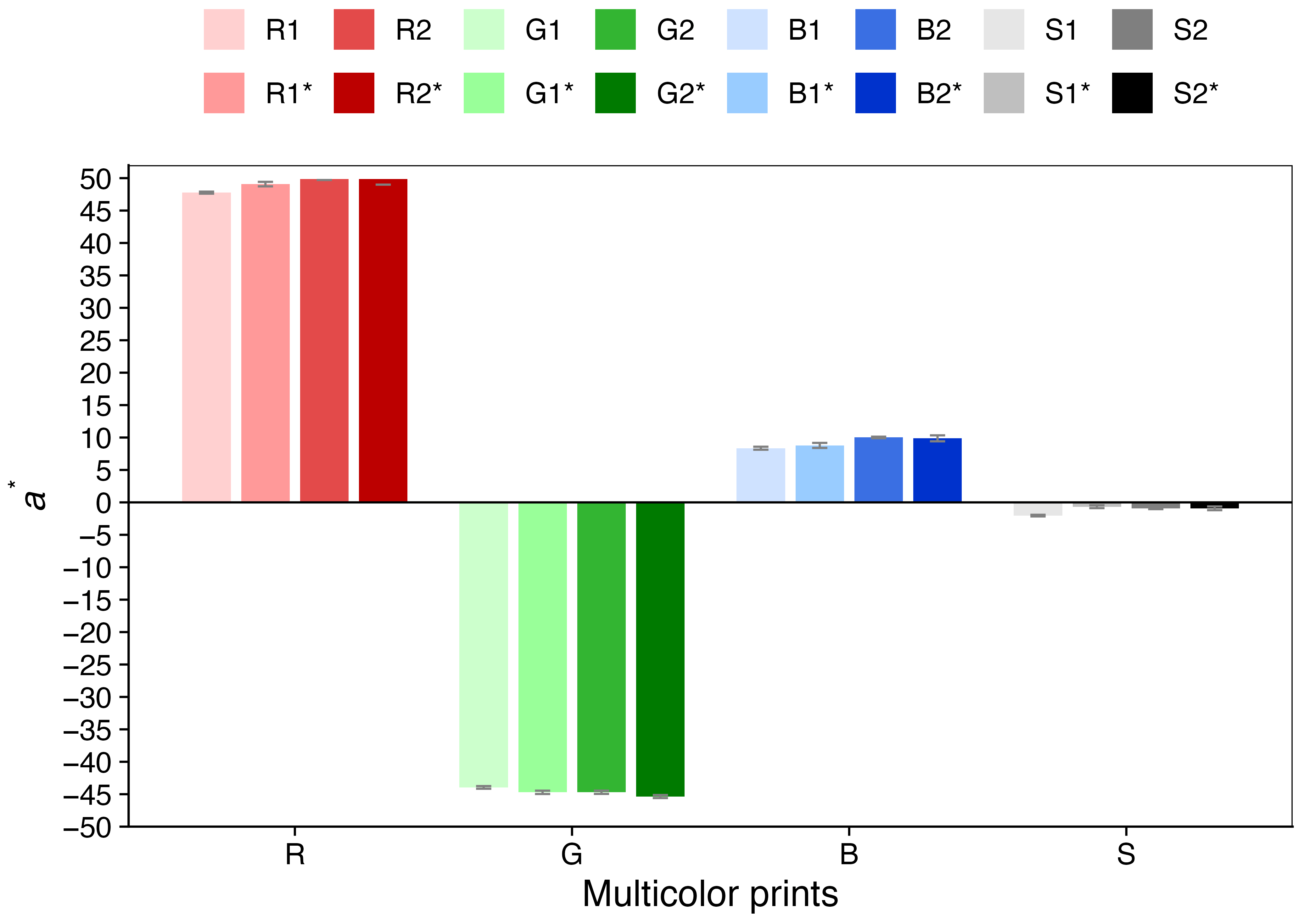
Figure 4 shows the values of the a* color component of the L*a*b* color space on the green–red axis, where negative values of the component indicate a shift toward green, while positive values converge toward red. Positive values were recorded for R and B prints, while negative values are characteristic of G samples, which corresponds to the direction of the a* axis (green–red). Sample S has values of the component a* close to zero, which indicates that it is an almost neutral black color without a pronounced shift toward the red or green region of the spectrum. Samples with two underlying colors have higher absolute values of component a* compared to samples with one underlying color (4.44% before and 1.64% after rubbing for R, 1.71% before and 1.45% after rubbing for G, 21.32% before and 12.53% after rubbing for B, and 37.31% after rubbing for S), which indicates higher color saturation, that is, more pronounced red and green tones. The only exception is the S sample before rubbing, where a decrease (55.39%) in the green tone values occurs in the sample with an additional white layer. This effect may be due to the reduction of optical mixing with the substrate, as the additional white layer enhances the chromatic purity of the print. In samples measured after rubbing, there were no significant changes in the values of the a* component, but a slight decrease in its value was observed in most samples, which may indicate a slight loss of pigment and lower saturation after mechanical action.
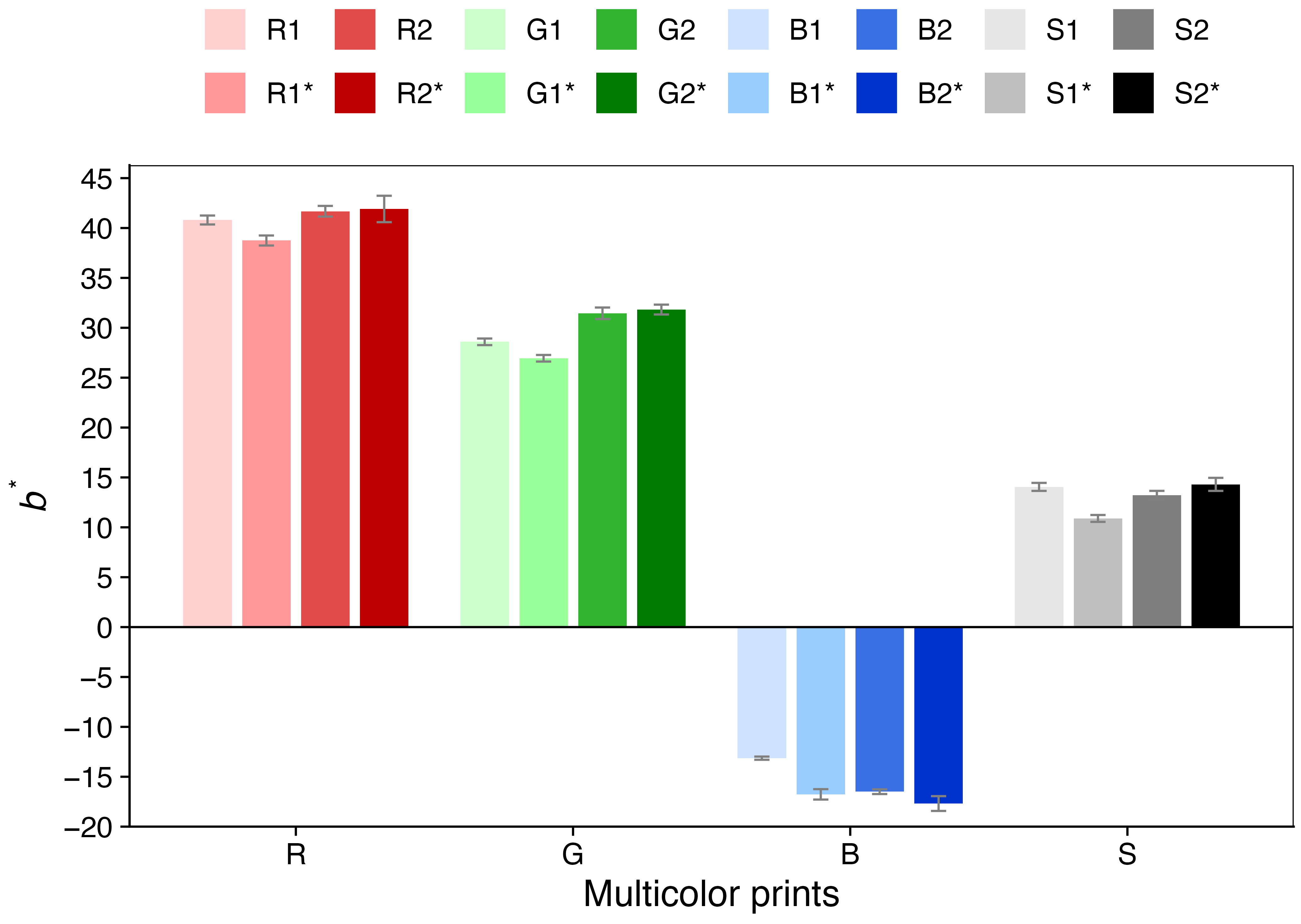
Figure 5 shows the values from measuring the b* color component of the L*a*b* color space. The b* color component in the L*a*b* space is defined as the position of a color on the yellow–blue axis, with a shift toward yellow having a positive value and a shift toward blue having a negative value. Positive values for the b* color component were observed in R, G, and S prints, indicating the presence of a warm, or yellowish, undertone. On the other hand, B prints, as expected, show negative values for the b* color component, which is consistent with their spectral characteristic of a shift toward the blue part of the spectrum. Samples with two white base coat layers show slightly more pronounced b* values compared to samples with one white base coat layer (2.15% before and 8.16% after rubbing for R, 10.00% before and 18.11% after rubbing for G, 25.57% before and 5.50% after rubbing for B, and 31.35% after rubbing for S), indicating a higher saturation of chromatic tones. Again, the only exception is the S sample before rubbing, in which a decrease (5.96%) in the yellow tone values occurs in the sample with an additional white layer.

3.3. ΔE00 Calculation

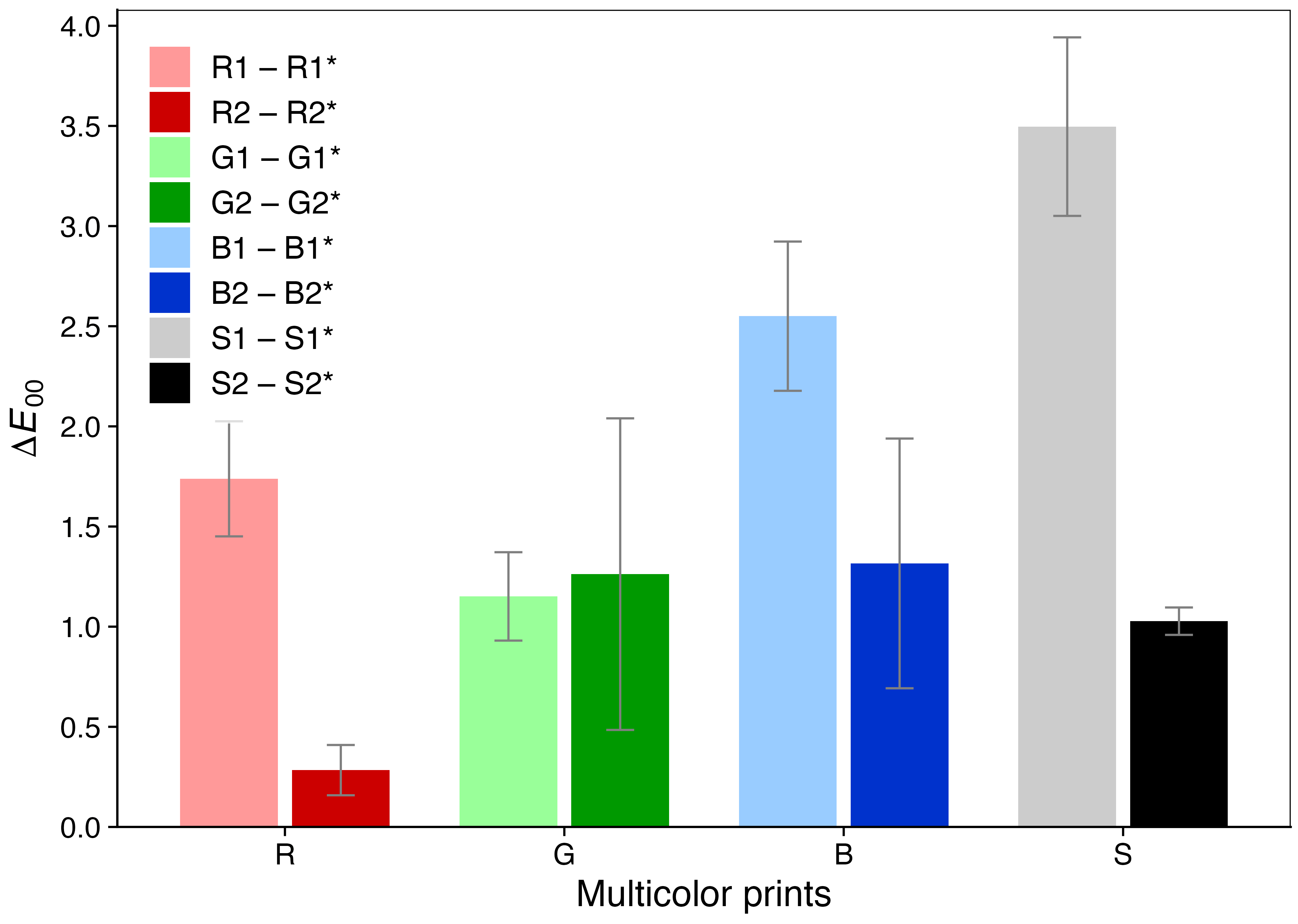
The ΔE00 values for all multicolor prints subjected to rubbing are shown in Figure 6. The results show the total colorimetric difference of the samples before and after rubbing. It is clearly noticeable that in almost all prints, the total colorimetric difference is greater for prints printed on one white base coat layer compared to those printed on two white base coat layers (1.74 for R1-R1* and 0.28 for R2-R2*, 2.55 for B1-B1* and 1.32 for B2-B2*, and 3.50 for S1-S1* and 1.03 for S2-S2*). The exception to this behavior is the G print (1.15 for G1-G1* and 1.03 for G2-G2*), but it should be noted that the green print made on two white base coat layers has the highest standard deviation of ΔE00 values compared to all other multicolor samples. Such results indicate a better resistance to mechanical action in prints with a thicker layer of white base coat. This highlights the importance of properly controlling the application of the white base coat layer to obtain more permanent prints. These results are also consistent with the surface free energy findings, where samples with two layers of white base coat showed higher surface free energy, indicating improved adhesion and cohesion properties, which result in better rubbing resistance.

3.4. Reflectance Spectra

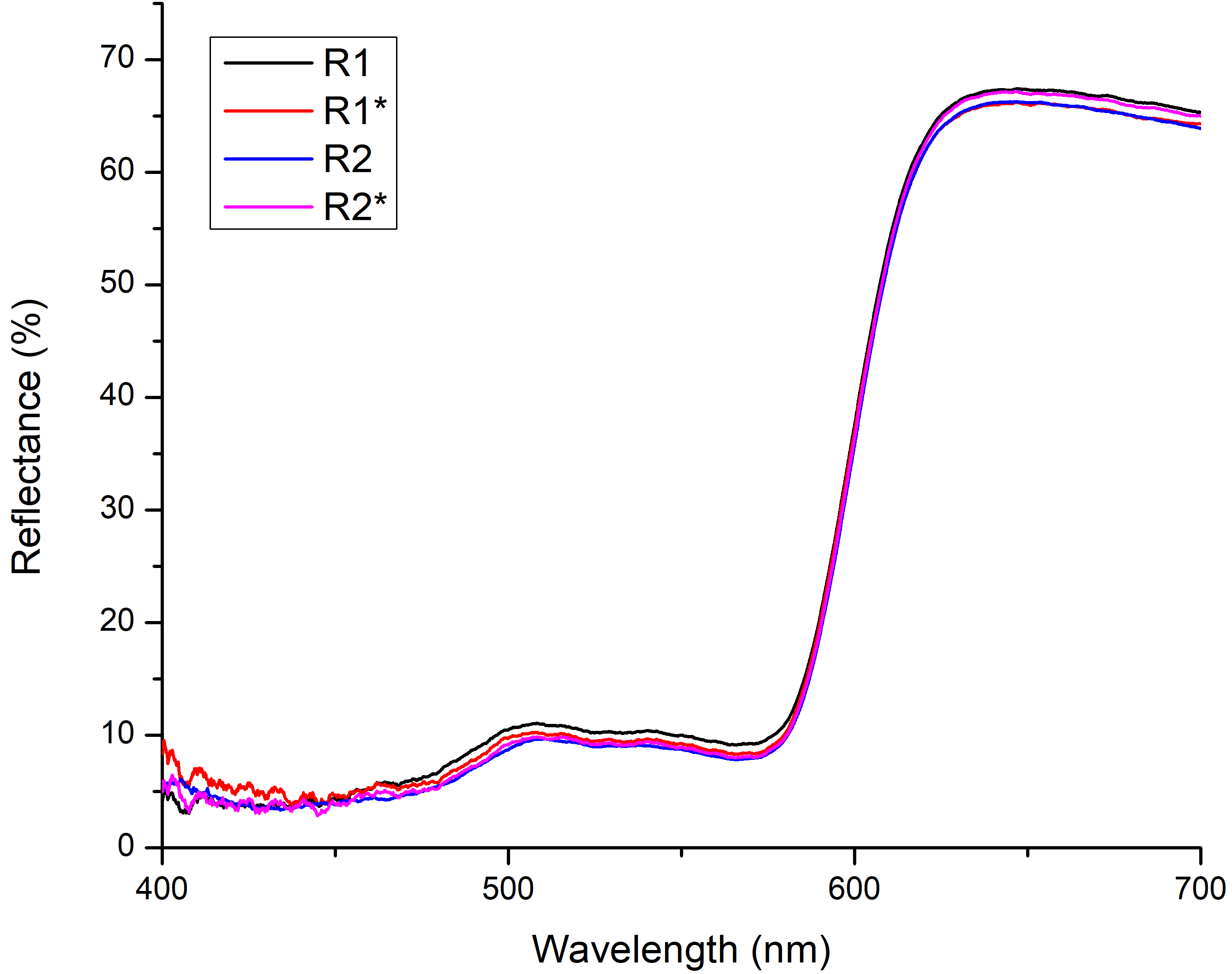
Figure 7 shows the reflectance of the red (R) prints, and it can be seen that the prints, despite the rubbing test that was performed and the difference in the number of layers of white base coat applied on the metallized cardboard before printing, show a stable and pronounced reflectance in the red part of the spectrum, with a maximum between 600 nm and 620 nm. This also confirms the dominant reflectance in the red part of the spectrum. Additional changes in reflectance were not recorded, meaning that the rubbing test did not have a major impact on the reflectance spectrum of red prints. It can be concluded that a double white base coat layer applied on metallized cardboard before printing contributes to better color stability during mechanical action compared to prints made on metallized cardboard substrate with a single white base coat layer, as no differences in the reflectance spectra were observed with this substrate.
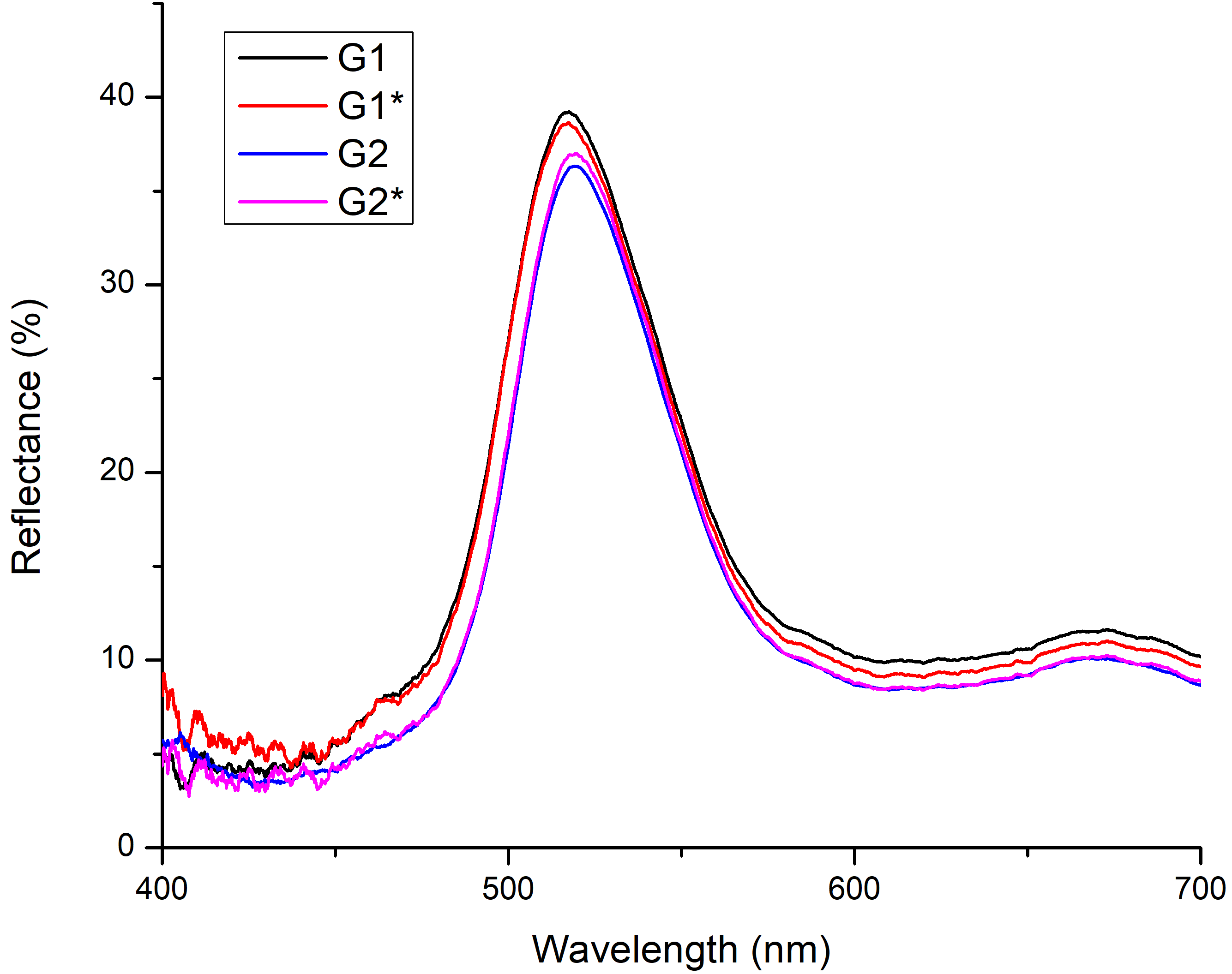
Figure 8 shows the reflectance spectra for the green (G) prints. For all the prints, there is a specific pronounced reflectance in the range from 520 nm to 540 nm, which is characteristic of the color itself. Prints made on metallized cardboard with one white layer (G1) have higher reflectance values than prints made on metallized cardboard substrates with two white base coat layers (G2). After the rubbing test, the reflectance of the G1* sample shows only a minimal decrease in intensity, which indicates a good persistence of the green print. In the case of samples with two white base coat layers, the reflectance is slightly lower in the entire spectrum, and the differences before (G2) and after rubbing (G2*) are minimal. The double white base coat layer does not increase the reflectance, but it certainly contributes to the stability of the green print during rubbing.
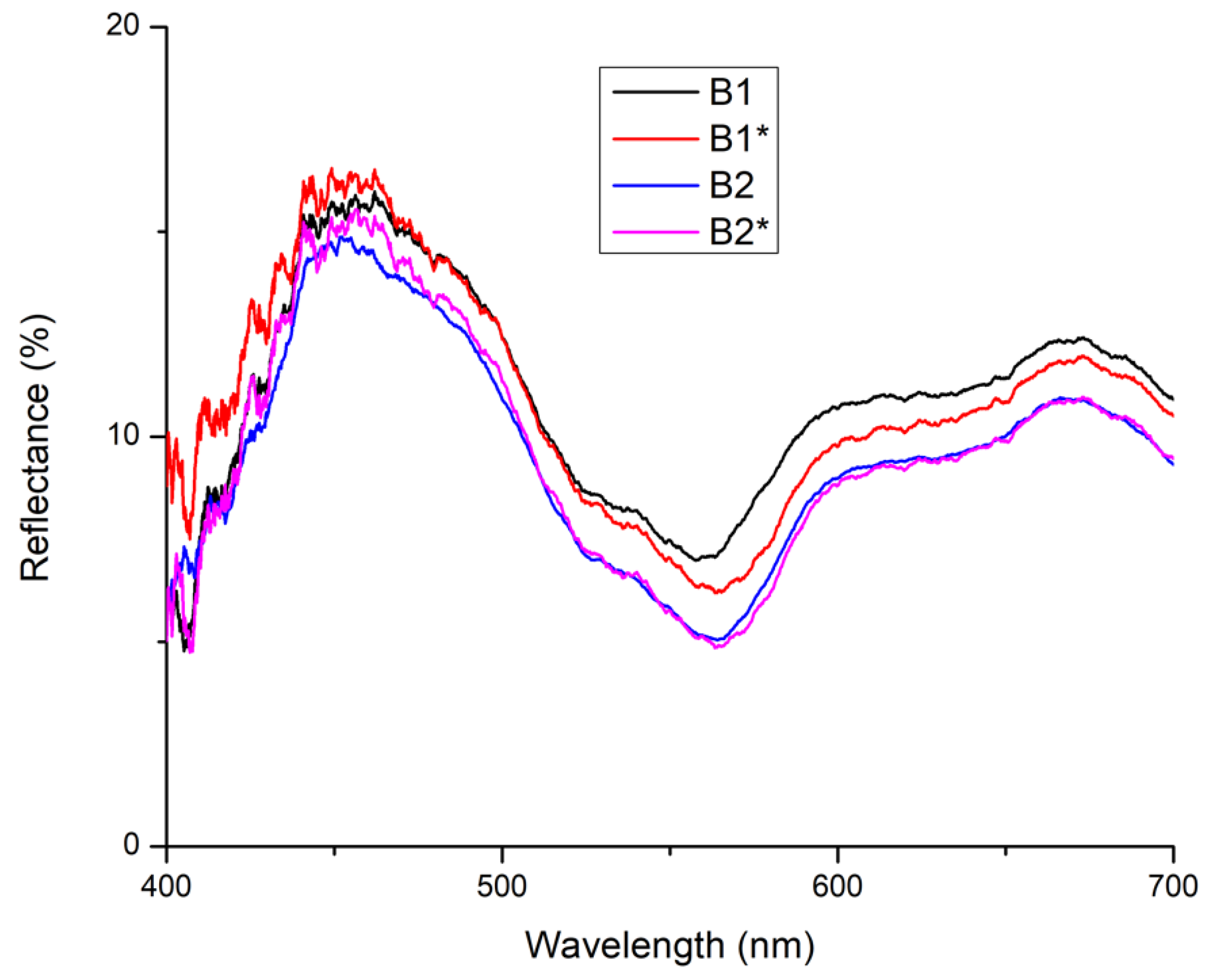
Figure 9 shows the reflectance spectra of blue (B) prints. With a maximum between 420 nm and 470 nm, all samples show a typical spectrum expected for blue color. In this region, the highest reflectance is observed for sample B1* (blue print on substrate with one white base coat layer after the rubbing test), which can be associated with the partial removal of pigment and the increased contribution of the white base coat layer reflectance. At a wavelength of about 500 nm, a slight change occurs, and the reflectance of the unrubbed sample increases compared to the rubbed one for prints made on substrates with one white base coat layer. At 550 nm, this difference increases even more. Despite this, the shape of the spectrum remains unchanged, indicating the stability of the blue shade. Both before (B2) and after the rubbing test (B2*), prints made on a substrate with two white base coat layers show lower reflectance values compared to prints on substrates with a single white base coat layer. In the initial part of the spectrum, the reflectance of sample B2* is slightly higher than B2, while at higher wavelengths their curves almost completely overlap.
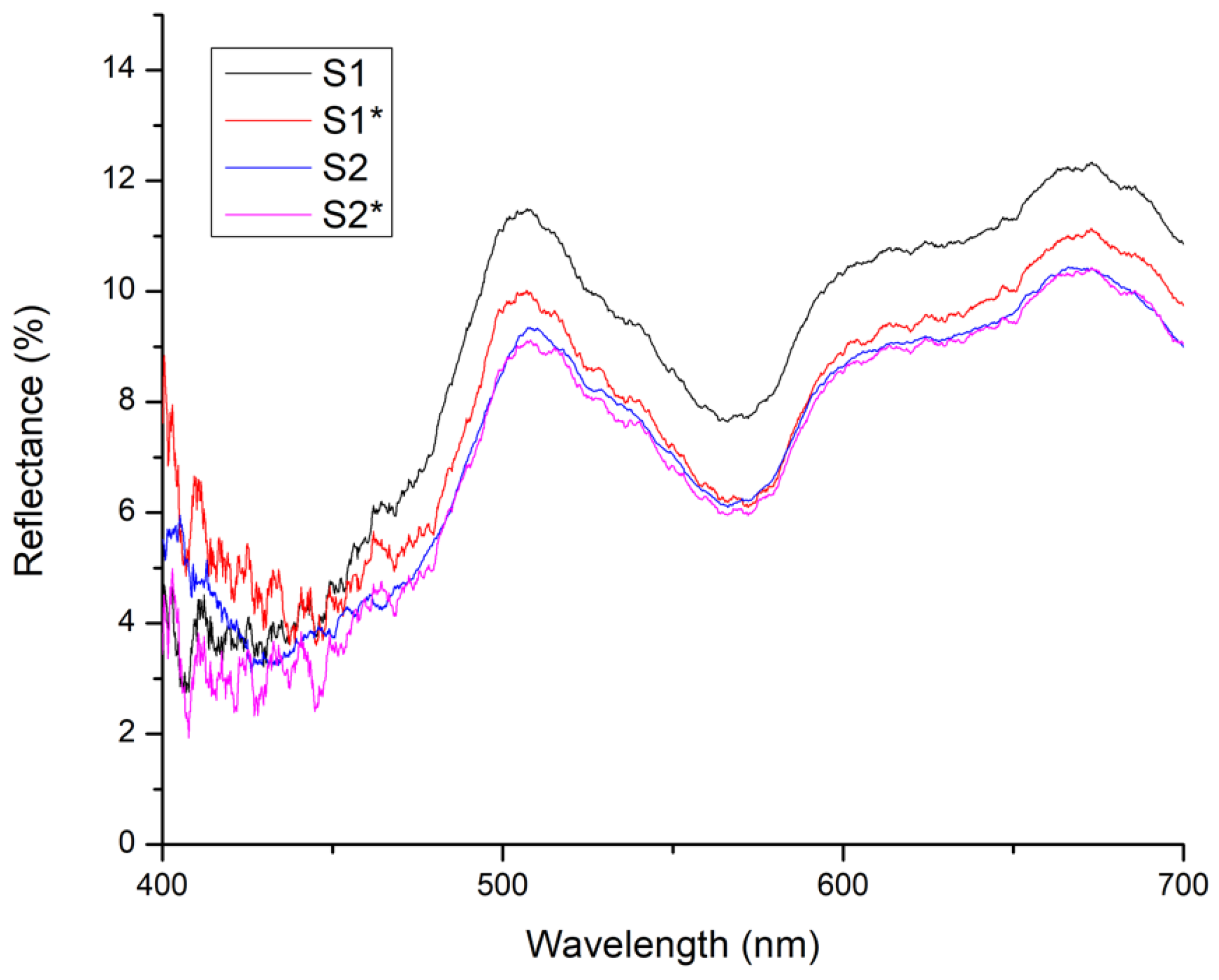
Figure 10 shows the reflectance spectra of brown (S) prints obtained by combining cyan, magenta, and yellow ink. All brown prints show a characteristic spectral shape specific to darker tones, with lower reflectance and a minimum between 550 nm and 600 nm. Both before (S1) and after rubbing (S1*), prints made on substrate with one white base coat layer have higher reflectance values compared to prints made on substrate with two white base coat layers (S2). At a wavelength of around 450 nm, there is a decrease in reflectance for sample S1* compared to sample S1, but its reflectance is still higher compared to samples S2 and S2*. Samples made on substrate with two white base coat layers have very similar reflectance values both before (S2) and after rubbing (S2*).
From the reflectance spectra, it can be seen that for all four multicolor prints (R, G, B and S), the reflectance is higher for prints made on metallized carboard with one white base coat layer, both before (R1, G1, B1, and S1) and after the rubbing test (R1*, G1*, B1*, and S1*). Such results can be explained by the higher scattering and partial absorption within the thicker layer of the white base coat layer in multicolor prints made on substrates with two white base coat layers (R2, G2, B2, and S2). The samples with two white layers also exhibit slightly higher surface roughness (Ra), which contributes to additional surface-level scattering and further reduces the amount of light returning to the detector. The white base coat layer printing ink often contains fine particles with a high refractive index, such as TiO2 dispersed within a polymer binder. These particles function as light scatterers, which can be explained by the Mie scattering theory [20], according to which the scattering intensity depends on the size of the particles in relation to the wavelength, their concentration, and the layer thickness [21]. In a thicker layer, light takes a longer path through an area full of particles, which causes the rays to be refracted and scattered multiple times while part of the light is directed deeper into the layer, and only a smaller part returns to the surface, resulting in a higher loss of reflected light due to multiple scattering within the layer [22].

3.5. Gloss Values

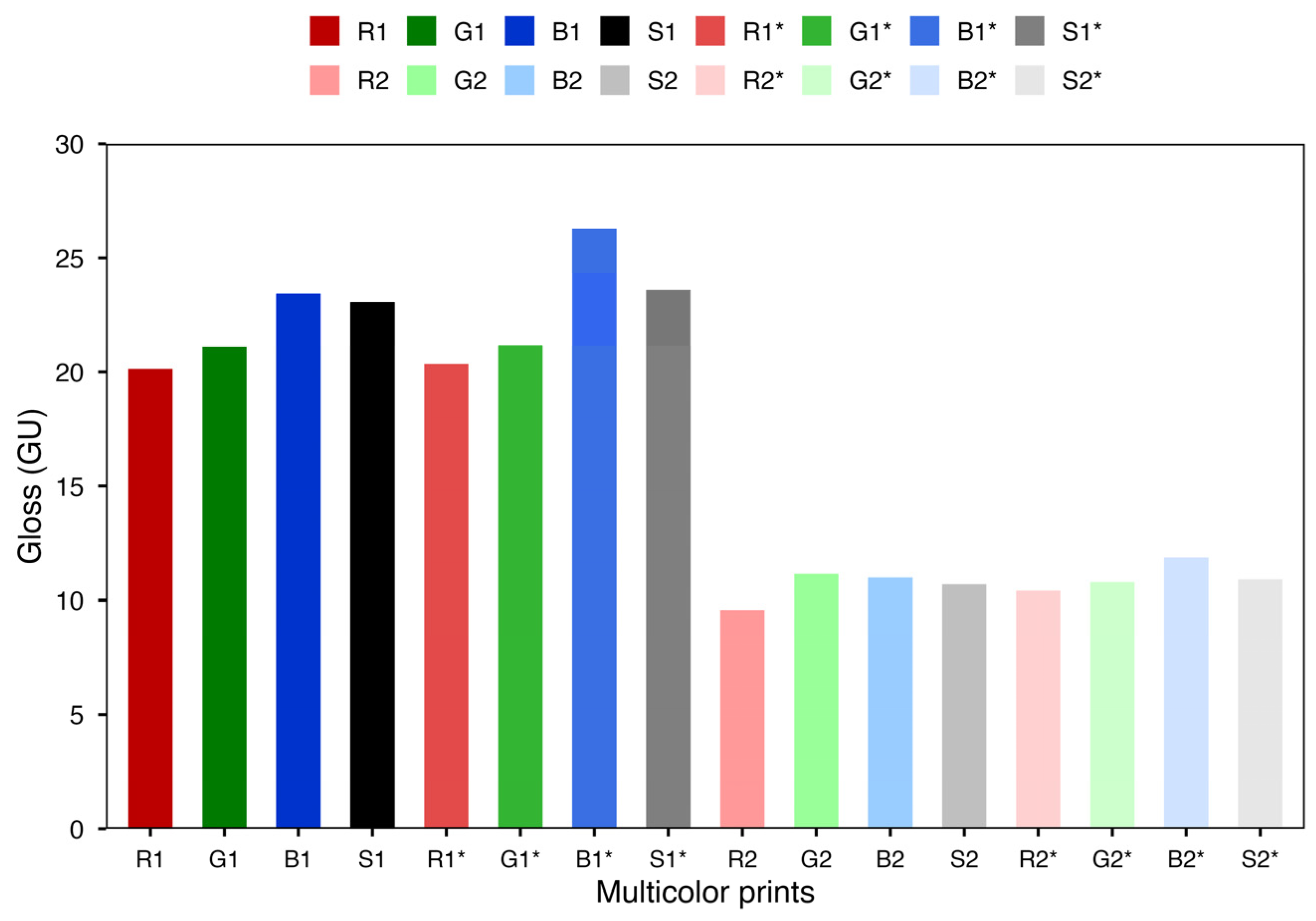
In Figure 11, all multicolor samples printed with one coat of white have higher gloss (20.14–23.44 GU) compared to multicolor samples with two coats of white (9.58–11.17 GU). All samples show an increase in gloss values after rubbing. The most noticeable increase in gloss is observed in the blue prints B1 (12.04%) and B2 (7.84%) containing C+M, with the most significant increase in the print with one coat of white (B1). In other multicolor prints where yellow is the last ink (R, G, and S), gloss remains more stable after rubbing.

4. Conclusions

The comparison of different numbers of white base coat layers on metallized cardboard after rubbing was conducted to suggest a pathway for achieving high quality and stability in offset prints used in luxury product packaging.
Prints with two base coat layers have lower reflectance, better color stability, and high print quality after rubbing. This type of double layer coating enhances light scattering, while the higher free surface energy improves the adhesion of the inks.
Gloss measurements showed that prints with one layer of white base coat exhibited higher gloss values, and rubbing led to a moderate increase in gloss for all samples.
Ultimately, this confirms that a thicker layer of white base coat enhances mechanical resistance while maintaining acceptable optical properties in multicolor prints on metallized cardboards.

Author Contributions

Conceptualization, D.P., M.R., I.P. and I.B.; methodology, D.P., M.R., I.P. and I.B.; validation, M.R., I.P. and I.B.; formal analysis, D.P. and I.B.; investigation, D.P., M.R., I.P. and I.B.; resources, D.P., M.R., I.P. and I.B.; data curation, D.P.; writing—original draft preparation, D.P.; writing—review and editing, D.P., M.R., I.P. and I.B.; visualization, D.P. and I.B.; supervision, M.R., I.P. and I.B. All authors have read and agreed to the published version of the manuscript.

Funding

This research was funded by European Union funding under the project “Strategic Partnership for Research and Development of Smart Products and Services to Increase the Efficiency of Production, Work, and Use of Resources Using Advanced Digital Technologies-GrafIT” grant number (IP.1.1.03.0065).

Institutional Review Board Statement

Not applicable.

Informed Consent Statement

Not applicable.

Data Availability Statement

The original contributions presented in this study are included in the article. Further inquiries can be directed to the corresponding author.

Acknowledgments

This work was supported by European Union funding under the project “Strategic Partnership for Research and Development of Smart Products and Services to Increase the Efficiency of Production, Work, and Use of Resources Using Advanced Digital Technologies-GrafIT” (IP.1.1.03.0065) and by the University of Zagreb Faculty of Graphic Arts.

Conflicts of Interest

The authors declare no conflict of interest.

References

  1. Nissha Metallizing Solutions. Using Inks with Metallized Paper. Available online: https://www.nisshametallizing.com/en/using-inks-metallized-paper (accessed on 9 October 2025).
  2. Tomerlin, R.; Valdec, D.; Tomiša, M.; Vusić, D. The Impact of Underlying Opaque White Coating Parameters on Flexographic Print Quality. Appl. Sci. 2023, 13, 8575. [Google Scholar] [CrossRef]
  3. Ozcan, A.; Sonmez, S.; Tutak, D. Effect of Coating Pigment Type on Paper Printability with Water-Based Inks. J. Coat. Technol. Res. 2022, 19, 1149–1157. [Google Scholar] [CrossRef]
  4. Garbowski, T. Evaluating Safety Factors in Corrugated Packaging for Extreme Environmental Conditions. Packag. Rev. 2024, 1, 6–15. [Google Scholar] [CrossRef] [PubMed]
  5. Johst, P.; Kaeppeler, U.; Seibert, D.; Kucher, M.; Böhm, R. Investigation of Different Cardboard Materials under Impact Loads. Bioresources 2023, 18, 1933–1947. [Google Scholar] [CrossRef]
  6. Zhou, W.H.; He, B.H.; Zhang, C.X.; Han, Y. Analysis on Ink Layer Rub Resistance for Coated Paper Prints. Adv. Mater. Res. 2011, 380, 173–178. [Google Scholar] [CrossRef]
  7. Ridgway, C.J.; Gane, P.A.C. Ink-Coating Adhesion: The Importance of Pore Size and Pigment Surface Chemistry. J. Dispers. Sci. Technol. 2005, 25, 469–480. [Google Scholar] [CrossRef]
  8. Bohlin, E.; Johansson, C. Print Quality of Flexographic Printed Paperboard Related to Coating Composition and Structure. Tappi J. 2018, 17, 43–51. [Google Scholar] [CrossRef]
  9. Nechita, P. The Influence of Coating Composition on the Structural and Functional Properties of Coated Paper for Packaging Applications. Nord. Pulp Paper Res. J. 2020, 35, 408–418. [Google Scholar] [CrossRef]
  10. Ozcan, A.; Arman Kandirmaz, E.; Bunyamin Zelzele, O. Printability and Quality of Papers Coated with Different Binders. In Proceedings of the Eleventh International Symposium GRID 2022, Novi-Sad, Serbia, 3–5 November 2022; University of Novi Sad, Faculty of Technical Sciences, Department of Graphic Engineering and Design: Novi-Sad, Serbia, 2022; pp. 325–333. [Google Scholar]
  11. Stepien, M.; Chinga-Carrasco, G.; Saarinen, J.J.; Teisala, H.; Tuominen, M.; Aromaa, M.; Haapanen, J.; Kuusipalo, J.; Mäkelä, J.M.; Toivakka, M. Wear Resistance of Nanoparticle Coatings on Paperboard. Wear 2013, 307, 112–118. [Google Scholar] [CrossRef]
  12. Naitzel, T.d.C.; Garcia, V.A.d.S.; Lourenço, C.A.M.; Vanin, F.M.; Yoshida, C.M.P.; Carvalho, R.A.d. Properties of Paperboard Coated with Natural Polymers and Polymer Blends: Effect of the Number of Coating Layers. Foods 2023, 12, 2745. [Google Scholar] [CrossRef] [PubMed]
  13. Angeli, E.; Szentgyörgyvölgyi, R. Influence of cardboard coating on solvent retention. Cellul. Chem. Technol. 2020, 54, 355–363. [Google Scholar] [CrossRef]
  14. ISO 19403-1:2022; Paints and Varnishes—Wettability—Part 1: Vocabulary and General Principles. International Organization for Standardization: Geneva, Switzerland, 2022.
  15. Leach, R.H.; Pierce, R.J.; Hickman, E.P.; Mackenzie, M.J.; Smith, H.G. The Printing Ink Manual; Springer: Berlin/Heidelberg, Germany, 2008; ISBN 0948905816. [Google Scholar]
  16. Kipphan, H. Handbook of Print Media: Technologies and Production Methods; Springer: Berlin/Heidelberg, Germany, 2001. [Google Scholar]
  17. ISO 2813:2014; Paints and Varnishes—Determination of Gloss Value at 20°, 60° and 85°. International Organization for Standardization: Geneva, Switzerland, 2014.
  18. DIN 67530; Reflectometer as a Means for Gloss Assessment of Plane Surfaces of Paint Coatings and Plastics. Deutsches Institut für Normung: Berlin, Germany, 1982.
  19. Kang, H.R. Computational Color Technology; SPIE: Bellingham, WA, USA, 2006; ISBN 9780819461193. [Google Scholar]
  20. Liu, W.; Kivshar, Y.S. Generalized Kerker Effects in Nanophotonics and Meta-Optics [Invited]. Opt. Express 2018, 26, 13085. [Google Scholar] [CrossRef] [PubMed]
  21. Vargas, W.E.; Greenwood, P.; Otterstedt, J.E.; Niklasson, G.A. Light Scattering in Pigmented Coatings. Sol. Energy 2000, 68, 553–561. [Google Scholar] [CrossRef]
  22. The Chemours Company FC, LLC. Ti-Pure Titanium Dioxide Polymers, Light and the Science of TiO2-Product Overview; The Chemours Company: Wilmington, DE, USA, 2025. [Google Scholar]
Figure 1. Schematic diagram of the research.
Coatings 16 00158 g001
Figure 2. Surface morphology diagrams of (a) MC0, (b) MC1, and (c) MC2.
Coatings 16 00158 g002
Figure 3. Measurement values of L* component.
Coatings 16 00158 g003
Figure 4. Measurement values of a* color component.
Coatings 16 00158 g004
Figure 5. Measurement values of b* color component.
Coatings 16 00158 g005
Figure 6. ΔE00 calculation results.
Coatings 16 00158 g006
Figure 7. Reflectance spectra of red prints.
Coatings 16 00158 g007
Figure 8. Reflectance spectra of green prints.
Coatings 16 00158 g008
Figure 9. Reflectance spectra of blue prints.
Coatings 16 00158 g009
Figure 10. Reflectance spectra of brown prints.
Coatings 16 00158 g010
Figure 11. Gloss unit values of the prints before and after rubbing.
Coatings 16 00158 g011
Table 1. List of the samples.
Sample MarkNumber of White Base Coat LayersInk Combination of Multicolor PrintRubbing
R11magenta + yellowBefore
G1cyan + yellow
B1cyan + magenta
S1cyan + magenta + yellow
R22magenta + yellow
G2cyan + yellow
B2cyan + magenta
S2cyan + magenta + yellow
R1*1magenta + yellowAfter
G1*cyan + yellow
B1*cyan + magenta
S1*cyan + magenta + yellow
R2*2magenta + yellow
G2*cyan + yellow
B2*cyan + magenta
S2*cyan + magenta + yellow
Table 2. Surface properties of metallized cardboards.
Metallized CardboardsSurface Free Energy
(mNm−1)
Dispersion Components
(mNm−1)
Polar
Component
(mNm−1)
Thickness
(mm)
Ra
(μm)
MC039.04 ± 1.8435.47 ± 2.143.57 ± 1.730.406 ± 0.0030.618 ± 0.056
MC139.60 ± 1.0239.34 ± 0.980.26 ± 0.140.410 ± 0.0020.710 ± 0.057
MC241.00 ± 0.8240.94 ± 0.860.06 ± 0.140.403 ± 0.0030.777 ± 0.077
Disclaimer/Publisher’s Note: The statements, opinions and data contained in all publications are solely those of the individual author(s) and contributor(s) and not of MDPI and/or the editor(s). MDPI and/or the editor(s) disclaim responsibility for any injury to people or property resulting from any ideas, methods, instructions or products referred to in the content.