Article

Feasibility of CaZr4(PO4)6 as Radome TBC Based on Thermophysical and Thermal Cycle Performance Research

State Key Laboratory of Silicate Materials for Architectures, Wuhan University of Technology, Wuhan 430070, China
*
Authors to whom correspondence should be addressed.
Coatings 2026, 16(1), 144; https://doi.org/10.3390/coatings16010144
Submission received: 23 December 2025 / Revised: 15 January 2026 / Accepted: 19 January 2026 / Published: 22 January 2026
(This article belongs to the Special Issue Advances in Surface and Coatings Technologies)

Abstract

This paper investigates the feasibility of CaZr4(PO4)6 as a novel thermal barrier coating for SiO2f/SiO2, serving as a radome at 1200 °C. Initially, CaZr4(PO4)6 powder undergoes TG-DSC testing across a temperature range from room temperature to 1200 °C, demonstrating excellent phase stability within this range. Subsequently, the coating’s properties and the thermal cycling performance are examined. The results indicate that the thermal conductivity of CaZr4(PO4)6 falls within the range of 1.05 to 1.02 W·m−1·K−1 (RT ~ 1200 °C), with thermal expansion coefficients of the coating ranging from 2.07 to 5.55 × 10⁻⁶ K−1. Moreover, the thermal cycling lifetime of the CaZr4(PO4)6 coating is evaluated by performing 100 cycles (50 h) at 1200 °C. Mechanical properties are assessed through Vickers and Knoop hardness tests, revealing a fracture toughness of 1.4 Mpa·m1/2. The primary cause of coating failure and peeling is the excessive internal stress between the coating and the expansion of transverse cracks. Fracture toughness serves as a key performance indicator reflecting the material’s resistance to unstable crack expansion, so the failure of the coating is attributed to the limited fracture toughness and the thermal mismatch stress between the coating and the substrate. Based on the aforementioned research findings, CaZr4(PO4)6 might be the potential coating for SiO2f/SiO2 systems.

1. Introduction

With the continuous advancement of science and technology, the aviation industry is facing increasingly demanding working environments, thereby necessitating enhanced material performance. Among the critical components of hypersonic aircraft, the radome plays a vital role in safeguarding antenna performance in extreme conditions. Operating within a crucial zone for normal functioning and signal transmission, the outer wall temperature of the radome rapidly escalates from room temperature to above 1100 °C due to severe aerodynamic heating. Therefore, the radome material must meet stringent requirements, including exceptional electromagnetic wave permeability and high-temperature resistance properties [1,2,3,4]. There are various types of radome materials, among which the more outstanding ones are Al2O3 fiber-reinforced silica-based composite material (Al2O3f/SiO2), Al2O3 fiber-reinforced Al2O3-based composite material (Al2O3f/Al2O3), and SiO2f/SiO2 [5,6]. In comparison to SiO2f/SiO2, Al2O3f/SiO2 and Al2O3f/Al2O3 have disadvantages, such as excessive density, high coefficient of thermal expansion, high dielectric properties, and a lack of high-temperature resistance. The silica-fiber-reinforced silica-based composite material (SiO2f/SiO2) offers a compelling solution with its numerous advantages, such as excellent electromagnetic wave transmission performance, temperature resistance, and low density [7]. Consequently, its utilization in the aviation industry has garnered increasing attention. It represents an ideal candidate material for hypersonic vehicle radomes, meeting the necessary criteria for their reliable and efficient operation.
However, SiO2f/SiO2 cannot endure high temperatures above 1100 °C under high-load conditions [5]. Therefore, a viable approach to increase the service temperature of SiO2f/SiO2 is to apply the protective coating on the SiO2f/SiO2, which would be used to increase the service temperature and the lifetime of the ceramic matrix composites [6,8]. Thermal barrier coatings (TBCs) are emerging as a promising solution to protect SiO2f/SiO2 composites under extreme high-temperature and complex service conditions [5,7,9]. Due to the ultra-low thermal expansion coefficient (0.55 × 10⁻⁶ K−1) of the substrate, an effective TBC for SiO2f/SiO2 must meet three key requirements [1,6]: (1) matching thermal expansion behavior, (2) low dielectric loss with excellent wave-transparent properties, and (3) structural stability under severe thermal cycling. Widely-used thermal barrier coatings, such as Yttria-stabilized zirconia (YSZ), LaMgAl11O19, have significant thermal expansion differences from SiO2f/SiO2 and are prone to rapid failure due to thermal mismatch, making them unsuitable for the coating preparation on SiO2f/SiO2 surfaces [10,11]. CaZr4(PO4)6 is a phosphate ceramic that has the characteristics of low expansion, low thermal conductivity, and high-temperature thermal stability. This material exhibits the unique three-dimensional framework structure consisting of a ZrO6 octahedron and a PO4 tetrahedron. The structural pores within the hexagonal lattice of the framework contribute to the low coefficient of thermal expansion [12,13,14]. In addition to the suitable low thermal expansion properties, CaZr4(PO4)6 has favorable dielectric properties (dielectric constant < 3.85) and can effectively reduce the dielectric loss caused by preparing the coating [15,16,17,18,19]. Considering the factors mentioned above, CaZr4(PO4)6 can effectively fulfill the task of transmitting electrical signals, making it a potential material for developing into a thermal barrier coating for the radome [20,21,22,23].
This paper attempts to explore the potential of CaZr4(PO4)6 as the thermal barrier coating for SiO2f/SiO2. In order to improve the service temperature and service life of SiO2f/SiO2, the fundamental condition for the stable performance of the thermal barrier coating is that it can be closely combined with the base material and can achieve a certain service life in harsh environments without premature failure and peeling. When the aforementioned necessary conditions are met, other advantages of thermal barrier coatings can be achieved; as such, the present study focuses on the examination of phase stability, thermophysical properties, and mechanical properties of CaZr4(PO4)6. Furthermore, the fabrication of CaZr4(PO4)6 coatings using atmospheric plasma spraying (APS) and their thermal cycle lifetime are evaluated. Finally, the present study also delves into the relevant failure mechanisms of the coating system.

2. Materials and Methods

CaZr4(PO4)6 is synthesized via a solid-state reaction using CaCO3, ZrO2, and NH4H2PO4 as raw materials. The starting powders are mixed by ball milling in ethanol for 24 h, followed by drying at 70 °C for 48 h in air. The synthesis is carried out in three stages: (1) The mixed powder is first heated at 600 °C for 4 h in air to remove NH3 and volatile impurities. (2) The temperature is then raised to 900 °C and held for 16 h in air to decompose carbonate residues and form reactive oxides. (3) Finally, the product is calcined at 1300 °C for 6 h in air to obtain a single-phase material [24].
The crystalline phase composition of the product is confirmed by XRD testing. The finished CaZr4(PO4)6 powders are pressed as pellets by the cold isotropic pressing (CIP) method under a pressure of 200 Mpa, then they are sintered at 1300 °C for 6 h to form densification pellets. Some pellets are heated at 1100 °C, 1200 °C, and 1300 °C for 20 h to analyze the phase thermal stability, and these densification bulks could be used to test thermophysical properties [25].
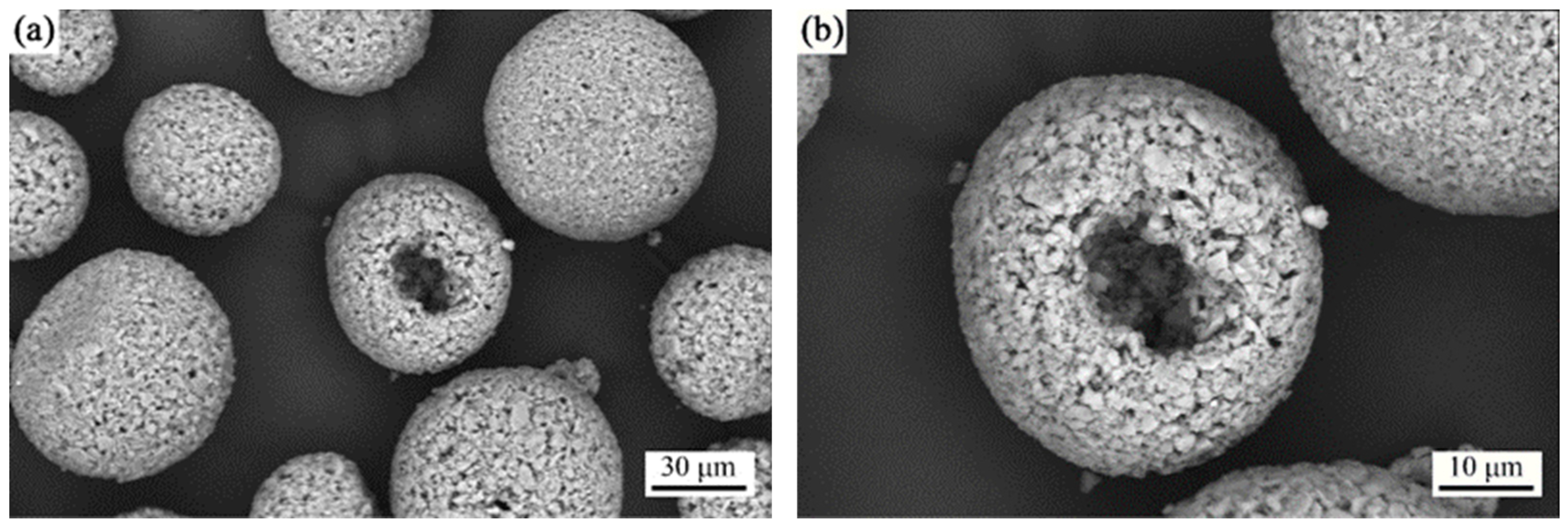
The CaZr4(PO4)6 powder intended for plasma-spraying was mixed with Gum Arabic and deionized water to form a slurry, followed by continuous stirring for 72 h. The mixed slurry is processed into spherical particles via spray drying, and the particles with a size range of 32–125 μm were selected for the plasma spraying [26]. The spray-dried powders presented an approximate spherical morphology, as shown in Figure 1. In addition, because of the similar and low thermal expansion coefficients shared by the CaZr4(PO4)6 bulk and the SiO2f/SiO2 substrate, the CaZr4(PO4)6 coating can be prepared on the surface of the SiO2f/SiO2 substrate. The processing parameters used for spraying CaZr4(PO4)6 powders are given in Table 1. The CaZr4(PO4)6 coating (200 μm) was prepared on the SiO2f/SiO2 surface by annealing at 1100 °C for the recrystallization of the coating. In order to evaluate the thermal cycling lifetime of the CaZr4(PO4)6 coating, a thermal cycling test was carried out in the tube furnace. These SiO2f/SiO2 samples with the CaZr4(PO4)6 coating were isothermally kept at 1300 °C for 34 min and then quenched to room temperature by compressed air within about 1 min. During the air quenching and thermal cycling test, this step continued until a visible area of the coating (reaching about 20% of the total area) peeled off from the substrate, with the number of thermal cycles corresponding to the thermal cycling lifetime [25]. Due to the differences in thermophysical properties between the ceramic bulk materials and the coating (as was observed across effective testing methods), bare coating samples detached from the substrate were prepared through plasma spraying to test the thermophysical properties of the coating.
The density of the as-prepared CaZr4(PO4)6 coating was measured by the Archimedes method. Phase composition was detected by X-ray diffraction (XRD, RU-200B/D/MAX-RB, CuKα radiation, λ = 0.15406 nm, Rigaku Corporation, Tokyo, Japan.) in the range of 2θ = 10–80°. The morphology, microstructure, and composition of the CaZr4(PO4)6 coating were detected by a field emission scanning electron microscope (FE-SEM, QUANTA FEG 450 and Zeiss Sigma) instrument equipped with the energy dispersive X-ray spectrum (EDS). The coating samples for cross-sectional analysis were embedded in a transparent epoxy resin and then polished with diamond slurry. Thermal diffusivity coefficient was measured for CaZr4(PO4)6 ceramics, which was carried out on disk-shaped specimens (10 × 10 mm2) by laser flash technique (20–1000 °C, LFA457, Germany, the maximum testing temperature of the instrument is 1000 °C). The phase thermal stabilities of the CaZr4(PO4)6 powder and coating were tested by thermogravimetric-differential scanning calorimeter (TG-DSC). The micro-hardness was detected by Vickers indentation (VH1202, Wilson) with an exerted load of 200 g. The fracture toughness of the coating was calculated by the following equation [25]:
K IC   =   0.16 Hv · a · ( c / a ) 3 / 2
where K IC represents fracture toughness (MPa·m1/2), Hv denotes hardness (GPa), a is the diagonal half length (μm), and c represents the sum of the diagonal half-length and crack length (μm). The coefficient of thermal expansion (CTE), belonging to the as-sprayed material, was recorded with the high-temperature dilatometer (Model NETZSCH DIL402C, Germany) [25].

3. Results and Discussion

3.1. Synthesis and Phase Stability of CaZr4(PO4)6 Powder

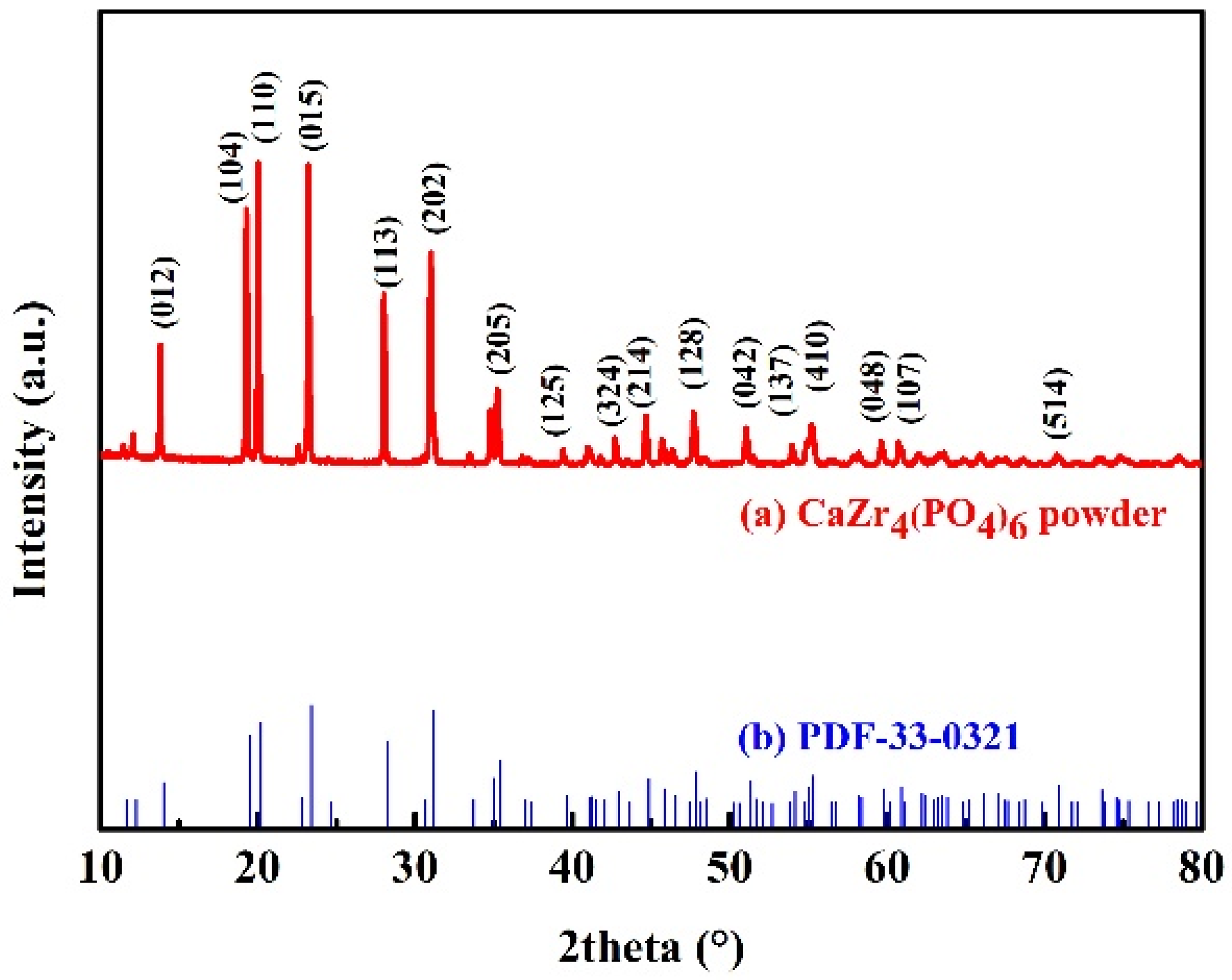
The X-ray diffraction (XRD) test pattern of the CaZr4(PO4)6 powder is presented in Figure 2. Upon analysis of the JCPDS No. 33-3021 database, it can be observed that aside from the characteristic signals of the CaZr4(PO4)6 phase, no characteristic signals of other phases are detected. This finding indicates the successful synthesis of a single CaZr4(PO4)6 phase at 1300 °C.
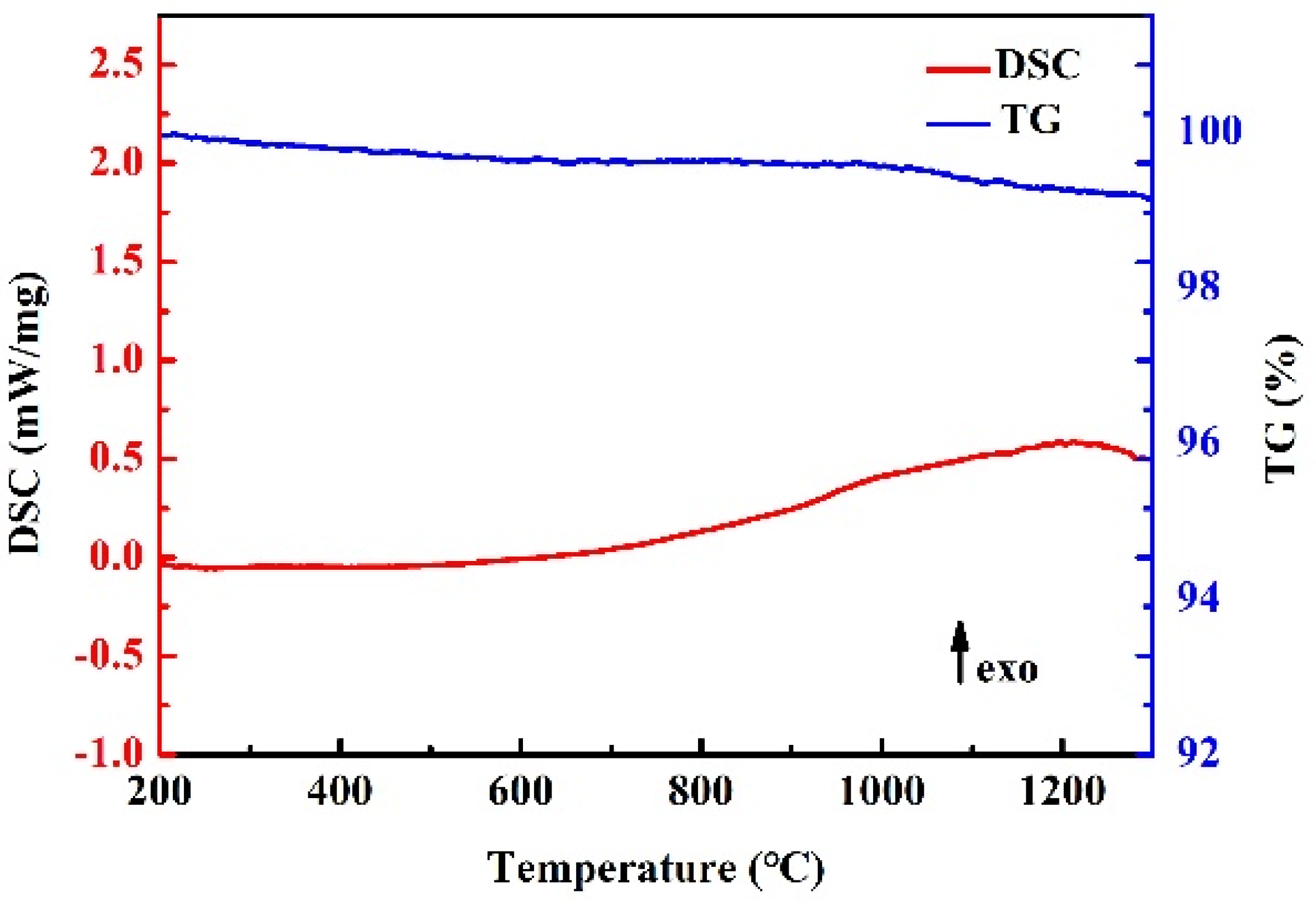
To further examine the phase stability of the CaZr4(PO4)6 powder at 1300 °C, thermogravimetric analysis coupled with differential scanning calorimetry (TG-DSC) was conducted, ranging from room temperature to 1300 °C. The results are depicted in Figure 3. The weight loss of the CaZr4(PO4)6 powder was measured to be 0.75%, and no evident endothermic or exothermic peaks were observed in the DSC curve. Therefore, it is hypothesized that the CaZr4(PO4)6 powder does not undergo any significant phase transitions within this temperature range; the property of maintaining phase stability at 1200 °C is consistent with the characteristics of the NZP family [27]. The weight loss could be attributed to the evaporation of water.

3.2. Preparation and Analysis of CaZr4(PO4)6 Coating

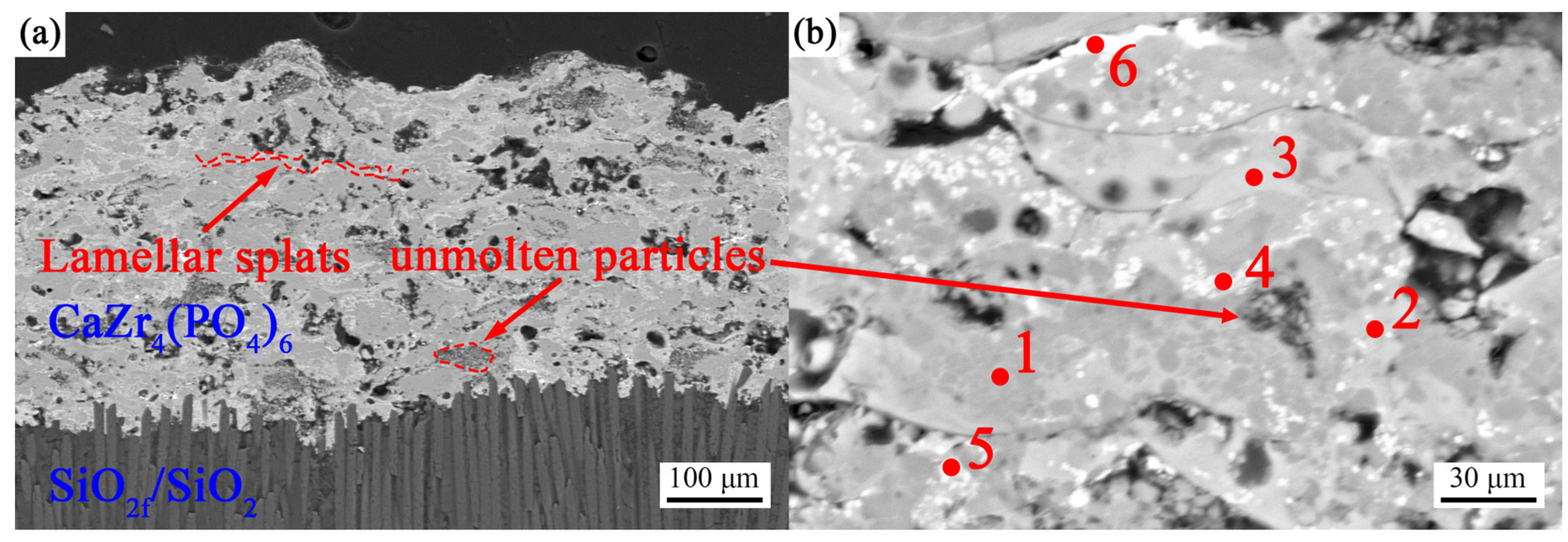
The CaZr4(PO4)6 coating was prepared on the surface of SiO2f/SiO2 using the atmospheric plasma spraying (APS) method. The cross-sectional morphology of the sprayed CaZr4(PO4)6 coating (200 μm) was captured and observed through SEM, with specific areas magnified for detailed analysis. Composition analysis was performed in the targeted region. The SEM cross-sectional images are presented in Figure 4.
The cross-sectional morphology of the CaZr4(PO4)6 coating, prepared via the APS process, exhibits distinct characteristics, revealing a layered structure accumulation. Furthermore, the coating structure was primarily composed of molten, semi-molten, and not melted particles, with noticeable accumulations of grains that were not fully melted. At the interface between the coating and the substrate, no prominent transverse cracks were observed at the junction of the CaZr4(PO4)6 coating and SiO2f/SiO2, indicating a relatively strong degree of bonding. However, defects such as spherical voids, pores, and cracks were distributed throughout the coating. These morphological defects, resulting from the spraying process, could have led to a decrease in Young’s modulus and could have had an impact on the strain tolerance of the coating.
Figure 4b presents the partially enlarged 1000× cross-sectional morphology of the sprayed CaZr4(PO4)6 coating. The composition of a specific position was analyzed using the energy-dispersive X-ray spectroscopy (EDS) test method. The scanning results are summarized in Table 2. The area exhibiting a similar contrast to point 1 indicates an atomic percentage of Ca:Zr:P ≈ 1:4:6. It is speculated that this area predominantly consists of CaZr4(PO4)6.
The atomic percentage results obtained from scanning other regions (points 2, 3, 4, 5, 6) deviate significantly from the atomic percentage composition of CaZr4(PO4)6. This discrepancy could be attributed to the partial decomposition of the powder during the spraying process when it was subjected to excessively high temperatures (≥105 K) because of the plasma.
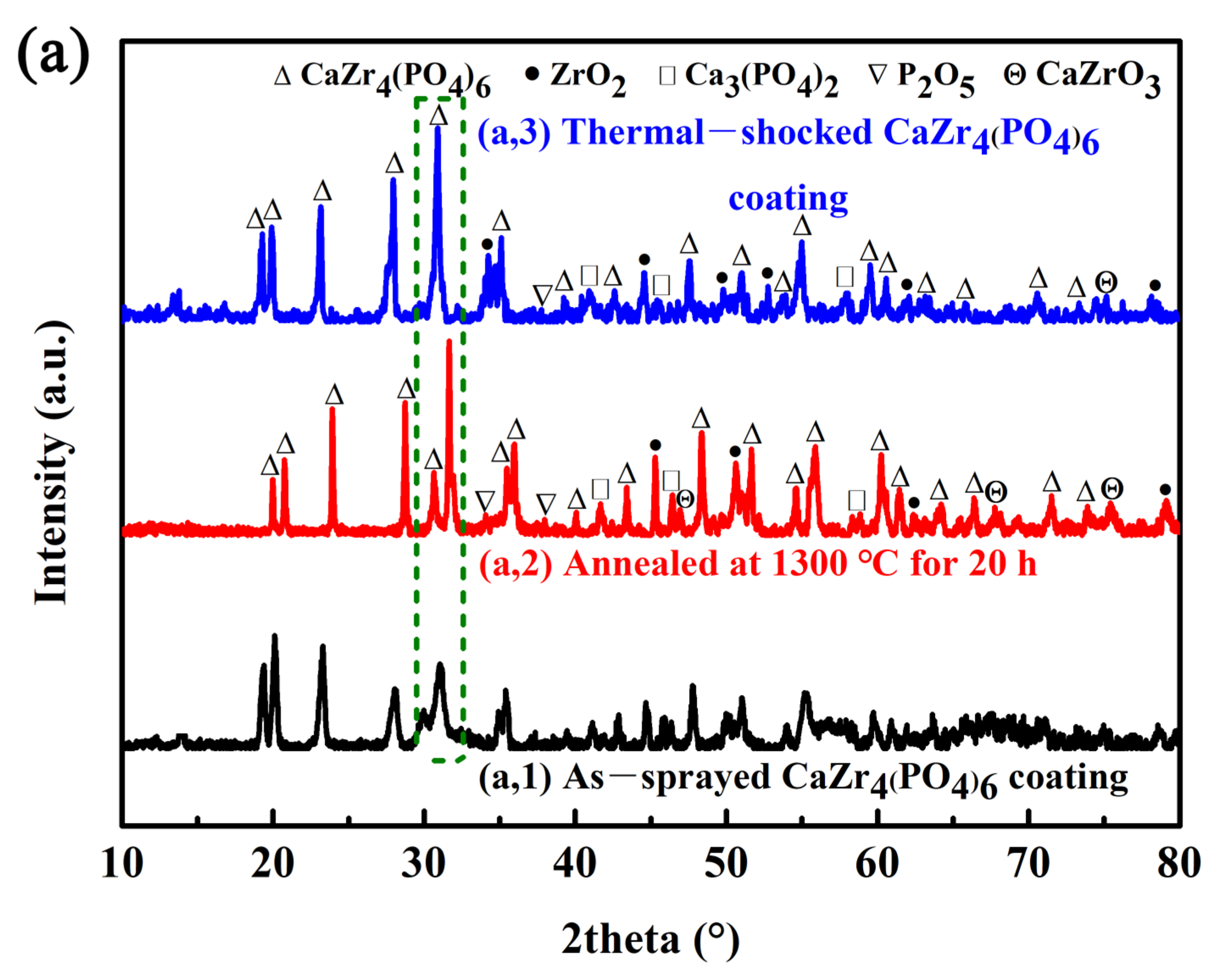
As shown in Figure 5(a,1), the X-ray diffraction (XRD) spectrum of the CaZr4(PO4)6 sprayed coating reveals a broader half-peak width and lower peak intensity; the (202) diffraction peak was selected for measuring the full-width at half-maximum (FWHM) values. The FWHM of the as-sprayed coating was 0.63. This could be attributed to the comprehensive atmospheric plasma spraying (APS) process, where high-temperature liquid droplets rapidly cooled upon impinging on the low-temperature substrate, potentially resulting in the presence of more amorphous phases. Consequently, it became necessary to subject the coating containing the amorphous phases to high-temperature heat treatment in order to crystallize the phases and enable a clear analysis of the specific components within the coating.
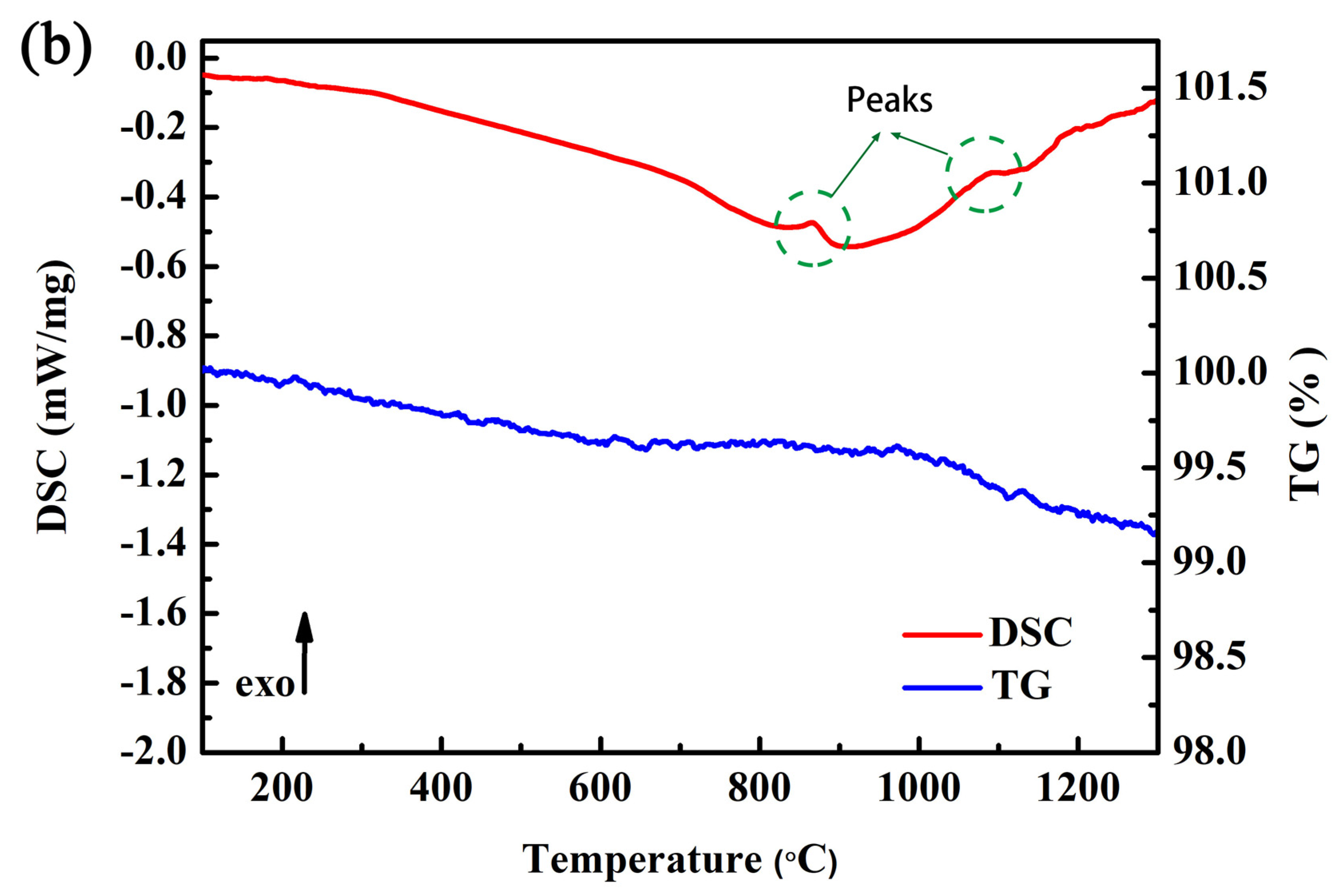
To explore the thermal behavior of the CaZr4(PO4)6 sprayed coating, thermogravimetric analysis coupled with differential scanning calorimetry (TG-DSC) was performed in the temperature range from room temperature to 1300 °C, as shown in Figure 5b. Notably, exothermic peaks were observed in the DSC curve between 800–900 °C and 1000–1100 °C. Because the crystallization of the amorphous phase was accompanied by an exothermic process, the two exothermic peaks could be attributed to the crystallization of amorphous phases within the coating. Consequently, the sprayed coating underwent a heat treatment at 1300 °C for 20 h to achieve crystallization. The phase composition was subsequently determined by conducting XRD analysis, as depicted in Figure 5(a,2). The XRD spectrum shows characteristic peaks corresponding to CaZr4(PO4)6, ZrO2, Ca3(PO4)2, CaZrO3 and other phases. The estimation of molar proportion was based on peak areas proportion, with CaZr4(PO4)6 (90 mol%), ZrO2 (7 mol%), Ca3(PO4)2 (1 mol%), CaZrO3 (1 mol%), and P2O5 (<1 mol%). The decomposition reaction may be written as the following equation:
4   CaZr 4 ( PO 4 ) 6         Ca 3 ( PO 4 ) 2     +   15   ZrO 2     +   CaZrO 3   +   11   P 2 O 5
(Note: Due to the trace presence of P2O5, a small amount of harmful gas may be released at high temperatures, and it is necessary to ensure this reaction is conducted away from the presence of people.)
By combining these results with those in Figure 4b and Table 2, the specific phases present within the coating can be identified, confirming the occurrence of decomposition during the spraying process.
As shown in Figure 5a, peak-area refinement shows that, in Figure 5(a,2), the coating was annealed at 1300 °C for 20 h, while in Figure 5(a,3), it underwent thermal shock. Both coatings contained similar secondary-phase fractions of about 7% ZrO2 and 1% Ca3(PO4)2. The (202) diffraction peak was selected for the comparison of full-width at half-maximum (FWHM) values. The FWHM of the as-sprayed coating was 0.63, which decreased to 0.14 after annealing, and increased to 0.3 following thermal shock. These results indicate that the amorphous phase in the as-sprayed coating undergoes recrystallization during annealing, followed by grain growth during the thermal shock process.

3.3. Thermophysical and Mechanical Properties of CaZr4(PO4)6 Coatings

Thermophysical properties, such as thermal diffusivity, thermal conductivity, and other performance parameters, usually play a crucial role in evaluating the thermal barrier potential applications of materials. To ensure consistency in the test samples, all specimens were prepared following the method mentioned above so that the density of the test samples could attain approximately 90% of the theoretical density. The thermal conductivity theoretical value corresponding to 100% density (ƛ) was calculated by Klemens’s relation [26]:
λ / ƛ   =   1     4 σ / 3
where σ represents the porosity, and λ is the actual thermal conductivity of samples at a specific temperature.
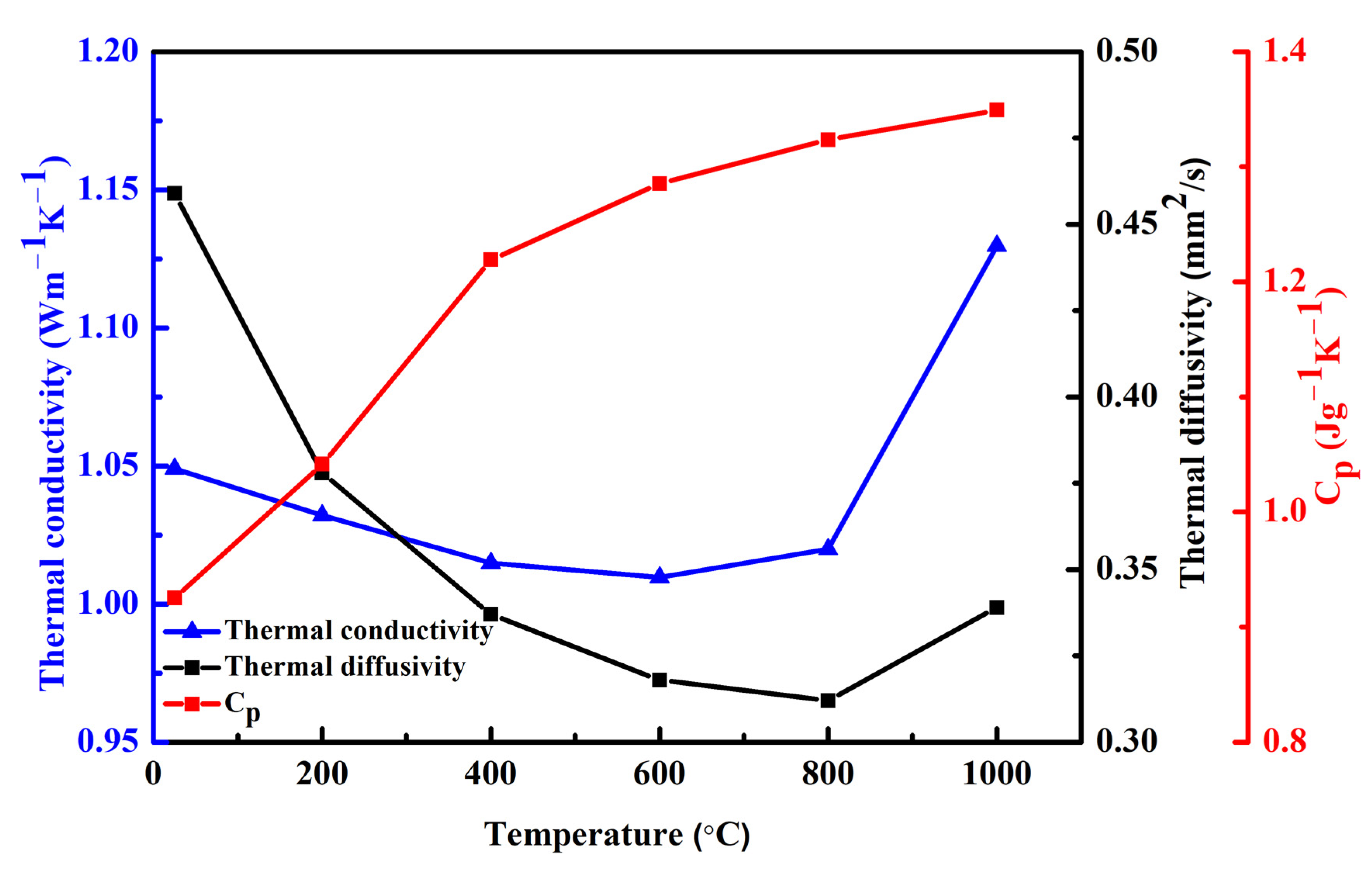
The polylines of thermal conductivity and thermal diffusivity coefficients are shown in Figure 6. The thermal conductivity is calculated by the following equation [26]:
λ   =   κ   ·   ρ   ·   C p  
where λ represents thermal conductivity, ρ is the theoretical density of CaZr4(PO4)6, κ is thermal diffusivity, and C p represents the specific heat calculated depending on the Neumann–Kopp rule.
Figure 6 illustrates the trend of the thermal diffusivity curve, indicating a monotonous decrease in thermal diffusivity from 0.459 mm2/s to 0.312 mm2/s within the temperature range between room temperature and 800 °C. Concurrently, the thermal conductivity coefficient decreased from 1.049 W∙m−1∙K−1 to 1.020 W∙m−1∙K−1 within the same temperature range. However, beyond 800 °C, the curve’s trend changed, showing an increase, and it became challenging to definitively ascertain whether this growth reflected the actual behavior of the material.
Possible explanations for this change in the trend include the chemical reaction involving the graphite coating adhered to the sample surface [25]. The presence of the graphite coating served to ensure complete and uniform laser pulse absorption during thermal diffusivity measurements. As a consequence, the decomposition of the graphite coating at elevated temperatures could have introduced errors into the measurement results.
In comparison to the bulk material, the coating structure prepared using the APS method exhibited higher porosity. The increase in porosity resulted in a reduced phonon mean free path during the heat conduction process, thereby leading to lower thermal conductivity of the coating compared to the denser bulk [25].
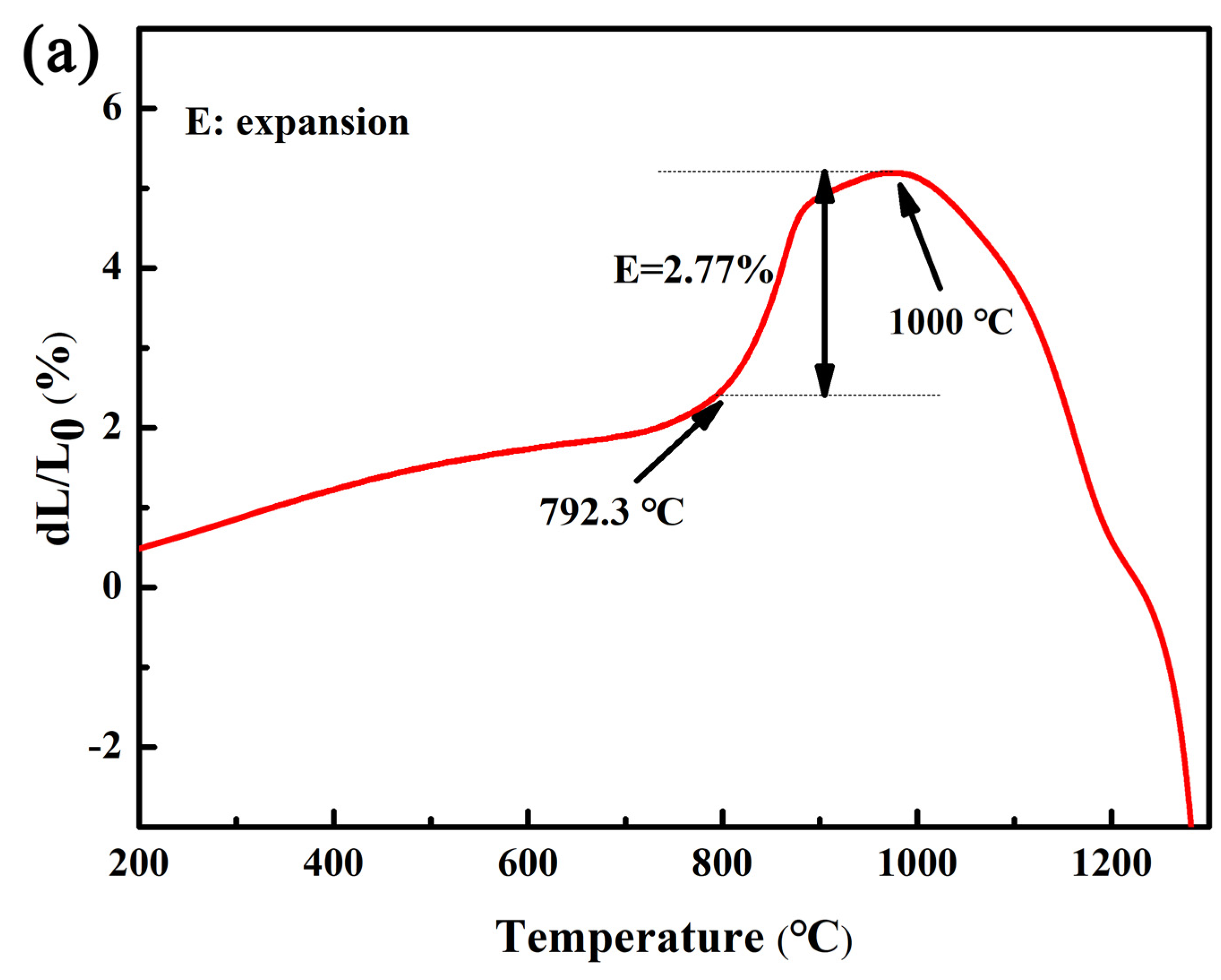
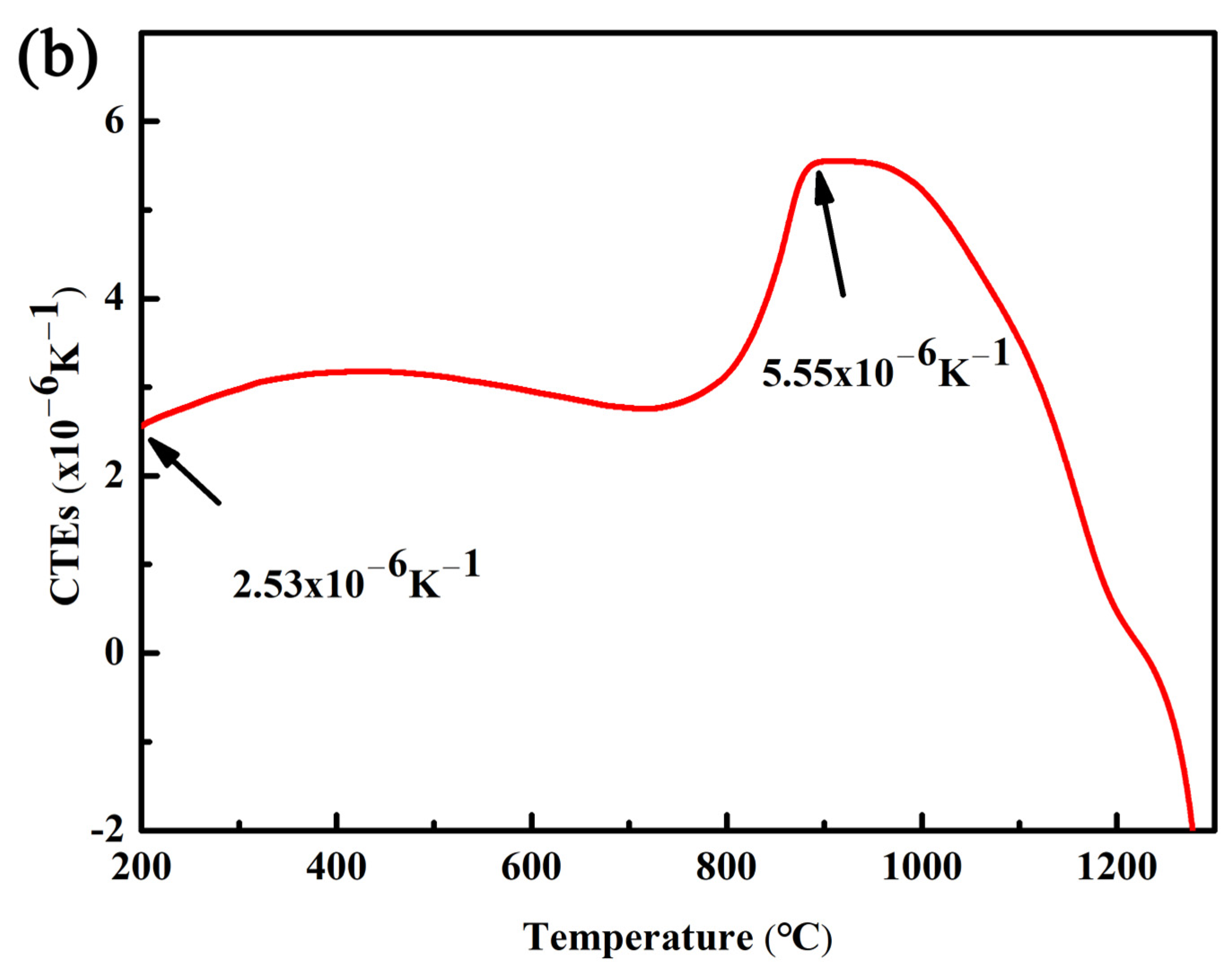
The thermal expansion performance is a critical factor influencing the thermal cycle lifetime of the coating. Excessive internal stress resulting from thermal mismatch is often the primary cause of coating failure. As depicted in Figure 7, the thermal expansion behavior of the CaZr4(PO4)6 coating is comprehensively tested and analyzed within the temperature range spanning room temperature to the service temperature of 1200 °C. As illustrated in Figure 7a, the thermal expansion rate diagram can be categorized into five distinct stages. Stage 1: Combined with the analysis from Figure 5b, the thermal expansion curve demonstrates a linear expansion trend within the range of room temperature to 400 °C. Stage 2: In the range of 400 to 800 °C, a non-linear curve change is observed, as depicted in the variation in the thermal expansion coefficient shown in Figure 7b. This is attributed to the manifestation of the negative thermal expansion (NTE) behavior of CaZr4(PO4)6 ceramics within the temperature range. The combined effect of CaZr4(PO4)6 and ZrO2 results in a reduction in the macroscopic expansion rate of the coating [15]. Stage 3: As shown in Figure 7a, within the temperature range of 800–900 °C, a sudden increase in the slope of the expansion rate curve is observed, resulting in a 2.77% increase in the volume expansion rate. This corresponds to an exothermic peak evident in the TG-DSC spectrum. Such behavior can be attributed to the presence of ZrO2 within the coating, where the amorphous phase transforms into m-ZrO2 through crystallization behavior [10,28]. Notably, the thermal expansion coefficient of the m-ZrO2 phase in this temperature range is approximately 5.55 × 10⁻⁶ K−1, leading to an abnormal expansion rate increase in the coating. Stage 4: In the range of 1000–1100 °C, the expansion rate curve declines. This decrease can be attributed to the crystallization of the amorphous phase in the coating, resulting in volume shrinkage. Stage 5: After reaching 1100 °C, the m-ZrO2 undergoes an endothermic transformation into t-ZrO2. This transformation is accompanied by a further shrinkage of the crystal phase volume, resulting in a subsequent decrease in the thermal expansion rate, as shown in Figure 7a [28,29].
As shown in Table 3, the micro-hardness of the CaZr4(PO4)6 coating is measured at 3.2 GPa, which closely aligns with the micro-hardness value of the cordierite coating (3.5 GPa). Moreover, the fracture toughness of CaZr4(PO4)6 coating is calculated using Formula (1). Comparing the properties of CaZr4(PO4)6 with the already applied cordierite, which was used as the high-temperature transparent wave material [30,31], the comparison reveals that CaZr4(PO4)6 and cordierite share similar Young’s modulus and fracture toughness, indicating similar mechanical properties. These comparable mechanical characteristics suggest that CaZr4(PO4)6 holds potential for utilization in similar environments where cordierite has been successfully employed.

3.4. Thermal Cycling Performance of CaZr4(PO4)6 Coating

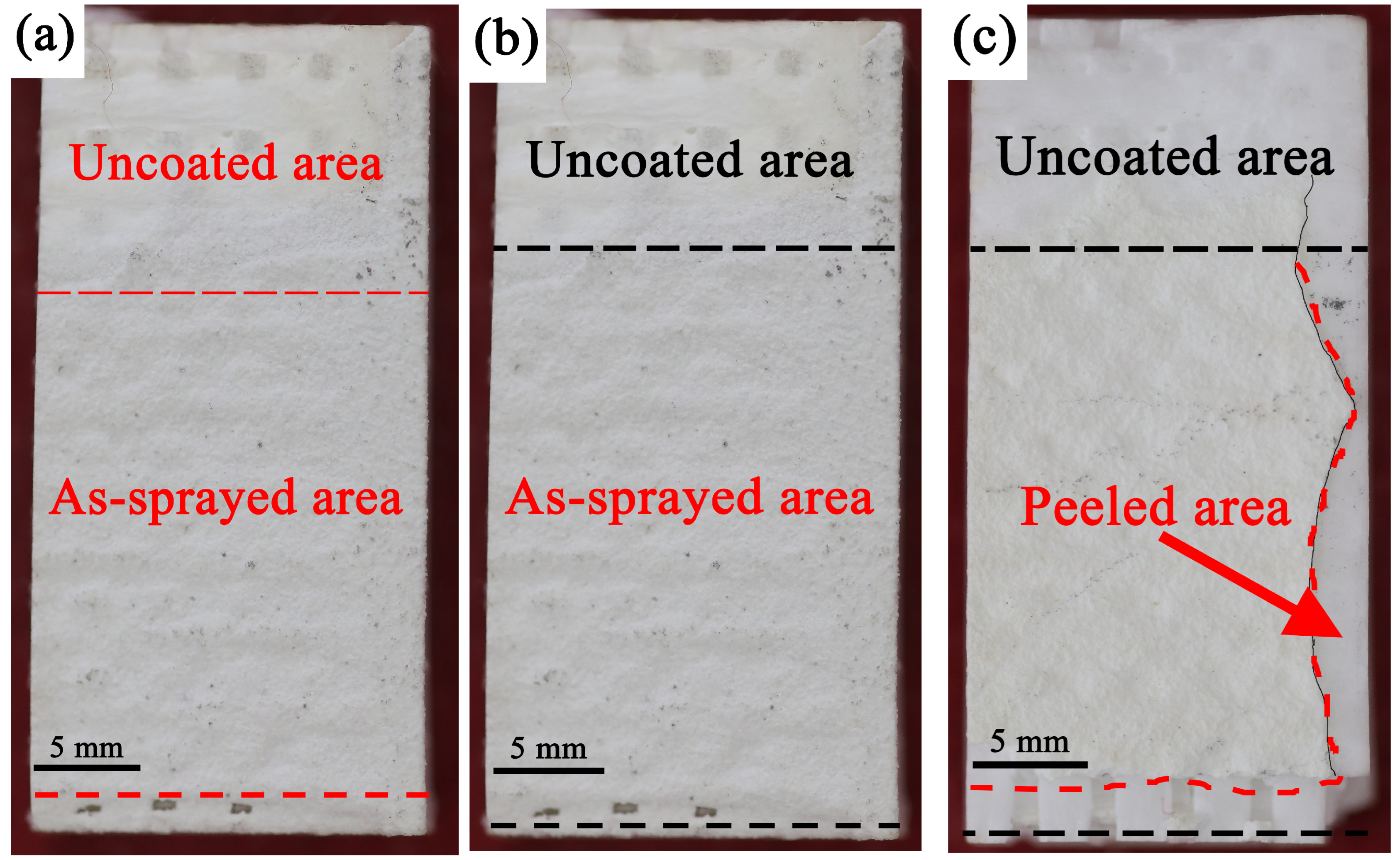
Figure 8 depicts the surface morphology alterations of the SiO2f/SiO2 samples with the CaZr4(PO4)6 coating before and after undergoing thermal cycling at 1200 °C. Figure 8a illustrates the initial state of the sample before the thermal cycling, while Figure 8b showcases the state after 100 thermal cycles. Observations indicate that the coating experienced delamination, particularly along the sample’s edges, with the peeling area accounting for approximately 20% of the total coating area. This delamination signifies that the coating layer reached the end of its service life.
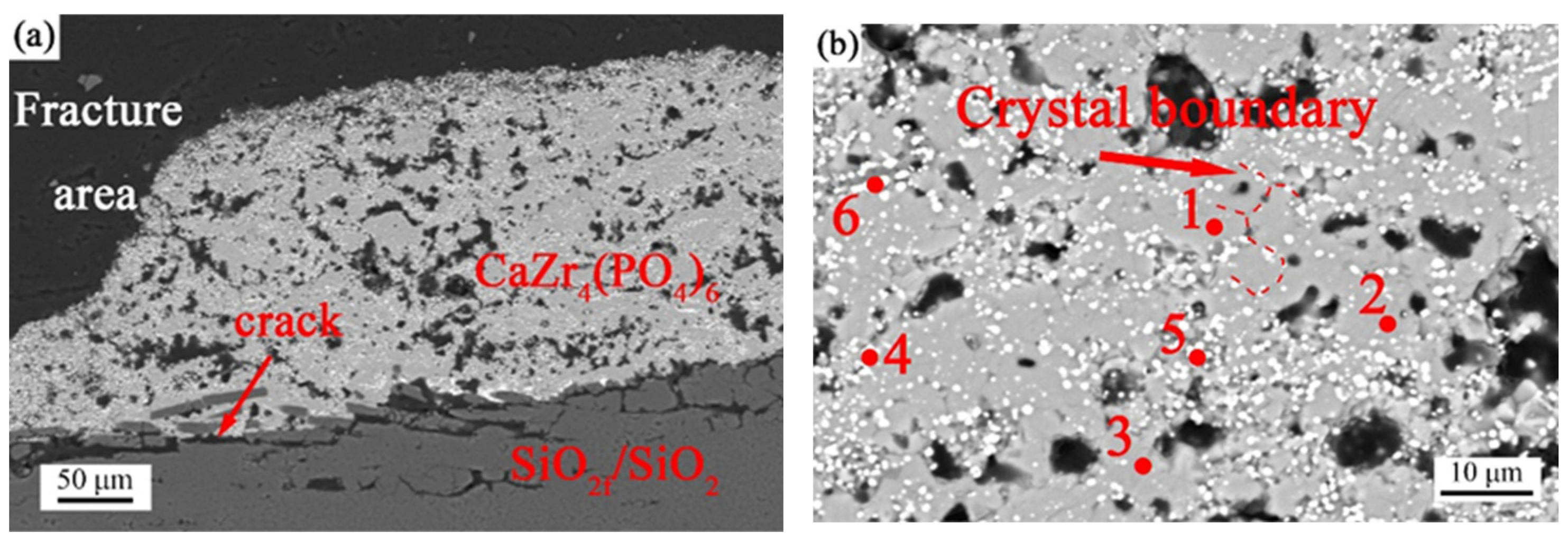
Figure 4 and Figure 9 exhibit the cross-sectional micrographs of the sprayed coating before thermal cycling and the coating failure after 100 thermal cycles, respectively. In Figure 9a, clear fracture zones were observed at the interface between the coating and the substrate, indicating a loss of adhesion. Conversely, Figure 4b demonstrates that the sprayed ceramic layer exhibited good substrate bonding. The porosity of the sprayed coating is calculated to be approximately 8%.
Comparing Figure 4b with Figure 9b, it was evident that the porosity of the coating increases from 8% to 15%. As shown in Figure 9b, cracks appeared between the coating and the substrate, accompanied by the presence of holes and gaps that penetrated through the coating. These cracks and defects significantly compromised the bonding strength of the coating, consequently influencing its service life.
As shown in Figure 9, large-sized grains and distinct grain boundary morphology were evident in the coating sample after thermal cycling, indicating a recrystallization phenomenon compared to its state before thermal cycling. Furthermore, as shown in Table 4, the EDS scanning area revealed an increased proportion of Zr. Combined with the detection of characteristic peaks of substances in Figure 5(a,3), it is apparent that the composition content within the coating had undergone changes.
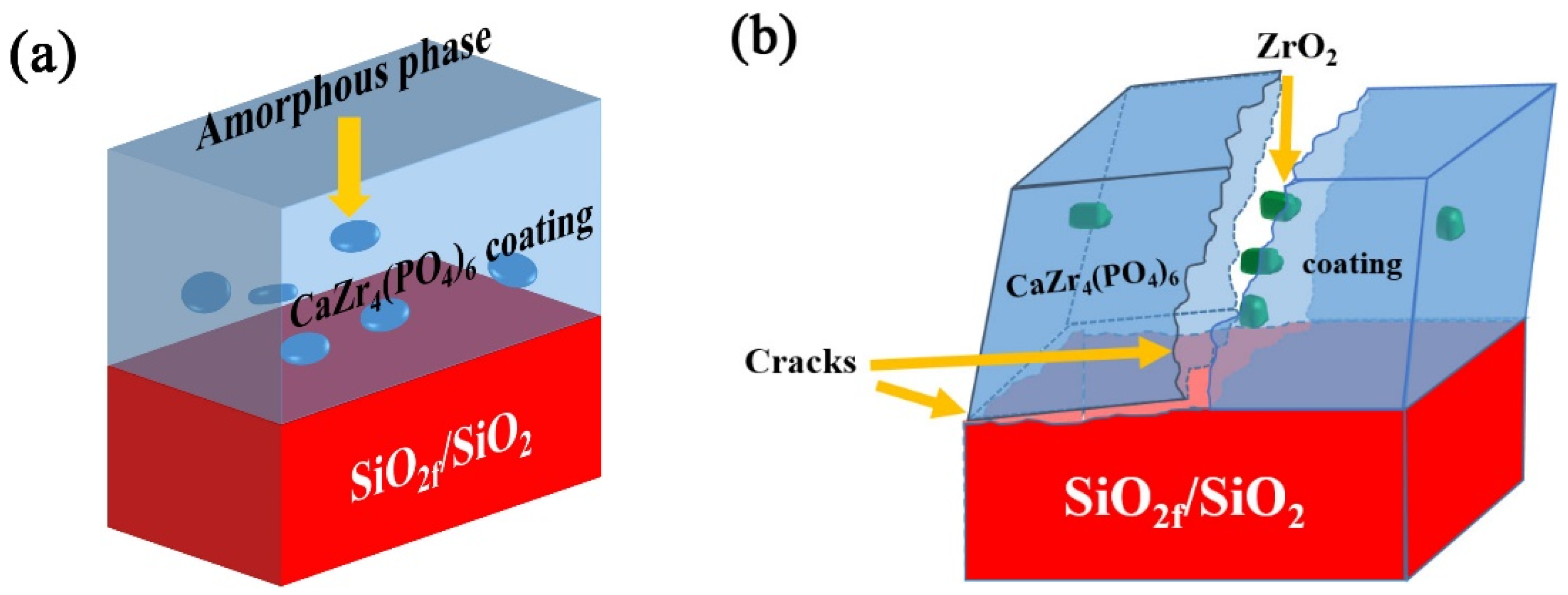
Based on these observations, the failure cause of the sample can be mainly attributed to two factors. First, because of the high-temperature plasma, the coating experienced partial decomposition, with ZrO2 appearing as the decomposition product, as shown in Figure 5(a,3) and Figure 9b. During the thermal cycling, the crystallization behavior and crystal transformation of ZrO2 led to the sudden alteration in the thermal expansion coefficient, causing variations in mismatch stress. Secondly, the amorphous phase existed in the as-sprayed coating. As shown in Figure 7, the crystallization of the amorphous phase and the phase transformation of m-ZrO2 to t-ZrO2 during thermal shock resulted in the volume contraction of the coating. The repeated accumulation of damage induced by these two factors eventually led to coating failure. The failure mechanism is illustrated in Figure 10. Moreover, the recrystallization phenomenon seen in the coating after thermal cycling suggests that structural changes occurred within the coating during its service life, further contributing to its failure. The altered composition content within the coating could have also impacted its overall performance and integrity, exacerbating the failure. These factors collectively played significant roles in the coating’s inability to withstand thermal cycling conditions effectively. Stress can be expressed using the following formula [32]:
σ = E c Δ α Δ T 1     υ c 2
The σ represents the thermal stress that is in the coating; E c and υc2 represent the Young’s modulus and the Poisson ratio of the coating; Δ α is the thermal expansion difference in the two parts, which builds up in the system; and Δ T represents the temperature variation. Due to the low thermal conductivity of the CaZr4(PO4)6 coating, the temperature difference ( Δ T ) between the CaZr4(PO4)6 coating and SiO2f/SiO2 would significantly increase during sample cooling, leading to an enlarged σ (thermal stress). Additionally, the low fracture toughness of the CaZr4(PO4)6 coating made it susceptible to crack formation when thermal stress accumulated to a high level. As cracks propagated, transverse cracks eventually connected, resulting in coating failure.
The preparation of thermal barrier coatings on the SiO2f/SiO2 surface remains an area that requires continuous exploration, and further experimental research is necessary to supplement existing knowledge. It is anticipated that by further optimizing the process parameters and coating microstructure, the thermal cycle life of the CaZr4(PO4)6 coating can be further improved. More research in this direction will contribute to enhancing the overall performance of thermal barrier coatings for SiO2f/SiO2 surfaces.

4. Conclusions

Through examining the thermophysical and thermal cycle properties of the CaZr4(PO4)6 ceramic and coating, the material showed the following performance:
(1) CaZr4(PO4)6 ceramic exhibits the low thermal conductivity property. The thermal conductivity of CaZr4(PO4)6 ceramic was in the range of 1.05–1.13 W∙m−1∙K−1 (20–1000 °C), and the thermal expansion coefficients of CaZr4(PO4)6 increased from 2.07∙10−6 K−1 to 5.55∙10−6 K−1 when the temperature ranged from room temperature to 1100 °C. The low thermal expansion property is suitable for application on the SiO2 composite substrates with similar low CTEs.
(2) The hardness and the fracture toughness of CaZr4(PO4)6 coating were about 3.2 GPa, 1.4 MPa∙m1/2, respectively.
(3) The thermal cycling life of CaZr4(PO4)6 coating at 1200 °C was about 100 times, which is attributed to the stress stemming from the mismatch of thermophysical properties between CaZr4(PO4)6 and the newly-formed ZrO2.
In summary, the CaZr4(PO4)6 coating, with its low thermal expansion coefficient and low thermal conductivity, is a potential candidate for radome TBC application on SiO2f/SiO2. Despite similar radome materials, such as Al2O3f/SiO2 and Al2O3f/Al2O3, having high coefficients of thermal expansion [5], the thermal adaptation stress between either Al2O3f/Al2O3 or Al2O3f/SiO2 and the CaZr4(PO4)6 coating would be greater; thus, the service effect would be inferior to that of SiO2f/SiO2.

Author Contributions

Conceptualization, X.C.; methodology, W.C.; data curation, Y.T.; writing—original draft preparation, Y.T.; writing—review and editing, W.C. and W.Z.; visualization, L.D. and J.J.; supervision, S.D. and L.L.; project administration, X.C. and W.C.; funding acquisition, X.C. All authors have read and agreed to the published version of the manuscript.

Funding

This research was supported by the China Postdoctoral Science Foundation (No. 2022M722488), and the Young Elite Scientists Sponsorship Program by CAST (2022QNRC001).

Institutional Review Board Statement

Not applicable.

Informed Consent Statement

Not applicable.

Data Availability Statement

More data related to this study can be accessed upon request to the corresponding author.

Conflicts of Interest

The authors declare no conflicts of interest.

References

  1. Wu, Y.; Hong, D.; Zhong, X.; Niu, Y.; Zheng, X. Research progress on hafnium-based thermal barrier coatings materials. Ceram. Int. 2023, 49, 21133–21141. [Google Scholar] [CrossRef]
  2. Wang, J.; Bai, L.; Ma, F.; Wan, S.; Yi, G.; Sun, J.; Tian, X.; Yang, Z. Evaluation of microstructure evolution of thermal barrier YSZ coating after thermal exposure. Ceram. Int. 2022, 48, 6681–6690. [Google Scholar] [CrossRef]
  3. Mauer, G.; Jarligo, M.O.; Mack, D.E.; Vaßen, R. Plasma-Sprayed Thermal Barrier Coatings: New Materials, Processing Issues, and Solutions. J. Therm. Spray Technol. 2013, 22, 646–658. [Google Scholar] [CrossRef]
  4. Clarke, D.R.; Oechsner, M.; Padture, N.P. Thermal-barrier coatings for more efficient gas-turbine engines. MRS Bull. 2012, 37, 891–898. [Google Scholar] [CrossRef]
  5. Ci, J.L.; Cui, F.D.; Zhang, L.L.; Zhang, J.; Lv, Y.; Zhao, Y.M.; Zhang, H. Study on the Highe-Temperature Mechanical of Al2O3f/SiO2 and SiO2f/SiO2 Ceramic Matrix Composites. Solid State Phenom. 2022, 330, 91–98. [Google Scholar] [CrossRef]
  6. Wanye, X.U.; Peng, L.I.; Qiu, Y.; Lin, Z. Electrical performance analysis of metal space frame radome with structural deformation. J. Mech. Eng. 2016, 52, 57. [Google Scholar]
  7. Ding, D.; Li, J.; Li, R.; Zhang, L.; Hou, C.; Xiao, G.; Chong, X.; Luo, J.; Deng, P. Effects of particle size in silica sol on the mechanical and thermal properties of SiO2f/SiO2 composites. Int. J. Appl. Ceram. Technol. 2023, 20, 1865–1874. [Google Scholar] [CrossRef]
  8. Chen, W.; Han, Q.; He, J.; He, W.; Wang, W.; Guo, H. Effect of HfO2 framework on steam oxidation behavior of HfO2 doped Si coating at high temperatures. Ceram. Int. 2022, 48, 20201–20210. [Google Scholar] [CrossRef]
  9. Chen, W.; He, W.; He, J.; Guo, Q.; Li, S.; Guo, H. Failure mechanisms of (Gd0.9Yb0.1)2Zr2O7/Yb2SiO5/Si thermal/environmental barrier coatings during thermal exposure at 1300 °C/1400 °C. J. Eur. Ceram. Soc. 2022, 42, 3297–3304. [Google Scholar] [CrossRef]
  10. Semmler, C.; Gyoktepeliler-Akin, E.; Killinger, A. Plasma sprayed ceramic coatings for the thermal protection of carbon fiber reinforced plastics (CFRP): Thermal and mechanical properties of YSZ, aluminum titanate, cordierite and mullite coatings. Surf. Coatings Technol. 2023, 462, 129509. [Google Scholar] [CrossRef]
  11. Gavrichev, K.; Guskov, V.; Gagarin, P.; Guskov, A.; Ryumin, M.; Kargin, Y. Thermal expansion of complex oxides LaMgAl11O19, PrMgAl11O19, NdMgAl11O19 and SmMgAl11O19. Inorg. Mater. Appl. Res. 2025, 16, 1073–1079. [Google Scholar] [CrossRef]
  12. Roy, R.; Agrawal, D.K. Successful Design of New Very Low Thermal Expansion Ceramics. MRS Online Proc. Libr. 1984, 40, 83–88. [Google Scholar] [CrossRef]
  13. Dong, Y.; Yan, C.; Li, J.; Jiang, Z.; Mo, W.; Zhang, Q. Study on thermal shock resistance of Sc2O3 and Y2O3 co-stabilized ZrO2 thermal barrier coatings. Ceram. Int. 2023, 49, 20034–20040. [Google Scholar] [CrossRef]
  14. Xuan, L.; Li, D.; Wang, M. Propargyloligosilazane matrixed composite for high temperature material combining polymer and ceramic properties. Int. J. Chem. React. Eng. 2021, 19, 277–285. [Google Scholar] [CrossRef]
  15. Chakraborty, N.; Basu, D.; Fischer, W. Thermal expansion of Ca(1−x)SrxZr4(PO4)6 ceramics. J. Eur. Ceram. Soc. 2005, 25, 1885–1893. [Google Scholar] [CrossRef]
  16. Salikhov, T.P.; Kan, V.V.; Urazaeva, É.M.; Savatyugina, T.V.; Arushanov, G.M. Microfiltration NZP ceramic based on network alkaline-earth phosphates. Glas. Ceram. 2012, 68, 373–375. [Google Scholar] [CrossRef]
  17. Breval, E.; Agrawal, D.K. Thermal Expansion Characteristics of [NZP], NaZr2P3O12-Type Materials: A Review. Br. Ceram. Trans. 1995, 94, 27–32. [Google Scholar]
  18. Pet’Kov, V.I.; Asabina, E.A. Thermophysical Properties of NZP Ceramics (A Review). Glas. Ceram. 2004, 61, 233–239. [Google Scholar] [CrossRef]
  19. Orlova, A.I.; Koryttseva, A.K.; Loginova, E.E. A family of phosphates of langbeinite structure. Crystal-chemical aspect of radioactive waste immobilization. Radiochemistry 2011, 53, 51–62. [Google Scholar] [CrossRef]
  20. Gu, L.; Li, K.; Liu, N.; Guo, L. Sinterability and Thermal Shock Resistance of CZP Ceramic. J. Chin. Ceram. Soc. 2011, 39, 1968–1973. [Google Scholar]
  21. Agrawal, D.K.; Huang, C.-Y.; McKinstry, H.A. NZP: A new family of low-thermal expansion materials. Int. J. Thermophys. 1991, 12, 697–710. [Google Scholar] [CrossRef]
  22. Breval, E.; Mckinstry, H.A.; Agrawal, D.K. New [NZP] Materials for Protection Coatings. Tailoring of Thermal Expansion. J. Mater. Sci. 2000, 35, 3359–3364. [Google Scholar] [CrossRef]
  23. Limaye, S.Y.; Agrawal, D.K.; Roy, R.; Mehrotra, Y. Synthesis, sintering and thermal expansion of Ca1-xSrxZr4P6O24—an ultra-low thermal expansion ceramic system. J. Mater. Sci. 1991, 26, 93–98. [Google Scholar] [CrossRef]
  24. Su, L.; Sui, W.M.; Liu, Y.J. The Synthesis and the Thermal Properties of CaZr4(PO4)6 Materials. Appl. Mech. Mater. 2013, 341, 69–73. [Google Scholar] [CrossRef]
  25. Yuan, J.; Sun, J.; Wang, J.; Zhang, H.; Dong, S.; Jiang, J.; Deng, L.; Zhou, X.; Cao, X. SrCeO3 as a novel thermal barrier coating candidate for high–temperature applications. J. Alloy. Compd. 2018, 740, 519–528. [Google Scholar] [CrossRef]
  26. Xie, X.; Guo, H.; Gong, S.; Xu, H. Lanthanum–titanium–aluminum oxide: A novel thermal barrier coating material for applications at 1300 C. J. Eur. Ceram. Soc. 2011, 31, 1677–1683. [Google Scholar] [CrossRef]
  27. NZP Ceramics. A new class of materials. Am. Ceram. Soc. Bull. 1997, 71–72.
  28. Gorelov, V.P. High-Temperature Phase Transitions in ZrO2. Phys. Solid State 2019, 61, 1288–1293. [Google Scholar] [CrossRef]
  29. Xue, Z.G.; Wang, S.; Pang, J.M.J.F.C. Effect of Heat Treatment on Thermal Expansion of Zirconia Materials. Mod. Electron. Mater. 2018, 9, 123–131. [Google Scholar]
  30. Oliveira, F.A.C.; Fernandes, J.C.; Schmitt, J.; Rosa, L.G.; Dias, D. Fracture Toughness of Dense Cordierite: Sintering Cycle Effect. Mater. Sci. Forum 2012, 730, 445–449. [Google Scholar] [CrossRef]
  31. Zhang, L.; Olhero, S.; Ferreira, J.M. Thermo-mechanical and high-temperature dielectric properties of cordierite-mullite-alumina ceramics. Ceram. Int. 2016, 42, 16897–16905. [Google Scholar] [CrossRef]
  32. Guo, L.; Yan, Z.; Li, Z.; Yu, J.; Wang, Q.; Li, M.; Ye, F. GdPO4 as a novel candidate for thermal barrier coating applications at elevated temperatures. Surf. Coatings Technol. 2018, 349, 400–406. [Google Scholar] [CrossRef]
Figure 1. Typical SEM morphologies of the as-prepared CaZr4(PO4)6 powder: (a) at low and (b) high magnification.
Coatings 16 00144 g001
Figure 2. XRD patterns of CaZr4(PO4)6: (a) as-prepared coating; (b) JCPDS No. 33-3021.
Coatings 16 00144 g002
Figure 3. TG-DSC curves of CaZr4(PO4)6 powder.
Coatings 16 00144 g003
Figure 4. (a) Cross-section micrograph of as-sprayed CaZr4(PO4)6 coating; (b) SEM micrographs of cross-section morphology of CaZr4(PO4)6 coating before thermal cycling.
Coatings 16 00144 g004
Figure 5. (a,1) As-sprayed CaZr4(PO4)6 coating; (a,2) CaZr4(PO4)6 coating was annealed at 1300 °C for 20 h; (a,3) Thermal-shocked CaZr4(PO4)6 coating; (b) TG-DSC curves of CaZr4(PO4)6 coating.
Coatings 16 00144 g005aCoatings 16 00144 g005b
Figure 6. Thermal conductivity property of CaZr4(PO4)6 ceramic bulk.
Coatings 16 00144 g006
Figure 7. Thermal expansion properties of CaZr4(PO4)6 coating: (a) thermal expansion rate; (b) thermal expansion coefficients.
Coatings 16 00144 g007aCoatings 16 00144 g007b
Figure 8. Macro-morphology evolution of CaZr4(PO4)6 coating after thermal cycling: (a) before thermal cycling; (b) after 10 cycles; and (c) after 100 cycles.
Coatings 16 00144 g008
Figure 9. The cross-section micrograph of CaZr4(PO4)6 coating after thermal cycling for 100 times: (a) the region near the crack; (b) the micrograph with high magnification of the CaZr4(PO4)6 coating.
Coatings 16 00144 g009
Figure 10. (a) As-sprayed CaZr4(PO4)6 coating on SiO2f/SiO2; (b) the failure mechanism of the CaZr4(PO4)6 coating.
Coatings 16 00144 g010
Table 1. Plasma spraying parameters for CaZr4(PO4)6 coatings deposition.
Spray Distance
(mm)
Power
(kW)
Current
(A)
Plasma Gas, Standard Liter per Minute
(slpm)
Carrier Gas
Ar (slpm)
Feeding Rate
(g/min)
10042620Ar: 35
H2: 12
3.250
Table 2. Chemical compositions (mol%) detected from the marked regions shown in Figure 4b.
SpotsCaZrPO
14.016.124.755.2
25.013.223.458.4
35.013.122.659.3
45.116.621.956.4
55.213.623.557.7
63.68.219.069.2
Table 3. Mechanical properties of CaZr4(PO4)6 bulk and coating.
SampleHardness
(GPa)
Young′s Modulus
(GPa)
Fracture Toughness
(MPa∙m1/2)
CaZr4(PO4)6 coating
(in this work)
3.236.81.4
Cordierite coating [30,31]3.543.21.6
Table 4. Chemical compositions (at %) detected from the marked regions shown in Figure 9b.
AreaCaZrPO
14.211.427.157.3
24.110.127.558.3
34.210.727.357.8
42.219.220.258.4
52.318.920.358.5
63.820.030.345.9
Disclaimer/Publisher’s Note: The statements, opinions and data contained in all publications are solely those of the individual author(s) and contributor(s) and not of MDPI and/or the editor(s). MDPI and/or the editor(s) disclaim responsibility for any injury to people or property resulting from any ideas, methods, instructions or products referred to in the content.