Article

High-Efficient Photocatalytic and Fenton Synergetic Degradation of Organic Pollutants by TiO2-Based Self-Cleaning PES Membrane

National & Local Joint Engineering Research Center for Applied Technology of Hybrid Nanomaterials, Henan University, Kaifeng 475004, China
*
Author to whom correspondence should be addressed.
Coatings 2026, 16(1), 125; https://doi.org/10.3390/coatings16010125
Submission received: 19 December 2025 / Revised: 14 January 2026 / Accepted: 14 January 2026 / Published: 18 January 2026
(This article belongs to the Section Environmental Aspects in Colloid and Interface Science)

Abstract

In this study, we aimed to develop a high-performance, anti-fouling ultrafiltration membrane by integrating photocatalytic and Fenton-like functions into a polymer matrix, in order to address the critical challenge of membrane fouling and achieve simultaneous separation and degradation of organic pollutants. To this end, a novel Fe-VO-TiO2-embedded polyethersulfone (PES) composite membrane was designed and fabricated using a facile phase inversion method. The key innovation lies in the incorporation of Fe-VO-TiO2 nanoparticles containing abundant bulk-phase single-electron-trapped oxygen vacancies, which not only modulate membrane morphology and hydrophilicity but also enable sustained generation of reactive oxygen species for the pollutant degradation under light irradiation and H2O2. The optimized Fe-VO-TiO2-PES-0.04 membrane exhibited a significantly enhanced pure water flux of 222.6 L·m−2·h−1 (2.2 times higher than the pure PES membrane) while maintaining a high bovine serum albumin (BSA) retention of 93% and an improved hydrophilic surface. More importantly, the membrane demonstrated efficient and stable synergistic Photocatalytic-Fenton activity, achieving 82% degradation of norfloxacin (NOR) and retaining 75% efficiency after eight consecutive cycles. A key finding is the membrane’s Photocatalytic-Fenton-assisted self-cleaning capability, with an 80% flux recovery after methylene blue (MB) fouling, which was attributed to in situ reactive oxygen species (·OH) generation (verified by ESR). This work provides a feasible strategy for designing multifunctional membranes with enhanced antifouling performance and extended service life through built-in catalytic self-cleaning.

1. Introduction

Water pollution has emerged as a critical global challenge, severely impacting both human health and ecological balance [1]. Among the diverse array of water contaminants, antibiotics, particularly Fluoroquinolones (FQs), pose a persistent and growing threat due to their widespread use, inherent antibacterial activity, and environmental persistence [2,3]. The structural characteristics of FQs, conferred by fluorine atoms, lead to high electronegativity, poor natural degradability, and limited removal by conventional adsorption, resulting in their accumulation in aquatic environments and potential induction of antibiotic-resistant genes [4,5]. Therefore, it is imperative to develop efficient, green, and sustainable antibiotic removal technologies.
Advanced oxidation processes (AOPs) represent a promising approach for degrading organic pollutants by generating highly reactive oxygen species (ROS) such as hydroxyl (•OH) or sulfate (•SO4) radicals, which can mineralize contaminants into harmless products [6,7]. Heterogeneous Fenton oxidation, utilizing iron-based catalysts and hydrogen peroxide to produce hydroxyl radicals, is particularly attractive for antibiotic degradation owing to its strong oxidative capacity and environmental compatibility [8]. However, its practical application is often hindered by the requirement for acidic pH, inevitable iron leaching and the associated sludge formation. Parallelly, semiconductor photocatalysis has gained attention for its high degradation activity driven by light and eco-friendliness. Especially TiO2, is widely studied for its photocatalytic activity and stability, yet its efficiency is fundamentally limited by rapid recombination of photogenerated charge carriers and poor utilization of visible-light.
To overcome the limitations of individual AOPs, integrating photocatalysis with the Fenton reaction, creating a photo-Fenton system, has been proven to be an effective strategy. In such coupled systems, the photocatalytic process promotes the regeneration of Fe2+ from Fe3+, thereby accelerating the Fenton cycle, while simultaneously the interfacial charge transfer is improved, suppressing electron–hole recombination. This synergy leads to a sustained and enhanced generation of ROS, thus improving overall degradation efficiency [9,10,11]. Nevertheless, the practical deployment of powdered nano-catalysts in continuous flow systems faces challenges related to catalyst recovery, reuse, and potential secondary pollution from nanoparticle release [12].
In this context, immobilizing catalytic nanomaterials onto solid, macroscopic supports presents a promising pathway toward engineering scalable and recyclable AOP systems. Membrane technology, which inherently provides a permeable, high-surface-area support, is an ideal candidate [13,14]. Developing catalytic membranes that combine selective separation with in situ degradation capability represents a transformative approach for water treatment. This design not only addresses the catalyst recovery issue but also can significantly improve treatment efficiency by concentrating pollutants near the catalytic sites and potentially enabling self-cleaning functionality to mitigate membrane fouling—a major operational limitation [15,16]. Recent studies demonstrate that catalytic membranes, such as FeOOH-intercalated nanofiltration membranes [17,18], can achieve high degradation rates, excellent mineralization, and stable long-term performance while also enabling self-cleaning functions [19].
Among polymer membrane materials, polyethersulfone (PES) is widely used due to its excellent thermal stability, mechanical strength, and chemical resistance [20]. The fabrication of multifunctional PES-based composite membranes by incorporating nanoscale modifiers has become a vibrant research area. Among polymer membrane materials, polyethersulfone (PES) is widely used due to its excellent thermal stability, mechanical strength, and chemical resistance. The fabrication of multifunctional PES-based composite membranes by incorporating nanoscale modifiers has become a vibrant research area. For instance, incorporating carbon quantum dots/TiO2 into PES results in a membrane with self-cleaning capability [21]. However, designing a modifier that can concurrently endow the membrane with high water permeability, superior catalytic activity across a broad spectrum, and long-term operational stability under complex aqueous conditions is a non-trivial challenge. Most reported modifications improve one aspect at the expense of another, such as enhancing hydrophilicity but offering no catalytic function, or providing photoactivity but compromising membrane integrity or flux.
To bridge this gap, this work aims to design, fabricate, and comprehensively evaluate a novel multifunctional ultrafiltration membrane. Our strategy centers on the innovative incorporation of Fe-doped TiO2 nanoparticles containing abundant single-electron-trapped oxygen vacancies (denoted as Fe-Vo-TiO2) into a PES matrix via a phase inversion process. The core novelty of this design lies in the synergistic roles of the dopants and defects. The oxygen vacancies are engineered to enhance visible-light absorption, improve charge separation, and facilitate reactant adsorption, while the Fe species serve as fixed Fenton-active sites. We hypothesize that this combination will enable the composite membrane to act as an efficient and stable photo-Fenton catalytic system.
In this study, a series of Fe-Vo-TiO2-PES composite membranes was synthesized and optimized. Their morphological, physicochemical, and surface properties were systematically characterized. The membrane performance was evaluated in terms of pure water flux, bovine serum albumin (BSA) rejection, and, most importantly, the degradation efficiency of norfloxacin (NOR) under photo-Fenton conditions. Furthermore, the self-cleaning capability and reusability of the membrane, which are critical for practical application, were assessed through cyclic methylene blue (MB) fouling-regeneration experiments. To elucidate the underlying mechanisms, radical quenching tests and electron spin resonance (ESR) spectroscopy were employed to identify the dominant ROS and propose a synergistic reaction pathway. This work provides not only a new material candidate but also fundamental insights into the design principles of multifunctional catalytic membranes for sustainable water purification.

2. Experimental Section

2.1. Preparation of Fe-VO-TiO2-PES Composite Membranes

The preparation process of Fe-VO-TiO2 nanoparticles is as follows. First, the nanotubular titanic acid precursor was synthesized via a hydrothermal method, following our previously reported procedure [22,23]. Briefly, 3 g of Degussa P25 TiO2 was reacted with an aqueous NaOH solution (10 mol/L) in a hydrothermal reactor at 120 °C for 24 h to form Na2Ti2O5·H2O nanotubes. Subsequently, nanotubular titanic acid was obtained by subjecting the as-prepared nanotubes to an ion-exchange treatment with an HCl solution. Finally, the product was calcined in air at 400 °C for 2 h with a heating rate of 10 °C/min, yielding a white solid. This sample, denoted as Vo-TiO2, contains single-electron-trapped oxygen vacancies (SETOV). A series of Fe-Vo-TiO2 with different Fe mass fractions (0.1%, 0.5%, 1%, 3%, 7%) (relative to VO-TiO2 mass) was prepared by simple impregnation. In total, 0.1 g of VO-TiO2 powders was dispersed in 10 mL of deionized water. Then, a calculated amount of Fe (NO3)3•9H2O (to achieve the target Fe mass fraction) was added to the suspension, and the pH of the mixture was adjusted to 2.0 with nitric acid to prevent the hydrolysis of Fe3+. After ultrasonic dispersion for 30 min, the product was stirred at 90 °C for 1 h and washed with water. The washed precipitate was dried at 60 °C and ground to obtain a yellow powder, noted as Fe-VO-TiO2.
The Fe-Vo-TiO2-PES membrane fabrication procedure was as follows: First, 0.02–0.08 g of Fe-Vo-TiO2 nanoparticles (corresponding to R = 0.02–0.08) was added to 100 mL of N,N-dimethylacetamide (DMAc) and stirred at 500 rpm for 2 h at 60 °C to obtain a uniformly dispersed suspension. Subsequently, 10 g of polyethersulfone (PES, Mw = 70,000 g/mol) and 2.5 g of polyvinylpyrrolidone (PVP, K30) powder (PES/PVP mass ratio = 4:1) were gradually added in batches, and stirring was continued at 60 °C for 12 h to form a homogeneous casting solution. After vacuum degassing, the solution was cast onto a clean glass plate using a film applicator with a thickness of 200 μm and a casting speed of 60 mm/s. The cast film was exposed to air for 30 s and then immersed in a coagulation bath (deionized water, 25 °C) for 16 h to complete phase inversion. The resulting membrane was peeled off, soaked in deionized water for 24 h to remove residual solvent, and finally stored in a 5 wt% glycerol aqueous solution before being dried at room temperature for further use.

2.2. Characterization

Transmission electron microscopy (TEM) images were obtained using a JEM-F200 microscope (JEOL Ltd., Tokyo, Japan) at an acceleration voltage of 200 kV. Scanning electron microscopy (SEM) was conducted on a Gemini SEM-500 field-emission microscope (Carl Zeiss AG, Oberkochen, Germany) to examine the surface and cross-sectional morphology of the samples. Atomic force microscopy (AFM) measurements were performed on an MFP-3D microscope (Oxford Instruments, Oxford, UK) in tapping mode to analyze the surface roughness of the membranes. X-ray diffraction (XRD) patterns were recorded on a Bruker D8-ADVANCE diffractometer (Bruker Corporation, Karlsruhe, Germany) using Cu Kα radiation. X-ray photoelectron spectroscopy (XPS) was performed on a Thermo ESCALAB 250Xi spectrometer (Thermo Fisher Scientific, Waltham, MA, USA). UV–Vis diffuse reflectance spectroscopy (DRS) was carried out on a UV-2000 spectrophotometer (Beijing Puxi General Instrument Co., Ltd., Beijing, China). Raman spectroscopy was conducted on a LabRAM Odyssey confocal Raman microscope (Horiba Ltd., Kyoto, Japan) with a 532 nm laser as the excitation source. Attenuated total reflectance Fourier transform infrared (ATR-FTIR) spectra were collected on a Bruker VERTEX 70 spectrometer (Bruker Corporation, Karlsruhe, Germany) in the range of 500–4000 cm−1. Water contact angle (WCA) was measured at room temperature using a Krüss DSA100s goniometer (Krüss GmbH, Hamburg, Germany) in sessile drop mode to assess the surface wettability. Electron spin resonance (ESR) signals of radicals generated during the reaction were captured on a Bruker A300 spectrometer (Bruker Corporation, Karlsruhe, Germany).

2.3. Performance Testing of Composite Ultrafiltration Membranes

2.3.1. Ultrafiltration Performance Testing

In this work, the ultrafiltration performance, Photocatalytic-Fenton degradation and self-cleaning performance of the prepared membrane were evaluated by tangential flow (staggered flow) filtration. Data include the following: pure water flux and bovine serum albumin retention (BSA). The experimental equipment used was the a low-pressure flat-sheet membrane test unit (Model TYLG-18, Shandong Bona Biotechnology Group Co., Ltd., Shandong, China), and the experiments were conducted at room temperature with a circulating solution volume of 1 L and an effective membrane area of 16 cm2.
(1) The specific procedure for the pure water flux test was as follows: firstly, the membrane was pre-compacted using ultrapure water at a pressure of 0.1 MPa for 10 min to obtain a stable pure water flux; then, the volume of permeate water was started to be recorded, and the initial pure water flux of the ultrafiltration membrane (J0) was calculated by recording the volume of permeate water (V) in 5 min;
J0 = V/A · t
J0 represents the pure water flux in L·m−2·h−1; V represents the volume of permeate in L; A represents the effective filtration area of the membrane in m2.
(2) Specific procedure for the retention rate test: place the membrane material in the membrane cell, replace the circulating solution with 500 mL of BSA solution at a concentration of 10 mg/L, run at a pressure of 0.1 MPa for 10 min, take 3 mL of filtrate at the outlet to test its absorbance, then substitute it into the standard curve to obtain its concentration, and use the following formula to obtain the retention rate:
R = (1 − Cp/Cf) × 100%
R denotes the retention rate; Cp and Cf denote the solute concentration in the permeate and the feed solution, respectively.

2.3.2. Photocatalytic Performance Test

The photocatalytic activity of the membranes was evaluated by applying a light source to the staggered flow filtration system and using a UV–Vis spectrophotometer to measure the absorbance of the feed solution and the permeate. An ultrafiltration membrane was placed in a low-pressure flat membrane device. NOR solution was poured into the material tank at a concentration of 10 mg/L. After 30 min of dark adsorption at 0.1 MPa, a certain amount of H2O2 was added, and the light source was switched on to start reaction. The light source used was a 500 W xenon lamp (model: CEL-HXF500) equipped with a 420 nm cutoff filter. The lamp was horizontally placed outside the membrane cell, 5 cm away from the membrane surface, to ensure uniform illumination. The light intensity at the membrane surface was measured as 100 mW/cm2 using an optical power meter (model: CEL-NP2000). In total, 3 mL of the permeate was collected every 30 min at the permeate outlet, its absorbance was measured and the concentration was obtained by substituting the standard curve.

2.3.3. Self-Cleaning Ability Test

An alternating experiment of dynamic filtration and static degradation was designed to measure the water flux of the membrane before and after static degradation, and calculate the flux recovery rate to evaluate its self-cleaning performance. The composite membrane and 500 mL of pure water were placed in a low-pressure plate membrane device. After running 30 min at 0.1 MPa, the pure water flux J0 was recorded. Then, pure water was replaced by 500 mL of methylene blue (MB) solution (10 mg/L), and the membrane was run under the same conditions. The contaminated membrane was placed in 50 mL of water with 5 mM of H2O2, and the membrane was illuminated for 30 min (the same light conditions as the photocatalytic performance test) before measuring its pure water flux. After 30 min the pure water flux was measured again and recorded as J. The flux recovery rate was calculated according to the following equation:
FRR = J/J0 × 100%

3. Results and Discussion

3.1. Fe-VO-TiO2 Nanoparticle Characterization

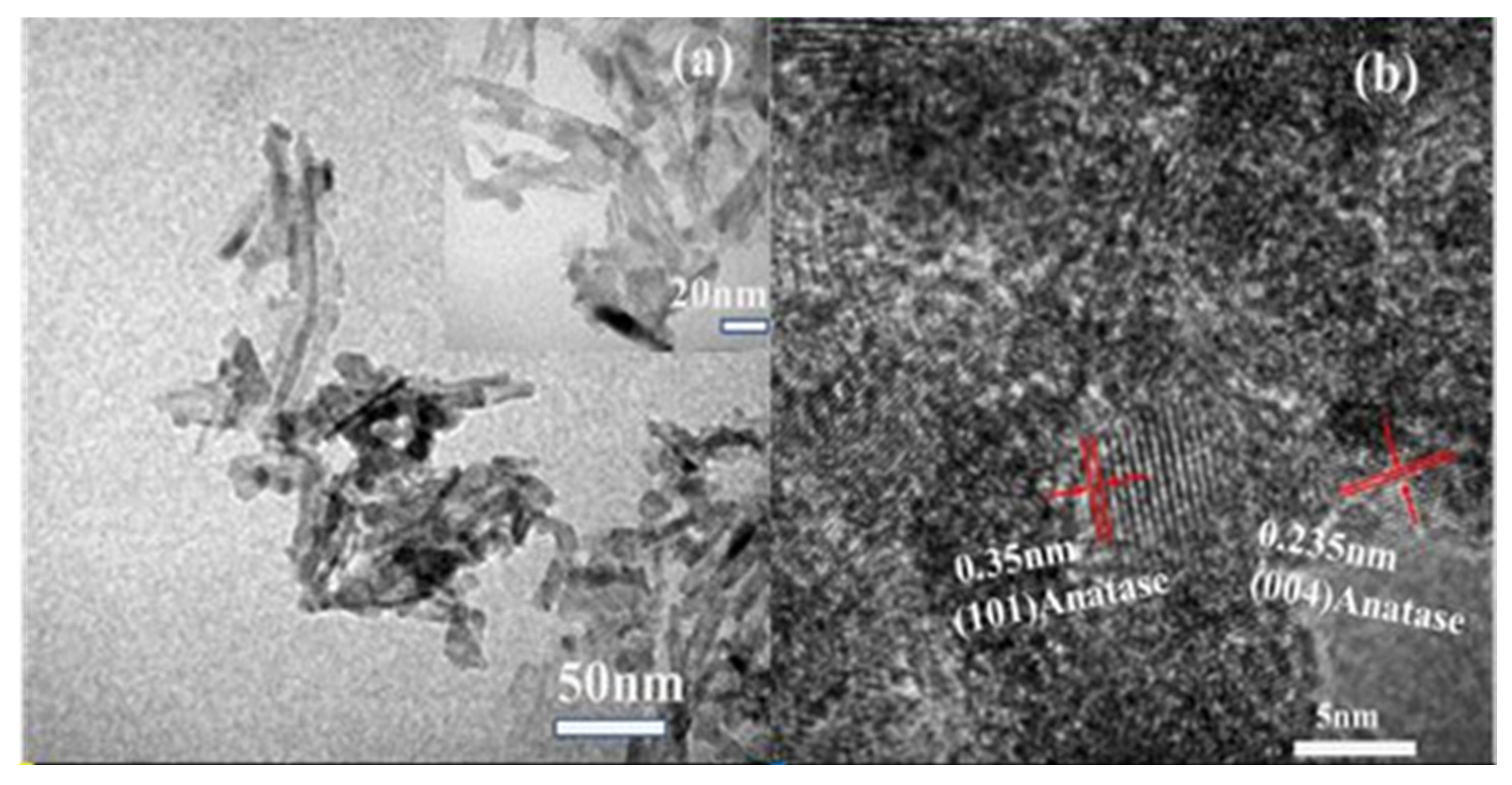
The morphology of the synthesized Fe-VO-TiO2 nanoparticles is shown in Figure 1. The prepared Fe-VO-TiO2 nanoparticles retain the tubular structure of nanotube titanate, which is beneficial for the adsorption of pollutants due to their high specific surface area. According to the experimental procedure, Vo-TiO2 is obtained by high-temperature calcination of nanotubular titanic acid in air at 400 °C for 2 h. During this heat treatment process, the nanotube structure gradually collapses and transforms into nanoparticles with an average particle size of 10–20 nm, as detailed in our previous work [22,23]. As shown in HRTEM images, the lattice spacing of 0.35 nm and 0.235 nm corresponds to the (101) and (004) crystal planes of anatase titanium dioxide, respectively.
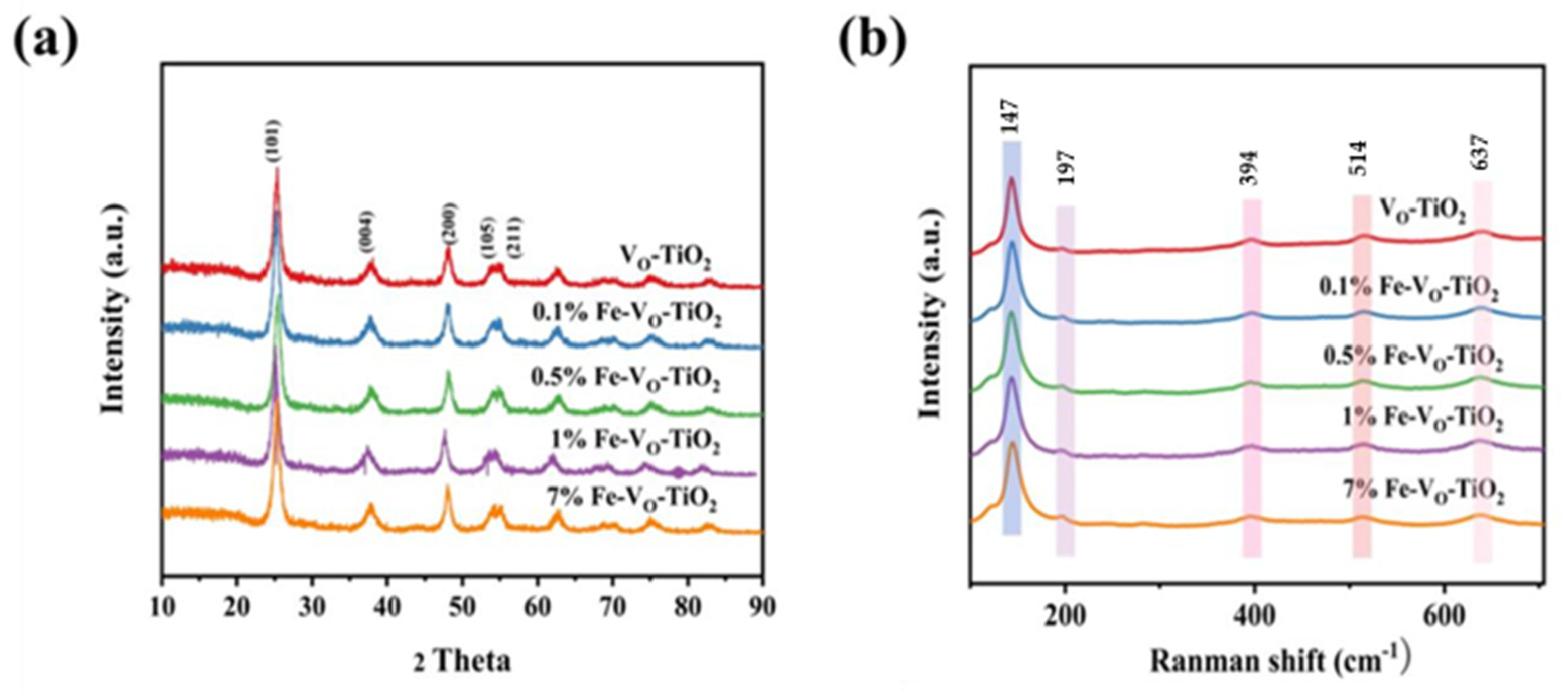
The crystal structure of the catalyst was characterized by XRD and Raman. Figure 2a shows that Fe-VO-TiO2 nanoparticles have good crystallinity, with distinct characteristic peaks observed at 25.3°, 38.02°, 48.03°, 54.14°, and 54.99°, corresponding to the (101), (004), (200), (105), and (211) crystal planes of TiO2, respectively. There were no new peaks before and after the introduction of Fe species, and the introduction of Fe species did not alter the crystal phase of TiO2. Moreover, the average crystallite size of Fe-VO-TiO2 nanoparticles was calculated to be approximately 22 nm according to the Scherrer formula, which is consistent with the TEM results. Figure 2b shows the five Raman peaks at 147 cm−1, 197 cm−1, 394 cm−1, 514 cm−1 and 637 cm−1 corresponding to anatase titanium dioxide, respectively. The peak position of the characteristic peak of TiO2 did not shift after the introduction of Fe species, further indicating that Fe-VO-TiO2 nanoparticles maintain the anatase crystal phase.
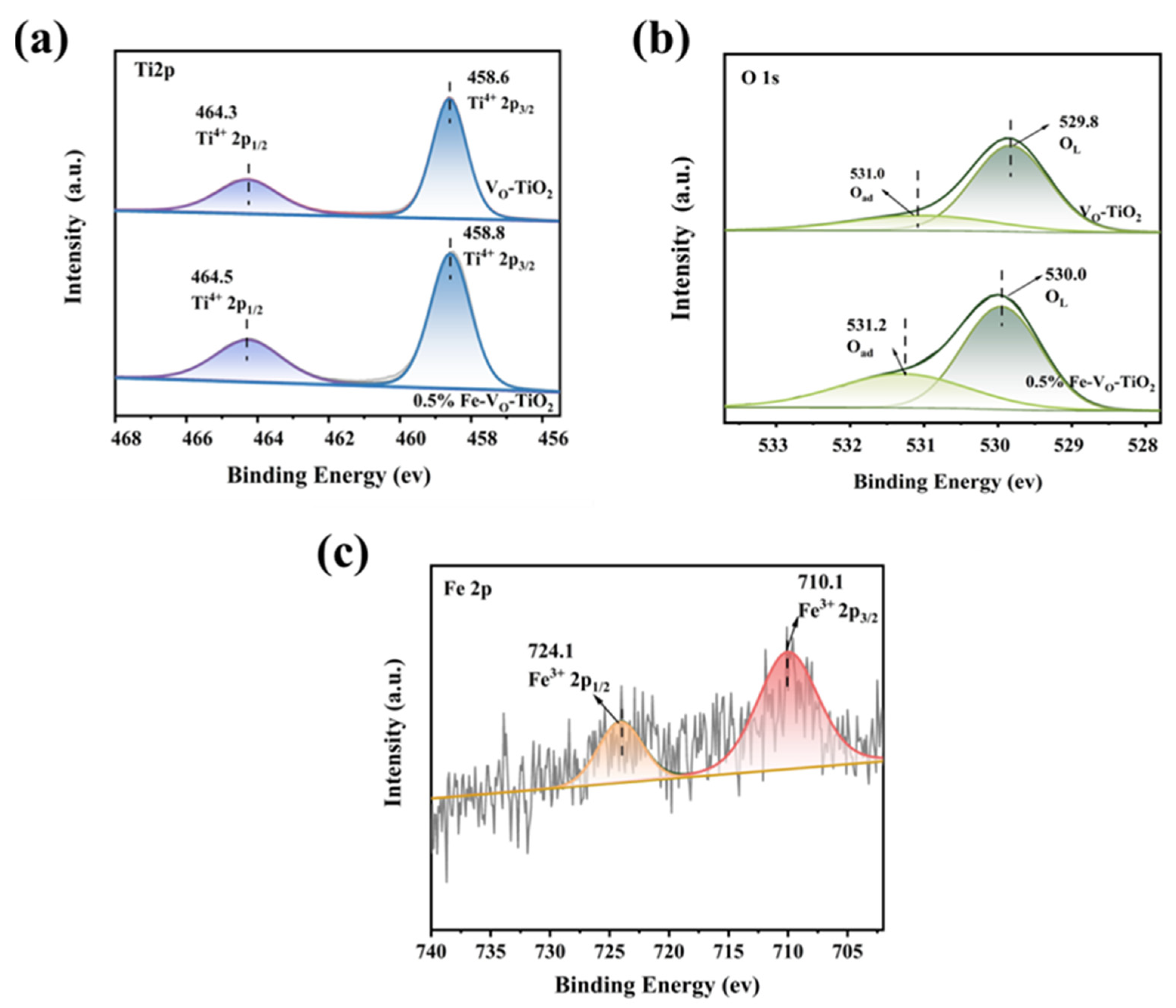
The elemental composition and valence states of VO-TiO2 and Fe-VO-TiO2 nanoparticles were confirmed through XPS analysis, as shown in Figure 3. The two characteristic peaks of VO-TiO2 located at 458.6 eV and 464.3 eV are Ti 2p3/2 and Ti 2p1/2 of Ti4+, respectively. For the Fe-VO-TiO2 sample, the binding energy of the Ti4+ shifts to 458.8 eV and 464.5 eV, respectively. In Fig, the peaks at 529.8 eV and 531.0 eV are attributed to the O1s peaks of O-Ti (lattice oxygen) and O-H (surface adsorbed oxygen), respectively. Compared with single Vo-TiO2, the O1s binding energies of Fe-Vo-TiO2 nanoparticle samples shift to a higher binding energy of 0.2 eV. This change is directly linked to the charge imbalance induced by Fe3+ substitution for Ti4+. The higher electronegativity of Fe creates an electron-withdrawing effect, reducing the local electron density on oxygen and thereby increasing its core-level binding energy [23]. In Figure 3c, the peaks at 710.1 eV and 724.1 eV correspond to the characteristic peaks of Fe 2p3/2 and Fe 2p1/2 in Fe3+, indicating that Fe3+ species exist in Fe-Vo-TiO2 nanoparticles. Surface compositions of Fe-Vo-TiO2 samples were investigated by XPS. The Ti to O ratio is 0.58, significantly higher than 0.5, indicating the presence of abundant oxygen vacancies in the Fe-Vo-TiO2 catalyst. Oxygen vacancies are mainly generated by the intra-layered dehydration of nanotubular titanic acid to prepare TiO2 during the high-temperature treatment, validated by previous research work [22,23].

3.2. Fe-VO-TiO2-PES Membrane Characterization

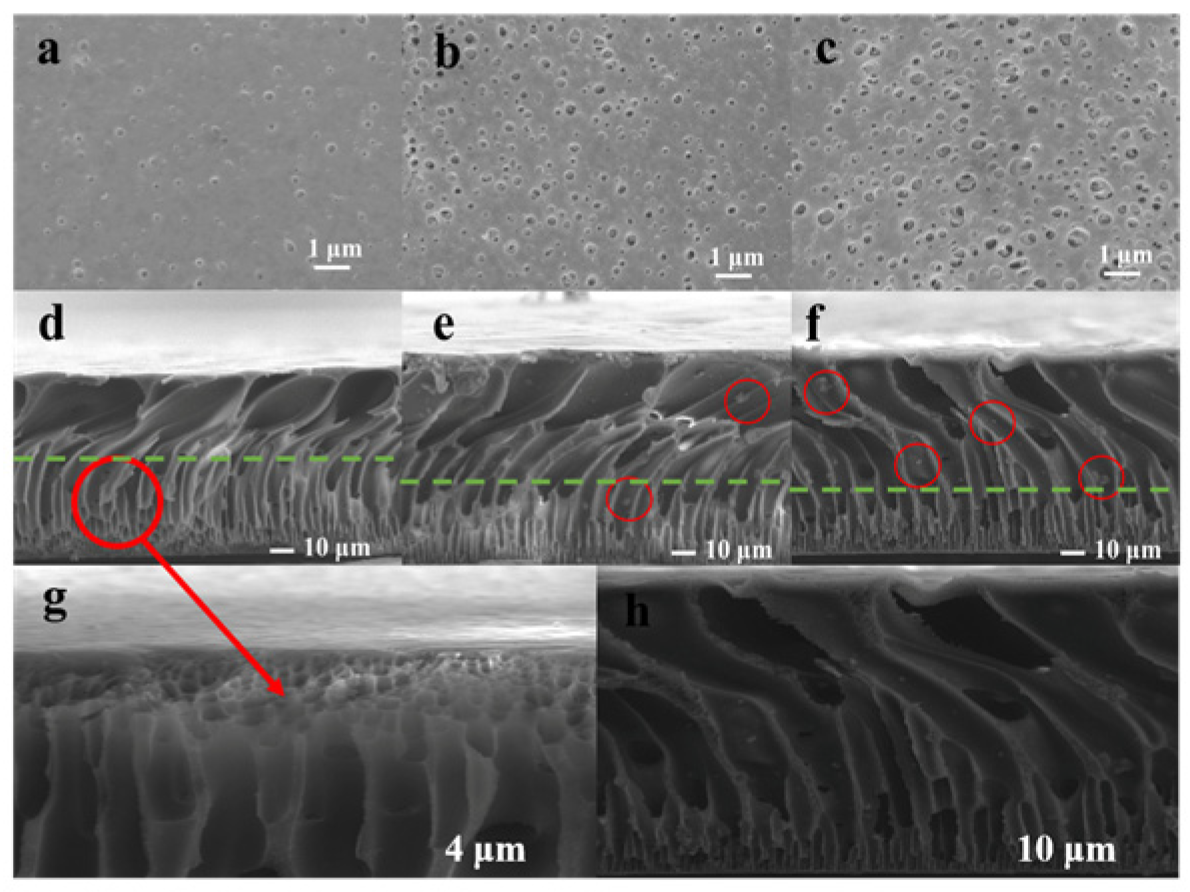
In order to study the microstructure of the Fe-VO-TiO2-PES composite membrane, the surface and cross-section are tested by SEM and are shown in Figure 4. It can be seen that there are uniformly distributed sponge pores on the surface of the pure PES membrane. After adding Fe-VO-TiO2 nanoparticles in the PES membrane, the pore structure gradually increased, and some nanoparticles in the aggregated state were formed on the surface and inside of the sponge pores [24,25]. More uniform honeycomb-like macropores were formed on the surface of the membrane as the content of Fe-VO-TiO2 nanoparticles increased (Figure 4c). Figure 4d–f show the cross-sectional SEM images of the membrane. A pure PES membrane consists of a dense skin layer and finger-like macropore structure with a typical asymmetric structure. For the Fe-VO-TiO2-PES composite membrane, the homogeneous finger-like microstructure of PES became longer and uneven, and the top dense layer became thinner. This may be due to the introduction of Fe-VO-TiO2 nanoparticles enhancing the hydrophilicity of the solution, which can accelerate the exchange rate between solvent and non-solvent, speed up the phase separation process and promote the development of non-homogeneous micropores in the composite membrane [26,27]. The thickness of the dense selective layer is a critical determinant of membrane performance. A thinner dense layer offers lower transport resistance, thereby resulting in superior permeation performance.
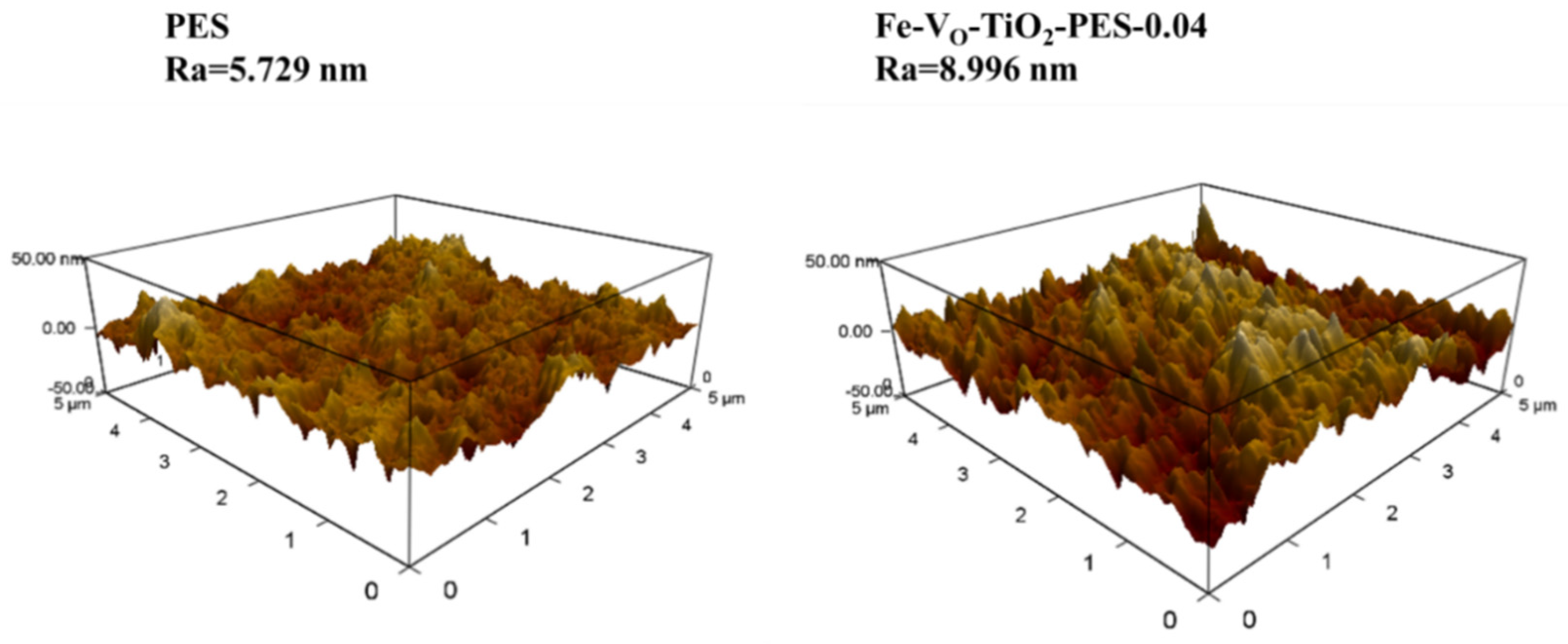
The surface morphology and roughness of Fe-VO-TiO2-PES membranes were further investigated by AFM and are shown in Figure 5. The calculated surface roughness Ra values of pure PES membrane were 5.729 nm, and the roughness of the Fe-VO-TiO2-PES composite membrane increased significantly to 8.996 nm with an addition mass ratio of 0.04. The increase in surface roughness implies the presence of a large number of “valley and peak” structures on the membrane surface. This is due to the Fe-VO-TiO2 nanoparticles filling the interstices in the inner layer of the membrane during membrane formation. The rough surface structure of the Fe-VO-TiO2-PES composite membrane can increase the effective filtration area, improve the hydrophilicity and permeability of the membrane, which will enhance the interaction between contaminants and photocatalysts, thereby benefiting the membranes’ anti-pollution performance [28].
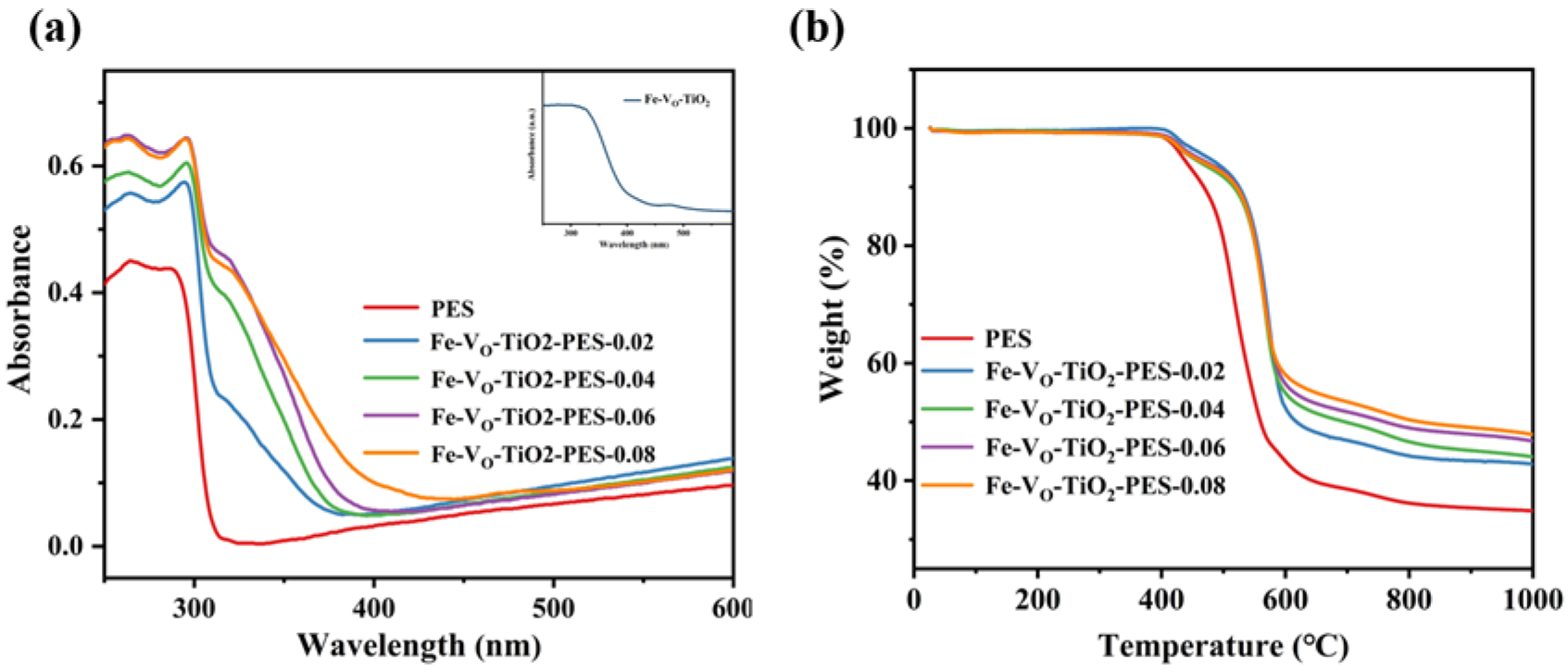
UV–visible diffuse reflectance spectra of the Fe-VO-TiO2-PES composite membrane were measured and are shown in Figure 6a. The pure PES membranes exhibited UV absorption only in the region below 315 nm, which originates from the benzene ring structure in the polyethersulfone. The Fe-VO-TiO2-PES composite membrane not only showed stronger absorption in the UV region but also a significant red shift in the visible light region. The enhanced light absorption region is similar to the absorption peak of the single Fe-VO-TiO2 nanoparticle powder [29]. Fe-Vo-TiO2 nanoparticles exhibit stronger visible light absorptions due to their abundant single-electron-trapped oxygen vacancies, which are located at 0.90–1.20 eV below the CB bottom of TiO2 and can form an intra-band within the band gap of TiO2, thereby obviously improving the visible-light absorption [22]. Meanwhile, the doped Fe ions could form doping energy levels within the band gap of TiO2, providing a bridge for the transition of valence band electrons to the conduction band, also inducing visible light absorption [23]. In a word, the visible light absorption in Fe-Vo-TiO2 should be attributed to the impurity energy levels formed by the doped Fe in the band gap of TiO2 and the contribution of single-electron oxygen vacancies. Therefore, the light absorption intensity of the Fe-VO-TiO2-PES composite film enhanced gradually with the increase in Fe-Vo-TiO2 content. These results indicate that the Fe-VO-TiO2-PES composite membrane exhibits significant light absorption ability, further demonstrating the successful introduction of Fe-VO-TiO2 nanoparticles within the PES films.
The thermal stability of ultrafiltration membranes can broaden the applications range of ultrafiltration membranes. In this work, the thermal stability of Fe-VO-TiO2-PES ultrafiltration membranes was tested by means of thermal weight loss analysis. As can be seen in Figure 6b, all five ultrafiltration membranes showed a significant mass loss for the first time at around 400 °C, which was related to the decomposition of PVP [30]. The second weight loss occurred at 500–550 °C, which was caused by the breakage of the main chain of the membrane matrix polyethersulfone. Pure PES membranes first experience a decrease in quality and the highest weight loss, which is mainly due to the highest PES content in the membrane. After adding Fe-VO-TiO2 nanoparticles to the PES membrane, the weight decay of the modified composite ultrafiltration membranes was relatively small, proving that the co-blended modification could effectively increase the thermal stability of the composite membranes. Moreover, the thermal stability of the Fe-VO-TiO2-PES composite membranes increased with increasing Fe-VO-TiO2 content.

3.3. Fe-VO-TiO2-PES Membrane Performance

3.3.1. Ultrafiltration Performance of Fe-VO-TiO2-PES Membrane

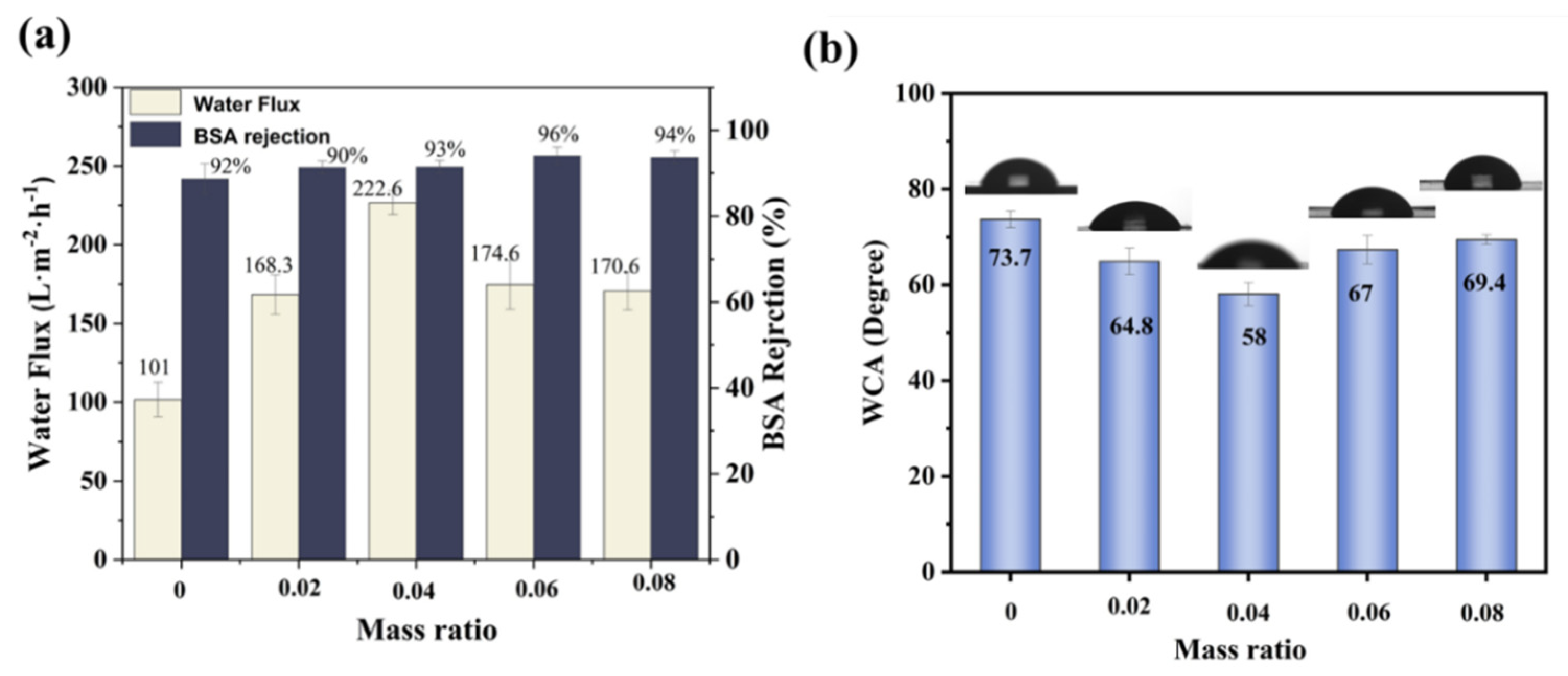
The effect of the addition amount of Fe-VO-TiO2 nanoparticles on the ultrafiltration performance of the PES membrane was further investigated. From Figure 7a, it can be seen that the pure water flux of the pure PES membrane was 101 L·m−2·h−1. With the increase in Fe-VO-TiO2 nanoparticle addition amount, the pure water flux of the Fe-VO-TiO2-PES ultrafiltration membrane showed a trend of first increasing and then decreasing. When the mass ratio of Fe-VO-TiO2 to PES is 0.04, the pure water flux reaches a maximum of 222.6 L·m−2·h−1. This trend is due to the introduction of hydrophilic nanoparticles, which increases the hydrophilicity of the composite membrane surface. Theoretically, as the hydrophilic ability of the membrane increases, the permeability of the membrane improves, and the pure water flux will be higher. However, excessive Fe-Vo-TiO2 content leads to nanoparticle agglomeration, which blocks membrane pores and thereby reduces permeability. The retention rate of BSA can keep more than 90% for all Fe-VO-TiO2-PES ultrafiltration membranes. Thus, we chose Fe-VO-TiO2-PES-0.04 as the optimal membrane, which can maintain effective retention performance without affecting the passage of water molecules.
The surface wettability of Fe-VO-TiO2-PES ultrafiltration membrane was evaluated by contact angle test to assess its hydrophilic performance. It is generally believed that a water contact angle greater than 90° is a hydrophobic substance, while a contact angle less than 90° is a hydrophilic substance. The contact angles of Fe-VO-TiO2-PES composite membranes are all less than 75°. When the mass ratio of Fe-VO-TiO2 to PES is 0.04, the contact angle is minimum (Figure 7b). The smaller the contact angle, the better the hydrophilicity. The results show that the Fe-VO-TiO2-PES composite membranes are all hydrophilic ultrafiltration membranes, and the changes in contact angle are consistent with the results of ultrafiltration performance.

3.3.2. Photocatalytic-Fenton Degradation Activity of Fe-VO-TiO2-PES Membranes

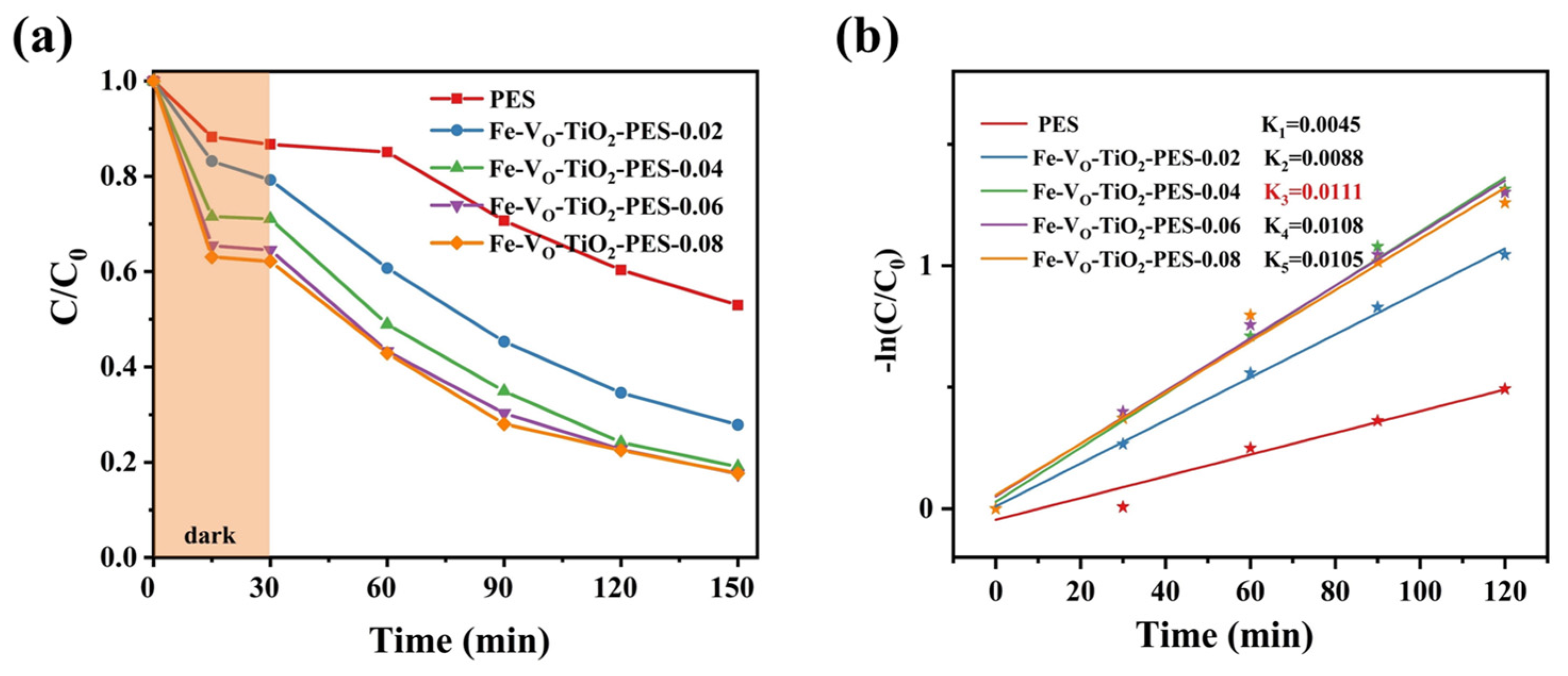
The Photocatalytic-Fenton degradation performance of Norfloxacin (NOR) with the Fe-VO-TiO2-PES composite membrane was investigated. As shown in Figure 8a, the Fe-VO-TiO2-PES membranes had a certain adsorption and retention ability due to their rich pore structure in the dark. Moreover, the Fe-VO-TiO2-PES composite membranes showed a higher adsorption capacity than that of pure PES membranes. With the increase in Fe-VO-TiO2 addition amount, the adsorption ability of Fe-VO-TiO2-PES composite membranes are obviously enhanced. In the Photocatalytic-Fenton degradation process, the NOR removal efficiency of pure PES was only 50%. After the introduction of Fe-VO-TiO2 nanoparticles, the Fe-VO-TiO2-PES composite membranes exhibited higher degradation efficiency than pure PES membranes. Moreover, with increasing Fe-VO-TiO2 catalyst content, the degradation efficiency obviously improves. When the mass ratio of Fe-VO-TiO2 to PES is 0.04, the degradation efficiency of the Fe-VO-TiO2-PES membrane can reach 80%, which hints that the moderate amount of Fe-VO-TiO2 catalyst can exhibit the best degradation activity of NOR. A kinetic analysis of the degradation process was carried out, and the results are shown in Figure 8b. The rate constant (k) of Fe-Vo-TiO2-PES-0.04 membrane is 0.0111 min−1, which is 2.5 times higher than that of pure PES (k = 0.0045 min−1). This significant enhancement is attributed to the synergistic design of Fe-Vo-TiO2 fillers, which not only promotes photocatalytic reactions but also facilitates the reduction in adjacent Fe3+ to Fe2+, accelerating the Fenton cycle. This coupling mechanism goes beyond simple superposition effects. Notably, our system uses only a small amount of immobilized catalyst and H2O2, achieving 80% NOR degradation in 120 min with 8 consecutive cycles, which balances degradation efficiency, reagent consumption, and practical operability better than most reported systems.
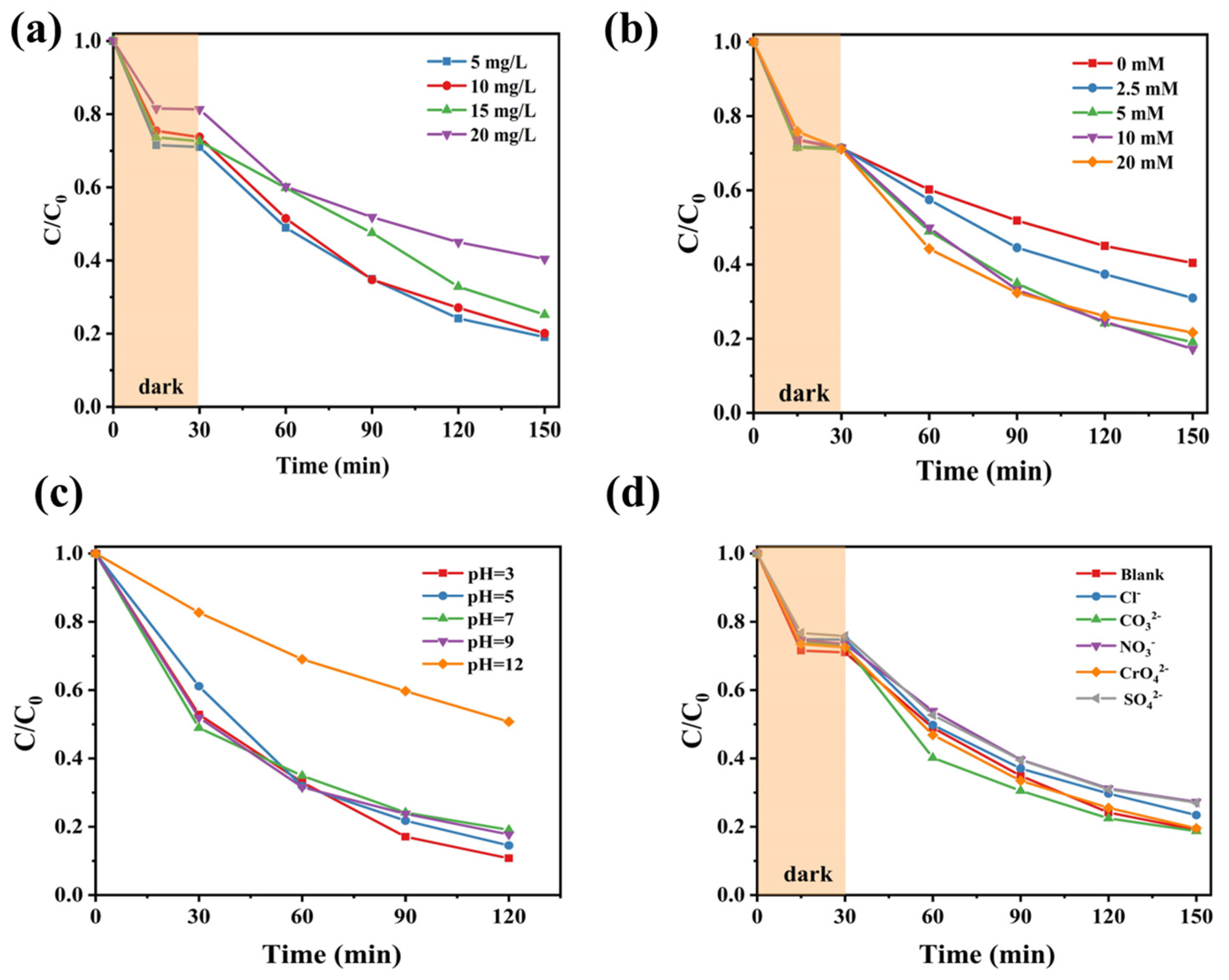
The effect of initial NOR concentration, H2O2 concentration, pH value and inorganic anions on the degradation activity of NOR for Fe-VO-TiO2-PES-0.04 membrane was investigated. The results showed that the adsorption capacity of the Fe-VO-TiO2-PES-0.04 composite membrane slightly decreased within 120 min with the increase in the initial NOR concentration under the same conditions (Figure 9a). This phenomenon is attributed to excessive NOR molecules occupying most of the active sites on the membrane surface, hindering the contact between H2O2 and Fe-Vo-TiO2 nanoparticles. The generated hydroxyl radicals are insufficient to degrade excessive NOR molecules. Figure 9b explores the effect of H2O2 dosing on the degradation efficiency of NOR for the Fe-VO-TiO2-PES-0.04 composite membrane. As the H2O2 concentration increased from 2.5 mM to 5 mM, the NOR removal rate gradually increased to a maximum value of 80%. However, the removal efficiency remained almost constant or even decreased when H2O2 concentration exceeded 10 mM, which was probably because the excess hydrogen peroxide would consume the already generated •OH and quench the generated •OH to •HO2. The generated •HO2 would further consume •OH [31] (Equation (5)), thus reducing the oxidation capacity of the system, so the optimum H2O2 dose was chosen to be 5 mM.
H2O2 + •OH → •HO2 + H2O
HO2 + •OH → O2 + H2O
The effect of pH values on NOR degradation efficiency of Fe-VO-TiO2-PES-0.04 composite membrane was investigated. The initial pH of NOR solution was adjusted from 3 to 12 using 1 M HCl and NaOH. The highest NOR degradation efficiency of Fe-VO-TiO2-PES-0.04 membrane was achieved at pH = 3, indicating that the acidic environment is more favorable for the production of •OH. Competitive adsorption of OH- and anions on the catalyst surface may be the main reason for its reduced efficiency when the pH value of the reaction solution is too high. At the same time, Fe2+ is more easily oxidized to Fe3+ under alkaline conditions, thus shortening the lifetime of Fe2+ and reducing the activation of H2O2 [32]. Overall, the NOR degradation efficiency of Fe-VO-TiO2-PES-0.04 composite membrane was above 78% in the pH = 3–9 range, indicating that the Photocatalytic-Fenton system can effectively broaden the traditional Fenton pH range from strongly acidic to weakly alkaline levels, which is beneficial for practical application in antibiotic wastewater treatment. Figure 9d evaluates the effect of common inorganic anions in the actual water environment on the NOR degradation performance of the Fe-VO-TiO2-PES-0.04 membrane. The experimental results show that the presence of interfering ions has a slight inhibitory effect on the NOR degradation performance, proving that the Photocatalytic-Fenton system has good resistance to ionic interference.
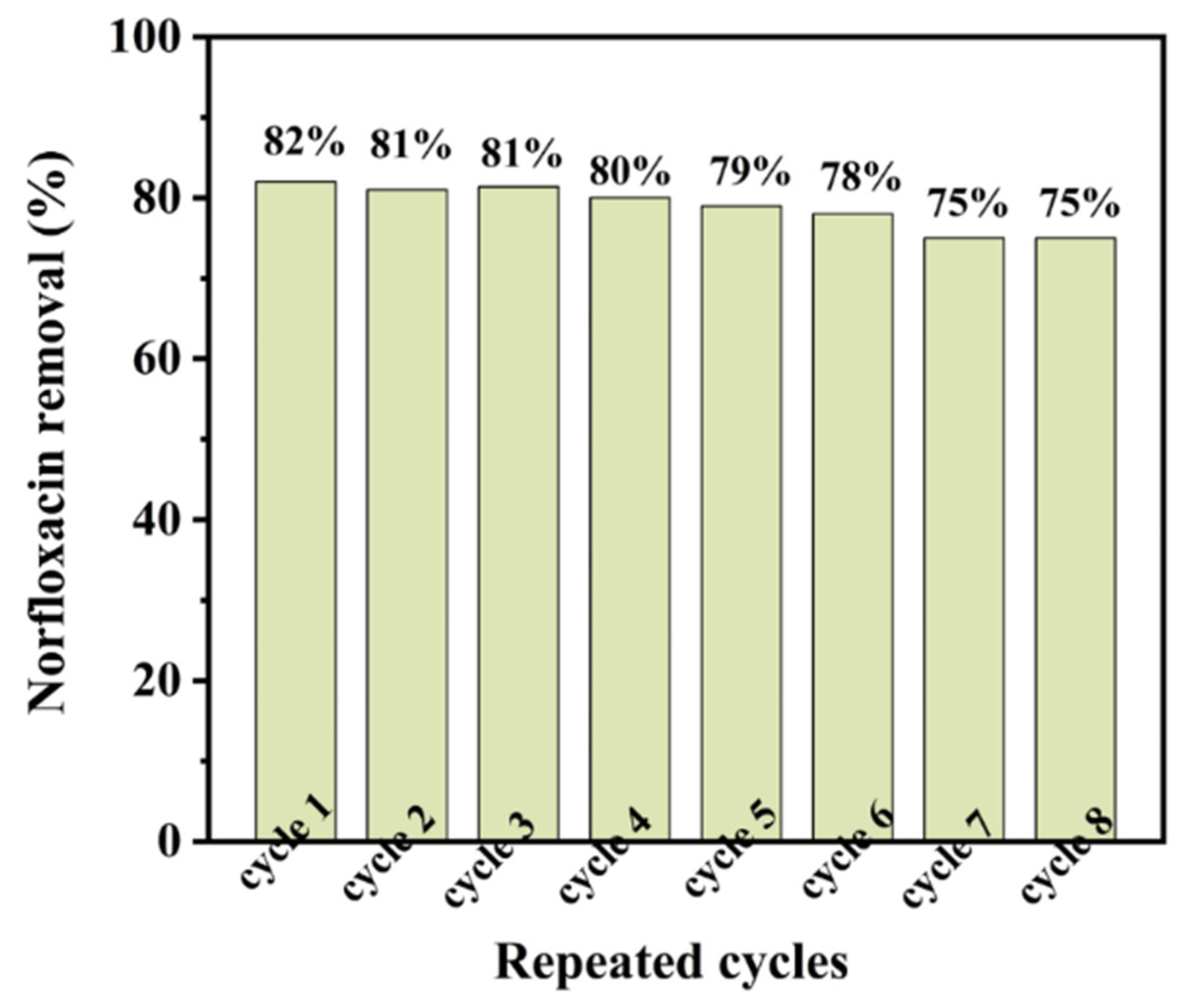
Cycling stability tests of the Fe-VO-TiO2-PES-0.04 composite membrane were carried out. The Fe-VO-TiO2-PES-0.04 composite membrane was still efficient in maintaining a removal efficiency of over 75% for NOR degradation with only 7% loss after eight times of cycling use (Figure 10). To evaluate the stability of the system and the potential risk of secondary pollution, the concentration of dissolved iron before and after cyclic operation was measured using inductively coupled plasma (ICP) spectroscopy. The initial dissolved Fe concentration in the reaction system was 0.01 mg/L. After eight consecutive cycles, it increased only slightly to 0.07 mg/L—a value well below the 0.3 mg/L limit set by the National Sanitary Standard for Drinking Water (GB 5749-2022 [33]). This minimal iron leaching confirms that the Fe-Vo-TiO2 nanoparticles are securely anchored within the PES matrix, thereby preventing the loss of active components and avoiding secondary contamination. The macroscopic Fe-VO-TiO2-PES-0.04 ultrafiltration membrane can be easily removed and reused from the NOR solution, compared to powder catalysts that need to be separated for recovery. Moreover, the contaminants can be easily removed from the surface of the composite membrane by filtration washing and backwashing and directly available for the next cycle. Thus, the Fe-VO-TiO2-PES-0.04 composite membrane exhibits excellent reusability and the advantage of low recovery costs in practical application.

3.3.3. Self-Cleaning Performance of Fe-VO-TiO2-PES-0.04 Ultrafiltration Membrane

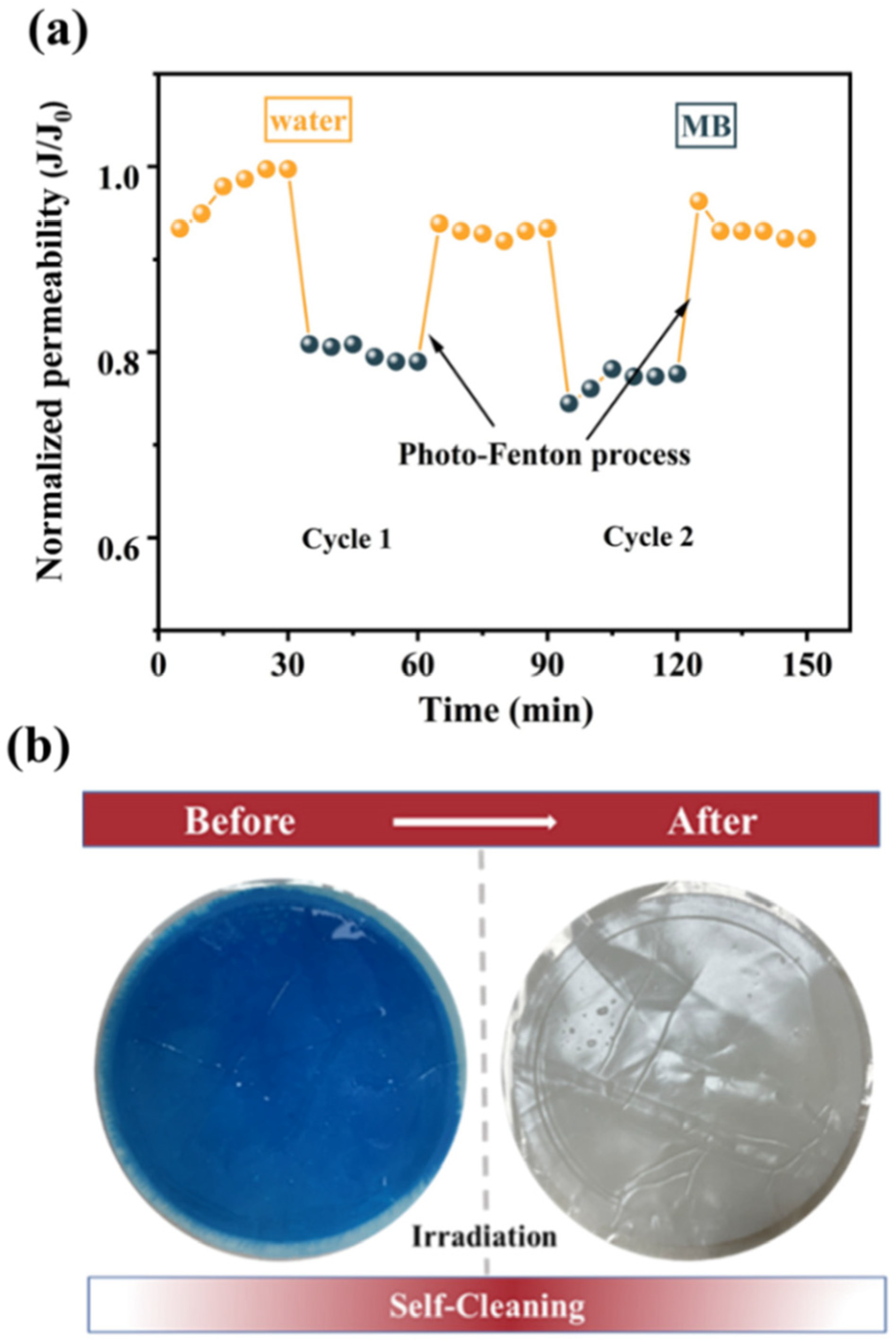
The self-cleaning ability of the membrane is an important factor affecting its service life and is an important indicator to evaluate its practical application value [34]. In this work, we conducted organic dye filtration experiments and Photocatalytic-Fenton catalytic oxidation experiments in turn to dynamically describe the permeability changes in the composite membranes at different stages (pure water filtration, dye separation, Photocatalytic-Fenton catalytic oxidation, pure water filtration). As shown in Figure 11a, the permeability of the Fe-VO-TiO2-PES-0.04 ultrafiltration membrane sharply decreased when methylene blue (MB,10 mg/L) was separated by filtration, which was mainly due to the severe concentration polarization effect [35] and the accumulation of contaminants leading to membrane contamination. After the contaminated Fe-VO-TiO2-PES-0.04 composite membrane was placed in 50 mL of pure water, and treated with 5 mM of H2O2 for 30 min under light irradiation. The permeability of Fe-VO-TiO2-PES-0.04 composite membrane increased by the evaluation of pure water flux again, and the flux recovery of the composite membrane was calculated to be 80% after two cycles. These results hint that the Fe-VO-TiO2-PES-0.04 composite membrane can efficiently degrade the residual MB contaminants on the membrane surface [36] by the Photocatalytic-Fenton synergetic effect, thus exhibiting excellent self-cleaning ability. In addition, it can be visually observed from Figure 11b that the Fe-VO-TiO2-PES-0.04 membranes still exhibit a clean surface after Photocatalytic-Fenton synergetic self-cleaning, which indicates that the composite membranes have good anti-pollution properties [37]. In a word, Fe-VO-TiO2-PES composite membrane is not merely an incremental increase in degradation rate but the successful creation of a single membrane platform that effectively combines high separation performance, efficient catalytic degradation and robust self-cleaning capability.

3.4. Degradation Mechanism of Fe-VO-TiO2-PES Composite Membrane

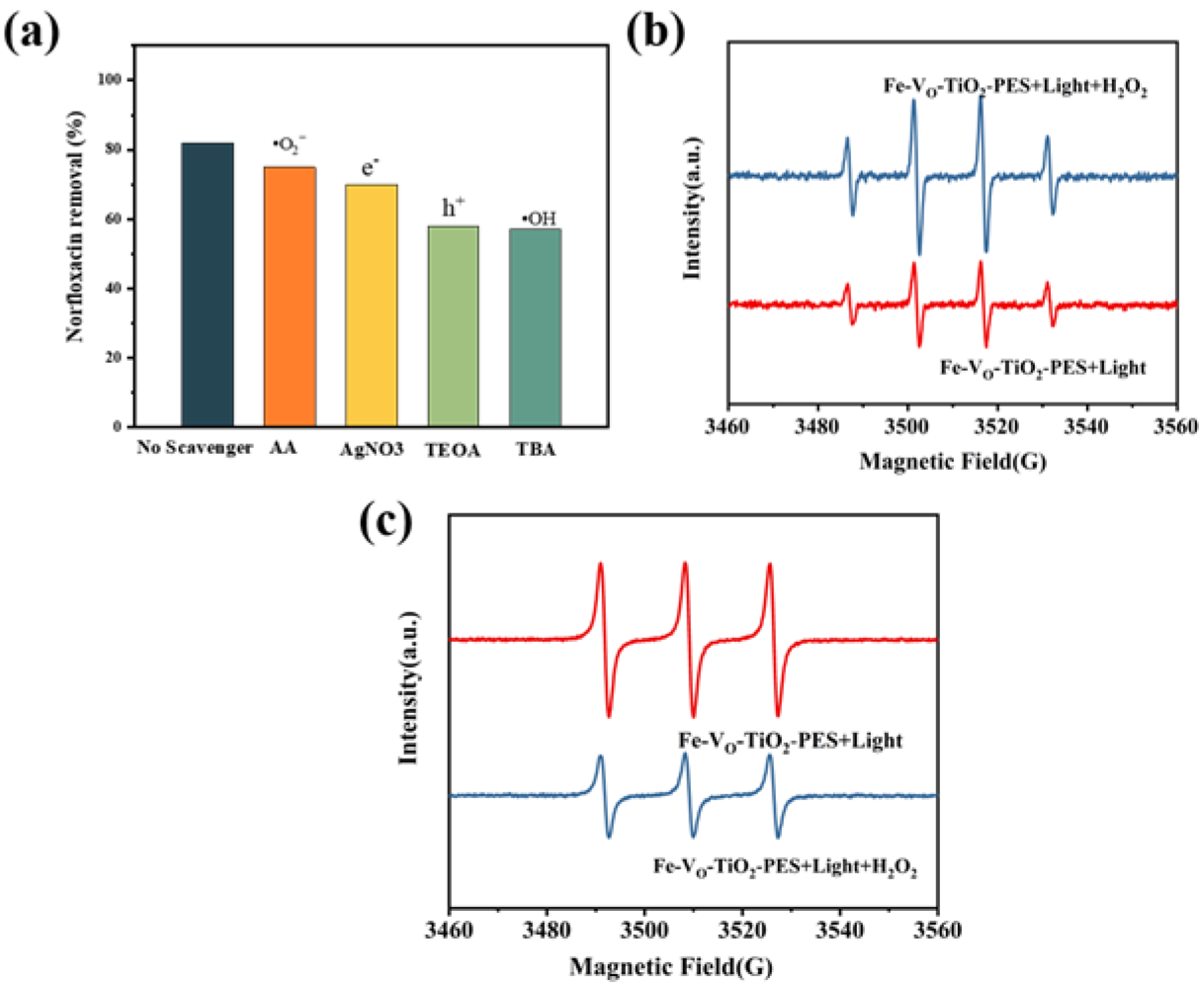
In order to reveal the Photocatalytic-Fenton self-cleaning mechanism of the Fe-VO-TiO2-PES composite membrane, different free radical scavengers were added to identify the active species in the degradation process (Figure 12). In the experiment, tert-butanol (TBA), triethanolamine (TEOA), silver nitrate (AgNO3) and ascorbic acid (AA) were used to quench •OH, h+, e- and •O2- [38], respectively. The NOR degradation efficiency of Fe-VO-TiO2-PES-0.04 composite membrane slightly decreased after adding AA or AgNO3; however, the degradation efficiency decreased significantly after the addition of TBA or TEOA, which proves that h+ and •OH played a major role in the degradation process. ESR tests proved the presence of the active species, comparing the free radical content in the two systems with and without the addition of hydrogen peroxide, as shown in Figure 12b. •OH signal was significantly enhanced, indicating that a Fe-VO-TiO2-PES-0.04 composite membrane Photocatalytic-Fenton synergistic system was successfully constructed. Since the presence of h+ leads to a decrease in the intensity of the TEMPO peak, it can be inferred from Figure 12c that more h+ is present in the Photocatalytic-Fenton system.
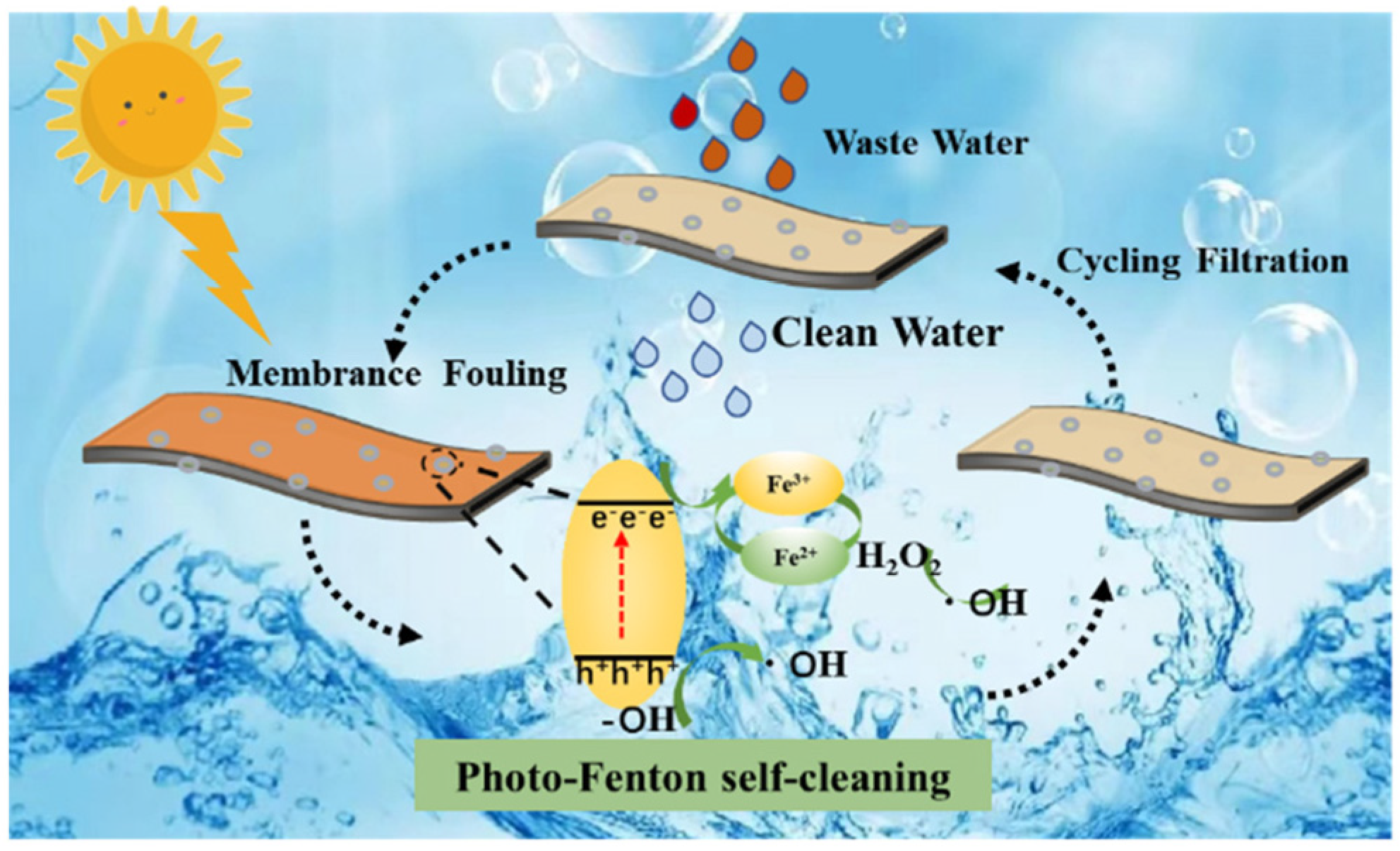
Based on the above analysis, the Photocatalytic-Fenton self-cleaning mechanism is proposed and shown in Figure 13, which can be divided into three steps: (1) Under visible light irradiation, Fe-Vo-TiO2 generates photogenerated electrons and holes; Fe3+ in the membrane acts as an electron acceptor, capturing electrons to form Fe2+, which suppresses electron and hole recombination. (2) Fe2+ reacts with H2O2 via the Fenton reaction to generate •OH and regenerate Fe3+, completing the Fe3+/Fe2+ cycle. (3) The generated •OH (non-selectively degrades organic molecules) and h+ (directly oxidizes pollutants) synergistically attack NOR or MB pollutants accumulated on the membrane surface, achieving self-cleaning. In brief, the Fe-VO-TiO2-PES composite membrane was able to maintain a high membrane flux during continuous filtration and an effective degradation capacity over multiple cycles, which prolonged the effective life of the composite membrane.

4. Conclusions

In this work, a series of hydrophilic Fe-VO-TiO2-PES composite ultrafiltration membranes was fabricated via phase inversion. The membrane formation conditions were optimized by adjusting the amount of PES and catalyst, resulting in modified composite membranes that integrate efficient separation with catalytic degradation capability. The experimental results show that Fe-VO-TiO2-PES exhibits excellent catalytic degradation performance, achieving about 80% removal efficiency of NOR within 120 min. More importantly, the membrane maintains stable catalytic activity over eight consecutive cycles and reusability, overcoming the practical bottlenecks of conventional powdered catalysts such as difficult recovery and high operational cost. Furthermore, the Fe-VO-TiO2-PES-0.04 composite membrane demonstrates remarkable Photocatalytic-Fenton self-cleaning ability. The hydroxyl radicals and holes generated in situ can effectively remove the fouling layer on the membrane surface, improving flux recovery and extending membrane lifespan. This study provides a new direction for the application of Photo-functionalized membrane process in practical wastewater treatment.

Author Contributions

Formal analysis, W.Z.; Data curation, S.H.; Writing—original draft, Y.X.; Writing—review & editing, J.Y.; Project administration, M.Z. All authors have read and agreed to the published version of the manuscript.

Funding

This work was financially supported by the Natural Science Foundation of Henan Province (242300421346).

Institutional Review Board Statement

Not applicable.

Informed Consent Statement

Not applicable.

Data Availability Statement

The original contributions presented in this study are included in the article. Further inquiries can be directed to the corresponding author.

Conflicts of Interest

The authors declare no conflicts of interest.

References

  1. Wang, M.; Janssen, A.B.G.; Bazin, J.; Strokal, M.; Ma, L.; Kroeze, C. Accounting for interactions between Sustainable Development Goals is essential for water pollution control in China. Nat. Commun. 2022, 13, 730. [Google Scholar] [CrossRef] [PubMed]
  2. Wu, H.; Li, A.; Yang, X.; Wang, J.T.; Liu, Y.L.; Zhan, G.Q. The research progress, hotspots, challenges and outlooks of solid-phase denitrification process. Sci. Total. Environ. 2023, 858, 159929. [Google Scholar] [PubMed]
  3. Tang, K.; Zhao, H. Quinolone Antibiotics: Resistance and Therapy. Infect. Drug Resist. 2023, 16, 811–820. [Google Scholar] [CrossRef]
  4. Yang, C.D.; Wu, T.Y. A comprehensive review on quinolone contamination in environments: Current research progress. Environ. Sci. Pollut. Res. Int. 2023, 30, 48778–48792. [Google Scholar] [CrossRef]
  5. Zhao, L.; Ji, Y.; Sun, P.Z.; Deng, J.H.; Wang, H.Y.; Yang, Y.K. Effects of individual and combined zinc oxide nanoparticle, norfloxacin, and sulfamethazine contamination on sludge anaerobic digestion. Bioresour. Technol. 2019, 273, 454–461. [Google Scholar] [CrossRef]
  6. Saravanan, A.; Deivayanai, V.C.; Kumar, P.S.; Rangasamy, G.; Hemavathy, R.V.; Harshana, T.; Gayathri, N.; Alagumalai, K. A detailed review on advanced oxidation process in treatment of wastewater: Mechanism, challenges and future outlook. Chemosphere 2022, 308, 136524. [Google Scholar] [CrossRef]
  7. Li, Z.L.; Wang, J.S.; Chang, J.; Chang, J.J.; Fu, B.M.; Wang, H.T. Insight into advanced oxidation processes for the degradation of fluoroquinolone antibiotics: Removal, mechanism, and influencing factors. Sci. Total Environ. 2023, 857, 159172. [Google Scholar] [CrossRef]
  8. Wang, X.C.; Jing, J.A.; Zhou, M.; Zhou, M.H.; Dewil, R. Recent advances in H2O2-based advanced oxidation processes for removal of antibiotics from wastewater. Chin. Chem. Lett. 2023, 34, 107621. [Google Scholar] [CrossRef]
  9. Zhu, G.P.; Yu, X.D.; Xie, F.; Feng, W. Ultraviolet light assisted heterogeneous Fenton degradation of tetracycline based on polyhedral Fe3O4 nanoparticles with exposed high-energy (110) facets. Appl. Surf. Sci. 2019, 485, 496–505. [Google Scholar] [CrossRef]
  10. Xu, T.Y.; Zhu, R.L.; Zhu, G.Q.; Zhu, J.X.; Liang, X.L.; Zhu, Y.P.; He, H.P. Mechanisms for the enhanced photo-Fenton activity of ferrihydrite modified with BiVO4 at neutral pH. Appl. Catal. B Environ. 2017, 212, 50–58. [Google Scholar]
  11. John, S.; Rathinavelu, S.; Mary, S.M.S.; Nambi, I.M.; Babu, S.M.; Thomas, T.; Singh, S. Solar-driven hybrid photo-Fenton degradation of persistent antibiotic ciprofloxacin by zinc ferrite-titania heterostructures: Degradation pathway, intermediates, and toxicity analysis. Environ. Sci. Pollut. Res. Int. 2023, 30, 39605–39617. [Google Scholar] [CrossRef] [PubMed]
  12. Adam, M.R.; Othman, M.H.D.; Kurniawan, T.A.; Puteh, M.H.; Ismail, A.F.; Khongnakorn, W.; Rahman, M.; Jaafar, J. Advances in adsorptive membrane technology for water treatment and resource recovery applications: A critical review. J. Environ. Chem. Eng. 2022, 10, 107633. [Google Scholar] [CrossRef]
  13. Chang, H.Q.; Zhu, Y.Y.; Yu, H.K.; Qu, F.S.; Zhou, Z.W.; Li, X.; Yang, Y.L.; Tang, X.B.; Liang, H. Long-term operation of ultrafiltration membrane in full-scale drinking water treatment plants in China: Characteristics of membrane performance. Desalination 2022, 543, 116122. [Google Scholar] [CrossRef]
  14. Zhang, H.R.; Mane, A.U.; Yang, X.B.; Mane, A.U.; Yang, X.B.; Xia, Z.J.; Barry, E.F.; Luo, J.Q.; Wan, Y.H.; Elam, J.W.; et al. Visible-Light-Activated Photocatalytic Films toward Self-Cleaning Membranes. Adv. Funct. Mater. 2020, 30, 2002847. [Google Scholar] [CrossRef]
  15. Shi, Y.H.; Huang, J.H.; Zeng, G.M.; Cheng, W.J.; Hu, J.L. Photocatalytic membrane in water purification: Is it stepping closer to be driven by visible light. J. Membr. Sci. 2019, 584, 364–392. [Google Scholar] [CrossRef]
  16. Berger, T.E.; Regmi, C.; Schäfer, A.I.; Richards, B.S. Photocatalytic degradation of organic dye via atomic layer deposited TiO2 on ceramic membranes in single-pass flow-through operation. J. Membr. Sci. 2020, 604, 118015. [Google Scholar] [CrossRef]
  17. Zhang, H.-Z.; Xu, Z.-L.; Shen, Q. High-performance nanofiltration membrane intercalated by FeOOH nanorods for water nanofiltration. Desalination 2021, 498, 114802. [Google Scholar] [CrossRef]
  18. Sun, S.B.; Yao, H.; Fu, W.Y.; Xue, S.; Zhang, W. Enhanced degradation of antibiotics by photo-fenton reactive membrane filtration. J. Hazard Mater. 2020, 386, 121955. [Google Scholar] [CrossRef]
  19. Lv, Y.; Zhang, C.; He, A.; Yang, S.J.; Wu, G.P.; Darling, S.B.; Xu, Z.K. Photocatalytic Nanofiltration Membranes with Self-Cleaning Property for Wastewater Treatment. Adv. Funct. Mater. 2017, 27, 1700251. [Google Scholar] [CrossRef]
  20. Pantuso, E.; Filpo, G.; Nicoletta, F.P. Light-Responsive Polymer Membranes. Adv. Opt. Mater. 2019, 7, 1900252. [Google Scholar] [CrossRef]
  21. Mi, Y.; Wang, N.; Fang, X.; Cao, J.; Tao, M.; Cao, Z. Interfacial polymerization nanofiltration membrane with visible light photocatalytic self-cleaning performance by incorporation of CQD/TiO2. Sep. Purif. Technol. 2021, 277, 119500. [Google Scholar] [CrossRef]
  22. Zhang, M.; Jin, Z.S.; Zhang, J.W.; Guo, X.Y.; Yang, H.J.; Li, W.; Wang, X.D.; Zhang, Z.J. Effect of annealing temperature on morphology, structure and photocatalytic behavior of nanotubed H2Ti2O4(OH)2. J. Mol. Catal. A Chem. 2004, 217, 203. [Google Scholar] [CrossRef]
  23. Li, H.Y.; Ren, F.Z.; Liu, J.F.; Wang, Q.L.; Li, Q.Y.; Yang, J.J.; Wang, Y.X. Endowing single-electron-trapped oxygen vacancy self-modified titanium dioxide with visible-light photocatalytic activity by grafting Fe(III) nanocluster. Appl. Catal. B Environ. 2015, 172, 37. [Google Scholar] [CrossRef]
  24. Chen, L.; Yang, B.; Zhou, P.; Xu, T.; He, C.; Xu, Y.T.; Zhao, W.F.; Zhao, C.S. A polyethersulfone composite ultrafiltration membrane with the in-situ generation of CdS nanoparticles for the effective removal of organic pollutants and photocatalytic self-cleaning. J. Membr. Sci. 2021, 638, 119715. [Google Scholar] [CrossRef]
  25. Xu, Y.T.; Lin, W.T.; Wang, H.; Guo, J.B.; Yuan, D.D.; Bao, J.X.; Sun, S.D.; Zhao, W.F.; Zhao, C.S. Dual-functional polyethersulfone composite nanofibrous membranes with synergistic adsorption and photocatalytic degradation for organic dyes. Compos. Sci. Technol. 2020, 199, 08353. [Google Scholar] [CrossRef]
  26. Cheng, X.J.; Liao, J.H.; Xue, Y.; Lin, Q.Q.; Yang, Z.M.; Yan, G.L.; Zeng, G.Y.; Sengupta, A. Ultrahigh-flux and self-cleaning composite membrane based on BiOCl-PPy modified MXene nanosheets for contaminants removal from wastewater. J. Membr. Sci. 2022, 644, 120188. [Google Scholar] [CrossRef]
  27. Bai, L.M.; Wu, H.Y.; Ding, J.W.; Ding, A.; Zhang, X.Y.; Ren, N.Q.; Li, G.B.; Liang, H. Cellulose nanocrystal-blended polyethersulfone membranes for enhanced removal of natural organic matter and alleviation of membrane fouling. Chem. Eng. J. 2020, 382, 122919. [Google Scholar] [CrossRef]
  28. Chijioke-Okere, M.O.; Adlan Mohd Hir, Z.; Ogukwe, C.E.; Njoku, P.C.; Abdullah, A.H.; Oguzie, E.E. TiO2/Polyethersulphone films for photocatalytic degradation of acetaminophen in aqueous solution. J. Mol. Liq. 2021, 338, 116692. [Google Scholar] [CrossRef]
  29. Chen, Y.; Lu, W.Y.; Shen, H.B.; Gu, Y.; Xu, T.F.; Zhu, Z.X.; Wang, G.Q.; Chen, W.X. Solar-driven efficient degradation of emerging contaminants by g-C3N4-shielding polyester fiber/TiO2 composites. Appl. Catal. B Environ. 2019, 258, 117960. [Google Scholar] [CrossRef]
  30. Chen, S.F.; Guo, Y.T.; Yuan, D.D.; He, C.; Bao, J.X.; Ai, S.J.; Li, F.; Zhao, W.F.; Xu, Y.T.; Zhao, C.S. Constructing porous channels in superhydrophilic polyethersulfone composite nanofibrous membranes for sustainably enhanced photocatalytic activities in wastewater remediation. Compos. Sci. Technol. 2021, 214, 108993. [Google Scholar] [CrossRef]
  31. Zhu, C.X.; Wang, Y.J.; Qiu, L.Y.; Yang, W.W.; Yu, Y.S.; Li, J.M.; Liu, Y.Q. Z-scheme NiFe LDH/Bi4O5I2 heterojunction for photo-Fenton oxidation of tetracycline. J. Alloys Compd. 2023, 944, 169124. [Google Scholar] [CrossRef]
  32. Wang, X.N.; Zhang, X.C.; Zhang, Y.; Wang, Y.; Sun, S.P.; Wu, W.D.; Wu, Z.X. Nanostructured semiconductor supported iron catalysts for heterogeneous photo-Fenton oxidation: A review. J. Mater. Chem. A 2020, 8, 15513–15546. [Google Scholar] [CrossRef]
  33. GB 5749-2022; Standards for Drinking Water Quality. State Administration for Market Regulation and the Standardization Administration of China: Beijing, China, 2022.
  34. Silva, T.L.d.; Costa, C.S.D.; Silva, M.G.C.d.; Vieira, M.G.A. Overview of non-steroidal anti-inflammatory drugs degradation by advanced oxidation processes. J. Clean. Prod. 2022, 346, 131226. [Google Scholar] [CrossRef]
  35. Wang, M.; Xu, Z.; Hou, Y.; Li, P.; Sun, H.; Niu, Q.J. Photo-Fenton assisted self-cleaning hybrid ultrafiltration membranes with high-efficient flux recovery for wastewater remediation. Sep. Purif. Technol. 2020, 249, 117159. [Google Scholar] [CrossRef]
  36. Li, N.; Chen, G.Y.; Zhao, J.H.; Yan, B.B.; Cheng, Z.J.; Meng, L.J.; Chen, V. Self-cleaning PDA/ZIF-67@PP membrane for dye wastewater remediation with peroxymonosulfate and visible light activation. J. Membr. Sci. 2019, 591, 117341. [Google Scholar] [CrossRef]
  37. Yue, R.Y.; Raisi, B.; Rahmatinejad, J.; Ye, Z.B.; Barbeau, B.; Rahaman, M.S. A photo-Fenton nanocomposite ultrafiltration membrane for enhanced dye removal with self-cleaning properties. J. Colloid Interface Sci. 2021, 604, 458–468. [Google Scholar] [CrossRef]
  38. Zhong, R.; Yang, W.H.; Gao, H.; Wang, T.; Zhang, D.N.; Wu, H.; Zhou, R.; Wu, Y.X.; Kong, C.C.; Yang, Z.M.; et al. Magnetically recyclable MXene derived N-doped TiO2@C@Fe3O4 nanosheets for enhanced degradation of organic pollutants via photo-Fenton. Colloids Surf. A Physicochem. Eng. Asp. 2022, 655, 130200. [Google Scholar] [CrossRef]
Figure 1. TEM (a) and HTEM images (b) of Fe-VO-TiO2 nanoparticle.
Coatings 16 00125 g001
Figure 2. XRD pattern (a) and Raman spectra (b) of different samples.
Coatings 16 00125 g002
Figure 3. XPS spectra of VO-TiO2 and Fe-VO-TiO2 samples: (a) Ti 2p, (b) O1s, (c) Fe 2p.
Coatings 16 00125 g003
Figure 4. SEM surface and cross-section images of different membranes: (a,d) PES; (b,e) Fe-VO-TiO2-PES-0.04; (c,f) Fe-VO-TiO2-PES-0.08. Local enlargements of the dense and finger-like macroporous layers (g,h).
Coatings 16 00125 g004
Figure 5. AFM images of PES and Fe-VO-TiO2-PES-0.04 membrane.
Coatings 16 00125 g005
Figure 6. UV–vis DRS spectra (a) and thermogravimetric curves (b) of Fe-VO-TiO2-PES membrane.
Coatings 16 00125 g006
Figure 7. Effect of Fe-VO-TiO2 addition amount on PES membrane performance: (a) ultrafiltration performance; (b) hydrophilic properties of membrane.
Coatings 16 00125 g007
Figure 8. (a) NOR degradation performance of Fe-VO-TiO2-PES membrane; (b) kinetic analysis.
Coatings 16 00125 g008
Figure 9. The effect of different reaction conditions on the NOR degradation performance of Fe-VO-TiO2-PES-0.04 membrane: (a) initial NOR concentration; (b) H2O2 concentration; (c) pH values; (d) anion effect.
Coatings 16 00125 g009
Figure 10. NOR degradation cycle test of Fe-VO-TiO2-PES-0.04 ultrafiltration membrane.
Coatings 16 00125 g010
Figure 11. Photocatalytic-Fenton self-cleaning performance of Fe-VO-TiO2-PES-0.04 composite membrane: (a) Change in membrane flux by different treatment processes. (b) Images of the membrane before and after self-cleaning.
Coatings 16 00125 g011
Figure 12. (a) Results of free radical scavenging experiments; ESR spectra for different experimental conditions (b) DMPO—•OH; (c) TEMPO—h+.
Coatings 16 00125 g012
Figure 13. Photocatalytic-Fenton synergetic degradation mechanism of Fe-VO-TiO2-PES membrane.
Coatings 16 00125 g013
Disclaimer/Publisher’s Note: The statements, opinions and data contained in all publications are solely those of the individual author(s) and contributor(s) and not of MDPI and/or the editor(s). MDPI and/or the editor(s) disclaim responsibility for any injury to people or property resulting from any ideas, methods, instructions or products referred to in the content.