Microstructured Coatings and Surface Functionalization of Poly(caprolactone-co-lactide) Using Gas-Permeable Mold

 , and
, and 
Abstract
1. Introduction
2. Materials and Methodology
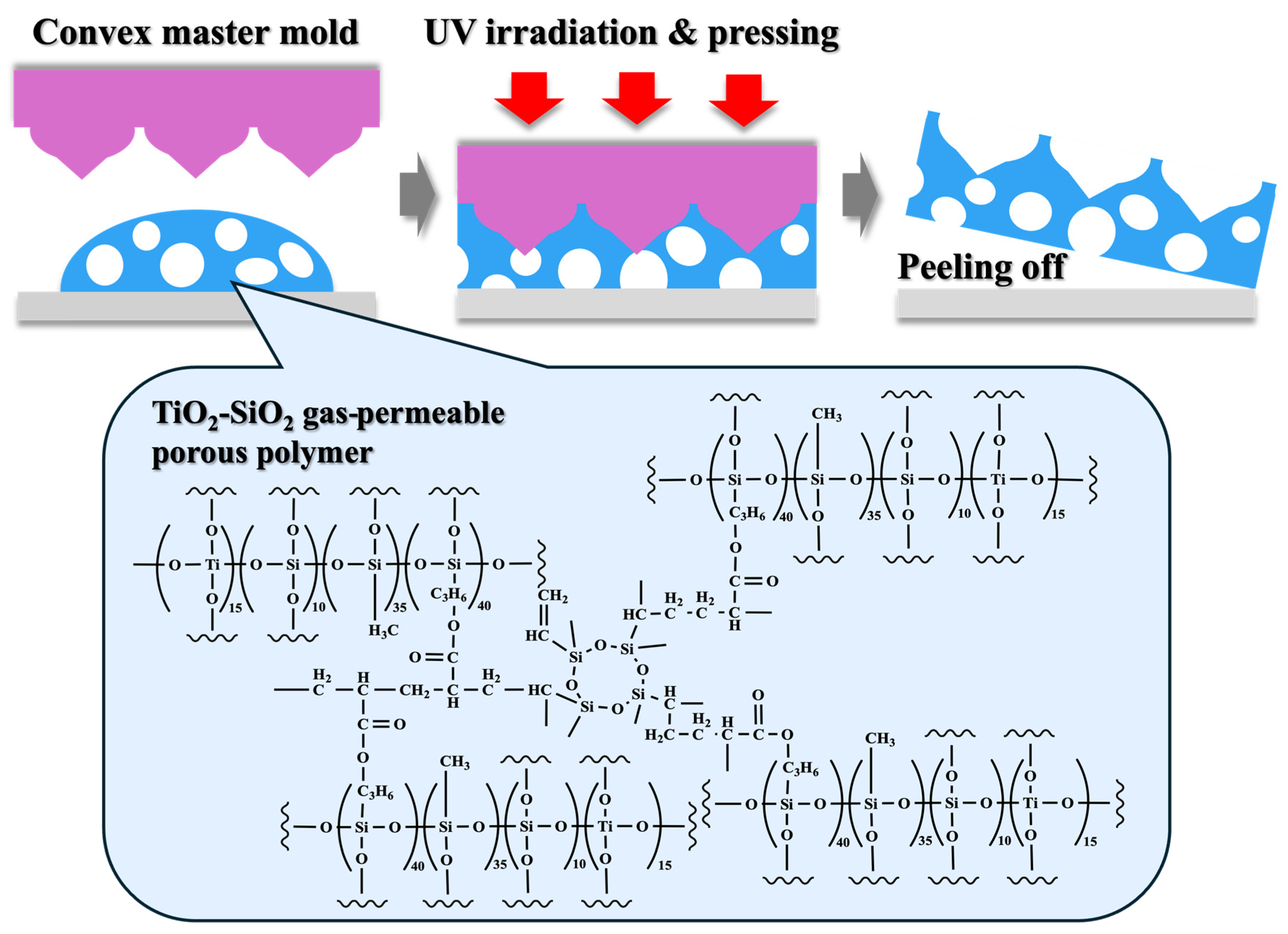
2.1. Fabrication of TiO2–SiO2 Gas-Permeable Mold
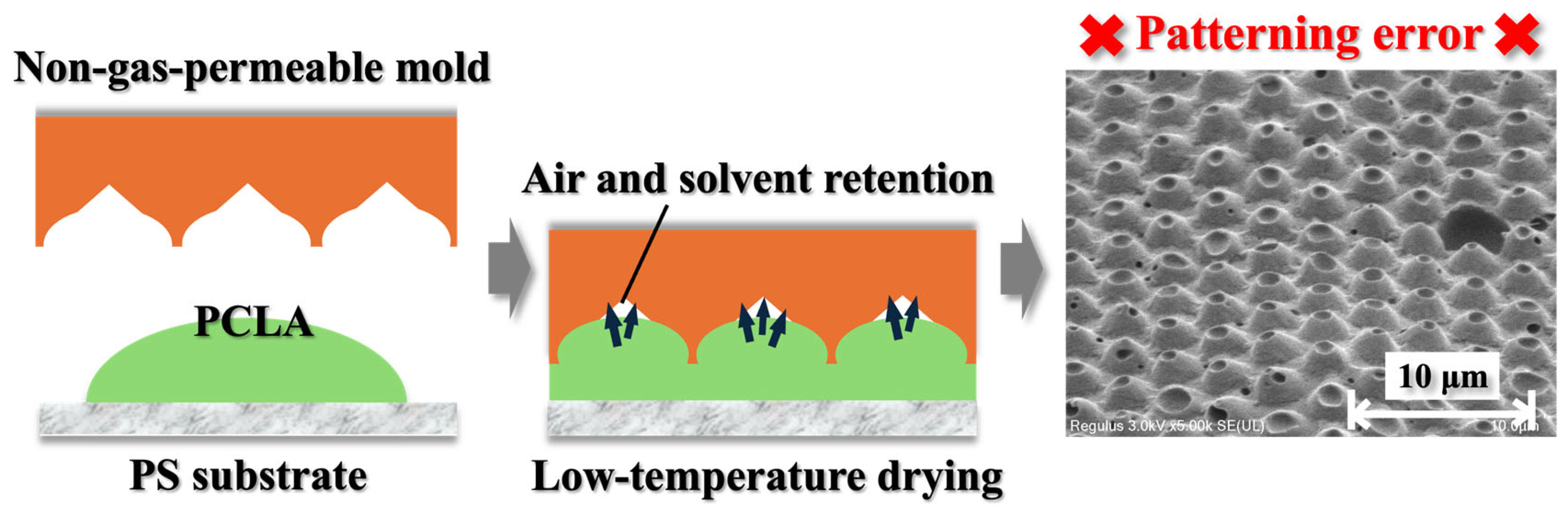
2.2. Fabrication of Non-Gas Permeable Mold
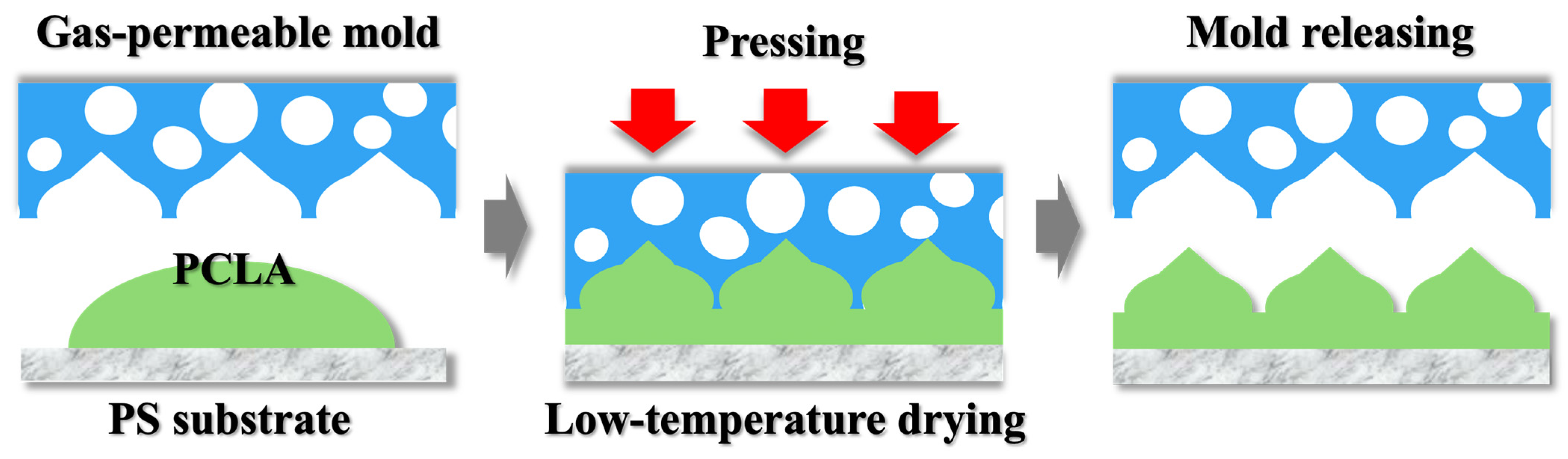
2.3. Surface Microfabrication Process
2.4. SEM Analysis of Microcoated PCLA Surfaces
2.5. Fourier Transform Infrared (FT-IR) Spectroscopy
2.6. Water Contact Angle Measurement
2.7. Fluorescence Intensity Measurement
3. Results and Discussion
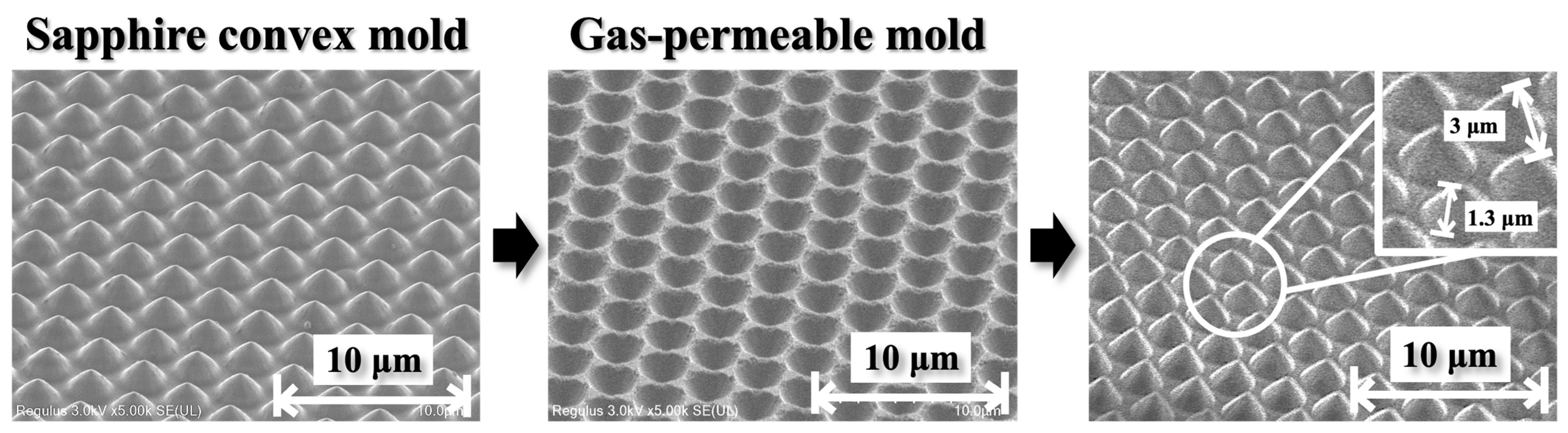
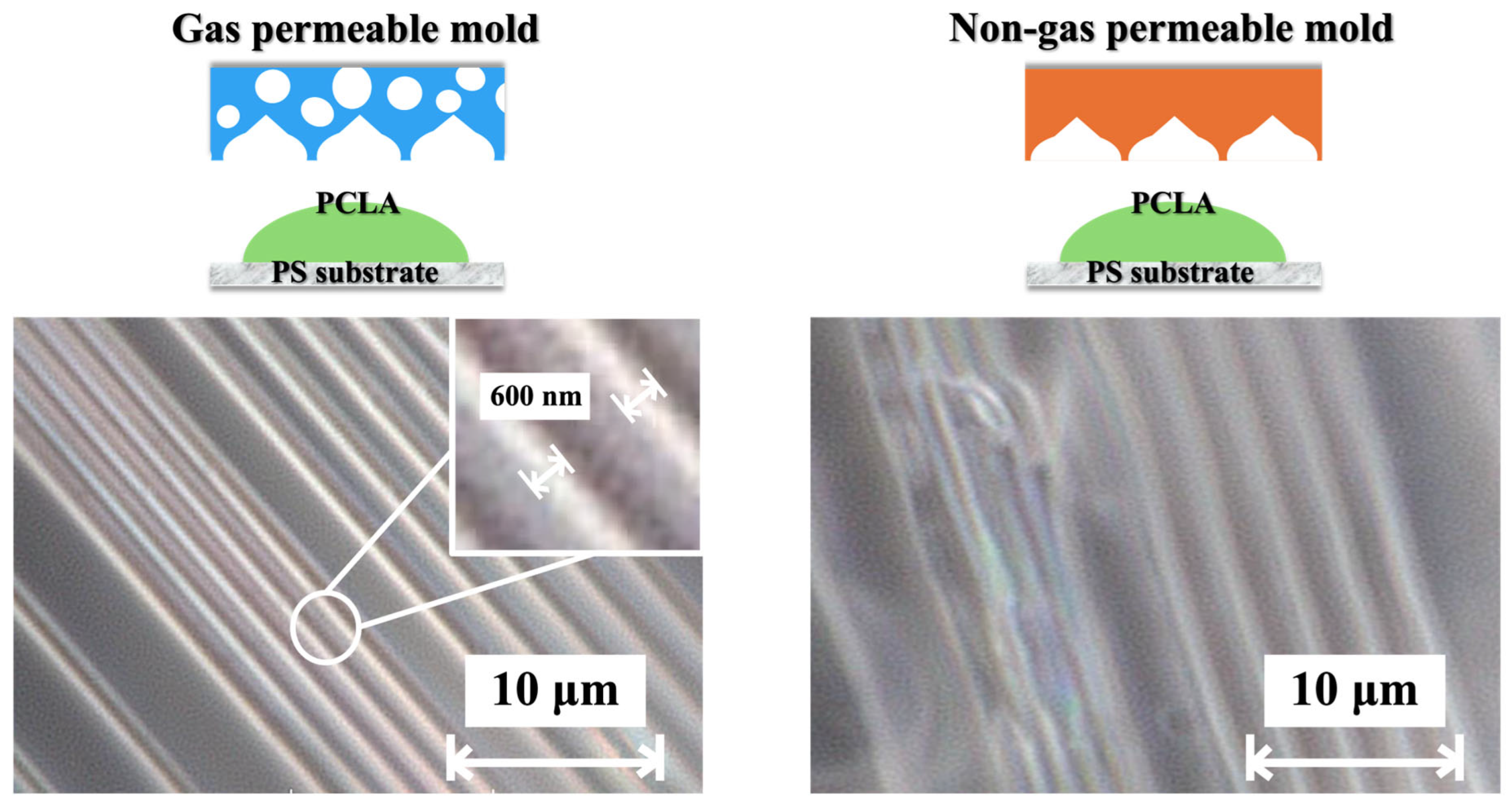
3.1. Surface Microfabrication of PCLA
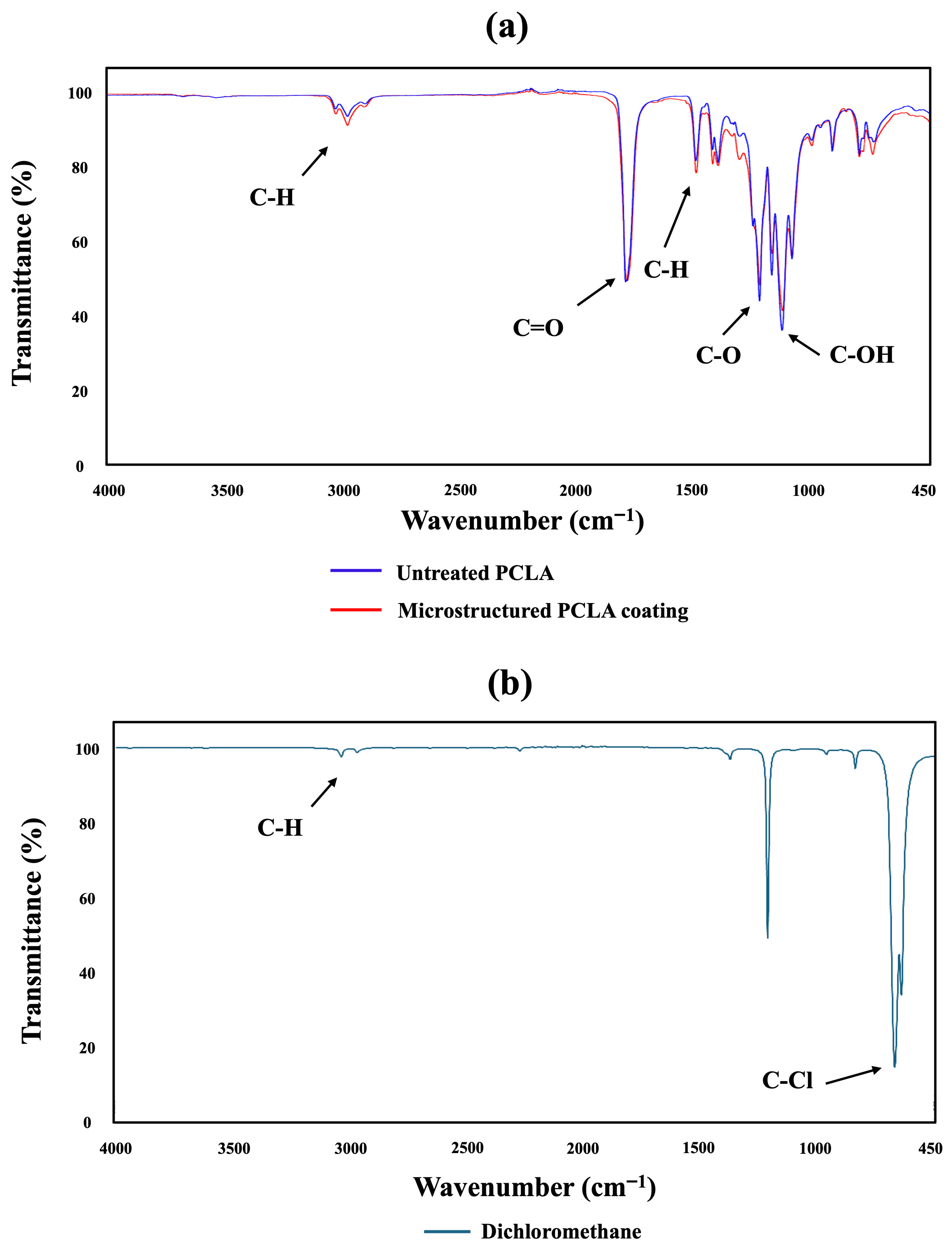
3.2. FT-IR Spectral Analysis
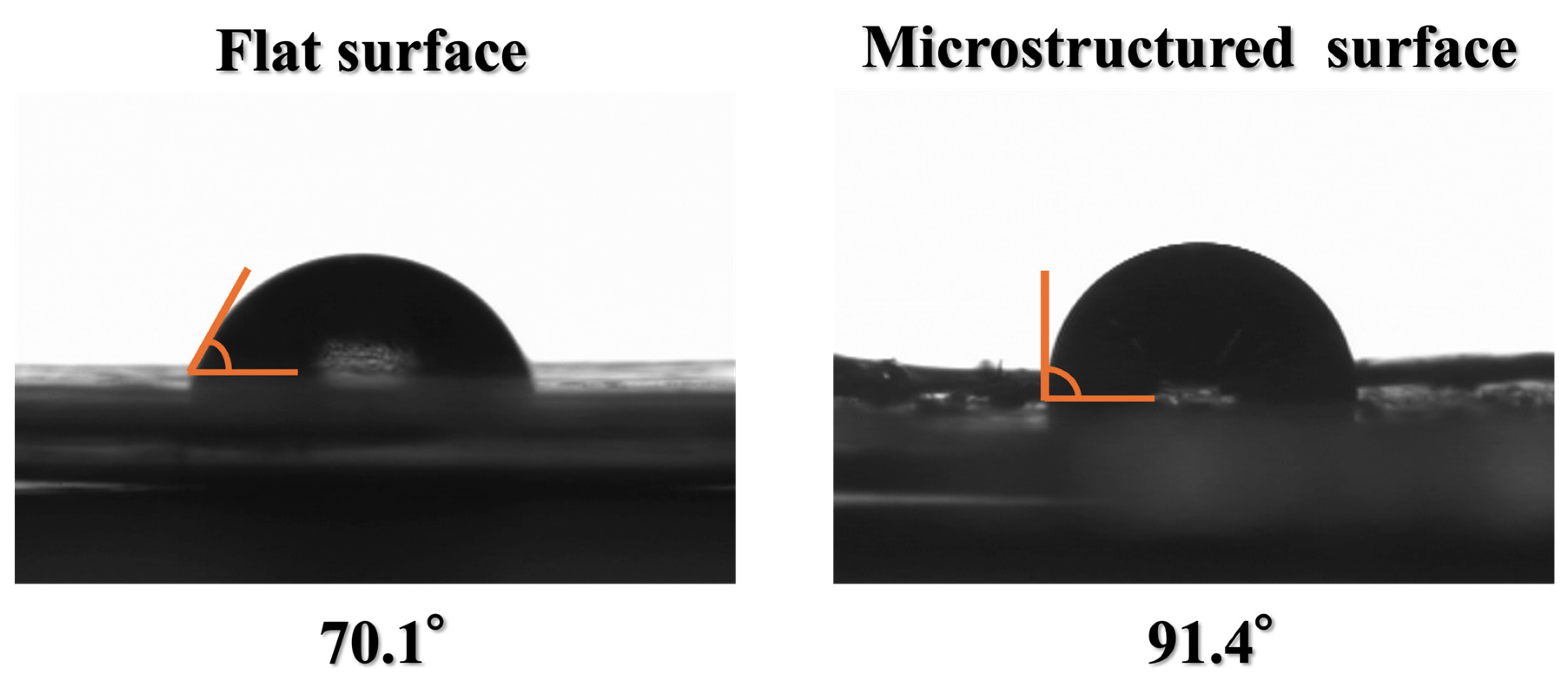
3.3. Contact Angle Measurements
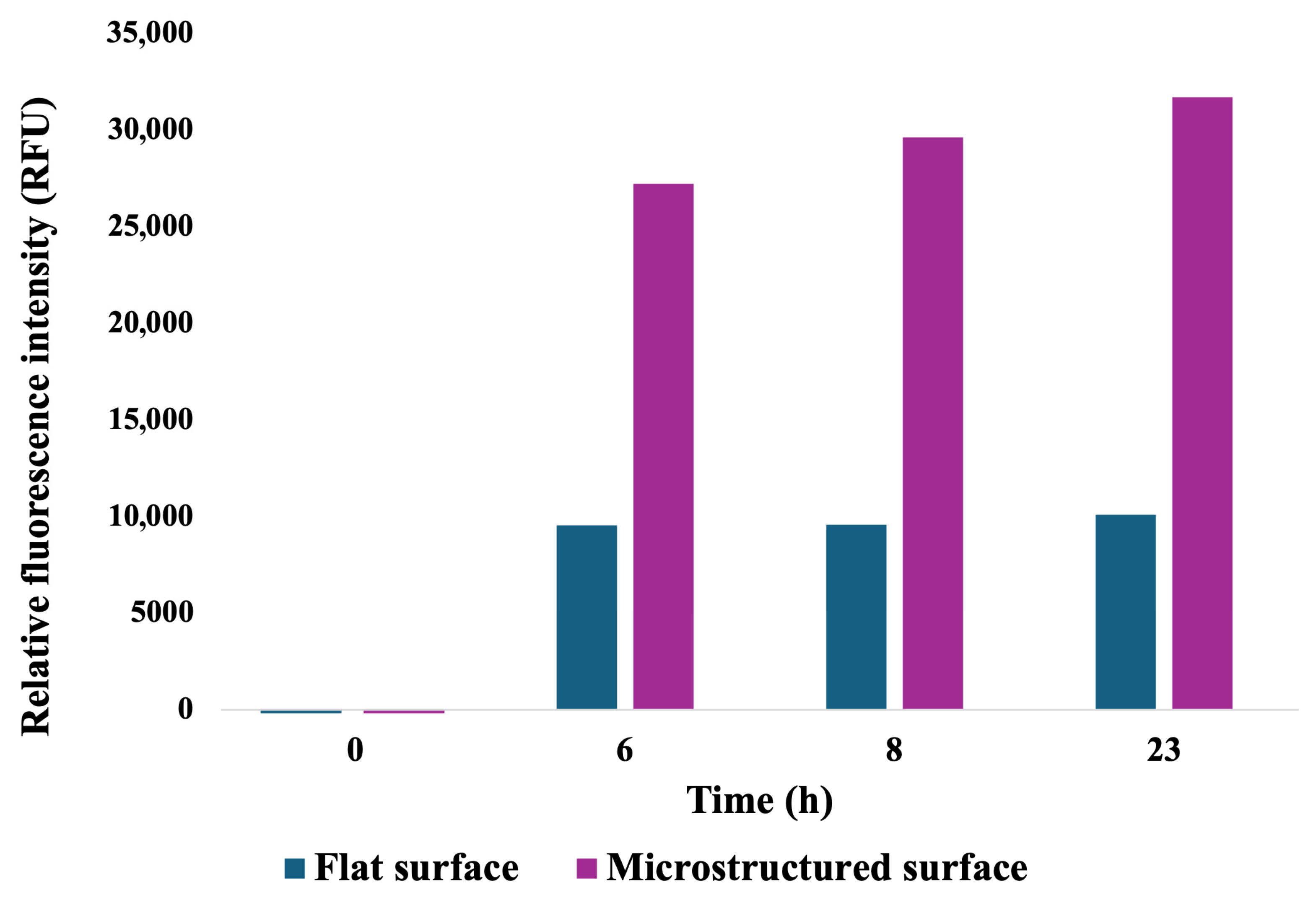
3.4. Fluorescence Intensity Measurements
4. Conclusions
Author Contributions
Funding
Institutional Review Board Statement
Informed Consent Statement
Data Availability Statement
Acknowledgments
Conflicts of Interest
References
- Pawar, R.; Pathan, A.; Nagaraj, S.; Kapare, H.; Giram, P.; Wavhale, R. Polycaprolactone and its derivatives for drug delivery. Polym. Adv. Technol. 2023, 34, 3296–3316. [Google Scholar] [CrossRef]
- Arif, Z.U.; Khalid, M.Y.; Noroozi, R.; Sadeghianmaryan, A.; Jalalvand, M.; Hossain, M. Recent advances in 3D-printed polylactide and polycaprolactone-based biomaterials for tissue engineering applications. Int. J. Biol. Macromol. 2022, 218, 930–968. [Google Scholar] [CrossRef]
- Ilyas, R.A.; Zuhri, M.Y.M.; Norrrahim, M.N.F.; Misenan, M.S.M.; Jenol, M.A.; Samsudin, S.A.; Nurazzi, N.M.; Asyraf, M.R.M.; Supian, A.B.M.; Bangar, S.P.; et al. Natural fiber-reinforced polycaprolactone green and hybrid biocomposites for various advanced applications. Polymers 2022, 14, 182. [Google Scholar] [CrossRef] [PubMed]
- Backes, E.H.; Harb, S.V.; Beatrice, C.A.G.; Shimomura, K.M.B.; Passador, F.R.; Costa, L.C.; Pessan, L.A. Polycaprolactone usage in additive manufacturing strategies for tissue engineering applications: A review. J. Appl. Biomater. 2022, 110, 1479–1503. [Google Scholar] [CrossRef]
- Christodoulou, E.; Notopoulou, M.; Nakiou, E.; Kostoglou, M.; Barmpalexis, P.; Bikiaris, D.N. Branched Poly(ε-caprolactone)-Based Copolyesters of Different Architectures and Their Use in the Preparation of Anticancer Drug-Loaded Nanoparticles. Int. J. Mol. Sci. 2022, 23, 15393. [Google Scholar] [CrossRef]
- Wang, Z.; Xiao, M.; Guo, F.; Yan, Y.; Tian, H.; Zhang, Q.; Ren, S.; Yang, L. Biodegradable polyester-based nano drug delivery system in cancer chemotherapy: A review of recent progress (2021–2023). Front. Bioeng. Biotechnol. 2023, 11, 1295323. [Google Scholar] [CrossRef]
- Nukala, S.G.; Kong, I.; Patel, V.I.; Kakarla, A.B.; Kong, W.; Buddrick, O. Development of biodegradable composites using polycaprolactone and bamboo powder. Polymers 2022, 14, 4169. [Google Scholar] [CrossRef]
- Thakur, M.; Majid, I.; Hussain, S.; Nanda, V. Poly (ε-caprolactone): A potential polymer for biodegradable food packaging applications. Packag. Technol. Sci. 2021, 34, 449–461. [Google Scholar] [CrossRef]
- Archer, E.; Torretti, N.; Madbouly, S. Biodegradable polycaprolactone (PCL) based polymer and composites. Phys. Sci. Rev. 2023, 8, 4391–4414. [Google Scholar] [CrossRef]
- Bartnikowski, M.; Dargaville, T.R.; Ivanovski, S.; Hutmacher, D.W. Degradation mechanisms of polycaprolactone in the context of chemistry, geometry and environment. Prog. Polym. Sci. 2019, 96, 1–20. [Google Scholar] [CrossRef]
- Rosales-Ibáñez, R.; Viera-Ruiz, A.E.; Cauich-Rodríguez, J.V.; Carrillo-Escalante, H.J. Electrospun/3D-printed PCL bioactive scaffold for bone regeneration. Polym. Bull. 2023, 80, 2533–2552. [Google Scholar] [CrossRef]
- Yang, X.; Wang, Y.; Zhou, Y.; Chen, J.; Wan, Q. The application of polycaprolactone in three-dimensional printing scaffolds for bone tissue engineering. Polymers 2021, 13, 2754. [Google Scholar] [CrossRef]
- Darie-Niță, R.N.; Râpă, M.; Frąckowiak, S. Special features of polyester-based materials for medical applications. Polymers 2022, 14, 951. [Google Scholar] [CrossRef] [PubMed]
- Dethe, M.R.; Prabakaran, A.; Ahmed, H.; Agrawal, M.; Roy, U.; Alexander, A. PCL-PEG copolymer based injectable thermosensitive hydrogels. J. Control. Release 2022, 343, 217–236. [Google Scholar] [CrossRef]
- Siddiqui, N.; Kishori, B.; Rao, S.; Anjum, M.; Hemanth, V.; Das, S.; Jabbari, E. Electropsun polycaprolactone fibres in bone tissue engineering: A review. Mol. Biotechnol. 2021, 63, 363–388. [Google Scholar] [CrossRef]
- Bulatović, V.O.; Mandić, V.; Kučić Grgić, C.; Ivančić, A. Biodegradable polymer blends based on thermoplastic starch. J. Polym. Environ. 2021, 29, 492–508. [Google Scholar] [CrossRef]
- Piyasin, P.; Yensano, R.; Pinitsoontorn, S. Size-controllable melt-electrospun polycaprolactone (PCL) fibers with a sodium chloride additive. Polymers 2019, 11, 1768. [Google Scholar] [CrossRef]
- Rostamian, M.; Kalaee, M.R.; Dehkordi, S.R.; Panahi-Sarmad, M.; Tirgar, M.; Goodarzi, V. Design and characterization of poly(glycerol-sebacate)-co-poly(caprolactone) (PGS-co-PCL) and its nanocomposites as novel biomaterials: The promising candidate for soft tissue engineering. Eur. Polym. J. 2020, 138, 109985. [Google Scholar] [CrossRef]
- Taghizadeh, F.; Heidari, M.; Mostafavi, S.; Mortazavi, S.M.; Haeri, A. A review of preparation methods and biomedical applications of poly (ε-caprolactone)-based novel formulations. J. Mater. Sci. 2024, 59, 10587–10622. [Google Scholar] [CrossRef]
- Park, J.H.; Lee, B.K.; Park, S.H.; Kim, M.G.; Lee, J.W.; Lee, H.Y.; Lee, H.B.; Kim, J.H.; Kim, M.S. Preparation of Biodegradable and Elastic Poly(ε-caprolactone-co-lactide) Copolymers and Evaluation as a Localized and Sustained Drug Delivery Carrier. Int. J. Mol. Sci. 2017, 18, 671. [Google Scholar] [CrossRef]
- Zhang, X.; Pichora, D.; Goosen, M.F. Biodegradable Polymers for Orthopedic Applications: Synthesis and Processability of Poly (l-Lactide) and Poly (Lactide-co-€-Caprolactone). J. Macromol. Sci. Part A Pure Appl. Chem. 1993, 30, 933–947. [Google Scholar] [CrossRef]
- Barral, V.; Dropsit, S.; Cayla, A.; Campagne, C.; Devaux, E. Study of the influence of pcl on the in vitro degradation of extruded pla monofilaments and melt-spun filaments. Polymers 2021, 13, 171. [Google Scholar] [CrossRef] [PubMed]
- Arrieta, M.P.; Leonés Gil, A.; Yusef, M.; Kenny, J.M.; Peponi, L. Electrospinning of PCL-based blends: Processing optimization for their scalable production. Materials 2020, 13, 3853. [Google Scholar] [CrossRef]
- Deshmukh, S.S.; Goswami, A. Current innovations in roller embossing—A comprehensive review. Microsyst. Technol. 2022, 28, 1077–1114. [Google Scholar] [CrossRef]
- Beardslee, L.A.; Halman, J.R.; Unser, A.M.; Xie, Y.; Danias, J.; Bergkvist, M.; Sharfstein, S.T.; Torrejon, K.Y. Recreating the trabecular outflow tissue on implantable, micropatterned, ultrathin, porous polycaprolactone scaffolds. Bioengineering 2023, 10, 679. [Google Scholar] [CrossRef] [PubMed]
- Geoghegan, N.; O’Loughlin, M.; Delaney, C.; Rochfort, K.D.; Kennedy, M.; Kolagatla, S.; Podhorska, L.; Rodriguez, B.J.; Florea, L.; Kelleher, S.M. Controlled degradation of polycaprolactone-based micropillar arrays. Biomater. Sci. 2023, 11, 3077–3091. [Google Scholar] [CrossRef]
- VG, R.; Wilson, J.; Thomas, V.L.; Nair, P.D. Assessing the 3D Printability of an Elastomeric Poly(caprolactone-co-lactide) Copolymer as a Potential Material for 3D Printing Tracheal Scaffolds. ACS Omega 2022, 7, 7002–7011. [Google Scholar]
- Razali, N.A.M.; Lin, W.C.; Norzain, N.A.; Yu, Z.W. Controlling cell elongation and orientation by using microstructural nanofibre scaffolds for accelerating tissue regeneration. Mater. Sci. Eng. 2021, 128, 112321. [Google Scholar] [CrossRef]
- Yun, D.; Kim, J.B. Material modeling of pmma film for hot embossing process. Polymers 2021, 13, 3398. [Google Scholar] [CrossRef]
- Fan, F.-Y.; Cheng, H.-C.; Huang, C.-F.; Lin, Y.; Lin, W.-C.; Shen, Y.-K.; Wang, L. Replicability of process conditions of ultrasonic hot embossing for micropattern fabrication on thermoplastic substrates. Manuf. Process. 2020, 60, 283–291. [Google Scholar]
- Cao, Y.; Ma, D.; Li, H.; Cui, G.; Zhang, J.; Yang, Z. Review of industrialization development of nanoimprint lithography technology. Chips 2025, 4, 10. [Google Scholar] [CrossRef]
- Ando, M.; Hachikubo, Y.; Miura, S.; Yamagishi, R.; Sugino, N.; Kameda, T.; Yoshiyuki, Y.; Takei, S. Surface Microfabrication of Lactic Acid–Glycolic Acid Copolymers Using a Gas-Permeable Porous Mold. Macromol 2024, 4, 544–555. [Google Scholar] [CrossRef]
- Miura, S.; Yamagishi, R.; Sugino, N.; Yokoyama, Y.; Miyazaki, R.; Yasuda, K.; Ando, M.; Hachikubo, Y.; Murashita, T.; Kameda, T.; et al. Nanoimprint lithography and microinjection molding using gas-permeable hybrid mold for antibacterial nanostructures. J. Photopolym. Sci. Technol. 2023, 36, 183–190. [Google Scholar] [CrossRef]
- Takei, S. Nanoimprinting of TiO2–SiO2 photocurable materials with high titanium concentration for CF4/O2 etch selectivity. Micro Nano Lett. 2023, 8, 1–4. [Google Scholar] [CrossRef]
- Yamagishi, R.; Miura, S.; Ando, M.; Hachikubo, Y.; Murashita, T.; Sugino, N.; Kameda, T.; Kawano, Y.; Yasuda, K.; Takei, S. Nanoimprint Lithography for Collagen Micropatterning at Low-Temperature 5 °C with TiO2-SiO2 Gas-Permeable Porous Mold. J. Photopolym. Sci. Technol. 2024, 37, 457–463. [Google Scholar] [CrossRef]
- Miura, S.; Yamagishi, R.; Ando, M.; Teramae, A.; Hachikubo, Y. Cationic Gas-Permeable Mold Fabrication Using Sol–Gel Polymerization for Nano-Injection Molding. Gels 2024, 10, 453. [Google Scholar] [CrossRef]
- Ando, M.; Yamagishi, R.; Miura, S.; Hachikubo, Y.; Murashita, T.; Sugino, N.; Kameda, T.; Kawano, Y.; Yasuda, K.; Takei, S. Surface nanopatterning of bioabsorbable materials using thermal imprinting technology. J. Photopolym. Sci. Technol. 2023, 36, 277–282. [Google Scholar] [CrossRef]
- Alqaheem, Y.; Alomair, A.; Vinoba, M.; Pérez, A. Polymeric gas-separation membranes for petroleum refining. Int. J. Polym. Sci. 2017, 2017, 4250927. [Google Scholar] [CrossRef]
- Freeman, B.D. Basis of permeability/selectivity tradeoff relations in polymeric gas separation membranes. Macromolecules 1999, 32, 375–380. [Google Scholar] [CrossRef]
- Ricci, E.; Minelli, M.; De Angelis, M.G. Modelling sorption and transport of gases in polymeric membranes across different scales: A review. Membranes 2022, 12, 857. [Google Scholar] [CrossRef] [PubMed]
- Litvinov, V.M.; Dias, A.A. Analysis of network structure of UV-cured acrylates by 1H NMR relaxation, 13C NMR spectroscopy, and dynamic mechanical experiments. Macromolecules 2011, 34, 4051–4060. [Google Scholar] [CrossRef]
- Chen, X.; Xiao, L.; Li, H.; Cui, Y.; Wang, G. UV-Cured Highly Crosslinked Polyurethane Acrylate to Serve as a Barrier against Chemical Warfare Agent Simulants. Polymers 2024, 16, 1578. [Google Scholar] [CrossRef]
- Misiiuk, K.; Lowrey, S.; Blaikie, R.; Juras, J.; Sommers, A. Study of micro-and nanopatterned aluminum surfaces using different microfabrication processes for water management. Langmuir 2022, 38, 1386–1397. [Google Scholar] [CrossRef]
- Foltyn, P.; Restle, F.; Wissmann, M.; Hengsbach, S.; Weigand, B. The effect of patterned micro-structure on the apparent contact angle and three-dimensional contact line. Fluids 2021, 6, 92. [Google Scholar] [CrossRef]
- Pogodin, S.; Hasan, J.; Baulin, V.A.; Webb, H.K.; Truong, V.K.; Boshkovikj, V.; Fluke, C.J.; Watson, J.S.; Watson, J.A.; Crawford, R.J.; et al. Biophysical model of bacterial cell interactions with nanopatterned cicada wing surfaces. Biophys. J. 2013, 104, 835–840. [Google Scholar] [CrossRef]
- Campo, A.D.; Arzt, E. Design Parameters and Current Fabrication Approaches for Developing Bioinspired Dry Adhesives. Macromol. Biosci. 2007, 7, 118–127. [Google Scholar] [CrossRef] [PubMed]
- Lee, C.Y.; Chang, C.L.; Wang, Y.N.; Fu, L.M. Microfluidic mixing: A review. Int. J. Mol. Sci. 2011, 12, 3263–3287. [Google Scholar] [CrossRef] [PubMed]
- Yang, N.; Ying, L.; Li, K.; Chen, F.; Zhao, F.; Sun, Z.; Feng, L.; Liu, J. Biodegradable mulching films based on polycaprolactone and its porous structure construction. Polymers 2022, 14, 5340. [Google Scholar] [CrossRef]
- Dalby, M.J.; Gadegaard, N.; Oreffo, R.O.C. Harnessing nanotopography and integrin–matrix interactions to influence stem cell fate. Nat. Mater. 2014, 13.6, 558–569. [Google Scholar] [CrossRef]
- Wang, S.; Li, J.; Zhou, Z.; Zhou, S.; Hu, Z. Micro-/nano-scales direct cell behavior on biomaterial surfaces. Molecules 2018, 24, 75. [Google Scholar] [CrossRef] [PubMed]
- Liu, S.; Yan, J.; Gao, M.; Yang, H. Research progress in the regulation of endothelial cells and smooth muscle cells using a micro–nanostructure. Biomed. Eng. Online 2025, 24, 6. [Google Scholar] [CrossRef] [PubMed]


Disclaimer/Publisher’s Note: The statements, opinions and data contained in all publications are solely those of the individual author(s) and contributor(s) and not of MDPI and/or the editor(s). MDPI and/or the editor(s) disclaim responsibility for any injury to people or property resulting from any ideas, methods, instructions or products referred to in the content. |
© 2025 by the authors. Licensee MDPI, Basel, Switzerland. This article is an open access article distributed under the terms and conditions of the Creative Commons Attribution (CC BY) license.
Share and Cite
Ando, M.; Sugino, N.; Yokoyama, Y.; Mohamed, N.A.H.; Takei, S. Microstructured Coatings and Surface Functionalization of Poly(caprolactone-co-lactide) Using Gas-Permeable Mold. Coatings 2026, 16, 10. https://doi.org/10.3390/coatings16010010
Ando M, Sugino N, Yokoyama Y, Mohamed NAH, Takei S. Microstructured Coatings and Surface Functionalization of Poly(caprolactone-co-lactide) Using Gas-Permeable Mold. Coatings. 2026; 16(1):10. https://doi.org/10.3390/coatings16010010
Chicago/Turabian StyleAndo, Mano, Naoto Sugino, Yoshiyuki Yokoyama, Nur Aliana Hidayah Mohamed, and Satoshi Takei. 2026. "Microstructured Coatings and Surface Functionalization of Poly(caprolactone-co-lactide) Using Gas-Permeable Mold" Coatings 16, no. 1: 10. https://doi.org/10.3390/coatings16010010
APA StyleAndo, M., Sugino, N., Yokoyama, Y., Mohamed, N. A. H., & Takei, S. (2026). Microstructured Coatings and Surface Functionalization of Poly(caprolactone-co-lactide) Using Gas-Permeable Mold. Coatings, 16(1), 10. https://doi.org/10.3390/coatings16010010