Article

Enhanced Corrosion Resistance of Water-Based Aluminum Phosphate Coatings via Graphene Oxide Modification: Mechanisms and Long-Term Performance

1
Jiangsu Key Laboratory of Atmospheric Environment Monitoring and Pollution Control, Collaborative Innovation Center of Atmospheric Environment and Equipment Technology, School of Environmental Science and Engineering, Nanjing University of Information Science and Technology, Nanjing 210044, China
2
School of Intelligent Manufacturing and Information, Jiangsu Shipping College, Nantong 226010, China
3
Jiangsu Linlong New Material Co., Ltd., Wuxi 214000, China
*
Author to whom correspondence should be addressed.
Coatings 2026, 16(1), 11; https://doi.org/10.3390/coatings16010011 (registering DOI)
Submission received: 21 November 2025 / Revised: 14 December 2025 / Accepted: 16 December 2025 / Published: 20 December 2025
(This article belongs to the Section Corrosion, Wear and Erosion)

Abstract

In this study, we have developed a water-based aluminum phosphate (WAP) coating consisting of a base layer and a surface layer. Graphene oxide (GO) was used to modify the base layer. Three different GO concentrations—0.5, 0.75, and 1 wt.%—were employed to assess their impact on the corrosion resistance of the coating and to explore the underlying mechanisms. The corrosion resistance mechanism was also examined. In the coating, GO combined with phosphate to form large blocks that effectively blocked the pores, and the porosity decreased with the increase in GO content. This led to an improvement in the substrate protection efficiency by over 10%. Impedance spectroscopy revealed that the main mechanism behind the enhanced corrosion resistance was the shielding effect of GO, which created a “maze effect” that improved the coating’s protective properties. However, an excessive amount of GO reduced the corrosion resistance of the coating. Overall, the WAP coating modified with 0.75 wt.% GO exhibited the best corrosion resistance.

1. Introduction

Compared with organic coatings, inorganic coatings offer several advantages, such as high-temperature resistance, excellent weather resistance, and low environmental impact [1,2,3]. Consequently, in recent years, they have received extensive attention in both military and civilian applications.
Inorganic phosphate coatings were initially used for the high-temperature protection of compressor blades [4,5]. Due to their excellent stability, weather resistance, and high-temperature resistance, they garnered significant research attention [6,7]. This led to a surge in studies on water-based inorganic phosphate coatings containing aluminum, and numerous related patents and research papers have been published. For example, Chen et al. [8] prepared phosphate ceramic coatings modified by chromate-passivated aluminum particles for corrosion resistance in marine high-temperature environments. The synergistic effect of the aluminum particles and chromate treatment enhanced the corrosion resistance of the phosphate ceramic coatings. The phosphate ceramic coatings filled with passivated aluminum particles could withstand more than 10 salt spray-high-temperature cycles. This study discovered that the Cr2O3 passivation film formed by chromate treatment has a lower adsorption energy and a higher migration energy barrier for Cl. Kinga Łuczka et al. [9] modified aluminum phosphates using ammonium, calcium, and molybdenum. They used (NH4)2HPO4, CaCO3, (NH4)6Mo7O24·4H2O, ammonia water, and amorphous Al(OH)3 as the main reaction substrates. By adding a suspension of Al(OH)3 and CaCO3 to (NH4)6Mo7O24·4H2O and (NH4)2HPO4 under constant stirring, followed by washing, drying, and precipitation, they obtained modified aluminum phosphates. Comparative tests with triphosphoric acid, disodium aluminate, and zinc phosphate revealed that the modified aluminum phosphate exhibited significantly improved anti-corrosion performance for steel. Arthanareeswaria et al. [7] incorporated nano-ZnO into a zinc phosphate coating, which caused a change in the crystalline structure of the coating from sheet-like to plate-like crystals. This structural change made the coating denser, enhancing substrate protection and improving adhesion. R. Amini et al. [10] modified phosphate coatings with polyvinyl alcohol (PVA). Adding PVA to the phosphate solution reduced the grain size of phosphate crystals and increased the particle density of the coating by promoting the creation of additional nucleation sites. The corrosion inhibition was attributed to the formation of ZnP-PVA and Fe-PVA complexes, which reduced the corrosion rate of steel. Electrochemical impedance spectroscopy (EIS) and polarization tests showed that PVA improved the barrier performance of the zinc phosphate coating, blocking both the anode and cathode corrosion sites on the steel surface, thereby enhancing corrosion resistance. However, the corrosion resistance of the coating decreased with prolonged immersion time. Inspired by the adhesion strategy of snails, Wang et al. [11] grafted microcapsules (MCs) coated with PFDTES onto the surface of Ti3C2Tx that had been functionalized with silane coupling agent amino groups, thereby constructing a functional filler with multi-scale structure (k-Ti3C2Tx-MC). The prepared coating exhibited the lowest corrosion current density, and the low-frequency impedance modulus increased by approximately two orders of magnitude compared to CBPC. This coating demonstrated excellent self-repairing ability when immersed in a corrosive environment for a long time. The interface design strategy of the functional filler proposed in this study laid the foundation for the development of new phosphate coatings.
At present, researchers are increasingly focused on enhancing the corrosion resistance of inorganic coatings, and graphene has consequently attracted significant attention. However, relevant research still remains relatively limited. Among the various graphene derivatives, graphene oxide (GO), produced through a top-down approach, has gained widespread interest due to its relatively simple preparation process, few-layer structure, good hydrophilicity, and ease of functionalization and modification [12,13,14]. Consequently, numerous studies have been conducted on GO-modified coatings and their corrosion resistance, yielding promising results. For instance, Cheng et al. [15] investigated the corrosion resistance of potassium silicate/zinc/graphene coatings at different graphene-to-zinc ratios. The results revealed that when the graphene content was 2% of the zinc powder mass, it acted as a conductive bridge between the zinc particles and the substrate, enabling the zinc powder to fully exert its cathodic protection effect. After immersion in NaCl solution for 40 days, the primary corrosion products of the coating were Zn5(OH)8Cl2, ZnO, Zn(OH)2, and ZnCO3. The proposed mechanism suggested that graphene filled the micro-pores within the coating, enhancing the effective zinc utilization and increasing the amount of Zn5(OH)8Cl2 formed due to graphene’s excellent conductivity. Ashish Bagde et al. [16] prepared graphene oxide-zinc phosphate (GO-ZP) nanocomposite coating materials. It was found that the mechanical properties and corrosion resistance of these materials improved as the loading amount of the GO-ZP nanocomposite increased. This was attributed to the synergistic effect of graphene oxide and zinc phosphate in the formed coating, as the graphene nanosheets have a two-dimensional surface and good impermeability properties, which played an excellent barrier role in the formed dense coating.
Unfortunately, inorganic phosphate coatings are prone to defects such as micro-pores and micro-cracks during high-temperature curing, which reduces their corrosion resistance in corrosive environments [17,18,19]. Moreover, when aluminum powder or other active metal powders are used as fillers, the sacrificial anodic reaction may not proceed completely. To address these issues, in this study, a water-based aluminum phosphate (WAP) coating has been prepared on Q235 steel. The WAP coating consists of a high-aluminum-content base layer and a phosphate ceramic surface layer without aluminum powder. Different mass fractions of GO are incorporated into the base layer. Through full-immersion corrosion tests and electrochemical analyses, the effect of GO on the corrosion resistance of the aluminum-containing inorganic phosphate coatings and the corresponding corrosion protection mechanism is comprehensively investigated.

2. Experiment

2.1. Substrate

The substrate used in this study was Q235 steel, one of the most commonly employed materials in engineering applications. Its chemical composition is listed in Table 1.

2.2. Structural Design and Raw Material Selection

The WAP coatings typically adopt a dual-layer design, consisting of a base layer and a surface layer, as shown in Figure 1. Herein, the base coating contained a high concentration of spherical aluminum powder, providing corrosion and high-temperature resistance. Due to the presence of a large amount of aluminum powder, the base coating exhibited relatively low hardness, allowing better compatibility with the substrate and minimizing thermal stress caused by mismatched thermal expansion coefficients during heating.
Before applying the GO-modified base coating, a thin layer of unmodified base coating was first sprayed onto the substrate. This pre-layer prevented direct contact between GO and the substrate, thereby avoiding the formation of an electrochemical cell in the later stage of immersion, which could otherwise lead to premature failure of the substrate. GO was incorporated into the base coating at concentrations of 0.5, 0.75, and 1 wt.%.
The surface coating contained a large amount of film-forming materials, mainly for surface modification and sealing. It also exhibited excellent mechanical properties. Because of their distinct functions, the compositions of the base and surface coatings differed significantly. The detailed compositions and raw material sources used for both layers are presented in Table 2 and Table 3.

2.3. Graphene Parameters

In this study, GO was used to modify the coating. It was purchased from Hangzhou Hangdan Optoelectronics Technology Co., Ltd. (Hangzhou, China). The basic physical and chemical parameters of GO are listed in Table 4.

2.4. Microstructural Morphology Characterization

The microstructural morphology and elemental composition of the coating significantly affect its corrosion resistance. The surface morphology of the prepared coatings was characterized using scanning electron microscopy (SEM, JSM-IT100, Japan Electronics Co., LTD), while the elemental composition and distribution were analyzed by energy-dispersive X-ray spectroscopy (EDS, Oxford X-act One, Oxford Instruments, UK). The atomic-scale structure of GO was examined using X-ray photoelectron spectroscopy (XPS, Thermo Scientific K-Alpha+, Thermo Fisher Scientific (China) Co., Ltd.) and transmission electron microscopy (TEM, FEI Talos F200, Thermo Fisher Scientific (China) Co., Ltd.).

2.5. Full Immersion Test

The full immersion test was conducted in accordance with the JB/T 7901-1999 standard [20]. To determine the effective corrosion rate of the coating, the uncoated surface of the sample was sealed with epoxy resin adhesive, leaving an exposed coating area of 15 × 15 mm2. The test was performed at room temperature, with the sample immersed in a 5 wt.% NaCl solution for a total duration of 100 days. The corrosion solution was replaced weekly. At each replacement interval, the sample was removed, ultrasonically cleaned in alcohol, and then air-dried. The weight change in the sample was measured using an analytical balance with an accuracy of 0.1 mg to obtain the corrosion weight gain curve. The corroded surface morphology of the coating was observed by SEM, and the corrosion products were analyzed using X-ray diffraction (XRD, X’Pert PRO MPD, Malvern Panalytical, The Netherlands) to elucidate the corrosion mechanism.

2.6. Electrochemical Testing

During the corrosion process, numerous microscopic electrochemical systems coexist within the coating. To analyze this complex multi-electrode system, the corrosion system is often treated as a “black box.” Electrical signals are applied to the system, and the corresponding output signals are recorded. By analyzing these signals, the instantaneous electrochemical behavior of the electrodes during corrosion can be evaluated.
Due to the complexity of the coating structure, the corrosion process in a corrosive medium involves multiple controlling factors, including mass transfer, reaction kinetics, adsorption, and diffusion. Therefore, electrochemical techniques are particularly important for elucidating the corrosion inhibition mechanism of coatings. In this study, open-circuit potential (OCP), potentiodynamic polarization, and EIS tests were employed to investigate the electrochemical behavior and corrosion resistance of the coatings.

2.6.1. Open Circuit Potential

OCP represents the electromotive force between the working electrode and the reference electrode when the circuit is in an open state [21]. It is a thermodynamic parameter that reflects the corrosion tendency of the material. A more negative OCP indicates a stronger tendency toward self-corrosion.

2.6.2. Electrochemical Polarization Test

For corrosion systems controlled by activation polarization, the self-corrosion current (icorr) is expressed as follows [22,23]:
i c o r r = Δ E Δ I = β a β c 2.303 β a + β c × 1 R P
Rp—Polarization resistance, measured in Ω∙cm2; ΔE—Polarization potential, measured in V; ΔI—Polarization current density, measured in A∙cm−2; βa, βc—Tafel slopes of the anode and cathode of the system, measured in mV/dec or V/dec.
According to the literature, the porosity (P) of the coating can be approximately calculated using the polarization resistance ( R p ) and corrosion potential ( E corr ) as follows [24,25]:
P = R p , u R p , r - u × 10 | Δ E c o r r | β a , r
where R p , u represents the polarization resistance of the uncoated metal substrate, and R p , r u denotes the polarization resistance of the coated system.
In this study, the Rp and icorr values of the coatings prepared with different compositions were obtained from potentiodynamic polarization tests. Based on these data, the protection efficiency of the coatings was calculated to characterize their corrosion resistance. Furthermore, the porosity of the coatings was determined to assess the coating preparation quality and the degree of densification after corrosion. During testing, the samples were immersed in a 3.5% NaCl solution until equilibrium was reached. The potential was then scanned from 500 mV below the OCP to 500 mV above it, at a scanning rate of 2 mV/s.

2.6.3. Electrochemical Impedance Spectroscopy

EIS employs a small-amplitude sinusoidal voltage as the input signal. Under stable system conditions, the coating responds to this input by generating a corresponding output current signal, making EIS a non-destructive testing method. This technique allows for continuous monitoring of the same sample throughout the immersion process and serves as a powerful tool for studying the corrosion behavior [26,27].
After impedance testing, the data is typically analyzed by modeling the corrosion system as an equivalent circuit composed of various electrical components. Through curve fitting with specialized software, the values of these components can be determined and correlated with the corrosion process. Each component in the equivalent circuit represents a specific physical or electrochemical parameter, such as solution resistance (Rs), coating resistance (Rct), and coating capacitance (Cd). The combination of equivalent circuit modeling and experimental data interpretation has become an essential approach in modern corrosion research.
In this study, all EIS measurements were conducted at the OCP. The test frequency (f) was scanned from 100 kHz to 0.01 Hz, with an applied signal amplitude of 5 mV. The impedance spectra were analyzed and fitted using Zahner Analysis software (Version 3.1.0) to model the corresponding electrochemical parameters.

3. Experimental Results

3.1. Microscopic Morphology and Composition of GO

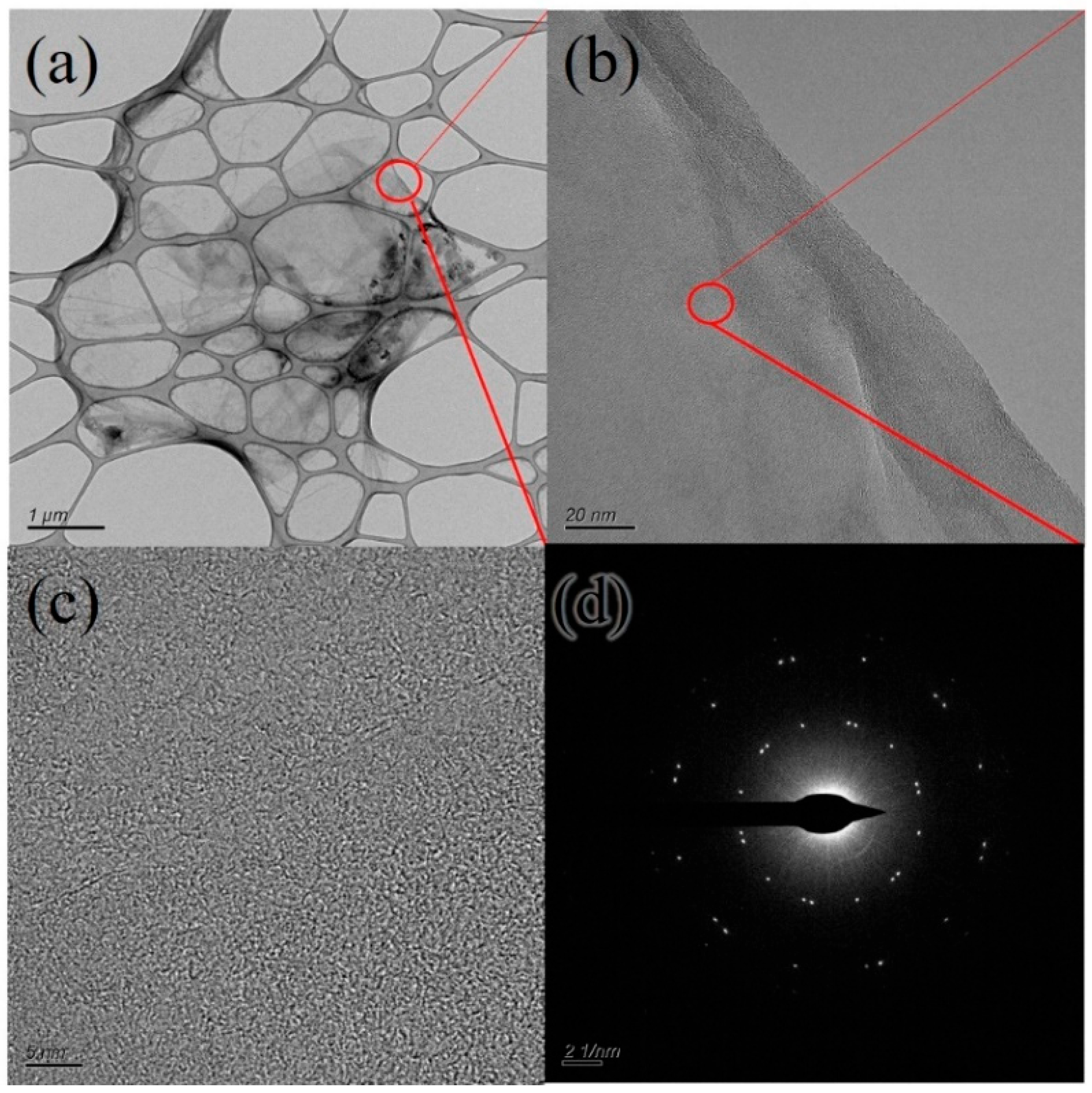
Figure 2 shows the TEM image of GO dispersed in pure water. It can be seen in Figure 2a that after dispersion, the GO sheets exhibit a small number of stacked layers, with an overall transparent appearance. The edges display slight wrinkling, and the sheet-like structures have diameters of approximately 5 μm. At higher magnification, the surface atoms of GO appear disordered. This disorder may be attributed to the severe surface damage of the sheet-like structure during the preparation process, accompanied by the introduction of a large number of oxygen-containing functional groups. Therefore, the atomic arrangement appears irregular. At the microscopic level, the transmission electron diffraction patterns reveal two distinct crystal grain orientations, suggesting that GO predominantly exists in a bilayer structure in the aqueous solution.
Based on these observations, it can be inferred that water is the solvent in the base coating. GO exhibits good dispersion in this aqueous medium, maintaining approximately two stacked layers after dispersion. Once the coating is cured, these well-dispersed GO sheets can effectively inhibit the penetration of corrosive solutions.
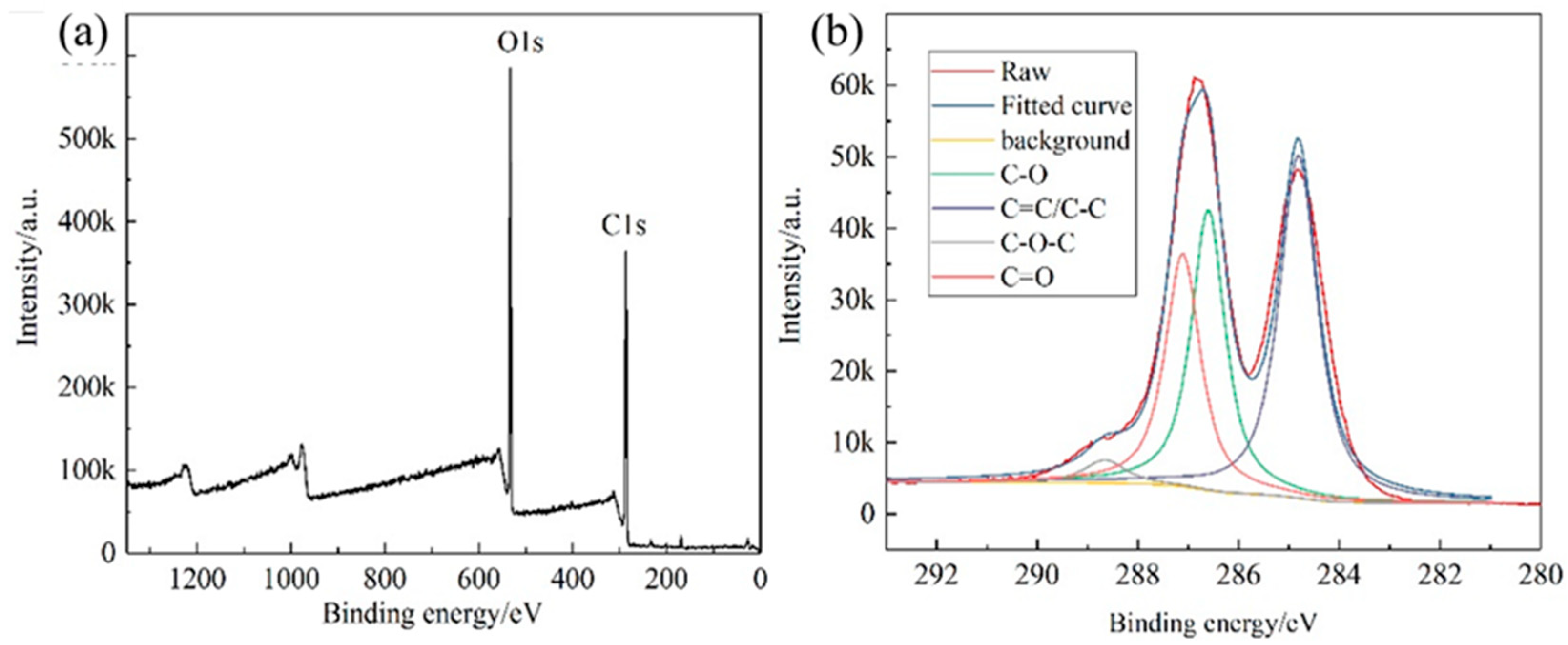
Figure 3 presents the XPS spectrum of GO, including the C1s spectrum of carbon atoms. The XPS results indicate that GO contains a large number of oxygen atoms. Based on the peak areas, the ratio of carbon to oxygen is approximately 66.9:33.1. In the high-resolution C1s spectrum (Figure 3b), four distinct peaks are identified: the C=C/C-C hybrid peak of graphene at 284.8 eV, the C-O peak at 286.6 eV, the C=O peak at 287.1 eV, and the C-O-C peak at 288.6 eV [28]. This clearly reflects the distribution of functional groups in GO. The relative peak area ratios are S(C=C/C-C):S(C-O):S(C=O):S(C-O-C) = 13.8:10:7.9:1, indicating that GO contains abundant hydroxyl, carboxyl, and carbonyl groups, with a smaller fraction of epoxy groups.

3.2. Resistivity of GO

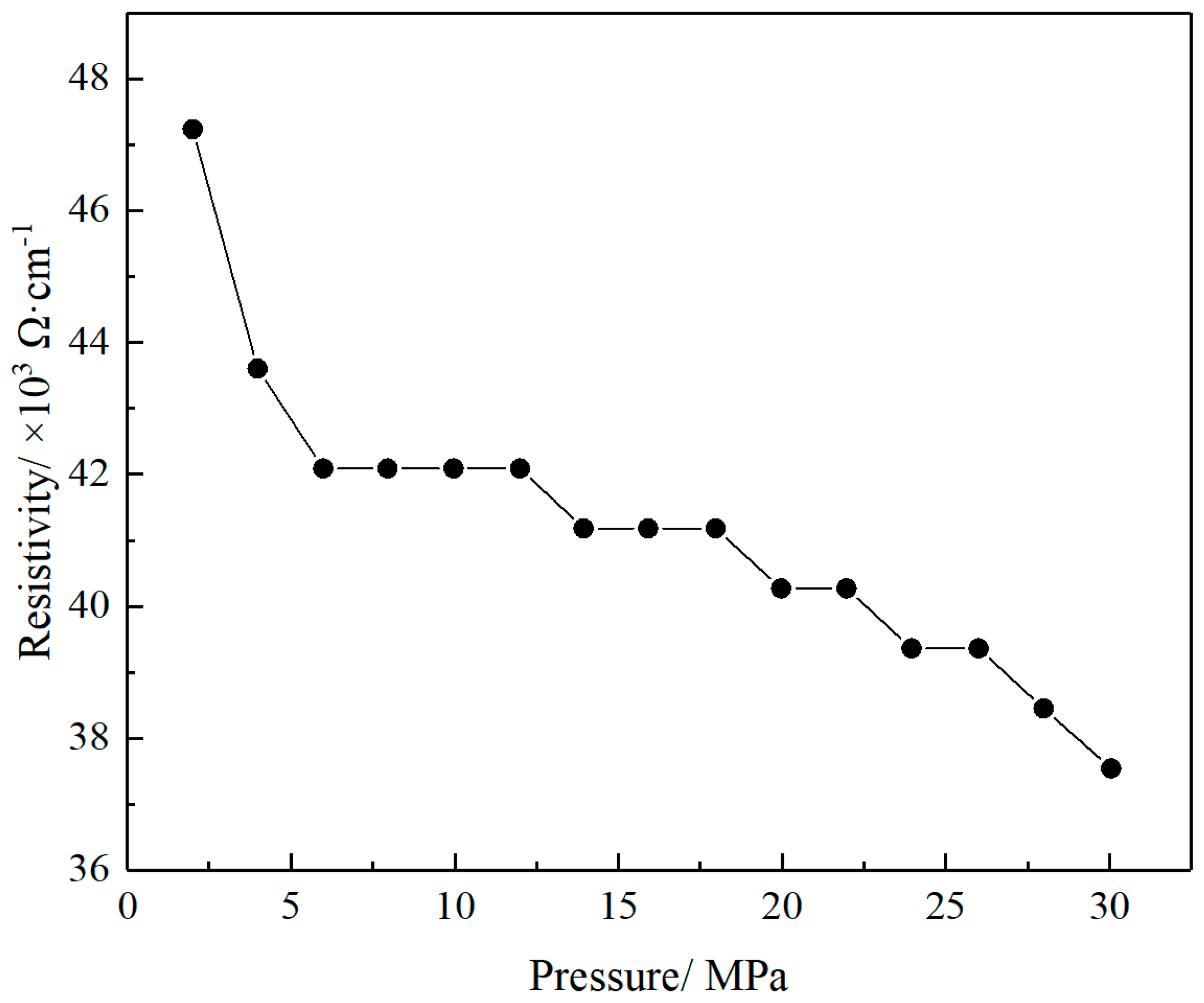
Figure 4 shows the variation in the resistivity of GO with pressure, measured using the four-probe method. It can be seen that the GO resistivity decreases from 4.72 kΩ/cm to 3.7 kΩ/cm as the applied pressure increases from 2 MPa to 30 MPa, with an average value of 4.12 kΩ/cm. The high resistivity of GO is attributed to the presence of a large number of oxygen-containing functional groups, rendering it nearly an insulator. Therefore, it can be inferred that after GO is incorporated into the WAP coating, its primary function is to hinder the penetration of corrosive solutions through its large specific surface area, rather than acting as a conductor to connect aluminum particles and facilitate their participation in the corrosion reaction.

3.3. Characterization of the Coating

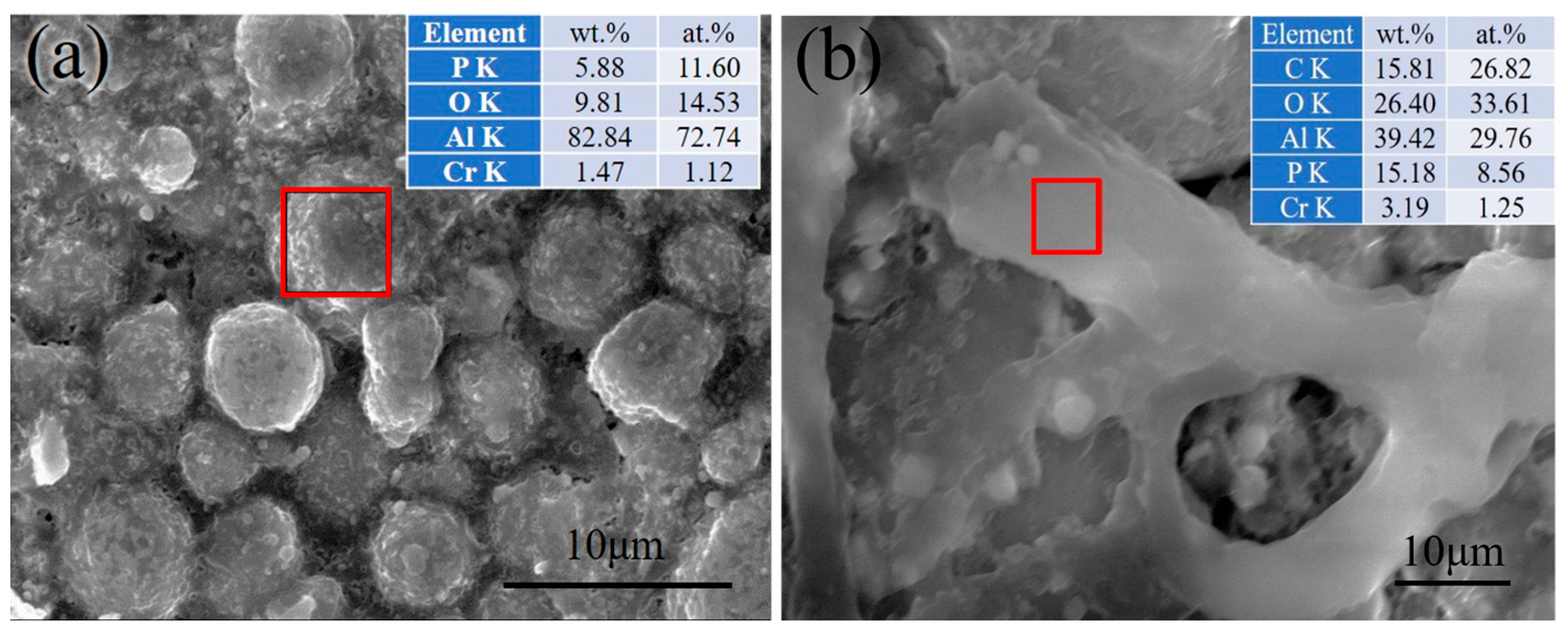
Figure 5 shows the SEM image of the microscopic surface morphology of the WAP coating without and with the addition of GO. The base coating contains a large amount of aluminum powder particles, as shown in Figure 5a. Under the coating of aluminum dihydrogen phosphate as the film-forming substance, these particles accumulate in a spherical shape. Meanwhile, the phosphate film has tiny holes. This is because, during the heating and curing process of aluminum dihydrogen phosphate, it undergoes dehydration and contraction. On the other hand, as the solvent water evaporates, it leaves vacancies, and the phosphate cannot replenish in time, resulting in the formation of hole defects. The image reveals the presence of microcracks in the coating, along with flaky substances on the surface. EDS analysis of this region indicates that, in addition to elements such as P, O, Al, and Cr, there is a significant amount of C. This suggests that when GO is mixed with the coating and subjected to a high-temperature curing process, it interacts with the film-forming substance, aluminum dihydrogen phosphate, forming flaky structures that fill some of the coating’s pores, thereby hindering the penetration of corrosive solutions.

3.4. Full Immersion Test of GO-Modified WAP Coatings in 5% NaCl Solution

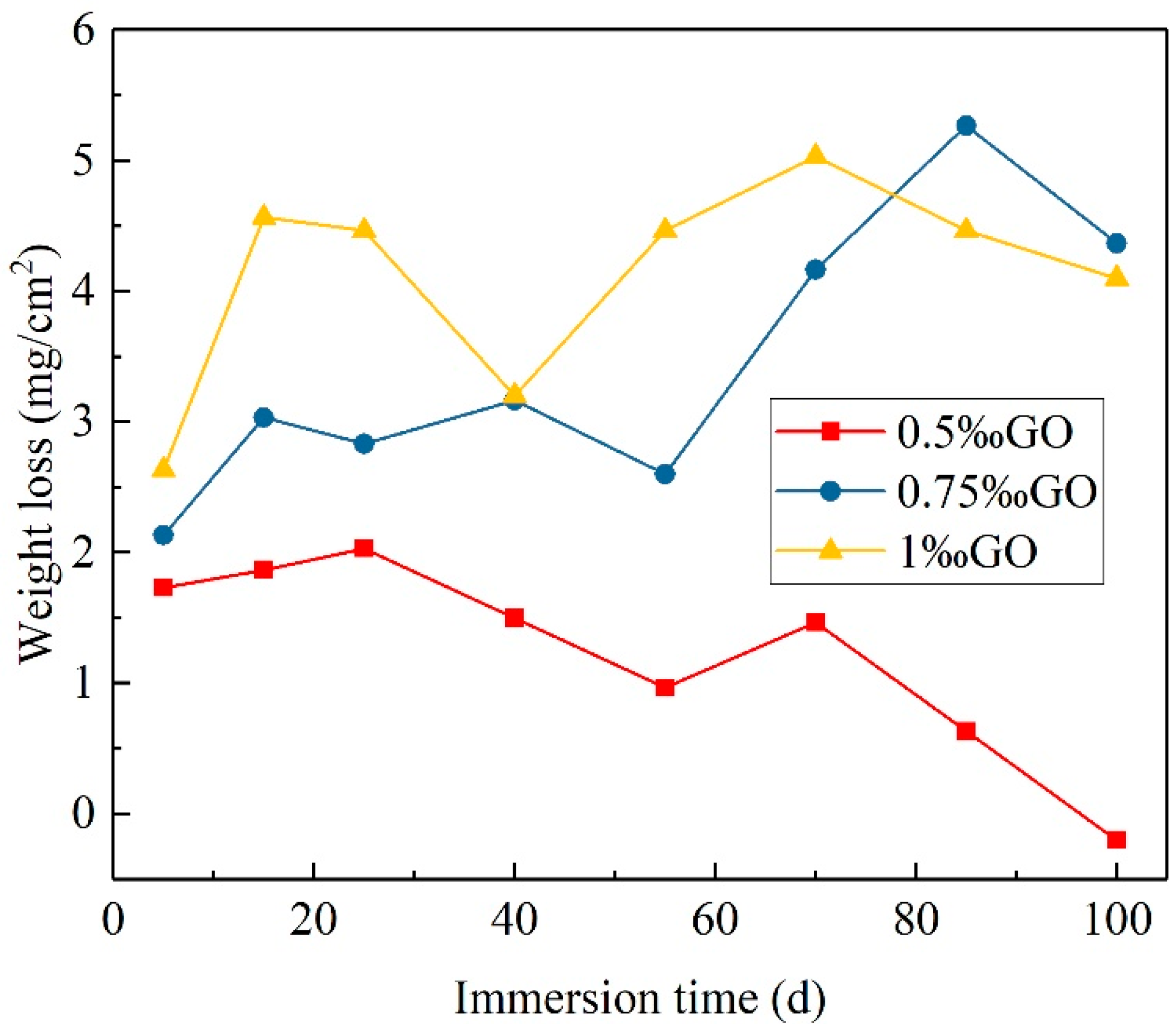
Figure 6 shows the full immersion test results of three WAP coatings modified with different GO contents in 5% NaCl solution. It is evident that the weight gain curves of all three GO/WAP coatings exhibit positive values. Analysis of the corrosion surface morphology of the WAP coating indicates that the coating surface undergoes erosion and dissolution. This behavior is likely due to the gradual degradation of the surface coating, combined with the formation of stable corrosion products by the aluminum powder in the base coating, which leads to an overall increase in the weight after corrosion.
The evolution trends of the three curves reveal that the 0.5% GO/WAP coating showed a stable weight increase in the initial stage, followed by a gradual decline after 25 days. By contrast, the 0.75% GO/WAP and 1% GO/WAP coatings experienced rapid weight gain initially, after which their weights remained relatively stable. Moreover, the weight increase of the 1% GO/WAP coating was higher than that of the 0.75% GO/WAP coating. This indicates that during the initial immersion stage, the hydrophilic nature of GO allows the corrosive solution to quickly penetrate the base coating and react with the aluminum powder.
By the 70th day of immersion, the weight of the 1% GO/WAP coating began to decrease, likely due to extensive peeling of the surface coating and complete consumption of the exposed aluminum powder in the base coating. Meanwhile, the weight of the 0.75% GO/WAP coating continued to increase. This may be attributed to the optimal amount of GO, which did not excessively shield the aluminum powder. After partial failure of the surface coating, the corrosive solution came into contact with the aluminum powder, generating a significant amount of corrosion products.
Starting from the 85th day, the weight of all three coatings began to decrease, indicating that the aluminum powder exposed in the base coating had been fully consumed, and the coatings thereafter primarily served as physical shields.
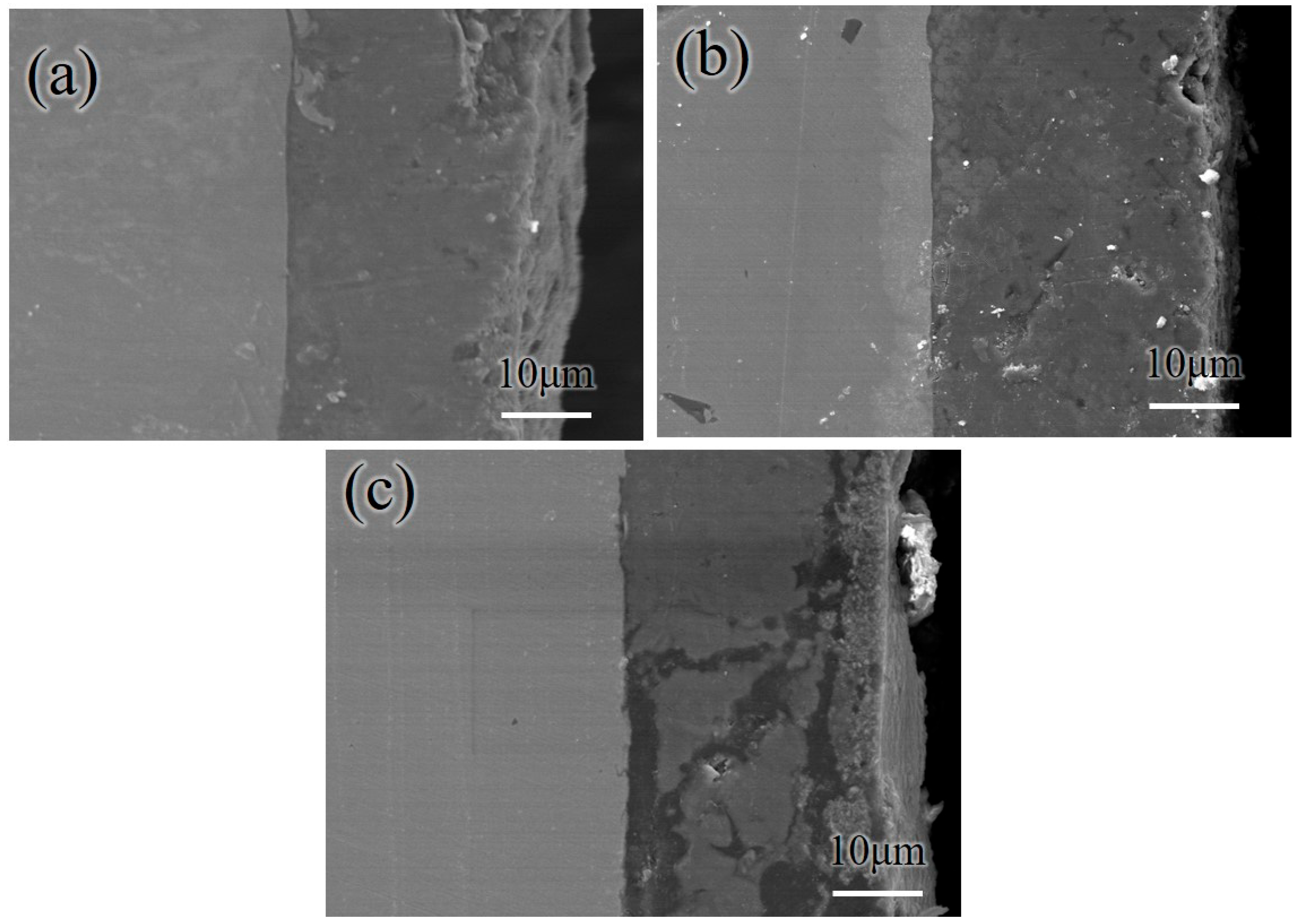
Figure 7 shows the cross-sectional SEM images of the three WAP coatings modified with different GO contents after 100 days of immersion. Careful observation reveals that even after prolonged immersion, all three coatings maintain close adhesion to the substrate, with no evident blistering or peeling. This indicates that the coatings exhibited overall good adhesion performance and immersion resistance.
However, in the cross-sectional images of the 1% GO/WAP coating, distinctive river-like patterns are clearly visible. These patterns may result from the excessive addition of GO, which alters the coating’s microstructure and properties. This facilitates faster penetration of the corrosive solution into the coating, accelerating localized corrosion reactions, which lead to the formation of these unique river-like patterns.

3.5. Electrochemical Testing of GO-Modified WAP Coatings in 3.5% NaCl Solution

3.5.1. OCP Variations in Three GO-Modified WAP Coatings

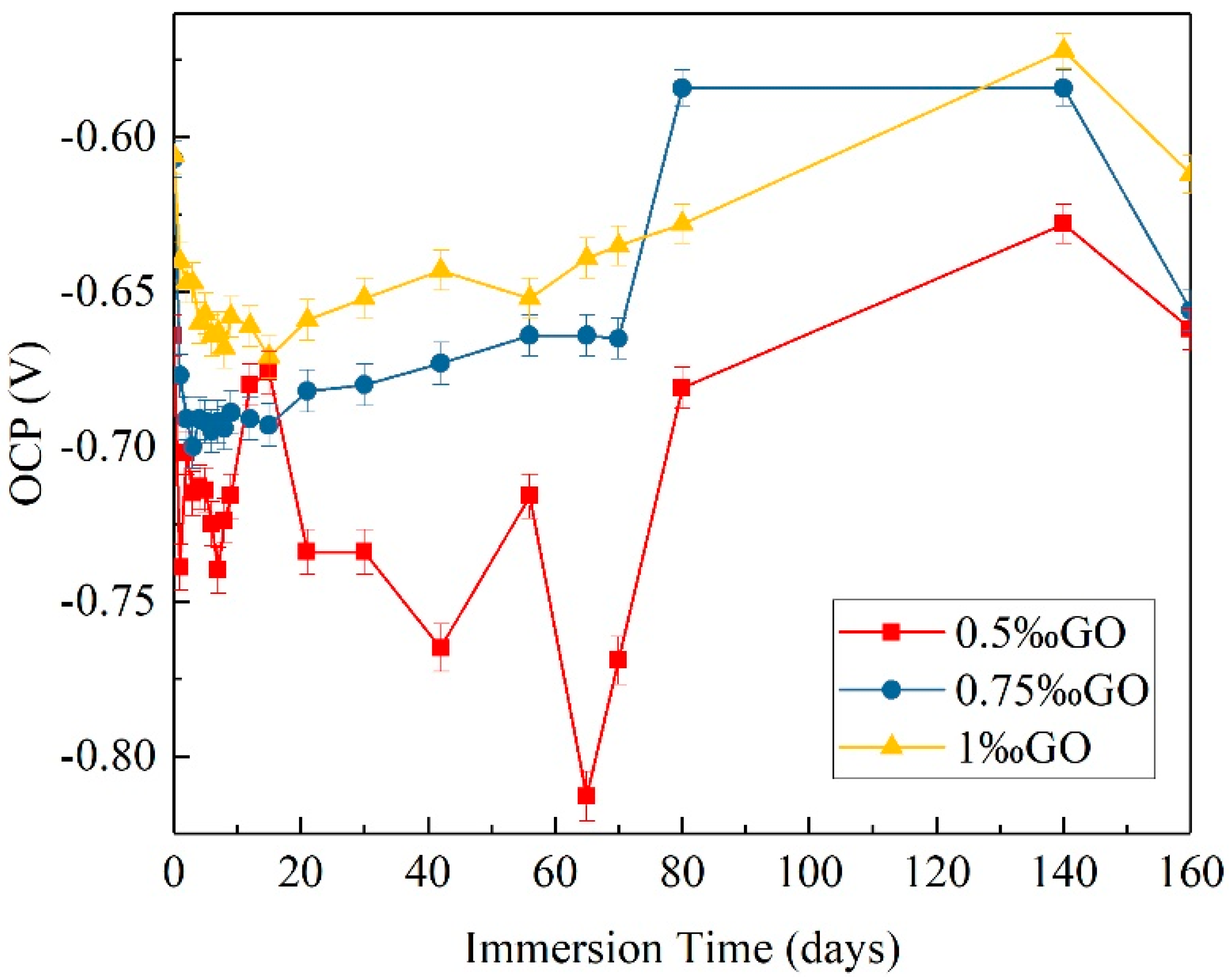
Figure 8 shows the evolution of the OCP of the WAP coatings containing three different concentrations of GO in the base layer (0.5, 0.75, and 1 wt.%). It is clear that increasing the GO content shifts the OCP of the coatings in the positive direction. This indicates that higher GO content enhances the coating’s shielding effect, thereby reducing its susceptibility to corrosion.
A closer examination of the three curves reveals that the OCP of all three coatings initially decreases and then increases over time. This behavior can be attributed to the presence of abundant aluminum powder in the coatings, which has a relatively low corrosion potential. Upon exposure to the corrosive solution, the aluminum powder undergoes corrosion first. The resulting stable Al(OH)3 gradually fills the coating’s pores, slowing the diffusion of corrosive species and thereby reducing the corrosion rate, which ultimately leads to an increase in the OCP.
However, after approximately 140 days of immersion, the OCP of all three coatings begins to decline. This indicates that as corrosion progresses, the coating gradually loses its initial protective effect, the number of pores increases, and its corrosion resistance decreases.

3.5.2. Polarization Test of GO-Modified WAP Coatings

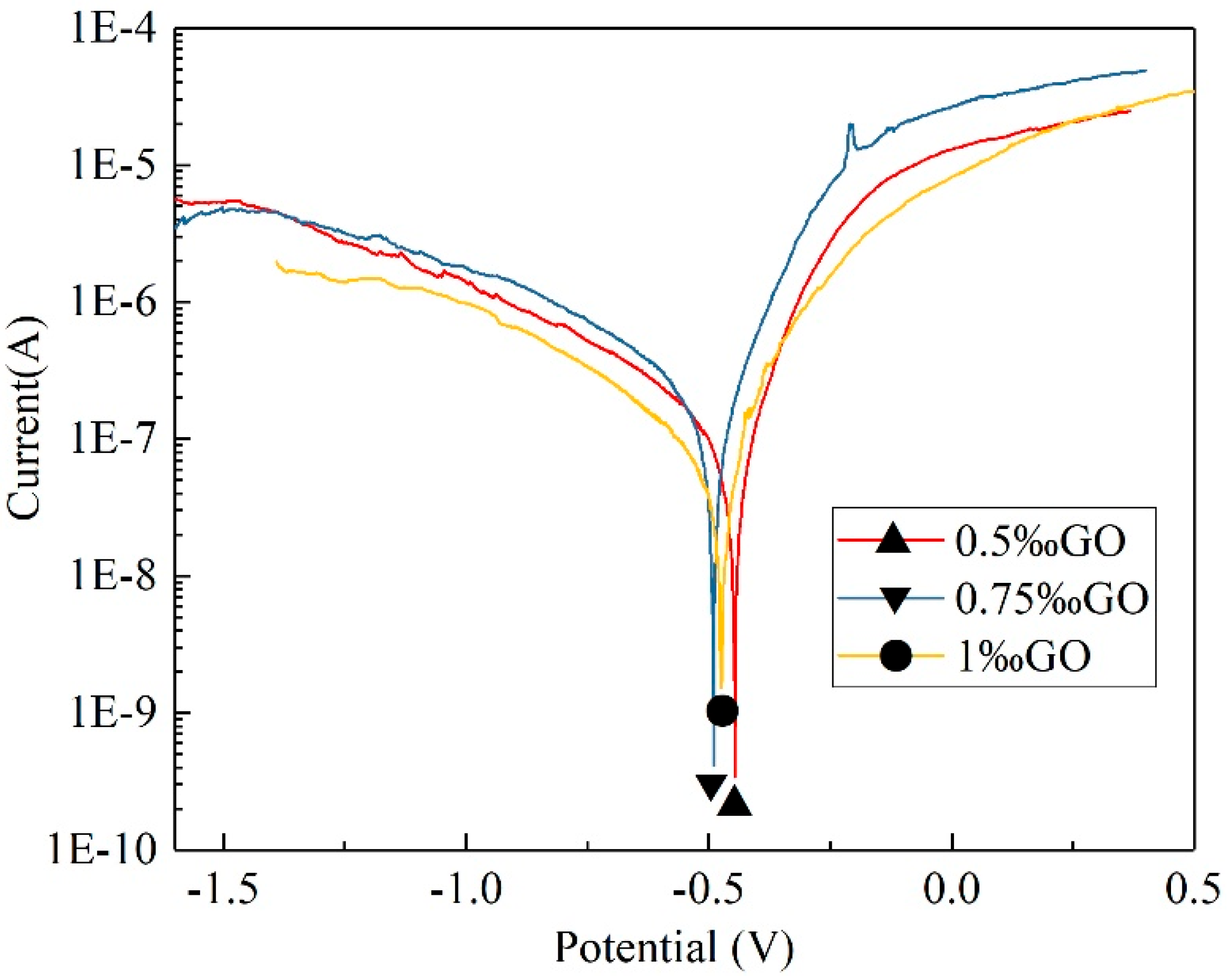
Figure 9 presents the voltammetric polarization curves of the three GO-modified WAP coatings after 1 day of immersion, and Table 5 summarizes the corresponding corrosion parameters derived from these curves.
Comprehensive analysis of the data shows that the corrosion potential (Ecorr) values of the three coatings are relatively similar, indicating that the addition of GO has a minor impact on the thermodynamic corrosion tendency of the coatings. By contrast, the self-corrosion current (icorr) decreases significantly with the increase in GO content, reflecting substantial improvement in corrosion resistance.
Further examination of the polarization resistance (Rp) reveals that the Rp values of the coatings with 0.5, 0.75, and 1 wt.% GO are 10.4, 26.3, and 44.1 times higher than that of the unmodified coating, respectively. This large increase demonstrates the shielding effect imparted by GO, which becomes more pronounced as its concentration increases.
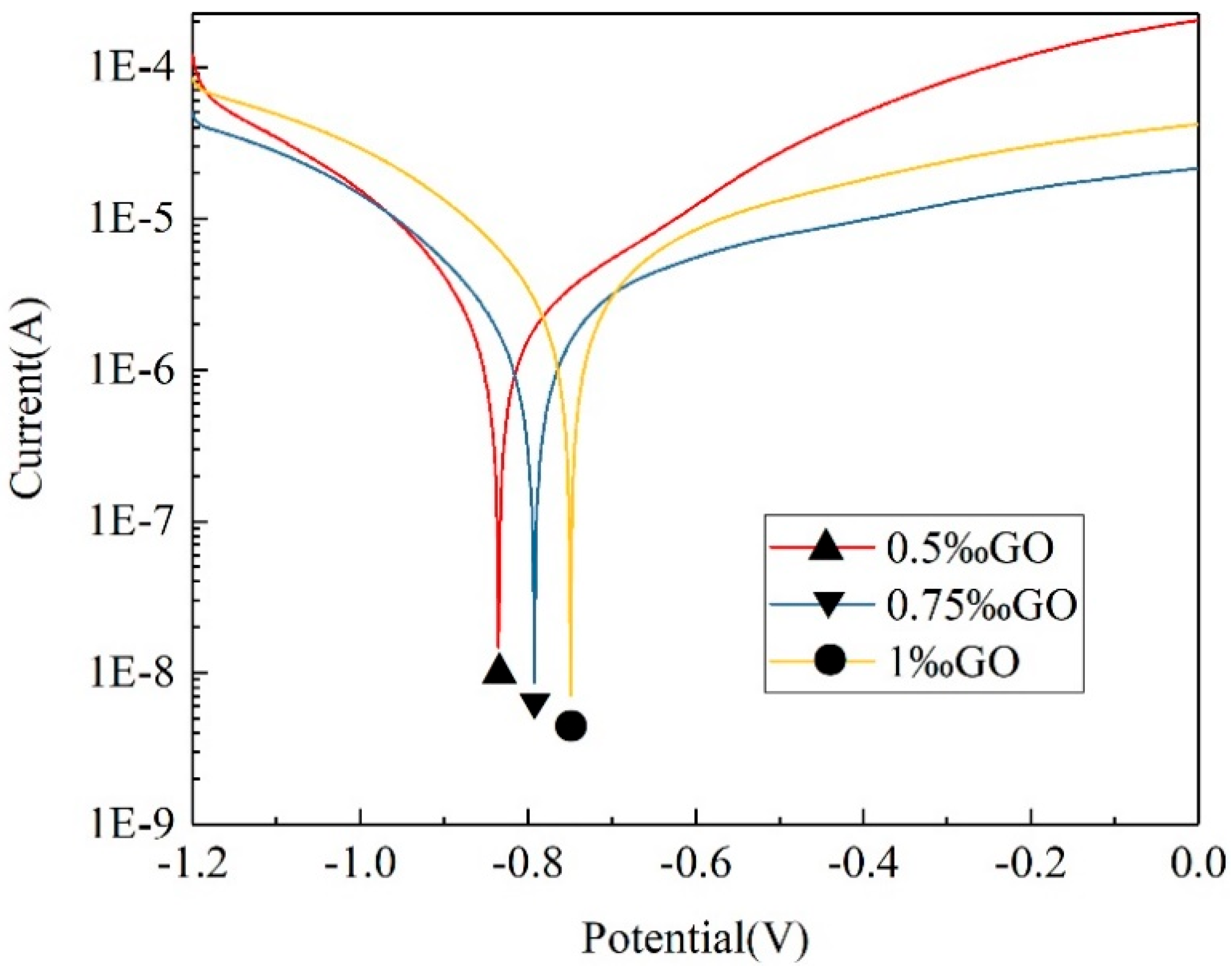
Figure 10 shows the polarization curves of the three coatings after 160 days of immersion, and Table 6 summarizes the processed data. It is evident that after prolonged immersion, the self-corrosion potential follows the trend: Ecorr (0.5%GO) < Ecorr (0.75%GO) < Ecorr (1%GO). This suggests that increasing GO content gradually reduces the thermodynamic corrosion tendency of the coating, primarily due to the insulating property of GO. However, it is important to note that the corrosion potential reflects only the tendency for corrosion and does not directly indicate the corrosion rate.
According to the self-corrosion current data, icorr (0.5%GO) < icorr (0.75%GO) < icorr (1%GO). At first glance, this seems to contradict the typical corrosion tendency. However, it actually indicates that as the amount of GO increases, although the overall corrosion tendency decreases, the self-corrosion current rises, leading to an increased corrosion rate. This behavior is attributed to a negative “difference effect” [29] in the coating with GO addition. Specifically, aluminum powder is highly reactive thermodynamically, with a strong chemical affinity for H2 when reacting with H2O. In neutral aqueous solutions, a dense and stable oxide film forms on the aluminum surface, resulting in a relatively low corrosion rate. However, in the NaCl aqueous solution used for polarization tests, Cl ions rapidly destroy this oxide film, sharply increasing the self-corrosion rate. With the increase in GO content, two competing effects occur: (1) due to the hydrophilicity of GO, the corrosive solution penetrates the coating more quickly, destroying the phosphate shell and oxide layer on the aluminum surface; (2) the excessive GO, due to its shielding effect and low conductivity, impedes full contact between aluminum powder and the corrosive solution, making the overall coating inert.
By comparing the polarization curves of the coating after 1 day and 160 days of immersion, it is evident that the cathodic slope decreases, while the anodic slope increases over time. The Tafel slope reflects the kinetics and mechanism (or degree of obstruction) of the electrode process. As the coating immerses, a large amount of the aluminum powder is consumed, enhancing anodic passivation. The generated corrosion products accumulate in the pores, further strengthening the shielding effect.
By calculating the porosity (P) using polarization resistance, the variation in P of the coatings was examined. The calculation results are summarized in Table 5 and Table 6. In the initial immersion stage, owing to the shielding effect of GO, the porosity of the coating gradually decreased as the content of GO increased. However, after 160 days of immersion, the porosity of all three modified coatings increased, and higher GO content led to even greater porosity. This indicates that the strong hydrophilicity of excessive GO facilitates rapid penetration of the corrosive solution into the coating, causing electrochemical corrosion at the interface between the substrate and the coating, thereby weakening the shielding effect of GO. Simultaneously, the insulating nature of GO limits the participation of aluminum powder in the reaction, effectively encapsulating it and preventing contact with the corrosive ions. Moreover, the dissolution of the surface coating contributes to the porosity increase, while the corrosion products from the base coating diffuse through the defects of the surface coating into the corrosive solution, further increasing porosity. Ultimately, this leads to a deterioration of the coating’s corrosion resistance during prolonged immersion.

3.5.3. Electrochemical Impedance Spectroscopy Tests

According to the above test results, it is evident that among the three coatings with different GO contents, the coating containing 0.75 wt.% GO exhibited superior corrosion resistance. To gain a more precise and in-depth understanding of the subtle changes occurring in the modified coating during the 160-day immersion period in 3.5% NaCl solution, EIS tests were further conducted under open-circuit conditions. The goal was to comprehensively analyze the evolution of the coating’s electrochemical characteristics through the EIS curves, thereby providing more reliable data support for elucidating the corrosion resistance mechanism.
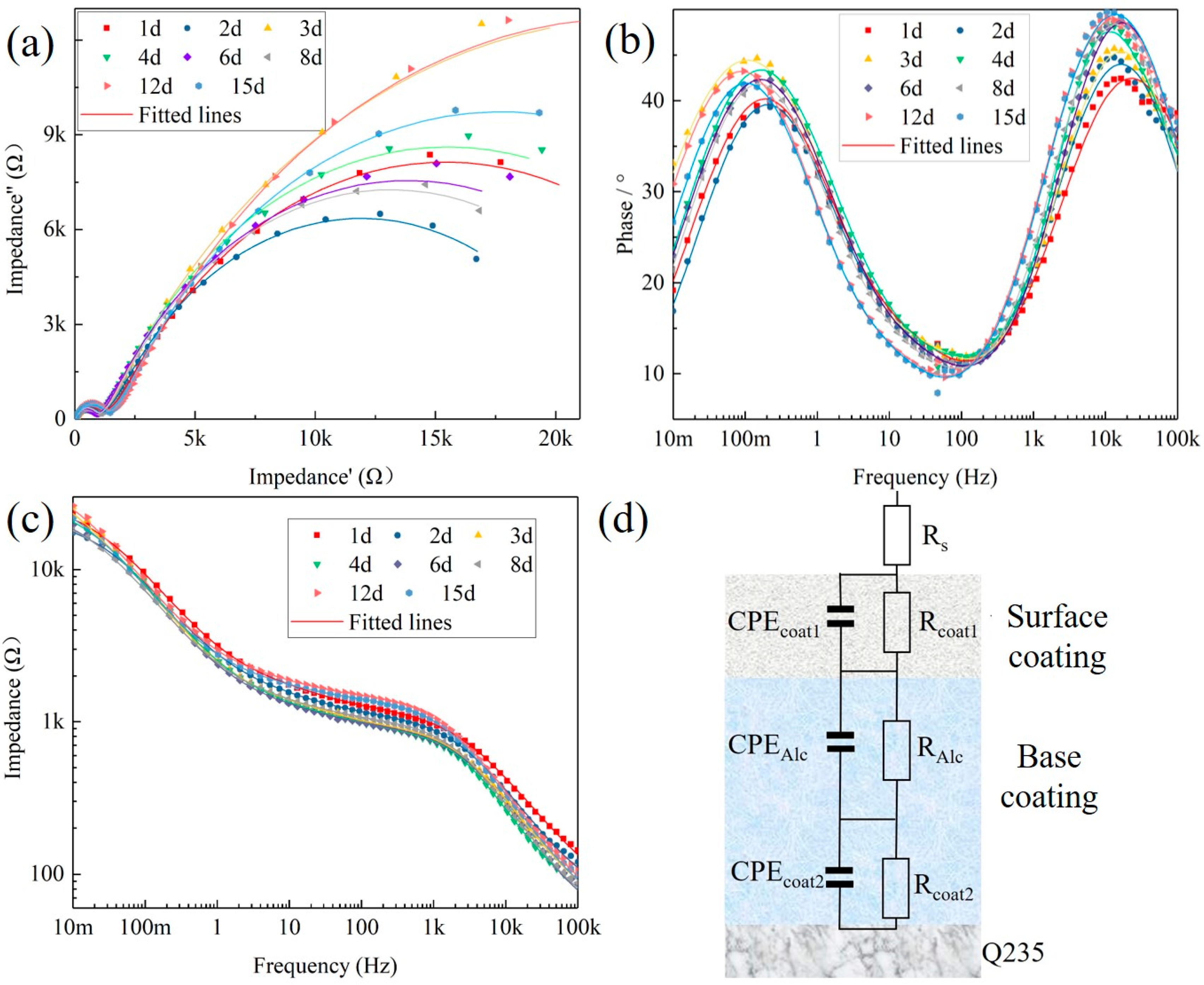
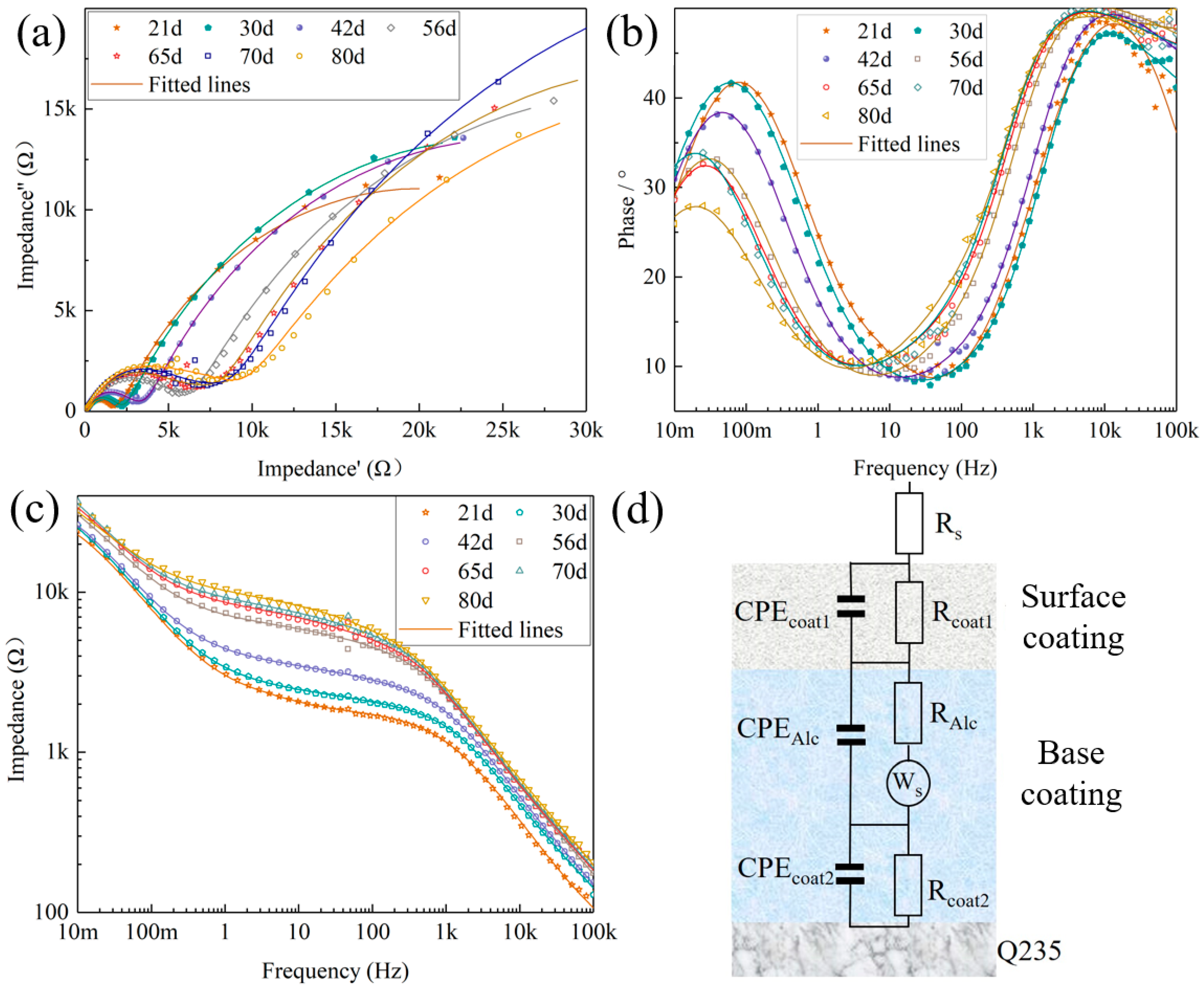
Figure 11 presents the EIS spectrum of the 0.75% GO-modified WAP coating during the initial immersion first stage (1–15 days). Comparing this spectrum with that of the 0.5% GO-modified WAP coating reveals a significant difference: the 0.75% GO-modified coating bypasses the slow infiltration stage observed in the 0.5% GO-modified coating and directly enters the aluminum powder consumption phase.
Two key factors contribute to this unique phenomenon. Firstly, the increased content of hydrophilic GO in the base coating allows the corrosive solution to penetrate the surface coating more rapidly and infiltrate the base coating, quickly filling the pores in the base coating. This rapid penetration and filling process alters both the diffusion path and diffusion rate of corrosive solution within the coating [30]. Secondly, the insulating and shielding properties of GO significantly impact the interaction between the corrosive solution and the aluminum powder, reducing the electrochemical reaction rate and preventing the formation of pronounced diffusion impedance characteristics.
Further insights into the internal reactions can be obtained from the Bode plot in Figure 11b,c. This plot shows no significant deviation in the time constants for both the high-frequency and low-frequency ranges, indicating that the chemical reactions occurring inside the coating at this stage are relatively mild, with no intense electrochemical activity observed.
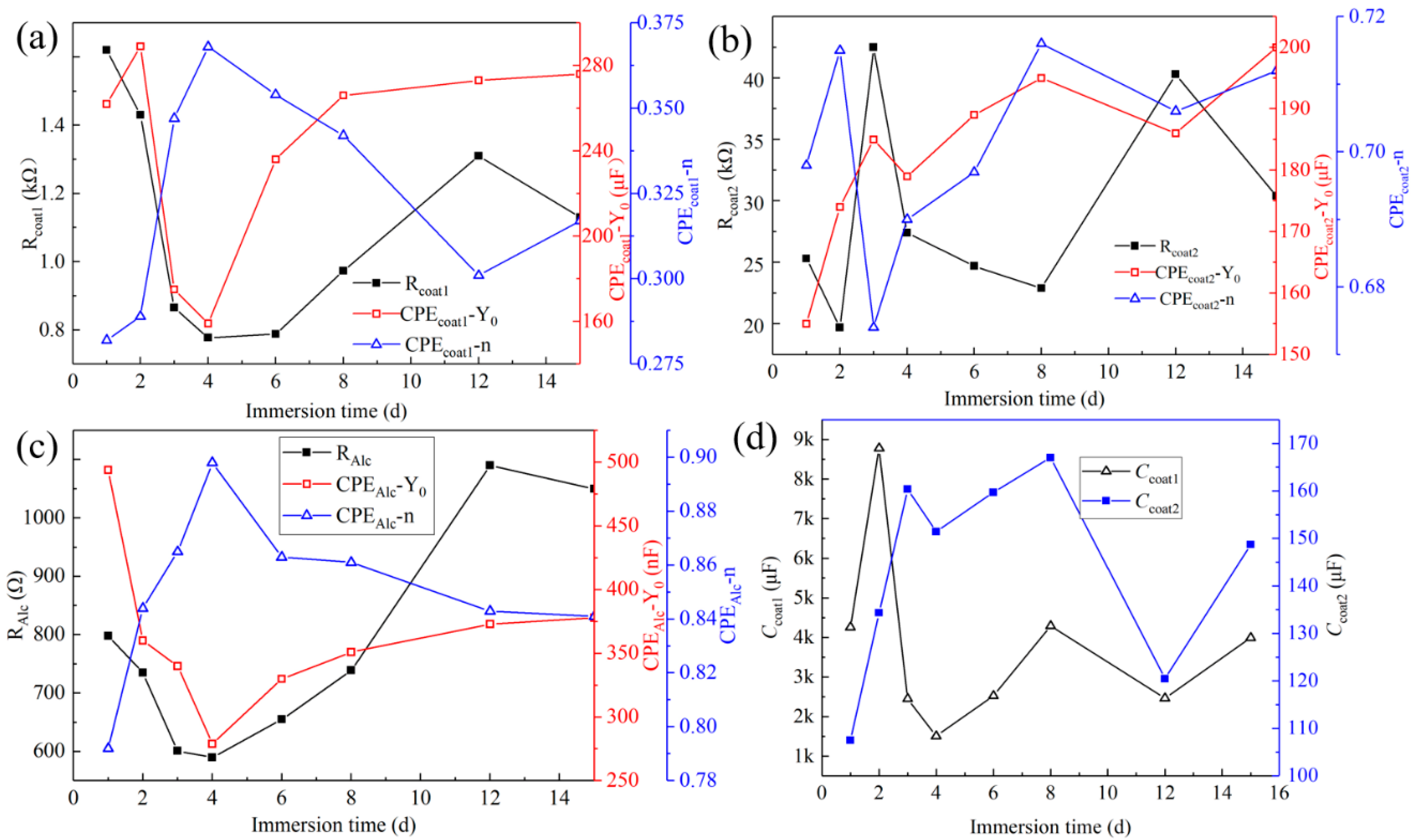
The corresponding equivalent circuit for this stage is determined to be R(RQ)(RQ). To better understand the changes in the parameters of each component, the evolution of the equivalent circuit data is presented in Figure 12. These data provide a crucial quantitative basis for a detailed analysis of the electrochemical performance of the coating at this stage.
It is clear from Figure 12 that after the initial penetration stage of the corrosive solution through both the base and surface coatings, the resistance value (R), constant phase element coefficient (Y0), and the dispersion index (n) exhibit periodic oscillations within a relatively narrow numerical range, maintaining an overall stable state [30]. This behavior indicates that during this stage, GO primarily functions as a shield. It effectively forms a robust barrier within the coating, blocking further ingress of the corrosive solution and suppressing intense electrochemical reactions. Consequently, the entire coating system remains in a relatively inert and stable state, significantly delaying the progression of corrosion.
Figure 13 focuses on the second stage of corrosion for this modified layer, highlighting its unique electrochemical characteristics. During this stage, the high-frequency time constant shifts toward lower frequencies, indicating that the surface area of exposed aluminum powder in the coating is gradually increasing. The enlarged surface area provides more active sites for the corrosion reaction, accelerating the corrosion process. Simultaneously, the low-frequency time constant also shifts toward lower frequencies, primarily due to the continuous accumulation of corrosion products within the coating, which significantly increases its resistance [31,32]. Although the rise in resistance reflects the enhanced barrier effect of the coating against the corrosive medium, it also indicates that corrosion reactions are actively occurring within the coating.
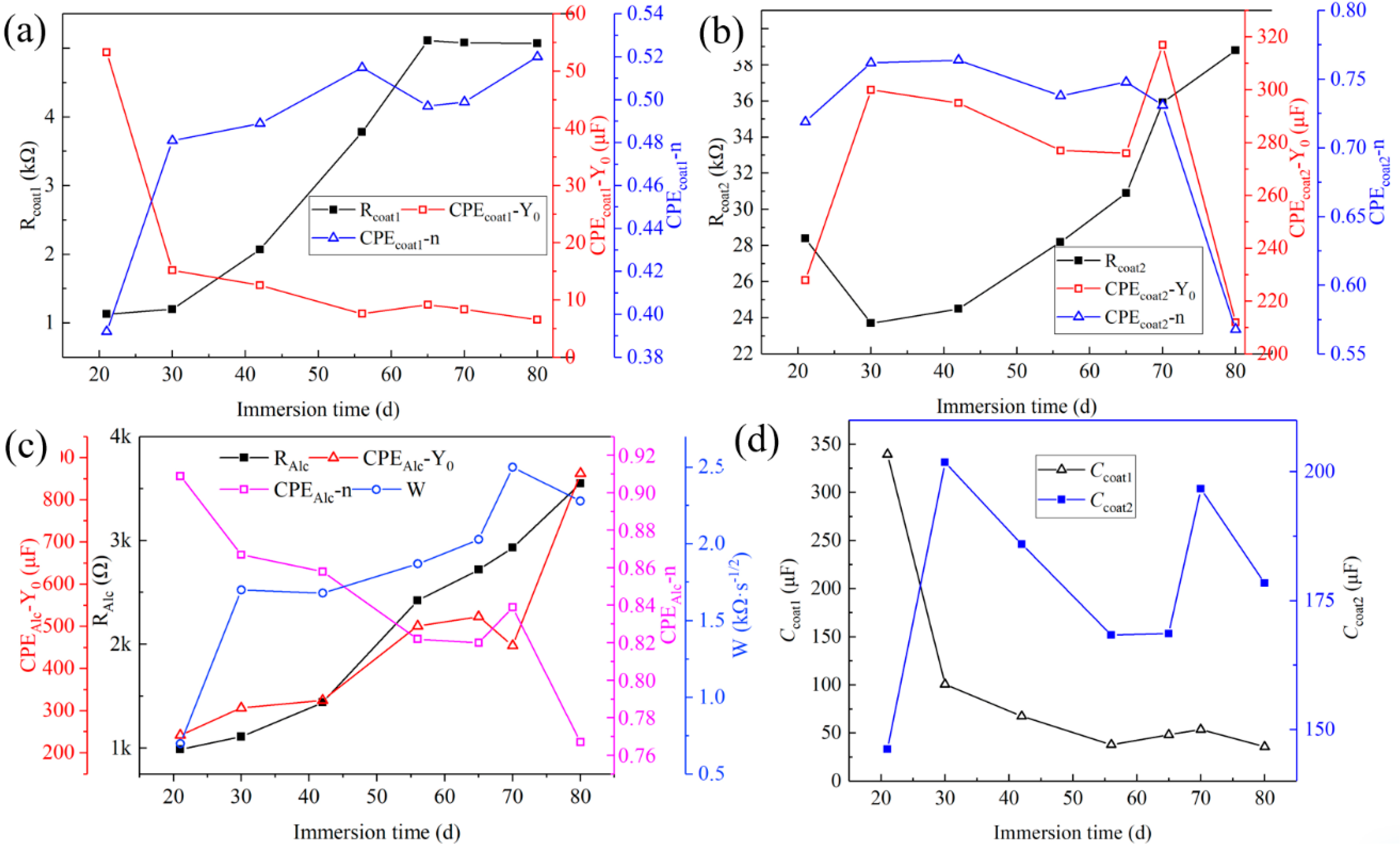
According to the Nyquist plot, Warburg impedance (W) begins to appear in the coating. This phenomenon is attributed to two factors. First, during the initial corrosion stage, the accumulation of corrosion products hinders material transport within the coating, increasing mass transfer resistance and giving rise to Warburg impedance. Second, Cl ions possess strong penetration ability, reaching deep into the coating to undergo electrochemical reactions with aluminum powder. The limited diffusion of the resulting corrosion products further obstructs material transport and electrochemical processes, contributing to Warburg impedance. Accordingly, as shown in Figure 14c, the W value in the equivalent circuit exhibits a continuous upward trend, directly reflecting the influence of Warburg impedance on the coating’s electrochemical performance.
Further examination of Figure 14a,b reveals that the resistance (R) continuously increases throughout this stage. The Y0 and n values begin rising around the 30th day and then stabilize. This trend likely marks an important transition: the corrosive solution has completely filled the pores of the coating and established direct contact with the metal substrate. At this point, the coating’s protective performance is severely challenged, and extensive corrosion reactions may occur on the substrate surface.
Notably, the Y0 and n values of the base coating suddenly decreased after the 70th day. To explain this anomaly, we hypothesize that during the initial stages, due to the excellent shielding performance of GO, corrosion primarily occurred through the electrochemical reaction of the encapsulated aluminum powder. Because the reaction proceeded relatively slowly, the amount of corrosion products generated was insufficient to break through the phosphate shell surrounding the aluminum particles. Consequently, although the aluminum powder underwent sacrificial corrosion, the substrate itself remained largely unaffected. However, after 70 days of immersion, sufficient corrosion products had accumulated, and the pressure generated by them eventually broke through the encapsulating shell. The released corrosion products then filled the pores within the coating, altering its structure and properties. At this point, the modified coating transitions from the second stage into a more complex third stage of corrosion.
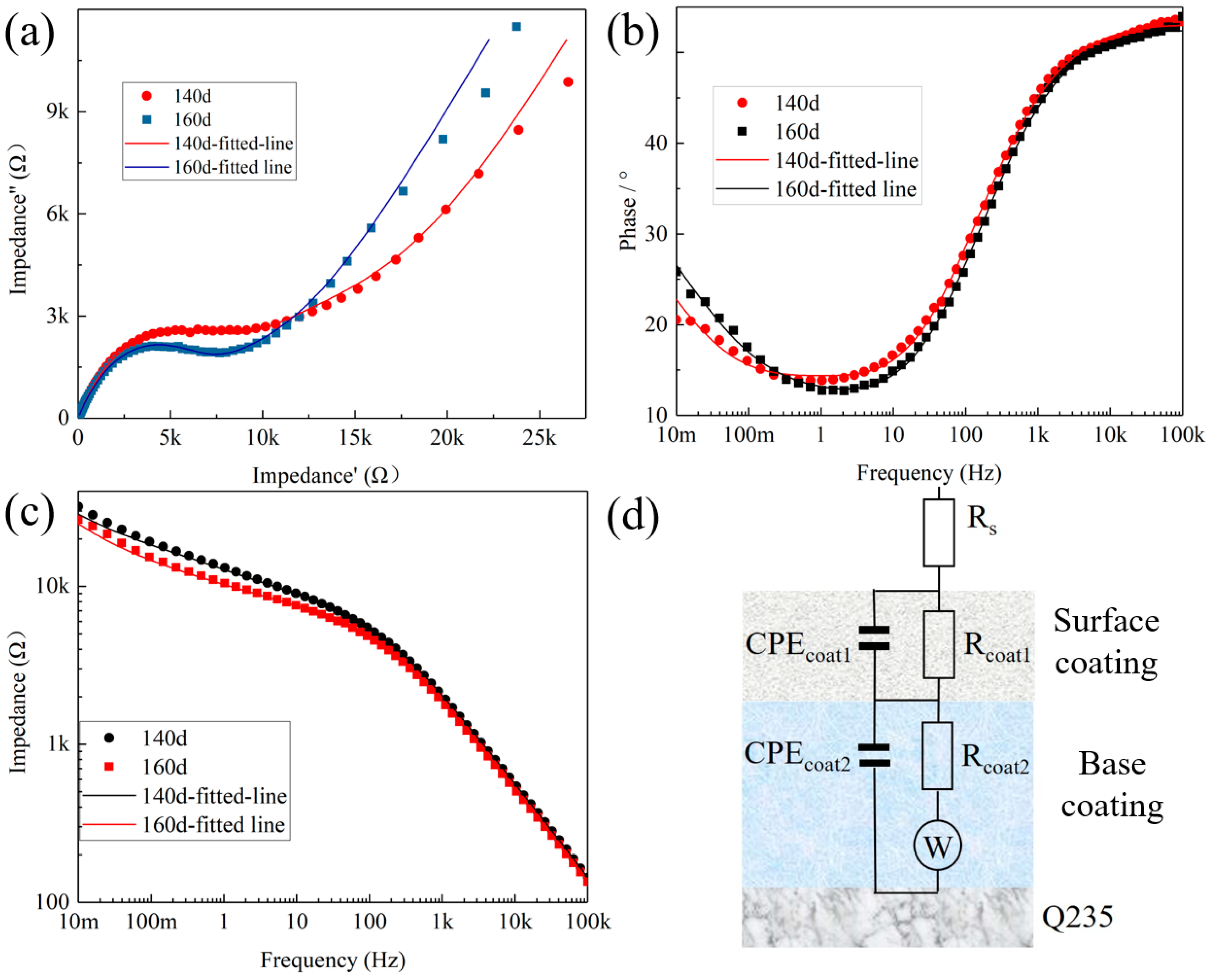
During the third stage (Figure 15), the coating interior has already been filled with a considerable amount of corrosion products. These products act as a series of robust barriers, effectively hindering further penetration and expansion of the corrosive solution within the coating. Meanwhile, the aluminum powder that has broken through its shell provides crucial cathodic protection, continuously undergoing corrosion reactions. This unique dual mechanism is clearly reflected in the Nyquist plot, which exhibits a pronounced Warburg impedance characteristic.
The corresponding equivalent circuit diagram for this stage is presented in Figure 15d, and the detailed equivalent circuit component data are provided in Table 7. Analysis of these data provides a more precise understanding of the electrochemical performance changes occurring during this stage.
During the dynamic progression of the third stage, the resistance values (R) of both the surface and base coatings exhibit a downward trend, while the constant phase element coefficient (Y0) continues to increase. This change is driven by the continuous “swelling effect,” which gradually generates new pores in the surface coating. These newly formed pores create additional channels for the diffusion of corrosion products into the solution, altering the coating’s microstructure and material transport properties.
However, the situation in the base coating differs. The Warburg impedance continues to rise during this stage because the corrosion products spread outward, increasing the surface area of the aluminum powder exposed to the corrosive solution. The enlarged surface area accelerates the electrochemical reaction between the aluminum powder and the corrosive solution, slowing mass transfer within the coating. This reduced mass transfer rate is directly reflected in the continuously increasing Warburg impedance (W) value.
Nevertheless, despite entering the third stage, the coating continues to exhibit outstanding protective performance. It effectively shields the substrate from corrosion, providing a reliable barrier that ensures long-term stability and durability of the substrate.

4. Analysis of Corrosion Resistance Mechanism

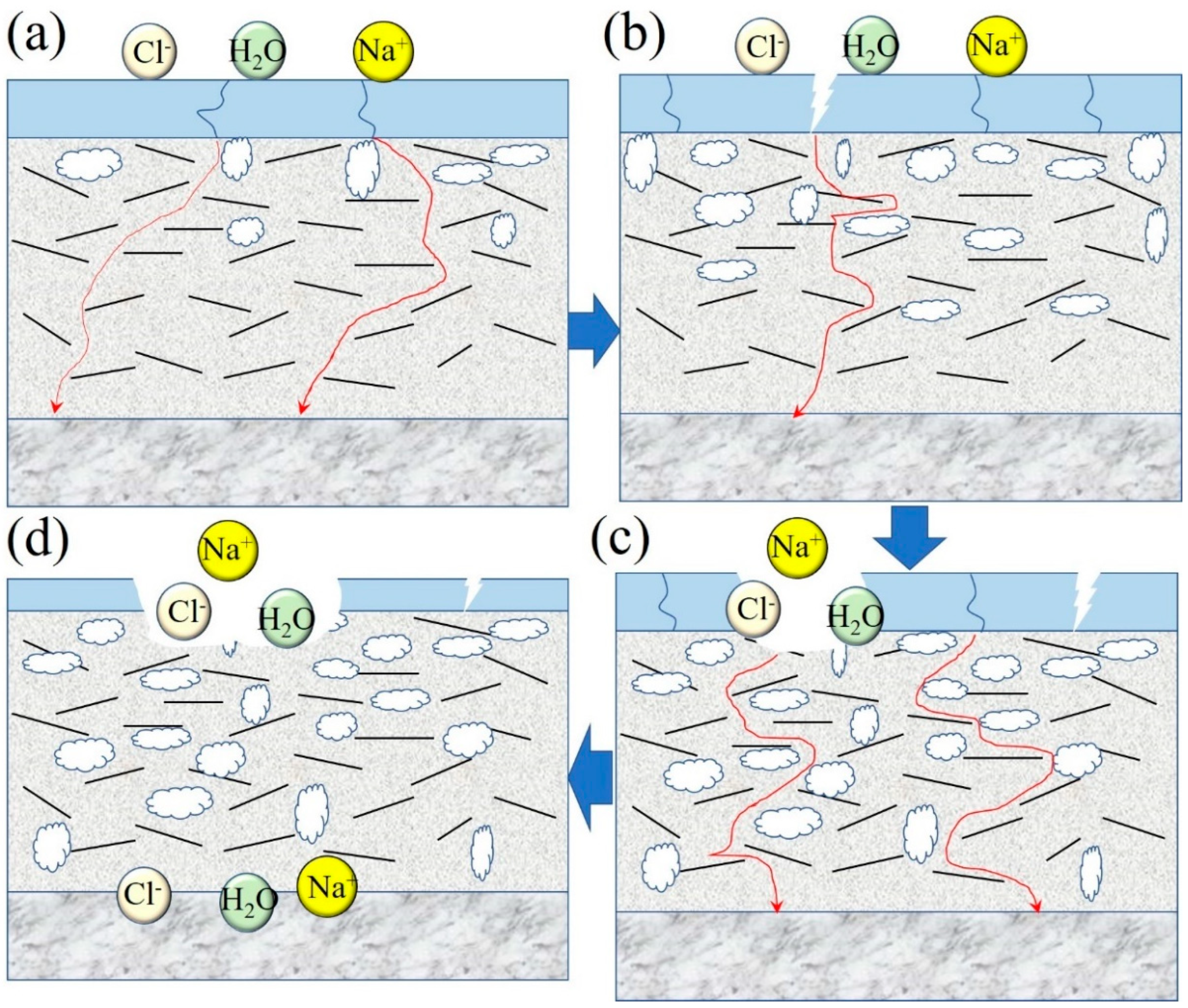
By leveraging advanced characterization techniques for detailed analyses, we observed that the surface of GO is densely covered with numerous hydrophilic polar functional groups. These functional groups confer excellent dispersibility in aqueous environments, allowing GO to uniformly disperse within the aqueous phase. When incorporated into the coating system, GO interacts with the phosphate salts present, forming layered structures. These layered structures play a crucial role in the coating by partially blocking pores and enhancing its protective performance. The corrosion process is visually summarized in Figure 16.
In the initial stage (Figure 16a), the corrosive solution gradually penetrates from the surface coating into the base coating through the microcracks in the surface layer. During this stage, the corrosive solution primarily reacts with the aluminum powder on the surface of the base coating, leading to its corrosion. Notably, the presence of GO significantly alters the diffusion path of the corrosive solution. GO forms a maze-like structure in the coating, extending the diffusion channels and causing the solution to follow a more tangential path rather than directly along the concentration gradient. This complex diffusion path makes it difficult for the corrosive solution to reach the substrate [33,34].
As the immersion time increases, large pores begin to form in the surface coating, as illustrated in Figure 16b. The accumulated corrosive solution in the base coating increases, and simultaneously, the aluminum powder continues to corrode, producing corrosion products. These products partially fill the pores, further hindering the diffusion of the corrosive solution within the base coating and making the corrosion process slower and more complex [35].
At a later stage, the pores in the surface coating expand further, while the aluminum powder in the base coating is largely depleted. Consequently, the coating gradually transforms into a purely physical shielding layer, and the anodic sacrificial effect of the aluminum powder is largely lost.
Ultimately, the corrosive solution reaches the substrate and initiates a corrosion reaction. However, due to the addition of GO, the pores and channels within the coating remain partially disconnected, maintaining a certain shielding effect. This residual barrier slows the reaction between the corrosive solution and the substrate, reducing the corrosion rate and prolonging the substrate’s service life.

5. Conclusions

In this study, a WAP coating modified with GO was successfully prepared. The coating consisted of a high-aluminum-content base layer and a phosphate ceramic surface layer, and different GO contents (0.5, 0.75, and 1 wt.%) were incorporated into the base layer. The molecular structure of GO contains a wide variety of oxygen-containing functional groups, including hydroxyl, carbonyl, carboxyl, and epoxy groups. These functional groups imparted strong hydrophilicity to GO, enabling it to uniformly disperse in water and form a unique bilayer structure. During the coating curing process, GO interacted with the phosphate film, forming a layered structure within the coating, which was confirmed by TEM and XPS analysis. These layers acted as a series of robust physical barriers, improving the coating’s protective properties and enhancing its ability to shield the substrate from corrosion.
GO primarily functioned as a physical shield in the coating system. Electrochemical polarization tests revealed that during the initial stage of immersion in a 3.5% NaCl solution, GO exhibited significant protective effects. It effectively reduced the porosity of the coating, creating a more compact structure and increasing the coating’s polarization resistance, thereby enhancing the substrate’s corrosion protection. Compared with the unmodified coating, the GO-modified coatings improved the protection efficiency of the substrate by more than 10%. Specifically, the coating’s porosity decreased from 11.4% before modification to below 2%, which greatly limited the penetration of corrosive solution, providing more reliable protection for the substrate.
Long-term immersion tests over 160 days showed that the coatings modified with different GO contents exhibited notable differences in corrosion resistance. Among them, the 0.75% GO-modified WAP coating demonstrated the highest corrosion resistance, achieving a substrate protection efficiency of 72.27% and a porosity of only 6.2%. By contrast, the 1% GO-modified WAP coating showed lower corrosion resistance, with the protection efficiency dropping to 46.3% and porosity increasing to 11%. These results indicate that the GO content significantly impacts the corrosion resistance of the coating, and an optimal content is crucial for maximizing long-term protective ability.
EIS analysis provided valuable insights into the corrosion behavior of the coating at different stages. For the 0.75% GO-modified WAP coating, no Warburg impedance was observed during the initial corrosion stage. This indicated that the exposed aluminum powder in the coating was limited, and the electrochemical reaction rate was relatively low, corresponding to mild corrosion conditions.
As corrosion progressed to the second and third stages, Warburg impedance became evident. In the second stage, this was primarily due to the corrosion reaction of aluminum powder. Because aluminum powder was a key component of the coating, its corrosion generated electrochemical signals, captured as Warburg impedance in the spectrum. In the third stage, the Warburg impedance arose from the combined effects of corrosion products and GO, which blocked the pores within the coating and hindered mass transfer. This restricted mass transfer further affected the electrochemical performance of the coating, producing distinct features in the impedance spectrum. Thus, through EIS analysis, the internal mechanism and performance evolution of the coating at different corrosion stages could be clearly understood, providing a clear explanation for its long-term protective behavior.
Overall, this study provides valuable insights into the design of high-performance protective coatings and highlights the critical balance between GO content, hydrophilicity, and barrier function for effective corrosion mitigation.

Author Contributions

Conceptualization, F.D.; Methodology, F.D., J.Y. and B.J.; Software, H.W.; Validation, D.L.; Formal analysis, J.X. and Y.W.; Resources, F.D., X.W. and Y.M.; Data curation, X.W.; Writing—original draft, F.D.; Writing—review & editing, H.W. and B.J.; Supervision, L.B.; Project administration, J.C. and D.L.; Funding acquisition, J.C., Y.M. and J.Y. All authors have read and agreed to the published version of the manuscript.

Funding

This project was supported by Natural Science Foundation of the Jiangsu Higher Education Institutions of China (23KJB430012, 25KJA460003, 21KJA460014), Natural Science Foundation of Jiangsu Province (BK20231227, BK20240489), the Science and Technology Project of Nantong City (JCZ2023014, MSZ2023136), and the Qing Lan Project of Jiangsu Province.

Institutional Review Board Statement

Not applicable.

Informed Consent Statement

Not applicable.

Data Availability Statement

The original contributions presented in this study are included in the article. Further inquiries can be directed to the corresponding author.

Conflicts of Interest

Author Feng Ding and Xiaoxin Wei were employed by the company Jiangsu Linlong New Material Co., Ltd. The remaining authors declare that the research was conducted in the absence of any commercial or financial relationships that could be construed as a potential conflict of interest.

References

  1. Adolfo, R.T.O.; Elsa Miriam, A.E.; Elizabeth, A.C.M.; Marisol, H.A.; Lucía, T.J. Evaluation of organic–inorganic coating on API steels. MRS Adv. 2025, 1–6. [Google Scholar] [CrossRef]
  2. Kristen, B.; Justin, M. Two-Coat Inorganic Coating System for Steel Bridges. Transport. Res. Rec. 2025, 5, 914–923. [Google Scholar]
  3. Xu, B.; Chen, C.; Jiu, S.; Chen, Y.; Liu, Y. Effect of inorganic coating-modified steel reinforcement on properties of sulfoaluminate cement-based non-autoclaved aerated concrete slabs subjected to sodium chloride attack, sodium sulfate attack, and freeze-thaw cycles. Constr. Build. Mater. 2025, 469, 140484. [Google Scholar] [CrossRef]
  4. Hong, L.Y.; Han, H.J.; Ha, H.; Lee, J.; Kim, D. Development of Cr-free aluminum phosphate binders and their composite applications. Compos. Sci. Technol. 2007, 67, 1195–1201. [Google Scholar] [CrossRef]
  5. Han, R.; Naeem, H.T.; Li, J.; Kong, L.; Liu, J.; Shan, X.; Cui, X.; Xiong, T. A novel phosphate-ceramic coating for high temperature oxidation resistance of Ti65 alloys. Ceram. Int. 2019, 45, 23895–23901. [Google Scholar] [CrossRef]
  6. Qin, Y.; Liu, F.; Zhang, T.; Ahmed, S. Effects of Al:P stoichiometry and curing temperature on corrosion resistance of phosphate coatings. Ceram. Int. 2025, 51, 42069–42082. [Google Scholar] [CrossRef]
  7. Arthanareeswari, M.; Kamaraj, P.; Tamilselvi, M.; Devikala, S. A low temperature nano TiO2 incorporated nano zinc phosphate coating on mild steel with enhanced corrosion resistance. Mater. Today-Proc. 2018, 5, 9012–9025. [Google Scholar] [CrossRef]
  8. Chen, Z.; Guo, X.; Zhang, L.; Lu, G.; Liu, M.; Liu, S. Anticorrosion mechanism of Al-modified phosphate ceramic coating in the high-temperature marine atmosphere. Surf. Coat. Technol. 2022, 441, 128572. [Google Scholar] [CrossRef]
  9. Luczka, K.; Grzmil, B.; Michalkiewicz, B.; Kowalczyk, K. Studies on obtaining of aluminium phosphates modified with ammonium, calcium and molybdenum. J. Ind. Eng. Chem. 2015, 23, 257–264. [Google Scholar] [CrossRef]
  10. Amini, R.; Vakili, H.; Ramezanzadeh, B. Studying the effects of poly (vinyl) alcohol on the morphology and anti-corrosion performance of phosphate coating applied on steel surface. J. Taiwan Inst. Chem. E 2016, 58, 542–551. [Google Scholar] [CrossRef]
  11. Wang, J.; Wu, M.; Miao, X.; Bian, D.; Chen, Y.; Zhao, Y. Enhancing the corrosion and wear resistance of phosphate coatings with MXene-based self-healing fillers. J. Mater. Sci. Technol. 2026, 261, 134–151. [Google Scholar]
  12. Bautin, V.A.; Bardin, I.V.; Kvaratskheliya, A.R.; Yashchuk, S.V.; Hristoforou, E.V. Effect of Graphene Oxide Addition on the Anticorrosion Properties of the Phosphate Coatings in Neutral and Acidic Aqueous Media. Materials 2022, 15, 6588. [Google Scholar] [CrossRef]
  13. Yadav, A.; Kumar, R.; Sahoo, B. Graphene Oxide Coatings on Amino Acid Modified Fe Surfaces for Corrosion Inhibition. ACS Appl. Nano Mater. 2020, 3, 3540–3557. [Google Scholar] [CrossRef]
  14. Yadav, A.; Kumar, R.; Choudhary, H.K.; Sahoo, B. Graphene-oxide coating for corrosion protection of iron particles in saline water. Carbon 2018, 140, 477–487. [Google Scholar] [CrossRef]
  15. Cheng, L.H.; Liu, C.L.; Han, D.J.; Ma, S.; Guo, W.; Cai, H.; Wang, X. Effect of graphene on corrosion resistance of waterborne inorganic zinc-rich coatings. J. Alloy. Compd. 2019, 774, 255–264. [Google Scholar] [CrossRef]
  16. Ashish, B.; Swapnil, S.; Bhanvase, B.A.; Shende, P.G. Investigation on simultaneous enhancement in mechanical and anticorrosion performance of graphene oxide-zinc phosphate nanocomposite-based coatings. Diam. Relat. Mater. 2024, 144, 110960. [Google Scholar]
  17. Wang, C.; Wu, M.; Wang, Y.; Wang, J.; Wen, Z.; Wei, W.; Miao, X. Effect of Al2O3-MWCNTs on anti-corrosion behavior of inorganic phosphate coating in high-temperature marine environment. Surf. Coat. Technol. 2023, 473, 130039. [Google Scholar] [CrossRef]
  18. Ding, Y.; Wang, S.; Zhou, Y.; Lv, H.; Yang, B. Research on High-Temperature Frictional Performance Optimization and Synergistic Effects of Phosphate-Based Composite Lubricating Coatings. Coatings 2025, 15, 704. [Google Scholar] [CrossRef]
  19. Mohammad, A.; Patrik, S.; Fabio, E.F.; Joakim, R.; Rowena, C.; Ueli, A. Mechanism of zinc phosphate conversion coating formation on iron-based substrates. Corros. Sci. 2025, 248, 112796. [Google Scholar] [CrossRef]
  20. JB/T 7901-1999; Metals materials-Uniform corrosion-Methods of laboratory immersion testing. National Machinery Industry Bureau: Bengjing, China, 1999.
  21. Liu, Y.; Zhu, Z.; Cheng, Y. An in-depth study of photocathodic protection of SS304 steel by electrodeposited layers of ZnO nanoparticles. Surf. Coat. Tech. 2020, 399, 126158. [Google Scholar]
  22. Strebl, M.G.; Bruns, M.P.; Virtanen, S. Respirometric in Situ Methods for Real-Time Monitoring of Corrosion Rates: Part III. Deconvolution of Electrochemical Polarization Curves. J. Electrochem. Soc. 2023, 170, 1503. [Google Scholar] [CrossRef]
  23. Li, J.; Ji, Y.; Xu, Z. Corrosion behavior of reinforcing bar in magnesium phosphate cement based on polarization curve. Sādhanā 2020, 45, 27. [Google Scholar] [CrossRef]
  24. Tato, W.; Landolt, D. Electrochemical Determination of the Porosity of Single and Duplex PVD Coatings of Titanium and Titanium Nitride on Brass. J. Electrochem. Soc. 2019, 145, 4173–4181. [Google Scholar] [CrossRef]
  25. Liu, C.; Bi, Q.; Leyland, A.; Matthews, A. An electrochemical impedance spectroscopy study of the corrosion behaviour of PVD coated steels in 0.5 N NaCl aqueous solution: Part I. Establishment of equivalent circuits for EIS data modelling. Corros. Sci. 2003, 45, 1243–1256. [Google Scholar] [CrossRef]
  26. Zhang, D.; Zhang, H.; Zhao, S.; Li, Z.; Hou, S. Electrochemical Impedance Spectroscopy Evaluation of Corrosion Protection of X65 Carbon Steel by Halloysite Nanotube-Filled Epoxy Composite Coatings in 3.5% NaCl Solution. Int. J. Electrochem. Sci. 2019, 14, 4659–4667. [Google Scholar] [CrossRef]
  27. Evelina, M.L.; Dennis, V.T.; Jean, R.C.L. About the Electrochemical Mechanism of Aluminum Corrosion in Acid Media by Electrochemical Impedance Spectroscopy. Mater. Corros. 2025, 76, 1353–1364. [Google Scholar] [CrossRef]
  28. Torrisi, L.; Silipigni, L.; Cutroneo, M.; Torrisi, A. Graphene oxide as a radiation sensitive material for XPS dosimetry. Vacuum 2020, 173, 109175. [Google Scholar] [CrossRef]
  29. Andrea, C.; Stefano, R.; Flavio, D.; Michele, F. Exploring the role of passivating conversion coatings in enhancing the durability of organic-coated steel against filiform corrosion using an electrochemical simulated approach. Prog. Org. Coat. 2024, 189, 108357. [Google Scholar]
  30. Bernard, T.; Mark, E.O. Electrochemical Impedance Spectroscopy; Chemical Industry Press: Beijing, China, 2022. [Google Scholar]
  31. Meroufel, A.; Touzain, S. EIS characterisation of new zinc-rich powder coatings. Prog. Org. Coat. 2007, 59, 197–205. [Google Scholar] [CrossRef]
  32. Liu, J.G.; Gong, G.P.; Yan, C.W. EIS study of corrosion behaviour of organic coating/Dacromet composite systems. Electrochim. Acta 2005, 50, 3320–3332. [Google Scholar]
  33. Yu, H.; Zhao, Q.; Fu, J.; Hu, Y.; Liang, J.; Li, J.; Xu, W. The design of oxidation resistant Ni superalloys for additive manufacturing. Addit Manuf. 2025, 97, 104616. [Google Scholar]
  34. Yu, S.; Ning, C.; Wu, H.; Li, Z.; Wu, Y.; Cai, Z. Comparison of surface integrity, microstructure and corrosion resistance of Zr-4 alloy with various laser shock peening treatments. Surf. Coat. Tech. 2025, 498, 131799. [Google Scholar] [CrossRef]
  35. Liu, Y.; Zhu, L.; Ma, G.; Lu, Y.; Wei, A.; Yang, C.; Huang, Y.; Liu, M.; Wang, H. Tribocorrosion behaviours and mechanisms of Inconel 625–nano/micro Al2O3 composite coatings prepared by plasma enhanced high-velocity arc spraying. Corros. Sci. 2025, 256, 113221. [Google Scholar] [CrossRef]
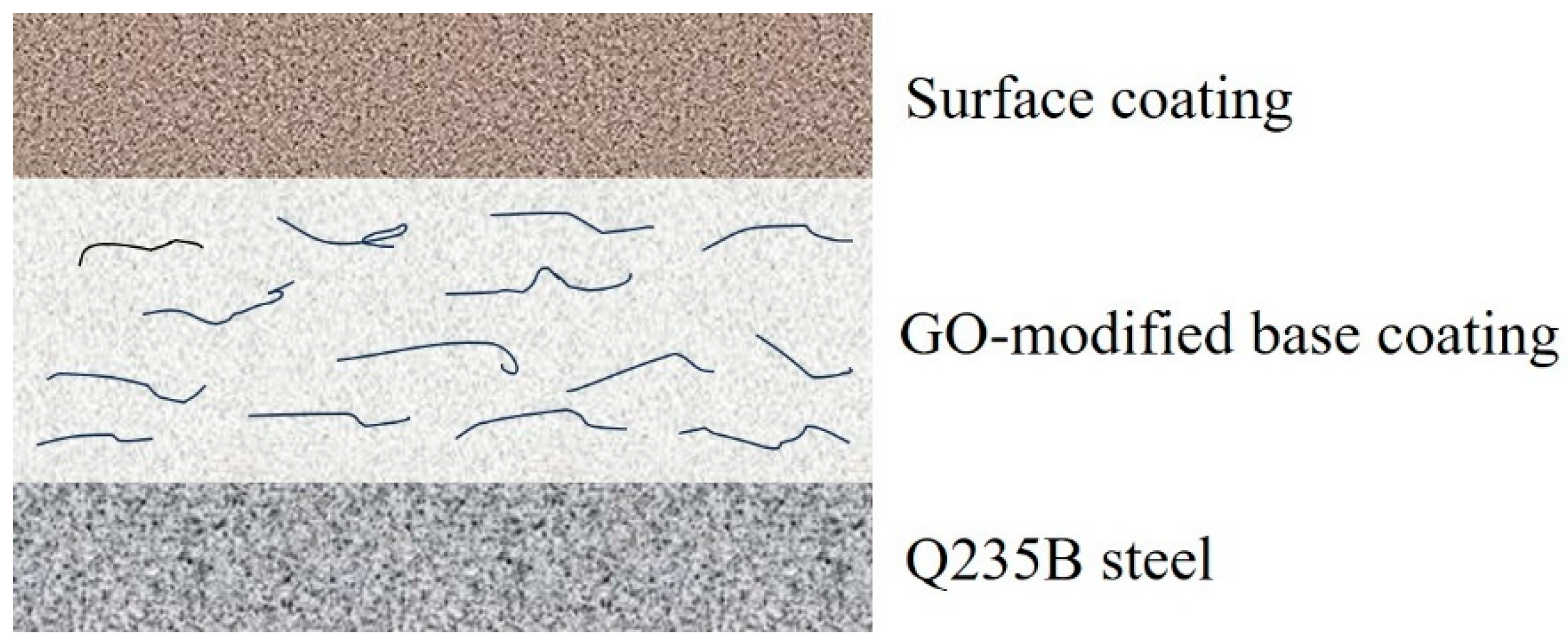
Figure 1. Schematic diagram of modified WAP coating structure.
Coatings 16 00011 g001
Figure 2. TEM image of GO after ultrasonic dispersion in pure water. (ac) different magnification levels; (d) electron transmission diffraction pattern.
Coatings 16 00011 g002
Figure 3. (a) XPS test spectrum of GO; (b) C1s peak spectrum in XPS.
Coatings 16 00011 g003
Figure 4. Curve showing the variation in GO resistivity with pressure as measured by the four-probe method.
Coatings 16 00011 g004
Figure 5. SEM image of the surface morphology and EDS elemental analysis of the base coating without (a) and with (b) the addition of GO.
Coatings 16 00011 g005
Figure 6. Gain curves for corrosion weight.
Coatings 16 00011 g006
Figure 7. Cross-sectional diagrams of three graphite oxide content coatings after being immersed in 5% NaCl solution for 100 days: (a) 0.5‰ GO/WAP coating; (b) 0.75‰ GO/WAP; (c) 1‰ GO/WAP.
Coatings 16 00011 g007
Figure 8. Curves of OCP variation with soaking time for three different contents of GO-modified WAP coatings.
Coatings 16 00011 g008
Figure 9. Polarization curves of three different GO-modified WAP coatings after being immersed in 3.5% NaCl solution for 1 day.
Coatings 16 00011 g009
Figure 10. The polarization curve after immersion for 160 days.
Coatings 16 00011 g010
Figure 11. The first-stage EIS spectrum of 0.75‰ GO modified WAP coating immersed in 3.5% NaCl solution: (a) Nyquist plot; (b) Bode plot: |φ| − logf; (c) Bode plot: log|Z| − logf; (d) Equivalent circuit diagram.
Coatings 16 00011 g011
Figure 12. Evolution curve of fitting data of equivalent circuit components of EIS spectra of 0.75‰ GO/WAP coating in the first stage of immersion in 3.5% NaCl solution over time. (ac) evolution of parameters of equivalent components; (d) equivalent capacitance of the coating.
Coatings 16 00011 g012
Figure 13. The second-stage EIS spectrum of 0.75‰GO modified WAP coating immersed in 3.5% NaCl solution: (a) Nyquist plot; (b) Bode plot: |φ| − logf; (c) Bode plot: log|Z| − logf; (d) Equivalent circuit diagram.
Coatings 16 00011 g013
Figure 14. Evolution curve of fitting data of equivalent circuit elements of EIS spectra of 0.75‰ GO/WAP coating in the second stage of immersion in 3.5% NaCl solution over time. (ac) evolution of parameters of equivalent components; (d) equivalent capacitance of the coating.
Coatings 16 00011 g014
Figure 15. The third-stage EIS spectrum of 0.75‰ GO modified WAP coating immersed in 3.5% NaCl solution: (a) Nyquist plot; (b) Bode plot: |φ| − logf; (c) Bode plot: log|Z| − logf; (d) Equivalent circuit diagram.
Coatings 16 00011 g015
Figure 16. Corrosion mechanism of GO/WAP coating. (a) The initial stage; (b) Bursting of the surface coating; (c) Corrosive liquid penetration; (d) The substrate has been corroded.
Coatings 16 00011 g016
Table 1. Chemical composition of the test substrate.
CSiMnSPFe
Q235B0.12~0.20≤0.300.30~0.70≤0.045≤0.045Rest
Table 2. Composition ratio and source of base coating.
Chemical CompositionPropertyManufacturerContent
Al(H2PO4)330% aqueous solutionShenyang Shisan Biochemical Technology Development Co., Ltd. (Shenyang, China)20 g
ZnOARHaitai Nanomaterials Co., Ltd. (Nanjing, China)0.1 g
MgOARNanjing Chemical Reagent Co., Ltd. (Nanjing, China)0.3 g
Al2O33000 meshBeijing Deke Daojin Science and Technology Co., Ltd. (Beijing, China)5 g
MgCrO4ARJiangsu Yonghua Chemical Technology Co., Ltd. (Suzhou, China)1 g
Al3000 meshBeijing Deke Daojin Science and Technology Co., Ltd. (Beijing, China)20 g
Aqua destillata\Self-made15 g
Promoter\Self-made0.5 g
Table 3. Composition ratio and source of surface coating.
Chemical CompositionPropertyManufacturerContent
Al(H2PO4)330% aqueous solutionShenyang Shisan Biochemical Technology Development Co., Ltd.30 g
MgOARNanjing Chemical Reagent Co., Ltd.0.4 g
Al2O33000 meshBeijing Deke Daojin Science and Technology Co., Ltd.5 g
MgCrO4ARJiangsu Yonghua Chemical Technology Co., Ltd.1 g
Cr2O399.95%Aladdin Reagent (Shanghai) Co., Ltd. (Shanghai, China)10 g
CMC800~1200 mPa·sAladdin Reagent (Shanghai) Co., Ltd.0.2 g
PMA99%Aladdin Reagent (Shanghai) Co., Ltd.5 g
aqua destillata\Self-made10 g
promoter\Self-made1 g
Table 4. Parameters of GO.
NamePreparation MethodPurityBET
(m2·g−1)
Layer
GOfreeze-drying≥99%1200~1500single
Table 5. The calculation results of the polarization curve after 1 day of immersion.
GOβc
Mv·dec−1
βa
mV·dec−1
icorr
μA·cm−2
Ecorr
mV
Rp
kΩ·cm−2
PE
%
P
%
0.5‰−8685561.88−47678.489.361.3
0.75‰−10803650.599−49019796.610.3
1‰−16004620.471−47433197.330.2
Table 6. The calculation results of the polarization curve after immersion for 160 days.
GO
Content
βc
mV·dec−1
βa
mV·dec−1
icorr
μA·cm−2
Ecorr
mV
Rp
kΩ·cm−2
PE
%
P
%
0.5‰−2854414.2−83517.968.482.9
0.75‰−38911904.9−7922672.274.6
1‰−47011009.49−74915.146.38.4
Table 7. The equivalent circuit fitting data of the coating in the third stage of EIS spectra after being immersed in a 3.5% NaCl solution.
Immersion
Time
Rs
R1
Q1-Y0
μF
Q1-n
\
R2
Q2-Y0
μF
Q2-n
\
W
kΩ·s−1/2
140d597.622.0362814.349.40.4824.59
160d94.86.472.1362810.269.10.4585.69
Disclaimer/Publisher’s Note: The statements, opinions and data contained in all publications are solely those of the individual author(s) and contributor(s) and not of MDPI and/or the editor(s). MDPI and/or the editor(s) disclaim responsibility for any injury to people or property resulting from any ideas, methods, instructions or products referred to in the content.