UV-Shielding Biopolymer Coatings Loaded with Bioactive Compounds for Food Packaging Applications

 ,
,  ,
,  , and
, and 
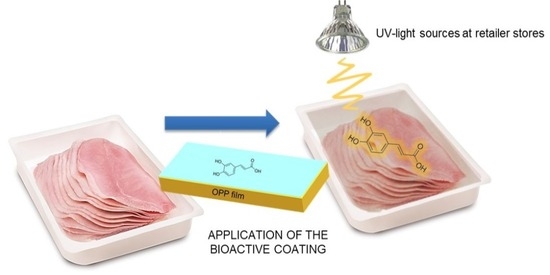
Abstract
Share and Cite
Gennaro, M.; Büyüktaş, D.; Carullo, D.; Pinto, A.; Dallavalle, S.; Farris, S. UV-Shielding Biopolymer Coatings Loaded with Bioactive Compounds for Food Packaging Applications. Coatings 2025, 15, 741. https://doi.org/10.3390/coatings15070741
Gennaro M, Büyüktaş D, Carullo D, Pinto A, Dallavalle S, Farris S. UV-Shielding Biopolymer Coatings Loaded with Bioactive Compounds for Food Packaging Applications. Coatings. 2025; 15(7):741. https://doi.org/10.3390/coatings15070741
Chicago/Turabian StyleGennaro, Matteo, Duygu Büyüktaş, Daniele Carullo, Andrea Pinto, Sabrina Dallavalle, and Stefano Farris. 2025. "UV-Shielding Biopolymer Coatings Loaded with Bioactive Compounds for Food Packaging Applications" Coatings 15, no. 7: 741. https://doi.org/10.3390/coatings15070741
APA StyleGennaro, M., Büyüktaş, D., Carullo, D., Pinto, A., Dallavalle, S., & Farris, S. (2025). UV-Shielding Biopolymer Coatings Loaded with Bioactive Compounds for Food Packaging Applications. Coatings, 15(7), 741. https://doi.org/10.3390/coatings15070741