Microstructure and High-Temperature Oxidation Behavior of Cold-Sprayed CoNiCrAlY Coatings Deposited by Different Propellent Gases



Abstract
1. Introduction
2. Experimental Details
3. Results and Discussion
3.1. Microstructures
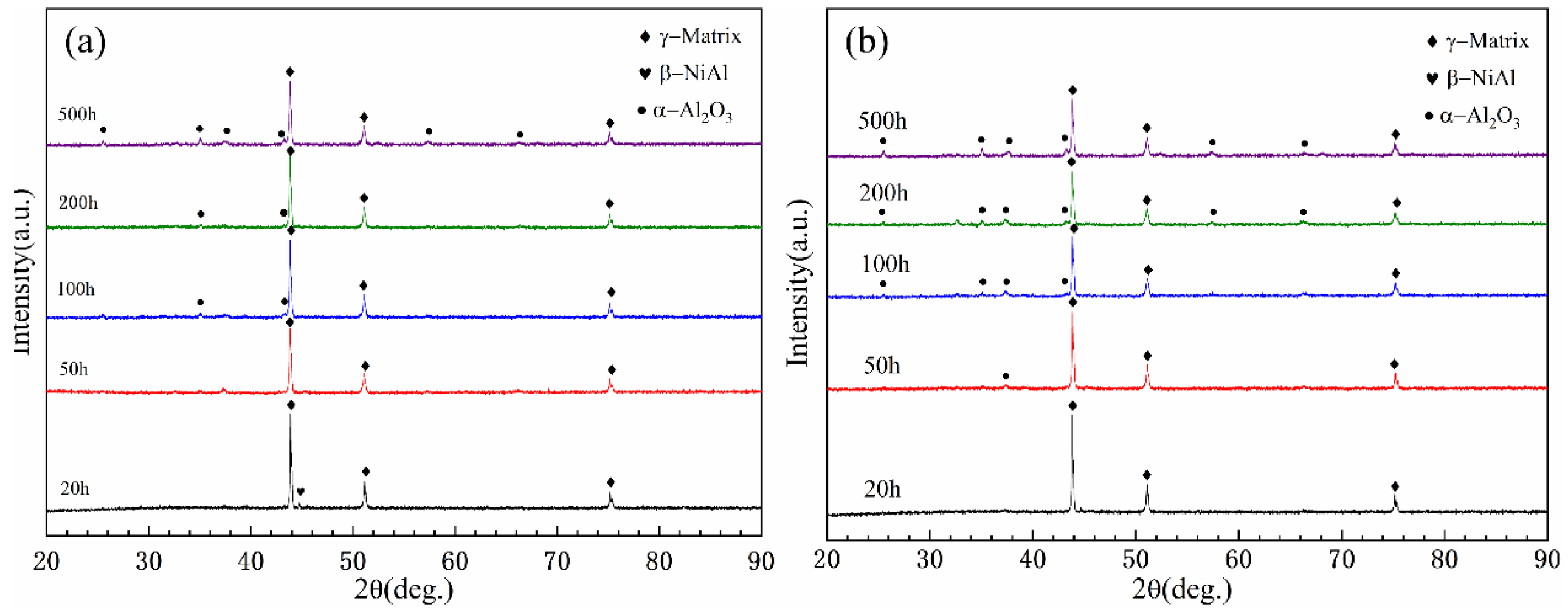
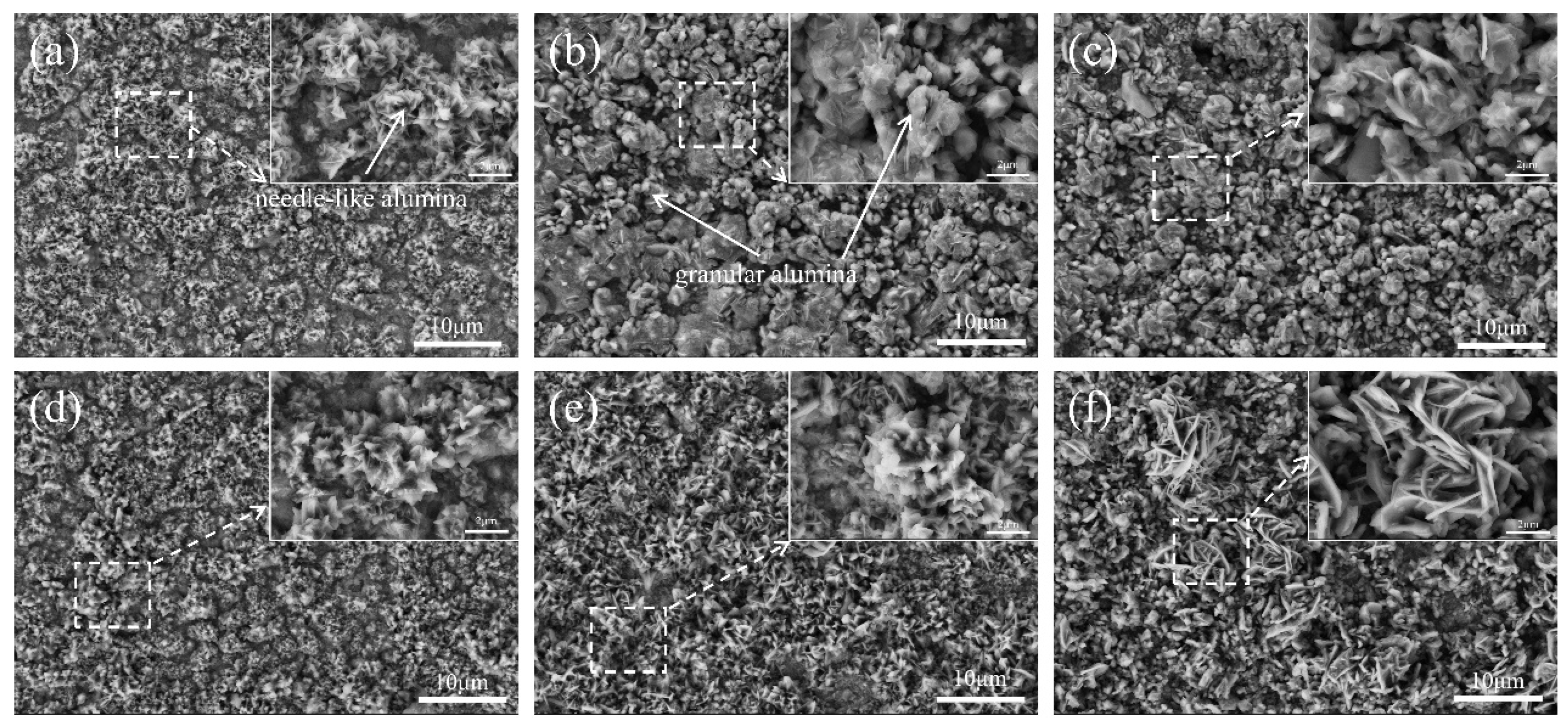
3.2. Oxidation Behaviors
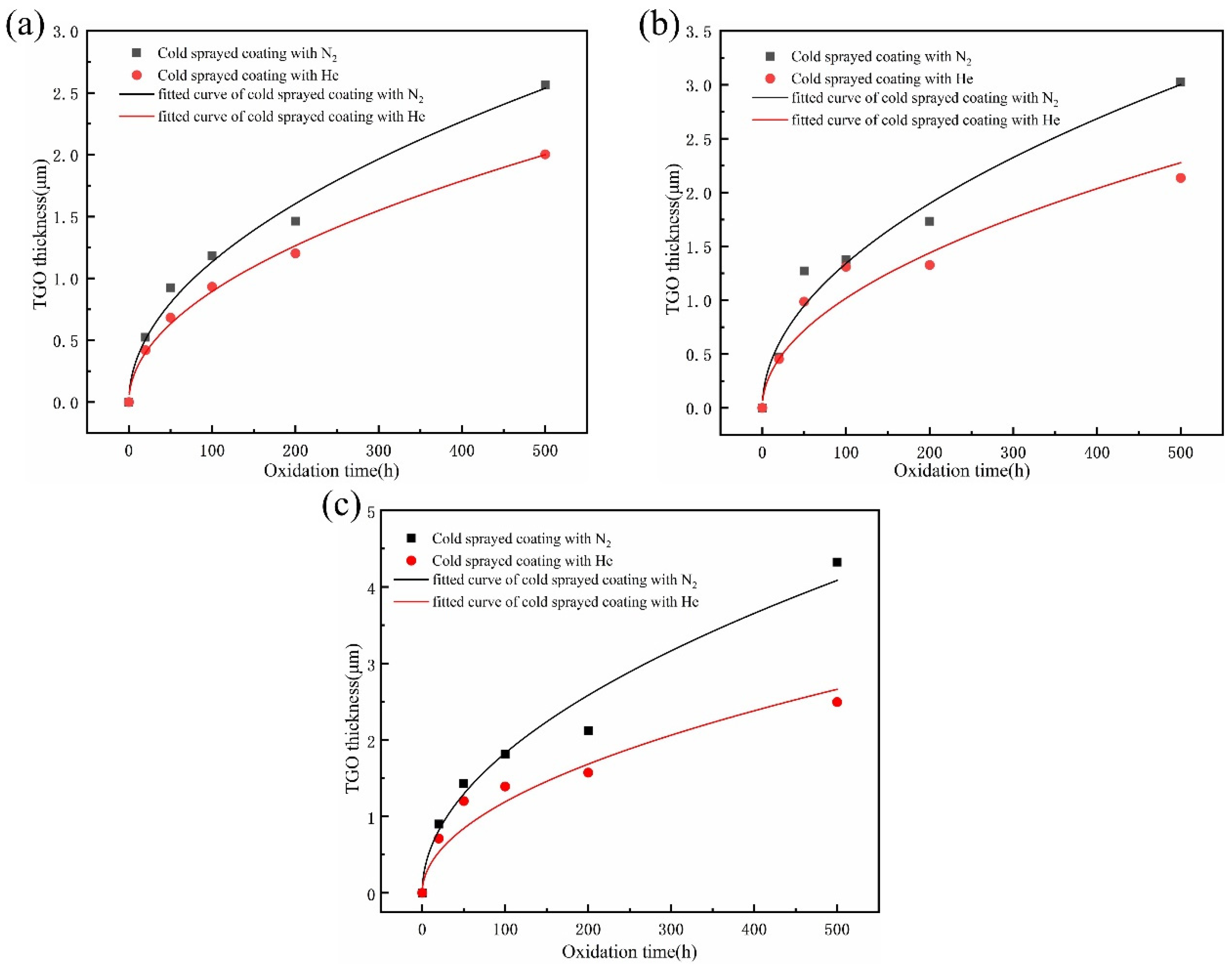
3.3. Oxidation Kinetics
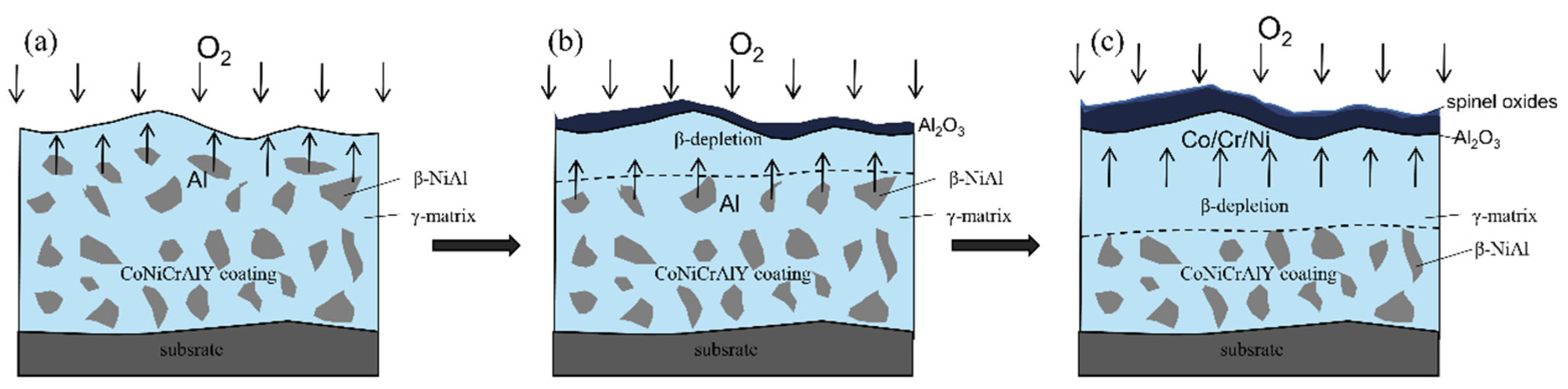
3.4. Oxidation Mechanisms
4. Conclusions
- (1)
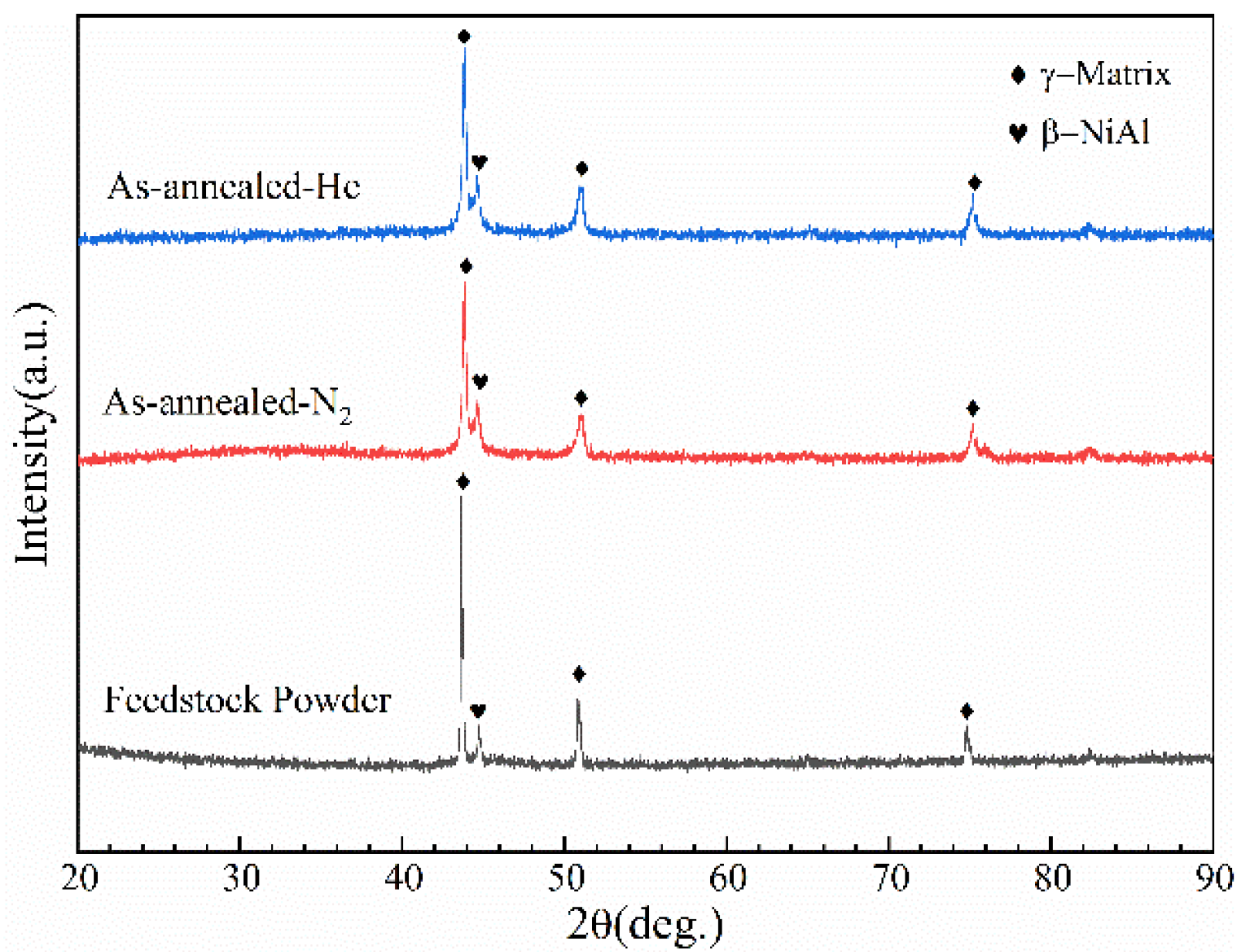
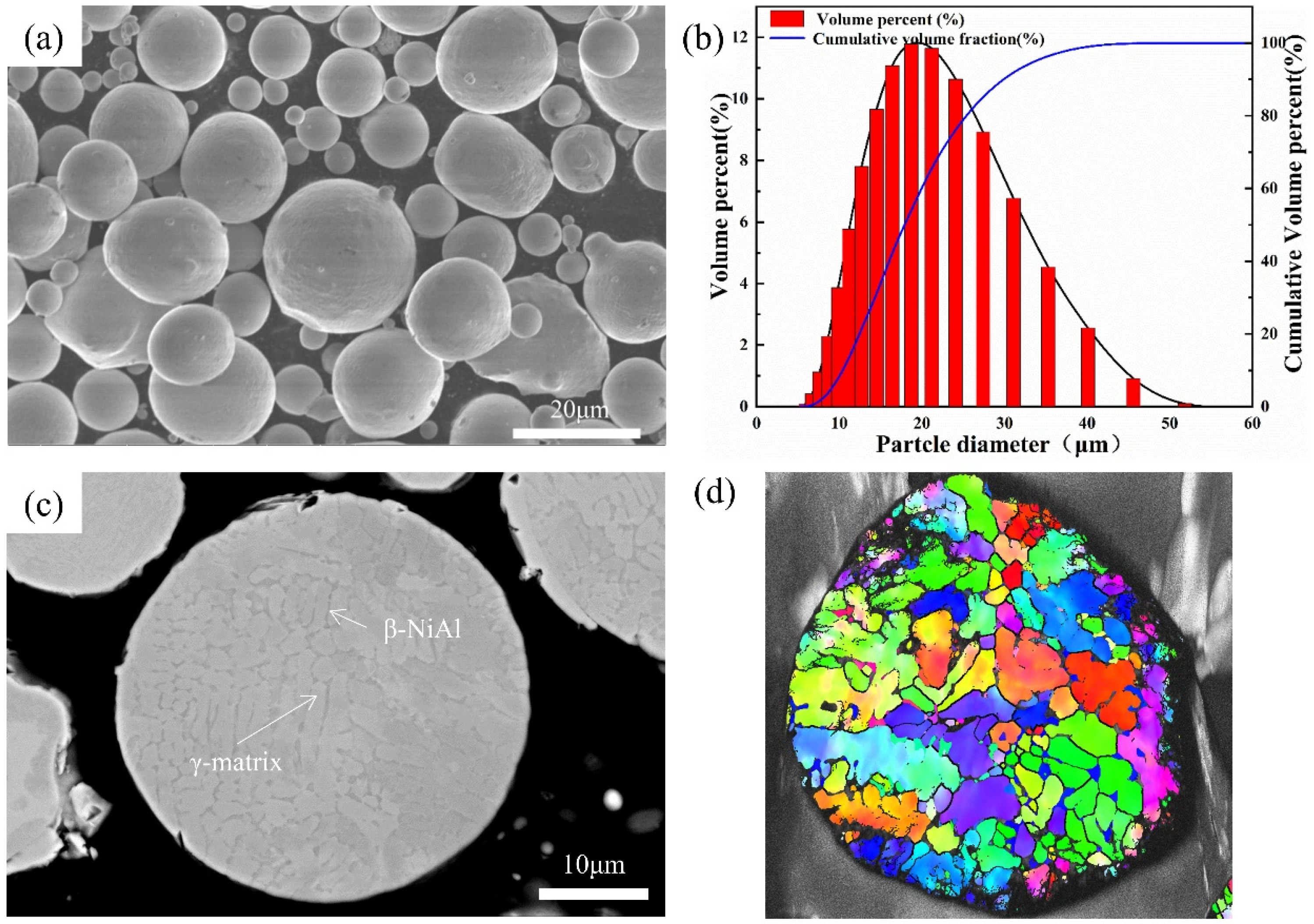
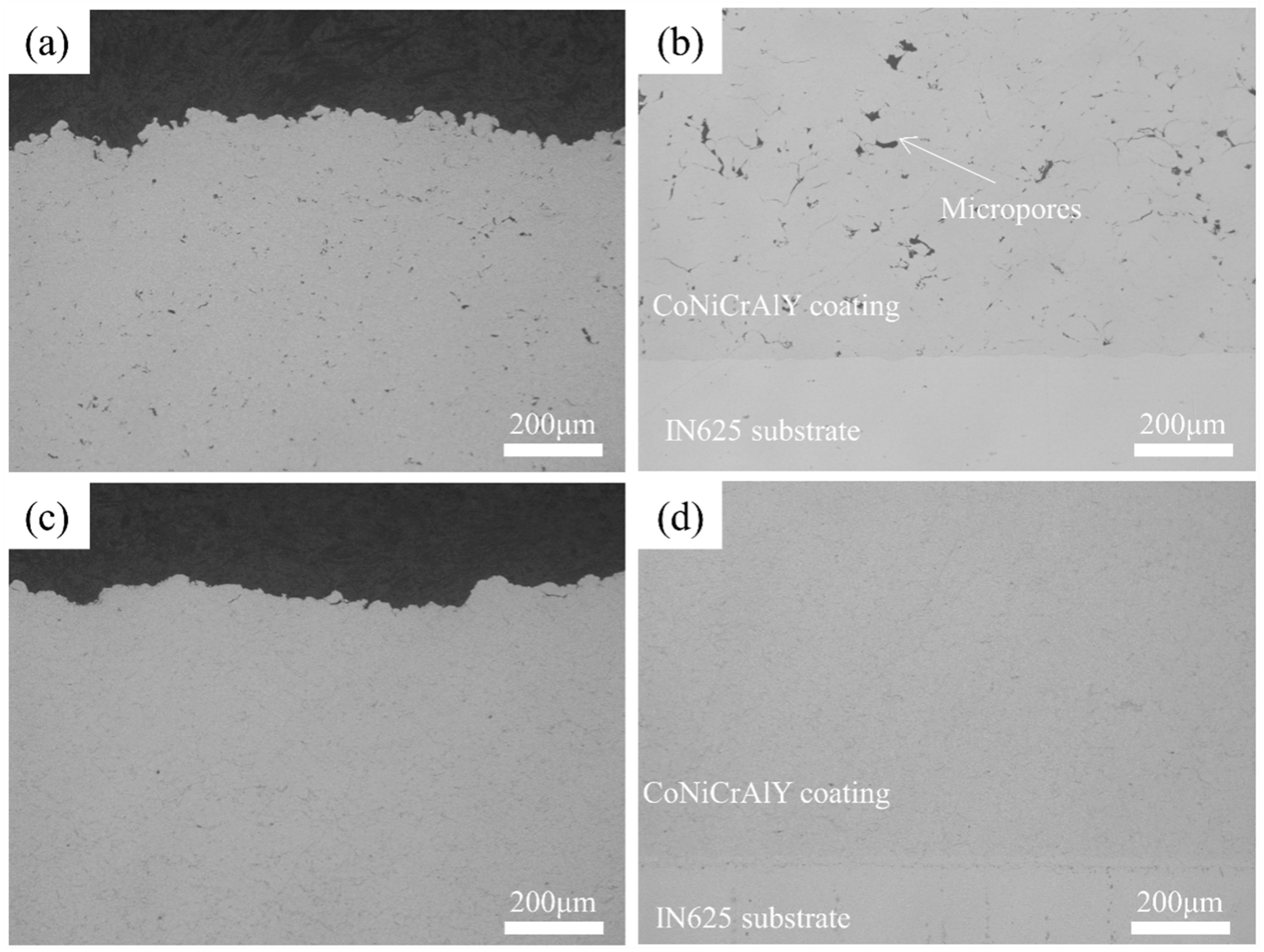
- Microstructural analysis demonstrated that both CoNiCrAlY coatings, prepared with N2 and He carrier gases, exhibited dense microstructures and good interfacial bonding. However, the porosity of the helium coatings (<0.1%) was significantly lower than that of the nitrogen coatings (~0.5%), indicating that helium coatings had better densification and lower porosity.
- (2)
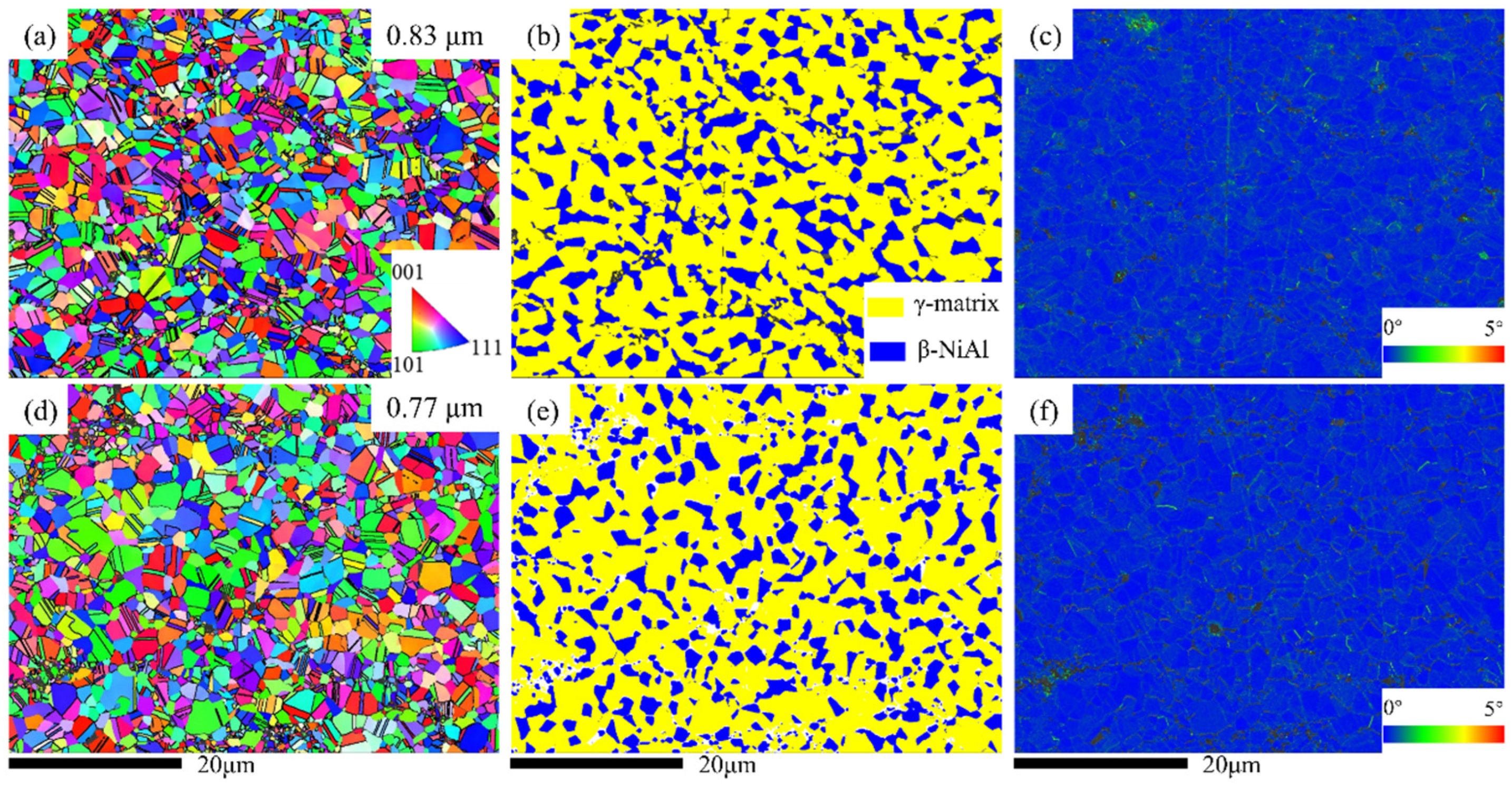
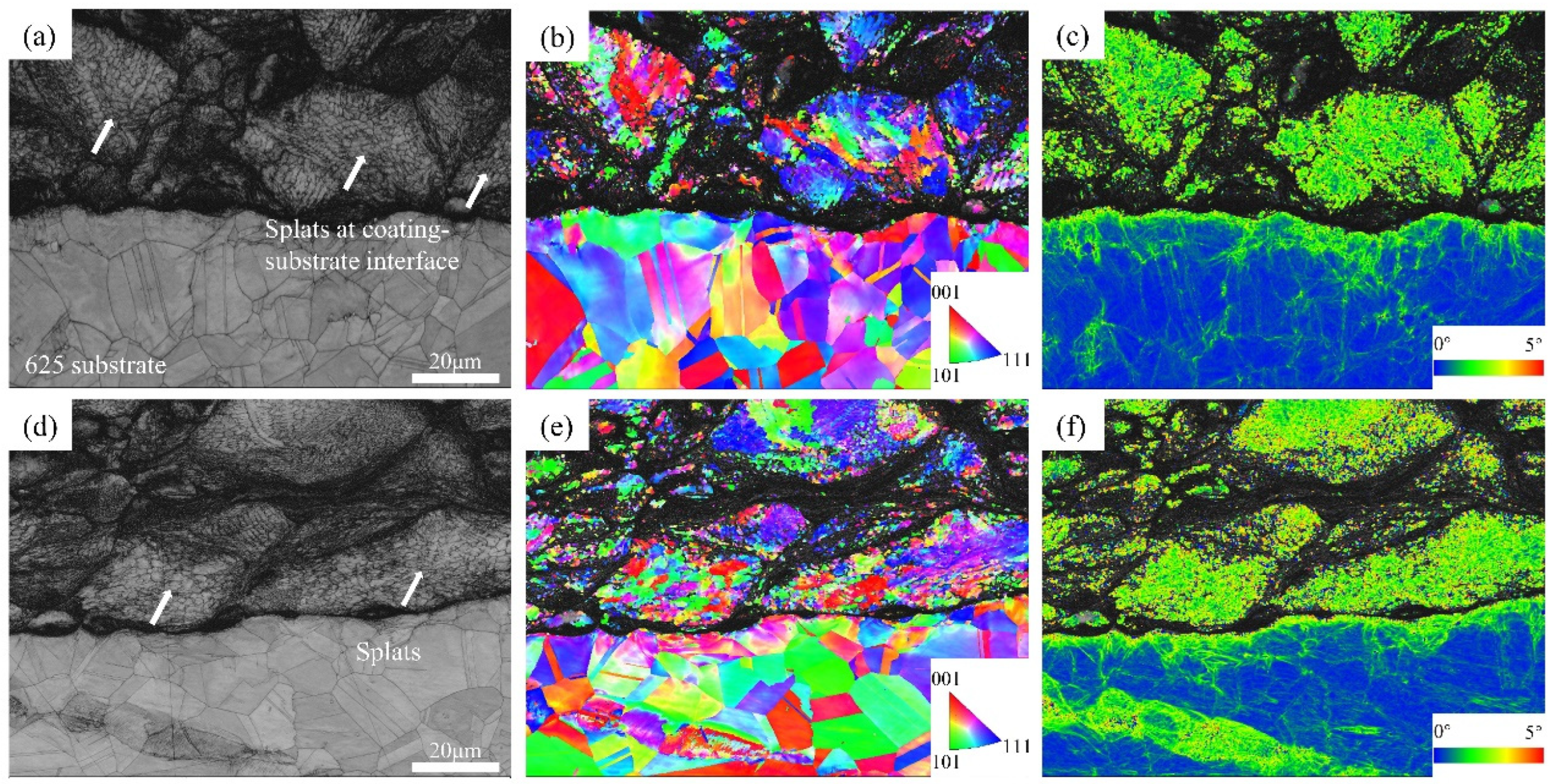
- EBSD analysis showed that both deposited coatings underwent severe plastic deformation during the deposition process, followed by stress relief within the coatings after heat treatment. The grain size of the helium-sprayed coating (0.77 μm) was slightly smaller than that of the nitrogen-sprayed coating (0.83 μm), but both coatings exhibited very fine grains.
- (3)
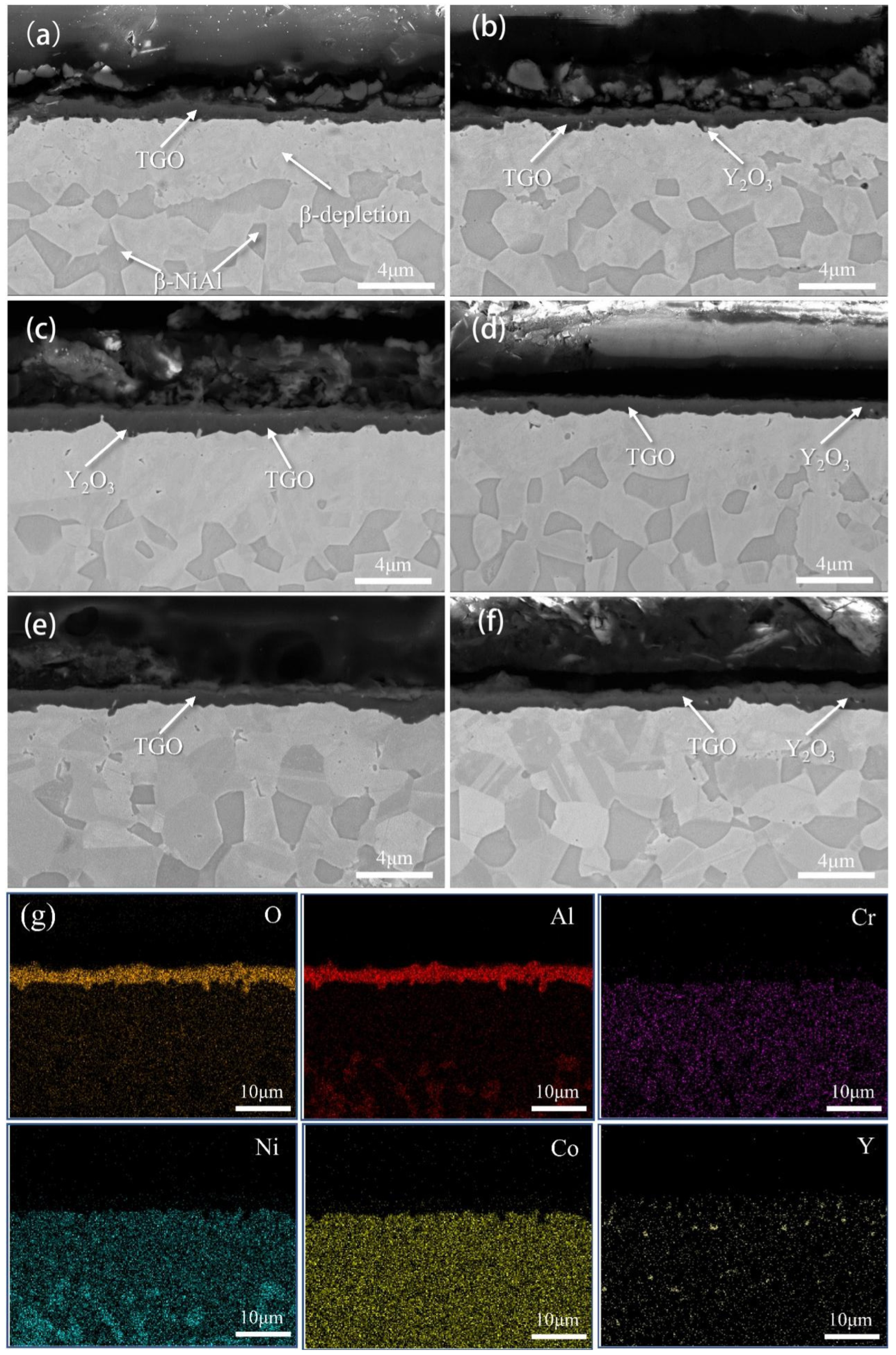
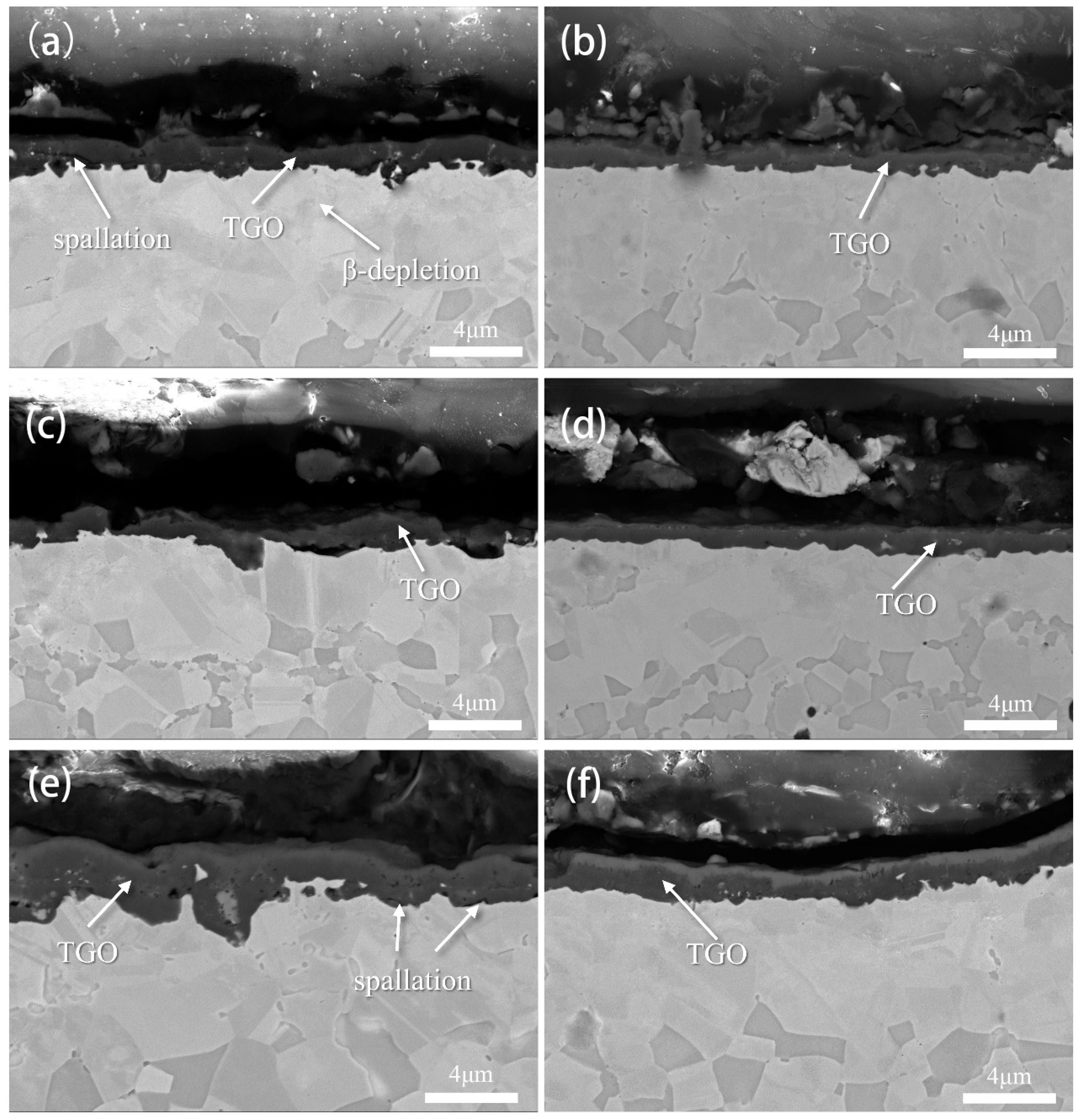
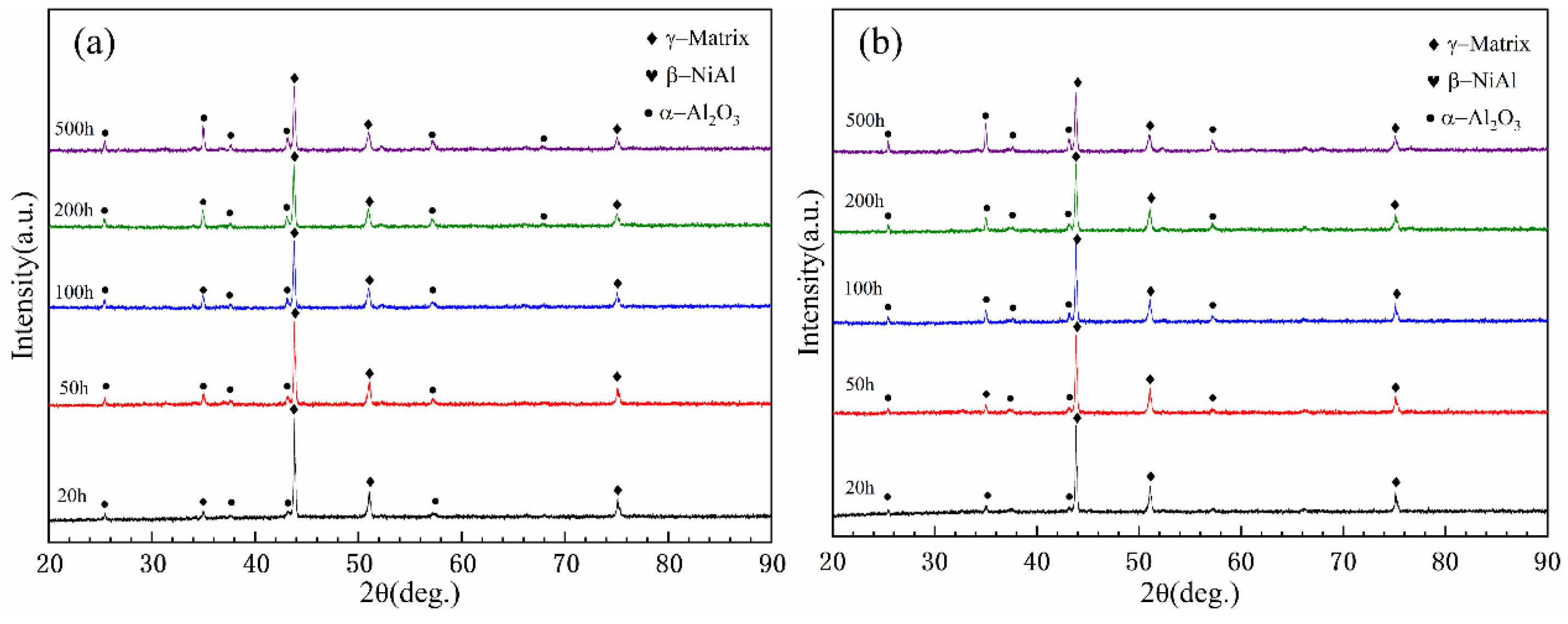
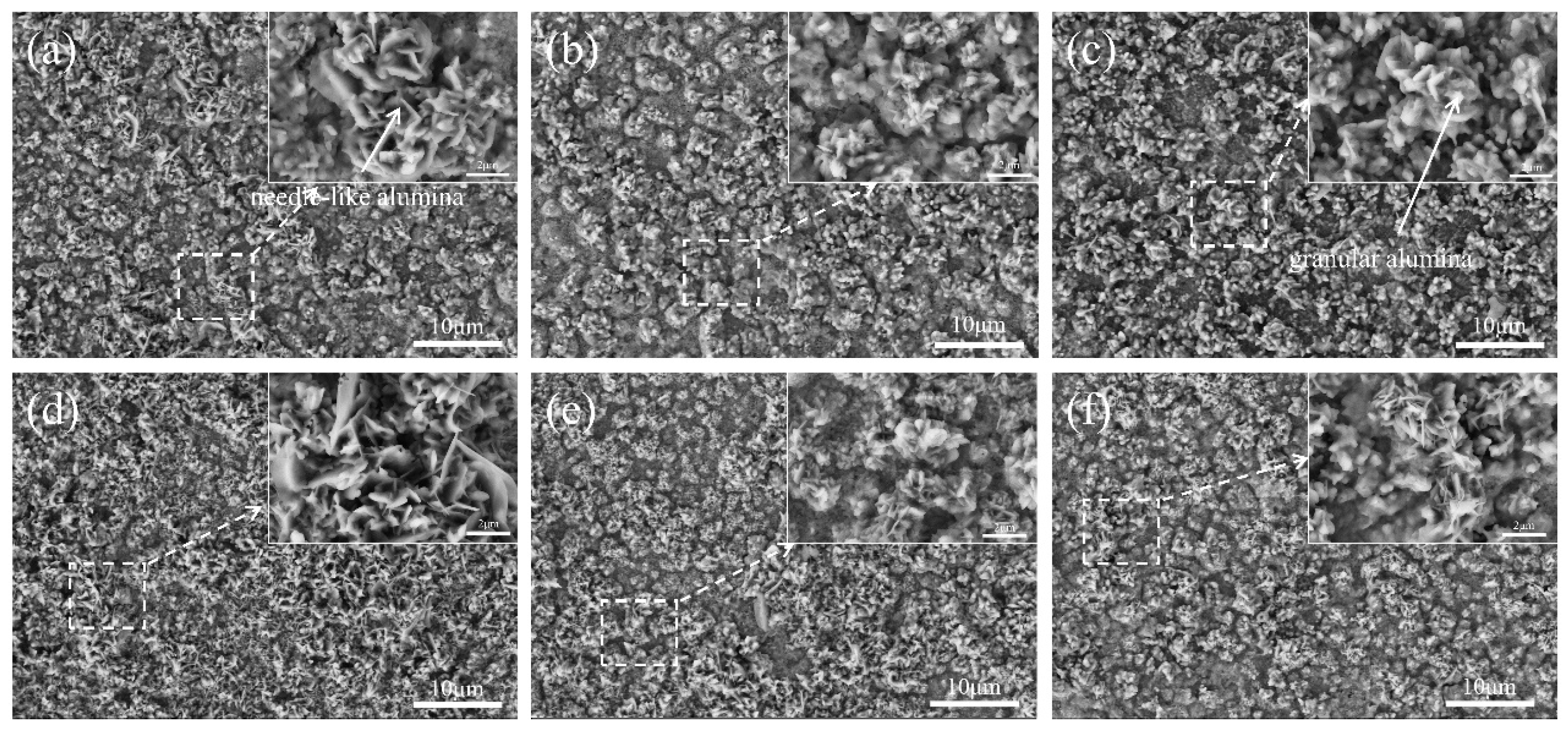
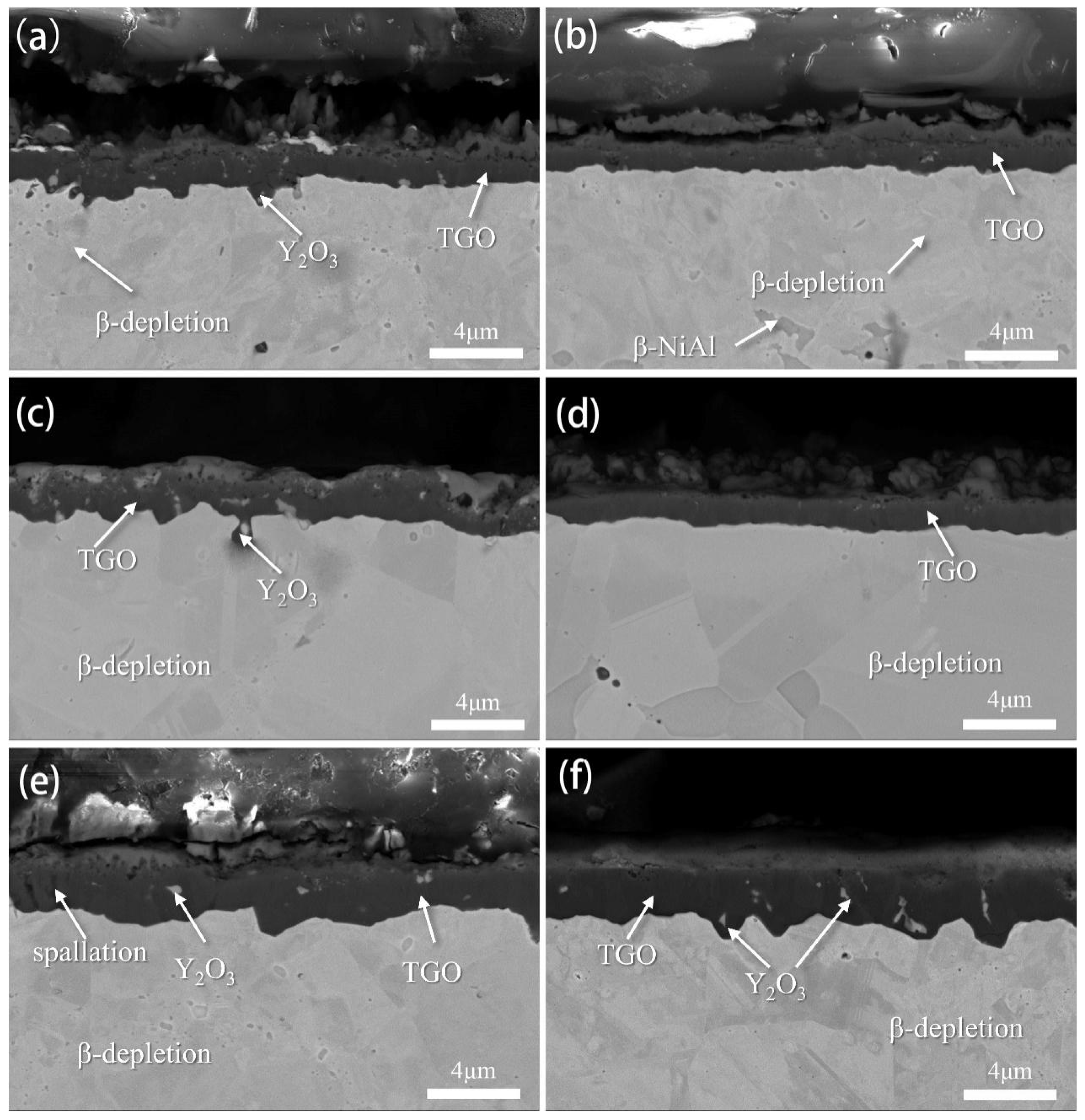
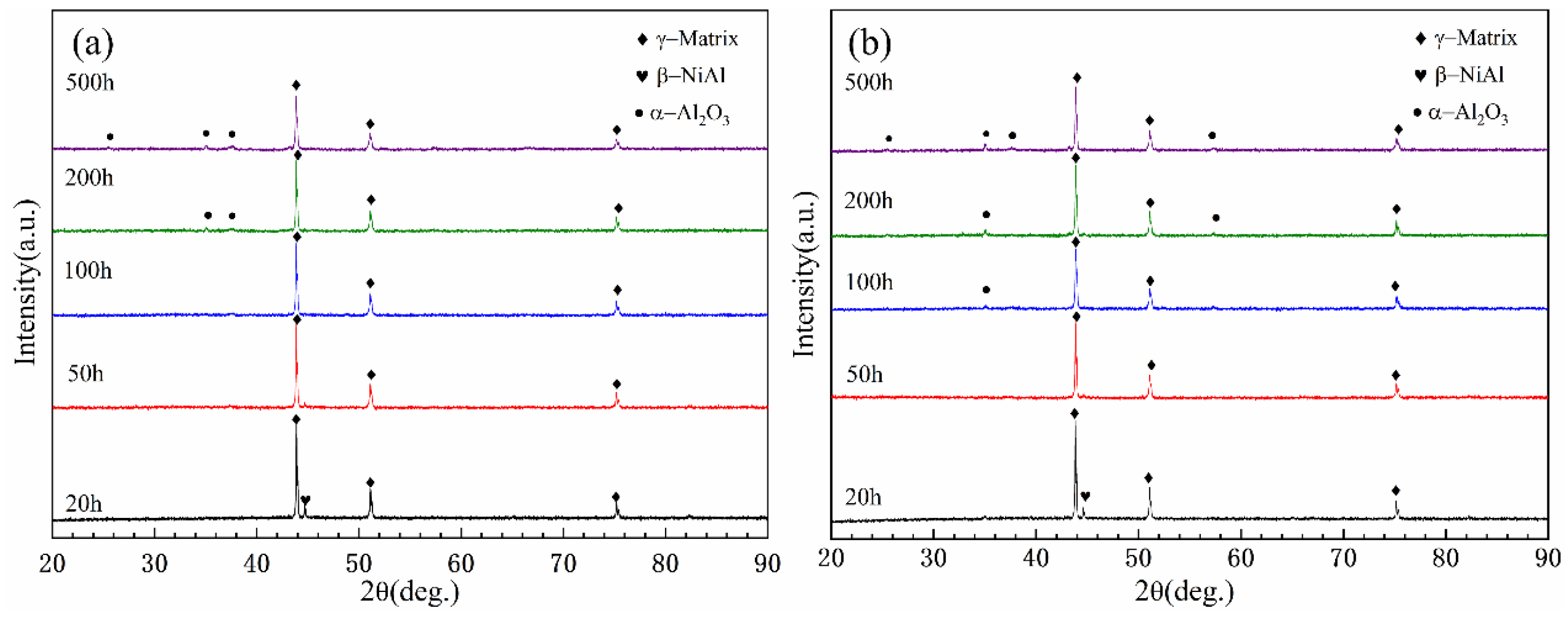
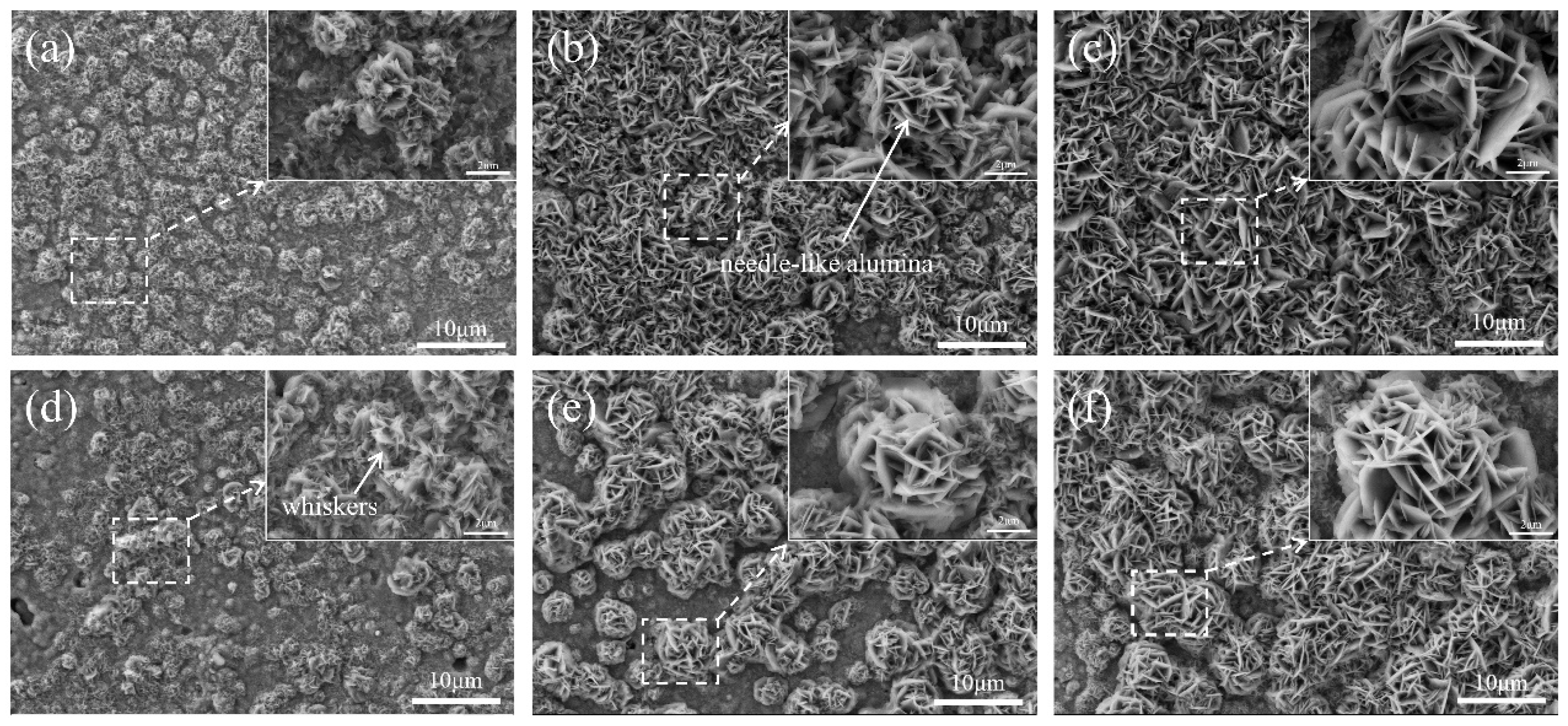
- The oxidation results revealed that the oxidation degree of both coatings increased significantly with rising oxidation temperature (800 °C, 900 °C, and 1000 °C), with oxidation depth increasing as the temperature increased. Under the same oxidation conditions, the helium coating showed better oxidation resistance than the nitrogen coating, with improvements of 23%, 29%, and 42%, respectively. Both coatings followed the Wagner parabolic law, with the thickness of the oxide film increasing parabolically with time. The oxidation rate of the coating after heat treatment was lower than that of the as-sprayed coating. The TGO thickening curve was related to the stages of the oxidation process. Factors such as the reduction in the aluminum reservoir inside the coating, the rate of elemental diffusion, and the type and amount of oxide formation on the surface influenced the oxidation process.
Author Contributions
Funding
Institutional Review Board Statement
Informed Consent Statement
Data Availability Statement
Conflicts of Interest
References
- Bonadei, A.; Marrocco, T. Cold sprayed MCrAlY+X coating for gas turbine blades and vanes. Surf. Coat. Technol. 2014, 242, 200–206. [Google Scholar] [CrossRef] [Scilit]
- Sloof, W.G.; Nijdam, T.J. On the high-temperature oxidation of MCrAlY coatings. Int. J. Mater. Res. 2009, 100, 1318–1330. [Google Scholar] [CrossRef] [Scilit]
- Jalowicka, A.; Naumenko, D.; Ernsberger, M.; Herzog, R.; Quadakkers, W.J. Alumina formation and microstructural changes of aluminized CoNiCrAlY coating during high temperature exposure in the temperature range 925 °C–1075 °C. Mater. High Temp. 2018, 35, 66–77. [Google Scholar] [CrossRef] [Scilit]
- Ramazan, K.; Levent, U.; Ali, C.; Serdar, S.; Fehim, F. Three types of ceramic coating applicability in automotive industry for wear resistance purpose. Ind. Lubr. Tribol. 2005, 57, 140–144. [Google Scholar] [CrossRef] [Scilit]
- Reed, R.C.; Wu, R.T.; Hook, M.S.; Rae, C.M.F.; Wing, R.G. On oxidation behaviour of platinum aluminide coated nickel based superalloy CMSX-4. Mater. Sci. Technol. 2009, 25, 276–286. [Google Scholar] [CrossRef] [Scilit]
- Zakeri, A.; Bahmani, E.; Ramazani, A. A Review on the Enhancement of Mechanical and Tribological Properties of MCrAlY Coatings Reinforced by Dispersed Micro and Nanoparticles. Energies 2022, 15, 1914. [Google Scholar] [CrossRef] [Scilit]
- Guo, D.; Wang, Y.; Fernandez, R.; Zhao, L.; Jodoin, B. Cold spray for production of in-situ nanocrystalline MCrAlY coatings—Part I: Process analysis and microstructure characterization. Surf. Coat. Technol. 2021, 409, 126854. [Google Scholar] [CrossRef] [Scilit]
- Urtekin, L.; Kucukturk, G.; Karacay, T.; Uslan, I.; Salman, S. An Investigation of Thermal Properties of Zirconia Coating on Aluminum. Arab. J. Sci. Eng. 2012, 37, 2323–2332. [Google Scholar] [CrossRef] [Scilit]
- Richer, P. Development of Conventional and Nanocrystalline Bond Coats by Cold Gas Dynamic Spraying for Aerospace Thermal Barrier Coatings. Ph.D. Thesis, University of Ottawa, Ottawa, ON, Canada, 2010; p. 208. [Google Scholar]
- Cojocaru, C.V.; Aghasibeig, M.; Irissou, E. NiCoCrAlX (X = Y, Hf and Si) Bond Coats by Cold Spray for High Temperature Applications. J. Therm. Spray Technol. 2022, 31, 176–185. [Google Scholar] [CrossRef] [Scilit]
- Eriksson, R.; Yuan, K.; Li, X.-H.; Peng, R.L. MCrAlY coating design based on oxidation–diffusion modelling. Part II: Lifing aspects. Surf. Coat. Technol. 2014, 253, 27–37. [Google Scholar] [CrossRef] [Scilit]
- Richer, P.; Yandouzi, M.; Beauvais, L.; Jodoin, B. Oxidation behaviour of CoNiCrAlY bond coats produced by plasma, HVOF and cold gas dynamic spraying. Surf. Coat. Technol. 2010, 204, 3962–3974. [Google Scholar] [CrossRef] [Scilit]
- Karaoglanli, A.C.; Ozgurluk, Y.; Doleker, K.M. Comparison of microstructure and oxidation behavior of CoNiCrAlY coatings produced by APS, SSAPS, D-gun, HVOF and CGDS techniques. Vacuum 2020, 180, 109609. [Google Scholar] [CrossRef] [Scilit]
- Sunitha, K.; Vasudev, H. A short note on the various thermal spray coating processes and effect of post-treatment on Ni-based coatings. Mater. Today Proc. 2021, 50, 1452–1457. [Google Scholar] [CrossRef] [Scilit]
- Assadi, H.; Gärtner, F.; Stoltenhoff, T.; Kreye, H. Bonding mechanism in cold gas spraying. Acta Mater. 2003, 51, 4379–4394. [Google Scholar] [CrossRef] [Scilit]
- Tan, A.W.-Y.; Lek, J.Y.; Sun, W.; Bhowmik, A.; Marinescu, I.; Buenconsejo, P.J.; Dong, Z.; Liu, E. Microstructure, mechanical and tribological properties of cold sprayed Ti6Al4V–CoCr composite coatings. Compos. Part B Eng. 2020, 202, 108280. [Google Scholar] [CrossRef] [Scilit]
- Dykhuizen, R.C.; Smith, M.F.; Gilmore, D.L.; Neiser, R.A.; Jiang, X.; Sampath, S. Impact of high velocity cold spray particles. J. Therm. Spray Technol. 1999, 8, 559–564. [Google Scholar] [CrossRef] [Scilit]
- Sun, W.; Tan, A.W.-Y.; King, D.J.Y.; Khun, N.W.; Bhowmik, A.; Marinescu, I.; Liu, E. Tribological behavior of cold sprayed Inconel 718 coatings at room and elevated temperatures. Surf. Coat. Technol. 2020, 385, 125386. [Google Scholar] [CrossRef] [Scilit]
- Sun, W.; Tan, A.W.Y.; Marinescu, I.; Toh, W.Q.; Liu, E. Adhesion, tribological and corrosion properties of cold-sprayed CoCrMo and Ti6Al4V coatings on 6061-T651 Al alloy. Surf. Coat. Technol. 2017, 326, 291–298. [Google Scholar] [CrossRef] [Scilit]
- Sun, W.; Tan, A.W.-Y.; Wu, K.; Yin, S.; Yang, X.; Marinescu, I.; Liu, E. Post-Process Treatments on Supersonic Cold Sprayed Coatings: A Review. Coatings 2020, 10, 123. [Google Scholar] [CrossRef] [Scilit]
- Zhang, L.-W.; Lu, L.; Wang, L.; Ning, X.-J.; Wang, Q.-S.; Wang, R.-X. Microstructural Characteristics and Oxidation Behavior of Low-Pressure Cold-Sprayed CoNiCrAlY Coatings. J. Therm. Spray Technol. 2017, 26, 1565–1572. [Google Scholar] [CrossRef] [Scilit]
- Guo, D.; Zhao, L.; Jodoin, B. Cold spray for production of in-situ nanocrystalline MCrAlY coatings—Part II: Isothermal oxidation performance. Surf. Coat. Technol. 2021, 409, 126828. [Google Scholar] [CrossRef] [Scilit]
- Oyinbo, S.T.; Jen, T.-C. Investigation of the process parameters and restitution coefficient of ductile materials during cold gas dynamic spray (CGDS) using finite element analysis. Addit. Manuf. 2020, 31, 100986. [Google Scholar] [CrossRef] [Scilit]
- Wei, Y.-K.; Luo, X.-T.; Chu, X.; Huang, G.-S.; Li, C.-J. Solid-state additive manufacturing high performance aluminum alloy 6061 enabled by an in-situ micro-forging assisted cold spray. Mater. Sci. Eng. A 2020, 776, 139024. [Google Scholar] [CrossRef] [Scilit]
- Wu, K.; Sun, W.; Tan, A.W.-Y.; Marinescu, I.; Liu, E.; Zhou, W. An investigation into microstructure, tribological and mechanical properties of cold sprayed Inconel 625 coatings. Surf. Coat. Technol. 2021, 424, 127660. [Google Scholar] [CrossRef] [Scilit]
- Toma, D.; Brandl, W.; Köster, U. The characteristics of alumina scales formed on HVOF-sprayed MCrAlY coatings. Oxid. Met. 2000, 53, 125–137. [Google Scholar] [CrossRef] [Scilit]
- Tolpygo, V.; Clarke, D. Microstructural study of the theta-alpha transformation in alumina scales formed on nickel-aluminides. Mater. High Temp. 2000, 17, 59–70. [Google Scholar] [CrossRef] [Scilit]
- Liu, S.; Li, W.; Sun, J.; Fu, L.; Wang, T.; Jiang, S.; Gong, J.; Sun, C. Preparation and oxidation behaviour of NiCrAlYSc coatings on a Ni-based single crystal superalloy. Corros. Sci. 2020, 171, 108703. [Google Scholar] [CrossRef] [Scilit]
- Chen, H.; Jackson, G.; Voisey, K.; McCartney, D. Modelling and experimental study on β-phase depletion behaviour of HVOF sprayed free-standing CoNiCrAlY coatings during oxidation. Surf. Coat. Technol. 2016, 291, 34–42. [Google Scholar] [CrossRef] [Scilit]
- Atkinson, A. Wagner theory and short circuit diffusion. Mater. Sci. Technol. 1988, 4, 1046–1051. [Google Scholar] [CrossRef]
- Yamano, H.; Tani, K.; Harada, Y.; Teratani, T. Oxidation control with chromate pretreatment of MCrAlY unmelted particle and bond coat in thermal barrier systems. J. Therm. Spray Technol. 2008, 17, 275–283. [Google Scholar] [CrossRef] [Scilit]
- Tang, F.; Ajdelsztajn, L.; Schoenung, J.M. Influence of cryomilling on the morphology and composition of the oxide scales formed on HVOF CoNiCrAlY coatings. Oxid. Met. 2004, 61, 219–238. [Google Scholar] [CrossRef] [Scilit]
- Luo, J.; Xiao, C.; Zhang, L. The effect of pulse plasma detonation post-processing on the oxidation of CoNiCrAlY coating. Surf. Coat. Technol. 2021, 419, 127297. [Google Scholar] [CrossRef] [Scilit]





| Parameters | N2 Spray | He Spray |
|---|---|---|
| Values | Values | |
| Gas pressure | 5 MPa | 3 MPa |
| Gas temperature | 950 °C | 700 °C |
| Stand-off distance | 30 mm | 30 mm |
| Spray angle | 90° | 90° |
Disclaimer/Publisher’s Note: The statements, opinions and data contained in all publications are solely those of the individual author(s) and contributor(s) and not of MDPI and/or the editor(s). MDPI and/or the editor(s) disclaim responsibility for any injury to people or property resulting from any ideas, methods, instructions or products referred to in the content. |
© 2025 by the authors. Licensee MDPI, Basel, Switzerland. This article is an open access article distributed under the terms and conditions of the Creative Commons Attribution (CC BY) license (https://creativecommons.org/licenses/by/4.0/).
Share and Cite
Sun, X.; Yun, H.; Sun, W.; Xie, Y.; Huang, J.; Zheng, Z. Microstructure and High-Temperature Oxidation Behavior of Cold-Sprayed CoNiCrAlY Coatings Deposited by Different Propellent Gases. Coatings 2025, 15, 123. https://doi.org/10.3390/coatings15020123
Sun X, Yun H, Sun W, Xie Y, Huang J, Zheng Z. Microstructure and High-Temperature Oxidation Behavior of Cold-Sprayed CoNiCrAlY Coatings Deposited by Different Propellent Gases. Coatings. 2025; 15(2):123. https://doi.org/10.3390/coatings15020123
Chicago/Turabian StyleSun, Xundong, Haitao Yun, Wen Sun, Yingchun Xie, Jibo Huang, and Zhigang Zheng. 2025. "Microstructure and High-Temperature Oxidation Behavior of Cold-Sprayed CoNiCrAlY Coatings Deposited by Different Propellent Gases" Coatings 15, no. 2: 123. https://doi.org/10.3390/coatings15020123
APA StyleSun, X., Yun, H., Sun, W., Xie, Y., Huang, J., & Zheng, Z. (2025). Microstructure and High-Temperature Oxidation Behavior of Cold-Sprayed CoNiCrAlY Coatings Deposited by Different Propellent Gases. Coatings, 15(2), 123. https://doi.org/10.3390/coatings15020123