Hydrophobic and Oleophobic Photocatalytic Coatings for Stones and Cementitious Building Substrates: A Bibliometric Perspective (2010–2025)

 , ,
, ,  , and
, and 
Abstract
1. Introduction
2. Article Identification and Selection Strategy
3. Bibliometric Analysis
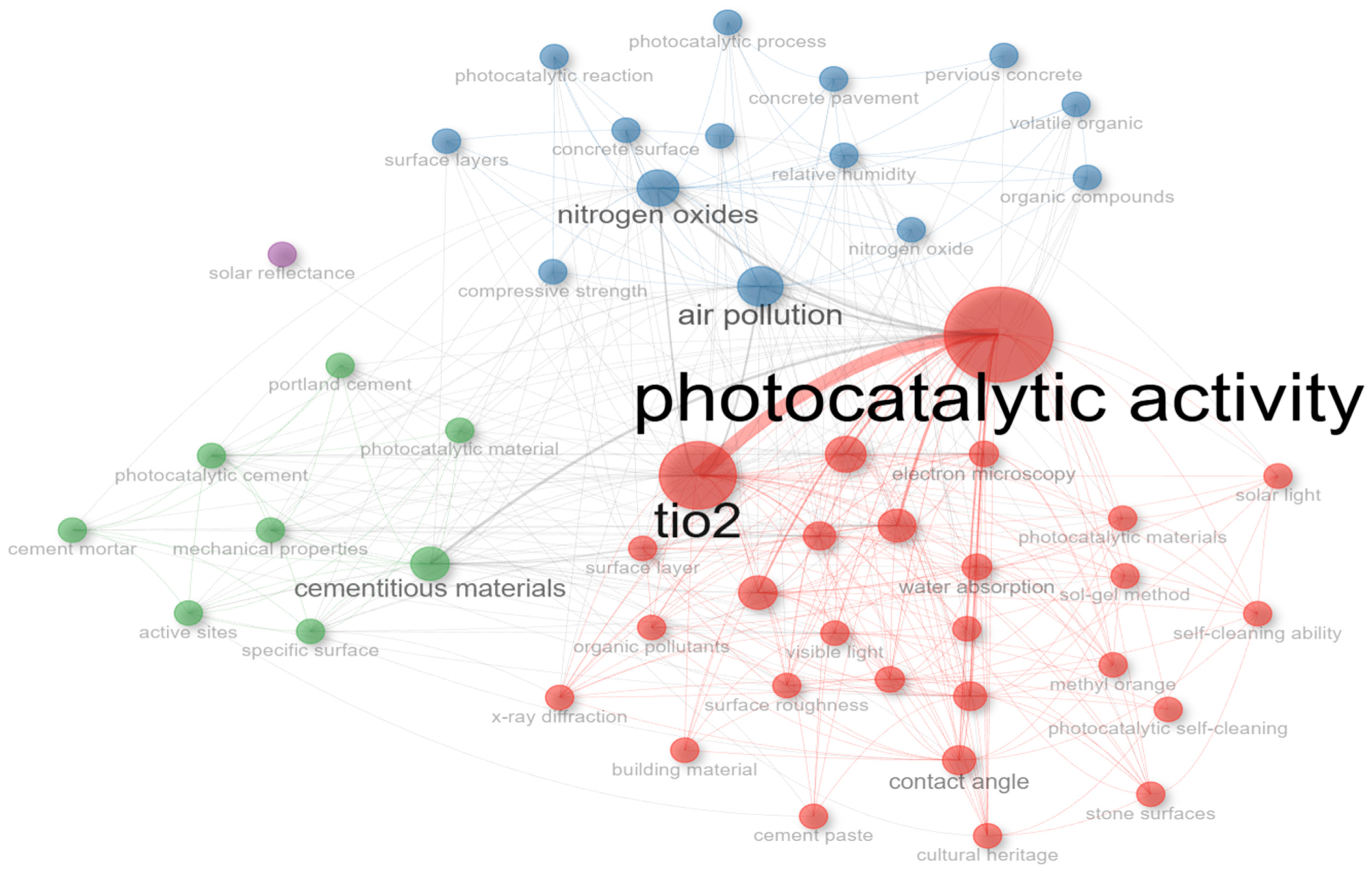
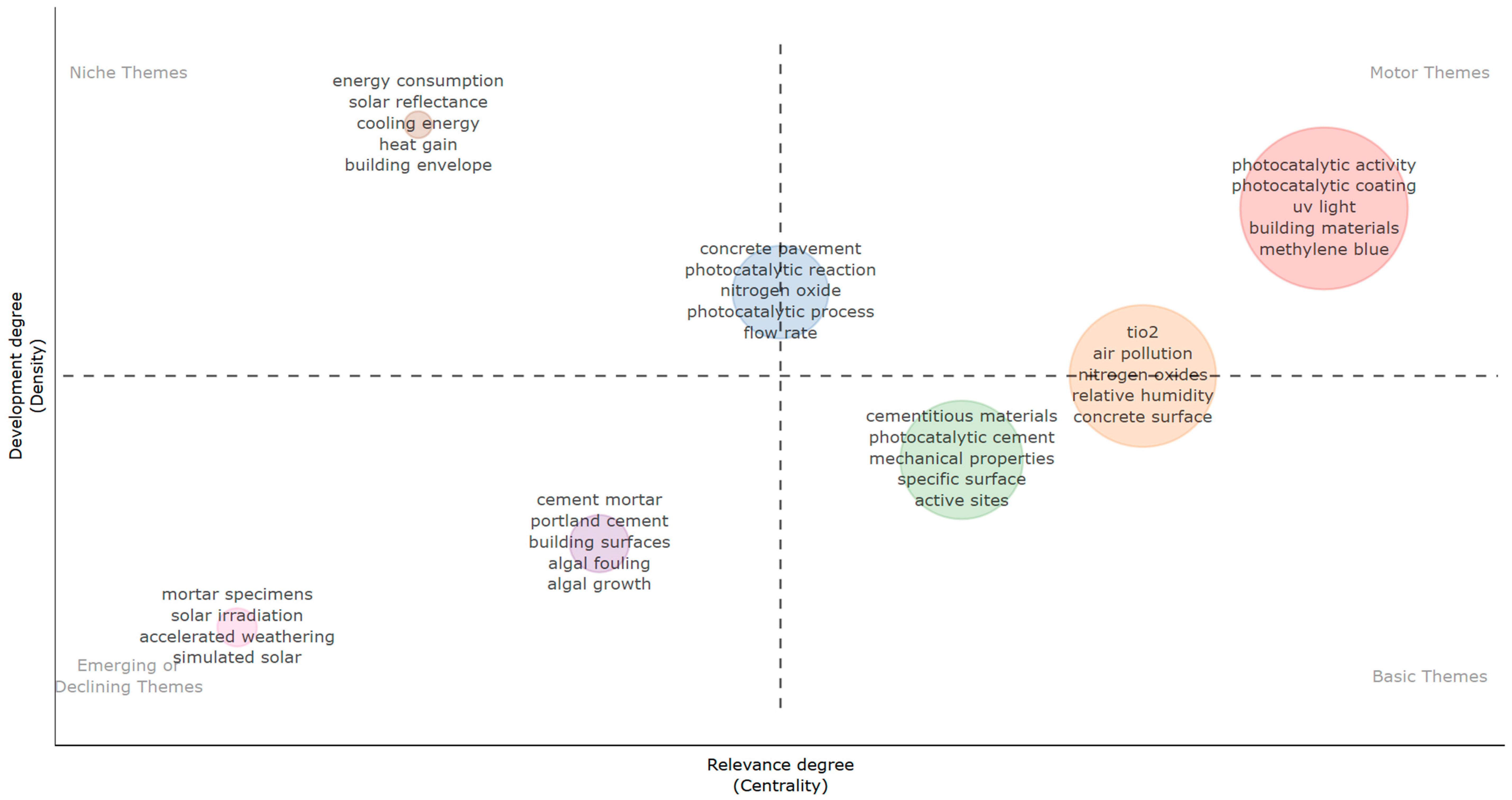
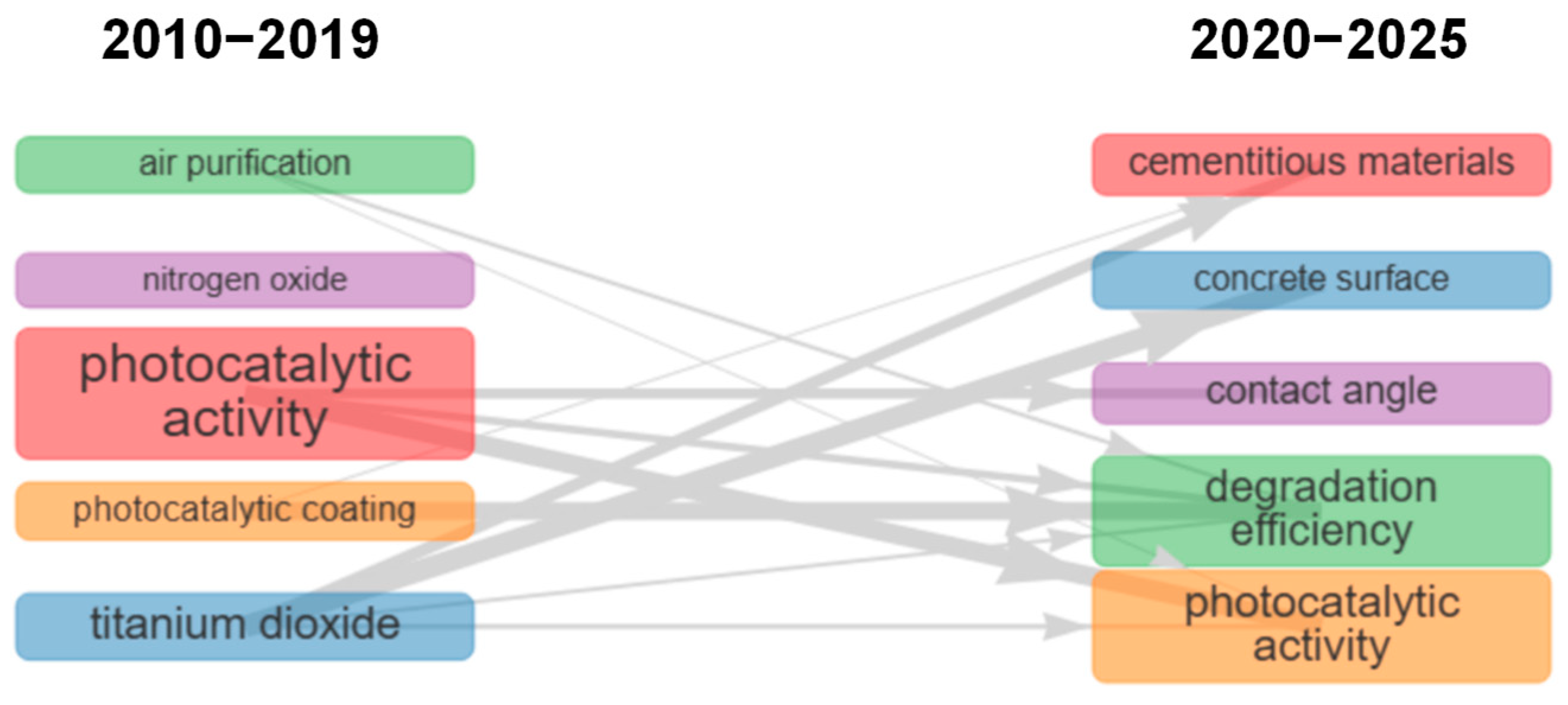
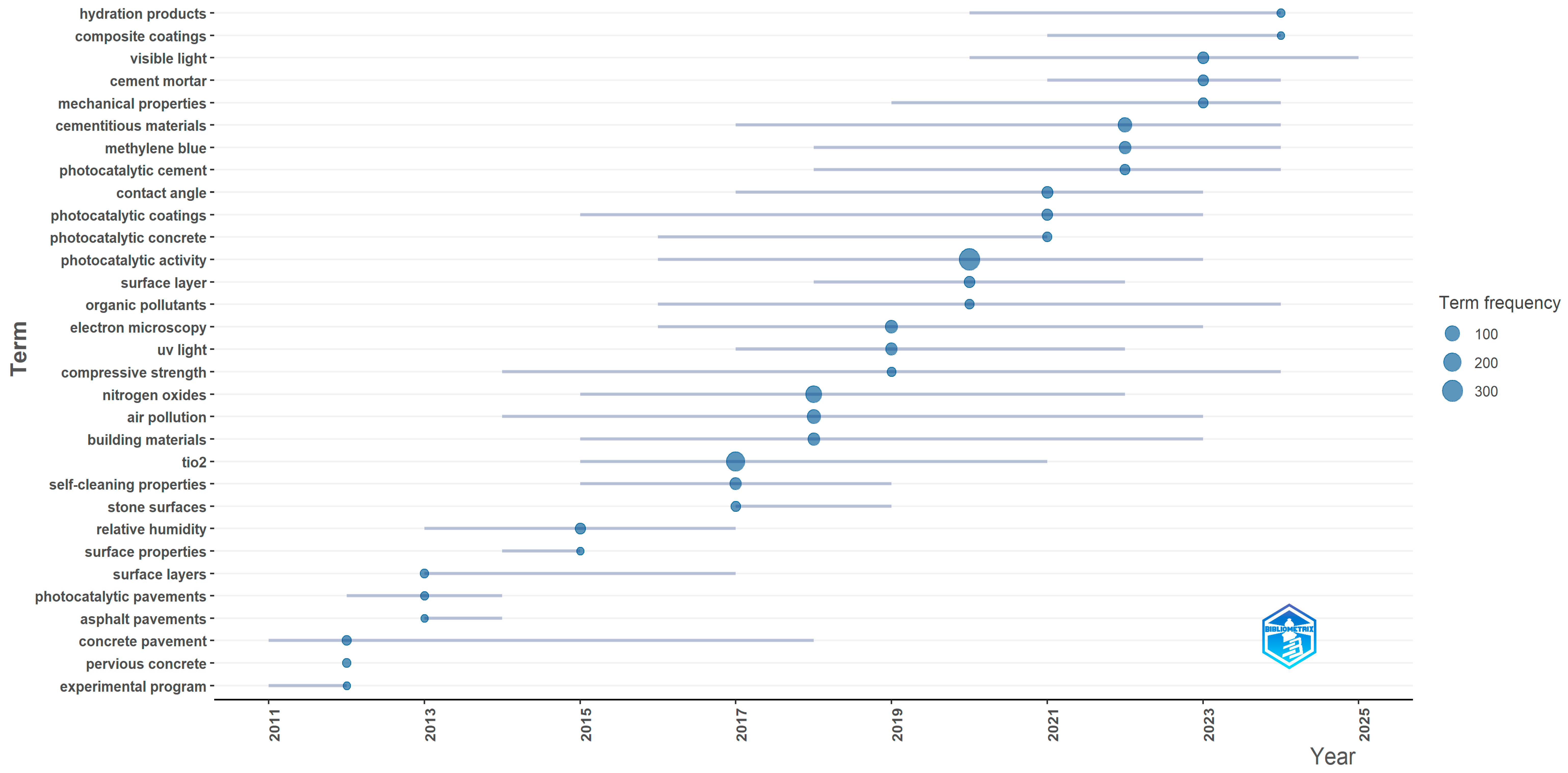
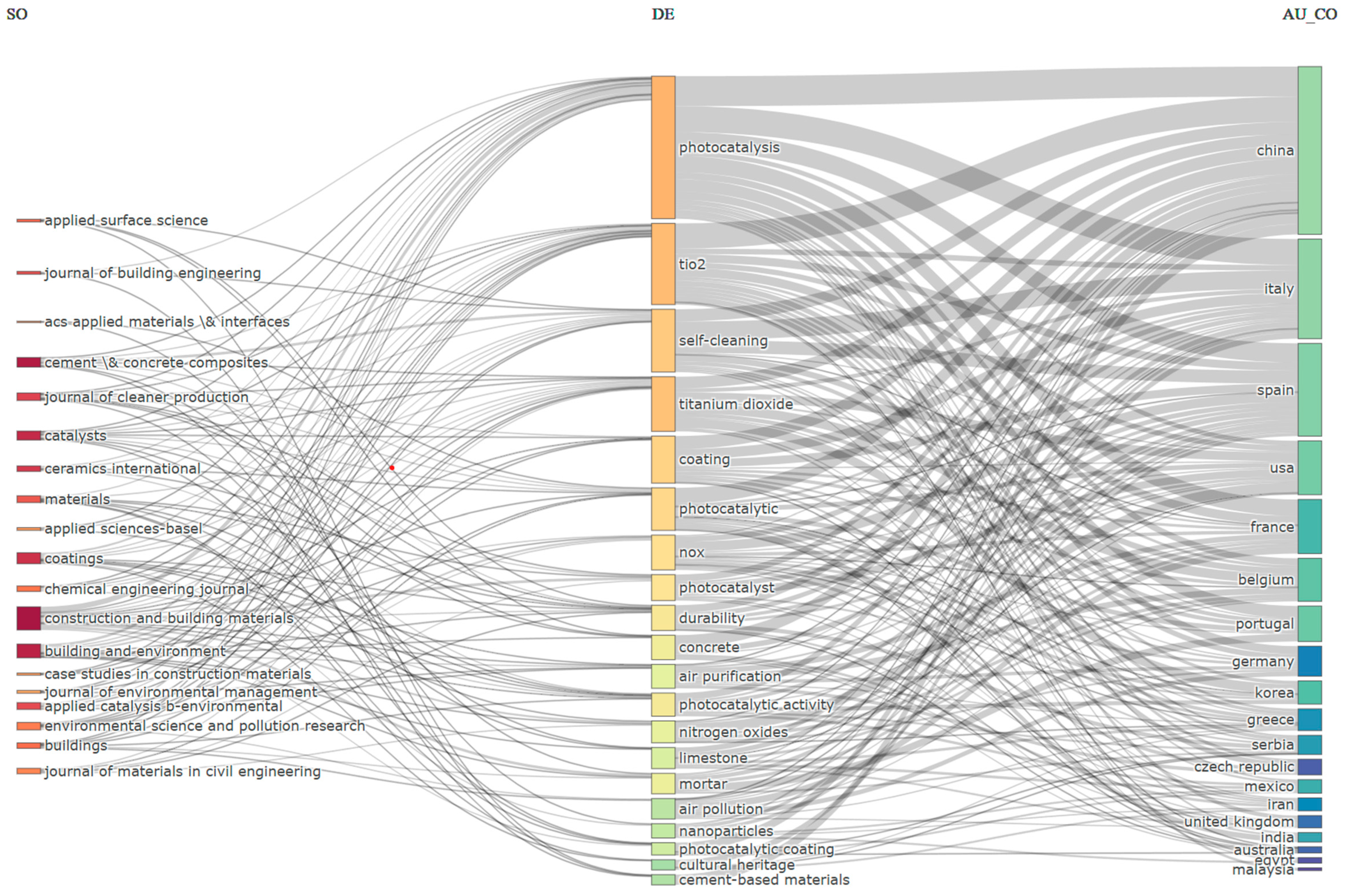
3.1. Thematic Landscape and Evolution of Research Fronts
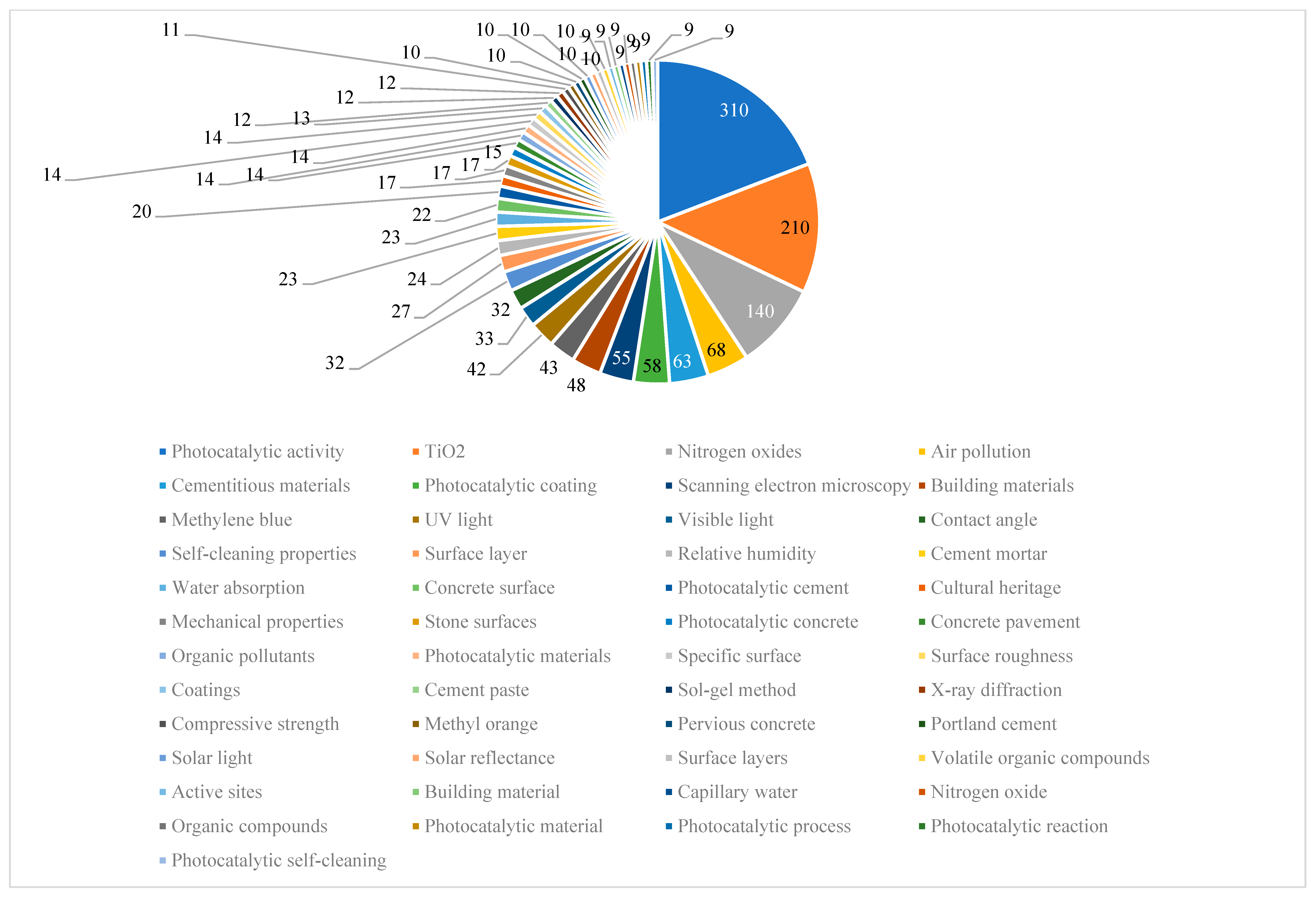
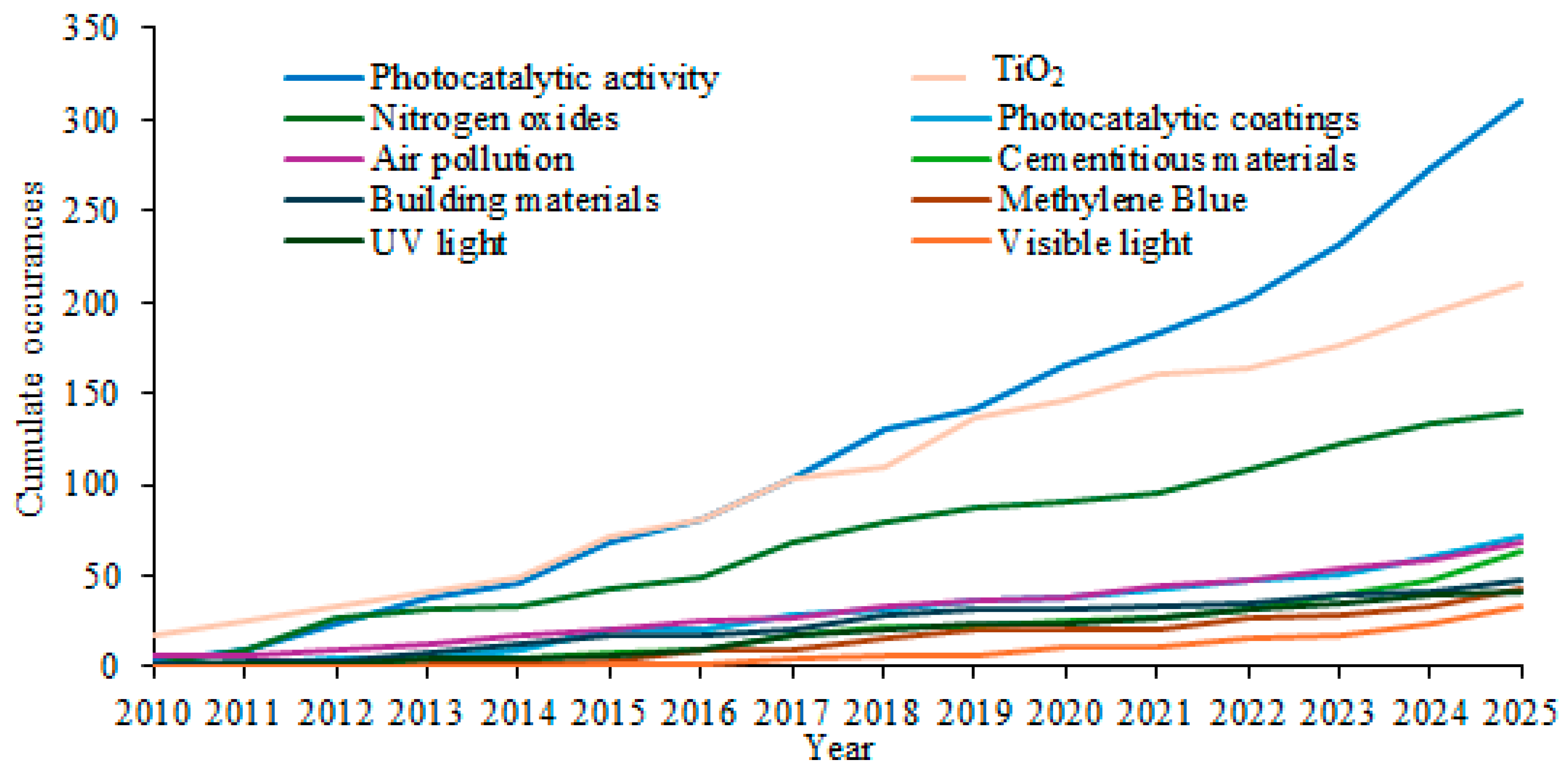
3.2. Keyword Analysis: Frequency, Trends, and Research Dynamics
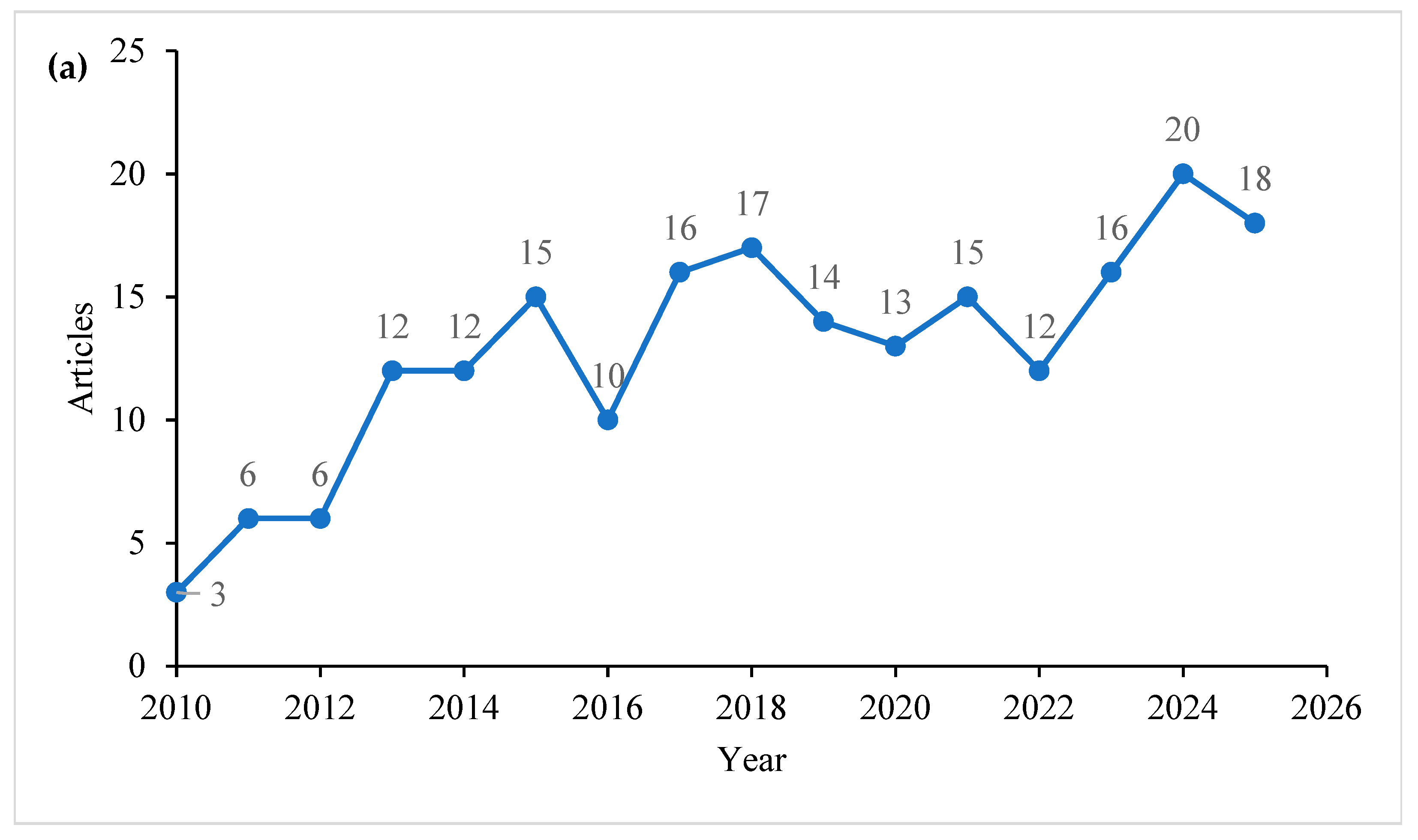
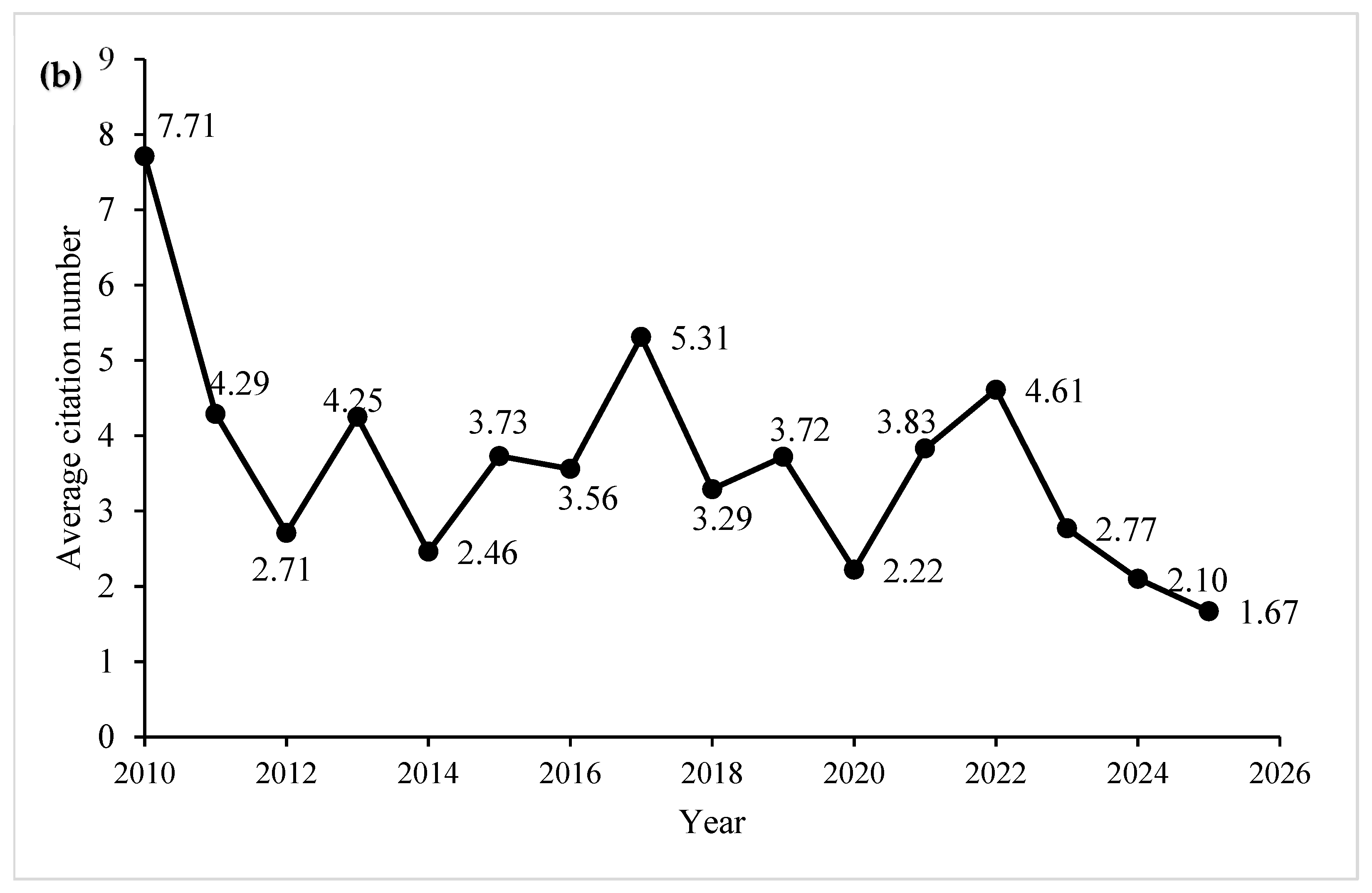
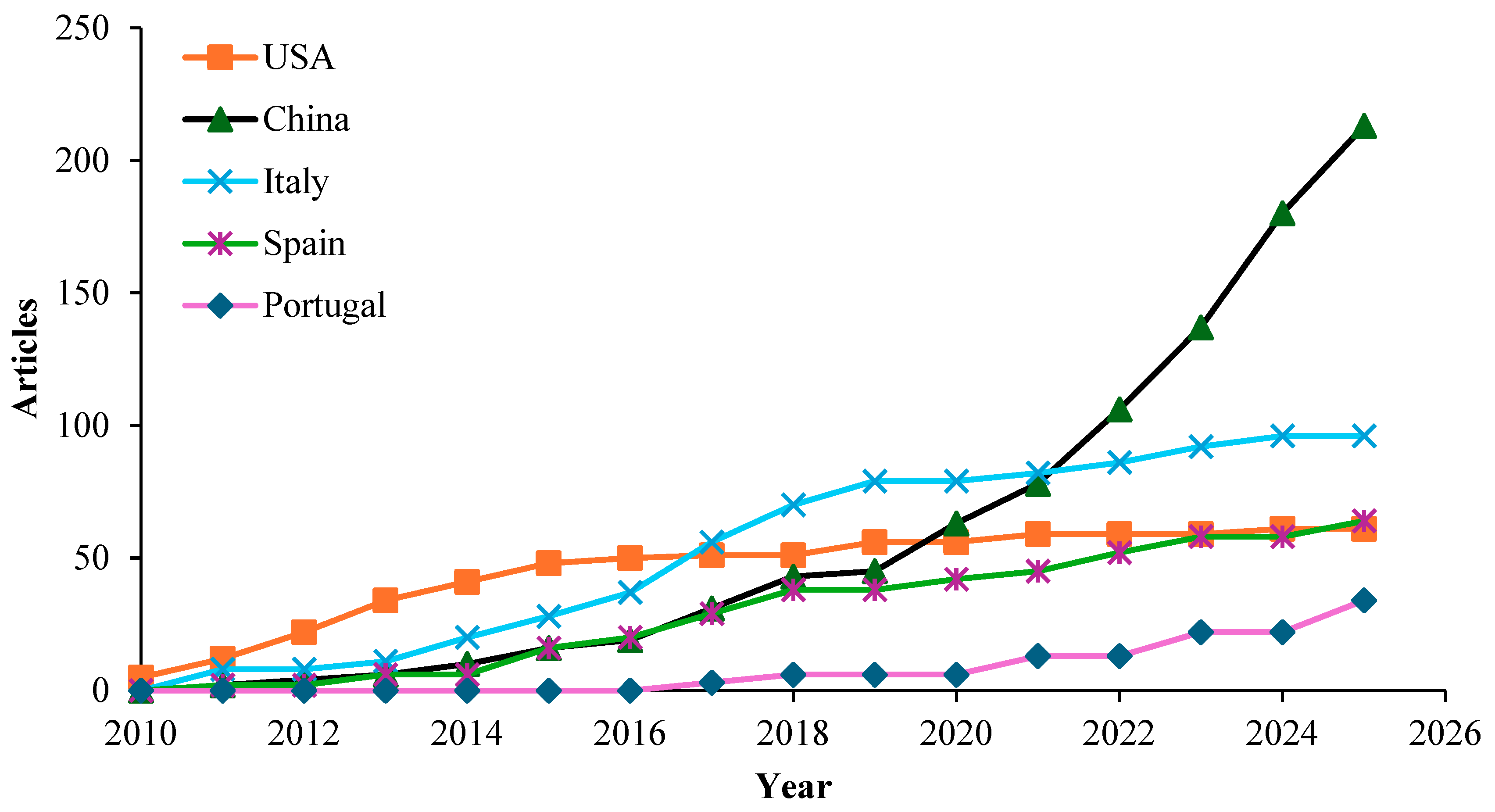
3.3. Annual Scientific Production and Average Article Citation per Year
3.4. Scientific Production by Country: Most Cited Countries
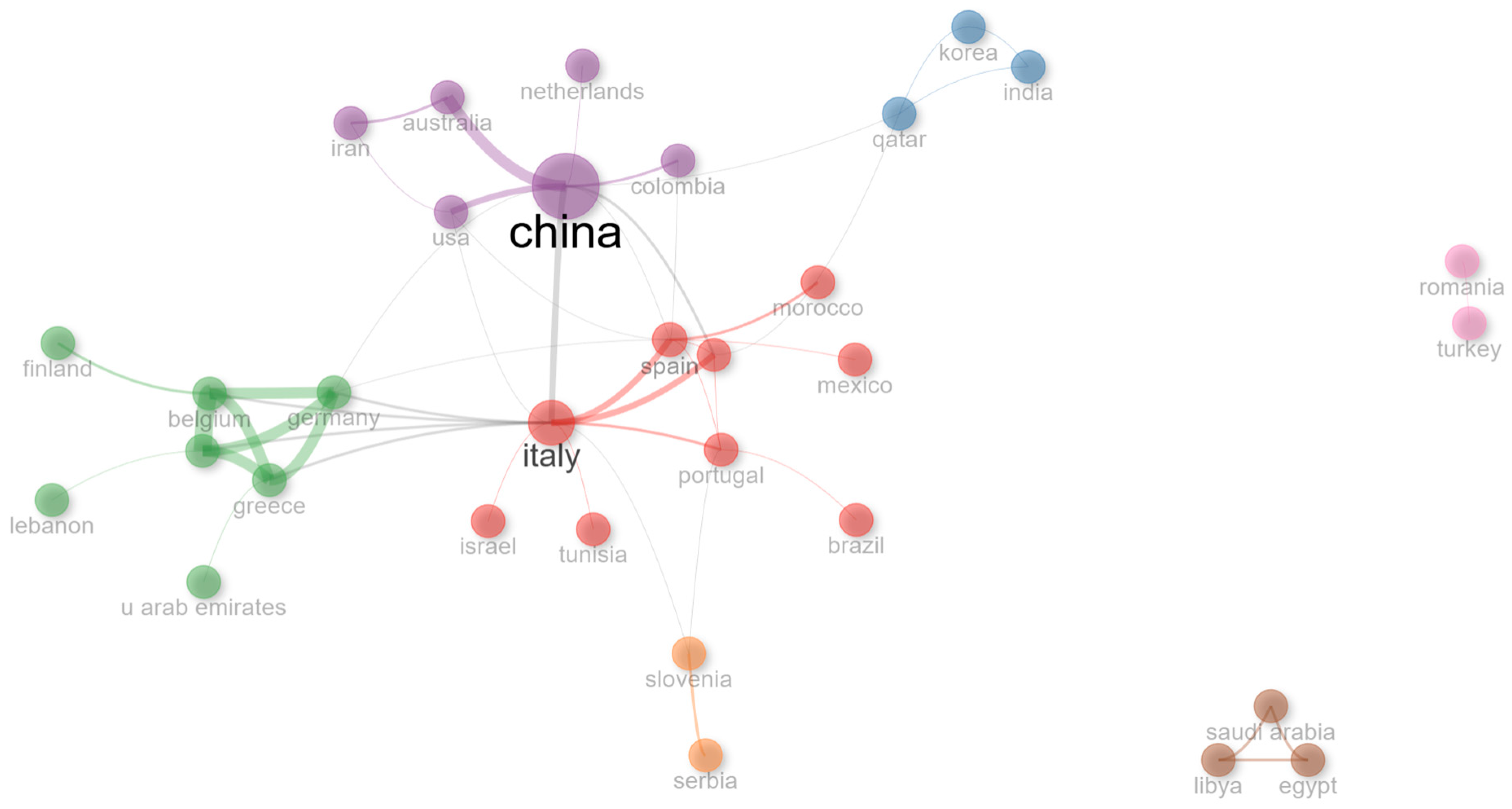
3.5. Social Structure: Collaboration Network and Country Collaboration World Map
3.6. Clustering by Coupling
3.7. Top Ten Most Cited Research Papers Globally
3.7.1. Publications on Photocatalytic Coatings
3.7.2. Publications on Photocatalytic and Hydrophobic Coatings
3.7.3. Publications on Photocatalytic and Oleophobic Coatings
4. Concluding Remarks and Future Trends
Author Contributions
Funding
 |
Institutional Review Board Statement
Informed Consent Statement
Data Availability Statement
Acknowledgments
Conflicts of Interest
References
- Zarzuela, R.; Domínguez, M.; Carbó, M.; Moreno-Garrido, I.; Diaz, A.; Cantoral, J.M.; Gil, M.L.A.; Mosquera, M.J. Studying the influence of surface properties on the cell attachment and anti-fouling capacity of Ag/SiO2 superhydrophobic coatings for building materials. Build. Environ. 2023, 243, 110707. [Google Scholar] [CrossRef]
- Gonon, P.; Sylvestre, A.; Teysseyre, J.; Prior, C. Combined effects of humidity and thermal stress on the dielectric properties of epoxy-silica composites. Mater. Sci. Eng. B 2001, 83, 158–164. [Google Scholar] [CrossRef]
- Hendry, A.W. Masonry walls: Materials and construction. Constr. Build. Mater. 2001, 15, 323–330. [Google Scholar] [CrossRef]
- Tagliarolo, M. Acidification in aquatic systems. In Encyclopedia of Ecology, 2nd ed.; Fath, B., Ed.; Elsevier: Amsterdam, The Netherlands, 2019; pp. 6–13. [Google Scholar] [CrossRef]
- Feng, X.; Liu, Q.; Wang, S.; Cen, L.; Li, H. Arsenopyrite weathering in acid rain: Arsenic transfer and environmental implications. J. Hazard. Mater. 2021, 420, 126612. [Google Scholar] [CrossRef]
- Ślosarczyk, A.; Klapiszewska, I.; Skowrońska, D.; Janczarek, M.; Jesionowski, T.; Klapiszewski, Ł. A comprehensive review of building materials modified with metal and metal oxide nanoparticles against microbial multiplication and growth. Chem. Eng. J. 2023, 466, 143276. [Google Scholar] [CrossRef]
- Yang, Y.; Ji, T.; Su, W.; Kang, Y.; Wu, Y.; Zhang, Y. Enhanced washing resistance of photocatalytic exposed aggregate cementitious materials based on g-C3N4 nanosheets-recycled asphalt pavement aggregate composites. Constr. Build. Mater. 2019, 228, 116748. [Google Scholar] [CrossRef]
- Chen, X.-F.; Lin, S.-R.; Kou, S.-C. Effect of composite photo-catalysts prepared with recycled clay brick sands and nano-TiO2 on methyl orange and NOx removal. Constr. Build. Mater. 2018, 171, 152–160. [Google Scholar] [CrossRef]
- Jiang, X.; Lu, J.-X.; Luo, X.; Leng, Z.; Poon, C.S. Enhancing photocatalytic durability of high strength pervious concrete: Micro-mechanical and microscopic mechanisms. Cem. Concr. Compos. 2025, 160, 106020. [Google Scholar] [CrossRef]
- Yang, Y.; Yan, Z.; Yang, S.; Tang, Z.; Li, W.; Yang, B.; Su, W.; Ji, T. Effect of substrate roughness on NOx removal of poly heptazine imides coated cement pastes exposed to washing and weathering. J. Clean. Prod. 2022, 377, 134397. [Google Scholar] [CrossRef]
- Wang, D.; Hou, P.; Yang, P.; Cheng, X. BiOBr@SiO2 flower-like nanospheres chemically bonded on cement-based materials for photocatalysis. Appl. Surf. Sci. 2018, 430, 539–548. [Google Scholar] [CrossRef]
- Xiang, Q.; Liu, H.; Huang, M.; Zhang, Y. A superhydrophobic composite coating with transparency, long-term durability and self-healing properties for cleaning of photovoltaic systems. Colloids Surf. A 2025, 716, 136666. [Google Scholar] [CrossRef]
- Zhu, P.; Zhu, L.; Ge, F.; Wang, G.; Zeng, Z. Sprayable superhydrophobic coating with high mechanical/chemical robustness and anti-corrosion. Surf. Coat. Technol. 2022, 443, 128609. [Google Scholar] [CrossRef]
- Hooda, A.; Goyat, M.S.; Pandey, J.K.; Kumar, A.; Gupta, R. A review on fundamentals, constraints and fabrication techniques of superhydrophobic coatings. Prog. Org. Coat. 2020, 142, 105557. [Google Scholar] [CrossRef]
- Lekshmi, A.; Raman, A.; Aparna, A.; Kurup, H.P.; Lekshmi, B.; Aju, V.; Saritha, A. 5-Hydrophobic, oleophobic, and hydrophilic polymer nanocomposite films and coatings. In Polymer Nanocomposite Films and Coatings; Woodhead Publishing Series in Composites Science and Engineering; Pandey, M., Deshmukh, K., Hussain, C.M., Eds.; Woodhead Publishing: Cambridge, UK, 2024; pp. 141–179. ISBN 9780443191398. [Google Scholar] [CrossRef]
- Bhushan, B.; Martin, S. Substrate-independent superliquiphobic coatings for water, oil, and surfactant repellency: An overview. J. Colloid Interface Sci. 2018, 526, 90–105. [Google Scholar] [CrossRef]
- Topalian, Z.; Stefanov, B.I.; Granqvist, C.G.; Österlund, L. Adsorption and photo-oxidation of acetaldehyde on TiO2 and sulfate-modified TiO2: Studies by in situ FTIR spectroscopy and micro-kinetic modeling. J. Catal. 2013, 307, 265–274. [Google Scholar] [CrossRef]
- Diamanti, M.V.; Brenna, A.; Bolzoni, F.; Berra, M.; Pastore, T.; Ormellese, M. Effect of polymer modified cementitious coatings on water and chloride permeability in concrete. Constr. Build. Mater. 2013, 49, 720–728. [Google Scholar] [CrossRef]
- Wu, C.; Yin, B.; Hou, D.; Li, S.; Wang, X. A novel strategy of polystyrene acrylate–polysiloxane core–shell emulsion for surface protection of cementitious materials. Cem. Concr. Compos. 2022, 133, 104720. [Google Scholar] [CrossRef]
- Barbhuiya, S.; Das, B.B.; Adak, D. Energy storage potential of cementitious materials: Advances, challenges and future directions. Energy Build. 2025, 327, 115063. [Google Scholar] [CrossRef]
- Marzouk, M.; Elshaboury, N. Science mapping analysis of embodied energy in the construction industry. Energy Rep. 2022, 8, 1362–1376. [Google Scholar] [CrossRef]
- Xia, S.; Wang, R.; Bai, X.; Nie, J.-J.; Chen, D.; Teng, L.; Yang, L. The research status and prospects of nanomaterials in wound healing: A scientometric study. Medicine 2024, 103, e37462. [Google Scholar] [CrossRef] [PubMed]
- Hassan, M.M.; Dylla, H.; Mohammad, L.N.; Rupnow, T. Evaluation of the durability of titanium dioxide photocatalyst coating for concrete pavement. Constr. Build. Mater. 2010, 24, 1456–1461. [Google Scholar] [CrossRef]
- Pinho, L.; Mosquera, M.J. Titania-Silica Nanocomposite Photocatalysts with Application in Stone Self-Cleaning. J. Phys. Chem. C 2011, 115, 22851–22862. [Google Scholar] [CrossRef]
- Ramirez, A.M.; Demeestere, K.; De Belie, N.; Mäntylä, T.; Levänen, E. Titanium dioxide coated cementitious materials for air purifying purposes: Preparation, characterization and toluene removal potential. Build. Environ. 2010, 45, 832–838. [Google Scholar] [CrossRef]
- Guo, M.-Z.; Ling, T.-C.; Poon, C.S. Highly-efficient green photocatalytic cementitious materials with robust weathering resistance: From laboratory to application. Environ. Pollut. 2021, 273, 116510. [Google Scholar] [CrossRef] [PubMed]
- Pei, C.; Zhu, J.-H.; Xing, F. Photocatalytic property of cement mortars coated with graphene/TiO2 nanocomposites synthesized via sol–gel assisted electrospray method. J. Clean. Prod. 2021, 279, 123590. [Google Scholar] [CrossRef]
- Khannyra, S.; Luna, M.; Gil, M.L.A.; Addou, M.; Mosquera, M.J. Self-cleaning durability assessment of TiO2/SiO2 photocatalysts coated concrete: Effect of indoor and outdoor conditions on the photocatalytic activity. Build. Environ. 2022, 211, 108743. [Google Scholar] [CrossRef]
- Pinho, L.; Mosquera, M.J. Photocatalytic activity of TiO2–SiO2 nanocomposites applied to buildings: Influence of particle size and loading. Appl. Catal. B 2013, 134–135, 205–221. [Google Scholar] [CrossRef]
- Chen, J.; Kou, S.; Poon, C. Photocatalytic cement-based materials: Comparison of nitrogen oxides and toluene removal potentials and evaluation of self-cleaning performance. Build. Environ. 2011, 46, 1827–1833. [Google Scholar] [CrossRef]
- Zouzelka, R.; Rathousky, J. Photocatalytic abatement of NOx pollutants in the air using commercial functional coating with porous morphology. Appl. Catal. B 2017, 217, 466–476. [Google Scholar] [CrossRef]
- Pinho, L.; Elhaddad, F.; Facio, D.S.; Mosquera, M.J. A novel TiO2–SiO2 nanocomposite converts a very friable stone into a self-cleaning building material. Appl. Surf. Sci. 2013, 275, 389–396. [Google Scholar] [CrossRef]
- La Russa, M.F.; Rovella, N.; Alvarez de Buergo, M.; Belfiore, C.M.; Pezzino, A.; Crisci, G.M.; Ruffolo, S.A. Nano-TiO2 coatings for cultural heritage protection: The role of the binder on hydrophobic and self-cleaning efficacy. Prog. Org. Coat. 2016, 91, 1–8. [Google Scholar] [CrossRef]
- Pinho, L.; Rojas, M.; Mosquera, M.J. Ag–SiO2–TiO2 nanocomposite coatings with enhanced photoactivity for self-cleaning application on building materials. Appl. Catal. B 2015, 178, 144–154. [Google Scholar] [CrossRef]
- Yang, L.; Hakki, A.; Wang, F.; Macphee, D.E. Photocatalyst efficiencies in concrete technology: The effect of photocatalyst placement. Appl. Catal. B 2018, 222, 200–208. [Google Scholar] [CrossRef]
- Clean Air Alliance of China (CAAC). Air Pollution Prevention and Control Action Plan 2013 [English Translation Issued by the State Council, 10 September 2013, Document No. GUOFA 37]. Available online: https://policy.asiapacificenergy.org/node/2875 (accessed on 5 September 2025).
- Sierra-Fernandez, A.; De la Rosa-García, S.C.; Gomez-Villalba, L.S.; Gómez-Cornelio, S.; Rabanal, M.E.; Fort, R.; Quintana, P. Synthesis, Photocatalytic, and Antifungal Properties of MgO, ZnO and Zn/Mg Oxide Nanoparticles for the Protection of Calcareous Stone Heritage. ACS Appl. Mater. Interfaces 2017, 9, 24873–24886. [Google Scholar] [CrossRef]
- Faraldos, M.; Kropp, R.; Anderson, M.A.; Sobolev, K. Photocatalytic hydrophobic concrete coatings to combat air pollution. Catal. Today 2016, 259, 228–236. [Google Scholar] [CrossRef]
- Truppi, A.; Luna, M.; Petronella, F.; Falcicchio, A.; Giannini, C.; Comparelli, R.; Mosquera, M.J. Photocatalytic activity of TiO2/AuNRs–SiO2 nanocomposites applied to building materials. Coatings 2018, 8, 296. [Google Scholar] [CrossRef]
- Ling, T.-C.; Poon, C.-S. Use of recycled CRT funnel glass as fine aggregate in dry-mixed concrete paving blocks. J. Clean. Prod. 2014, 68, 209–215. [Google Scholar] [CrossRef]
- Sajadinia, Z.; Arabian, D.; Charmi, M. Production of a green organic multifunctional anticorrosion coating composed of stearic acid and nanoparticles for concrete using a simple and cost-effective method. Prog. Org. Coat. 2025, 207, 109389. [Google Scholar] [CrossRef]
- Gao, C.; Sima, Y.; Xiang, C.; Lv, Z. Preparation and application of highly efficient self-cleaning coating g-C3N4/MoS2@PDMS. Catalysts 2025, 15, 10. [Google Scholar] [CrossRef]
- Manoudis, P.N.; Zuburtikudis, I.; Konstantopoulos, G.; Khalifeh, H.A.; Kottaridi, C.; Karapanagiotis, I. Superhydrophobicity, photocatalytic self-cleaning and biocidal activity combined in a siloxane-ZnO composite for the protection of limestone. Biomimetics 2024, 9, 573. [Google Scholar] [CrossRef]
- Miljević, B.; van der Bergh, J.M.; Vučetić, S.; Lazar, D.; Ranogajec, J. Molybdenum doped TiO2 nanocomposite coatings: Visible light driven photocatalytic self-cleaning of mineral substrates. Ceram. Int. 2017, 43, 8214–8221. [Google Scholar] [CrossRef]
- Lee, J.W.; Lee, S.H.; Jang, Y.I.; Park, H.M. Evaluation of reducing NO and SO2 concentration in nano SiO2–TiO2 photocatalytic concrete blocks. Materials 2021, 14, 7182. [Google Scholar] [CrossRef]
- Guo, M.-Z.; Ling, T.-C.; Poon, C.S. Photocatalytic NOx degradation of concrete surface layers intermixed and spray-coated with nano-TiO2: Influence of experimental factors. Cem. Concr. Compos. 2017, 83, 279–289. [Google Scholar] [CrossRef]
- Colangiuli, D.; Lettieri, M.; Masieri, M.; Calia, A. Field study in an urban environment of simultaneous self-cleaning and hydrophobic nanosized TiO2-based coatings on stone for the protection of building surface. Sci. Total Environ. 2019, 650, 2919–2930. [Google Scholar] [CrossRef] [PubMed]
- Petronella, F.; Pagliarulo, A.; Truppi, A.; Lettieri, M.; Masieri, M.; Calia, A.; Curri, M.L.; Comparelli, R. TiO2 Nanocrystal Based Coatings for the Protection of Architectural Stone: The Effect of Solvents in the Spray-Coating Application for a Self-Cleaning Surfaces. Coatings 2018, 8, 356. [Google Scholar] [CrossRef]
- Kalinowski, M.; Chilmon, K.; Jackiewicz-Rek, W. Photocatalytic performance of cementitious composites modified with second-generation nano-TiO2 dispersions: Influence of composition and granulation on NOx purification efficiency. Coatings 2025, 15, 148. [Google Scholar] [CrossRef]
- Lim, T.; Lee, J.H.; Mun, J.-H.; Yang, K.-H.; Ju, S.; Jeong, S.-M. Enhancing functionality of epoxy–TiO2-embedded high-strength lightweight aggregates. Polymers 2020, 12, 2384. [Google Scholar] [CrossRef] [PubMed]
- De la Rosa, J.M.; Miller, A.Z.; Pozo-Antonio, J.S.; González-Pérez, J.A.; Jiménez-Morillo, N.T.; Dionisio, A. Assessing the effects of UVA photocatalysis on soot-coated TiO2-containing mortars. Sci. Total Environ. 2017, 605–606, 147–157. [Google Scholar] [CrossRef]
- Jafari, H.; Afshar, S. Improved photodegradation of organic contaminants using nano-TiO2 and TiO2–SiO2 deposited on Portland cement concrete blocks. Photochem. Photobiol. 2016, 92, 87–101. [Google Scholar] [CrossRef]
- González, E.; Bonnefond, A.; Barrado, M.; Casado Barrasa, A.M.; Asua, J.M.; Leiza, J.R. Photoactive self-cleaning polymer coatings by TiO2 nanoparticle Pickering miniemulsion polymerization. Chem. Eng. J. 2015, 281, 209–217. [Google Scholar] [CrossRef]
- Bai, X.; Yang, S.; Tan, C.; Jia, T.; Guo, L.; Song, W.; Jian, M.; Zhang, X.; Zhang, Z.; Wu, L.; et al. Synthesis of TiO2 based superhydrophobic coatings for efficient anti-corrosion and self-cleaning on stone building surface. J. Clean. Prod. 2022, 380, 134975. [Google Scholar] [CrossRef]
- Azadi, N.; Parsimehr, H.; Ershad-Langroudi, A. Cultural heritage protection via hybrid nanocomposite coating. Plast. Rubber Compos. 2020, 49, 76–82. [Google Scholar] [CrossRef]
- Xu, F.; Tan, W.; Liu, H.; Li, D.; Li, Y.; Wang, M. Immobilization of PDMS-SiO2-TiO2 composite for the photocatalytic degradation of dye AO-7. Water Sci. Technol. 2016, 74, 1680–1688. [Google Scholar] [CrossRef]
- Luna, M.; Cruces, J.L.; Gatica, J.M.; Cruceira, A.; Cifredo, G.A.; Vidal, H.; Mosquera, M.J. The role of surface {010} facets in improving the NOx depolluting activity of TiO2 and its application on building materials. Technologies 2025, 13, 52. [Google Scholar] [CrossRef]
- Saeli, M.; Piccirillo, C.; Tobaldi, D.M.; Binions, R.; Castro, P.M.L.; Pullar, R.C. A sustainable replacement for TiO2 in photocatalyst construction materials: Hydroxyapatite-based photocatalytic additives, made from the valorisation of food wastes of marine origin. J. Clean. Prod. 2018, 193, 115–127. [Google Scholar] [CrossRef]
- Quagliarini, E.; Graziani, L.; Diso, D.; Licciulli, A.; D’Orazio, M. Is nano-TiO2 alone an effective strategy for the maintenance of stones in cultural heritage? J. Cult. Herit. 2018, 30, 81–91. [Google Scholar] [CrossRef]
- Calia, A.; Lettieri, M.; Masieri, M.; Pal, S.; Licciulli, A.; Arima, V. Limestones coated with photocatalytic TiO2 to enhance building surface with self-cleaning and depolluting abilities. J. Clean. Prod. 2017, 165, 1036–1047. [Google Scholar] [CrossRef]
- Wang, D.; Hou, P.; Zhang, L.; Yang, P.; Cheng, X. Photocatalytic and hydrophobic activity of cement-based materials from benzyl-terminated-TiO2 spheres with core-shell structures. Constr. Build. Mater. 2017, 148, 176–183. [Google Scholar] [CrossRef]
- Tena-Santafé, V.M.; Fernández, J.M.; Fernández-Acevedo, C.; Oroz-Mateo, T.; Navarro-Blasco, Í.; Álvarez, J.I. Development of Photocatalytic Coatings for Building Materials with Bi2O3-ZnO Nanoparticles. Catalysts 2023, 13, 1412. [Google Scholar] [CrossRef]
- Chyliński, F.; Chilmon, K.; Kalinowski, M.; Jackiewicz-Rek, W.; Woyciechowski, P. Utilising ilmenite mud waste (R-MUD) for sustainable photocatalytic cement mortars. Sci. Rep. 2025, 15, 19166. [Google Scholar] [CrossRef] [PubMed]
- Lessa, F.P.; Lima, O., Jr.; Margalho, É.; Zahabizadeh, B.; Cunha, V.M.C.F.; Pereira, E.; Camões, A.; Costa, M.F.M.; Rocha Segundo, I.; Carneiro, J. Comparative evaluation of photocatalytic efficiency measurement techniques through Rhodamine B degradation in TiO2-based cementitious materials. Catalysts 2025, 15, 201. [Google Scholar] [CrossRef]
- Xu, M.; Bao, Y.; Wu, K.; Xia, T.; Clack, H.L.; Shi, H.; Li, V.C. Influence of TiO2 incorporation methods on NOx abatement in engineered cementitious composites. Constr. Build. Mater. 2019, 221, 375–383. [Google Scholar] [CrossRef]
- Speziale, A.; González-Sánchez, J.F.; Taşcı, B.; Pastor, A.; Sánchez, L.; Fernández-Acevedo, C.; Oroz-Mateo, T.; Salazar, C.; Navarro-Blasco, I.; Fernández, J.M.; et al. Development of Multifunctional Coatings for Protecting Stones and Lime Mortars of the Architectural Heritage. Int. J. Archit. Herit. 2020, 14, 1008–1029. [Google Scholar] [CrossRef]
- Chen, Y.; Wang, T.; Zhang, L.; Zhao, W.; Xu, R. Fabrication of piezo-phototronic effect enhanced photocatalytic coating based on ZnO/BiOCl and its degradation performance. J. Nanoparticle Res. 2025, 27, 98. [Google Scholar] [CrossRef]
- Sutar, R.S.; Patil, P.B.; Bhosale, A.K.; Nagappan, S.; Shinde, S.R.; Chikode, P.P.; Patil, C.E.; Kadam, S.S.; Kadam, P.; Bobade, C.R.; et al. Photocatalytic and superhydrophilic TiO2-SiO2 coatings on marble for self-cleaning applications. Macromol. Symp. 2021, 400, 2100083. [Google Scholar] [CrossRef]
- Yuan, N.; Fang, W.; Xu, H.; Liu, Y.; Wang, D. Titanium-based metal–organic frameworks deposited on cement-based materials: Self-cleaning and the adhesion mechanisms. J. Build. Eng. 2025, 104, 112241. [Google Scholar] [CrossRef]
- Etxeberria, M.; Guo, M.-Z.; Maury-Ramírez, A.; Poon, C.S. Influence of dust and oil accumulation on effectiveness of photocatalytic concrete surfaces. J. Environ. Eng. 2017, 143, 04017053. [Google Scholar] [CrossRef]
- Zhou, Y.; Elchalakani, M.; Du, P.; Sun, C. Cleaning up oil pollution in the ocean with photocatalytic concrete marine structures. J. Clean. Prod. 2021, 329, 129636. [Google Scholar] [CrossRef]
- Visali, C.; Priya, A.K.; Dharmaraj, R. Utilization of ecofriendly self-cleaning concrete using zinc oxide and polypropylene fibre. Mater. Today Proc. 2021, 37, 1083–1086. [Google Scholar] [CrossRef]
- Koli, V.B.; Mavengere, S.; Kim, J.-S. An efficient one-pot N-doped TiO2–SiO2 synthesis and its application for photocatalytic concrete. Appl. Surf. Sci. 2019, 491, 60–66. [Google Scholar] [CrossRef]
- Reddy, N.A.; Chandana, P.S. Microstructural analysis and densification of ordinary Portland cement mortars incorporated with minimal nano-TiO2: Intermixing and surface coating on both fresh and hardened surfaces. Discov. Mater. 2024, 4, 28. [Google Scholar] [CrossRef]
- Aldoasri, M.A.; Darwish, S.S.; Adam, M.A.; Elmarzugi, N.A.; Ahmed, S.M. Protecting of Marble Stone Facades of Historic Buildings Using Multifunctional TiO2 Nanocoatings. Sustainability 2017, 9, 2002. [Google Scholar] [CrossRef]
- Qin, X.; Zhang, H.; Zhan, Z.; Shao, P.; Zhang, M. Enhanced organic adsorption, photocatalysis, and mechanical performance in composites via modified recycled GFRP powder. Constr. Build. Mater. 2025, 472, 140919. [Google Scholar] [CrossRef]
- Yang, Y.; Zhang, S.; Yan, Z.; Lin, L.; Ji, T. Improved purification efficiency and stability of photocatalytic cement-based pavement coated with colloidal graphitic carbon nitride. Surf. Interface 2024, 53, 105040. [Google Scholar] [CrossRef]
- He, C.; Xiao, Q.; Gong, F.; Yang, Y.; Ren, X. Functional materials based on active carbon and titanium dioxide in fog seal. Materials 2020, 13, 5267. [Google Scholar] [CrossRef]
- Bento, D.H.; Matias, M.L.; Magalhães, M.; Quitério, C.; Pimentel, A.; Sousa, D.; Amaral, P.; Galhano, C.; Fortunato, E.; Martins, R.; et al. Self-cleaning stone façades using TiO2 microwave-synthesised coatings. Clean. Mater. 2025, 15, 100294. [Google Scholar] [CrossRef]
- Baltes, L.S.; Patachia, S.; Ekincioglu, O.; Ozkul, H.; Croitoru, C.; Munteanu, C.; Istrate, B.; Tierean, M.H. Polymer-cement composites glazing by concentrated solar energy. Coatings 2021, 11, 350. [Google Scholar] [CrossRef]
- Binas, V.; Papadaki, D.; Maggos Th Katsanaki, A.; Kiriakidis, G. Study of innovative photocatalytic cement-based coatings: The effect of supporting materials. Constr. Build. Mater. 2018, 168, 923–930. [Google Scholar] [CrossRef]
- Fregni, A.; Venturi, L.; Franzoni, E. Evaluation of the performance and durability of self-cleaning treatments based on TiO2 nanoparticles applied to cement-based renders and boards. Coatings 2023, 13, 990. [Google Scholar] [CrossRef]
- Gemelli, G.M.C.; Luna, M.; Zarzuela, R.; Gil Montero, M.L.A.; Carbú, M.; Moreno-Garrido, I.; Mosquera, M.J. 4-year in-situ assessment of a photocatalytic TiO2/SiO2 antifouling treatment for historic mortar in a coastal city. Build. Environ. 2022, 225, 109627. [Google Scholar] [CrossRef]
- Tena-Santafé, V.M.; Kyriakou, L.; Oliva, M.Á.; Sánchez, L.; Fernández, J.M.; Navarro-Blasco, Í.; Álvarez, J.I. Durability and air-depolluting performance of lime-based mortars treated with water- and oil-repellent coatings incorporating nano-Zn2TiO4–ZnO and nano-Bi12ZnO20–ZnO. Surf. Interfaces 2025, 76, 107879. [Google Scholar] [CrossRef]
- Mosquera, M.J.; Carrascosa, L.A.M.; Badreldin, N. Producing superhydrophobic/oleophobic coatings on Cultural Heritage building materials. Pure Appl. Chem. 2018, 90, 551–561. [Google Scholar] [CrossRef]



| Authors, Journal, Reference | Keywords | GCS * | LCS ** | Scope |
|---|---|---|---|---|
| Hassan et al., Constr Build Mater 2010 [23], | Titanium dioxide; sustainable concrete pavement construction; photocatalyst; nitrogen oxides | 186 | 25 | Abrasion and wear resistance properties of TiO2 coatings on concrete pavements, and NOx removal efficiency of coatings |
| Ramirez et al., Build Environ 2010 [25] | Heterogeneous photocatalysis; titanium dioxide; cementitious materials; toluene; volatile organic compounds; air purification | 163 | 30 | Comparison of air purification potential (toluene removal efficiency) of dip-coated and sol–gel coated TiO2 enriched concrete samples, and weathering resistance of the TiO2 coatings loaded on cementitious materials |
| Pinho and Mosquera, Appl Catal B-Environ 2013 [29], | TiO2 photocatalyst; mesoporous SiO2 support; surfactant-synthesized; self-cleaning properties; building materials; | 154 | 13 | Synthesis of mesoporous TiO2-SiO2 photocatalytic coatings for stones (simple and low-cost process); self-cleaning performance of coatings evaluated |
| Chen et al., Build Environ, 2011 [30] | Photocatalytic cement-based materials; photocatalytic oxidation; air; pollution mitigation; self-cleaning | 153 | 27 | Air pollution mitigation (NOx and VOC degradation) and self-cleaning (rhodamine B) performance of TiO2 modified concrete surface layers |
| Zouzelka and Rathousky, Appl Catal B 2017 [31] | Photocatalysis; TiO2; NOx; gaseous pollutants; air purification | 140 | 4 | Photocatalytic activity of the commercial products (Aeroxide TiO2 P25 and Protectam FN2) based coatings on concrete blocks and plaster substrate with regard to NO and NO2 abatement |
| Pinho and Mosquera, J Phys Chem C 2011 [24] | Crystalline TiO2 particles; mesoporous silica; methylene-blue; thin-films; nanoparticles; nanomaterials | 129 | 16 | Titania-silica nanocomposite-based hydrophobic coatings for stones for self-cleaning action and to improve mechanical resistance |
| Pinho et al., Appl Surf Sci 2013 [32] | Stone; non-ionic surfactant; TiO2-SiO2 nanocomposite; self-cleaning; agent; consolidant; salt-resistant product | 107 | 17 | TiO2-SiO2 nanocomposite coatings for self-cleaning action of friable carbonate stones, effect against salt crystallisation also investigated |
| La Russa et al., Prog Org Coat 2016 [33] | Nano-titanium dioxide; stone coating; built heritage; photodegradation | 102 | 7 | Nano-TiO2-based coatings for stone substrates extensively used in built heritage for hydrophobicity, durability and self-cleaning properties |
| Pinho et al., Appl Catal B-Environ 2015 [34] | Photocatalysis; mesoporous Ag-SiO2-TiO2 photocatalyst; Ag nanoparticles; surface plasmon resonance; self-cleaning | 94 | 10 | Ag-SiO2-TiO2 nanocomposite coatings for stone surfaces. Effect of varying the loading of TiO2 (1% and 4% (w/v)) and Ag nanoparticles (1%, 5% and 10% (w/w) with respect to the TiO2 content) in the network investigated |
| Yang et al., Appl Catal B-Environ 2018 [35] | Photocatalytic concrete; NOx; TiO2 utilization; supported catalysis; cement environment | 94 | 7 | Comparison of conventional photocatalyst dispersion in surface mortar coatings versus supported on surface-exposed aggregates; durability of quartz-supported TiO2 composites |
| Words | Frequency | References | Words | Frequency | References | Words | Frequency | References |
|---|---|---|---|---|---|---|---|---|
| Photocatalytic activity | 310 | [7,9,26,27,28,29,30,31,36,37,38,39] | Visible light | 33 | [40,41,42,43,44,45] | Mechanical properties | 17 | [37,41,44] |
| TiO2 | 210 | [8,17,27,28,29,32,38,46,47,48,49,50,51,52,53] | Contact angle | 32 | [36,54,55,56] | Stone surfaces | 17 | [41,54,57,58,59,60] |
| Nitrogen oxides | 140 | [30,46,47,61,62,63,64,65] | Self-cleaning properties | 32 | [38,40,54,56,62,66,67,68] | Photocatalytic concrete | 15 | [43,69,70,71,72,73] |
| Photocatalytic coating | 71 | [40,62,66,67] | Surface layer | 27 | [1,19,46,47,74] | Concrete pavement | 14 | [23,75,76,77] |
| Air pollution | 68 | [36,38,44,47,77] | Relative humidity | 24 | [46,76,78] | Organic pollutants | 14 | [37,42,75,77,78,79] |
| Cementitious materials | 63 | [38,42,49,64,65,80,81] | Cement mortar | 23 | [37,46,48,70] | Photocatalytic materials | 14 | [7,9,26,27,28,46] |
| Electron microscopy (SEM) | 55 | [37,46,48,54,61,63] | Water absorption | 23 | [18,48,49] | Specific surface area | 14 | [54,61,66,78] |
| Building materials | 48 | [40,42,43,45,70,79] | Concrete surface | 22 | [44,61,66,77] | Surface roughness | 14 | [37,54,58,67,78] |
| Methylene blue | 43 | [36,37,38,55] | Photocatalytic cement | 20 | [26,27,30,75] | Cement paste | 12 | [10,40,75] |
| UV light | 42 | [44,46,47,56,64,69] | Cultural heritage | 17 | [56,57,58,59,63,79] | Sol–gel method | 12 | [54,57,78] |
| Countries | Frequency | Total Citations | Average Article Citations |
|---|---|---|---|
| China | 213 | 1253 | 19.90 |
| Italy | 96 | 736 | 28.30 |
| Spain | 64 | 1010 | 56.10 |
| USA | 61 | 638 | 35.40 |
| Portugal | 34 | - | - |
| Belgium | 31 | 447 | 55.90 |
| Republic of Korea | 27 | - | - |
| France | 26 | - | - |
| Mexico | 21 | - | - |
| India | 20 | - | - |
| United Kingdom | - | 189 | 47.20 |
| Czech Republic | - | 141 | 47.00 |
| Serbia | - | 128 | 21.30 |
| Germany | - | 123 | 41.00 |
| Iran | - | 122 | 17.40 |
| Group | Label (Themes Grouped Under a Cluster) | Frequency | Centrality | Impact | Remarks |
|---|---|---|---|---|---|
| 1 | Self-cleaning, coating, limestone, cultural heritage, durability, biocide | 54 | 0.596 | 1.92 | - High centrality & good impact - Core applications of photocatalytic coatings in construction, especially heritage conservation and durability enhancement. - Researchers should continue exploring practical, real-world uses |
| 2 | Titanium dioxide (TiO2), air purification, NOx removal, mortar | 123 | 0.512 | 1.837 | - Largest cluster, high frequency and centrality - This is the fundamental backbone of research (TiO2 for air purification) - Future researchers could focus on improving efficiency, scaling applications, or testing alternative photocatalysts. |
| 3 | Adhesion mechanism, visible light photocatalysis, aging, BiVO4, agglomeration control | 15 | 0.247 | 2.07 | - Low centrality but high impact - Opportunities for innovation, especially in mechanistic studies, durability under real conditions, and visible-light-active photocatalysts. |
| 4 | Cement-based, piezo-phototronic effect, novel composites (ZnO/BiOCl, Ta-PEI-Ti) | 2 | 0.133 | 1.2 | - Low frequency, low centrality, moderate impact - Very nascent area, but could open new interdisciplinary directions (piezo-phototronic and composite photocatalysts in cement). - Needs more exploration |
| 5 | Anticorrosion, multifunctional coatings, nanoparticles, superhydrophobic organic coatings | 1 | 0.099 | 0 | - Isolated theme with no strong impact yet - Emerging experimental direction (anticorrosion + photocatalysis) - Researchers could pioneer this as a new multifunctional application area |
| 6 | Hydrothermal carbonization, phosphorus, superhydrophobicity | 1 | 0.192 | 1.2 | - Low frequency, low centrality, exploratory themes - These are frontier or emerging themes, often experimental or interdisciplinary. - They lack integration now but could represent future breakthroughs if developed |
| 7 | Prefabricated building, SiO2 composites | 1 | 0.086 | 0 | |
| 8 | Alkali-activated cementitious materials, formaldehyde removal | 1 | 0.095 | 0 | |
| 9 | CO2 reduction, perovskites, formic acid production | 1 | 0.078 | 0 | |
| 10 | Black carbon, cooling energy, solar reflectance | 1 | 0.098 | 0 |
| Authors, Journal, Reference | Total Citation | Scope | Coating Composition and Application Techniques | Concluding Remarks |
|---|---|---|---|---|
| Hassan et al., Constr. Build. Mater. 2010 [23] | 186 | - Environmental performance (NOx removal efficiency) of TiO2 coating before and after laboratory-simulated abrasion and wearing. | - Composition: Ultrafine TiO2, cement, fine sand (≤1.18 mm), filler, water-coating prepared at 0.6 water-cement ratio - TiO2 loading: 3% to 5% by weight of cement - Substrate-Concrete blocks (305 mm × 381 mm × 25.4 mm) in size | - TiO2 coating offers good photocatalytic durability and wear resistance. - The Ti concentration on worn specimens remained nearly unchanged from the originals. - TiO2 coating at a 5% content had more NO removal efficiency than that of 3% (i.e., 27% vs. 18.0%). - The wearing of the samples with 3% TiO2 slightly improved the NO removal efficiency in contrast to 5% TiO2. |
| Ramirez et al., Build. Environ. 2010 [25] | 163 | - Photocatalytic toluene degradation of TiO2 dip-coated or enriched concrete (sol–gel method) - Weathering resistance of TiO2 coatings exposed to different abrasive conditions - Comparison of coating techniques (dip-coated and sol-gel coated TiO2) | - Composition: TiO2 dip-coating, a suspension of ethanol and TiO2 (0.05 g/mL), and sol–gel method, a mixture of titanium diisopropoxide bis (acetylonate) (24 mL), isopropanol (171 mL) and water (5 mL) - Types of substrates: Commercial cementitious materials including both concrete and plaster materials-dip coated, and commercial autoclaved white concrete and concrete tiles varying in finishing techniques–coated using both dip-coating and sol–gel methods | - Under UV irradiation, dip-coated concrete achieved toluene removal up to 86% under lab-scale ambient conditions. - Sol-gel coatings on cementitious substrates exhibited negligible toluene removal. - Substrate porosity and roughness are key factors for efficient air purification, with higher porosity giving better results. - In terms of weathering resistance, TiO2 dip-coated plaster (made of white cement, a polymer, crushed limestone, and an inorganic pigment) proved the most efficient among the tested materials. |
| Pinho and Mosquera, Appl. Catal. B-Environ. 2013 [29] | 154 | - Mesostructured titania or TiO2 incorporated in mesoporous SiO2 matrix - TiO2-SiO2 nanocomposites for long-term self-cleaning and strengthening properties of stone substratum. - Simple and low-cost process to synthesise mesoporous TiO2-SiO2 photocatalytic coatings | - Composition: A colloidal system comprising pre-formed titania nanoparticles embedded in a silica oligomer sol, stabilized by the surfactant n-octylamine. - TiO2 loading in silica matrix: Titania particles (average particle size of 20 μm, 21 nm and 14 nm) used loaded in a silica network in different proportions—1%, 4% and 10% (w/v) - Substrates: Stone substratum (pure limestone), spray coated | - TiO2 particle size and shape critically influence the photocatalytic activity of the nanocomposites. - Embedding larger, sharper titania particles (~4% w/v) in a silica network enhances self-cleaning by increasing surface photoactive sites. - At 10% titania loading, the photocatalytic activity decreases due to reduced pore volume limiting access to photoactive sites, and the coating also adheres less effectively to the stone. |
| Chen et al., Build. Environ., 2011 [30] | 153 | - TiO2 modified cementitious surface layers - Self-cleaning performance, and NOx and toluene removal potential of TiO2 modified self-compacting mortars (SCM) | Composition: Mix proportion (0.9:0.1:2.0:0.4) by weight-white cement: metakaolin: aggregate (recycled glass): water; TiO2 content—0%, 2% and 5% (TiO2/binder, w/w ratio)—TiO2 intermixed Substrate: Self-compacting mortars-cylindrical discs Φ75 × 10 mm in size | - Toluene conversion was undetected on the TiO2-modified concrete surface, while NO was effectively removed: Toluene conversion by photocatalytic cement is not a reliable indicator of performance under outdoor conditions. - In UV light irradiation, discoloration rate of rhodamine B for 5% TiO2 sample is much higher than that of 2% TiO2 sample within first 2 h. - Under strong halogen light, discoloration persisted; however, increasing TiO2 content from 2% to 5% produced no significant change in discoloration behaviour. |
| Zouzelka and Rathousky, Appl. Catal. B-Environ. 2017 [31] | 140 | - NOx abatement by commercial photocatalytic coatings - Photocatalytic performance under laminar and ideally mixed flow, replicating real-world conditions of temperature, humidity, light intensity, and pollutant levels | Composition: Protectam FN2, commercial product: about 74% of TiO2, the remaining part being an inorganic binder, and water suspension of TiO2 of 74 wt% Loading: A three-layer coating achieving a total thickness of 10 μm Substrate: Concrete and plaster (each 5 × 10 cm) in size–coating applied by spraying | - Compared to 100% TiO2 coating, the FN2 coating offers a clear advantage in substrate adhesion. - NOx reduction at steady state was 1.5–1.8 times higher on plaster coatings than on concrete. - The photocatalytic coating retained high effectiveness on concrete walls beside a busy road even after two years. |
| Sierra-Fernández et al., ACS Appl. Mater. Interfaces 2017 [37] | 136 | - Zn doped MgO nanoparticles as antimicrobial agent for dolomitic and calcitic stones - Comparison of Zn doped MgO nanoparticles with ZnO and MgO particles in terms of photocatalytic and antifungal activity. | Composition: Zn-doped MgO nanoparticles were prepared by sol–gel synthesis from Mg and Zn precursors with NaOH precipitation. - Nanoparticles were dispersed in ethanol by vigorous stirring and ultrasonication to obtain a 2.5 g L−1 suspension. Substrate: Dolostone and limestone substrates 2 cm × 2 cm × 1 mm in size | - After 60 min UV irradiation, Zn-doped MgO nanoparticles degraded 87% methylene blue, compared to ZnO and MgO, which degraded 58% and 38%, respectively. - Zn-doped MgO treatment markedly reduced fungal colonization, lowering A. niger coverage from ~50% to 8.4% on dolostone and from ~20% to 9.8% on limestone in comparison to untreated substrates, while for P. oxalicum the reduction reached ~79% and ~88%, respectively. |
| Pinho and Mosquera, J. Phys. Chem. C 2011 [24] | 129 | - Multifunctional titania-silica composite-based hydrophobic coatings - Self-cleaning evaluation of coatings - Mechanical resistance of coated stones | - Composition: Silica-titania nanocomposites (prepared by mixing silica oligomer, TiO2 particles and n-octylamine/phosphoric acid), and aqueous dispersion of TiO2 particles - Loading: Proportion of TiO2 to silica varied from 0 to 2% w/v in each - Substrate: Stone (limestone), 5 × 5 × 2 cm in size–sols applied by spraying | - n-octylamine in coatings lower crack-inducing capillary pressure and improved mechanical resistance of substrate. - n-octylamine-based coatings improve self-cleaning properties; the greater self-cleaning effect of coatings is attributed to their higher porosity and the larger pore size of the gel network. |
| Ling and Poon, J. Clean. Prod. 2014 [40] | 126 | - Recycled cathode ray tube (CRT) glass as fine aggregate replacement in production of concrete paving blocks - TiO2 enriched concrete blocks for the removal of nitrogen oxide | - Composition: TiO2-intermixed cement mortar, i.e., surface layer (5 mm thick) incorporating TiO2 (5% by wt. of cementitious material) - Substrate: Concrete paving blocks (200 × 100 mm in size)-TiO2 enriched cementitious layer applied during the mixing process | - Using up to 100% CRT glass as fine aggregate in paving blocks achieved high compressive strength (>45 MPa), low ASR expansion (<0.1%), and enhanced resistance to water absorption and drying shrinkage. - After 60 min of UV exposure, 50% and 100% CRT glass layers showed 5% and 7% higher NO removal than the control. - Potential lead leaching restricts the substitution level of CRT glass to less than 25%. |
| Pinho et al., Appl. Surf. Sci. 2013 [32] | 107 | - TiO2-SiO2 nanocomposite for self-cleaning action of stones - Comparison of TiO2-SiO2 nanocomposites with existing commercial siloxane products | - Composition: a sol comprising silica oligomers, TiO2 and n-octylamine; proportion of n-octylamine and TiO2 to silica oligomers was 0.36% v/v and 2% w/v, respectively. - Substrate: Stone (friable dolostone) friable carbonate stone of 5 × 5 × 2 cm in size-coated by spraying for 25 s | - TiO2–SiO2 nanocomposite forms a crack-free adhesive layer and improves mechanical resistance of stone, imparting self-cleaning property. - The nanocomposite significantly enhances protection against damage from salt (NaSO4) crystallisation. |
| Guo et al., Cem. Concr. Comp. 2017 [46] | 107 | - Photocatalytic NOx degradation by concrete surface layers (intermixed and spray-coated with nano-TiO2) - Abrasion resistance of surface layers | - Composition: Cementitious surface layers with mix ratios (by mass) of 0.75:0.25:3.0:0.3 for cement, fly ash, recycled glass, and water, respectively. - For coated samples: TiO2 coating, a suspension of ethanol and TiO2 (30 g L−1), sprayed within 10 min after preparation of surface layers–roughly 0.006 g cm−2 of TiO2 in each sample. - For intermixed samples: TiO2 added at 5% by weight of cementitious materials to mortar mixture. - Substrate: concrete surface layers (TiO2 intermixed and spray-coated) 200 × 100 × 5 mm in size | - TiO2 spray-coated concrete surface layers showed higher NOx removal efficiency and rate than those with 5% TiO2-intermixing. - Spray coated samples showed robust resistance to abrasion, retaining higher NOx removal efficiency than intermixed samples even after 500 abrasion cycles. |
| Reference | Total Citation | Scope | Coating Composition and Application Techniques | Concluding Remarks |
|---|---|---|---|---|
| Pinho and Mosquera, J. Phys. Chem. C 2011 [24] | 129 | - Multifunctional titania-silica composite-based coatings - Hydrophobic behaviour of the coatings | - Composition: Silica-titania nanocomposites (prepared by mixing silica oligomer, TiO2 particles and n-octylamine/phosphoric acid), and aqueous dispersion of TiO2 particles - Loading: Proportion of TiO2 to silica varied from 0 to 2% w/v in each - Substrate: Stone (limestone), 5 × 5 × 2 cm in size-sols applied by spraying | - The hydrophobicity in n-octylamine and phosphoric acid gels may arise from residual nonhydrolyzed ethoxy groups, with phosphoric acid-based coatings showing slightly reduced contact angles (92–98°) compared to n-octylamine (88–121°), likely due to surface discontinuities. |
| Faraldos et al. Catal Today 2016 [38] | 72 | - Home-made TiO2 sol - SiO2-TiO2 hydrophobic coating for photocatalytic degradation of NOx and organic pollutants (Methylene Blue dye bleaching) | - Composition: photocatalyst nanoparticles suspended in a siloxane sealant, home-made acidic silica (SiO2) sol, an acidic TiO2 sol and commercial sols - Substrate: concrete blocks (10 cm × 10 cm × 30 cm in size) and cement tiles (15 cm × 15 cm × 1 cm) (spraying or dip coated). | - Hydrophobic coatings on cement tiles with loadings above 5% achieved a 90% reduction in diluted NO pollutant concentration. - A threshold of 1% of TiO2 loading for hydrophilic coatings and 5% for hydrophobic coatings was required to achieve complete NOx degradation. - Hydrophobic photoactive coatings composed of TiO2 nanoparticles and a siloxane sealant have shown outstanding efficiency in converting NO gas when applied to concrete surfaces. |
| Colangiuli et al., Sci. Total Environ. 2019 [47] | 47 | - TiO2 nanoparticles/fluoropolymer based multifunctional coatings (TiO2 nanoparticles embedded in a fluoropolymer host matrix) - Field investigation of hydrophobic and self-cleaning stone coatings incorporating TiO2 nanoparticles and fluoropolymer. | - Composition: TiO2 nanoparticles in a water dispersion with a commercial hydrophobic fluoropolymer, and a neat fluoropolymer dispersion in water as control. - Substrate: Stones (limestone)—5 × 5 × 2 cm in size, coated by brush | - Prior to outdoor exposure, both coating mixtures demonstrated high photodegradation efficiency. - After eight months outdoor, the photocatalytic efficiency gradually declined, likely due to the loss of photocatalyst from the coating surface, which may result from polymer alterations caused by aging. - Embedding TiO2 particles within the polymer reduced the adsorption and buildup of soluble salt ions on the coated surface, potentially lowering the risk of stone damage. - TiO2/fluoropolymer-based coatings showed a significant reduction in the contact angle values (from 67% to 41% and from 73% to 46%) depending on fluoropolymer/TiO2 ratio after 4 months of outdoor exposure in comparison to neat coating (56% to 37%). - The coatings effectively protected the surfaces from dirt. |
| Bai et al., J. Clean. Prod. 2022 [54] | 38 | Corrosion resistance and self-cleaning performance of TiO2-based superhydrophobic coatings for stone surfaces | - Composition: TiO2@Si–Me core–shell system were dispersed in Paraloid B72 (TiO2@Si and TiO2@Si-Me) - Substrate: Granite, sandstone and limestone; size 5 × 3 × 1 cm3 coating applied by a pipette gun. | - Superhydrophobic TiO2 was achieved by grafting methyl groups onto the SiO2 shell. - Superhydrophobic TiO2 coatings did not change the colour of the stone after UV aging. - TiO2@Si-Me core-shell system exhibited adsorption and methylene blue degradation rates that were 2.19 and 1.45 times higher, respectively, than those of pure TiO2 - TiO2@Si-Me increases the contact angle on marble from 69.87° to 147.6°. |
| Speziale et al., Int. Journal of Architectural Heritage 2020 [66] | 30 | - Multifunctional coatings for stones (limestone, granite and sandstone) and lime mortars - Hydrophobicity, photocatalytic activity and self-cleaning as well as water vapour permeability of coated specimens | - Composition: Four dispersions comprising superhydrophobic agent and nano-heterostructures TiO2-ZnO (weight/weight 50/50 or 10/90), dispersing agents (polycarboxylate ether or melamine sulfonate) - Substrate: Stones and air lime mortars - All coatings were applied by simply depositing the active dispersion onto horizontally placed substrates using a pipette. | - Coatings were synthesised using superhydrophobic agent and nanoparticles of TiO2-ZnO heterostructures. - Coatings minimises water absorption and imparts a durable hydrophobic barrier to construction surfaces. - Enables effective self-cleaning by reducing the adsorption and promoting removal of soiling contaminants. - Facilitates photocatalytic degradation of surface pollutants, improving material longevity and air quality. |
| Wang et al. Constr. Build. Mat. 2017 [61] | 25 | - Surface binding forming for benzoic acid supported on TiO2 surface - Hydrophobic and photocatalytic properties of cement-based materials coated with TiO2 | Composition: Hydrophobic TiO2; hydrophobic property achieved by using an organic small molecule, benzoic acid, as a surfactant to prepare the hydrophobic TiO2. Substrate: Test piece of cement paste prepared at 0.45 water-cement ratio, 4 × 4 × 2 cm in size; suspension of 2 mL sprayed on sample | - TiO2 synthesised by a solvothermal method - The water contact angle of cement paste coated with TiO2 reached 90.5°, indicating improved hydrophobicity of the surface. - The colour fading rate of cement paste coated with TiO2 exceeds 30% within 1 h of exposure, indicating strong photocatalytic activity. - After 15 h of irradiation, TiO2-coated cement paste showed over 80% colour fading, 3.6 times greater than untreated paste. |
| Azadi et al. Plastics, Rubber and Composites 2020 [55] | 24 | - Organic-organic hybrid nanocomposites for stone-made cultural heritage - Thermal resistance, mechanical resistance, weathering resistance, hydrophobicity, and self-cleaning action of coatings | Composition: Acrylate coatings made of methyl methacrylate, 3(trimethoxysilyl) propyl methacrylate, tetraethyl orthosilicate, perfluorooctyl-trichlorosilane, TiO2 Substrate: Stone samples 2 × 2 × 2 cm3 in size coated via impregnation. | - A simple synthesis route was developed to produce organic-inorganic hybrid nanocomposite coatings using acrylate components. - Strong covalent Si-O-Si bonds between the coating and the substrate prevent detachment and enhance durability under moisture, UV, and temperature stress. - Highest contact angle about 131° was obtained for TiO2 based coated stone in comparison to uncoated stone (36°). |
| Petronella et al., Coatings 2018 [48] | 24 | - TiO2 nanocrystal rods-based coatings for porous limestone (Lecce stone) - Cultural heritage conservation | Composition: TiO2 nanocrystal rods were synthesised via hydrolysis and polycondensation of titanium tetraisopropoxide - TiO2 nano crystals were dispersed in n-heptane or in chloroform Substrate: Stone (porous limestone) spray-coated 5 × 1 × 5 cm3 and 5 × 1 × 2 cm3 in size | - The spray-coating application of TiO2 nanorods dispersed in n-heptane shows strong potential for practical use on buildings and monuments. - For coated samples, contact angles ranged from 130° to 136°, indicating a strong decrease in wettability. - SEM and AFM analyses of the coatings demonstrated that n-heptane is the most suitable solvent for dispersing TiO2 nanorods. |
| Xu et al., Water Sci Technol 2016 [56] | 22 | - Photocatalytic efficiency of PDMS-SiO2-TiO2 composite based coatings - Stability of photocatalyst | Composition: Mixture of 1TEOS/8H2O/16ETOH/ 0.04PDMS-OH/2.6H3PO4 by mole ratios and SiO2-TiO2 sol acted as control Substrate: Pumice stone, medicinal stone, and fiberglass; coating applied by brushing | - The peeling performance test results showed that no material was removed from the surface of the pumice stone when it was treated with the PDMS-SiO2-TiO2 composite. - Under identical conditions, coatings demonstrated superior photocatalytic dye degradation when applied to pumice stone compared to medicinal stone or fiberglass. - PDMS-SiO2-TiO2 composite treatment enhanced pumice stone hydrophobicity, elevating the static water contact angle to 101°. |
| Aldoasri et al. Sustainability 2017 [75] | 21 | - Spray-coated multifunctional TiO2 nanocoatings for marble stone facades - Self-cleaning and protection treatments on historical and architectural stone surfaces | Composition: TiO2 nanoparticles dispersed in an aqueous colloidal suspension (2 wt % of TiO2 content) Substrate: Historic marble stone surfaces by spray-coating; 3 cm × 3 cm × 3 cm in size | - TiO2 nanocoating enhanced marble surface durability against abrasion and improved its mechanical strength. - The coating prevented dirt build-up on stone surfaces over six months outdoors without altering their original characteristics. |
| Reference | Scope | Coating Composition and Application Techniques | Concluding Remarks |
|---|---|---|---|
| Tena-Santafé et al., Catalysts, 2023 [62] | - Bi2O3-ZnO based multifunctional coatings for sandstone, limestone, and granite - Hydrophobicity, oleophobicity, and photocatalytic activity | Composition: Bi2O3-ZnO (8 wt%/92 wt%) Substrate: Sandstone, limestone, and granite each of size 5 × 5 × 2 cm; coating applied by pipette | - Bi2O3-ZnO heterostructure based coatings exhibited higher activity in superhydrophobic medium compared to hydro-oleophobic medium when exposed to UV + visible irradiation - Among different substrates, sandstone yielded highest contact angles, indicating superior hydrophobic nature - Superhydrophobic and oleophobic coatings performed better on limestone due to its alkaline-earth metal oxides and carbonates, which boost NO and NOx adsorption - Long term performance of coatings was assessed; simulation cycles included changes in temperature, UV-VIS radiation exposure, fluctuations in relative humidity, and contact with artificial rainwater - Coatings demonstrated hydrophobic efficiency and self-cleaning capability after the accelerated ageing tests |
| Tena-Santafé et al., Surf Interfaces 2025 [84] | -Nanoparticles of Zn2TiO4 /ZnO and Bi12ZnO20/ZnO were used - Hydrophobicity, oleo-phobicity, and photocatalytic activity | Composition: nanostructures of Zn2TiO4/ZnO and Bi12ZnO20/ZnO Substrate: Lime and lime-cement mortars; coating applied by pipette | - The coatings demonstrated significantly improved oleophobicity, with most samples achieving oil contact angles above 90° - Lime-cement mortars generally exhibited higher contact angles than pure lime mortars, a result linked to their lower porosity and more heterogeneous surface texture - The inclusion of BiZn nanoparticles further enhanced oil repellency across both mortar types |
| Coating Type/Composition | Advantages | Disadvantages | Applicability |
|---|---|---|---|
| TiO2–SiO2 nanocomposites (Pinho & Mosquera [24,29], Pinho et al. [32]) | Excellent adhesion, self-cleaning, and mechanical reinforcement; resistant to salt crystallization; high porosity enhances photoactivity | Excess TiO2 (>4%–5%) reduces pore volume and coating adhesion | Ideal for stone and lime-based substrates; suitable for heritage and restoration applications |
| TiO2–fluoropolymer/TiO2–siloxane hybrids (Colangiuli et al. [47], Faraldos et al. [38]) | Strong hydrophobicity and weathering resistance; effective NOx and dye degradation | Efficiency declines with prolonged outdoor exposure due to polymer aging | Exterior façades and concrete surfaces requiring water repellence and self-cleaning |
| TiO2@Si-Me core-shell systems (Bai et al. [54]) | Superior superhydrophobicity, UV stability, and color retention; enhanced pollutant degradation | Complex synthesis and higher cost | High-end stone and architectural finishes requiring long-term durability |
| TiO2-ZnO/doped oxide heterostructures (Speziale et al. [66], Sierra-Fernández et al. [37]) | Multifunctional (antimicrobial, antifungal, photocatalytic); enhances biological resistance | Complex formulation; performance dependent on dopant and substrate type | Cultural heritage protection and humid environments prone to biofouling |
| TiO2-modified cementitious coatings (Hassan et al. [23], Chen et al. [30], Guo et al. [46], Ling & Poon [40]) | Scalable, cost-effective; strong wear resistance and air purification (NOx removal) | Reduced activity in low UV light; intermixing less effective than surface coating | Pavements, façades, and large-scale infrastructure with high abrasion exposure |
| Organic-inorganic hybrid (PDMS, acrylate) coatings (Azadi et al. [55], Xu et al. [56]) | Excellent UV, moisture, and thermal resistance; durable hydrophobicity; strong adhesion via Si-O-Si bonding | Organic components may limit photocatalytic activity | Decorative or historical stonework requiring minimal visual alteration |
| Pure TiO2 nanorod/sol-gel coatings (Petronella et al. [48], Ramirez et al. [25]) | Simple application (spray/dip); high initial photoactivity; large surface area | Poor long-term adhesion and durability; particle detachment | Controlled or semi-protected surfaces; need improved binder integration for outdoors |
Disclaimer/Publisher’s Note: The statements, opinions and data contained in all publications are solely those of the individual author(s) and contributor(s) and not of MDPI and/or the editor(s). MDPI and/or the editor(s) disclaim responsibility for any injury to people or property resulting from any ideas, methods, instructions or products referred to in the content. |
© 2025 by the authors. Licensee MDPI, Basel, Switzerland. This article is an open access article distributed under the terms and conditions of the Creative Commons Attribution (CC BY) license (https://creativecommons.org/licenses/by/4.0/).
Share and Cite
Tena-Santafé, V.M.; Kaur, G.; Fernández, J.M.; Navarro-Blasco, Í.; Álvarez, J.I. Hydrophobic and Oleophobic Photocatalytic Coatings for Stones and Cementitious Building Substrates: A Bibliometric Perspective (2010–2025). Coatings 2025, 15, 1391. https://doi.org/10.3390/coatings15121391
Tena-Santafé VM, Kaur G, Fernández JM, Navarro-Blasco Í, Álvarez JI. Hydrophobic and Oleophobic Photocatalytic Coatings for Stones and Cementitious Building Substrates: A Bibliometric Perspective (2010–2025). Coatings. 2025; 15(12):1391. https://doi.org/10.3390/coatings15121391
Chicago/Turabian StyleTena-Santafé, Víctor Manuel, Gurbir Kaur, José María Fernández, Íñigo Navarro-Blasco, and José Ignacio Álvarez. 2025. "Hydrophobic and Oleophobic Photocatalytic Coatings for Stones and Cementitious Building Substrates: A Bibliometric Perspective (2010–2025)" Coatings 15, no. 12: 1391. https://doi.org/10.3390/coatings15121391
APA StyleTena-Santafé, V. M., Kaur, G., Fernández, J. M., Navarro-Blasco, Í., & Álvarez, J. I. (2025). Hydrophobic and Oleophobic Photocatalytic Coatings for Stones and Cementitious Building Substrates: A Bibliometric Perspective (2010–2025). Coatings, 15(12), 1391. https://doi.org/10.3390/coatings15121391