Article

A Study on the Tribological Behavior of Molybdenum Disulfide Particles as Additives

by
Filip Ilie
1,* and
Andreea-Catalina Cristescu
2
1
Department of Machine Elements and Tribology, Politehnika University of Bucharest, 060042 Bucharest, Romania
2
Department of Biotechnical Systems Engineering, Politehnika University of Bucharest, 060042 Bucharest, Romania
*
Author to whom correspondence should be addressed.
Coatings 2022, 12(9), 1244; https://doi.org/10.3390/coatings12091244

Submission received: 21 July 2022 / Revised: 23 August 2022 / Accepted: 23 August 2022 / Published: 25 August 2022
(This article belongs to the Special Issue Self-Lubricating Materials and Coatings)

Abstract

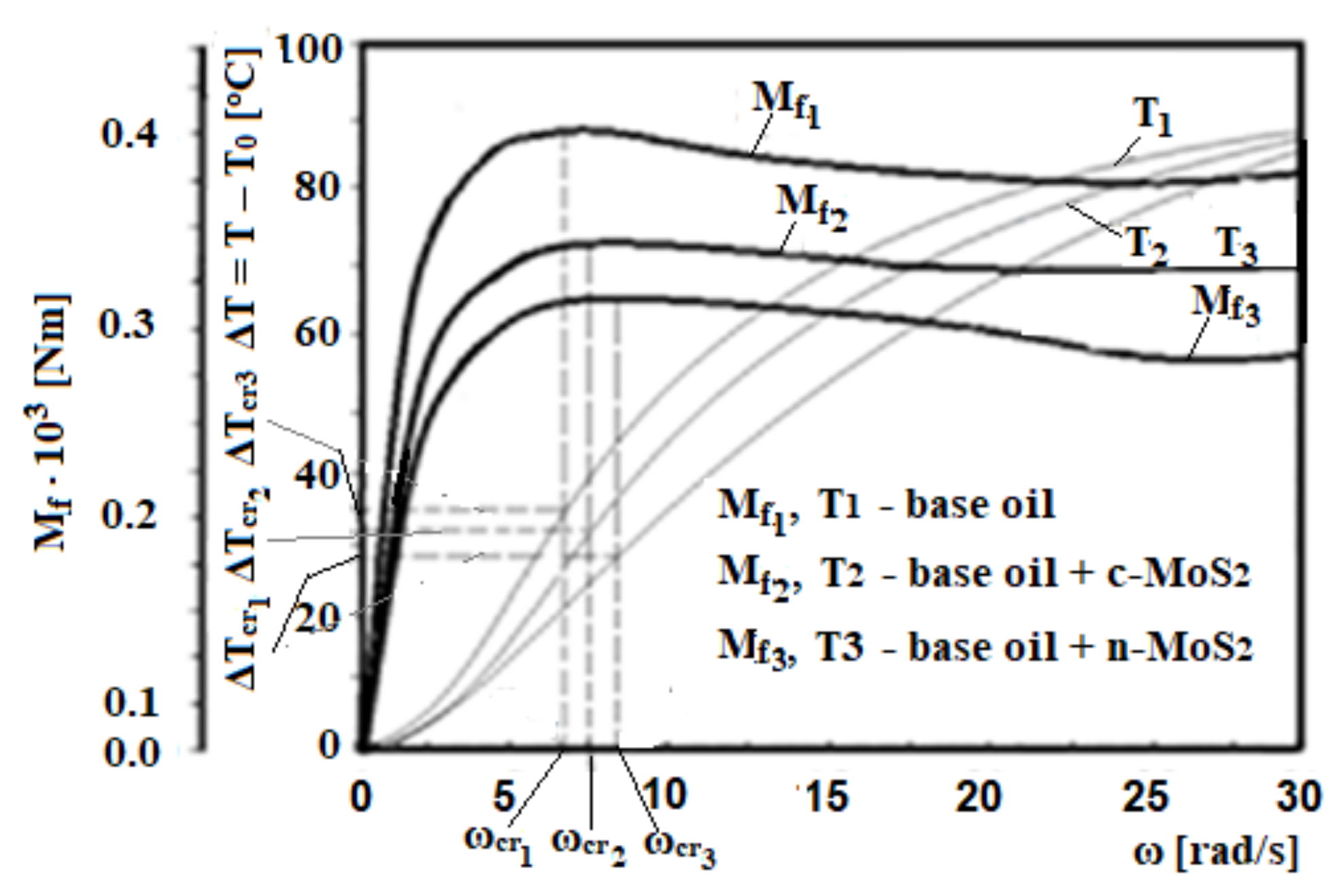
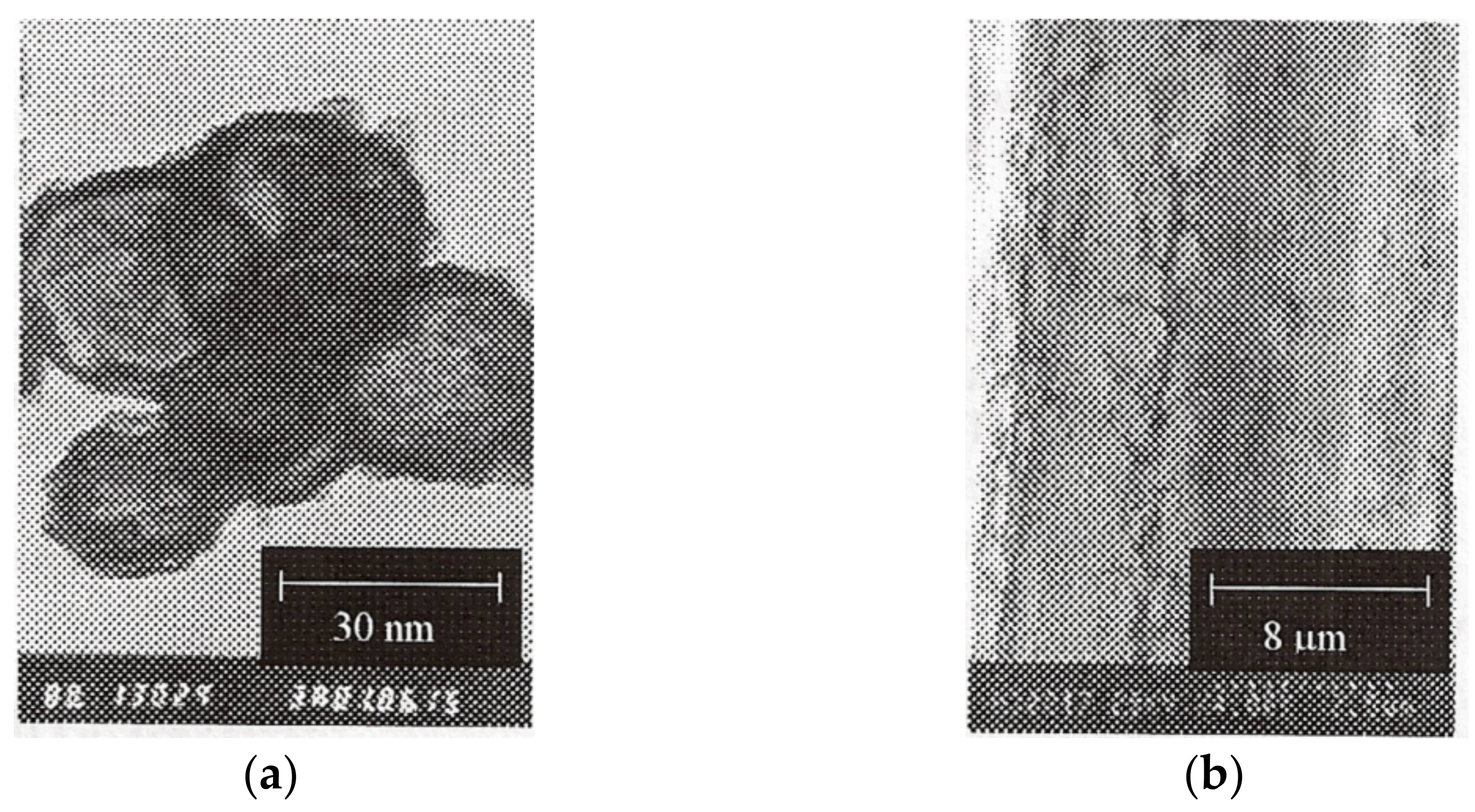
Molybdenum disulfide (MoS2) is used as a solid lubricant and is well known for its tribological behavior (friction and wear). The tribological properties of the lubricating oil–MoS2 nanoparticles mixture in different conditions of friction are studied using a four-ball tribometer, and the operating conditions of the four balls when immersed can be modeled. The current paper presents a calculating method for the critical sliding velocity (ωcr) and friction maximum torque (Mfmax) depending on the temperature (T) from the contact areas, obviously demonstrating low tribological performances. The film composition formed by friction, the topography, and the morphology of the particles and the friction-and-wear tracks of the balls following experiments using contact surfaces are analyzed and investigated by X-ray photoelectron spectroscopy (XPS), scanning electron microscopy (SEM), and transmission electron microscope (TEM). XPS and SEM show that nanoparticles by deposition form a protective and lubricating layer of MoS3, which allows for an increase in the friction pair’s load capacity. MoS2 nanoparticles (n-MoS2 of ~40 nm in diameter) compared to the common (commercial) MoS2 particles (c-MoS2 of ~1.5 μm in diameter) presented lower friction coefficients and higher wear-resistance values, due to the protective-layer microstructure as an intermediate lubricant between the contact surfaces. Therefore, the present paper reports the tribological properties of the lubricating oil with n-MoS2 as an additive compared to the c-MoS2, and by the application of the friction modeling theory using a Couette flow, it was possible to calculate the temperature, T, when the friction torque, Mf, was at its maximum, the basis on which the value of its sliding velocity, ω, was obtained corresponding to the contact areas of the four-ball system.
Keywords: MoS2 nanoparticles; solid lubricant; XPS; SEM; TEM MoS2 nanoparticles; solid lubricant; XPS; SEM; TEM