Article

Role of Materials Chemistry on Transparent Conductivity of Amorphous Nb-Doped SnO2 Thin Films Prepared by Remote Plasma Deposition

1
Institute for Energy Research, Qilu University of Technology (Shandong Academy of Sciences), 19 Keyuan Road, Jinan 250014, China
2
School of Materials Science and Engineering, Zhengzhou University, Zhengzhou 450002, China
3
International Joint Research Laboratory for Low-Carbon & Environmental Materials of Henan Province, Zhengzhou 450002, China
*
Author to whom correspondence should be addressed.
Coatings 2022, 12(8), 1111; https://doi.org/10.3390/coatings12081111

Submission received: 30 June 2022 / Revised: 1 August 2022 / Accepted: 2 August 2022 / Published: 4 August 2022
(This article belongs to the Special Issue Optical Thin Film and Photovoltaic (PV) Related Technologies)

Abstract

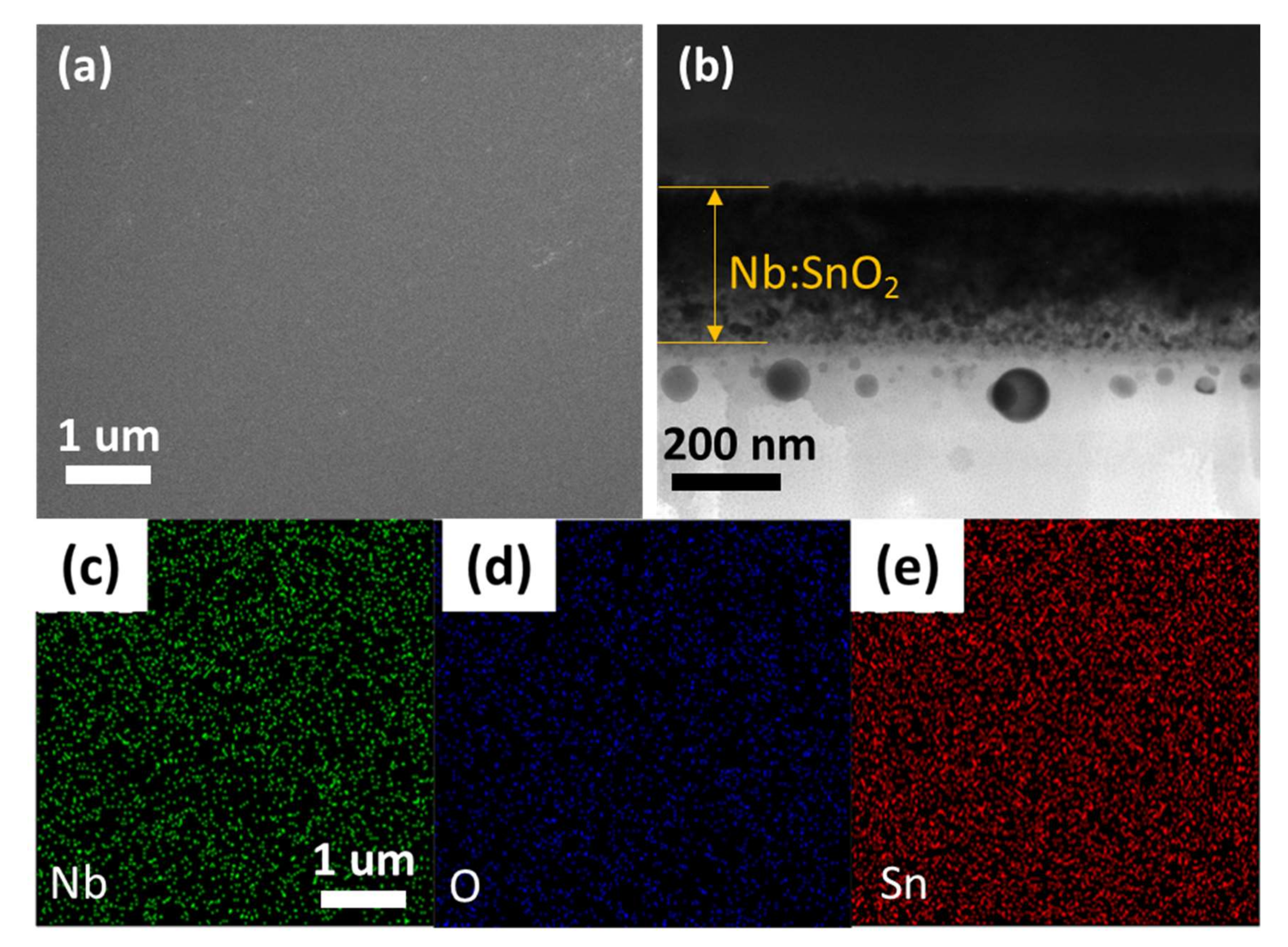
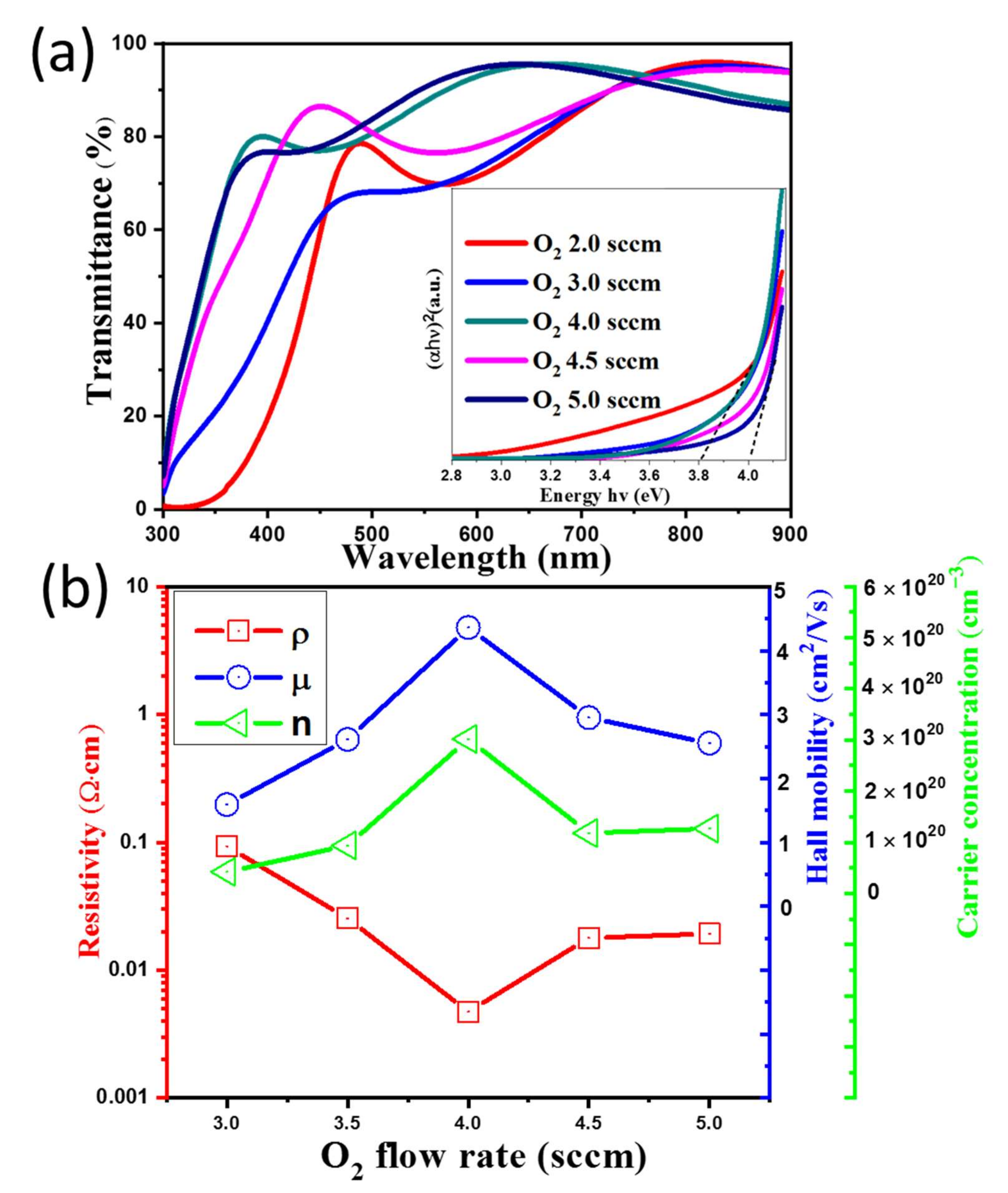
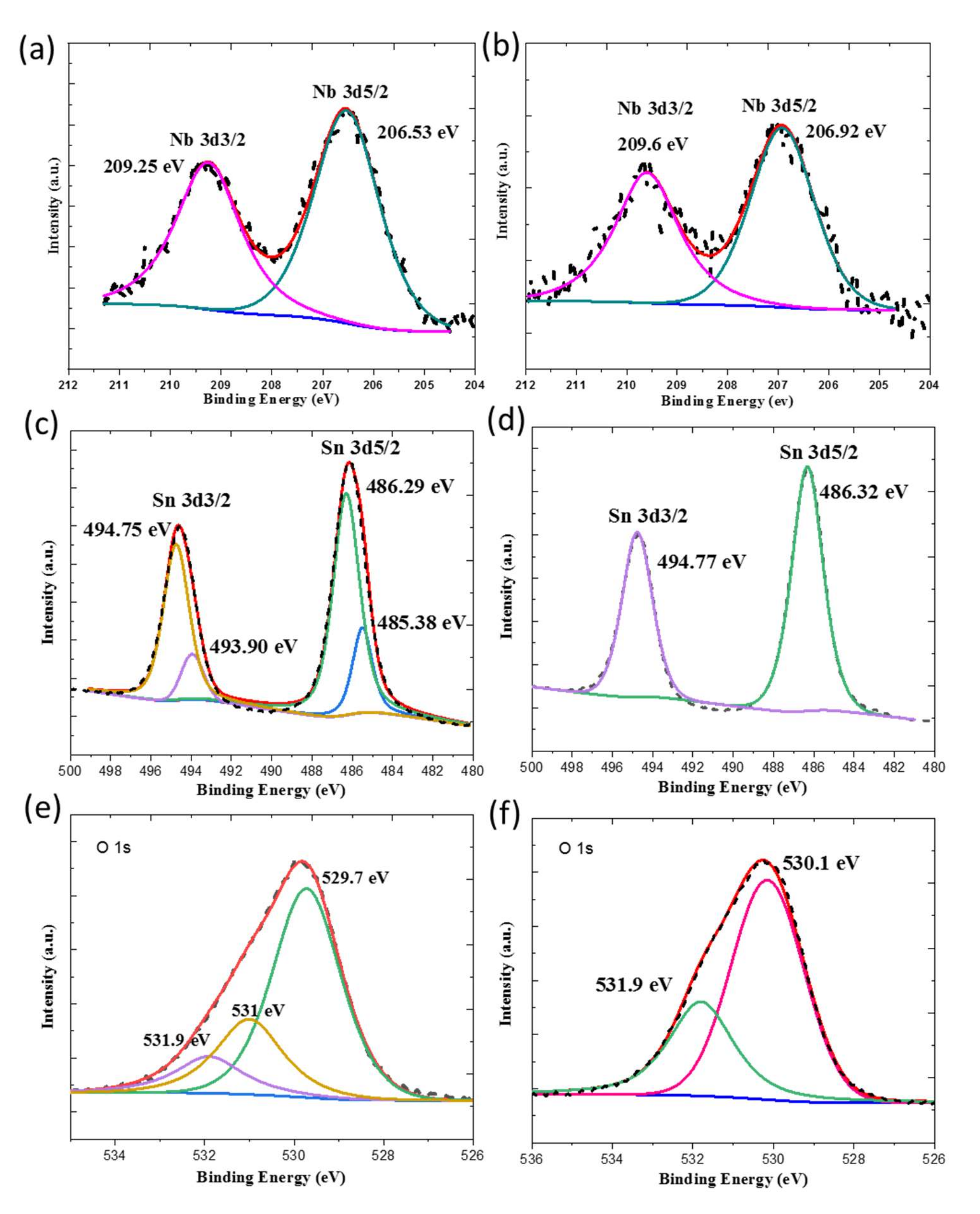
In this study, remote plasma sputtering deposition of niobium-doped SnO2 transparent conductive oxides on glass substrates was carried out at ambient temperature with no post-deposition annealing. The microstructure, optical, electrical, and surface morphology of the thin films were characterized using a combination of advanced techniques, such as X-ray diffraction (XRD), UV-Vis spectrophotometer, Hall-effect measurements, as well as field emission scanning electron microscope (FESEM), high-resolution transmission electron microscopy, and high-resolution X-ray photoelectron spectroscopy. It was determined that the oxygen defects of the films have a substantial impact on their transparent conductivity. The crystalline films, which were crystallized by annealing at 450 °C, had higher resistivities due to a decreased concentration of oxygen vacancies, which restricted conduction. In comparison, the amorphous films exhibited remarkable conductivity. The best amorphous films (Nb:SnO2) exhibited a resistivity of less than 4.6 × 10⁻³ Ω·cm, with a 3 × 1020 cm−3 carrier concentration and a 4.4 cm2/(V·S) of Hall mobility. X-ray amorphous Nb:SnO2 films can be used to make conductive and transparent protective layers that can be used to shield semiconducting photoelectrodes used in solar water splitting. These layers can also be used with more conductive TCO films (ITO or AZO) when needed.
Keywords: Nb-doped SnO2; sputtering; O2 flow rate; transparent conductivity; materials chemistry Nb-doped SnO2; sputtering; O2 flow rate; transparent conductivity; materials chemistry