Article

Water-Repellent Coatings on Corrosion Resistance by Femtosecond Laser Processing

1
State Key Laboratory of Advanced Design and Manufacturing for Vehicle Body, Hunan Provincial Key Laboratory of Intelligent Laser Manufacturing, Hunan University, Changsha 410082, China
2
Research Institute of Automobile Parts Technology, Hunan Institute of Technology, Hengyang 421002, China
*
Author to whom correspondence should be addressed.
Coatings 2022, 12(11), 1736; https://doi.org/10.3390/coatings12111736

Submission received: 18 October 2022 / Revised: 7 November 2022 / Accepted: 10 November 2022 / Published: 13 November 2022
(This article belongs to the Special Issue Novel Coatings for Preventing Marine Biofouling and Corrosion)

Abstract

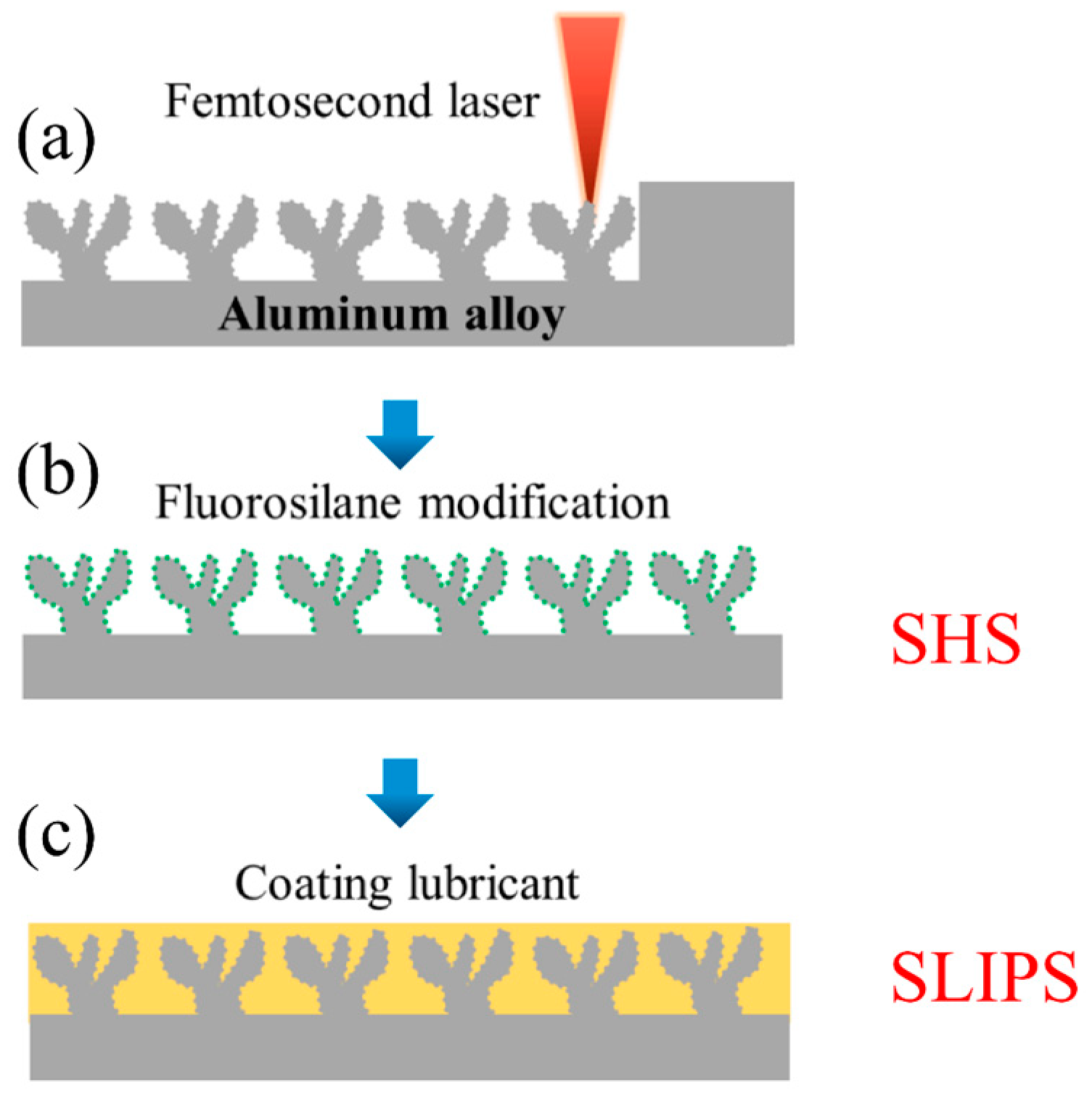
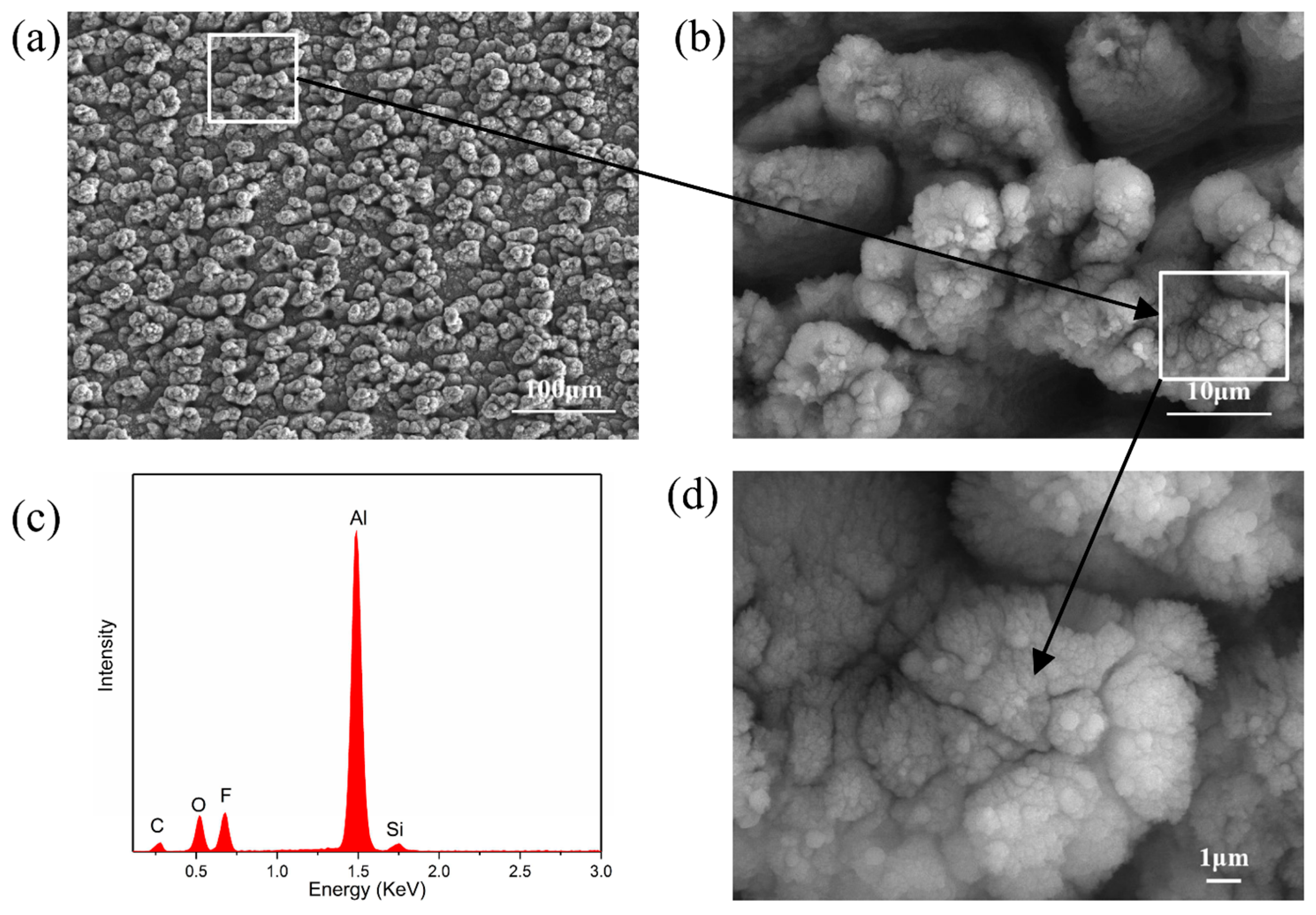
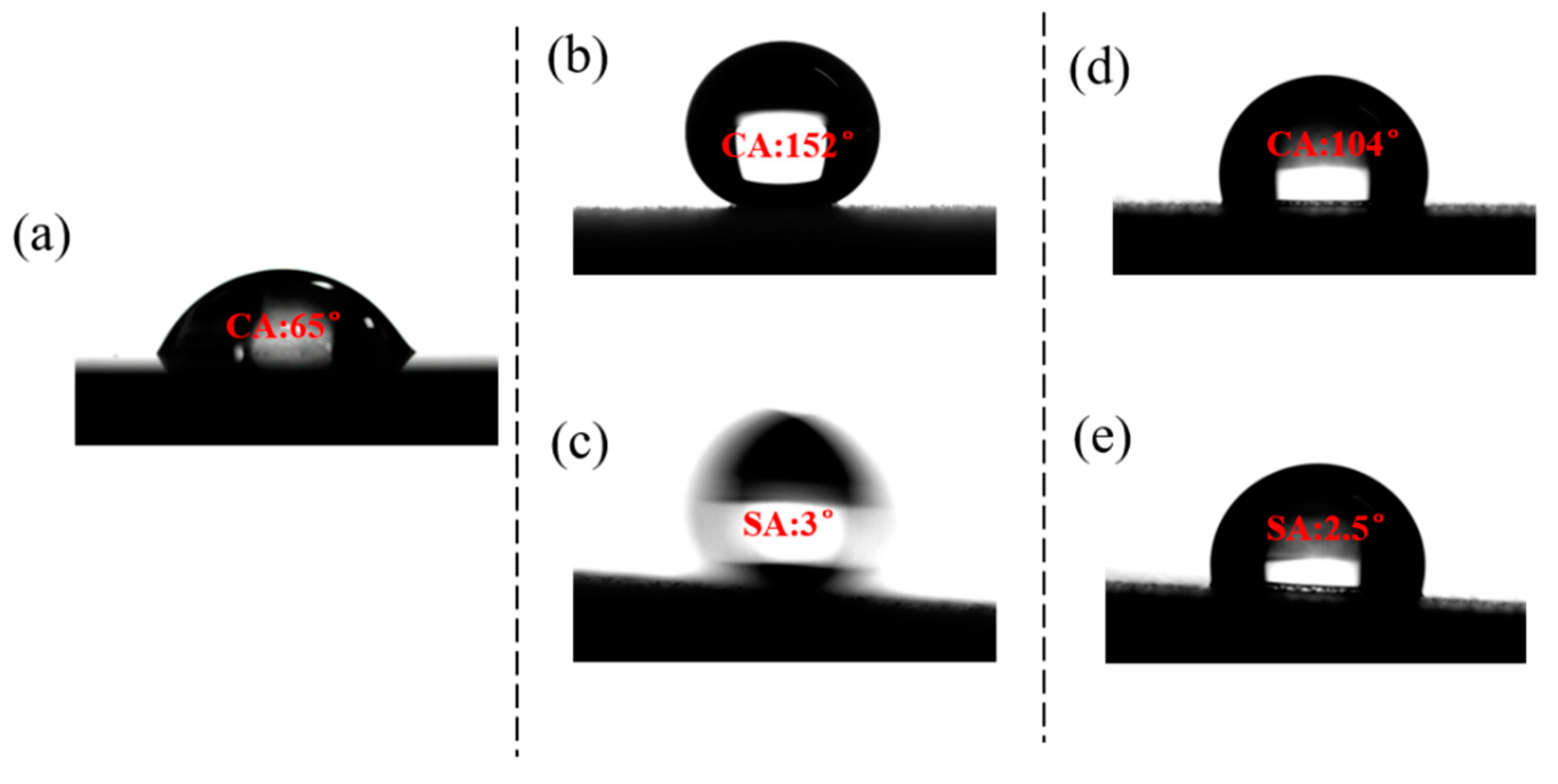
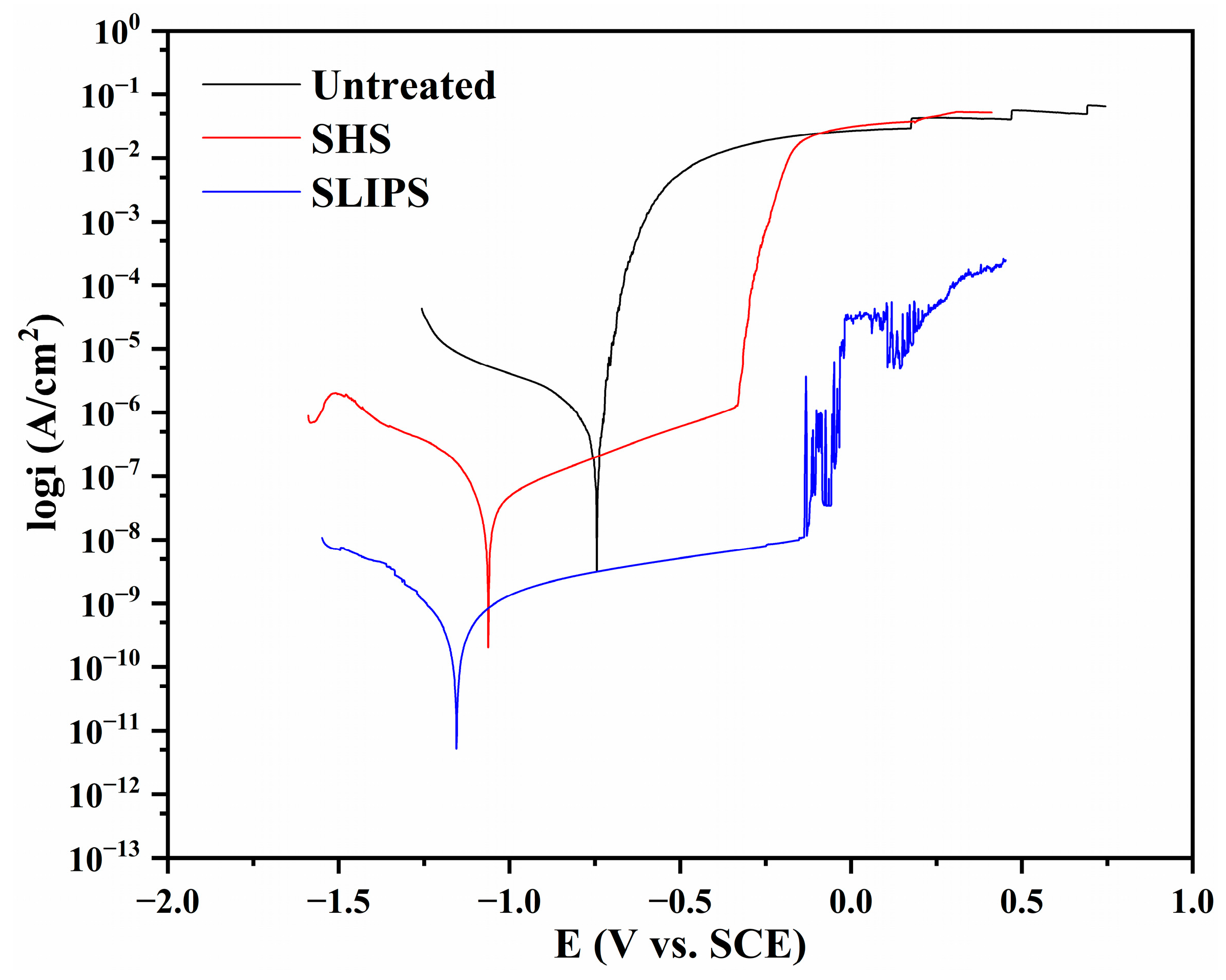
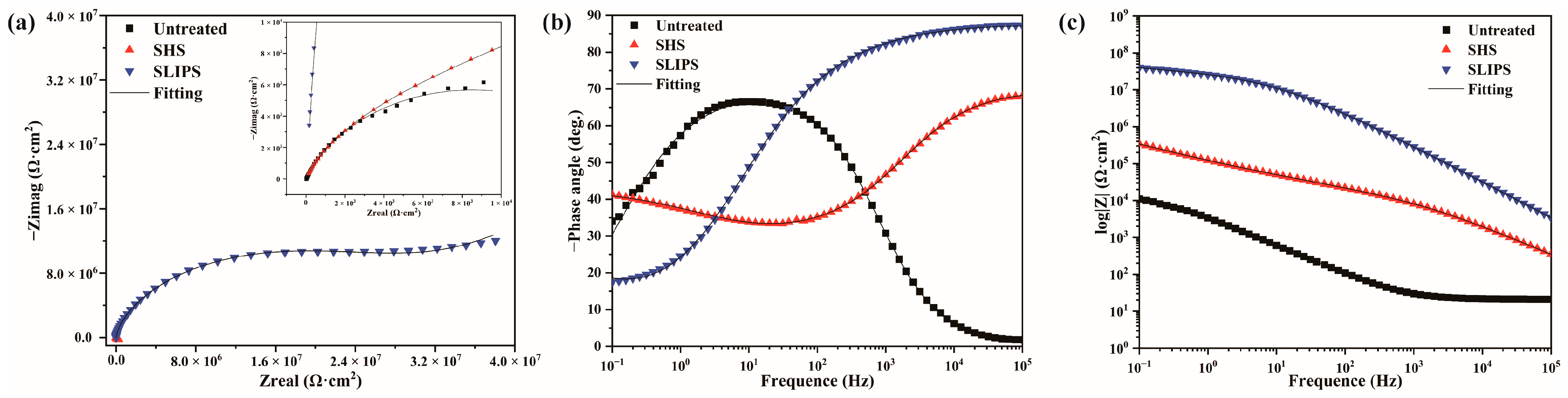
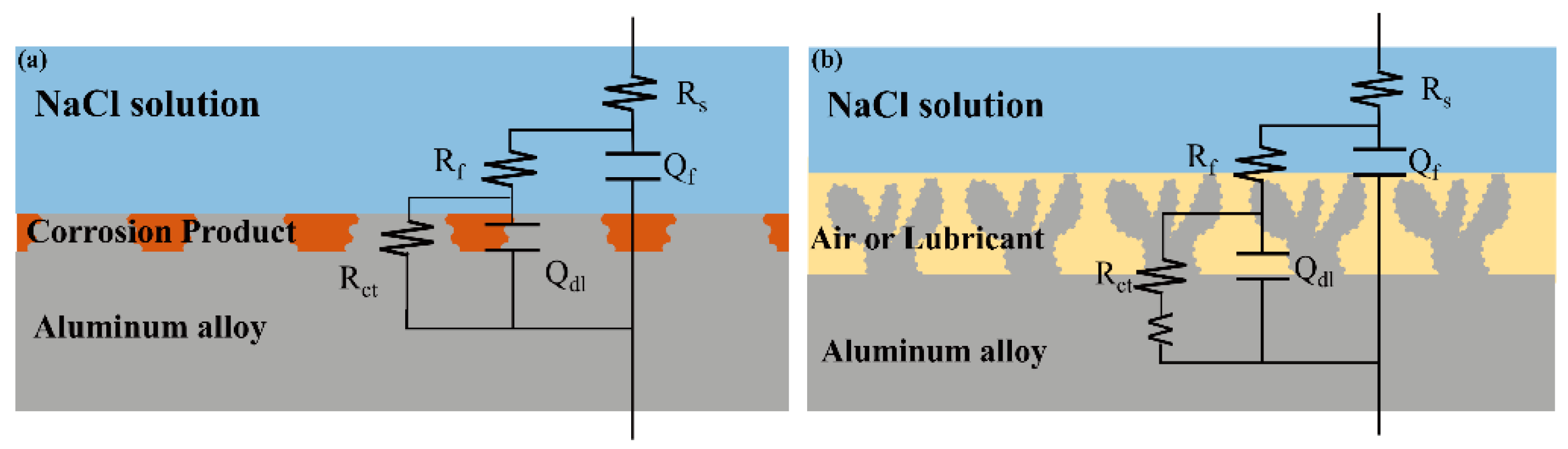
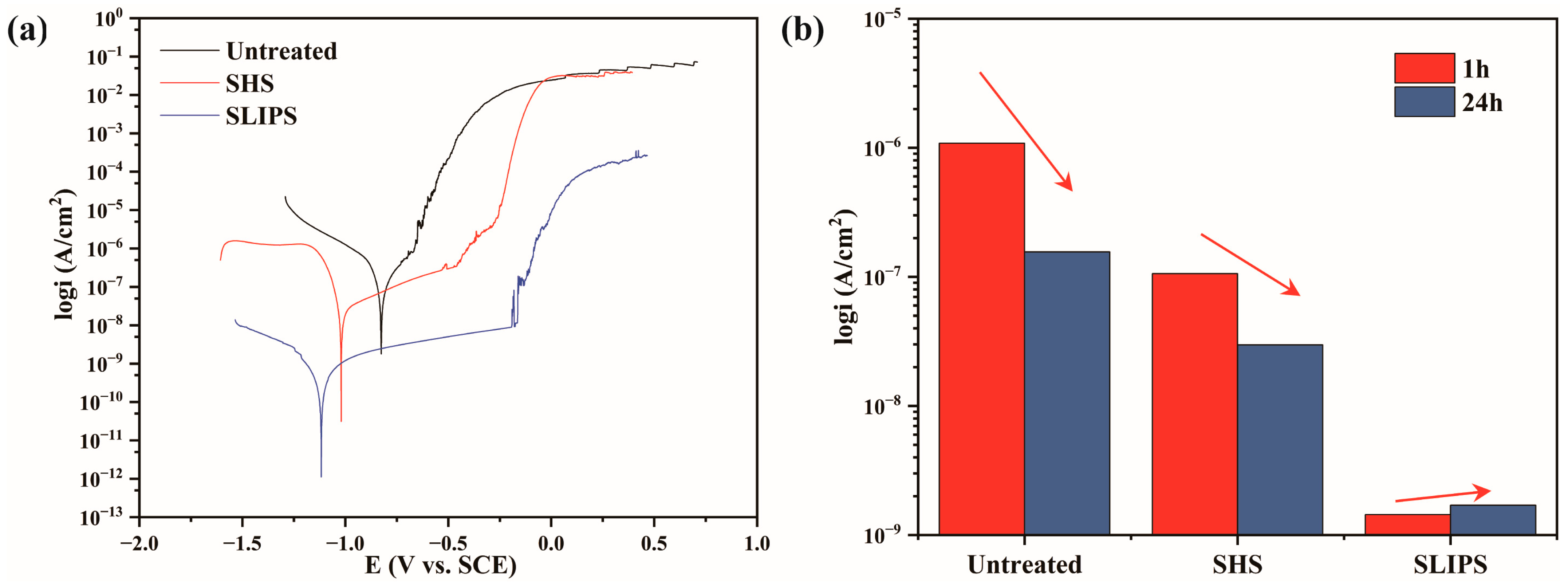
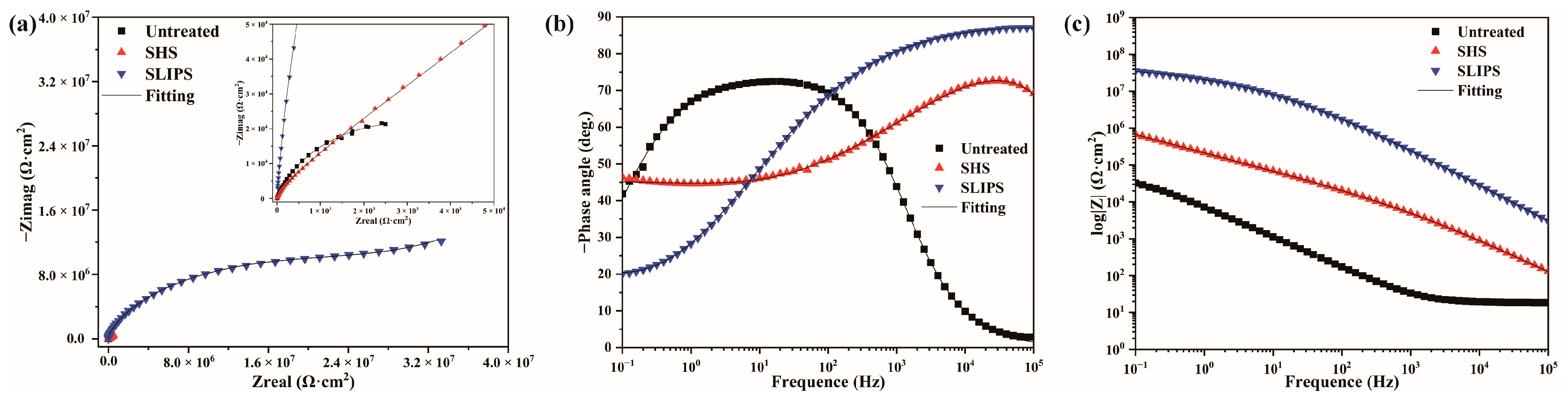
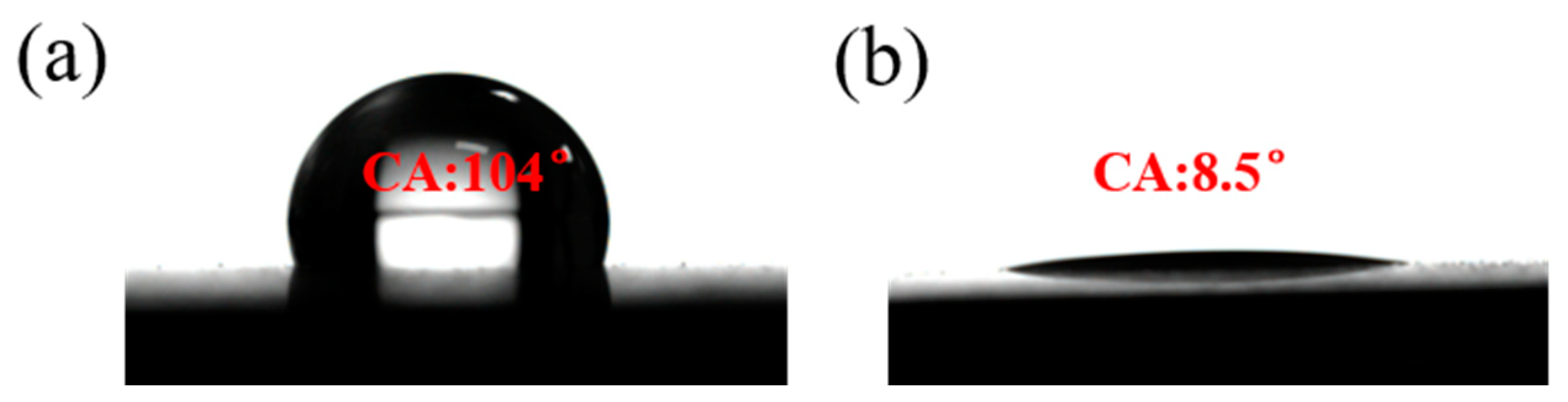
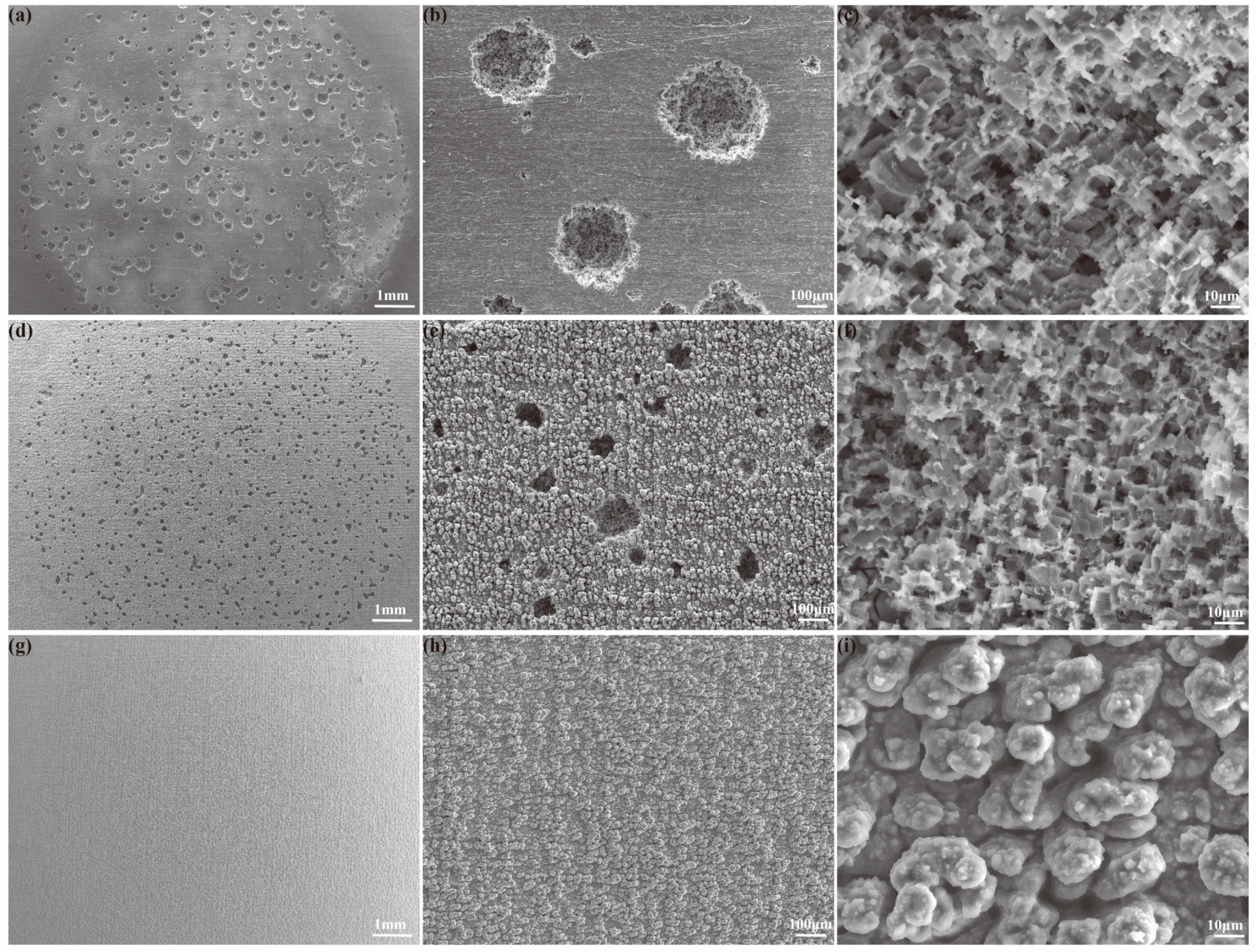
Metal corrosion causes huge economic losses and major disasters every year. Inspired by the lotus leaf and nepenthes pitcher, the superhydrophobic surfaces (SHS) and the slippery liquid-infused porous surfaces (SLIPS) were produced as a potential strategy to prevent metal corrosion. However, how to prepare stable water-repellent coatings that can prevent the intrusion of corrosive ions remains to investigate. In this work, we first fabricated a micro/nano hierarchical structure on the aluminum surface by femtosecond laser processing. Then, the SHS was prepared on the above structure by fluorosilane modification. Finally, the SLIPS was fabricated on the SHS by coating lubricant. The morphology and wettability of the fabricated samples were evaluated by scanning electron microscopy and contact angle measurements. Furthermore, the corrosion resistance properties of SHS and SLIPS in simulated seawater were characterized by electrochemical measurements. From the comparison of the electrochemical parameters of different immersion times, both water-repellent coatings are effective in protecting the aluminum alloy from corrosion in simulated seawater due to reduced contact area between the metal substrate and corrosive solution. In comparison with the SHS, the SLIPS has a corrosion inhibition efficiency of up to 99.95% and it maintains long-term stability in the corrosive solution. This work also provides a promising method for the water-repellent coatings by femtosecond laser processing for metal corrosion prevention in practical industrial applications.
Keywords: femtosecond laser processing; corrosion resistance; superhydrophobic surface; SLIPS femtosecond laser processing; corrosion resistance; superhydrophobic surface; SLIPS