Article

Comparative Study on Effects of Thermal Gradient Direction on Heat Exchange between a Pure Fluid and a Nanofluid: Employing Finite Volume Method

by
Aimad Koulali
1,
Aissa Abderrahmane
1,
Wasim Jamshed
2,*,
Syed M. Hussain
3,
Kottakkaran Sooppy Nisar
4,
Abdel-Haleem Abdel-Aty
5,6,
I. S. Yahia
7,8,9 and
Mohamed R. Eid
10,11
1
Laboratoire de Physique Quantique de la Matière et Modélisation Mathématique (LPQ3M), University of Mascara, Mascara 29000, Algeria
2
Department of Mathematics, Capital University of Science and Technology (CUST), Islamabad 44000, Pakistan
3
Department of Mathematics, Faculty of Science, Islamic University of Madinah, Madinah 42351, Saudi Arabia
4
Department of Mathematics, College of Arts and Sciences, Prince Sattam bin Abdulaziz University, Wadi Aldawaser 11991, Saudi Arabia
5
Department of Physics, College of Sciences, University of Bisha, P.O. Box 344, Bisha 61922, Saudi Arabia
6
Physics Department, Faculty of Science, Al-Azhar University, Assiut 71524, Egypt
7
Advanced Functional Materials and Optoelectronic Laboratory (AFMOL), Department of Physics, Faculty of Science, King Khalid University, Abha 61413, Saudi Arabia
8
Research Center for Advanced Materials Science (RCAMS), King Khalid University, P.O. Box 9004, Abha 61413, Saudi Arabia
9
Nanoscience Laboratory for Environmental and Biomedical Applications (NLEBA), Semiconductor Lab., Department of Physics, Faculty of Education, Ain Shams University, Roxy, Cairo 11757, Egypt
10
Department of Mathematics, Faculty of Science, New Valley University, Al-Kharga, Al-Wadi Al-Gadid 72511, Egypt
11
Department of Mathematics, Faculty of Science, Northern Border University, Arar 1321, Saudi Arabia
*
Author to whom correspondence should be addressed.
Coatings 2021, 11(12), 1481; https://doi.org/10.3390/coatings11121481

Submission received: 19 September 2021 / Revised: 3 November 2021 / Accepted: 14 November 2021 / Published: 1 December 2021
(This article belongs to the Special Issue Nanofluidics: Interfacial Transport Phenomena)

Abstract

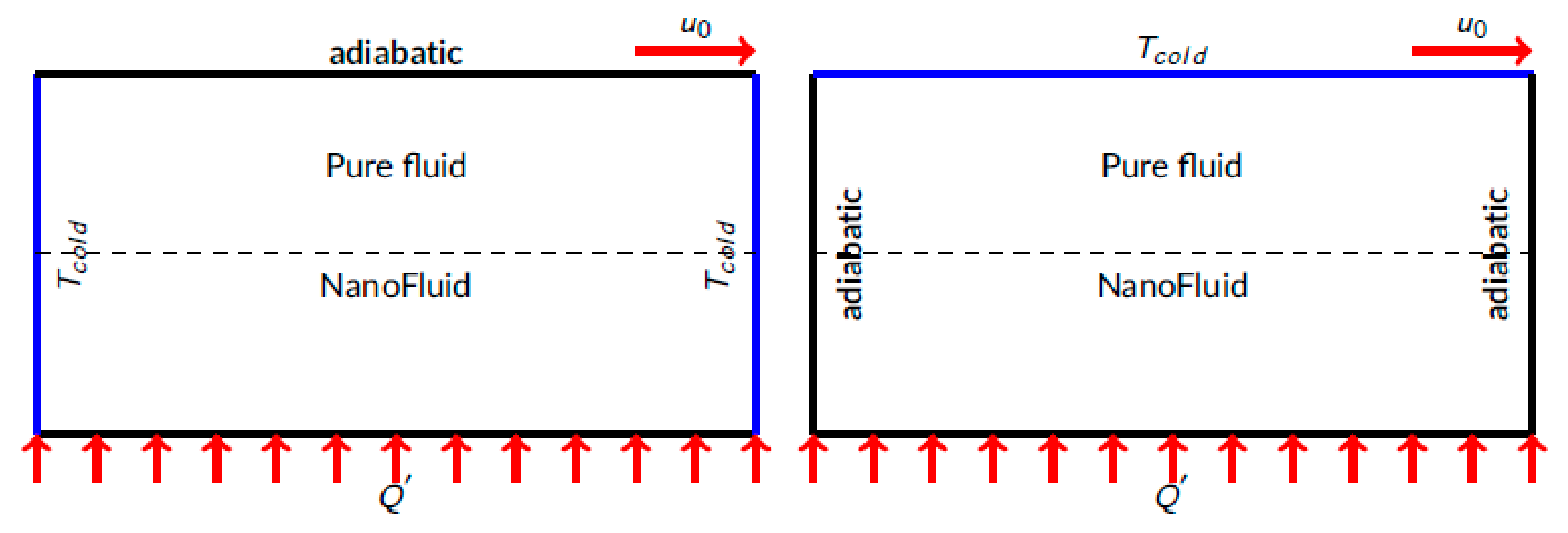
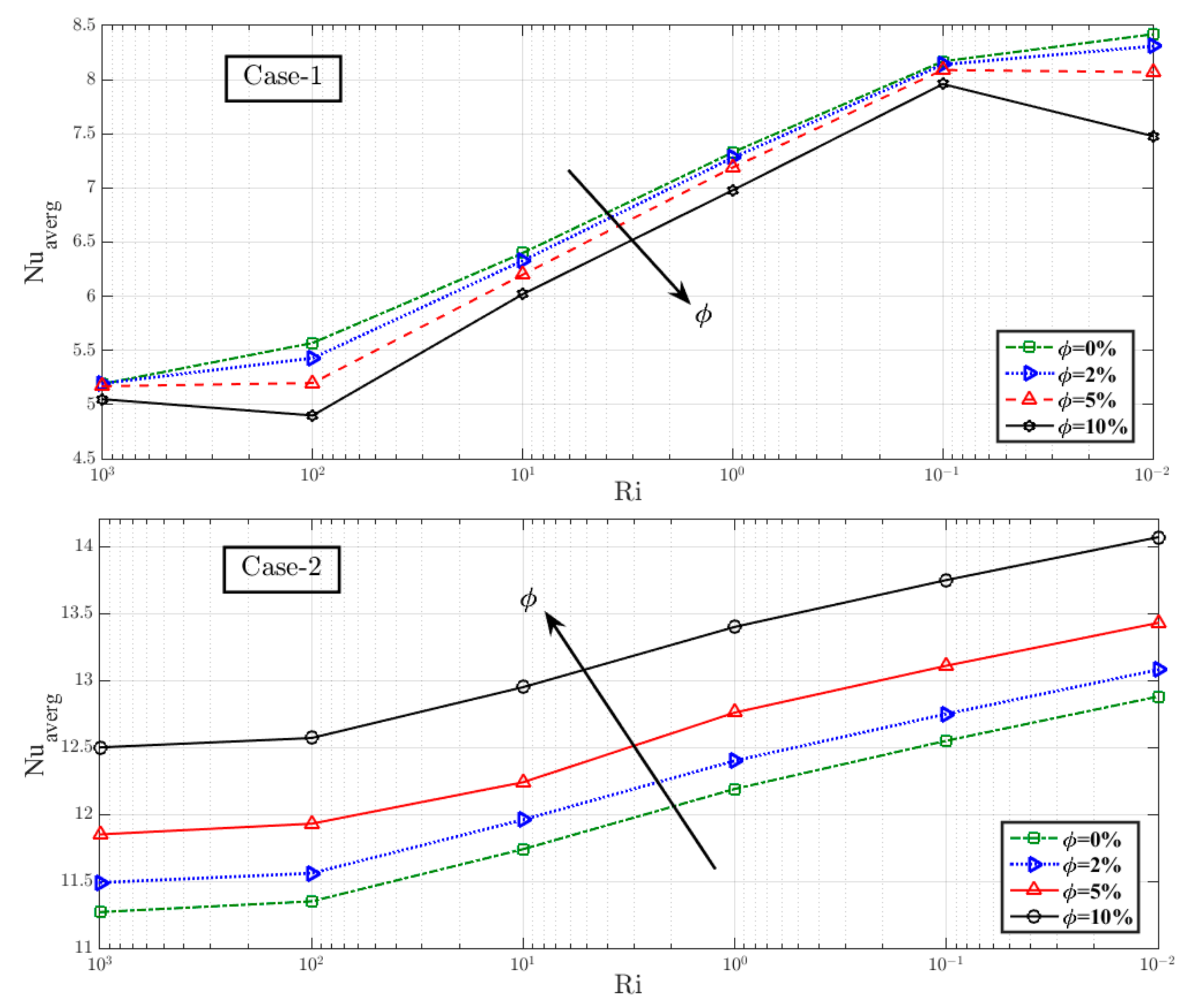
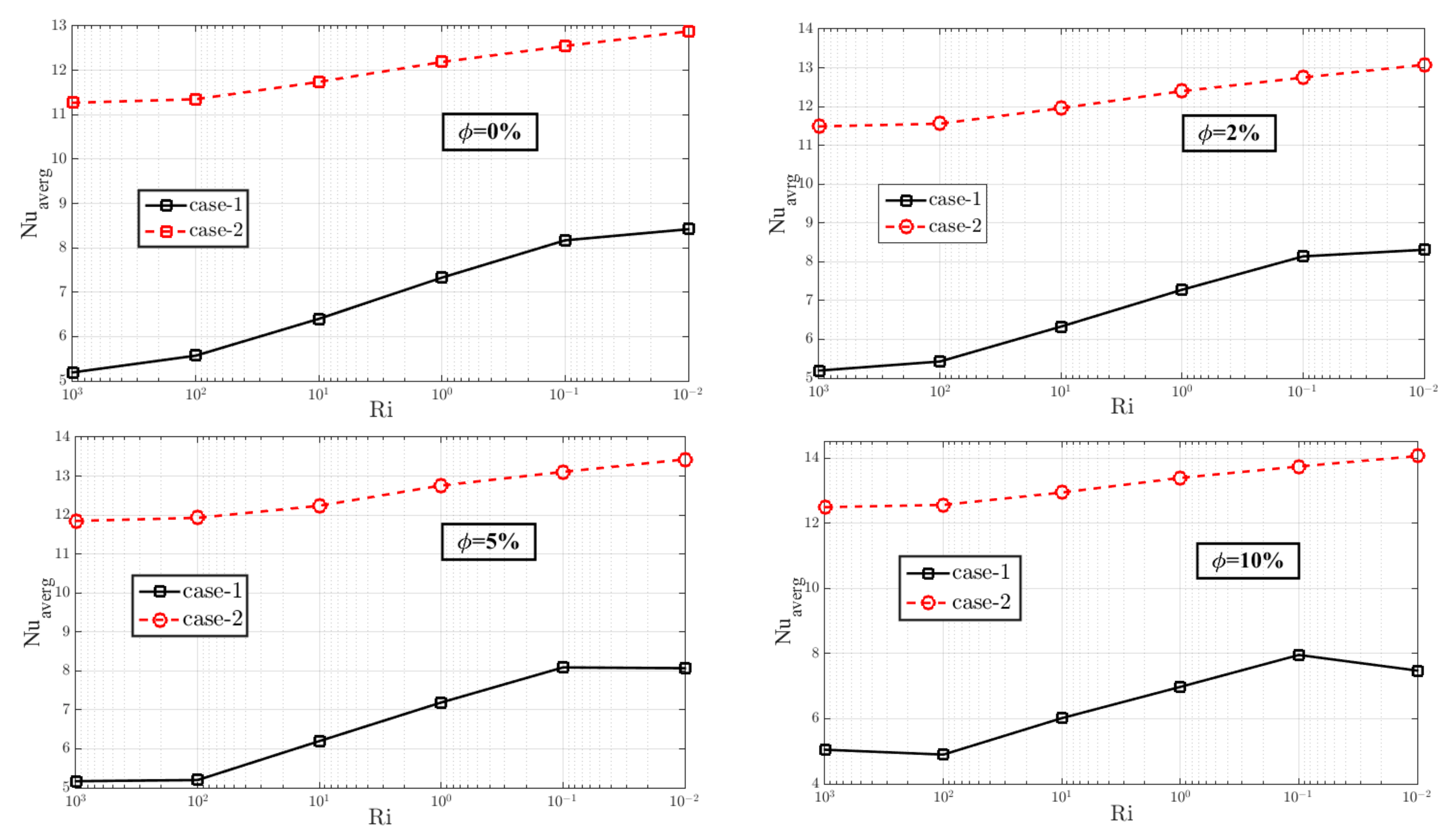
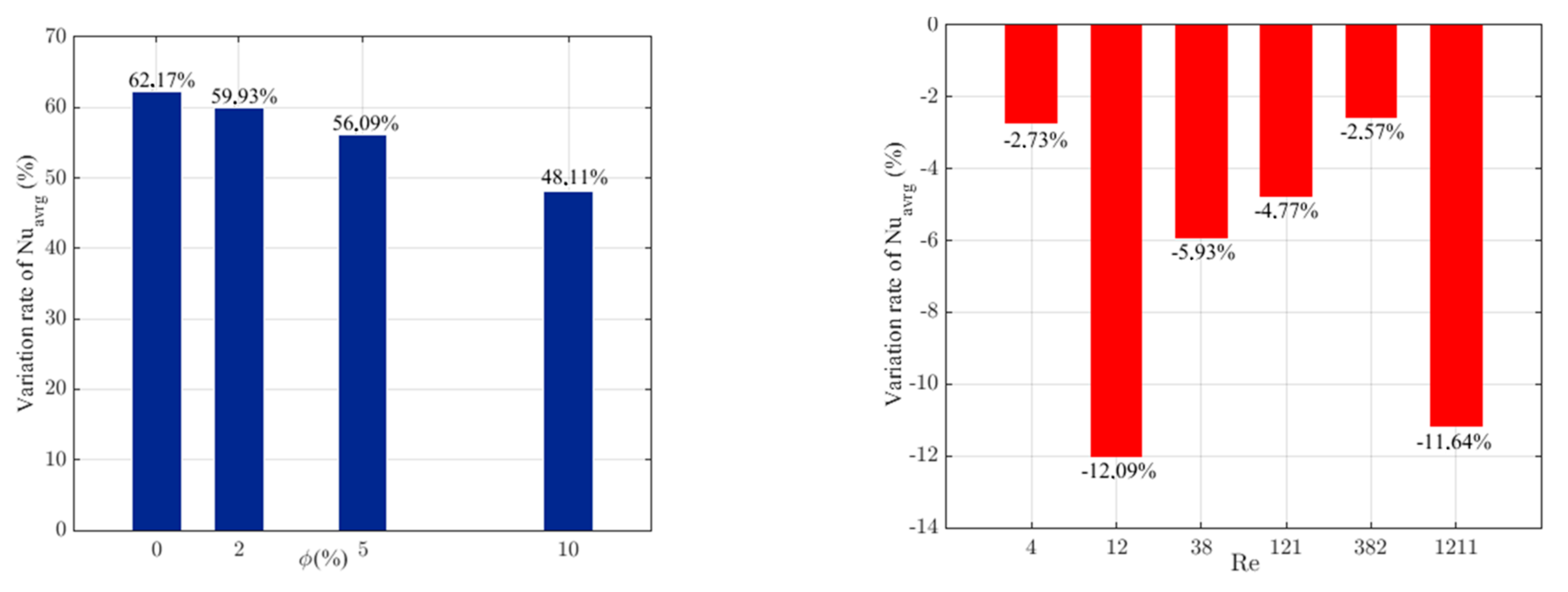
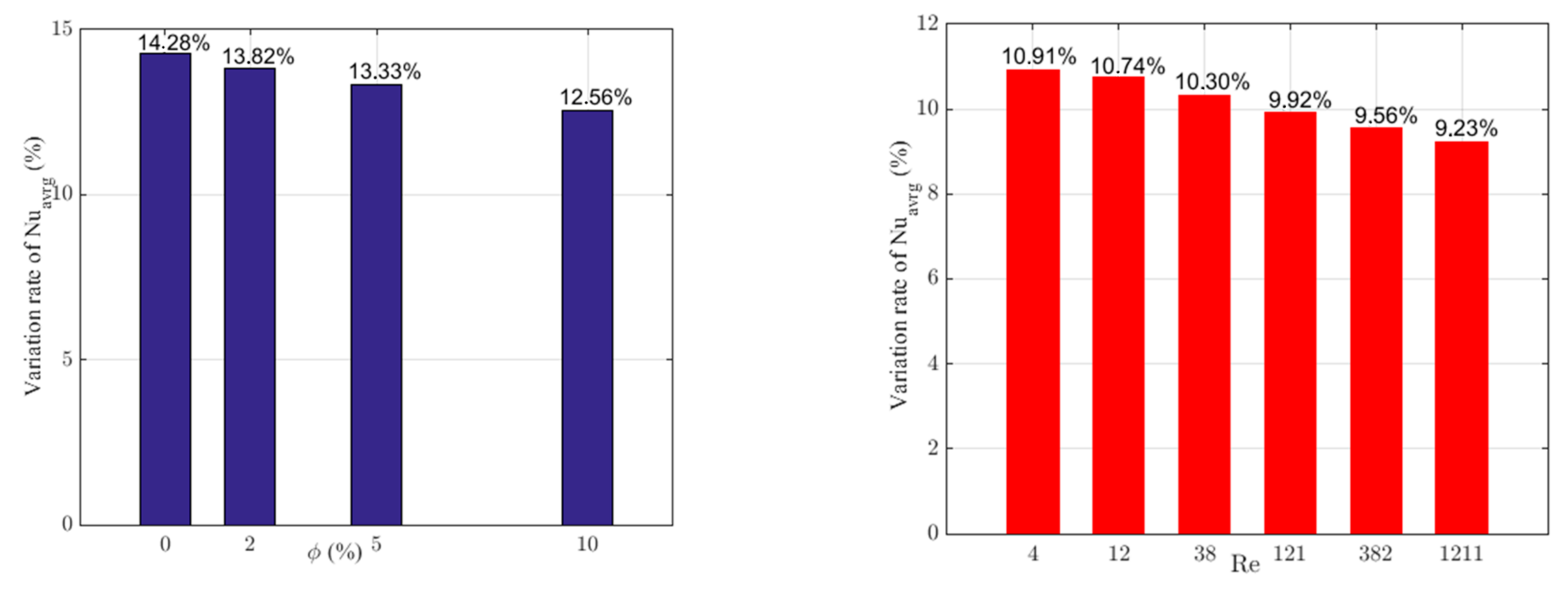
This work aims to determine how the temperature gradient orientation affects the heat exchange between two superposed fluid layers separated by zero wall thickness. The finite volume method (FVM) has been developed to solve the governing equations of both fluid layers. To achieve the coupling between the two layers, the heat flow continuity with the no-slip condition at the interface was adopted. The lower part of the space is filled with a nanofluid while the upper part is filled with a pure fluid layer. We have explored two cases of temperature gradient orientation: parallel gradient to gravity forces of our system and perpendicular gradient to gravity forces. We took a set of parameters, Ri and ϕ, to see their influence on the thermal and hydrodynamic fields as well as the heat exchange rate between the two layers. The main applications of this study related to biological systems such as the cytoplasm and the nucleoplasm are phase-separated solutions, which can be useful as models for membranelles organelles and can serve as a cooling system application using heat exchange. The Richardson number and the volume of nanosolid particles have a big impact on the rate of change of heat transmission. When a thermal gradient is perpendicular to gravity forces, total heat transmission improves with increasing solid volume percentage, but when the thermal gradient is parallel to gravity forces, overall heat transfer decreases significantly.
Keywords: mixed and natural convection; rectangular cavity; alumina-water nanoliquid; finite volume method mixed and natural convection; rectangular cavity; alumina-water nanoliquid; finite volume method