Article

Directly-Patternable Bi2O3 Nanoparticle for Polymer Nanocomposite Capacitor


Department of Materials Science and Engineering, Kangwon National University, Chuncheon 24341, Korea
*
Author to whom correspondence should be addressed.
Coatings 2020, 10(8), 752; https://doi.org/10.3390/coatings10080752

Submission received: 15 July 2020 / Revised: 27 July 2020 / Accepted: 28 July 2020 / Published: 1 August 2020
(This article belongs to the Special Issue Coatings and Interfaces)

Abstract

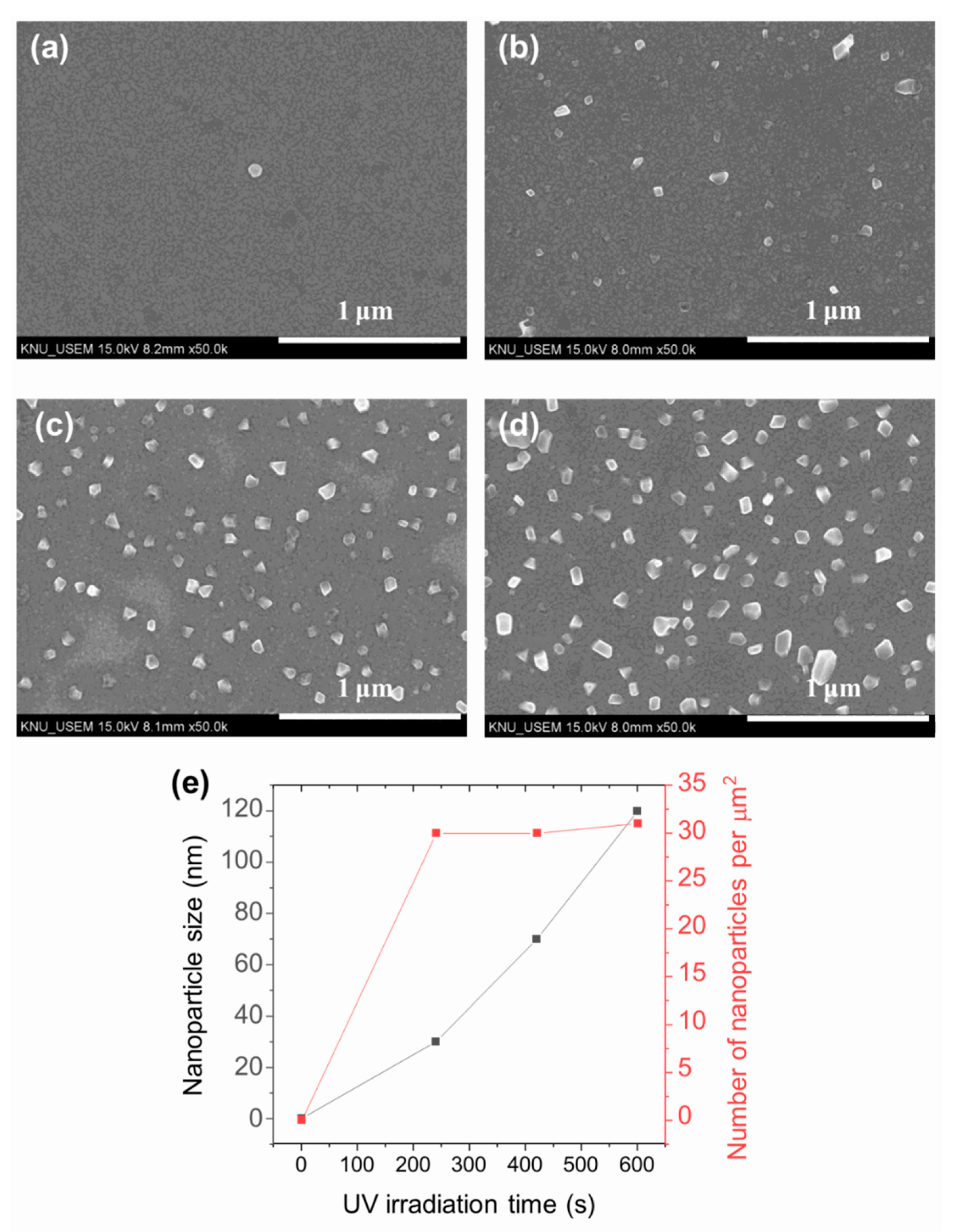
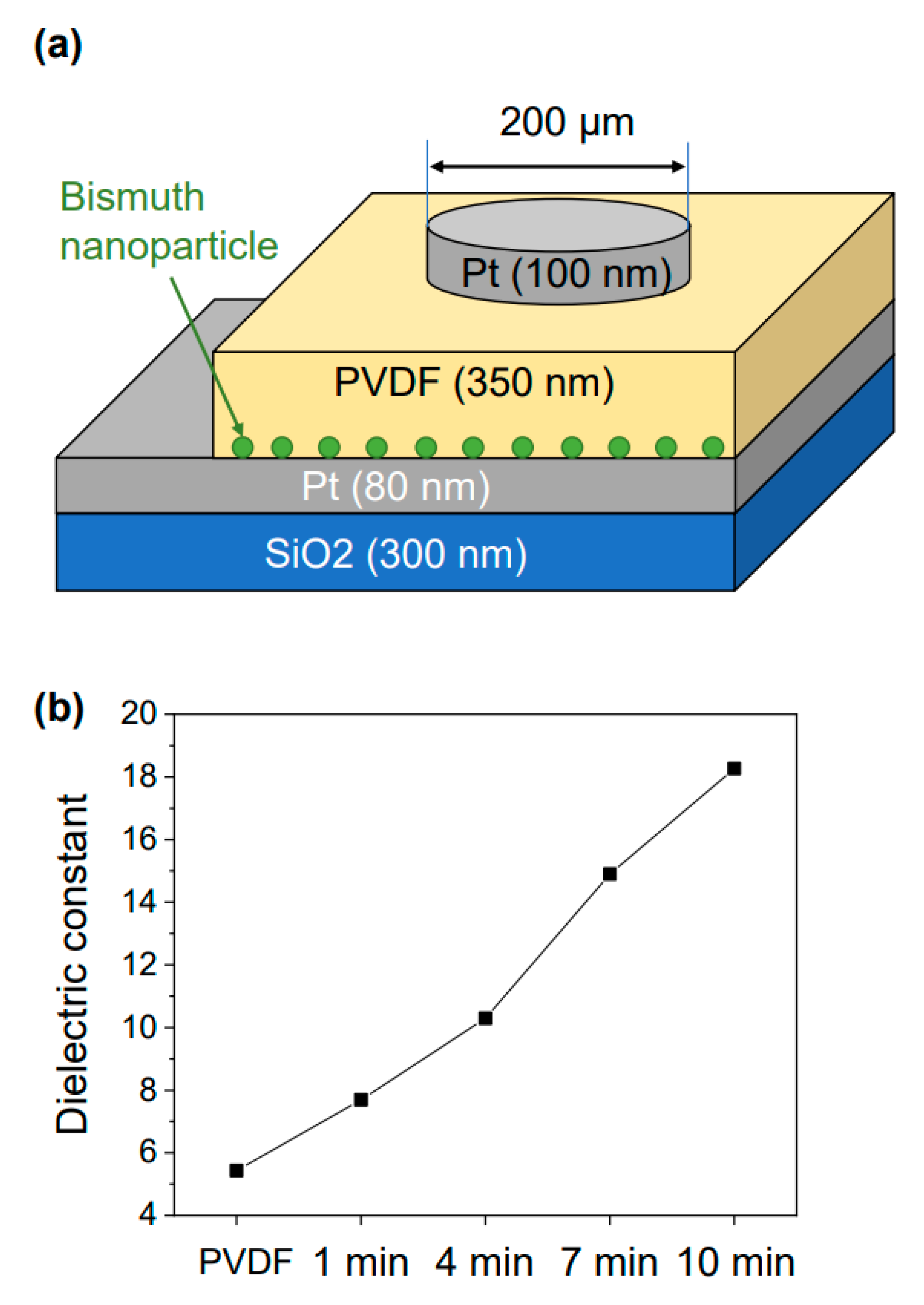
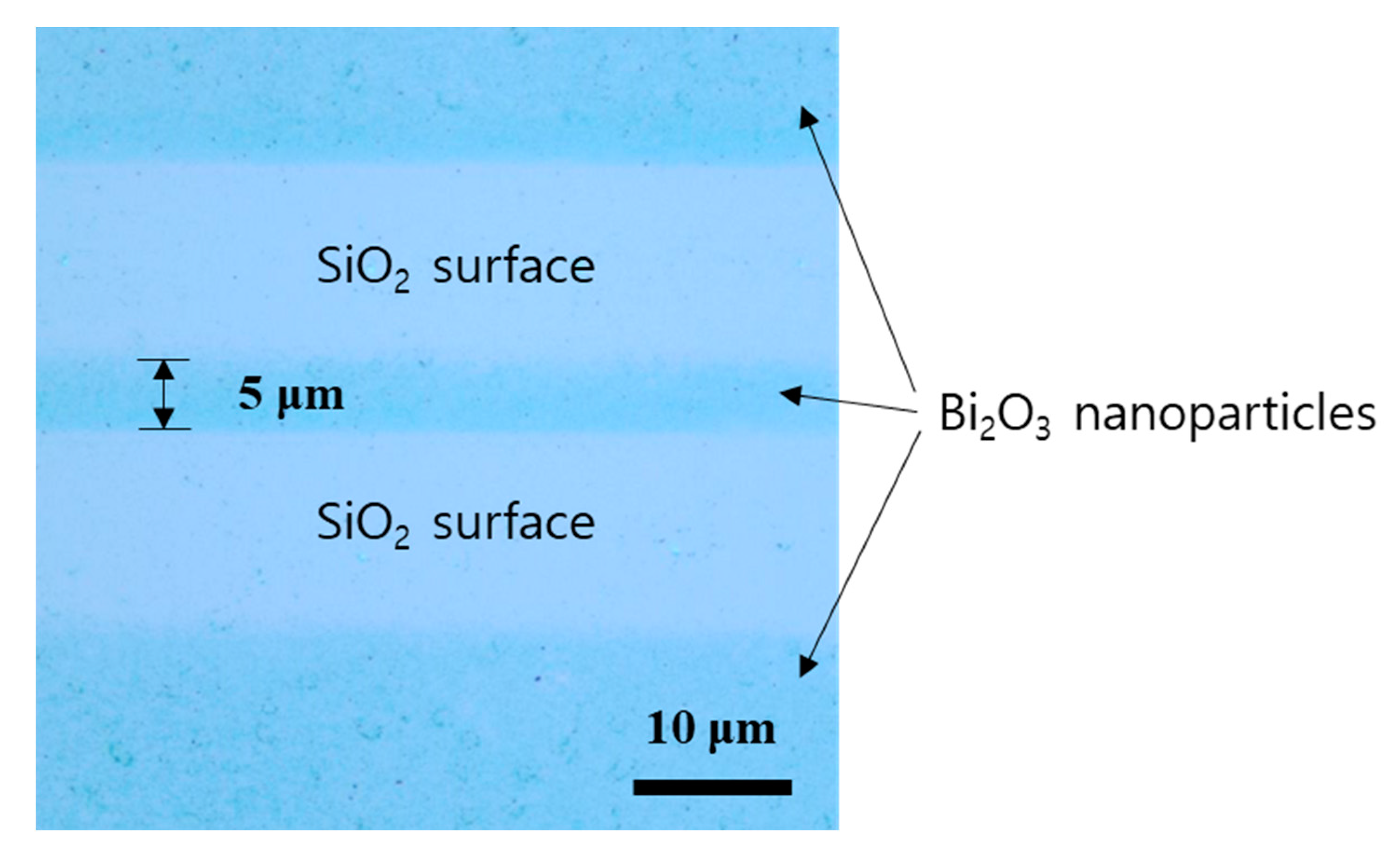
A polyvinylidene fluoride (PVDF) film incorporating size-controlled, uniformly dispersed, directly patterned Bi2O3 nanoparticles was developed to achieve a high-k polymer nanocomposite capacitor. The photochemical metal-organic deposition (PMOD) method was employed to form uniformly dispersed and directly patterned nanoparticles on the substrate. Bi nanoparticles were produced by spin coating a Bismuth 2-ethylhexanoate solution on a Pt substrate with UV irradiation for 1, 4, 7, and 10 min. The average diameter of nanoparticles and the number of nanoparticles per unit area (μm2) were about 30, 70, and 120 nm and 30, 30, and 31 particles/μm2 for UV irradiation times of 4, 7, and 10 min, respectively. In addition, the capacitance of PVDF nanocomposite film could be controlled by the Bi2O3 nanoparticle size. The PVDF nanocomposite film containing Bi2O3 nanoparticles with 1, 4, 7, and 10 min UV irradiation were able to improve capacitance by about 1.4, 2.0, 2.7, and 3.4 times compared with an as-prepared PVDF film. By using a mask aligner, directly pattered Bi nanoparticles on the substrate, which had a 5 μm line width pattern, were successfully defined and demonstrated.
Keywords: patternable nanoparticle; bismuth oxide; polymer nanocomposite capacitor; high-K; photochemical metal-organic deposition patternable nanoparticle; bismuth oxide; polymer nanocomposite capacitor; high-K; photochemical metal-organic deposition