Article

Antibiotic Resistance and Genomic Diversity of Methicillin-Resistant Staphylococcus aureus Clonal Complex 45 Isolates in Kuwait Hospitals


Department of Microbiology, College of Medicine, Kuwait University, P.O. Box 24923, Safat 13110, Kuwait
*
Author to whom correspondence should be addressed.
Antibiotics 2026, 15(4), 362; https://doi.org/10.3390/antibiotics15040362
Submission received: 24 February 2026 / Revised: 25 March 2026 / Accepted: 26 March 2026 / Published: 1 April 2026
(This article belongs to the Section Mechanism and Evolution of Antibiotic Resistance)

Abstract

Background/Objectives: Methicillin-resistant Staphylococcus aureus (MRSA) causes hospital- and community-acquired infections. MRSA is a highly diverse strain that includes several epidemic clones, including CC45. A previous study conducted among MRSA isolates in Kuwait identified CC45 in two isolates in the early 2000s. This study provides an update on the prevalence and molecular characteristics of CC45 among MRSA isolates in Kuwait hospitals, during 2016–2022. Methods: A total of 13,276 MRSA isolates were collected during 2016–2022 and typed using antibiogram, DNA microarray, Staphylococcal protein A (spa) typing, pulsed-field gel electrophoresis (PFGE), and multi-locus sequence typing (MLST). Results: CC45 was detected in 87 (0.65%) of the 13,276 MRSA isolates. The isolates were resistant to fusidic acid (n = 71), erythromycin (n = 16), and inducible clindamycin resistance (n = 15). Twenty-one isolates were resistant to multiple antibiotics. Spa typing identified 19 types, with t362 (n = 35) and t132 (n = 27) as the dominant types. DNA microarray identified seven genotypes with CC45-MRSA-[IV + fus] (n = 36) and CC45-MRSA-[VI + fus] (n = 30) as the dominant types. MLST identified six sequence types (STs): ST7119, ST508, ST45, ST46, ST9548, and ST10699. PFGE clustered the isolates into two major types, A and B, with type A being the major type (n = 83), mostly consisting of CC45-MRSA-[IV + fus] isolates. The CC45-MRSA-[IV + fus] and CC45-MRSA-[VI + fus] genotypes were detected throughout the study period (2016–2022), whereas the other genotypes were detected less frequently. Conclusions: The CC45-MRSA circulating in Kuwait hospitals comprises genetically diverse isolates that may have originated from different sources. The emergence of multidrug resistance among the isolates poses challenges for therapy and infection prevention.

1. Introduction

Methicillin-resistant Staphylococcus aureus (MRSA) is a major pathogen that causes community-acquired and hospital-acquired infections worldwide [1]. According to the World Health Organization (WHO), MRSA continues to be a high-priority pathogen since it continues to cause infections that result in a high rate of mortality and morbidity among humans [2]. The rapid development of antimicrobial resistance, whether through genetic acquisition or mutations, further compounds the challenges of treating and managing MRSA infections [3].
Molecular characterization of MRSA from various geographic locations, using different epidemiological typing methods, has revealed diverse lineages grouped into clonal complexes and sequence types. These studies have identified clones capable of spreading widely across several countries, as well as those with limited geographic spread [1]. MRSA isolates belonging to clonal complexes (CCs) CC1, CC5, CC8, CC22, CC30, CC45, CC80, and CC97 have a wide geographic distribution, whereas isolates belonging to CC93 and CC59 have demonstrated restricted geographic distribution across several countries [1,4,5].
Clonal complex (CC) 45 is a cluster of S. aureus isolates defined by multilocus sequence typing (MLST) sequence type (ST) 45 and closely related sequence types (STs). CC45 comprises methicillin-susceptible S. aureus (MSSA) and methicillin-resistant S. aureus (MRSA), including community-acquired (CA) and hospital-acquired (HA) strains, as well as clinical and commensal strains [4,5]. Some CC45 MRSA clones are associated with invasive infections, including bloodstream infections and endocarditis [5,6,7].
MRSA belonging to CC45 has a global spread. It has been widely reported in Australia [4,8,9], Europe [10,11,12,13], North America [5,6,14], South America [15], and Asia [7,16,17,18,19]. A CC45 lineage designated ST45-MRSA-II, or MRSA-USA600, is widely distributed in North America and countries outside North America, including Hong Kong and Australia [5]. USA600 is a significant cause of endocarditis and bloodstream infections with a high mortality rate in North America [6,20]. Another CC45-MRSA lineage, ST45-MRSA-IV, also known as Berlin-IV or the Berlin epidemic strain, was initially isolated in Berlin hospitals in 1993 and later became a dominant clone across large areas of Germany [21]. Furthermore, ST45-MRSA-IV and ST45-MRSA-V, initially reported among the aboriginal communities in Western Australia, were also found in other Australian regions [22].
In addition to its association with human infections, ST45 has been isolated from animals [23,24] and livestock [25]. As the transmission of potential pathogens between animals and humans, either via direct contact or the food chain, is a rising public health threat, the presence and diversity of ST45 should be carefully monitored [5].
Although the CC45-MRSA clone is widely distributed in Europe, North America, Australia, and, more recently, Asia, it is less commonly reported in the Gulf Cooperation Council (GCC) countries [26]. In Kuwait, sporadic CC45-MRSA isolates were reported in MRSA collections from 2001 to 2005 [27]. Since then, no information has been available on their prevalence and molecular characteristics in Kuwait. This study aimed to provide an update on the prevalence and molecular characteristics of CC45-MRSA, the carriage of genes encoding virulence factors, and antibiotic resistance from 2016 to 2022, and to monitor changes in its distribution over the study period.

2. Results

2.1. Identification of CC45-MRSA Isolates

DNA microarray analysis of 13,276 MRSA isolates collected from 2016 to 2022 identified 87 isolates belonging to CC45. This study focused on the phenotypic and genotypic characterization of the CC45-MRSA isolates. The CC45 isolates were cultured from nasal swabs (n = 37), blood (n = 6), groin (n = 6), wound swabs (n = 12), high vaginal swabs (n = 4), tissue (n = 2), tracheal aspirates (n = 5), throat swabs (n = 3), ear swabs (n = 3), sputum (n = 2), semen (n = 1), fluid (n = 1), and unspecified samples (n = 5).

2.2. Antibiotic Resistance Phenotype and Genotype in CC45-MRSA Isolates

All 87 CC45-MRSA isolates were resistant to cefoxitin, benzylpenicillin but varied in their resistance to fusidic acid (n = 71), erythromycin (n = 16), inducible clindamycin resistance (n = 15), constitutive clindamycin resistance (n = 1), ciprofloxacin (n = 11), trimethoprim (n = 2), gentamicin (n = 2), kanamycin (n = 1), chloramphenicol (n = 1), tetracycline (n = 1) and low-level resistance Mupirocin (n = 1). All isolates were susceptible to vancomycin (MIC ≤ 2 µg/mL), teicoplanin (MIC ≤ 2 µg/mL), linezolid (MIC ≤ 4 µg/mL), and rifampicin. Twenty-one (24.1%) of the CC45 MRSA isolates were resistant to three or more classes of antibiotics and were described as multiply resistant.
The penicillin-resistant CC45 isolates carried the bla operon (blaZ, blaI, blaR) (n = 80). Fusidic acid-resistant isolates were positive for fusC (n = 71), and those resistant to erythromycin and clindamycin were positive for erm(C) (n = 16). Two trimethoprim-resistant isolates were positive for dfrS1, and the tetracycline-resistant isolate was positive for tet(K) (n = 1). The chloramphenicol-resistant isolate was positive for fexA. Two isolates carried the lnu(A), which encodes lincomycin resistance.

2.3. Genomic Analysis of CC45-MRSA Isolates

The isolates were assigned to seven genotypes, comprising CC45-MRSA [IV + fus] (n = 36), CC45-MRSA [VI + fus] (n = 30), and CC45-MRSA-IV,Berlin EMRSA (n = 12) as the common genotypes. Genotypes isolated less frequently were CC45/agrIV-MRSA-IV,WA MRSA-23 (n = 4), CC45-MRSA-V [tst1+], WA MRSA-4 (n = 1), CC45-MRSA-IV [tst1+] (n = 3), and CC45-MRSA-V (n = 1).
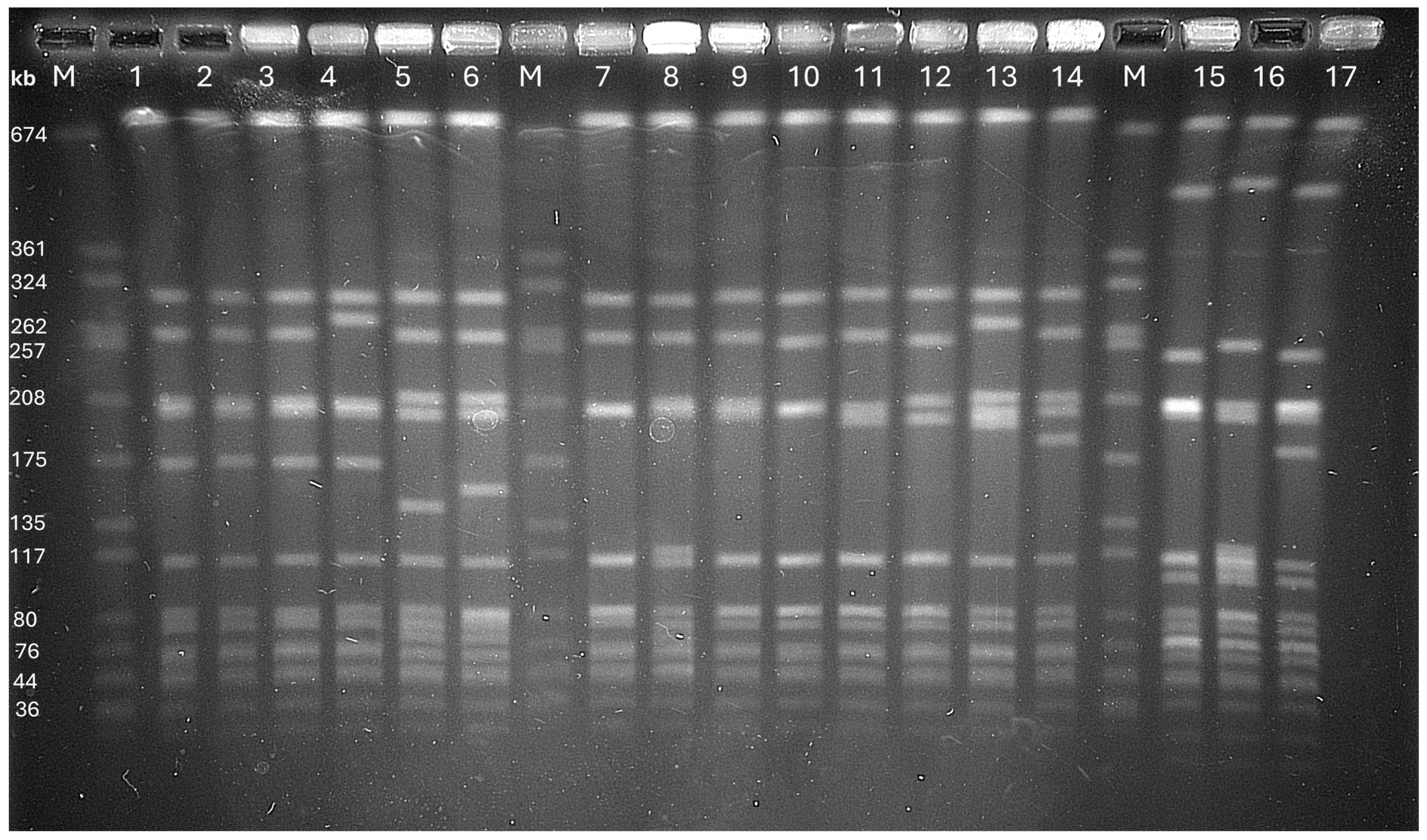
Spa typing assigned the isolates to 19 spa types. Two spa types, t362 (n = 35) and t132 (n = 27), were the most prevalent. Spa type, t004, was detected in three isolates. Six spa types, t015, t026, t511, t330, t1081, and t1575, were each detected in two isolates. The remaining ten spa types, t371, t4449, t4981, t701, t282, t2397, t065, t040, t050 and t0501 were detected in single isolates. MLST classified the isolates into six sequence types: ST7119 (n = 62), ST508 (n = 11), ST45 (n = 4), ST46 (n = 8), and two new sequence types, ST9548 (n = 1) and ST10699 (n = 1). The isolates were further typed by pulsed-field gel electrophoresis (PFGE), which revealed two major PFGE patterns, designated types A and B, along with their respective subtypes (Figure 1; Table 1). A total of 83 isolates belonged to PFGE type A and its 10 subtypes (A1–A10), while four isolates belonged to PFGE type B and its subtypes (B1, B2).
All isolates were positive for the following virulence genes: accessory gene regulator type 1 (agrI), capsular polysaccharide type 8 (cap8), intercellular adhesion protein A (icaA), intercellular adhesion protein C (icaC), intercellular adhesion protein D (icaD), haemolysin (hla, hlb, hld), leukocidins (lukS, lukF, lukX, lukY), and enterotoxin gene cluster, egc, consisting of seg, sei, selm, seln, selu. They were also positive for staphylokinase (sak), chemotaxis-inhibiting protein (chp), and staphylococcal complement inhibitor (scn), except for six isolates, which were negative.

2.4. Distribution of CC45-MRSA Isolates in 2016–2022

The distribution of CC45-MRSA isolates by year of isolation and their genotypic characteristics is presented in Table 2. The CC45-MRSA [IV + fus] and CC45-MRSA [VI + fus] genotypes were isolated throughout the study period (2016–2022). CC45-MRSA-IV,Berlin EMRSA isolates were obtained in five years (2016, 2018, 2019, 2020, and 2021). Isolates belonging to CC45-/agrIV-MRSA-V,WA-MRSA-23, CC45-MRSA-IV [tst1+] and CC45-MRSA-V [tst1+],WA-MRSA-4, were detected sporadically. Statistical analysis revealed no significant increase in CC45 isolates over the study period (p-value > 0.05).

2.5. Characteristics of the CC45-MRSA Isolates

2.5.1. CC45-MRSA [IV + Fus] (n = 36)

This genotype consisted of 36 isolates assigned to seven spa types: t132 (n = 27), t362 (n = 3), t330 (n = 2), and one of t026, t1575, t371, and t4449. The isolates were obtained from nasal swabs (n = 16), blood (n = 4), wound swabs (n = 4), groin swabs (n = 3), high vaginal swabs (n = 3), and one each of endotracheal swab, throat swab, sputum, and three unspecified sources in eight hospitals. The 36 isolates belonged to two MLST sequence types, ST7119 (n = 33) and ST46 (n = 3), and a single PFGE pattern (Type A and A2).
All isolates resistant to benzylpenicillin and cefoxitin carried blaZ and mecA. The fusidic acid-resistant isolates were positive for fusC. In addition, six isolates were resistant to erythromycin and clindamycin, mediated by erm(C). One isolate was resistant to tetracycline due to tet(K). Two isolates were positive for lnu(A) (Lincosaminide nucleotidyltransferase) that mediates resistance to lincomycin.

2.5.2. CC45-MRSA [VI + fus] (n = 30)

The CC45-MRSA [VI + fus] genotype comprised 30 isolates obtained from nasal swabs (n = 12), skin and soft tissues (n = 7), throat swabs (n = 2), groin swabs (n = 2), ear swab (n = 3), sputum (n = 1), tracheal aspirate (n = 1), high vaginal swab (n = 1), and an unspecified specimen, collected in 2016, 2017, 2018, 2019, 2020, 2021, and 2022 from eight hospitals. The 30 isolates were resistant to cefoxitin, benzylpenicillin, and fusidic acid, mediated by mecA, blaZ, and fusC, respectively. Six isolates were resistant to erythromycin, with inducible clindamycin resistance mediated by erm(C). One isolate was resistant to chloramphenicol, and another to ciprofloxacin.
Spa typing revealed that 28 isolates belonged to t362, while the remaining two isolates belonged to t701 and t282. The 30 isolates belonged to PFGE type A and its subtypes (Table 1), and two sequence types, ST7119 (n = 29) and ST46 (n = 1).

2.5.3. CC45-MRSA-IV, Berlin EMRSA (n = 12)

The 12 isolates identified as CC45-MRSA-IV, Berlin EMRSA, were cultured from four nasal swabs, three endotracheal aspirates, two blood samples, and one each from groin, aspiration fluid, and an unspecified source. All 12 isolates were resistant to cefoxitin and benzylpenicillin mediated by mecA and blaZ, respectively. Two isolates were resistant to erythromycin and clindamycin, mediated by erm(C). Three isolates were resistant to fusidic acid, mediated by fusC, and two isolates were resistant to ciprofloxacin. The isolates belonged to seven spa types, consisting of t362 (n = 3), t004 (n = 3), t511 (n = 2) and one of t040, t050, t0510 and t1575. They belonged to four sequence types: ST508 (n = 7), ST46 (n = 3), including two novel STs (ST9548 and ST10699), and seven PFGE subtype A (Table 1). Seven isolates were positive for sak, chp, and scn, and five isolates were negative for all three genes. The 12 isolates were positive for egc, while five isolates were positive for seb.

2.5.4. CC45/agrIV-MRSA-IV,WA MRSA-23 (n = 4)

Four isolates cultured from three nasal swabs and one skin swab collected in 2017, 2019, and 2021 at three hospitals were identified as CC45/agrIV-MRSA-IV WA MRSA-23. The four isolates were resistant to cefoxitin and benzylpenicillin, mediated by mecA and blaZ, respectively. Three of them were susceptible to the non-beta-lactam antibiotics tested. One isolate was resistant to ciprofloxacin. The isolates belonged to a single sequence type, ST45, one PFGE type, subtype B (Table 1), but to three spa types: t1081 (n = 2), t4981 (n = 1), and t026 (n = 1). All four isolates were positive for sasG, which encodes the Staphylococcus aureus surface protein G.

2.5.5. CC45-MRSA-IV [tst1+] (n = 3)

Three isolates cultured from nasal swabs, tissue, and an unspecified sample at two hospitals in 2018 (n = 2) and 2019 (n = 1) were identified as CC45-MRSA-IV [tst1+]. Two of the isolates were resistant to erythromycin and clindamycin, mediated by erm(C). They belonged to two spa types: t015 (n = 2) and t2397. All three isolates belonged to the same sequence type, ST508 and PFGE subtype A2. The isolates were positive for agrI, cap8, sak, chp, scn, egc, and tst1.

2.5.6. CC45-MRSA-V-[tst1+],WA MRSA-4 (n = 1)

This genotype was identified in a single isolate obtained from a 2019 semen sample. It was resistant to trimethoprim and fusidic acid mediated by dfrS1 and fusC, respectively. It was positive for agrI, cap8, sak, chp, scn, egc, and tst1. It belonged to spa type t362, PFGE subtype A2, and ST508.

2.5.7. CC45-MRSA-V (n = 1)

This genotype was identified in a single isolate cultured from a nasal swab in 2021. It was resistant to fusidic acid mediated by fusC. It belonged to spa type, t065, PFGE subtype A4, and ST46. It was positive for agrI, cap8, icaA, icaC, icaD, and egc, but negative for sak, chp, and scn.

3. Discussion

This study investigated antibiotic resistance and genotypic diversity among CC45-MRSA isolates from human clinical samples in Kuwait. MRSA isolates belonging to Clonal Complex 45 (CC45) have been widely reported in North America [28], Australia [29,30], and Germany [31], but have occurred sporadically in Middle Eastern and Gulf Cooperation Council (GCC) countries, including Kuwait [27,32]. The low prevalence of CC45-MRSA in this study (87 isolates, 0.65%) aligns with reports from the UAE [33,34], Lebanon [35], Saudi Arabia [36,37], and Tunisia [38], confirming its low prevalence in the region, in contrast to the high prevalence of CC45-MRSA among patients in long-term care facilities in Singapore [39] and among healthy community members in Northern Vietnam [40].
Antibiotic susceptibility testing showed that most CC45-MRSA isolates were susceptible to most antibiotics tested. This aligns with studies from Poland [41], the UAE [34], China [42], and Uganda [43]. However, 24.1% of isolates were multidrug resistant (MDR), showing resistance to multiple antibiotics, including penicillin, fusidic acid, erythromycin, clindamycin, ciprofloxacin, trimethoprim, gentamicin, kanamycin, chloramphenicol, and tetracycline. These MDR CC45 isolates were not associated with a specific genotype (p-value > 0.05).
Previous studies have reported that CC45-MRSA isolates belong to diverse genotypes and carry different SCCmec types, including USA600 (ST45-MRSA-II), the Berlin epidemic clone (ST45-MRSA-IV) [4,5,11], and ST45-MRSA-V [44]. Similarly, the CC45-MRSA isolates in this study exhibited diversity in SCCmec types (IV, V, and VI), spa types, and sequence types (Table 1). Although the USA600 (ST45-MRSA-II) was not detected in this study, seven CC45-MRSA variants were detected, including CC45-MRSA [VI + fus], CC45-MRSA [IV + fus], CC45-MRSA-IV,Berlin EMRSA, CC45-/agrIV-MRSA-IV,WA MRSA-23, CC45-MRSA-IV [tst1+],WA MRSA-4, CC45-MRSA-V [tst1+], and CC45-MRSA-V. CC45-MRSA-[IV + fus] (41.3%), CC45-MRSA-[VI + fus] (34.4%), and CC45-MRSA-IV, Berlin EMRSA (13.7%) were the dominant genotypes. The other genotypes were detected sporadically. The diverse composition of the CC45-MRSA population in this study suggests multiple routes of introduction into the country.
Most previously reported CC45-MRSA isolates have belonged to ST45 [4,5,7,45,46], whereas most (71.2%) of the CC45-MRSA isolates in the present study belonged to ST7119, followed by ST508 (12.6%), ST46 (9.2%), ST45 (4.6%), and the novel STs: ST9548 (1.1%) and ST10699 (1.1%) (Table 1). Other studies have reported ST508 and ST929 as major components of CC45 isolates in Taiwan [19]. Nowrouzian et al. [46] reported that the CC45 population in Sweden consisted of ST45, ST46, and ST455. Additionally, da Silva et al. [47] reported that CC45-MRSA isolates colonizing healthcare workers in a Brazilian hospital comprised ST45 and ST1914. However, this is the first report of ST7119, ST9548, and ST10699 among S. aureus isolates from Kuwait hospitals, thereby further increasing the genetic diversity of CC45-MRSA isolates.
The ST7119 isolates belong to the two dominant genotypes, CC45-MRSA [IV + fus] and CC45-MRSA [VI + fus], with the majority belonging to spa types t362 and t132 (Table 1). Prior to this report, ST7119 was reported from a single isolate in the Netherlands [48]. Because the spa and SCCmec types of the ST7119 isolate from the Netherlands were not provided, it is difficult to establish its epidemiologic relationship with those in this study. Additionally, neither CC45-MRSA [VI + fus] nor ST7119 has been previously reported in the United Arab Emirates, Saudi Arabia, or other Gulf Cooperative Council (GCC) countries, suggesting that these isolates may have emerged locally in Kuwait.
Furthermore, CC45-MRSA [IV + fus], the dominant genotype in this study, has been reported sporadically in the United Arab Emirates [33,34] and Saudi Arabia [37], underscoring its rarity in the GCC region. The apparent higher numbers of CC45-MRSA [IV + fus] isolates reported in this study are likely due to the isolates being collected over seven years. The lack of significant year-to-year increases in their numbers suggests that they are unable to spread readily. It is notable that CC45-MRSA [IV + fus] isolates belonging to t132 were obtained from household cattle and buffalo in Egypt [25], suggesting that this may also be a Livestock-Associated MRSA genotype. There are currently no data on the colonization of livestock in Kuwait by CC45 MRSA isolates. This warrants investigations to determine if there is an animal reservoir for these strains in Kuwait.
Significantly, the two dominant genotypes, CC45-MRSA [IV + fus] and CC45-MRSA [VI + fus], are resistant to fusidic acid mediated by fusC and are responsible for the high prevalence of fusidic acid resistance observed in this study. fusC is part of the composite genetic elements, SCCmec IV + fus and SCCmec VI + fus. The carriage of the composite genetic element SCCmec VI + fus in these CC45-MRSA isolates appears to follow patterns observed in CC30-MRSA-[VI + fus] [34,37,49], CC22-MRSA [VI + fus] [34,50], CC5-MRSA [VI + fus] [51,52], CC97-MRSA [VI + fus] [49], and CC8-MRSA [VI + fus] [34,53]. These composite genetic elements carrying the fusidic acid resistance determinant, fusC, may confer a survival advantage in the presence of fusidic acid, which may help explain the troublingly high prevalence of fusidic acid resistance among MRSA isolates in the GCC region [34,37,51,53,54]. High prevalence of fusidic acid resistance is a growing problem among MRSA isolates in Kuwait [27,51,53,54] and other GCC countries [33,34,37]. This warrants a review of guidelines governing access to and use of fusidic acid in the region.
The CC45-MRSA-IV,Berlin EMRSA was the third most common genotype in this study. The 12 isolates belonged to four STs, including ST508 and ST46, previously reported [19,46,47], and two novel STs, ST9548 and ST10699, reported in this study. The detection of two novel STs in this study adds to the growing diversification of the Berlin EMRSA lineage. These isolates also belonged to diverse spa types, including t004 and t040, which were associated with the original Berlin EMRSA strains in Germany [11], as well as t362, t050, t1575, t511, and t0510, which were described in other studies [45,55,56,57]. The isolates also belonged to seven PFGE subtypes, underscoring the diversity of Berlin EMRSA in this study. The Berlin EMRSA lineage first appeared as a single arginine catabolic mobile element (ACME)-positive ST508-MRSA-IV-t050 isolate in Kuwait during 2001–2005 [27] but was not reported again until 2016. Notably, all isolates examined in this study were negative for ACME, suggesting that the current isolates are distinct from those reported in 2001–2005 [27]. The detection of the Berlin EMRSA in 14 isolates over 17 years (2005–2022) indicates a low transmission of this strain in Kuwait hospitals.
The CC45/agrIV-MRSA-IV,WA MRSA-23 genotype was detected in four isolates in this study. CC45/agrIV-MRSA-IV,WA MRSA-23 isolates have also been reported in small numbers in Saudi Arabia [37,58], underscoring the low prevalence of these genotypes in the GCC countries. Notably, only the CC45/agrIV-MRSA-IV,WA MRSA-23 genotype belonged to ST45, representing the parental CC45 lineage in this study, whereas the other genotypes were single-locus variants (SLVs) or double-locus variants (DLVs) (ST7119 and ST9548) of ST45 (Table 1). The CC45/agrIV-MRSA-IV,WA MRSA-23 was the only genotype that was positive for sasG, as reported for Australian isolates [4]. The isolates in this study were associated with spa types t1081, t026, and t4981. Similarly, t1081 was associated with CC45/agrIV-MRSA-IV in Australia [4,22,59], Hong Kong [60,61], and Taiwan [19], and was common among human and animal isolates in Uganda [43]. In addition, the current isolates, as well as those obtained in Australia, Hong Kong, and Taiwan, carry the gene for type 8 capsular polysaccharide, cap8, and therefore appear to be related to the Australian rather than the African group of CC45, which carries cap5 [5]. The uniqueness of the CC45/agrIV-MRSA-IV,WA MRSA-23 genotype was confirmed by PFGE results, which clustered the isolates into a single PFGE pattern (type B) (Figure 1).
Four isolates comprising three CC45-MRSA-IV [tst1+], and one CC45-MRSA-V [tst1+], WA-MRSA-4 were positive for tst1, the gene encoding toxic shock syndrome toxin. The four isolates belonged to ST508, shared the same PFGE pattern, but differed in spa types (Table 1). Similarly, a few CC45-MRSA-IV/V isolates from Australia and Europe have been shown to carry tst1 [4,5]. The other CC45-MRSA-V isolate detected in this study was tst1-negative and belonged to ST46 and t065. This isolate may be related to the Australian genotype, WA-MRSA-84 [4,59].
Analysis of virulence factors showed that CC45 isolates carried fewer enterotoxins, yet all contained the enterotoxin gene cluster (egc), as reported elsewhere [4,62,63].
Limitations of this study include a lack of demographic data on patients’ age and gender, which would help determine whether CC45-MRSA isolates disproportionately affect specific patient groups. It also lacks clinical information regarding active infection versus colonization, treatments, and outcomes. Nevertheless, isolation of the organisms from various clinical samples, including blood cultures, suggests that the CC45-MRSA isolates can colonize and cause invasive infections, as reported in other studies [5,6,7].

4. Materials and Methods

4.1. Collection of MRSA Isolates

MRSA isolates were collected from 13,276 unique patients from 2016 to 2022 in 13 hospitals in Kuwait as part of routine diagnostic microbiology services. The isolates were obtained from various clinical samples. Initial identification of MRSA isolates was performed in diagnostic microbiology laboratories using the VITEK MS system (bioMérieux, Marcy l’Etoile, France). The isolates were then sent to the Gram-Positive Bacteria Research laboratory in the Department of Microbiology, College of Medicine, Kuwait University, where they were retested for purity and preserved in 40% glycerol (v/v) in brain heart infusion broth at −80 °C for further analysis.

4.2. Antimicrobial Susceptibility Testing

The test was performed by the disc diffusion method using the following antibiotics discs (Oxoid, Basingstoke, UK): benzylpenicillin (2U), cefoxitin (30 μg), kanamycin (30 μg), mupirocin (200 μg), gentamicin (10 μg), erythromycin (15 μg), clindamycin (2 μg), chloramphenicol (30 μg), tetracycline (10 μg), trimethoprim (2.5 μg), fusidic acid (10 μg), rifampicin (5 μg), ciprofloxacin (5 μg), teicoplanin (30 μg) and linezolid (30 μg). Vancomycin, cefoxitin, teicoplanin, linezolid, and mupirocin were tested for minimum inhibitory concentration (MIC) using E-test strips (bioMérieux, Marcy-l’Étoile, France). The isolates were categorized as susceptible, intermediate, or resistant according to the Clinical Laboratory Standards Institute [64].

4.3. DNA Microarray Analysis

The DNA microarray was performed using the INTER-ARRAY Genotyping Kit S. aureus (Inter-Array GmbH, Bad Langensalza, Germany) according to the manufacturer’s protocol and as previously described [11]. The microarray analysis was used to assign clonal complexes (CCs) and to determine the carriage of genes encoding antibiotic resistance and virulence factors.

4.4. Staphylococcal Protein A (Spa) Typing

Spa typing was performed according to the previously published protocol and primers [65]. Amplification of the Spa gene was performed using synthetic primers [66] in a total volume of 25 μL. The PCR protocol consisted of an initial denaturation at 94 °C for 4 min, followed by 25 cycles of denaturation at 94 °C for 1 min, annealing at 56 °C for 1 min, extension at 72 °C for 3 min, and a final extension at 72 °C for 5 min. Five μL of the PCR product was analyzed by 1.5% agarose gel electrophoresis to confirm amplification. The spa gene sequence was analyzed using Ridom Staph Type software v. 2.2.1 (Ridom GmbH, Würzburg, Germany).

4.5. Multi-Locus Sequence Typing (MLST)

MLST was performed as described by Enright et al. [66] on representative isolates using M13-tailed primers (Applied Biosystem, Carlsbad, CA, USA). Isolates for MLST were selected based on their spa types. MLST involves obtaining the sequences of internal fragments of seven housekeeping genes for each S. aureus strain. The following housekeeping genes were used: Carbamate kinase (arcC), Shikimate dehydrogenase (aroE), Glycerol kinase (glpF), Guanylate kinase (gmk), Phosphate acetyltransferase (pta), Triosephosphate isomerase (tpi), Acetyl coenzyme A acetyltransferase (yqiL). The Sequence types (STs) were determined by obtaining the allele number for each housekeeping gene [67].

4.6. Pulsed-Field Gel Electrophoresis (PFGE)

PFGE was performed using Contour-clamped Homogeneous Electric Field (CHEF) electrophoresis [68]. A loopful of overnight bacterial culture on blood agar plates was washed three times with 1.0 mL of 50 mM EDTA (pH 8.0) and centrifuged at 13,000 rpm for 3 min. The pellet was suspended in 0.5 mL of EC buffer (6 mM Tris–HCl, 1 M NaCl, 100 mM EDTA, 0.2% Sodium deoxycholate) to prepare a bacterial suspension equivalent to 12 × 108 CFU/mL. The casting blocks were prepared by mixing 100 μL of the bacterial suspension with 50 μL of lysostaphin (400 mg/mL) and 150 μL of 1.5% agarose (chromosomal grade, Bio-Rad Laboratories, Richmond, CA, USA), then transferring the mixture to PFGE block molds (Bio-Rad, Hercules, CA, USA). The formed blocks were pushed into a microfuge tube containing 1.0 mL of cell lysing solution and incubated for 3–4 h in a water bath at 37 °C. After incubation, the cell lysing buffer was replaced with proteinase K buffer (20 mg/mL) and the mixture was incubated overnight in a water bath at 55 °C. The blocks were washed once with 1.0 mL TE buffer (1 mM Tris, 0.2 mM EDTA, pH 8.0) in a water bath at 64 °C for 1 h, followed by three washes with sterile distilled water for 30 min, each at 37 °C water bath with occasional shaking. The blocks were digested with 40U SmaI (New England Biolabs, Ipswich, Rowley, MA, USA) for 3 h at 25 °C in a water bath. The digested blocks were loaded into a 1.2% (w/v) pulsed-field-grade agarose gel (Pulsed-field certified agarose, BioRad, Hercules, CA, USA) and run for 22 h with an initial pulse of 5 s and a final pulse of 40 s in the CHEF-DR III system (BioRad, Hercules, CA, USA). SmaI-digested S. aureus strain NCTC 8325 was used as a molecular size marker. The gel was stained with 0.5 µg/mL ethidium bromide and photographed under UV illumination. Strain-relatedness was determined according to the criteria defined by Tenover et al. [69].

4.7. Statistical Analysis

Statistical analysis was performed using SPSS (Statistical Package for the Social Sciences), version 25 (SPSS Inc., Chicago, IL, USA), to determine whether there was a significant trend (increase or decrease) in CC45-MRSA isolates over time, using linear regression, and to establish a correlation between genotypes and MDR isolates using Pearson chi-square. A p-value of <0.05 was considered statistically significant.

5. Conclusions

In conclusion, our results confirm a low prevalence of CC45-MRSA isolates in Kuwaiti hospitals. However, these isolates comprise diverse genotypes, dominated by ST7119 (DLV of ST45), which carries either SCCmec IV + fus or SCCmec VI + fus, both of which are rare in other countries. Other genotypes isolated less frequently included CC45-MRSA-IV,Berlin EMRSA, CC45-/agrIV-MRSA-IV,WA MRSA-23, CC45-MRSA-IV [tst1+], WA MRSA-4, CC45-MRSA-V [tst1+], and CC45-MRSA-V. The dominance of the ST7119-CC45-MRSA-[IV + fus] and ST7119-CC45-MRSA [VI + fus] genotypes correlated with a high prevalence of fusidic acid resistance mediated by fusC. Fusidic acid resistance is a growing problem among MRSA populations in Kuwait [50,51,54]. In addition, 24.1% of the CC45-MRSA isolates in this study displayed multidrug resistance. The emergence of multidrug resistance among CC45-MRSA isolates in Kuwaiti hospitals is concerning because it limits treatment options, prolongs hospital stays, and increases complication rates in MRSA infections. The diverse genetic backgrounds observed in this study suggest multiple transmission routes for CC45 lineages in Kuwait and highlight the importance of developing regional surveillance across the Gulf Cooperation Council (GCC) countries to formulate effective infection control strategies and antimicrobial stewardship in healthcare settings.

Author Contributions

T.V. and S.S.B. carried out laboratory work and data analysis. E.E.U. designed the experiment. S.S.B. and E.E.U. wrote and edited the manuscript. All authors have read and agreed to the published version of the manuscript.

Funding

This research received no external funding.

Data Availability Statement

All data generated for this study are included in this article.

Acknowledgments

We are grateful to the technical staff of the MRSA Reference Laboratory in the Department of Microbiology, Faculty of Medicine, for their assistance.

Conflicts of Interest

The authors declare no conflicts of interest.

References

  1. Lakhundi, S.; Zhang, K. Methicillin-Resistant Staphylococcus aureus: Molecular Characterization, Evolution, and Epidemiology. Clin. Microbiol. Rev. 2018, 31, e00020-18. [Google Scholar] [CrossRef] [Scilit]
  2. WHO Bacterial Priority Pathogens List, 2024: Bacterial Pathogens of Public Health Importance to Guide Research, Development, and Strategies to Prevent and Control Antimicrobial Resistance; World Health Organization: Geneva, Switzerland, 2024; Licence: CC BY-NC-SA 3.0 IGO.
  3. Abebe, A.A.; Birhanu, A.G. Methicillin-Resistant Staphylococcus aureus: Molecular Mechanisms Underlying Drug Resistance Development and Novel Strategies to Combat. Infect. Drug Resist. 2023, 16, 7641–7662. [Google Scholar] [CrossRef] [Scilit]
  4. Monecke, S.; Coombs, G.; Shore, A.C.; Coleman, D.C.; Akpaka, P.; Borg, M.; Chow, H.; Ip, M.; Jatzwauk, L.; Jonas, D.; et al. A field guide to pandemic, epidemic and sporadic clones of methicillin-resistant Staphylococcus aureus. PLoS ONE 2011, 6, e17936. [Google Scholar] [CrossRef] [Scilit] [PubMed]
  5. Effelsberg, N.; Stegger, M.; Peitzmann, L.; Altinok, O.; Coombs, G.W.; Pichon, B.; Kearns, A.; Randad, P.R.; Heaney, C.D.; Bletz, S.; et al. Global epidemiology and evolutionary history of Staphylococcus aureus ST45. J. Clin. Microbiol. 2020, 59, e02198-20. [Google Scholar] [CrossRef] [Scilit] [PubMed]
  6. Moore, C.L.; Osaki-Kiyan, P.; Perri, M.; Donabedian, S.; Haque, N.Z.; Chen, A.; Zervos, M.J. USA600 (ST45) methicillin-resistant Staphylococcus aureus bloodstream infections in urban Detroit. J. Clin. Microbiol. 2010, 48, 2307–2310. [Google Scholar] [CrossRef] [Scilit] [PubMed]
  7. Wang, X.; Wu, X.; Shen, L.; Rao, L.; Wang, B.; Zhao, H.; Zhang, J.; Xiao, Y.; Guo, Y.; Xu, Y.; et al. Phylogenetic Analysis and Virulence Characteristics of Methicillin-Resistant Staphylococcus aureus ST45 in China: A Hyper-Virulent Clone Associated with Bloodstream Infections. mSystems 2023, 8, e0002923. [Google Scholar] [CrossRef] [Scilit]
  8. Beukers, A.G.; Newton, P.; Hudson, B.; Ross, K.; Gottlieb, T.; O’Sullivan, M.; Daley, D.A.; Pang, S.; Coombs, G.W.; van Hal, S.J. A multicentre outbreak of ST45 MRSA containing deletions in the spa gene in New South Wales, Australia. J. Antimicrob. Chemother. 2020, 75, 1112–1116. [Google Scholar] [CrossRef] [Scilit]
  9. Nong, Y.; Steinig, E.; Pollock, G.L.; Taiaroa, G.; Carter, G.P.; Monk, I.R.; Pang, S.; Daley, D.A.; Coombs, G.W.; Forde, B.M.; et al. Emergence and clonal expansion of a qacA-harbouring sequence type 45 lineage of methicillin-resistant Staphylococcus aureus. Commun. Biol. 2024, 7, 349. [Google Scholar] [CrossRef] [Scilit]
  10. Deurenberg, R.H.; Nulens, E.; Valvatne, H.; Sebastian, S.; Driessen, C.; Craeghs, J.; De Brauwer, E.; Heising, B.; Kraat, Y.J.; Riebe, J.; et al. Cross-border dissemination of methicillin-resistant Staphylococcus aureus, Euregio Meuse-Rhin region. Emerg. Infect. Dis. 2009, 15, 727–734. [Google Scholar] [CrossRef] [Scilit]
  11. Monecke, S.; Jatzwauk, L.; Weber, S.; Slickers, P.; Ehricht, R. DNA microarray-based genotyping of methicillin-resistant Staphylococcus aureus strains from Eastern Saxony. Clin. Microbiol. Infect. 2008, 14, 534–545. [Google Scholar] [CrossRef] [Scilit]
  12. Kinnevey, P.M.; Kearney, A.; Shore, A.C.; Earls, M.R.; Brennan, G.; Poovelikunnel, T.T.; Humphreys, H.; Coleman, D.C. Meticillin-resistant Staphylococcus aureus transmission among healthcare workers, patients and the environment in a large acute hospital under non-outbreak conditions investigated using whole-genome sequencing. J. Hosp. Infect. 2021, 118, 99–107. [Google Scholar] [CrossRef] [Scilit]
  13. Nulens, E.; Stobberingh, E.E.; Smeets, E.; van Dessel, H.; Welling, M.A.; Sebastian, S.; van Tiel, F.H.; Beisser, P.S.; Deurenberg, R.H. Genetic diversity of methicillin-resistant Staphylococcus aureus in a tertiary hospital in the Netherlands between 2002 and 2006. Eur. J. Clin. Microbiol. Infect. Dis. 2009, 28, 631–639. [Google Scholar] [CrossRef] [Scilit] [PubMed]
  14. King, J.M.; Kulhankova, K.; Stach, C.S.; Vu, B.G.; Salgado-Pabón, W. Phenotypes and Virulence among Staphylococcus aureus USA100, USA200, USA300, USA400, and USA600 Clonal Lineages. mSphere 2016, 1, e00071-16. [Google Scholar] [CrossRef] [Scilit] [PubMed]
  15. Zurita, J.; Barba, P.; Ortega-Paredes, D.; Mora, M.; Rivadeneira, S. Local circulating clones of Staphylococcus aureus in Ecuador. Braz. J. Infect. Dis. 2016, 20, 525–533. [Google Scholar] [CrossRef] [Scilit] [PubMed]
  16. Huang, L.; Guo, R.; Lin, J.; Li, X.; Li, Z.; Zhang, L.; Li, W.; Xue, R.; Zhang, C.; Feng, X.; et al. Whole-genome analysis of a ST45-SCCmec IVa (2B)-t116 methicillin-resistant Staphylococcus aureus strain isolated from the sputum of a 5-year-old child with pneumonia. Front. Cell Infect. Microbiol. 2025, 14, 1413024. [Google Scholar] [CrossRef] [Scilit]
  17. Ding, Y.L.; Fu, J.; Chen, J.; Mo, S.F.; Xu, S.; Lin, N.; Qin, P.; McGrath, E. Molecular characterization and antimicrobial susceptibility of Staphylococcus aureus isolated from children with acute otitis media in Liuzhou, China. BMC Pediatr. 2018, 18, 388. [Google Scholar] [CrossRef] [Scilit]
  18. Lee, C.Y.; Fang, Y.P.; Wu, T.H.; Chang, Y.F.; Sung, C.H. Sequence types 8, 59, and 45 methicillin resistant Staphylococcus aureus as the predominant strains causing skin and soft tissue infections in Taiwan’s prisons and jails. J. Microbiol. Immunol. Infect. 2022, 55, 1239–1245. [Google Scholar] [CrossRef] [Scilit]
  19. Lin, Y.T.; Lee, C.L.; Lin, C.Y.; Lee, T.F.; Hsueh, P.R. High hemolytic activity of the Staphylococcus aureus spa t1081 among clonal complex 45 in Taiwan. J. Microbiol. Immunol. Infect. 2024, 57, 906–915. [Google Scholar] [CrossRef] [Scilit]
  20. Sakoulas, G.; Guram, K.; Reyes, K.; Nizet, V.; Zervos, M. Human cathelicidin LL-37 resistance and increased daptomycin MIC in methicillin-resistant Staphylococcus aureus strain USA600 (ST45) are associated with increased mortality in a hospital setting. J. Clin. Microbiol. 2014, 52, 2172–2174. [Google Scholar] [CrossRef] [Scilit]
  21. Witte, W.; Werner, G.; Cuny, C. Subtyping of MRSA isolates belonging to a widely disseminated clonal group by polymorphism of the dru sequences in mec-associated DNA. Int. J. Med. Microbiol. 2001, 291, 57–62. [Google Scholar] [CrossRef] [Scilit]
  22. O’Brien, F.G.; Coombs, G.W.; Pearman, J.W.; Gracey, M.; Moss, F.; Christiansen, K.J.; Grubb, W.B. Population dynamics of methicillin-susceptible and -resistant Staphylococcus aureus in remote communities. J. Antimicrob. Chemother. 2009, 64, 684–693. [Google Scholar] [CrossRef] [Scilit]
  23. Vanderhaeghen, W.; Van de Velde, E.; Crombé, F.; Polis, I.; Hermans, K.; Haesebrouck, F.; Butaye, P. Screening for methicillin-resistant staphylococci in dogs admitted to a veterinary teaching hospital. Res. Vet. Sci. 2012, 93, 133–136. [Google Scholar] [CrossRef] [Scilit] [PubMed]
  24. Schauer, B.; Krametter-Frötscher, R.; Knauer, F.; Ehricht, R.; Monecke, S.; Feßler, A.T.; Schwarz, S.; Grunert, T.; Spergser, J.; Loncaric, I. Diversity of methicillin-resistant Staphylococcus aureus (MRSA) isolated from Austrian ruminants and New World camelids. Vet. Microbiol. 2018, 215, 77–82. [Google Scholar] [CrossRef] [Scilit] [PubMed]
  25. El-Ashker, M.; Gwida, M.; Monecke, S.; El-Gohary, F.; Ehricht, R.; Elsayed, M.; Akinduti, P.; El-Fateh, M.; Maurischat, S. Antimicrobial resistance pattern and virulence profile of S. aureus isolated from household cattle and buffalo with mastitis in Egypt. Vet. Microbiol. 2020, 240, 108535. [Google Scholar] [CrossRef] [Scilit] [PubMed]
  26. Senok, A.; Slickers, P.; Hotzel, H.; Boswihi, S.; Braun, S.D.; Gawlik, D.; Müller, E.; Nabi, A.; Nassar, R.; Nitschke, H.; et al. Characterisation of a novel SCCmec VI element harbouring fusC in an emerging Staphylococcus aureus strain from the Arabian Gulf region. PLoS ONE 2019, 14, e0223985. [Google Scholar] [CrossRef] [Scilit]
  27. Boswihi, S.S.; Udo, E.E.; Al-Sweih, N. Shifts in the Clonal Distribution of Methicillin-Resistant Staphylococcus aureus in Kuwait Hospitals: 1992–2010. PLoS ONE 2016, 11, e0162744. [Google Scholar] [CrossRef] [Scilit]
  28. Christianson, S.; Golding, G.R.; Campbell, J.; Mulvey, M.R.; the Canadian Nosocomial Infection Surveillance Program. Comparative genomics of Canadian epidemic lineages of methicillin-resistant Staphylococcus aureus. J. Clin. Microbiol. 2007, 45, 1904–1911. [Google Scholar] [CrossRef] [Scilit]
  29. Lancashire, J.F.; Jones, A.; Bergh, H.; Huygens, F.; Nimmo, G.R. Typing early Australian healthcare-associated MRSA: Confirmation of major clones and emergence of ST1-MRSA-IV and novel ST2249-MRSA-III. Pathology 2013, 45, 492–494. [Google Scholar] [CrossRef] [Scilit]
  30. Nimmo, G.R.; Steen, J.A.; Monecke, S.; Ehricht, R.; Slickers, P.; Thomas, J.C.; Appleton, S.; Goering, R.V.; Robinson, D.A.; Coombs, G.W. ST2249-MRSA-III: A second major recombinant methicillin-resistant Staphylococcus aureus clone causing healthcare infection in the 1970s. Clin. Microbiol. Infect. 2015, 21, 444–450. [Google Scholar] [CrossRef] [Scilit]
  31. Witte, W.; Braulke, C.; Heuck, D.; Cuny, C. Methicillin-resistant Staphylococcus aureus in German hospitals develops narrower patterns of antimicrobial resistance. Euro Surveill. 2000, 5, 31–34. [Google Scholar] [CrossRef] [Scilit]
  32. Tabaja, H.; Hindy, J.R.; Kanj, S.S. Epidemiology of Methicillin-Resistant Staphylococcus aureus in Arab Countries of the Middle East and North African (MENA) Region. Mediterr. J. Hematol. Infect. Dis. 2021, 13, e2021050. [Google Scholar] [CrossRef] [Scilit]
  33. Senok, A.; Nassar, R.; Celiloglu, H.; Nabi, A.; Alfaresi, M.; Weber, S.; Rizvi, I.; Müller, E.; Reissig, A.; Gawlik, D.; et al. Genotyping of methicillin-resistant Staphylococcus aureus from the United Arab Emirates. Sci. Rep. 2020, 10, 18551. [Google Scholar] [CrossRef] [Scilit] [PubMed]
  34. Boucherabine, S.; Nassar, R.; Mohamed, L.; Habous, M.; Nabi, A.; Husain, R.A.; Alfaresi, M.; Oommen, S.; Khansaheb, H.H.; Al Sharhan, M.; et al. Methicillin-Resistant Staphylococcus aureus: The Shifting Landscape in the United Arab Emirates. Antibiotics 2025, 14, 24. [Google Scholar] [CrossRef] [Scilit]
  35. Harastani, H.H.; Araj, G.F.; Tokajian, S.T. Molecular characteristics of Staphylococcus aureus isolated from a major hospital in Lebanon. Int. J. Infect. Dis. 2014, 19, 33–38. [Google Scholar] [CrossRef] [Scilit] [PubMed]
  36. Al Yousef, S.A.; Taha, E.M. Methicillin-Resistant Staphylococcus aureus in Saudi Arabia: Genotype Distribution Review. Saudi J. Med. Med. Sci. 2016, 4, 2–8. [Google Scholar] [CrossRef] [Scilit] [PubMed]
  37. Senok, A.; Somily, A.M.; Nassar, R.; Garaween, G.; Kim Sing, G.; Müller, E.; Reissig, A.; Gawlik, D.; Ehricht, R.; Monecke, S. Emergence of novel methicillin-resistant Staphylococcus aureus strains in a tertiary care facility in Riyadh, Saudi Arabia. Infect. Drug Resist. 2019, 12, 2739–2746. [Google Scholar] [CrossRef] [Scilit]
  38. Mariem, B.J.; Ito, T.; Zhang, M.; Jin, J.; Li, S.; Ilhem, B.B.; Adnan, H.; Han, X.; Hiramatsu, K. Molecular characterization of methicillin-resistant Panton-valentine leukocidin-positive Staphylococcus aureus clones disseminating in Tunisian hospitals and in the community. BMC Microbiol. 2013, 13, 2. [Google Scholar] [CrossRef] [Scilit]
  39. Chow, A.; Htun, H.L.; Hon, P.Y.; Ang, B.; Kanagasabai, K.; Koh, J.; Holden, M.T.G.; Hsu, L.Y. Comparative epidemiology and factors associated with major healthcare-associated methicillin-resistant Staphylococcus aureus clones among interconnected acute-, intermediate- and long-term healthcare facilities in Singapore. Clin. Microbiol. Infect. 2020. Epub ahead of print. [Google Scholar] [CrossRef] [Scilit] [PubMed]
  40. Ngoc Thi Vu, B.; JJafari, A.; Aardema, M.; Kieu Thi Tran, H.; Ngoc Thi Nguyen, D.; Tuyet Dao, T.; Vu Nguyen, T.; Khanh Tran, T.; Kim Thi Nguyen, C.; Fox, A.; et al. Population Structure of Colonizing and Invasive Staphylococcus aureus Strains in Northern Vietnam. J. Med. Microbiol. 2016, 65, 298–305. [Google Scholar] [CrossRef] [Scilit]
  41. Ilczyszyn, W.M.; Sabat, A.J.; Akkerboom, V.; Szkarlat, A.; Klepacka, J.; Sowa-Sierant, I.; Wasik, B.; Kosecka-Strojek, M.; Buda, A.; Miedzobrodzki, J.; et al. Clonal Structure and Characterization of Staphylococcus aureus Strains from Invasive Infections in Paediatric Patients from South Poland: Association between Age, spa Types, Clonal Complexes, and Genetic Markers. PLoS ONE 2016, 11, e0151937. [Google Scholar] [CrossRef] [Scilit]
  42. Liang, B.; Liang, X.; Gao, F.; Long, Y.; Mai, J.; Ai, X.; Wang, J.; Gao, X.; Xiong, Z.; Liang, Z.; et al. Active Surveillance, Drug Resistance, and Genotypic Profiling of Staphylococcus aureus Among School-Age Children in China. Front. Med. 2021, 8, 701494. [Google Scholar] [CrossRef] [Scilit]
  43. Baguma, A.; Musinguzi, B.; Orikiriza, P.; Bazira, J. Diversity and Distribution of Spa Types among Methicillin-Resistant Staphylococcus aureus Isolated from Humans and Livestock in Kabale District—South Western Uganda. J. Vet. Health Sci. 2022, 3, 283–290. [Google Scholar]
  44. Kong, W.; Zhang, Q.; Zhang, L.; Yang, J.; Li, X.; Liao, Y. Whole-genome analysis of qacA-harboring ST45-SCCmec Vc-t1081 MRSA from skin exudate in a Chinese patient with severe drug eruption. J. Glob. Antimicrob. Resist. 2025, 46, 71–74. [Google Scholar] [CrossRef] [Scilit] [PubMed]
  45. Rijnders, M.I.; Deurenberg, R.H.; Boumans, M.L.; Hoogkamp-Korstanje, J.A.; Beisser, P.S.; Antibiotic Resistance Surveillance Group; Stobberingh, E.E. Population structure of Staphylococcus aureus strains isolated from intensive care unit patients in the Netherlands over an 11-year period (1996 to 2006). J. Clin. Microbiol. 2009, 47, 4090–4095. [Google Scholar] [CrossRef] [Scilit] [PubMed]
  46. Nowrouzian, F.L.; Stadler, L.S.; Östblom, A.; Lindberg, E.; Lina, G.; Adlerberth, I.; Wold, A.E. Staphylococcus aureus sequence type (ST) 45, ST30, and ST15 in the gut microbiota of healthy infants—Persistence and population counts in relation to ST and virulence gene carriage. Eur. J. Clin. Microbiol. Infect. Dis. 2023, 42, 267–276. [Google Scholar] [CrossRef] [Scilit] [PubMed]
  47. da Silva, L.S.C.; Andrade, Y.M.F.S.; Oliveira, A.C.; Cunha, B.C.; Oliveira, E.G.; Cunha, T.S.; Mafra, S.S.; Almeida, J.B.; Carvalho, S.P.; Nascimento, F.S.; et al. Prevalence of methicillin-resistant Staphylococcus aureus colonization among healthcare workers at a tertiary care hospital in northeastern Brazil. Infect. Prev. Pract. 2020, 2, 100084. [Google Scholar] [CrossRef] [Scilit]
  48. Westgeest, A.C.; Schippers, E.F.; Rosema, S.; Fliss, M.A.; Kuijper, E.J.; Zwittink, R.D.; Lokate, M.; Wouthuyzen-Bakker, M.; Lambregts, M.M.C.; Bathoorn, E. Genetic Determinants in MRSA Carriage and Their Association with Decolonization Outcome. Curr. Microbiol. 2024, 81, 63. [Google Scholar] [CrossRef] [Scilit]
  49. Boswihi, S.S.; Udo, E.E.; Monecke, S.; Mathew, B.; Noronha, B.; Verghese, T.; Tappa, S.B. Emerging variants of methicillin-resistant Staphylococcus aureus genotypes in Kuwait hospitals. PLoS ONE 2018, 13, e0195933. [Google Scholar] [CrossRef] [Scilit]
  50. Boswihi, S.S.; Verghese, T.; Udo, E.E. Diversity of clonal complex 22 methicillin-resistant Staphylococcus aureus isolates in Kuwait hospitals. Front. Microbiol. 2022, 13, 970924. [Google Scholar] [CrossRef] [Scilit]
  51. Alfouzan, W.A.; Boswihi, S.S.; Udo, E.E. Methicillin-Resistant Staphylococcus aureus (MRSA) in a Tertiary Care Hospital in Kuwait: A Molecular and Genetic Analysis. Microorganisms 2023, 12, 17. [Google Scholar] [CrossRef] [Scilit]
  52. Udo, E.E.; Boswihi, S.S.; Mathew, B.; Noronha, B.; Verghese, T.; Al-Jemaz, A.; Al Saqer, F. Emergence of Methicillin-Resistant Staphylococcus aureus Belonging to Clonal Complex 15 (CC15-MRSA) in Kuwait Hospitals. Infect. Drug Resist. 2020, 13, 617–626. [Google Scholar] [CrossRef] [Scilit] [PubMed]
  53. Boswihi, S.S.; Udo, E.E.; AlFouzan, W. Antibiotic resistance and typing of the methicillin-resistant Staphylococcus aureus clones in Kuwait hospitals, 2016–2017. BMC Microbiol. 2020, 20, 314. [Google Scholar] [CrossRef] [Scilit] [PubMed]
  54. Boloki, H.A.; Al-Musaileem, W.F.; AlFouzan, W.; Verghese, T.; Udo, E.E. Fusidic Acid Resistance Determinants in Methicillin-Resistant Staphylococcus aureus Isolated in Kuwait Hospitals. Med. Princ. Pract. 2021, 30, 542–549. [Google Scholar] [CrossRef] [Scilit]
  55. Argudín, M.A.; Mendoza, M.C.; Vázquez, F.; Guerra, B.; Rodicio, M.R. Molecular typing of Staphylococcus aureus bloodstream isolates from geriatric patients attending a long-term care Spanish hospital. J. Med. Microbiol. 2011, 60, 172–179. [Google Scholar] [CrossRef] [Scilit] [PubMed]
  56. Asadollahi, P.; Farahani, N.N.; Mirzaii, M.; Khoramrooz, S.S.; van Belkum, A.; Asadollahi, K.; Dadashi, M.; Darban-Sarokhalil, D. Distribution of the Most Prevalent Spa Types among Clinical Isolates of Methicillin-Resistant and -Susceptible Staphylococcus aureus around the World: A Review. Front. Microbiol. 2018, 9, 163. [Google Scholar] [CrossRef] [Scilit]
  57. de Carvalho, S.P.; de Almeida, J.B.; Andrade, Y.M.F.S.; Silva, L.S.C.D.; Chamon, R.C.; Santos, K.R.N.D.; Marques, L.M. Molecular characteristics of methicillin-resistant Staphylococcus aureus isolates from hospital and community environments in northeastern Brazil. Braz. J. Infect. Dis. 2019, 23, 134–138. [Google Scholar] [CrossRef] [Scilit]
  58. Monecke, S.; Skakni, L.; Hasan, R.; Ruppelt, A.; Ghazal, S.S.; Hakawi, A.; Slickers, P.; Ehricht, R. Characterisation of MRSA strains isolated from patients in a hospital in Riyadh, Kingdom of Saudi Arabia. BMC Microbiol. 2012, 12, 146. [Google Scholar] [CrossRef] [Scilit]
  59. Coombs, G.W.; Pearson, J.C.; O’Brien, F.G.; Murray, R.J.; Grubb, W.B.; Christiansen, K.J. Methicillin-resistant Staphylococcus aureus clones, Western Australia. Emerg. Infect. Dis. 2006, 12, 241–247. [Google Scholar] [CrossRef] [Scilit]
  60. Ip, M.; Yung, R.W.; Ng, T.K.; Luk, W.K.; Tse, C.; Hung, P.; Enright, M.; Lyon, D.J. Contemporary methicillin-resistant Staphylococcus aureus clones in Hong Kong. J. Clin. Microbiol. 2005, 43, 5069–5073. [Google Scholar] [CrossRef] [Scilit]
  61. Ho, P.L.; Chuang, S.K.; Choi, Y.F.; Lee, R.A.; Lit, A.C.; Ng, T.K.; Que, T.L.; Shek, K.C.; Tong, H.K.; Tse, C.W.; et al. Community-associated methicillin-resistant and methicillin-sensitive Staphylococcus aureus: Skin and soft tissue infections in Hong Kong. Diagn. Microbiol. Infect. Dis. 2008, 61, 245–250. [Google Scholar] [CrossRef] [Scilit]
  62. Albrecht, N.; Jatzwauk, L.; Slickers, P.; Ehricht, R.; Monecke, S. Clonal replacement of epidemic methicillin-resistant Staphylococcus aureus strains in a German university hospital over a period of eleven years. PLoS ONE 2011, 6, e28189. [Google Scholar] [CrossRef] [Scilit]
  63. Kwapisz, E.; Garbacz, K.; Kosecka-Strojek, M.; Schubert, J.; Bania, J.; Międzobrodzki, J. Presence of egc-positive major clones ST 45, 30, and 22 among methicillin-resistant and methicillin-susceptible oral Staphylococcus aureus strains. Sci. Rep. 2020, 10, 18889. [Google Scholar] [CrossRef] [Scilit]
  64. Clinical and Laboratory Standards Institute (CLSI). Performance Standard for Antimicrobial Susceptibility Testing, 30th ed.; CLSI Supplement M100; Clinical and Laboratory Standards Institute: Wayne, PA, USA, 2020. [Google Scholar]
  65. Harmsen, D.; Claus, H.; Witte, W.; Rothgänger, J.; Claus, H.; Turnwald, D.; Vogel, U. Typing of methicillin-resistant Staphylococcus aureus in a university hospital setting by using novel software for spa repeat determination and database management. J. Clin. Microbiol. 2003, 41, 5442–5448. [Google Scholar] [CrossRef] [Scilit]
  66. Enright, M.C.; Day, N.P.; Davies, C.E.; Peacock, S.J.; Spratt, B.G. Multilocus sequence typing for characterization of methicillin-resistant and methicillin-susceptible clones of Staphylococcus aureus. J. Clin. Microbiol. 2000, 38, 1008–1015. [Google Scholar] [CrossRef] [Scilit]
  67. Jolley, K.A.; Bray, J.E.; Maiden, M.C.J. Open-access bacterial population genomics: BIGSdb software, the PubMLST.org website and their applications. Wellcome Open Res. 2018, 3, 124. [Google Scholar] [CrossRef] [Scilit]
  68. Udo, E.E.; Farook, V.S.; Mokaddas, E.M.; Jacob, L.E.; Sanyal, S.C. Molecular fingerprinting of mupirocin-resistant Staphylococcus aureus from a burn unit. Int. J. Infect. Dis. 1998, 3, 82–87. [Google Scholar] [CrossRef] [Scilit]
  69. Tenover, F.C.; Arbeit, R.D.; Goering, R.V.; Mickelsen, P.A.; Murray, B.E.; Persing, D.H.; Swaminathan, B. Interpreting chromosomal DNA restriction patterns produced by pulsed-field gel electrophoresis: Criteria for bacterial strain typing. J. Clin. Microbiol. 1995, 33, 2233–2239. [Google Scholar] [CrossRef] [Scilit]
Figure 1. Pulsed-field gel electrophoresis (PFGE) patterns of SmaI-digested genomic DNA from CC45-MRSA isolates. M = Molecular size marker (NCTC 8325); Lane 1 + 2 + 3 = PFGE type A; lane 4 = PFGE subtype A9; lane 5 = PFGE subtype A4; lane 6 = PFGE subtype A8; lane 7 = PFGE subtype A2; lane 8 = PFGE subtype A6; lane 9 = PFGE subtype A3; lane 10 = PFGE subtype A2; lane 11 = PFGE subtype A7; lane 12 = PFGE subtype A1; lane 13 = PFGE subtype A10, lane 14 = PFGE subtype A5, lane 15 = PFGE type B, lane 16 = PFGE subtype B1, lane 17 = PFGE subtype B2.
Antibiotics 15 00362 g001
Table 1. Genotypic characteristics of CC45-MRSA isolates.
No.Genotypes (N)Spa TypesPFGE
Types
MLSTarcCaroEglpFgmKptatpiyqilN
1CC45-MRSA [IV + fus] (36)t132AST711910148614361527
t026AST71191014861436151
t1575AST71191014861436151
t4449AST71191014861436151
t362AST71191014861436153
t371A2ST4610148614321
t330A2ST4610148614322
2CC45-MRSA [VI + fus] (30)t362A1, A2, A3, A7ST711910148614361528
t701A1ST71191014861436151
t282A1ST4610148614321
3CC45-MRSA-IV, Berlin EMRSA (12)t362A1ST4610148614321
t362A2ST50810408610322
t040A2ST106991014861233321
t004A6ST4610148614321
t050A5ST50810408610321
t1575A5ST50810408610321
t511A4ST50810408610322
t0510A8ST9548108408614321
t004A10ST50810408610321
4CC45/agrIV-MRSA-IV, WA-MRSA-23 (4)t1081BST4510148610322
t026B1ST4510148610321
t4981B2ST4510148610321
5CC45-MRSA-V [tst1+], WA MRSA-4 (1)t362A2ST50810408610321
6CC45-MRSA-IV[tst1+] (3)t2397A2ST50810408610321
t015A2ST50810408610322
7CC45-MRSA-V (1)t065A4ST4610148614321
Abbreviations: arc (Carbamate kinase); aroE (Shikimate dehydrogenase); glpF (Glycerol kinase); gmk (Guanylate kinase); pta (Phosphate acetyltransferase); tpi (Triosephosphate isomerase); yqiL (Acetyl-Coenzyme A acetyltransferase).
Table 2. Distribution of CC45 MRSA isolates per year.
Genotypes2016201720182019202020212022Total
CC45-MRSA [IV + fus]5321681136
CC45-MRSA [VI + fus]2711331330
CC45-MRSA-IV, Berlin EMRSA101154012
CC45-MRSA-V [tst1+], WA-MRSA 400010001
CC45-/agrIV-MRSA-V, WA-MRSA 2302010104
CC45-MRSA-IV [tst1+]00210003
CC45-MRSA-V00000101
Total81216814151487
Disclaimer/Publisher’s Note: The statements, opinions and data contained in all publications are solely those of the individual author(s) and contributor(s) and not of MDPI and/or the editor(s). MDPI and/or the editor(s) disclaim responsibility for any injury to people or property resulting from any ideas, methods, instructions or products referred to in the content.