Drug-Resistant Gram-Positive Cocci as Etiological Factors of Cardiac Implantable Electronic Device Infections—Data from the EXTRACT Registry
 , , ,
, , ,  ,
,  , ,
, ,  and
and
Abstract
1. Introduction
2. Results
2.1. Cohort Characteristics
2.2. Characteristics of Gram-Positive Cocci Isolates
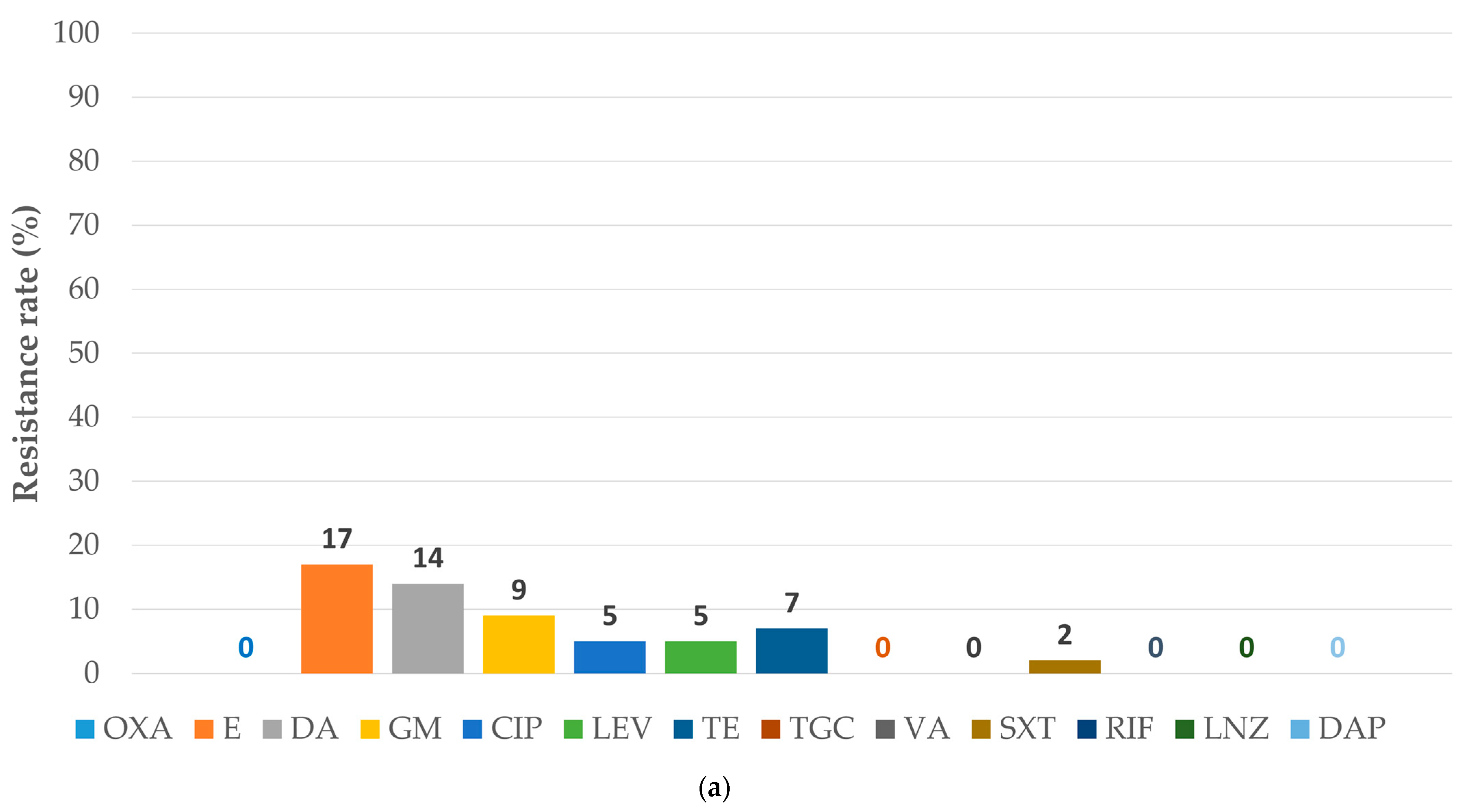
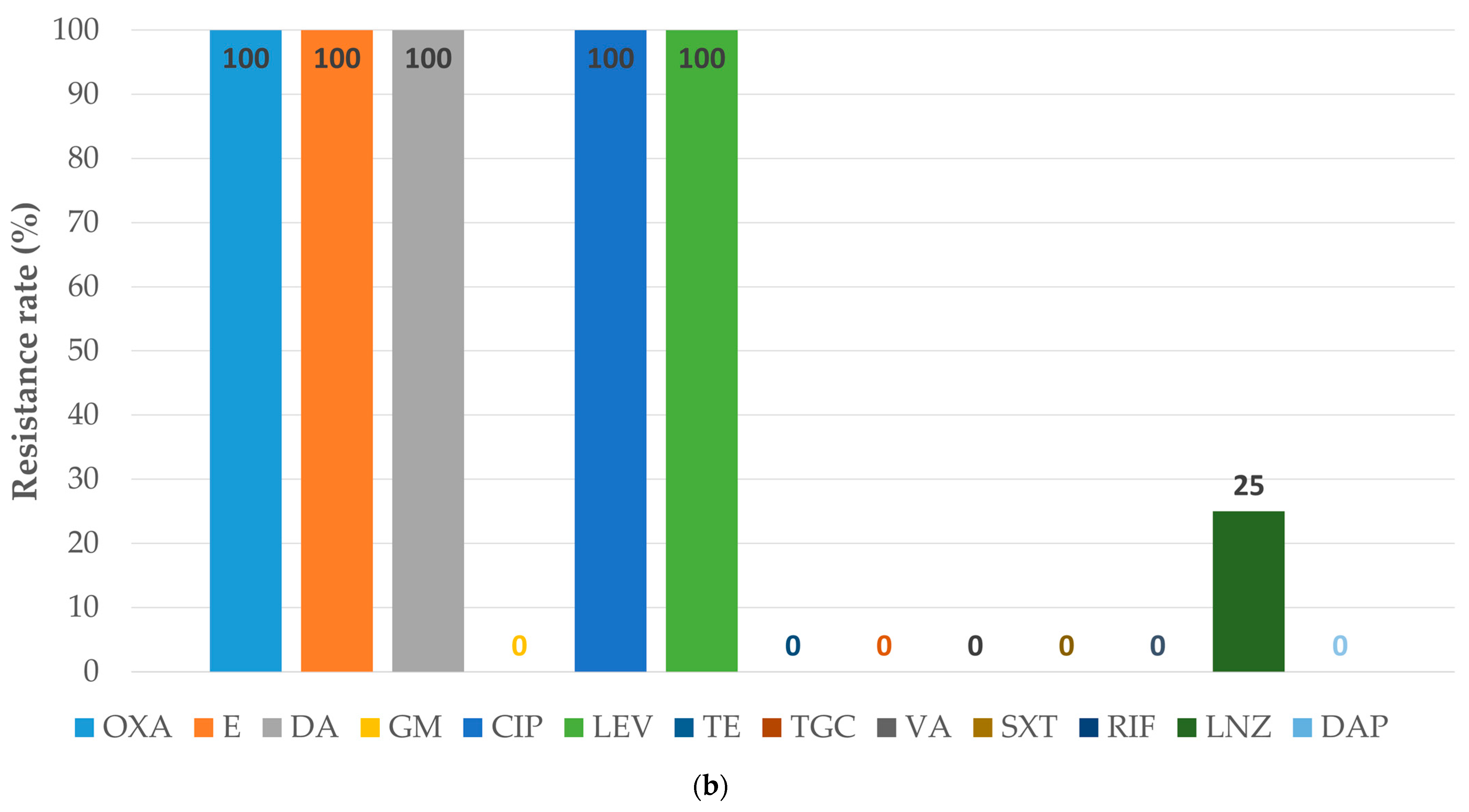
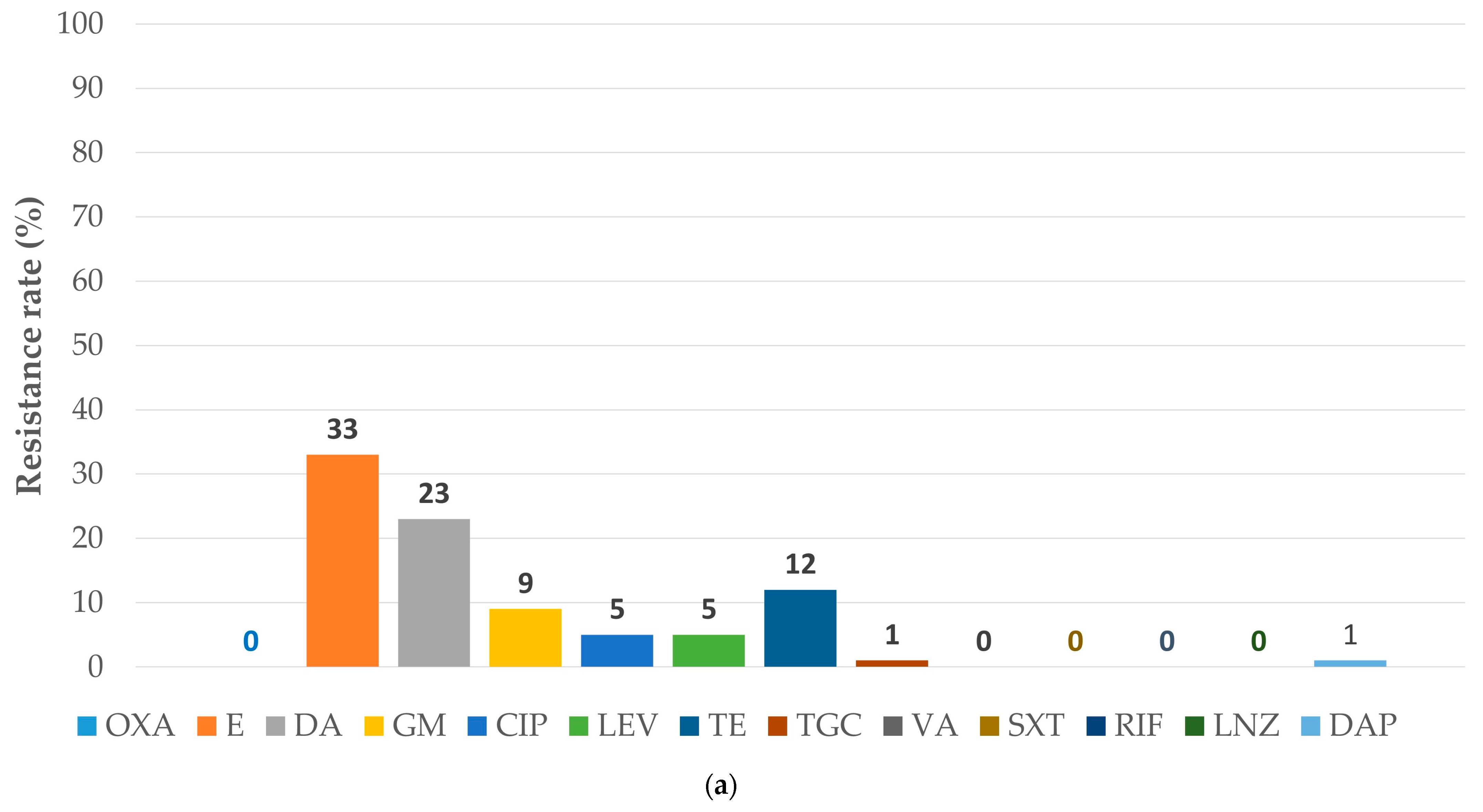
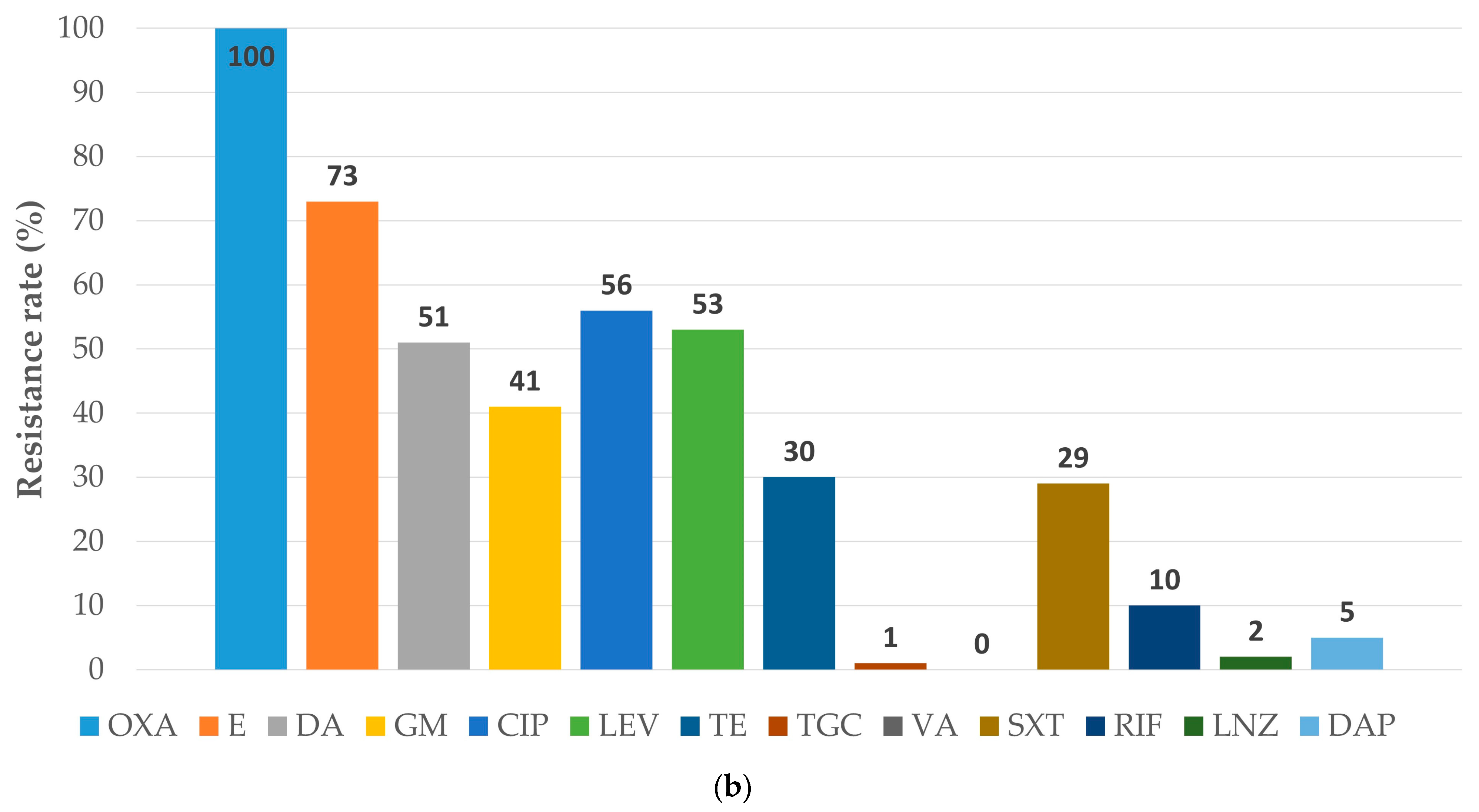
2.3. AMR Patterns Throughout the Observation Period
2.4. MDR Strains
3. Discussion
3.1. β-Lactam-Susceptible Gram-Positive Cocci
3.2. β-Lactam-Resistant Gram-Positive Cocci
3.3. Resistance to Oral Non-β-Lactam Antibiotics
3.4. Aminoglycoside-Resistant Enterococci and Staphylococci
3.5. Vancomycin-Resistant Gram-Positive Cocci
3.6. Susceptibility to Salvage-Therapy Antibiotics in MDR Gram-Positive Cocci
3.7. Multidrug Resistance in CoNS
3.8. Study Limitations
4. Materials and Methods
4.1. Study Group
4.2. Data Extraction and Quality Assessment
4.3. Operating and Microbiological Procedures
4.4. Statistical Analysis
5. Conclusions
Supplementary Materials
Author Contributions
Funding
Institutional Review Board Statement
Informed Consent Statement
Data Availability Statement
Conflicts of Interest
Abbreviations
| ABSSSI | Acute bacterial skin and skin-structure infection |
| AMEs | Aminoglycoside-modifying enzymes |
| AMR | Antimicrobial resistance |
| CIED | Cardiac implantable electronic device |
| CIED-IE | Cardiac implantable electronic device-related infectious endocarditis |
| CoNS | Coagulase-negative staphylococci |
| EARS-Net | European Antimicrobial Resistance Surveillance Network |
| EUCAST | European Committee on Antimicrobial Susceptibility Testing |
| EXTRACT | “Effectiveness, Complications, and Mortality of TLE in Patients” registry |
| GBS | Group B streptococci |
| HLAR | High-level aminoglycoside-resistance |
| MDR | Multidrug resistance |
| MIC | Minimum inhibitory concentration |
| MLSB | Macrolides/lincosamides/streptogramin B cross-resistance |
| MR-CoNS | Methicillin-resistant coagulase-negative staphylococci |
| MRSA | Methicillin-resistant Staphylococcus aureus |
| MS-CoNS | Methicillin-susceptible coagulase-negative staphylococci |
| MSSA | Methicillin-susceptible Staphylococcus aureus |
| PBPs | Penicillin-binding proteins |
| PI | Pocket infection/pocket erosion |
| TLE | Transvenous lead extraction |
| VGS | Viridans group streptococci |
| VISA | Vancomycin-intermediate Staphylococcus aureus |
| VRE | Vancomycin-resistant enterococci |
| VRSA | Vancomycin-resistant Staphylococcus aureus |
References
- Statistics of the National Health Fund in Poland. Available online: https://statystyki.nfz.gov.pl/Benefits/1a?S.Section=E+-+Choroby+serca&S.Name=E31+WSZCZEPIENIE%2F+WYMIANA+ROZRUSZNIKA+JEDNOJAMOWEGO+*&S.Catalog=1a&S.Year=0&S.SelectedTab=BasicData&search=true (accessed on 8 January 2026). (In Polish)
- Olsen, T.; Jørgensen, O.D.; Nielsen, J.C.; Thøgersen, A.M.; Philbert, B.T.; Johansen, J.B. Incidence of device-related infection in 97 750 patients: Clinical data from the complete Danish device-cohort (1982–2018). Eur. Heart J. 2019, 40, 1862–1869. [Google Scholar] [CrossRef]
- Polewczyk, A.; Jacheć, W.; Segreti, L.; Bongiorni, M.G.; Kutarski, A. Influence of the type of pathogen on the clinical course of infectious complications related to cardiac implantable electronic devices. Sci. Rep. 2021, 11, 14864. [Google Scholar] [CrossRef]
- Jędrzejczyk-Patej, E.; Mazurek, M.; Kowalski, O.; Sokal, A.; Kozieł, M.; Adamczyk, K.; Przybylska-Siedlecka, K.; Morawski, S.; Liberska, A.; Szulik, M.; et al. Device-related infective endocarditis in cardiac resynchronization therapy recipients-Single center registry with over 2500 person-years follow up. Int. J. Cardiol. 2017, 227, 18–24. [Google Scholar] [CrossRef]
- Jacheć, W.; Polewczyk, A.; Nowosielecka, D.; Kutarski, A. Clinical profile and outcomes among patients with cardiac implantable electronic device presenting as isolated pocket infection, pocket-related infective endocarditis, or lead-related infective endocarditis. Europace 2025, 27, euaf053. [Google Scholar] [CrossRef] [PubMed]
- Baldauf, B.; Cemin, R.; Biffi, M.; Rapacciuolo, A.; Zucchelli, G.; Bongiorni, M.G.; Casorelli, E.; Mitacchione, G.; Hohendanner, F.; Durante-Mangoni, E.; et al. Addressing Complications in Cardiac Implantable Electronic Devices: A Guideline to Prevention of CIED Infection. J. Cardiovasc. Dev. Dis. 2025, 12, 406. [Google Scholar] [CrossRef] [PubMed]
- Blomström-Lundqvist, C.; Traykov, V.; Erba, P.A.; Burri, H.; Nielsen, J.C.; Bongiorni, M.G.; Poole, J.; Boriani, G.; Costa, R.; Deharo, J.-C.; et al. European Heart Rhythm Association (EHRA) international consensus document on how to prevent, diagnose, and treat cardiac implantable electronic device infections-endorsed by the Heart Rhythm Society (HRS), the Asia Pacific Heart Rhythm Society (APHRS), the Latin American Heart Rhythm Society (LAHRS), International Society for Cardiovascular Infectious Diseases (ISCVID) and the European Society of Clinical Microbiology and Infectious Diseases (ESCMID) in collaboration with the European Association for Cardio-Thoracic Surgery (EACTS). Europace 2020, 22, 515–549. [Google Scholar] [CrossRef]
- Donal, E.; Tribouilloy, C.; Sadeghpour, A.; Laroche, C.; Rodrigues, A.C.T.; Nunes, M.D.C.P.; Kang, D.-H.; Hernadez-Meneses, M.; Kobalava, Z.; De Bonis, M.; et al. Cardiac device-related infective endocarditis need for lead extraction whatever the device according to the ESC EORP EURO-ENDO registry. Eur. Heart J. Open 2023, 3, oead064. [Google Scholar] [CrossRef] [PubMed]
- Płońska-Gościniak, E.; Olędzki, S.; Kukulski, T.; Kosmala, W.; Młynarski, R.; Oko-Sarnowska, Z.; Wojtkowska, A.; Gościniak, P.; Gąsior, Z.; Hryniewiecki, T.; et al. Pol-CDRIE registry—1-year observational data on patients hospitalized due to cardiac device-related infective endocarditis in Polish referential cardiology centres. Kardiol. Pol. 2019, 77, 561–567. [Google Scholar] [CrossRef]
- Chmielarczyk, A.; Pomorska-Wesołowska, M.; Romaniszyn, D.; Wójkowska-Mach, J. Healthcare-Associated Laboratory-Confirmed Bloodstream Infections—Species Diversity and Resistance Mechanisms, a Four-Year Retrospective Laboratory-Based Study in the South of Poland. Int. J. Environ. Res. Public Health 2021, 18, 2785. [Google Scholar] [CrossRef]
- Tacconelli, E.; Carrara, E.; Savoldi, A.; Harbarth, S.; Mendelson, M.; Monnet, D.L.; Pulcini, C.; Kahlmeter, G.; Kluytmans, J.; Carmeli, Y.; et al. Discovery, research, and development of new antibiotics: The WHO priority list of antibiotic-resistant bacteria and tuberculosis. Lancet Infect. Dis. 2018, 18, 318–327. [Google Scholar] [CrossRef]
- De Oliveira, D.M.P.; Forde, B.M.; Kidd, T.J.; Harris, P.N.A.; Schembri, M.A.; Beatson, S.A.; Paterson, D.L.; Walker, M.J. Antimicrobial Resistance in ESKAPE Pathogens. Clin. Microbiol. Rev. 2020, 33, e00181-19. [Google Scholar] [CrossRef]
- Shariati, A.; Dadashi, M.; Chegini, Z.; van Belkum, A.; Mirzaii, M.; Khoramrooz, S.S.; Darban-Sarokhalil, D. The global prevalence of Daptomycin, Tigecycline, Quinupristin/Dalfopristin, and Linezolid-resistant Staphylococcus aureus and coagulase-negative staphylococci strains: A systematic review and meta-analysis. Antimicrob. Resist. Infect. Control 2020, 9, 56. [Google Scholar] [CrossRef]
- Joshi, S.; Shallal, A.; Zervos, M. Vancomycin-Resistant Enterococci: Epidemiology, Infection Prevention, and Control. Infect. Dis. Clin. N. Am. 2021, 35, 953–968. [Google Scholar] [CrossRef] [PubMed]
- Hsu, C.Y.; Moradkasani, S.; Suliman, M.; Uthirapathy, S.; Zwamel, A.H.; Hjazi, A.; Vashishth, R.; Beig, M. Global patterns of antibiotic resistance in group B Streptococcus: A systematic review and meta-analysis. Front. Microbiol. 2025, 16, 1541524. [Google Scholar] [CrossRef] [PubMed]
- Drug Resistance of Streptococcus pneumoniae: Prevalence, Mechanisms, and Clinical Significance; News from the National Antibiotic Protection Program; Narodowy Instytut Leków: Warszawa, Poland, 2019; Volume 2, pp. 1–9. Available online: https://antybiotyki.edu.pl/wp-content/uploads/2020/02/Biuletyn-NPOA-_2_2019.pdf (accessed on 8 January 2026). (In Polish)
- Galgano, M.; Pellegrini, F.; Catalano, E.; Capozzi, L.; Del Sambro, L.; Sposato, A.; Lucente, M.S.; Vasinioti, V.I.; Catella, C.; Odigie, A.E.; et al. Acquired Bacterial Resistance to Antibiotics and Resistance Genes: From Past to Future. Antibiotics 2025, 14, 222. [Google Scholar] [CrossRef]
- European Centre for Disease Prevention and Control. Antimicrobial Resistance in the EU/EEA (EARS-Net); Annual Epidemiological Report for 2024; European Centre for Disease Prevention and Control: Stockholm, Sweden, 2024; Available online: https://www.ecdc.europa.eu/sites/default/files/documents/antimicrobial-resistance-annual-epidemiological-report-country-summaries-2024-data.pdf (accessed on 8 January 2026).
- Leclercq, R. Mechanisms of resistance to macrolides and lincosamides: Nature of the resistance elements and their clinical implications. Clin. Infect. Dis. 2002, 34, 482–492. [Google Scholar] [CrossRef] [PubMed]
- Woodford, N. Biological counterstrike: Antibiotic resistance mechanisms of Gram-positive cocci. Clin. Microbiol. Infect. 2005, 11, 2–21. [Google Scholar] [CrossRef]
- Mlynarczyk-Bonikowska, B.; Kowalewski, C.; Krolak-Ulinska, A.; Marusza, W. Molecular Mechanisms of Drug Resistance in Staphylococcus aureus. Int. J. Mol. Sci. 2022, 23, 8088. [Google Scholar] [CrossRef]
- EUCAST Disk Diffusion Method for Antimicrobial Susceptibility Testing Version 13.0. 2025. Available online: https://www.eucast.org/bacteria/methodology-and-instructions/disk-diffusion-and-quality-control/ (accessed on 8 January 2026).
- Delgado, V.; Marsan, N.A.; de Waha, S.; Bonaros, N.; Brida, M.; Burri, H.; Caselli, S.; Doenst, T.; Ederhy, S.; Erba, P.A.; et al. ESC Guidelines for the management of endocarditis. Eur. Heart J. 2023, 44, 3948–4042, Erratum in Eur. Heart J. 2023, 44, 4780. Erratum in Eur. Heart J. 2024, 45, 56. Erratum in Eur. Heart J. 2025, 46, 1082. [Google Scholar] [CrossRef]
- Esposito, S.; Blasi, F.; Curtis, N.; Kaplan, S.; Lazzarotto, T.; Meschiari, M.; Mussini, C.; Peghin, M.; Rodrigo, C.; Vena, A.; et al. New Antibiotics for Staphylococcus aureus Infection: An Update from the World Association of Infectious Diseases and Immunological Disorders (WAidid) and the Italian Society of Anti-Infective Therapy (SITA). Antibiotics 2023, 12, 742. [Google Scholar] [CrossRef]
- Stevens, D.L.; Bisno, A.L.; Chambers, H.F.; Dellinger, E.P.; Goldstein, E.J.C.; Gorbach, S.L.; Hirschmann, J.; Kaplan, S.L.; Montoya, J.G.; Wade, J.C. Practice guidelines for the diagnosis and management of skin and soft tissue infections: 2014 update by the Infectious Diseases Society of America. Clin. Infect. Dis. 2014, 59, 147–159. [Google Scholar] [CrossRef] [PubMed]
- Rybak, M.J.; Le, J.; Lodise, T.P.; Levine, D.P.; Bradley, J.S.; Liu, C.; Mueller, B.A.; Pai, M.P.; Wong-Beringer, A.; Rotschafer, J.C.; et al. Therapeutic monitoring of vancomycin for serious methicillin-resistant Staphylococcus aureus infections: A revised consensus guideline and review by the American Society of Health-System Pharmacists, the Infectious Diseases Society of America, the Pediatric Infectious Diseases Society, and the Society of Infectious Diseases Pharmacists. Am. J. Health Syst. Pharm. 2020, 77, 835–864. [Google Scholar] [CrossRef]
- European Committee on Antimicrobial Susceptibility Testing Breakpoint Tables for Interpretation of MICs and Zone Diameters. Version 15.0. 2025. Available online: https://www.eucast.org/fileadmin/eucast/pdf/breakpoints/v_15.0_Breakpoint_Tables.pdf (accessed on 8 January 2026).
- EUCAST Guidance Document on Infective Endocarditis: Reporting of Antimicrobial Susceptibility Testing Results. Available online: https://www.escmid.org/fileadmin/eucast/pdf/guidance_documents/Guidance_document_IE_new_EUCAST_style_final_version_241205_final.pdf (accessed on 8 January 2026).
- EUCAST Guidance Document on Cephalosporins for S. aureus Infection 24 February 2025 Page 1 of 22. Available online: https://www.eucast.org/fileadmin/eucast/pdf/guidance_documents/Cephalosporins_for_Staphylococcus_aureus_Infections_20250224.pdf (accessed on 8 January 2026).
- EUCAST. Guidance Document on Use of Daptomycin to Treat Infections with Enterococci or Coagulase-Negative Staphylococci. 2025. Available online: https://www.eucast.org/fileadmin/eucast/pdf/guidance_documents/Daptomycin_guidance_revised_20251202.pdf (accessed on 8 January 2026).
- Polish National Reference Centre for Antimicrobial Susceptibility. Report: Monitoring Antibiotic Resistance in the EARS-Net and WHO GLASS Networks in Poland—2021 Data. Available online: https://korld.nil.gov.pl/wp-content/uploads/2023/03/Raport-EARS-Net-2021-1.pdf (accessed on 8 January 2026). (In Polish)
- Rozkiewicz, D.; Daniluk, T.; Sciepuk, M.; Zaremba, M.L.; Cylwik-Rokicka, D.; Luczaj-Cepowicz, E.; Milewska, R.; Marczuk-Kolada, G.; Stokowska, W. Prevalence rate and antibiotic susceptibility of oral viridans group streptococci (VGS) in healthy children population. Adv. Med. Sci. 2006, 51, 191–195. [Google Scholar]
- Kaminska, D.; Ratajczak, M.; Szumała-Kąkol, A.; Dlugaszewska, J.; Nowak-Malczewska, D.M.; Gajecka, M. Increasing Resistance and Changes in Distribution of Serotypes of Streptococcus agalactiae in Poland. Pathogens 2020, 9, 526. [Google Scholar] [CrossRef]
- Łuczak-Kadłubowska, A.; Sulikowska, A.; Empel, J.; Piasecka, A.; Orczykowska, M.; Kozinska, A.; Hryniewicz, W. Countrywide molecular survey of methicillin-resistant Staphylococcus aureus strains in Poland. J. Clin. Microbiol. 2008, 46, 2930–2937. [Google Scholar] [CrossRef]
- Sitkiewicz, I.; Borek, A.; Gryko, M.; Karpińska, A.; Kozińska, A.; Obszańska, K.; Wilemska-Dziaduszycka, J.; Walory, J.; Bańska, A.; Belkiewicz, K.; et al. Epidemiology of Streptococcus pyogenes upper respiratory tract infections in Poland (2003–2017). J. Appl. Genet. 2024, 65, 635–644. [Google Scholar] [CrossRef]
- Szymanek-Majchrzak, K.; Mlynarczyk, A.; Mlynarczyk, G. Characteristics of glycopeptide-resistant Staphylococcus aureus strains isolated from inpatients of three teaching hospitals in Warsaw, Poland. Antimicrob. Resist. Infect. Control 2018, 7, 105. [Google Scholar] [CrossRef]
- Report on the Activities of the State Sanitary Inspectorate in the Field of Public Health for 2024; Chief Sanitary Inspectorate: Warsaw, Poland, 2025. Available online: https://www.gov.pl/web/gsse-warszawa/raport-z-dzialan-panstwowej-inspekcji-sanitarnej-za-rok-2024 (accessed on 8 January 2026). (In Polish)
- Filipkowska, M.; Orzechowska, M.; Zarychta, M.; Cybulski, M. Epidemiological Situation of Antibiotic-Resistant Microorganisms Identified in Patients Hospitalised at the University Teaching Hospital in Bialystok, Poland, in the 2020–2023 Period. Antibiotics 2025, 14, 1128. [Google Scholar] [CrossRef] [PubMed]
- Brdová, D.; Ruml, T.; Viktorová, J. Mechanism of staphylococcal resistance to clinically relevant antibiotics. Drug Resist. Updates 2024, 77, 101147. [Google Scholar] [CrossRef] [PubMed]
- Kurek, M.; Poziomkowska-Gęsicka, I.; Wiśniewska, M. Allergic and non-allergic hypersensitivity to antibiotics. Guidelines of the Section of Drug Hypersensitivity of the Polish Society of Allergology. Alergol. Pol.-Pol. J. Allergol. 2018, 5, 23–37. [Google Scholar] [CrossRef]
- Navidifar, T.; Zare Banadkouki, A.; Parvizi, E.; Mofid, M.; Golab, N.; Beig, M.; Sholeh, M. Global prevalence of macrolide-resistant Staphylococcus spp.: A comprehensive systematic review and meta-analysis. Front. Microbiol. 2025, 16, 1524452. [Google Scholar] [CrossRef]
- Tissot-Dupont, H.; Gouriet, F.; Oliver, L.; Jamme, M.; Casalta, J.P.; Jimeno, M.T.; Arregle, F.; Lavoute, C.; Hubert, S.; Philip, M.; et al. High-dose trimethoprim-sulfamethoxazole and clindamycin for Staphylococcus aureus endocarditis. Int. J. Antimicrob. Agents 2019, 54, 143–148. [Google Scholar] [CrossRef]
- Horn, D.L.; Roberts, E.A.; Shen, J.; Chan, J.D.; Bulger, E.M.; Weiss, N.S.; Lynch, J.B.; Bryson-Cahn, C.; Robinson, B.R.H. Outcomes of β-Hemolytic Streptococcal Necrotizing Skin and Soft-tissue Infections and the Impact of Clindamycin Resistance. Clin. Infect. Dis. 2021, 73, e4592–e4598. [Google Scholar] [CrossRef]
- Wang, N.; Luo, J.; Deng, F.; Huang, Y.; Zhou, H. Antibiotic Combination Therapy: A Strategy to Overcome Bacterial Resistance to Aminoglycoside Antibiotics. Front. Pharmacol. 2022, 13, 839808. [Google Scholar] [CrossRef]
- EUCAST Guidance Document on Implementation and Use of the Revised Aminoglycoside Breakpoints. Available online: https://www.eucast.org/fileadmin/src/media/PDFs/EUCAST_files/Guidance_documents/Aminoglycoside_guidance_document_20200424.pdf (accessed on 21 March 2026).
- Hanai, Y.; Hashi, H.; Hanawa, K.; Endo, A.; Miyazaki, T.; Yamaguchi, T.; Harada, S.; Yokoo, T.; Uekusa, S.; Namiki, T.; et al. Predictive Value of Vancomycin AUC24/MIC Ratio for 30-day Mortality in Patients with Severe or Complicated Methicillin-Resistant Staphylococcus aureus Infections: A Multicenter Retrospective Study. Pharm. Res. 2024, 41, 1381–1389. [Google Scholar] [CrossRef]
- Yamada, T.; Fujii, S.; Shigemi, A.; Takesue, Y. A meta-analysis of the target trough concentration of gentamicin and amikacin for reducing the risk of nephrotoxicity. J. Infect. Chemother. 2021, 27, 256–261. [Google Scholar] [CrossRef] [PubMed]
- Arthur, M.; Quintiliani, R., Jr. Regulation of VanA- and VanB-type glycopeptide resistance in enterococci. Antimicrob. Agents Chemother. 2001, 45, 375–381. [Google Scholar] [CrossRef] [PubMed]
- Turner, A.M.; Kinsella, P.; Miller, W.R.; Carter, G.P.; Tran, T.T.; Howden, B.P.; Arias, C.A. Therapeutic approach to difficult-to-treat multidrug-resistant enterococcal infections. Antimicrob. Agents Chemother. 2025, 69, e0106024. [Google Scholar] [CrossRef] [PubMed]
- Schellong, P.; Joean, O.; Pletz, M.W.; Hagel, S.; Weis, S. Treatment of Complicated Gram-Positive Bacteremia and Infective Endocarditis. Drugs 2025, 85, 193–214. [Google Scholar] [CrossRef]
- Jaffa, R.K.; Pillinger, K.E.; Roshdy, D.; Isip, J.A.; Pasquale, T.R. Novel developments in the treatment of acute bacterial skin and skin structure infections. Expert Opin. Pharmacother. 2019, 20, 1493–1502. [Google Scholar] [CrossRef]
- Tran, T.T.; Gomez Villegas, S.; Aitken, S.L.; Butler-Wu, S.M.; Soriano, A.; Werth, B.J.; Munita, J.M. New Perspectives on Antimicrobial Agents: Long-Acting Lipoglycopeptides. Antimicrob. Agents Chemother. 2022, 66, e0261420. [Google Scholar] [CrossRef] [PubMed]
- Kussmann, M.; Karer, M.; Obermueller, M.; Schmidt, K.; Barousch, W.; Moser, D.; Nehr, M.; Ramharter, M.; Poeppl, W.; Makristathis, A.; et al. Emergence of a dalbavancin induced glycopeptide/lipoglycopeptide non–susceptible Staphylococcus aureus during treatment of a cardiac device-related endocarditis. Emerg. Microbes Infect. 2018, 7, 202. [Google Scholar] [CrossRef]
- Werth, B.J.; Jain, R.; Hahn, A.; Cummings, L.; Weaver, T.; Waalkes, A.; Sengupta, D.; Salipante, S.J.; Rakita, R.M.; Butler-Wu, S.M. Emergence of dalbavancin nonsusceptible, vancomycin-intermediate Staphylococcus aureus (VISA) after treatment of MRSA central line-associated bloodstream infection with a dalbavancin-and vancomycin-containing regimen. Clin. Microbiol. Infect. 2018, 24, 429.e1–429.e5. [Google Scholar] [CrossRef]
- Baiardi, G.; Cameran Caviglia, M.; Piras, F.; Sacco, F.; Prinapori, R.; Cristina, M.L.; Mattioli, F.; Sartini, M.; Pontali, E. The Clinical Efficacy of Multidose Oritavancin: A Systematic Review. Antibiotics 2023, 12, 1498. [Google Scholar] [CrossRef] [PubMed]
- Carvalhaes, C.G.; Sader, H.S.; Streit, J.M.; Castanheira, M.; Mendes, R.E. Activity of Oritavancin against Gram-Positive Pathogens Causing Bloodstream Infections in the United States over 10 Years: Focus on Drug-Resistant Enterococcal Subsets (2010–2019). Antimicrob. Agents Chemother. 2022, 66, e0166721. [Google Scholar] [CrossRef]
- Yaghoubi, S.; Zekiy, A.O.; Krutova, M.; Gholami, M.; Kouhsari, E.; Sholeh, M.; Ghafouri, Z.; Maleki, F. Tigecycline antibacterial activity, clinical effectiveness, and mechanisms and epidemiology of resistance: Narrative review. Eur. J. Clin. Microbiol. Infect. Dis. 2022, 41, 1003–1022. [Google Scholar] [CrossRef]
- Becker, K.; Heilmann, C.; Peters, G. Coagulase-negative staphylococci. Clin. Microbiol. Rev. 2014, 27, 870–926. [Google Scholar] [CrossRef]
- Otto, M. Staphylococcus epidermidis—The ‘accidental’ pathogen. Nat. Rev. Microbiol. 2009, 7, 555–567. [Google Scholar] [CrossRef]
- Garbacz, K.; Wierzbowska, M.; Kwapisz, E.; Kosecka-Strojek, M.; Bronk, M.; Saki, M.; Międzobrodzki, J. Distribution and antibiotic-resistance of different Staphylococcus species identified by matrix assisted laser desorption ionization-time of flight mass spectrometry (MALDI-TOF MS) isolated from the oral cavity. J. Oral Microbiol. 2021, 13, 1983322. [Google Scholar] [CrossRef] [PubMed]
- Heilmann, C.; Ziebuhr, W.; Becker, K. Are coagulase-negative staphylococci virulent? Clin. Microbiol. Infect. 2019, 25, 1071–1080. [Google Scholar] [CrossRef]
- Michels, R.; Last, K.; Becker, S.L.; Papan, C. Update on Coagulase-Negative Staphylococci—What the Clinician Should Know. Microorganisms 2021, 9, 830. [Google Scholar] [CrossRef]
- Benchimol, E.I.; Smeeth, L.; Guttmann, A.; Harron, K.; Moher, D.; Petersen, I.; Sørensen, H.T.; von Elm, E.; Langan, S.M.; RECORD Working Committee. The REporting of studies Conducted using Observational Routinely-collected health Data (RECORD) statement. PLoS Med. 2015, 12, e1001885. [Google Scholar] [CrossRef]
- Bongiorni, M.G.; Burri, H.; Deharo, J.C.; Starck, C.; Kennergren, C.; Saghy, L.; Rao, A.; Tascini, C.; Lever, N.; Kutarski, A.; et al. 2018 EHRA expert consensus statement on lead extraction: Recommendations on definitions, endpoints, research trial design, and data collection requirements for clinical scientific studies and registries: Endorsed by APHRS/HRS/LAHRS. Europace 2018, 20, 1217. [Google Scholar] [CrossRef]
- Gładysz-Wańha, S.; Joniec, M.; Wańha, W.; Piłat, E.; Drzewiecka, A.; Gardas, R.; Biernat, J.; Węglarzy, A.; Gołba, K.S. Transvenous lead extraction safety and efficacy in infected and noninfected patients using mechanical-only tools: Prospective registry from a high-volume center. Heart Rhythm. 2024, 21, 427–435. [Google Scholar] [CrossRef] [PubMed]
- Joniec, M.; Stachanczyk, J.; Gardas, R.; Gladysz-Wanha, S.; Pilat, E.; Drzewiecka, A.; Biernat, J.; Weglarzy, A.; Wanha, W.; Loboda, D.; et al. Transvenous Lead Extraction Complicated by Lead Breakage: A Predictive Model Based on Analysis of the EXTRACT Registry. J. Clin. Med. 2026, 15, 1216. [Google Scholar] [CrossRef]
- Winstanley, T.; Courvalin, P. Expert systems in clinical microbiology. Clin. Microbiol. Rev. 2011, 24, 515–556. [Google Scholar] [CrossRef] [PubMed]
- Pages Monteiro, L.; Von Allmen, N.; Friesen, I.; Huth, K.; Zambardi, G. Performance of the VITEK®2 advanced expert system™ for the validation of antimicrobial susceptibility testing results. Eur. J. Clin. Microbiol. Infect. Dis. 2021, 40, 1333–1335. [Google Scholar] [CrossRef] [PubMed]
- Magiorakos, A.-P.; Srinivasan, A.; Carey, R.B.; Carmeli, Y.; Falagas, M.E.; Giske, C.G.; Harbarth, S.; Hindler, J.F.; Kahlmeter, G.; Olsson-Liljequist, B.; et al. Multidrug-resistant, extensively drug-resistant and pandrug-resistant bacteria: An international expert proposal for interim standard definitions for acquired resistance. Clin. Microbiol. Infect. 2012, 18, 268–281. [Google Scholar] [CrossRef]



| Data | All Patients | Group I (Isolated PI) | Group II (PI with Bacteriemia/CIED-IE) | Group III (Isolated Bacteremia/CIED-IE) | p |
|---|---|---|---|---|---|
| n 209 | n 107 | n 55 | n 47 | ||
| General characteristics | |||||
| Age (years), M (SD) | 66.24 (12.99) | 71.36 (13.15) | 72.15 (10.40) | 68.30 (9.84) | 0.22 |
| Sex (male), n (%) | 153 (73.2) | 79 (51.6) | 42 (27.5) | 32 (20.9) | 0.63 |
| BMI (kg/m2), M (SD) | 28.44 (5.12) | 27.45 (4.20) | 28.72 (5.21) | 28.48 (4.14) | 0.21 |
| Laboratory parameters | |||||
| Hemoglobin * (g/dL), M (SD) | 13.52 (2.07) | 13.28 (1.87) | 12.59 (2.09) | 10.69 (2.20) | <0.001 I ≠ III, II ≠ III |
| WBC * (cells/mL), M (SD) | 7.67 (2.68) | 7.76 (3.35) | 8.77 (3.30) | 9.38 (4.00) | 0.02 I ≠ III |
| PLT * (cells/mL), M (SD) | 213.05 (79.78) | 212.50 (72.12) | 221.84 (110.68) | 228.45 (124.89) | 0.62 |
| C-reactive protein * (mg/L), Me (Q1-Q3) | 2.50 (2.50–8.60) | 2.50 (2.50–13.30) | 11.30 (2.50–87.58) | 35.40 (11.50–100.00) | <0.001 I ≠ II, I ≠ III, II ≠ II |
| Creatinine * (mg/dL), M (SD) | 1.12 (0.61) | 1.26 (0.90) | 1.20 (0.46) | 1.48 (0.93) | 0.19 |
| Comorbidities | |||||
| Coronary artery disease, n (%) | 123 (58.9) | 62 (50.4) | 34 (27.6) | 27 (22.0) | 0.87 |
| Hypertension, n (%) | 156 (74.6) | 84 (53.8) | 46 (29.5) | 26 (16.7) | 0.002 |
| Congestive heart failure a, n (%) | 118 (56.5) | 67 (56.8) | 27 (22.9) | 24 (20.3) | 0.18 |
| Atrial fibrillation, n (%) | 99 (47.4) | 52 (52.5) | 26 (26.3) | 21 (21.2) | 0.90 |
| Diabetes mellitus, n (%) | 79 (37.8) | 39 (49.4) | 20 (25.3) | 20 (25.3) | 0.75 |
| Chronic kidney disease b, n (%) | 102 (48.8) | 51 (50.0) | 26 (25.5) | 25 (24.5) | 0.79 |
| Stroke, n (%) | 20 (9.6) | 12 (60.0) | 5 (25.0) | 3 (15.0) | 0.64 |
| Peripheral artery disease, n (%) | 83 (39.7) | 41 (49.4) | 26 (31.3) | 16 (19.3) | 0.36 |
| Chronic obstructive pulmonary disease, n (%) | 28 (13.4) | 14 (50.0) | 8 (28.6) | 6 (21.4) | 0.96 |
| Cancer, n (%) | 17 (8.1) | 11 (64.7) | 2 (11.8) | 4 (23.5) | 0.34 |
| Cardiac implantable electronic device type | |||||
| Pacemaker, n (%) | 100 (47.8) | 47 (47.0) | 28 (28.0) | 25 (25.0) | 0.83 |
| Implantable cardioverter- defibrillator, n (%) | 55 (26.3) | 31 (56.4) | 13 (23.6) | 11 (20.0) | |
| Cardiac resynchronization therapy–pacemaker/defibrillator, n (%) | 54 (25.8) | 29 (53.7) | 14 (25.9) | 11 (20.4) |
| All Strains | All Patients | Isolated PI (Group I) | PI with Bacteriemia/CIED-IE (Group II) | Isolated Bacteremia/CIED-IE (Group III) | p Value |
|---|---|---|---|---|---|
| n 209 | n 107 | n 55 | n 47 | ||
| Staphylococcus aureus, n (%) | 62 (23.6) | 34 (54.8) | 17 (27.4) | 11 (17.7) | 0.001 I ≠ II |
| CoNS, n (%) | 177 (67.3) | 91 (51.4) | 66 (37.3) | 20 (11.3) | <0.001 I ≠ II, II ≠ III |
| Streptococcus spp., n (%) | 8 (3.0) | 2 (40.0) | 1 (20.0) | 2 (40.0) | 0.82 |
| Enterococcus spp., n (%) | 15 (5.7) | 3 (20.0) | 6 (40.0) | 6 (40.0) | 0.55 |
| Other Gram-positive cocci, n (%) | 1 (0.4) | 1 (100.0) | 0 (0.0) | 0 (0.0) | >0.999 |
| Species | P | OXA | E | DA | GM | CIP | LEV | TE | TGC | VA | SXT | RIF | LNZ | DAP | MDR | |
|---|---|---|---|---|---|---|---|---|---|---|---|---|---|---|---|---|
| S. aureus, n (%) | S | 0 (0.0) | 58 (93.5) | 48 (77.4) | 50 (80.6) | 57 (91.9) | 27 (43.5) | 27 (43.5) | 53 (91.4) | 62 (100.0) | 62 (100.0) | 61 (98.4) | 62 (100.0) | 61 (98.4) | 62 (100.0) | 5 (8.1) |
| I | 0 (0.0) | 0 (0.0) | 0 (0.0) | 0 (0.0) | 0 (0.0) | 28 (45.2) | 28 (45.2) | 1 (1.7) | 0 (0.0) | 0 (0.0) | 0 (0.0) | 0 (0.0) | 0 (0.0) | 0 (0.0) | ||
| R | 62 (100.0) | 4 (6.5) | 14 (22.6) | 12 (19.4) | 5 (8.1) | 7 (11.3) | 7 (11.3) | 4 (6.9) | 0 (0.0) | 0 (0.0) | 1 (1.6) | 0 (0.0) | 1 (1.6) | 0 (0.0) | ||
| CoNS, n (%) | S | 0 (0.0) | 78 (44.1) | 78 (44.8) | 105 (59.7) | 129 (72.9) | 63 (35.8) | 64 (36.6) | 85 (48.3) | 173 (98.9) | 177 (100.0) | 130 (73.4) | 162 (94.7) | 175 (98.9) | 164 (96.5) | 82 (46.9) |
| I | 0 (0.0) | 0 (0.0) | 0 (0.0) | 3 (1.7) | 0 (0.0) | 54 (30.7) | 56 (32.0) | 53 (30.1) | 0 (0.0) | 0 (0.0) | 18 (10.2) | 0 (0.0) | 0 (0.0) | 0 (0.0) | ||
| R | 177 (100.0) | 99 (55.9) | 96 (55.2) | 68 (38.6) | 48 (27.1) | 59 (33.5) | 55 (31.4) | 38 (21.6) | 2 (1.1) | 0 (0.0) | 29 (16.4) | 9 (5.3) | 2 (1.1) | 6 (3.5) |
| Species | P | AM | CTX | CRO | DA | VA | TE | SXT | LNZ | MDR | |
|---|---|---|---|---|---|---|---|---|---|---|---|
| Streptococcus spp. group B, n (%) | S | 2 (100.0) | 2 (100.0) | 2 (100.0) | 2 (100.0) | 1 (50.0) | 2 (100.0) | 2 (100.0) | 2 (100.0) | 2 (100.0) | 0 (0.0) |
| I | 0 (0.0) | 0 (0.0) | 0 (0.0) | 0 (0.0) | 0 (0.0) | 0 (0.0) | 0 (0.0) | 0 (0.0) | 0 (0.0) | ||
| R | 0 (0.0) | 0 (0.0) | 0 (0.0) | 0 (0.0) | 1 (50.0) | 0 (0.0) | 0 (0.0) | 0 (0.0) | 0 (0.0) | ||
| Streptococcus spp. group C, n (%) | S | 1 (100.0) | 1 (100.0) | 1 (100.0) | 1 (100.0) | 1 (100.0) | 1 (100.0) | not marked | 0 (0.0) | ||
| I | 0 (0.0) | 0 (0.0) | 0 (0.0) | 0 (0.0) | 0 (0.0) | 0 (0.0) | |||||
| R | 0 (0.0) | 0 (0.0) | 0 (0.0) | 0 (0.0) | 0 (0.0) | 0 (0.0) | |||||
| Streptococcus viridans group, n (%) | S | 3 (60.0) | 3 (60.0) | 3 (60.0) | 3 (60.0) | 3 (60.0) | 4 (100.0) | not marked | 0 (0.0) | ||
| I | 1 (20.0) | 0 (0.0) | 0 (0.0) | 0 (0.0) | 0 (0.0) | 0 (0.0) | |||||
| R | 1 (20.0) | 2 (40.0) | 2 (40.0) | 2 (40.0) | 2 (40.0) | 0 (0.0) | |||||
| Species | AM | IPM | GM | SPT | LEV | TGC | VAN | TEC | LNZ | QDA | MDR | |
|---|---|---|---|---|---|---|---|---|---|---|---|---|
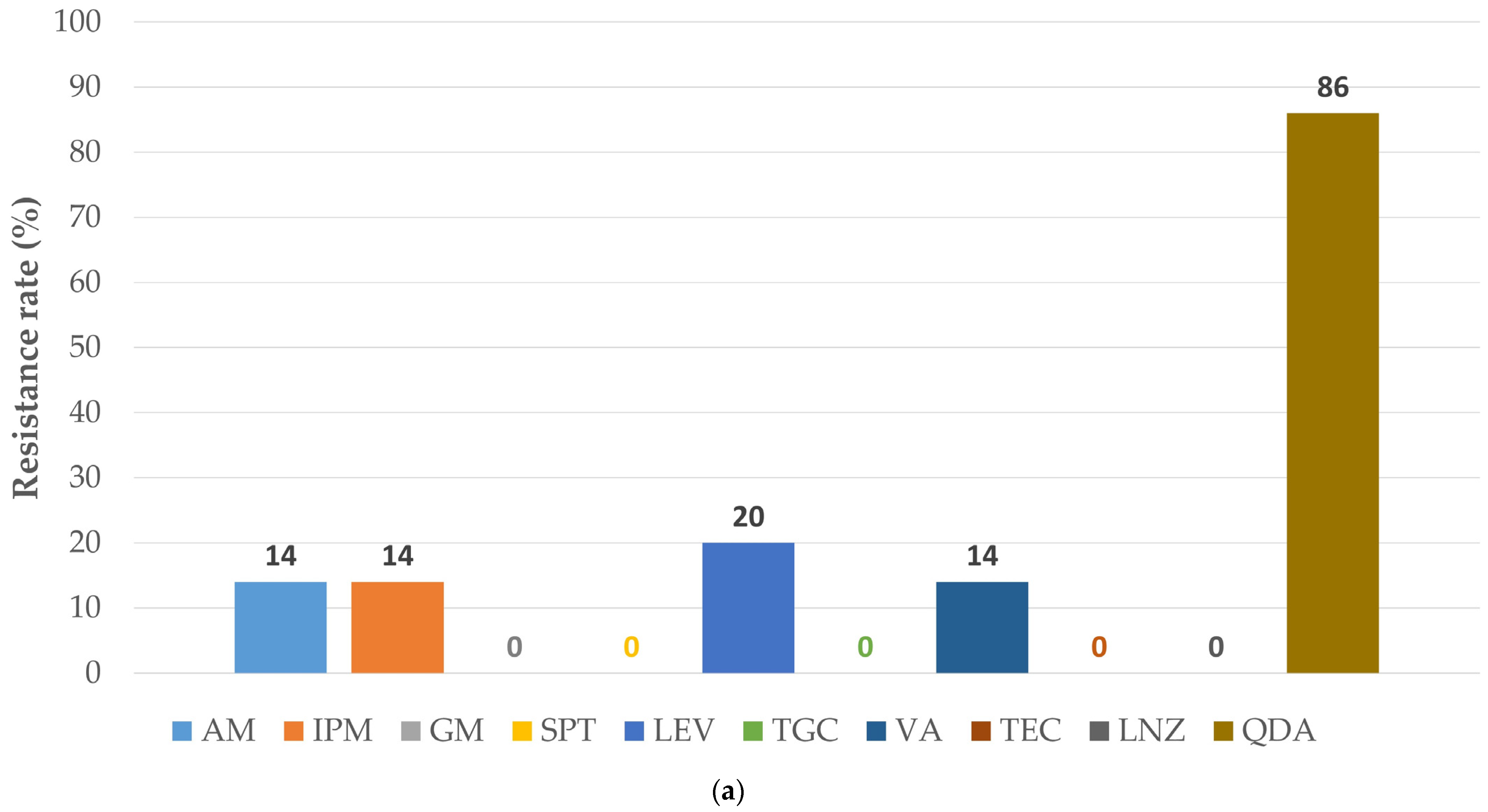
| E. faecalis, n (%) | S | 13 (100.0) | 10 (83.3) | 8 (61.5) | 7 (53.8) | 6 (10.0) | 13 (100.0) | 13 (100.0) | 13 (100.0) | 12 (100.0) | 0 (0.0) | 4 (30.8) |
| I | 0 (0.0) | 2 (16.7) | 0 (0.0) | 0 (0.0) | 0 (0.0) | 0 (0.0) | 0 (0.0) | 0 (0.0) | 0 (0.0) | 0 (0.0) | ||
| R | 0 (0.0) | 0 (0.0) | 5 (38.5) | 6 (46.2) | 4 (40.0) | 0 (0.0) | 0 (0.0) | 0 (0.0) | 0 (0.0) | 13 (100.0) | ||
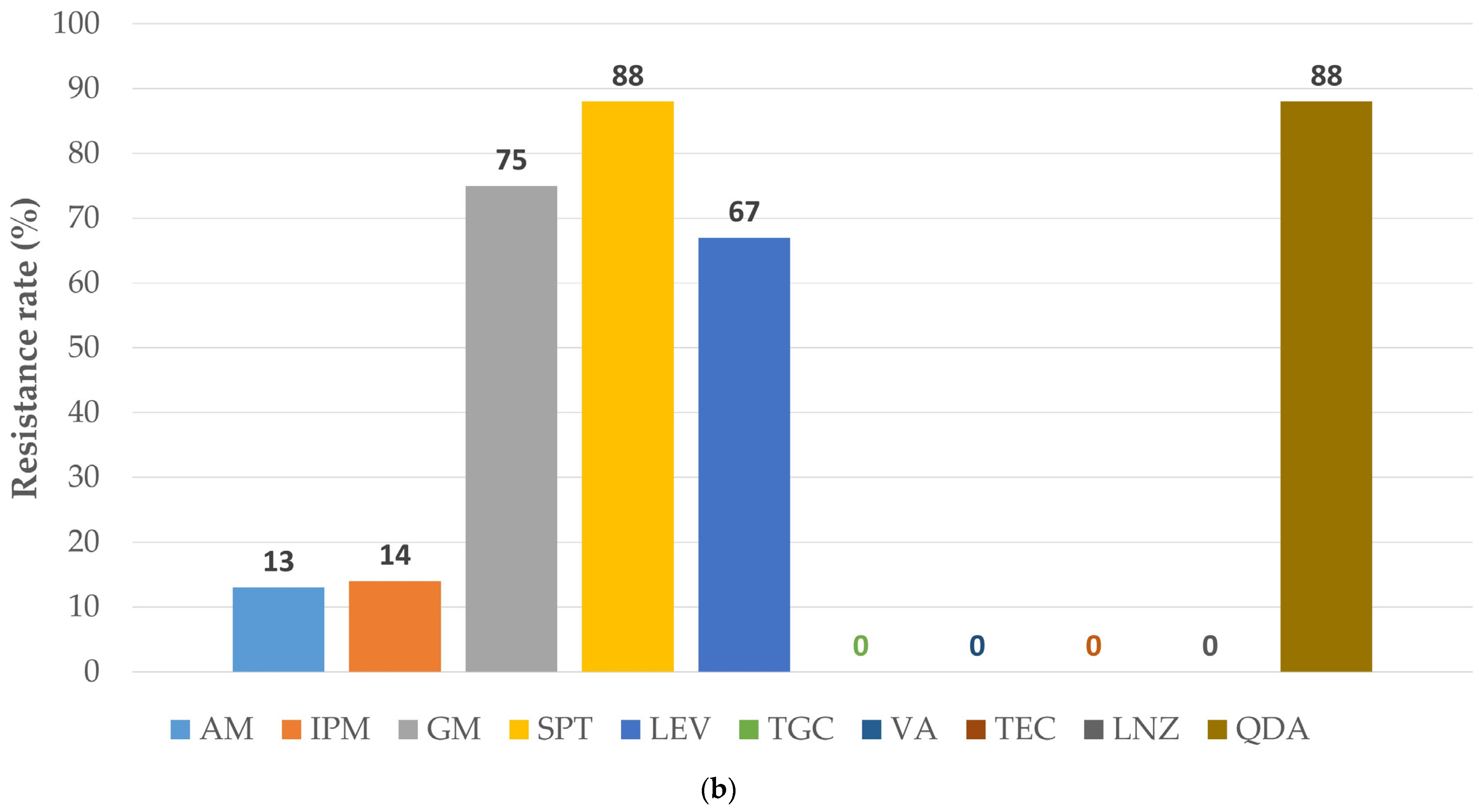
| E. faecium, n (%) | S | 0 (0.0) | 0 (0.0) | 1 (50.0) | 1 (50.0) | 0 (0.0) | 2 (100.0) | 1 (50.0) | 2 (100.0) | 2 (100.0) | 2 (100.0) | 1 (50.0) |
| I | 0 (0.0) | 0 (0.0) | 0 (0.0) | 0 (0.0) | 0 (0.0) | 0 (0.0) | 0 (0.0) | 0 (0.0) | 0 (0.0) | 0 (0.0) | ||
| R | 2 (100.0) | 2 (100.0) | 1 (50.0) | 1 (50.0) | 1 (100.0) | 0 (0.0) | 1 (50.0) | 0 (0.0) | 0 (0.0) | 0 (0.0) |
| Species | Evaluation Method | Resistance Phenotype |
|---|---|---|
| Staphylococcus spp. | Growth in the presence of penicillin | Resistance phenotype associated with the production of penicillinase |
| Elevated oxacillin/cefoxitin MICs | Methicillin resistance phenotype associated with changes in PBPs | |
| Erythromycin/clindamycin resistance patterns (synergism or lack thereof) |
| |
| Elevated tetracycline MICs | Resistance phenotype associated with the efflux pump | |
| Growth at high linezolid concentrations | High-level linezolid resistance phenotype | |
| High gentamicin/tobramycin MICs | HLAR phenotype associated with the enzyme AAC(6′)-Ie-APH(2″)-Ia | |
| Elevated ciprofloxacin/levofloxacin MICs | Fluoroquinolone resistance phenotype | |
| High daptomycin MIC | Reduced daptomycin susceptibility phenotype | |
| Enterococcus spp. | Elevated ampicillin/penicillin MIC | Resistance phenotype associated with changes in PBPs. |
| Vancomycin/teicoplanin resistance pattern | VanB-type resistance phenotype | |
| High MIC of gentamicin/streptomycin | HLAR phenotype associated with aminoglycoside-modifying enzymes:
| |
| Increased MIC of ciprofloxacin/levofloxacin | Fluoroquinolones resistance phenotype | |
| Streptococcus spp. | Elevated penicillin/cefotaxime/ceftriaxone MICs | Resistance phenotype associated with changes in PBPs |
| Erythromycin/clindamycin resistance patterns (synergism or lack thereof) | Inducible or constitutive MLSB phenotype | |
| Elevated tetracycline MICs | Resistance phenotype associated with efflux pumps or ribosomal protection proteins |
Disclaimer/Publisher’s Note: The statements, opinions and data contained in all publications are solely those of the individual author(s) and contributor(s) and not of MDPI and/or the editor(s). MDPI and/or the editor(s) disclaim responsibility for any injury to people or property resulting from any ideas, methods, instructions or products referred to in the content. |
© 2026 by the authors. Licensee MDPI, Basel, Switzerland. This article is an open access article distributed under the terms and conditions of the Creative Commons Attribution (CC BY) license.
Share and Cite
Łoboda, D.; Gładysz-Wańha, S.; Joniec, M.; Piłat, E.; Wojtyczka, R.D.; Sarecka-Hujar, B.; Staroń, J.; Swolana, D.; Gibiński, M.; Simionescu, K.; et al. Drug-Resistant Gram-Positive Cocci as Etiological Factors of Cardiac Implantable Electronic Device Infections—Data from the EXTRACT Registry. Antibiotics 2026, 15, 345. https://doi.org/10.3390/antibiotics15040345
Łoboda D, Gładysz-Wańha S, Joniec M, Piłat E, Wojtyczka RD, Sarecka-Hujar B, Staroń J, Swolana D, Gibiński M, Simionescu K, et al. Drug-Resistant Gram-Positive Cocci as Etiological Factors of Cardiac Implantable Electronic Device Infections—Data from the EXTRACT Registry. Antibiotics. 2026; 15(4):345. https://doi.org/10.3390/antibiotics15040345
Chicago/Turabian StyleŁoboda, Danuta, Sylwia Gładysz-Wańha, Michał Joniec, Eugeniusz Piłat, Robert D. Wojtyczka, Beata Sarecka-Hujar, Julia Staroń, Denis Swolana, Michał Gibiński, Karolina Simionescu, and et al. 2026. "Drug-Resistant Gram-Positive Cocci as Etiological Factors of Cardiac Implantable Electronic Device Infections—Data from the EXTRACT Registry" Antibiotics 15, no. 4: 345. https://doi.org/10.3390/antibiotics15040345
APA StyleŁoboda, D., Gładysz-Wańha, S., Joniec, M., Piłat, E., Wojtyczka, R. D., Sarecka-Hujar, B., Staroń, J., Swolana, D., Gibiński, M., Simionescu, K., Wilczyński, S., & Gołba, K. S. (2026). Drug-Resistant Gram-Positive Cocci as Etiological Factors of Cardiac Implantable Electronic Device Infections—Data from the EXTRACT Registry. Antibiotics, 15(4), 345. https://doi.org/10.3390/antibiotics15040345