Recent Advances in the Development of Selected Triterpenoid-Based Hybrid Molecules and Their Antimicrobial Activities: A Review



Abstract
1. Introduction
2. Materials and Methods
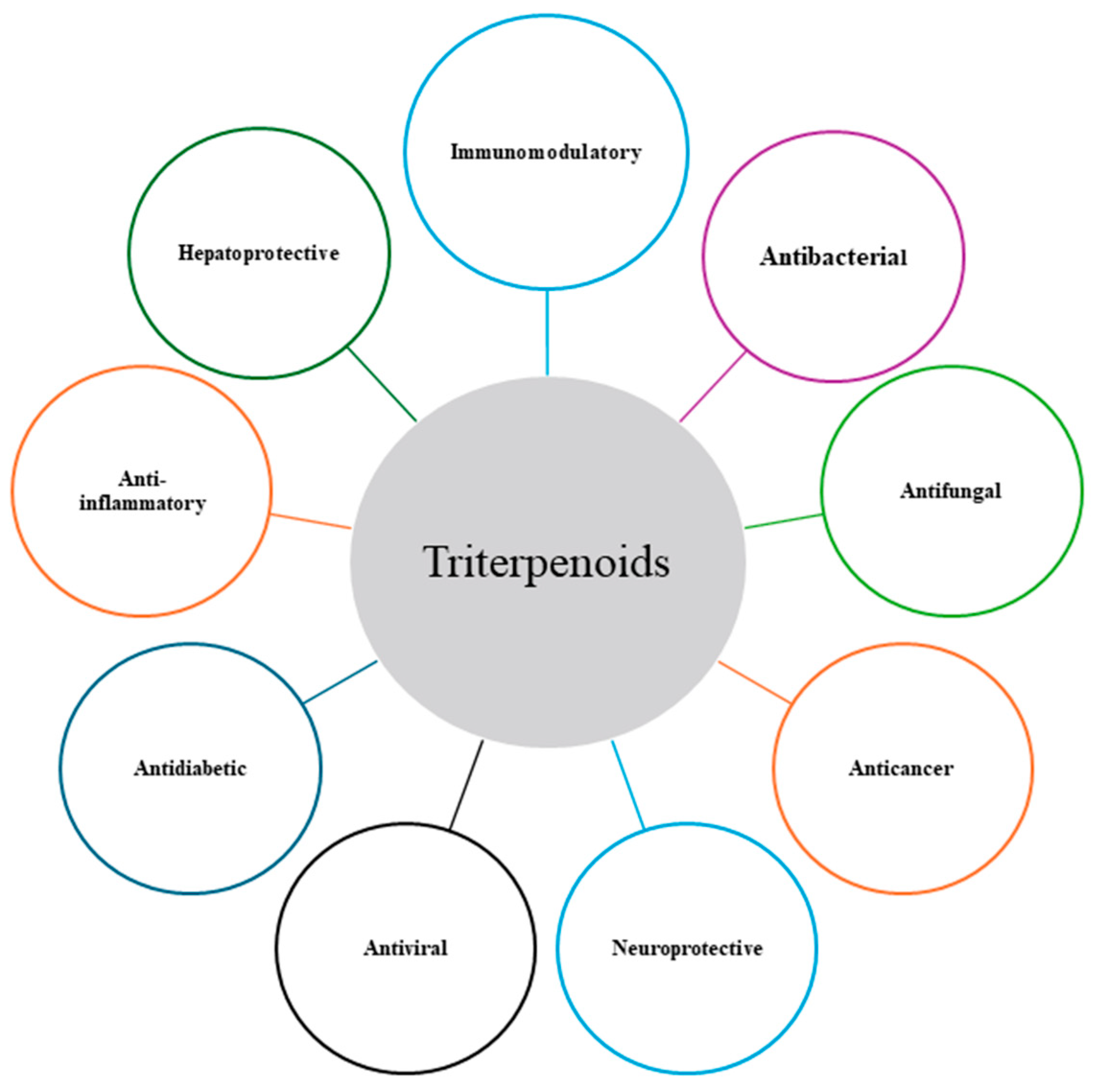
3. Triterpenoid-Based Hybrid Molecules and Their Biological Activities
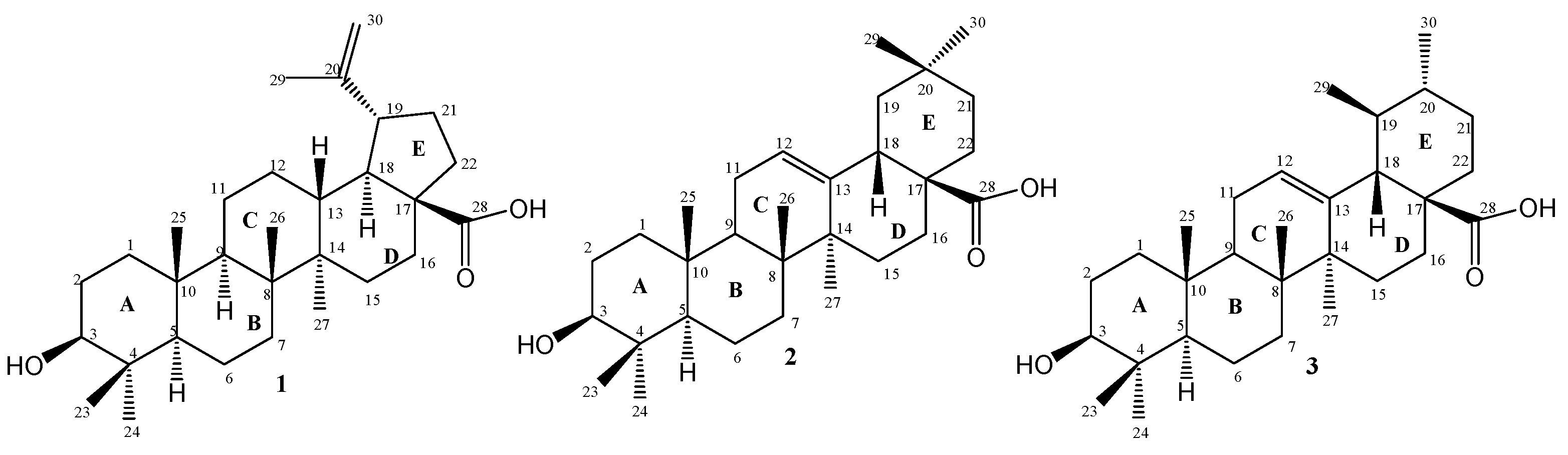
3.1. Betulinic Acid-Based Hybrid Molecules
3.1.1. Synthetic Approaches to Betulinic Acid-Based Hybrid Molecules
3.1.2. Antibacterial Improvements of Betulinic Acid-Based Hybrid Molecules
3.1.3. Antifungal Improvements of Betulinic Acid-Based Hybrid Molecules
3.1.4. Structure–Activity Relationships (SARs) of Betulinic Acid Hybrids
3.2. Oleanolic Acid-Based Hybrid Molecules
3.2.1. Synthetic Approaches to Oleanolic Acid-Based Hybrid Molecules
3.2.2. Antibacterial Improvements of Oleanolic Acid-Based Hybrid Molecules
3.2.3. Antifungal Improvements of Oleanolic Acid-Based Hybrid Molecules
3.2.4. Structure–Activity Relationships of Oleanolic Acid Hybrids
3.3. Ursolic Acid-Based Hybrid Molecules
3.3.1. Synthetic Approaches to Ursolic Acid-Based Hybrid Molecules
3.3.2. Antibacterial Improvements of Ursolic Acid-Based Hybrid Molecules
3.3.3. Antifungal Improvements of Ursolic Acid-Based Hybrid Molecules
3.3.4. Structure–Activity Relationships of Ursolic Acid Hybrids
4. Conclusions
Author Contributions
Funding
Institutional Review Board Statement
Informed Consent Statement
Data Availability Statement
Acknowledgments
Conflicts of Interest
Abbreviations
| ADME | Absorption, Distribution, Metabolism and Excretion |
| ATCC | American Type Culture Collection |
| BA | Betulinic acid |
| CAT | Catalase |
| CuAAC | Copper(I)-catalysed Azide-Alkyne Cycloaddition |
| DCC | Dicyclohexylcarbodiimide |
| DMAP | 4–Dimethylaminopyridine |
| DTC | Dithiocarbamate |
| EDC | 1–Ethyl–3–(3–dimethylaminopropyl)carbodiimide |
| EC50 | Half–maximal effective concentration |
| HOBt | 1–Hydroxybenzotriazole |
| HL–60 | Human promyelocytic leukaemia (cell line) |
| MBC | Minimum Bactericidal Concentration |
| MFC | Minimum Fungicidal Concentration |
| MIC | Minimum Inhibitory Concentration |
| MRSA | Methicillin-resistant Staphylococcus aureus |
| mM | Millimolar |
| mg·L−1 | Milligrams per litre |
| µM | Micromolar |
| µg/mL | Micrograms per millilitre |
| NSAIDs | Non-Steroidal Anti-Inflammatory Drugs |
| OA | Oleanolic acid |
| ROS | Reactive Oxygen Species |
| SOD | Superoxide Dismutase |
| SAR | Structure–Activity Relationship |
| UA | Ursolic acid |
References
- Jaroszewski, B.; Jelonek, K.; Kasperczyk, J. Drug delivery systems of betulin and its derivatives: An overview. Biomedicines 2024, 12, 1168. [Google Scholar] [CrossRef] [PubMed]
- Khwaza, V.; Oyedeji, O.O.; Aderibigbe, B.A.; Morifi, E.; Fonkui, Y.T.; Ndinteh, D.T.; Nell, M.; Steenkamp, V. Design of oleanolic acid-based hybrid compounds as potential pharmaceutical scaffolds. Lett. Drug Des. Discov. 2022, 19, 10–19. [Google Scholar] [CrossRef]
- Jesus, J.A.; Lago, J.H.G.; Laurenti, M.D.; Yamamoto, E.S.; Passero, L.F.D. Antimicrobial activity of oleanolic and ursolic acids: An update. Evid.-Based Complement. Altern. Med. 2015, 2015, 620472. [Google Scholar] [CrossRef]
- Cunha, A.B.; Batista, R.; Castro, M.Á.; David, J.M. Chemical strategies towards the synthesis of betulinic acid and its more potent antiprotozoal analogues. Molecules 2021, 26, 1081. [Google Scholar] [CrossRef]
- Khwaza, V.; Aderibigbe, B.A. Potential pharmacological properties of triterpene derivatives of ursolic acid. Molecules 2024, 29, 3884. [Google Scholar] [CrossRef]
- Mlala, S.; Oyedeji, A.O.; Gondwe, M.; Oyedeji, O.O. Ursolic acid and its derivatives as bioactive agents. Molecules 2019, 24, 2751. [Google Scholar] [CrossRef]
- Woźniak, Ł.; Skąpska, S.; Marszałek, K. Ursolic acid—A pentacyclic triterpenoid with a wide spectrum of pharmacological activities. Molecules 2015, 20, 20614–20641. [Google Scholar] [CrossRef]
- Khan, I.; Guru, S.K.; Rath, S.K.; Chinthakindi, P.K.; Singh, B.; Koul, S.; Bhushan, S.; Sangwan, P.L. A novel triazole derivative of betulinic acid induces extrinsic and intrinsic apoptosis in human leukemia HL-60 cells. Eur. J. Med. Chem. 2016, 108, 104–116. [Google Scholar] [CrossRef]
- Hassan Mir, R.; Godavari, G.; Siddiqui, N.A.; Ahmad, B.; Mothana, R.A.; Ullah, R.; Almarfadi, O.M.; Jachak, S.M.; Masoodi, M.H. Design, synthesis, molecular modelling, and biological evaluation of oleanolic acid-arylidene derivatives as potential anti-inflammatory agents. Drug Des. Dev. Ther. 2021, 15, 385–397. [Google Scholar] [CrossRef]
- Khusnutdinova, E.; Petrova, A.; Zileeva, Z.; Kuzmina, U.; Zainullina, L.; Vakhitova, Y.; Babkov, D.; Kazakova, O. Novel A-ring chalcone derivatives of oleanolic and ursolic amides with anti-proliferative effect mediated through ROS-triggered apoptosis. Int. J. Mol. Sci. 2021, 22, 9796. [Google Scholar] [CrossRef] [PubMed]
- Lombrea, A.; Semenescu, A.-D.; Magyari-Pavel, I.Z.; Turks, M.; Lugiņina, J.; Peipiņš, U.; Muntean, D.; Dehelean, C.A.; Dinu, S.; Danciu, C. Comparison of in vitro antimelanoma and antimicrobial activity of 2,3-indolo-betulinic acid and its glycine conjugates. Plants 2023, 12, 1253. [Google Scholar] [CrossRef]
- Lahmadi, G.; Horchani, M.; Dbeibia, A.; Mahdhi, A.; Romdhane, A.; Lawson, A.M.; Daïch, A.; Harrath, A.H.; Ben Jannet, H.; Othman, M. Novel oleanolic acid-phtalimidines tethered 1,2,3 triazole hybrids as promising antibacterial agents: Design, synthesis, in vitro experiments and in silico docking studies. Molecules 2023, 28, 4655. [Google Scholar] [CrossRef]
- Khwaza, V.; Oyedeji, O.O.; Aderibigbe, B.A.; Morifi, E.; Fonkui, T.Y.; Ndinteh, D.T.; Steenkamp, V. Synthesis, antibacterial, and cytotoxicity evaluation of Oleanolic Acid-4-aminoquinoline based hybrid compounds. Recent Adv. Anti-Infect. Drug Discov. 2021, 16, 122–136. [Google Scholar] [CrossRef]
- Fontana, G.; Badalamenti, N.; Bruno, M.; Maggi, F.; Dell’Annunziata, F.; Capuano, N.; Varcamonti, M.; Zanfardino, A. Biological Properties of Oleanolic Acid Derivatives Bearing Functionalized Side Chains at C-3. Int. J. Mol. Sci. 2024, 25, 8480. [Google Scholar] [CrossRef]
- Lou, H.; Li, H.; Zhang, S.; Lu, H.; Chen, Q. A Review on Preparation of Betulinic Acid and Its Biological Activities. Molecules 2021, 26, 5583. [Google Scholar] [CrossRef] [PubMed]
- Demets, O.V.; Takibayeva, A.T.; Kassenov, R.Z.; Aliyeva, M.R. Methods of Betulin Extraction from Birch Bark. Molecules 2022, 27, 3621. [Google Scholar] [CrossRef] [PubMed]
- Bachořík, J.; Urban, M. Biocatalysis in the chemistry of lupane triterpenoids. Molecules 2021, 26, 2271. [Google Scholar] [CrossRef]
- Sousa, J.L.; Freire, C.S.; Silvestre, A.J.; Silva, A.M. Recent developments in the functionalization of betulinic acid and its natural analogues: A route to new bioactive compounds. Molecules 2019, 24, 355. [Google Scholar] [CrossRef] [PubMed]
- Bildziukevich, U.; Özdemir, Z.; Wimmer, Z. Recent Achievements in Medicinal and Supramolecular Chemistry of Betulinic Acid and Its Derivatives‡. Molecules 2019, 24, 3546. [Google Scholar] [CrossRef]
- Ragab, S.S. Recent Advancements in CuAAC Click Approaches for the Synthesis of 1,2,3-Triazole Hybrid Compounds as Anticancer Agents. Chem. Biodivers. 2025, 22, e202403462. [Google Scholar] [CrossRef]
- Spivak, A.Y.; Galimshina, Z.; Nedopekina, D.; Odinokov, V. Synthesis of new C-2 triazole-linked analogs of triterpenoid pentacyclic saponins. Chem. Nat. Compd. 2018, 54, 315–323. [Google Scholar] [CrossRef]
- Khusnutdinova, E.F.; Petrova, A.V.; Kazakova, O.B. Antiviral potency of lupane and oleanane alkynyl-derivatives against human cytomegalovirus and papillomavirus. J. Antibiot. 2024, 77, 50–56. [Google Scholar] [CrossRef] [PubMed]
- Khwaza, V. Synthesis and In Vitro Biological Studies of Ursolic Acid-Based Hybrid Compounds. Doctoral Dissertation, University of Fort Hare, Alice, South Africa, 2022. [Google Scholar]
- Chrobak, E.; Świtalska, M.; Wietrzyk, J.; Bębenek, E. New Difunctional Derivatives of Betulin: Preparation, Characterization and Antiproliferative Potential. Molecules 2025, 30, 611. [Google Scholar] [CrossRef]
- Pastuch-Gawołek, G.; Szreder, J.; Domińska, M.; Pielok, M.; Cichy, P.; Grymel, M. A Small Sugar Molecule with Huge Potential in Targeted Cancer Therapy. Pharmaceutics 2023, 15, 913. [Google Scholar] [CrossRef]
- Dangroo, N.A.; Moussa, Z.; Alluhaibi, M.S.; Alsimaree, A.A.; Hawsawi, M.B.; Alsantali, R.I.; Singh, J.; Gupta, N.; SM, B.; Karunakar, P. Novel C-3 and C-20 derived analogs of betulinic acid as potent cytotoxic agents: Design, synthesis, in vitro and in silico studies. RSC Adv. 2025, 15, 15164–15177. [Google Scholar] [CrossRef]
- Bębenek, E.; Jastrzębska, M.; Kadela-Tomanek, M.; Chrobak, E.; Orzechowska, B.; Zwolińska, K.; Latocha, M.; Mertas, A.; Czuba, Z.; Boryczka, S. Novel Triazole Hybrids of Betulin: Synthesis and Biological Activity Profile. Molecules 2017, 22, 1876. [Google Scholar] [CrossRef]
- Bildziukevich, U.; Rárová, L.; Janovská, L.; Šaman, D.; Wimmer, Z. Enhancing effect of cystamine in its amides with betulinic acid as antimicrobial and antitumor agent in vitro. Steroids 2019, 148, 91–98. [Google Scholar] [CrossRef]
- Amin, H.; Kantroo, H.A.; Mubarak, M.M.; Bhat, S.A.; Ahmad, Z.; Bhat, K.A. Design and synthesis of betulinic acid–dithiocarbamate conjugates as potential antifungal agents against Candida albicans. RSC Adv. 2024, 14, 38293–38301. [Google Scholar] [CrossRef]
- Grymel, M.; Lalik, A.; Kazek-Kęsik, A.; Szewczyk, M.; Grabiec, P.; Erfurt, K. Design, synthesis and preliminary evaluation of the cytotoxicity and antibacterial activity of novel triphenylphosphonium derivatives of betulin. Molecules 2022, 27, 5156. [Google Scholar] [CrossRef]
- Shakurova, E.R.; Parfenova, L.V. Synthesis of N-Heterocyclic Analogues of 28-O-Methyl Betulinate, and Their Antibacterial and Antifungal Properties. Molbank 2019, 2020, M1100. [Google Scholar] [CrossRef]
- Jalmakhanbetova, R.I.; Mukusheva, G.K.; Abdugalimov, A.S.; Zhumagalieva, Z.Z.; Dehaen, W.; Anthonissen, S.; Suleimen, Y.M.; Seidakhmetova, R.B. Synthesis and Investigation of Biological Activity of New Betulonic Acid Derivatives Containing 1,2,3-Triazole Fragments. Molecules 2024, 29, 3149. [Google Scholar] [CrossRef] [PubMed]
- Rocha, V.; Quadros, H.; Meira, C.; Silva, L.; Carvalho, D.; Hodel, K.; Moreira, D.; Soares, M. Potential of triterpenic natural compound betulinic acid for neglected tropical diseases new treatments. Biomedicines 2022, 10, 831. [Google Scholar] [CrossRef]
- Krummenauer, M.E.; Lopes, W.; Garcia, A.W.A.; Schrank, A.; Gnoatto, S.C.B.; Kawano, D.F.; Vainstein, M.H. A Highly Active Triterpene Derivative Capable of Biofilm Damage to Control Cryptococcus spp. Biomolecules 2019, 9, 831. [Google Scholar] [CrossRef]
- Khusnutdinova, E.F.; Sinou, V.; Babkov, D.A.; Kazakova, O.; Brunel, J.M. Development of new antimicrobial oleanonic acid polyamine conjugates. Antibiotics 2022, 11, 94. [Google Scholar] [CrossRef]
- Blanco-Cabra, N.; Vega-Granados, K.; Moya-Andérico, L.; Vukomanovic, M.; Parra, A.; Alvarez de Cienfuegos, L.; Torrents, E. Novel oleanolic and maslinic acid derivatives as a promising treatment against bacterial biofilm in nosocomial infections: An in vitro and in vivo study. ACS Infect. Dis. 2019, 5, 1581–1589. [Google Scholar] [CrossRef]
- Du, Z.; Li, G.; Zhou, X.; Zhang, J. Synthesis of MeON-glycoside derivatives of oleanolic acid by neoglycosylation and evaluation of their cytotoxicity against selected cancer cell lines. Molecules 2021, 26, 772. [Google Scholar] [CrossRef] [PubMed]
- Tang, L.; Zhang, Y.; Xu, J.; Yang, Q.; Du, F.; Wu, X.; Li, M.; Shen, J.; Deng, S.; Zhao, Y. Synthesis of Oleanolic Acid-Dithiocarbamate Conjugates and Evaluation of Their Broad-Spectrum Antitumor Activities. Molecules 2023, 28, 1414. [Google Scholar] [CrossRef]
- Deng, X.-Y.; Ke, J.-J.; Zheng, Y.-Y.; Li, D.-L.; Zhang, K.; Zheng, X.; Wu, J.-Y.; Xiong, Z.; Wu, P.-P.; Xu, X.-T. Synthesis and bioactivities evaluation of oleanolic acid oxime ester derivatives as α-glucosidase and α-amylase inhibitors. J. Enzym. Inhib. Med. Chem. 2022, 37, 451–461. [Google Scholar] [CrossRef]
- Ke, J.-J.; Lin, J.; Zhang, X.; Wu, X.-Z.; Zheng, Y.-Y.; Hu, C.-M.; Kang, Y.; Zhang, K.; Xiong, Z.; Ma, Z.-Q. Synthesis of Benzylidene Analogs of Oleanolic Acid as Potential α-Glucosidase and α-Amylase Inhibitors. Front. Chem. 2022, 10, 911232. [Google Scholar] [CrossRef]
- Khwaza, V.; Oyedeji, O.O.; Morifi, E.; Nwamadi, M.; Fonkui, T.Y.; Ndinteh, D.T.; Aderibigbe, B.A. Design and Synthesis of Hybrid Compounds for Potential Treatment of Bacterial Co-Infections: In Vitro Antibacterial and In Silico Studies. Antibiotics 2025, 14, 582. [Google Scholar] [CrossRef] [PubMed]
- Ma, F.; Lu, Y.; Zhang, B.; Jia, Z.; Chen, H.; Fei, Q.; Xu, S.; Wu, W. Design, synthesis and in vitro evaluation of novel oleanolic acid (OA) 28-piperazine sulfonamide derivatives as potential antimicrobial agents. Phosphorus Sulfur Silicon Relat. Elem. 2025, 200, 897–904. [Google Scholar] [CrossRef]
- Chen, Z.; Jiang, Y.; Xu, C.; Sun, X.; Ma, C.; Xia, Z.; Zhao, H. Oleanane-type triterpene conjugates with 1H-1,2,3-triazole possessing of fungicidal activity. Molecules 2022, 27, 4928. [Google Scholar] [CrossRef] [PubMed]
- Zong, J.-F.; Hong, Z.-B.; Hu, Z.-H.; Hou, R.-Y. Two new triterpenoid saponins with antifungal activity from Camellia sinensis flowers. Int. J. Mol. Sci. 2025, 26, 1147. [Google Scholar] [CrossRef]
- Wei, M.-Z.; Wang, Z.-J.; Zhu, Y.-Y.; Zu, W.-B.; Zhao, Y.-L.; Luo, X.-D. Oleanolic acid derivatives against drug-resistant bacteria and fungi by multi-targets to avoid drug resistance. Eur. J. Med. Chem. 2024, 280, 116940. [Google Scholar] [CrossRef]
- Sui, G.; Sun, J.; Zhang, A.; Cao, S.; Huang, X. Design and semisynthesis of novel oleanolic acid-based tertiary amide derivatives as promising antifungal agents against phytopathogenic fungi. Mol. Divers. 2025, 29, 6097–6105. [Google Scholar] [CrossRef]
- Tan, J.; Zhang, Z.; Zheng, D.; Mu, Y.; Cao, B.; Yang, J.; Han, L.; Huang, X. Structure–activity relationship and biofilm formation-related gene targets of oleanolic acid-type saponins from Pulsatilla chinensis against Candida albicans. Bioorganic Chem. 2024, 146, 107311. [Google Scholar] [CrossRef]
- Similie, D.; Minda, D.; Bora, L.; Kroškins, V.; Lugiņina, J.; Turks, M.; Dehelean, C.A.; Danciu, C. An update on Pentacyclic triterpenoids Ursolic and oleanolic acids and related derivatives as Anticancer candidates. Antioxidants 2024, 13, 952. [Google Scholar] [CrossRef]
- Ghorbani, A.; Esmaeilizadeh, M. Pharmacological properties of Salvia officinalis and its components. J. Tradit. Complement. Med. 2017, 7, 433–440. [Google Scholar] [CrossRef] [PubMed]
- Borrás-Linares, I.; Stojanović, Z.; Quirantes-Piné, R.; Arráez-Román, D.; Švarc-Gajić, J.; Fernández-Gutiérrez, A.; Segura-Carretero, A. Rosmarinus officinalis leaves as a natural source of bioactive compounds. Int. J. Mol. Sci. 2014, 15, 20585–20606. [Google Scholar] [CrossRef] [PubMed]
- Khwaza, V.; Oyedeji, O.O.; Aderibigbe, B.A. Ursolic acid-based derivatives as potential anti-cancer agents: An update. Int. J. Mol. Sci. 2020, 21, 5920. [Google Scholar] [CrossRef]
- Qi, Z.; Xie, P.; Wang, Z.; Zhou, H.; Tao, R.; Popov, S.A.; Yang, G.; Shults, E.E.; Wang, C. Synthesis of novel ursolic acid-gallate hybrids via 1, 2, 3-triazole linkage and its anti-oxidant and anti-inflammatory activity study. Arab. J. Chem. 2024, 17, 105762. [Google Scholar] [CrossRef]
- Li, A.-L.; Hao, Y.; Wang, W.-Y.; Liu, Q.-S.; Sun, Y.; Gu, W. Design, synthesis, and anticancer evaluation of novel indole derivatives of ursolic acid as potential topoisomerase II inhibitors. Int. J. Mol. Sci. 2020, 21, 2876. [Google Scholar] [CrossRef]
- Kazakova, O.; Mioc, A.; Smirnova, I.; Baikova, I.; Voicu, A.; Vlaia, L.; Macașoi, I.; Mioc, M.; Drăghici, G.; Avram, Ş. Novel synthesized N-ethyl-piperazinyl-amides of C2-substituted oleanonic and ursonic acids exhibit cytotoxic effects through apoptotic cell death regulation. Int. J. Mol. Sci. 2021, 22, 10967. [Google Scholar] [CrossRef]
- Wang, R.; Li, Y.; Hu, H.; Persoons, L.; Daelemans, D.; De Jonghe, S.; Luyten, W.; Krasniqi, B.; Dehaen, W. Antibacterial and antitumoral properties of 1,2,3-triazolo fused triterpenes and their mechanism of inhibiting the proliferation of HL-60 cells. Eur. J. Med. Chem. 2021, 224, 113727. [Google Scholar] [CrossRef]
- Yang, Y.; Chen, K.; Wang, G.; Liu, H.; Shao, L.; Zhou, X.; Liu, L.; Yang, S. Discovery of novel pentacyclic triterpene acid amide derivatives as excellent antimicrobial agents dependent on generation of reactive oxygen species. Int. J. Mol. Sci. 2023, 24, 10566. [Google Scholar] [CrossRef]
- Sun, Y.; Li, X.; Wang, Y.; Shang, X.; Huang, W.; Ang, S.; Li, D.; Wong, W.-L.; Hong, W.D.; Zhang, K.; et al. In vitro and in vivo evaluation of novel ursolic acid derivatives as potential antibacterial agents against methicillin-resistant Staphylococcus aureus (MRSA). Bioorganic Chem. 2025, 154, 107986. [Google Scholar] [CrossRef] [PubMed]
- Pereira, V.V.; Pereira, N.R.; Pereira, R.C.G.; Duarte, L.P.; Takahashi, J.A.; Silva, R.R. Synthesis and antimicrobial activity of ursolic acid ester derivatives. Chem. Biodivers. 2022, 19, e202100566. [Google Scholar] [CrossRef] [PubMed]
- Yang, Y.; Ma, S.; Li, T.; He, J.; Liu, S.; Liu, H.; Zhang, J.; Zhou, X.; Liu, L.; Yang, S. Discovery of novel ursolic acid derivatives as effective antimicrobial agents through a ROS-mediated apoptosis mechanism. Front. Chem. Sci. Eng. 2023, 17, 2101–2113. [Google Scholar] [CrossRef]
- Şenol, H.; Şahin, R.B.; Mercümek, B.; Kapucu, H.B.; Hacıosmanoğlu, E.; Dinç, H.Ö.; Yüksel Mayda, P. Synthesis of ursolic acid arylidene-hydrazide hybrid compounds and investigation of their cytotoxic and antimicrobial effects. Nat. Prod. Res. 2023, 37, 2500–2507. [Google Scholar] [CrossRef]
- Zhu, L.; Tian, Y.; Wang, T.; Huang, X.; Zhou, L.; Shengming, L.; Chen, G.; Che, Z. Semisynthesis, anti-oomycete and anti-fungal activities of ursolic acid ester derivatives. Nat. Prod. Res. 2024, 38, 906–915. [Google Scholar] [CrossRef]



| Hybrids | Strains | SAR | Mode of Action | Ref. |
|---|---|---|---|---|
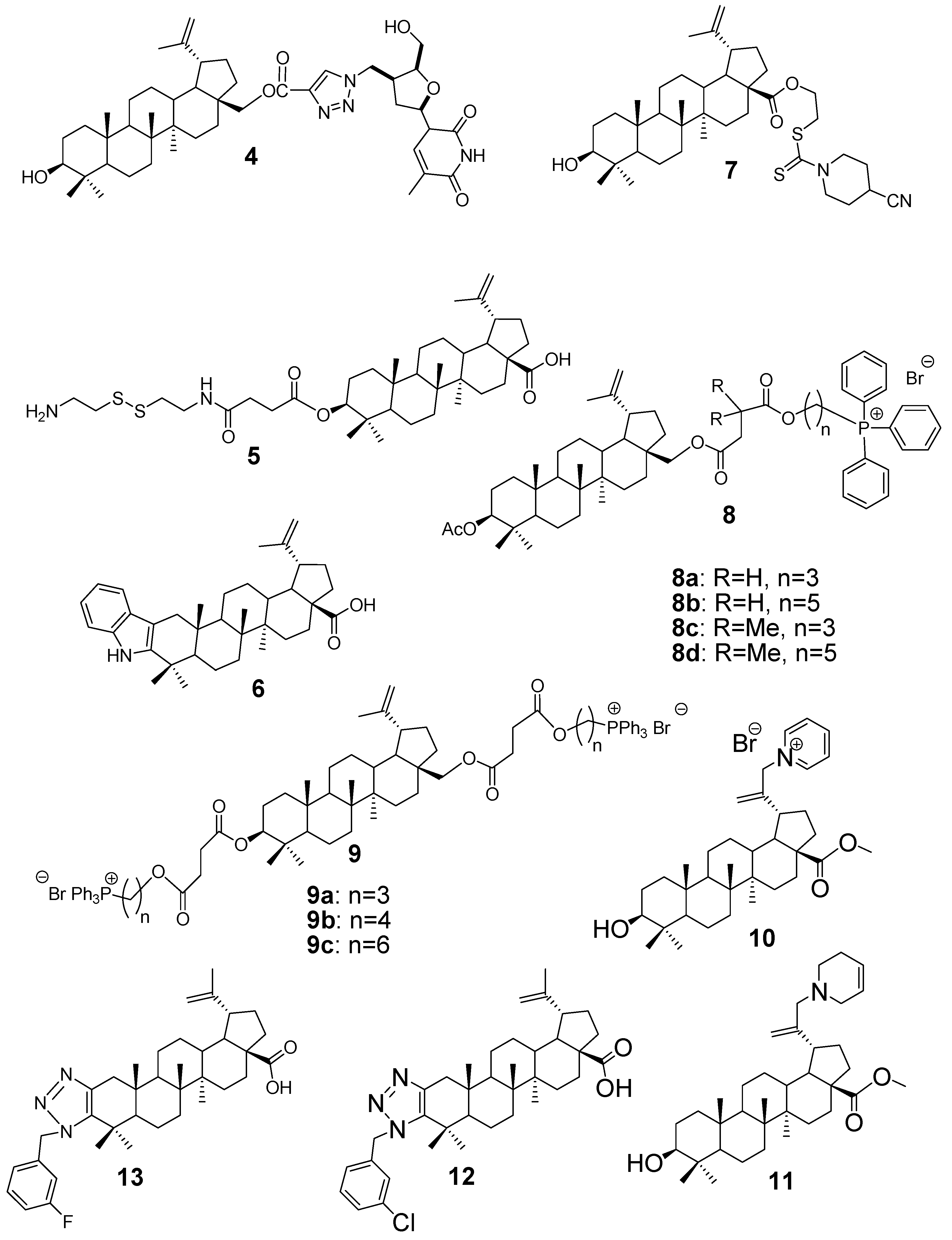
| 4 | E. coli, K. pneumoniae | Triazole at C–28 enhances Gram-negative potency; CuAAC yields regioselective, membrane-active hybrids | Membrane disruption and enzyme inhibition via triazole-mediated interactions | [27] |
| 5 | S. mutans, B. cereus | Cystamine amide at C–28 introduces redox-active disulfide; improves solubility and bacterial uptake | Redox stress induction and thiol–disulfide exchange disrupting bacterial metabolism | [28] |
| 6 | S. pyogenes, S. aureus | Glycine tail at C–28 and indole fusion at C–2/C–3 improves Gram-positive activity and biofilm penetration | Dual mechanism: π–surface modulation and enhanced membrane interaction | [11] |
| 7 | E. coli, S. aureus | Dithiocarbamate at C–28 increases amphiphilicity and sulfur donor character | Synergistic membrane disruption and metabolic inhibition | [29] |
| 8a–d, 9a–c | S. aureus, S. epidermidis | Triphenylphosphonium (TPP+) conjugation at C–28 and/or C–3 introduces permanent positive charge; boosts Gram-positive selectivity | Electrostatic binding to bacterial membranes and enhanced uptake | [30] |
| 10, 11 | S. aureus | Pyridinium and tetrahydropyridine salts at C–28 improve solubility and membrane affinity | Cationic charge facilitates membrane permeabilization and intracellular accumulation | [31] |
| 12, 13 | S. aureus, E. coli | Triazole rings at C–28 with halogen substituents enhance dual-spectrum activity | Enzyme inhibition and membrane targeting via electron-withdrawing triazole motifs | [32] |
| Hybrids | Strains | SAR | Mode of Action | Ref. |
|---|---|---|---|---|
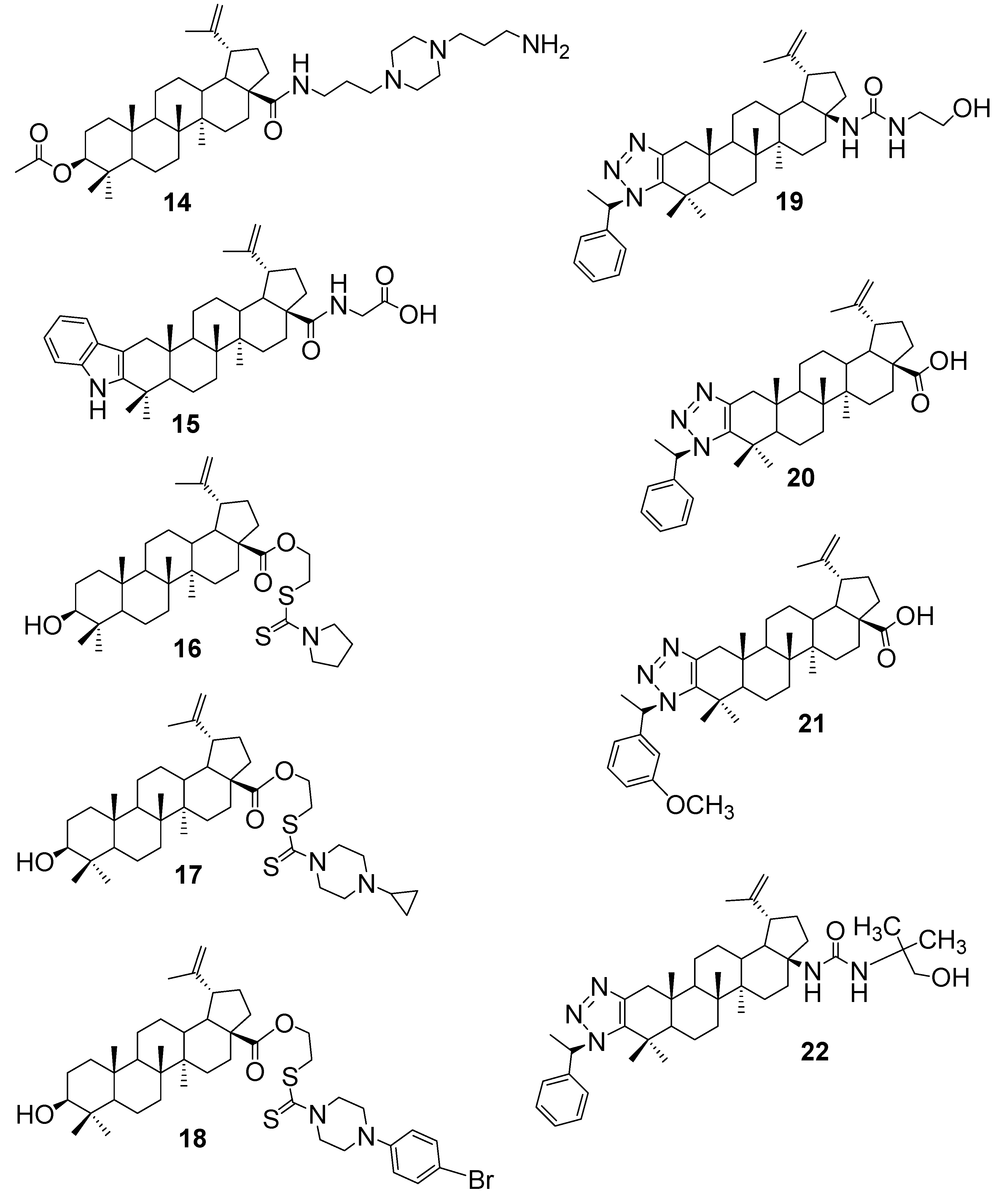
| 14 | C. neoformans, C. gattii | C–28 esterification with aromatic moiety enhances lipophilicity and biofilm penetration | Disrupts mature biofilms, inhibits capsule formation, and induces cell wall stress | [34] |
| 15 | C. albicans, C. parapsilosis | Indole fusion at C–2/C–3 and glycine tail at C–28 improves membrane affinity and solubility | Alters membrane integrity and inhibits ergosterol biosynthesis | [11] |
| 16 | C. albicans | Dithiocarbamate at C–28 introduces sulfur-rich donor character and amphiphilicity | Inhibits hyphal formation, synergizes with fluconazole, and causes rapid fungicidal action | [29] |
| 17, 18 | C. albicans | Sulfur-based conjugates improve lipophilicity and redox potential | Disrupts membrane and induces oxidative stress | [29] |
| 13, 19–22 | C. albicans | Triazole rings with halogen substituents enhance polarity and target binding | Inhibits fungal growth via membrane targeting and enzyme inhibition | [32] |
| Hybrids | Strains | SAR | Mode of Action | Ref. |
|---|---|---|---|---|
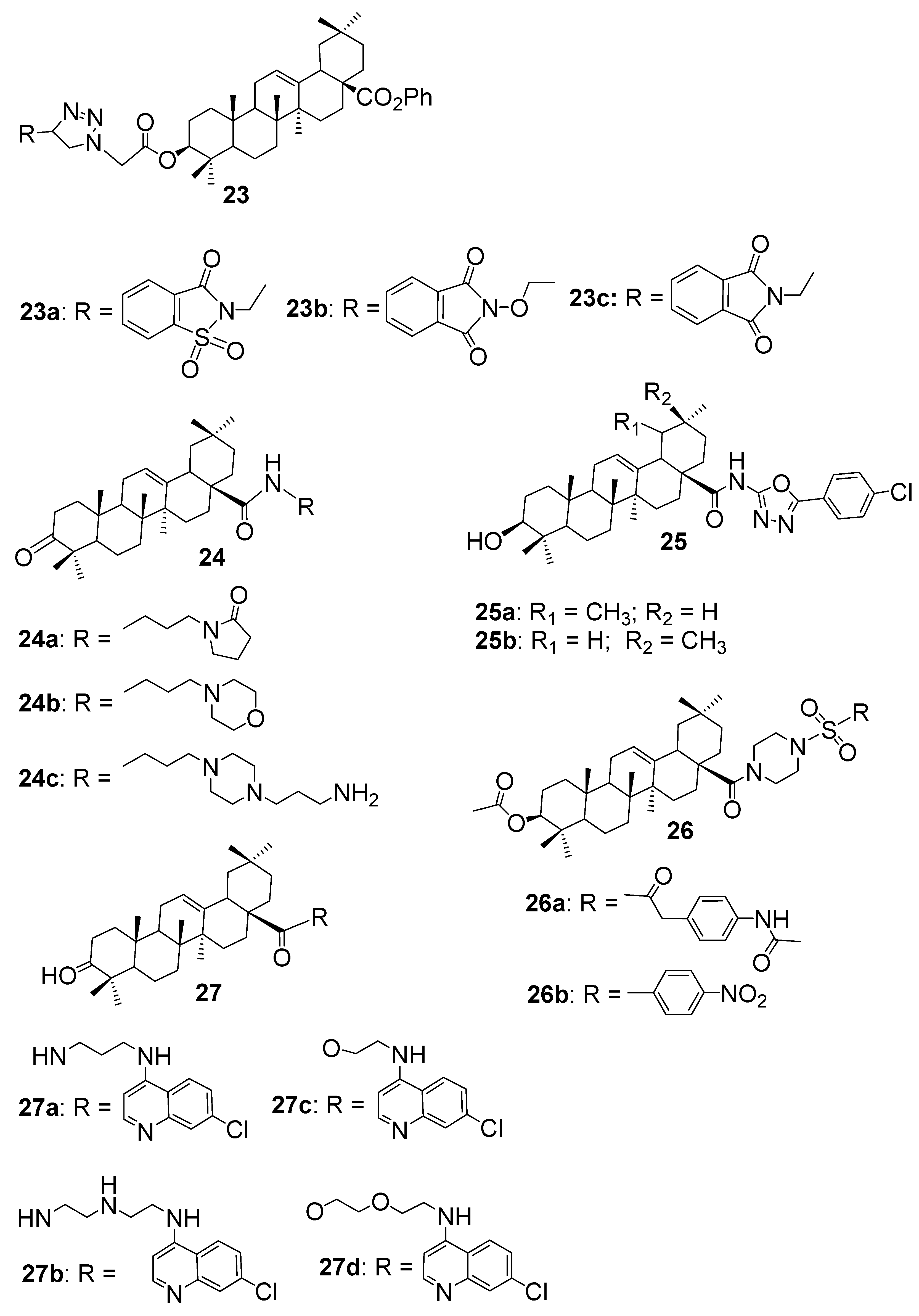
| 23a–c | L. monocytogenes, S. aureus, S. typhimurium, P. aeruginosa | Phthalimidine–triazole linkers at C–28 enhance Gram-positive selectivity and improve lipophilicity | Disrupts bacterial membranes and inhibits metabolic enzymes | [12] |
| 24a, 24b, 24f | S. aureus, E. faecalis, B. cereus, E. coli, S. enterica, P. aeruginosa | Piperazine ring at C–28 improves amphiphilicity and membrane interaction; morpholine and pyrrolidinone less effective | Enhances membrane permeability and disrupts bacterial respiration | [35] |
| 25a, 25b | E. cloacae, P. vulgaris, K. oxytoca, P. aeruginosa, P. mirabilis, K. pneumoniae | Chlorophenyl–oxadiazole conjugation improves Gram-negative activity; OA core contributes moderate potency | Targets outer membrane and interferes with protein synthesis | [41] |
| 26a, 26b | X. oryzae, X. axonopodis, P. syringae | Piperazine–sulfonamide at C–28 enhances electronic character and amphiphilicity | Disrupts bacterial membranes and inhibits growth of phytopathogens | [42] |
| 27a–d | E. faecalis, K. oxytoca, E. coli, S. aureus, E. cloacae, P. vulgaris | 4–aminoquinoline conjugation at C–28 improves broad-spectrum efficacy and enhances DNA interaction | DNA intercalation and inhibition of nucleic acid synthesis | [13] |
| Hybrids | Strains | SAR | Mode of Action | Ref. |
|---|---|---|---|---|
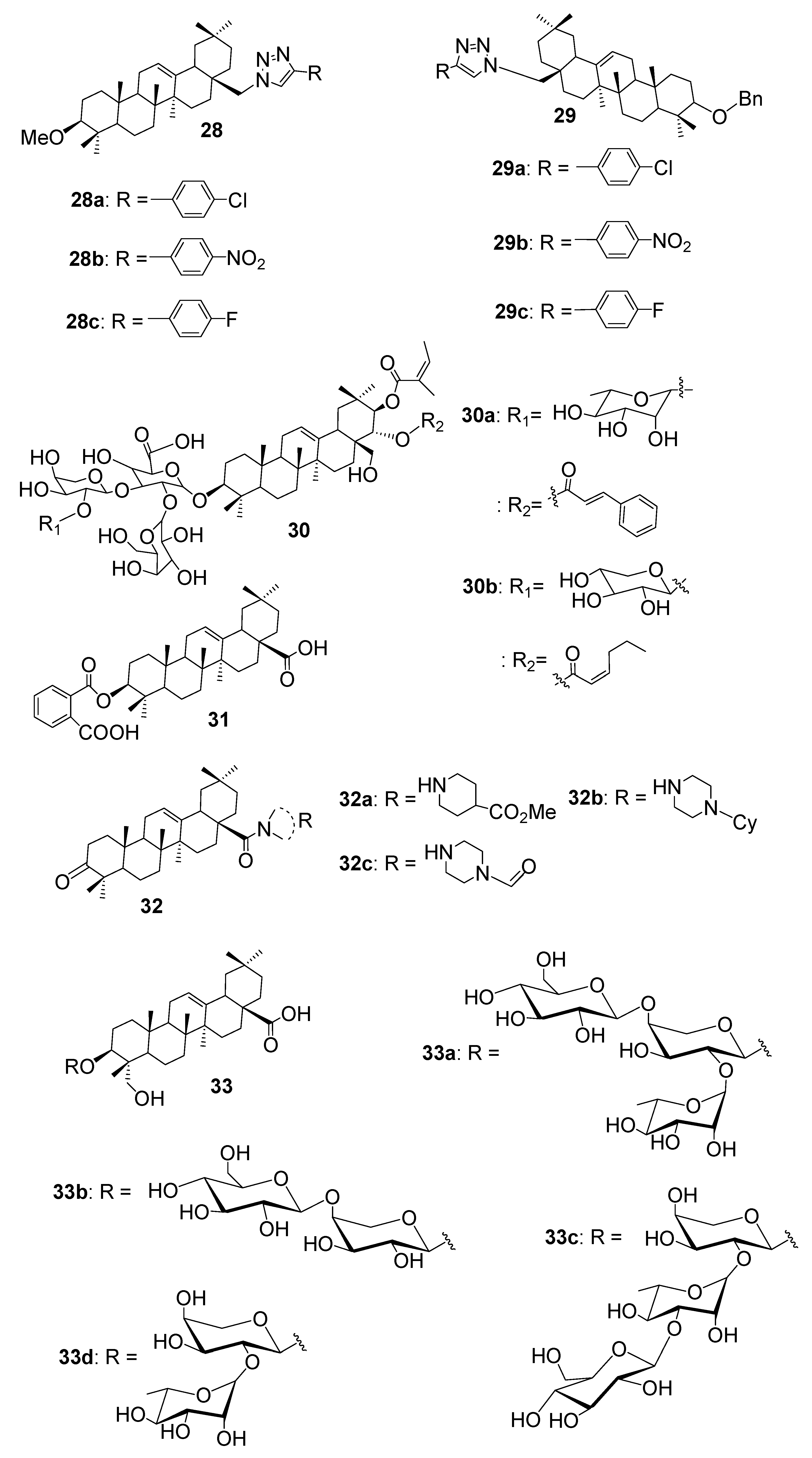
| 28a–c, 29a–c | S. sclerotiorum, B. cinerea, R. solani | Triazole conjugation at C–28 with electron-withdrawing groups (Cl, NO2) enhances antifungal potency | Disrupts fungal membranes and inhibits ergosterol biosynthesis | [43] |
| 30a, 30b | C. albicans, C. glabrata | Saponins from Camellia sinensis with glycosylation at C–3 and hydroxyl at C–23 improve potency | Membrane disruption and enhanced uptake | [44] |
| 31 | C. albicans | Terminal carboxyl group increases hydrophilicity and membrane interaction | Strengthens membrane binding and inhibits fungal respiration | [45] |
| 32a–c | G. graminis, V. mali | Tertiary amide at C–28 improves amphiphilicity and electronic character | Inhibits mycelial growth and induces cell wall stress | [46] |
| 33a–d | C. albicans, C. neoformans, C. parapsilosis | Glycosylation at C–3 and hydroxylation at C–23 enhance antifungal potency | Disrupts fungal membranes and inhibits biofilm formation | [47] |
| Hybrids | Strains | SAR | Mode of Action | Ref. |
|---|---|---|---|---|
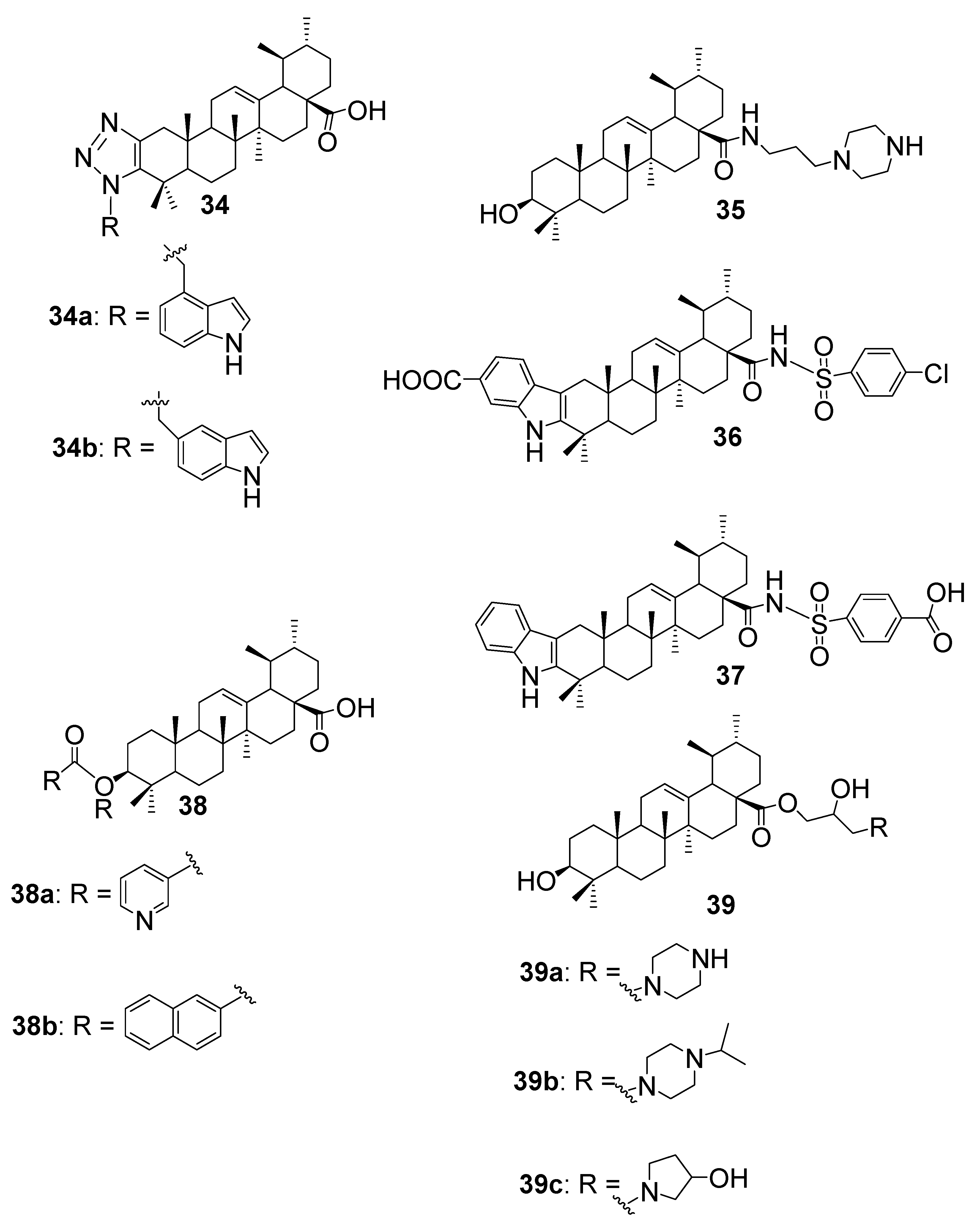
| 34a, 34b | S. aureus, L. innocua | Triazole fusion at C–28 reduces potency compared to native UA | Weak membrane interaction and poor uptake | [55] |
| 35 | X. oryzae, X. axonopodis | C–28 amide enhances ROS generation and membrane permeability | Induces oxidative stress and disrupts bacterial membranes | [56] |
| 36, 37 | S. aureus (including MRSA) | Benzenesulfonamide–indole conjugation at C–28 improves Gram-positive potency | Strong membrane disruption and in vivo efficacy | [57] |
| 38a, 38b | B. cereus, S. aureus, E. coli, S. typhimurium | Esterification at C–3 improves lipophilicity and broad-spectrum activity | Enhances membrane permeability and metabolic inhibition | [58] |
| 39a–c | X. oryzae, X. axonopodis | N-substituted amides at C–28 with cyclic amines improve potency and selectivity | ROS generation, membrane disruption, and enzyme inhibition | [59] |
| Hybrids | Strains | SAR | Mode of Action | Ref. |
|---|---|---|---|---|
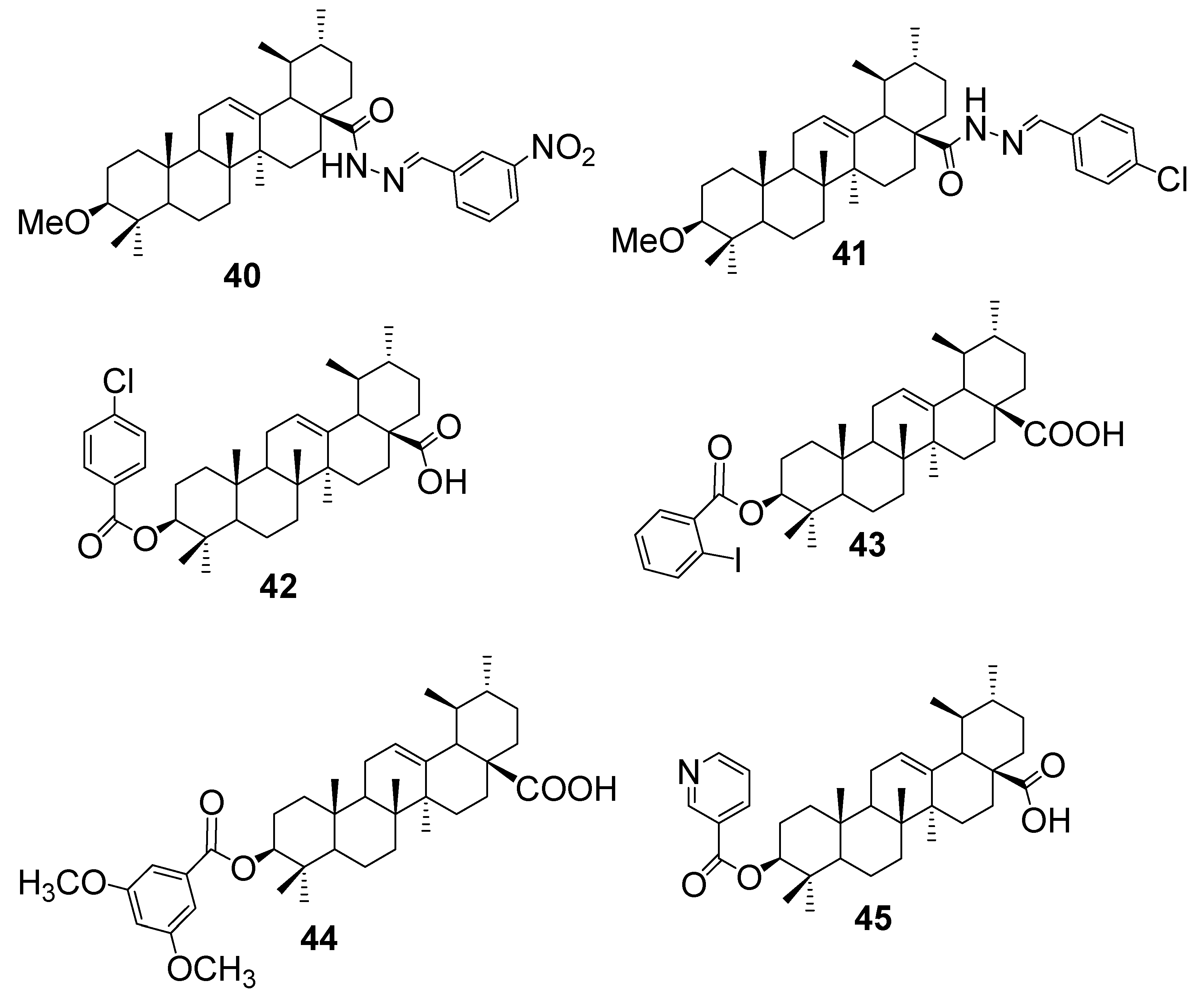
| 40, 41 | C. albicans | Arylidene–hydrazide hybrids at C–3 improve lipophilicity and membrane interaction | Inhibits fungal growth at lower concentrations than UA | [60] |
| 42 | P. capsici, F. graminearum | Esterification at C–3 enhances lipophilicity and membrane binding | Disrupts fungal membranes and improves uptake | [61] |
| 43, 44 | C. albicans | C–3 esterification with alkyl/aryl groups improves hydrophobicity and membrane permeability | Disrupts ergosterol-rich membranes and promotes cytoplasmic accumulation | [58] |
| 45 | C. albicans | C–3 ester with bulky aromatic group enhances lipophilicity and target binding | Strong membrane disruption and improved antifungal potency | [58] |
Disclaimer/Publisher’s Note: The statements, opinions and data contained in all publications are solely those of the individual author(s) and contributor(s) and not of MDPI and/or the editor(s). MDPI and/or the editor(s) disclaim responsibility for any injury to people or property resulting from any ideas, methods, instructions or products referred to in the content. |
© 2026 by the authors. Licensee MDPI, Basel, Switzerland. This article is an open access article distributed under the terms and conditions of the Creative Commons Attribution (CC BY) license.
Share and Cite
Mdleleni, L.; Rungqu, P.; Naki, T. Recent Advances in the Development of Selected Triterpenoid-Based Hybrid Molecules and Their Antimicrobial Activities: A Review. Antibiotics 2026, 15, 185. https://doi.org/10.3390/antibiotics15020185
Mdleleni L, Rungqu P, Naki T. Recent Advances in the Development of Selected Triterpenoid-Based Hybrid Molecules and Their Antimicrobial Activities: A Review. Antibiotics. 2026; 15(2):185. https://doi.org/10.3390/antibiotics15020185
Chicago/Turabian StyleMdleleni, Lihle, Pamela Rungqu, and Tobeka Naki. 2026. "Recent Advances in the Development of Selected Triterpenoid-Based Hybrid Molecules and Their Antimicrobial Activities: A Review" Antibiotics 15, no. 2: 185. https://doi.org/10.3390/antibiotics15020185
APA StyleMdleleni, L., Rungqu, P., & Naki, T. (2026). Recent Advances in the Development of Selected Triterpenoid-Based Hybrid Molecules and Their Antimicrobial Activities: A Review. Antibiotics, 15(2), 185. https://doi.org/10.3390/antibiotics15020185