Article

DVL, a Lectin from Dioclea violacea Seeds, Disturbs the Proteomic Profile of Candida krusei, Leading to Cell Death

by
Romério R. S. Silva
1,
Rayara J. P. Carvalho
1,
Maria H. C. Santos
1,
Ana L. E. Santos
2,
Rômulo F. Carneiro
3,
Celso S. Nagano
3,
Pedro F. N. Souza
4,5,6,* and
Claudener S. Teixeira
7
1
Department of Biochemistry and Molecular Biology, Federal University of Ceará (UFC), Fortaleza 60451-970, CE, Brazil
2
Medical School, Federal University of Cariri, Barbalha 63180-000, CE, Brazil
3
Department of Fisheries Engineering, Federal University of Ceará (UFC), Fortaleza 60440-900, CE, Brazil
4
Laboratory of Bioinformatics Applied to Human Health, Center for Drug Research and Development (NPDM), Federal University of Ceará (UFC), Fortaleza 60355-636, CE, Brazil
5
National Institute of Science and Technology in Human Pathogenic Fungi (FunVir), Ribeirão Preto 14040-903, SP, Brazil
6
Visiting Researcher at the Cearense Foundation to Support Scientific and Technological Development, Fortaleza 60325-452, CE, Brazil
7
Center for Agricultural Sciences and Biodiversity, Federal University of Cariri, Crato 63130-025, CE, Brazil
*
Author to whom correspondence should be addressed.
Antibiotics 2025, 14(12), 1228; https://doi.org/10.3390/antibiotics14121228
Submission received: 17 October 2025 / Revised: 26 November 2025 / Accepted: 3 December 2025 / Published: 5 December 2025
(This article belongs to the Special Issue Antimicrobial Peptides (AMPs) Against Human Pathogens)

Abstract

Background/Objectives Plant lectins have emerged as potential antifungal molecules, where the carbohydrate recognition domain (CRD) is possibly the main mode of action of these proteins. Previously, we saw that the lectin extracted from the seeds of Dioclea violacea (DVL) has anti-candida activity against Candida krusei cells by acting to inhibit ergosterol biosynthesis, cell wall deformation, and deregulation of the redox system. Methods We have now confirmed this anti-candida activity by proteomic analysis, with the expression of proteins that show us how C. krusei cells respond to this treatment. Results A total of 395 proteins were identified: 142 proteins exclusively found in untreated C. krusei cells and 245 proteins exclusive to DVL-treated cells. Eight proteins were detected in both conditions. Six displayed positive accumulation (fold change > 1.5), one exhibited negative accumulation (fold change < 0.5). We observed the expression of proteins related to cell wall remodeling; alteration of energy metabolism, suggesting a metabolic adaptation to stress; oxidative stress was responded to through the expression of proteins with antioxidant action, in addition to identifying multidrug transport proteins that are often involved in the process of antifungal resistance and sterol transport to the membrane. Conclusions Our results show the complexity of adaptive responses of C. krusei cells to treatment with DVL, elucidating new mechanisms of resistance and paving the way for the development of more effective and innovative antifungal therapies.

1. Introduction

Protein–carbohydrate interactions play a fundamental role in many biological processes and are among the most efficient molecular recognition events in living systems, often triggering complex signaling cascades [1]. Lectins are proteins that bind carbohydrates specifically and reversibly, without altering their chemical structure [2].
Plant lectins have increasingly been recognized as antifungal molecules, with their carbohydrate recognition domains (CRDs) playing a central role in mediating these effects. Prior studies have shown that lectins can exert direct cytotoxicity on fungal cells; for instance, the sunflower mannose-binding lectin Helja selectively damages Sclerotinia sclerotiorum and Fusarium solani, reducing spore viability after incubation with concentrations as low as 0.05–0.2 μg μL−1 [3,4]. In line with this, our group recently demonstrated that the lectin from Dioclea violacea seeds (DVL) displays potent antifungal activity against Candida species, with MIC50 values of 0.6 µM for C. albicans, 9.8 µM for C. krusei, and 0.6 µM for C. parapsilosis. These effects are mediated through multiple mechanisms involving its CRD, including inhibition of ergosterol biosynthesis, alterations in cell wall architecture, and disruption of redox homeostasis [3,4]. Together, these findings highlight lectins as emerging antifungal candidates with well-defined molecular targets.
Understanding such mechanisms is particularly important in the context of rising antifungal resistance. The indiscriminate and repeated use of antifungal agents remains a major driver of resistance, emphasizing the need to elucidate microbial responses to alternative treatments [5].
Candida krusei exemplifies this challenge: it is considered a multidrug-resistant pathogen not only because of its high intrinsic resistance to fluconazole (97%), but also due to reduced susceptibility to other antifungal classes [6,7,8]. Reports of increased MICs to polyenes such as amphotericin B, often associated with alterations in ergosterol biosynthesis, and documented cases of echinocandin resistance driven by FKS1 hotspot mutations reinforce its MDR profile. This combination of resistance mechanisms poses a significant threat to immunocompromised patients and underscores the urgent need for alternative therapeutic strategies in the context of limited antifungal drug development [6,7,8].
Building on our previous findings, the present study deepens the investigation of DVL antifungal activity against C. krusei by applying a proteomic approach to characterize the molecular responses triggered by DVL exposure. This analysis provides a broader mechanistic perspective on how this lectin interferes with essential pathways in this multidrug-resistant pathogen.

2. Materials and Methods

2.1. Biological Material

Seeds of D. violacea were collected from plants in Vargem Grande city, Maranhão, Brazil. Seed collection was registered in the National System for the Management of Genetic Heritage and Associated Traditional Knowledge, the SISGEN (Sistema Nacional de Gestão do Patrimônio Genético e Conhecimento Tradicional Associado, ID: AF8E1DD). Regarding microorganisms, the yeasts C. albicans (ATCC 10231) were obtained by the Laboratory of Plant Toxins in the Department of Biochemistry and Molecular Biology of the Federal University of Ceará (UFC).

2.2. Purification of Lectin from D. violacea Seeds

Lectin was extracted following the protocol of Silva et al. [4]. Briefly, the seeds from D. violacea were ground to a fine powder in a coffee mill, and the soluble proteins were extracted at 25 °C by continuous stirring with 50 mL of 0.15 M NaCl (pH 7.0) and 5 g of seed powder for 4 h, followed by centrifugation at 10,000× g at 4 °C for 20 min. The use of 0.15 M NaCl as the extraction buffer is standard for Diocleinae lectins, as this ionic strength maintains protein solubility and preserves their native conformation without introducing anions that could interfere with the carbohydrate-recognition domain (CRD).
Protein purification was carried out by the affinity chromatography protocol, using a Sephadex-G75 column (Sigma, Saint Louis, MO, USA) (2 × 10 cm). The fraction containing DVL was then freeze-dried, and purification was judged by SDS-PAGE [9].

2.3. Antifungal Assay and Protein Extraction

The antifungal activity of DVL against C. krusei was assessed in Sabouraud broth using flat-bottom 96-well microtiter plates according to the Clinical and Laboratory Standards Institute (CLSI) guidelines. An aliquot (50 µL) of yeast cell suspension (0.5–2.5 × 10⁶ CFU mL−1) was mixed with 50 µL of DVL at final concentrations ranging from 40 to 0.3 µM, prepared in 0.15 M NaCl (pH 7.0). This NaCl solution served as a neutral vehicle that maintains DVL stability throughout the assay. Plates were incubated for 24 h at 37 °C, and cell growth was measured at 600 nm using a microplate reader (Epoch, BioTek Instruments Inc., Winooski, VT, USA), following CLSI recommendations for turbidity-based fungal growth assessment. Each experiment was performed in triplicate, with three biological replicates. Itraconazole (1000 µg mL−1) and 0.15 M NaCl were used as positive and negative controls, respectively. The minimal inhibitory concentration (MIC50) was defined as the lowest DVL concentration (µM) that inhibited 50% of yeast growth.
Following the antifungal assay, treated and control cells were immediately processed for protein extraction according to Branco et al. [10]. Samples were washed three times with 50 mM sodium acetate buffer (pH 5.2) and centrifuged at 12,000× g for 15 min at 4 °C. Pellets were resuspended in 200 µL of extraction buffer and frozen at −20 °C for 24 h. After thawing, samples were sonicated for 30 min to disrupt the cell wall and plasma membrane. Lysates were centrifuged again, and the supernatant was collected. Protein concentration was determined using the Bradford assay [11], with bovine serum albumin (BSA) as a standard. The resulting protein extracts were used for proteomic analysis.

2.4. Gel-Free Proteomic Analysis by LC/MS Mass Spectrometry Analysis

After extraction, a 10 mM DTT (ditiotreitol) solution was added to the samples and incubated for 1 h at 37 °C to reduce the proteins. Iodoacetamide was then added to a final concentration of 15 mM and incubated for a further 30 min in the dark to alkylate the reduced proteins. The proteins were digested with gold trypsin (Promega, Madison, WI, USA) at a final concentration of 1:20 (w/w), as described by the manufacturer. Trypsin digestion was carried out for 16 h at 37 °C. Finally, the samples were dried in a rapid vacuum (Eppendorf, Hamburg, Germany) for 3 h, resuspended in 0.1% formic acid, and analyzed by nano-HPLC (high-performance liquid chromatography) coupled to an ESI-QUAD-TOF (electrospray ionization quadrupole time-of-flight) mass spectrometer (Waters, Milford, MA, USA).

2.5. Protein Identification

Protein identification was carried out according to Branco et al. [10]. The tandem mass spectra were exported as .pkl files and loaded into the MASCOT MS/MS ion search from MATRIX SCIENCE (https://www.matrixscience.com/cgi/search_form.pl?FORMVER=2&SEARCH=MIS, accessed on 10 November 2023) against UP2311_S_cerevisiae (protein database), UP219602_F_oxysporum (protein database), and SwissProt databases (protein database). The search was carried out using the following parameters: fixed modifications in Carbamidomethyl (C), variable modifications in Oxidation (O); the peptide charge was set to 2+, 3+, and 4+; and the instrument was set to ESI-QUAD-TOF. Only proteins with at least two peptides for identification and a false discovery rate of 1% were considered identified.
The identified proteins were searched in UNIPROT and separated into 3 sets: (1) unique to the control for those identified only in the control samples, (2) unique to the cells treated with the DVL lectin for those identified only in the treated samples, and (3) DVL × Control overlapping proteins.
Proteins with a fold change value ≥1.5 (p < 0.05, Tukey’s test) were accumulated upwards (increased abundance), and proteins with a fold change value ≤0.5 (p < 0.05, Tukey’s test) accumulated downwards (decreased abundance) and were considered for comparisons. Proteins with a fold change value between 0.5 and 1.5 were considered unchanged. The corresponding FASTA file was downloaded for each protein as described by Branco et al. [10]. The blast2go program (https://www.blast2go.com/, accessed on 30 November 2023) was used to categorize the proteins blocked by Gene Ontology (GO) annotation according to molecular function, biological activity, and subcellular location.

2.6. Statistical Analysis

All the assays for proteomic analysis and proteomic analysis were performed individually three times, and the values were expressed as the mean ± standard error. The data were submitted to ANOVA software followed by the Tukey test. GraphPad Prism 5.01. version (GraphPad Software Company, San Diego, CA, USA) was used to perform all graphics, with a significance of p < 0.05.

3. Results and Discussion

3.1. Overview

DVL is a lectin isolated and purified from the seeds of D. violacea, which has binding specificity to D-glucose and D-mannose [12]. Our recent study indicates that DVL exerts anticandidal activity through multiple mechanisms, with efficacy comparable to that of conventional antifungals. Among the mechanisms, the inhibition of ergosterol biosynthesis and the induction of damage to the membrane and cell wall of fungi stand out. Furthermore, DVL promotes the overproduction of reactive oxygen species (ROS), contributing to its antifungal activity [4].
Deepening the understanding of the mechanisms underlying the anticandidal activity of the DVL lectin, the present study employs advanced proteomic analysis techniques to investigate changes in the protein profile of C. krusei cells treated with DVL. Proteomic analysis is a technique that allows a more comprehensive analysis of proteins expressed in a cell or tissue, in which we can understand the role of matrix proteins in pathogenesis, in addition to identifying potential targets for the development of new therapies against Candida [13,14].
Another important point is that proteomic analysis is essential to investigating crucial virulence factors during biofilm formation and understanding the steps involved in the acquisition of resistance to azoles [15,16]. This technique also reveals key proteins involved in the response to oxidative stress as potential targets for the development of new antifungals [17].
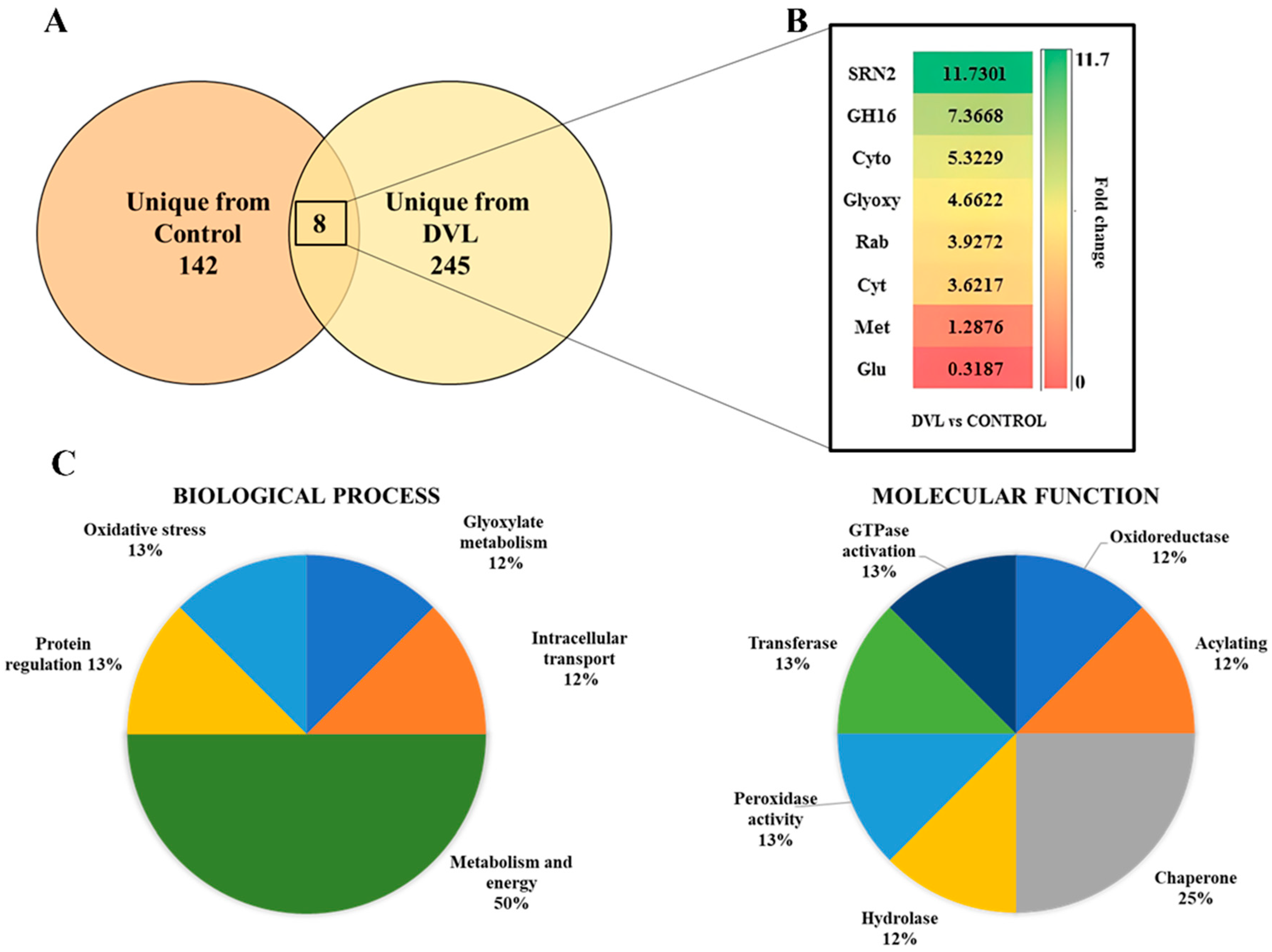
A proteomic approach has been carried out to reveal C. krusei biofilm cell wall proteins in different concentrations of H2O2 that protect cells from oxidative stress [18]. Other studies reveal the importance of using proteomics in understanding Candida resistance to conventional antibiotics [15,19]. To date, no studies have reported the use of proteomic approaches to examine the response of C. krusei to plant lectins. In the present study, LC-ESI-MS/MS analysis was conducted to characterize the protein profiles under different experimental conditions. A total of 395 proteins were identified: 142 in untreated C. krusei cells (Table S1), 245 in DVL-treated cells (Table S2), and 8 detected in both conditions (Table 1; Figure 1B). Among these eight shared proteins, six displayed positive accumulation (fold change > 1.5; p > 0.05, Tukey test), one exhibited negative accumulation (fold change < 0.5; p > 0.05, Tukey test), and one showed no detectable change in abundance (Figure 1A).
Gene Ontology analysis of shared proteins between DVL-treated cells and C. krusei control cells revealed the presence of 5 groups related to biological processes (Figure 1C) and 7 groups related to molecular functions (Figure 1C). The largest representation in biological processes was the Metabolism and Energy group, with 50% of the total. In molecular functions, the Chaperone group was the most representative, totaling 25%.
The predominance of proteins related to metabolism suggests a significant influence of the lectin in this process, as was previously observed in a proteomic study involving fluconazole-resistant Candida, where the predominance of metabolic proteins was also highlighted [20]. The hypothesis that the altered expression of these proteins may be associated with antifungal resistance is consistent with our understanding of the role of metabolism in the adaptation of microorganisms to environmental stresses, including treatment with antifungal agents.

3.2. Proteins Related to Metabolism and Energy

In this group, we found the protein GH16 domain-containing protein with a positive overlap (Table S1). GH16, also known as glycoside hydrolase family 16, is a poly-specific family of β-glycanases involved in the degradation or remodeling of cell wall polysaccharides [21]. The cell wall, a structure composed of mannoproteins linked to a polysaccharide network, is constantly being remodeled, either during processes such as cell division or due to adaptation to stress factors, which explains the expression of the GH16 protein in both treatments [22]. In stressful situations, such as under the action of antifungal drugs, fungi tend to remodel their cell wall quickly and thus adapt to the composition of a new wall [23,24,25].
Our results indicate that, in C. krusei cells, DVL functions as a stressor, exerting direct pressure on the cell wall [4], the up-regulation of GH16 in these cells suggests an adaptive response by Candida, possibly involving intensified synthesis and remodeling of cell wall polymers, to cope with antifungal stress and increase its ability to survive and adapt, and that GH16 also plays a role in cell wall biogenesis [26].
In this same group, the Glutamine amidotransferase type-2 domain-containing protein was identified in both treatments with negative regulation (Table S1). Glutamine amidotransferases (GATs) catalyze the hydrolysis of glutamine and transfer the ammonia generated into various metabolites. It is also responsible for catalyzing the first step of the hexosamine pathway, which is essential for the biosynthesis of cell wall precursors. The function of this protein extends to catalyzing the formation of glucosamine 6-phosphate, which is essential for the synthesis of chitin, an essential component of the fungal cell wall [27,28,29]. Therefore, we propose that the negative regulation of the GAT protein indicates a reduction in the production of these precursors, which directly affects the integrity and function of the cell wall. This allows us to understand that the regulation of this protein plays an important role in the homeostasis of cell wall precursors, ensuring the balanced synthesis of chitin, which is important for the structure and protection of fungal cells.
An interesting finding within this group of proteins was that the expression of proteins unique to each treatment reflects important metabolic adaptations; for example, we identified the exclusive presence of the Hexokinase-1 protein in control cells (Table S1). This protein plays a central role in the glycolytic pathway, catalyzing the conversion of glucose into glucose-6-phosphate [30]. This activity not only contributes to energy generation but is also involved in cell survival and virulence mechanisms [31]. The exclusive presence of this protein in control cells suggests that glucose is abundant in this situation, and C. krusei cells focus on using this metabolic pathway to sustain growth and reproduction, which does not seem to occur in treated cells, given the absence of this protein.
On the other hand, when C. krusei cells were exposed to DVL, we observed a marked metabolic shift, evidenced by the exclusive expression of isocitrate lyase. This enzyme is a key component of the glyoxylate cycle, enabling fungal cells to utilize complex carbon sources, maintain energy production, and generate intermediates essential for gluconeogenesis [32,33]. All this metabolic alteration is fundamental for the survival of these cells in adverse environments, indicating a cellular response to treatment with DVL that can somehow limit the availability of simpler nutrients, such as glucose.

3.3. Proteins Related to Cell Wall Organization

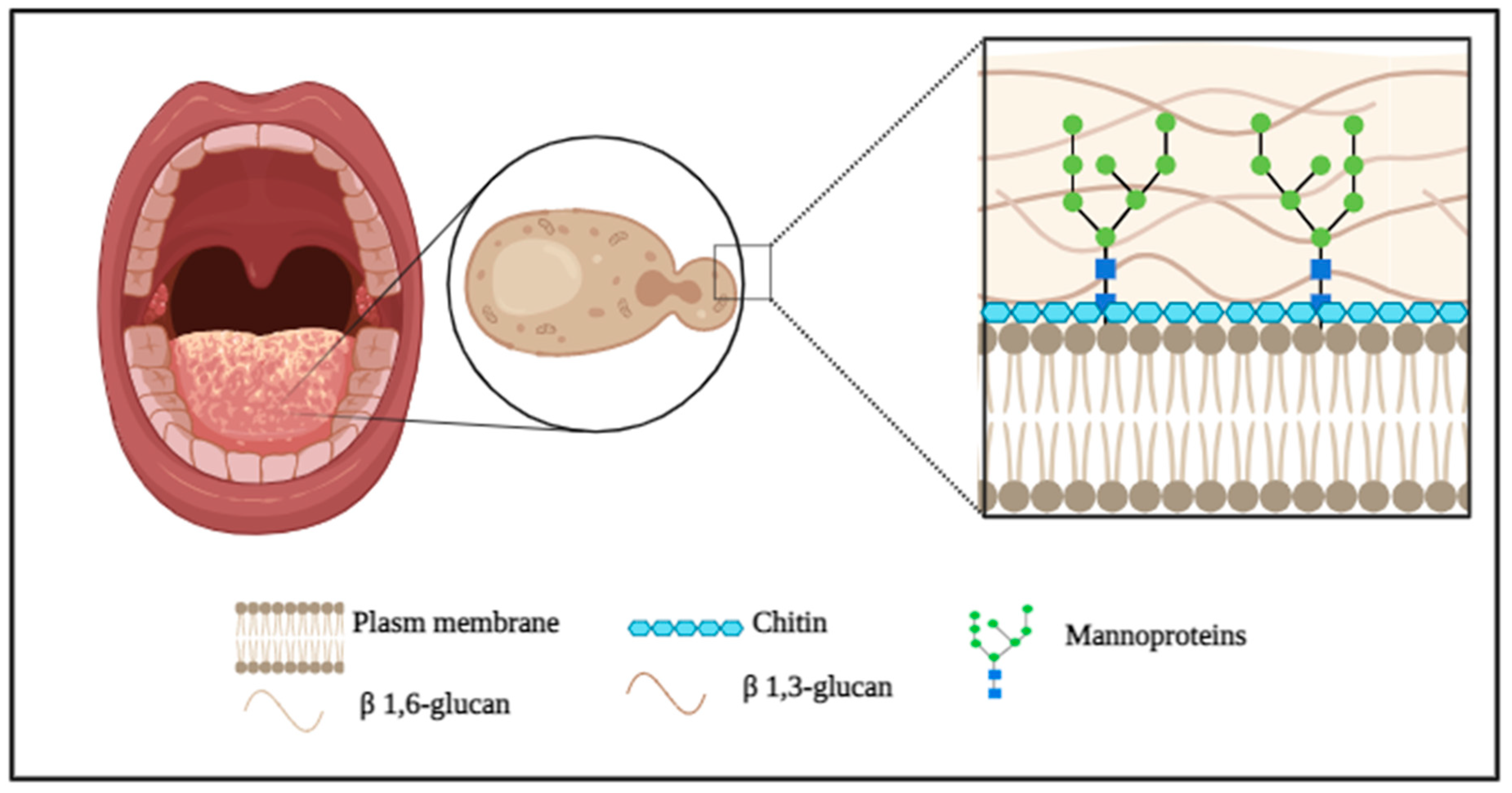
The cell wall is an important defense structure in Candida, it has high flexibility and adaptive capacity, being able to remodel itself in response to environmental stress or the action of antifungals and the proteins linked to the cell wall play a role in the maintenance and integrity of this wall, in addition, act in virulence processes and are important in the elimination of nutrients [23,34]. Its composition is mainly formed by β-1,3- and β-1,6-glucans (glucose polymers), chitin (a polymer of N-acetylglucosamine), and mannoproteins (Figure 2) [23].
The lectin DVL has been shown to act directly on the cell wall of C. krusei, inducing membrane and wall damage that leads to marked structural deformations [4]. In response to these alterations, C. krusei cells exposed to DVL exclusively expressed two proteins linked to the biosynthesis and remodeling of cell-wall components (Table S2).
One of the proteins is 1,3-beta-glucanosyltransferase gel4, which is responsible for the synthesis of the cell wall in fungi. It acts by modifying the polysaccharide β-1,3-glucan, the main component of the cell wall in C. krusei [35,36]. The exclusive presence of this protein suggests an adaptive response of the cells to the damage caused by the DVL, which is an attempt by these cells to reinforce or remodel the cell wall damaged by the treatment.
Another protein exclusively detected was β-mannosyltransferase 8, an enzyme involved in the synthesis of cell-wall mannans. Mannosyltransferases contribute to the formation of these complex carbohydrate polysaccharides, which are essential for the rigidity and structural integrity of the fungal cell wall [37]. DVL, a lectin with a specific affinity for glucose/mannose, acts by damaging the cell wall [4]. We believe that the exclusive expression of the Beta-mannosyltransferase 8 protein in the treated cells is an adaptive response by the organism to the challenge imposed by treatment with DVL. The exclusive expression of this protein can be interpreted as a compensatory mechanism, increasing the biosynthesis of mannans to strengthen or repair the damaged cell wall. This process suggests an intelligent adaptive mechanism of C. krusei cells to resist the damage caused by interaction with the lectin.

3.4. Stress and Defense Response Proteins

Within this group, we find the mitochondrial protein Cytochrome c peroxidase, which is up-regulated (Table 1). Under normal conditions, fungal cells tend to generate Reactive Oxygen Species (ROS) as part of their metabolism to act in growth, development, and pathogenicity, but when they are exposed to stressful situations, such as the action of antifungal drugs, these cells tend to overproduce these ROS, making them toxic [38,39]. It is in this sense that antioxidant enzymes come into play to reduce this toxicity. DVL increases the activity of superoxide dismutase (SOD) while reducing the activities of catalase (CAT) and ascorbate peroxidase (APX), ultimately leading to the accumulation of hydrogen peroxide (H2O2) [4].
Cytochrome c peroxidase acts as an important antioxidant enzyme for the regulation of cellular redox homeostasis by neutralizing ROS, such as H2O2, which is a potent inducer of ROS [40,41,42]. The positive overlap of this protein in cells treated with DVL suggests a response to oxidative stress, where the increase in this protein is a survival strategy.
Supporting this finding that the expression of antioxidant proteins is essential to combat the ROS generated as a result of the stress caused by DVL, the exclusive presence of glutathione S-transferase omega-like 3 was detected in C. krusei cells exposed to DVL (Table S2). Glutathione transferases are commonly known for their detoxifying role in fungal cells, acting to protect these cells from oxidative stress [43,44].

3.5. Transmembrane Transport Proteins

In this group, multidrug transporter proteins were identified exclusively in cells treated with the lectin (Table S2), which are the ABC-type transporter and MFS domain-containing protein. Candida species generally use ABC-type and MFS-type multidrug transporter proteins as a mechanism of resistance to antifungal drugs and to facilitate cell survival, thus resisting cell death [45]. These two types of transporters, from different families, are considered the most relevant contributors to multidrug resistance (MDR) in fungi [46].
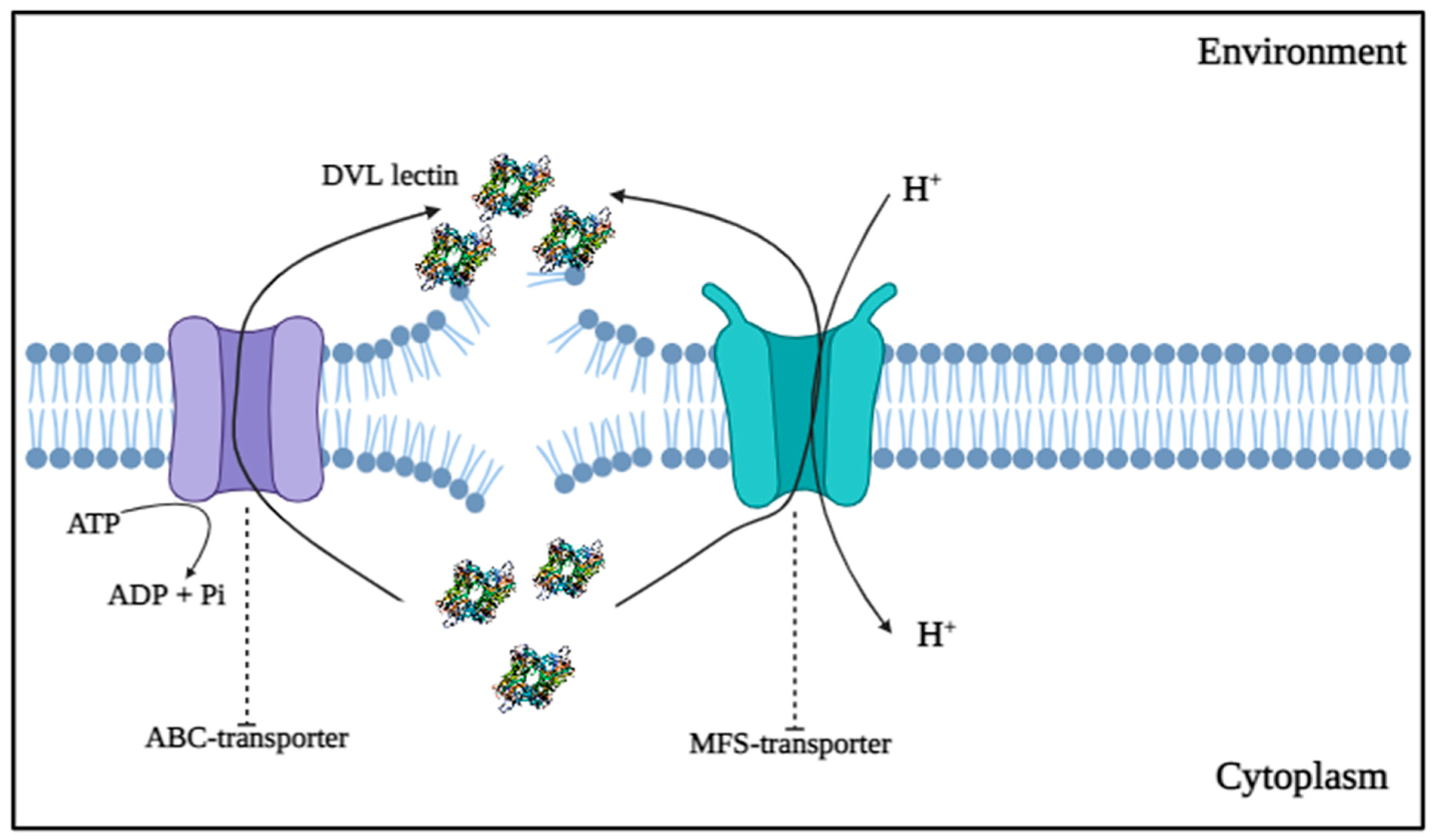
MFS proteins are considered the largest superfamily of multidrug transporters, and the mechanism by which they mediate hyper-resistance in fungi is through DNA amplification and gain-of-function mutations in transcription factors [47], while ABC proteins contribute to MDR by excluding substrates and showing variable transcriptional response towards antifungal drugs [48]. The translocation of xenobiotics (Figure 3) takes place by coupling to ATP hydrolysis in ABC proteins, and in MFS transporters, this translocation is carried out by means of a proton motive force [49].
We believe that C. krusei cells respond to the stress caused by the DVL lectin by expressing these proteins, to export the DVL out of the cell and thus increase their resistance and survival. Another finding in this study is the expression of the MFS domain-containing protein in the control cells (Table S1). This transporter seems to play a basal physiological role, whereas the ABC-type transporter represents an additional defense mechanism activated to counteract the effects of DVL. ABC-type transporters are frequently detected in Candida isolates [48,50].
It is worth mentioning that another function attributed to ABC transporters is the maintenance of sterol homeostasis in the plasma membrane. When yeast cells are under some stress, they tend to alter the ergosterol content of the plasma membrane, and one of the ways of replacing ergosterol is through these proteins, acting in the process of remodeling this membrane [51,52]. ABC transporters act not only in the uptake of ergosterol by the plasma membrane, but also in the redistribution of sterols within the membranes [53,54].
The GDP-mannose transporter protein, found exclusively in the treated cells (Table S2), reinforces our previous findings about the importance of cell wall mannan biosynthesis. The GDP-mannose transporter is essential for mannosylation of mannoproteins, glycosylation of mannans that make up the fungal cell wall and can also act as a potential target for antifungal drugs as it plays an important role in mannan biosynthesis [55,56]. The exclusive presence of this protein suggests that C. krusei is actively using this biosynthetic pathway to increase the production of mannans and consequently strengthen the cell wall, by virtue of repairing the damage caused by the DVL lectin, which has an affinity for the mannose present in the C. krusei cell wall.
We have seen that DVL acts by disturbing the homeostasis of the C. krusei redox system, since it increases the activity of the SOD enzyme and decreases the activity of the CAT and APX enzymes, causing an accumulation of H2O2 [4]. In the cell, this accumulation is reduced precisely by the action of APX, which uses ascorbate (ASC) as an electron donor for H2O2, reducing it to water and thus balancing the ROS content in these cells. In the absence of APX, the cell seeks alternatives for this H2O2 reduction through transmembrane transport proteins, such as the protein identified exclusively in the treated cells (Table S2): Cytochrome b561 domain-containing protein (CYB561) [57,58].
CYB561 is a transmembrane protein that acts in the recycling of ASC, and actively acts in antioxidant defense, in this study we suggest that the expression of this protein is an adaptive response of C. krusei cells to oxidative stress caused by DVL lectin, whereas CYB561 uses ASC as an electron donor to catalyze the reduction of H2O2, alternatively by the reduction of APX [58,59,60].
An interesting finding within this group was the expression of the Oxysterol-binding protein homolog 1, only in the treated cells (Table S2). The main function of this protein is to carry out the intracellular transport of sterols, which are essential components of the cell membrane. Ergosterol is the main sterol in fungi and, among its various roles, susceptibility to stress and treatment with antifungals are the most interesting for the production of new drugs [61,62,63].
In our previous work, we saw that DVL acts by inhibiting ergosterol biosynthesis in C. krusei cells, interfering with lipid homeostasis and intracellular lipid transport, as well as making fungal membranes more susceptible, now the exclusive expression of the protein, Oxysterol-binding protein homolog 1, suggests an adaptive response of these cells to reward the reduction of ergosterol and consequently adjust lipid metabolism, maintaining the integrity of the cell membrane.

3.6. Proteins Related to Lipid Metabolism

Also, as a cellular response to lipid disturbances caused by treatment with the lectin DVL, C. krusei cells express the protein Sterol 3-beta-glucosyltransferase. Sterols in Candida are an essential component of membranes, contributing to their fluidity and integrity, and are important for determining the susceptibility of these cells to stress and antifungal treatments [61]. Sterol 3-beta-glucosyltransferase acts in the modification of these sterols and is involved in cell structure, membrane plasticity, anti-stress, heat shock, and signal transduction [64]. The expression of this protein reinforces the hypothesis of an adaptive mechanism in these cells as a result of treatment with DVL lectin, mainly in response to the reduction in ergosterol biosynthesis caused by the treatment.
Given the great importance of the fungal cell wall for intracellular protection, we now discuss, from a lipid point of view, the importance of the fungal plasma membrane, which contains the enzymes and proteins responsible for cell wall biosynthesis, including some lipids, including phospholipids [65]. The importance of the plasma membrane for the survival of fungi in the face of stressors is well known.
Under the effect of treatment with DVL lectin, C. krusei cells show a reduction in ergosterol biosynthesis, which can compromise the plasma membrane. In addition to the above, another adaptive response that these cells show to compensate for this reduction is the expression of the Phosphatidylserine decarboxylase proenzyme 3 protein, which is responsible for the biosynthesis of phospholipids and is essential for fungal growth [66]. This protein converts phosphatidylserine into phosphatidylethanolamine, which is one of the main phospholipids found in biological membranes [67]. Increased production of phospholipids via expression of Phosphatidylserine decarboxylase proenzyme 3 has the effect of helping to stabilize the cell membrane and compensate for ergosterol deficiency.

3.7. DNA Repair Proteins

In this group, several proteins relevant to fungal survival and proliferation were detected in both treated cells (Table S2) and control cells (Table S1). In the treated cells specifically, the following proteins were identified: proliferating cell nuclear antigen, DNA polymerase lambda, DNA ligase, and DNA topoisomerase 2.
Proliferating cell nuclear antigen (PCNA) is a protein with a central role in cell replication and is involved in several protein factors in response to DNA damage, as well as being a therapeutic target for several diseases [68,69], an important finding is that PCNA accelerates the rate of nucleotide incorporation, carried out by DNA polymerase in yeast cells and helps in the DNA repair process carried out by DNA ligase, that is, the three proteins act concomitantly in the DNA repair process caused by DVL lectin in C. krusei cells [70,71]. DNA polymerase and DNA ligase were other proteins expressed in C. krusei cells treated with DVL, which perform DNA repair through different pathways [72].
Another protein found exclusively in the treated cells (Table S2) is DNA topoisomerase 2, which is a protein that plays an important role in cell growth and DNA repair, as well as acting on genome integrity [73,74]. The joint expression of these proteins is a response of the cells to treatment with DVL, where both play a significant role in ensuring the replication and repair of DNA damaged by the treatment. This adaptive response allows the treated cells to survive and proliferate even under the stress of treatment with the lectin.

3.8. Oxidoreductase-Related Proteins

Within this group, we found the protein: Cytochrome P450 monooxygenase, exclusively in the control cells (Table S1), indicating a possible inhibition of this protein in the treated cells. Commonly, in fungi, P450 is related to primary and secondary metabolic processes, acting in detoxification processes against pollutants and in the degradation of xenobiotic compounds [75,76].
Another important role of Cytochrome P450 monooxygenase is its participation in ergosterol synthesis, virulence processes, and the production of secondary metabolites in fungi [77]. Its absence in cells treated with DVL lectin suggests an interruption of these biosynthetic and detoxification processes and reinforces our findings by directly affecting the integrity of the cell membrane and the ability of C. krusei to adapt to treatment.
Lectin-based antifungals represent a promising therapeutic strategy because they exploit a unique mechanism of action. By inducing change in the cell proteomics leading to change in pathways important to cell’s life lectin emerges as a potential antifungal molecule. By doing that, the clinical relevance of lectins relies on two major advantages: (1) a reduced likelihood of cross-resistance with current azole, polyene, or echinocandin therapies, and (2) potentially lower toxicity to human cells. Moreover, lectins may be particularly valuable against multidrug-resistant species. However, clinical translation will require careful optimization to mitigate potential immunogenicity and ensure stability, bioavailability, and safety in vivo.

4. Conclusions

The results of this study reveal significant insights into how C. krusei cells respond to treatment with the lectin DVL, highlighting the complexity of the cellular mechanisms involved in adapting to stress. Our proteomic analysis revealed the identification of key proteins involved in various biological processes, ranging from energy metabolism, cell wall synthesis, transport proteins, to modification of lipid metabolism, providing a comprehensive view of the strategies adopted by the fungus to face the challenge imposed by DVL. Broadening our view of the mechanisms of resistance of C. krusei results in paving the way for more effective and innovative antifungal therapies.

Supplementary Materials

The following supporting information can be downloaded at: https://www.mdpi.com/article/10.3390/antibiotics14121228/s1, Table S1: Unique proteins identified in the control-NaCl group by ESI-LC-MS/MS. Table S2: Unique proteins identified in the DVL lectin-treated group by ESI-LC-MS/MS.

Author Contributions

Conceptualization, R.R.S.S., R.J.P.C., M.H.C.S., A.L.E.S., R.F.C., C.S.N., P.F.N.S. and C.S.T.; Methodology: R.R.S.S., R.J.P.C., M.H.C.S., A.L.E.S., R.F.C., C.S.N., P.F.N.S. and C.S.T.; Software, R.F.C. and C.S.N.; Formal analysis, R.F.C. and C.S.N.; Investigation, R.F.C. and C.S.N.; Resources, P.F.N.S. and C.S.T.; Data curation, P.F.N.S. and C.S.T.; Writing—original draft, R.R.S.S., P.F.N.S. and C.S.T.; Writing—review & editing, P.F.N.S.; Funding acquisition, P.F.N.S. and C.S.T. All authors have read and agreed to the published version of the manuscript.

Funding

Pedro Filho Noronha Souza thanks the CNPq for the research productivity grant (Process number: 305003/2022-4) and the National Institute of Science and Technology in Human Pathogenic Fungi (FUNVIR-405934/2022-0) for supporting this study. Pedro Filho Noronha Souza also thanks the Cearense Foundation to Support Scientific and Technological Development (FUNCAP) for the visiting research grant (process No. PVS-0215 00099.01.00/23). We also thank Coordenação de Aperfeiçoamento de Pessoal de Nível Superior (CAPES) for the student grant. Pedro F. N. Souza also thanks the National Institute of Science and Technology INCT Bioinspir – Bioinspired Molecules as Innovative Solutions for Agricultural Challenges, funded by CNPq (National Council for Scientific and Technological Development), FUNDECT (Foundation for the Support of the Development of Education, Science and Technology of the State of Mato Grosso do Sul), and CAPES (Coordination for the Improvement of Higher Education Personnel).

Institutional Review Board Statement

Not applicable.

Informed Consent Statement

Not applicable.

Data Availability Statement

The original contributions presented in this study are included in the article/Supplementary Materials. Further inquiries can be directed at the corresponding authors.

Conflicts of Interest

The authors declare no conflicts of interest.

References

  1. De Schutter, K.; Van Damme, E. Protein-Carbohydrate Interactions, and Beyond …. Molecules 2015, 20, 15202–15205. [Google Scholar] [CrossRef]
  2. Van Damme, E.J.M.; Peumans, W.J.; Barre, A.; Rougé, P. Plant Lectins: A Composite of Several Distinct Families of Structurally and Evolutionary Related Proteins with Diverse Biological Roles. CRC Crit. Rev. Plant. Sci. 1998, 17, 575–692. [Google Scholar] [CrossRef]
  3. Del Rio, M.; de la Canal, L.; Pinedo, M.; Regente, M. Internalization of a Sunflower Mannose-Binding Lectin into Phytopathogenic Fungal Cells Induces Cytotoxicity. J. Plant Physiol. 2018, 221, 22–31. [Google Scholar] [CrossRef] [PubMed]
  4. Silva, R.R.S.; Malveira, E.A.; Aguiar, T.K.B.; Neto, N.A.S.; Roma, R.R.; Santos, M.H.C.; Santos, A.L.E.; Silva, A.F.B.; Freitas, C.D.T.; Rocha, B.A.M.; et al. DVL, Lectin from Dioclea Violacea Seeds, Has Multiples Mechanisms of Action against Candida Spp. via Carbohydrate Recognition Domain. Chem. Biol. Interact. 2023, 382, 110639. [Google Scholar] [CrossRef] [PubMed]
  5. Lee, Y.; Puumala, E.; Robbins, N.; Cowen, L.E. Antifungal Drug Resistance: Molecular Mechanisms in Candida albicans and Beyond. Chem. Rev. 2021, 121, 3390–3411. [Google Scholar] [CrossRef]
  6. Whaley, S.G.; Berkow, E.L.; Rybak, J.M.; Nishimoto, A.T.; Barker, K.S.; Rogers, P.D. Azole Antifungal Resistance in Candida albicans and Emerging Non-Albicans Candida Species. Front. Microbiol. 2017, 7, 2173. [Google Scholar] [CrossRef]
  7. Gómez-Gaviria, M.; Mora-Montes, H.M. Current Aspects in the Biology, Pathogeny, and Treatment of Candida krusei, a Neglected Fungal Pathogen. Infect. Drug Resist. 2020, 13, 1673–1689. [Google Scholar] [CrossRef]
  8. Jamiu, A.T.; Albertyn, J.; Sebolai, O.M.; Pohl, C.H. Update on Candida krusei, a Potential Multidrug-Resistant Pathogen. Med. Mycol. 2021, 59, 14–30. [Google Scholar] [CrossRef]
  9. Laemmli, U.K. Cleavage of Structural Proteins during the Assembly of the Head of Bacteriophage T4. Nature 1970, 227, 680–685. [Google Scholar] [CrossRef]
  10. Branco, L.A.C.; Souza, P.F.N.; Neto, N.A.S.; Aguiar, T.K.B.; Silva, A.F.B.; Carneiro, R.F.; Nagano, C.S.; Mesquita, F.P.; Lima, L.B.; Freitas, C.D.T. New Insights into the Mechanism of Antibacterial Action of Synthetic Peptide Mo-CBP3-PepI against Klebsiella pneumoniae. Antibiotics 2022, 11, 1753. [Google Scholar] [CrossRef]
  11. Bradford, M.M. A Rapid and Sensitive Method for the Quantitation of Microgram Quantities of Protein Utilizing the Principle of Protein-Dye Binding. Anal. Biochem. 1976, 72, 248–254. [Google Scholar] [CrossRef] [PubMed]
  12. Santos, V.F.; Araújo, A.C.J.; Silva, A.L.F.; Almeida, D.V.; Freitas, P.R.; Santos, A.L.E.; Rocha, B.A.M.; Garcia, W.; Leme, A.M.; Bondan, E.; et al. Dioclea violacea Lectin Modulates the Gentamicin Activity against Multi-Resistant Strains and Induces Nefroprotection during Antibiotic Exposure. Int. J. Biol. Macromol. 2020, 146, 841–852. [Google Scholar] [CrossRef]
  13. Gonçalves, B.; Azevedo, N.; Osório, H.; Henriques, M.; Silva, S. Revealing Candida glabrata Biofilm Matrix Proteome: Global Characterization and PH Response. Biochem. J. 2021, 478, 961–974. [Google Scholar] [CrossRef] [PubMed]
  14. Mukherjee, S.; Kundu, I.; Askari, M.; Barai, R.S.; Venkatesh, K.V.; Idicula-Thomas, S. Exploring the Druggable Proteome of Candida Species through Comprehensive Computational Analysis. Genomics 2021, 113, 728–739. [Google Scholar] [CrossRef]
  15. Song, N.; Zhou, X.; Li, D.; Li, X.; Liu, W. A Proteomic Landscape of Candida albicans in the Stepwise Evolution to Fluconazole Resistance. Antimicrob. Agents Chemother. 2022, 66, e0210521. [Google Scholar] [CrossRef]
  16. Alhameed, R.A.; Semreen, M.H.; Hamad, M.; Giddey, A.D.; Sulaiman, A.; Al Bataineh, M.T.; Al-Hroub, H.M.; Bustanji, Y.; Alzoubi, K.H.; Soares, N.C. Multi-Omics Profiling of Candida albicans Grown on Solid Versus Liquid Media. Microorganisms 2023, 11, 2831. [Google Scholar] [CrossRef]
  17. Arribas, V.; Monteoliva, L.; Hernáez, M.L.; Gil, C.; Molero, G. Unravelling the Role of Candida albicans Prn1 in the Oxidative Stress Response through a Proteomics Approach. Antioxidants 2024, 13, 527. [Google Scholar] [CrossRef]
  18. Serrano-Fujarte, I.; López-Romero, E.; Cuéllar-Cruz, M. Moonlight-like Proteins of the Cell Wall Protect Sessile Cells of Candida from Oxidative Stress. Microb. Pathog. 2016, 90, 22–33. [Google Scholar] [CrossRef]
  19. Abdulghani, M.; Iram, R.; Chidrawar, P.; Bhosle, K.; Kazi, R.; Patil, R.; Kharat, K.; Zore, G. Proteomic Profile of Candida albicans Biofilm. J. Proteom. 2022, 265, 104661. [Google Scholar] [CrossRef] [PubMed]
  20. Yan, L.; Zhang, J.-D.; Cao, Y.-B.; Gao, P.-H.; Jiang, Y.-Y. Proteomic Analysis Reveals a Metabolism Shift in a Laboratory Fluconazole-Resistant Candida albicans Strain. J. Proteome Res. 2007, 6, 2248–2256. [Google Scholar] [CrossRef]
  21. Viborg, A.H.; Terrapon, N.; Lombard, V.; Michel, G.; Czjzek, M.; Henrissat, B.; Brumer, H. A Subfamily Roadmap of the Evolutionarily Diverse Glycoside Hydrolase Family 16 (GH16). J. Biol. Chem. 2019, 294, 15973–15986. [Google Scholar] [CrossRef] [PubMed]
  22. Novačić, A.; Vučenović, I.; Primig, M.; Stuparević, I. Non-Coding RNAs as Cell Wall Regulators in Saccharomyces Cerevisiae. Crit. Rev. Microbiol. 2020, 46, 15–25. [Google Scholar] [CrossRef] [PubMed]
  23. Ene, I.V.; Heilmann, C.J.; Sorgo, A.G.; Walker, L.A.; de Koster, C.G.; Munro, C.A.; Klis, F.M.; Brown, A.J.P. Carbon Source-induced Reprogramming of the Cell Wall Proteome and Secretome Modulates the Adherence and Drug Resistance of the Fungal Pathogen Candida Albicans. Proteomics 2012, 12, 3164–3179. [Google Scholar] [CrossRef]
  24. Brown, A.J.P.; Budge, S.; Kaloriti, D.; Tillmann, A.; Jacobsen, M.D.; Yin, Z.; Ene, I.V.; Bohovych, I.; Sandai, D.; Kastora, S.; et al. Stress Adaptation in a Pathogenic Fungus. J. Exp. Biol. 2014, 217, 144–155. [Google Scholar] [CrossRef]
  25. Ene, I.V.; Walker, L.A.; Schiavone, M.; Lee, K.K.; Martin-Yken, H.; Dague, E.; Gow, N.A.R.; Munro, C.A.; Brown, A.J.P. Cell Wall Remodeling Enzymes Modulate Fungal Cell Wall Elasticity and Osmotic Stress Resistance. mBio 2015, 6, e00986. [Google Scholar] [CrossRef]
  26. Patel, P.; Free, S.J. Characterization of Neurospora Crassa GH16, GH17, and GH72 Gene Families of Cell Wall Crosslinking Enzymes. Cell Surf. 2022, 8, 100073. [Google Scholar] [CrossRef]
  27. Endo, A.; Kakiki, K.; Misato, T. Feedback Inhibition of L-Glutamine D-Fructose 6-Phosphate Amidotransferase by Uridine Diphosphate N-Acetylglucosamine in Neurospora crassa. J. Bacteriol. 1970, 103, 588–594. [Google Scholar] [CrossRef]
  28. Smith, R.J.; Milewski, S.; Brown, A.J.; Gooday, G.W. Isolation and Characterization of the GFA1 Gene Encoding the Glutamine:Fructose-6-Phosphate Amidotransferase of Candida albicans. J. Bacteriol. 1996, 178, 2320–2327. [Google Scholar] [CrossRef][Green Version]
  29. Ballut, L.; Violot, S.; Kumar, S.; Aghajari, N.; Balaram, H. GMP Synthetase: Allostery, Structure, and Function. Biomolecules 2023, 13, 1379. [Google Scholar] [CrossRef]
  30. Rodríguez-Saavedra, C.; Morgado-Martínez, L.E.; Burgos-Palacios, A.; King-Díaz, B.; López-Coria, M.; Sánchez-Nieto, S. Moonlighting Proteins: The Case of the Hexokinases. Front. Mol. Biosci. 2021, 8, 701975. [Google Scholar] [CrossRef] [PubMed]
  31. Laurian, R.; Dementhon, K.; Doumèche, B.; Soulard, A.; Noel, T.; Lemaire, M.; Cotton, P. Hexokinase and Glucokinases Are Essential for Fitness and Virulence in the Pathogenic Yeast Candida albicans. Front. Microbiol. 2019, 10, 327. [Google Scholar] [CrossRef]
  32. Munir, E.; Hattori, T.; Shimada, M. Purification and Characterization of Isocitrate Lyase from the Wood-Destroying Basidiomycete Fomitopsis Palustris Grown on Glucose. Arch. Biochem. Biophys. 2002, 399, 225–231. [Google Scholar] [CrossRef]
  33. Huang, Z.; Wang, Q.; Khan, I.A.; Li, Y.; Wang, J.; Wang, J.; Liu, X.; Lin, F.; Lu, J. The Methylcitrate Cycle and Its Crosstalk with the Glyoxylate Cycle and Tricarboxylic Acid Cycle in Pathogenic Fungi. Molecules 2023, 28, 6667. [Google Scholar] [CrossRef]
  34. d’Enfert, C.; Kaune, A.-K.; Alaban, L.-R.; Chakraborty, S.; Cole, N.; Delavy, M.; Kosmala, D.; Marsaux, B.; Fróis-Martins, R.; Morelli, M.; et al. The Impact of the Fungus-Host-Microbiota Interplay upon Candida albicans Infections: Current Knowledge and New Perspectives. FEMS Microbiol. Rev. 2021, 45, fuaa060. [Google Scholar] [CrossRef]
  35. Fibriansah, G.; Masuda, S.; Koizumi, N.; Nakamura, S.; Kumasaka, T. The 1.3 Å Crystal Structure of a Novel Endo-β-1,3-glucanase of Glycoside Hydrolase Family 16 from Alkaliphilic Nocardiopsis sp. Strain F96. Proteins Struct. Funct. Bioinform. 2007, 69, 683–690. [Google Scholar] [CrossRef]
  36. Mouyna, I.; Hartl, L.; Latgé, J.-P. β-1,3-Glucan Modifying Enzymes in Aspergillus fumigatus. Front. Microbiol. 2013, 4, 81. [Google Scholar] [CrossRef] [PubMed]
  37. Henry, C.; Li, J.; Danion, F.; Alcazar-Fuoli, L.; Mellado, E.; Beau, R.; Jouvion, G.; Latgé, J.-P.; Fontaine, T. Two KTR Mannosyltransferases Are Responsible for the Biosynthesis of Cell Wall Mannans and Control Polarized Growth in Aspergillus fumigatus. mBio 2019, 10, e02647-18. [Google Scholar] [CrossRef]
  38. Rinnerthaler, M.; Büttner, S.; Laun, P.; Heeren, G.; Felder, T.K.; Klinger, H.; Weinberger, M.; Stolze, K.; Grousl, T.; Hasek, J.; et al. Yno1p/Aim14p, a NADPH-Oxidase Ortholog, Controls Extramitochondrial Reactive Oxygen Species Generation, Apoptosis, and Actin Cable Formation in Yeast. Proc. Natl. Acad. Sci. USA 2012, 109, 8658–8663. [Google Scholar] [CrossRef]
  39. Zhang, Z.; Chen, Y.; Li, B.; Chen, T.; Tian, S. Reactive Oxygen Species: A Generalist in Regulating Development and Pathogenicity of Phytopathogenic Fungi. Comput. Struct. Biotechnol. J. 2020, 18, 3344–3349. [Google Scholar] [CrossRef] [PubMed]
  40. Giles, S.; Perfect, J.; Cox, G. Cytochrome Peroxidase Contributes to the Antioxidant Defense of Cryptococcus neoformans. Fungal Genet. Biol. 2005, 42, 20–29. [Google Scholar] [CrossRef] [PubMed]
  41. Shin, Y.; Lee, S.; Ku, M.; Kwak, M.-K.; Kang, S.-O. Cytochrome c Peroxidase Regulates Intracellular Reactive Oxygen Species and Methylglyoxal via Enzyme Activities of Erythroascorbate Peroxidase and Glutathione-Related Enzymes in Candida albicans. Int. J. Biochem. Cell Biol. 2017, 92, 183–201. [Google Scholar] [CrossRef] [PubMed]
  42. Cui, Y.; Wang, D.; Nobile, C.J.; Dong, D.; Ni, Q.; Su, T.; Jiang, C.; Peng, Y. Systematic Identification and Characterization of Five Transcription Factors Mediating the Oxidative Stress Response in Candida albicans. Microb. Pathog. 2024, 187, 106507. [Google Scholar] [CrossRef] [PubMed]
  43. Osman, W.H.W.; Lin, M.-I.; Kondo, K.; Nagata, T.; Katahira, M. Characterization of the Glutathione S-Transferases That Belong to the GSTFuA Class in Ceriporiopsis Subvermispora: Implications in Intracellular Detoxification and Metabolism of Wood-Derived Compounds. Int. J. Biol. Macromol. 2018, 113, 1158–1166. [Google Scholar] [CrossRef]
  44. Wan Osman, W.H.; Mikami, B.; Saka, N.; Kondo, K.; Nagata, T.; Katahira, M. Structure of a Serine-Type Glutathione S-Transferase of Ceriporiopsis Subvermispora and Identification of the Enzymatically Important Non-Canonical Residues by Functional Mutagenesis. Biochem. Biophys. Res. Commun. 2019, 510, 177–183. [Google Scholar] [CrossRef] [PubMed]
  45. Prasad, R.; Nair, R.; Banerjee, A. Multidrug Transporters of Candida Species in Clinical Azole Resistance. Fungal Genet. Biol. 2019, 132, 103252. [Google Scholar] [CrossRef]
  46. Redhu, A.K.; Shah, A.H.; Prasad, R. MFS Transporters of Candida Species and Their Role in Clinical Drug Resistance. FEMS Yeast Res. 2016, 16, fow043. [Google Scholar] [CrossRef]
  47. Banerjee, A.; Rahman, H.; Prasad, R.; Golin, J. How Fungal Multidrug Transporters Mediate Hyper Resistance through DNA Amplification and Mutation. Mol. Microbiol. 2022, 118, 3–15. [Google Scholar] [CrossRef]
  48. Kumari, S.; Kumar, M.; Khandelwal, N.K.; Kumari, P.; Varma, M.; Vishwakarma, P.; Shahi, G.; Sharma, S.; Lynn, A.M.; Prasad, R.; et al. ABC Transportome Inventory of Human Pathogenic Yeast Candida glabrata: Phylogenetic and Expression Analysis. PLoS ONE 2018, 13, e0202993. [Google Scholar] [CrossRef]
  49. Knorre, D.A.; Galkina, K.V.; Shirokovskikh, T.; Banerjee, A.; Prasad, R. Do Multiple Drug Resistance Transporters Interfere with Cell Functioning under Normal Conditions? Biochemistry 2020, 85, 1560–1569. [Google Scholar] [CrossRef]
  50. Khandelwal, N.K.; Kaemmer, P.; Förster, T.M.; Singh, A.; Coste, A.T.; Andes, D.R.; Hube, B.; Sanglard, D.; Chauhan, N.; Kaur, R.; et al. Pleiotropic Effects of the Vacuolar ABC Transporter MLT1 of Candida albicans on Cell Function and Virulence. Biochem. J. 2016, 473, 1537–1552. [Google Scholar] [CrossRef]
  51. Cabrito, T.R.; Teixeira, M.C.; Singh, A.; Prasad, R.; Sá-Correia, I. The Yeast ABC Transporter Pdr18 (ORF YNR070w) Controls Plasma Membrane Sterol Composition, Playing a Role in Multidrug Resistance. Biochem. J. 2011, 440, 195–202. [Google Scholar] [CrossRef]
  52. Montañés, F.M.; Pascual-Ahuir, A.; Proft, M. Repression of Ergosterol Biosynthesis Is Essential for Stress Resistance and Is Mediated by the Hog1 MAP Kinase and the Mot3 and Rox1 Transcription Factors. Mol. Microbiol. 2011, 79, 1008–1023. [Google Scholar] [CrossRef]
  53. Liu, S.-L.; Sheng, R.; Jung, J.H.; Wang, L.; Stec, E.; O’Connor, M.J.; Song, S.; Bikkavilli, R.K.; Winn, R.A.; Lee, D.; et al. Orthogonal Lipid Sensors Identify Transbilayer Asymmetry of Plasma Membrane Cholesterol. Nat. Chem. Biol. 2017, 13, 268–274. [Google Scholar] [CrossRef] [PubMed]
  54. Solanko, L.M.; Sullivan, D.P.; Sere, Y.Y.; Szomek, M.; Lunding, A.; Solanko, K.A.; Pizovic, A.; Stanchev, L.D.; Pomorski, T.G.; Menon, A.K.; et al. Ergosterol Is Mainly Located in the Cytoplasmic Leaflet of the Yeast Plasma Membrane. Traffic 2018, 19, 198–214. [Google Scholar] [CrossRef]
  55. Costachel, C.; Coddeville, B.; Latgé, J.-P.; Fontaine, T. Glycosylphosphatidylinositol-Anchored Fungal Polysaccharide in Aspergillus fumigatus. J. Biol. Chem. 2005, 280, 39835–39842. [Google Scholar] [CrossRef]
  56. Kadry, A.A.; El-Ganiny, A.M.; Mosbah, R.A.; Kaminskyj, S.G.W. Deletion of Aspergillus nidulans GDP-Mannose Transporters Affects Hyphal Morphometry, Cell Wall Architecture, Spore Surface Character, Cell Adhesion, and Biofilm Formation. Med. Mycol. 2018, 56, 621–630. [Google Scholar] [CrossRef] [PubMed]
  57. Foyer, C.H.; Noctor, G. Ascorbate and Glutathione: The Heart of the Redox Hub. Plant Physiol. 2011, 155, 2–18. [Google Scholar] [CrossRef] [PubMed]
  58. Asard, H.; Barbaro, R.; Trost, P.; Bérczi, A. Cytochromes b 561: Ascorbate-Mediated Trans-Membrane Electron Transport. Antioxid. Redox Signal. 2013, 19, 1026–1035. [Google Scholar] [CrossRef]
  59. Verelst, W.; Asard, H. A Phylogenetic Study of Cytochrome B561 Proteins. Genome Biol. 2003, 4, R38. [Google Scholar] [CrossRef]
  60. Yang, X.; Zhao, Y.; Shao, Q.; Jiang, G. Cytochrome B561 Serves as a Potential Prognostic Biomarker and Target for Breast Cancer. Int. J. Gen. Med. 2021, 14, 10447–10464. [Google Scholar] [CrossRef]
  61. Lv, Q.; Yan, L.; Jiang, Y. The Synthesis, Regulation, and Functions of Sterols in Candida albicans: Well-Known but Still Lots to Learn. Virulence 2016, 7, 649–659. [Google Scholar] [CrossRef]
  62. Najle, S.R.; Molina, M.C.; Ruiz-Trillo, I.; Uttaro, A.D. Sterol Metabolism in the Filasterean Capsaspora Owczarzaki Has Features That Resemble Both Fungi and Animals. Open Biol. 2016, 6, 160029. [Google Scholar] [CrossRef]
  63. Tian, S.; Ohta, A.; Horiuchi, H.; Fukuda, R. Oxysterol-Binding Protein Homologs Mediate Sterol Transport from the Endoplasmic Reticulum to Mitochondria in Yeast. J. Biol. Chem. 2018, 293, 5636–5648. [Google Scholar] [CrossRef]
  64. Grille, S.; Zaslawski, A.; Thiele, S.; Plat, J.; Warnecke, D. The Functions of Steryl Glycosides Come to Those Who Wait: Recent Advances in Plants, Fungi, Bacteria and Animals. Prog. Lipid Res. 2010, 49, 262–288. [Google Scholar] [CrossRef]
  65. Pan, J.; Hu, C.; Yu, J.-H. Lipid Biosynthesis as an Antifungal Target. J. Fungi 2018, 4, 50. [Google Scholar] [CrossRef] [PubMed]
  66. Choi, J.; Kumar, V.; Pachikara, N.; Garg, A.; Lawres, L.; Toh, J.Y.; Voelker, D.R.; Ben Mamoun, C. Characterization of Plasmodium Phosphatidylserine Decarboxylase Expressed in Yeast and Application for Inhibitor Screening. Mol. Microbiol. 2016, 99, 999–1014. [Google Scholar] [CrossRef] [PubMed]
  67. Takagi, K.; Kikkawa, A.; Iwama, R.; Fukuda, R.; Horiuchi, H. Type II Phosphatidylserine Decarboxylase Is Crucial for the Growth and Morphogenesis of the Filamentous Fungus Aspergillus nidulans. J. Biosci. Bioeng. 2021, 131, 139–146. [Google Scholar] [CrossRef] [PubMed]
  68. Wang, S.-C. PCNA: A Silent Housekeeper or a Potential Therapeutic Target? Trends Pharmacol. Sci. 2014, 35, 178–186. [Google Scholar] [CrossRef]
  69. Sundaram, R.; Manohar, K.; Patel, S.K.; Acharya, N.; Vasudevan, D. Structural Analyses of PCNA from the Fungal Pathogen Candida albicans Identify Three Regions with Species-specific Conformations. FEBS Lett. 2021, 595, 1328–1349. [Google Scholar] [CrossRef]
  70. Sverzhinsky, A.; Pascal, J.M. DNA Damage Repair—Investigating the Conformations of DNA Ligase and PCNA. Acta Crystallogr. A Found Adv. 2018, 74, a279. [Google Scholar] [CrossRef]
  71. Mondol, T.; Stodola, J.L.; Galletto, R.; Burgers, P.M. PCNA Accelerates the Nucleotide Incorporation Rate by DNA Polymerase δ. Nucleic Acids Res. 2019, 47, 1977–1986. [Google Scholar] [CrossRef]
  72. van Loon, B.; Hübscher, U.; Maga, G. Living on the Edge: DNA Polymerase Lambda between Genome Stability and Mutagenesis. Chem. Res. Toxicol. 2017, 30, 1936–1941. [Google Scholar] [CrossRef]
  73. Bollimpelli, V.S.; Dholaniya, P.S.; Kondapi, A.K. Topoisomerase IIβ and Its Role in Different Biological Contexts. Arch. Biochem. Biophys. 2017, 633, 78–84. [Google Scholar] [CrossRef] [PubMed]
  74. Joshi, R.; Nikolaou, C.; Roca, J. Structure and Chromosomal Organization of Yeast Genes Regulated by Topoisomerase II. Int. J. Mol. Sci. 2018, 19, 134. [Google Scholar] [CrossRef] [PubMed]
  75. Črešnar, B.; Petrič, Š. Cytochrome P450 Enzymes in the Fungal Kingdom. Biochim. Biophys. Acta (BBA)—Proteins Proteom. 2011, 1814, 29–35. [Google Scholar] [CrossRef] [PubMed]
  76. Jawallapersand, P.; Mashele, S.S.; Kovačič, L.; Stojan, J.; Komel, R.; Pakala, S.B.; Kraševec, N.; Syed, K. Cytochrome P450 Monooxygenase CYP53 Family in Fungi: Comparative Structural and Evolutionary Analysis and Its Role as a Common Alternative Anti-Fungal Drug Target. PLoS ONE 2014, 9, e107209. [Google Scholar] [CrossRef]
  77. Shin, J.; Kim, J.-E.; Lee, Y.-W.; Son, H. Fungal Cytochrome P450s and the P450 Complement (CYPome) of Fusarium Graminearum. Toxins 2018, 10, 112. [Google Scholar] [CrossRef]
Figure 1. Differentially accumulated proteins in C. krusei cells treated with the lectin DVL. In (A), the Venn diagram highlights the differential distribution of proteins in single treated and untreated cells from each group and the overlapping protein found in both groups with differential accumulation. (B) Proteins are classified according to biological processes. (C) Proteins are classified according to molecular function.
Antibiotics 14 01228 g001
Figure 2. Structural organization and composition of the C. krusei cell wall.
Antibiotics 14 01228 g002
Figure 3. Mechanism of action of the multidrug transporter proteins ABC and MEFS in response to the action of the lectin DVL in C. krusei. The ABC multidrug transporter protein (left) carries out drug efflux through ATP hydrolysis, while the MFS multidrug transporter protein (right) performs efflux through proton translocation.
Antibiotics 14 01228 g003
Table 1. Overlapping proteins identified in control and treated cells of C. krusei by LC-ESI-MS/MS analysis.
ProteinID (Uniprot)Organism ReferenceCellular CompartmentFold-Change DVL vs. NaCl 0.15 M
Glyoxylate metabolism
Glyoxylate reductase 1P53839Saccharomyces cerevisiae (strain ATCC 204508/S288c)Cytoplasm4.662
Intracellular transport
Protein SRN2Q99176Saccharomyces cerevisiae (strain ATCC 204508/S288c)Endosome11.730
Metabolism and energy
Methylmalonate-semialdehyde dehydrogenase (CoA acylating)A0A2H3I2J3Fusarium oxysporum f. sp. radicis-cucumerinumCytoplasm1.288
Glutamine amidotransferase type-2 domain-containing proteinA0A2H3HPJ2Fusarium oxysporum f. sp. radicis-cucumerinumCytoplasm0.319
Cytochrome b mRNA-processing protein 4 A0A2H3H0U5Fusarium oxysporum f. sp. radicis-cucumerinumMitochondrial inner membrane3.622
GH16 domain-containing proteinA0A2H3HG97Fusarium oxysporum f. sp. radicis-cucumerinumCell wall7.367
Protein regulation
Rab-GAP TBC domain-containing proteinA0A2H3HUM8Fusarium oxysporum f. sp. radicis-cucumerinumCell Membrane3.927
Oxidative stress
Cytochrome c peroxidase, mitochondrialQ4WPF8Aspergillus fumigatus (strain ATCC MYA-4609/CBS 101355/FGSC A1100/Af293)Mitochondrial matrix5.323
Disclaimer/Publisher’s Note: The statements, opinions and data contained in all publications are solely those of the individual author(s) and contributor(s) and not of MDPI and/or the editor(s). MDPI and/or the editor(s) disclaim responsibility for any injury to people or property resulting from any ideas, methods, instructions or products referred to in the content.