Accessing Citrus and Soybean Flavonoids as Potential Efflux Pump Inhibitors in Drug-Resistant Escherichia coli


Abstract
1. Introduction
2. Results and Discussion
2.1. Modulation Assay for Flavonoids Against Drug-Resistant E. coli
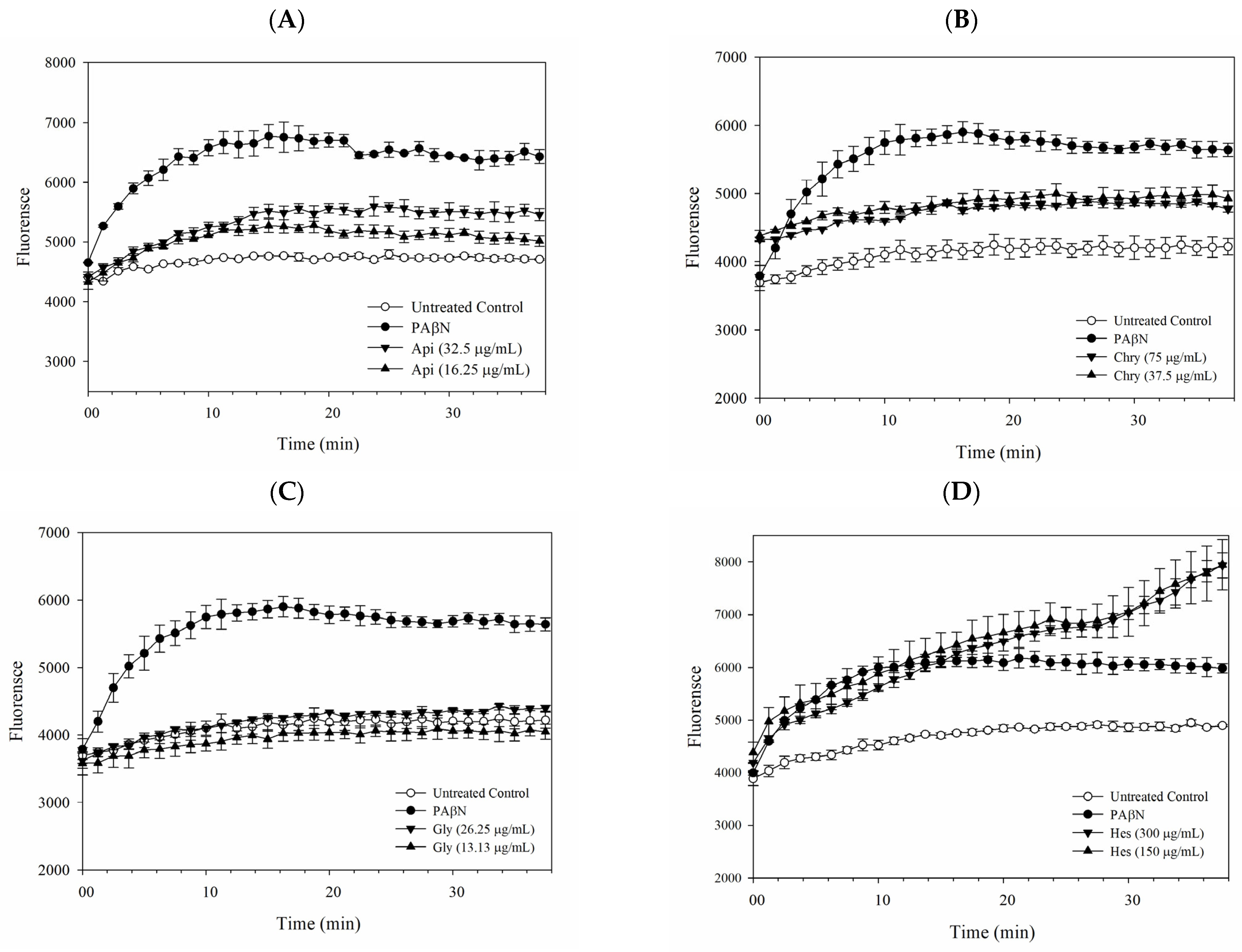
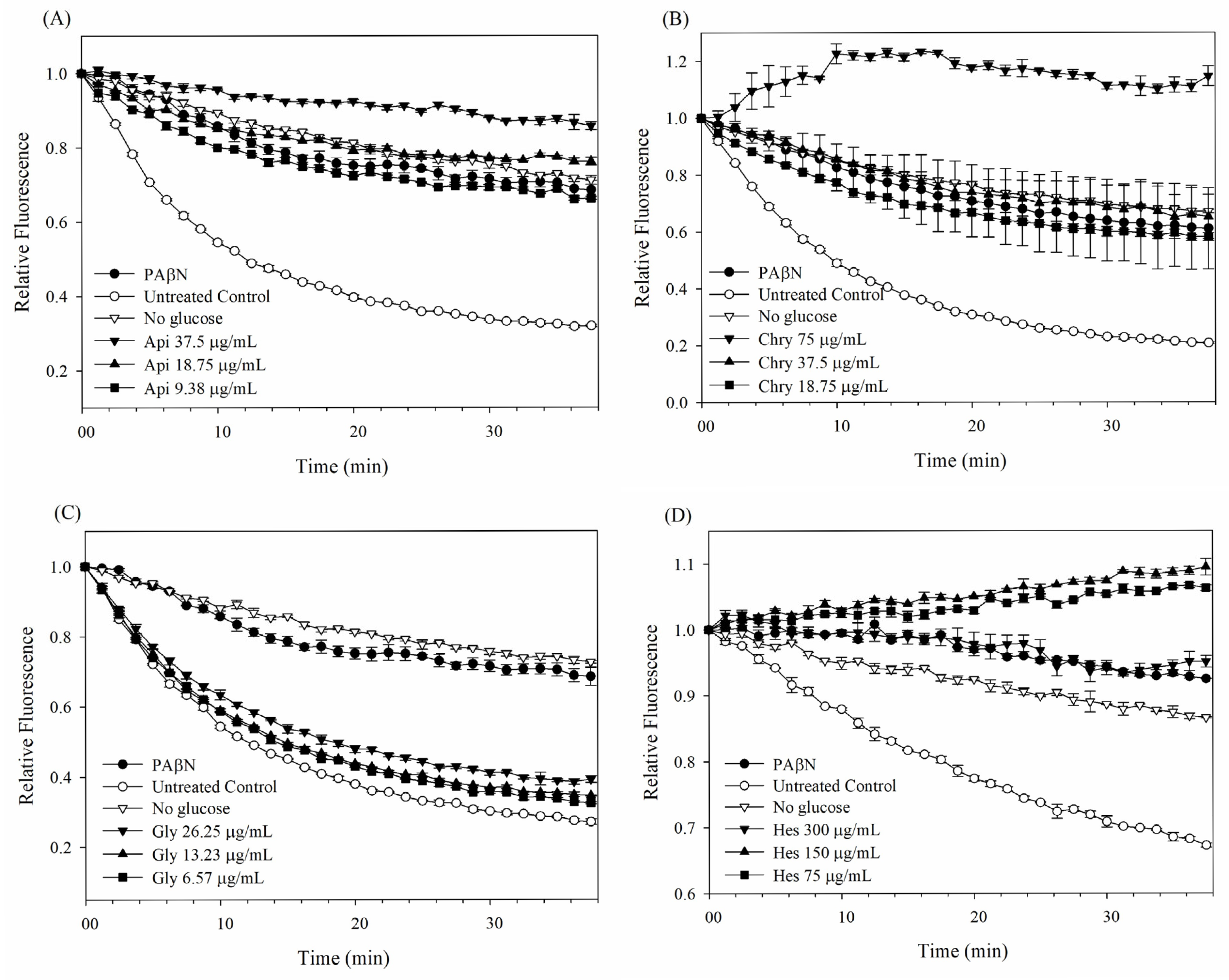
2.2. Pump Efflux Efficiency Reduced by Flavonoids
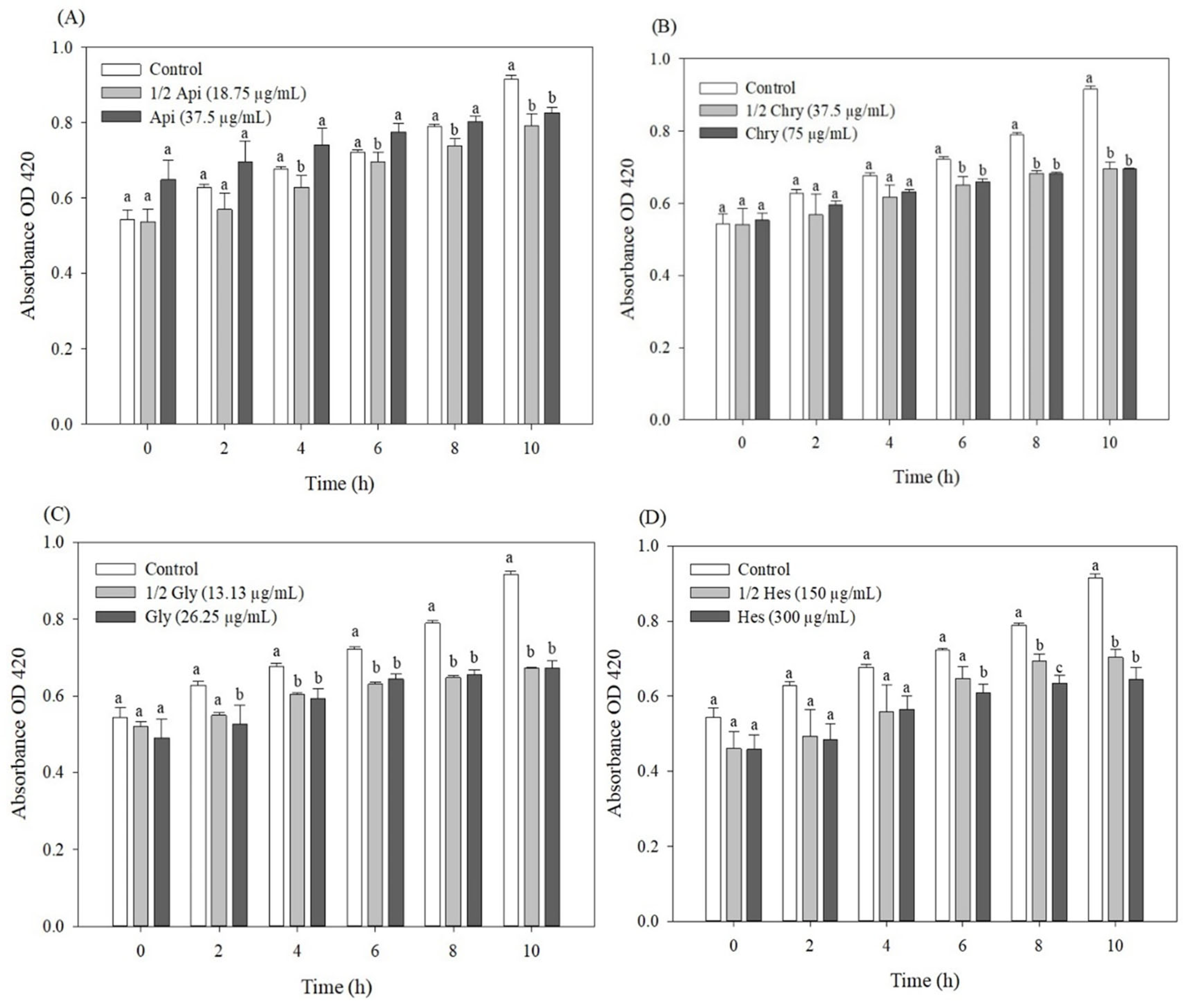
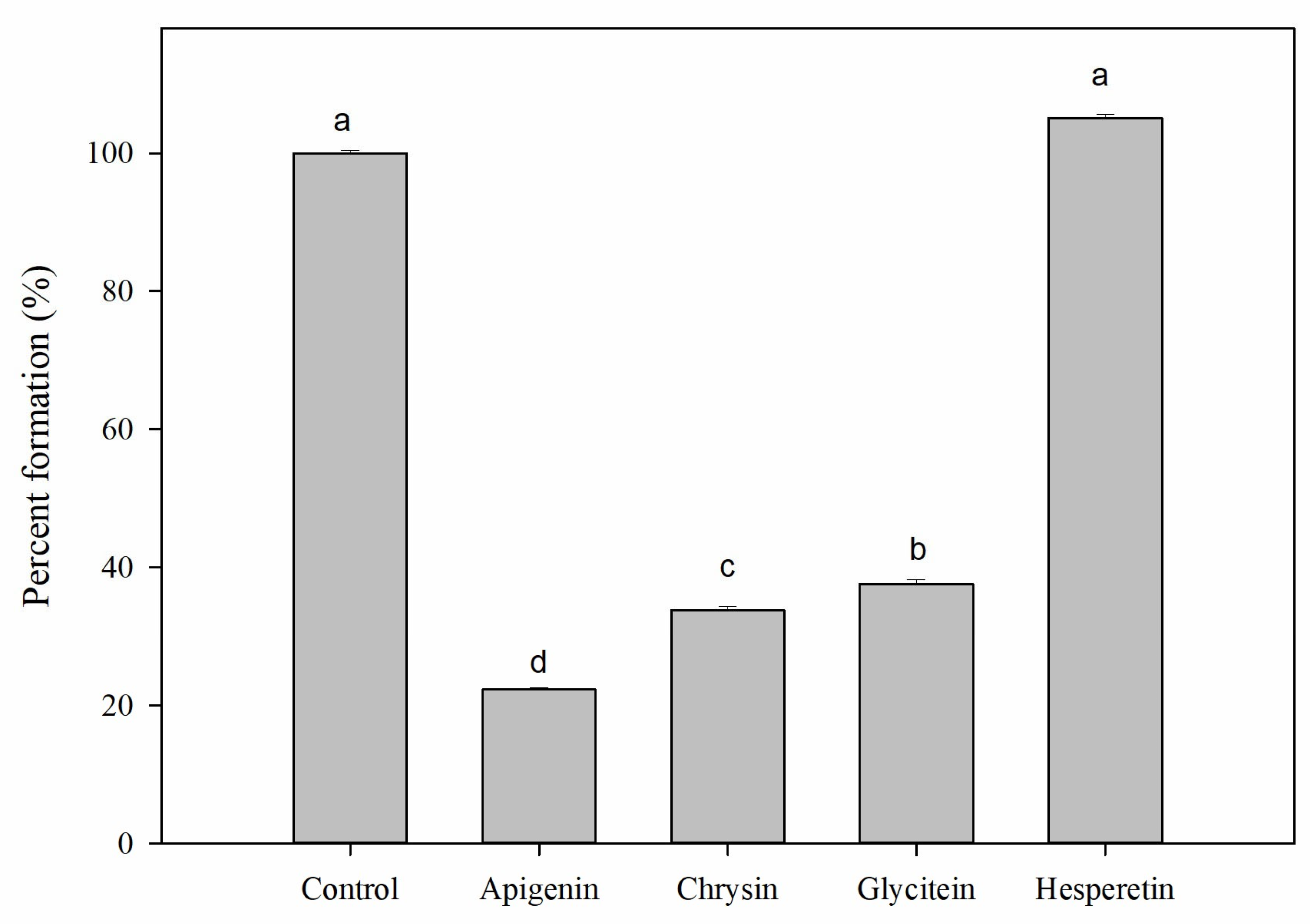
2.3. Inner Membrane Permeability and Biofilm Formation
2.4. Postantibiotic Effect of Flavonoids Coupled with Clarithromycin on E. coli Kam3-AcrB
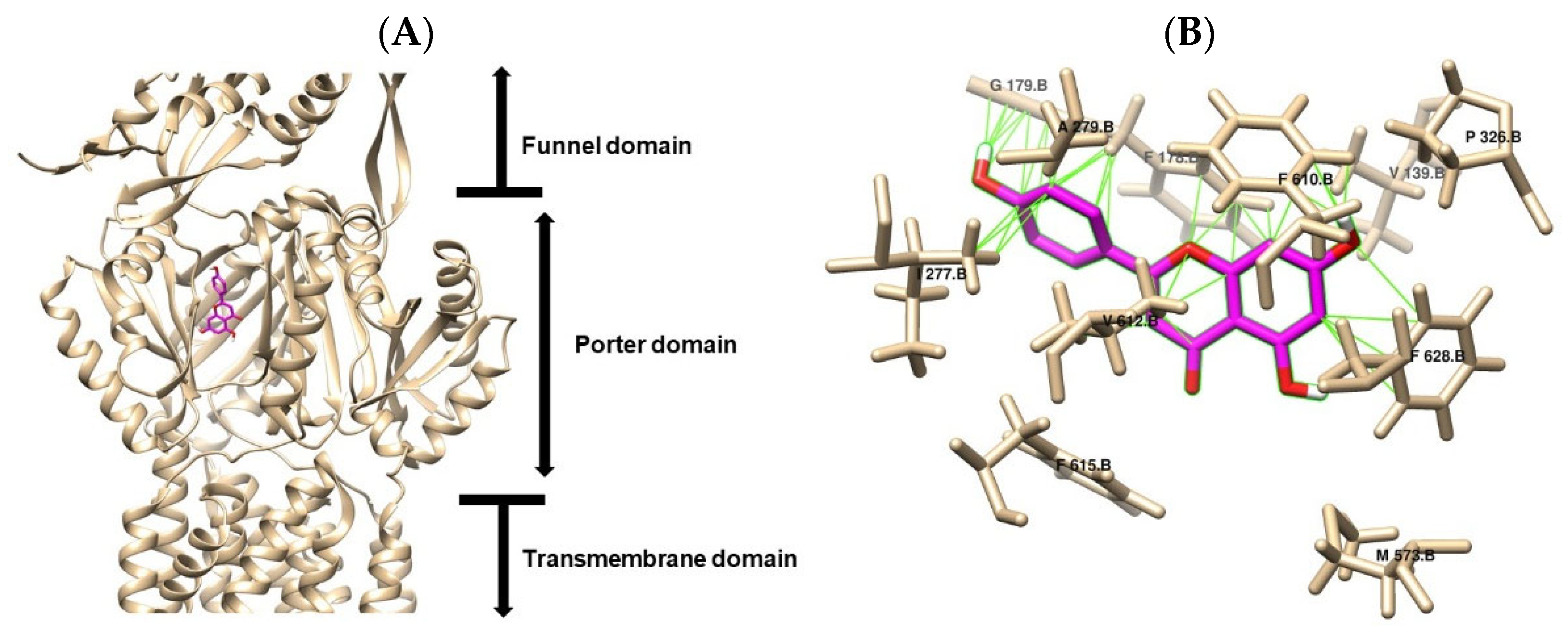
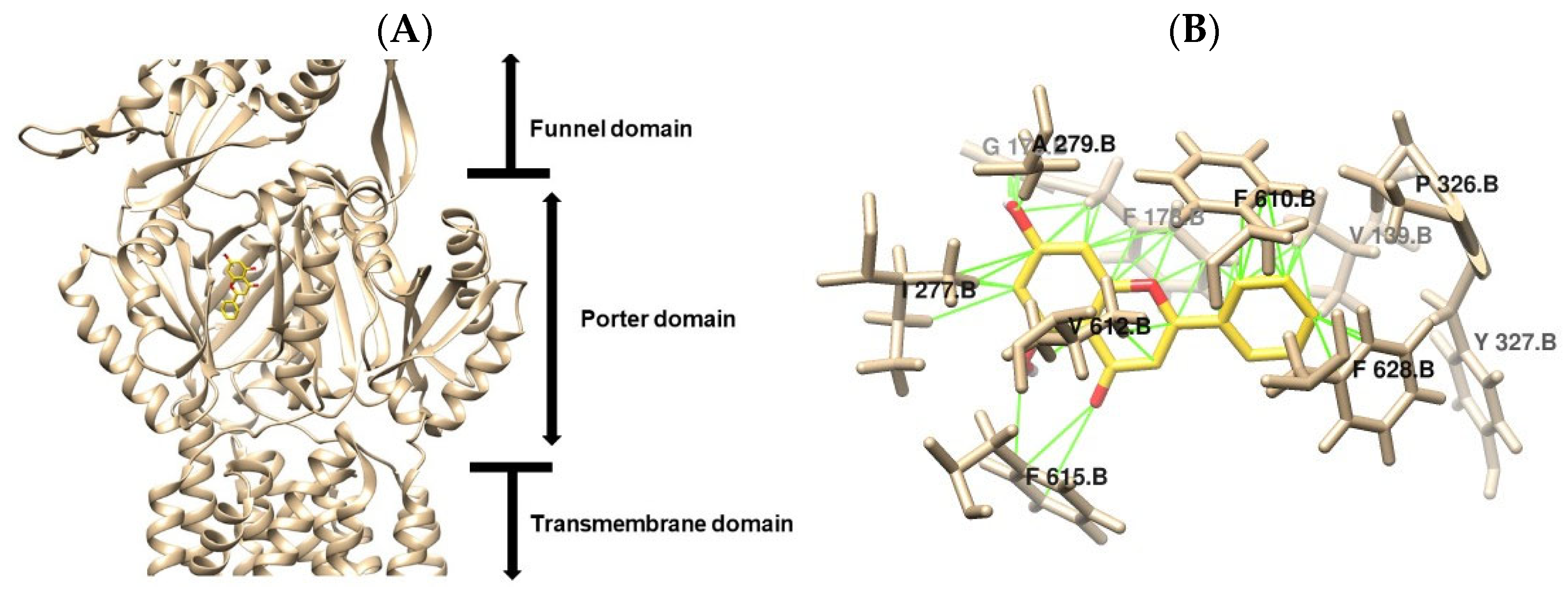
2.5. In Silico Prediction of Molecular Interaction
3. Materials and Methods
3.1. Bacterial Strains, Constructs, Media and Chemicals
3.2. Minimum Inhibitory Concentration (MIC) Determination
3.3. Modulation Assays
3.4. Dye Accumulation Assay
3.5. Efflux Inhibition Assay
3.6. Postantibiotic Effect Assay
3.7. Inner Membrane Integrity Assay
3.8. Biofilm Inhibition
3.9. Molecular Docking
3.10. Statistical Analysis
4. Conclusions
Author Contributions
Funding
Data Availability Statement
Acknowledgments
Conflicts of Interest
References
- WHO. Antimicrobial Resistance. Available online: https://www.who.int/news-room/fact-sheets/detail/antimicrobial-resistance (accessed on 21 November 2023).
- GBD 2021 Antimicrobial Resistance Collaborators. Global burden of bacterial antimicrobial resistance 1990–2021: A systematic analysis with forecasts to 2050. Lancet 2024, 404, 1199–1226. [Google Scholar] [CrossRef]
- Jasovsky, D.; Littmann, J.; Zorzet, A.; Cars, O. Antimicrobial resistance-a threat to the world’s sustainable development. Ups. J. Med. Sci. 2016, 121, 159–164. [Google Scholar] [CrossRef]
- Brown, A.R.; Ettefagh, K.A.; Todd, D.A.; Cole, P.S.; Egan, J.M.; Foil, D.H.; Lacey, E.P.; Cech, N.B. Bacterial efflux inhibitors are widely distributed in land plants. J. Ethnopharmacol. 2021, 267, 113533. [Google Scholar] [CrossRef]
- Chollet, R.; Chevalier, J.; Bryskier, A.; Pagès, J.-M. The AcrAB-TolC pump is involved in macrolide resistance but not in telithromycin efflux in Enterobacter aerogenes and Escherichia coli. Antimicrob. Agents Chemother. 2004, 48, 3621–3624. [Google Scholar] [CrossRef] [PubMed]
- Puzari, M.; Chetia, P. RND efflux pump mediated antibiotic resistance in Gram-negative bacteria Escherichia coli and Pseudomonas aeruginosa: A major issue worldwide. World J. Microbiol. Biotechnol. 2017, 33, 24. [Google Scholar] [CrossRef] [PubMed]
- Pages, J.M.; Sandrine, A.F.; Mahamoud, A.; Bolla, J.M.; Davin-Regli, A.; Chevalier, J.; Garnotel, E. Efflux pumps of gram-negative bacteria, a new target for new molecules. Curr. Top. Med. Chem. 2010, 10, 1848–1857. [Google Scholar] [CrossRef] [PubMed]
- Lomovskaya, O.; Bostian, K.A. Practical applications and feasibility of efflux pump inhibitors in the clinic--a vision for applied use. Biochem. Pharmacol. 2006, 71, 910–918. [Google Scholar] [CrossRef]
- Savoia, D. Plant-derived antimicrobial compounds: Alternatives to antibiotics. Future Microbiol. 2012, 7, 979–990. [Google Scholar] [CrossRef]
- Gad, H.A.; El-Ahmady, S.H.; Abou-Shoer, M.I.; Al-Azizi, M.M. Application of chemometrics in authentication of herbal medicines: A review. Phytochem. Anal. 2013, 24, 1–24. [Google Scholar] [CrossRef]
- Seukep, A.J.; Kuete, V.; Nahar, L.; Sarker, S.D.; Guo, M. Plant-derived secondary metabolites as the main source of efflux pump inhibitors and methods for identification. J. Pharm. Anal. 2020, 10, 277–290. [Google Scholar] [CrossRef]
- Tsuchiya, H. Membrane Interactions of Phytochemicals as Their Molecular Mechanism Applicable to the Discovery of Drug Leads from Plants. Molecules 2015, 20, 18923–18966. [Google Scholar] [CrossRef]
- Akilandeswari, K.; Ruckmani, K. Synergistic antibacterial effect of apigenin with beta-lactam antibiotics and modulation of bacterial resistance by a possible membrane effect against methicillin resistant Staphylococcus aureus. Cell. Mol. Biol. 2016, 62, 74–82. [Google Scholar] [CrossRef]
- Pei, Z.J.; Li, C.; Dai, W.; Lou, Z.; Sun, X.; Wang, H.; Khan, A.A.; Wan, C. The Anti-Biofilm Activity and Mechanism of Apigenin-7-O-Glucoside Against Staphylococcus aureus and Escherichia coli. Infect. Drug Resist. 2023, 16, 2129–2140. [Google Scholar] [CrossRef] [PubMed]
- Ohemeng, K.A.; Podlogar, B.L.; Nguyen, V.N.; Bernstein, J.I.; Krause, H.M.; Hilliard, J.J.; Barrett, J.F. DNA gyrase inhibitory and antimicrobial activities of some diphenic acid monohydroxamides. J. Med. Chem. 1997, 40, 3292–3296. [Google Scholar] [CrossRef]
- Chan, B.C.; Ip, M.; Lau, C.B.; Lui, S.L.; Jolivalt, C.; Ganem-Elbaz, C.; Litaudon, M.; Reiner, N.E.; Gong, H.; See, R.H.; et al. Synergistic effects of baicalein with ciprofloxacin against NorA over-expressed methicillin-resistant Staphylococcus aureus (MRSA) and inhibition of MRSA pyruvate kinase. J. Ethnopharmacol. 2011, 137, 767–773. [Google Scholar] [CrossRef]
- Fujita, M.; Shiota, S.; Kuroda, T.; Hatano, T.; Yoshida, T.; Mizushima, T.; Tsuchiya, T. Remarkable synergies between baicalein and tetracycline, and baicalein and beta-lactams against methicillin-resistant Staphylococcus aureus. Microbiol. Immunol. 2005, 49, 391–396. [Google Scholar] [CrossRef]
- Khameneh, B.; Iranshahy, M.; Soheili, V.; Bazzaz, B.S.F. Review on plant antimicrobials: A mechanistic viewpoint. Antimicrob. Resist. Infect. Control. 2019, 8, 118. [Google Scholar] [CrossRef] [PubMed]
- Waditzer, M.; Bucar, F. Flavonoids as Inhibitors of Bacterial Efflux Pumps. Molecules 2021, 26, 6904. [Google Scholar] [CrossRef] [PubMed]
- Brown, A.R.; Ettefagh, K.A.; Todd, D.; Cole, P.S.; Egan, J.M.; Foil, D.H.; Graf, T.N.; Schindler, B.D.; Kaatz, G.W.; Cech, N.B. A Mass Spectrometry-Based Assay for Improved Quantitative Measurements of Efflux Pump Inhibition. PLoS ONE 2015, 10, e0124814. [Google Scholar] [CrossRef]
- dos Santos, J.F.S.; Tintino, S.R.; da Silva, A.R.P.; Barbosa, C.R.D.; Scherf, J.R.; Silveira, Z.D.; de Freitas, T.S.; Neto, L.J.D.; Barros, L.M.; Menezes, I.R.D.; et al. Enhancement of the antibiotic activity by quercetin against efflux pumps. J. Bioenerg. Biomembr. 2021, 53, 157–167. [Google Scholar] [CrossRef]
- Pal, A.; Tripathi, A. Quercetin inhibits carbapenemase and efflux pump activities among carbapenem-resistant Gram-negative bacteria. Apmis 2020, 128, 251–259. [Google Scholar] [CrossRef]
- Irianti, M.I.; Vincken, J.P.; van Dinteren, S.; Ter Beest, E.; Pos, K.M.; Araya-Cloutier, C. Prenylated isoflavonoids from Fabaceae against the NorA efflux pump in Staphylococcus aureus. Sci. Rep. 2023, 13, 22548. [Google Scholar] [CrossRef]
- Maher, C.; Hassan, K.A. The Gram-negative permeability barrier: Tipping the balance of the in and the out. Mbio 2023, 14, e01205-23. [Google Scholar] [CrossRef]
- Liu, H.Y.; Prentice, E.L.; Webber, M.A. Mechanisms of antimicrobial resistance in biofilms. NPJ Antimicrob. Resist. 2024, 2, 27. [Google Scholar] [CrossRef] [PubMed]
- Shamsudin, N.F.; Ahmed, Q.U.; Mahmood, S.; Shah, S.A.A.; Khatib, A.; Mukhtar, S.; Alsharif, M.A.; Parveen, H.; Zakaria, Z.A. Antibacterial Effects of Flavonoids and Their Structure-Activity Relationship Study: A Comparative Interpretation. Molecules 2022, 27, 1149. [Google Scholar] [CrossRef]
- Eumkeb, G.; Chukrathok, S. Synergistic activity and mechanism of action of ceftazidime and apigenin combination against ceftazidime-resistant. Phytomedicine 2013, 20, 262–269. [Google Scholar] [CrossRef]
- Kledecka, A.; Siejak, P.; Pratap-Singh, A.; Kowalczewski, P.L.; Fathordoobady, F.; Jarzebski, M.; Smulek, W. Extracts from Frangula alnus Mill. and Their Effects on Environmental and Probiotic Bacteria. Plants 2022, 11, 2719. [Google Scholar] [CrossRef]
- Ren, J.Y.; Wang, M.J.; Zhou, W.J.; Liu, Z.H. Efflux pumps as potential targets for biofilm inhibition. Front. Microbiol. 2024, 15, 1315238. [Google Scholar] [CrossRef] [PubMed]
- Sorenson, T.R.; Zack, K.M.; Joshi, S.G. Biofilm Formation and the Role of Efflux Pumps in ESKAPE Pathogens. Microorganisms 2025, 13, 1816. [Google Scholar] [CrossRef] [PubMed]
- Alav, I.; Sutton, J.M.; Rahman, K.M. Role of bacterial efflux pumps in biofilm formation. J. Antimicrob. Chemother. 2018, 73, 2003–2020. [Google Scholar] [CrossRef] [PubMed]
- Wang, J.L.; Jiao, H.H.; Meng, J.W.; Qiao, M.Y.; Du, H.X.; He, M.; Ming, K.; Liu, J.G.; Wang, D.Y.; Wu, Y. Baicalin Inhibits Biofilm Formation and the Quorum-Sensing System by Regulating the MsrA Drug Efflux Pump in. Front. Microbiol. 2019, 10, 2800. [Google Scholar] [CrossRef] [PubMed]
- Lopes, L.A.A.; Rodrigues, J.B.D.; Magnani, M.; de Souza, E.L.; de Siqueira, J.P. Inhibitory effects of flavonoids on biofilm formation by that overexpresses efflux protein genes. Microb. Pathog. 2017, 107, 193–197. [Google Scholar] [CrossRef]
- Baugh, S.; Phillips, C.R.; Ekanayaka, A.S.; Piddock, L.J.V.; Webber, M.A. Inhibition of multidrug efflux as a strategy to prevent biofilm formation. J. Antimicrob. Chemother. 2014, 69, 673–681. [Google Scholar] [CrossRef]
- Lu, W.J.; Huang, Y.J.; Lin, H.J.; Chang, C.J.; Hsu, P.H.; Ooi, G.X.; Huang, M.Y.; Lin, H.T.V. Phenolic Compound Ethyl 3,4-Dihydroxybenzoate Retards Drug Efflux and Potentiates Antibiotic Activity. Antibiotics 2022, 11, 497. [Google Scholar] [CrossRef]
- Singh, V.; Pal, A.; Darokar, M.P. A polyphenolic flavonoid glabridin: Oxidative stress response in multidrug-resistant. Free Radical. Bio. Med. 2015, 87, 48–57. [Google Scholar] [CrossRef]
- Nakashima, R.; Sakurai, K.; Yamasaki, S.; Hayashi, K.; Nagata, C.; Hoshino, K.; Onodera, Y.; Nishino, K.; Yamaguchi, A. Structural basis for the inhibition of bacterial multidrug exporters. Nature 2013, 500, 102–106. [Google Scholar] [CrossRef]
- Eberhardt, J.; Santos-Martins, D.; Tillack, A.F.; Forli, S. AutoDock Vina 1.2.0: New docking methods, expanded force field, and python bindings. J. Chem. Inf. Model. 2021, 61, 3891–3898. [Google Scholar] [CrossRef] [PubMed]
- Eicher, T.; Cha, H.J.; Seeger, M.A.; Brandstatter, L.; El-Delik, J.; Bohnert, J.A.; Kern, W.V.; Verrey, F.; Grutter, M.G.; Diederichs, K.; et al. Transport of drugs by the multidrug transporter AcrB involves an access and a deep binding pocket that are separated by a switch-loop. Proc. Natl. Acad. Sci. USA 2012, 109, 5687–5692. [Google Scholar] [CrossRef] [PubMed]
- Lu, W.J.; Lian, Y.W.; Chang, C.J.; Lin, H.J.; Huang, C.Y.; Hsu, P.H.; Lin, H.T. Screening and evaluation of potential efflux pump inhibitors with a seaweed compound diphenylmethane-scaffold against drug-resistant Escherichia coli. Antibiotics 2024, 13, 628. [Google Scholar] [CrossRef]
- Tam, H.K.; Foong, W.E.; Oswald, C.; Herrmann, A.; Zeng, H.; Pos, K.M. Allosteric drug transport mechanism of multidrug transporter AcrB. Nat. Commun. 2021, 12, 3889. [Google Scholar] [CrossRef]
- Lu, W.J.; Hsu, P.H.; Lin, H.V. A novel cooperative metallo-beta-lactamase fold metallohydrolase from pathogen Vibrio vulnificus exhibits beta-lactam antibiotic-degrading activities. Antimicrob. Agents Chemother. 2021, 65, e0032621. [Google Scholar] [CrossRef]
- Lu, W.J.; Hsu, P.H.; Chang, C.J.; Su, C.K.; Huang, Y.J.; Lin, H.J.; Lai, M.; Ooi, G.X.; Dai, J.Y.; Lin, H.V. Identified seaweed compound diphenylmethane serves as an efflux pump inhibitor in drug-resistant Escherichia coli. Antibiotics 2021, 10, 1378. [Google Scholar] [CrossRef]
- Machado, L.; Spengler, G.; Evaristo, M.; Handzlik, J.; Molnar, J.; Viveiros, M.; Kiec-Kononowicz, K.; Amaral, L. Biological activity of twenty-three hydantoin derivatives on intrinsic efflux pump system of Salmonella enterica serovar Enteritidis NCTC 13349. Vivo 2011, 25, 769–772. [Google Scholar]
- Lu, W.J.; Lin, H.J.; Janganan, T.K.; Li, C.Y.; Chin, W.C.; Bavro, V.N.; Lin, H.T.V. ATP-Binding Cassette Transporter VcaM from is Dependent on the Outer Membrane Factor Family for Its Function. Int. J. Mol. Sci. 2018, 19, 1000. [Google Scholar] [CrossRef]
- Lu, W.J.; Lin, H.J.; Hsu, P.H.; Lin, H.T.V. Determination of drug efflux pump efficiency in drug-resistant bacteria using MALDI-TOF MS. Antibiotics 2020, 9, 639. [Google Scholar] [CrossRef]
- Stubbings, W.J.; Bostock, J.M.; Ingham, E.; Chopra, I. Assessment of a microplate method for determining the post-antibiotic effect in Staphylococcus aureus and Escherichia coli. J. Antimicrob. Chemoth. 2004, 54, 139–143. [Google Scholar] [CrossRef]
- Skerlavaj, B.; Romeo, D.; Gennaro, R. Rapid membrane permeabilization and inhibition of vital functions of gram-negative bacteria by bactenecins. Infect. Immun. 1990, 58, 3724–3730. [Google Scholar] [CrossRef] [PubMed]
- Pettersen, E.F.; Goddard, T.D.; Huang, C.C.; Couch, G.S.; Greenblatt, D.M.; Meng, E.C.; Ferrin, T.E. UCSF chimera—A visualization system for exploratory research and analysis. J. Comput. Chem. 2004, 25, 1605–1612. [Google Scholar] [CrossRef] [PubMed]
- Berman, H.M.; Westbrook, J.; Feng, Z.; Gilliland, G.; Bhat, T.N.; Weissig, H.; Shindyalov, I.N.; Bourne, P.E. The Protein Data Bank. Nucleic Acids Res. 2000, 28, 235–242. [Google Scholar] [CrossRef] [PubMed]



| Compound | Antibiotics | MIC (μg/mL) | MF | |
|---|---|---|---|---|
| Alone | Combination (Antibiotic/Flavonoid) * | |||
| Apigenin | Ciprofloxacin | 0.06 | 0.06/62.5 | 1 |
| Clarithromycin | 247.5 | 61.87/62.5 | 4 | |
| Erythromycin | 384 | 384/62.5 | 1 | |
| Tetracycline | 1.2 | 1.2/62.5 | 1 | |
| Chrysin | Ciprofloxacin | 0.06 | 0.06/125 | 1 |
| Clarithromycin | 247.5 | 123.75/125 | 2 | |
| Erythromycin | 384 | 192/125 | 2 | |
| Tetracycline | 1.2 | 1.2/125 | 1 | |
| Glycitein | Ciprofloxacin | 0.06 | 0.03/21.87 | 2 |
| Clarithromycin | 247.5 | 123.75/43.75 | 2 | |
| Erythromycin | 384 | 384/43.75 | 1 | |
| Tetracycline | 1.2 | 1.2/43.75 | 1 | |
| Hesperetin | Ciprofloxacin | 0.06 | 0.06/250 | 1 |
| Clarithromycin | 247.5 | 123.75/250 | 2 | |
| Erythromycin | 384 | 384/250 | 1 | |
| Tetracycline | 1.2 | 1.2/250 | 1 | |
| PAβN | Ciprofloxacin | 0.06 | 0.06/20 | 1 |
| Clarithromycin | 247.5 | 30.94/10 | 8 | |
| Erythromycin | 384 | 48/20 | 8 | |
| Tetracycline | 1.2 | 1.2/20 | 1 | |
| Regimen | Mean PAE (h) ± SD | |
|---|---|---|
| 1/2 MIC | 2 MIC | |
| Clarithromycin | 0.14 0.08 b | 0.21 0.00 b |
| Clarithromycin + Apigenin | 0.1 0.09 b | 0.14 0.09 b |
| Clarithromycin + Chrysin | 0.2 0.09 b | 0.21 0.05 b |
| Clarithromycin + Glycitein | 0.06 0.03 b | 0.09 0.01 b |
| Clarithromycin + Hesperetin | 0.32 0.03 a | 0.37 0.02 a |
| Dock Parameters | Flavonoids | |
|---|---|---|
| Apigenin | Chrysin | |
| Interaction Residues | V139 a, F178 ab, G179 a, I277 a, A279 a, P326, M573, F610 ab, V612 a, F615 ab, F628 ab | V139 a, F178 ab, G179 a, I277 a, A279 a, P326, Y327 b, F610 ab, V612 a, F615 ab, F628 ab |
| Hydrogen bonds | - | - |
| Inter-molecules contacts | 40 | 41 |
| Binding free energy (kcal/mol) | −8.8 | −8.9 |
Disclaimer/Publisher’s Note: The statements, opinions and data contained in all publications are solely those of the individual author(s) and contributor(s) and not of MDPI and/or the editor(s). MDPI and/or the editor(s) disclaim responsibility for any injury to people or property resulting from any ideas, methods, instructions or products referred to in the content. |
© 2025 by the authors. Licensee MDPI, Basel, Switzerland. This article is an open access article distributed under the terms and conditions of the Creative Commons Attribution (CC BY) license (https://creativecommons.org/licenses/by/4.0/).
Share and Cite
Lu, W.-J.; Huang, Y.-C.; Tai, C.-Y.; Lin, H.-T.V. Accessing Citrus and Soybean Flavonoids as Potential Efflux Pump Inhibitors in Drug-Resistant Escherichia coli. Antibiotics 2025, 14, 1229. https://doi.org/10.3390/antibiotics14121229
Lu W-J, Huang Y-C, Tai C-Y, Lin H-TV. Accessing Citrus and Soybean Flavonoids as Potential Efflux Pump Inhibitors in Drug-Resistant Escherichia coli. Antibiotics. 2025; 14(12):1229. https://doi.org/10.3390/antibiotics14121229
Chicago/Turabian StyleLu, Wen-Jung, Yi-Chi Huang, Ching-Yi Tai, and Hong-Ting Victor Lin. 2025. "Accessing Citrus and Soybean Flavonoids as Potential Efflux Pump Inhibitors in Drug-Resistant Escherichia coli" Antibiotics 14, no. 12: 1229. https://doi.org/10.3390/antibiotics14121229
APA StyleLu, W.-J., Huang, Y.-C., Tai, C.-Y., & Lin, H.-T. V. (2025). Accessing Citrus and Soybean Flavonoids as Potential Efflux Pump Inhibitors in Drug-Resistant Escherichia coli. Antibiotics, 14(12), 1229. https://doi.org/10.3390/antibiotics14121229