Article

Seminal Bacterioflora of Two Rooster Lines: Characterization, Antibiotic Resistance Patterns and Possible Impact on Semen Quality


1
Institute of Biotechnology, Faculty of Biotechnology and Food Sciences, Slovak University of Agriculture in Nitra, Tr. A. Hlinku 2, 94976 Nitra, Slovakia
2
Institute of Applied Biology, Faculty of Biotechnology and Food Sciences, Slovak University of Agriculture in Nitra, Tr. A. Hlinku 2, 94976 Nitra, Slovakia
3
Department of Neuroscience, Second Faculty of Medicine (2. LF UK), V Úvalu 84, 15006 Prague, Czech Republic
4
AgroBioTech Research Centre, Slovak University of Agriculture in Nitra, Tr. A. Hlinku 2, 94976 Nitra, Slovakia
5
Department of Fruit Science, Viticulture and Enology, Faculty of Horticulture and Landscape Engineering, Slovak University of Agriculture, Tr. A. Hlinku 2, 94976 Nitra, Slovakia
6
Institute of Plant and Environmental Sciences, Faculty of Agrobiology and Food Resources, Slovak University of Agriculture, Tr. A. Hlinku 2, 94976 Nitra, Slovakia
7
Department of Bioenergetics, Food Analysis and Microbiology, Institute of Food Technology and Nutrition, University of Rzeszow, Cwiklinskiej 1, 35-601 Rzeszow, Poland
*
Author to whom correspondence should be addressed.
Antibiotics 2023, 12(2), 336; https://doi.org/10.3390/antibiotics12020336

Submission received: 28 December 2022 / Revised: 31 January 2023 / Accepted: 2 February 2023 / Published: 5 February 2023

Abstract

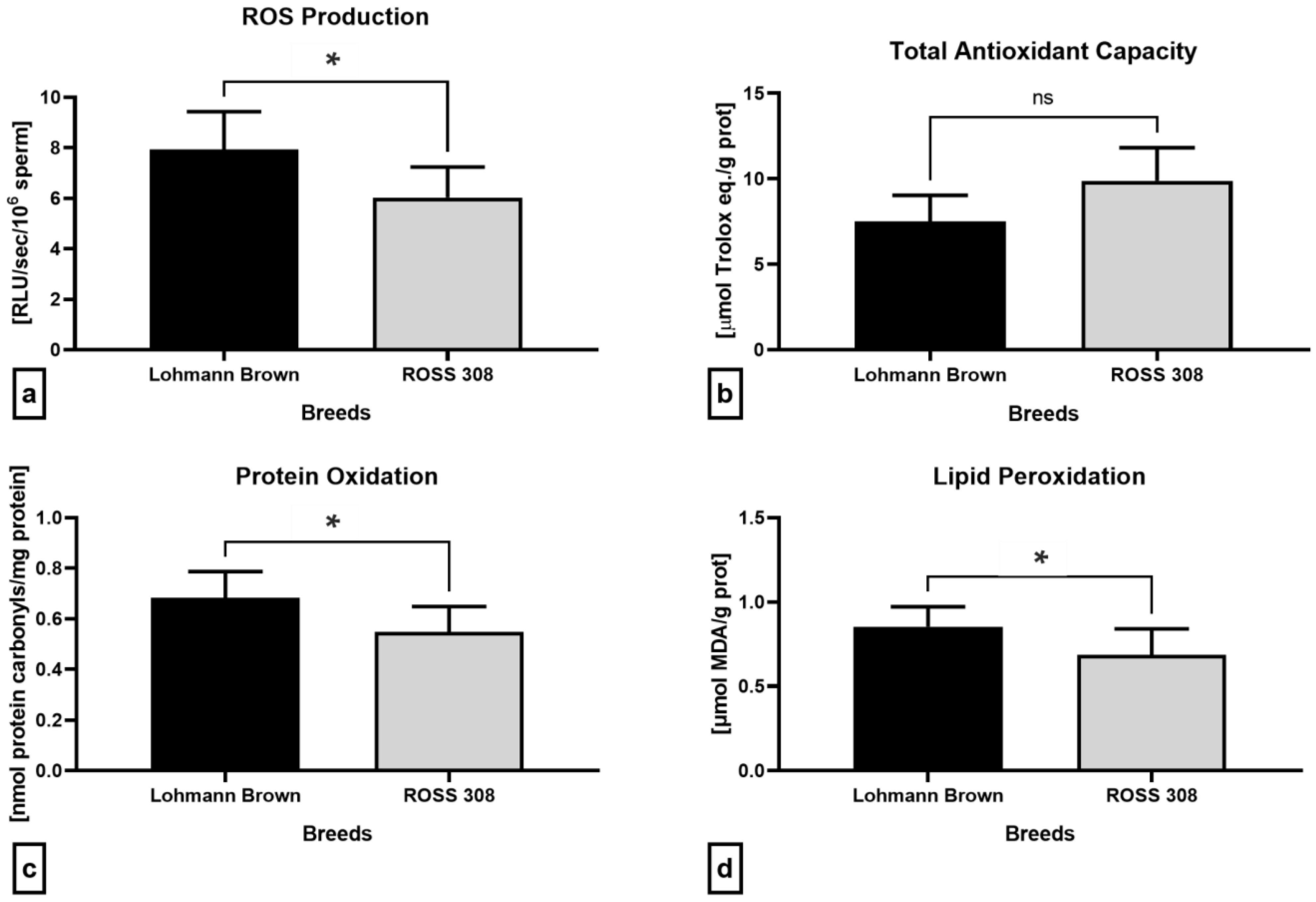
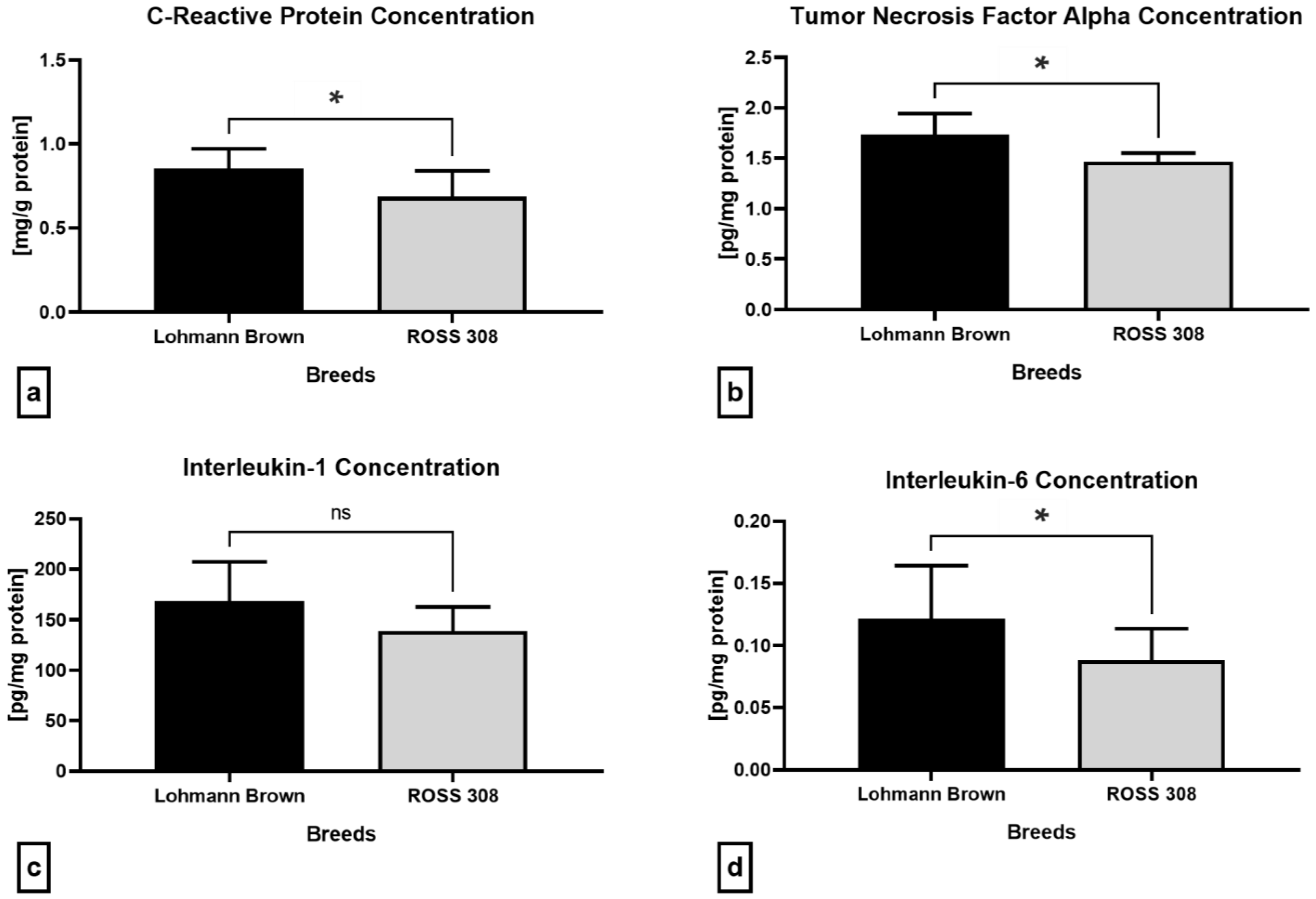
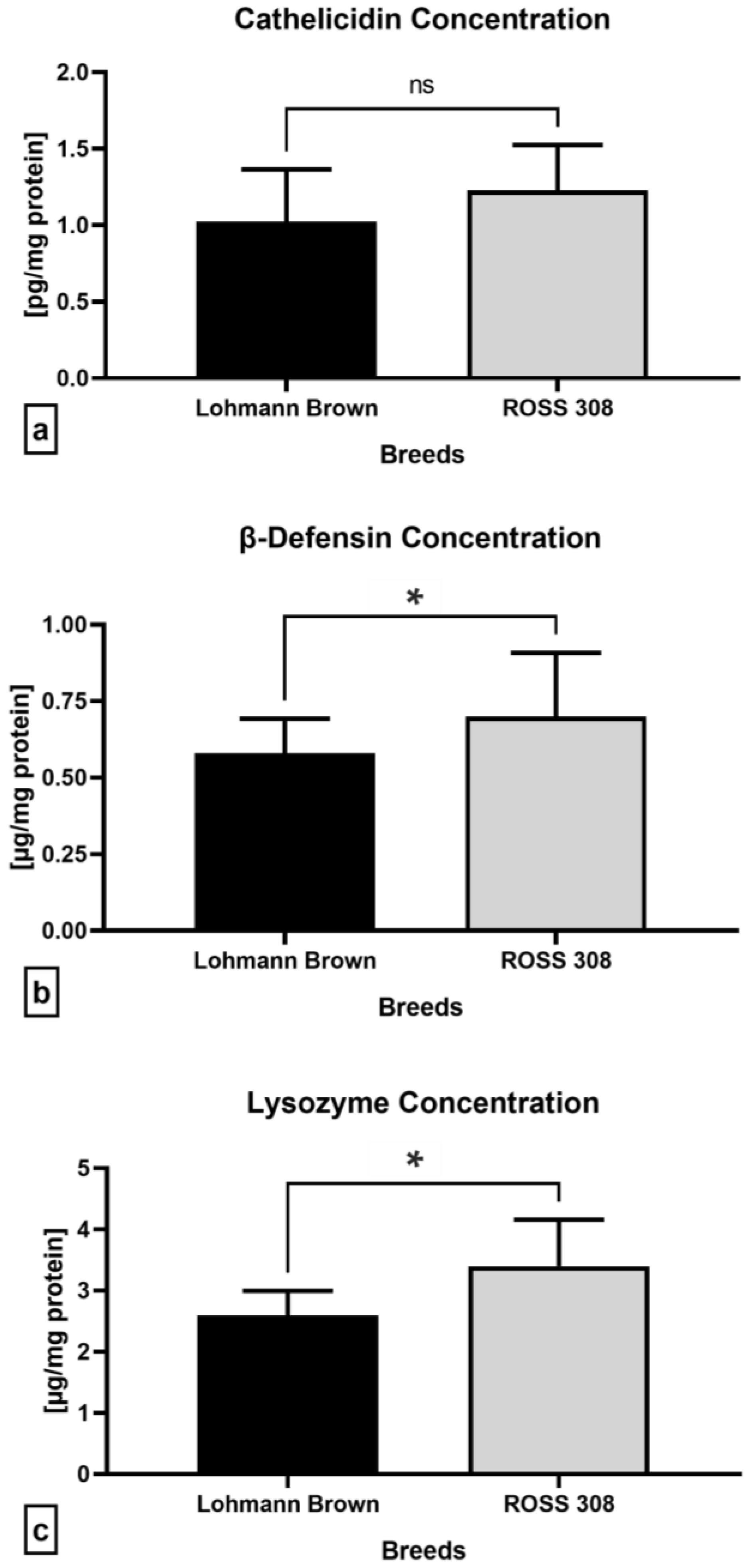
This study aimed to characterize the bacterial profiles and their association with selected semen quality traits among two chicken breeds. Thirty Lohmann Brown and thirty ROSS 308 roosters were selected for semen quality estimation, including sperm motility, membrane and acrosome integrity, mitochondrial activity, and DNA fragmentation. The oxidative profile of the semen, including the production of reactive oxygen species (ROS), antioxidant capacity, protein, and lipid oxidation, were assessed as well. Moreover, the levels of pro-inflammatory cytokines, including tumor necrosis factor alpha (TNF-α), interleukins 1 and 6 (IL-1, IL-6) and C-reactive protein, as well as the concentrations of selected antibacterial proteins (cathelicidin, β-defensin and lysozyme) in the seminal plasma were evaluated with the enzyme-linked immunosorbent assay. The prevailing bacterial genera identified by the matrix-assisted laser desorption/ionization time-of-flight mass spectrometry were Citrobacter spp., Enterococcus spp., Escherichia spp. and Staphylococcus spp. While the bacterial load was significantly higher in the ROSS 308 line (p < 0.05), a higher number of potentially uropathogenic bacteria was found in the Lohmann Brown roosters. Antimicrobial susceptibility tests revealed a substantial resistance of randomly selected bacterial strains, particularly to ampicillin, tetracycline, chloramphenicol, and tobramycin. Furthermore, Lohmann Brown ejaculates containing an increased proportion of Escherichia coli presented with significantly (p < 0.05) elevated levels of TNF-α and IL-6, as well as ROS overproduction and lipid peroxidation. Inversely, significantly (p < 0.05) higher levels of β-defensin and lysozyme were found in the semen collected from the ROSS 308 roosters, which was characterized by a higher quality in comparison to the Lohmann Brown roosters. In conclusion, we emphasize the criticality of bacteriospermia in the poultry industry and highlight the need to include a more complex microbiological screening of semen samples designated for artificial insemination.
Keywords: roosters; bacteriospermia; semen; antibiotic resistance; Lohmann Brown; ROSS 308 roosters; bacteriospermia; semen; antibiotic resistance; Lohmann Brown; ROSS 308