Article

Impacts of NaHCO3 on β-Lactam Binding to PBP2a Protein Variants Associated with the NaHCO3-Responsive versus NaHCO3-Non-Responsive Phenotypes

1
The Lundquist Institute for Biomedical Innovation, Harbor-UCLA Medical Center, Torrance, CA 90502, USA
2
David Geffen School of Medicine, University of California, Los Angeles, CA 90095, USA
3
Division of Infectious Diseases, Department of Medicine, Harbor-UCLA Medical Center, Torrance, CA 90502, USA
4
Division of Molecular Medicine, Department of Medicine, Harbor-UCLA Medical Center, Torrance, CA 90502, USA
5
School of Medicine, University of California-San Francisco (UCSF), San Francisco, CA 94143, USA
6
Departments of Medicine and Medical Microbiology/Immunology, School of Medicine and Public Health, University of Wisconsin, Madison, WI 53715, USA
7
Institute for Pharmaceutical Microbiology, University Hospital Bonn, University of Bonn, D-53113 Bonn, Germany
8
Department of Microbiology & Immunology, Geisel School of Medicine at Dartmouth, Hanover, NH 03755, USA
*
Author to whom correspondence should be addressed.
Antibiotics 2022, 11(4), 462; https://doi.org/10.3390/antibiotics11040462

Submission received: 28 February 2022 / Revised: 23 March 2022 / Accepted: 26 March 2022 / Published: 30 March 2022

Abstract

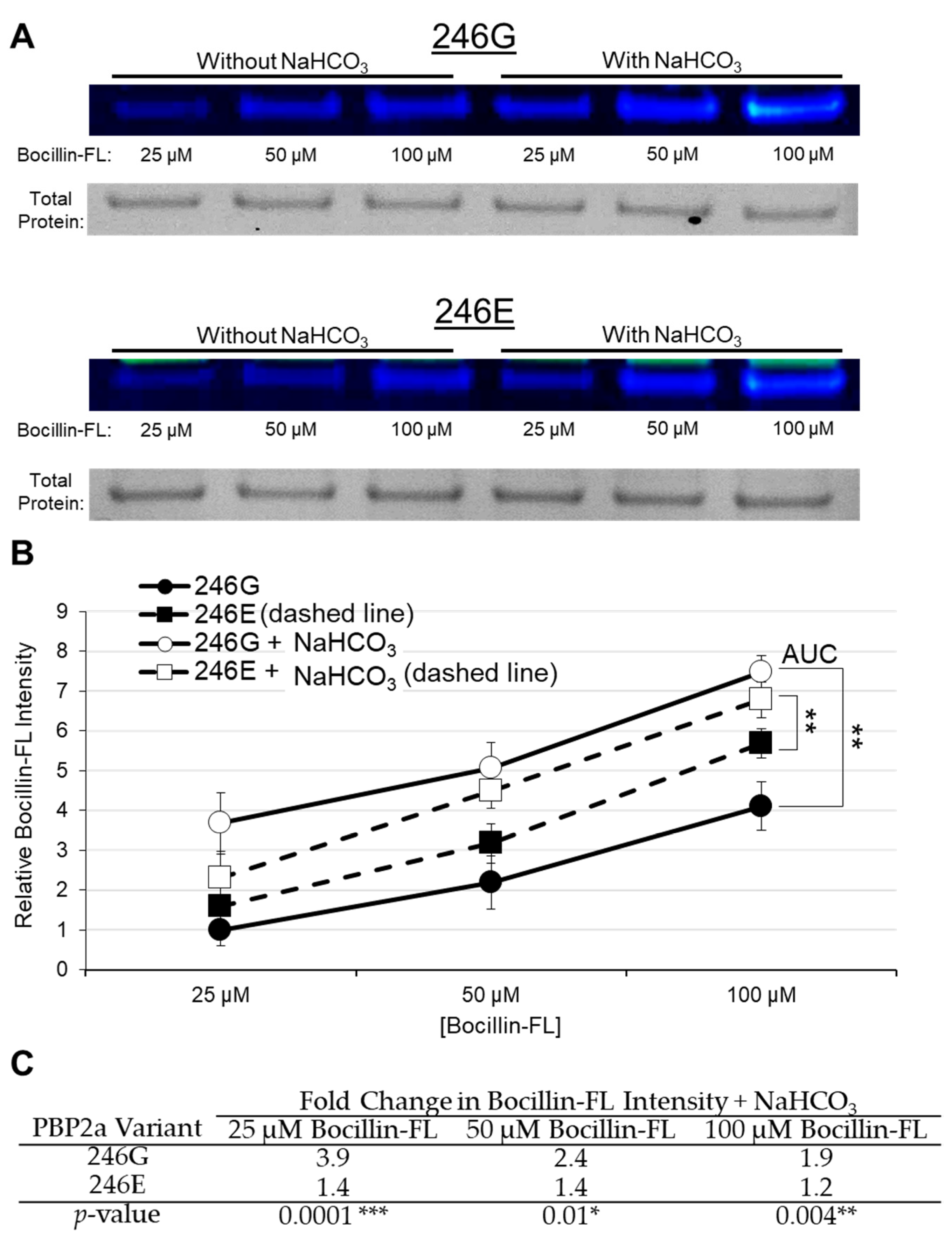
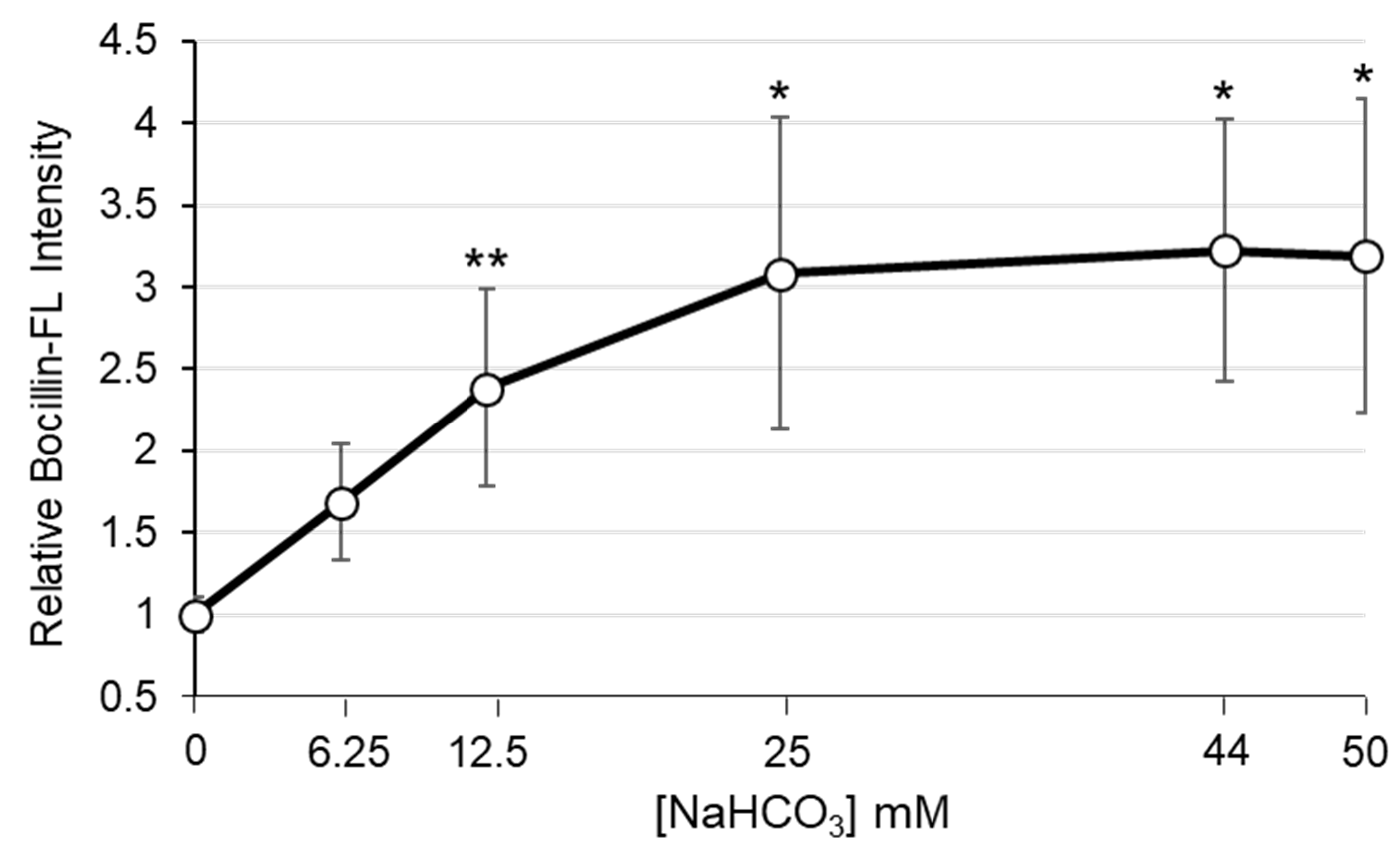
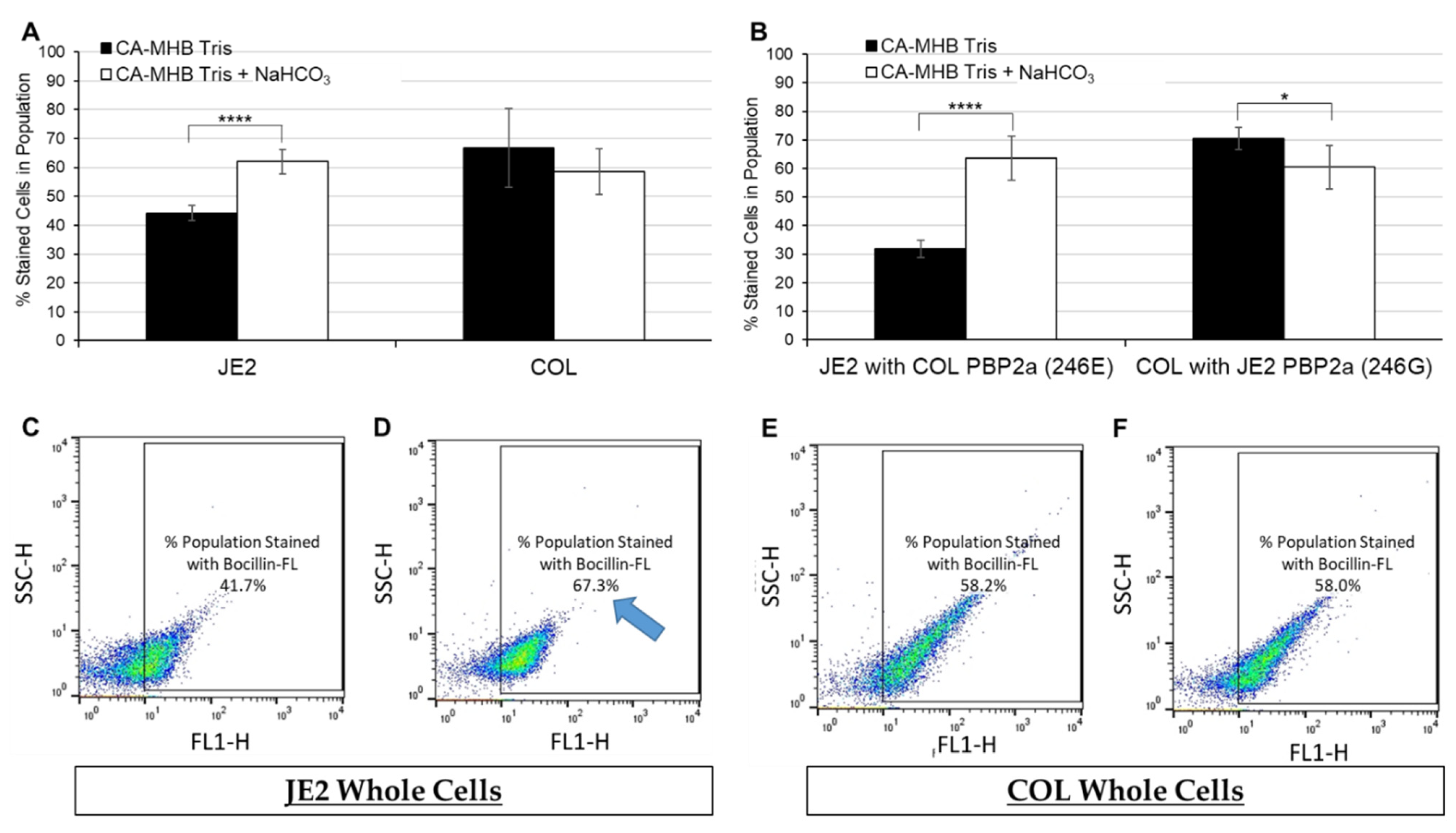
Methicillin-resistant Staphylococcus aureus (MRSA) regulates resistance to β-lactams via preferential production of an alternative penicillin-binding protein (PBP), PBP2a. PBP2a binds many β-lactam antibiotics with less affinity than PBPs which are predominant in methicillin-susceptible (MSSA) strains. A novel, rather frequent in vitro phenotype was recently identified among clinical MRSA bloodstream isolates, termed “NaHCO3-responsiveness”. This phenotype features β-lactam susceptibility of certain MRSA strains only in the presence of NaHCO3. Two distinct PBP2a variants, 246G and 246E, have been linked to the NaHCO3-responsive and NaHCO3-non-responsive MRSA phenotypes, respectively. To determine the mechanistic impact of PBP2a variants on β-lactam susceptibility, binding profiles of a fluorescent penicillin probe (Bocillin-FL) to each purified PBP2a variant were assessed and compared to whole-cell binding profiles characterized by flow cytometry in the presence vs. absence of NaHCO3. These investigations revealed that NaHCO3 differentially influenced the binding of the fluorescent penicillin, Bocillin-FL, to the PBP2a variants, with binding intensity and rate of binding significantly enhanced in the 246G compared to the 246E variant. Of note, the NaHCO3-β-lactam (oxacillin)-responsive JE2 strain, which natively harbors the 246G variant, had enhanced Bocillin-FL whole-cell binding following exposure to NaHCO3. This NaHCO3-mediated increase in whole-cell Bocillin-FL binding was not observed in the NaHCO3-non-responsive parental strain, COL, which contains the 246E PBP2a variant. Surprisingly, genetic swaps of the mecA coding sites between JE2 and COL did not alter the NaHCO3-enhanced binding seen in JE2 vs. COL. These data suggest that the non-coding regions of mecA may be involved in NaHCO3-responsiveness. This investigation also provides strong evidence that the NaHCO3-responsive phenotype in MRSA may involve NaHCO3-mediated increases in both initial cell surface β-lactam binding, as well as ultimate PBP2a binding of β-lactams.
Keywords: penicillin-binding proteins; sodium bicarbonate; β-lactams; methicillin-resistant Staphylococcus aureus penicillin-binding proteins; sodium bicarbonate; β-lactams; methicillin-resistant Staphylococcus aureus